




These Self and Personality Class 12 Notes sum up the whole chapter on the self, the theories of personality and the methods of assessment in one quick-revision page. They follow the 2026-27 CBSE syllabus and Chapter 2 of the Class 12 Psychology textbook. Students get every theorist, key term and named test in clear sections they can read the night before a test.
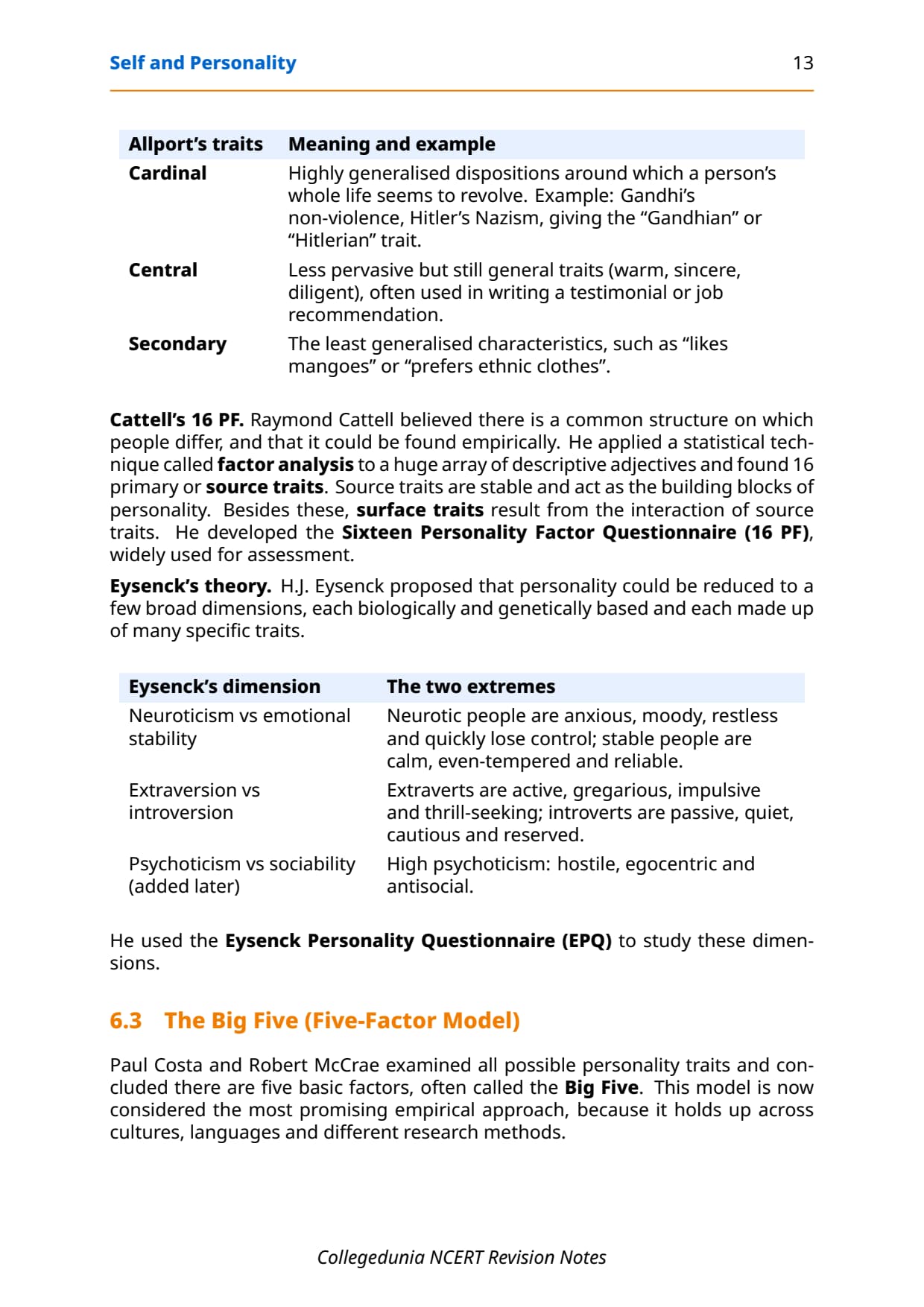
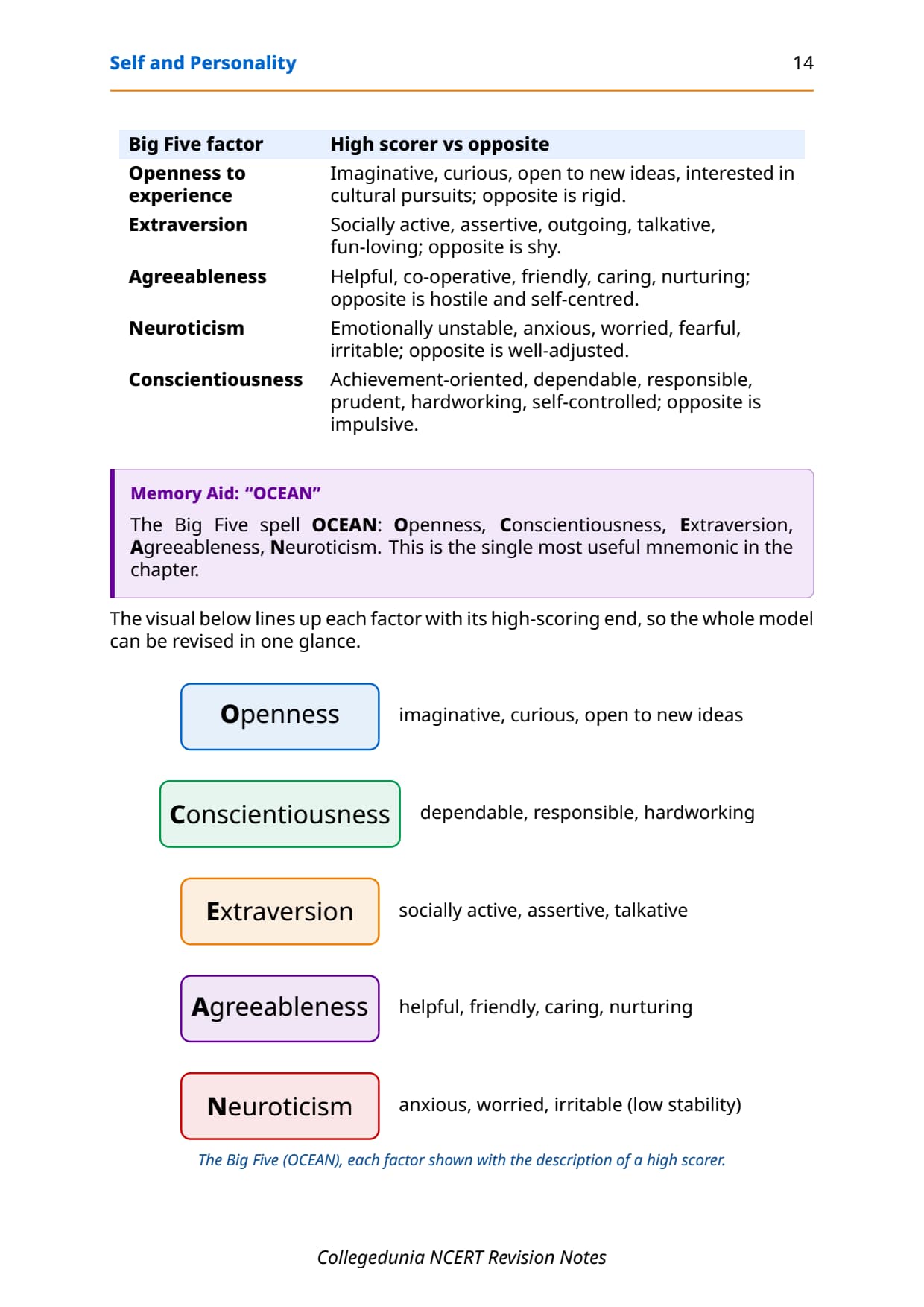
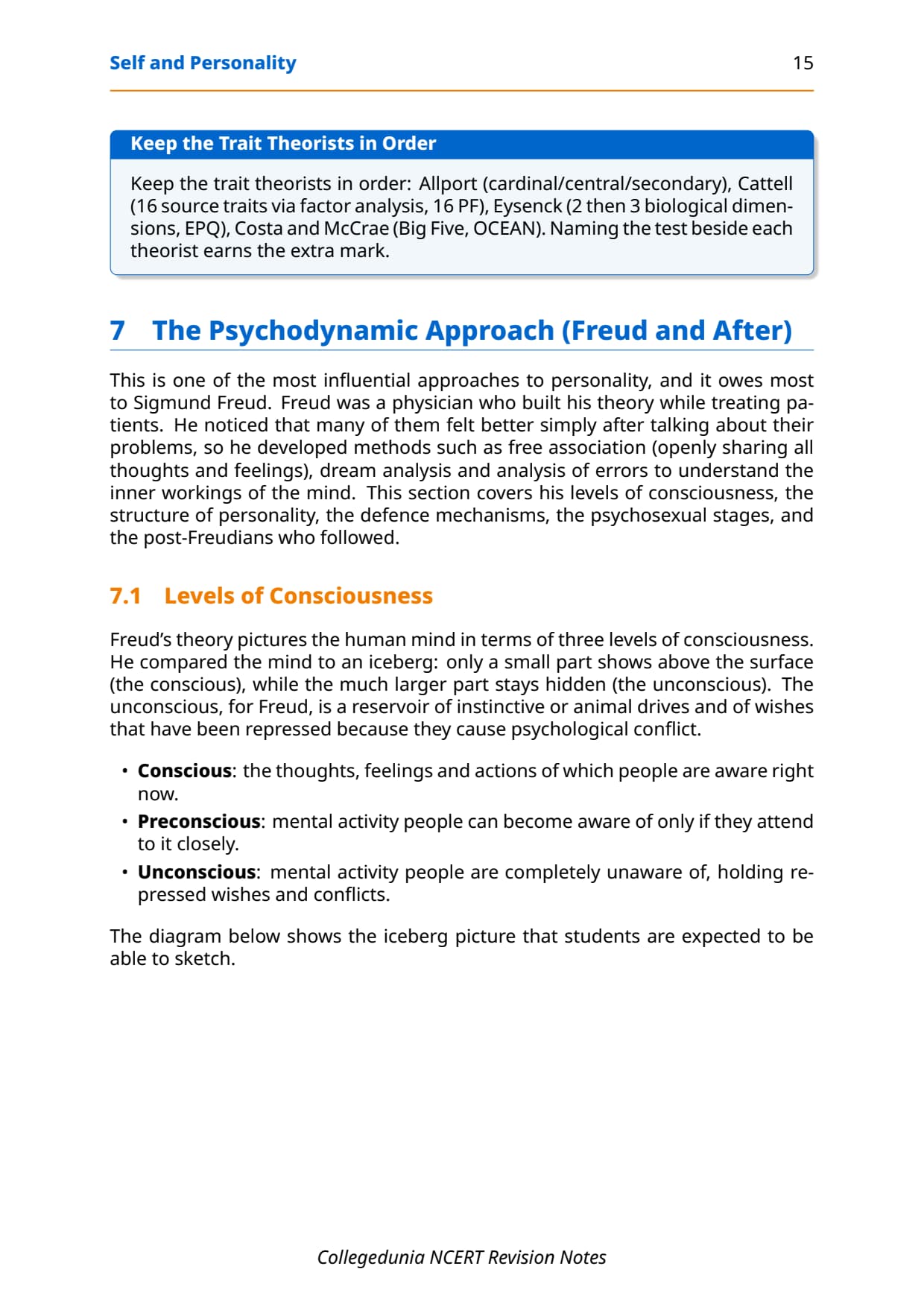
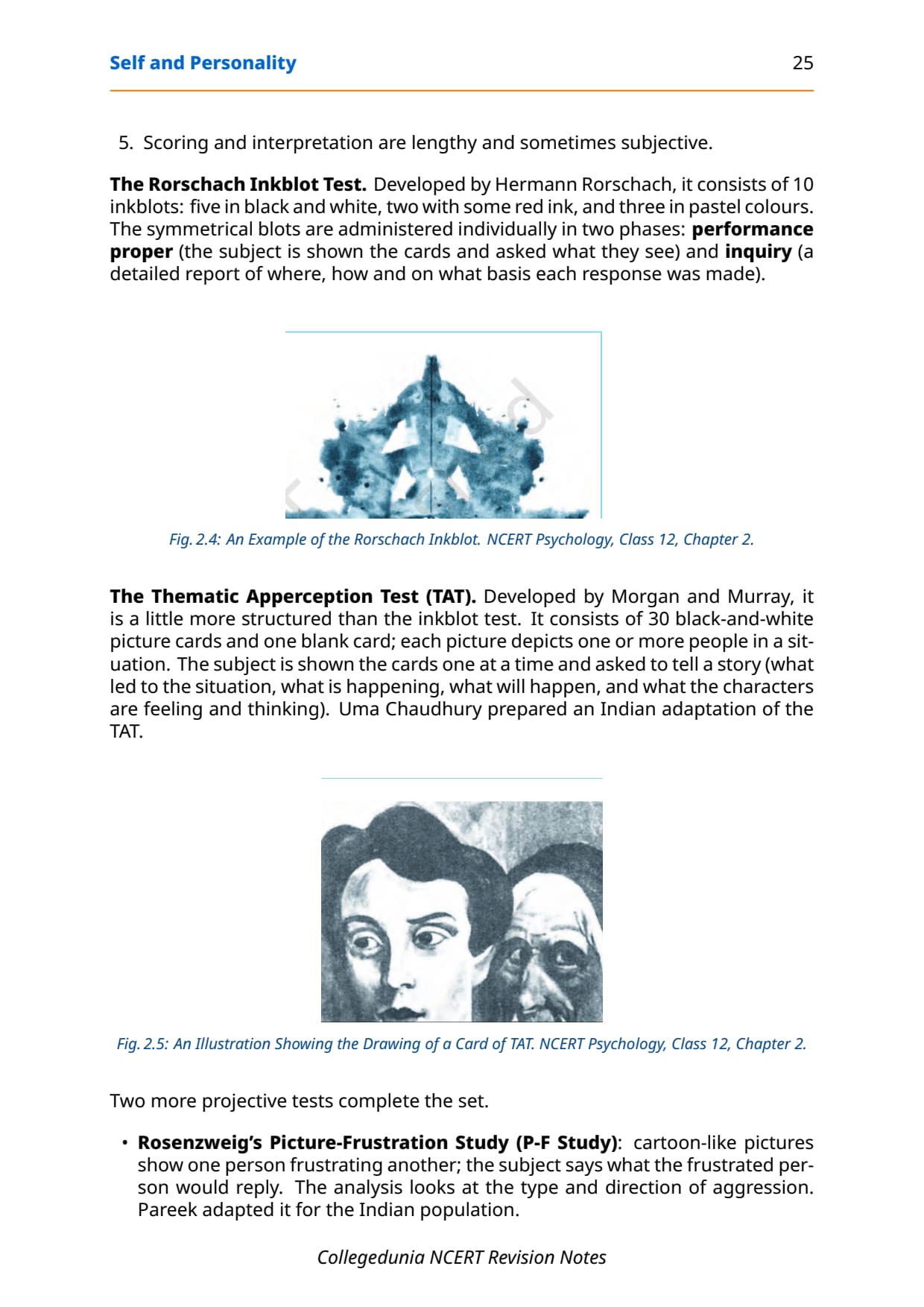
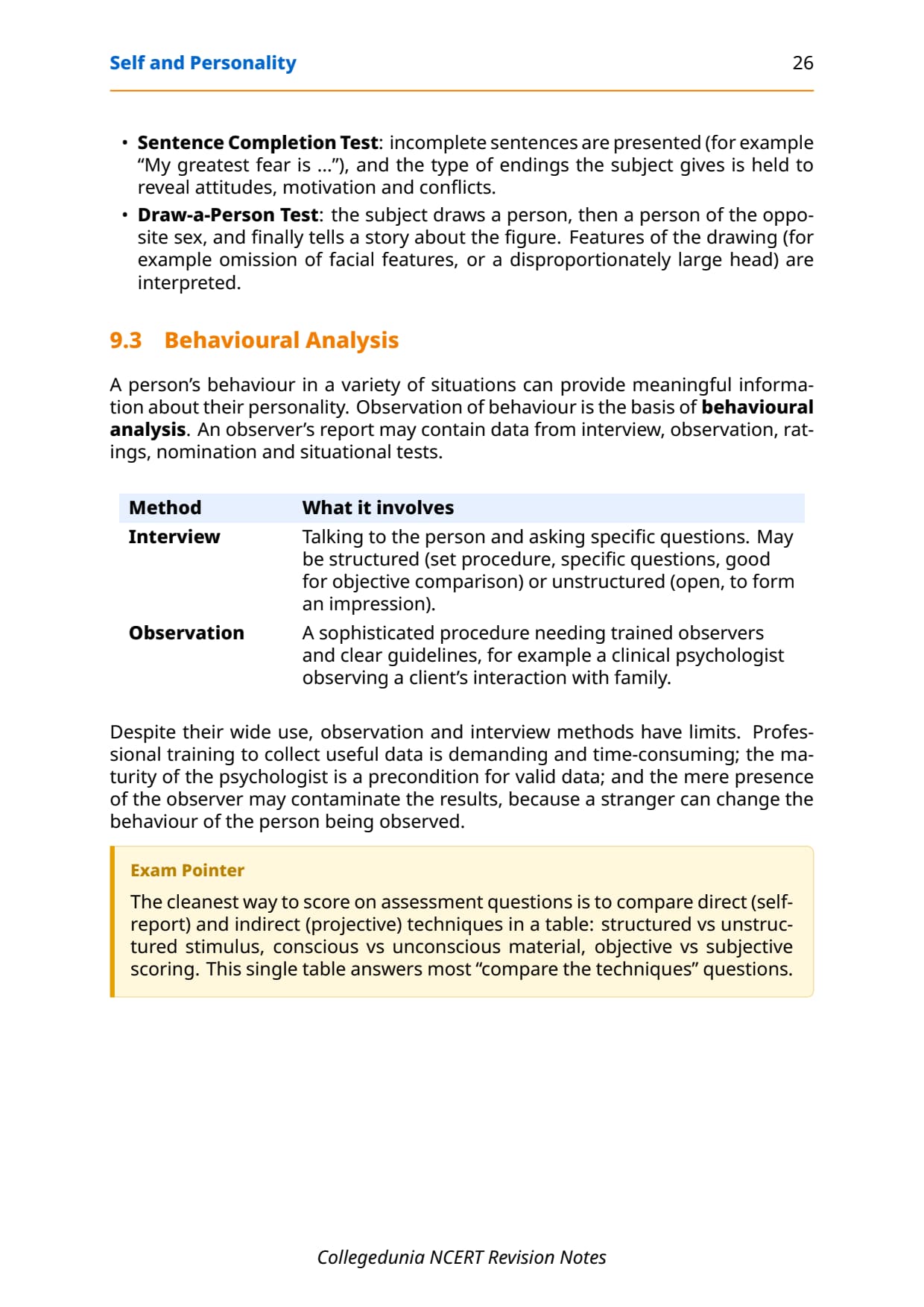
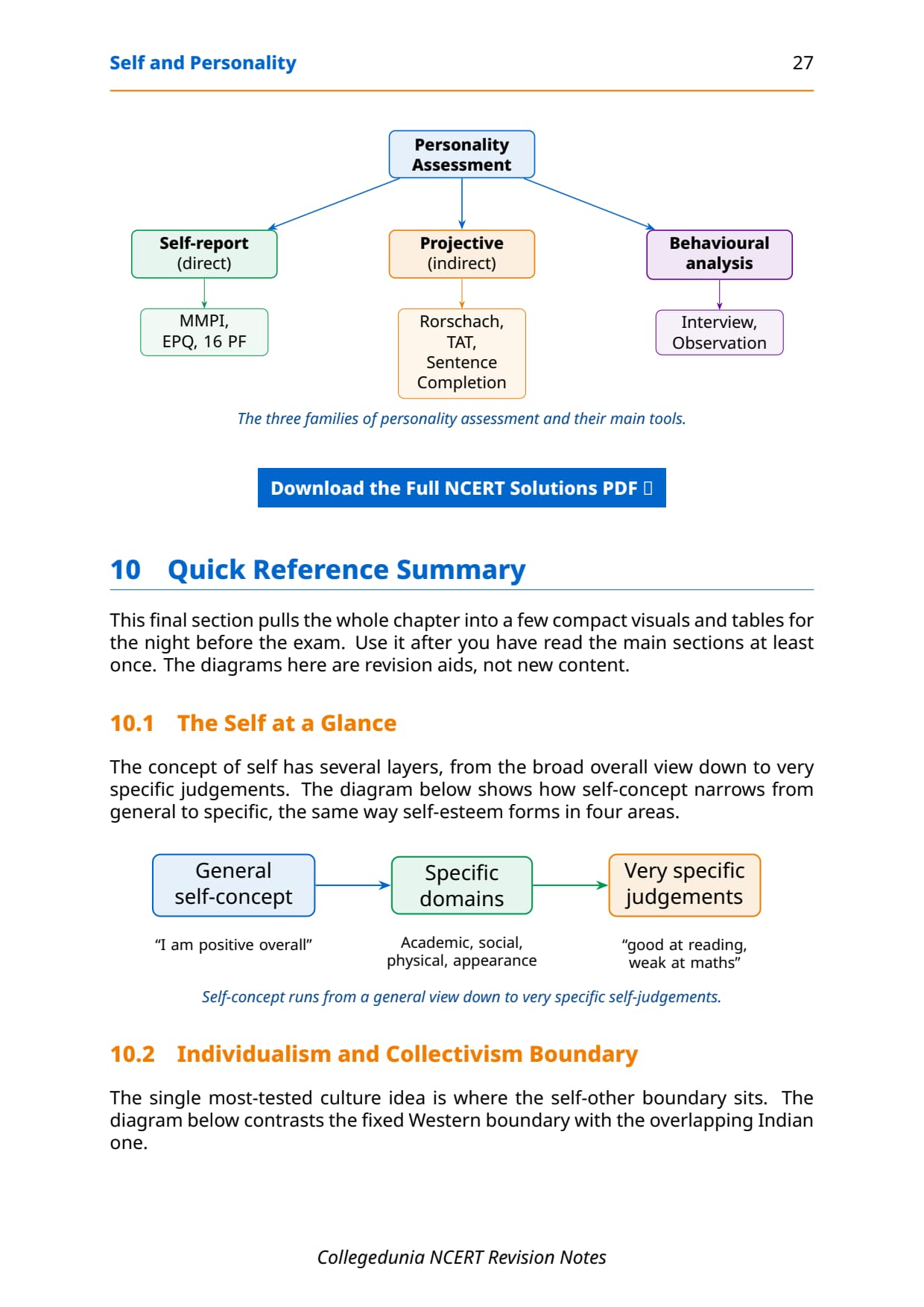
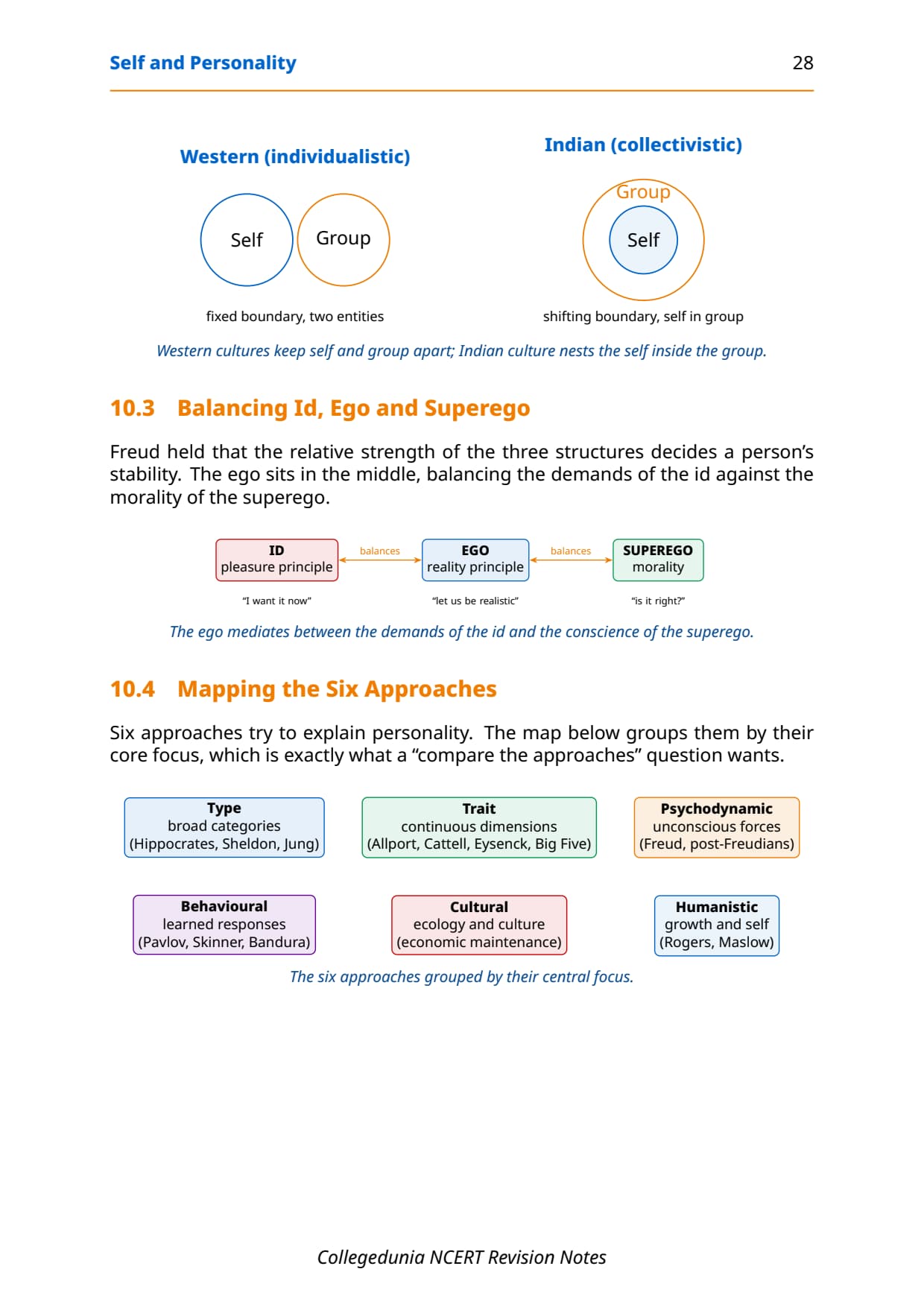
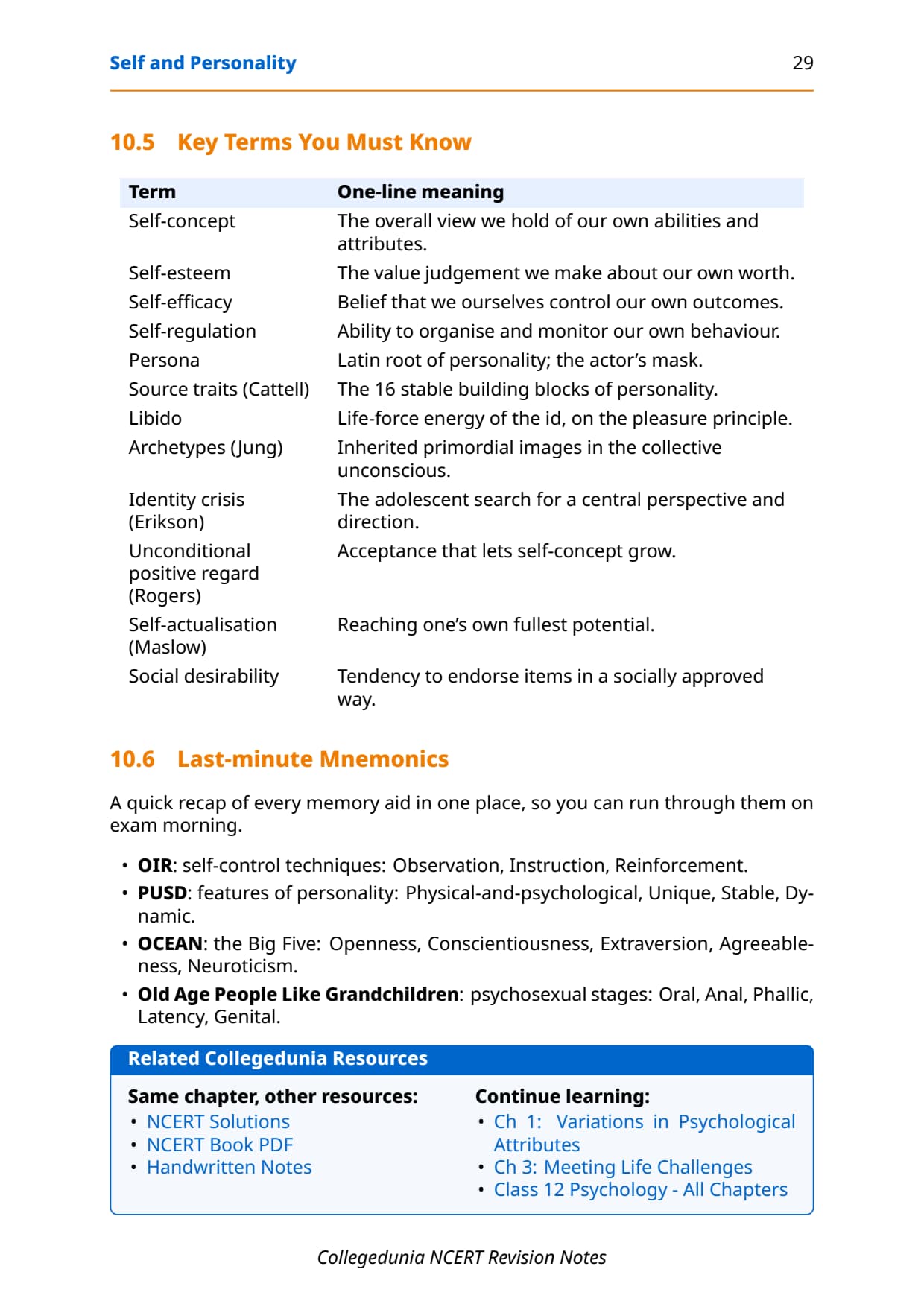
- All key topics covered: the self, personality approaches, Freud's structure and the assessment methods.
- This Class 12 Psychology chapter usually carries 8 to 10 marks in the board paper.
- Pairs with the NCERT Solutions, Handwritten Notes and Book PDF linked lower on this page.
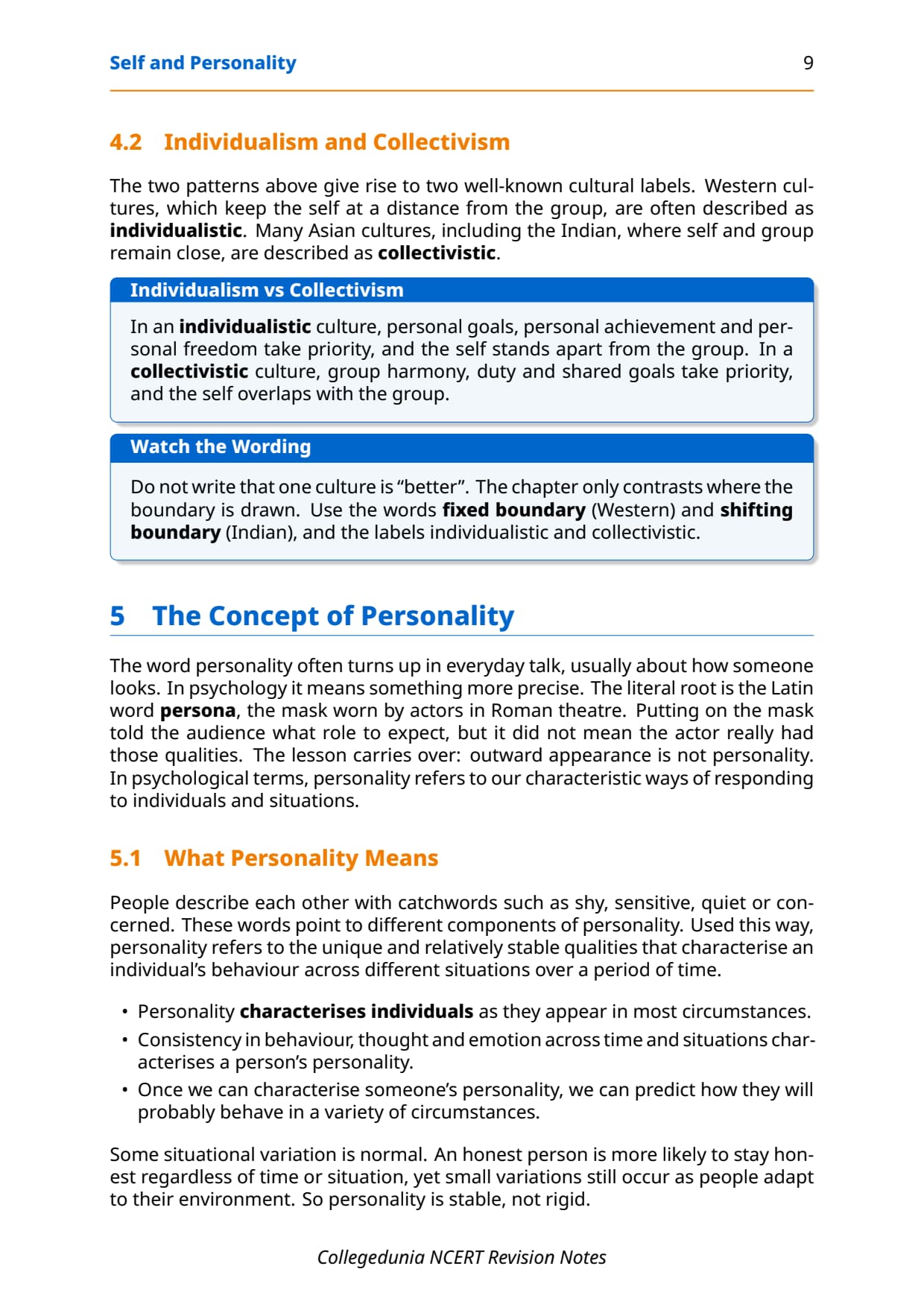
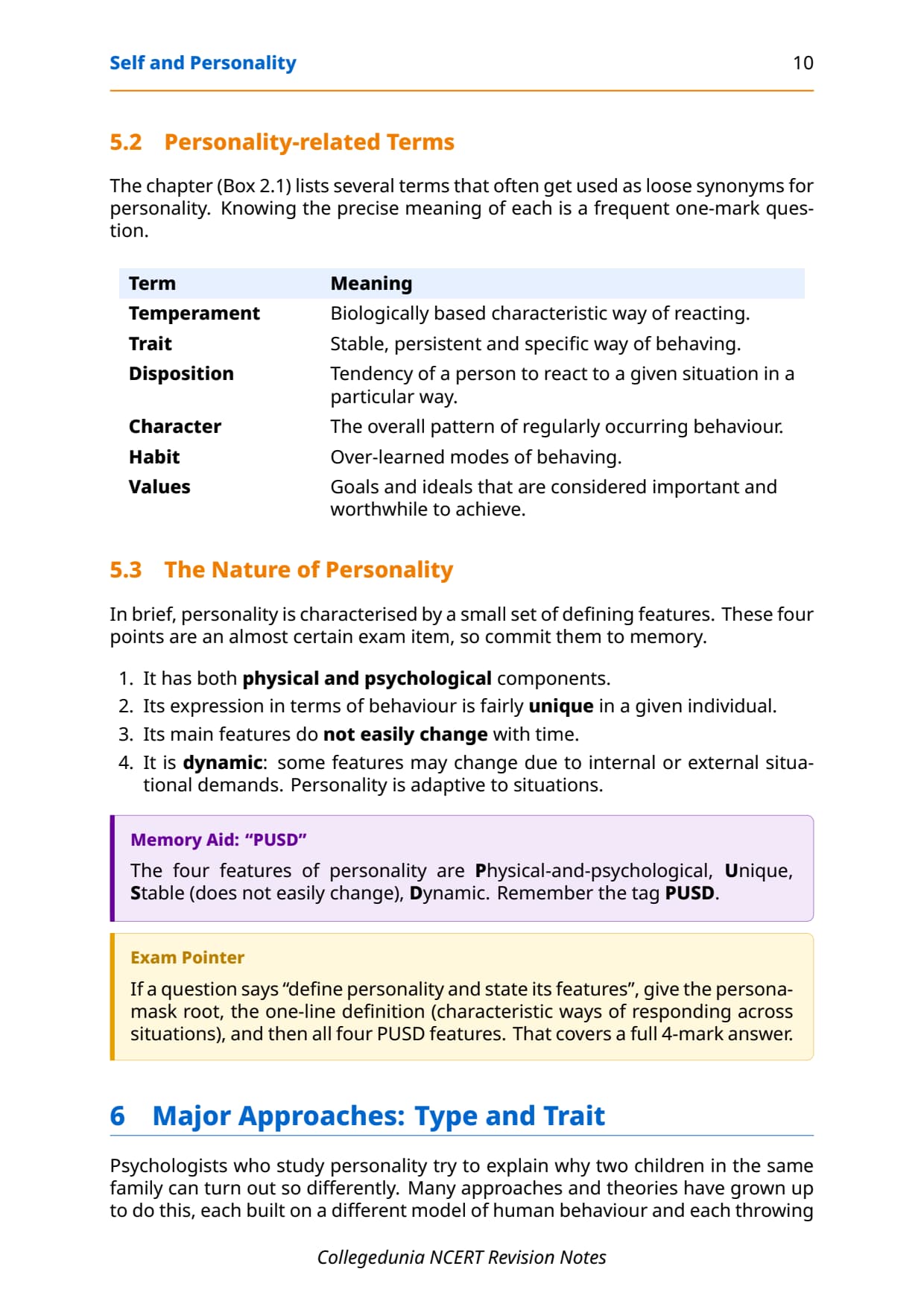
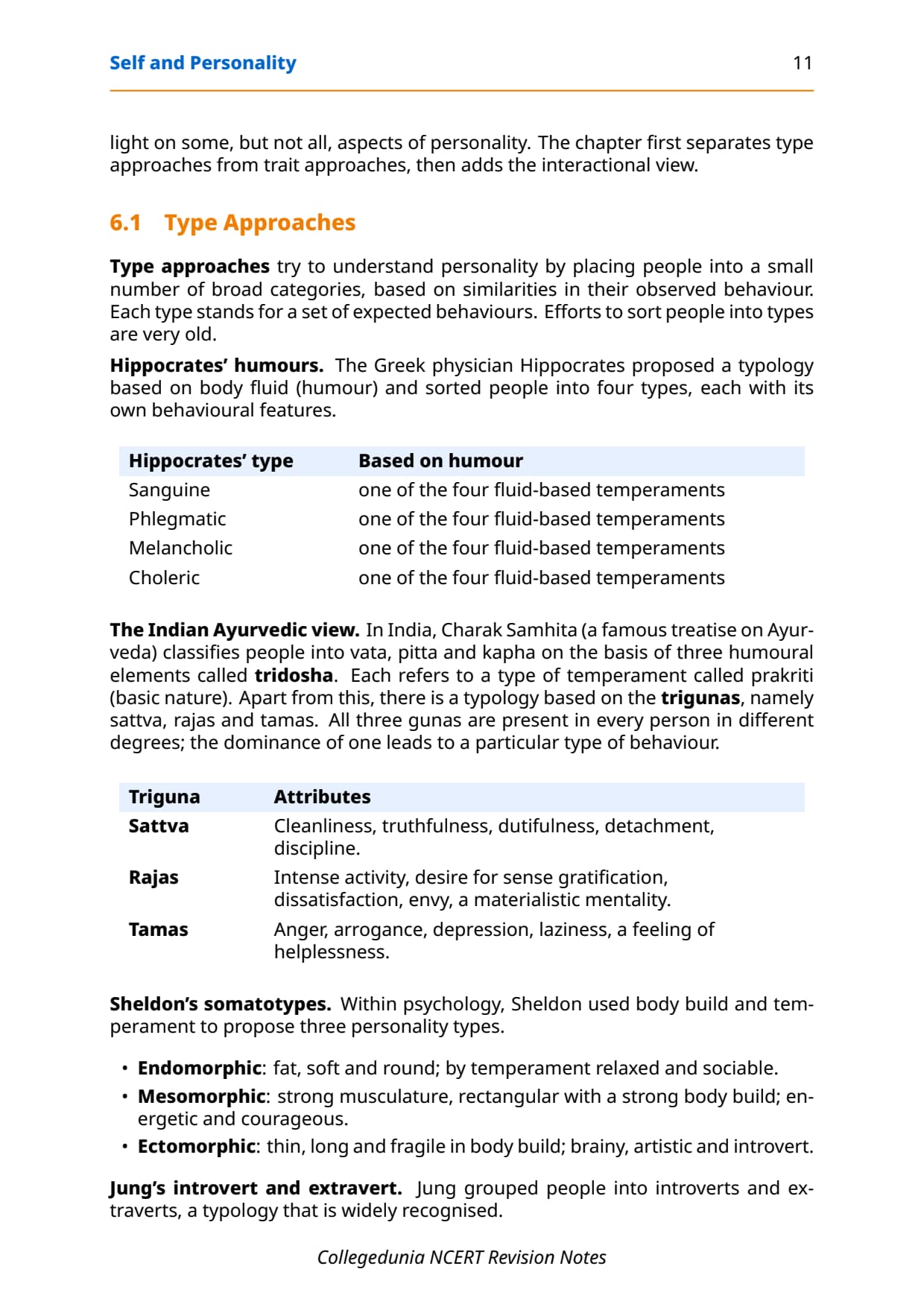
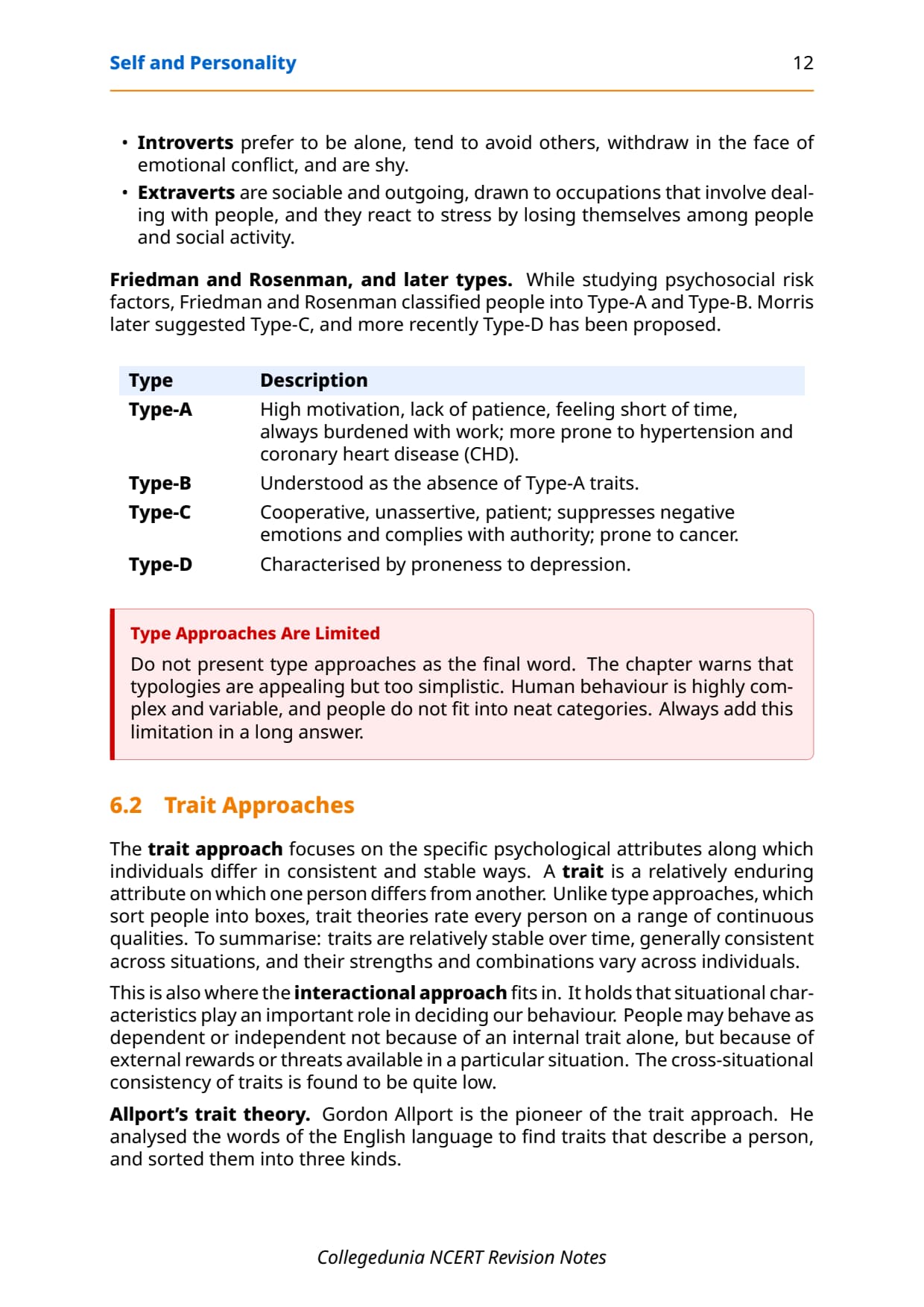
These Self and Personality Class 12 Notes are prepared from the official NCERT Psychology textbook and checked against the last five years of CBSE board papers.
Student Feedback: In a Collegedunia poll of 7,910 Class 12 Psychology students before the 2026 boards, 72% of students said a one-page notes sheet for Self and Personality made revision faster than re-reading the textbook. Most students used the id, ego and superego summary to lock in the Freud long answer.
Source: 2026-27 Class 12 Psychology student poll. Sample of 7,910 students from CBSE schools across 11 states.
What the Self and Personality Notes Cover
These notes condense Chapter 2 into the parts the board paper actually tests. They keep the focus on names, terms and tests, so students can revise the whole chapter in a single sitting. The chapter splits into three clear blocks that the notes follow in order.
- The self: self-concept, self-esteem, self-efficacy, self-regulation and the Indian versus Western view.
- Theories of personality: the type, trait, psychodynamic, behavioural, cultural and humanistic approaches.
- Assessment: self-report tests, observation and projective techniques.
Read in this order, the chapter builds from "who am I" to "how is personality measured". Keeping the three blocks separate is the single best way to avoid the mix-ups that cost marks, which is why these notes never blend a theory with a test.
The Self, Self-Esteem and Self-Regulation
The first block is about the self. The self is the whole of a person's ideas and feelings about who they are. The notes pin down each related term so students can use them precisely in an answer. The table keeps the four self-terms apart.
| Term | Meaning |
|---|---|
| Self-concept | The way a person perceives and describes their own self. |
| Self-esteem | A person's overall sense of self-worth. |
| Self-efficacy | The belief that one can plan and act to reach a goal. |
| Self-regulation | Organising and monitoring one's own behaviour, including delay of gratification. |
One key point for the exam is that the Indian self has a shifting boundary while the Western self has a fixed one. So the Indian view stresses the social or relational self, and the Western view stresses the personal self, a contrast that often opens a short-answer question.
Approaches to the Study of Personality
Personality is the unique and relatively stable pattern of thinking, feeling and acting in a person. The notes group the six approaches into "describe" and "explain" so students can plan a long answer fast. The table sets them out with one key name each.
| Approach | Core idea and key name |
|---|---|
| Type | Sorts people into broad types; Hippocrates, Sheldon, Ayurveda. |
| Trait | Describes stable traits as a matter of degree; Allport, Cattell, Five Factors. |
| Psychodynamic | Unconscious id, ego and superego shape behaviour; Freud. |
| Behavioural | Personality as learned habits and responses; Skinner. |
| Cultural | Personality as adaptation to ecology and culture; Berry. |
| Humanistic | Self, growth and self-actualisation; Rogers, Maslow. |
A useful revision line is that type and trait describe personality, while the other four try to explain how it forms. Sorting the six this way turns a long, scattered answer into a tidy, scoring one.
Freud's Structure and the Psychodynamic View
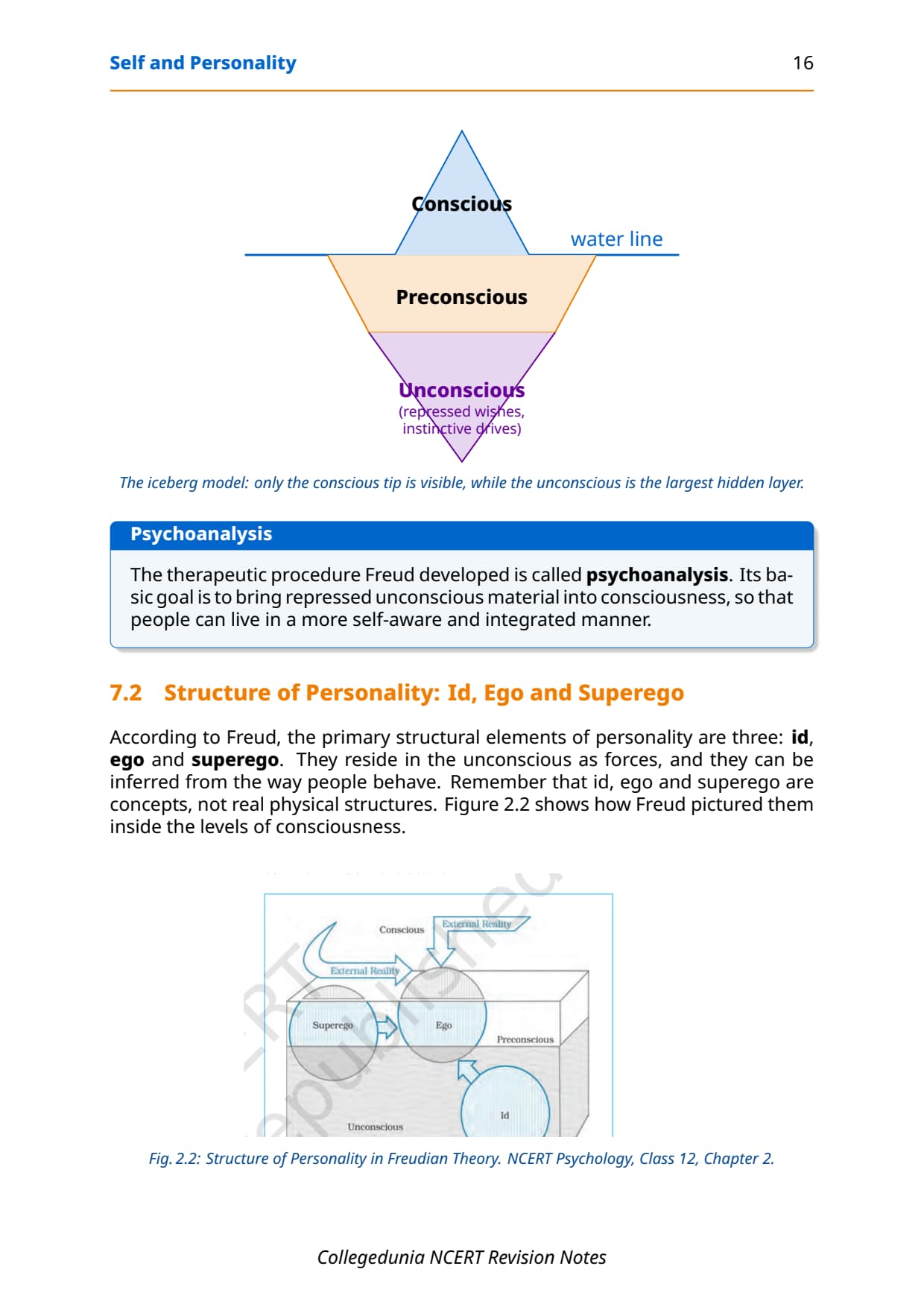
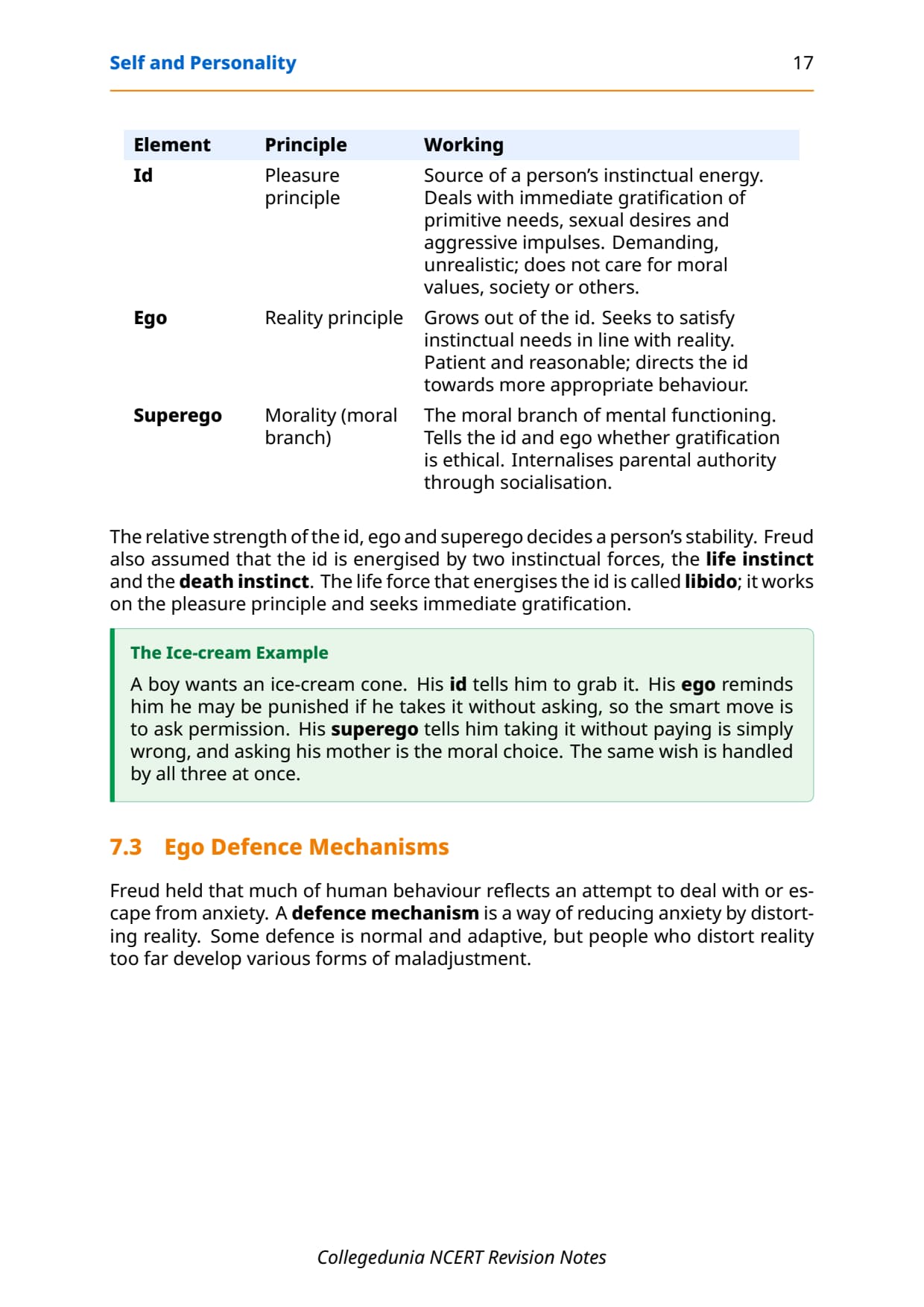
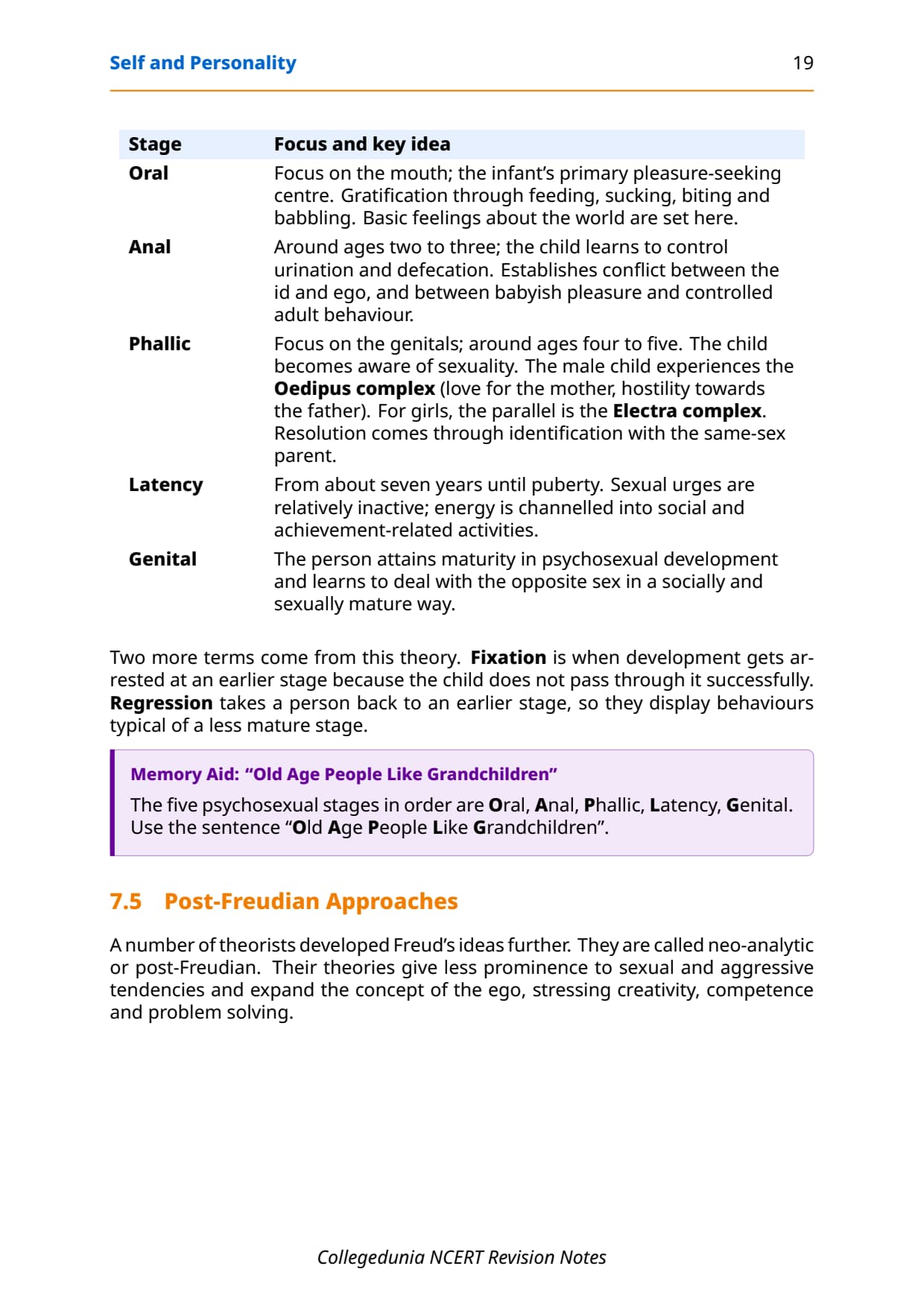
Freud's structure of personality is the most-asked long answer in this chapter. The notes show the three parts and the principle each one follows, so students can draw and label them in the exam. The figure below sums up the structure at a glance.
- Id: the source of psychic energy, works on the pleasure principle.
- Ego: grows out of the id, works on the reality principle and mediates with the world.
- Superego: the moral arm, works on the morality principle, holds the conscience and ideals.
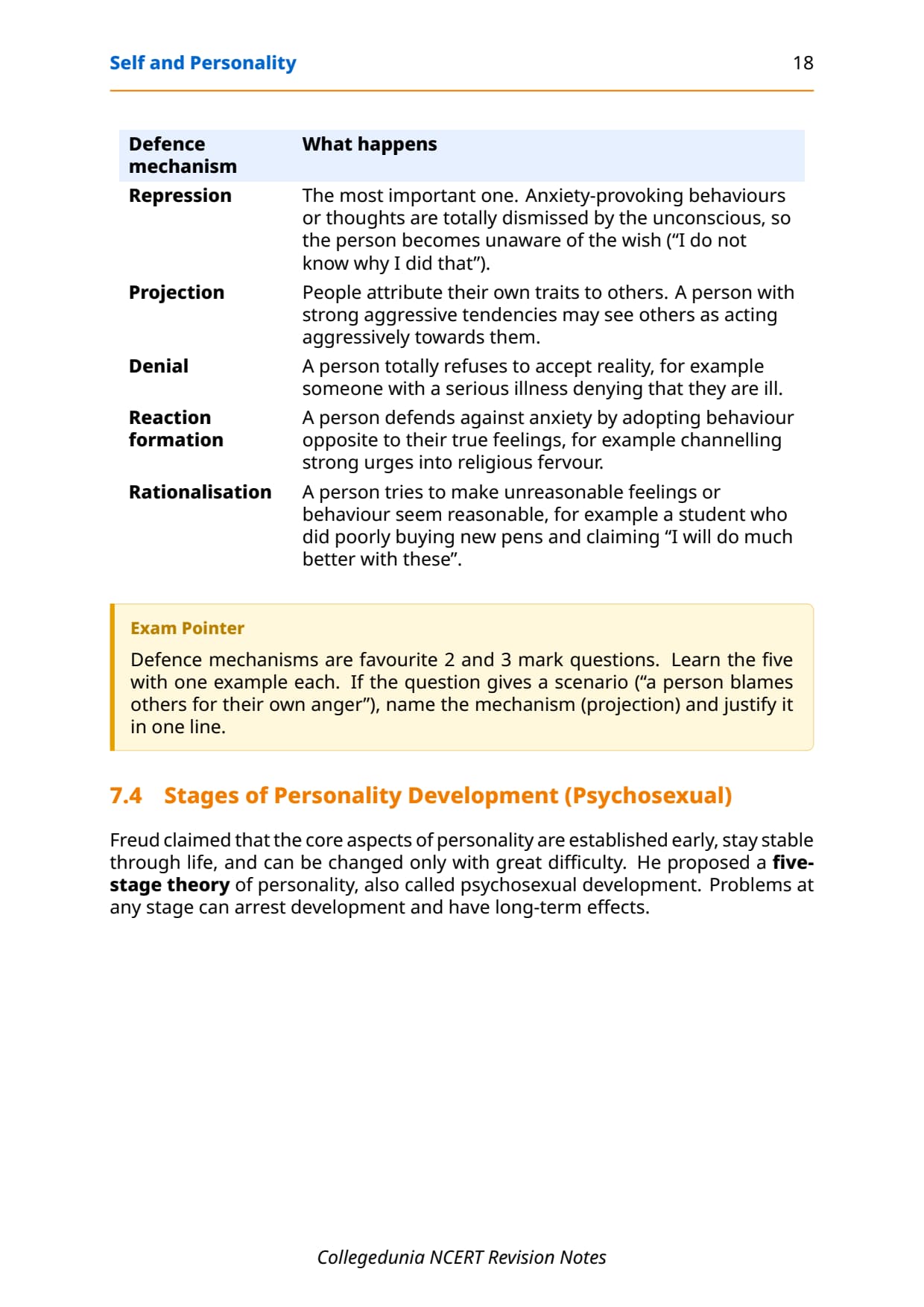
- Defence mechanisms: the ego's ways of coping with anxiety, such as repression and projection.
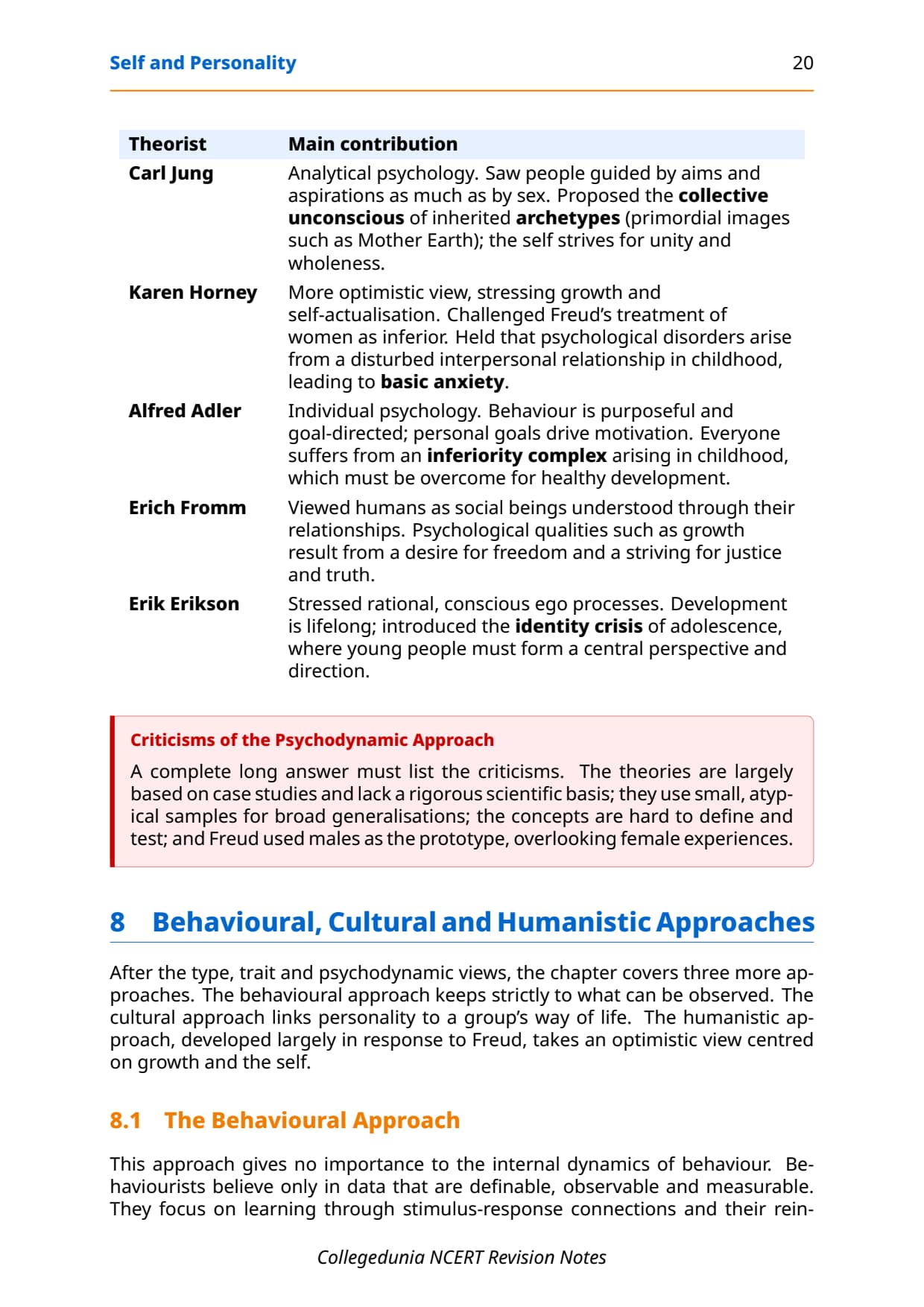
The exam point worth bolding is that healthy behaviour comes from a balance among the id, ego and superego. Add a line on Horney (basic anxiety) and Adler (inferiority feelings) to round off the psychodynamic block, since these are short-answer favourites.
Methods of Personality Assessment
The last block lists how personality is measured. The notes pair each method with its named tests and its main limit, because the board paper often asks for both. The table keeps the three methods clearly apart.
| Method | Named tests and main limit |
|---|---|
| Self-report | MMPI and 16 PF; socially desirable answers. |
| Observation and interview | Behaviour ratings; observer bias and effort. |
| Projective | Rorschach and TAT; subjective, hard-to-score results. |
A key fact to keep ready is that structured tests are self-report (MMPI, 16 PF) while projective tests use vague stimuli (Rorschach, TAT). Mixing these two is the most common slip in the assessment answer.
Self and Personality Important Questions and Exam Pointers
These pointers show how CBSE frames the chapter, so students know how much to write for each mark band. The chapter is a steady source of one long and one short answer in most papers.
- Long answer (6 marks): Freud's structure of personality, or define personality and list the approaches.
- Short answer (4 marks): Indian versus Western self, type versus trait, or projective techniques.
- Very short answer (2 marks): delay of gratification, self-actualisation, or the two structured tests.
- Application: a case study tested through Carl Rogers and conditional positive regard.
For fast recall, students should keep the self and personality class 12 important questions ready in their own words. The repeat items are Freud's three parts, the type versus trait contrast and the named tests, so revise those first when time is short.
Common Mistakes Students Make in This Chapter
A few errors cost marks in this chapter every year. Most come from swapping theorists or tests. Fixing them is the quickest way to lift a notes-based revision.
- Tagging the ego with the pleasure principle - the id follows pleasure, the ego follows reality.
- Listing the Rorschach as a structured test - it is projective; MMPI and 16 PF are structured.
- Saying the Indian self is fixed - in the Indian view the boundary shifts.
- Mixing Horney (basic anxiety) with Adler (inferiority feelings).
- Treating a type as the same as a trait - a type is all-or-none, a trait is a matter of degree.
Students who fix these five points usually move up a grade band on the theory answers. The exam rewards exact names, so always attach the right theorist or test to the right idea.
How These Notes Pair with the Solutions and Book PDF
These notes give the quick summary. To revise the full chapter, students should use them alongside the other resources for the same chapter, all linked in the table below.
| Resource | Best used for |
|---|---|
| Self and Personality Class 12 NCERT Solutions | Step-by-step answers to all 11 back-exercise questions |
| Self and Personality Class 12 Handwritten Notes | Last-minute, one-shot revision in a scanned notebook style |
| Self and Personality NCERT Book PDF | Reading the original NCERT chapter text, figures and boxes |
Tip: revise from these notes first, then attempt the solutions on your own to test recall. That order fixes the names and tests far faster than reading alone.
All Class 12 Psychology Notes by Chapter
The table links the Notes for every chapter in Class 12 Psychology, so students can move across the course in one click. Self and Personality is highlighted.
| Chapter | Notes |
|---|---|
| Chapter 1 | Variations in Psychological Attributes |
| Chapter 2 | Self and Personality |
| Chapter 3 | Meeting Life Challenges |
| Chapter 4 | Psychological Disorders |
| Chapter 5 | Therapeutic Approaches |
| Chapter 6 | Attitude and Social Cognition |
| Chapter 7 | Social Influence and Group Processes |
FAQs on Self and Personality Class 12 Notes
Self and Personality Class 12 Psychology Notes Common Questions
Ques. Where can I download the Self and Personality Class 12 Notes PDF?
Ans. You can download the Self and Personality Class 12 Psychology Notes PDF free from this page. The notes follow the 2026-27 NCERT and cover the self, the theories of personality and the assessment methods.
Ques. What are the main topics in Self and Personality class 12 notes?
Ans. The notes cover the self (self-concept, self-esteem, self-efficacy, self-regulation), the six approaches to personality, Freud's structure of id, ego and superego, and the three methods of assessment.
Ques. How does Freud explain the structure of personality?
Ans. Freud divides personality into the id, the ego and the superego. The id works on the pleasure principle, the ego on the reality principle and the superego on the moral principle. Balance among the three gives healthy behaviour.
Ques. What is the difference between type and trait approaches?
Ans. The type approach sorts people into a few broad, all-or-none categories. The trait approach describes people on stable traits that are a matter of degree. Traits are seen as more realistic and research based.
Ques. Are these notes enough for the Class 12 Psychology board exam?
Ans. The notes cover every exam-relevant point in the chapter, so they are strong for revision. For full preparation, pair them with the NCERT Solutions for the 11 back-exercise questions and read the original chapter once from the Book PDF.



Comments