




These Security in the Contemporary World Class 12 Notes give a quick, exam-ready summary of what security means today, set to the 2026-27 CBSE syllabus. The notes pull together both the traditional and non-traditional notions of security from Chapter 5 of Contemporary World Politics. Students can use them for a fast revision the night before a test or to fix the main ideas before they attempt the back-exercise questions.
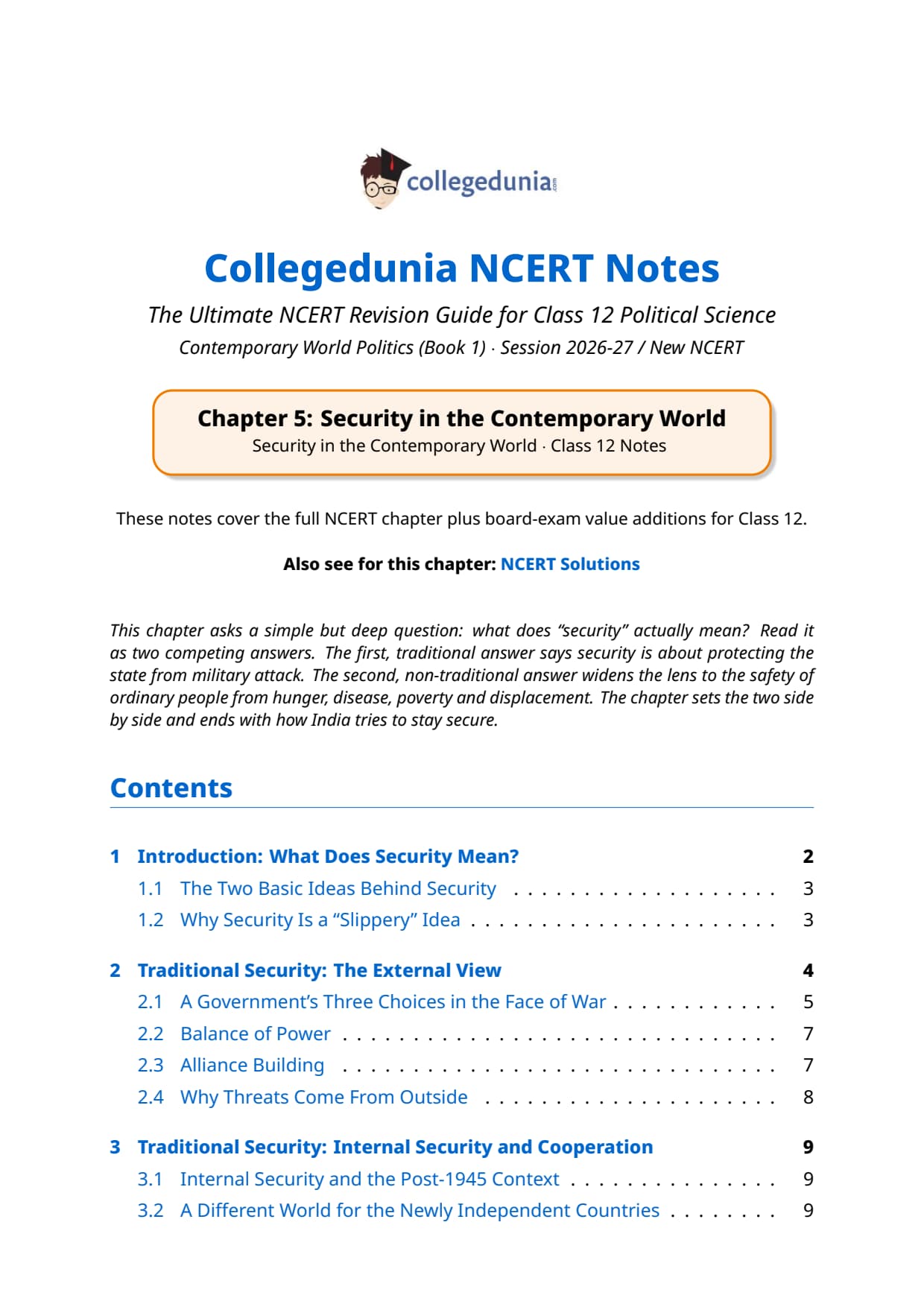
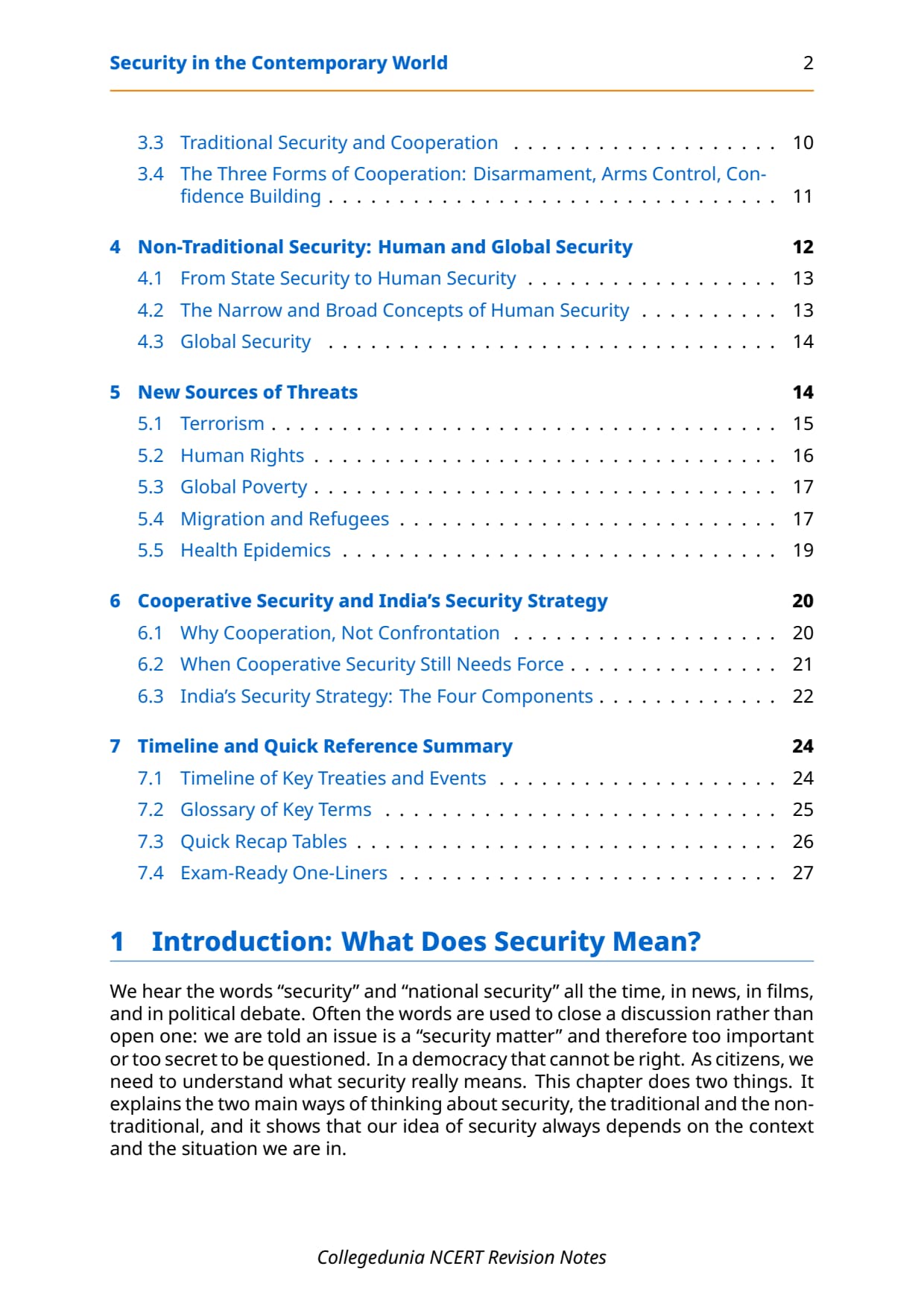
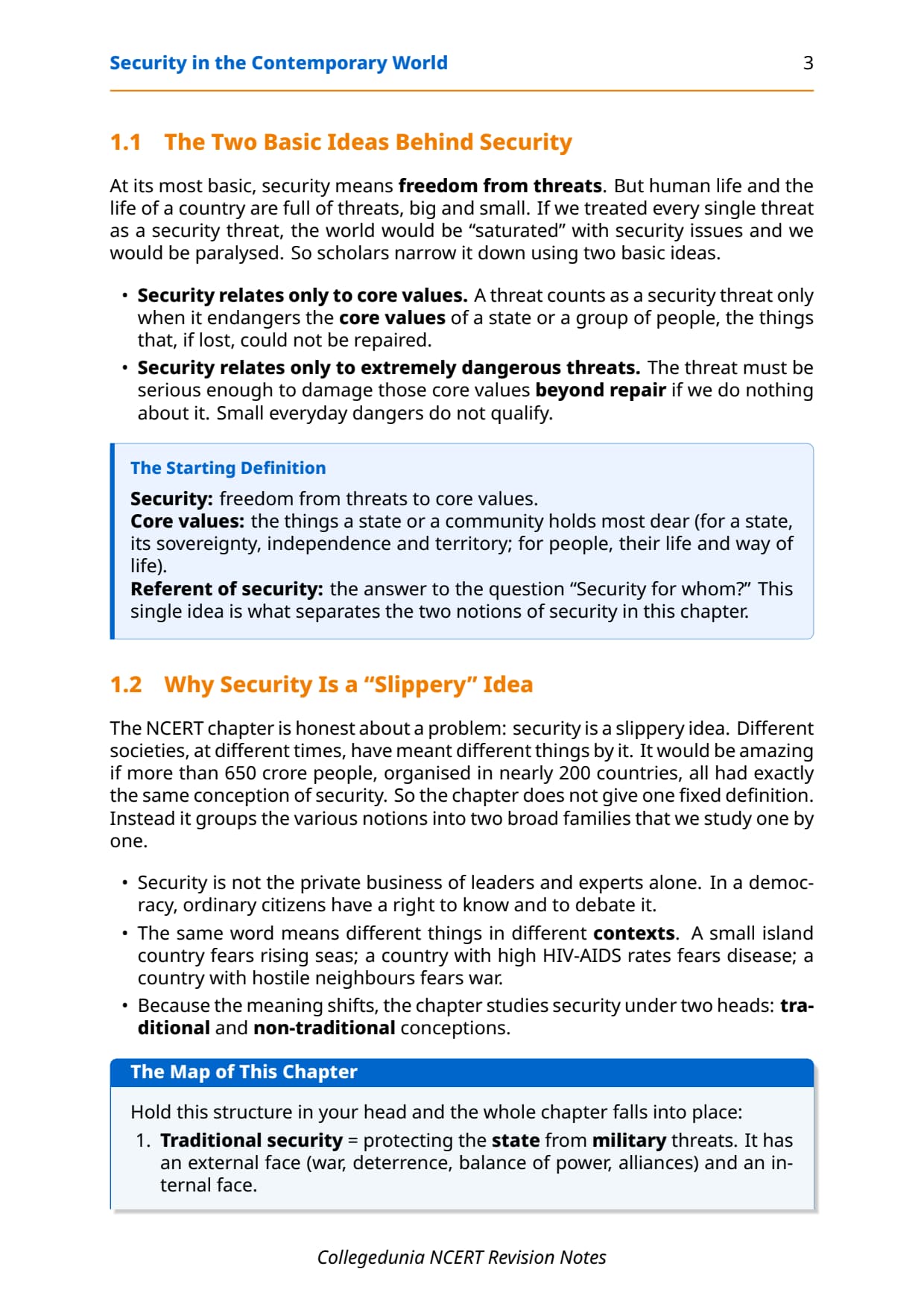
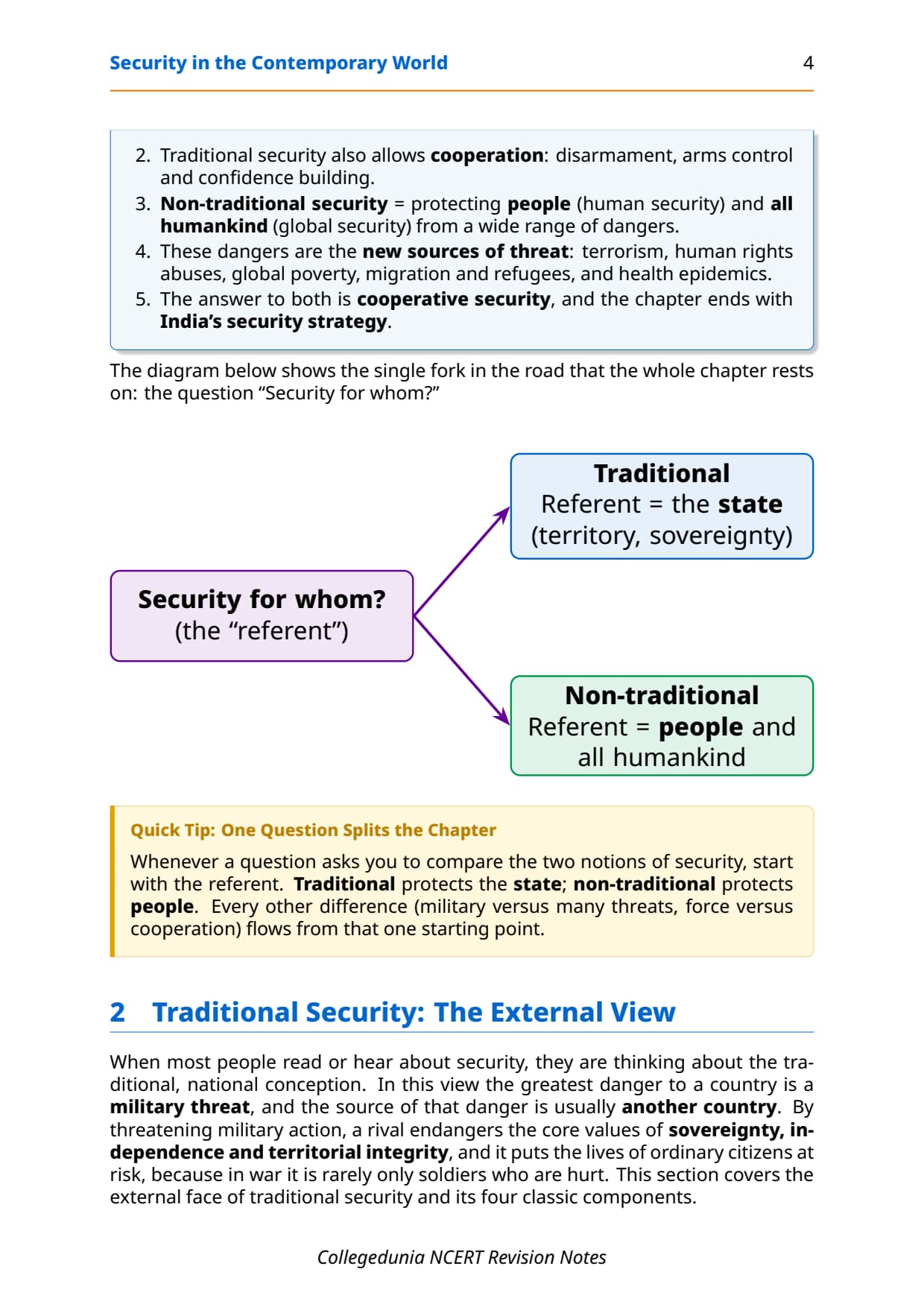
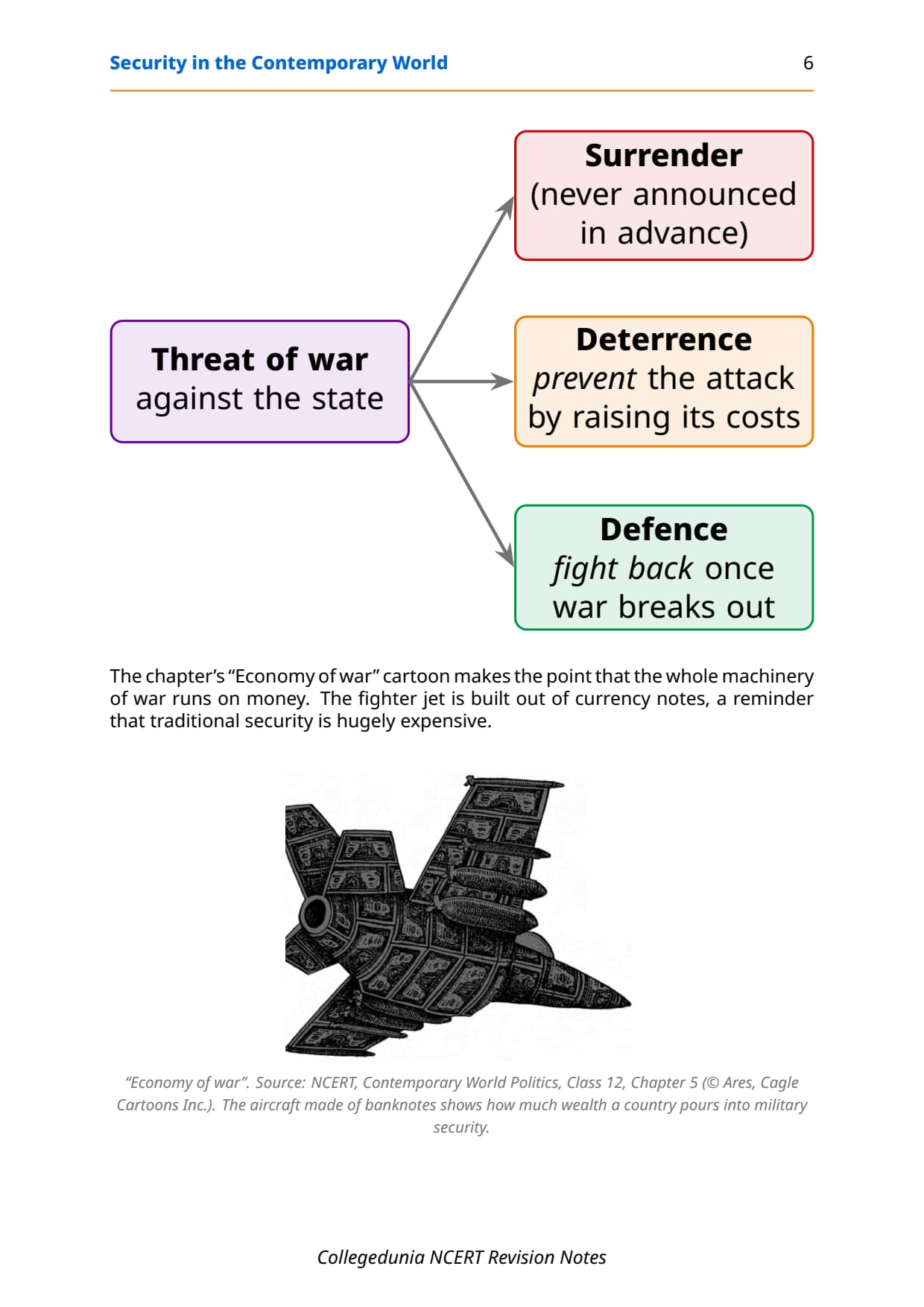
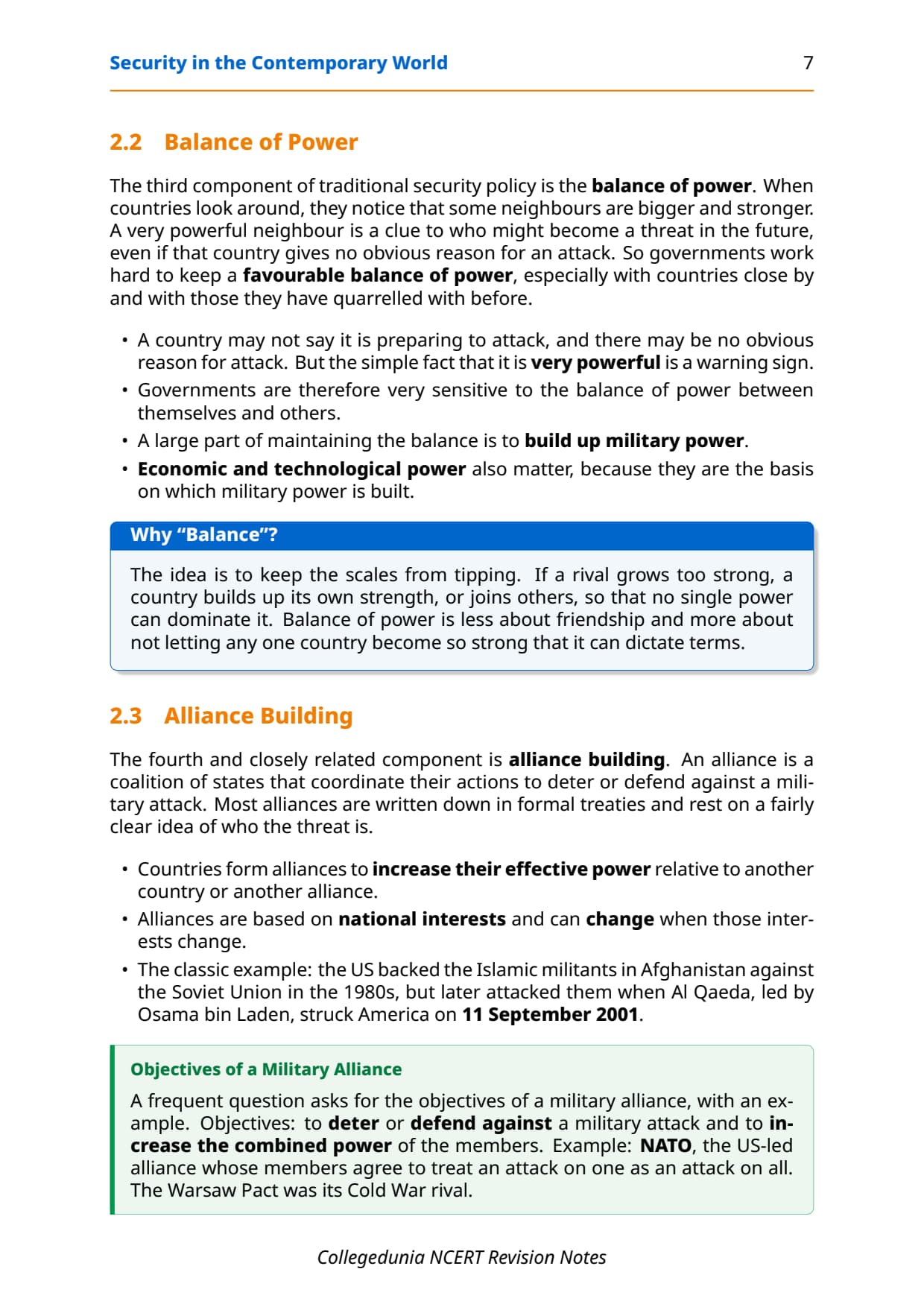
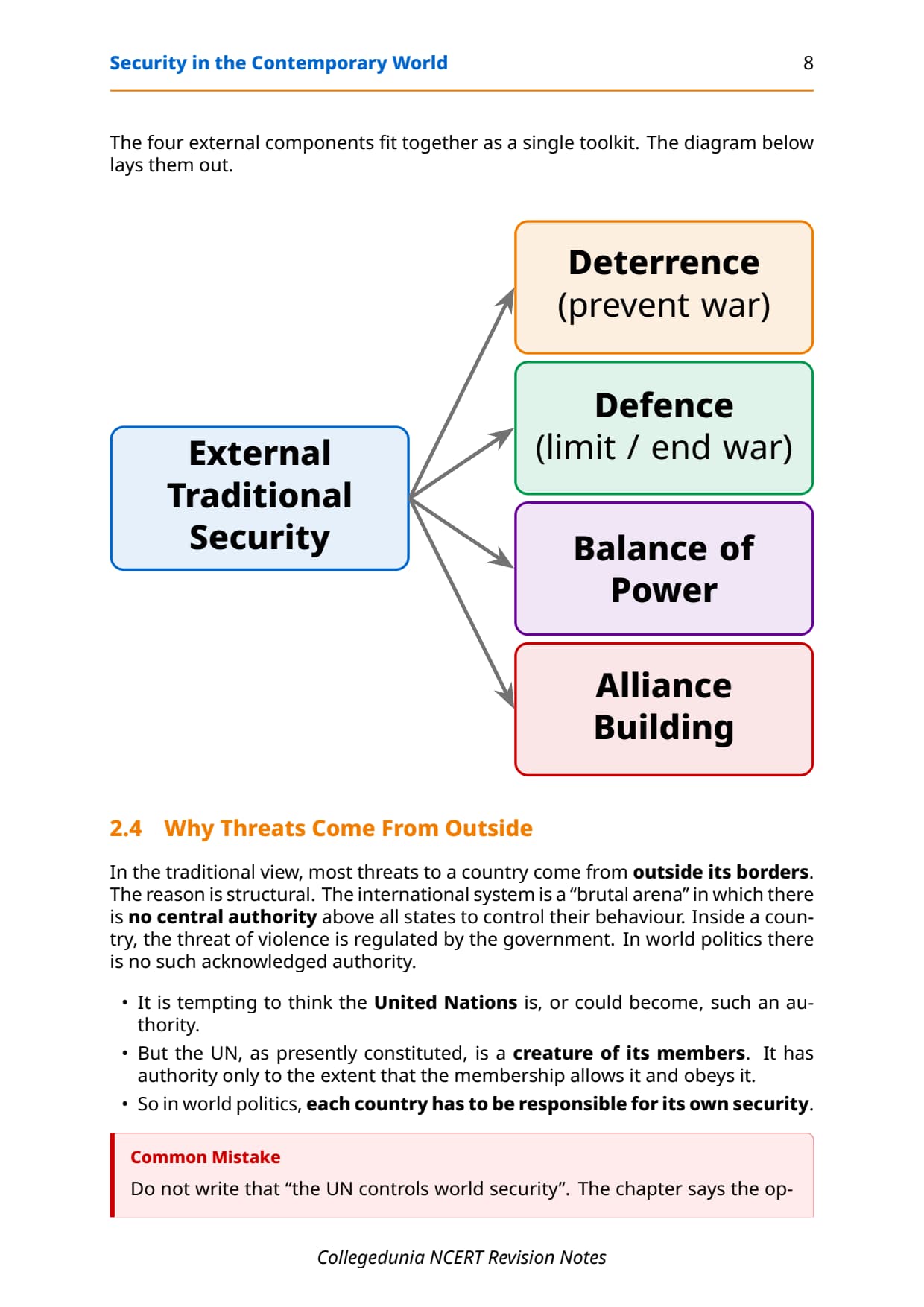
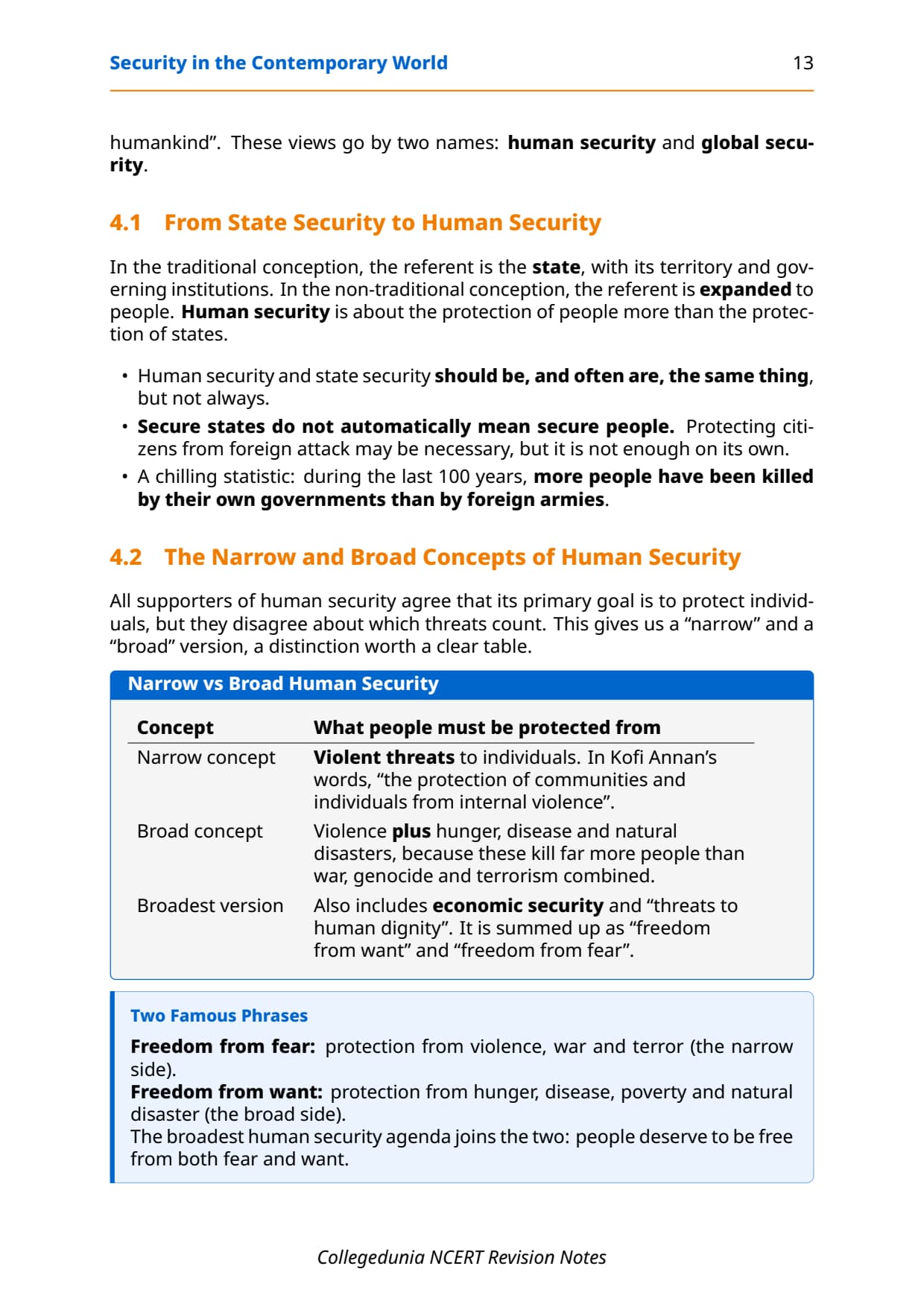
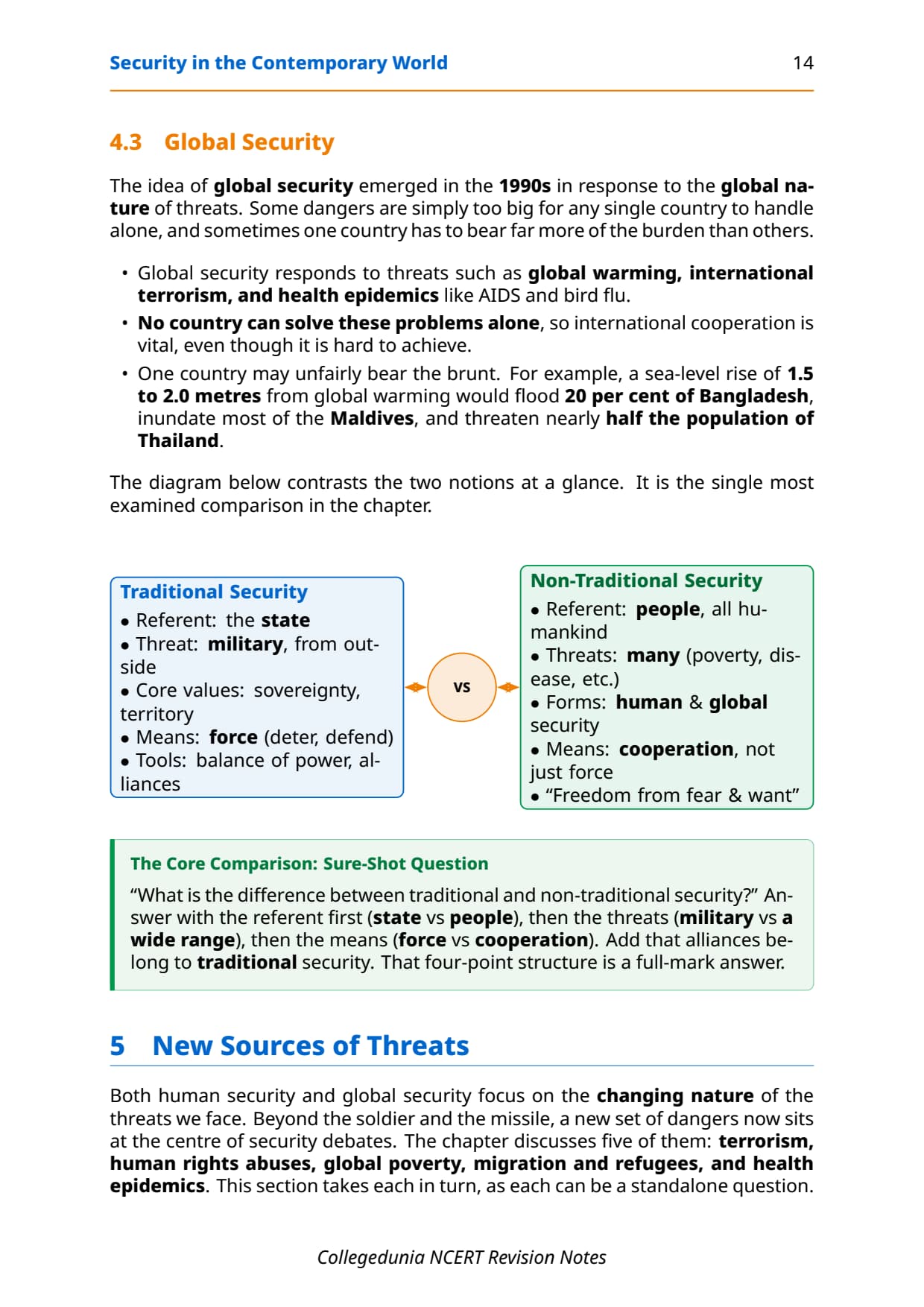
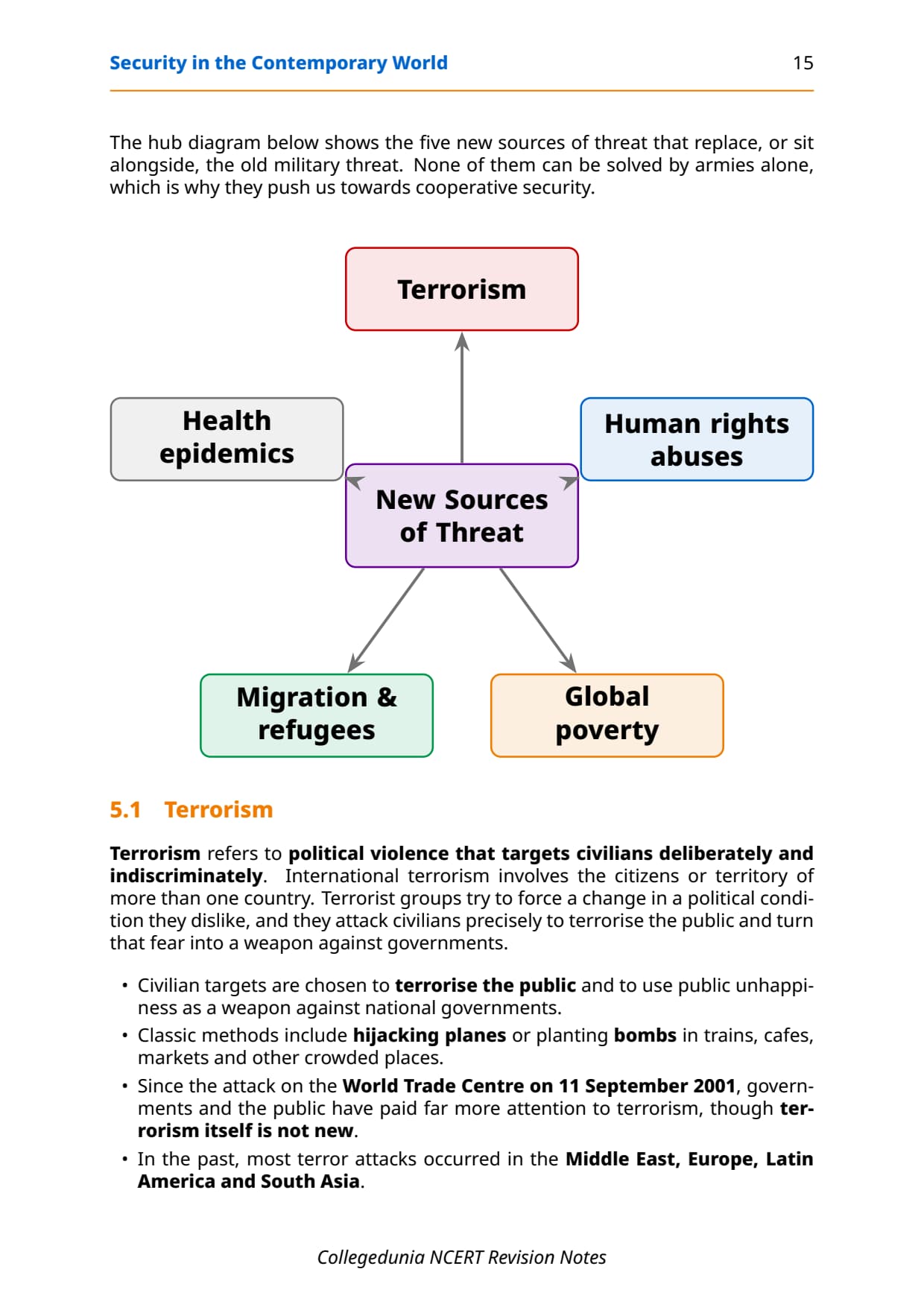
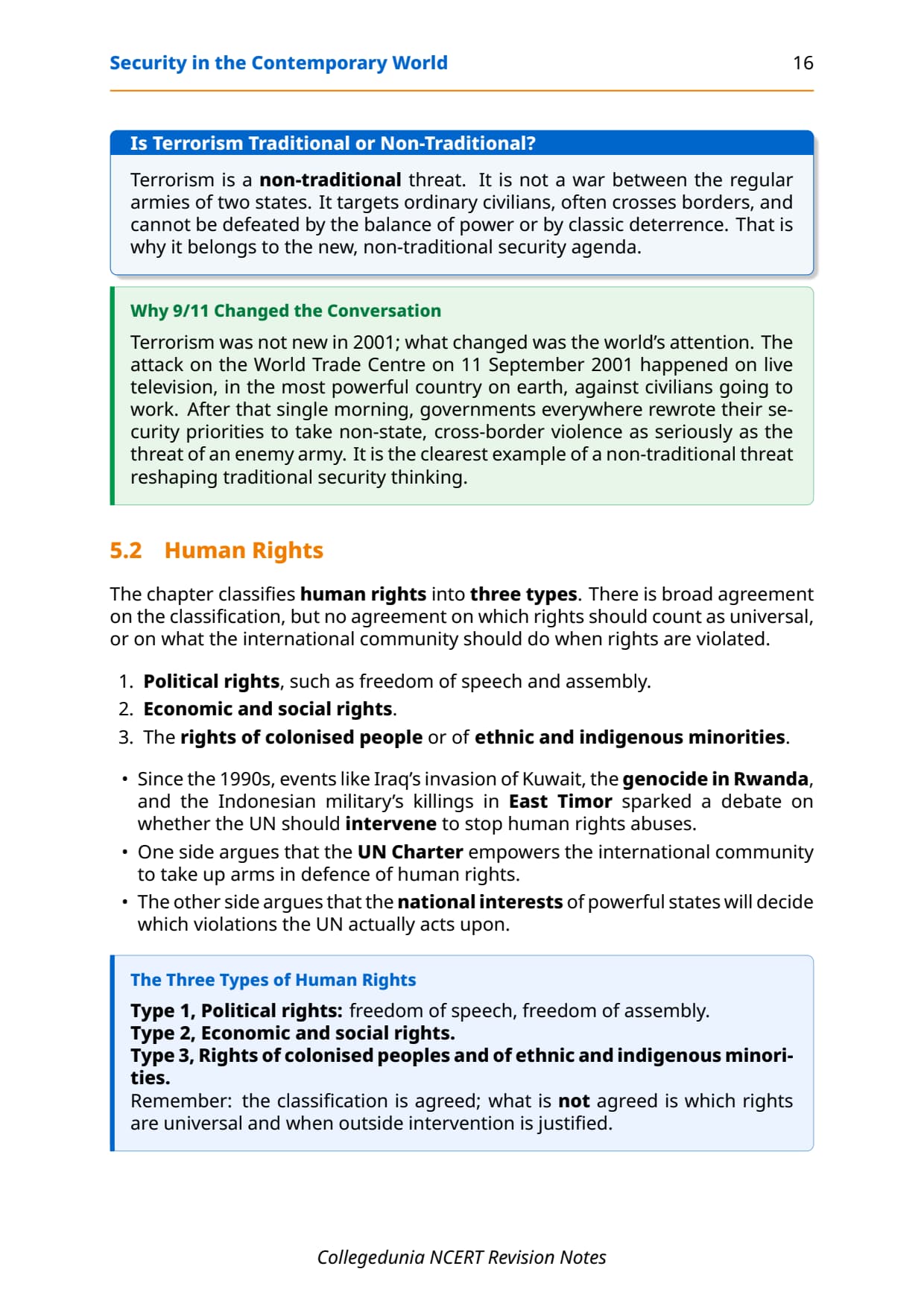
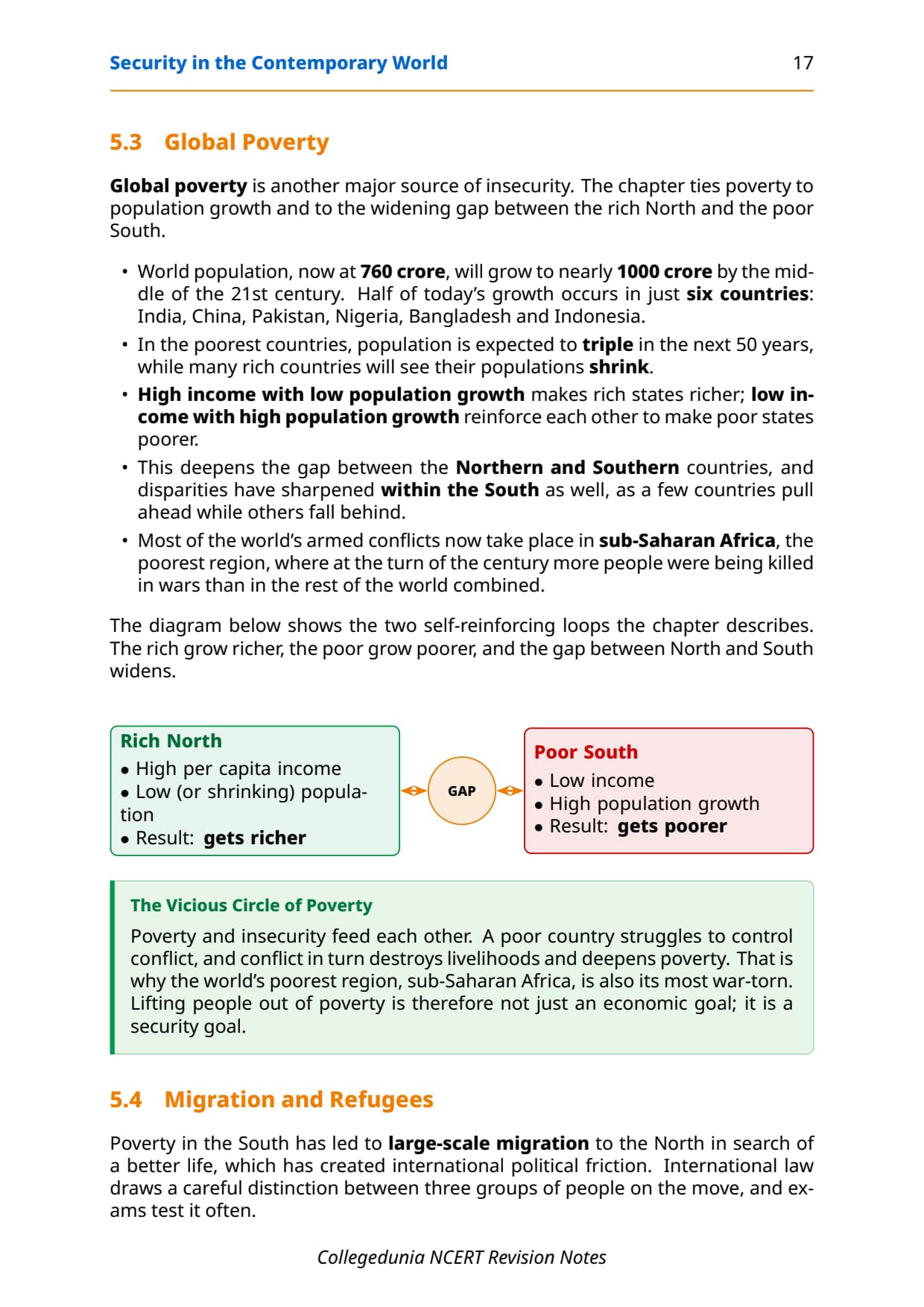
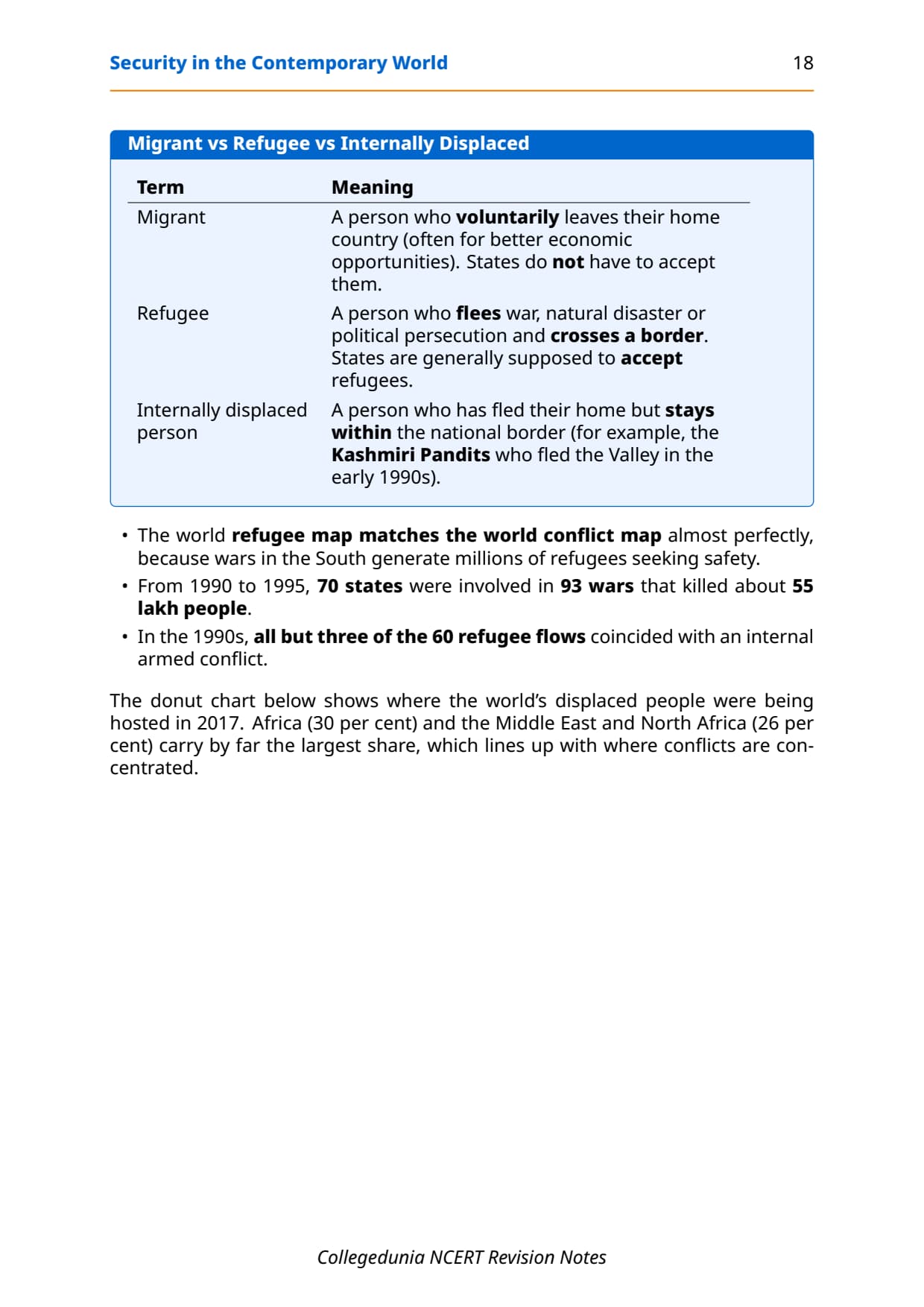
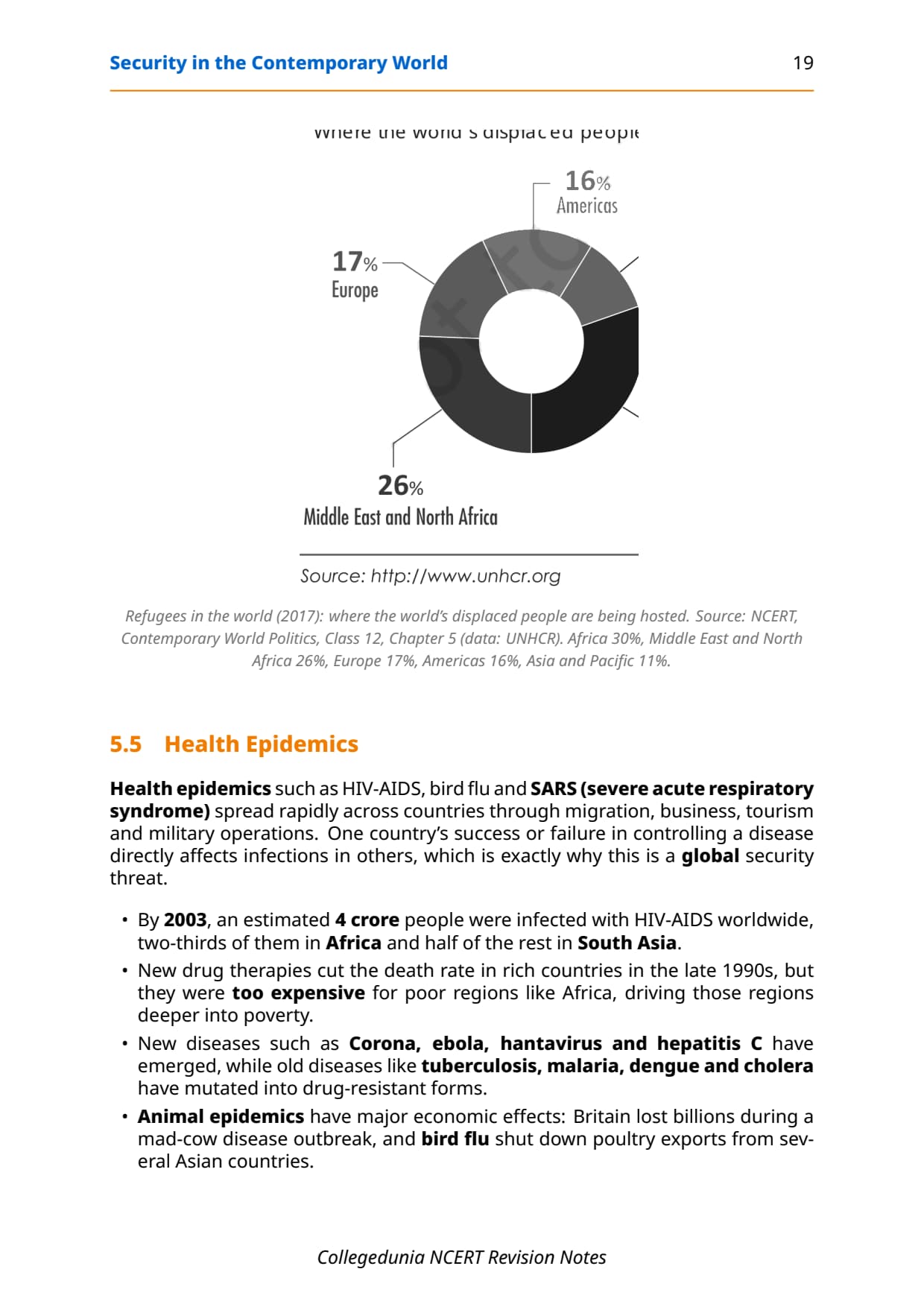
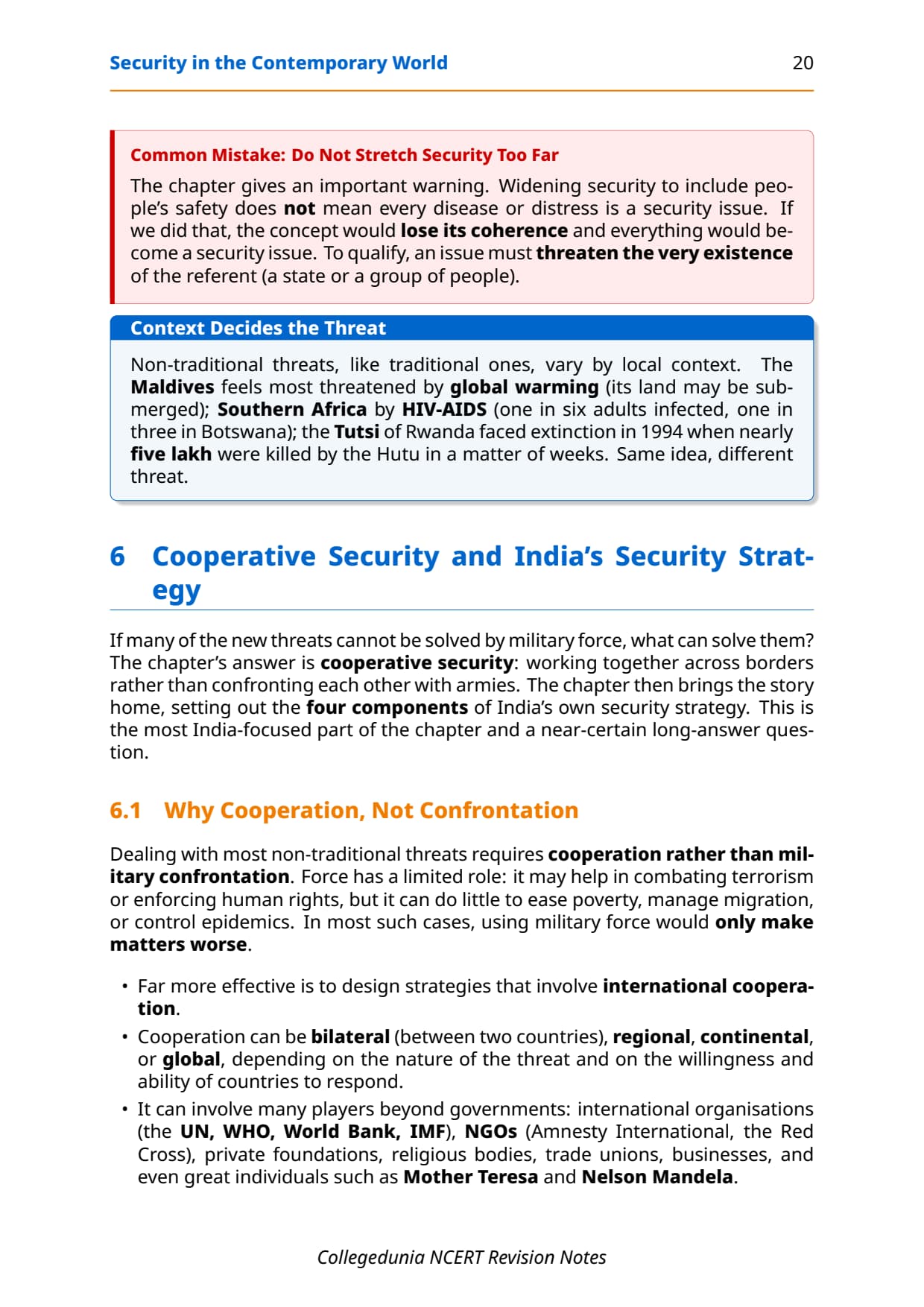
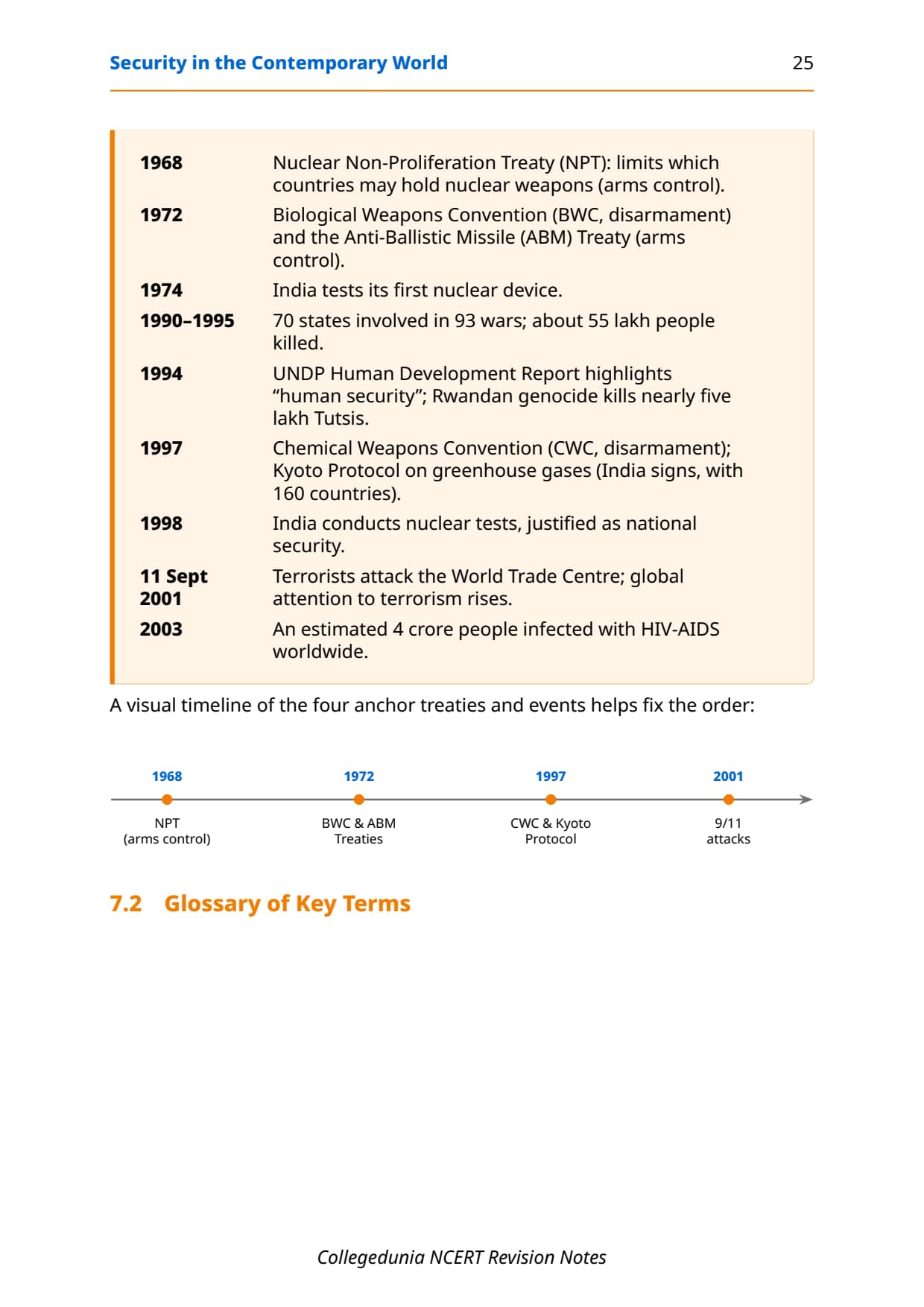
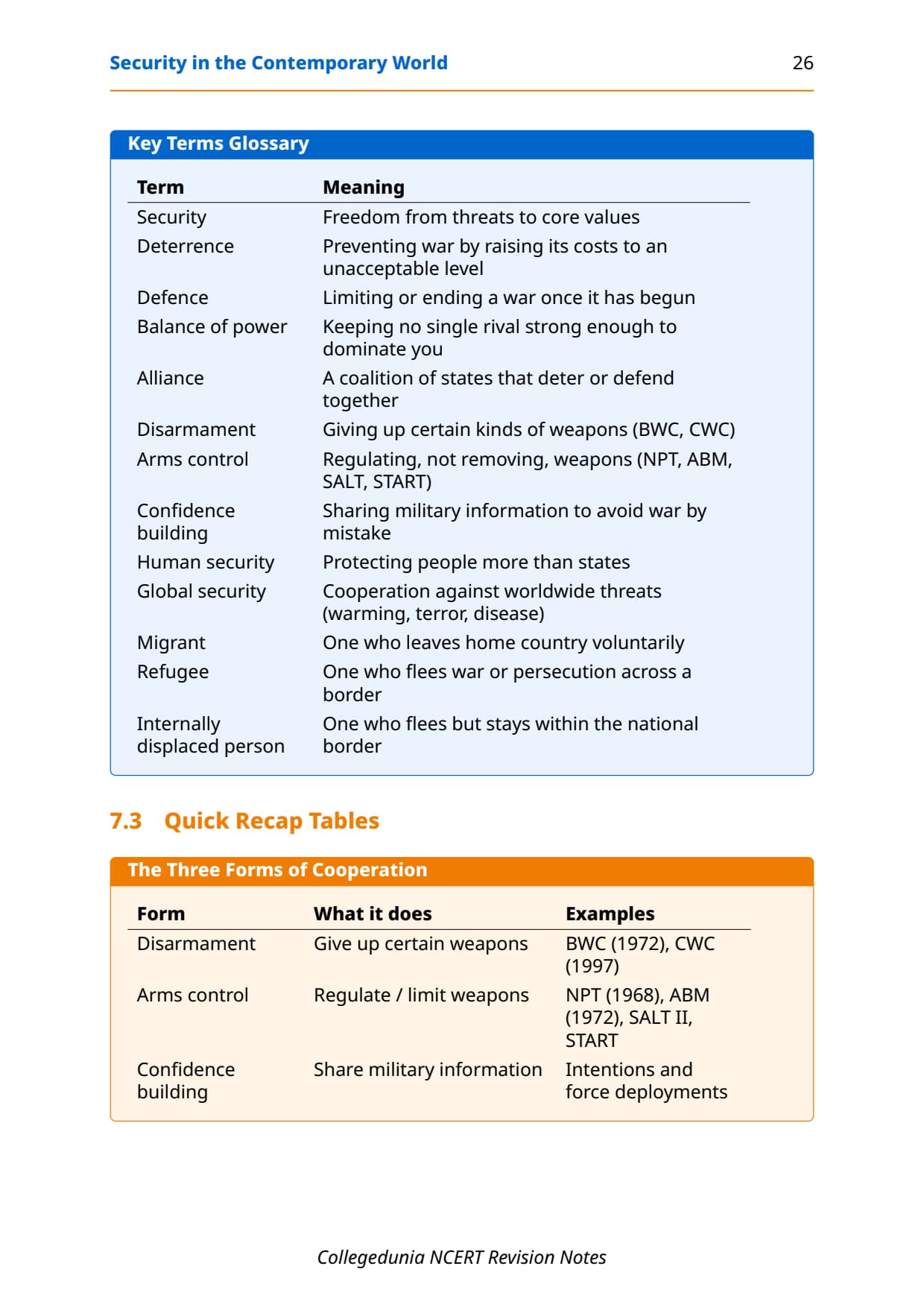
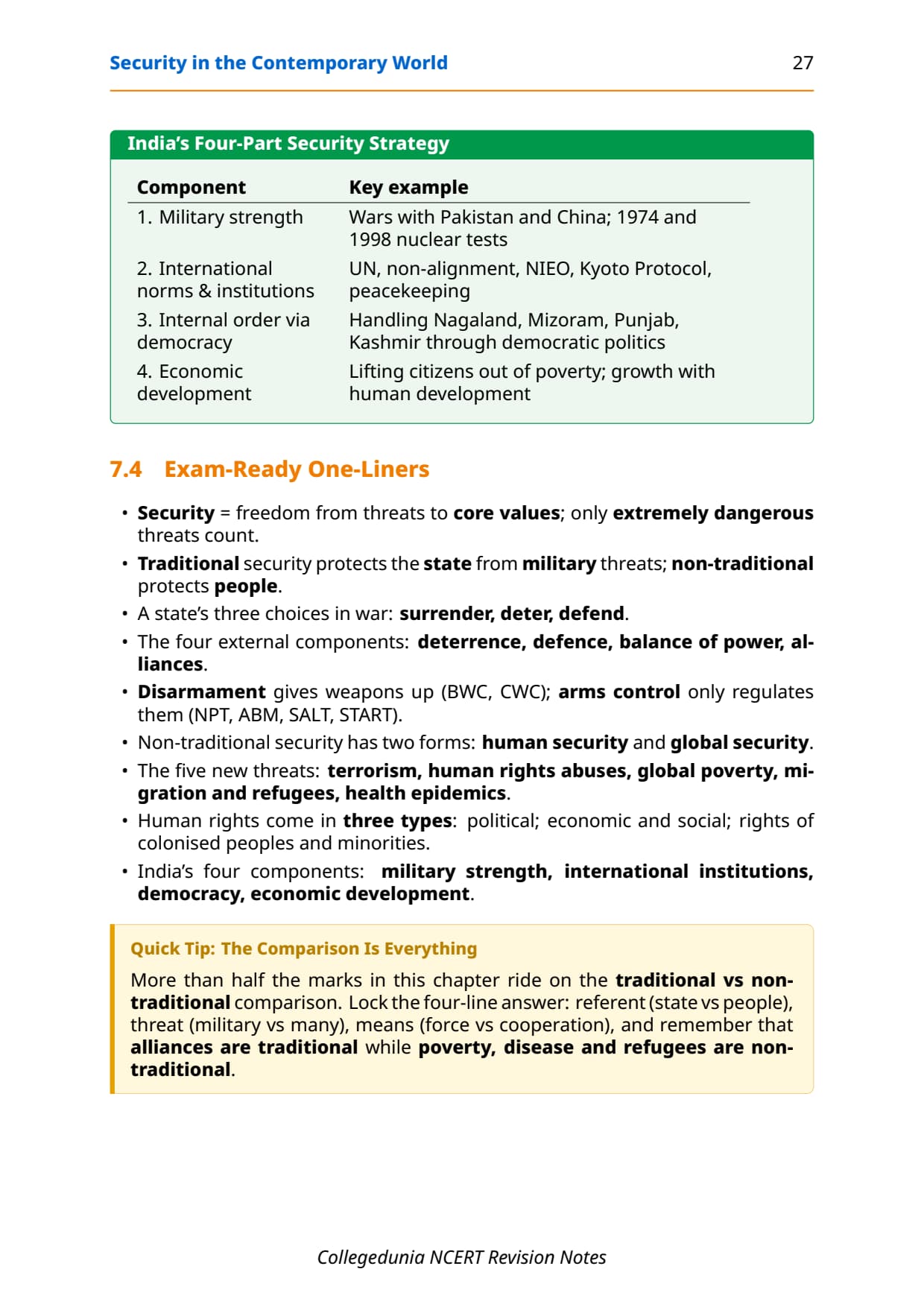
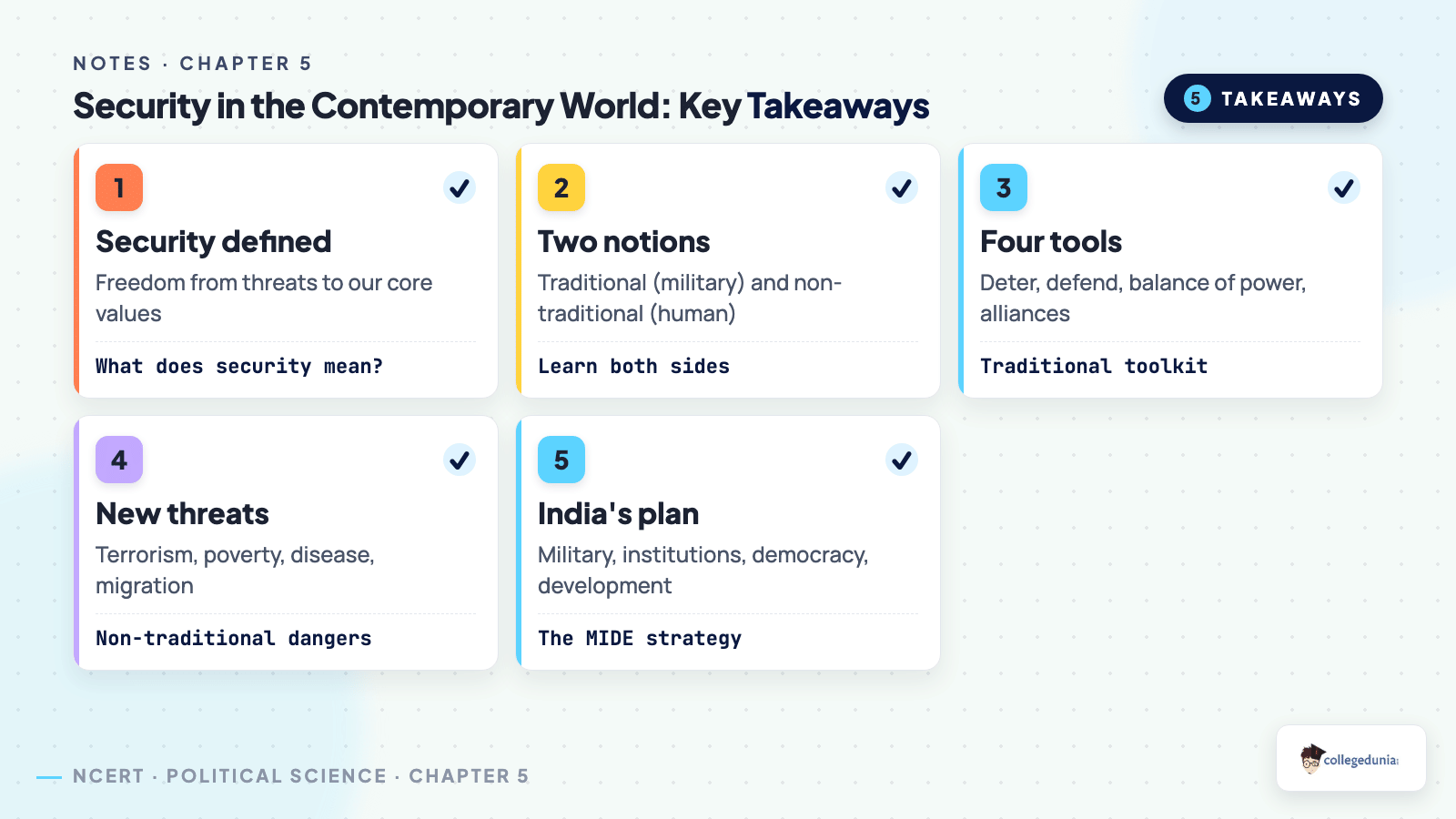
- Covers the two notions of security, the four traditional tools, the new threats and India's strategy in one place.
- This Class 12 Political Science chapter usually carries 5 to 6 marks in the board paper.
- Pairs with the NCERT Solutions, Handwritten Notes and Book PDF linked lower on this page.
These Security in the Contemporary World Class 12 notes are written from the official NCERT Contemporary World Politics textbook and checked against the last five years of CBSE board papers.
Student Feedback: In a Collegedunia poll of 8,520 Class 12 Political Science students taken before the 2026 boards, 72% of students said short, point-wise notes on the two notions of security and India's strategy were the fastest way to revise this chapter. Most students kept the key terms and examples on a single sheet for last-minute recall.
Source: 2026-27 Class 12 Political Science student poll. Sample of 8,520 students from CBSE schools across 12 states.
What the Security in the Contemporary World Notes Cover
Security in the Contemporary World is the fifth chapter of Contemporary World Politics. It asks one simple question with a wide answer: what does security really mean? At its core, security is freedom from threats to our core values. The chapter sets out two ways of seeing it, the traditional and the non-traditional.
The easiest way to organise your revision is to split the chapter into three threads:
- Traditional security: military threats to the State, met with deterrence, defence, balance of power and alliances.
- Non-traditional security: human and global security, taking in terrorism, poverty, disease and migration.
- Cooperation and India: states agree to limit violence, and India uses a four-part strategy.
So these notes are really about how the idea of security has grown beyond the army and the border. If you sort each fact under traditional, non-traditional or cooperation first, almost every question in security in the contemporary world class 12 becomes easier to answer. Keep this three-part frame at the top of your revision sheet and slot each new detail into one of the boxes as you read.
Traditional Notion of Security
The traditional notion of security is the one most people picture first. In this view the greatest danger to a country is a military threat, usually from another country. For quick revision, learn the view as four short, boxed points so you can copy them straight onto the answer sheet.
- The threat: armed attack, from outside the border and sometimes from within.
- The referent: the State, its sovereignty, independence and territorial integrity.
- The three choices: a threatened government can surrender, deter the attack, or defend itself.
- The limits: even traditional security accepts rules of war, fighting only for a just cause and sparing civilians.
The point examiners test most is that traditional security treats war as the main danger and the State as the thing to protect. The three choices, surrender, deterrence and defence, are a regular short answer, so keep them ready. Remember too that internal security mattered less to the most powerful countries after 1945, but far more to the newly independent states of Asia and Africa.
Balance of Power, Alliances and Cooperation
Inside the traditional view, states use a few classic methods to stay safe, because there is no world government to protect them. These notes keep them as a clear table, since the MCQ and short answers turn on telling them apart.
| Method | What it means |
|---|---|
| Balance of power | A state watches its rivals and builds strength so no neighbour grows too powerful. |
| Alliance building | A coalition of states coordinate their forces to deter or defeat an attacker, like NATO. |
| Disarmament | States agree to give up certain kinds of weapons, like the bans on biological and chemical arms. |
| Arms control | It does not ask states to give up weapons; it regulates them, like the NPT and the ABM Treaty. |
| Confidence Building (CBMs) | A process of exchanging information on defence matters so rivals do not misread each other. |
The one-line takeaway for your sheet is that states rely on balance of power and alliances because no world government keeps them safe. Separate the cooperation terms by their verb: disarmament is giving up, arms control is regulating, CBMs are talking. Keep that split clear in your notes and the matching question becomes easy marks.
Non-Traditional Security and New Threats
By itself the military view leaves out a lot. The non-traditional notion widens the lens to human and global security, where the thing to protect is people and the planet. These notes keep the new threats as a clear list, because they are a long-answer favourite.
- Terrorism: political violence by non-state groups that targets civilians, often across borders.
- Human rights: genocide and abuse harm people directly, so their protection is a global concern.
- Global poverty: hunger and want kill more people than war and can fuel conflict.
- Migration and epidemics: forced displacement strains states, and diseases like HIV-AIDS spread across borders.
The sharp point for your notes is that the referent of non-traditional security is the individual, not the State. So terrorism counts as non-traditional, because the danger comes from non-state groups and hits ordinary people. Keep the new threats and the human-security idea together, and the whole non-traditional section falls into place.
India's Security Strategy
The chapter ends with how India tries to stay secure against both military and non-traditional threats. This topic is a regular long answer, so these notes keep India's four components side by side for fast revision.
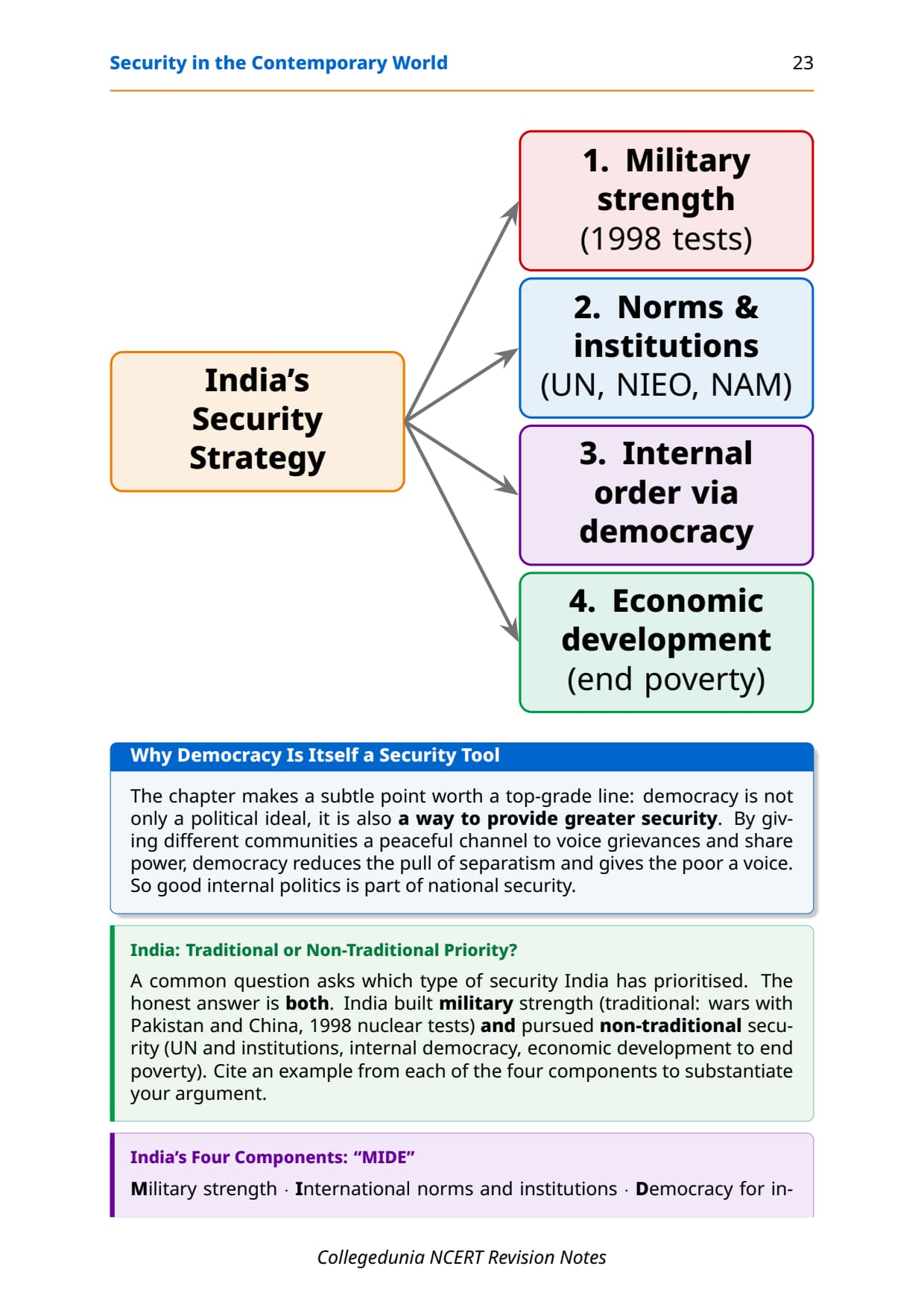
| Component | Key example to recall |
|---|---|
| Military strength | Wars with Pakistan and China; the 1998 nuclear tests for deterrence. |
| Norms and institutions | Support for the UN, non-alignment, the NIEO and UN peacekeeping. |
| Democracy for internal order | Letting communities share power to reduce separatism. |
| Economic development | Lifting citizens out of poverty so want does not breed conflict. |
The honest answer to "which security has India prioritised" is both. A neat way to remember the four components is the word MIDE: Military, Institutions, Democracy, Economic development. Two protect the State and two protect the people, so MIDE covers both notions of security at once. Cite one example from each to score full marks.
Security in the Contemporary World Important Questions and Exam Pointers
CBSE sets a steady mix of MCQ, short and long answers from this chapter. Knowing the pattern helps students decide how much to write and which topics to revise first. A focused list of security in the contemporary world important questions saves a lot of time before the board exam.
- Long answer (5 to 6 marks): traditional versus non-traditional security, or India's security strategy.
- Short answer (4 marks): balance of power, objectives of alliances, or a state's three choices.
- Source-based: the "Economy of war" cartoon, or a passage on the new threats, with sub-parts.
- Objective and MCQ: the match item, disarmament versus arms control, and classifying threats.
For quick recall, students often practise a short class 12 political science chapter 5 mcq drill and a list of security in the contemporary world class 12 important questions. The most repeated items are the two notions of security and India's four-component strategy, so keep those answer points ready in your own words. Reading these notes once, then writing the key lists from memory, is the fastest way to lock the chapter in.
Common Mistakes Students Make in This Chapter
A few errors cost marks every year. Most come from mixing up the cooperation terms or naming the wrong referent for each notion of security. Fixing these five points is the quickest way to lift a score, so add them to the end of your revision sheet.
- Confusing disarmament (giving up weapons) with arms control (regulating weapons) - keep them separate.
- Saying the referent of non-traditional security is the State - it is people and the planet.
- Calling terrorism a traditional threat - it is non-traditional, by non-state groups against civilians.
- Writing that the UN controls world security - there is no world government; the UN has only the power members give it.
- Saying India chose only one type of security - its strategy uses both traditional and non-traditional tools.
Students who fix these five points usually move from average to high marks. The exam rewards a balanced view, so always show both notions of security before you judge any threat. These notes flag each soft point so you can phrase it safely in the answer sheet.
How These Notes Pair with the Solutions and Book PDF
These revision notes summarise the chapter. To prepare fully, students should use them alongside the other resources for the same chapter, all linked in the table below. Read the notes first, then test yourself with the solutions, and open the book PDF whenever you need the original text and figures.
| Resource | Best used for |
|---|---|
| Security in the Contemporary World NCERT Solutions | Step-by-step answers to all 12 back-exercise questions |
| Security in the Contemporary World Handwritten Notes | Last-minute, one-shot revision in a scanned notebook style |
| Security in the Contemporary World NCERT Book PDF | Reading the original NCERT chapter text and figures |
Tip: read these notes first, then attempt the solutions on your own, and only then check the model answers. That order builds memory faster than copying answers straight away.
All Class 12 Political Science Notes by Chapter
The table links the revision notes for every chapter in both Class 12 Political Science books, so students can move across the course in one click. Security in the Contemporary World is highlighted.
| Chapter | Notes |
|---|---|
| Contemporary World Politics | |
| Chapter 1 | The End of Bipolarity |
| Chapter 2 | Contemporary Centres of Power |
| Chapter 3 | Contemporary South Asia |
| Chapter 4 | International Organisations |
| Chapter 5 | Security in the Contemporary World |
| Chapter 6 | Environment and Natural Resources |
| Chapter 7 | Globalisation |
| Politics in India Since Independence | |
| Chapter 1 | Challenges of Nation Building |
| Chapter 2 | Era of One-Party Dominance |
| Chapter 3 | Politics of Planned Development |
| Chapter 4 | India's External Relations |
| Chapter 5 | Challenges to and Restoration of the Congress System |
| Chapter 6 | The Crisis of Democratic Order |
| Chapter 7 | Regional Aspirations |
| Chapter 8 | Recent Developments in Indian Politics |
FAQs on Security in the Contemporary World Class 12 Notes
Security in the Contemporary World Class 12 Political Science Notes Common Questions
Ques. Where can I download the Security in the Contemporary World Class 12 notes PDF?
Ans. You can download the Security in the Contemporary World Class 12 Political Science notes PDF directly from this page. It is free, follows the 2026-27 NCERT, and covers both notions of security, the four traditional tools, the new threats and India's strategy in a short, point-wise format.
Ques. What does the Security in the Contemporary World chapter cover for Class 12?
Ans. It covers the meaning of security, the traditional (military) notion with its four tools, the non-traditional notion of human and global security, the new threats like terrorism and poverty, cooperative security, and India's four-component security strategy.
Ques. What is the difference between traditional and non-traditional security?
Ans. Traditional security treats military attack as the main threat and protects the State, using deterrence, defence, balance of power and alliances. Non-traditional security widens the lens to human and global security, protecting people from terrorism, poverty, disease and migration.
Ques. Why is Security in the Contemporary World important for the board exam?
Ans. Because it is a high-scoring chapter whose two notions of security and India's strategy appear almost every year. The traditional-versus-non-traditional contrast and the matching question on cooperation are regular items, so revising these notes well secures both MCQ and long-answer marks.
Ques. How should I use these notes to revise quickly?
Ans. Read the notes once under the traditional, non-traditional and cooperation frame, keep all key terms and examples on one sheet, then write the key lists from memory. Finish by attempting a short class 12 political science chapter 5 mcq drill to test the small facts.



Comments