




NCERT Notes for Class 12 Physical Education Chapter 2 Children and Women in Sports cover growth, motor development, exercise guidelines, postural deformities, women participation, menarche, menstrual dysfunction and female athlete triad for the 2026-27 syllabus.
- Use these notes to revise posture correction and age-wise exercise guidelines.
- Practise women participation benefits with physical, psychological and social headings.
- Review menarche, menstrual dysfunction and female athlete triad before board-style questions.
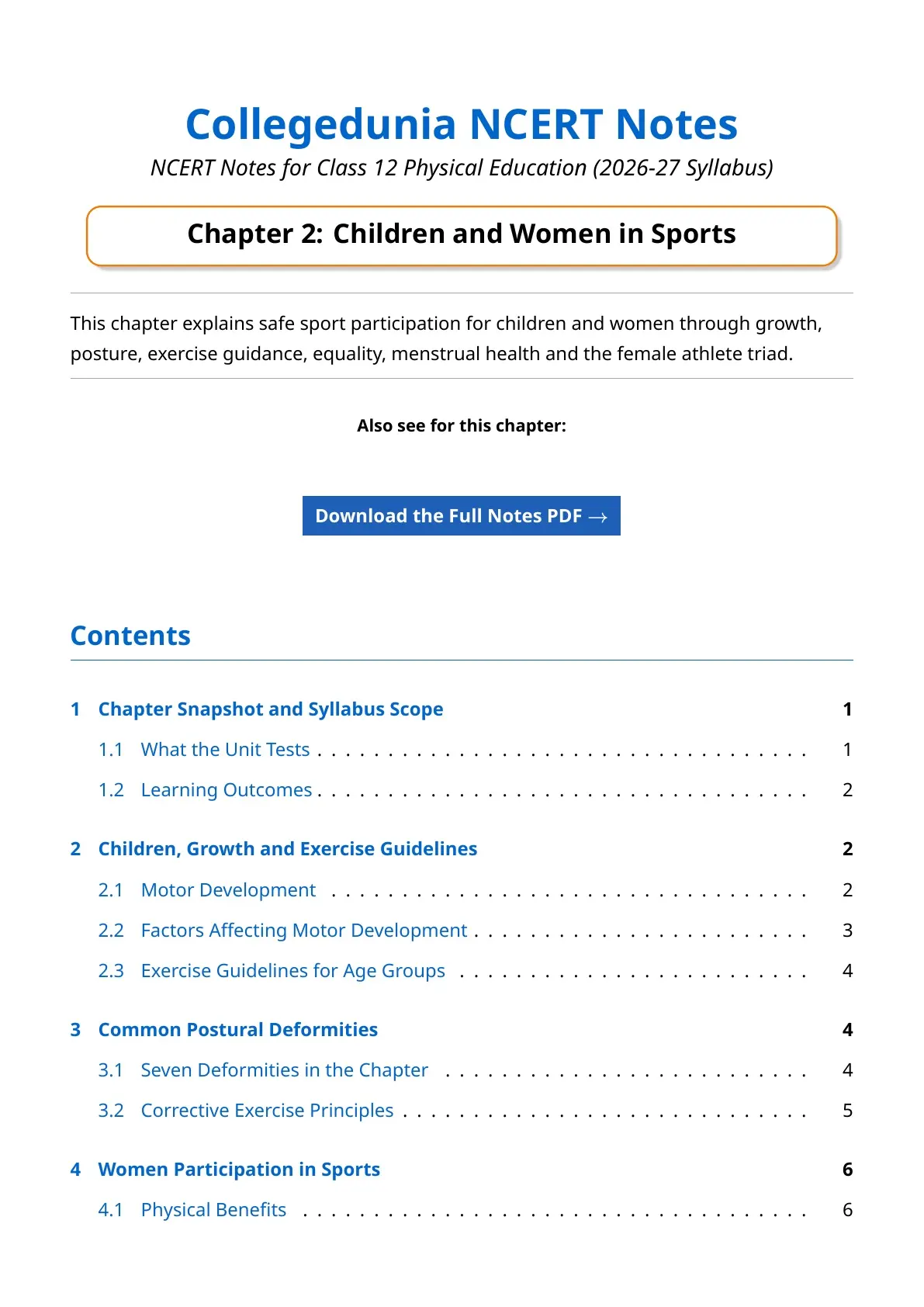
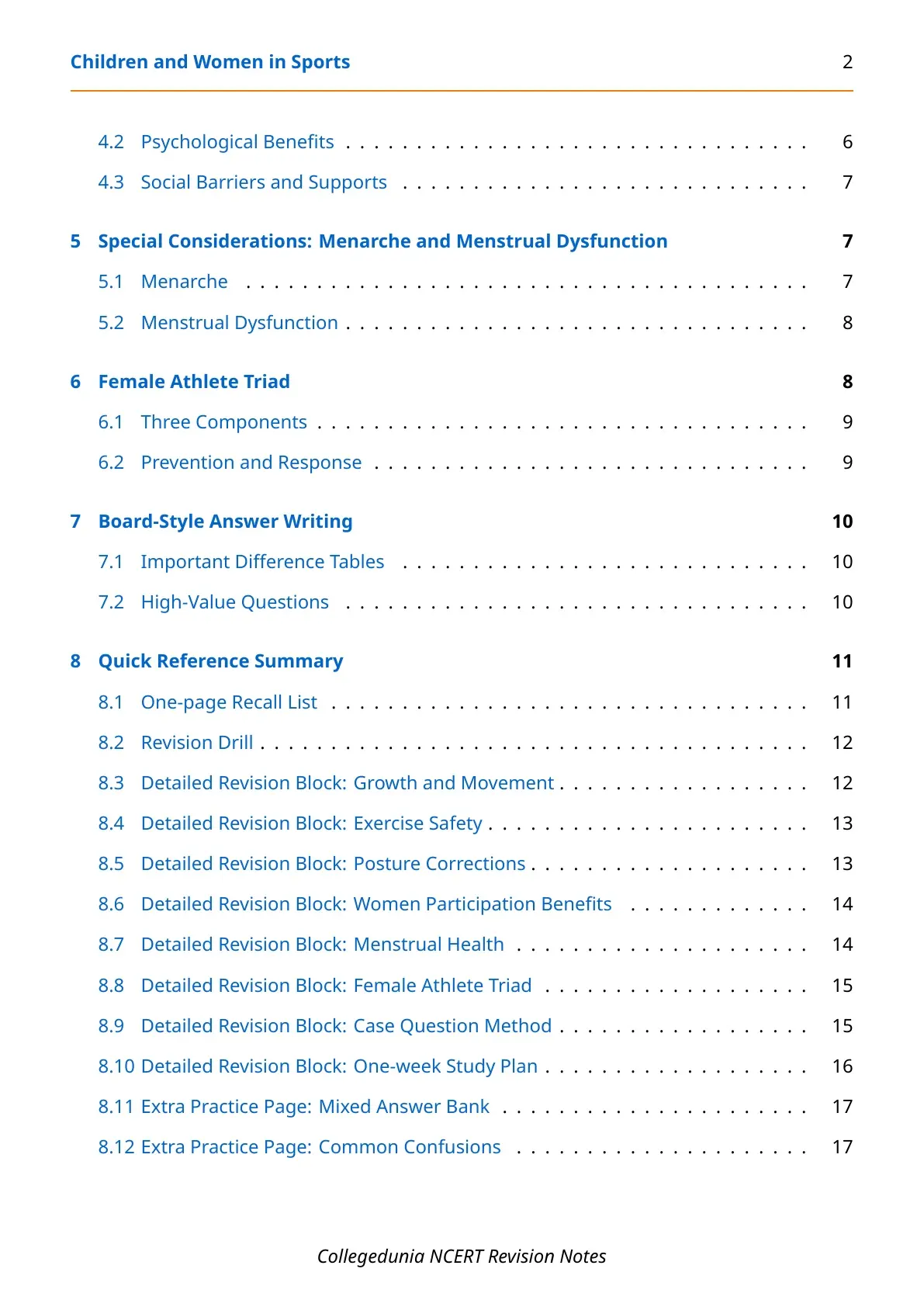
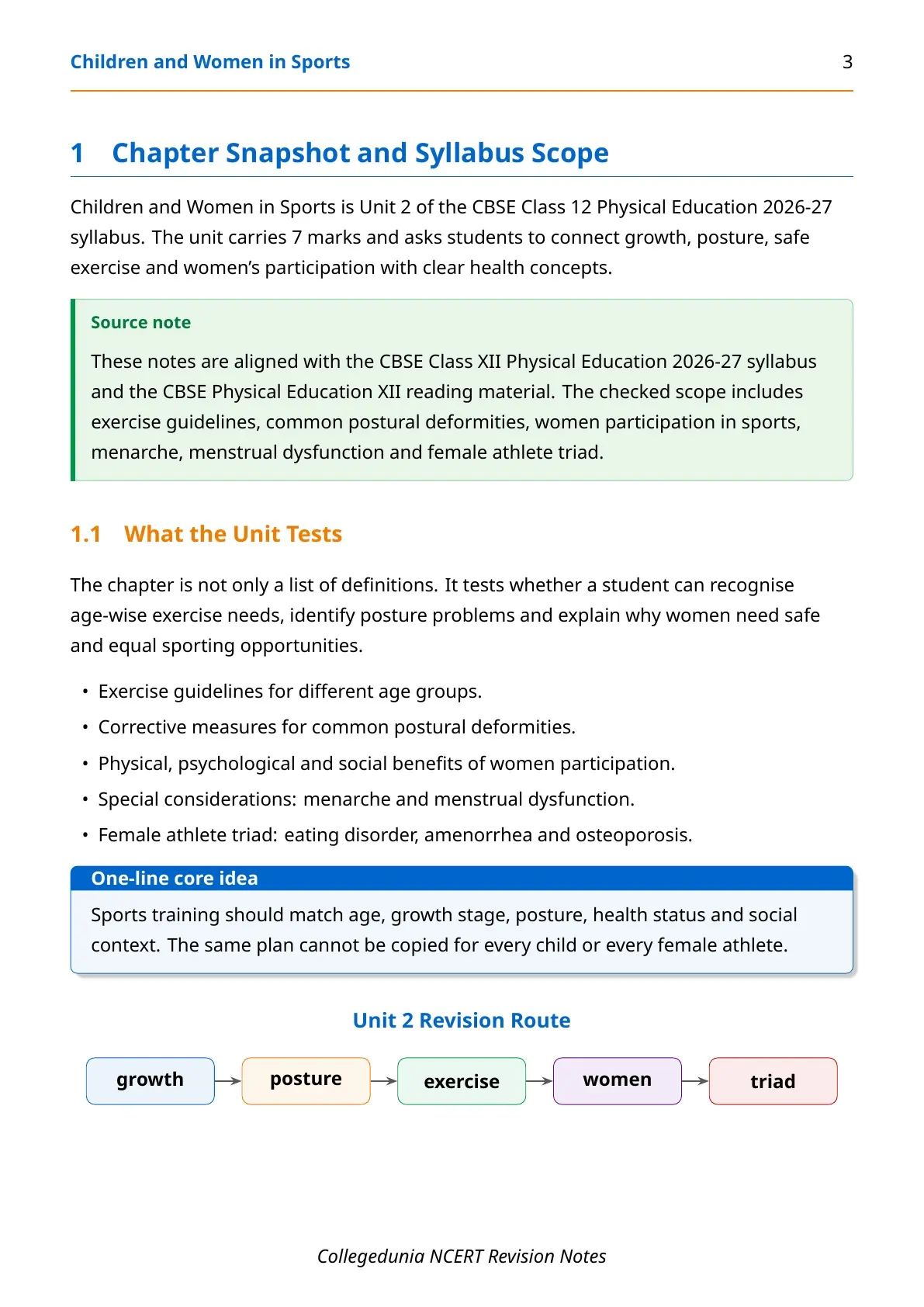
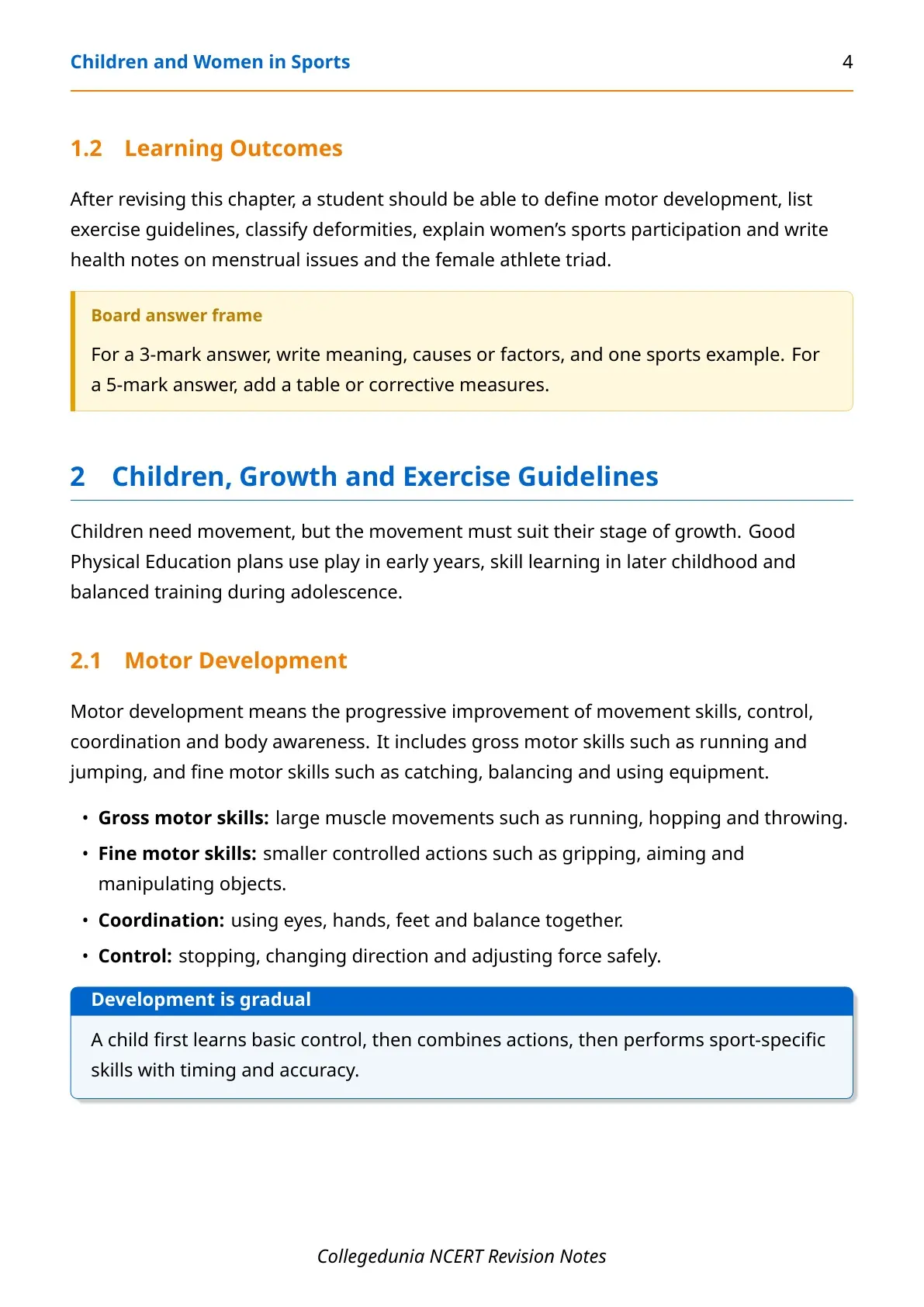
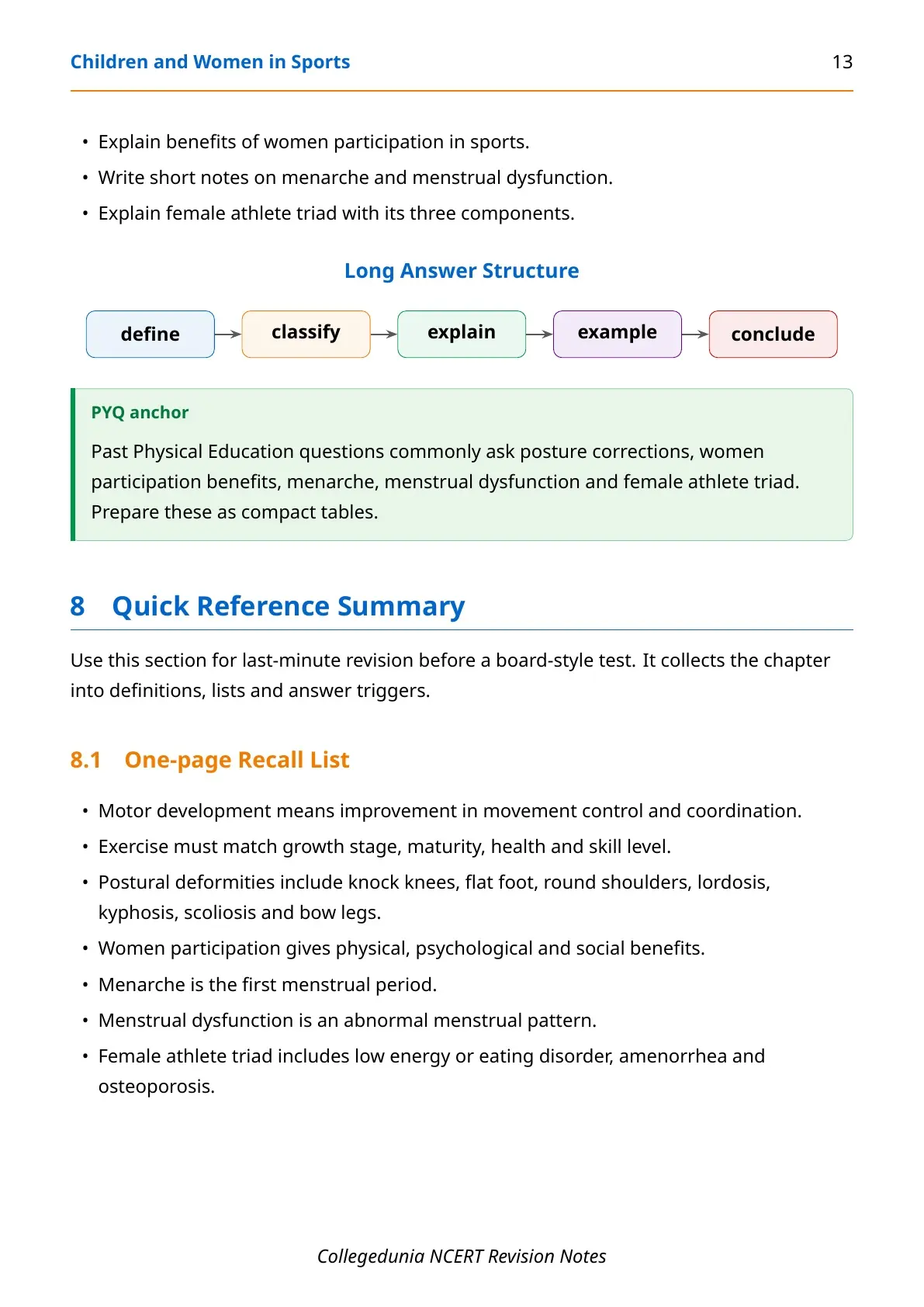
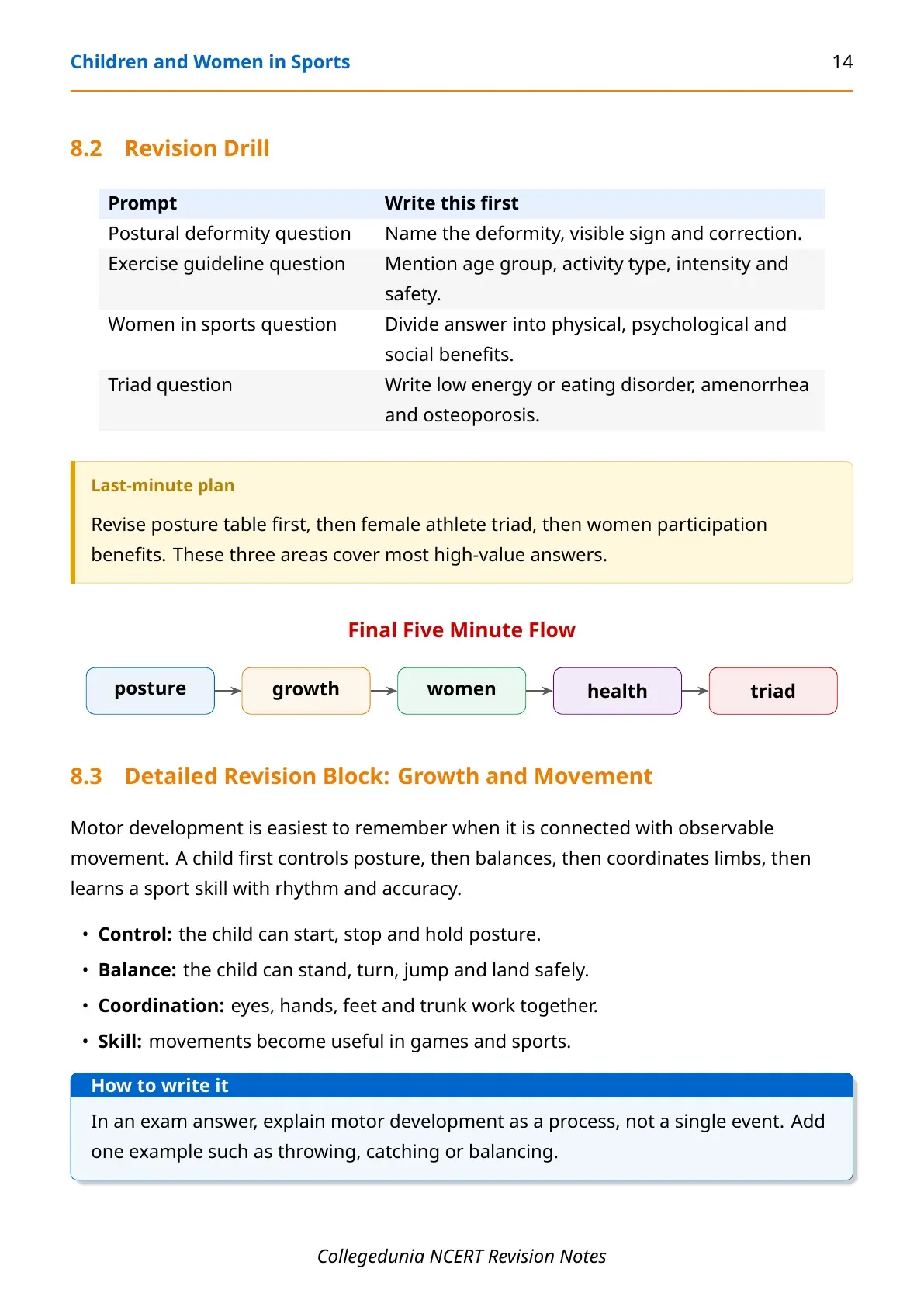
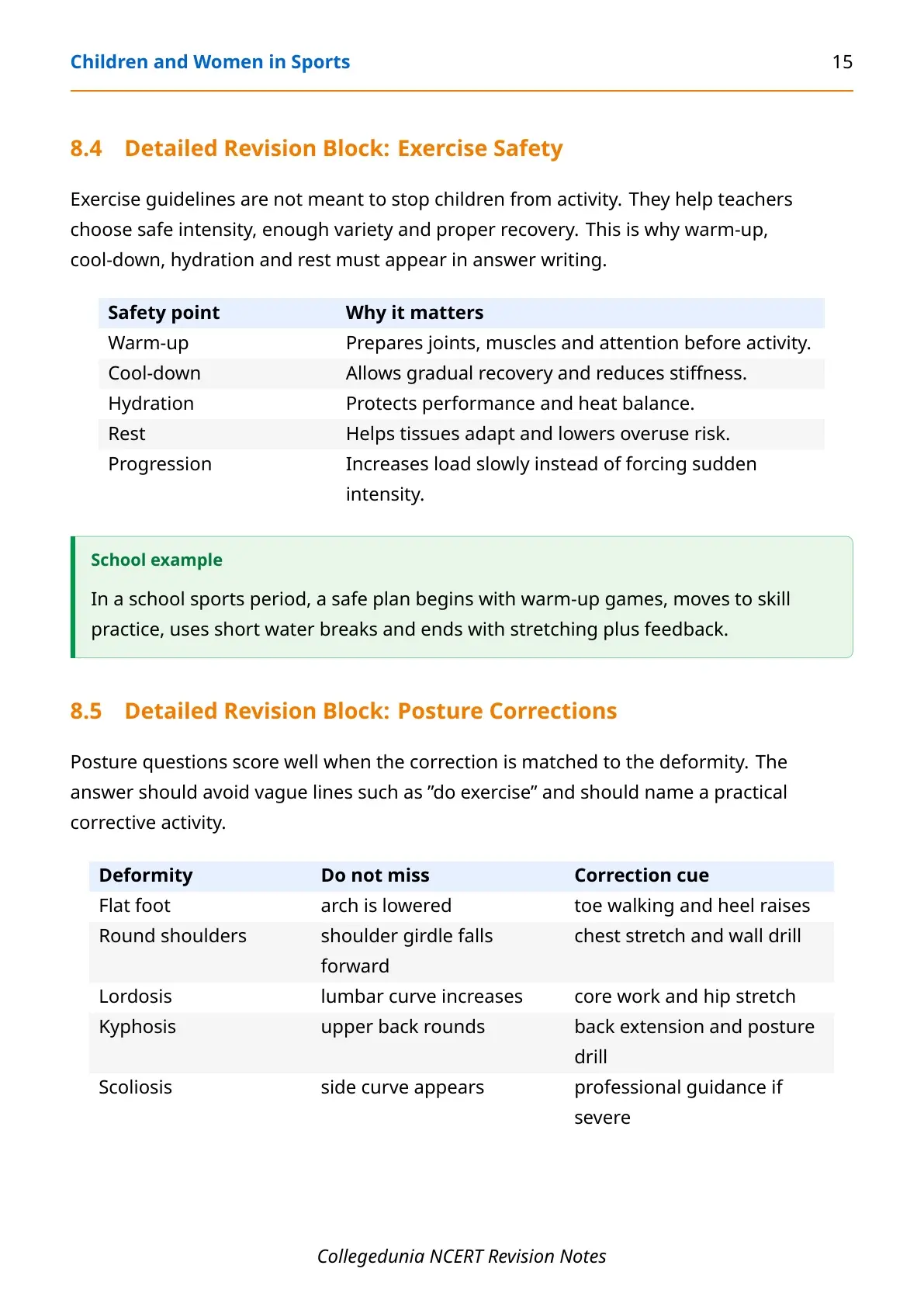
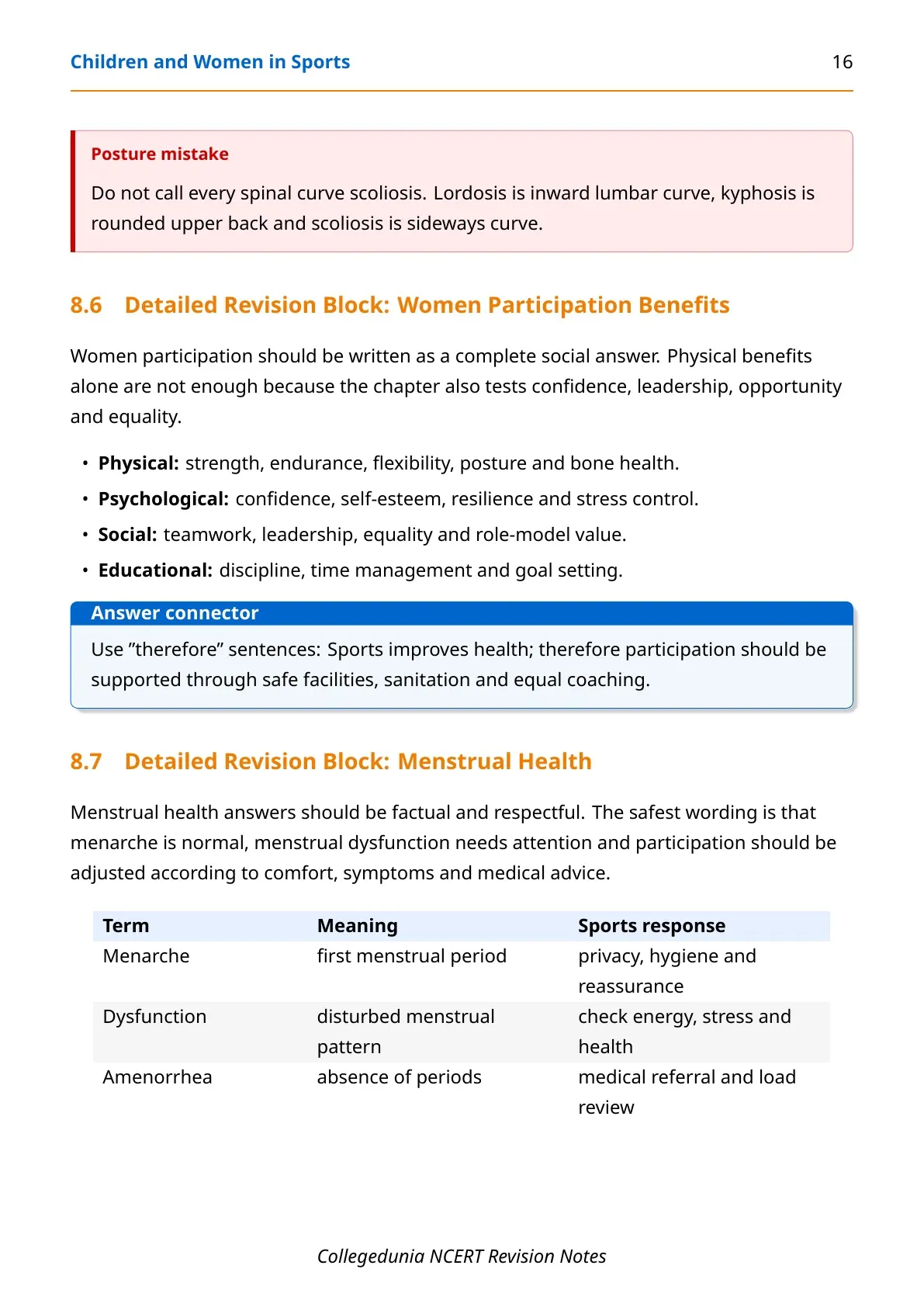
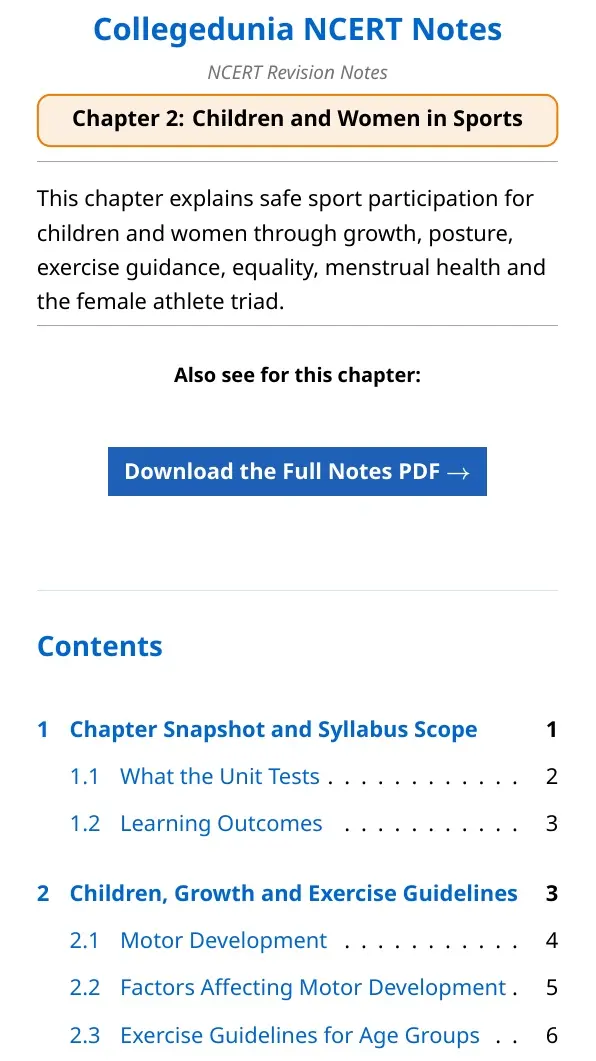
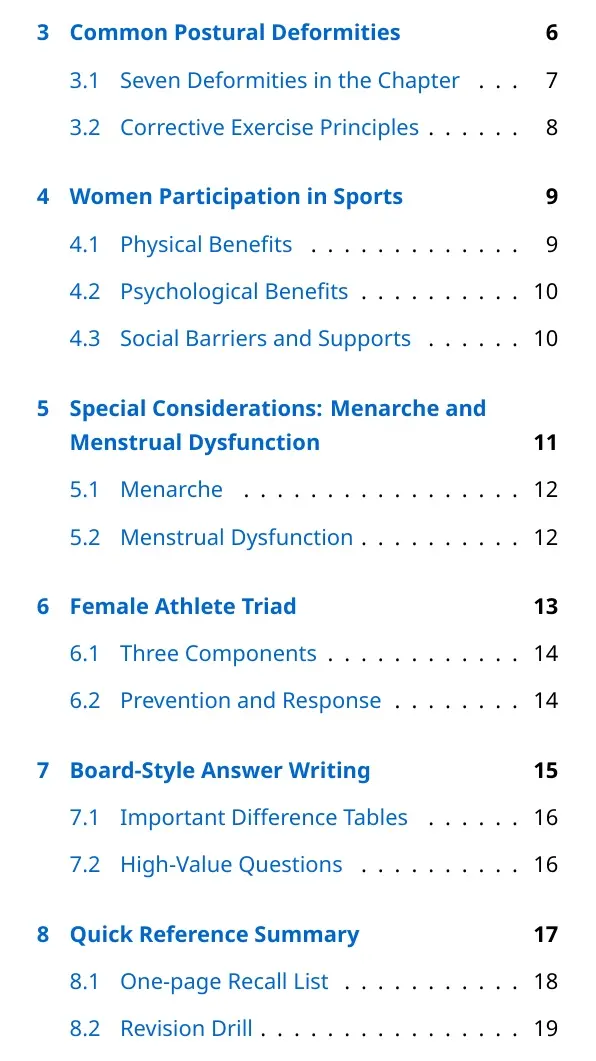
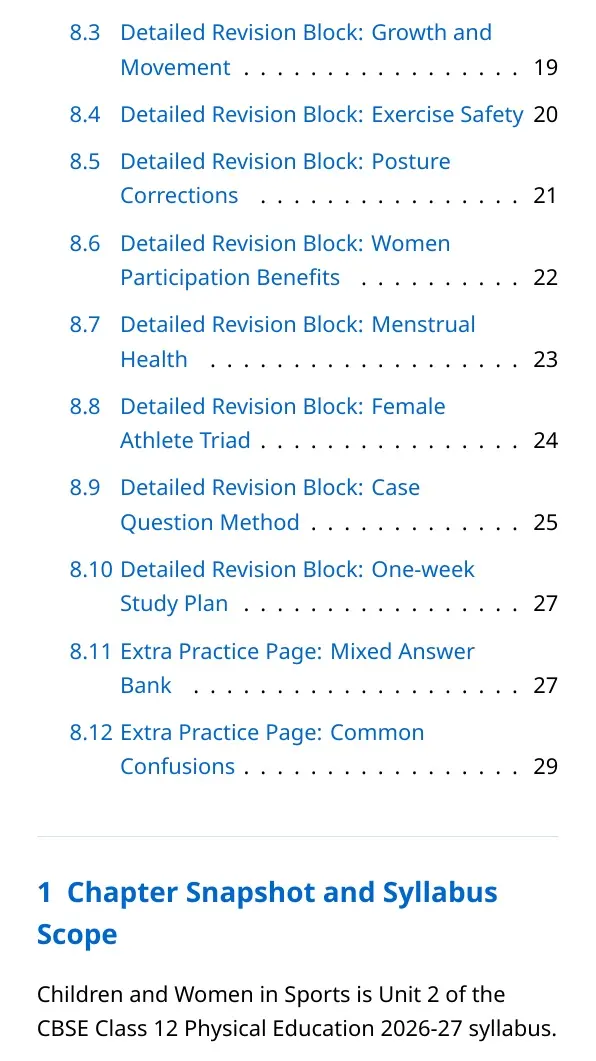
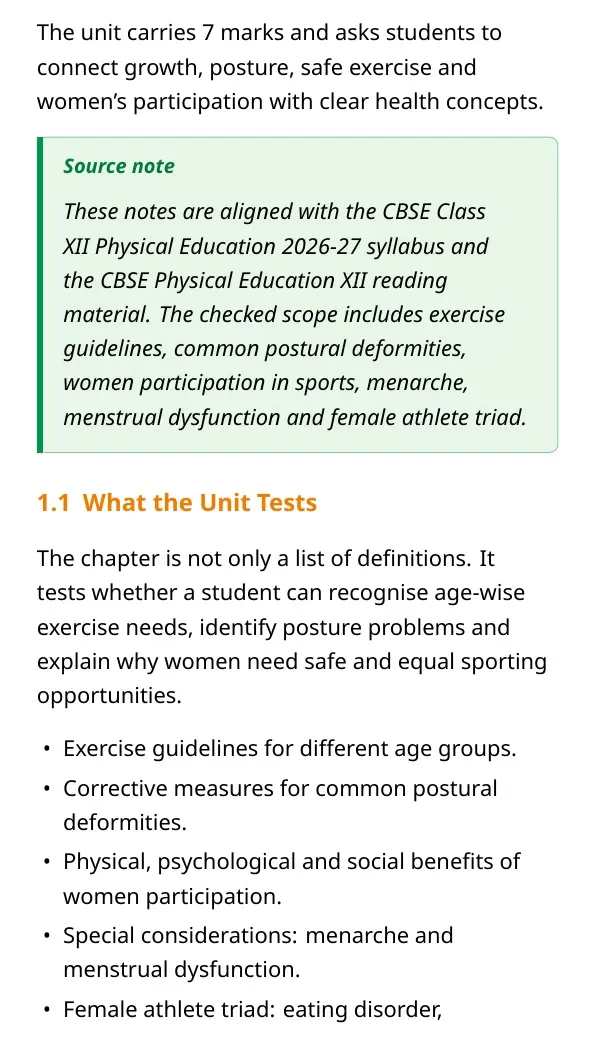
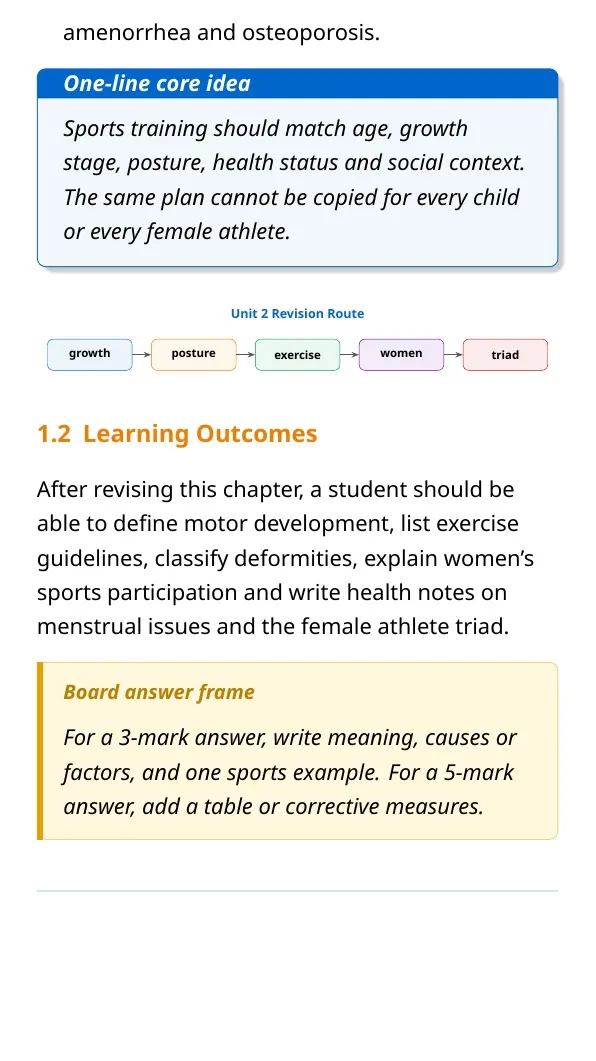
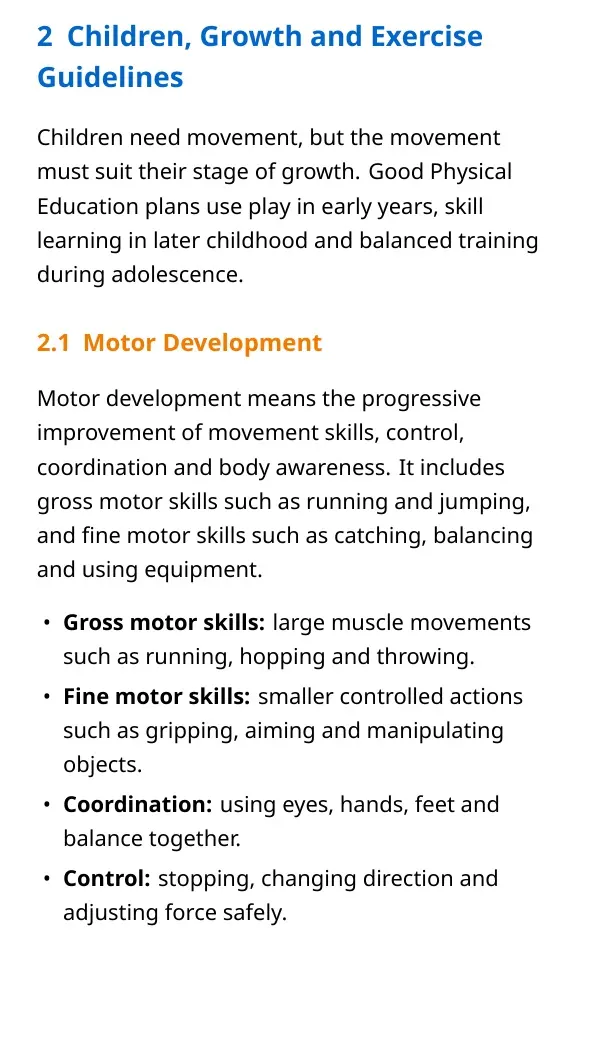
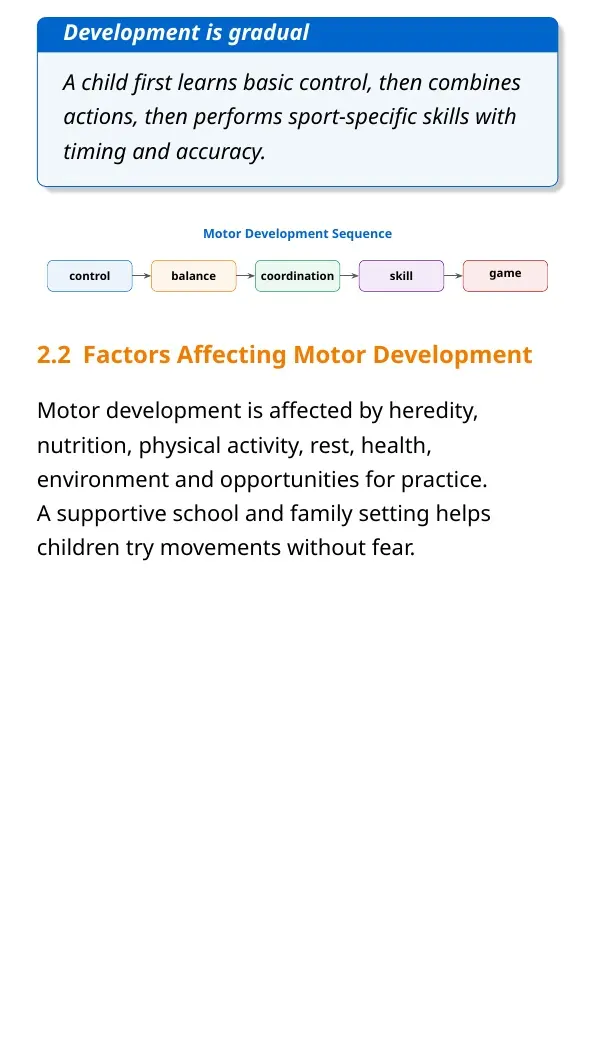
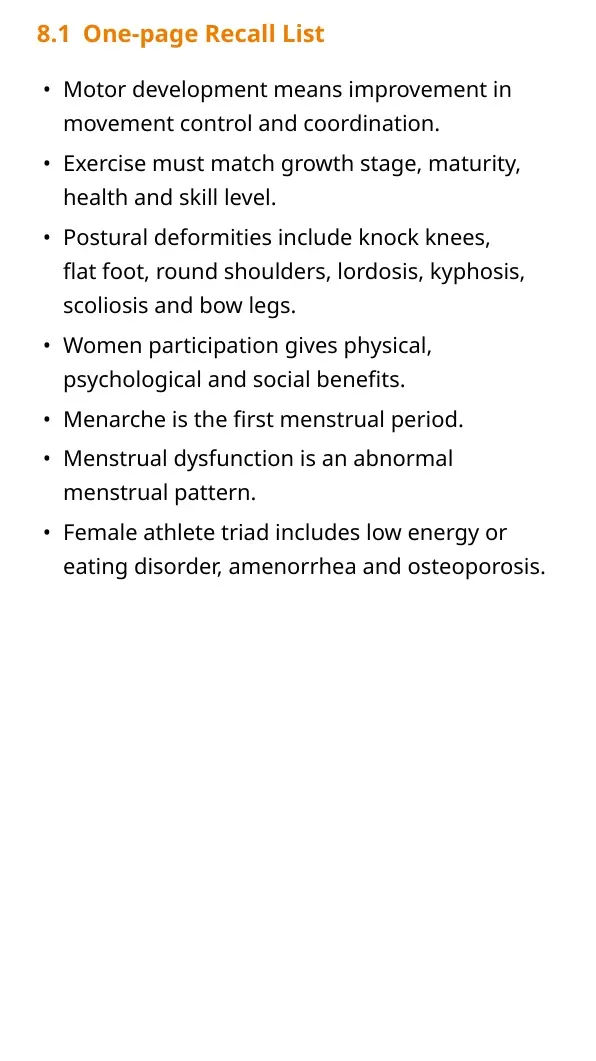
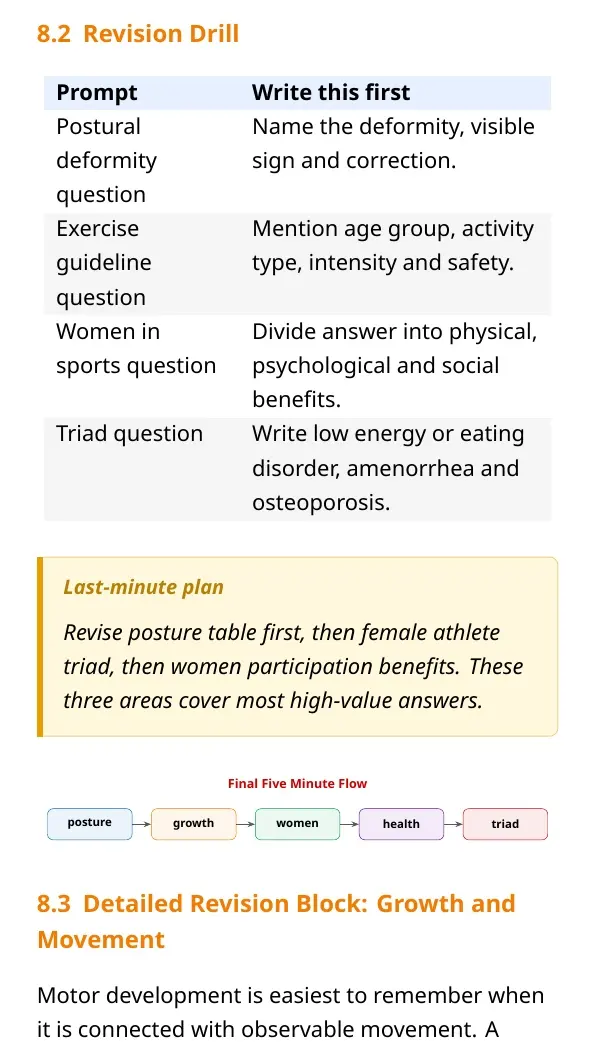
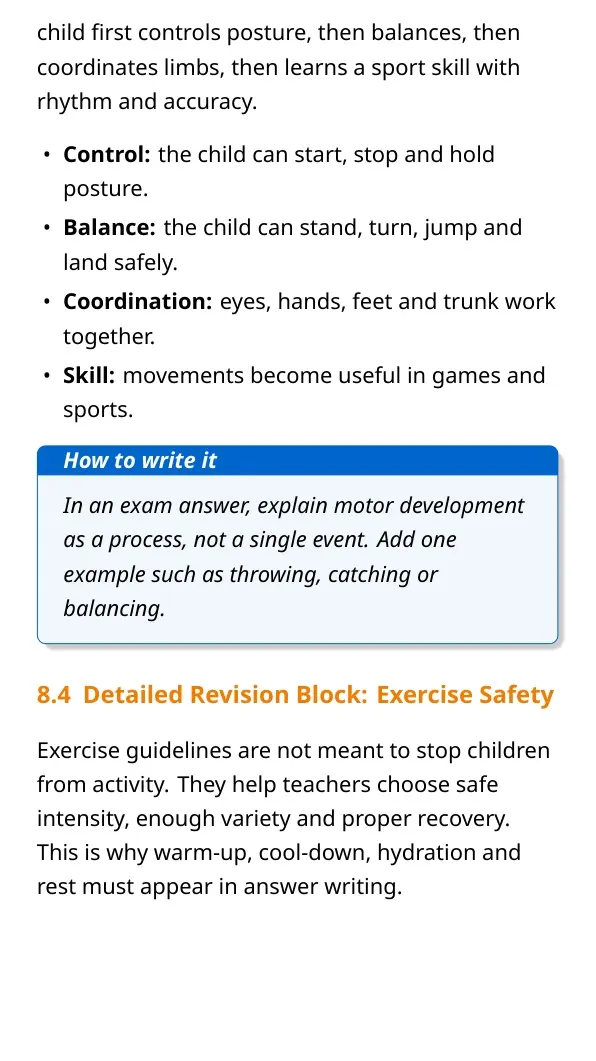
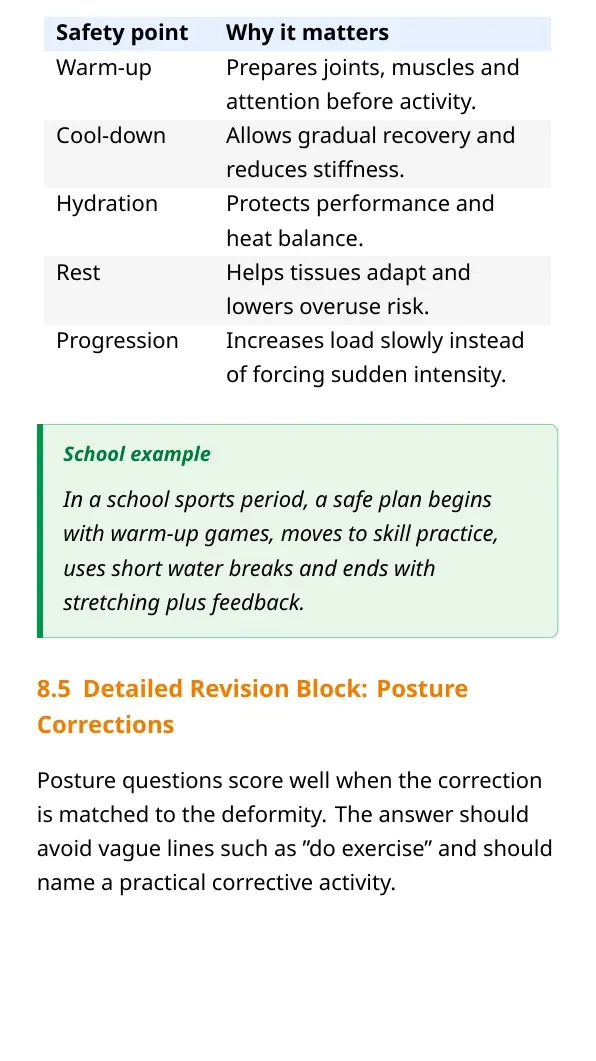
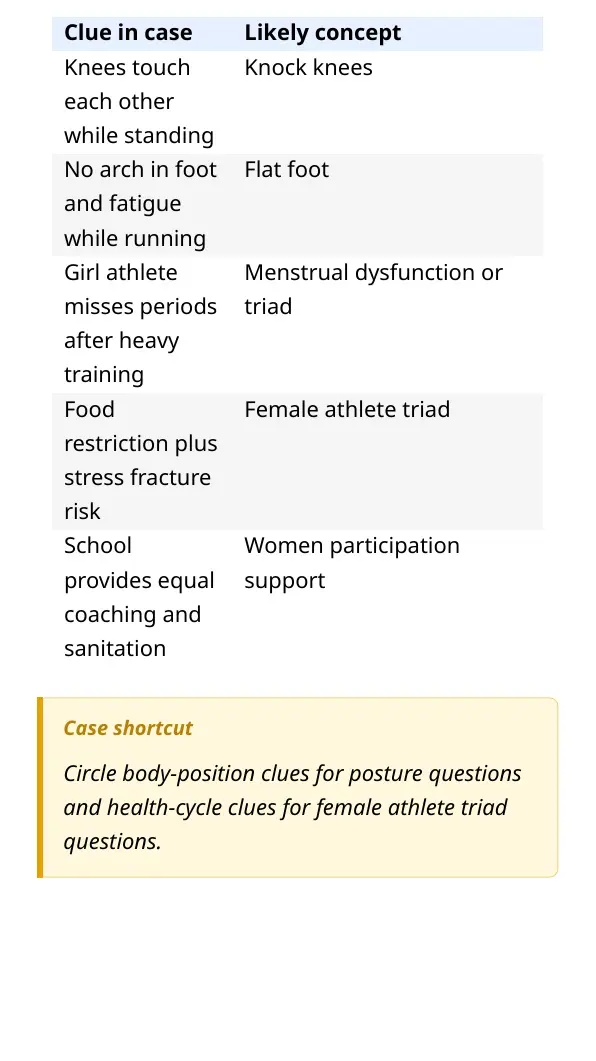
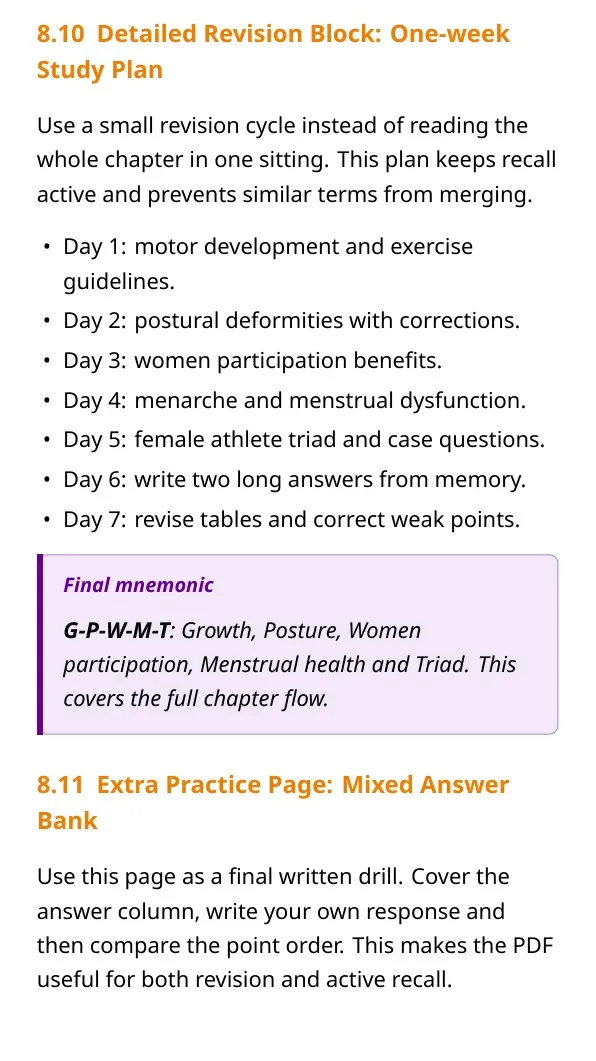
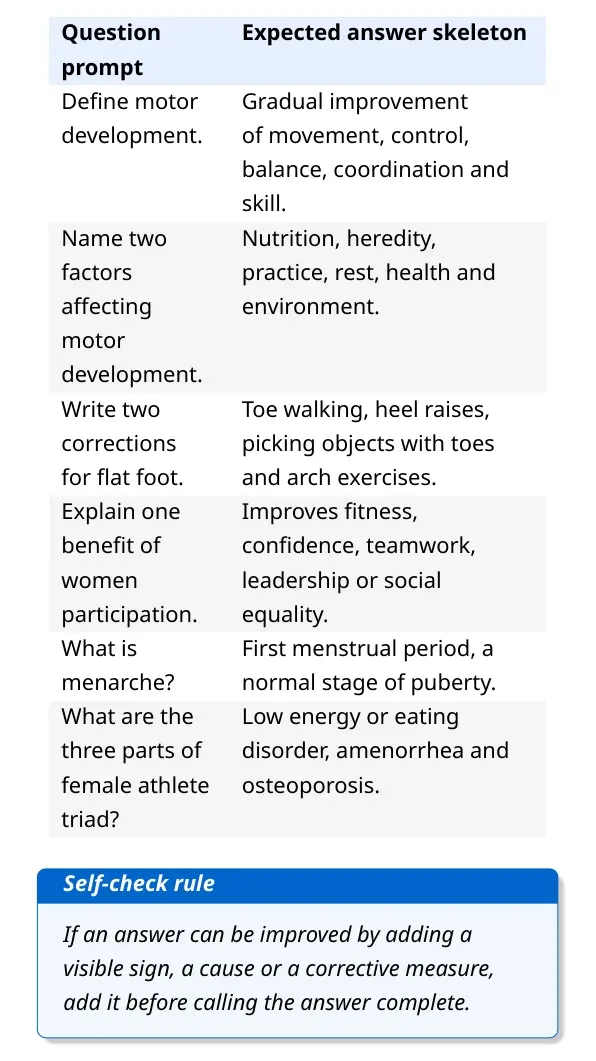
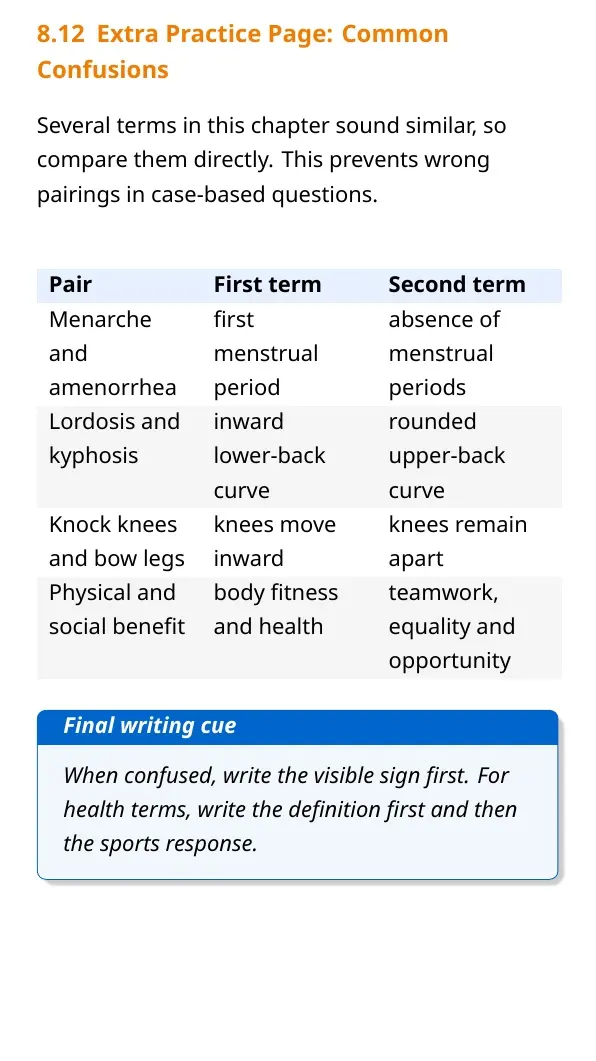
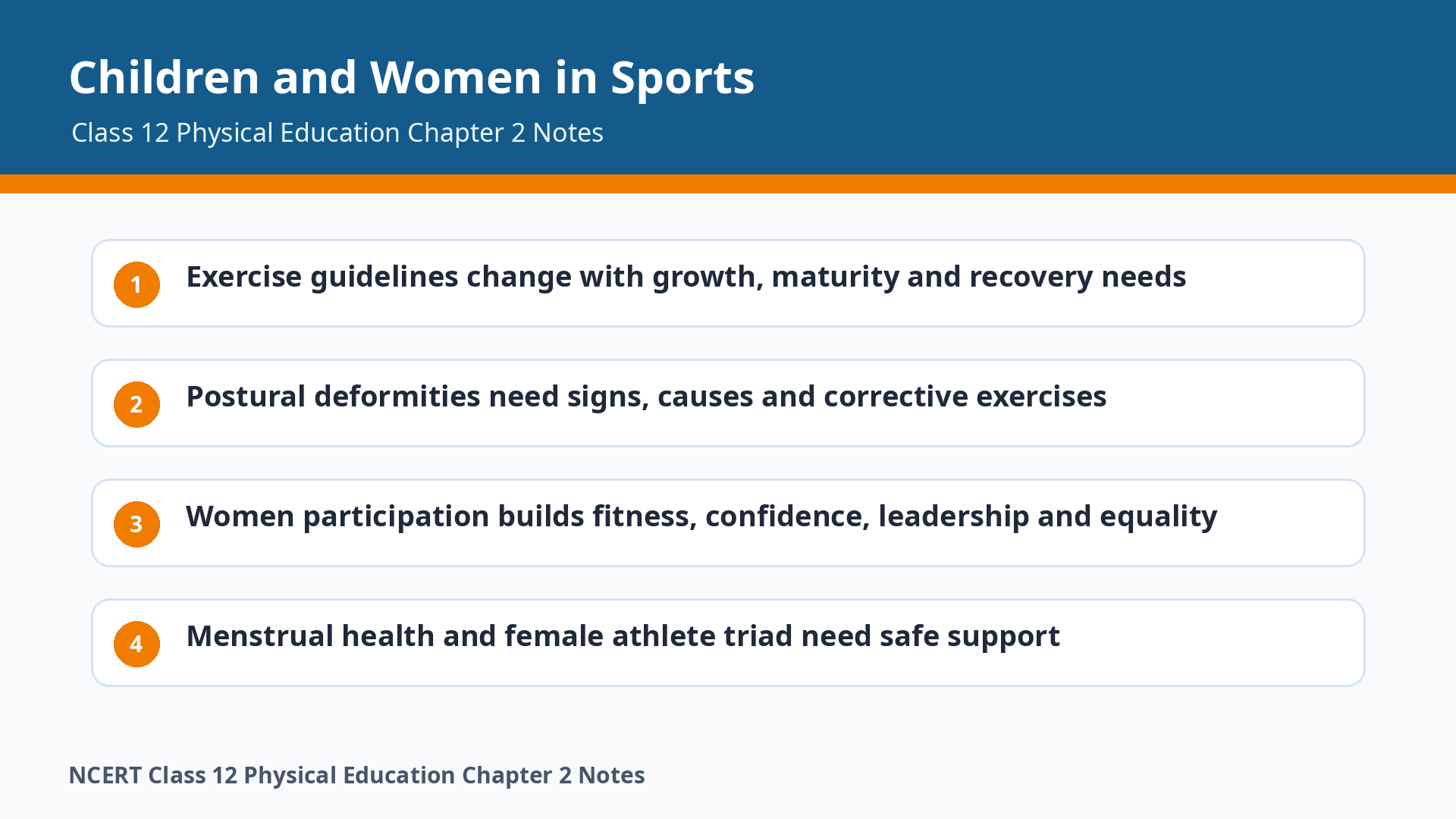
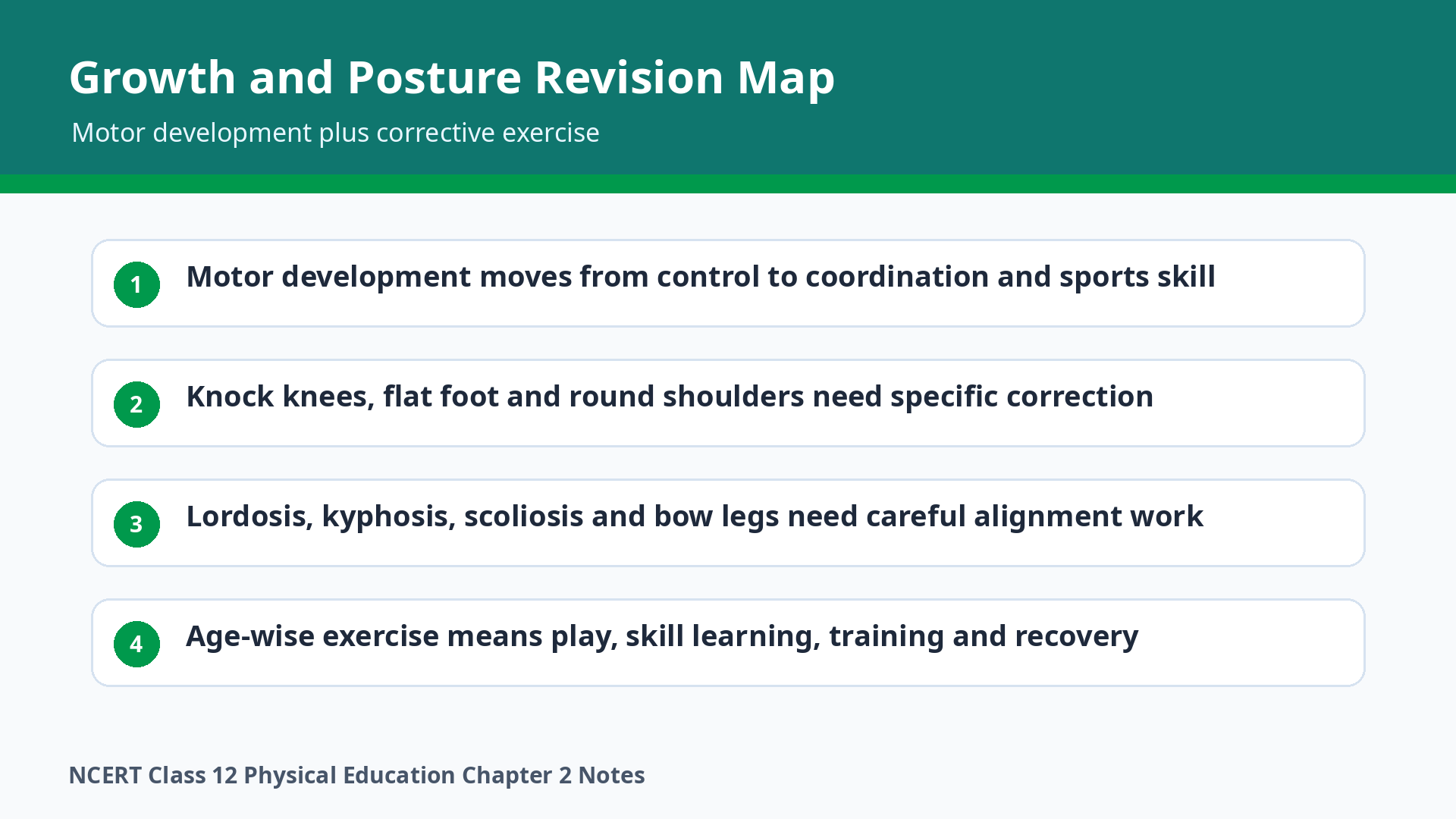
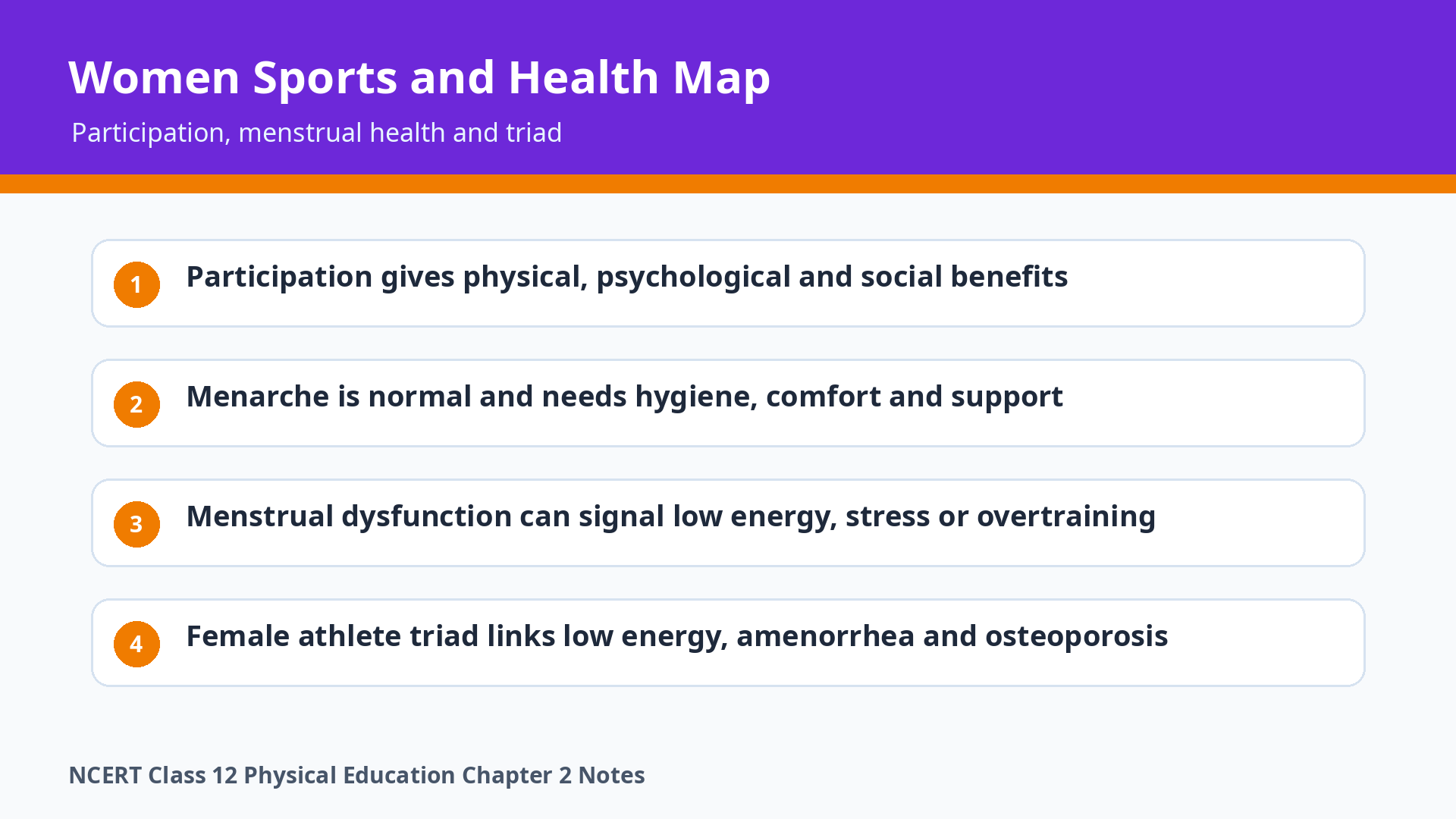
Student Feedback: Class 12 students use this chapter map to revise postural deformities, women participation and menstrual-health concepts without mixing the definitions.
Motor Development and Exercise Guidelines
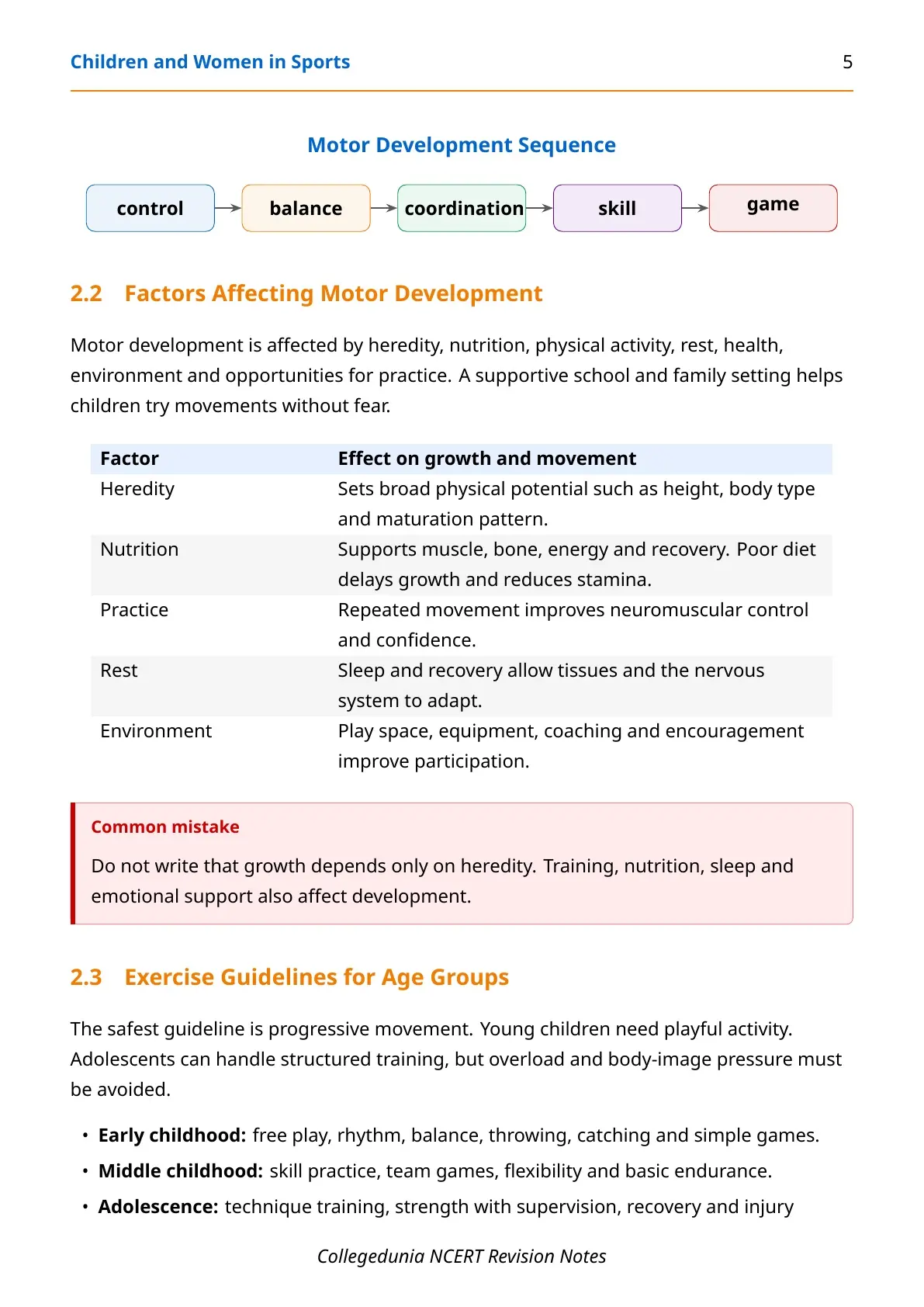
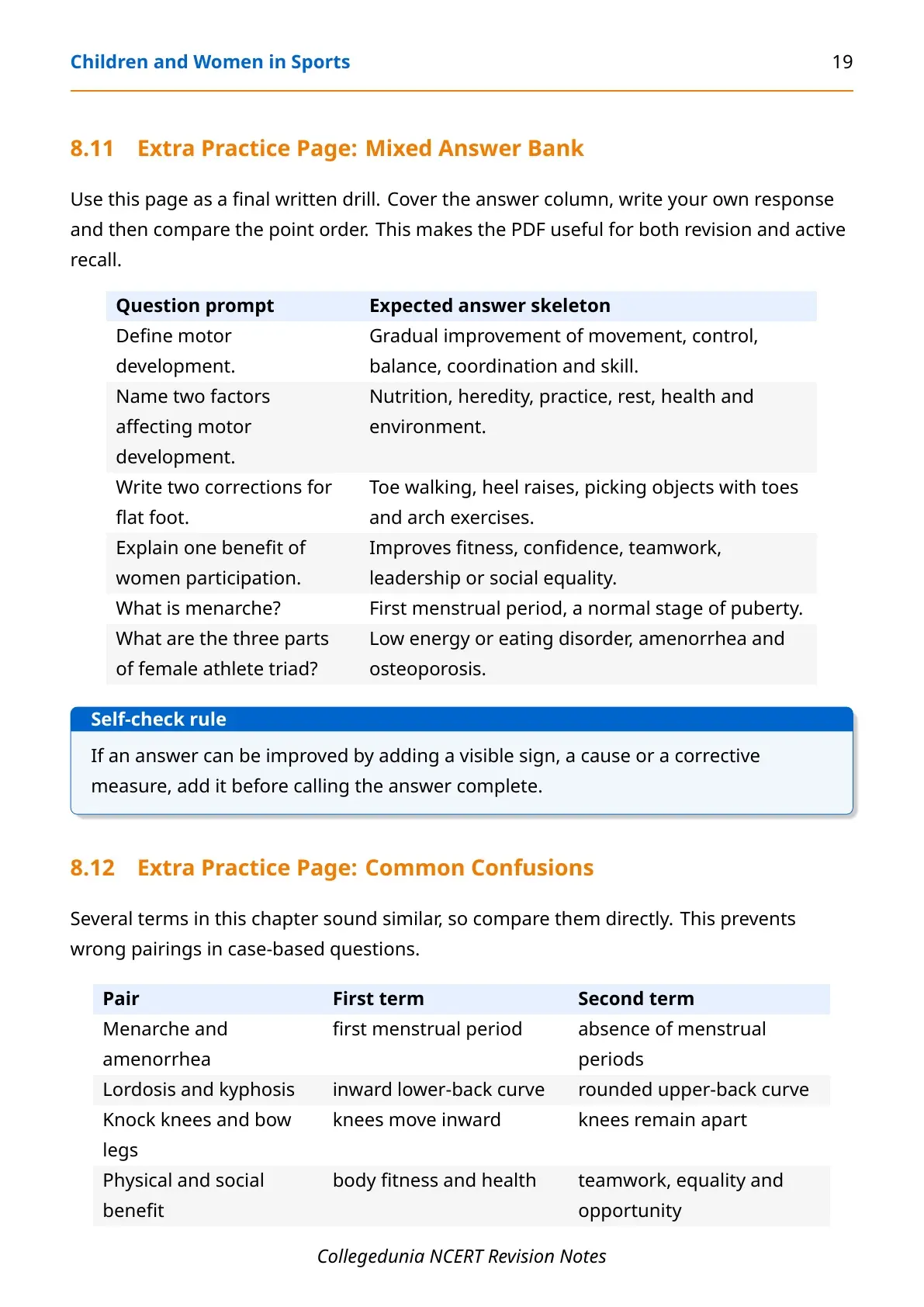
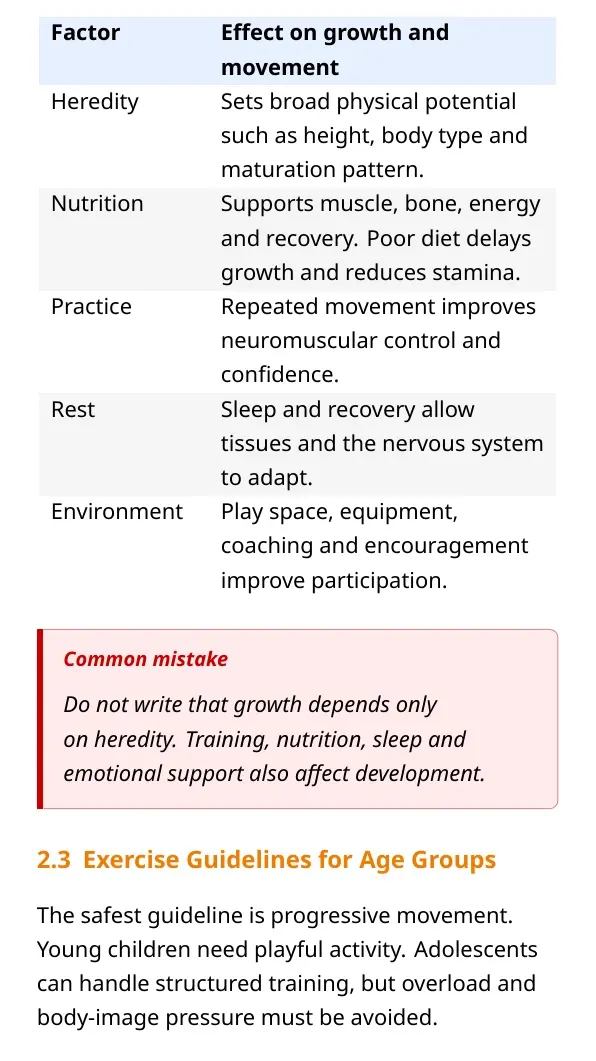
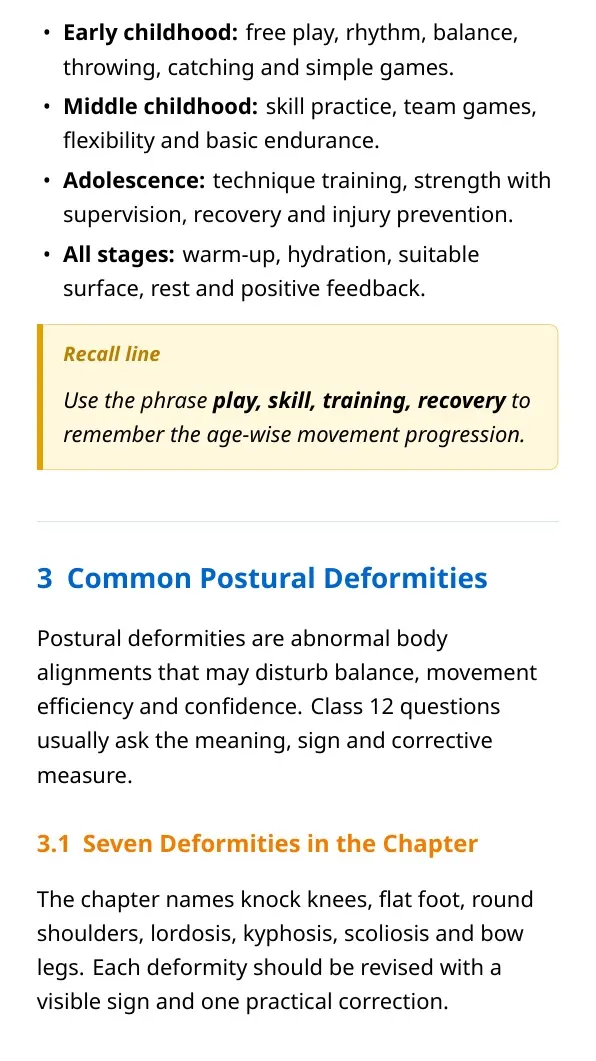
Motor development means gradual improvement in movement control, balance, coordination and sports skill. Young children need playful movement, middle-childhood learners need skill practice and adolescents need structured training with recovery.
| Age or Stage | Exercise Focus | Safety Point |
|---|---|---|
| Early childhood | Free play, rhythm, balance, throwing and catching. | Keep activity playful and varied. |
| Middle childhood | Basic skills, flexibility, endurance and team games. | Use correct technique and rest breaks. |
| Adolescence | Structured strength, endurance and sport-specific skill. | Avoid overtraining and body-image pressure. |
Postural Deformities and Corrections
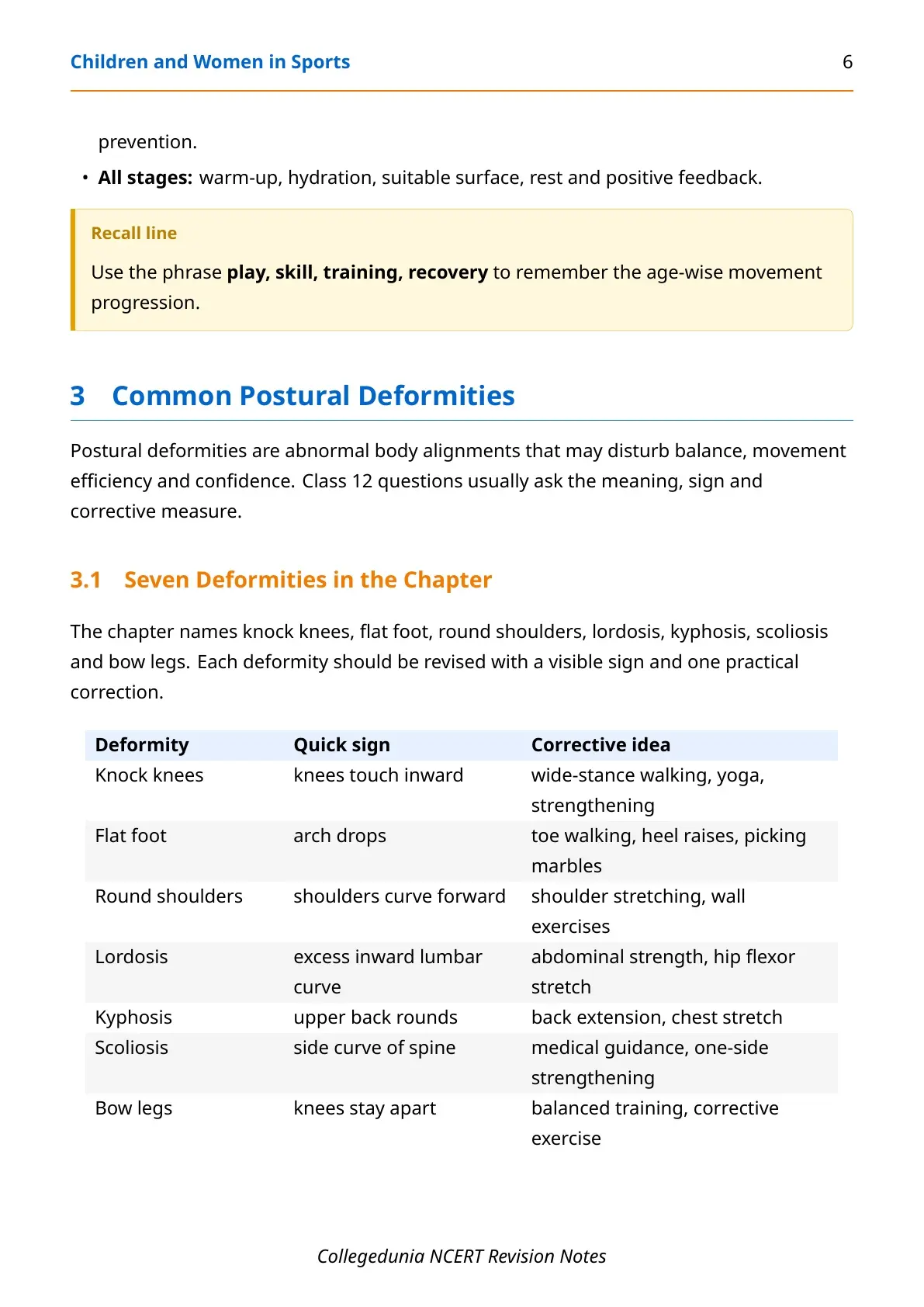
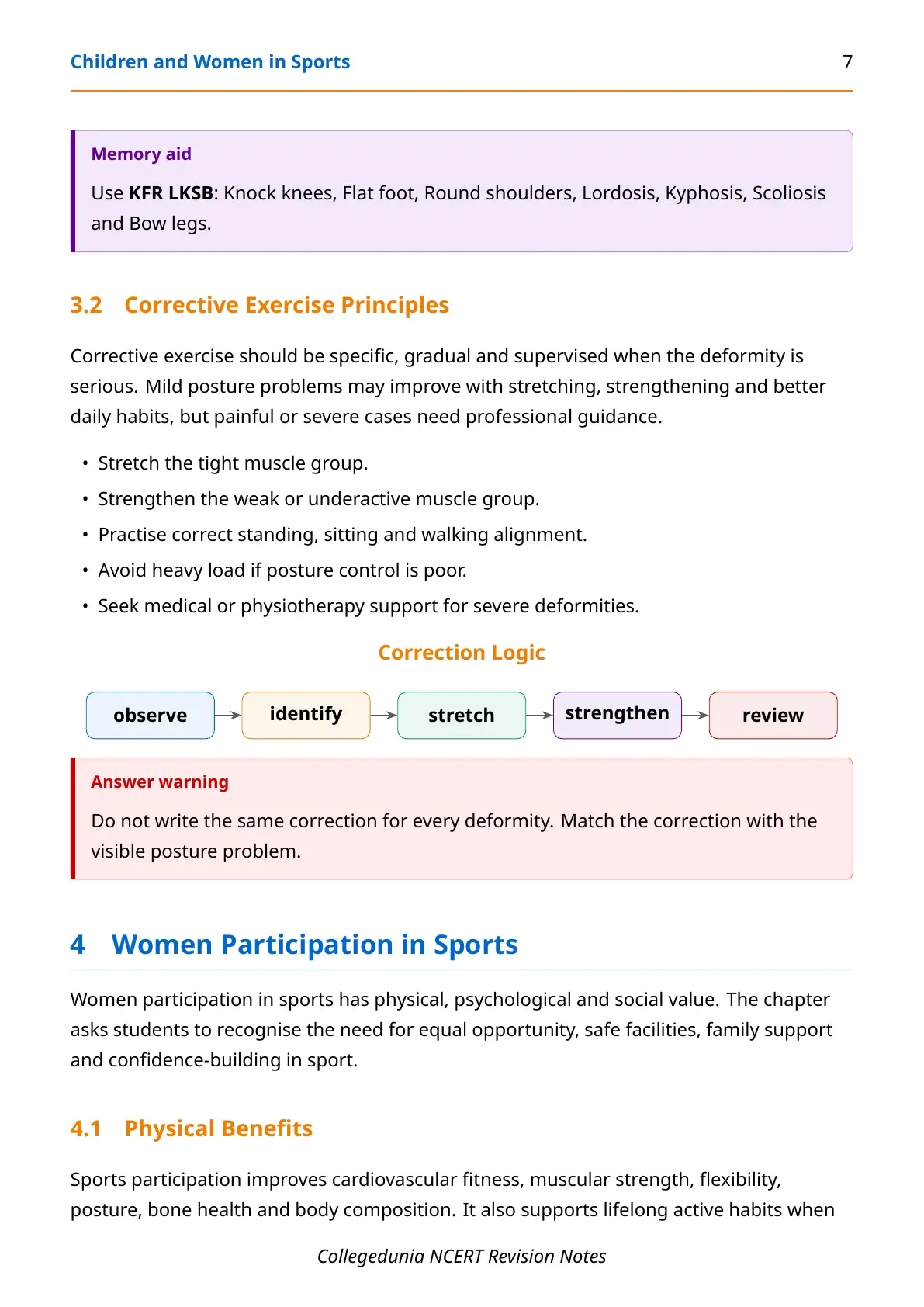
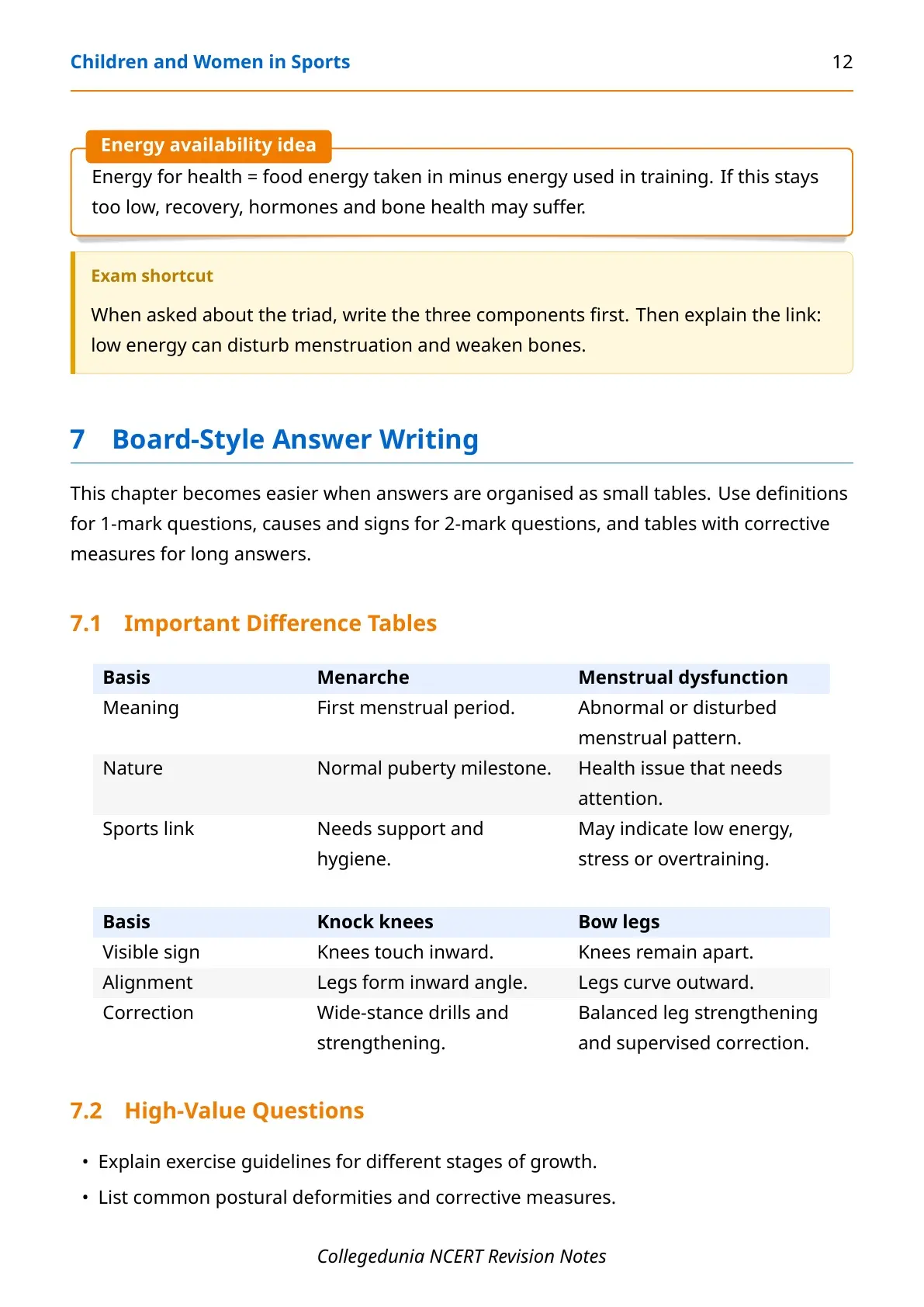
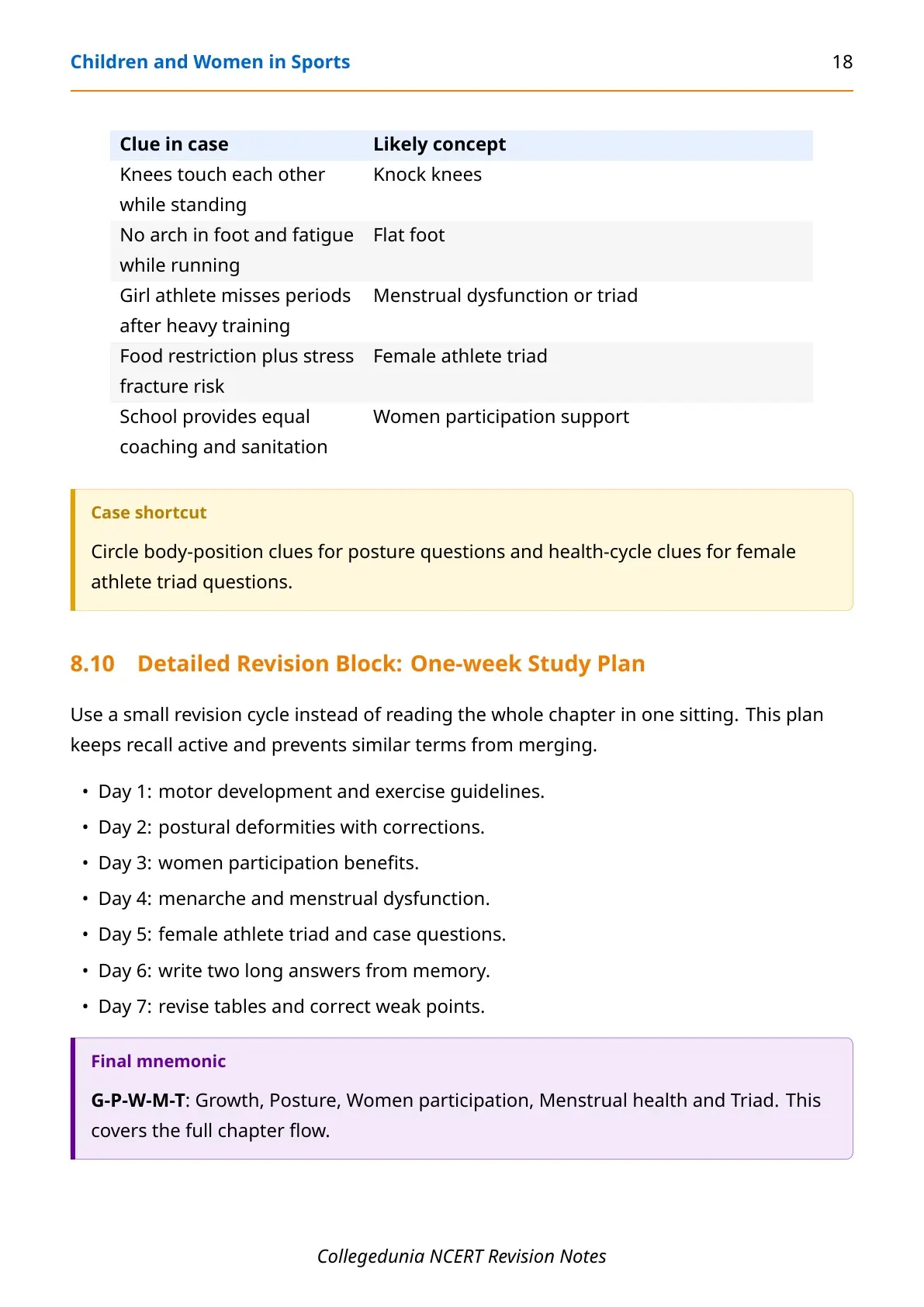
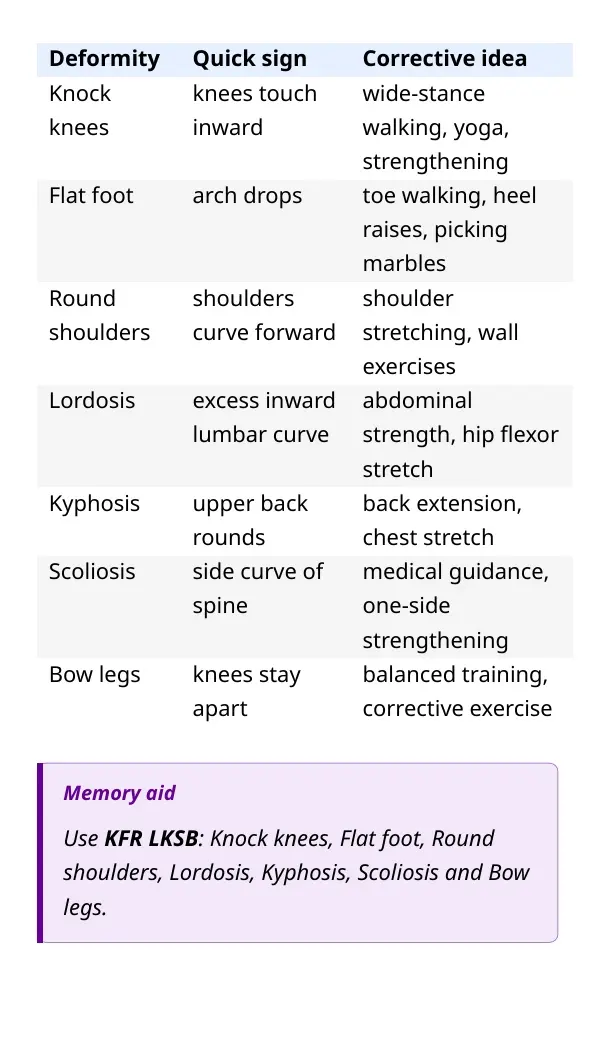
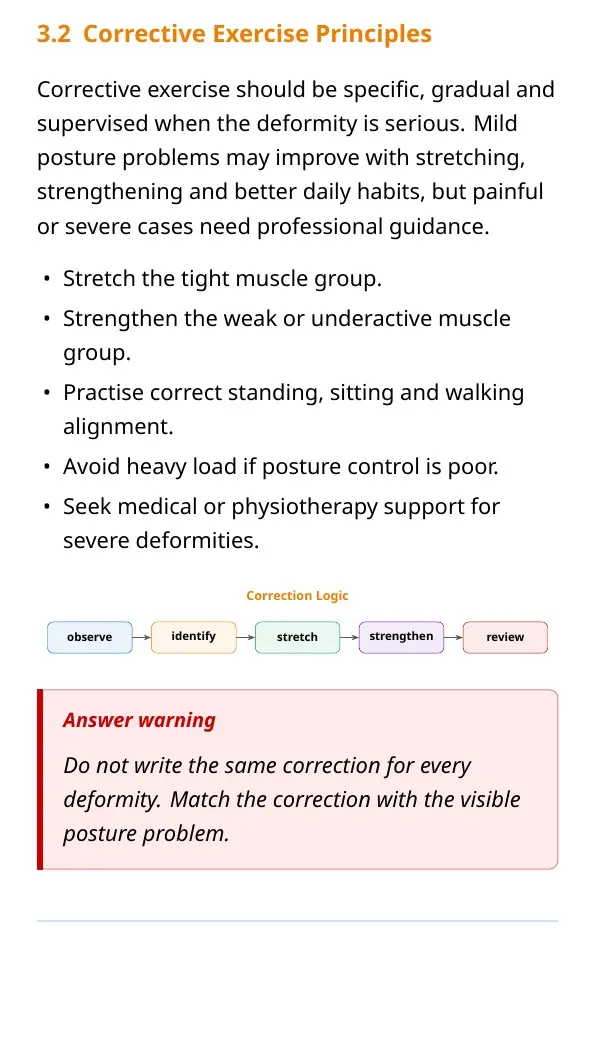
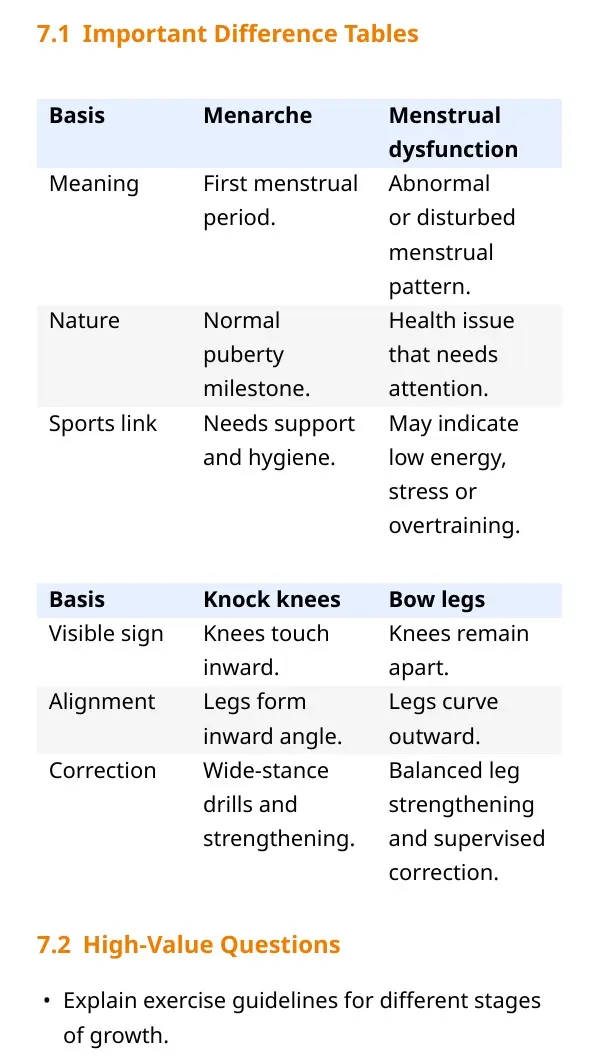
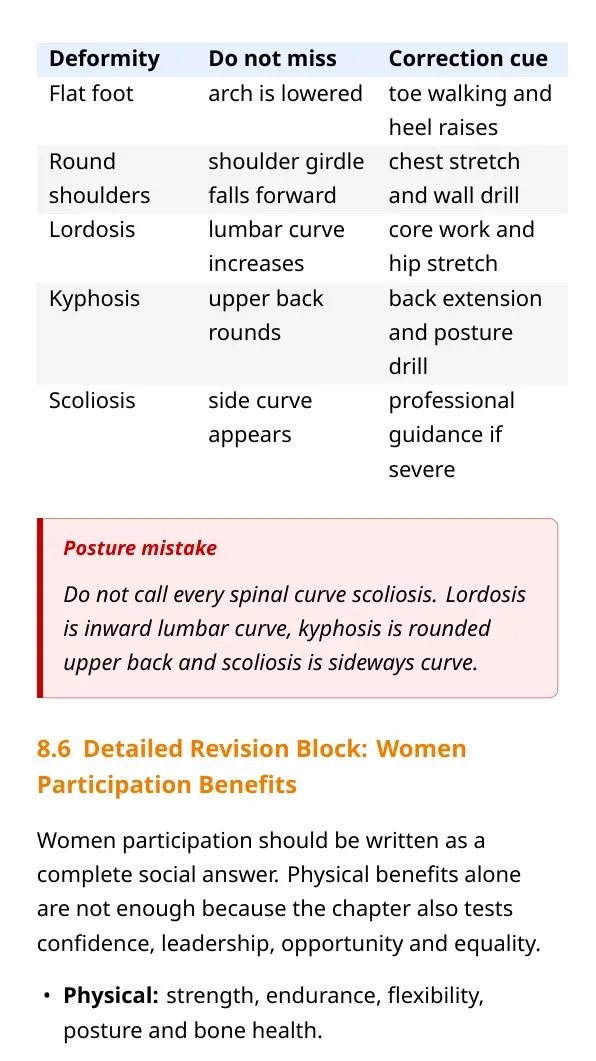
Postural deformities are abnormal body alignments. The chapter names knock knees, flat foot, round shoulders, lordosis, kyphosis, scoliosis and bow legs. Each answer should include the visible sign and one corrective measure.
| Deformity | Visible Sign | Corrective Measure |
|---|---|---|
| Knock knees | Knees touch inward while standing. | Wide-stance walking and strengthening. |
| Flat foot | Foot arch drops. | Toe walking, heel raises and marble picking. |
| Round shoulders | Shoulders bend forward. | Shoulder stretching and wall exercises. |
| Lordosis | Lower back curves inward too much. | Abdominal strengthening and hip-flexor stretch. |
| Kyphosis | Upper back rounds. | Back extension and chest stretch. |
| Scoliosis | Spine curves sideways. | Medical guidance and side-specific exercise. |
| Bow legs | Knees remain apart. | Balanced leg strengthening and supervised correction. |
Children and Women in Sports Video Revision
Source: Zaki Saudagar on YouTube
Women Participation in Sports
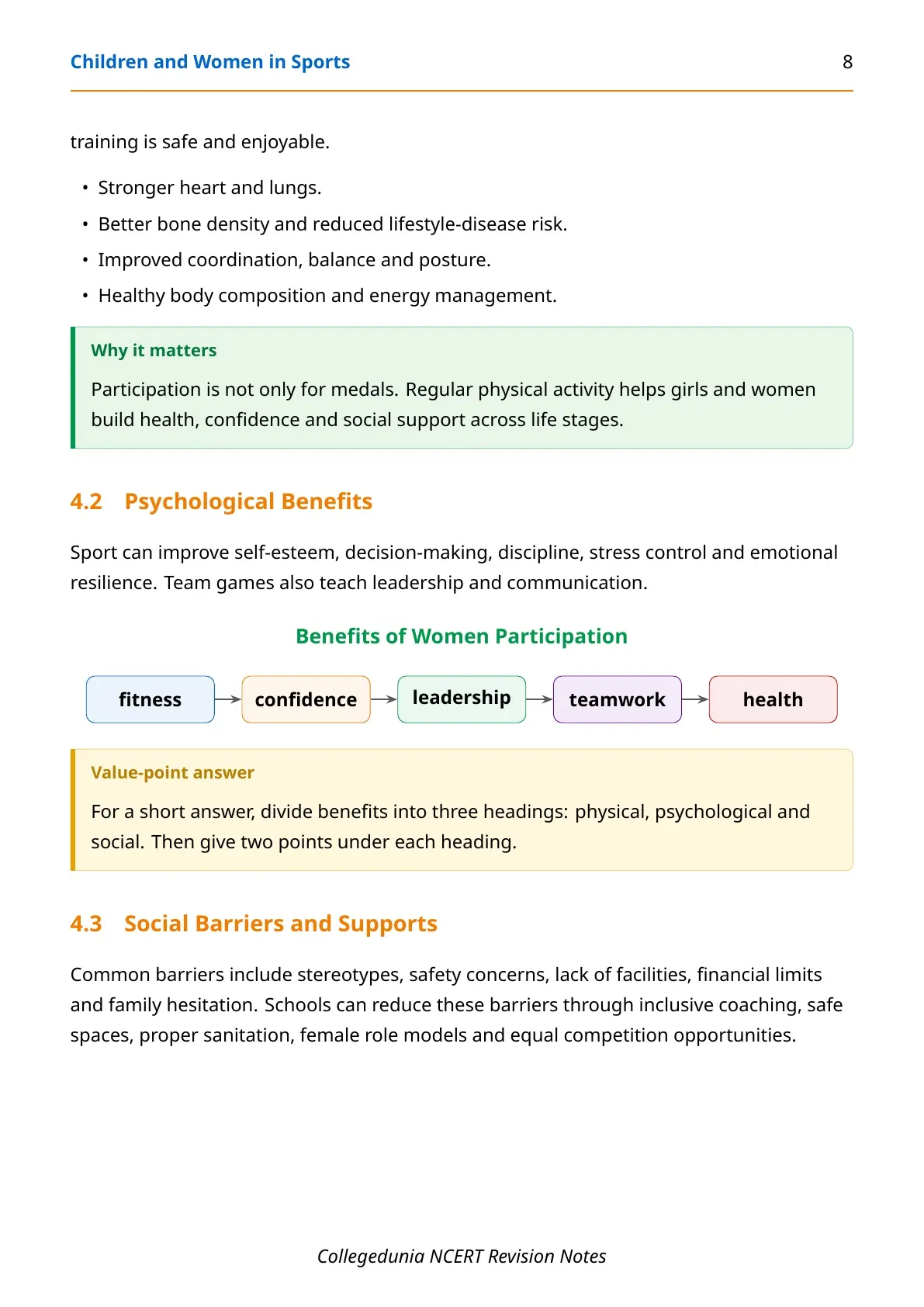
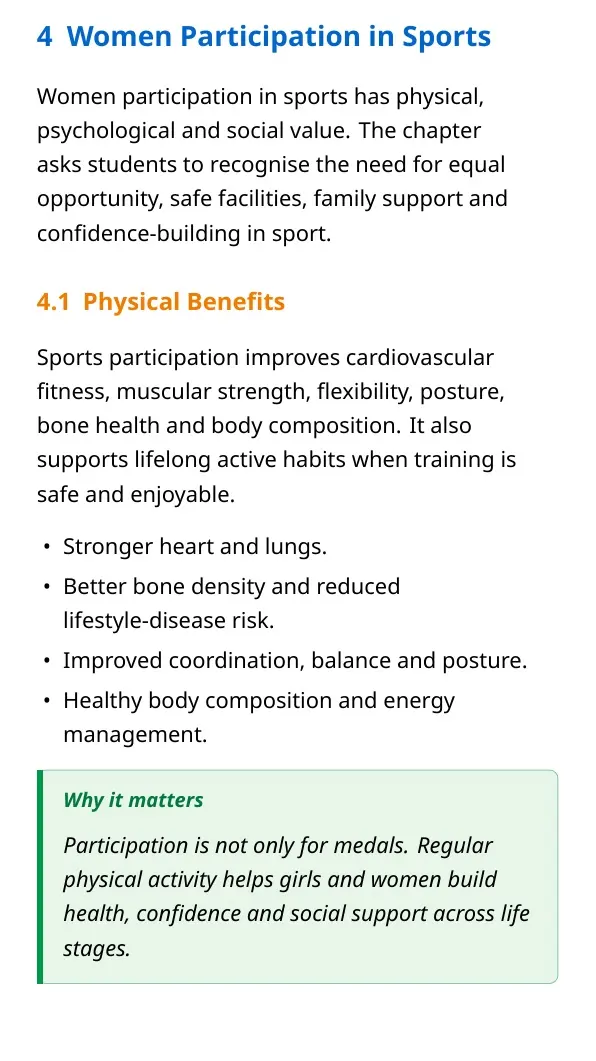
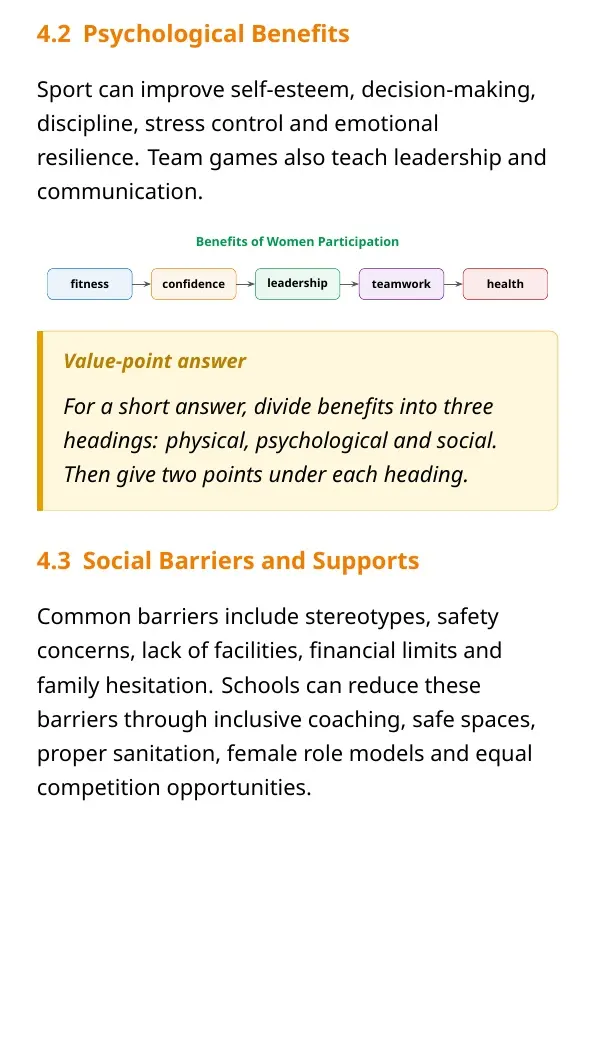
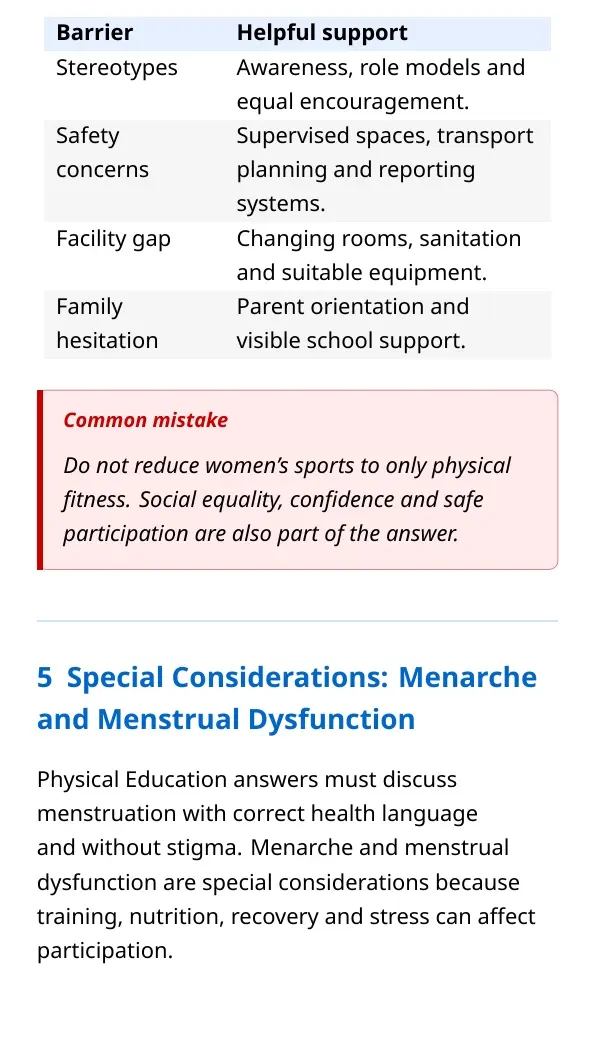
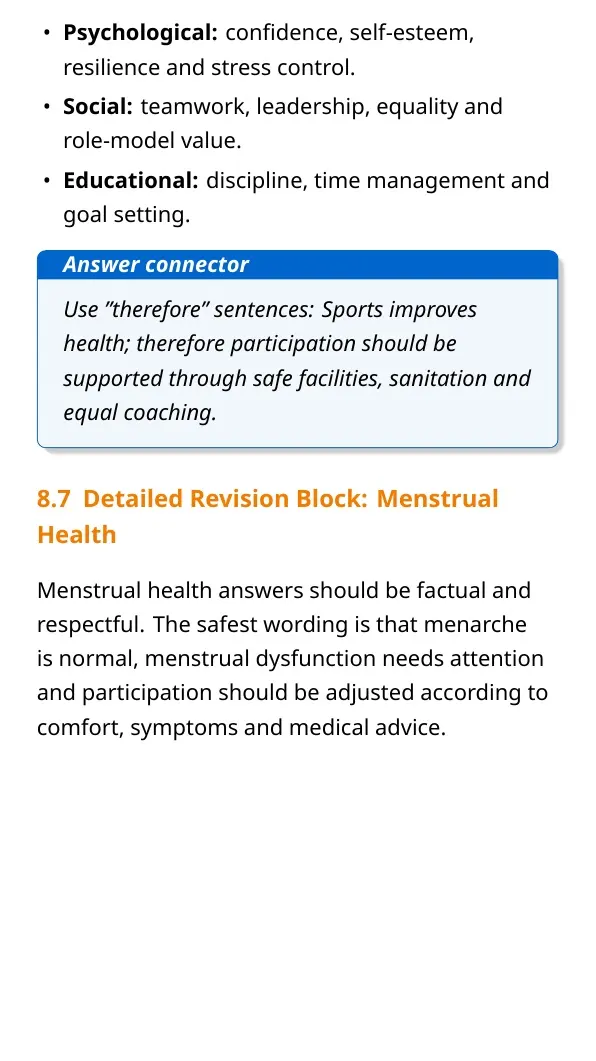
Women participation in sports improves health and confidence, but the answer should also include equality, safety, family support and social opportunity. A complete answer divides benefits into physical, psychological and social points.
| Benefit Type | Key Points |
|---|---|
| Physical | Fitness, strength, posture, bone health and lower lifestyle-disease risk. |
| Psychological | Self-esteem, confidence, stress control and emotional resilience. |
| Social | Leadership, teamwork, equality, communication and role-model value. |
Menarche and Menstrual Dysfunction
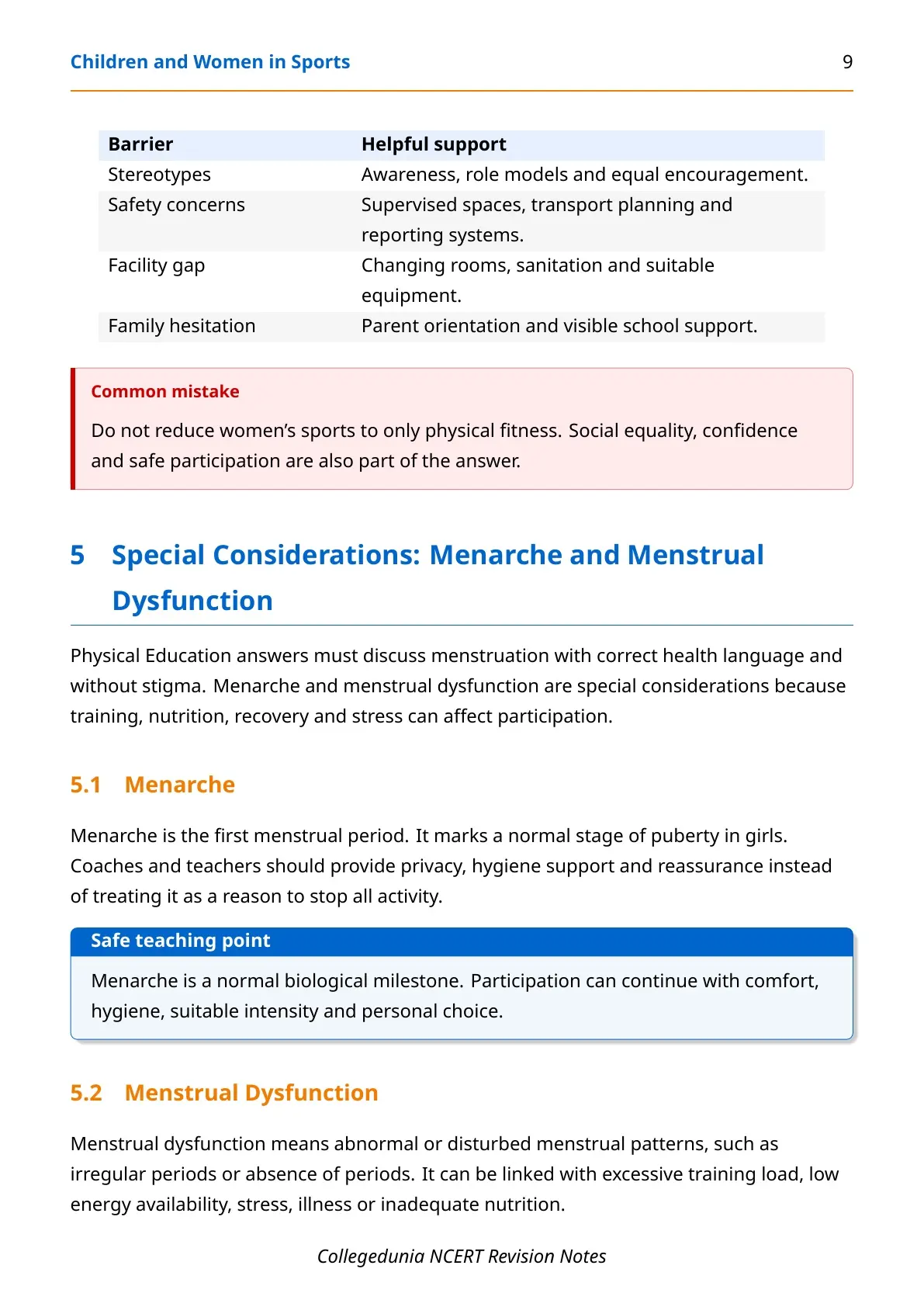
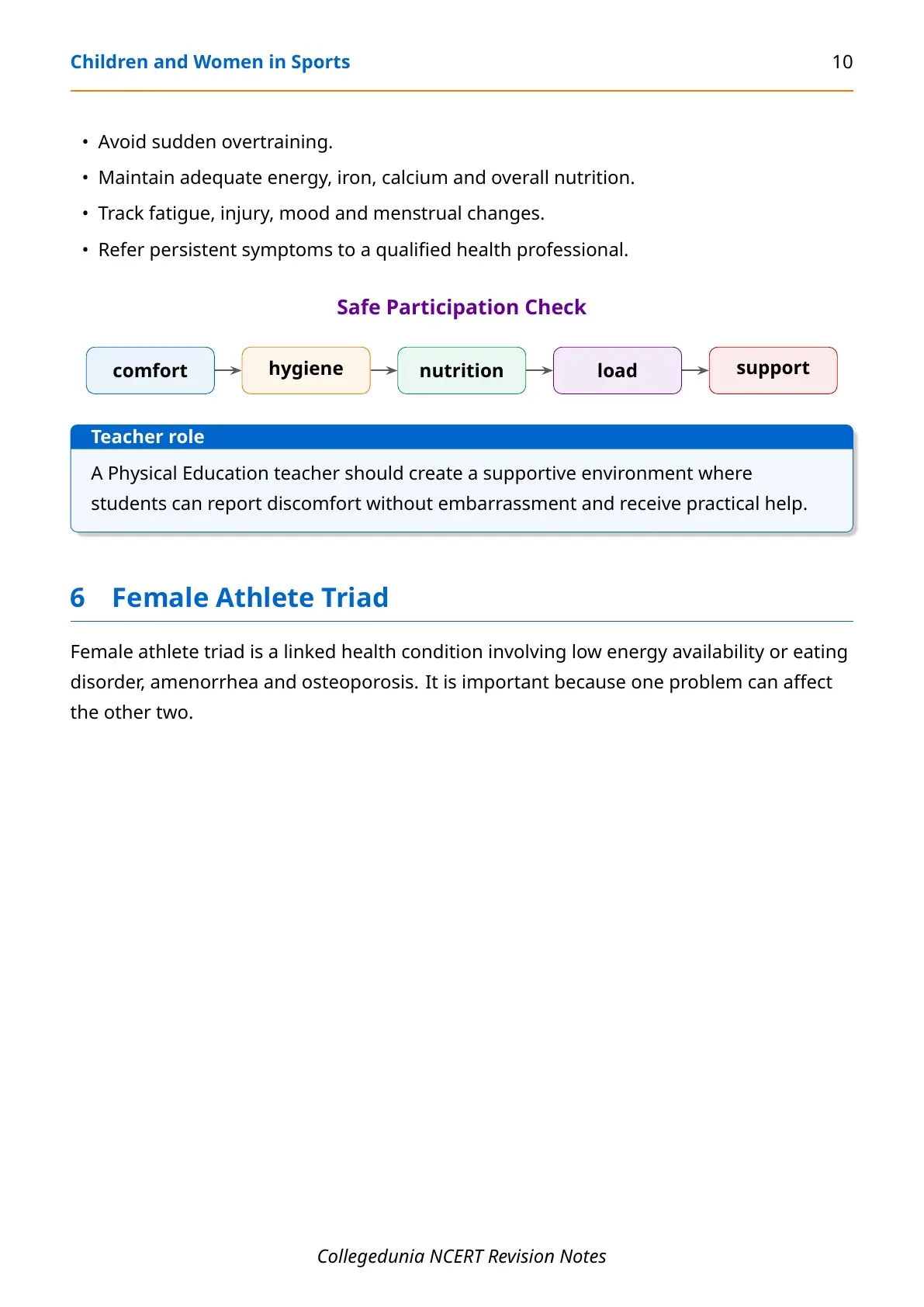
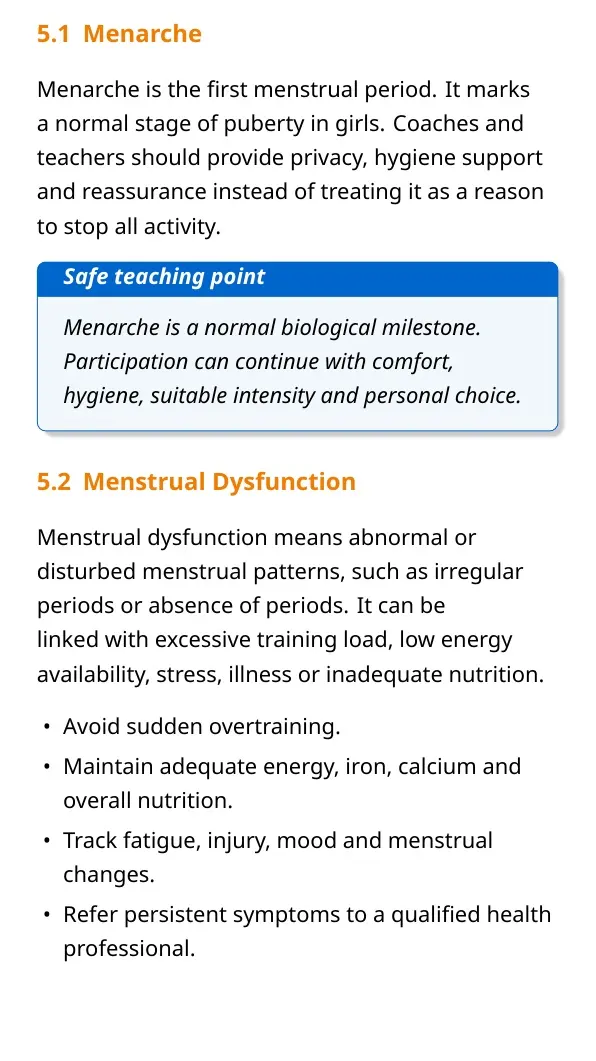
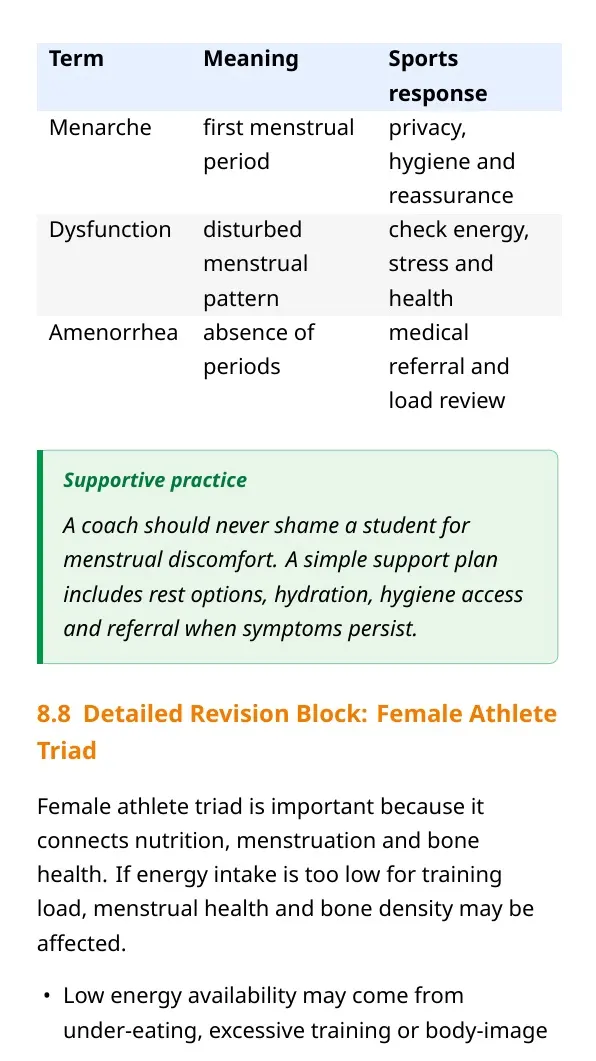
Menarche is the first menstrual period. It is a normal puberty milestone and needs privacy, hygiene, comfort and support. Menstrual dysfunction means abnormal menstrual patterns, which can be linked with low energy, stress, illness or excessive training load.
- Use supportive language and avoid stigma in answers.
- Connect menstrual dysfunction with training load, nutrition, rest and medical guidance.
- Do not write that menstruation always stops sports participation.
Female Athlete Triad
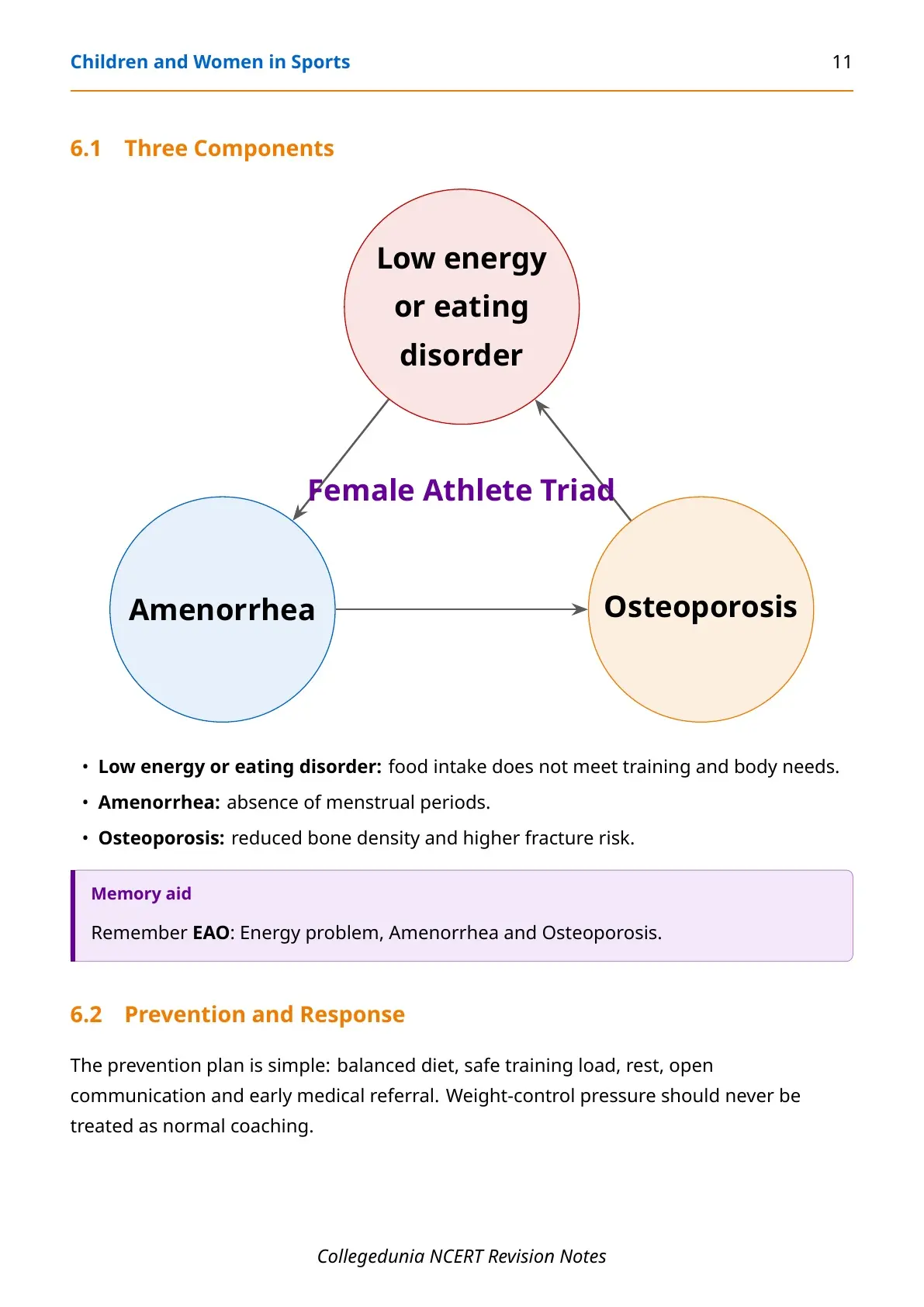
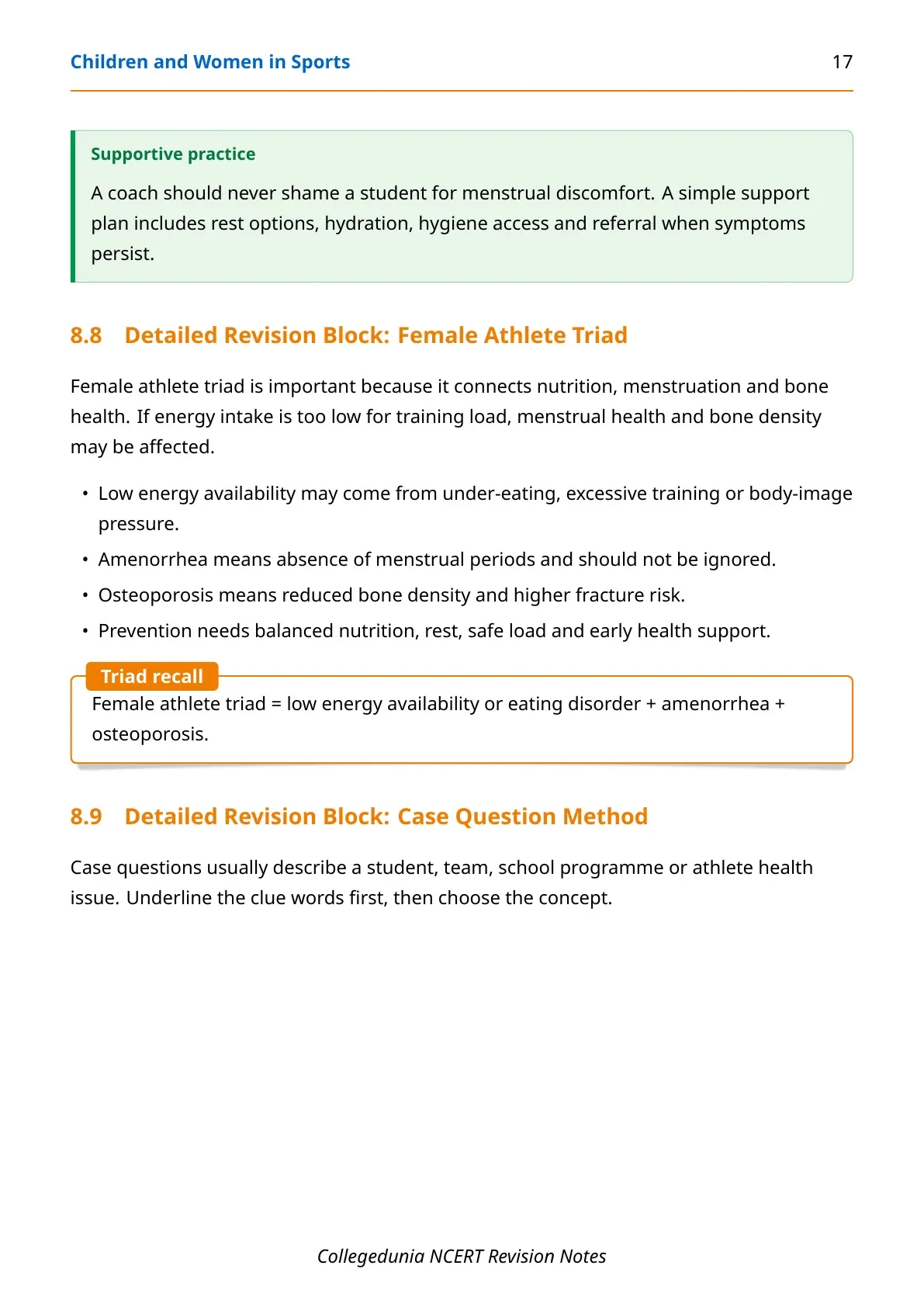
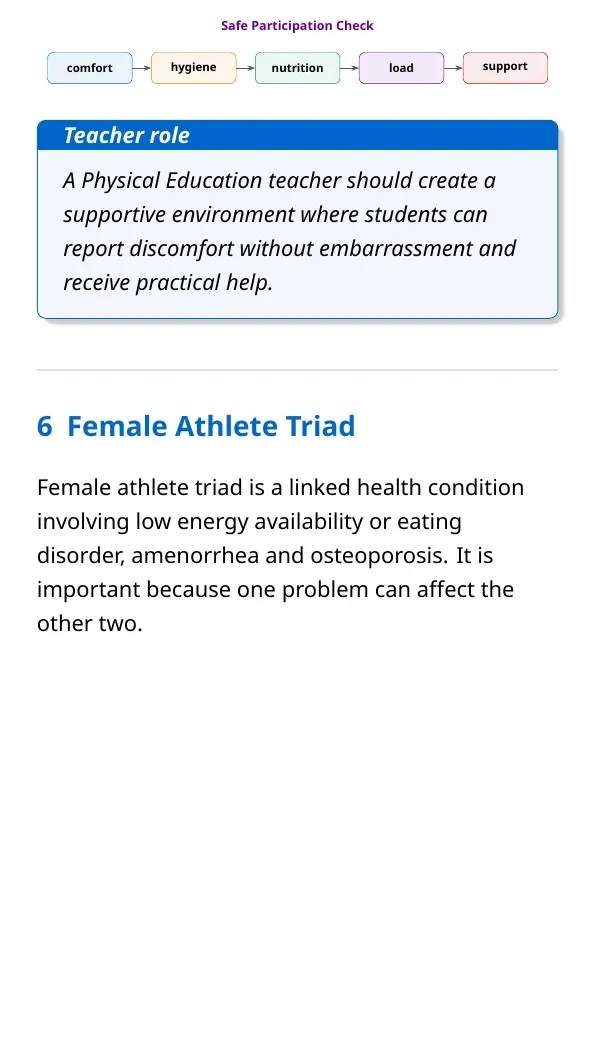
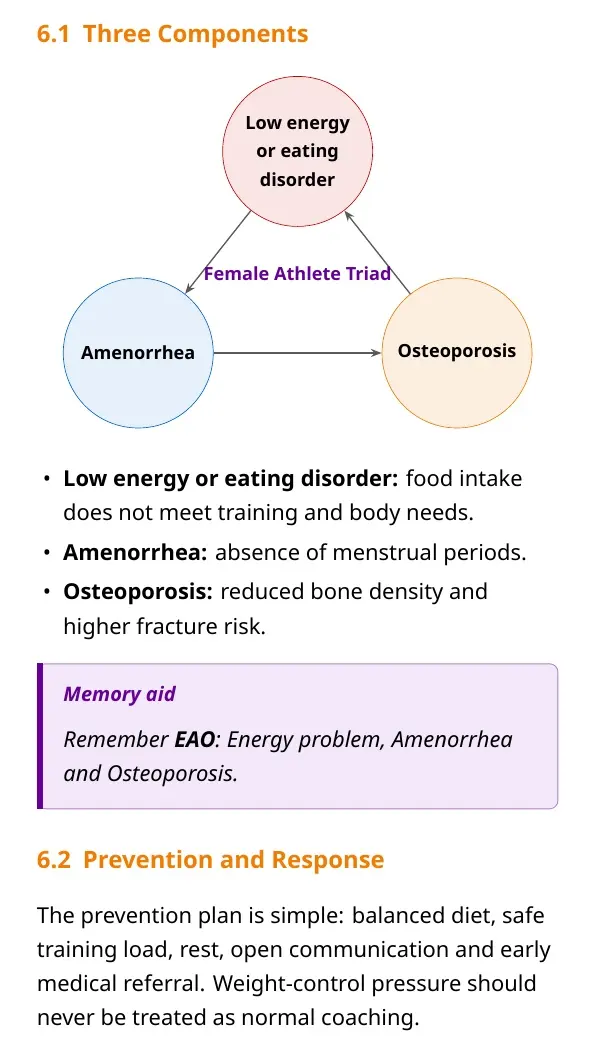
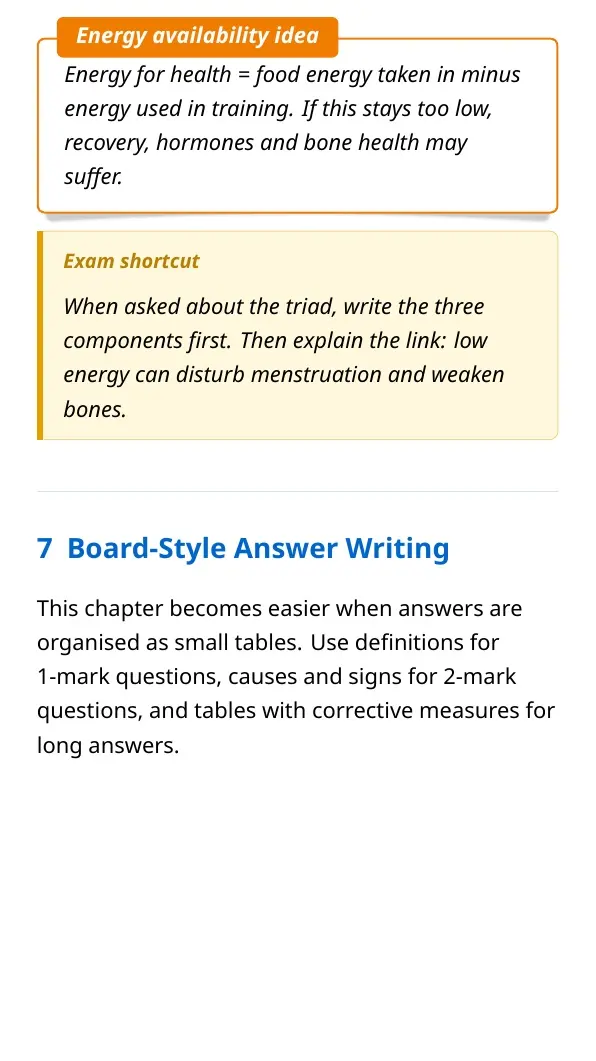
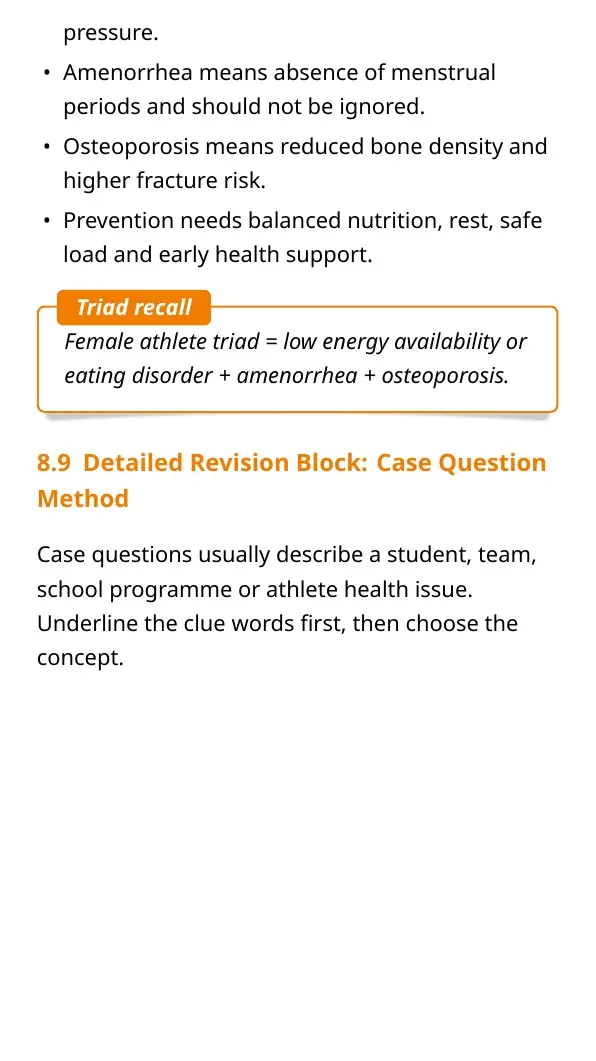
Female athlete triad is the linked condition of low energy availability or eating disorder, amenorrhea and osteoporosis. It matters because low energy can disturb hormonal health and weaken bones.
| Component | Meaning |
|---|---|
| Low energy or eating disorder | Food intake does not meet health and training needs. |
| Amenorrhea | Absence of menstrual periods. |
| Osteoporosis | Low bone density with higher fracture risk. |
Board-Style Answer Writing
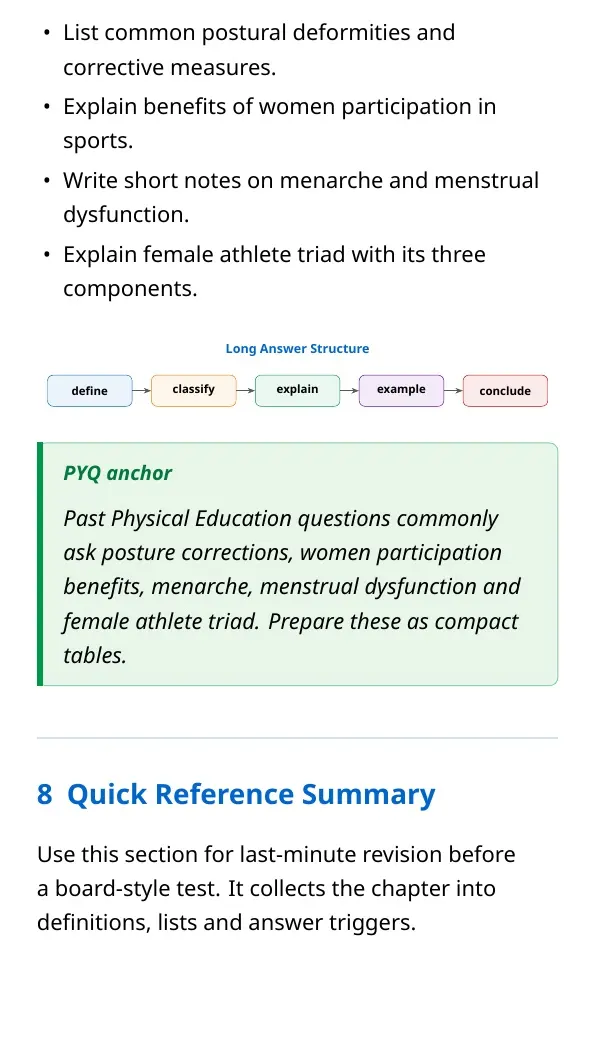
For short answers, write one definition and one example. For long answers, use a table. The highest-value topics are posture corrections, exercise guidelines, women participation benefits and female athlete triad.
- Posture answer: deformity, visible sign, cause and correction.
- Women sports answer: physical, psychological and social benefits.
- Triad answer: list three components, then explain their link.
Related Resources for Children and Women in Sports
| Resource | Link |
|---|---|
| Children and Women in Sports PYQ PDF | Chapter 2 PYQ PDF |
| Children and Women in Sports Handwritten Notes | Chapter 2 Handwritten Notes |
| Class 12 Physical Education Notes | Chapter 1 Physical Education Notes |
More Class 12 Physical Education Notes
| Chapter | Notes Link |
|---|---|
| Chapter 1 Management of Sporting Events | Chapter 1 Management of Sporting Events Notes |
| Chapter 2 Children and Women in Sports | Current Notes |
| Chapter 3 Yoga as Preventive Measure for Lifestyle Disease | Revise Chapter 1 Notes while Chapter 3 is queued |
| Chapter 4 Physical Education and Sports for CWSN | Current Chapter 2 Notes |
Class 12 Physical Education Children and Women in Sports Notes FAQs
Ques. What is covered in Class 12 Physical Education Children and Women in Sports notes?
Ans. The notes cover motor development, exercise guidelines, postural deformities, women participation, menarche, menstrual dysfunction and female athlete triad.
Ques. What is female athlete triad?
Ans. Female athlete triad is a linked condition involving low energy or eating disorder, amenorrhea and osteoporosis.
Ques. Which postural deformities are important in this chapter?
Ans. Knock knees, flat foot, round shoulders, lordosis, kyphosis, scoliosis and bow legs are the main postural deformities.
Ques. How should students write women participation answers?
Ans. Divide the answer into physical, psychological and social benefits, then add safety and equal-opportunity points.



Comments