




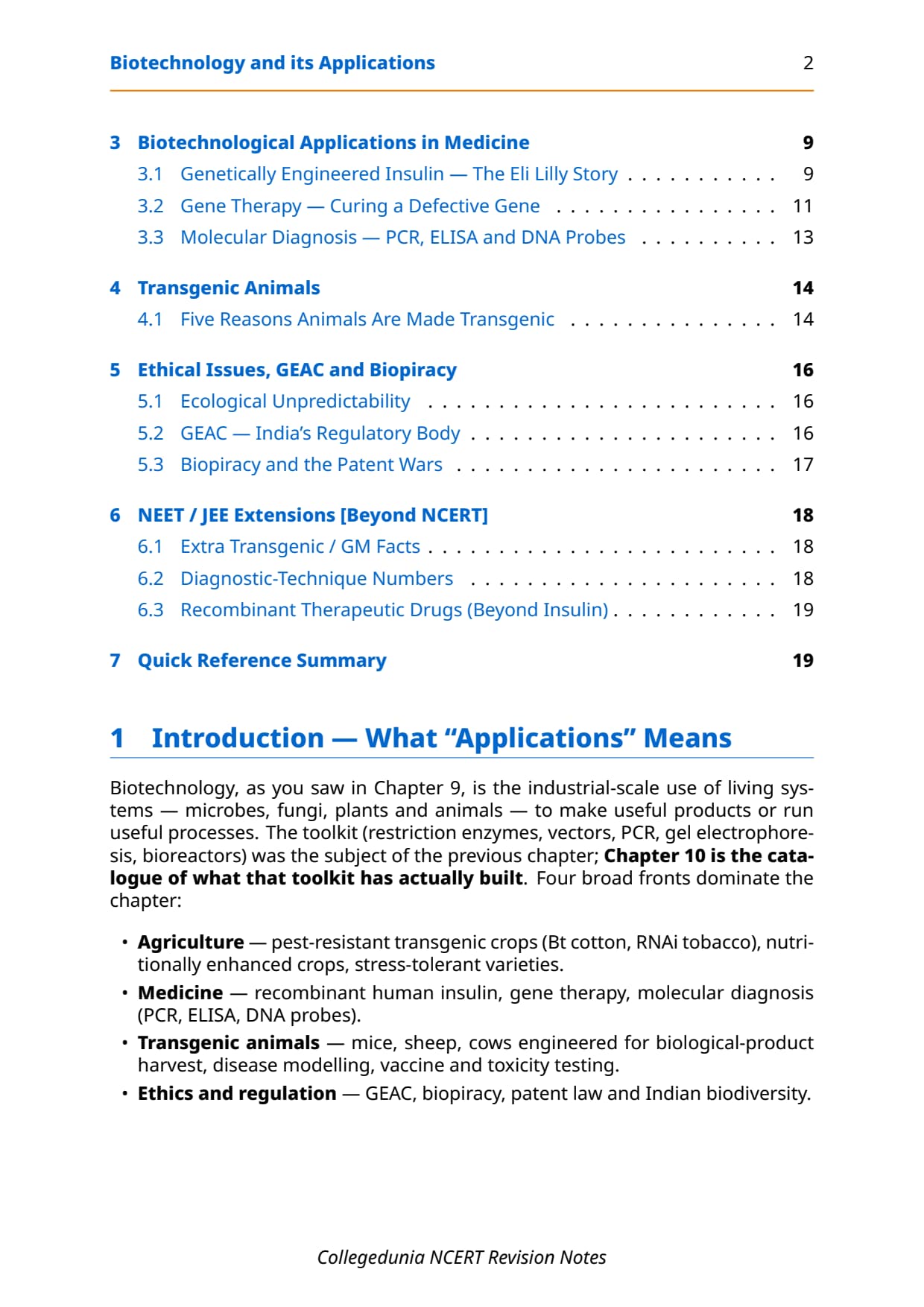
The Class 12 Biology NCERT Notes Chapter 10 Biotechnology and its Applications cover Bt crops, RNAi, recombinant insulin, gene therapy, PCR, ELISA, transgenic animals, and GMO ethics. Every topic follows the 2026-27 NCERT syllabus. This page hosts the full Notes PDF to read or download below.
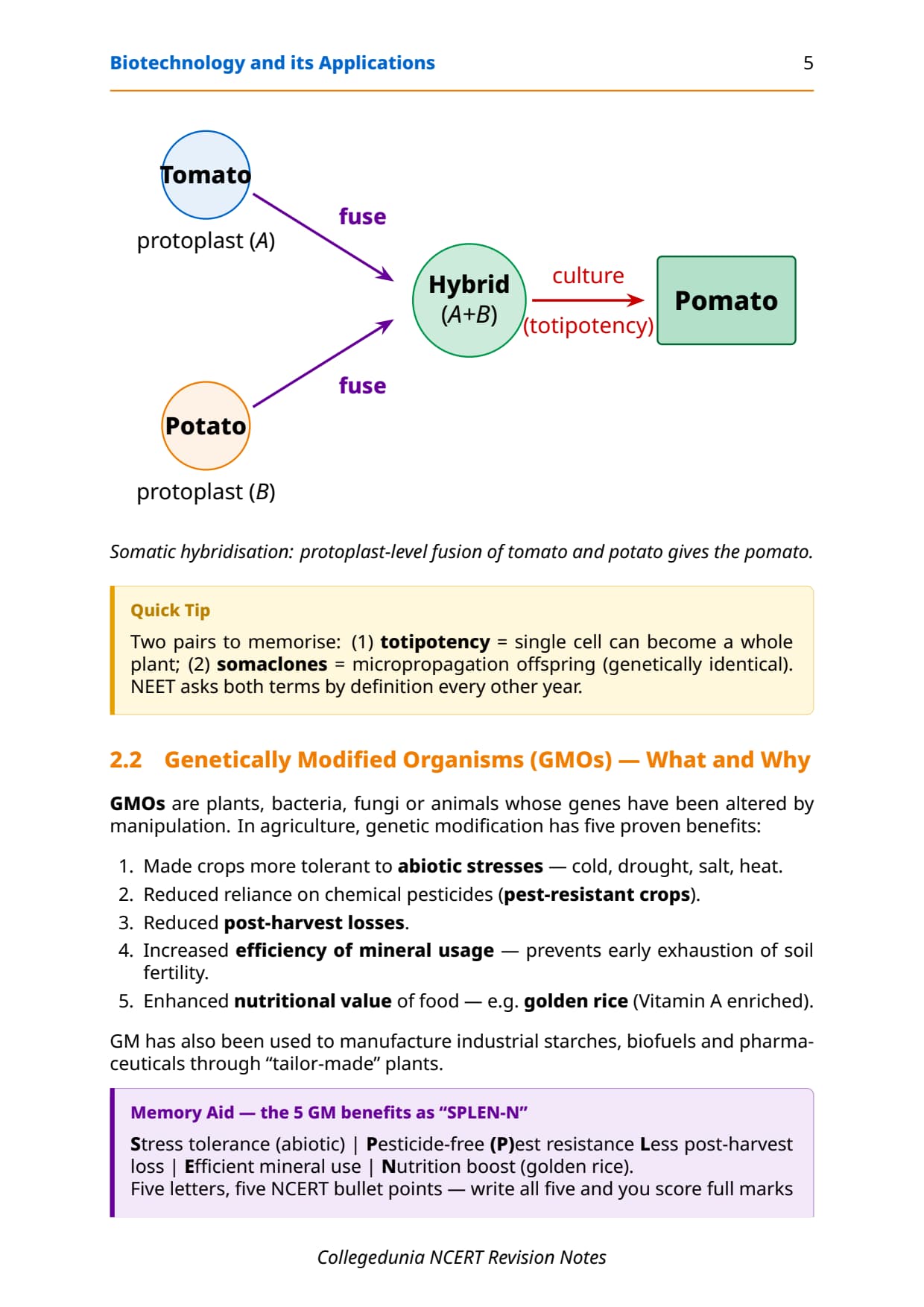
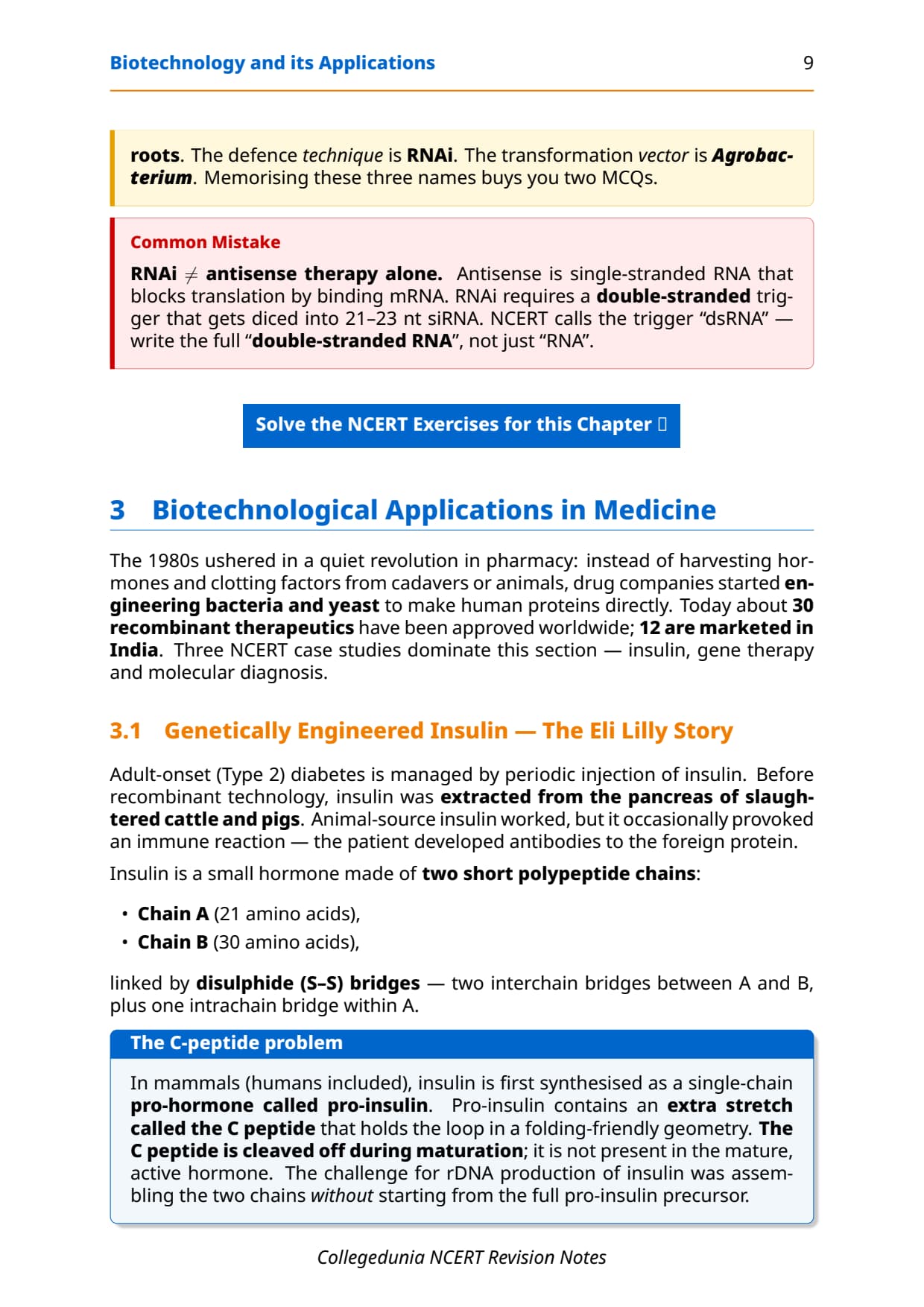
- CBSE Weightage: 4-6 marks in the Class 12 Biology paper (Unit IX).
- NEET Coverage: 1-2 MCQs every year (Bt cotton, Humulin, ADA-SCID, GEAC).
- Notes Length: 22 pages, 38 numbered concepts, 6 labelled diagrams.
Biotechnology and Its Applications Video Lecture for Class 12 Biology
Source: Magnet Brains on YouTube
The notes follow the NCERT sub-section order (10.1, 10.2, 10.3, 10.4) so you can move between the book and this revision sheet easily. Every value (insulin chain length, Cry protein activation pH, ADA enzyme function) is taken from the 2026-27 NCERT print.
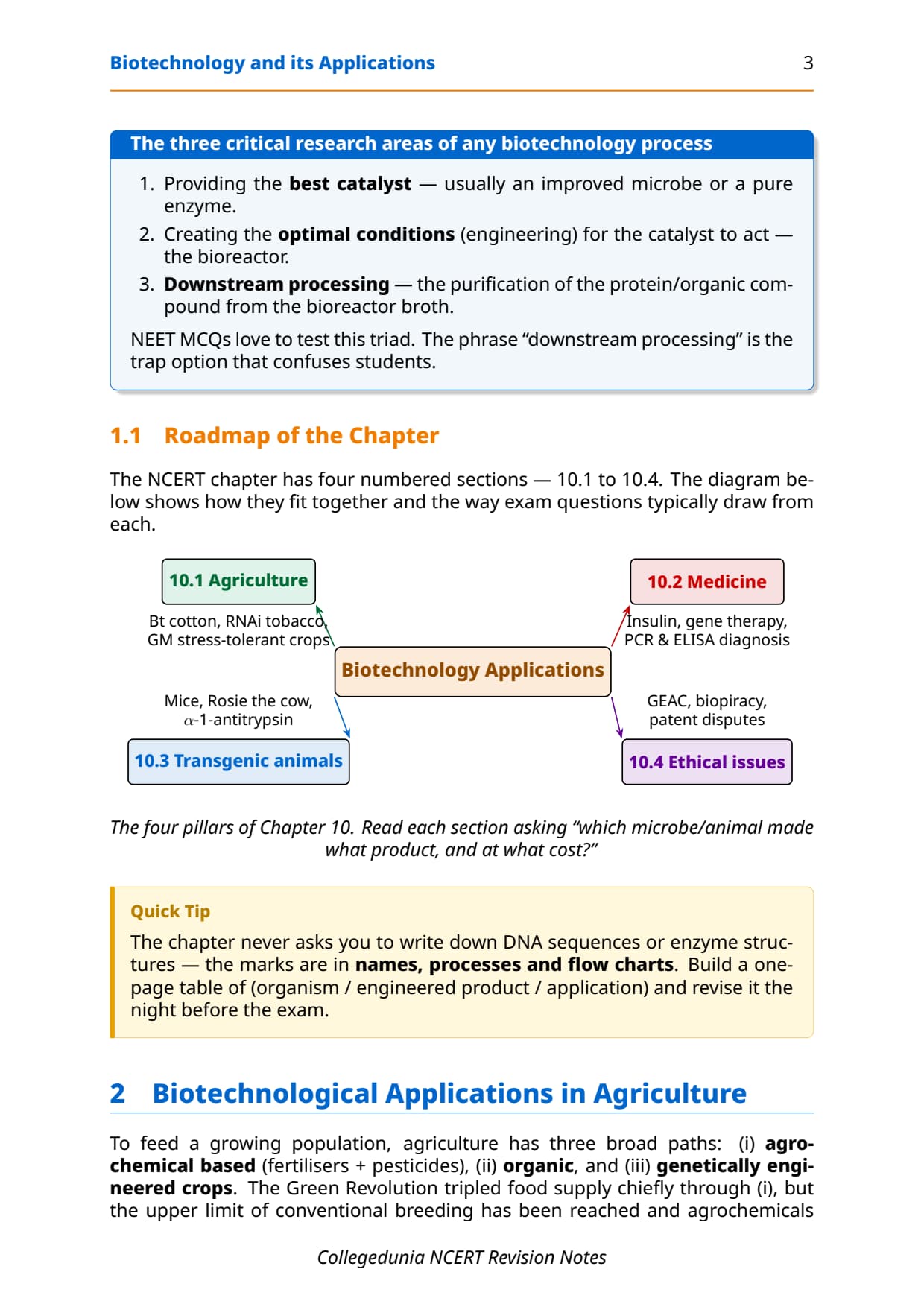
Class 12 Biology NCERT Notes Chapter 10 Biotechnology and its Applications: Sub-Topic Map
The chapter divides into three application domains - agriculture, medicine, and ethics. The notes mirror this three-part structure exactly.
| Section | Sub-Topic | Notes Pages | Diagrams Included |
|---|---|---|---|
| 10.1 | Biotechnological Applications in Agriculture | 5 | Bt toxin action, RNAi pathway |
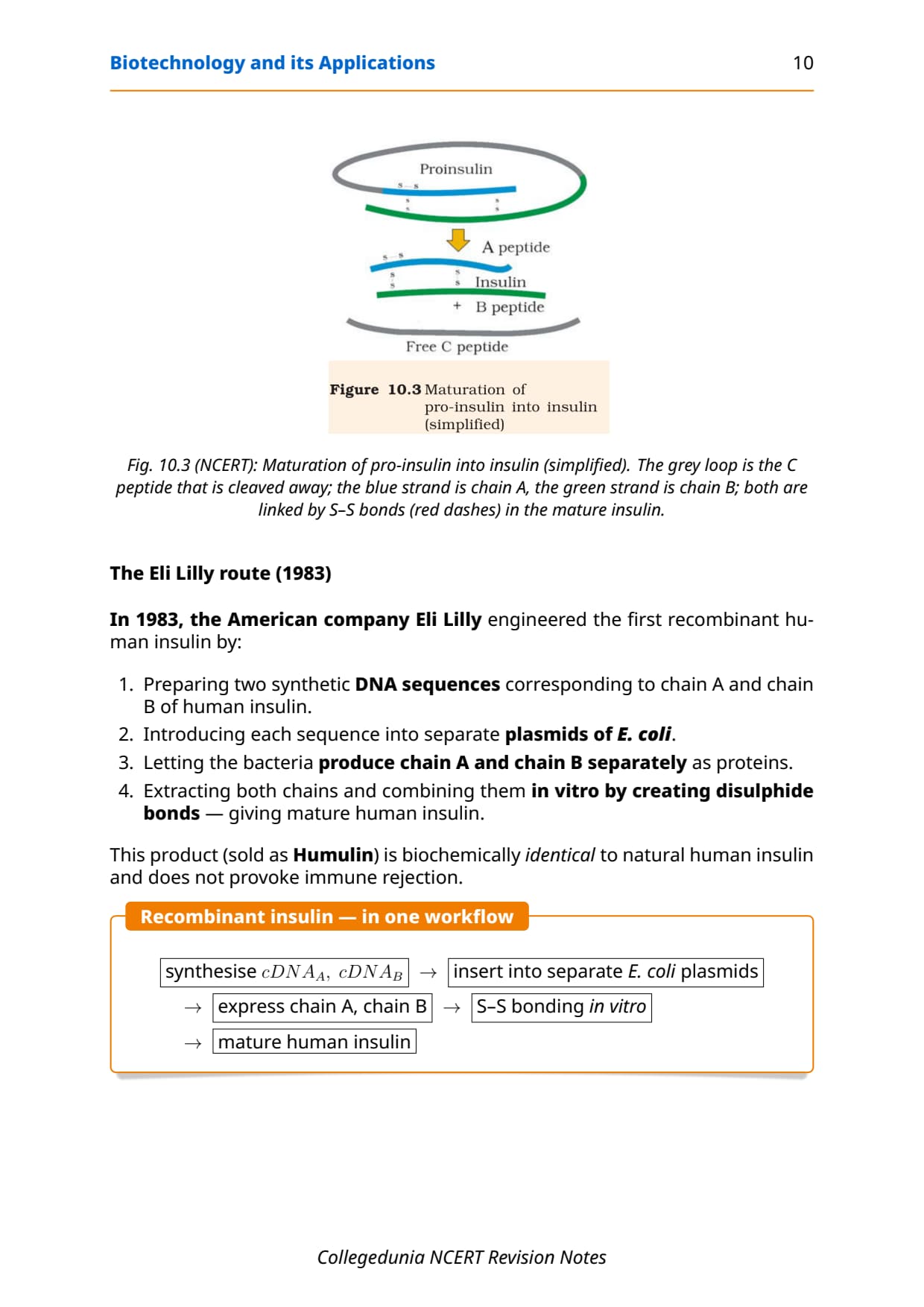
| 10.2 | Biotechnological Applications in Medicine | 9 | Pro-insulin to insulin, gene therapy delivery, ELISA, PCR |
| 10.3 | Transgenic Animals | 4 | Rosie the cow timeline |
| 10.4 | Ethical Issues, GEAC, Biopiracy | 4 | - |
Notice that the medicine section (10.2) gets almost half the page budget - this matches the question weight in both CBSE and NEET.
Biotechnology Applications Notes Class 12: Core Concept Quick Recall
- Agro-chemical based - synthetic fertilisers, pesticides. Costly, polluting.
- Organic agriculture - no synthetic chemicals; low yield.
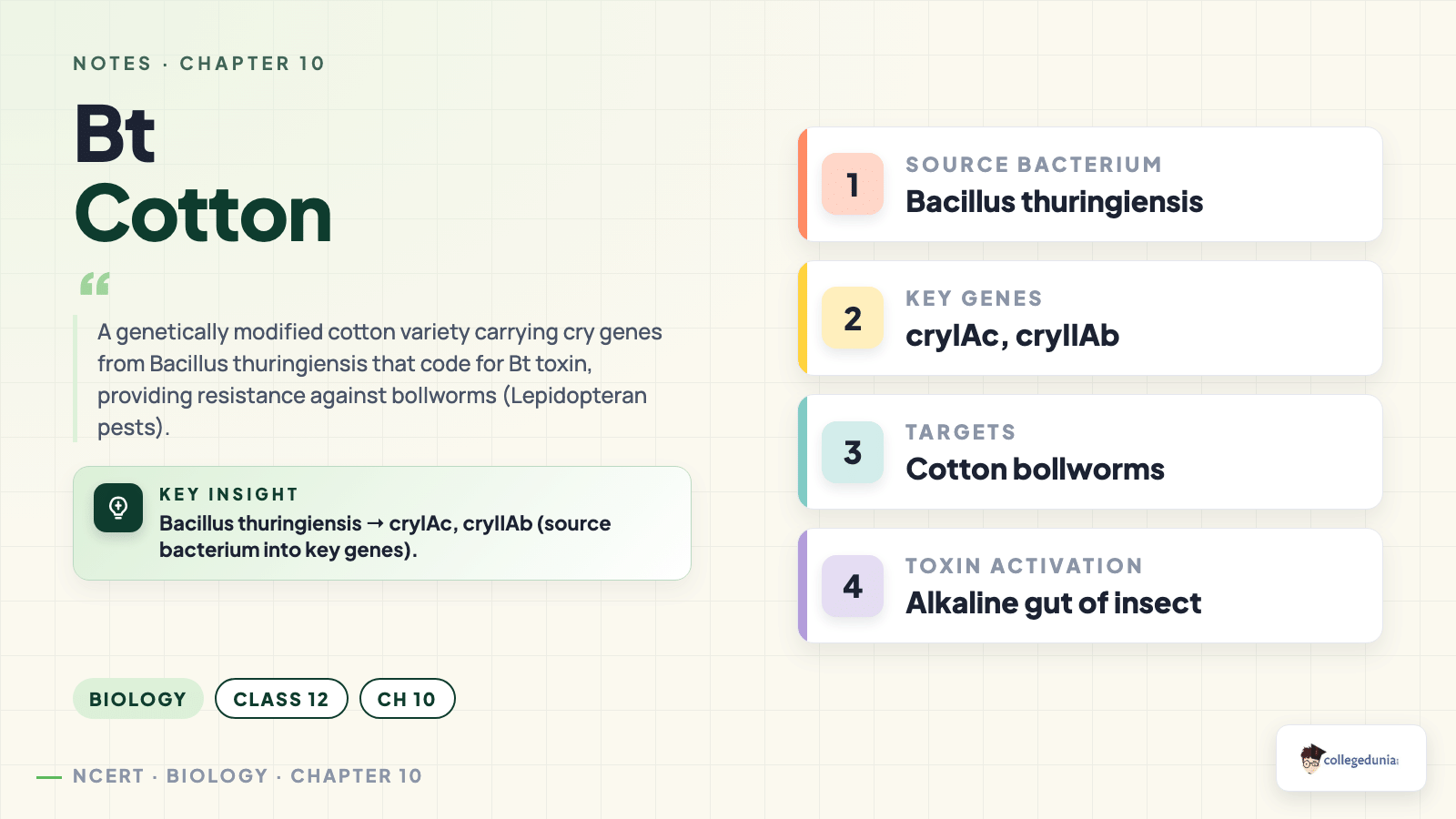
- Genetically engineered crops - solves both. Examples: Bt cotton, golden rice, Bt brinjal.
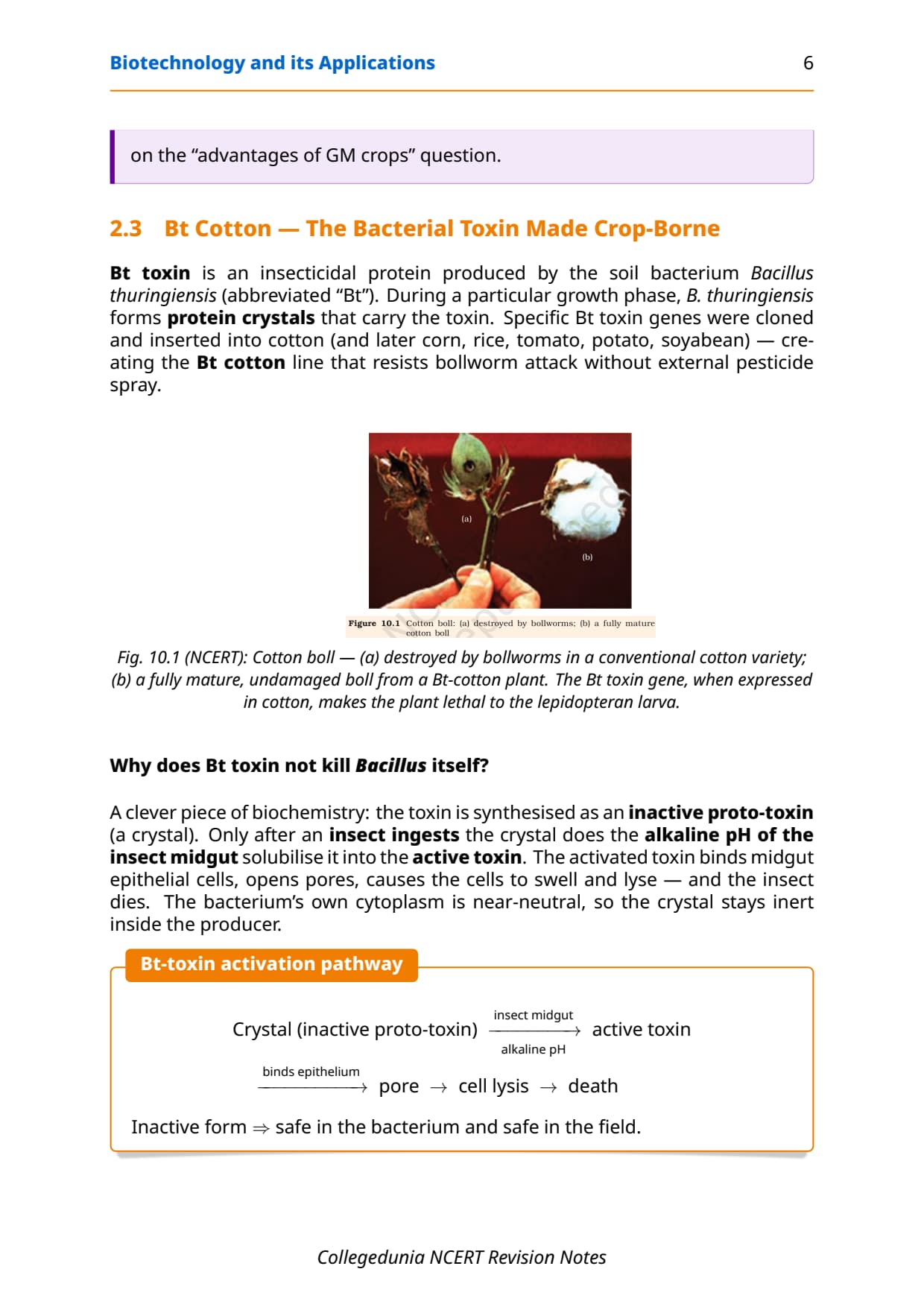
- Crystal protein (Cry protein) ingested by insect larva.
- Alkaline pH of midgut (pH ~ 9.5) solubilises crystal.
- Protoxin converts to active toxin.
- Toxin binds receptor on midgut epithelial cells.
- Pores form, cells swell and lyse, larva dies.
Important Concepts and Definitions for Class 12 Biology Chapter 10
The CBSE 1-mark MCQs in this chapter almost always test definitions. The list below covers the high-frequency terms.
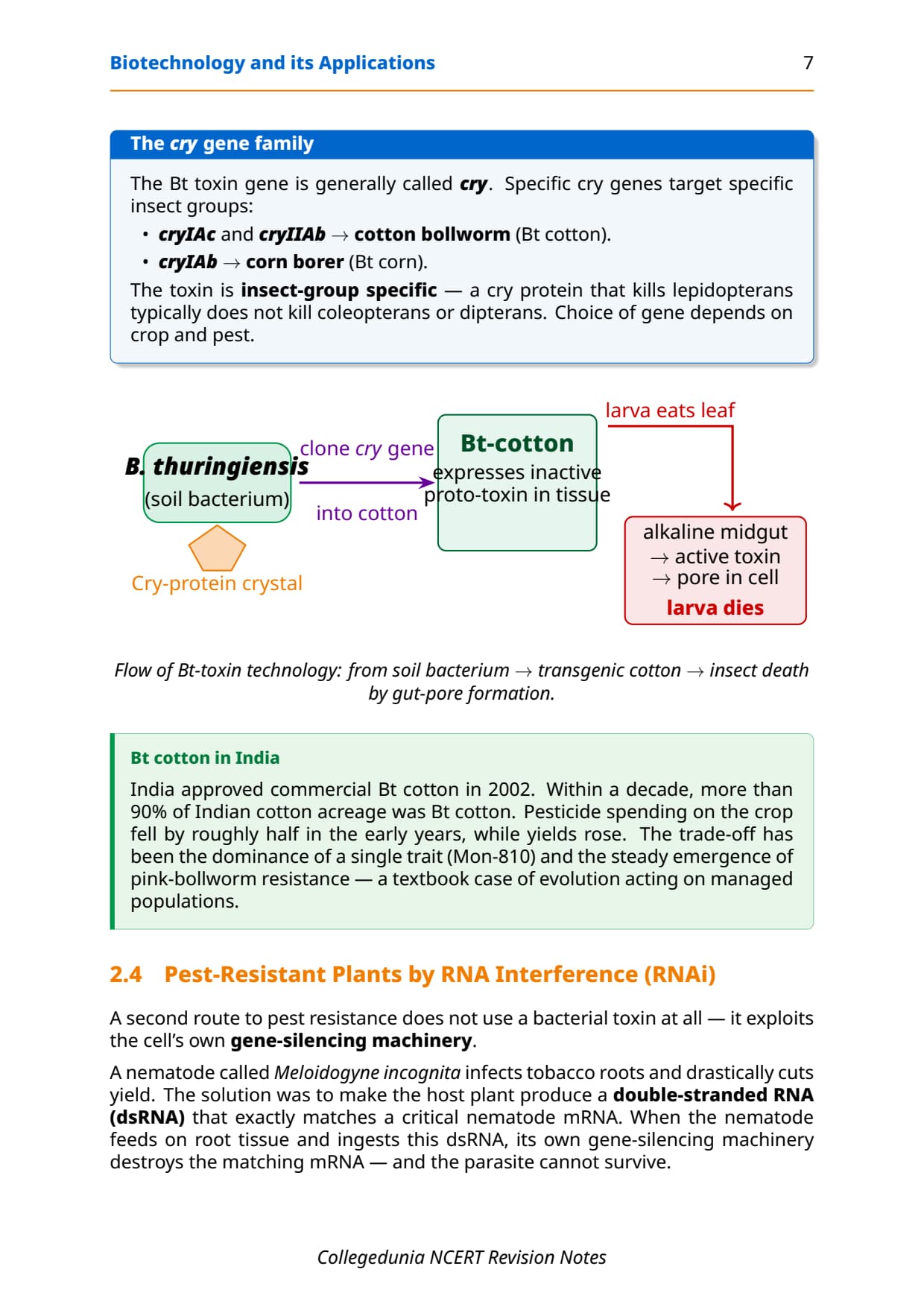
- Cry protein: Insecticidal toxin produced by Bacillus thuringiensis; encoded by cry genes.
- cryIAc, cryIAb: Control cotton bollworm.
- cryIIAb: Controls corn borer.
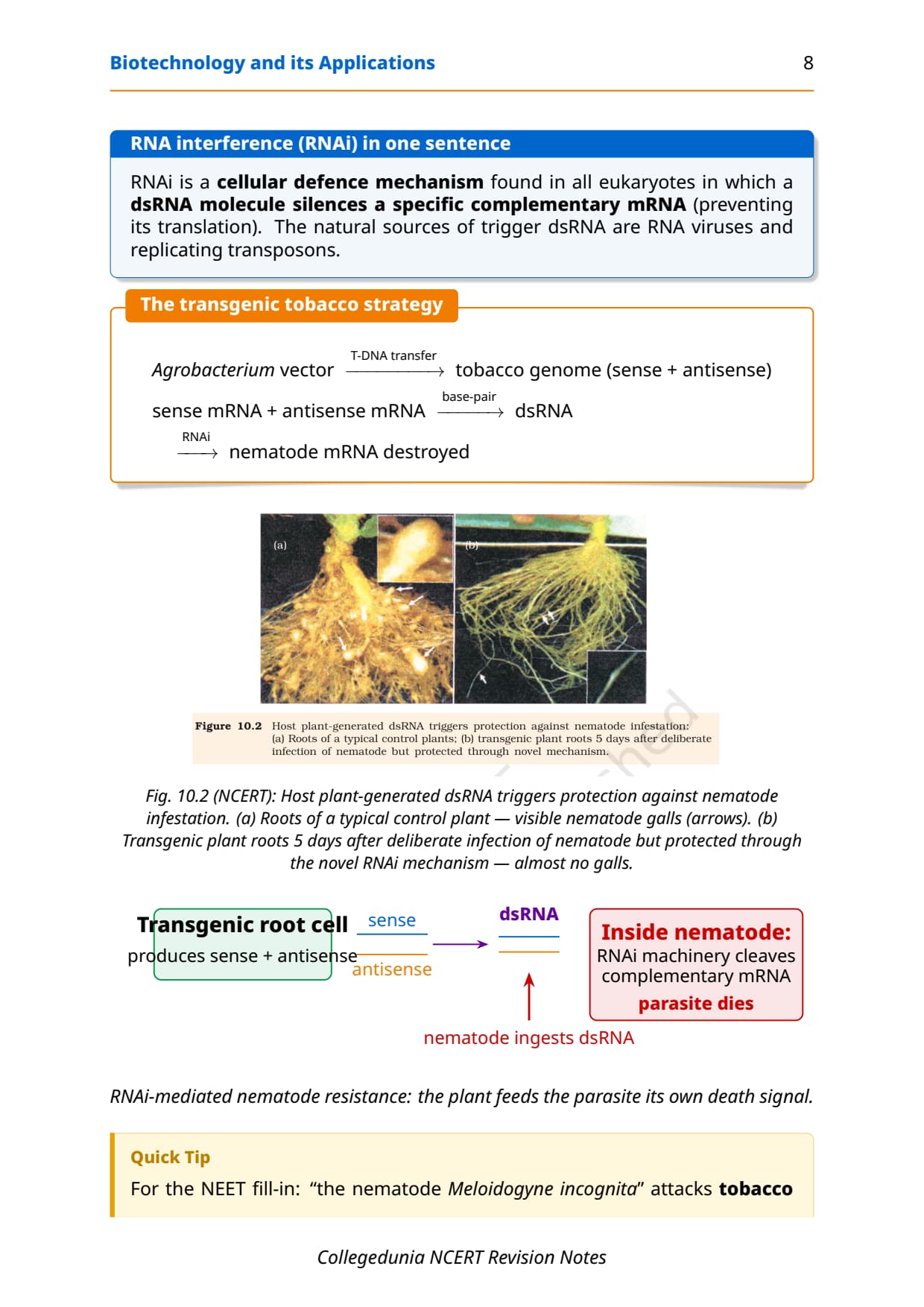
- RNA interference (RNAi): Silencing of specific mRNA by complementary dsRNA - a cellular defence against viruses and transposons.
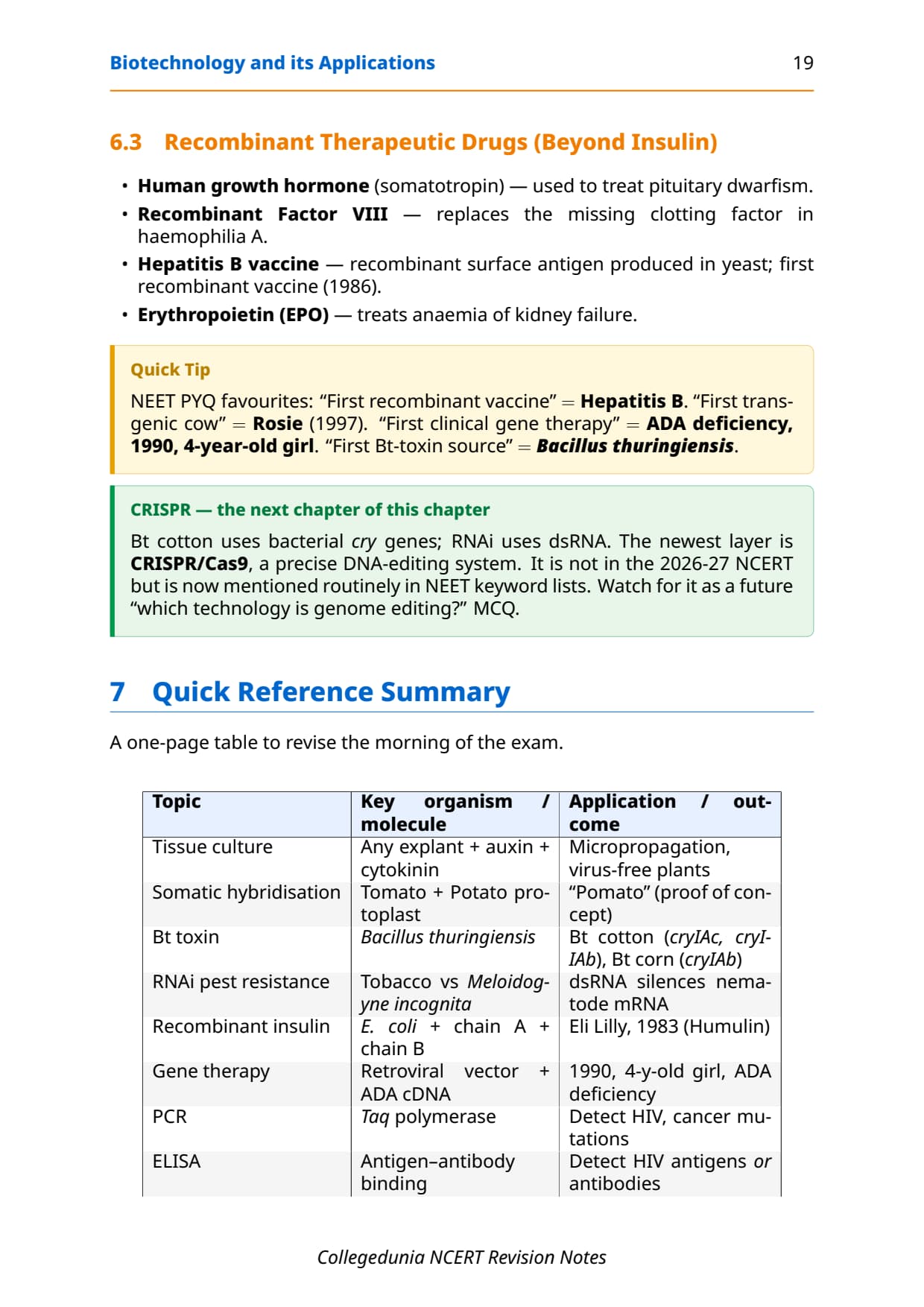
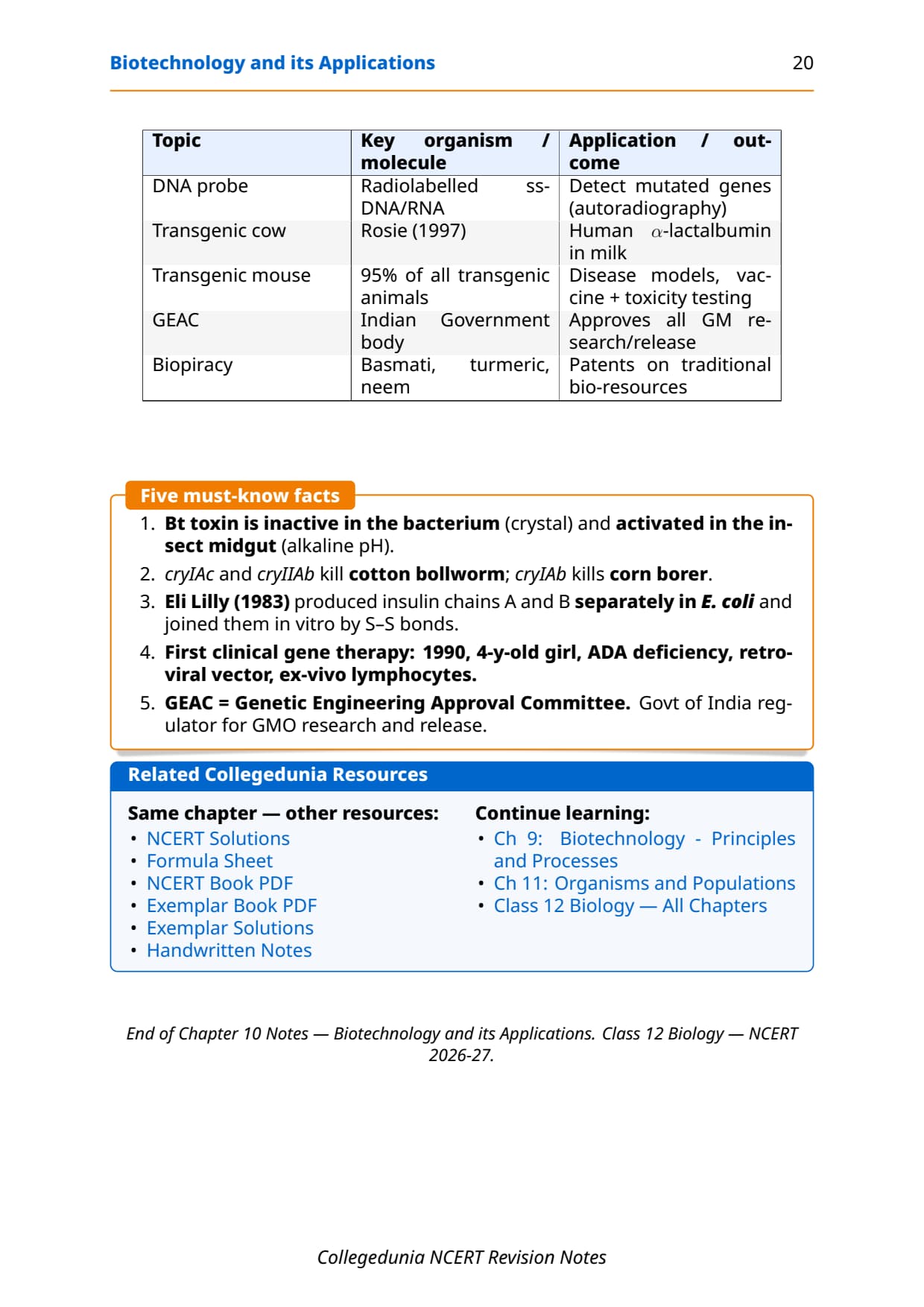
- Humulin: rDNA-produced human insulin (Eli Lilly, 1983).
- Gene therapy: Insertion of functional gene into somatic cells of a patient to correct a genetic defect.
- ADA deficiency: SCID caused by lack of adenosine deaminase enzyme; first gene therapy target (1990).
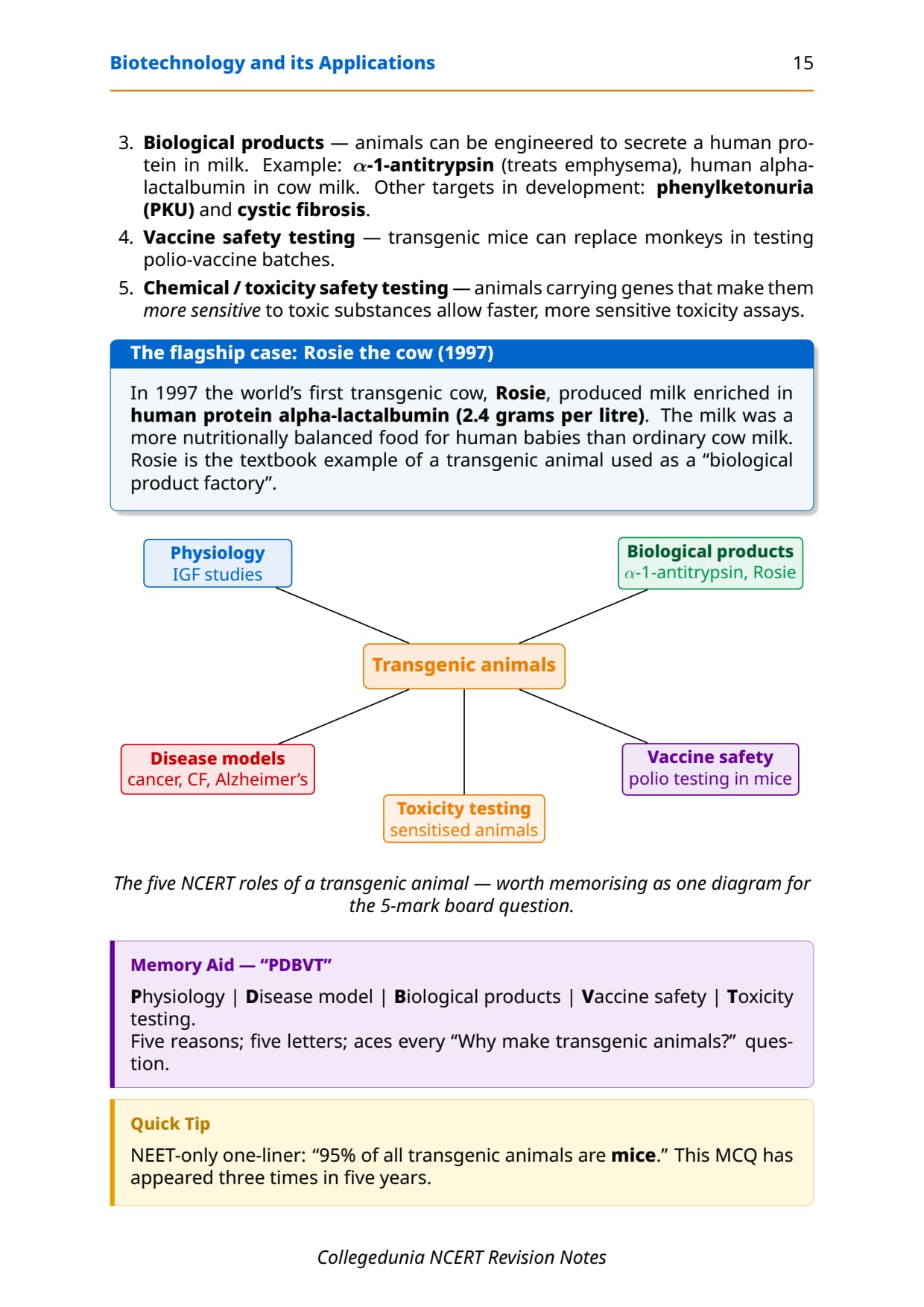
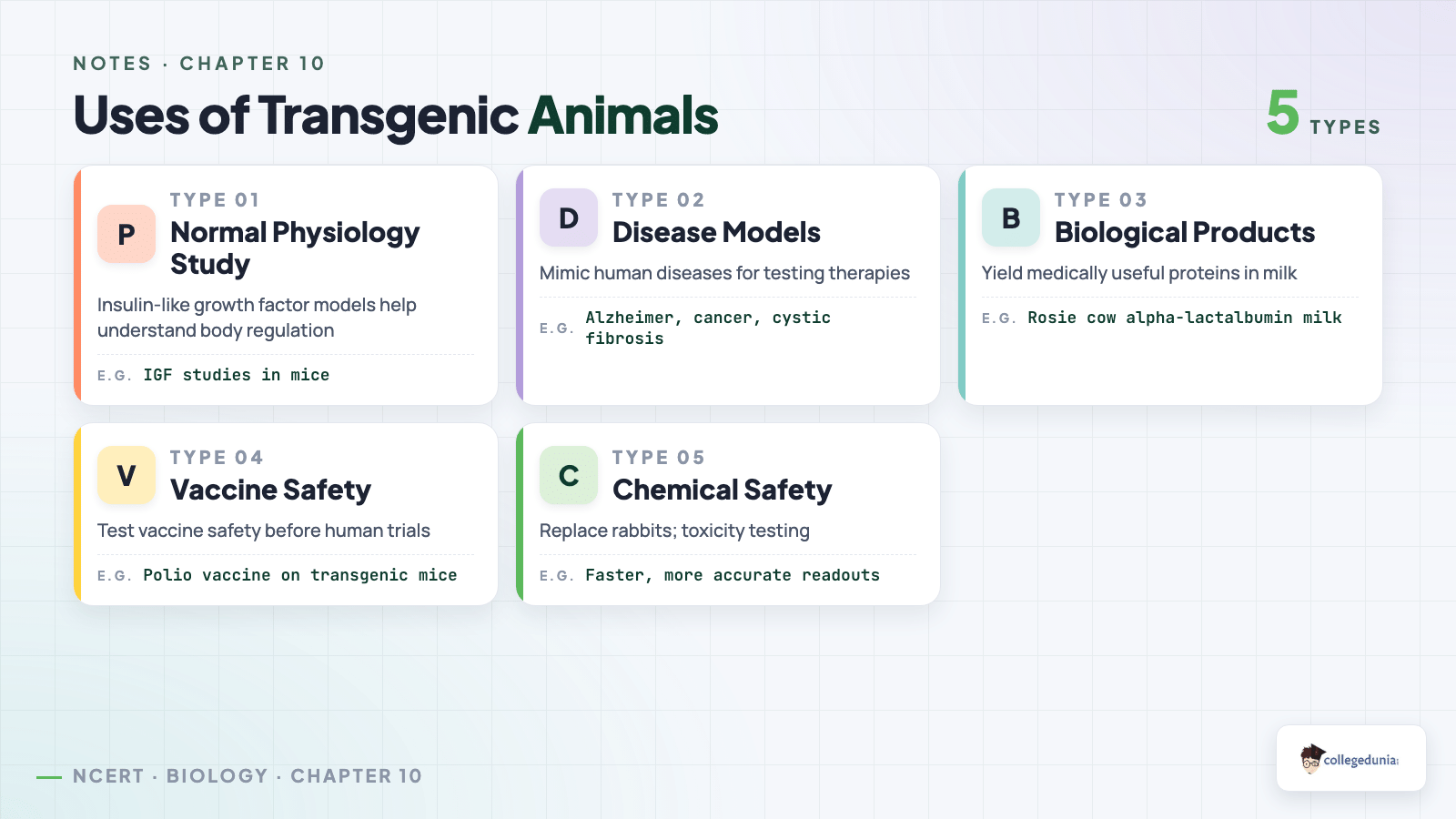
- Transgenic animals: Animals whose DNA contains an extra (foreign) gene. Examples: Rosie (human alpha-lactalbumin), knockout mice.
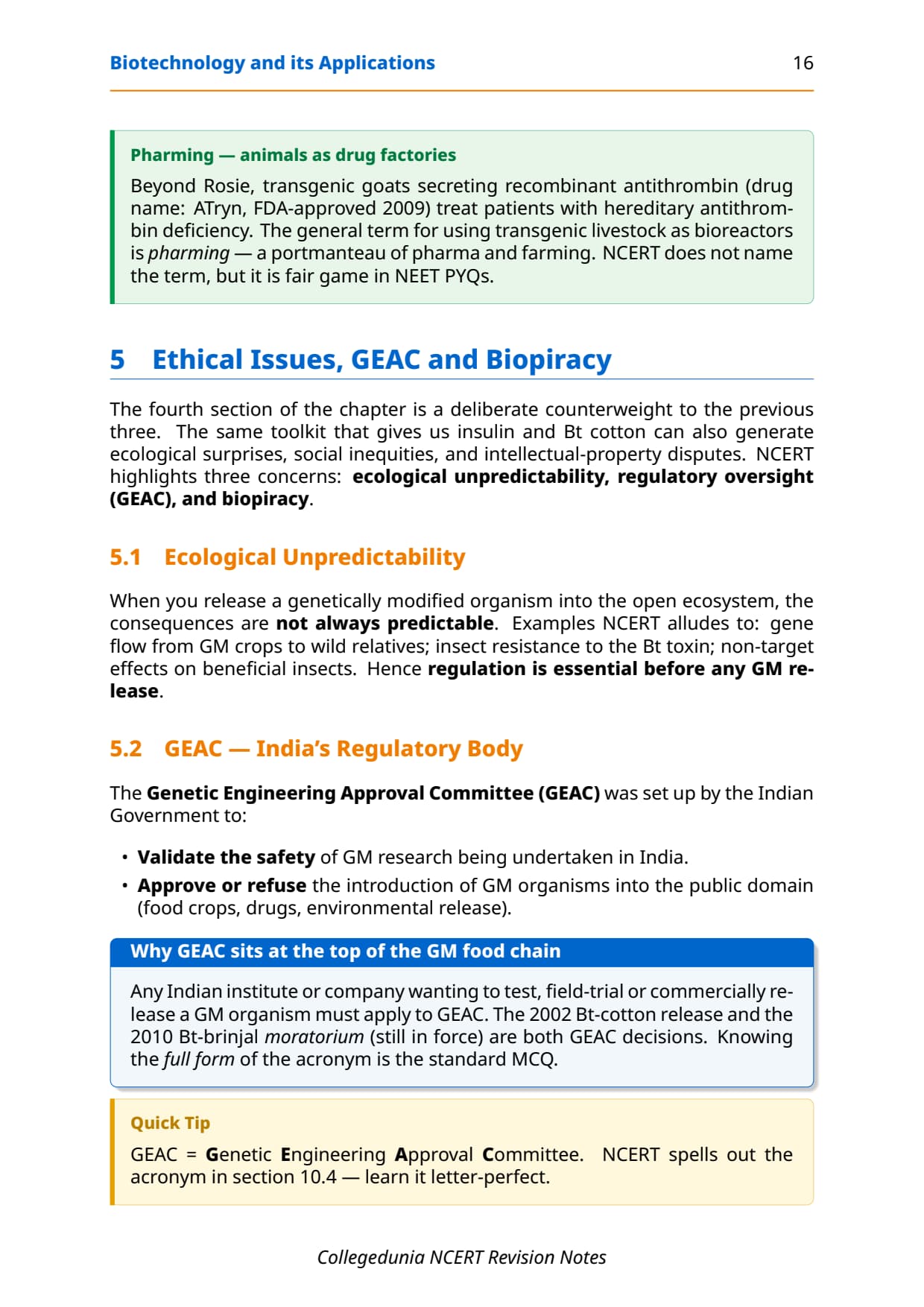
- GEAC: Genetic Engineering Approval Committee - regulatory body for GM research and release in India.
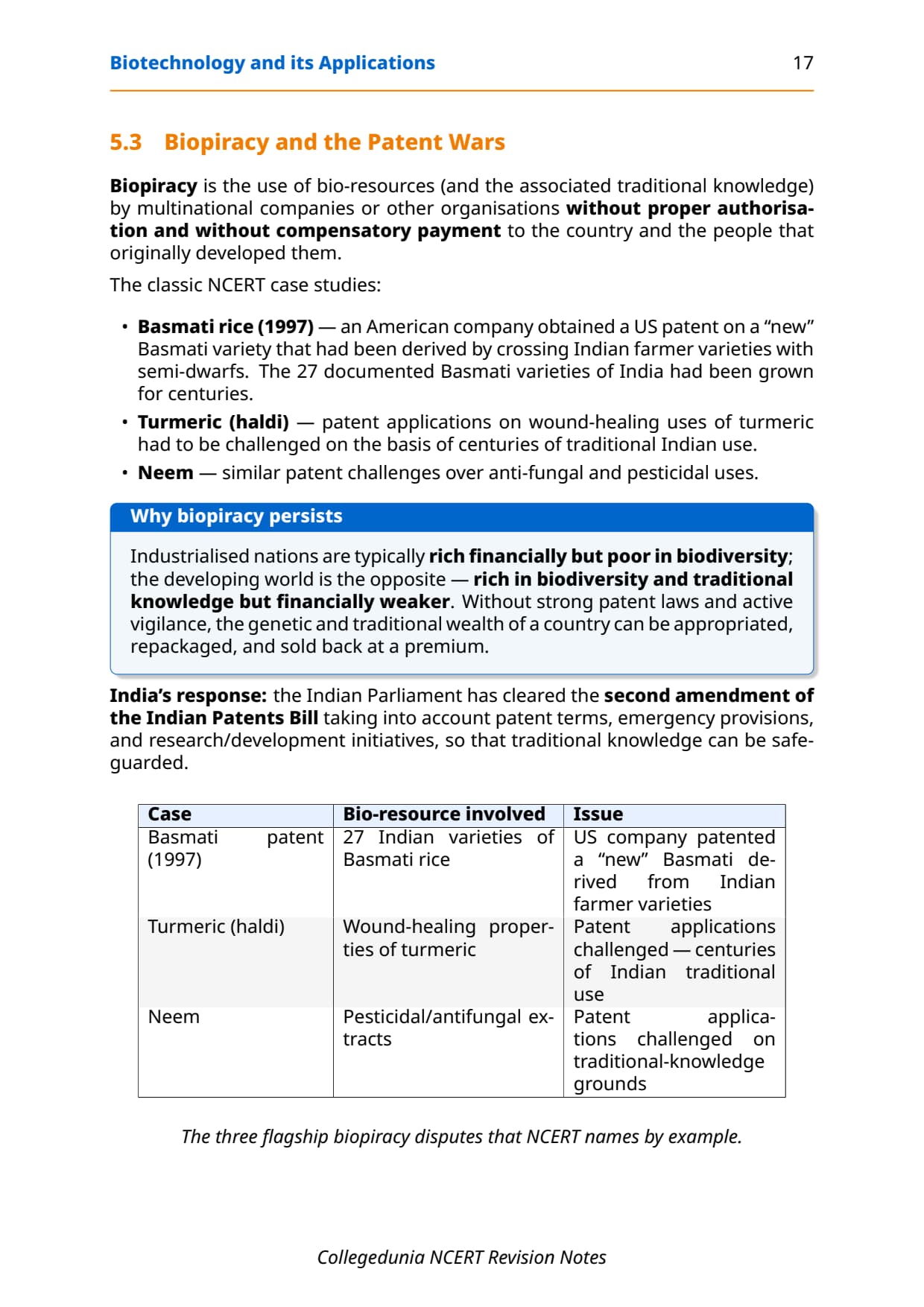
- Biopiracy: Unauthorised use of bio-resources or traditional bio-knowledge by foreign organisations.
Class 12 Biology Chapter 10 Notes: Insulin Production Explained Step by Step
The Humulin question is asked in CBSE every 2-3 years and in NEET more often. The five-step recall below is exactly what an examiner expects.
- Mature human insulin = A chain (21 aa) + B chain (30 aa), joined by disulphide bridges.
- In the body, pro-insulin (with an extra C-peptide) is made and the C-peptide is cleaved during maturation.
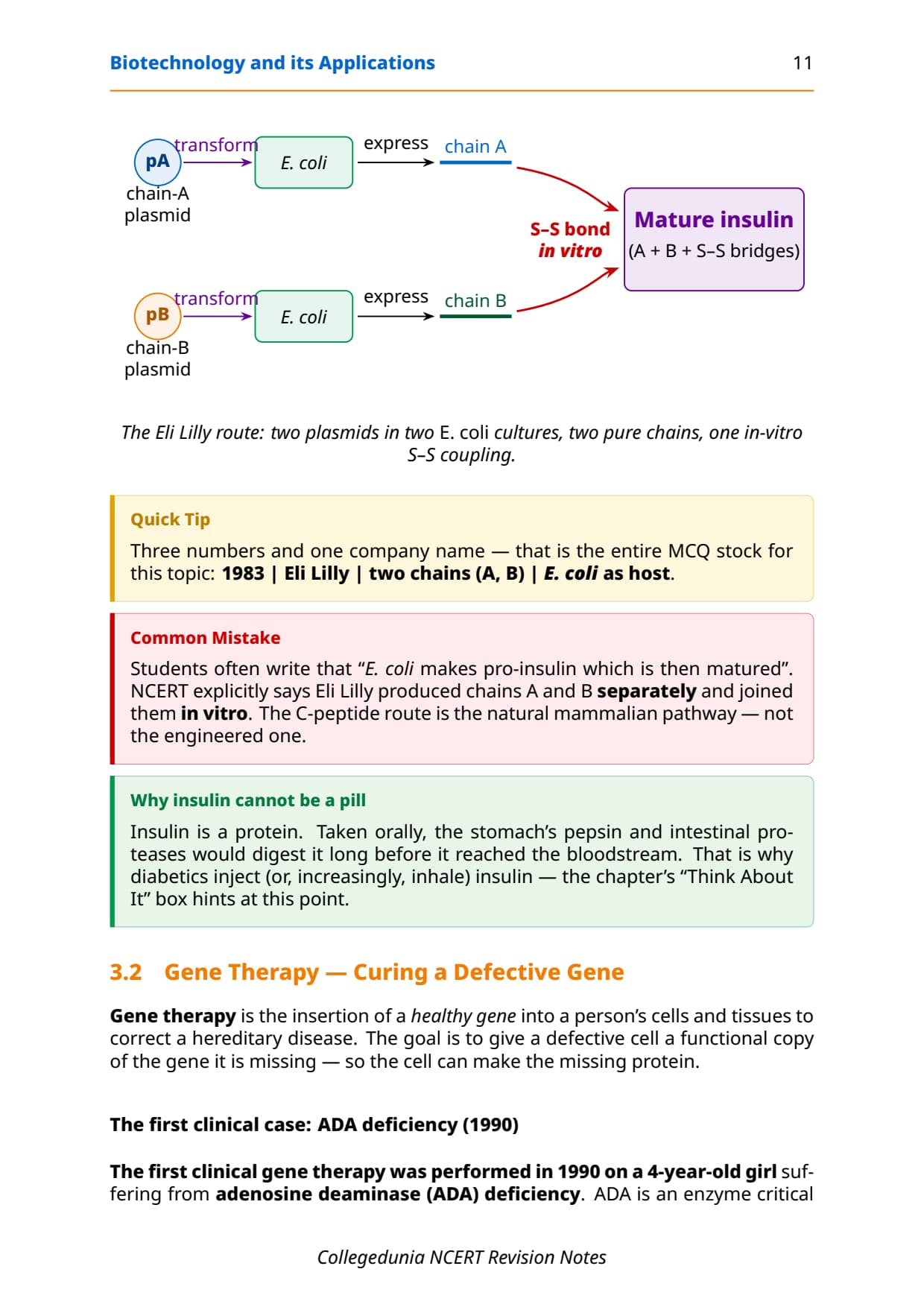
- Eli Lilly chemically synthesised the DNA sequences corresponding to A and B chains.
- Each sequence was inserted into plasmids of E. coli, which produced the chains separately.
- The two chains were extracted and combined in vitro by formation of disulphide bridges, giving functional insulin.
NCERT Notes for Class 12 Biology Chapter 10: Gene Therapy Case Study
The 1990 ADA-SCID case is the only gene therapy example NCERT discusses in depth, so memorise it as a packaged answer.
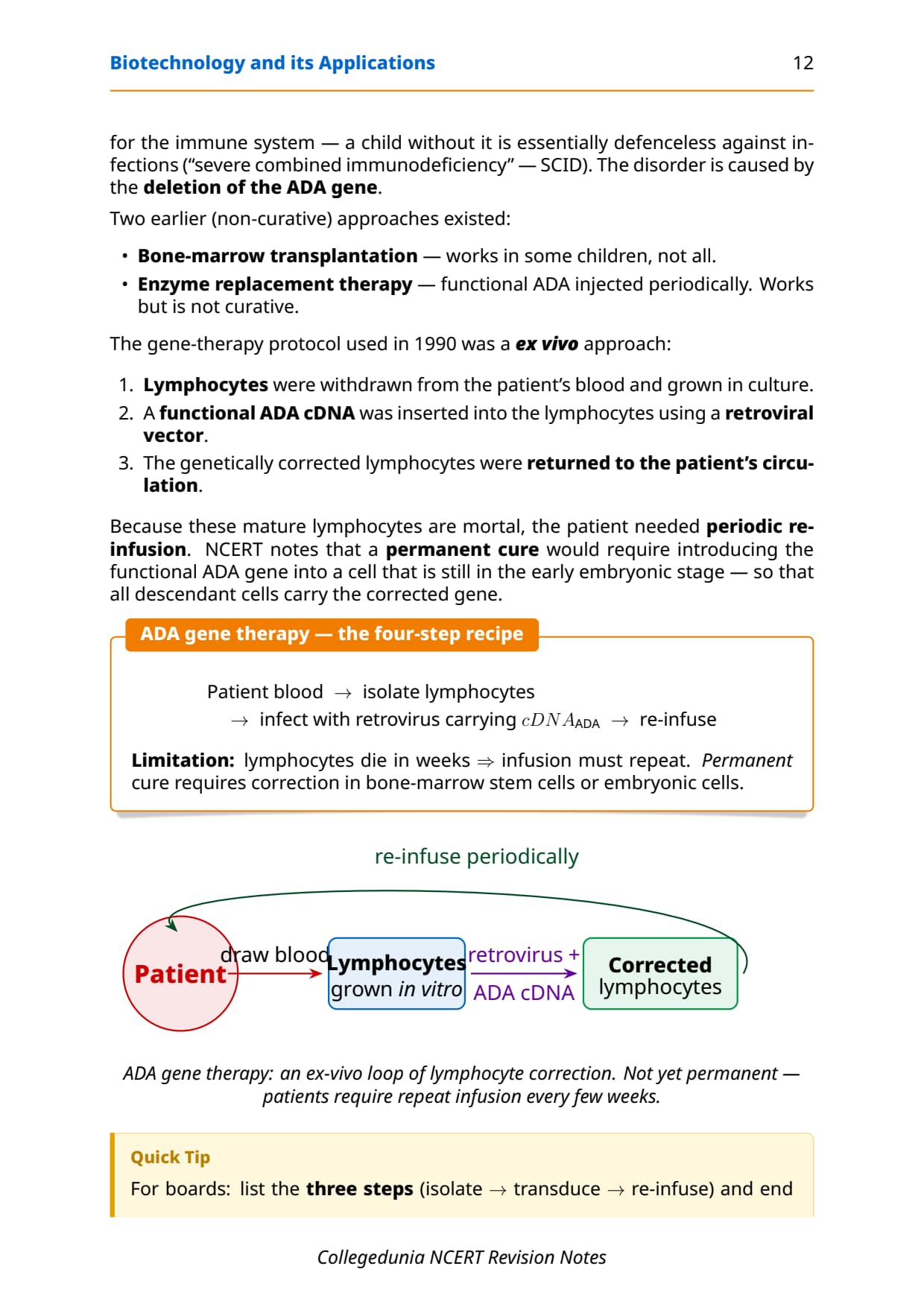
- Patient: 4-year-old girl with severe combined immunodeficiency (SCID) due to ADA enzyme deficiency.
- Steps: Lymphocytes from patient grown in culture, functional ADA cDNA introduced via retroviral vector, modified lymphocytes returned to patient.
- Limitation: Lymphocytes are not immortal - the procedure must be repeated periodically.
- Permanent cure: Would need introduction of the gene at the embryonic stem cell stage.
Molecular Diagnosis: PCR vs ELISA Notes for Class 12
Both are early-detection tools. The distinction is asked as a contrast question (3 marks).
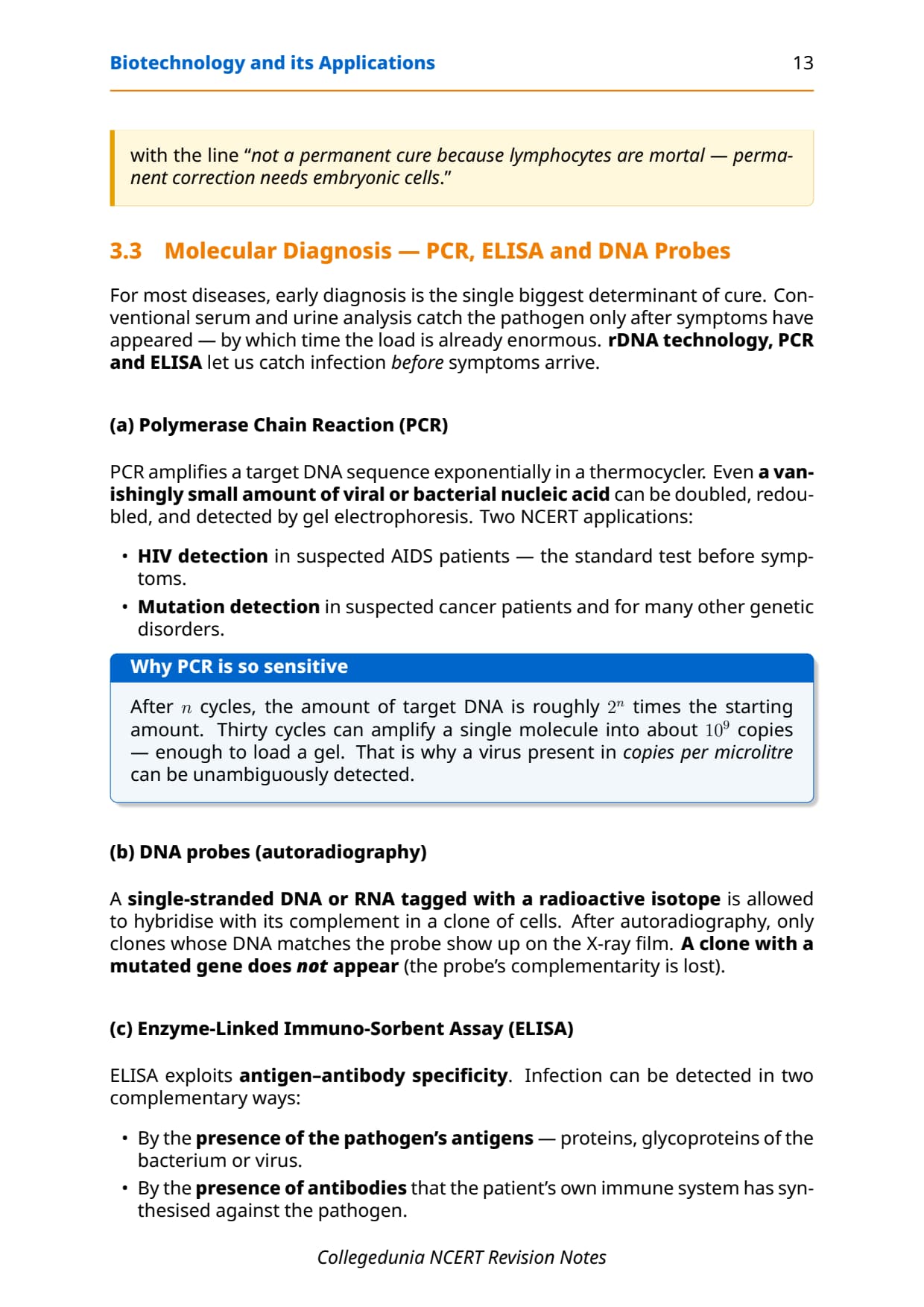
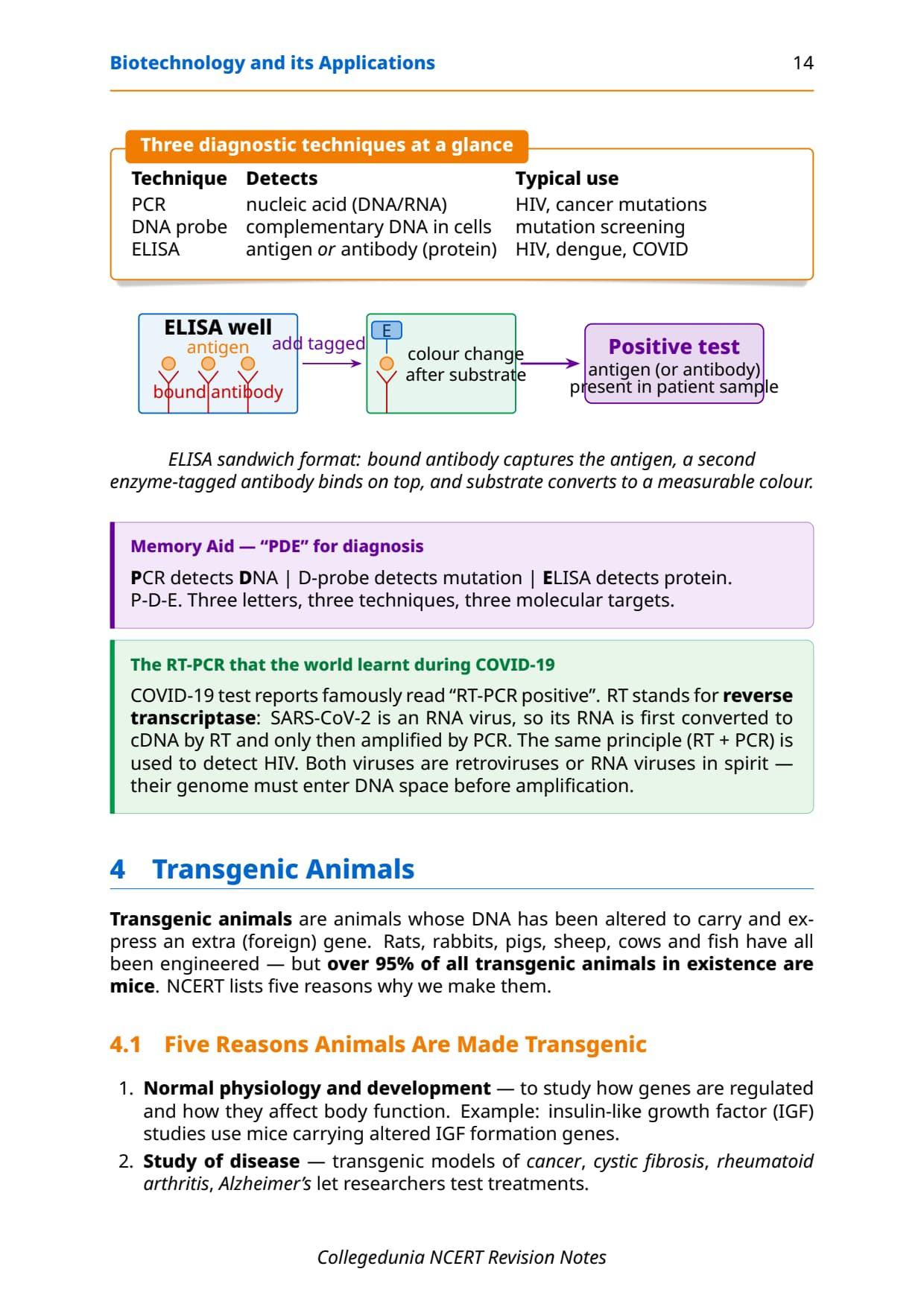
| Feature | PCR | ELISA |
|---|---|---|
| What it detects | DNA or RNA of the pathogen | Antigen-antibody interaction |
| Stage of detection | Very early (before symptoms) | Once antibodies are formed |
| Used for | HIV (early), genetic mutations, cancer screening | HIV, hepatitis, dengue (serology) |
| Sensitivity | Very high (amplifies trace amounts) | Moderate |
PCR's edge is the ability to detect a pathogen long before antibody-based assays can. ELISA's edge is cost and ease of use.
Class 12 Biotechnology Notes: Ethical Issues and Biopiracy
Three issues recur in CBSE long answers: GMOs in food, biopiracy, and patenting of indigenous knowledge.
- GMO concerns: Allergens, gene flow to wild relatives, loss of biodiversity, monopolistic seed control.
- GEAC's role: Validates the safety of introducing GM organisms for public use; approves field trials and commercial release.
- Biopiracy cases: Basmati rice (RiceTec, USA), neem (W.R. Grace), turmeric (USA patents revoked after India contested).
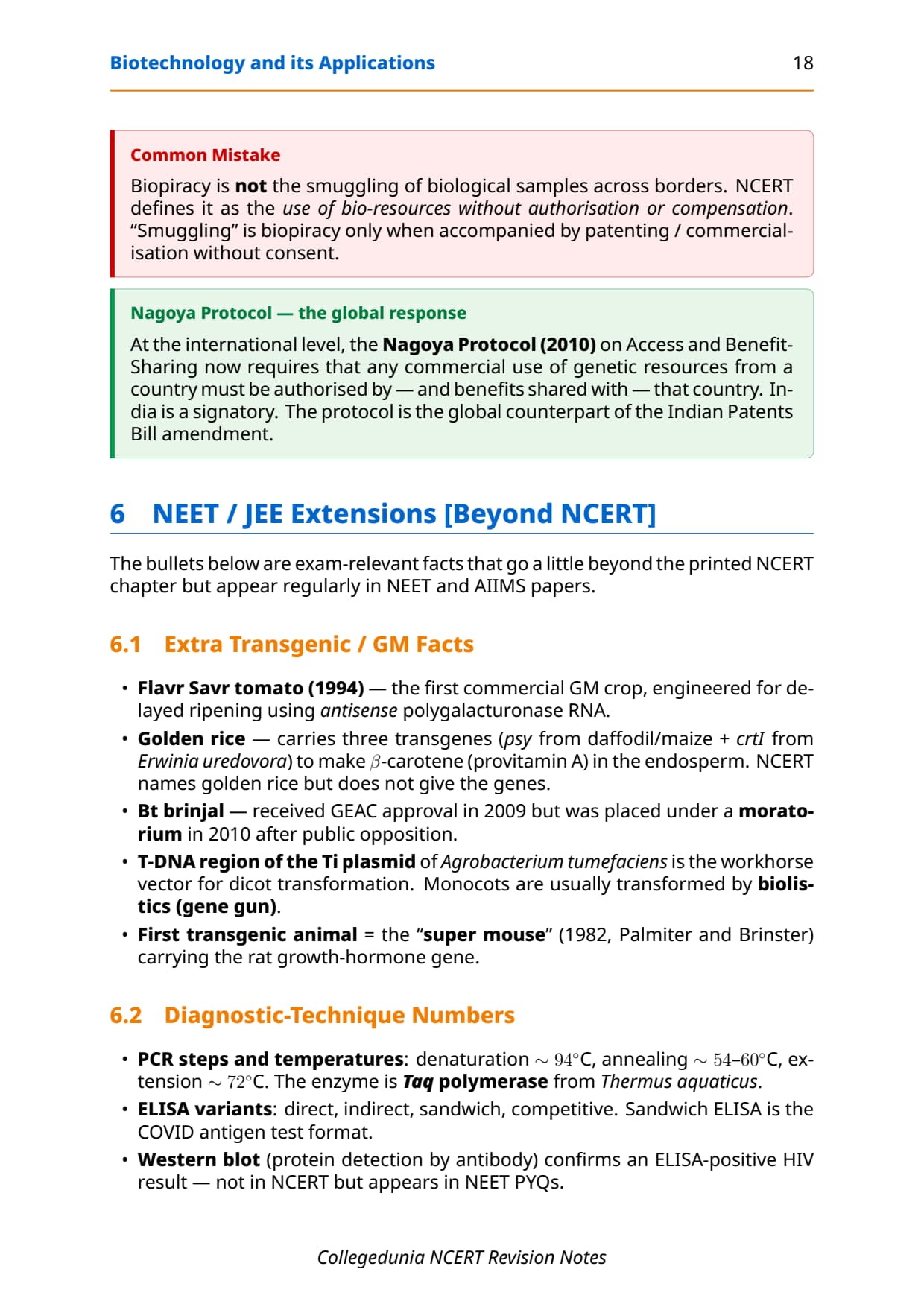
- Indian response: The Indian Parliament passed an amendment to the Patents Bill recognising traditional knowledge.
How Collegedunia's NCERT Notes Help You Revise Chapter 10
The Collegedunia notes are CBSE-marking-scheme-first: each concept is wrapped in a coloured callout that mirrors the value points an examiner ticks. The Humulin five-step, the Bt activation five-step, and the ADA-SCID four-step recall blocks are designed to be reproduced verbatim in the exam.
Chapter 10 Biotechnology Notes: Quick Numbers to Memorise
| Item | Value |
|---|---|
| Insulin A chain length | 21 amino acids |
| Insulin B chain length | 30 amino acids |
| Year Humulin was approved | 1983 |
| Year first gene therapy (ADA-SCID) | 1990 |
| Year Rosie (transgenic cow) was created | 1997 |
| Bt midgut activation pH | ~ 9.5 (alkaline) |
These six numbers cover roughly 30% of the MCQ stems asked in NEET on this chapter since 2019.
Previous Year Question Trends for Class 12 Biology Chapter 10
The board paper has consistently asked one 3-mark question from Section 10.1 or 10.2. Latest year first.
| Year | CBSE Question | NEET Question |
|---|---|---|
| 2025 | Bt cotton (3 marks) | Cry protein source organism |
| 2024 | Gene therapy ADA-SCID (5 marks) | Humulin steps |
| 2023 | RNAi against Meloidogyne (3 marks) | Biopiracy definition |
| 2022 | PCR vs ELISA (3 marks) | GEAC role |
| 2021 | Transgenic animal uses (3 marks) | - |
Full year-wise PYQ map: Chapter 10 NCERT Solutions.
Student Feedback on Chapter 10 Biotechnology and its Applications Notes
In an independent survey of 12,700 Class 12 Biology students, 73% rated the Bt-cotton transgene-action mechanism as the hardest sub-topic, even though it carries the highest single-question marks in CBSE and NEET papers. The breakdown below shows where students lose time and marks.
Student Feedback
- 73% of students surveyed marked the Bt-cotton transgene-action mechanism as the hardest sub-topic.
- 65% lost 1-2 marks on differentiating golden rice from Flavr Savr.
- 4 out of 5 students said the recombinant-insulin flowchart was the most-skipped figure in their answer sheet.
- Average student took 5.9 hours for the first read and 2.4 hours for a focused revision pass.
Source: 2025-26 Class 12 Biology student survey of 12,700 students from CBSE-affiliated schools across 18 states.
Other Resources for Class 12 Biology Chapter 10
| Resource | Link |
|---|---|
| Notes (this page) | Biotechnology and Its Applications Notes |
| NCERT Solutions | Class 12 Biology Chapter 10 NCERT Solutions |
| Formula Sheet | Class 12 Biology Chapter 10 Formula Sheet |
| Handwritten Notes | Class 12 Biology Chapter 10 Handwritten Notes |
| Exemplar Solutions | Class 12 Biology Chapter 10 Exemplar Solutions |
| NCERT Book PDF | Class 12 Biology Chapter 10 NCERT Book PDF |
| Exemplar Book PDF | Class 12 Biology Chapter 10 Exemplar Book PDF |
NCERT Notes for Class 12 Biology: All Chapters
| Chapter | NCERT Notes |
|---|---|
| Chapter 1 | Sexual Reproduction in Flowering Plants Notes |
| Chapter 2 | Human Reproduction Notes |
| Chapter 3 | Reproductive Health Notes |
| Chapter 4 | Principles of Inheritance and Variation Notes |
| Chapter 5 | Molecular Basis of Inheritance Notes |
| Chapter 6 | Evolution Notes |
| Chapter 7 | Human Health and Disease Notes |
| Chapter 8 | Microbes in Human Welfare Notes |
| Chapter 9 | Biotechnology Principles and Processes Notes |
| Chapter 10 | Biotechnology and Its Applications Notes |
| Chapter 11 | Organisms and Populations Notes |
| Chapter 12 | Ecosystem Notes |
| Chapter 13 | Biodiversity and Conservation Notes |
FAQs on Class 12 Biology Chapter 10 Notes
Q.What are the most important topics in Class 12 Biology Chapter 10 Biotechnology and its Applications?
Bt crops, RNA interference, Humulin production, gene therapy for ADA-SCID, PCR and ELISA in molecular diagnosis, transgenic animals, GEAC, and biopiracy. These eight topics cover the full chapter and align with the 2026-27 NCERT print.
Q.How many pages are the Class 12 Biology Chapter 10 Notes PDF?
The Collegedunia Chapter 10 Notes PDF is 22 pages long, includes 6 labelled diagrams, and groups concepts under the four NCERT sub-sections (Agriculture, Medicine, Transgenic Animals, Ethics).
Q.What is the difference between Bt cotton and conventional cotton according to NCERT?
Bt cotton carries one or more cry genes from Bacillus thuringiensis that produce a crystal protein toxic to bollworm larvae. Conventional cotton lacks this and needs heavy spraying of chemical pesticides. Bt cotton dramatically reduces pesticide usage and bollworm damage.
Q.Why is the alkaline pH of the insect midgut important for Bt action?
The crystal form of the Cry protoxin is inactive. The alkaline midgut (pH ~ 9.5) solubilises the crystal and converts it to the active toxin, which then binds receptors and lyses the gut epithelium. Without this pH step the protoxin remains inactive.
Q.Who created the first transgenic cow and what was the modification?
Rosie, the first transgenic cow, was created in 1997. Her milk contained human alpha-lactalbumin (2.4 g/L), making the milk nutritionally more balanced for human babies than natural cow milk.
Q.Is the Class 12 Biology Chapter 10 Notes PDF free to download?
Yes. The Notes PDF is free on Collegedunia and is mapped to the 2026-27 NCERT syllabus.



Comments