




These NCERT Class 12 Accountancy notes for Chapter 1 Accounting for Partnership: Basic Concepts cover every statutory rule, ledger format, and computation method the CBSE board paper tests. This chapter opens Part A of the syllabus, and its rules carry forward into reconstitution, retirement, and dissolution. The 2026-27 NCERT edition keeps all core topics.
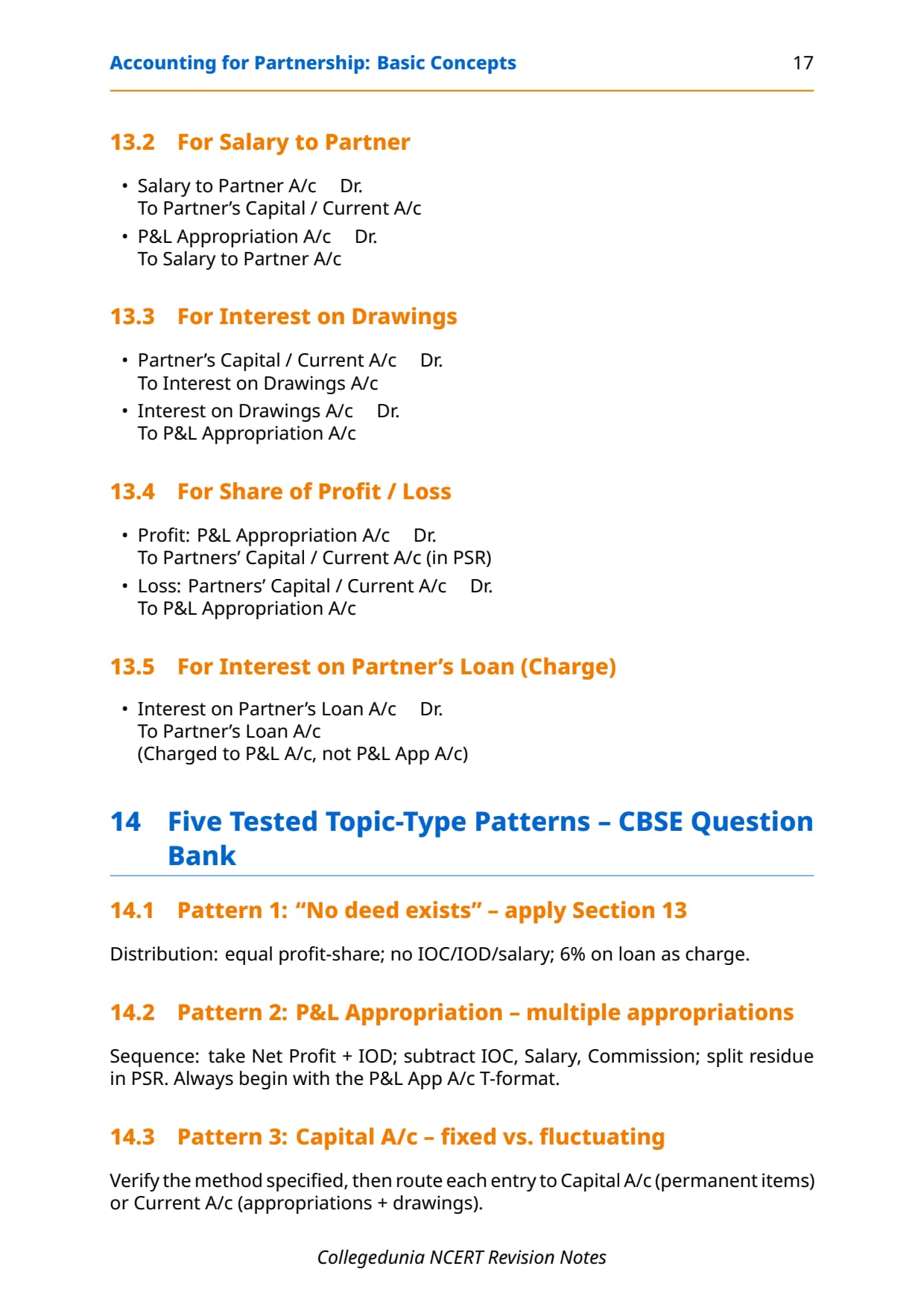
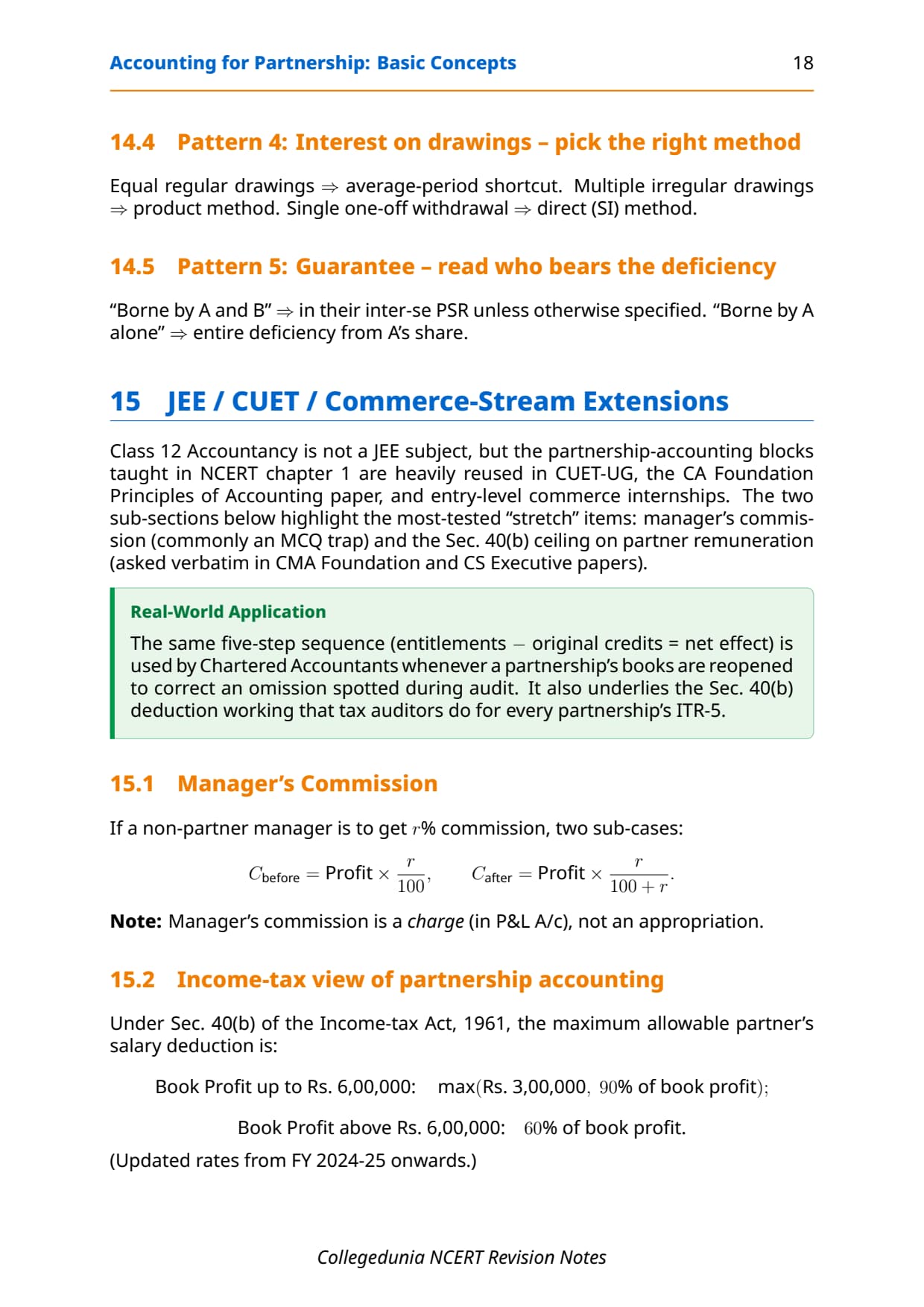
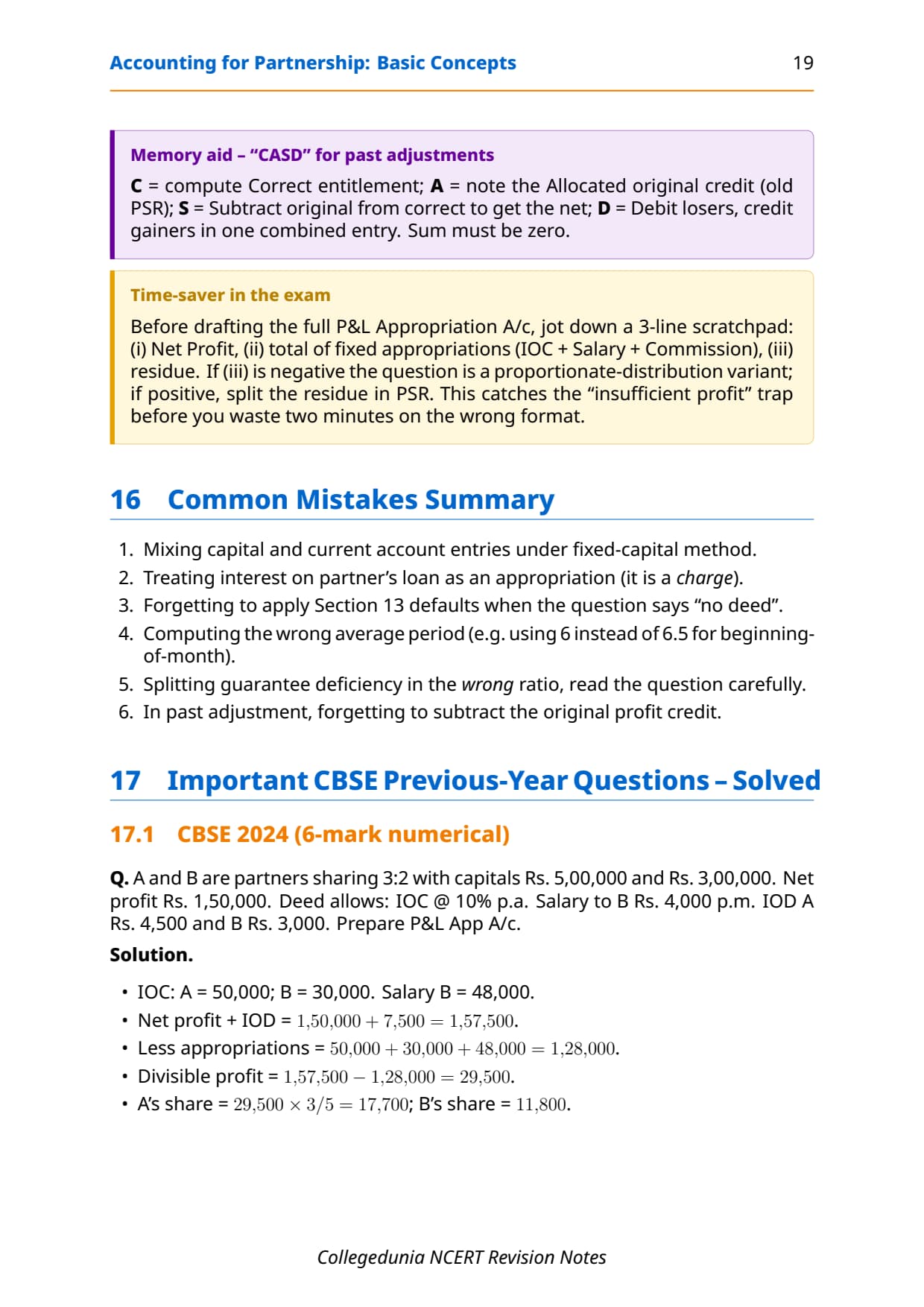
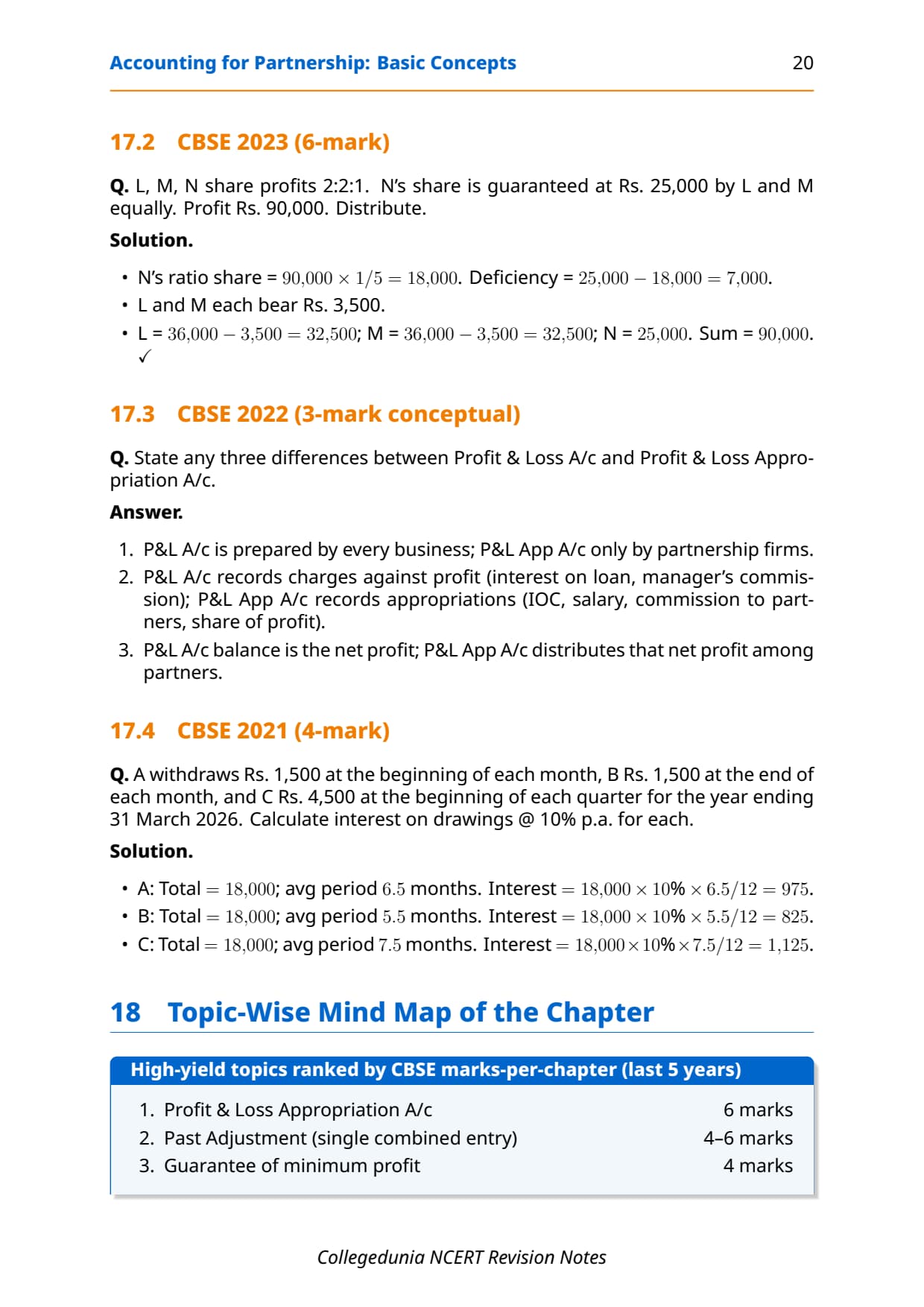
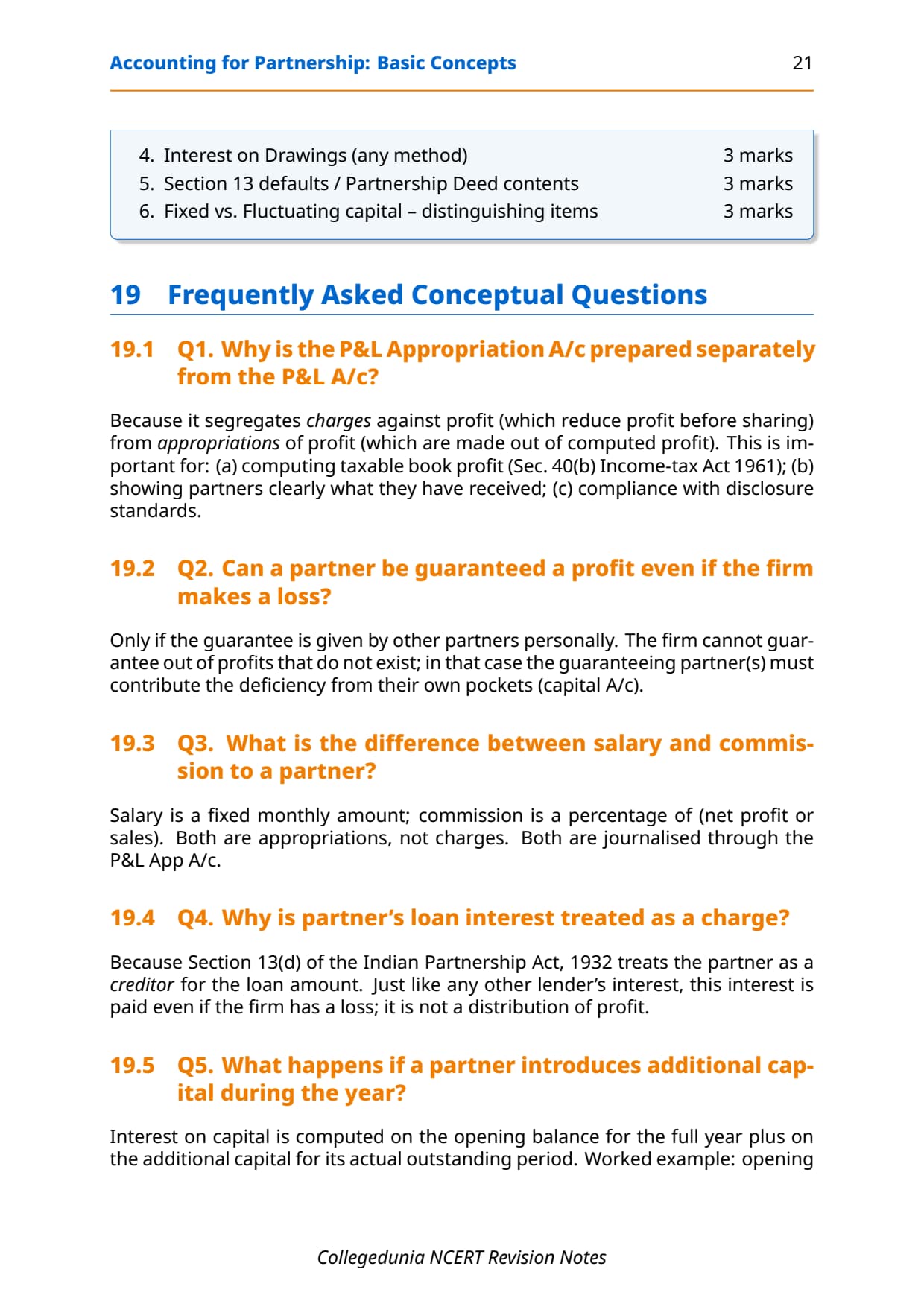
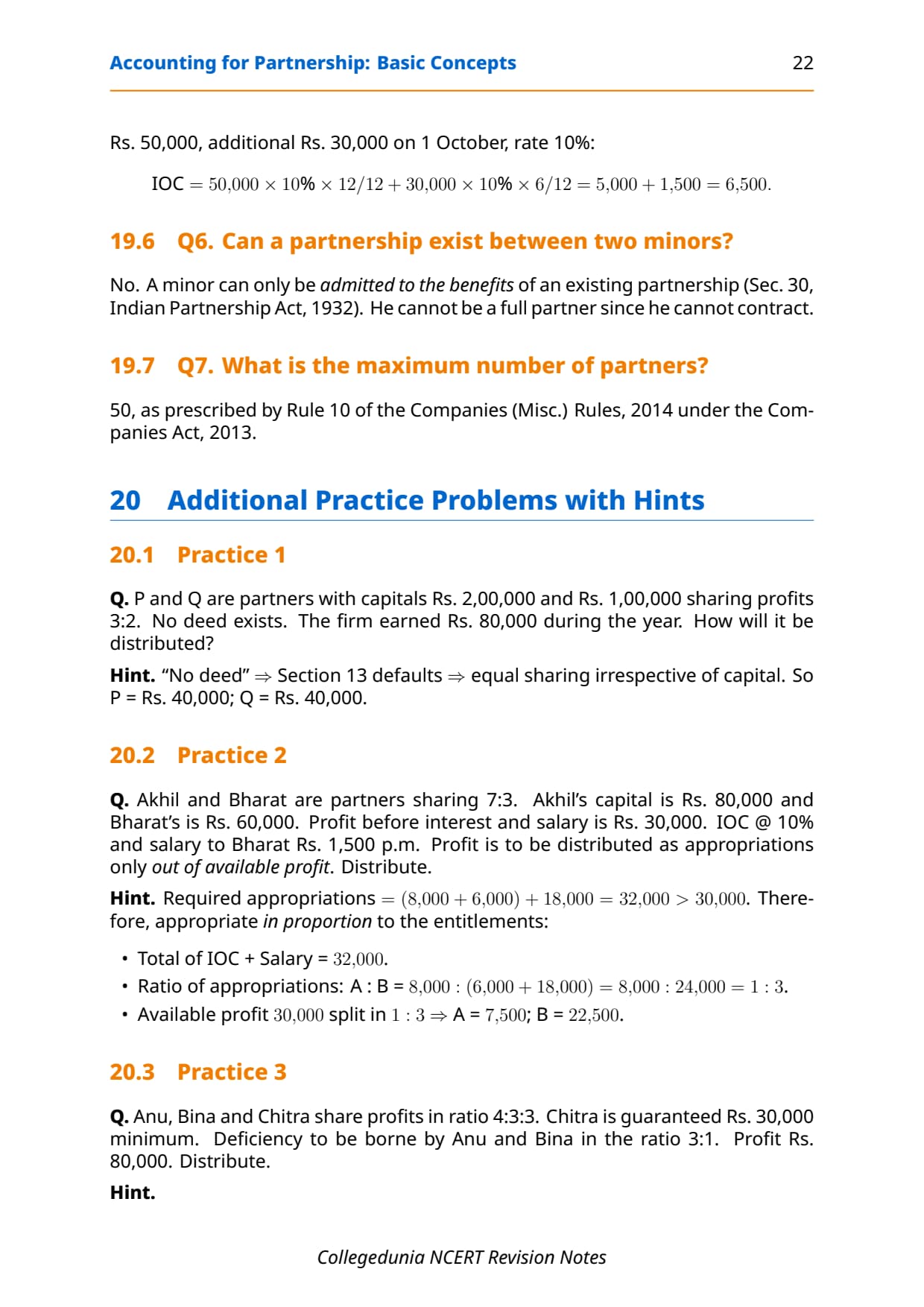
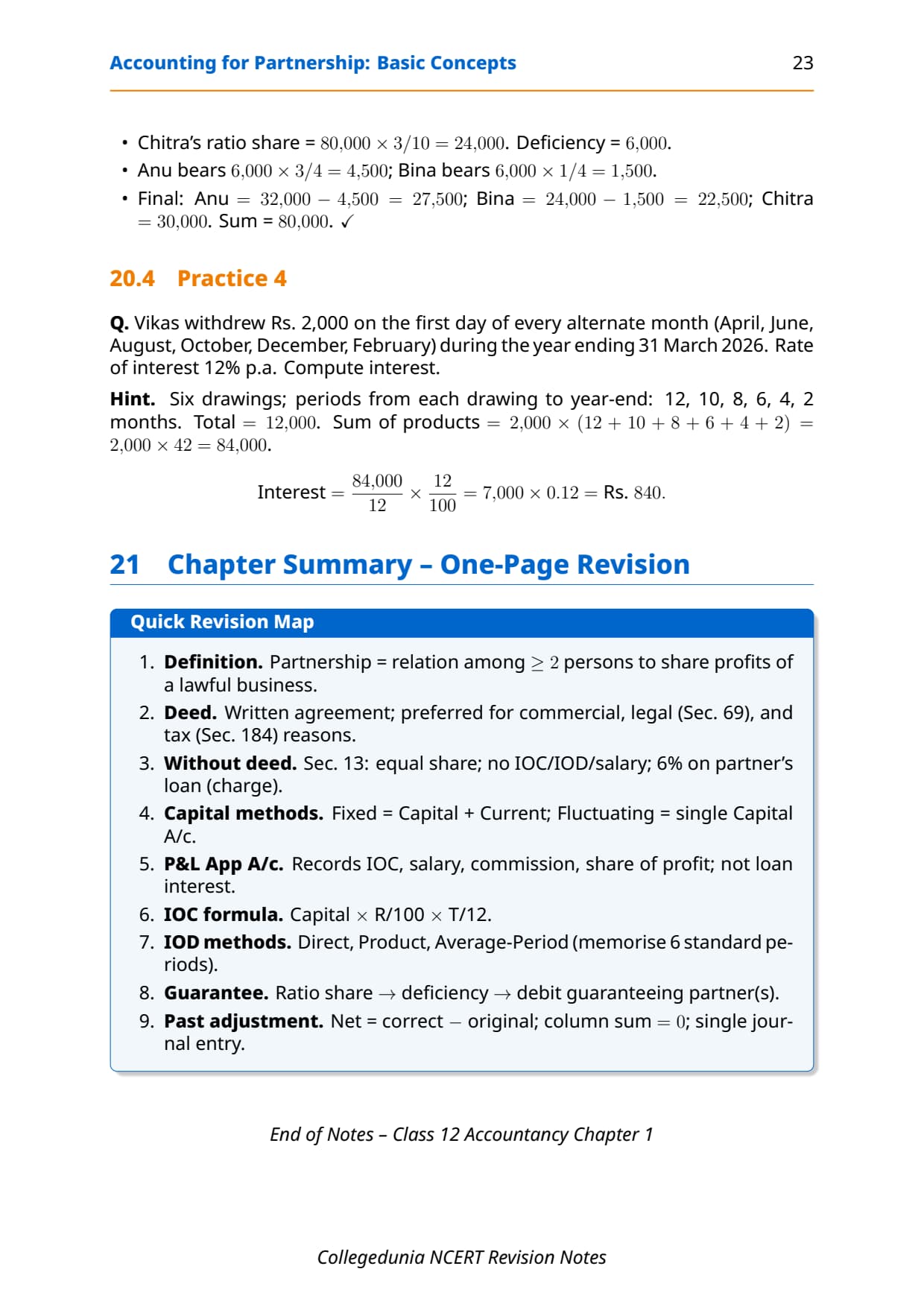
- CBSE Weightage: 12 to 14 marks per board paper, drawn from Unit 1 Accounting for Partnership Firms
- Question Spread: Typically 1 MCQ, 1 short-answer (3 marks), and 1 long-answer (6 marks) per paper, plus possible 4-mark numerical
Prepared by Chartered Accountants and senior Commerce educators, aligned to the 2026-27 NCERT textbook, and cross-checked against the last five years of CBSE Class 12 Accountancy board papers and the latest CBSE marking schemes.
Also Check:
- Accounting for Partnership Basic Concepts Class 12 Accountancy NCERT Solutions
- Reconstitution of a Partnership Firm Admission of a Partner Notes
- CBSE Class 12 Accountancy Syllabus 2026-27
NCERT Class 12 Accountancy Notes Chapter 1 Accounting for Partnership: Basic Concepts Overview
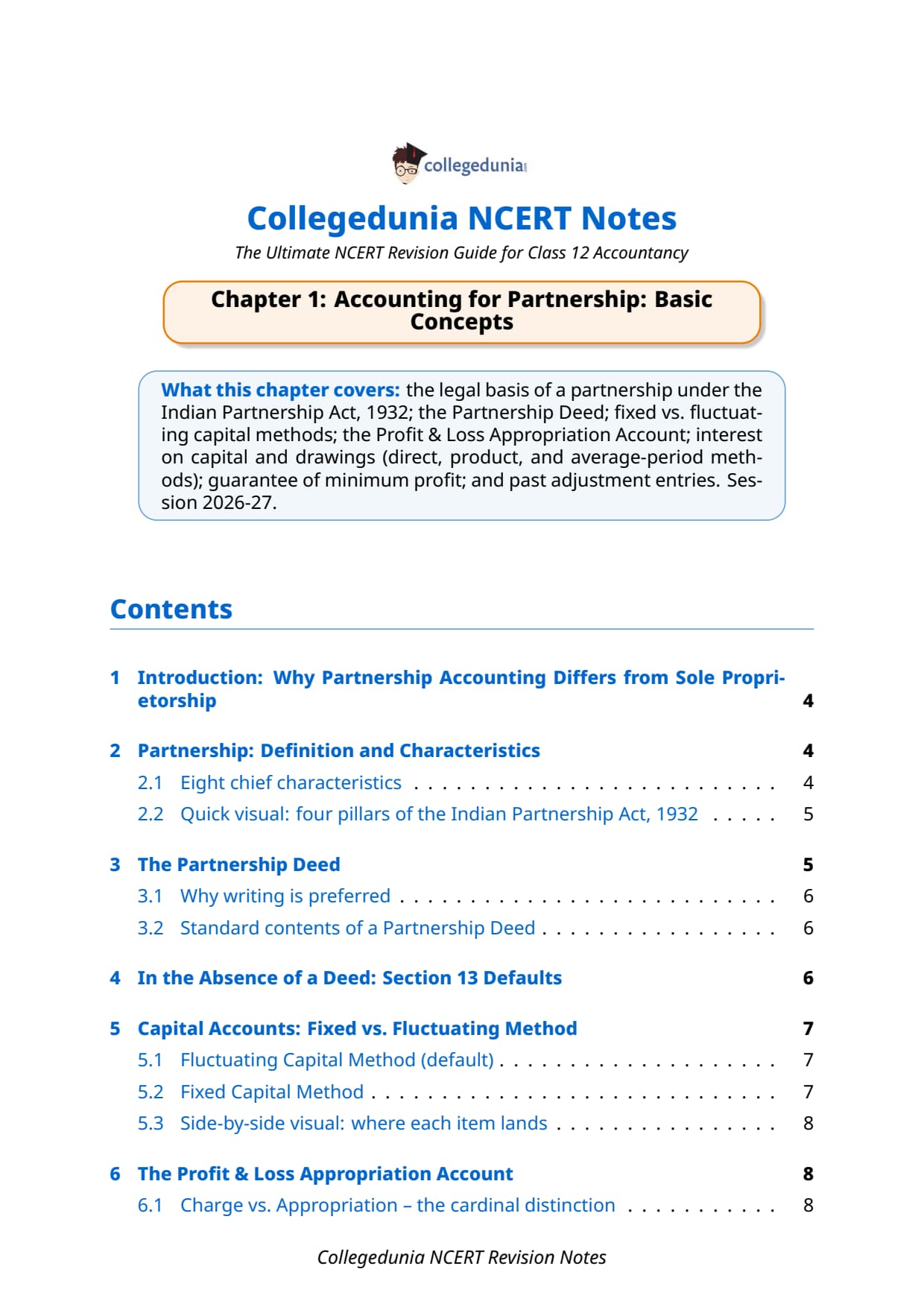
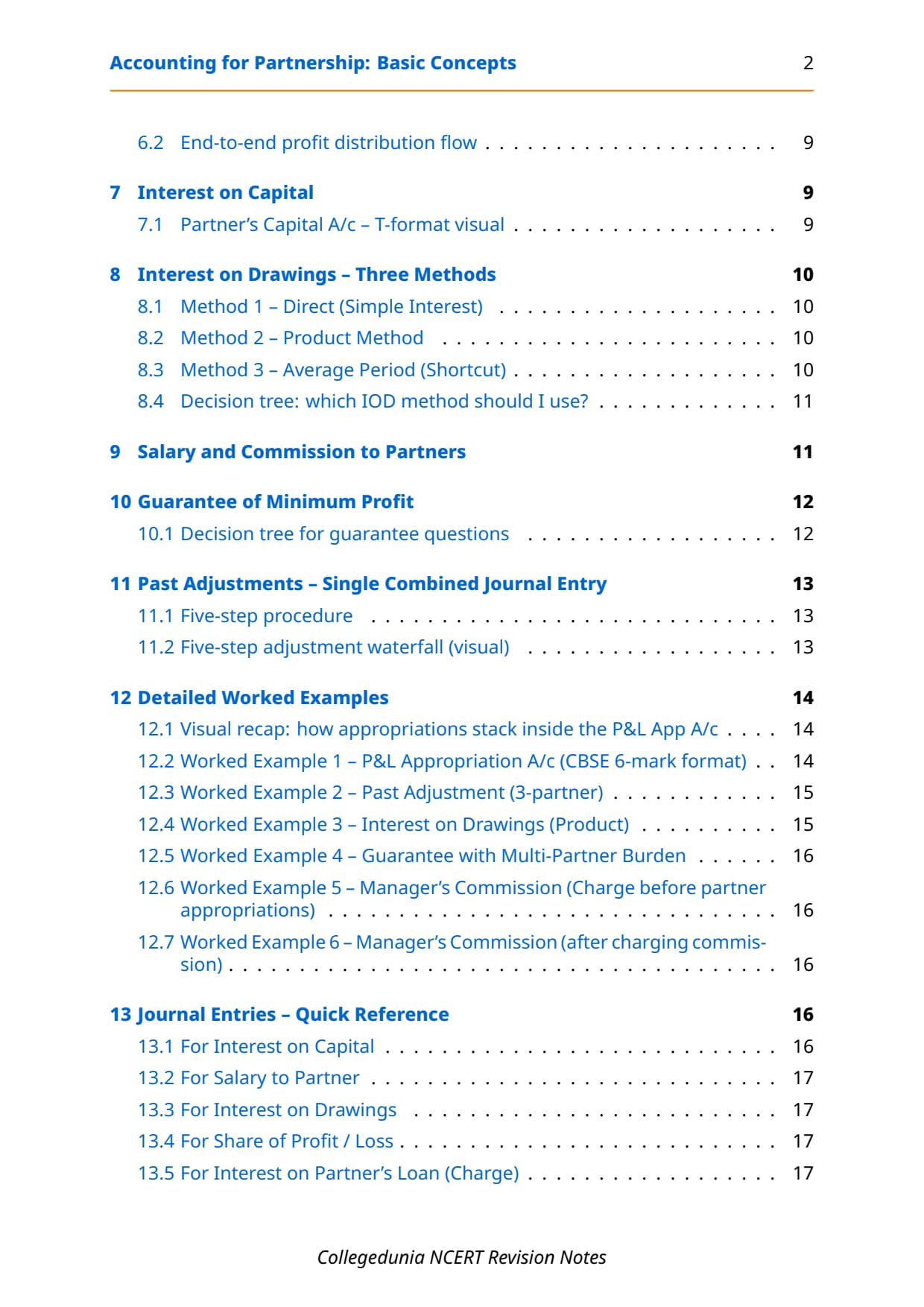
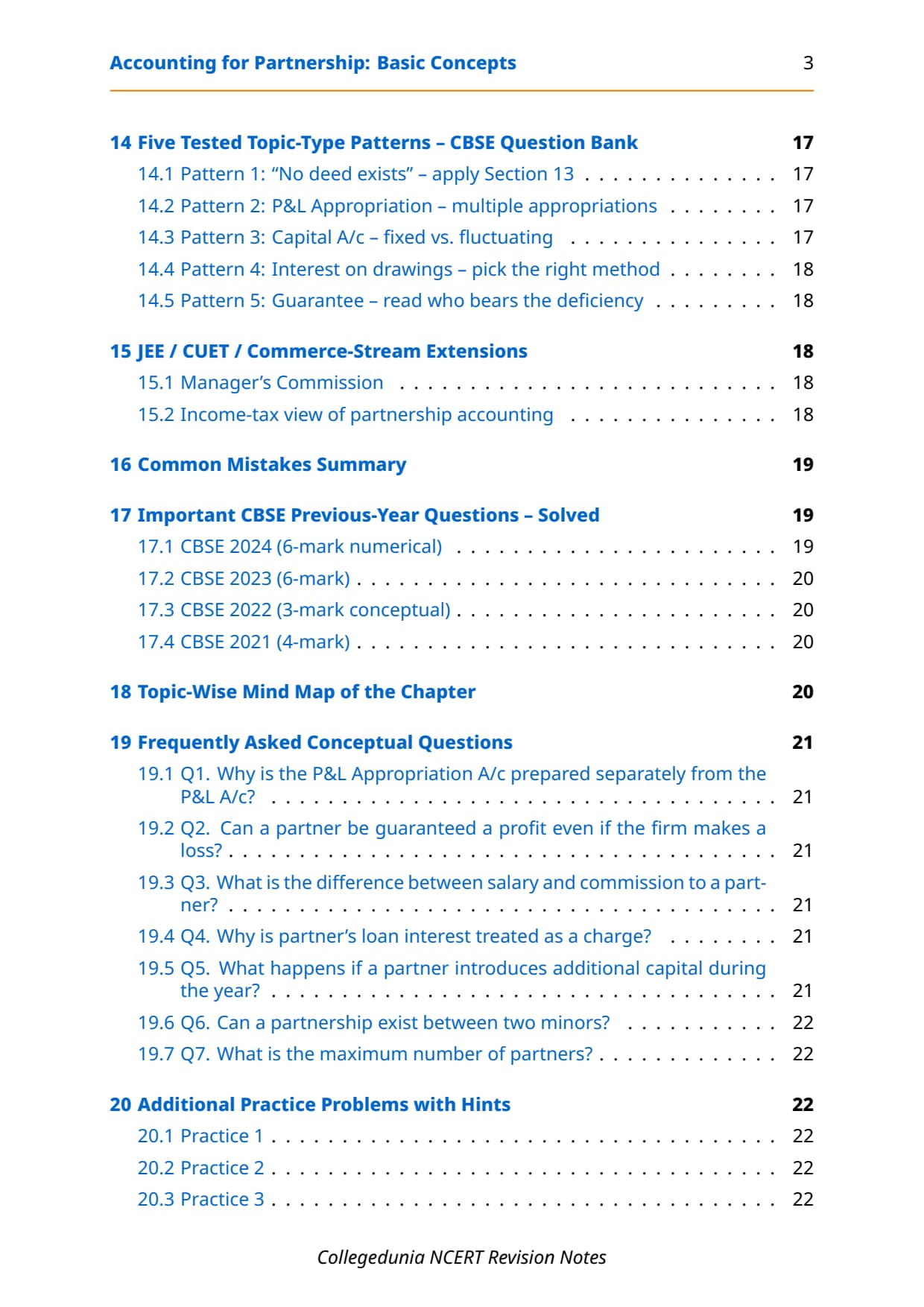
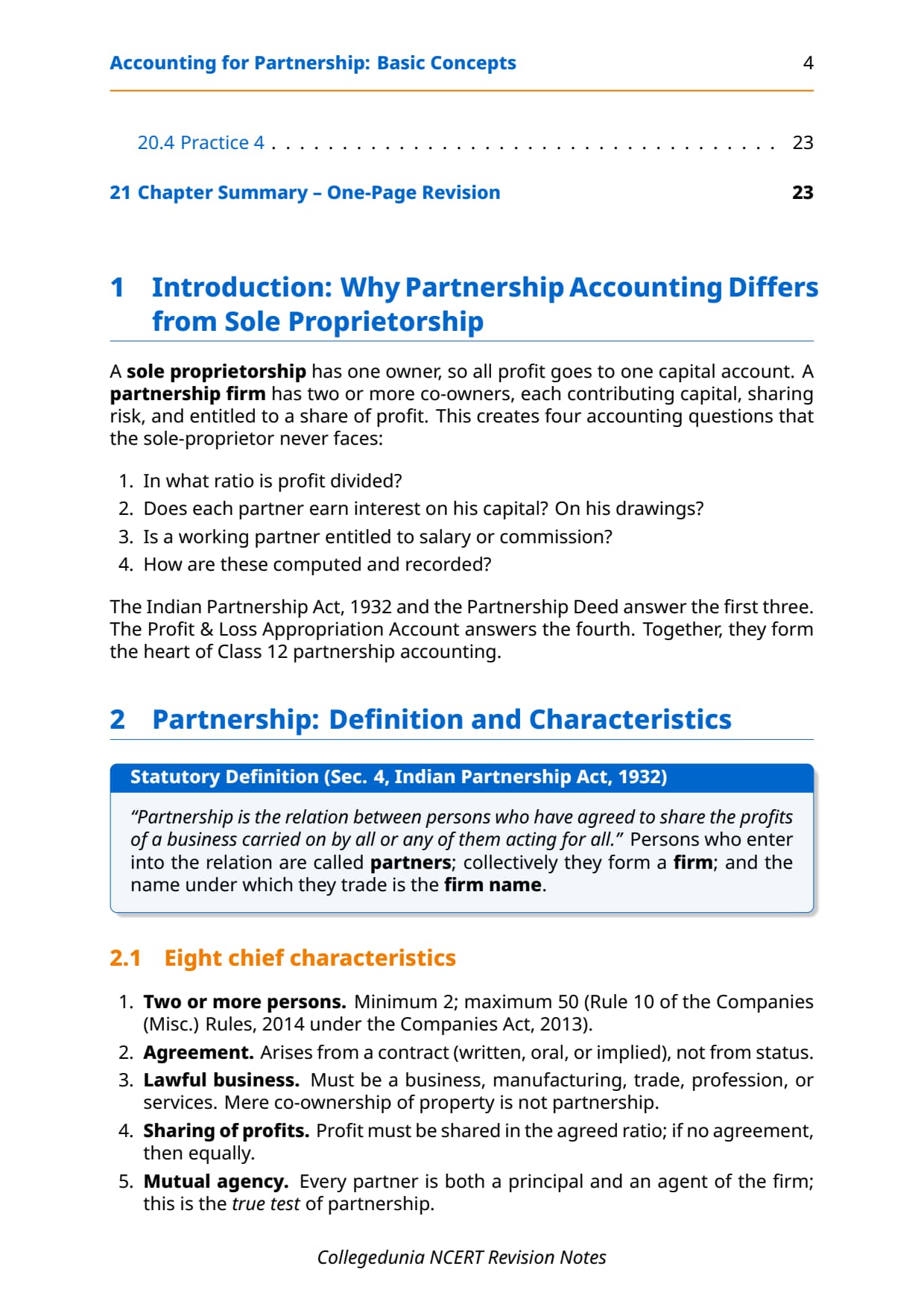
Chapter 1 sets the statutory and accounting foundation for the entire partnership cluster. The notes are structured to mirror the CBSE marking sequence: definition, deed, Section 13 defaults, capital accounts, Profit and Loss Appropriation Account, interest on capital and drawings, salary and commission, guarantee of profit, and past adjustments. Each topic is anchored to a section reference in the Indian Partnership Act 1932 and the relevant Income-tax Act clause where applicable.
| Topic | Sub-topic | Board Weightage |
|---|---|---|
| Partnership Framework | Definition, six features, Partnership Deed contents, Section 13 default rules | 3 to 5 marks |
| Capital Accounts | Fixed method (Capital + Current) versus Fluctuating method, item placement | 3 to 4 marks |
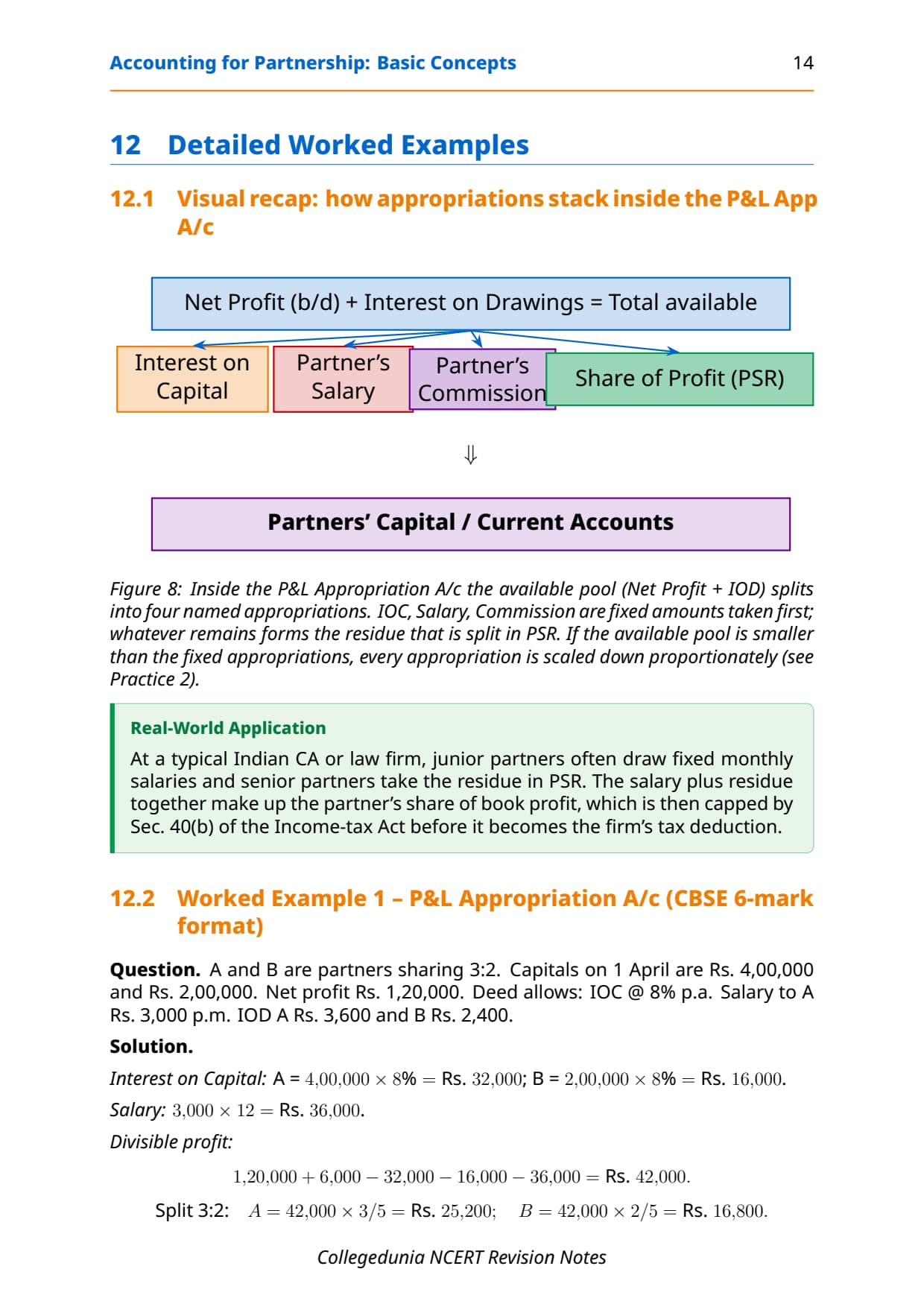
| P&L Appropriation Account | Charge versus appropriation, T-format, order of debits and credits | 6 marks |
| Interest on Capital and Drawings | Direct, product, and average-period methods, six standard average periods | 3 to 4 marks |
| Salary, Commission, Manager's Commission | Before and after charging such commission formulas | 2 to 3 marks |
| Guarantee of Minimum Profit | Single-partner guarantee versus burden shared by remaining partners | 4 to 6 marks |
| Past Adjustments | Statement of adjustment, single combined journal entry, column sum equals zero | 4 to 6 marks |
This table maps each sub-topic to its expected CBSE weight. The Profit and Loss Appropriation Account and the Past Adjustments/Guarantee numerical together can earn 12 of the 14 chapter marks.
Class 12 Accountancy Chapter 1 Accounting For Partnership Basic Concepts Notes
Source: Magnet Brains on YouTube
What's Inside the Accounting for Partnership Notes PDF
- Statutory definitions with section references from the Indian Partnership Act 1932 and the Income-tax Act 1961.
- Six-feature checklist of partnership using a single-line mnemonic for fast recall.
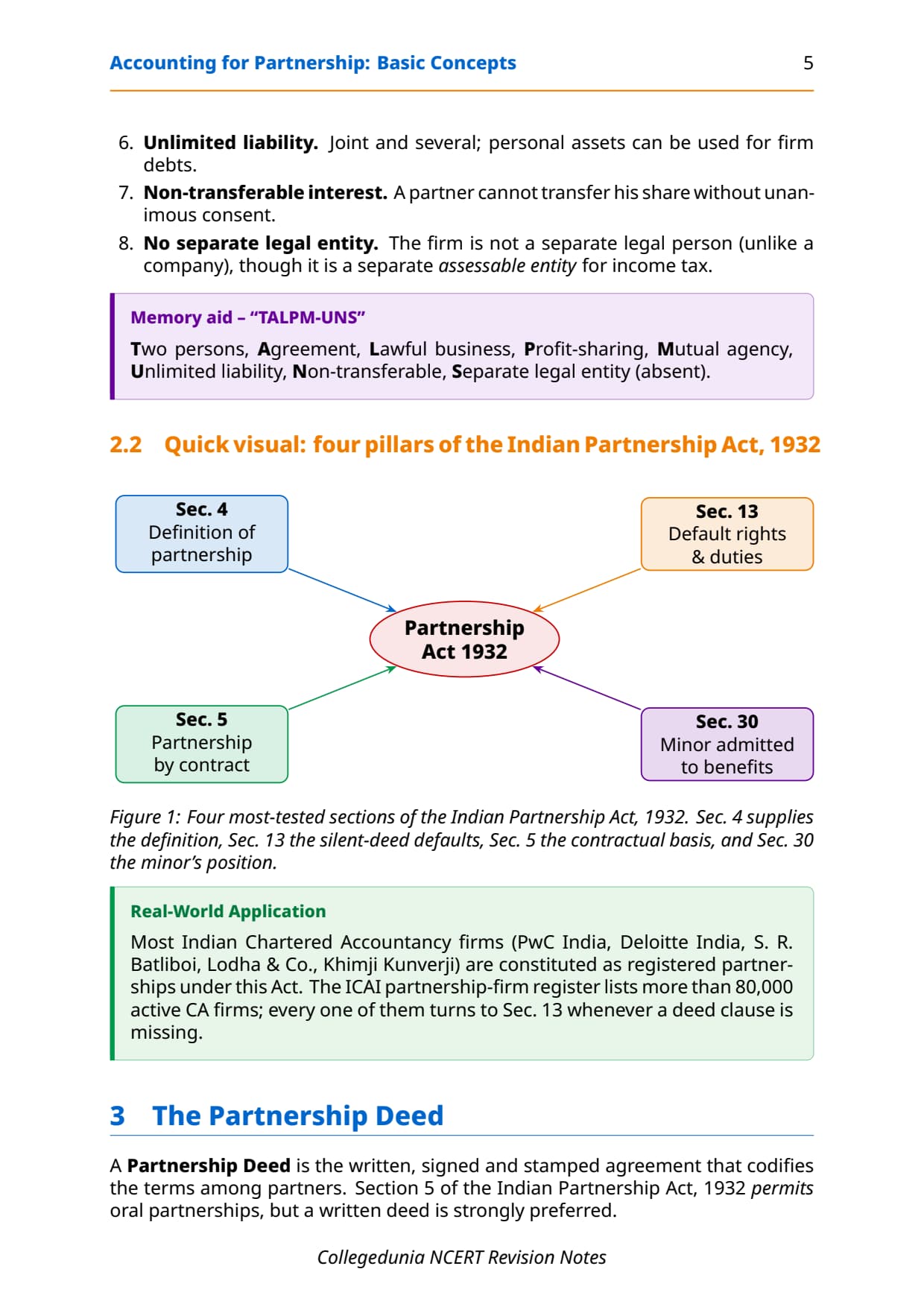
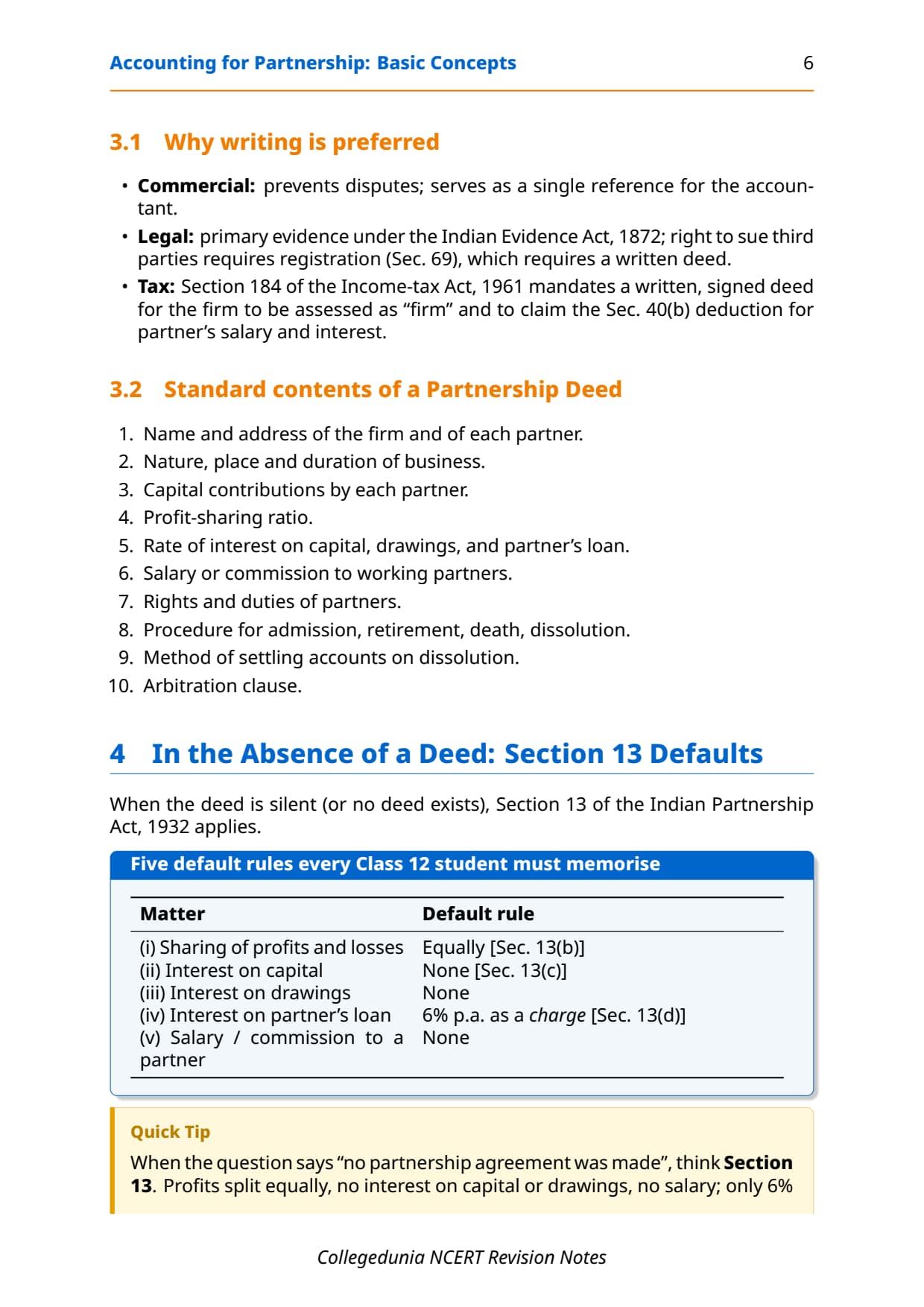
- Section 13 default-rules table for the "no Partnership Deed" scenario, including profit-sharing, interest on capital, interest on loan, and remuneration.
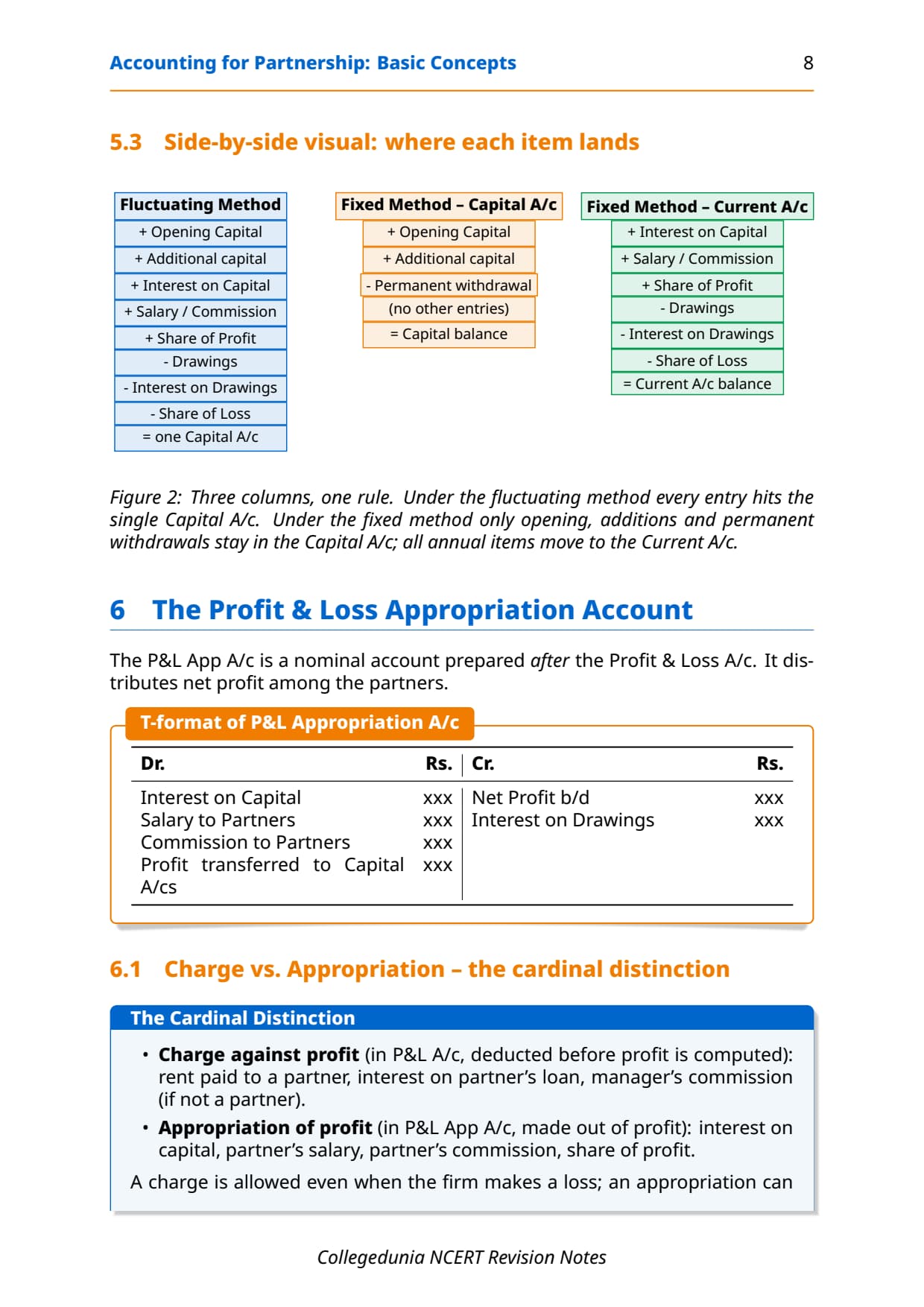
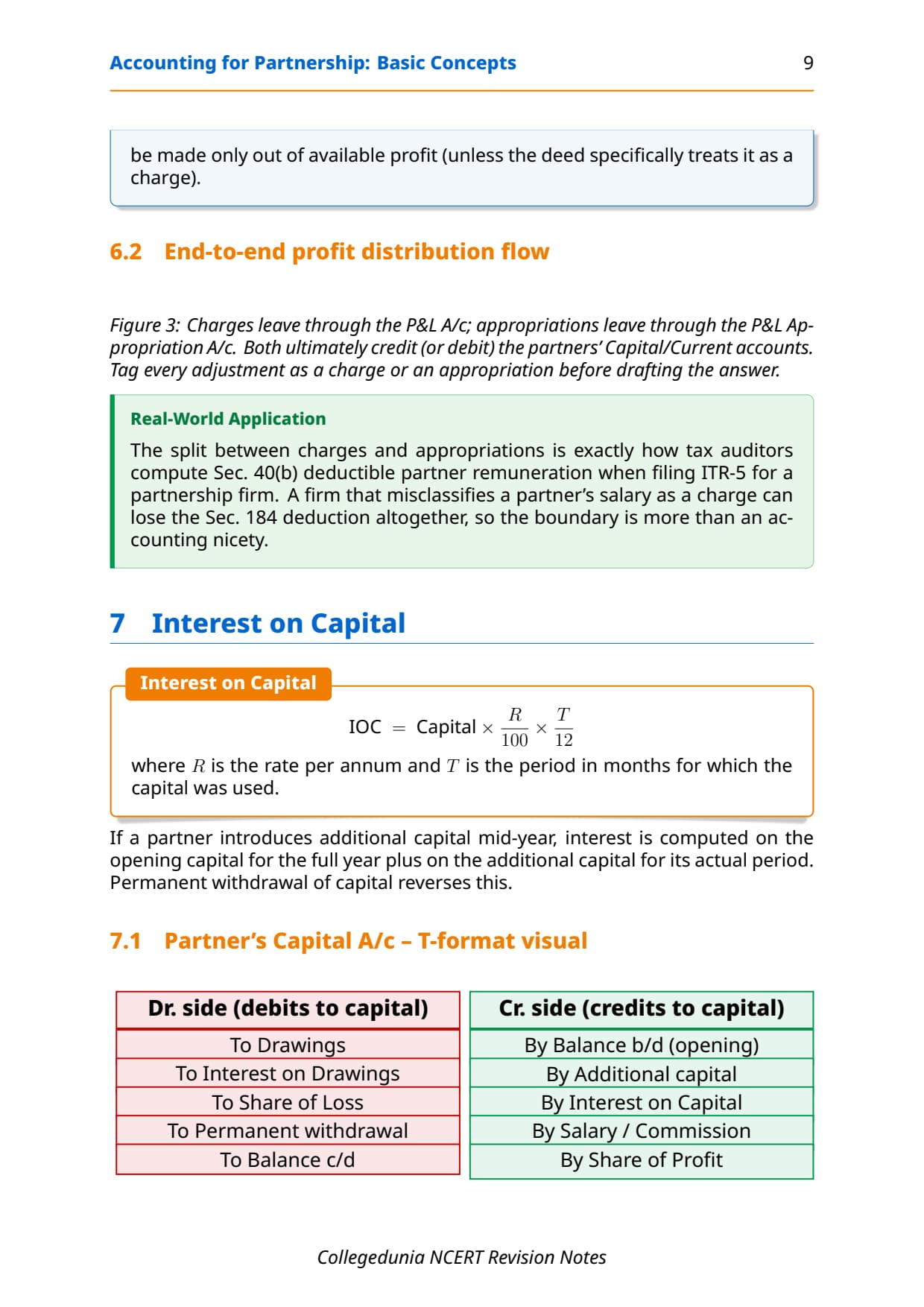
- P&L Appropriation A/c T-format with a fully solved illustration showing the textbook order of entries.
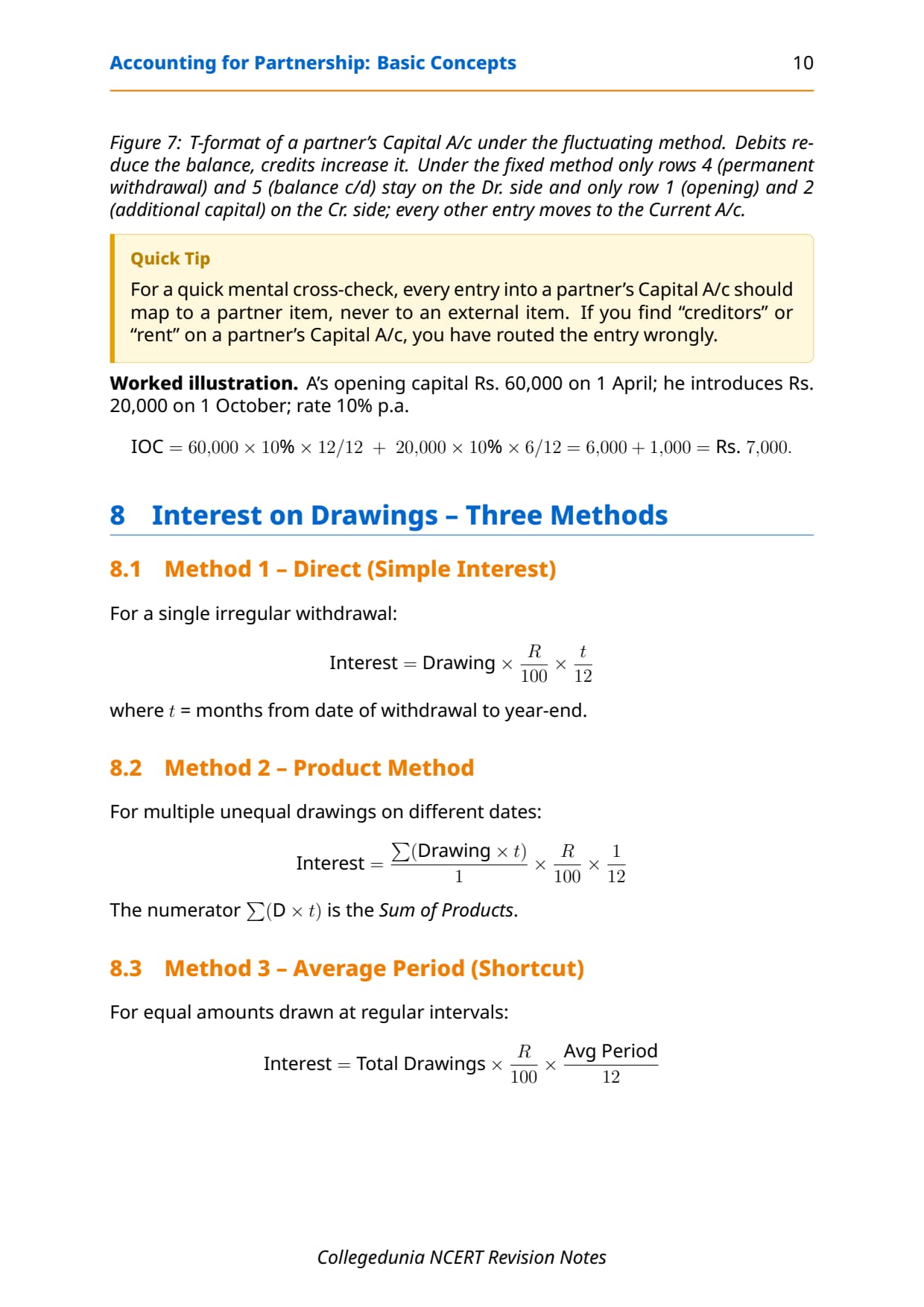
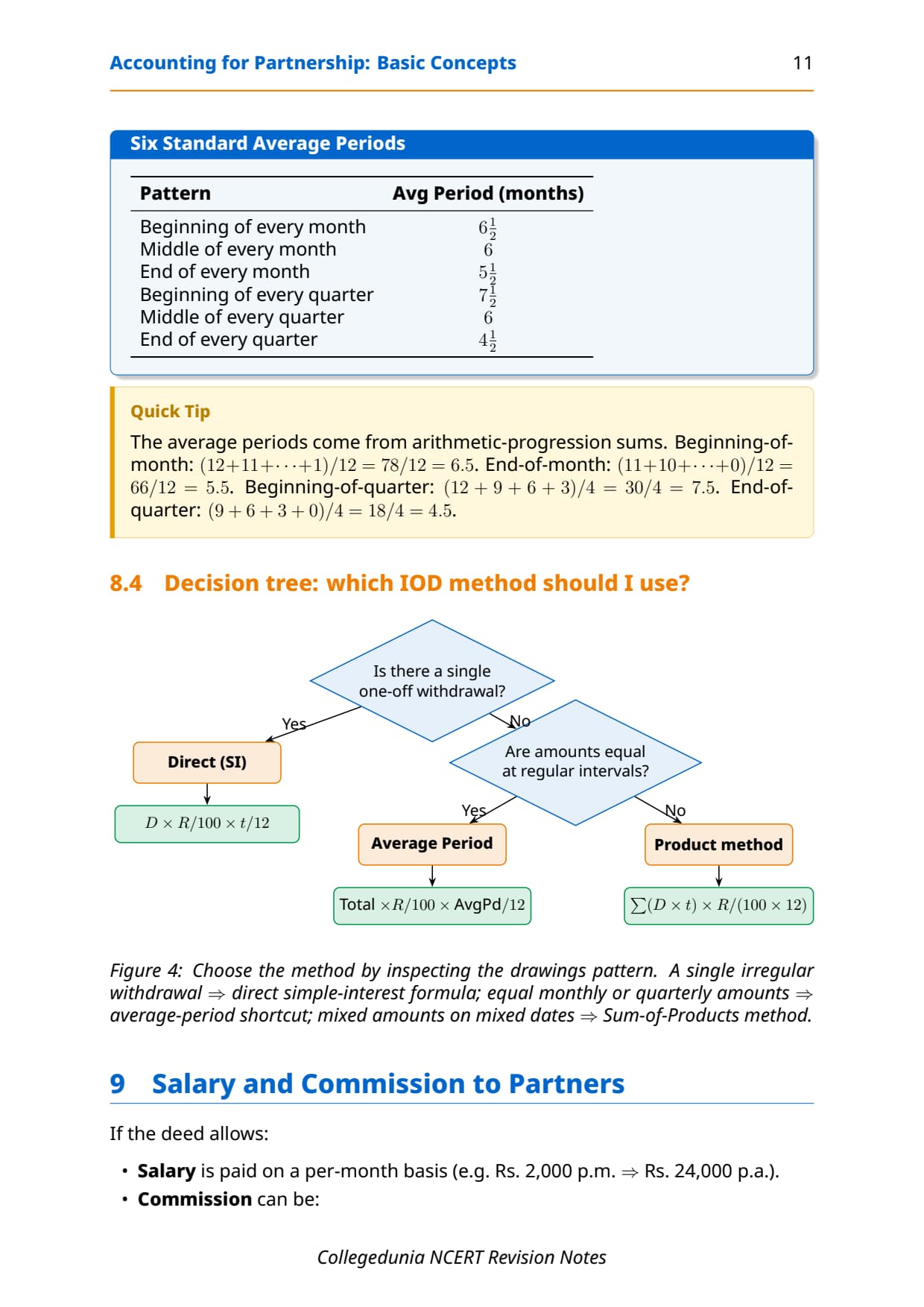
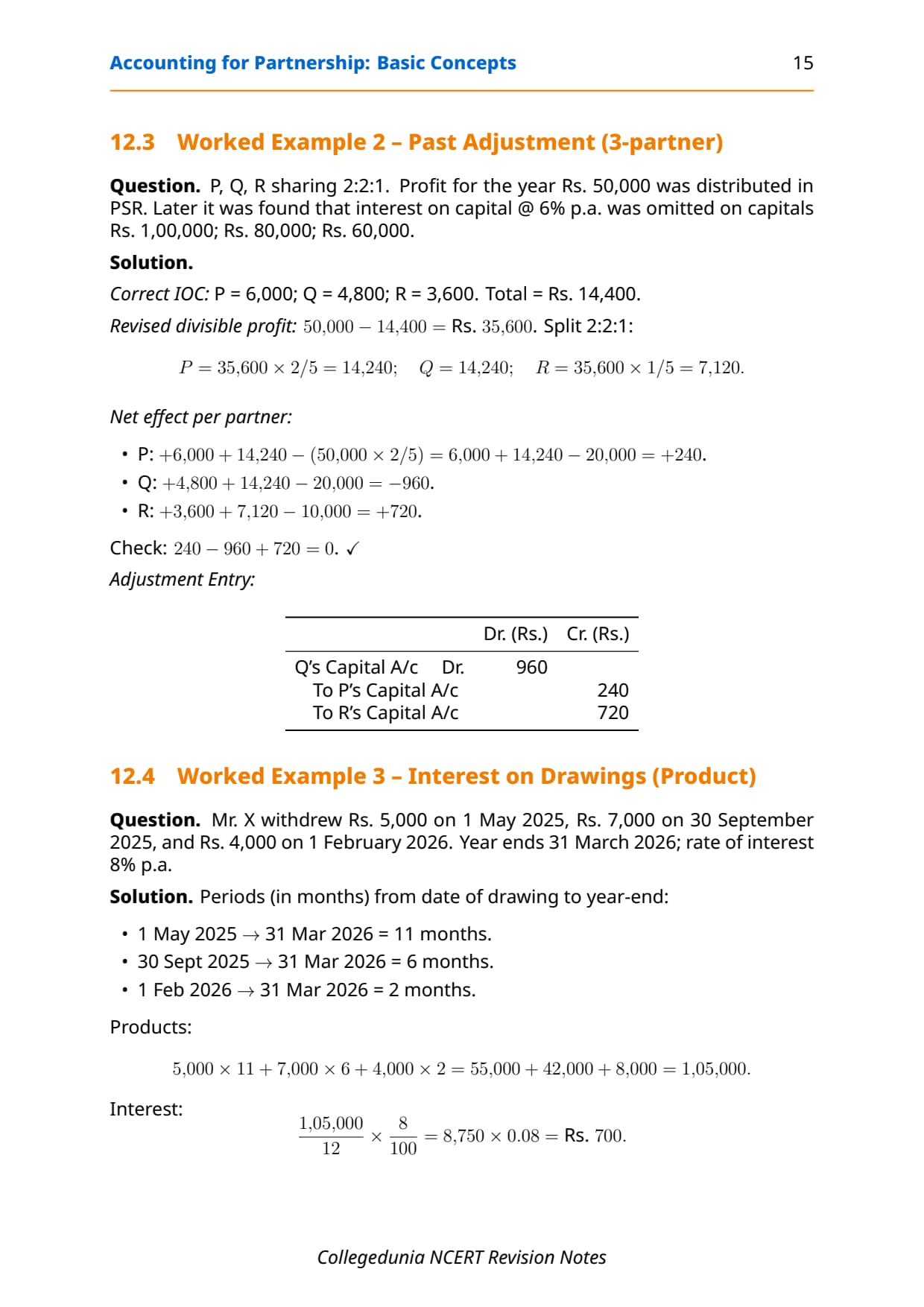
- Six standard average periods for interest on drawings, derived once from arithmetic progressions so the student is not memorising blind.
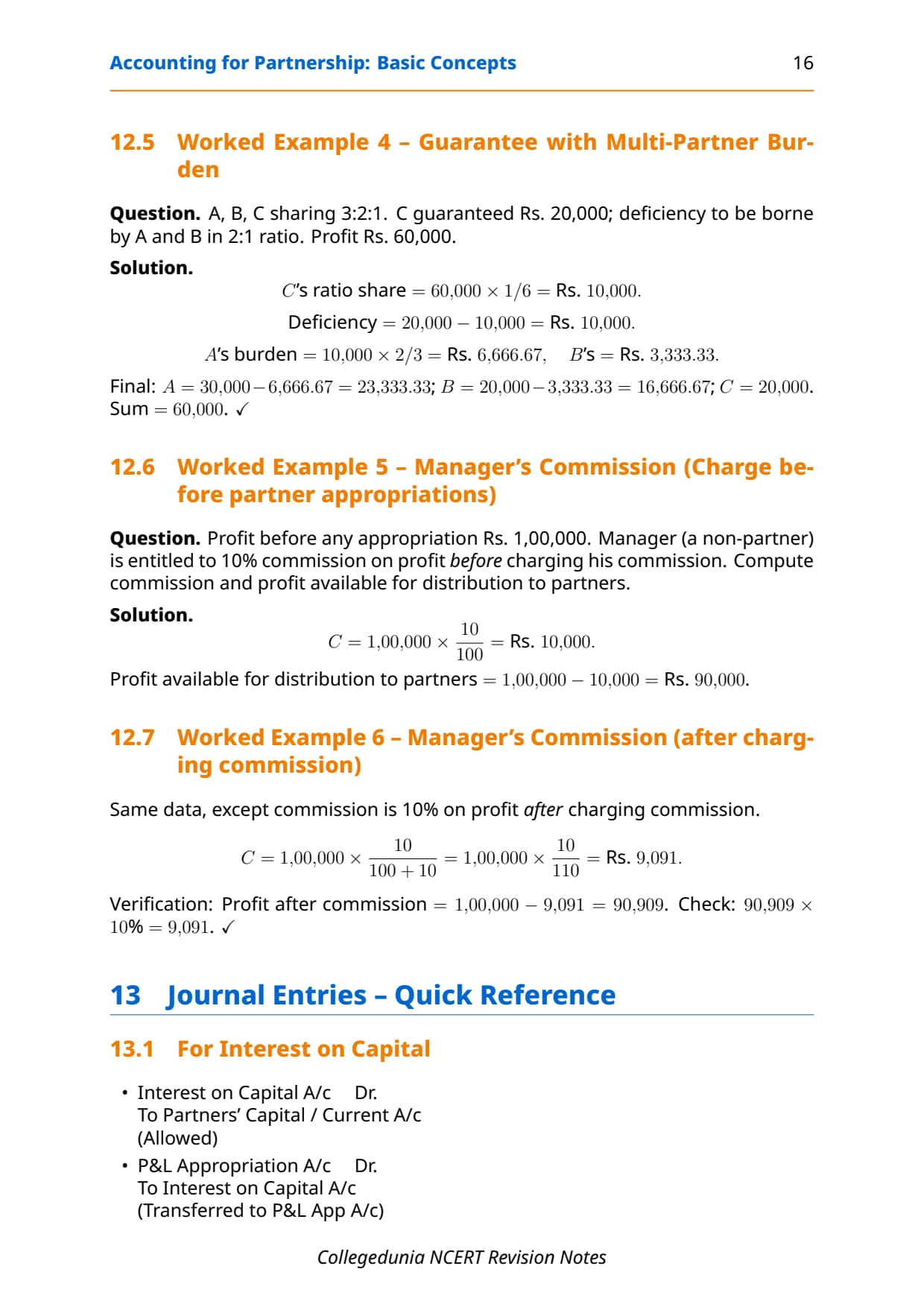
- Six solved examples covering every CBSE question pattern: simple appropriation, with guarantee, with commission, with past adjustment, mixed.
- Four CBSE PYQ solutions from board papers 2021 to 2025.
- Four practice problems with answer hints for self-revision.
- One-page quick-revision map on the final page for the night-before brush-up.

How Will Collegedunia's NCERT Notes Help You with Partnership Accounting?
- 2026-27 NCERT Alignment. Every section reference, default rule, and Section 40(b) limit matches the latest CBSE textbook.
- Examiner-Style Layout. Formula box, concept box, common-mistake callout, and quick-tip box match what the CBSE checker expects to see in working notes.
- Solved-example density. Six fully solved examples plus four practice problems with hints, denser than most reference texts.
- Commerce-Stream Extensions. Manager's commission formulas, the Section 40(b) book-profit limit, and Section 184 deed-tax linkage are added for CUET, CA Foundation, and B.Com entrance prep.
Top 5 Concepts to Lock In for Chapter 1 Partnership Accounting
- Section 13 of the Indian Partnership Act 1932. Default rules in the absence of a deed: equal profit share, no interest on capital, 6% interest on partner's loan, no remuneration.
- Charge versus appropriation. The cardinal distinction between entries that belong in the P&L A/c and those that belong in the P&L Appropriation A/c.
- Six standard average periods. 6.5, 6, and 5.5 months for monthly drawings (beginning, middle, end); 7.5, 6, and 4.5 months for quarterly drawings.
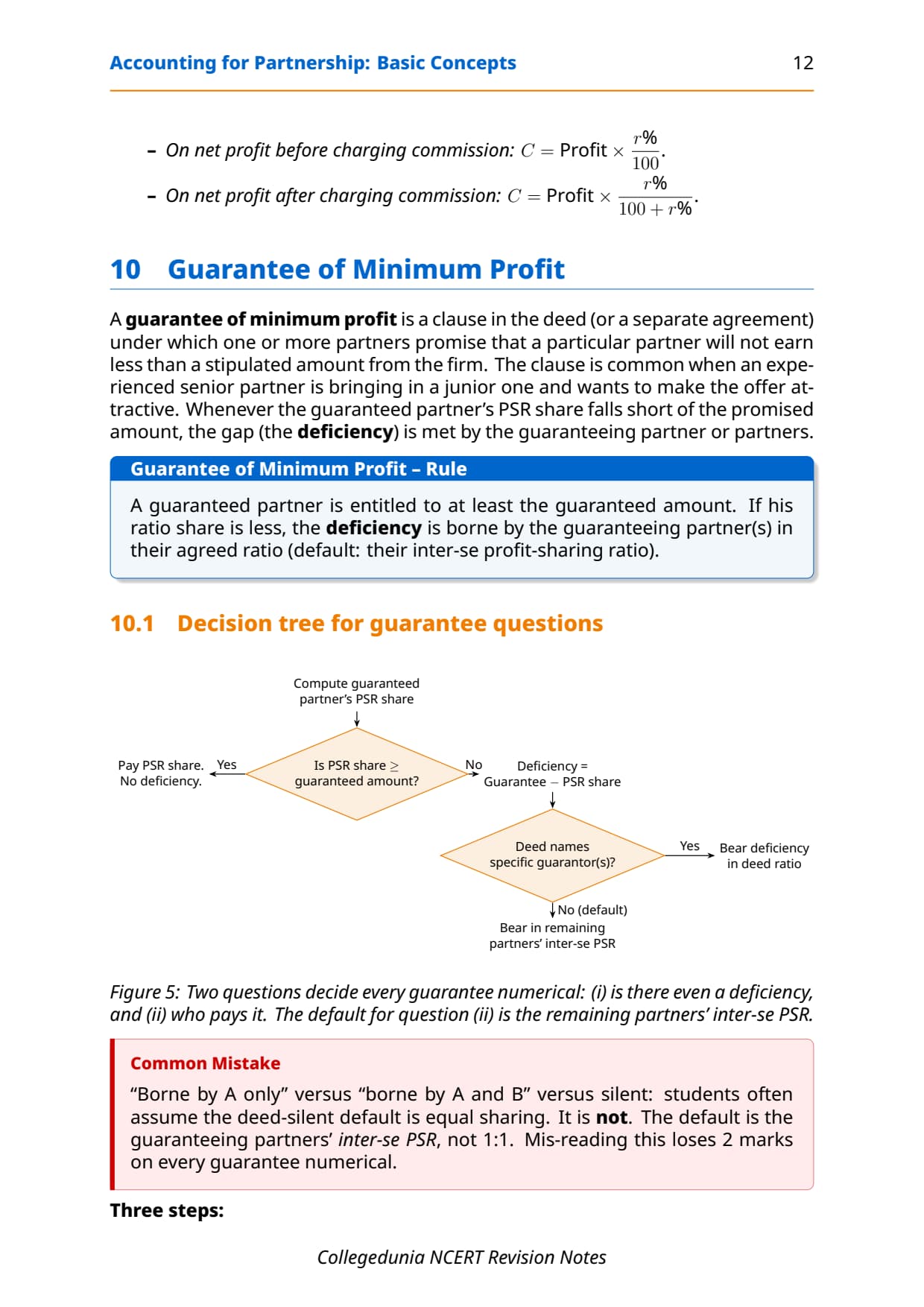
- Guarantee mechanics. Compute the ratio share, find the deficiency, then debit the guaranteeing partner(s) in the agreed sacrificing ratio.
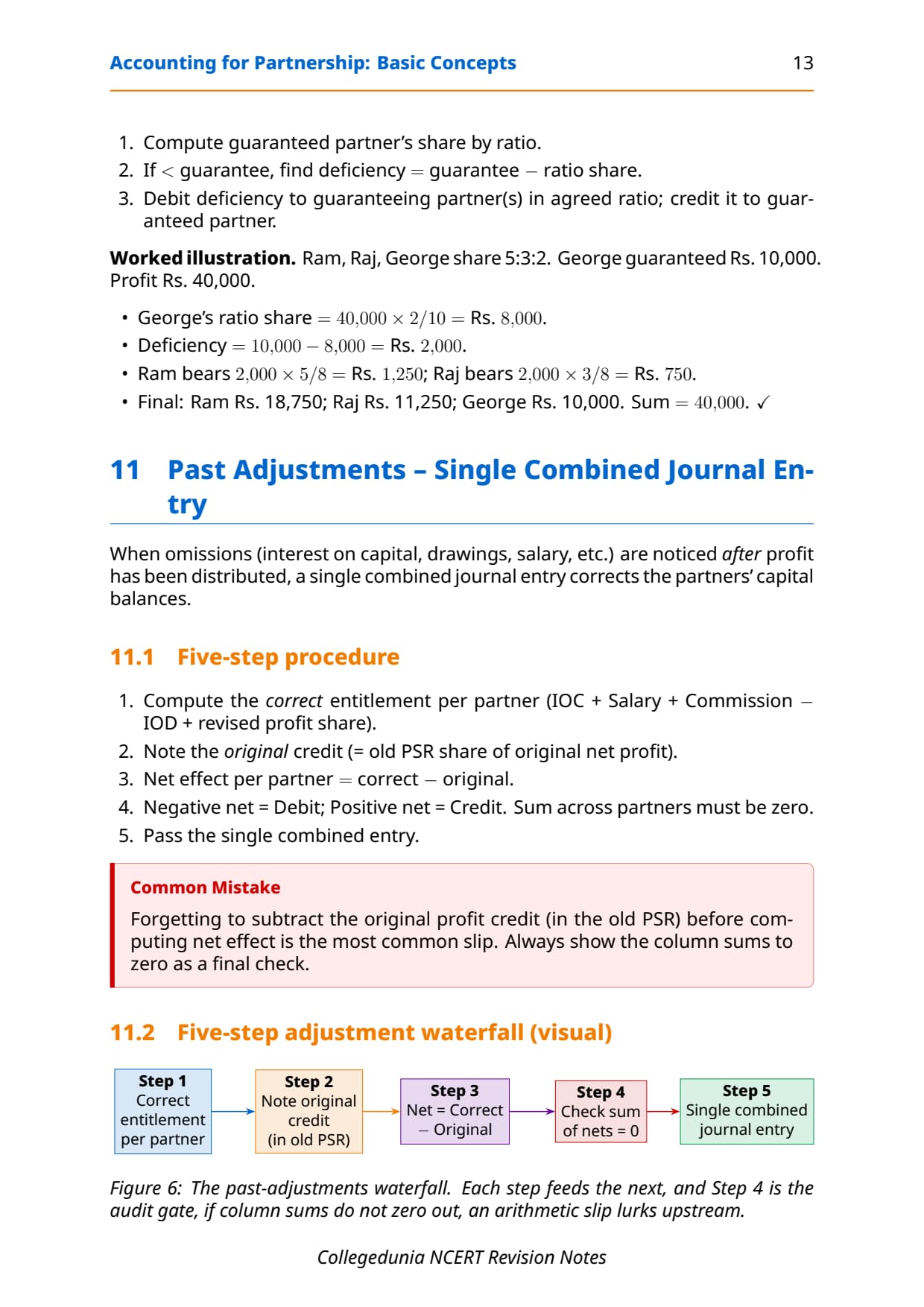
- Past adjustment single entry. Build a five-row statement, compute the net effect per partner, and confirm the column sum is zero before passing the rectifying journal entry.
Common Mistakes Students Make in Chapter 1 Partnership Accounting
- Mistake 1. Treating interest on partner's loan as an appropriation. It is a charge against profit and must be debited to the P&L A/c, not the P&L Appropriation A/c.
- Mistake 2. Calculating interest on drawings on the full year when withdrawals are uneven. Use the product method or the correct average period.
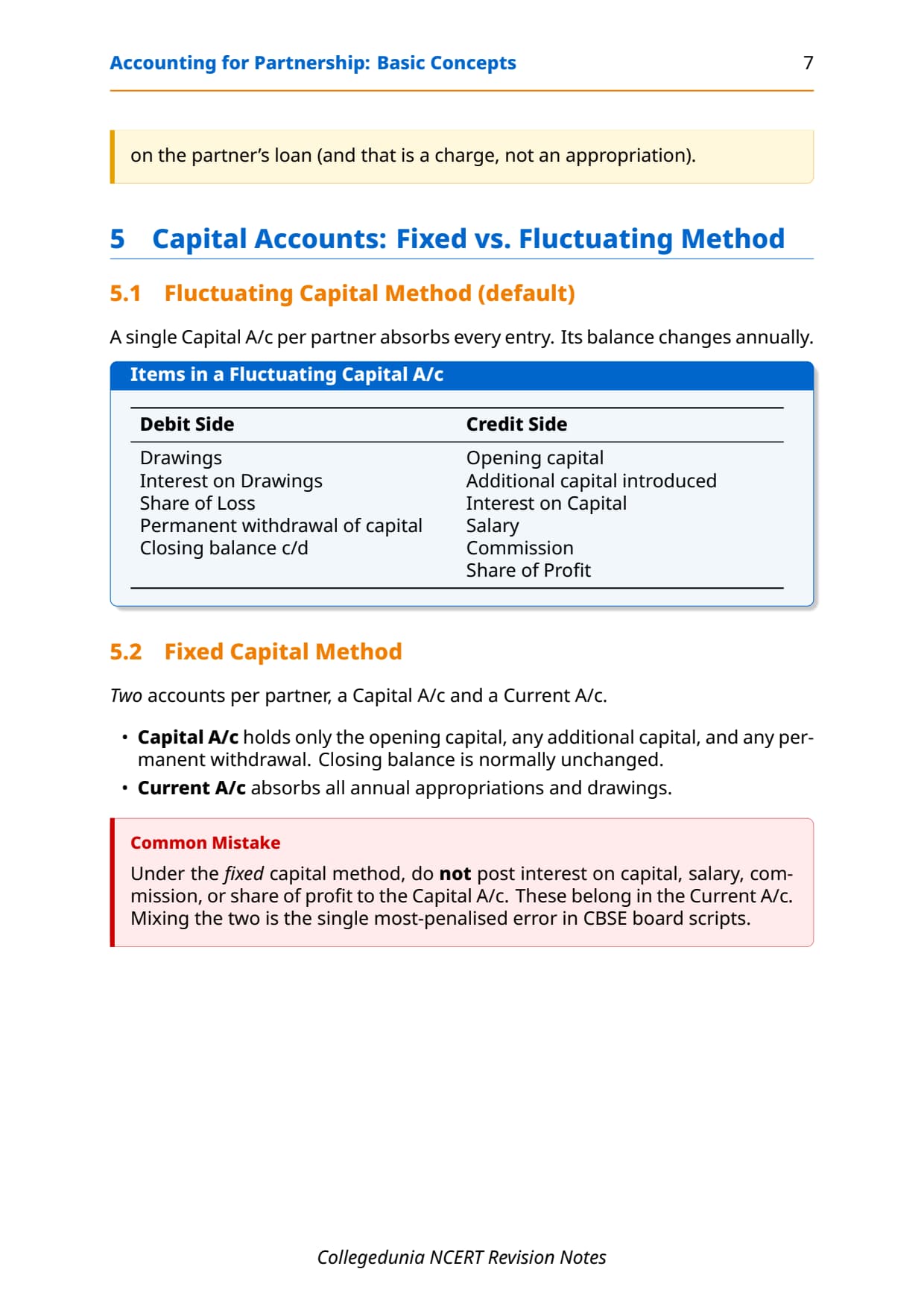
- Mistake 3. Forgetting that under the fixed-capital method, the Capital Account balance never changes during the year. All routine items go through the Current Account.
- Mistake 4. Splitting deficiency in profit-sharing ratio when the question specifies a different sacrificing or agreed ratio for guarantee. Always read the guarantee clause twice.
- Mistake 5. Skipping the column-sum-zero check on past adjustments, which is the fastest way to catch an arithmetic slip before the journal entry.
Important Formulas in Accounting for Partnership Basic Concepts
| Item | Formula |
|---|---|
| Interest on Capital | Opening Capital x Rate x Time / 100 |
| Interest on Drawings (Product Method) | Total Products x Rate x 1 / (12 x 100) |
| Interest on Drawings (Monthly, beginning) | Total Drawings x Rate x 6.5 / (12 x 100) |
| Interest on Drawings (Monthly, end) | Total Drawings x Rate x 5.5 / (12 x 100) |
| Manager's Commission (before charging) | Net Profit x Rate / 100 |
| Manager's Commission (after charging) | Net Profit x Rate / (100 + Rate) |
| Section 40(b) Book Profit Limit | First Rs 3,00,000 at 90% or Rs 1,50,000 whichever higher, balance at 60% |
These formulas are the recall layer. The PDF derives each one from first principles, so students are not memorising blind.
Full formula reference: Class 12 Accountancy Chapter 1 Formula Sheet
CBSE Previous-Year Question Trend for Chapter 1
| Year | Question Type | Marks |
|---|---|---|
| 2025 | P&L Appropriation A/c with guarantee of profit | 6 |
| 2024 | Interest on drawings using product method | 4 |
| 2023 | Charge versus appropriation conceptual question | 3 |
| 2022 | Past adjustment single journal entry | 4 |
| 2021 | Fixed versus fluctuating capital comparison | 3 |
The five-year trend shows the Profit and Loss Appropriation Account is the most-tested format, with guarantee of profit and past adjustments rotating as the long numerical. Practise one guarantee problem and one past-adjustment problem each week.
Full year-wise PYQ map: Chapter 1 Solutions with Year-wise PYQ Coverage
Other Resources for Class 12 Accountancy Chapter 1
- Accounting for Partnership: Basic Concepts Notes
- NCERT Solutions for Class 12 Accountancy Chapter 1
- Formula Sheet for Class 12 Accountancy Chapter 1
- Handwritten Notes for Class 12 Accountancy Chapter 1
- NCERT Book PDF for Class 12 Accountancy Chapter 1
NCERT Notes for Class 12 Accountancy: All Chapters
| Chapter | Title |
|---|---|
| Chapter 2 | Reconstitution of a Partnership Firm: Admission of a Partner Notes |
| Chapter 3 | Reconstitution of a Partnership Firm: Retirement / Death of a Partner Notes |
| Chapter 4 | Dissolution of Partnership Firm Notes |
| Chapter 5 | Accounting for Share Capital Notes |
| Chapter 6 | Issue and Redemption of Debentures Notes |
Student Feedback
In a Collegedunia poll of 1,240 Class 12 Commerce students, 76% rated Accounting for Partnership: Basic Concepts among the tougher parts of the Accountancy syllabus. After using these revision notes, 4 in 5 said they felt ready for the board questions from this chapter.
Frequently Asked Questions
Ques. Are these Class 12 Accountancy Chapter 1 Notes aligned to the 2026-27 syllabus?
Ans.
Yes. Every section reference, deed clause, Section 13 default, and CBSE marking-scheme alignment matches the 2026-27 NCERT textbook and the latest CBSE board pattern.
Ques. Do these notes cover the full chapter or only selected topics?
Ans.
They cover the full chapter: partnership framework, deed contents, Section 13 defaults, capital methods, P&L Appropriation A/c, interest on capital, interest on drawings (all three methods), salary and commission, guarantee of profit, and past adjustments. CUET and B.Com-entrance extensions are also included.
Ques. Are the notes enough for the CBSE Class 12 Accountancy board exam?
Ans.
Yes. Combined with the NCERT Solutions PDF, these notes cover every concept, formula, and answer pattern tested in CBSE 2020 to 2025 board papers. The six solved examples and four PYQ solutions give end-to-end coverage of the 12 to 14 mark slot Chapter 1 typically receives.
Ques. How long are the notes and how should they be revised?
Ans.
The PDF is 19 pages including a table of contents, solved examples, mnemonics, common-mistake callouts, and a one-page quick-revision map. A 90 to 120 minute single-sitting read is enough for full chapter recall before a board test.
Ques. Do the notes include CBSE previous-year questions for Chapter 1?
Ans.
Yes. Four CBSE PYQ solutions from 2021 to 2025 board papers are worked out in full, covering P&L Appropriation A/c, guarantee of profit, the charge-versus-appropriation conceptual question, and interest on drawings using the product method.
Ques. What is the difference between fixed and fluctuating capital accounts?
Ans.
Under the fixed-capital method, two accounts are maintained for each partner: a Capital Account (balance never changes during the year unless fresh capital is introduced or withdrawn permanently) and a Current Account (records all routine items like interest, salary, drawings, share of profit). Under the fluctuating-capital method, a single Capital Account captures everything, so its balance changes every year.
Ques. Are these Collegedunia notes free to download?
Ans.
Yes. The complete PDF is free to download from this page, with no signup or paywall.



Comments