




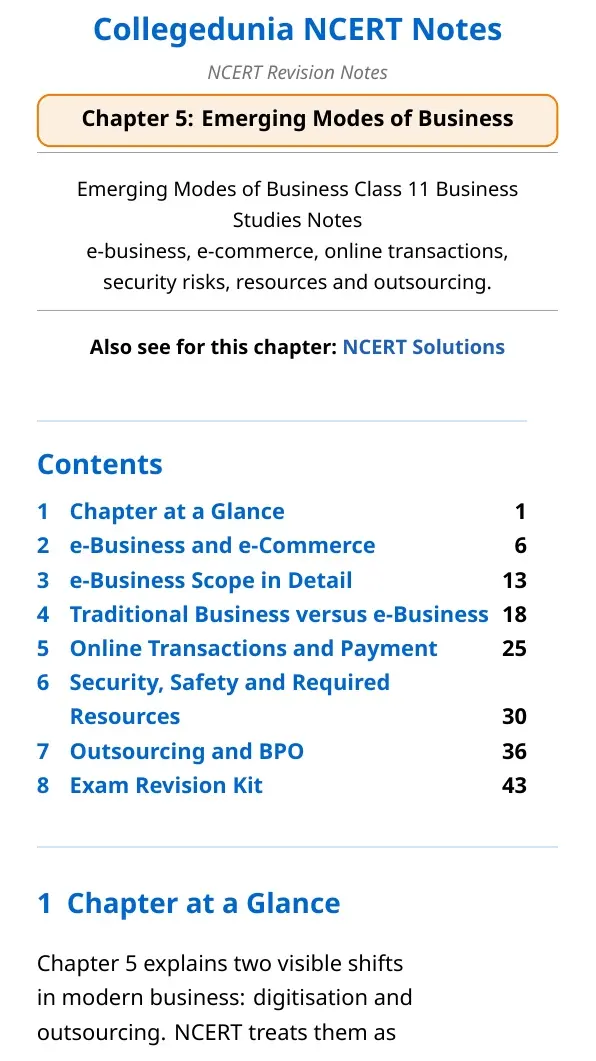
The Emerging Modes of Business Class 11 notes explain e-business, e-commerce, online transactions, security risks and outsourcing for the 2026-27 NCERT syllabus. Use this page to revise the chapter map first, then open the full PDF for tables, diagrams and exam-ready answer frames.
- Download the 26-page Chapter 5 Business Studies notes PDF for offline revision.
- Revise B2B, B2C, intra-B commerce, C2C commerce, payment methods, data risks and BPO.
- Student focus: separate e-business from e-commerce before learning the transaction stages.
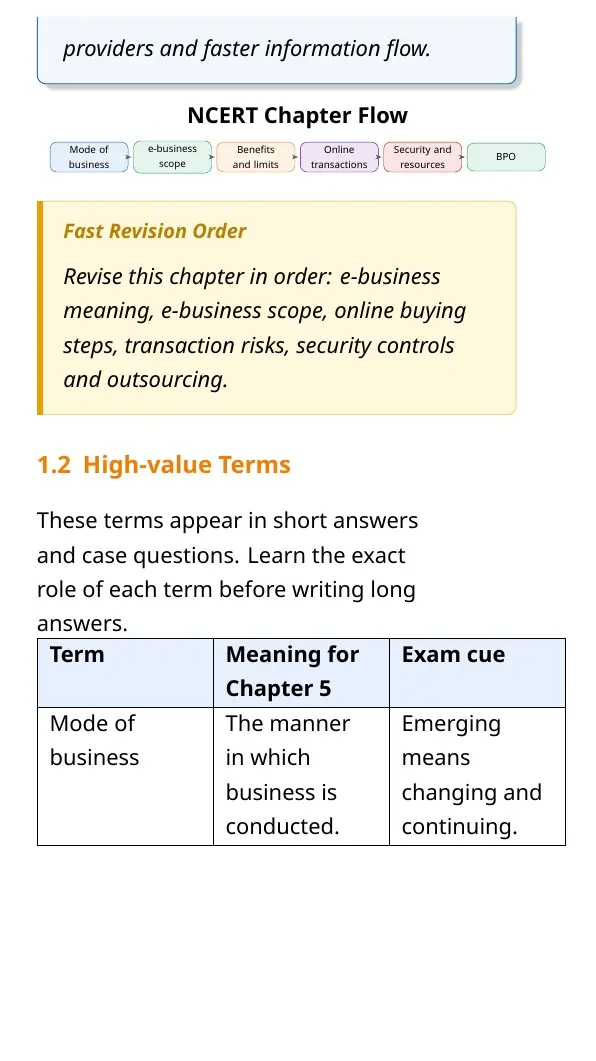
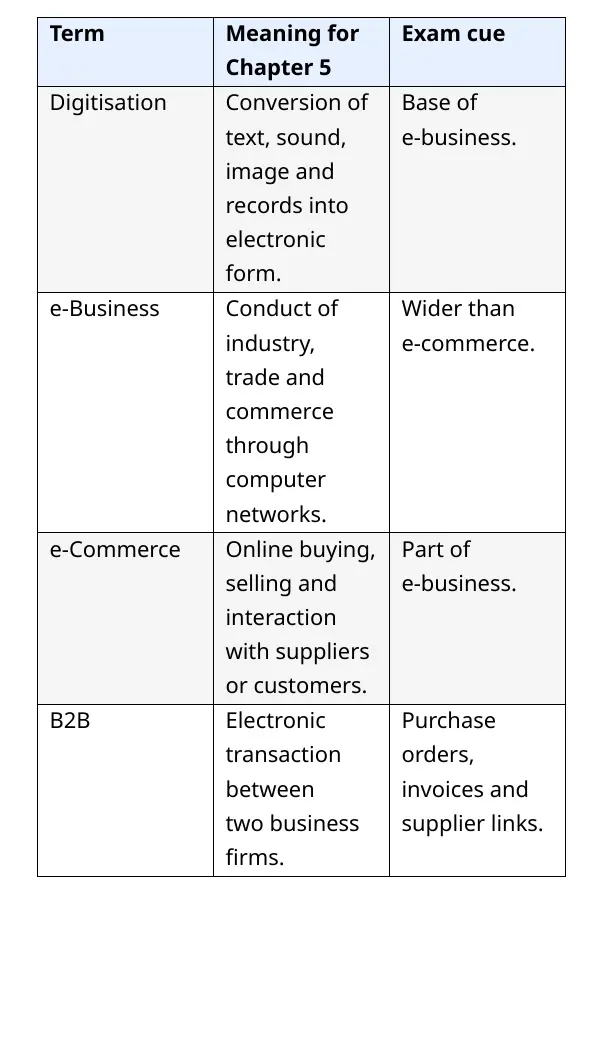
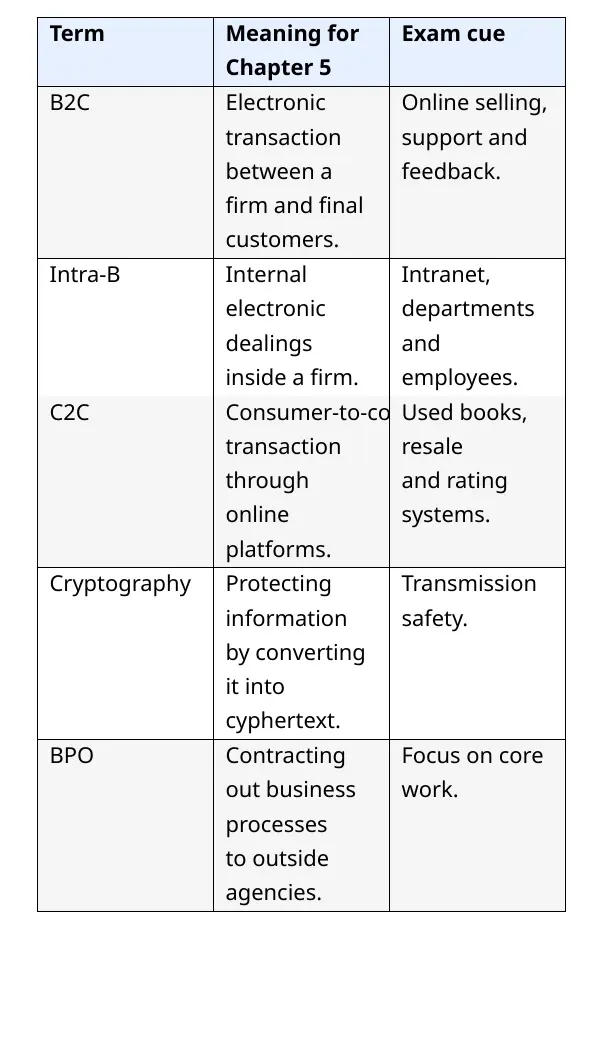
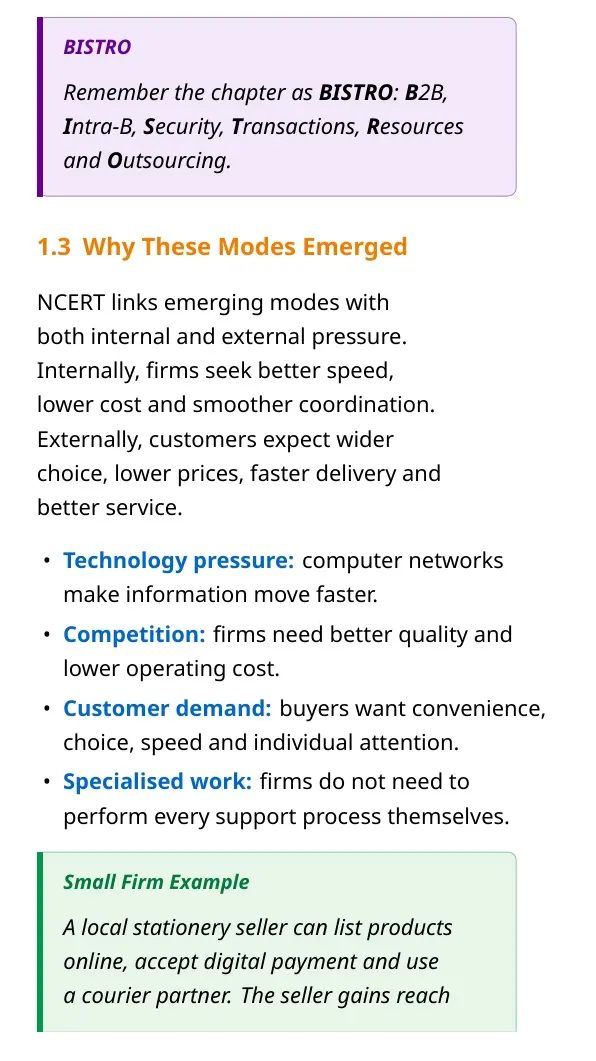
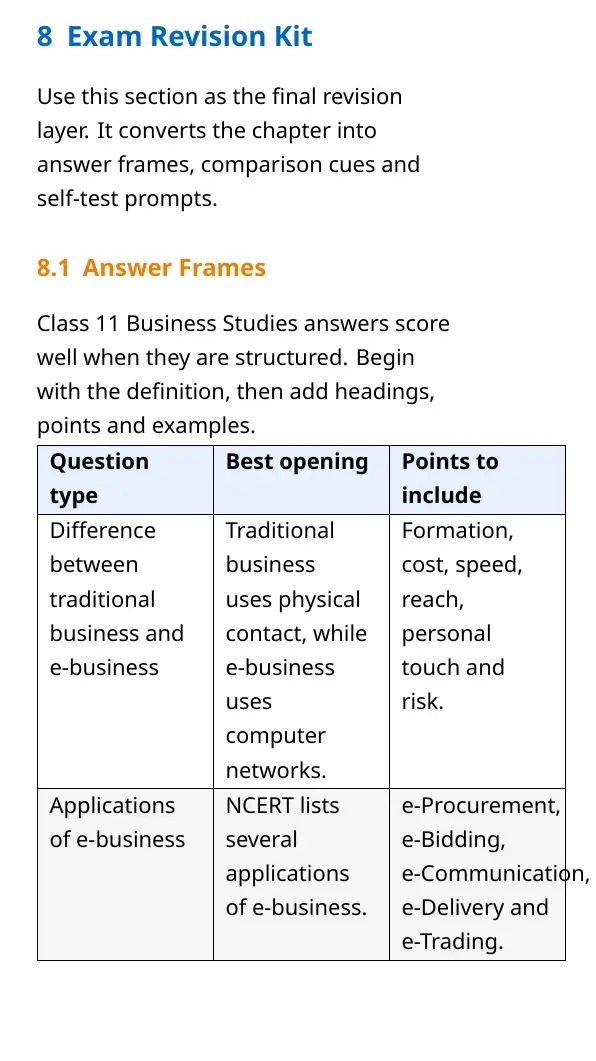
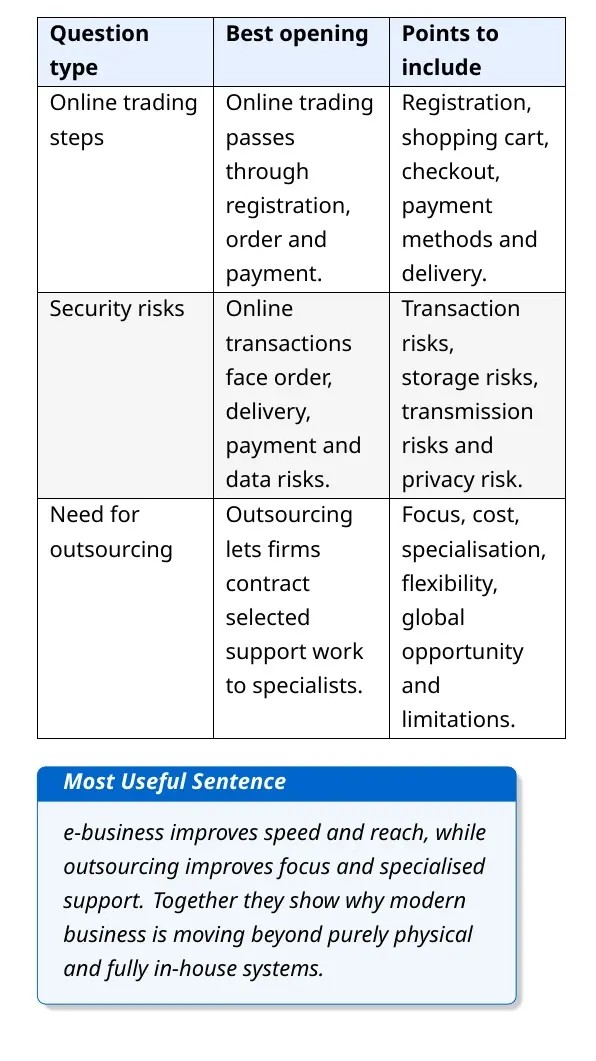
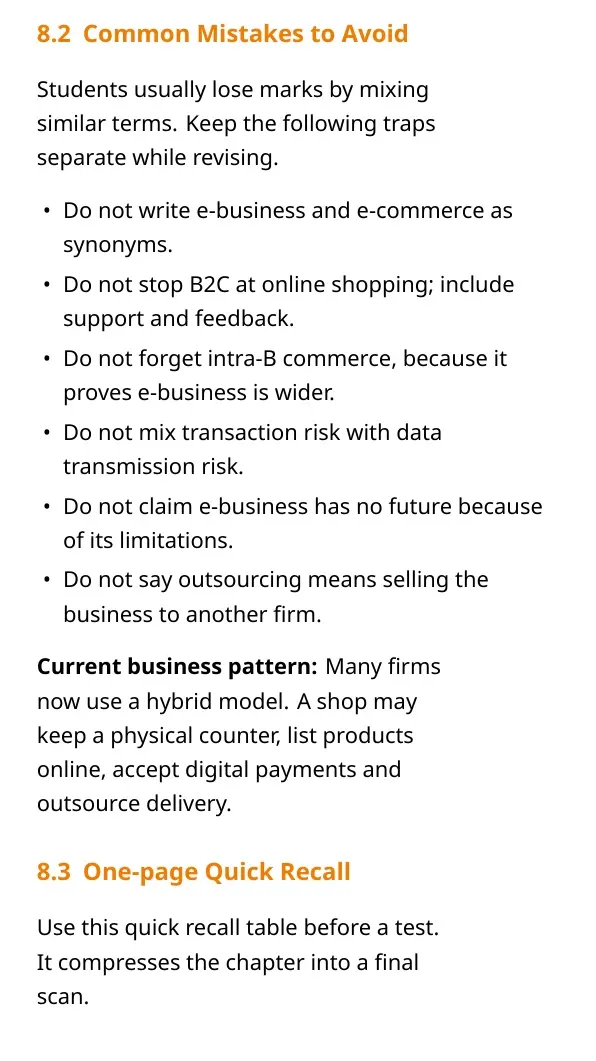
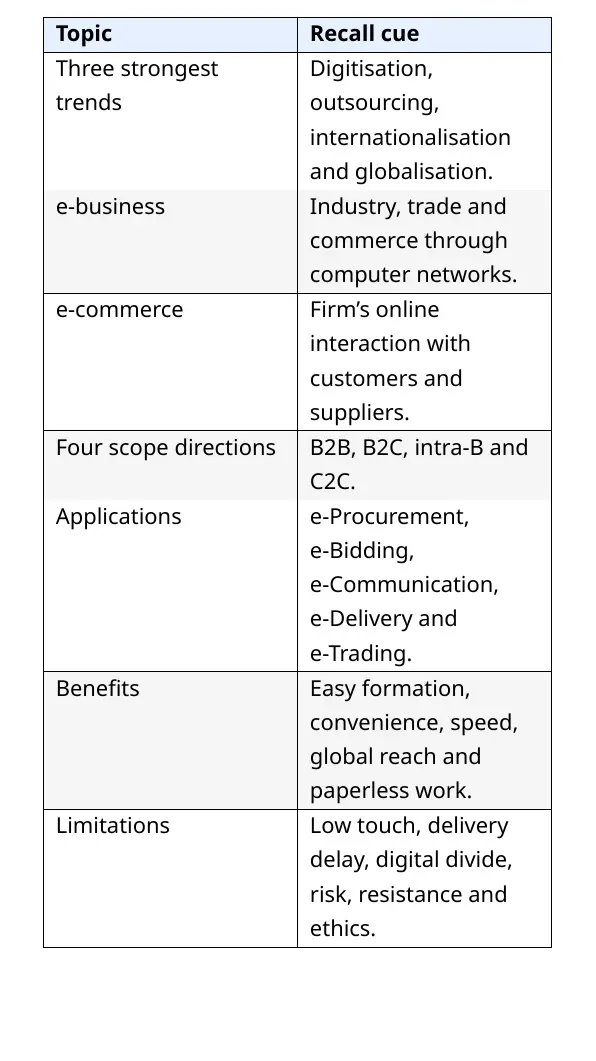
These Class 11 Business Studies notes are checked against the 2026-27 NCERT chapter and written for quick board revision.
Student Feedback on Emerging Modes of Business
In a Collegedunia poll of 11,940 Class 11 Commerce students before the 2026 exams, many students said Chapter 5 became easier once e-business scope, transaction stages and outsourcing limits were revised as separate answer frames.
- 76% wanted one chart for B2B, B2C, intra-B and C2C commerce.
- 64% mixed transaction risk with data transmission risk in practice answers.
- 58% needed help explaining BPO without writing only call-centre examples. These notes include the wider outsourcing scope.
Source: 2026-27 Class 11 Commerce student poll. Sample of 11,940 students from CBSE schools across 14 states.
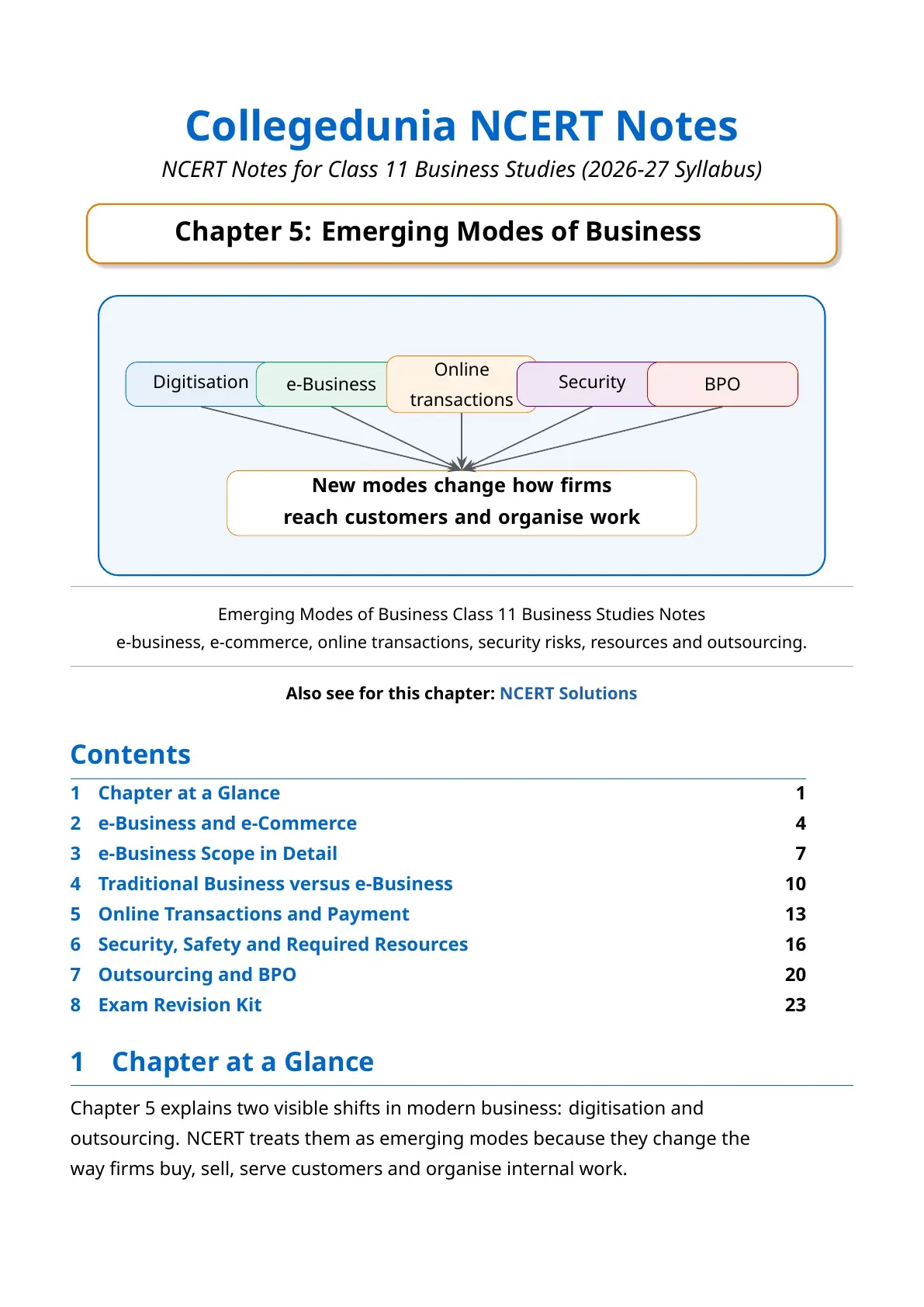
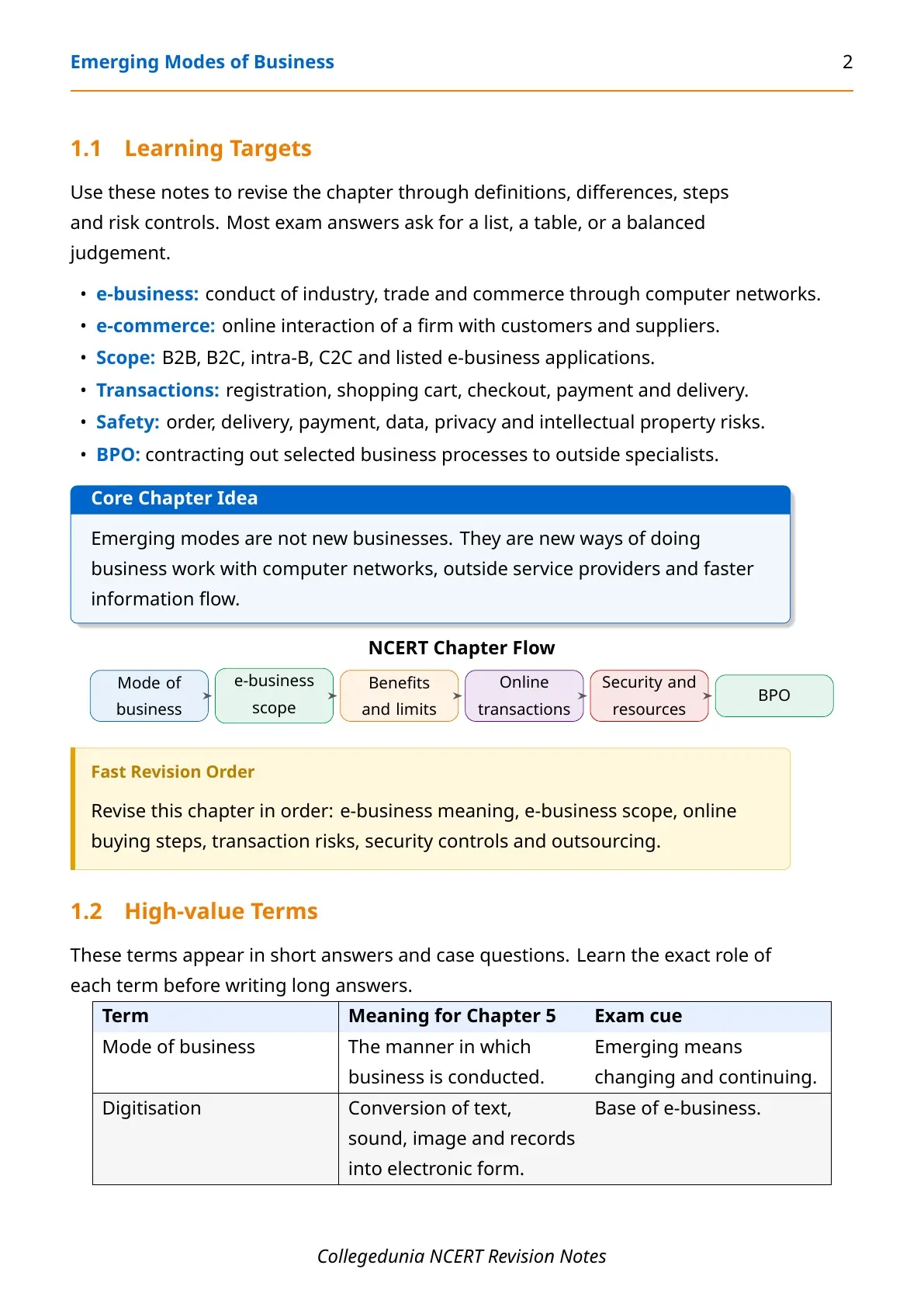
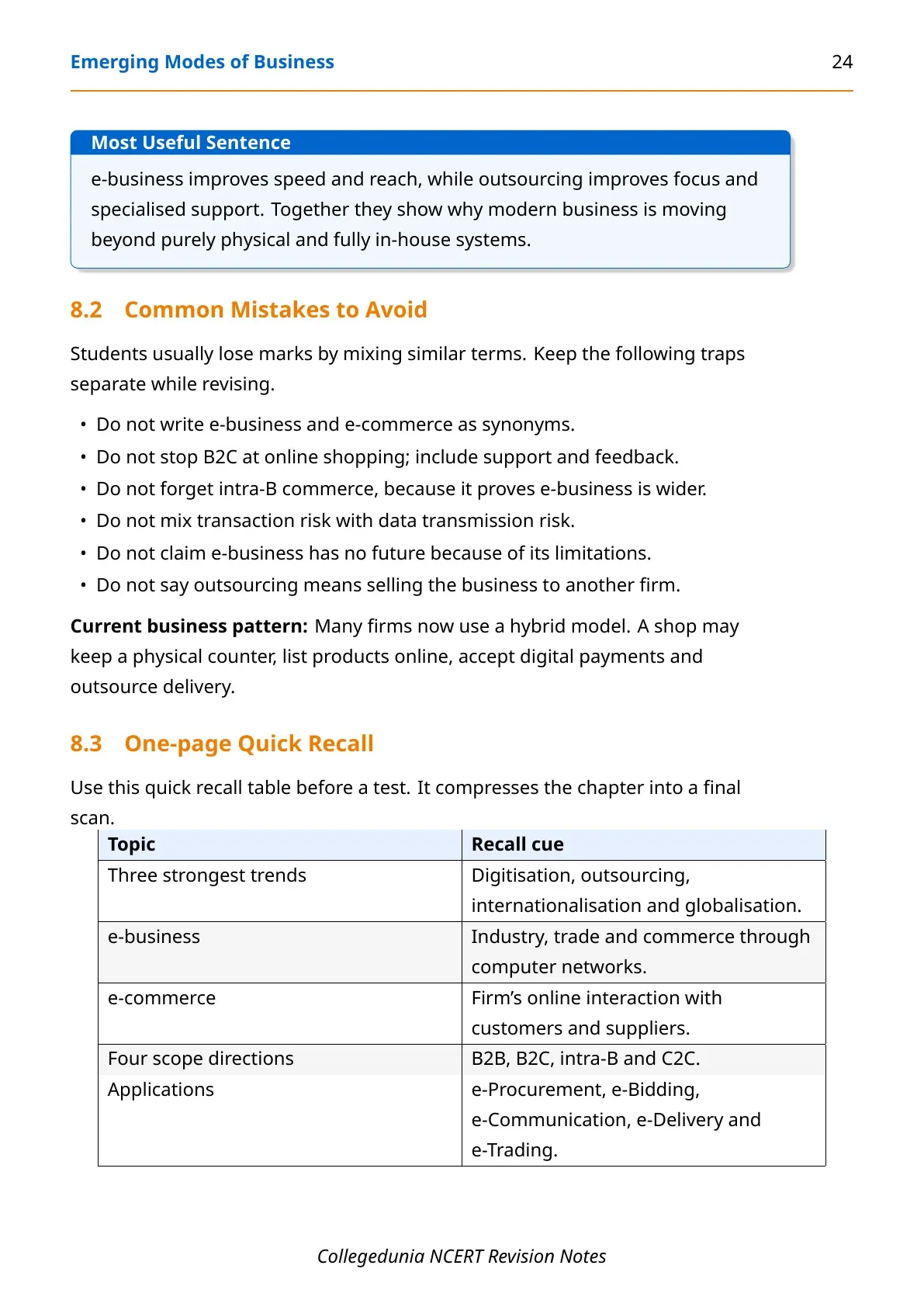
Emerging Modes of Business Class 11 Quick Map
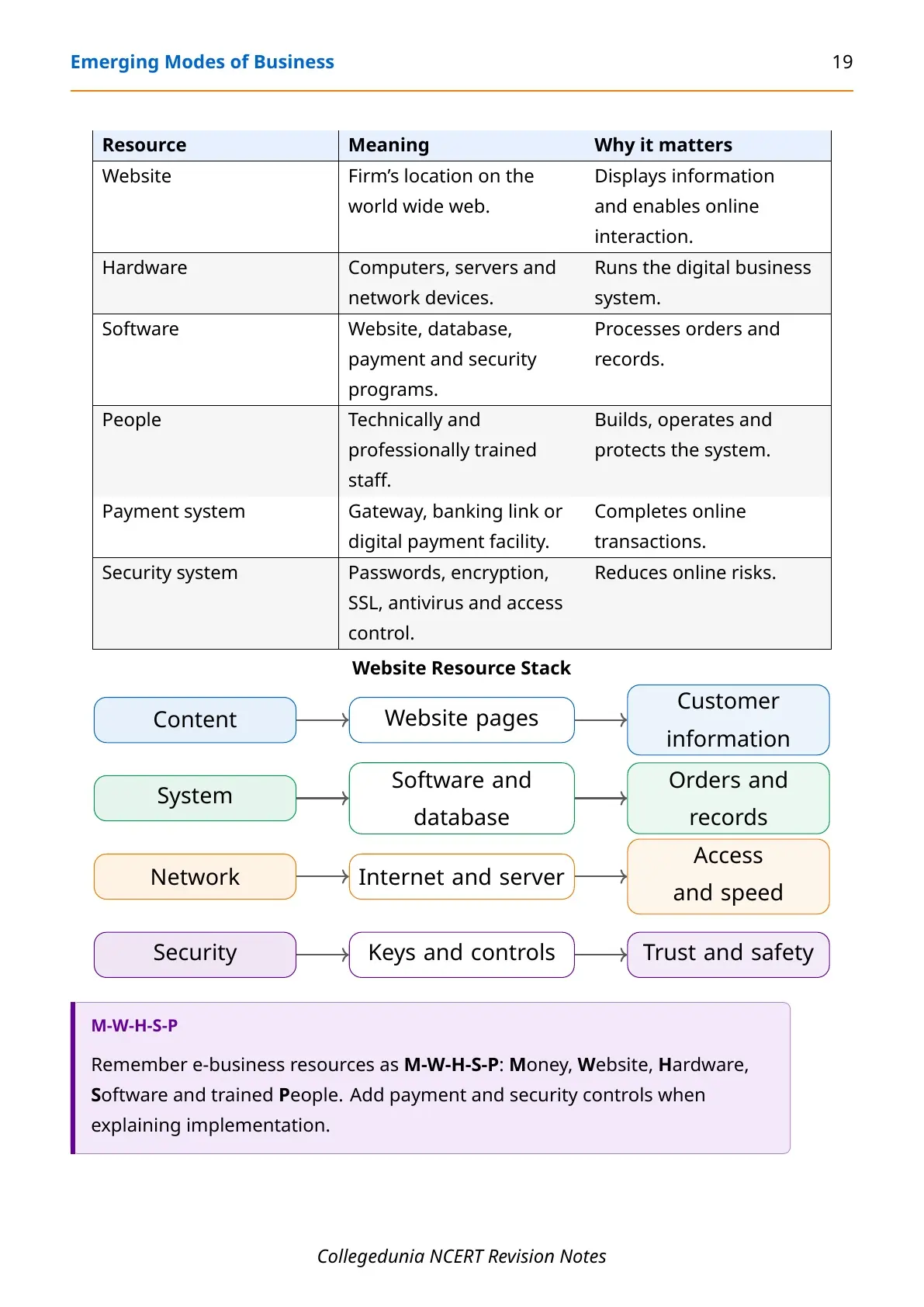
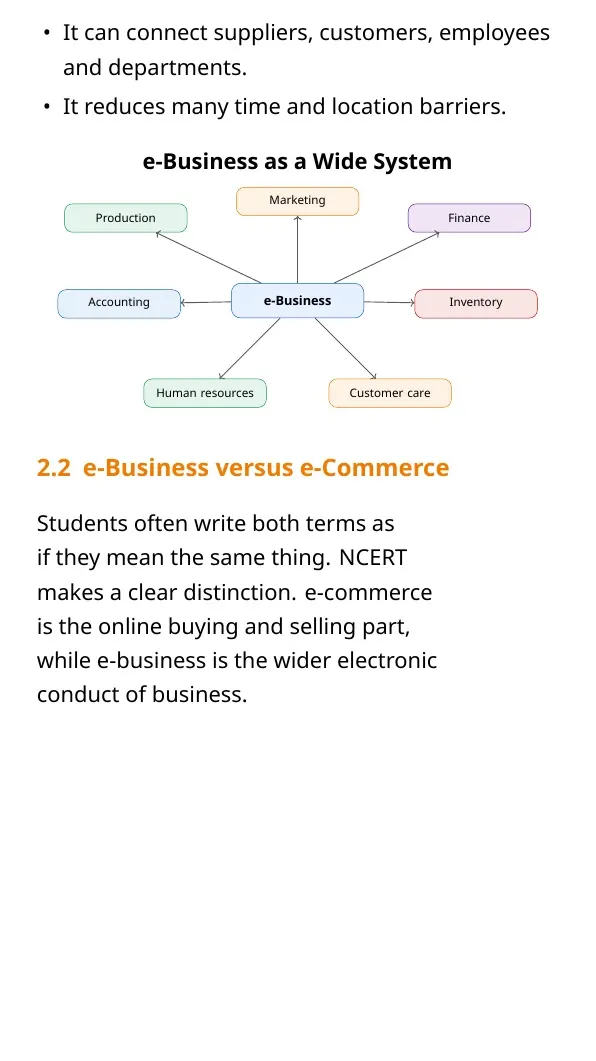
Chapter 5 explains how business moves beyond only physical shops and only in-house work. e-business uses computer networks for buying, selling, production support, finance, accounts, inventory and human resource coordination. Outsourcing lets a firm contract selected support processes to outside specialists.
- Digitisation reduces the need for physical contact in many business activities.
- Online transactions combine information search, order, payment and delivery.
- Security matters because data, payment and privacy risks rise online.
- BPO is a common form of outsourcing for customer care, back-office and process work.
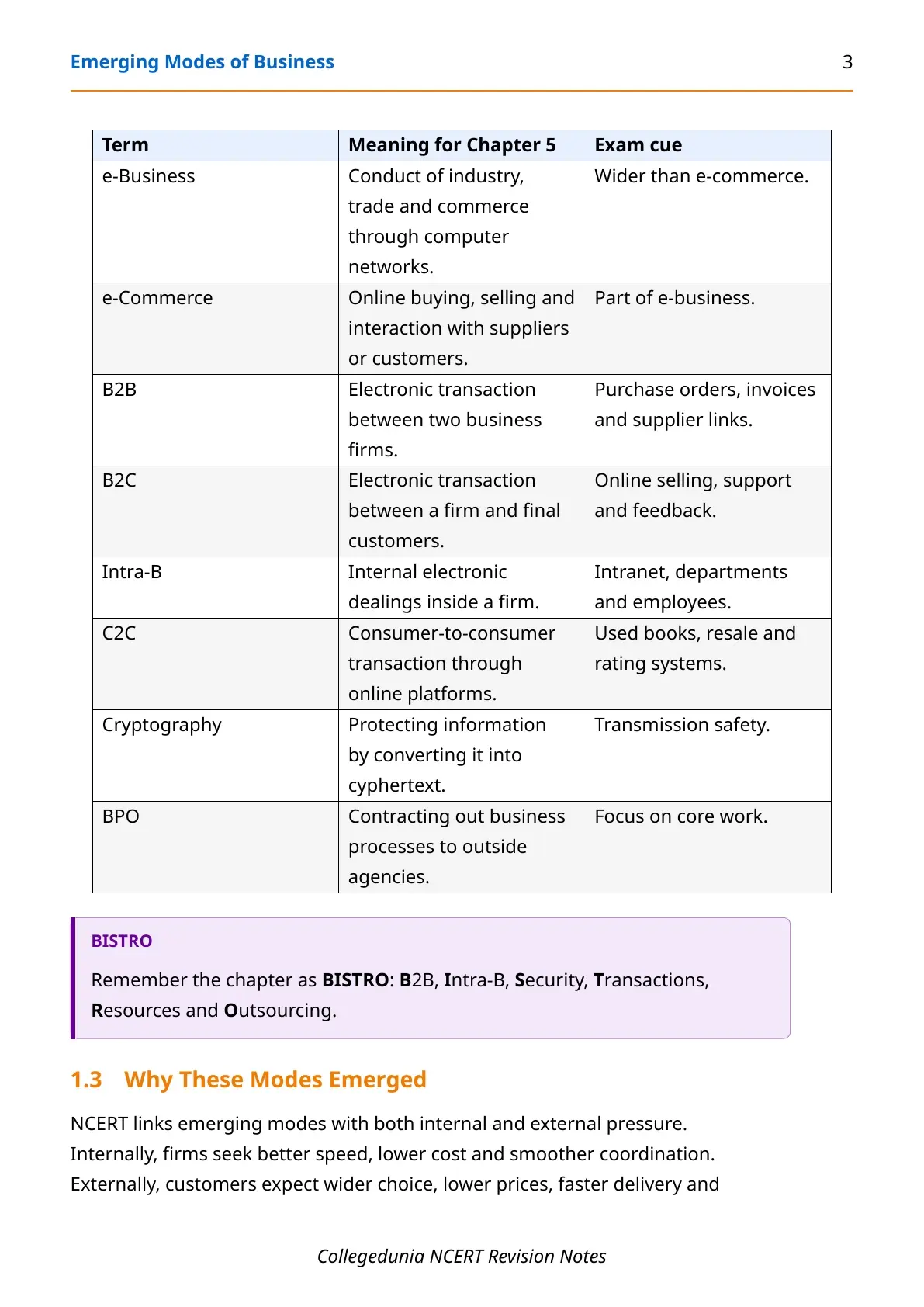
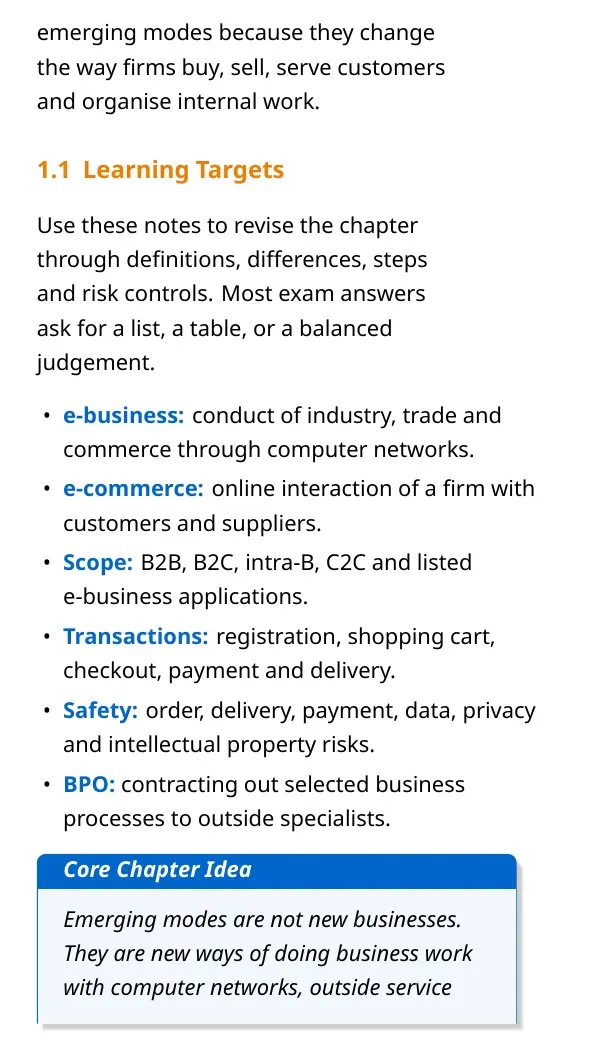
e-Business and e-Commerce Difference
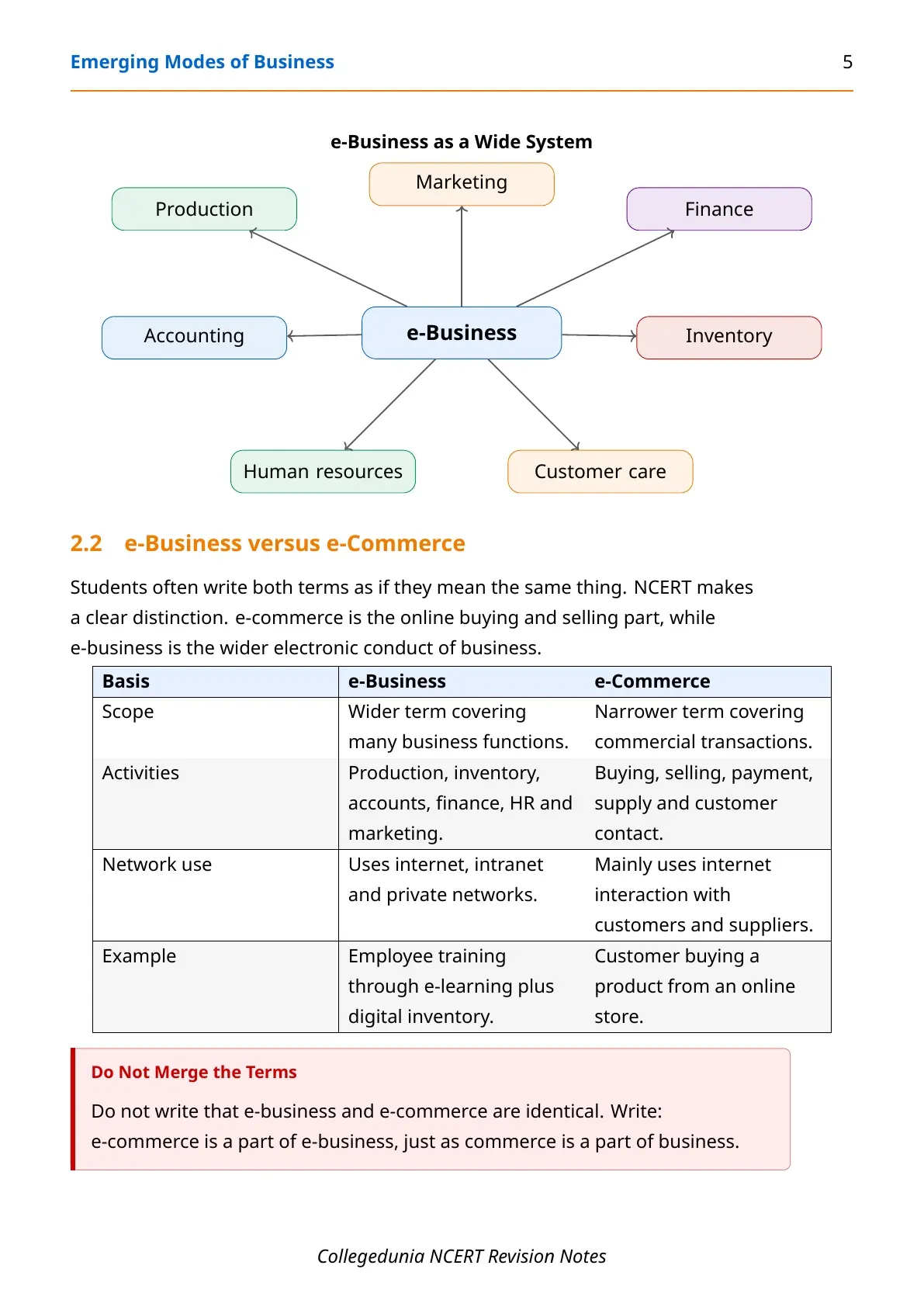
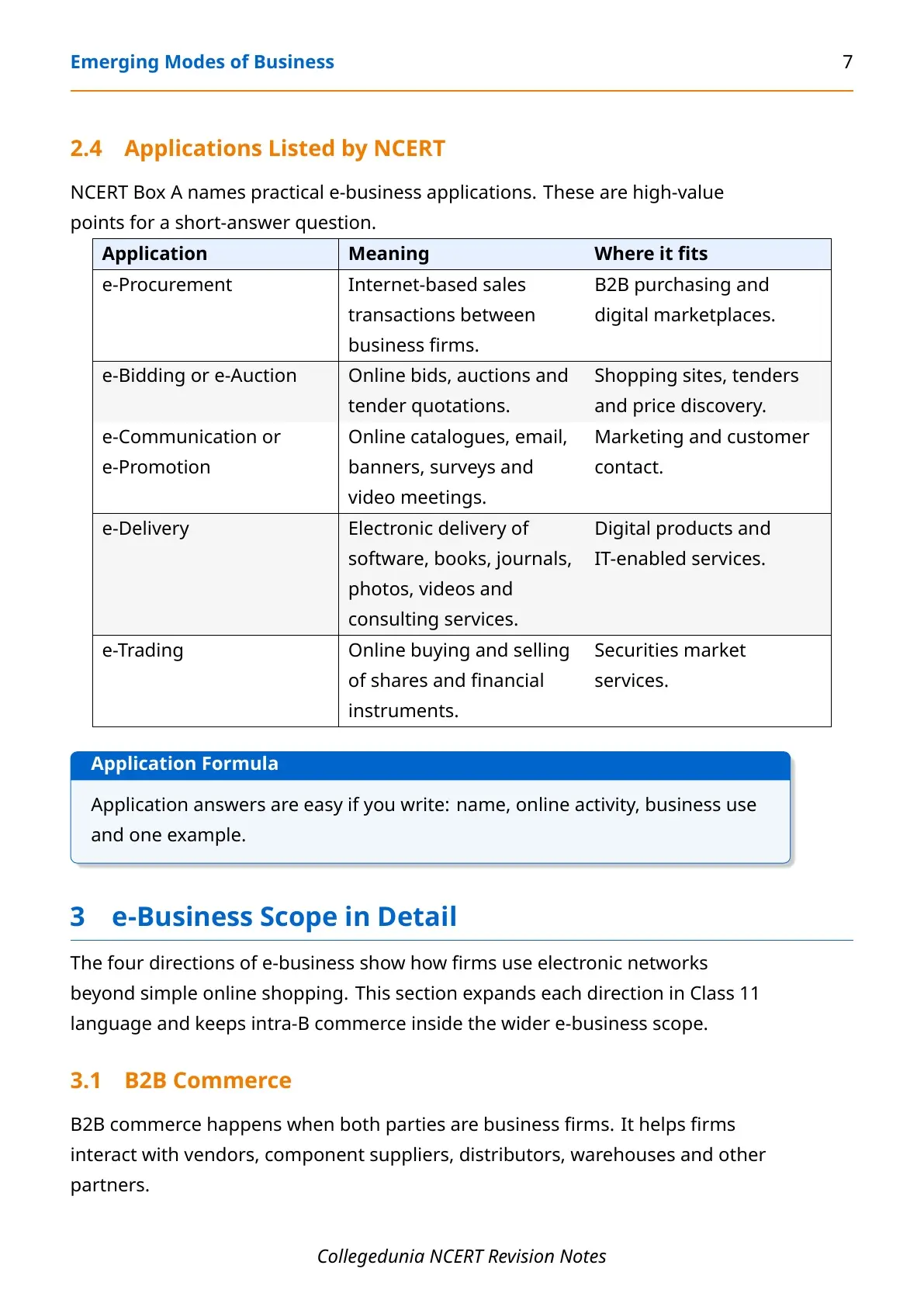
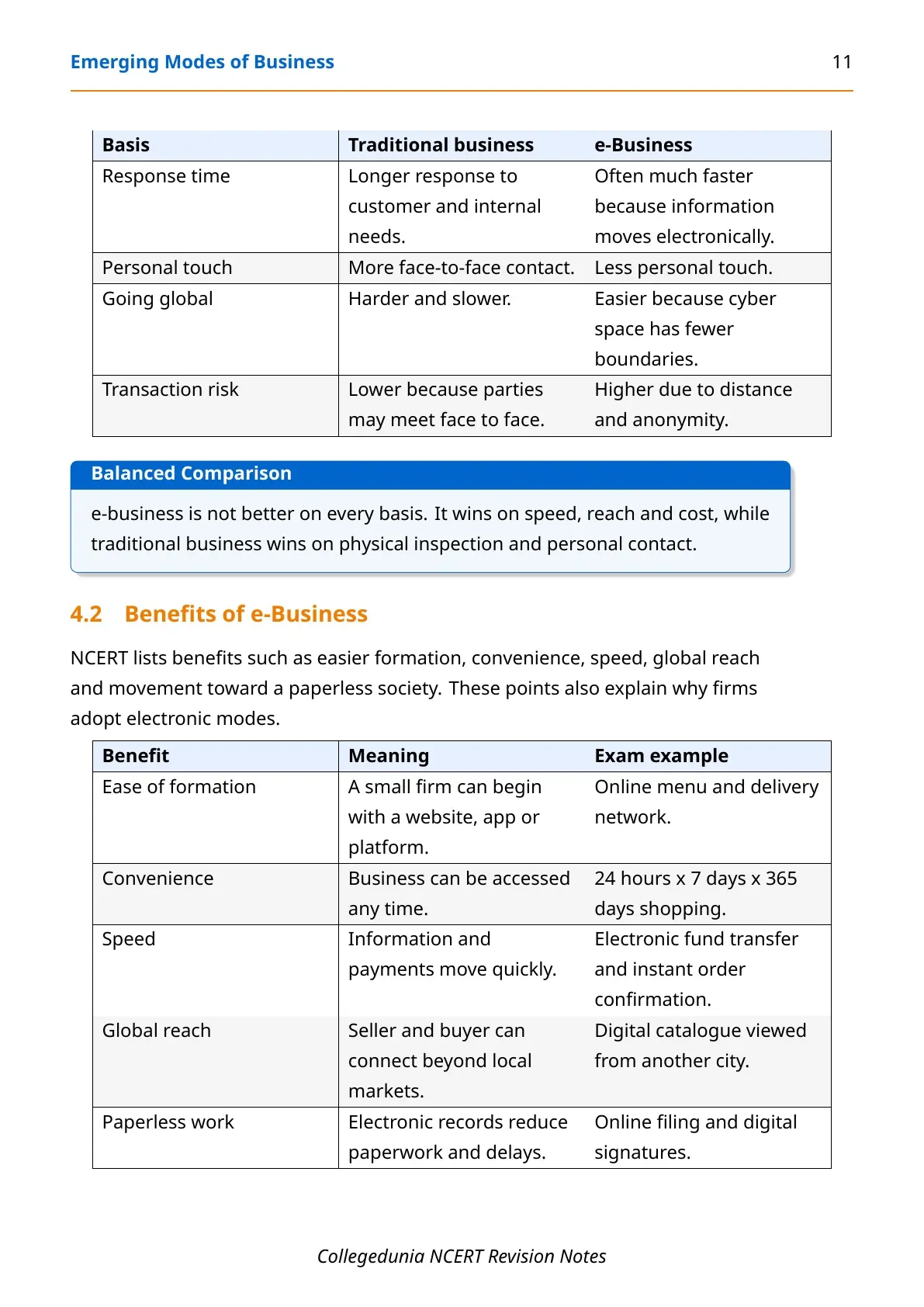
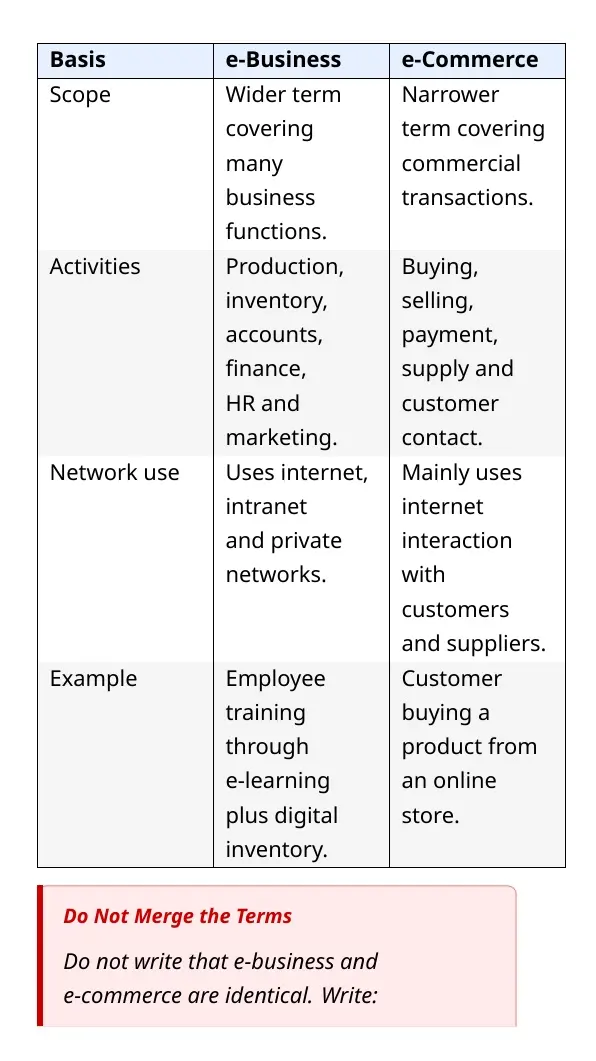
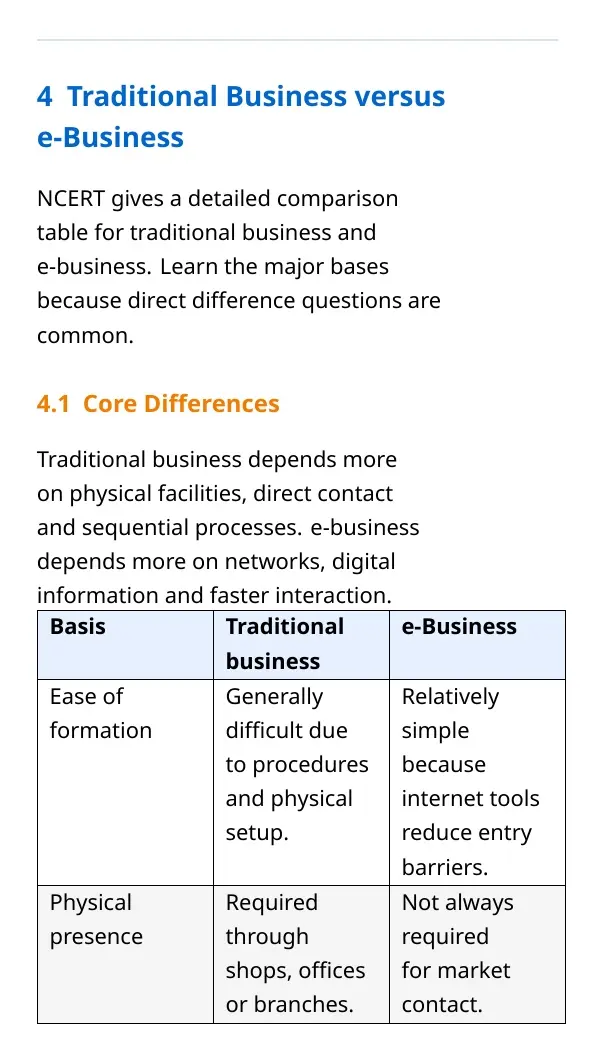
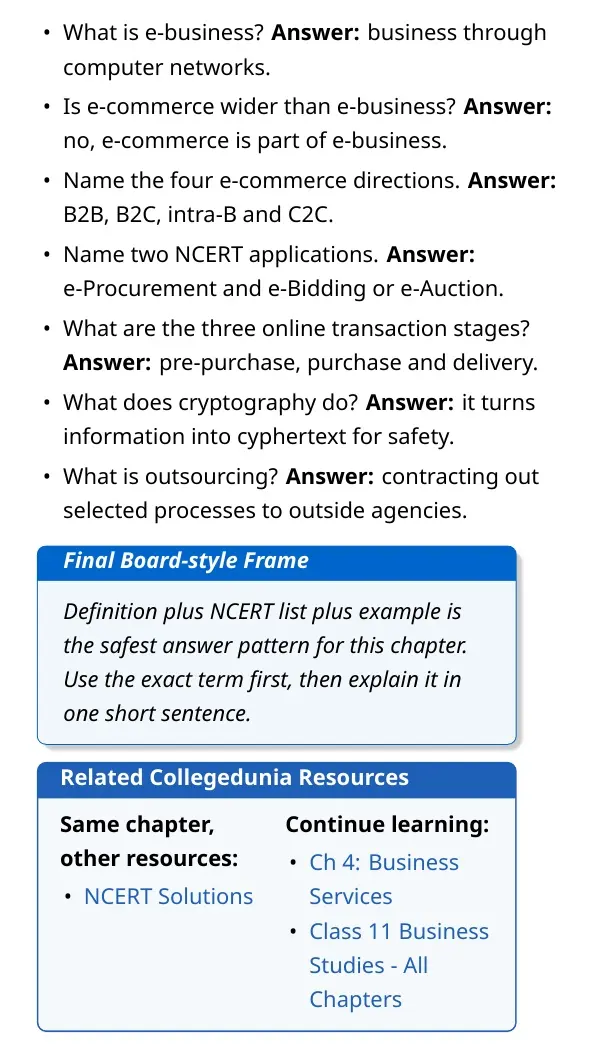
The most important distinction in Emerging Modes of Business is that e-commerce is narrower than e-business. e-commerce focuses mainly on buying and selling through electronic networks. e-business includes e-commerce, but also covers production, inventory, accounts, finance, communication and internal coordination.
| Basis | e-Commerce | e-Business |
|---|---|---|
| Meaning | Online buying and selling | All business activities carried through networks |
| Scope | Narrower | Wider because it includes e-commerce |
| Main focus | Customer order and sale | Buying, selling, production, accounts and coordination |
| Example | A customer buys a book online | A firm connects suppliers, stores, accounts and customers through software |
Scope of e-Business in Emerging Modes of Business
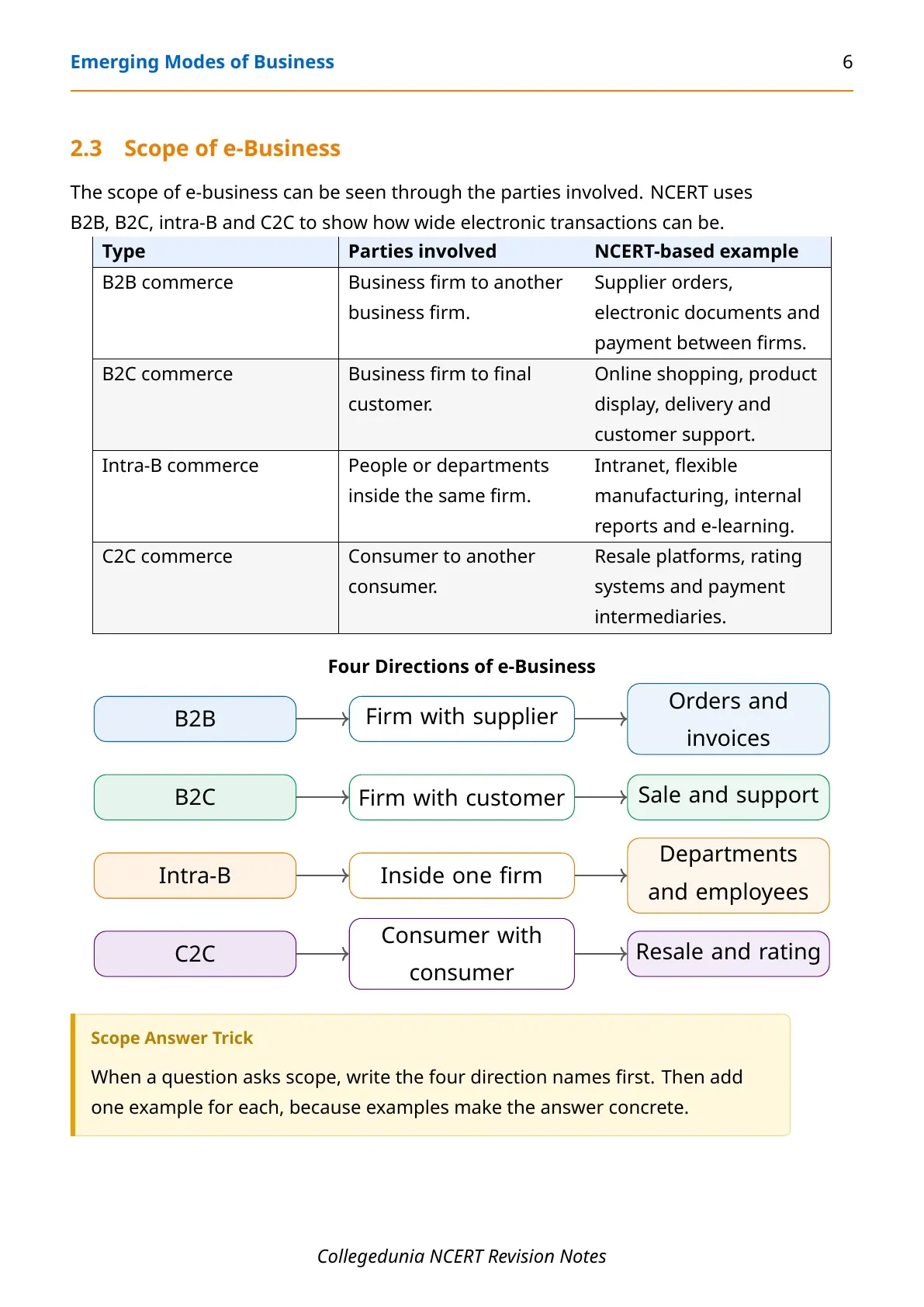
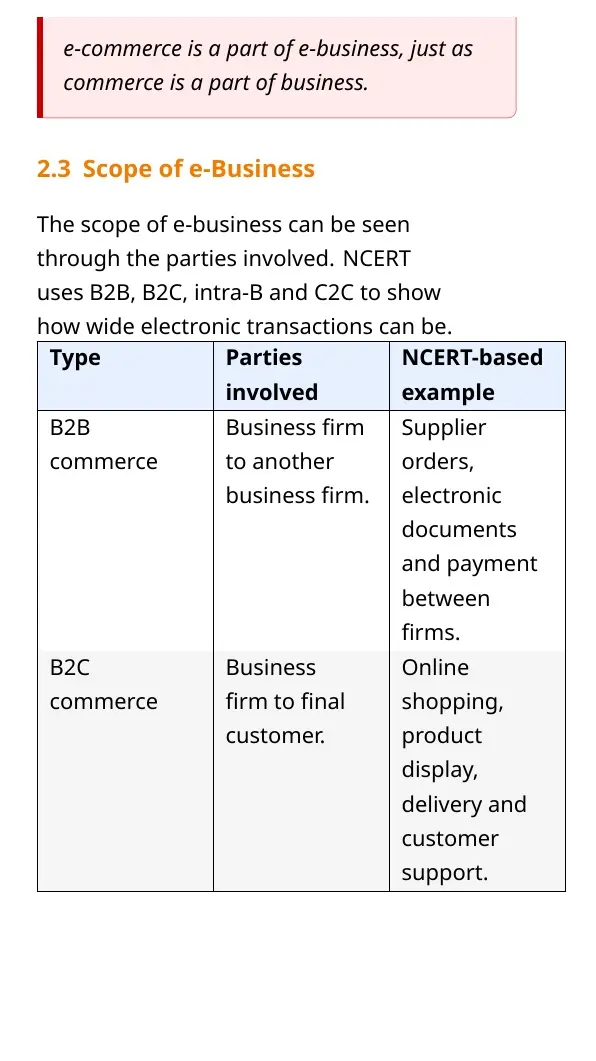
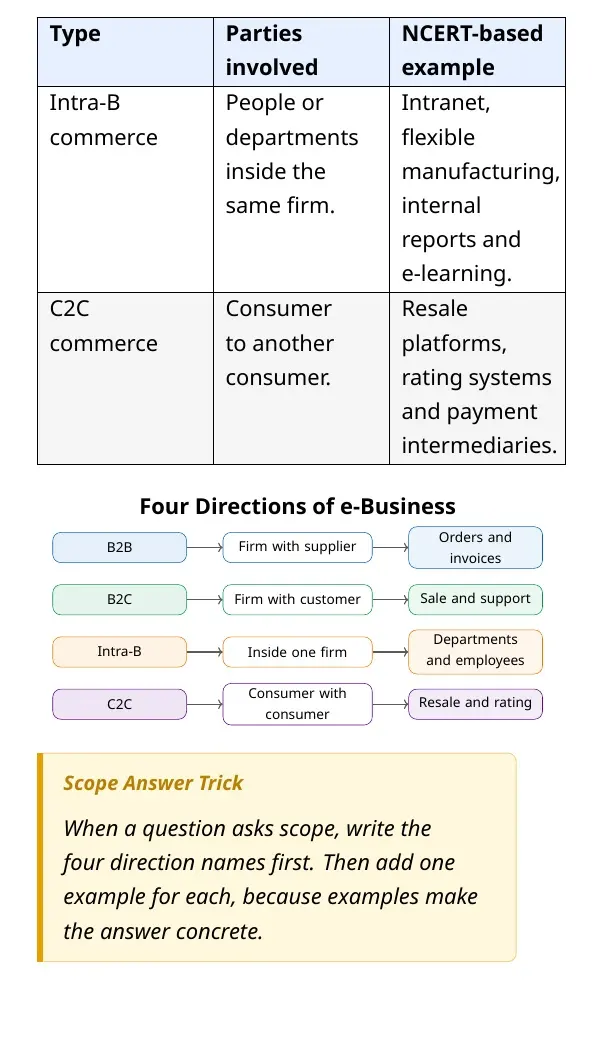
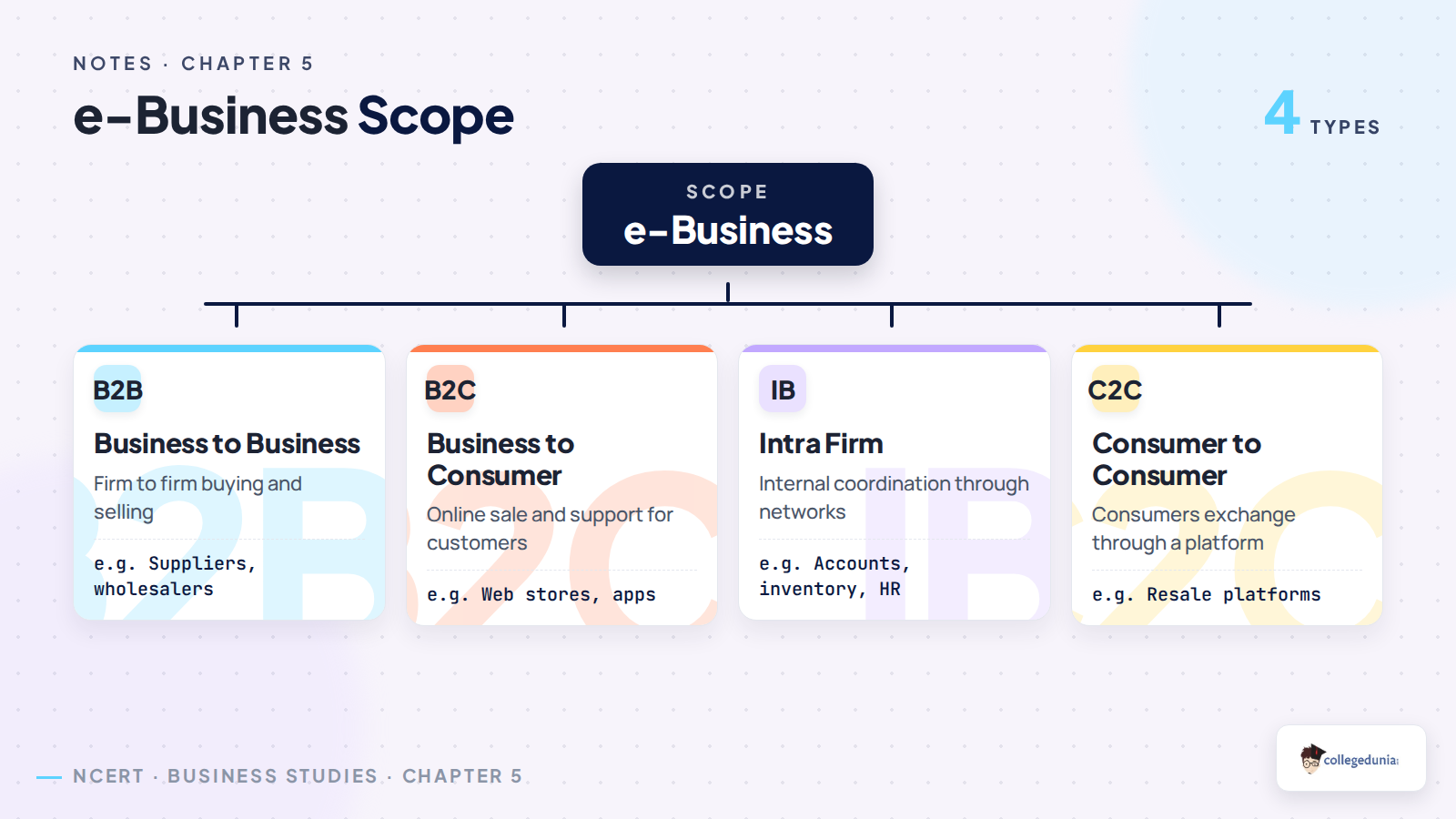
NCERT explains the scope of e-business through four relationship areas. Learn these terms with one clear example each because direct questions often ask students to classify an online transaction.
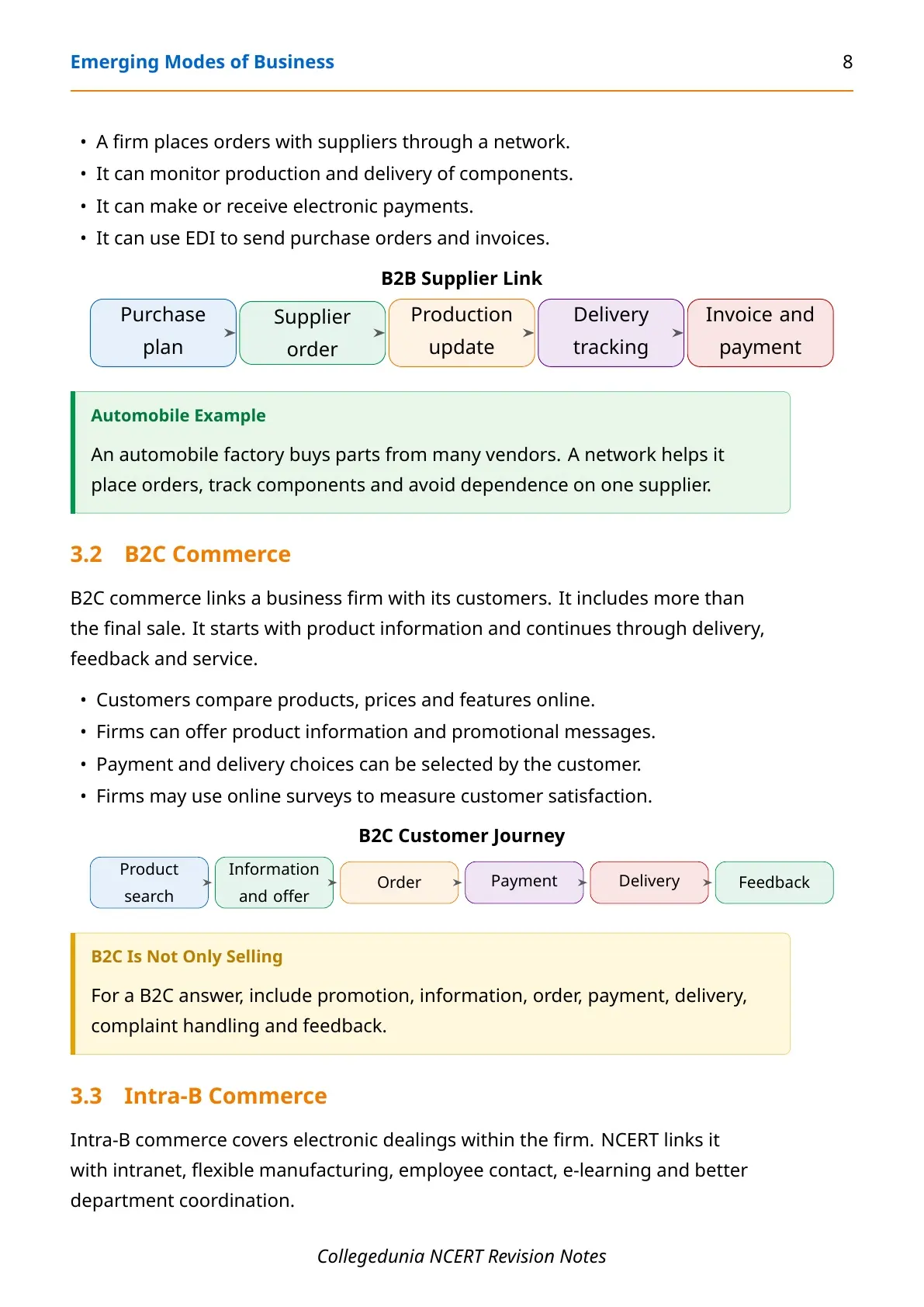
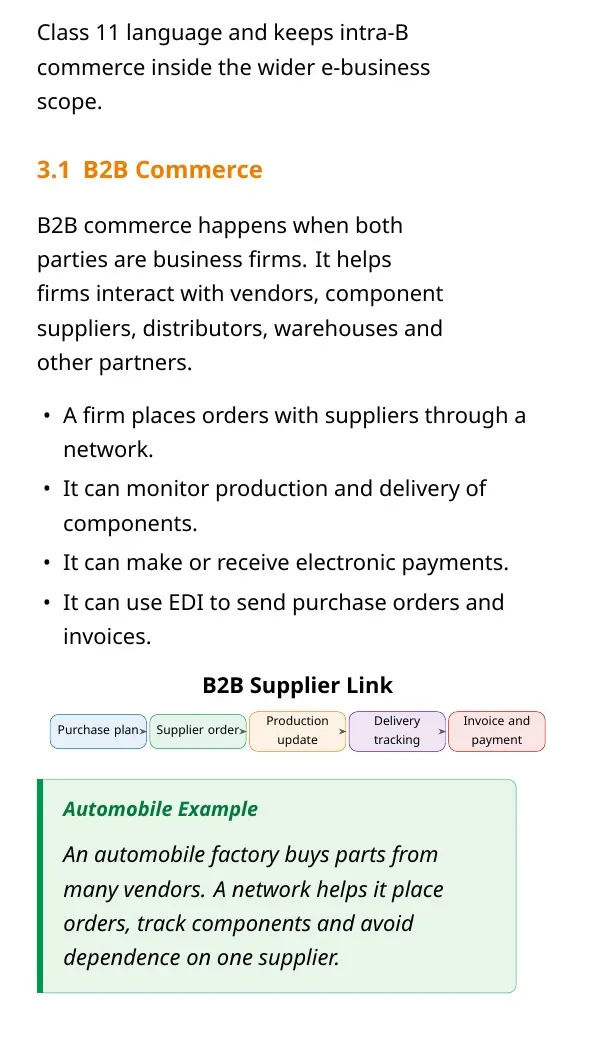
- B2B commerce: business to business transactions such as supplier purchase, wholesale order and electronic tendering.
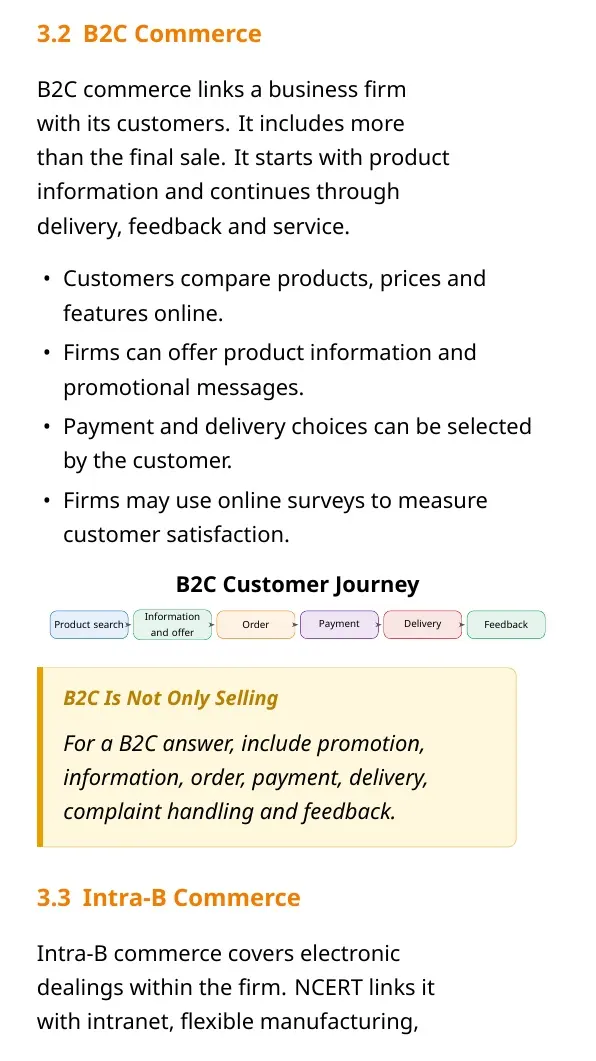
- B2C commerce: business to consumer transactions such as online retail, customer support and digital delivery.
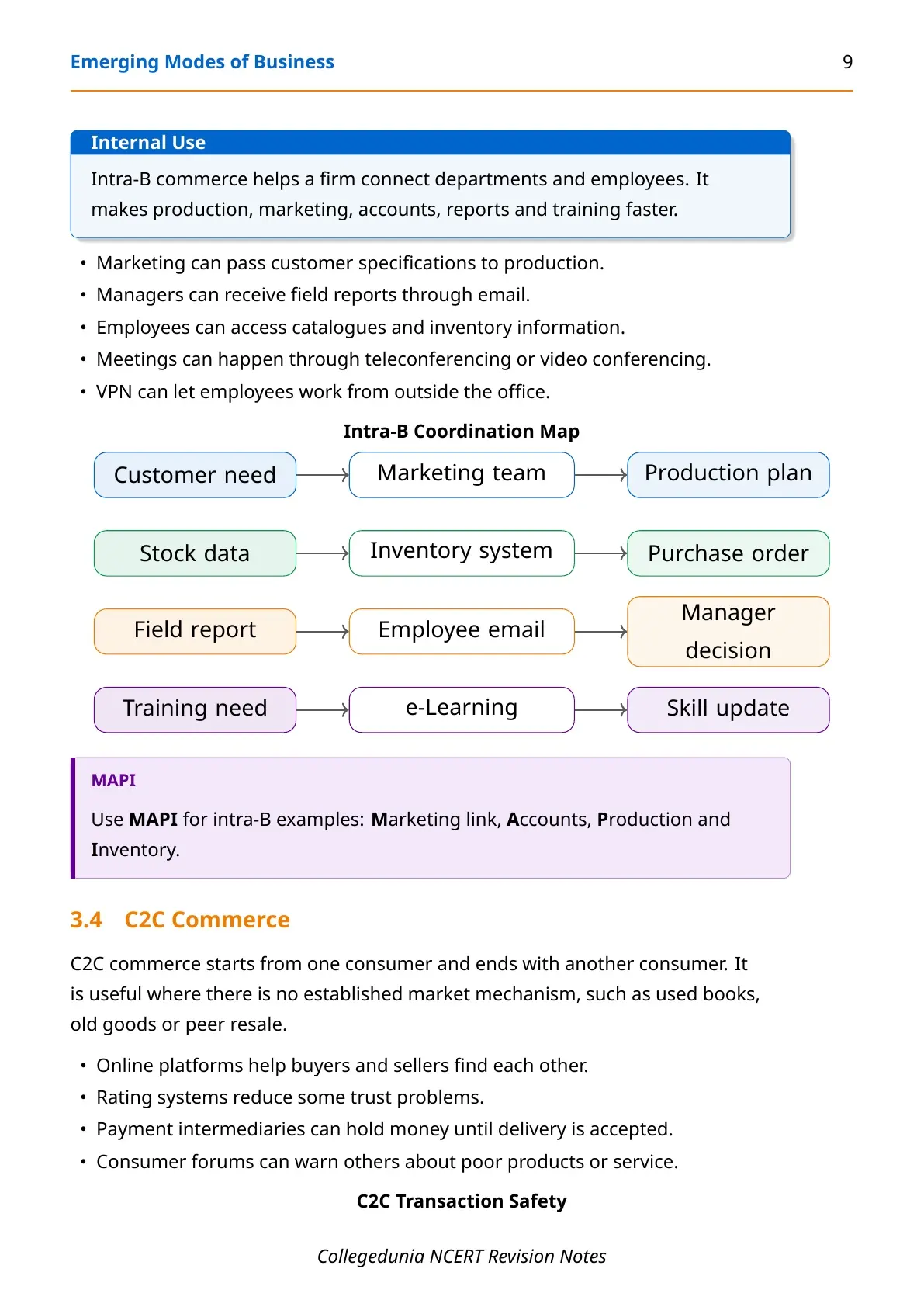
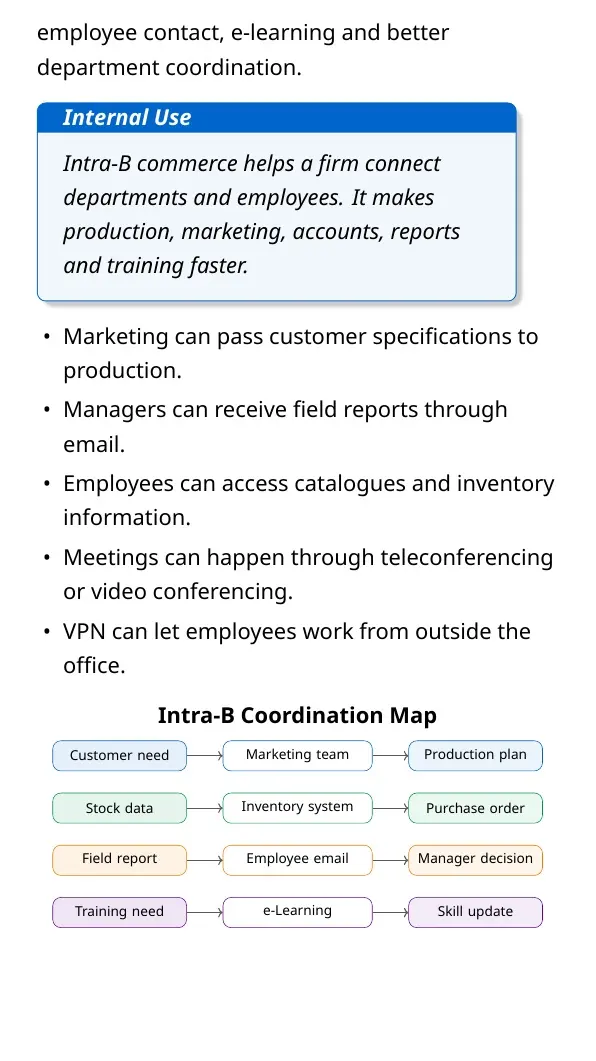
- Intra-B commerce: internal business coordination through private networks, shared databases and departmental information systems.
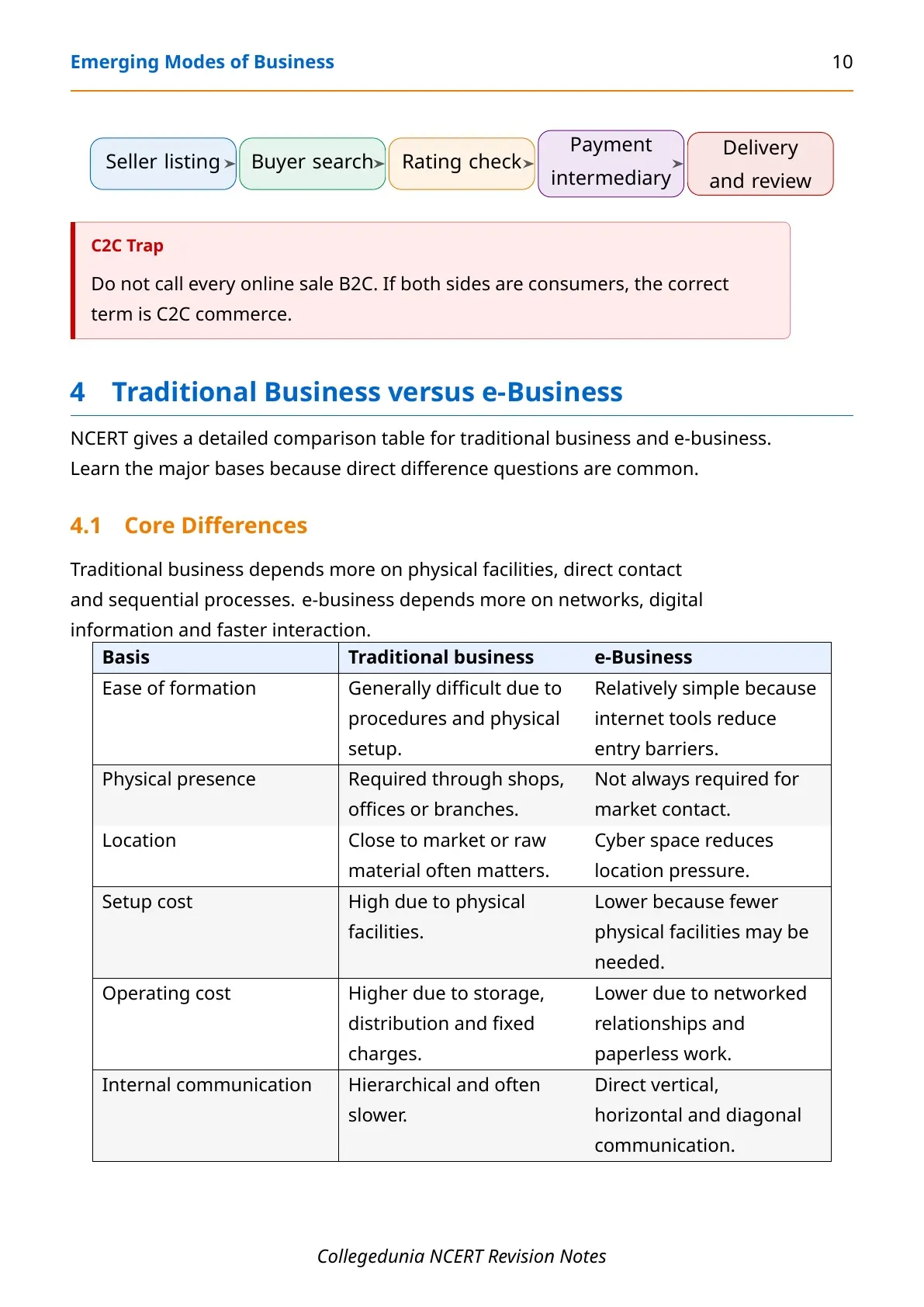
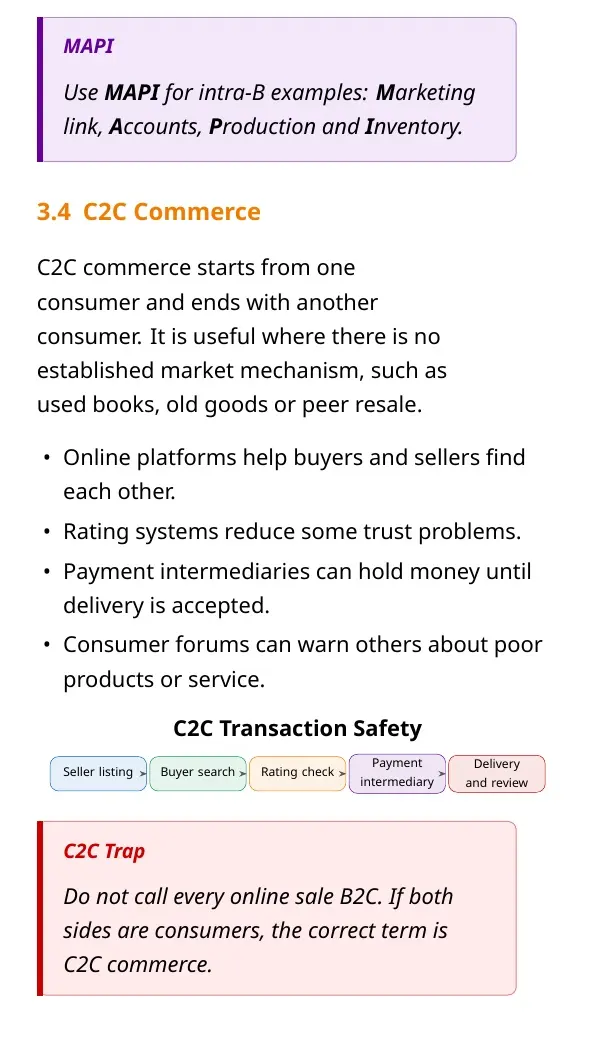
- C2C commerce: consumer to consumer exchange through platforms where one consumer sells to another.
| Type | Who interacts? | Exam cue |
|---|---|---|
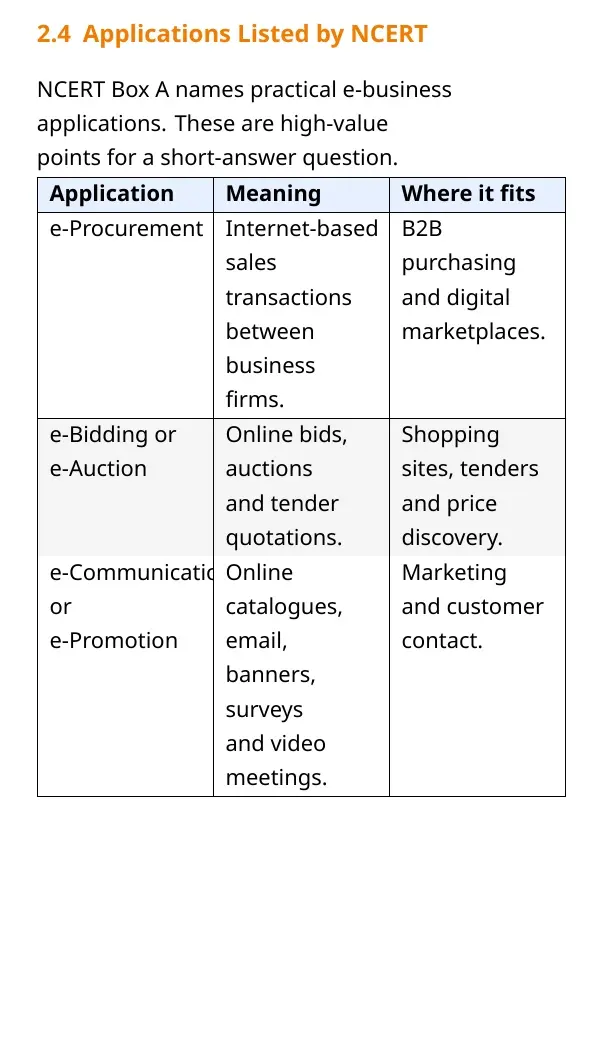
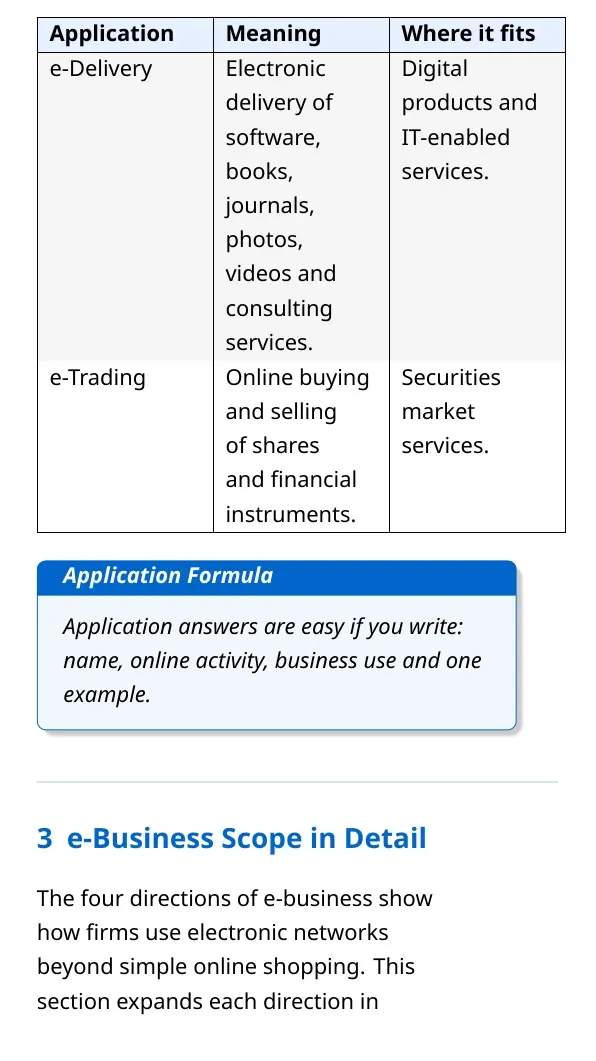
| B2B | Firm and firm | Supplier order, e-procurement, e-bidding |
| B2C | Firm and consumer | Online purchase, support ticket, delivery update |
| Intra-B | Departments inside one firm | Inventory, accounts, HR and branch coordination |
| C2C | Consumer and consumer | Resale platforms and consumer exchange |
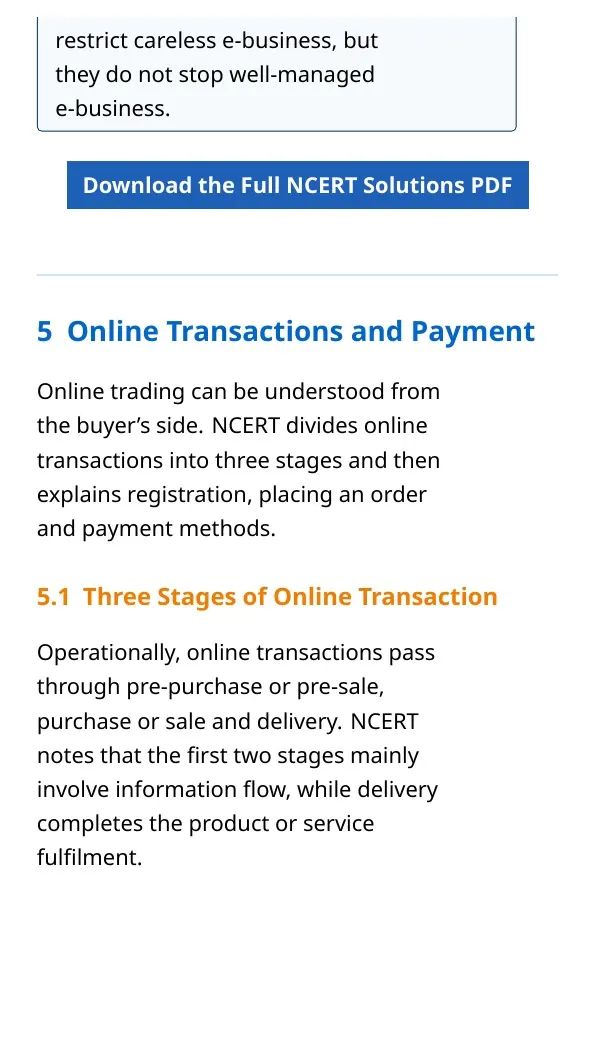
Online Transaction Flow in Emerging Modes of Business
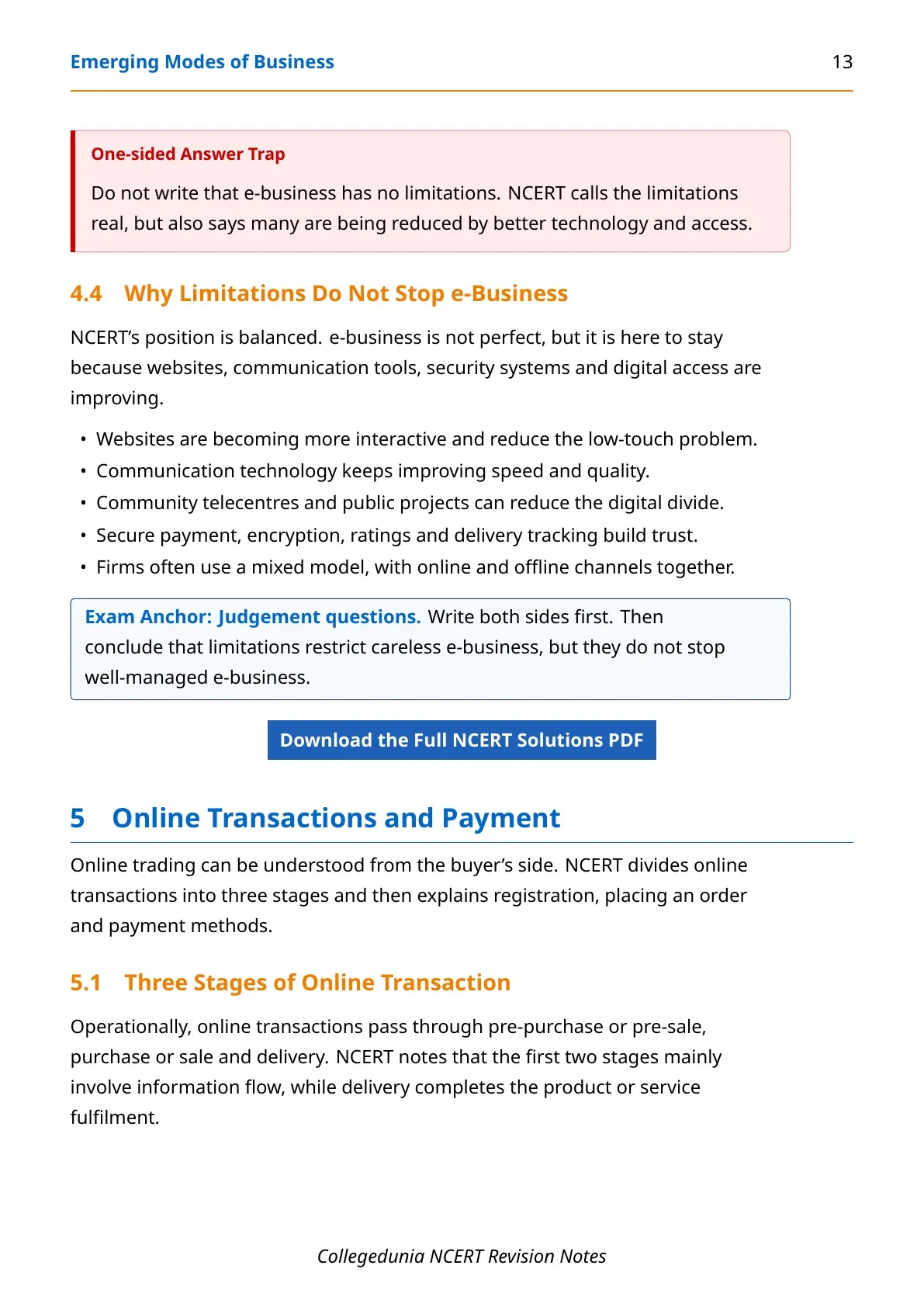
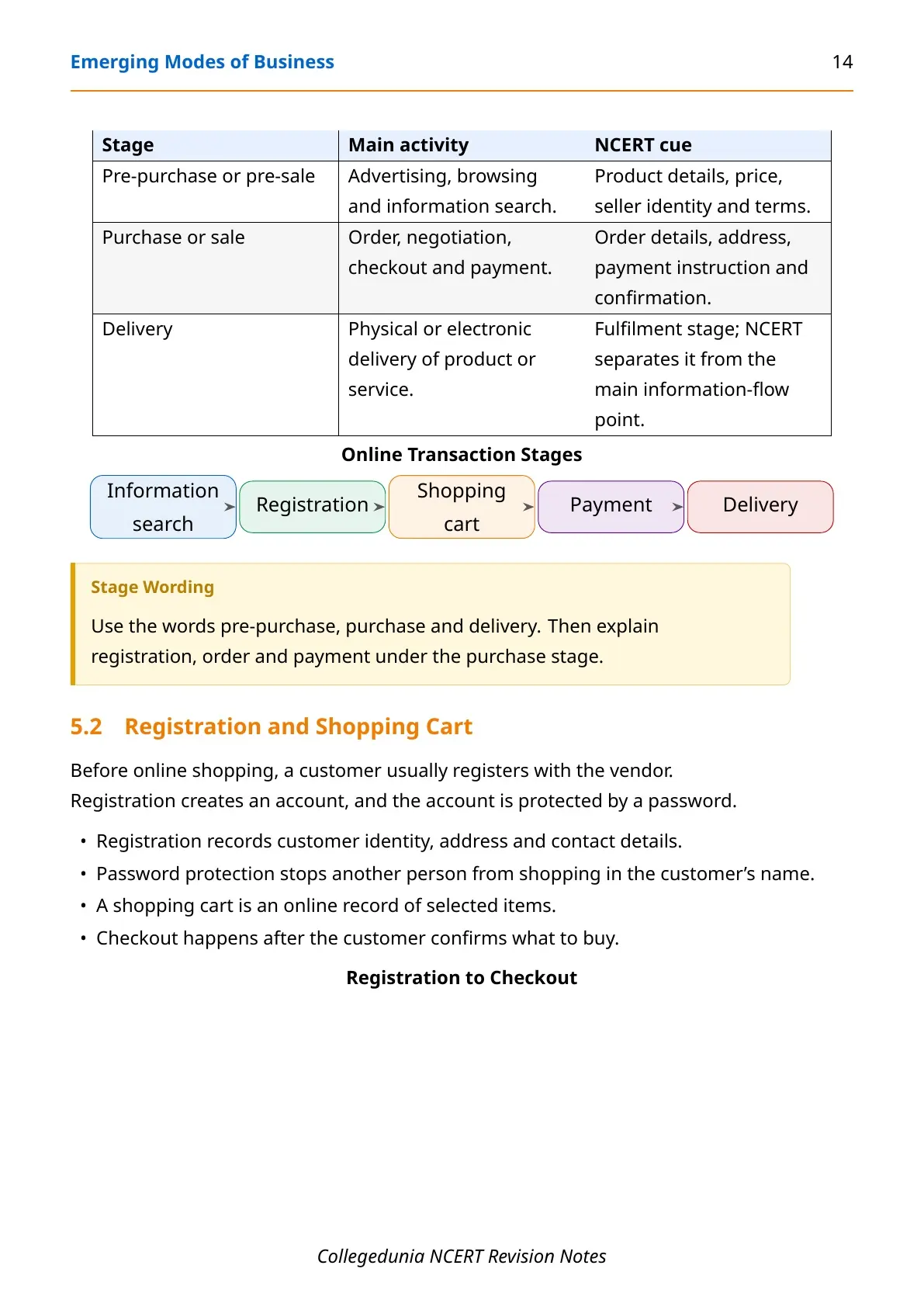
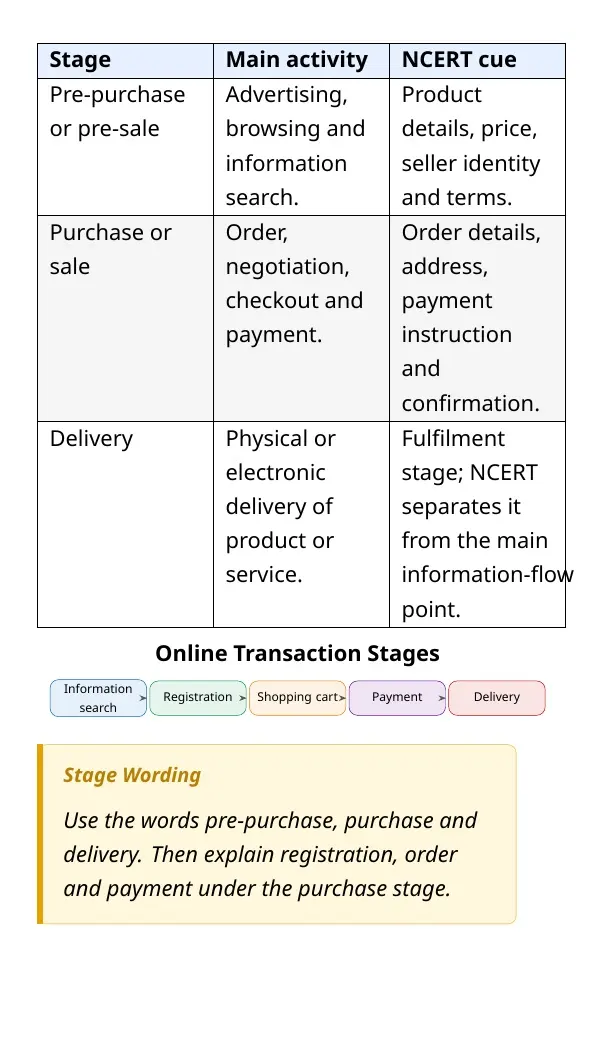
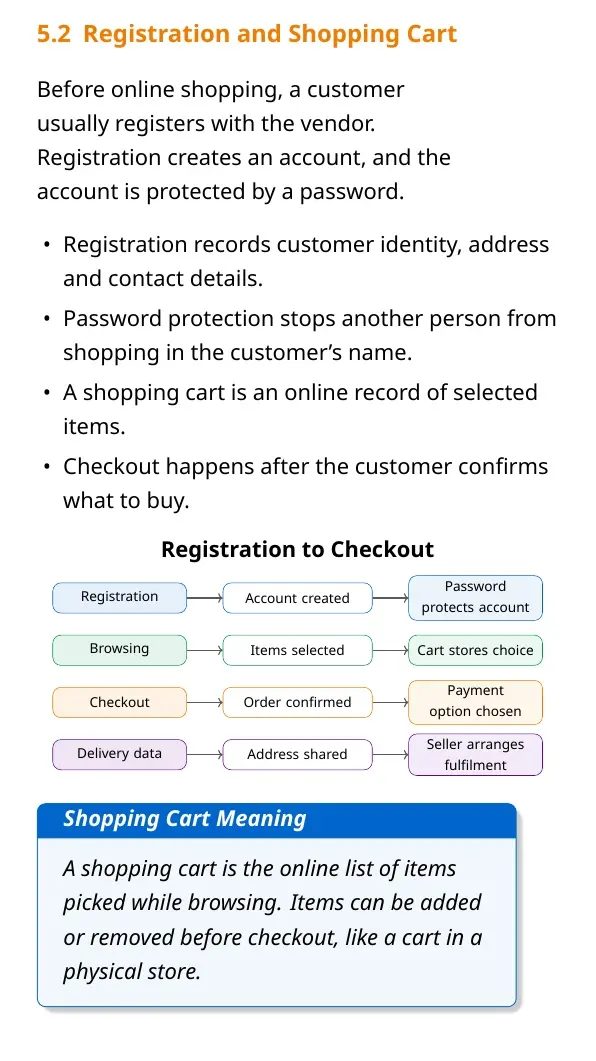
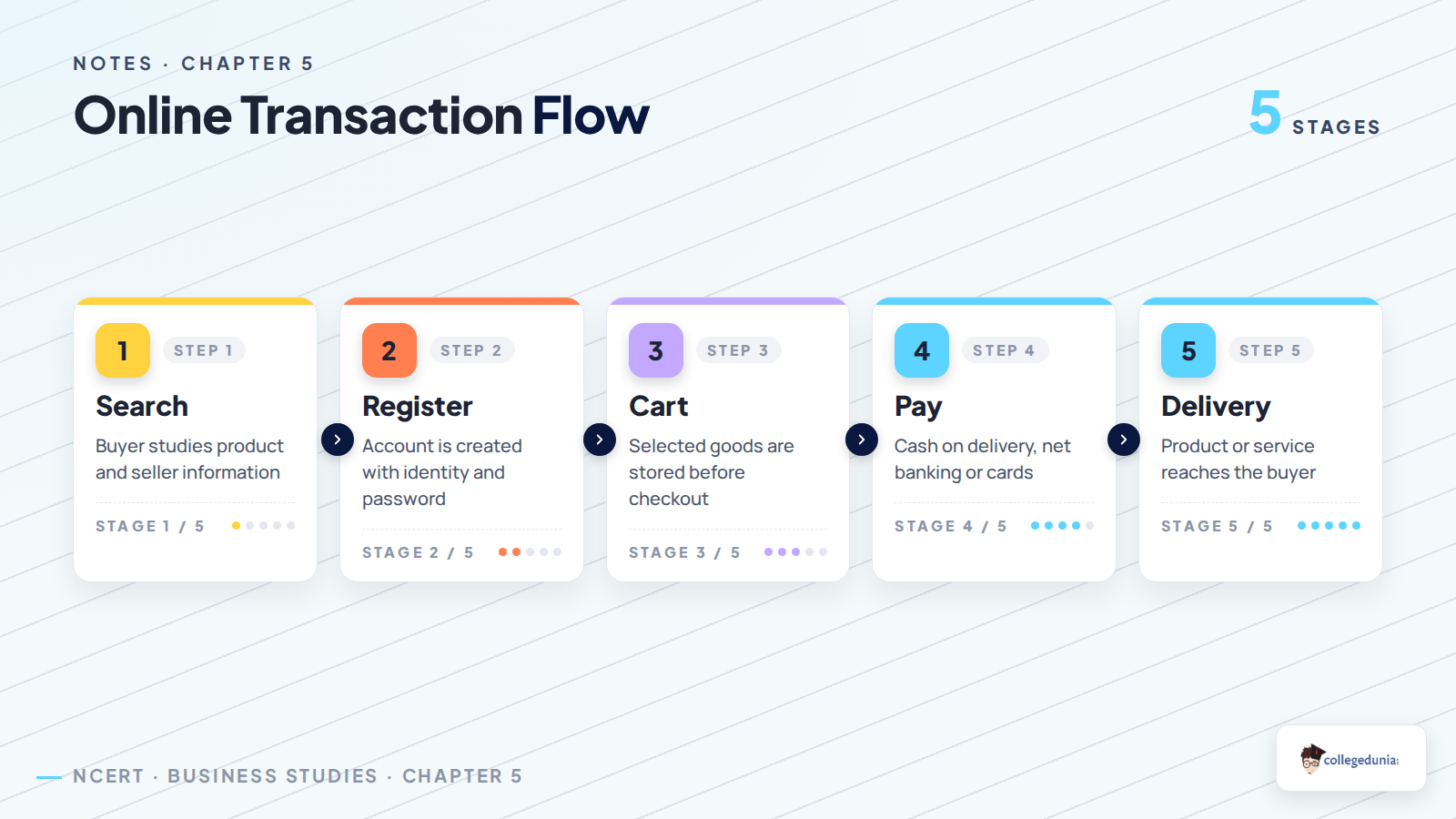
An online transaction does not begin with payment. It usually starts with information search, then moves through registration, shopping cart, checkout, payment and delivery. Registration creates the account and password. Shopping cart stores selected items before the order is confirmed.
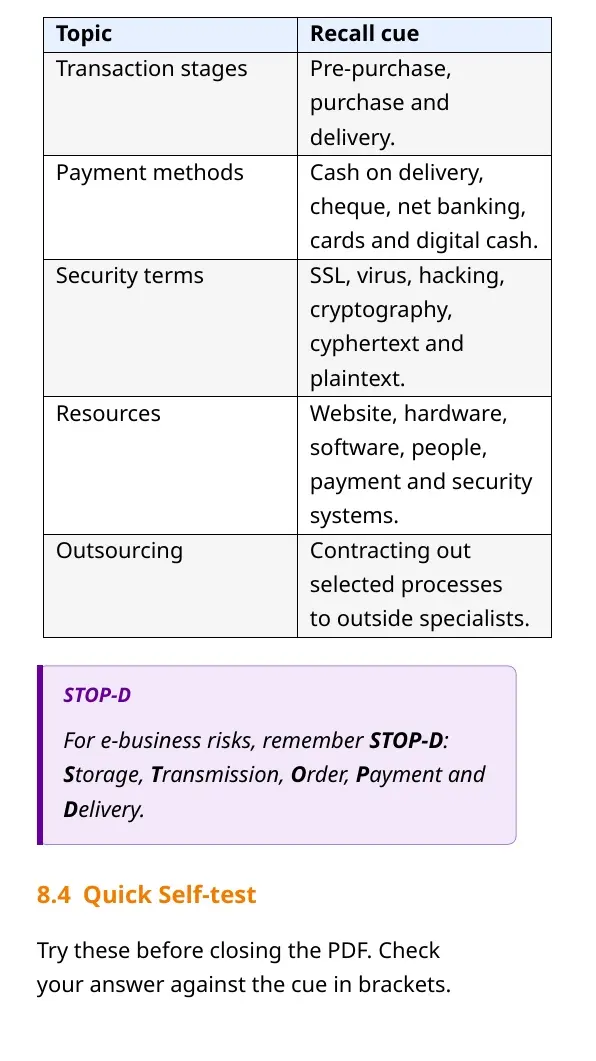
- Pre-purchase stage: product details, price, seller identity and terms are checked.
- Purchase stage: order, negotiation, checkout and payment take place.
- Delivery stage: the product or service is delivered, while NCERT keeps the main information-flow point before this stage.
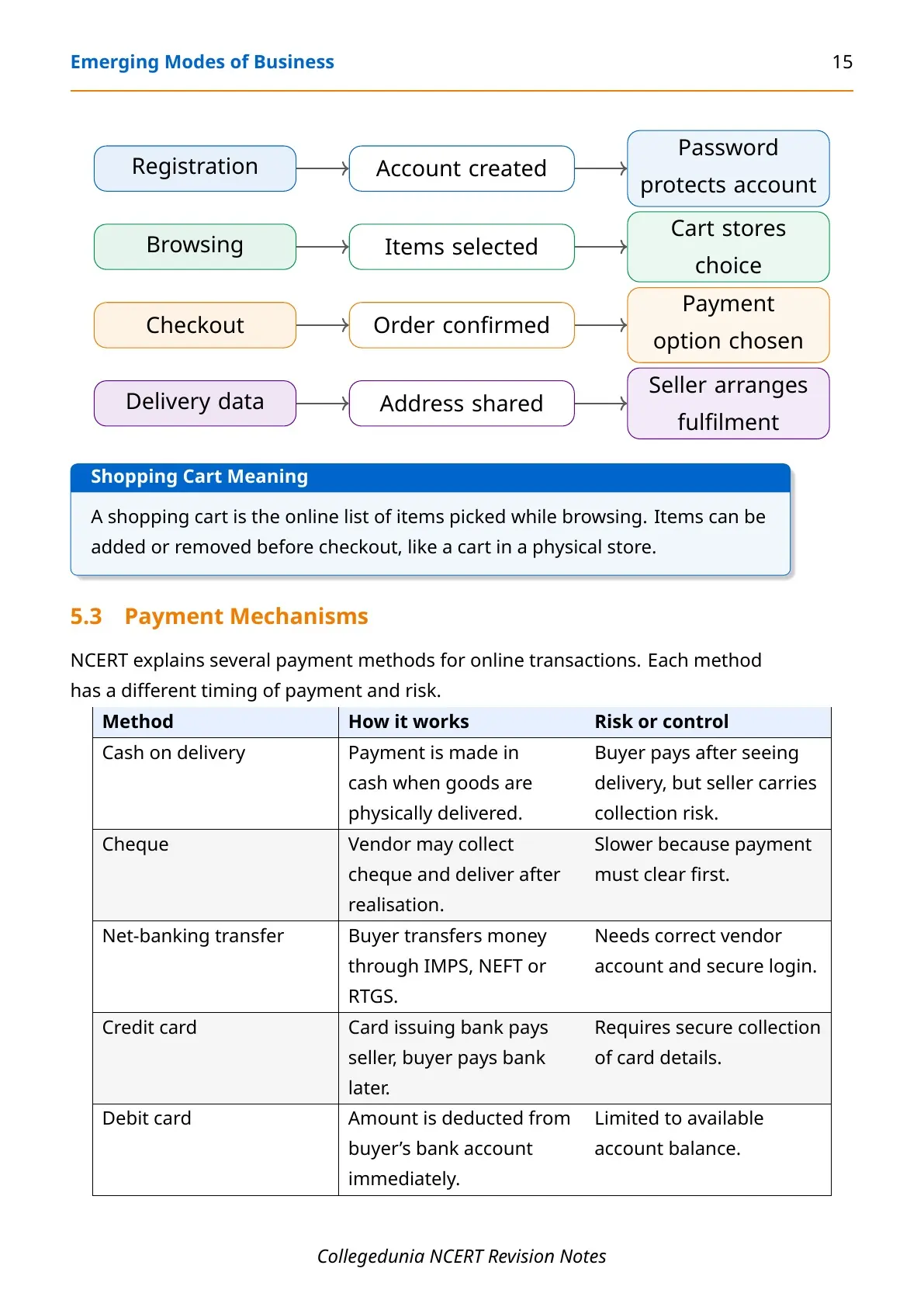
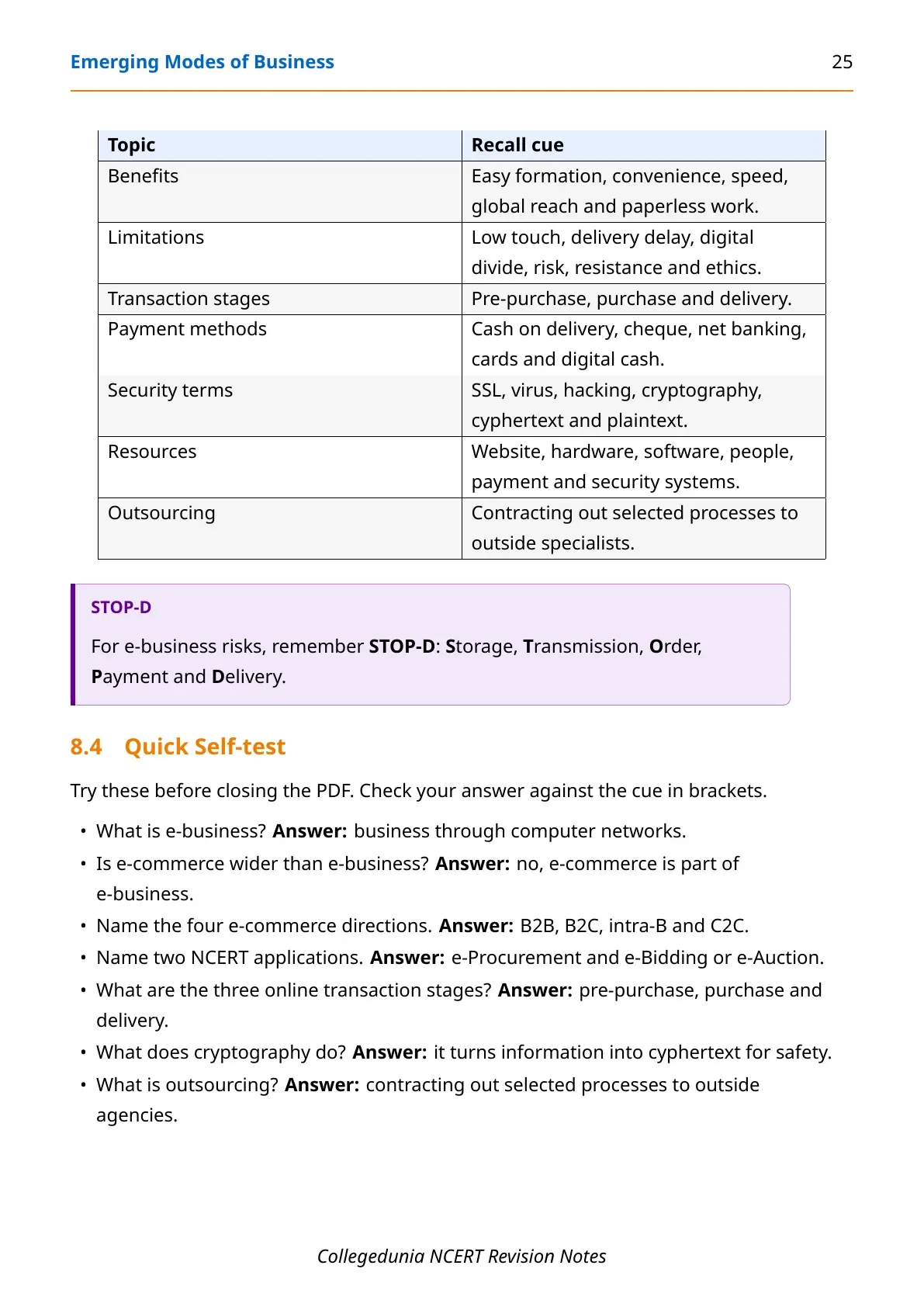
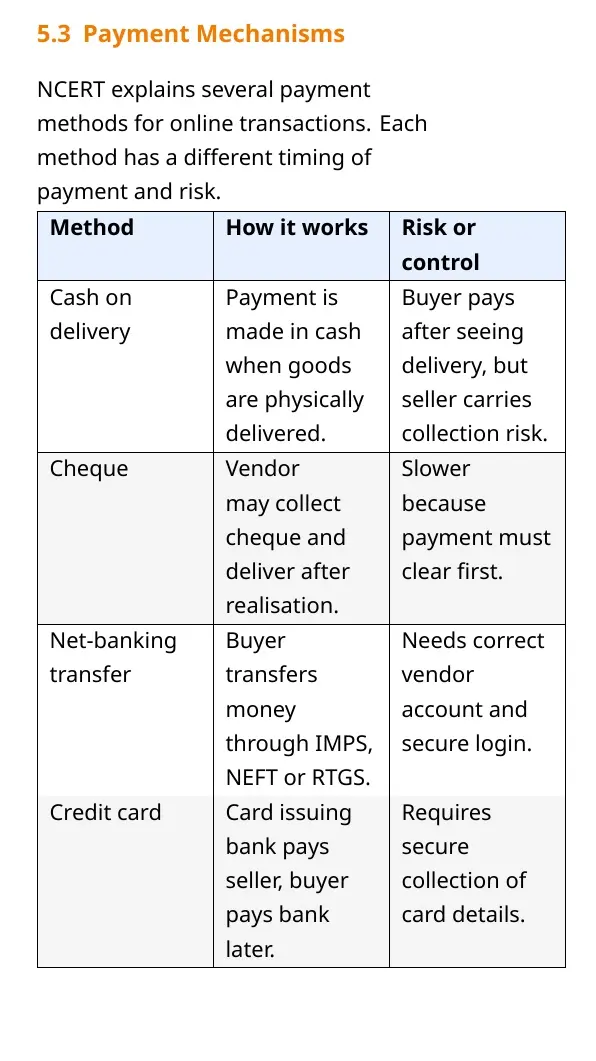
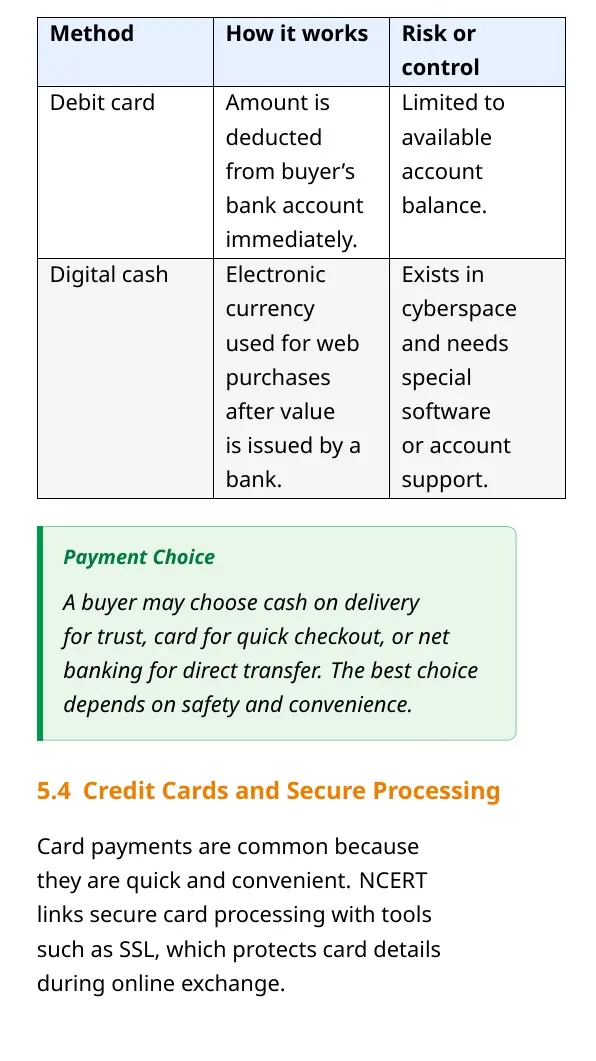
| Payment method | Meaning | Revision cue |
|---|---|---|
| Cash on delivery | Customer pays when goods arrive | Useful when buyer wants physical confirmation |
| Cheque | Payment through banking instrument | Slower than instant electronic transfer |
| Net banking | Payment through online bank account | Direct transfer from bank account |
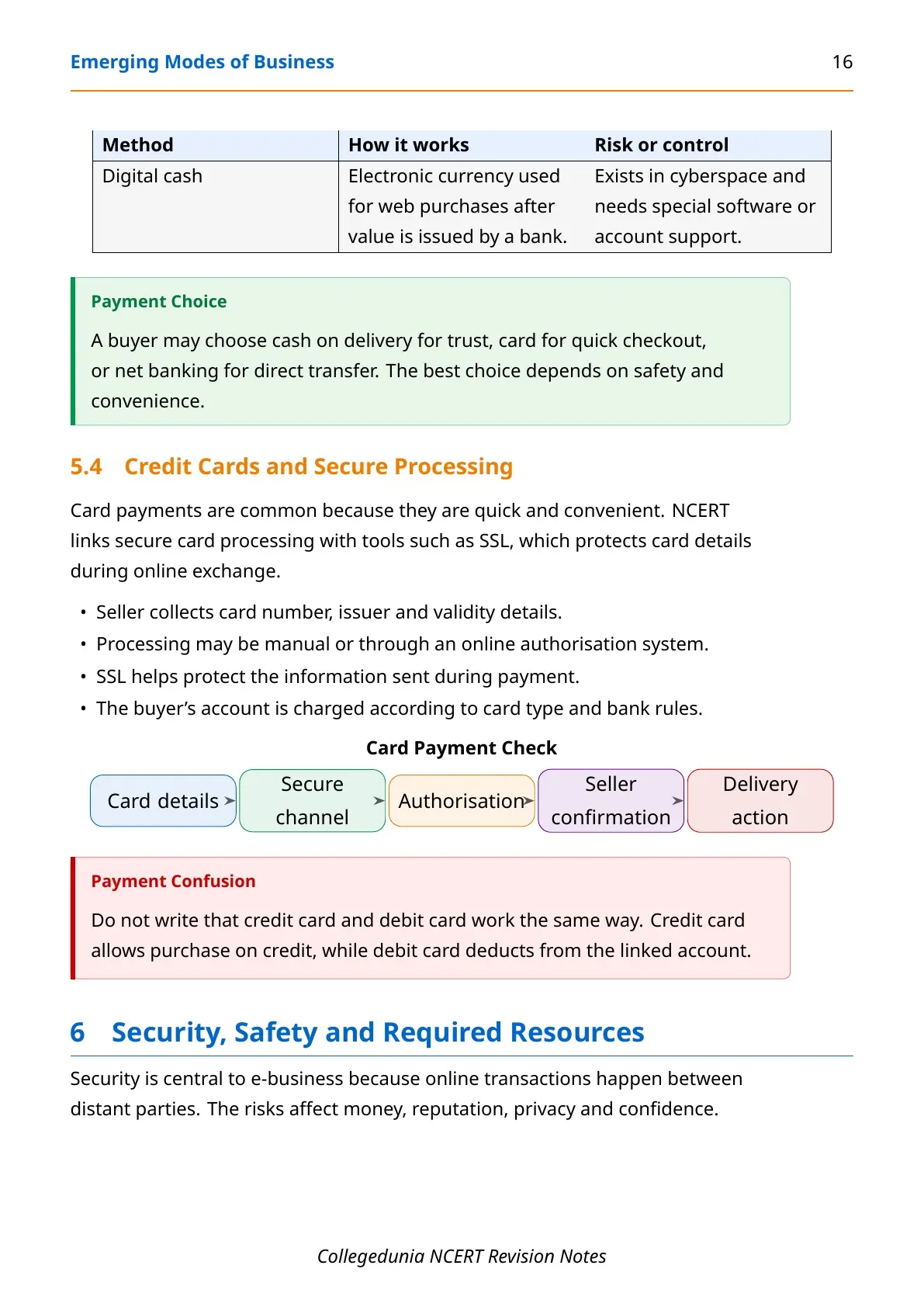
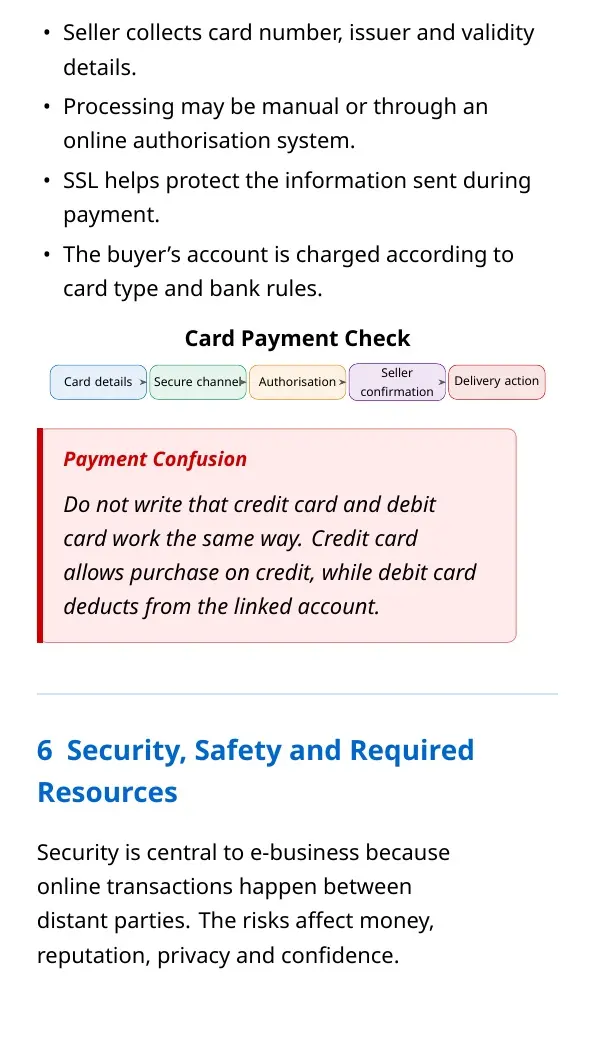
| Cards | Debit, credit or other card-based payment | Requires secure payment gateway |
Benefits and Limitations of e-Business
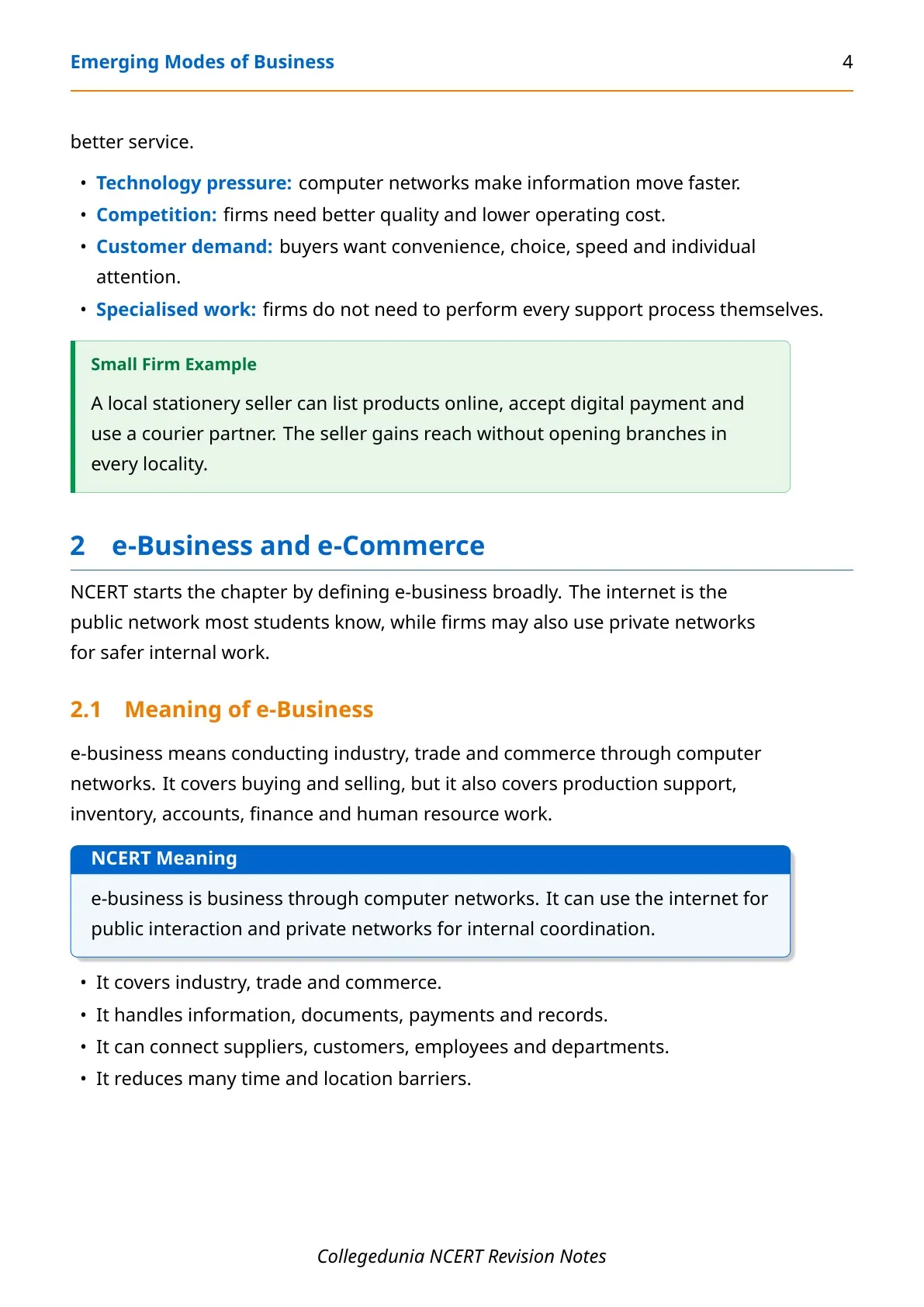
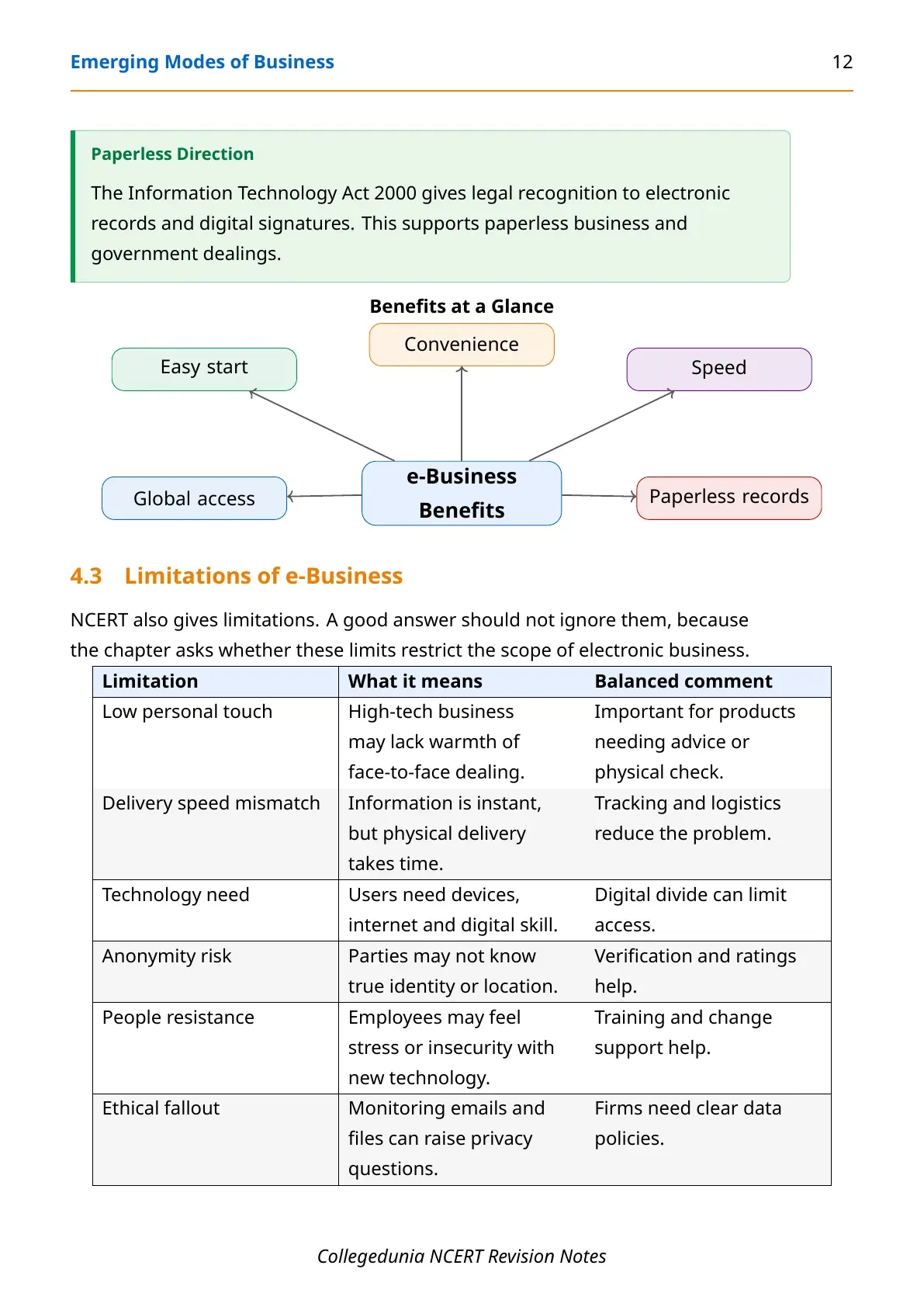
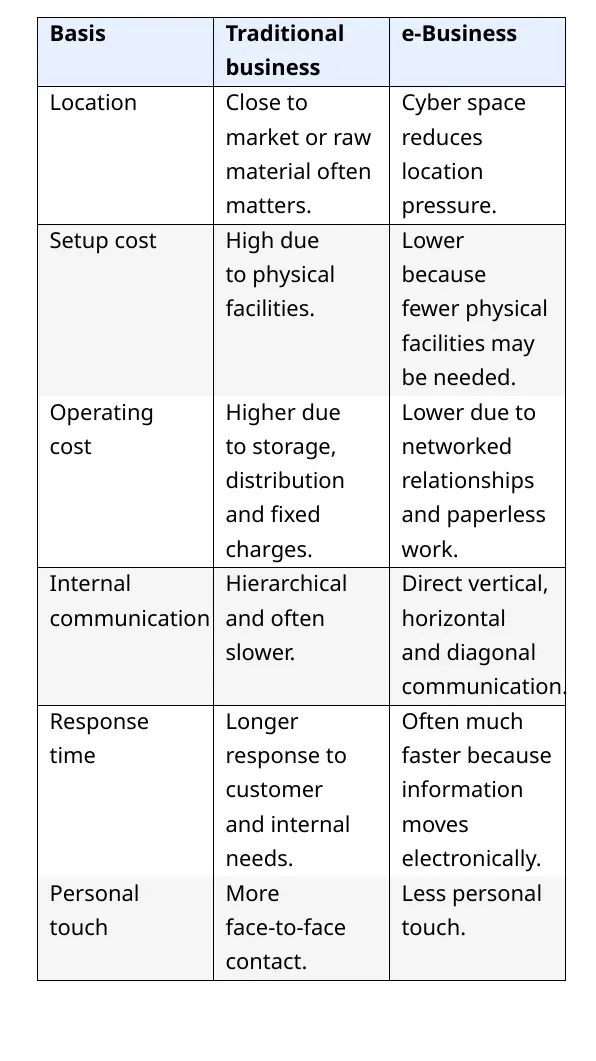
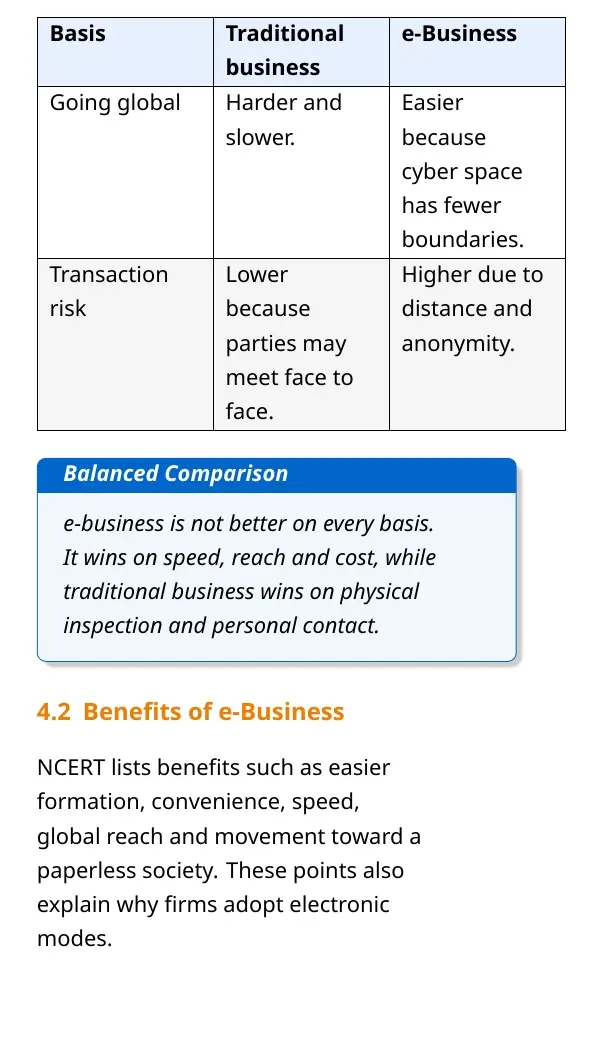
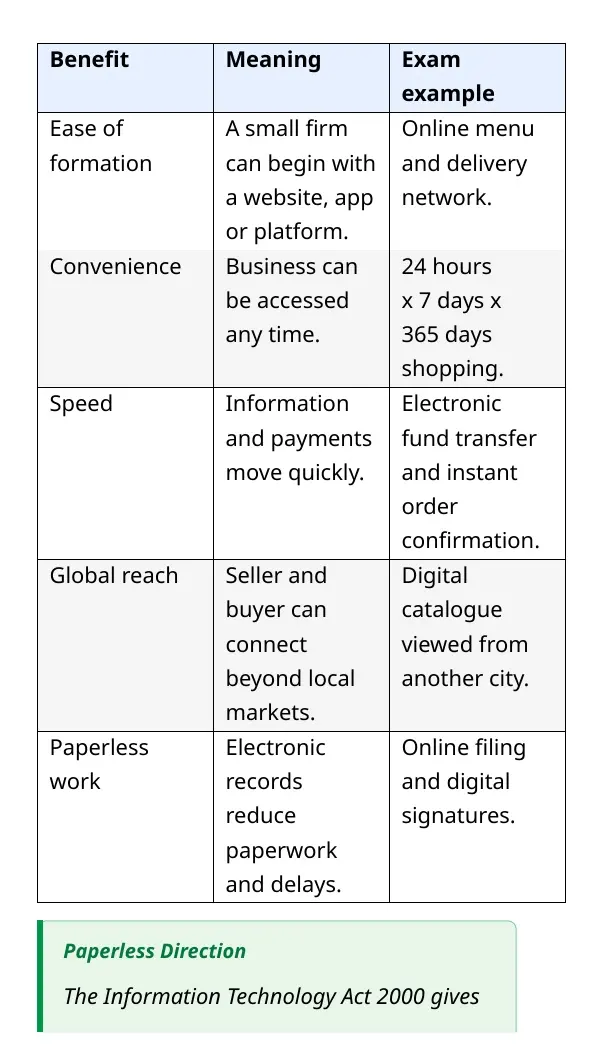
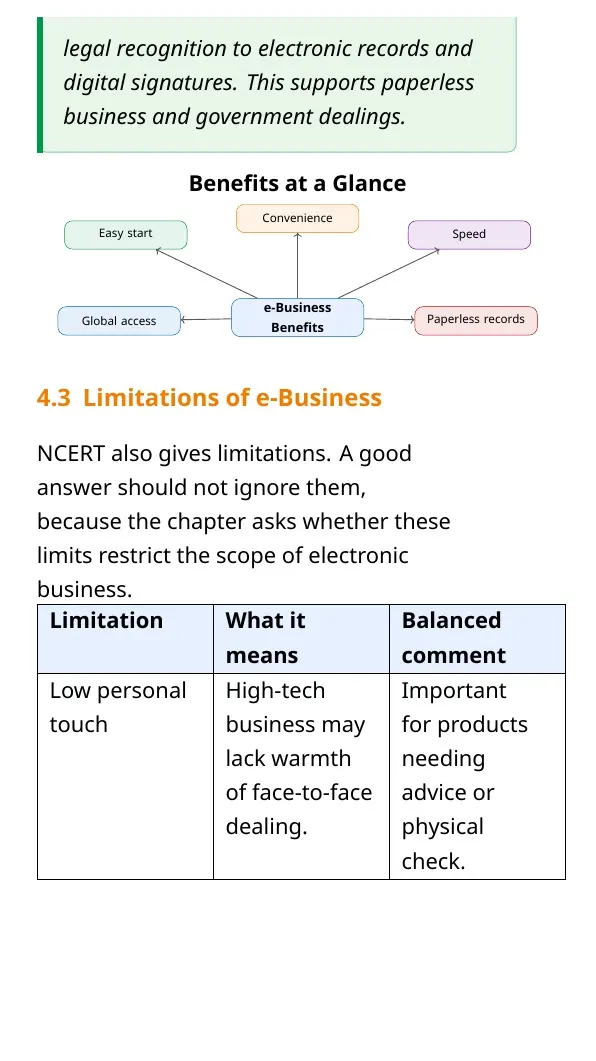
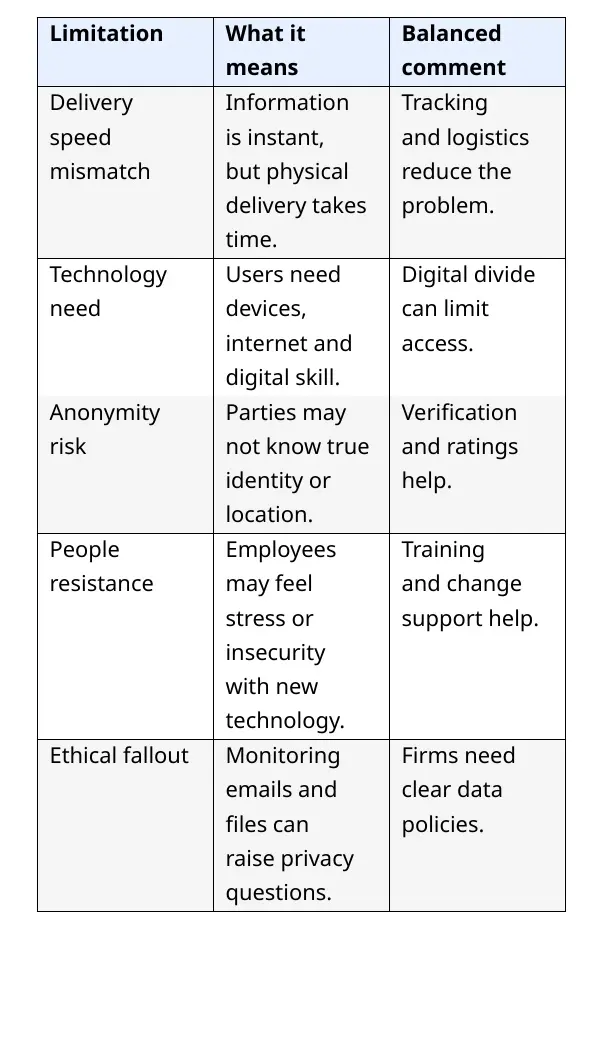
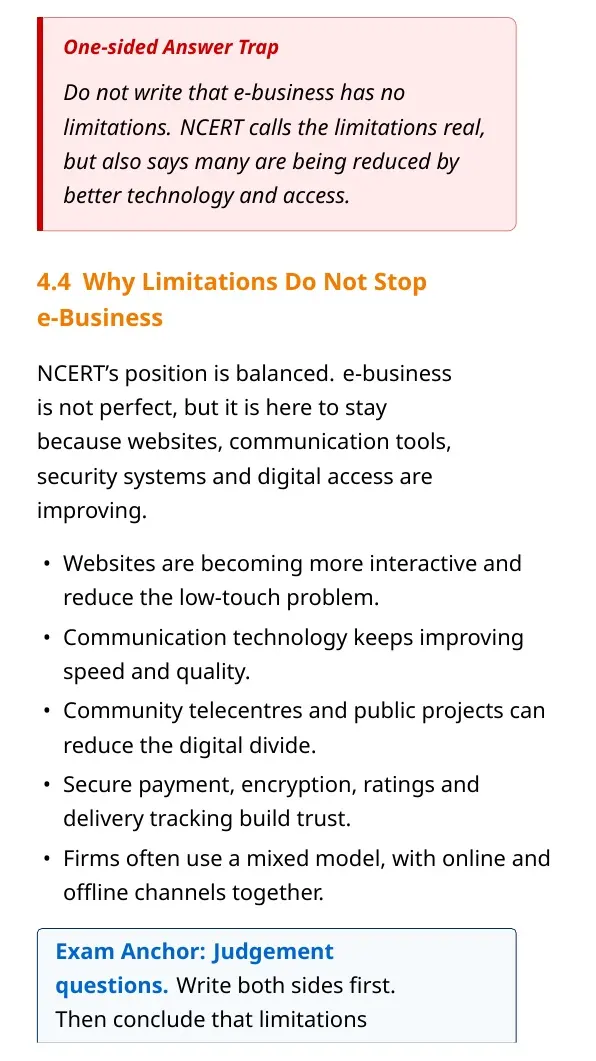
e-business improves reach, speed, convenience and communication, but it also needs technology, trust and security. A balanced answer should give both sides because NCERT treats emerging modes as useful but not risk-free.
| Benefits | Limitations |
|---|---|
| Easy formation because physical setup can be smaller | Low personal touch in many transactions |
| Lower operating cost through digital records and wider reach | Need for technology, internet access and trained staff |
| Convenience because business can happen beyond normal shop hours | Order, delivery, payment and data risks |
| Faster communication with customers and suppliers | Security concerns such as hacking, viruses and data misuse |
Exam tip: never write that e-business is perfect or that traditional business is outdated. The best answer says both models can work together depending on product, customer and risk.
Security Risks in Online Transactions
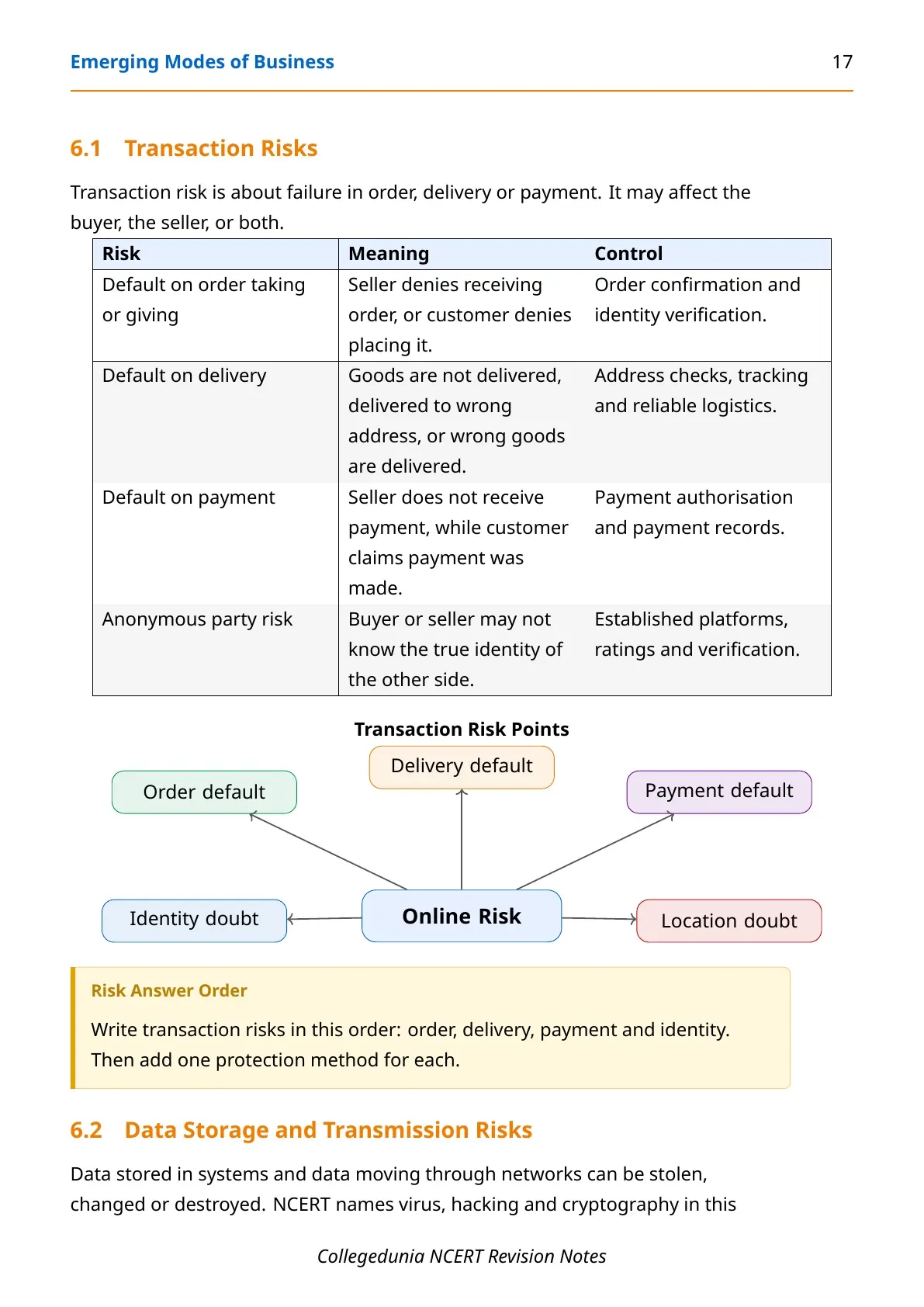
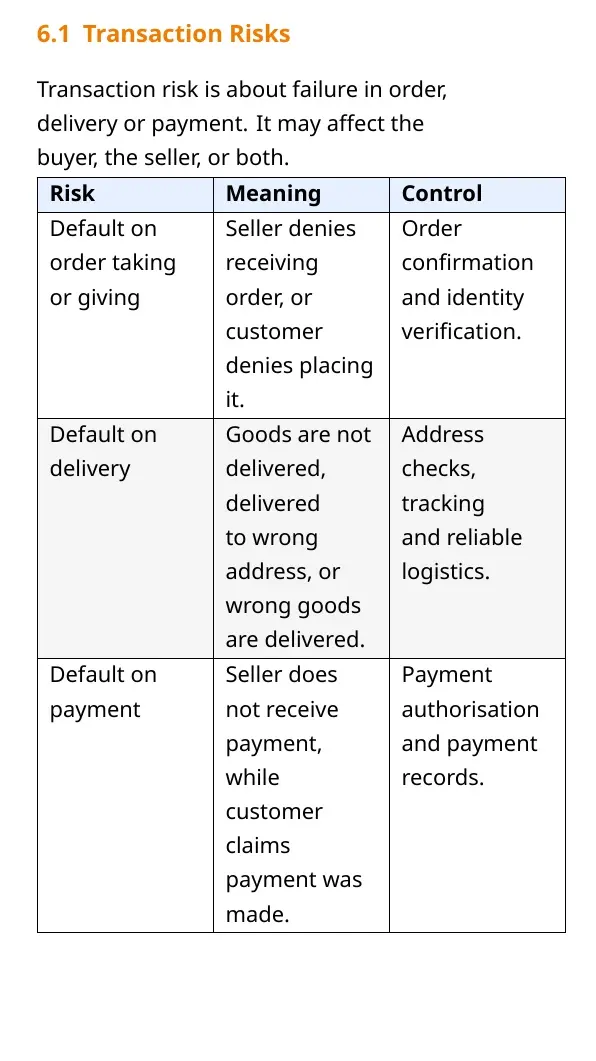
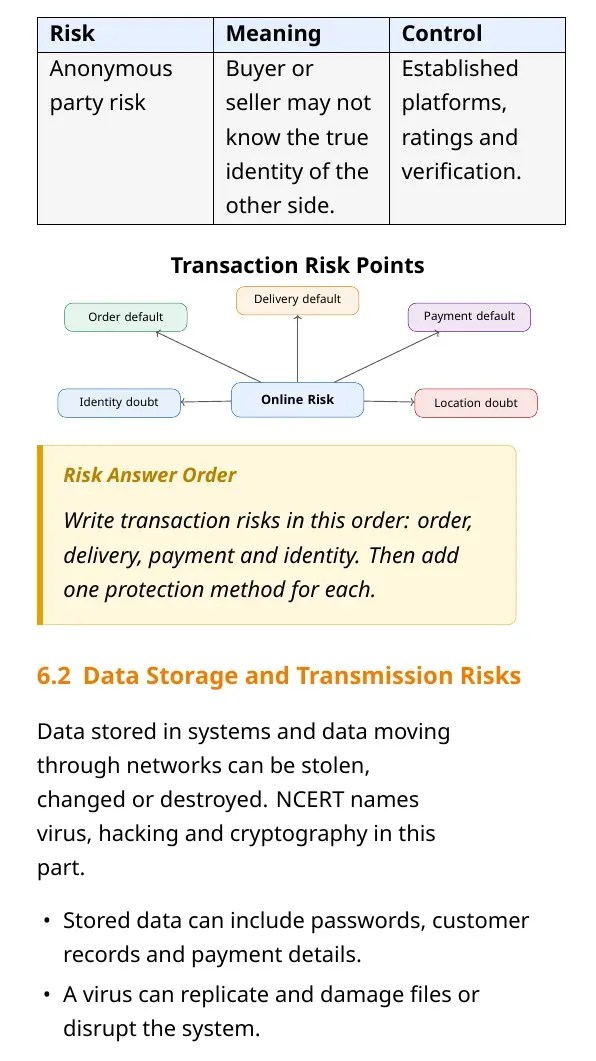
Online transactions need safety because the buyer and seller may not meet physically. NCERT highlights transaction risk, data storage risk, data transmission risk and privacy concerns. A strong answer separates these four risks instead of writing one general sentence about hacking.
- Transaction risk: order, delivery or payment may fail because of mistakes or false identity.
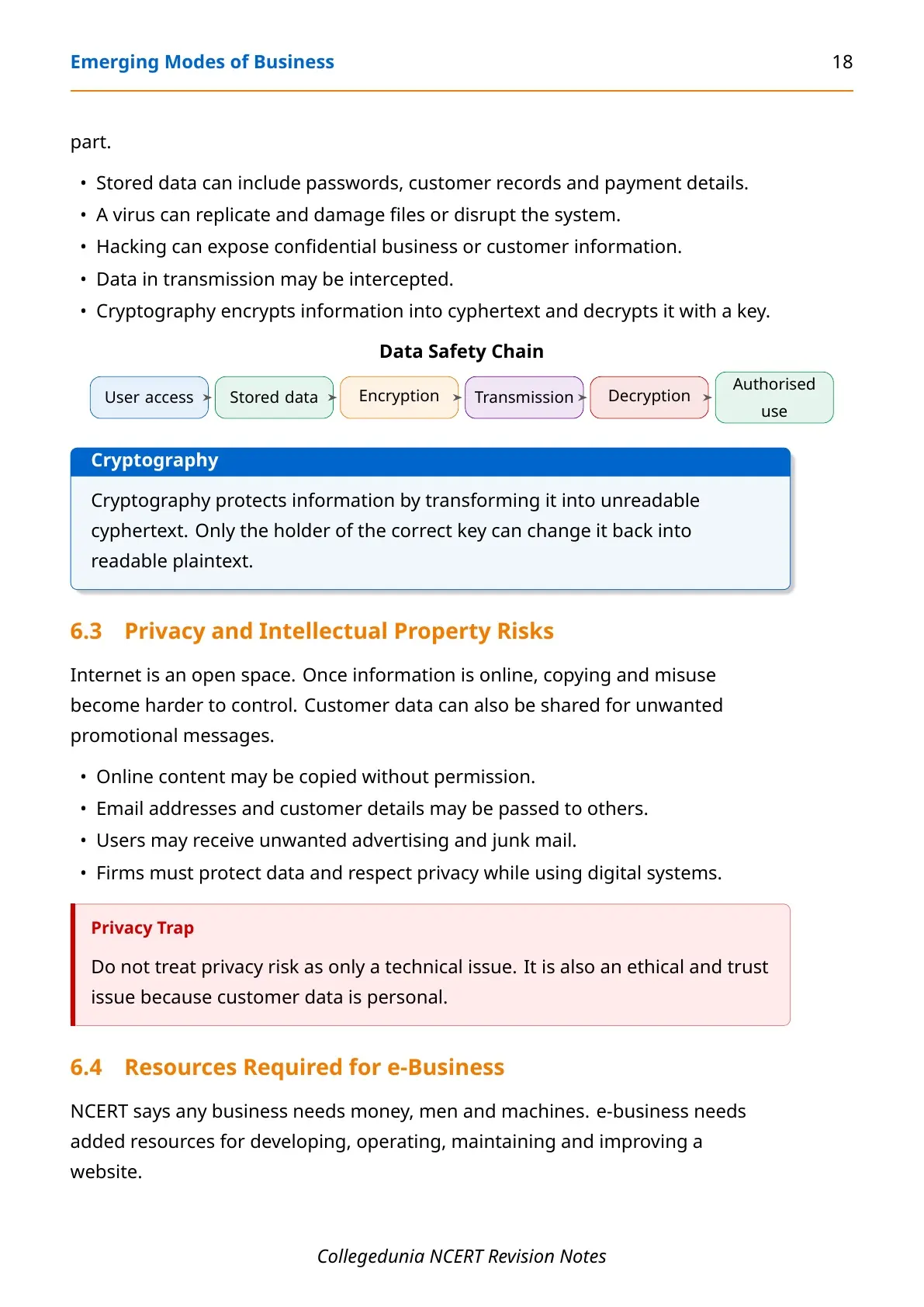
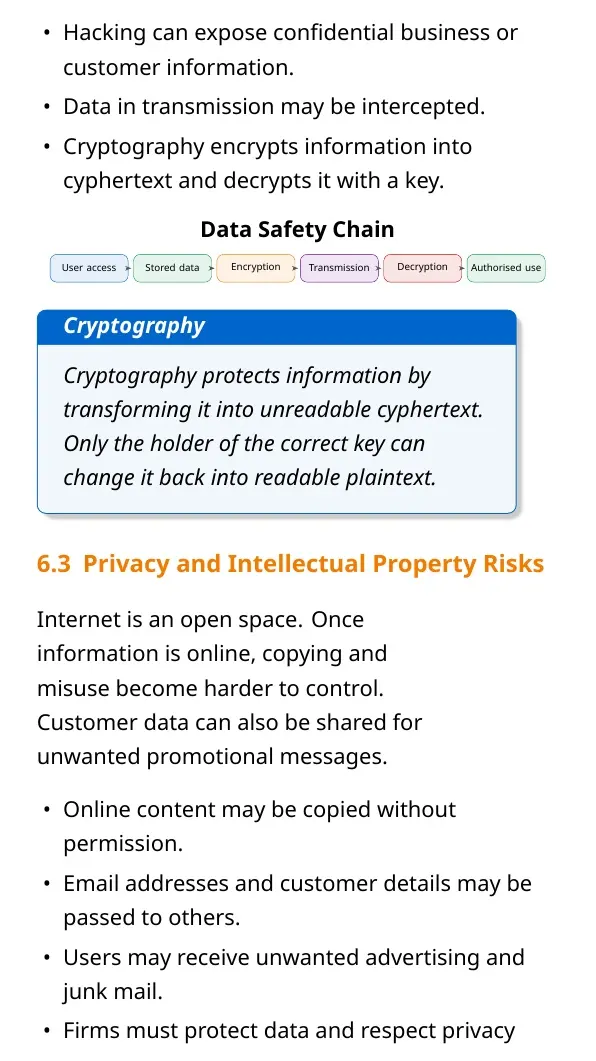
- Data storage risk: stored passwords, customer records or card details may be attacked.
- Data transmission risk: information may be intercepted while moving through a network.
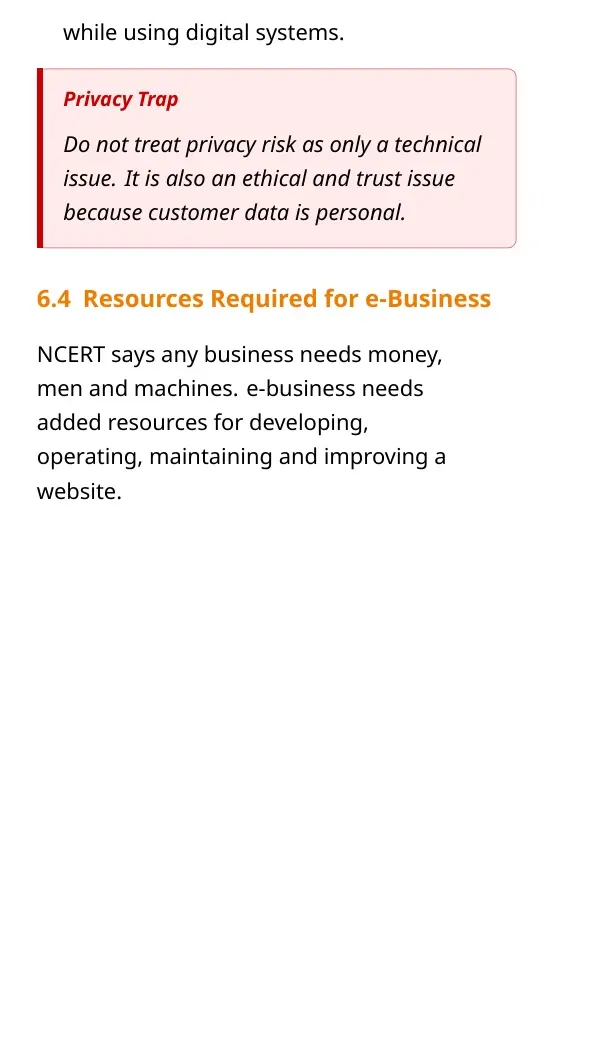
- Privacy risk: customer data may be copied, shared or used for unwanted messages.
Cryptography protects data by changing readable information into ciphertext and changing it back only with the correct key. This is why secure payment systems use encryption, authentication and limited access.
Outsourcing and BPO in Emerging Modes of Business
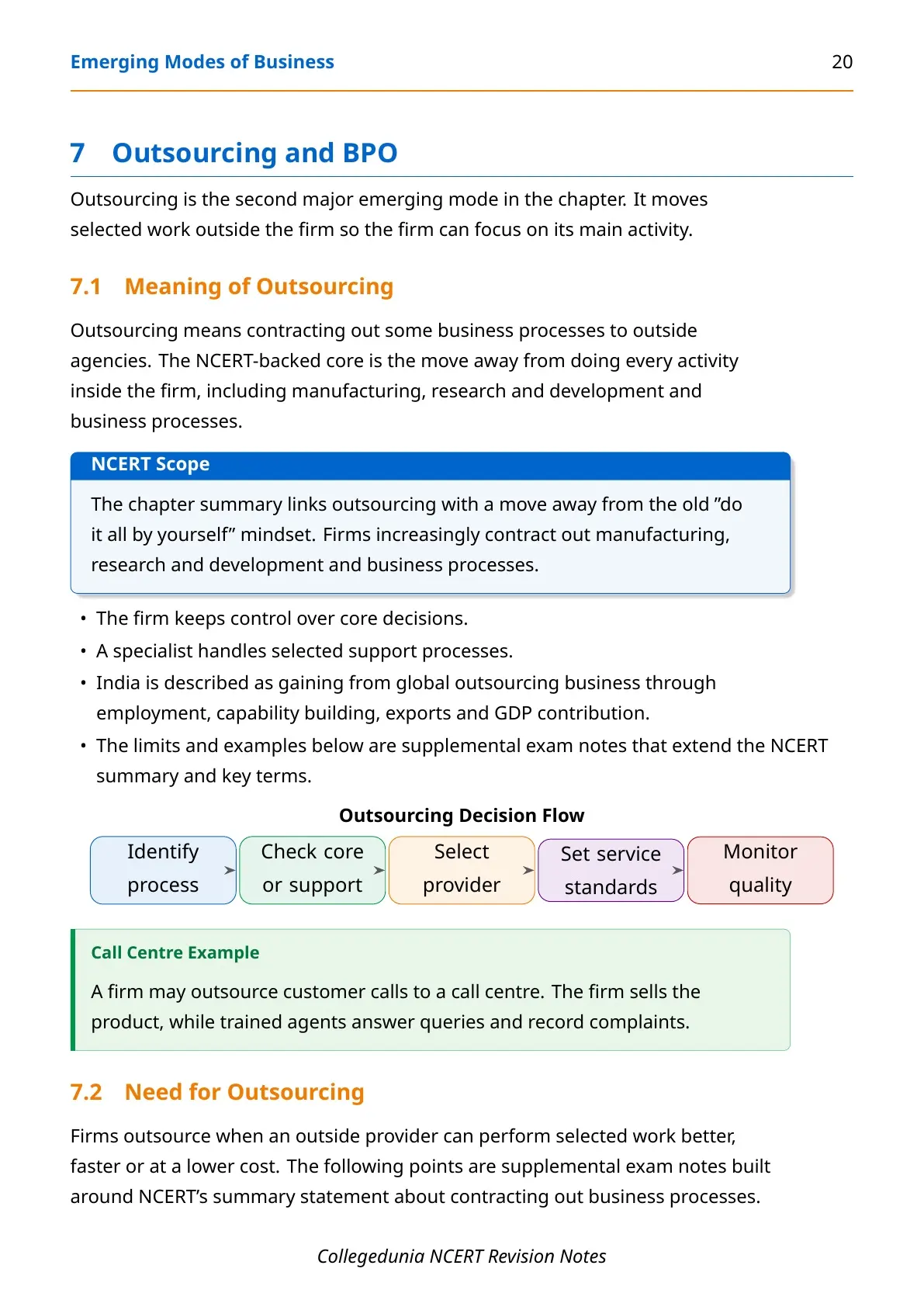
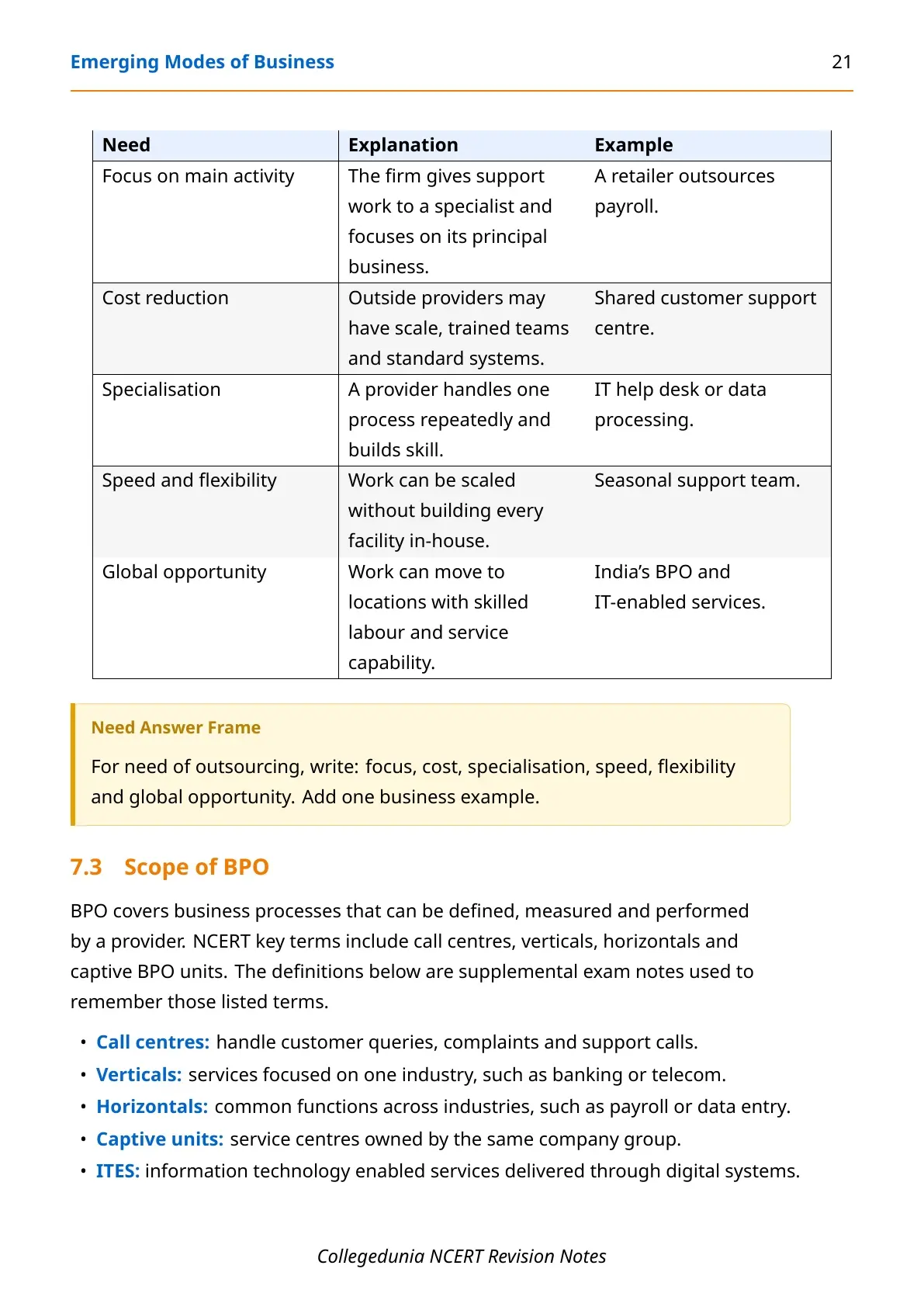
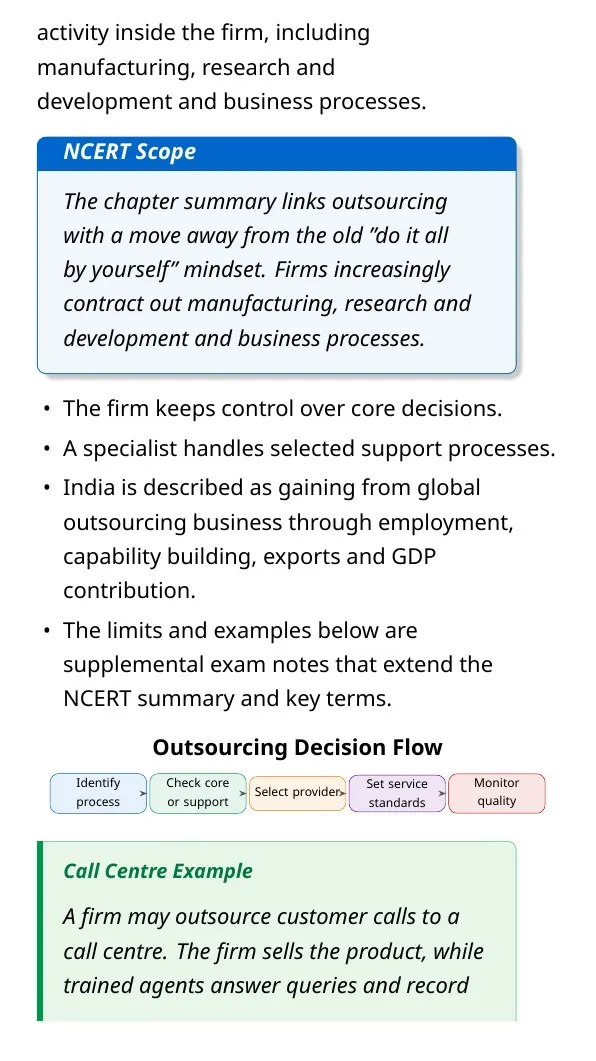
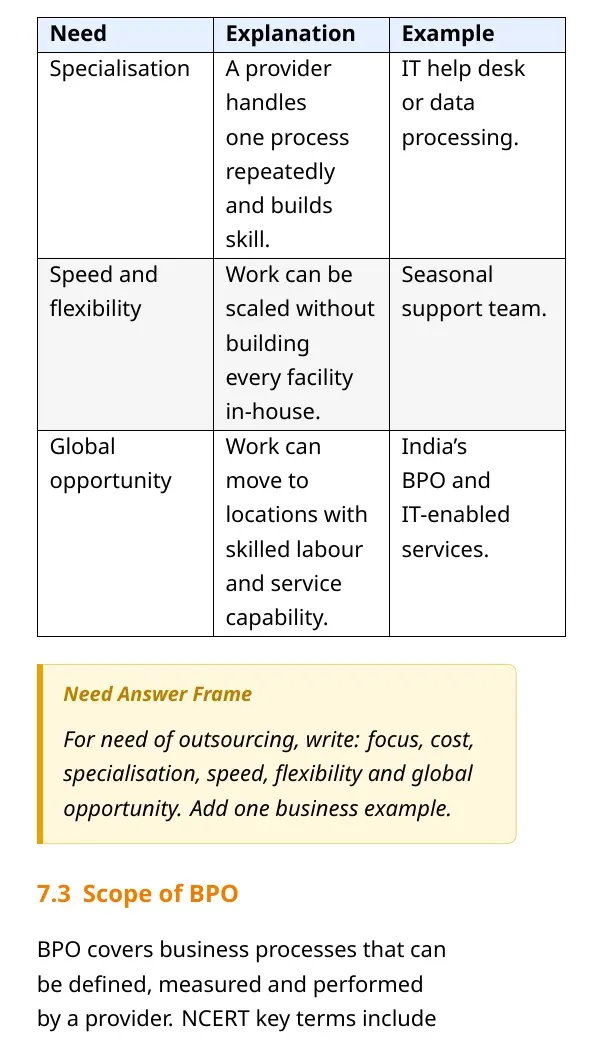
Outsourcing means contracting out selected business processes to another organisation. It does not mean selling the whole business. The NCERT-backed core is that firms are moving away from the old do-it-all-inside approach while keeping control of main decisions.
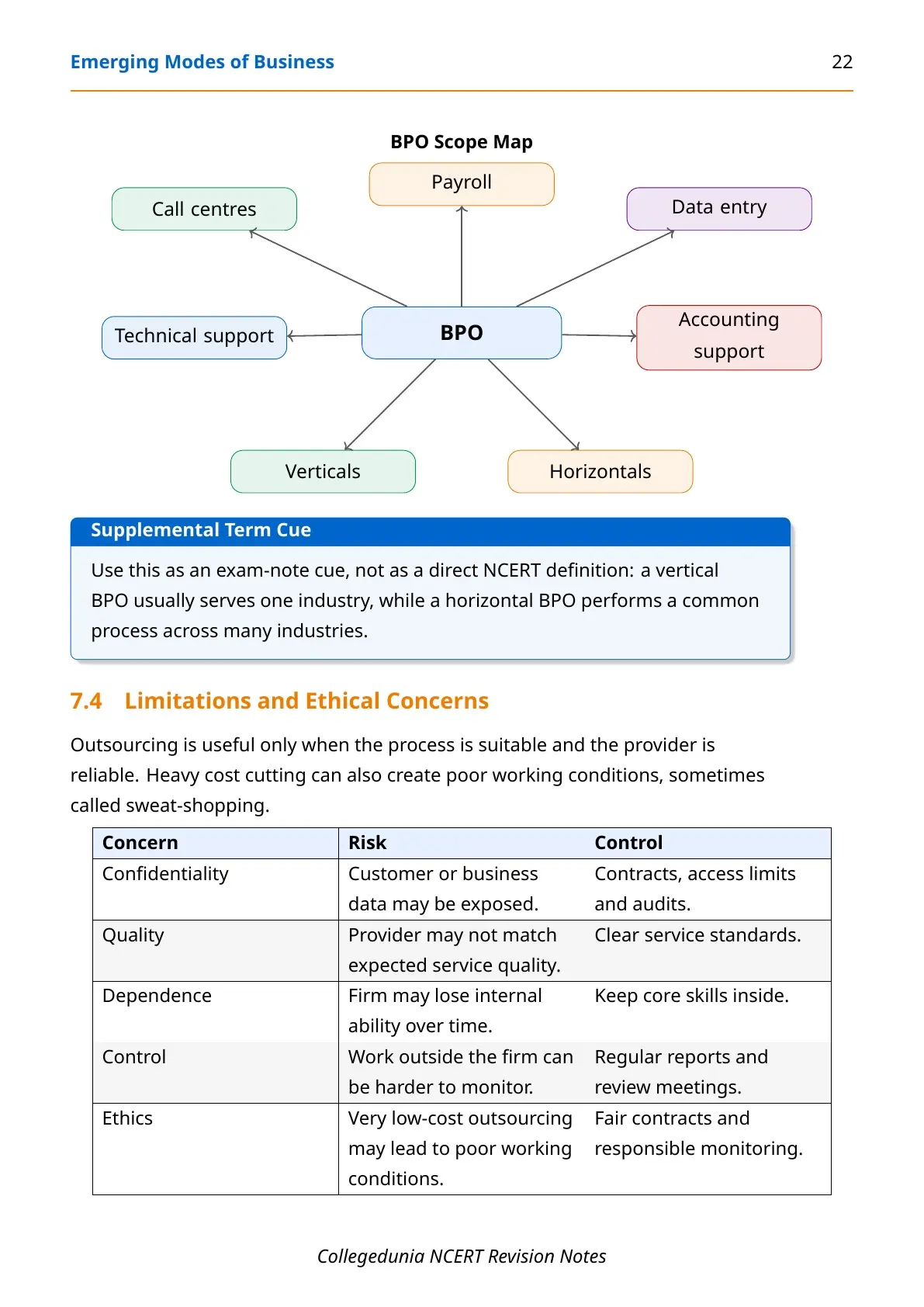
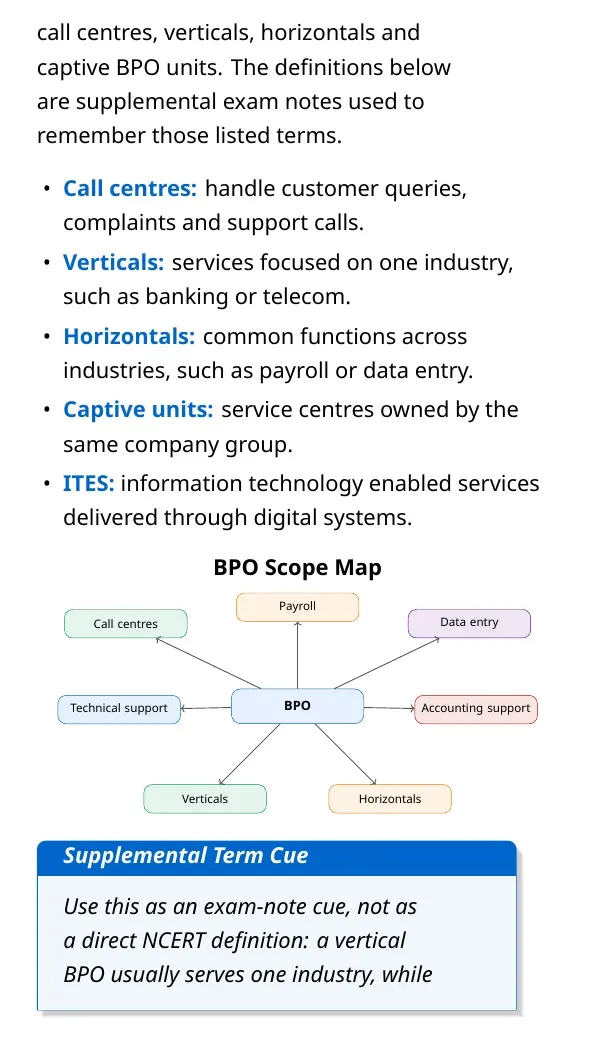
| Outsourcing point | What to write in answers | Example |
|---|---|---|
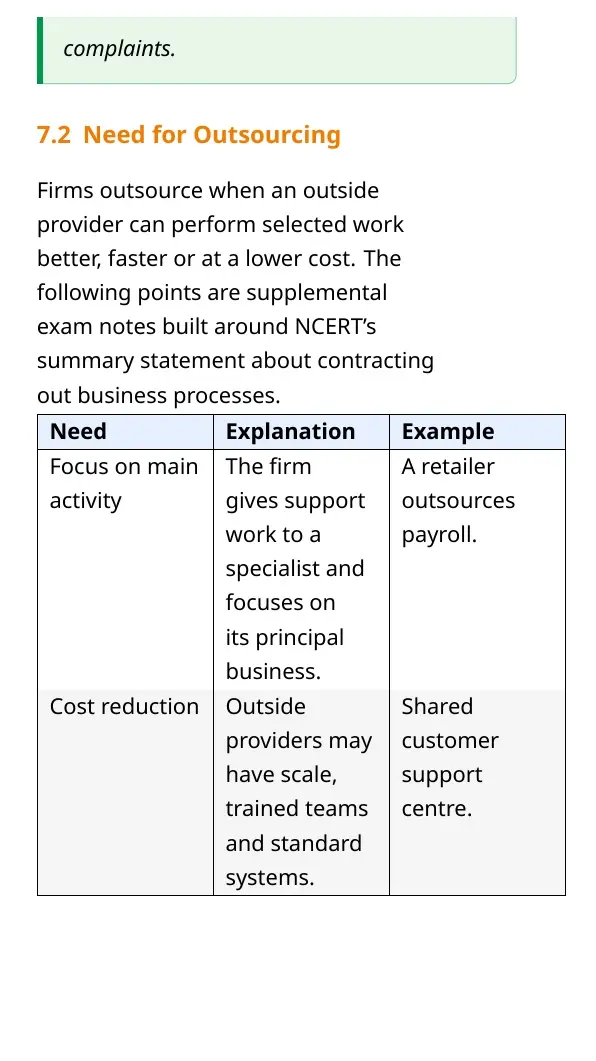
| Need | Focus on core business, reduce cost and use specialist skill | A retailer outsources delivery tracking |
| BPO | Business process outsourcing of routine or support processes | Call centre, payroll, data entry |
| Captive BPO unit | A service unit owned within the same company group | Internal support centre |
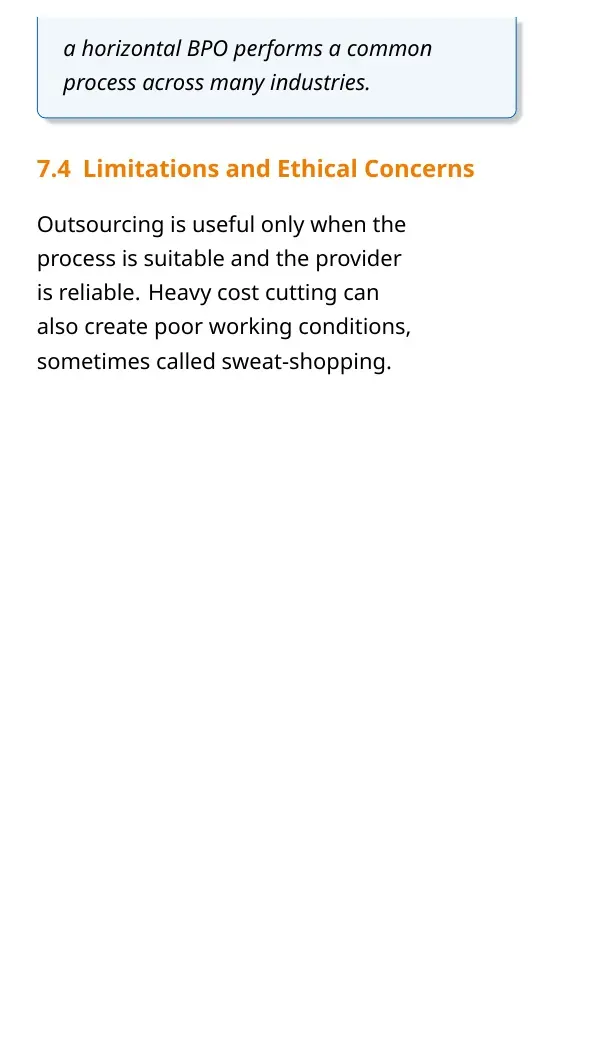
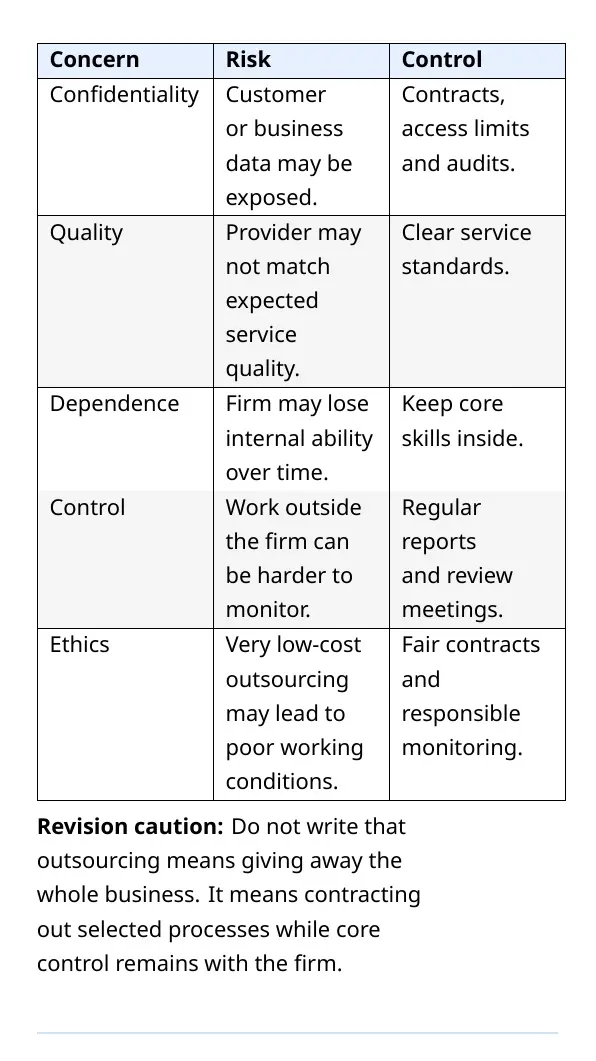
| Concern | Quality, confidentiality, dependence and ethical employment issues | Weak service-level agreement can hurt customer trust |
Emerging Modes of Business Class 11 e-Business and BPO Video
Source: Magnet Brains on YouTube
How to Write Better Answers on Emerging Modes of Business
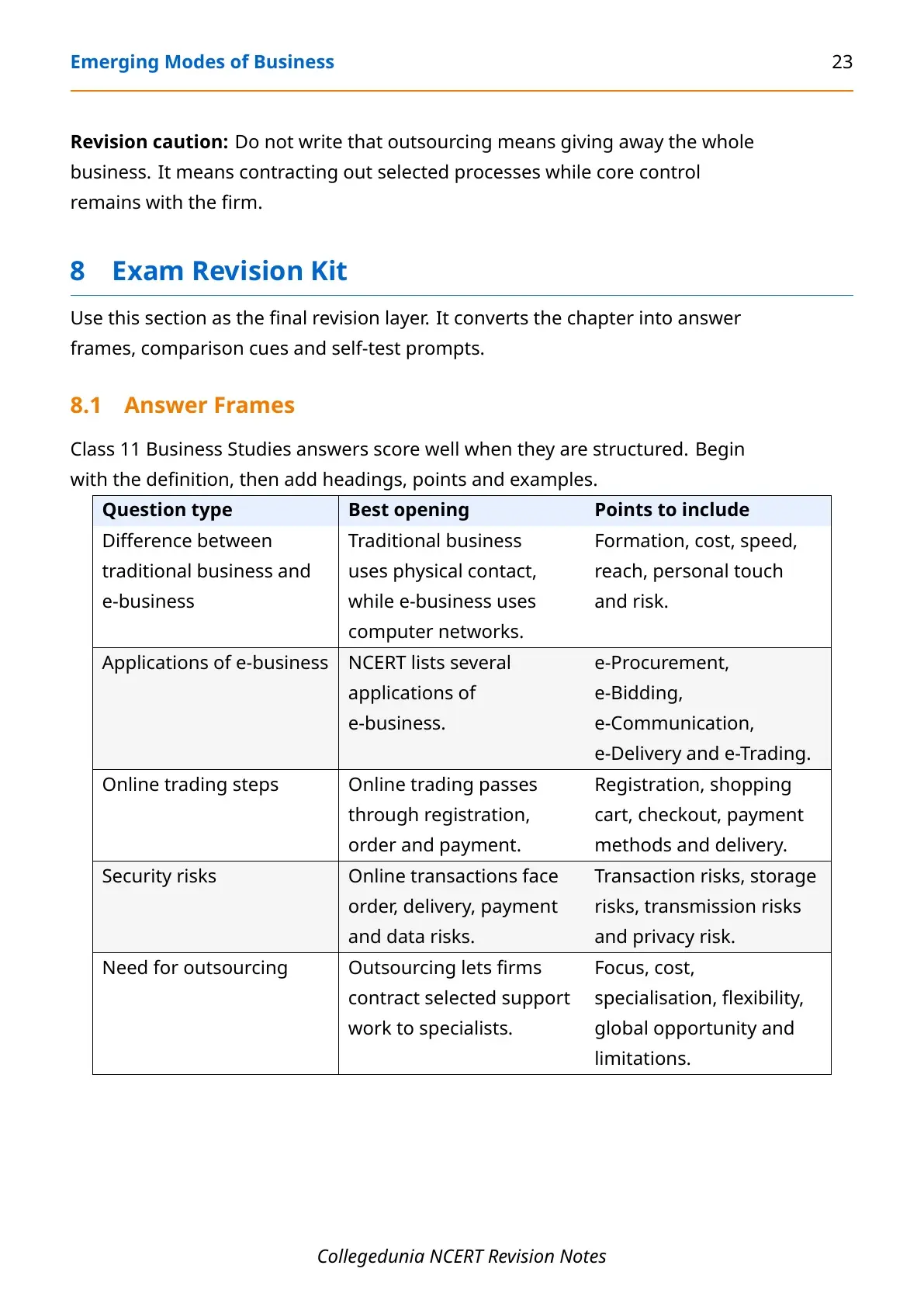
Strong Chapter 5 answers use the NCERT terms and keep similar ideas separate. Begin with the meaning, then add scope, examples, benefits, limitations and controls. For a difference question, answer in a two-column table. For security and outsourcing, include both benefit and caution.
- For e-business scope: write B2B, B2C, intra-B and C2C in separate bullets.
- For online transactions: write information search, registration, shopping cart, payment and delivery in order.
- For risks: separate transaction risk, data storage risk, data transmission risk and privacy risk.
- For outsourcing: state that selected processes are contracted out while core control remains with the firm.
Related Resources for Emerging Modes of Business
| Resource | Use it for | Link |
|---|---|---|
| NCERT Solutions | Practice textbook answers for Chapter 5 | Open NCERT Solutions |
| NCERT Book PDF | Read the official textbook chapter with these notes | Open NCERT Book PDF |
| Handwritten Notes | Revise definitions and diagrams in a handwritten style | Open Handwritten Notes |
All Class 11 Business Studies Notes Chapters
| Chapter | Title | Notes Link |
|---|---|---|
| Chapter 1 | Business, Trade and Commerce | Open Notes |
| Chapter 2 | Forms of Business Organisation | Open Notes |
| Chapter 3 | Private, Public and Global Enterprises | Open Notes |
| Chapter 4 | Business Services | Open Notes |
| Chapter 5 | Emerging Modes of Business | You are here |
| Chapter 6 | Social Responsibilities of Business and Business Ethics | Open Notes |
Emerging Modes of Business Class 11 Notes FAQs
Ques. What does Emerging Modes of Business Class 11 Chapter 5 cover?
Ans. It covers e-business, e-commerce, B2B, B2C, intra-B commerce, C2C commerce, online transactions, payment methods, security risks, outsourcing and BPO.
Ques. What is the difference between e-business and e-commerce?
Ans. e-commerce means online buying and selling, while e-business covers all business activities done through computer networks, including buying, selling, production, accounts and coordination.
Ques. Which payment methods are listed in Emerging Modes of Business?
Ans. Students should revise cash on delivery, cheque, net banking and card-based payment along with registration and shopping cart steps.
Ques. What is BPO in Class 11 Business Studies?
Ans. BPO means business process outsourcing, where a firm contracts selected support processes such as customer care, payroll, accounting or data processing to an outside specialist.



Comments