




If you are preparing for the Class 11 Accountancy board paper, Depreciation, Provisions and Reserves is one of the chapters you cannot afford to skip. Collegedunia's NCERT Notes below cover both depreciation methods, the two ways of recording depreciation, and the exact provisions vs reserves distinctions the 2026-27 CBSE paper expects.
- CBSE Weightage: A Straight Line vs Written Down Value numerical, worth 4 to 6 marks, appears in almost every board paper.
- CUET Weightage: Classifying an item as a provision or a reserve is a recurring MCQ pattern in CUET Commerce.
- Covers: Both depreciation methods, both recording methods, asset disposal, and every type of reserve, according to the 2026-27 NCERT.
This NCERT Notes Class 11 Accountancy Chapter 7 Depreciation, Provisions and Reserves page is curated by subject experts, mapped to the 2026-27 NCERT, and checked against the last five years of CBSE board question papers.
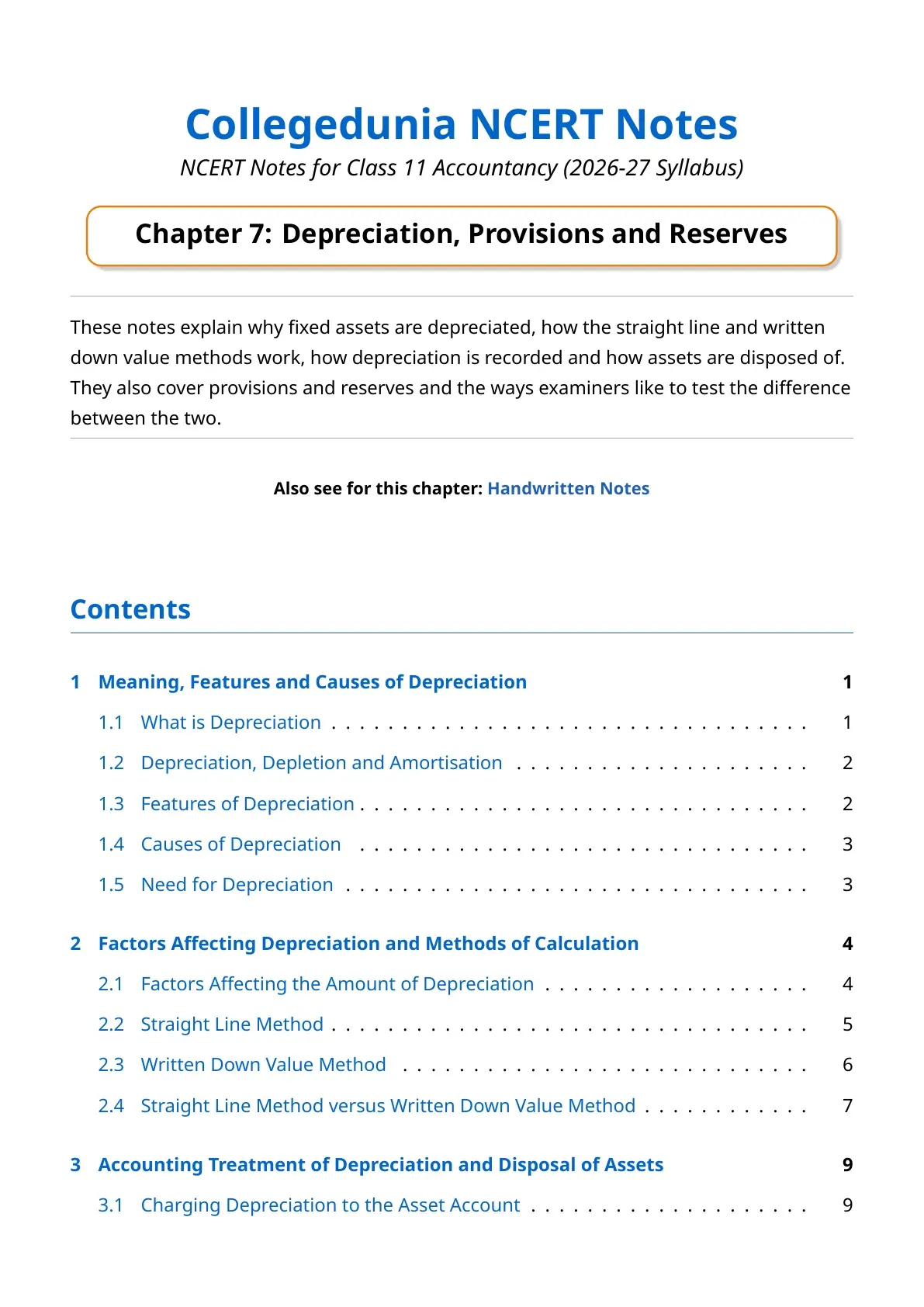
What Depreciation Means and Why Businesses Charge It
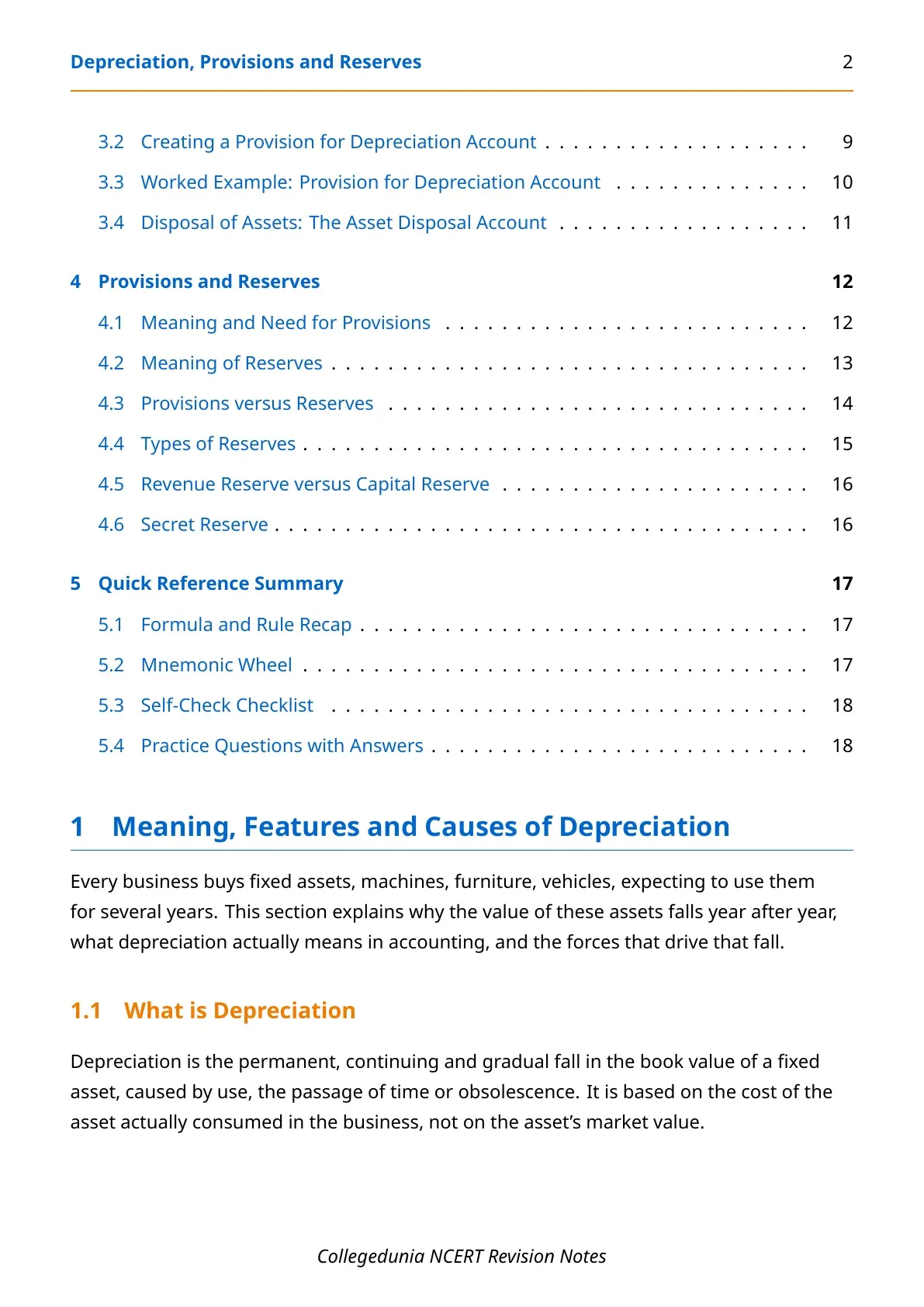
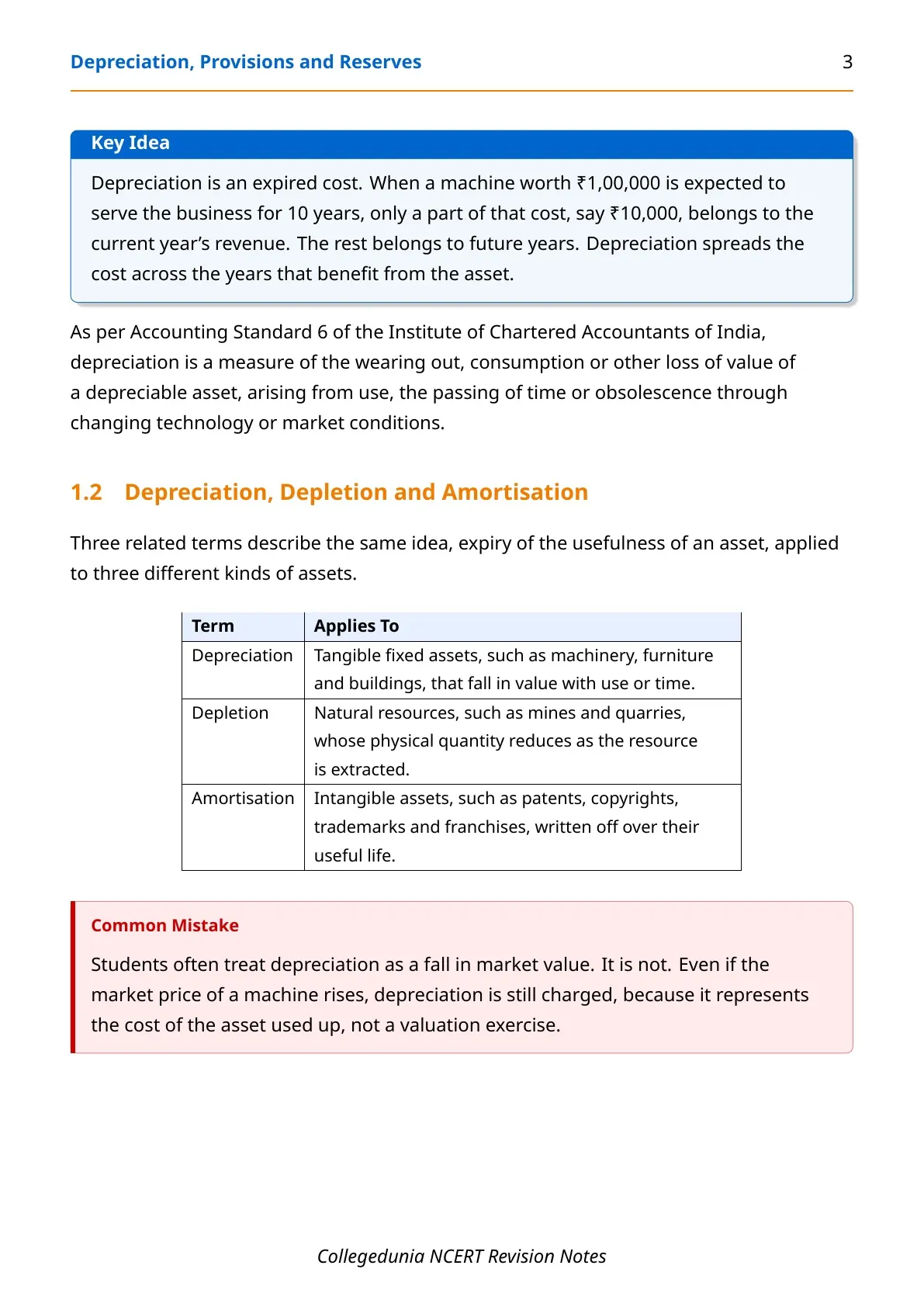
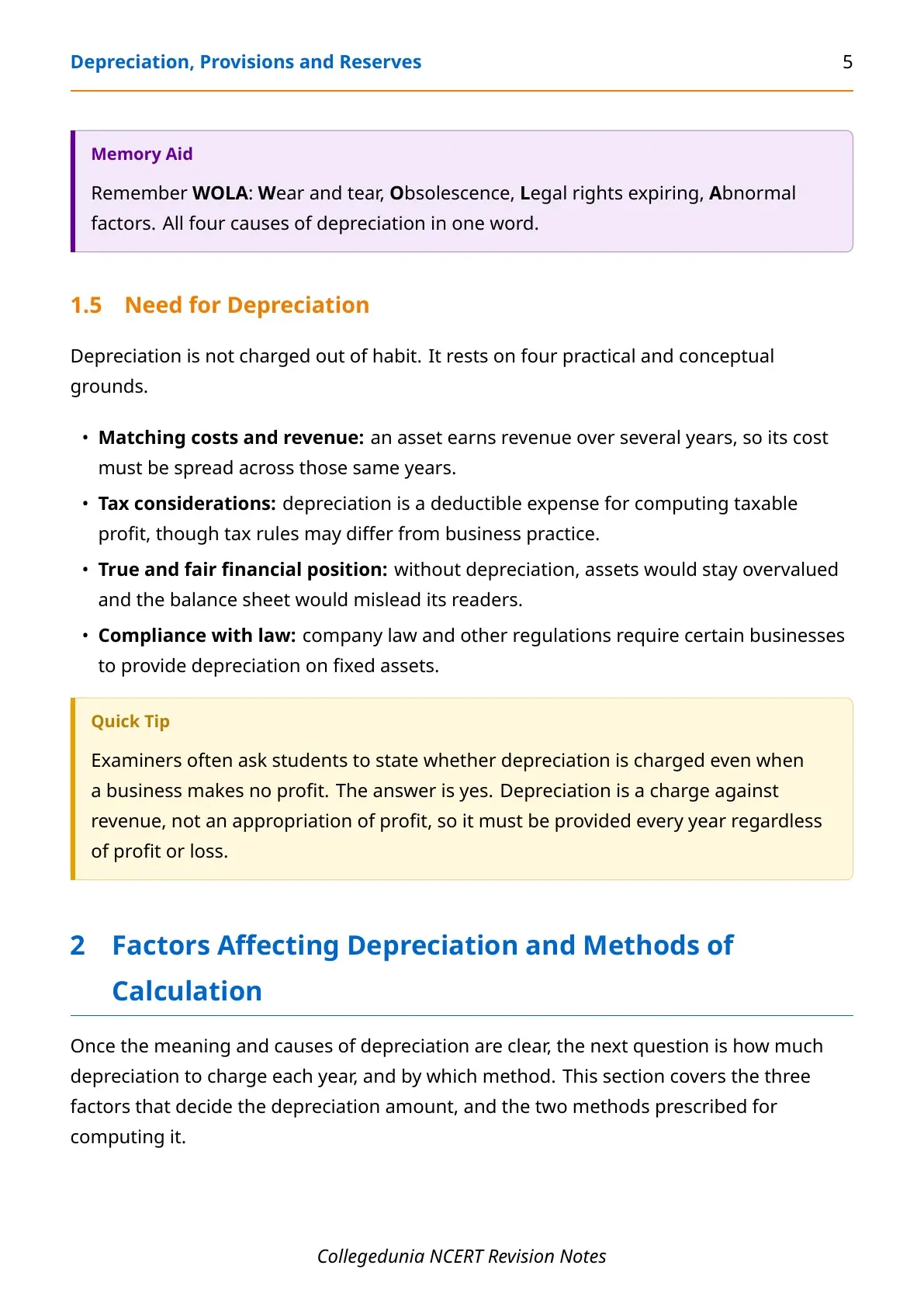
Depreciation is the permanent, continuing and gradual fall in the book value of a fixed asset, caused by use, the passage of time or obsolescence. It is charged even in a loss-making year, because it is a cost of doing business, not a discretionary saving.
- It is a decline in book value, not a fall in market value.
- It is a non-cash expense. No cash actually leaves the business when it is charged.
- It is a continuing process, charged every single accounting year.
Depreciation is charged for four reasons that examiners like to test directly: matching the cost of an asset against the revenue it earns, allowing a deductible expense for tax, presenting a true and fair financial position, and complying with company law.
Depreciation, Provisions and Reserves Explained for Class 11
Source: Commerce With Yatin on YouTube
Straight Line Method vs Written Down Value Method for Depreciation
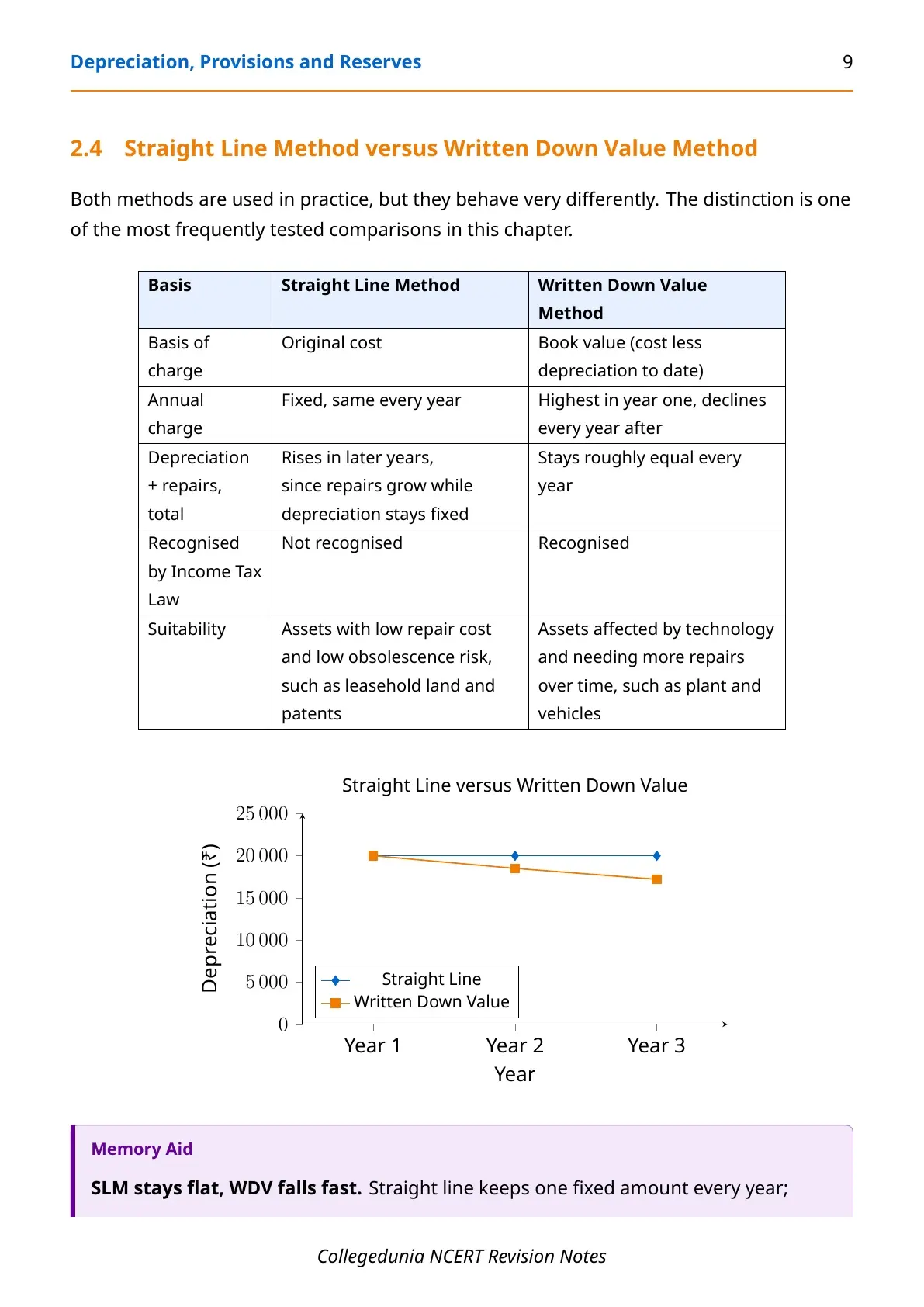
The 2026-27 NCERT prescribes two methods of calculating depreciation, and the CBSE paper regularly asks students to compute both for the same asset.
| Basis | Straight Line Method | Written Down Value Method |
|---|---|---|
| Basis of charge | Original cost, fixed every year | Book value, which keeps falling |
| Annual amount | Same amount every year | Highest in year one, then declines |
| Recognised by Income Tax Law | Not recognised | Recognised |
| Best suited to | Leasehold land, patents | Plant, machinery, vehicles |
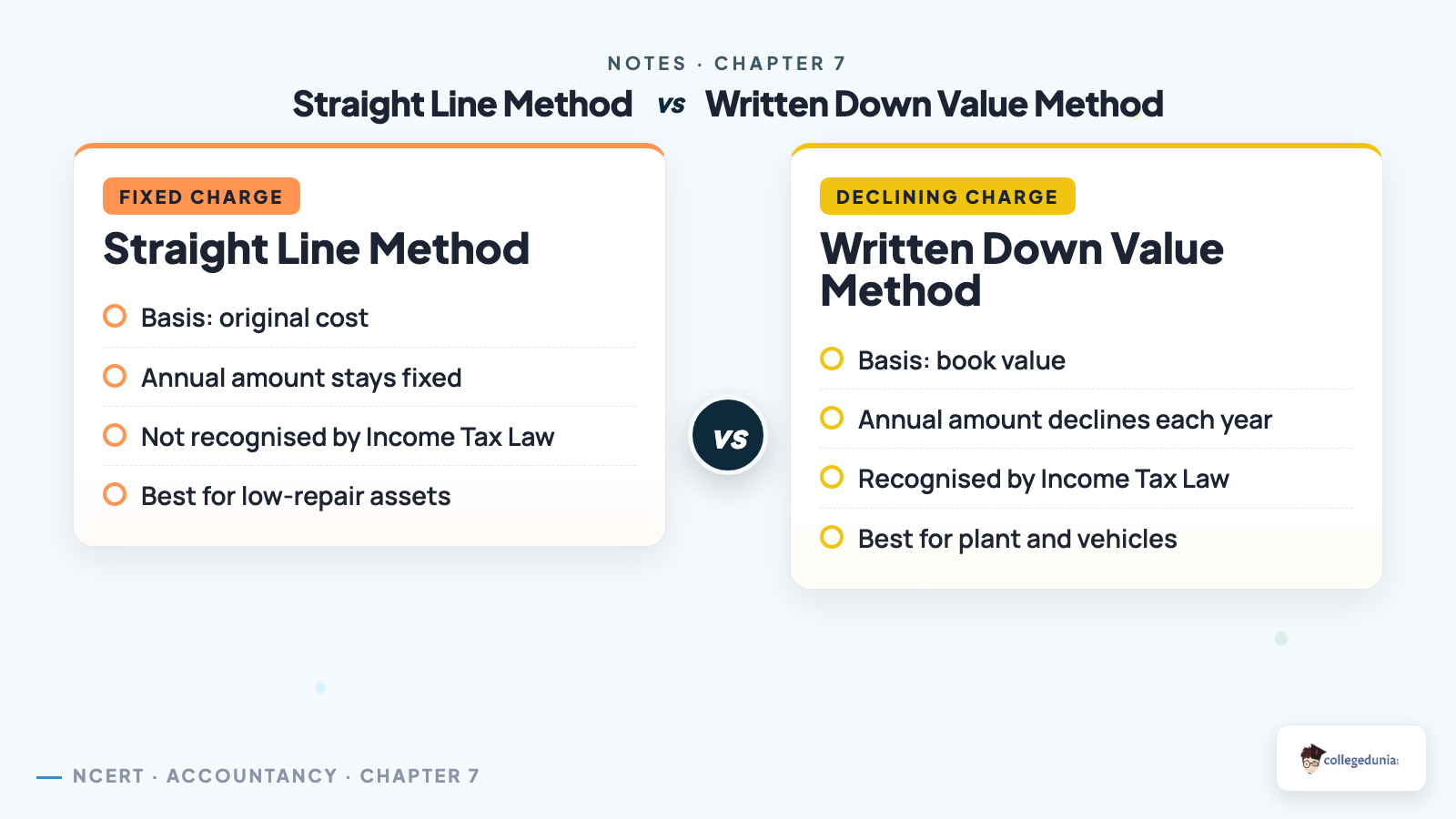
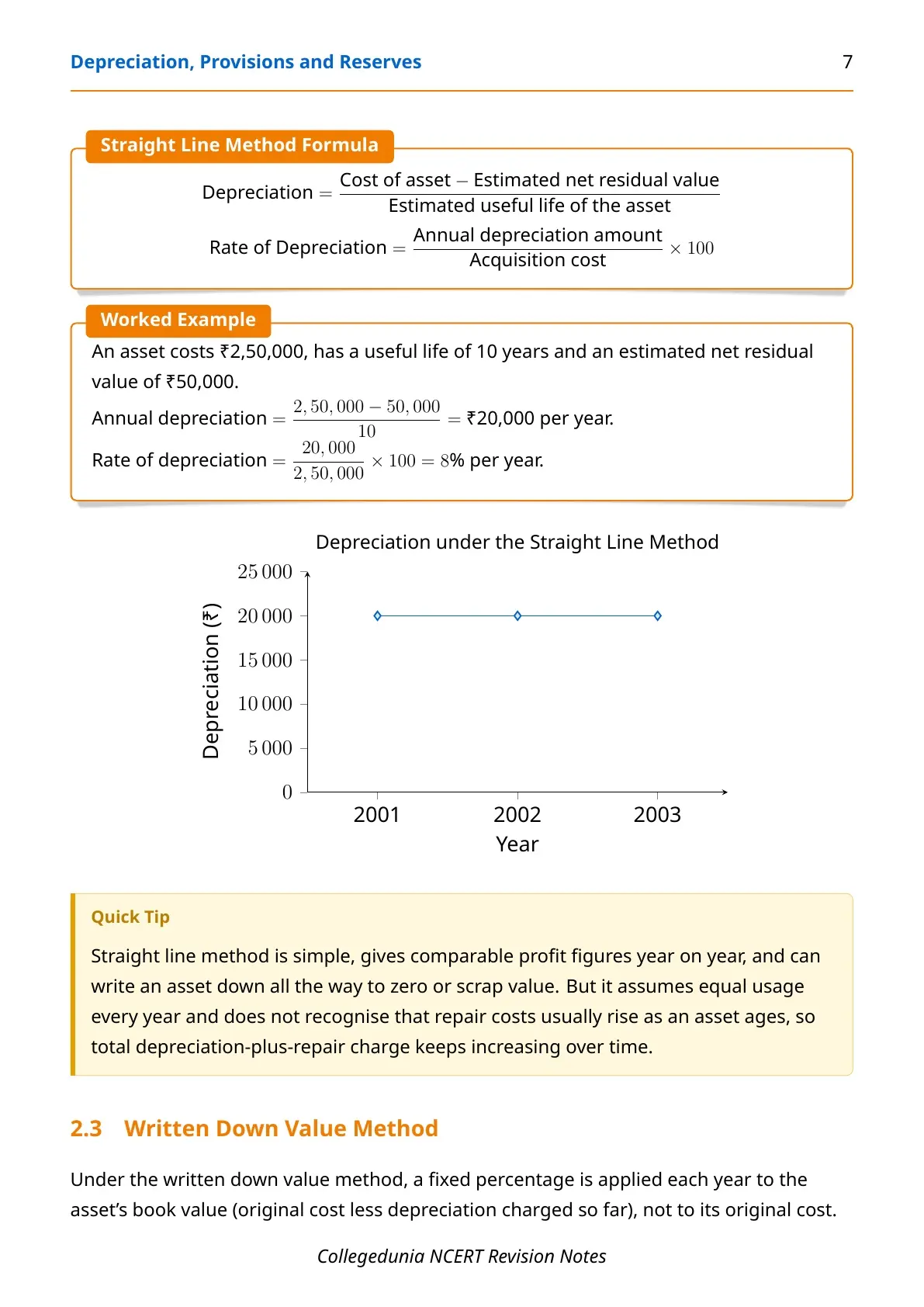
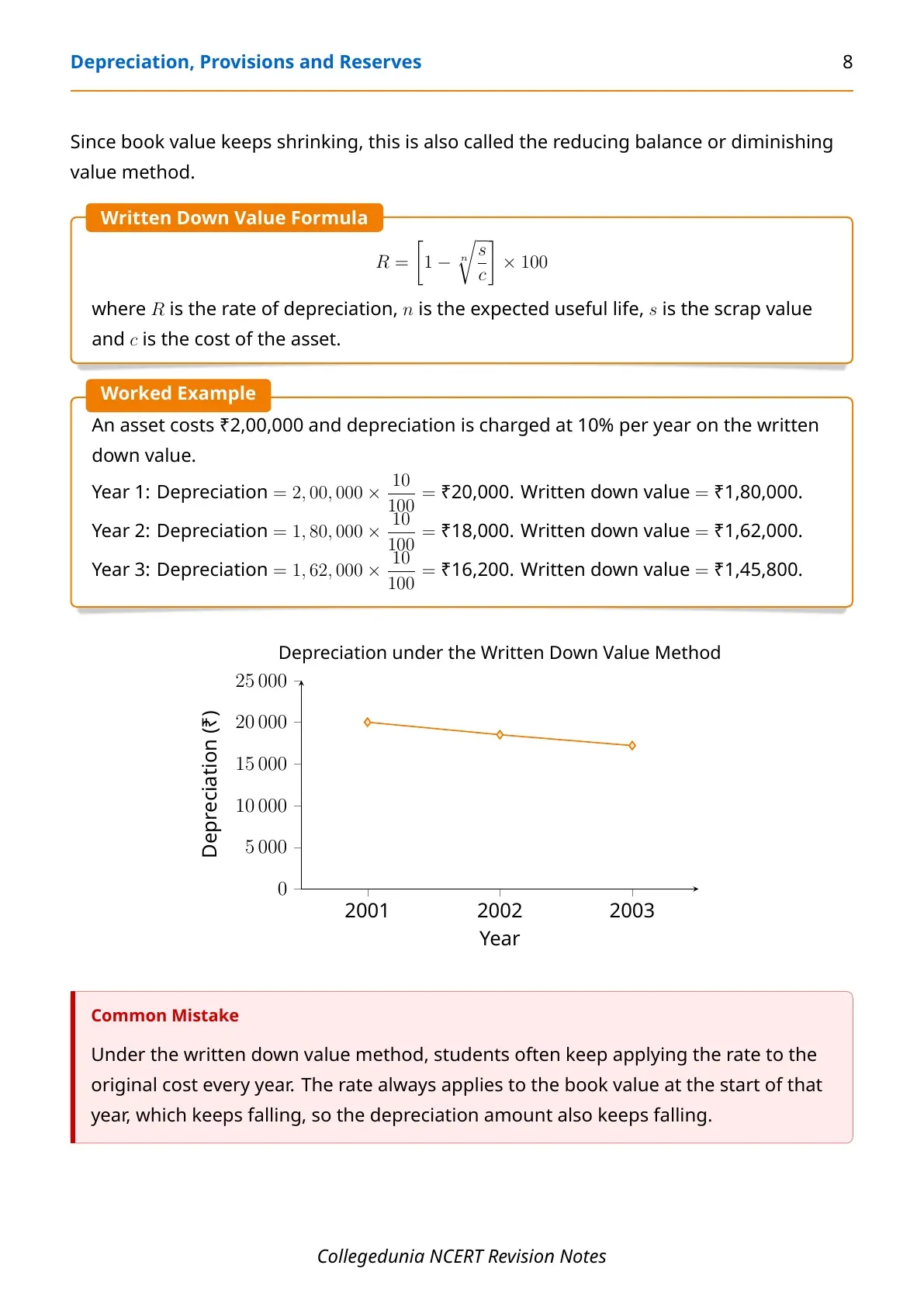
Straight Line Method: Depreciation = (Cost of asset minus Estimated net residual value) divided by Estimated useful life. Written Down Value Method applies a fixed percentage to the falling book value every year instead of the original cost.
Two Ways to Record Depreciation in the Books
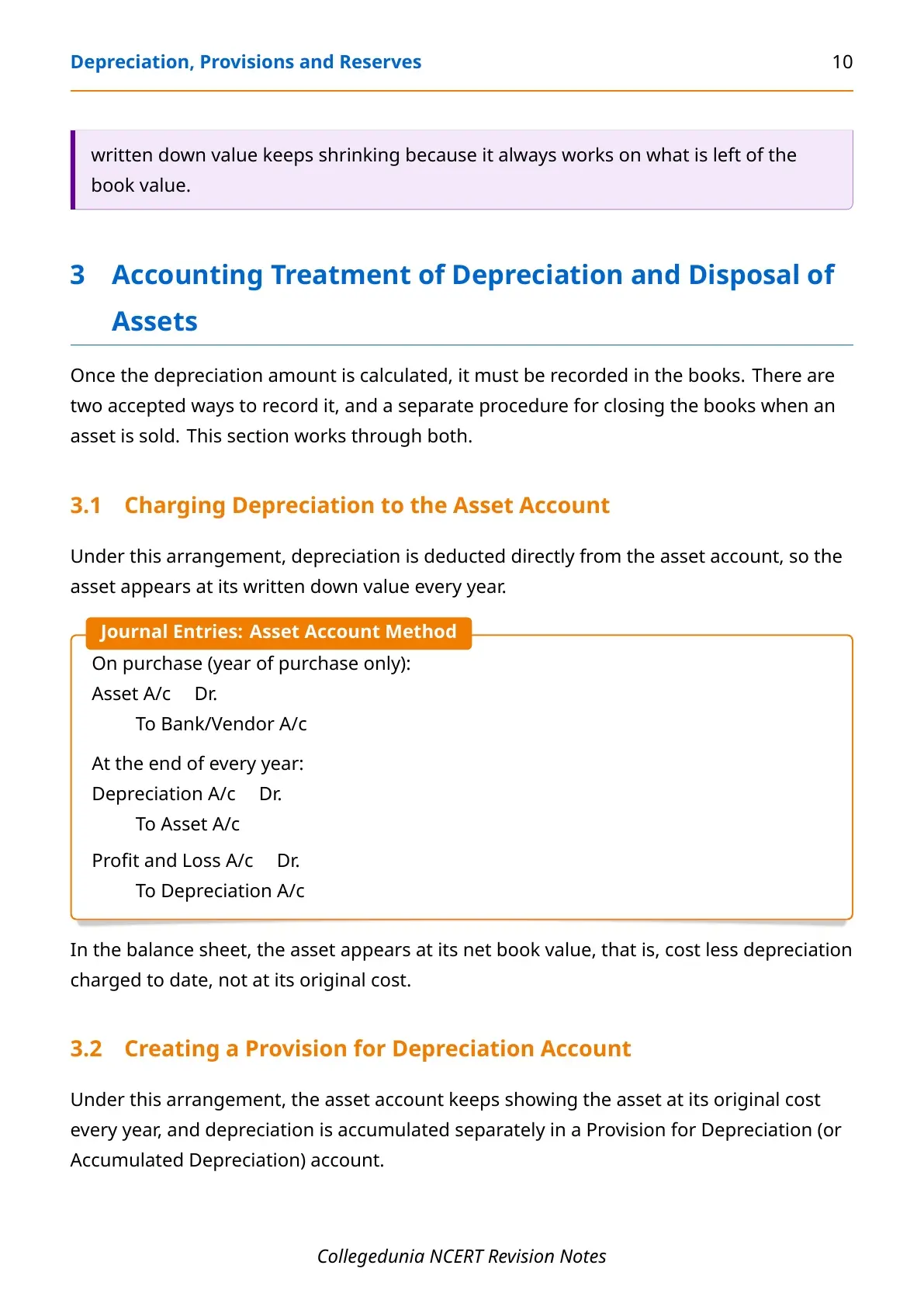
Once the depreciation amount is calculated, the 2026-27 NCERT allows two different ways to record it in the ledger, and CBSE numericals often specify which one to use.
| Method | What Happens to the Asset Account |
|---|---|
| Charging to the Asset Account | Depreciation is credited directly to the asset, which appears at written down value |
| Provision for Depreciation Account | Asset stays at original cost; depreciation builds up in a separate provision account |
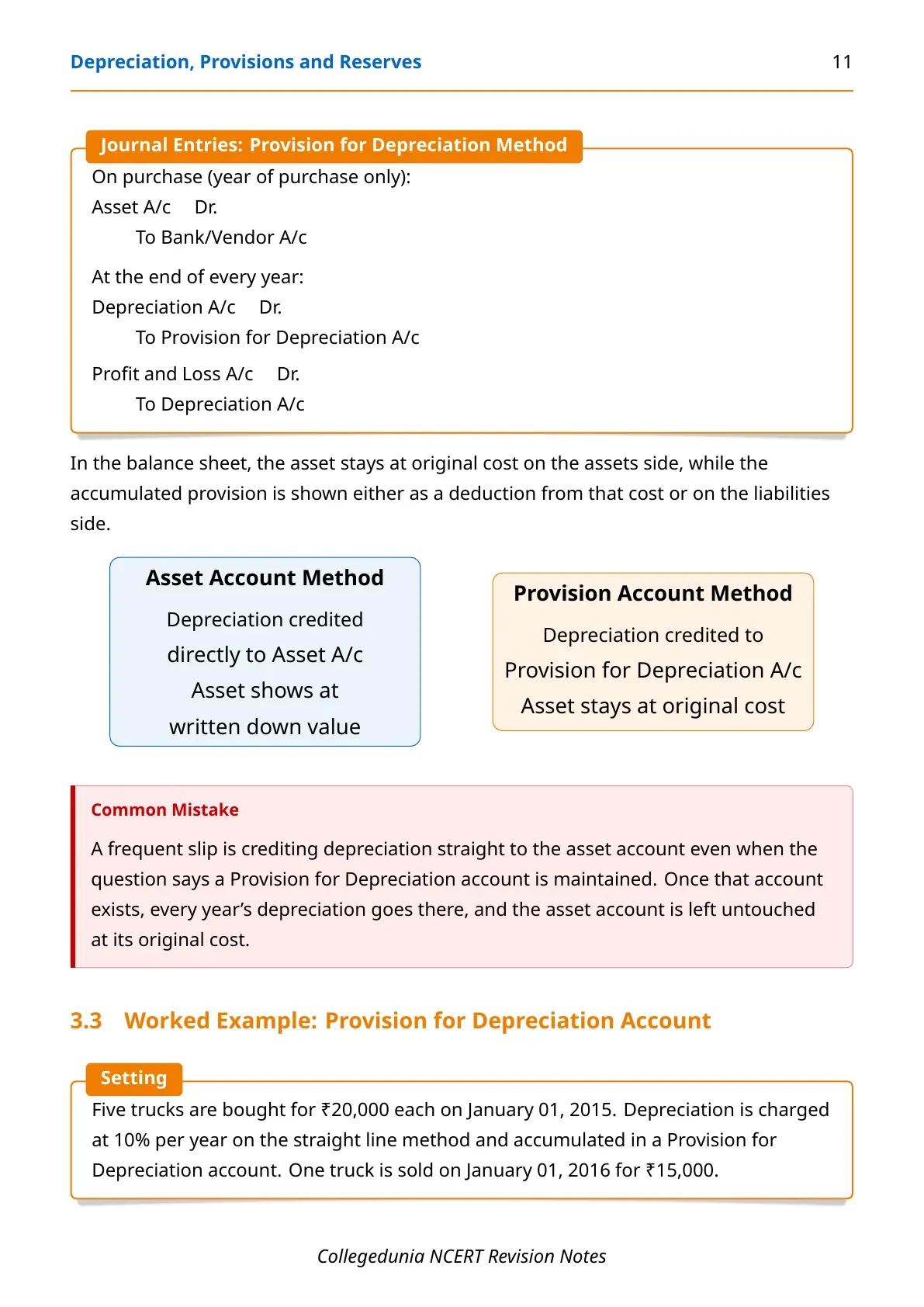
Under the Provision for Depreciation method, the asset account is never touched for depreciation. Every year's depreciation is credited to the Provision for Depreciation account instead, and the balance sheet shows the asset at original cost less the accumulated provision.
Disposal of Assets Through the Asset Disposal Account
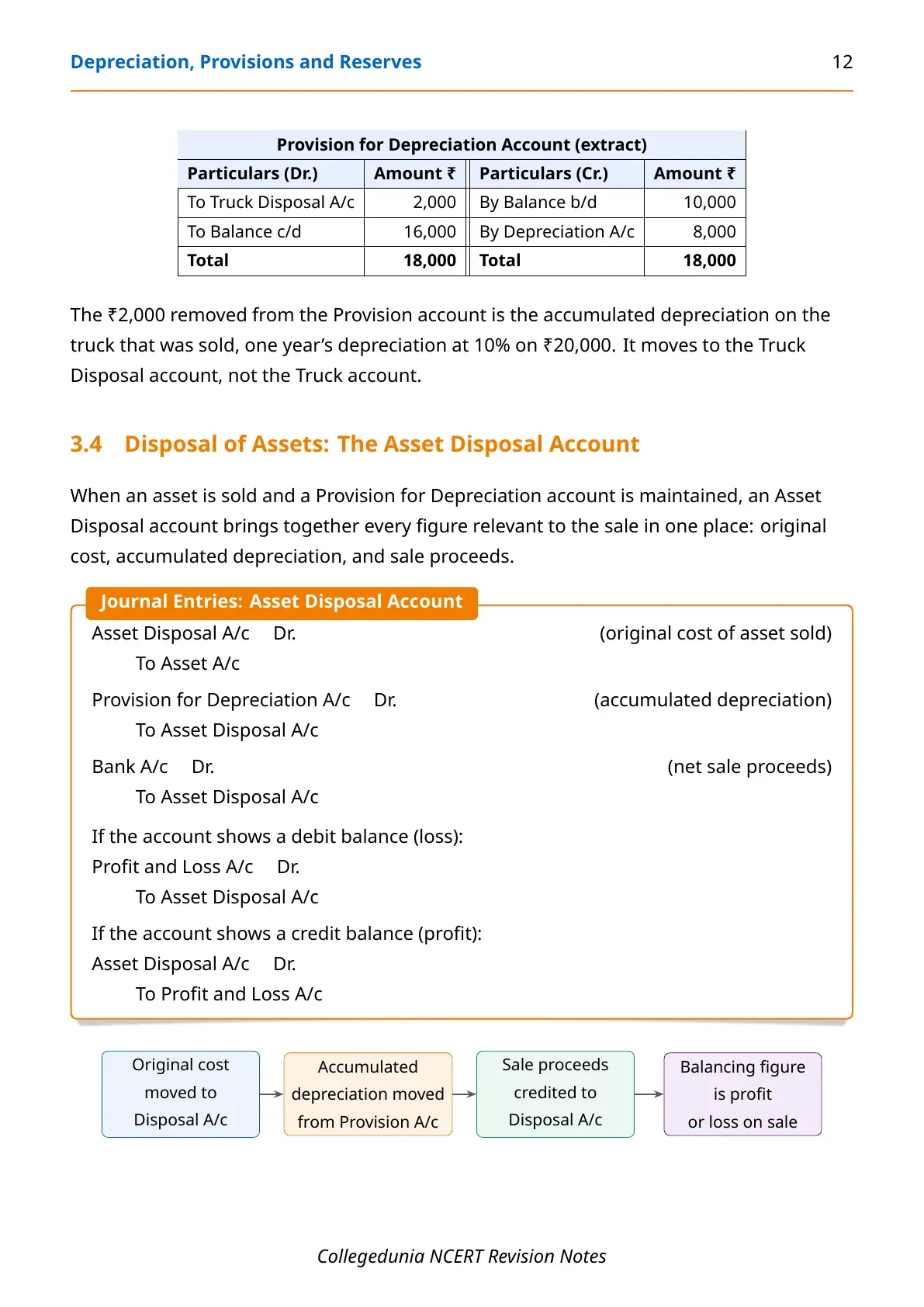
When a business sells an asset and keeps a Provision for Depreciation account, an Asset Disposal account brings the original cost, the accumulated depreciation and the sale proceeds together in one place.
- Original cost of the asset is moved to the Asset Disposal account.
- Accumulated depreciation is moved out of the Provision for Depreciation account.
- Sale proceeds are credited, and the balancing figure is profit or loss on sale.
Provisions: Meaning, Examples and Accounting Treatment
A provision is made for an expense or loss that belongs to the current year but whose exact amount is not certain, because it has not yet actually happened. It follows the principle of prudence, a likely loss is recognised early, not ignored.
| Common Provisions | What They Cover |
|---|---|
| Provision for depreciation | Accumulated fall in value of a fixed asset |
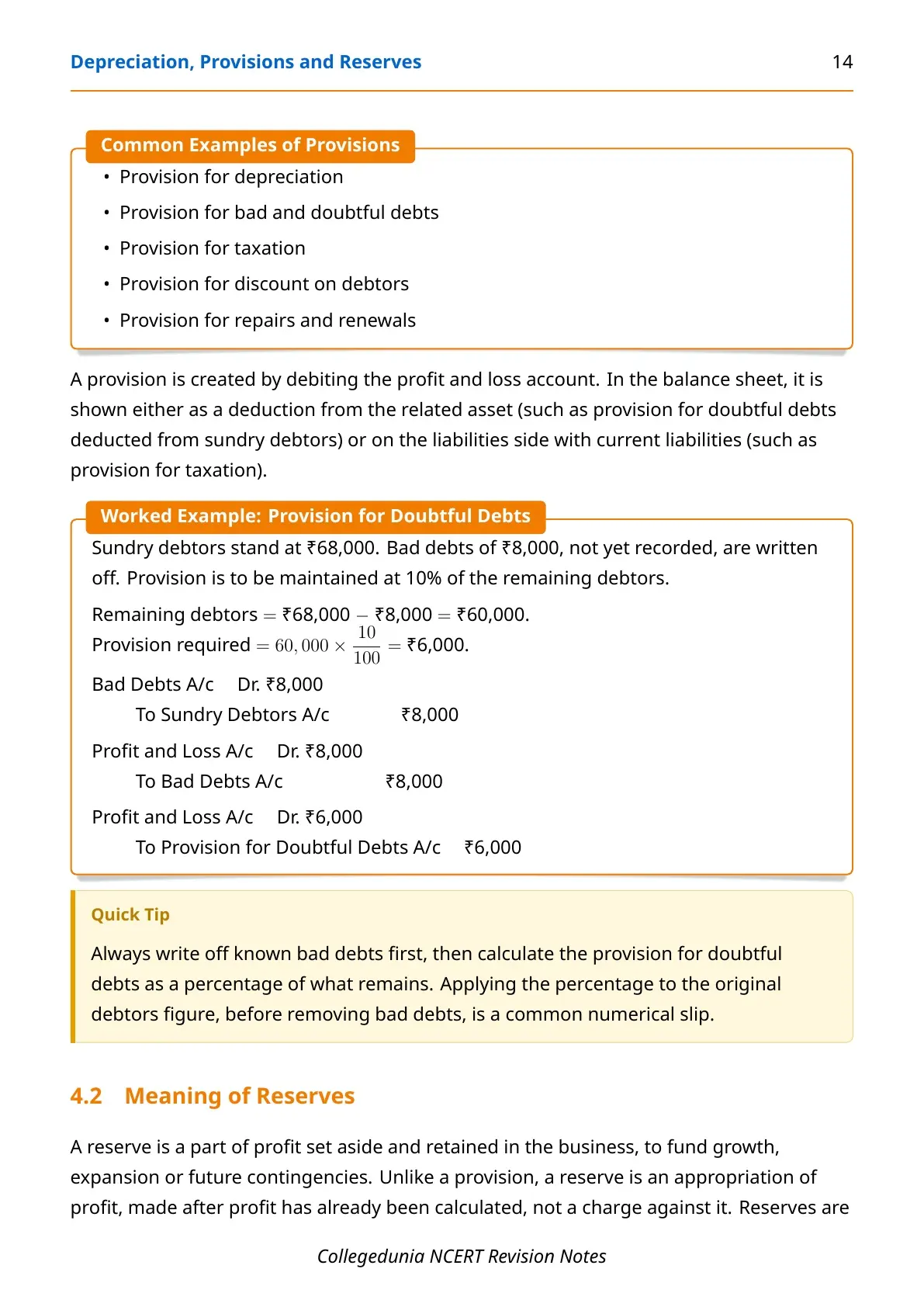
| Provision for doubtful debts | Debtors who may not pay in full |
| Provision for taxation | Tax liability for the current year |
A provision is created by debiting the profit and loss account. It is a charge against profit, so it must be made even when the business has no profit at all.
Reserves and the Five Types Every Student Should Know
A reserve is a part of profit retained in the business to fund growth or meet future contingencies. Unlike a provision, a reserve is an appropriation made only after profit has already been calculated.
| Type of Reserve | What It Means |
|---|---|
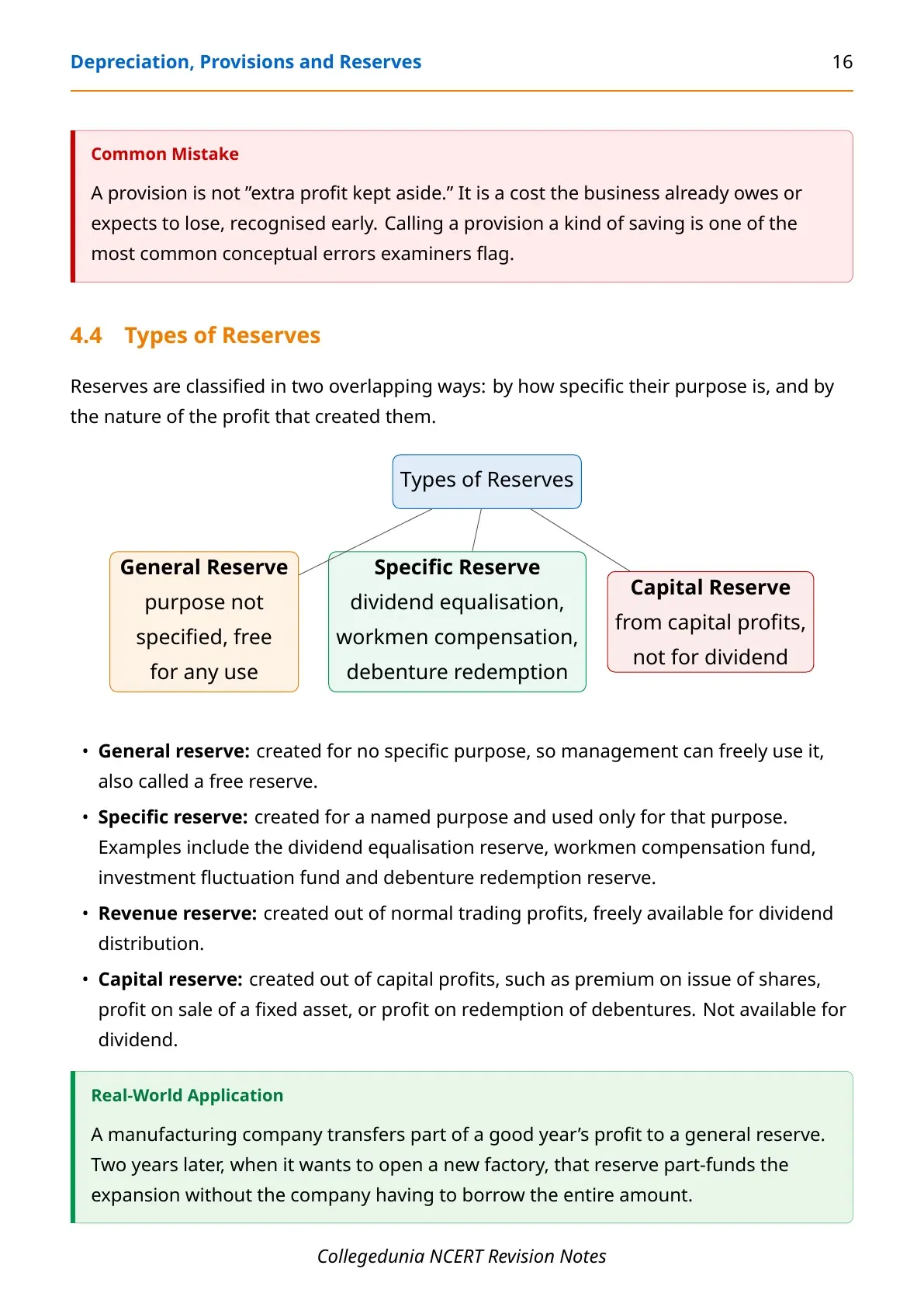
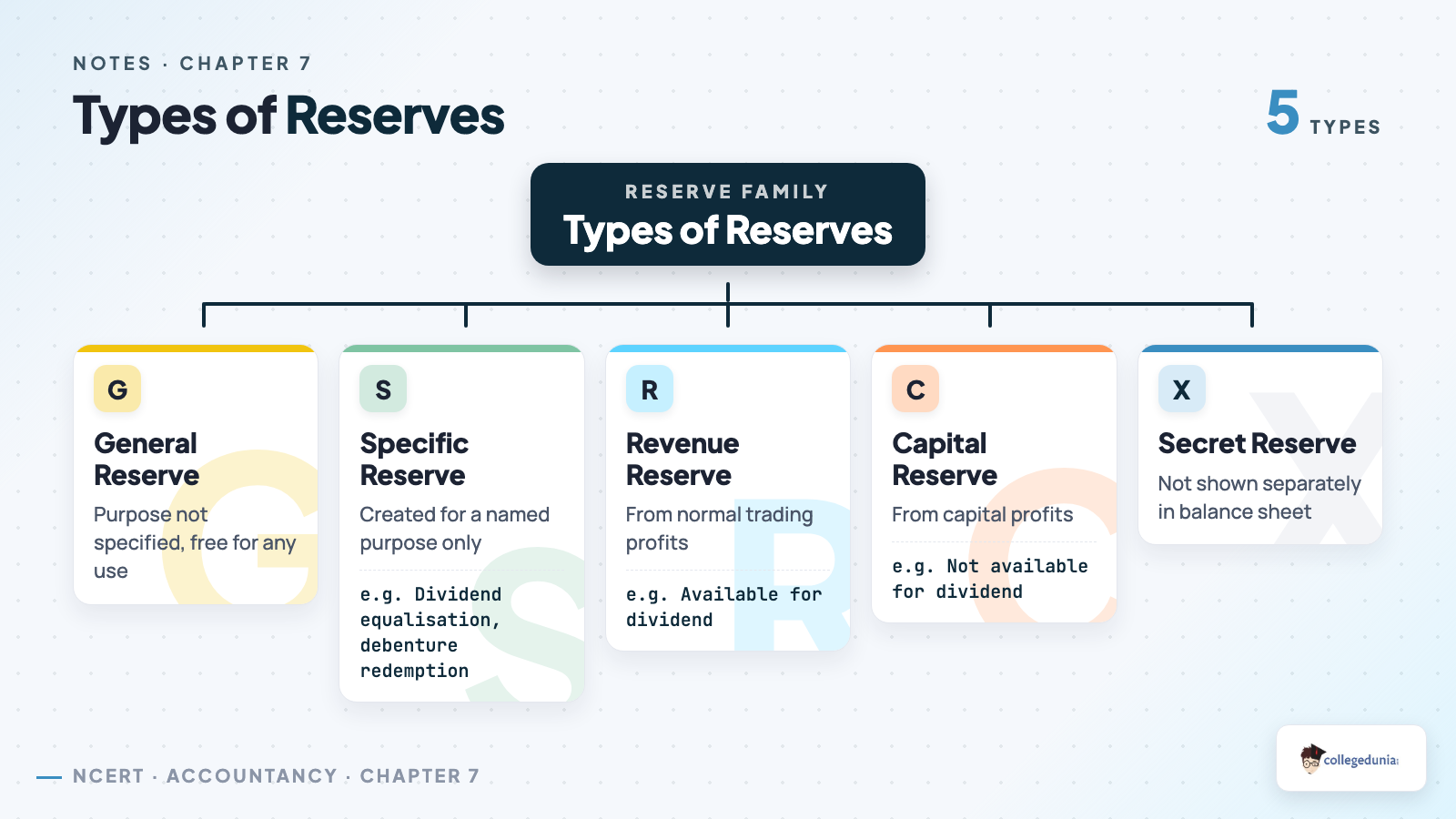
| General reserve | Purpose not specified, free for any use, also called a free reserve |
| Specific reserve | Created for a named purpose, such as dividend equalisation or debenture redemption |
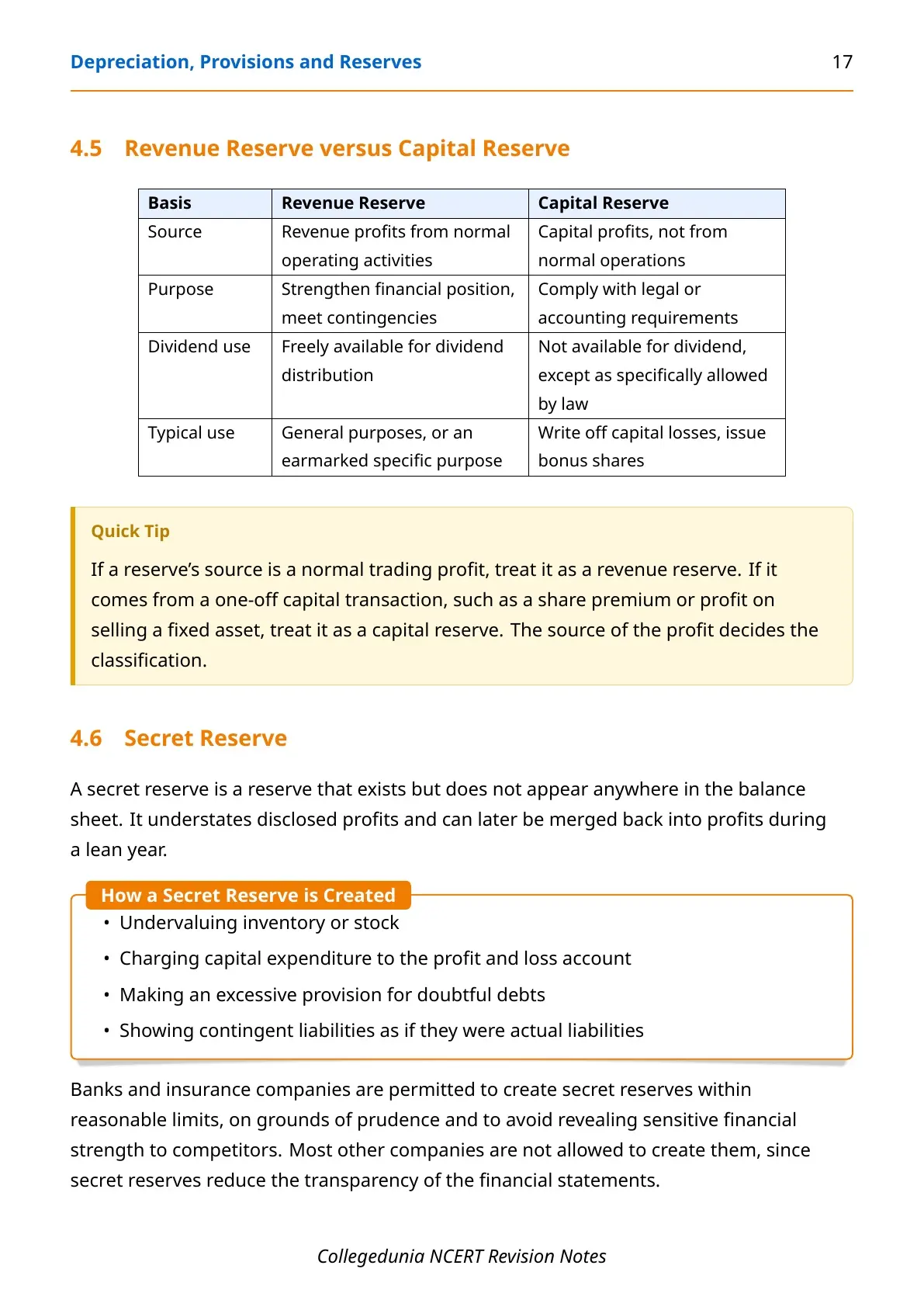
| Revenue reserve | From normal trading profits, available for dividend |
| Capital reserve | From capital profits, such as premium on issue of shares, not available for dividend |
| Secret reserve | Exists but does not appear separately in the balance sheet |
A secret reserve can be created by undervaluing stock, charging capital expenditure to profit and loss, or making an excessive provision for doubtful debts. Banks and insurers are permitted to hold one within reasonable limits.
Provisions vs Reserves: The Difference CBSE Tests Most
Provisions and reserves are the two ideas students confuse most in this chapter, and the CBSE paper tests the difference almost every year.
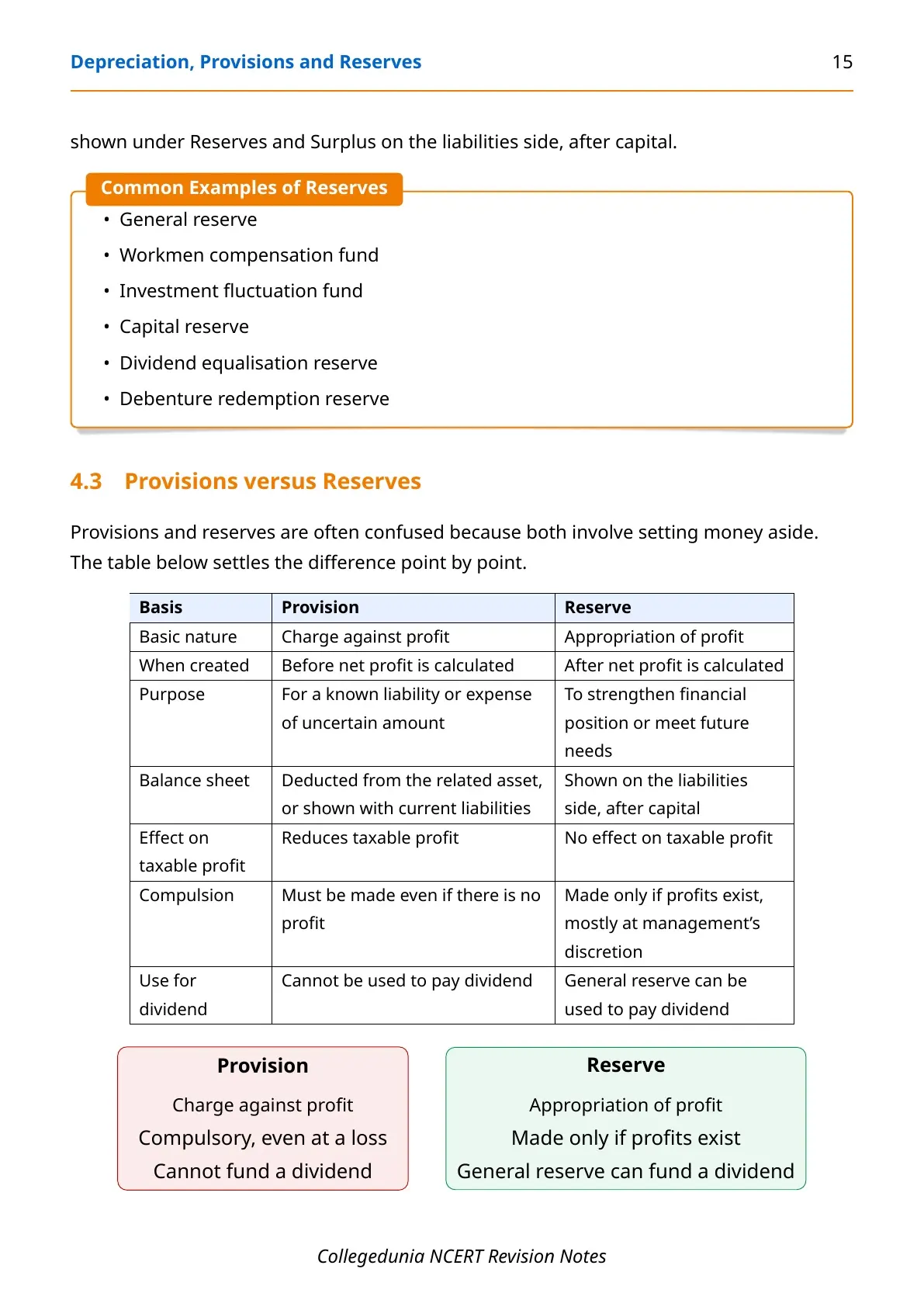
| Basis | Provision | Reserve |
|---|---|---|
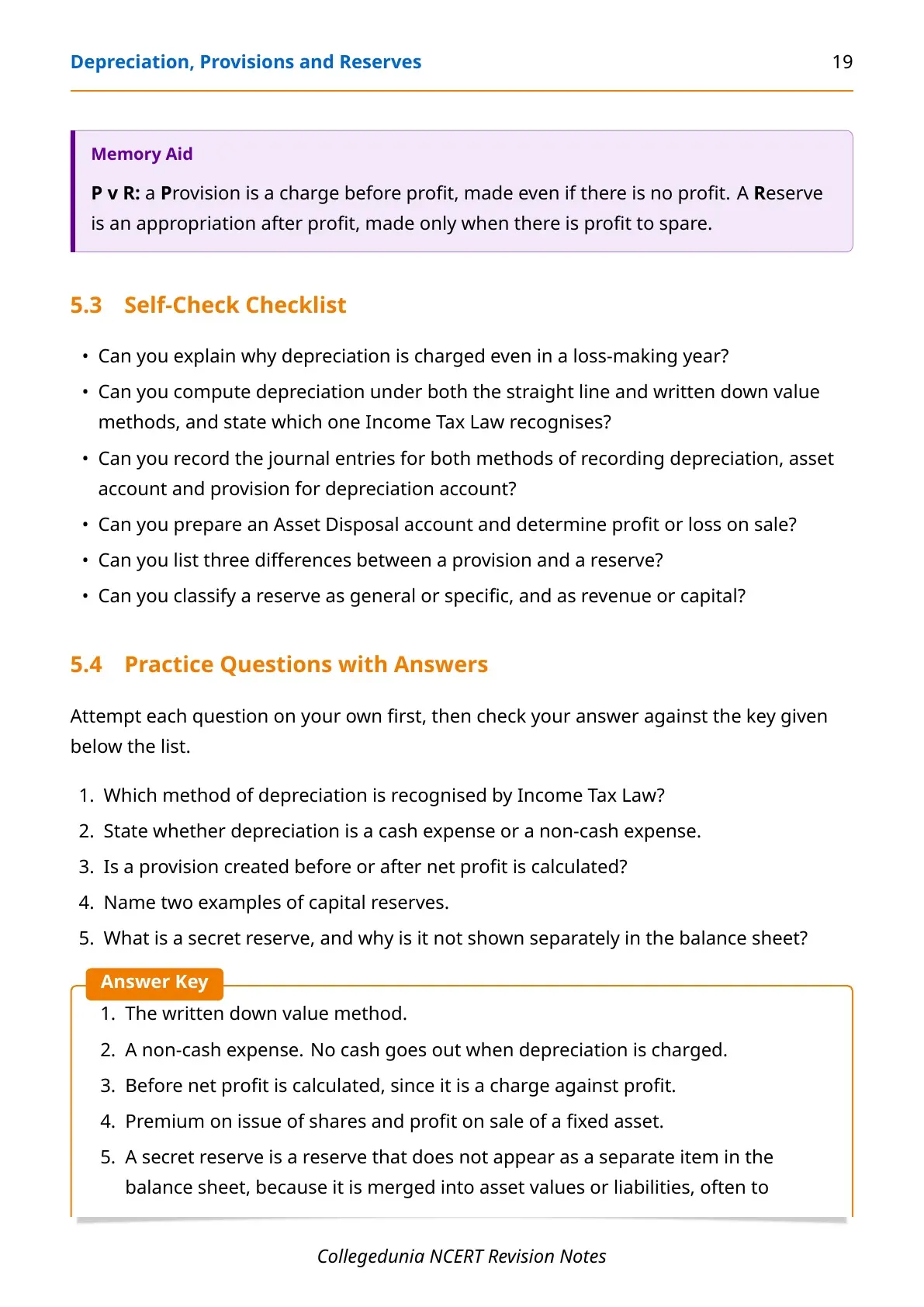
| Basic nature | Charge against profit | Appropriation of profit |
| When created | Before net profit is known | After net profit is known |
| Compulsion | Made even at a loss | Made only when profit exists |
| Use for dividend | Cannot fund a dividend | General reserve can fund a dividend |
A provision is not extra profit kept aside, it is a cost the business already owes or expects to lose. Calling a provision a kind of saving is one of the most common conceptual errors CBSE examiners flag.
Depreciation, Provisions and Reserves Topic-wise Weightage for CBSE Class 11
The NCERT Notes Class 11 Accountancy Chapter 7 Depreciation, Provisions and Reserves page tracks exactly where the marks come from. The Straight Line vs Written Down Value numerical is the most predictable question this chapter sends into the board paper, since it can test both methods on one asset.
| Sub-topic | Weightage | CBSE Frequency |
|---|---|---|
| Straight Line vs Written Down Value numerical | High | Almost every year |
| Asset Disposal Account numerical | Medium | 3 out of last 5 years |
| Provisions vs Reserves distinction (theory) | Medium | 2-3 out of last 5 years |
| Types of reserves (theory) | Low | 1-2 out of last 5 years |
Important Formulas and Rules to Remember
These are the exact rules this chapter is built on. Keep this box open while practising the depreciation numericals.
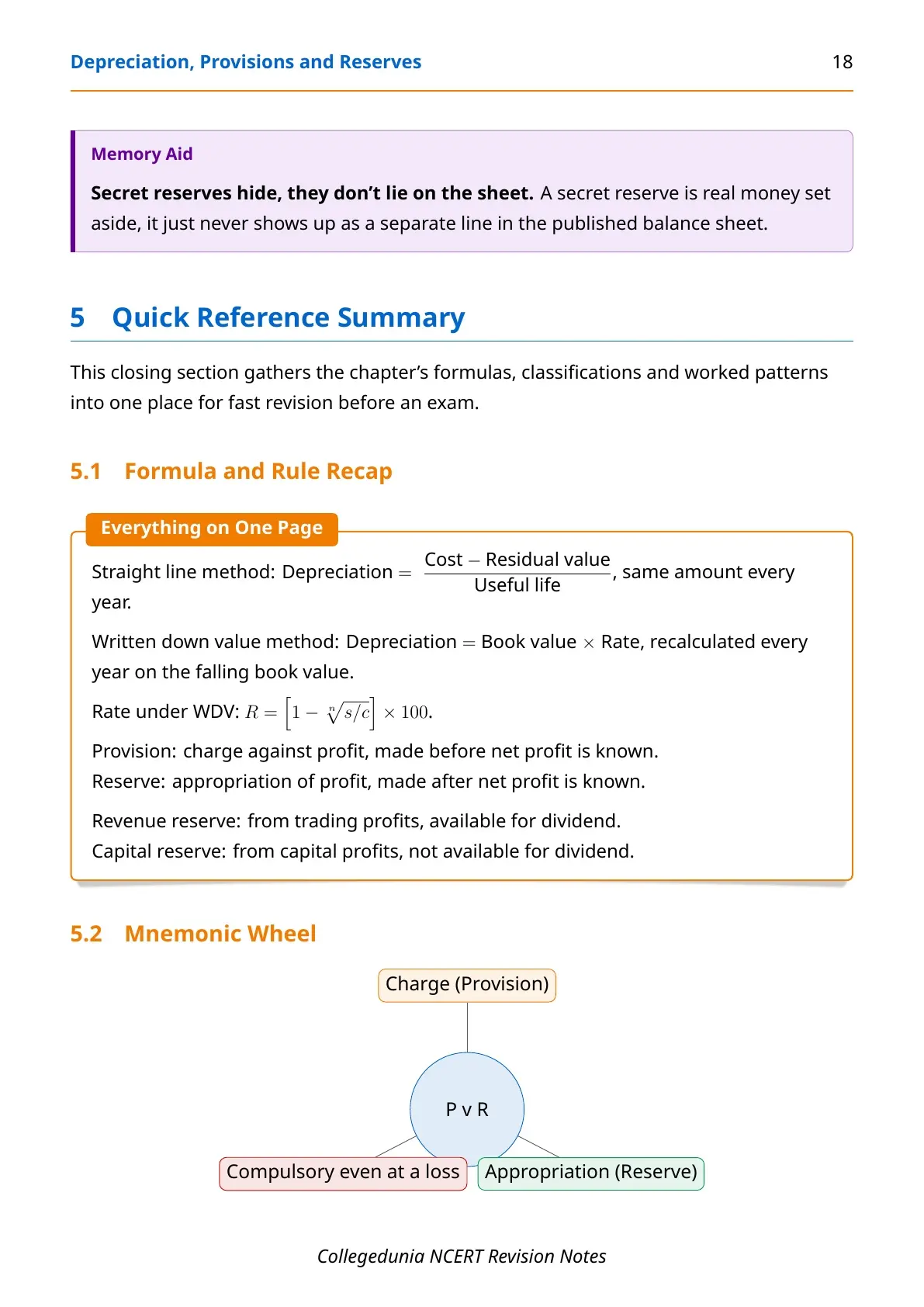
- Straight Line Method: Depreciation = (Cost of asset minus Estimated net residual value) divided by Estimated useful life.
- Written Down Value Method: Depreciation = Book value at the start of the year multiplied by the rate of depreciation.
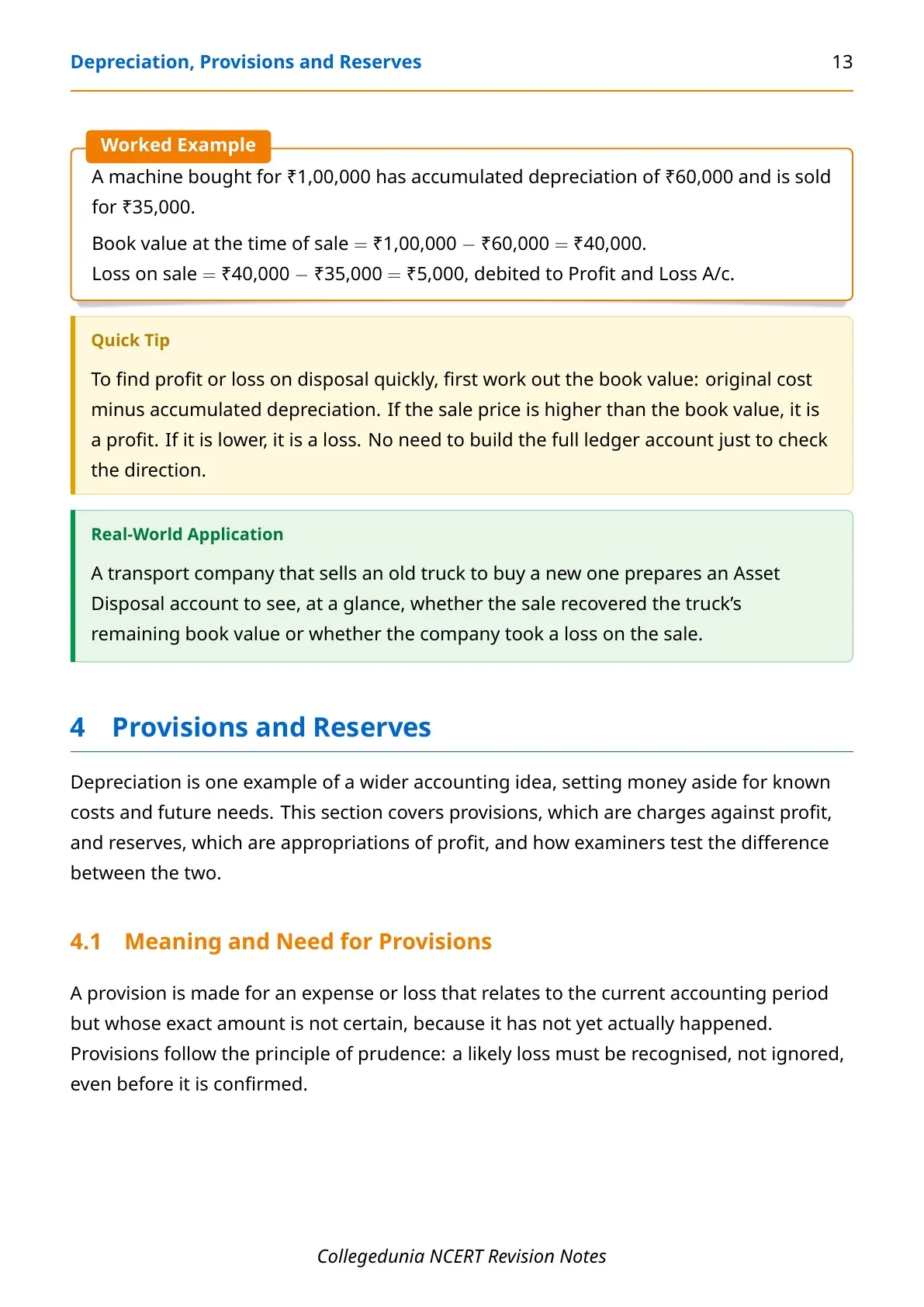
- Asset Disposal: Book value = Original cost minus Accumulated depreciation; compare against sale price for profit or loss.
- Provision: a charge against profit, made before profit is known. Reserve: an appropriation of profit, made after profit is known.
Common Mistakes Students Make in the Depreciation, Provisions and Reserves Chapter
| Mistake | Fix |
|---|---|
| Treating depreciation as a fall in market value | It represents the cost of the asset used up, not a valuation exercise |
| Applying the Written Down Value rate to the original cost every year | The rate always applies to the book value at the start of that year |
| Crediting depreciation to the asset account when a Provision account exists | Once a Provision for Depreciation account exists, every year's charge goes there |
| Calling a provision a kind of saving | A provision is a known cost recognised early, not extra profit set aside |
Key Accounting Terms Glossary for Depreciation, Provisions and Reserves
The NCERT Notes Class 11 Accountancy Chapter 7 Depreciation, Provisions and Reserves page ends every study session with this quick glossary, useful for a same-day revision pass.
| Term | Meaning |
|---|---|
| Depreciation | Permanent, gradual fall in the book value of a fixed asset |
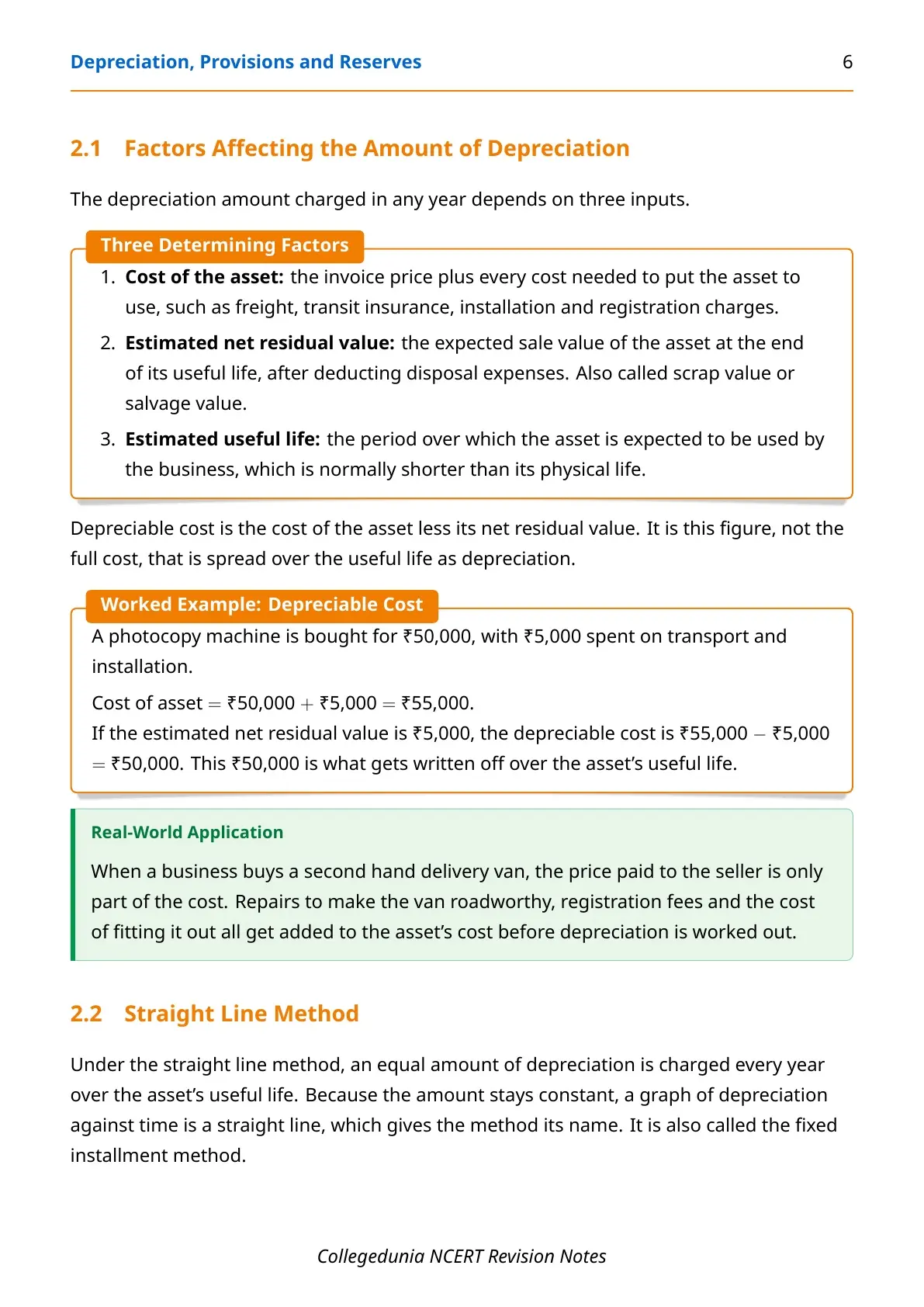
| Depreciable cost | Cost of the asset minus its estimated net residual value |
| Provision | A charge against profit for a known liability of uncertain amount |
| Reserve | An appropriation of profit, made to strengthen the business or meet future needs |
| Secret reserve | A reserve that does not appear as a separate item in the balance sheet |
| Asset Disposal Account | An account that brings cost, depreciation and sale proceeds together to find profit or loss on sale |
How Collegedunia's Notes Help You With Depreciation, Provisions and Reserves
The NCERT Notes Class 11 Accountancy Chapter 7 Depreciation, Provisions and Reserves on this page are built to match how Class 11 board papers actually test this chapter.
- 2026-27 NCERT Alignment: Every formula and rule matches the current NCERT print.
- Both Methods Compared Side by Side: Straight Line and Written Down Value, each with a solved example.
- Provisions vs Reserves, Settled: A single table that answers the exact distinction CBSE tests.
- Quick Recall Boxes: The four depreciation formulas and a mnemonic for last-day revision.
Depreciation, Provisions and Reserves Class 11 Accountancy Resources
Besides the NCERT Notes on this page, every other resource type for this chapter sits in one place below.
| Resource | Status |
|---|---|
| Depreciation, Provisions and Reserves Class 11 Notes | You are reading this page |
| Depreciation, Provisions and Reserves Class 11 Handwritten Notes | Available now |
| Depreciation, Provisions and Reserves Class 11 NCERT Solutions | (coming soon) |
| Depreciation, Provisions and Reserves Class 11 NCERT Book PDF | (coming soon) |
NCERT Notes for Class 11 Accountancy: All Chapters
Jump to the notes for any other Class 11 Accountancy chapter.
| Chapter | Notes |
|---|---|
| Chapter 1 | Introduction to Accounting |
| Chapter 2 | Theory Base of Accounting |
| Chapter 3 | Recording of Transactions-I |
| Chapter 4 | Recording of Transactions-II |
| Chapter 5 | Bank Reconciliation Statement |
| Chapter 6 | Trial Balance and Rectification of Errors |
| Chapter 7 | Depreciation, Provisions and Reserves (this page) |
| Chapter 8 | Financial Statements - I (coming soon) |
Depreciation, Provisions and Reserves Class 11 Accountancy Notes FAQs
Ques. What is depreciation in Class 11 Accountancy Chapter 7?
Ans. Depreciation is the permanent, continuing and gradual fall in the book value of a fixed asset, caused by use, the passage of time or obsolescence. It is charged against revenue every accounting year, even if the business makes no profit.
Ques. What is the formula for the Straight Line Method of depreciation?
Ans. Depreciation equals the cost of the asset minus its estimated net residual value, divided by the estimated useful life of the asset. The amount stays the same every year.
Ques. Which depreciation method is recognised by Income Tax Law?
Ans. The Written Down Value Method is recognised by Income Tax Law. The Straight Line Method is not recognised for tax purposes, though both are used in business accounting.
Ques. What is the difference between a provision and a reserve?
Ans. A provision is a charge against profit, made for a known liability or loss of uncertain amount, even if there is no profit. A reserve is an appropriation of profit, made only after net profit has already been calculated.
Ques. What are the types of reserves covered in this chapter?
Ans. General reserve, specific reserve, revenue reserve, capital reserve and secret reserve. General and specific reserves are classified by purpose, while revenue and capital reserves are classified by the source of profit.
Ques. What is a secret reserve?
Ans. A secret reserve is a reserve that does not appear as a separate item in the balance sheet, often created by undervaluing stock or making an excessive provision. Banks and insurers may hold one within reasonable limits.
Ques. How is an Asset Disposal Account prepared?
Ans. The original cost of the asset sold is debited to the Asset Disposal Account, the accumulated depreciation and the sale proceeds are credited to it, and the balancing figure shows the profit or loss on sale.
Ques. What are the two ways of recording depreciation in the books?
Ans. Charging depreciation directly to the asset account, or creating a separate Provision for Depreciation account while the asset stays at its original cost. Both are covered in the 2026-27 NCERT.
Ques. Are these Class 11 Accountancy notes aligned with the 2026-27 NCERT?
Ans. Yes. These notes follow the current 2026-27 NCERT print for Class 11 Accountancy Chapter 7, Depreciation, Provisions and Reserves, including both depreciation methods and every type of reserve the textbook covers.
Ques. How many pages is the Class 11 Accountancy Chapter 7 Notes PDF?
Ans. The Notes PDF runs to 20 pages and covers the meaning and causes of depreciation, both depreciation methods, both recording methods, asset disposal, provisions, reserves and a quick-recall summary.
Ques. What are the causes of depreciation?
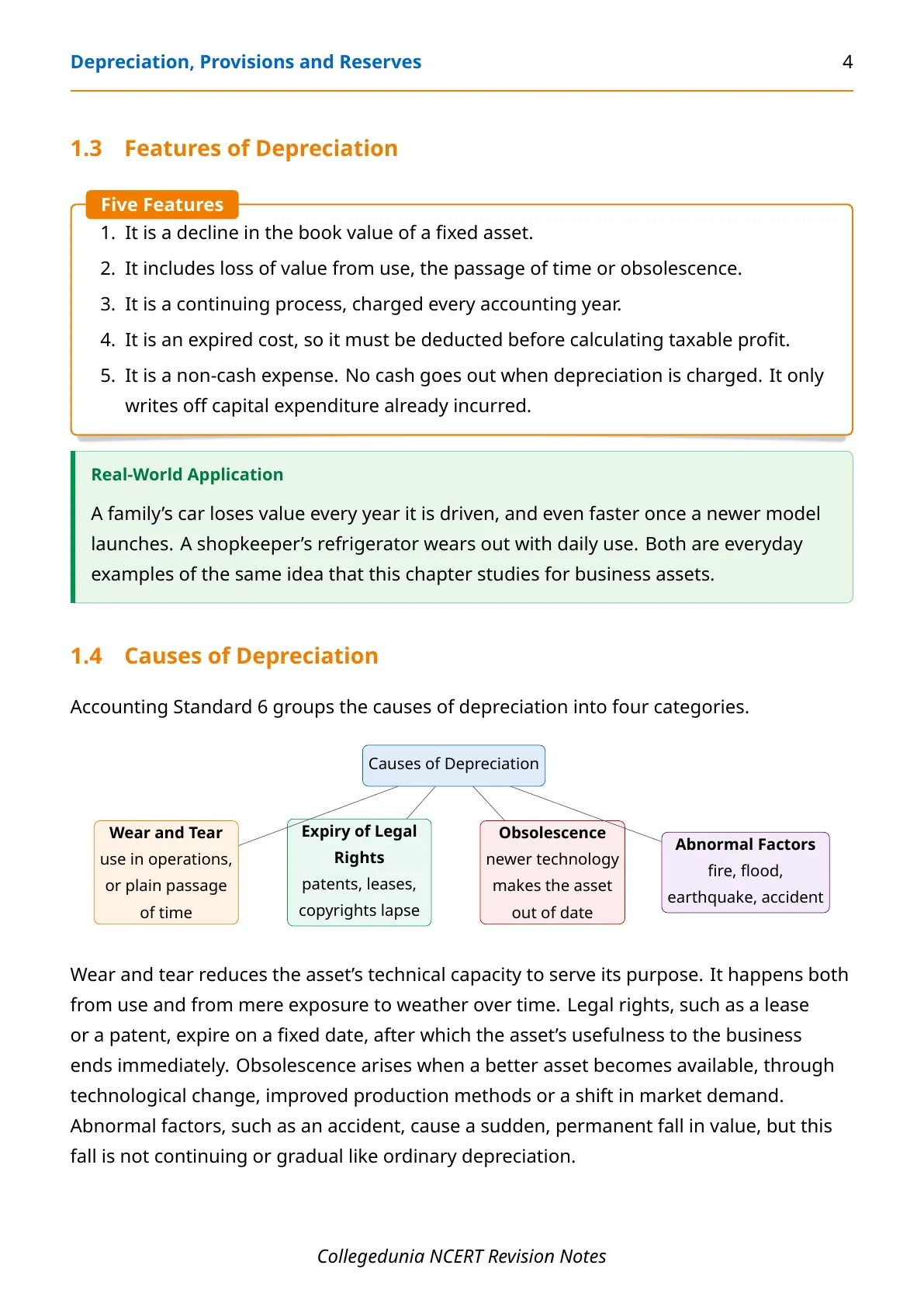
Ans. Wear and tear from use or the passage of time, expiry of legal rights such as a lease or patent, obsolescence from newer technology, and abnormal factors such as fire, flood or an accident.
Ques. What are examples of provisions in accountancy?
Ans. Provision for depreciation, provision for doubtful debts, provision for taxation, provision for discount on debtors, and provision for repairs and renewals are the most common examples tested in Class 11 Accountancy.



Comments