




NCERT Handwritten Notes for Class 7 Arts (Kriti) Chapter 16 Nature's Palette have been carefully prepared for quick revision, according to the 2026-27 NCERT syllabus. The PDF covers colour wheel practice, primary and secondary colours, tertiary colours, tints, shades, tones, plant study and miniature painting palettes.
- Download a 22-page handwritten revision PDF for Class 7 Arts Chapter 16.
- Revise Activity 16.1 to Activity 16.4 with simple colour checkpoints.
- Use the notes before an art file review, class activity or school test.
These Class 7 Arts Chapter 16 handwritten revision notes follow the 2026-27 NCERT Kriti textbook and keep the colour-mixing activities easy to revise.
Chapter16Nature’sPaletteHandwrittenNotes.pdf?page=1&dpi=150)
Chapter16Nature’sPaletteHandwrittenNotes.pdf?page=2&dpi=150)
Chapter16Nature’sPaletteHandwrittenNotes.pdf?page=3&dpi=150)
Chapter16Nature’sPaletteHandwrittenNotes.pdf?page=4&dpi=150)
Chapter16Nature’sPaletteHandwrittenNotes.pdf?page=5&dpi=150)
Chapter16Nature’sPaletteHandwrittenNotes.pdf?page=6&dpi=150)
Chapter16Nature’sPaletteHandwrittenNotes.pdf?page=7&dpi=150)
Chapter16Nature’sPaletteHandwrittenNotes.pdf?page=8&dpi=150)
Chapter16Nature’sPaletteHandwrittenNotes.pdf?page=9&dpi=150)
Chapter16Nature’sPaletteHandwrittenNotes.pdf?page=10&dpi=150)
Chapter16Nature’sPaletteHandwrittenNotes.pdf?page=11&dpi=150)
Chapter16Nature’sPaletteHandwrittenNotes.pdf?page=12&dpi=150)
Chapter16Nature’sPaletteHandwrittenNotes.pdf?page=13&dpi=150)
Chapter16Nature’sPaletteHandwrittenNotes.pdf?page=14&dpi=150)
Chapter16Nature’sPaletteHandwrittenNotes.pdf?page=15&dpi=150)
Chapter16Nature’sPaletteHandwrittenNotes.pdf?page=16&dpi=150)
Chapter16Nature’sPaletteHandwrittenNotes.pdf?page=17&dpi=150)
Chapter16Nature’sPaletteHandwrittenNotes.pdf?page=18&dpi=150)
Chapter16Nature’sPaletteHandwrittenNotes.pdf?page=19&dpi=150)
Chapter16Nature’sPaletteHandwrittenNotes.pdf?page=20&dpi=150)
Chapter16Nature’sPaletteHandwrittenNotes.pdf?page=21&dpi=150)
Chapter16Nature’sPaletteHandwrittenNotes.pdf?page=22&dpi=150)
Nature's Palette Chapter Snapshot
Nature's Palette explains how light changes the way colours appear. A tomato can look bright in sunlight and dull in a dim room. The chapter then moves from observation to colour mixing.
The main revision chain is light, colour wheel, tint, shade, tone, plant study and miniature palette. This order covers the whole chapter without making the activity steps feel scattered.
| Topic | What to Remember | Activity Link |
|---|---|---|
| Colour wheel | Primary, secondary and tertiary colours | Activity 16.1 |
| Tints, shades, tones | White, black and grey change a colour | Activity 16.2 |
| Plant study | Observe shape, colour, light and shadow | Activity 16.3 |
Colour Wheel Practice in Nature's Palette
The colour wheel begins with yellow, red and blue. These are primary colours because they cannot be made by mixing other colours. Secondary colours come from mixing two primary colours.
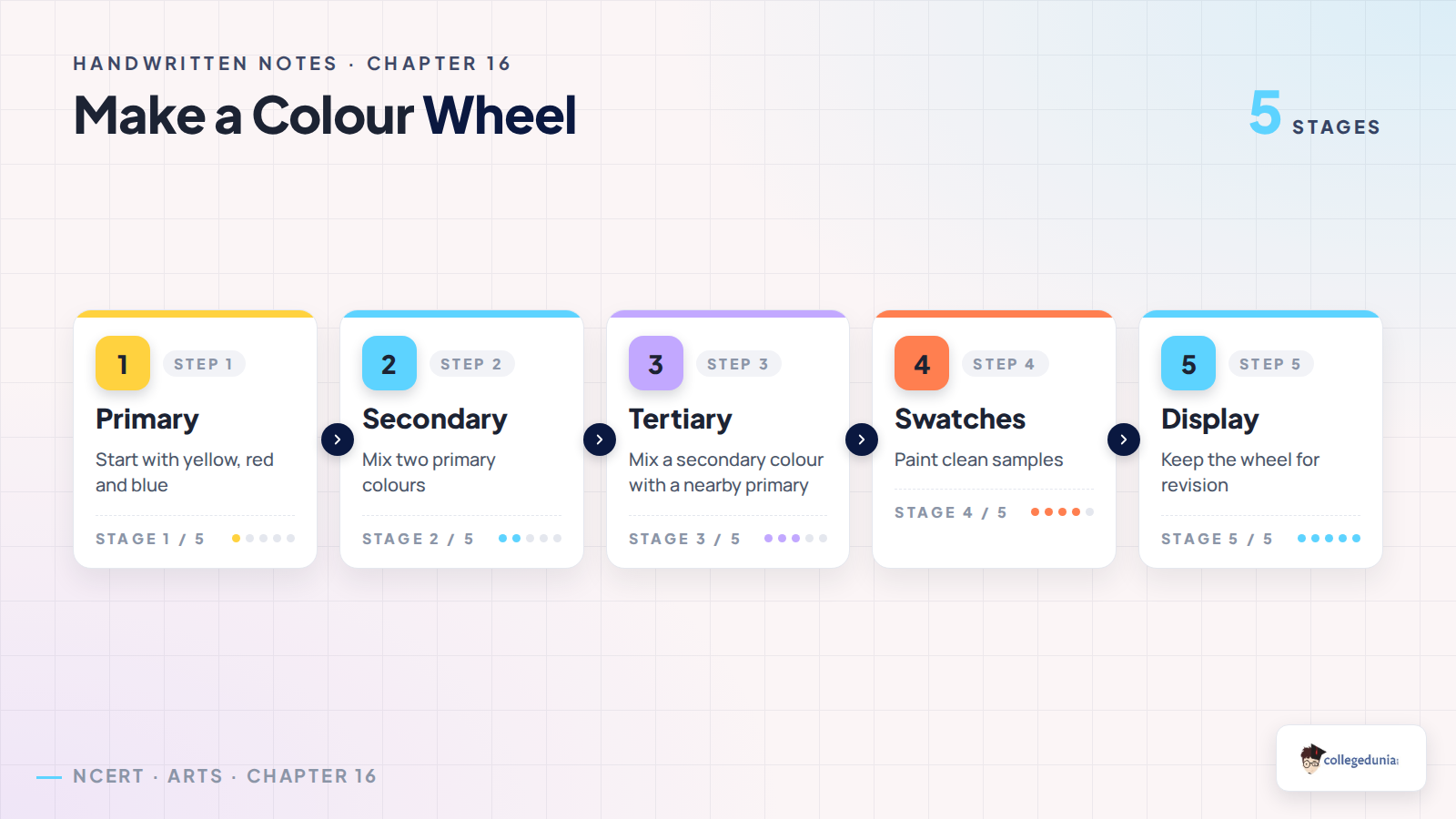
- Yellow plus red gives orange.
- Red plus blue gives purple.
- Blue plus yellow gives green.
- Tertiary colours are made by mixing a secondary colour with a nearby primary colour.
Tip: while making the colour wheel, mix only small amounts first. Clean water and clean brushes keep each swatch fresh.
Tints, Shades and Tones in Class 7 Arts
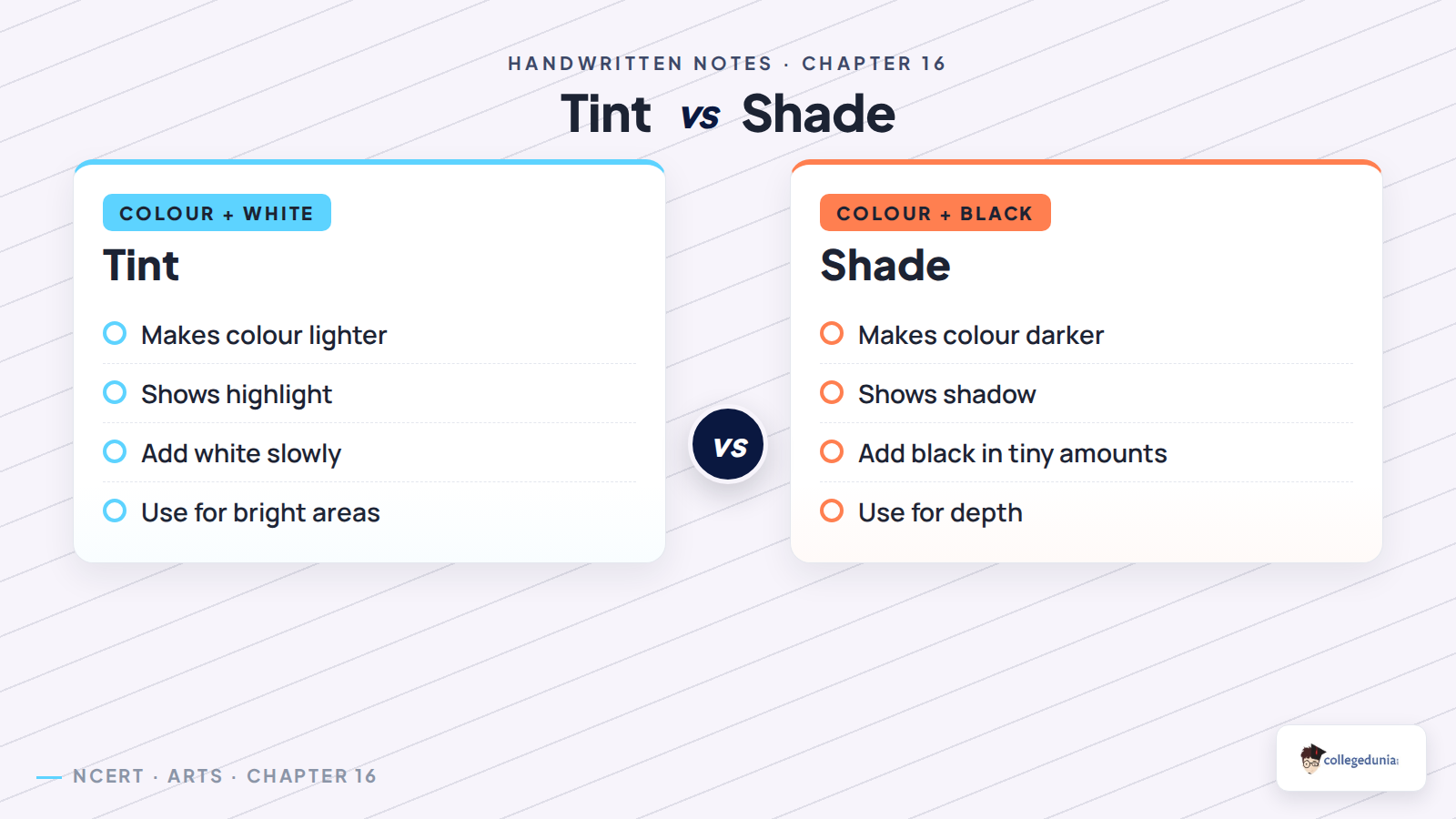
Activity 16.2 asks students to make gradations. A tint is made by adding white. A shade is made by adding black. A tone is made by adding grey, which comes from black and white.
| Colour Change | Mix With | Use in Artwork |
|---|---|---|
| Tint | White | Highlights and lighter areas |
| Shade | Black | Shadow and depth |
| Tone | Grey | Soft and natural colour areas |
Plant Study and Miniature Painting Colours
In the plant study activity, students choose a stem, leaf or flower and draw it from observation. They then add colour by matching the plant's shades, tints and tones.
The chapter also explains Indian miniature paintings. Artists used natural colour sources such as sindhoor, geru, malachite, lapis lazuli, indigo, carbon and khariya. Many colours were mixed with gum from the Babul tree as a binder.
- Plant study checks observation, proportion and colour matching.
- Miniatures show how fine details can carry mood and season.
- Clean brushes, closed caps and organised storage protect art materials.
Nature's Palette Video Lesson
The video below can be used as a quick support lesson for revising the Class 7 Arts (Kriti) textbook before reading the handwritten notes.
Source: Prof.Analysis on YouTube
Related NCERT Class 7 Arts (Kriti) Resources
Use these related resources when you want the official book chapter or nearby handwritten notes from the same Arts (Kriti) visual arts unit.
| Resource | Link |
|---|---|
| NCERT Book PDF | Class 7 Arts Chapter 16 NCERT Book PDF |
| Previous Chapter | Class 7 Arts Chapter 15 Handwritten Notes |
| Next Chapter | Class 7 Arts Chapter 17 Handwritten Notes |
All Chapters for Class 7 Arts (Kriti) Handwritten Notes
| Chapter | Handwritten Notes |
|---|---|
| Chapter 12 Dance, You and Creativity | Download Notes |
| Chapter 13 Personalities | Download Notes |
| Chapter 14 Natya | Download Notes |
| Chapter 15 Objects in Icons and Symbols | Download Notes |
FAQs on NCERT Class 7 Arts Chapter 16 Handwritten Notes
Ques. What is covered in Class 7 Arts Chapter 16 Nature's Palette?
Ans. The chapter covers colour visibility, colour wheel practice, primary colours, secondary colours, tertiary colours, tints, shades, tones, plant study and miniature painting palettes.
Ques. What are the primary colours in Nature's Palette?
Ans. The primary colours are yellow, red and blue. These colours cannot be made by mixing other colours.
Ques. What is the difference between tint, shade and tone?
Ans. A tint is made by adding white. A shade is made by adding black. A tone is made by adding grey.
Ques. Why are miniature paintings discussed in Nature's Palette?
Ans. Miniature paintings show how artists used natural pigments, fine brushes, mood, season and detail to create rich colour effects.



Comments