




These Class 12 Sociology Chapter 2 Cultural Change Handwritten Notes turn the chapter into clean, handwritten pages on sanskritisation, westernisation, modernisation and secularisation, set to the 2026-27 CBSE syllabus. The boxed terms and underlined points make them ideal for a last, fast revision from the Social Change and Development in India book.
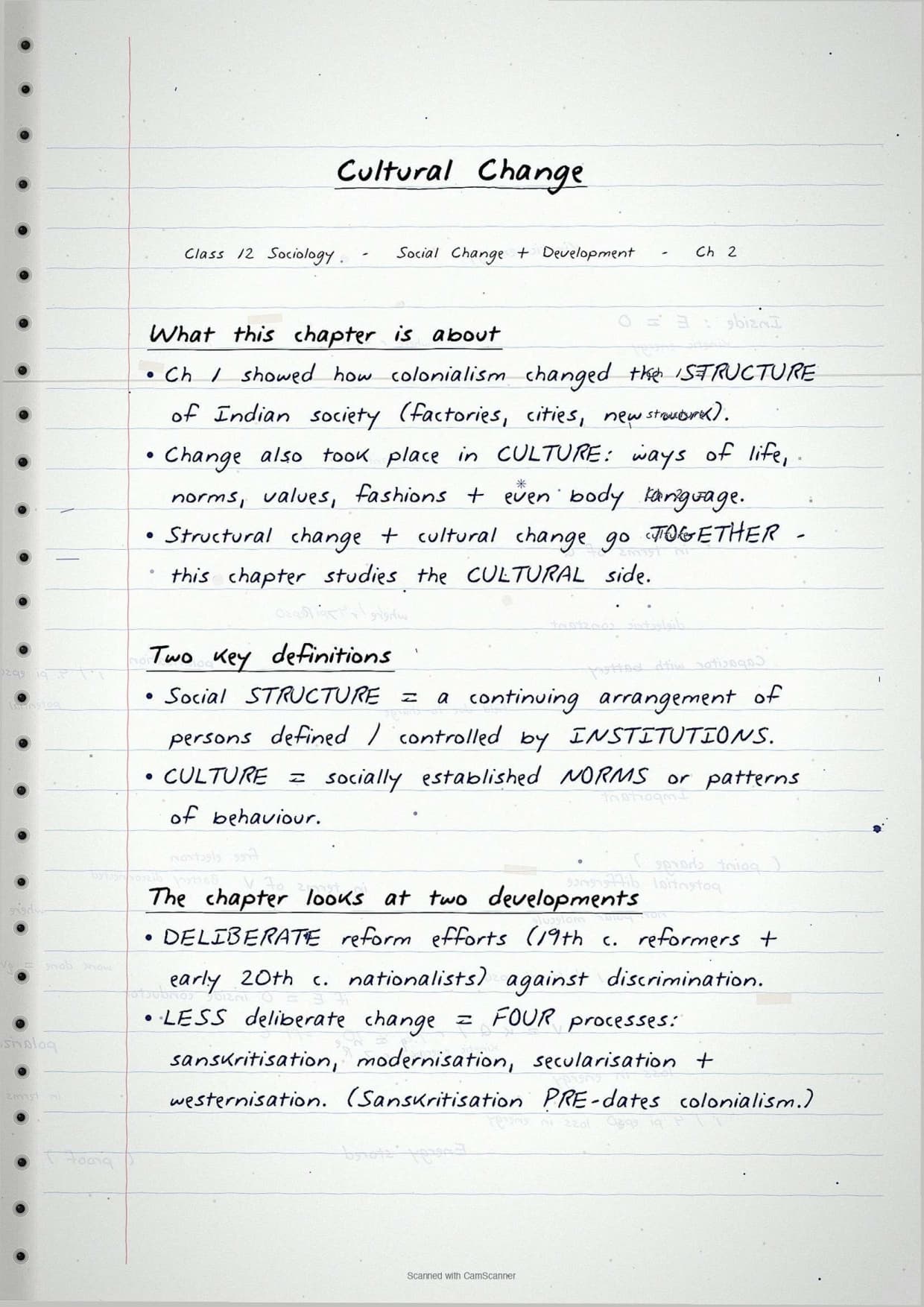
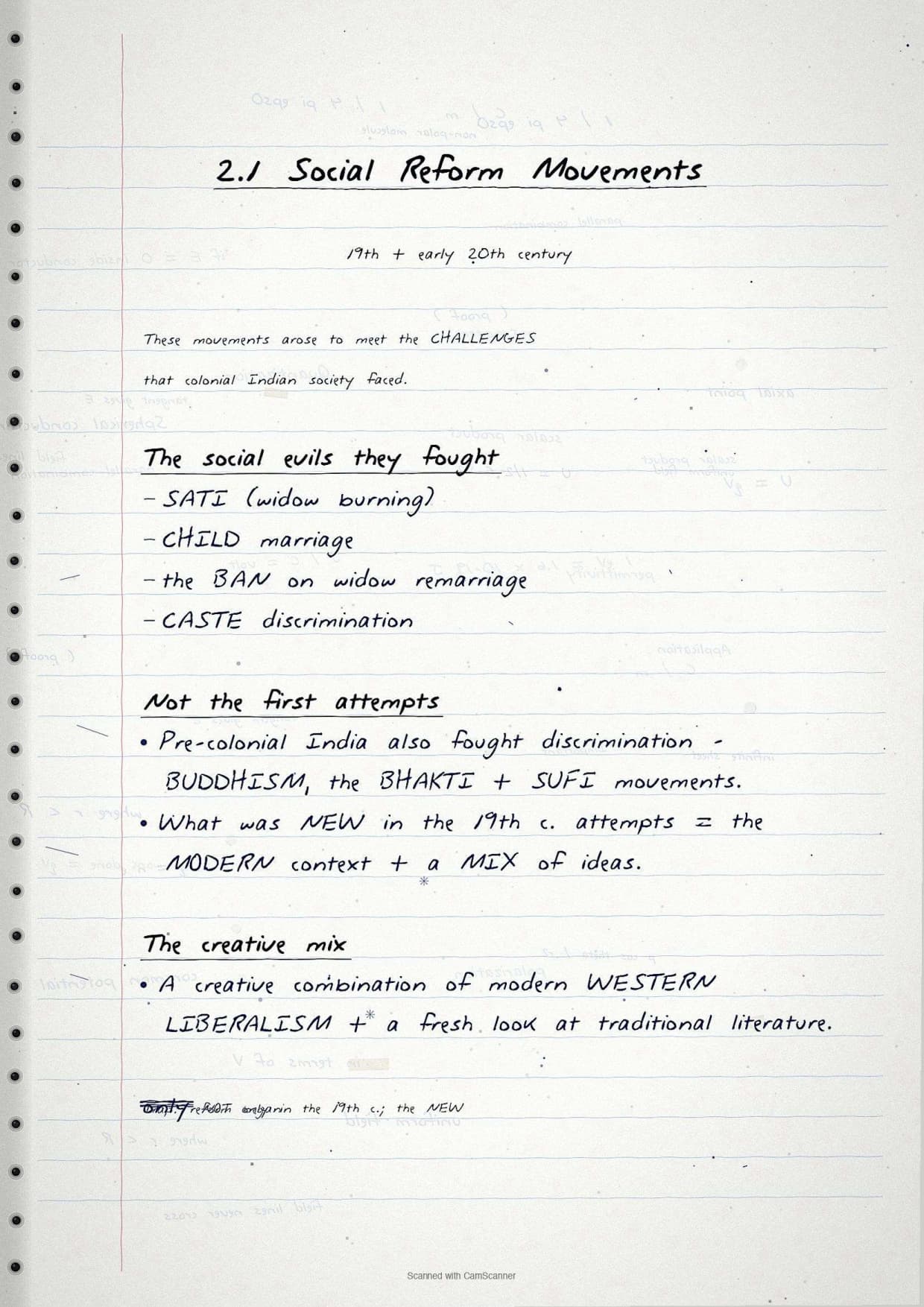
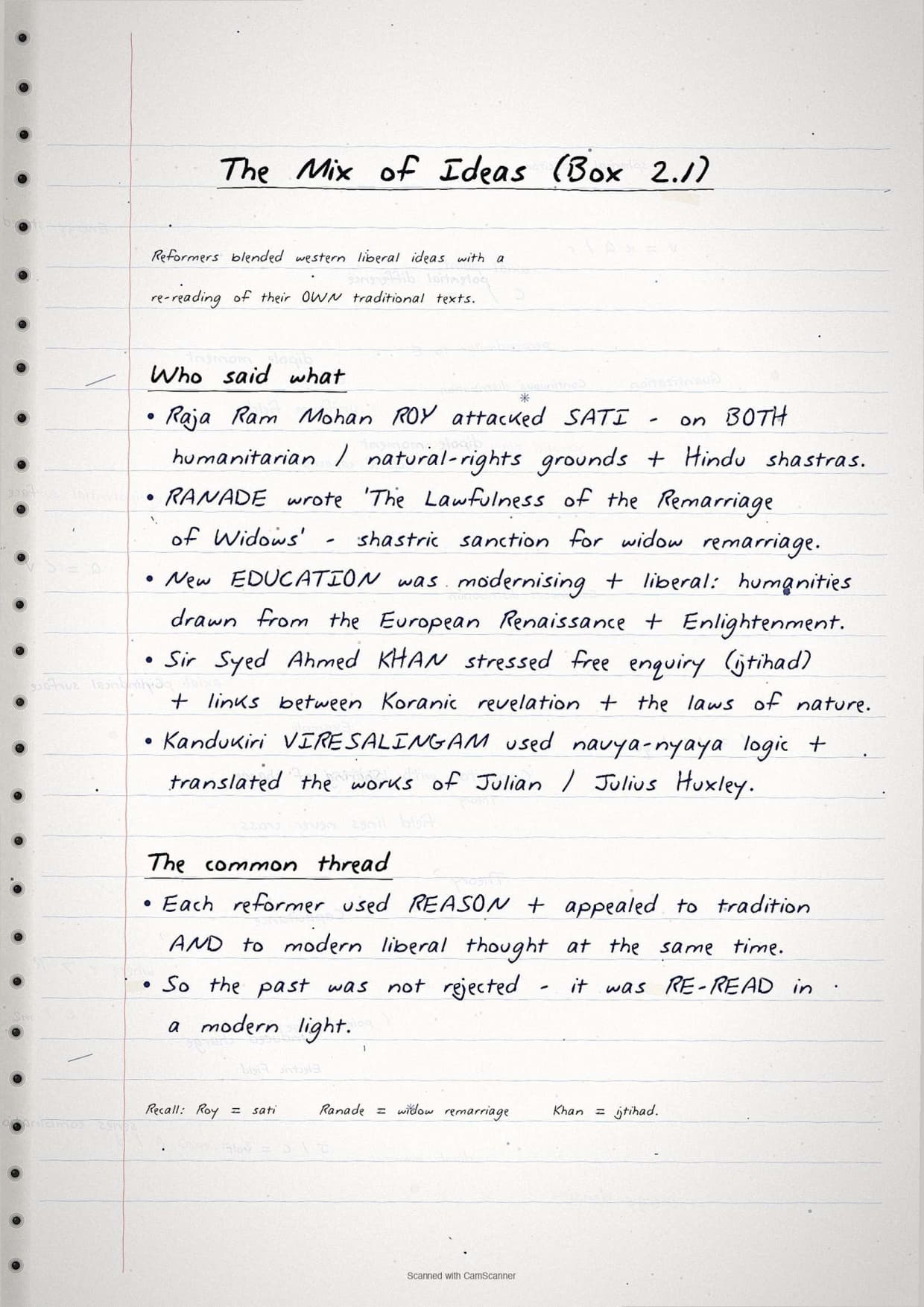
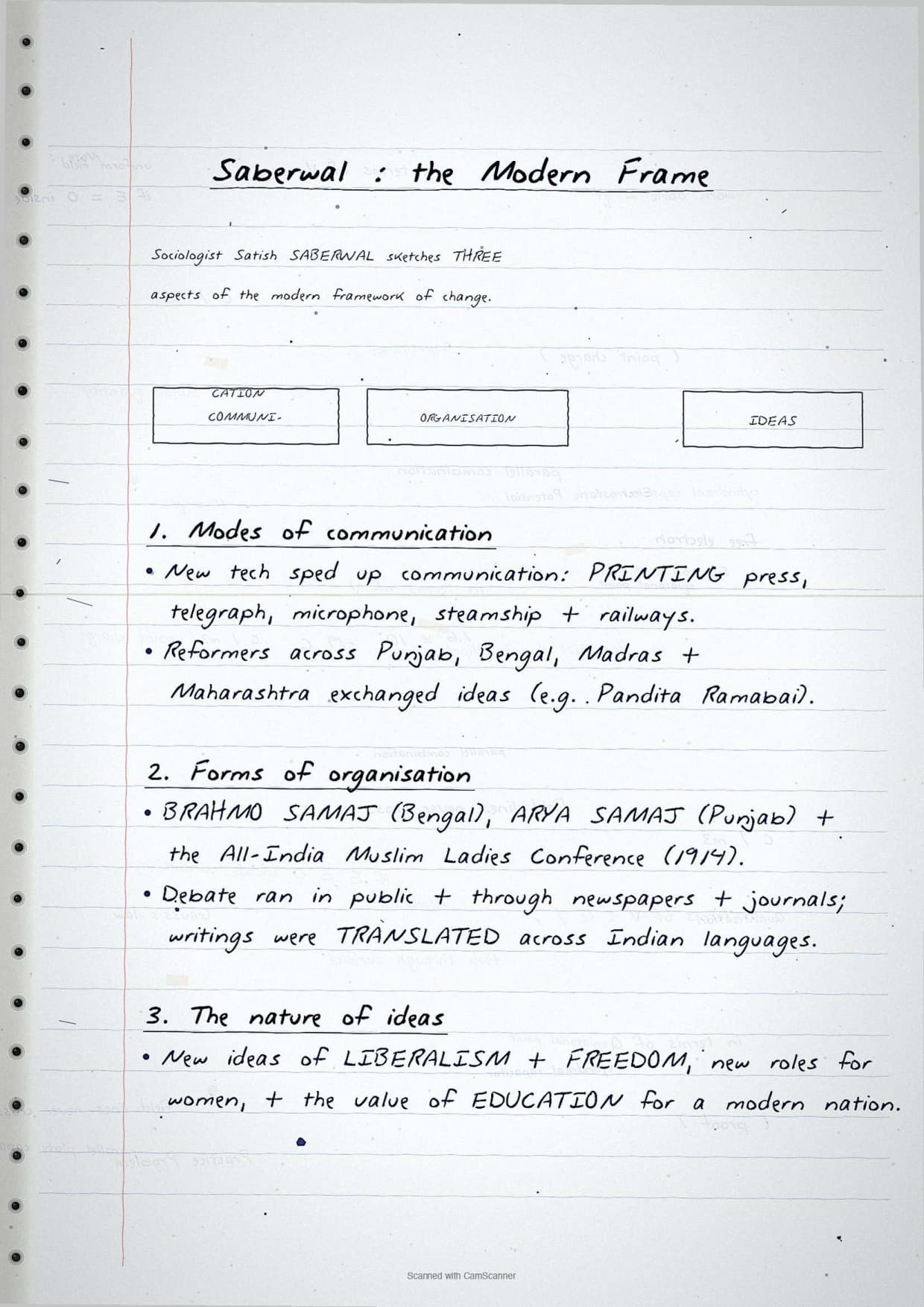
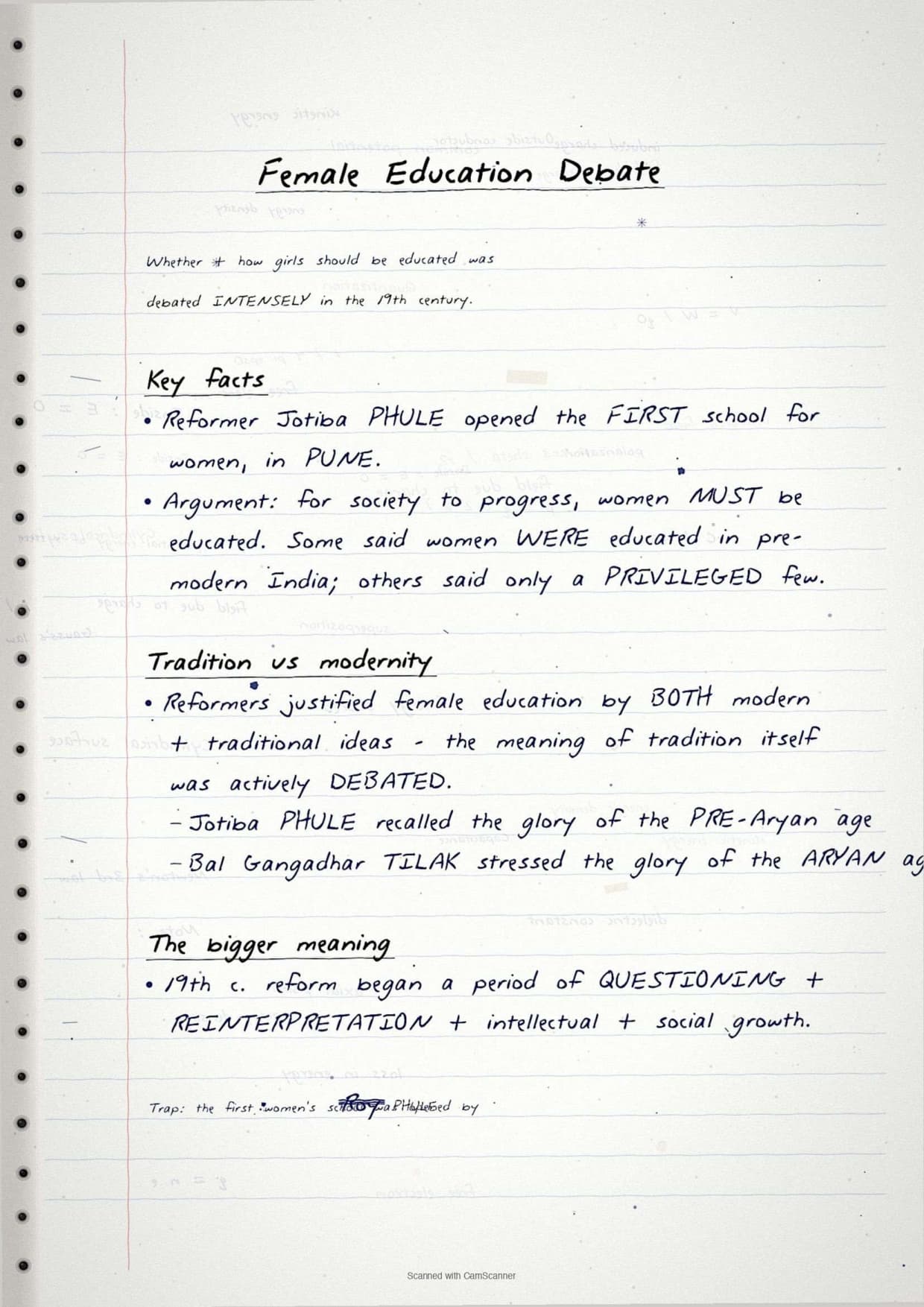
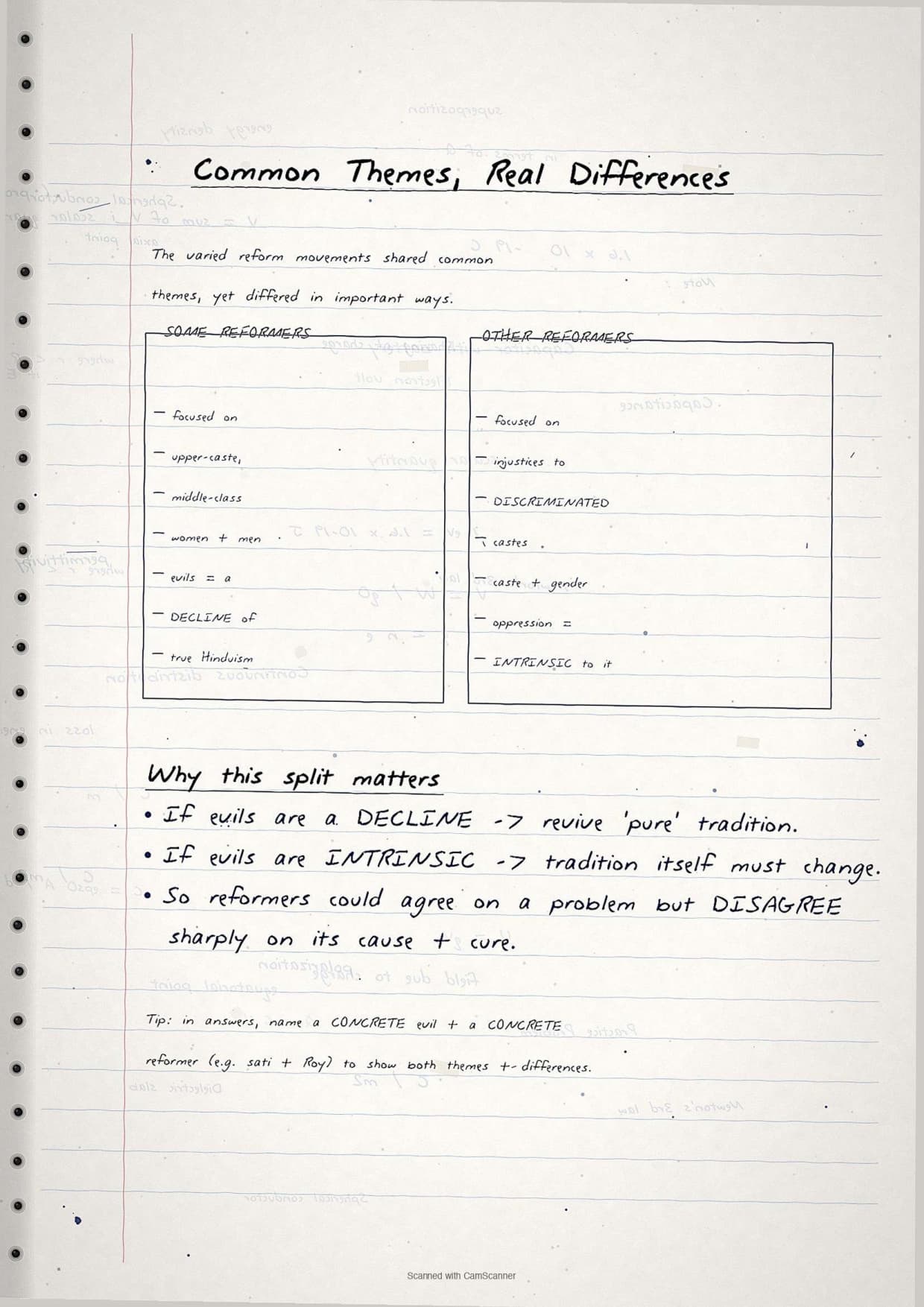
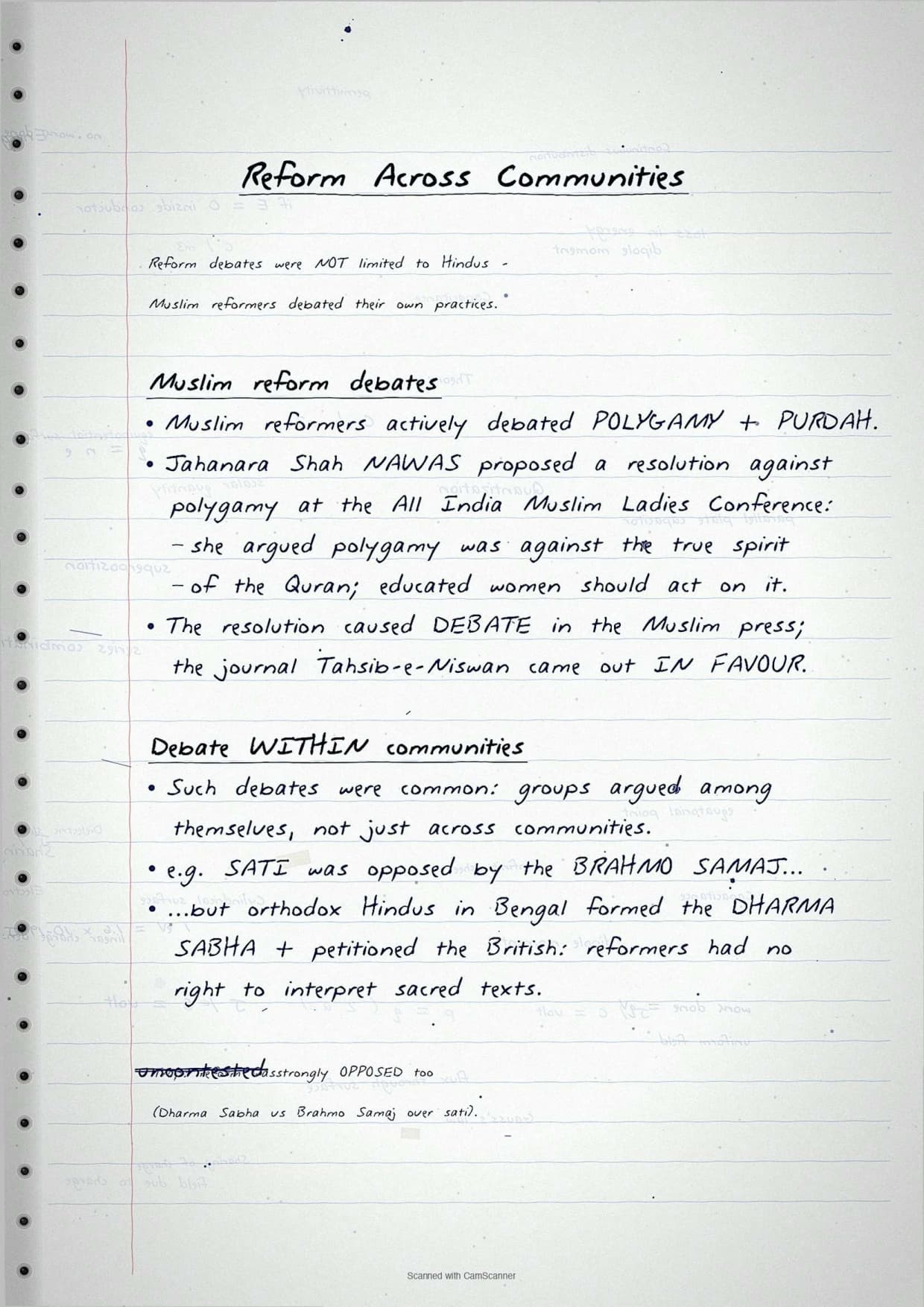
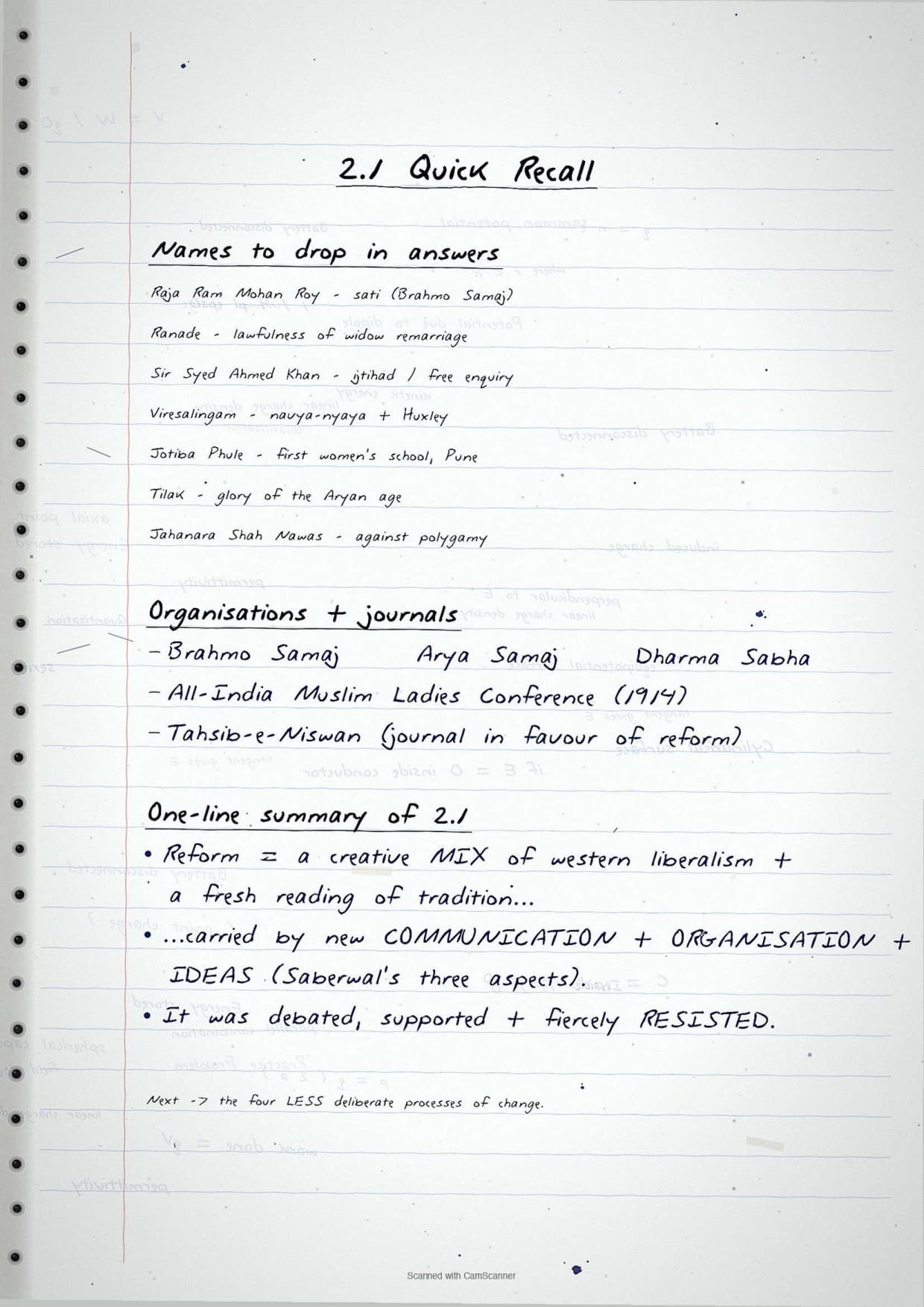
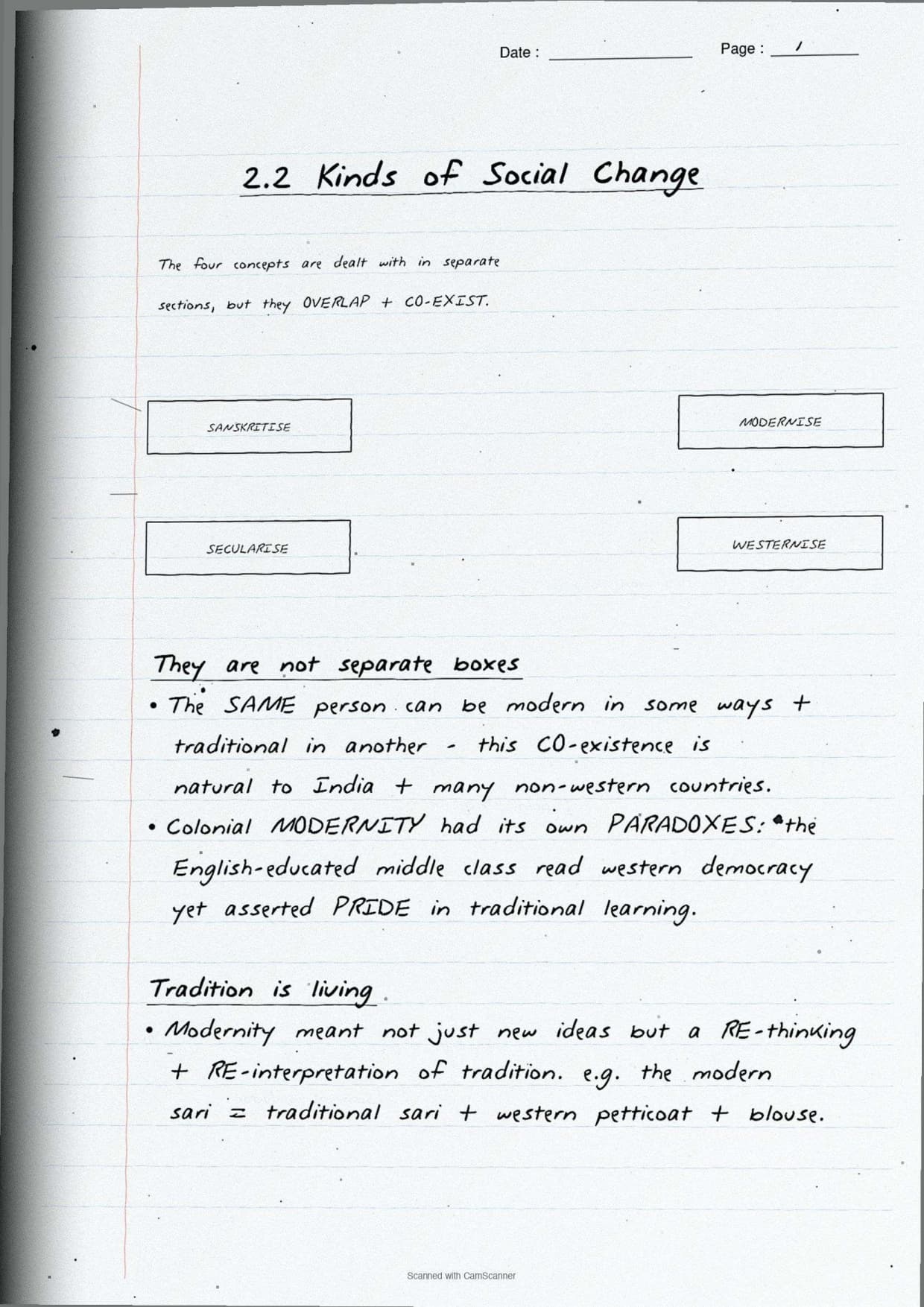
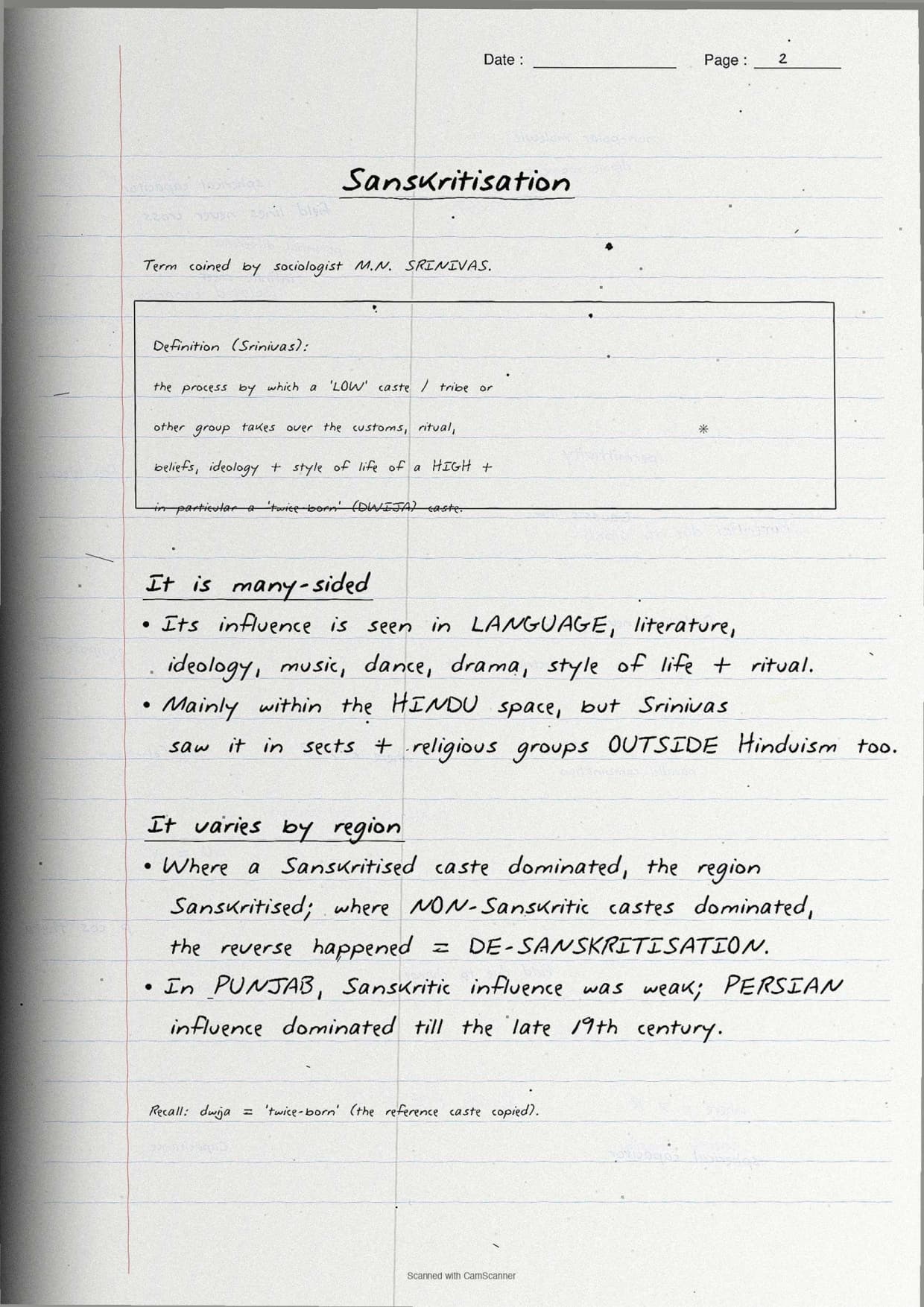
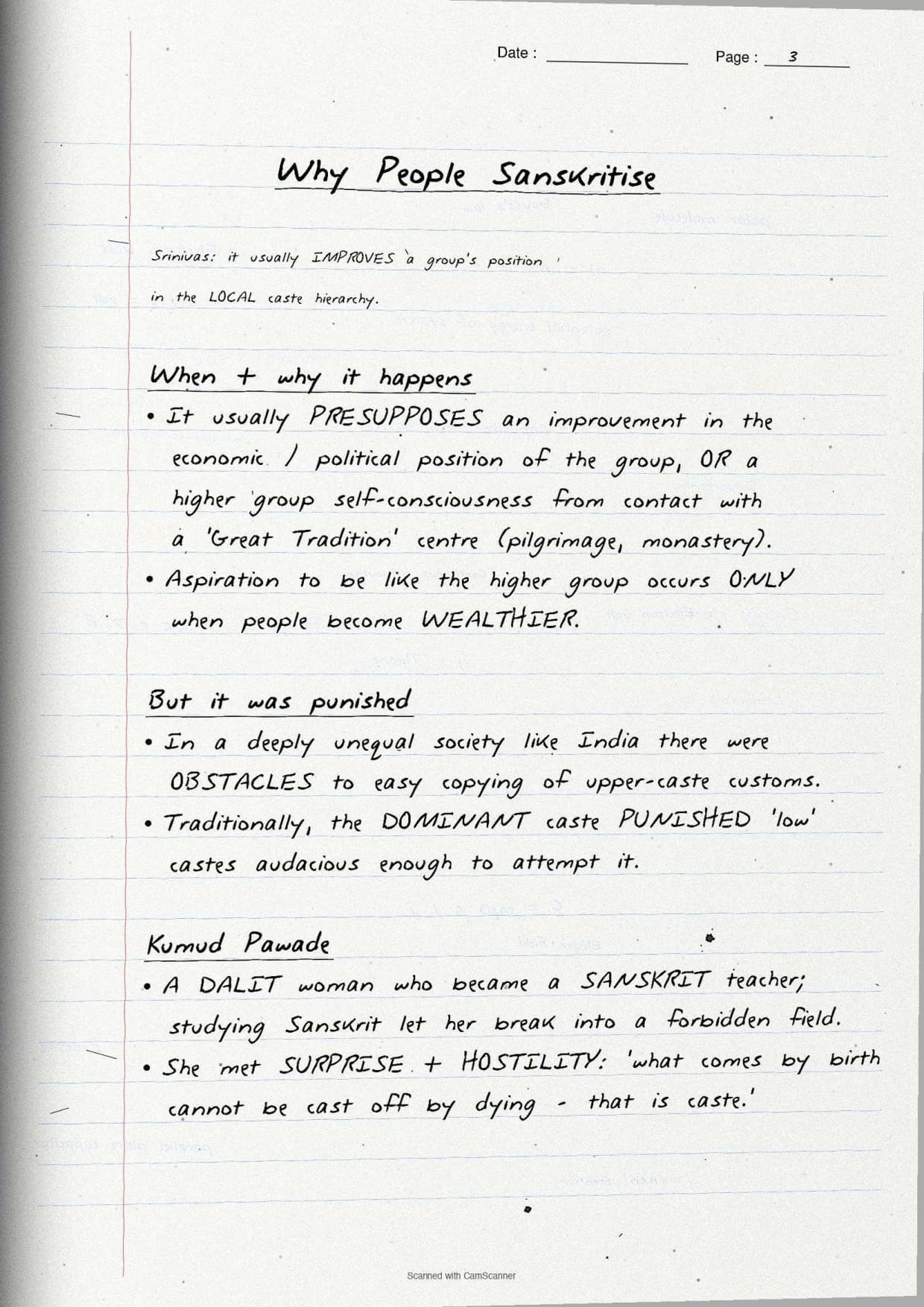
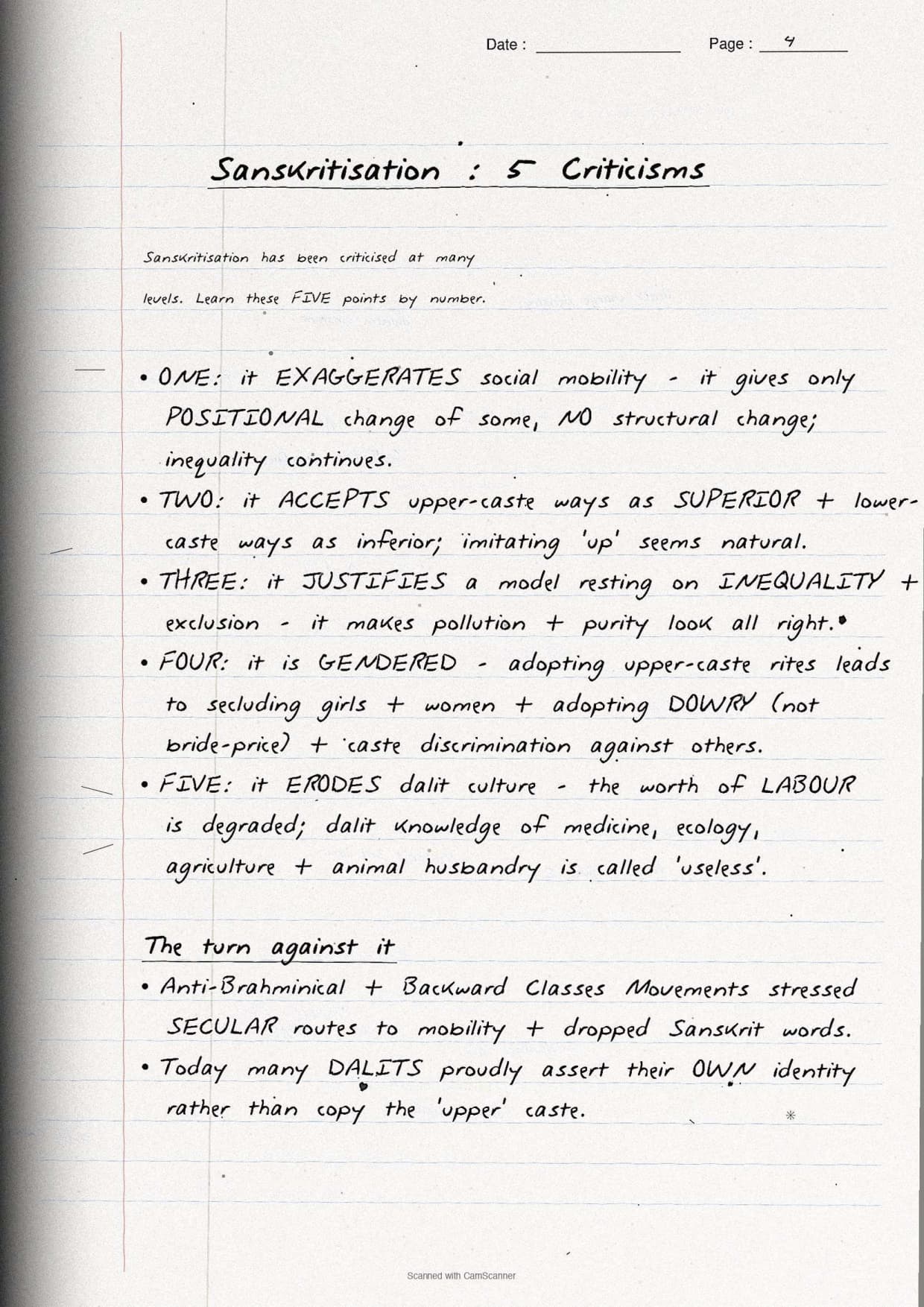
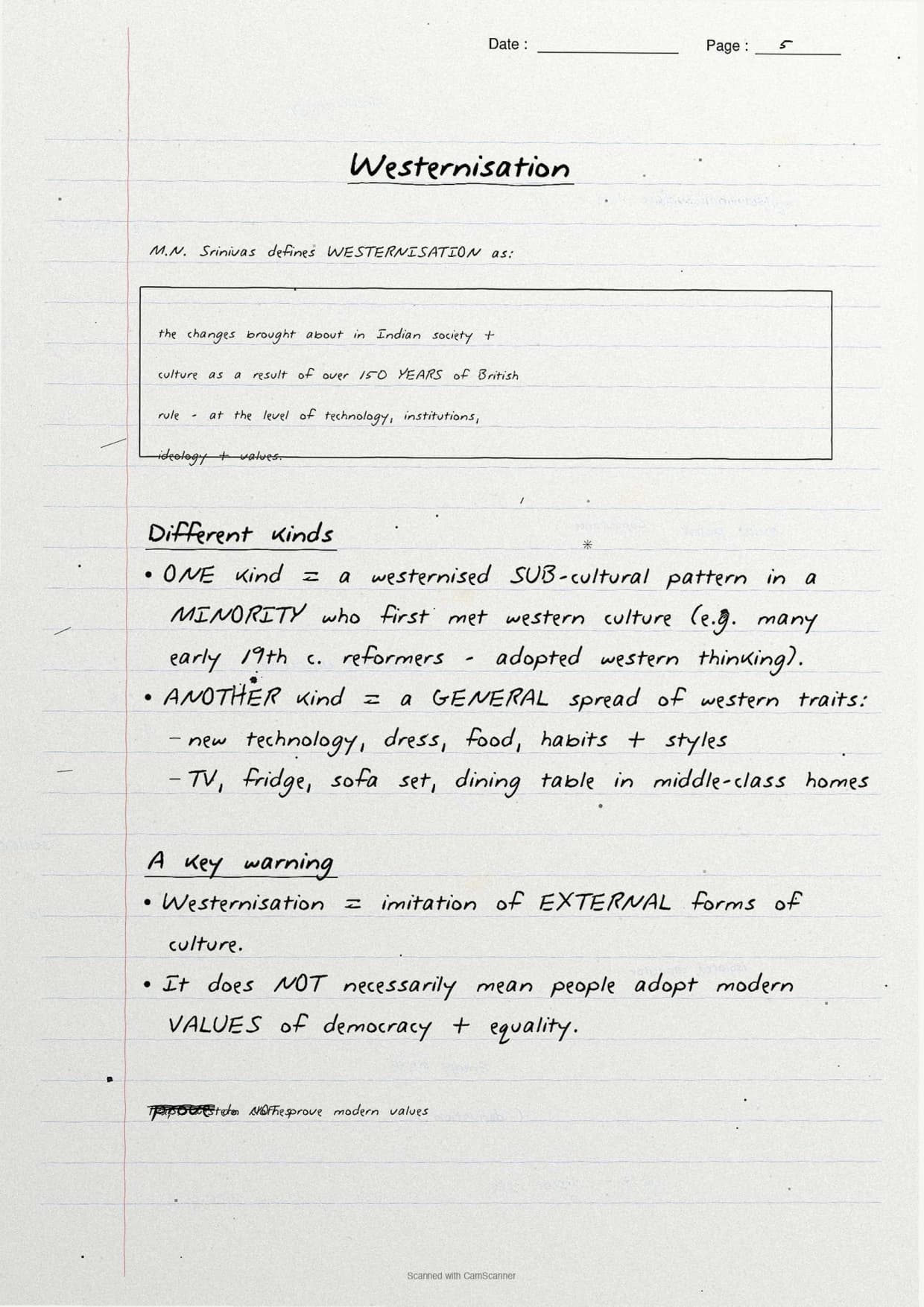
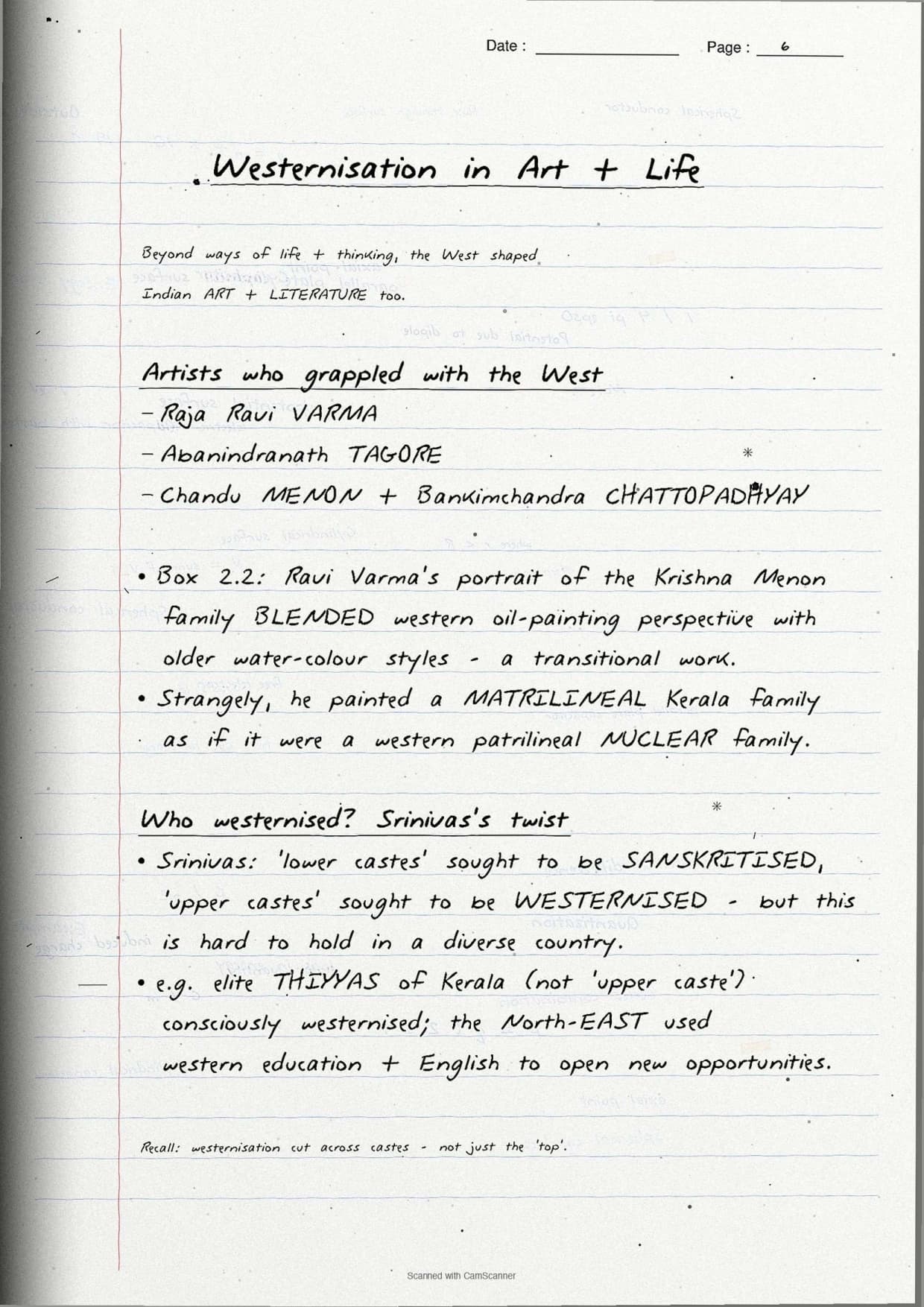
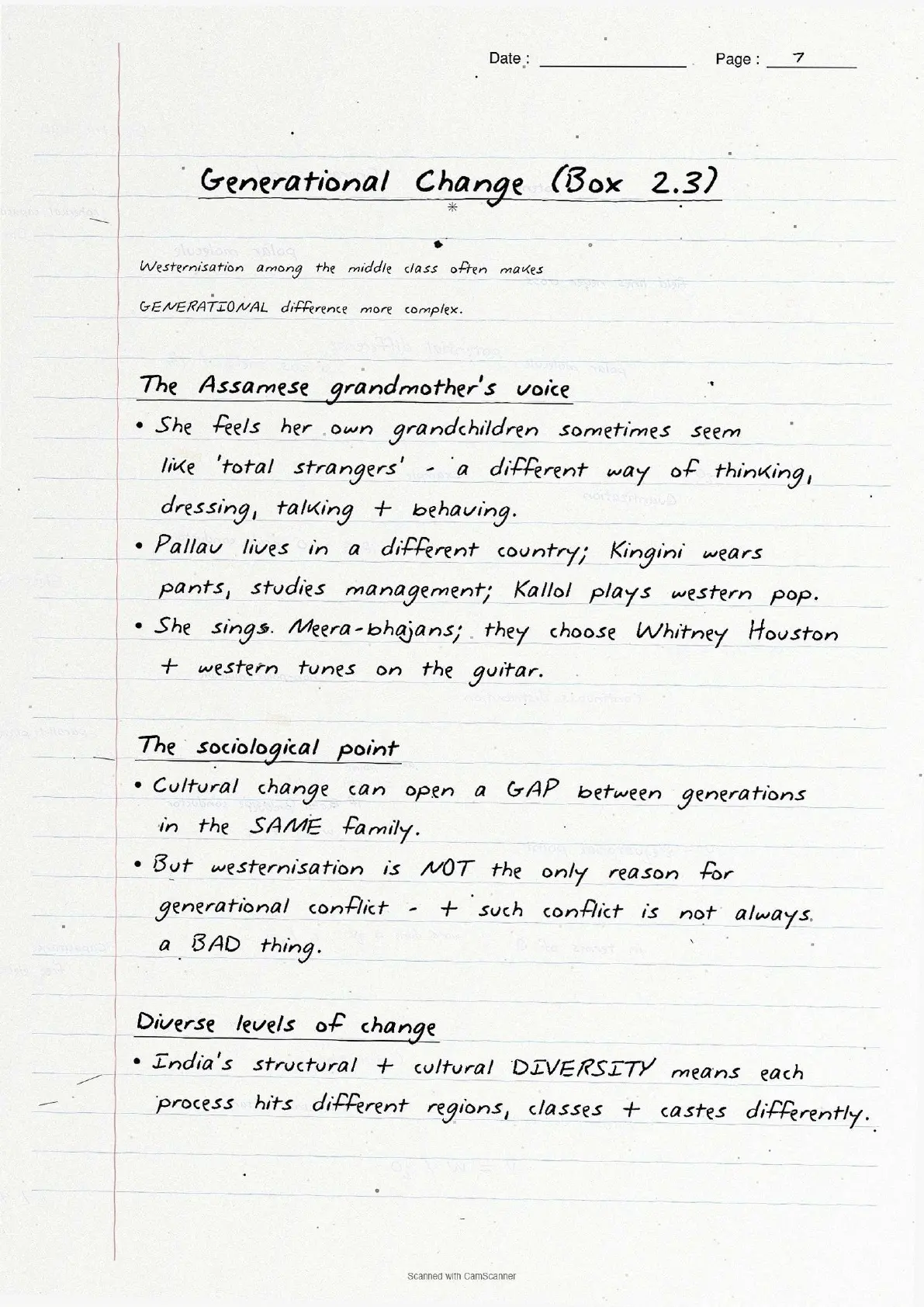
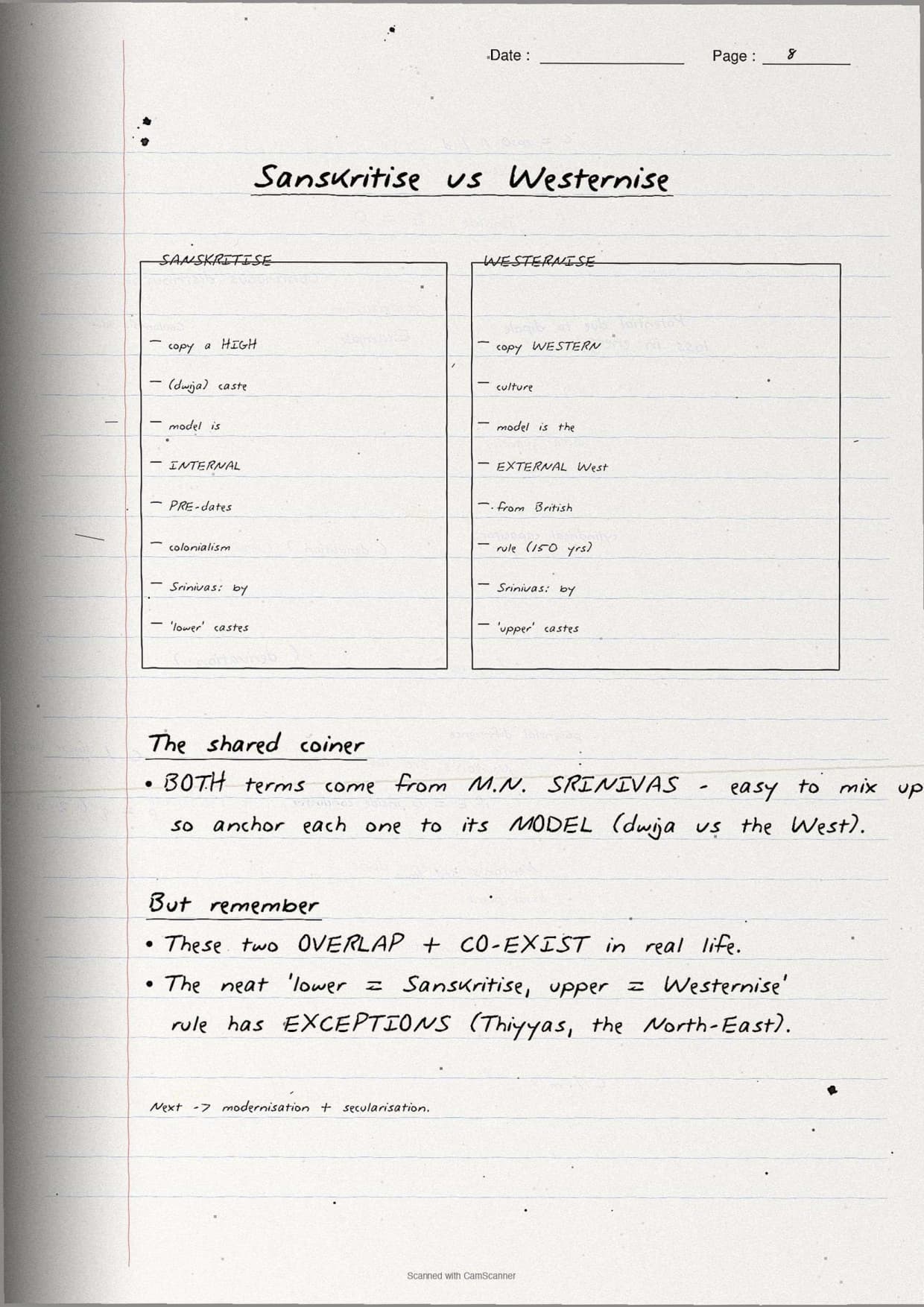
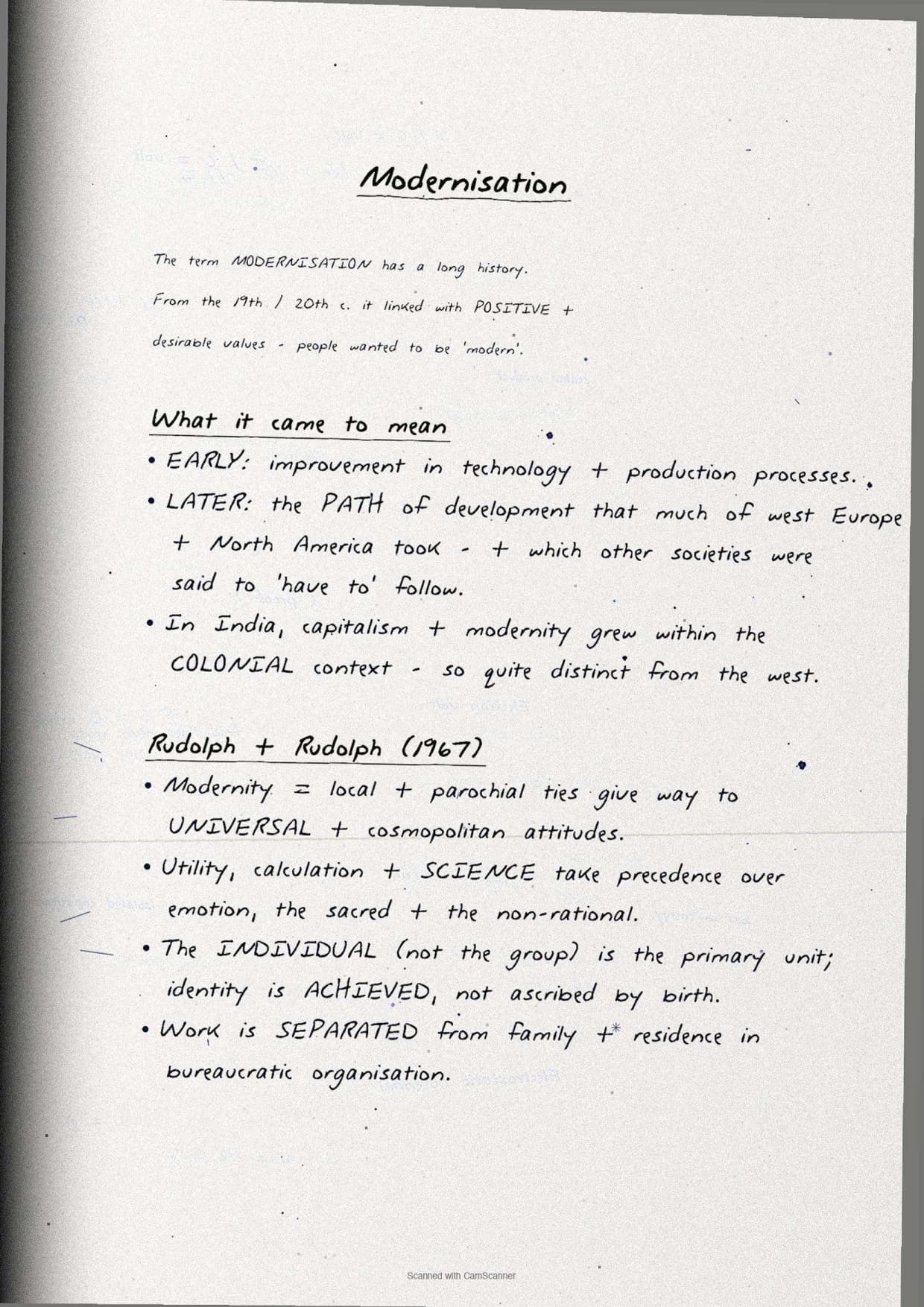
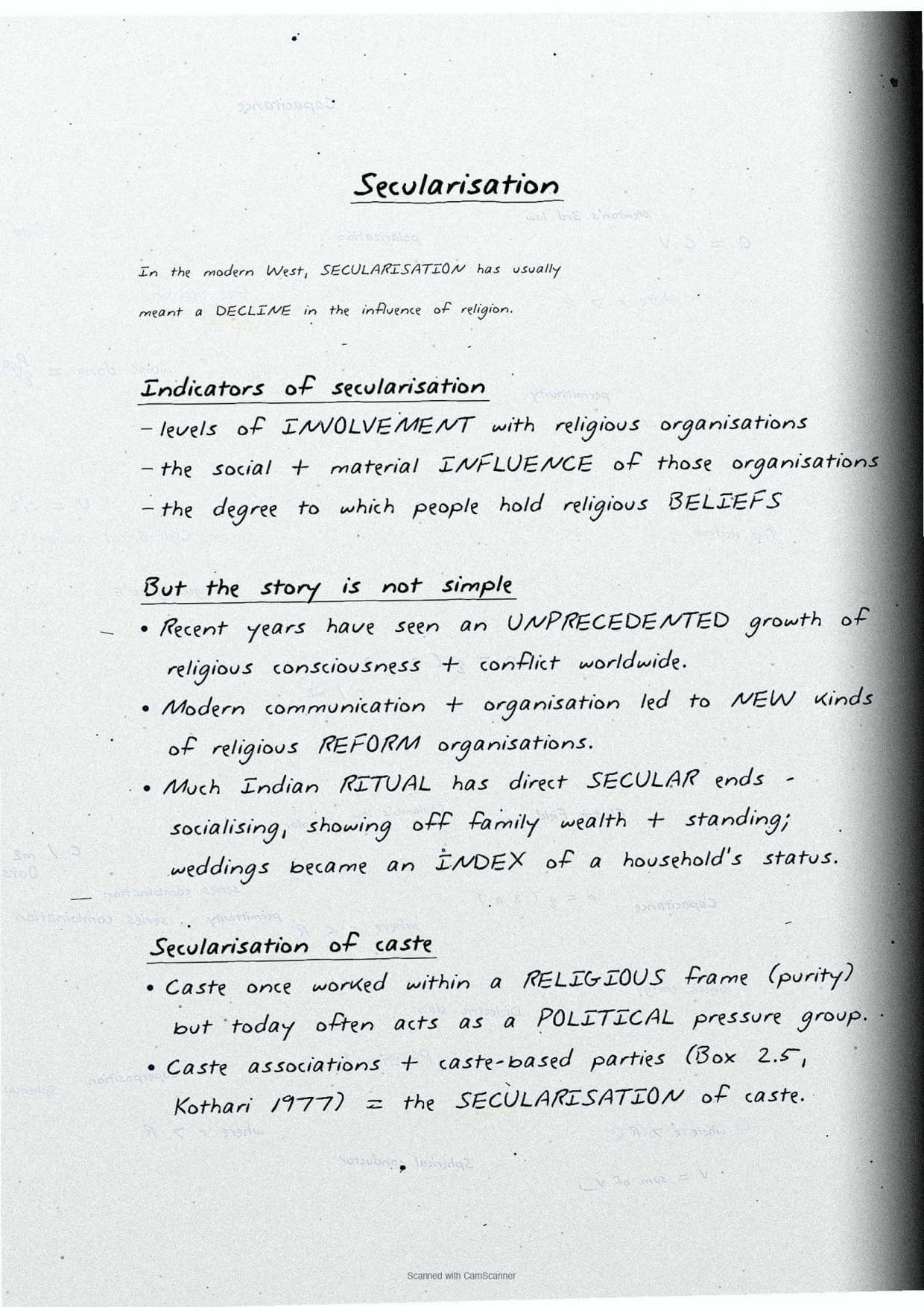
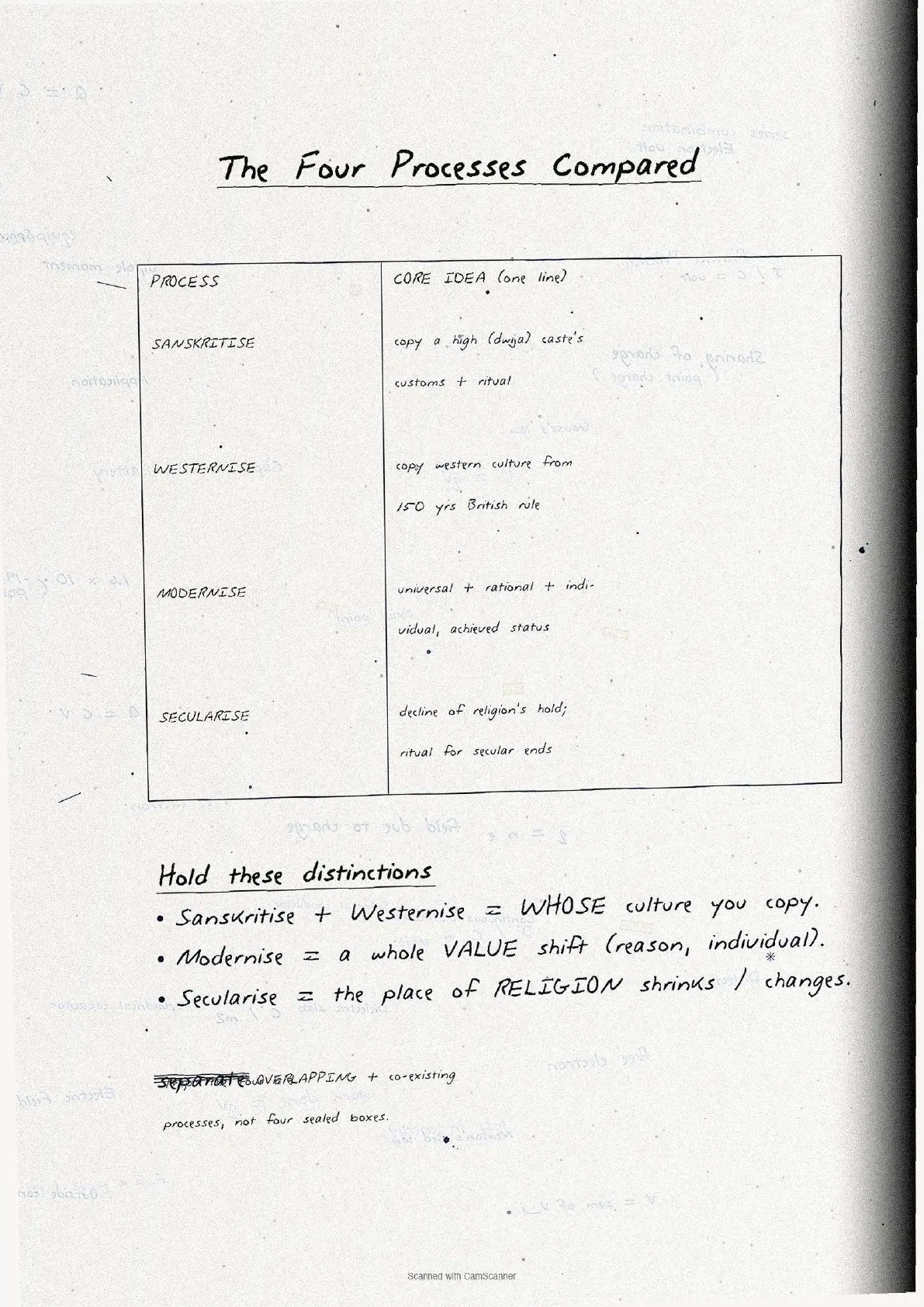
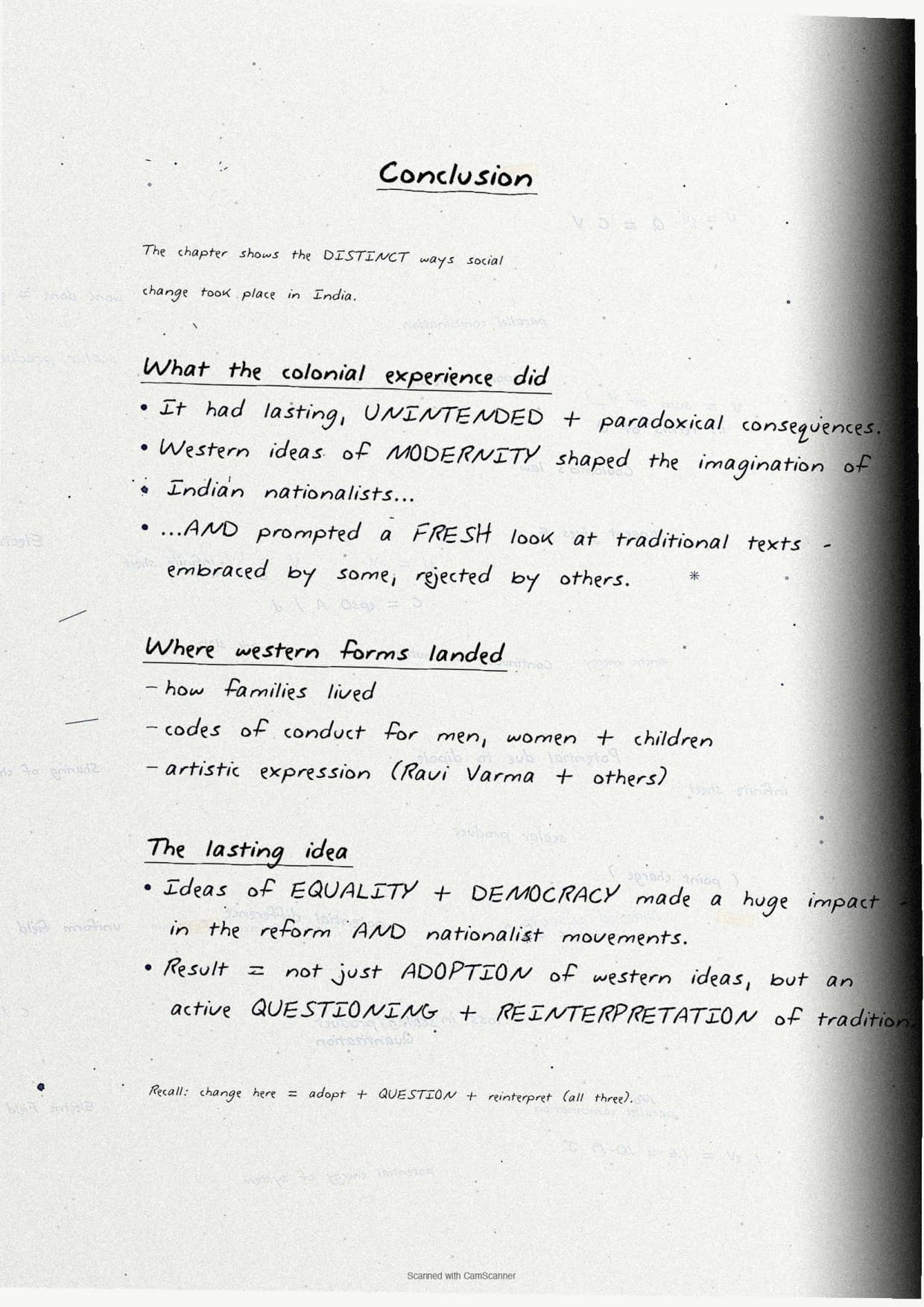
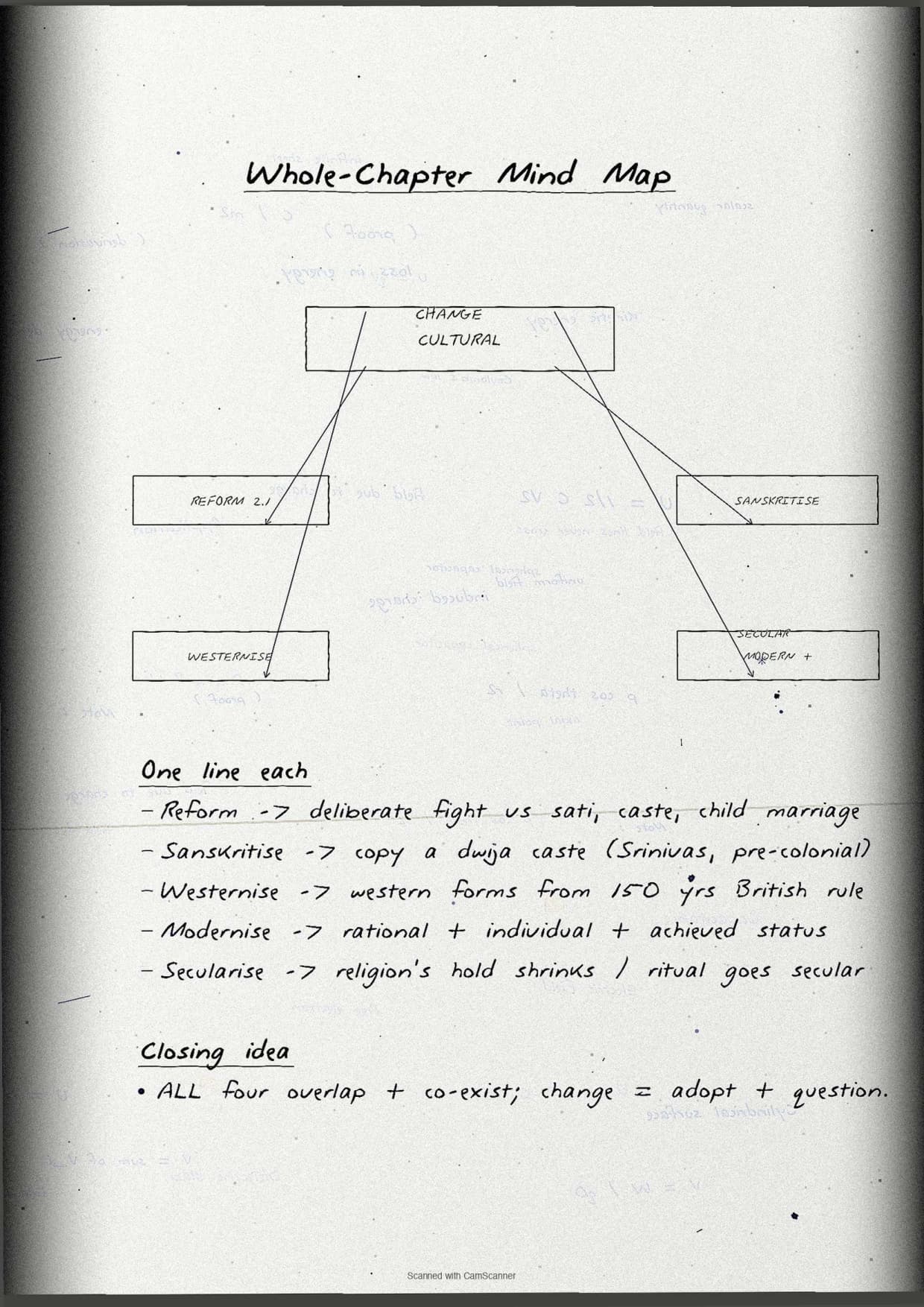
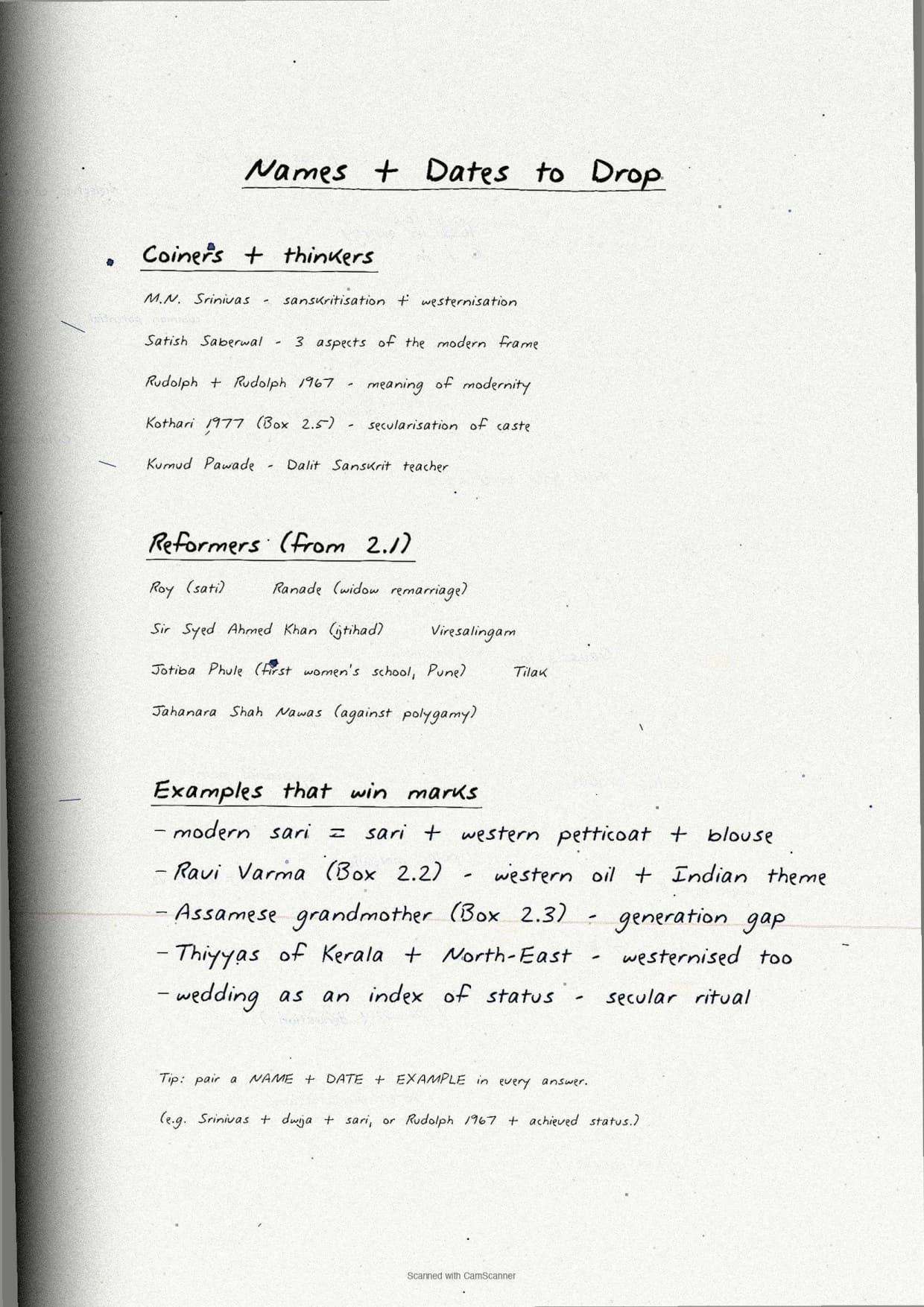
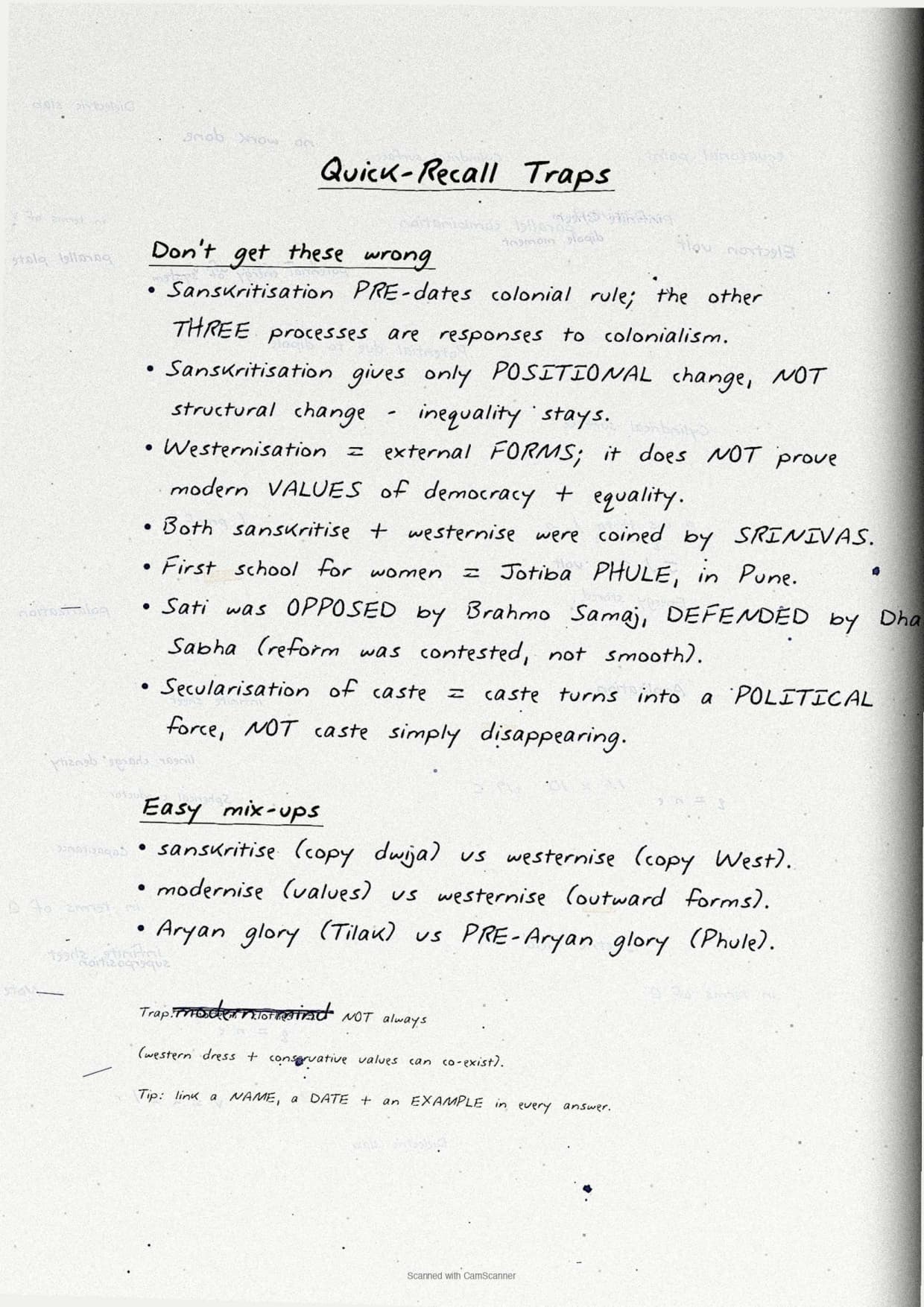
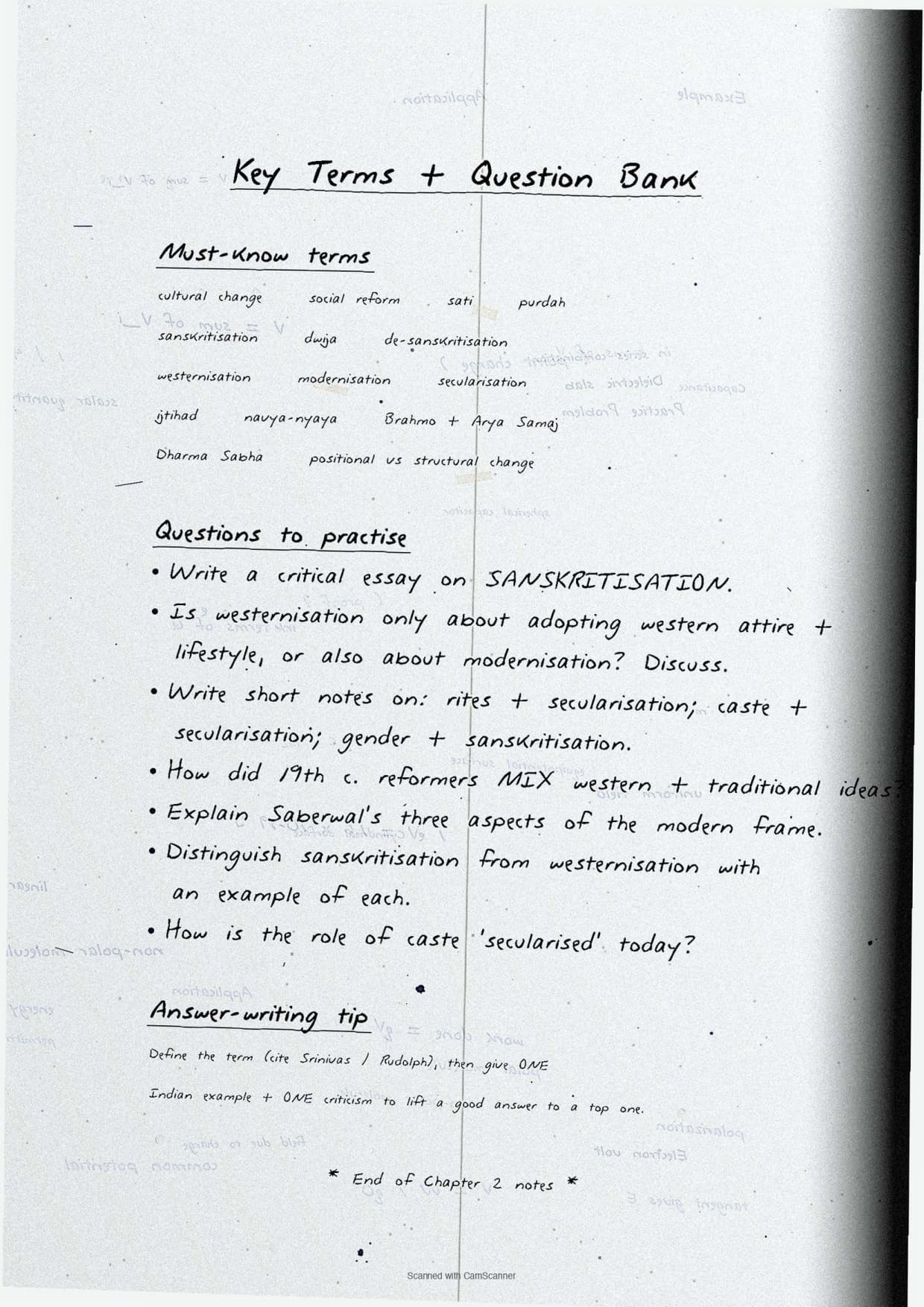
- Boxed key terms and underlined ideas across handwritten pages for the four processes of change.
- Hand-drawn arrows that separate westernisation from modernisation at a glance.
- Pairs with the NCERT Solutions, Notes and Book PDF linked lower on this page.
These Cultural Change handwritten notes are prepared from the official NCERT Cultural Change textbook and matched to the 2026-27 CBSE syllabus.
Student Feedback: In a Collegedunia poll of 6,920 Class 12 Sociology students before the 2026 boards, 73% of students said handwritten notes felt faster to revise from than printed text for this chapter. Most students used the boxed westernisation-versus-modernisation card to keep the two ideas apart in the exam.
Source: 2026-27 Class 12 Sociology student poll. Sample of 6,920 students from CBSE schools across 12 states.
|
Table of Contents |
What These Handwritten Notes Include
Cultural Change is the second chapter of Social Change and Development in India. It studies how colonial rule and reform movements reshaped Indian culture, then sorts that change into four processes. These handwritten notes condense the four processes of cultural change into pages you can read in one sitting.
Every page is built around the threads of the chapter:
- Reform pages cover the 19th-century debates on sati, widow remarriage and women's education.
- Process pages cover sanskritisation, westernisation, modernisation and secularisation.
- Critique pages cover the effect of these processes on caste and gender.
Because the notes are handwritten, the key terms sit in boxes and the important ideas are underlined, so the eye jumps straight to them. This makes the Cultural Change handwritten notes ideal for a last revision when there is no time to read full paragraphs. Sort each example under one of the four processes, and the whole chapter falls into place.
Sanskritisation Pages
The first pages start with sanskritisation, the most-tested idea. The notes keep its meaning and criticisms as a boxed list so students can copy them straight onto the answer sheet. Each point is underlined so it stands out at a glance.
- Meaning: a low caste or group copies a high, twice-born caste to rise in rank (M.N. Srinivas).
- Trigger: usually a rise in economic or political position, or contact with a pilgrim centre.
- Limit: it gives positional change, but the caste system itself stays in place.
- Gender cost: climbing the order tends to tighten controls on women.
The notes box the sharpest point in red ink: sanskritisation is positional, not structural, change. A small arrow links this to its gender cost, so students recall that a group's rank can rise while women lose status. This makes the critical-essay question easy to write from memory.
Westernisation Versus Modernisation Pages
These pages carry the chapter's most-confused pair. The notes set westernisation against modernisation as a boxed contrast, so students can recall both sides fast. The list below mirrors what the pages box for quick revision.
- Westernisation: copies outer forms, dress, food, furniture, technology and art.
- Modernisation: changes inner values, choice over birth, science over the sacred.
- The test: a person can be western in clothes yet hold unequal views.
- Result: the two overlap but are never the same.
The pages box the single sharpest point in the margin: westernisation copies forms, modernisation changes the mind. A hand-drawn arrow links female foeticide using modern technology to the gap between outer form and inner value. This both-sides framing is what turns an average answer into a full-marks one.
Secularisation and Caste Pages
These pages keep secularisation clear, because students often expect it to mean simply less religion. The notes give the Indian twist with one example each, and add a small arrow from ritual to status.
- Rites: a wedding becomes a show of wealth, indexed by cars and VIPs.
- Caste: once built on purity and pollution, it now acts as a political pressure group.
- Rajni Kothari: studied how politicians mobilise caste groupings for power.
- The twist: religion and caste persist while their purpose turns worldly.
The margin note underlines the honest line: in India secularisation rarely means the simple decline of religion. The boxed arrow shows caste shifting from ritual into politics. Keeping this Indian sense of the word apart from the western one is what makes the short note easy to write.
Reform Movement Pages
The last set of pages covers the social reform movements that drove cultural change. The notes give the main debates in order, with a hand-drawn arrow from reform to changed norms. A small list keeps the key issues ready for the exam.
- Sati: the campaign to abolish widow burning.
- Widow remarriage: the push to allow widows to marry again.
- Women's education: the drive to open schooling to girls.
- The point: culture changed through struggle and debate, not on its own.
The pages box the verdict clearly: reform movements show culture changing through conflict, not by itself. A linking arrow ties each debate to a shift in norms and values. Redrawing this arrow once from memory fixes the reform-to-change link for good.
How to Use These Handwritten Notes
Handwritten notes work best as a final layer of revision, not as your first read. The plan below helps students get the most out of the Cultural Change handwritten notes before the board exam. Follow it once a week in the run-up to the test.
- First pass: read the notes once, following the reform, process and critique order.
- Active recall: cover the boxed terms and try to write each list from memory.
- Link practice: redraw the westernisation-versus-modernisation card with your own example.
- Self-test: attempt a short class 12 sociology chapter 2 mcq drill to check the small facts.
Because the notes come as a downloadable PDF, students can save them on a phone and revise offline on the way to the exam centre. Many students search for class 12 sociology chapter 2 notes on their phone the night before a test, so a saved PDF means revision is always at hand. Pair these pages with the full solutions to check your written answers against model points.
Common Mistakes These Notes Help You Avoid
A few errors cost marks in this chapter every year. Most come from mixing up the four processes or giving a definition with no Indian example. The notes flag each soft point in the margin so students phrase it safely on the answer sheet.
- Treating westernisation and modernisation as identical when one copies forms and the other changes values.
- Calling sanskritisation a real reform when it only gives positional, not structural change.
- Defining a process but giving no Indian example, like the wedding-as-status point.
- Expecting secularisation in India to mean simply less religion.
- Missing the gendered cost of sanskritisation, the tighter controls on women.
Students who fix these five points usually move from average to high marks. The exam rewards an answer that names the process and proves it with a textbook case, so always pair the idea with the example. The handwritten margin notes nudge you to keep that pairing in the right places.
How These Notes Pair with the Solutions and Book PDF
These handwritten notes are a revision layer. To prepare fully, students should use them with the other resources for the same chapter, all linked in the table below. Read the notes, then test yourself with the solutions, and open the book PDF for the original text.
| Resource | Best used for |
|---|---|
| Cultural Change NCERT Solutions | Point-wise answers to all back-exercise questions |
| Cultural Change Class 12 Notes | Quick chapter summary with all four processes and key terms in one place |
| Cultural Change NCERT Book PDF | Reading the original NCERT chapter text from Social Change and Development in India |
Tip: use the handwritten card to keep westernisation and modernisation apart, then write the full answer in your own words. Drawing that contrast once from memory fixes the idea for good.
All Class 12 Sociology Handwritten Notes by Chapter
The table links the handwritten notes for every chapter in both Class 12 Sociology books, so students can move across the course in one click. Cultural Change is highlighted.
| Chapter | Handwritten Notes |
|---|---|
| Indian Society | |
| Chapter 1 | Introducing Indian Society |
| Chapter 2 | The Demographic Structure of the Indian Society |
| Chapter 3 | Social Institutions - Continuity and Change |
| Chapter 4 | The Market as a Social Institution |
| Chapter 5 | Patterns of Social Inequality and Exclusion |
| Chapter 6 | The Challenges of Cultural Diversity |
| Social Change and Development in India | |
| Chapter 1 | Structural Change |
| Chapter 2 | Cultural Change |
| Chapter 3 | The Constitution and Social Change |
| Chapter 4 | Change and Development in Rural Society |
| Chapter 5 | Change and Development in Industrial Society |
| Chapter 6 | Globalisation and Social Change |
| Chapter 7 | Mass Media and Communications |
| Chapter 8 | Social Movements |
FAQs on Cultural Change Handwritten Notes
Cultural Change Class 12 Sociology Handwritten Notes Common Questions
Ques. Are these class 12 sociology chapter 2 handwritten notes free to download?
Ans. Yes. The Cultural Change handwritten notes are free to download as a PDF from this page. They follow the 2026-27 NCERT and cover the full chapter in handwritten, boxed-term pages for quick revision.
Ques. What do the handwritten notes cover in this chapter?
Ans. They cover the four processes of cultural change, sanskritisation, westernisation, modernisation and secularisation, plus the 19th-century reform movements and the criticisms, all in boxed, underlined pages.
Ques. How are handwritten notes better than printed notes for revision?
Ans. Handwritten pages box the key terms and underline the important ideas, so the eye jumps straight to them. Most students find handwritten notes faster to revise from in the last days before the exam than reading full printed paragraphs.
Ques. What is the easiest way to remember westernisation versus modernisation?
Ans. Picture two people in the same western clothes who hold opposite views about equality. The notes use this single card so students recall that westernisation copies outer forms while modernisation changes inner values, so the two are not the same.
Ques. Are these notes enough for the class 12 sociology chapter 2 board exam?
Ans. They are a strong final revision layer. For full preparation, pair them with the NCERT Solutions linked on this page so you can write out complete answers to all the exercise questions and check them against model points.



Comments