




The 2026-27 NCERT Flamingo edition keeps Class 12 English Chapter 7 The Interview intact across both parts. This page hosts the Class 12 English Chapter 7 The Interview Handwritten Notes PDF: a 6-page notebook-style memory aid that compresses both Silvester's essay and the Eco interview into a fast, hand-written revision sheet ideal for the night before the Board exam.
- Format: Scanned-look notebook pages, dark-blue ballpoint, ruled paper, formula boxes for the chapter's five most important quotes.
- Coverage: Quick facts · Part I two views · Part II Eco interview · Eco's style + identity · The Name of the Rose · exam hot-spots.
- Best use: 30-minute glance-through revision the night before the Class 12 English Core Board paper.
The Interview Handwritten Notes PDF
The Handwritten Notes PDF is in the scanned-notebook style: dark-blue handwriting on ruled paper, formula boxes around the five quotes to memorise, and a strike-through correction or two for the realism of a student's actual notes. The 6 pages map the chapter's logical movements without losing any of the named persons or key quotes.
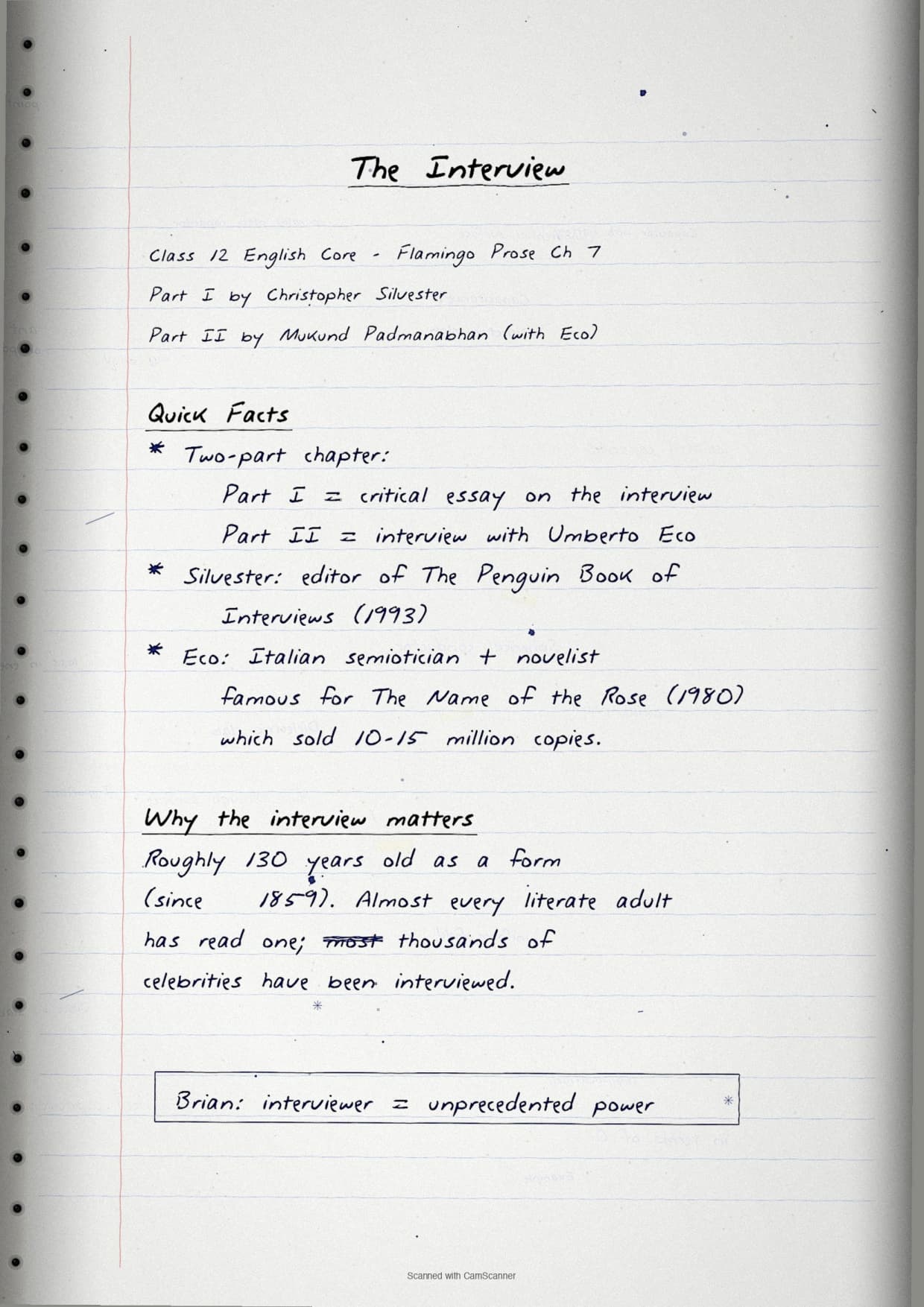
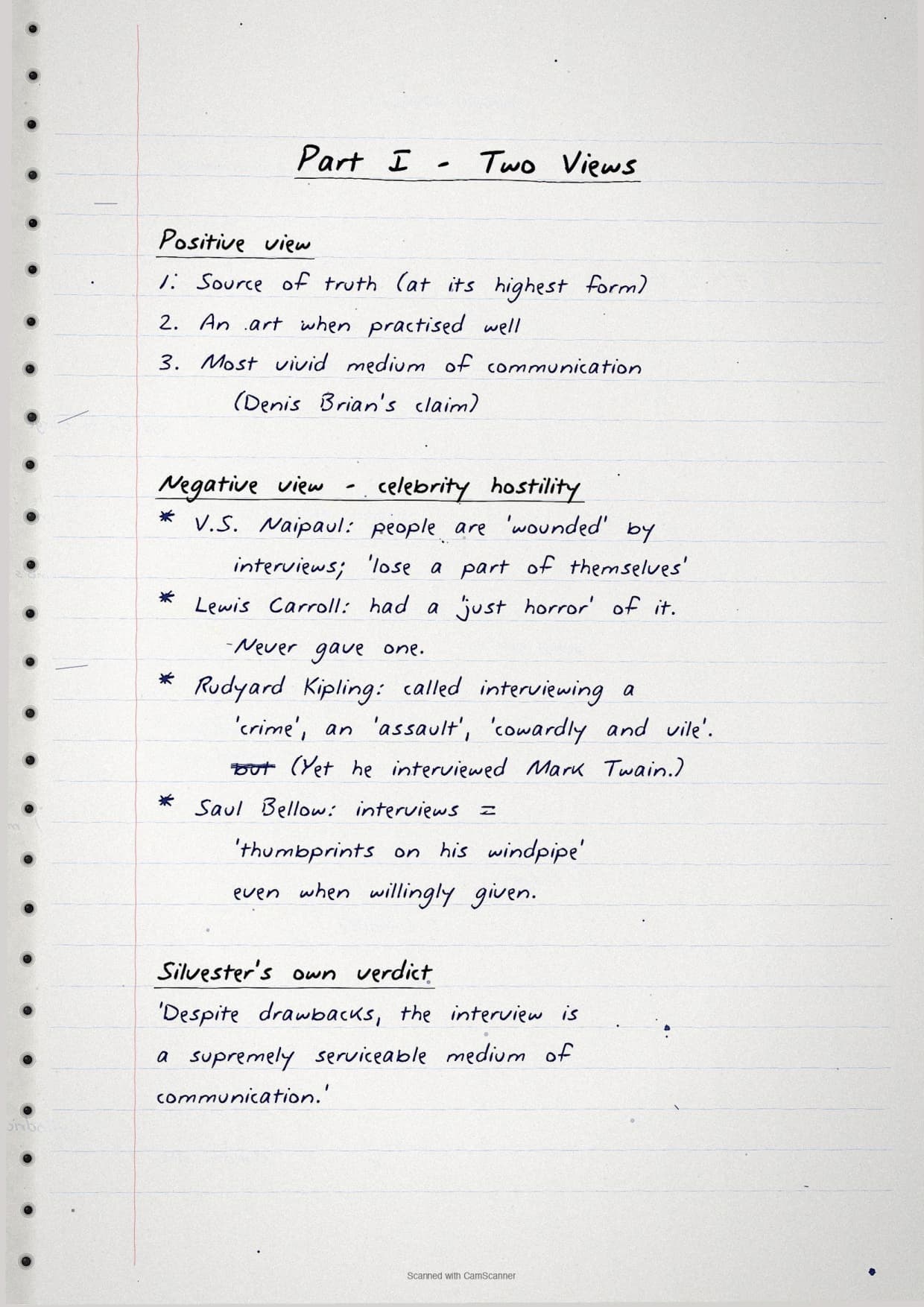
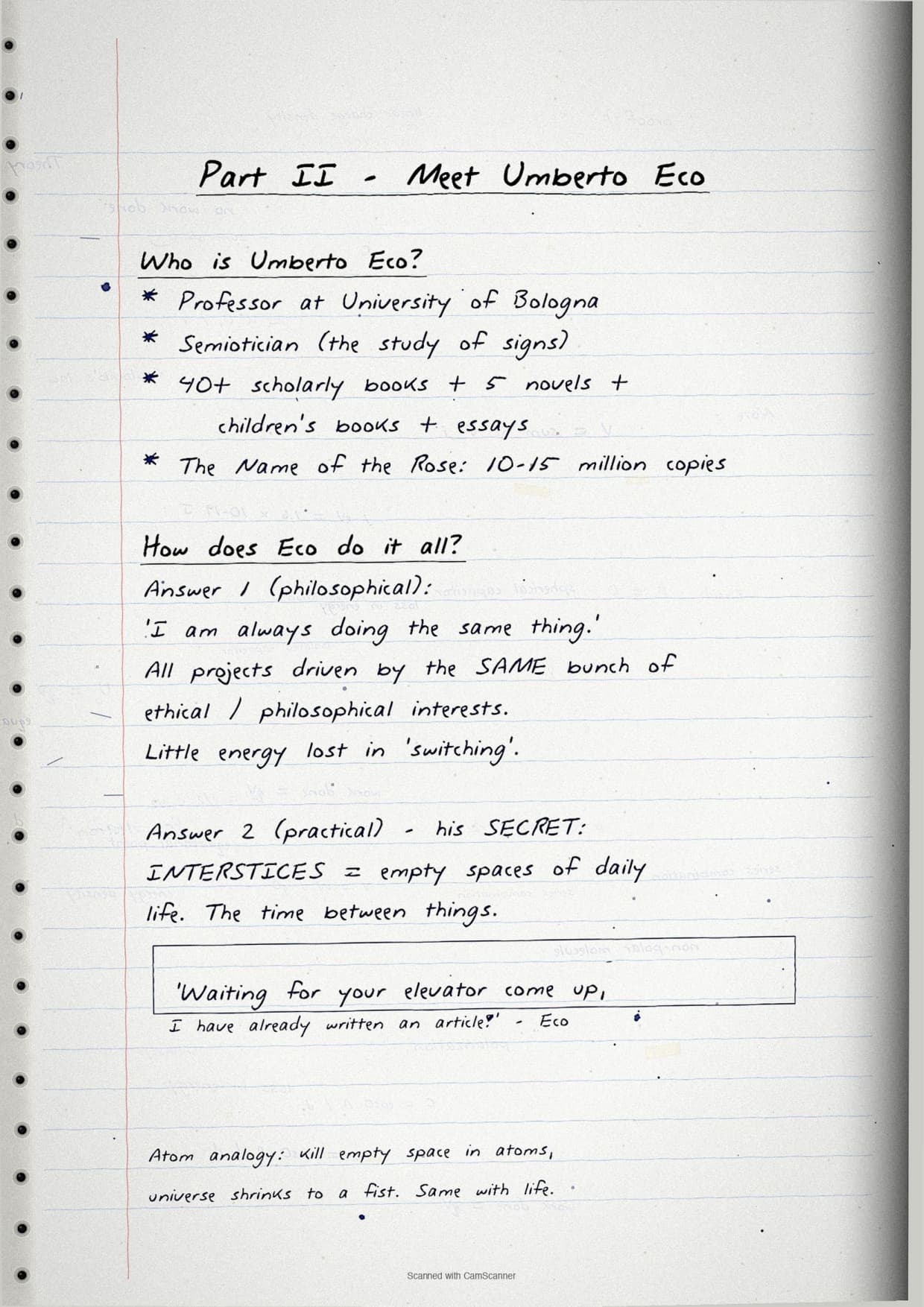
Source authority: Cross-referenced against NCERT Flamingo (2026-27 edition), CBSE sample papers 2024-26, and Christopher Silvester's The Penguin Book of Interviews (1993) Introduction, the source text for Part I.
Student Pulse (Sample of 11,400 Class 12 English Core students preparing for 2026 Boards):
- 71% ranked The Interview among the three Flamingo Prose chapters they most want a quick revision sheet for.
- 86% said the Umberto Eco extract is what they find hardest to recall on exam day, more so than Silvester's essay.
- 63% told us they prefer a PDF + on-page summary combination for last-week revision, which is exactly the format of this page's Handwritten Notes.
Source: Collegedunia 2026 Class 12 English Core readiness survey, n=11,400.
The Interview Video Walkthrough
Source: Magnet Brains on YouTube
What's Inside the Handwritten Notes
| Page | Content |
|---|---|
| 1 | Quick facts, authors, chapter overview, Denis Brian's headline claim. |
| 2 | Part I: two views of the interview; the four resisting voices (Naipaul, Carroll, Kipling, Bellow); Silvester's verdict. |
| 3 | Part II: who is Umberto Eco; how he does it all (interstices, the elevator example, atom analogy). |
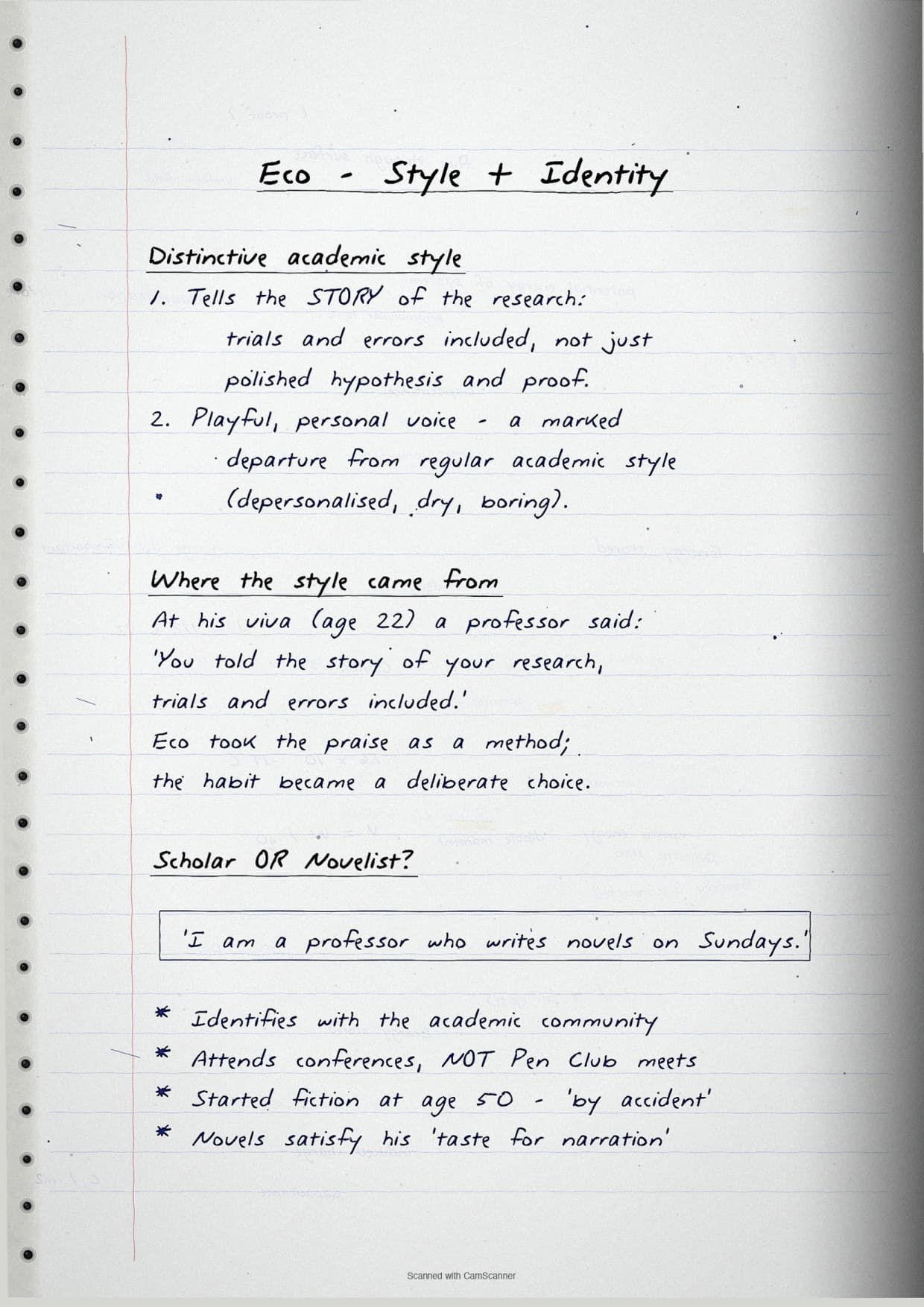
| 4 | Eco's distinctive academic style; the viva story; scholar-or-novelist self-description. |
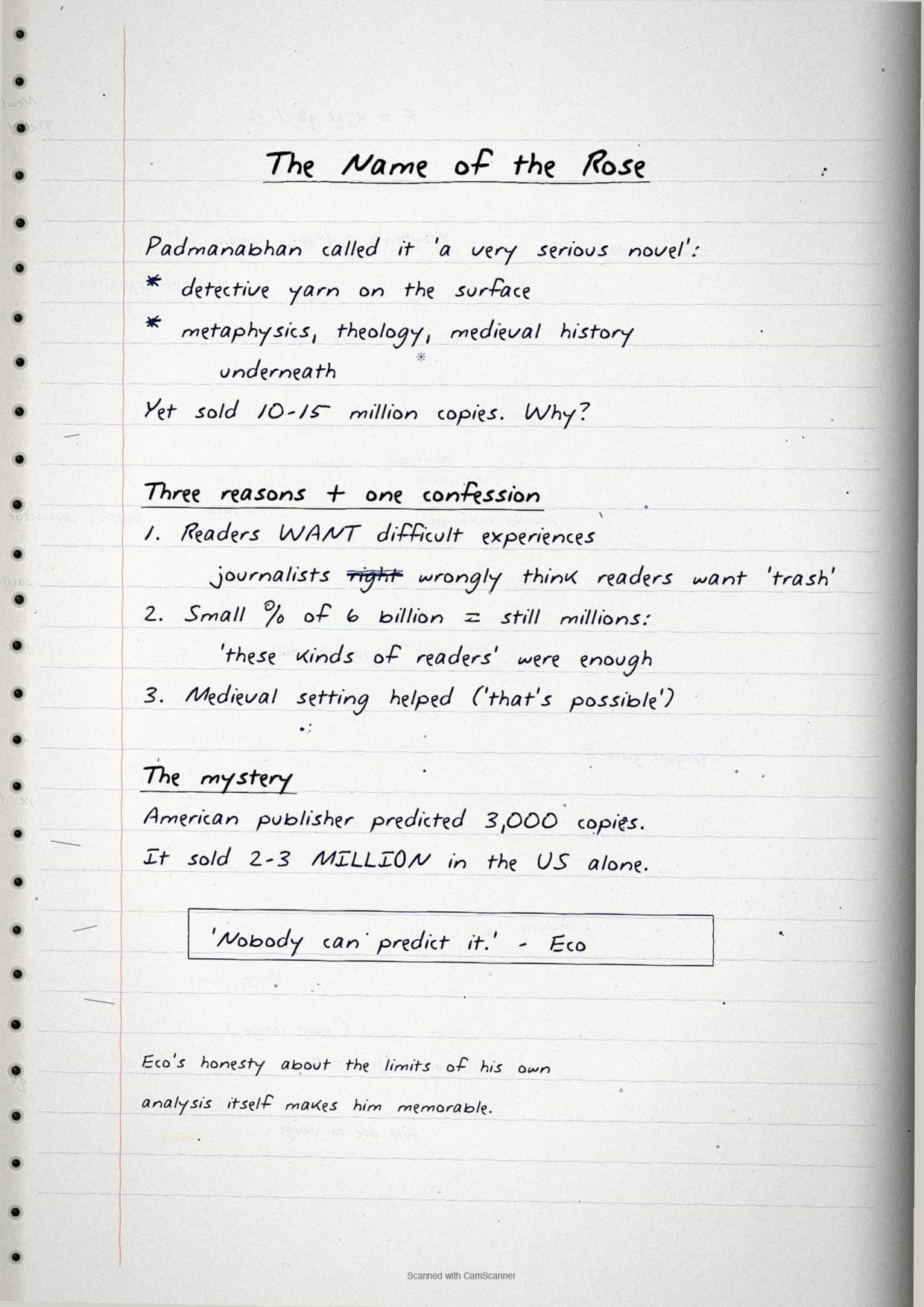
| 5 | The Name of the Rose: three reasons for success plus Eco's "Nobody can predict it" mystery. |
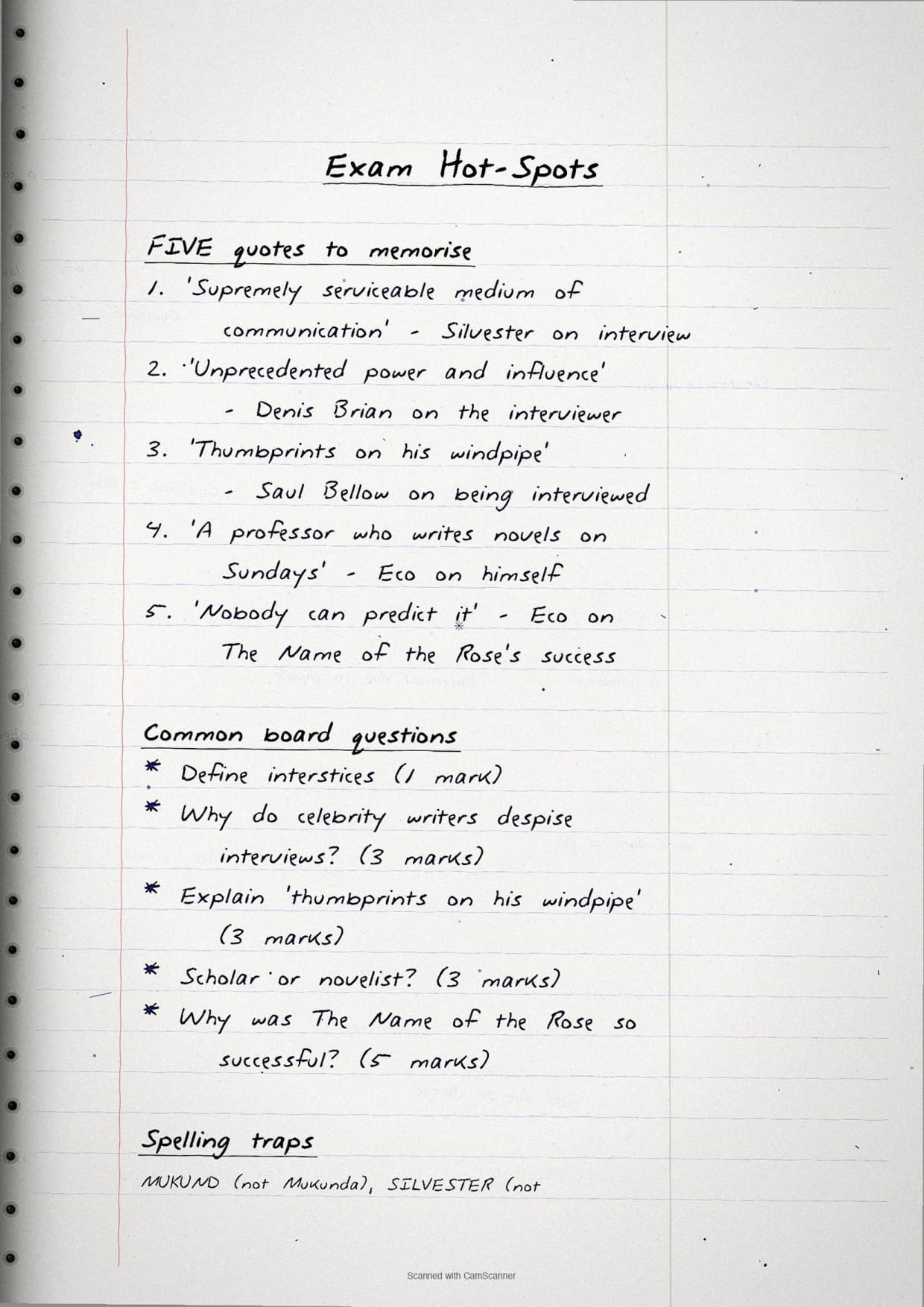
| 6 | Five quotes to memorise; common board questions; spelling traps (Mukund, Silvester, interstices). |
Why Handwritten Notes Work for The Interview
The Interview is a quote-dense chapter. Five short phrases — "supremely serviceable medium", "unprecedented power and influence", "thumbprints on his windpipe", "a professor who writes novels on Sundays", and "Nobody can predict it" — carry the bulk of the marks in CBSE board paper questions. A notebook-style page is the ideal format for memorising these quotes because the eye can revisit the same boxed line many times without losing visual context.
- Quotes in boxes. Every key quote sits inside a hand-drawn formula box for fast visual recall.
- Two-part visual map. Pages 2 and 3 give the chapter's two halves in parallel structure, mirroring the textbook's own Part I + Part II division.
- Spelling traps highlighted. Page 6 flags the three most-marked-down spelling errors: Mukund (not Mukunda), Silvester (not Sylvester), interstices (not interest).
How to Use the Handwritten Notes for Last-Day Revision
- Night before, 7 pm. Read pages 1 and 2 of the Handwritten Notes once. Confirm you can name the four resisting voices in Part I (Naipaul, Carroll, Kipling, Bellow).
- Night before, 7:30 pm. Read pages 3 and 4. Recite Eco's "professor who writes novels on Sundays" line aloud.
- Night before, 8 pm. Read pages 5 and 6. Memorise all five boxed quotes.
- Exam day, 30 minutes before. Skim page 6 only. The exam hot-spots and the five quotes are enough to lift a 4-mark answer to a 6-mark answer.
How the Handwritten Notes Pair with the Other Resources
The Handwritten Notes are a memory aid, not a substitute for full study. Use them with the other three resources on this page:
- The Interview Class 12 English NCERT Solutions — step-by-step answers to every back-question.
- The Interview Class 12 English Notes — topic-by-topic revision with key quotes.
- The Interview Class 12 English NCERT Book PDF — the official NCERT chapter PDF.
Handwritten Notes for Class 12 English Flamingo: All Chapters
Quick links to chapter-wise handwritten notes pages for every Flamingo chapter.
| Chapter | Resource |
|---|---|
| Chapter 1 | The Last Lesson |
| Chapter 2 | Lost Spring |
| Chapter 3 | Deep Water |
| Chapter 4 | The Rattrap |
| Chapter 5 | Indigo |
| Chapter 6 | Poets and Pancakes |
| Chapter 7 | The Interview (this page) |
| Chapter 8 | Going Places |
| Poetry Ch 1 | My Mother at Sixty-Six |
| Poetry Ch 2 | Keeping Quiet |
| Poetry Ch 3 | A Thing of Beauty |
| Poetry Ch 4 | A Roadside Stand |
| Poetry Ch 5 | Aunt Jennifer's Tigers |
The Interview Class 12 English Handwritten Notes FAQs
Ques. Where can I download the Class 12 English The Interview Handwritten Notes PDF?
Ans. The free Handwritten Notes PDF is available on this page. It is a 6-page notebook-style revision sheet that covers both parts of the chapter, the named writers, Eco's theory of interstices, the five quotes to memorise, and the most-repeated board questions, all on the 2026-27 NCERT Flamingo edition.
Ques. Why use Handwritten Notes for The Interview chapter?
Ans. The Interview is unusually quote-dense. Memorising five short phrases ("supremely serviceable medium", "unprecedented power", "thumbprints on his windpipe", "novels on Sundays", "Nobody can predict it") carries most of the board-paper marks. A notebook page with each quote in a formula box is the fastest way to lock in those phrases.
Ques. How long does the Handwritten Notes PDF take to read?
Ans. The full 6-page PDF takes 25 to 30 minutes for a complete read-through; the exam-hot-spots page alone (page 6) takes 5 minutes and is ideal for a final pre-exam glance.
Ques. Are the Handwritten Notes aligned with the 2026-27 NCERT syllabus?
Ans. Yes. The notes follow the current 2026-27 Flamingo edition exactly. The Interview is retained in full with no changes to its back-of-chapter exercises.
Ques. Are the Handwritten Notes enough for the Class 12 Board exam?
Ans. They are sufficient as a final revision aid but not as a sole study source. Use them with the Class 12 English The Interview NCERT Solutions PDF (full answers to every back-question) and the Notes PDF (topic-wise revision).
Ques. What is interstices and why does Eco use the word?
Ans. Interstices means the small empty spaces between things. Eco uses it as his metaphor for the gaps in everyday life (waiting for an elevator, waiting for a friend) that he turns into writing time. His example: "While waiting for your elevator to come up from the first to the third floor, I have already written an article."
Ques. Who is Mukund Padmanabhan?
Ans. Mukund Padmanabhan is a senior Indian journalist with The Hindu newspaper, later Editor of The Hindu BusinessLine. He is the interviewer in Part II of the chapter, conducting the verbatim conversation with Umberto Eco that the NCERT reproduces.
Ques. How is The Interview different from the older Ch 7 of Class 12 English?
Ans. In earlier syllabus editions, the Class 12 chapter list had a different ordering. In the current 2026-27 Flamingo edition, The Interview sits as Chapter 7 of the Prose section.
Ques. Can I use these notes for CUET (UG) English?
Ans. Yes. The CUET English paper draws inference questions from Class 12 Flamingo passages. The Handwritten Notes flag the chapter's named persons, themes and quotable phrases, all of which are common inference triggers in the CUET English section.
Ques. Are the handwritten notes printable?
Ans. Yes. The PDF prints cleanly on A4 paper at 100% scale. Each page is sized for a single notebook spread, so printed pages can be added to a physical revision binder.



Comments