




Class 12 English Handwritten Notes Chapter 5 Flamingo Prose: Indigo carries 8 to 10 marks in the CBSE Board paper and draws 1 to 2 CUET English Domain MCQ stems each year, making it one of the higher-weight Flamingo Prose chapters. This page hosts the hand-drawn revision PDF, a chapter timeline card, and a colour-coded glossary.
- CBSE Weightage: 8 to 10 marks (long answer plus short answer)
- CUET Weightage: 1 to 2 extract-based MCQ stems per year
- Question Types: Long Answer, Short Answer, Extract-Based MCQ
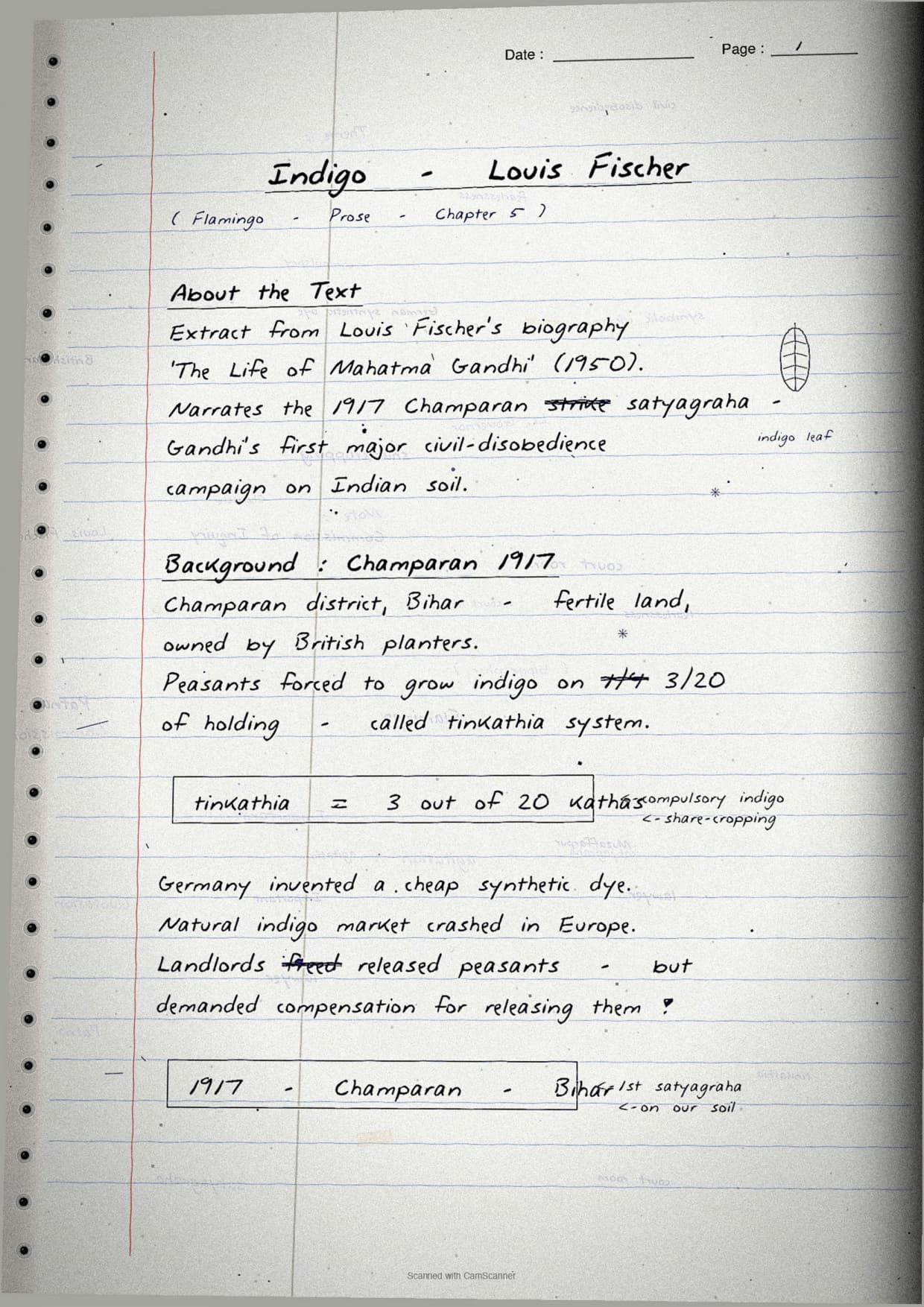
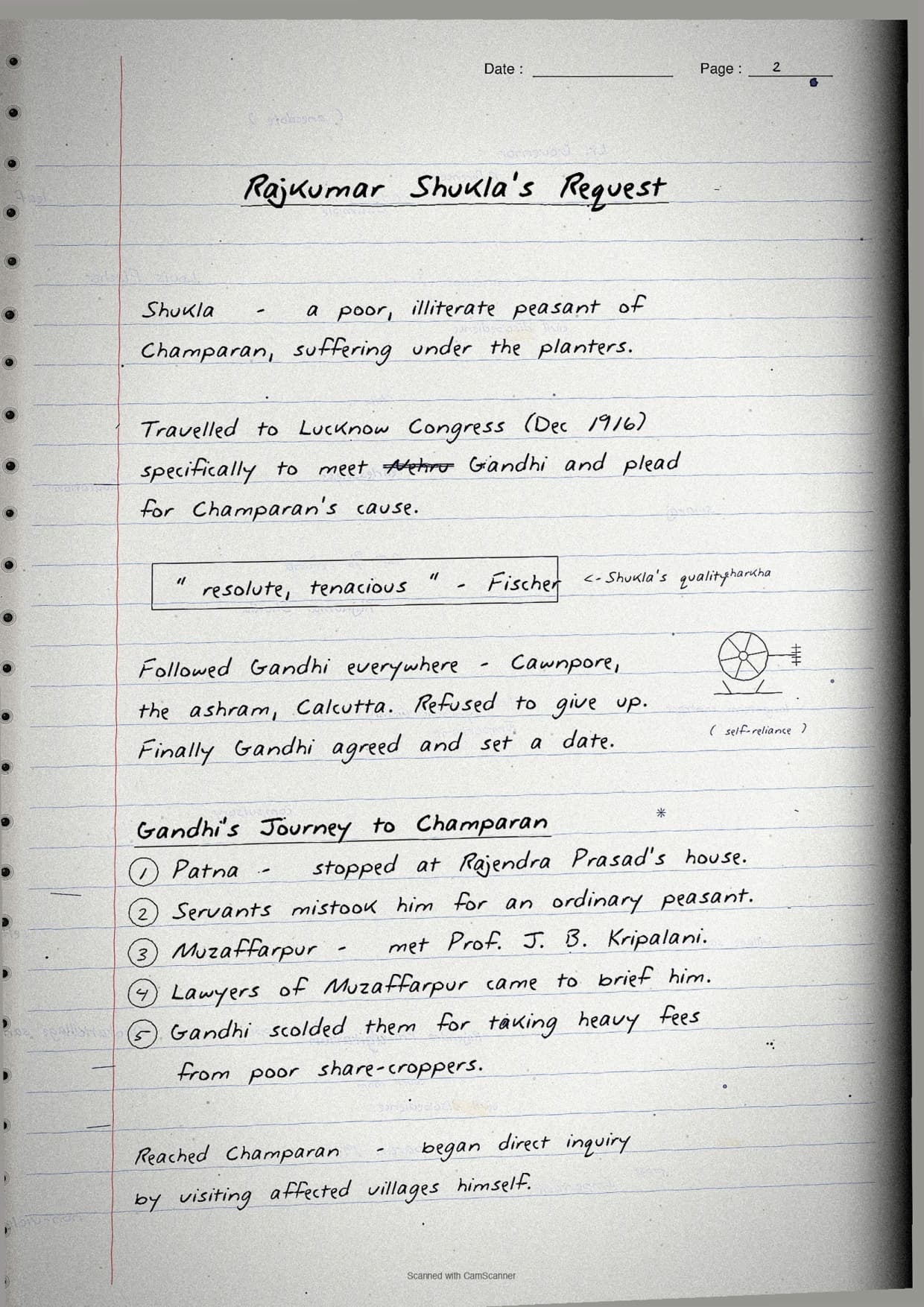
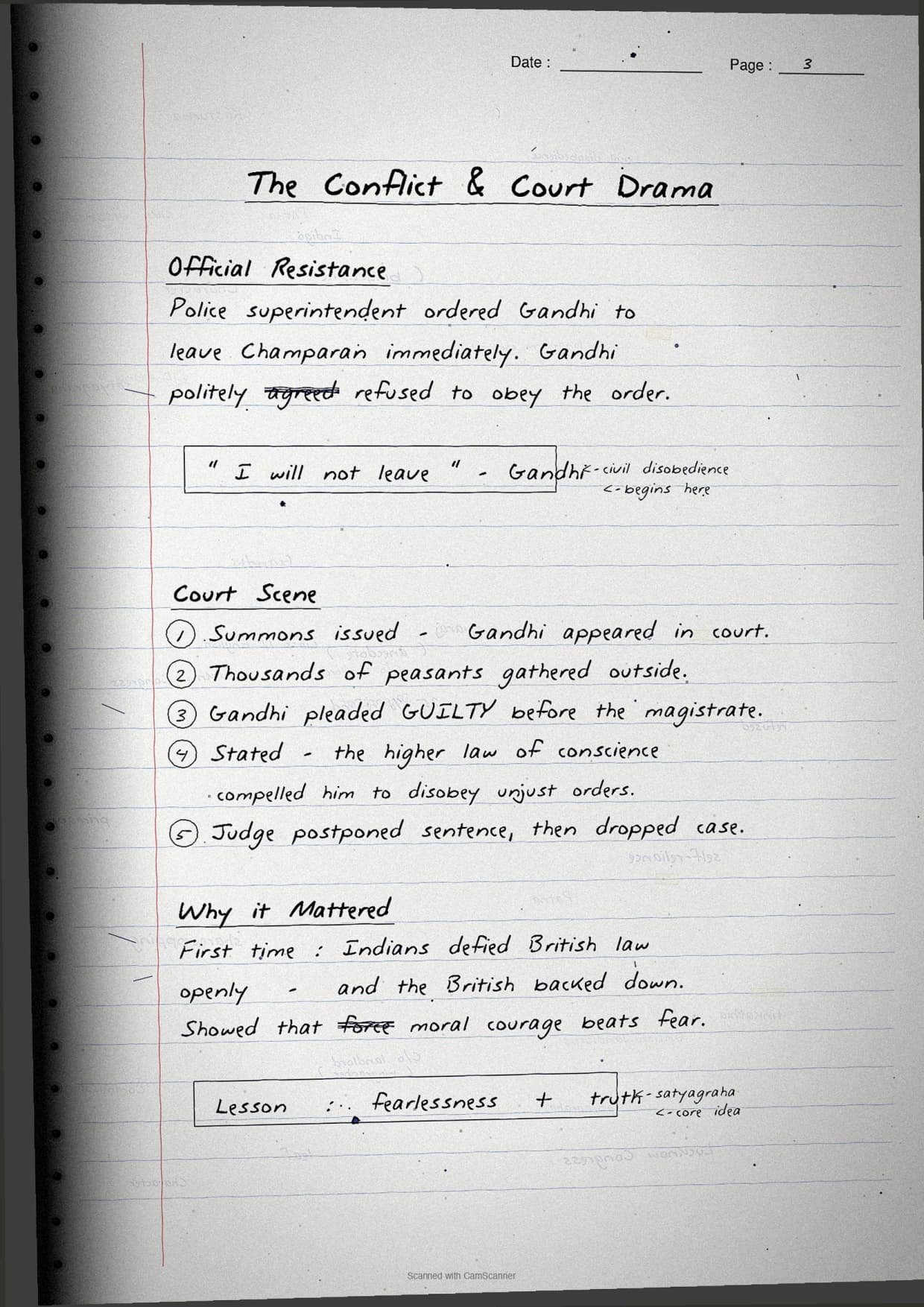
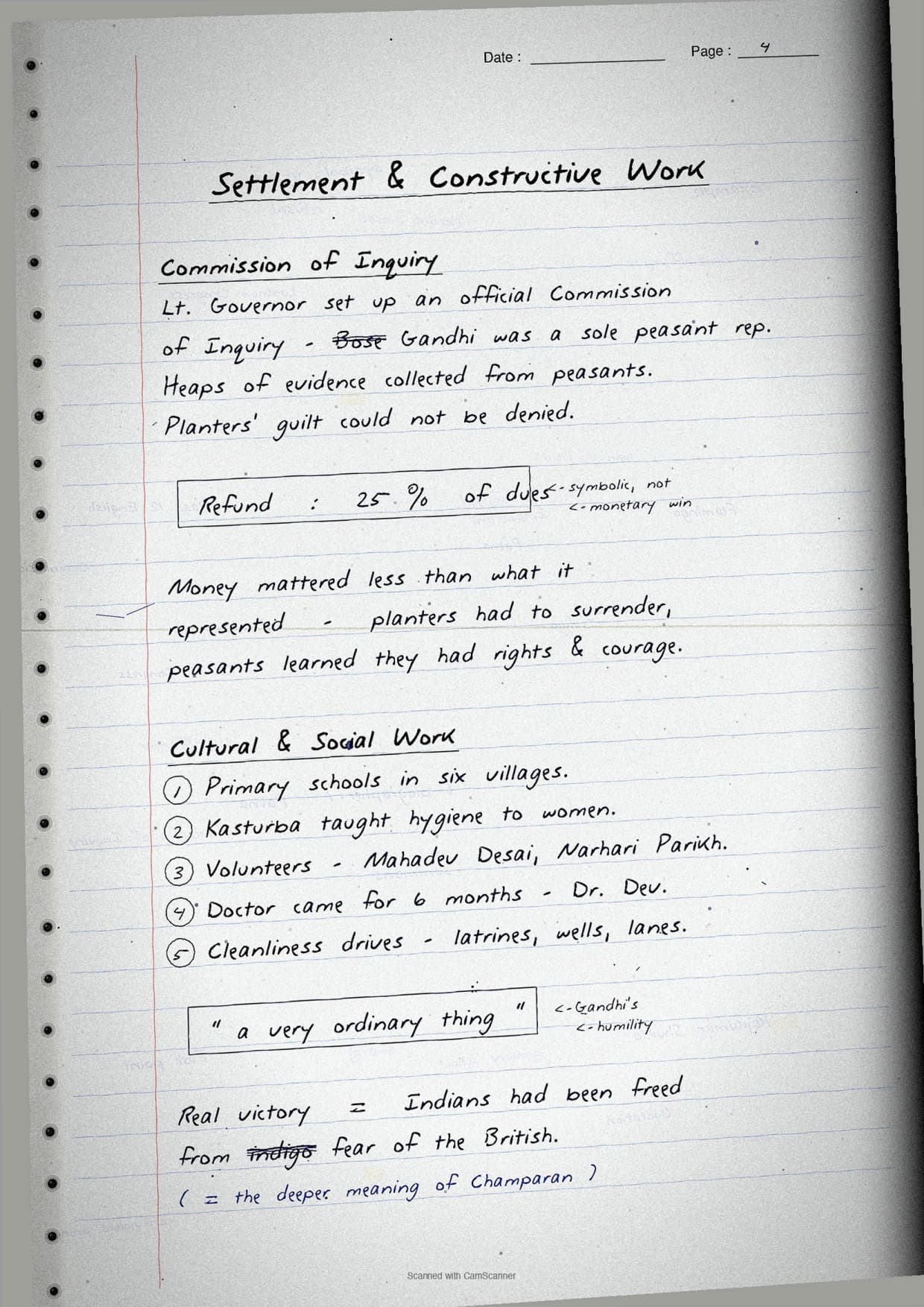
You can find the full set of class 12 english handwritten notes chapter 5 Flamingo Prose: Indigo with timeline sketches, character cards, theme maps, and a colour-coded glossary in the article below.
These class 12 english handwritten notes chapter 5 Flamingo Prose: Indigo are hand-drawn by Collegedunia's English subject experts on the current 2026-27 Flamingo edition and refined against the last five years of CBSE Board and CUET English papers.
Also Check:
Why Choose Class 12 English Handwritten Notes Chapter 5 Flamingo Prose: Indigo?
Printed notes lose the visual hierarchy that English narrative chapters need. Indigo turns on a sequence of events (Lucknow then Motihari then refund settlement) and a small cast of named figures. Handwritten revision serves both well.
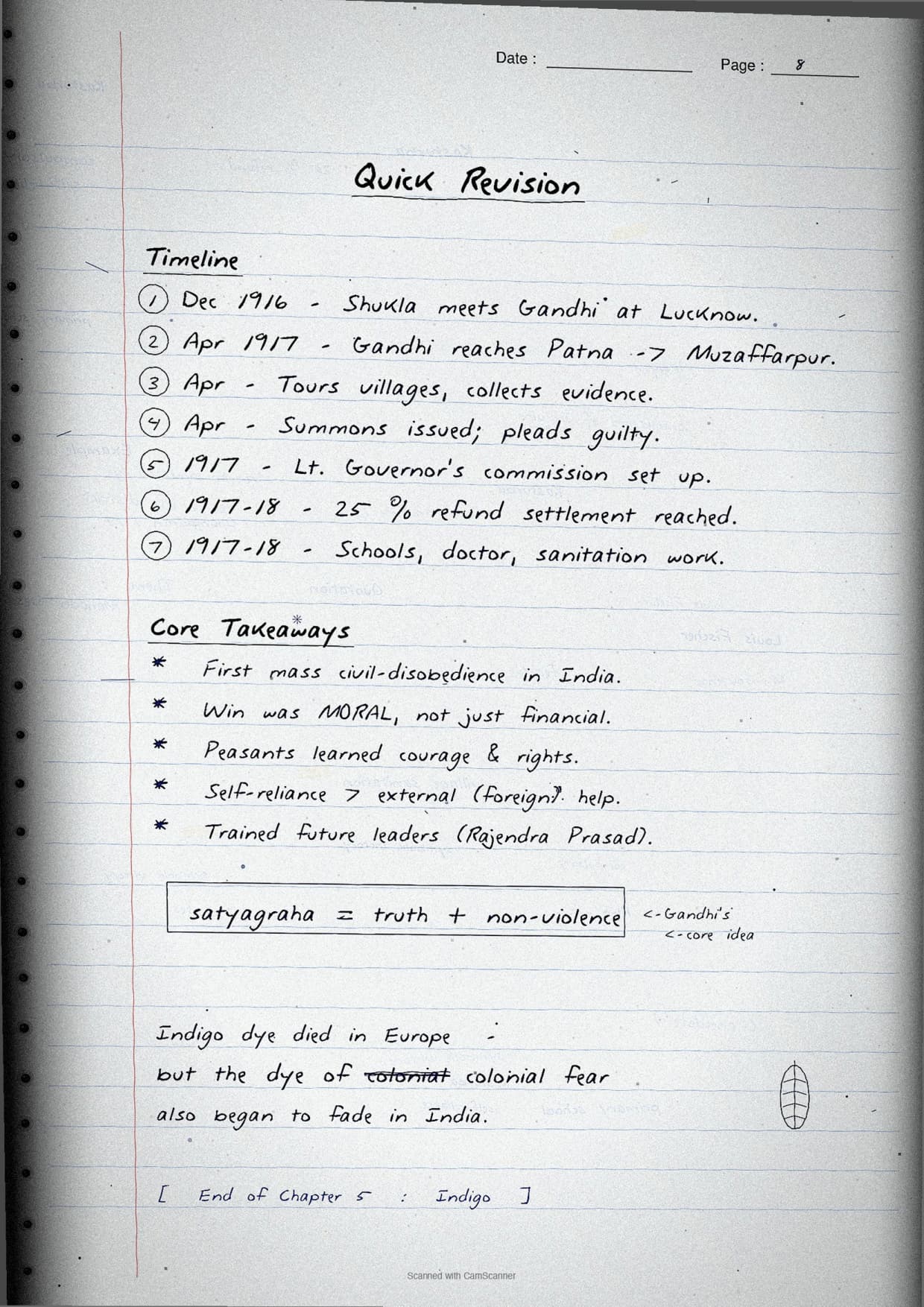
- Visual sequence: Hand-drawn arrows show the Champaran timeline at a glance; printed text flattens chronology.
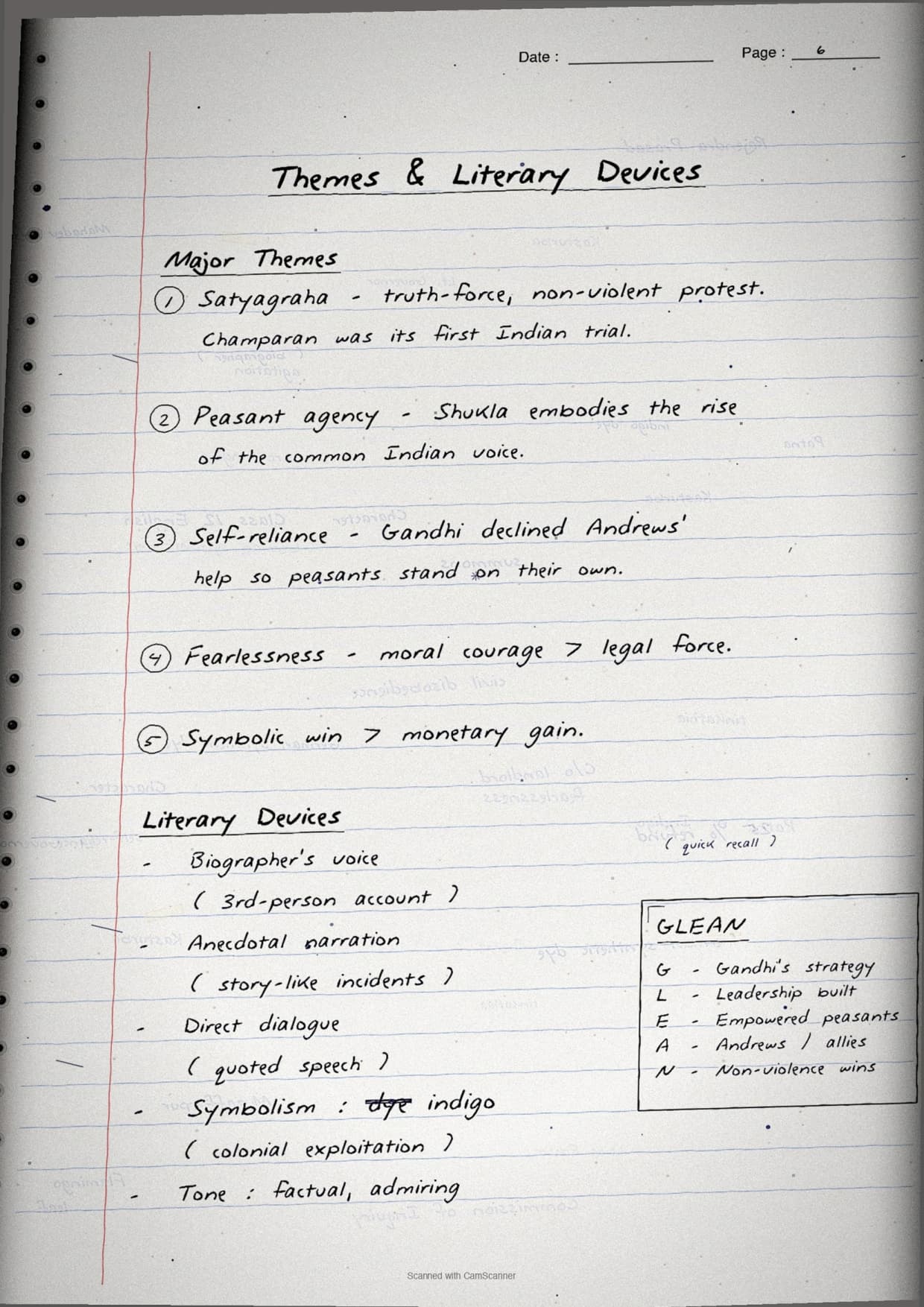
- Colour memory: Themes (civil disobedience, self-reliance, awakening) get separate ink colours, so the night-before skim is faster.
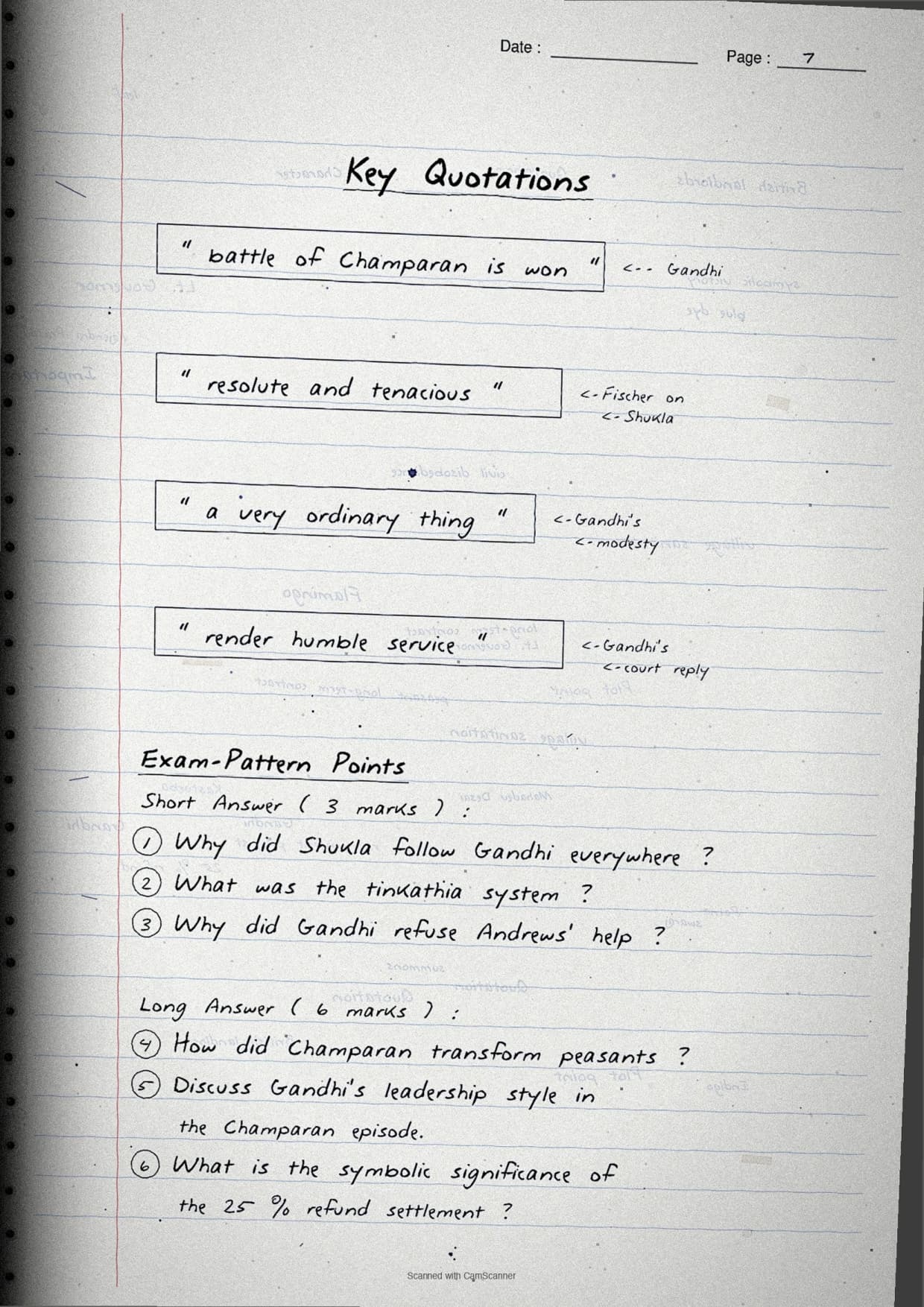
- Margin notes: Direct quotations and CBSE marking-scheme tips sit beside the relevant paragraph, not at chapter end.
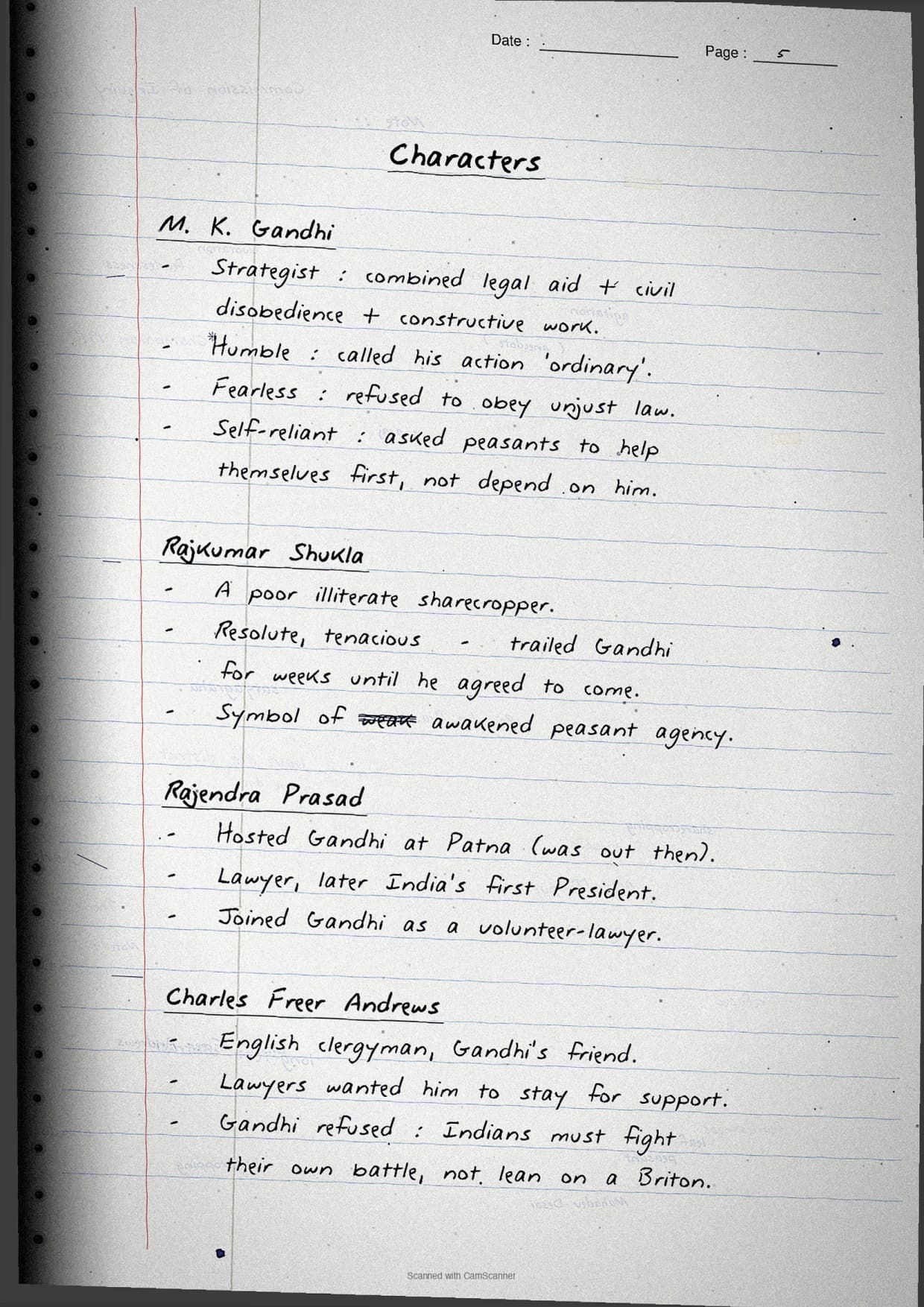
- Hand-drawn character cards: Each named figure (Shukla, Andrews, Kripalani) gets a sketch box with role, period, and exam relevance.
Flamingo Prose Indigo Video Walkthrough
Source: Magnet Brains on YouTube
What's Inside the Class 12 English Handwritten Notes Chapter 5 Flamingo Prose: Indigo PDF?
The PDF is structured as a notebook scan, ordered for revision flow rather than chapter-page flow. The colour legend appears on page 1.
- Page 1: Chapter overview card plus the colour-code legend.
- Pages 2 to 4: Champaran 1917 timeline (Lucknow, Patna, Muzaffarpur, Motihari, refund) with hand-drawn arrows.
- Pages 5 to 7: Character cards for Gandhi, Shukla, Andrews, Kripalani, Rajendra Prasad, Mahadev Desai, Louis Fischer.
- Pages 8 to 10: Theme maps (civil disobedience, self-reliance, awakening of peasantry) with quotation anchors.
- Pages 11 to 13: Colour-coded glossary with 12 indigo-system terms.
- Pages 14 to 15: Most-repeated CBSE board questions and 2025 question pattern.
- Page 16: Last 24-hour revision card.
Indigo Handwritten Notes Diagram Inventory
The PDF carries seven hand-drawn diagrams. Each one targets a specific Board-question type.
| Diagram | Page | What It Supports |
|---|---|---|
| Champaran 1917 Timeline Arrow | 2 | "Justify the turning point" long answer |
| Map of Bihar with Champaran, Motihari, Patna, Muzaffarpur | 3 | Place-name MCQs in CUET |
| Shukla Persistence Flowchart (Lucknow to Bihar) | 5 | Shukla character question |
| Civil Disobedience Theme Web | 8 | Theme-based long answer |
| Andrews Episode Decision Tree | 9 | Self-reliance theme question |
| 25 Percent Refund Symbolism Sketch | 10 | Symbolism short answer |
| Champaran Village Reform Programme Hub Diagram | 10 | "What did Gandhi teach the peasants" question |
How will Collegedunia's Handwritten Notes Help You Revise Indigo Faster?
The handwritten format compresses a 9-page chapter into a 16-page notebook scan that reads in 25 minutes. The same compression in print would take 45 minutes because the eye has no visual anchors.
- 2026-27 NCERT Alignment: Every page matches the current Flamingo edition; no obsolete content carries over.
- Hand-drawn Maps and Diagrams: Seven sketches anchor the Champaran geography and the chapter chronology.
- Margin Mnemonics: Each character card has a one-line memory hook (e.g. "Shukla = Stubborn Sharecropper") in the margin.
- Quick-Revision Strip: Page 16 carries the last 24-hour skim card that touches every theme in under 5 minutes.
Indigo Memory Mnemonics for Long-Answer Recall
Three mnemonics anchor the most-asked Indigo content. Each maps to a CBSE long-answer prompt.
Indigo Self-Assessment Quick Quiz
Test your recall with five MCQs. Click each question to reveal the answer.
Q1. Who is the author of Indigo Class 12 English Chapter 5?
(a) Mahatma Gandhi (b) Louis Fischer (c) Rajkumar Shukla (d) C.F. Andrews
Answer: (b) Louis Fischer wrote The Life of Mahatma Gandhi (1950); Indigo is an extract from it.
Q2. Where did Gandhi face the Motihari trial?
(a) Patna (b) Lucknow (c) Muzaffarpur (d) Champaran district headquarters at Motihari
Answer: (d) Motihari was the district headquarters of Champaran where the famous trial was held.
Q3. Why did Gandhi accept a 25 percent refund instead of more?
(a) Landlords refused more (b) Symbolic concession mattered more than amount (c) Peasants asked for less (d) The British forced it
Answer: (b) The symbolic surrender of landlord power mattered more than the actual sum.
Q4. Why did Gandhi refuse C.F. Andrews's offer of help?
(a) Andrews was unreliable (b) The British would oppose (c) Self-reliance: Indians must do without British aid (d) Andrews was unwell
Answer: (c) Gandhi wanted Indians to learn to do without British assistance.
Q5. What was the tinkathia system?
(a) A British tax (b) The 3-out-of-20 katha indigo planting obligation in Champaran (c) A type of court (d) A village reform programme
Answer: (b) The 3-out-of-20 katha indigo planting share that bound Champaran peasants to landlords.
Indigo Last 24-Hour Revision Card
Print this section out and skim it the night before the Board paper. Five minutes covers the entire chapter.
- Author: Louis Fischer, The Life of Mahatma Gandhi (1950)
- Setting: Champaran district, Bihar, 1917; indigo sharecropping (tinkathia system)
- Trigger: Rajkumar Shukla at the 1916 Lucknow Congress
- Climax: Motihari trial; peasants gather; case dropped
- Resolution: 25 percent refund settlement (symbolic concession)
- Aftermath: Village reform (schools, sanitation, healthcare); Andrews offer refused (self-reliance)
- Themes: Civil disobedience; self-reliance; awakening of peasantry
- Significance: First Indian satyagraha; method later used in Non-Cooperation, Salt March, Quit India
Best Way to Use These Class 12 English Handwritten Notes Chapter 5 Flamingo Prose: Indigo
The notebook scans work in two passes, not one. The first pass plants the timeline; the second pass overlays the themes.
- Pass 1 (15 minutes): Read only the Champaran timeline (pages 2 to 4) and the character cards (pages 5 to 7). Skip themes.
- Pass 2 (10 minutes): Read only the theme maps (pages 8 to 10) and the colour-coded glossary (pages 11 to 13). Skip timeline.
- Final skim (5 minutes): Read only the last 24-hour revision card on page 16.
Full version: Indigo Class 12 Notes
More Indigo English Core Class 12 Resources
NCERT Handwritten Notes for Class 12 English Core Flamingo Prose: All Chapters
Use the table below to navigate to other Flamingo Prose chapters' handwritten notes.
| Chapter | Resource |
|---|---|
| Chapter 1 | The Last Lesson Handwritten Notes |
| Chapter 2 | Lost Spring Handwritten Notes |
| Chapter 3 | Deep Water Handwritten Notes |
| Chapter 4 | The Rattrap Handwritten Notes |
| Chapter 6 | Poets and Pancakes Handwritten Notes |
Indigo Class 12 Handwritten Notes FAQs
Ques. Where can I download the Indigo Class 12 Handwritten Notes PDF?
Ans. You can download the Indigo Class 12 Handwritten Notes PDF directly from this page. Both the Normal and HD versions are available, and both are free.
Ques. Are these handwritten notes aligned with the 2026-27 NCERT?
Ans. Yes. The notes reflect the current 2026-27 syllabus for Class 12 English Core. Indigo remains in the Flamingo textbook unchanged from the 2024 edition.
Ques. How many pages is the Class 12th English Indigo Handwritten Notes PDF?
Ans. The PDF runs 16 pages and covers the chapter timeline, character cards, theme maps, colour-coded glossary, most-repeated Board questions, and a 24-hour revision card.
Ques. What diagrams are included in the Indigo Handwritten Notes?
Ans. Seven hand-drawn diagrams: Champaran timeline arrow, Bihar map, Shukla persistence flowchart, civil disobedience theme web, Andrews episode decision tree, 25 percent refund symbolism sketch, and the village reform hub diagram.
Ques. How is the colour code used in these handwritten notes?
Ans. Black for narrative facts, blue for direct textual quotations, red for CBSE marking-scheme tips, green for the self-reliance theme, and orange highlighter for Champaran place names. The legend appears on page 1.
Ques. Will these handwritten notes help with CUET English Domain?
Ans. Yes. CUET carries 1 to 2 extract-based MCQ stems on Indigo per year. The character cards, place-name map, and chronology arrows directly support the dominant CUET question patterns.



Comments