




The handwritten notes on Class 12 Computer Science Chapter 11 Data Communication have been carefully prepared by hand for quick one-shot revision, according to the latest 2026-27 CBSE syllabus. They run for 24 ruled notebook pages in blue-ink style and cover the five components of data communication, the transmission modes of simplex, half-duplex and full-duplex, LAN, MAN and WAN, wired and wireless media, and the terms bandwidth, data transfer rate, protocol, HTTP, DNS and Bluetooth.
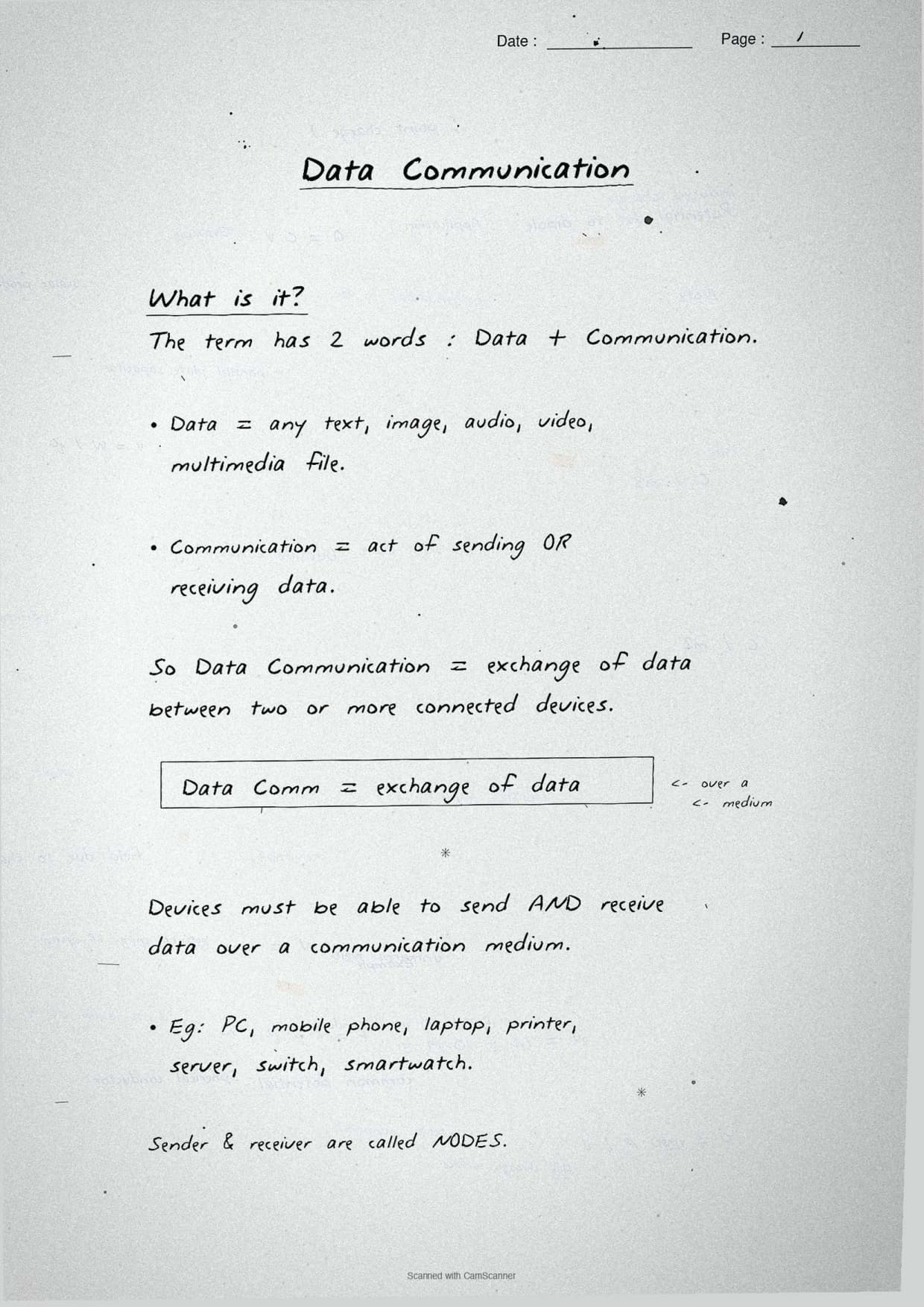
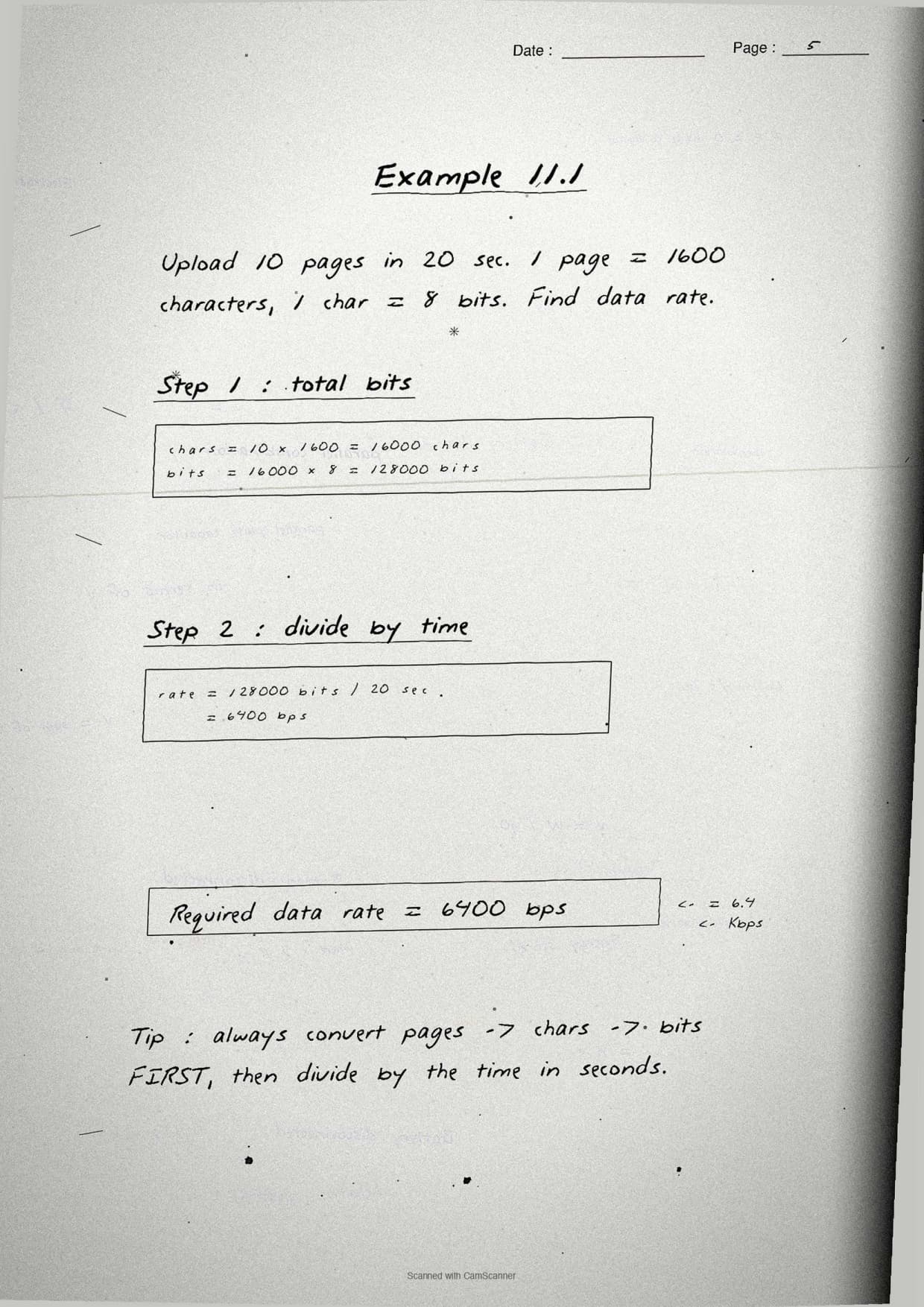
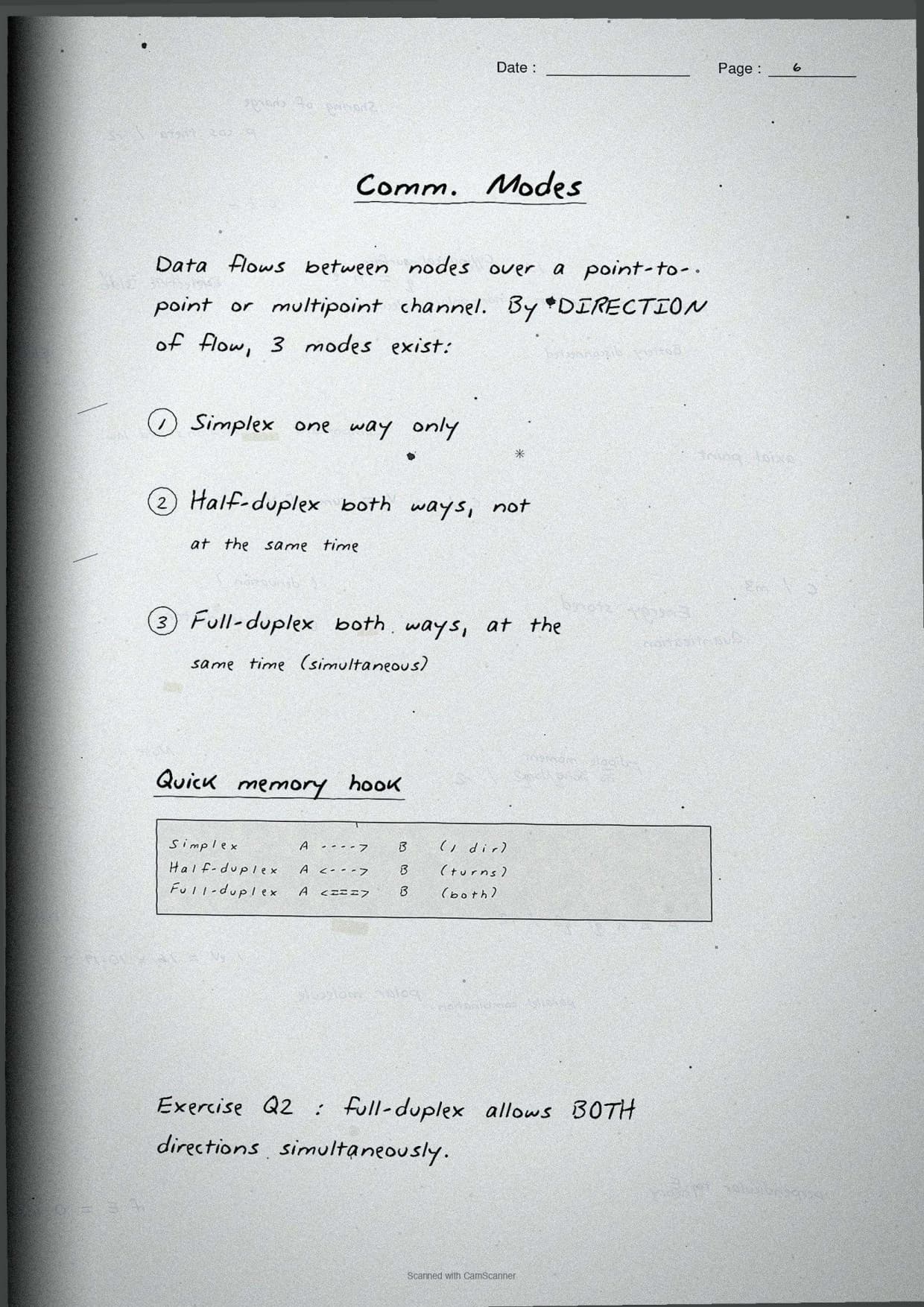
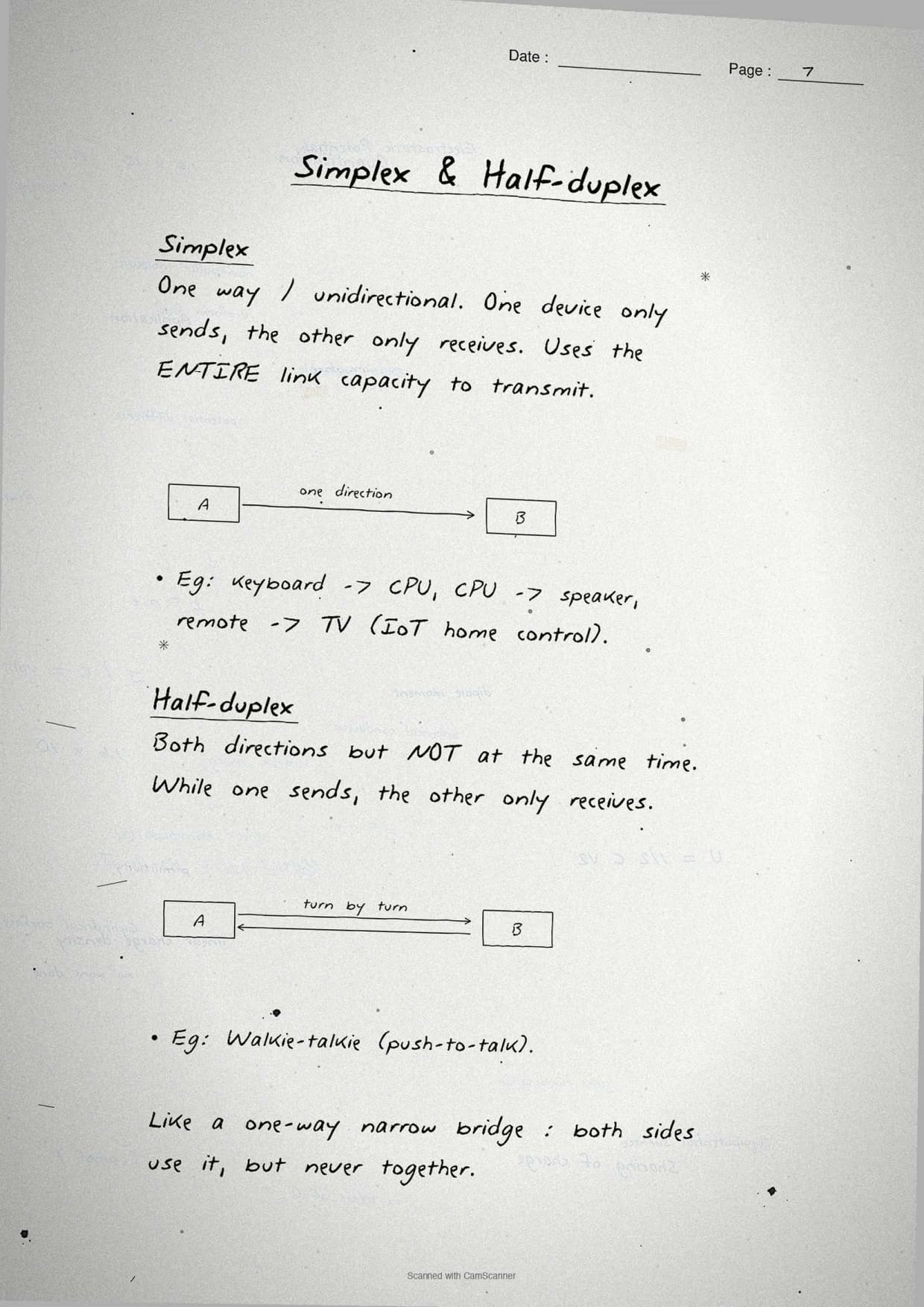
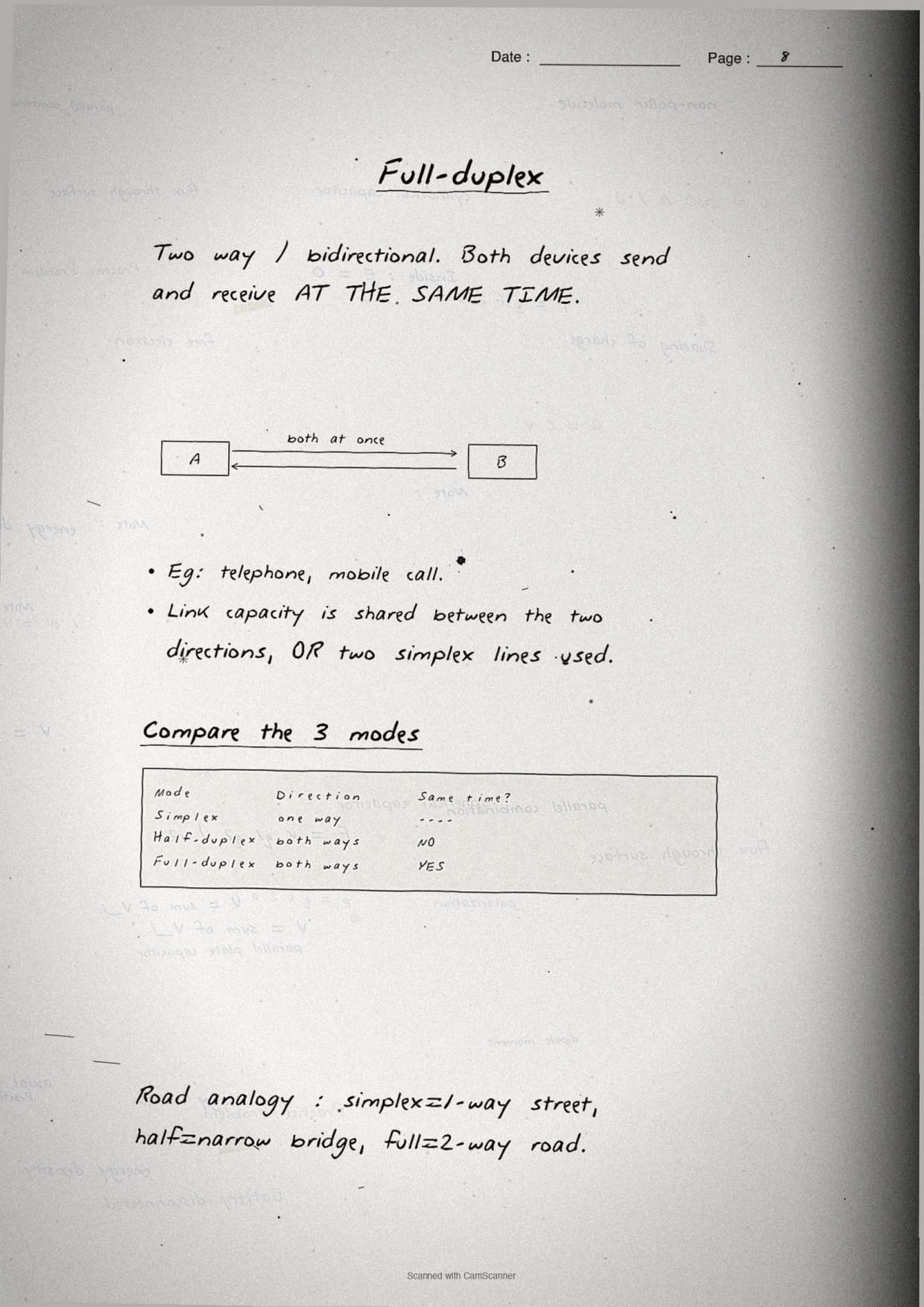
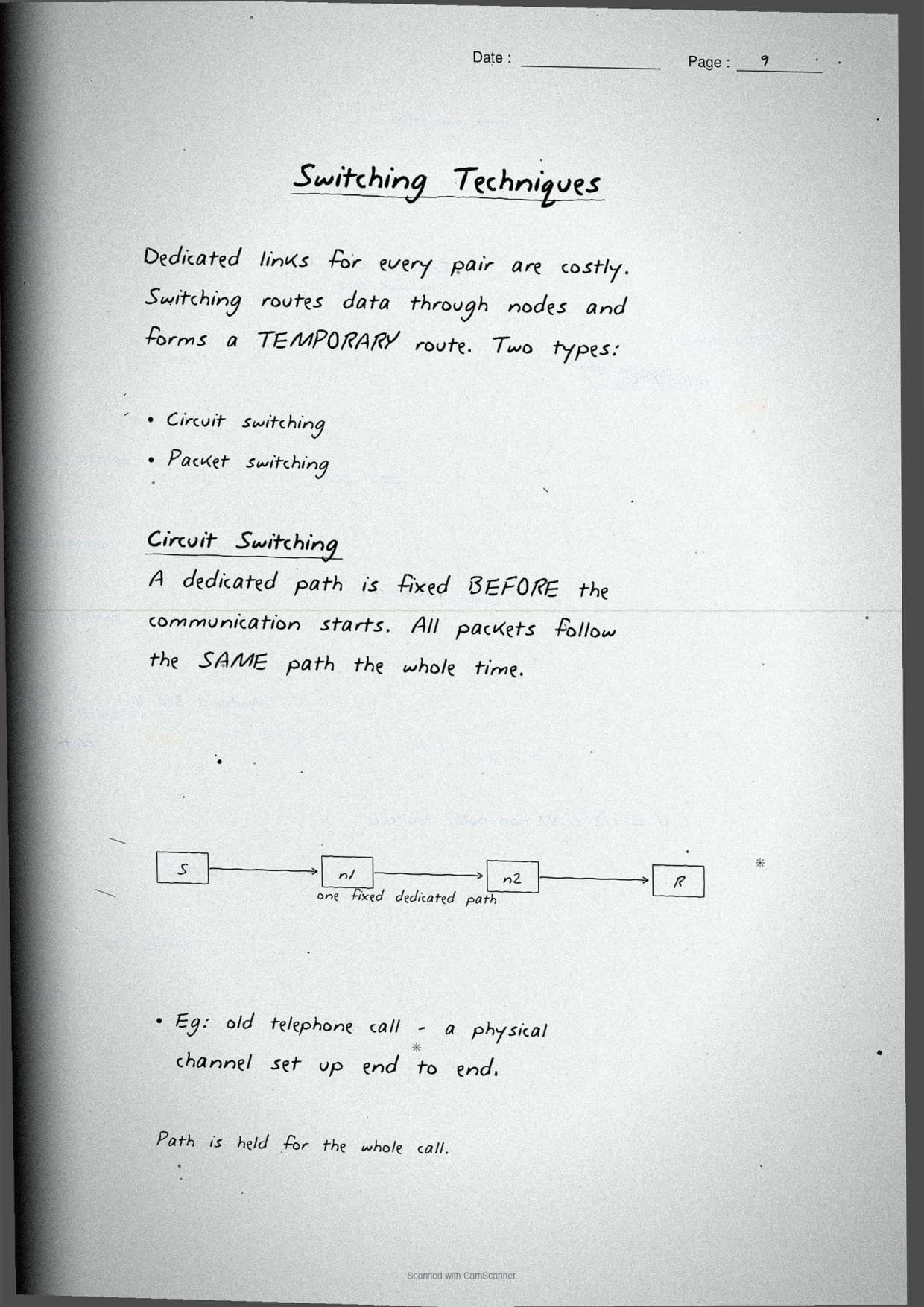
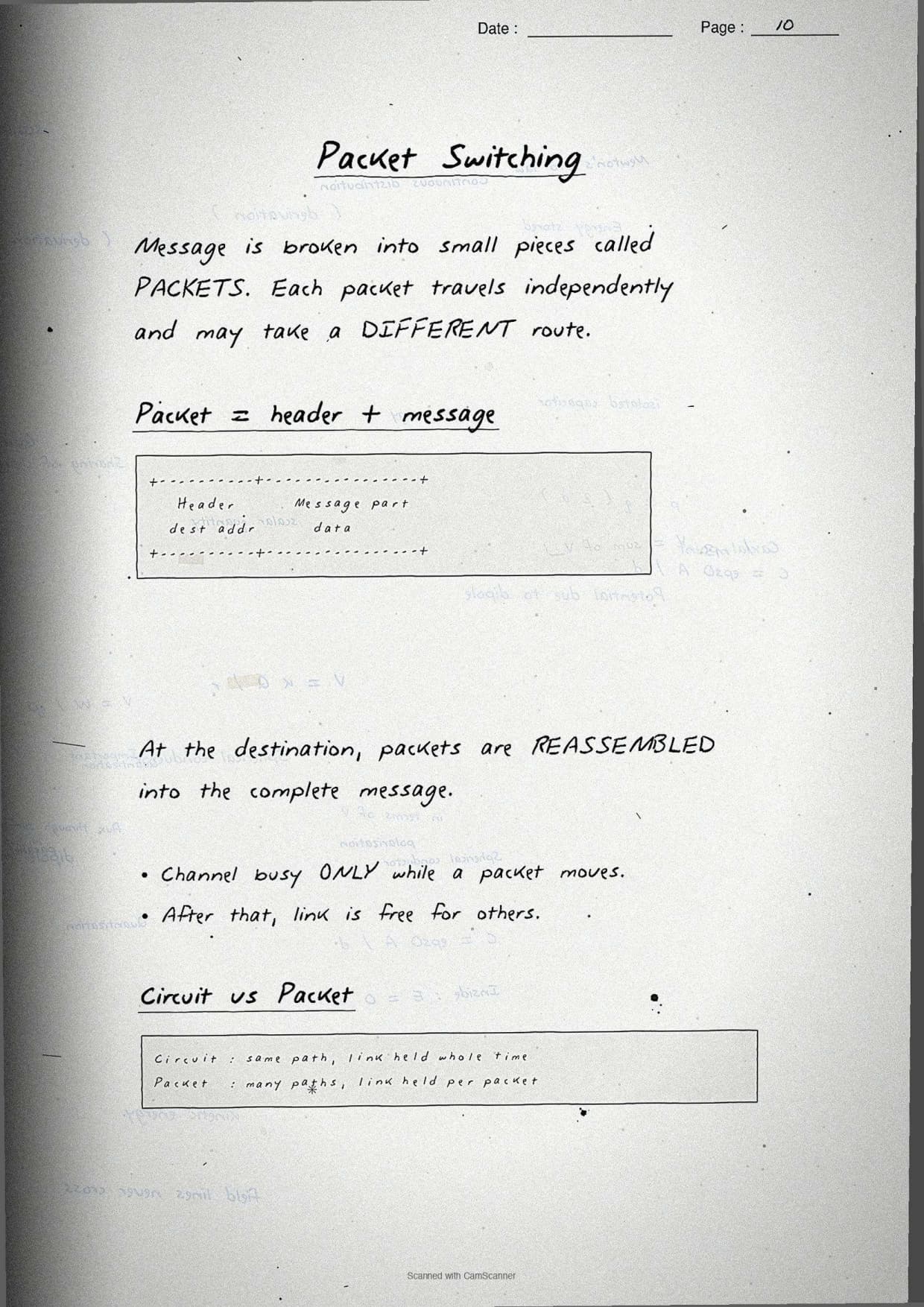
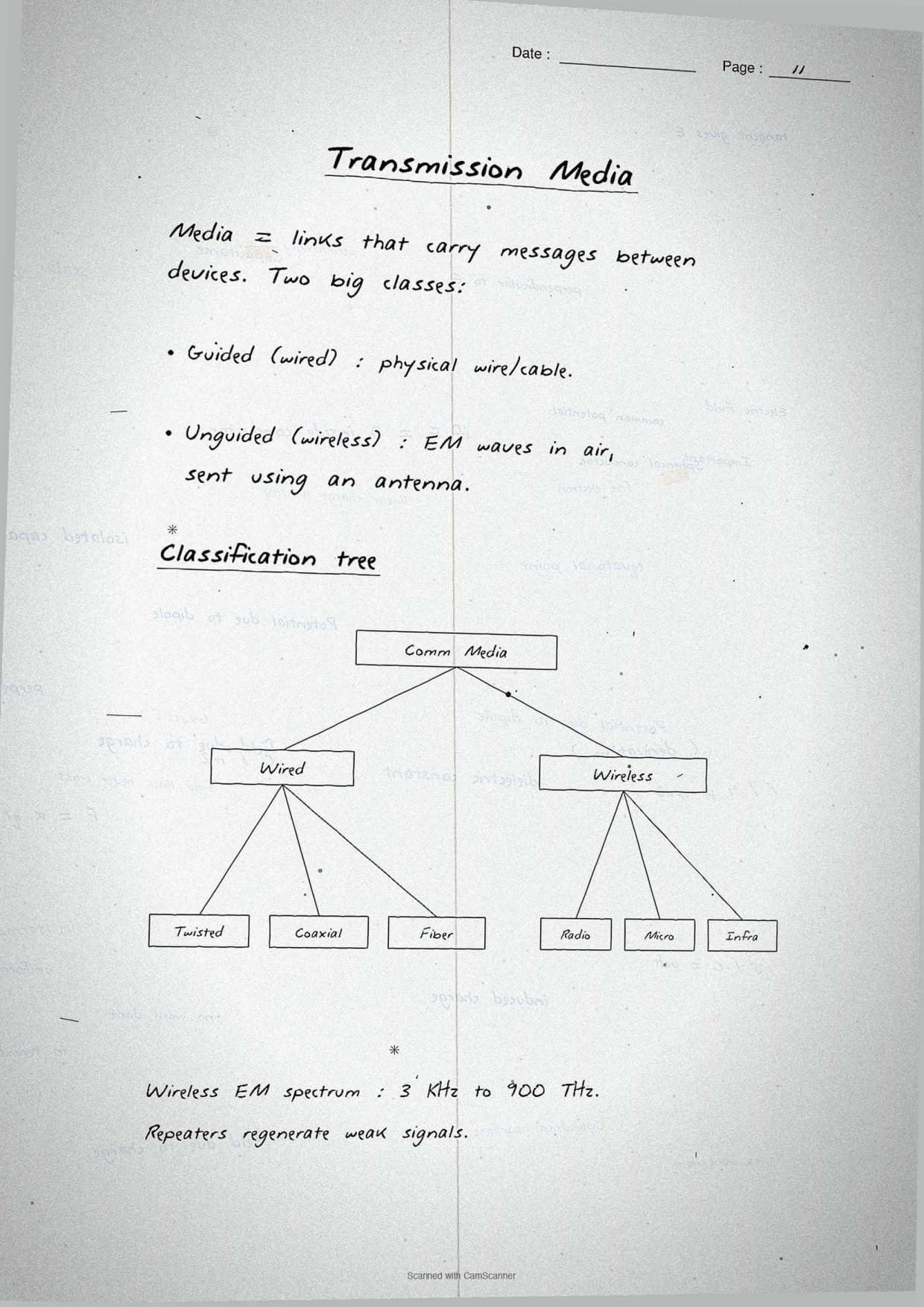
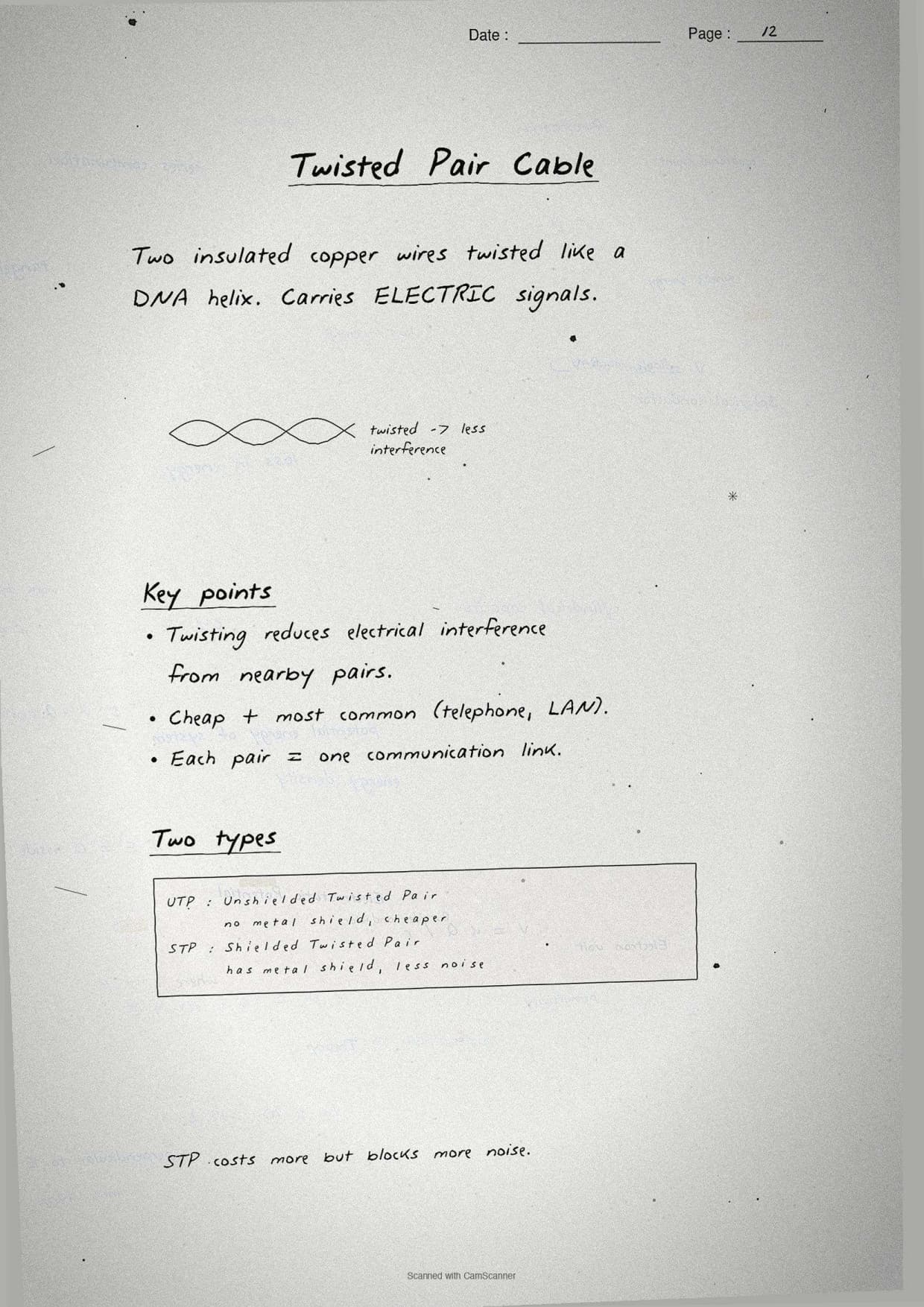
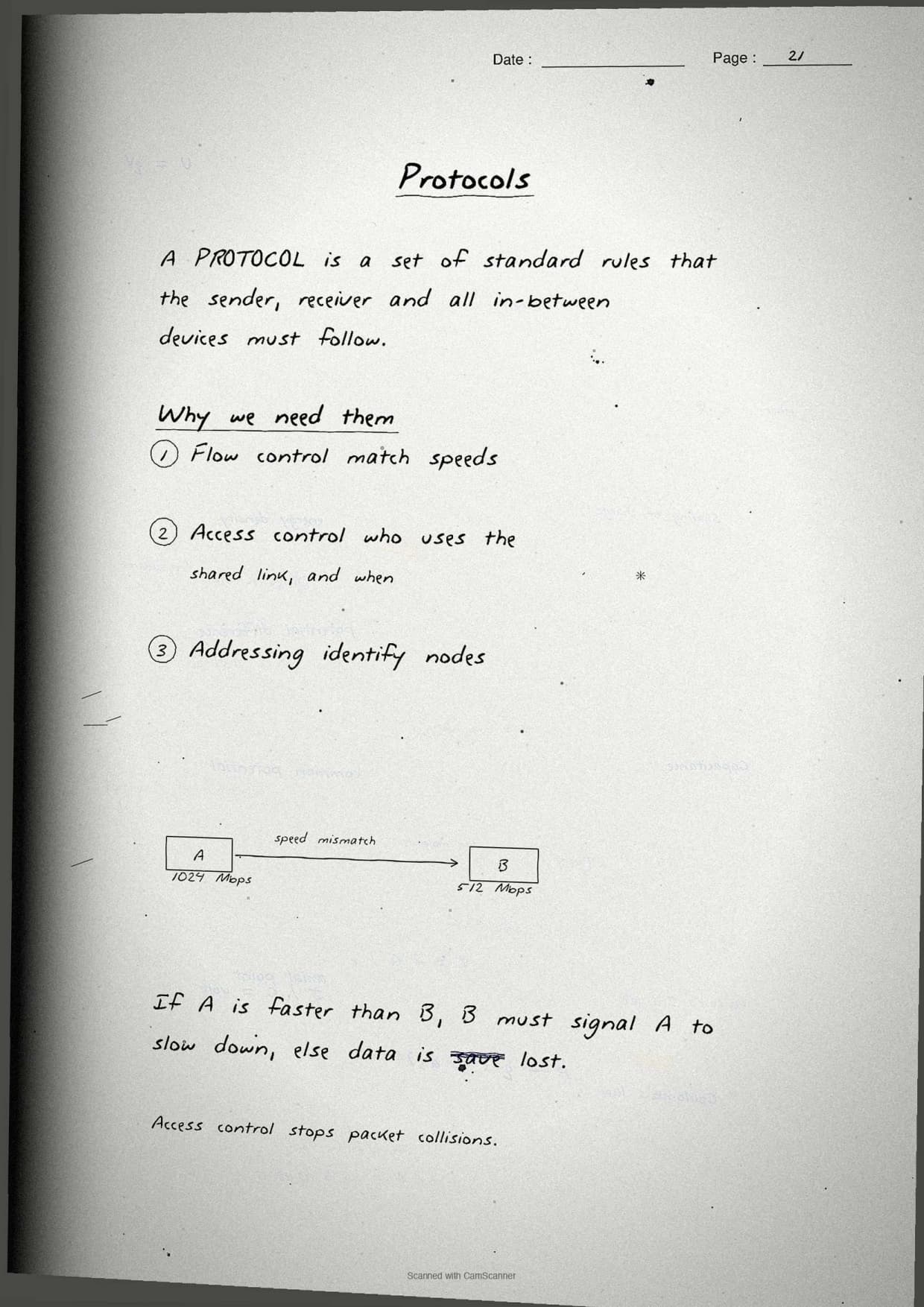
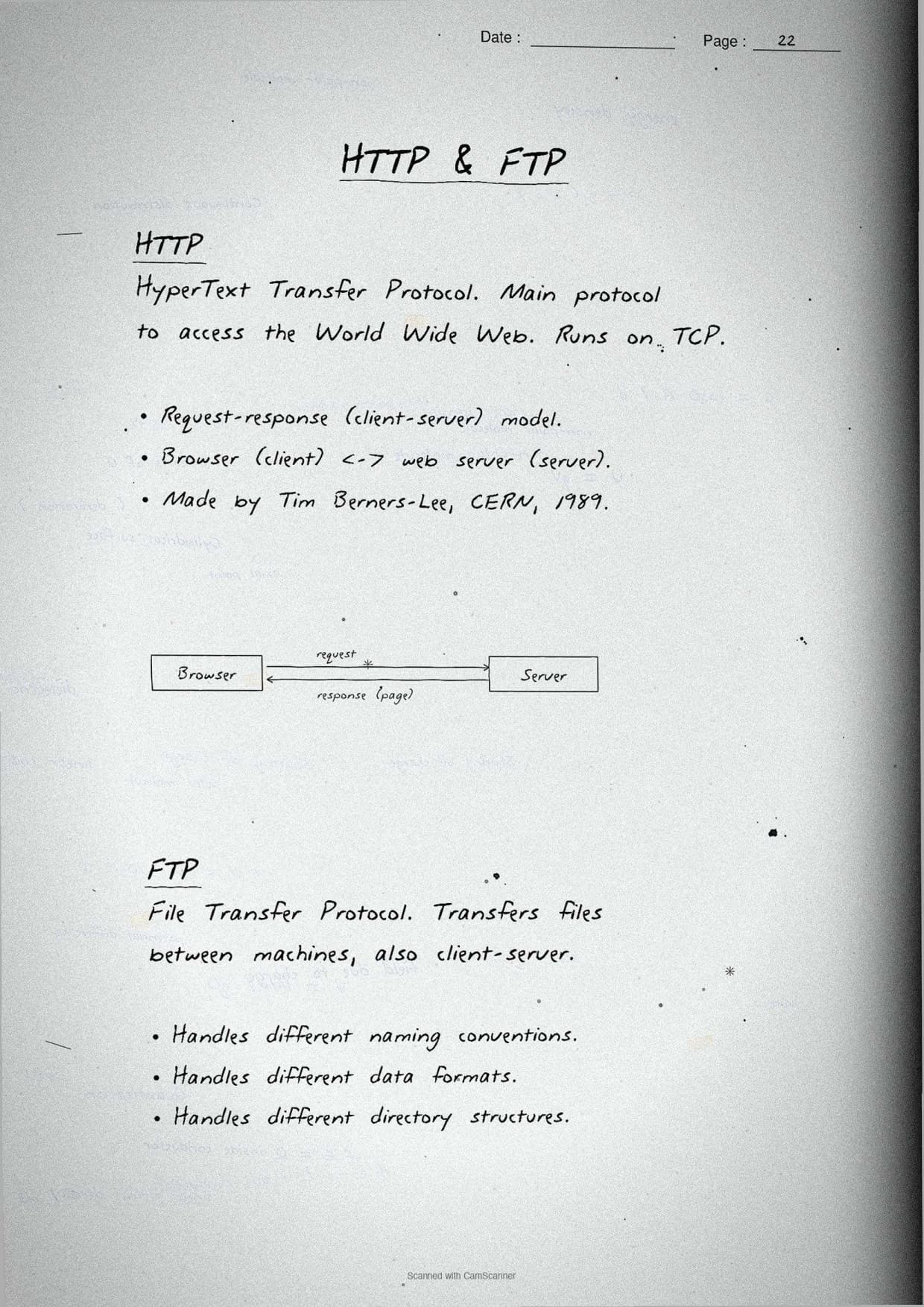
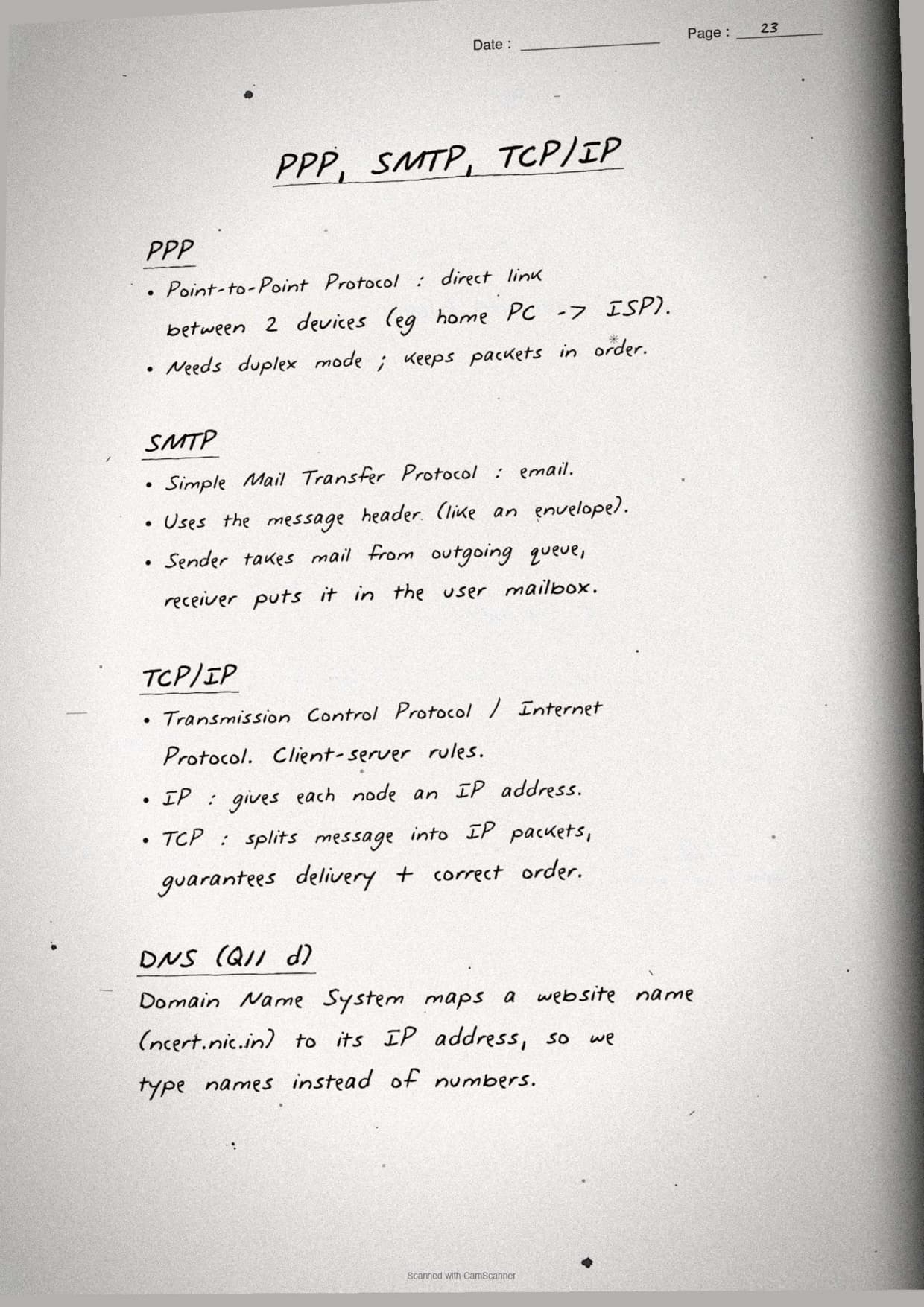
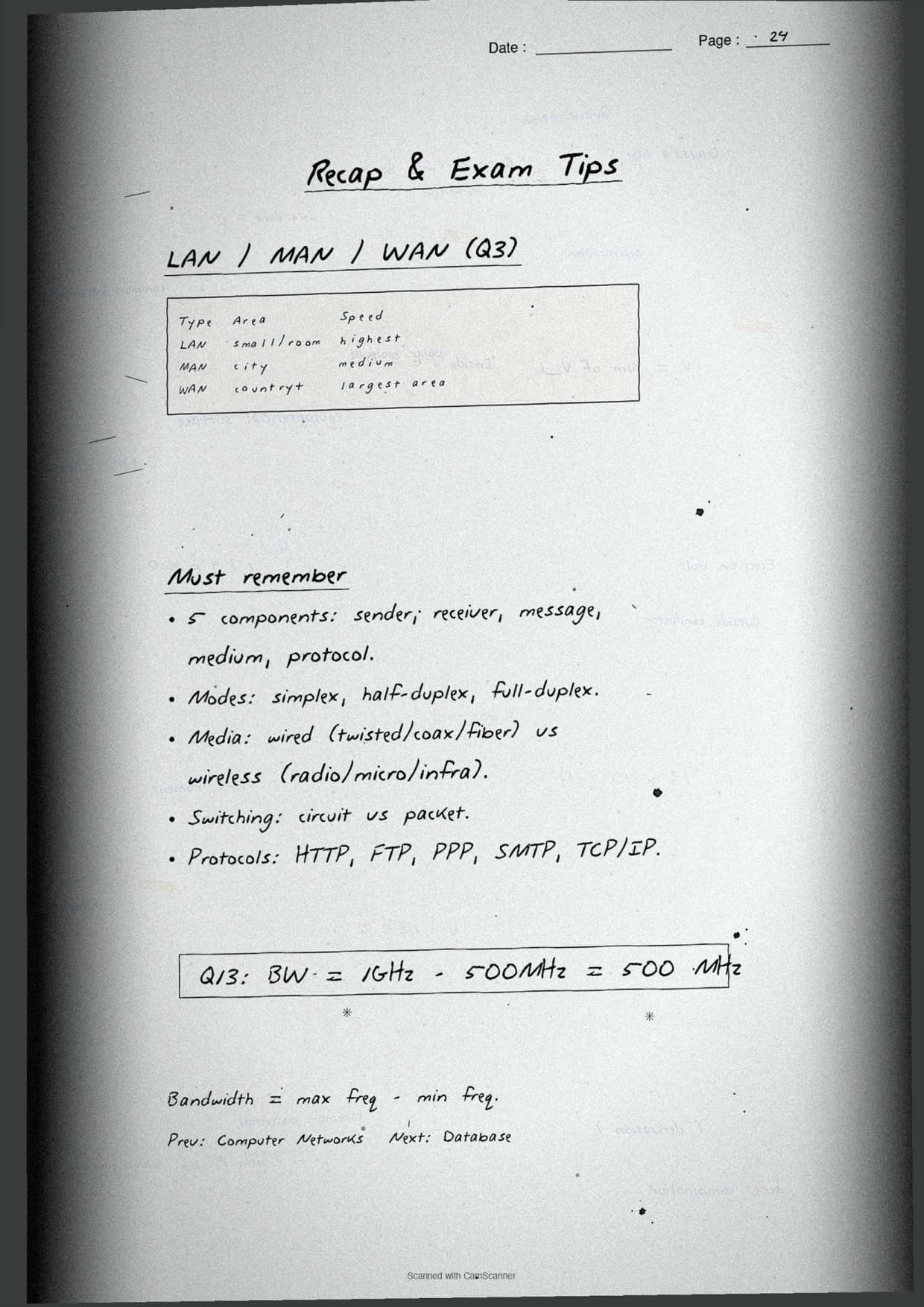
- 24 ruled pages of pen-style notes covering every Data Communication topic the CBSE board paper tests, from the five components to bandwidth.
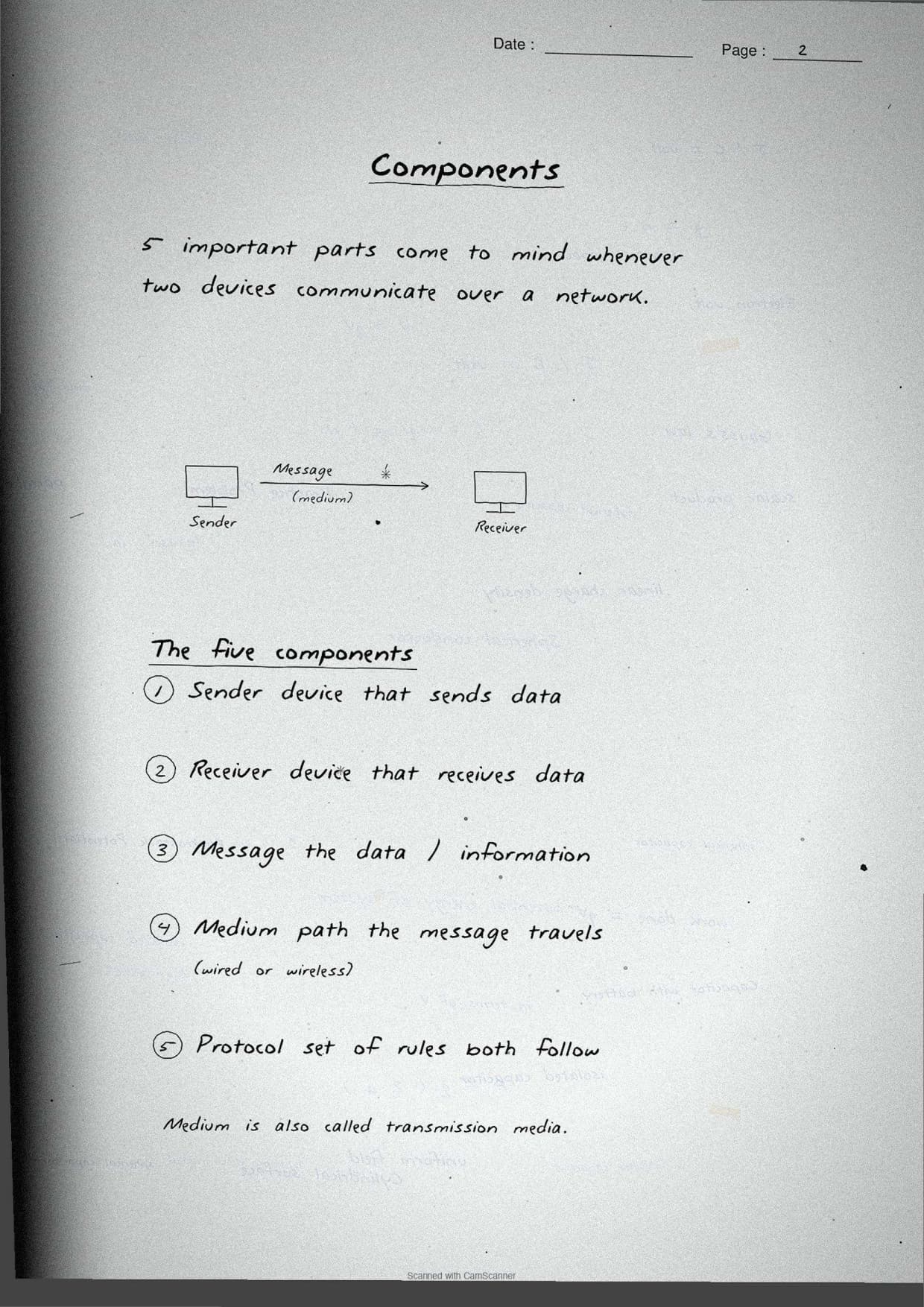
- Hand-drawn boxes for the sender-to-receiver flow, the three transmission modes, and the wired vs wireless media compare.
- 2026-27 syllabus aligned, useful for CBSE boards, JEE programming rounds, and CUET Computer Science.
These handwritten notes are prepared by Computer Science subject experts, according to the 2026-27 NCERT textbook, and refined against the last five years of CBSE Class 12 Computer Science board papers.
Student Feedback: What 10,800 students told us about this chapter
71% of Class 12 students said they mix up half-duplex and full-duplex in the 1-mark mode question. 3 out of 5 students told us they lose a mark by confusing bandwidth with data transfer rate when the question asks for the range of frequencies.
Toppers reported that one quick look at a handwritten chart of the five components and the three transmission modes before the exam fixed the theory in memory, and the average student spent 2 to 3 hours revising this chapter from these notes.
Source: 2026-27 Class 12 Computer Science student poll. Sample of 10,800 students from CBSE schools across 14 states, conducted before the 2026 boards.
How These Class 12 Computer Science Chapter 11 Data Communication Handwritten Notes Help You
Typed notes read like a textbook. Handwritten notes read like a friend's revision book, so the brain finds the page faster on exam day. These Data Communication handwritten notes keep every component, mode, network type and term on ruled paper, so you can flip through the whole chapter in under 30 minutes the night before the exam.
- Pen-style headings make each sub-topic stand out, so finding a definition during last-week revision takes seconds.
- A boxed sender to receiver flow sits next to the five components, removing the most common board-exam slip.
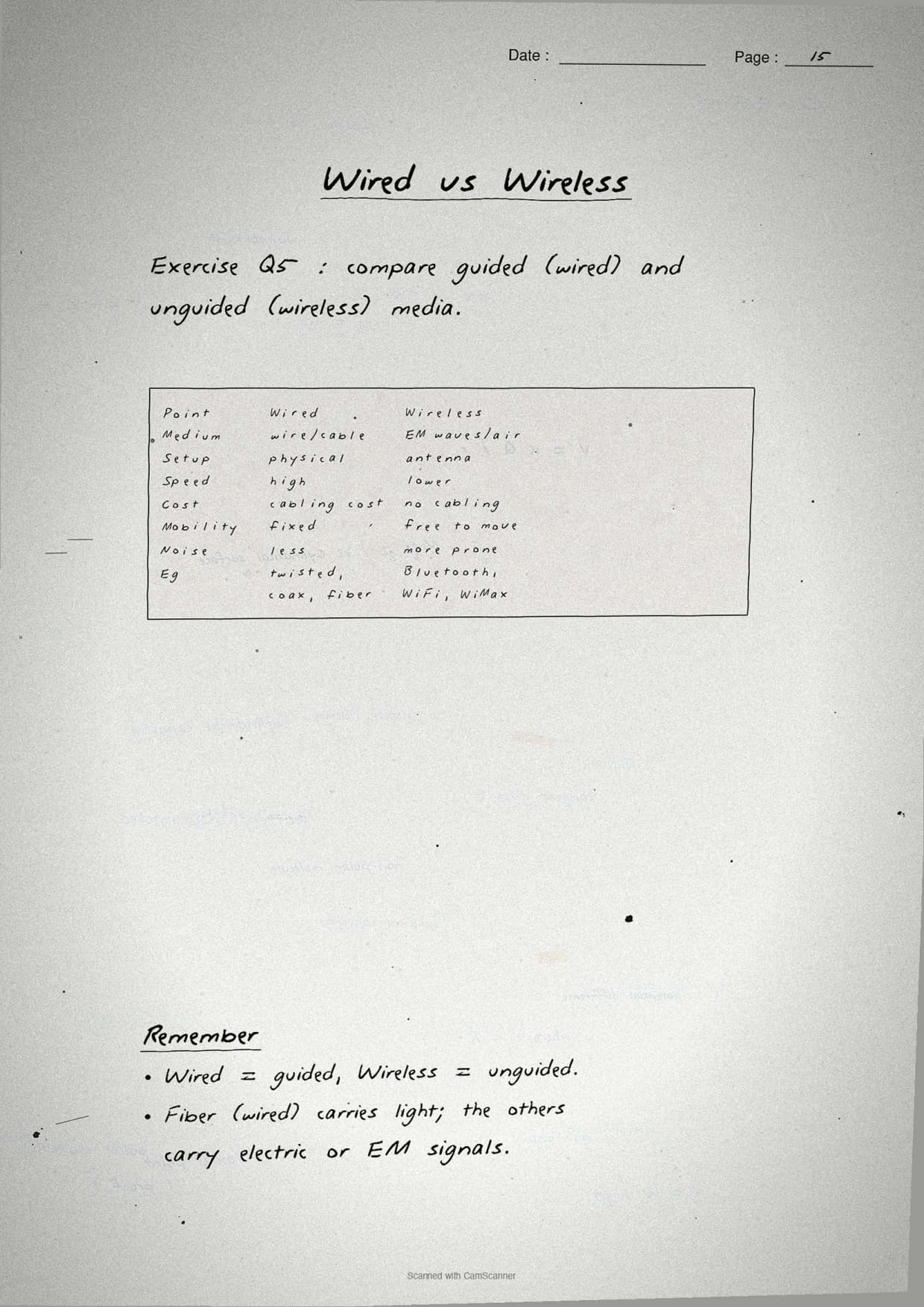
- The media page draws the wired and wireless options in one frame, so twisted pair, coaxial, fiber, radio and microwave are easy to picture.
- Small margin tips match how toppers compress this theory chapter for revision.
Source: Decode the power within You. on YouTube
Topics Covered in the Data Communication Handwritten Notes
The 24-page handwritten PDF walks through the chapter in the same order as the NCERT book, so it sits next to your textbook without confusion. The table below maps each topic to the page idea you will see in the notes and the typical mark weight in the CBSE board paper.
| Topic | What the handwritten page shows | Typical marks |
|---|---|---|
| Components of data communication | Sender, message, medium, receiver and protocol drawn as a flow | 1 to 3 marks |
| Transmission modes | Simplex, half-duplex and full-duplex with everyday examples | 1 to 2 marks |
| LAN, MAN, WAN | Compare box with area covered and relative speed | 2 to 3 marks |
| Wired media | Twisted pair, coaxial cable and optical fiber boxed together | 2 to 3 marks |
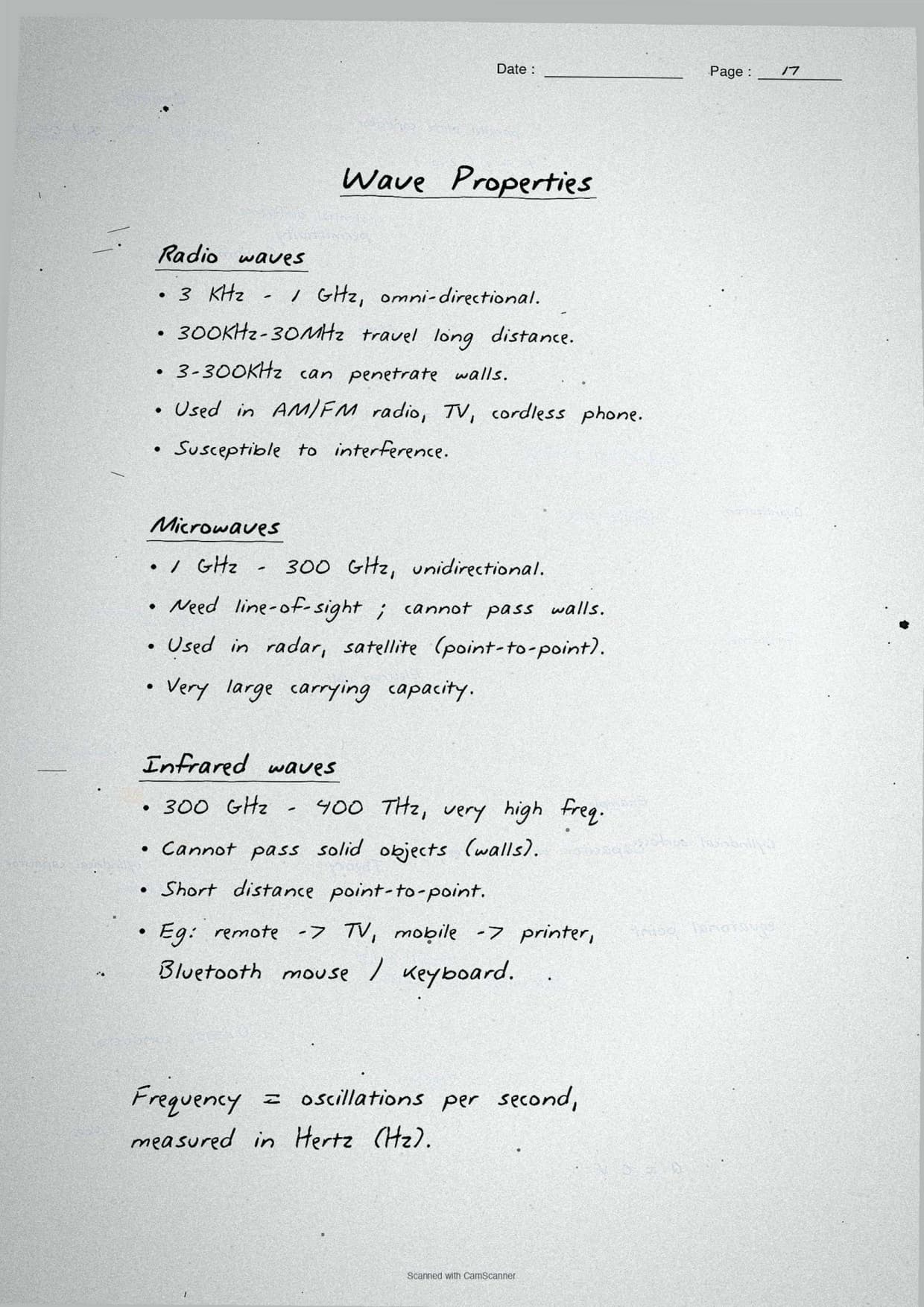
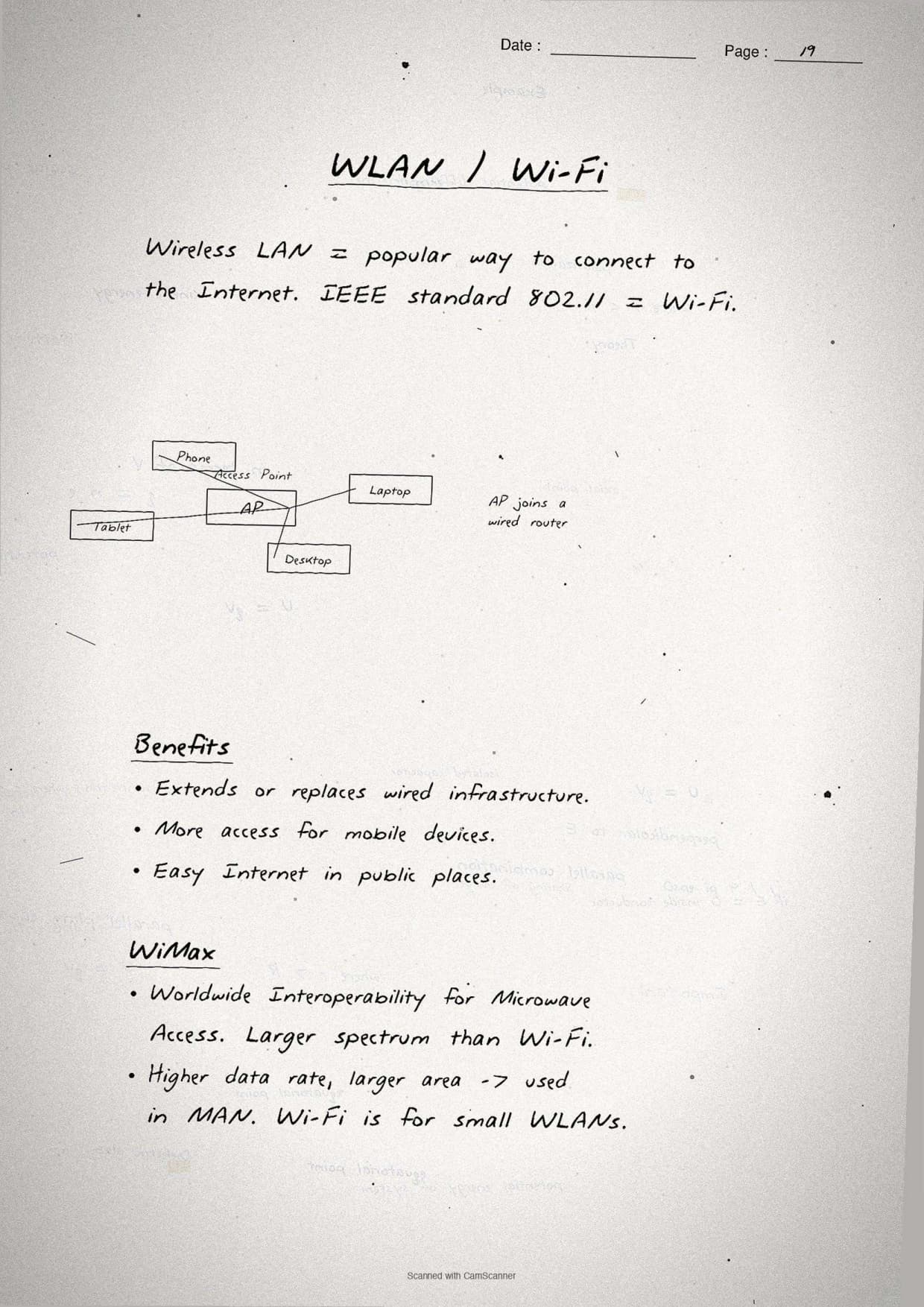
| Wireless media | Radio waves, microwaves and infrared with frequency ranges | 2 to 3 marks |
| Bandwidth and data transfer rate | The Gbps to bps conversion and the frequency-range formula | 1 to 3 marks |
Each page is written by hand in blue ballpoint ink on horizontally ruled paper with a faded red margin, just like a topper's own revision notebook.
Data Communication and Its Five Components in the Handwritten Notes
The first content page defines data communication as the exchange of data between two devices through a transmission medium such as a wire or a wireless link. This is a near-certain 1-mark or 3-mark question, so the notes draw all five components as a single flow from sender to receiver.
- Message: the actual data or information being communicated, such as text, numbers, images, audio or video.
- Sender: the device that sends the message, such as a computer, phone or sensor.
- Receiver: the device that receives the message, such as another computer or a printer.
- Transmission medium: the physical path that carries the message, such as twisted-pair cable, optical fiber or radio waves.
- Protocol: the set of rules that both devices agree on so the message is understood, such as HTTP or TCP/IP.
Transmission Modes: Simplex, Half-Duplex and Full-Duplex
The next page draws the three transmission modes, because the board often asks which mode allows communication in both directions at the same time. The mode describes the direction in which data flows between two linked devices.
- Simplex: data flows in one direction only, like a keyboard to a computer or a radio broadcast to a listener.
- Half-duplex: data flows in both directions, but only one direction at a time, like a walkie-talkie where each person waits to speak.
- Full-duplex: data flows in both directions at the same time, like a phone call where both people can talk at once.
The notes underline the exact board answer here: the mode that allows communication in both directions simultaneously is full-duplex. A telephone line is the standard example examiners accept.
LAN, MAN and WAN: Area Covered and Speed
This page lines up the three network types so the difference in area and speed is impossible to forget. The trap is that students name only the full forms in the exam, while the board answer usually wants the area covered and the relative speed too.
| Network | Full form | Area covered | Relative speed |
|---|---|---|---|
| LAN | Local Area Network | A room, building or campus | Highest |
| MAN | Metropolitan Area Network | A city or town | Medium |
| WAN | Wide Area Network | A country or the whole world | Lowest |
The notes box the exact answer the board wants: among LAN, MAN and WAN, the LAN has the highest speed while the WAN covers the largest area. The two qualities pull in opposite directions, which is why this comparison is asked so often.
Wired and Wireless Transmission Media
The media page is where the heavier marks live, so the notes box the wired and wireless options side by side and work one compare through both. Transmission media split into two groups: guided wired media that send signals through a physical cable, and unguided wireless media that send signals through the air.
Three categories of wired media
- Twisted-pair cable: two insulated copper wires twisted together; cheap and common in telephone lines and home networks; lower speed and shorter range.
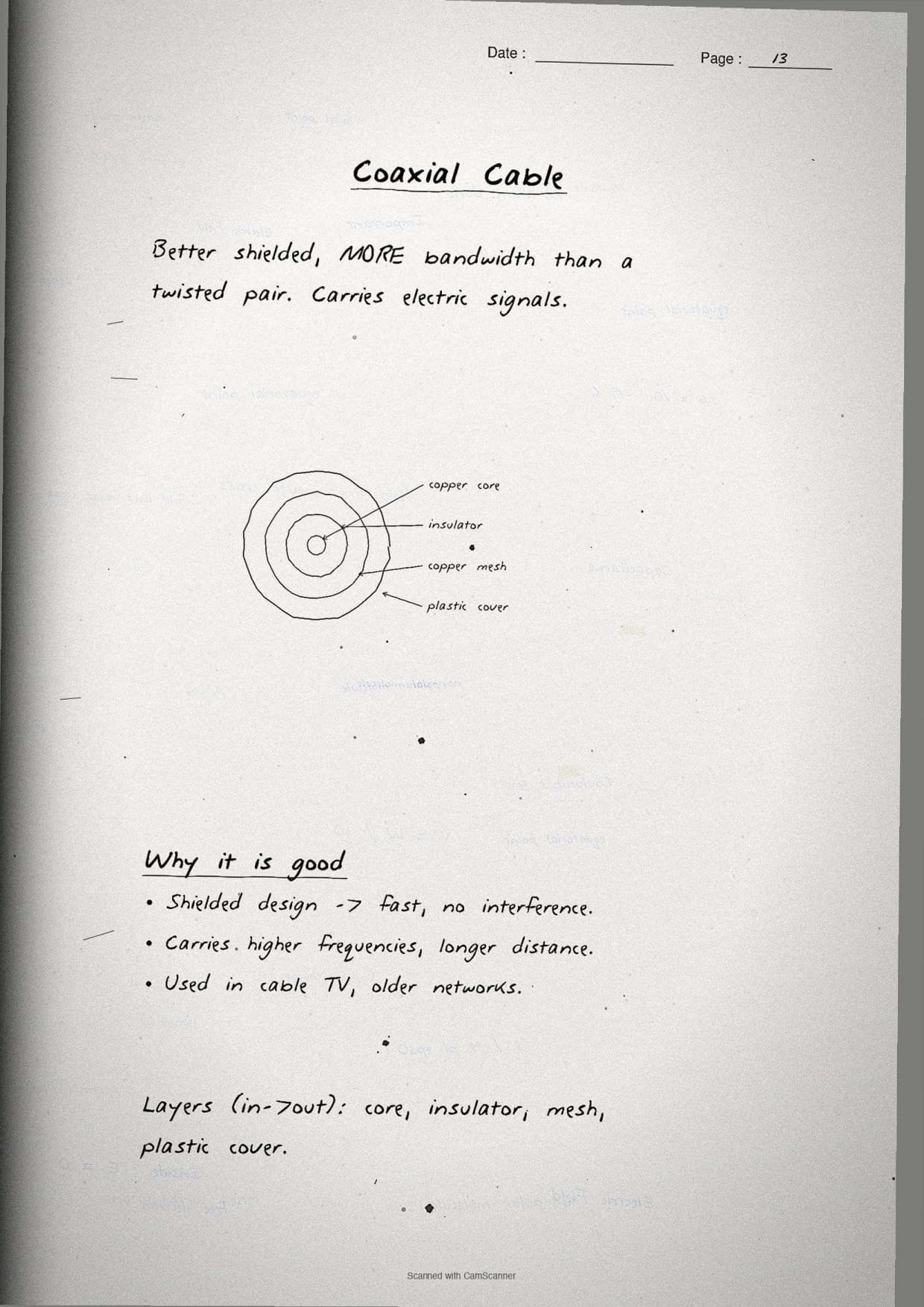
- Coaxial cable: a central copper conductor wrapped in insulation and a metal shield; carries higher speeds than twisted pair; used in cable TV and older networks.
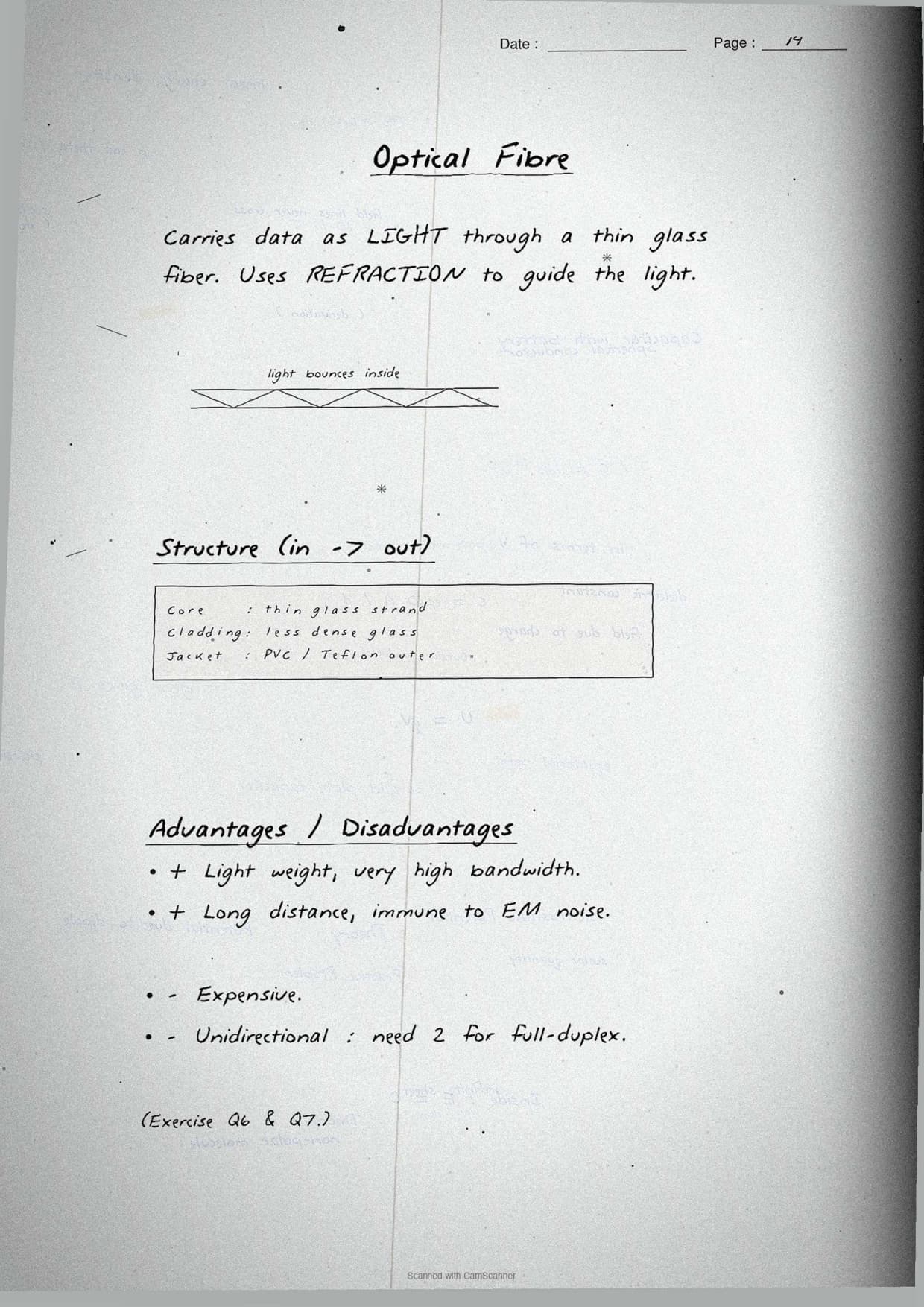
- Optical fiber cable: thin glass or plastic strands that carry signals as pulses of light; the fastest wired medium with very low signal loss over long distances.
The notes mark the one answer the board repeats: the medium that carries signals in the form of light is the optical fiber cable. Its advantages are high speed, long range and immunity to electrical interference, while its disadvantages are higher cost and the care needed when joining or bending the fragile fiber.
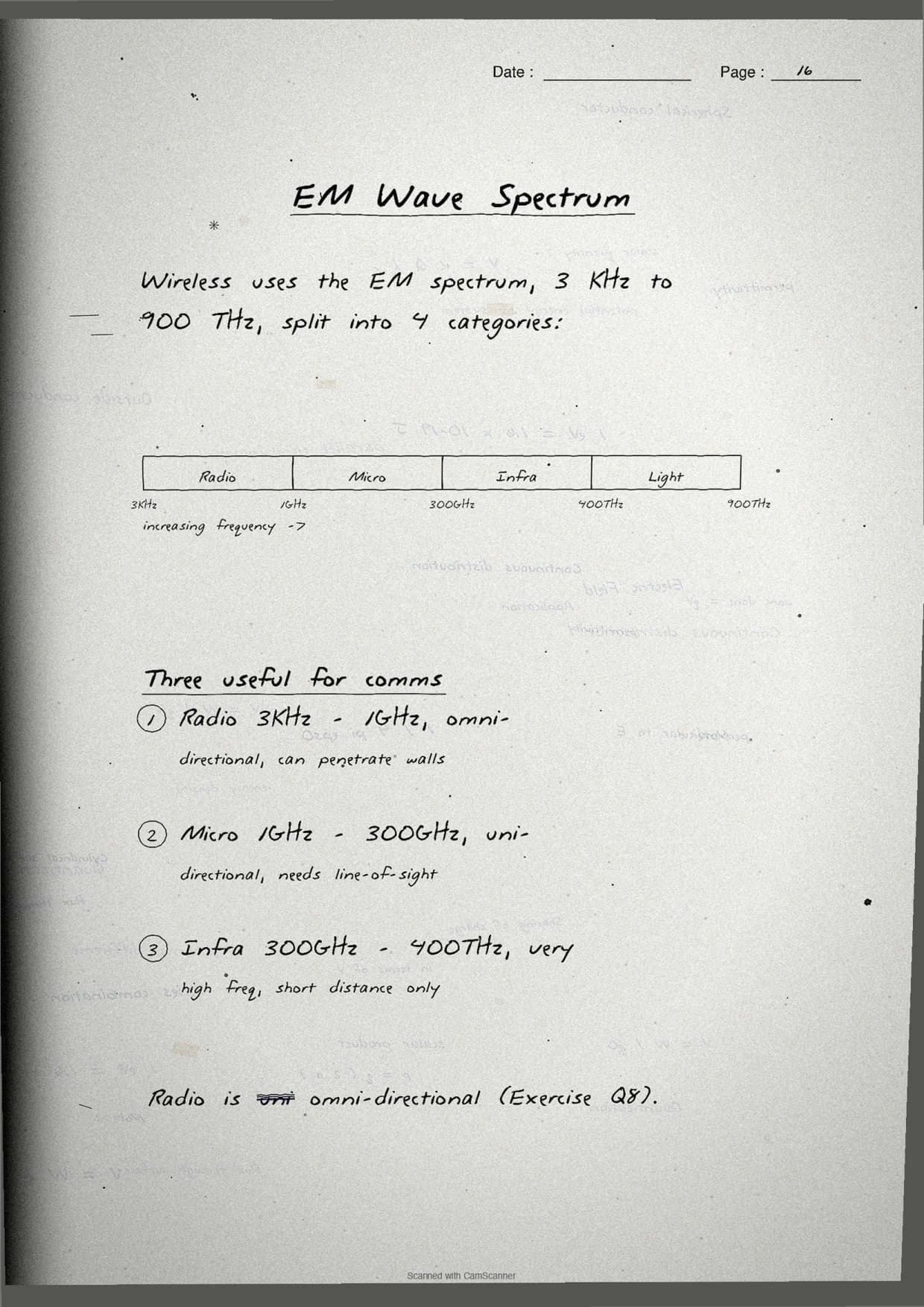
Wireless media and their frequency ranges
- Radio waves: travel in all directions and pass through walls; the range of frequency for radio waves is about 3 KHz to 1 GHz; used in AM and FM radio.
- Microwaves: travel in a straight line and need line-of-sight towers or dishes; used in mobile phones and satellite links.
- Infrared: very short range and cannot pass through walls; used in TV remotes and short-distance device links.
Bandwidth, Data Transfer Rate and Protocols
The last content page boxes the numeric terms, since the board can ask you to compute a bandwidth or convert a data rate. You need both the unit relationships and the simple frequency-range rule.
Bandwidth and data transfer rate
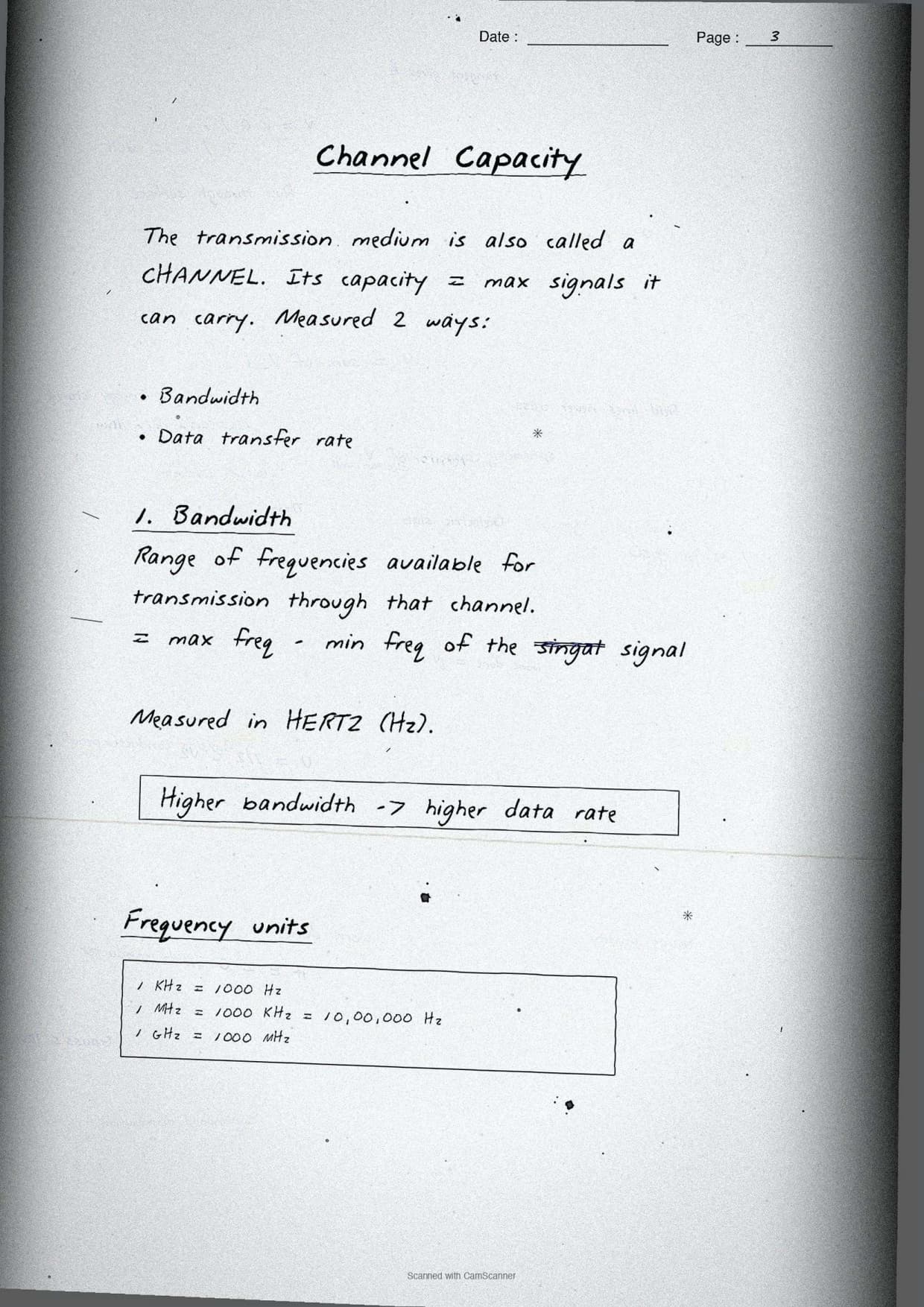
- Bandwidth: the range of frequencies a medium can carry, measured in hertz (Hz). For a composite signal it equals the highest frequency minus the lowest frequency.
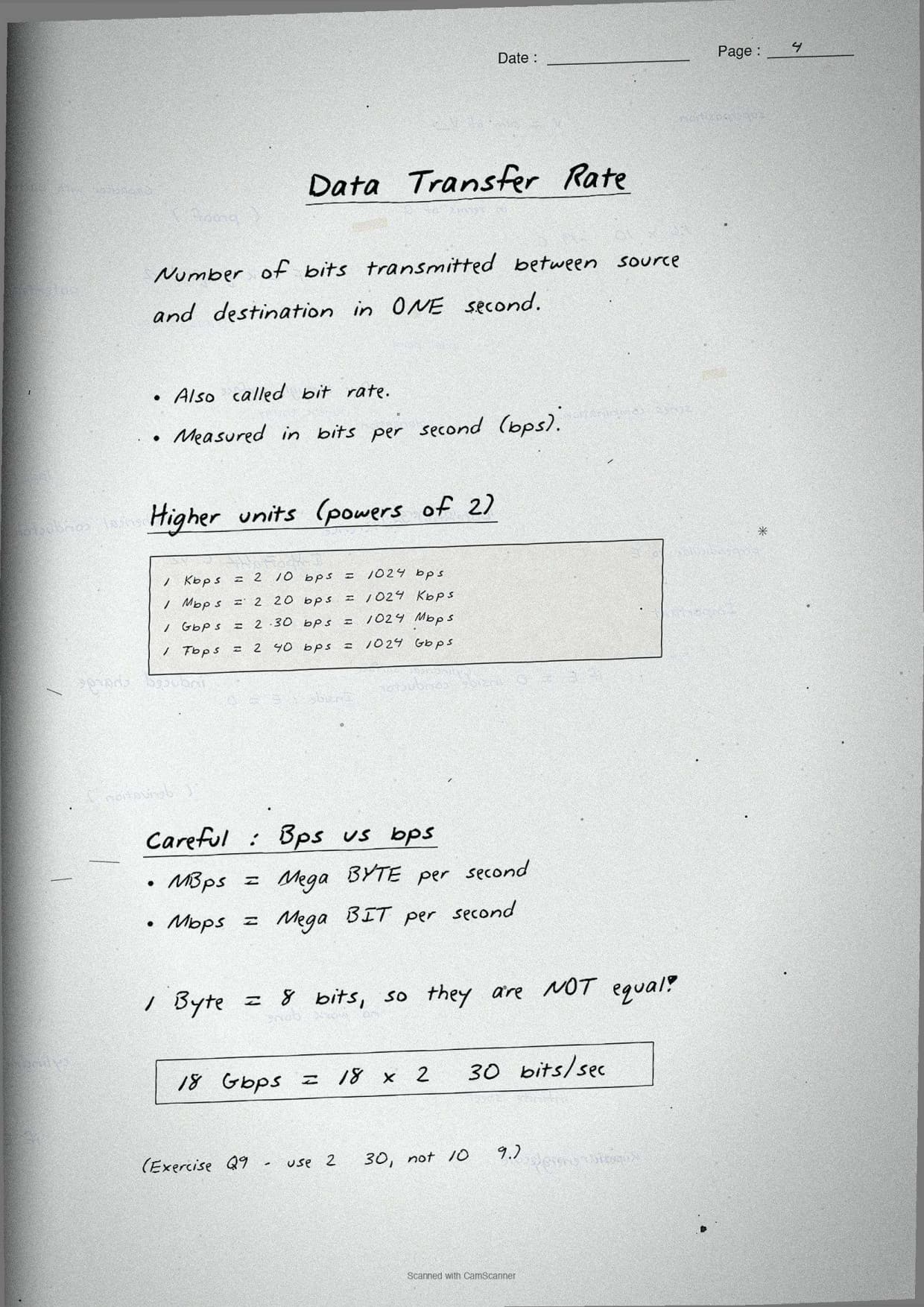
- Data transfer rate: the amount of data moved per second, measured in bits per second (bps), and in larger units such as Kbps, Mbps and Gbps.
The notes show two worked examples the board loves. First, a composite signal with frequencies between 500 MHz and 1 GHz has a bandwidth of 1 GHz minus 500 MHz, which is 500 MHz. Second, since 1 Gbps equals 1,000,000,000 bps, the rate 18 Gbps equals 18,000,000,000 bits per second (that is, 18 billion bits per second).
Protocols and key terms (HTTP, DNS, Bluetooth)
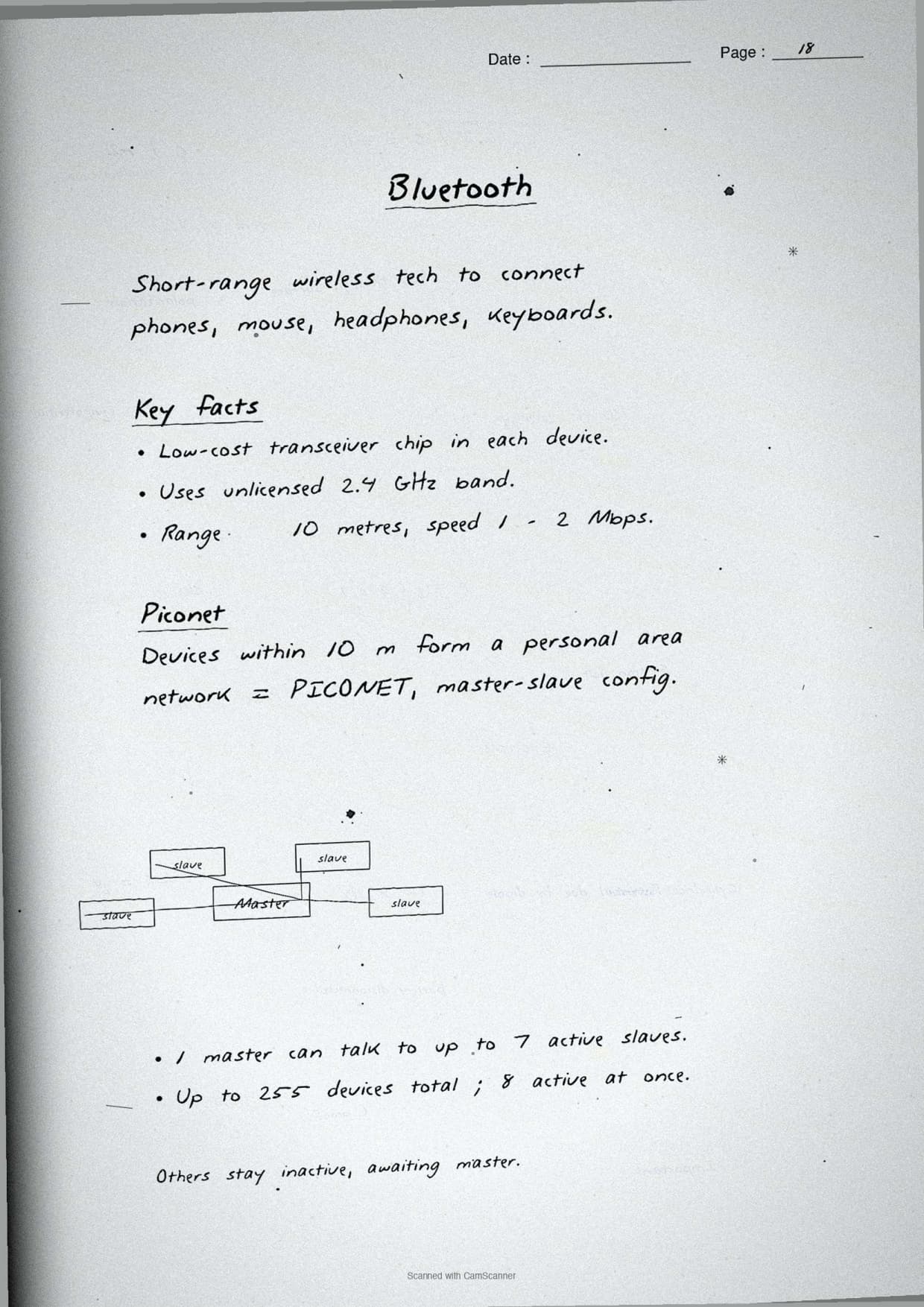
A protocol is a set of agreed rules that lets two devices communicate, the same way two people must share a language to talk. For example, HTTP (HyperText Transfer Protocol) is the rule set a browser and a web server use to exchange web pages.
HTTP  = HyperText Transfer Protocol  (browser <-> web server)
DNS   = Domain Name System           (name -> IP address)
1 Kbps = 1,000 bps        1 KHz = 1,000 Hz
1 Mbps = 1,000 Kbps       1 MHz = 1,000 KHz
1 Gbps = 1,000 Mbps       1 GHz = 1,000 MHz
18 Gbps = 18,000,000,000 bps   (18 x 10^9 bits per second)
Bandwidth = highest frequency - lowest frequencyHTTPmoves web pages between a browser and a web server using request and response messages.DNStranslates a readable name like collegedunia.com into the numeric IP address a computer needs.Bluetoothis a short-range wireless link between nearby devices over radio waves.Bandwidthis a frequency range in Hz, whiledata transfer rateis a data speed in bps; the notes keep these two apart.
The notes underline the one slip examiners check: bandwidth is measured in hertz and a data transfer rate is measured in bits per second, so never give a bandwidth answer in Mbps when the question asks for a frequency range.
Common Mistakes Students Make in the Data Communication Chapter
The repeat-offender mistakes in Data Communication board answers:
- Confusing half-duplex with full-duplex: half-duplex is one direction at a time, while full-duplex is both directions at once.
- Saying WAN is the fastest: the LAN has the highest speed; the WAN only covers the largest area.
- Mixing bandwidth and data transfer rate: bandwidth is a frequency range in Hz, while data transfer rate is a data speed in bps.
- Naming only four components: list all five as message, sender, receiver, transmission medium and protocol.
- Calling optical fiber an electrical cable: optical fiber carries signals as light, not as electric current.
Other Resources for Class 12 Computer Science Chapter 11 Data Communication
Pair these handwritten notes with the matching typed revision notes, the NCERT Solutions, and the official NCERT book chapter. All resources for Class 12 Computer Science Chapter 11 Data Communication are linked in the table below.
| Resource | What it covers | Open |
|---|---|---|
| Handwritten Notes | Handwritten 24-page revision notebook for last-minute board prep. | You are here |
| Notes | Concept-first typed revision notes on components, modes, media and bandwidth. | Data Communication Class 12 Notes |
| NCERT Solutions | Step-by-step answers to all 13 exercise questions with worked conversions. | Data Communication Class 12 NCERT Solutions |
| NCERT Book PDF | Official NCERT Computer Science Chapter 11 Data Communication textbook in PDF form. | Data Communication Class 12 NCERT Book PDF |
NCERT Handwritten Notes for Class 12 Computer Science: All Chapters
Related Links: Use the table below to open the handwritten notes for the other chapters of Class 12 Computer Science. Every chapter comes as genuine handwritten notes with a free PDF download.
| Chapter | Handwritten Notes link |
|---|---|
| Chapter 1 | Exception Handling in Python Handwritten Notes |
| Chapter 2 | File Handling in Python Handwritten Notes |
| Chapter 3 | Stack Handwritten Notes |
| Chapter 4 | Queue Handwritten Notes |
| Chapter 5 | Sorting Handwritten Notes |
| Chapter 6 | Searching Handwritten Notes |
| Chapter 7 | Understanding Data Handwritten Notes |
| Chapter 8 | Database Concepts Handwritten Notes |
| Chapter 9 | Structured Query Language (SQL) Handwritten Notes |
| Chapter 10 | Computer Networks Handwritten Notes |
| Chapter 11 | Data Communication Handwritten Notes (You are here) |
| Chapter 12 | Security Aspects Handwritten Notes |
Data Communication Class 12 Handwritten Notes FAQs
Ques. Are the Class 12 Computer Science Chapter 11 Data Communication handwritten notes free to download?
Ans. Yes. The entire 24-page handwritten PDF on Data Communication is free to download from this Collegedunia page, with no sign-up needed.
Ques. What are the five components of data communication in these notes?
Ans. The notes draw all five as a flow: message, sender, receiver, transmission medium and protocol. The message is the data; the sender and receiver are the devices; the medium is the path; the protocol is the set of rules both devices follow.
Ques. Which transmission mode allows communication in both directions at the same time?
Ans. Full-duplex allows communication in both directions simultaneously, like a telephone call where both people can talk at once. Half-duplex is two-way but only one direction at a time, like a walkie-talkie.
Ques. Among LAN, MAN and WAN, which has the highest speed and which covers the largest area?
Ans. The LAN has the highest speed because it covers the smallest area, such as a room or building. The WAN covers the largest area, such as a country or the whole world, but it is the slowest of the three. The internet is the biggest WAN.
Ques. Are these Data Communication notes aligned to the 2026-27 CBSE syllabus?
Ans. Yes. Every component, transmission mode, network type, medium and term matches the current 2026-27 NCERT print and the latest CBSE Class 12 Computer Science marking scheme.



Comments