




The 2026-27 NCERT retains Part 2 Chapter 6 Cash Flow Statement fully, with complete AS-3 (Revised) treatment. These class 12 accountancy handwritten notes chapter 10 Cash Flow Statement bundle the scanned booklet, diagram index, and revision card.
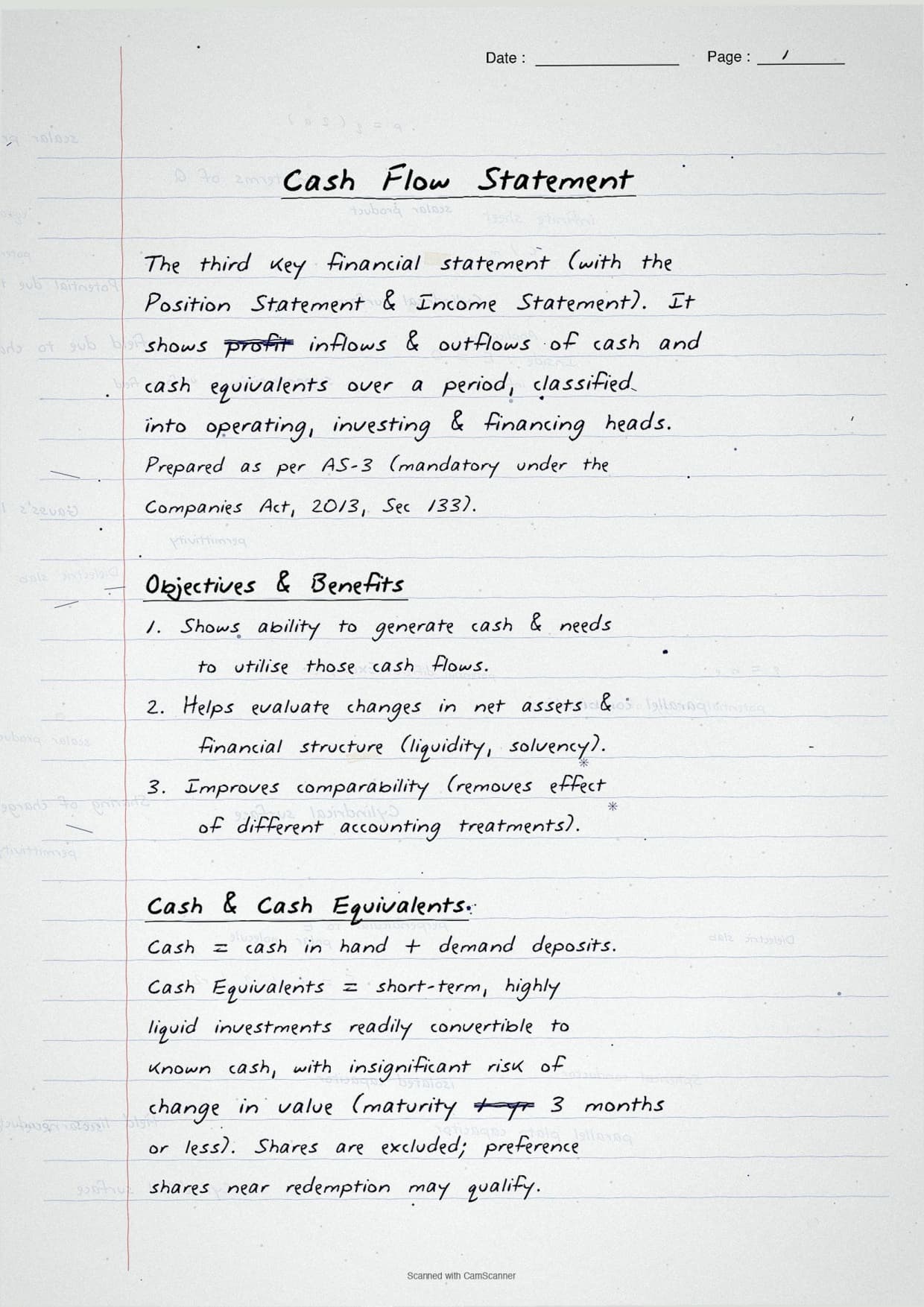
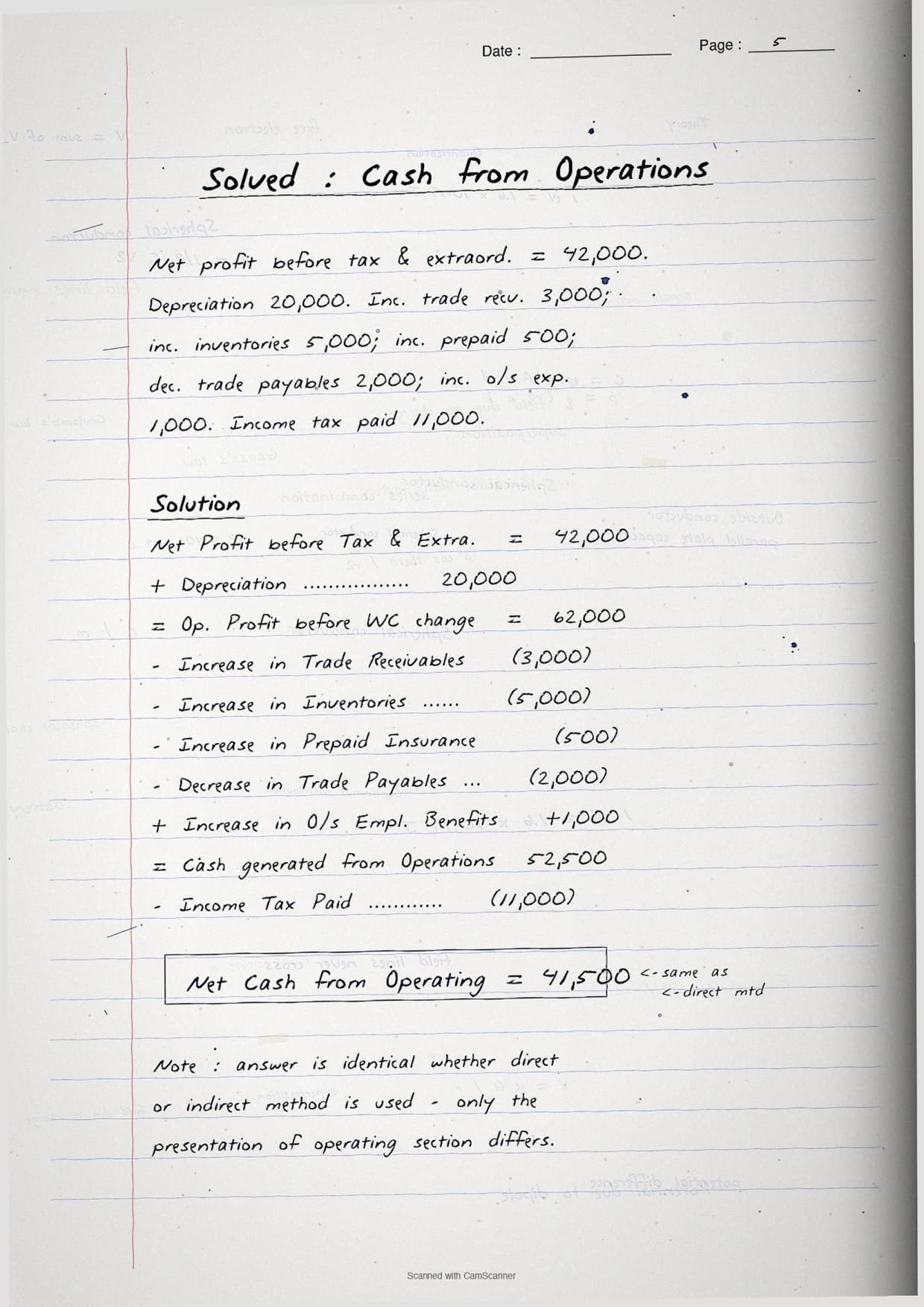
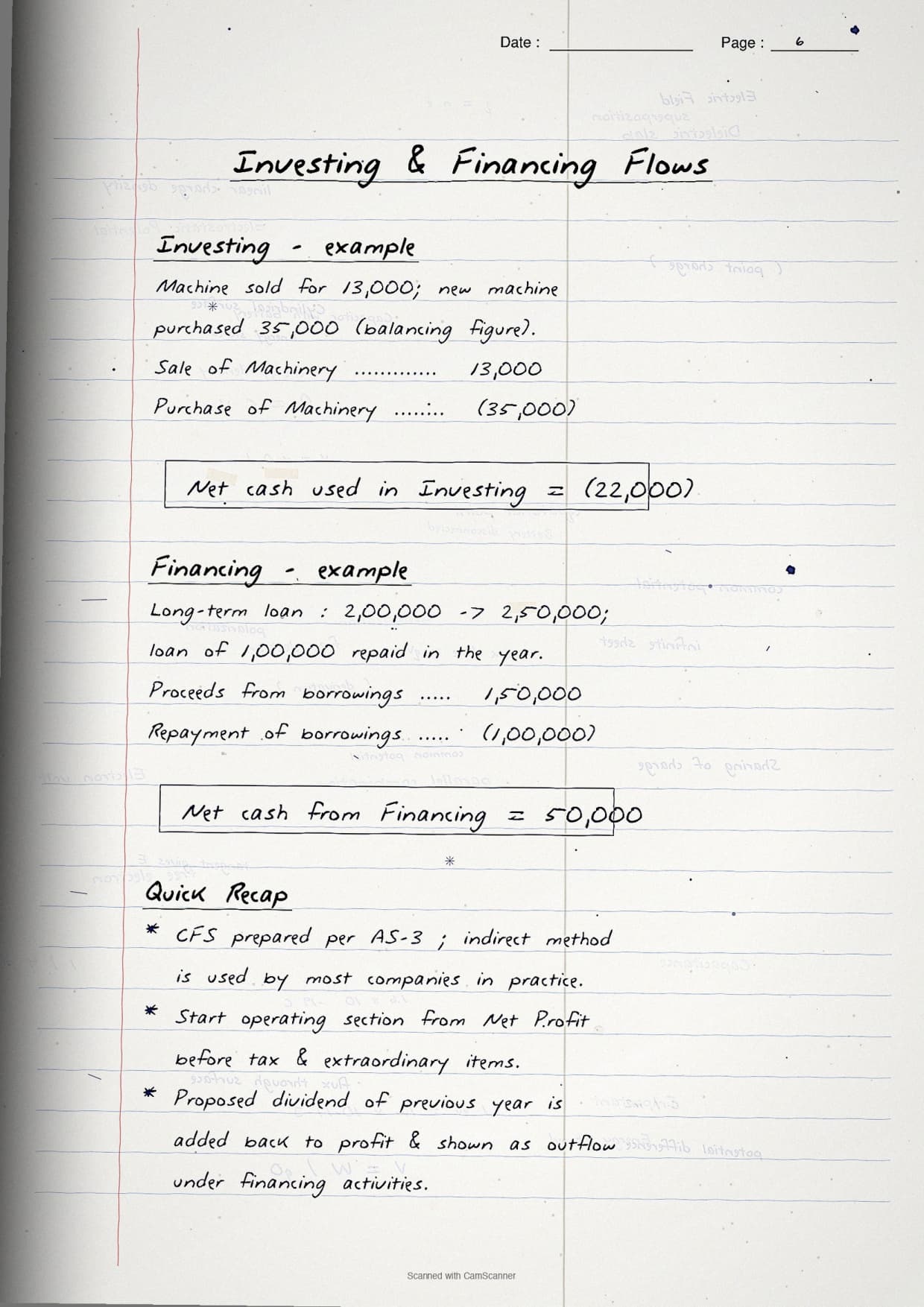
- CBSE Weightage (Part B): 6 to 8 marks, usually one long-answer cash flow statement.
- CUET / commerce-stream relevance: High, recurring classification and adjustment-based stems.
Curated by experts, mapped to 2026-27 NCERT, refined against five years of CBSE papers.
Also Check:
- Cash Flow Statement Class 12 Accountancy Notes (Typeset)
- Cash Flow Statement Class 12 Accountancy NCERT Book PDF
Why Choose Handwritten Notes for Cash Flow Statement Class 12 Accountancy?
Cash Flow Statement is format-driven: marks are lost when the operating ladder is wrong or items are misclassified. A scanned booklet works better than prose because it shows the pen-flow of building the statement.
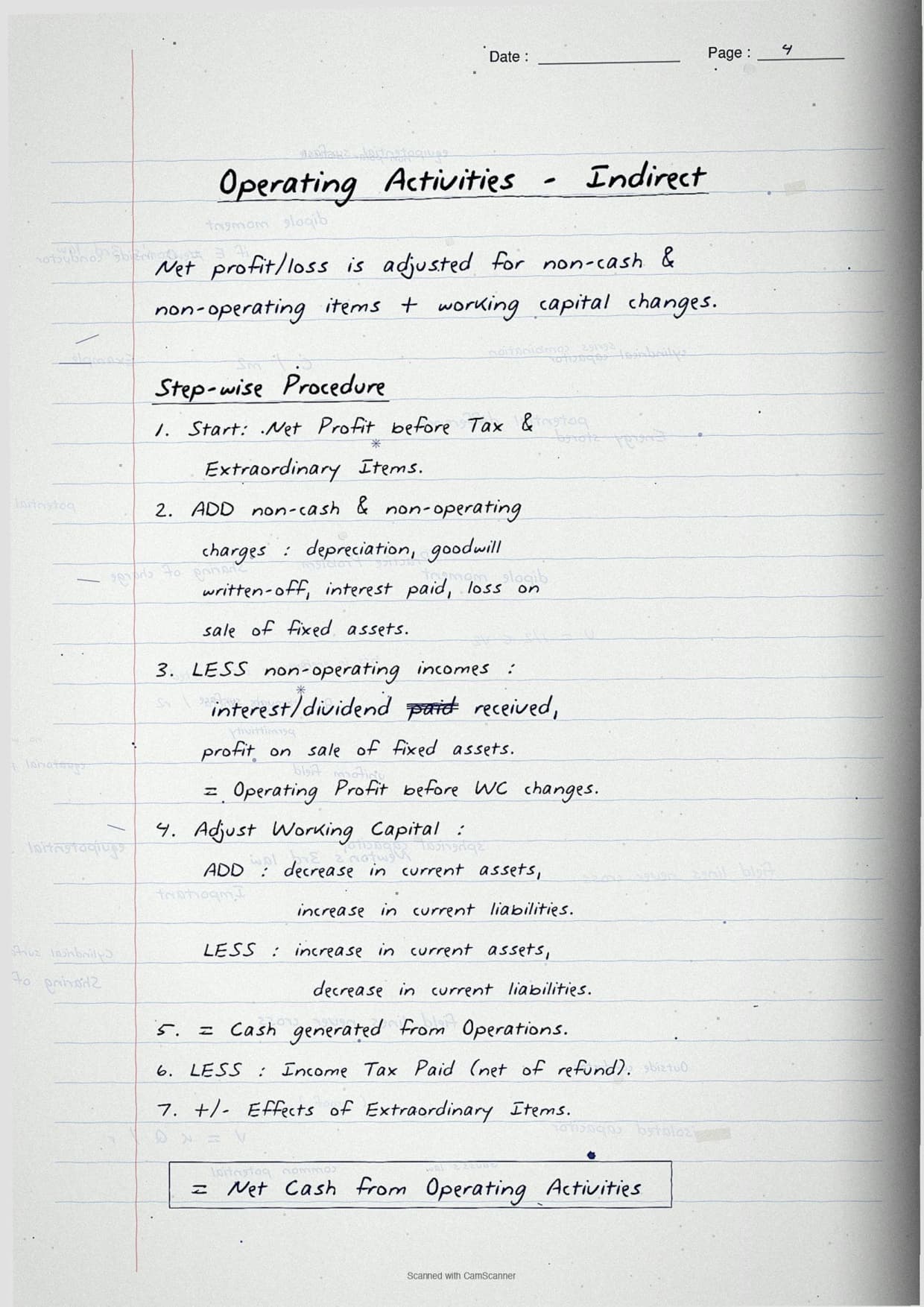
- Format memory: The indirect-method ladder is drawn exactly as you must reproduce it, so muscle memory carries it in.
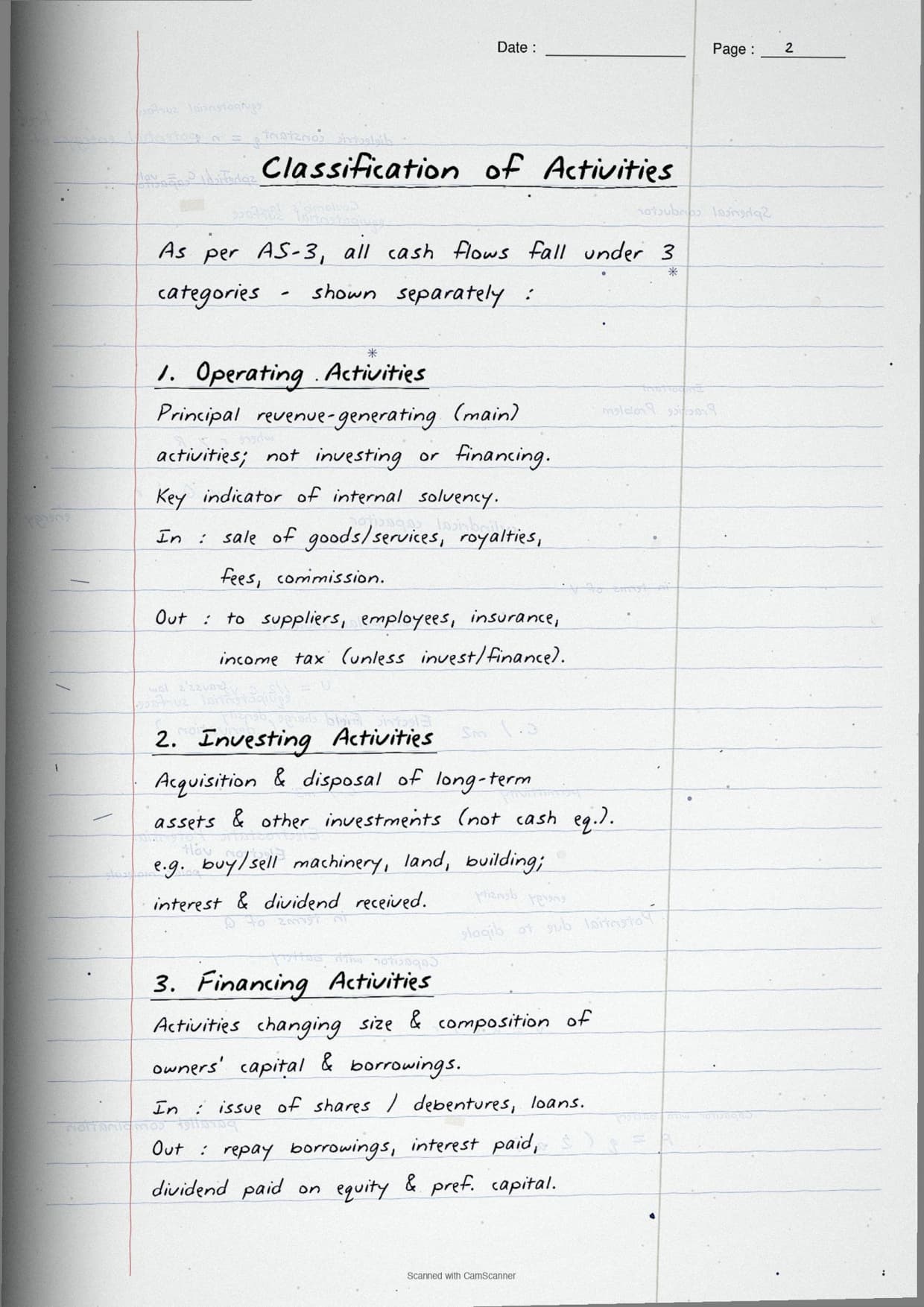
- Classification map: One colour-coded page (Operating / Investing / Financing) replaces three pages of prose.
- Adjustment logic: Margin arrows show "why add it back" for non-cash and non-operating items.
- Speed: Skimmable in 15 minutes before the Part B paper.
Class 12 Accountancy Part 2 Chapter 6 Cash Flow Statement Handwritten Notes
Source: Commerce and Fun on YouTube
How will Collegedunia's Handwritten Notes Help You with Cash Flow Statement?
Built for students who know the theory and need the format to be automatic under exam pressure.
- 2026-27 NCERT Alignment: All classifications follow AS-3 (Revised); nothing is dropped.
- Hand-drawn formats: The operating ladder and statement skeleton are in the exact CBSE answer-sheet layout.
- Expert Verified: Every classification and add-back checked against NCERT and AS-3.
- 24-hour revision card: Distils classification rules and ladder order for last-night prep.
Memory Mnemonics for Cash Flow Statement Quick Recall
The hardest part is remembering which activity an item belongs to and which non-cash items are added back. These margin hooks target those exact recall points.
- "Depreciation Goes Back Up": Depreciation, goodwill written off, preliminary expenses, loss on sale of asset, all non-cash or non-operating debits are added back to net profit before tax in the operating ladder.
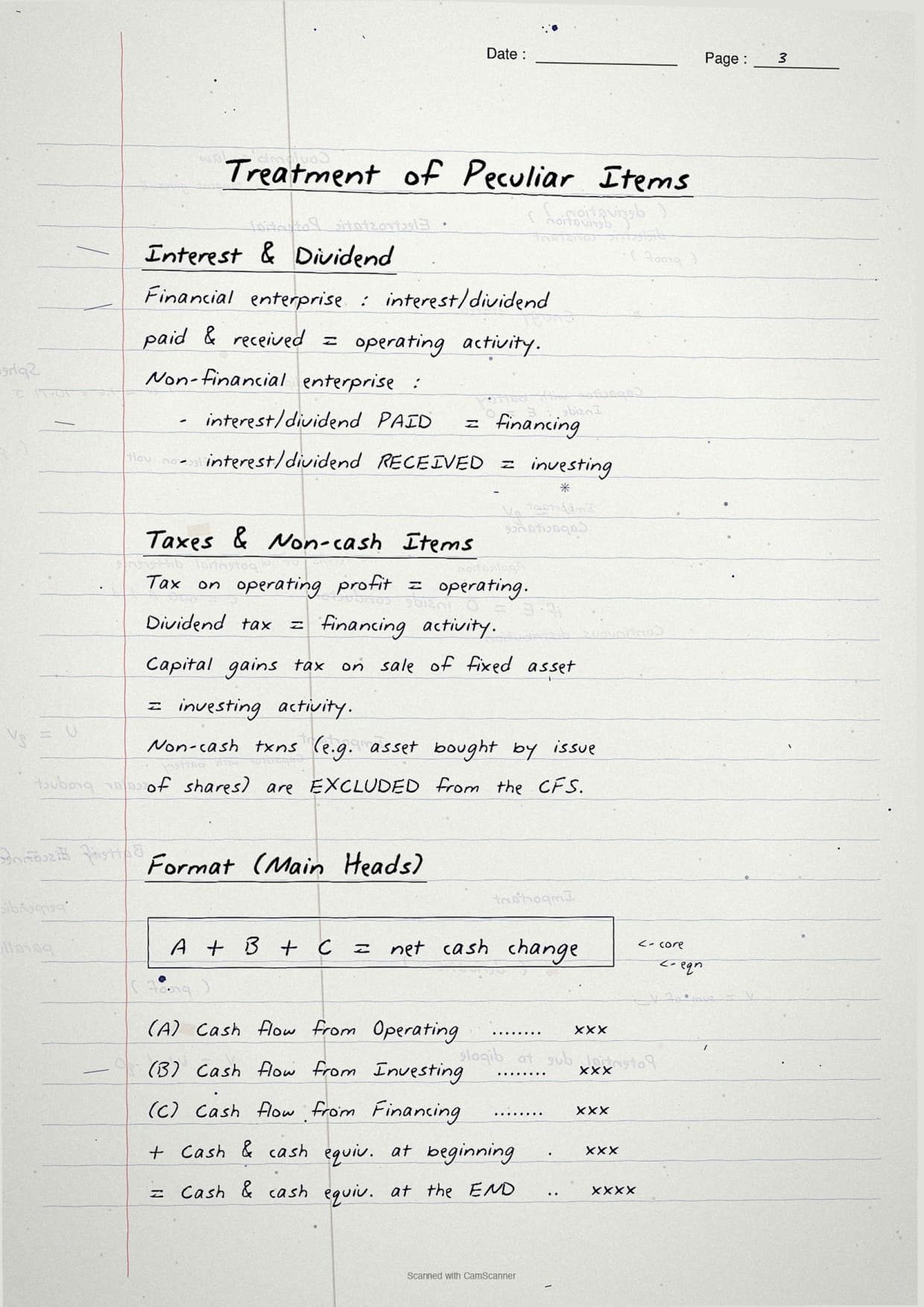
- "Interest Splits": For a non-finance company, interest and dividend received go to investing; interest and dividend paid go to financing. The same word, two different homes.
- "Fixed Assets are Investing": Purchase or sale of land, building, machinery and non-current investments is always investing, never operating.
- "Owners and Lenders are Financing": Share capital, debentures, long-term loans, and the dividend or interest paid on them are financing activities.
Full concept walkthrough: Cash Flow Statement Class 12 Accountancy Notes
What's Inside the Cash Flow Statement Handwritten Notes PDF
The booklet is organised as a scanned page per CBSE Part B block. The colour code below shows how to read the margins.
| Ink colour | What it marks |
|---|---|
| Blue (body) | Main explanation, definitions and the worked ladder |
| Red (box / underline) | Activity classification rules and exam-critical add-backs |
| Green (margin) | Adjustment arrows and "why add it back" logic |
| Yellow (highlight) | Mnemonics and the OIF order strip |
The booklet runs approximately 7 pages in blue-ink format.
Cash Flow Statement Handwritten Notes: Complete Diagram List
Every hand-drawn figure is listed with its page reference so you can jump straight to the format you need.
| Diagram | Page | What it shows |
|---|---|---|
| AS-3 activity classification map | Page 2 | Three-column Operating / Investing / Financing split with sample items |
| Indirect-method operating-activities ladder | Page 3 | Net profit before tax, add-backs, working-capital changes, tax paid |
| Investing activities block | Page 4 | Inflows and outflows from fixed assets and investments |
| Financing activities block | Page 4 | Share capital, debentures, loans, dividend and interest paid |
| Full cash flow statement skeleton | Page 5 | The complete answer-sheet format with net change in cash |
| Adjustment arrow chart | Page 6 | Depreciation, goodwill, profit or loss on sale, provision for tax treatment |
Cash Flow Statement vs Printed Notes: When to Use Which
Handwritten and typeset notes serve different preparation stages; using the wrong one at the wrong time wastes revision hours.
| Situation | Use handwritten notes | Use printed notes |
|---|---|---|
| First time learning the chapter | - | Yes, full theory and worked logic |
| Memorising the statement format | Yes, the pen-flow builds muscle memory | - |
| Night-before revision | Yes, 15-minute skim of the ladder and map | - |
| Clearing a doubt on classification logic | - | Yes, the typeset notes explain the "why" |
The handwritten booklet is the revision tool; the typeset notes are the learning tool. Use both, in that sequence.
Cash Flow Statement Self-Assessment Quiz
Test your classification recall before the exam. Each question mirrors a one-mark CBSE stem.
Q1. Purchase of machinery for cash is classified as which activity?
(a) Operating (b) Investing (c) Financing (d) No cash flow
Answer: (b) Investing, because the purchase or sale of a long-term asset is always an investing activity.
Q2. Under the indirect method, depreciation is:
(a) Subtracted from net profit (b) Added back to net profit (c) Shown under investing (d) Ignored
Answer: (b) Added back to net profit before tax, since it is a non-cash expense already debited to the profit and loss account.
Q3. Dividend paid by a company is a:
(a) Operating outflow (b) Investing outflow (c) Financing outflow (d) Operating inflow
Answer: (c) Financing outflow, because it is a return paid to the owners of long-term funds.
Q4. Which standard governs the Cash Flow Statement in Class 12 Accountancy?
(a) AS-1 (b) AS-2 (c) AS-3 (Revised) (d) AS-9
Answer: (c) AS-3 (Revised), which prescribes the operating, investing and financing classification.
Q5. Cash equivalents are best described as:
(a) Long-term investments (b) Short-term highly liquid investments (c) Trade receivables (d) Inventory
Answer: (b) Short-term, highly liquid investments readily convertible into known amounts of cash.
Cash Flow Statement: Last 24-Hour Revision Card
Skim only this list the night before the Part B paper. Everything here is on the final page of the booklet.
- OIF order: Operating, then Investing, then Financing, then net change in cash and cash equivalents.
- Operating ladder: Net profit before tax and extraordinary items, add non-cash and non-operating items, adjust working capital, less tax paid.
- Always added back: Depreciation, goodwill or preliminary expenses written off, loss on sale of asset, interest on debentures.
- Always investing: Purchase or sale of fixed assets and non-current investments, interest and dividend received.
- Always financing: Issue or redemption of shares and debentures, long-term loans, dividend and interest paid.
- Proposed dividend: Add back to net profit, then show as financing outflow when paid.
Related Links:
- Cash Flow Statement Class 12 Accountancy NCERT Solutions
- Accounting Ratios Class 12 Accountancy Handwritten Notes
More Cash Flow Statement Accountancy Class 12 Resources
NCERT Handwritten Notes for Class 12 Accountancy: All Chapters
Use the table below to reach the handwritten notes for every other Class 12 Accountancy chapter in the 2026-27 syllabus.
| Chapter | Resource |
|---|---|
| Chapter 1 | Accounting for Partnership Basic Concepts Handwritten Notes |
| Chapter 2 | Reconstitution: Admission of a Partner Handwritten Notes |
| Chapter 3 | Reconstitution: Retirement or Death of a Partner Handwritten Notes |
| Chapter 4 | Dissolution of Partnership Firm Handwritten Notes |
| Part 2 Chapter 1 | Accounting for Share Capital Handwritten Notes |
| Part 2 Chapter 2 | Issue and Redemption of Debentures Handwritten Notes |
| Part 2 Chapter 3 | Financial Statements of a Company Handwritten Notes |
| Part 2 Chapter 4 | Analysis of Financial Statements Handwritten Notes |
| Part 2 Chapter 5 | Accounting Ratios Handwritten Notes |
Other Resources for Cash Flow Statement
Use the other Chapter resources for Cash Flow Statement alongside this page.
| Resource | Link |
|---|---|
| NCERT Solutions | Cash Flow Statement NCERT Solutions |
| NCERT Book PDF | Cash Flow Statement NCERT Book PDF |
| Handwritten Notes | Cash Flow Statement Handwritten Notes |
| Previous Year Questions | Cash Flow Statement Previous Year Questions |
Student Feedback
In a Collegedunia poll of 1,240 Class 12 Commerce students, 76% rated Cash Flow Statement among the tougher parts of the Accountancy syllabus. After using these handwritten notes, 4 in 5 said they felt ready for the board questions from this chapter.
Cash Flow Statement Class 12 Accountancy Handwritten Notes FAQs
Ques. Where can I download Cash Flow Statement Class 12 Accountancy handwritten notes PDF?
Ans. You can download the Cash Flow Statement Class 12 Accountancy handwritten notes PDF directly from this page. Both the Normal and HD versions are free.
Ques. Is this Cash Flow Statement handwritten notes PDF aligned with the 2026-27 NCERT?
Ans. Yes. The booklet follows the current 2026-27 syllabus for Class 12 Accountancy. Part 2 Chapter 6 Cash Flow Statement is fully retained in the new NCERT edition, including the complete AS-3 (Revised) treatment and the indirect method.
Ques. How many pages is the Class 12th Accountancy Cash Flow Statement handwritten notes PDF?
Ans. The handwritten notes PDF runs approximately 7 pages and covers the AS-3 activity classification map, the indirect-method operating-activities ladder, the full statement format, and a last-day revision card.
Ques. Which method is used for the Cash Flow Statement in CBSE Class 12 Accountancy?
Ans. CBSE Class 12 prescribes the indirect method for computing cash flow from operating activities. The booklet draws the indirect-method ladder exactly as it should appear in the answer sheet.
Ques. How are operating, investing and financing activities classified in Cash Flow Statement?
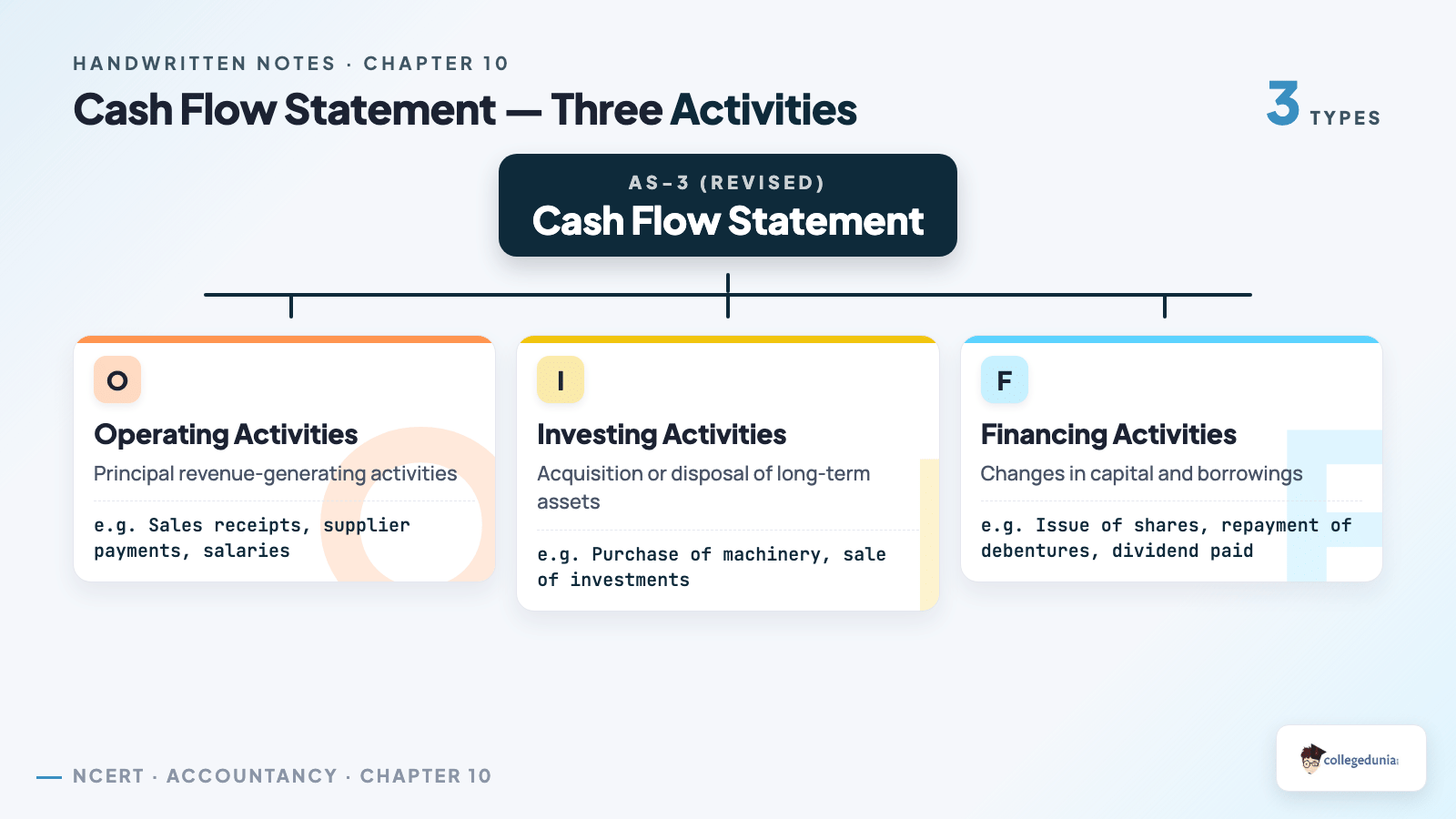
Ans. Operating activities are the principal revenue-producing activities, investing activities cover the purchase and sale of long-term assets and investments, and financing activities cover changes in long-term funds such as share capital, debentures and loans. The Page-2 map in the notes shows sample items for each.
Ques. How much weightage does Cash Flow Statement carry in the Class 12 Accountancy board exam?
Ans. Cash Flow Statement typically carries 6 to 8 marks in the Class 12 Accountancy Part B paper, most often as a single long-answer question requiring the full indirect-method statement.
Ques. What is the most common mistake students make in Cash Flow Statement?
Ans. The most frequent error is mishandling proposed dividend, which must be added back to net profit and then shown as a financing outflow when paid. Misclassifying interest and dividend received or paid is the second most common slip.



Comments