




These Thinking handwritten notes turn the whole chapter on human thought into clean, handwritten pages for fast last-minute revision. They follow the 2026-27 NCERT and Chapter 7 of Class 11 Psychology. Students get the building blocks of thought, problem solving, reasoning, decision-making, creative thinking and the thought and language debate in a pen-on-paper format that is easy to skim before a test.
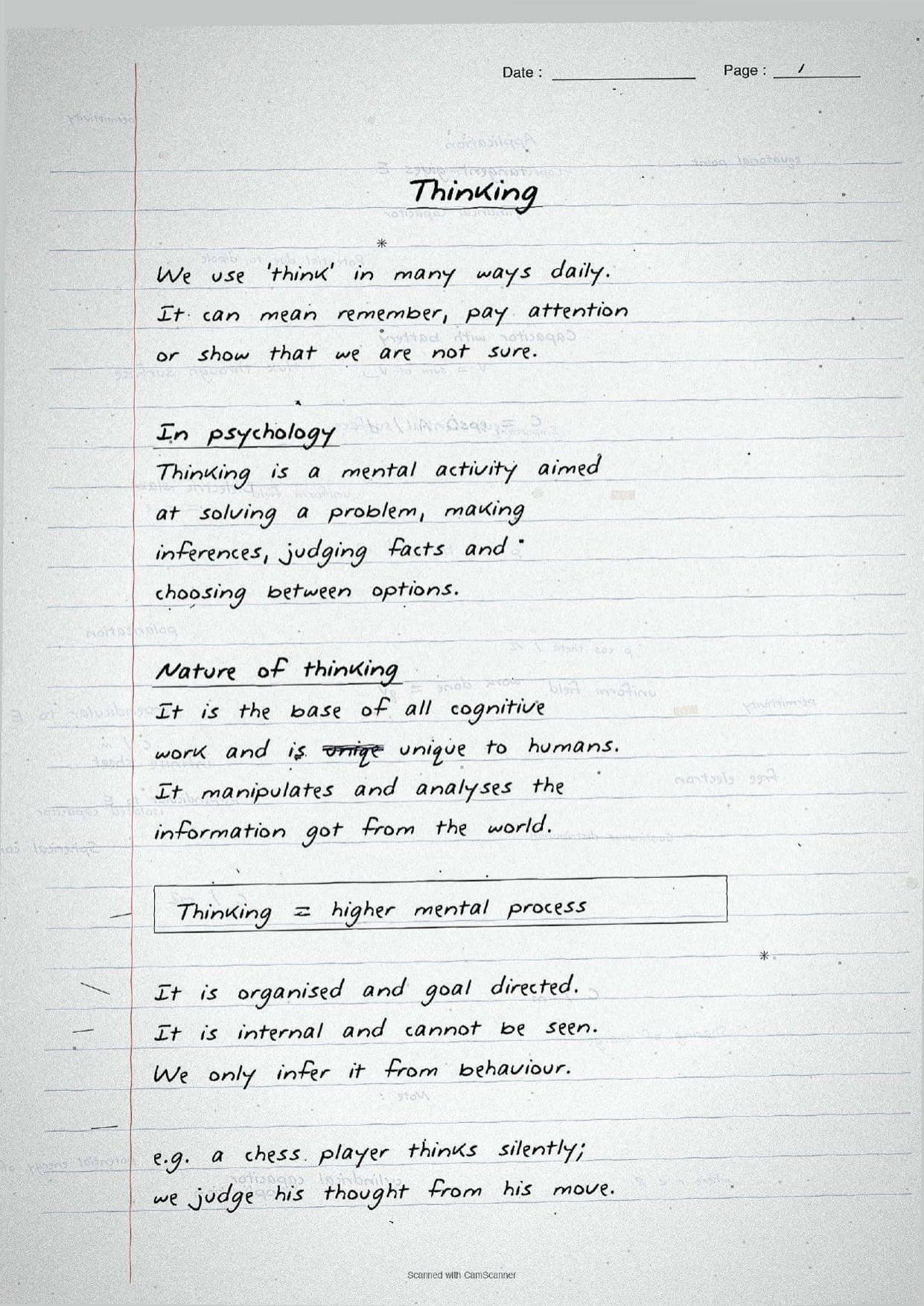
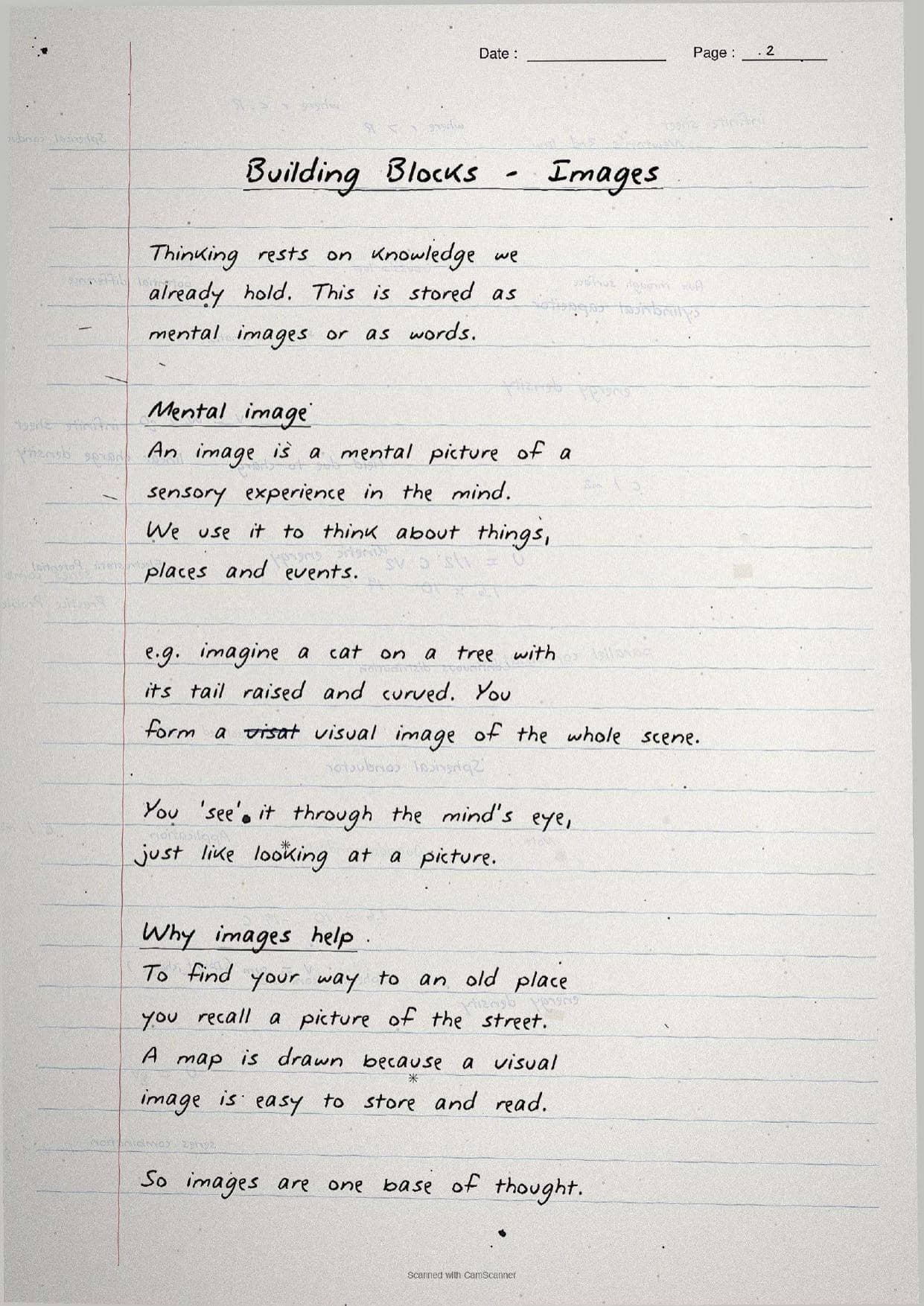
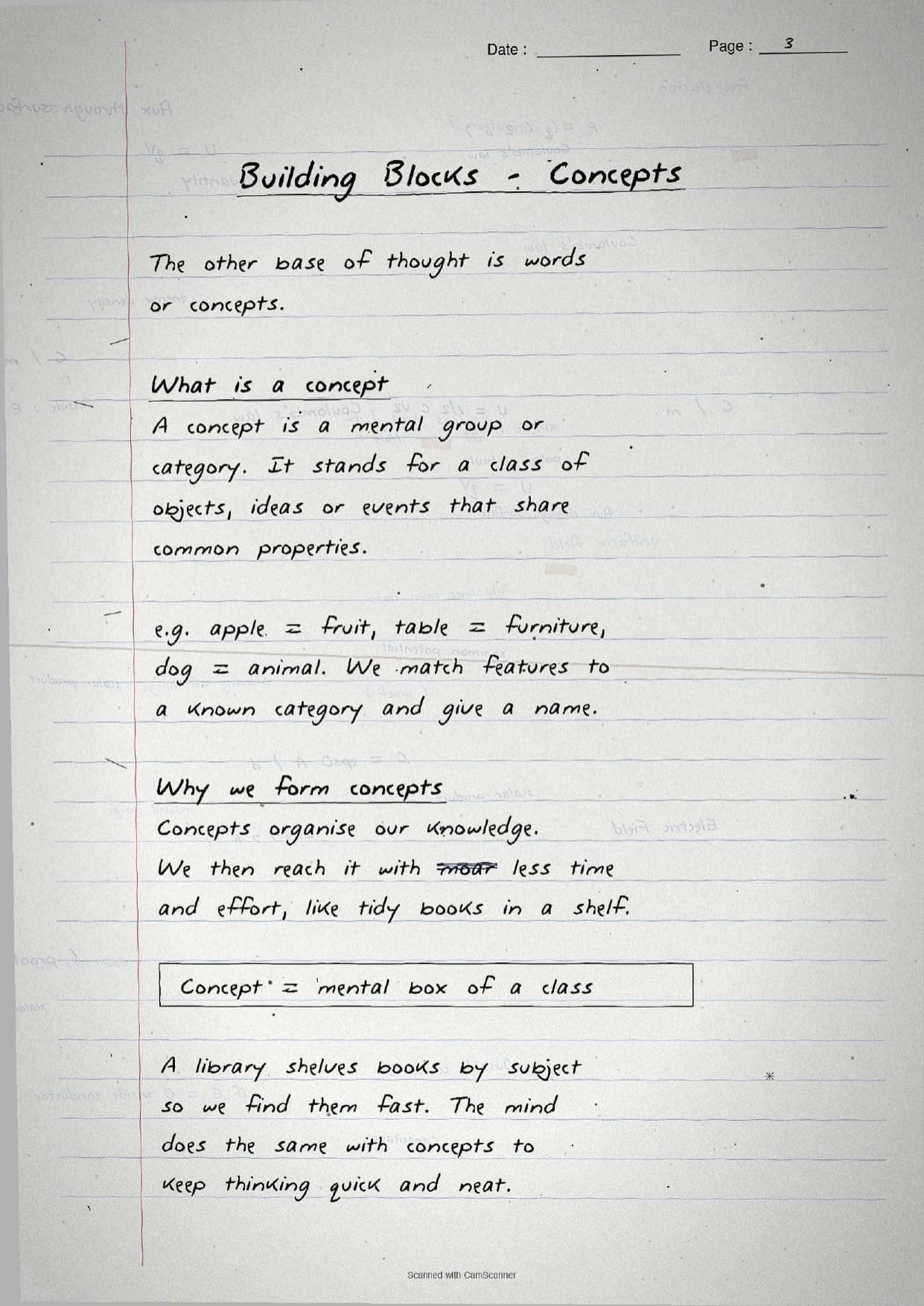
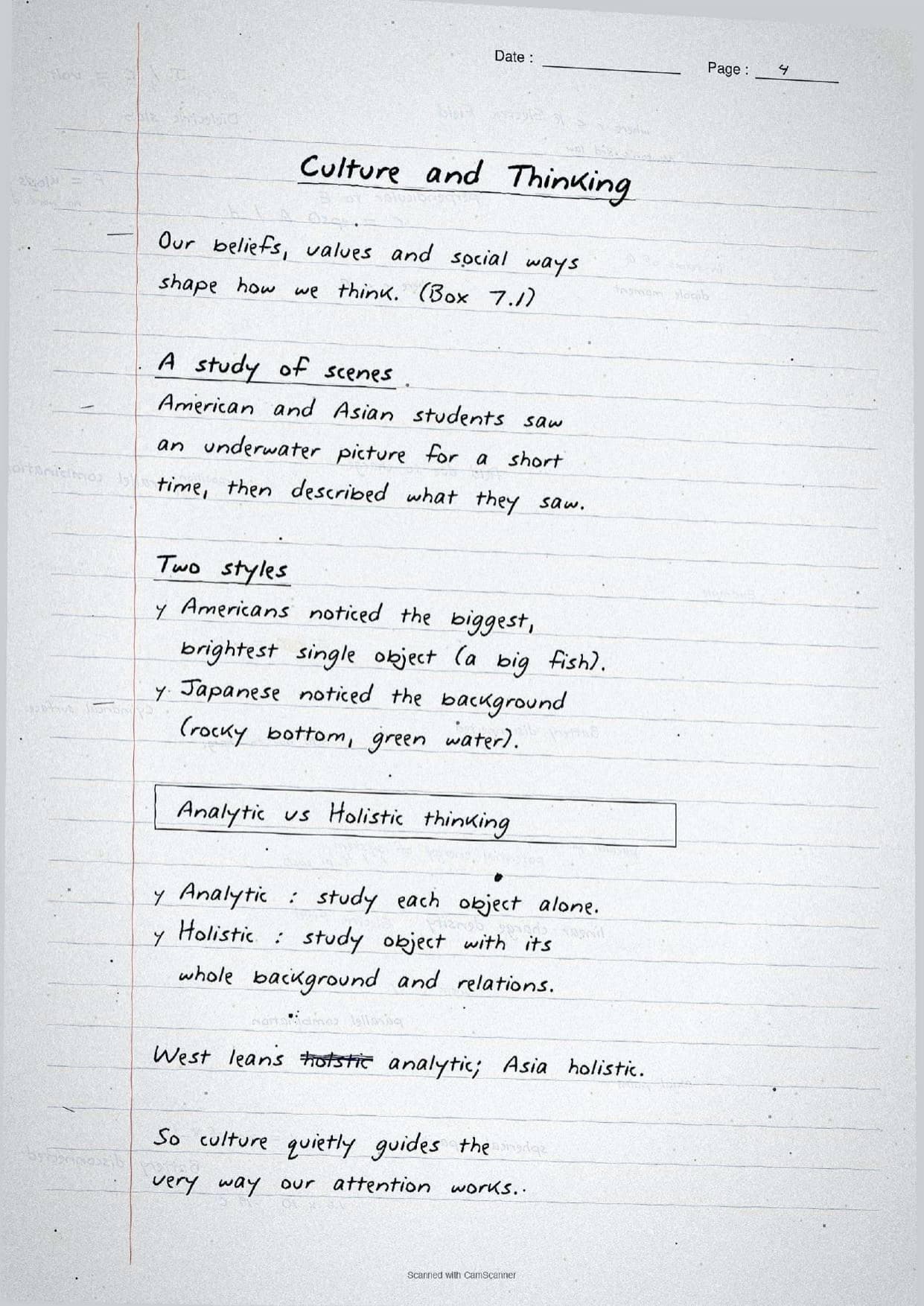
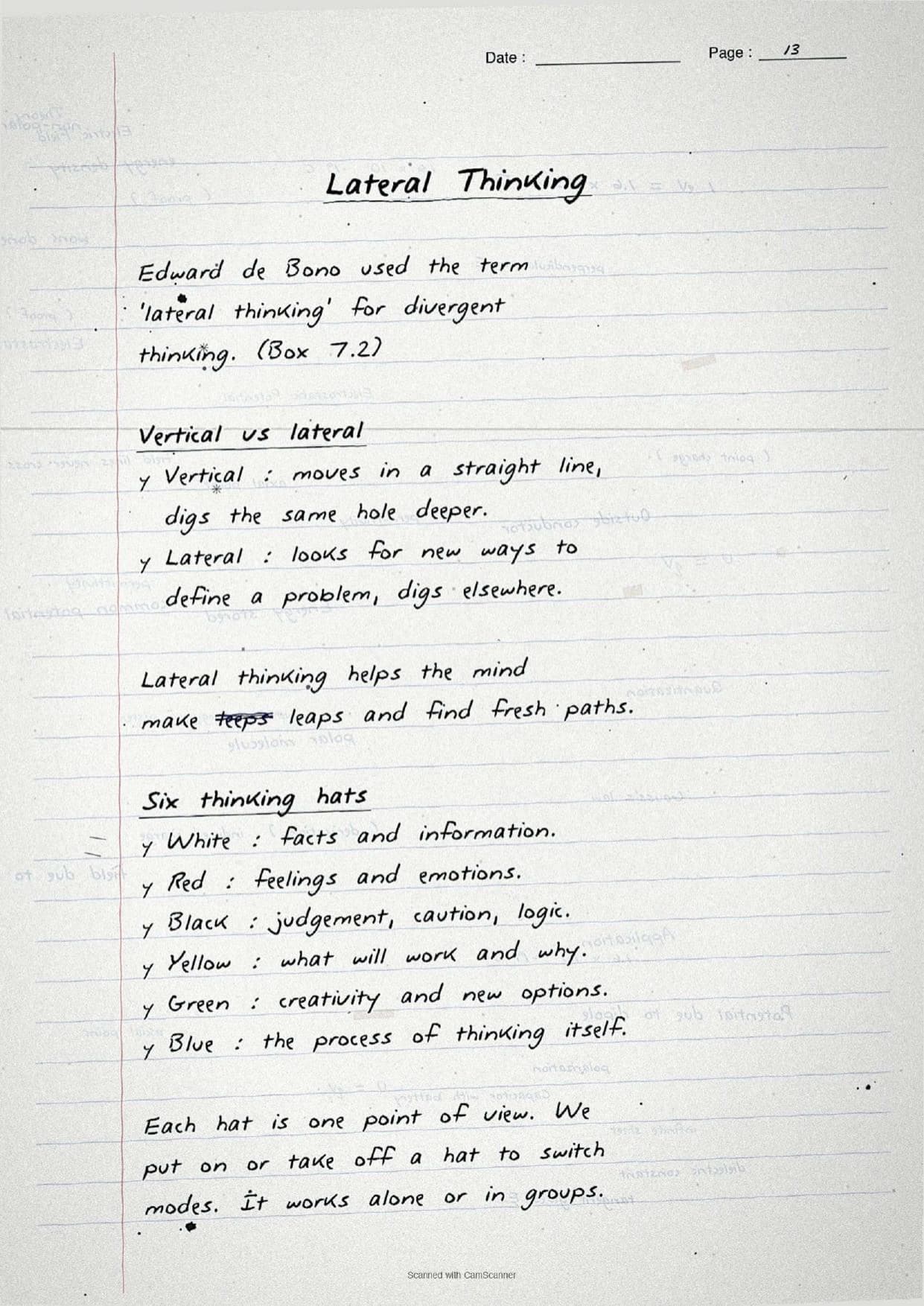
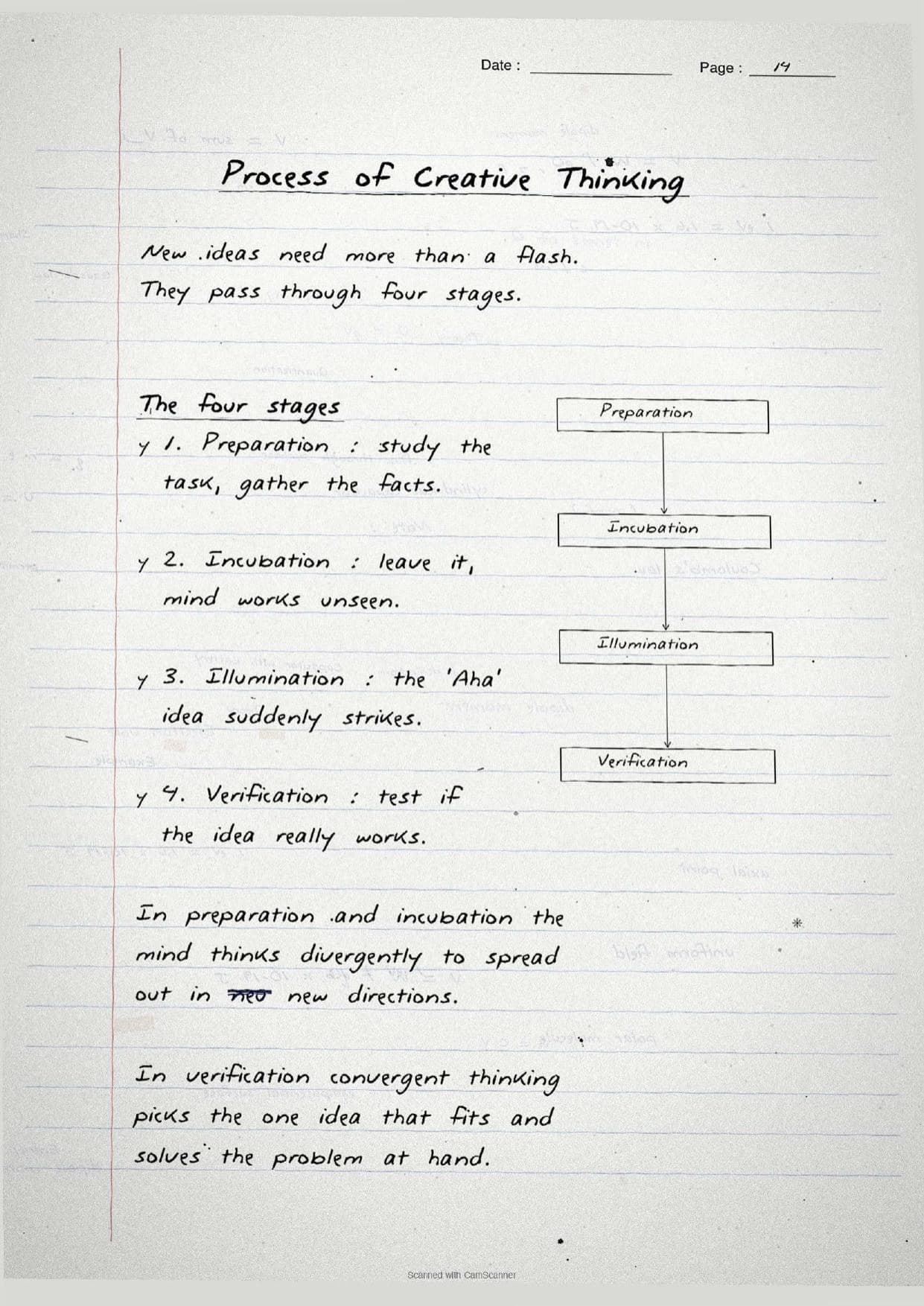
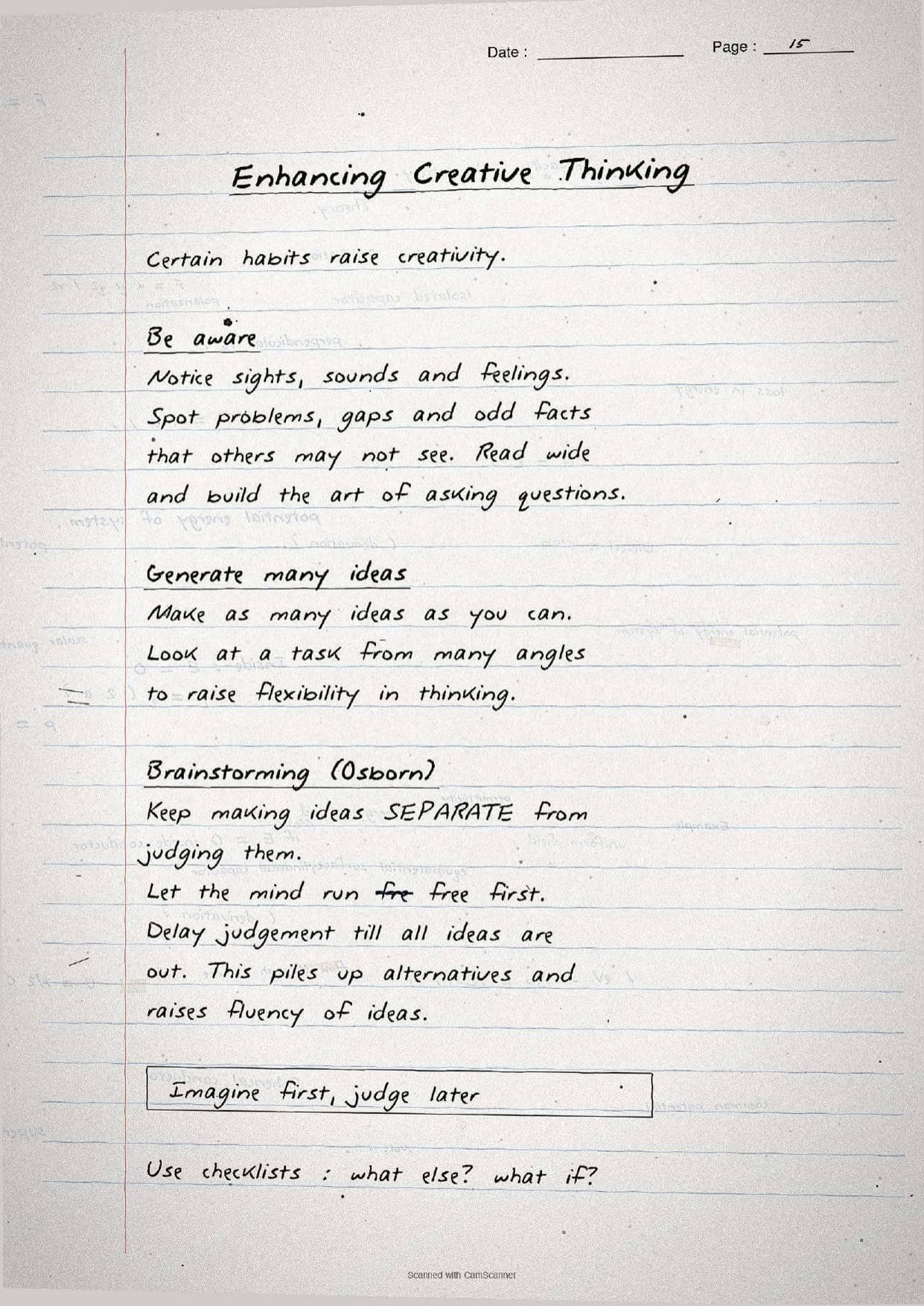
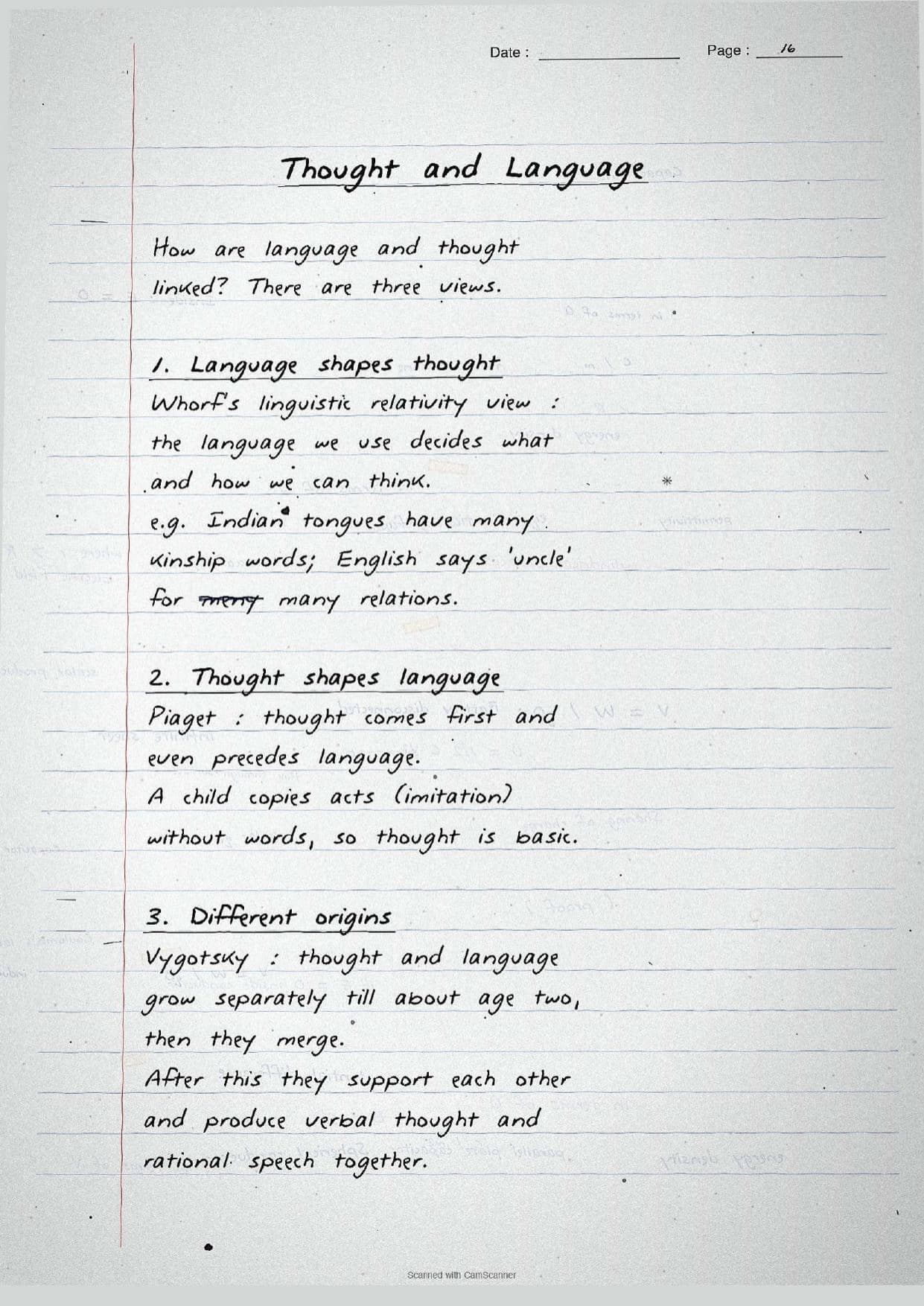
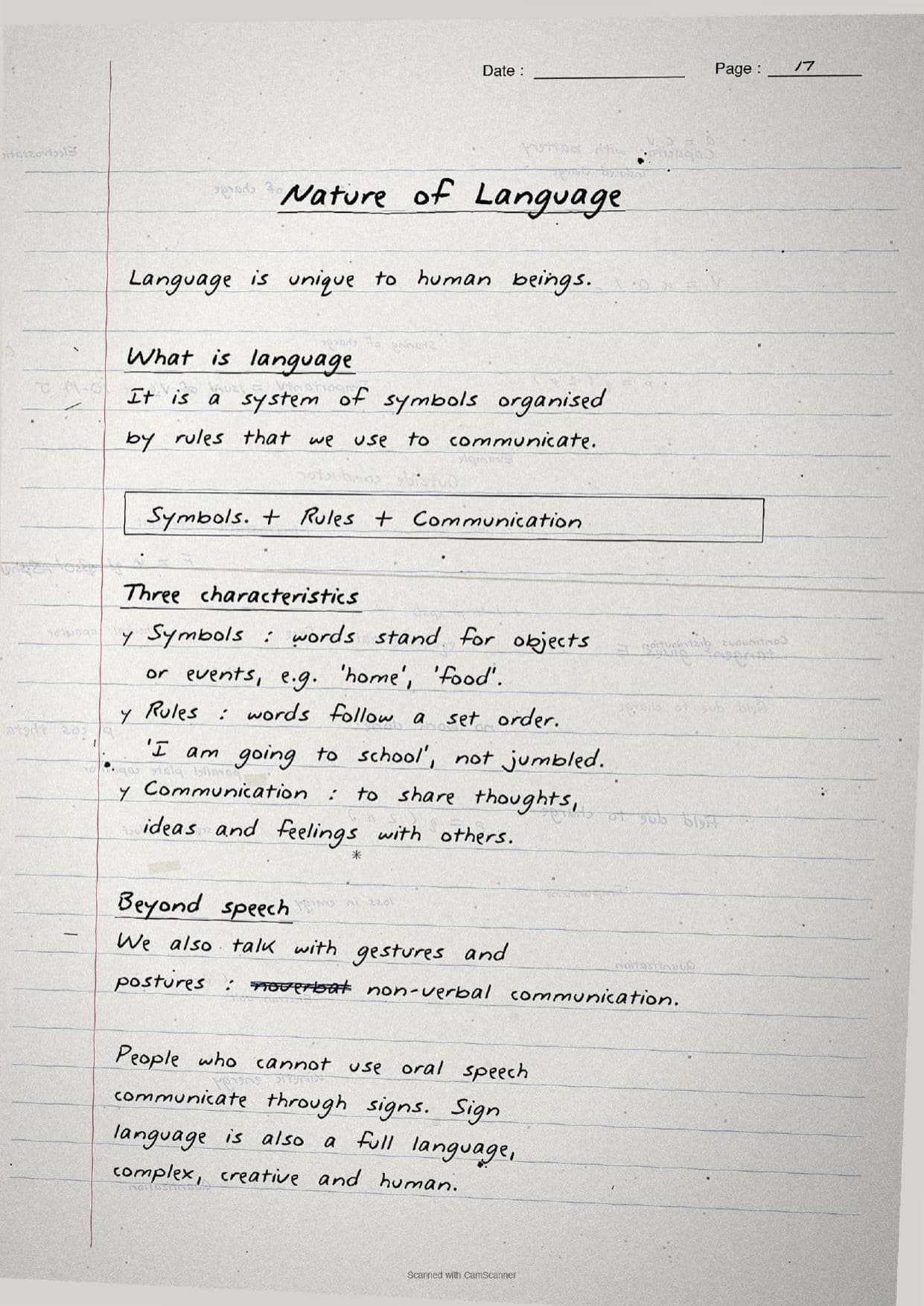
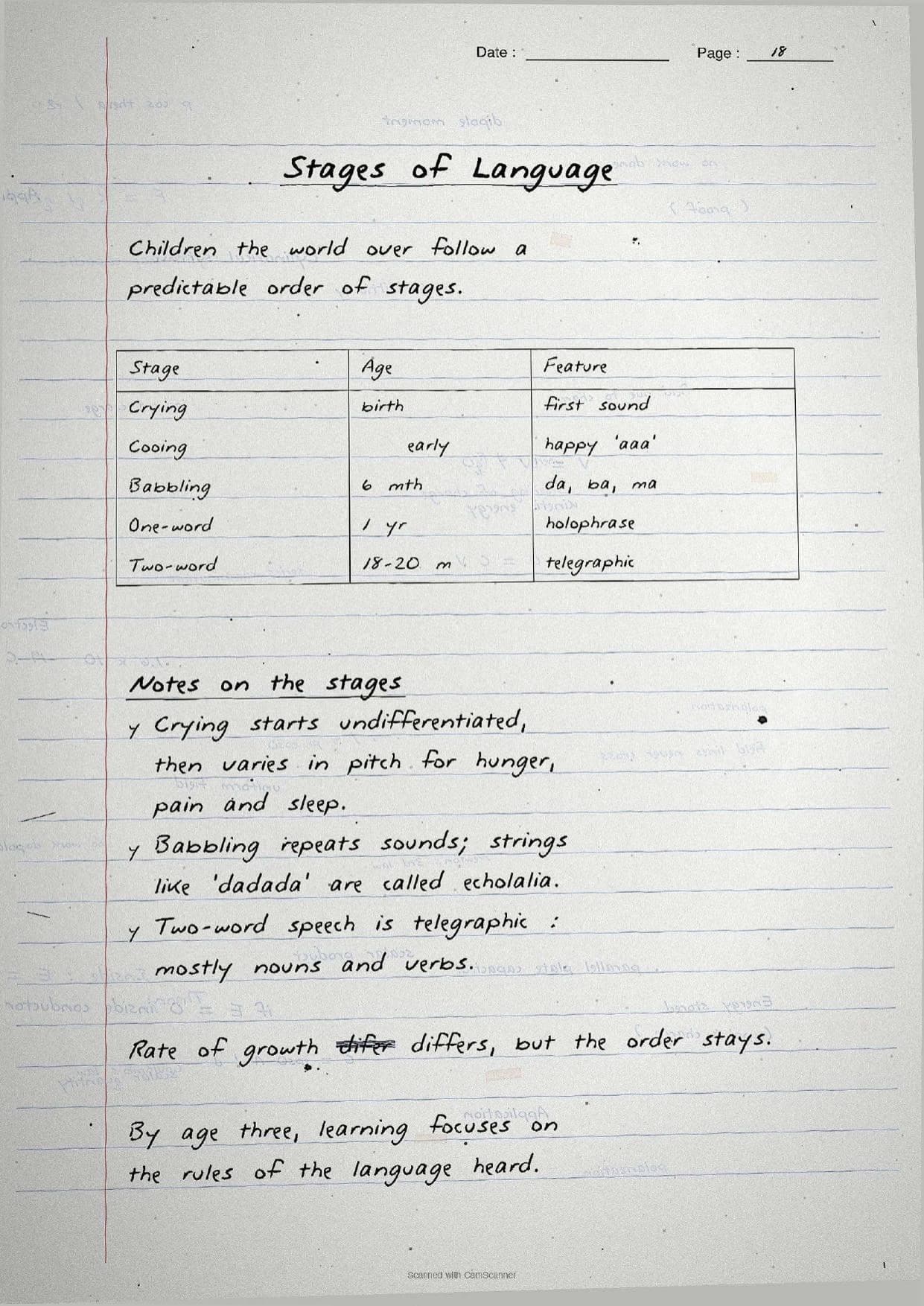
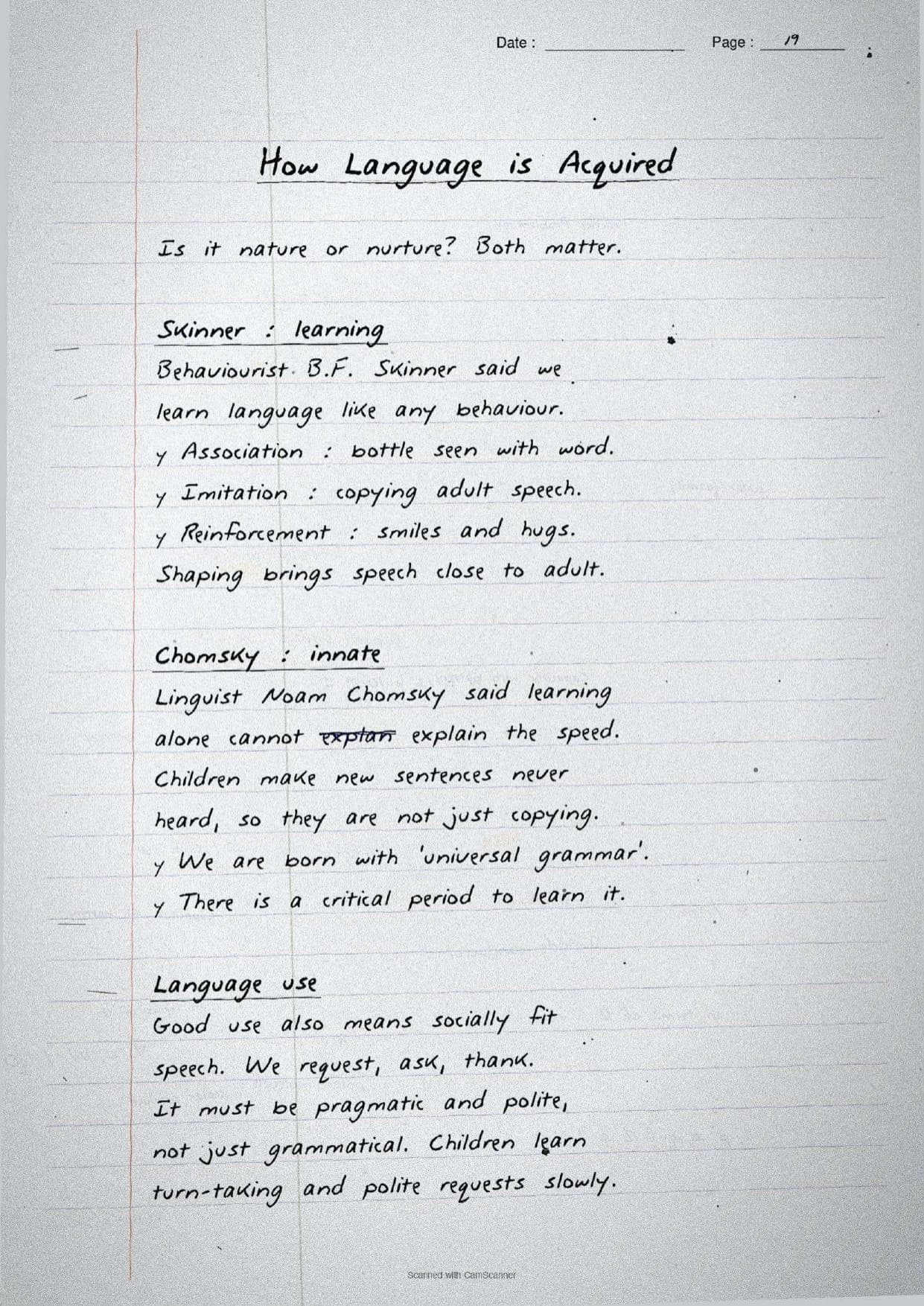
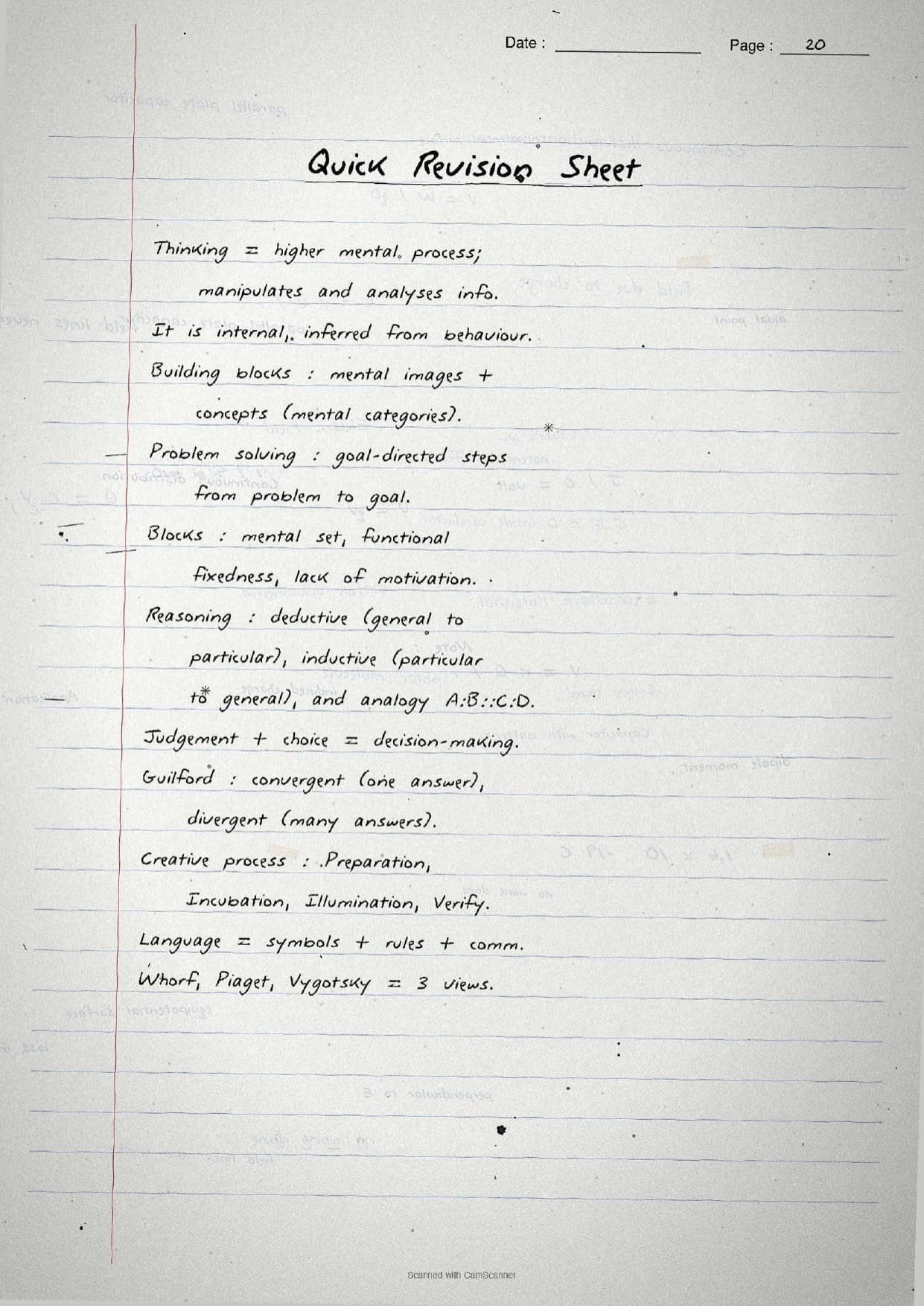
- Handwritten pages with boxed key terms and a labelled map of the thinking processes.
- This Class 11 Psychology chapter is a scoring cognition unit that also helps with CUET preparation.
- Pairs with the NCERT Solutions, Notes and Book PDF linked lower on this page.
These Thinking handwritten notes are prepared from the official NCERT Psychology textbook and checked against recent CBSE Class 11 question papers.
Student Feedback: In a Collegedunia poll of 6,180 Class 11 Psychology students, 72% of students said handwritten pages helped them recall the four steps of the creative process and the deductive versus inductive contrast faster than printed text, because the boxed diagrams and arrows made the ideas stick.
Source: 2026-27 Class 11 Psychology student poll. Sample of 6,180 students from CBSE schools across 11 states.
What These Thinking Handwritten Notes Contain
Thinking is the seventh chapter of Class 11 Psychology. It studies thinking as a higher mental process through which we manipulate and analyse information by reasoning, imagining, problem solving, judging and decision-making. These handwritten notes condense the chapter into handwritten pages that read like a topper's own notebook.
The notes are organised under three threads, each on its own set of pages:
- The base: the nature of thinking and the two building blocks of thought, mental images and concepts.
- The processes: problem solving with its obstacles, reasoning, judgment and decision-making.
- The wider picture: creative thinking, the thought and language debate, and how language develops.
Because the pages are handwritten, the key terms sit in boxes and arrows rather than long paragraphs. A student can flip through the Thinking Class 11 pages in a few minutes and still pick up the definitions, the process stages and the main contrasts before walking into the exam.
Building Blocks and Problem Solving in the Handwritten Pages
The opening pages set out what thinking is and the two forms in which knowledge is stored. Thinking is an internal, goal-directed process that can only be inferred from behaviour, and it rests on two building blocks. The table below shows what the handwritten notes cover for each.
| Building block | What the page shows |
|---|---|
| Mental image | A mental representation of a sensory experience, used to think about things, places and events, drawn with the map example. |
| Concept | A mental representation of a category, a class of objects, ideas or events that share common properties, shown with the fruit and furniture examples. |
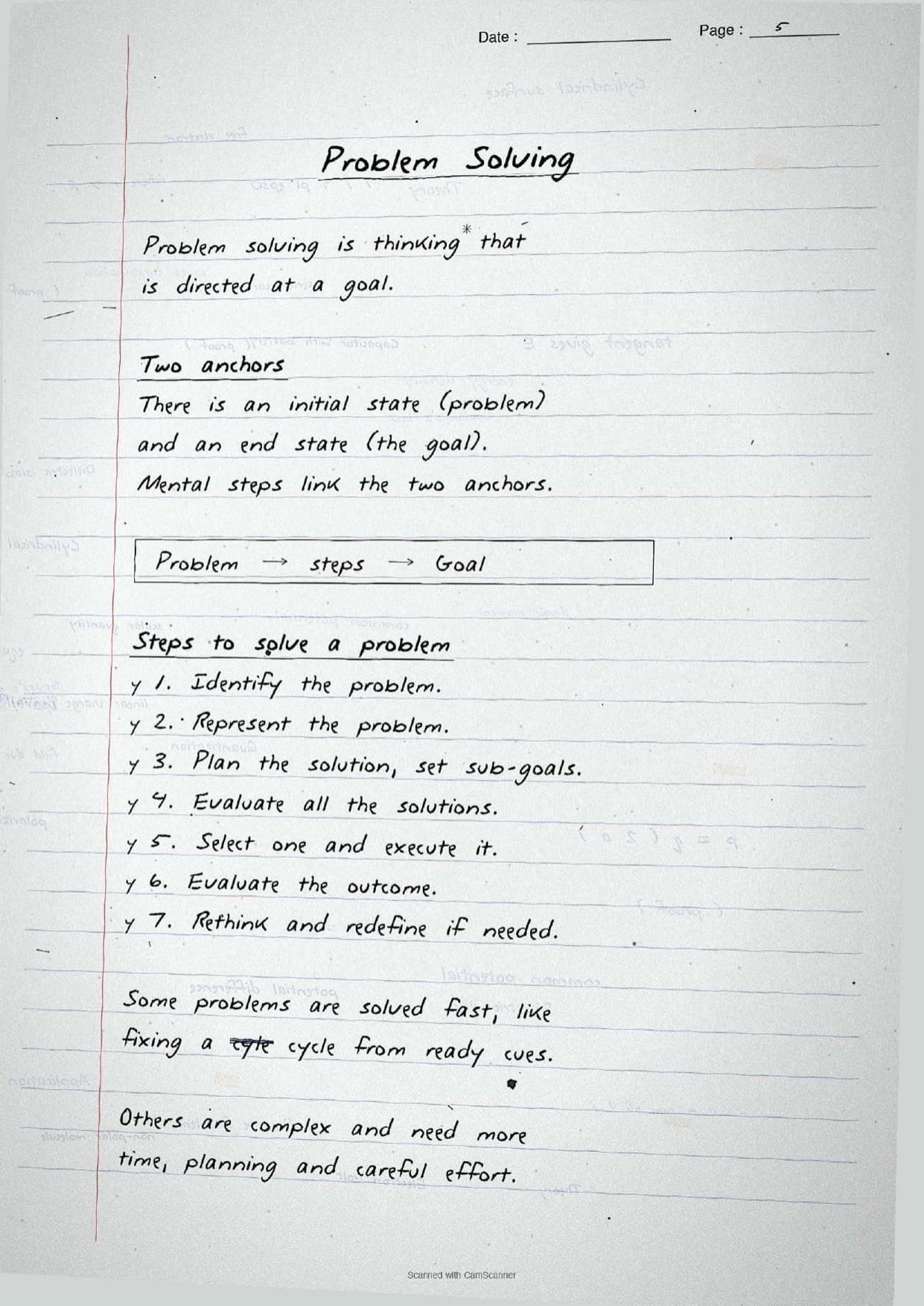
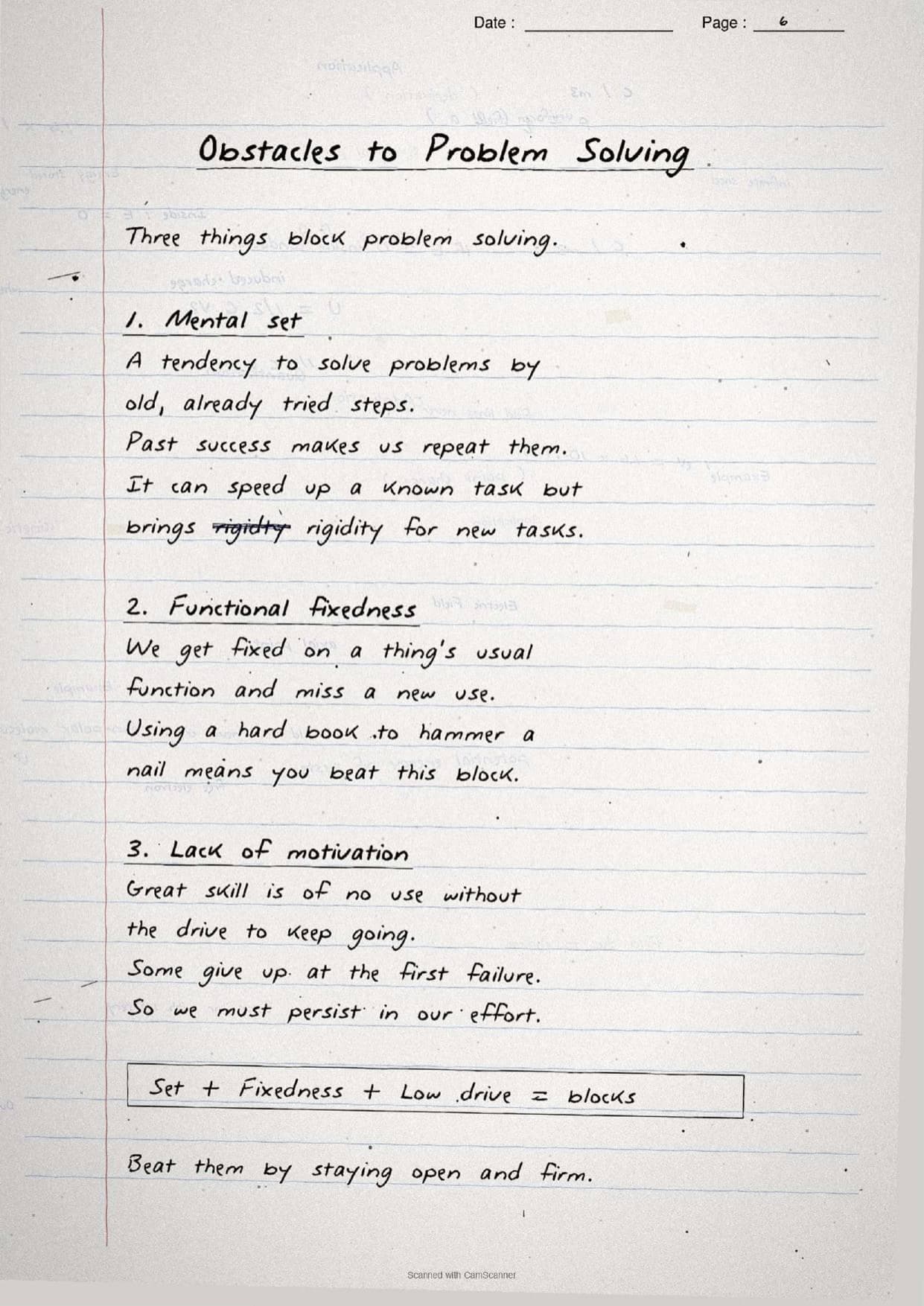
The next pages move to problem solving, thinking directed from an initial state to an end state through several mental operations. The notes box the seven-step sequence (identify, represent, plan, evaluate, select and execute, evaluate the outcome, rethink) and flag the three obstacles students must name in the exam:
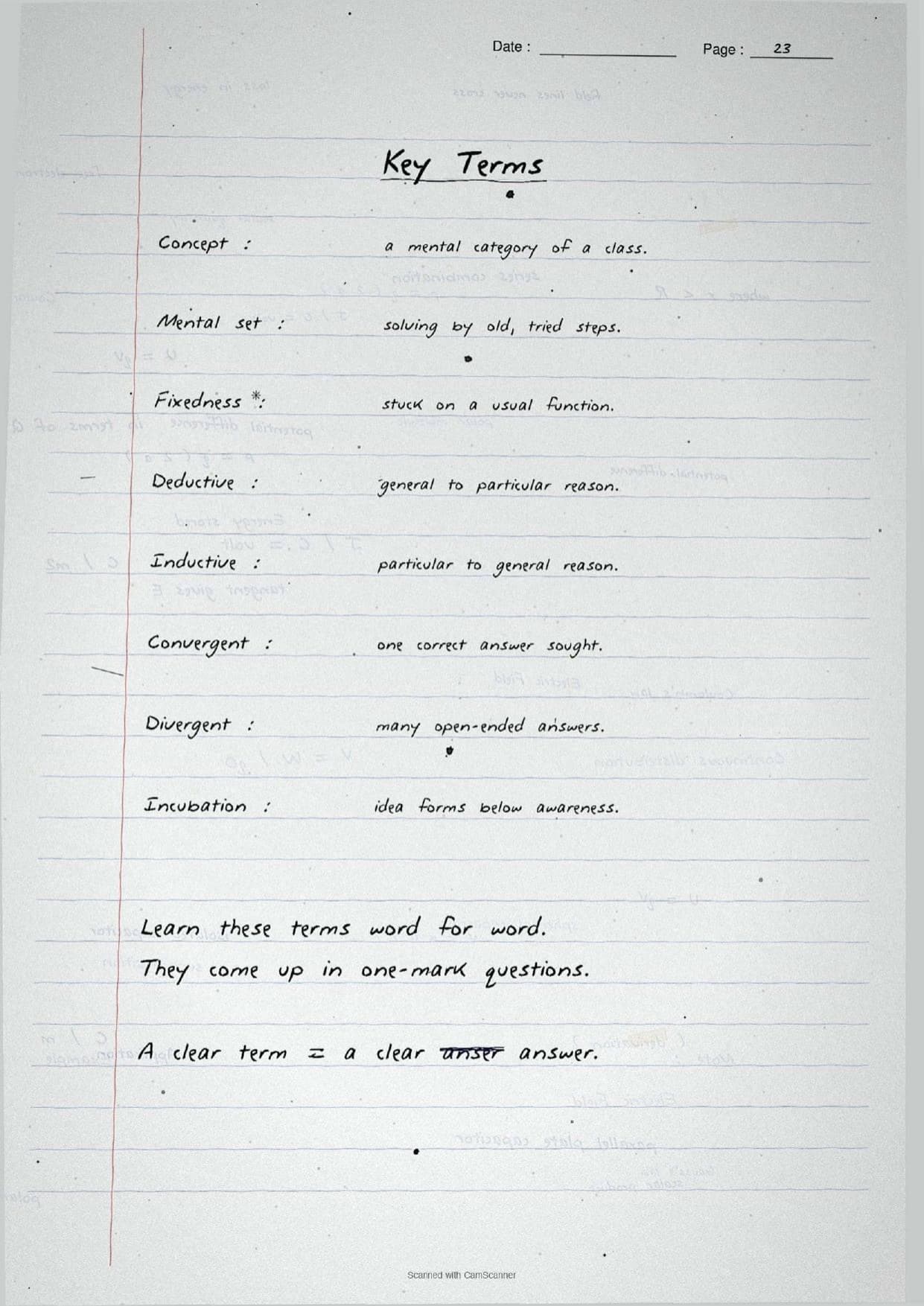
- Mental set: the tendency to solve problems using already tried steps, which can help but often causes rigidity.
- Functional fixedness: failing to solve a problem because you are fixed on a thing's usual function.
- Lack of motivation: giving up early, so skill is wasted without the drive to persist.
Seeing the seven steps and the three obstacles together on one page is the fastest way to answer the short question on hindrances to problem solving.
Reasoning, Creative Thinking and Language in the Notes
The later pages carry the processes that feed the long answers, so the handwritten notes keep them as boxed lists and contrasts. The lists below show what each page covers.
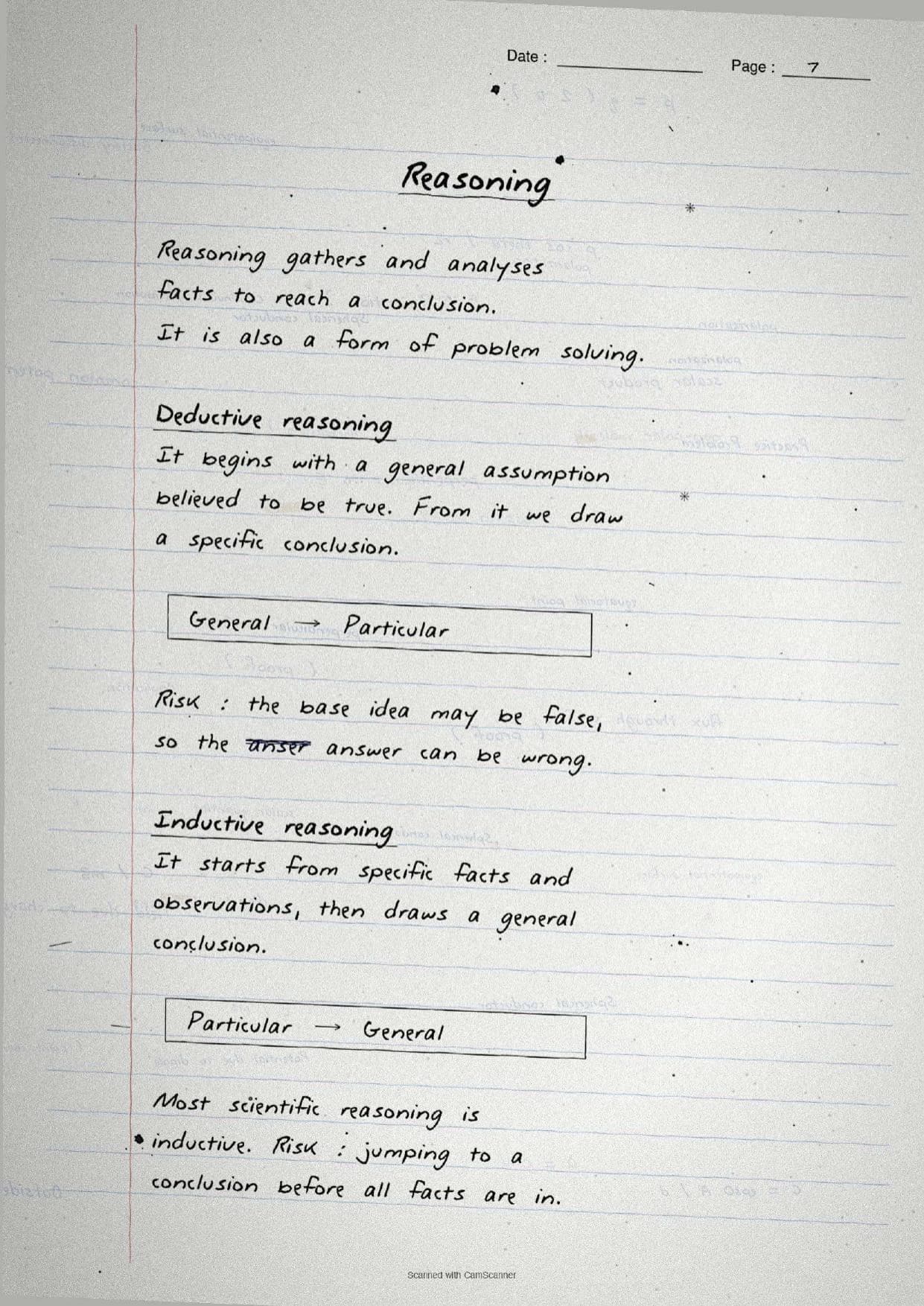
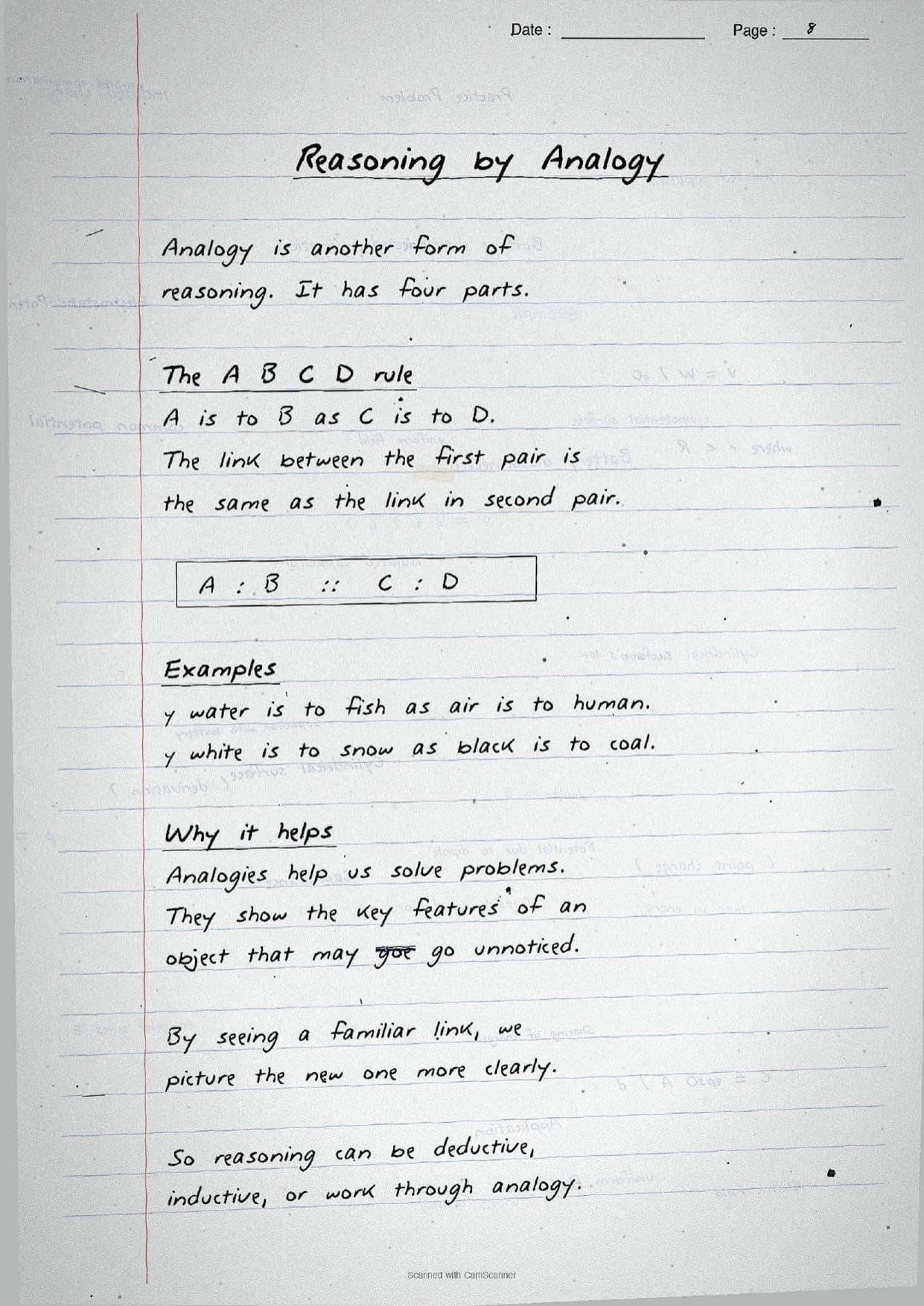
- Reasoning: deductive reasoning moves from a general assumption to a particular conclusion, while inductive reasoning draws a general conclusion from specific observations. Analogy (A is to B as C is to D) is noted as a third form.
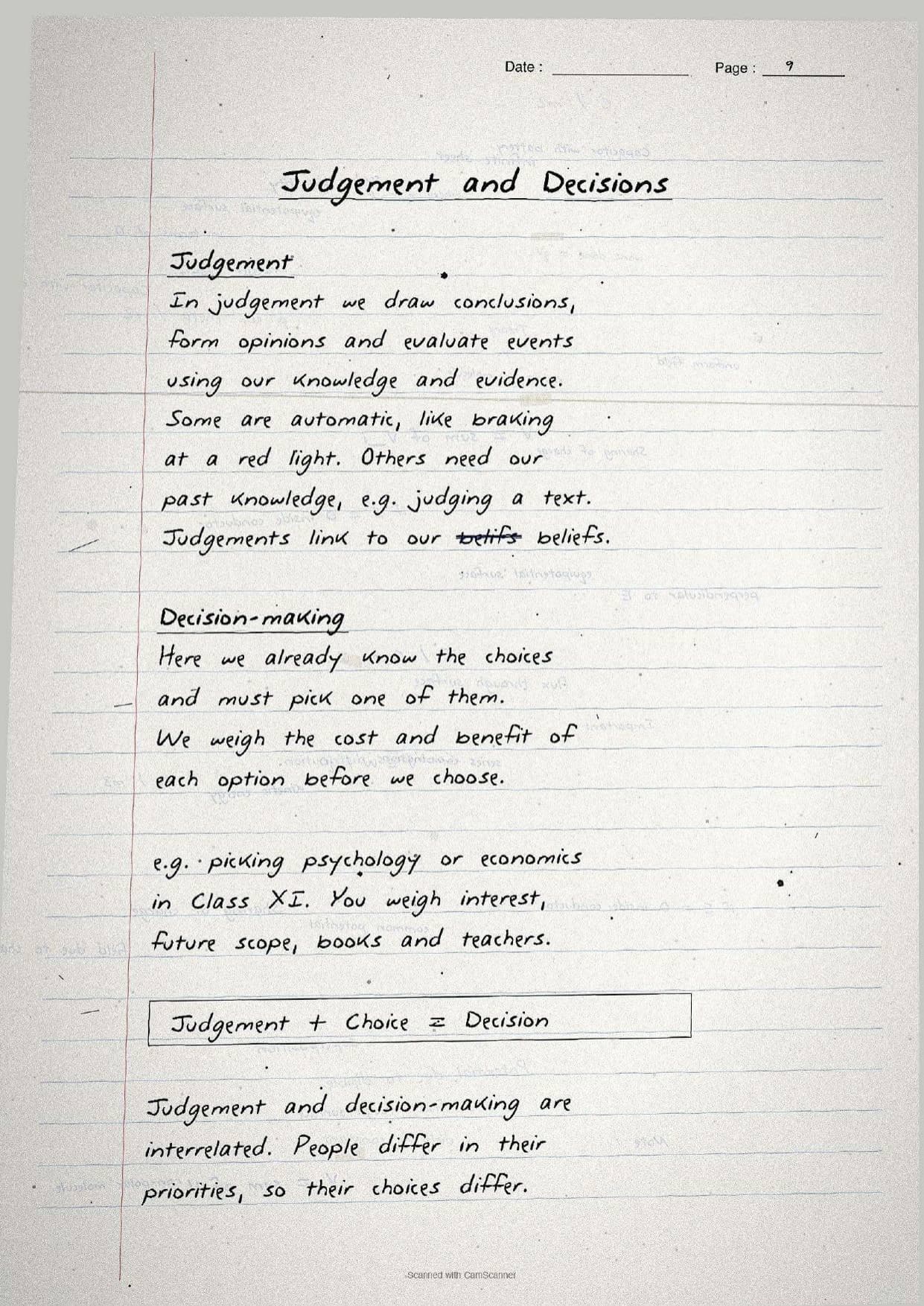
- Judgment and decision-making: in judgment we draw conclusions from evidence; in decision-making we choose among known alternatives by weighing cost and benefit. The notes mark these as interrelated processes.
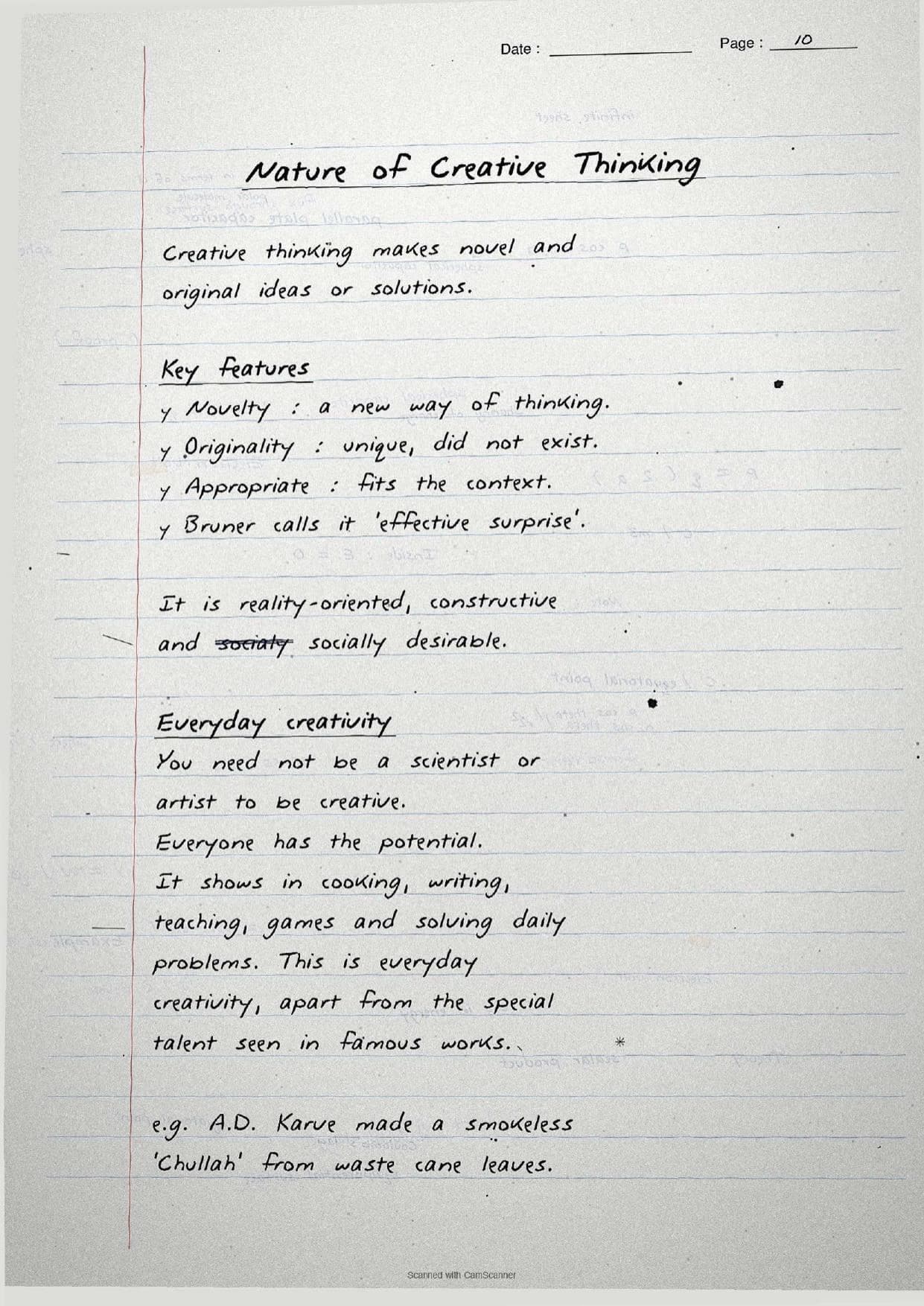
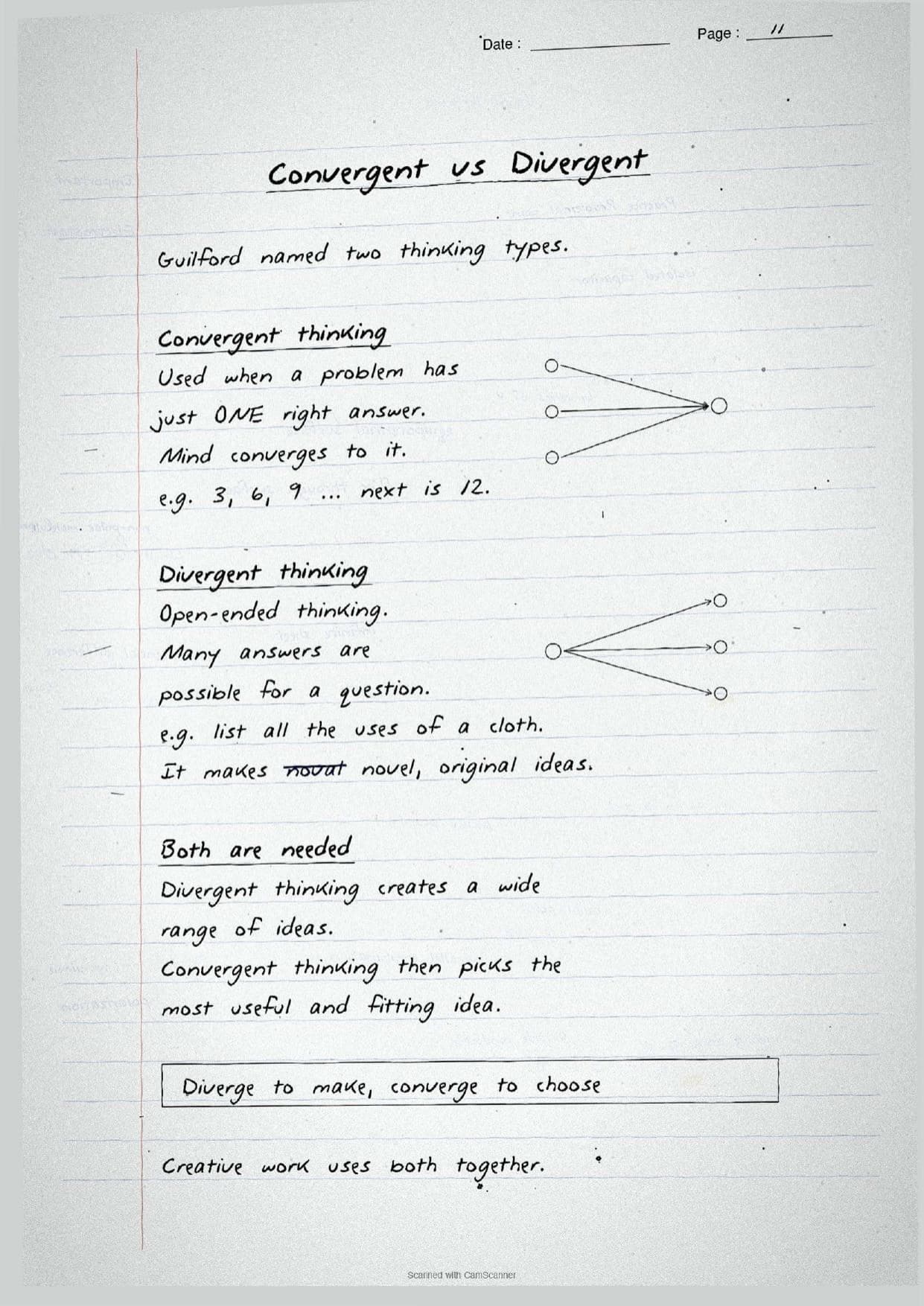
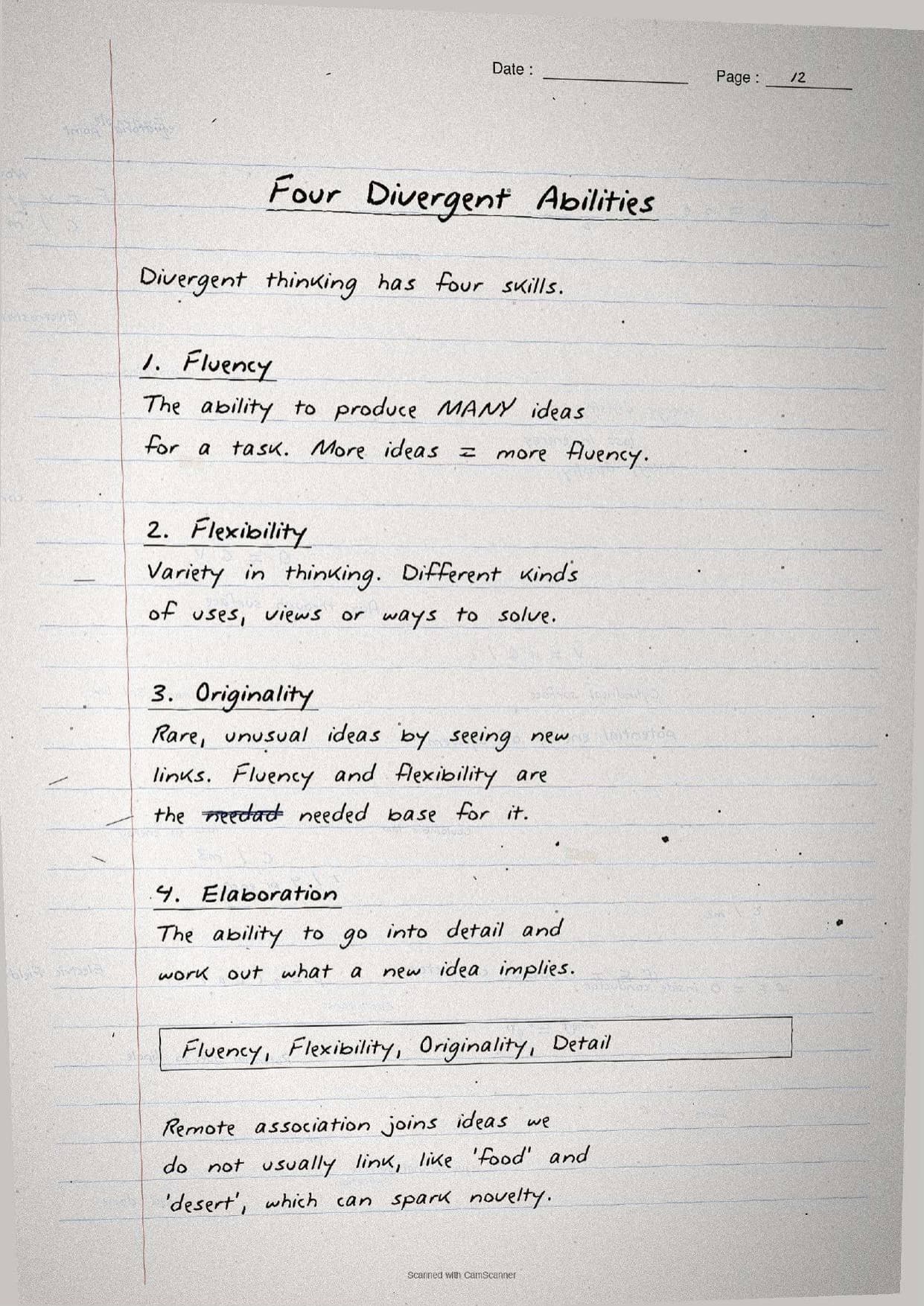
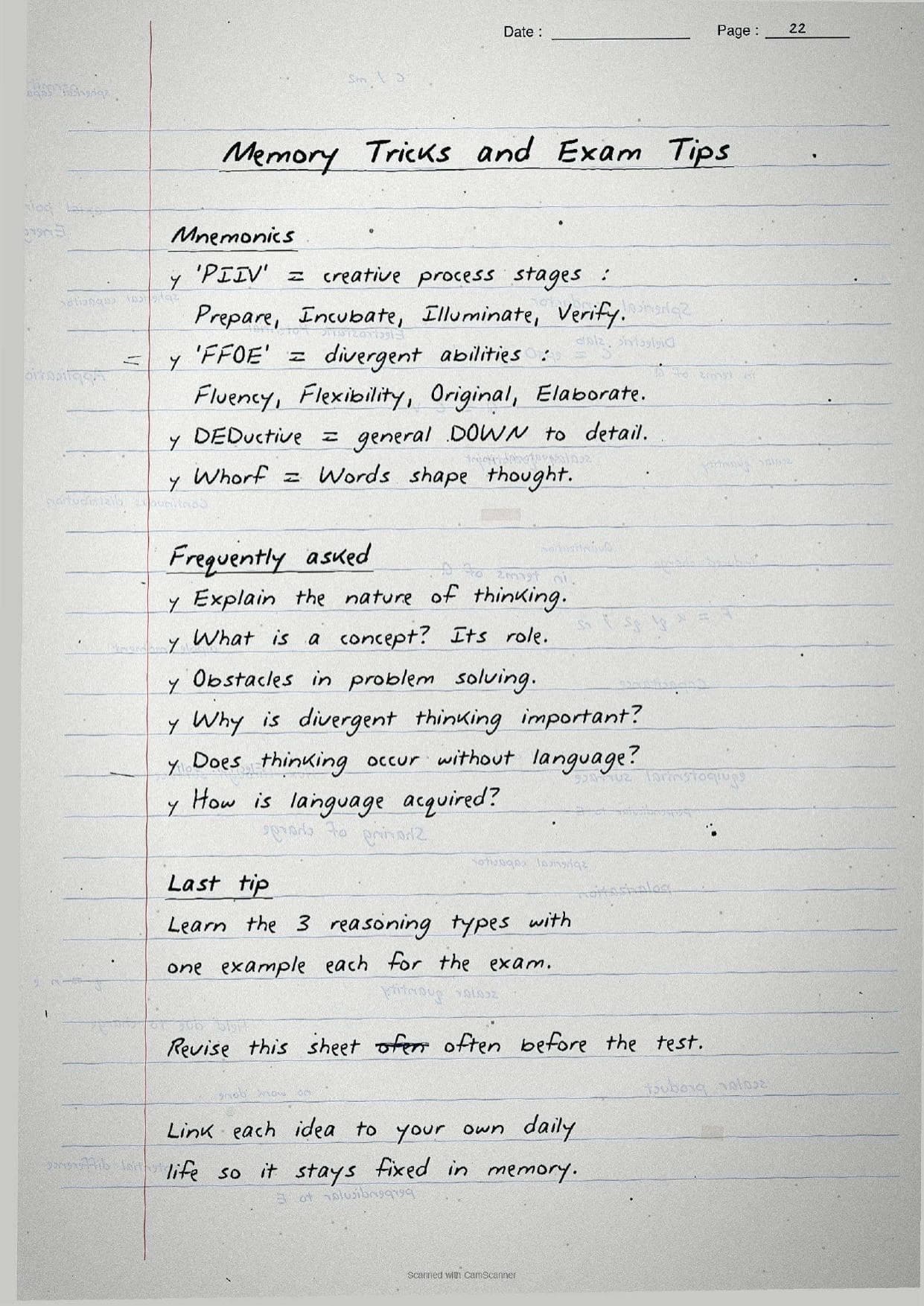
- Creative thinking: Guilford's split of convergent thinking (one correct answer) versus divergent thinking (many answers), with the four divergent abilities boxed: fluency, flexibility, originality and elaboration.
- Process of creative thinking: the four stages, preparation, incubation, illumination (the "Aha!" moment) and verification, plus brainstorming as a strategy.
The final pages cover thought and language, laying out the three viewpoints side by side: Whorf's linguistic relativity hypothesis (language determines thought), Piaget's view that thought precedes language, and Vygotsky's view that the two develop separately and merge around age two. The stages of language development (crying, cooing, babbling, the one-word or holophrase stage, and the two-word or telegraphic stage) form a timeline, with Skinner's learning view set against Chomsky's innate universal grammar.
How to Use These Handwritten Notes
Handwritten notes work best as a final-revision tool, not a first read. The steps below show how to get the most out of the Thinking handwritten notes in the last days before a test.
- Download: tap the download card above to save the handwritten pages to your device.
- First read: read the printed Notes once so the handwritten pages act as a refresher, not a first source.
- Recall drill: cover the page and try to write the four creative-process stages and the deductive versus inductive contrast from memory.
- Night before: flip through the boxed pages for a quick last-minute recall of definitions and the three problem-solving obstacles.
Many students search for Class 11 Psychology Chapter 7 notes on their phone the night before a test, so a saved set of handwritten pages means you can revise offline. Use the handwritten notes for speed, then check the solutions to confirm you have the answer points right.
Common Mistakes These Notes Help You Avoid
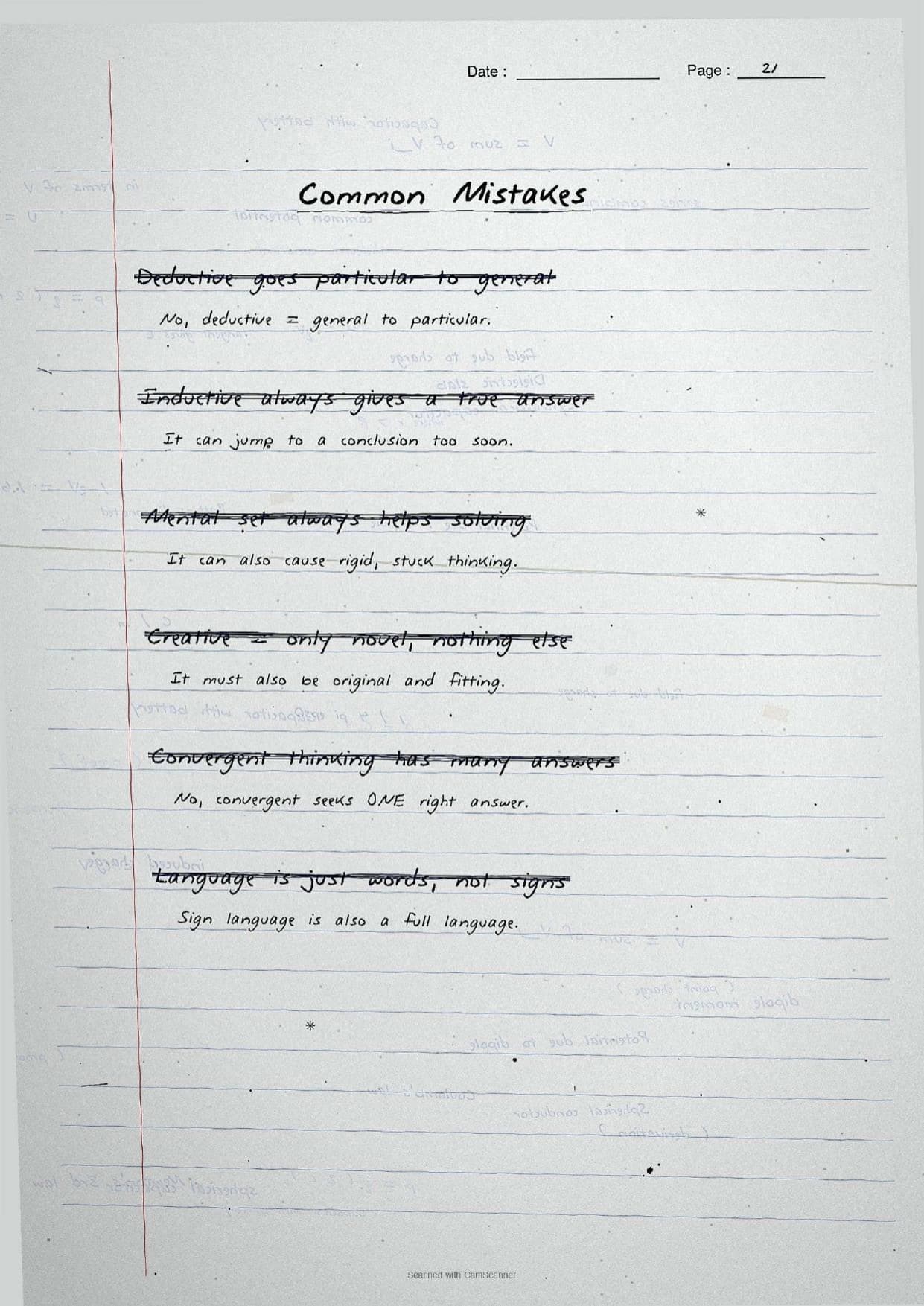
A few errors cost marks every year. The handwritten notes flag each one in the margin so you can fix it before the exam. These five are the most common.
- Swapping the two reasonings. Deductive goes general to particular; inductive goes particular to general.
- Mixing up convergent and divergent thinking. Convergent seeks one answer; divergent is open-ended.
- Naming only some divergent abilities. The exam needs all four: fluency, flexibility, originality, elaboration.
- Confusing mental set with functional fixedness. One is fixed steps; the other is a fixed use of an object.
- Getting the creative-process order wrong. It is preparation, incubation, illumination, verification.
Students who fix these five points usually move from average to high marks. The handwritten notes box the two reasonings and list all four divergent abilities in full, so the soft points are hard to miss when you revise.
How These Handwritten Notes Pair with the Solutions and Book PDF
These handwritten notes are a fast revision tool. To prepare fully, students should use them alongside the other resources for the same chapter, all linked in the table below. Read the printed Notes, test yourself with the solutions, then use these pages for a final recall.
| Resource | Best used for |
|---|---|
| Thinking NCERT Solutions | Step-by-step answers to all nine review questions |
| Thinking Class 11 Notes | Quick chapter summary with all processes and key terms in one place |
| Thinking NCERT Book PDF | Reading the original NCERT chapter text and figures |
Tip: read the printed Notes first, then attempt the solutions, and keep these handwritten pages for the final night-before flip. Using them for recall, not for the first read, builds memory faster.
All Class 11 Psychology Handwritten Notes by Chapter
The table links the handwritten notes for every chapter in Class 11 Psychology, so students can move across the course in one click. Thinking is highlighted.
| Chapter | Handwritten Notes |
|---|---|
| Chapter 1 | What is Psychology? |
| Chapter 2 | Methods of Enquiry in Psychology |
| Chapter 3 | Human Development |
| Chapter 4 | Sensory, Attentional and Perceptual Processes |
| Chapter 5 | Learning |
| Chapter 6 | Human Memory |
| Chapter 7 | Thinking |
| Chapter 8 | Motivation and Emotion |
FAQs on Thinking Handwritten Notes
Thinking Class 11 Psychology Handwritten Notes Common Questions
Ques. Where can I download the Thinking handwritten notes PDF?
Ans. You can download the Thinking Class 11 Psychology handwritten notes PDF directly from this page. It is free, follows the 2026-27 NCERT, and presents the building blocks of thought, problem solving, reasoning, creative thinking and language as handwritten pages.
Ques. Are handwritten notes good for revising Class 11 Psychology Chapter 7?
Ans. Yes. Handwritten notes are best for fast, last-minute revision because the boxed key terms and arrows make the processes and the creative-thinking stages easy to skim. Use them after a first read of the printed Notes, not as your only source.
Ques. What topics do these handwritten notes cover?
Ans. They cover the nature of thinking, mental images and concepts, problem solving and its obstacles, deductive and inductive reasoning, judgment and decision-making, convergent and divergent creative thinking, the thought and language debate, and language development.
Ques. What is the difference between convergent and divergent thinking?
Ans. Convergent thinking is used for problems that have only one correct answer, so the mind converges on it. Divergent thinking is open-ended and produces many original ideas, and its four abilities are fluency, flexibility, originality and elaboration. The notes box this contrast for quick recall.
Ques. How should I use these notes with the other resources?
Ans. Read the printed Notes first, test yourself with the NCERT Solutions, then keep these handwritten pages for the final night-before flip. Using them for recall rather than the first read builds memory faster.



Comments