




These Learning handwritten notes turn the whole chapter on how behaviour changes with experience into clean, handwritten pages for fast last-minute revision. They follow the 2026-27 NCERT syllabus and Chapter 5 of Class 11 Psychology. Students get classical and operant conditioning, observational, cognitive, verbal and skill learning, plus the factors that facilitate learning and learning disabilities, all in a pen-on-paper format that is easy to skim before a test.
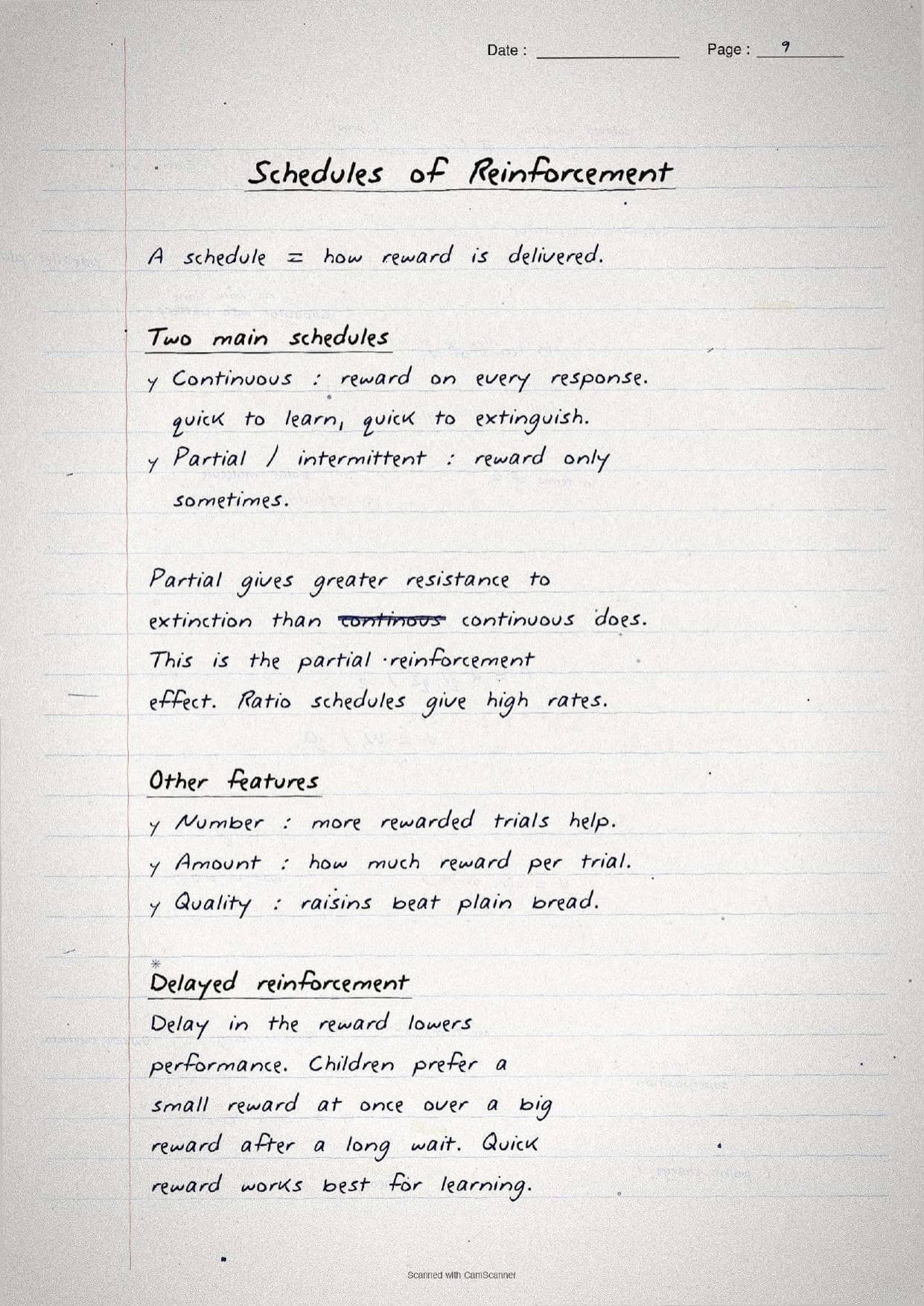
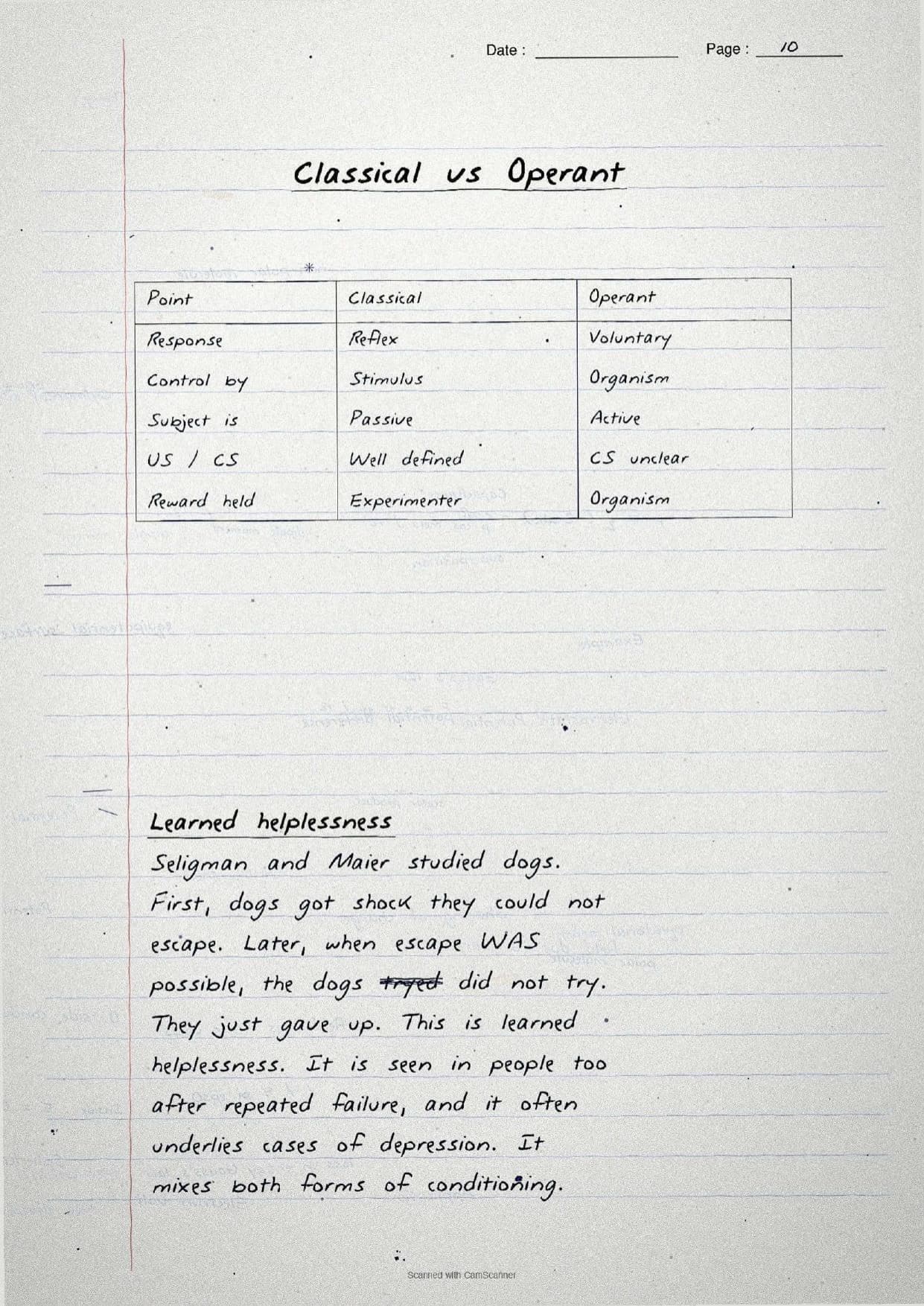
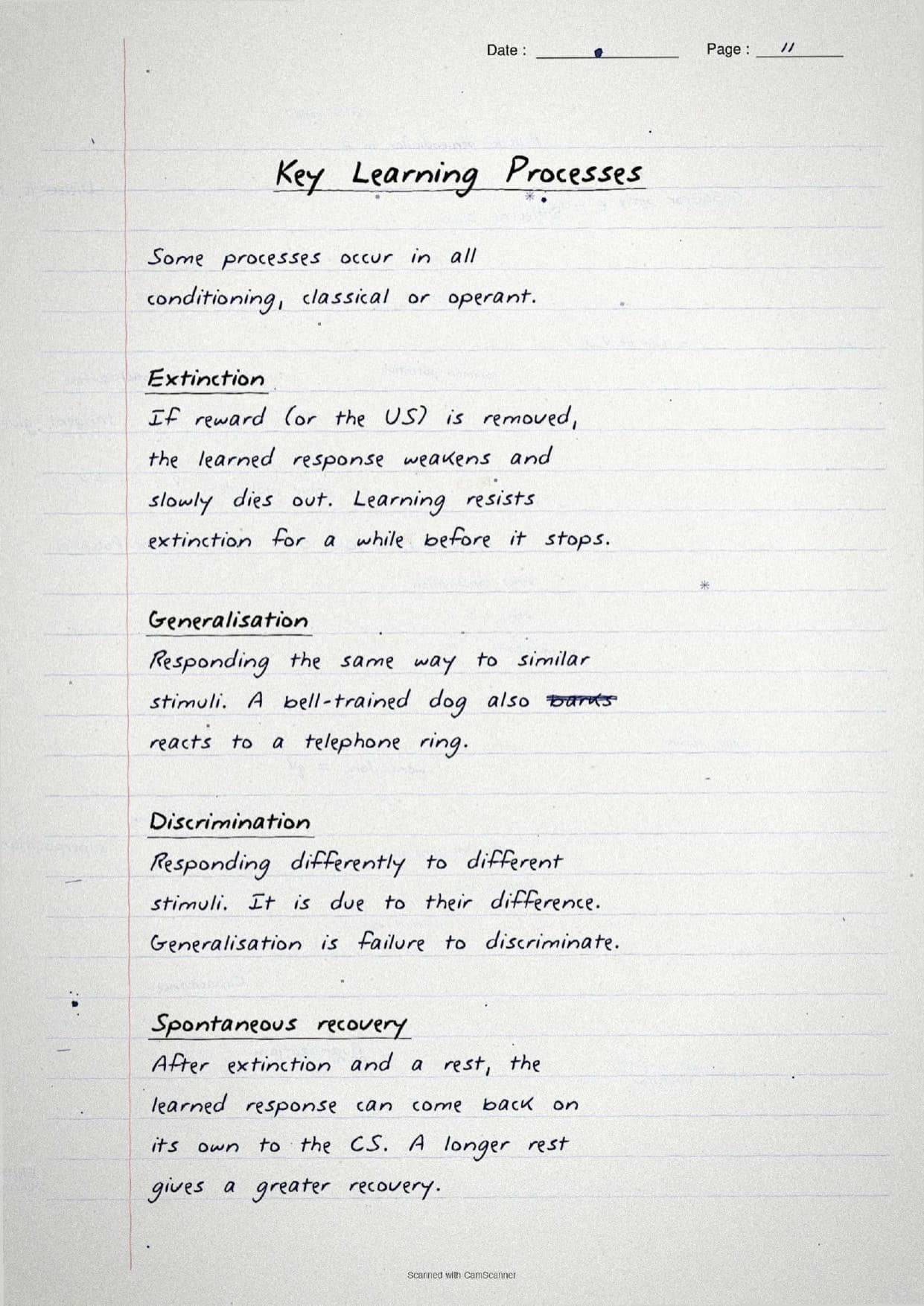
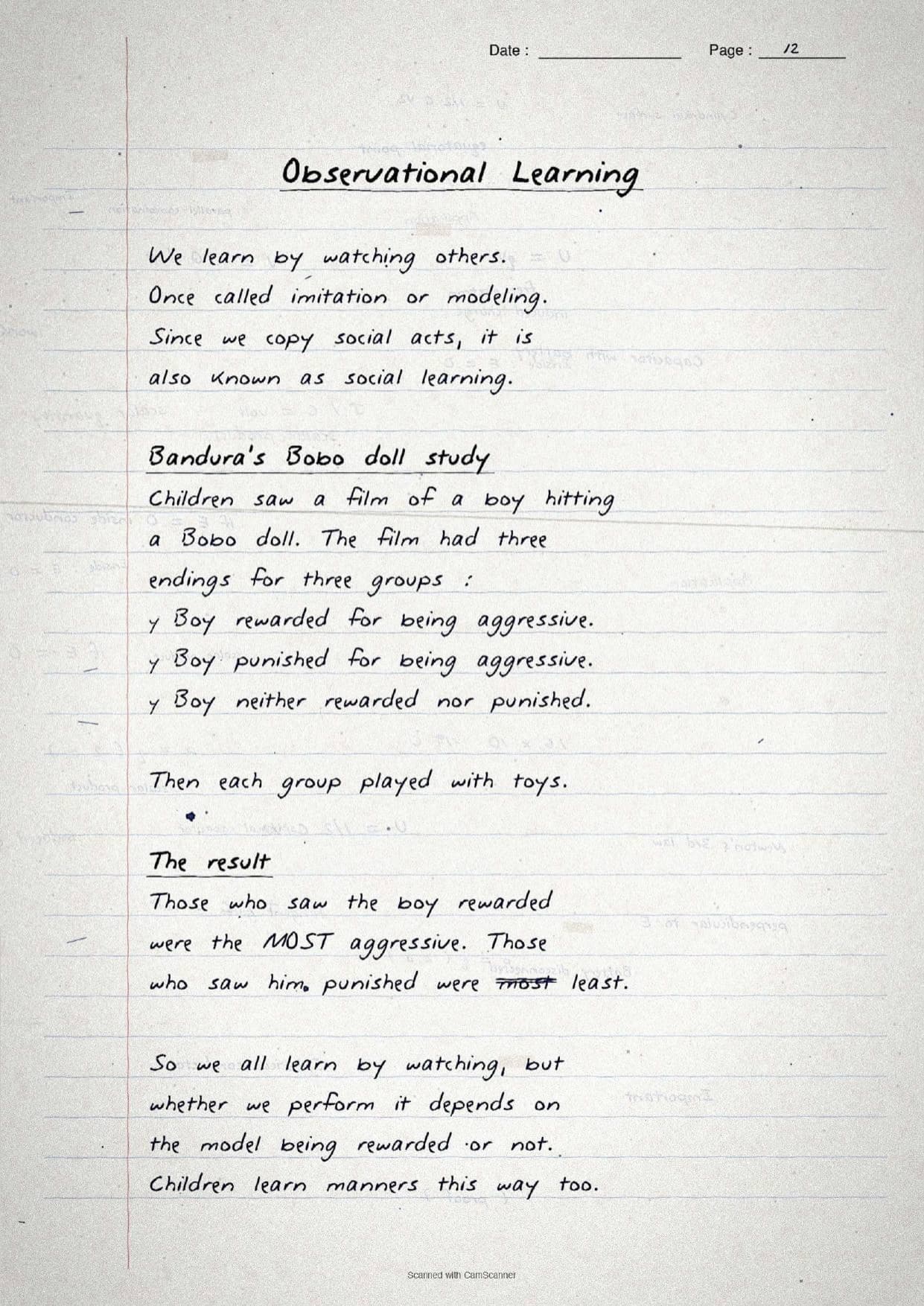
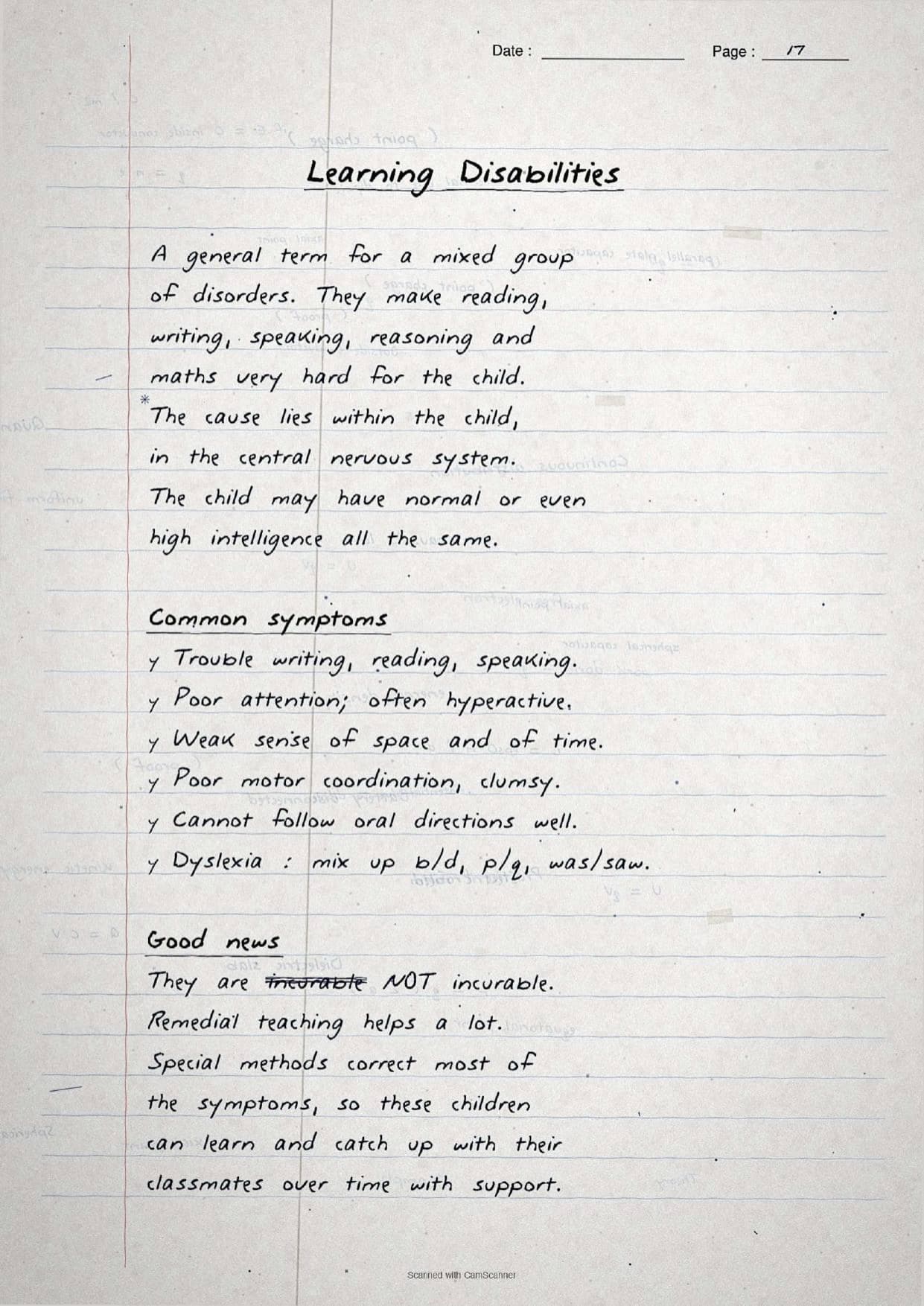
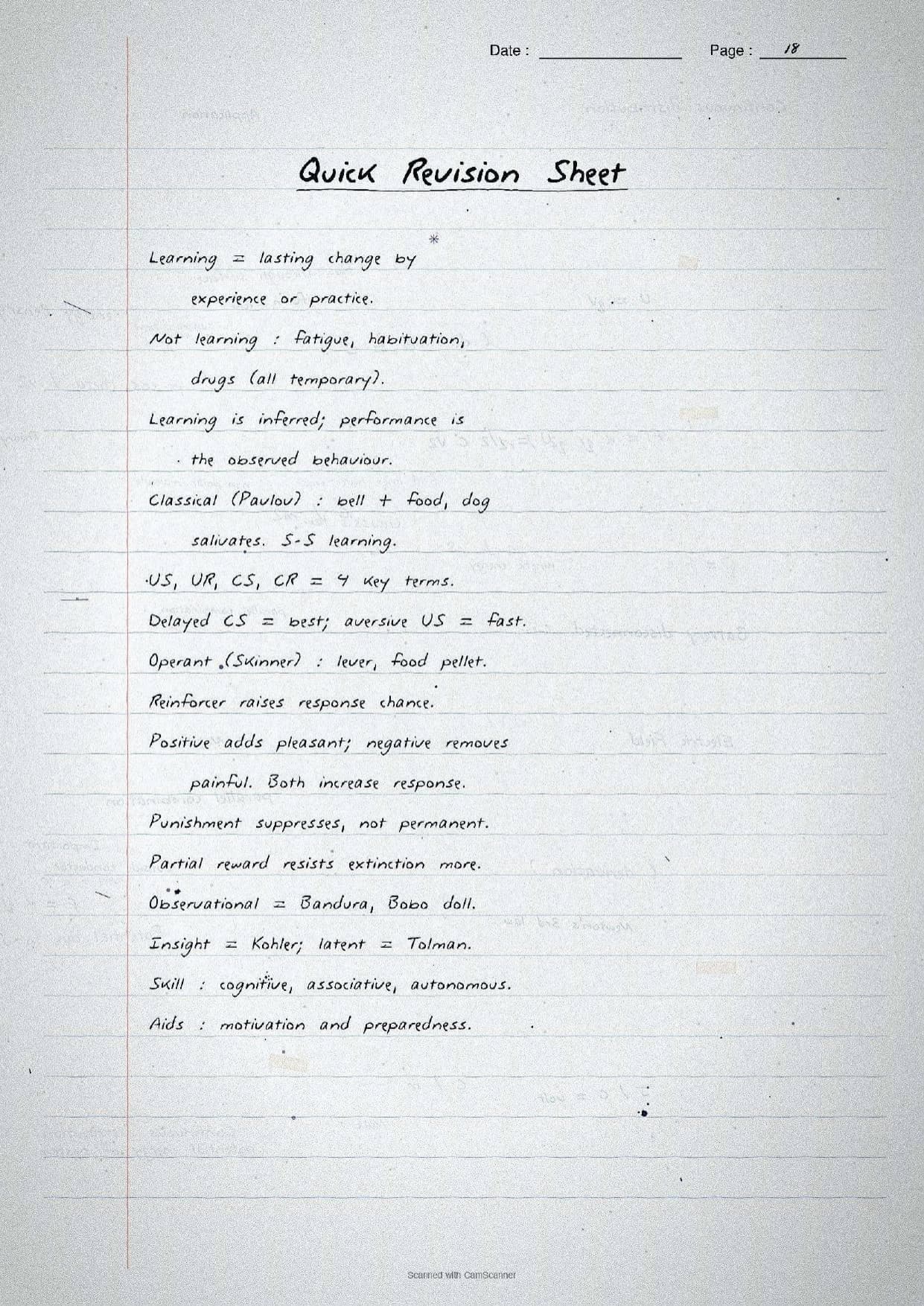
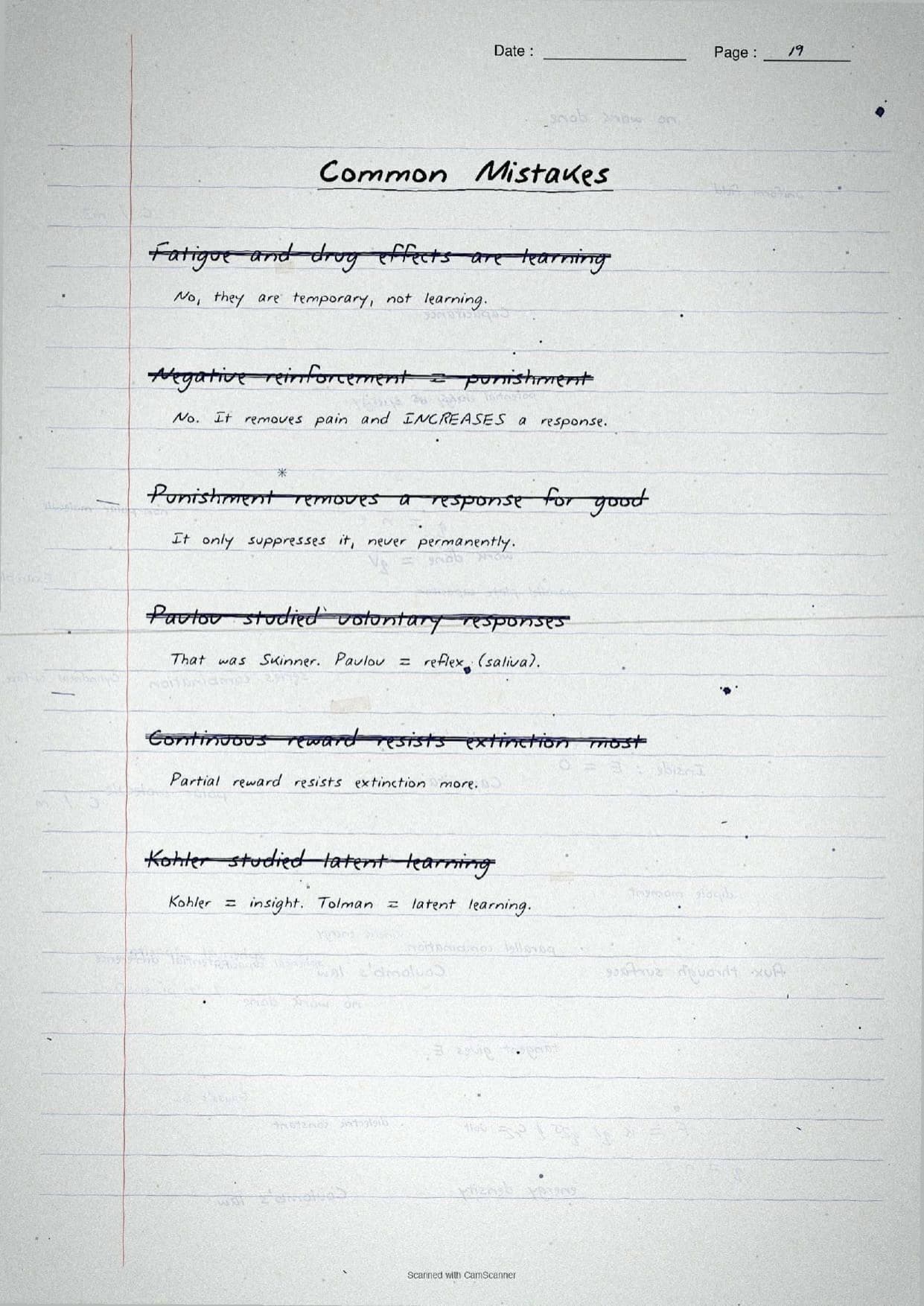
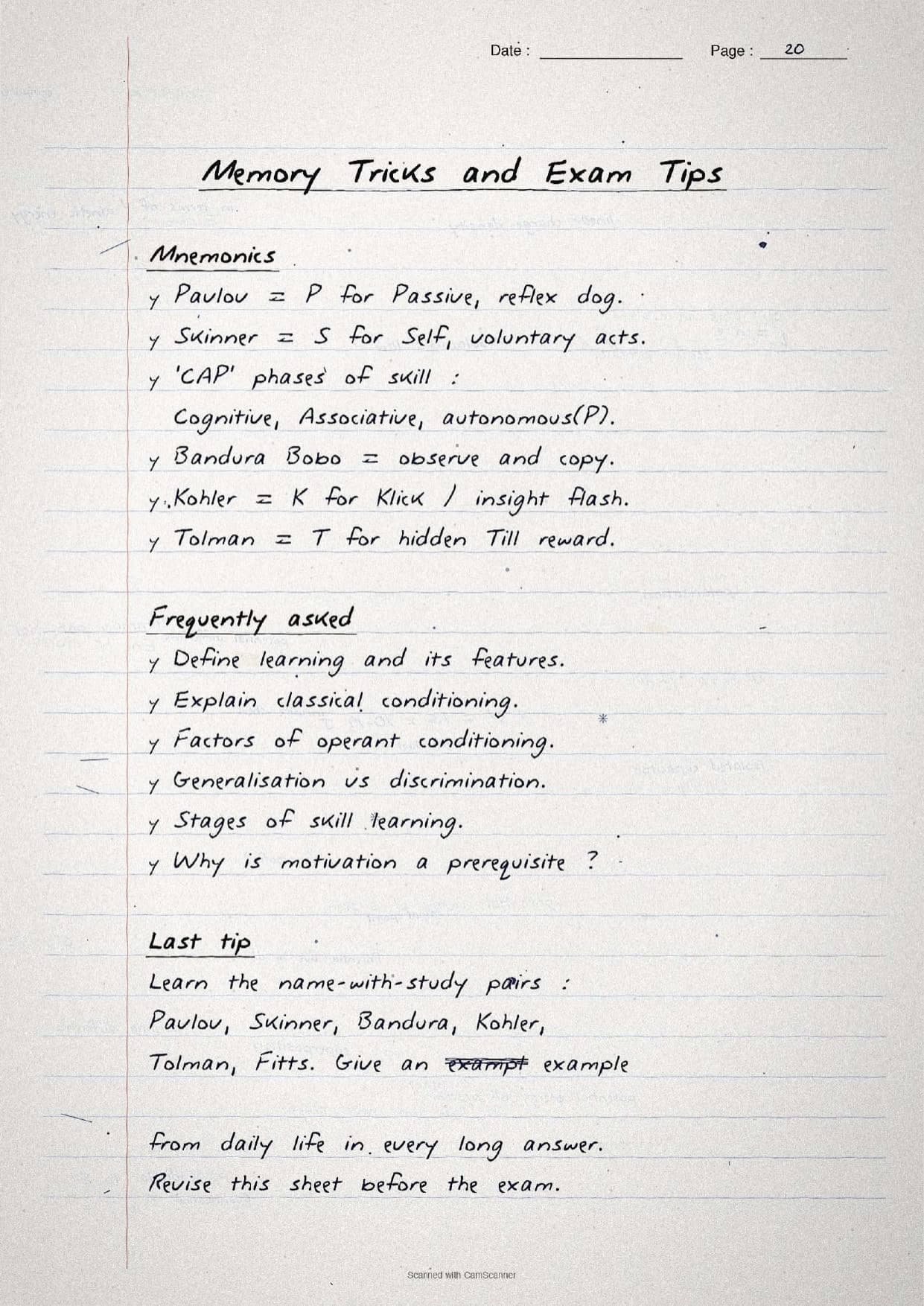
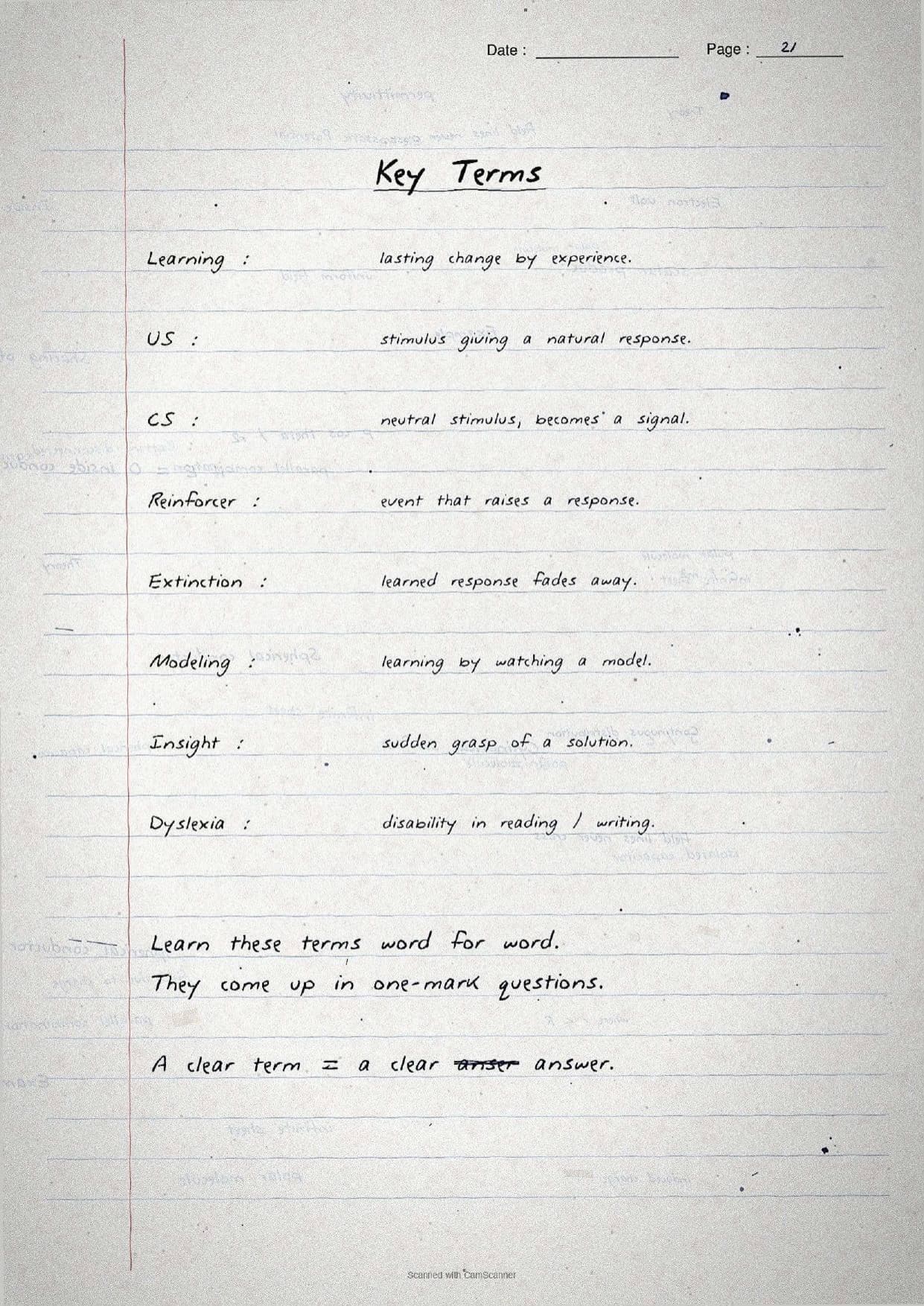
- Handwritten pages with boxed key terms and a labelled classical-versus-operant conditioning map.
- This Class 11 Psychology chapter is a frequent source of short and long answer questions in the final exam.
- Pairs with the NCERT Solutions, Notes and Book PDF linked lower on this page.
These Learning handwritten notes are prepared from the official NCERT Psychology textbook and checked against recent CBSE Class 11 question papers.
Student Feedback: In a Collegedunia poll of 6,215 Class 11 Psychology students before the 2026 final exam, 72% of students said handwritten pages helped them keep classical and operant conditioning apart, because the CS, US, CR and UR labels sat in boxes with arrows rather than long paragraphs.
Source: 2026-27 Class 11 Psychology student poll. Sample of 6,215 students from CBSE schools across 11 states.
What These Learning Handwritten Notes Contain
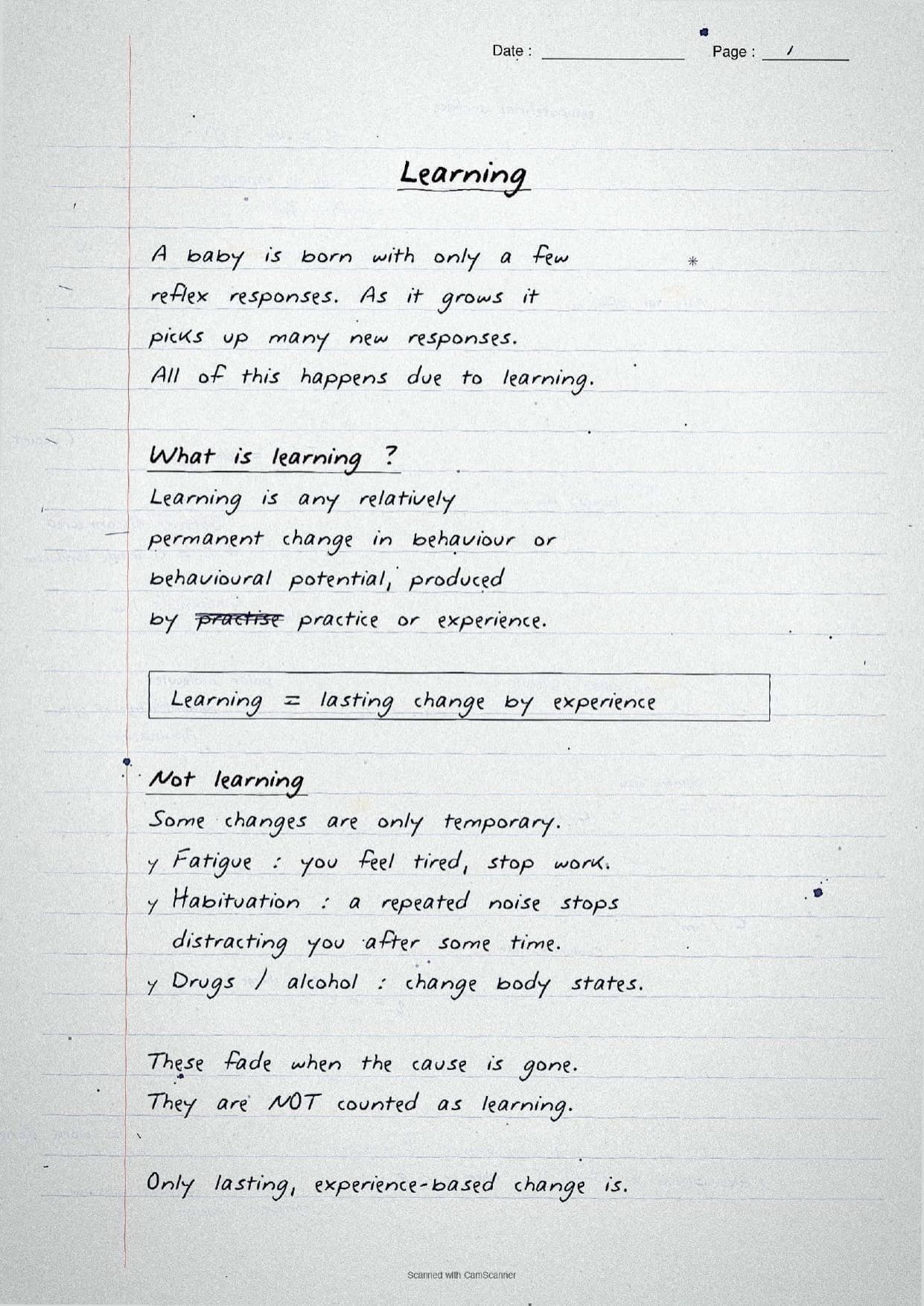
Learning is the fifth chapter of Class 11 Psychology. It defines learning as any relatively permanent change in behaviour or behavioural potential produced by experience, and then walks through the main ways this change happens. These handwritten notes condense the chapter into handwritten pages that read like a topper's own notebook.
The notes are organised under three threads, each on its own set of pages:
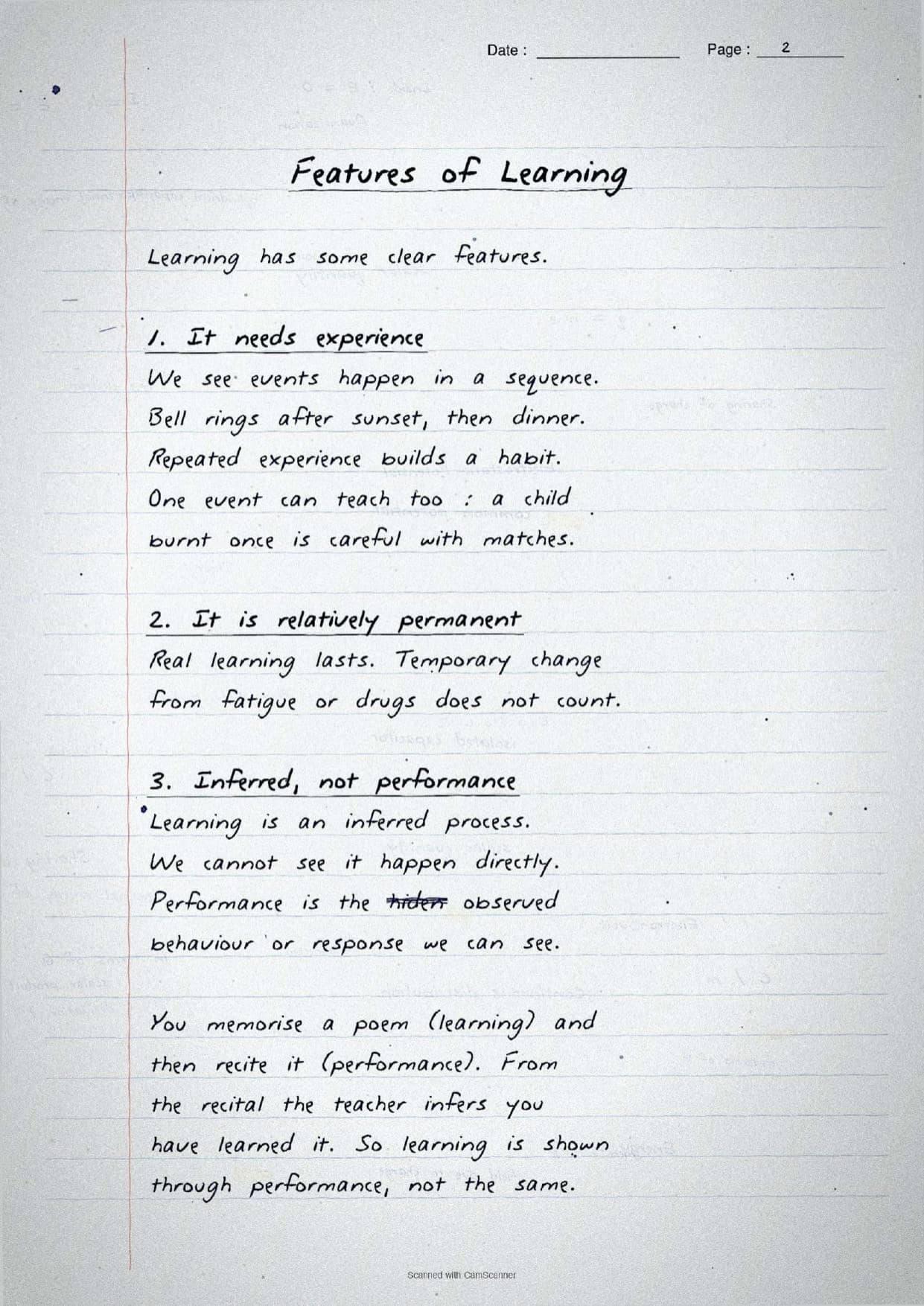
- The basics: the nature of learning, why it is an inferred process, and how it differs from performance, fatigue and habituation.
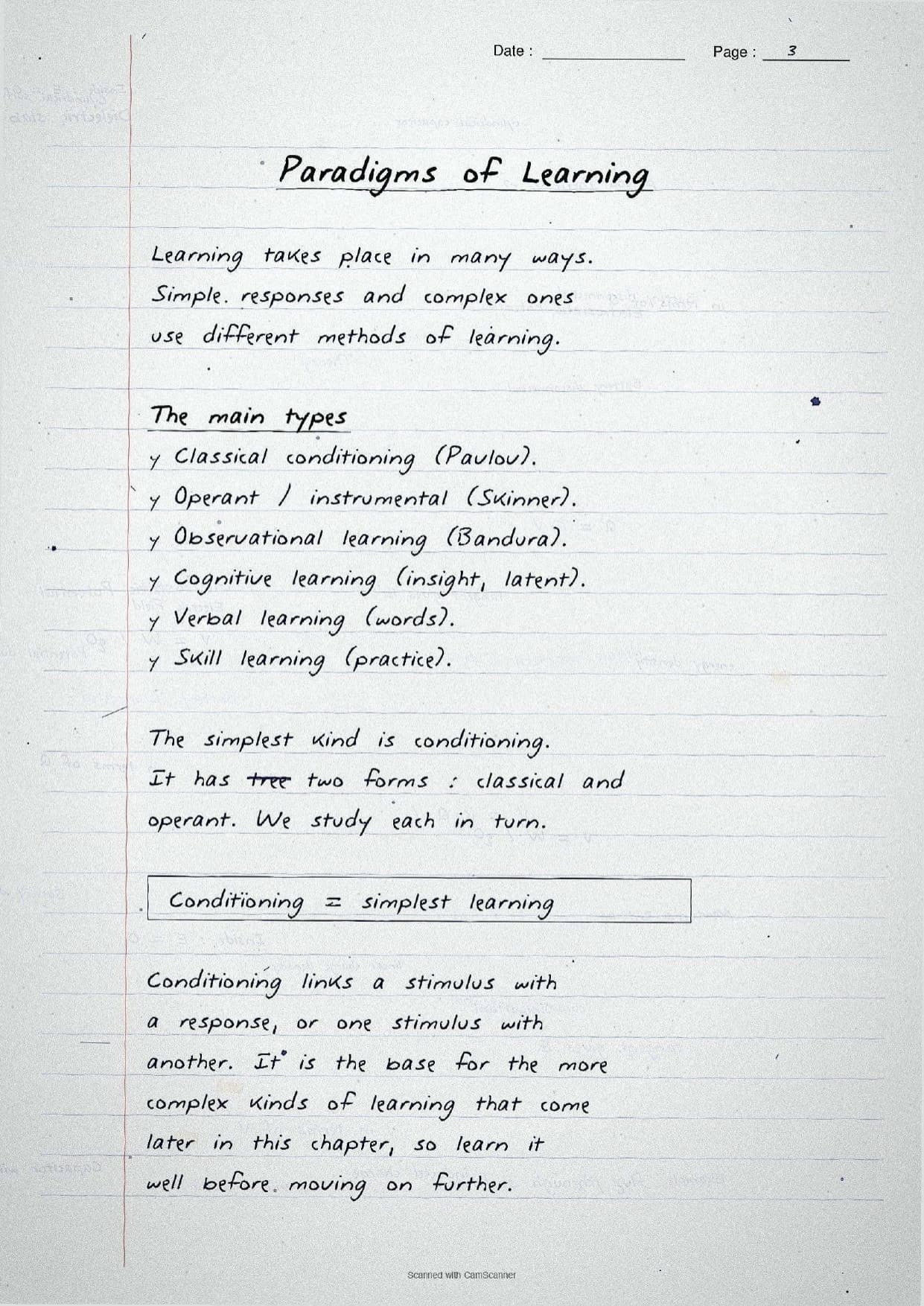
- The conditioning models: Pavlov's classical conditioning and Skinner's operant conditioning, with reinforcement, punishment and schedules.
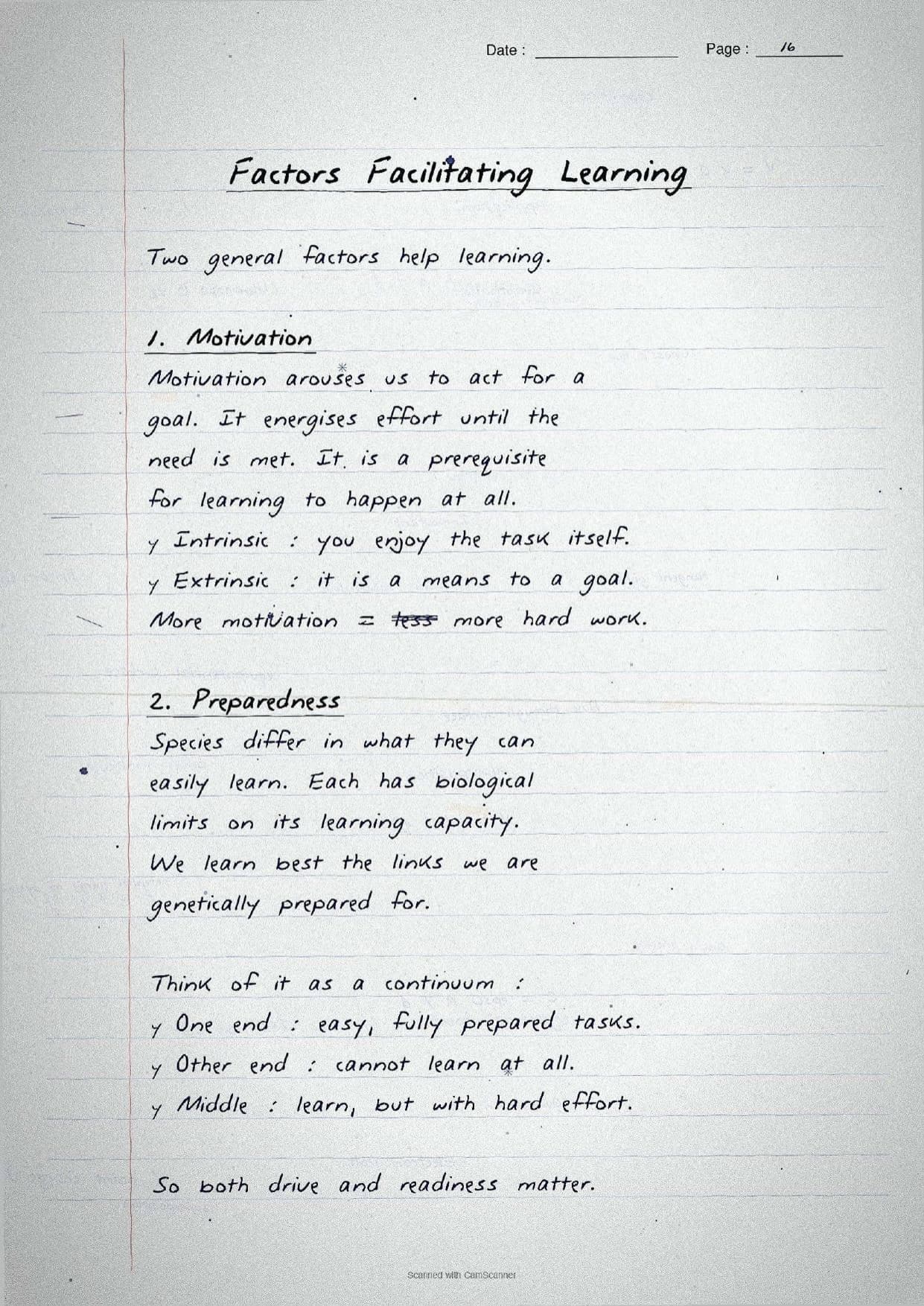
- The wider forms: observational, cognitive, verbal and skill learning, plus factors facilitating learning and learning disabilities.
Because the pages are handwritten, the key terms sit in boxes and arrows rather than long paragraphs. A student can flip through the learning class 11 pages in a few minutes and still pick up the four conditioning stages, the reinforcement types and the main contrasts before walking into the exam.
Classical and Operant Conditioning in the Handwritten Pages
The two conditioning models fill the central pages, drawn as a clear map so the families stand apart. The table below shows what the handwritten notes cover for each model.
| Model | What the page shows |
|---|---|
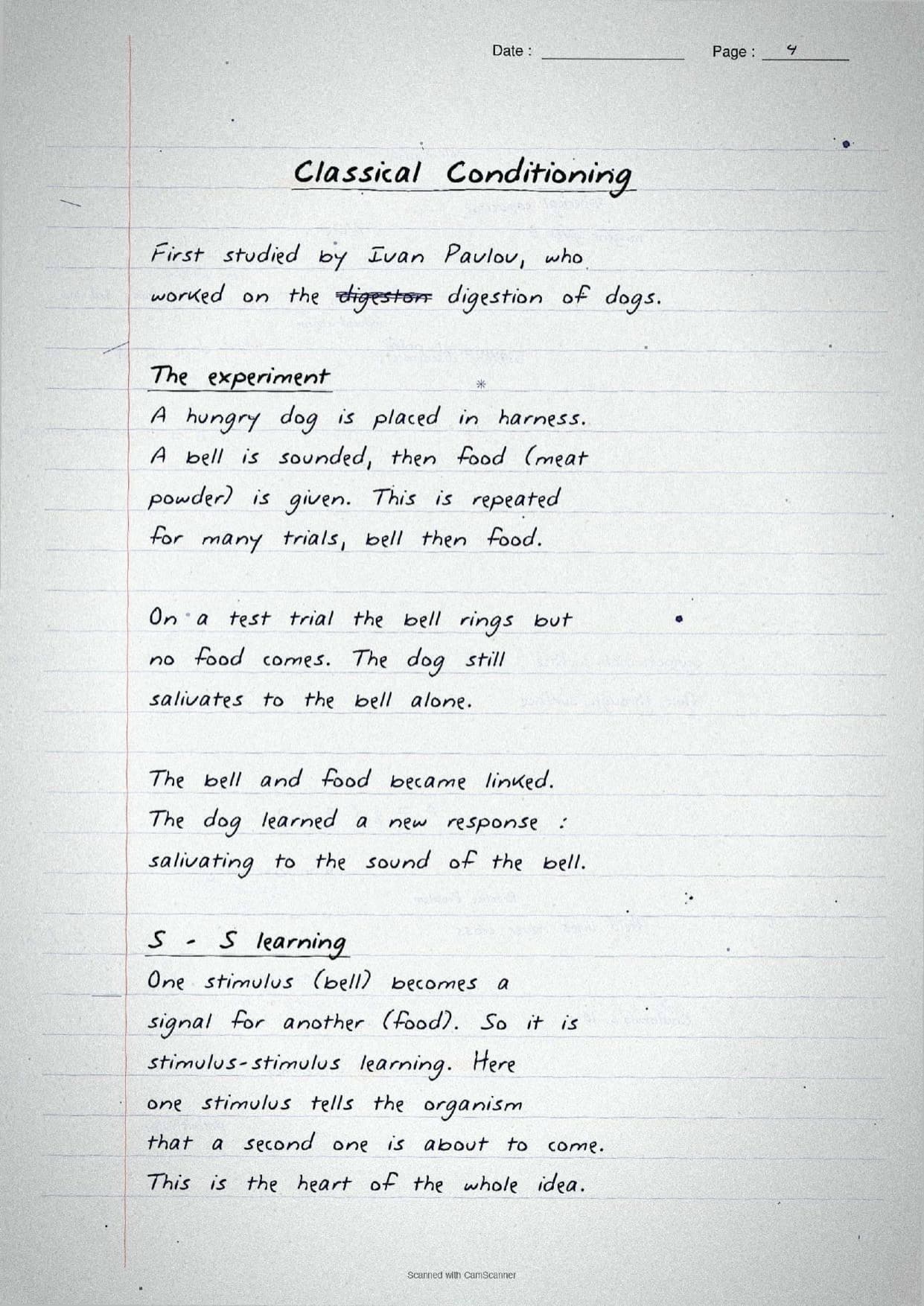
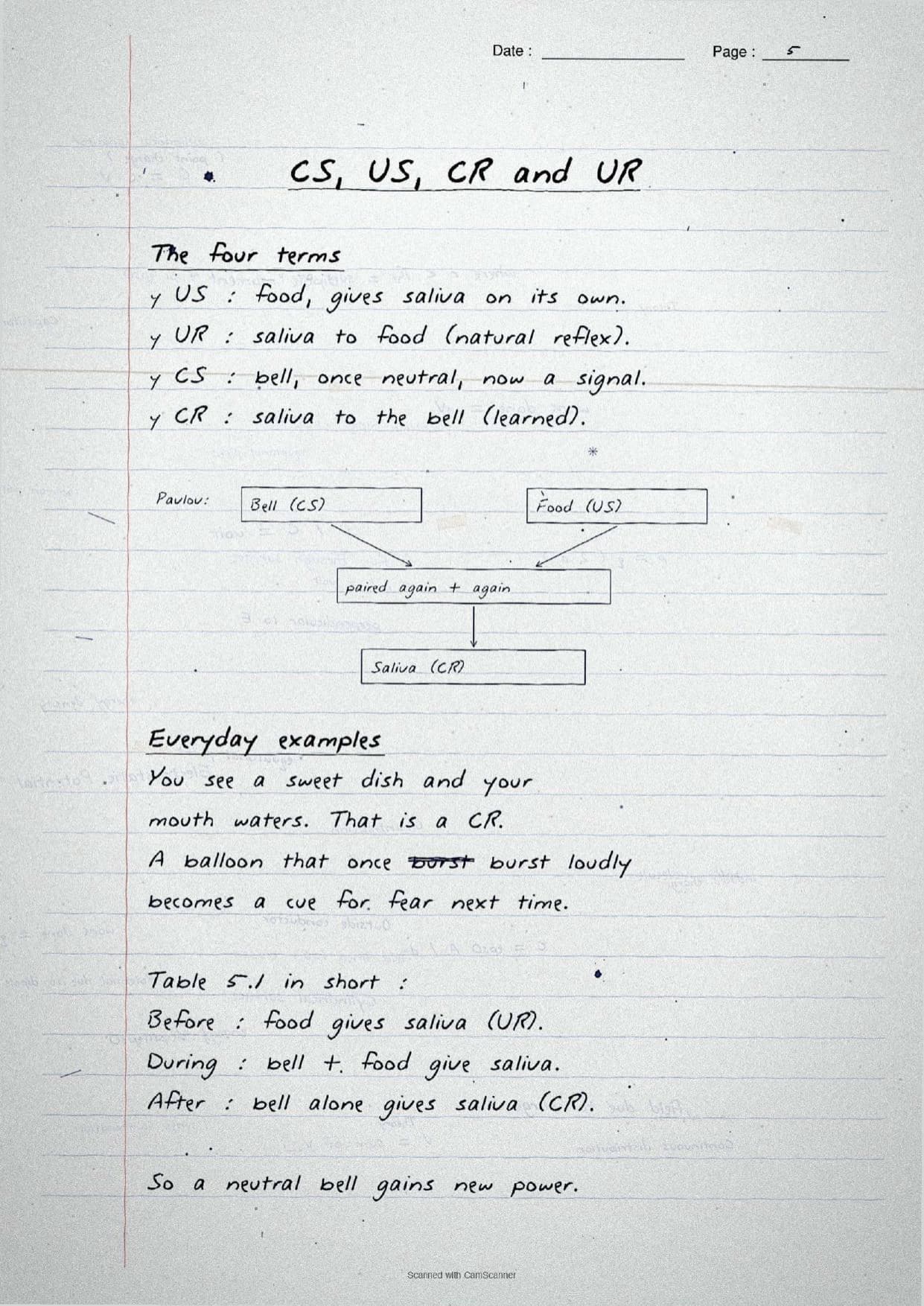
| Classical (Pavlov) | The dog-and-bell experiment with the four stages: US, UR, CS, CR, drawn from Table 5.1. |
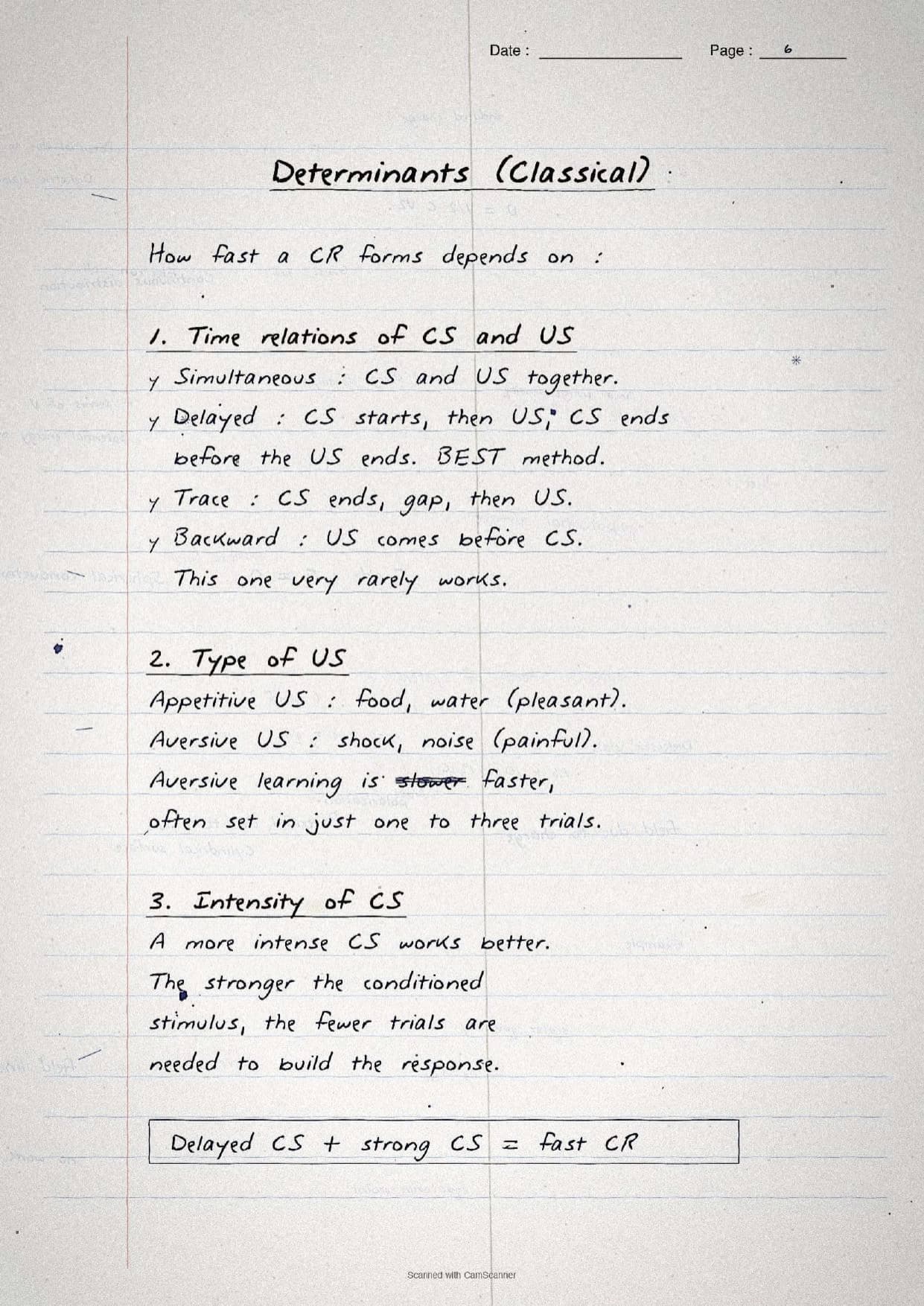
| Determinants of classical conditioning | Time relations (simultaneous, delayed, trace, backward), appetitive versus aversive US, and CS intensity. |
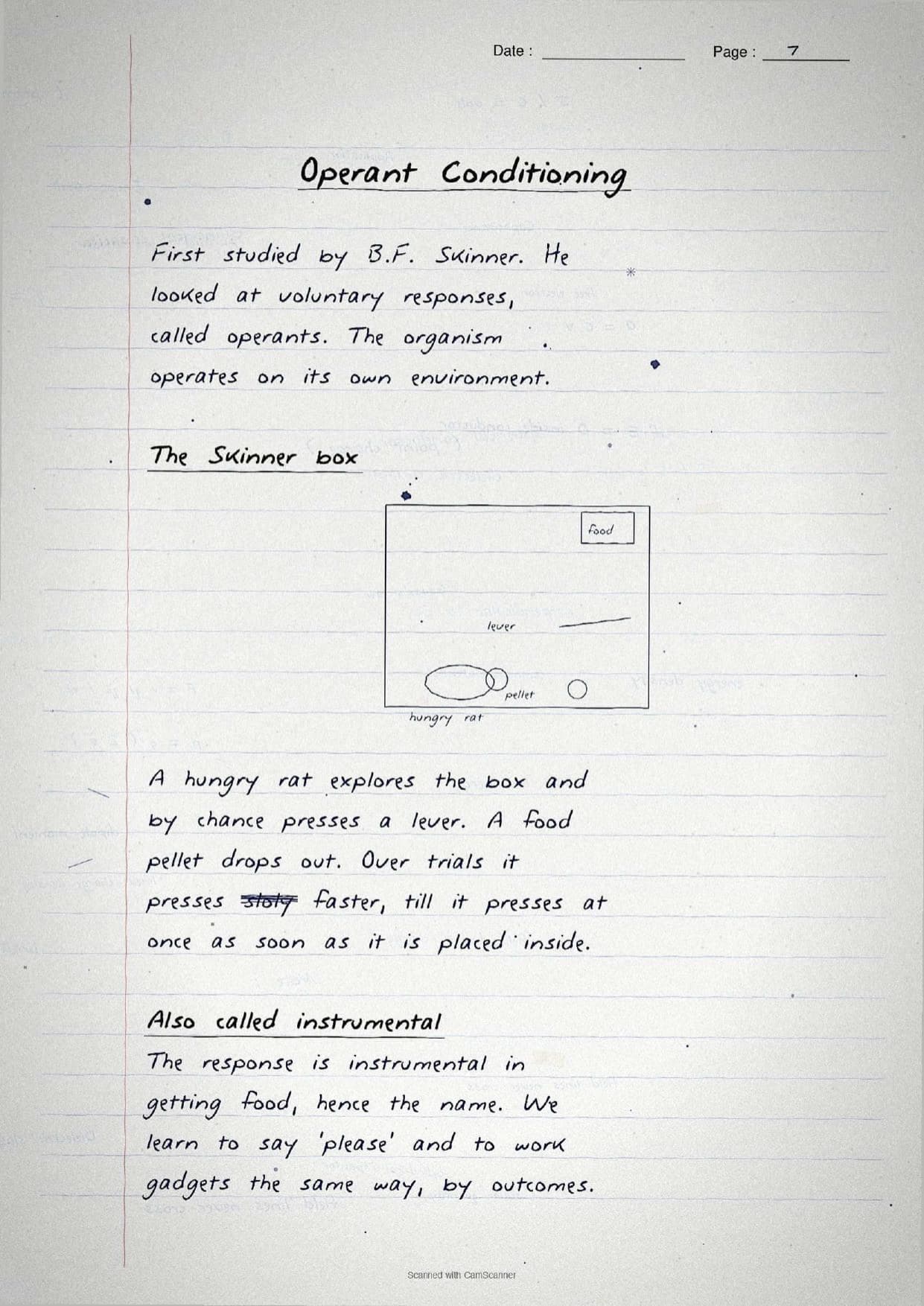
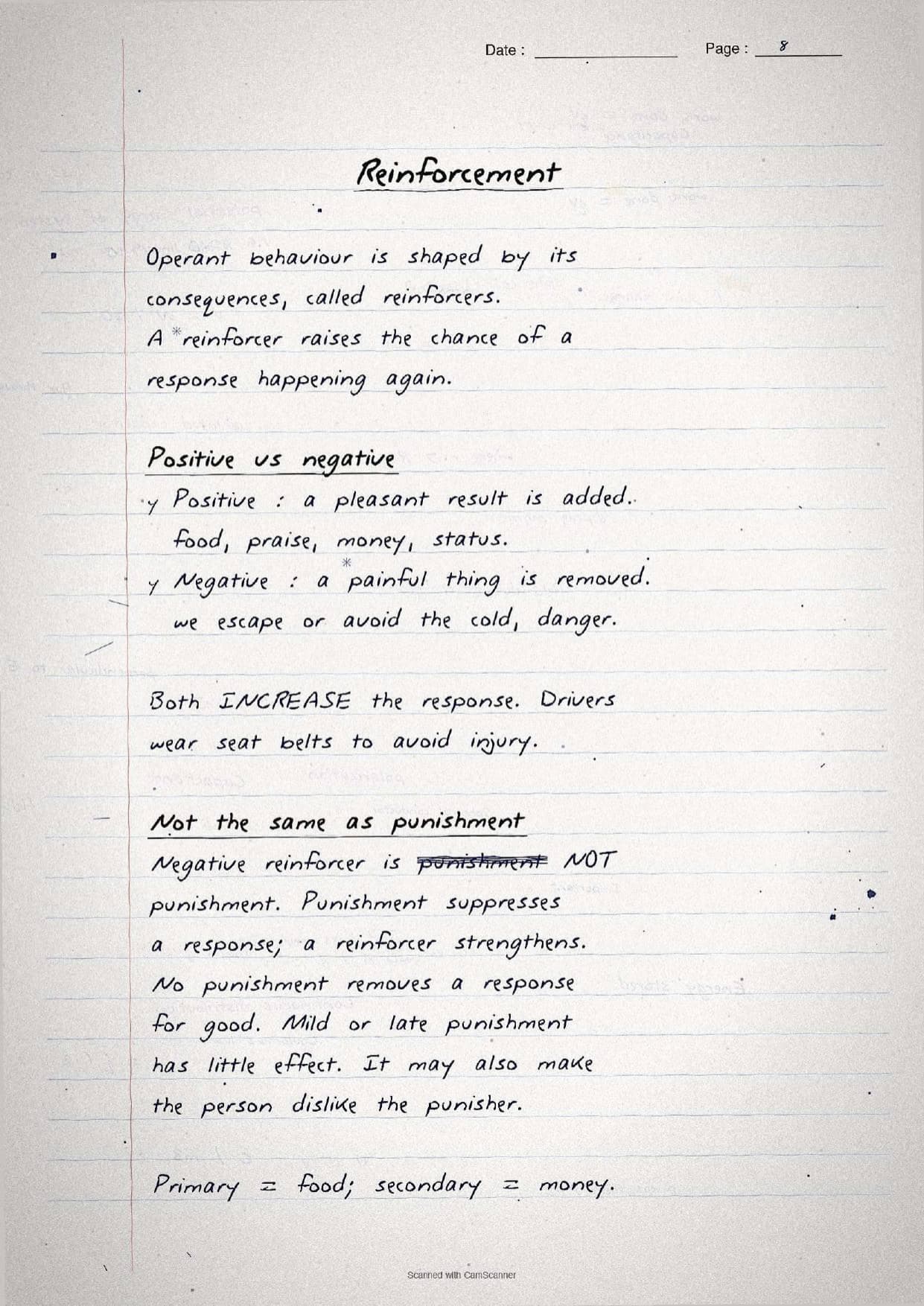
| Operant (Skinner) | The Skinner box, lever pressing, and positive versus negative reinforcement. |
| Key learning processes | Reinforcement, extinction, generalisation, discrimination and spontaneous recovery as linked boxes. |
The handwritten map makes the key point easy to see: classical conditioning is S-S learning where one stimulus signals another, while operant conditioning links a voluntary response to its consequence. Seeing the two families side by side on one page is the fastest way to remember that Pavlov used reflexes and Skinner used operants. Keep this contrast in mind for the long-answer comparison question drawn from Box 5.1.
Observational, Cognitive, Verbal and Skill Learning in the Notes
The later pages cover the forms of learning that go beyond conditioning. These topics feed the short and long answers, so the handwritten notes keep them as boxed lists. The lists below show what each page covers.
- Observational learning: Bandura's Bobo doll study, modeling, and how a model being rewarded or punished shapes the observer's performance.
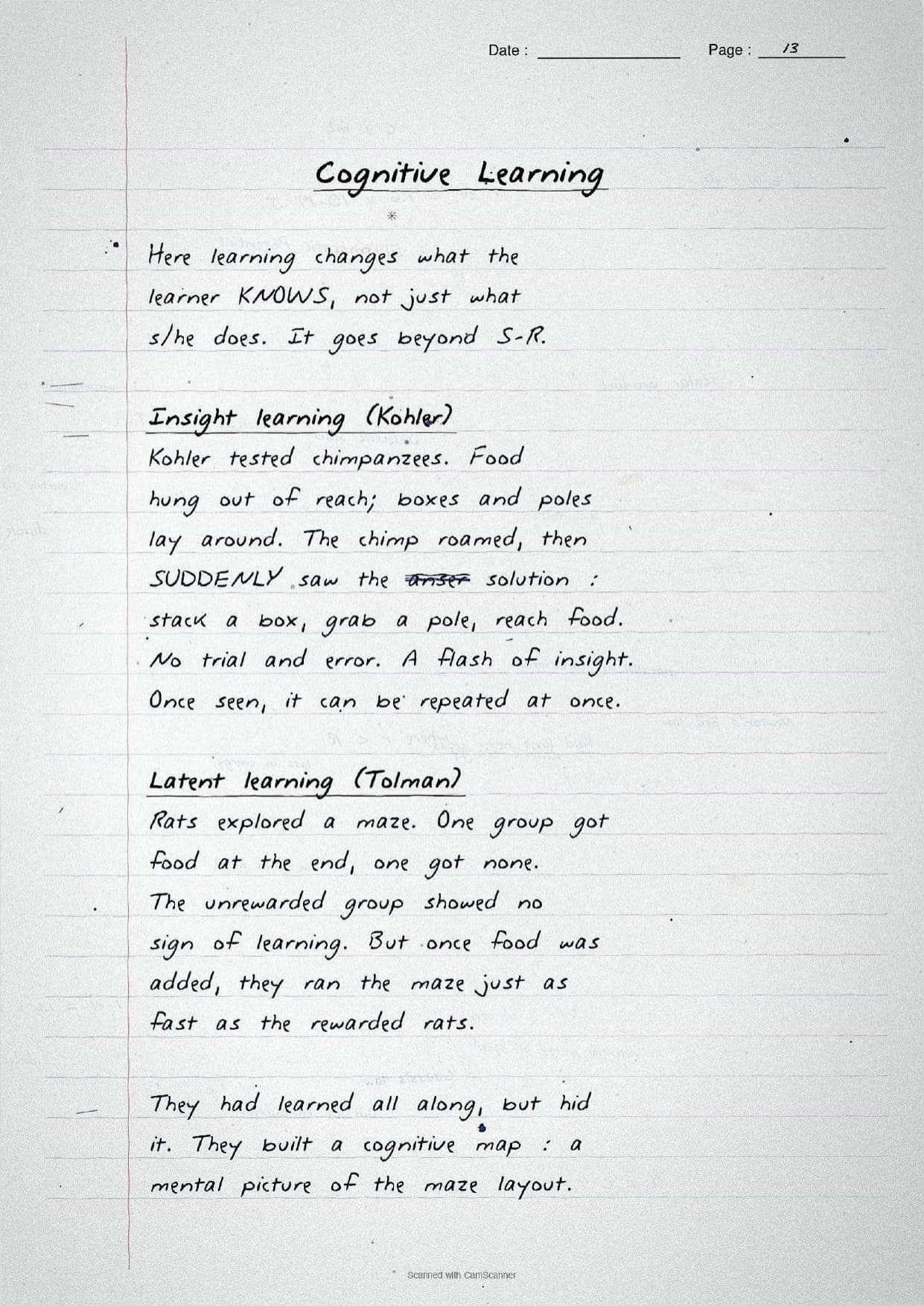
- Cognitive learning: Kohler's insight learning with chimpanzees, and Tolman's latent learning and cognitive map from the maze study.
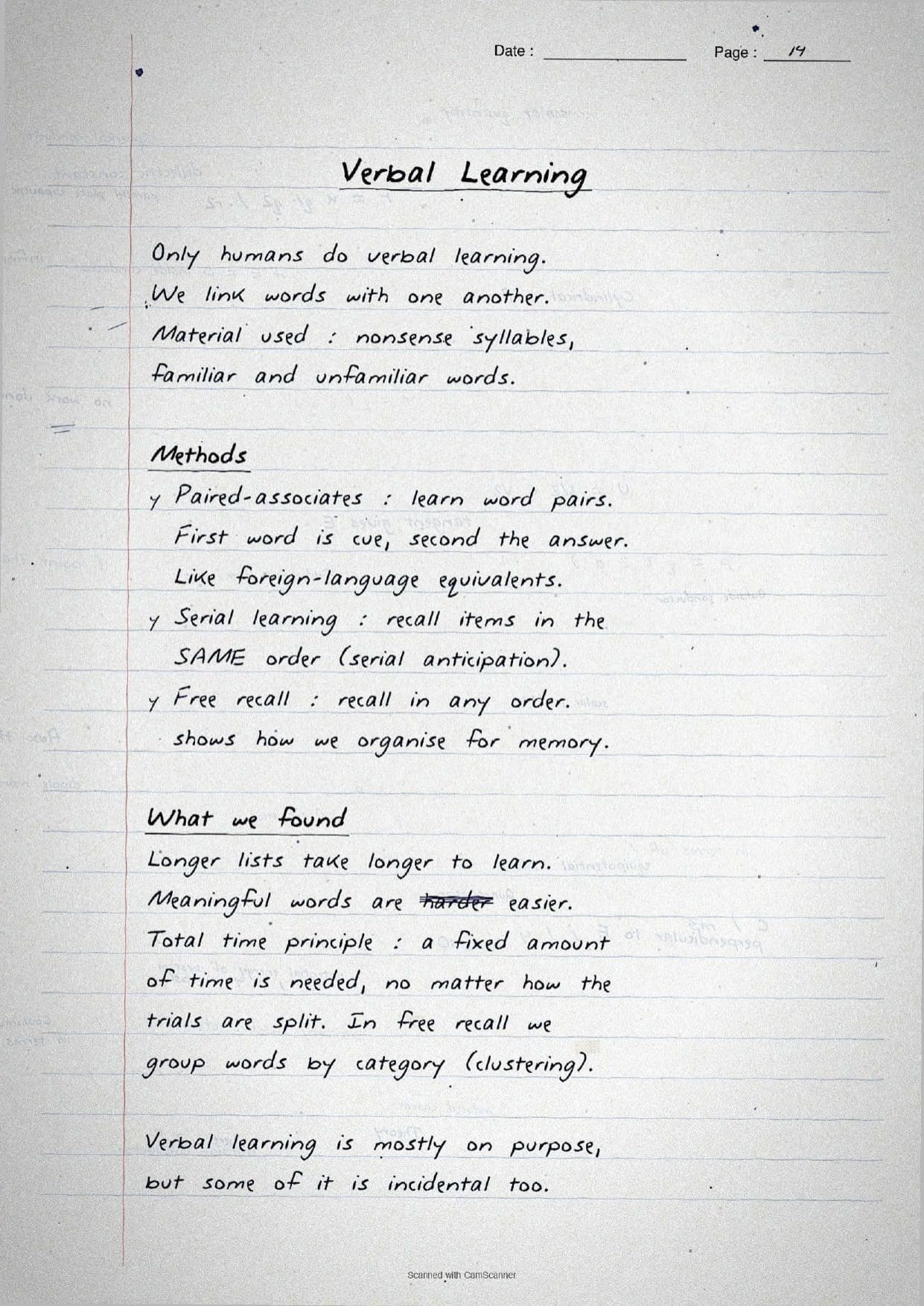
- Verbal learning: paired-associates, serial and free recall methods, plus the total time principle and category clustering.
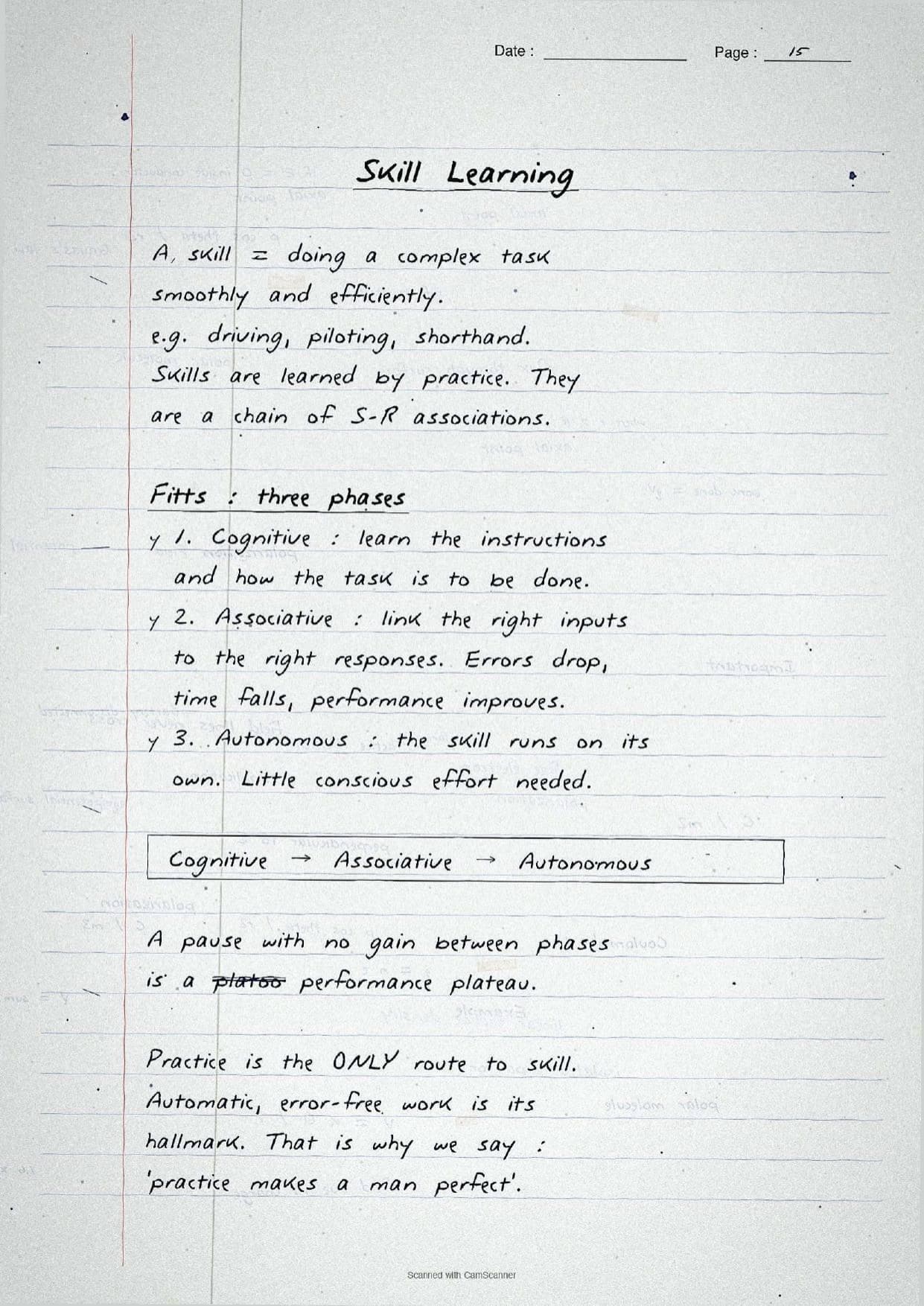
- Skill learning: Fitts' three phases, cognitive, associative and autonomous, ending in automaticity through practice.
The notes underline one judgement that scores well: in observational learning the observer acquires the knowledge either way, but whether they perform it depends on the model being rewarded or punished. The handwritten pages box this line so it stands out. Pair the four forms with the factors facilitating learning and learning disabilities, and you have the whole back half of the chapter on a few pages.
How to Use These Handwritten Notes
Handwritten notes work best as a final-revision tool, not a first read. The steps below show how to get the most out of the Learning handwritten notes in the last days before a test.
- Download: tap the download card above to save the handwritten pages to your device.
- First read: read the printed Notes once so the handwritten pages act as a refresher, not a first source.
- Recall drill: cover the page and try to write the four stages of classical conditioning and the reinforcement types from memory.
- Night before: flip through the boxed pages for a quick last-minute recall of the experiments and the key terms.
Many students search for class 11 psychology chapter 5 notes on their phone the night before a test, so a saved set of handwritten pages means you can revise offline. Use the handwritten notes for speed, then check the solutions to confirm you have the answer points right.
Common Mistakes These Notes Help You Avoid
A few errors cost marks every year. The handwritten notes flag each one in the margin so you can fix it before the exam. These five are the most common.
- Mixing up the labels. Before conditioning the bell is neutral; only after pairing does it become the CS and salivation to it the CR.
- Calling negative reinforcement a punishment. Negative reinforcement increases a response by removing something unpleasant; punishment suppresses a response.
- Saying continuous reinforcement resists extinction. It is partial reinforcement that produces greater resistance to extinction.
- Confusing insight learning with latent learning. Insight is a sudden solution (Kohler); latent learning is hidden until reinforcement appears (Tolman).
- Treating learning disabilities as low intelligence. They occur in children of average to superior intelligence and are not incurable.
Students who fix these five points usually move from average to high marks. The handwritten notes box the four conditioning stages and separate reinforcement from punishment in full, so the soft points are hard to miss when you revise.
How These Handwritten Notes Pair with the Solutions and Book PDF
These handwritten notes are a fast revision tool. To prepare fully, students should use them alongside the other resources for the same chapter, all linked in the table below. Read the printed Notes, test yourself with the solutions, then use these pages for a final recall.
| Resource | Best used for |
|---|---|
| Learning NCERT Solutions | Step-by-step answers to all 11 review questions |
| Learning Class 11 Notes | Quick chapter summary with all forms of learning and key terms in one place |
| Learning NCERT Book PDF | Reading the original NCERT chapter text and figures |
Tip: read the printed Notes first, then attempt the solutions, and keep these handwritten pages for the final night-before flip. Using them for recall, not for the first read, builds memory faster.
All Class 11 Psychology Handwritten Notes by Chapter
The table links the handwritten notes for every chapter in Class 11 Psychology, so students can move across the course in one click. Learning is highlighted.
| Chapter | Handwritten Notes |
|---|---|
| Chapter 1 | What is Psychology? |
| Chapter 2 | Methods of Enquiry in Psychology |
| Chapter 3 | Human Development |
| Chapter 4 | Sensory, Attentional and Perceptual Processes |
| Chapter 5 | Learning |
| Chapter 6 | Human Memory |
| Chapter 7 | Thinking |
| Chapter 8 | Motivation and Emotion |
FAQs on Learning Handwritten Notes
Learning Class 11 Psychology Handwritten Notes Common Questions
Ques. Where can I download the Learning handwritten notes PDF?
Ans. You can download the Learning Class 11 Psychology handwritten notes PDF directly from this page. It is free, follows the 2026-27 NCERT, and presents classical and operant conditioning, observational, cognitive, verbal and skill learning as handwritten pages.
Ques. Are handwritten notes good for revising Class 11 Psychology Chapter 5?
Ans. Yes. Handwritten notes are best for fast, last-minute revision because the boxed key terms and arrows make the conditioning stages and the reinforcement types easy to skim. Use them after a first read of the printed Notes, not as your only source.
Ques. What topics do these handwritten notes cover?
Ans. They cover the nature of learning, classical conditioning (Pavlov), operant conditioning (Skinner) with reinforcement, punishment and schedules, observational learning (Bandura), cognitive learning (insight and latent), verbal and skill learning, and learning disabilities.
Ques. What is the difference between classical and operant conditioning in these notes?
Ans. In classical conditioning the responses are reflexes automatically elicited by a stimulus, and the experimenter controls the unconditioned stimulus. In operant conditioning the responses are voluntary operants, and the reinforcer is under the control of the learning organism. The notes draw this contrast from Box 5.1 as a side-by-side map.
Ques. How should I use these notes with the other resources?
Ans. Read the printed Notes first, test yourself with the NCERT Solutions, then keep these handwritten pages for the final night-before flip. Using them for recall rather than the first read builds memory faster.



Comments