



The 2026-27 NCERT keeps Class 11 Political Science Chapter 4 Executive in full for the CBSE course. These class 11 political-science handwritten notes chapter 4 Executive follow the 2026-27 NCERT and cover what the executive is and its two parts, presidential, parliamentary and semi-presidential systems, why india chose the parliamentary system. This page hosts the notes PDF, key.
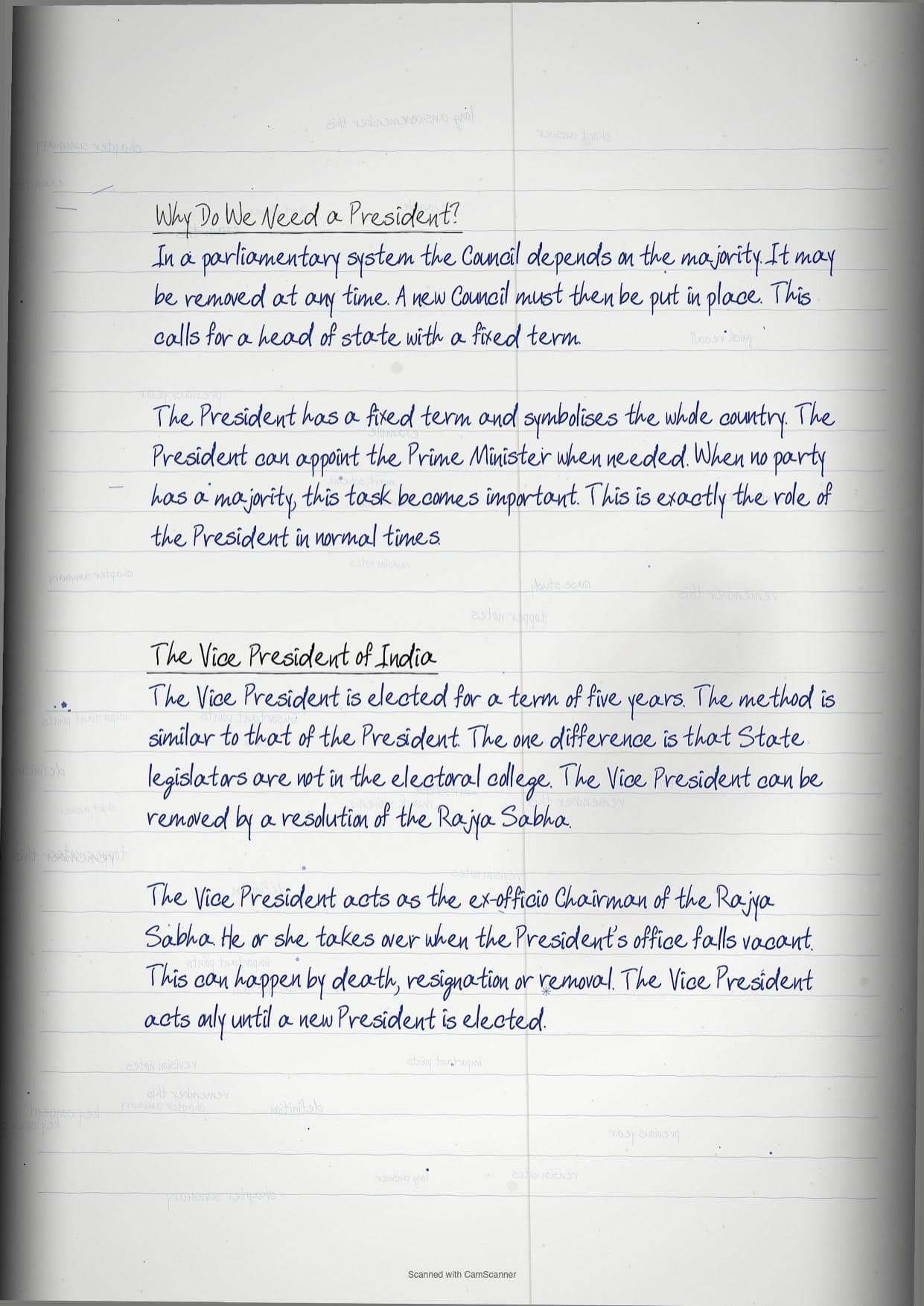
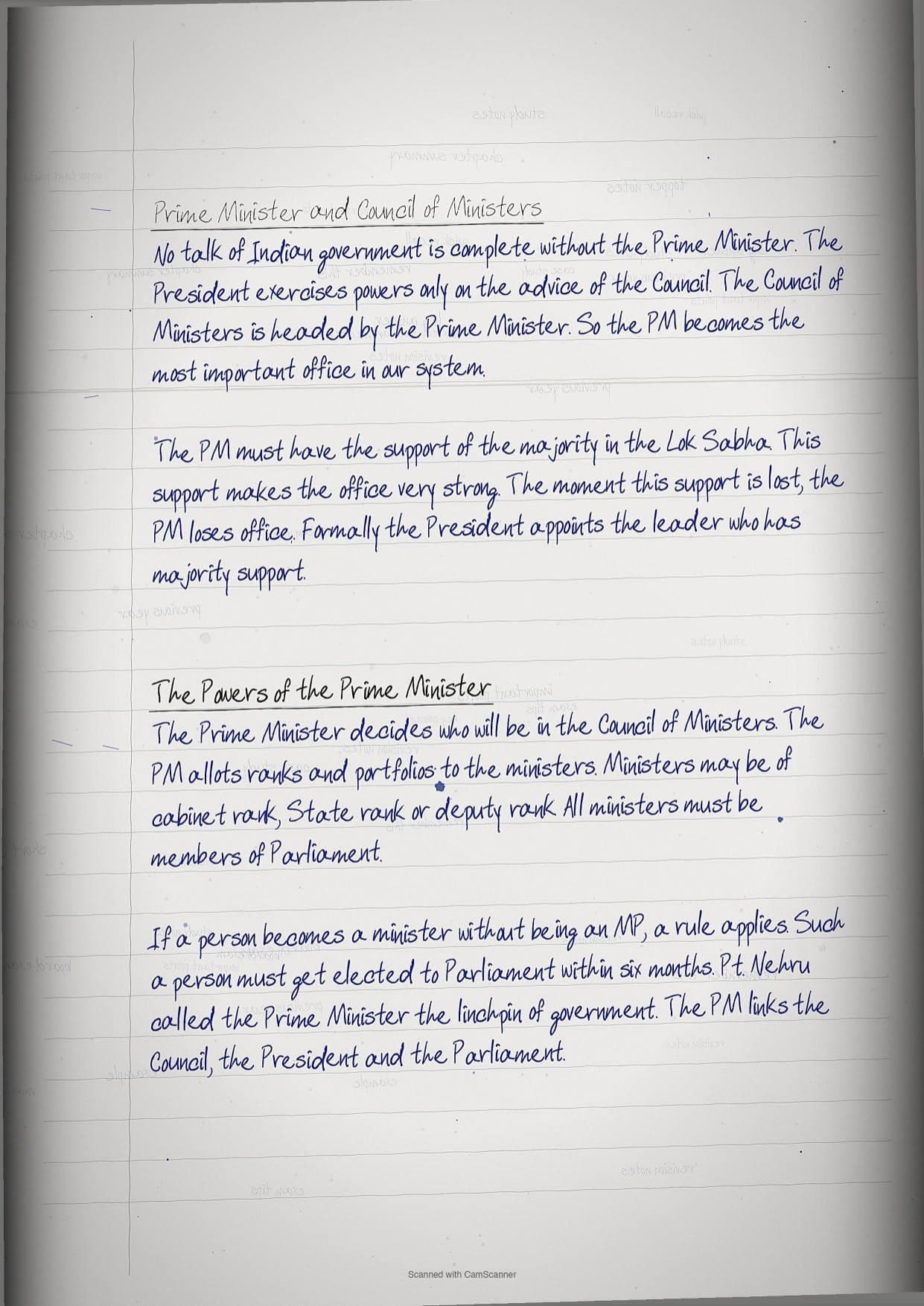
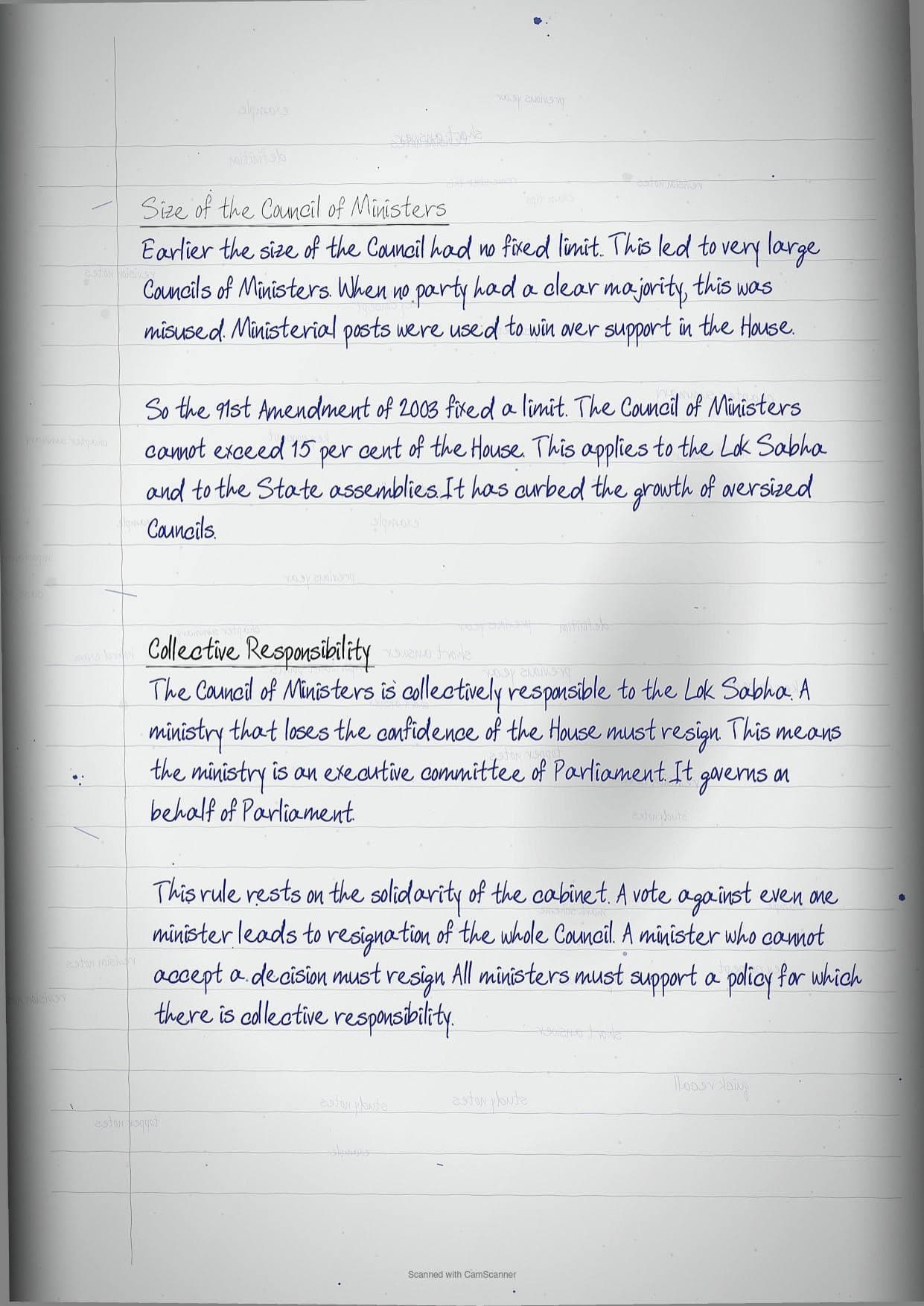
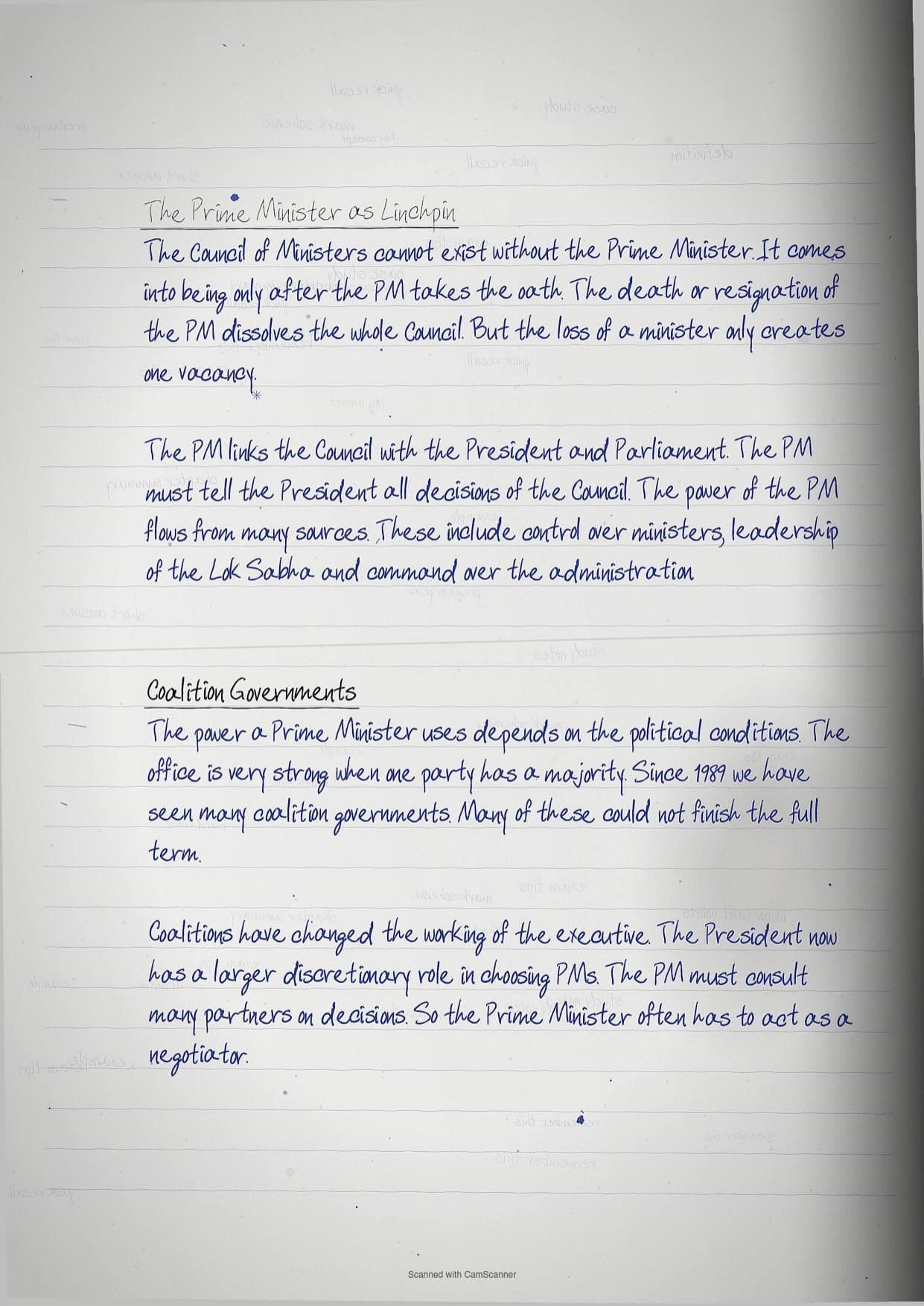
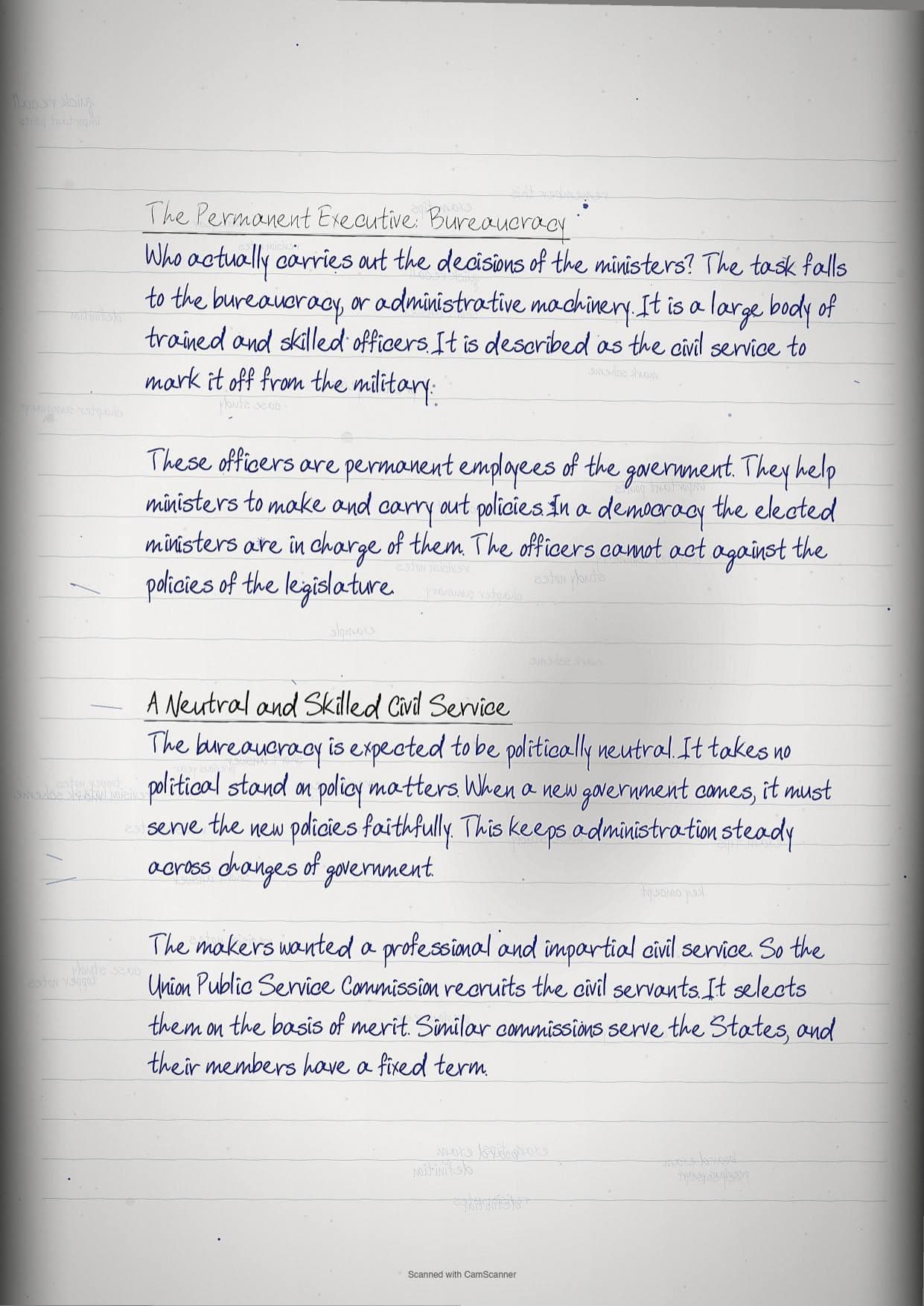
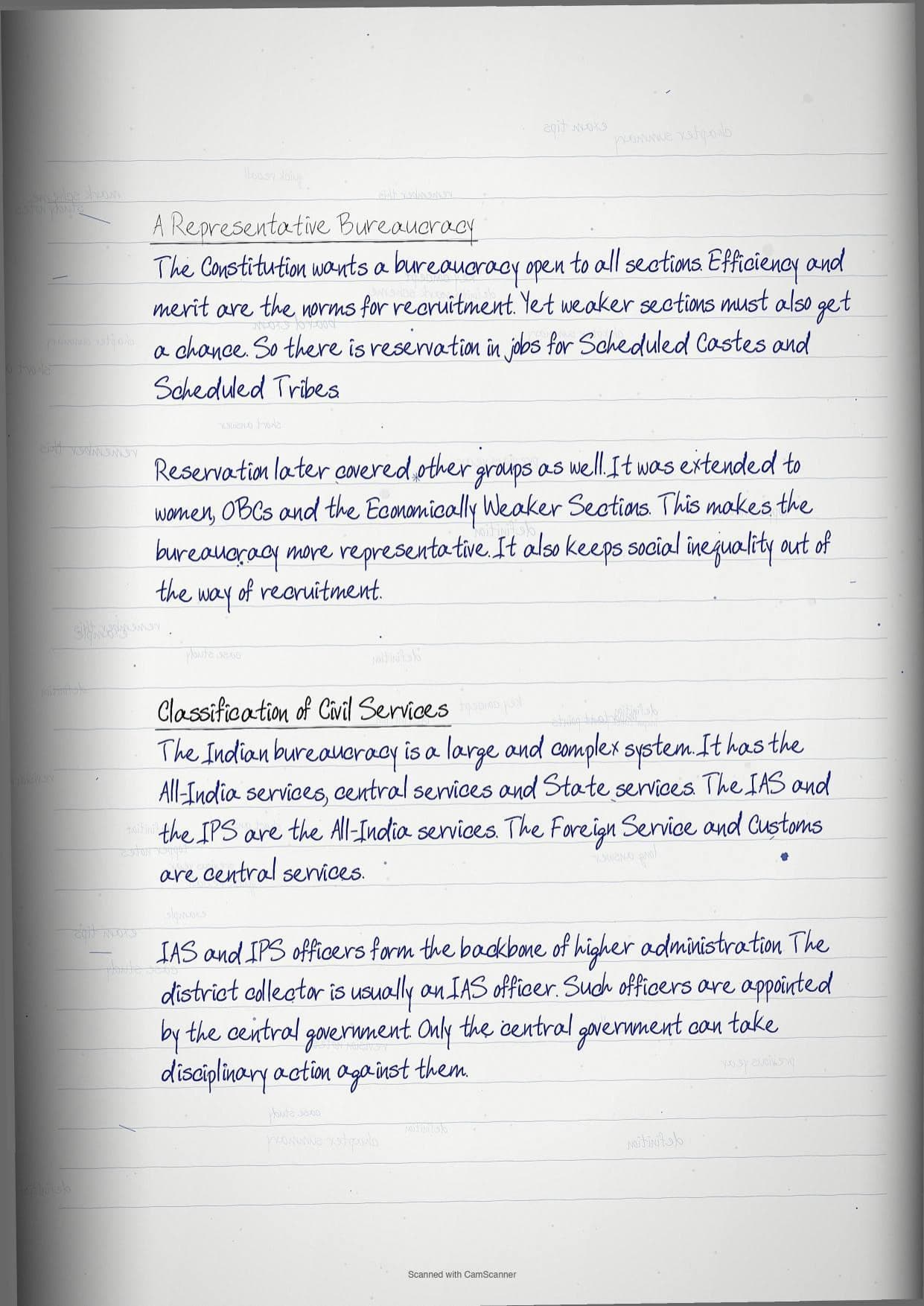
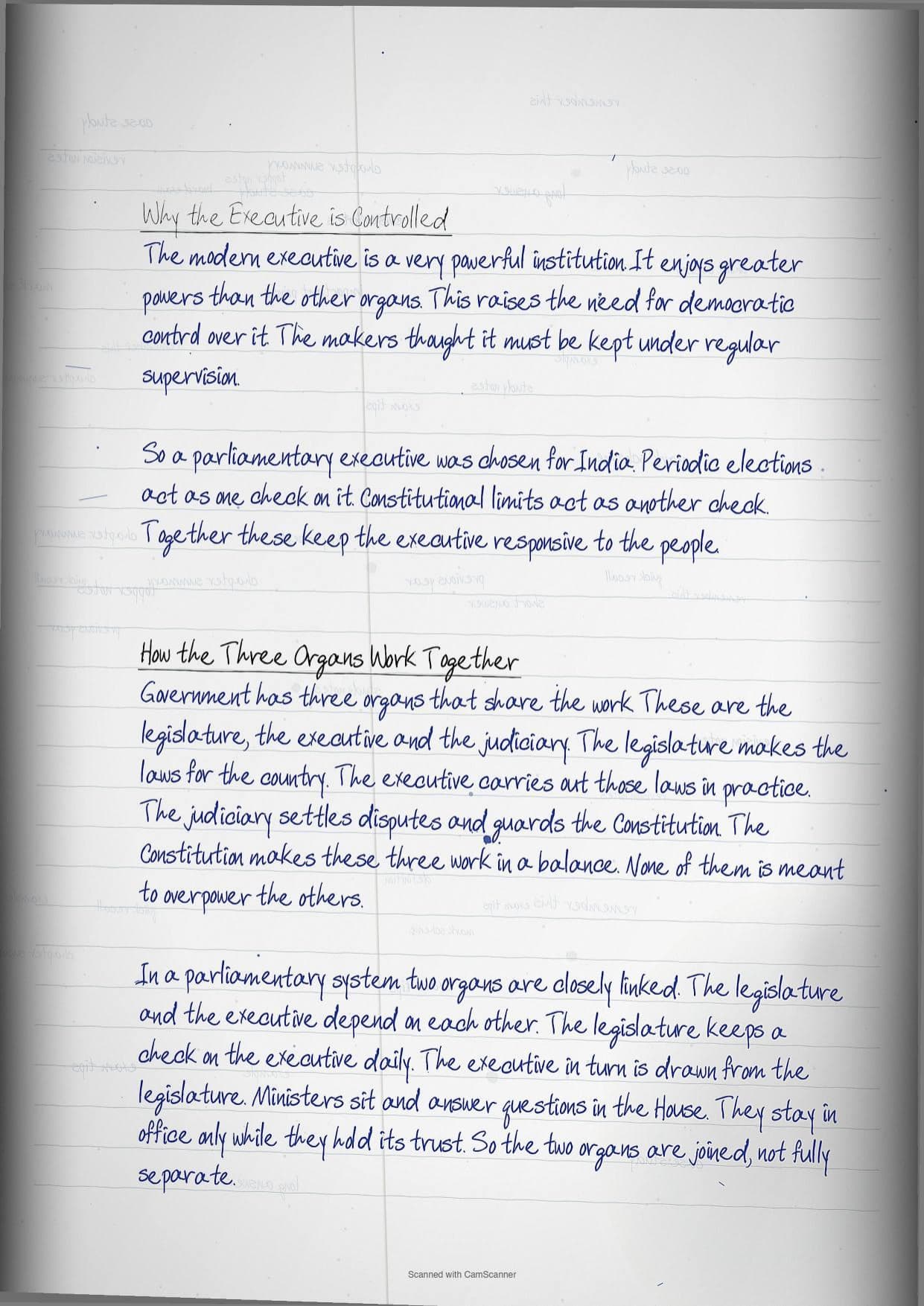
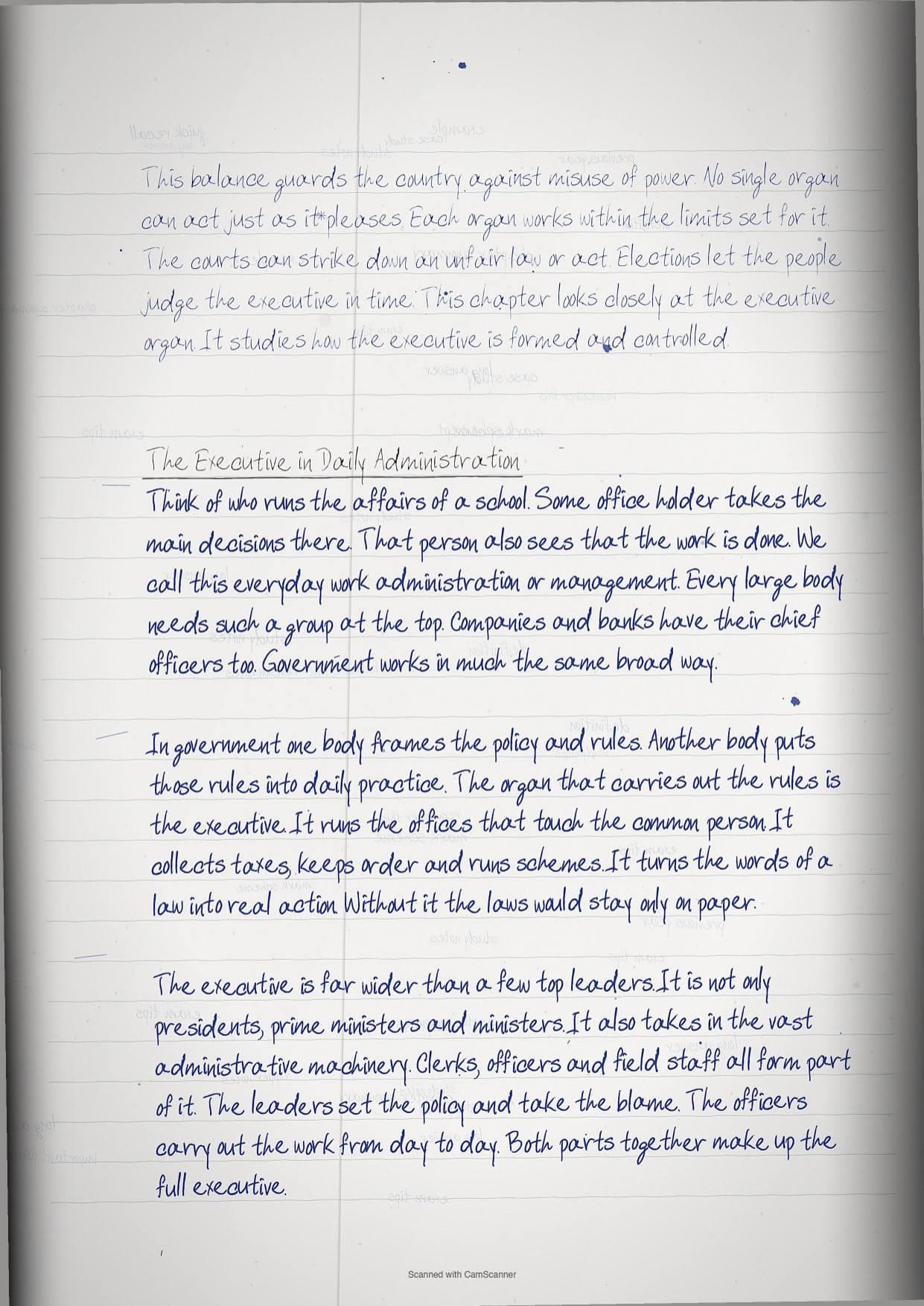
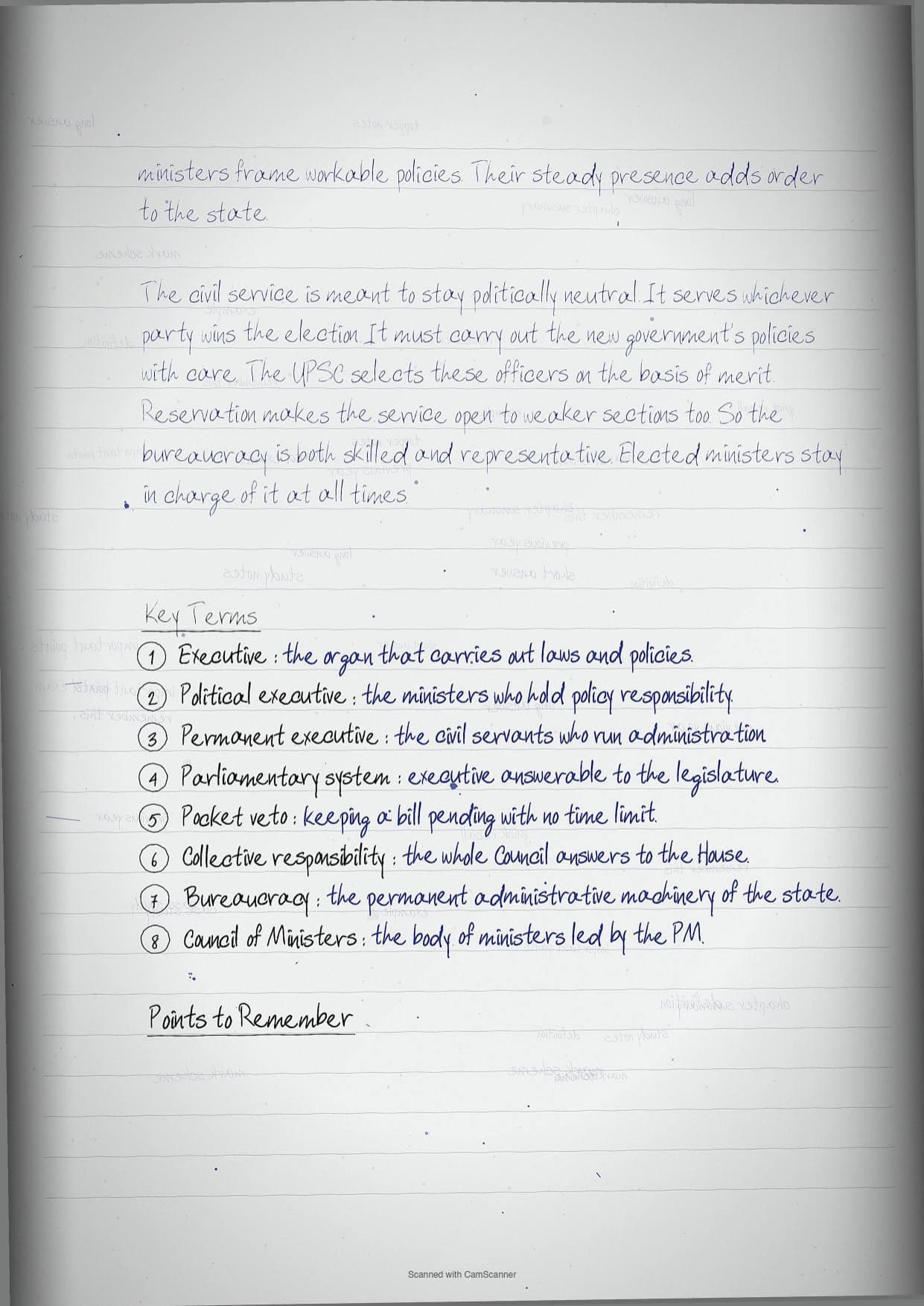
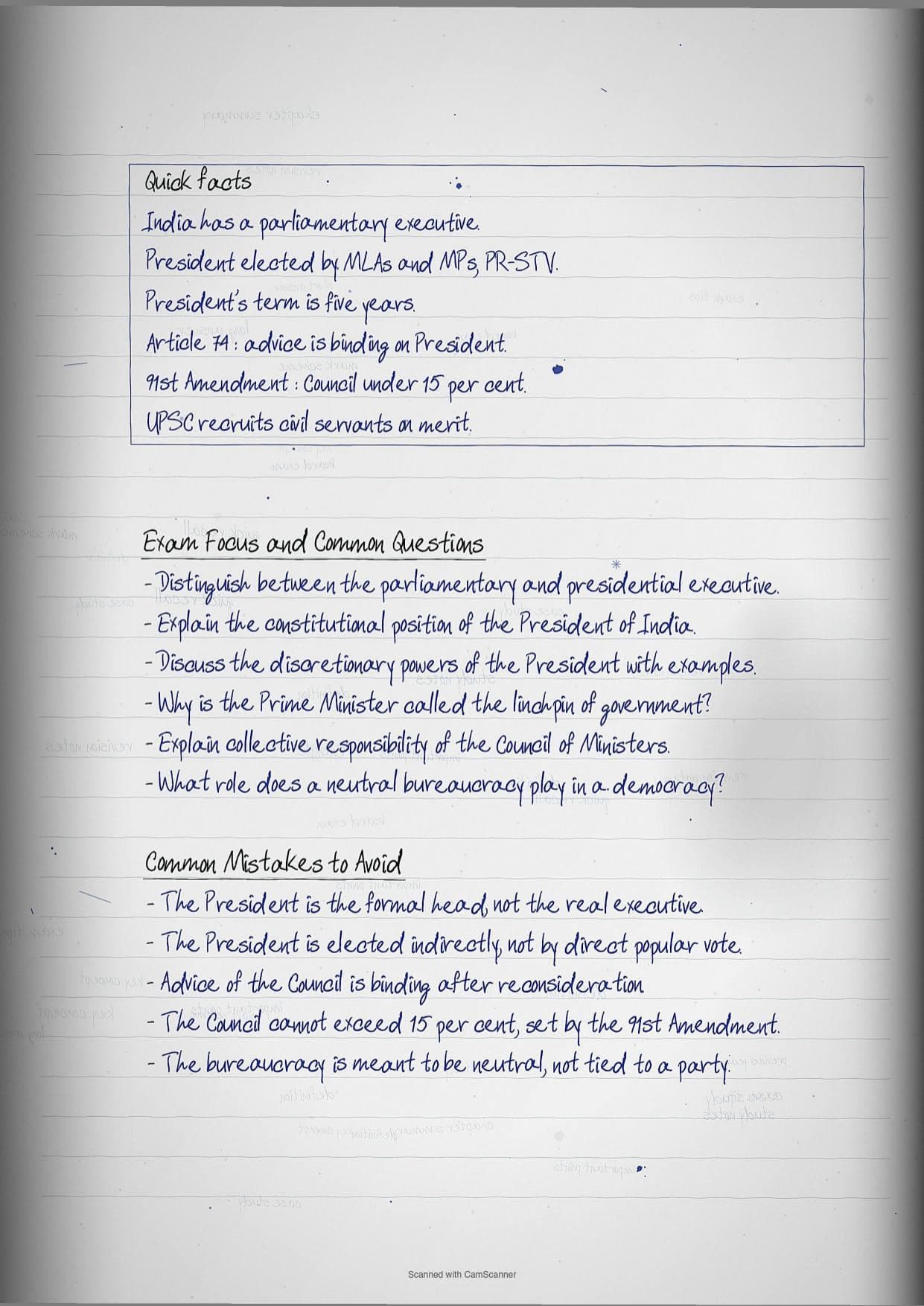
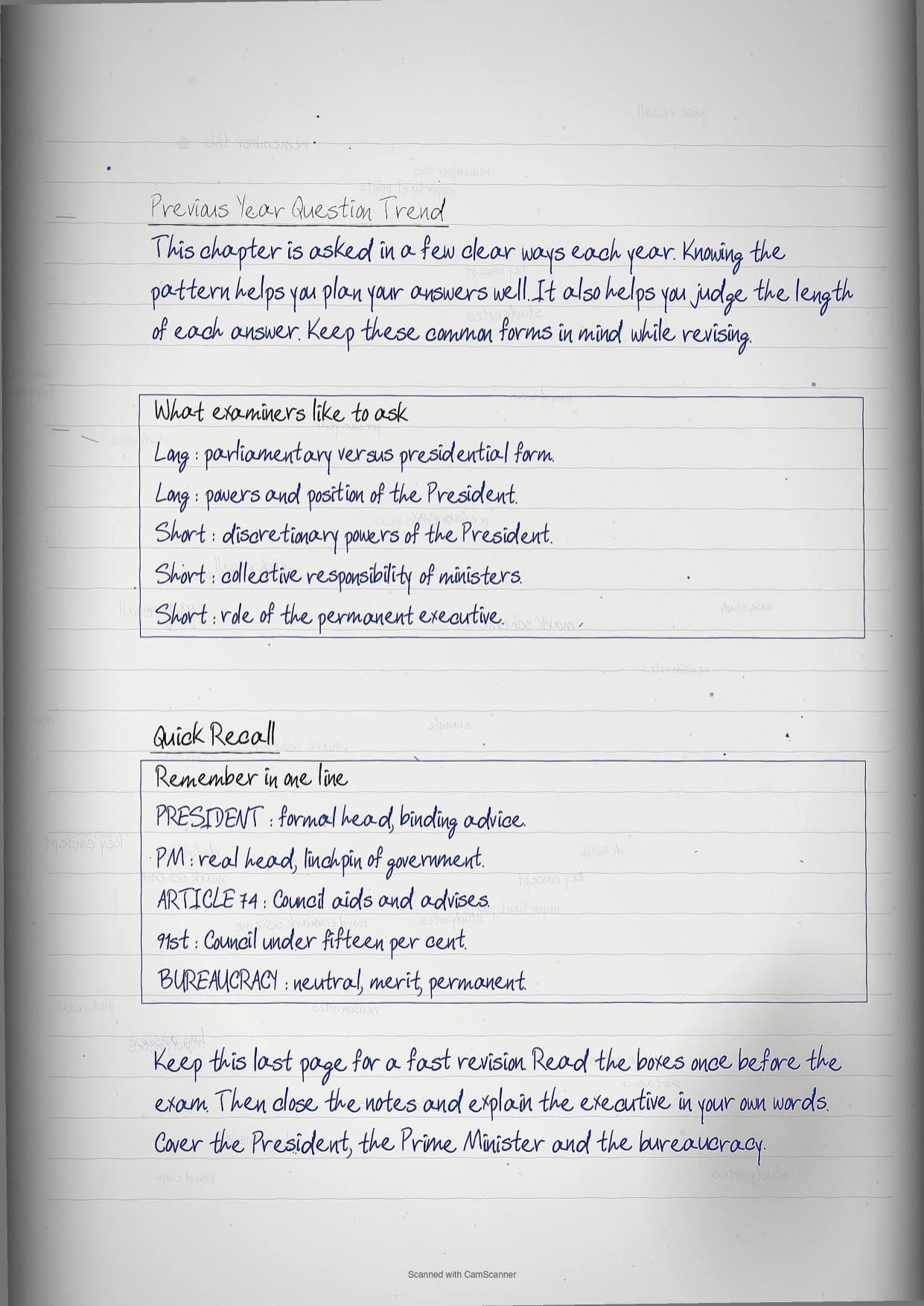
- CBSE Class 11 Weightage: a scoring chapter in the Political Science paper, asked in short and long answers.
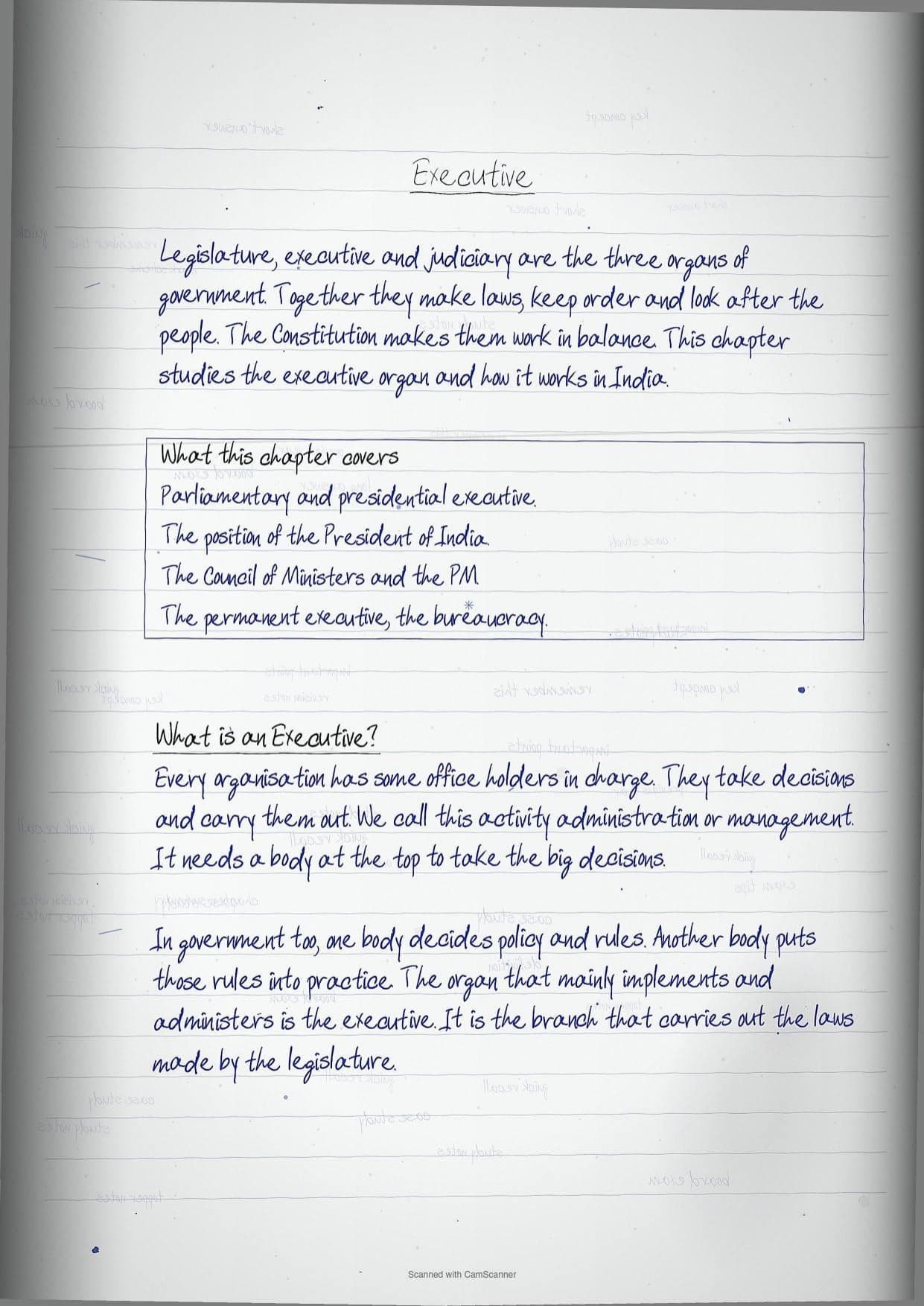
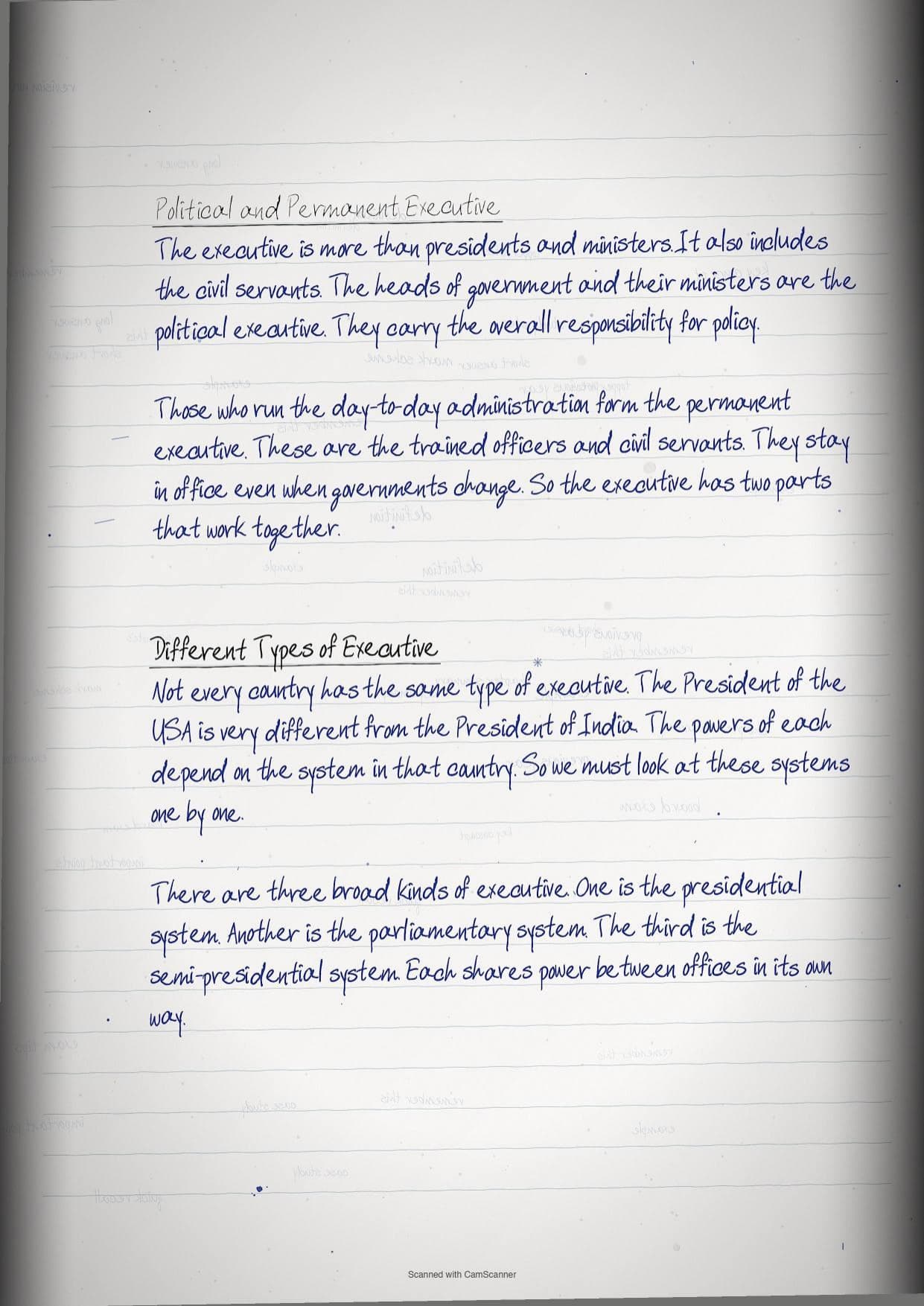
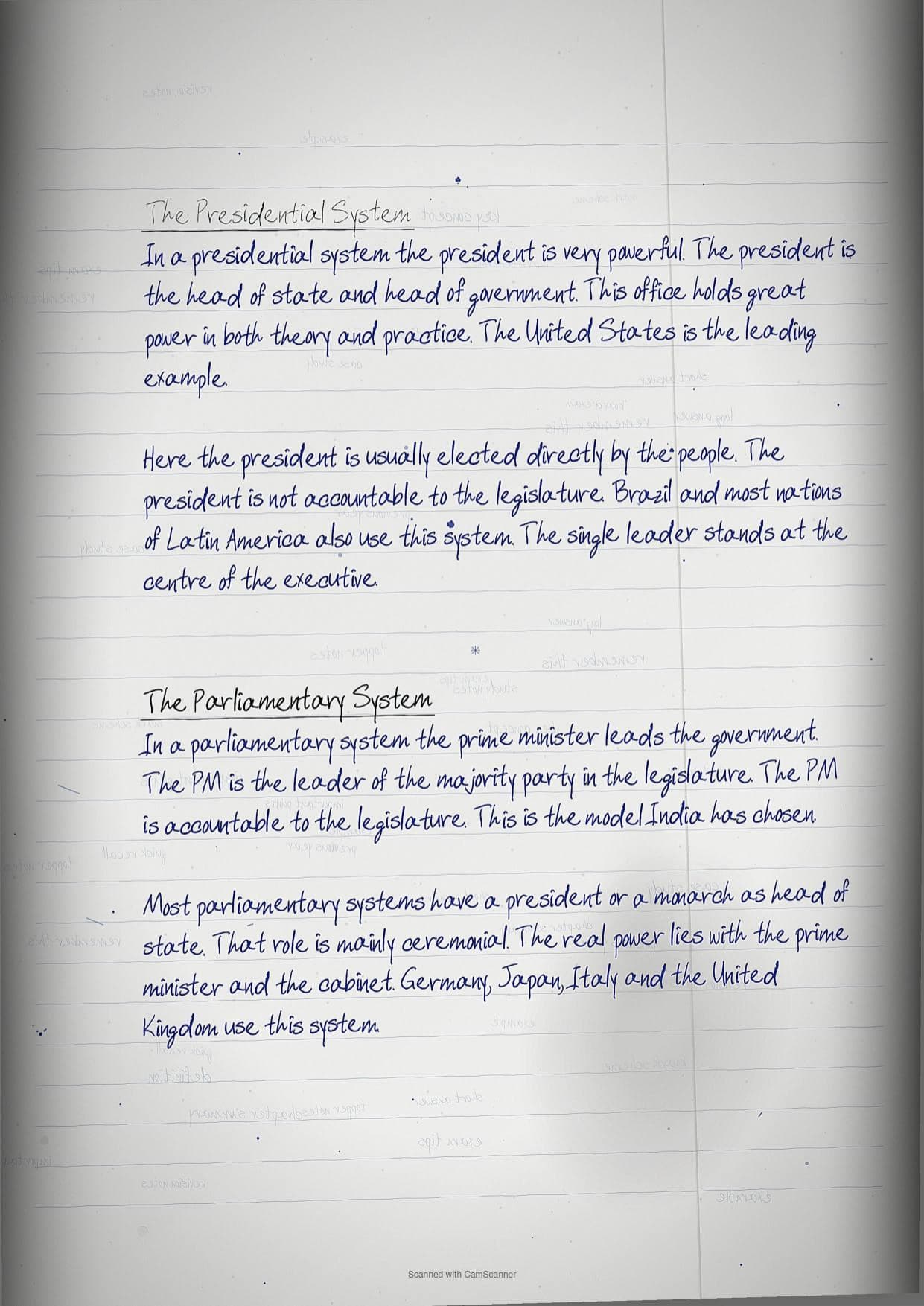
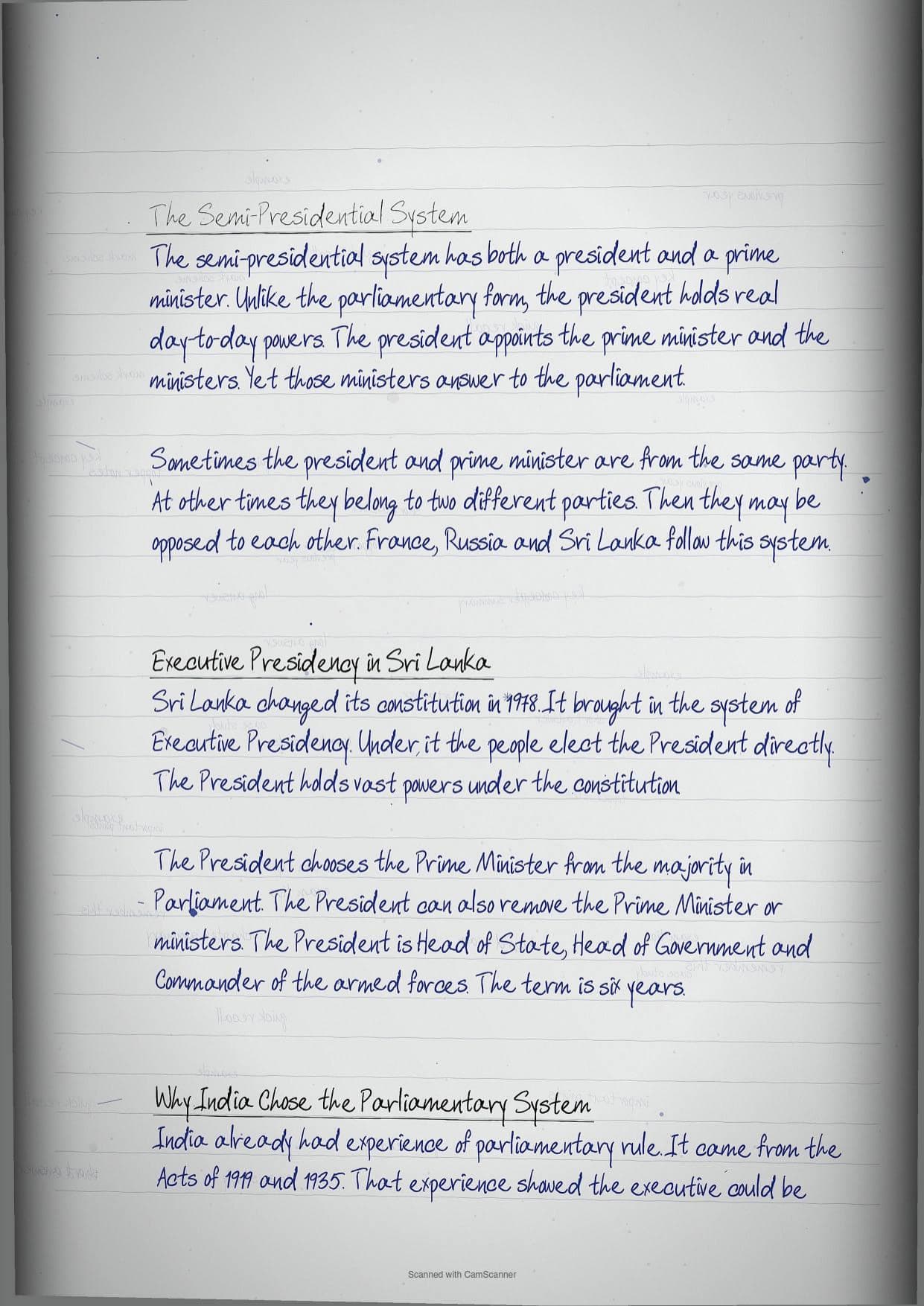
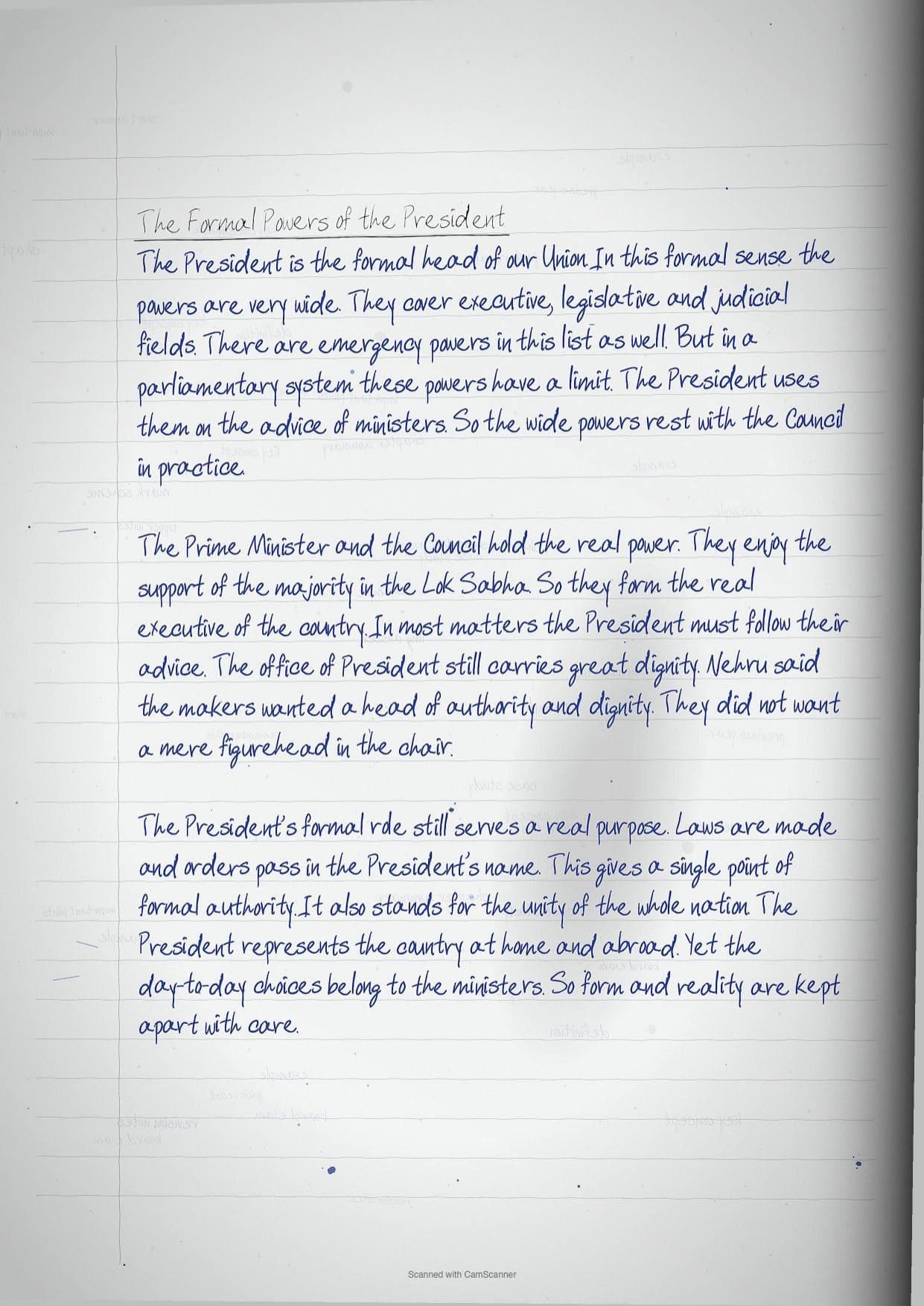
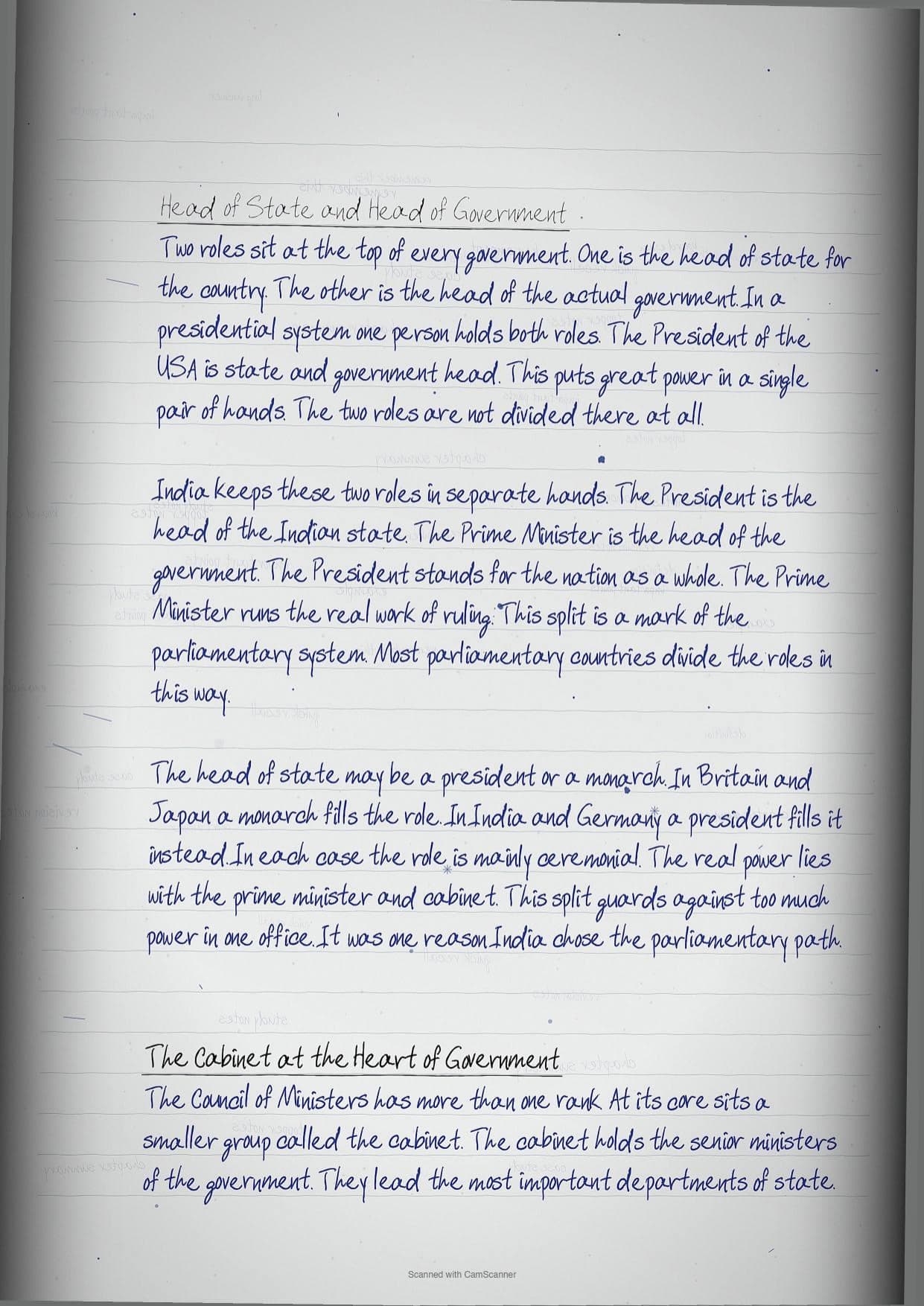
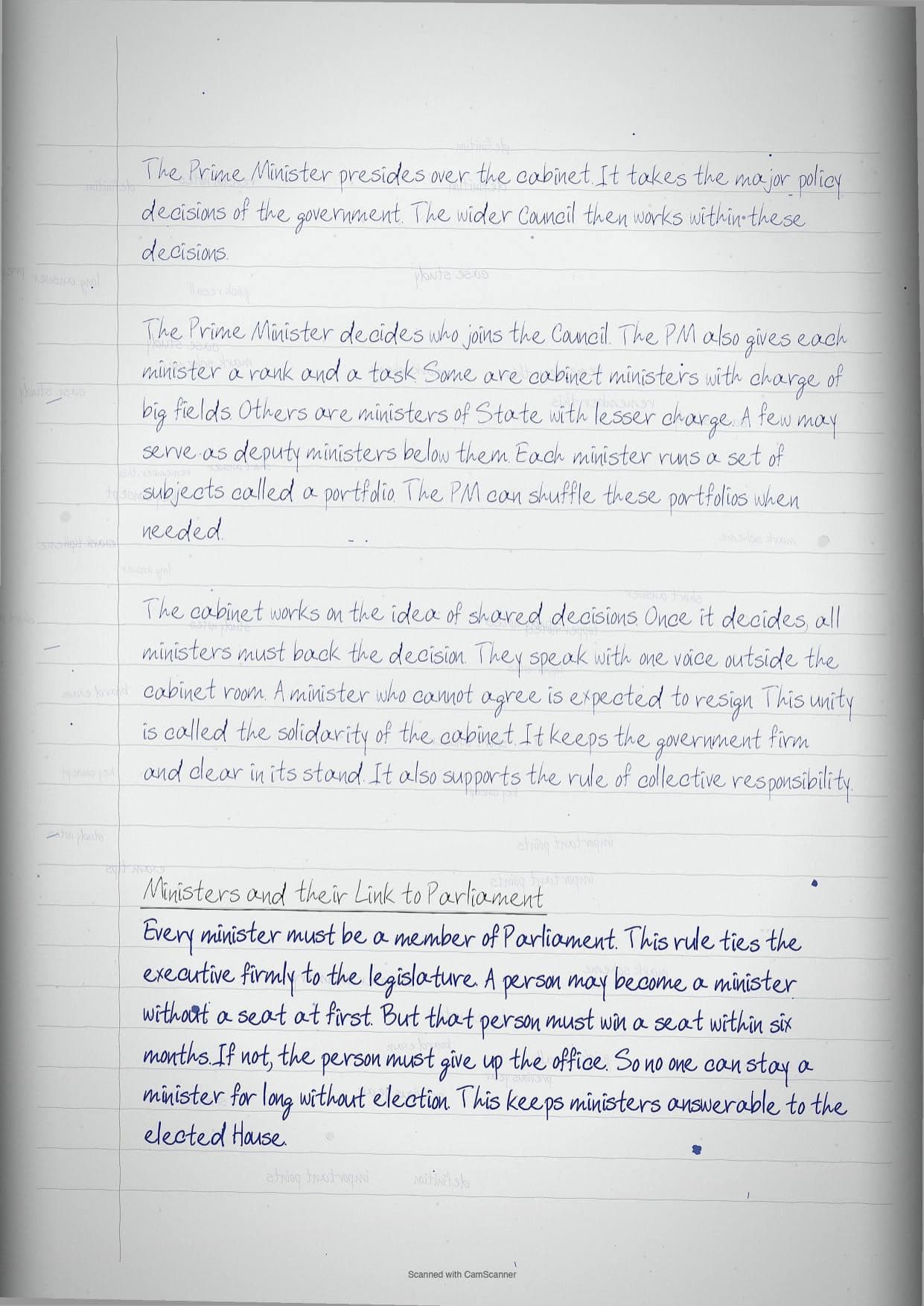
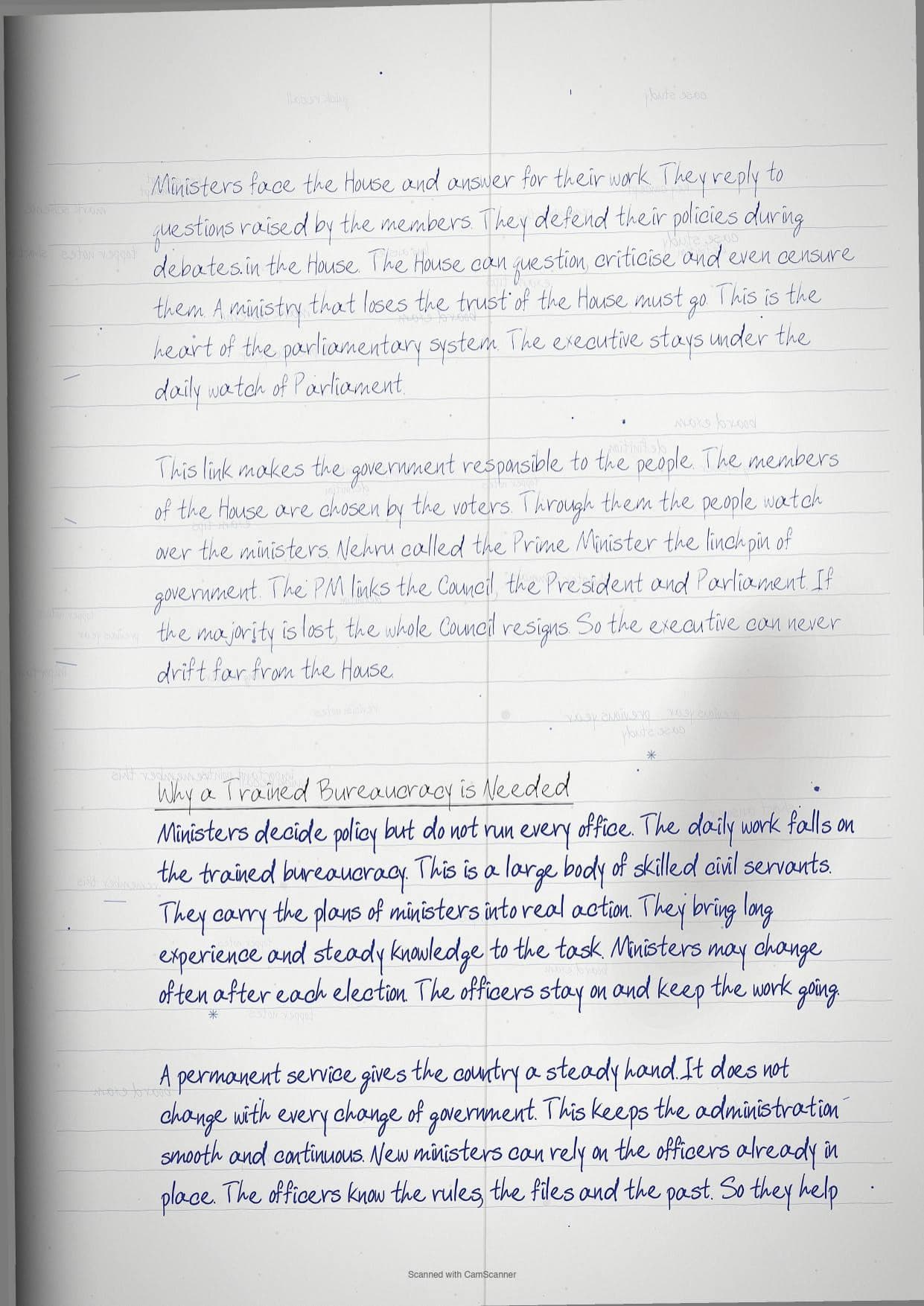
- What the notes cover: what the executive is and its two parts, presidential, parliamentary and semi-presidential systems, why india chose the parliamentary system, position and powers of the president.
- Best for: quick revision before Class 11 exams and a base for CUET later.
You can read the complete class 11 political-science handwritten notes for Executive, with key terms, boxed definitions, and quick revision points, in the PDF below.
These handwritten notes are written by subject teachers, mapped to the 2026-27 NCERT, and checked against the last five years of CBSE Class 11 Political Science papers.
Executive Topic-wise Weightage for CBSE Class 11 Political Science
Some parts of this chapter are asked more often than others. The table below shows which sub-topics to revise first, based on recent CBSE Class 11 question trends.
| Sub-topic | Weightage | CBSE Frequency |
|---|---|---|
| Parliamentary versus presidential system | High | asked most years |
| Position and powers of the President | High | asked most years |
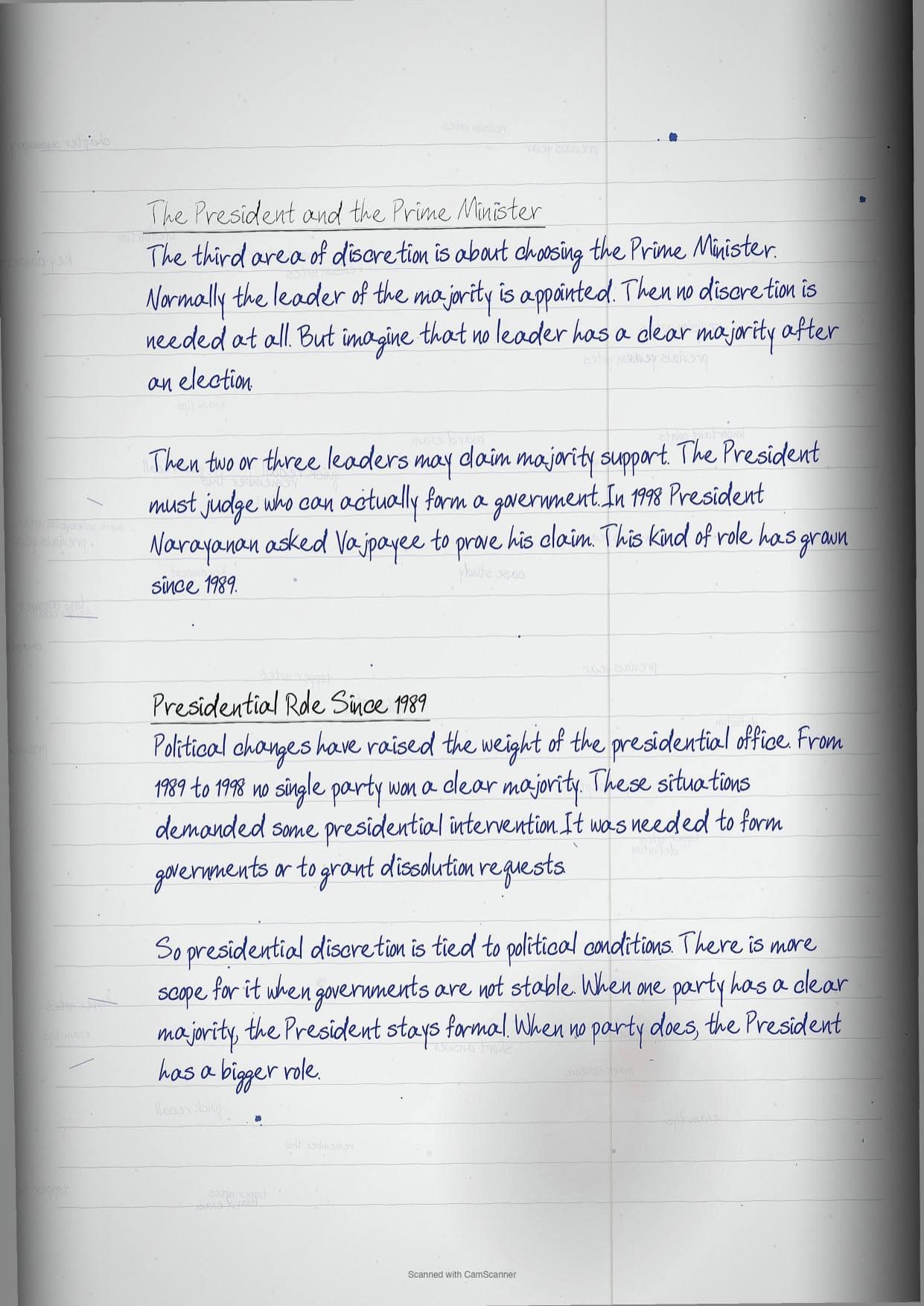
| Discretionary powers of the President | Medium | frequent |
| Prime Minister and Council of Ministers | Medium | frequent |
| Permanent executive and bureaucracy | Low | occasional |
What the Executive Handwritten Notes Cover
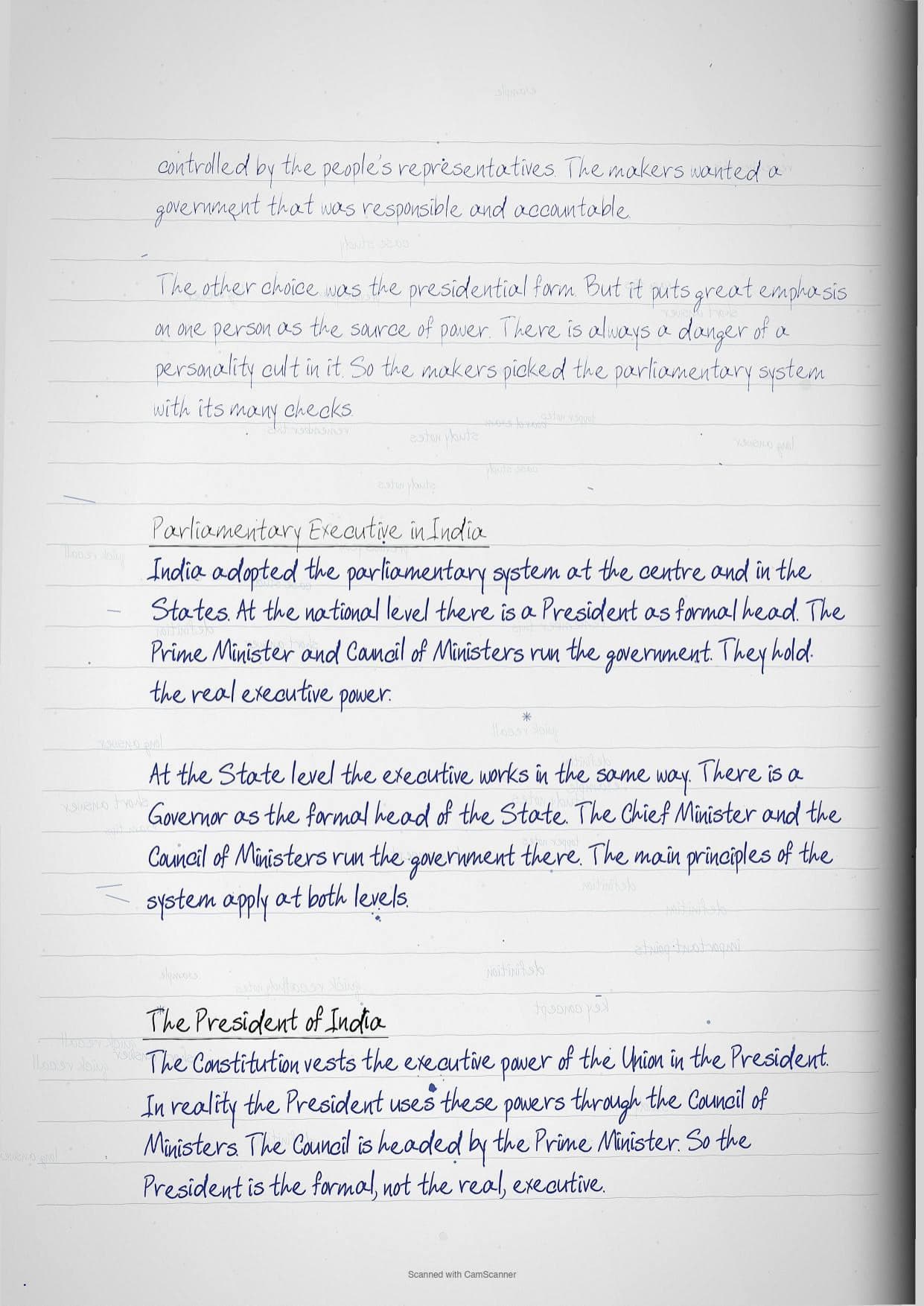
The executive is the organ that carries out the laws and runs the country. This chapter explains why India chose a parliamentary executive, the position of the President and Prime Minister, and the role of the permanent bureaucracy.
- What the executive is and its two parts
- Presidential, parliamentary and semi-presidential systems
- Why India chose the parliamentary system
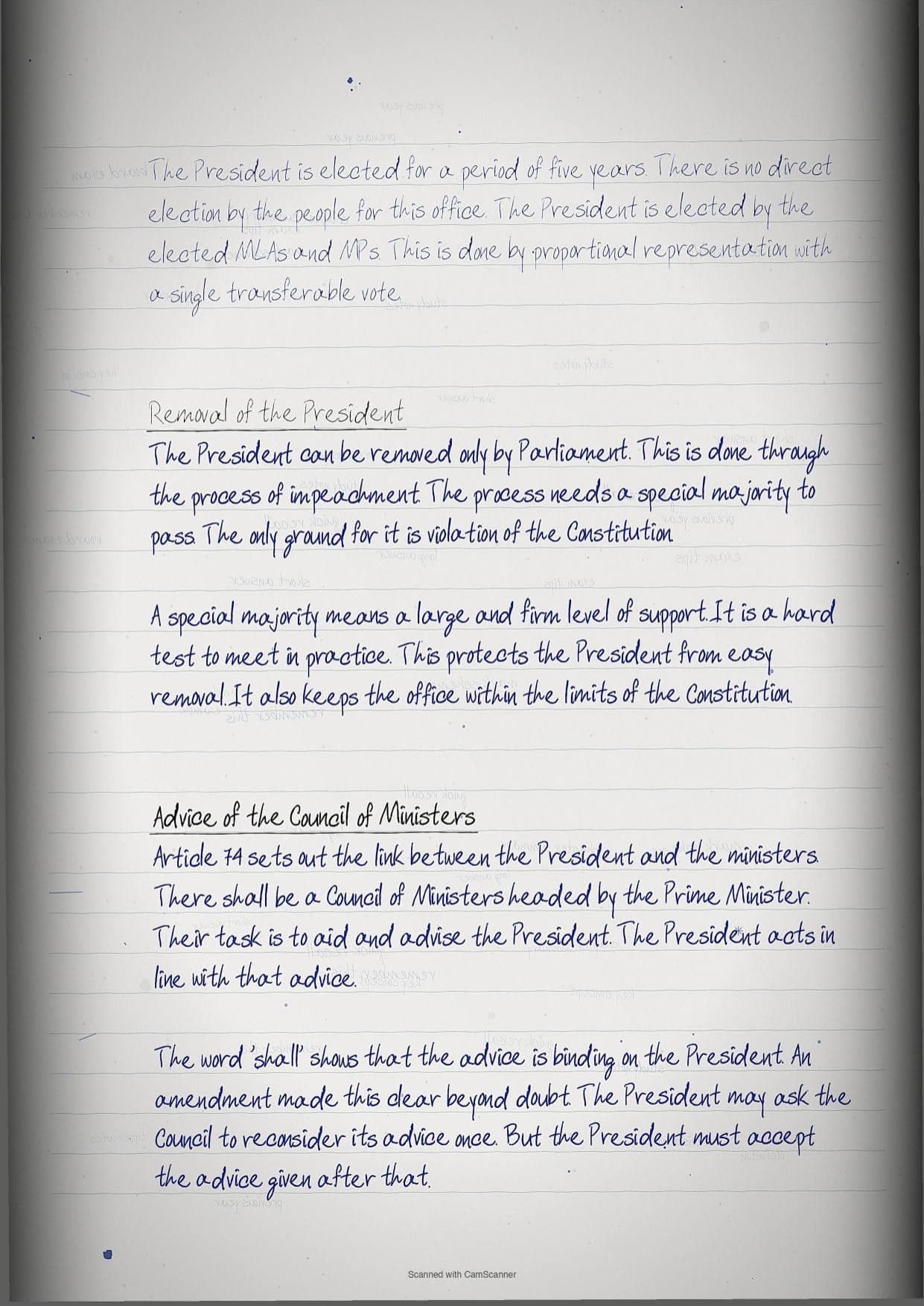
- Position and powers of the President
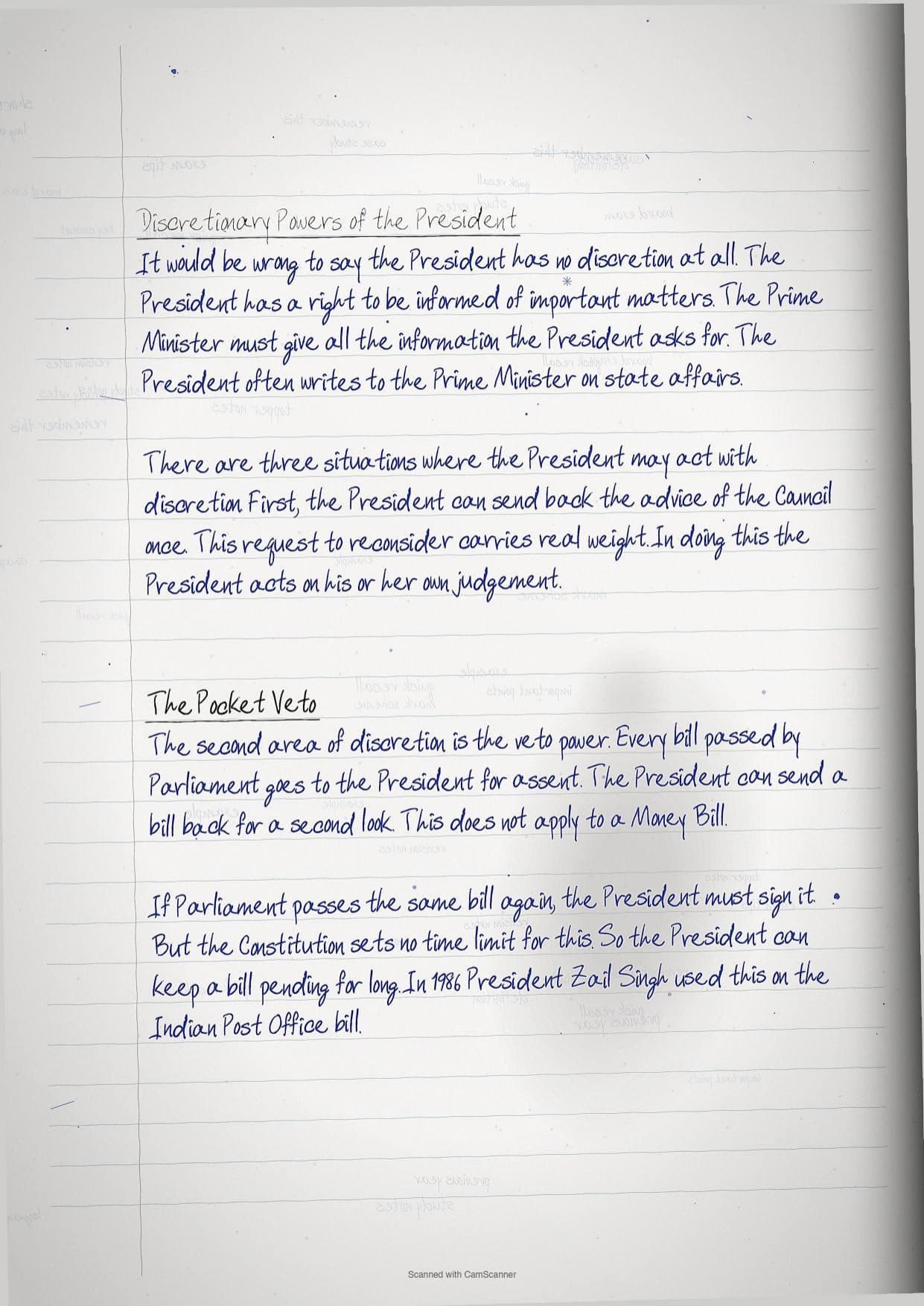
- Discretionary powers and the pocket veto
- Prime Minister and the Council of Ministers
- The permanent executive and the bureaucracy
Key Terms and Ideas in Executive
These are the terms and ideas the exam asks about most. Learn each one so you can define it and use it in your answers.
| Term / Idea | What it means |
|---|---|
| Executive | The organ that carries out laws and administers policy. |
| Political executive | Ministers who hold overall policy responsibility. |
| Permanent executive | Civil servants who run day-to-day administration. |
| President | Formal head of the Union, elected indirectly by PR-STV. |
| Article 74 | Council of Ministers aids and advises; advice is binding. |
| Pocket veto | President keeps a bill pending with no time limit. |
| Collective responsibility | The whole Council answers to the Lok Sabha. |
| 91st Amendment | Council of Ministers cannot exceed 15 per cent. |
How Collegedunia's Handwritten Notes Help You Revise Executive
These notes are made for the night before the exam. They keep the facts short and easy to scan. Collegedunia maps every point to the 2026-27 NCERT.
- Clear handwriting: each topic is written in neat, easy-to-read handwriting.
- Boxed key terms: the main terms and definitions are boxed by hand for fast recall.
- Diagrams and tables: simple hand-drawn tables and charts make ideas clear.
- Colour-coded headings: new sub-topics stand out, so you find any section in seconds.
Executive Self-Assessment Quiz
Try these quick questions after you read the notes. Tap each question to check your answer. They cover the points CBSE asks most often.
A parliamentary executive means the executive is
(a) elected by parliament (b) dependent on the majority in parliament (c) the parliament itself (d) chosen by the President
Answer: (b) dependent on the majority in parliament - it must keep the confidence of the House.
The President of India is elected by
(a) direct popular vote (b) the Lok Sabha only (c) elected MLAs and MPs (d) the Council of Ministers
Answer: (c) elected MLAs and MPs - through PR with a single transferable vote.
Which amendment capped the Council of Ministers at 15 per cent?
(a) 42nd (b) 91st (c) 44th (d) 61st
Answer: (b) 91st Amendment of 2003 - to stop oversized Councils.
Article 74 of the Constitution deals with
(a) the Election Commission (b) reservation (c) the Council of Ministers (d) emergency
Answer: (c) the Council of Ministers - which aids and advises the President.
Who is called the linchpin of government?
(a) the President (b) the Speaker (c) the Prime Minister (d) the Chief Justice
Answer: (c) the Prime Minister - Nehru used this phrase for the office.
How to Use These Handwritten Notes for Class 11 Political Science Revision
Use these class 11 political-science handwritten notes in two passes. Read them slowly once for the full chapter. Then, near the exam, read only the boxes and key terms for a fast recall.
- Read the notes once with the NCERT chapter open beside you.
- Say each key term and idea in your own words.
- Practise one long-answer question from a past paper.
- On the last day, revise only the key terms and the boxes.
Class 11 Political Science Handwritten Notes for All Chapters
The table below links the class 11 political-science handwritten notes for every chapter. Use it to jump to any other chapter's notes.
| Chapter | Resource |
|---|---|
| Chapter 1 | Constitution: Why and How Handwritten Notes |
| Chapter 2 | Rights in the Indian Constitution Handwritten Notes |
| Chapter 3 | Election and Representation Handwritten Notes |
| Chapter 4 | Executive Handwritten Notes |
| Chapter 5 | Legislature Handwritten Notes |
| Chapter 6 | Judiciary Handwritten Notes |
| Chapter 7 | Federalism Handwritten Notes |
| Chapter 8 | Local Governments Handwritten Notes |
| Chapter 9 | Constitution as a Living Document Handwritten Notes |
| Chapter 10 | The Philosophy of the Constitution Handwritten Notes |
| Chapter 11 | Political Theory: An Introduction Handwritten Notes |
| Chapter 12 | Freedom Handwritten Notes |
| Chapter 13 | Equality Handwritten Notes |
| Chapter 14 | Social Justice Handwritten Notes |
| Chapter 15 | Rights Handwritten Notes |
| Chapter 16 | Citizenship Handwritten Notes |
| Chapter 17 | Nationalism Handwritten Notes |
| Chapter 18 | Secularism Handwritten Notes |
Executive Class 11 Political Science Handwritten Notes FAQs
Ques. Where can I download Executive Class 11 Political Science Handwritten Notes PDF?
Ans. You can download the Executive Class 11 Political Science Handwritten Notes PDF directly from this page. Both the Normal and HD versions are free.
Ques. Are these handwritten notes aligned with the 2026-27 NCERT?
Ans. Yes. These notes follow the current 2026-27 syllabus for Class 11 Political Science. Why did India choose a parliamentary executive over a presidential one?
Ques. How many pages is the Class 11 Political Science Executive Handwritten Notes PDF?
Ans. The notes run about 20 pages. They cover the full chapter with key terms, hand-drawn boxes, and a short self-assessment quiz.
Ques. What is the main idea of the 11th standard Political Science chapter Executive?
Ans. India chose the parliamentary system because it keeps the executive answerable to the people's representatives. The makers feared that a presidential form could encourage a personality cult.
Ques. Are these Executive notes enough for the CBSE Class 11 exam?
Ans. Yes, for revision. The Collegedunia handwritten notes cover every key point and exam term. Read them with the NCERT chapter and practise past questions.



Comments