




These Safety and Security handwritten notes turn the whole chapter into clean, handwritten pages for fast last-minute revision. They follow the 2026-27 NCERT "Health and Physical Education" Class 11 Chapter 7. Students get the safety measures for playgrounds, the gymnasium and the swimming pool, the causes and prevention of sports injuries, and the sections on alcohol, tobacco, common medicines and doping, all in a pen-on-paper format that is easy to skim before the Class 11 final exam.
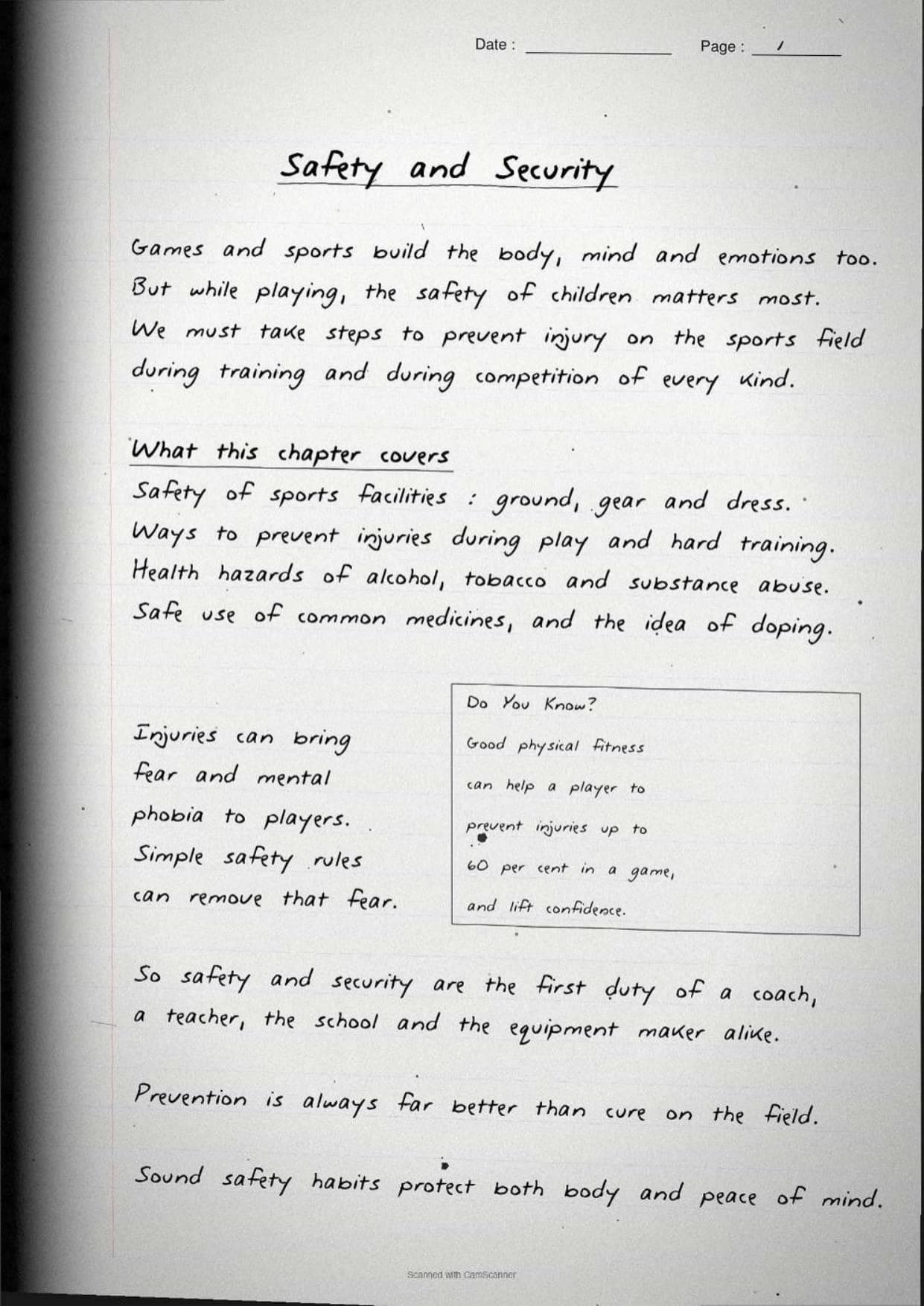
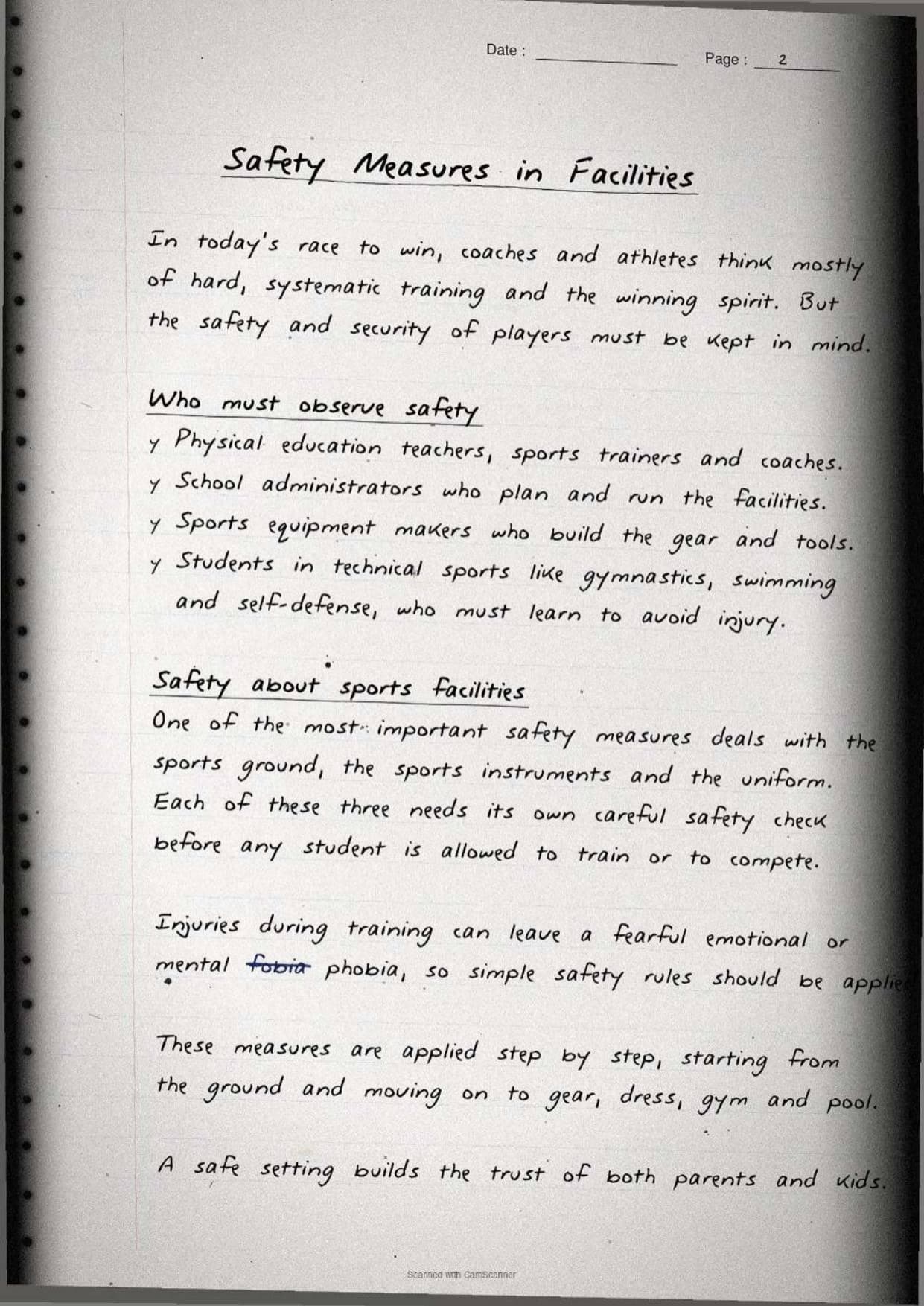
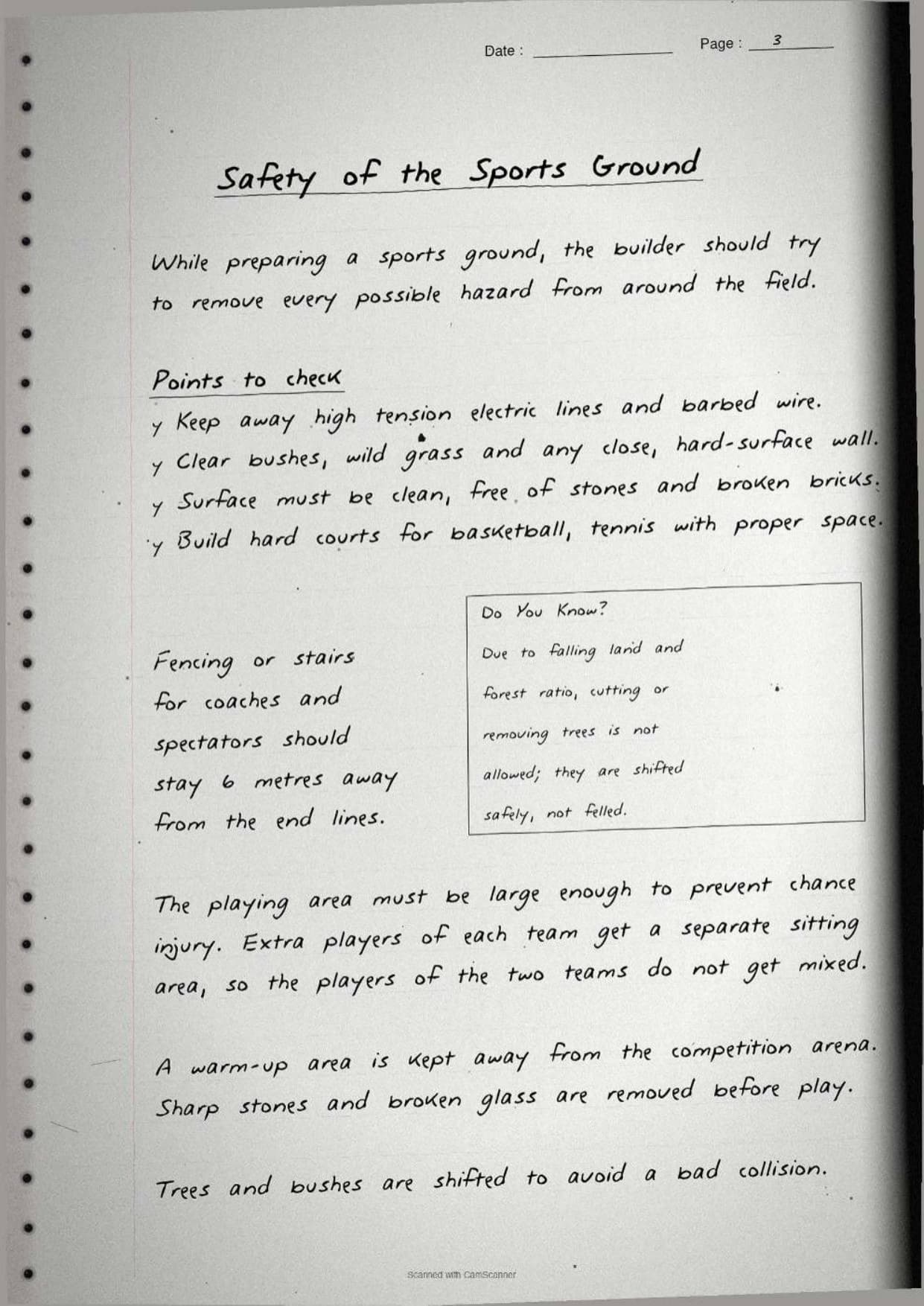
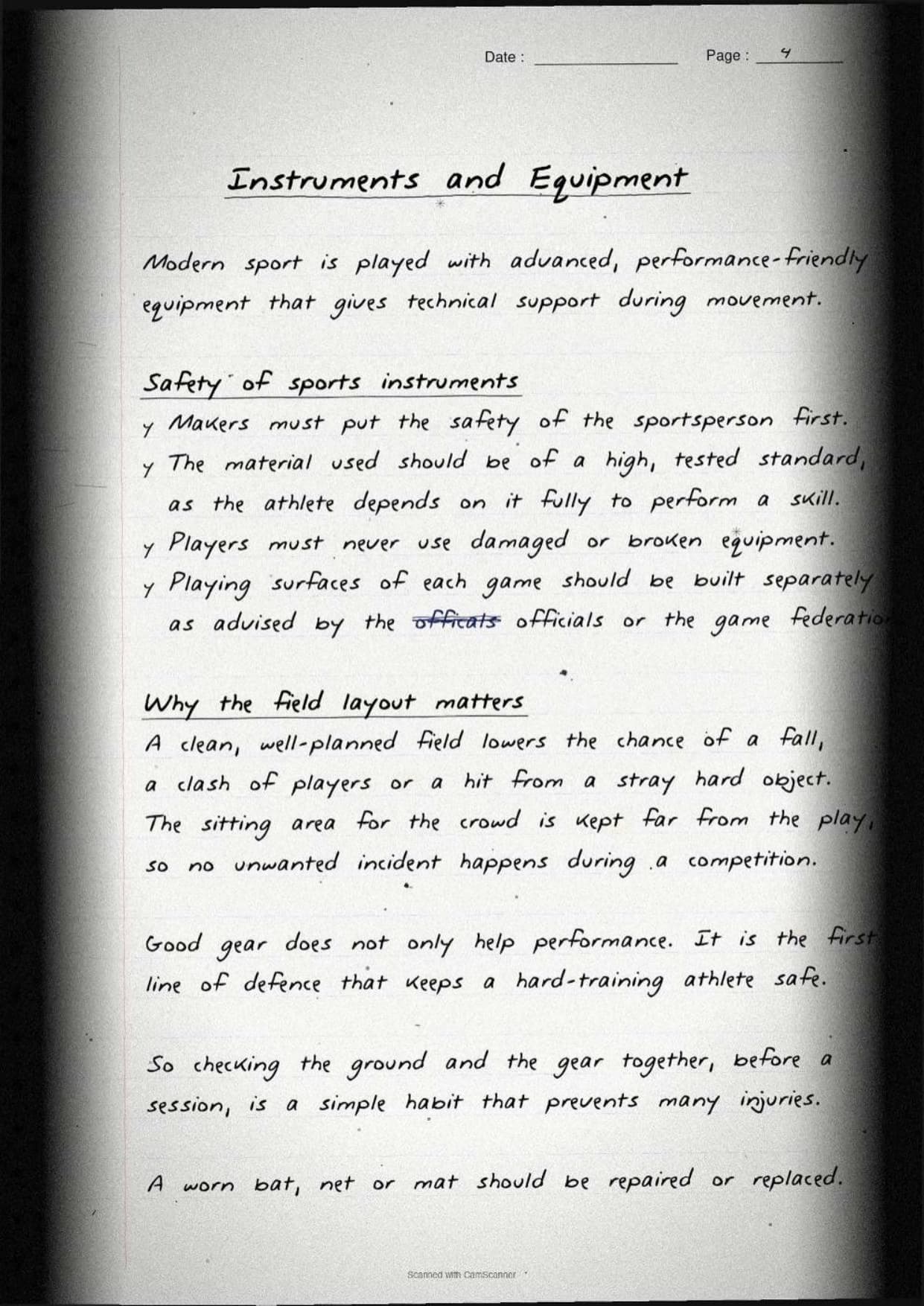
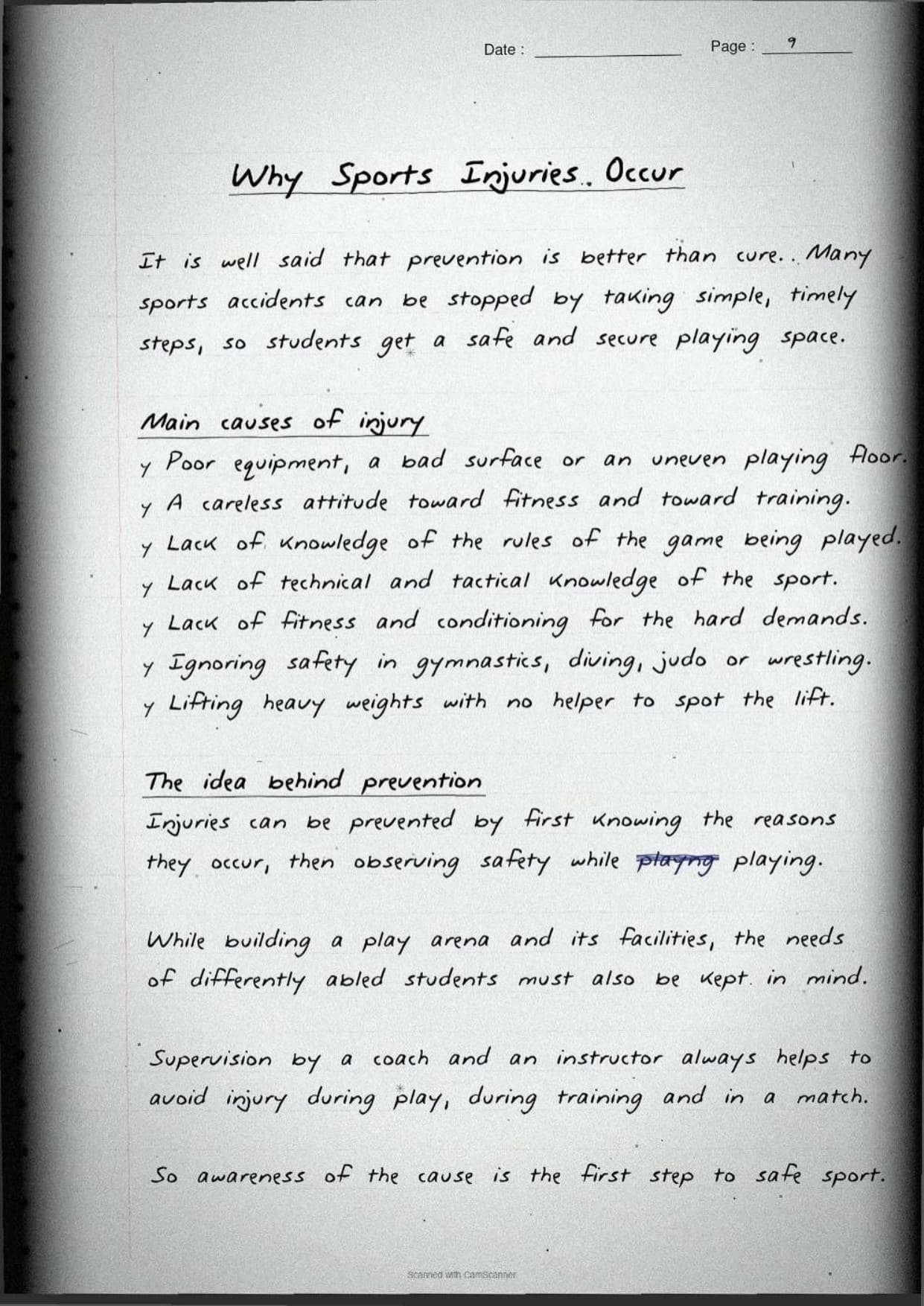
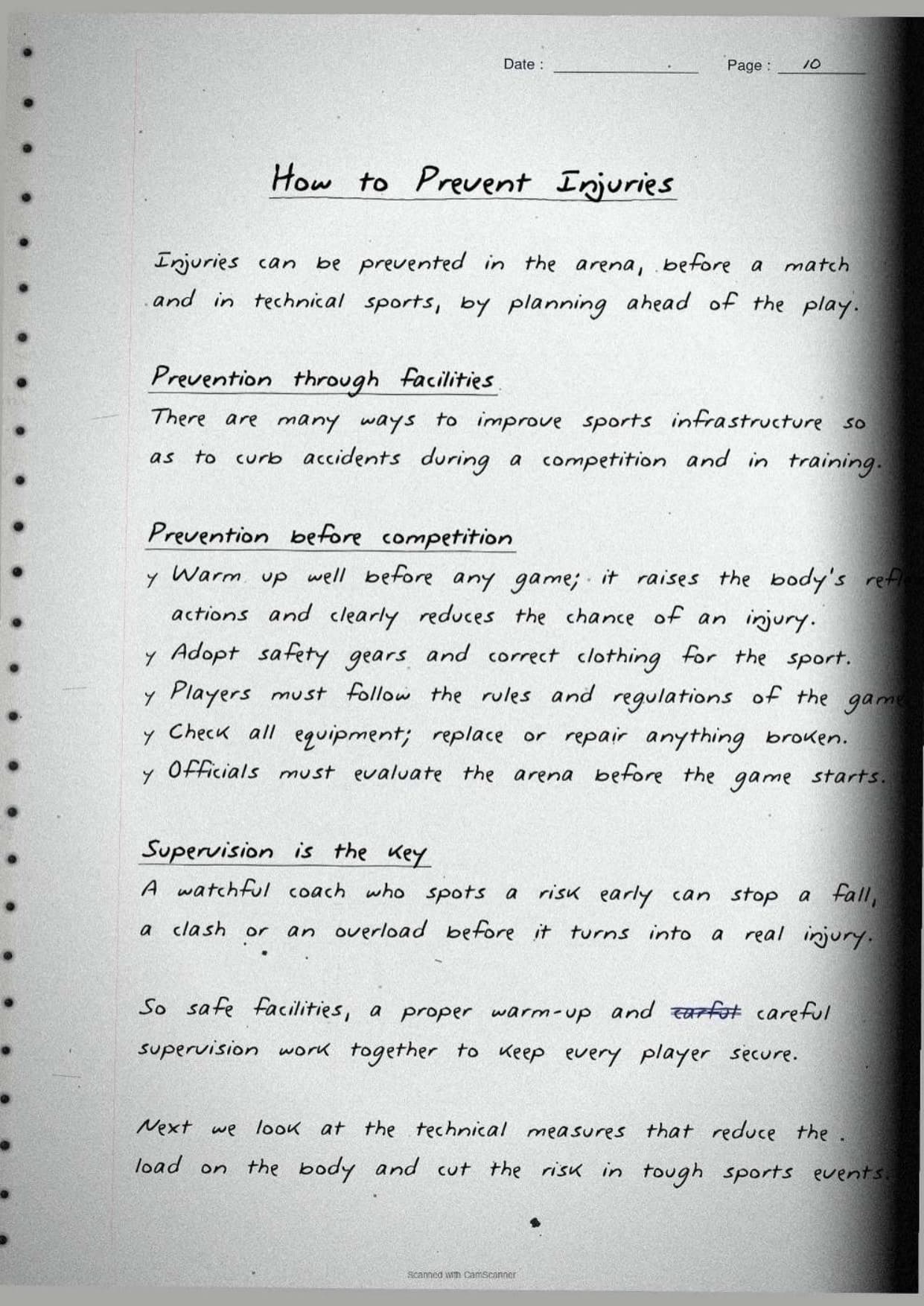
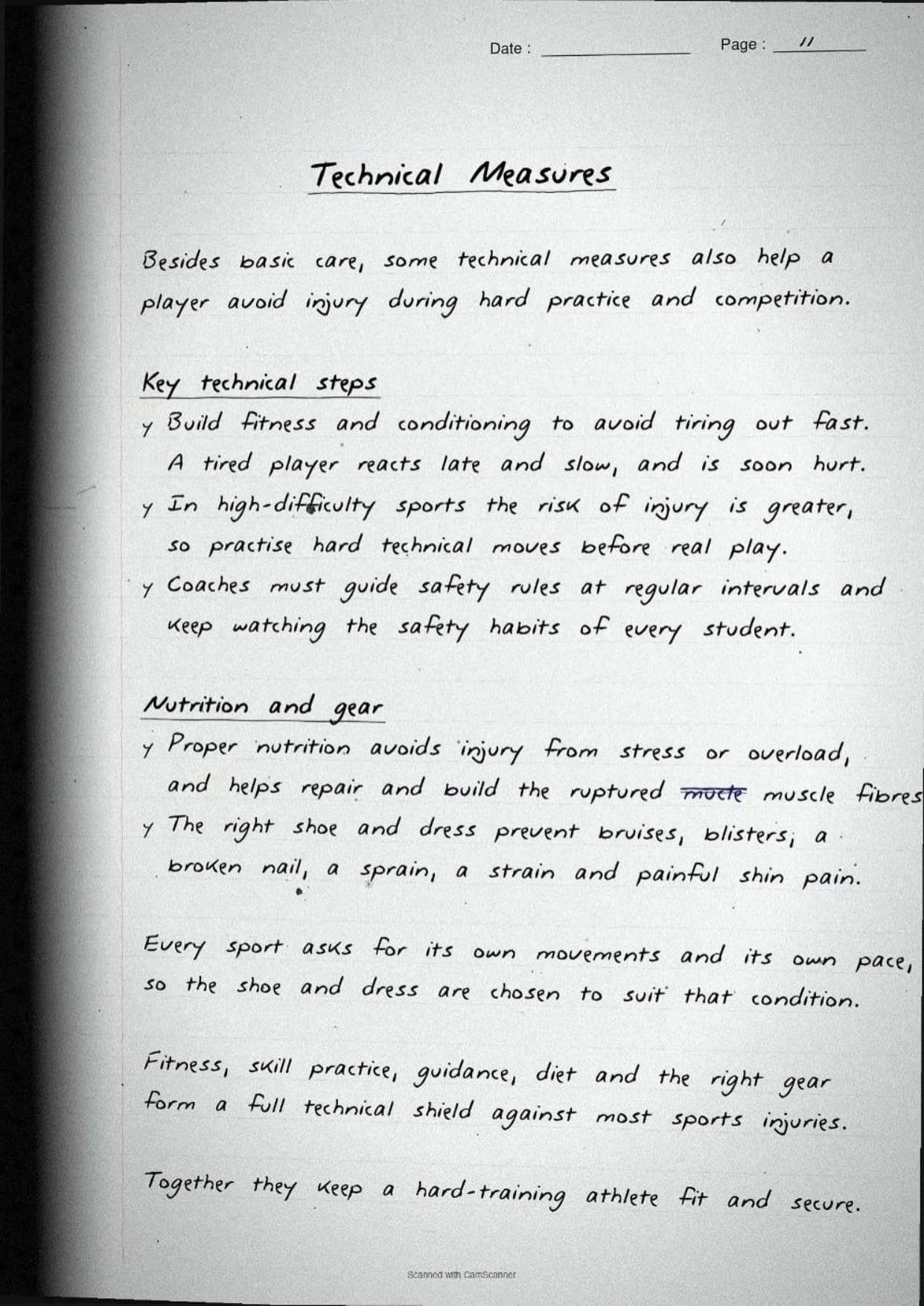
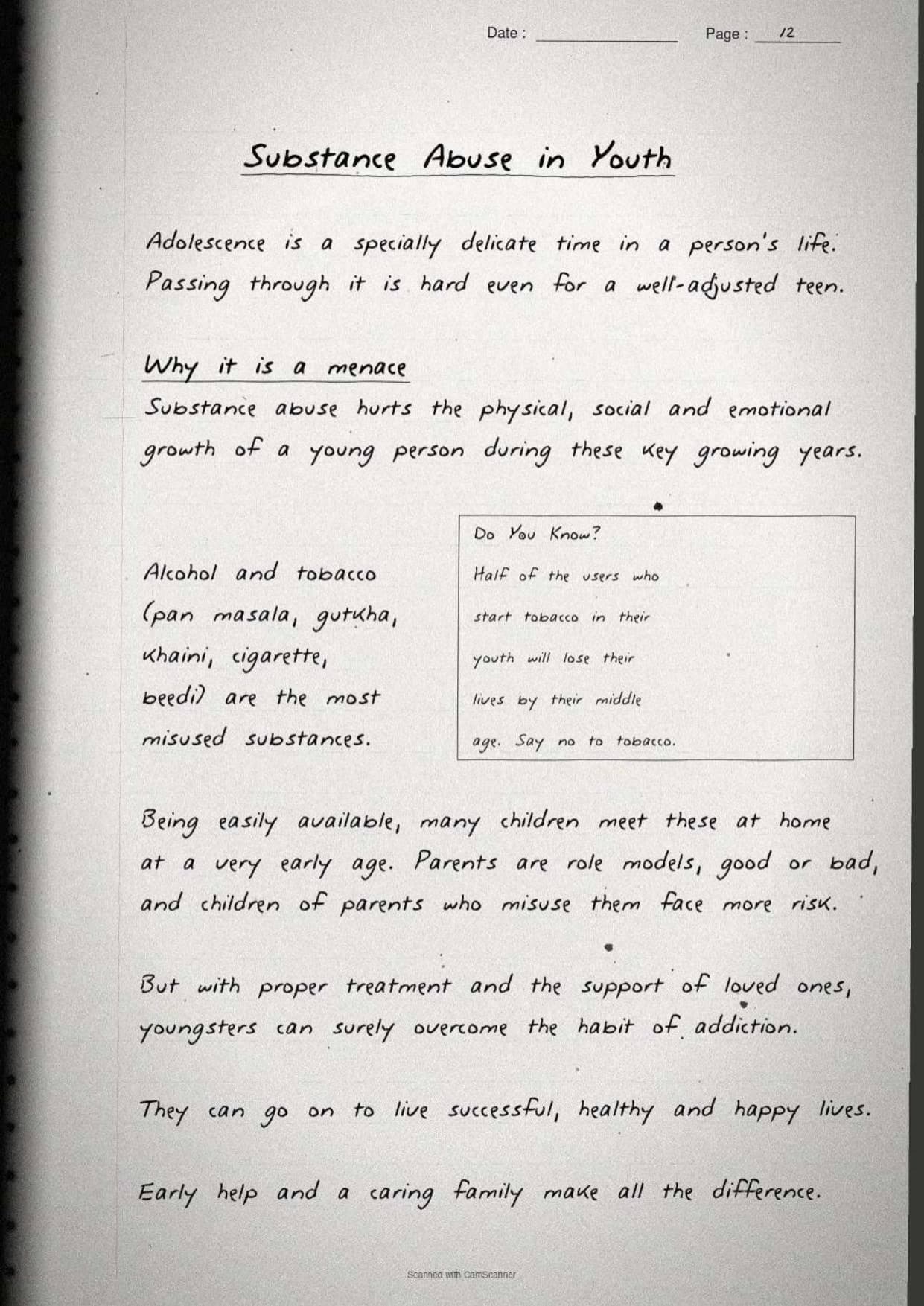
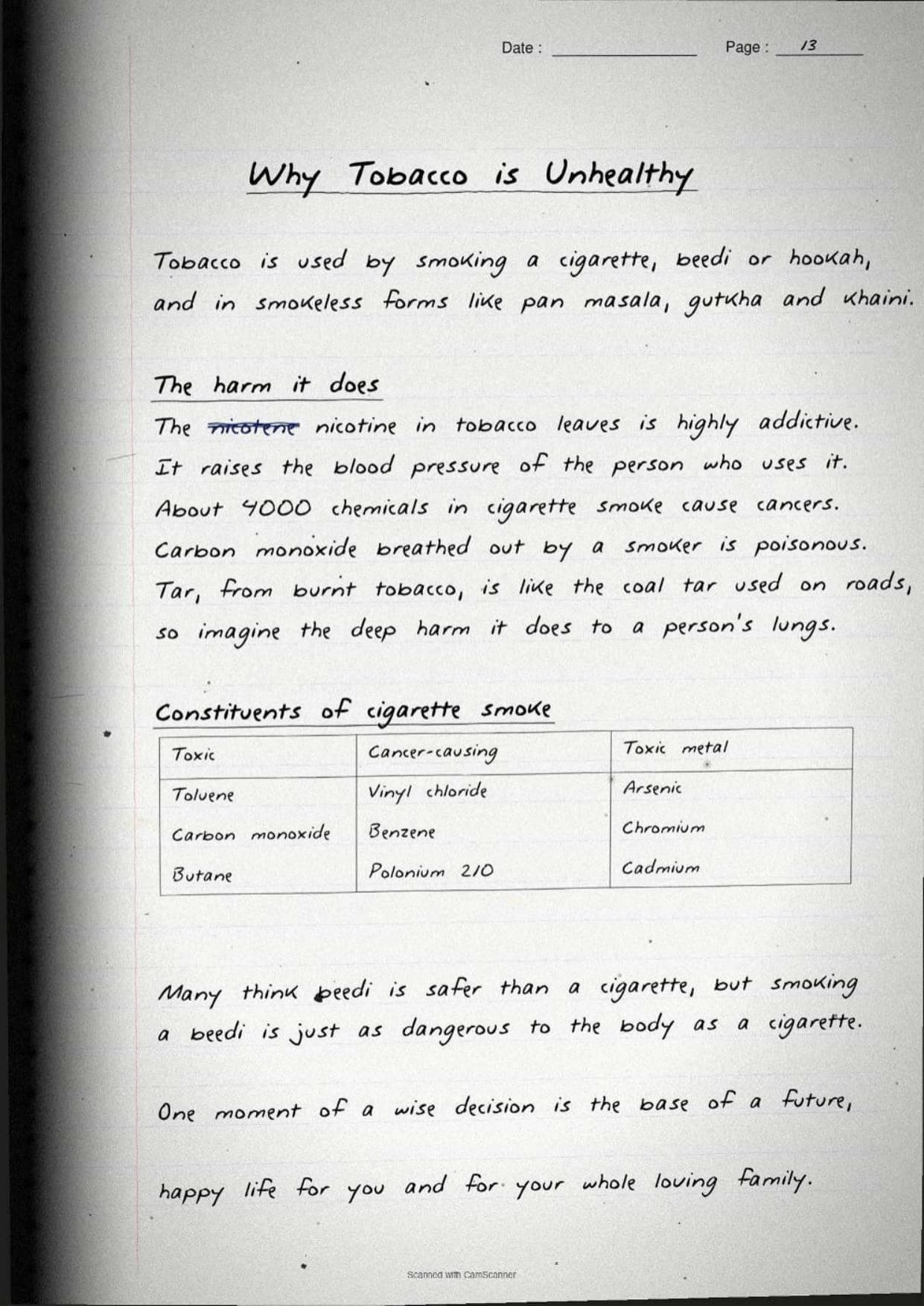
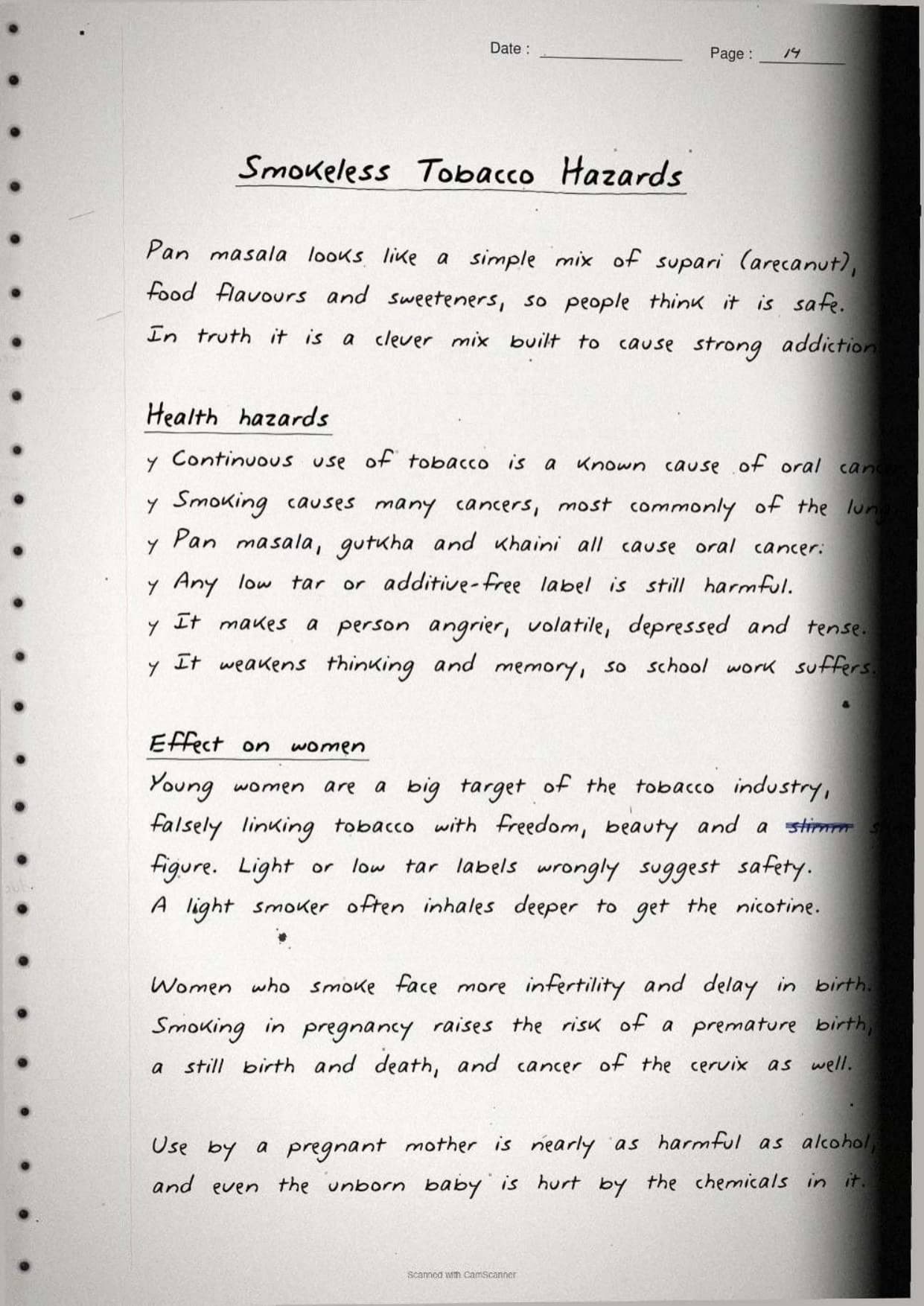
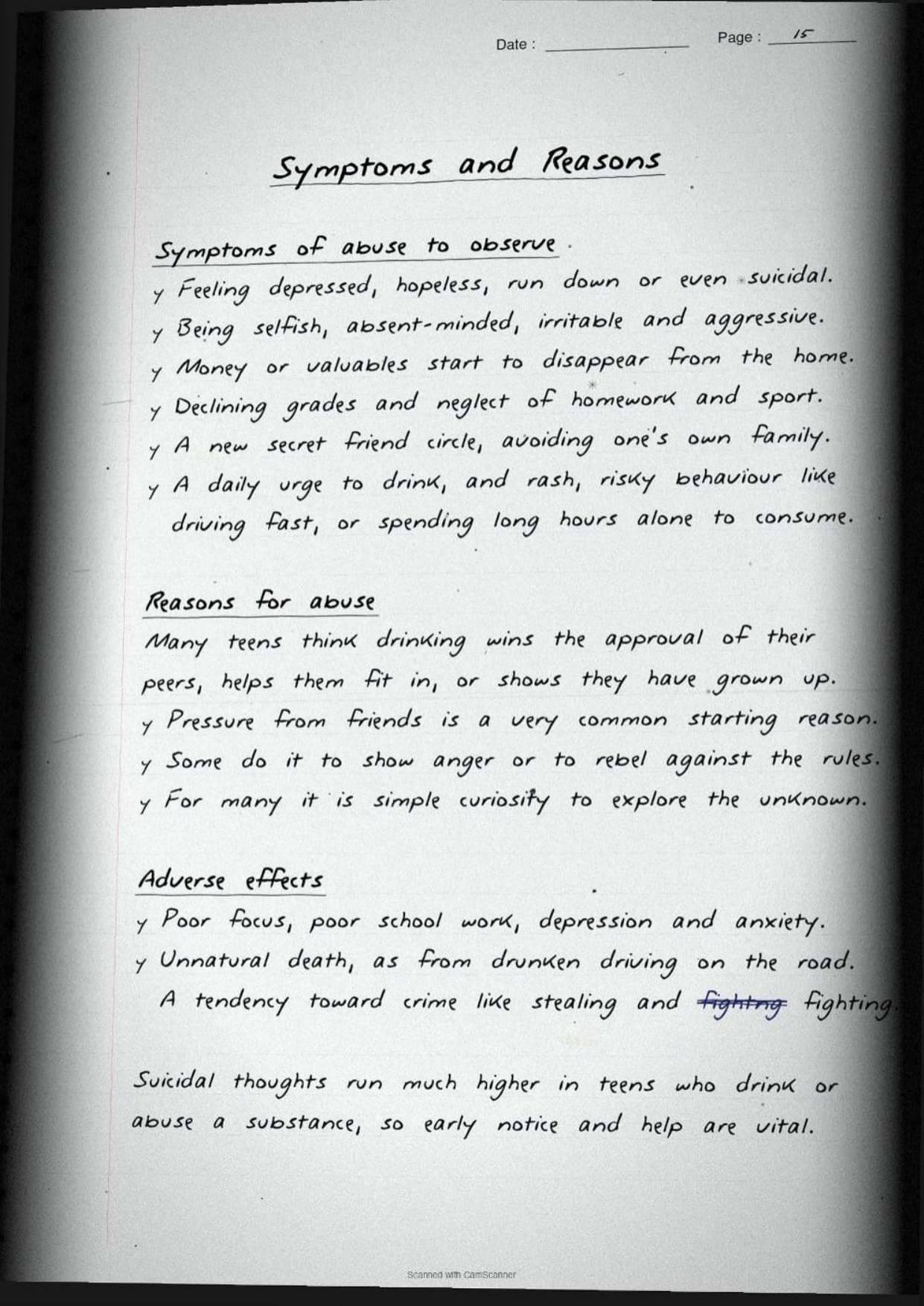
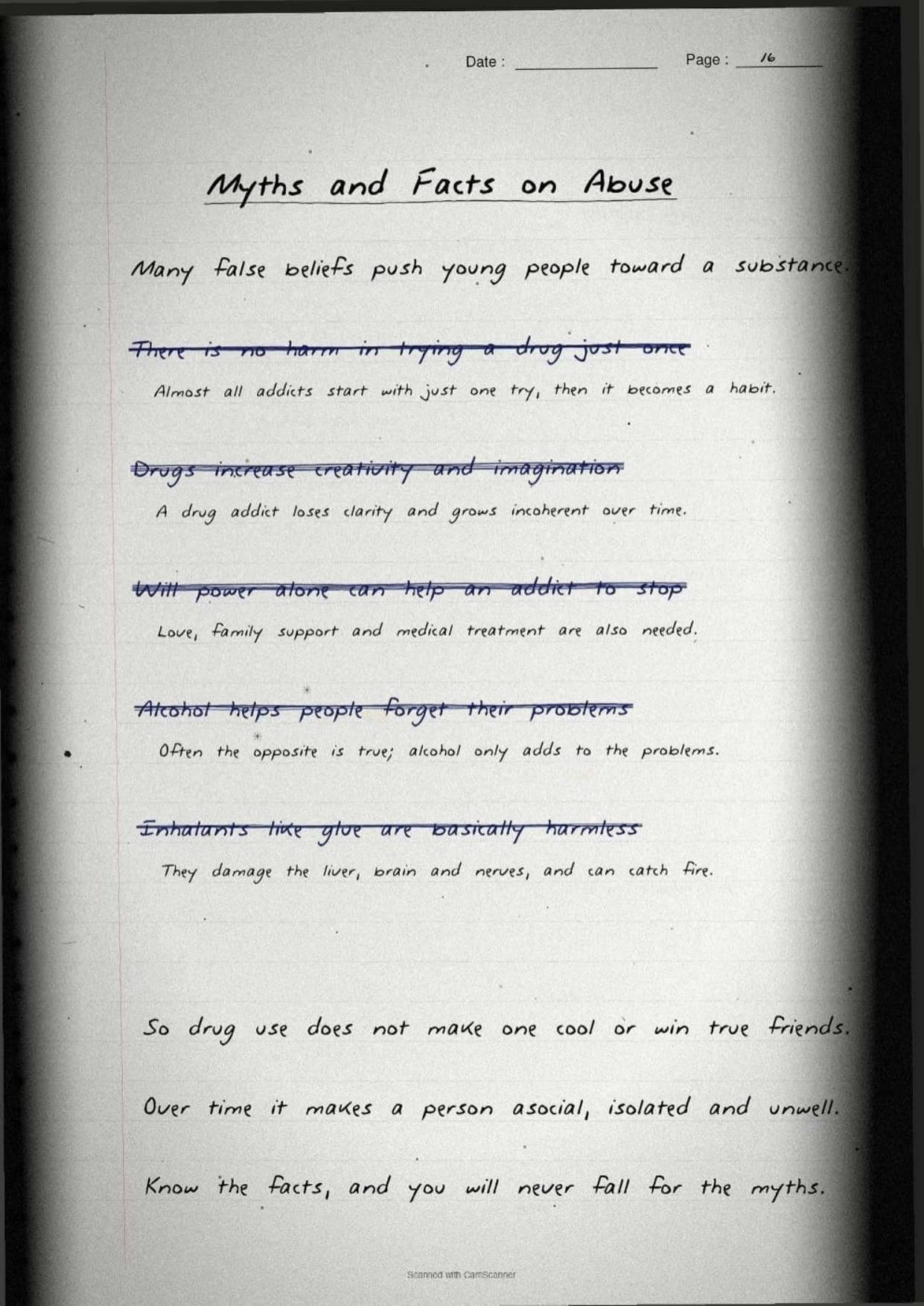
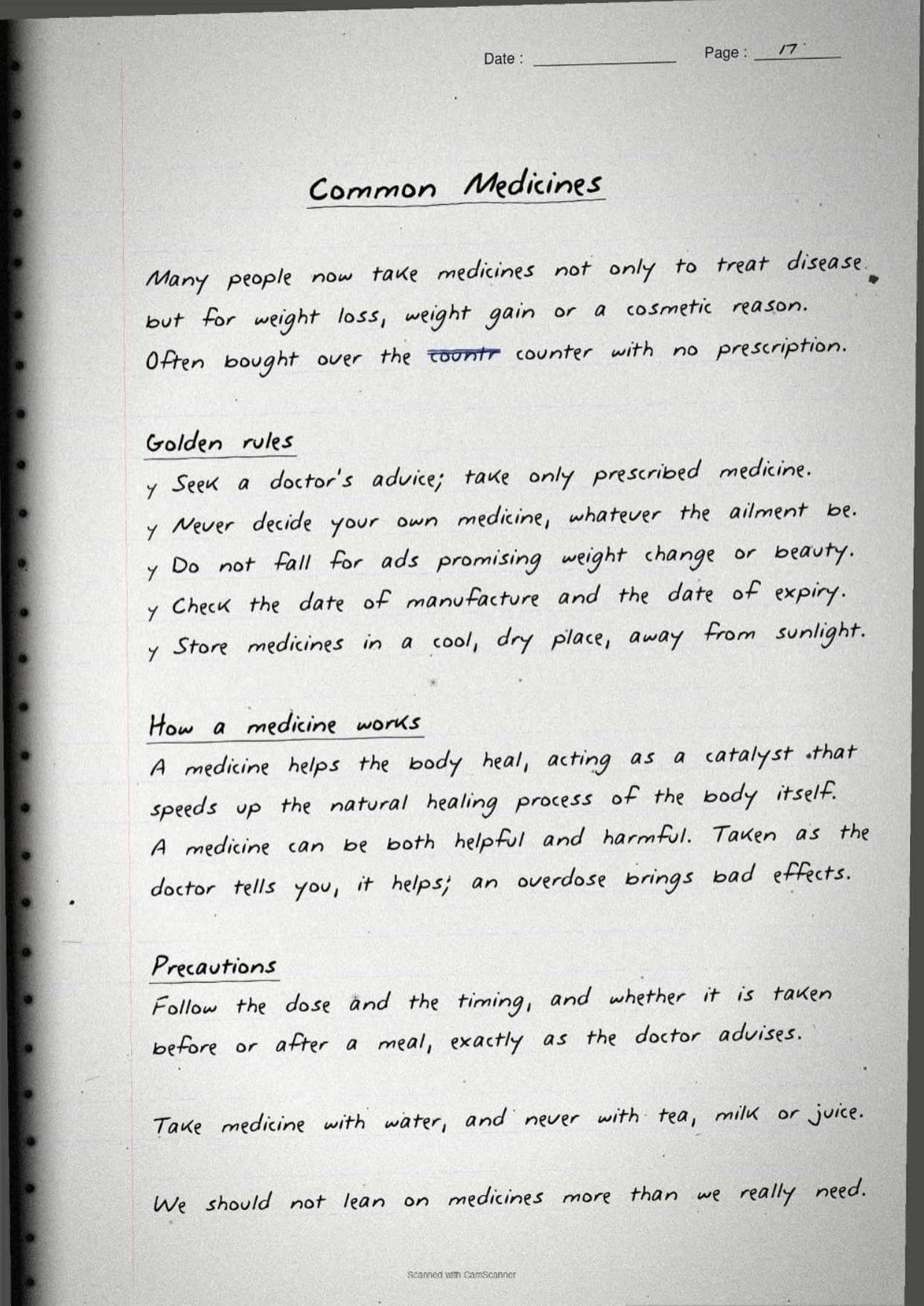
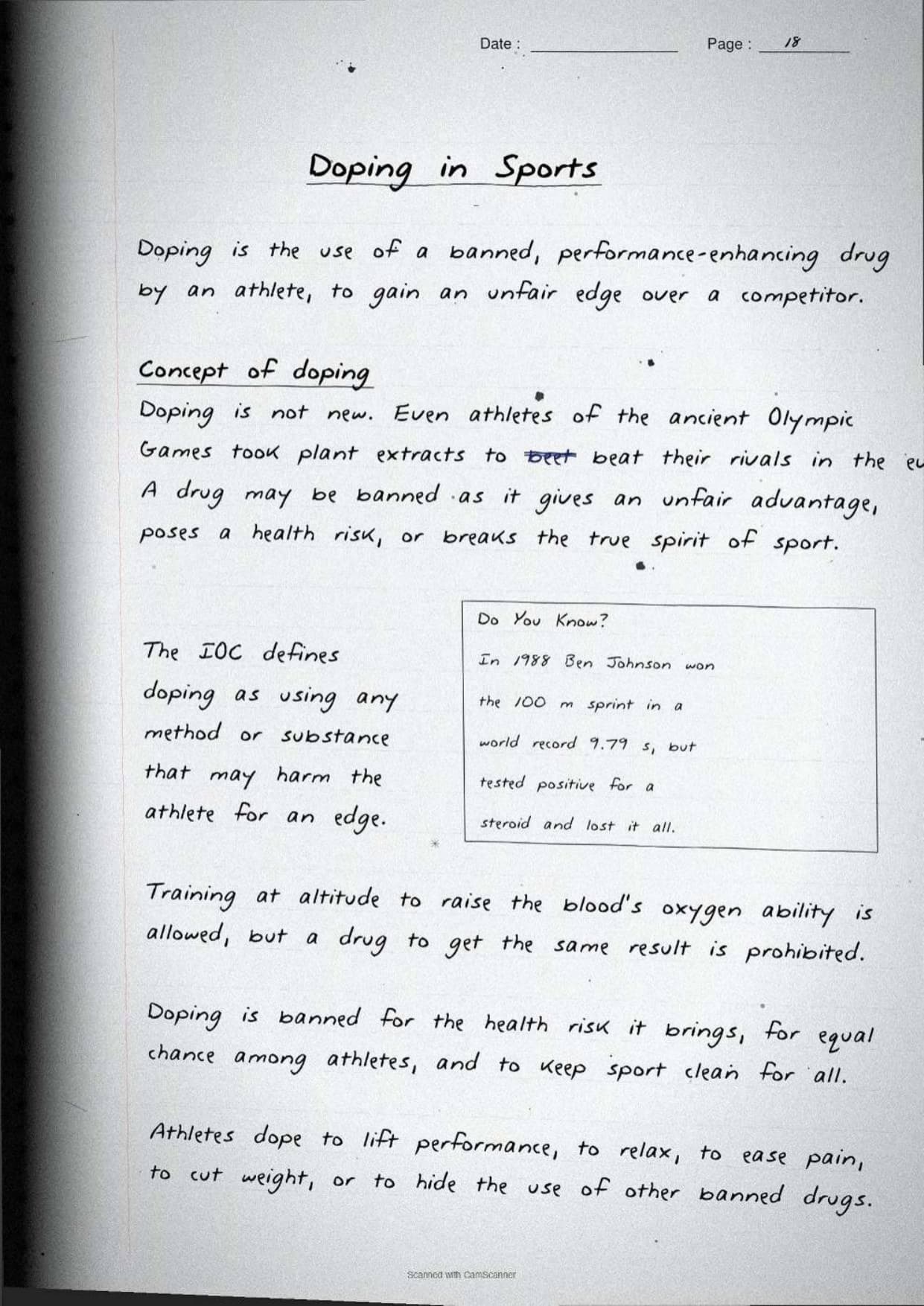
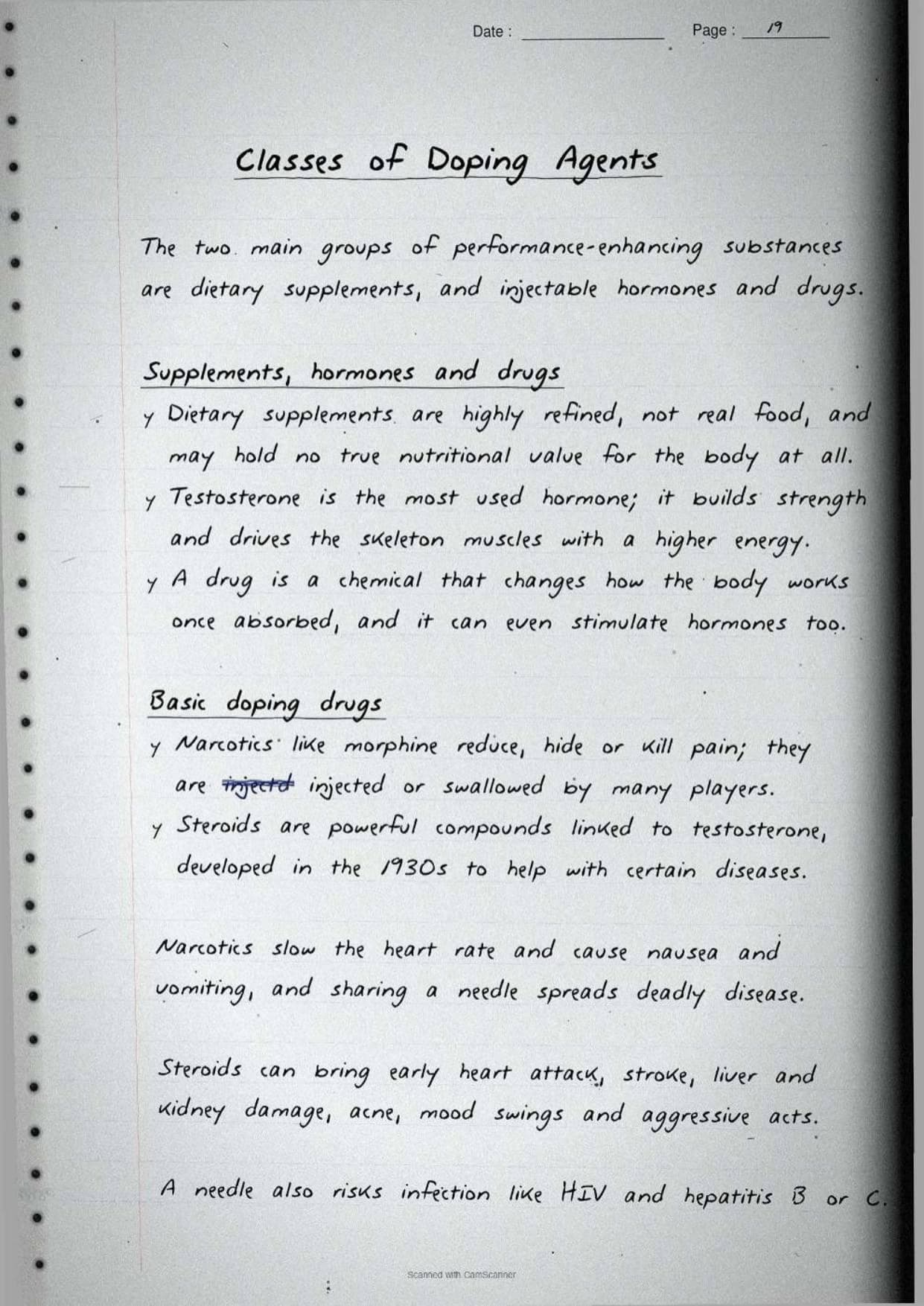
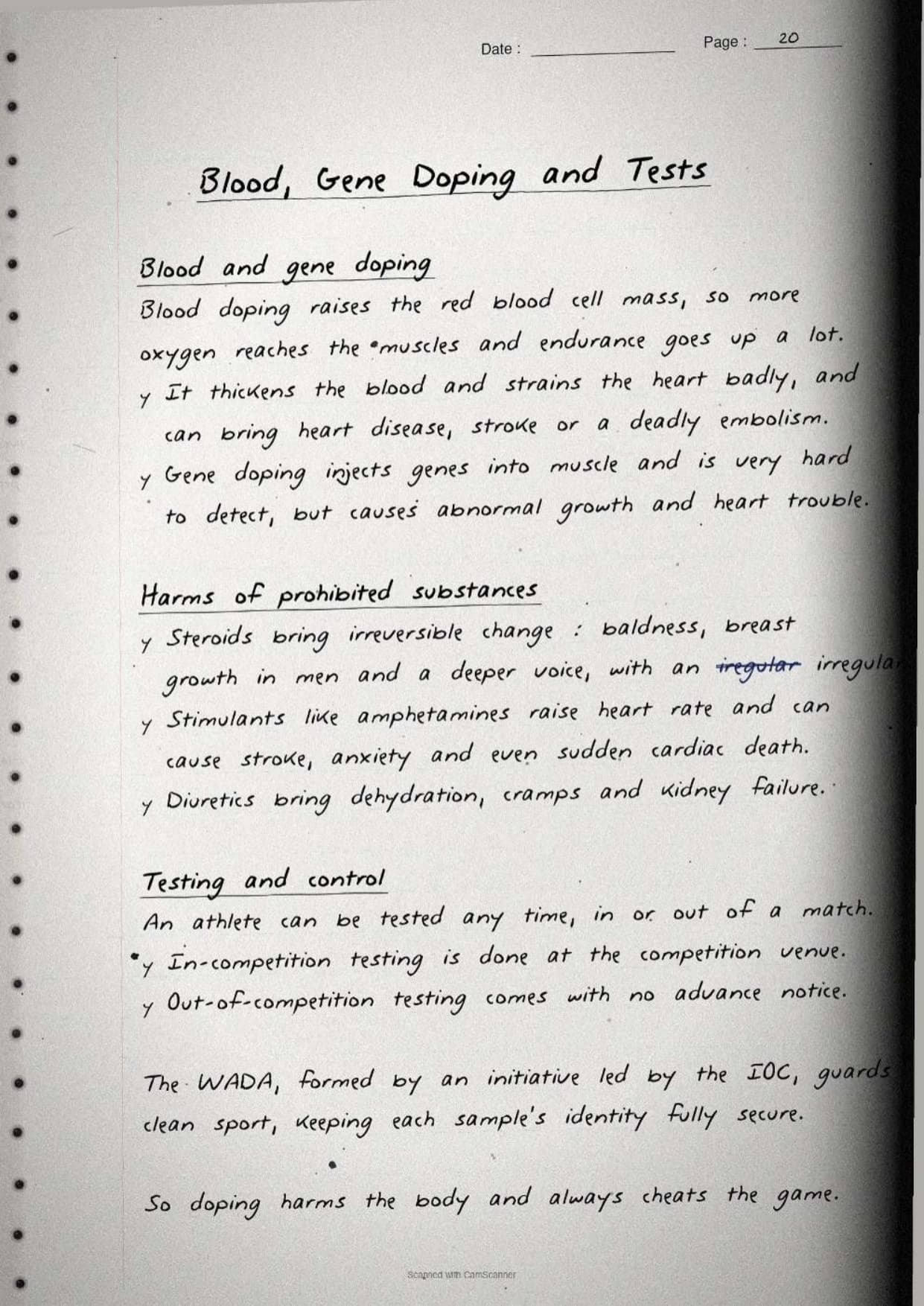
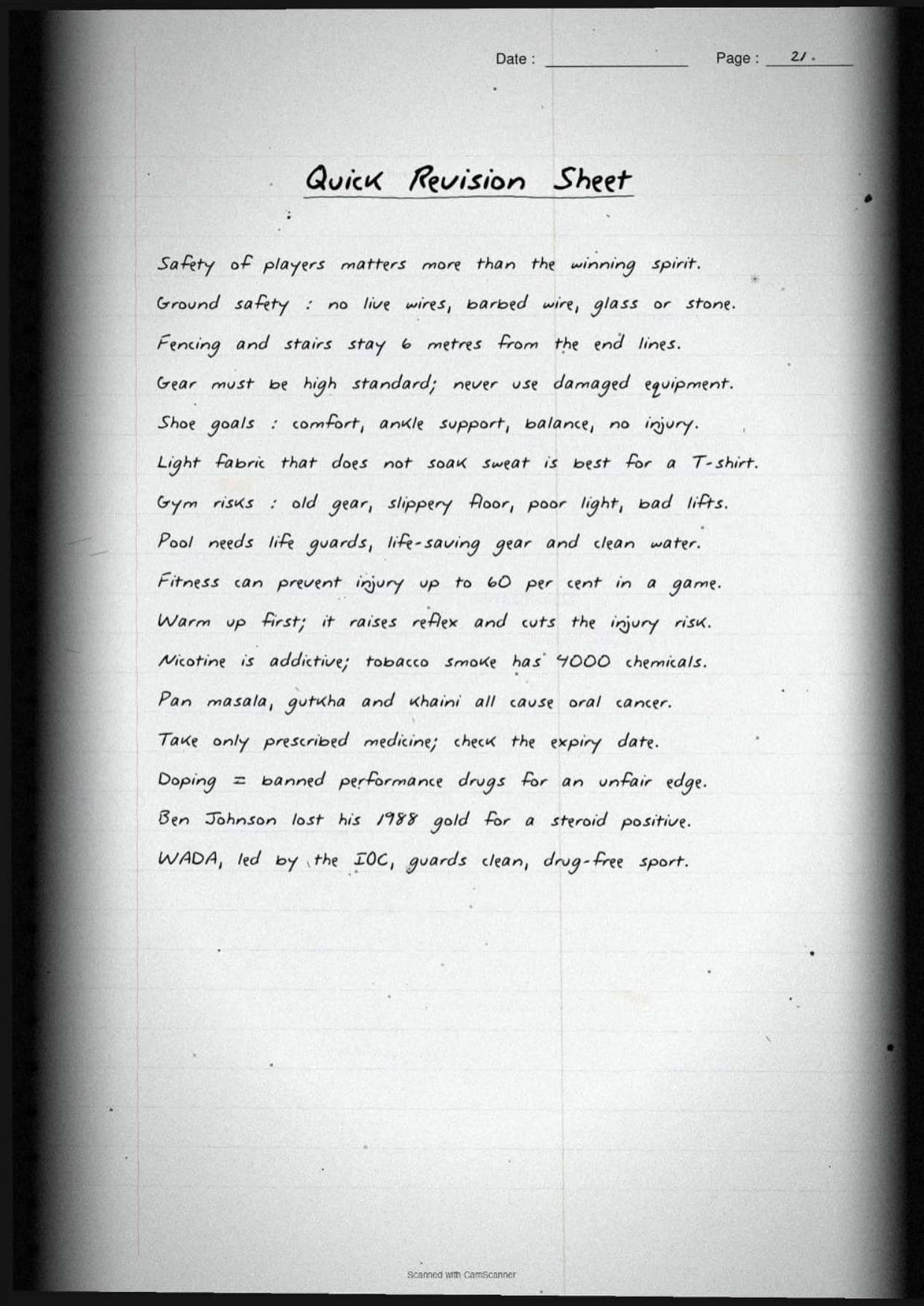
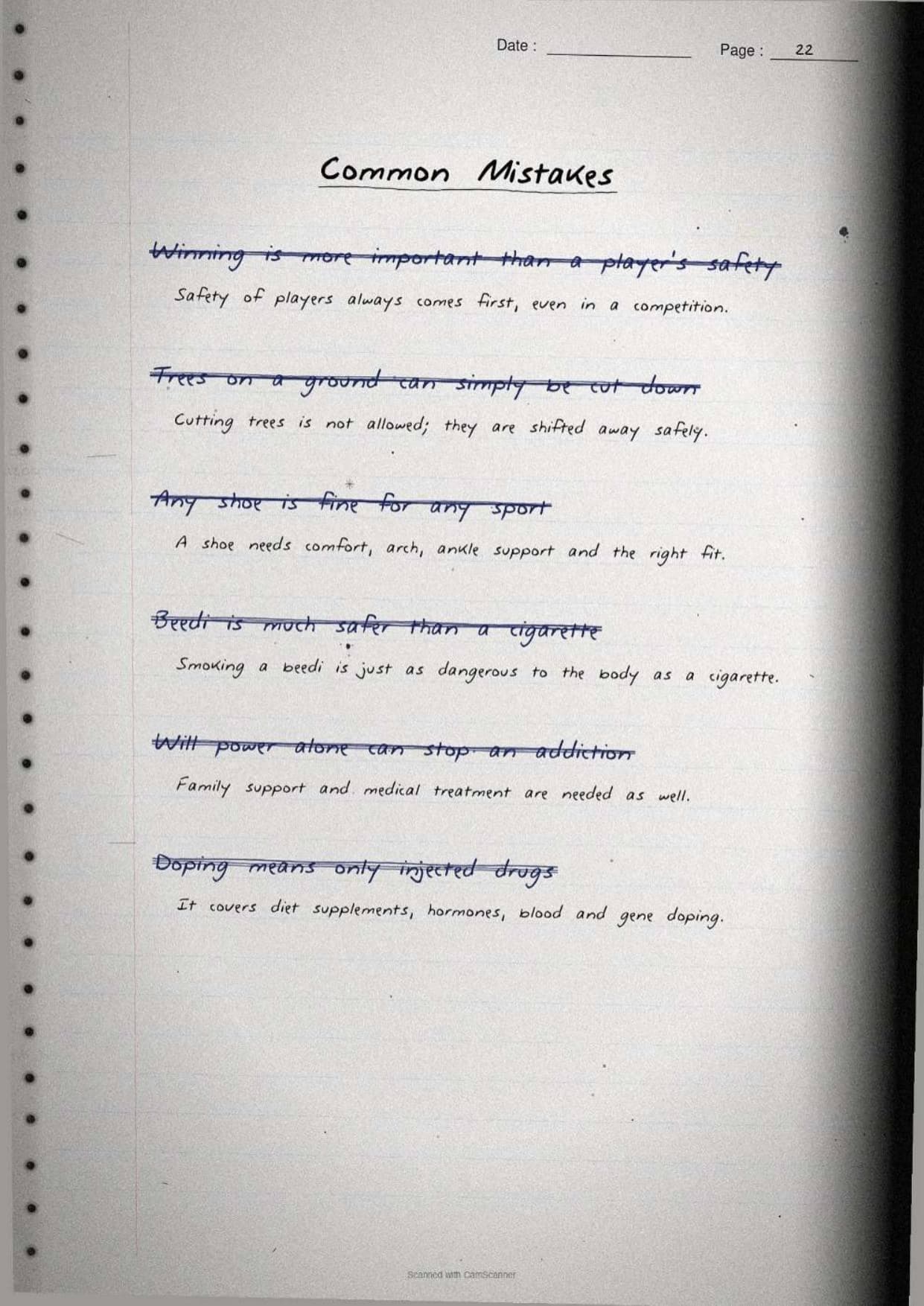
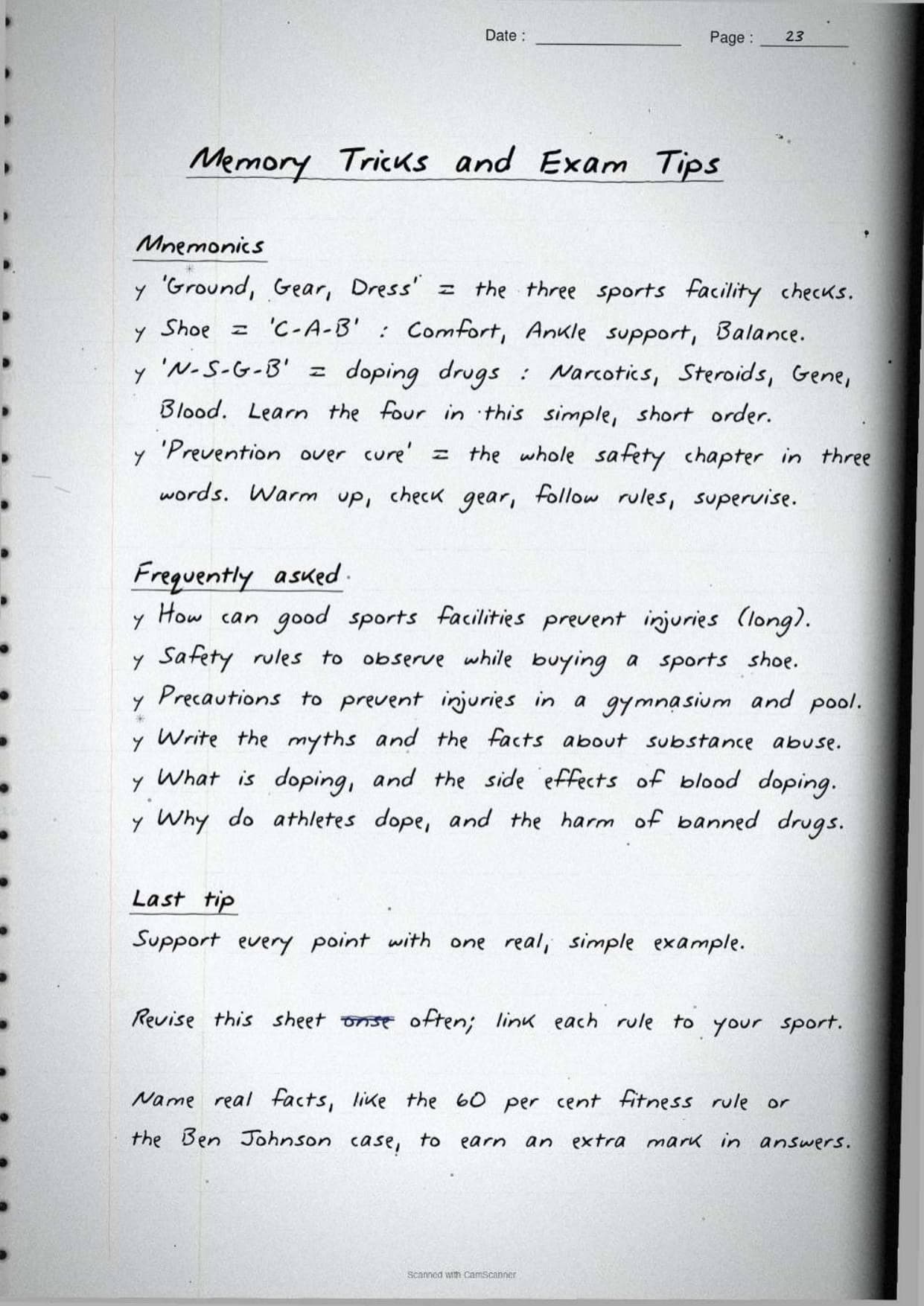
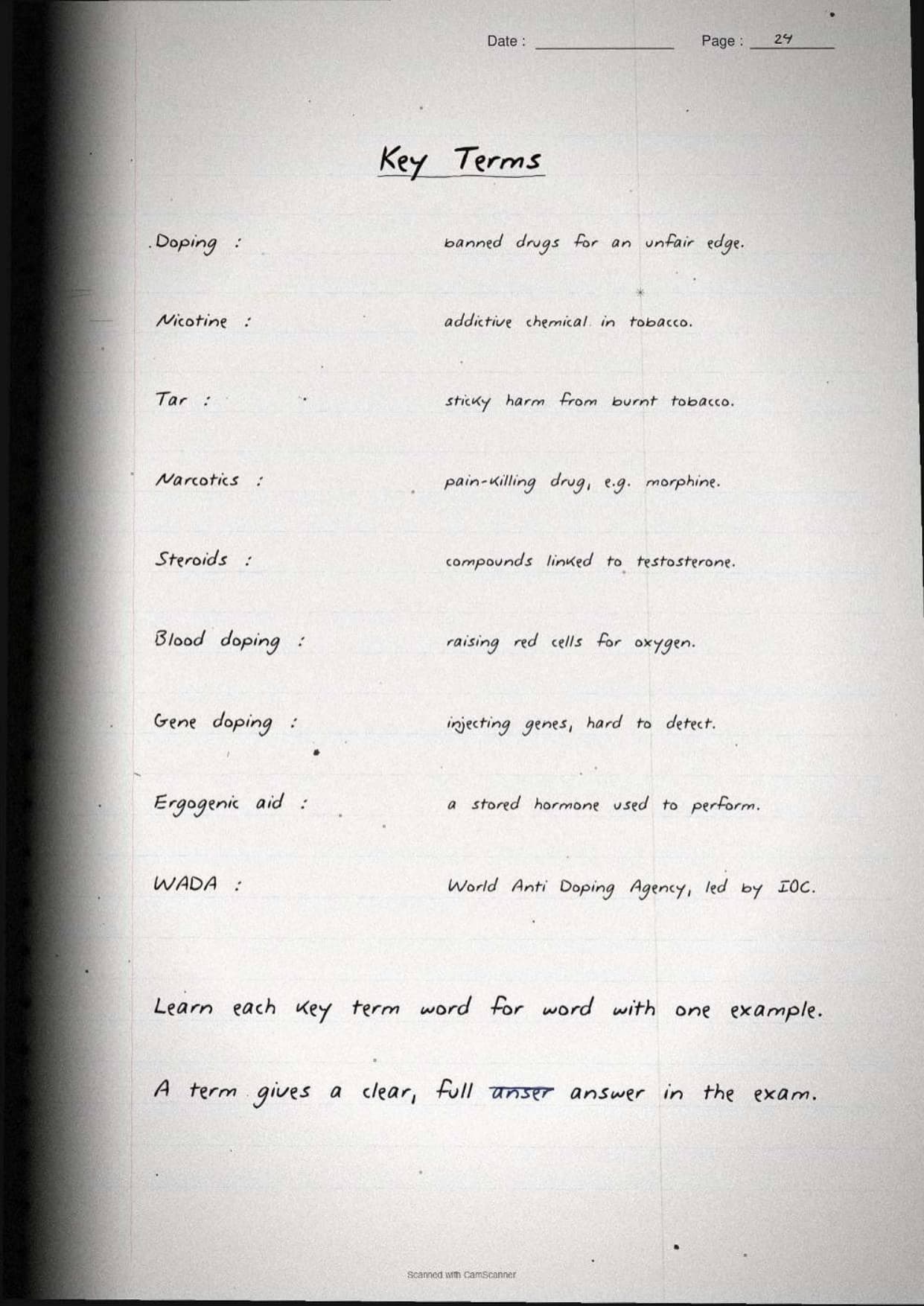
- Handwritten pages with boxed key terms, a safety checklist for each sports facility, and a labelled list of doping types.
- A theory-heavy CBSE Class 11 Physical Education chapter, so the boxed lists carry most of the marks.
- Pairs with the Notes and Book PDF linked lower on this page.
These Safety and Security handwritten notes are prepared from the official NCERT Health and Physical Education textbook and checked against recent CBSE Class 11 Physical Education question papers.
Student Feedback: In a Collegedunia poll of 5,180 Class 11 Physical Education students before the 2026 final exam, 72% of students said handwritten pages helped them recall the long safety checklists and the doping types faster than printed text, because the boxed lists and arrows made the many small points stick.
Source: 2026-27 Class 11 Physical Education student poll. Sample of 5,180 students from CBSE schools across 11 states.
What These Safety and Security Handwritten Notes Contain
Safety and Security is the seventh chapter of Class 11 Physical Education. It explains how to keep players safe during training and competition, and it warns adolescents about the harm from alcohol, tobacco, unsupervised medicines and doping. These handwritten notes condense the chapter into handwritten pages that read like a topper's own notebook.
The notes are organised under three threads, each on its own set of pages:
- Safety of sports facilities: the sports ground, sports instruments, uniform and shoes, plus the gymnasium and swimming pool rules.
- Preventing injuries: why sports injuries occur and the steps to prevent them before and during competition.
- Health hazards: alcohol and substance abuse during adolescence, tobacco, common medicines and doping in sport.
Because the pages are handwritten, the key points sit in boxes, arrows and short lists rather than long paragraphs. This chapter has many small checklists, so a student can flip through the Safety and Security Class 11 pages in a few minutes and still recall the safety steps, the injury causes and the doping types before the exam.
Safety Measures for Playgrounds, Gymnasium and Swimming Pool
The first half of the chapter covers safety in the three main sports areas. The handwritten notes give each facility its own boxed checklist so the points do not blur together. The table below shows what the pages cover for each area.
| Facility | What the page shows |
|---|---|
| Sports ground and field | Remove hazards like high-tension lines, barbed wire and stones; keep spectators and fencing about 6 metres from the end lines; give a separate warm-up and sitting area. |
| Sports instruments | Use high-standard equipment, never use damaged instruments, and build separate playing surfaces where space allows. |
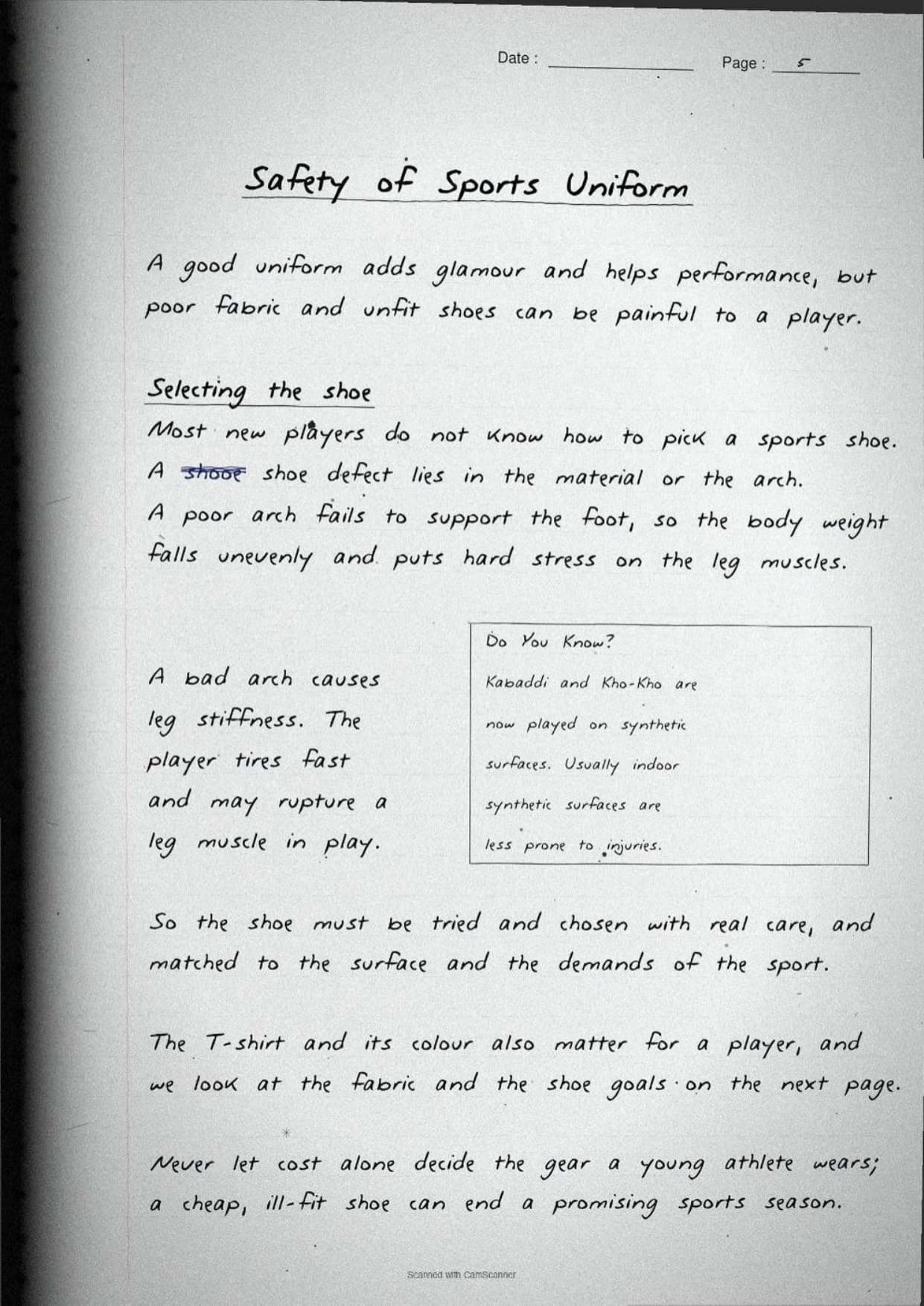
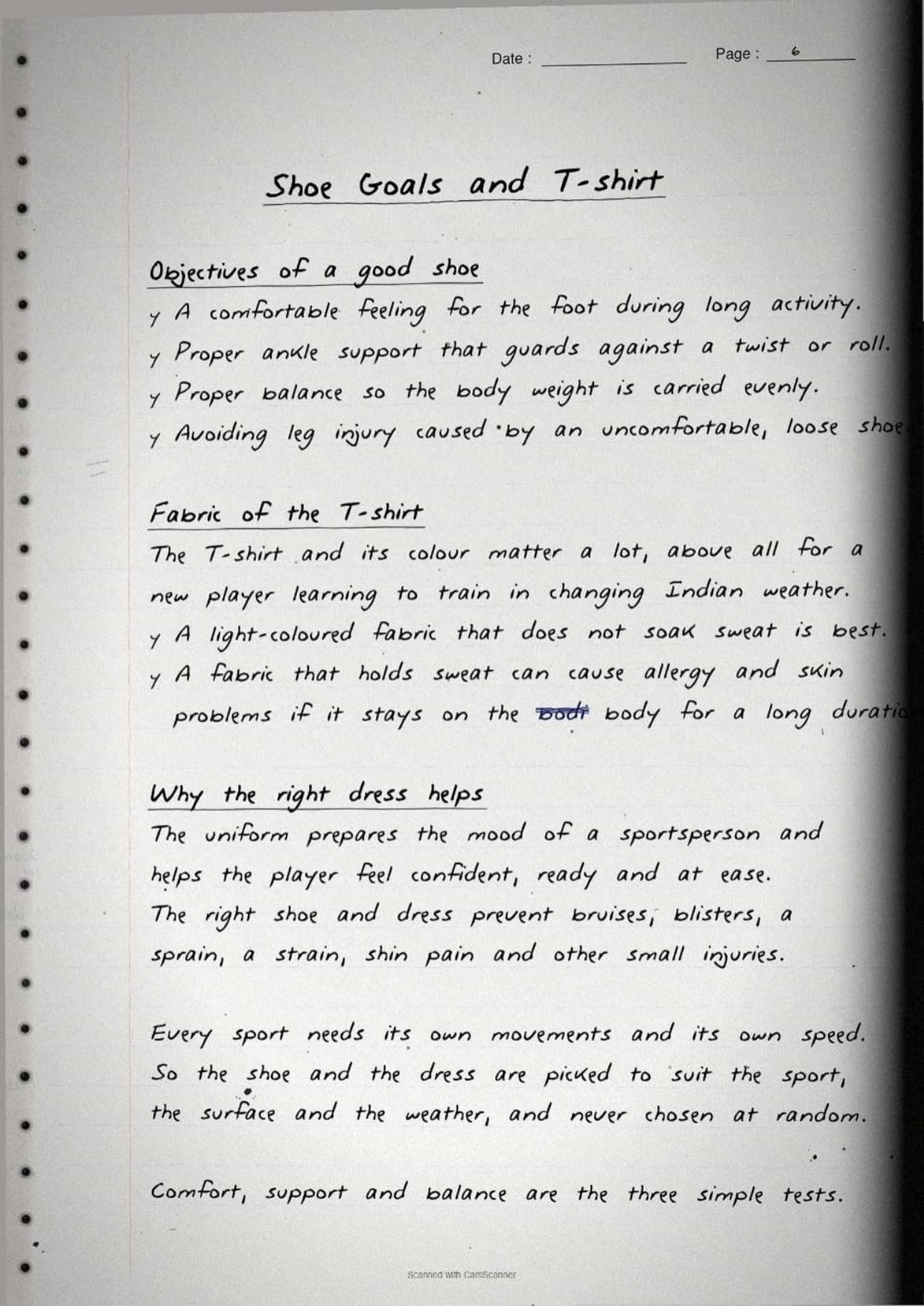
| Uniform and shoes | Choose the right shoe for arch and ankle support; pick light-coloured, sweat-friendly fabric to avoid allergy and injury. |
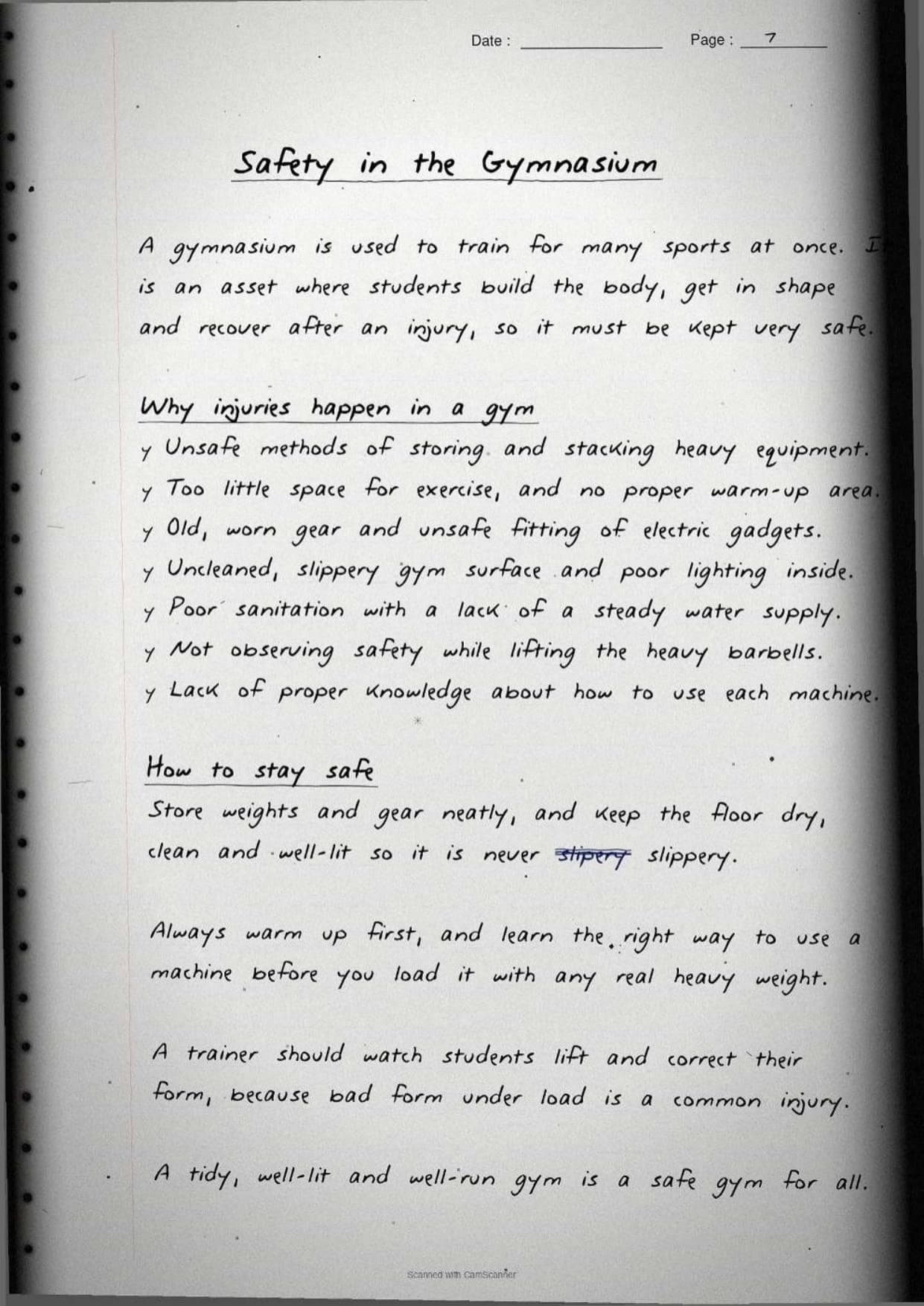
| Gymnasium | Guard against old equipment, slippery surfaces, poor lighting and unsafe weight-lifting without helpers. |
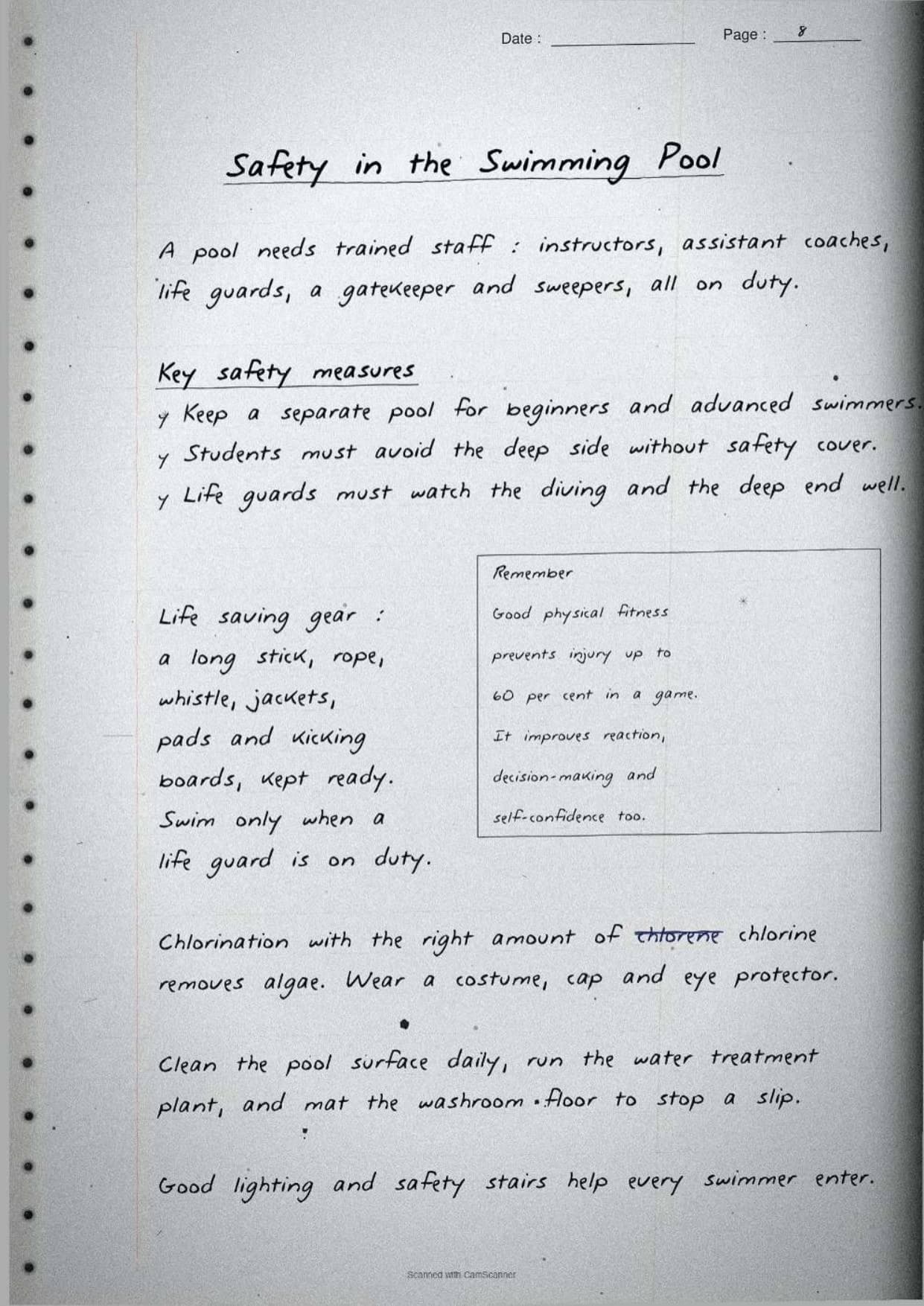
| Swimming pool | Separate pools for beginners, trained lifeguards, chlorinated clean water, and swimming only when a lifeguard is present. |
The handwritten pages underline the sports-shoe point because it comes up often: a poor arch of the sole gives unbalanced body weight, muscle stiffness and even ruptured leg muscles. The four aims of a good shoe (comfort, ankle support, balance and injury prevention) are boxed together so students can reproduce them in a short answer.
Preventing Injuries, Substance Abuse and Doping
The second half moves from facilities to people. The notes keep the guiding line front and centre: prevention is better than cure. First they list why sports injuries happen, then the steps to stop them, and finally the health hazards that hurt young athletes off the field.
- Why injuries occur: poor equipment or surface, weak knowledge of the rules, lack of technical and tactical skill, poor fitness and conditioning, and ignoring safety rules in risky sports like gymnastics and diving.
- How to prevent them: proper warming up, safety gear, checked equipment, coach supervision, good nutrition and the right shoe and uniform to avoid bruises, sprain, strain and shin pain.
- Substance abuse: adolescence is a vulnerable stage; alcohol and tobacco (including pan masala, gutkha and khaini) are the most misused, and the notes carry the myths-versus-facts table.
- Common medicines: take only prescribed doses, store medicines in a cool dry place, use water not tea or milk, and never rely on over-the-counter drugs for weight or beauty claims.
- Doping: the use of banned performance-enhancing drugs; the notes list narcotics, steroids, blood doping and gene doping with their side effects.
The pages box one judgement that scores well: doping goes against the spirit of sport, which is why bodies like the IOC and WADA ban it. The famous example of Ben Johnson losing his 1988 gold medal after testing positive for steroids is noted in the margin so students can quote a real case in the long answer.
How to Use These Handwritten Notes
Handwritten notes work best as a final-revision tool, not a first read. The steps below show how to get the most out of the Safety and Security handwritten notes in the last days before the Class 11 final exam.
- Download: save the handwritten pages to your device from this page.
- First read: read the printed Notes once so the handwritten pages act as a refresher, not a first source.
- Recall drill: cover the page and try to write the swimming-pool safety steps and the four types of doping from memory.
- Night before: flip through the boxed checklists for a quick last-minute recall of safety steps and side effects.
Many students search for Class 11 Physical Education Chapter 7 notes on their phone the night before a test, so a saved set of handwritten pages means you can revise offline. Use the handwritten notes for speed, then check the printed Notes to confirm you have the full lists right.
Common Mistakes These Notes Help You Avoid
A few errors cost marks every year. The handwritten notes flag each one in the margin so you can fix it before the exam. These five are the most common.
- Writing only one facility. A full answer covers the ground, gymnasium and swimming pool.
- Forgetting the 6-metre rule. Fencing and spectators stay about 6 metres from the end lines.
- Saying beedi is safer than a cigarette. The notes stress beedi is equally dangerous.
- Mixing up the doping types. Narcotics, steroids, blood doping and gene doping each have different side effects.
- Treating "light" or "low tar" tobacco as safe. All tobacco products are harmful, whatever the label.
Students who fix these five points usually move from average to high marks. The handwritten notes box the safety checklists and list all four doping types in full, so the soft points are hard to miss when you revise.
How These Handwritten Notes Pair with the Notes and Book PDF
These handwritten notes are a fast revision tool. To prepare fully, students should use them alongside the other resources for the same chapter, linked in the table below. Read the printed Notes, then use these pages for a final recall.
| Resource | Best used for |
|---|---|
| Safety and Security Class 11 Notes | Quick chapter summary with every safety checklist and key term in one place |
| Safety and Security NCERT Book PDF | Reading the original NCERT chapter text, tables and figures |
Tip: read the printed Notes first, then keep these handwritten pages for the final night-before flip. Using them for recall, not for the first read, builds memory faster.
All Class 11 Physical Education Handwritten Notes by Chapter
The table links the handwritten notes for every chapter in Class 11 Physical Education, so students can move across the course in one click. Safety and Security is highlighted.
| Chapter | Handwritten Notes |
|---|---|
| Chapter 1 | Physical Education |
| Chapter 2 | Understanding Health |
| Chapter 3 | Physical and Physiological Aspects of Physical Education and Sports |
| Chapter 4 | Individual Games |
| Chapter 5 | Team Games |
| Chapter 6 | Yoga and its Relevance in the Modern Times |
| Chapter 7 | Safety and Security |
| Chapter 8 | Health Related Physical Fitness |
| Chapter 9 | Measurement and Evaluation |
| Chapter 10 | Tournaments and Competitions |
| Chapter 11 | Adventure Sports |
FAQs on Safety and Security Handwritten Notes
Safety and Security Class 11 Physical Education Handwritten Notes Common Questions
Ques. Where can I download the Safety and Security handwritten notes PDF?
Ans. You can download the Safety and Security Class 11 Physical Education handwritten notes PDF directly from this page. It is free, follows the 2026-27 NCERT, and presents the safety measures, injury prevention, substance abuse and doping topics as handwritten pages.
Ques. Are handwritten notes good for revising Class 11 Physical Education Chapter 7?
Ans. Yes. Handwritten notes are best for fast, last-minute revision because the boxed checklists and arrows make the many safety steps and doping types easy to skim. Use them after a first read of the printed Notes, not as your only source.
Ques. What topics do these handwritten notes cover?
Ans. They cover safety measures for the sports ground, instruments, uniform and shoes, the gymnasium and swimming pool, why injuries occur and how to prevent them, alcohol and substance abuse during adolescence, tobacco, common medicines, and the types of doping in sport.
Ques. Who prepared these handwritten notes?
Ans. They are written and proofread by hand by a subject expert with an MPEd, NIS coaching certification and 10 years of CBSE Class 11 Physical Education teaching, using the official NCERT textbook and recent Class 11 question papers.
Ques. How should I use these notes with the other resources?
Ans. Read the printed Notes first, then keep these handwritten pages for the final night-before flip. Using them for recall rather than the first read builds memory faster. The Notes and Book PDF for the same chapter are linked above.



Comments