




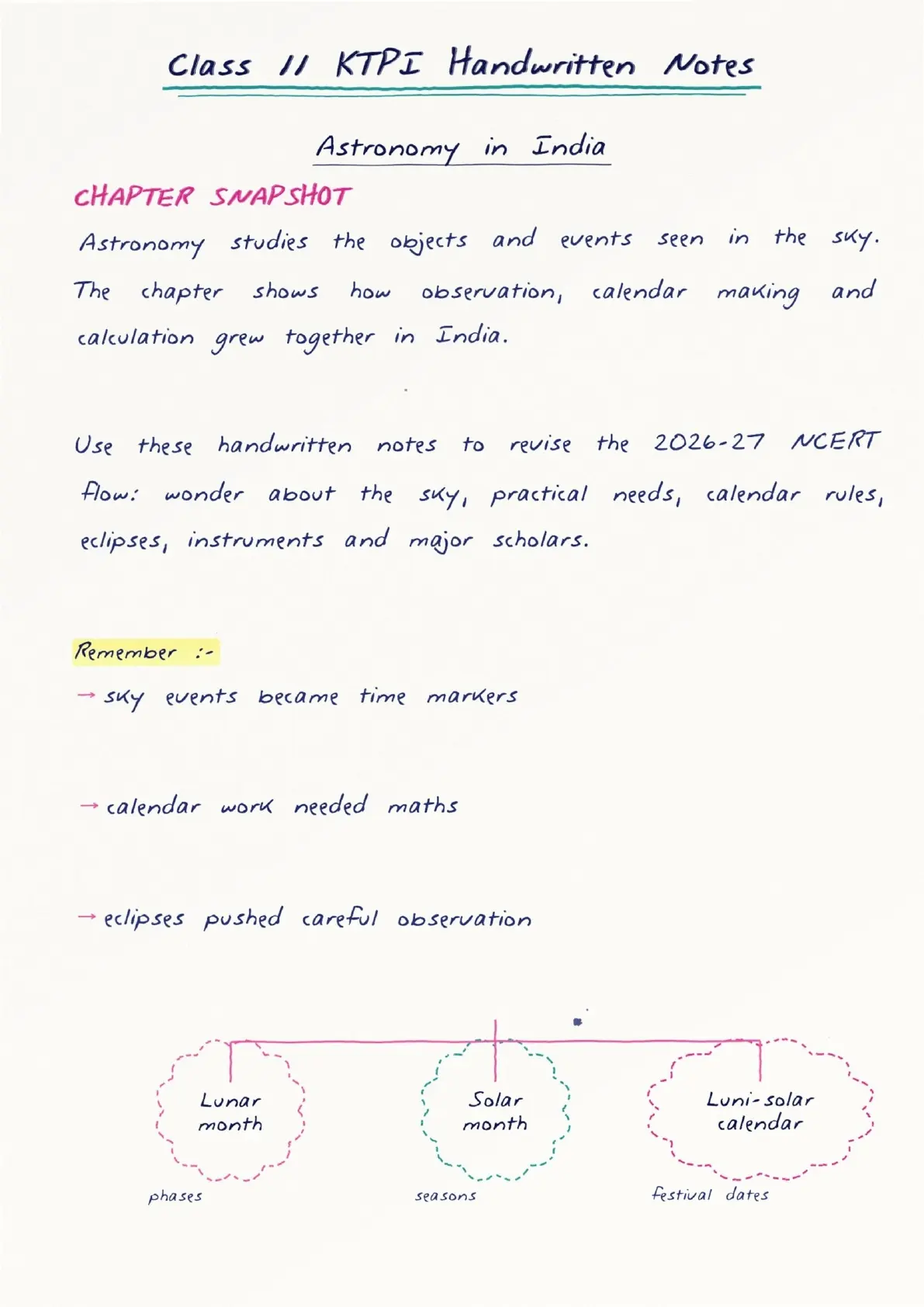
NCERT Handwritten Notes for Class 11 KTPI Chapter 1 Astronomy in India help students revise the 2026-27 chapter through colourful topper-style pages on calendars, moon phases, eclipse prediction, instruments and Indian astronomy scholars.
- Resource: Class 11 KTPI Astronomy in India handwritten revision notes PDF.
- Chapter focus: luni-solar calendar, tithi, paksha, eclipses, time keeping and observatories.
- Revision use: fast summary, diagrams, glossary, common mistakes and answer frames.
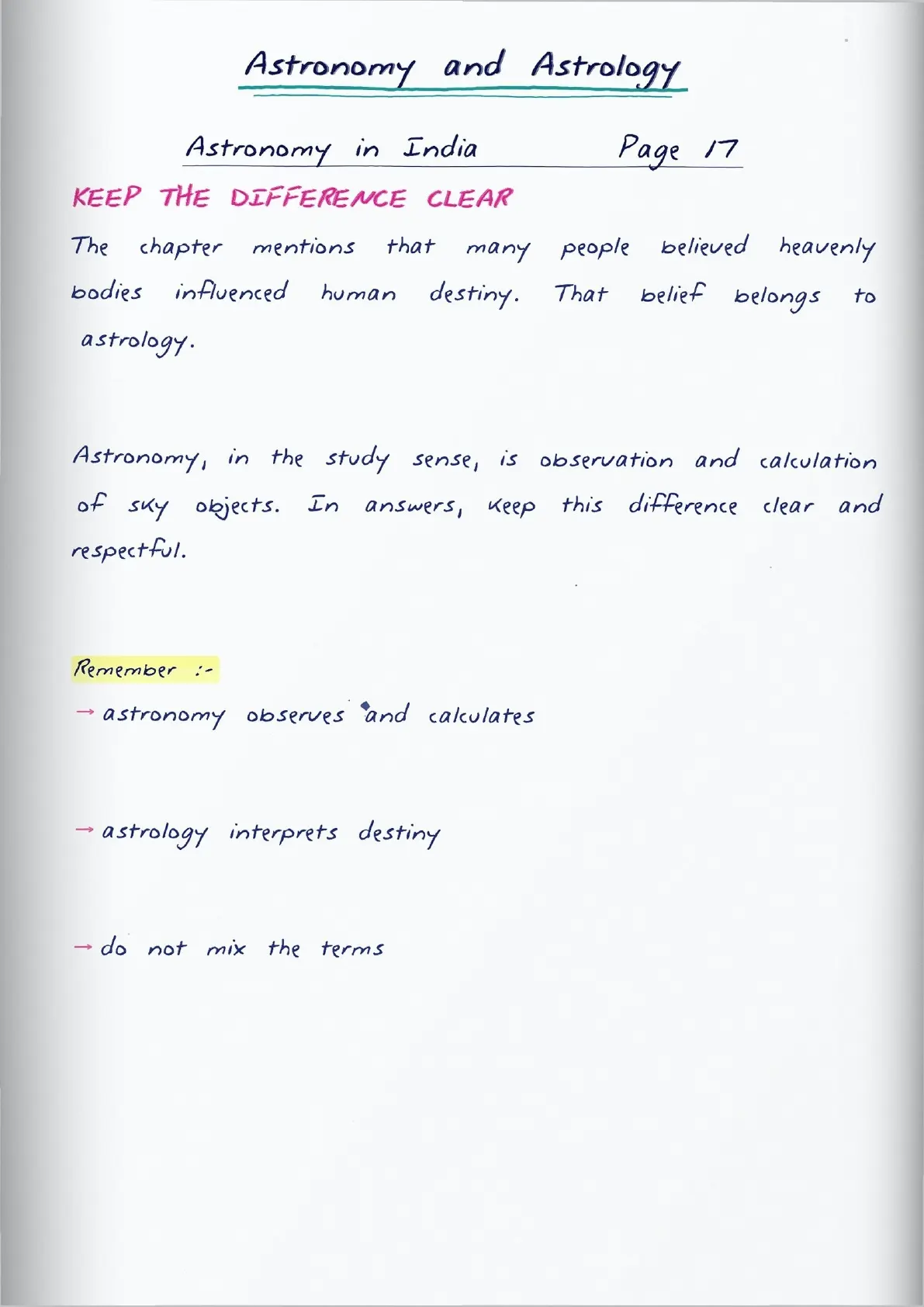
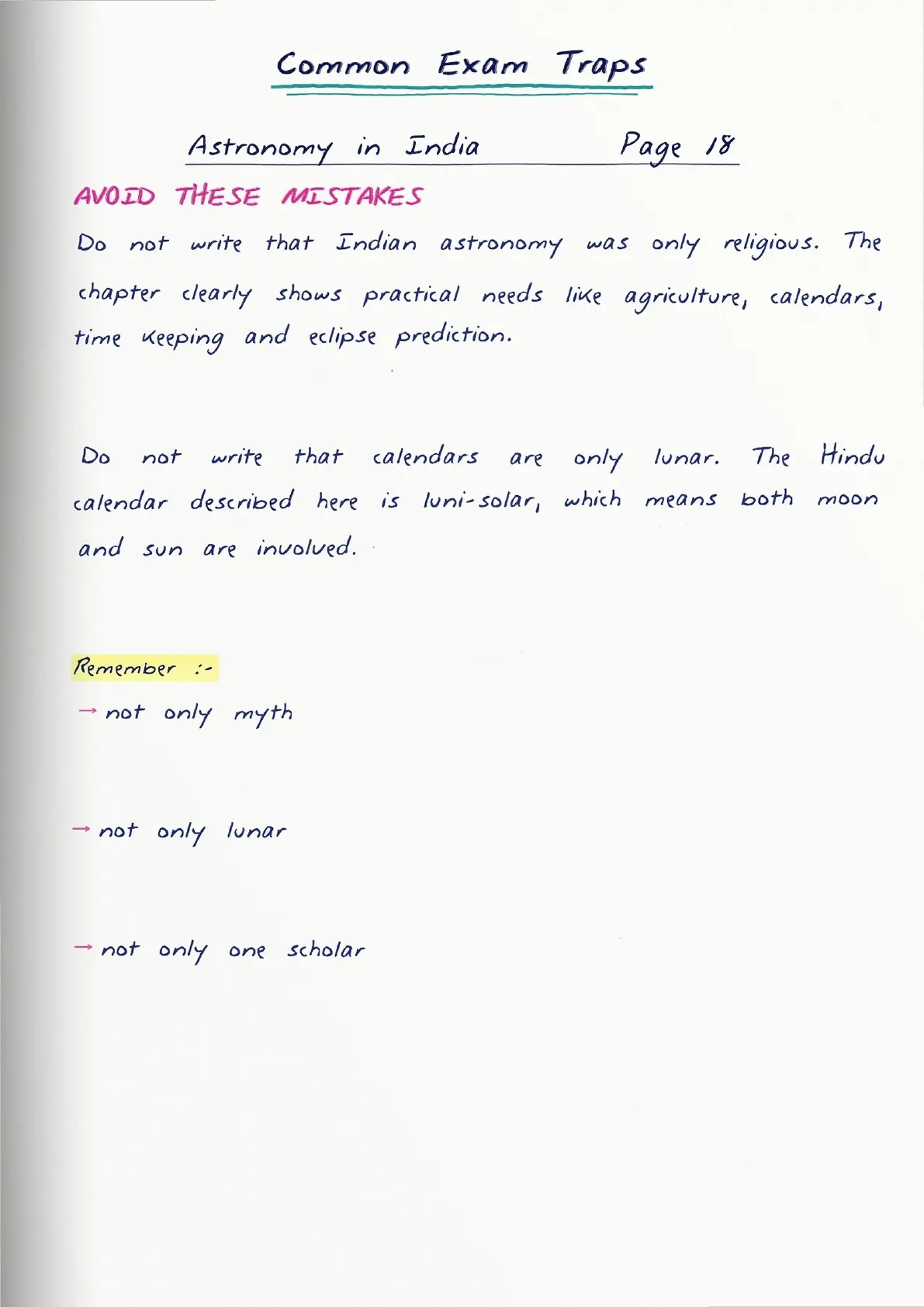
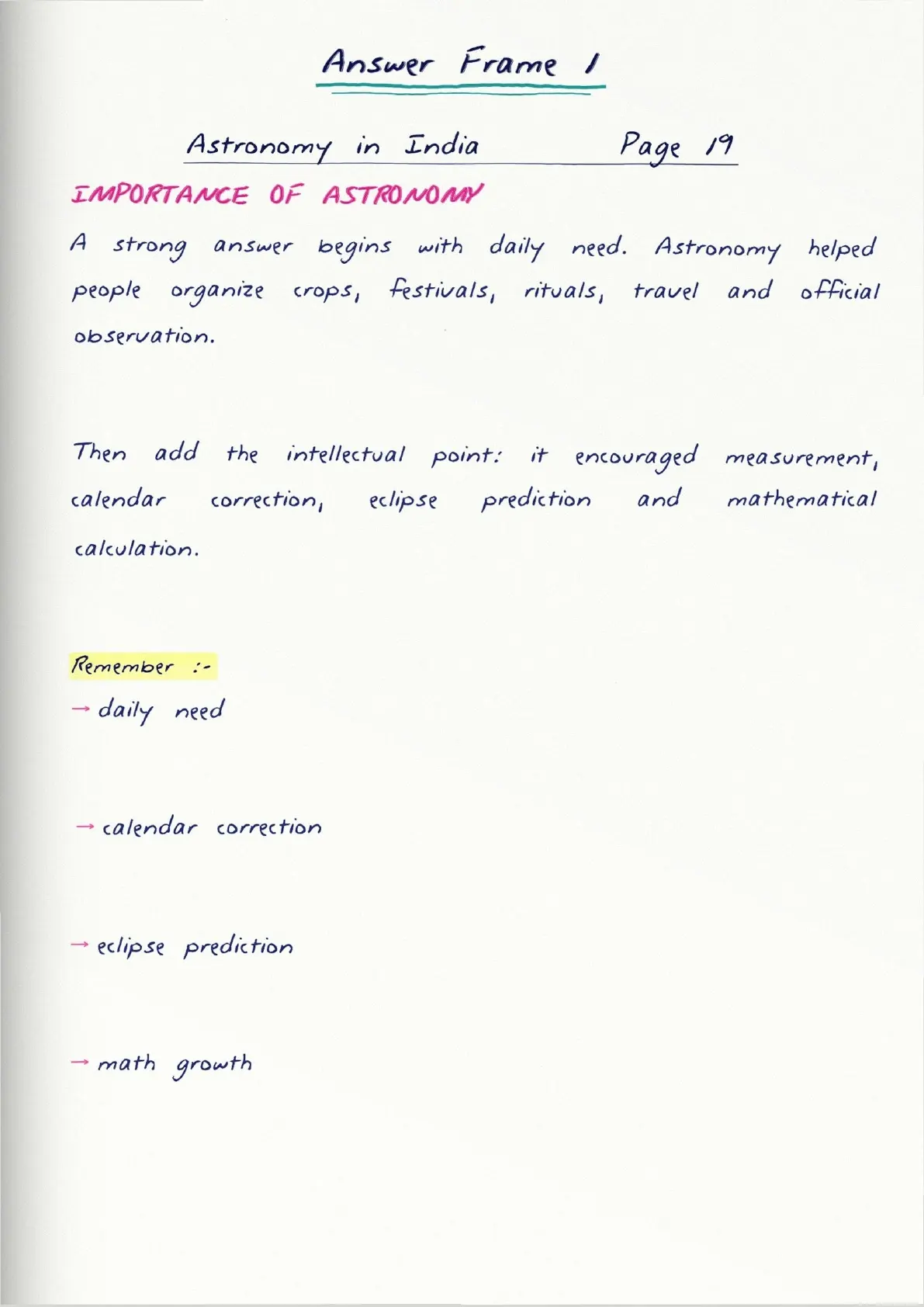
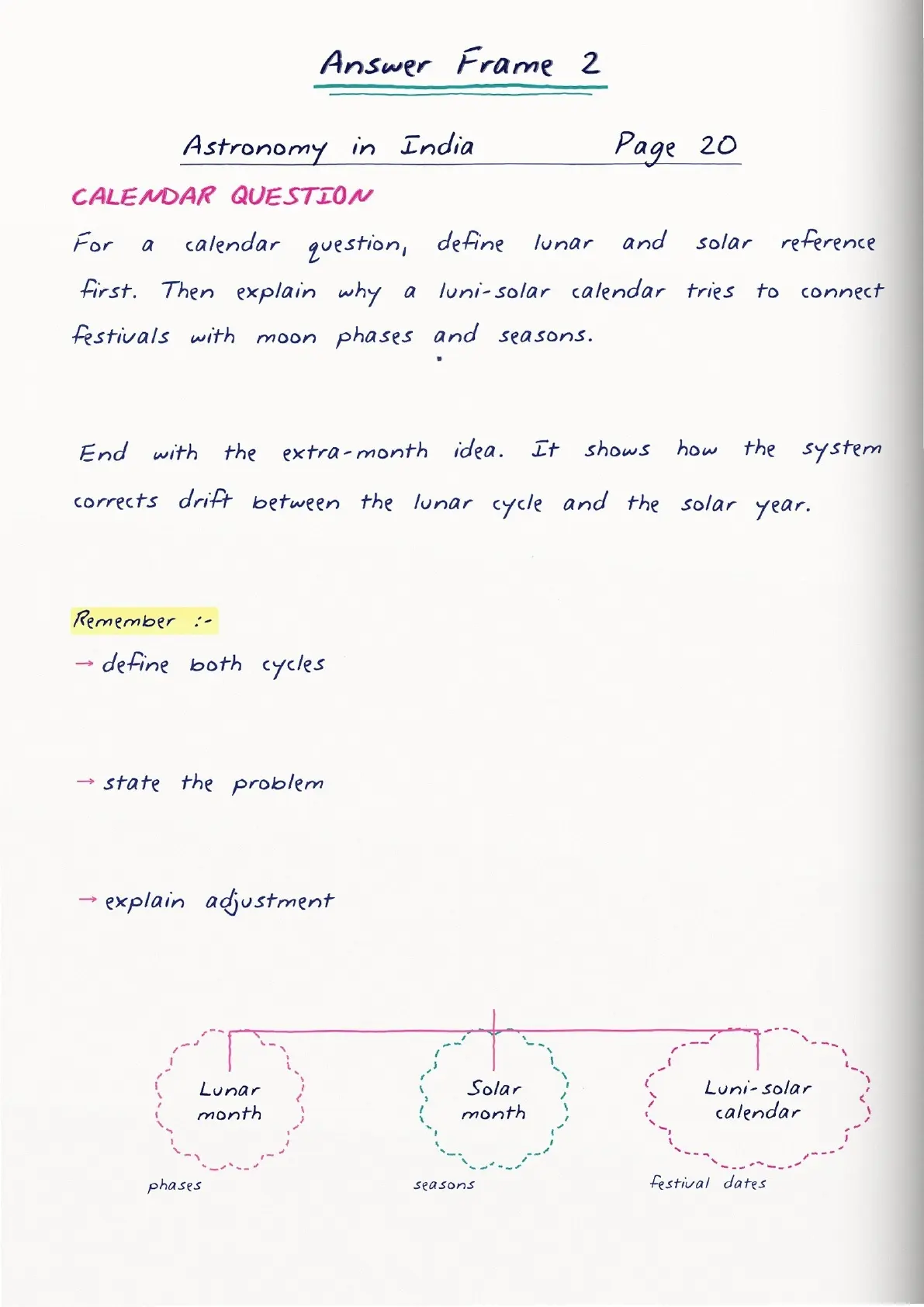
Student Feedback: Students revise this chapter faster when they connect calendar making with practical needs like farming, festivals and eclipse prediction.
Astronomy in India Handwritten Notes Overview
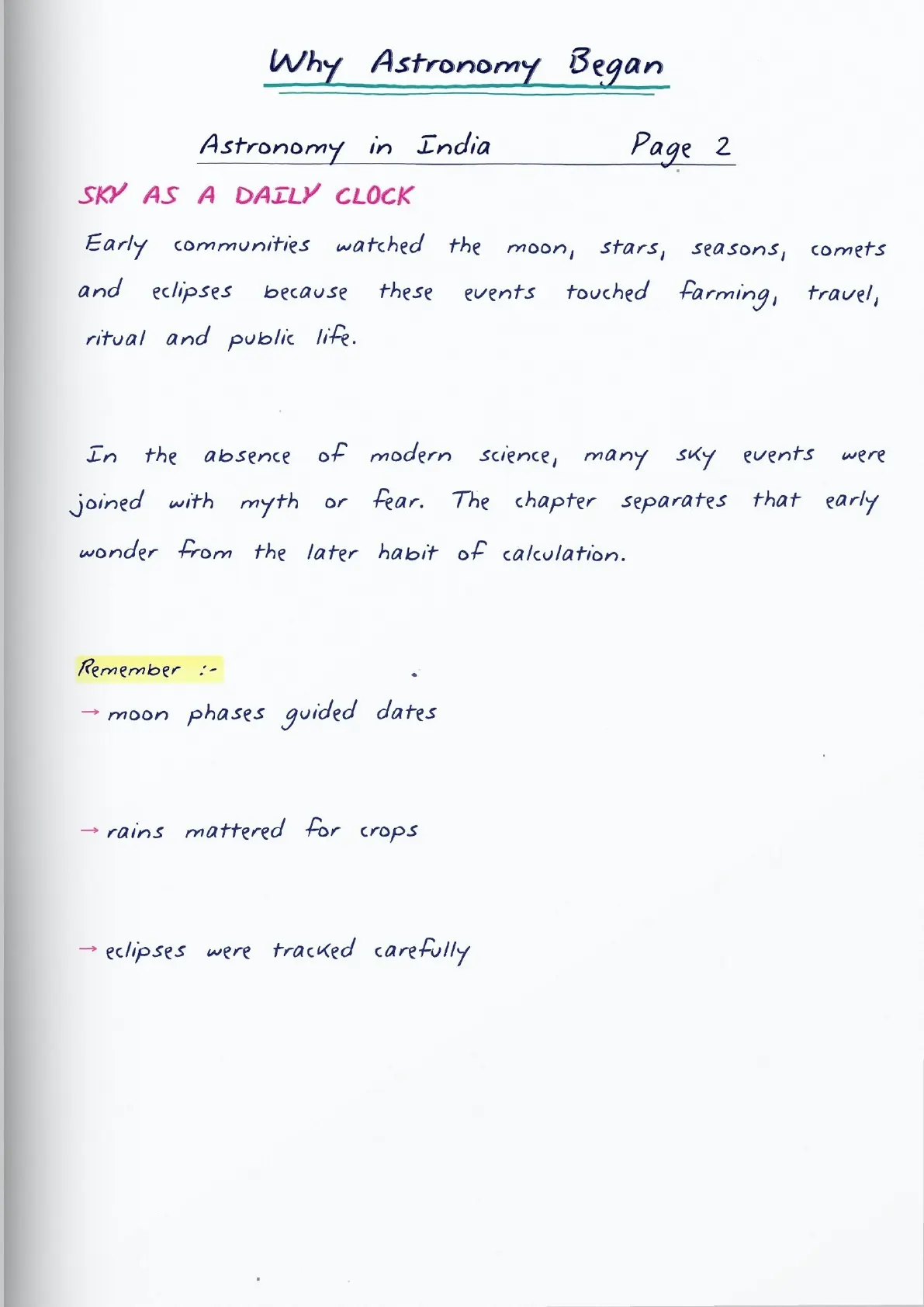
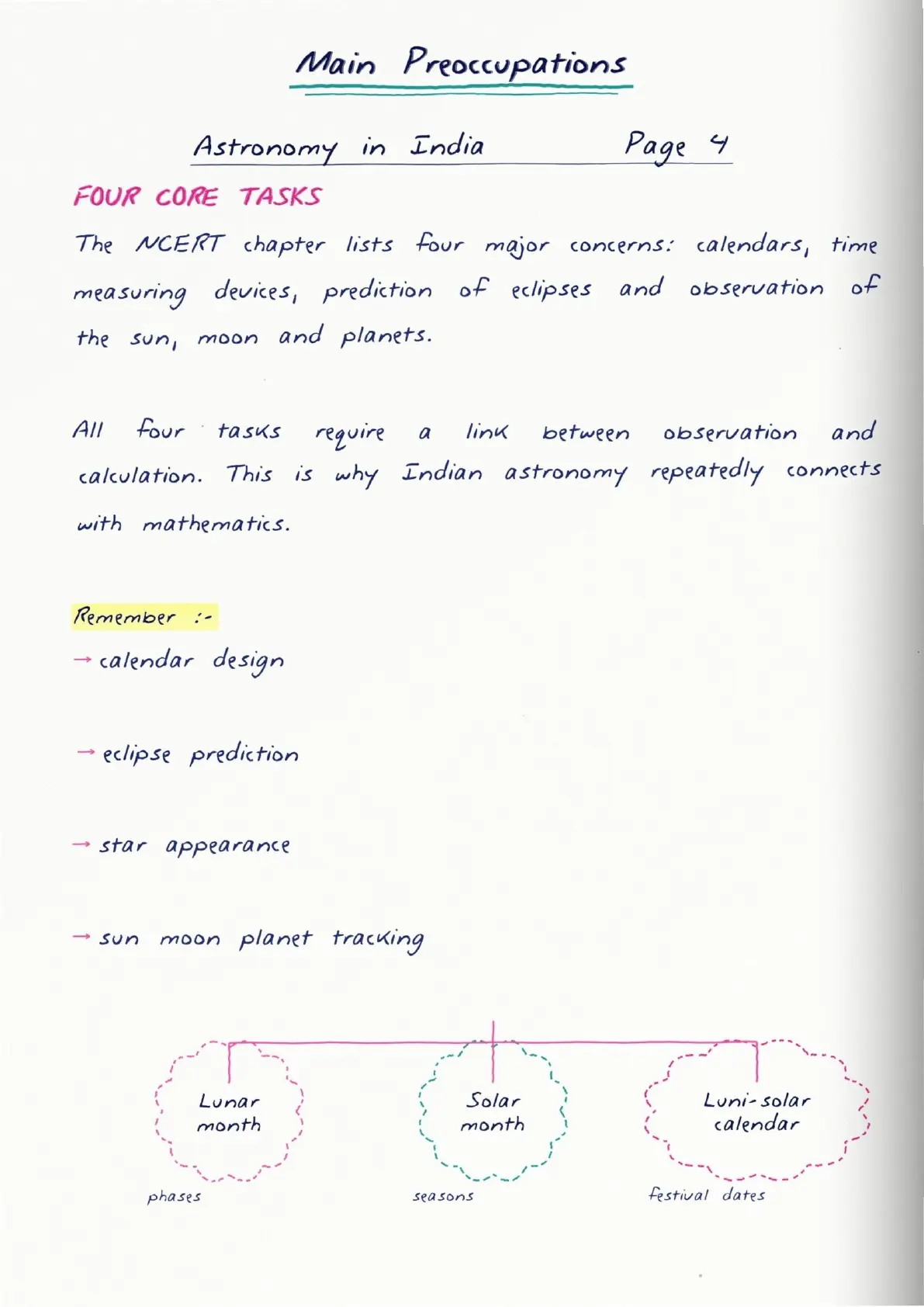
The Astronomy in India chapter explains how careful sky observation became useful knowledge. It begins with human wonder about the sky and then moves to calendars, time keeping, eclipse prediction, instruments and mathematical calculation.
The core revision idea is simple: Indian astronomy joined practical social needs with observation and calculation.
- Calendar use: festivals, seasons and social ceremonies needed predictable dates.
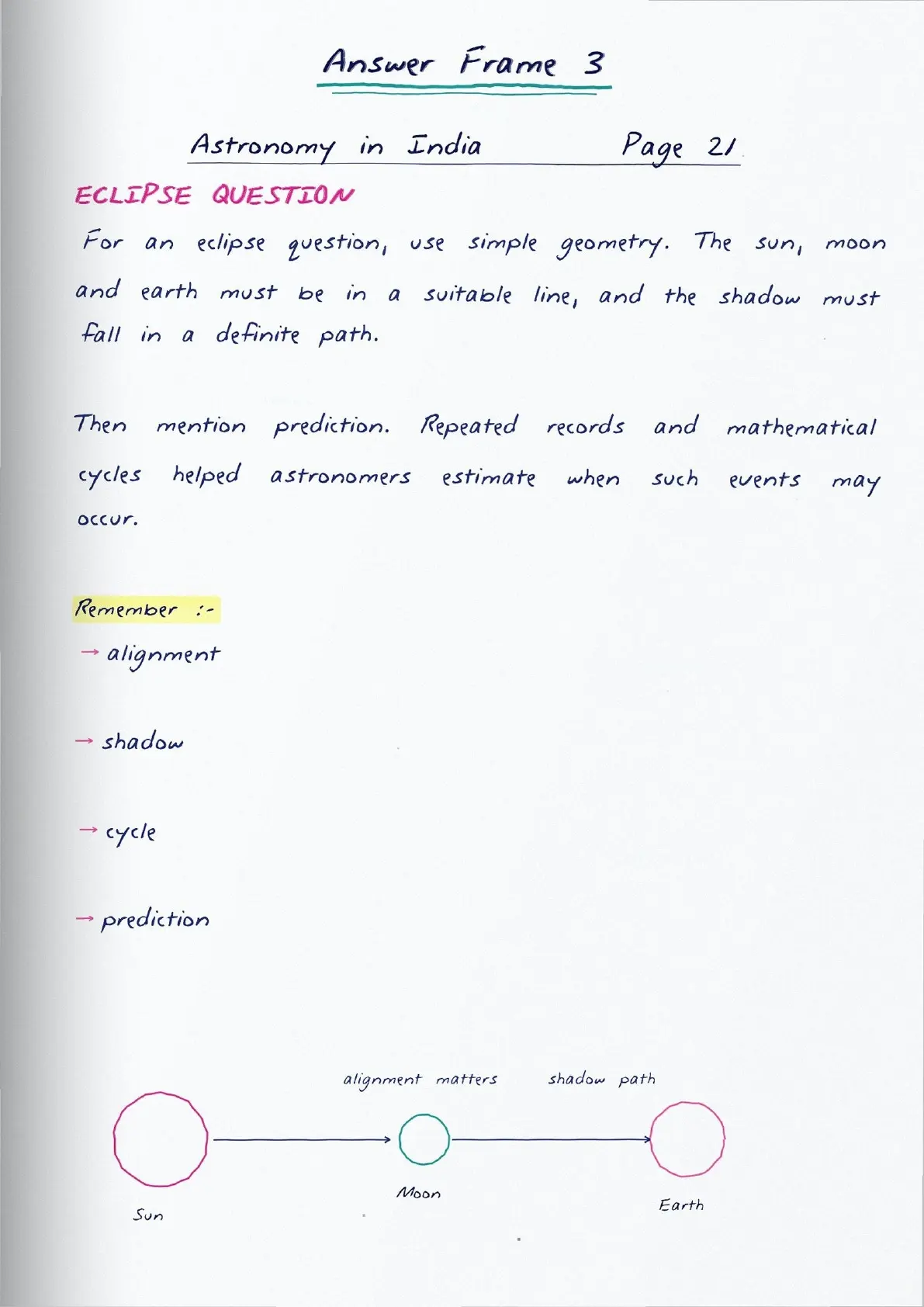
- Eclipse use: repeated records helped astronomers predict rare events more carefully.
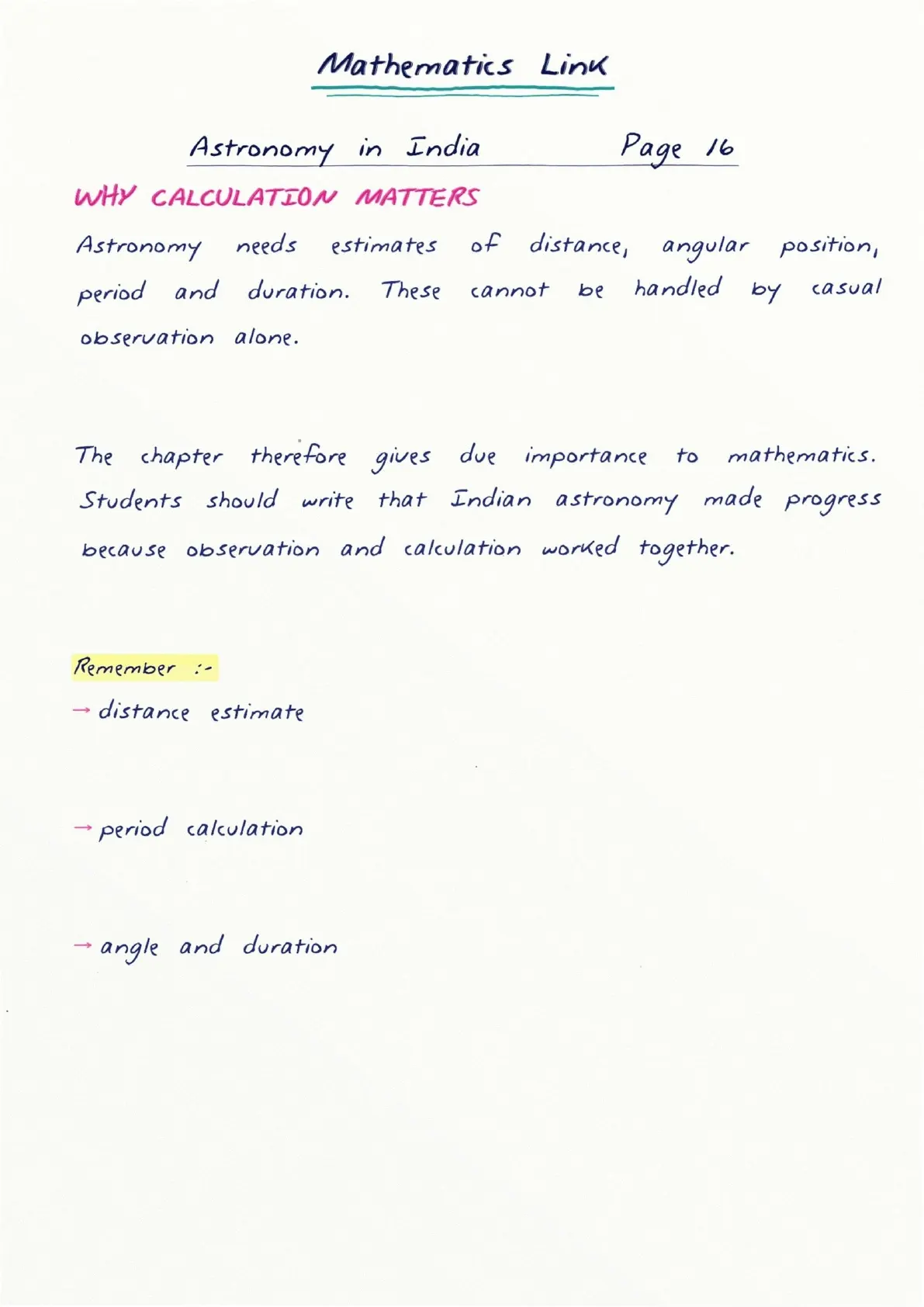
- Mathematics use: distances, periods, angles and durations required calculation.
Why Astronomy Was Practically Important
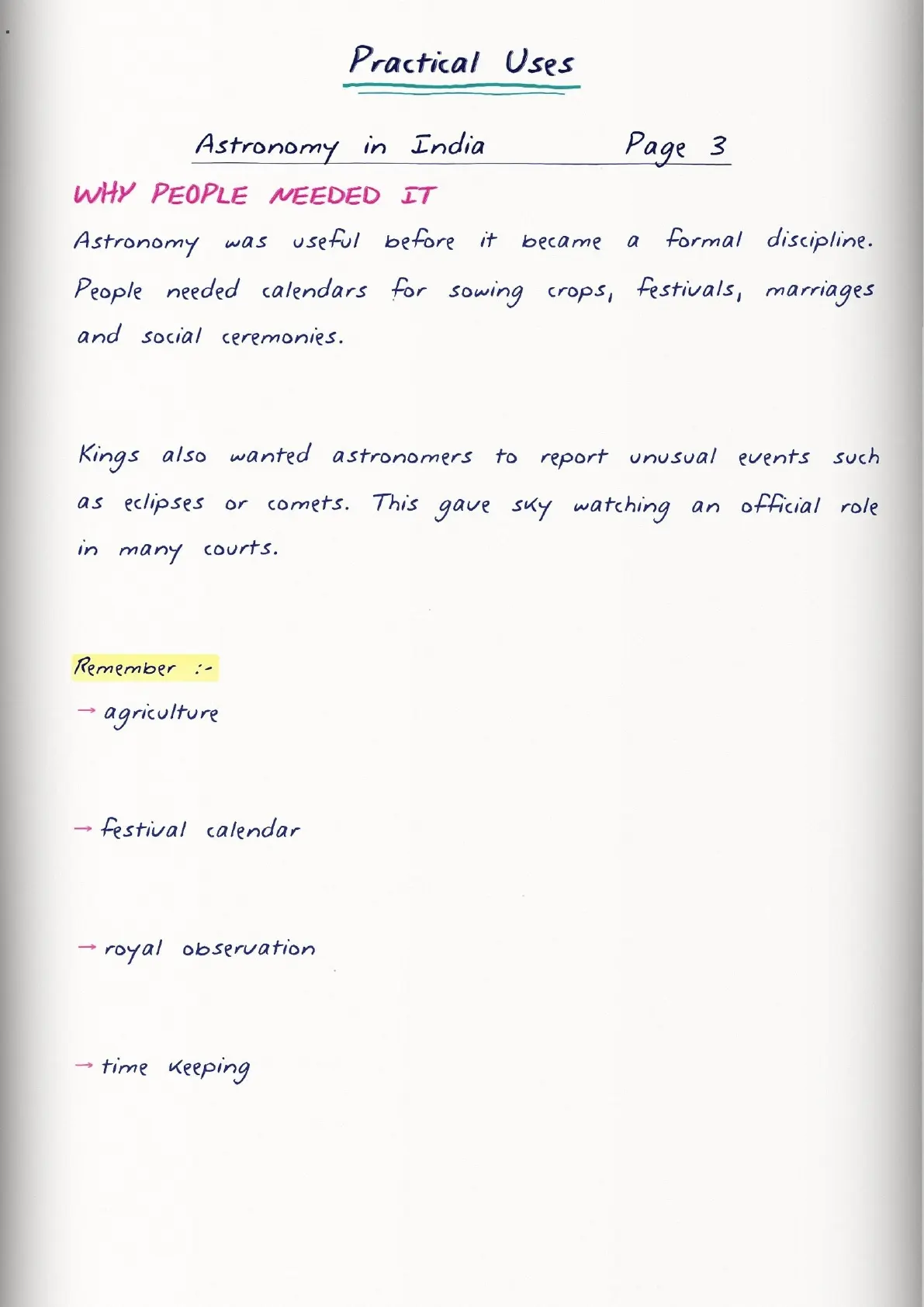
Astronomy was not only a matter of curiosity. Farmers needed seasonal knowledge, families needed dates for ceremonies and rulers wanted trained observers to report unusual sky events. This is why the chapter treats astronomy as social knowledge as well as scientific knowledge.
| Need | Astronomy link | Revision point |
|---|---|---|
| Agriculture | Season and rain expectation helped crop timing. | Write astronomy as practical knowledge. |
| Festivals | Moon phases and tithi helped fix observances. | Mention lunar month and paksha. |
| Royal courts | Astronomers watched eclipses, comets and unusual events. | Connect observation with record keeping. |
| Calculation | Prediction needed period, distance and angle estimates. | Connect astronomy with mathematics. |
Class 11 KTPI Astronomy Explanation Video
Source: Khan Academy on YouTube
Calendar, Moon Phases and Time Keeping
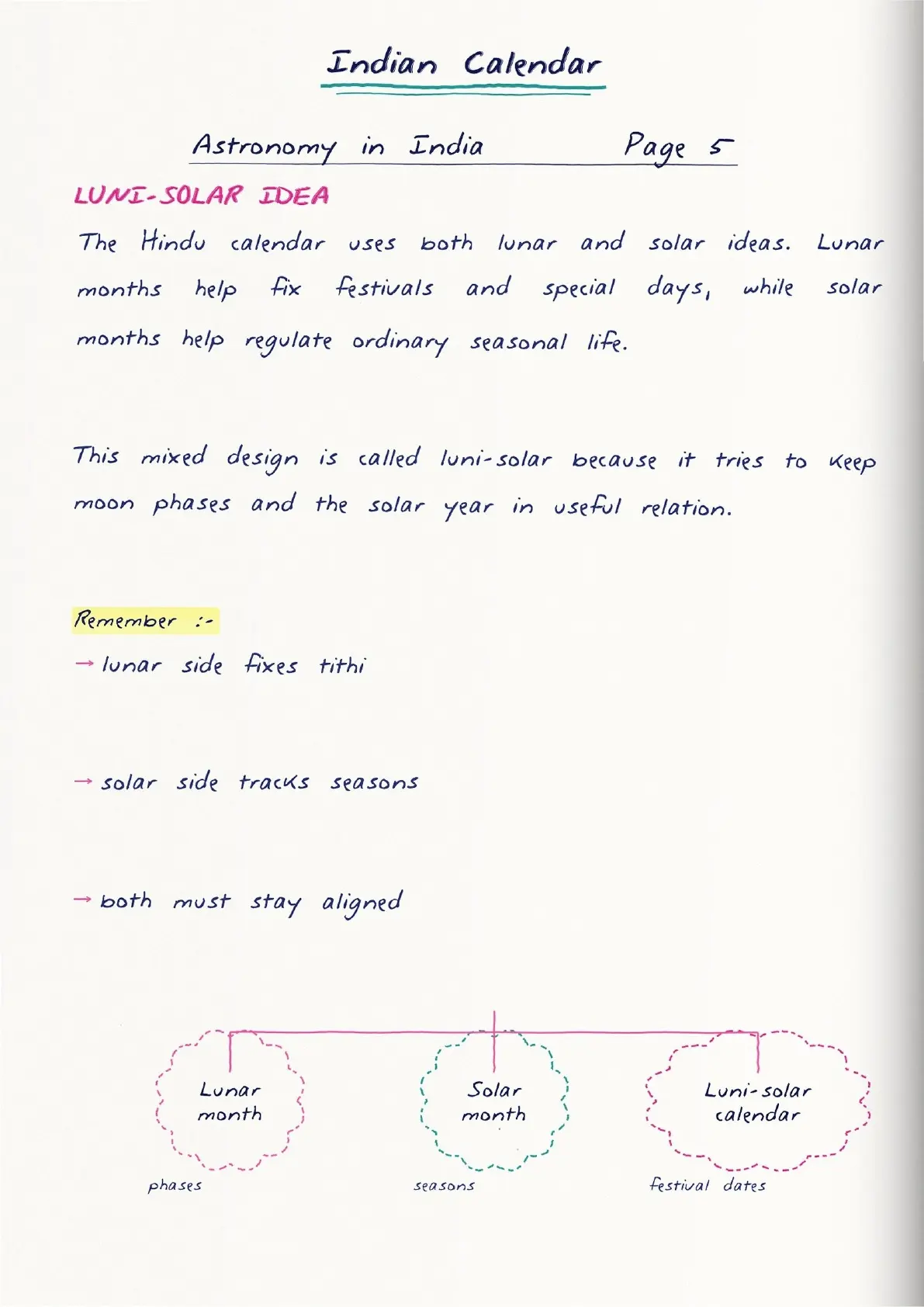
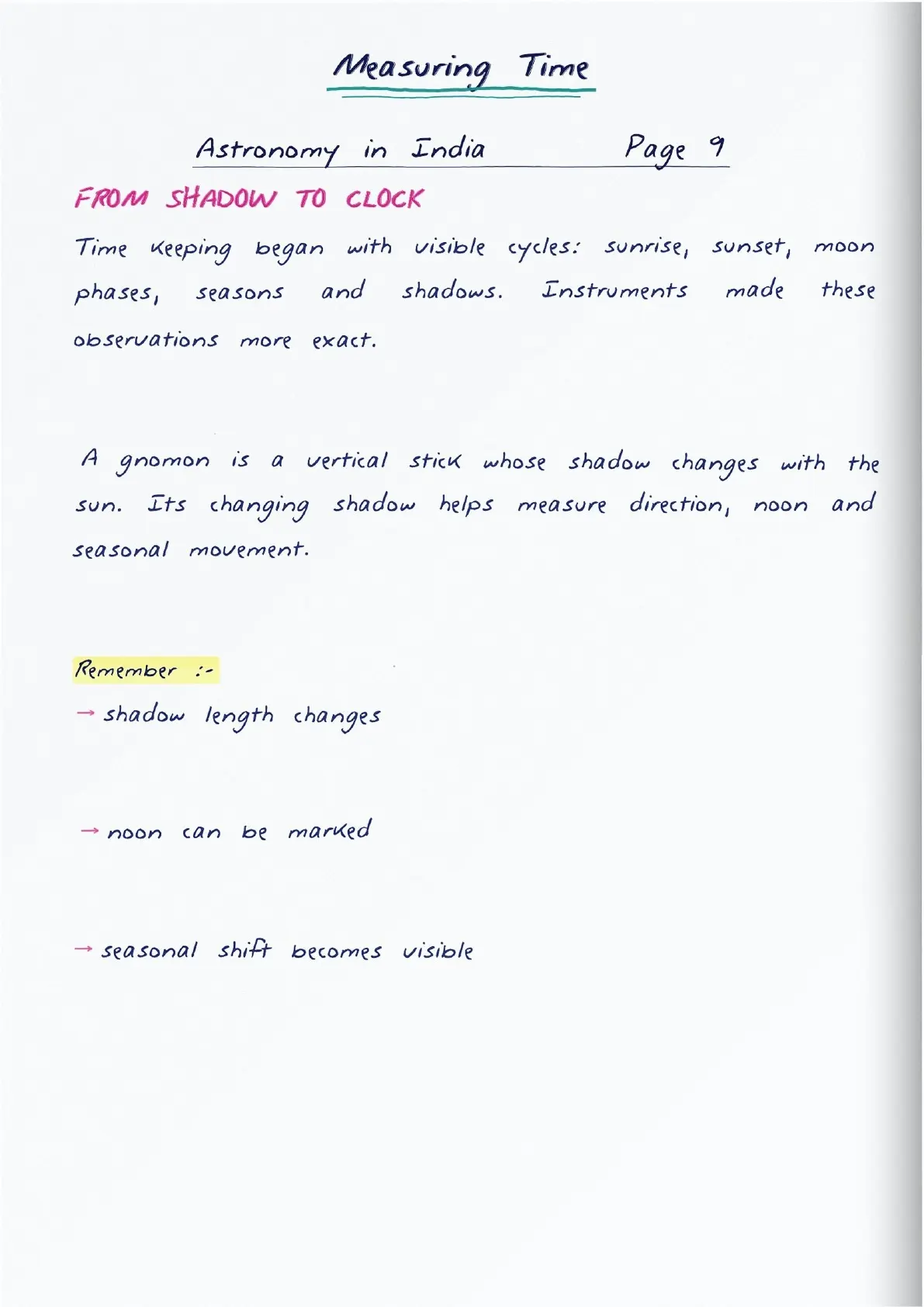
The chapter's calendar section is important for short-answer questions. The Hindu calendar is described as luni-solar because it keeps lunar phases and solar seasonal movement in relation. Lunar phases guide tithi and festivals, while solar movement keeps seasonal order visible.
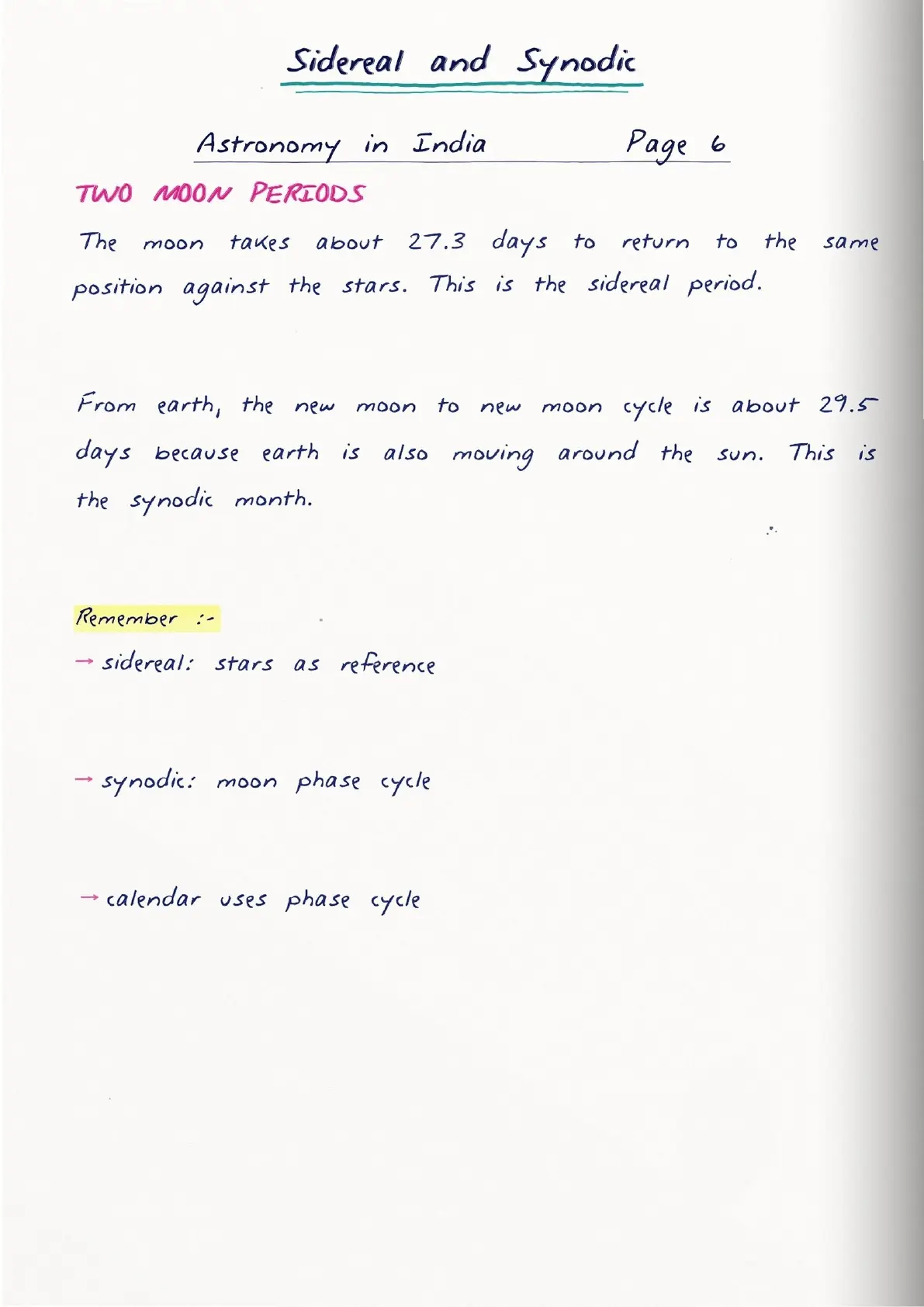
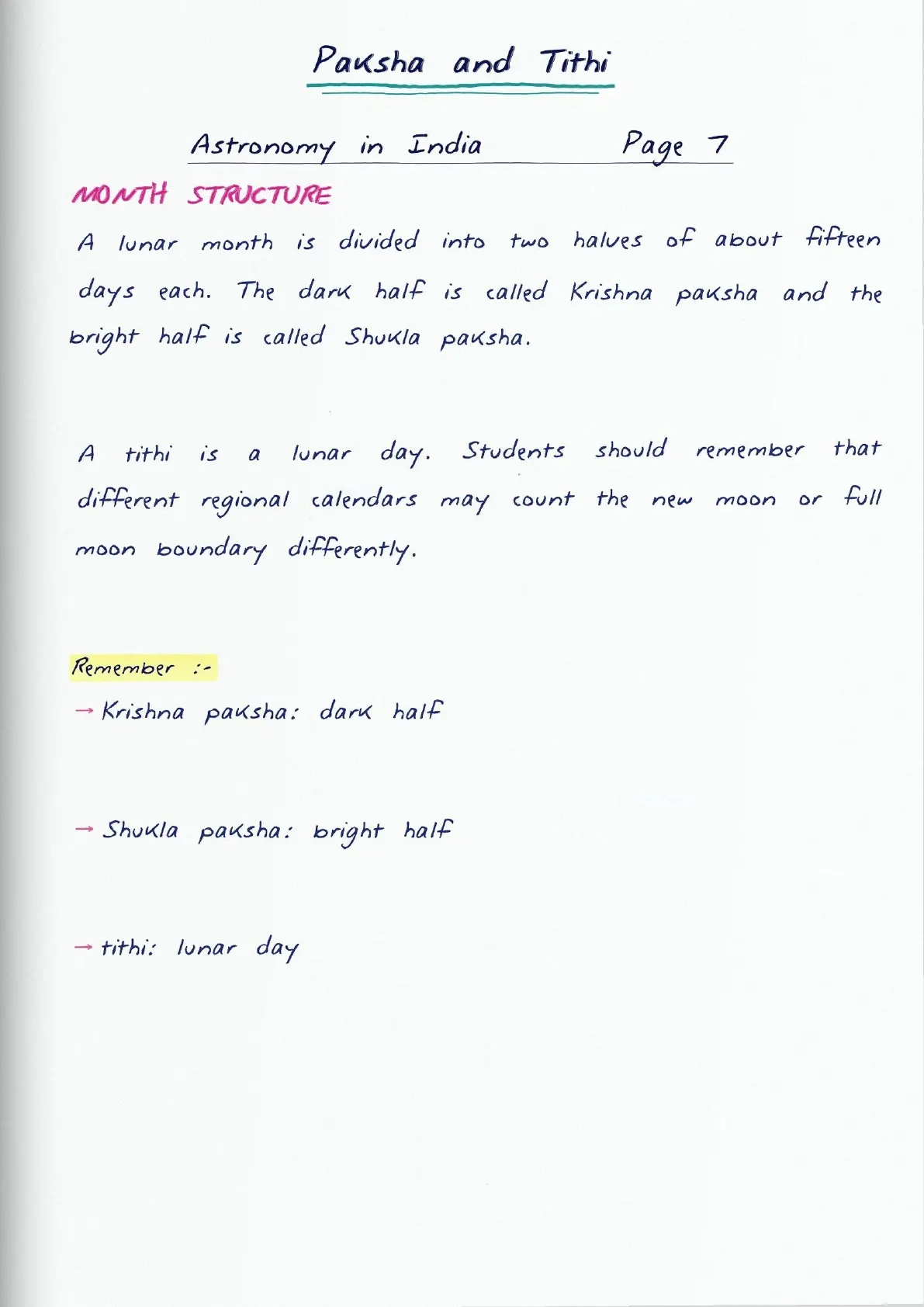
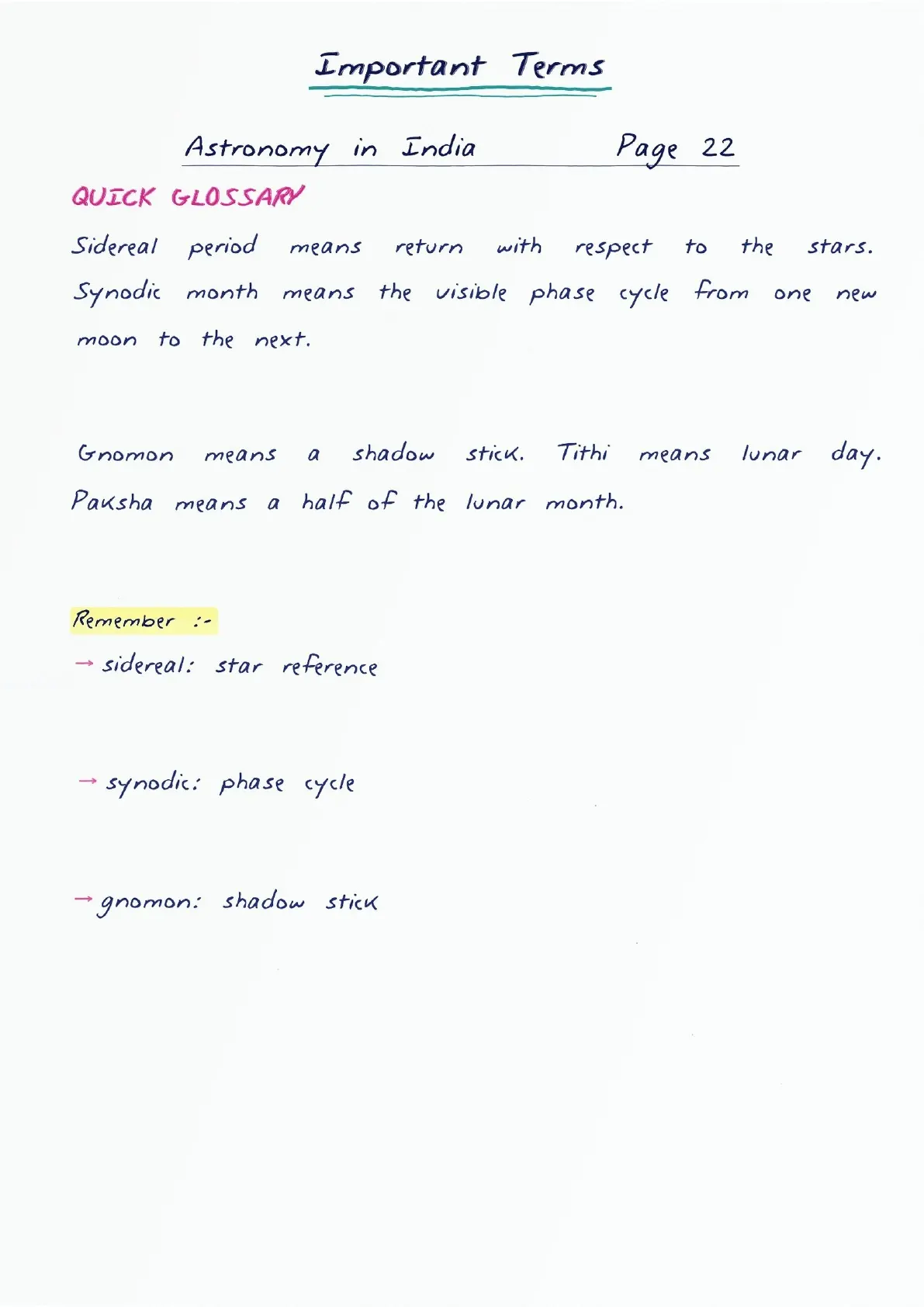
Sidereal period means the moon's return with respect to the stars. Synodic month means the visible phase cycle from one new moon to the next. Paksha means one half of a lunar month, and tithi means a lunar day.
| Term | Meaning | Use in answers |
|---|---|---|
| Sidereal period | Moon against the star background. | Use for reference-frame questions. |
| Synodic month | Visible phase cycle of the moon. | Use for calendar questions. |
| Krishna paksha | Dark half of the lunar month. | Use with Shukla paksha contrast. |
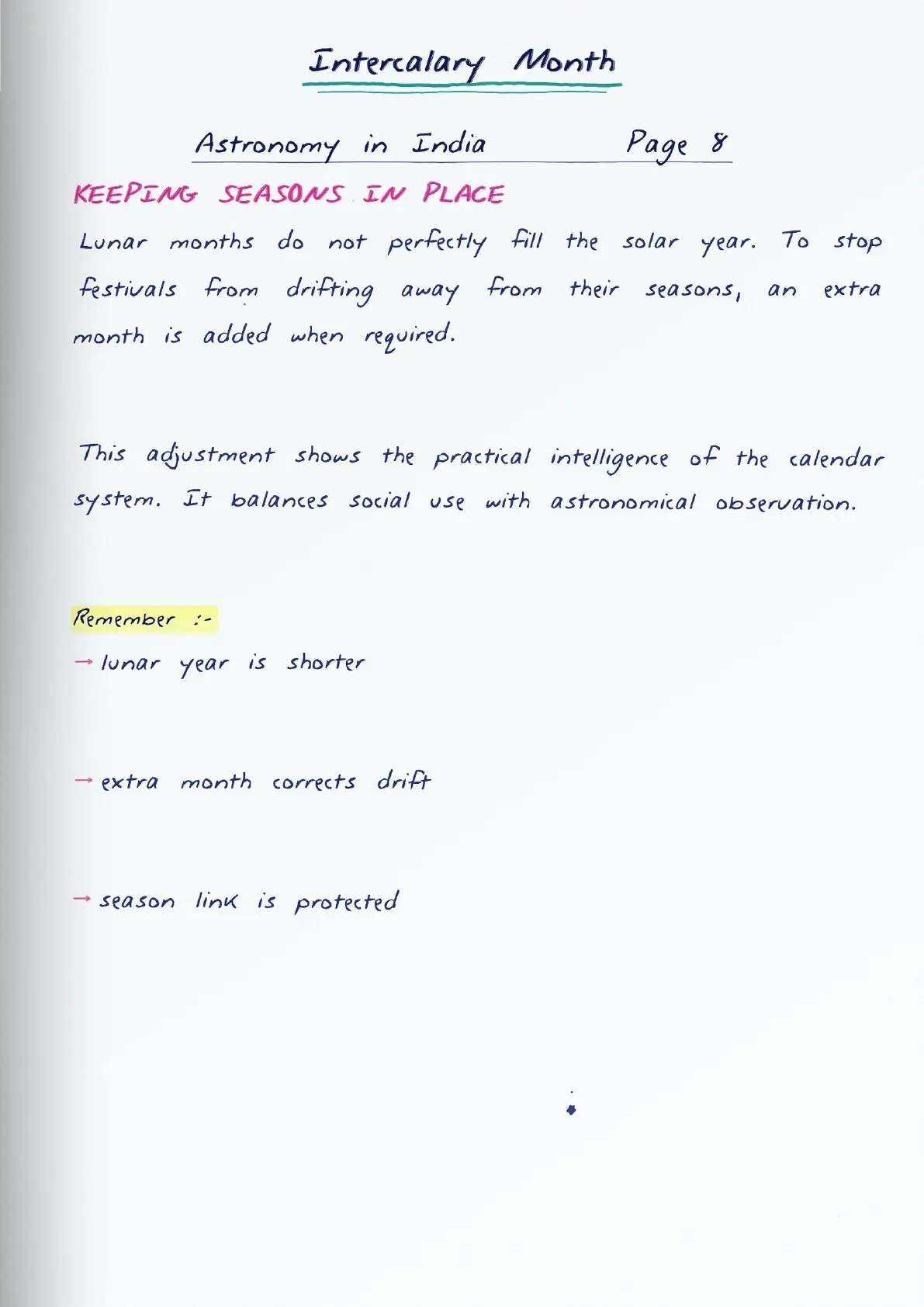
| Intercalary month | Extra month added to correct drift. | Use for season alignment. |
Eclipses, Scholars and Observatories
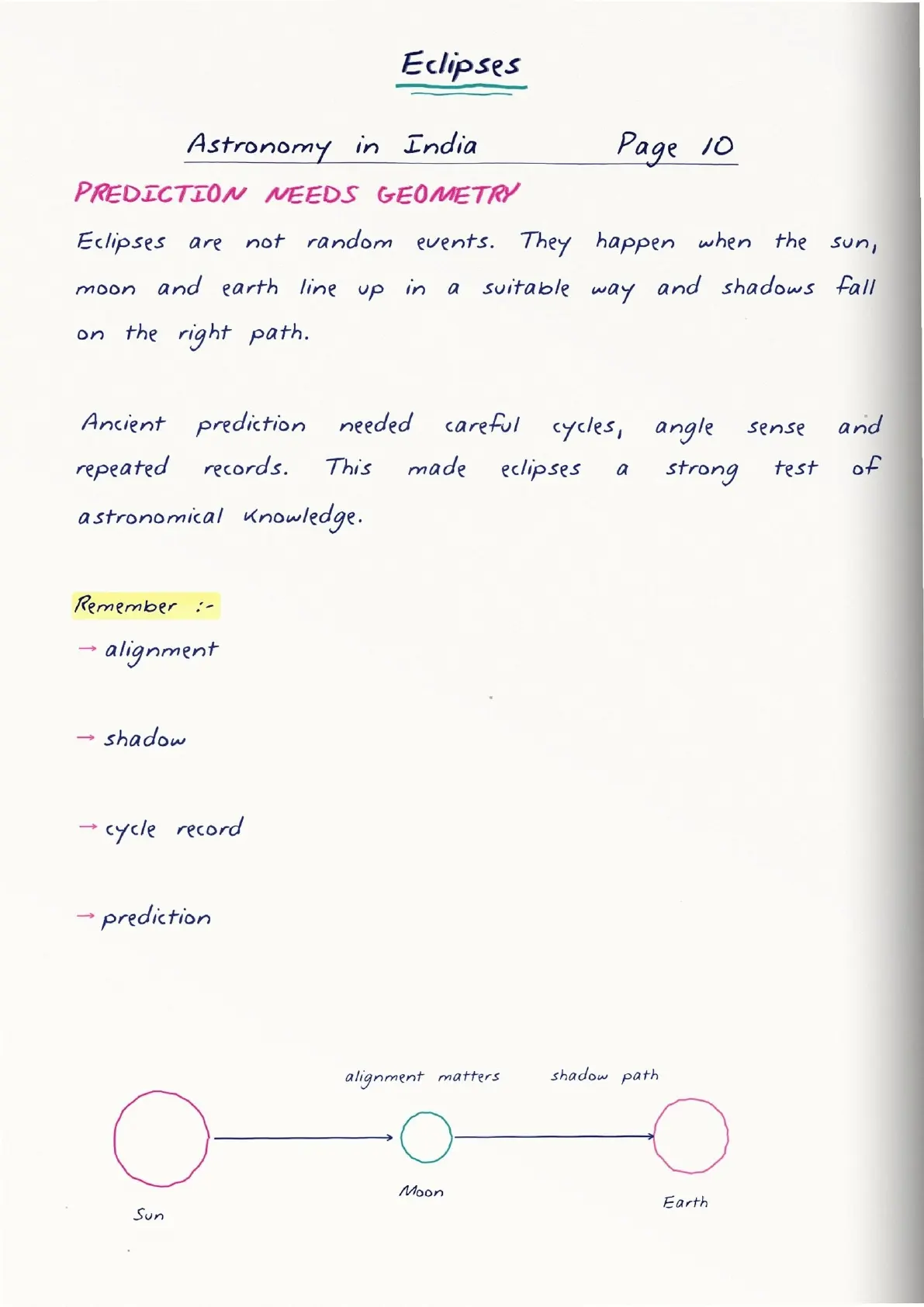
Eclipse prediction is one of the clearest examples of observation becoming calculation. Students should explain eclipses through alignment and shadow, then connect prediction with repeated records and mathematical work.
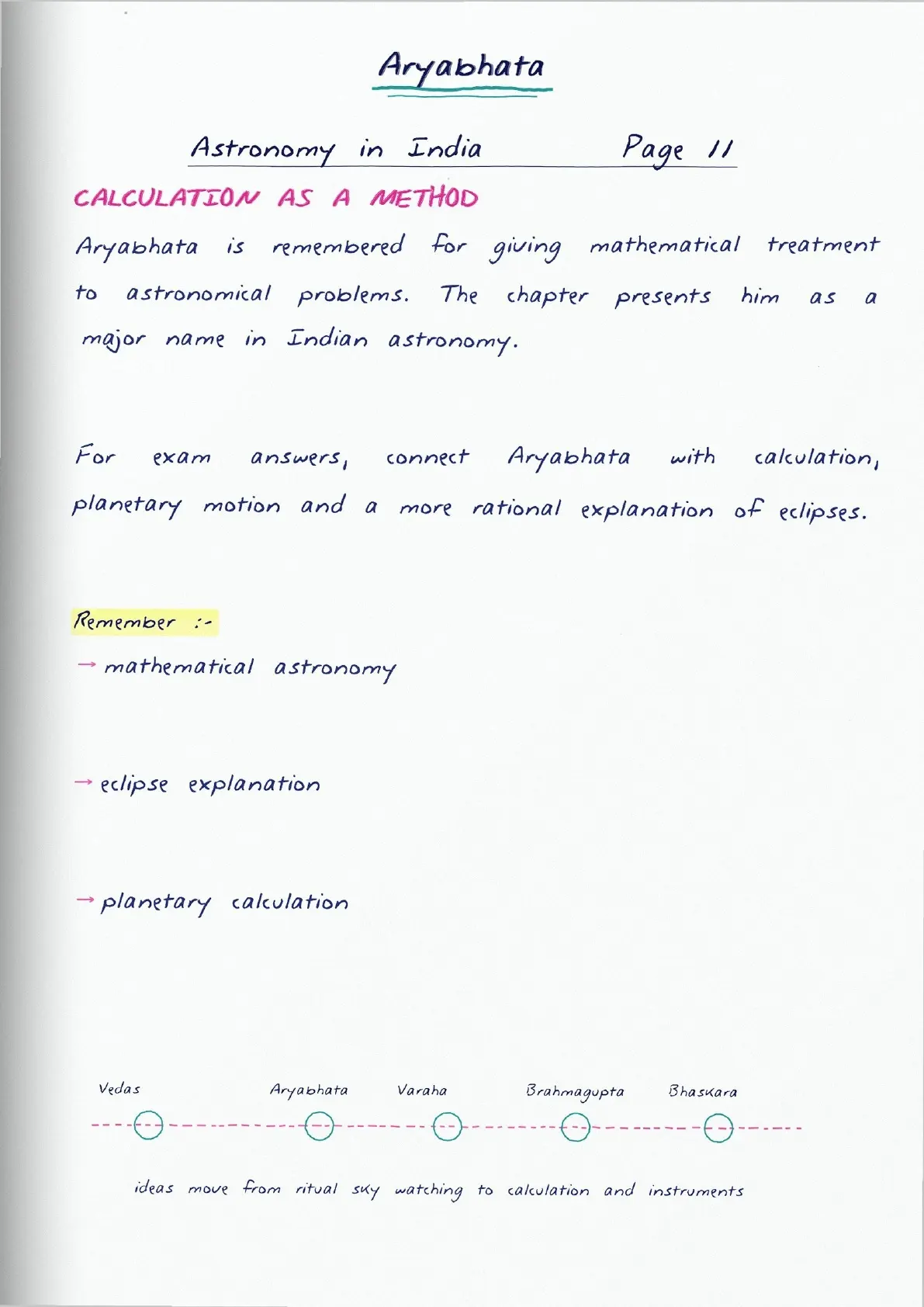
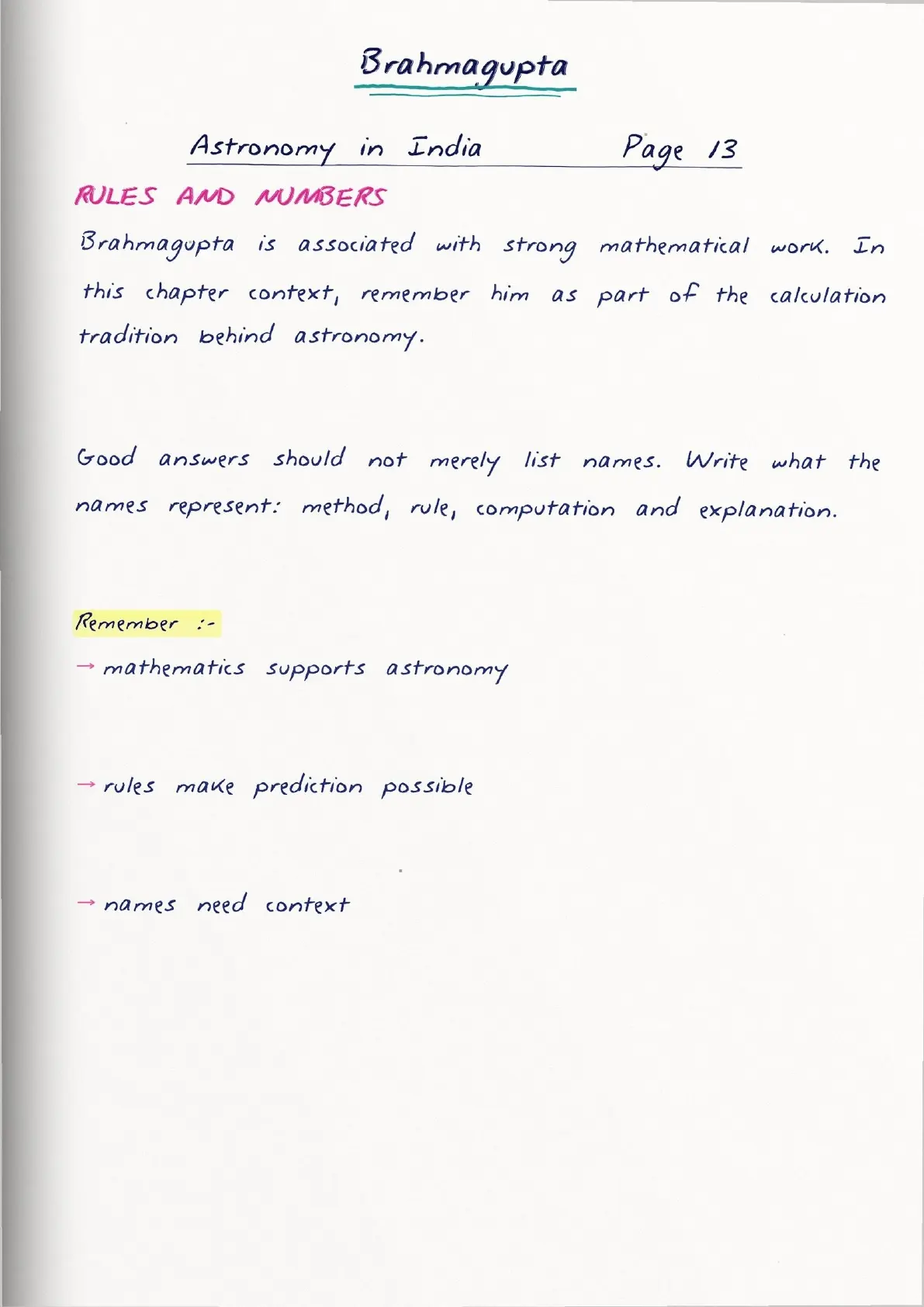
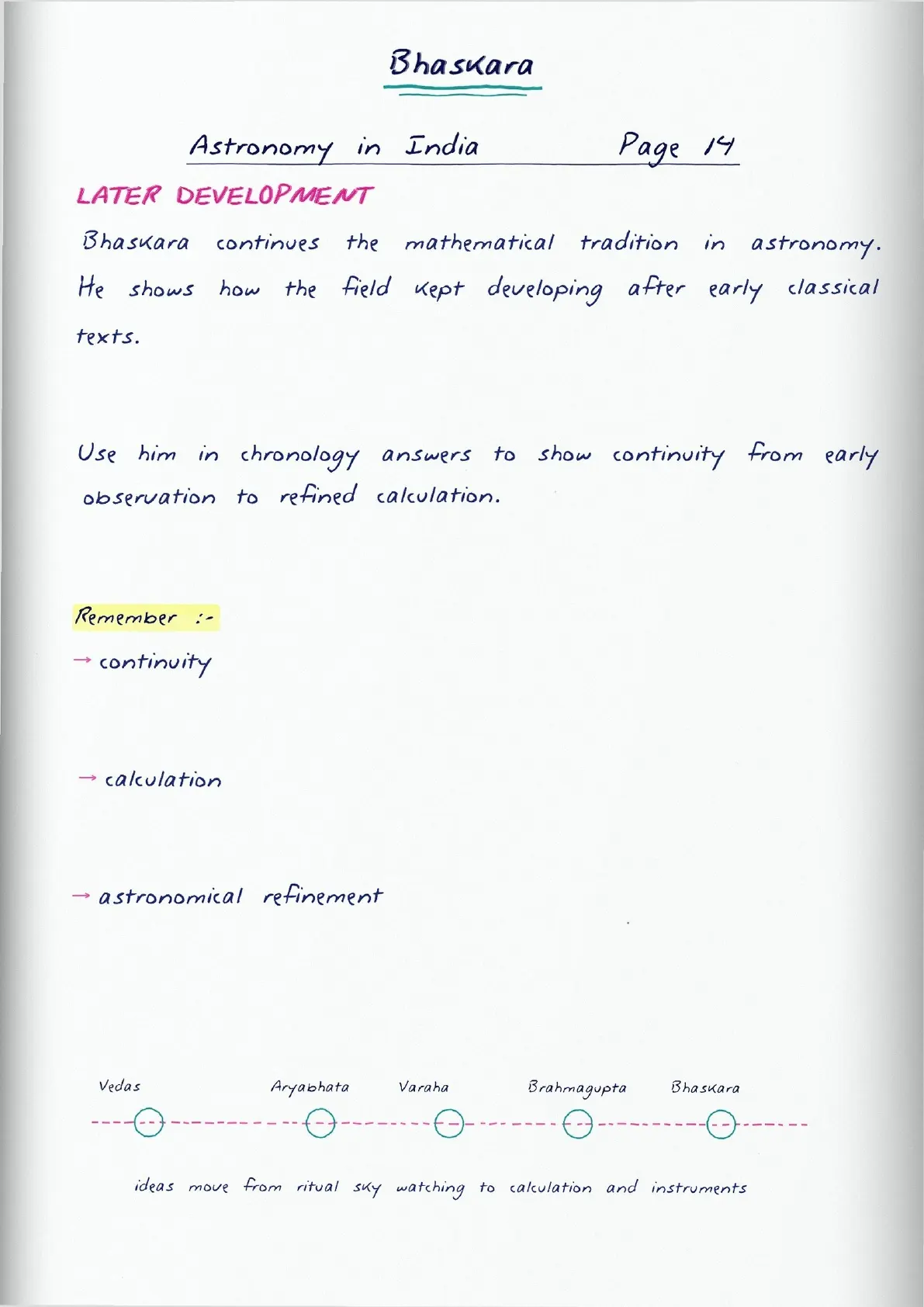
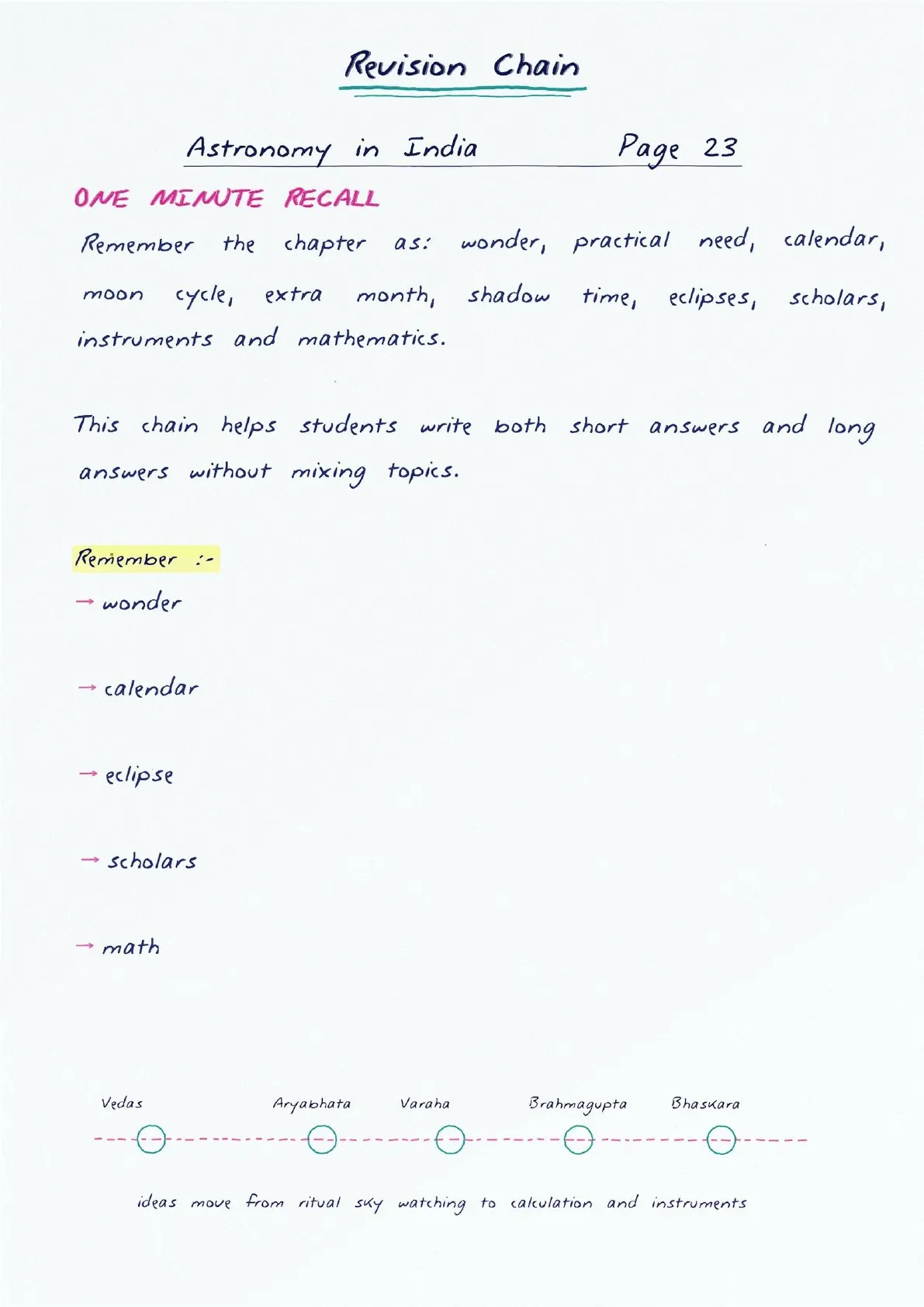
- Aryabhata: remember him for mathematical treatment of astronomical problems.
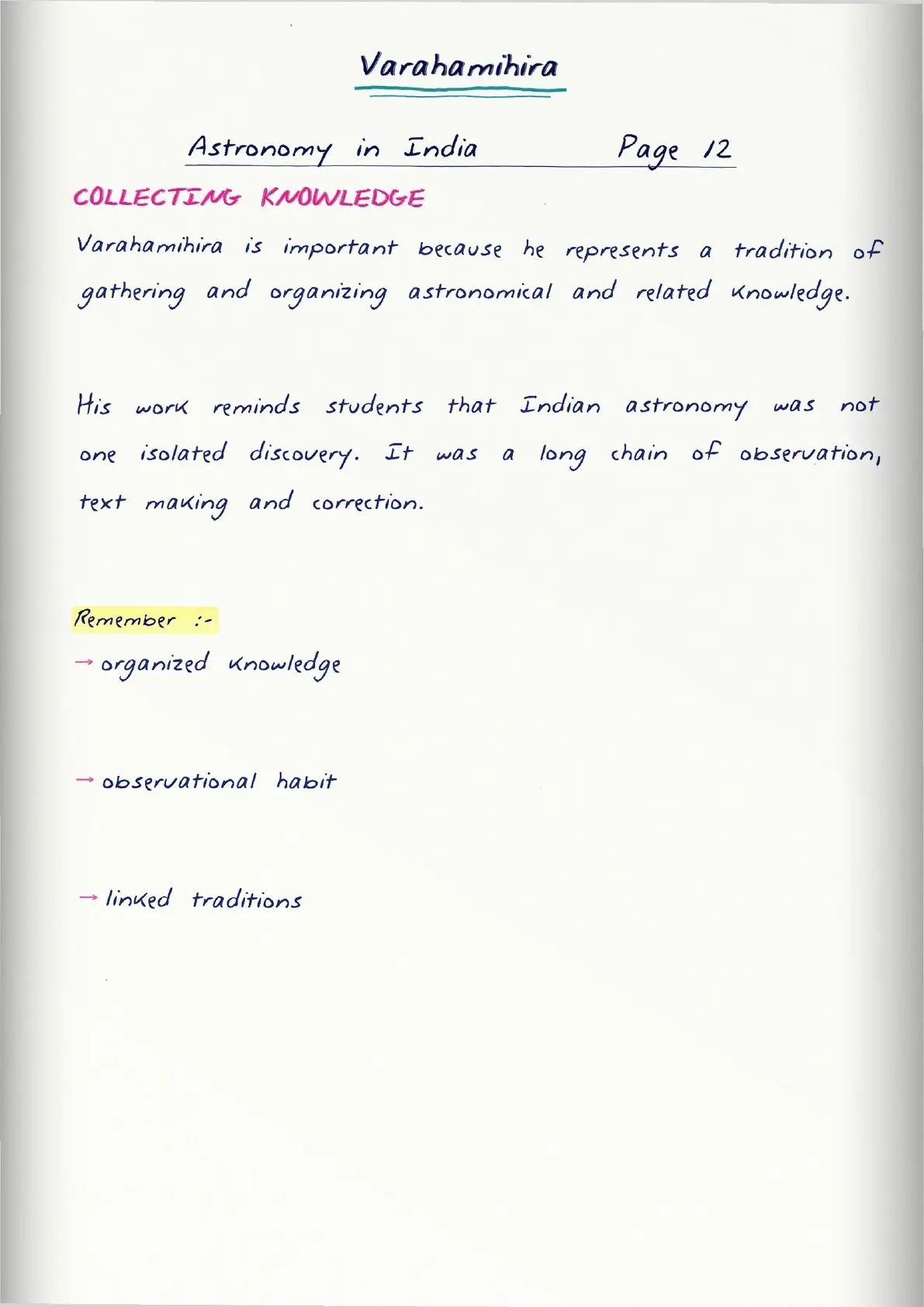
- Varahamihira: remember him for collecting and organizing knowledge traditions.
- Brahmagupta and Bhaskara: remember them for the wider calculation tradition.
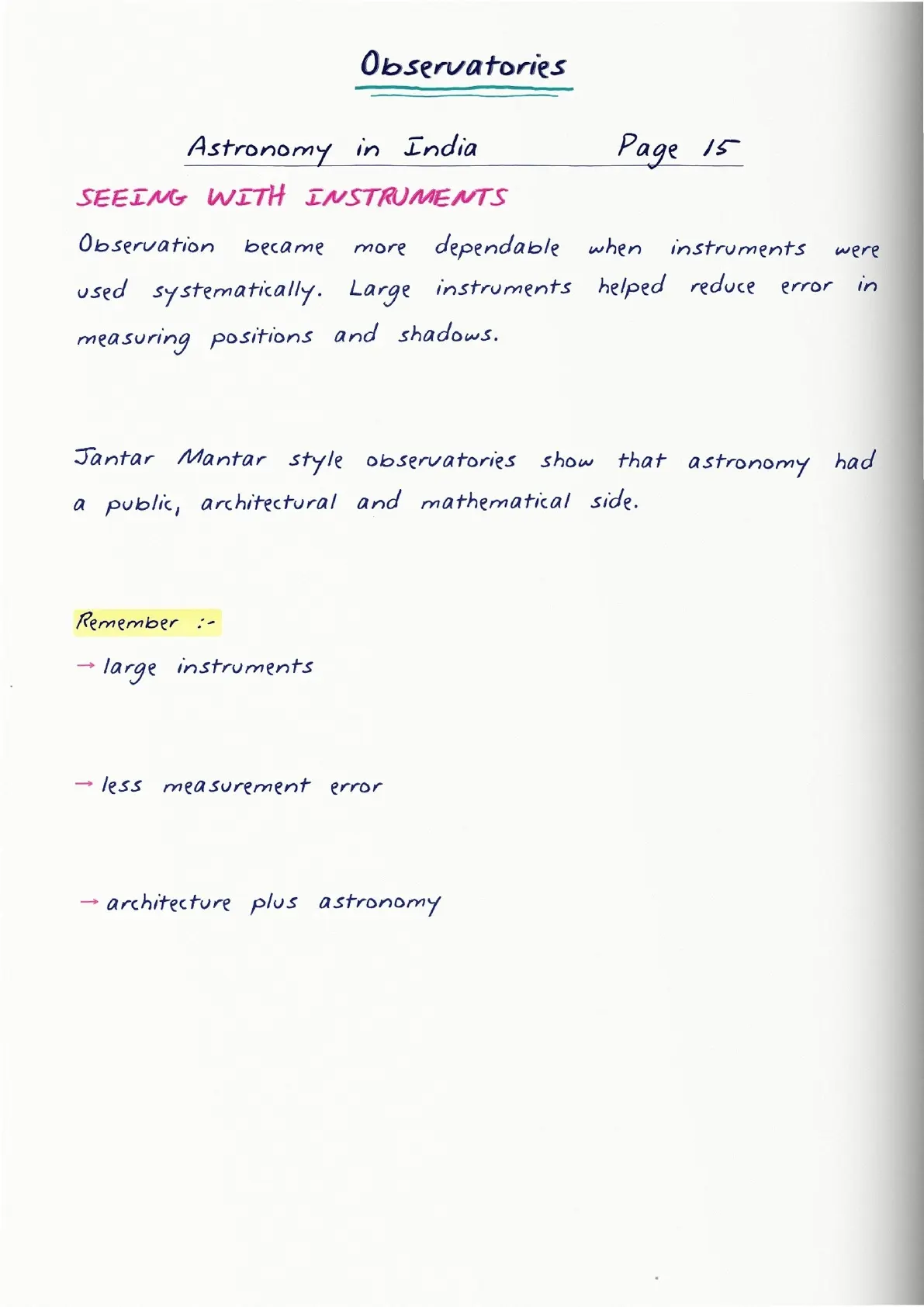
- Observatories: remember them as instrument-based spaces for measurement.
How to Use the Astronomy in India Handwritten Notes PDF
Start with the first two pages for the central idea, then revise the calendar pages, eclipse pages and scholar timeline. The final pages give common mistakes, answer frames and glossary terms for quick pre-test revision.
- Use the calendar pages for tithi, paksha, sidereal and synodic month.
- Use the eclipse pages for alignment, shadow and prediction questions.
- Use the scholar pages for chronology and contribution-based answers.
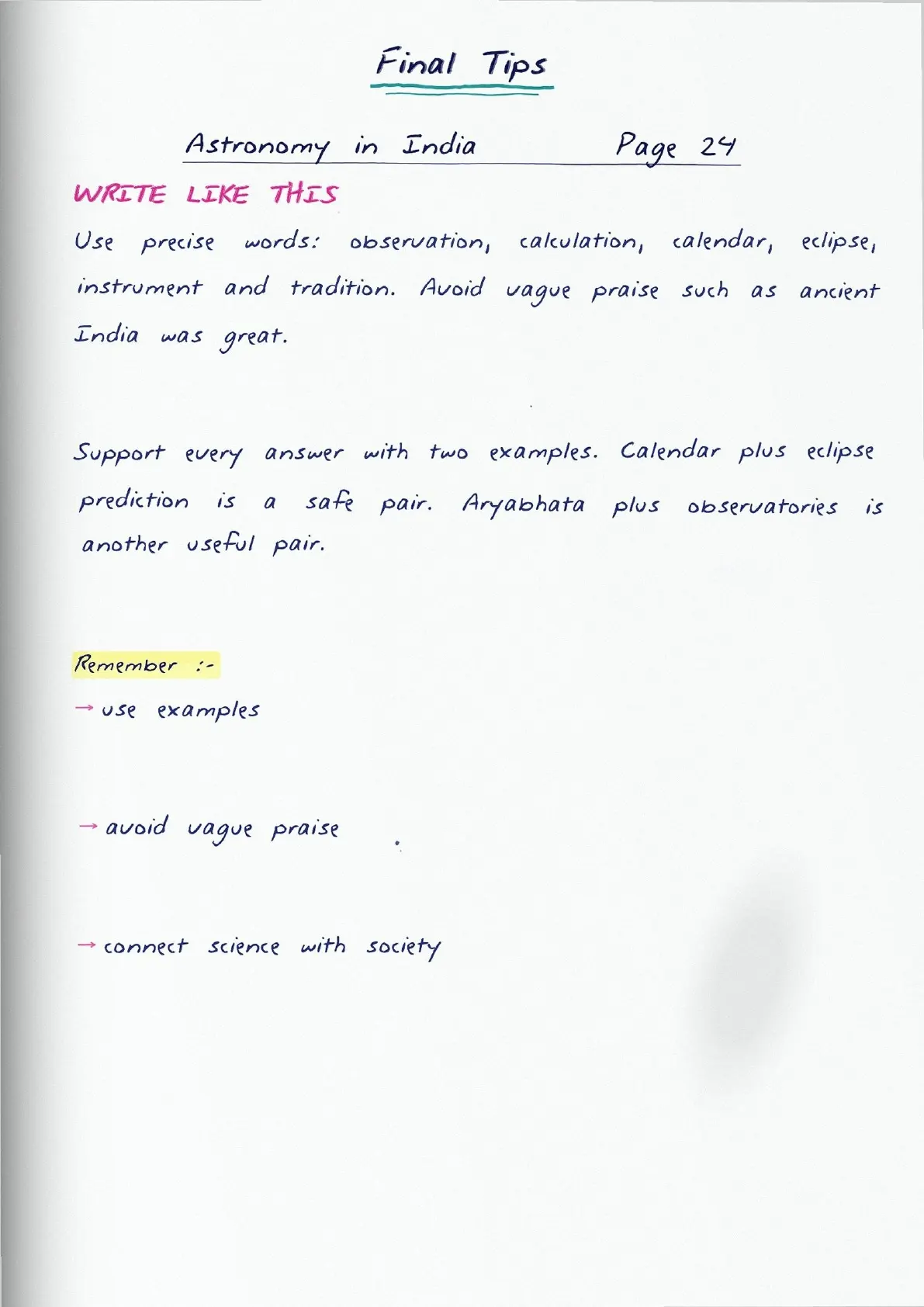
- Use the final tips page to avoid vague praise and write evidence-based answers.
Related Class 11 KTPI Resources
Use these related resources with the handwritten notes for complete chapter preparation.
| Resource | Best use | Link |
|---|---|---|
| NCERT Solutions | Step-by-step answers for Astronomy in India | Open solutions |
| NCERT Notes | Typed revision notes for the same chapter | Open notes |
| NCERT Book PDF | Official chapter reading | Open book PDF |
All Class 11 KTPI Handwritten Notes
The table below keeps the same resource type together, so students can move chapter by chapter through Class 11 KTPI handwritten notes.
| Chapter | Title | Handwritten notes link |
|---|---|---|
| Chapter 1 | Astronomy in India | Open handwritten notes |
| Chapter 2 | Chemistry in India | Open handwritten notes |
| Chapter 3 | Indian Literature Part I Introduction of Indian Literature | Open handwritten notes |
| Chapter 4 | Indian Philosophical Systems | Open handwritten notes |
| Chapter 5 | Indian Traditional Knowledge on Environmental Conservation | Open handwritten notes |
| Chapter 6 | Life Sciences 1 Ayurveda for Life, Health and Well-Being | Open handwritten notes |
| Chapter 7 | Life Sciences 2 The Historical Evolution of Medical Tradition in Ancient India | Open handwritten notes |
| Chapter 8 | Mathematics in India | Open handwritten notes |
| Chapter 9 | Theatre and Drama in India | Open handwritten notes |
Astronomy in India Class 11 KTPI Handwritten Notes FAQs
Ques. What do Astronomy in India handwritten notes cover?
Ans. The notes cover calendars, lunar months, tithi, paksha, eclipses, time keeping, instruments, observatories and Indian astronomy scholars for 2026-27 revision.
Ques. Why is the Hindu calendar called luni-solar?
Ans. It uses lunar phases for dates and festivals while also keeping relation with the solar year and seasons.
Ques. What is the difference between sidereal and synodic month?
Ans. Sidereal month is measured against stars, while synodic month is the visible moon phase cycle from new moon to new moon.
Ques. Are these notes aligned with the 2026-27 NCERT book?
Ans. Yes. The notes are prepared for the Class 11 KTPI Astronomy in India chapter in the 2026-27 NCERT reprint.



Comments