




The Chemical Reactions and Equations Class 10 Science handwritten notes are scanned, boxed and built for fast last-minute revision, fully matched to the 2026-27 CBSE syllabus. They cover how to write and balance a chemical equation, the five reaction types, and oxidation, reduction, corrosion and rancidity, all in clear ruled-page form.
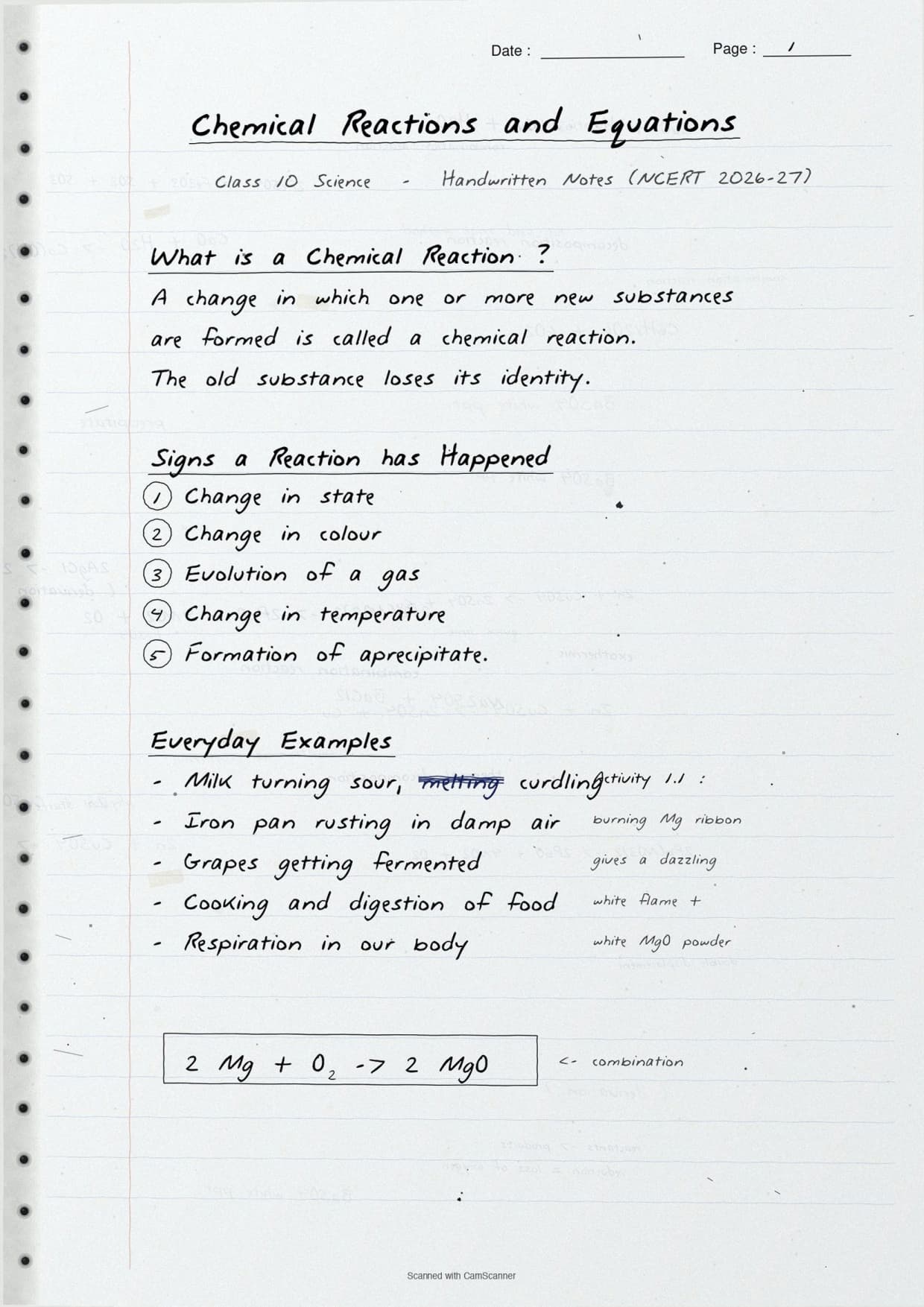
- CBSE Weightage: 5 to 7 marks from the Chemical Substances unit, often as 1-mark equation and 3-mark reaction-type questions.
- Boxed, balanced equations and an underlined keyword for every combination, decomposition, displacement and double displacement reaction.
- Pairs with the NCERT Solutions, Notes and Book PDF linked lower on this page.
Prepared from the official NCERT Science textbook and matched to the 2026-27 CBSE syllabus.
Solved by Collegedunia: Every balanced equation in these Chemical Reactions and Equations handwritten notes is checked by Collegedunia's Class 10 Science team against the 2026-27 NCERT textbook.
What These Chemical Reactions and Equations Handwritten Notes Include
These Chemical Reactions and Equations handwritten notes condense the whole chapter into 22 scanned pages, with every balanced equation boxed and every reaction type underlined. The pages cover the three threads the CBSE board paper tests:
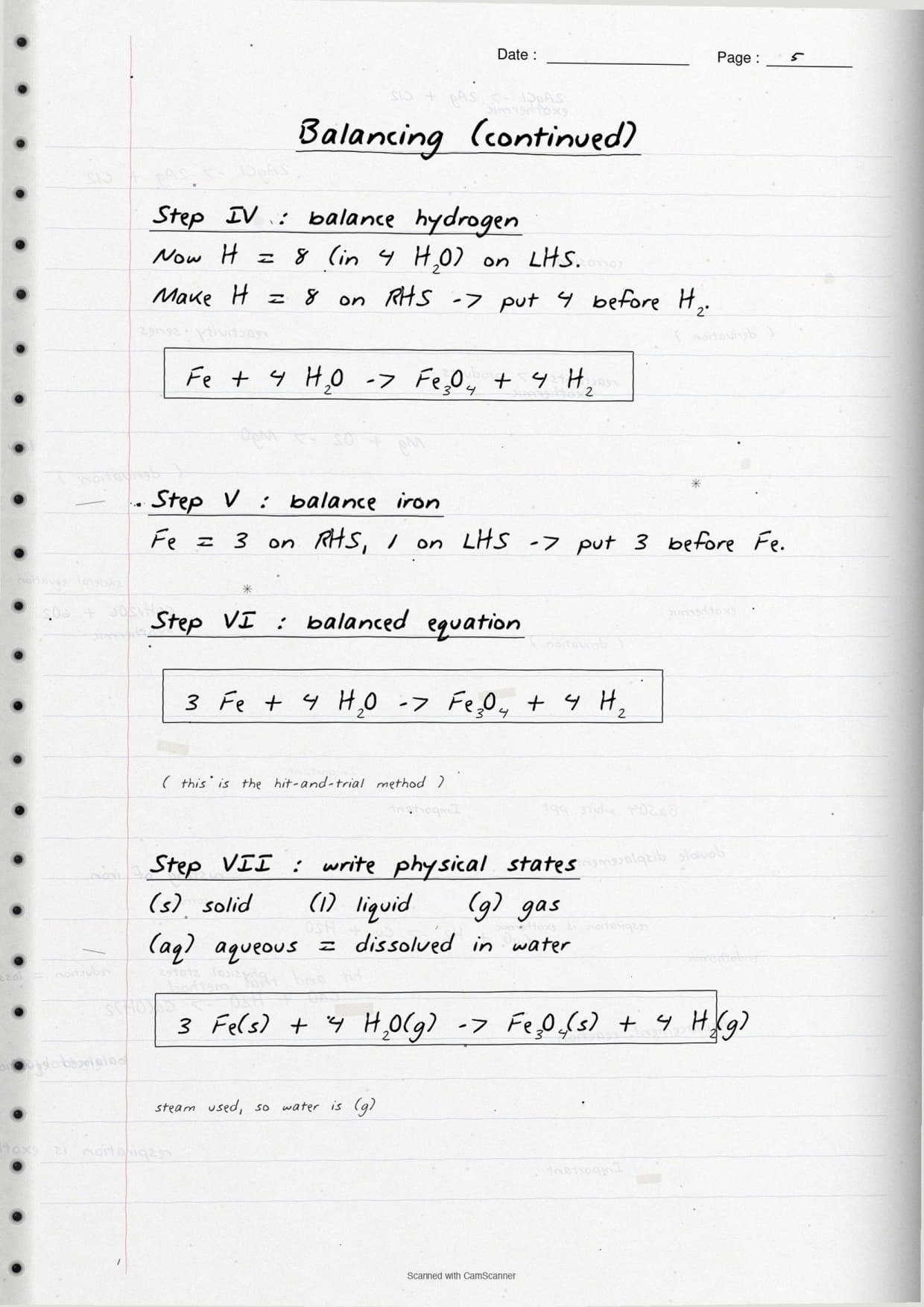
- Equations: write a word equation, turn it into a balanced chemical equation, and add state symbols.
- Reaction types: combination, decomposition, displacement and double displacement, each with a worked example.
- Effects: oxidation and reduction (redox), plus corrosion and rancidity in everyday life.
Chemical Reactions and Equations Class 10 Science Video Lecture
Source: Magnet Brains on YouTube
Writing and Balancing a Chemical Equation: The First Pages
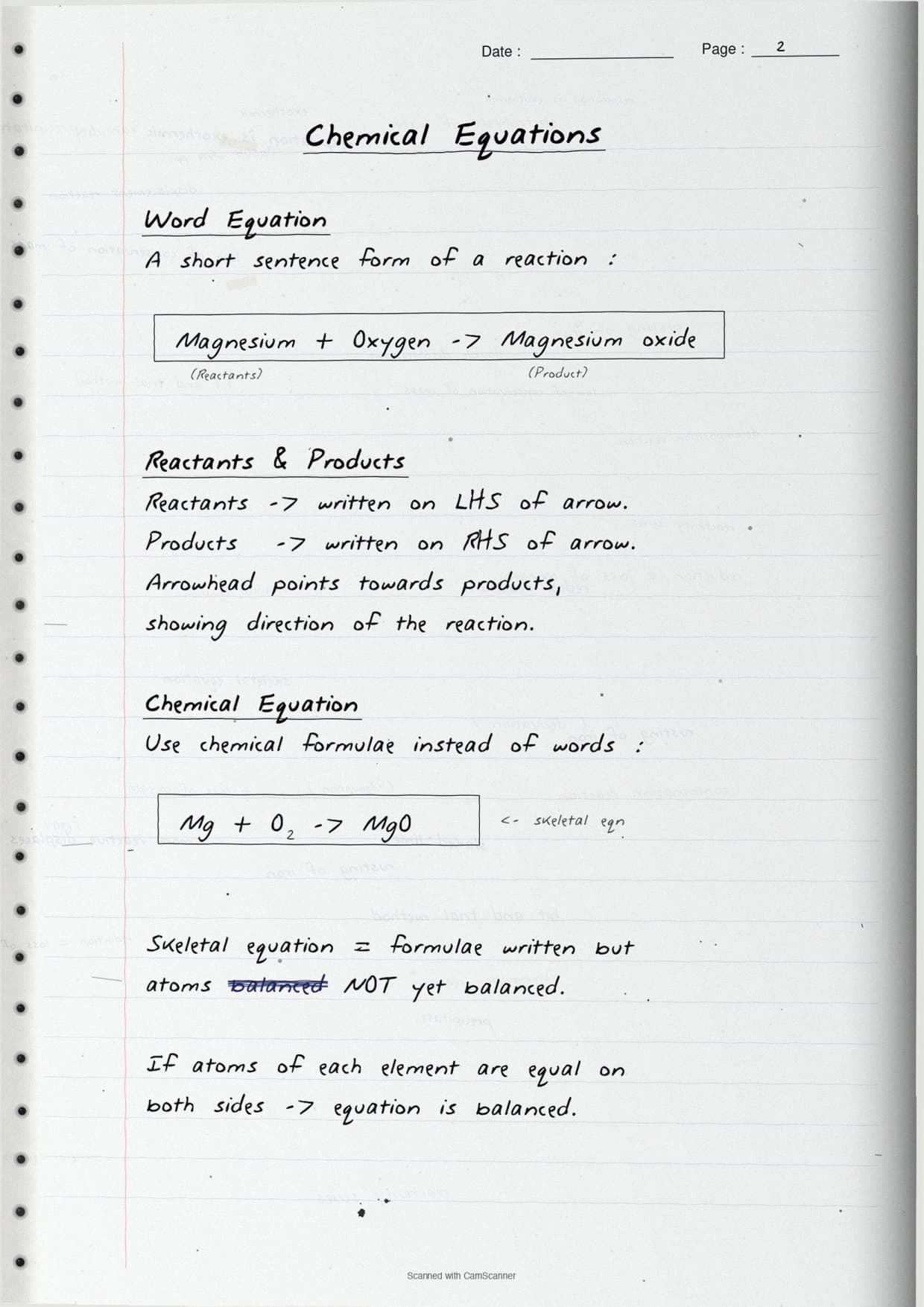
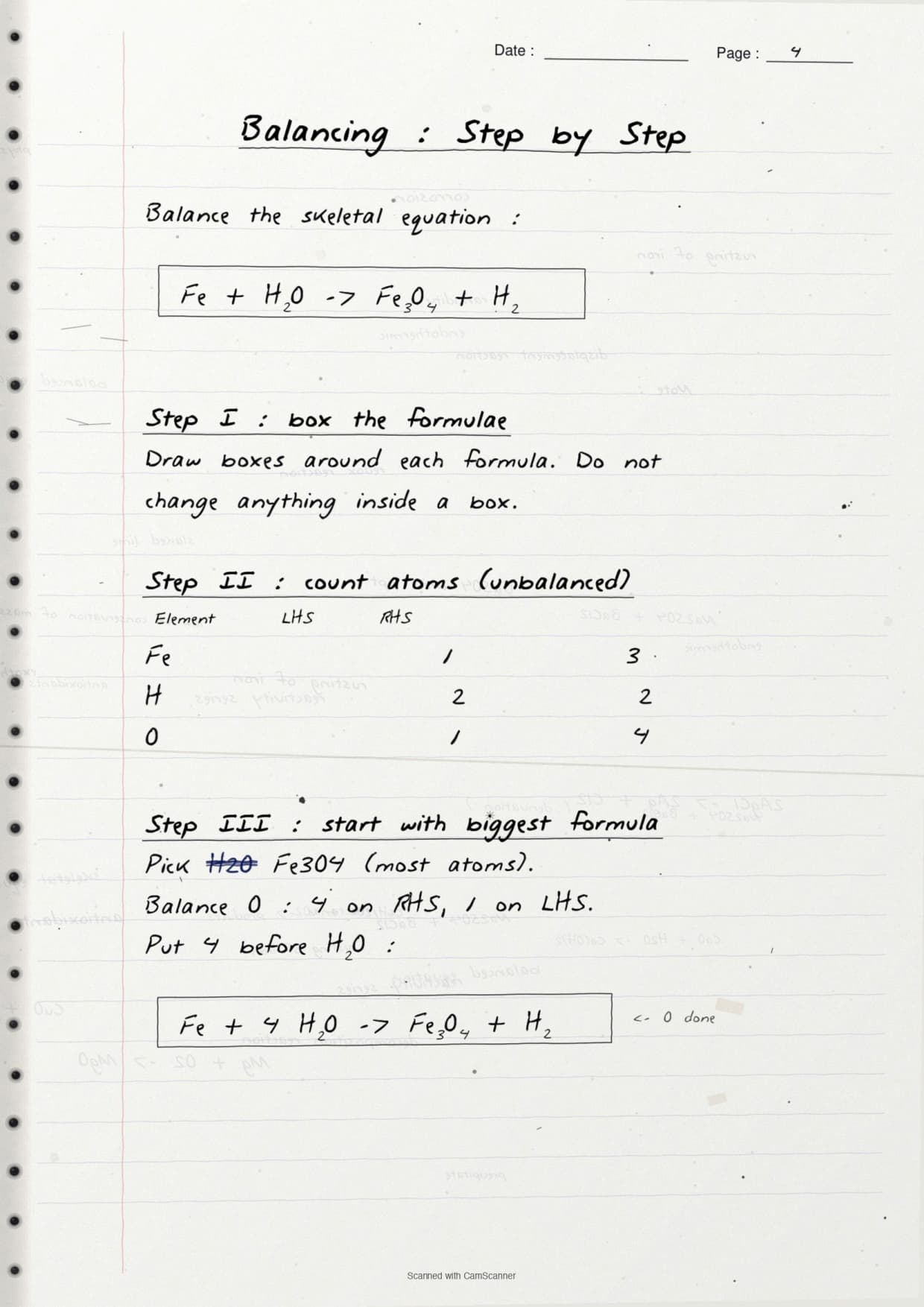
The opening pages cover the skill every board paper tests: turning a word equation into a balanced chemical equation by hit and trial.
- Word equation: name the reactants and products, with an arrow between them.
- Skeletal equation: replace the names with formulae. It may not yet be balanced.
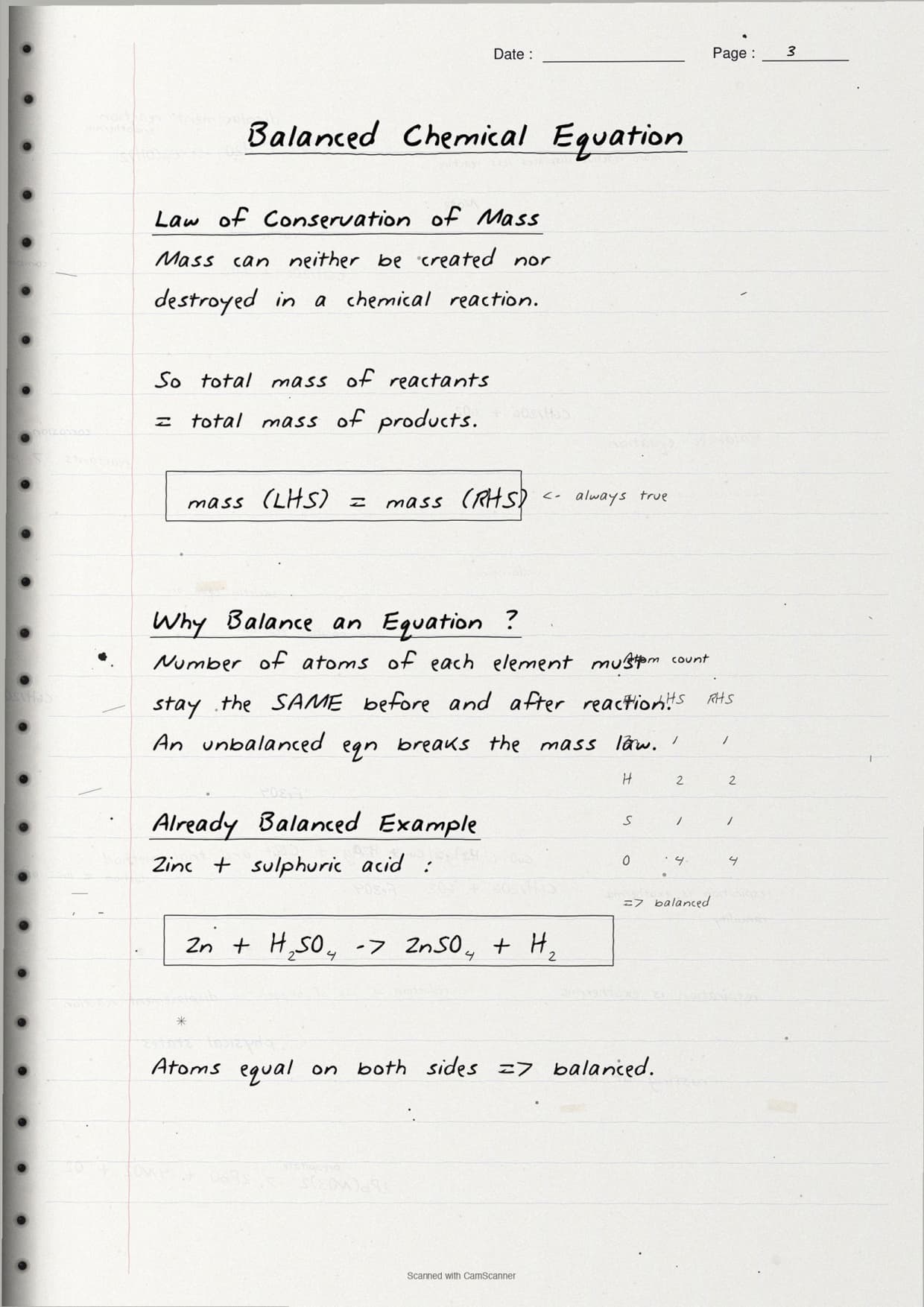
- Balanced equation: equal atoms of each element on both sides, because mass is conserved.
The notes box the classic example, the burning of magnesium, fully balanced with state symbols:
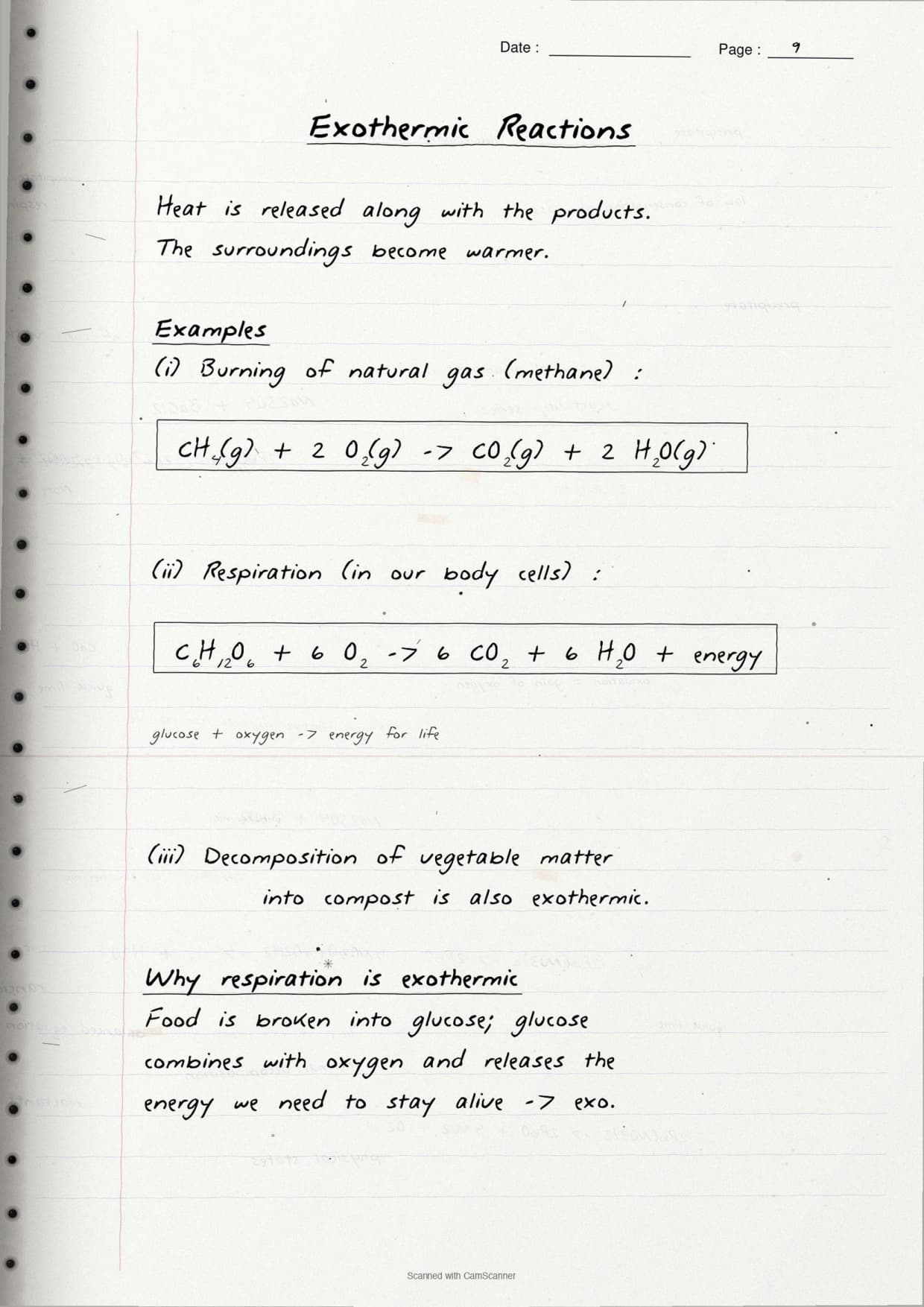
They also box the respiration equation:
Add the state symbols for full marks: (s) solid, (l) liquid, (g) gas and (aq) dissolved in water.
Types of Chemical Reactions Every Class 10 Student Must Know
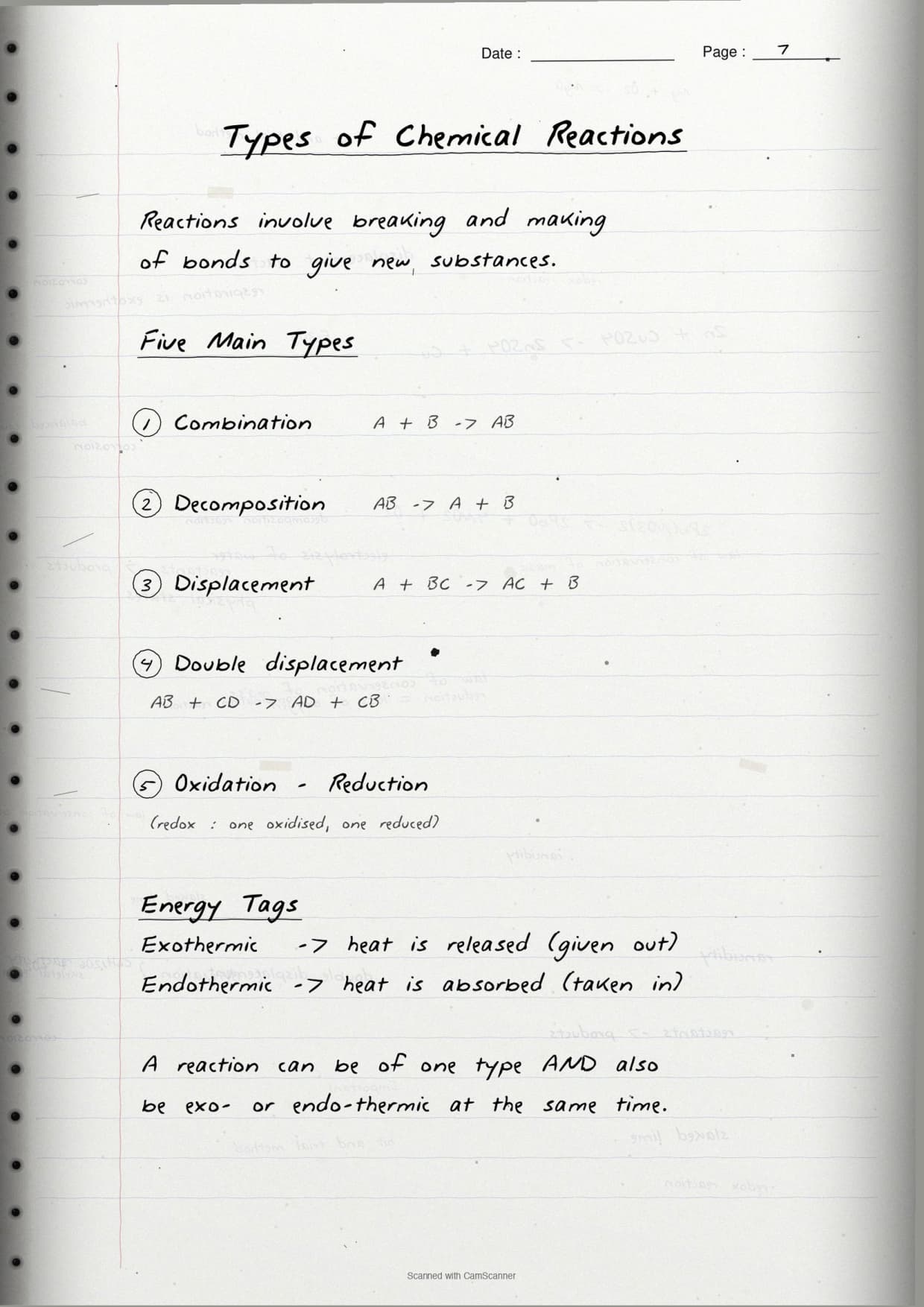
One spread lists each reaction type with a one-line definition and example.
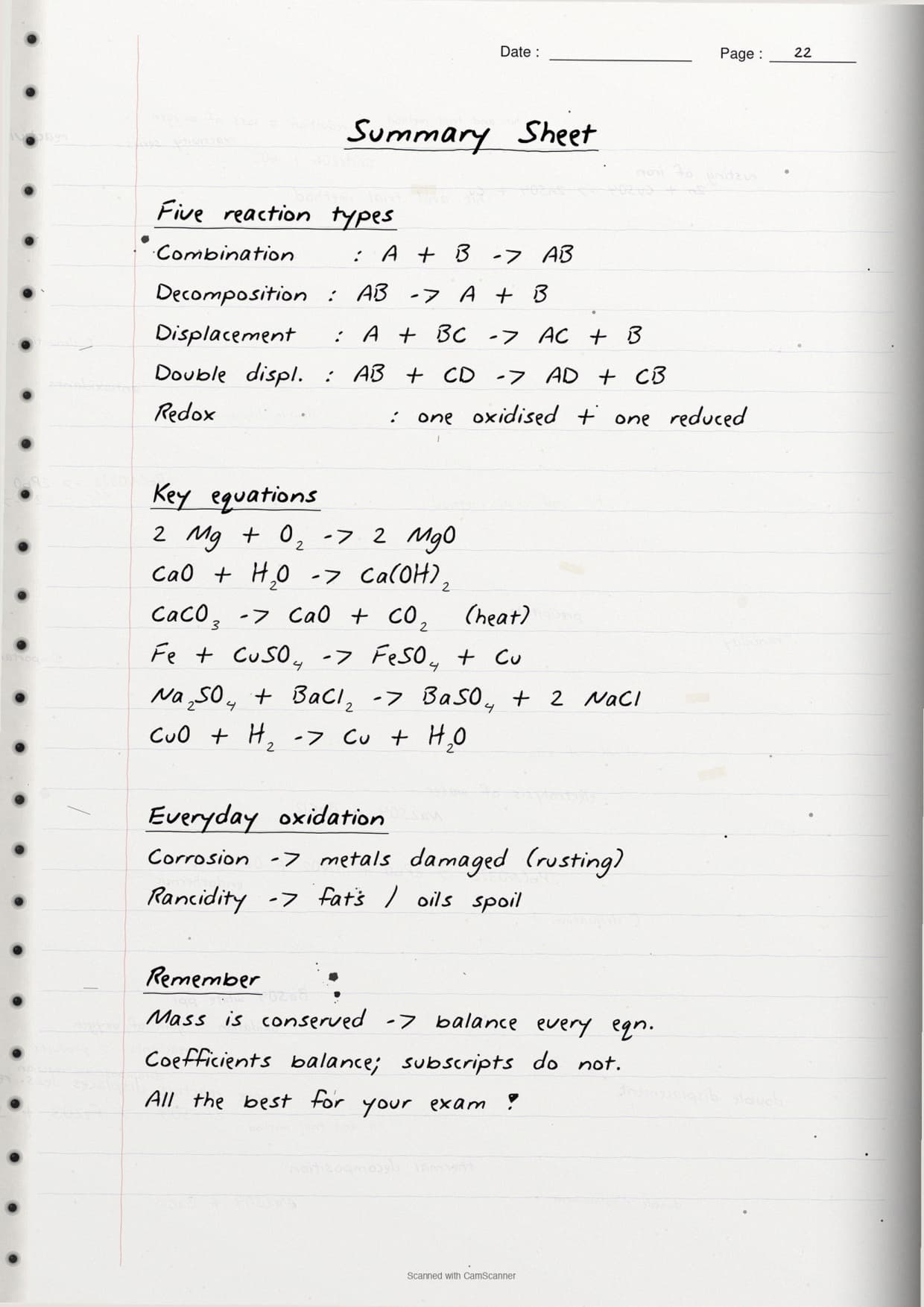
| Reaction type | What happens | Example |
|---|---|---|
| Combination | Two or more substances join to form one product | CaO + H2O → Ca(OH)2 |
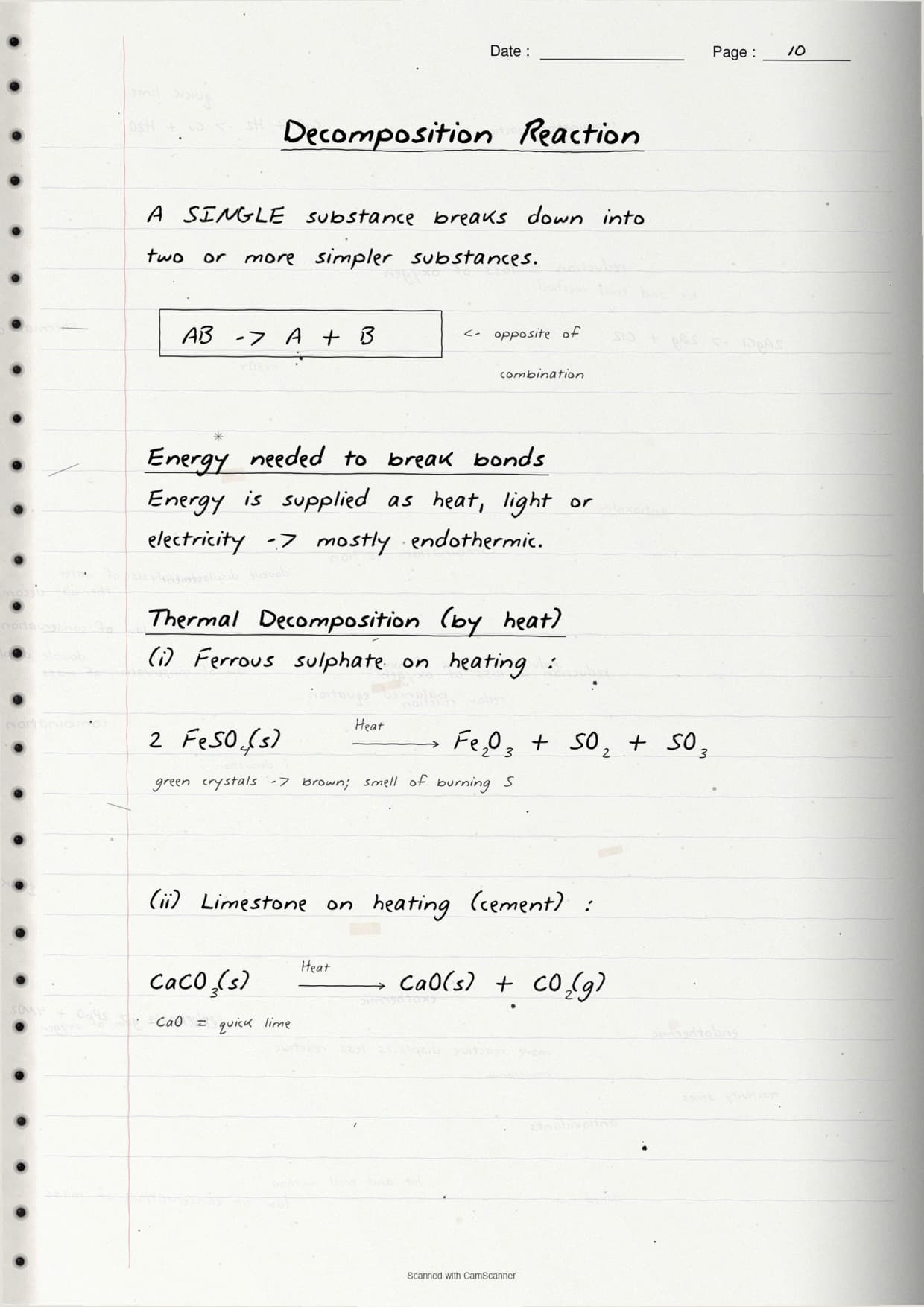
| Decomposition | One substance breaks into two or more products | 2FeSO4 → Fe2O3 + SO2 + SO3 |
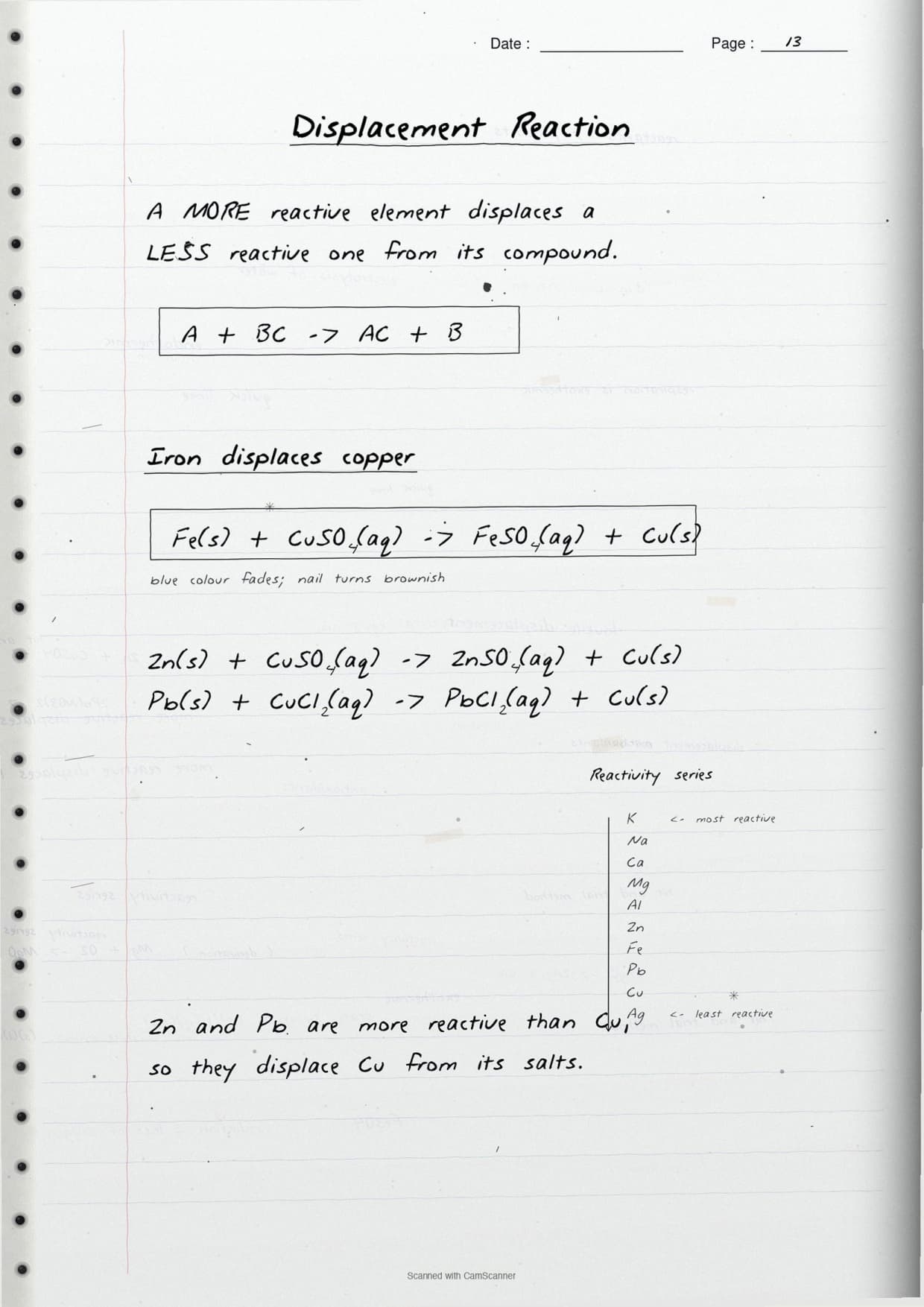
| Displacement | A more reactive metal displaces a less reactive one | Fe + CuSO4 → FeSO4 + Cu |
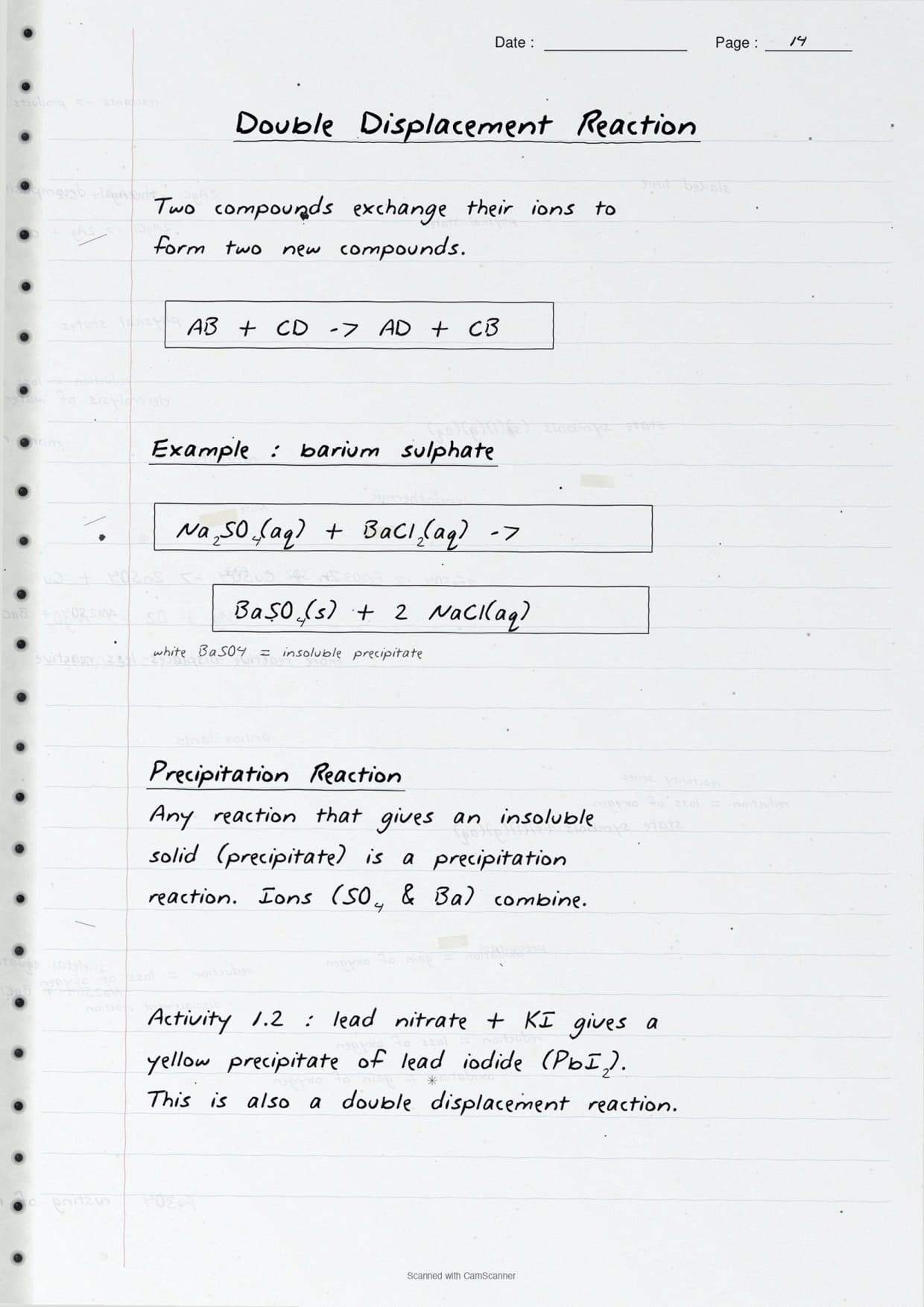
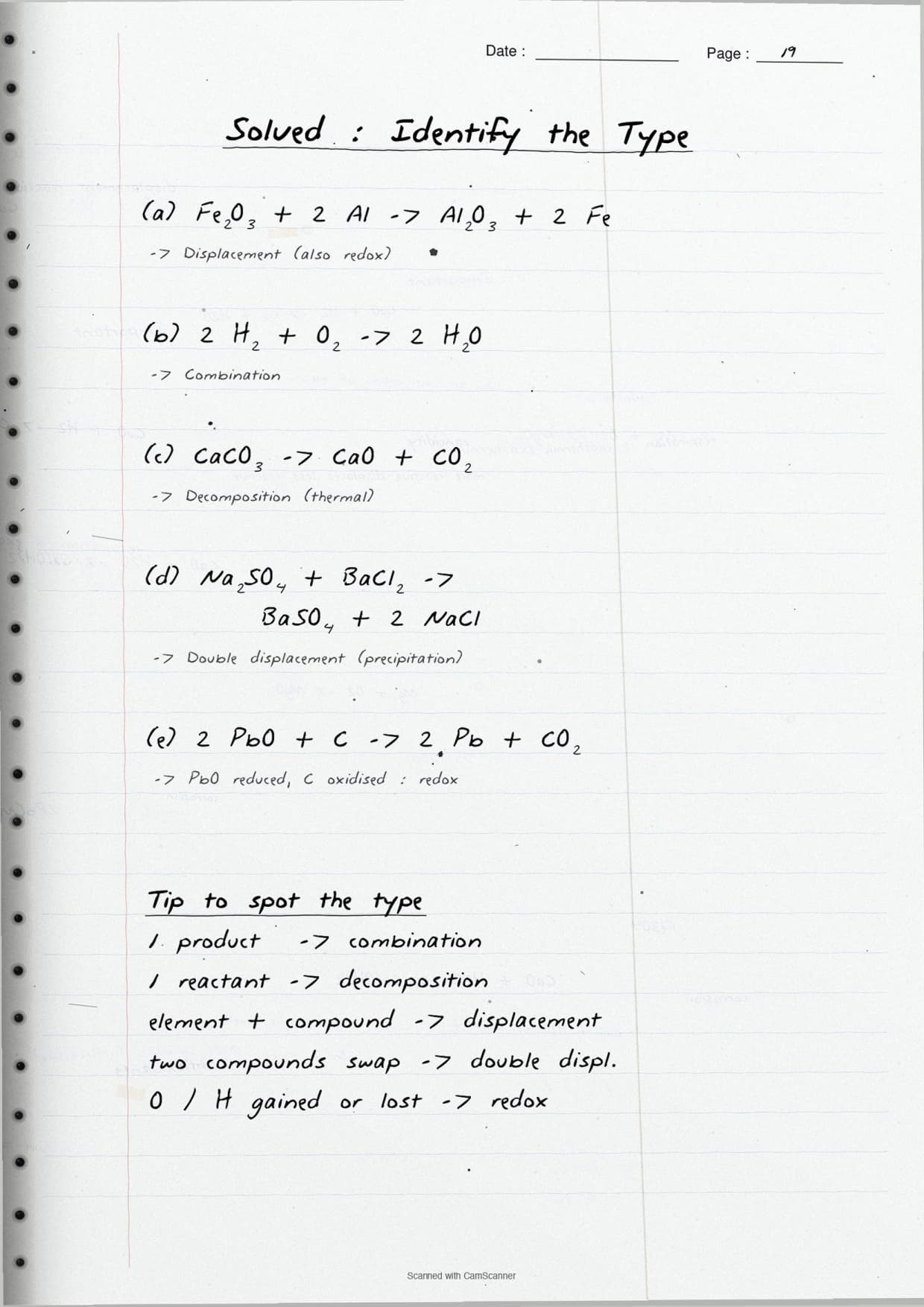
| Double displacement | Two compounds exchange ions | Na2SO4 + BaCl2 → BaSO4 + 2NaCl |
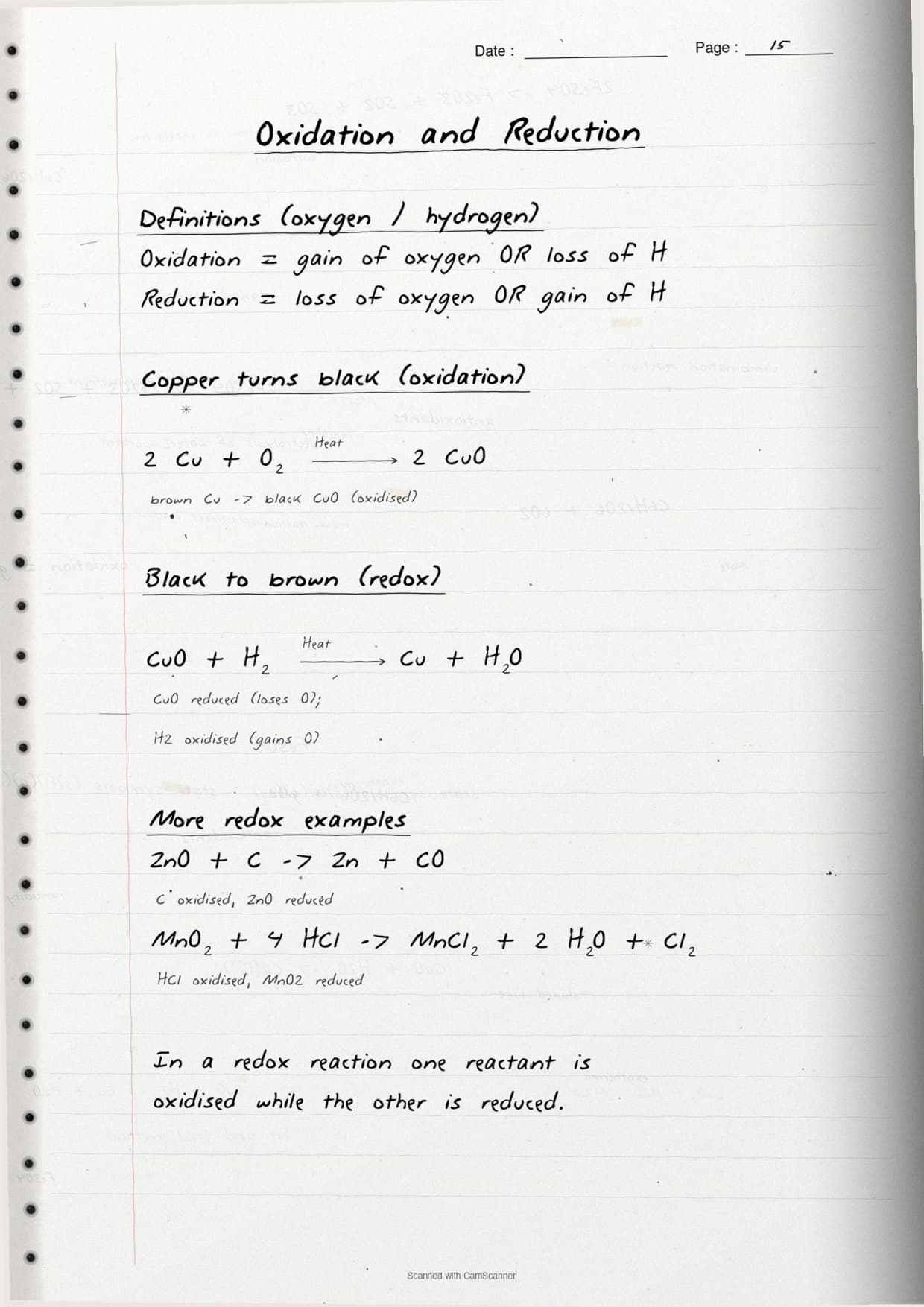
| Redox | Oxidation and reduction happen together | CuO + H2 → Cu + H2O |
The notes box the distinction students miss: a combination reaction makes one product, a decomposition reaction makes more than one.
Combination and Decomposition Reactions in the Notes
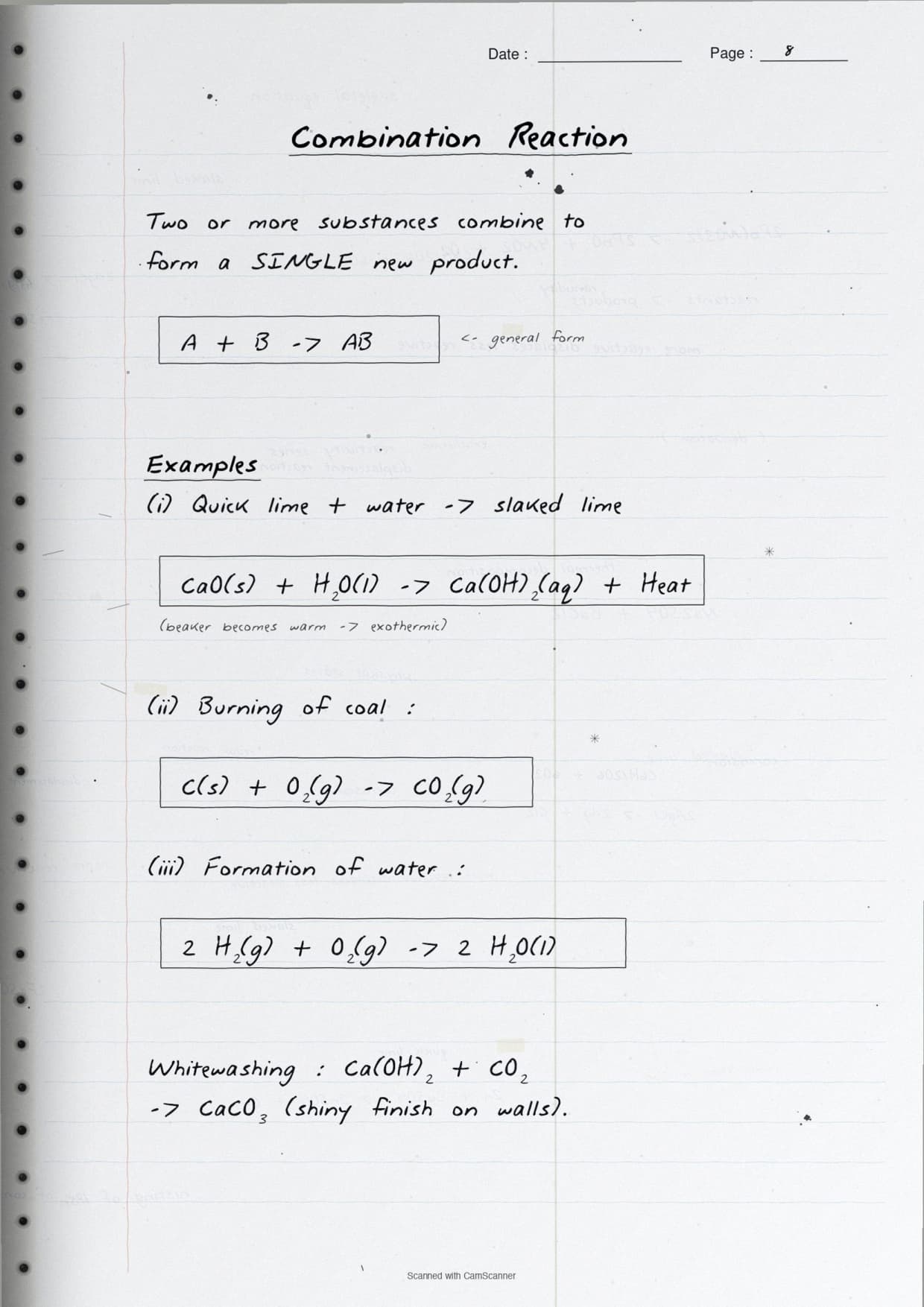
The notes draw combination and decomposition side by side, with a boxed example for each.
A combination reaction joins substances into a single product. The boxed example is slaking of quicklime, which is also exothermic because it releases heat:
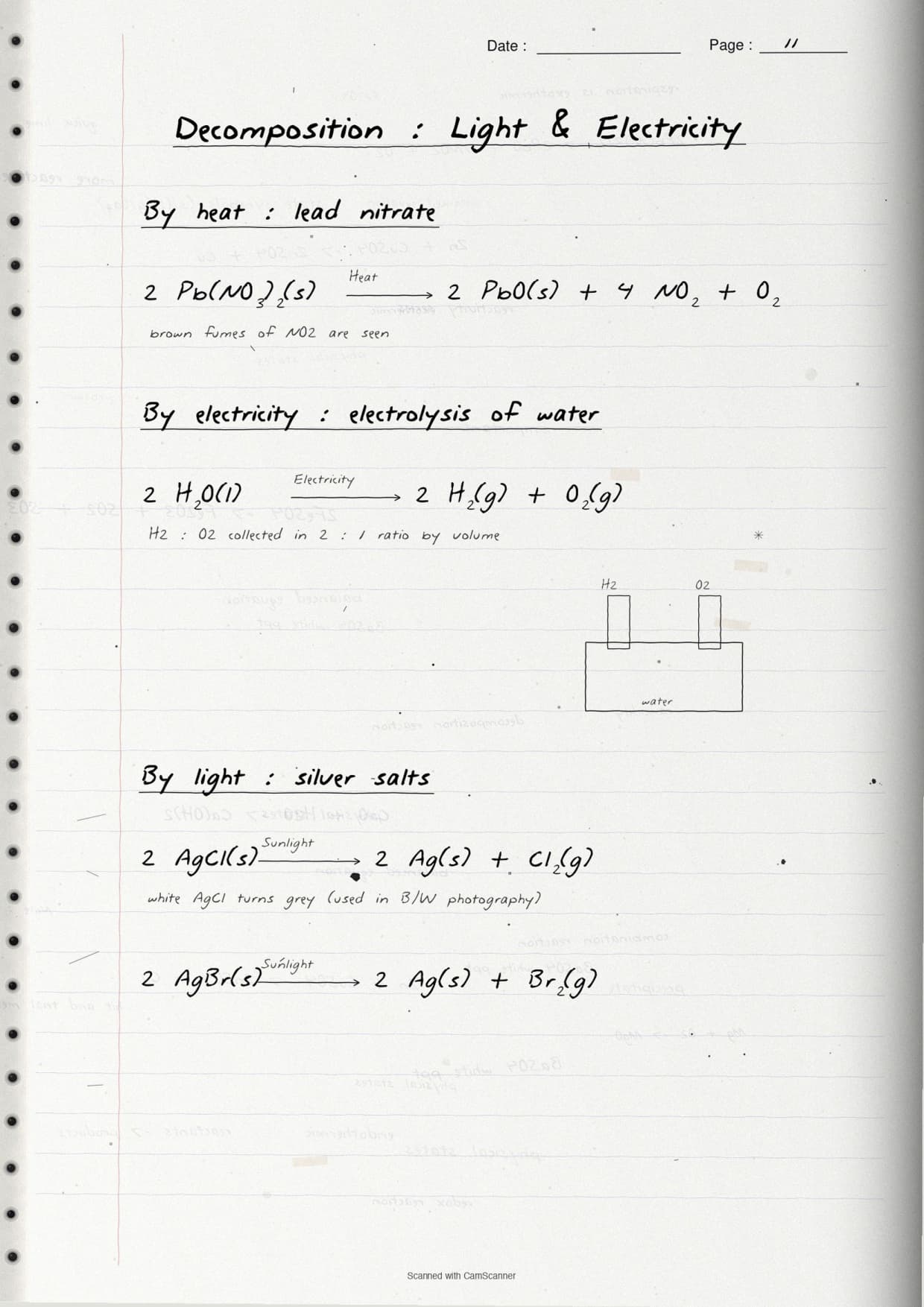
A decomposition reaction splits one substance into two or more. The notes box the three drivers:
- Thermal: heat breaks the compound: CaCO3 → CaO + CO2.
- Photo: light breaks it, as silver chloride turns grey in sunlight: 2AgCl → 2Ag + Cl2.
- Electrolytic: electricity breaks water: 2H2O → 2H2 + O2.
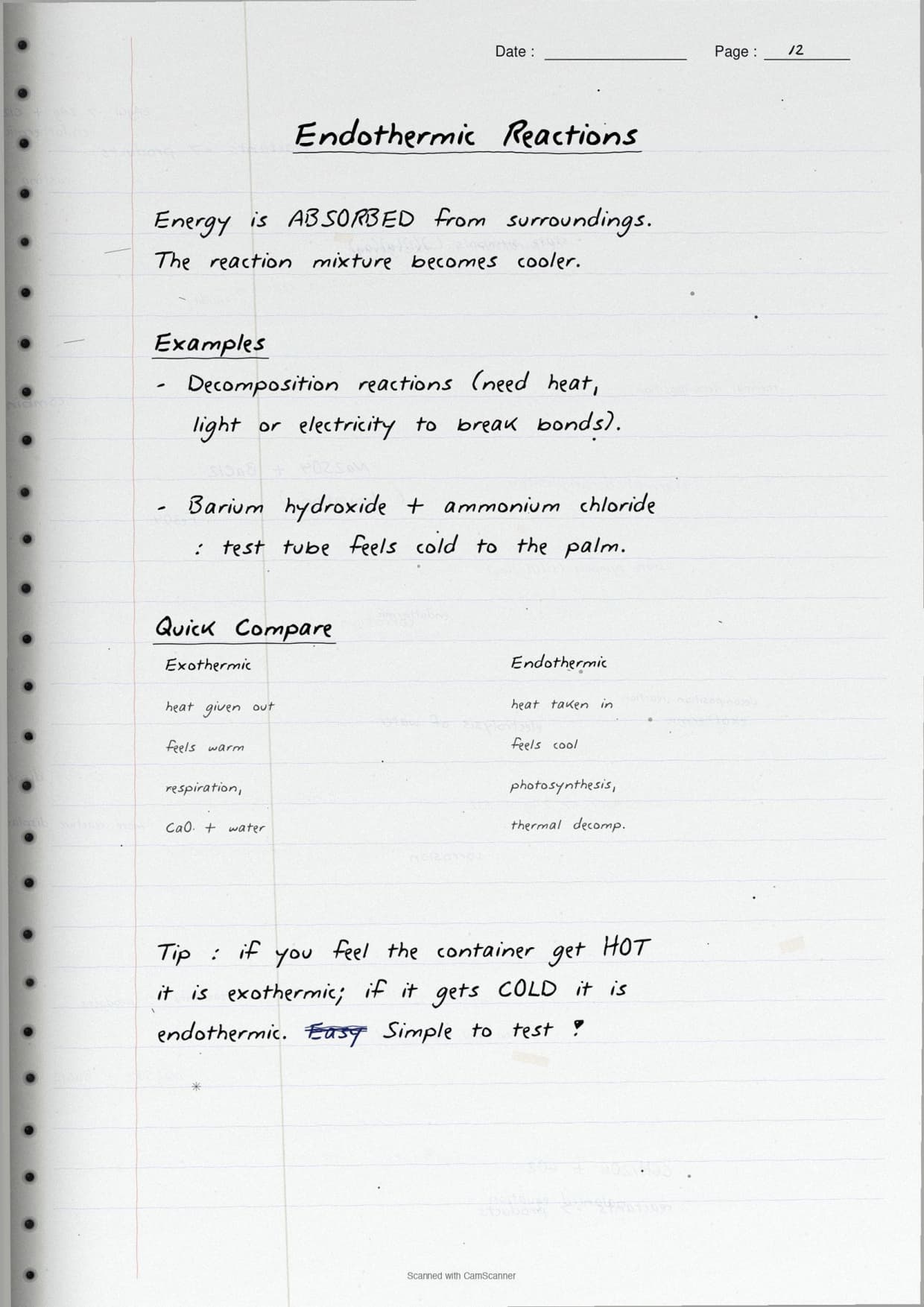
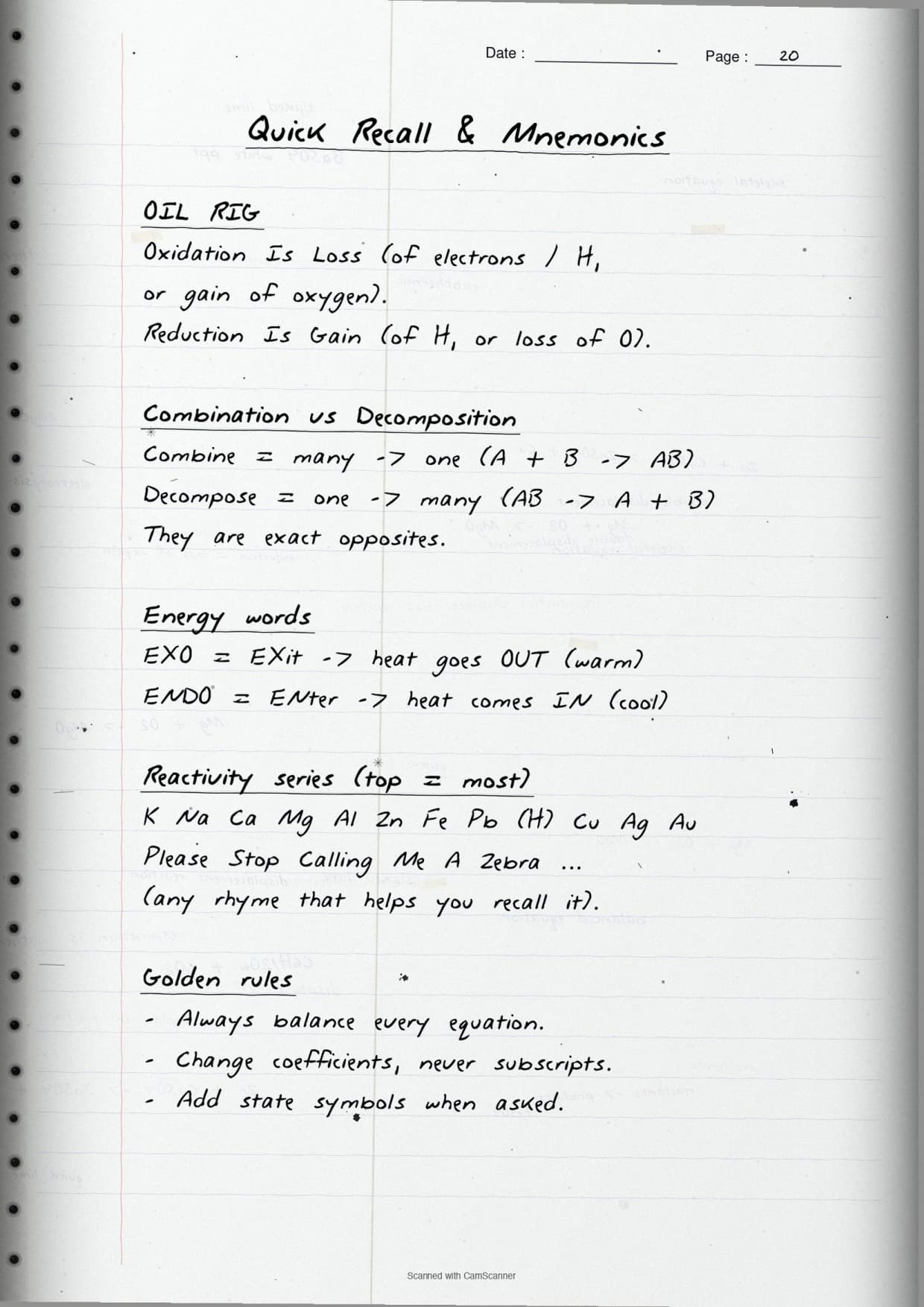
The margin note: decomposition is the reverse of combination. A reaction that takes in heat is endothermic, one that gives out heat is exothermic.
Displacement, Double Displacement and Precipitation
This spread covers the two reaction types that exchange ions.
A displacement reaction happens when a more reactive metal pushes a less reactive one out of its salt. Iron displacing copper is why an iron nail turns brown in copper sulphate:
A double displacement reaction swaps the ions of two compounds. When the swap makes an insoluble solid, that solid is a precipitate:
- Displacement: one element replaces another; only one metal swaps in.
- Double displacement: two compounds exchange ions; both partners swap.
- Precipitate: the white BaSO4 that drops out proves a double displacement happened.
Oxidation, Reduction, Corrosion and Rancidity
The last page covers the effects of oxygen, which link to daily life.
- Oxidation: gain of oxygen or loss of hydrogen by a substance.
- Reduction: loss of oxygen or gain of hydrogen by a substance.
- Redox reaction: oxidation and reduction together, as in CuO + H2 → Cu + H2O.
The notes box two real-life effects students must define:
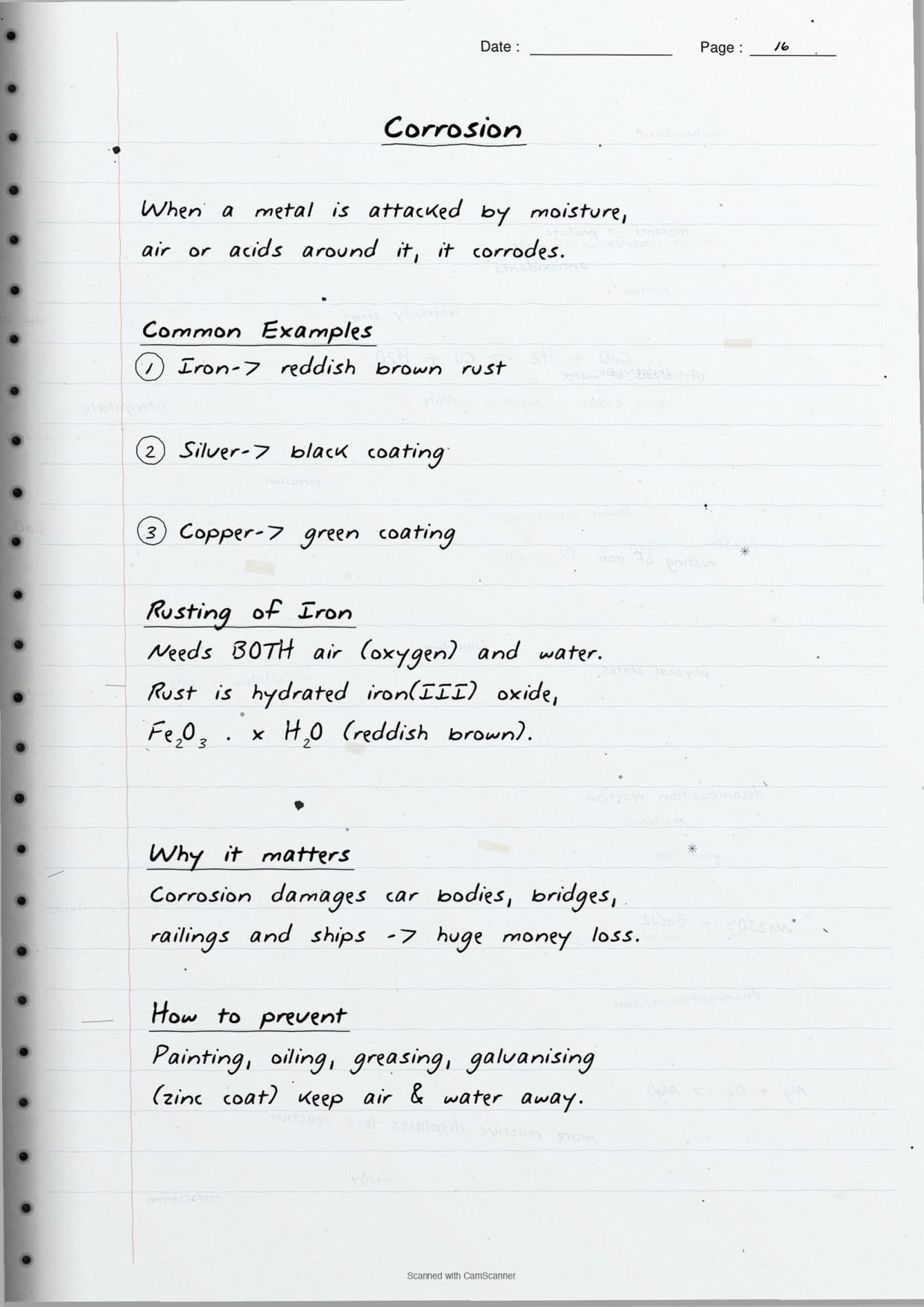
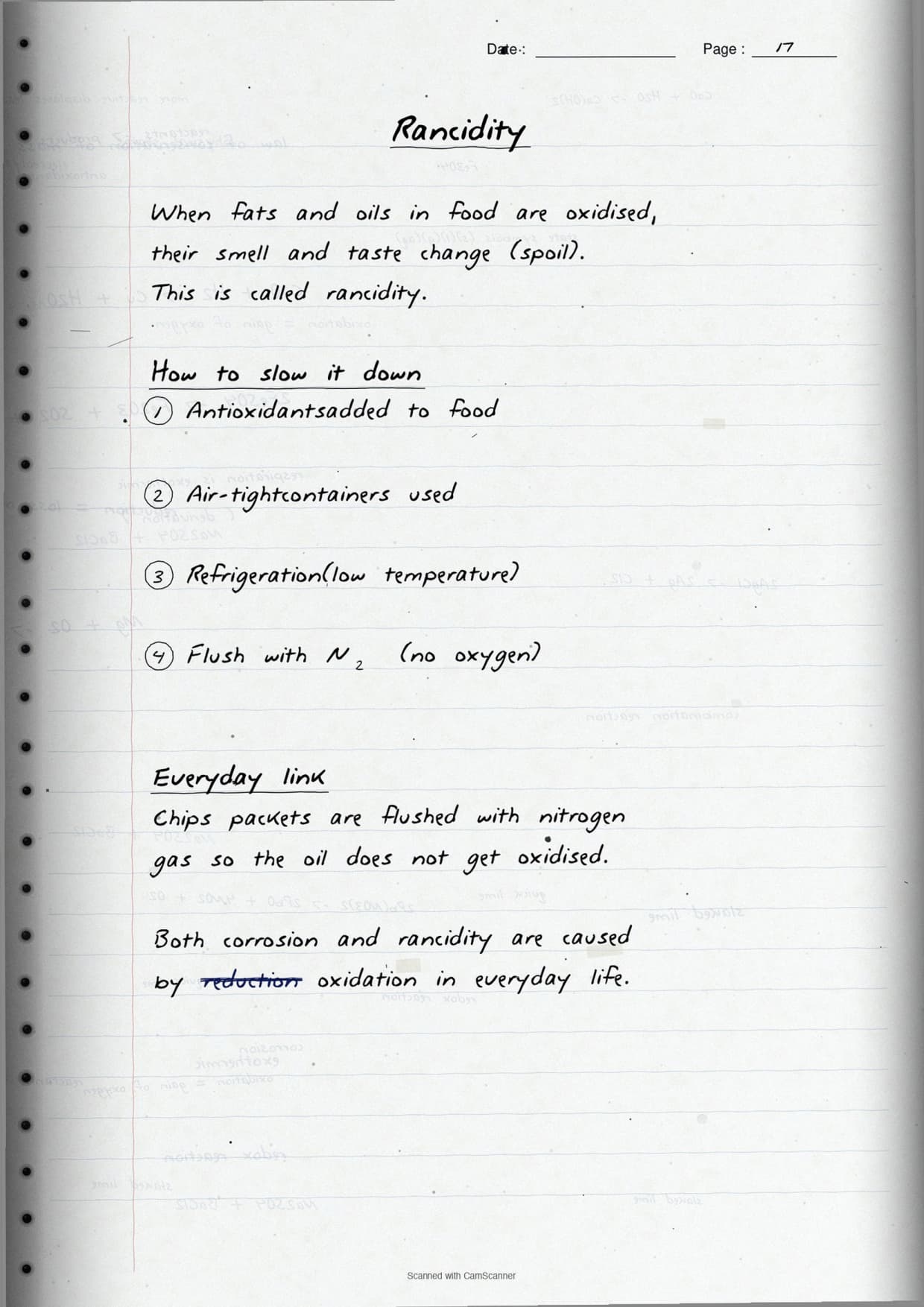
- Corrosion: a metal is slowly eaten away by air and moisture. Rusting of iron forms reddish-brown Fe2O3·xH2O.
- Rancidity: fats and oils in food are oxidised, giving a bad smell and taste. Chips are flushed with nitrogen to stop it.
The exam link: both corrosion and rancidity are oxidation reactions. Stating the prevention method often carries the final mark.
How to Use These Handwritten Notes Effectively
Handwritten notes work best as a final revision layer, not a first read. Follow this plan weekly before the board exam.
- First pass: read the pages in order, equations first, then reaction types, then the effects of oxygen.
- Active recall: cover the boxed equations and balance each one from memory.
- Write it out: copy each balanced equation with its state symbols, because the board paper checks both.
- Self-test: attempt a short chapter 1 chemical reactions and equations drill to check the small facts.
The scanned pages save to a phone, so students can revise offline before the exam.
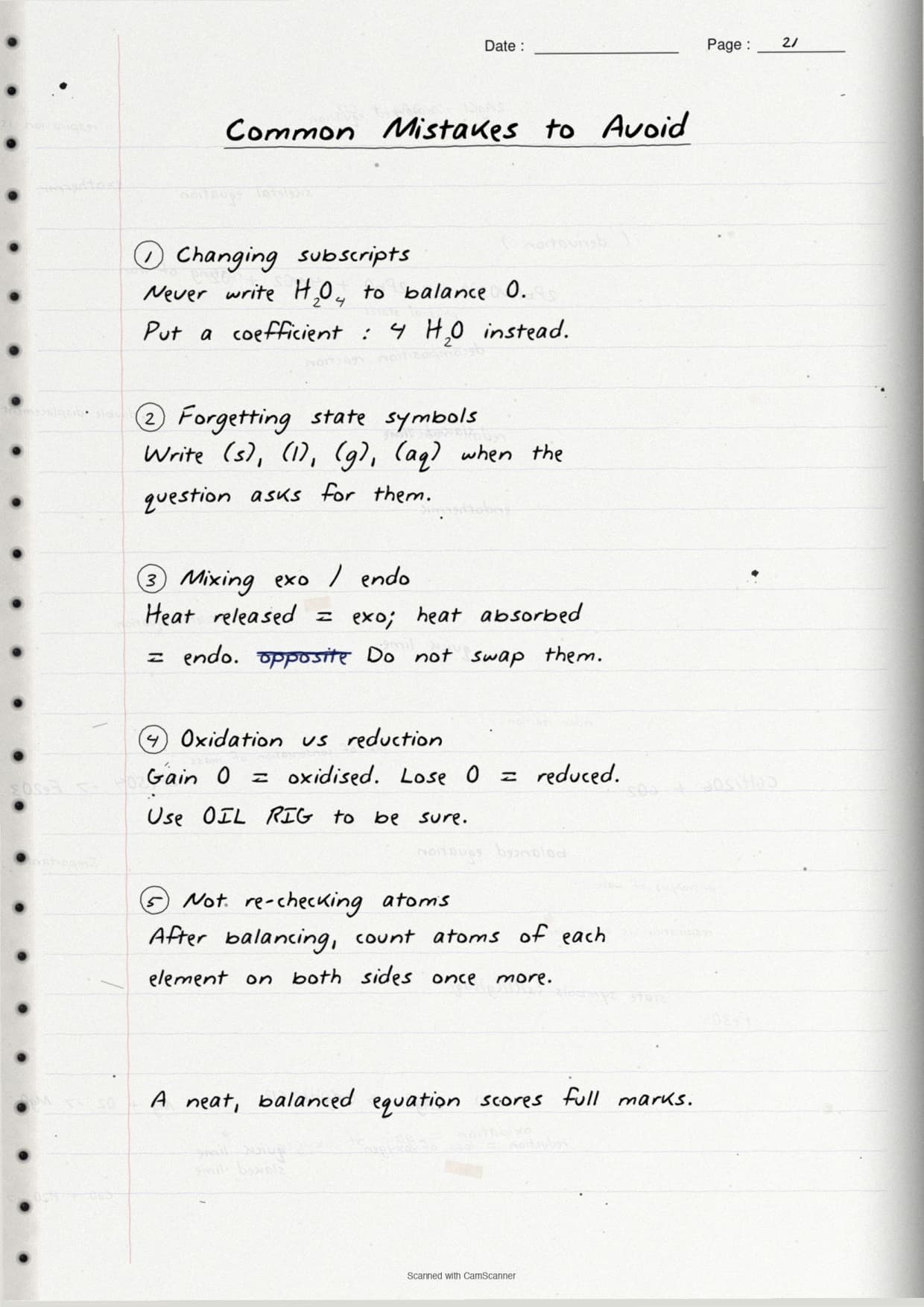
Common Mistakes These Notes Help You Avoid
A few errors cost marks every year, mostly from unbalanced equations or mixed-up reaction types.
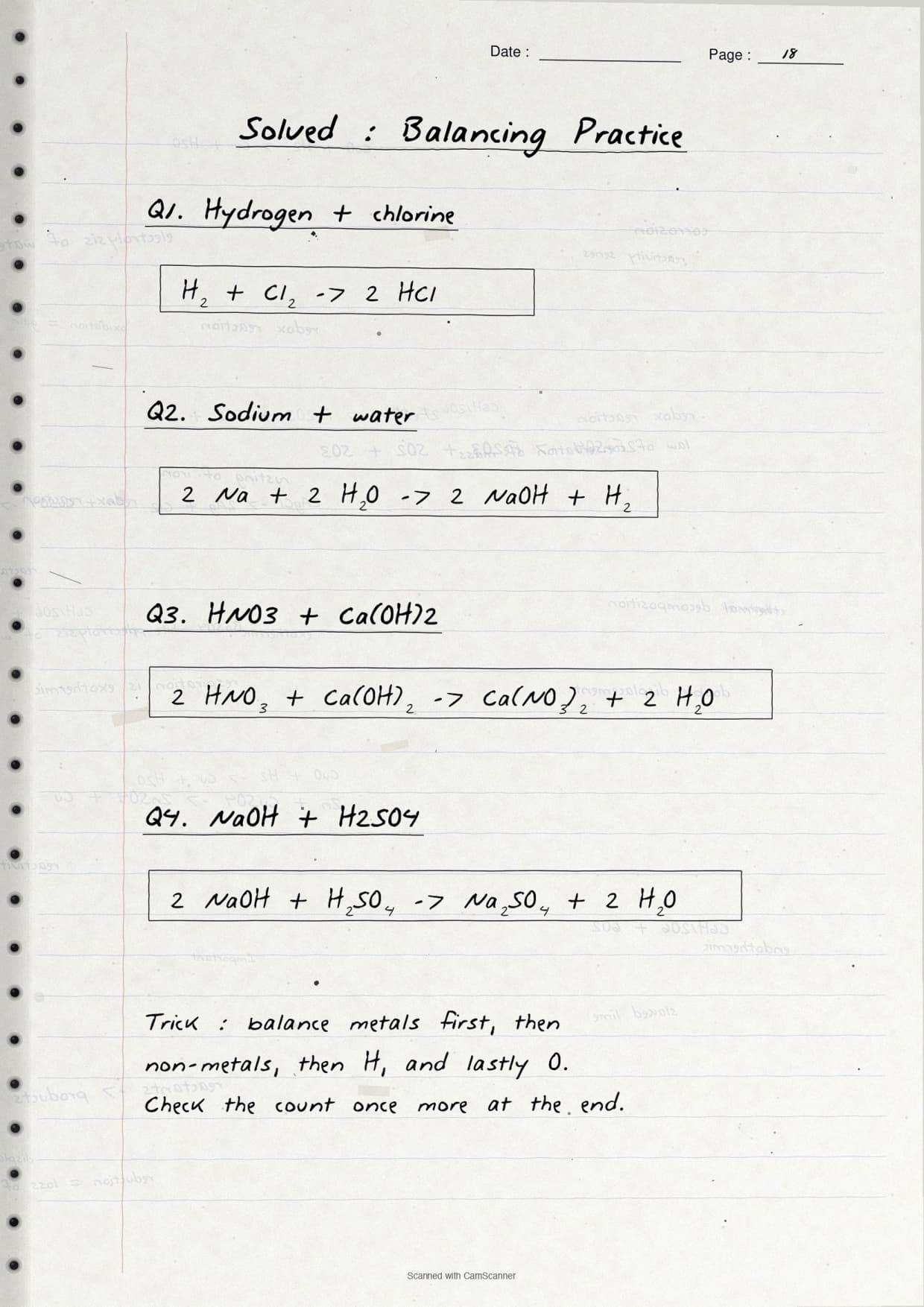
- Leaving an equation unbalanced. Always count atoms of each element on both sides.
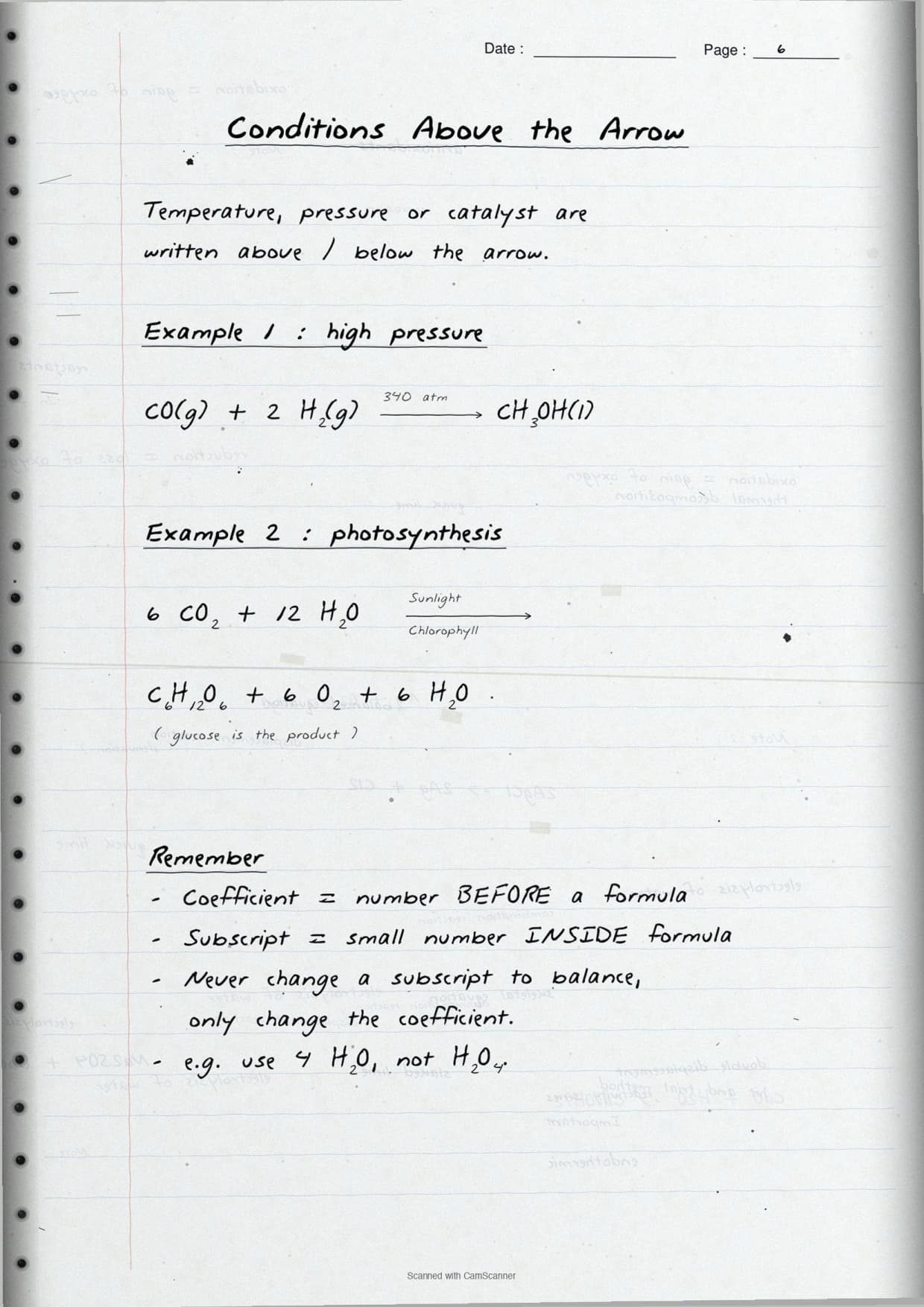
- Changing a formula to balance an equation. You may only change the coefficients, never the subscripts.
- Forgetting the state symbols (s), (l), (g) and (aq) that the board paper expects.
- Calling a decomposition reaction a combination one. Combination makes one product; decomposition makes more than one.
- Mixing up oxidation (gain of oxygen) with reduction (loss of oxygen) in a redox reaction.
Other Resources for Chemical Reactions and Equations Class 10
Pair these notes with the other Class 10 Science resources for this chapter.
| Resource | Best used for |
|---|---|
| Chemical Reactions and Equations NCERT Solutions | Step-by-step balanced answers to every exercise question |
| Chemical Reactions and Equations Class 10 Notes | Quick typed summary of every reaction type and equation |
| Chemical Reactions and Equations Formula Sheet | One-page list of the key reactions, definitions and state symbols |
| Handwritten Notes | Chemical Reactions and Equations Handwritten Notes |
| Chemical Reactions and Equations NCERT Book PDF | The original NCERT chapter text |
All Class 10 Science Handwritten Notes by Chapter
This table links the handwritten notes for every Class 10 Science chapter. Chemical Reactions and Equations is highlighted.
| Chapter | Handwritten Notes |
|---|---|
| Chapter 1 | Chemical Reactions and Equations |
| Chapter 2 | Acids, Bases and Salts |
| Chapter 3 | Metals and Non-metals |
| Chapter 4 | Carbon and its Compounds |
| Chapter 5 | Life Processes |
| Chapter 6 | Control and Coordination |
| Chapter 7 | How do Organisms Reproduce? |
| Chapter 8 | Heredity |
| Chapter 9 | Light - Reflection and Refraction |
| Chapter 10 | The Human Eye and the Colourful World |
| Chapter 11 | Electricity |
| Chapter 12 | Magnetic Effects of Electric Current |
| Chapter 13 | Our Environment |
Student Feedback
In a Collegedunia poll of 9,800 Class 10 Science students before the 2026 boards, 71% of students said the boxed balanced-equation page was the fastest way to revise this chapter.
Source: 2026-27 Class 10 Science poll of 9,800 students across 15 CBSE states.
FAQs on Chemical Reactions and Equations Handwritten Notes
Chemical Reactions and Equations Class 10 Science Handwritten Notes Common Questions
Ques. Are these class 10 science chapter 1 Chemical Reactions and Equations handwritten notes free to download?
Ans. Yes. The Chemical Reactions and Equations handwritten notes are free to download as a PDF from this page. They follow the 2026-27 NCERT syllabus and cover the full chapter across 22 scanned, boxed-equation pages for quick revision.
Ques. What does Chapter 1 Chemical Reactions and Equations cover in Class 10 Science?
Ans. The notes cover writing and balancing a chemical equation, the reaction types (combination, decomposition, displacement and double displacement), and the effects of oxygen (oxidation, reduction, corrosion and rancidity) that the CBSE board paper tests directly.
Ques. How do you balance a chemical equation in Class 10?
Ans. Write the skeletal equation with correct formulae, then adjust the coefficients by hit and trial until each element has equal atoms on both sides. You may change only the coefficients, never the subscripts, and you finish by adding the state symbols (s), (l), (g) and (aq).
Ques. What is the difference between a combination and a decomposition reaction?
Ans. A combination reaction joins two or more substances into a single product, such as CaO + H2O giving Ca(OH)2. A decomposition reaction breaks one substance into two or more products using heat, light or electricity, such as CaCO3 giving CaO and CO2.
Ques. Are these notes enough for the class 10 science chapter 1 board exam?
Ans. They are a strong final revision layer. For full preparation, pair them with the NCERT Solutions linked on this page so you can write out complete balanced answers to every in-text and back-exercise question and check them against model answers.



Comments