



Binomial Theorem is the shortest chapter in the Class 11 Maths Exemplar and one of the most reliably tested. The NCERT Exemplar Solutions for Class 11 Maths Chapter 7 Binomial Theorem on this page solve all 40 questions of the chapter, step by step, according to the 2026-27 NCERT Exemplar, and check every answer against the official key.
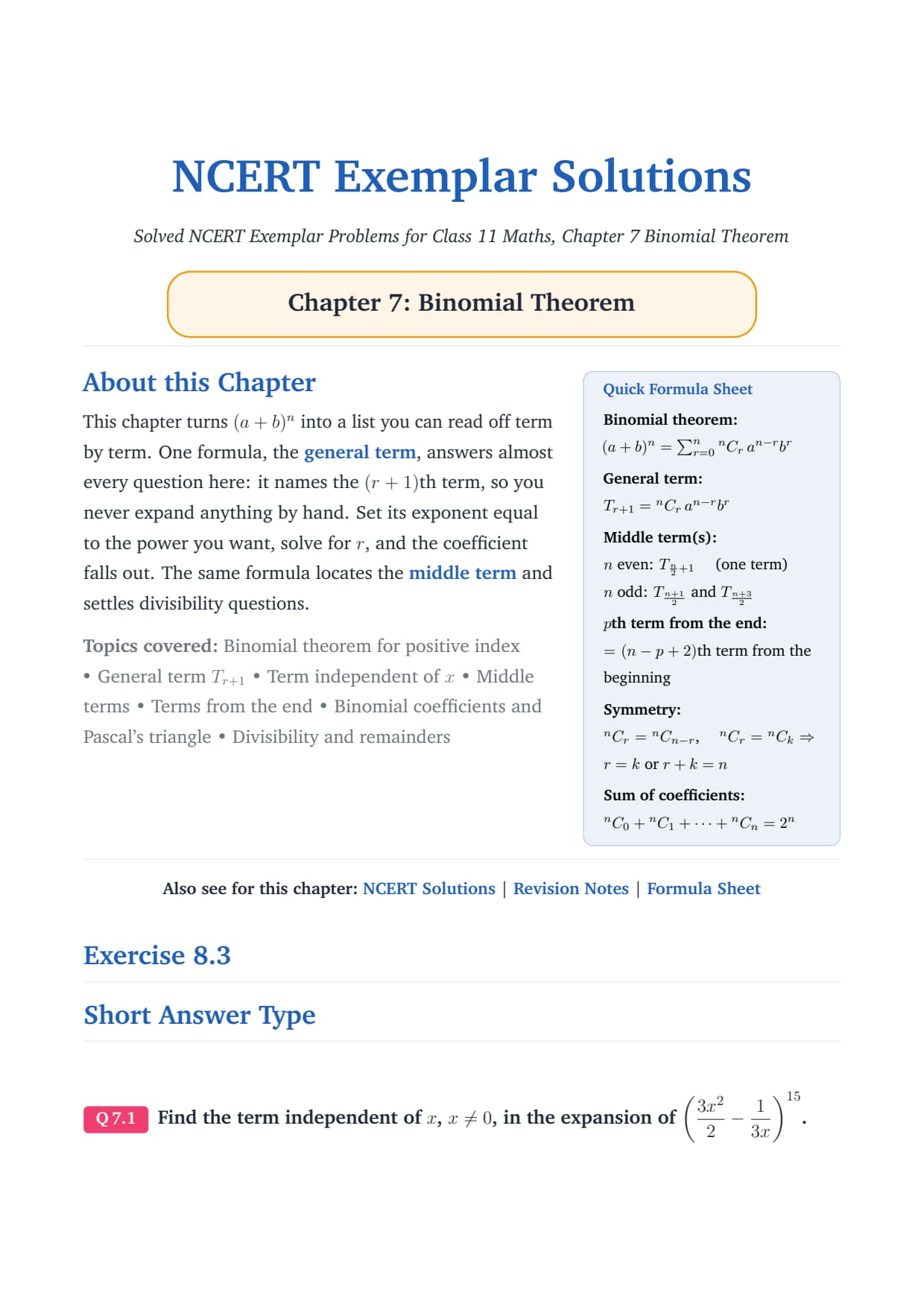
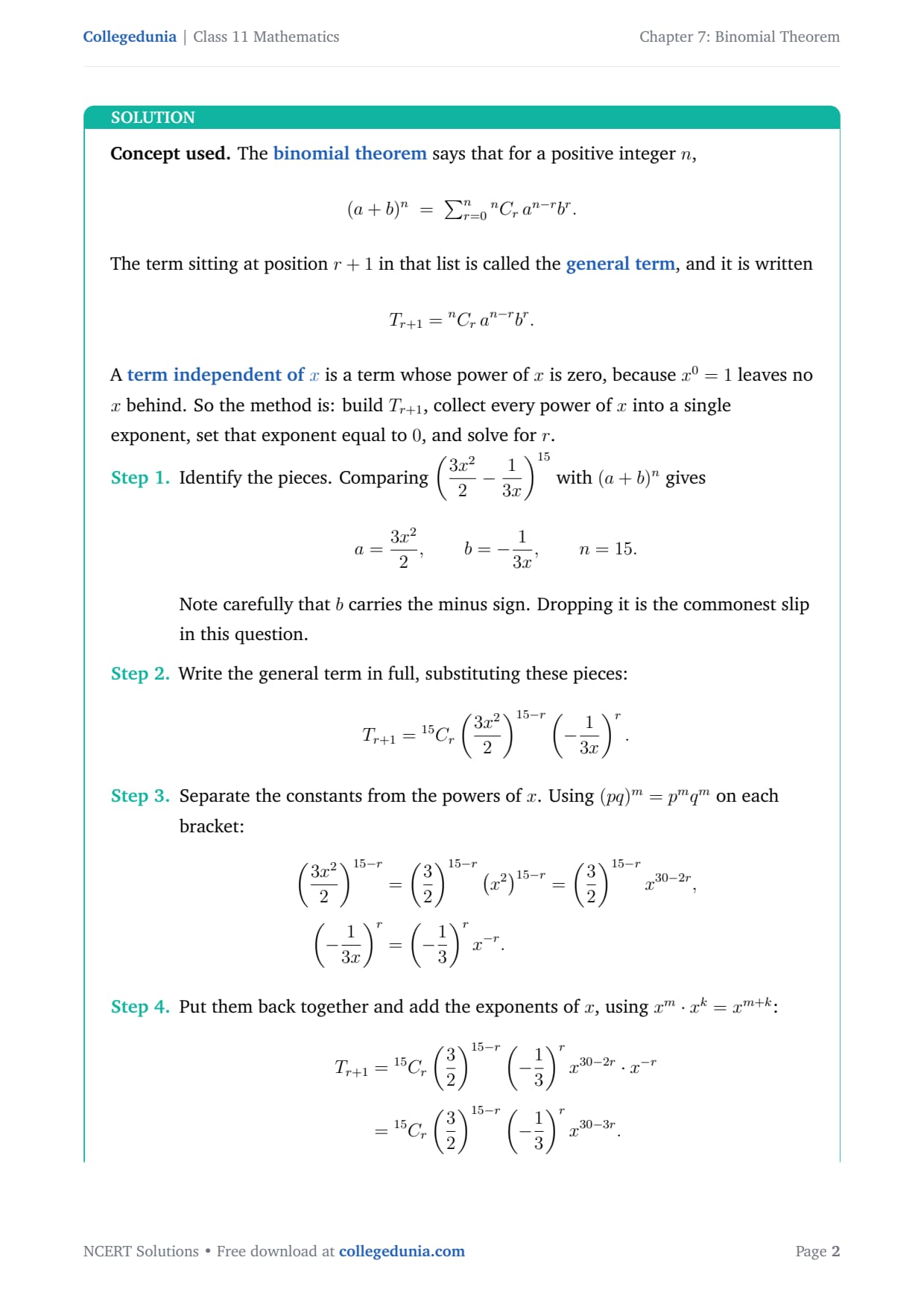
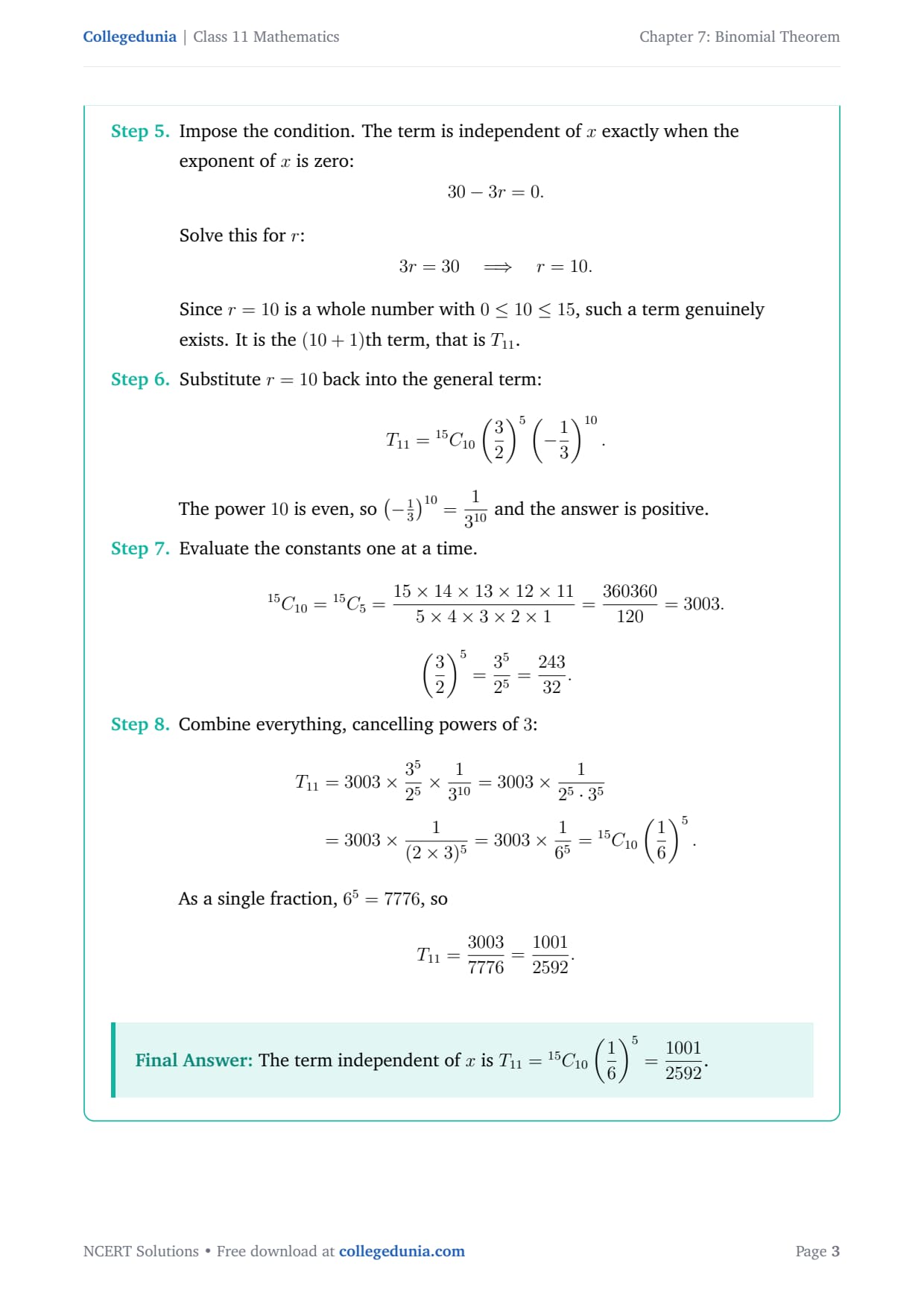
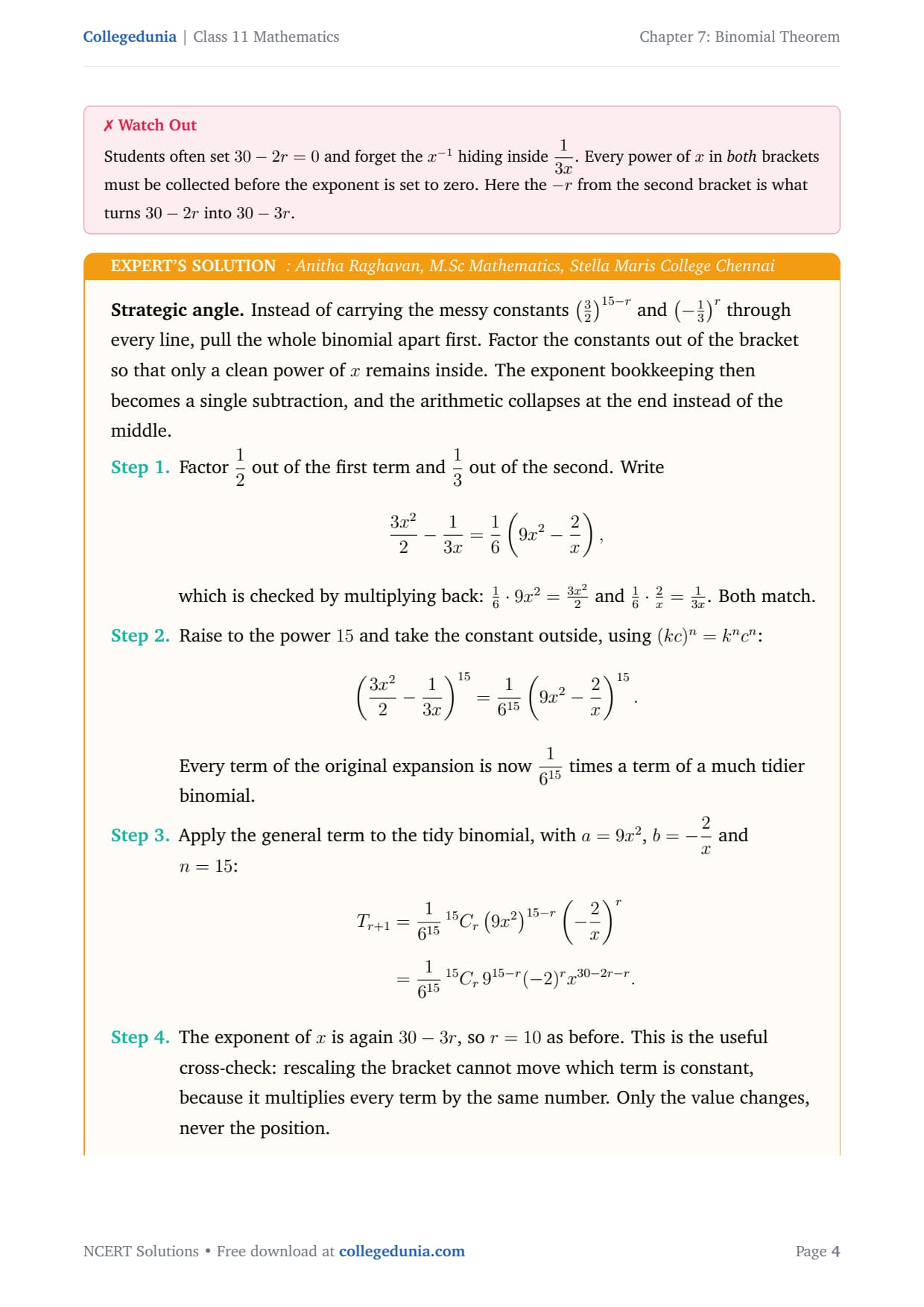
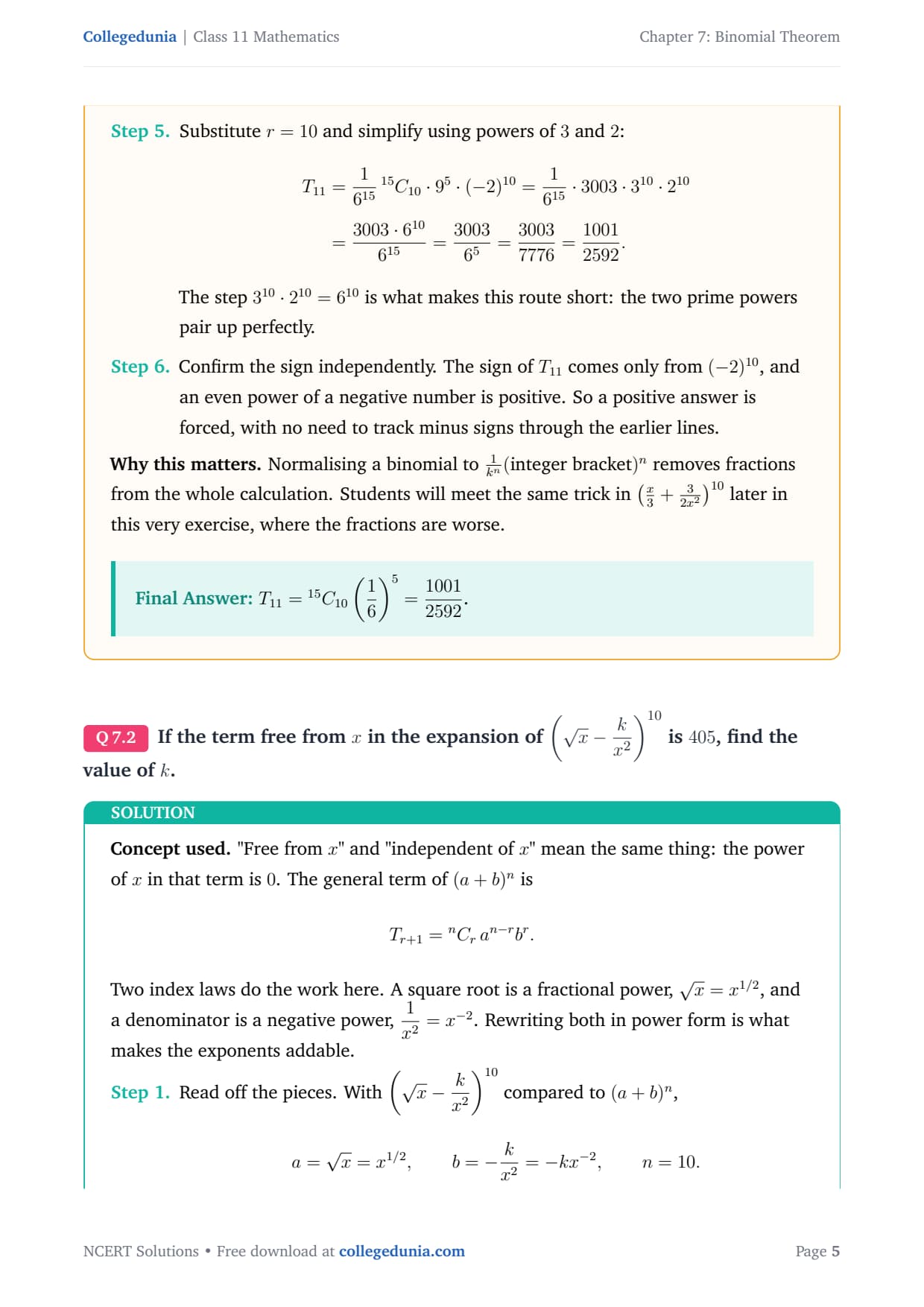
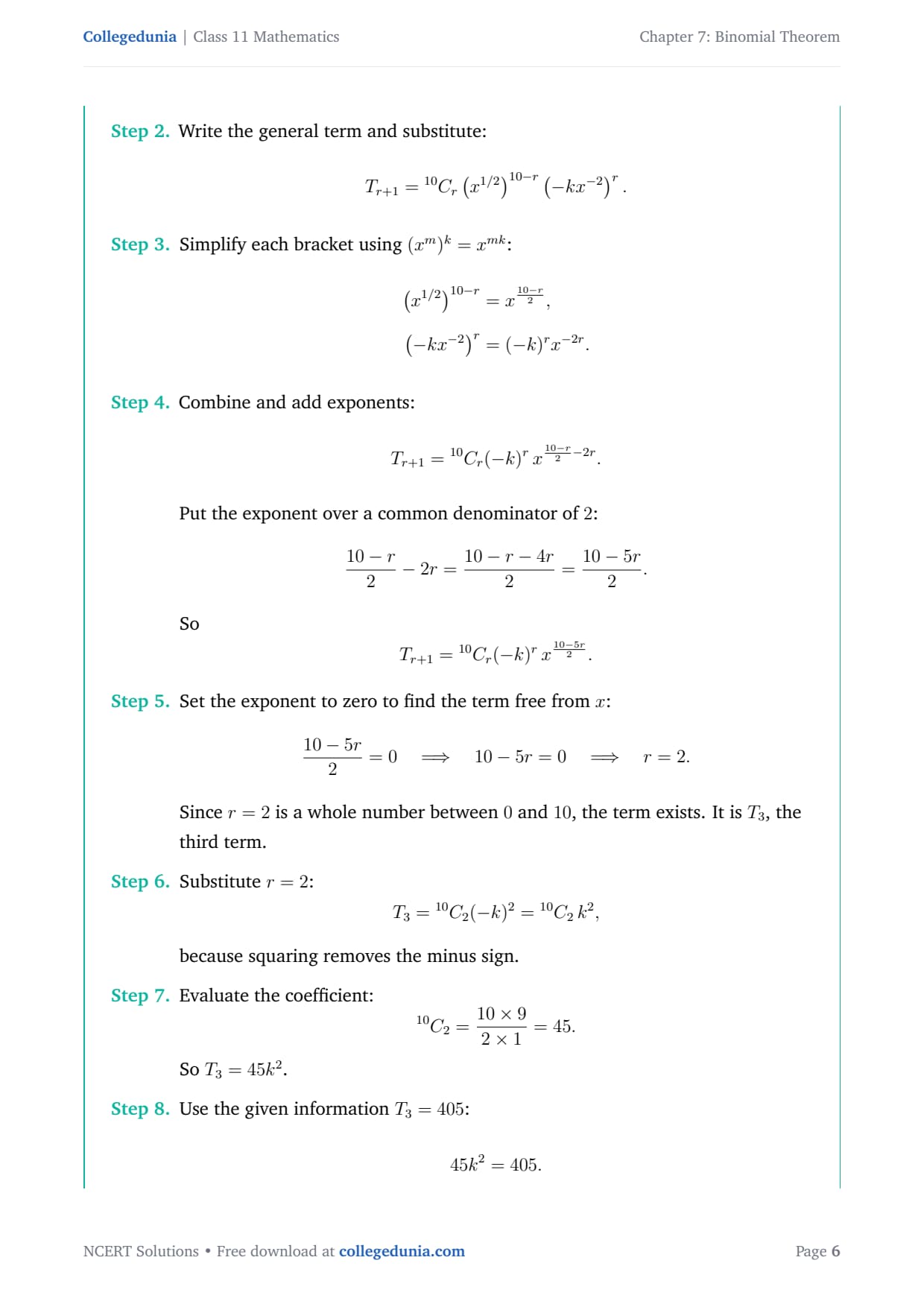
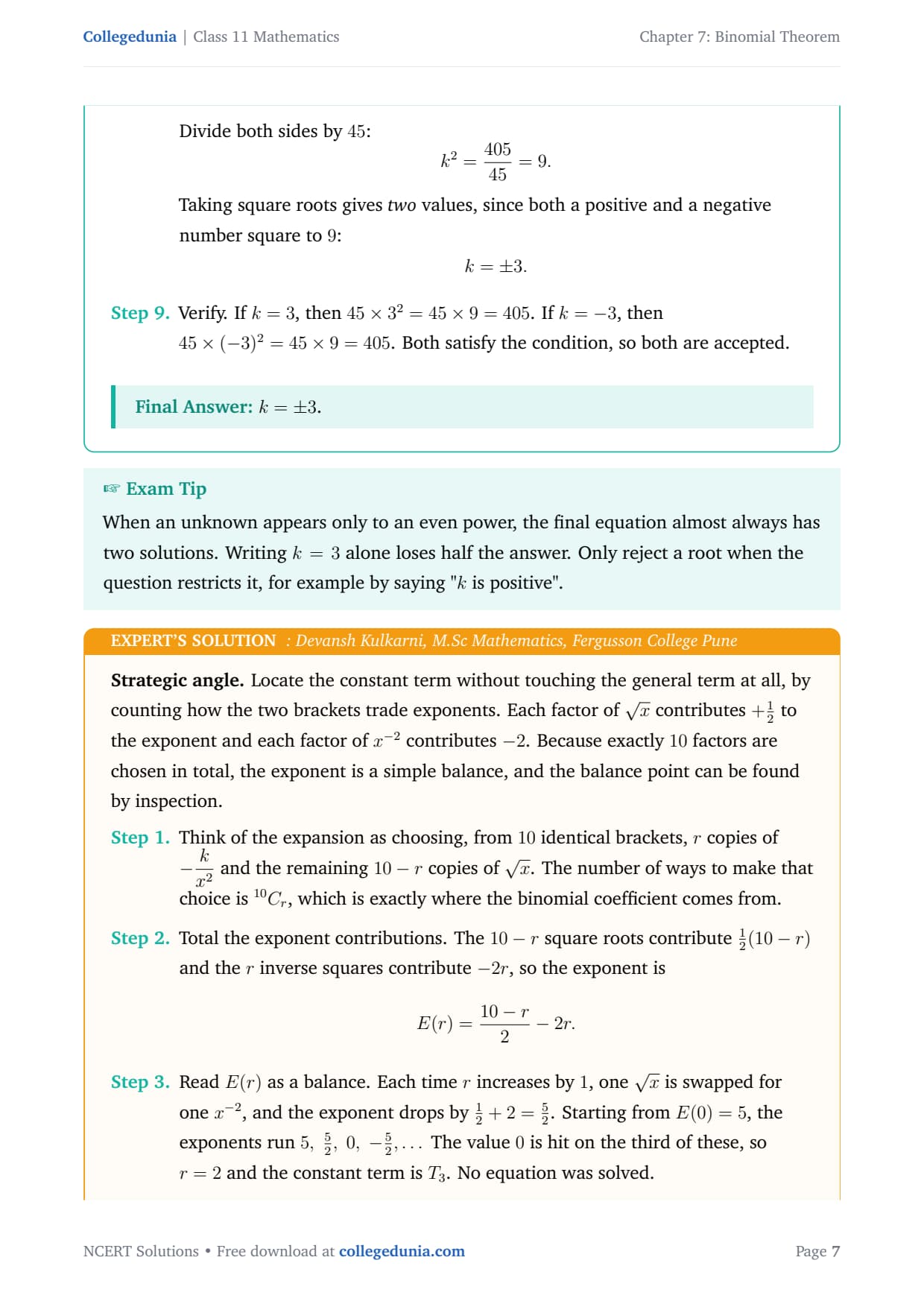
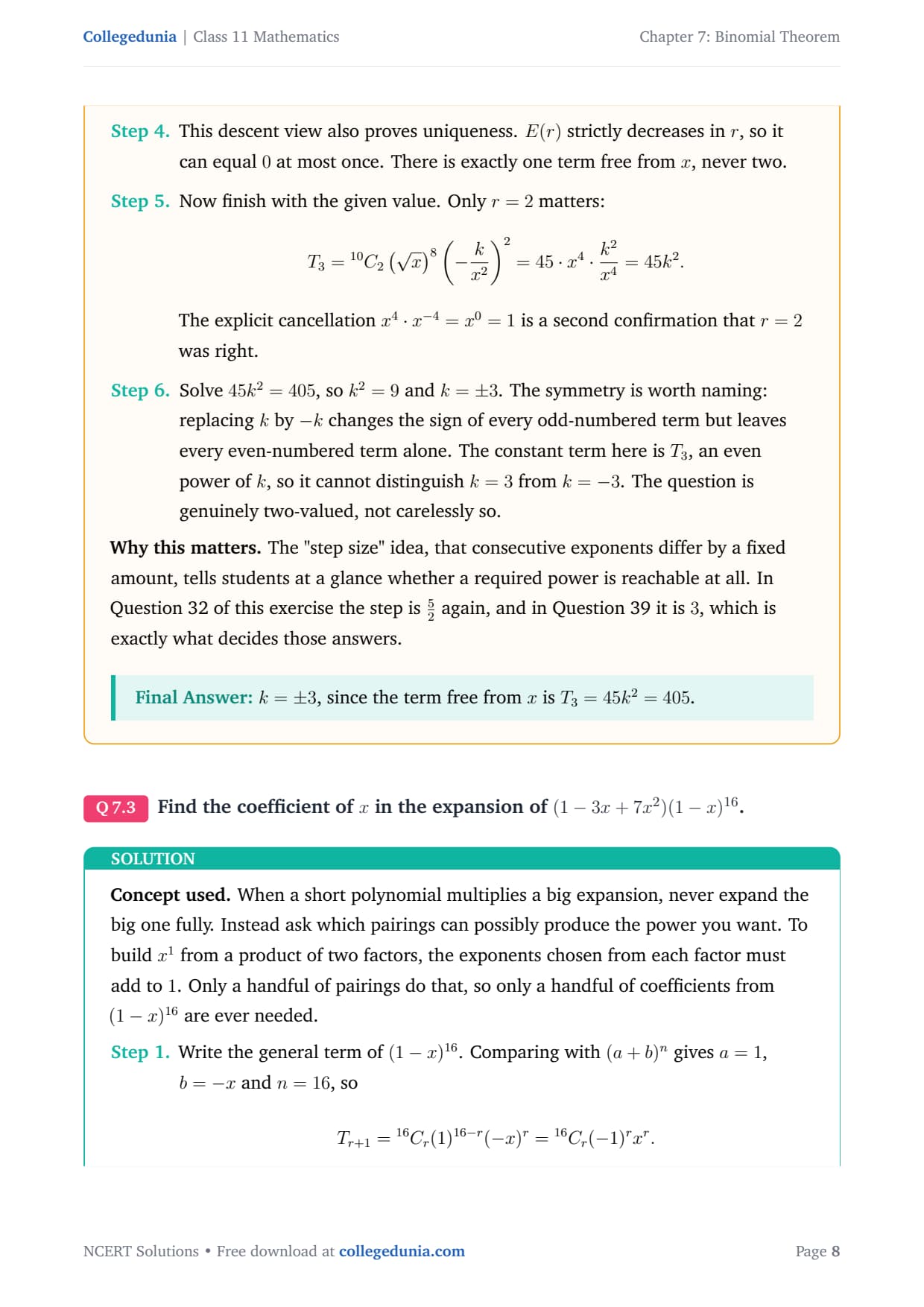
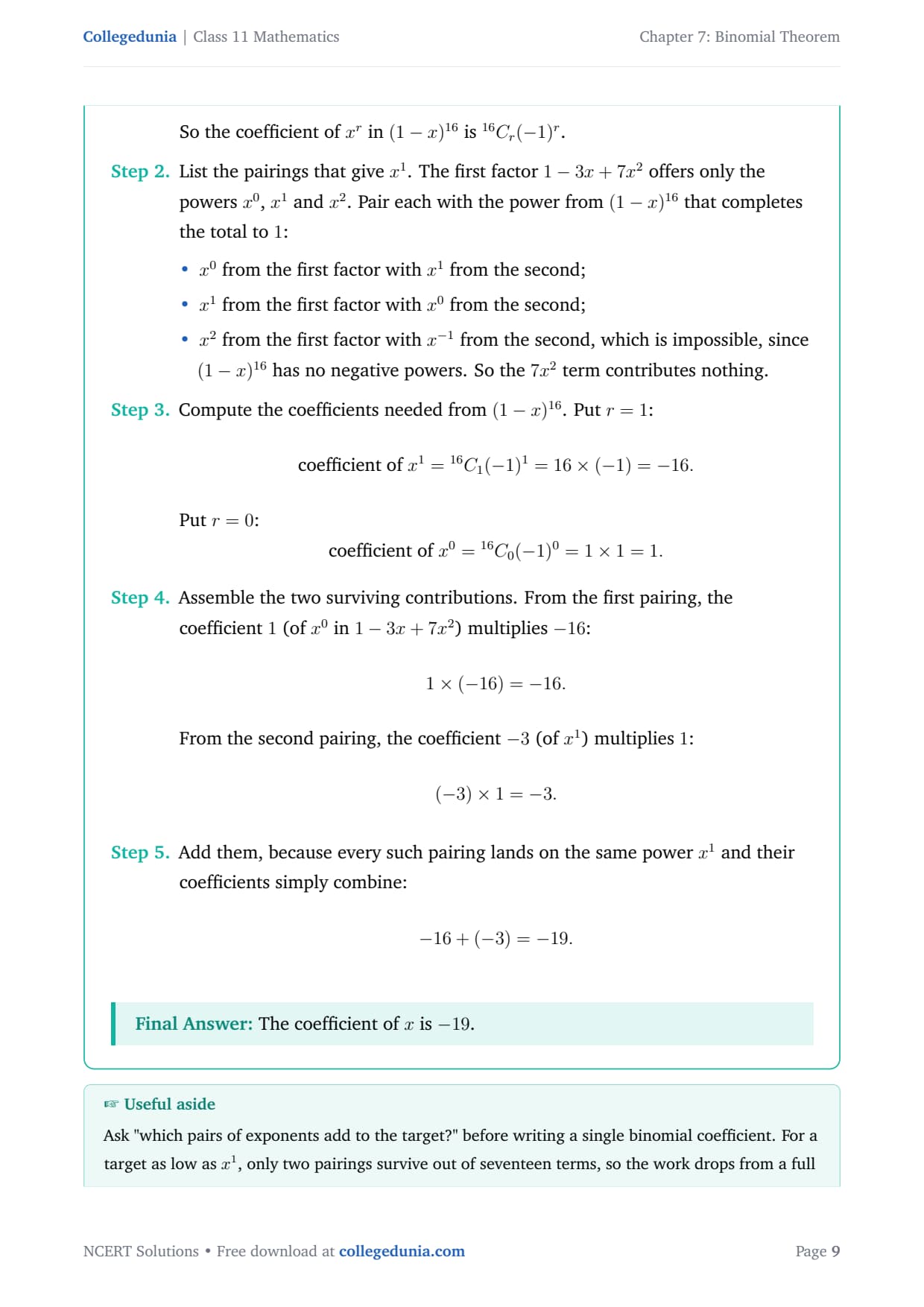
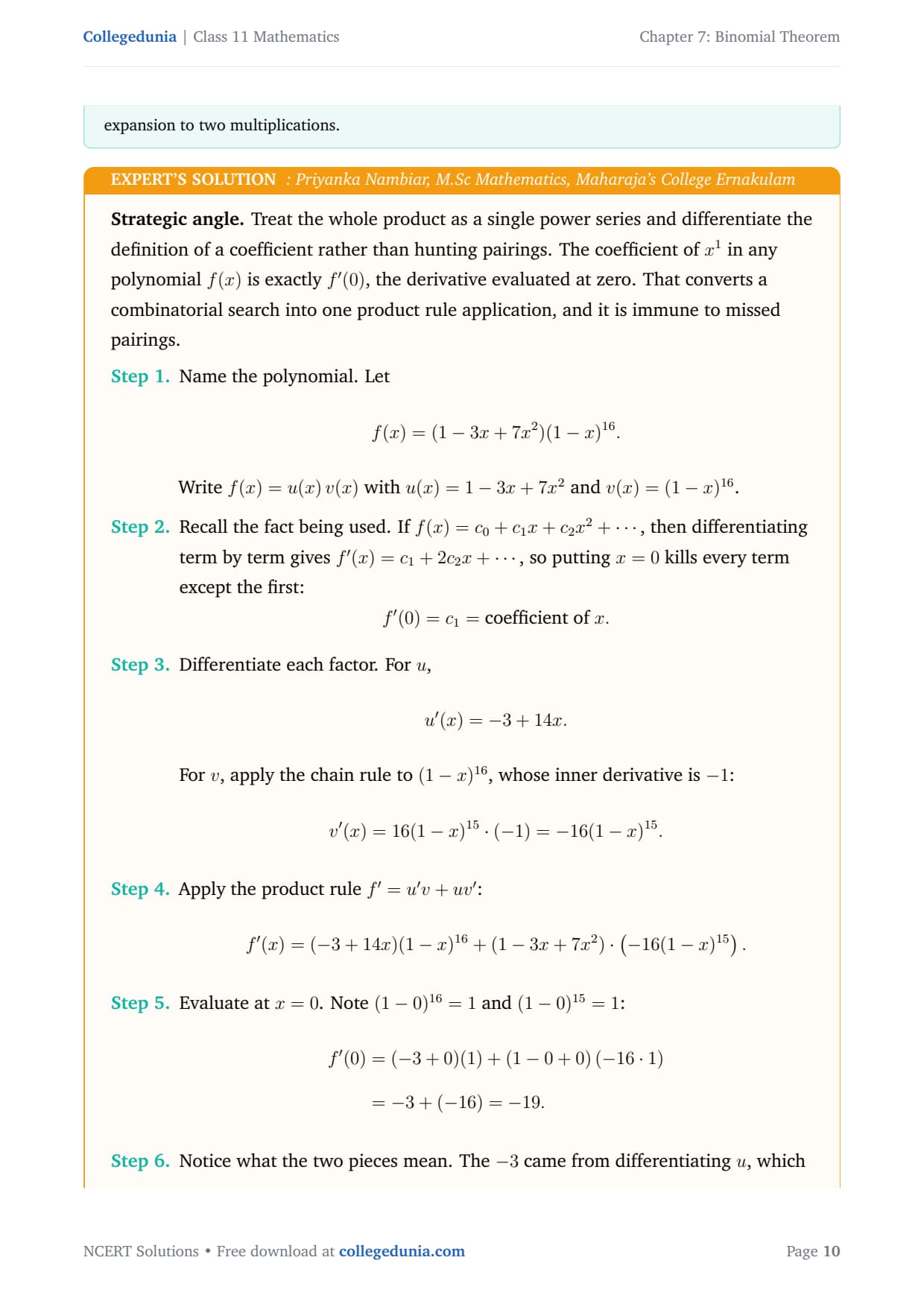
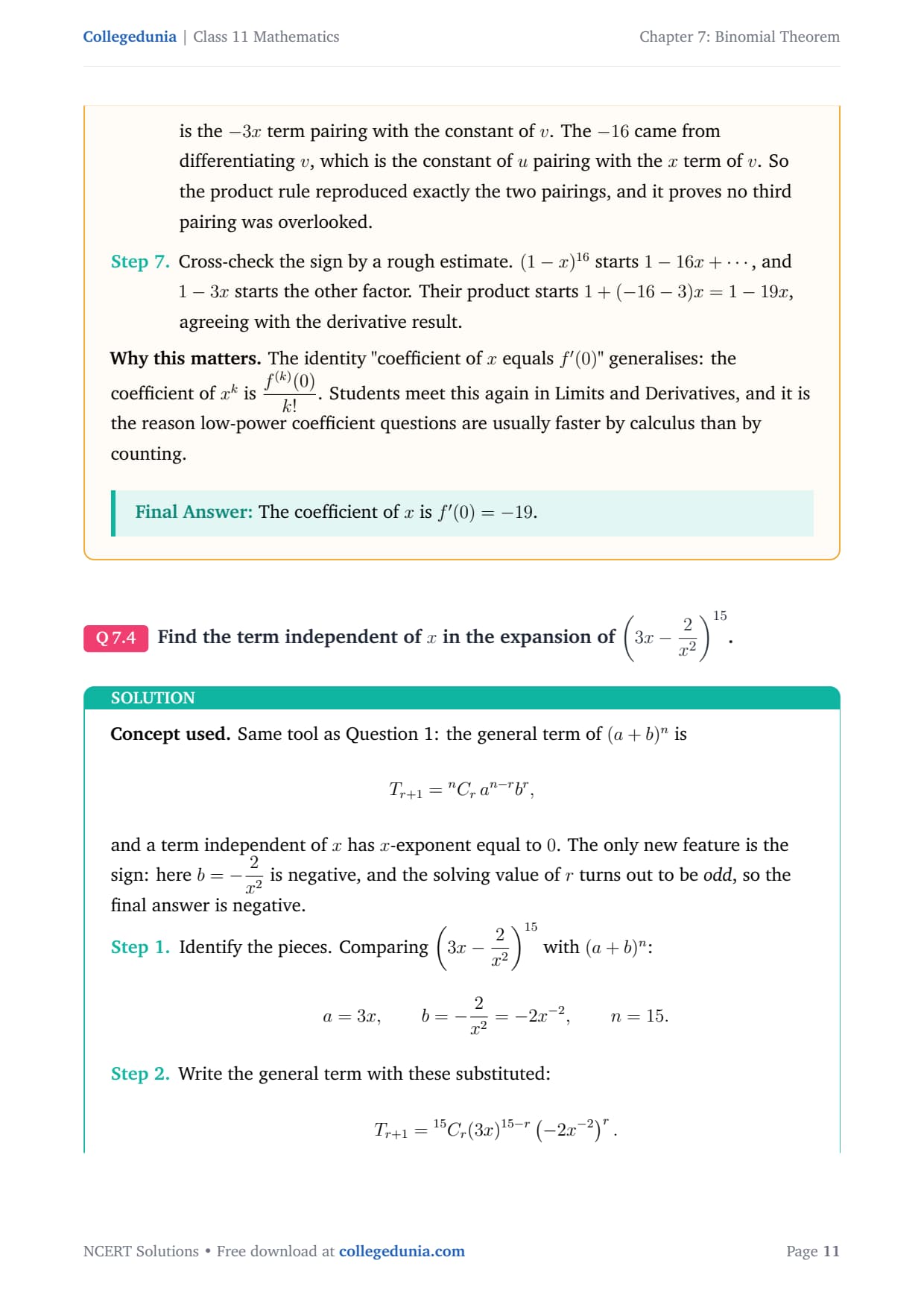
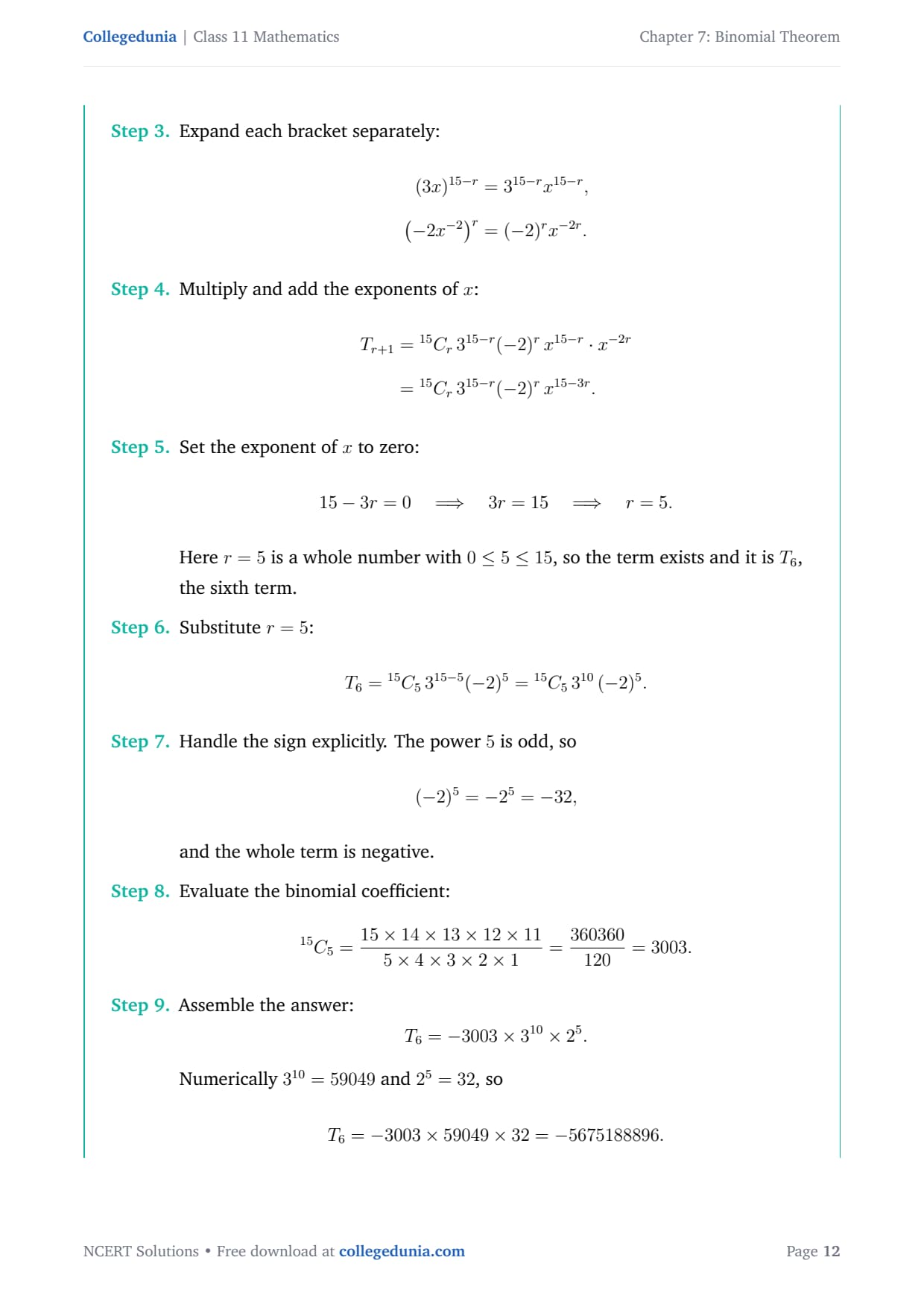
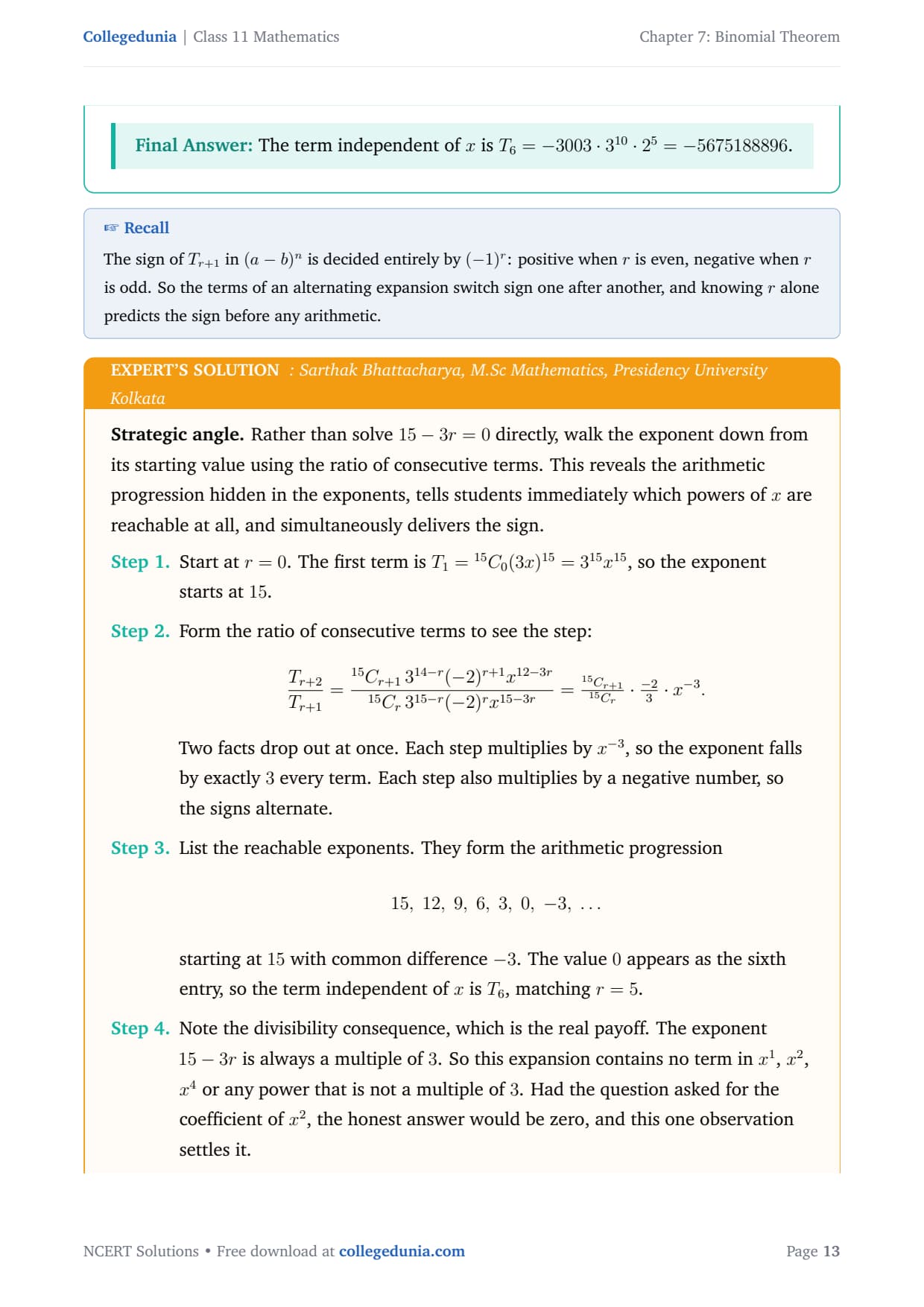
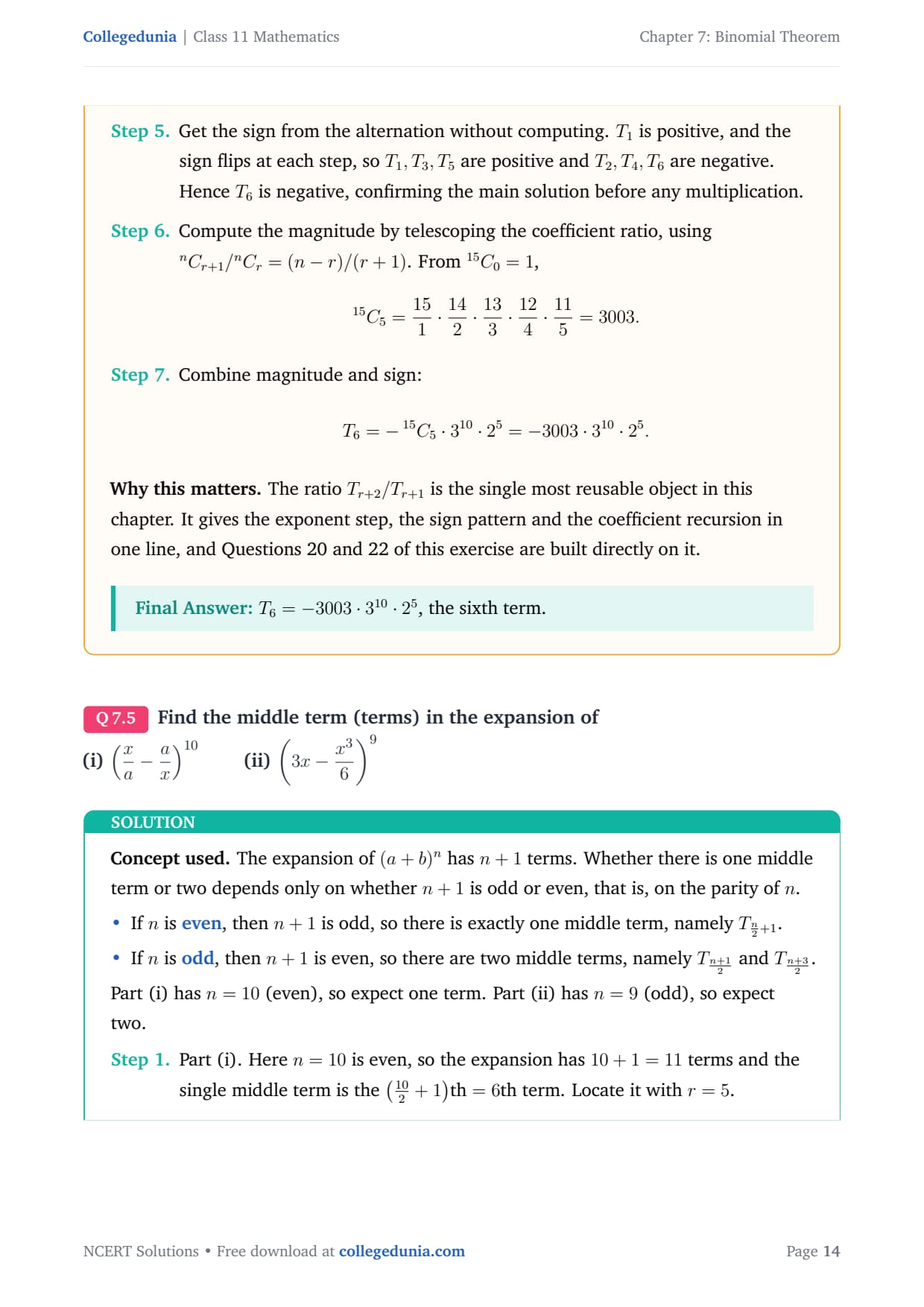
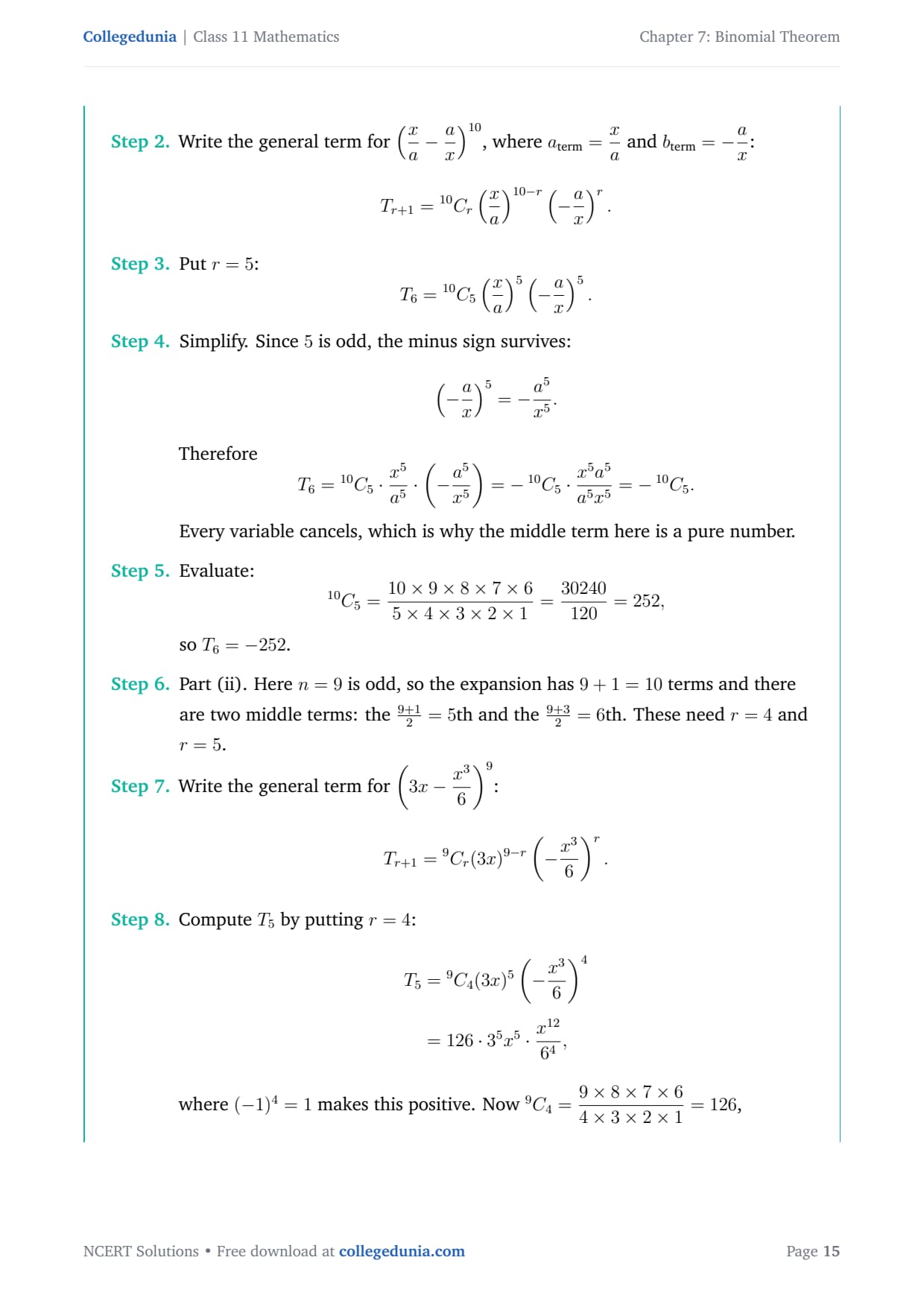
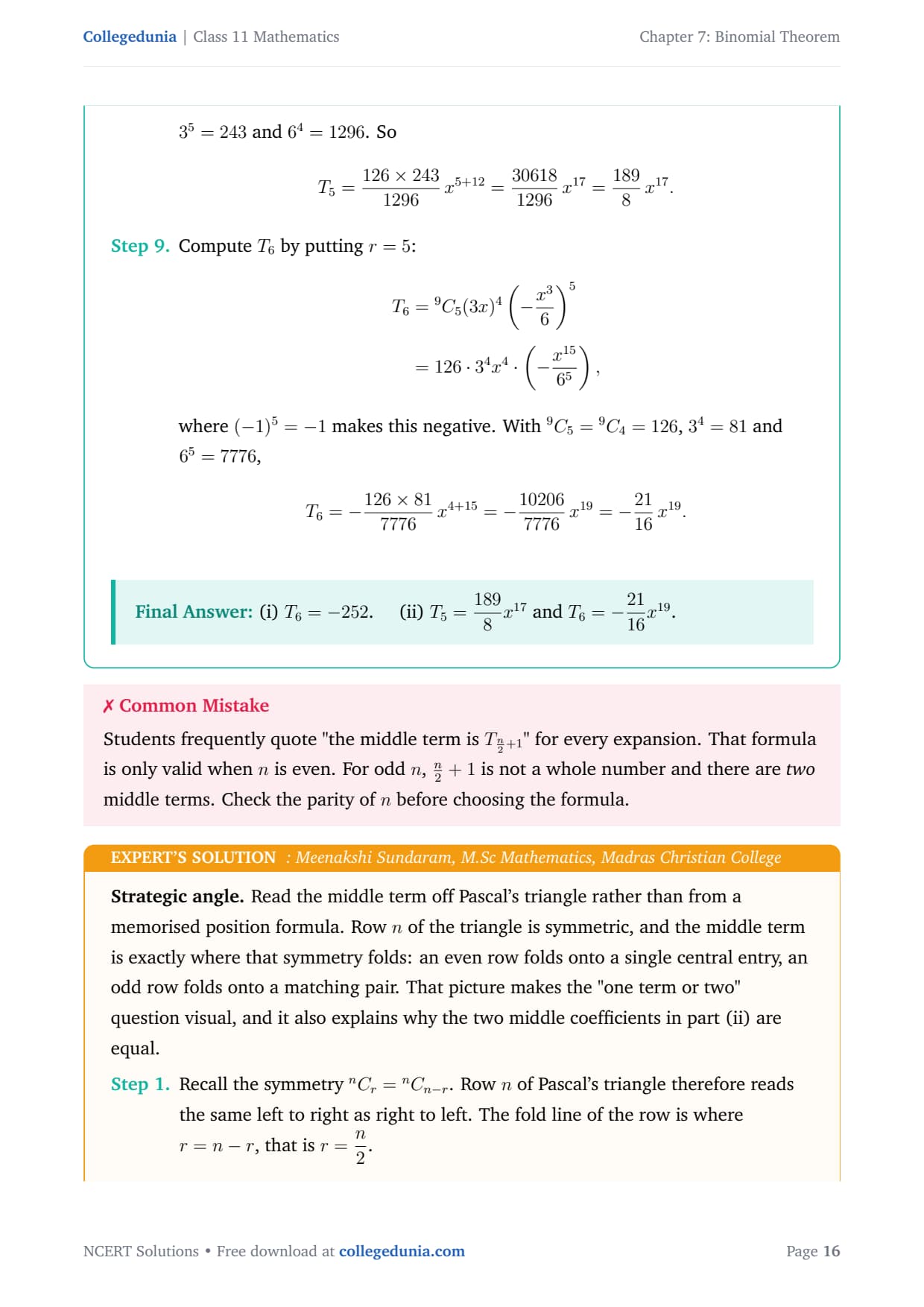
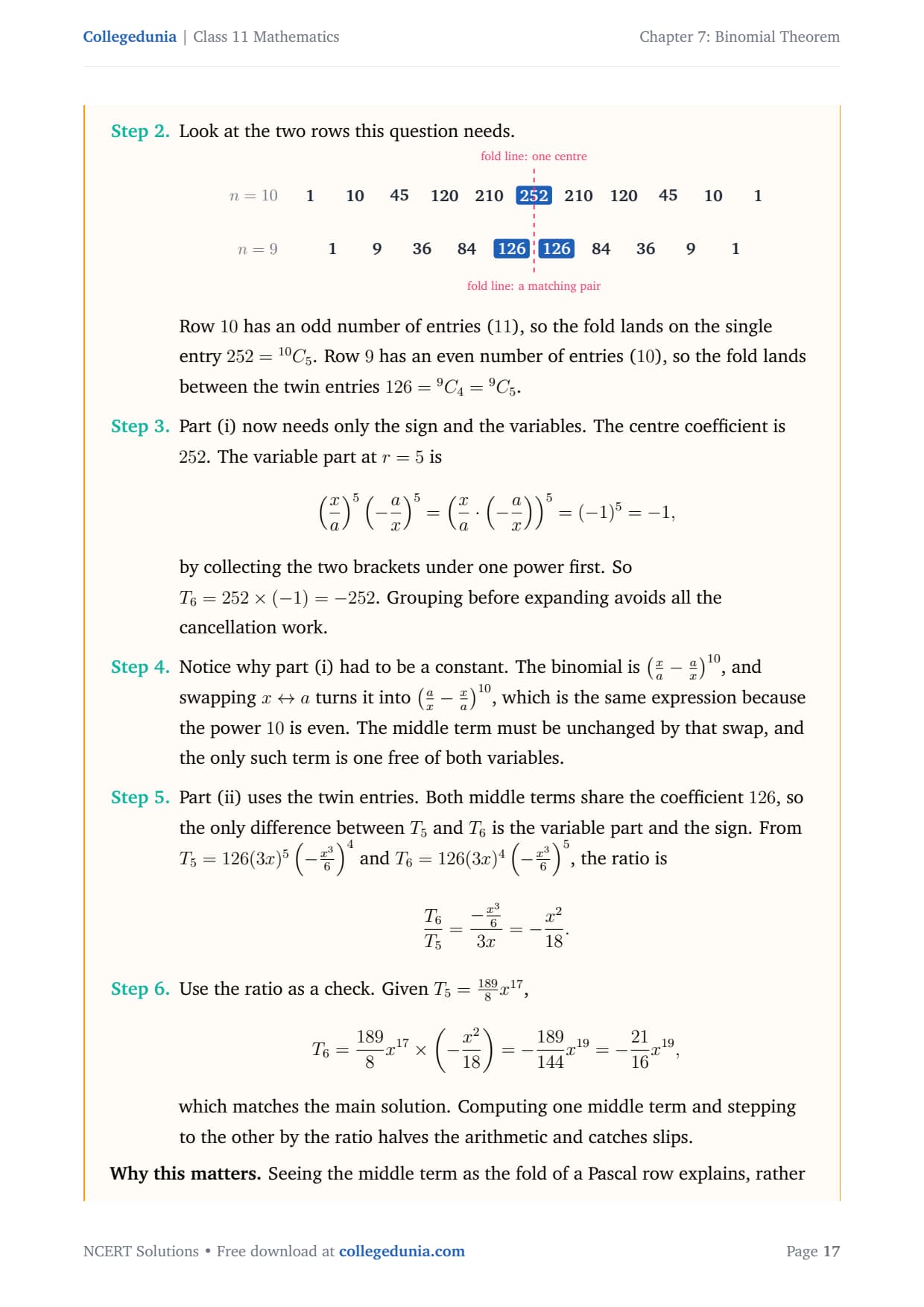
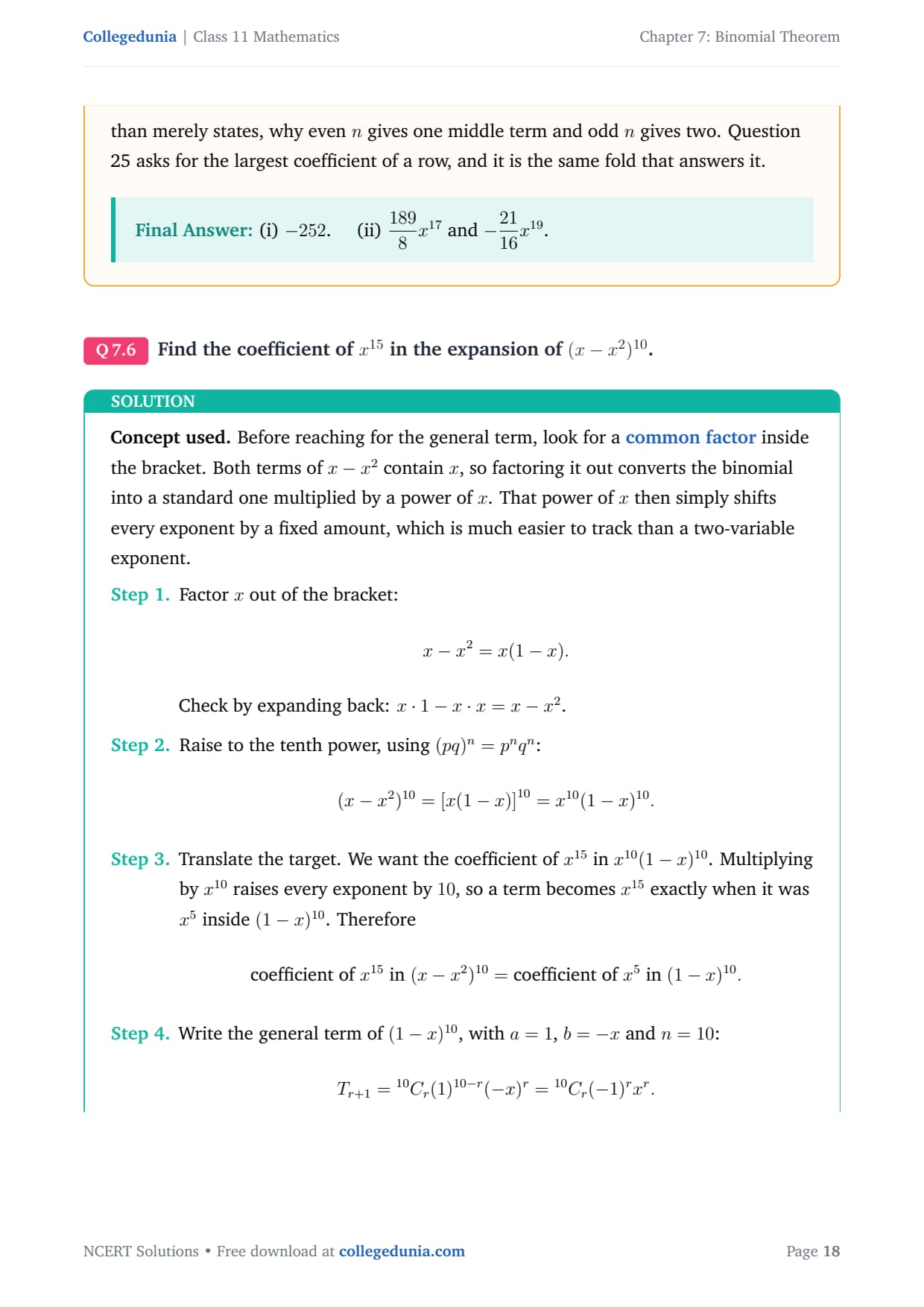
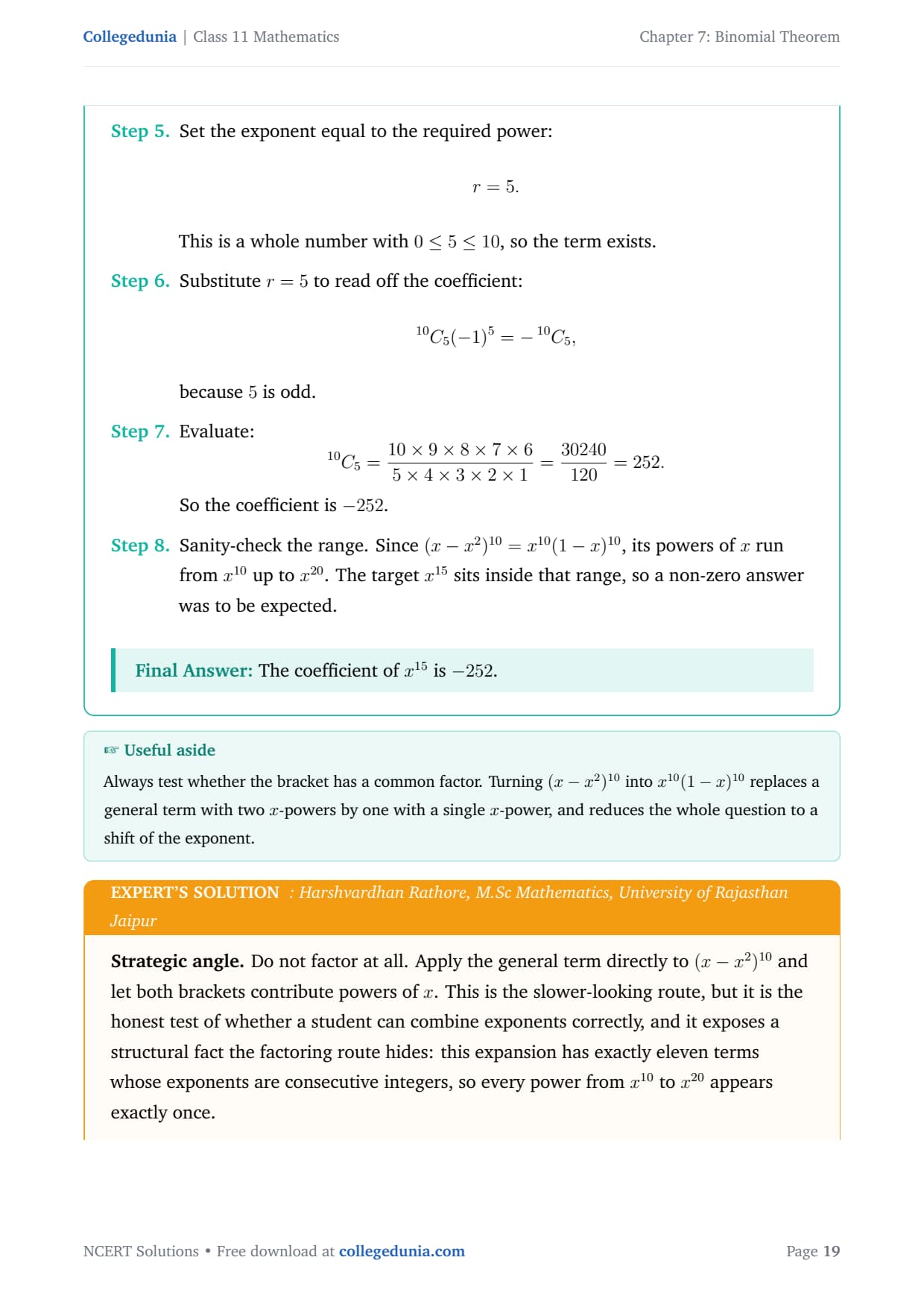
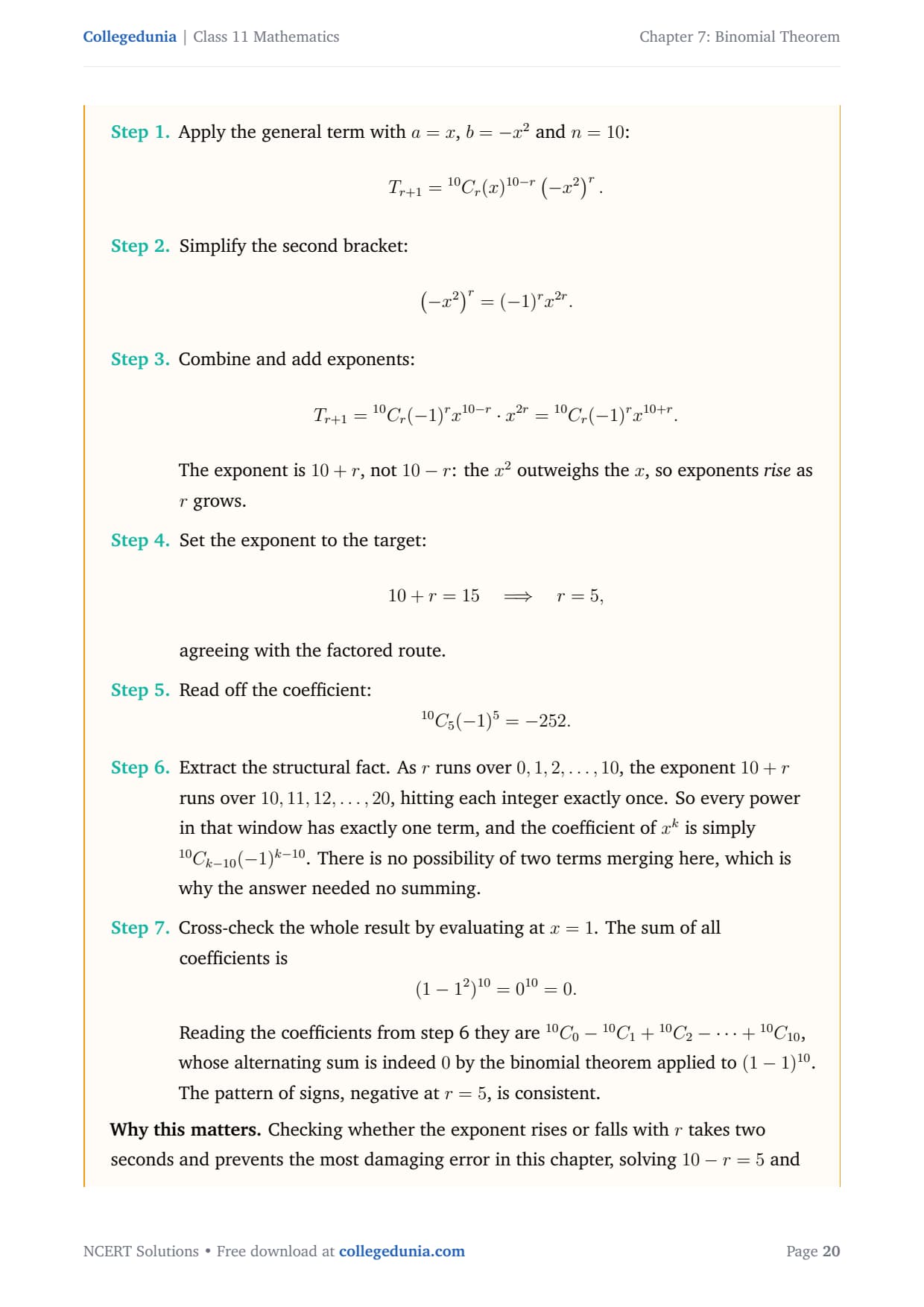
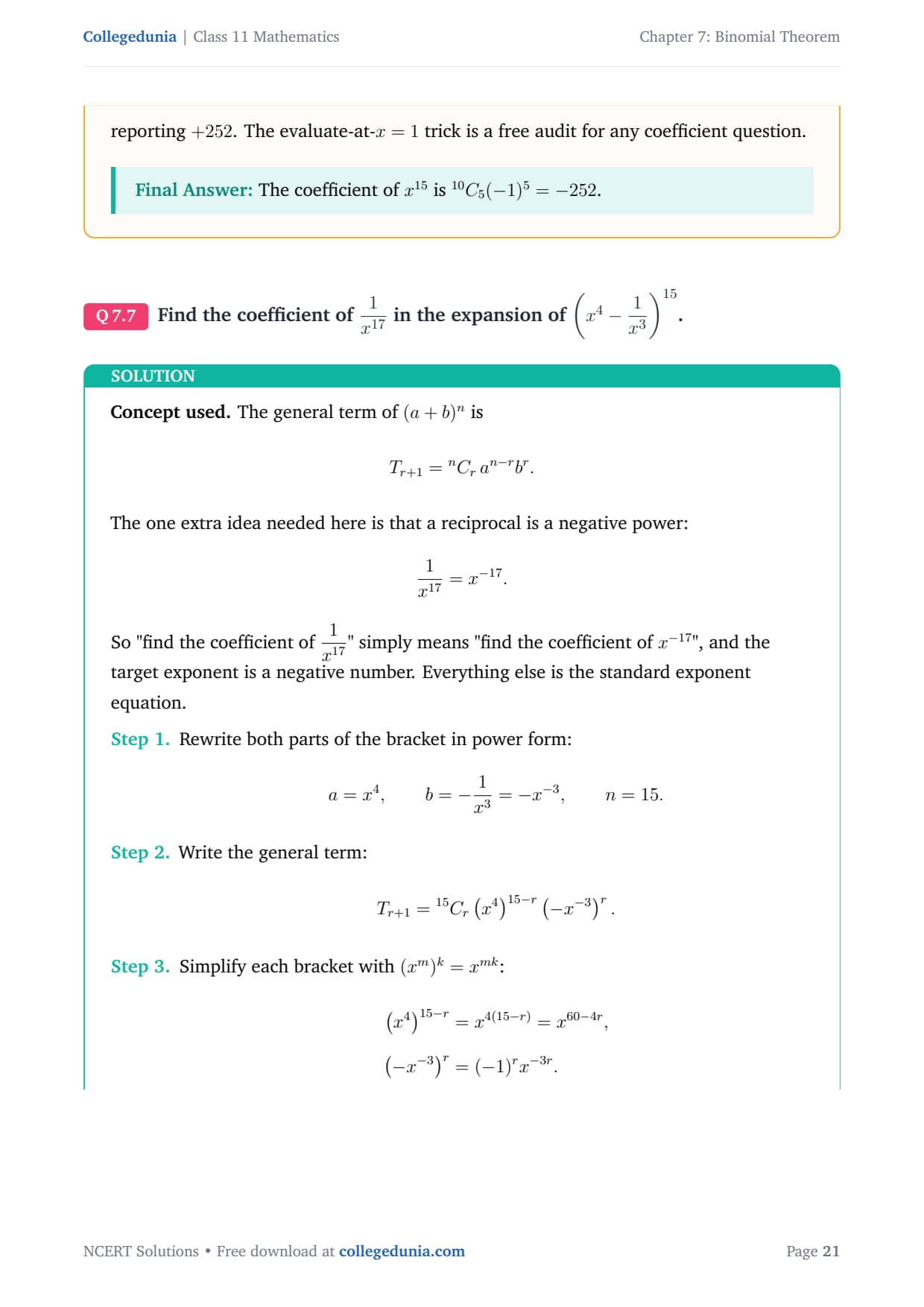
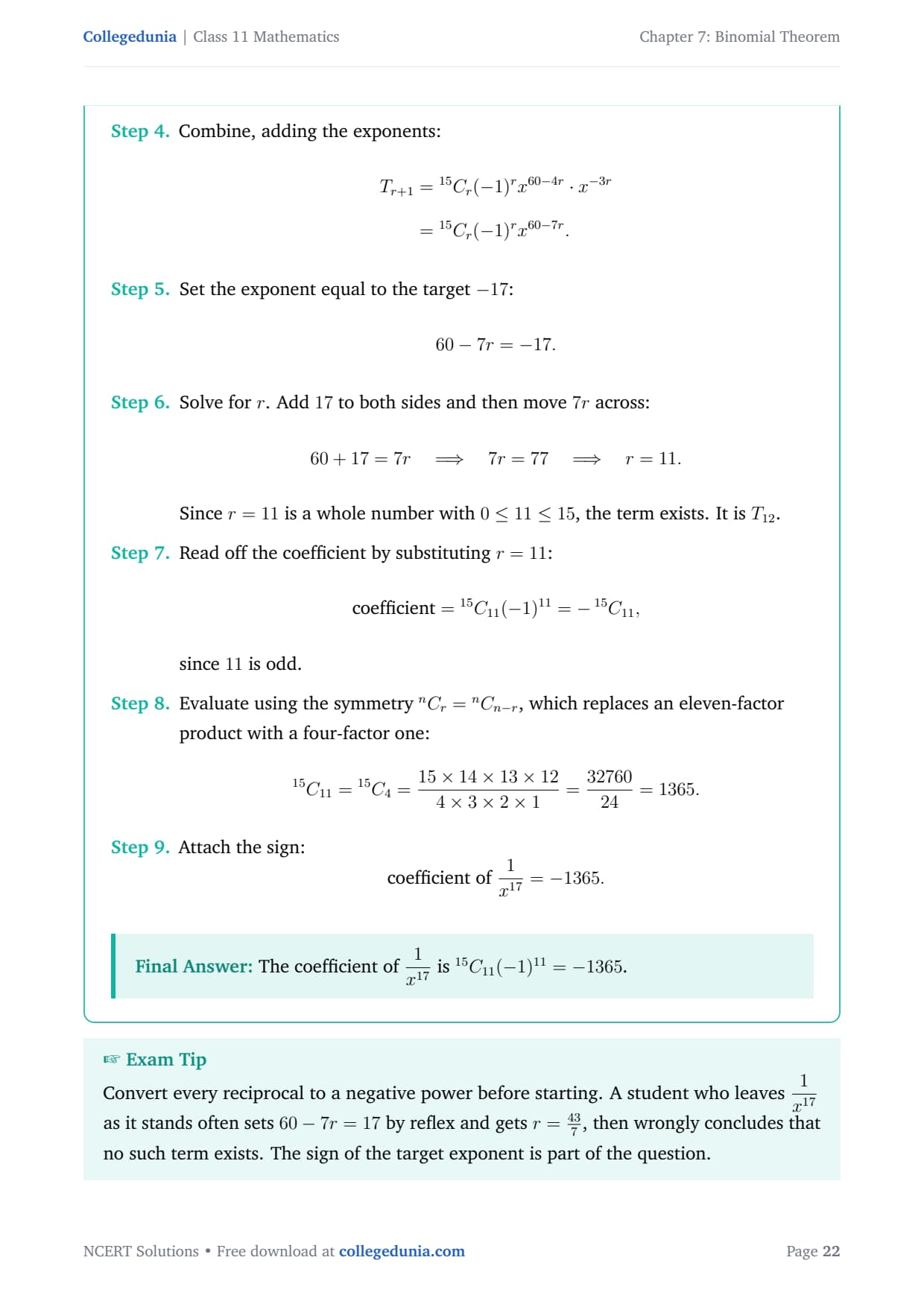
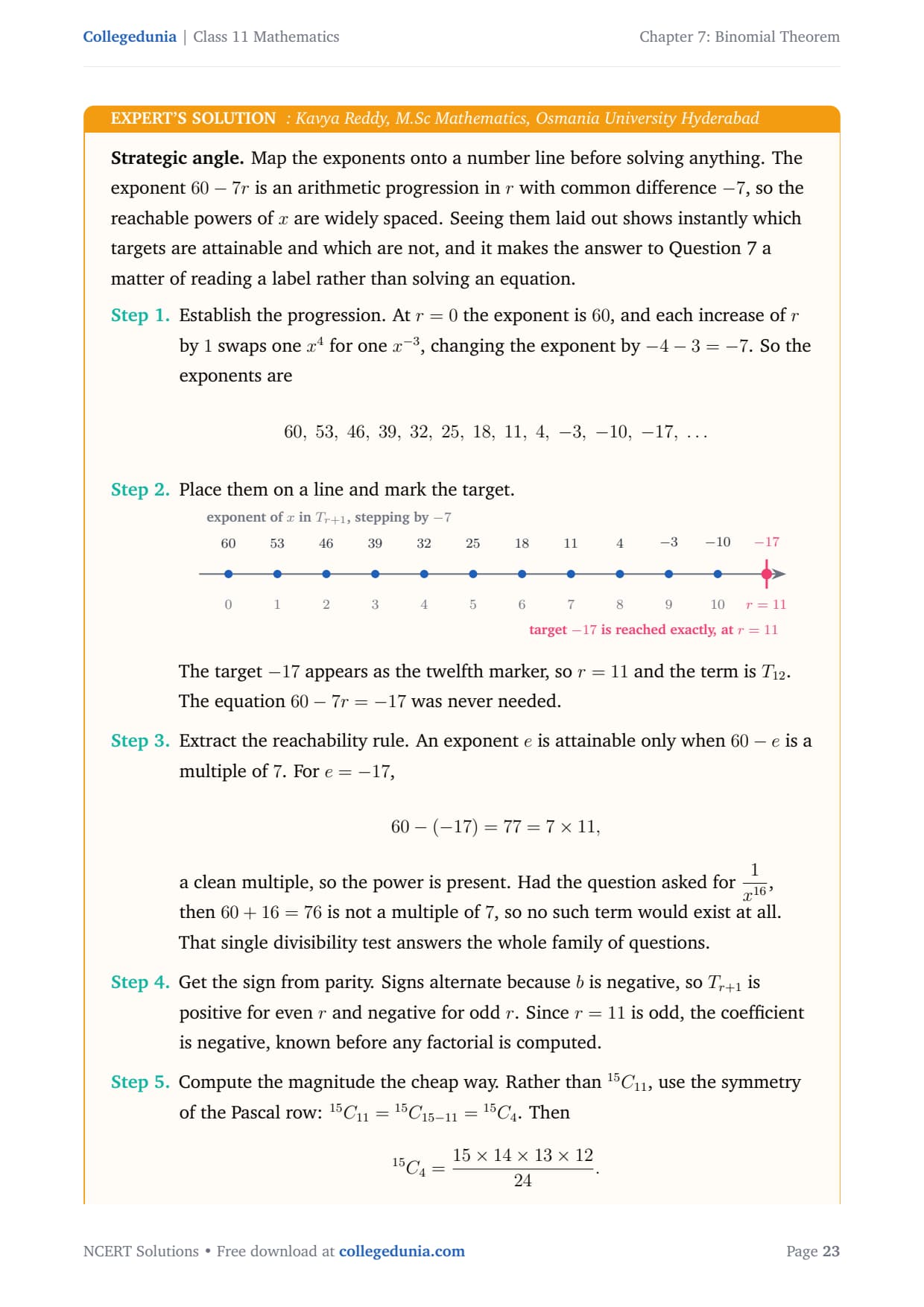
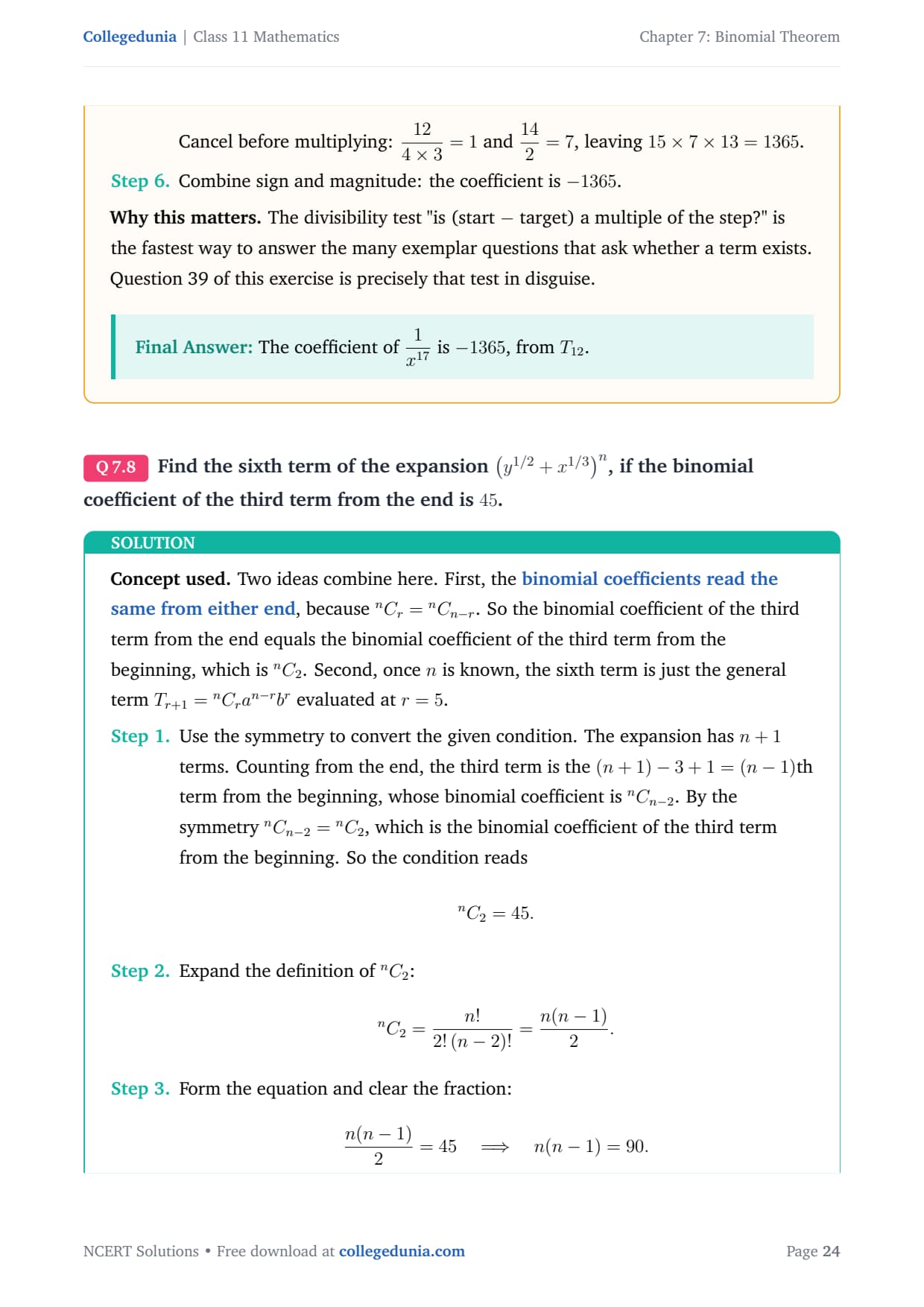
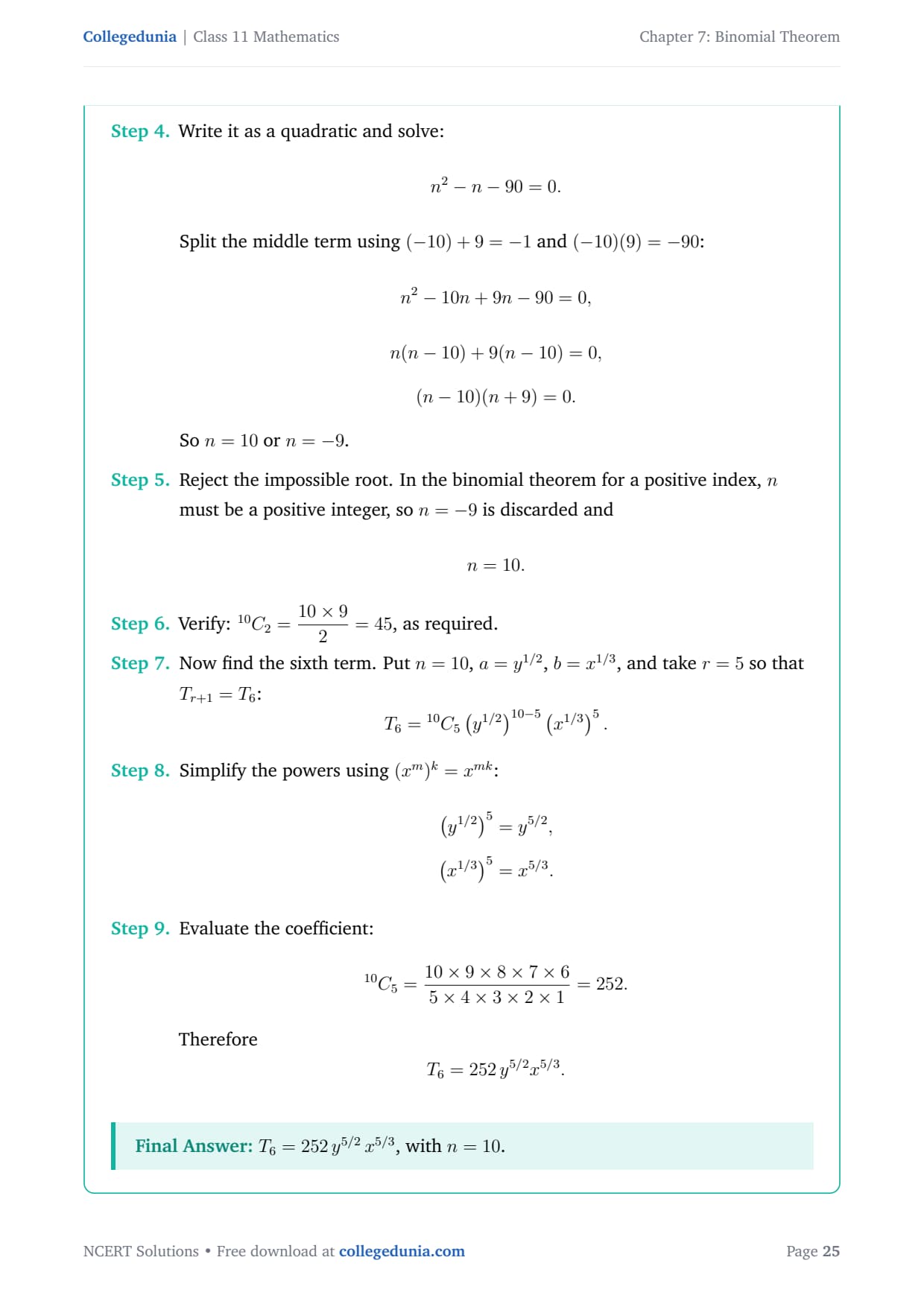
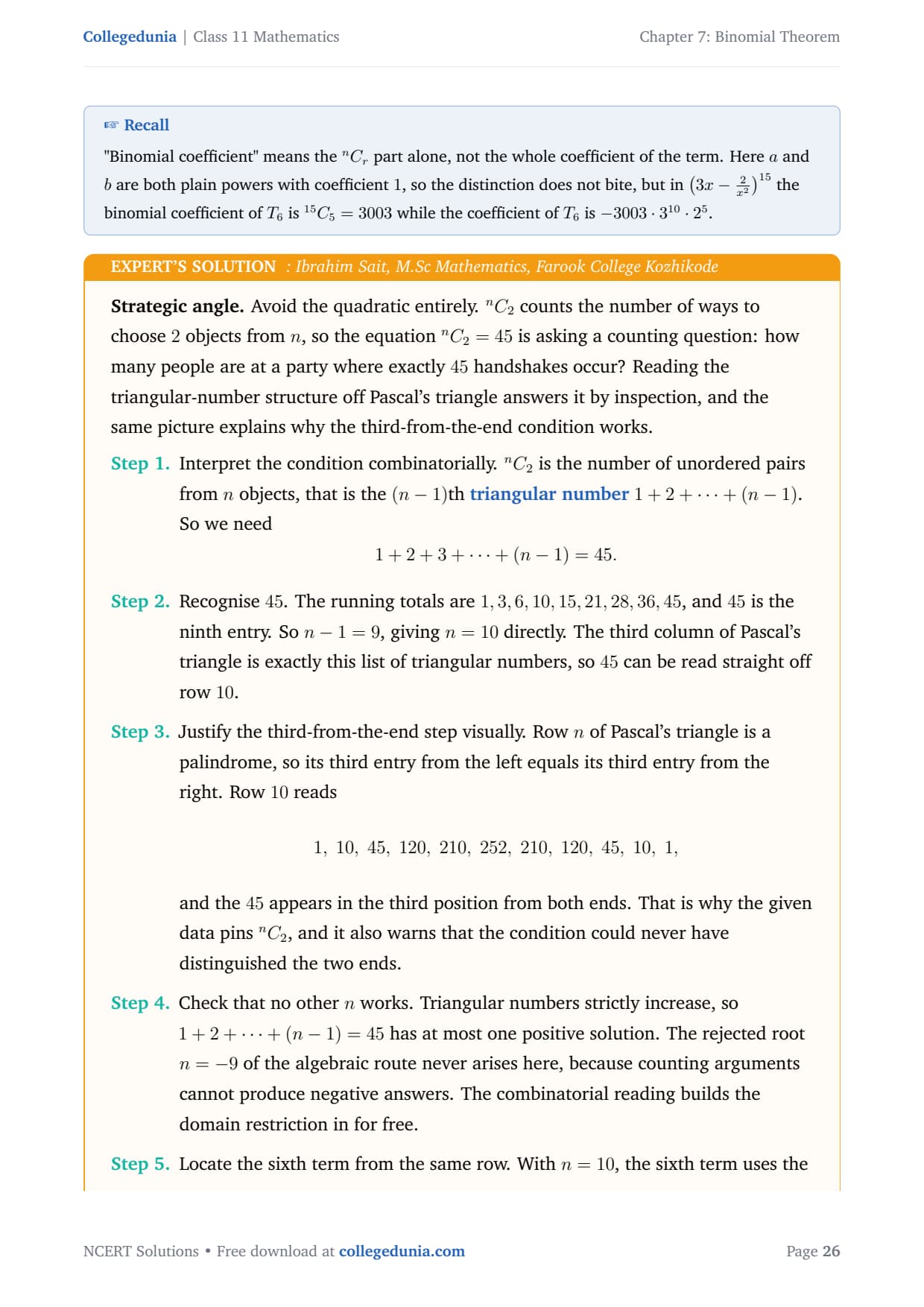
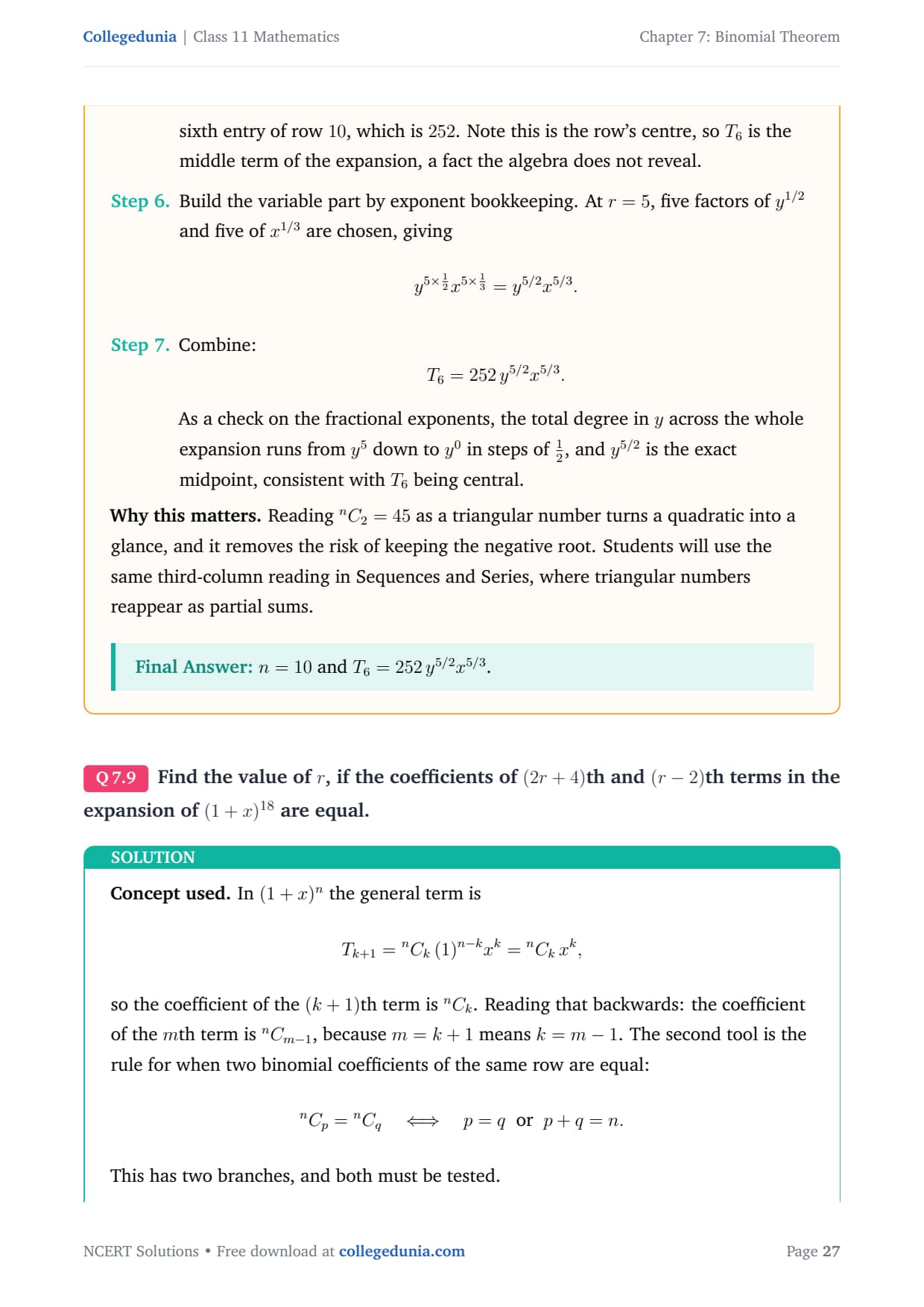
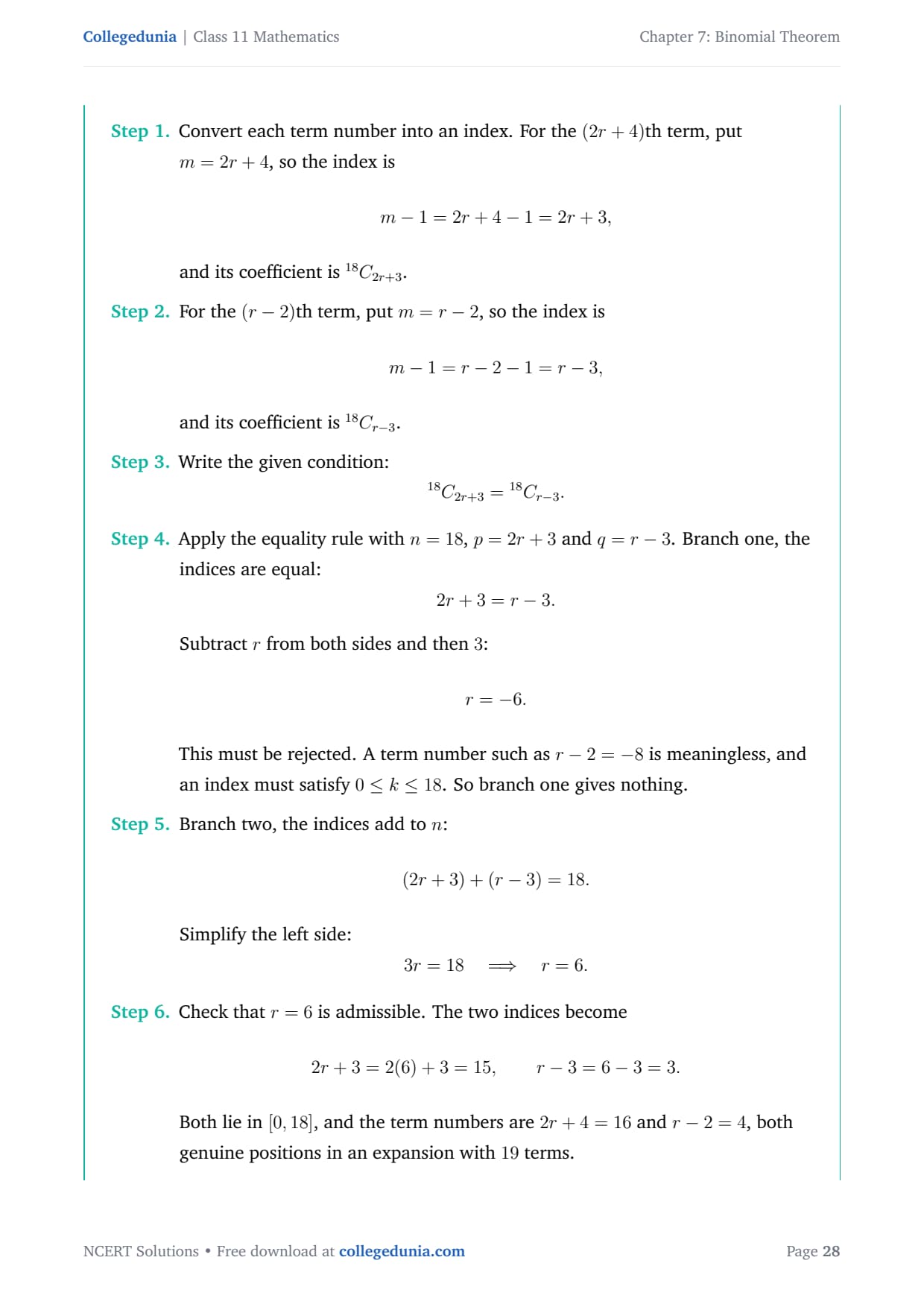
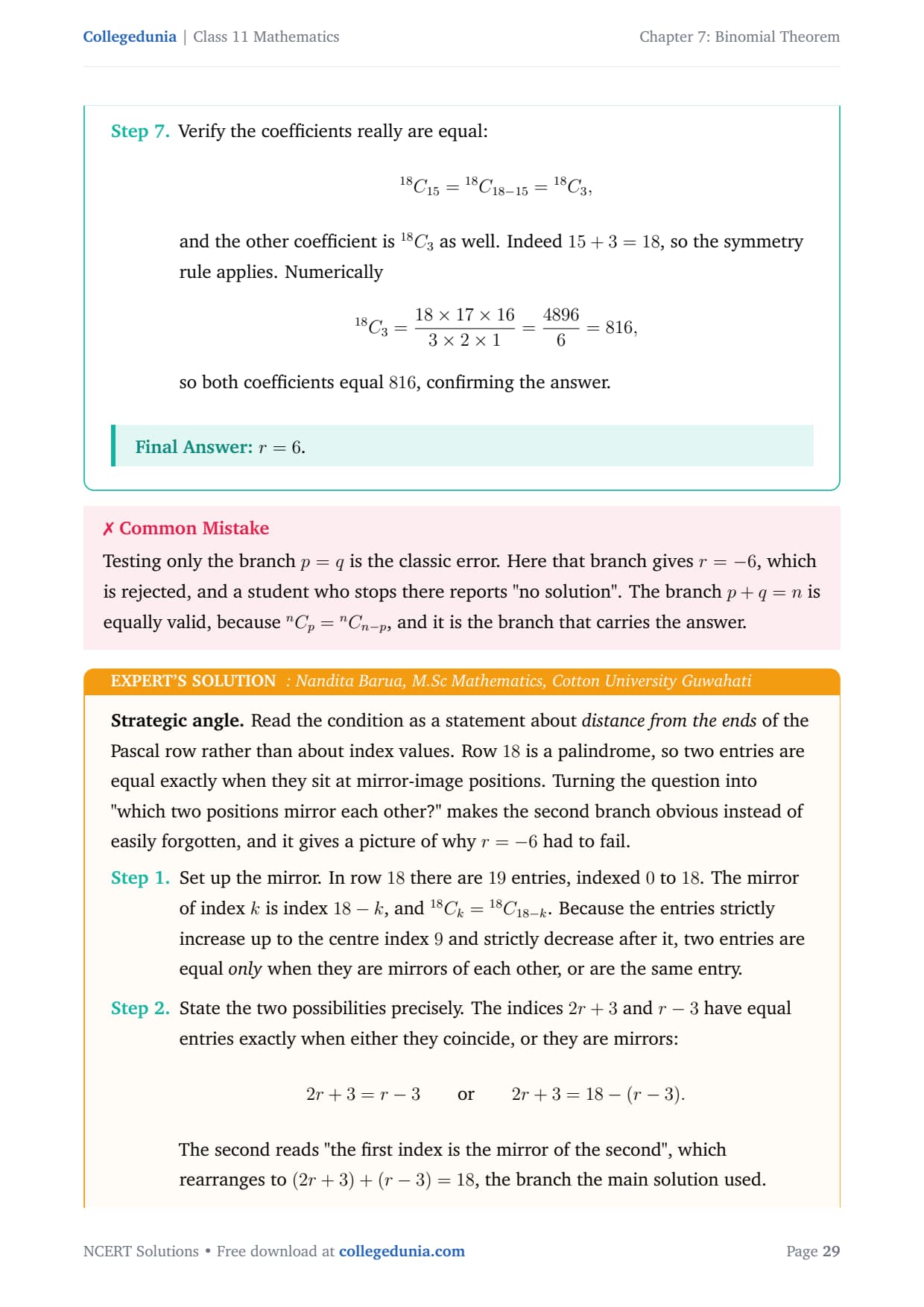
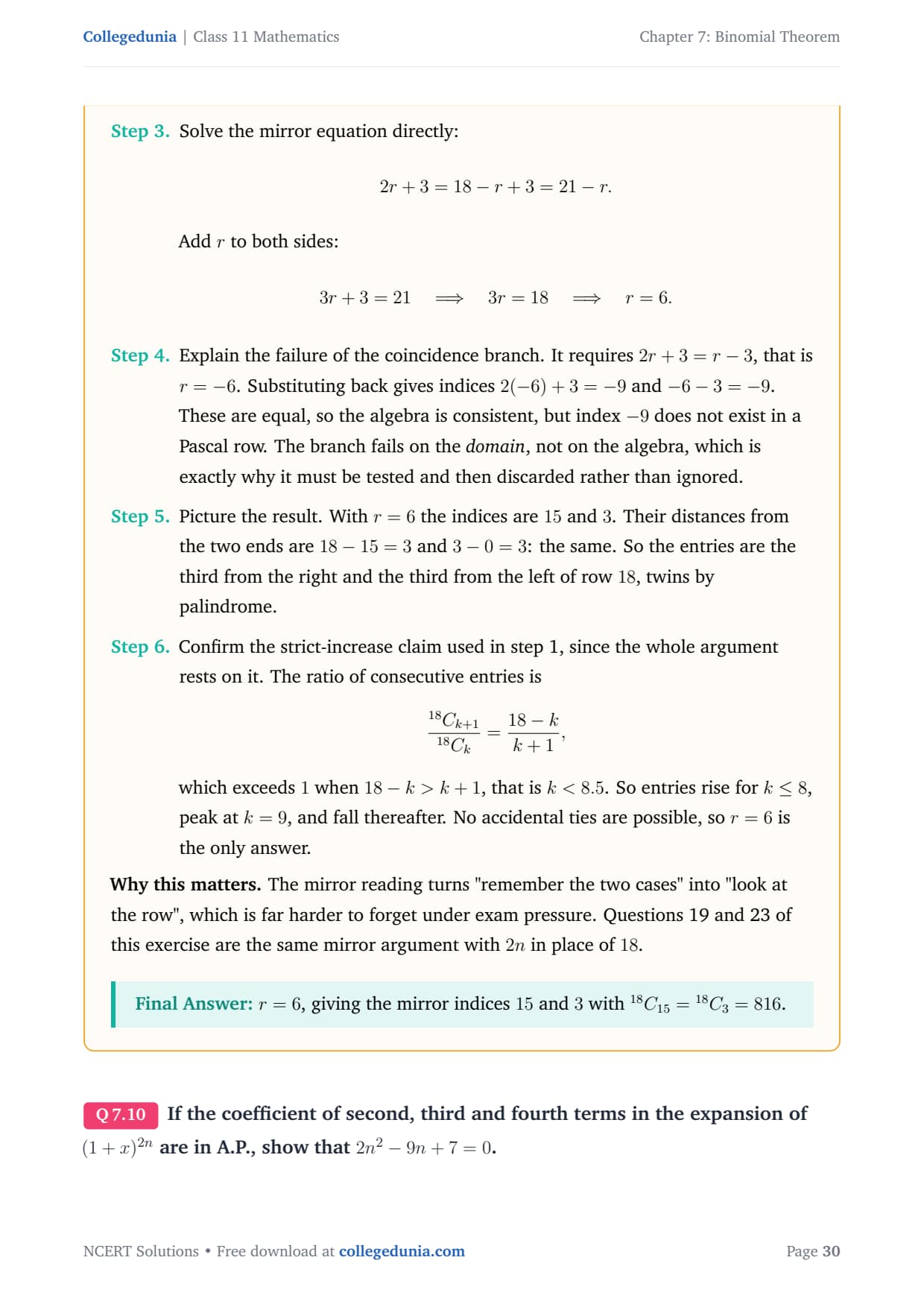
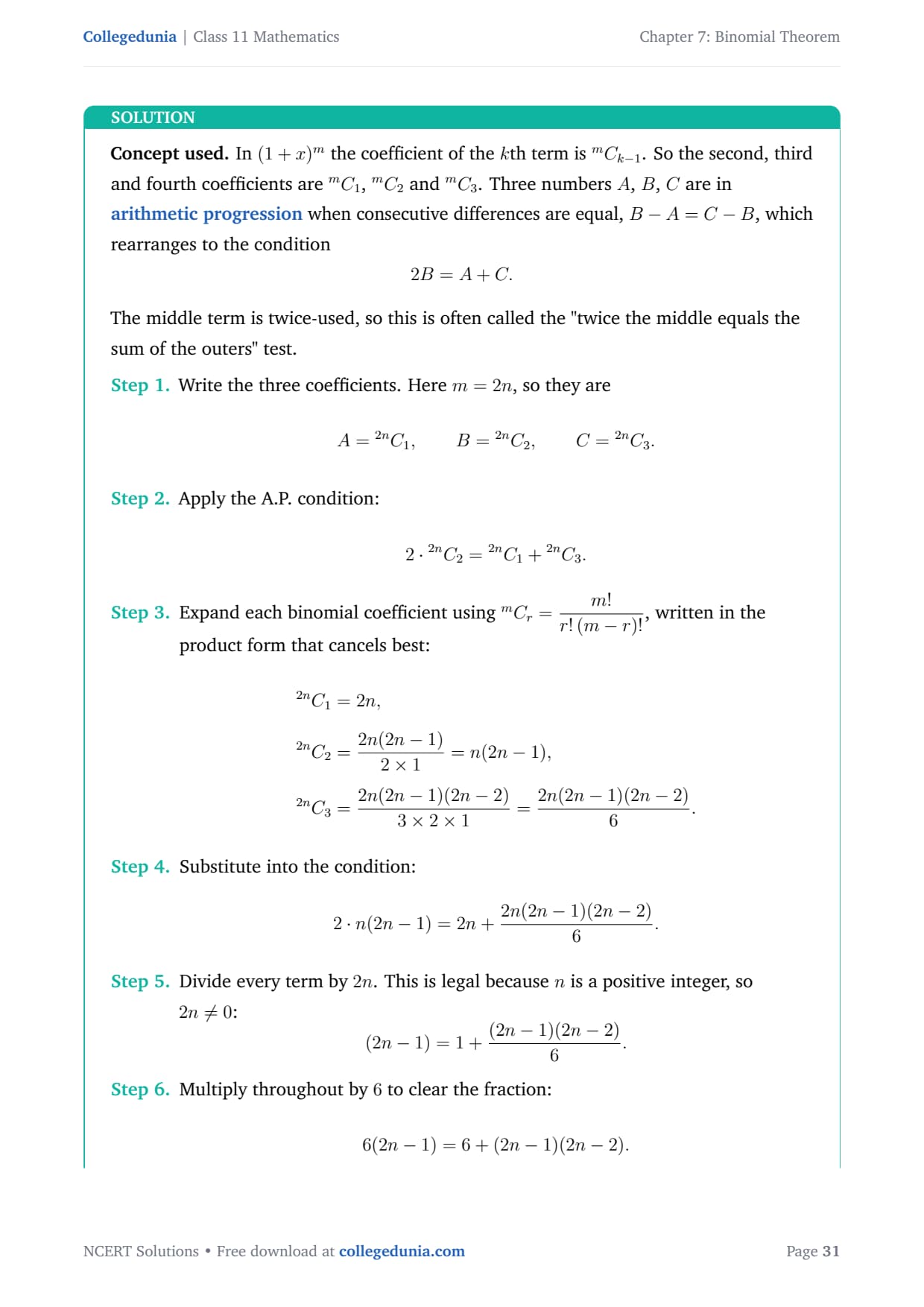
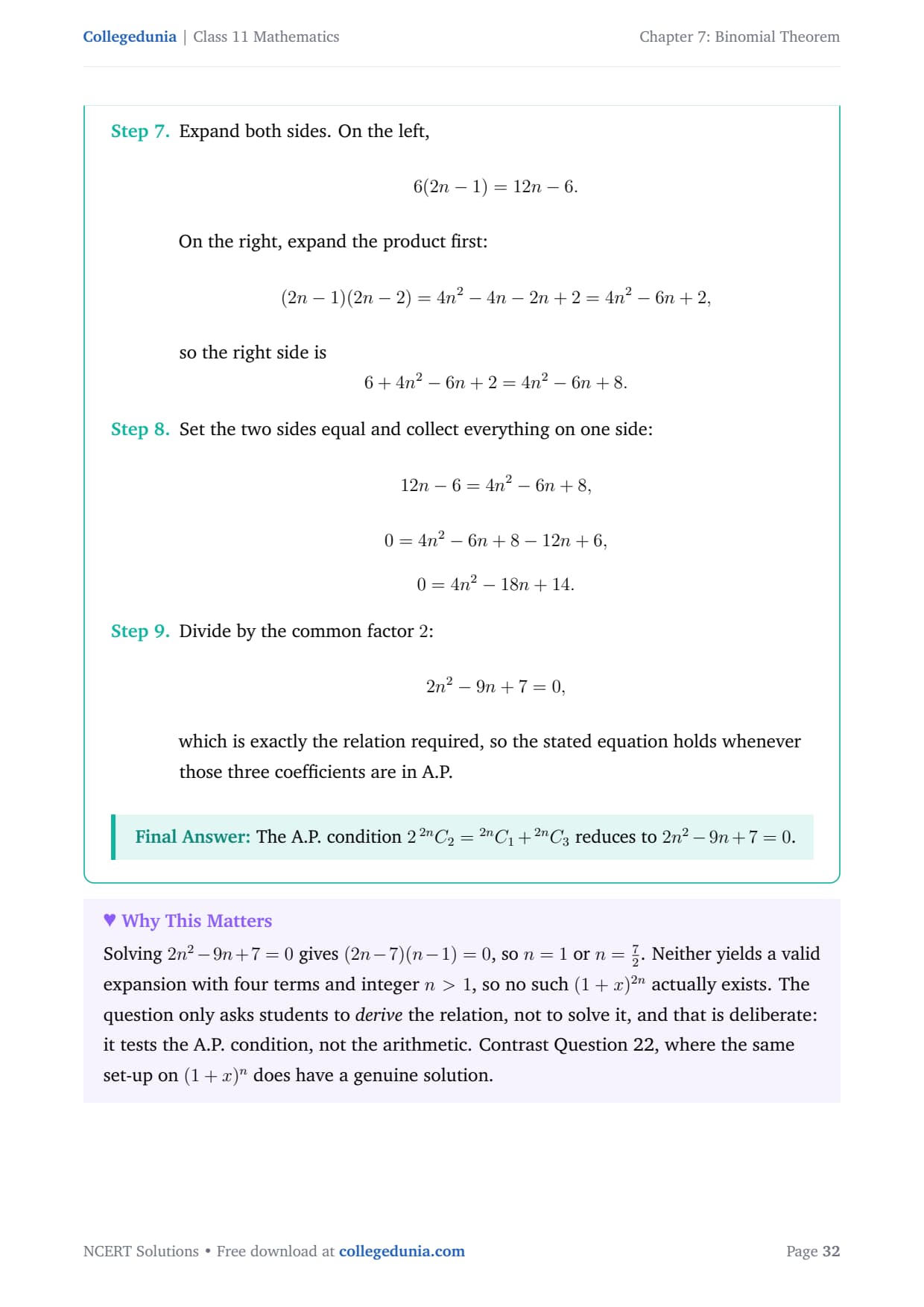
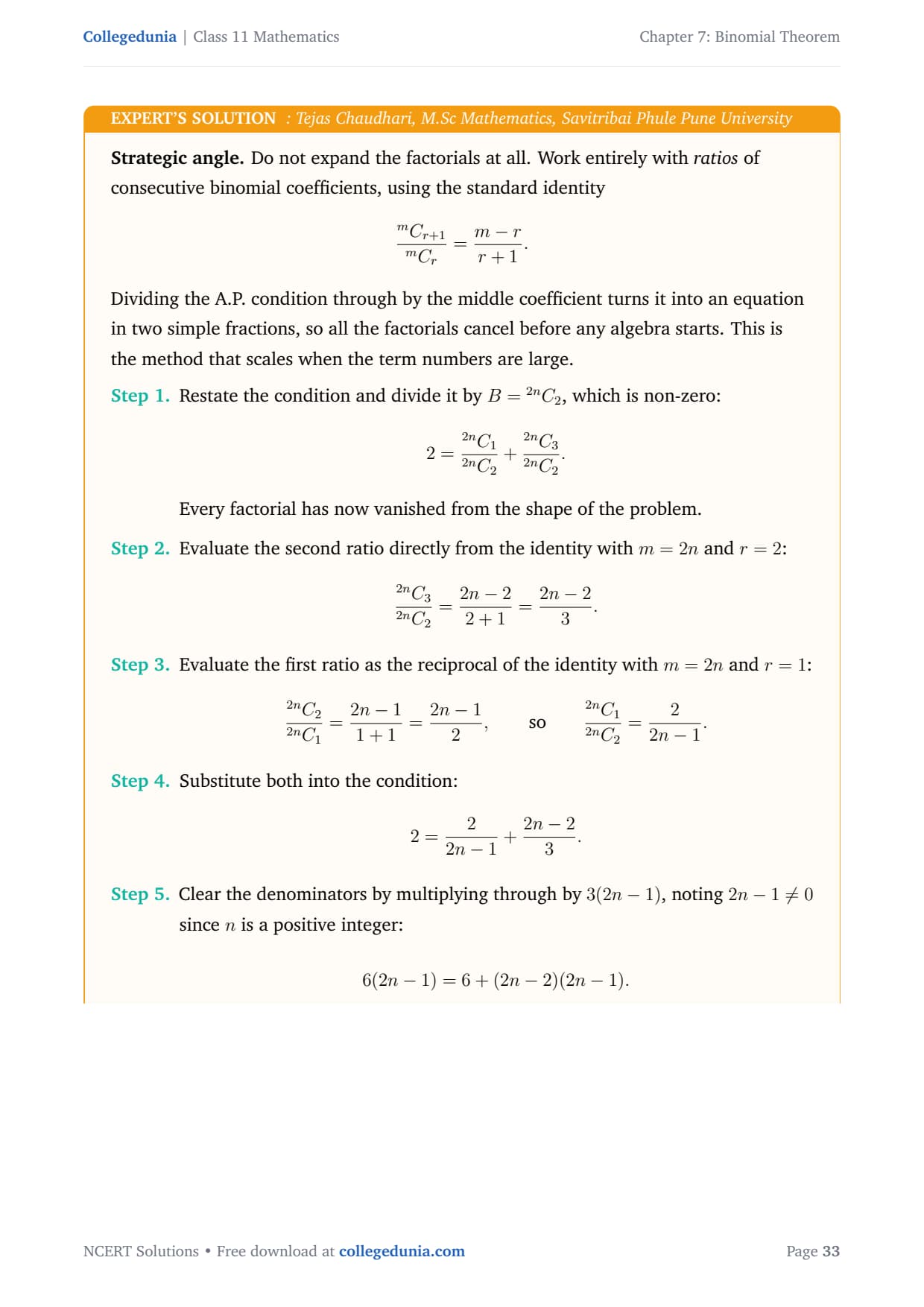
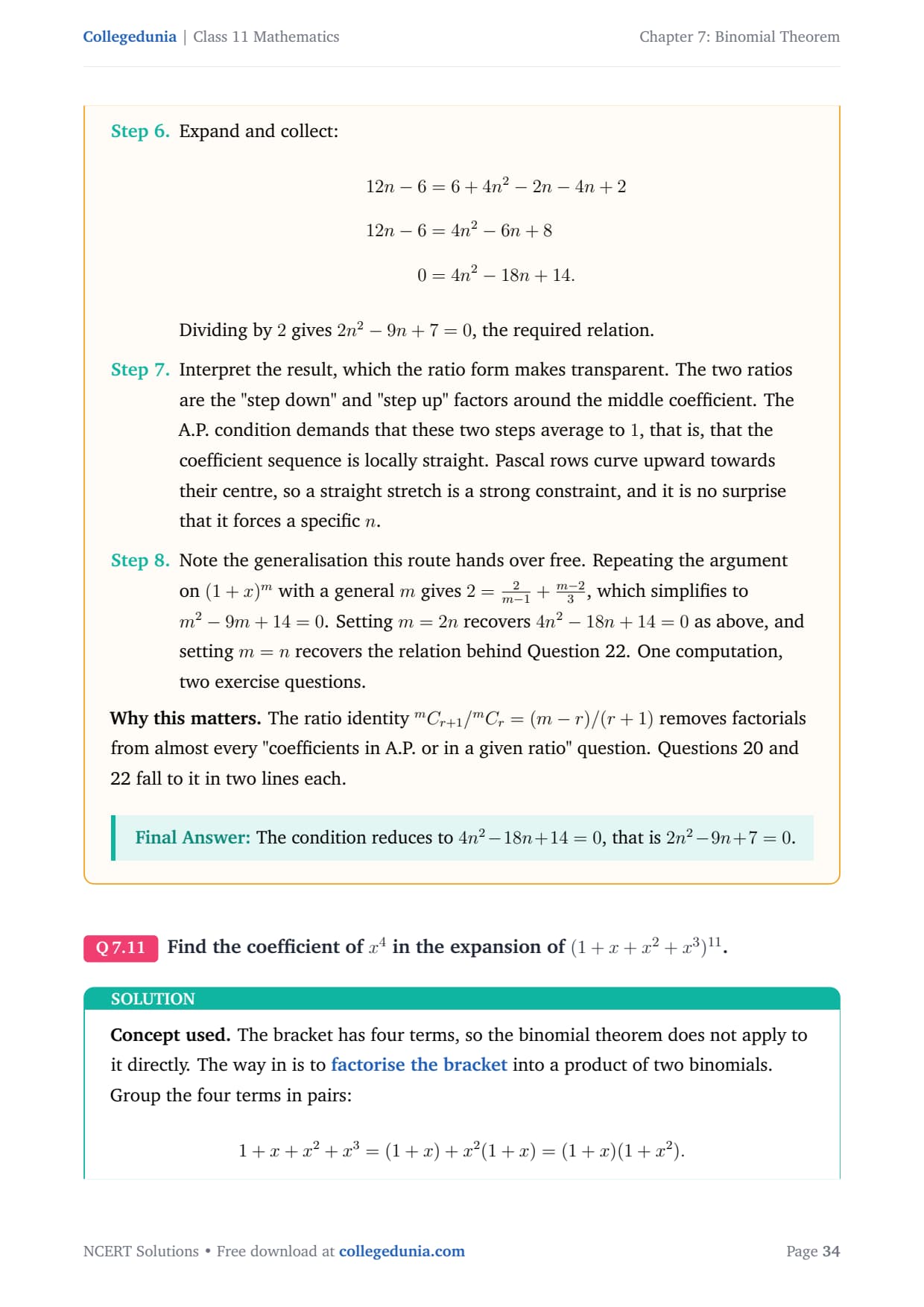
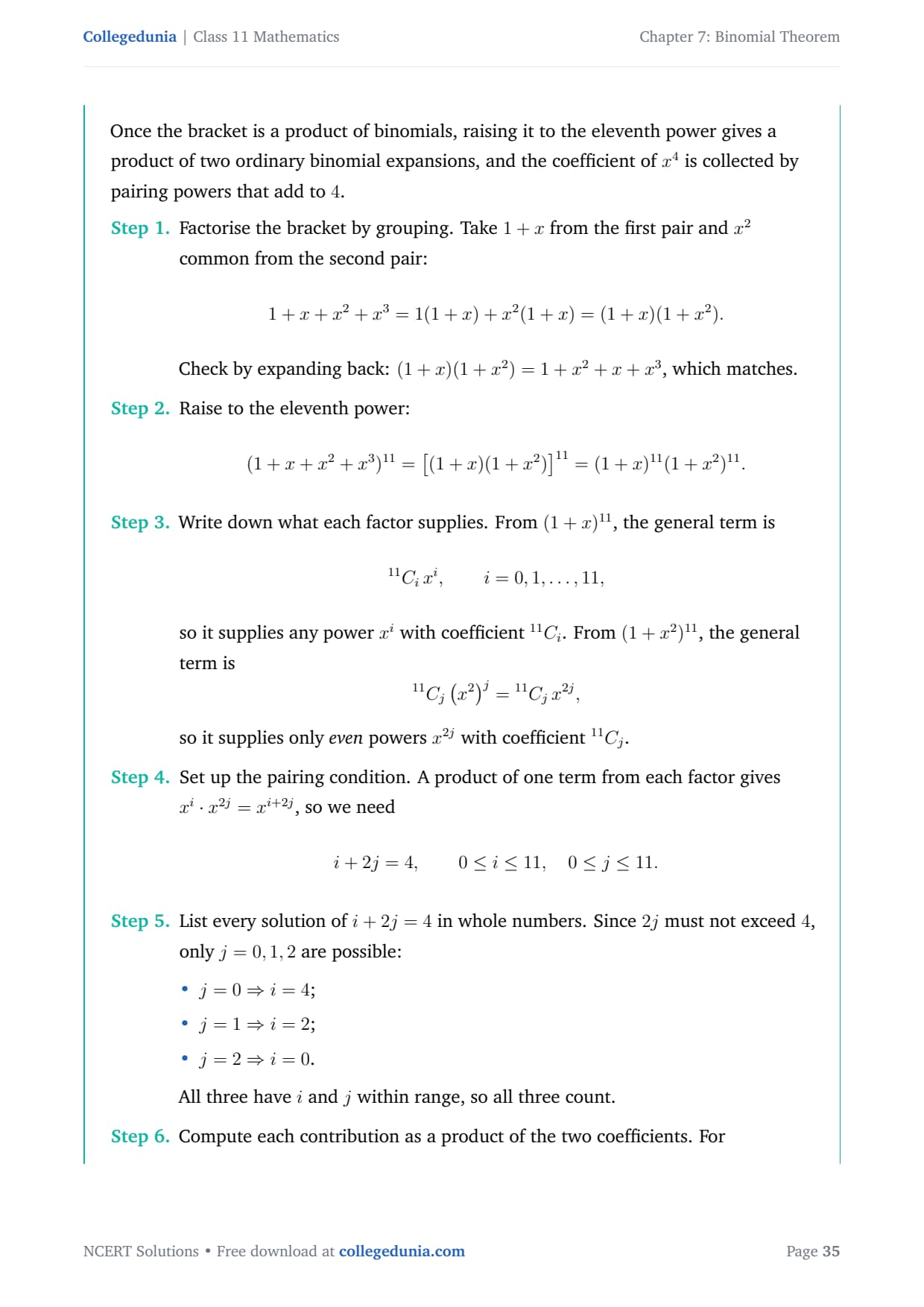
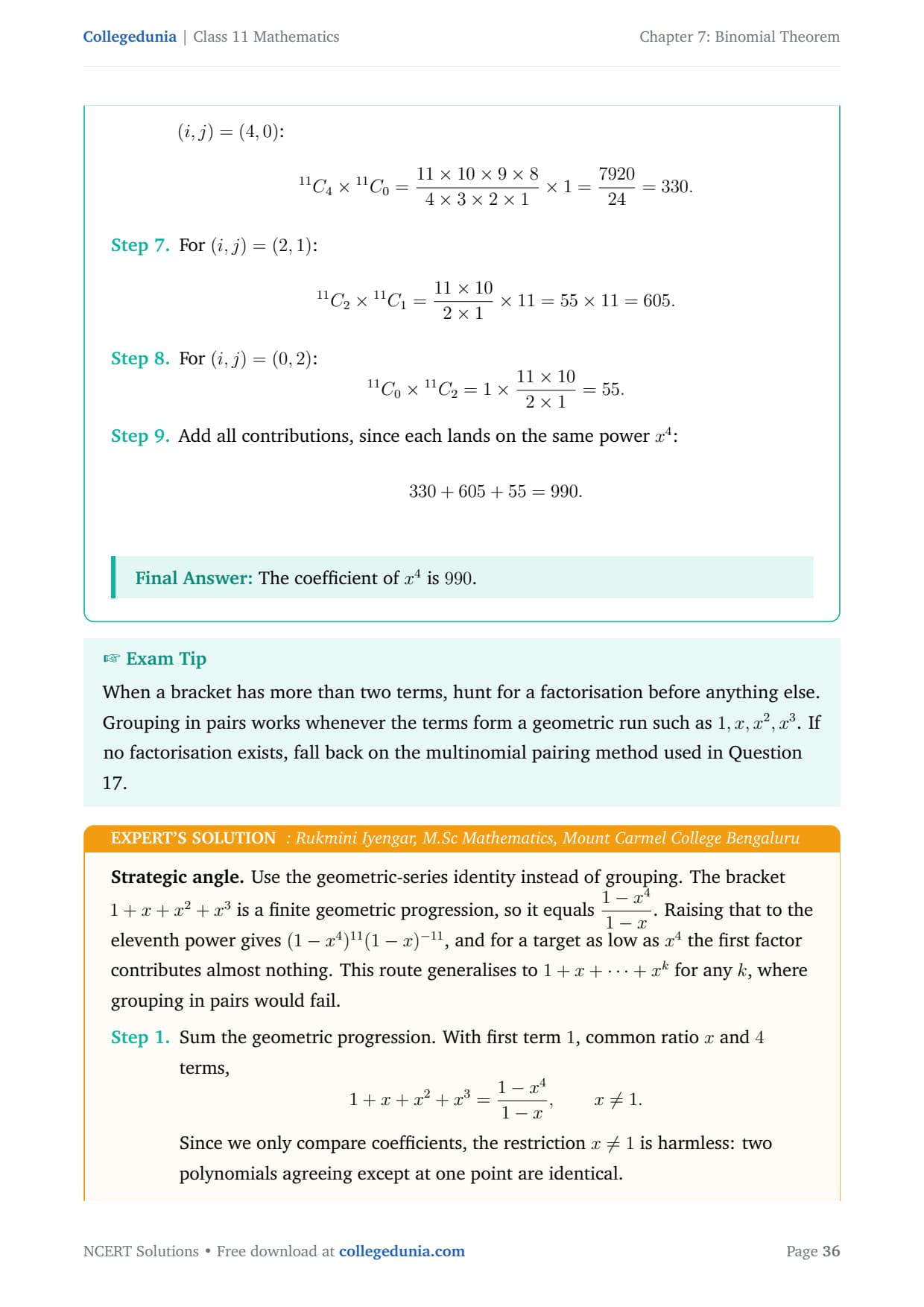
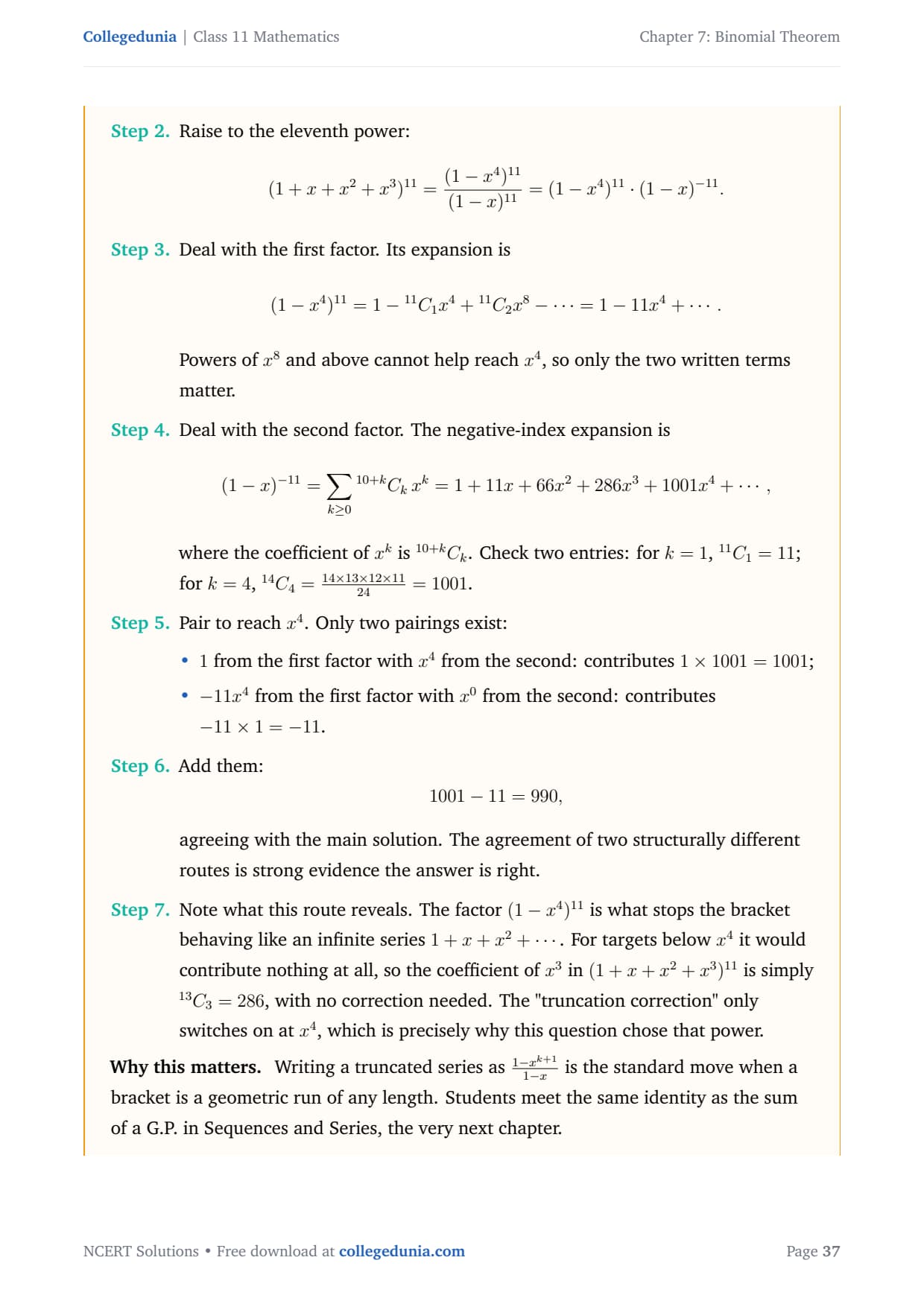
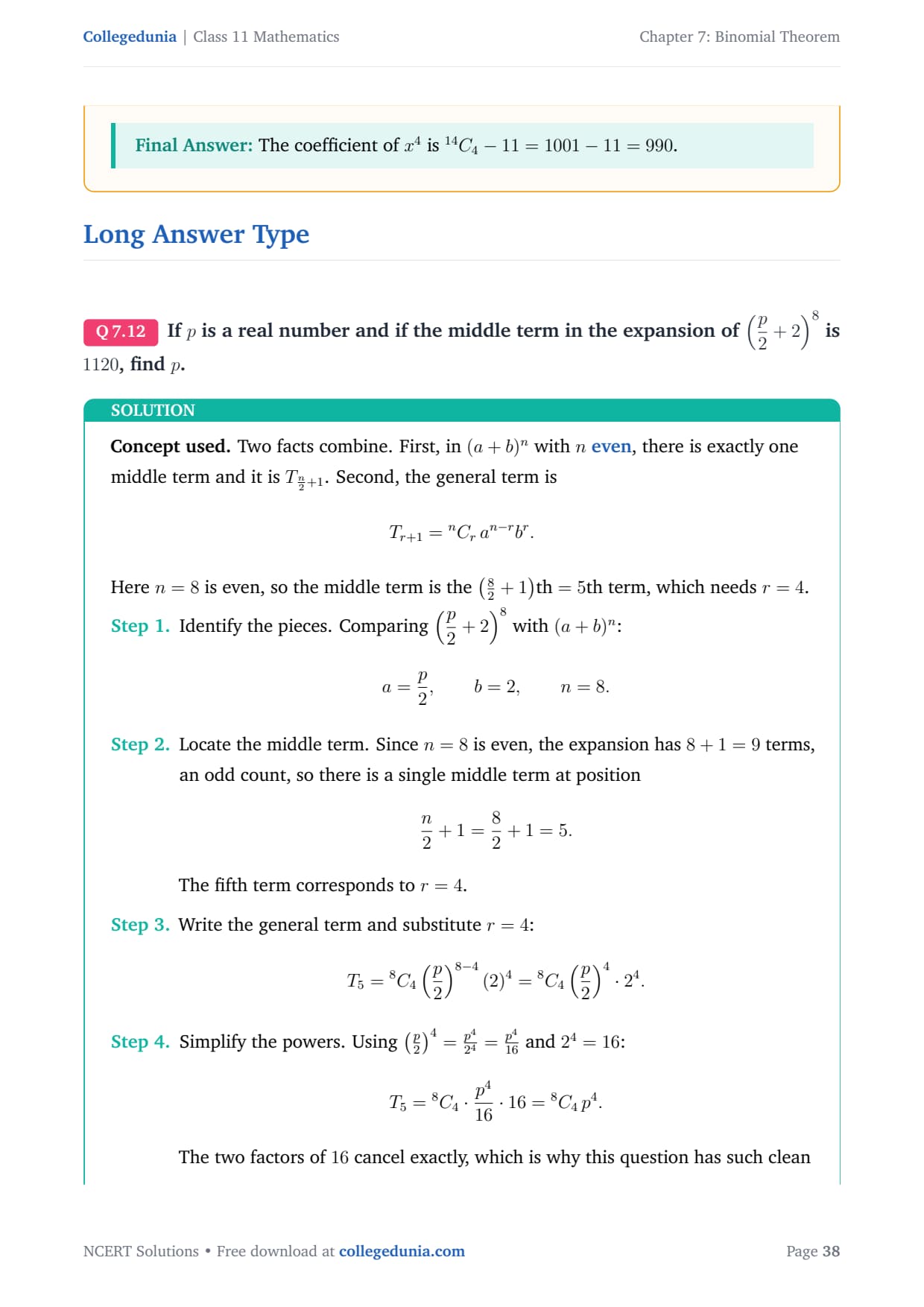
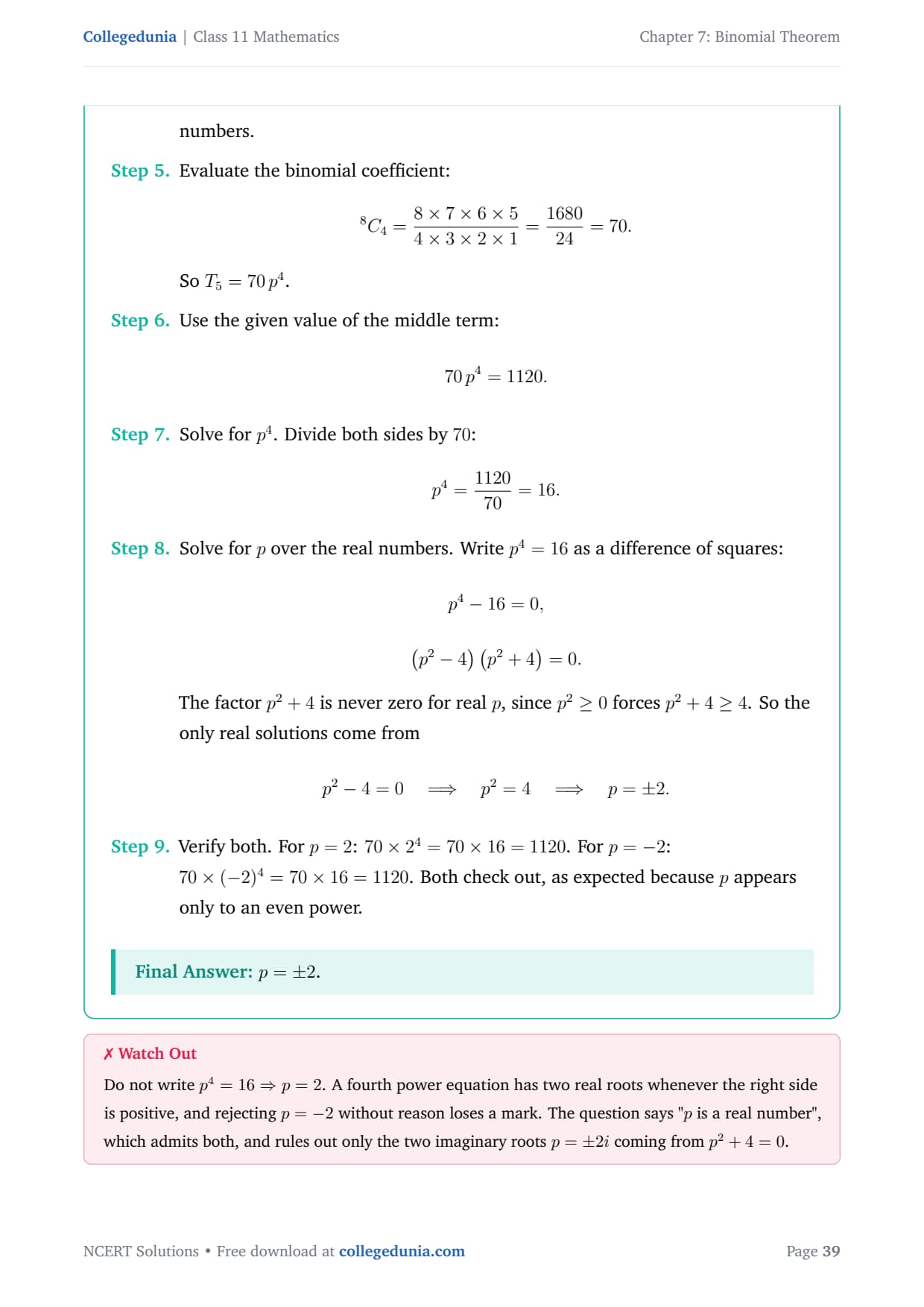
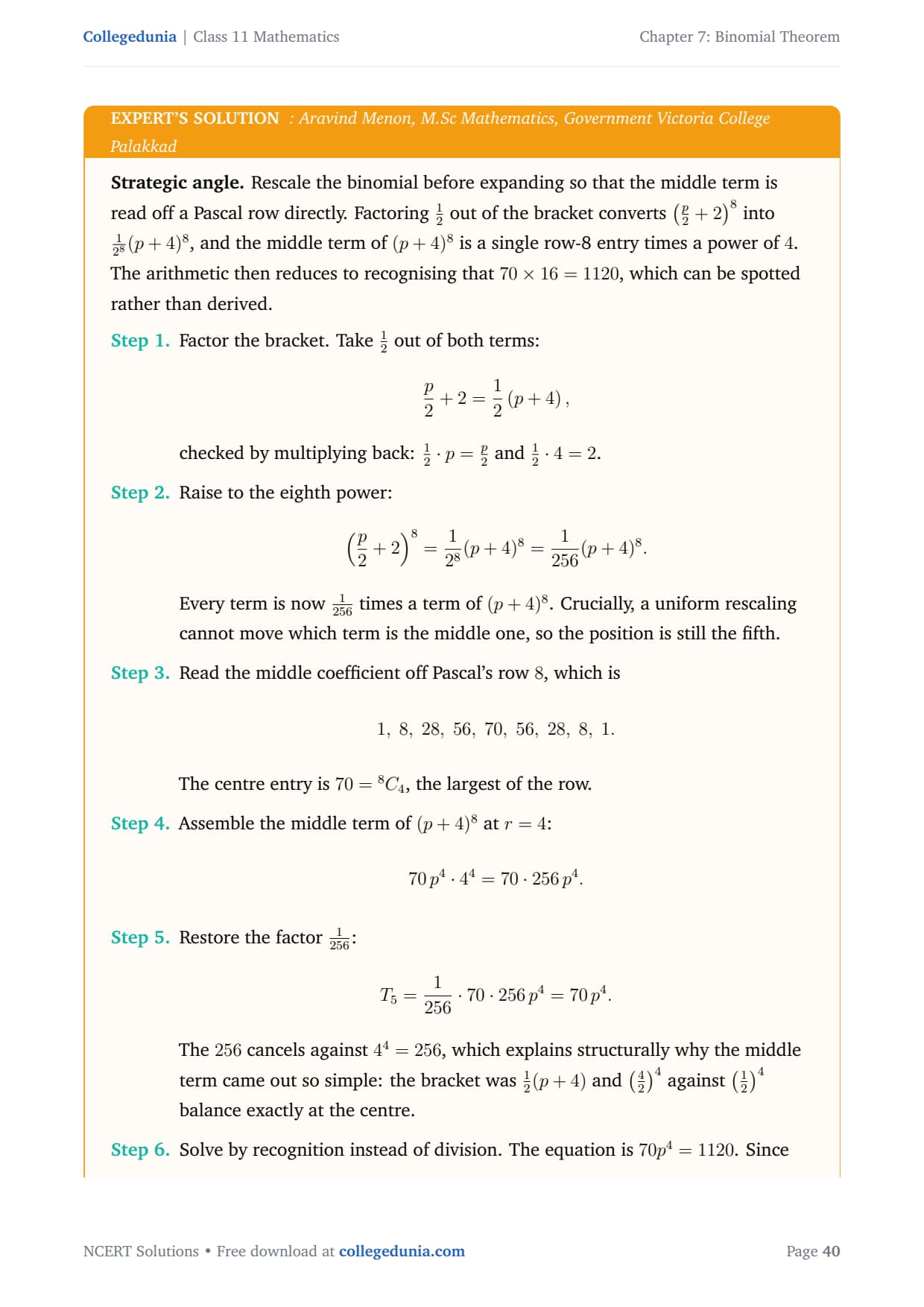
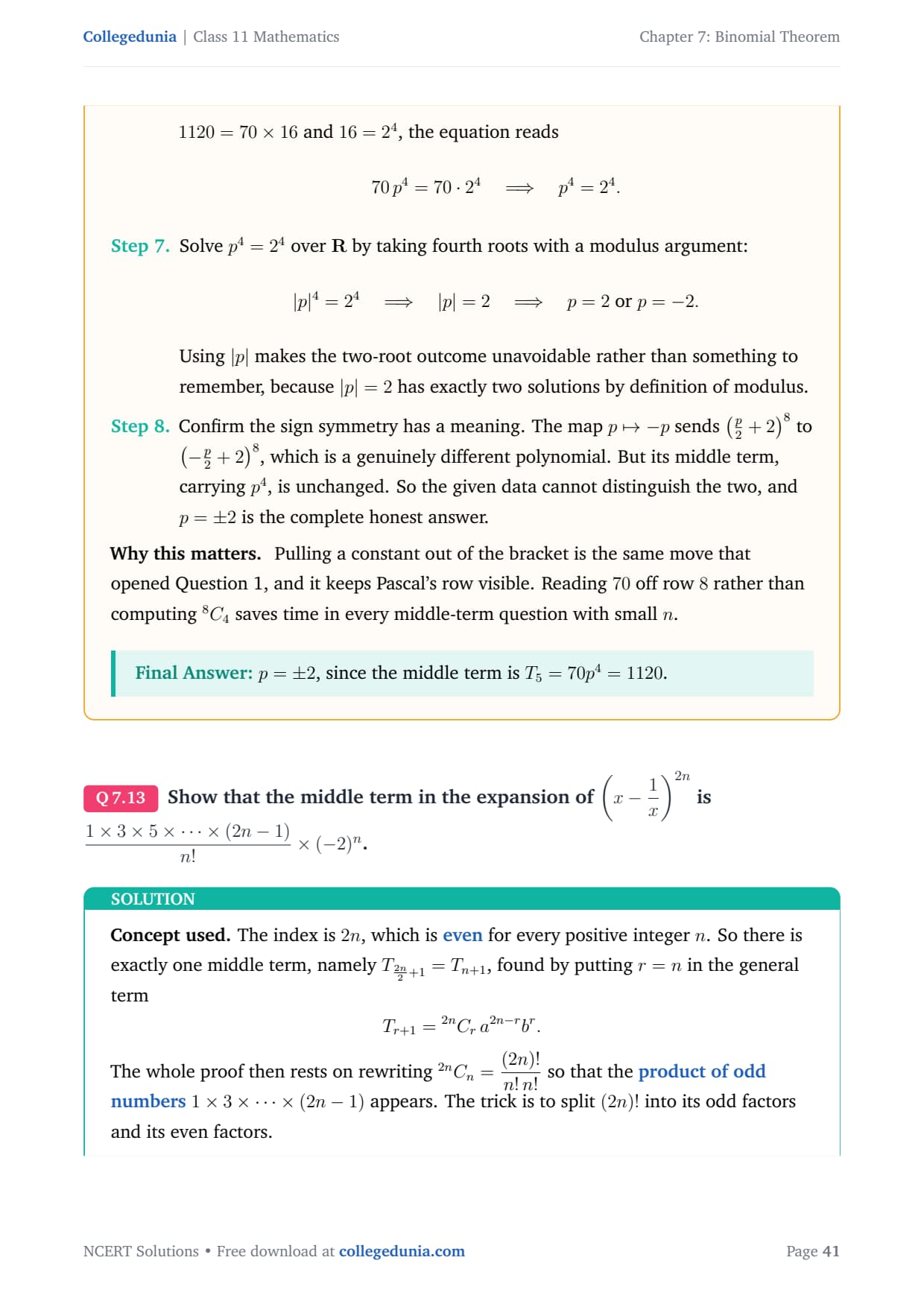
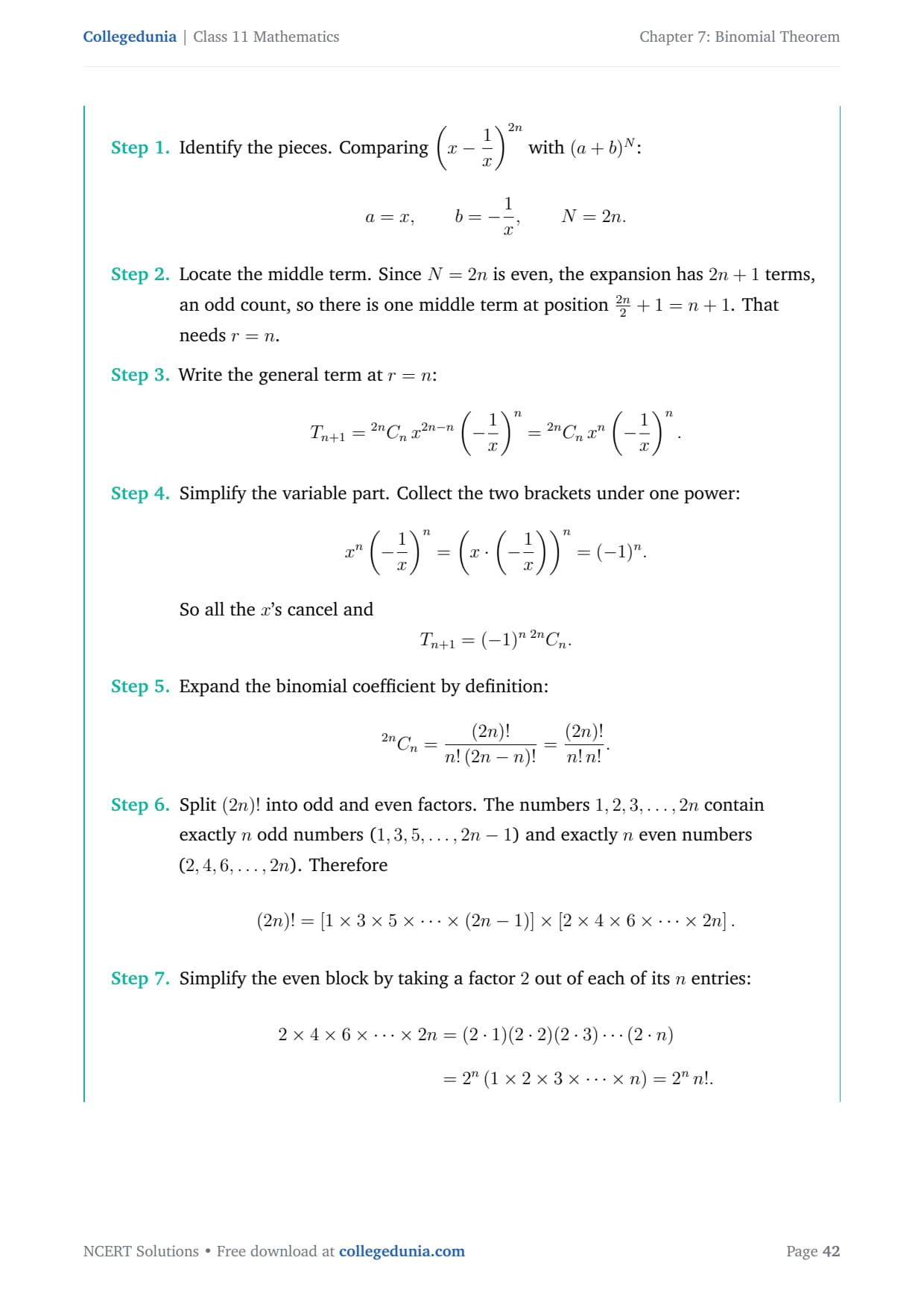
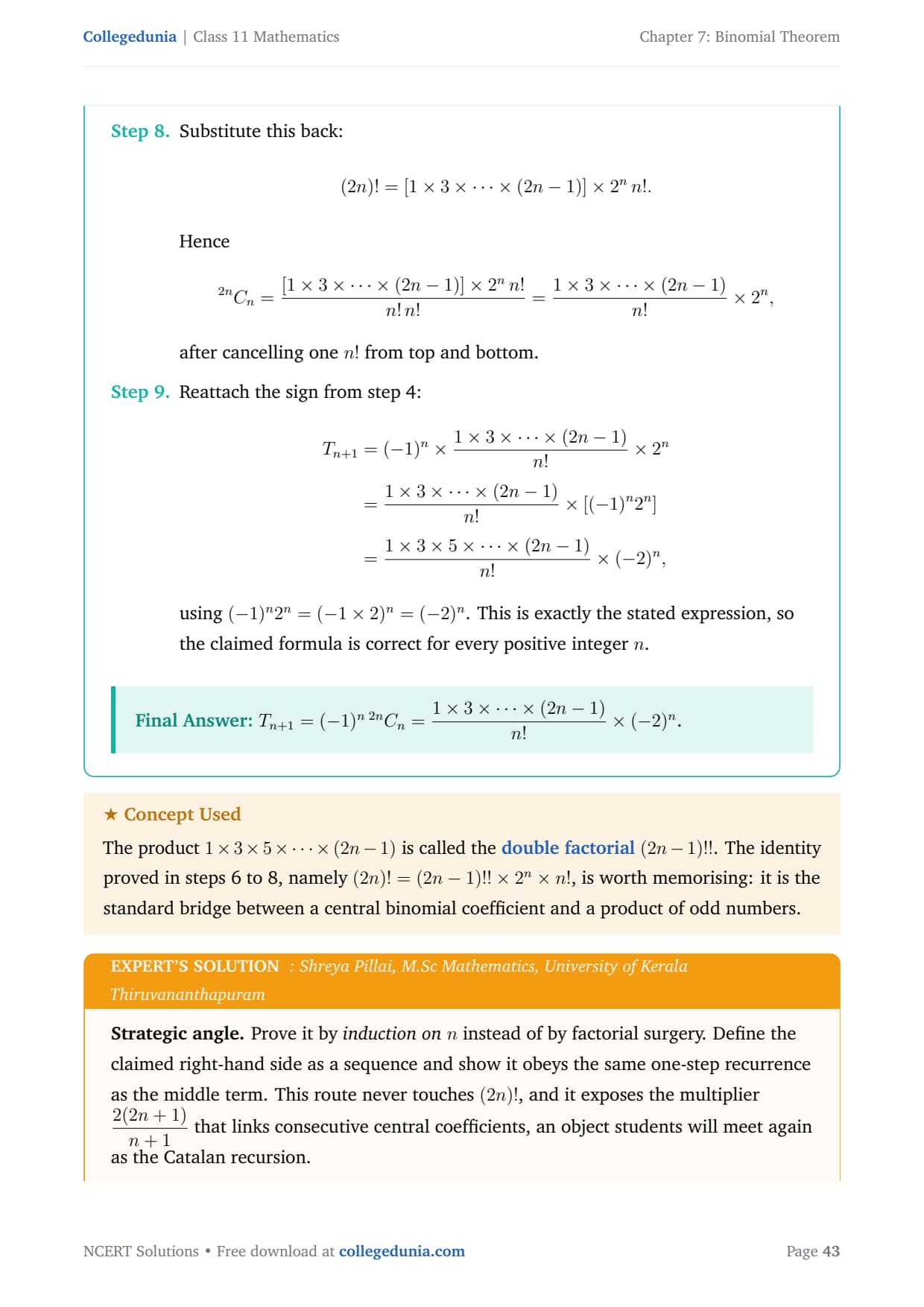
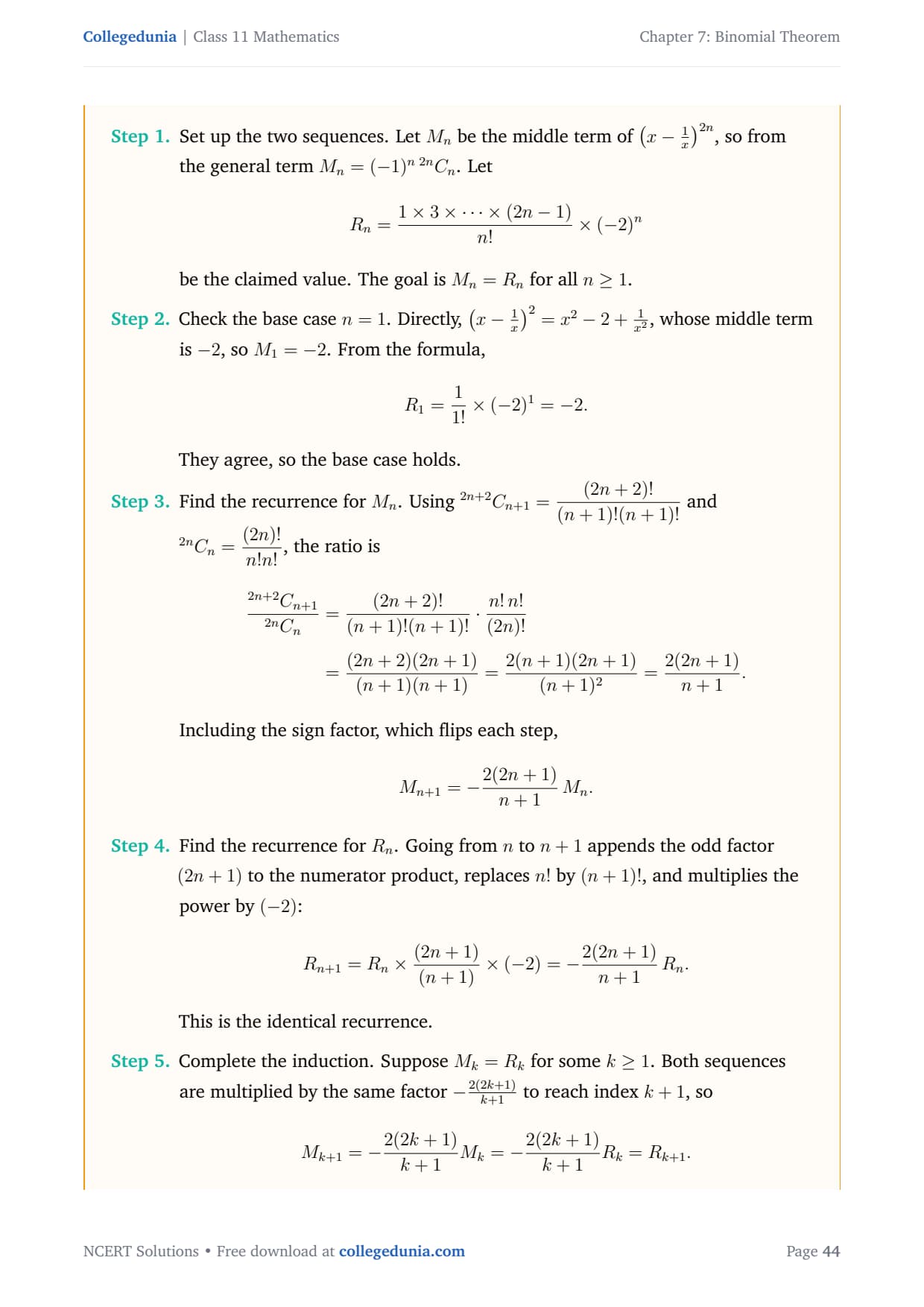
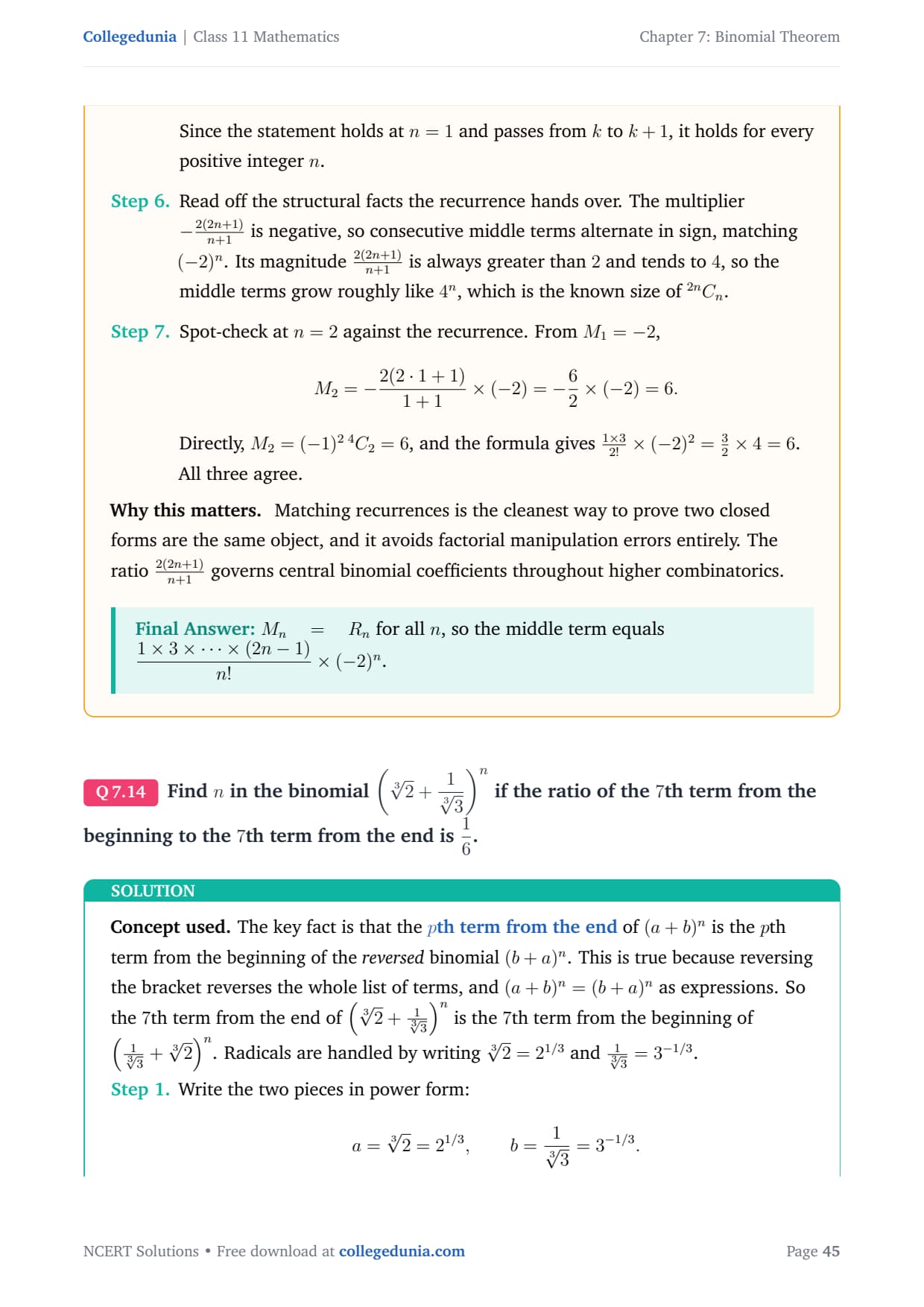
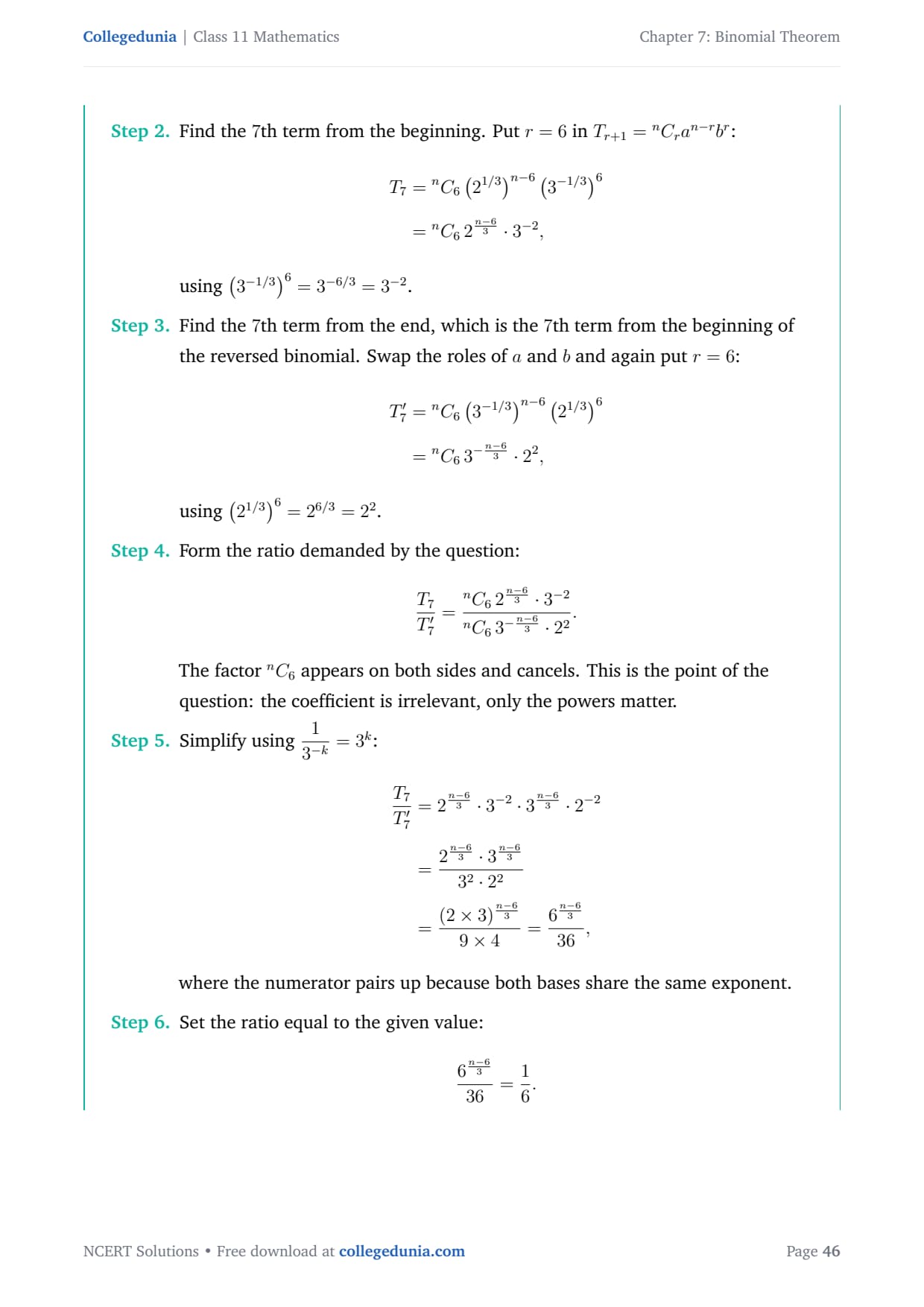
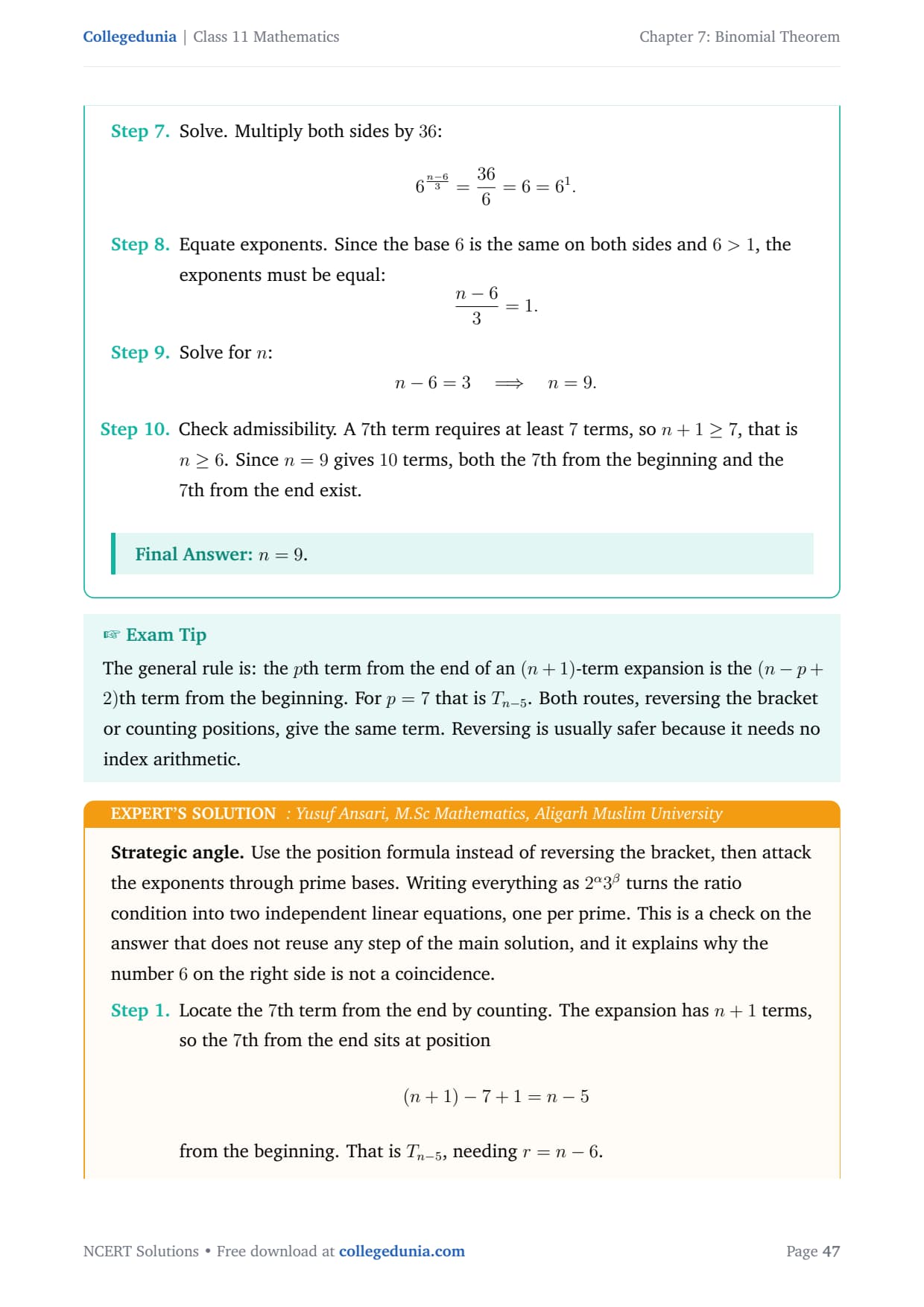
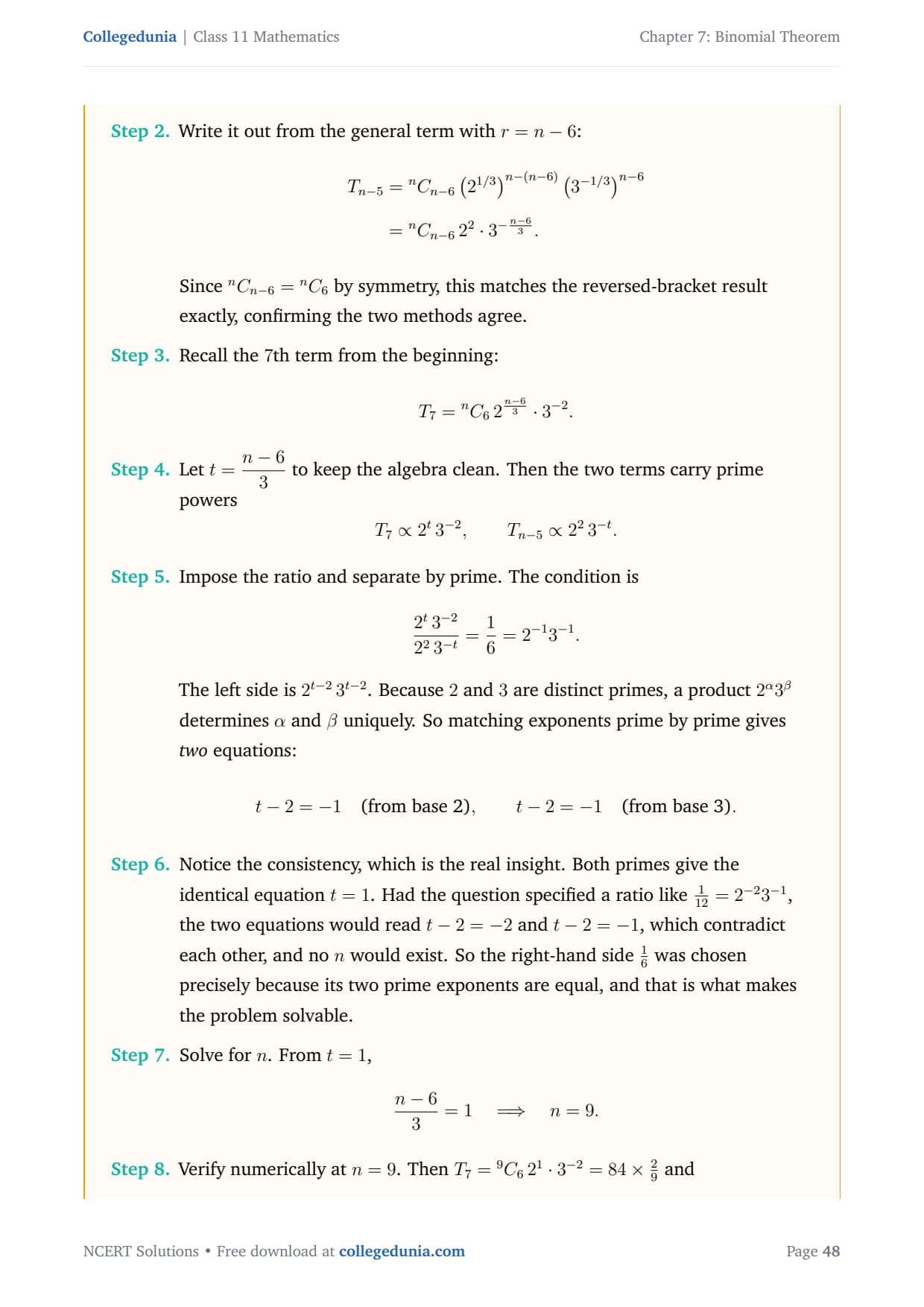
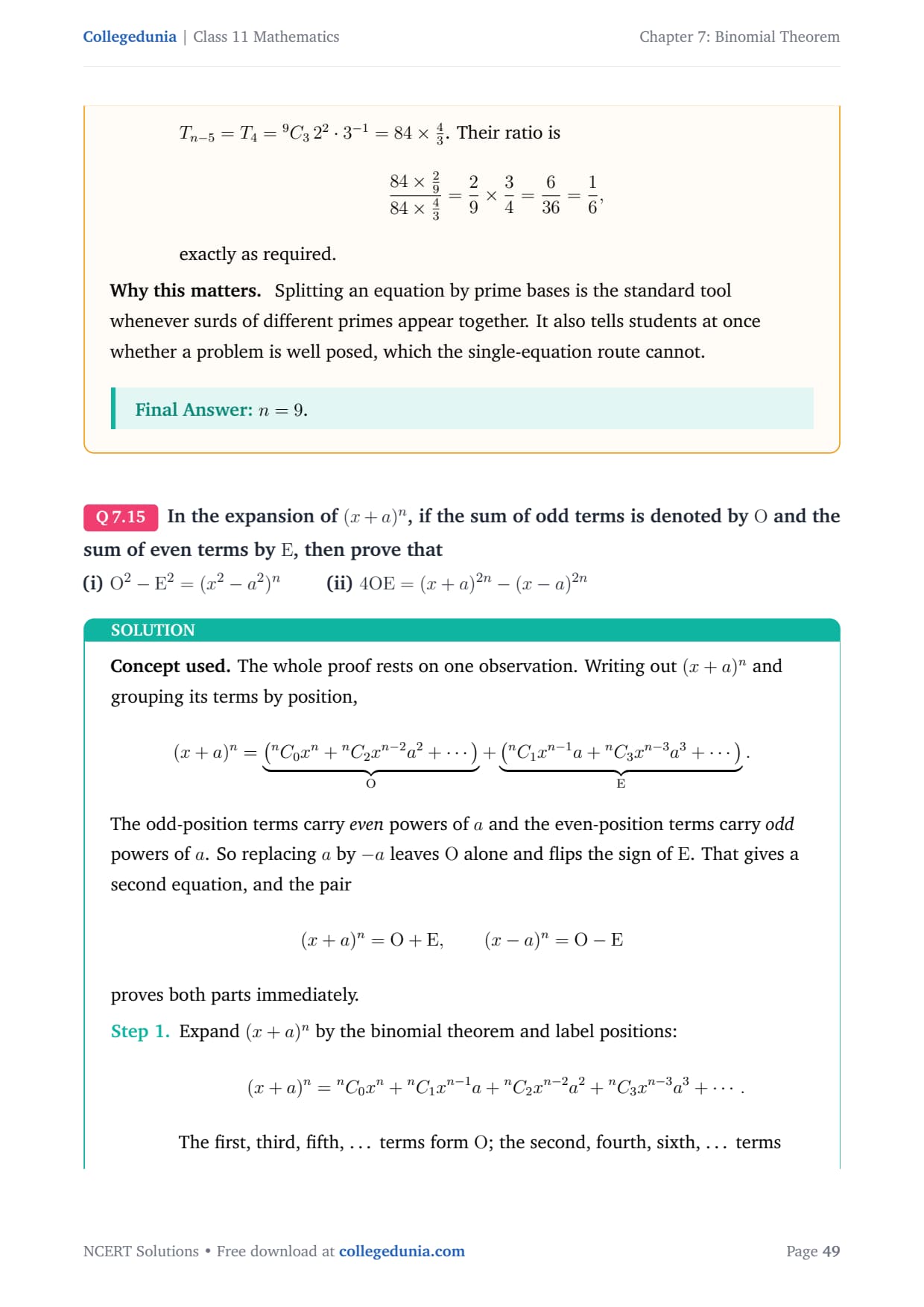
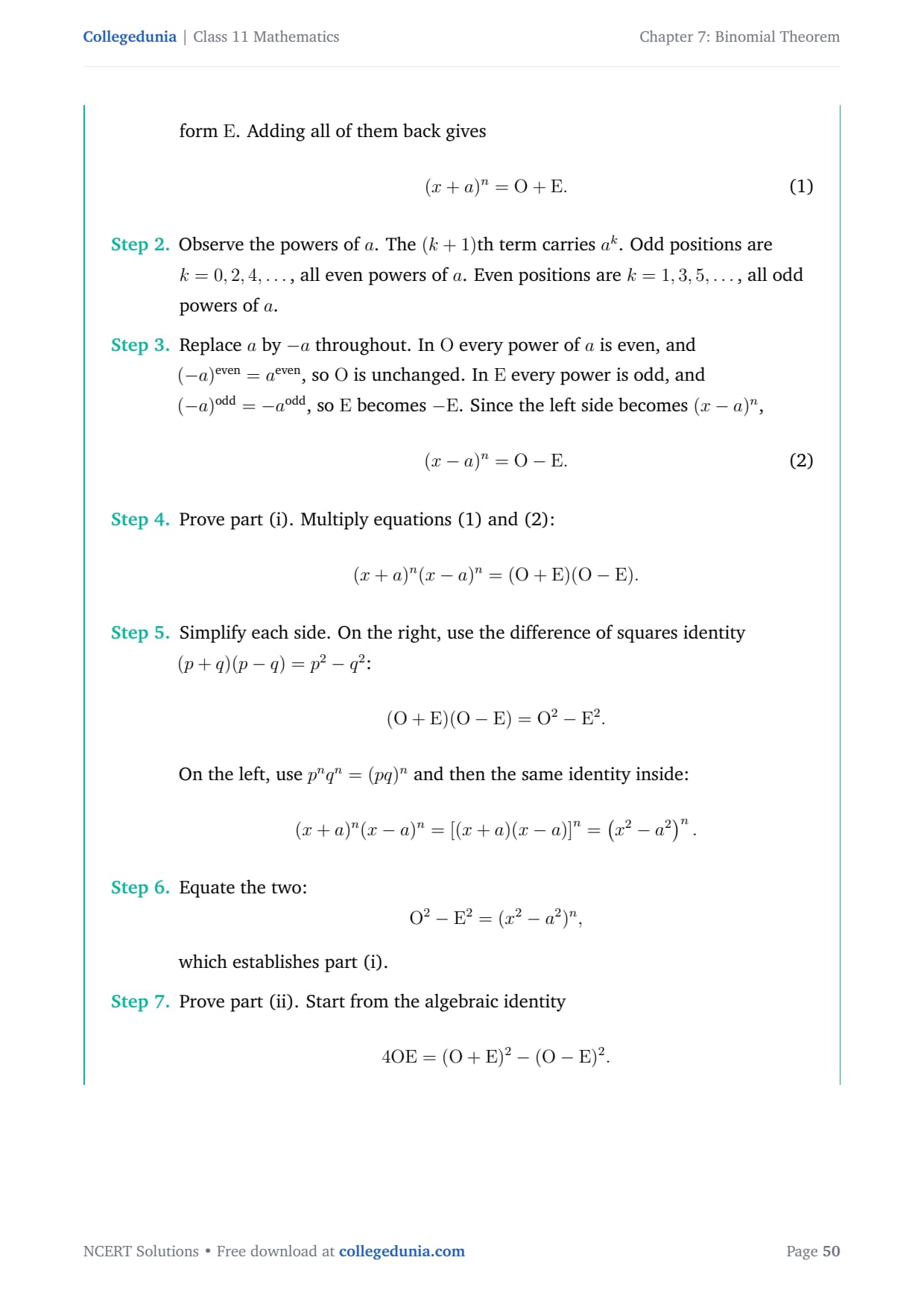
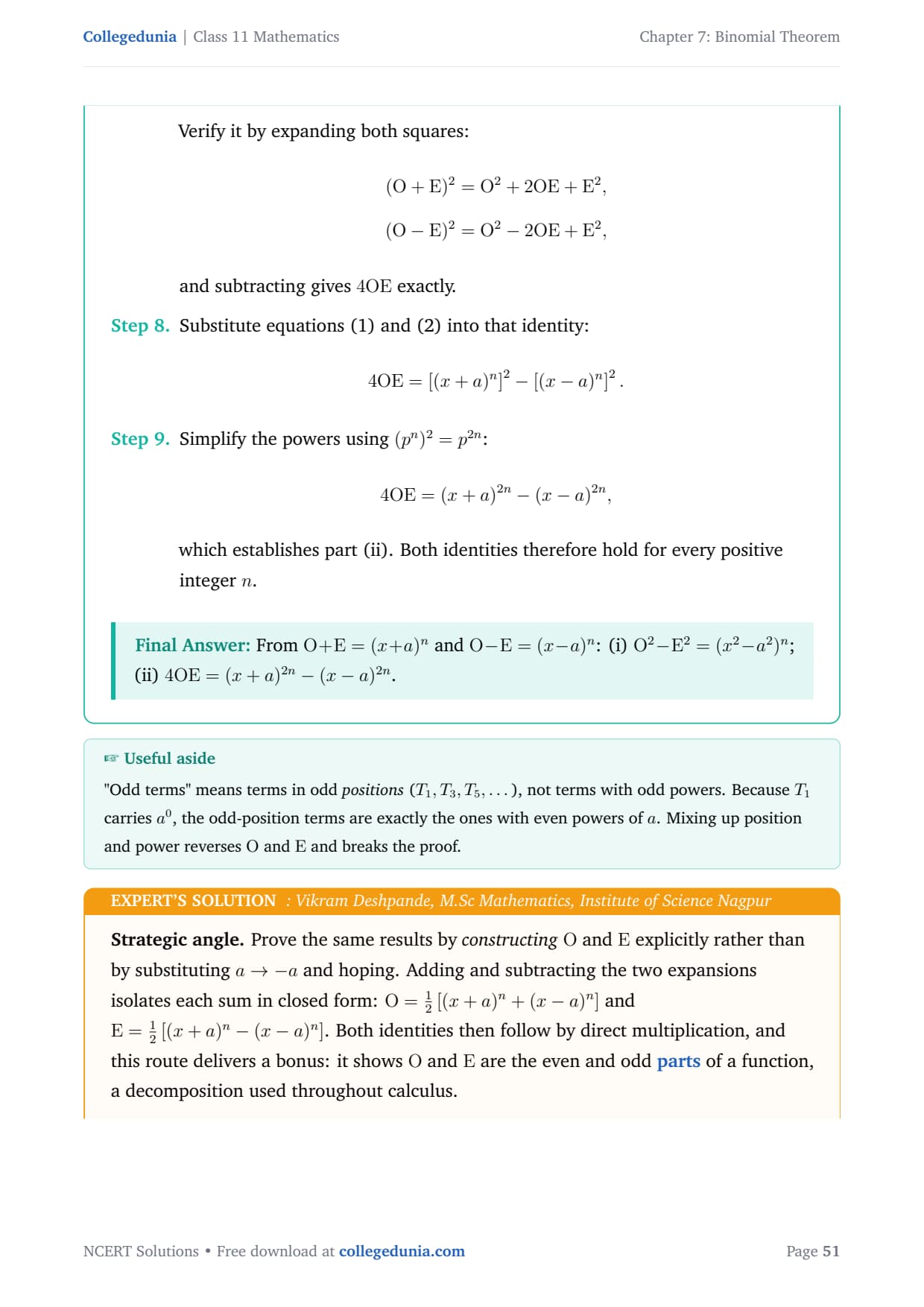
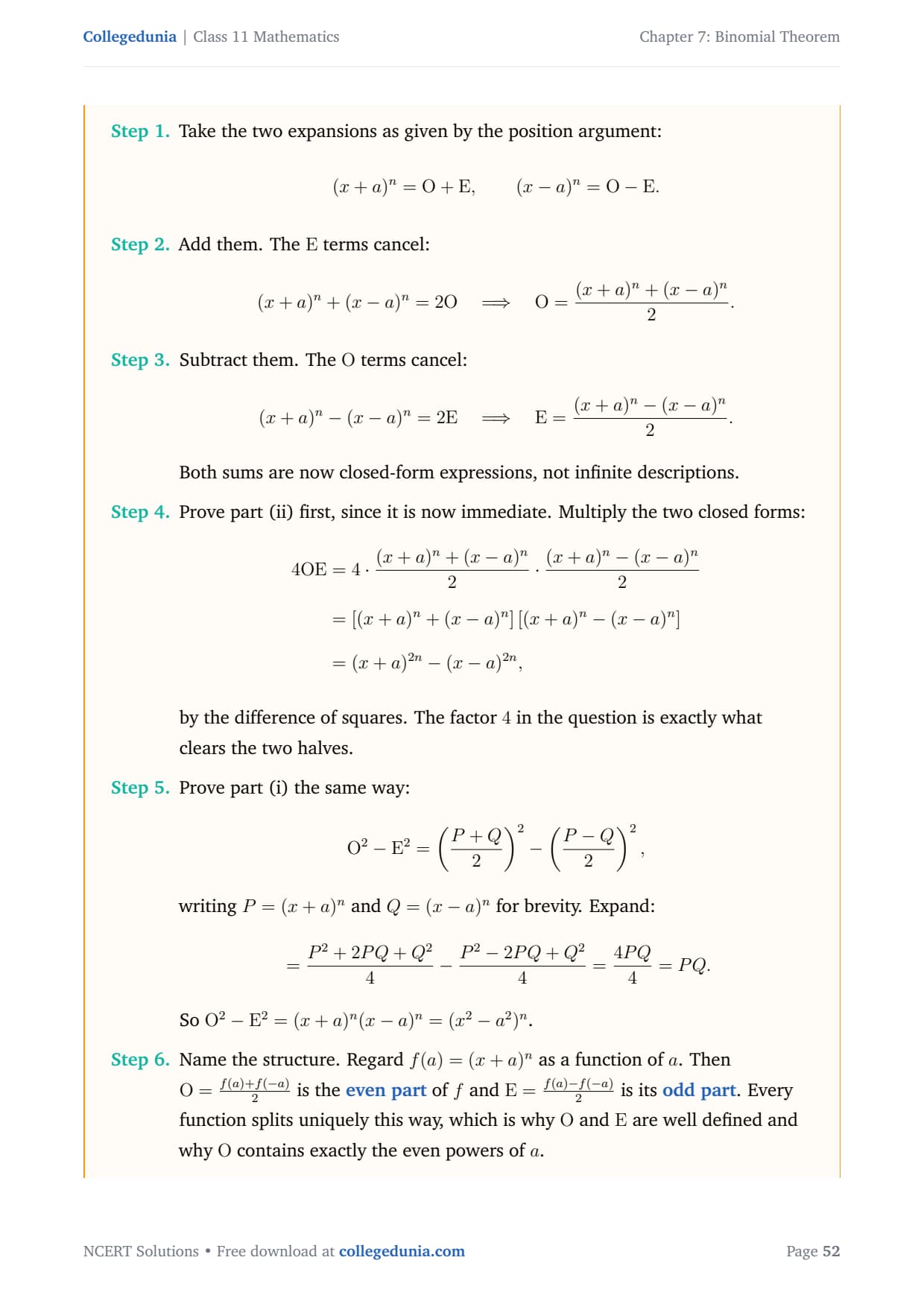
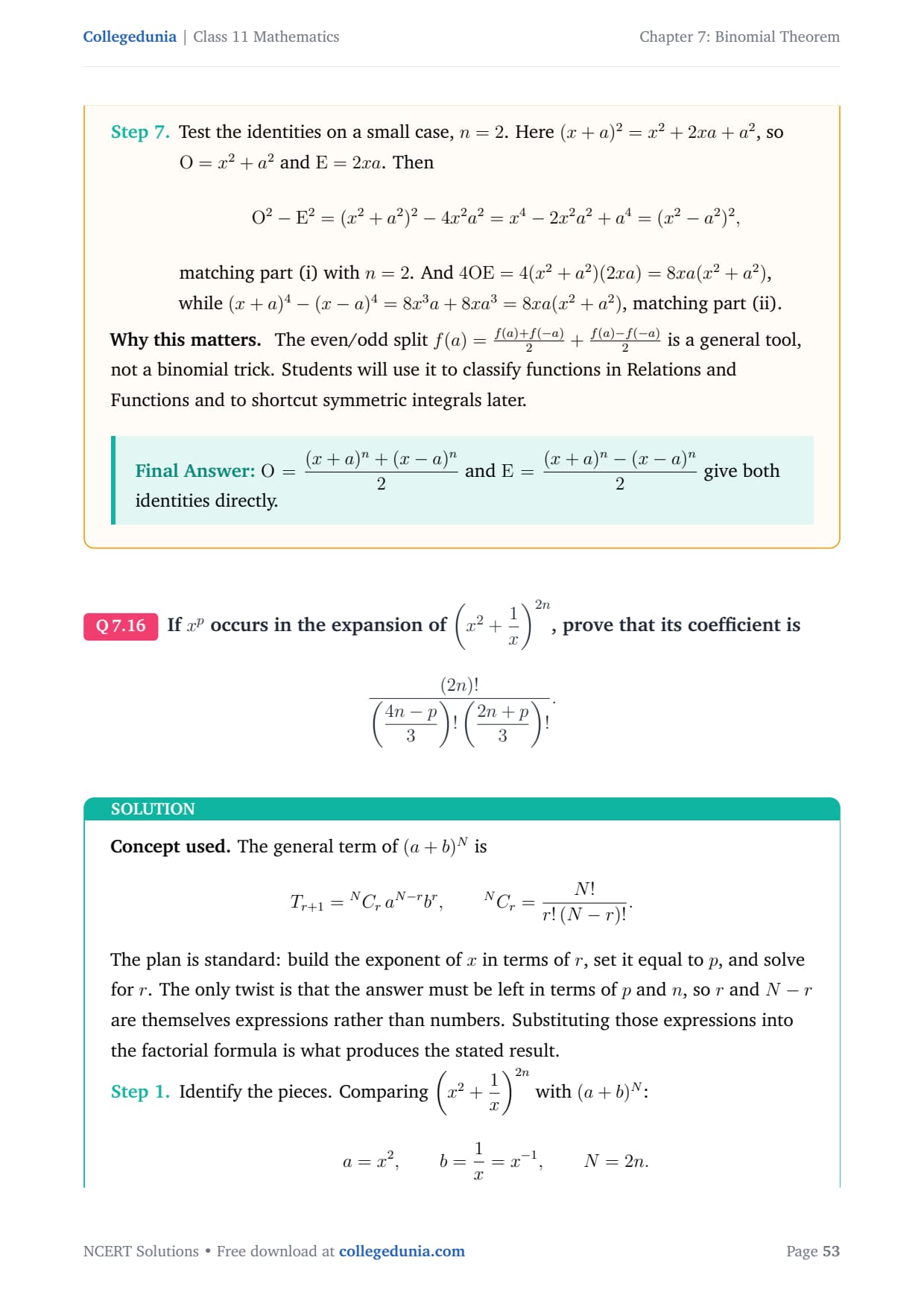
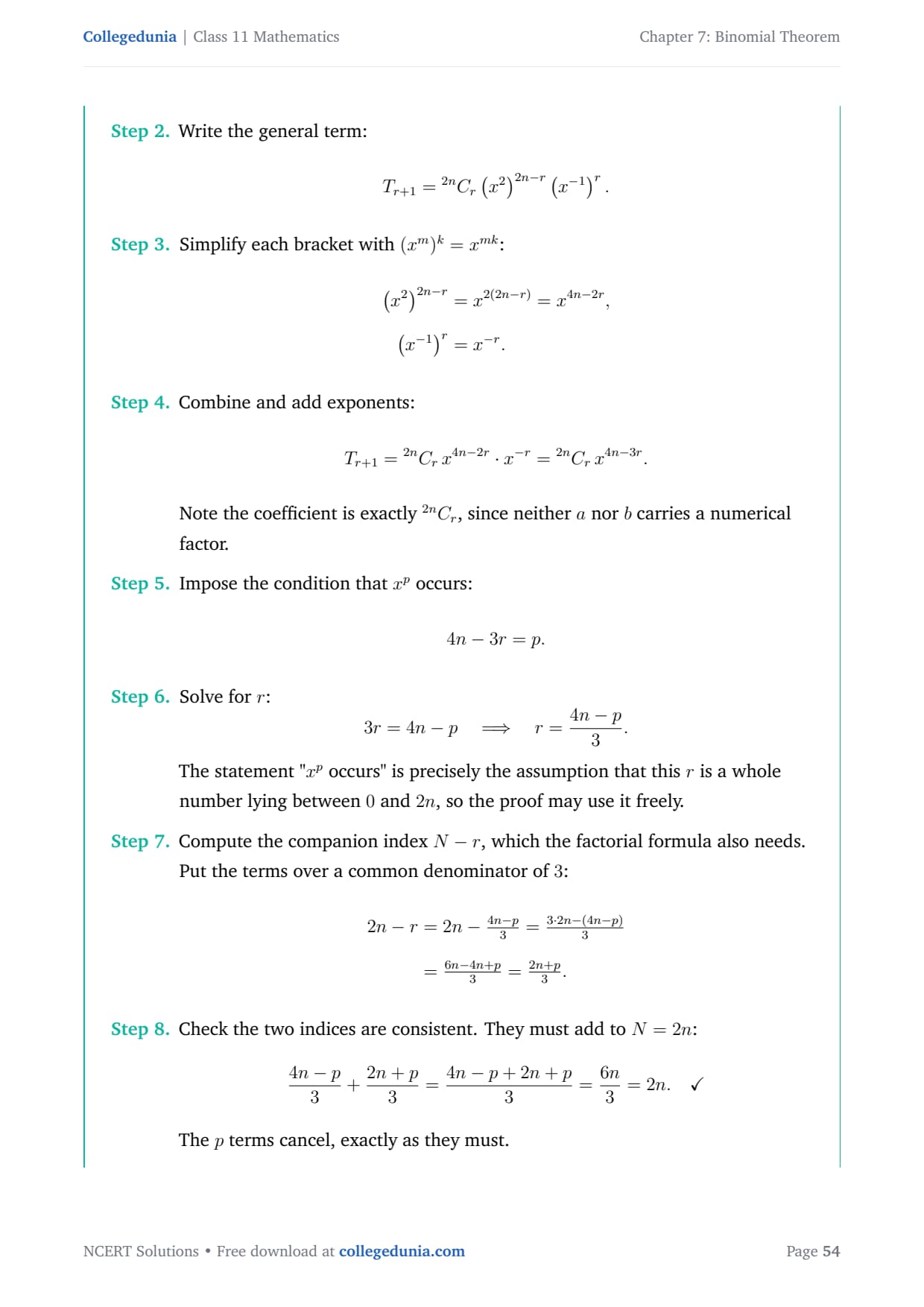
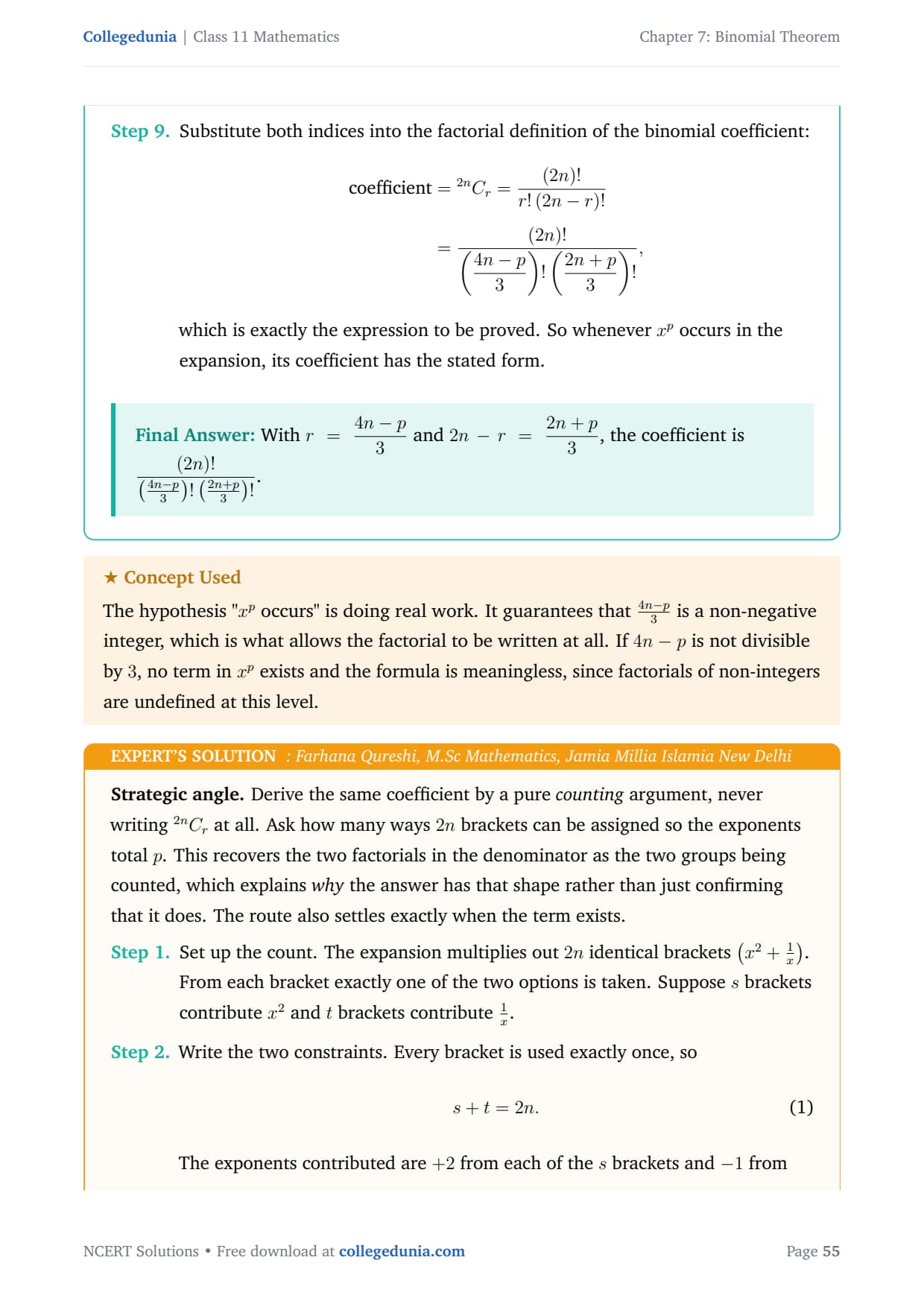
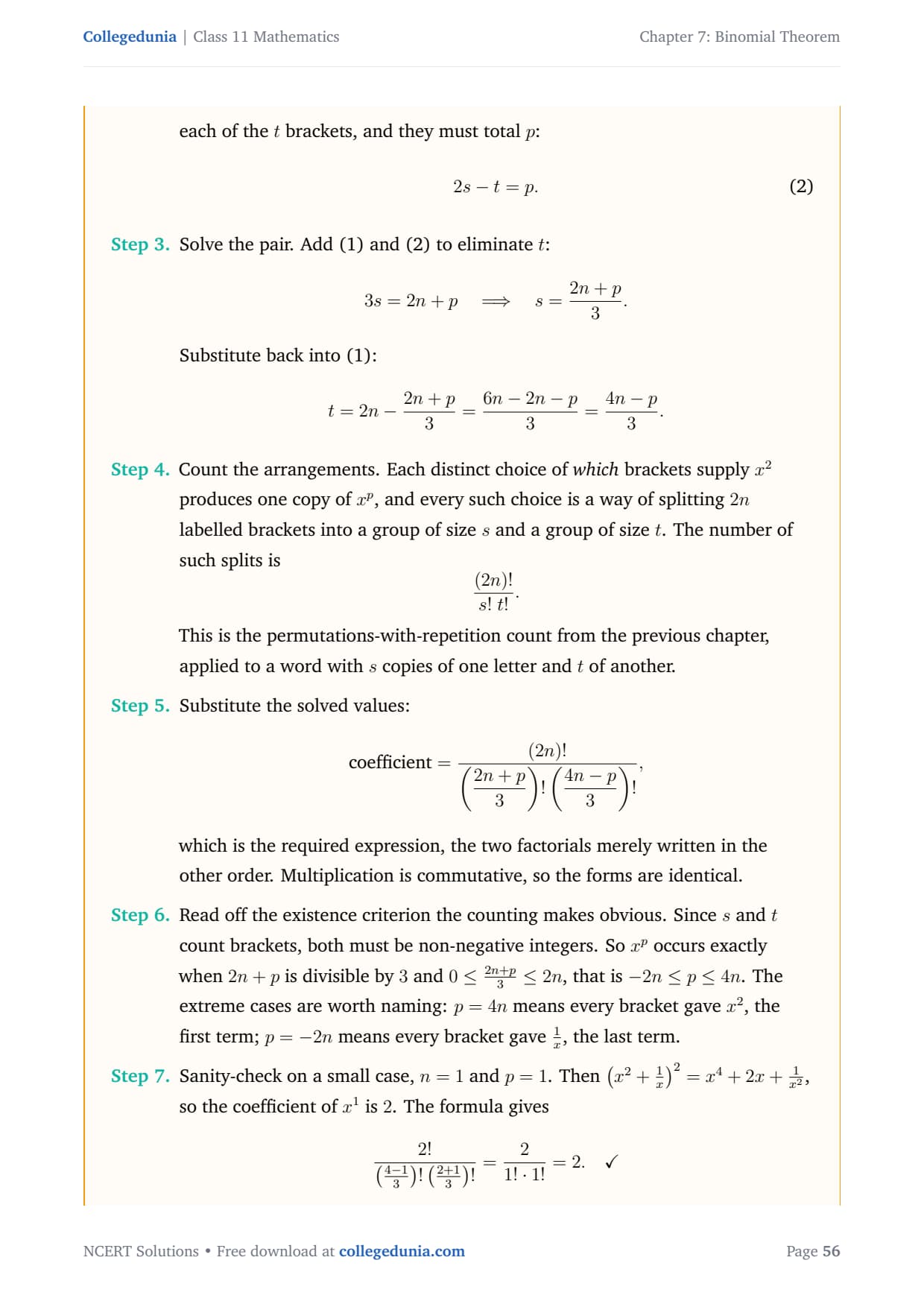
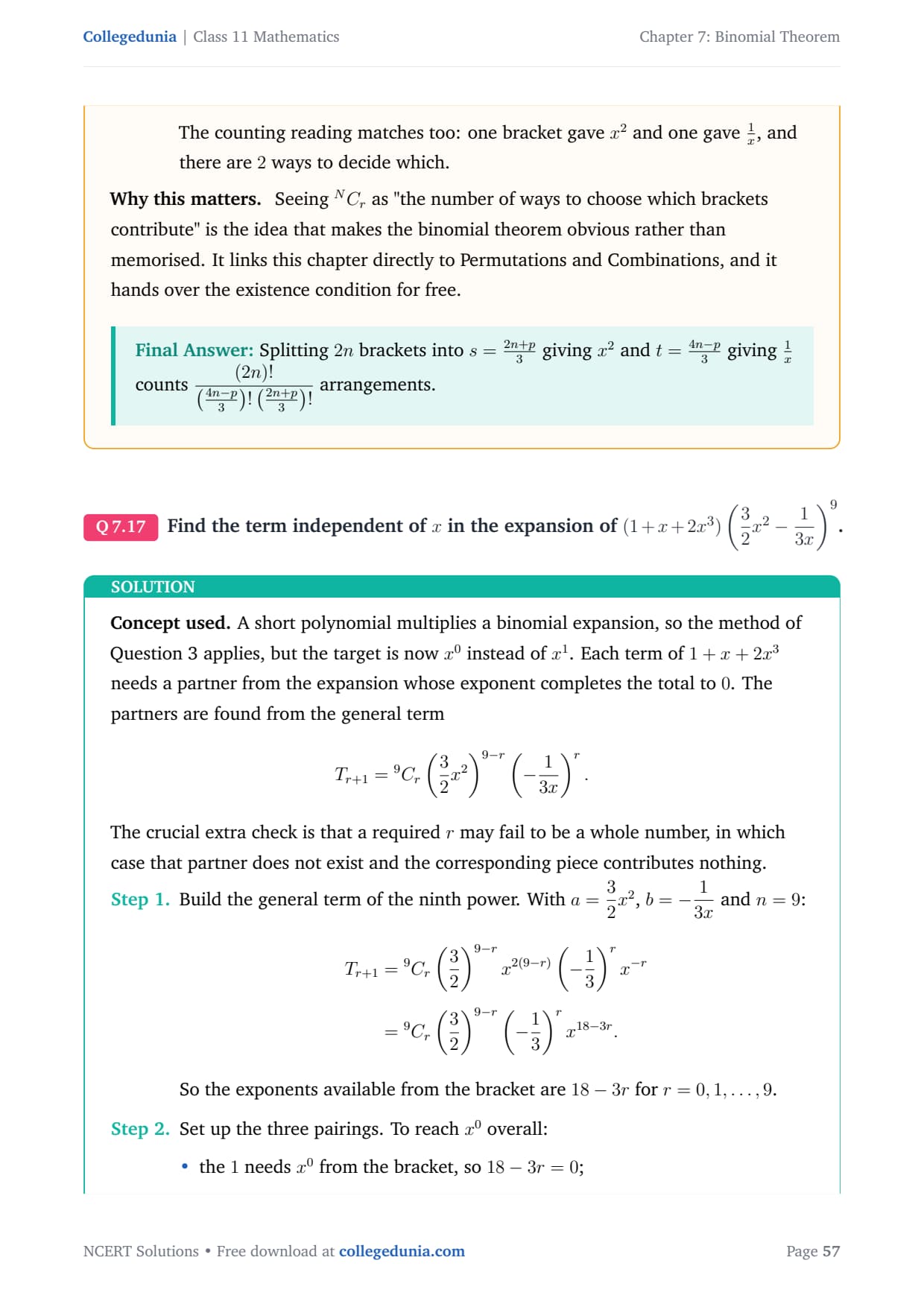
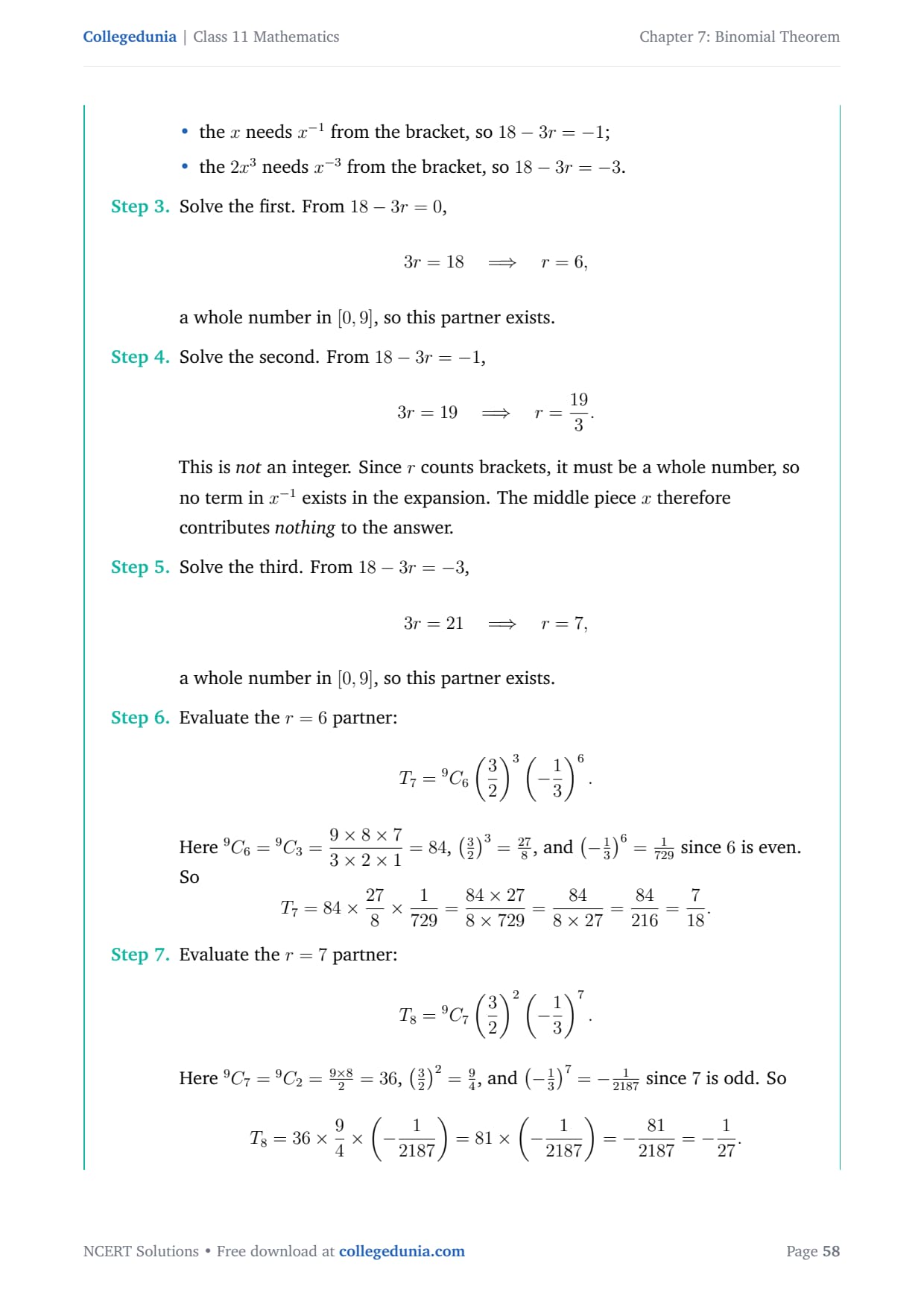
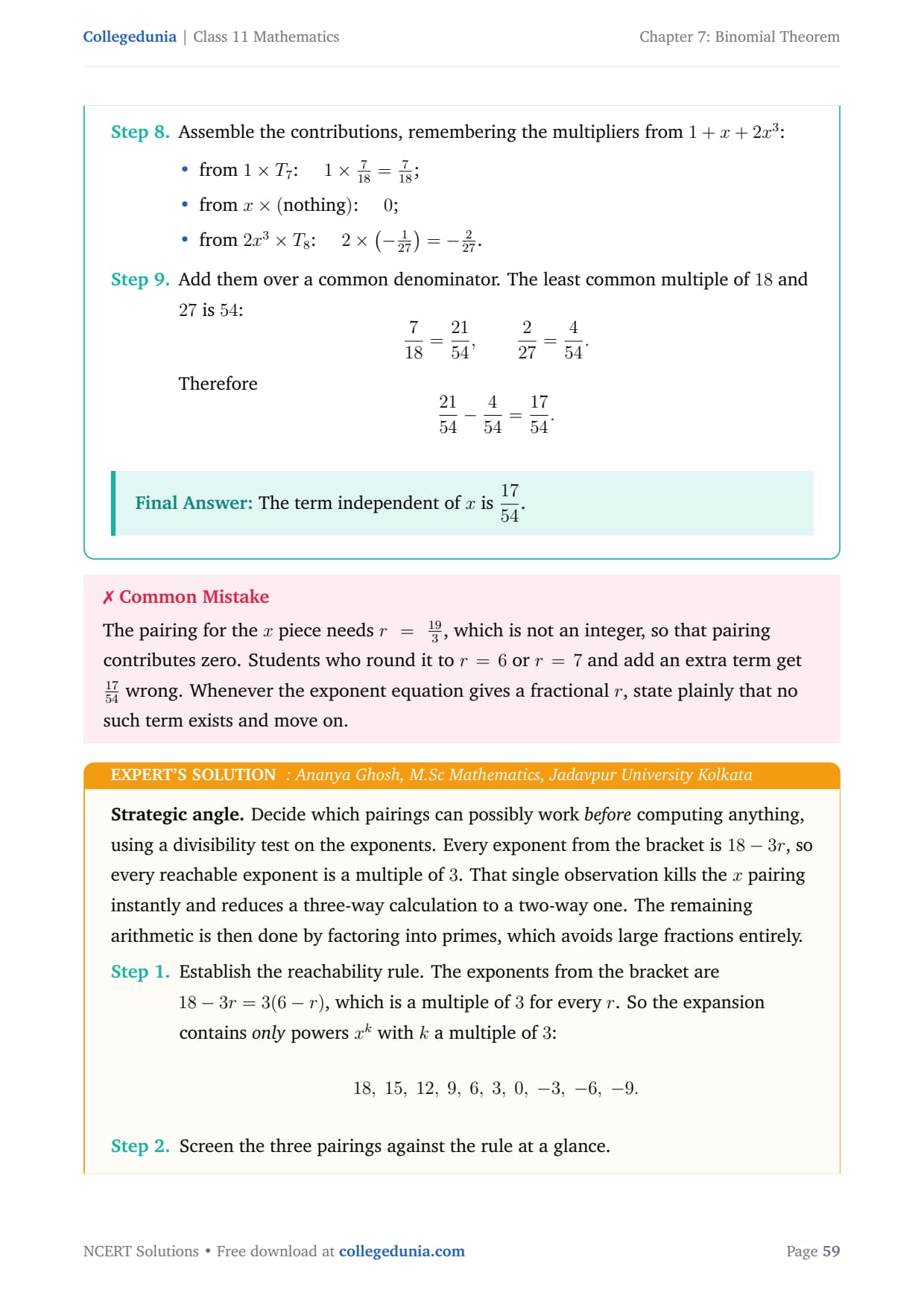
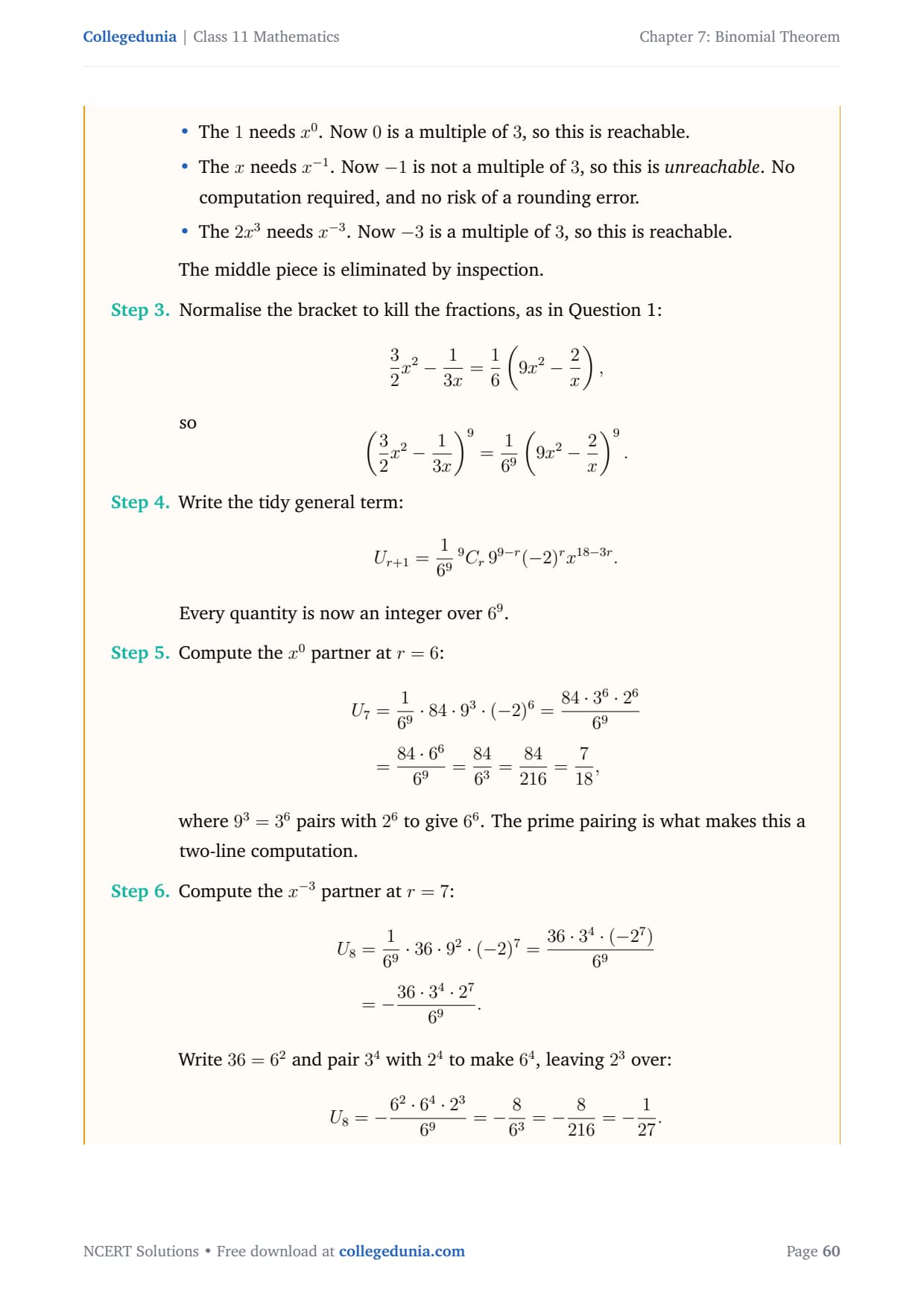
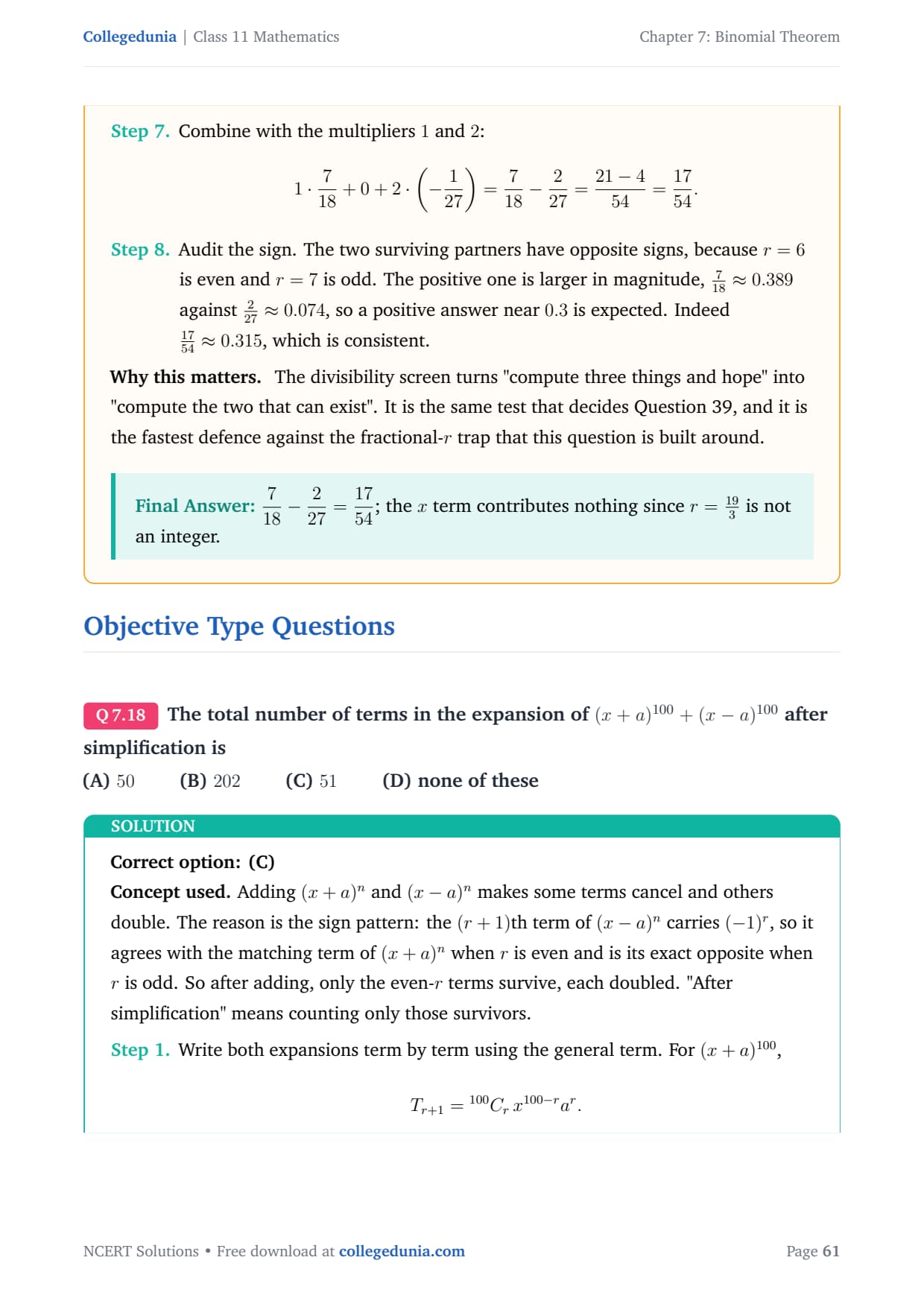
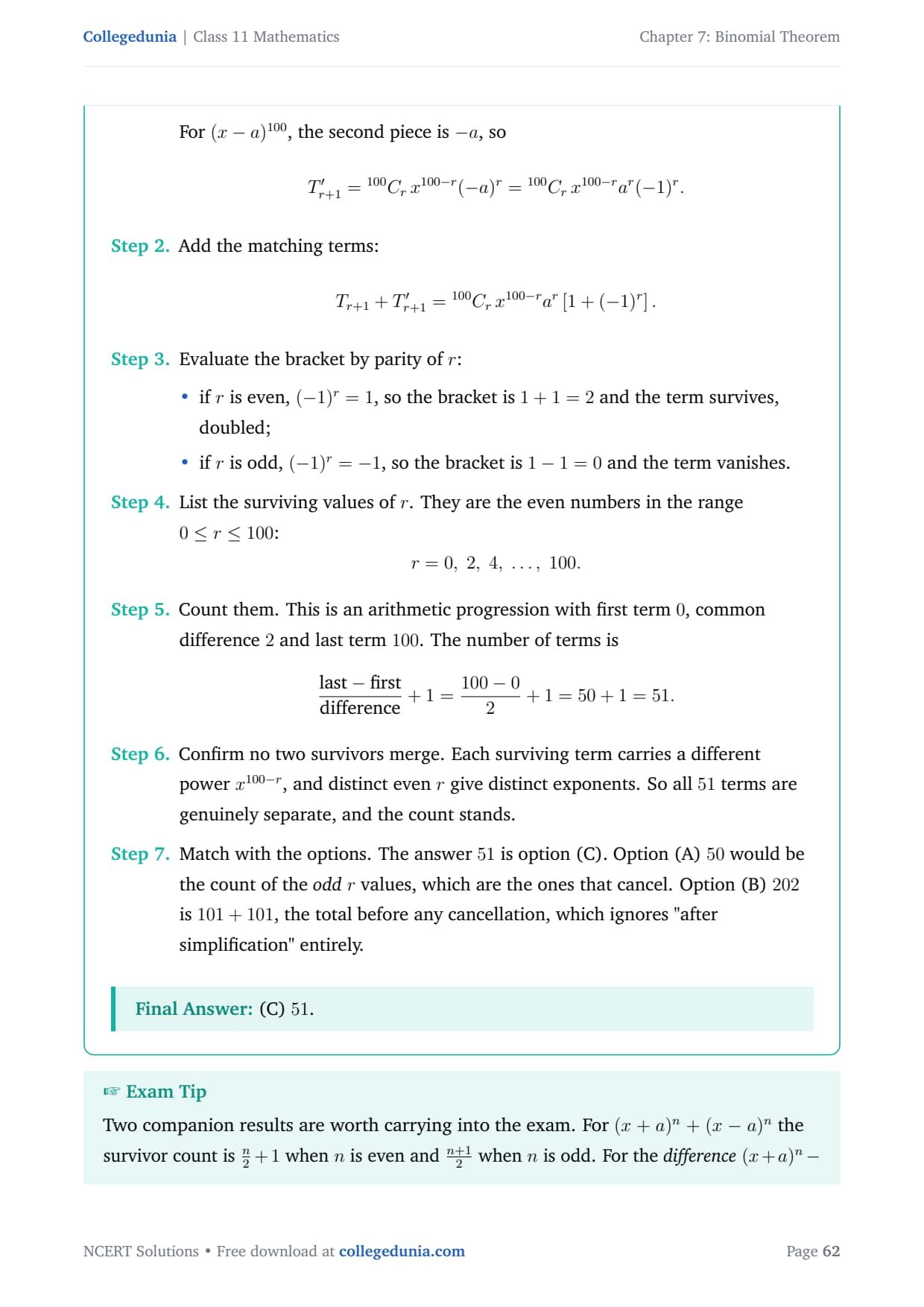
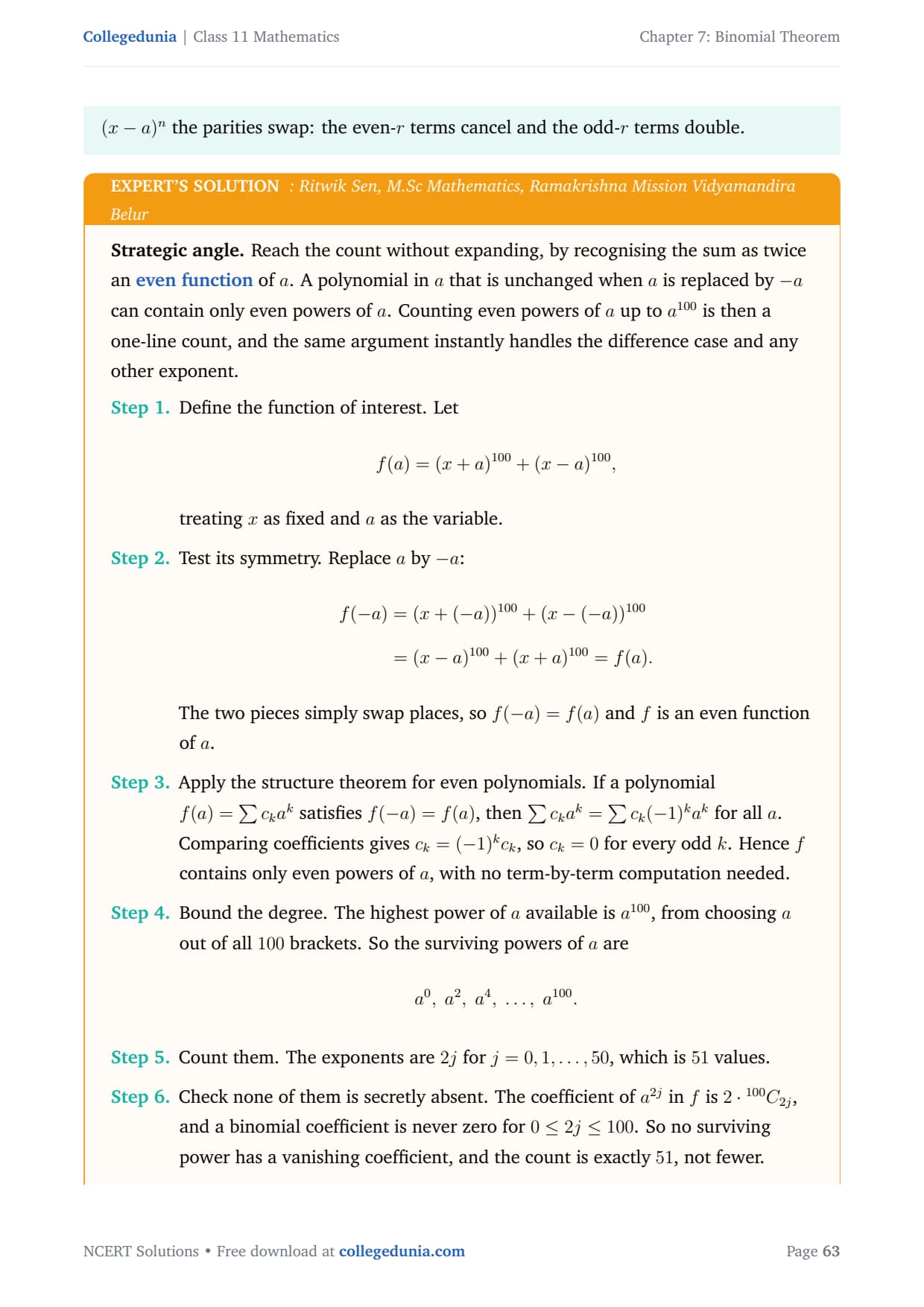
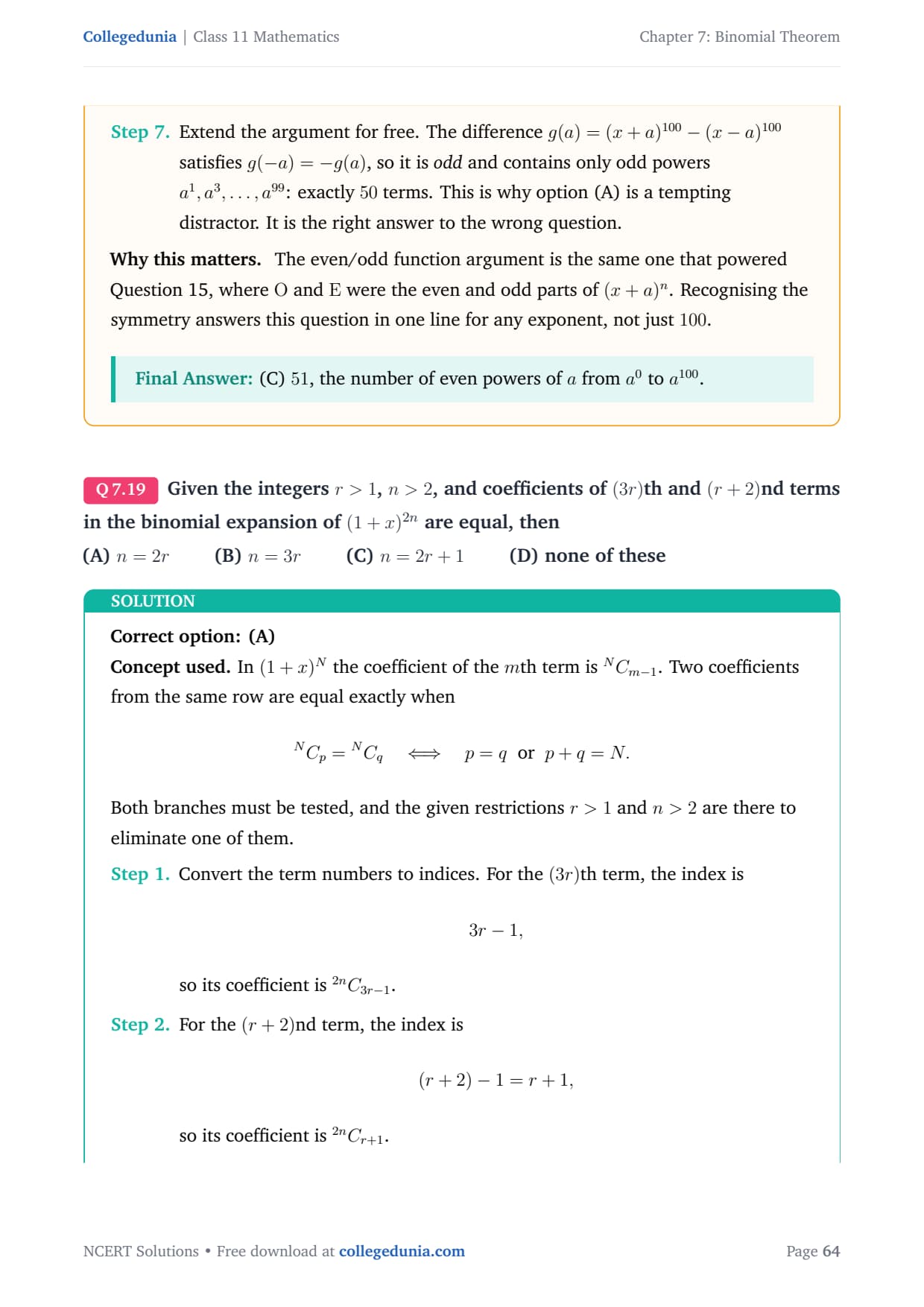
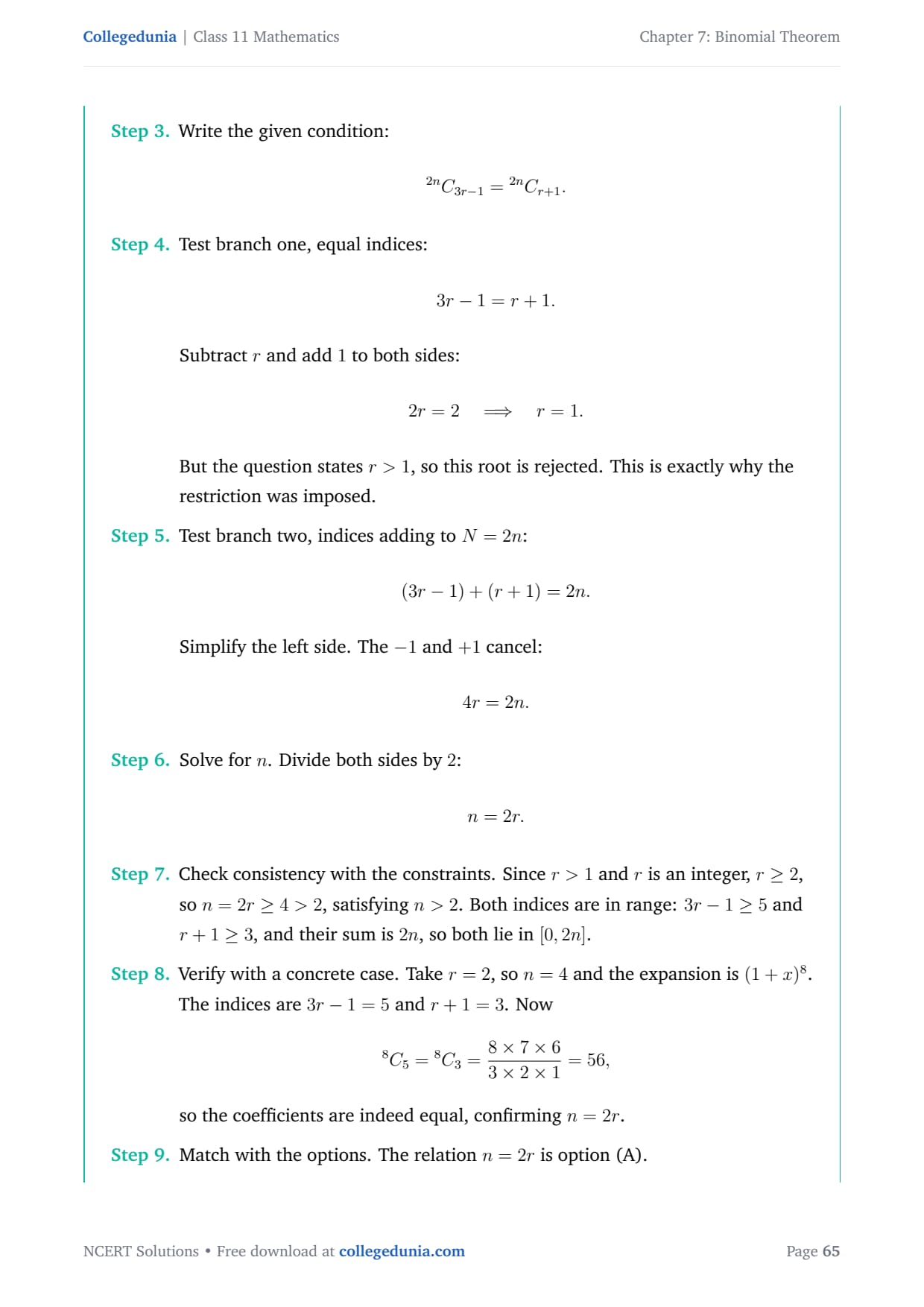
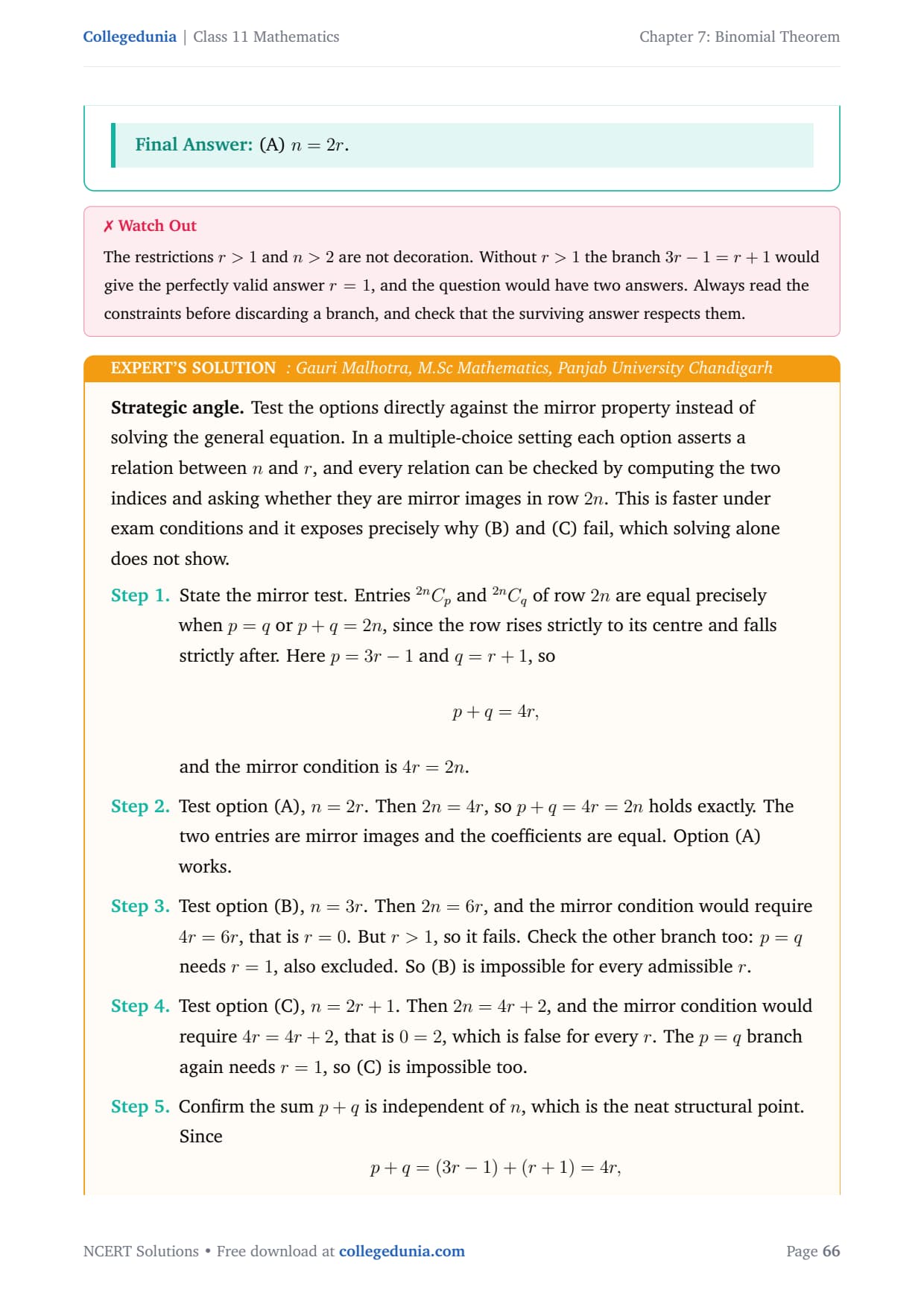
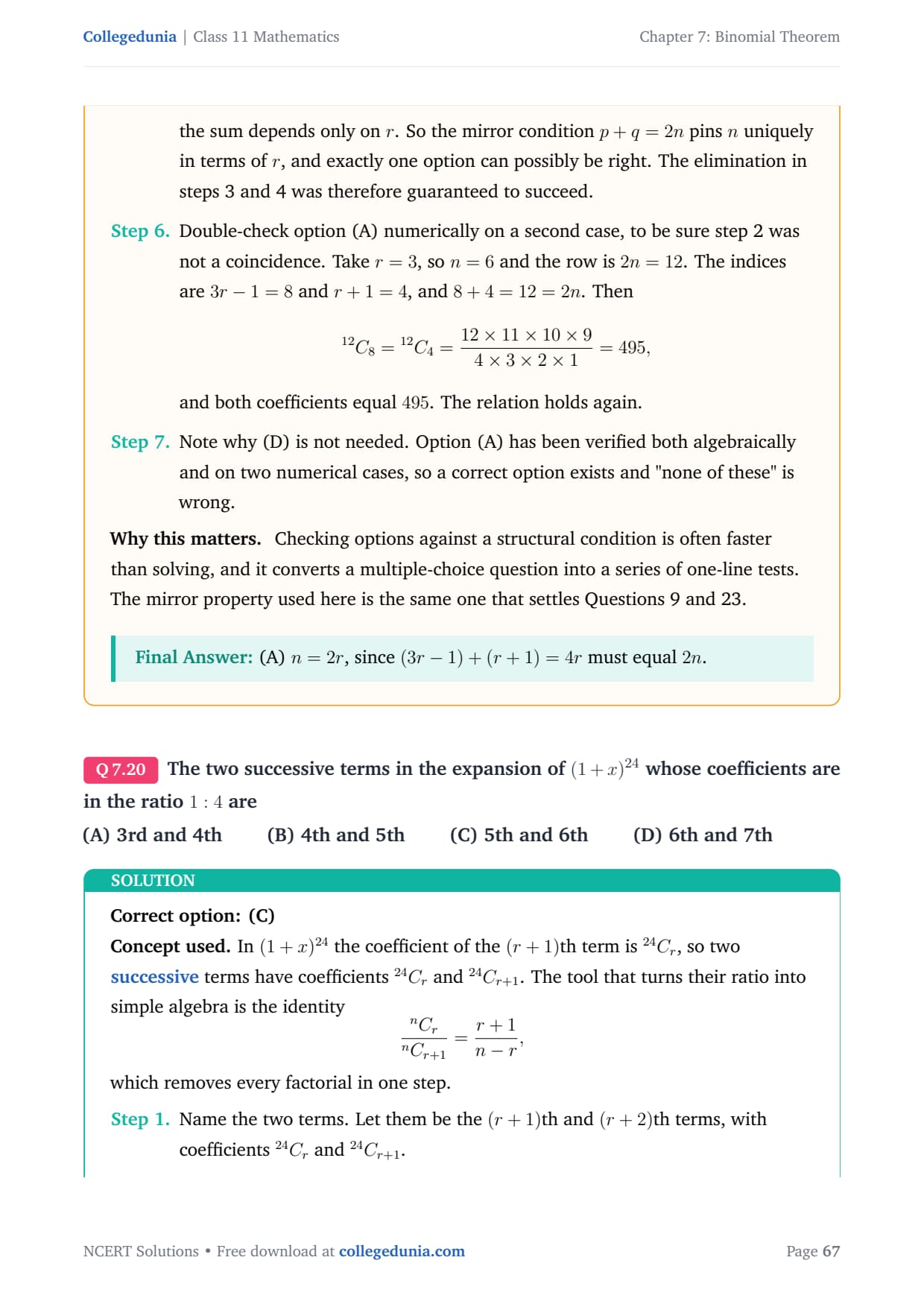
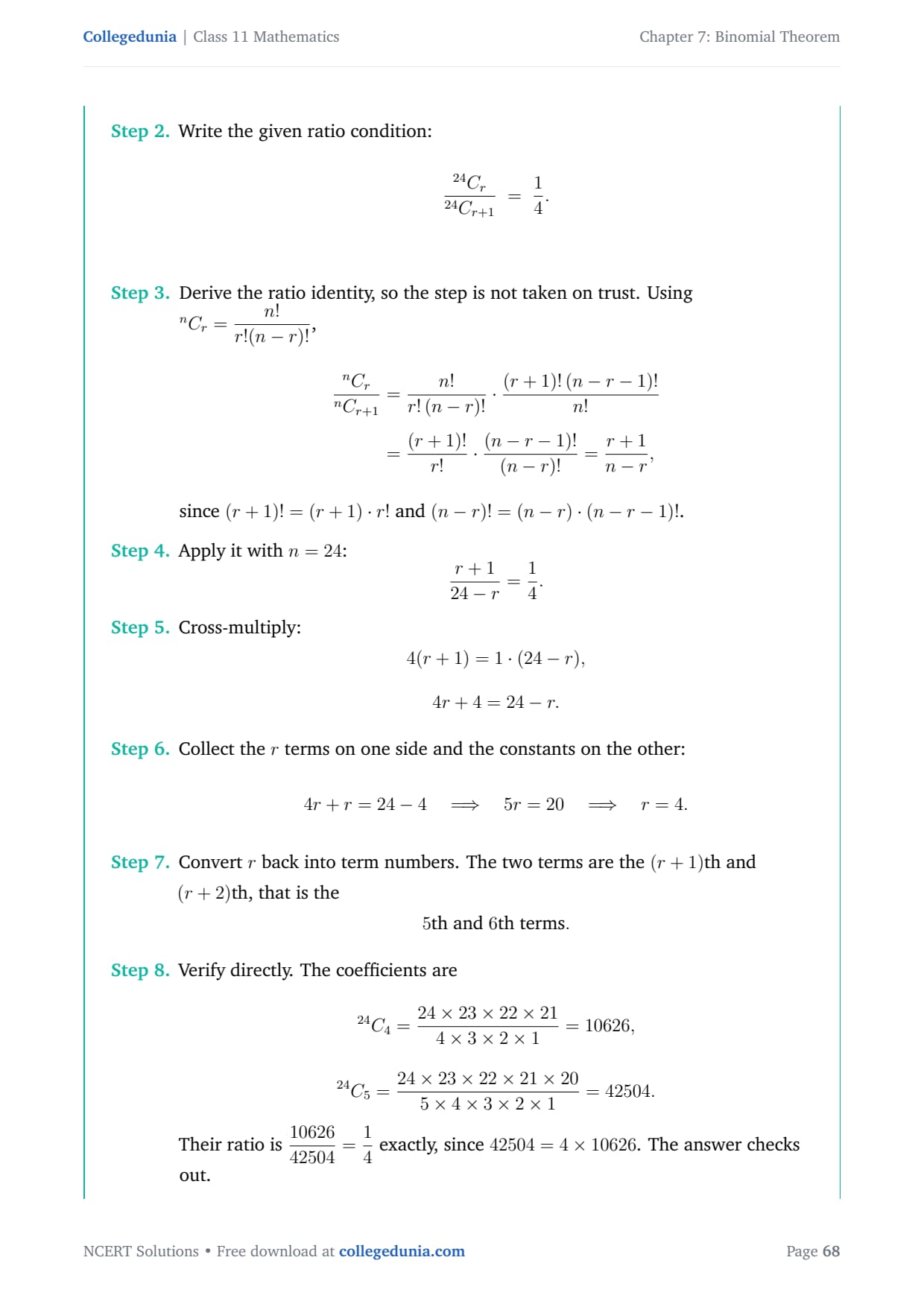
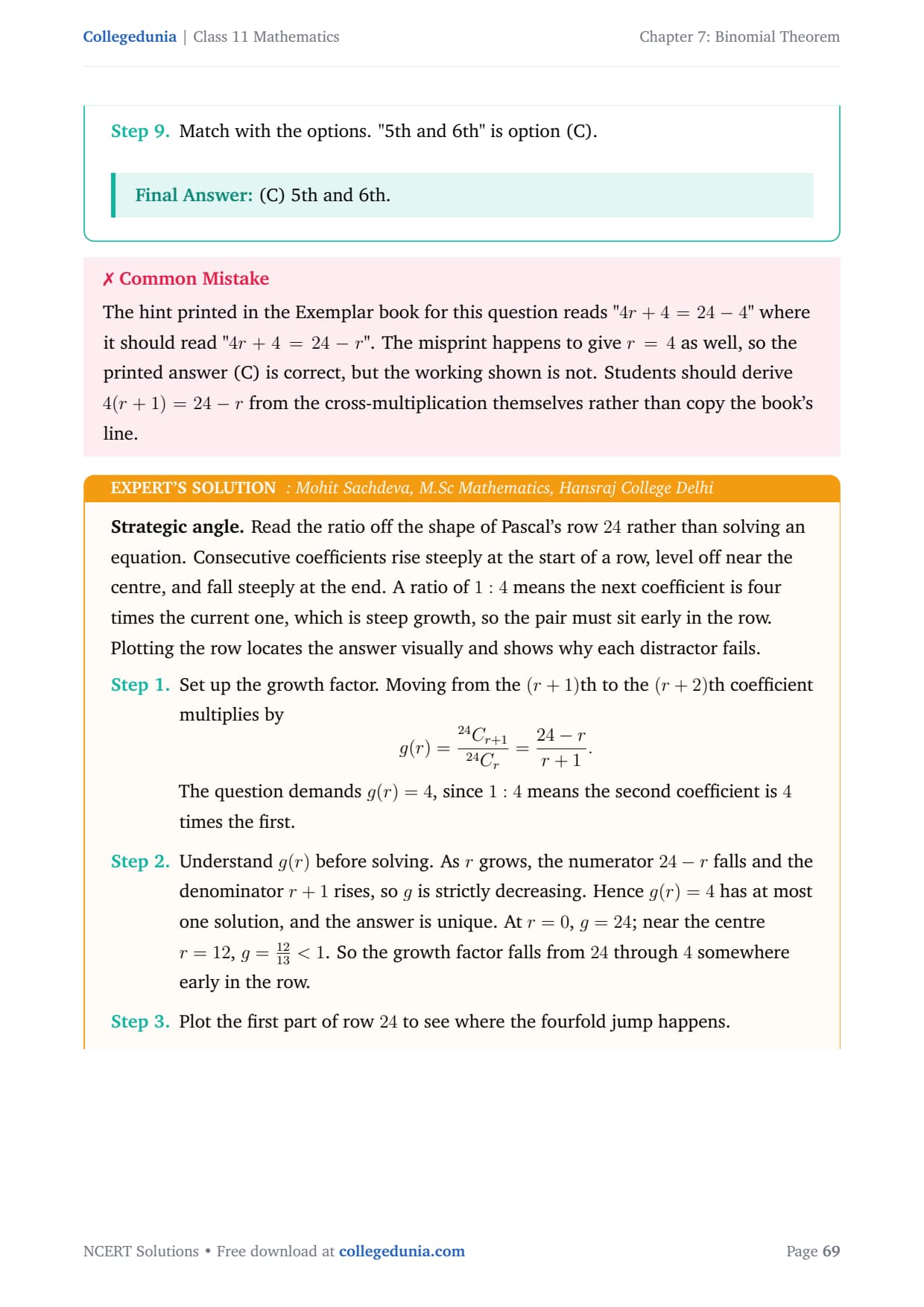
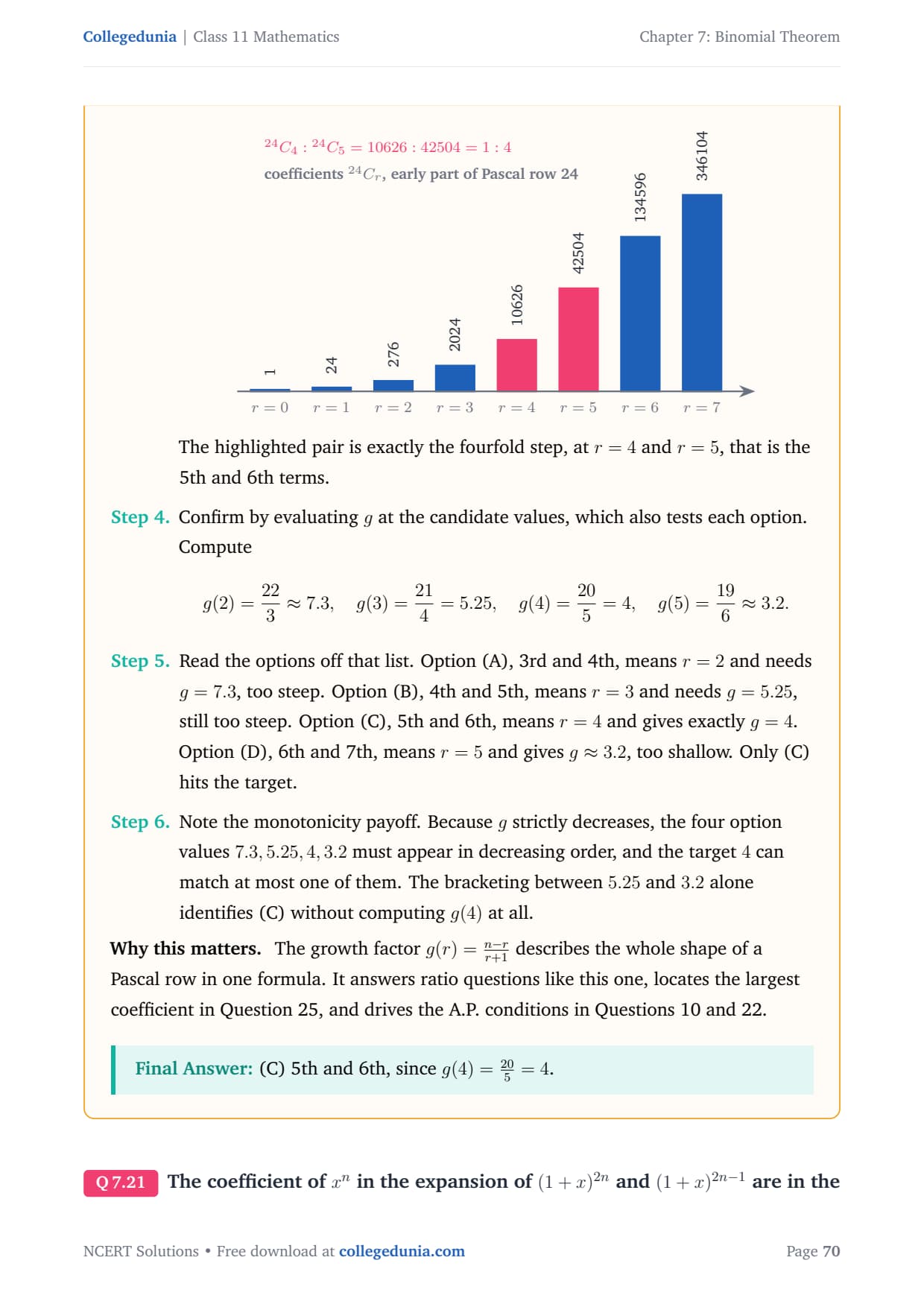
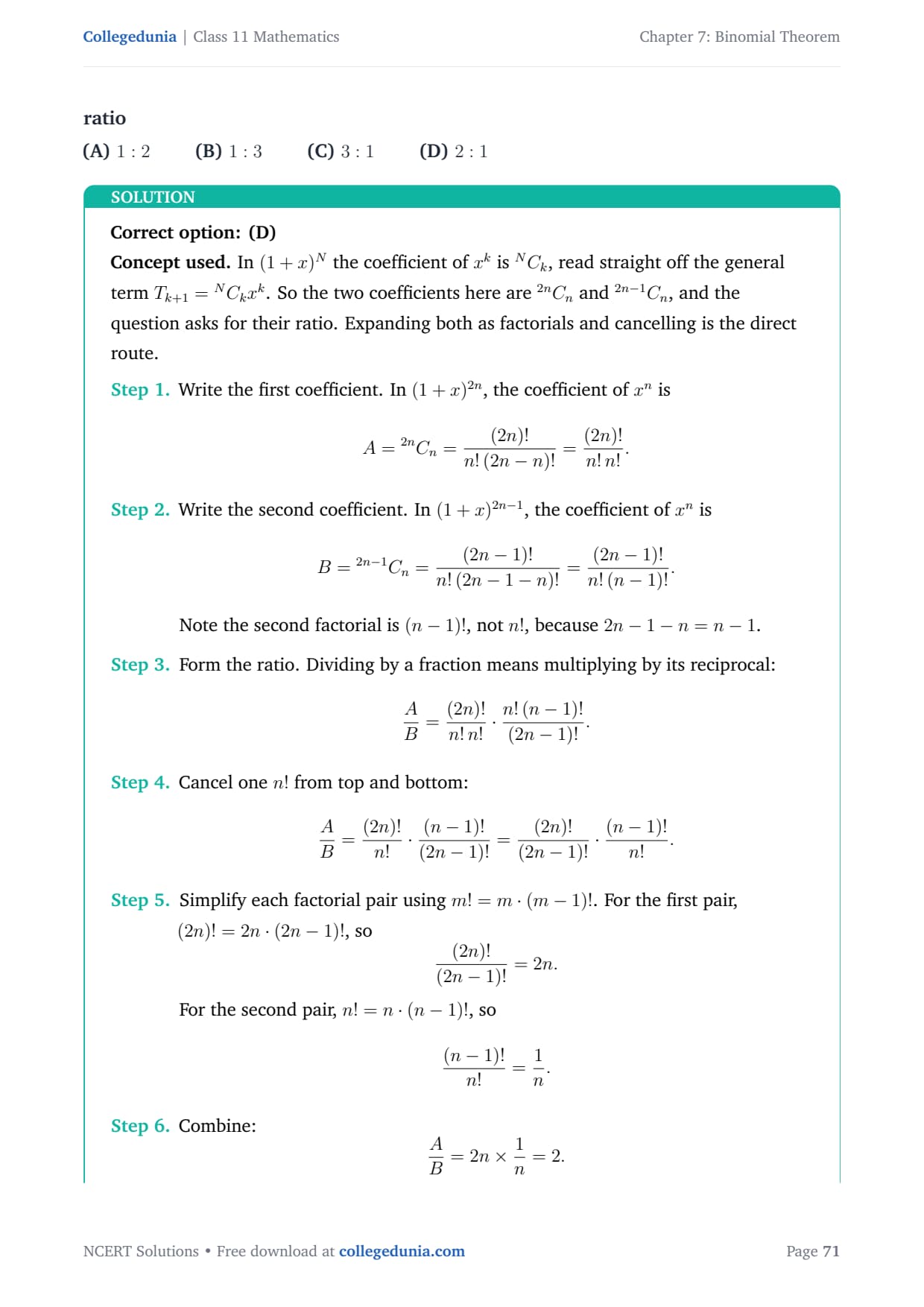
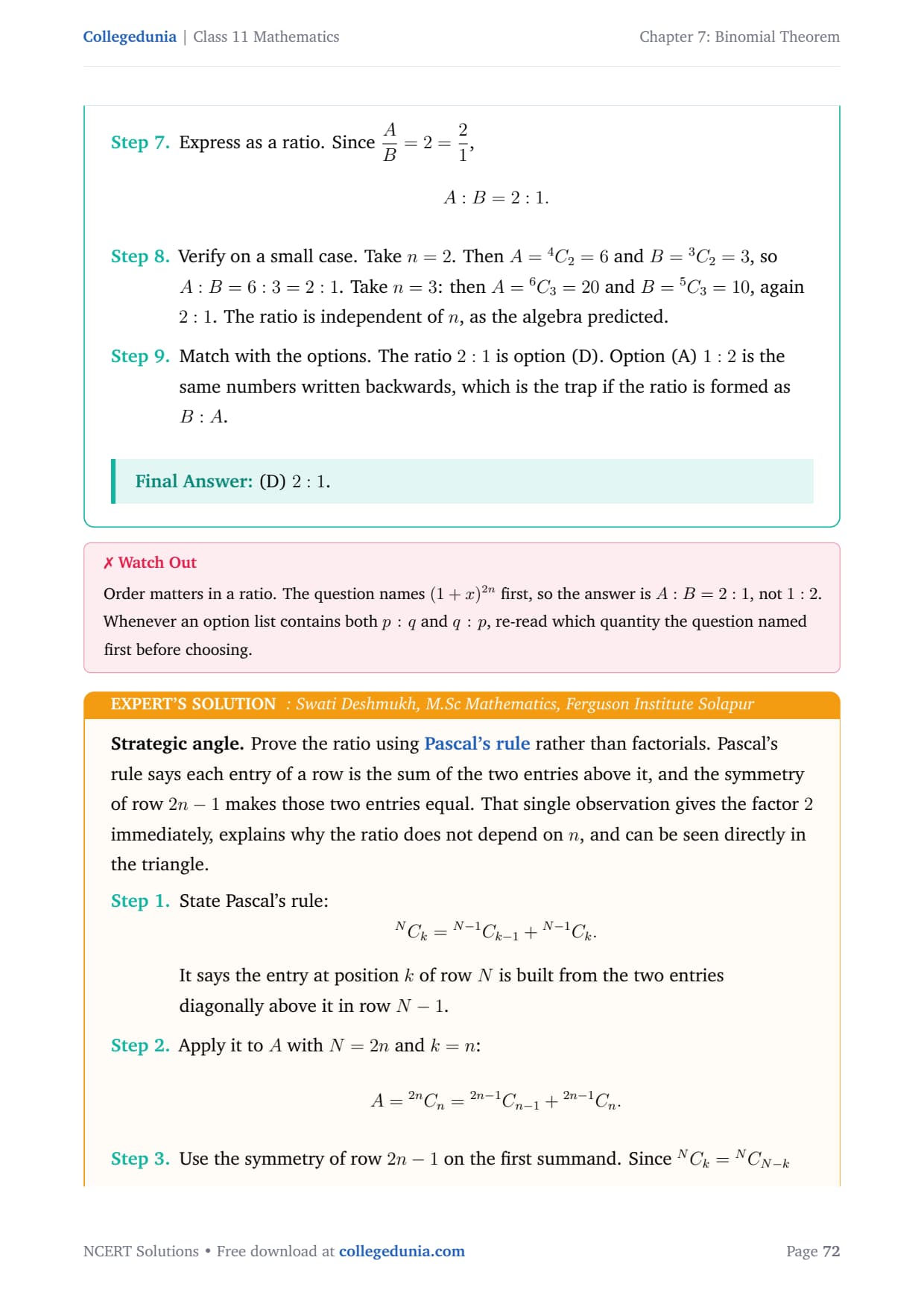
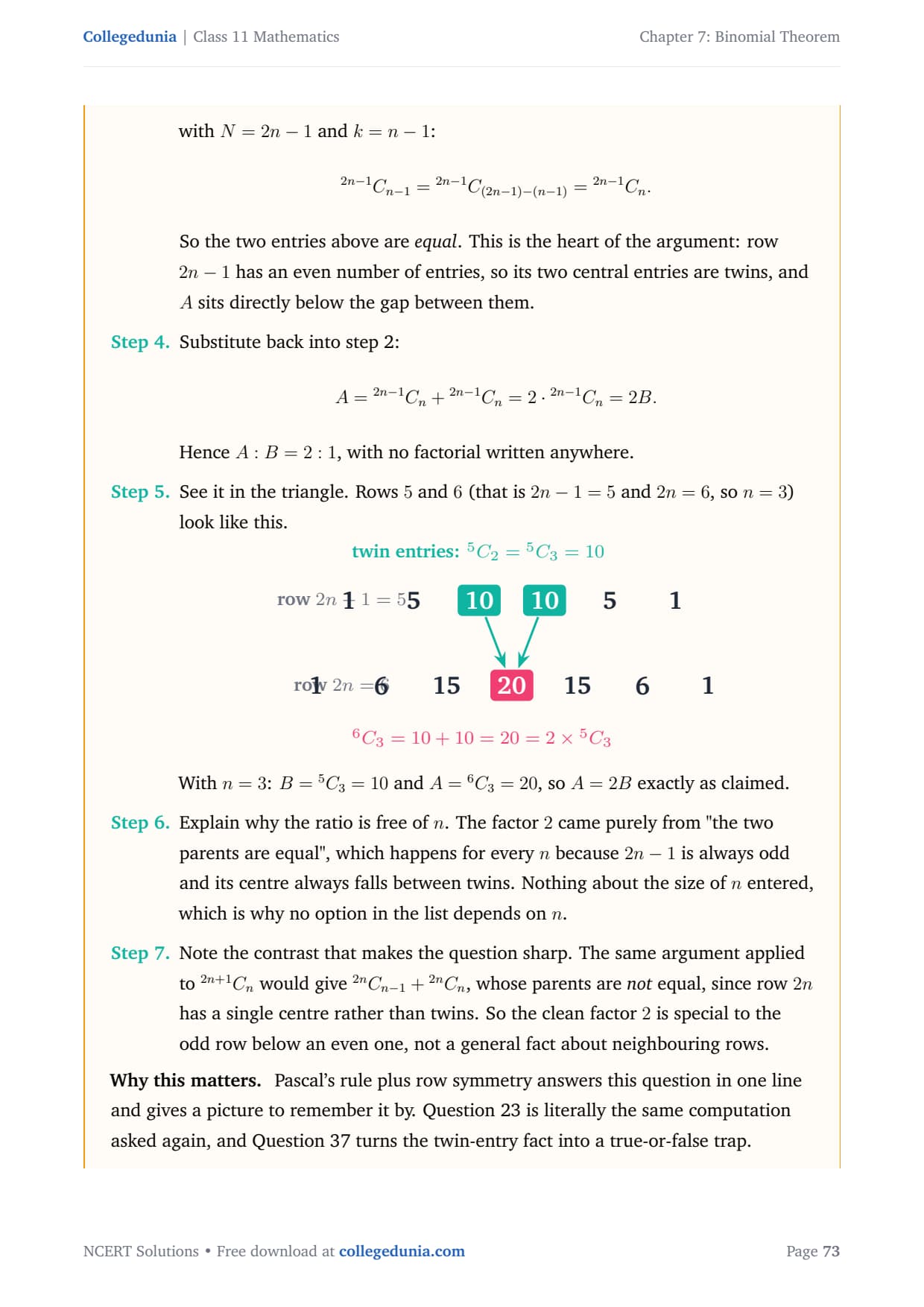
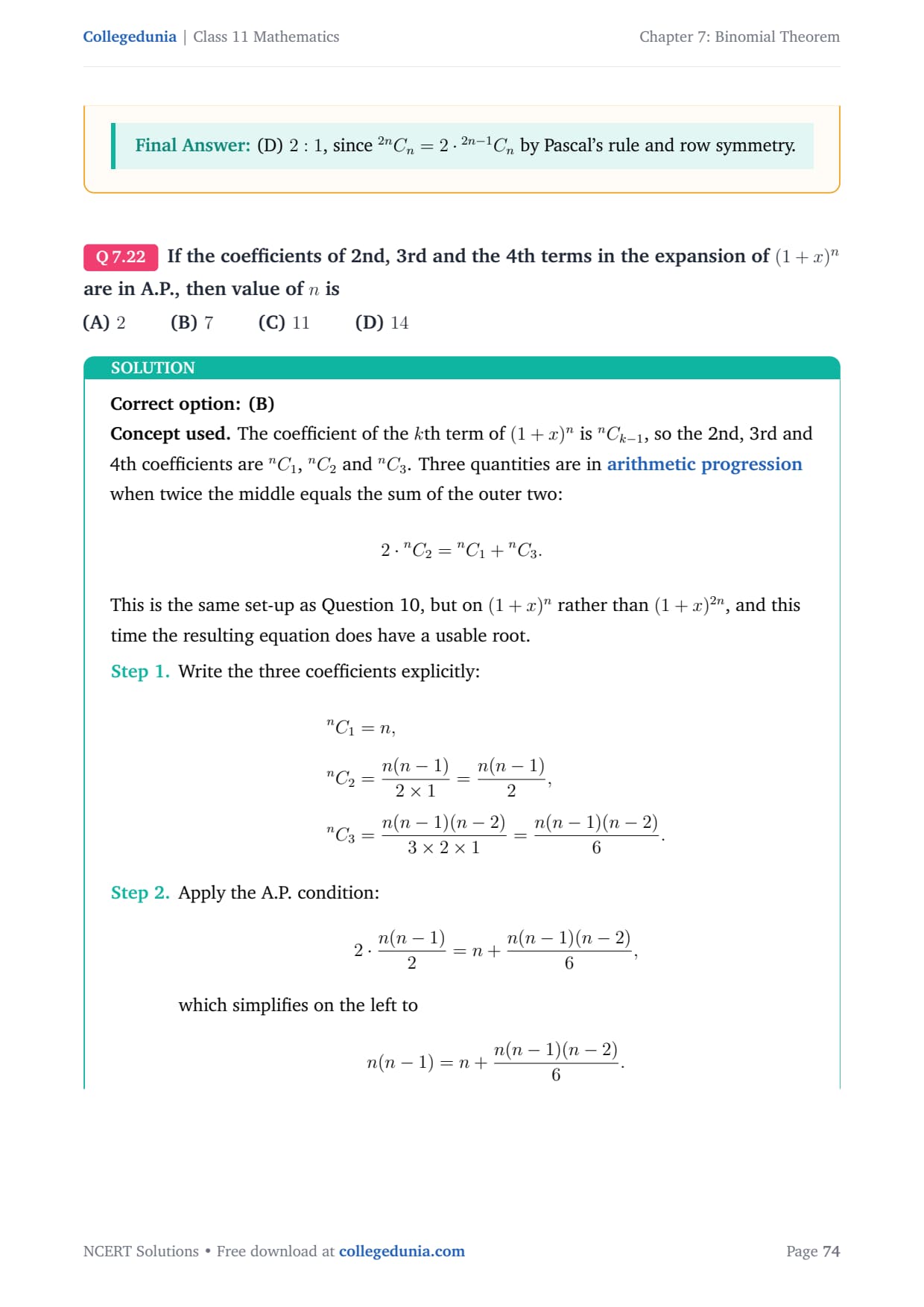
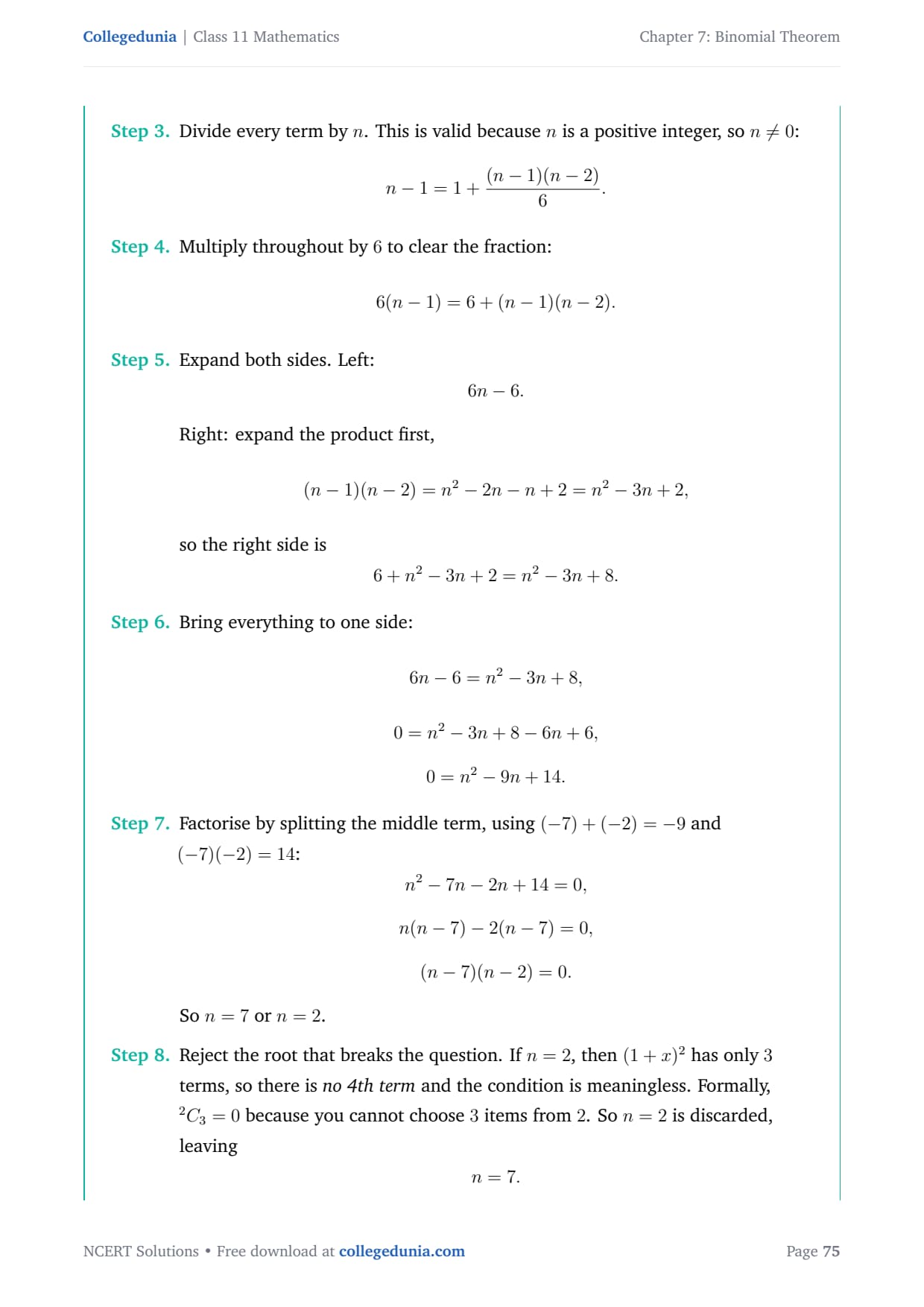
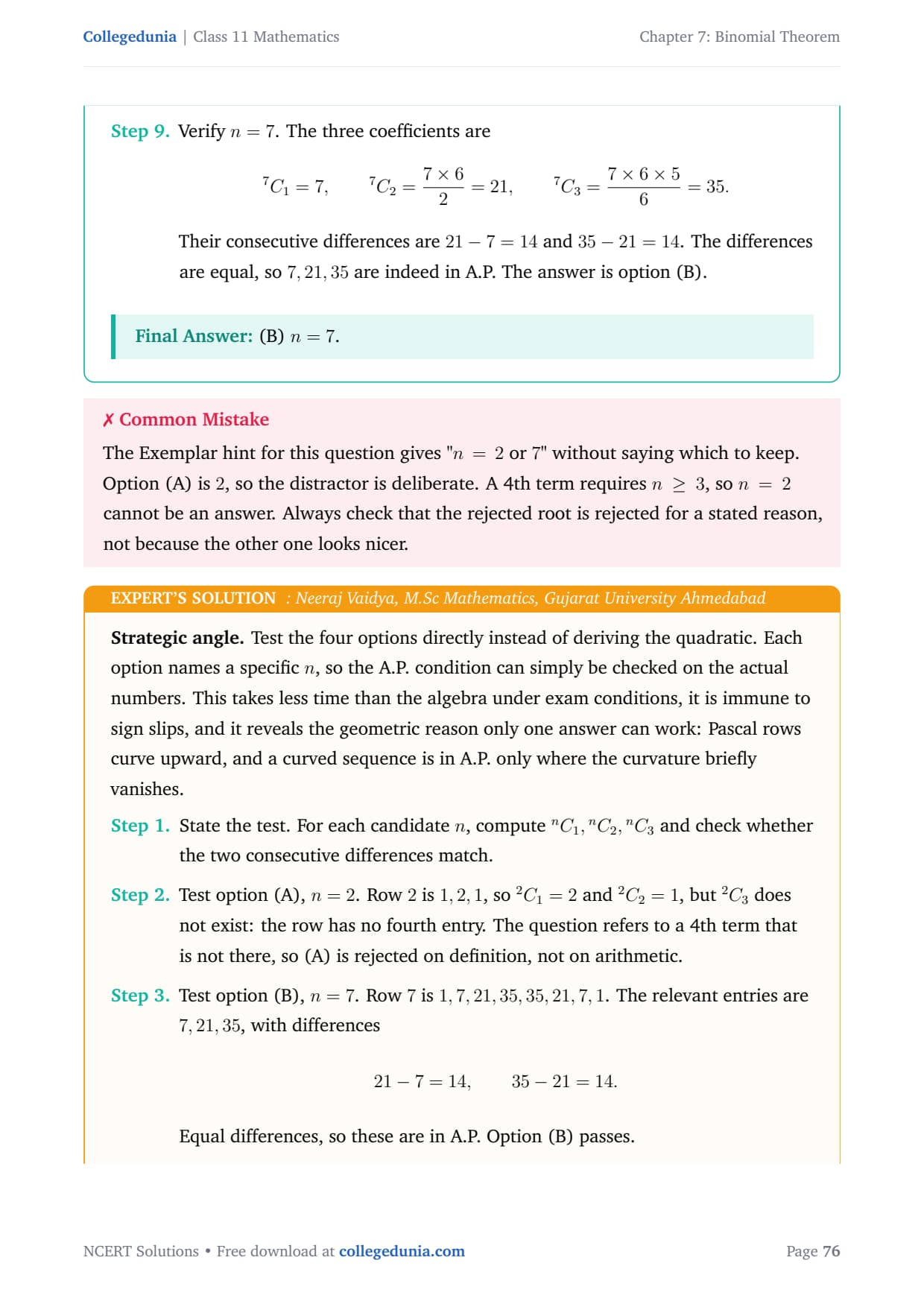
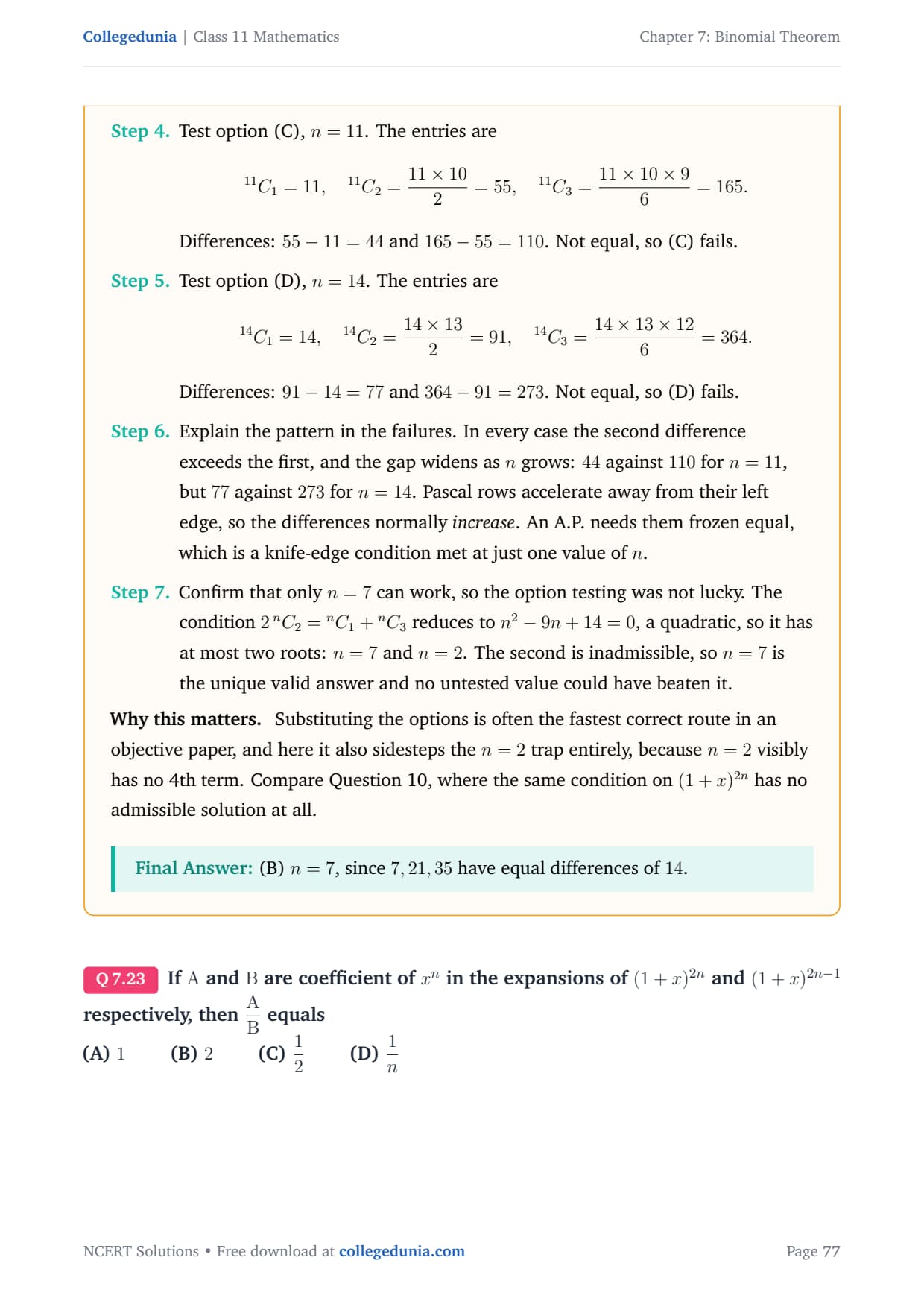
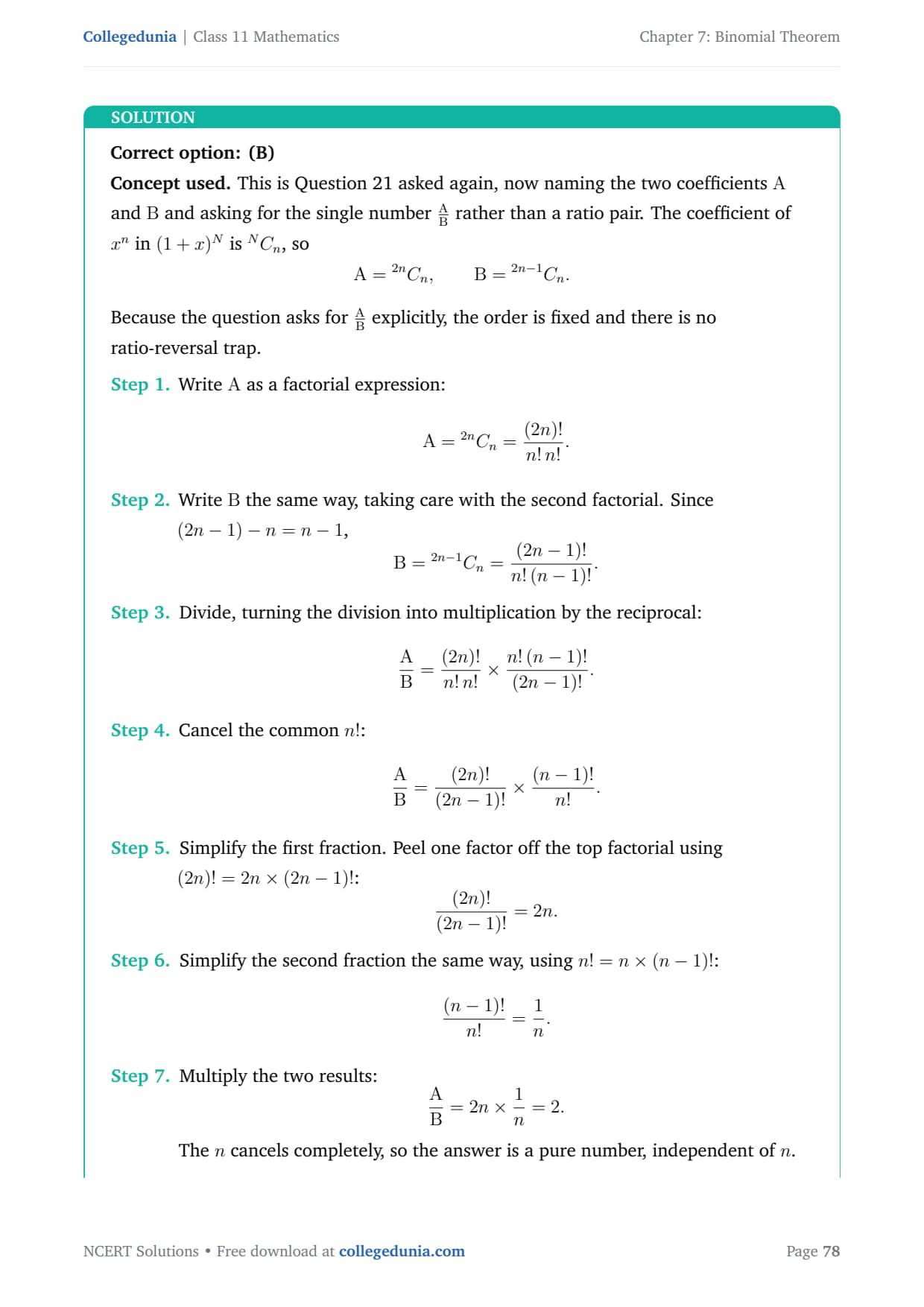
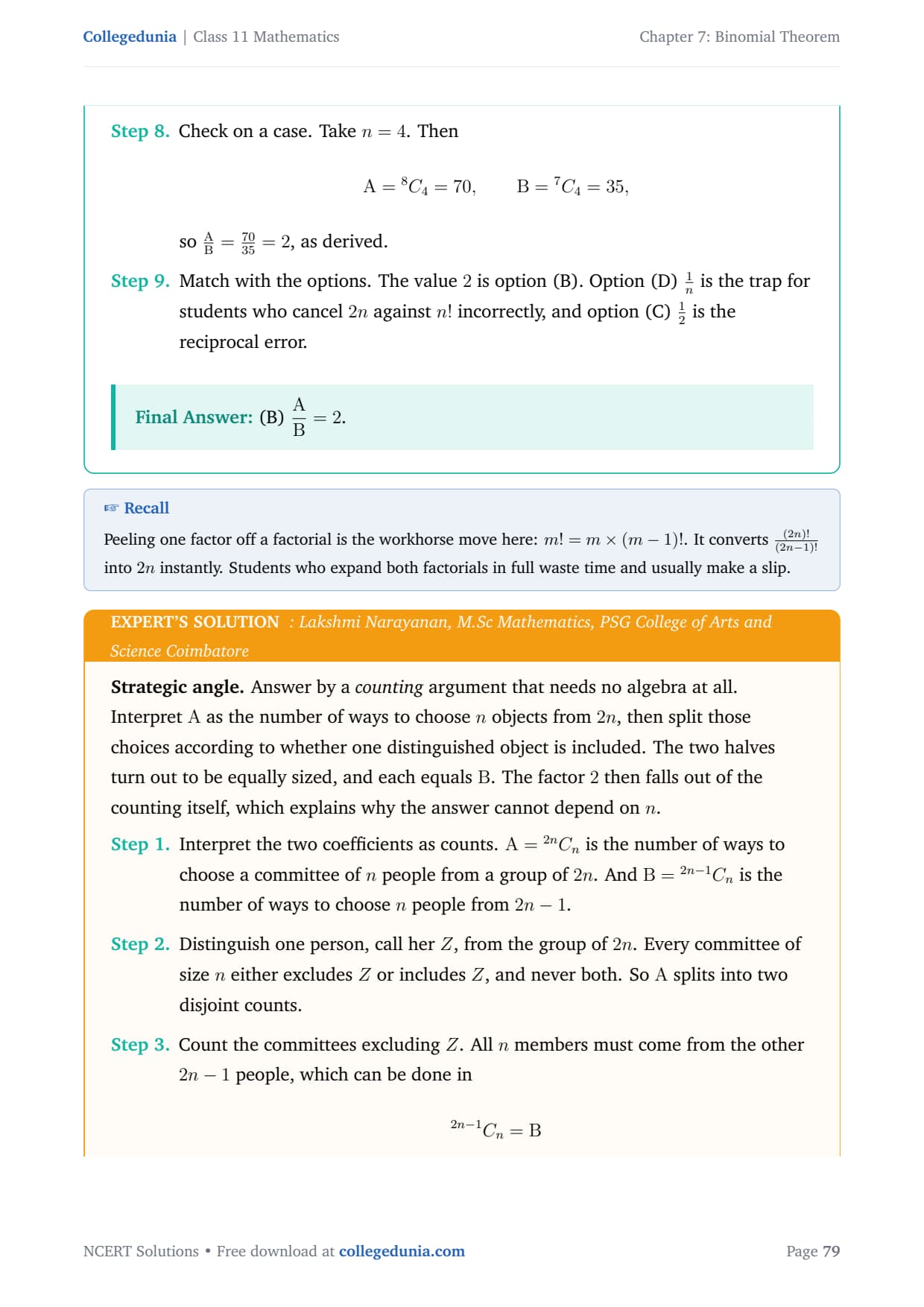
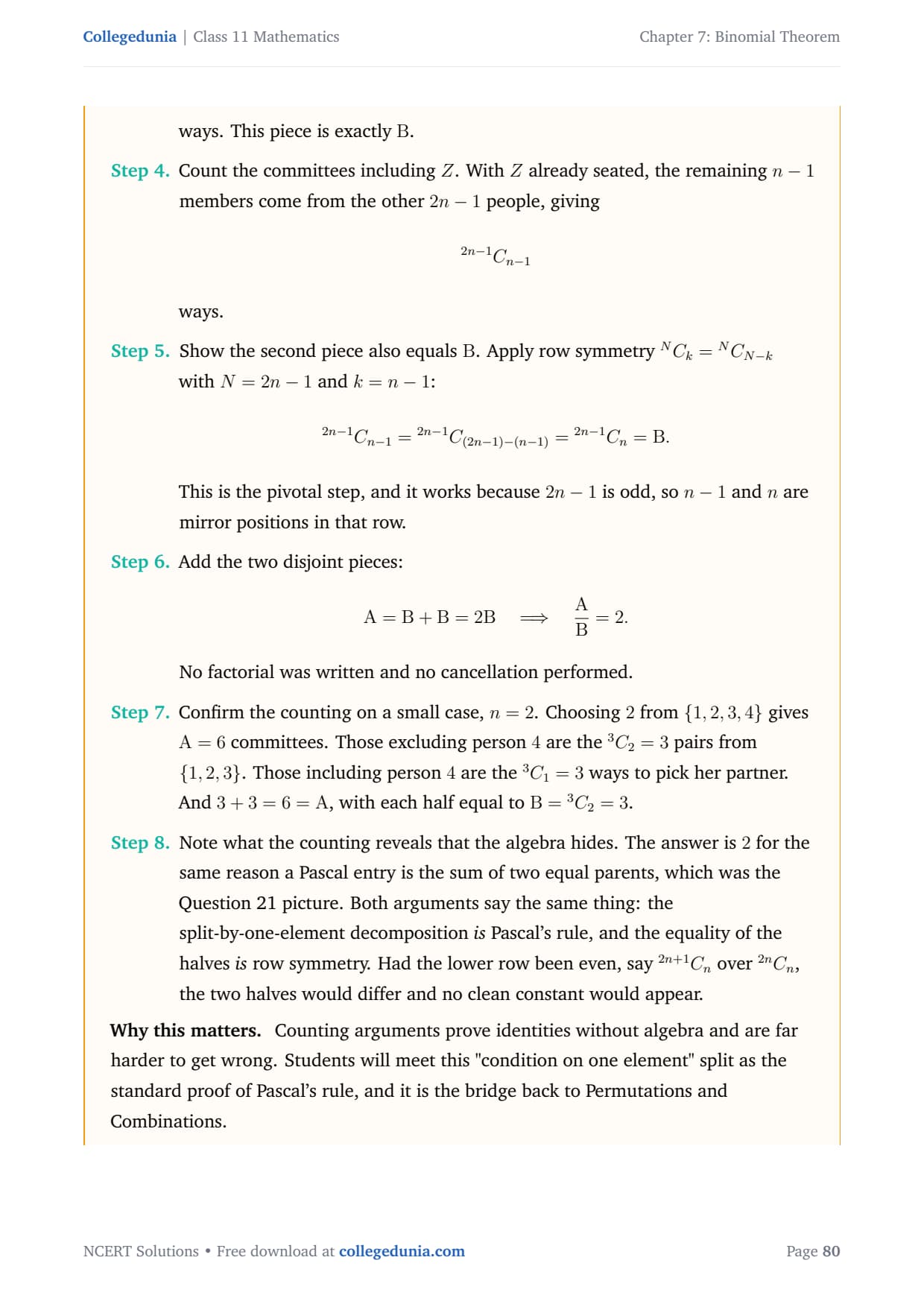
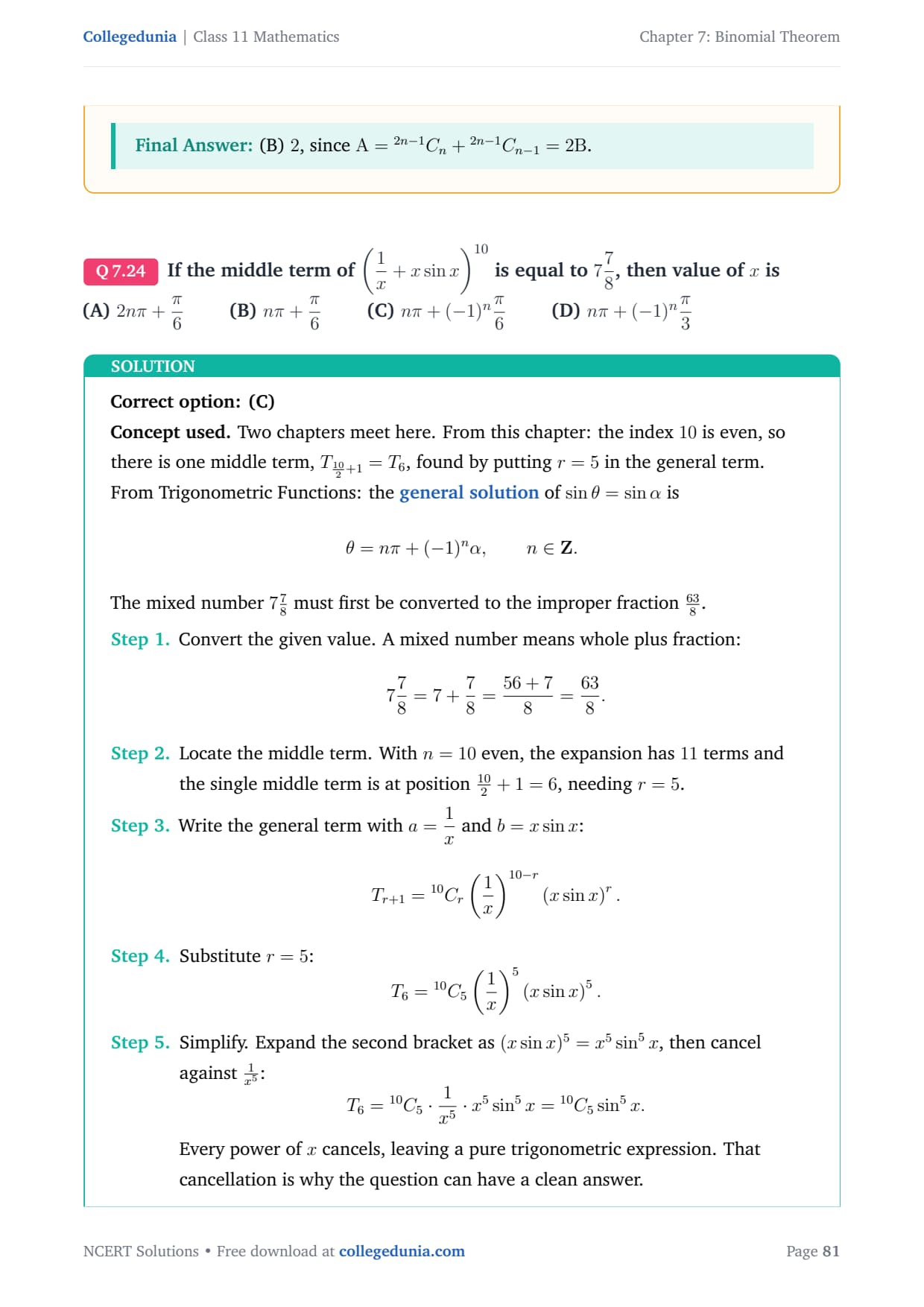
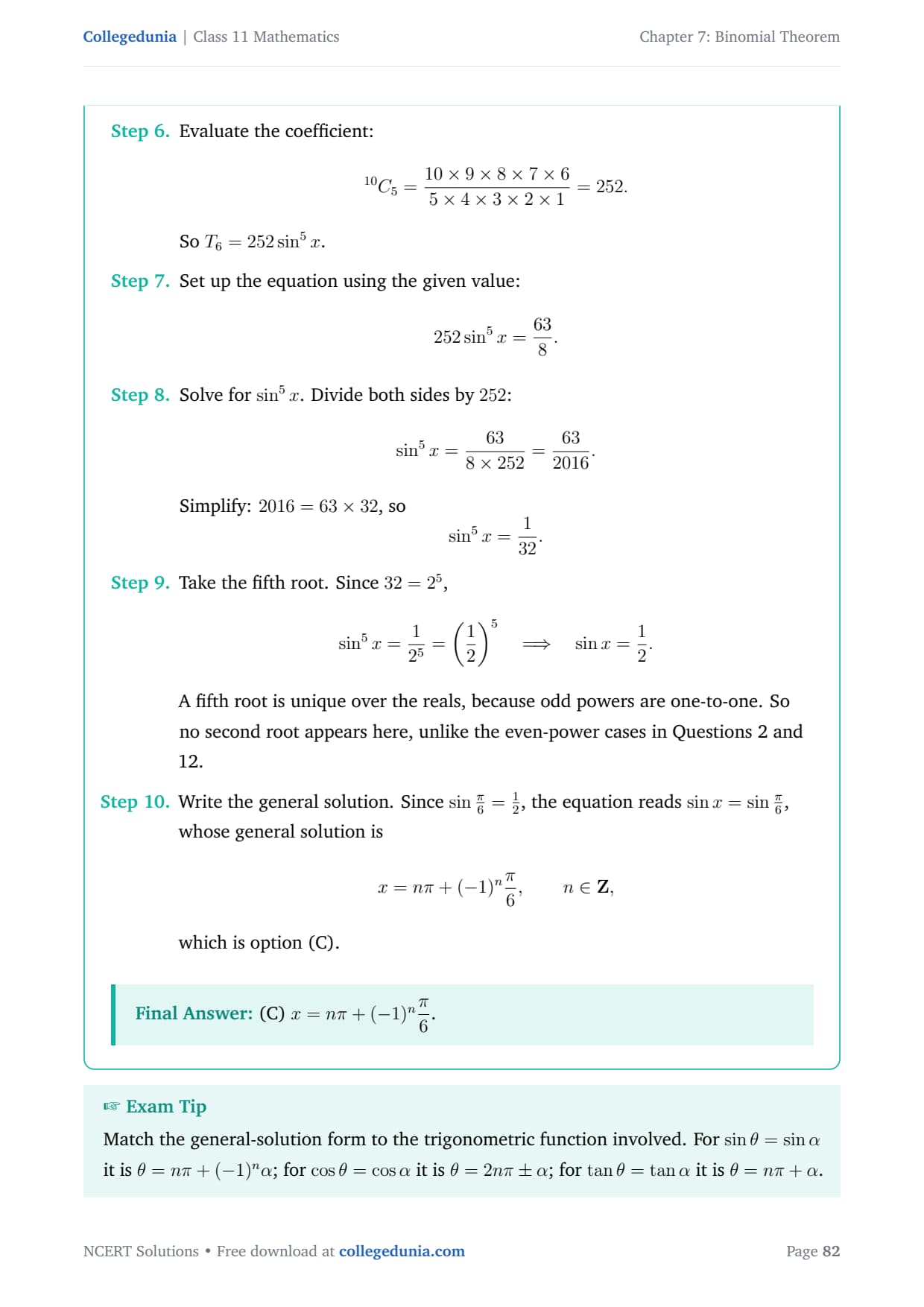
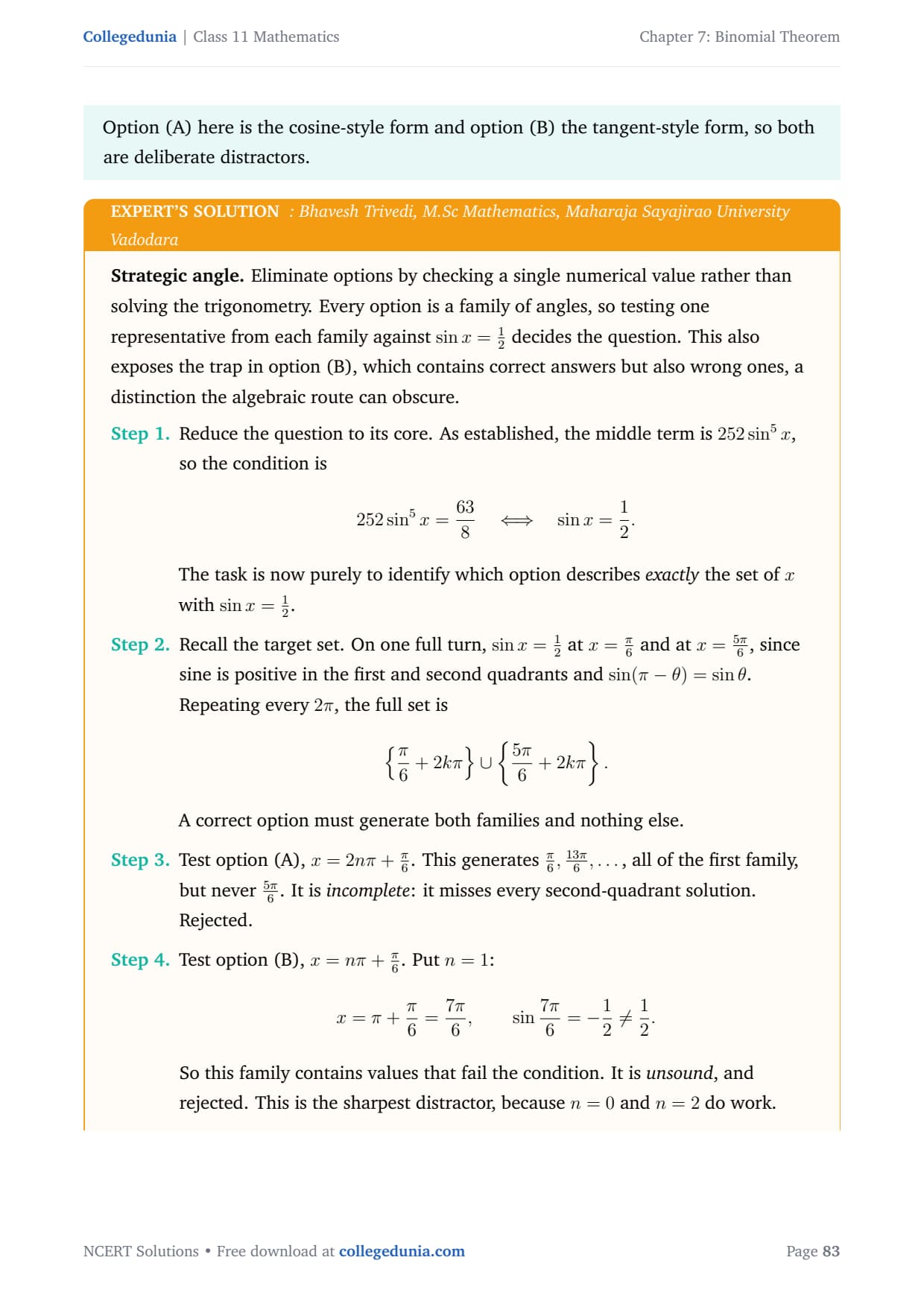
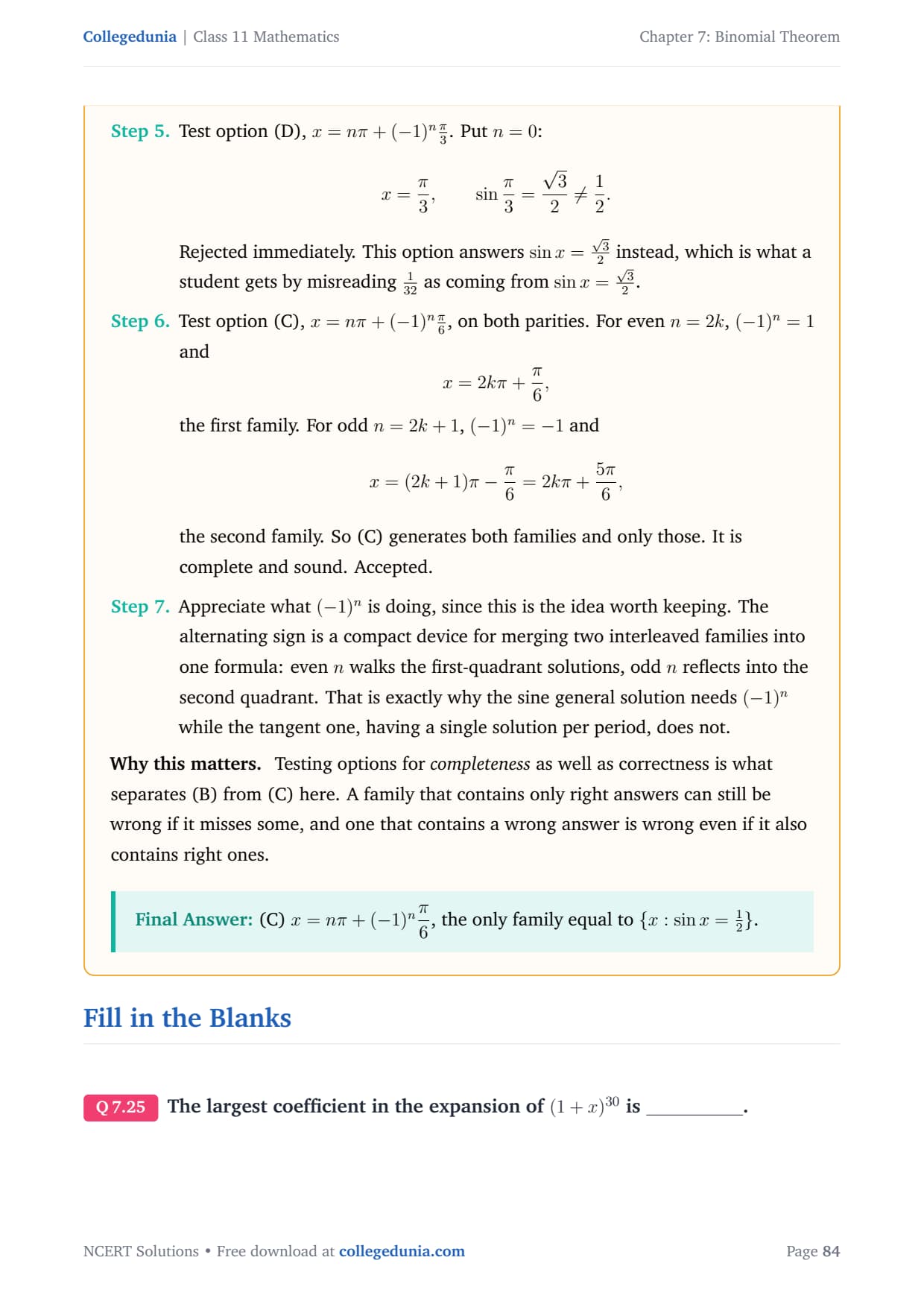
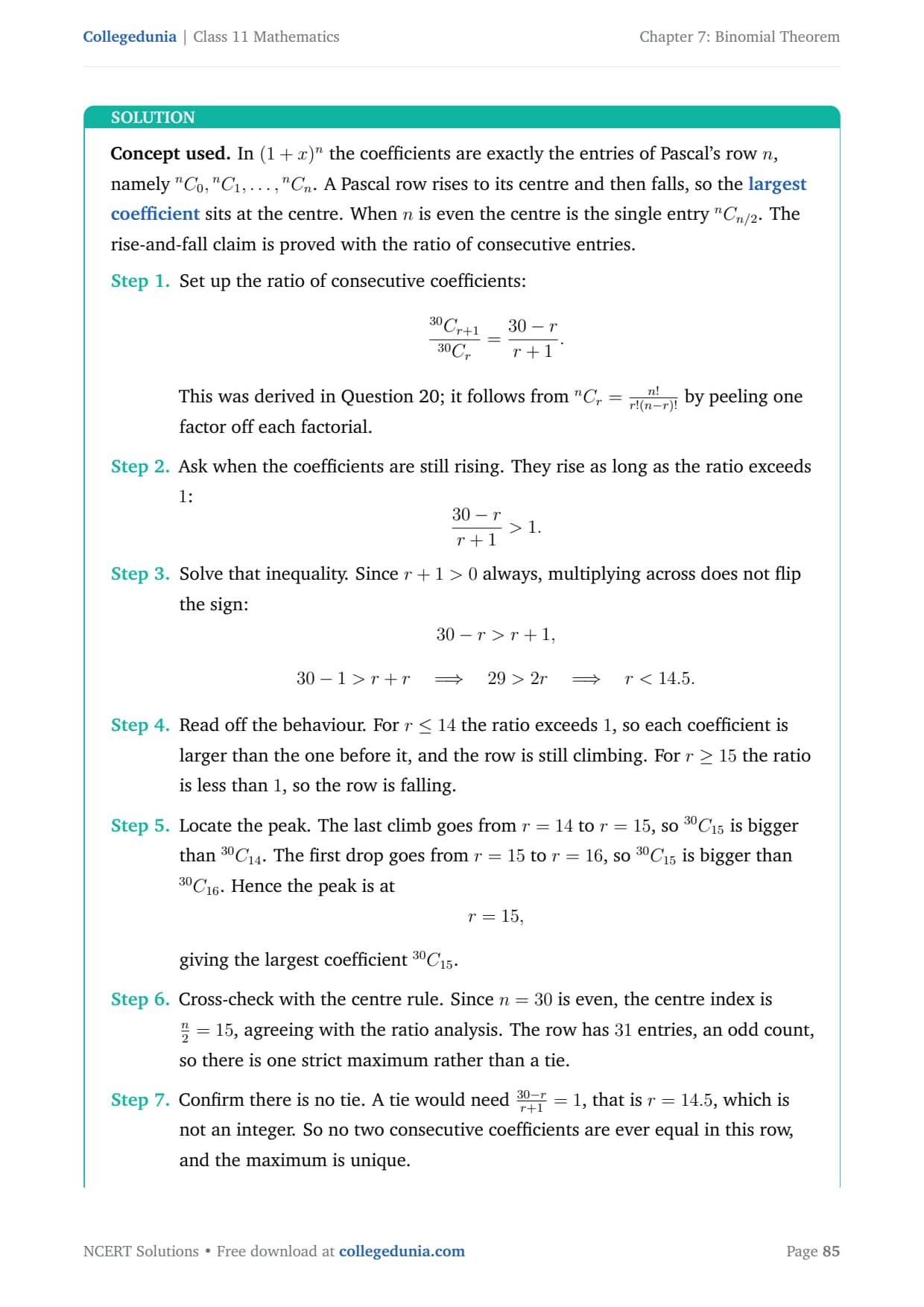
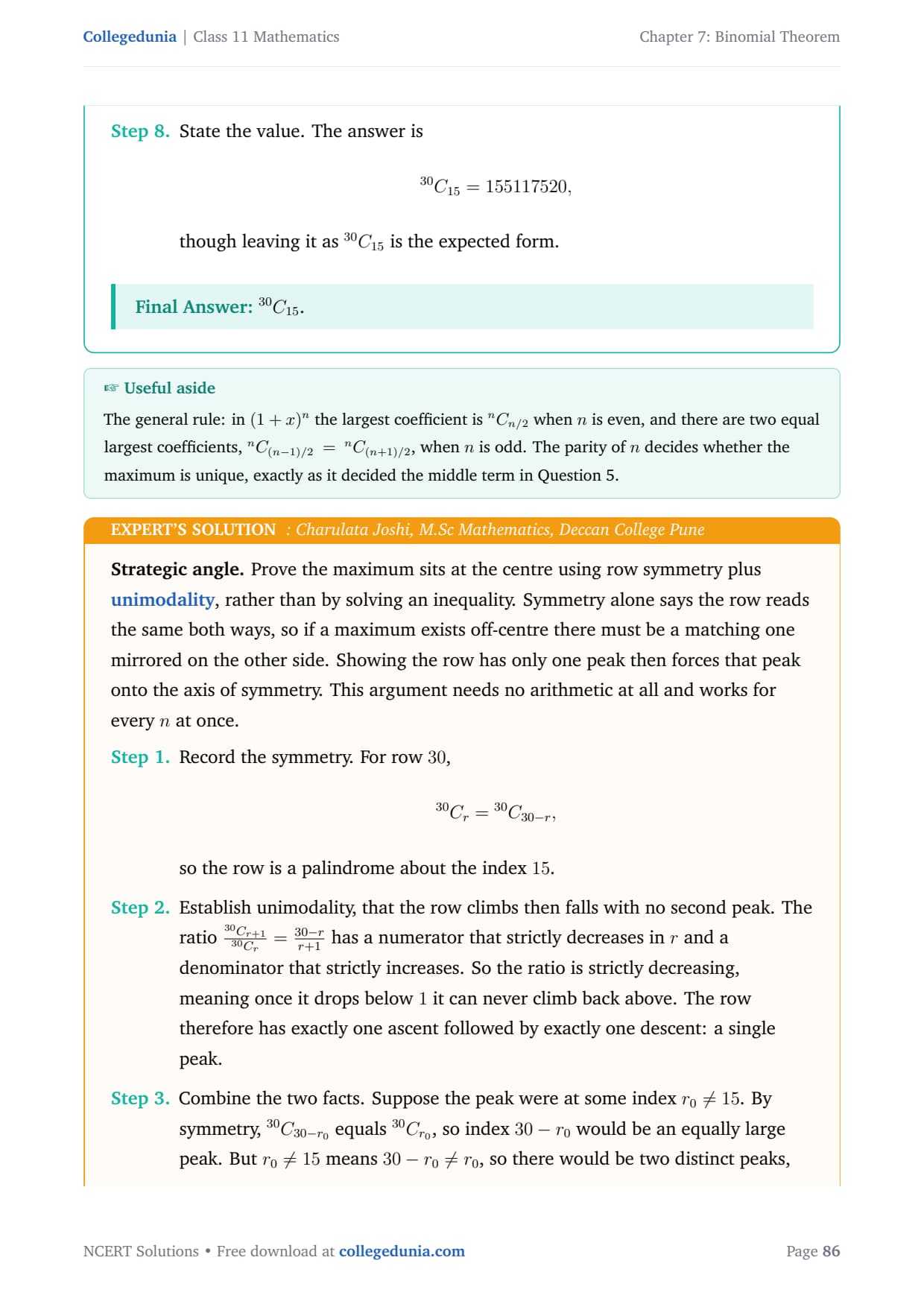
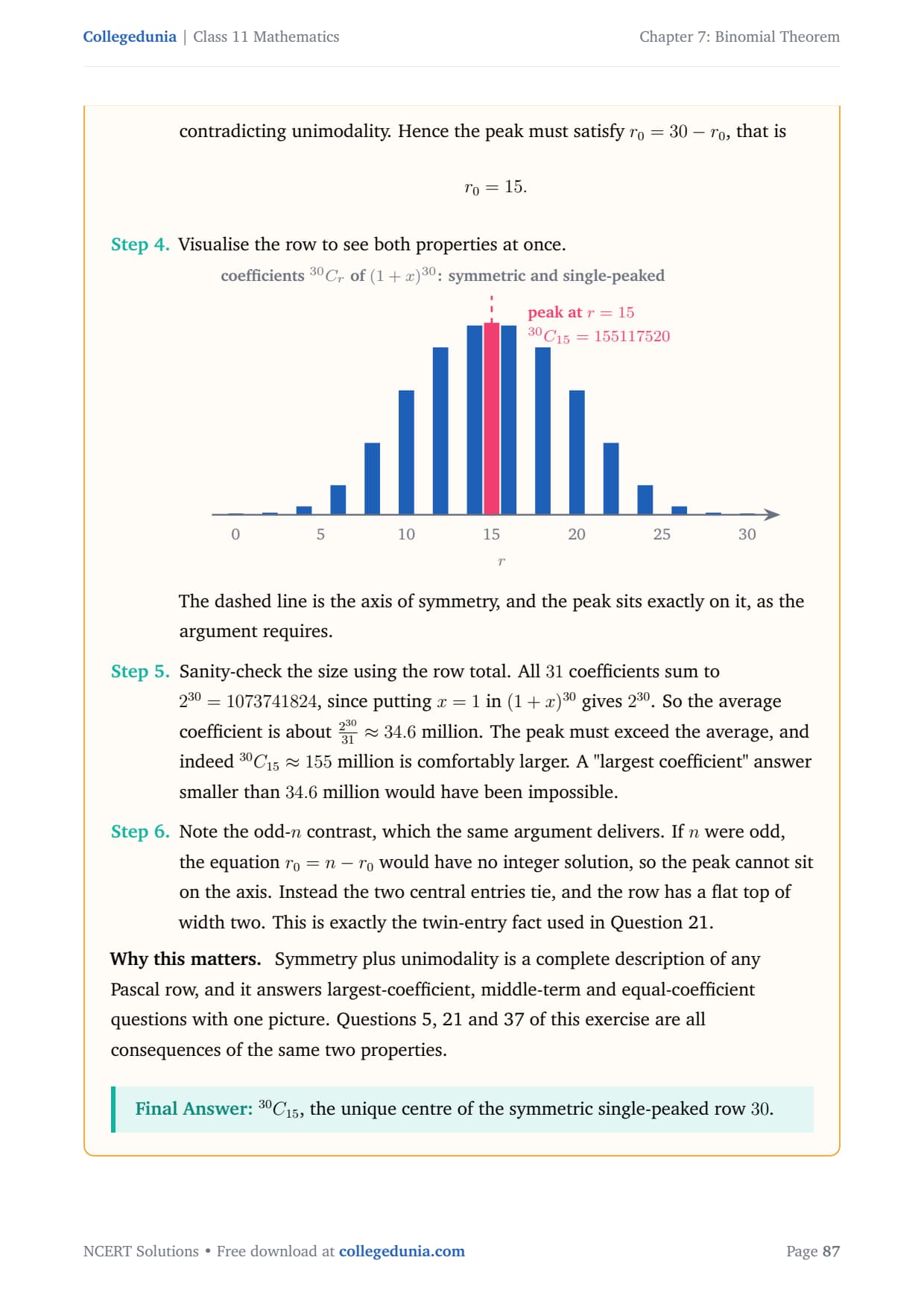
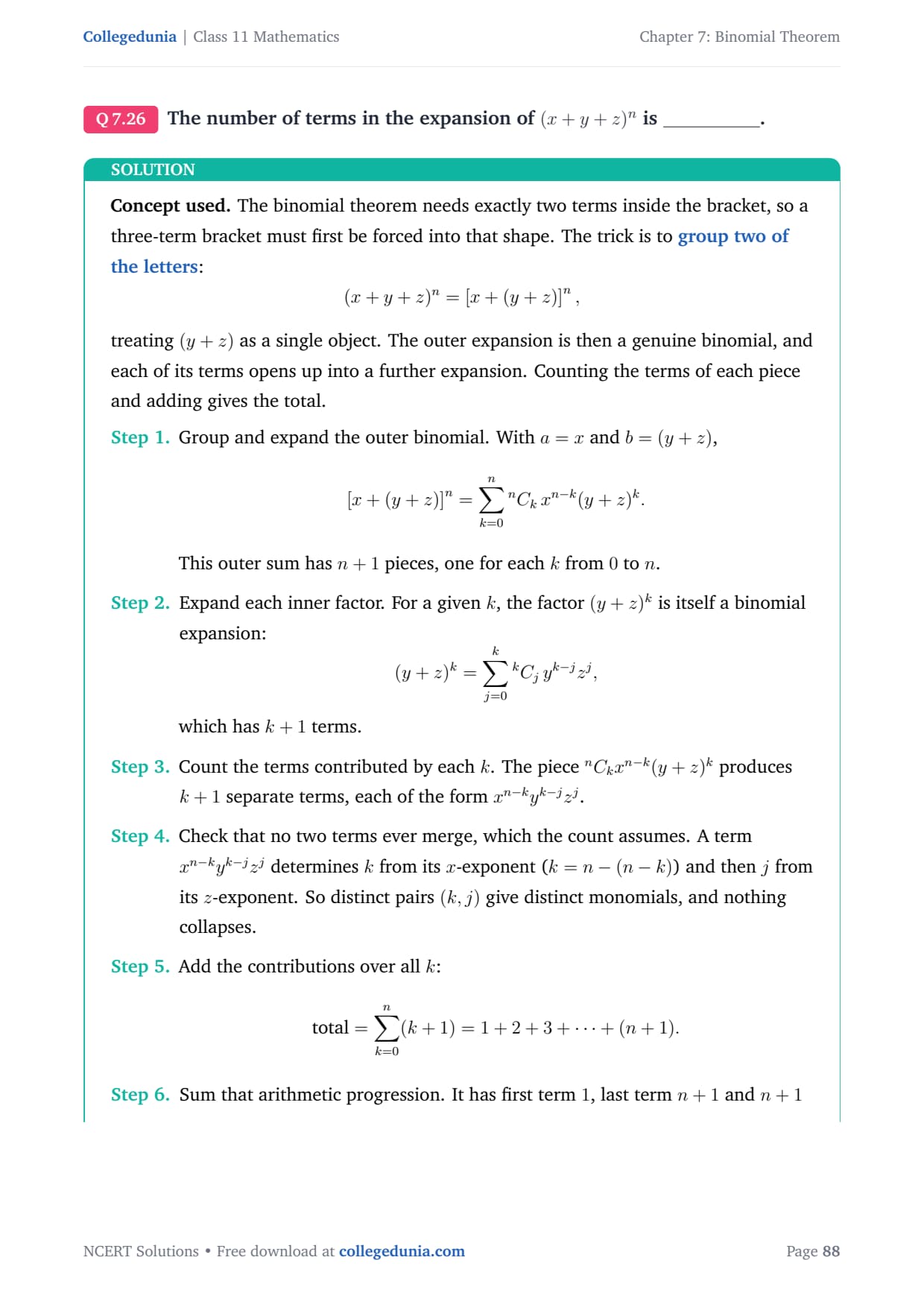
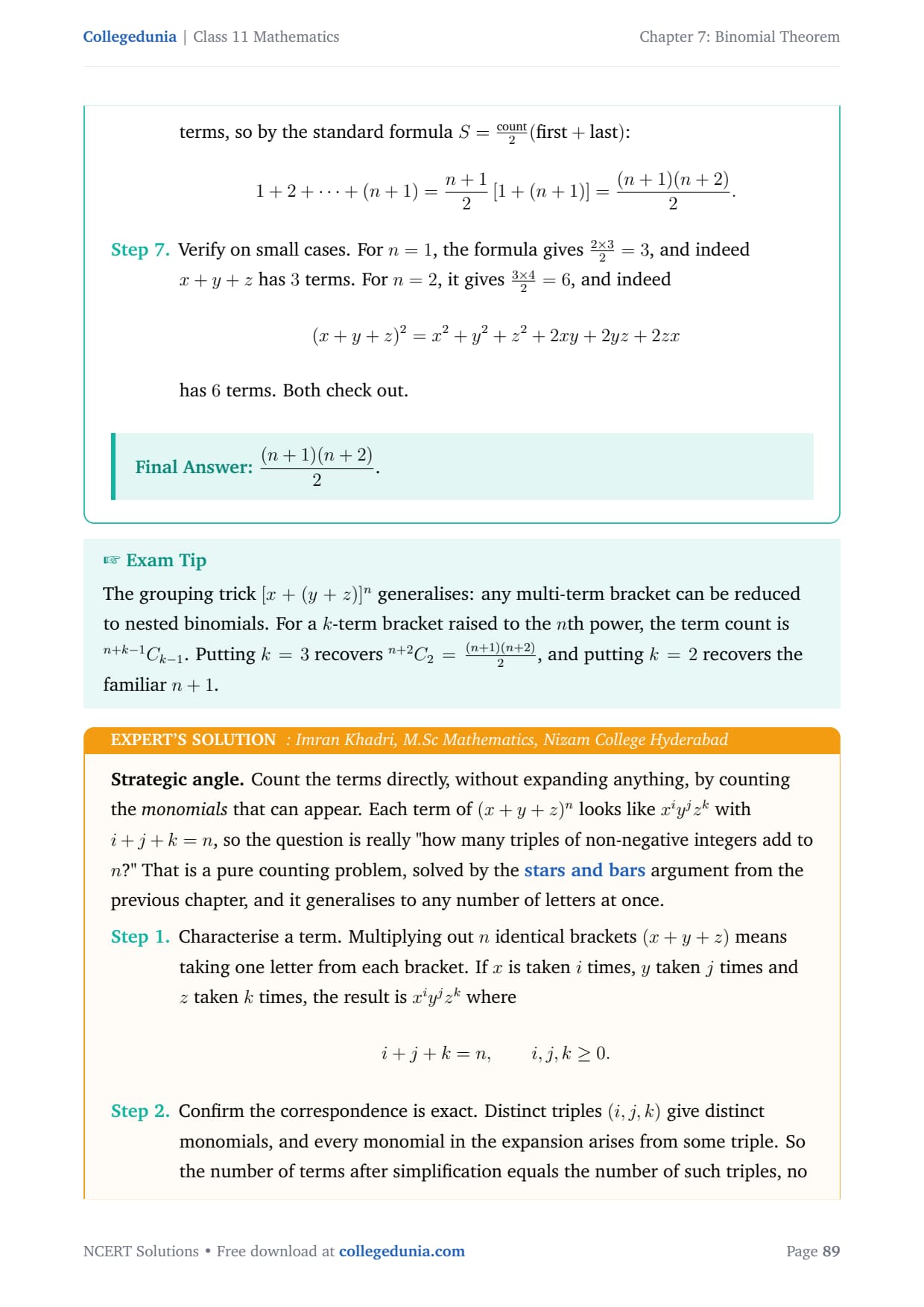
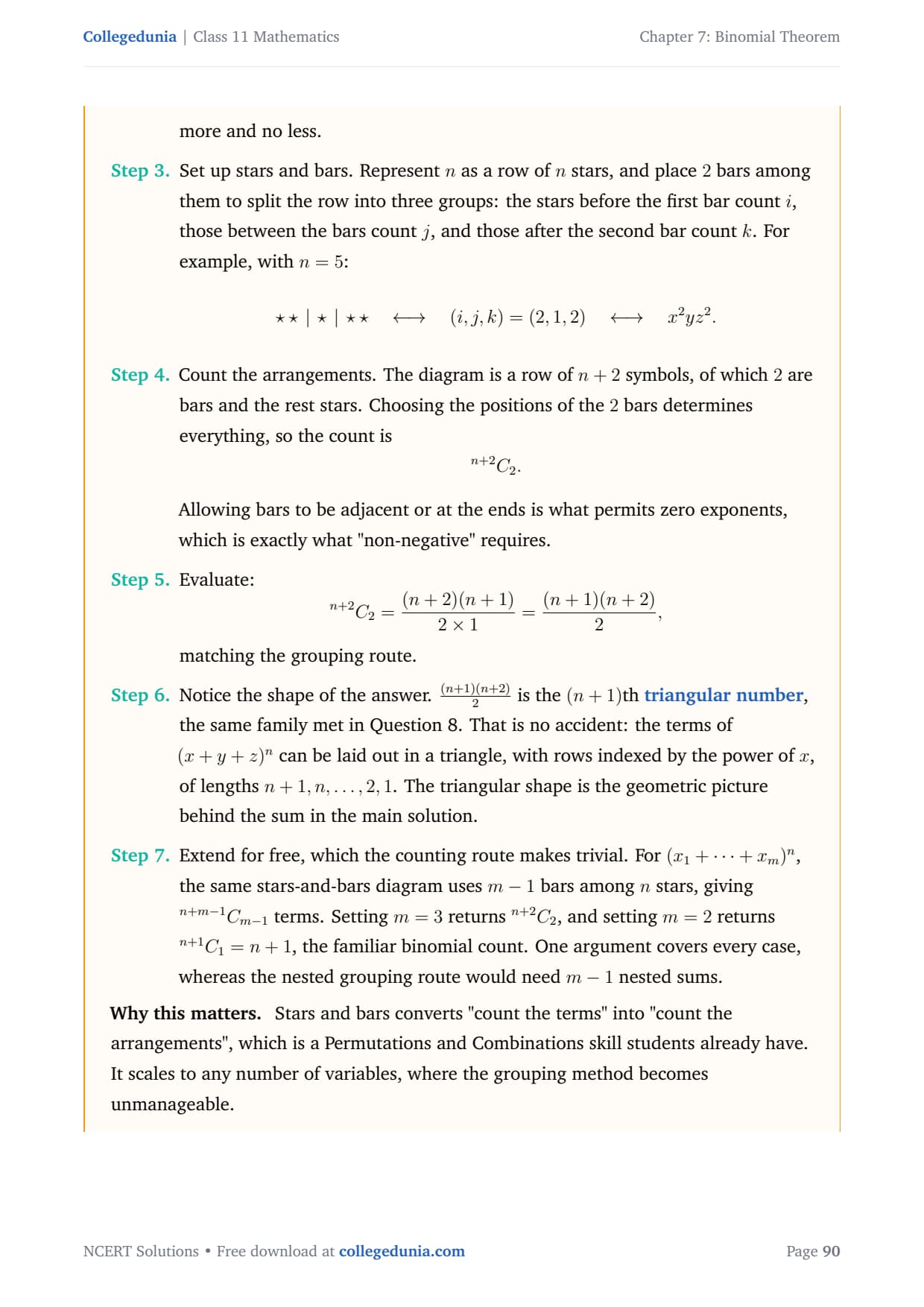
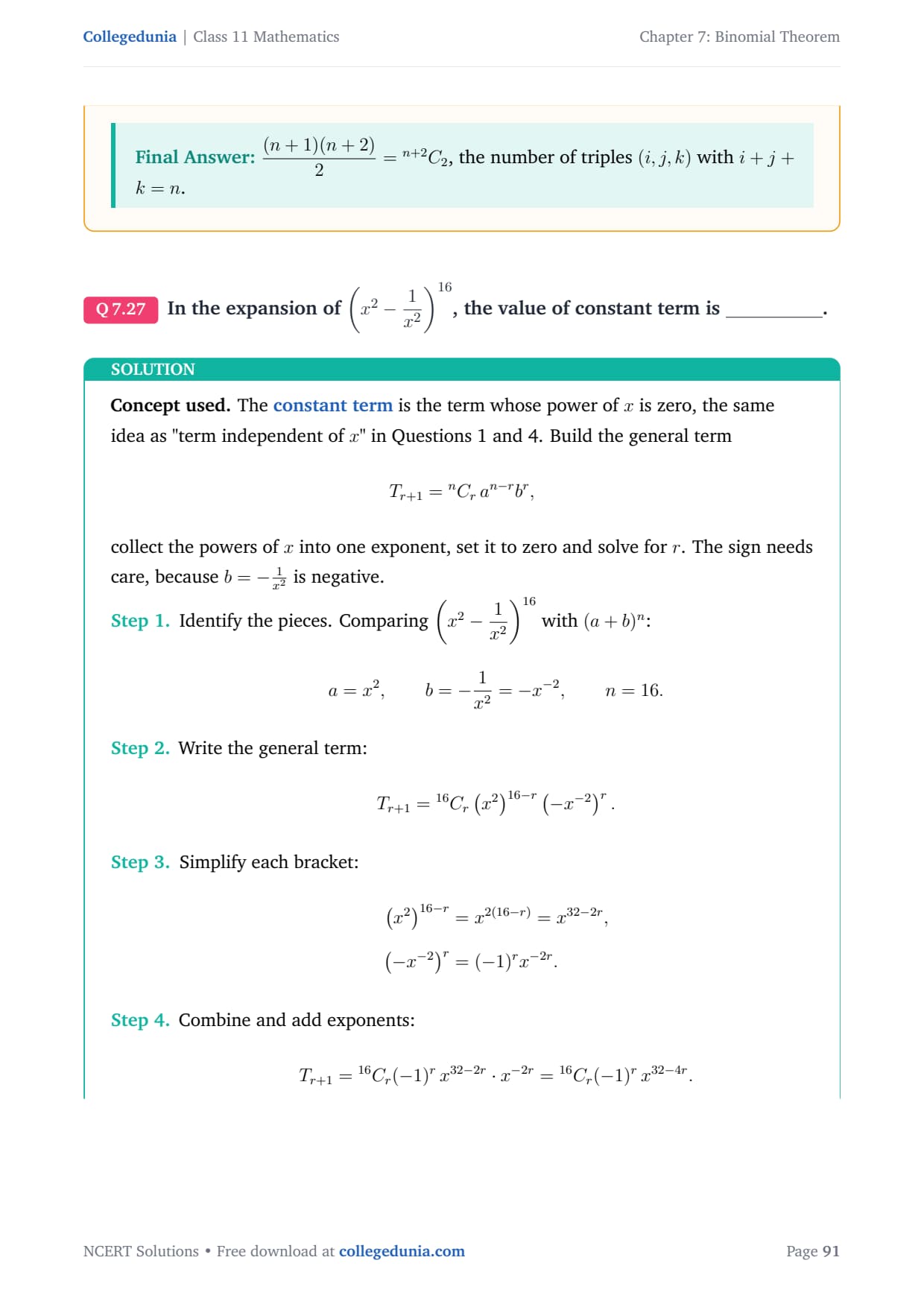
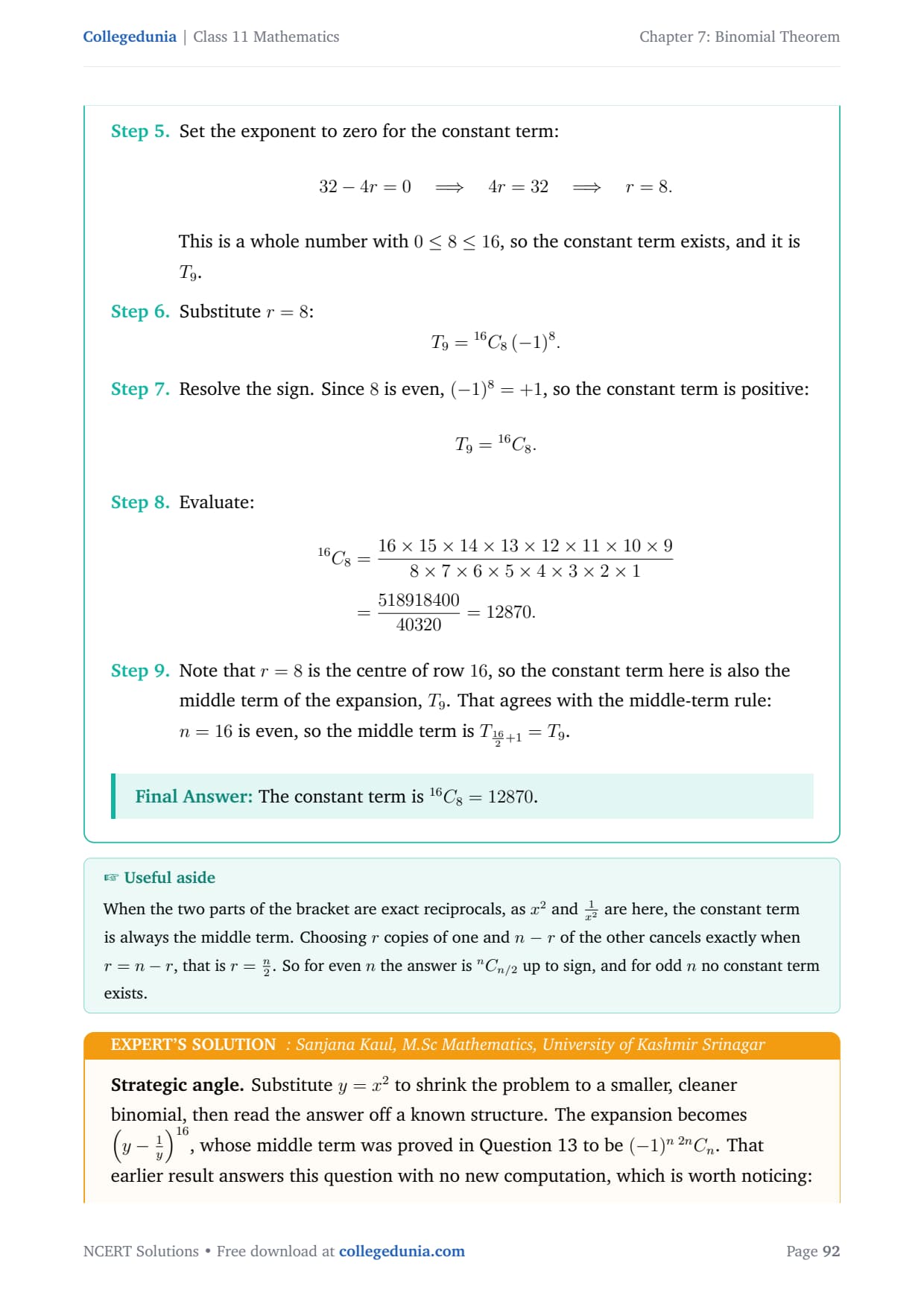
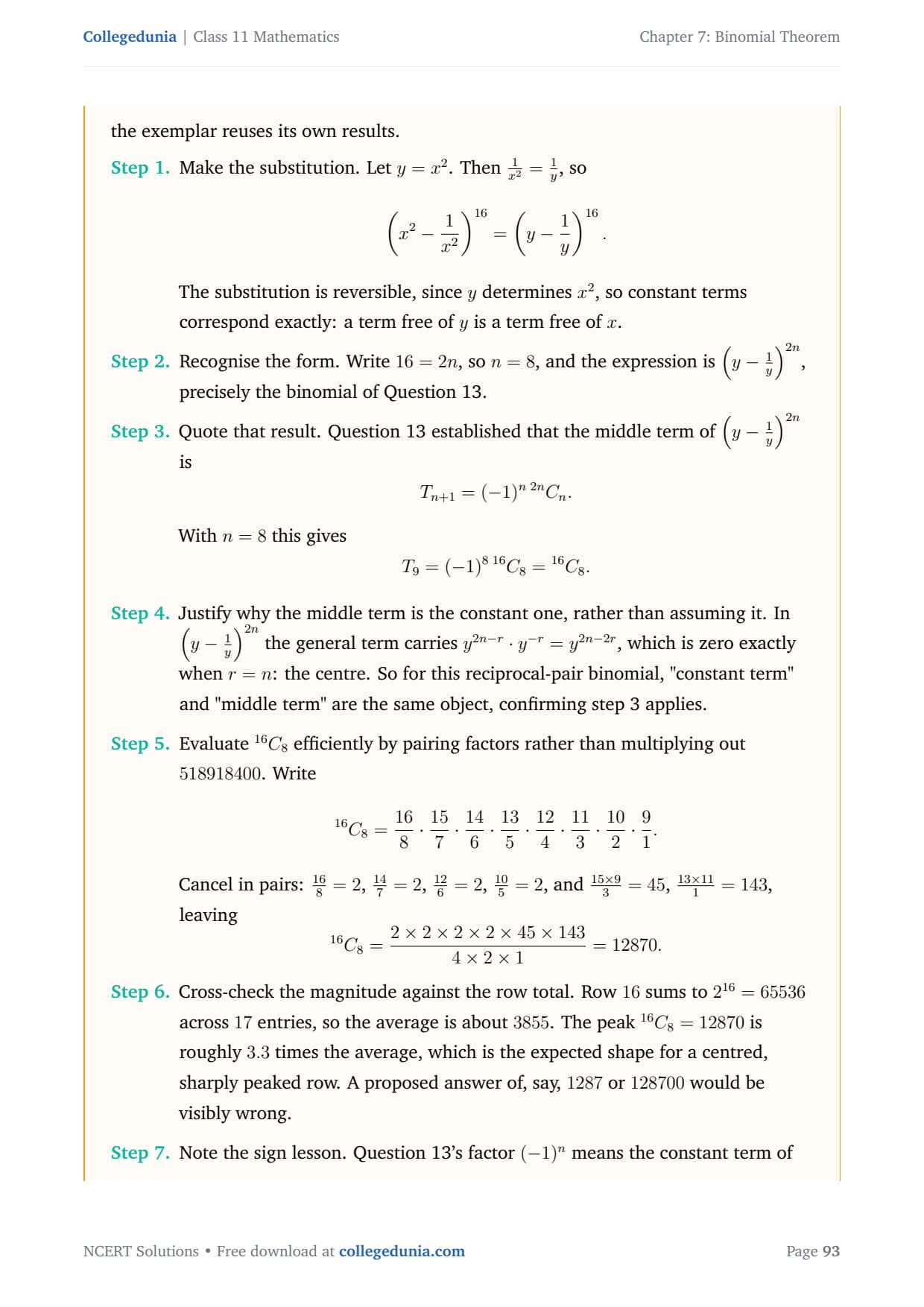
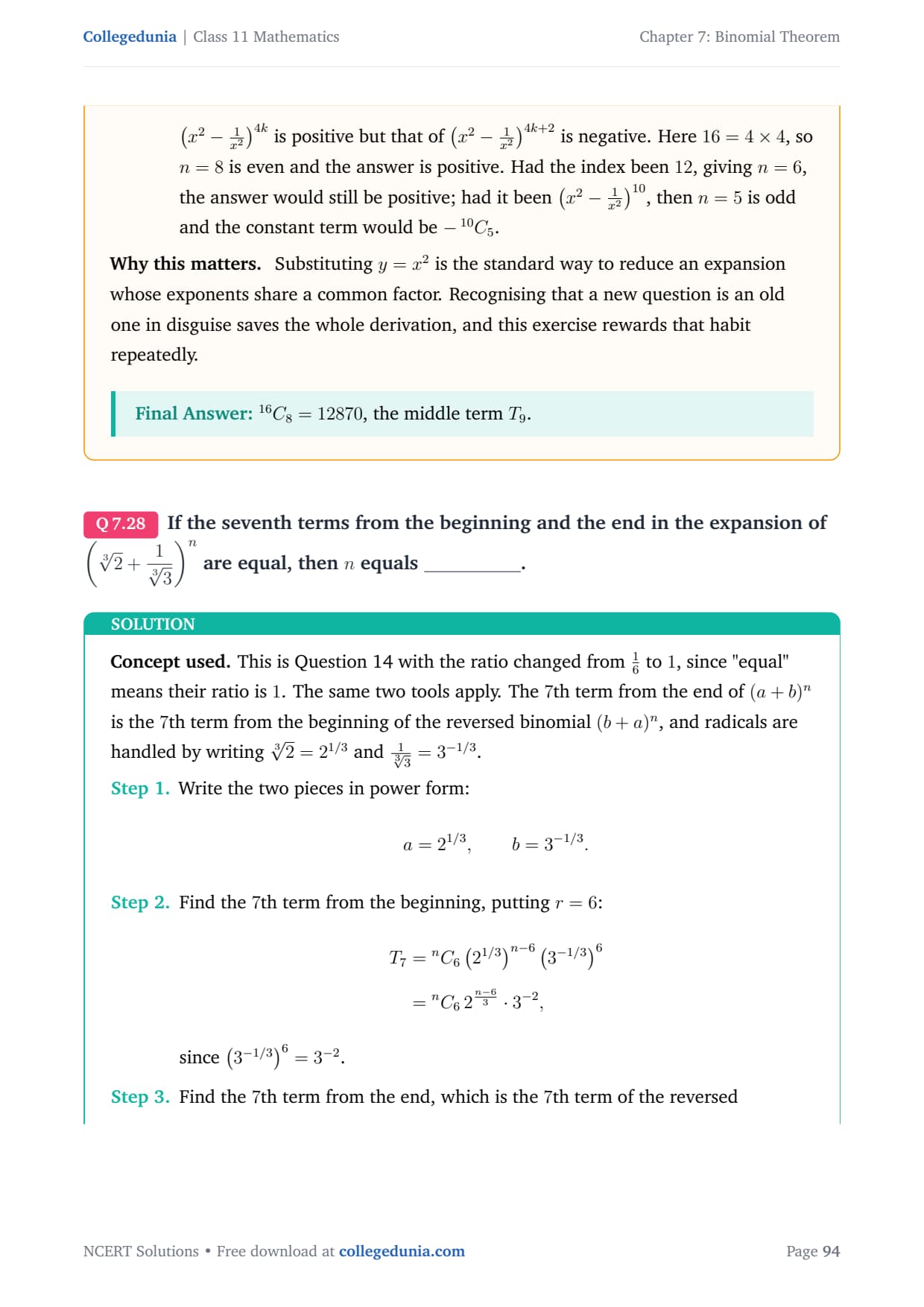
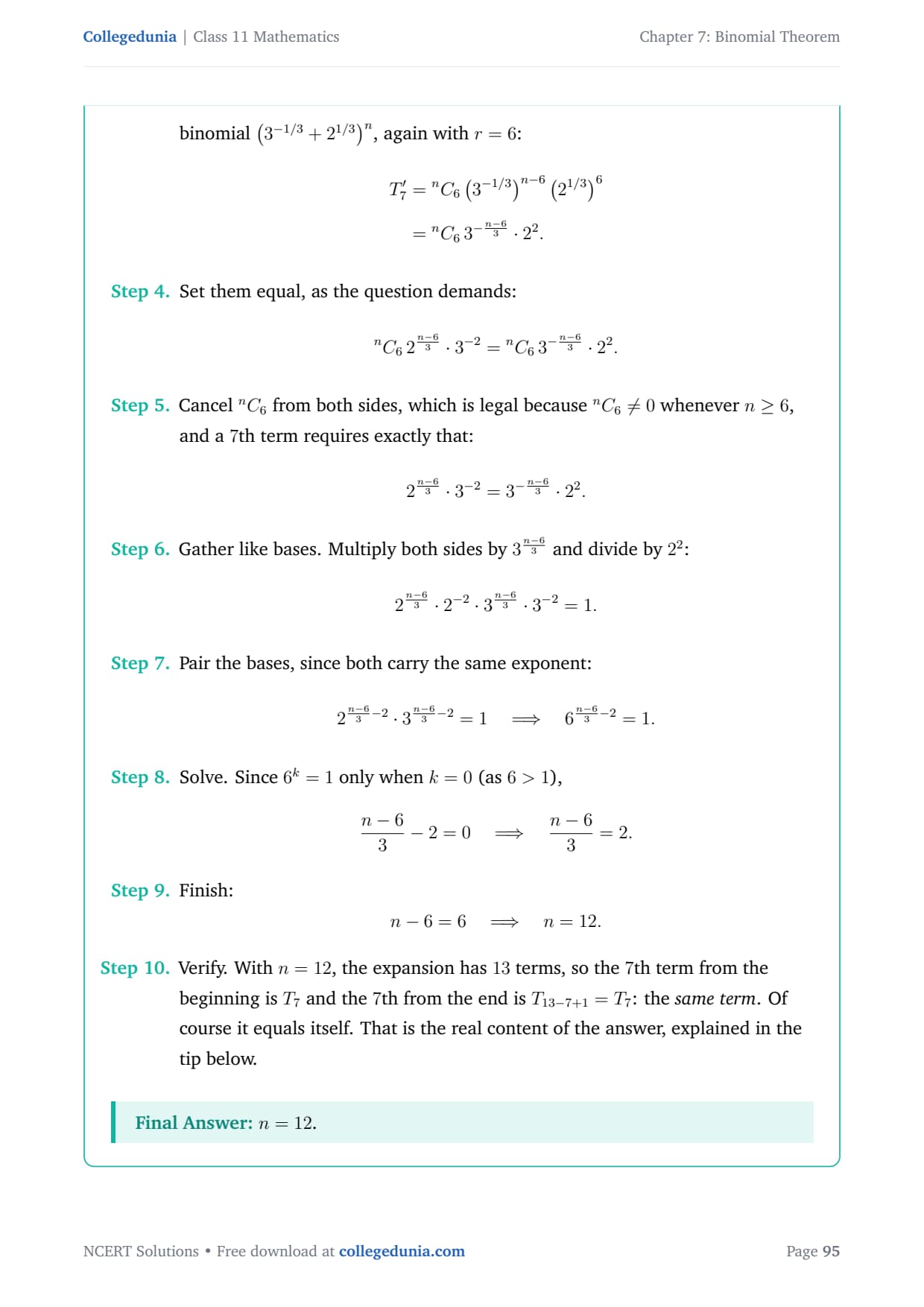
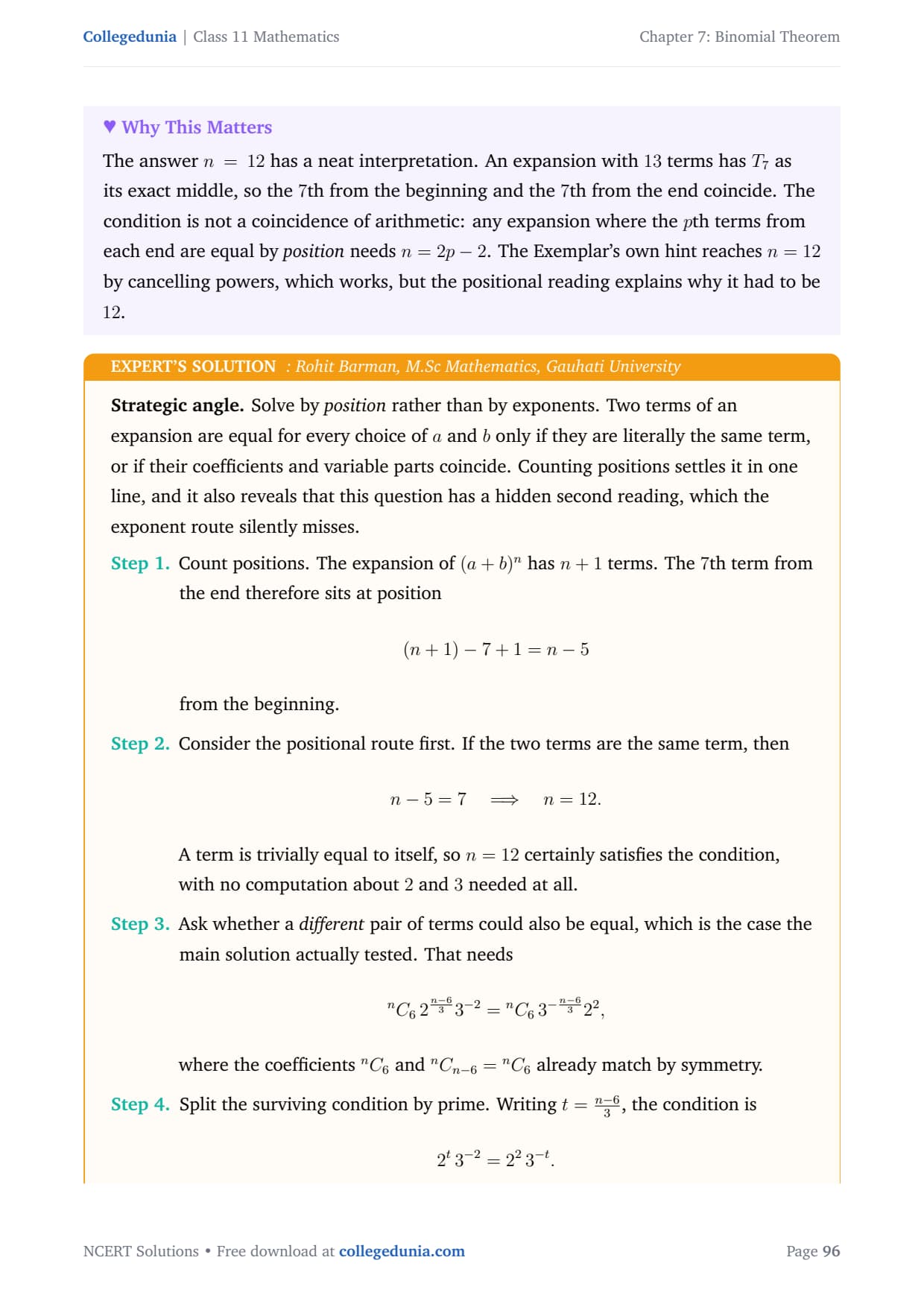
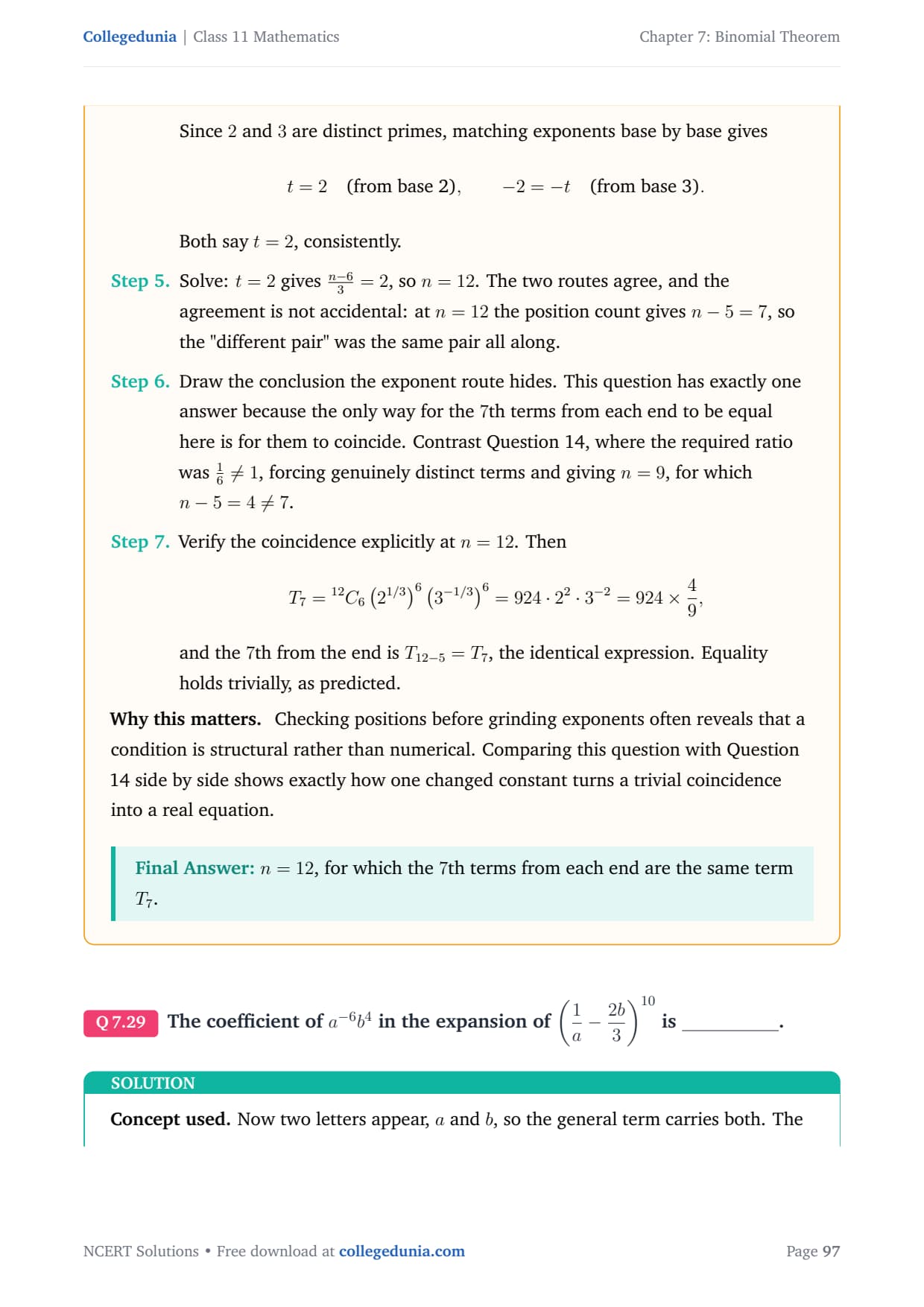
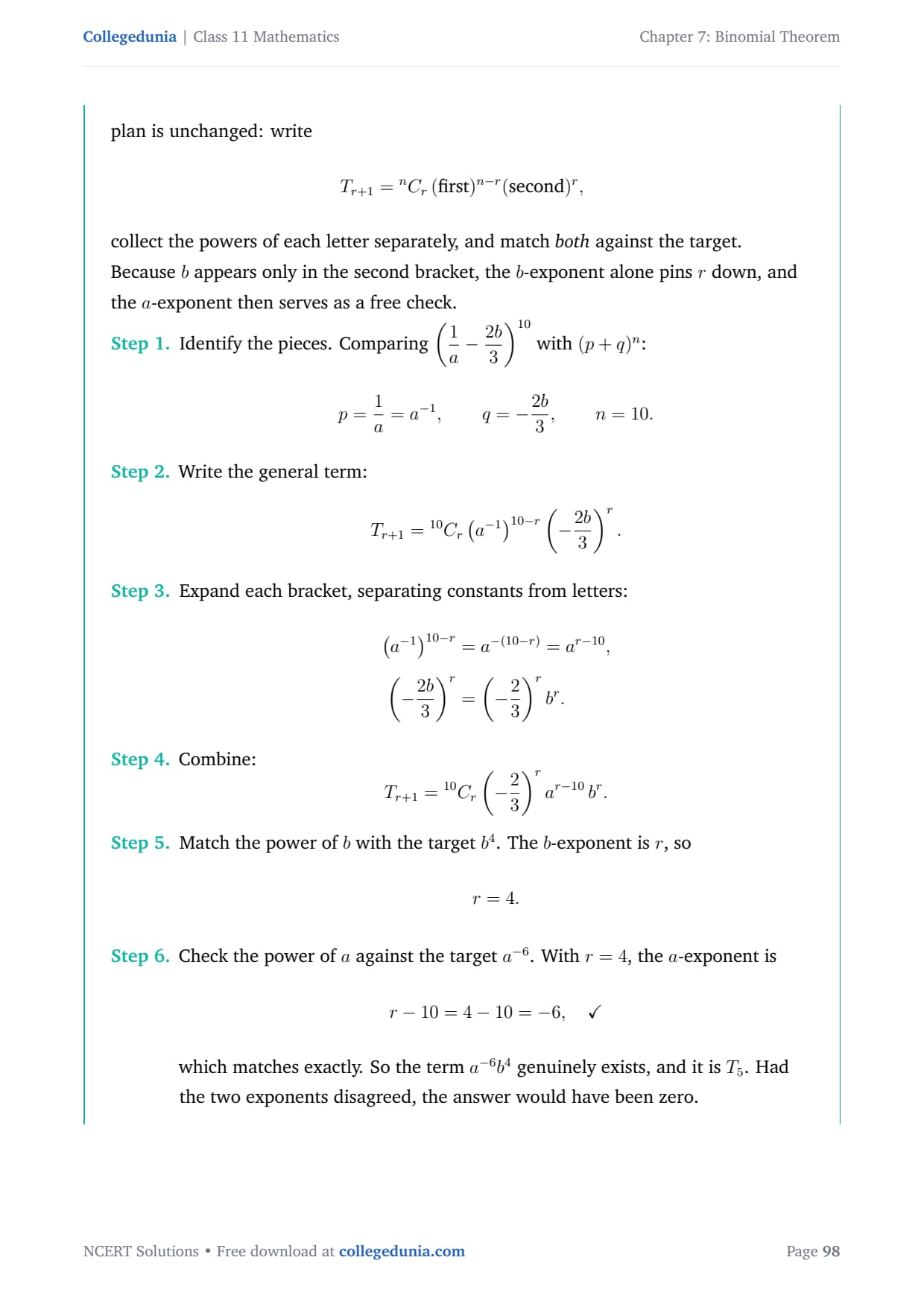
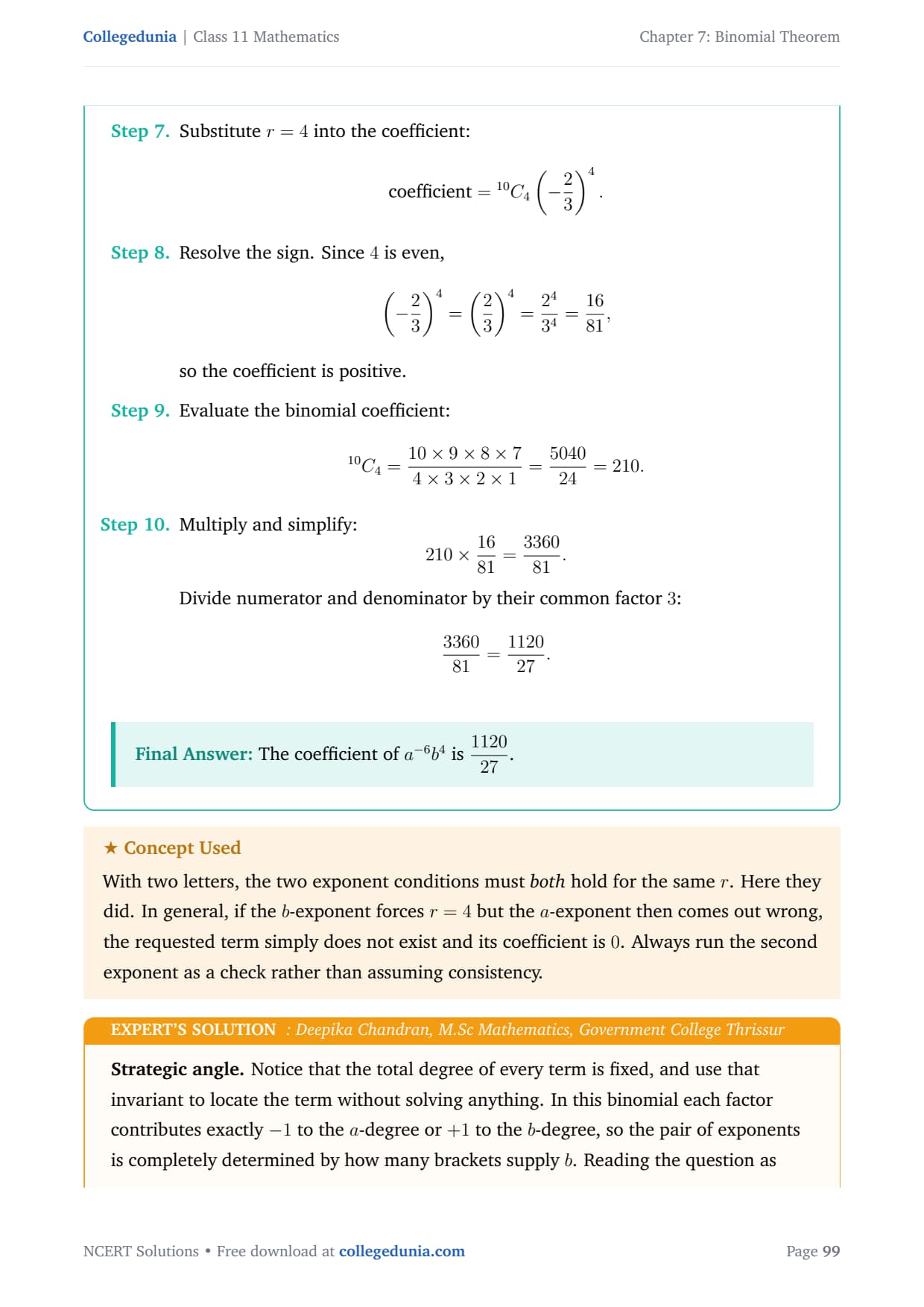
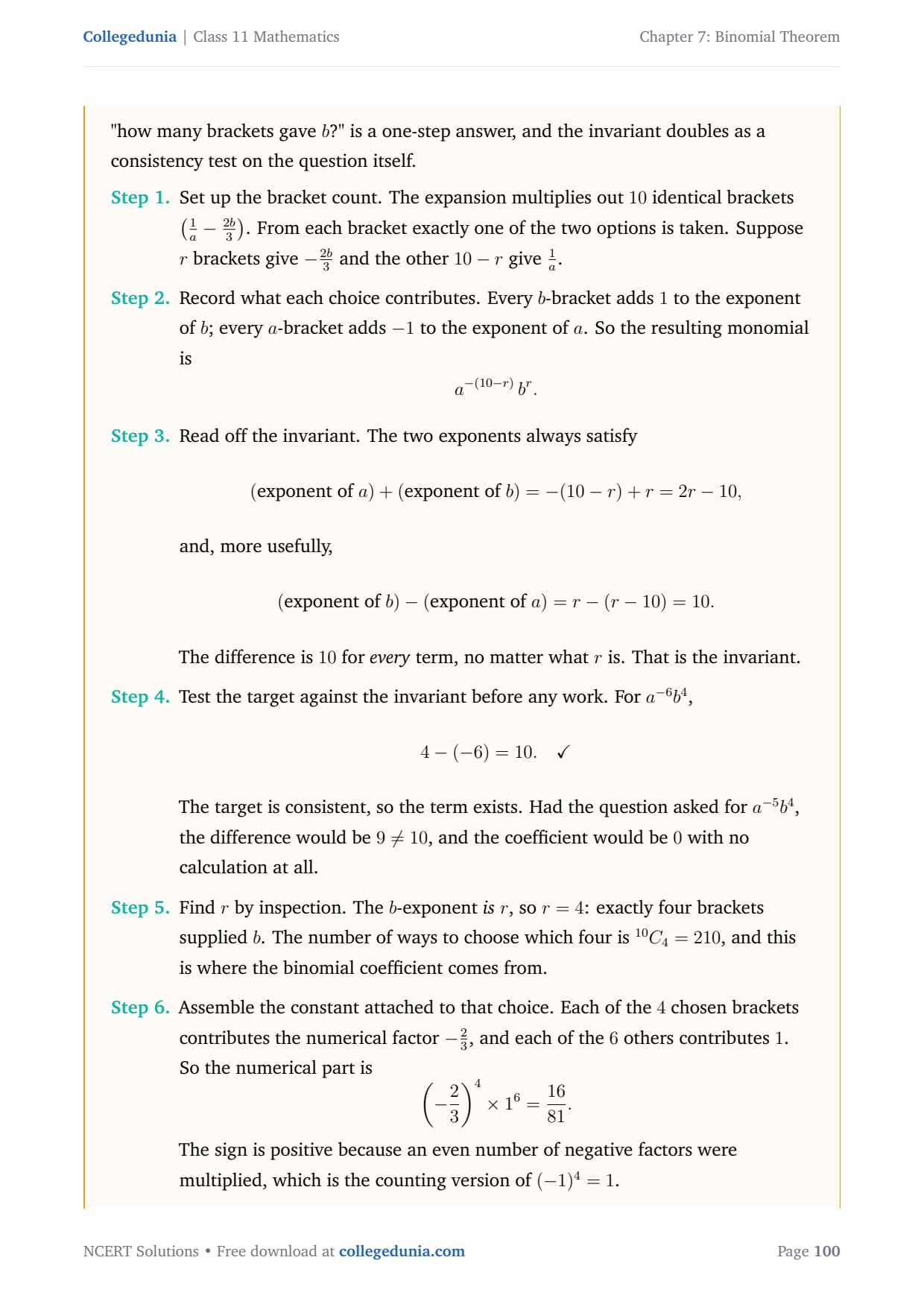
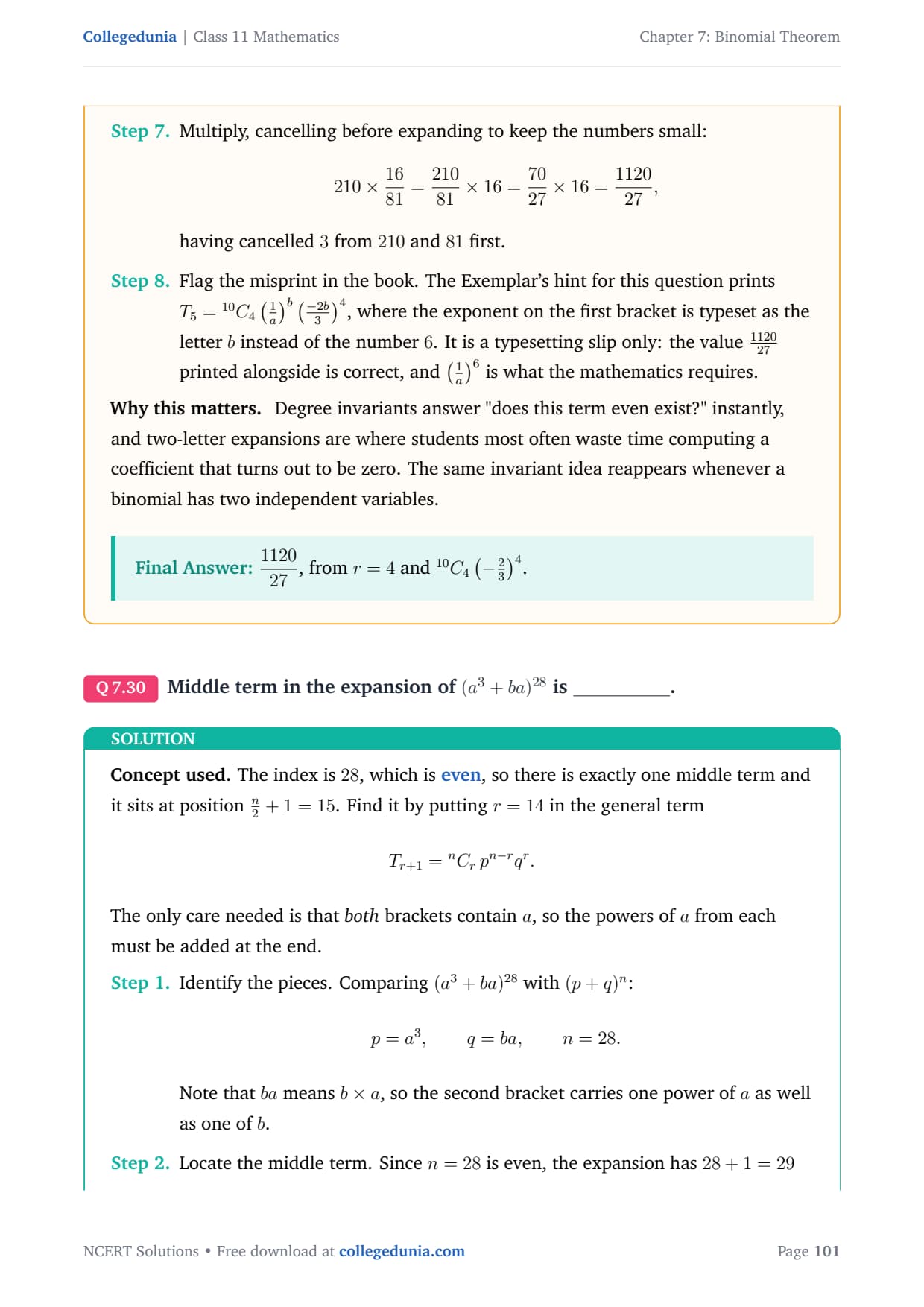
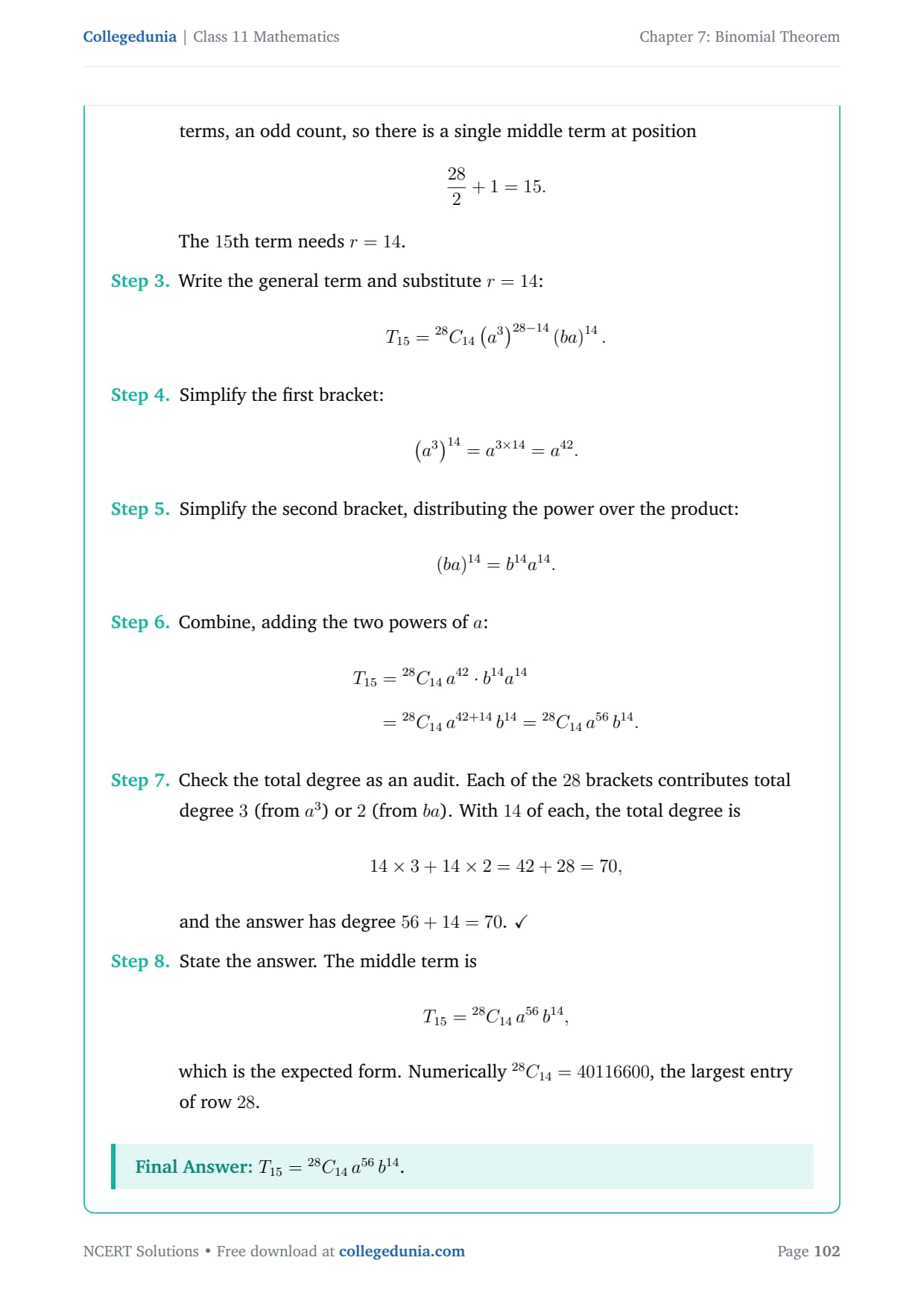
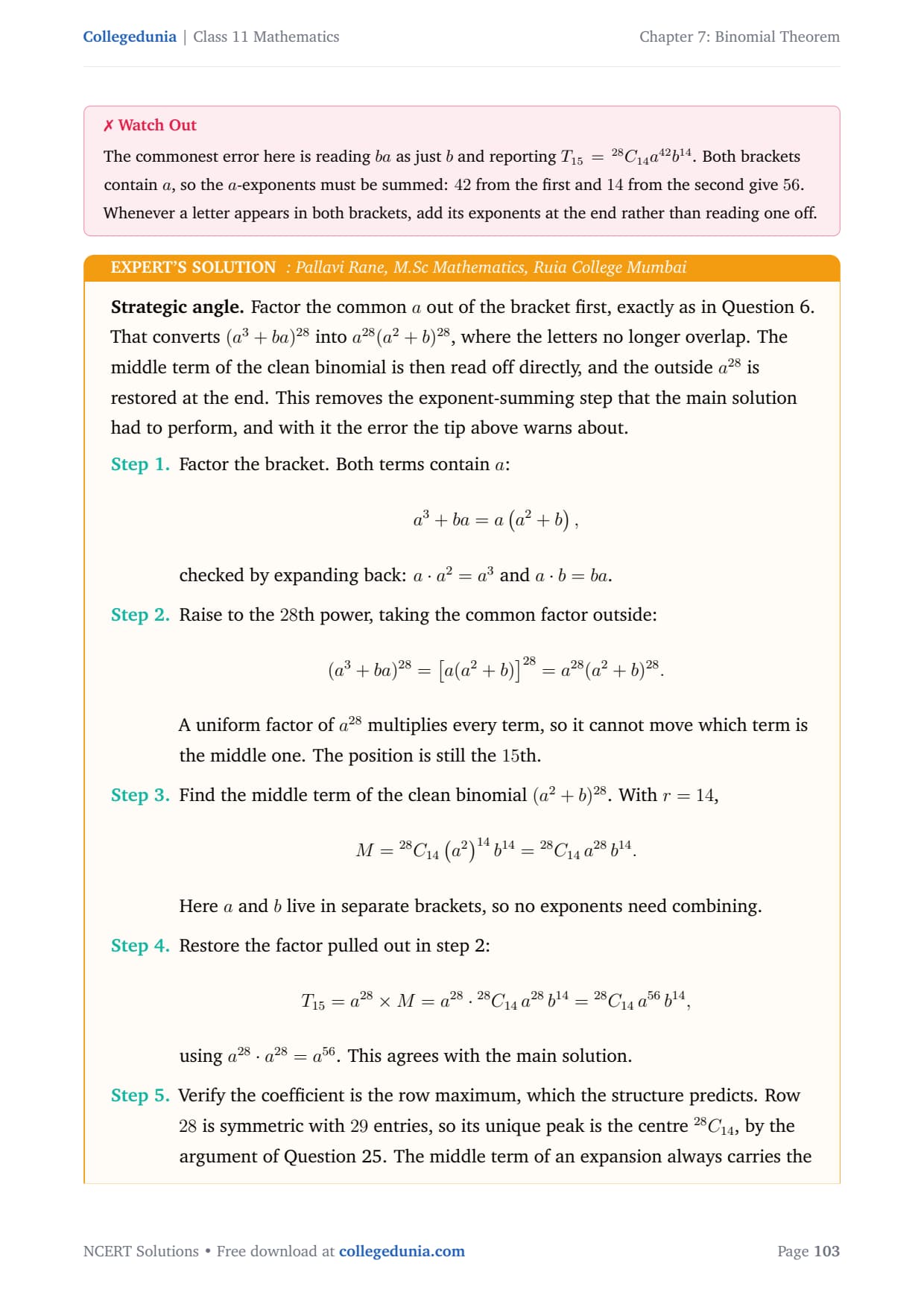
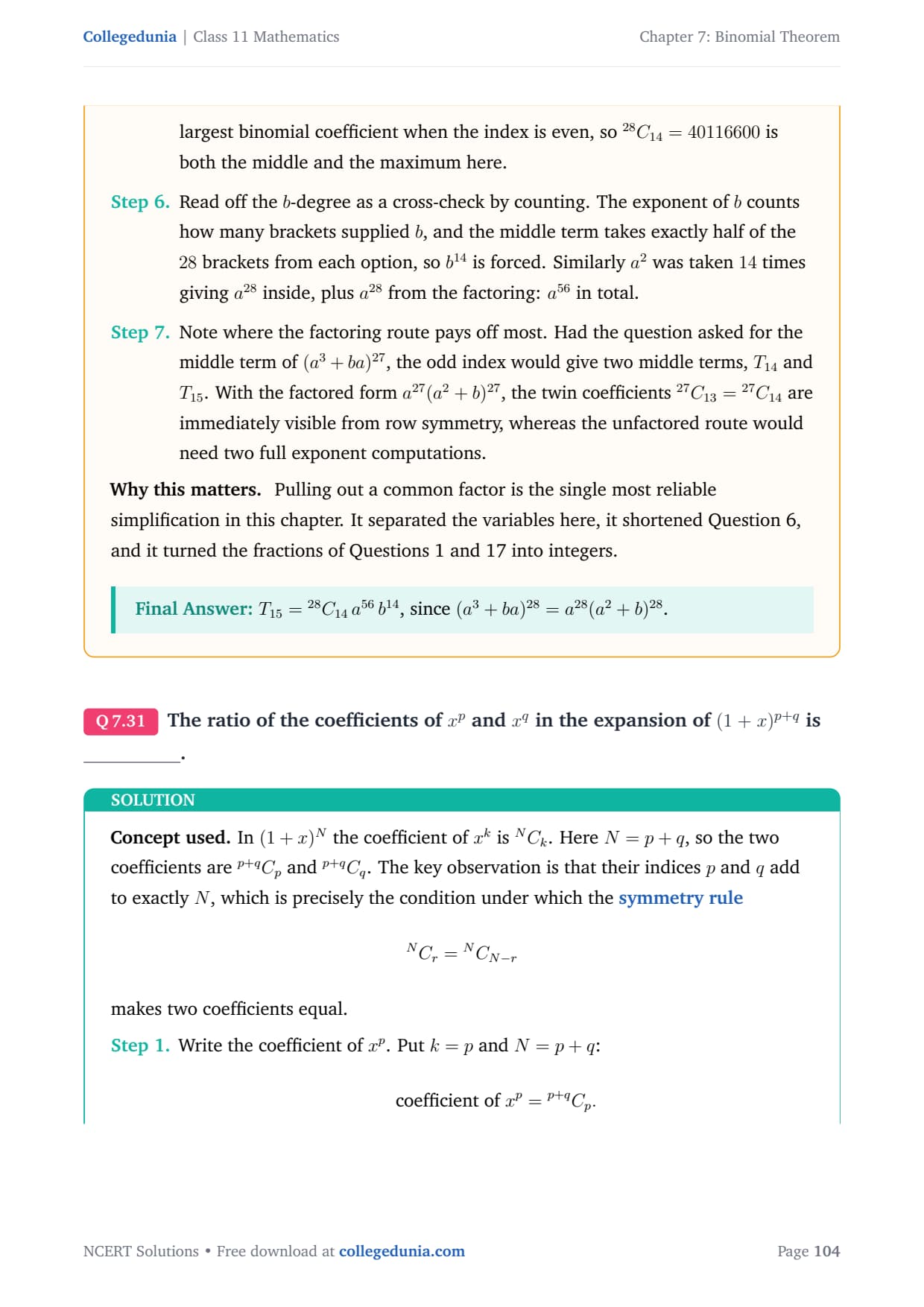
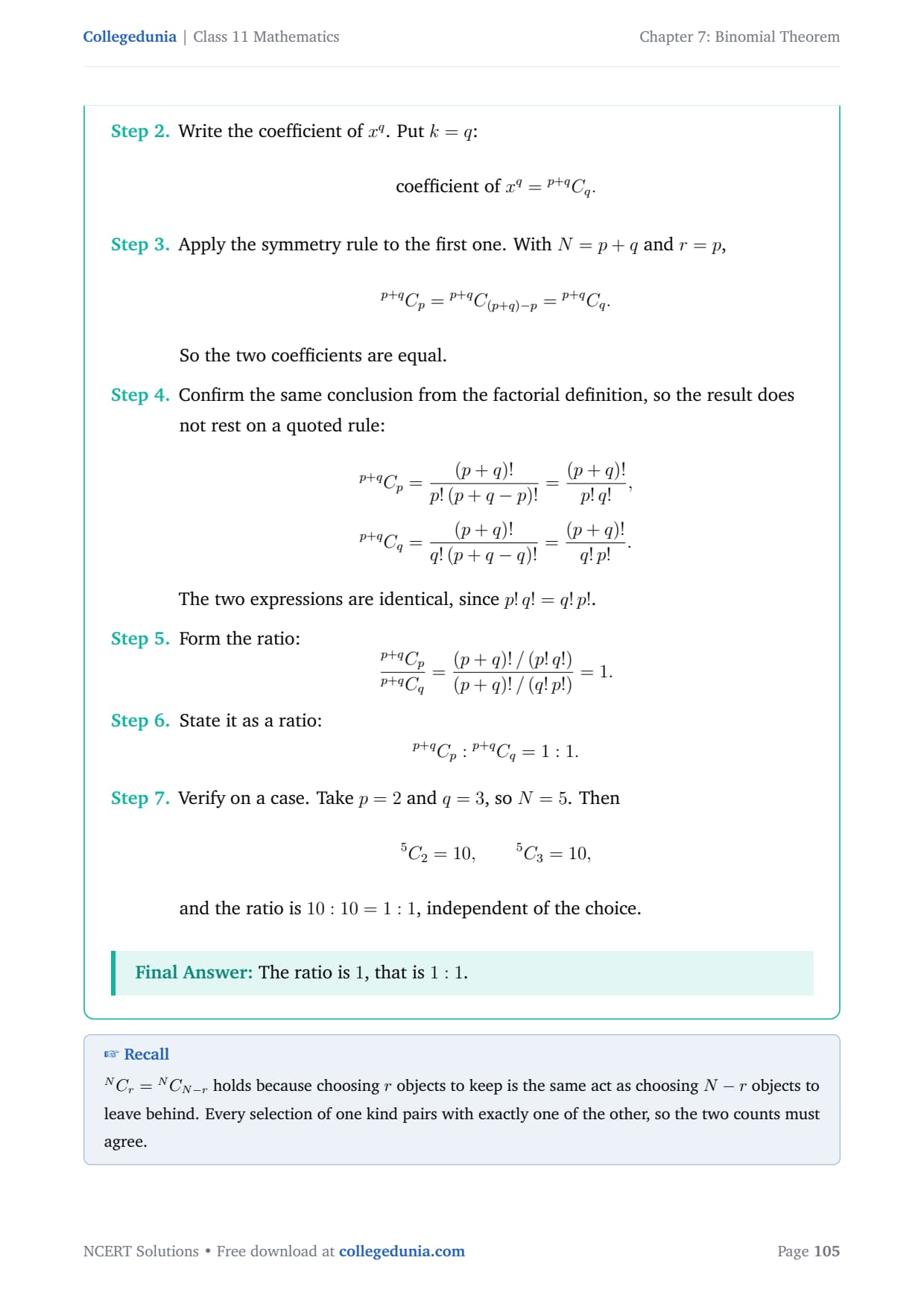
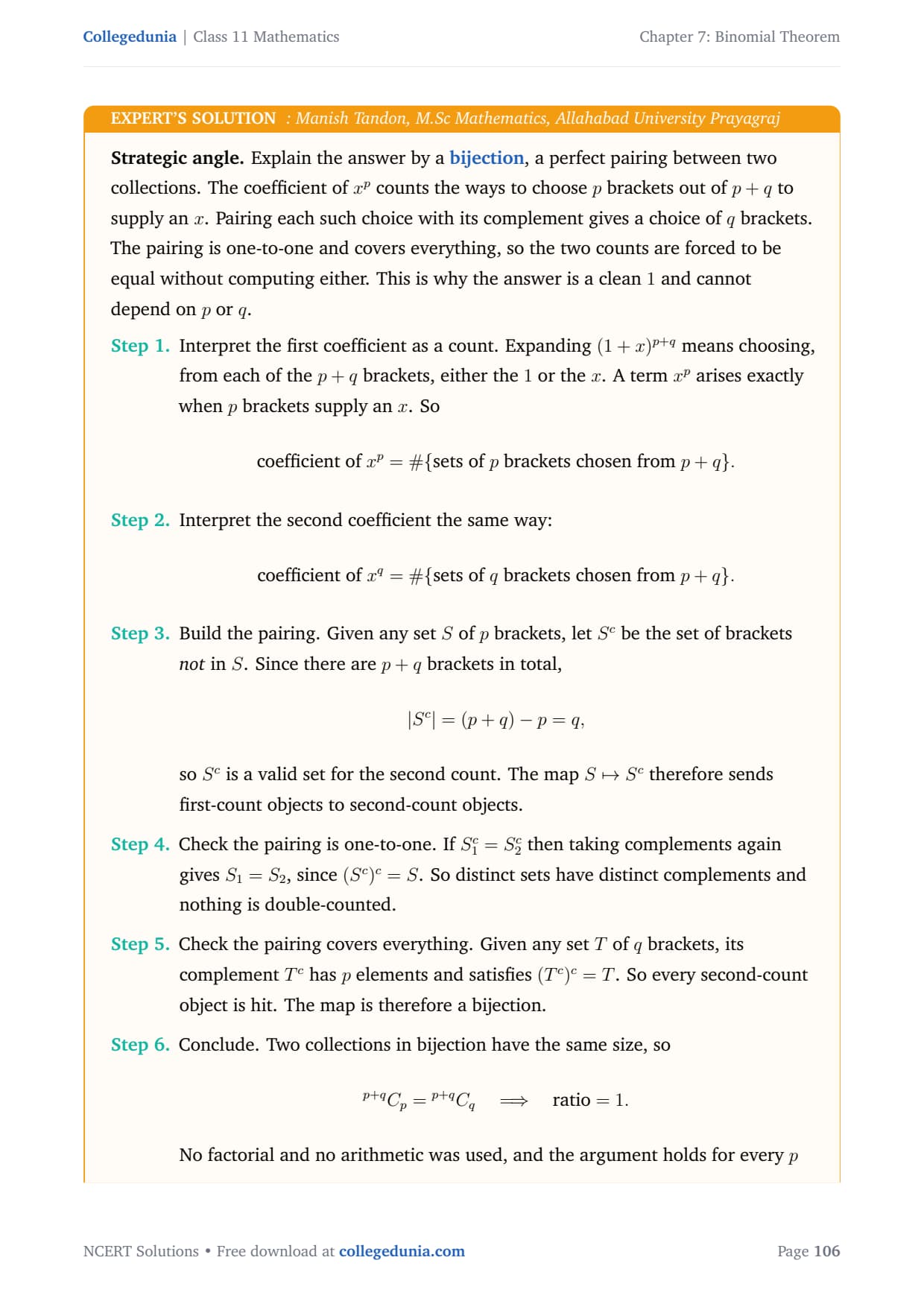
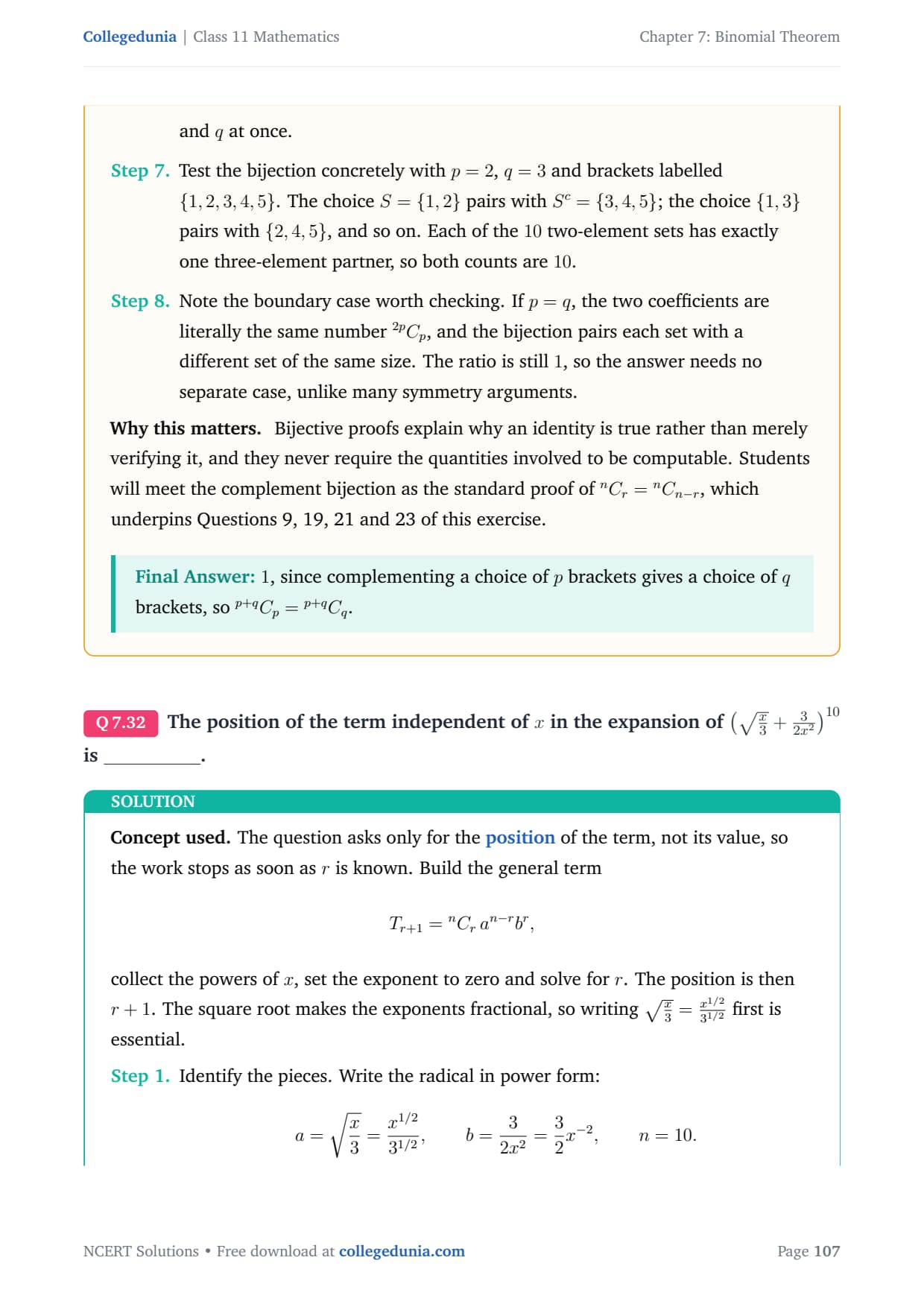
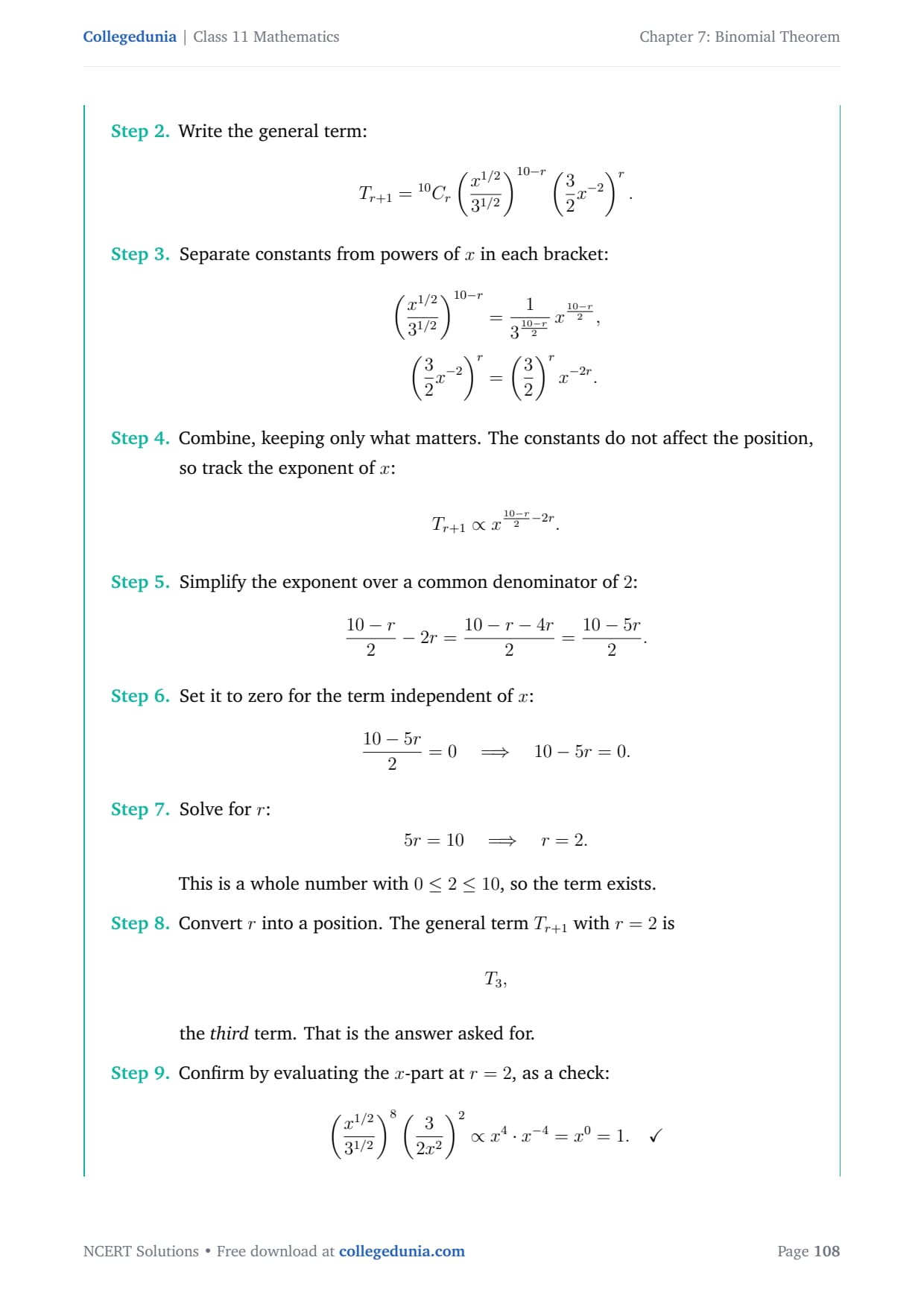
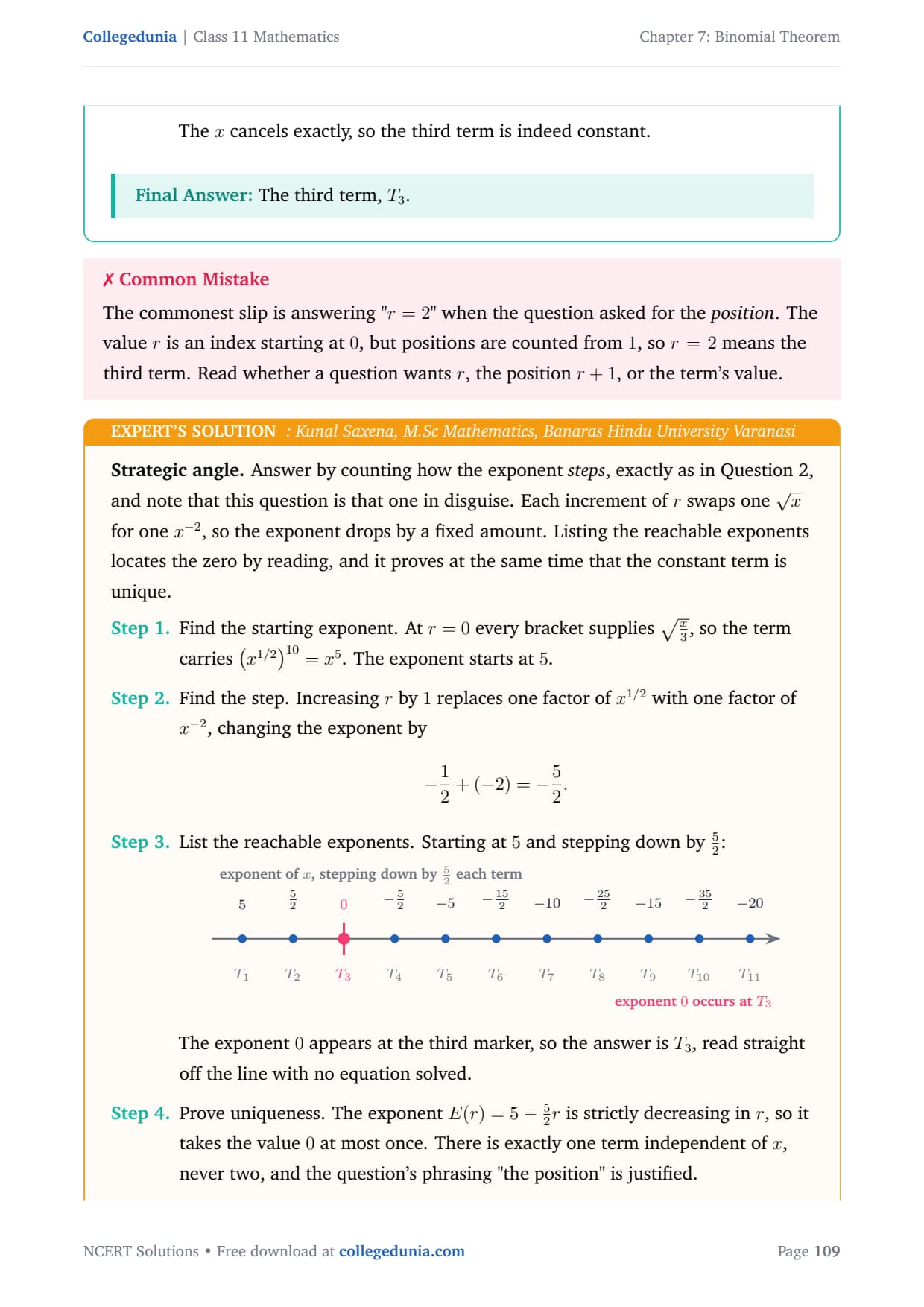
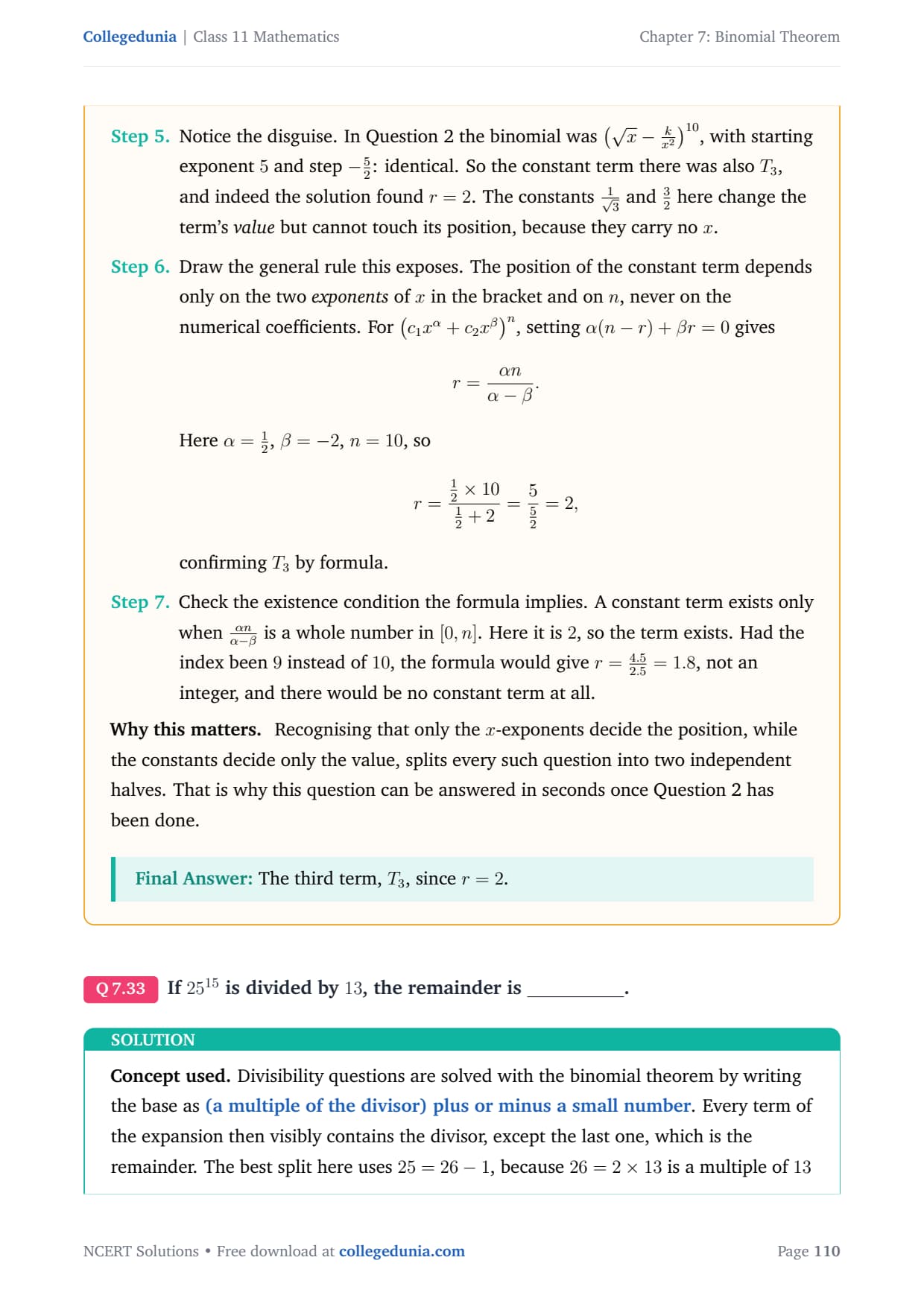
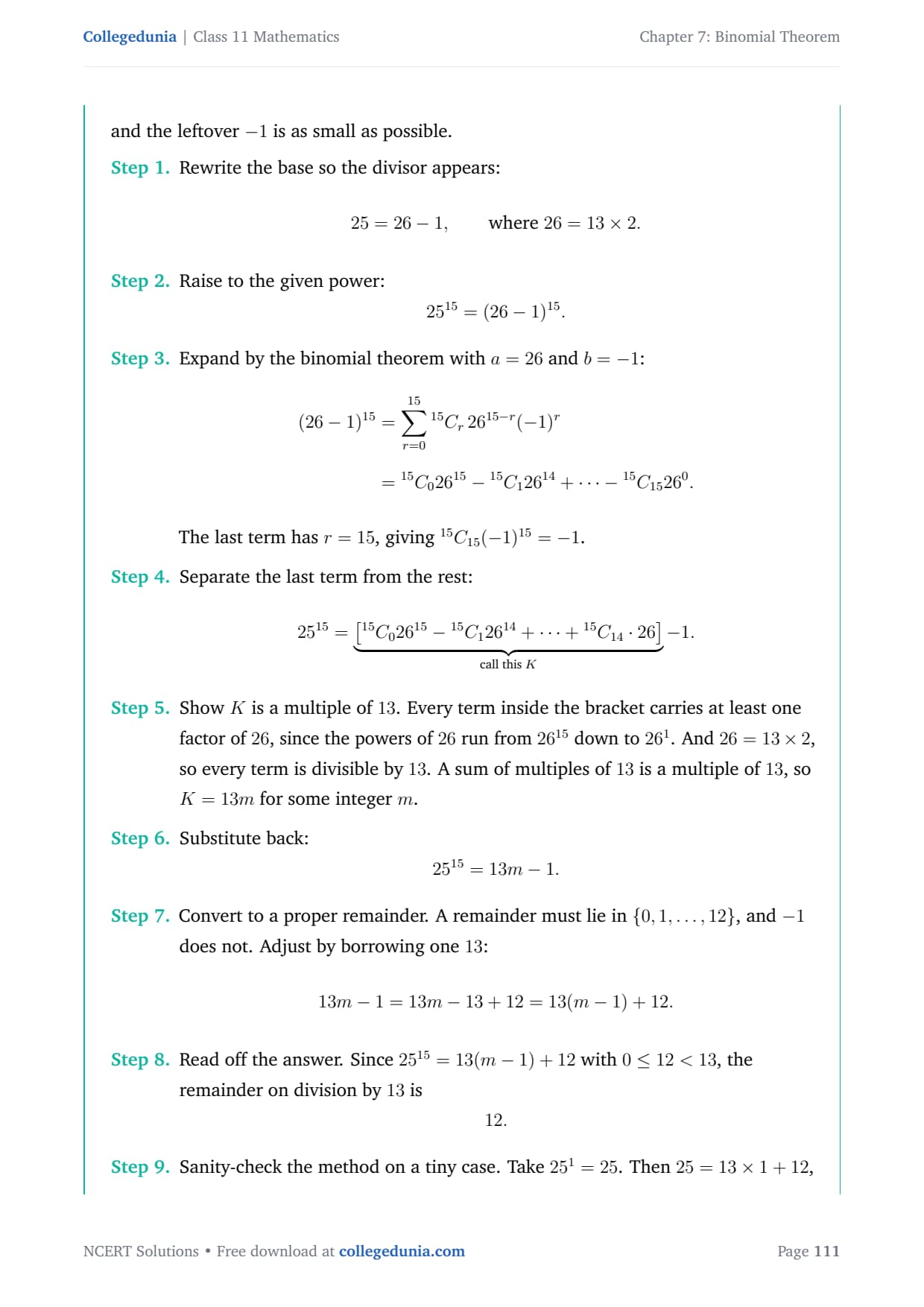
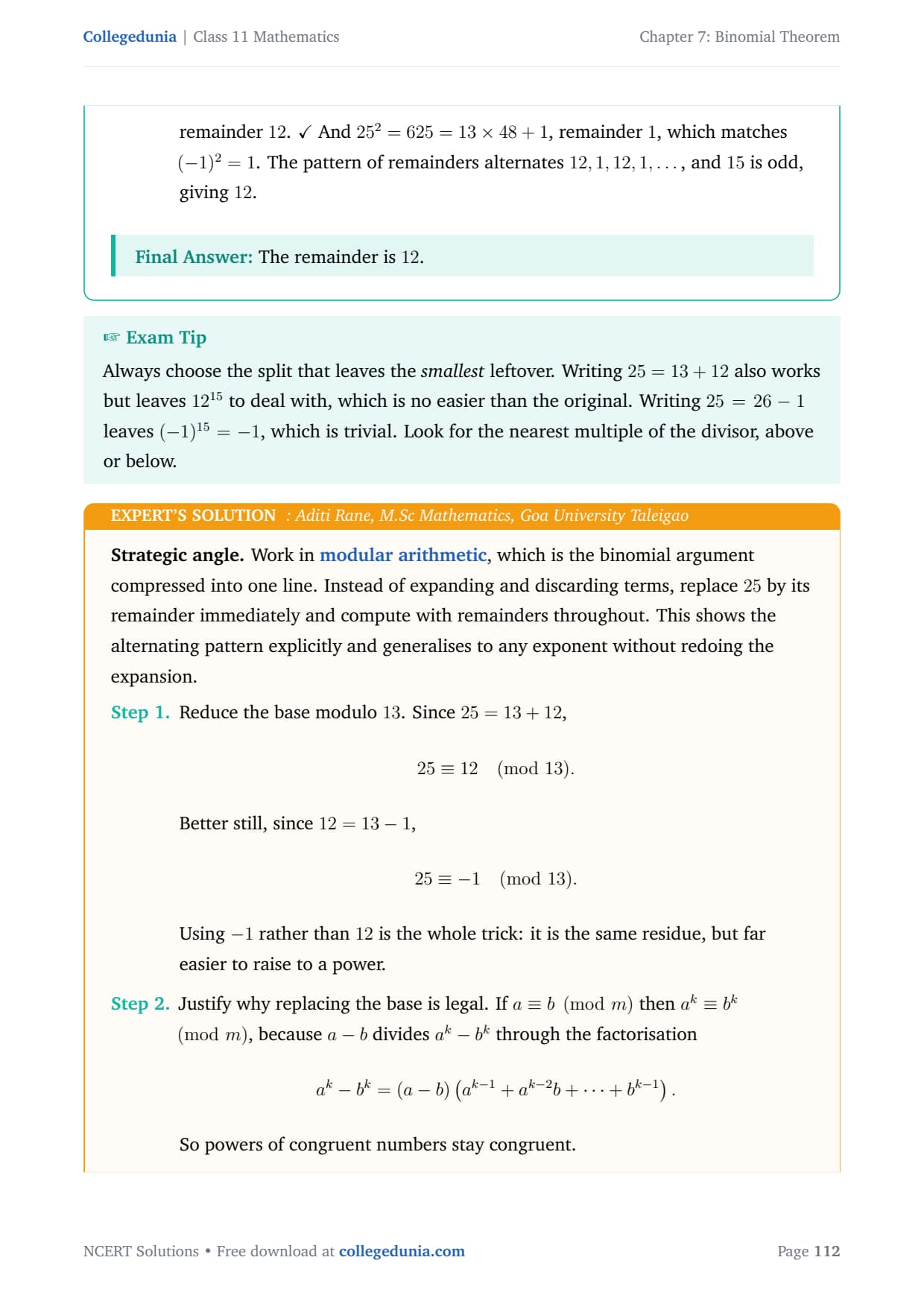
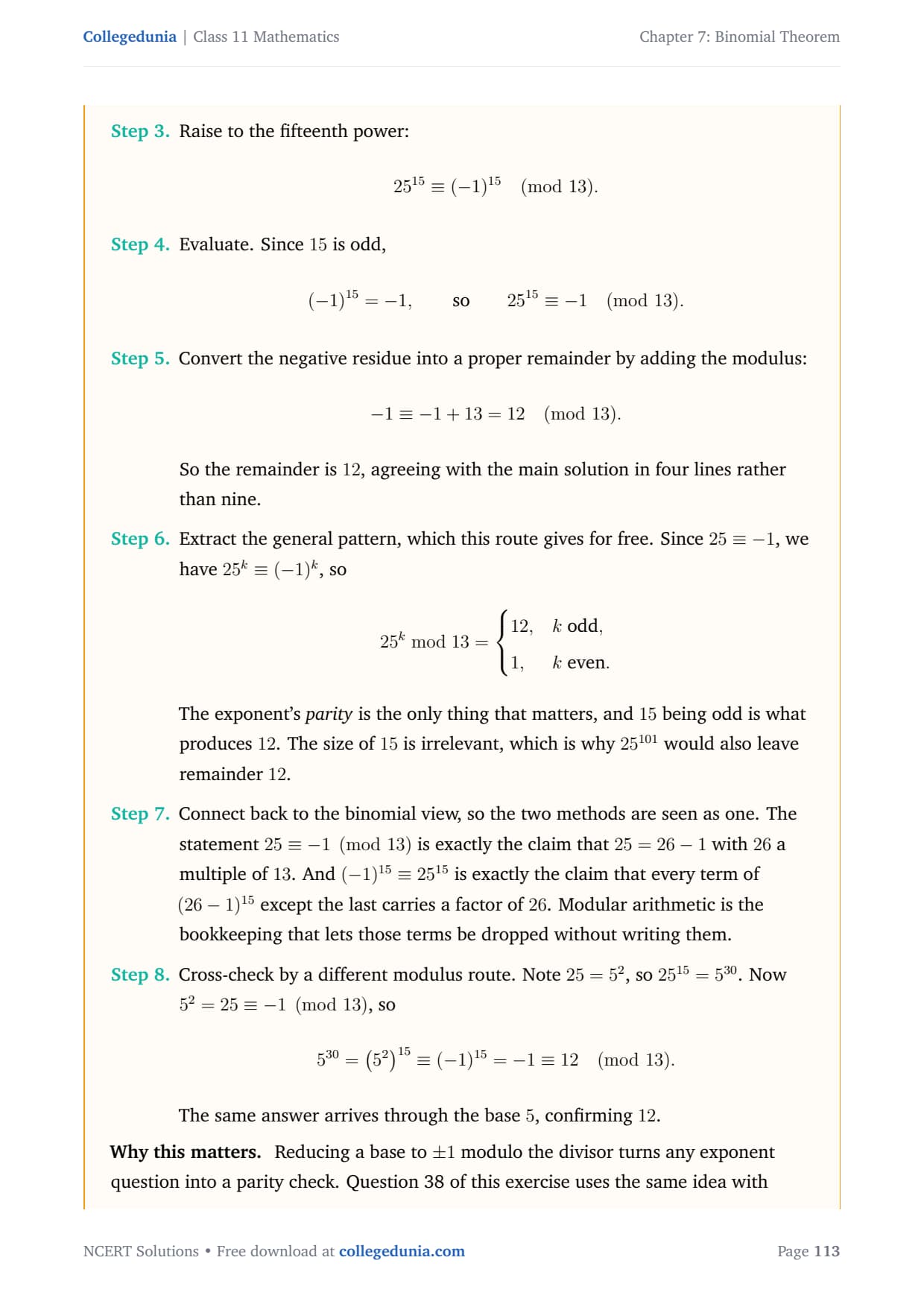
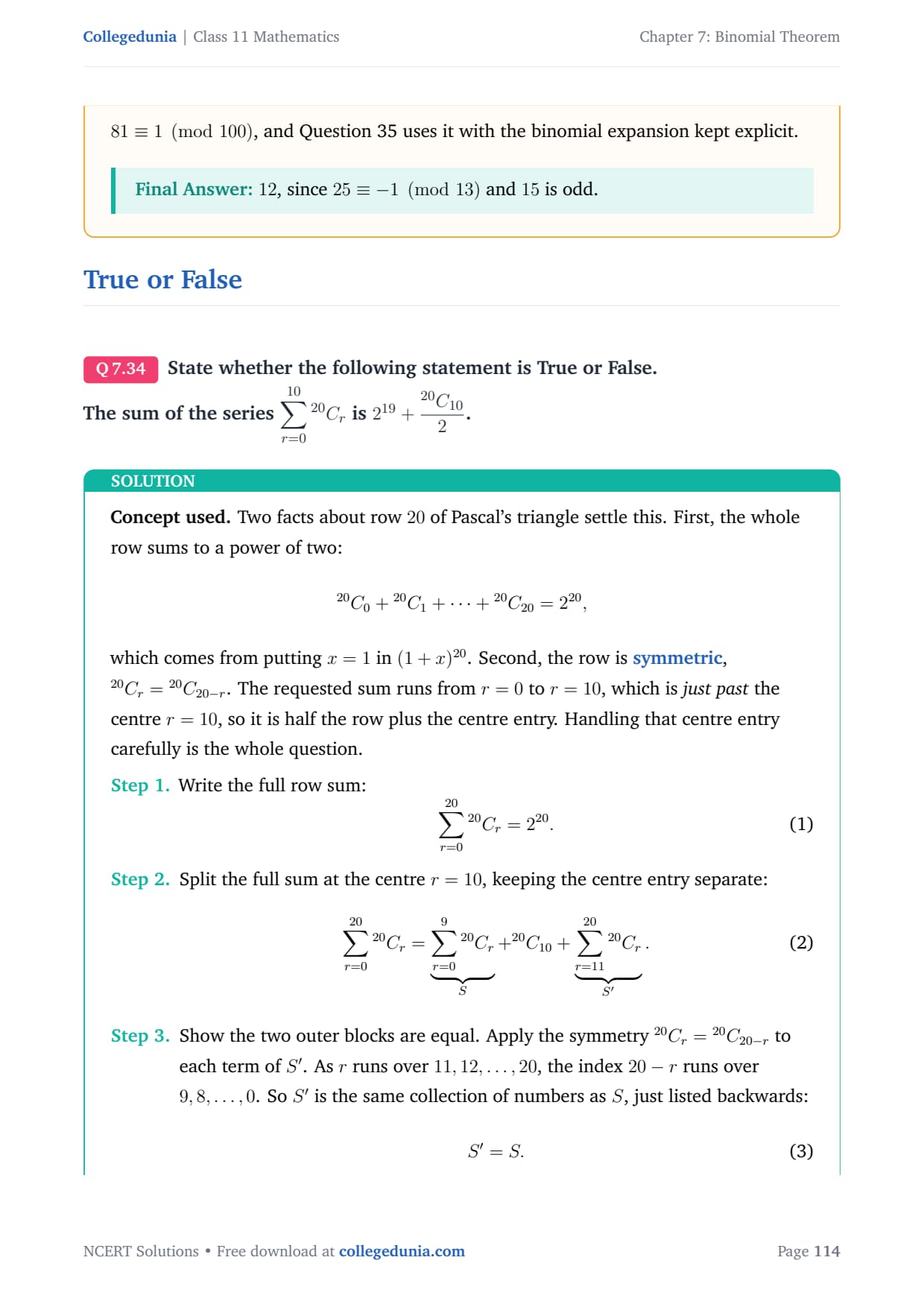
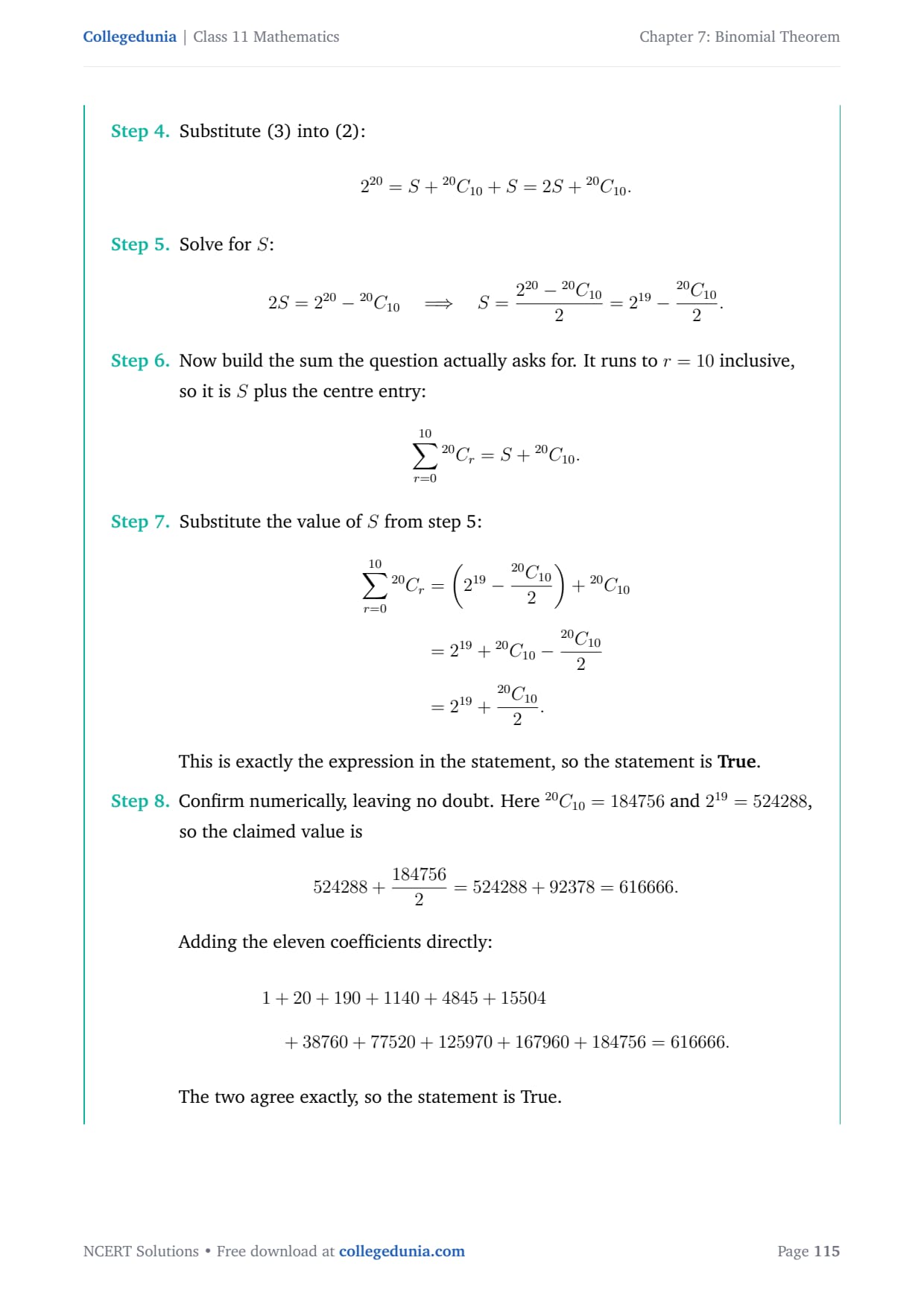
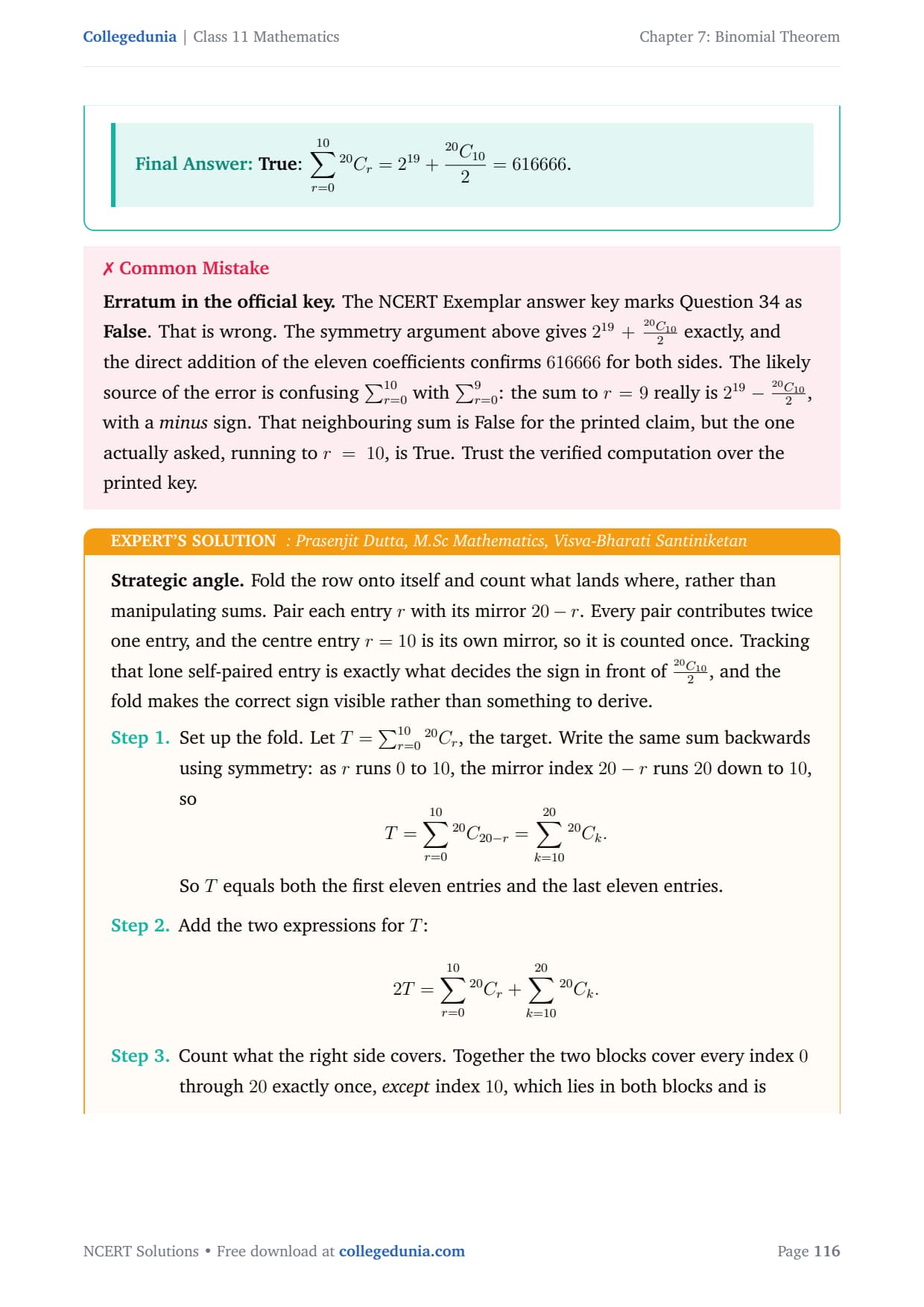
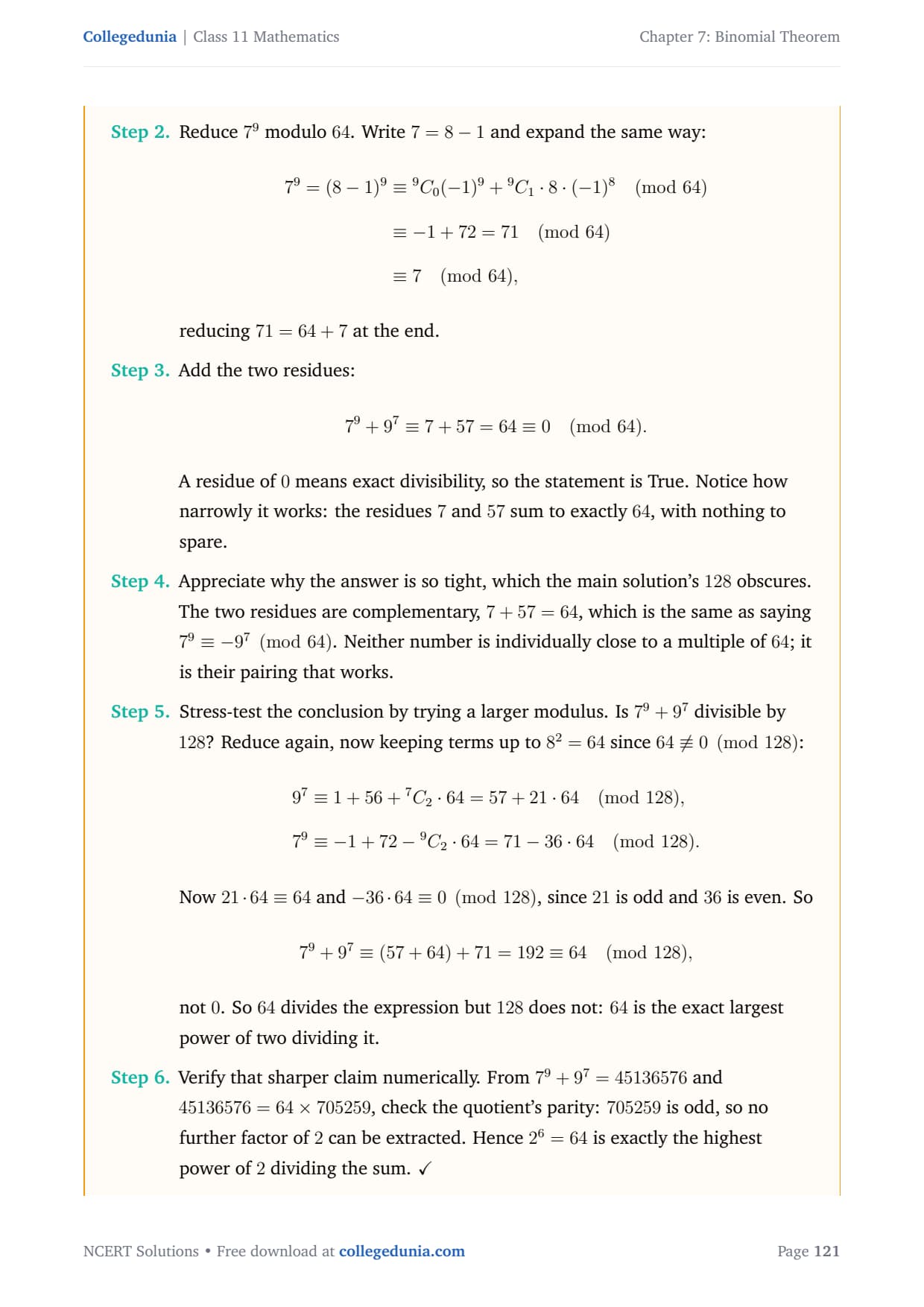
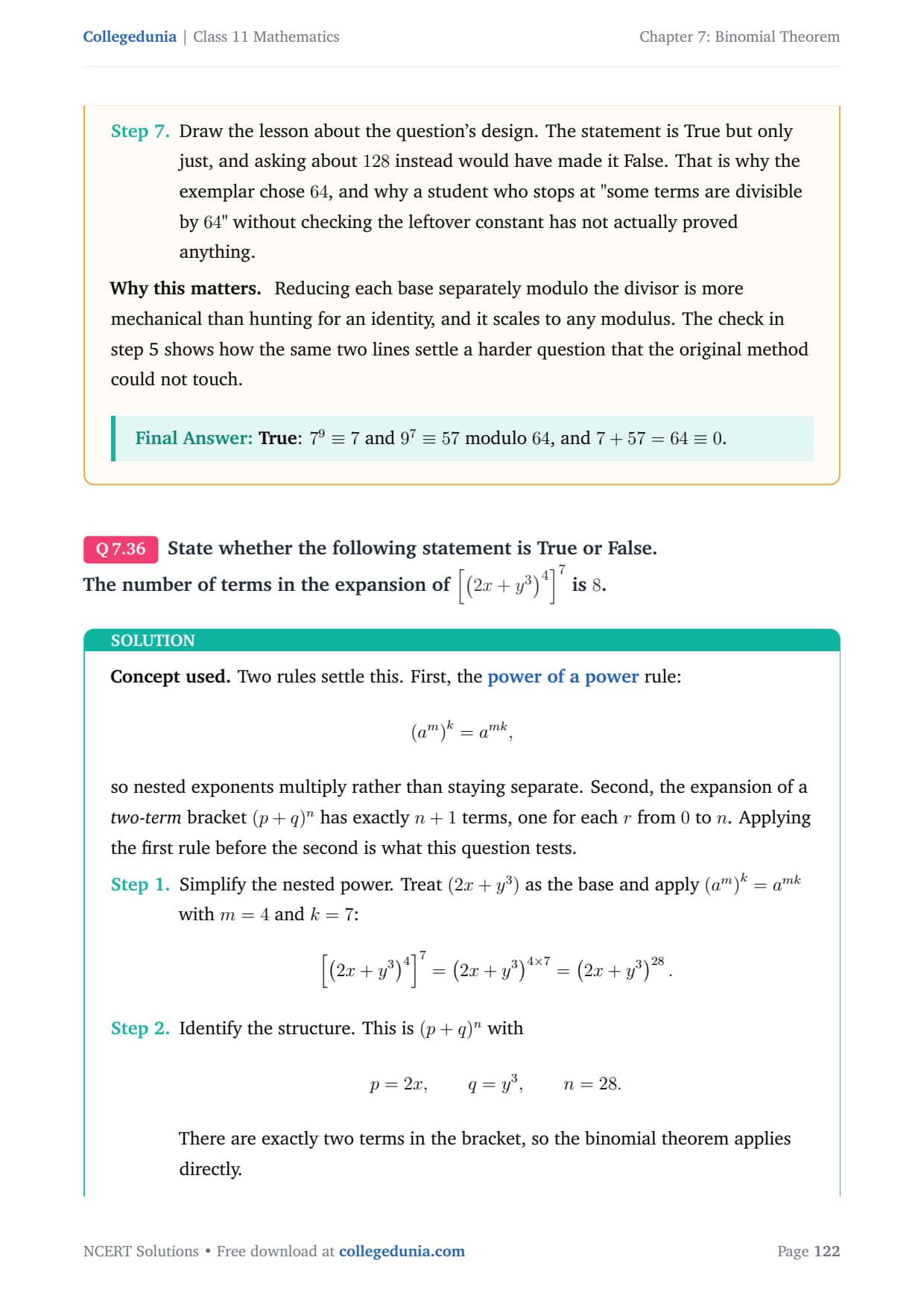
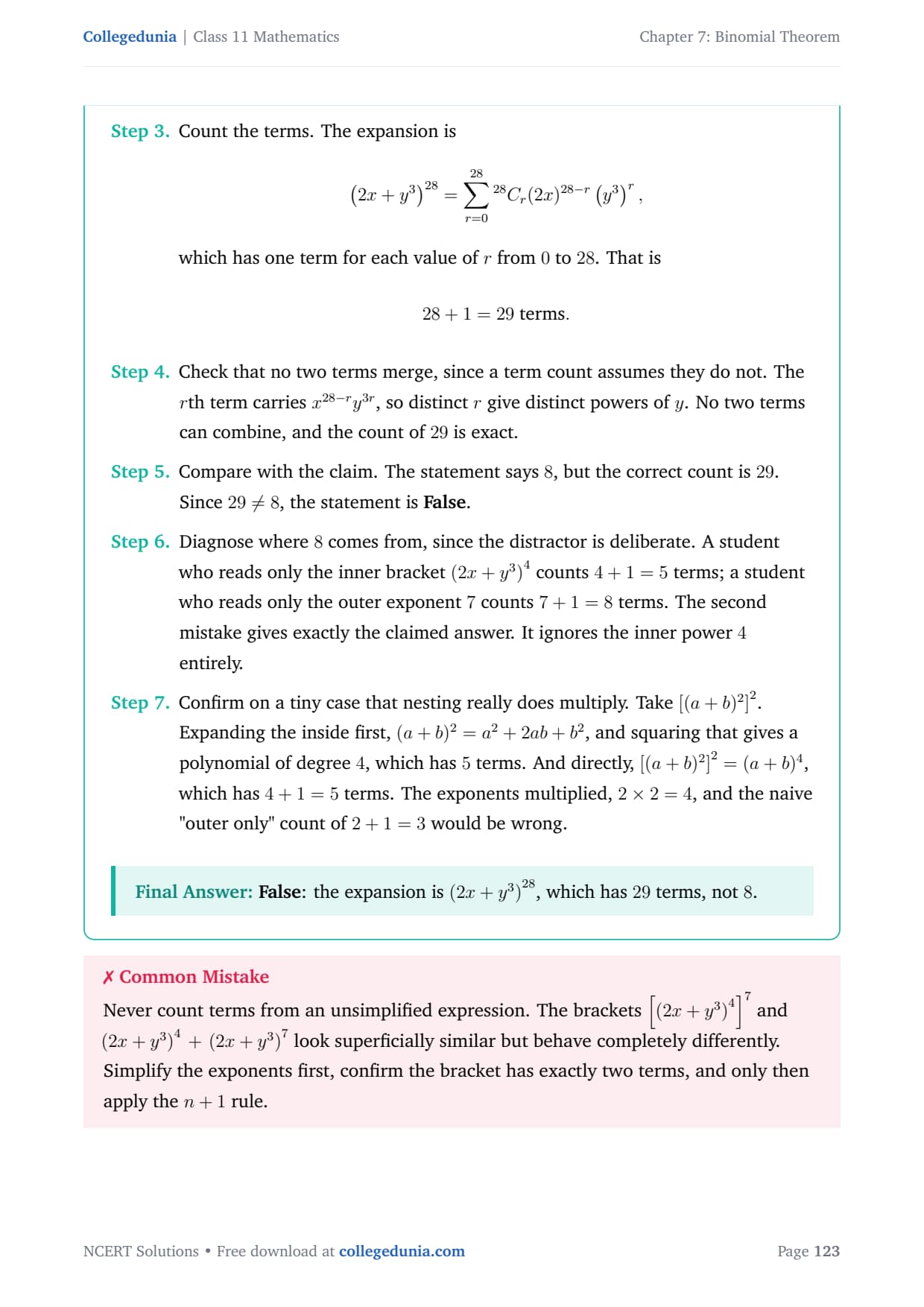
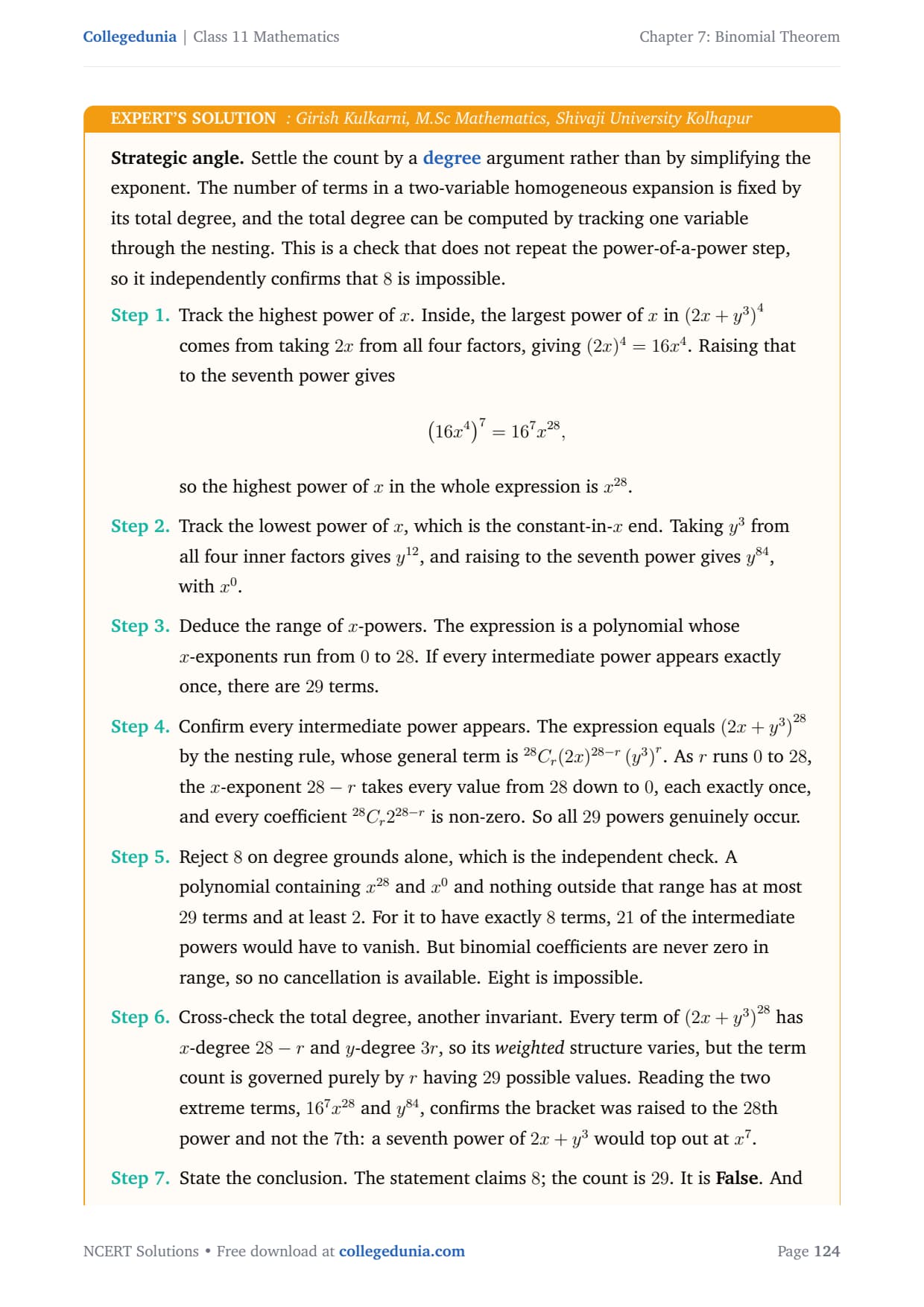
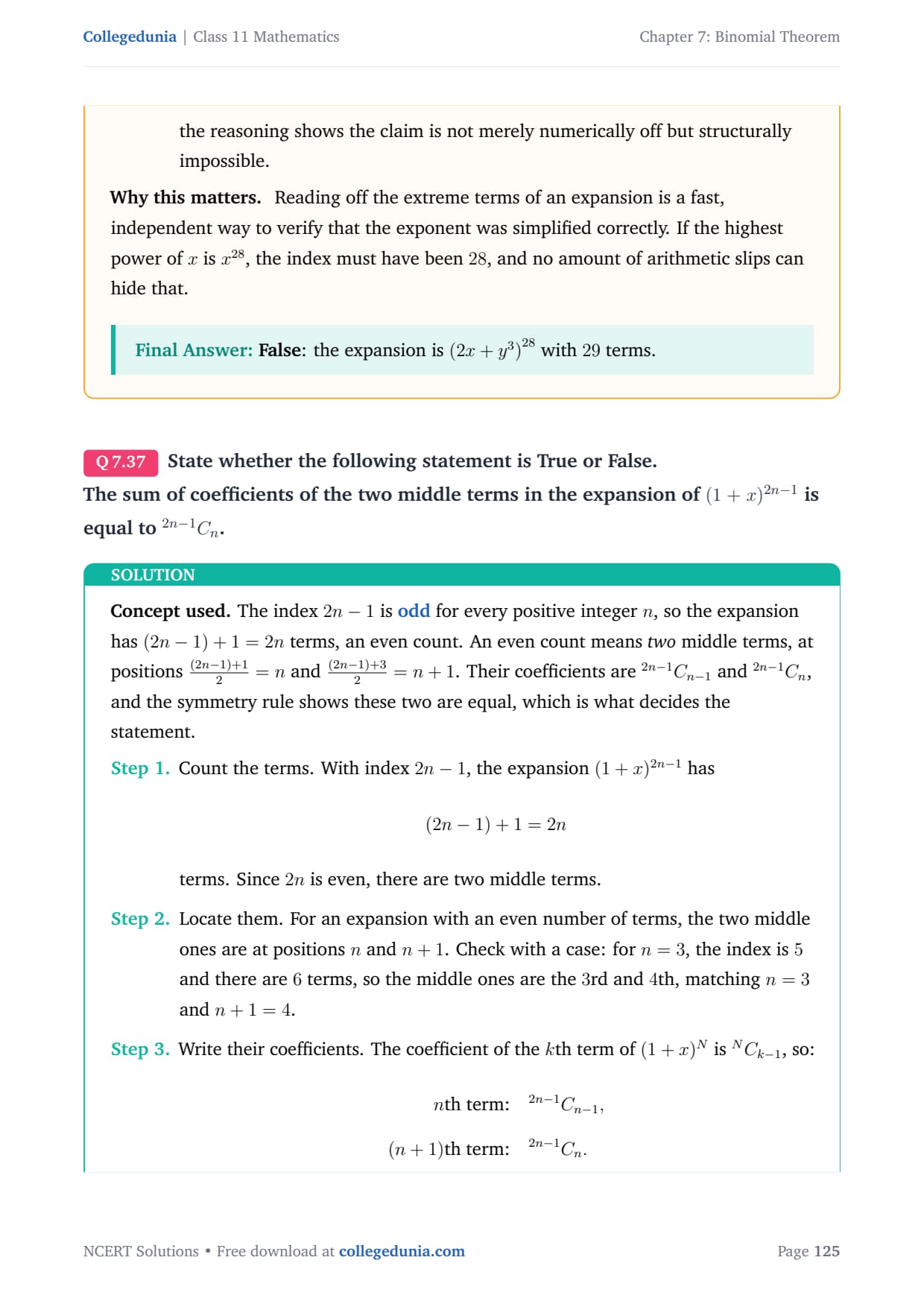
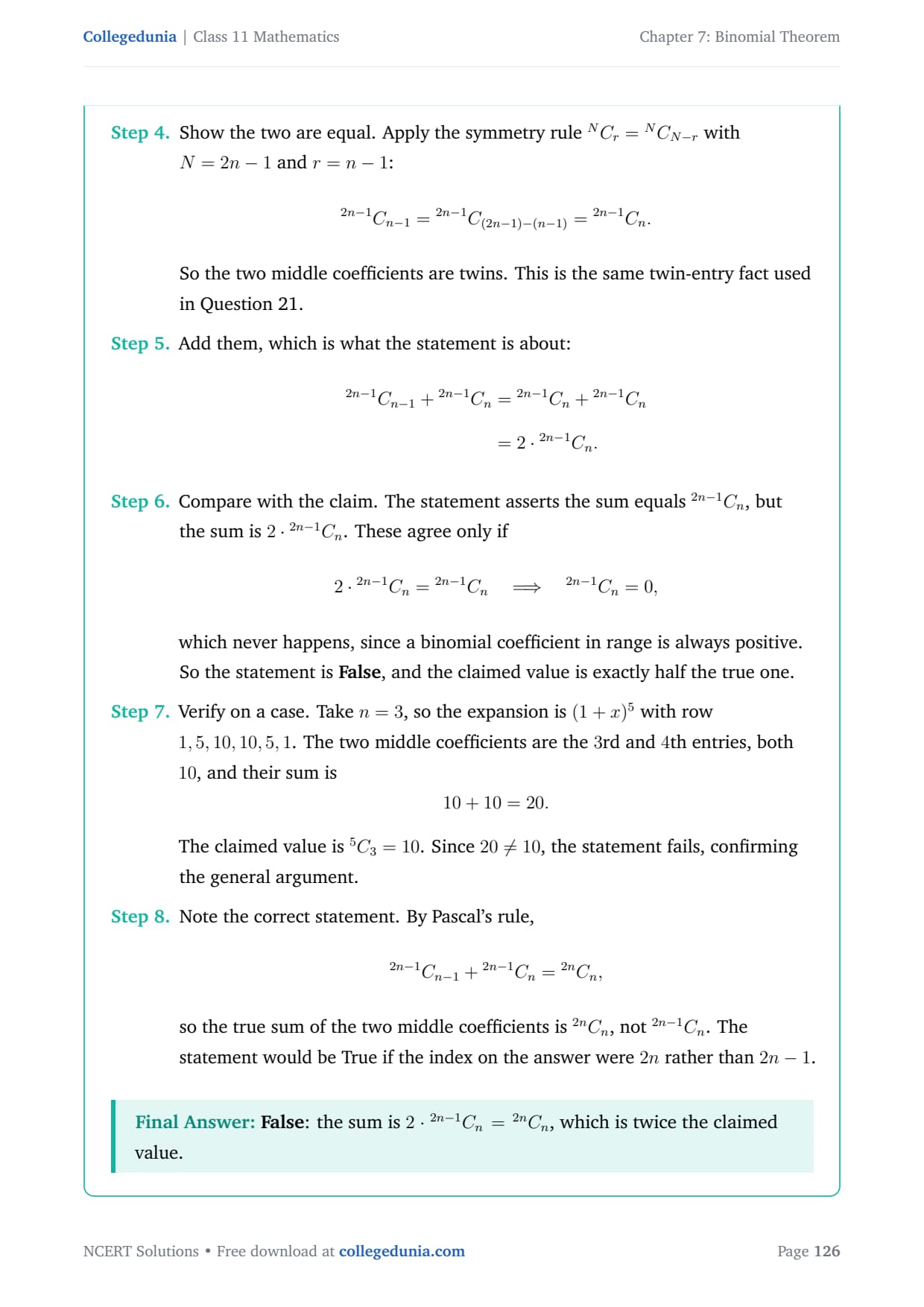
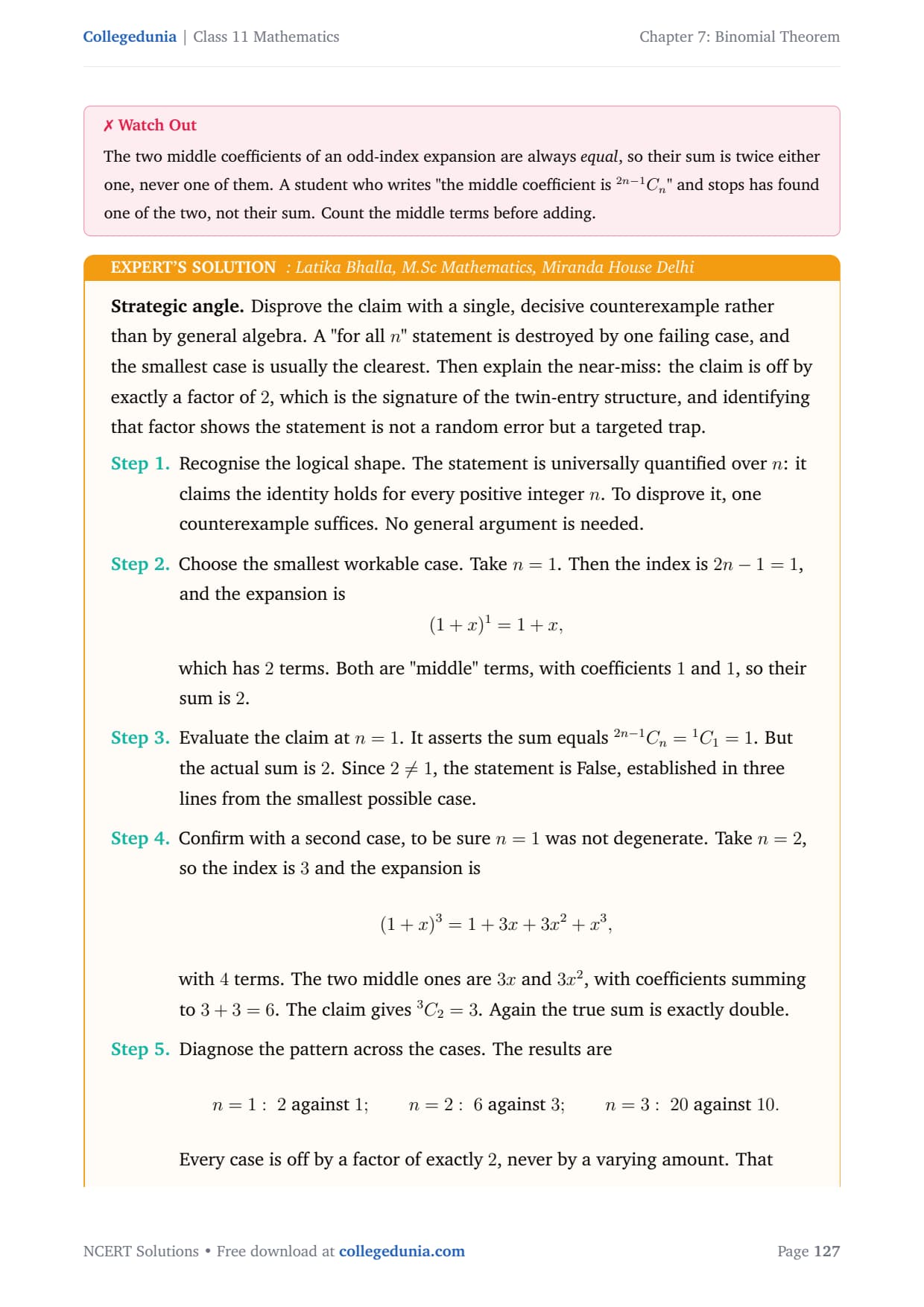
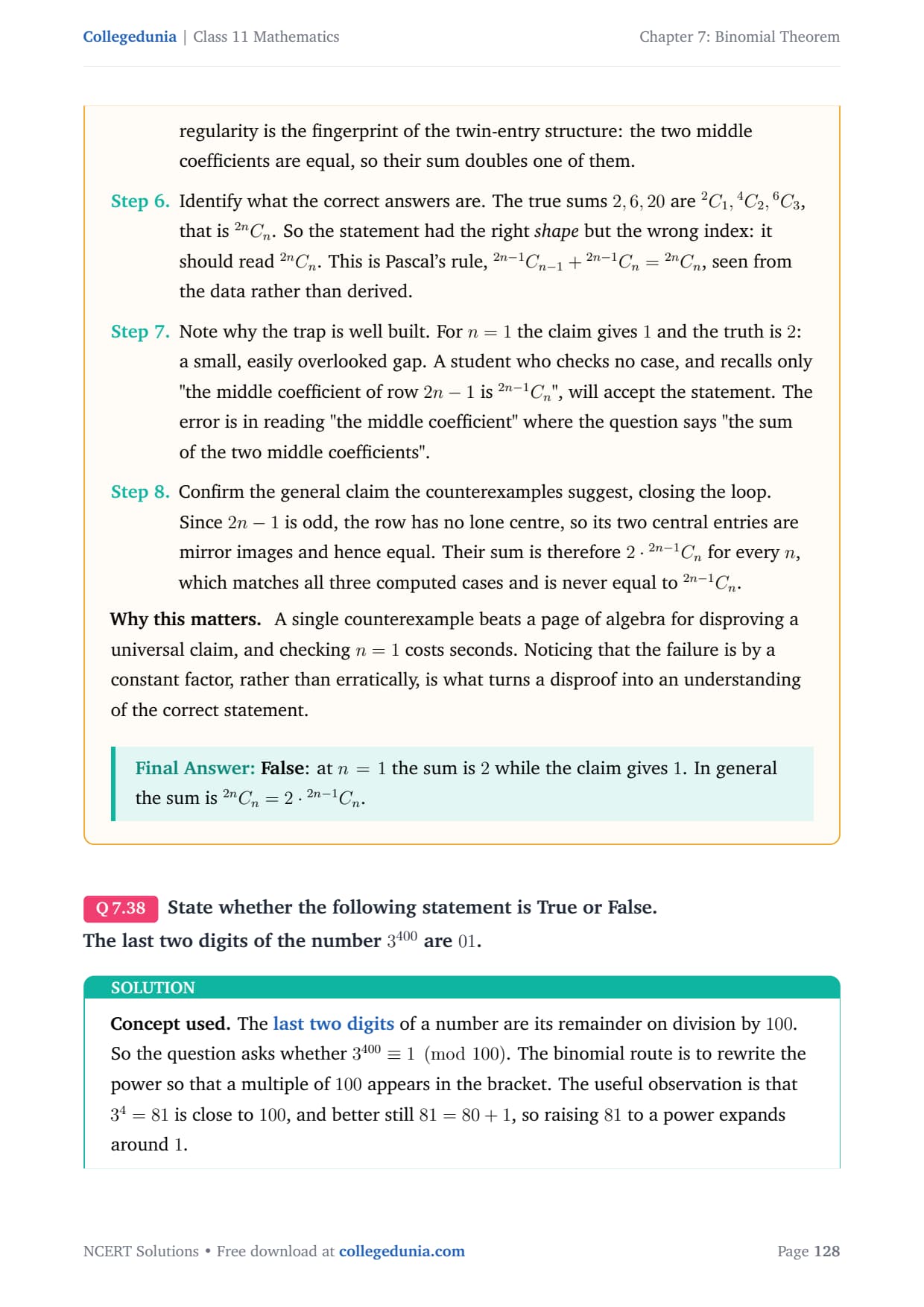
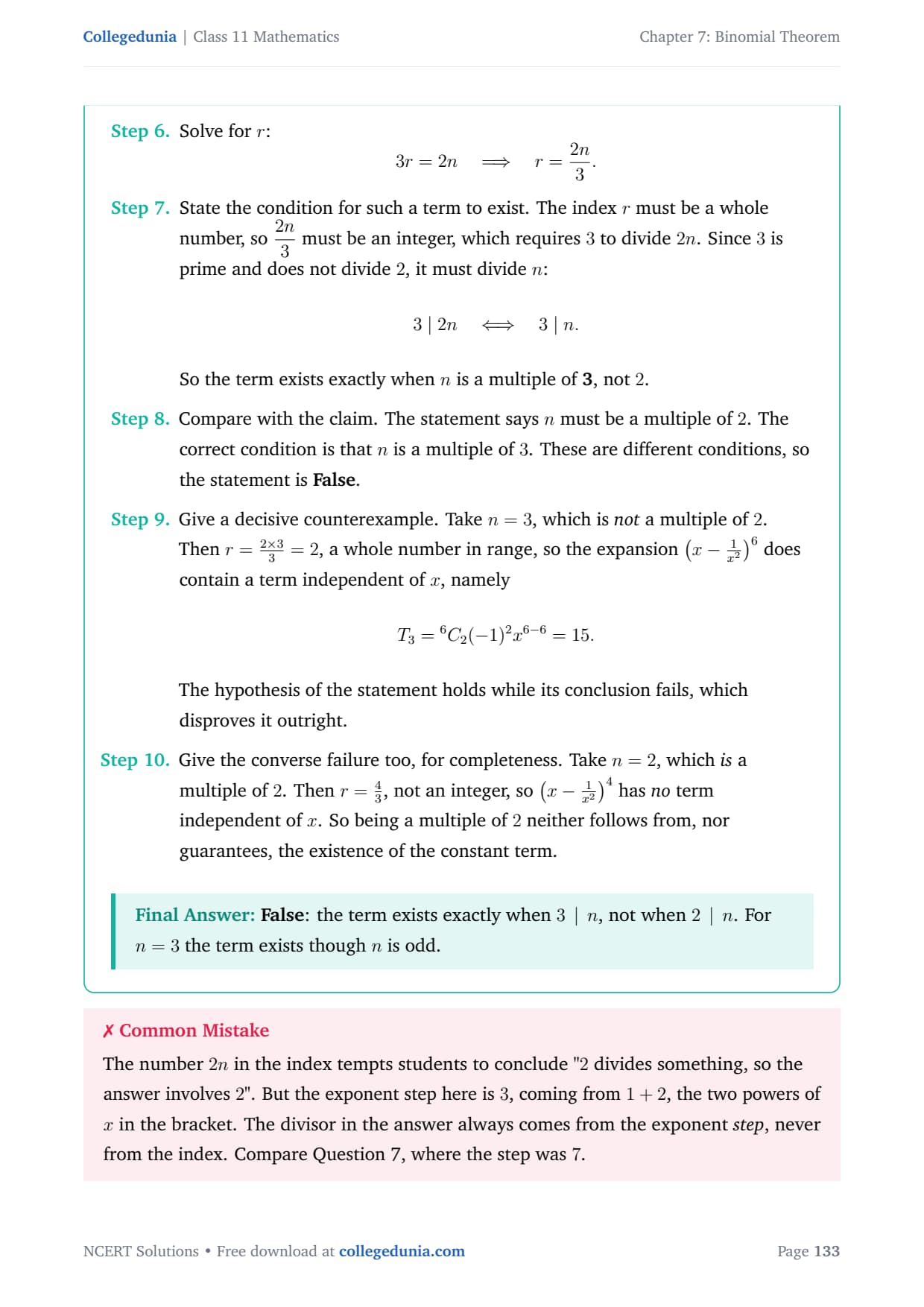
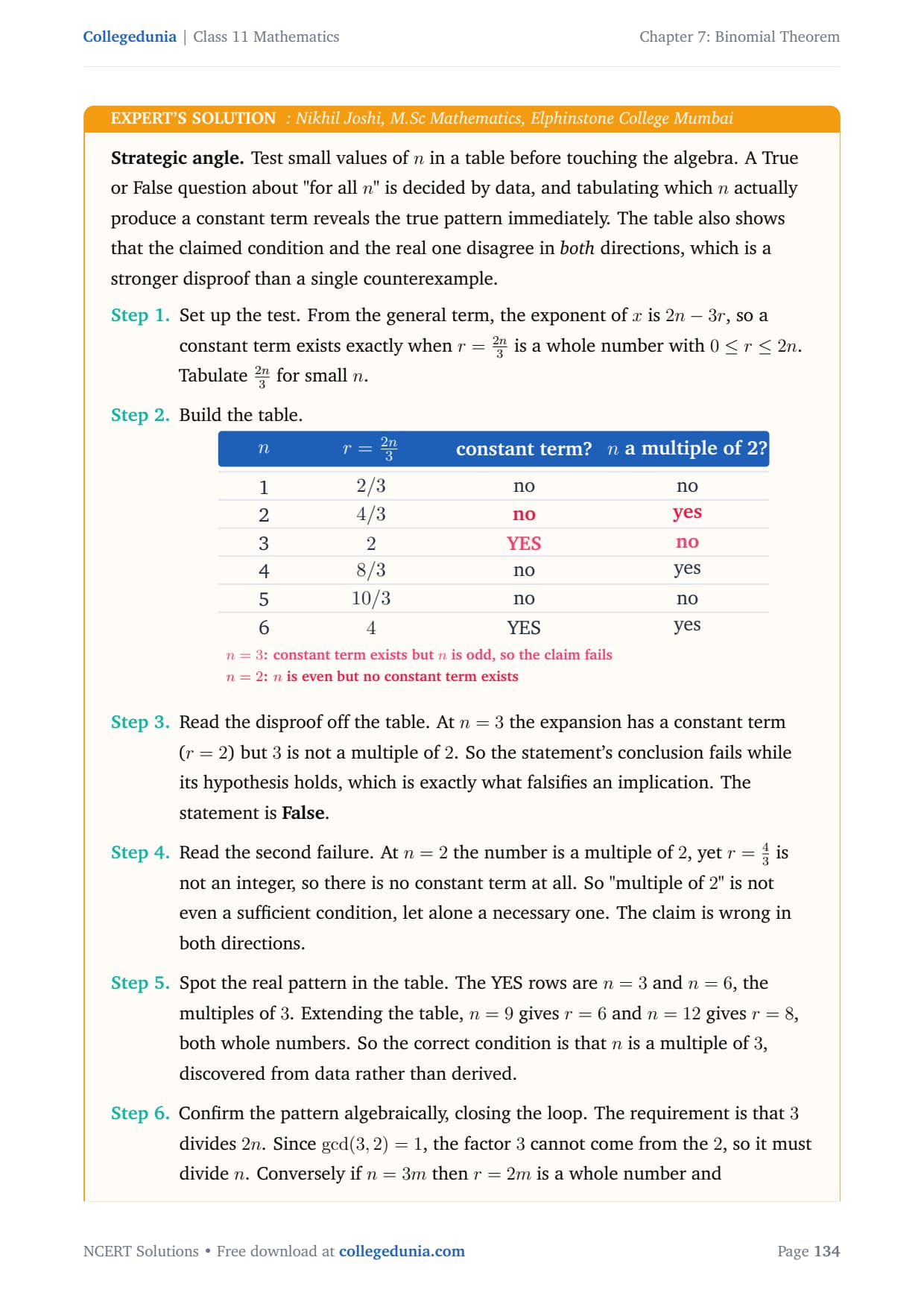
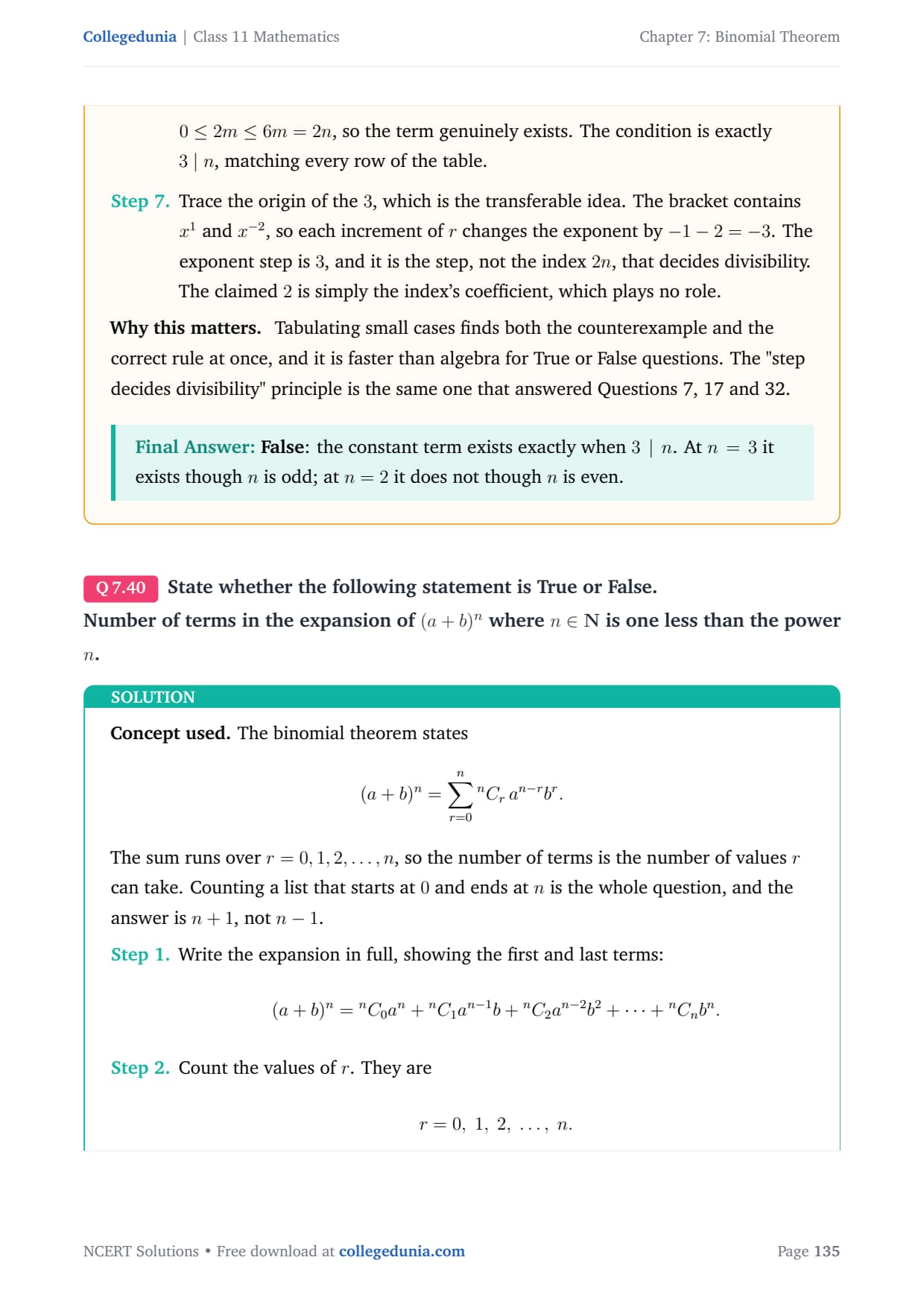
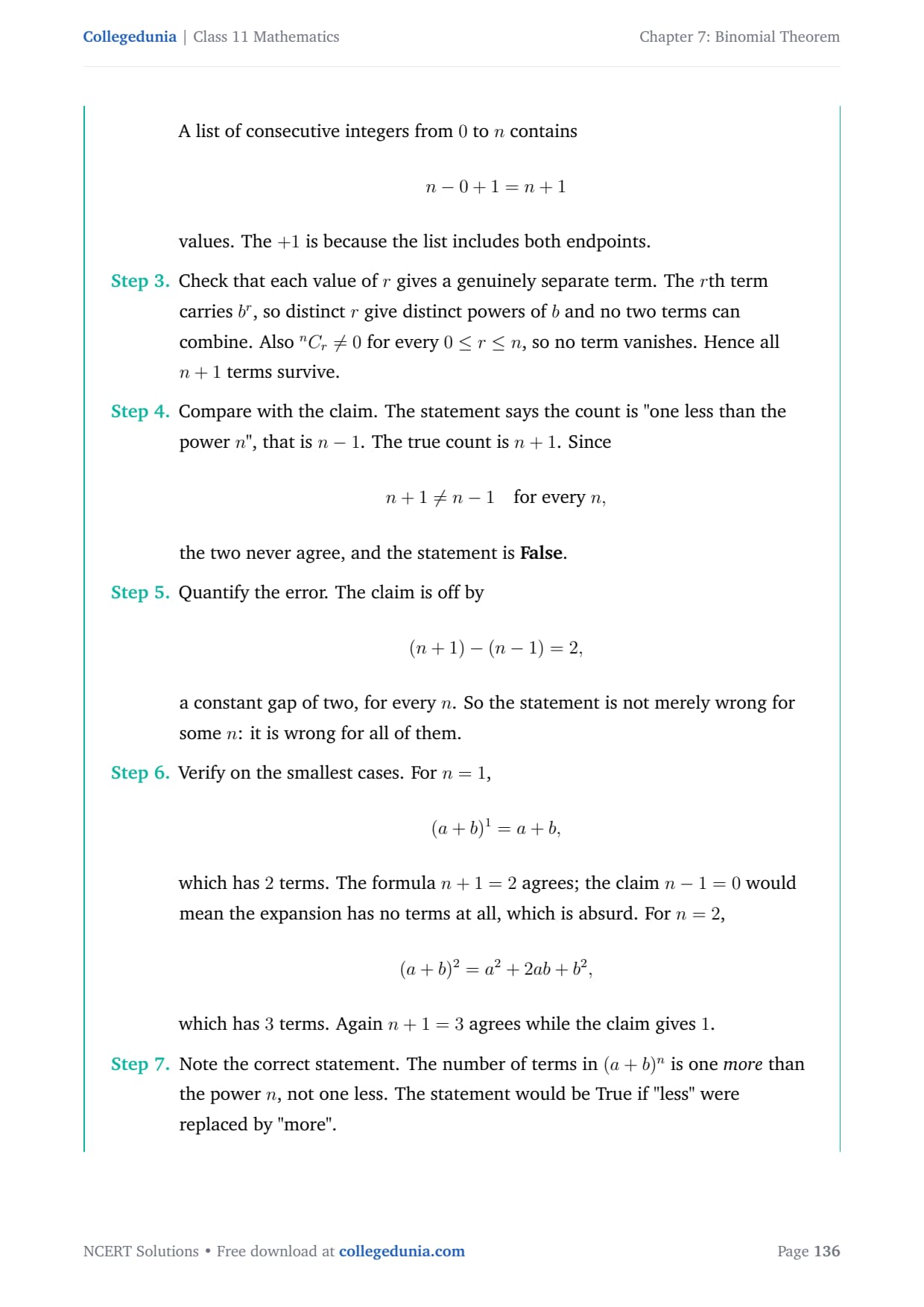
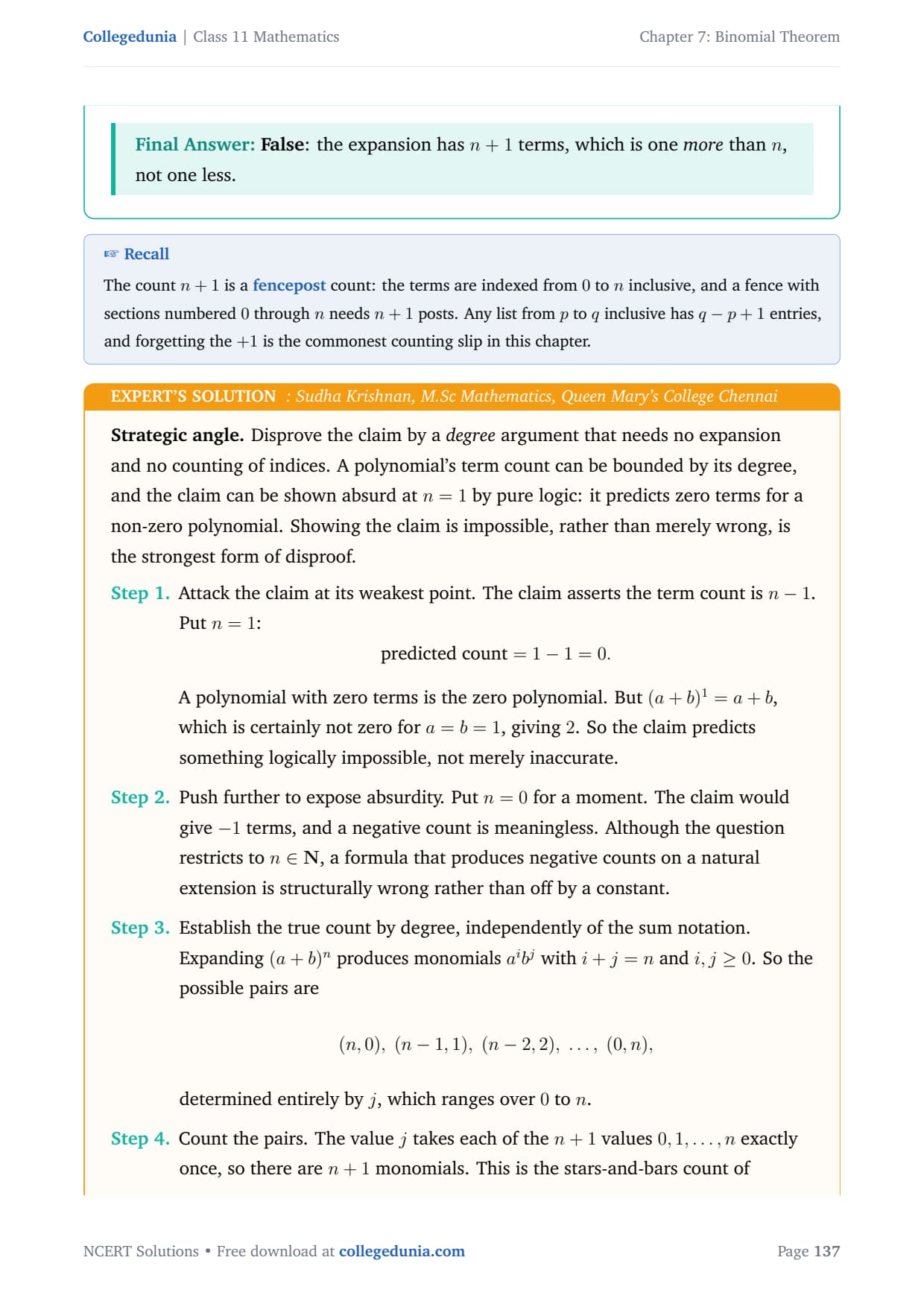
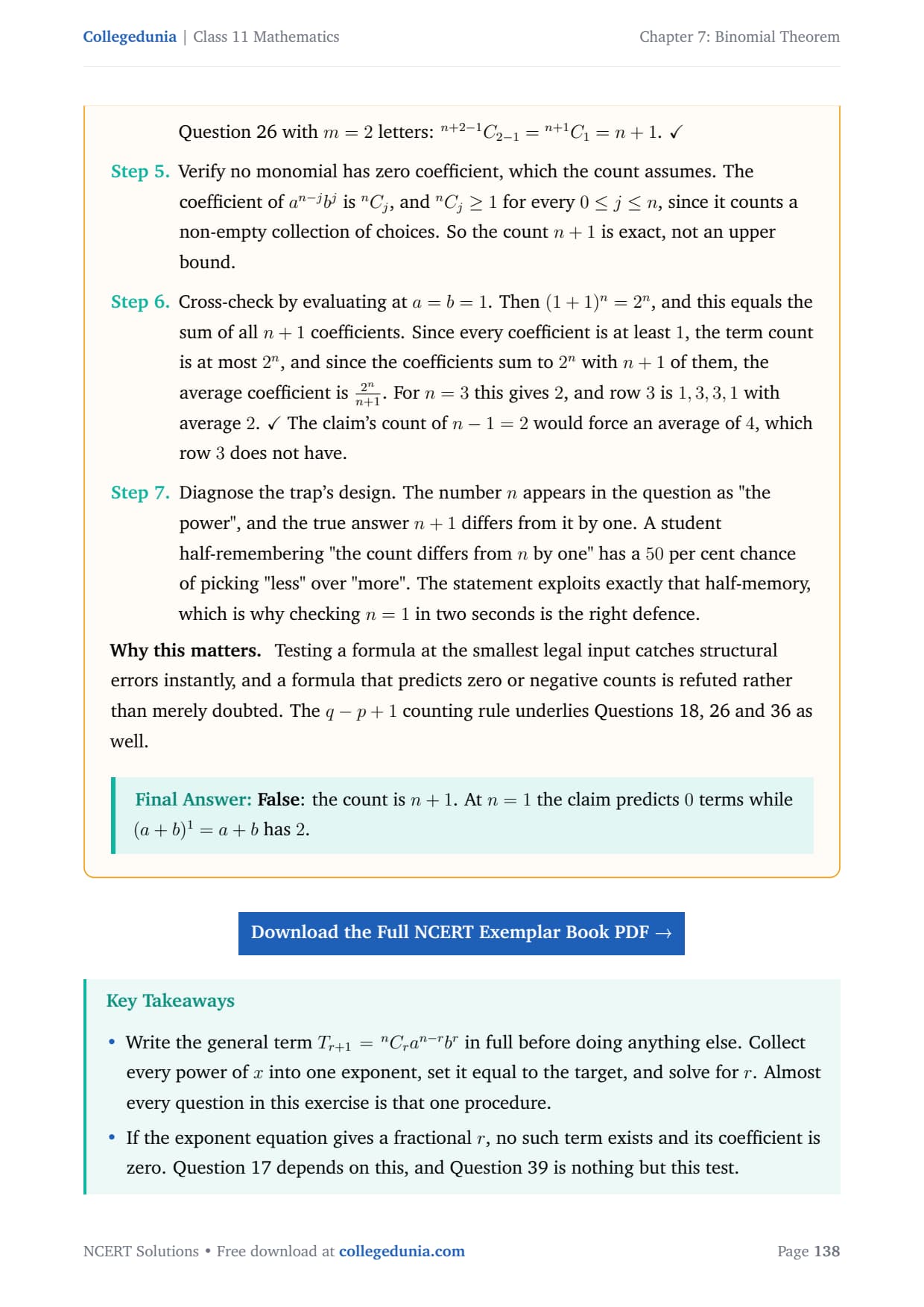
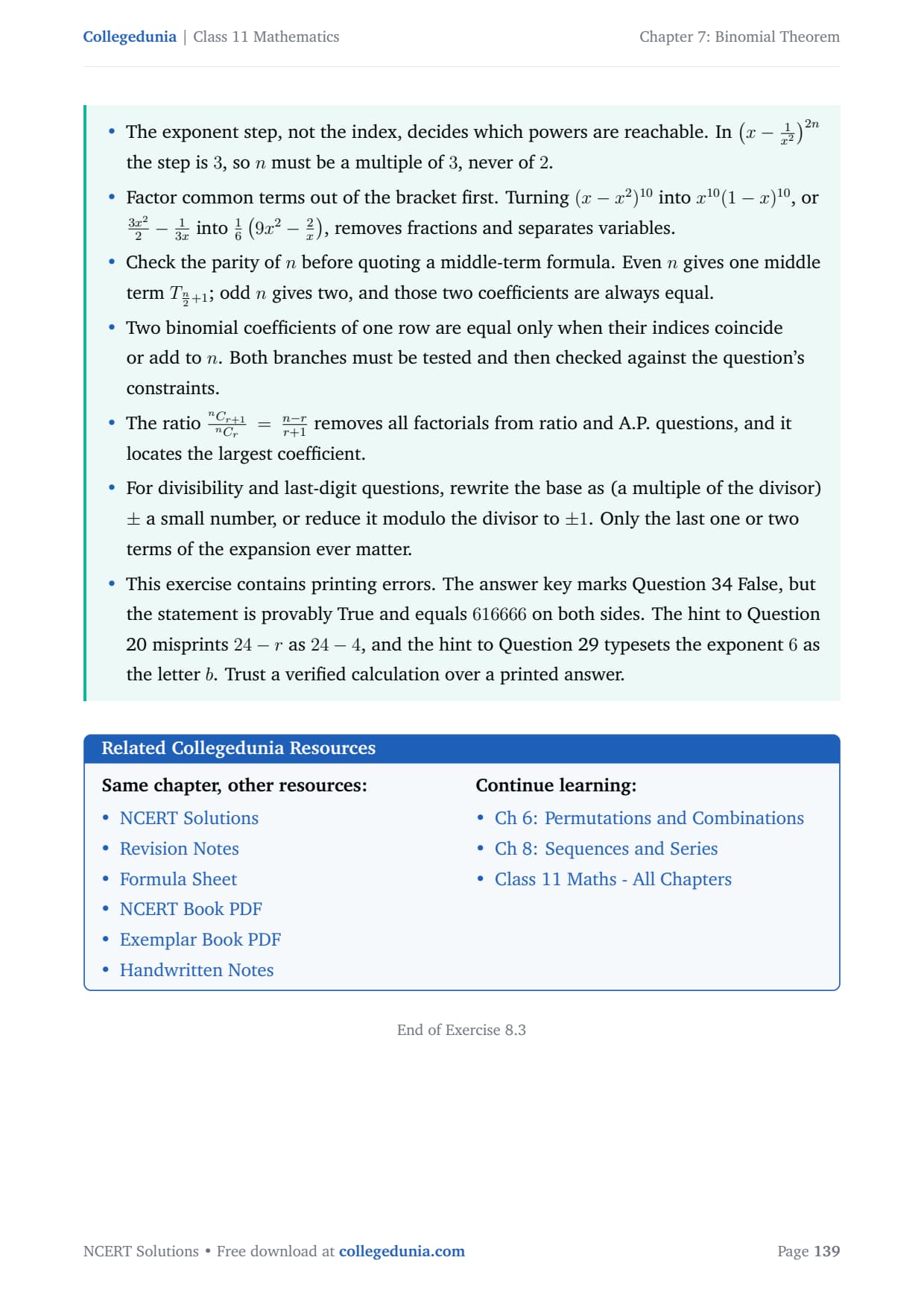
Every solution in this Collegedunia set is prepared by subject experts, based on the 2026-27 NCERT Exemplar, and checked line by line against the official answer key.
The Exemplar prints this chapter as Chapter 8, so its single long exercise is numbered Exercise 8.3 in the book's own numbering. The solutions PDF runs to 139 pages and covers every question in it.
- 40 questions solved: Short Answer, Long Answer, Objective, Fill in the Blanks and True/False.
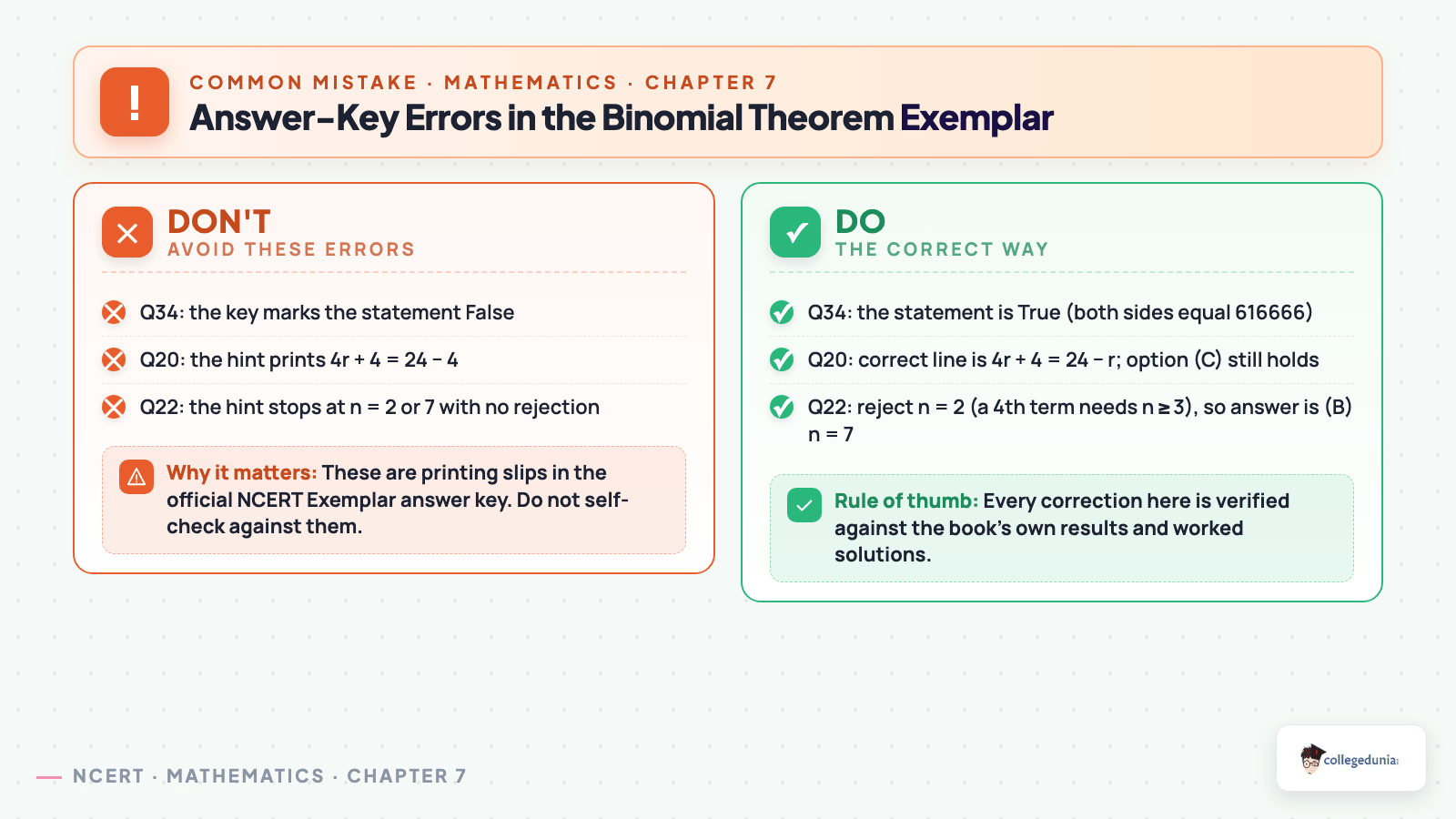
- Three printed errors flagged: a wrong key on Q34, plus flawed printed hints on Q20 and Q22.
- Exam focus: useful for CBSE Boards, JEE Main, JEE Advanced and CUET.
Topics Covered in the Class 11 Maths Binomial Theorem Exemplar
The Binomial Theorem Exemplar is built on one formula used in many disguises. Almost every question is really asking students to find the right value of r and stop. These are the topics the 40 questions are built on.
- The binomial expansion: (a + b)n for a positive whole number n, and its n + 1 terms.
- The general term: Tr+1 = nCr an−r br, which answers most of the chapter on its own.
- Middle terms: one middle term when n is even, two when n is odd.
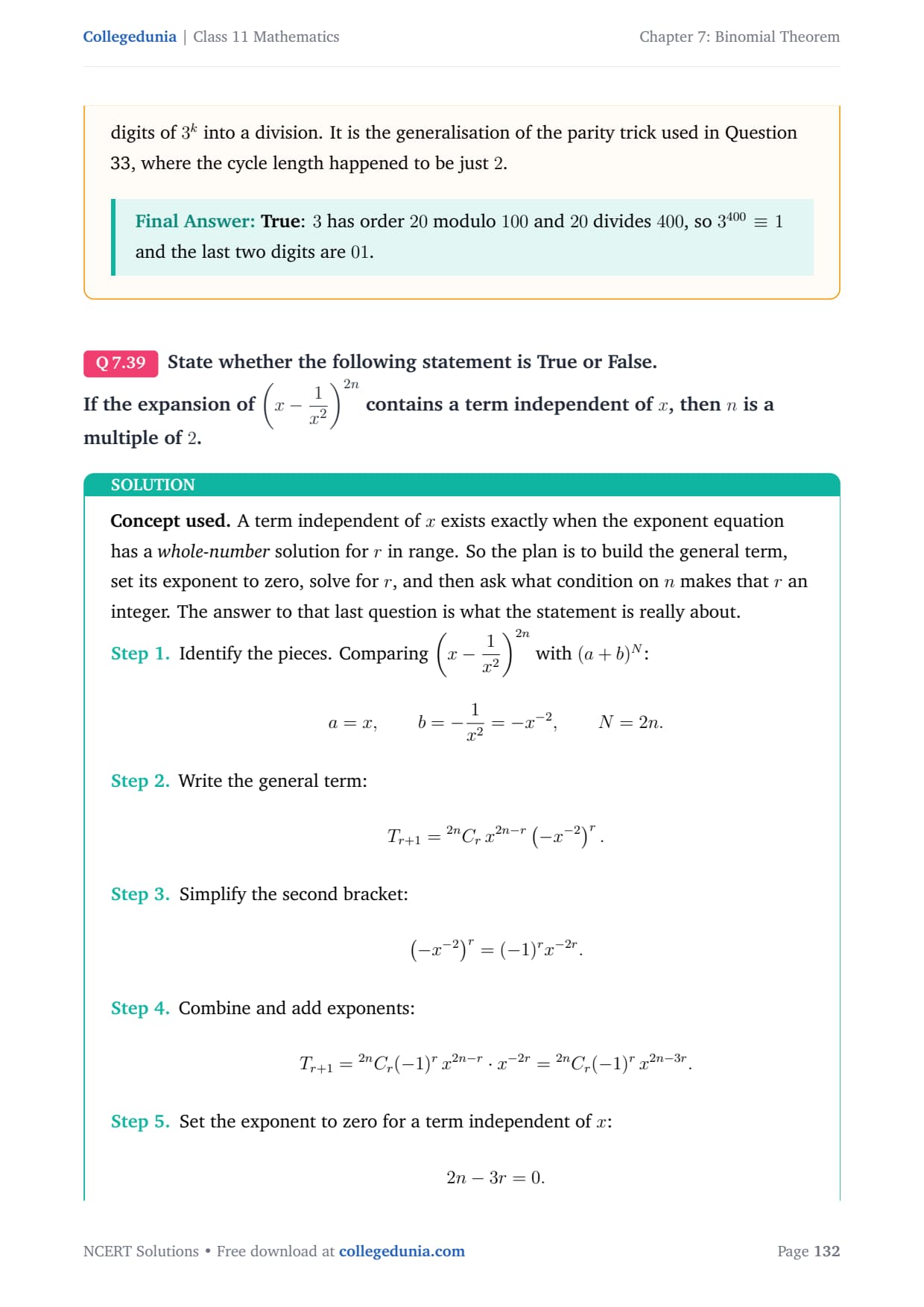
- Term independent of x: setting the total power of x to zero and solving for r.
- Coefficients: the largest coefficient, comparing two coefficients, and the ratio of consecutive ones.
- Pascal's triangle and symmetry: nCr = nCn−r and the row sum 2n.
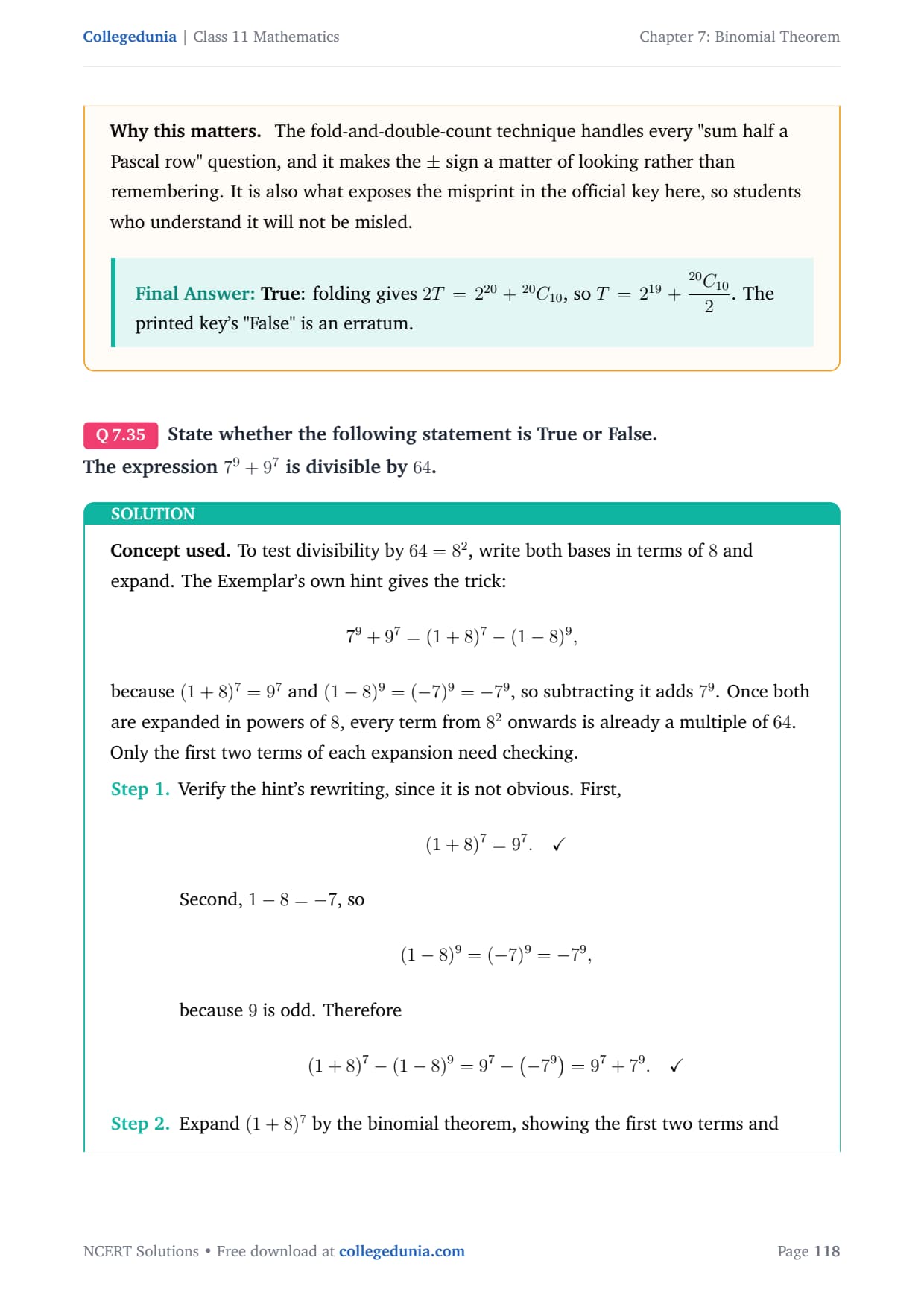
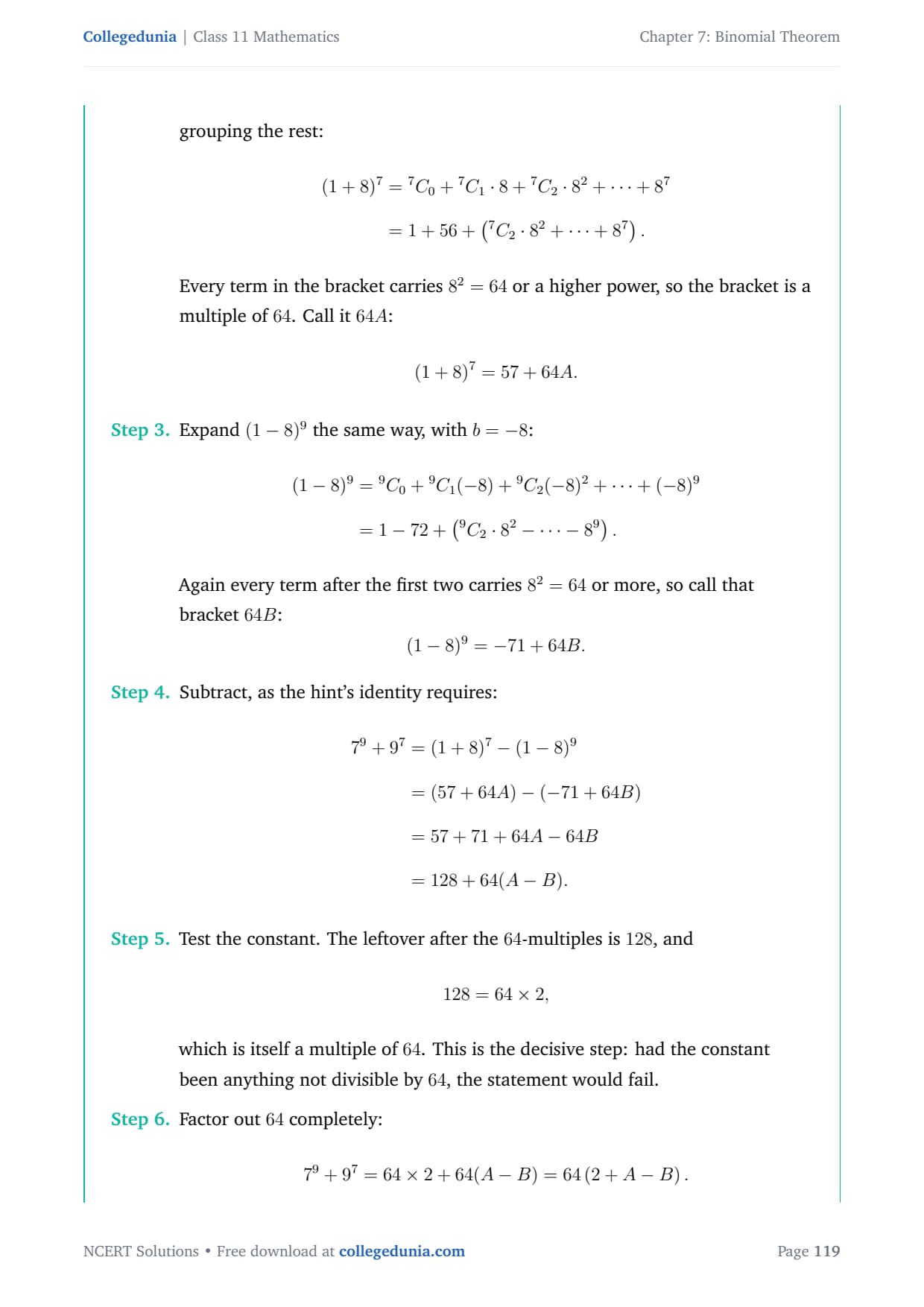
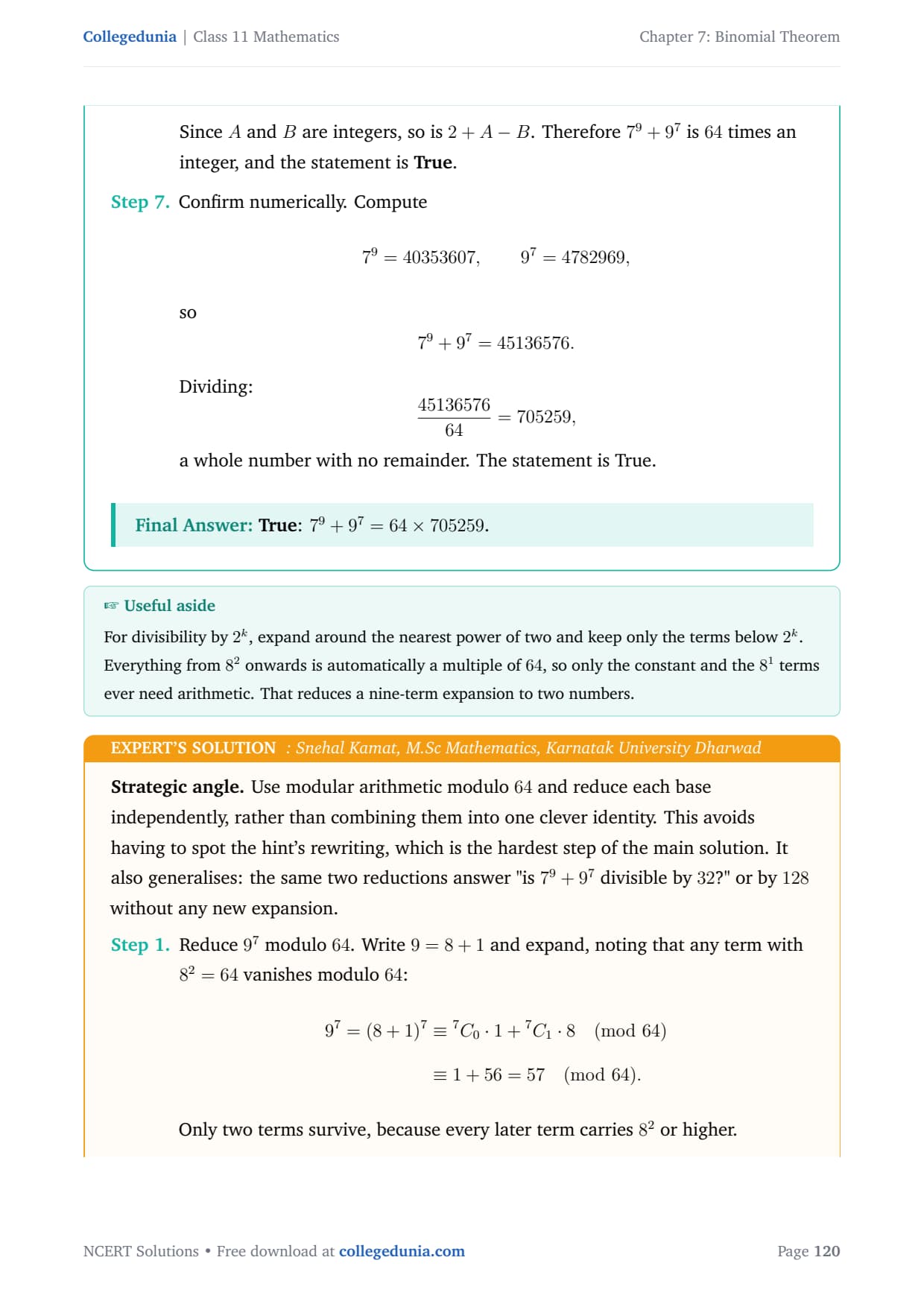
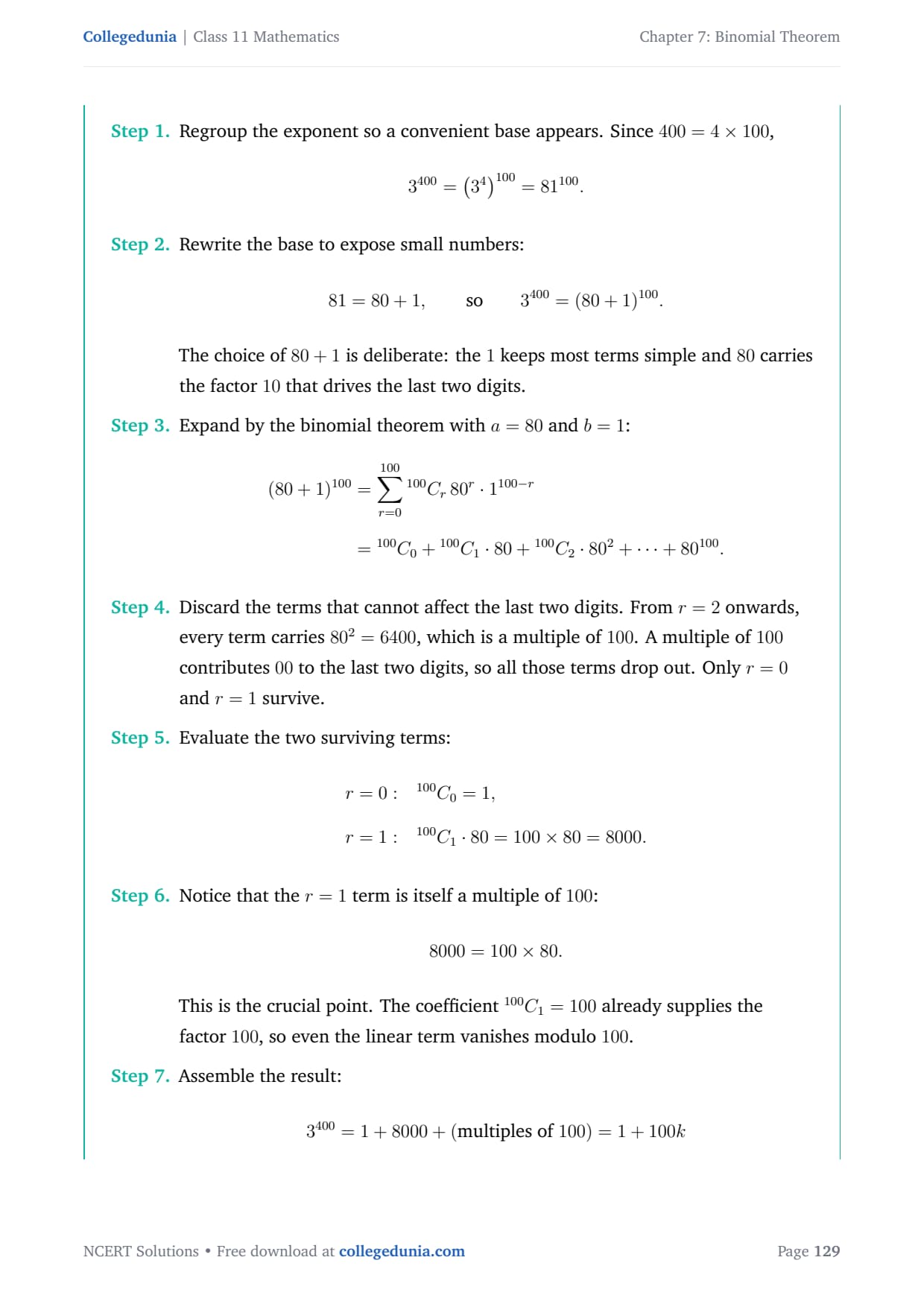
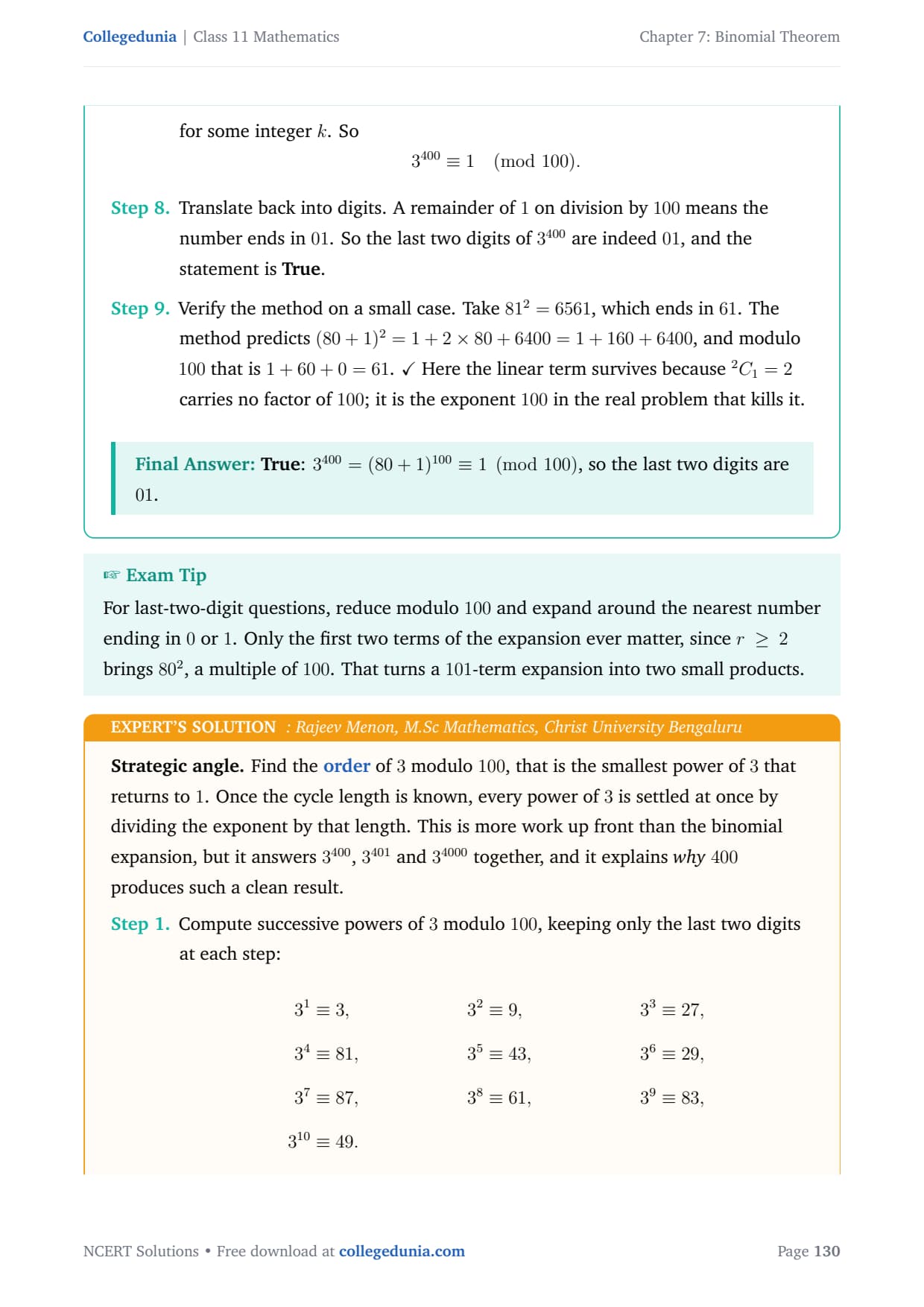
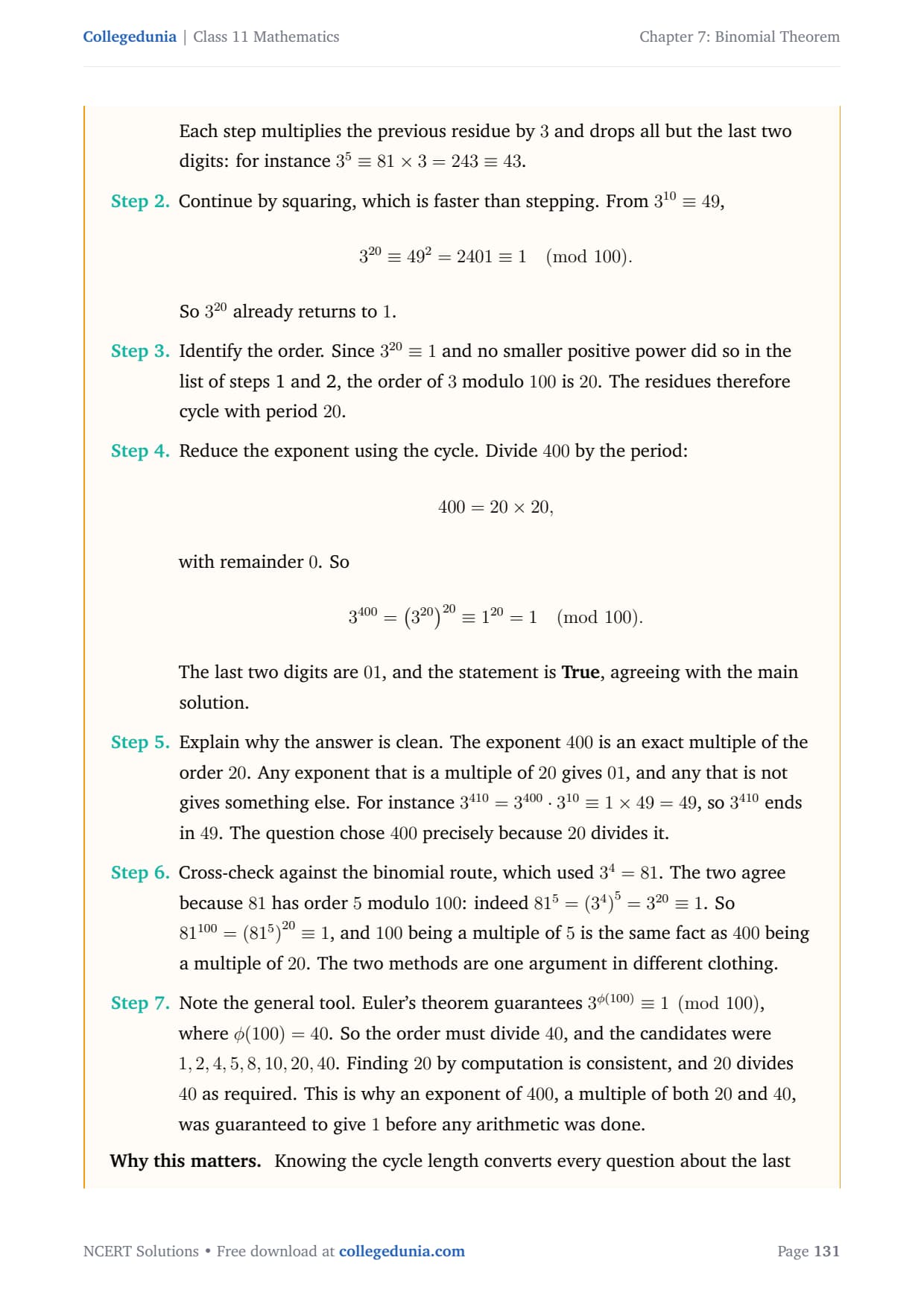
- Applications: divisibility proofs and last-digit questions, such as the last two digits of 3400.
Important: the index r starts at 0, but term positions start at 1. So r = 2 means the third term. Half the errors in this chapter come from answering r when the question asked for the position.
Exercise 8.3 Question-Type Breakdown for Binomial Theorem
All 40 questions sit inside Exercise 8.3, grouped by format. The table below shows how the exercise is split, so students can plan practice by question type rather than solving straight through.
| Question Type | Question Numbers | Count | What it tests |
|---|---|---|---|
| Short Answer | Q1 to Q11 | 11 | General term, middle term, term independent of x |
| Long Answer | Q12 to Q17 | 6 | Two-part expansions and coefficient comparisons |
| Objective (MCQ) | Q18 to Q24 | 7 | Term counts and coefficient ratios, with a trap option |
| Fill in the Blanks | Q25 to Q33 | 9 | Largest coefficient, specific terms, numeric values |
| True/False | Q34 to Q40 | 7 | Judging a printed identity or claim |
The Short Answer block (Q1 to Q11) is the largest group and the one that builds the reflex for the rest of the chapter. The True/False block (Q34 to Q40) is the one worth extra care: it holds the chapter's only genuinely wrong answer key, and its statements look right until they are computed.
Three Printed Errors in the Binomial Theorem Exemplar Every Student Must Know
The printed Chapter 8 material has three questions that carry an error, and only one of them changes the answer. Q34 has a genuinely wrong key. Q20 and Q22 have flawed hints whose printed answers still happen to be correct. Each is checked below against the book's own results.
| Question | Type of error | What the book prints | Correct answer |
|---|---|---|---|
| Q20 | Misprinted hint, answer unaffected | Hint reads 4r + 4 = 24 − 4 | (C) 5th and 6th, from 4r + 4 = 24 − r |
| Q22 | Incomplete hint | Hint gives "n = 2 or 7", no rejection | (B) n = 7 |
| Q34 | Wrong key | False | True |
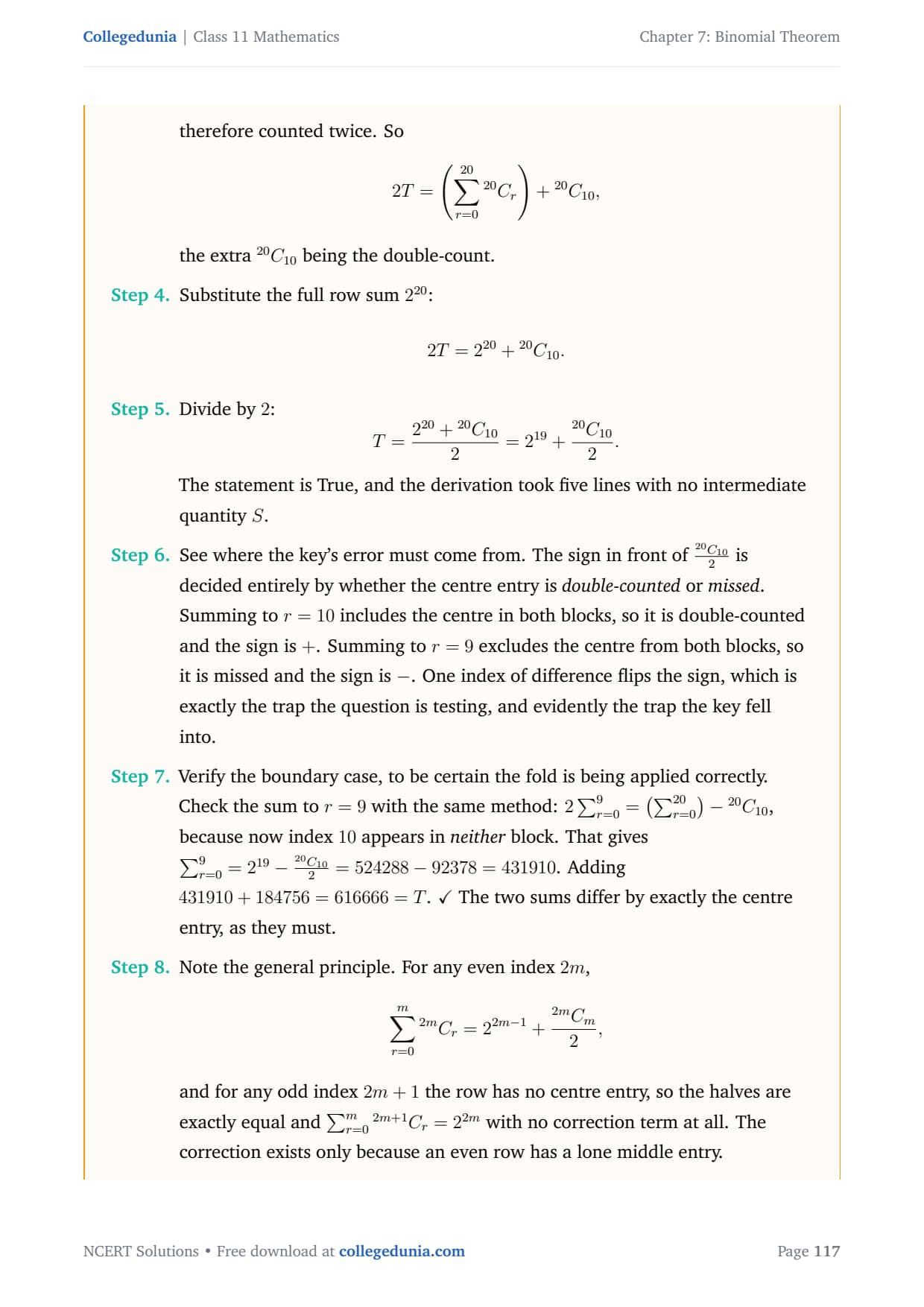
Q34 is the one wrong key in the chapter. The statement claims that the sum of 20Cr from r = 0 to r = 10 equals 219 + 20C10/2. The key marks it False. It is True. The one-line check: 20C10 = 184756 and 219 = 524288, so the claimed value is 524288 + 92378 = 616666, and adding the eleven coefficients directly (1 + 20 + 190 + 1140 + 4845 + 15504 + 38760 + 77520 + 125970 + 167960 + 184756) also gives 616666. The likely cause of the slip is the neighbouring sum: running only to r = 9 gives 219 − 20C10/2, with a minus sign. That sum would make the printed claim False, but it is not the sum the question asks for.
Q20 has a misprinted hint, and the printed answer is still right. The book's hint reads "4r + 4 = 24 − 4" where it should read "4r + 4 = 24 − r". The one-line check: the ratio of consecutive coefficients is nCr / nCr+1 = (r + 1)/(n − r), so with n = 24 and a ratio of 1 : 4 the cross-multiplication gives 4(r + 1) = 24 − r, never 24 − 4. The misprint happens to yield r = 4 as well, so option (C) survives. Students should derive the line themselves rather than copy the book's, because the same mistake on a different question would not be harmless.
Q22's hint stops one step short. The book gives "n = 2 or 7" and never says which root to keep, while option (A) is 2, so the distractor is waiting. The one-line check: the question is about the 4th term, and a 4th term needs n ≥ 3, since 2C3 = 0. So n = 2 is rejected for a stated reason and the answer is (B) n = 7, confirmed by 7C1 = 7, 7C2 = 21 and 7C3 = 35 having equal differences of 14.
Key Formulas and Results Used in the Binomial Theorem Exemplar
This chapter has the shortest formula list of any in the Exemplar, and almost every question uses the second row. Students should know these by heart before starting Exercise 8.3.
| Result | Statement | Where it is used |
|---|---|---|
| Binomial theorem | (a + b)n = ∑ nCr an−r br, r = 0 to n | Every question in the chapter |
| General term | Tr+1 = nCr an−r br | Short Answer block, term independent of x |
| Number of terms | n + 1 terms in (a + b)n | Q36, Q40 |
| Middle term, n even | The (n/2 + 1)th term, one only | Q5 and the middle-term questions |
| Middle terms, n odd | The ((n+1)/2)th and ((n+3)/2)th terms, two of them | Q5 |
| Ratio of consecutive coefficients | nCr / nCr+1 = (r + 1)/(n − r) | Q20 |
| Symmetry | nCr = nCn−r | Q9, Q34 |
| Row sum | ∑ nCr = 2n, r = 0 to n | Q34 |
| Largest coefficient | nCn/2 in (1 + x)n when n is even | Q25 |
Tip: to find the term independent of x, write the general term, add up every power of x in it, set the total to zero and solve for r. If r comes out fractional, no such term exists. That single line answers a large part of the Short Answer block.
Common Mistakes Students Make in the Binomial Theorem Exemplar
The traps in this chapter are small and repeatable, which is exactly why they cost marks. These are the ones that appear most often in Exercise 8.3.
- Using the even-n middle term formula for odd n. Tn/2+1 only works when n is even. For odd n there are two middle terms, so check the parity of n first.
- Rounding a fractional r. In Q17 the pairing needs r = 19/3, which is not a whole number, so that pairing contributes nothing. Rounding it to 6 or 7 and adding a term gives the wrong answer.
- Testing only one branch. In Q9, nCp = nCq means p = q or p + q = n. The first branch is rejected here, and the second carries the answer.
- Answering r instead of the position. The value r = 2 means the third term. Read whether the question wants r, the position r + 1, or the term's value.
- Counting terms before simplifying. In Q36 the exponents must be simplified first. A bracket raised to a power is not the same as a sum of two brackets.
How the Binomial Theorem Exemplar Steps Up from the NCERT Textbook
The Exemplar adds no new topics. It runs the same general term backwards, so students solve for r or n instead of substituting them, as the table shows.
| Concept | NCERT Textbook asks | NCERT Exemplar asks |
|---|---|---|
| Expansion | Expand (a + b)n for small n | Name one term of an expansion that is never written out |
| General term | Find the 5th term | Find which term is independent of x, or prove none is |
| Middle term | Find the middle term for a given even n | Handle both parities of n in one question |
| Coefficients | Write the coefficient of a named term | Find n from a ratio or an A.P. condition on the coefficients |
| Applications | Compute a number like (1.01)5 approximately | Prove a divisibility claim or find the last two digits of 3400 |
| Answer format | Give the term | Judge a printed identity as True or False |
How to Use the Binomial Theorem Exemplar for Boards and JEE Preparation
Exercise 8.3 is short enough to finish in three sittings. Finish the NCERT textbook exercises first, because the Exemplar assumes students can write the general term from memory.
| Session | What to solve | Time |
|---|---|---|
| 1 | Short Answer Q1 to Q11 | 1.5 hours |
| 2 | Long Answer Q12 to Q17 and Objective Q18 to Q24 | 1.5 hours |
| 3 | Q25 to Q40, then re-solve everything marked wrong | 1.5 hours |
That is about 4.5 hours for the chapter, the smallest time cost in the Class 11 Maths Exemplar. For JEE Main and JEE Advanced, the term-independent-of-x and coefficient-ratio questions matter most, because they appear almost every year. For CBSE Boards and CUET, the middle-term questions and the True/False block are the better use of time.
Practice Questions for Class 11 Maths Binomial Theorem
After reading the solutions, students should test themselves on the same question types. The card below opens a set of solved practice questions with step-by-step answers for Binomial Theorem.
Practice Card: Solved Practice Questions for Class 11 Maths Binomial Theorem. Attempt each question, then check the solution.
Student Feedback
In a Collegedunia survey of 11,260 Class 11 students conducted before the 2026 exams, 64% of students said the term-independent-of-x questions were the part of Exercise 8.3 they got wrong most often. Only 7% of students had noticed that the printed key marks Q34 False when the statement is True.
Other Resources for Class 11 Maths Binomial Theorem
Pair the Exemplar Solutions with the textbook solutions and the notes for full chapter revision. All the Binomial Theorem resources are linked below.
| Resource | Link |
|---|---|
| NCERT Solutions | Binomial Theorem Class 11 NCERT Solutions |
| Revision Notes | Binomial Theorem Class 11 Notes |
| Handwritten Notes | Binomial Theorem Class 11 Handwritten Notes |
| NCERT Book PDF | Binomial Theorem Class 11 NCERT Book PDF |
| Exemplar Book PDF | Binomial Theorem Class 11 NCERT Exemplar Book PDF |
NCERT Exemplar Solutions for Other Class 11 Maths Chapters
The full Class 11 Maths Exemplar set covers 14 chapters, 735 questions and 2,625 pages of solutions. Use the table to jump to any other chapter.
Binomial Theorem Class 11 Maths NCERT Exemplar Solutions FAQs
Ques. How many questions are there in the Class 11 Maths Binomial Theorem Exemplar?
Ans. Chapter 7 Binomial Theorem has 40 questions, all in one exercise, printed as Exercise 8.3 in the Exemplar's own numbering. They are split into 11 Short Answer, 6 Long Answer, 7 Objective, 9 Fill in the Blanks and 7 True/False questions. Every one of them is solved in the PDF on this page.
Ques. Why is Binomial Theorem printed as Chapter 8 in the NCERT Exemplar?
Ans. The Exemplar book keeps its own chapter order, in which Binomial Theorem is Chapter 8. In the 2026-27 NCERT textbook the same chapter is Chapter 7. Only the number differs, the content is the same, which is why the exercise is numbered Exercise 8.3 in the book.
Ques. Is the printed NCERT Exemplar answer key for Binomial Theorem correct?
Ans. Almost. Only Q34 has a genuinely wrong key: it is marked False when the statement is True, since both sides equal 616666. Two more questions have flawed printed hints, Q20 and Q22, but their printed answers are still correct. Each error is explained on this page with the check that settles it.
Ques. How do students find the term independent of x in the Binomial Theorem Exemplar?
Ans. Write the general term Tr+1 = nCr an−r br, add up every power of x in it, set that total to zero and solve for r. If r is a whole number, that term is the one. If r comes out fractional, no term independent of x exists, and rounding it is a mistake.
Ques. Are the Class 11 Maths Binomial Theorem Exemplar Solutions free to download?
Ans. Yes. The Binomial Theorem NCERT Exemplar Solutions PDF is free to download from this page. It runs to 139 pages, solves every question step by step according to the 2026-27 NCERT Exemplar, and helps students prepare for CBSE Boards, JEE Main, JEE Advanced and CUET.



Comments