




Class 11 Economics Chapter 13 Rural Development is a high-frequency chapter in the CBSE Class 11 Economics exam. These class 11 economics handwritten notes chapter 13 Rural Development follow the 2026-27 NCERT and cover what rural development means and its key issues, rural credit, nabard and self-help groups, agricultural market system and its four measures. This page hosts.








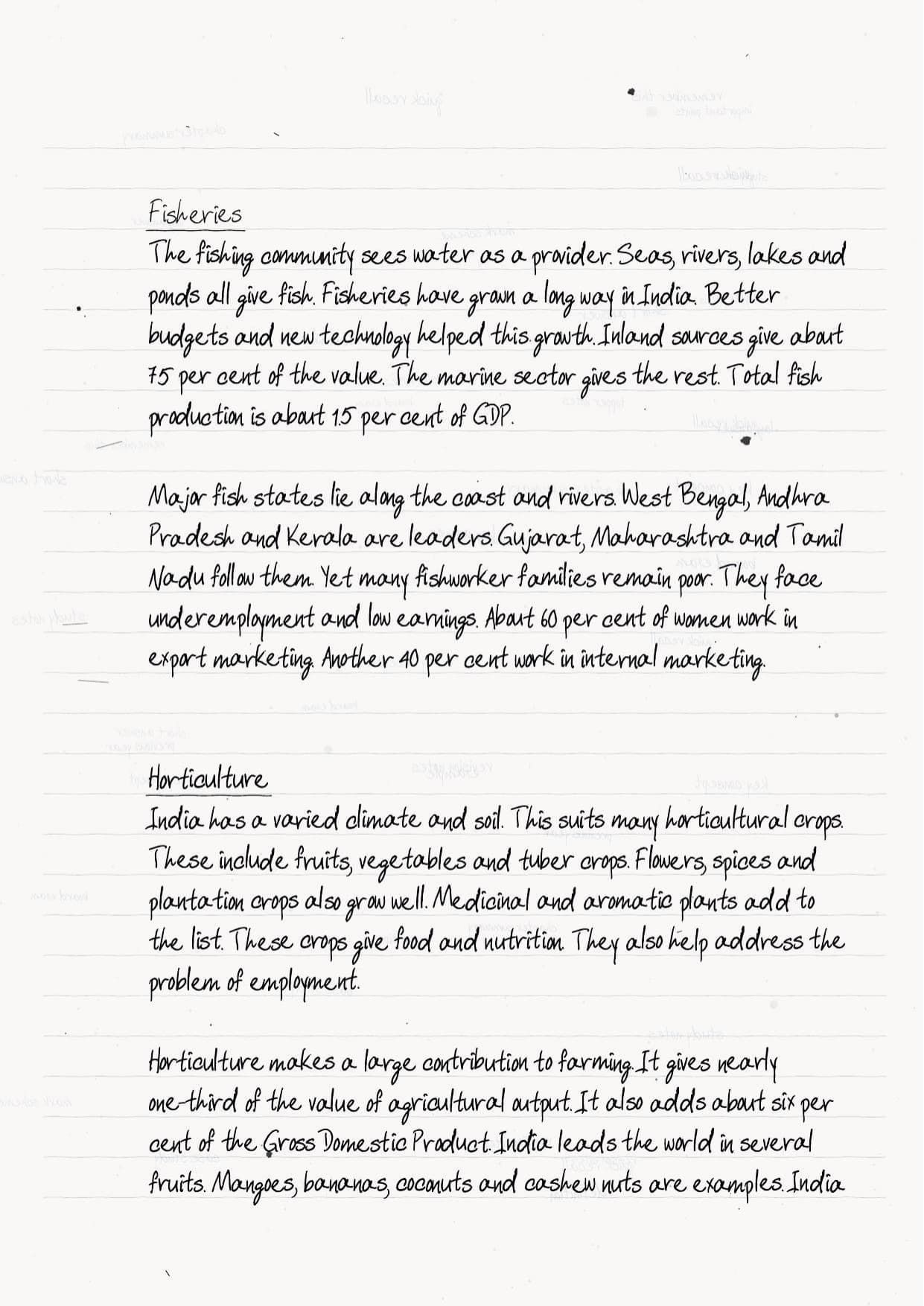

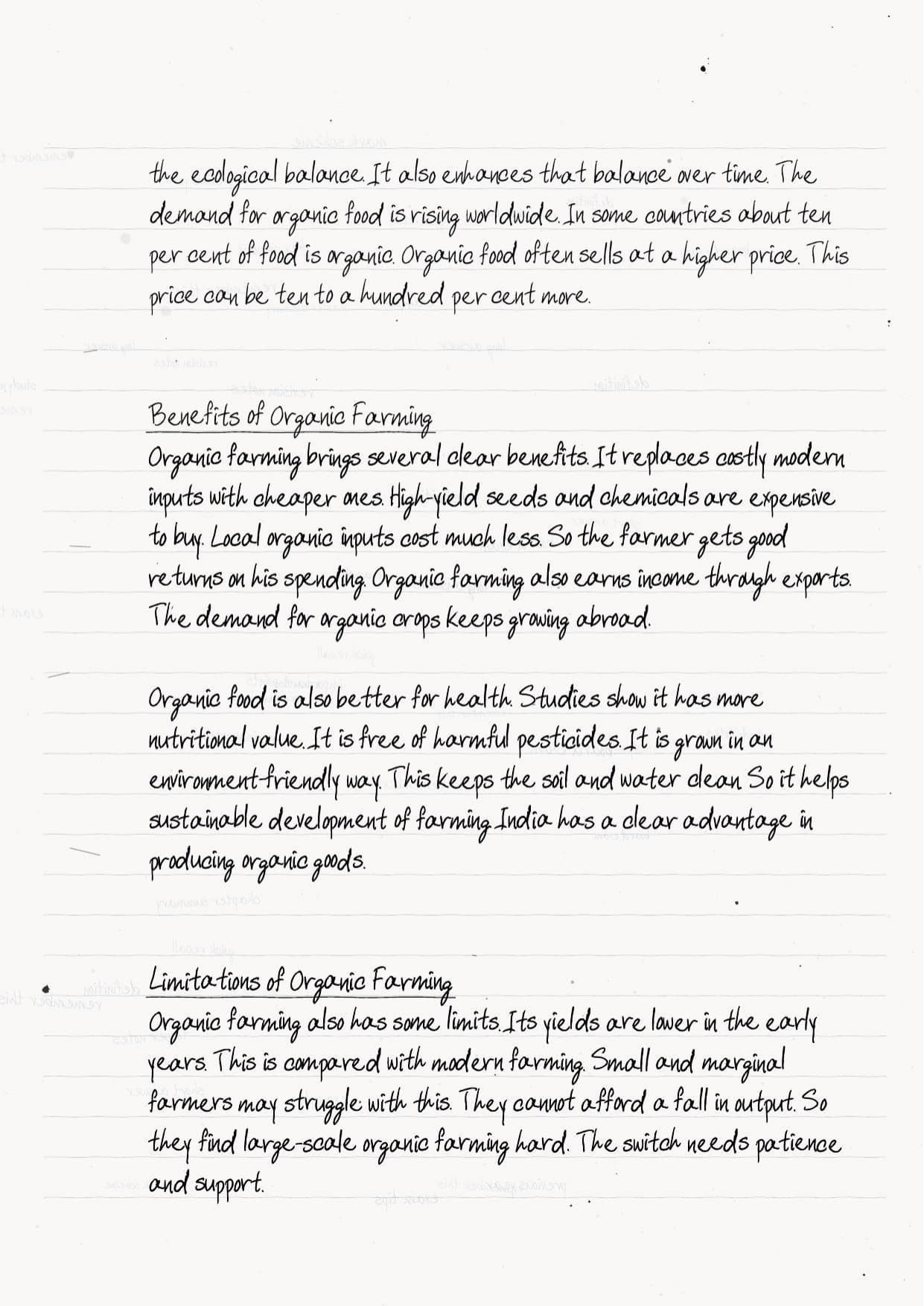
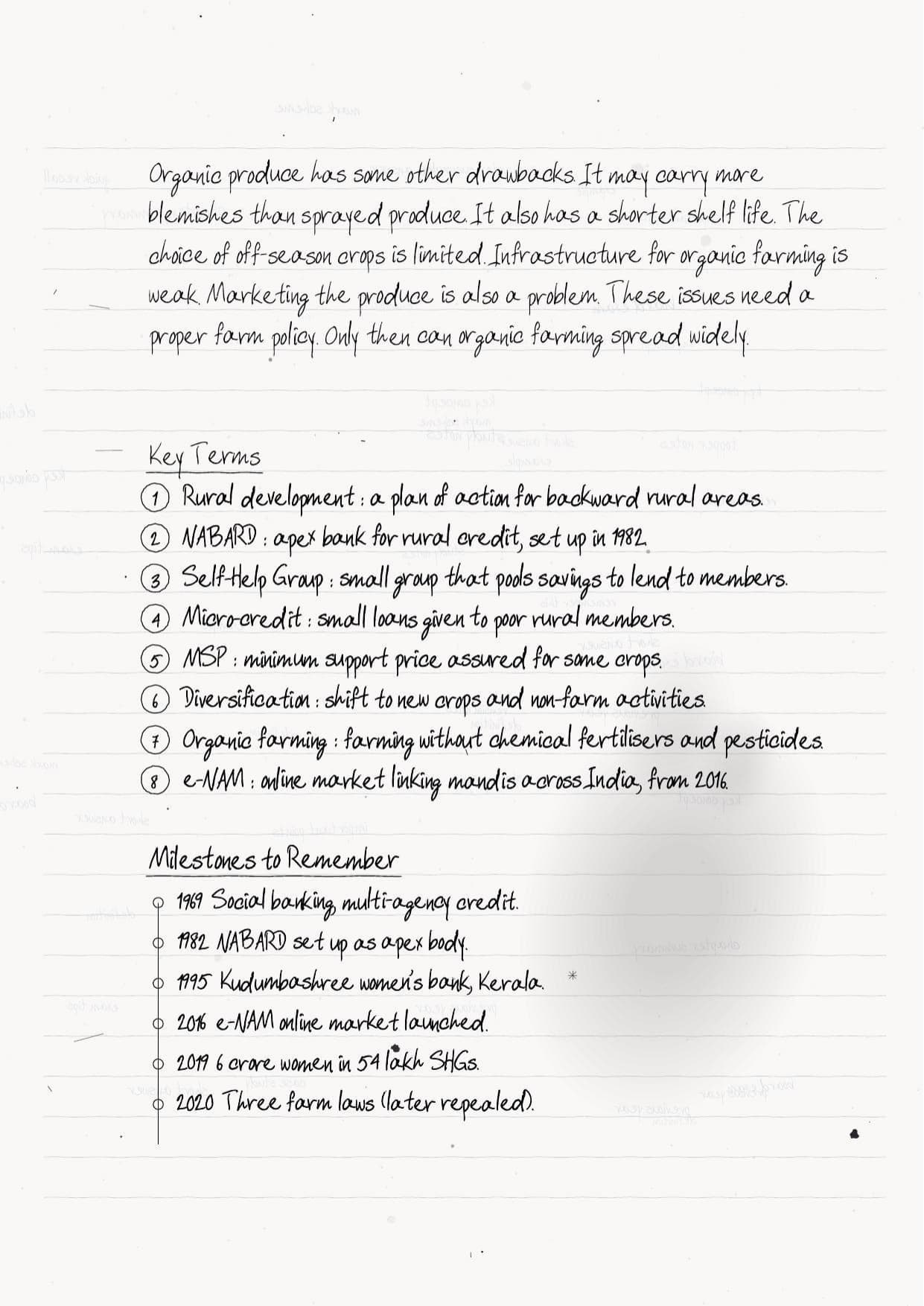

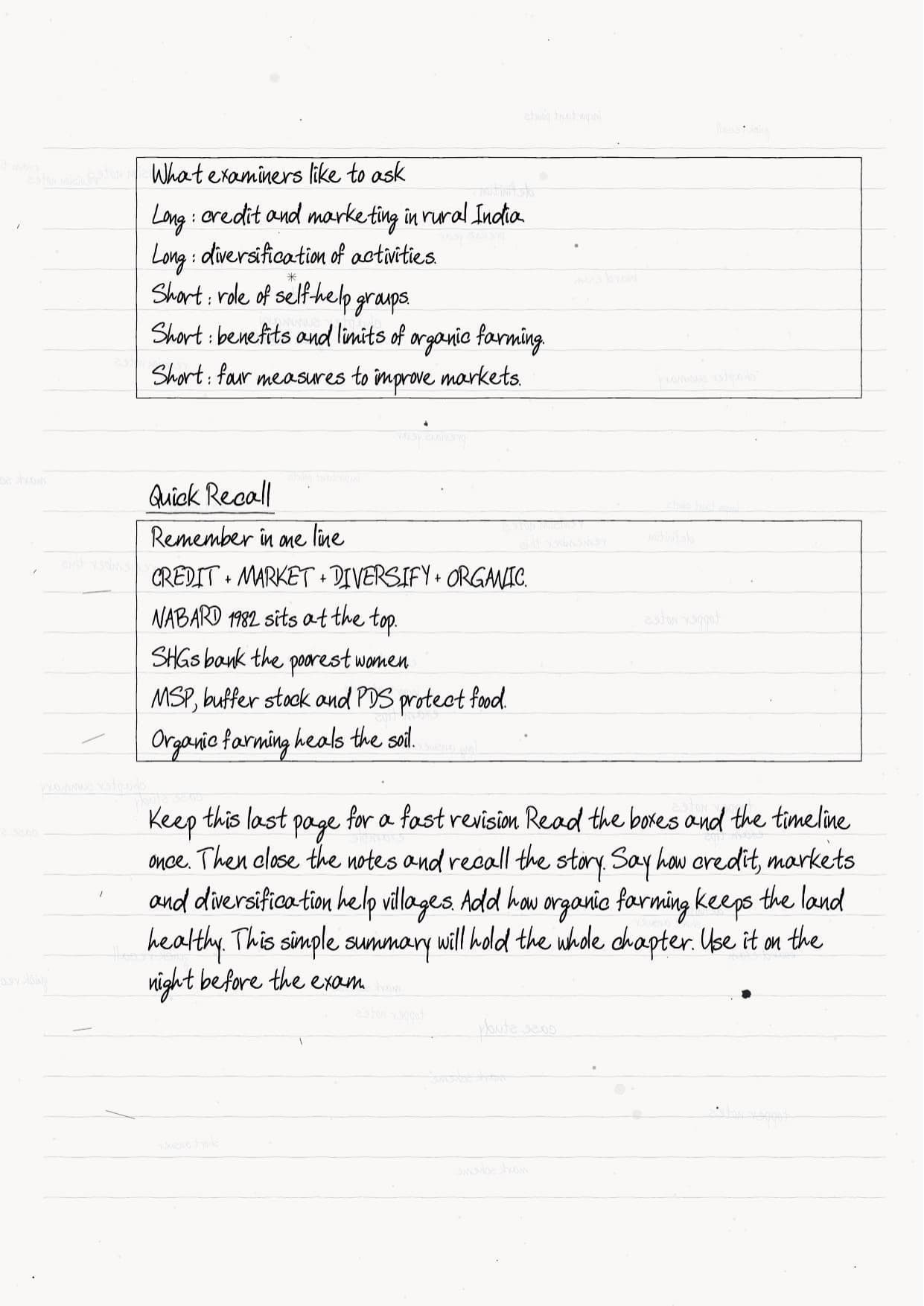
- CBSE Class 11 Weightage: a scoring chapter in the Economics paper, asked in short and long answers.
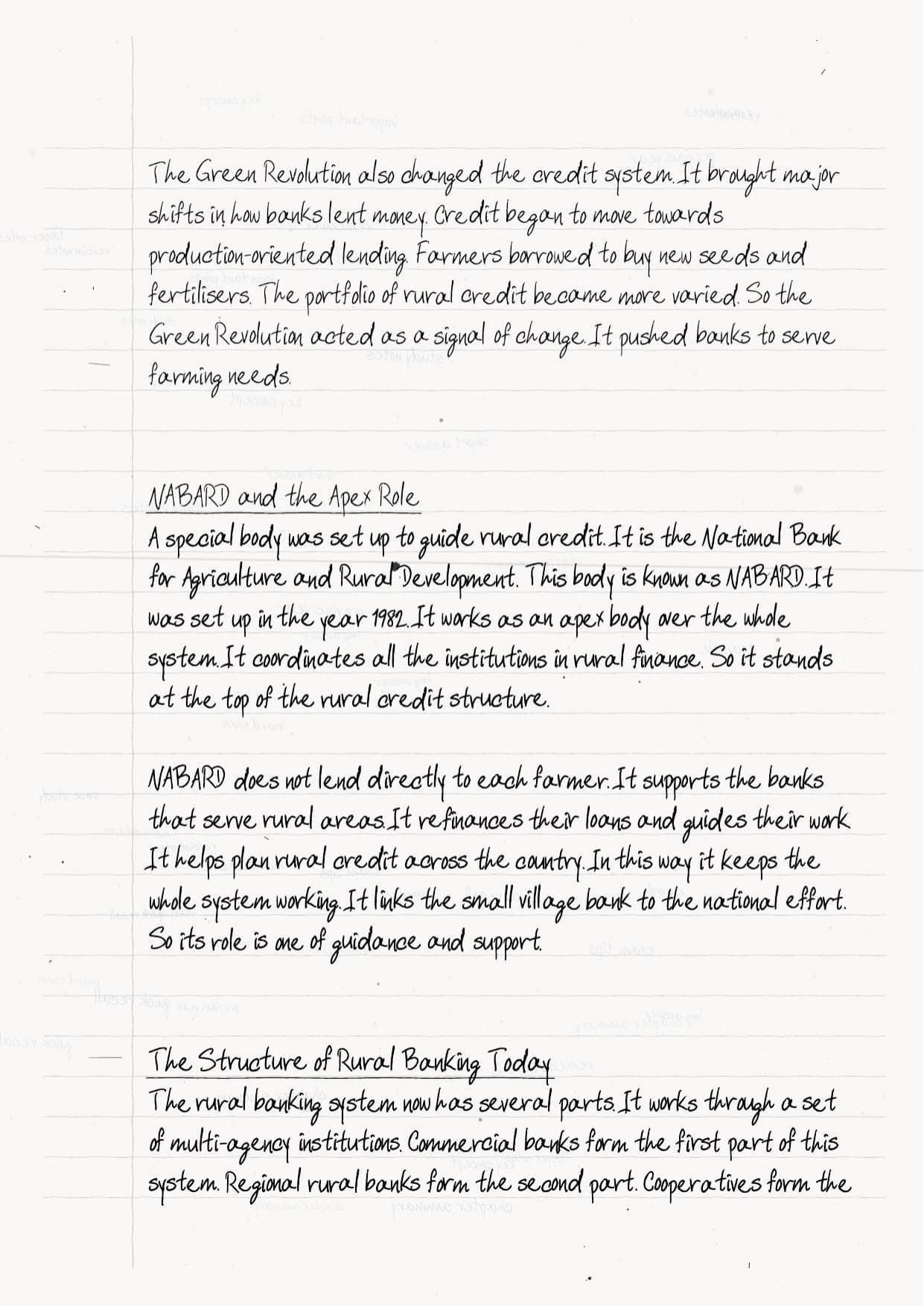
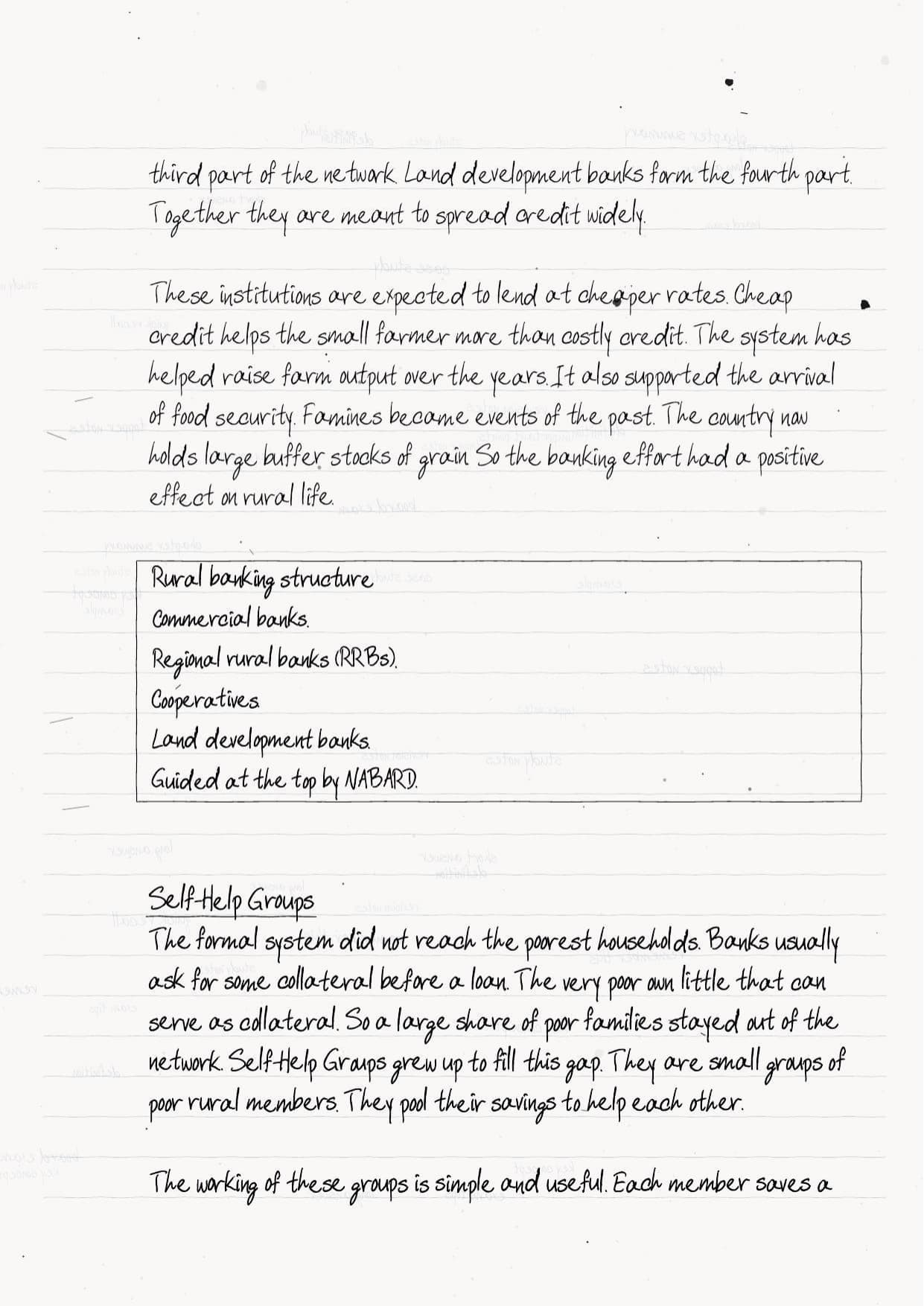
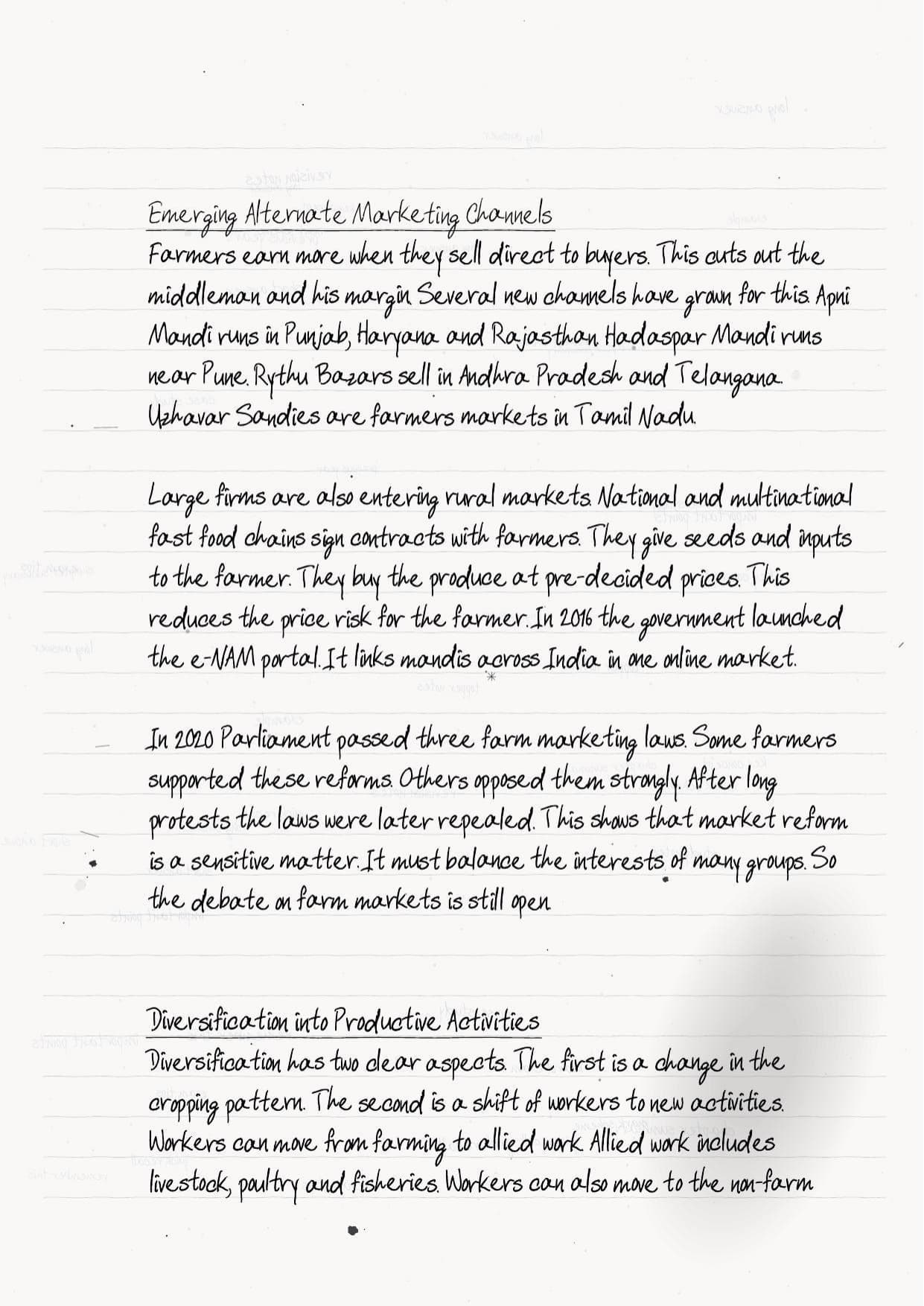
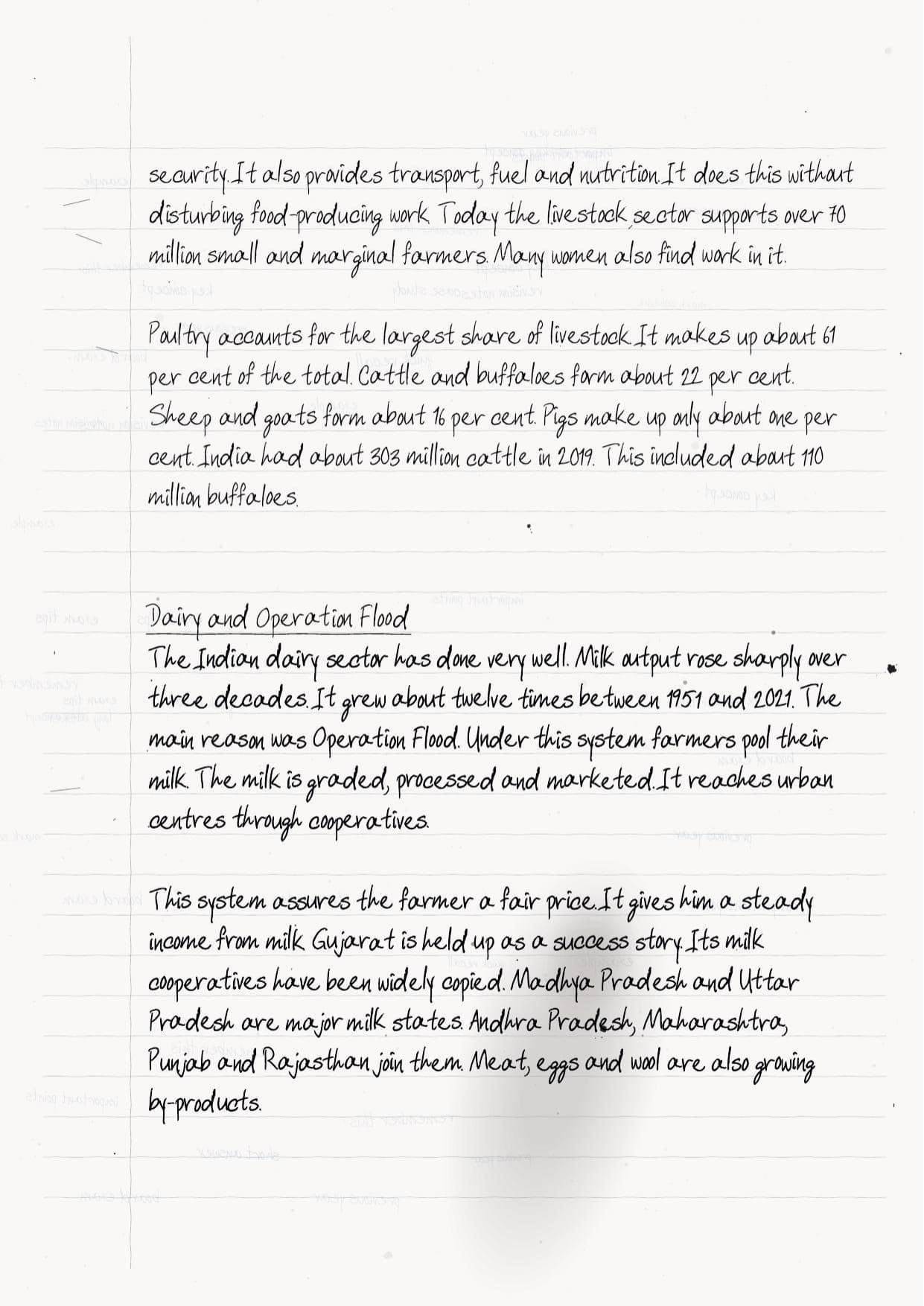
- What the notes cover: what rural development means and its key issues, rural credit, nabard and self-help groups, agricultural market system and its four measures, emerging alternate marketing channels.
- Best for: quick revision before Class 11 exams and a base for CUET later.
You can read the complete class 11 economics handwritten notes for Rural Development, with key terms, boxed definitions, and quick revision points, in the PDF below.
These handwritten notes are written by subject teachers, mapped to the 2026-27 NCERT, and checked against the last five years of CBSE Class 11 Economics papers.
What the Rural Development Handwritten Notes Cover
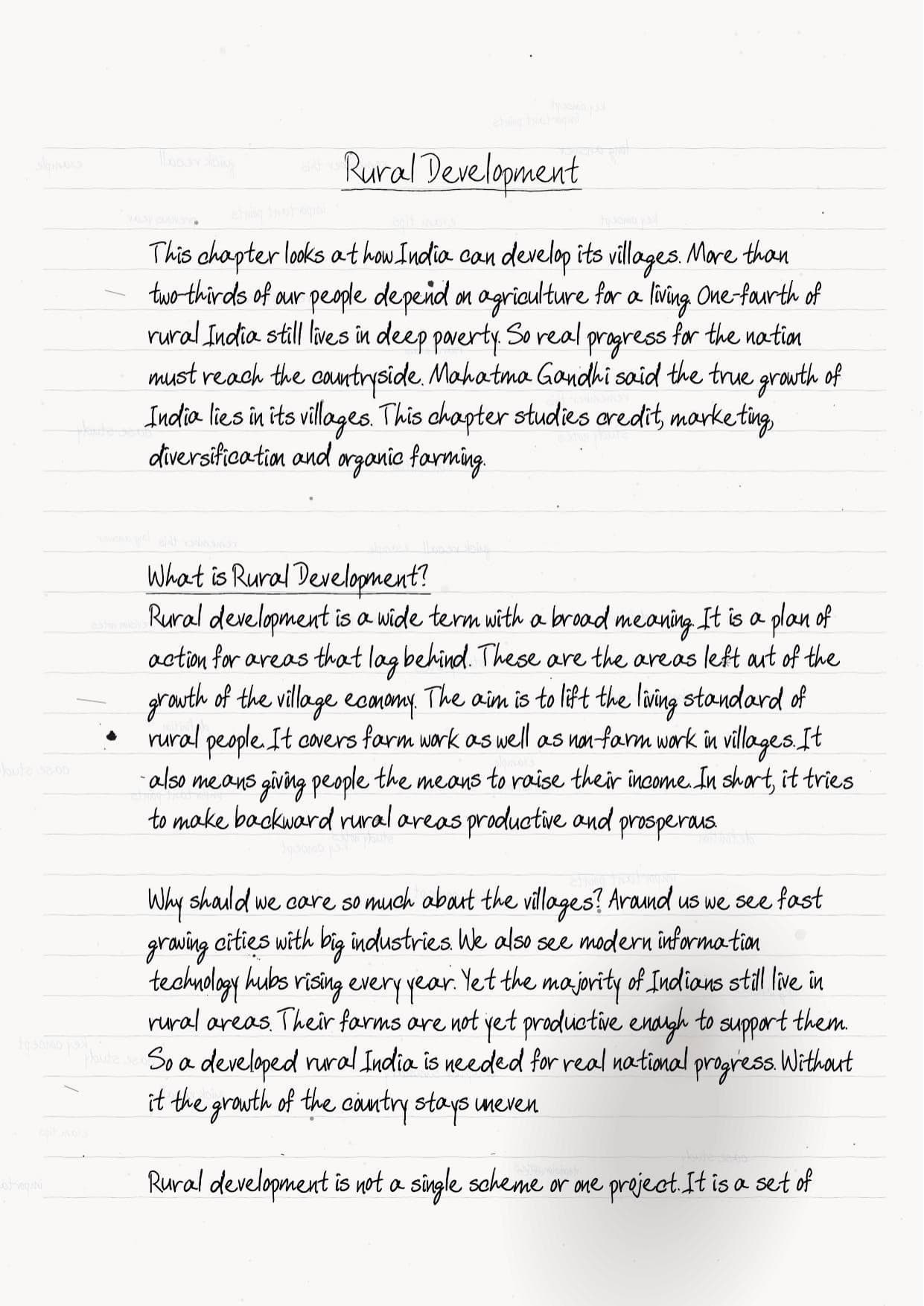
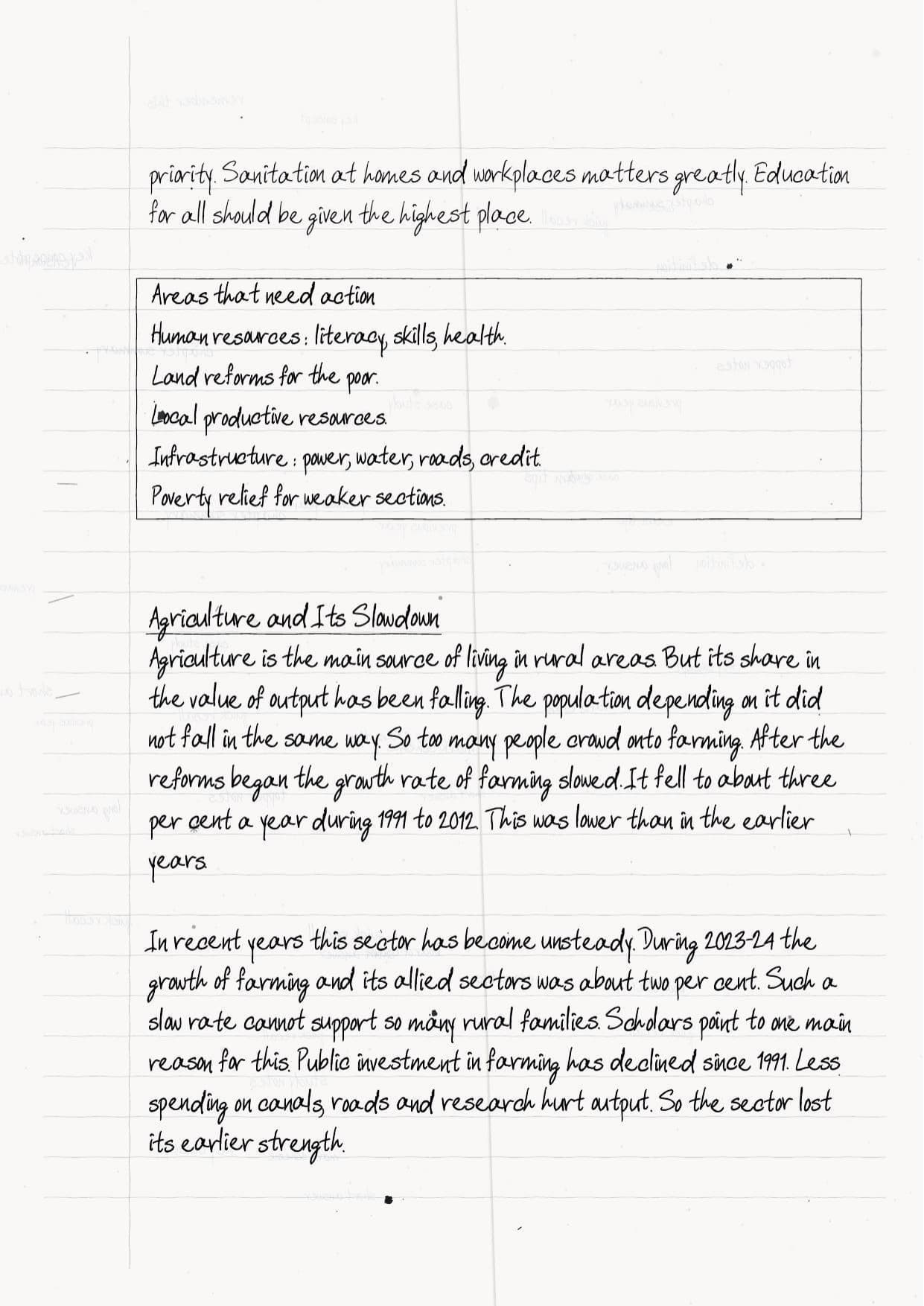
Rural development is a plan of action for backward village areas. More than two-thirds of Indians depend on farming, and one-fourth of rural India lives in deep poverty. This chapter studies credit, marketing, diversification and organic farming.
- What rural development means and its key issues
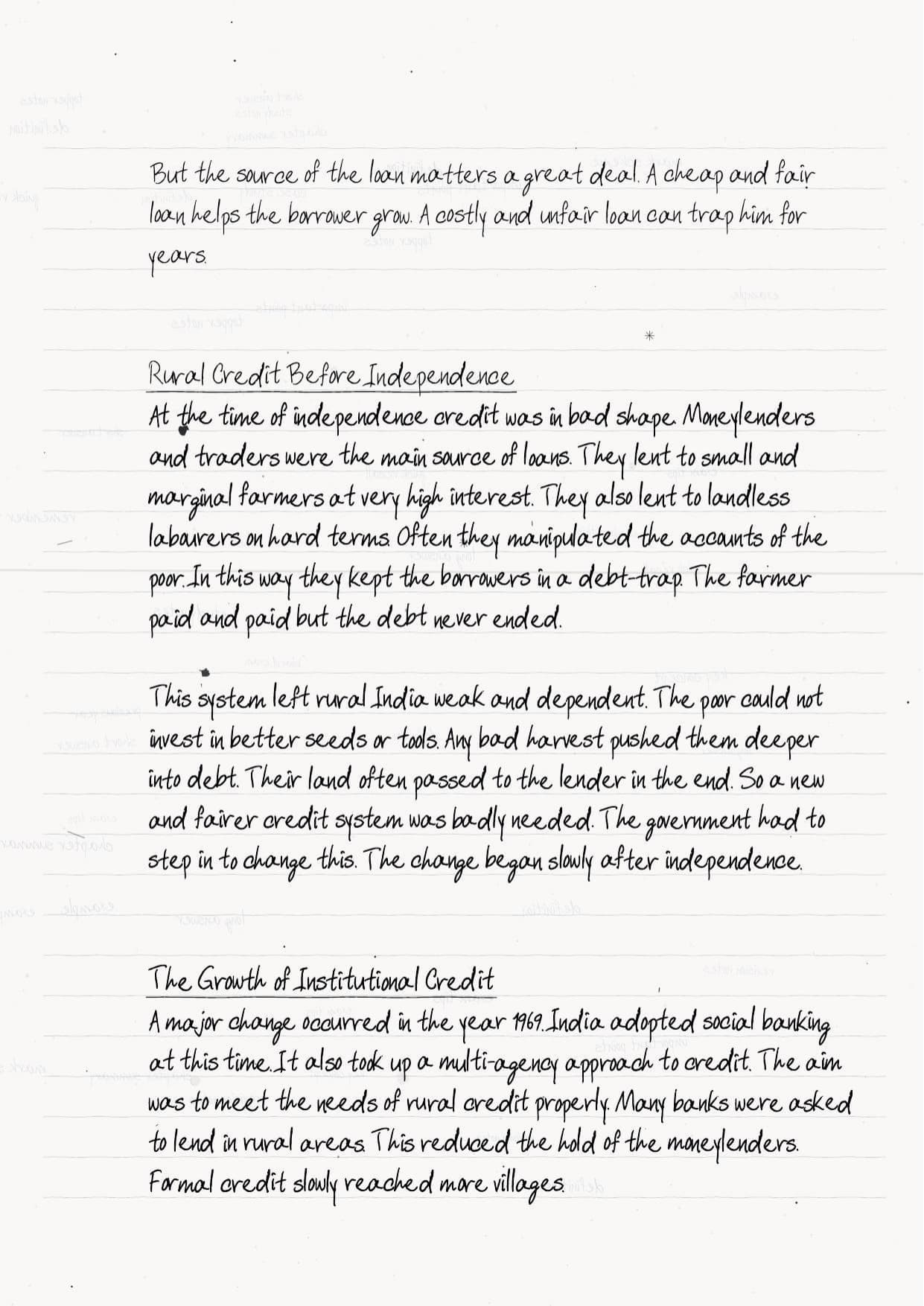
- Rural credit, NABARD and self-help groups
- Agricultural market system and its four measures
- Emerging alternate marketing channels
- Diversification into allied and non-farm activities
- Animal husbandry, fisheries and horticulture
- Sustainable development and organic farming
Rural Development Self-Assessment Quiz
Try these quick questions after you read the notes. Tap each question to check your answer. They cover the points CBSE asks most often.
NABARD was set up in the year
(a) 1969 (b) 1982 (c) 1991 (d) 2005
Answer: (b) 1982 correct - it was created as the apex body for rural credit.
Self-help groups mainly serve
(a) big farmers (b) urban traders (c) poor rural members (d) exporters
Answer: (c) poor rural members correct - they pool small savings to lend to the needy.
Which is NOT one of the four market measures?
(a) regulation (b) infrastructure (c) private moneylending (d) MSP
Answer: (c) private moneylending correct - it is a problem, not a government measure.
Operation Flood raised the output of
(a) wheat (b) milk (c) cotton (d) fish
Answer: (b) milk correct - milk output rose about twelve times between 1951 and 2021.
A key benefit of organic farming is
(a) higher early yields (b) longer shelf life (c) cheaper local inputs (d) more chemicals
Answer: (c) cheaper local inputs correct - it replaces costly modern inputs with cheap organic ones.
Rural Development Topic-wise Weightage for CBSE Class 11 Economics
Some parts of this chapter are asked more often than others. The table below shows which sub-topics to revise first, based on recent CBSE Class 11 question trends.
| Sub-topic | Weightage | CBSE Frequency |
|---|---|---|
| Rural credit and self-help groups | High | asked most years |
| Agricultural market system | High | frequent |
| Diversification and allied sectors | High | frequent |
| Organic farming benefits and limits | Medium | often |
| Meaning and issues of rural development | Medium | sometimes |
Key Terms and Ideas in Rural Development
These are the terms and ideas the exam asks about most. Learn each one so you can define it and use it in your answers.
| Term / Idea | What it means |
|---|---|
| Rural development | action plan for areas lagging in the village economy |
| NABARD | apex body for rural credit, set up in 1982 |
| Self-help groups | pool small savings to lend to poor members |
| Micro-credit | small loans, but often used for consumption |
| Four market measures | regulation, infrastructure, cooperatives, MSP-buffer-PDS |
| Diversification | shift to allied and non-farm activities |
| Operation Flood | raised milk output about twelve times, 1951-2021 |
| Organic farming | eco-friendly, cheaper inputs, healthier food |
How Collegedunia's Handwritten Notes Help You Revise Rural Development
These notes are made for the night before the exam. They keep the facts short and easy to scan. Collegedunia maps every point to the 2026-27 NCERT.
- Clear handwriting: each topic is written in neat, easy-to-read handwriting.
- Boxed key terms: the main terms and definitions are boxed by hand for fast recall.
- Diagrams and tables: simple hand-drawn tables and charts make ideas clear.
- Colour-coded headings: new sub-topics stand out, so you find any section in seconds.
How to Use These Handwritten Notes for Class 11 Economics Revision
Use these class 11 economics handwritten notes in two passes. Read them slowly once for the full chapter. Then, near the exam, read only the boxes and key terms for a fast recall.
- Read the notes once with the NCERT chapter open beside you.
- Say each key term and idea in your own words.
- Practise one long-answer question from a past paper.
- On the last day, revise only the key terms and the boxes.
Class 11 Economics Handwritten Notes for All Chapters
The table below links the class 11 economics handwritten notes for every chapter. Use it to jump to any other chapter's notes.
Rural Development Class 11 Economics Handwritten Notes FAQs
Ques. Where can I download Rural Development Class 11 Economics Handwritten Notes PDF?
Ans. You can download the Rural Development Class 11 Economics Handwritten Notes PDF directly from this page. Both the Normal and HD versions are free.
Ques. Are these handwritten notes aligned with the 2026-27 NCERT?
Ans. Yes. These notes follow the current 2026-27 syllabus for Class 11 Economics. Why is credit so important for rural development?
Ques. How many pages is the Class 11 Economics Rural Development Handwritten Notes PDF?
Ans. The notes run about 22 pages. They cover the full chapter with key terms, hand-drawn boxes, and a short self-assessment quiz.
Ques. What is the main idea of the 11th standard Economics chapter Rural Development?
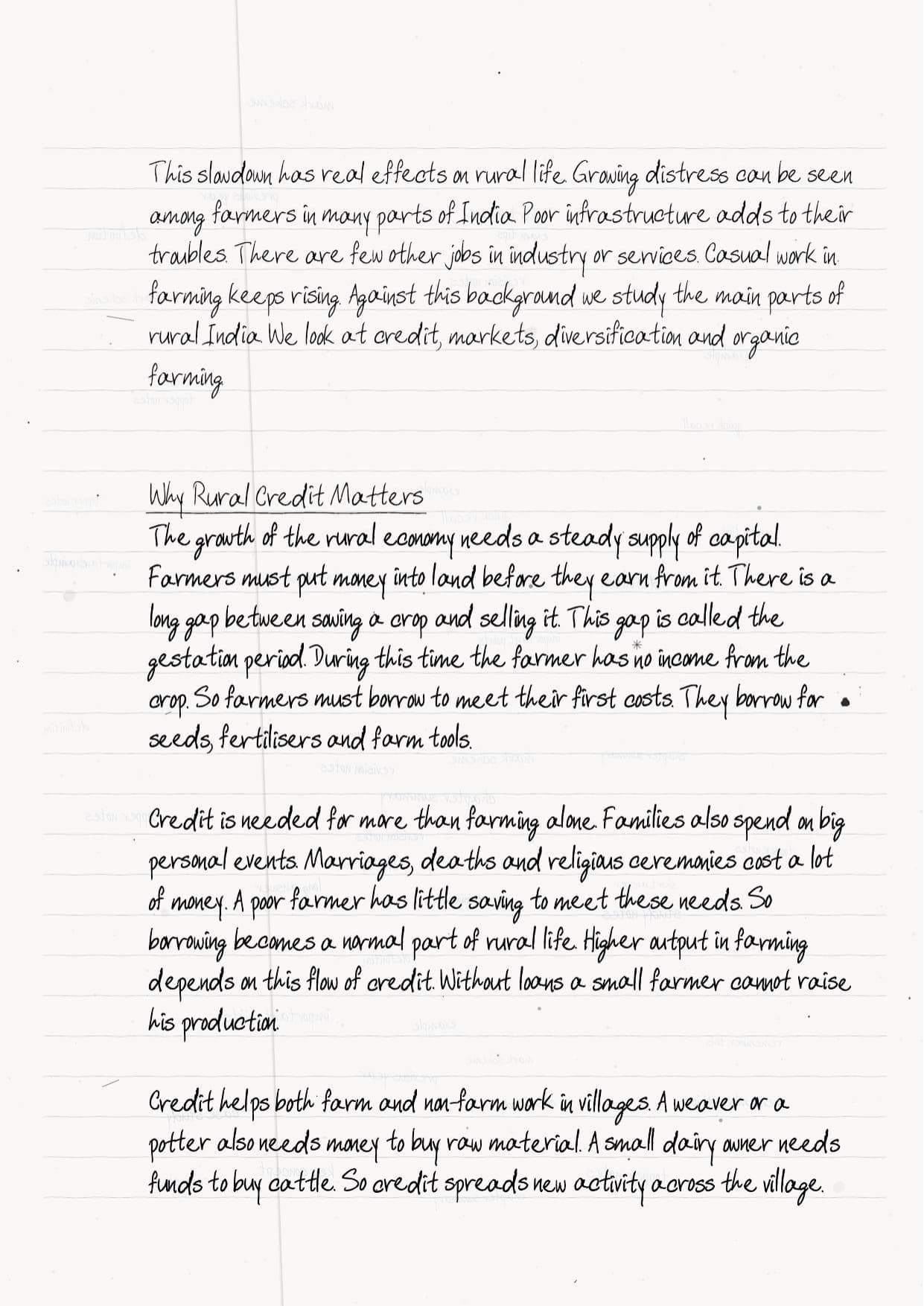
Ans. Farmers face a long gap between sowing a crop and earning from it, so they must borrow for seeds, tools and family needs. A cheap and fair supply of credit from banks, NABARD and self-help groups lets them raise output and escape the moneylender's debt-trap.
Ques. Are these Rural Development notes enough for the CBSE Class 11 exam?
Ans. Yes, for revision. The Collegedunia handwritten notes cover every key point and exam term. Read them with the NCERT chapter and practise past questions.



Comments