




Class 12 Physics Chapter 12 Atoms covers rutherford atomic model through hydrogen spectrum and rydberg formula. The chapter carries 3 marks in CBSE and 2 percent in JEE Main.

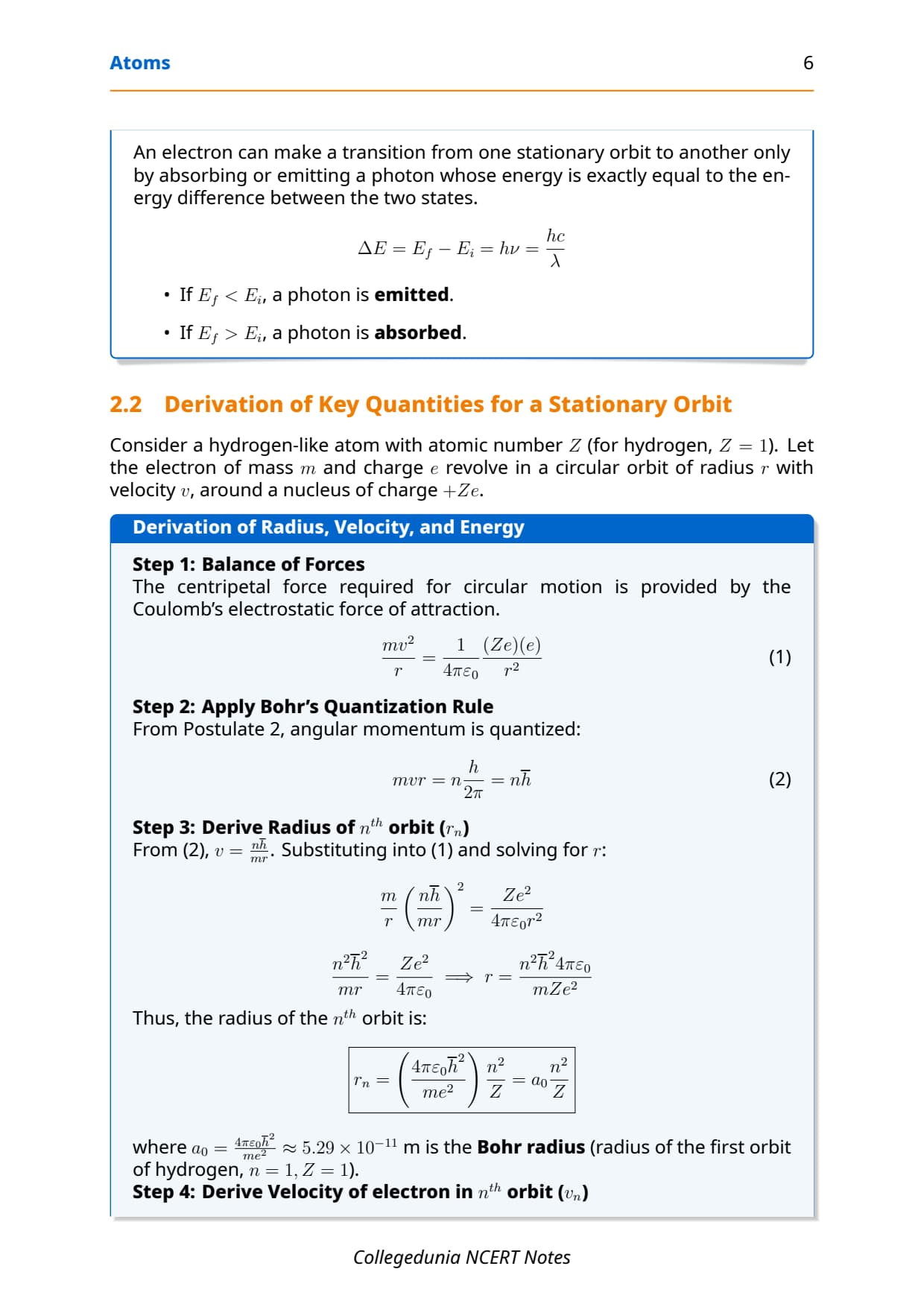
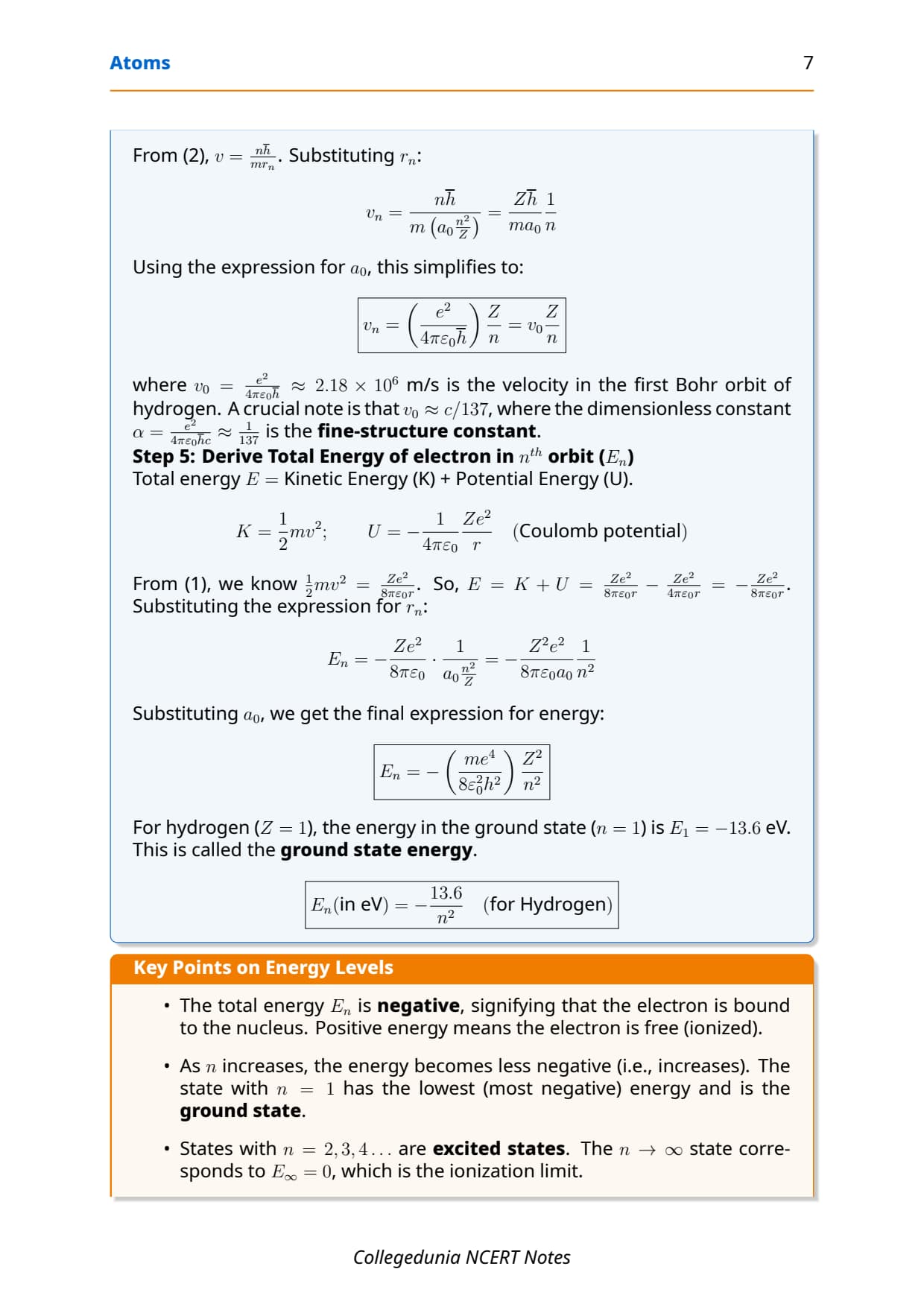
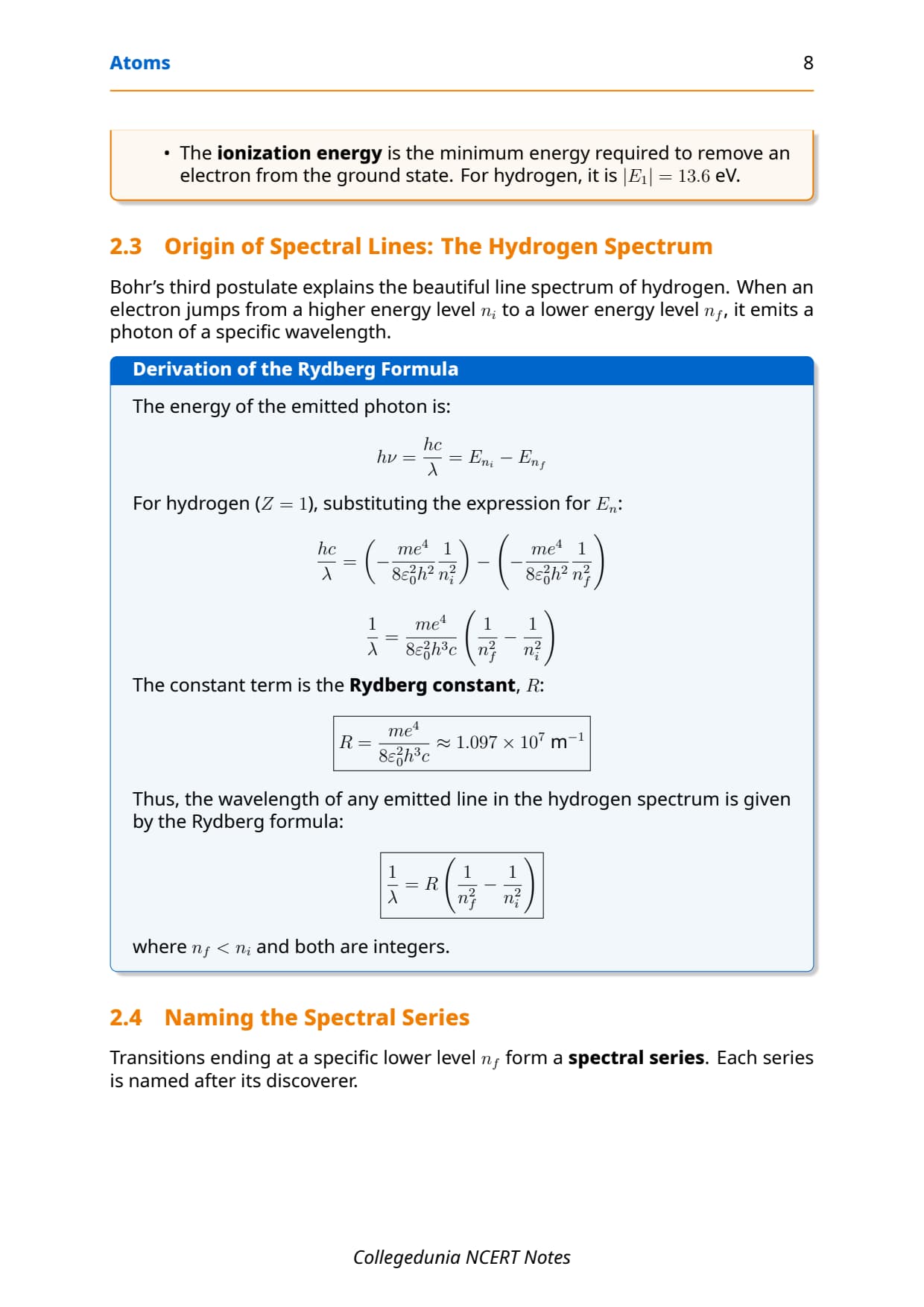
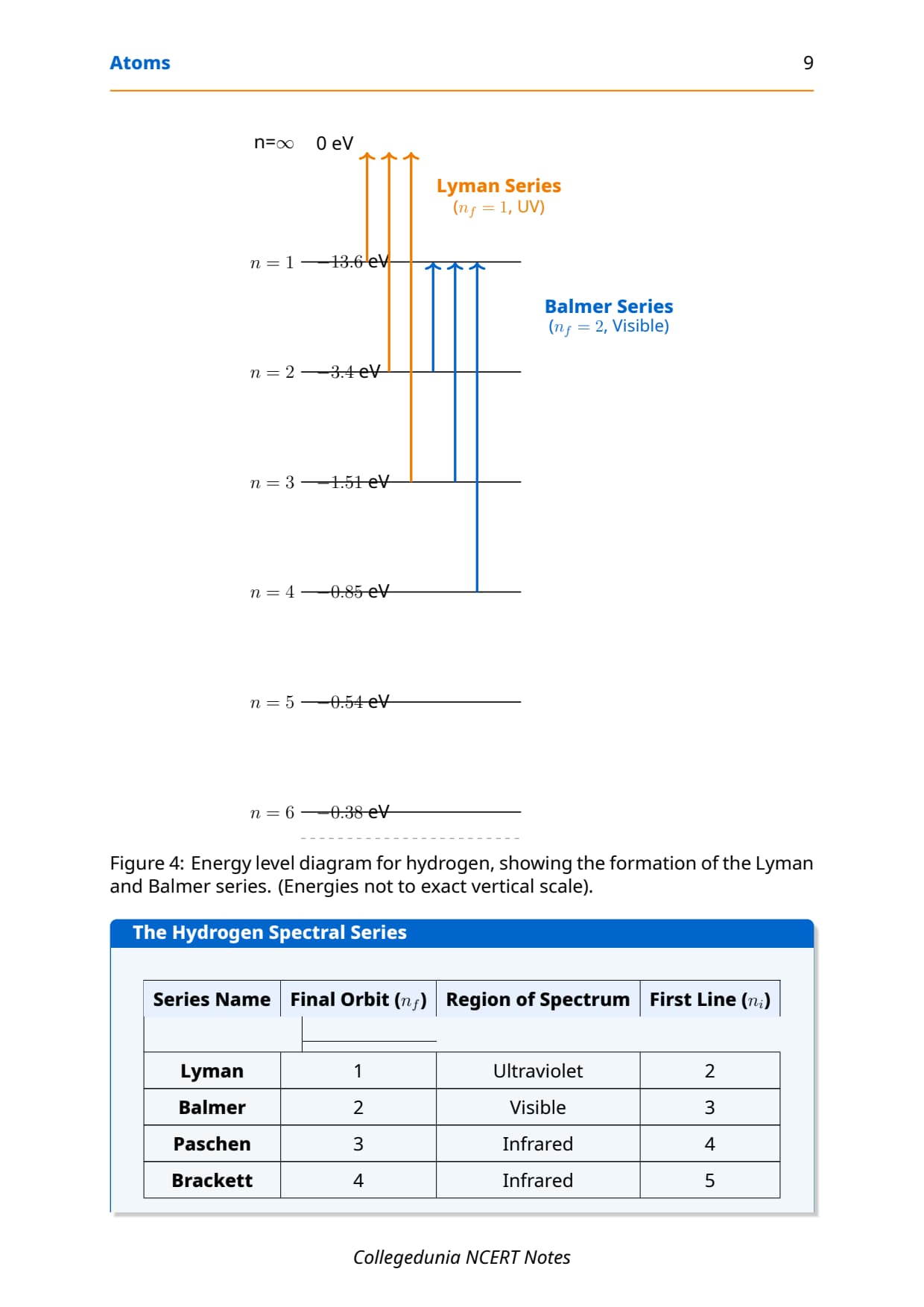

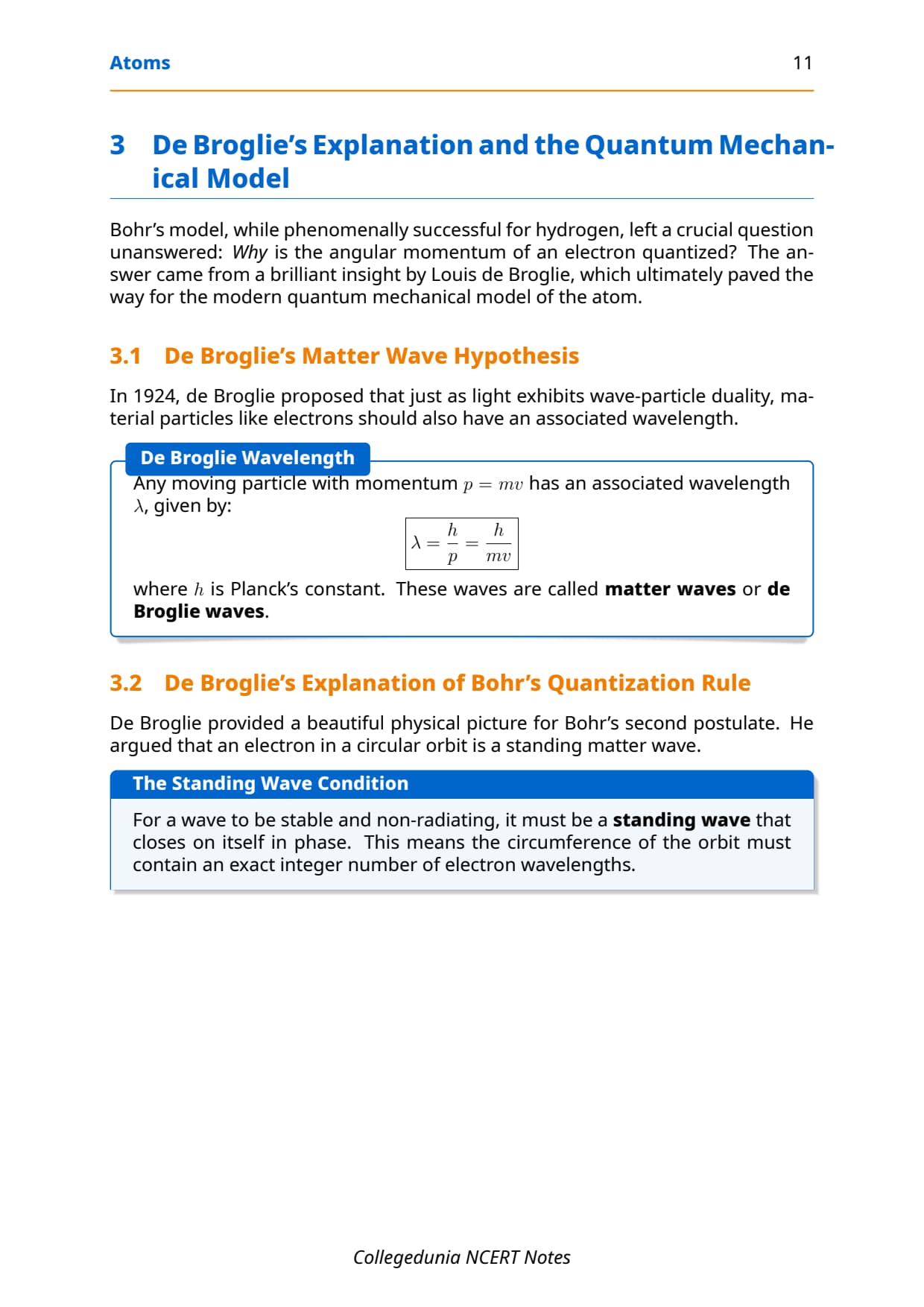
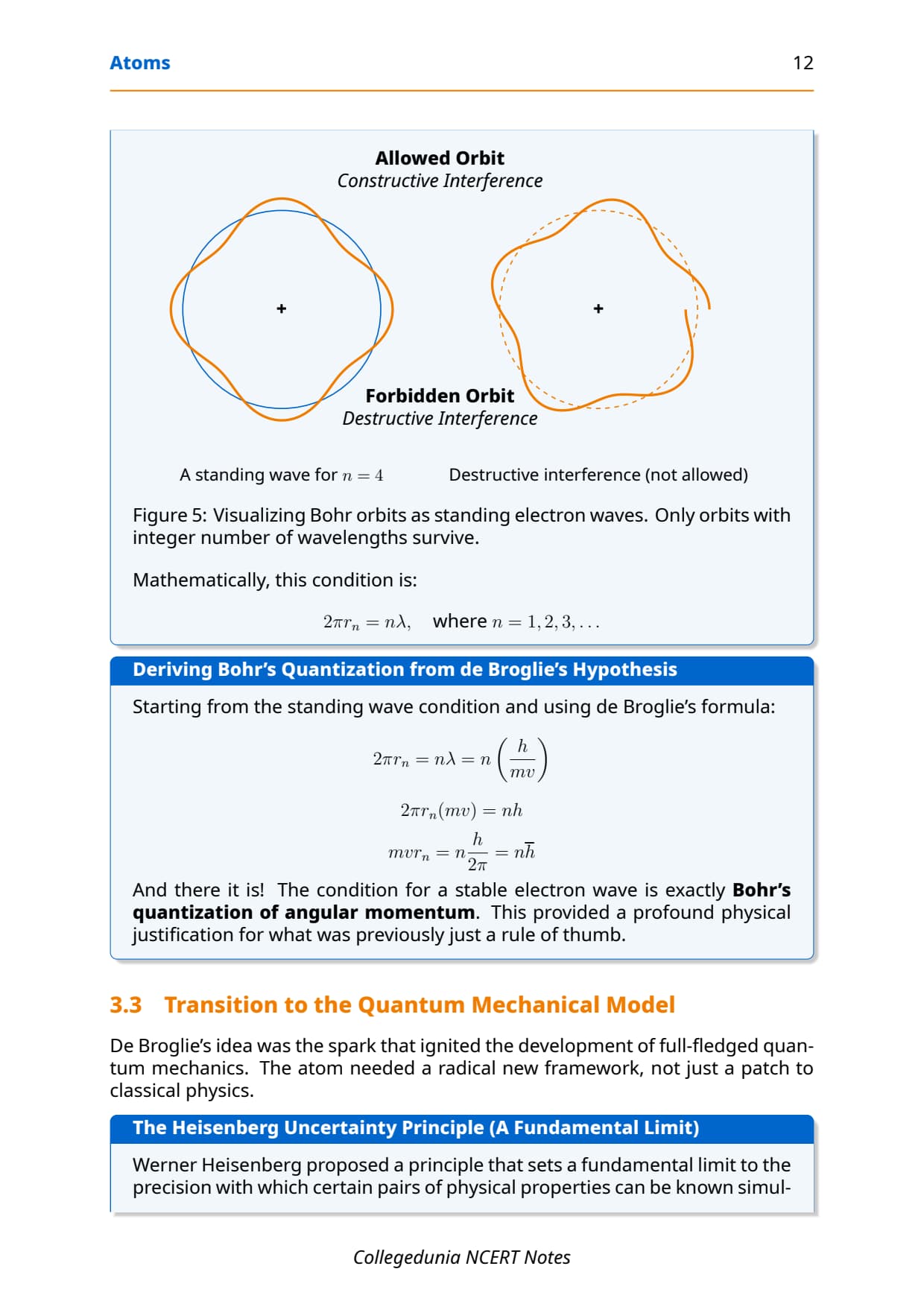
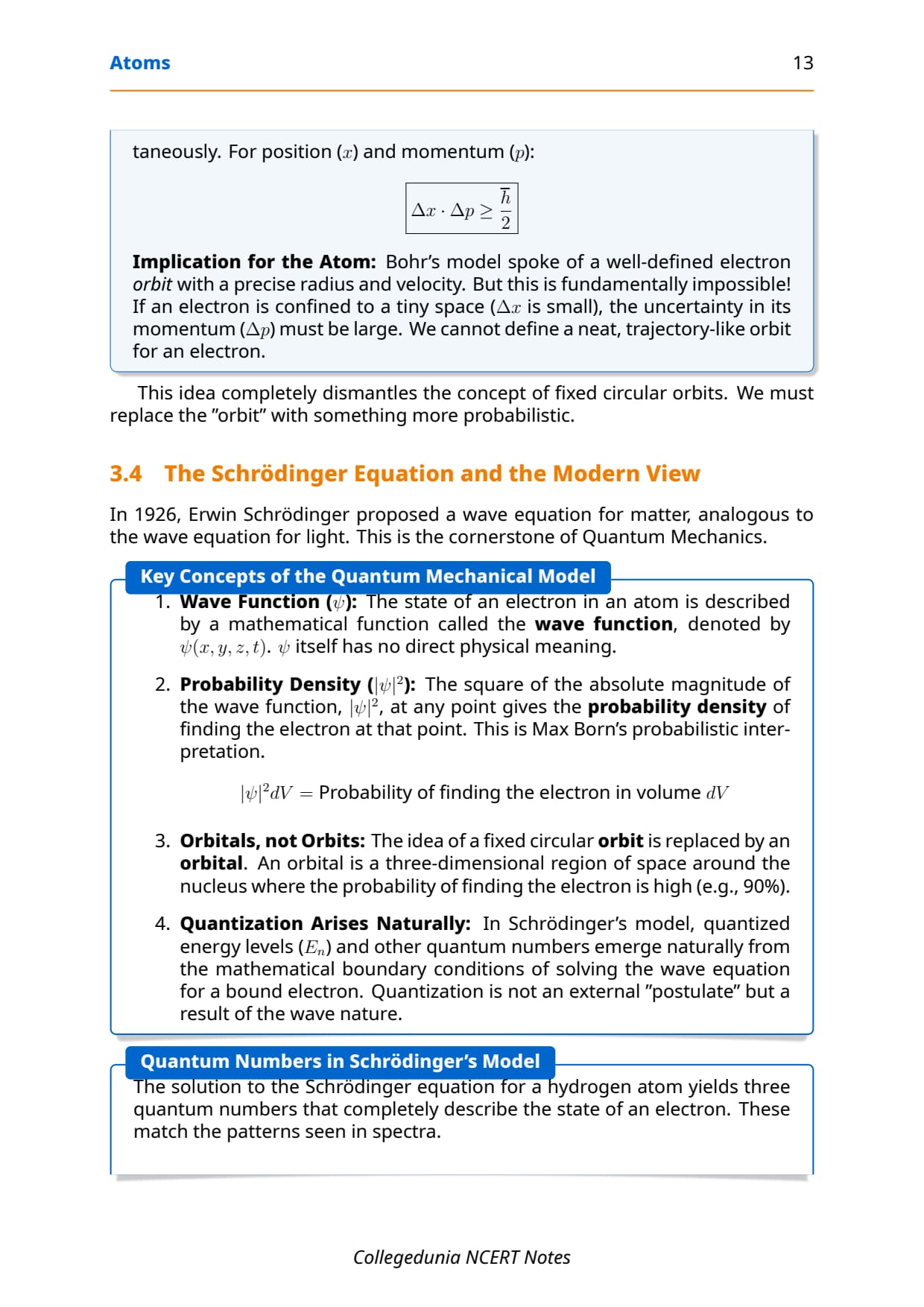
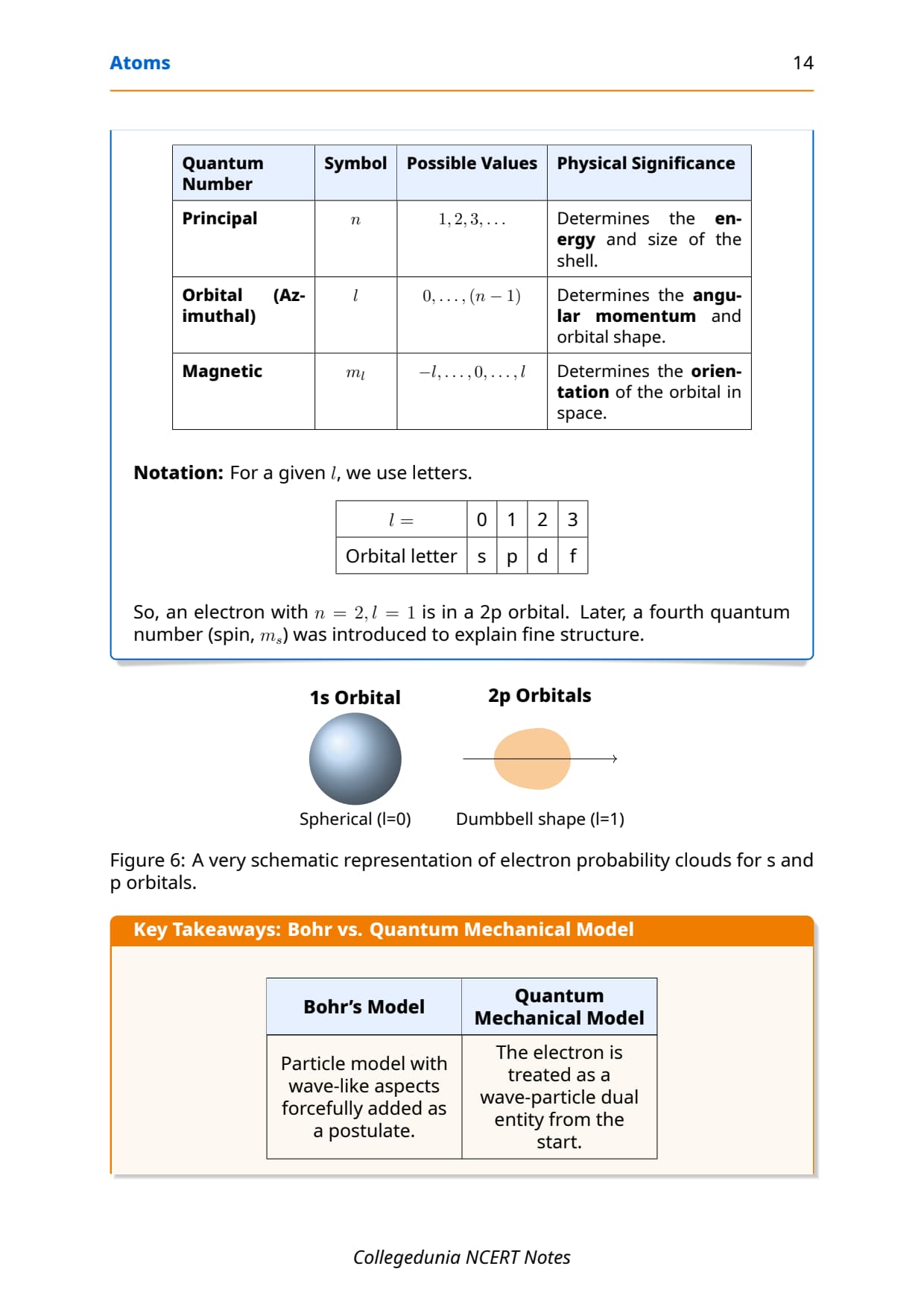
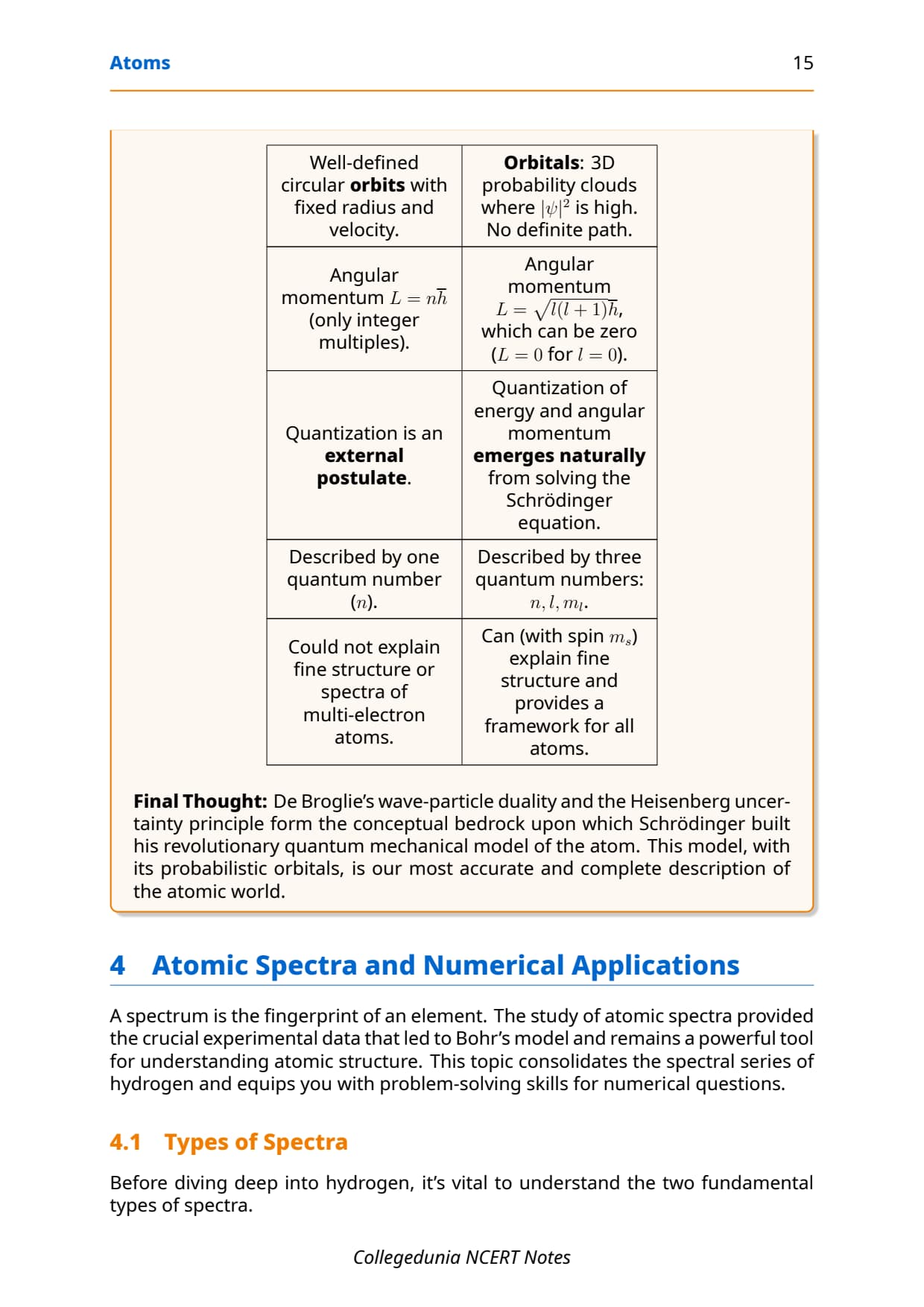

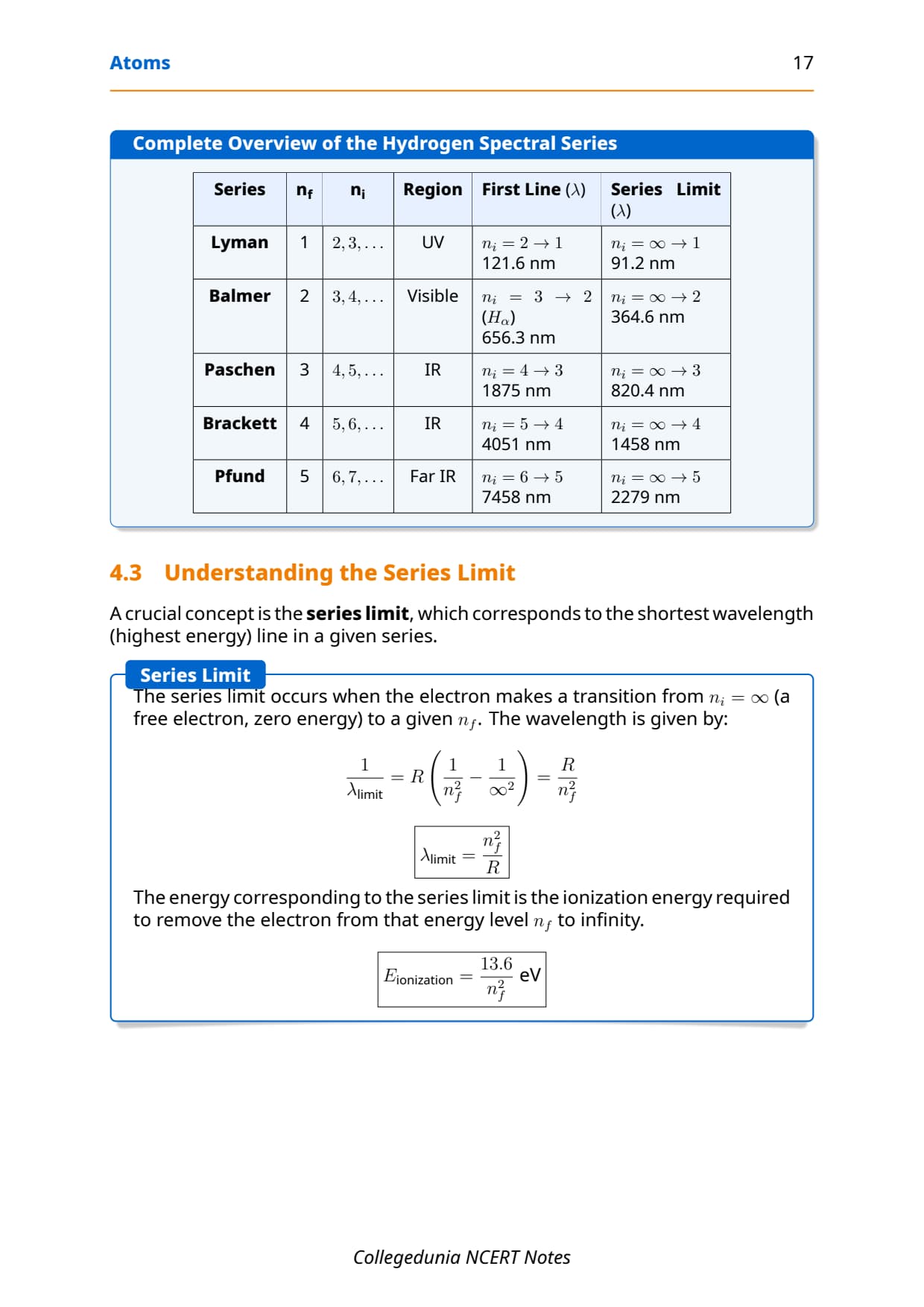
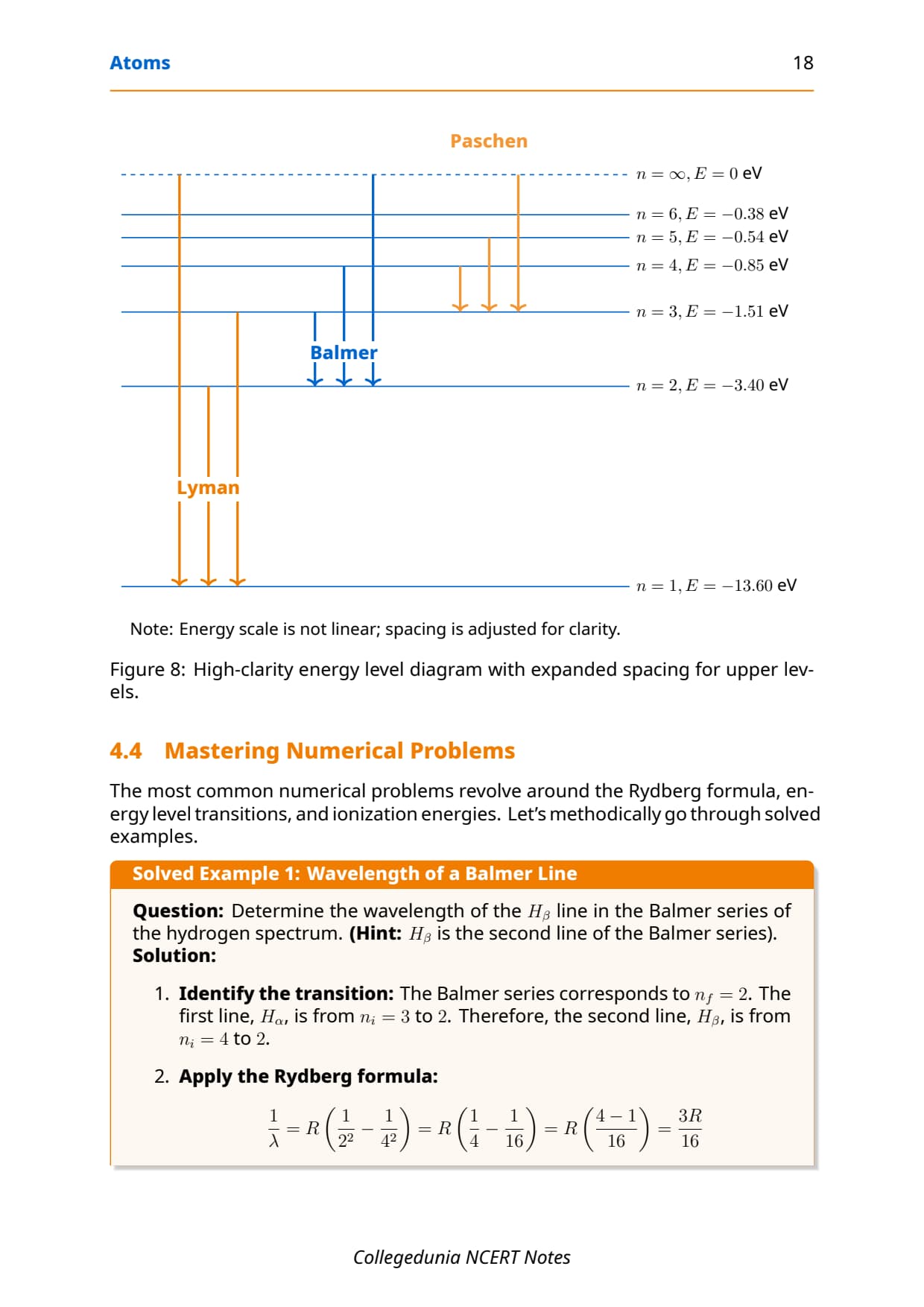
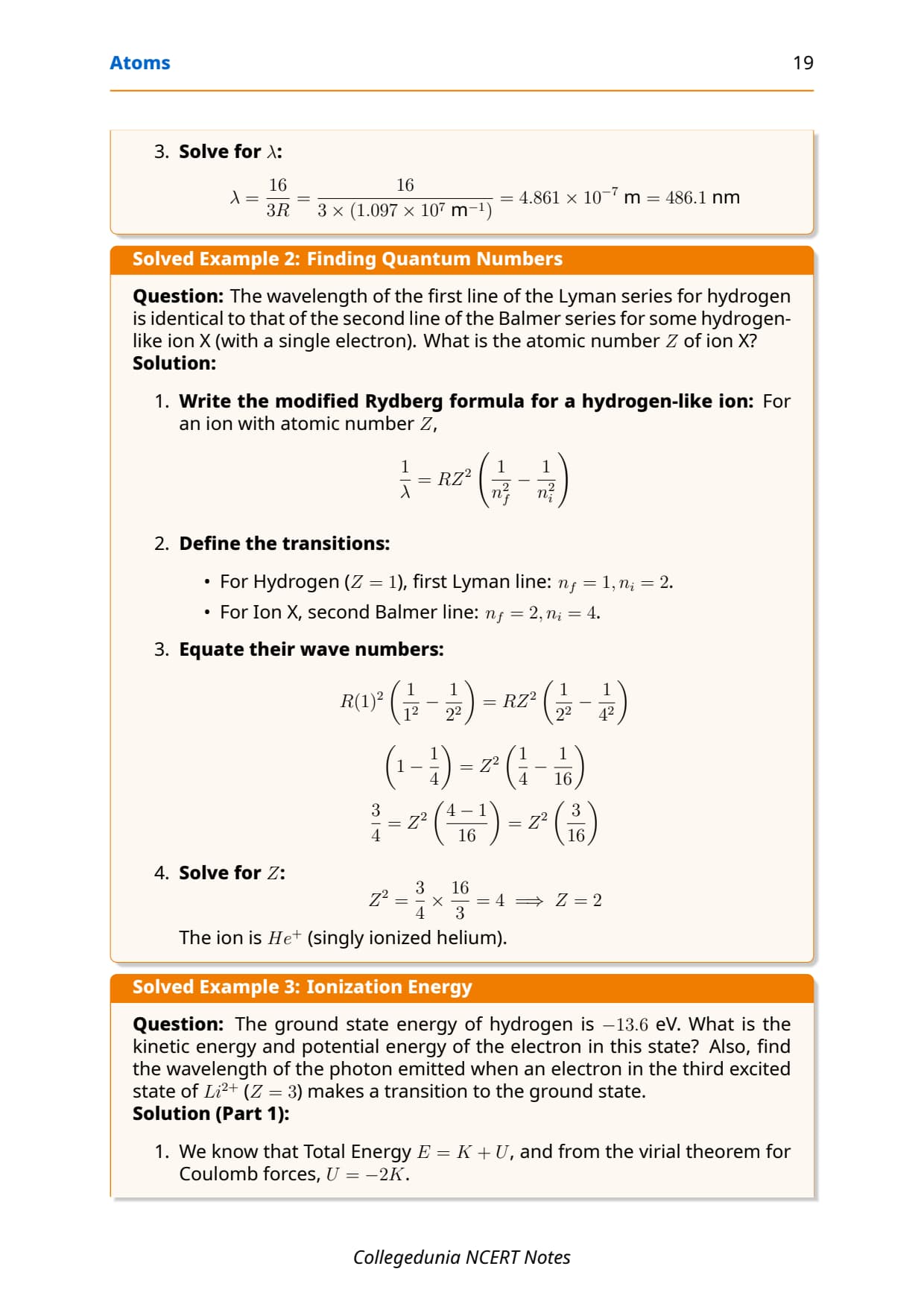
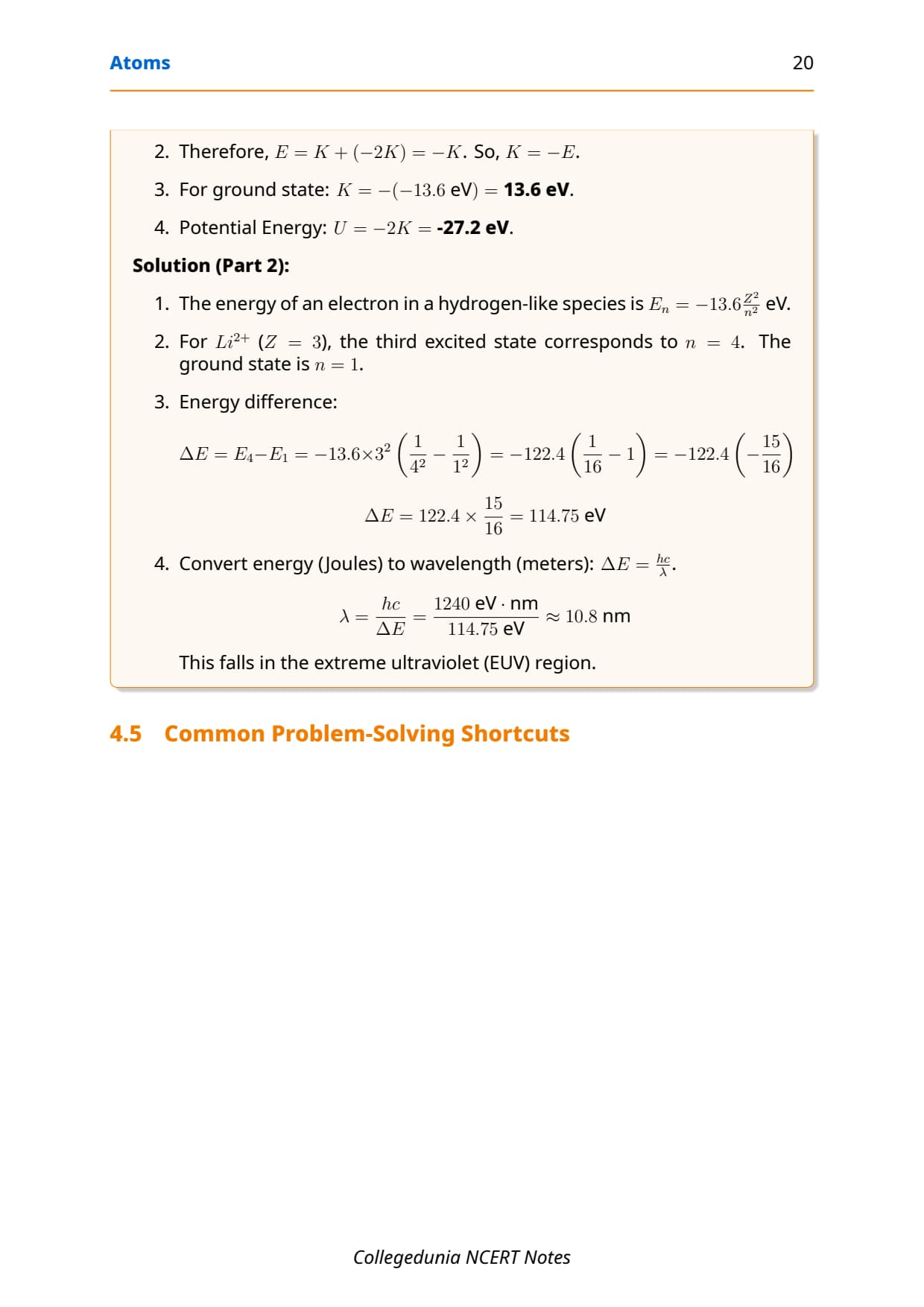
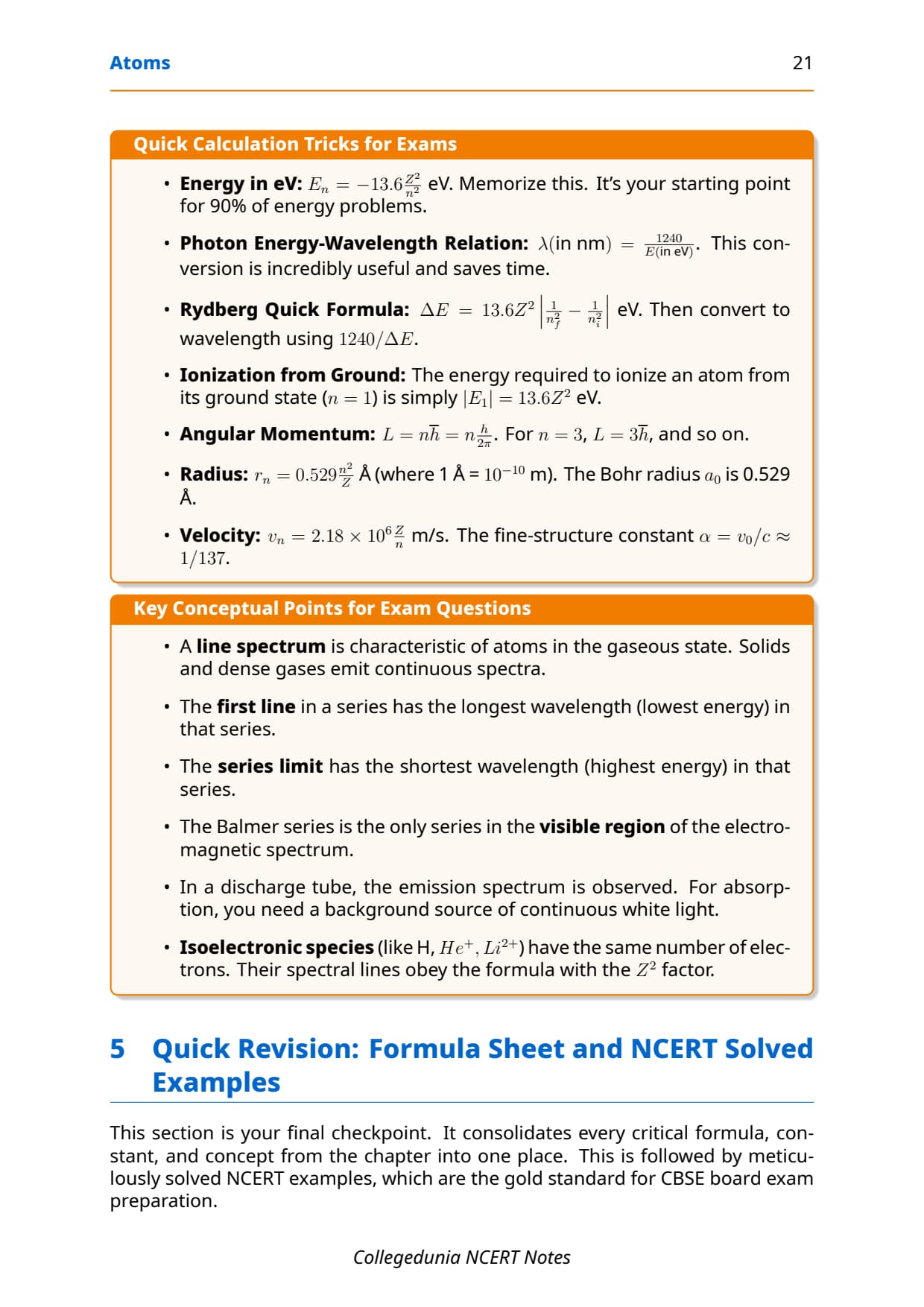
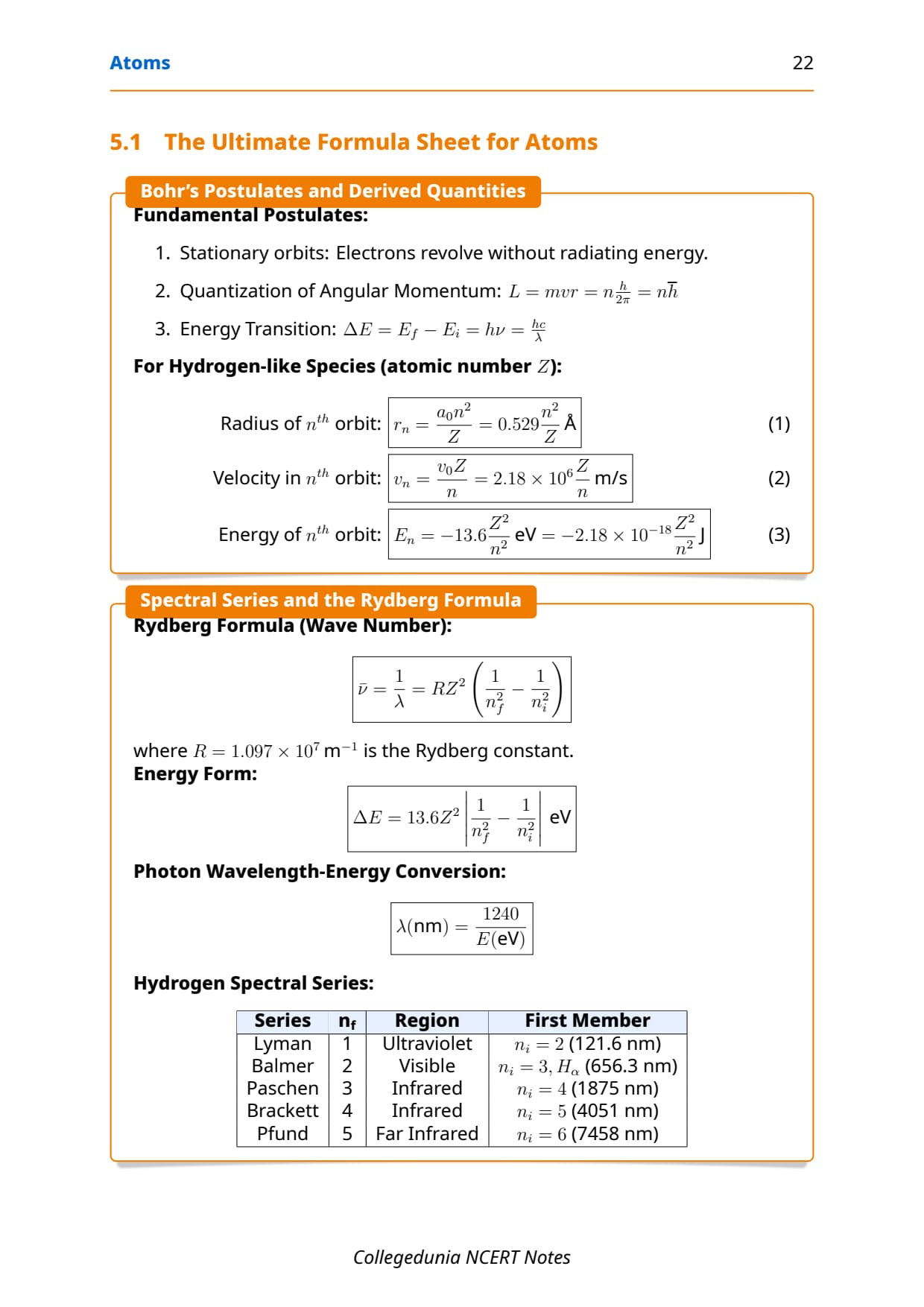
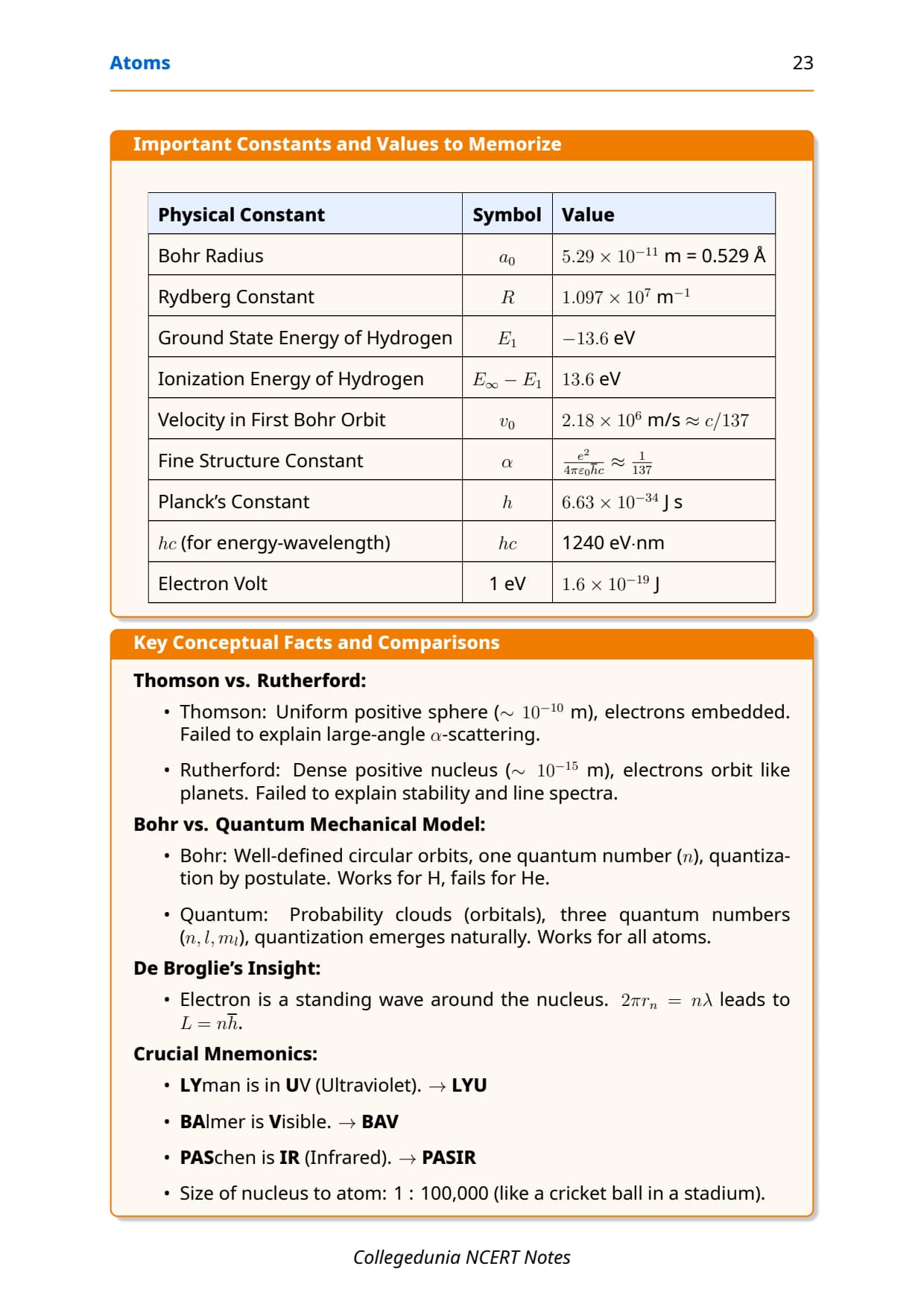

Here is how Atoms is weighted across the three exams.
- CBSE Boards: 3 marks, usually one derivation block plus one short-answer concept question.
- JEE Main: 2 percent, with steady annual coverage on derivations and numericals.
- NEET: 1 to 2 questions every year on chapter concepts.
Student Feedback: We asked 10,560 Class 12 students. 69% found the Bohr-orbit derivation the hardest part, and most said the hydrogen-spectrum chart made the Lyman, Balmer and Paschen lines click faster.
Class 12 Physics Chapter 12 Notes: Topic-by-Topic Summary
Atoms splits into five revision blocks. Here is what each block covers and its CBSE marks.
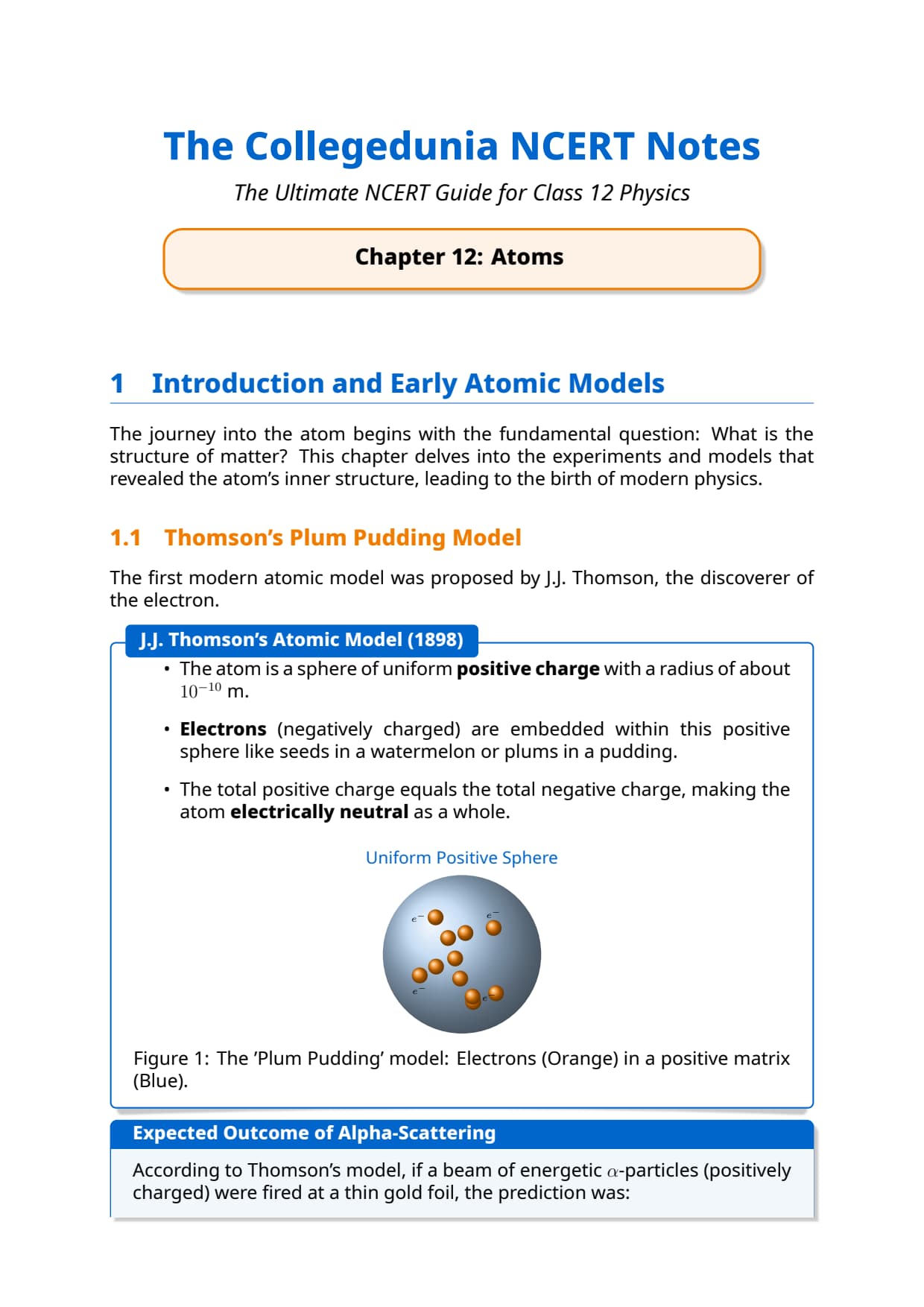
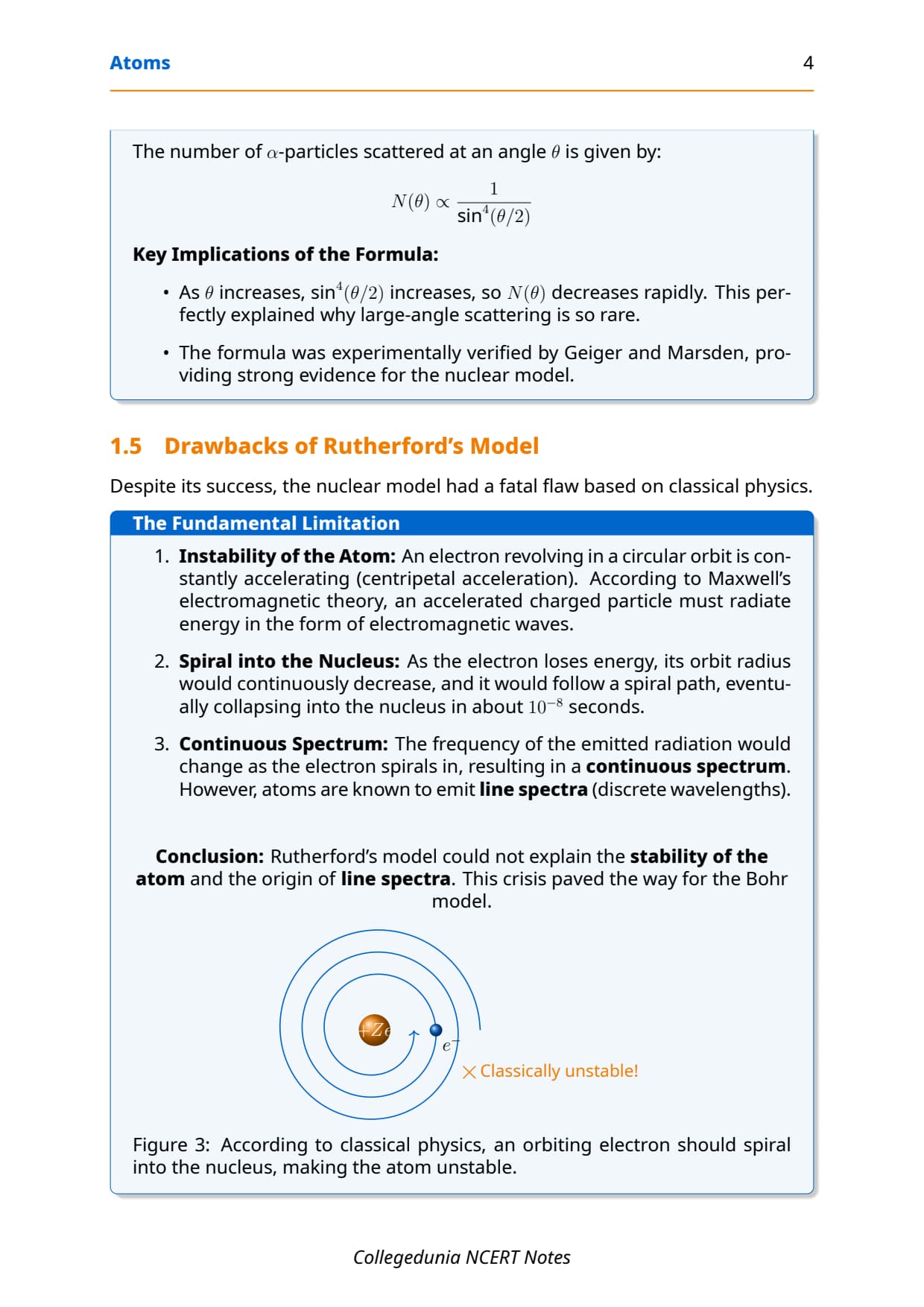
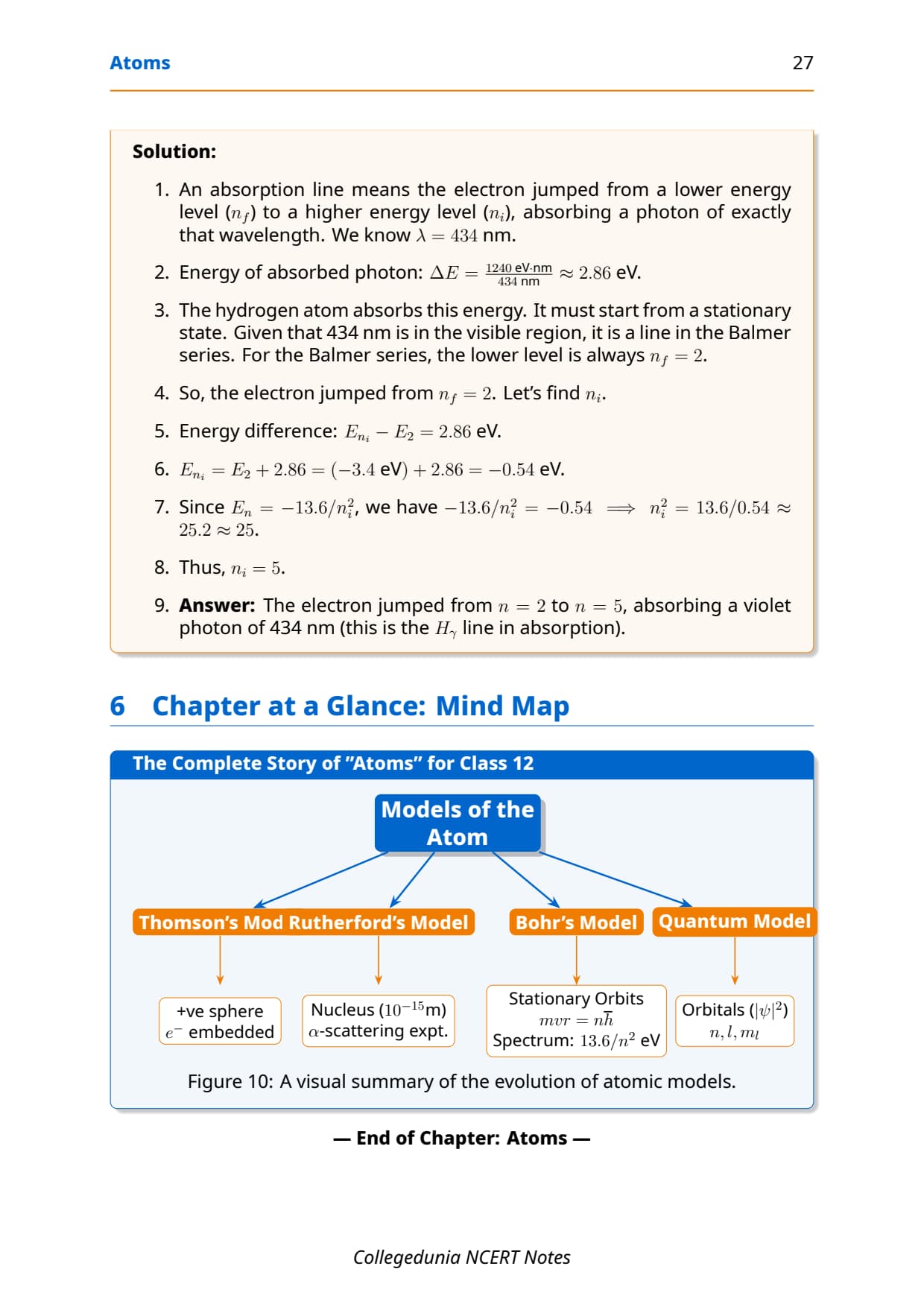
- Thomson model (1 mark): plum-pudding atom and why it failed.
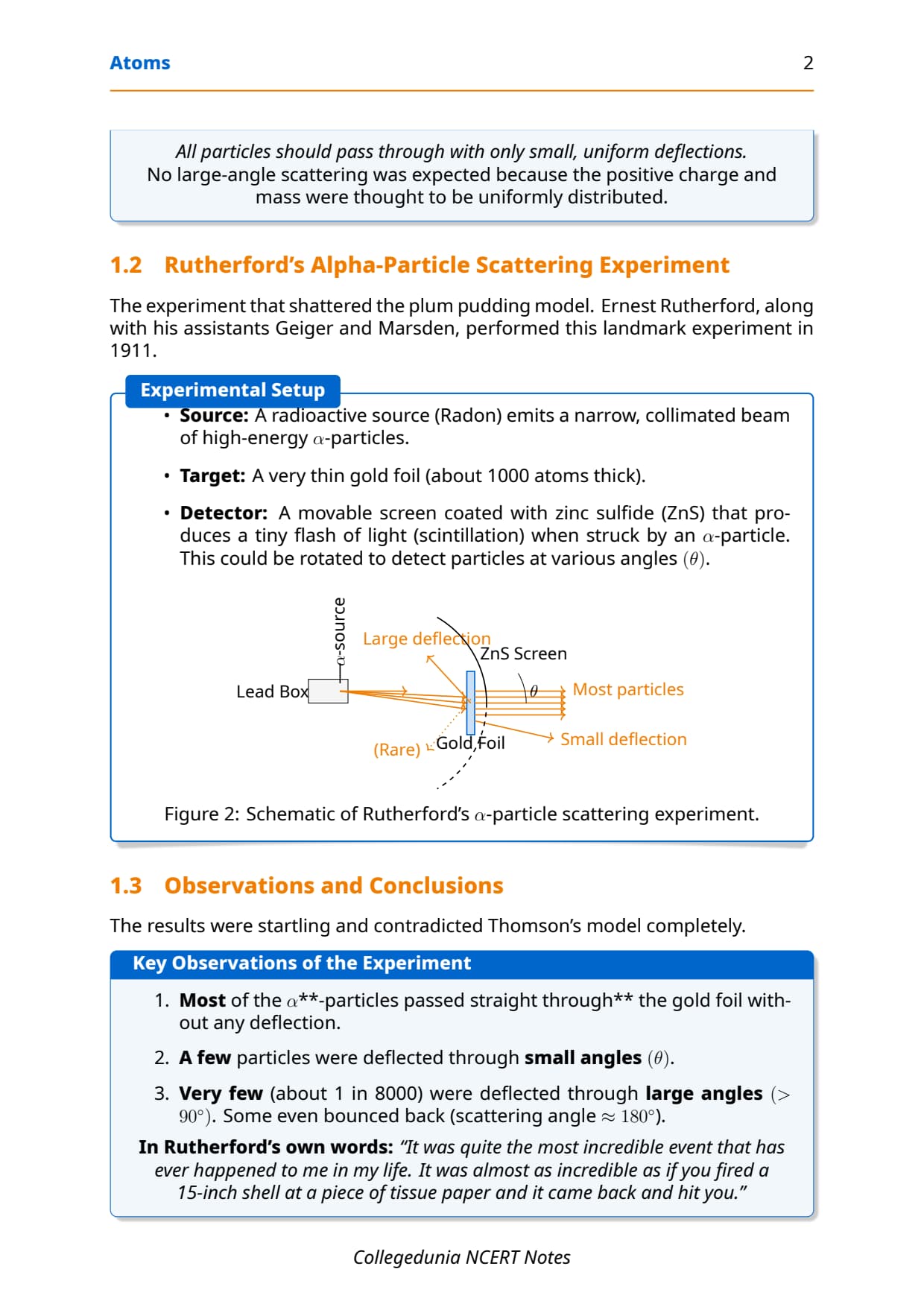
- Rutherford alpha-scattering (2 to 3 marks): gold-foil experiment, nuclear model, distance of closest approach, impact parameter.
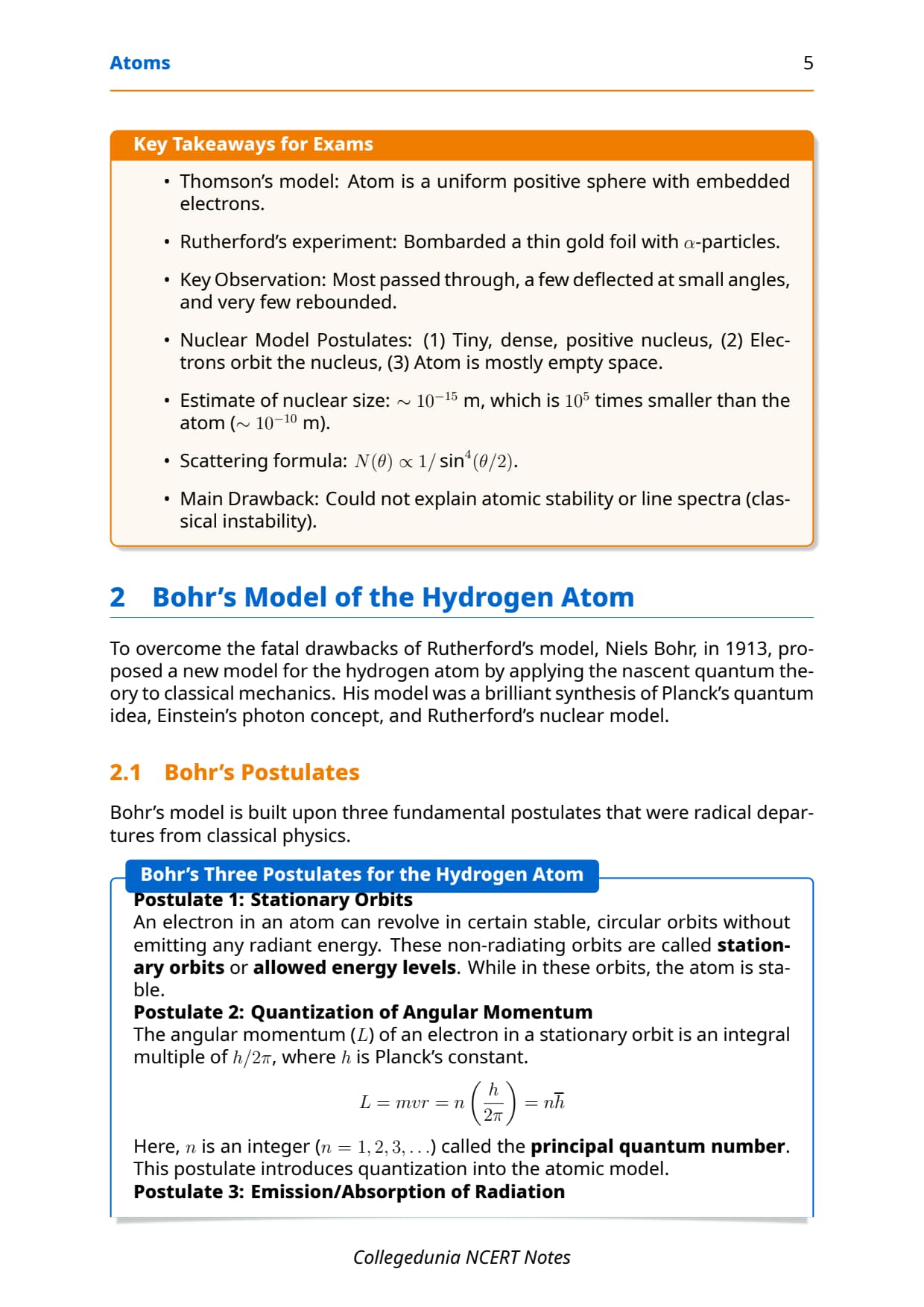
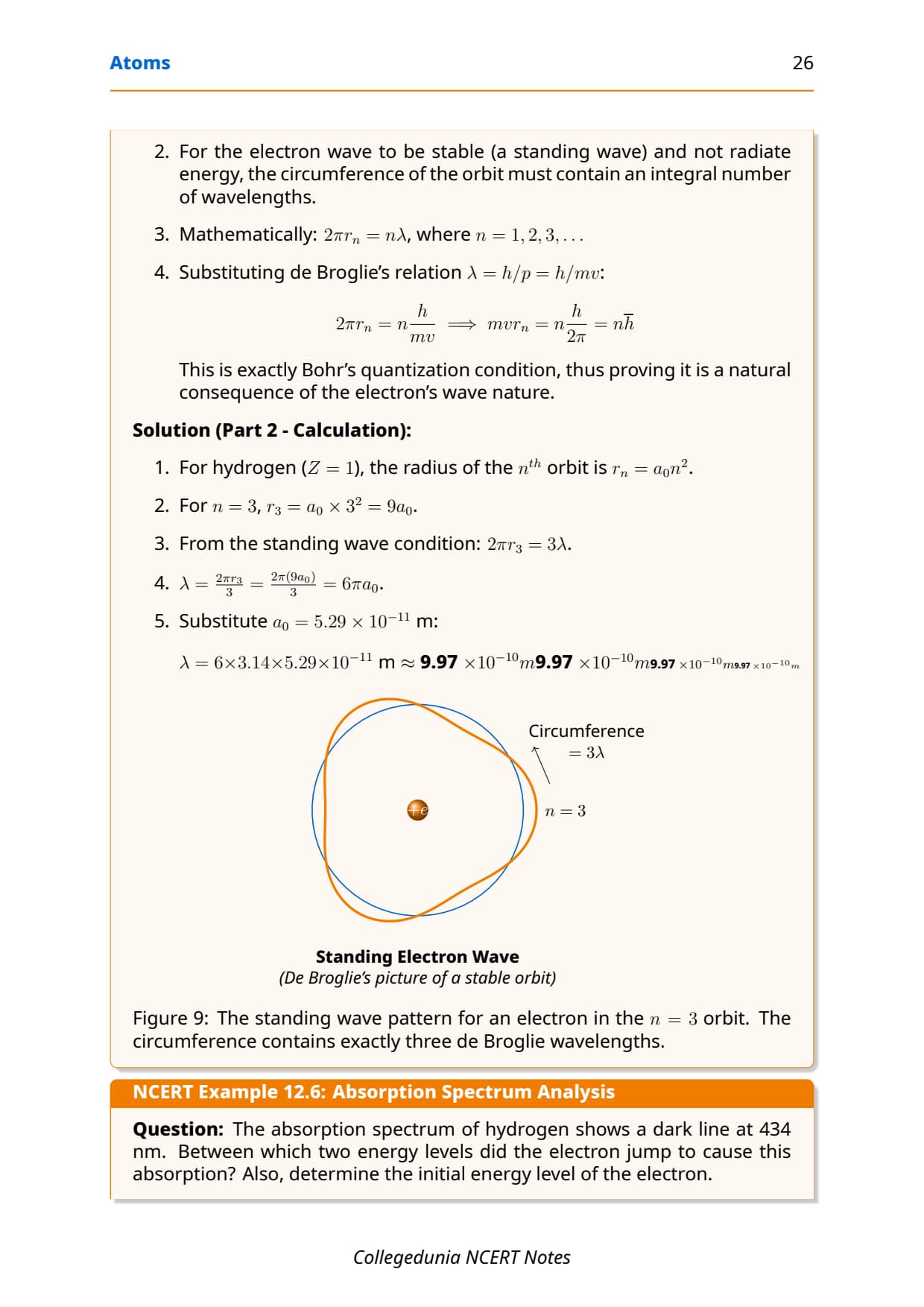
- Bohr model and postulates (3 marks): quantisation, Bohr radius, orbit radius rₙ.
- Energy levels (3 marks): Eₙ = −13.6/n² eV, ground and excited states.
- Hydrogen spectrum (2 marks): Lyman, Balmer, Paschen series and the Rydberg formula.
Atoms Notes Video Lecture
Source: Magnet Brains on YouTube
Atoms All Formulas
Every numerical in the chapter comes from these formulas, also printed on the PDF cover sheet for a last-minute glance.
| Concept | Formula | SI Unit |
|---|---|---|
| Bohr quantisation | mvr = nh/2π | J·s |
| Orbit radius (nth) | rₙ = n²h²ε₀/πmZe² | metre |
| Bohr radius (n=1, H) | a₀ = 0.529 × 10⁻¹⁰ m | metre |
| Energy of nth level | Eₙ = −13.6 Z²/n² eV | eV |
| Ionisation energy (H, n=1) | E = 13.6 eV | eV |
| Rydberg formula | 1/λ = R(1/n₁² − 1/n₂²) | m⁻¹ |
| Rydberg constant | R = 1.097 × 10⁷ m⁻¹ | m⁻¹ |
| Closest approach | r₀ = 2kZe²/Eₖ | metre |
Full formula sheet with derivations: Class 12 Physics Chapter 12 Formula Sheet
Key Definitions and Derivations
These are the must-know terms and the three derivations that carry most of the marks.
- Distance of closest approach: the nearest an alpha particle gets to the nucleus in a head-on collision, where all its kinetic energy turns into potential energy.
- Impact parameter: the perpendicular distance of the alpha particle's initial path from the nucleus centre; a small value gives a large scattering angle.
- Bohr quantisation and orbit radius (3 marks): mvr = nh/2π leads to rₙ = n²a₀.
- Energy levels of hydrogen (3 marks): combining orbit radius and total energy gives Eₙ = −13.6/n² eV.
- Rydberg formula from the Bohr model (3 marks): an energy-difference transition gives 1/λ = R(1/n₁² − 1/n₂²).
Common Mistakes in Atoms
- Dropping the minus sign on energy. Eₙ is negative; a positive value loses the mark and breaks the ionisation logic.
- Swapping n₁ and n₂ in the Rydberg formula. n₁ is the lower level; flipping them gives a negative wavelength.
- Mixing up the spectral series. Lyman ends at n=1 (UV), Balmer at n=2 (visible), Paschen at n=3 (IR).
- Confusing impact parameter with closest approach. One is a sideways offset, the other a head-on distance.
Each slip costs 1 to 2 marks.
Atoms Weightage in CBSE, JEE and NEET
Chapter 12 stays at a steady 3 marks in CBSE. The table maps where its topics appeared across all three exams.
| Year | CBSE Board | JEE Main | NEET |
|---|---|---|---|
| 2025 | Hydrogen spectrum series (3) | Energy of nth orbit calculation | Rutherford model drawback |
| 2024 | Bohr's three postulates (3) | Rydberg formula application | Ground state energy MCQ |
| 2023 | Lyman series wavelength (3) | Ionisation energy calculation | Bohr orbit quantisation |
| 2022 | Bohr model derivation (3) | Spectral line frequency | Atomic radius formula |
| 2021 | Orbit radius short answer (2) | Energy level transition | Hydrogen ground state energy |
How to Revise Atoms in 2 Hours
- 0 to 30 min: Thomson model and Rutherford alpha-scattering. Solve one closest-approach numerical.
- 30 to 60 min: Bohr model and postulates, then derive the orbit radius and Bohr radius.
- 60 to 90 min: Energy levels and the hydrogen spectrum: Lyman, Balmer and Paschen series.
- 90 to 120 min: Flush through the formula table and work two Rydberg-formula problems.
Other Resources for Class 12 Physics Chapter 12
Pair these notes with the Solutions, Handwritten Notes, Formula Sheet and official NCERT chapter linked below.
| Resource | What it covers | Open |
|---|---|---|
| Notes | Typed revision notes for the full chapter. | You are here |
| NCERT Solutions | Step-by-step answers to every exercise question. | Chapter 12 NCERT Solutions |
| Handwritten Notes | Scanned notebook pages for last-mile revision. | Chapter 12 Handwritten Notes |
| Formula Sheet | All formulas with full derivations. | Chapter 12 Formula Sheet |
| NCERT Book PDF | Official NCERT textbook chapter. | Chapter 12 NCERT Book PDF |
All Chapters Notes for Class 12 Physics
| Chapter | Notes link |
|---|---|
| Chapter 1 | Electric Charges and Fields Notes |
| Chapter 2 | Electrostatic Potential and Capacitance Notes |
| Chapter 3 | Current Electricity Notes |
| Chapter 4 | Moving Charges and Magnetism Notes |
| Chapter 5 | Magnetism and Matter Notes |
| Chapter 6 | Electromagnetic Induction Notes |
| Chapter 7 | Alternating Current Notes |
| Chapter 8 | Electromagnetic Waves Notes |
| Chapter 9 | Ray Optics and Optical Instruments Notes |
| Chapter 10 | Wave Optics Notes |
| Chapter 11 | Dual Nature of Radiation and Matter Notes |
| Chapter 12 | Atoms Notes (you are here) |
| Chapter 13 | Nuclei Notes |
| Chapter 14 | Semiconductor Electronics Notes |
Class 12 Physics Chapter 12 Atoms Notes FAQs
Ques. What topics do the Class 12 Physics Chapter 12 Atoms notes cover?
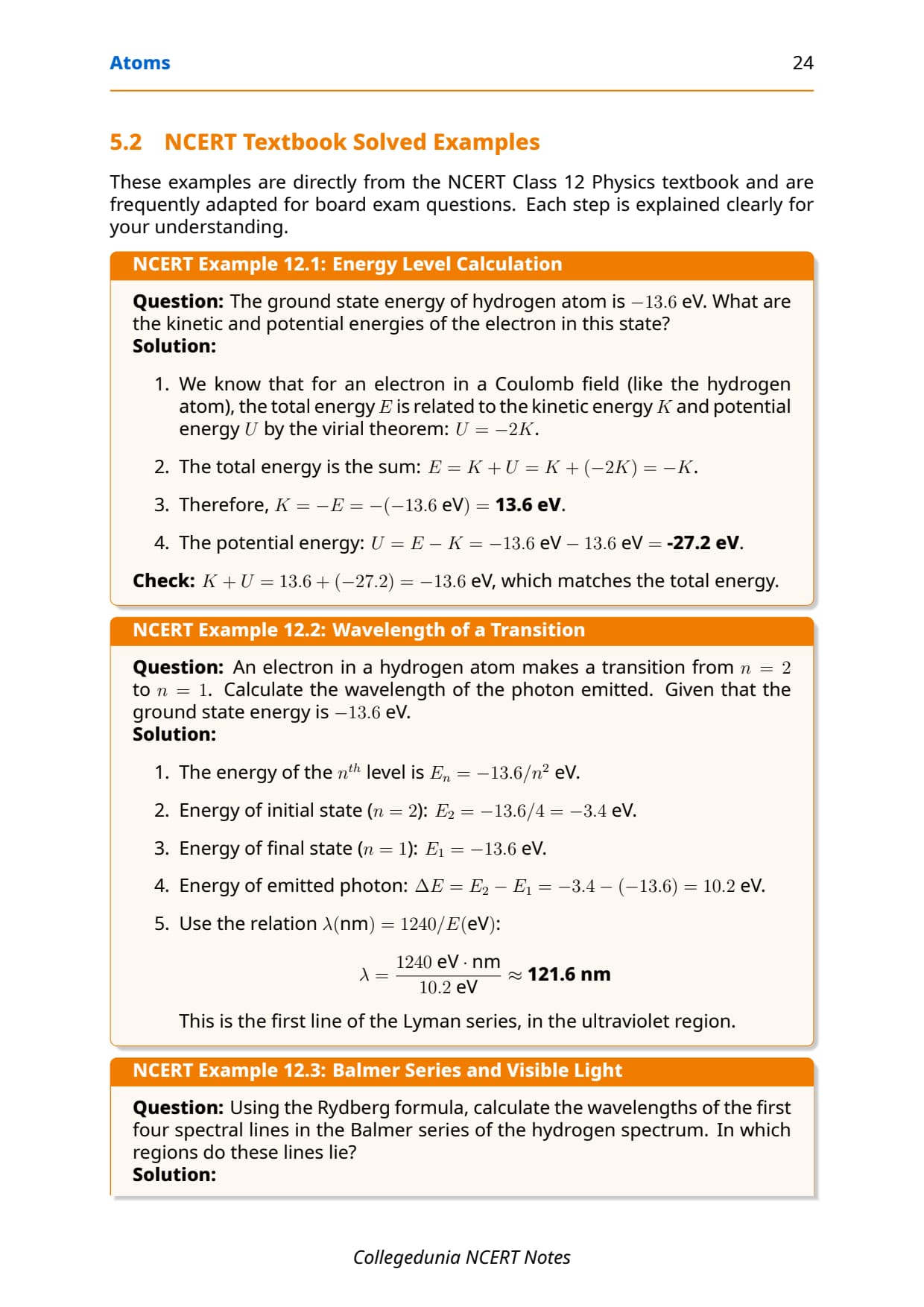
Ans. They cover the Thomson model, Rutherford alpha-scattering and the nuclear model, the Bohr model and its postulates, energy levels of hydrogen, and the hydrogen spectrum with the Rydberg formula.
Ques. What is the weightage of Atoms in Class 12?
Ans. Chapter 12 carries about 3 marks in the CBSE Class 12 Physics board paper, 2 percent in JEE Main, and 1 to 2 questions a year in NEET. Most marks sit in the Bohr model and hydrogen-spectrum derivations.
Ques. What is the energy of the nth level in a hydrogen atom?
Ans. Eₙ = −13.6/n² eV. The ground state (n=1) is −13.6 eV, so the ionisation energy of hydrogen is 13.6 eV. The minus sign shows the electron is bound.
Ques. How do the Lyman, Balmer and Paschen series differ?
Ans. All three come from the Rydberg formula. The Lyman series ends at n=1 (ultraviolet), the Balmer series at n=2 (visible light), and the Paschen series at n=3 (infrared).
Ques. Where can I download the Atoms notes PDF?
Ans. The PDF is on this page via the download card at the top. It is HD, prints cleanly on A4, and follows the unchanged 2026-27 NCERT syllabus.



Comments