




The NCERT Notes for Class 7 Science Chapter 2, Exploring Substances: Acidic, Basic, and Neutral, bring together every indicator rule, reaction, and real-life example the 2026-27 Curiosity textbook covers. These notes explain how litmus, red rose extract, and turmeric paper each react to acids and bases, and how neutralisation turns a sting or a sour spill into something harmless.
- Covers the full chapter: litmus, red rose extract, turmeric paper, and the neutralisation reaction with everyday examples.
- Includes quick-reference tables, key terms, and a common-mistakes list for fast revision before a test.
- Free PDF download, matched to the 2026-27 NCERT Curiosity textbook.
These Class 7 Science notes for Exploring Substances: Acidic, Basic, and Neutral are curated by subject experts and checked line by line against the 2026-27 NCERT Curiosity textbook.
What Makes a Substance Acidic, Basic, or Neutral
Every liquid around us, lemon juice, soap water, plain tap water, belongs to one of three natural groups. You do not need a lab to find out which. Nature gives us simple tools called indicators that change colour depending on the substance they touch.
- Acidic substances: lemon juice, amla juice, tamarind water, vinegar. Most taste sour.
- Basic substances: soap solution, baking soda solution, lime water, washing powder solution. Many feel slippery.
- Neutral substances: tap water, sugar solution, salt solution. Neither acidic nor basic.
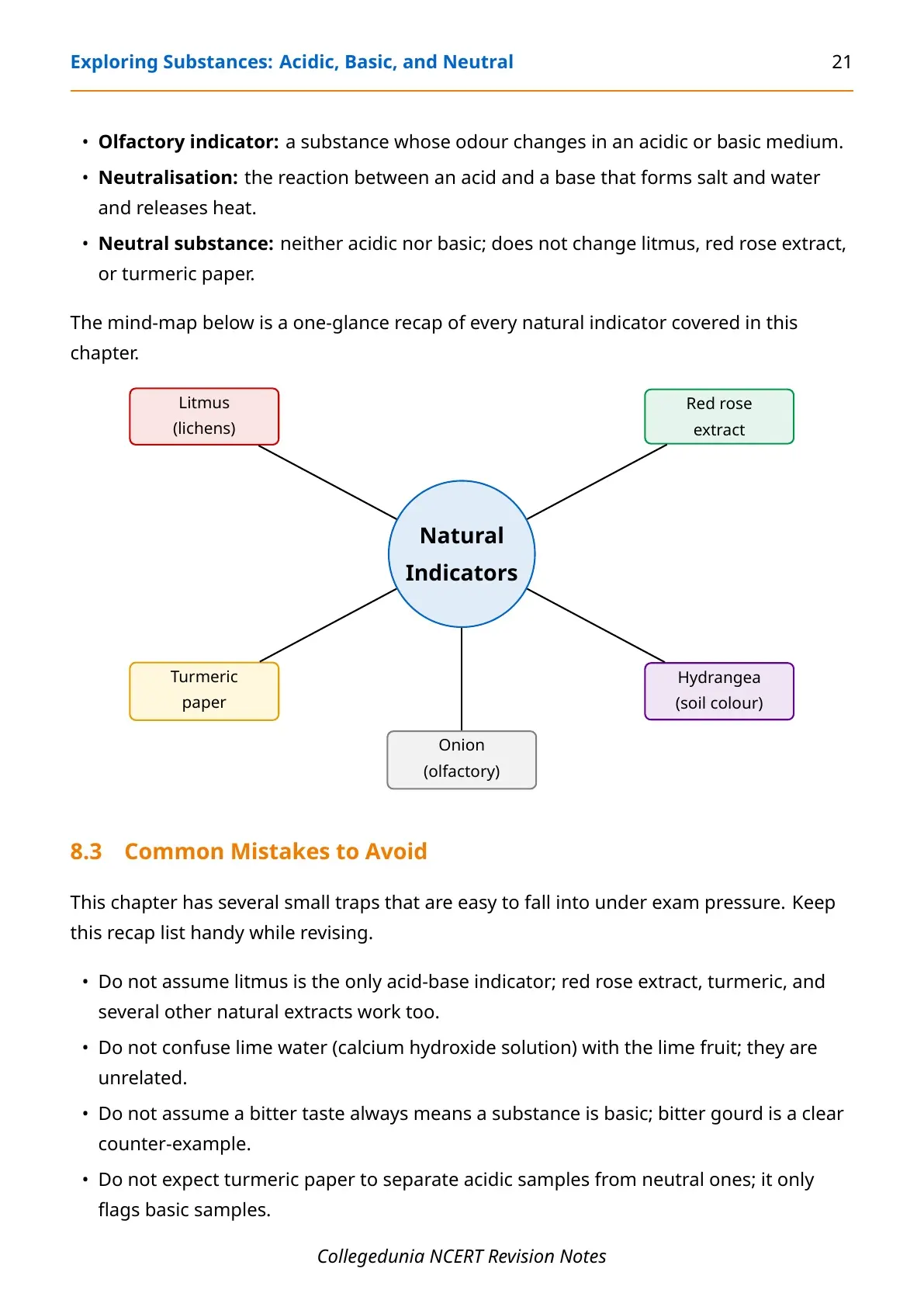
An acid-base indicator is any substance, natural or synthetic, that shows a different colour in acidic and basic solutions. Litmus is not the only one; red rose extract and turmeric work just as well, and both are covered later in these notes.
Tip: never test an unknown substance by taste or touch. Bitter gourd tastes bitter but contains no base at all, so an indicator test is always the safer, more reliable check.
The Litmus Test and the Blue-to-Red, Red-to-Blue Rule
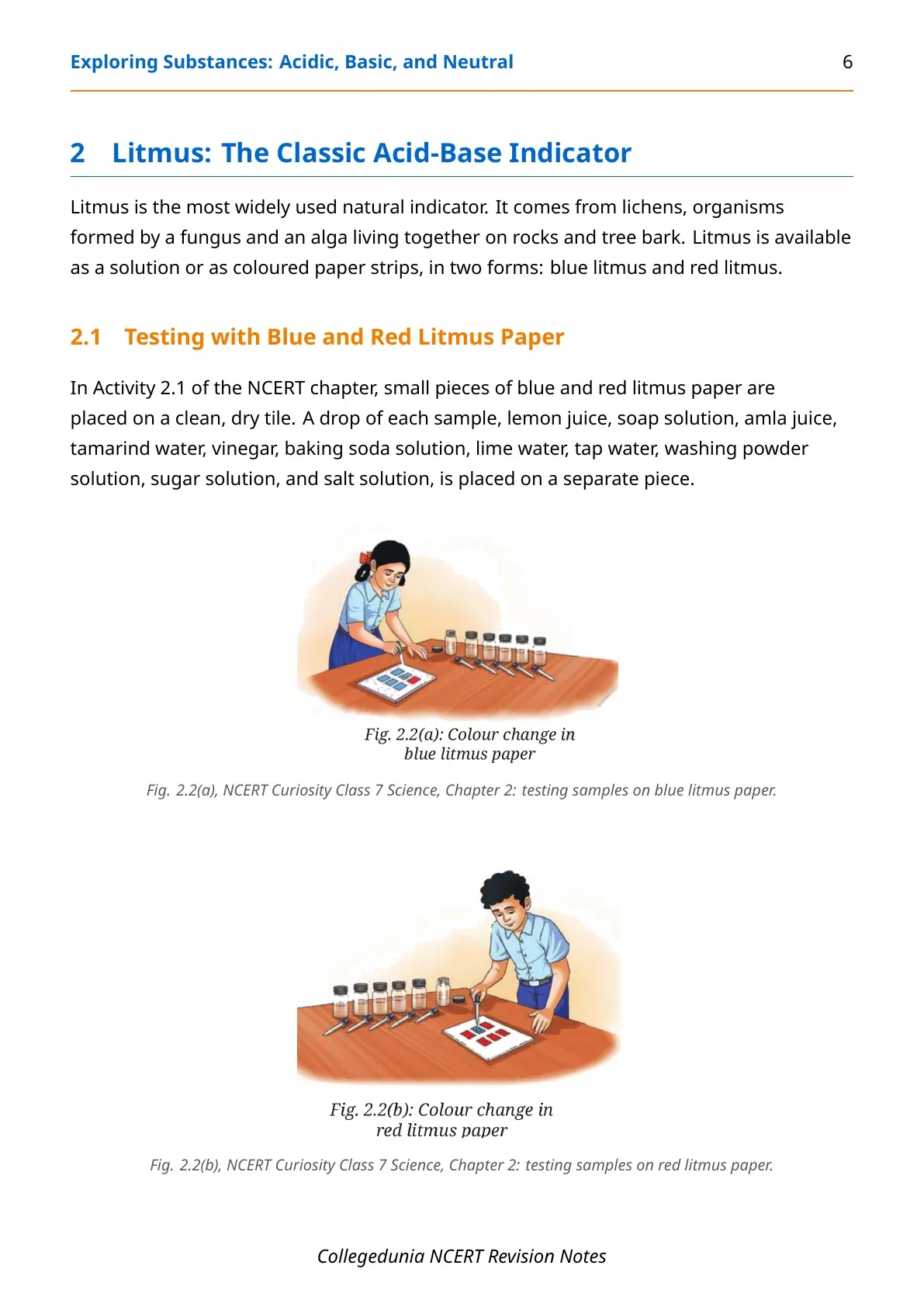
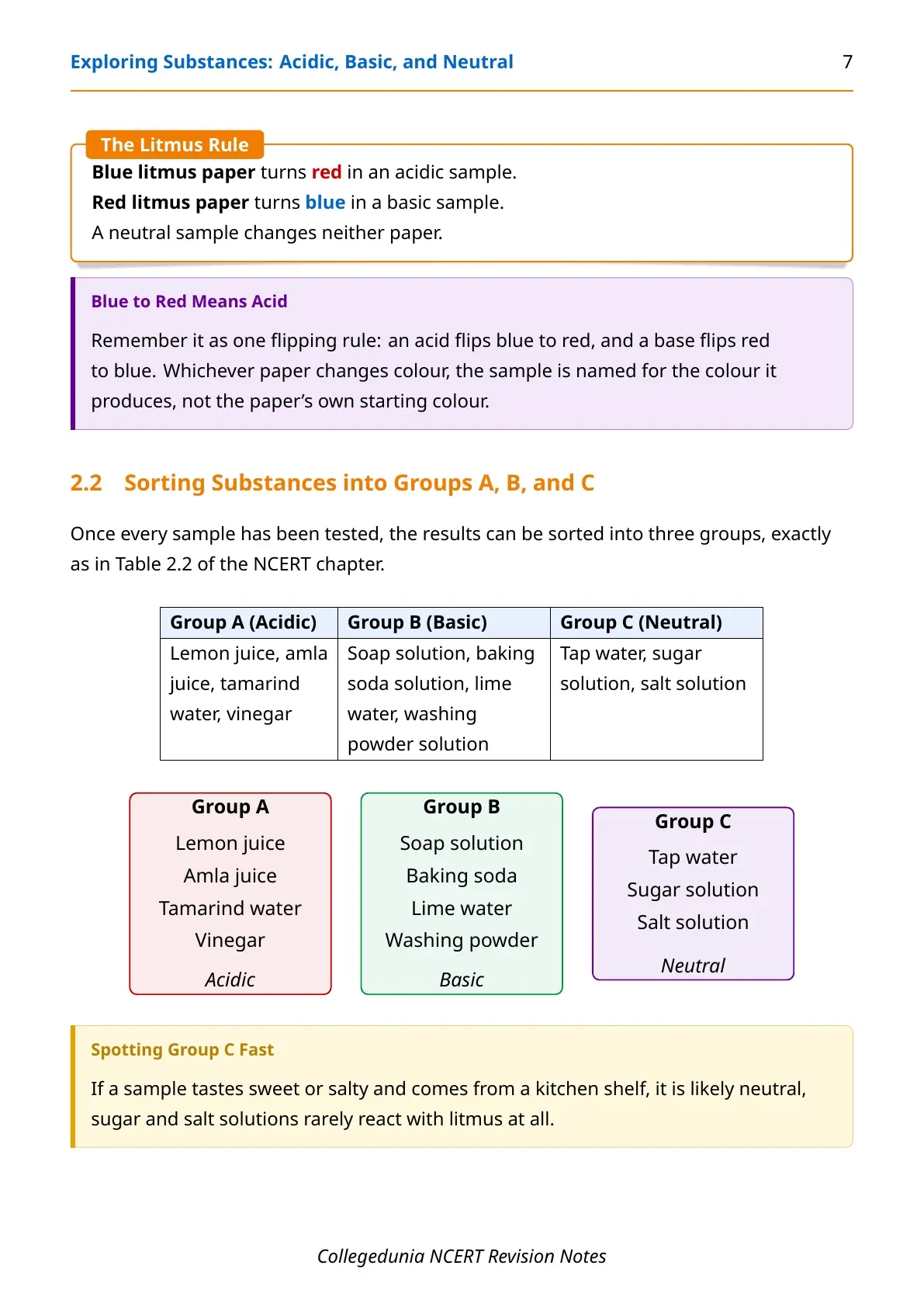
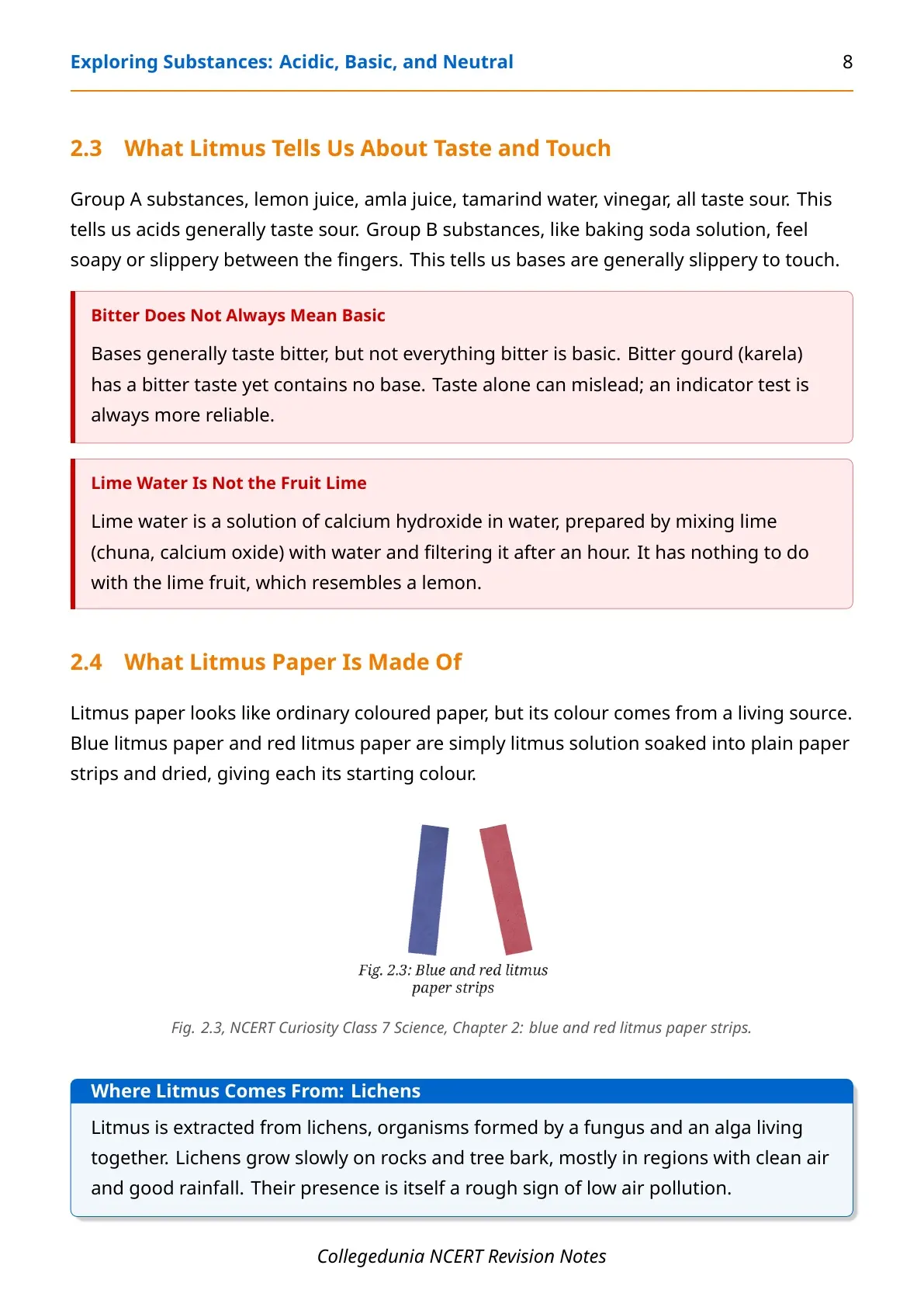
Litmus comes from lichens, organisms formed by a fungus and an alga growing together on rocks and tree bark. It is sold as a solution or as coloured paper strips soaked in litmus and dried, in two forms: blue litmus and red litmus.
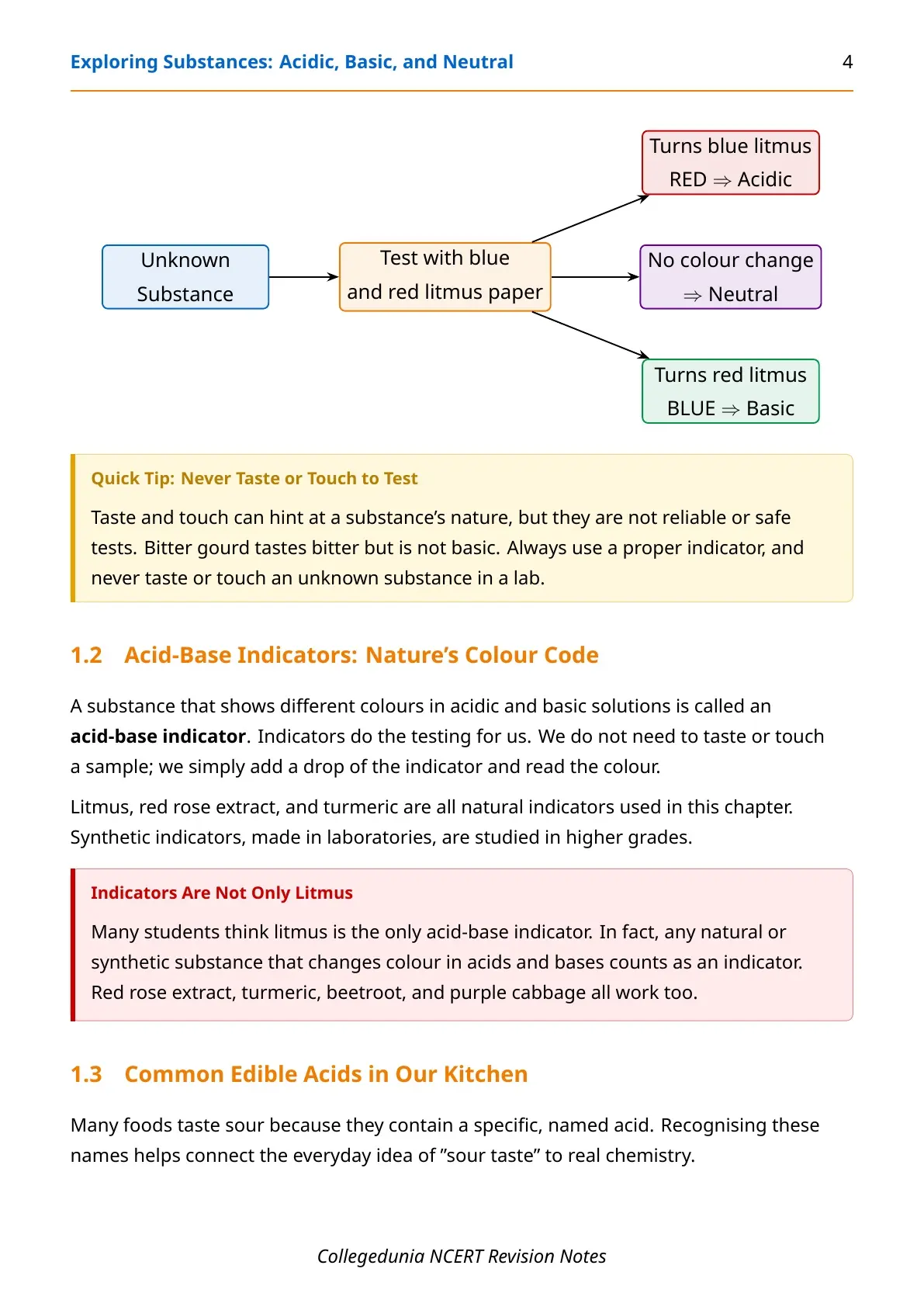
The rule behind Activity 2.1 of the NCERT chapter is the one fact this whole section rests on: blue litmus paper turns red in an acid, and red litmus paper turns blue in a base. A neutral sample changes neither strip. Testing samples like lemon juice, soap solution, and sugar solution this way sorts them cleanly into Group A (acidic), Group B (basic), and Group C (neutral).
A common mix-up: lime water is not the lime fruit. It is a solution of calcium hydroxide, made by mixing lime (calcium oxide) with water and filtering it. The two share a name but nothing else.
Acids and Bases in Everyday Chemistry: A Quick Video Recap
Source: Khan Academy India on YouTube
Red Rose Extract and Turmeric Paper as Natural Indicators
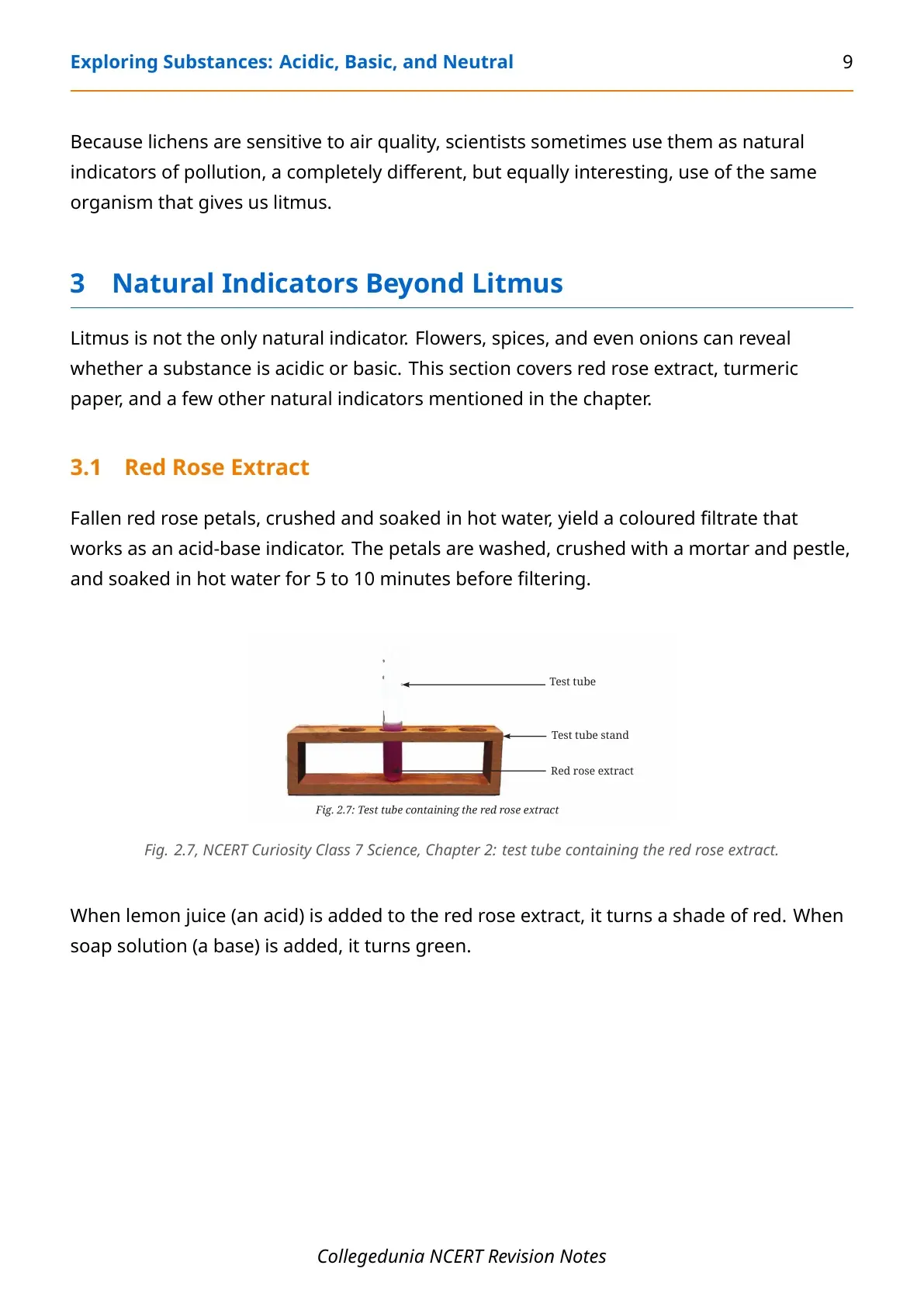
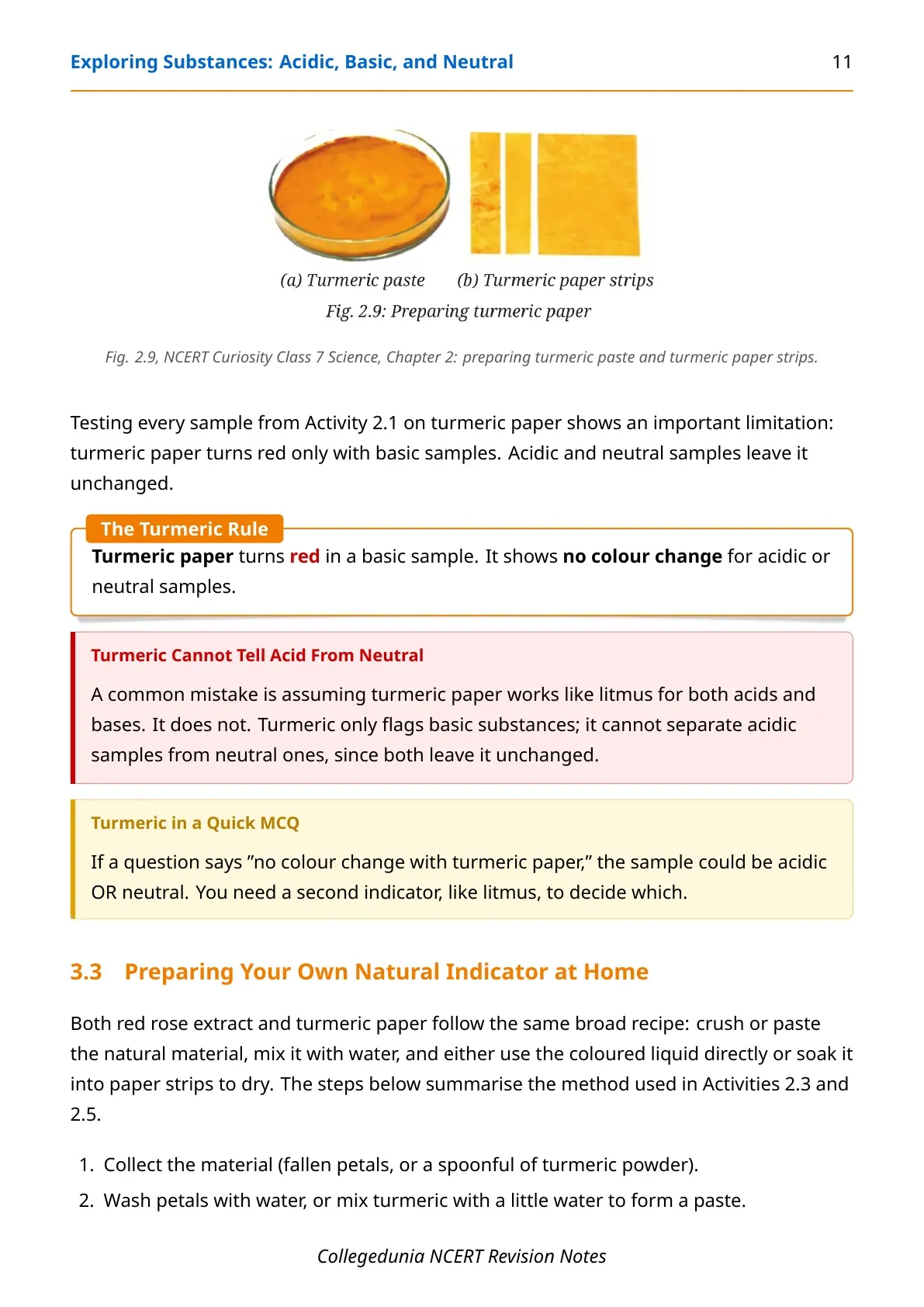
Litmus is not the only plant-based indicator in this chapter. Crushed red rose petals soaked in hot water yield a coloured extract, and turmeric paste soaked into filter paper strips gives another. Both react differently to acids and bases, and neither reacts the same way as litmus.
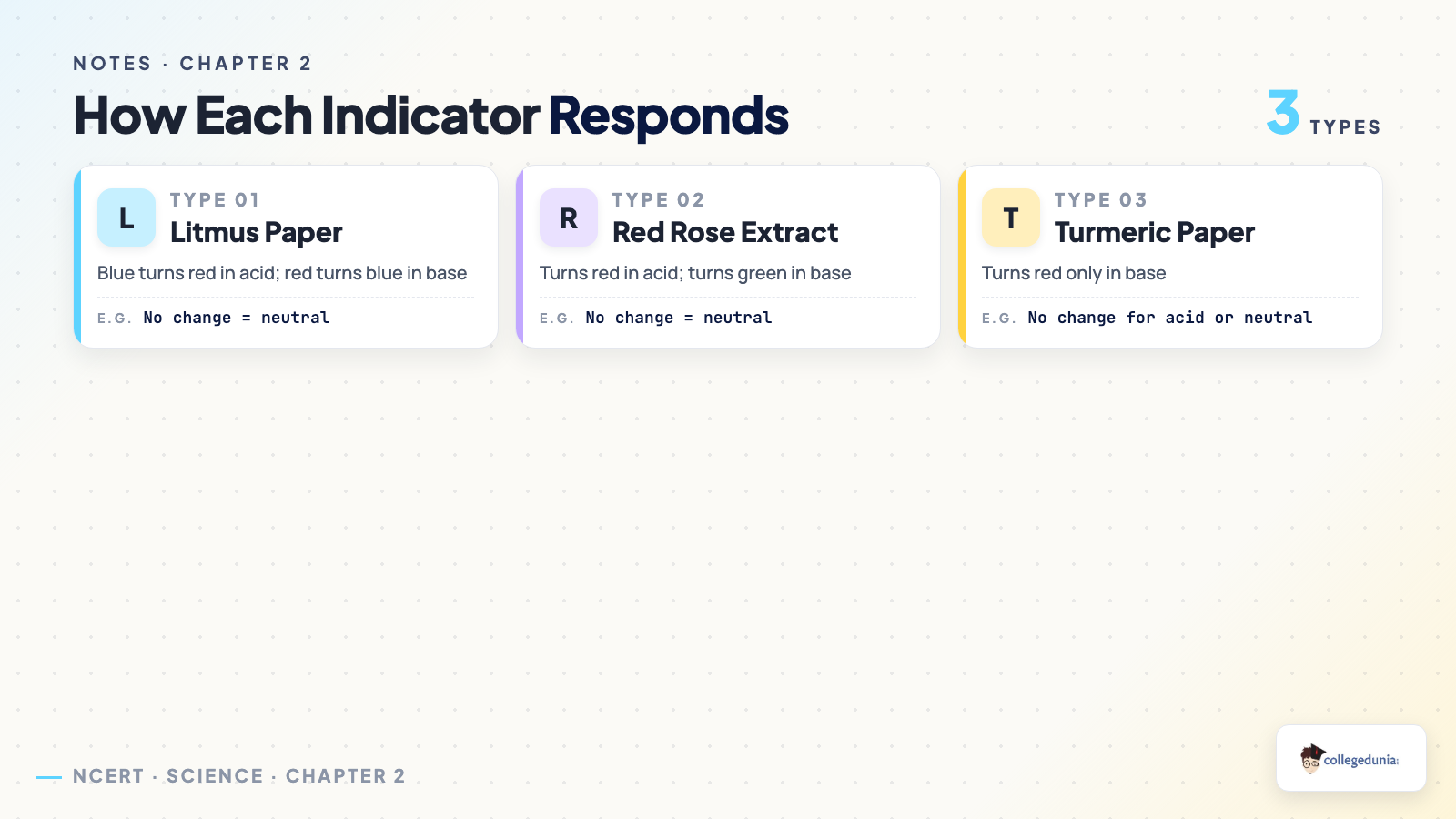
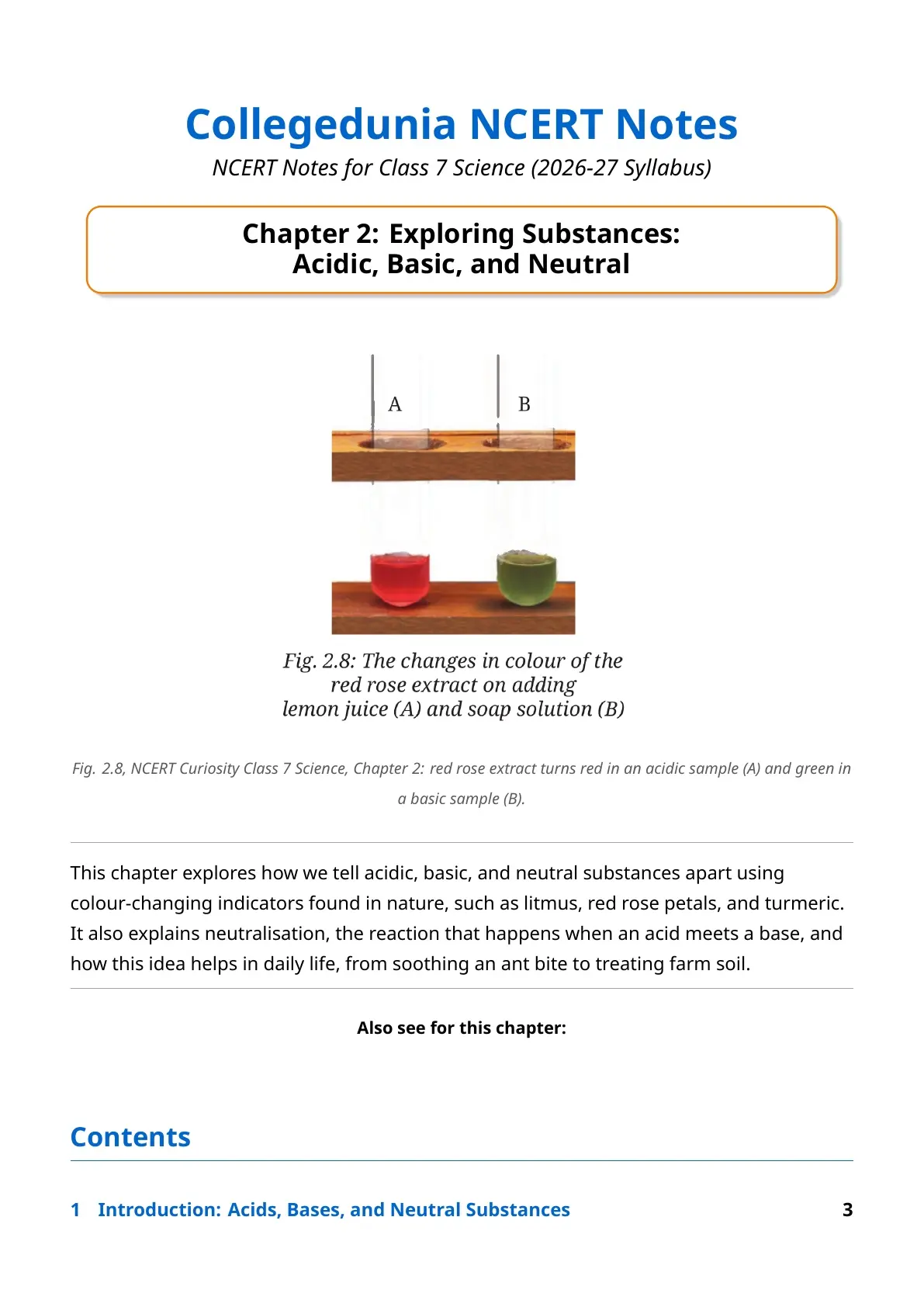
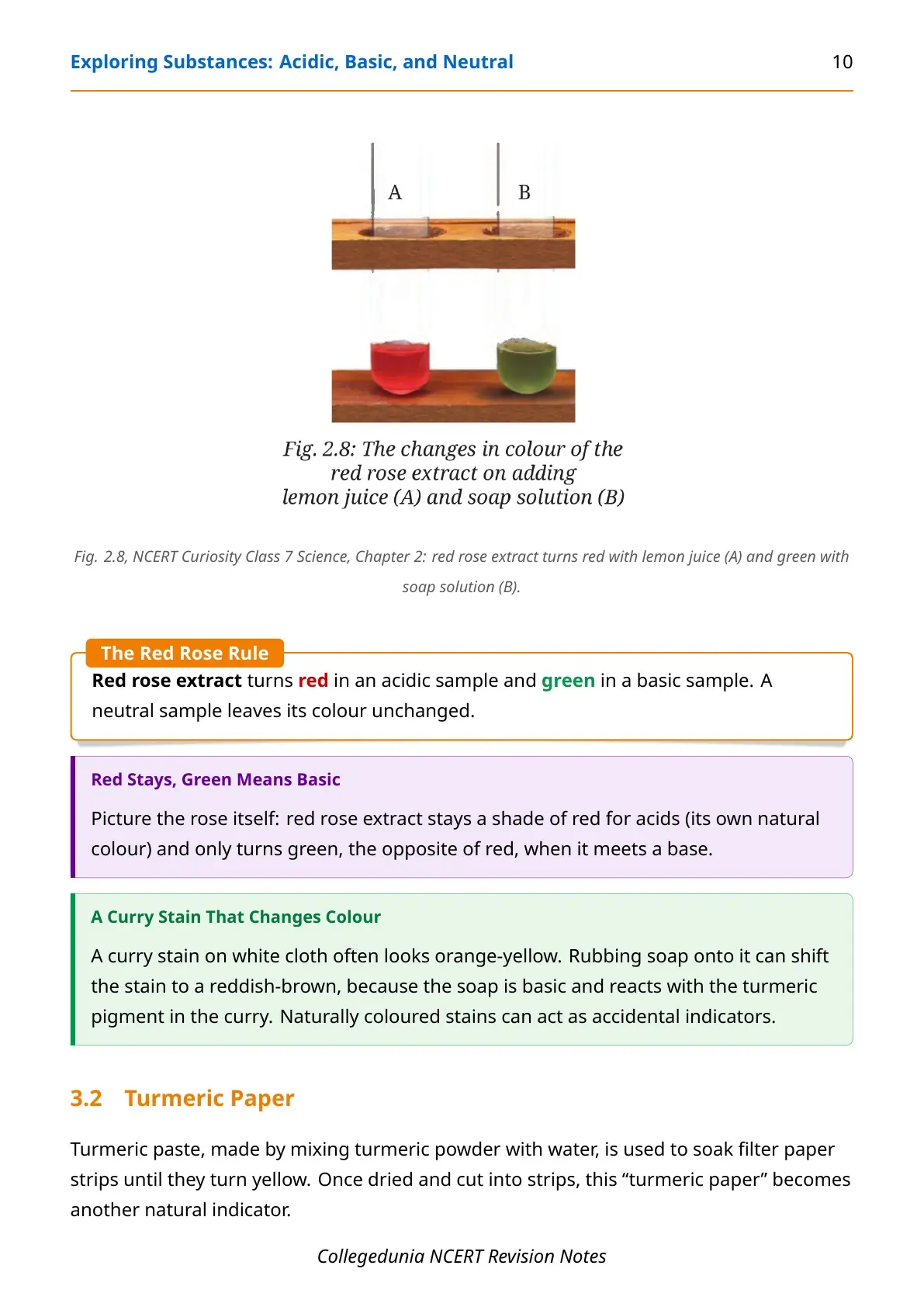
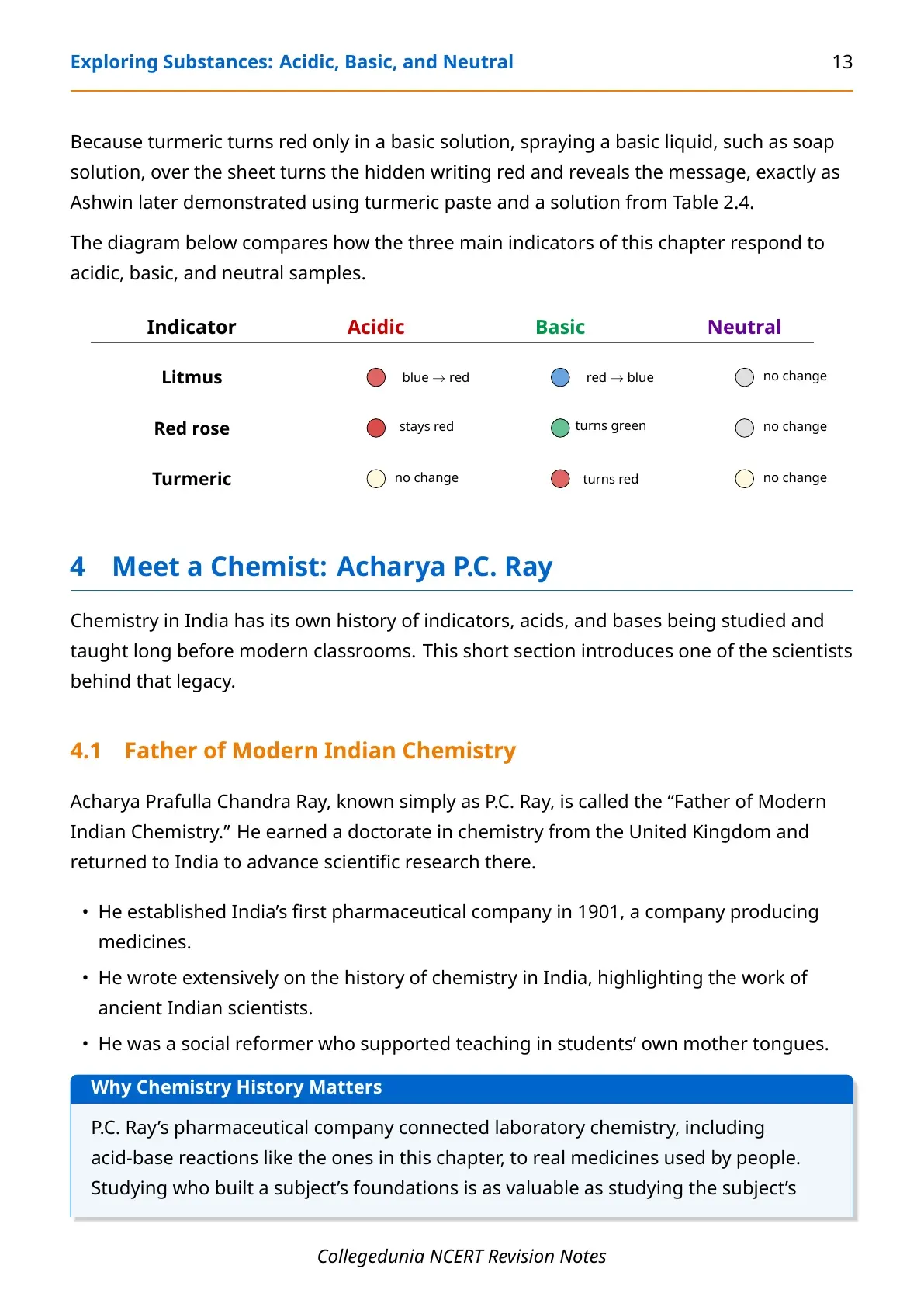
Red rose extract turns a shade of red in an acidic sample and green in a basic sample; a neutral sample leaves it unchanged. Turmeric paper only turns red in a basic sample; it cannot tell an acidic sample from a neutral one, since both leave it unchanged. This is a favourite trick question: if turmeric shows no colour change, the sample could still be acidic or neutral, so a second indicator like litmus is needed to decide.
Also Check: a soap stain on a turmeric-yellow curry mark often turns reddish-brown, because the soap is basic and reacts with the turmeric pigment, a real-life version of the same rule.
How to Prepare a Natural Indicator at Home
Both red rose extract and turmeric paper follow the same broad recipe, and trying it once makes the whole chapter easier to remember.
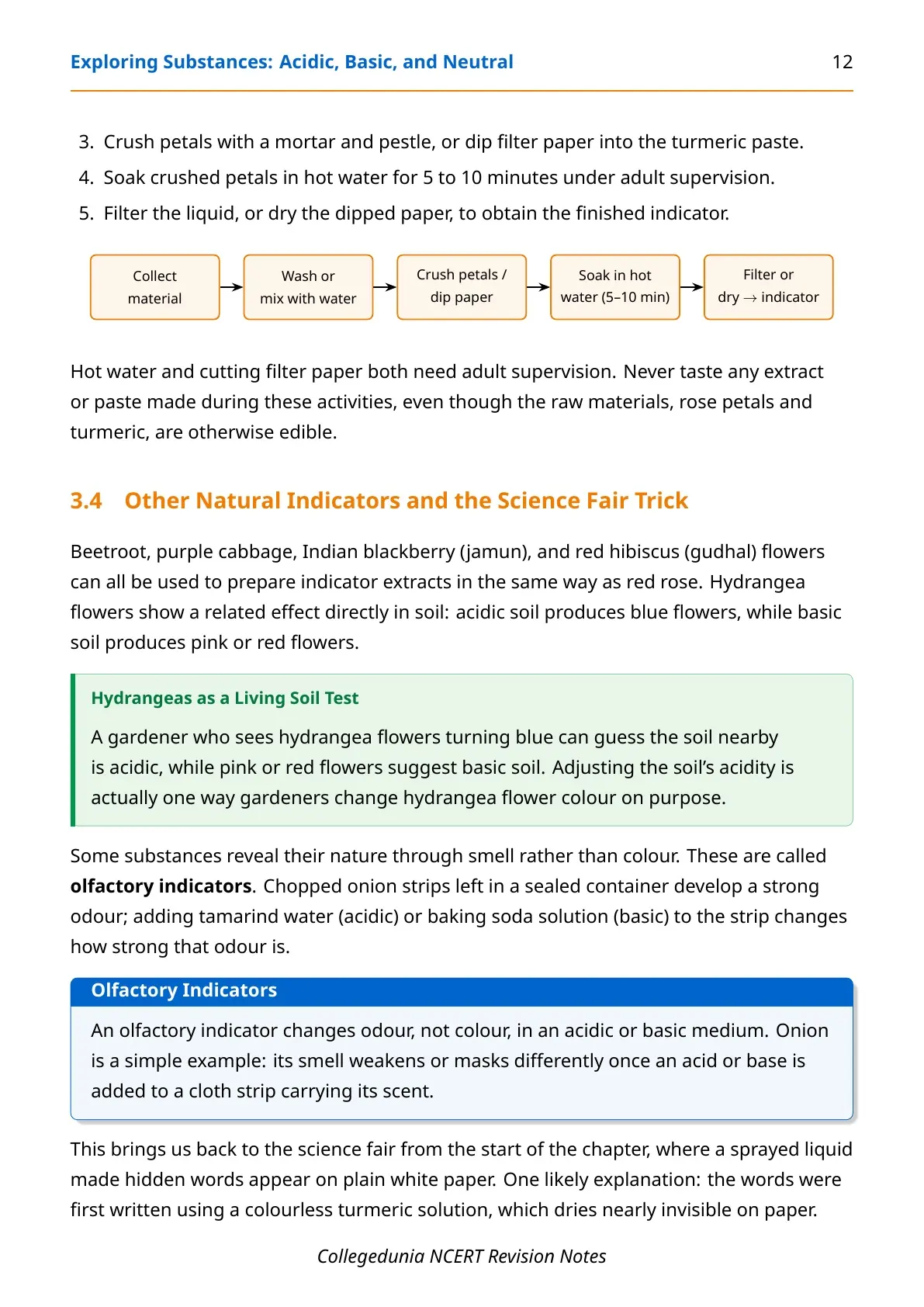
- Collect the material: fallen petals, or a spoonful of turmeric powder.
- Wash petals with water, or mix turmeric with a little water to form a paste.
- Crush petals with a mortar and pestle, or dip filter paper into the turmeric paste.
- Soak crushed petals in hot water for 5 to 10 minutes, under adult supervision.
- Filter the liquid, or dry the dipped paper, to get the finished indicator.
Beetroot, purple cabbage, jamun, and hibiscus (gudhal) all work the same way. Hydrangea plants show a related trick directly in soil: acidic soil produces blue flowers, while basic soil produces pink or red ones, a living indicator a gardener can read at a glance. Never taste any extract or paste made this way, even though the raw materials are otherwise edible.
Common Edible Acids You Already Know
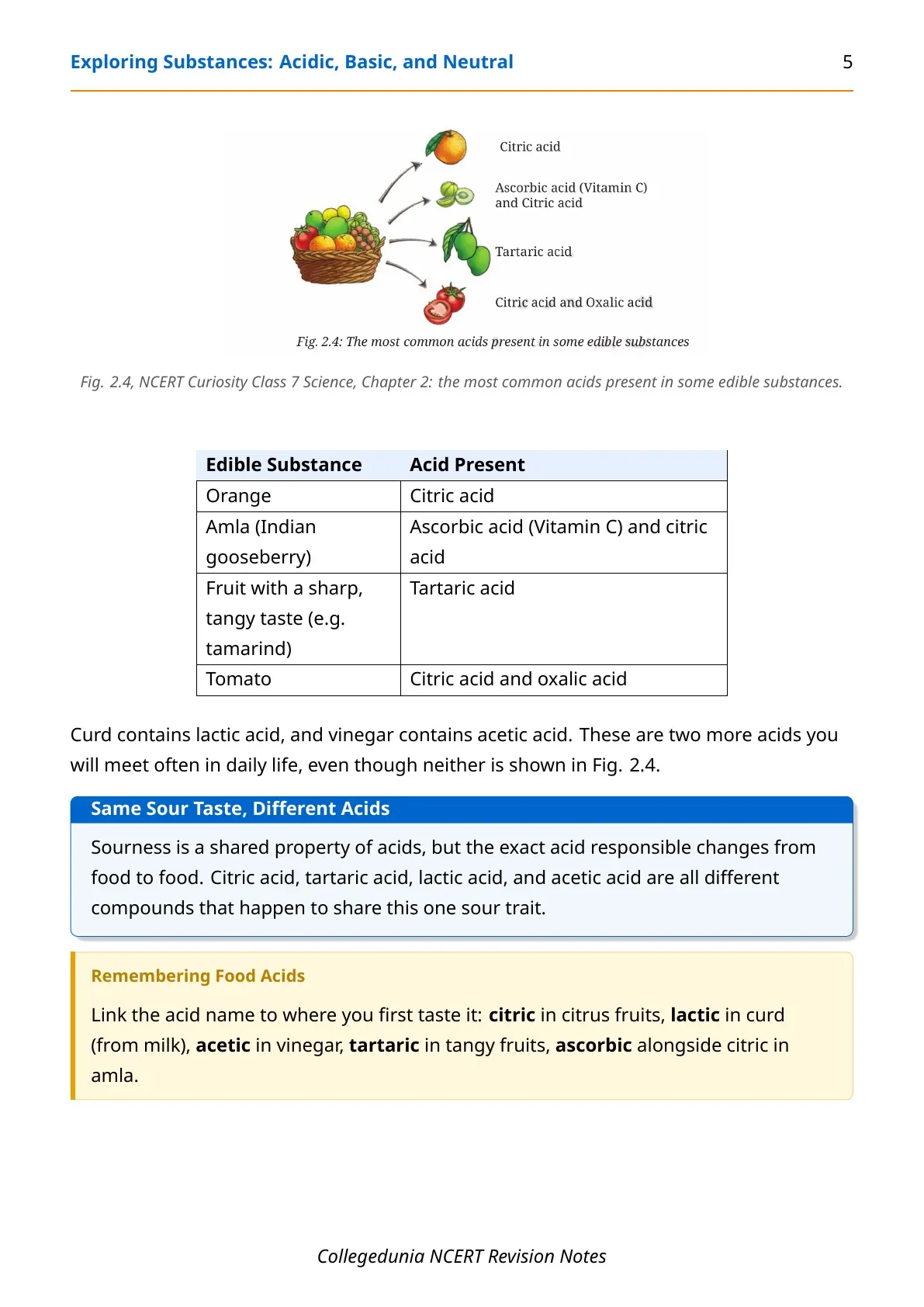
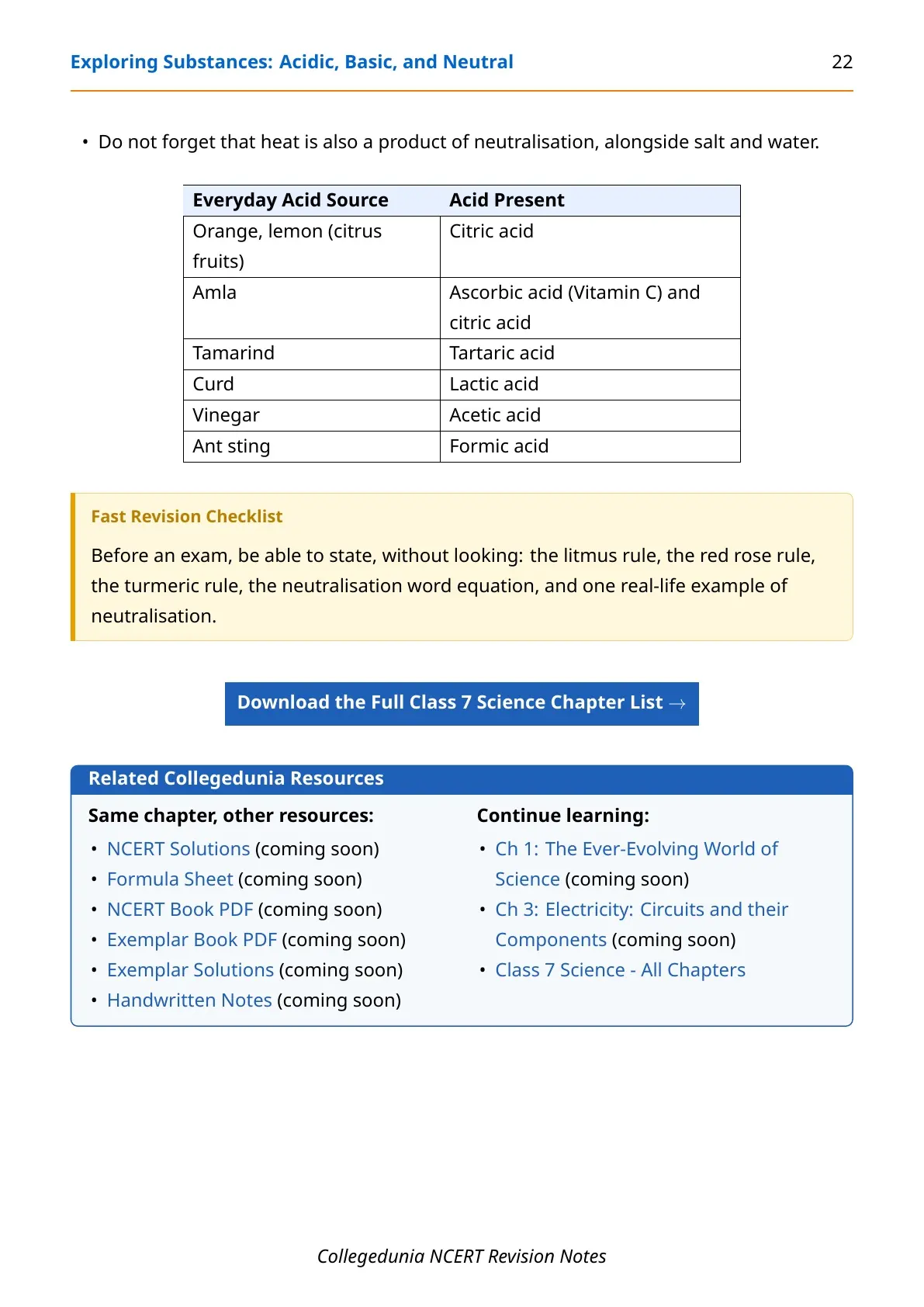
Many foods taste sour because they contain a specific, named acid. Curd contains lactic acid and vinegar contains acetic acid, even though neither appears in the NCERT figure for this table.
| Edible Substance | Acid Present |
|---|---|
| Orange, lemon | Citric acid |
| Amla (Indian gooseberry) | Ascorbic acid (Vitamin C) and citric acid |
| Tamarind | Tartaric acid |
| Tomato | Citric acid and oxalic acid |
| Curd | Lactic acid |
| Vinegar | Acetic acid |
Neutralisation: What Happens When an Acid Meets a Base
When an acid and a base are mixed in the right amounts, both cancel each other's effect. The result is neither acidic nor basic. This is called neutralisation, one of the most useful ideas in this chapter.
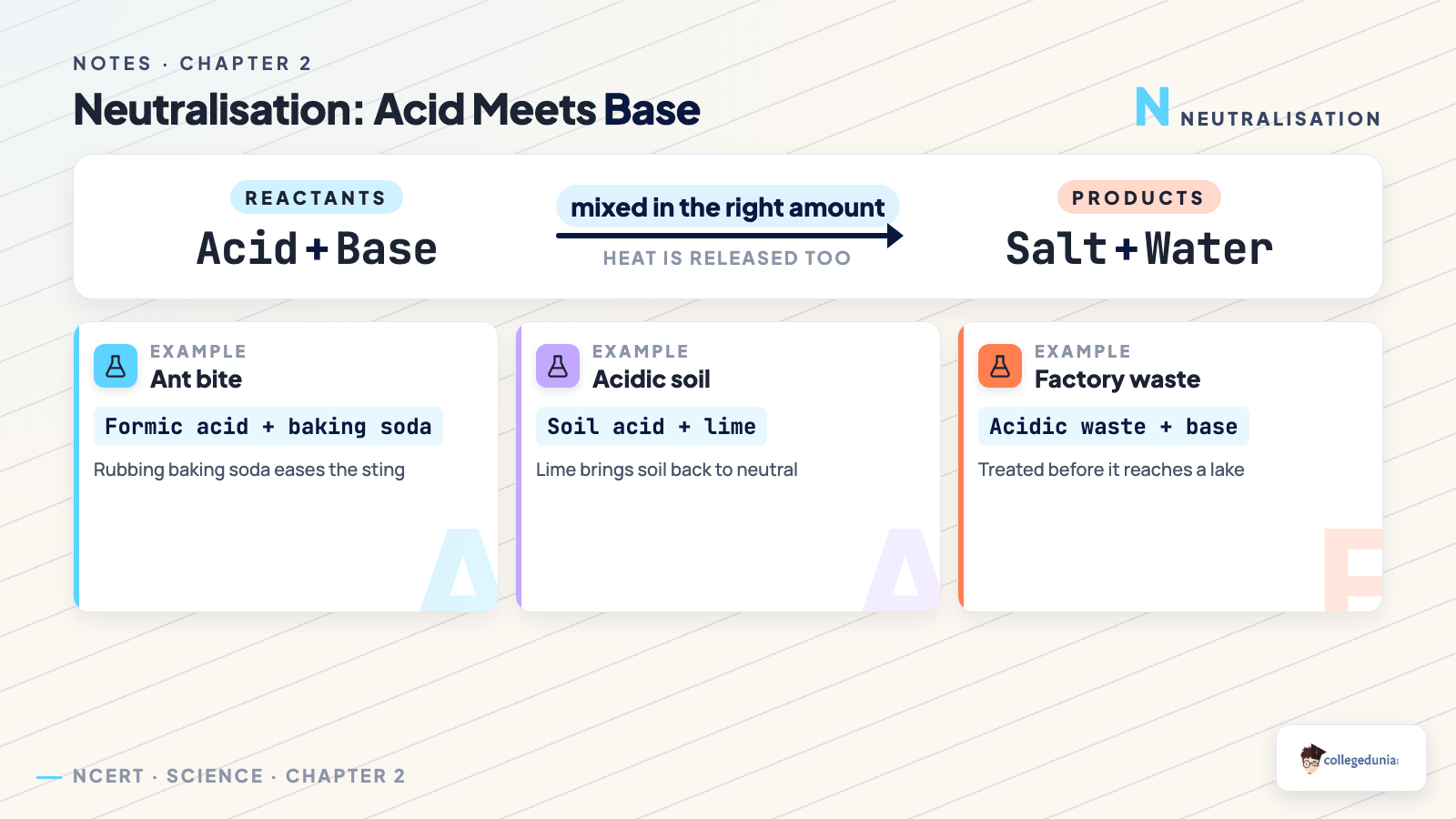
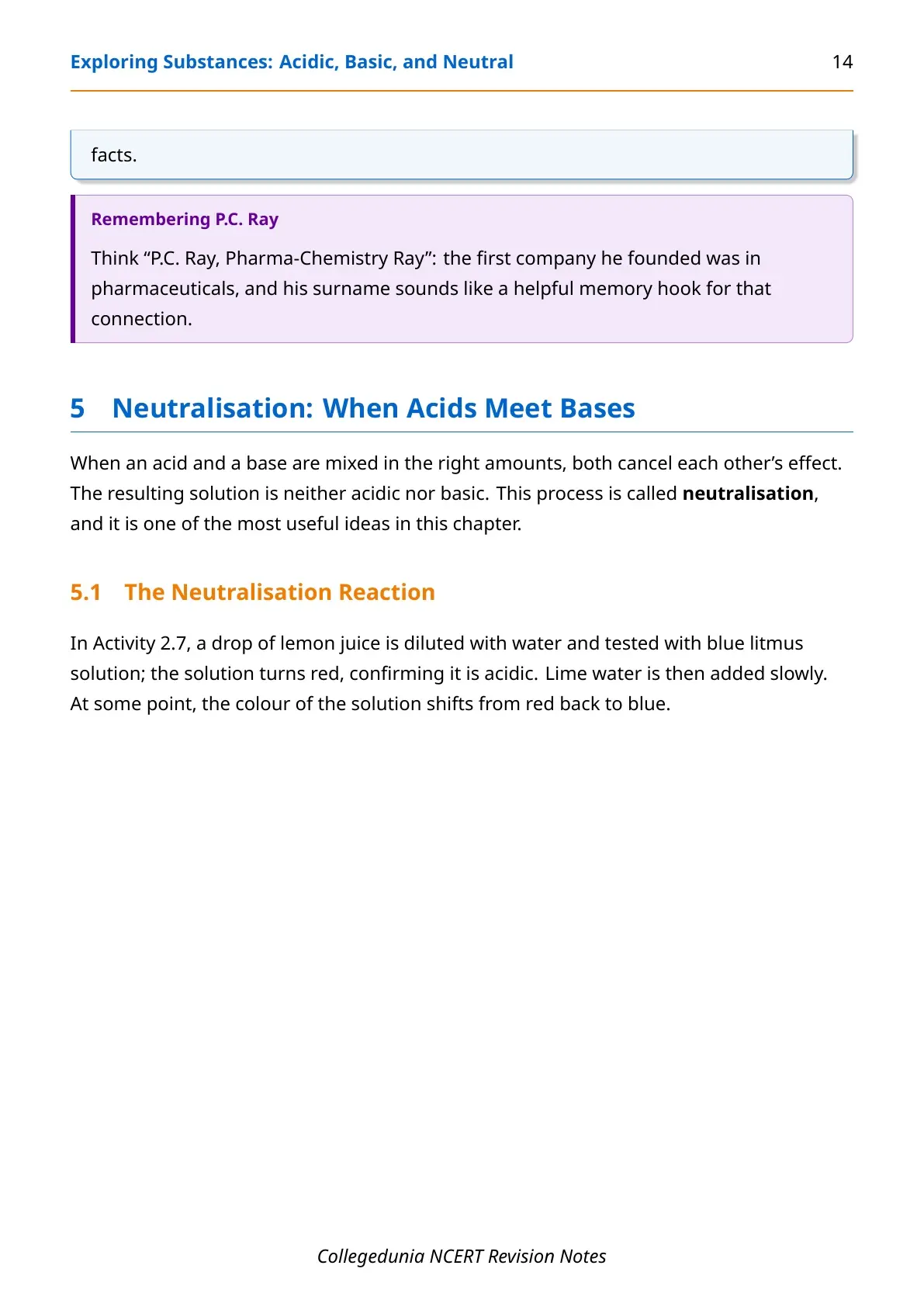
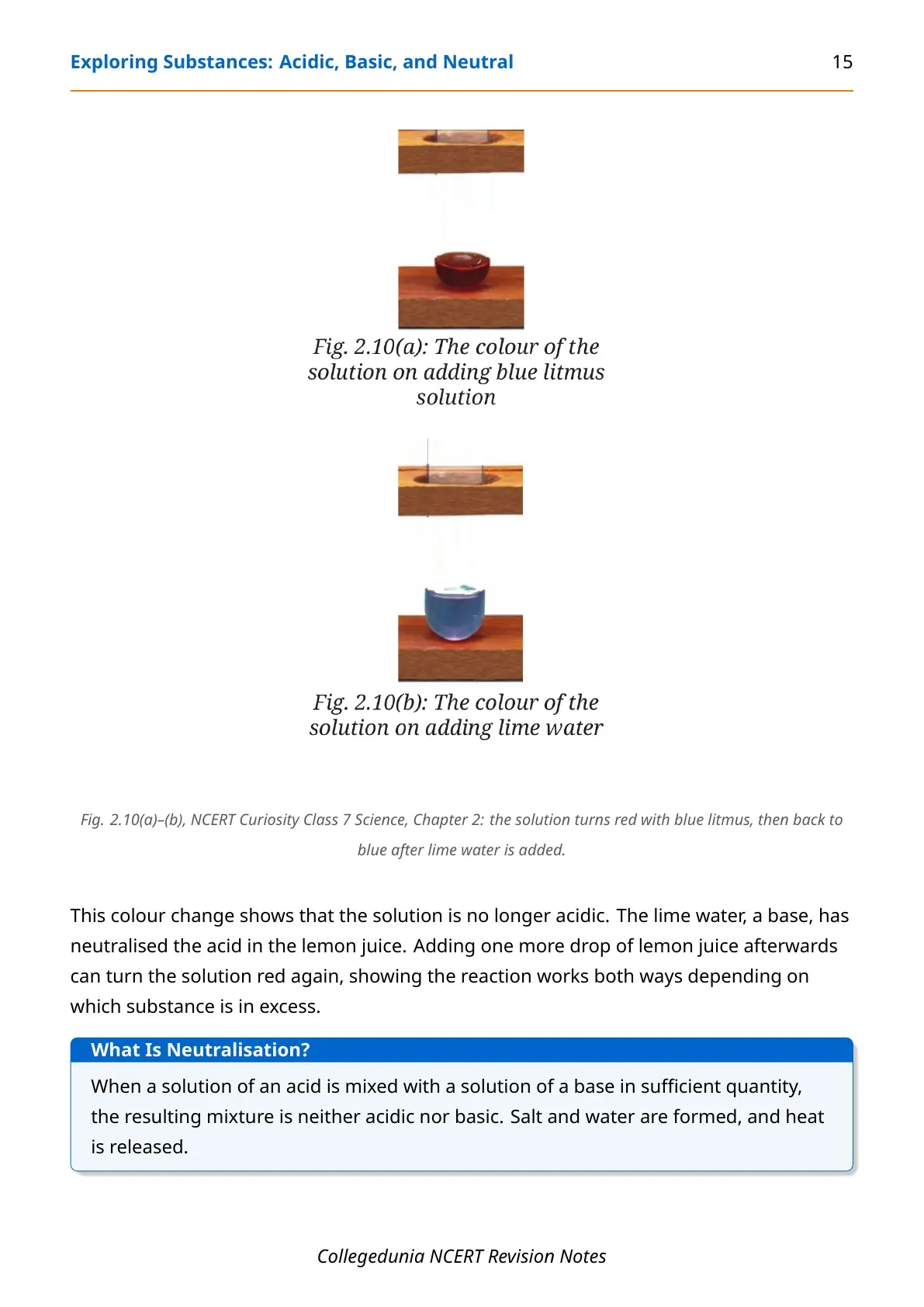
Every neutralisation reaction follows the same word equation: Acid + Base → Salt + Water + Heat. In Activity 2.7, diluted lemon juice turns blue litmus solution red; adding lime water slowly shifts the colour back to blue, showing the acid has been neutralised. Students often remember the salt and the water but forget that heat is a product too.
Neutralisation at Work: Ant Bites, Soil, and Factory Waste
Neutralisation is not confined to a test tube. It solves everyday problems at very different scales.
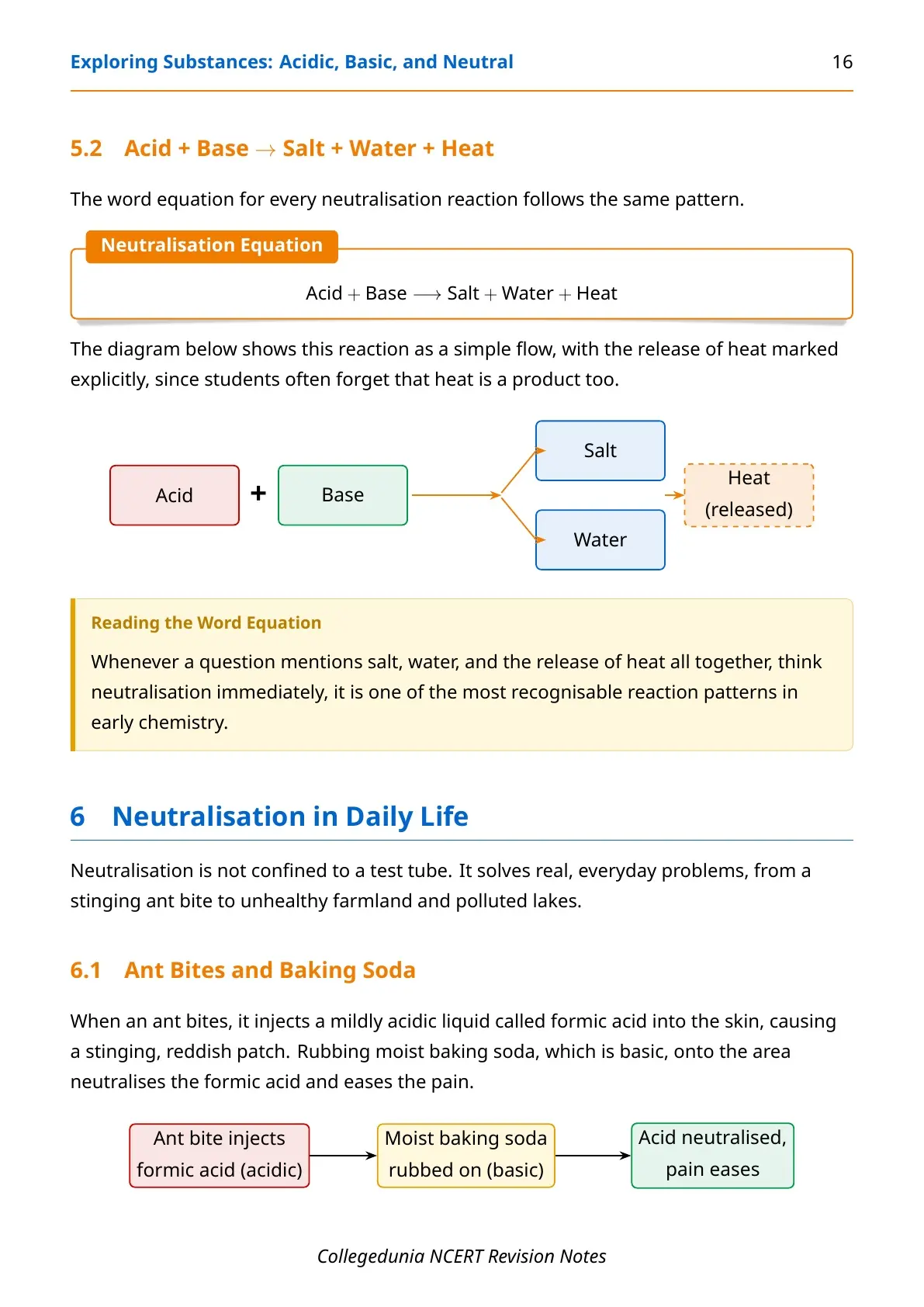
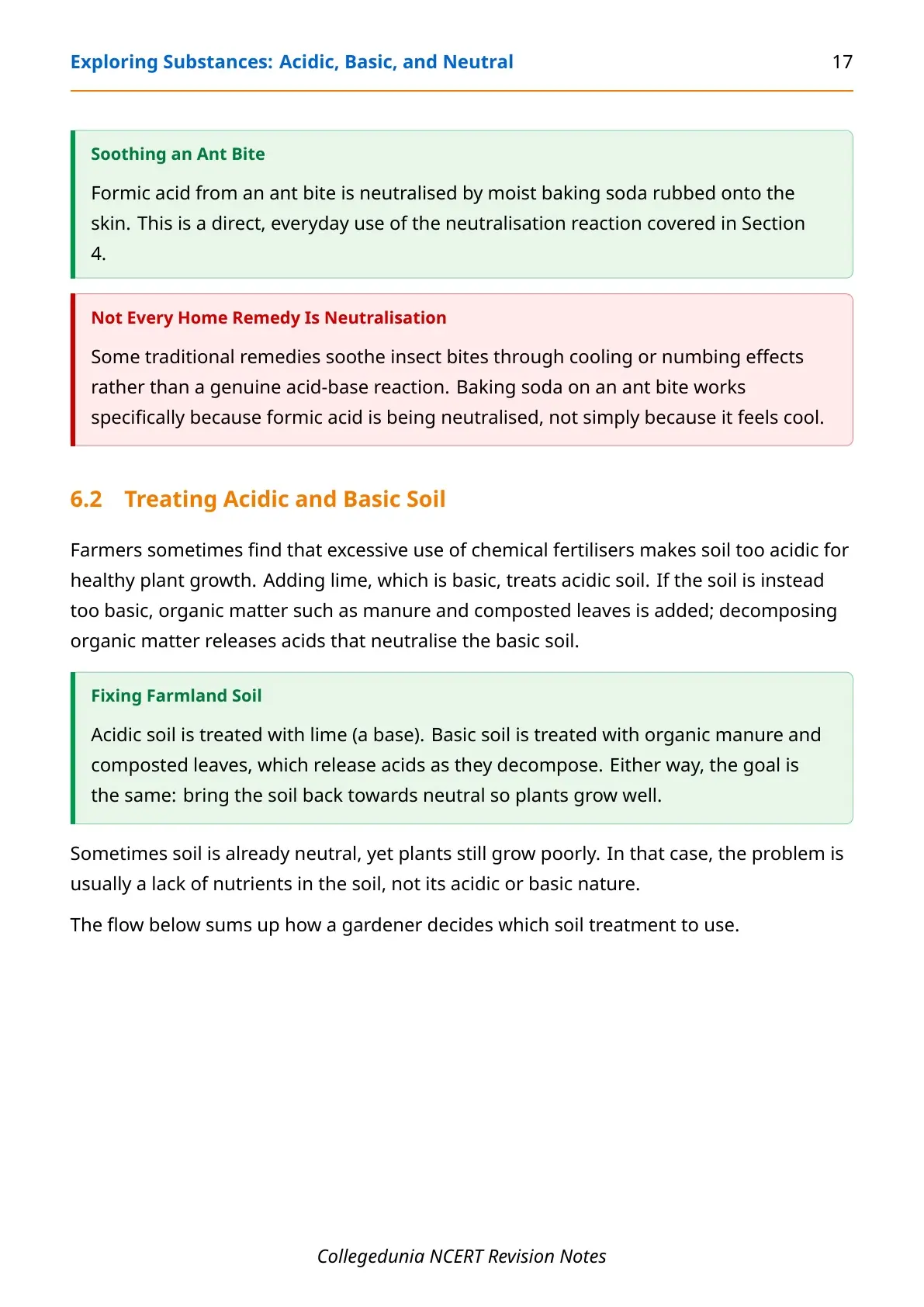
- Ant bites: an ant injects formic acid, which stings. Moist baking soda, a base, neutralises it and eases the pain.
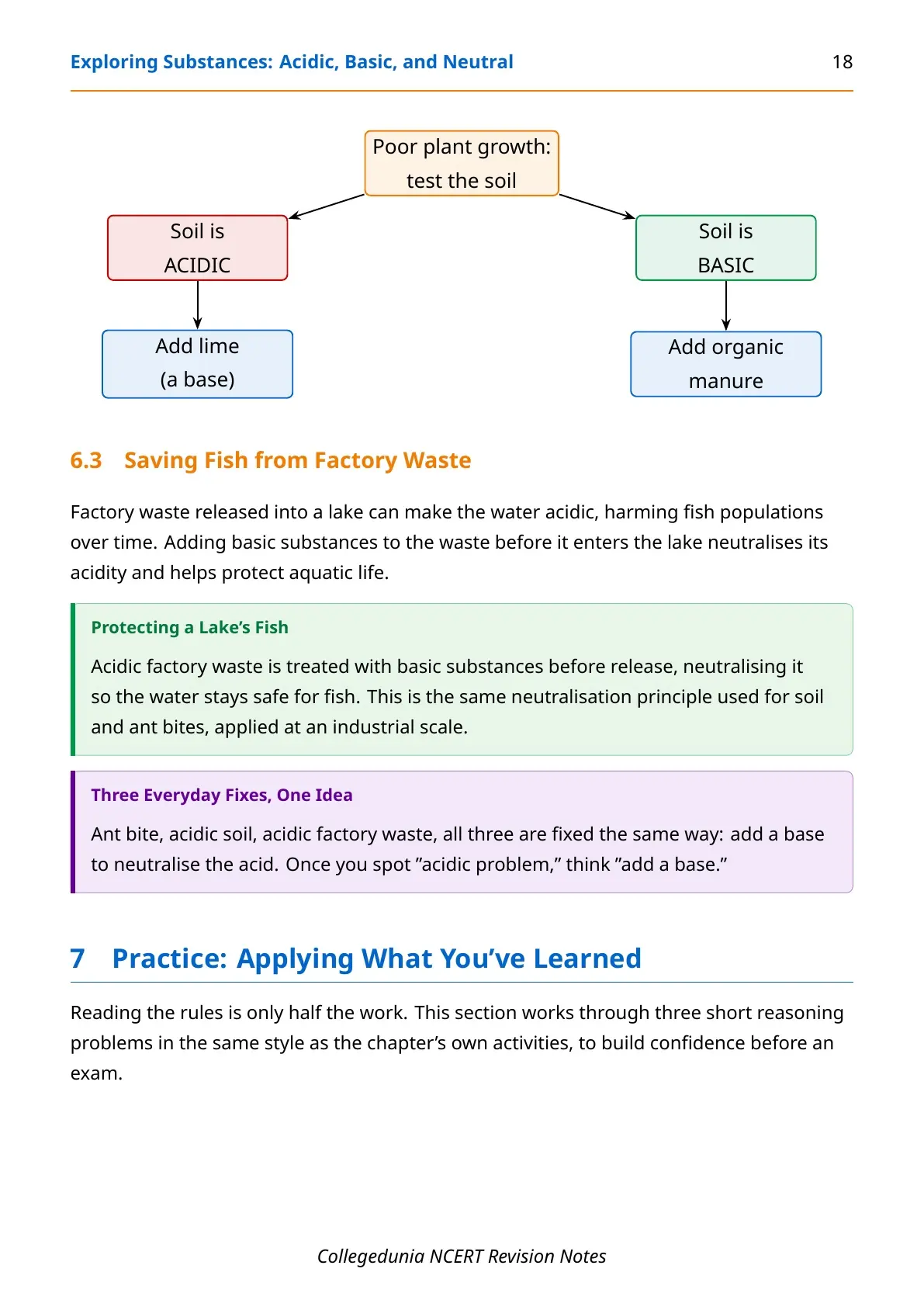
- Farm soil: lime treats soil that has become too acidic; organic manure treats soil that has turned too basic.
- Factory waste: acidic waste is treated with a base before it reaches a lake, protecting the fish living in it.
Once you spot "acidic problem," the fix is almost always the same: add a base.
Quick Revision: Indicator Colour Chart and Common Mistakes
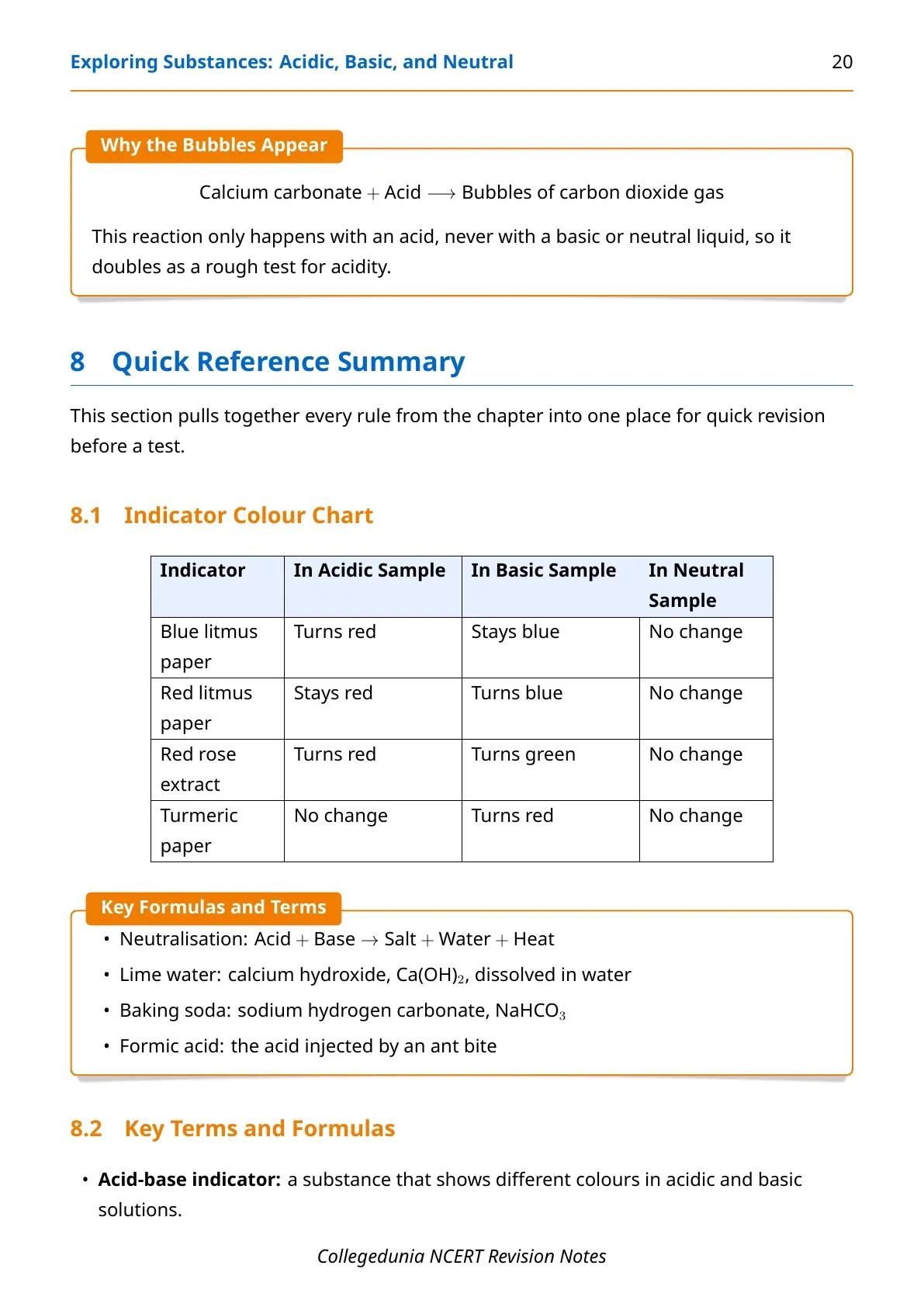
| Indicator | In Acid | In Base | In Neutral |
|---|---|---|---|
| Blue litmus paper | Turns red | Stays blue | No change |
| Red litmus paper | Stays red | Turns blue | No change |
| Red rose extract | Turns red | Turns green | No change |
| Turmeric paper | No change | Turns red | No change |
- Litmus is not the only acid-base indicator; red rose extract and turmeric work too.
- Lime water is calcium hydroxide solution, not the lime fruit.
- A bitter taste does not always mean a substance is basic; bitter gourd is proof.
- Turmeric paper cannot separate an acidic sample from a neutral one; only litmus can.
- Heat is a product of neutralisation too, alongside salt and water.
Key terms to know cold: an acid-base indicator shows different colours in acids and bases; an olfactory indicator changes odour instead of colour; neutralisation is the acid-plus-base reaction that forms salt and water and releases heat; a neutral substance changes none of the three indicators in this chapter.
One Worked Example: Identifying an Unknown Solution
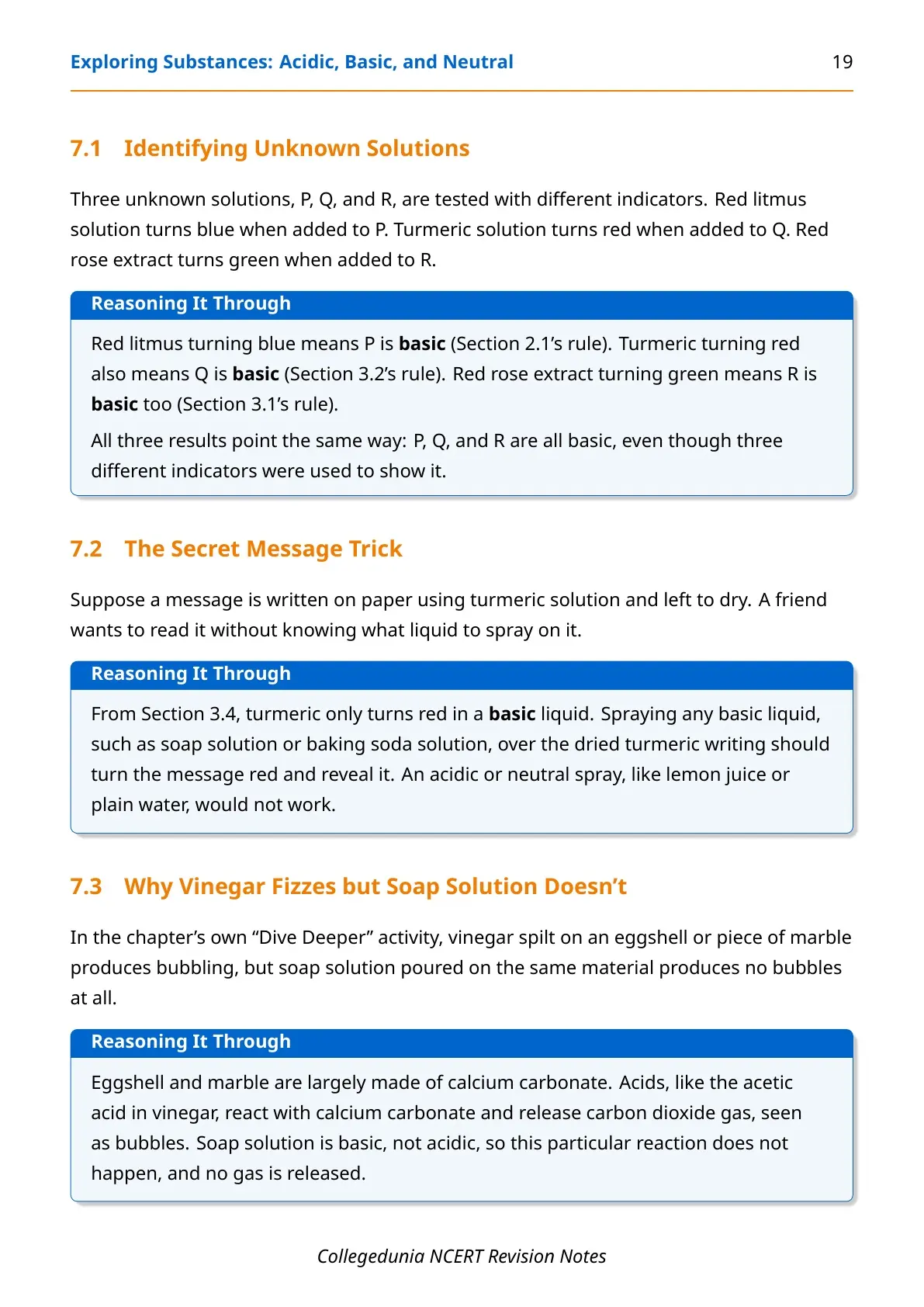
Three unknown solutions, P, Q, and R, are tested with different indicators. Red litmus turns blue when added to P. Turmeric solution turns red when added to Q. Red rose extract turns green when added to R. What can you say about each one?
Red litmus turning blue means P is basic. Turmeric turning red also means Q is basic. Red rose extract turning green means R is basic too. All three results point the same way, even though three different indicators were used to reach the same answer. This is exactly the kind of reasoning question that shows up in a Class 7 test on this chapter.
Student Feedback: What 11,480 Students Told Us
What 11,480 students told us about their Exploring Substances journey.
In a Collegedunia poll of 11,480 Class 7 students conducted before the 2026-27 school exams, 68% of students named the turmeric-versus-litmus mix-up as the trickiest part of this chapter. Most students said the neutralisation word equation was the easiest fact to remember once they had seen it applied to an ant bite.
Other Class 7 Science Chapter 2 Resources on Collegedunia
| Resource | Status |
|---|---|
| NCERT Notes (this page) | Available now |
| NCERT Book PDF | Available now |
| Handwritten Notes | Available now |
| NCERT Solutions | Coming soon |
| Formula Sheet | Coming soon |
| Exemplar Solutions | Coming soon |
| Exemplar Book PDF | Coming soon |
Class 7 Science Curiosity Notes for All Chapters
| Chapter | Notes |
|---|---|
| Chapter 1 | The Ever-Evolving World of Science (coming soon) |
| Chapter 2 | Exploring Substances: Acidic, Basic, and Neutral (this page) |
| Chapter 3 | Electricity: Circuits and their Components (coming soon) |
| Chapter 4 | The World of Metals and Non-metals (coming soon) |
| Chapter 5 | Changes Around Us: Physical and Chemical (coming soon) |
| Chapter 6 | Adolescence: A Stage of Growth and Change (coming soon) |
| Chapter 7 | Heat Transfer in Nature (coming soon) |
| Chapter 8 | Measurement of Time and Motion (coming soon) |
| Chapter 9 | Life Processes in Animals (coming soon) |
| Chapter 10 | Life Processes in Plants (coming soon) |
| Chapter 11 | Light, Shadows and Reflections (coming soon) |
| Chapter 12 | Earth, Moon, and the Sun (coming soon) |
| Class 7 Science Curiosity - All Chapters | |
Class 7 Science Chapter 2 Exploring Substances Acidic Basic and Neutral Notes FAQs
Ques. What is an acid-base indicator?
Ans. An acid-base indicator is a substance that shows a different colour in acidic and basic solutions. Litmus, red rose extract, and turmeric paper are the three natural indicators covered in this chapter.
Ques. What is litmus and where does it come from?
Ans. Litmus is a natural dye extracted from lichens, organisms formed by a fungus and an alga growing together. It is sold as blue and red paper strips or as a solution.
Ques. What is neutralisation?
Ans. Neutralisation is the reaction between an acid and a base that forms salt and water and releases heat: Acid + Base → Salt + Water + Heat.
Ques. Why does blue litmus paper turn red?
Ans. Blue litmus paper turns red when it touches an acidic sample. This is the standard rule tested in Activity 2.1 of the NCERT chapter.
Ques. Why does turmeric paper only turn red in a basic sample?
Ans. Turmeric contains a pigment that reacts only with basic substances. It leaves both acidic and neutral samples unchanged, so it cannot separate the two on its own.
Ques. Is lime water the same as the lime fruit?
Ans. No. Lime water is a solution of calcium hydroxide made by mixing lime (calcium oxide) with water. The lime fruit is unrelated, despite the shared name.
Ques. Can taste alone tell us if a substance is acidic or basic?
Ans. Not reliably. Bitter gourd tastes bitter but contains no base, so taste and touch can mislead. An indicator test is always the safer way to check.
Ques. What happens when vinegar is poured on an eggshell?
Ans. Eggshell contains calcium carbonate, which reacts with the acetic acid in vinegar to release bubbles of carbon dioxide gas. Soap solution, being basic, does not produce this reaction.
Ques. How does baking soda help with an ant bite?
Ans. An ant bite injects formic acid, which stings. Moist baking soda is basic, so rubbing it on the area neutralises the acid and eases the pain.
Ques. Who is known as the Father of Modern Indian Chemistry?
Ans. Acharya Prafulla Chandra Ray, known as P.C. Ray, is called the Father of Modern Indian Chemistry. He founded India's first pharmaceutical company in 1901.
Ques. What is an olfactory indicator?
Ans. An olfactory indicator changes odour, not colour, in an acidic or basic medium. A strip carrying onion odour is one simple example used in this chapter.
Ques. Where can I download the Class 7 Science Chapter 2 Notes PDF?
Ans. You can download the Exploring Substances: Acidic, Basic, and Neutral Notes PDF directly from this page, free of cost and matched to the 2026-27 NCERT Curiosity textbook.



Comments