




The Class 12 Physics Chapter 14 Semiconductor Electronics PYQ compilation has 395 board-paper questions across 24 years (2003 to 2026), sorted by marks (1 to 5) and by year (latest first).
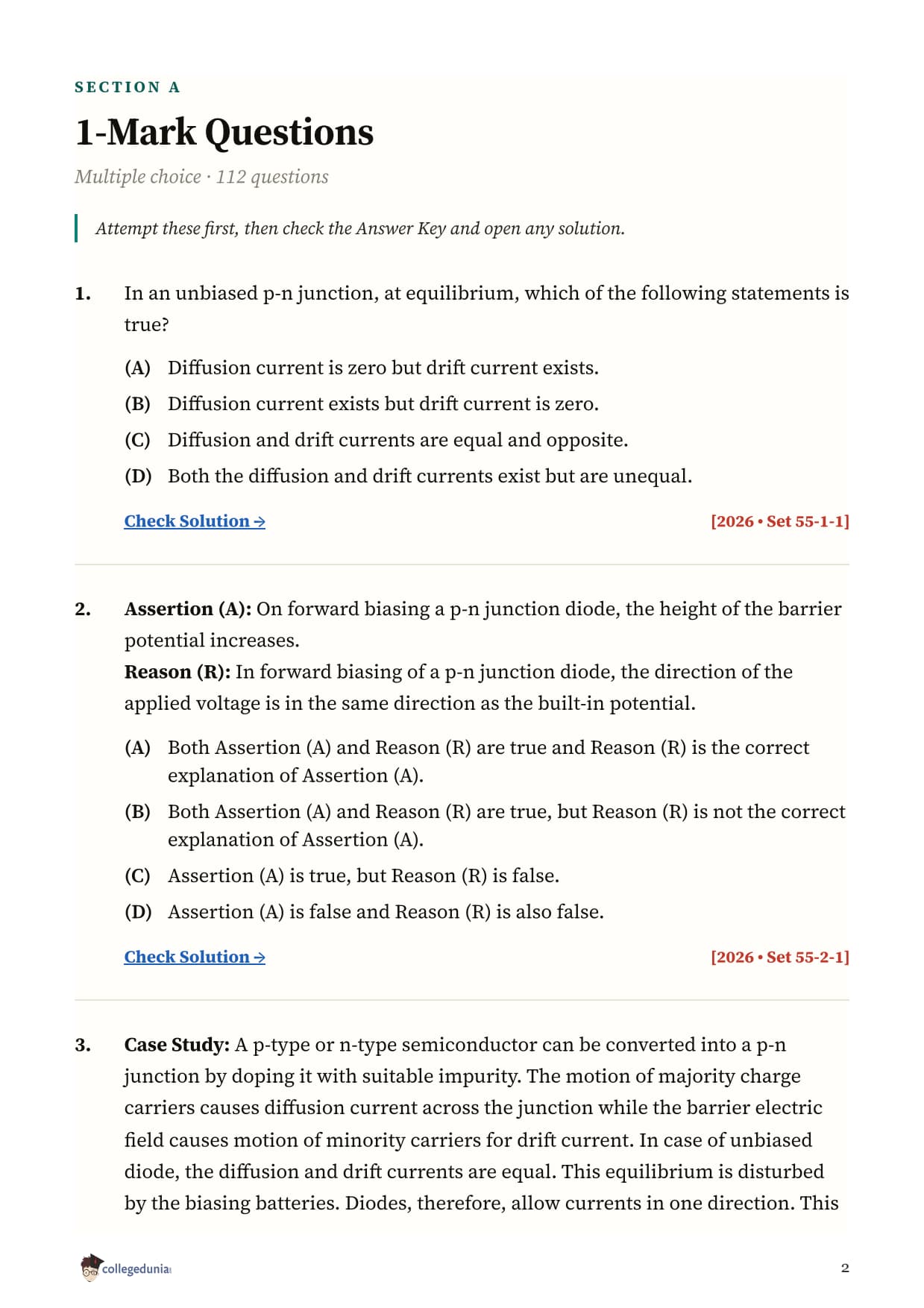
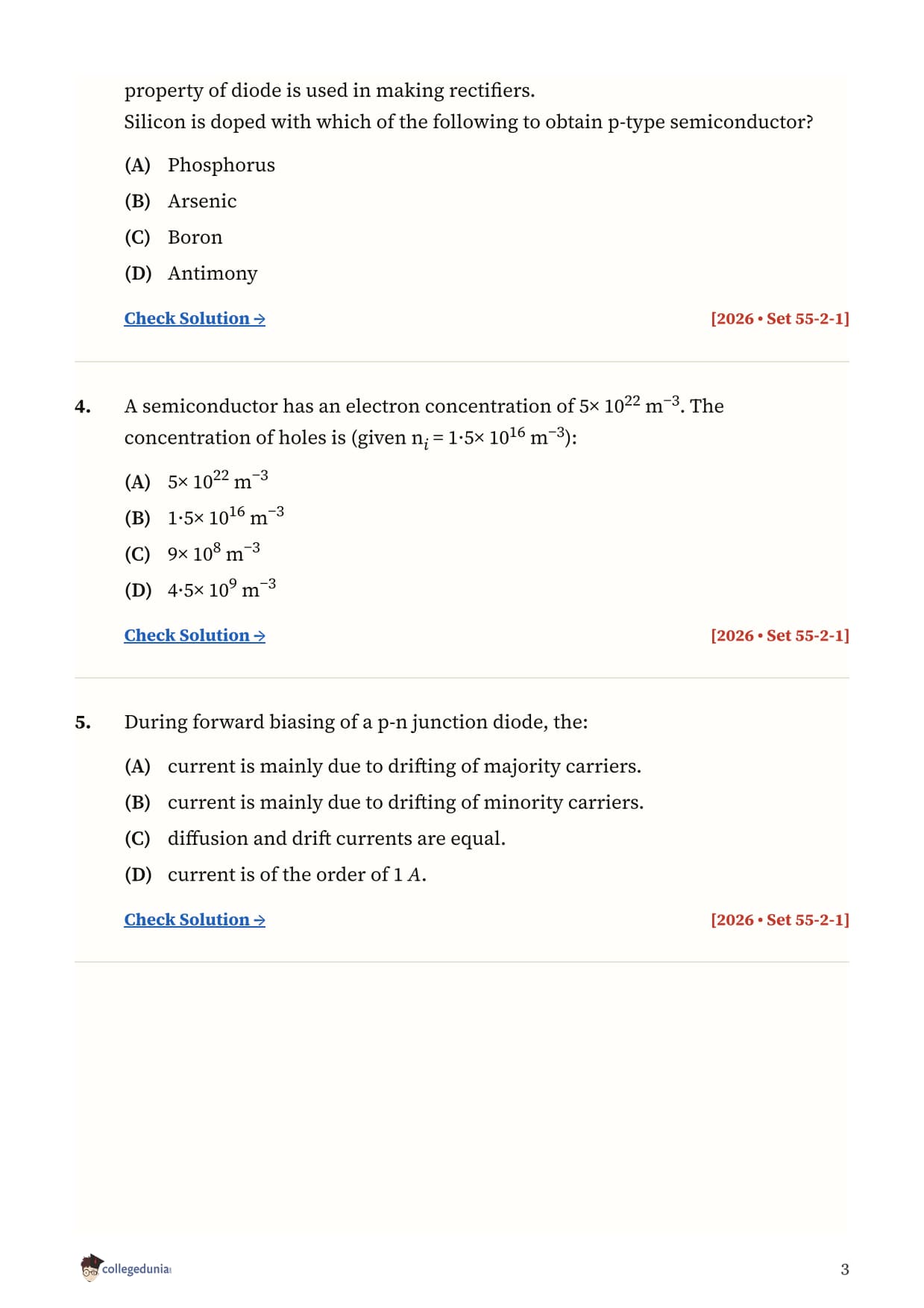
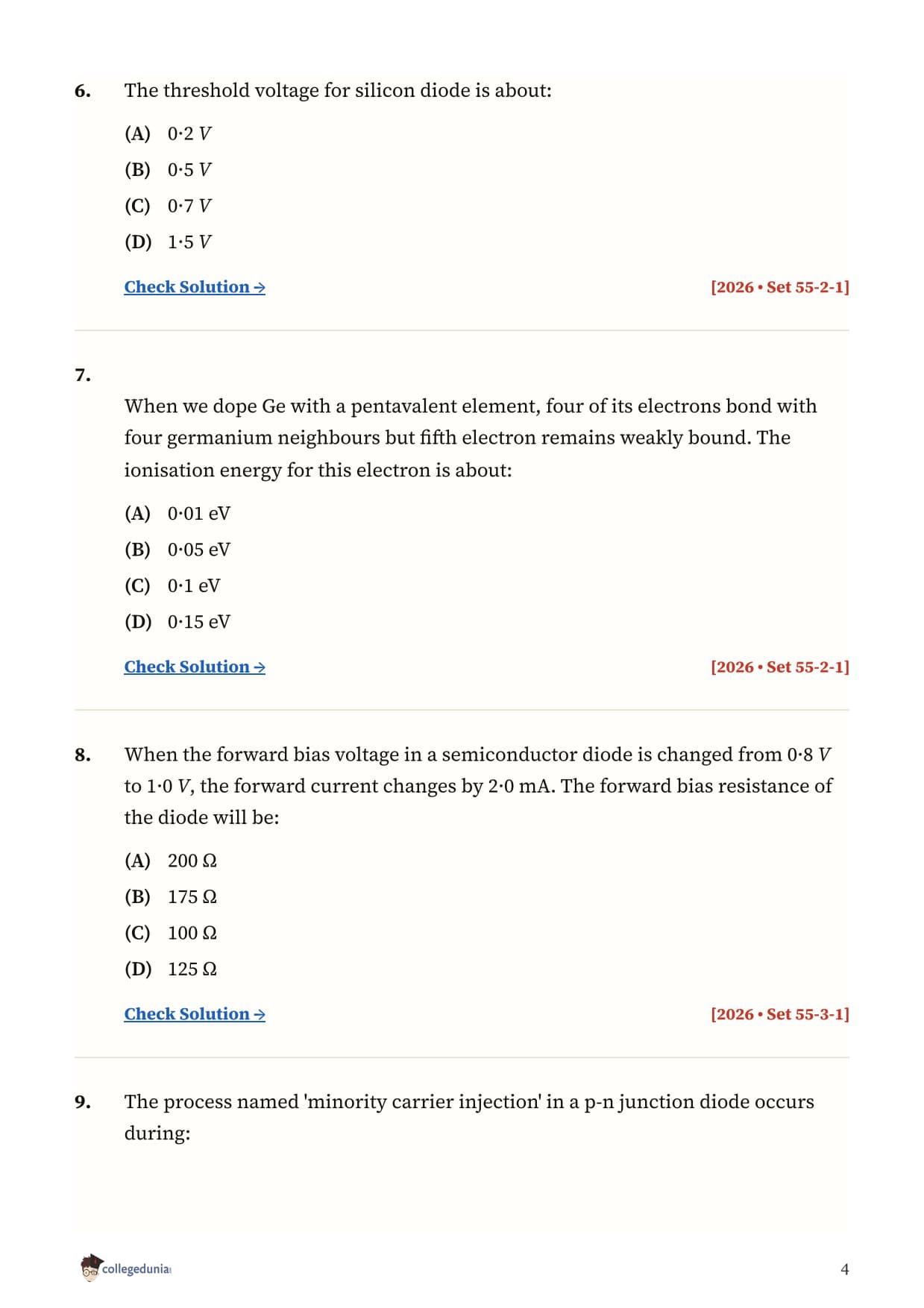
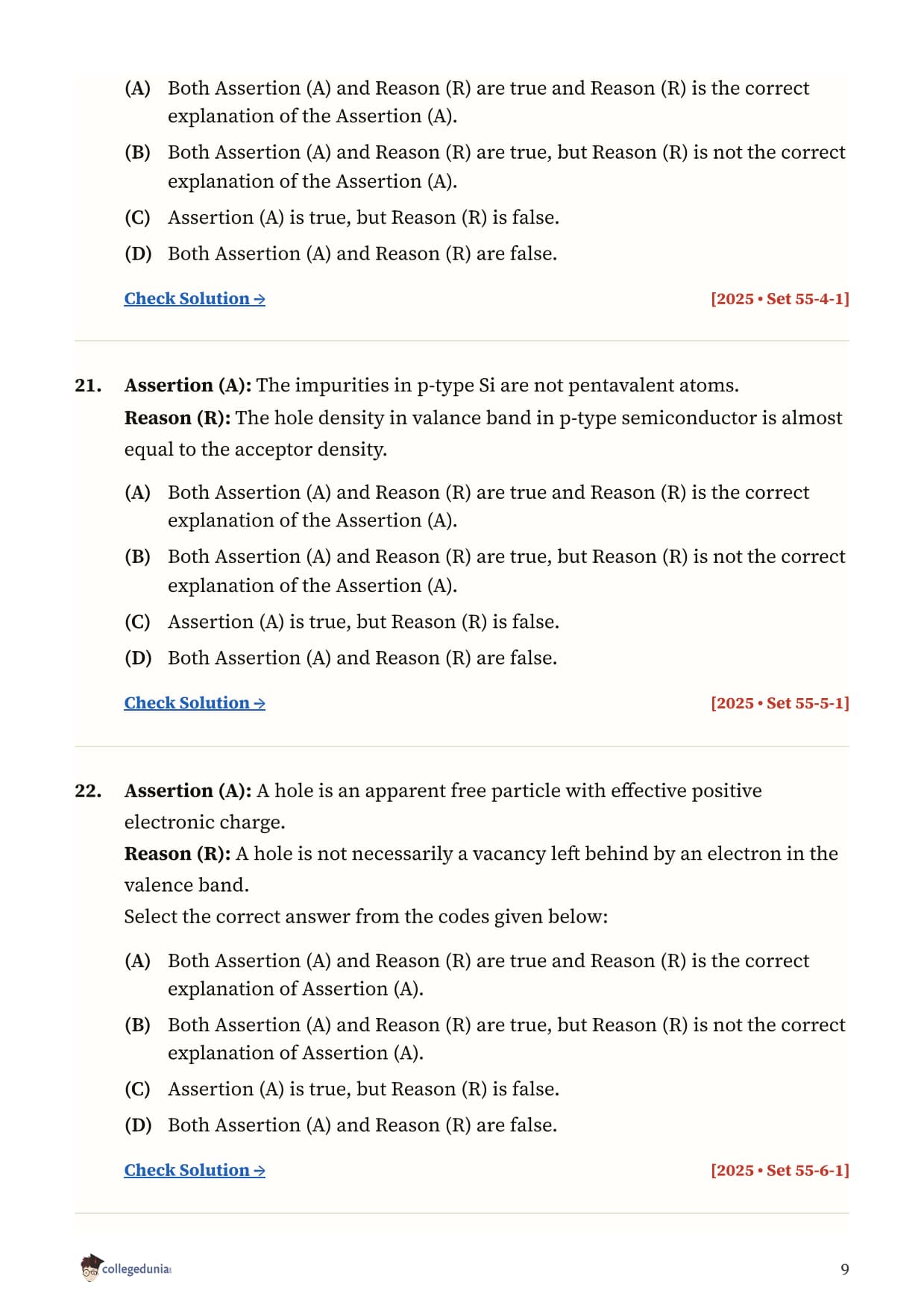
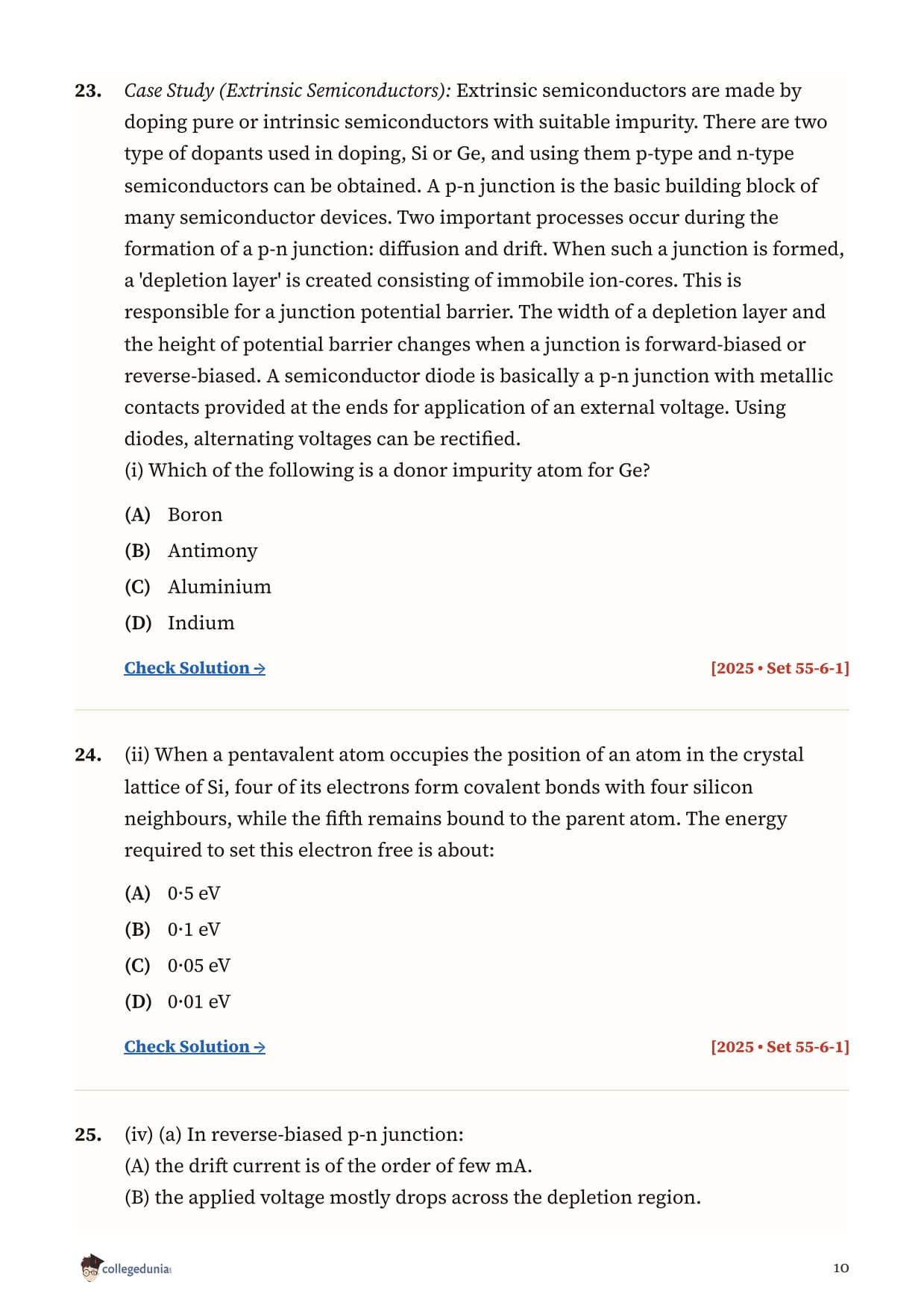
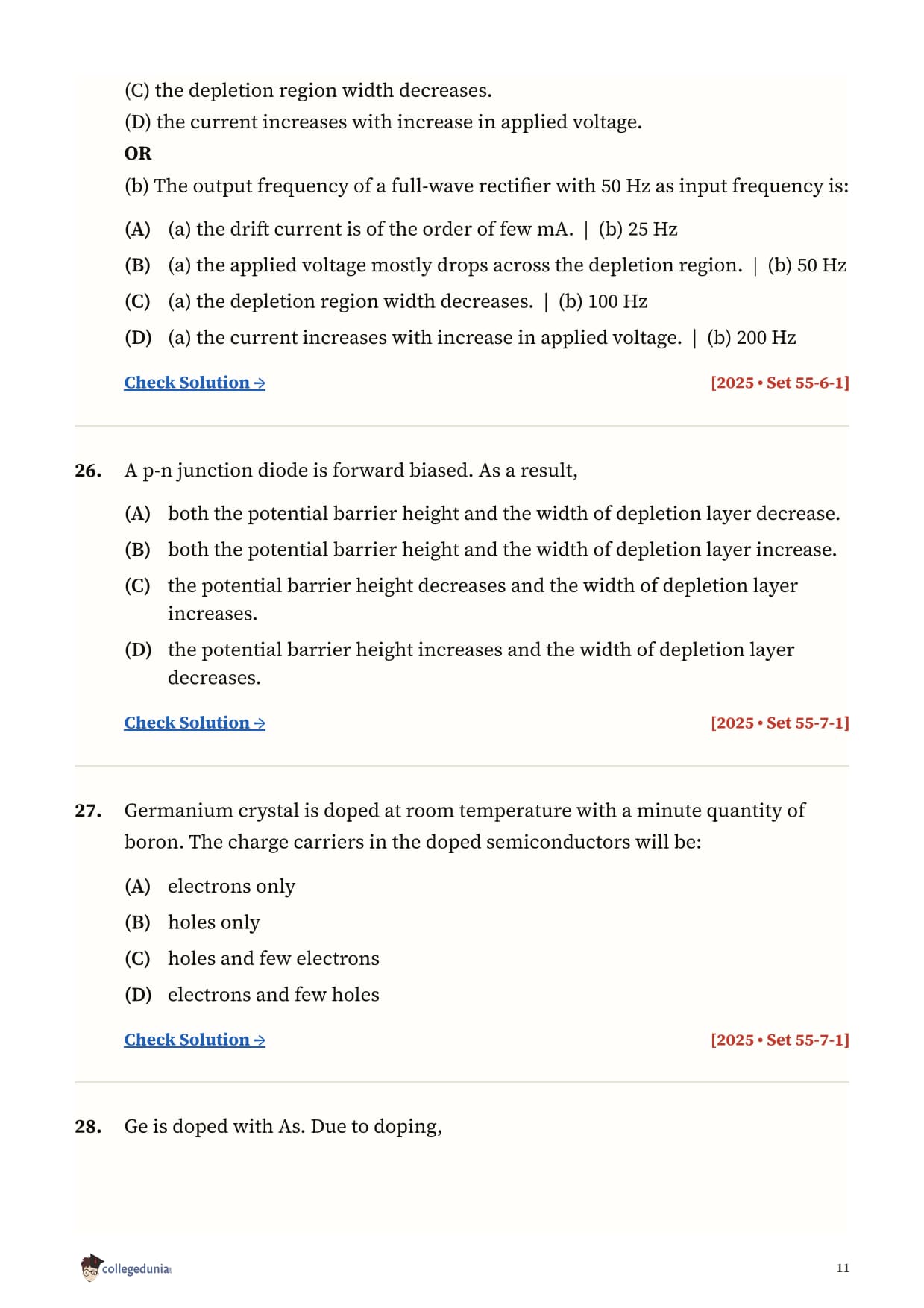
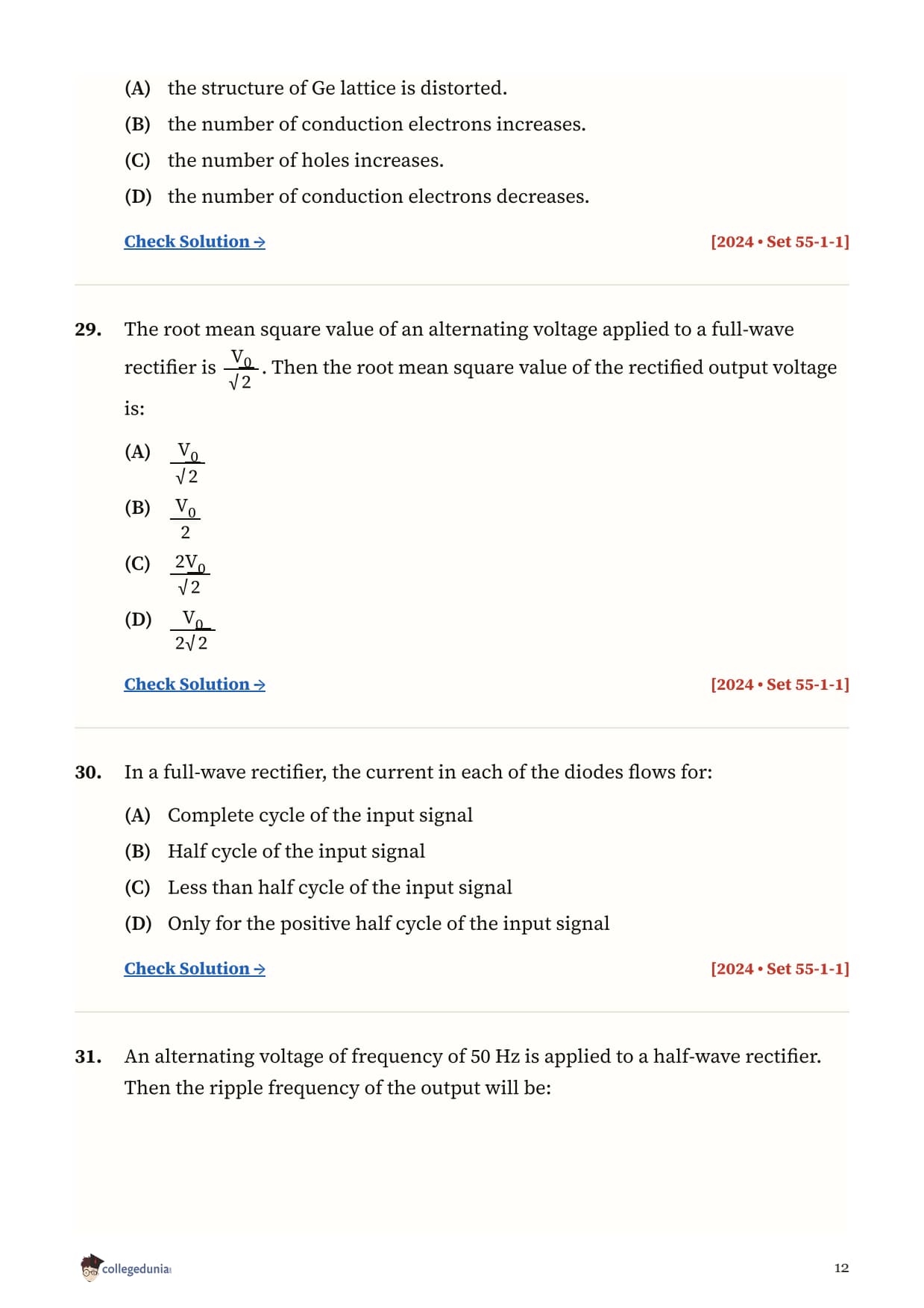
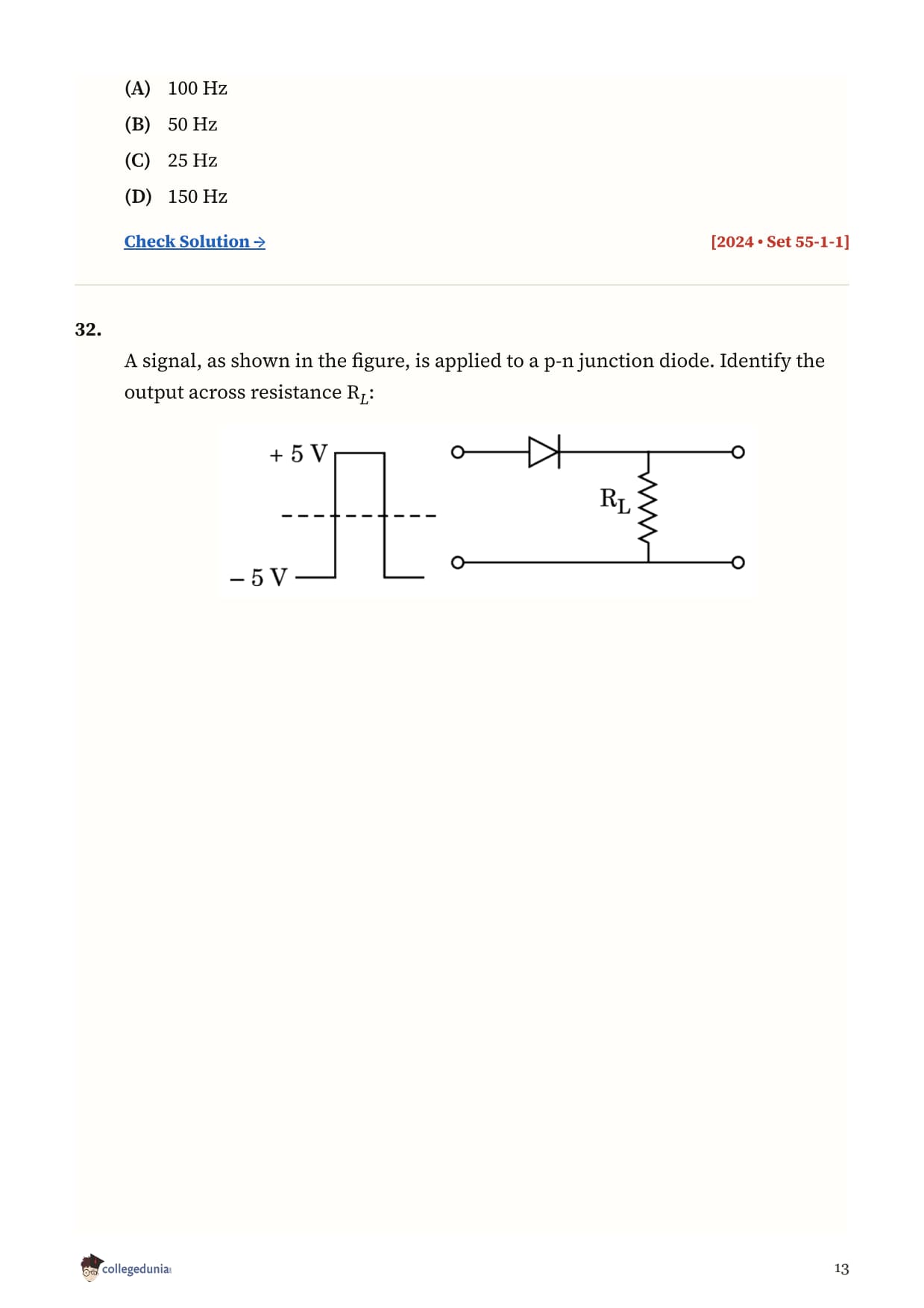
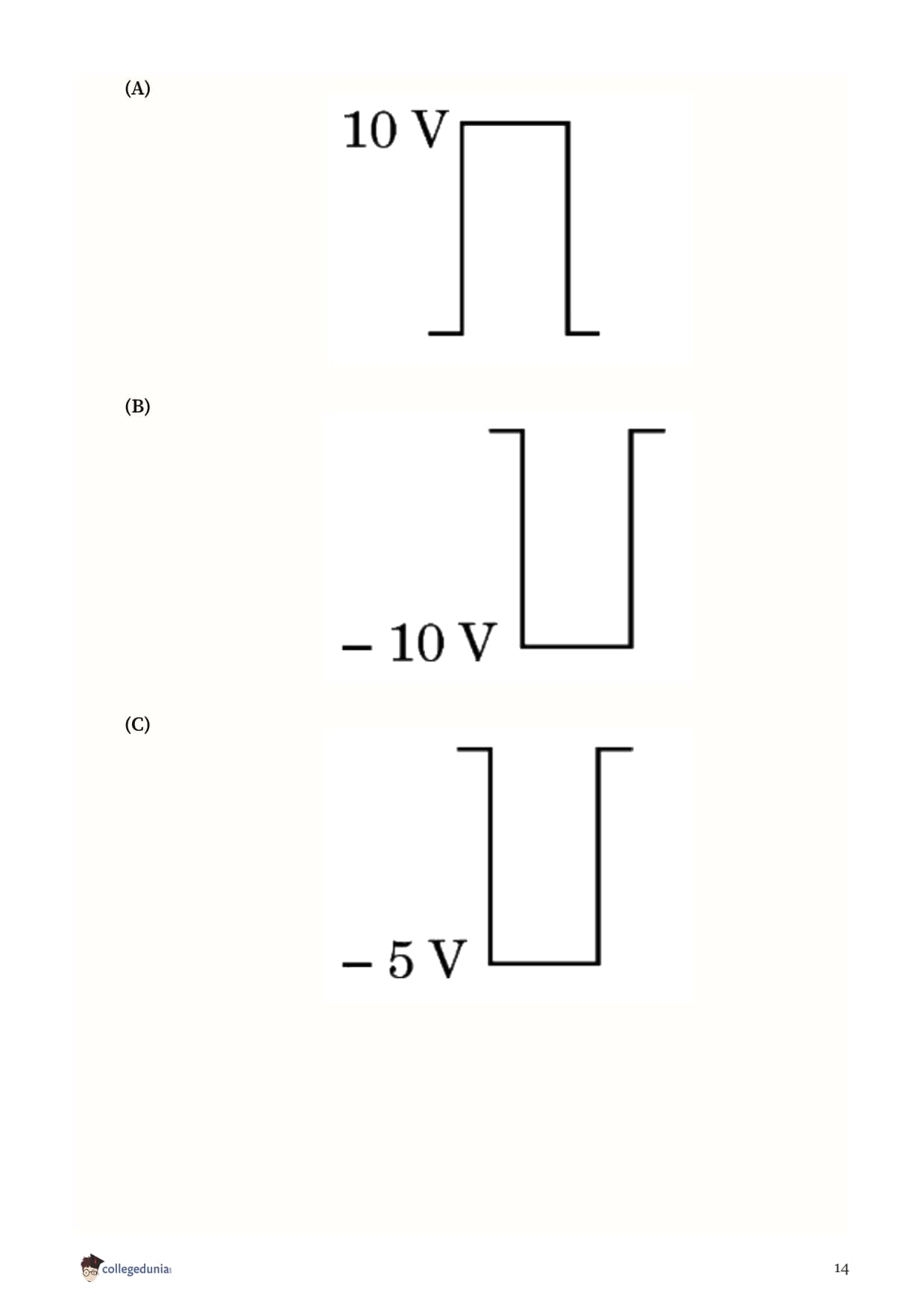
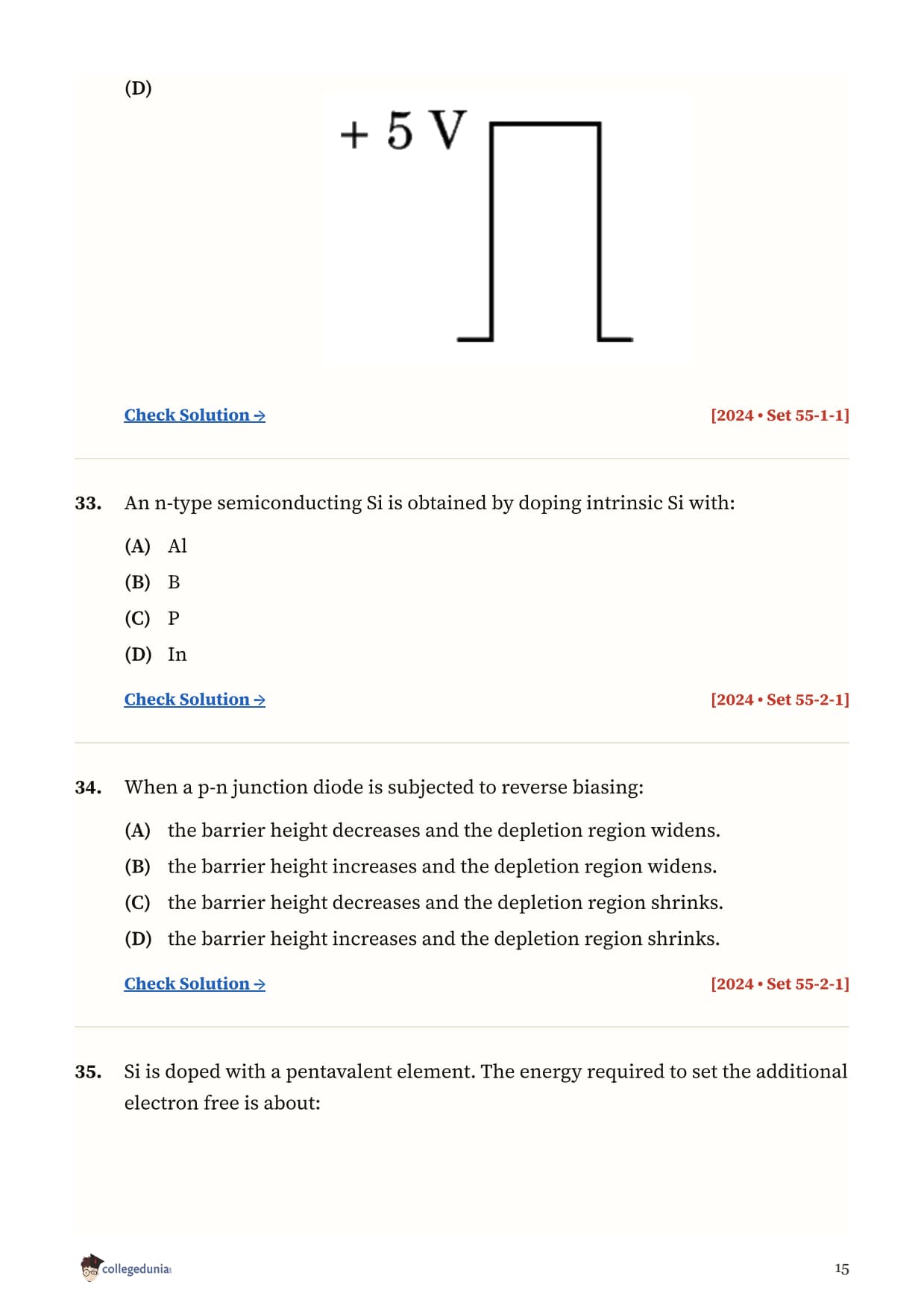
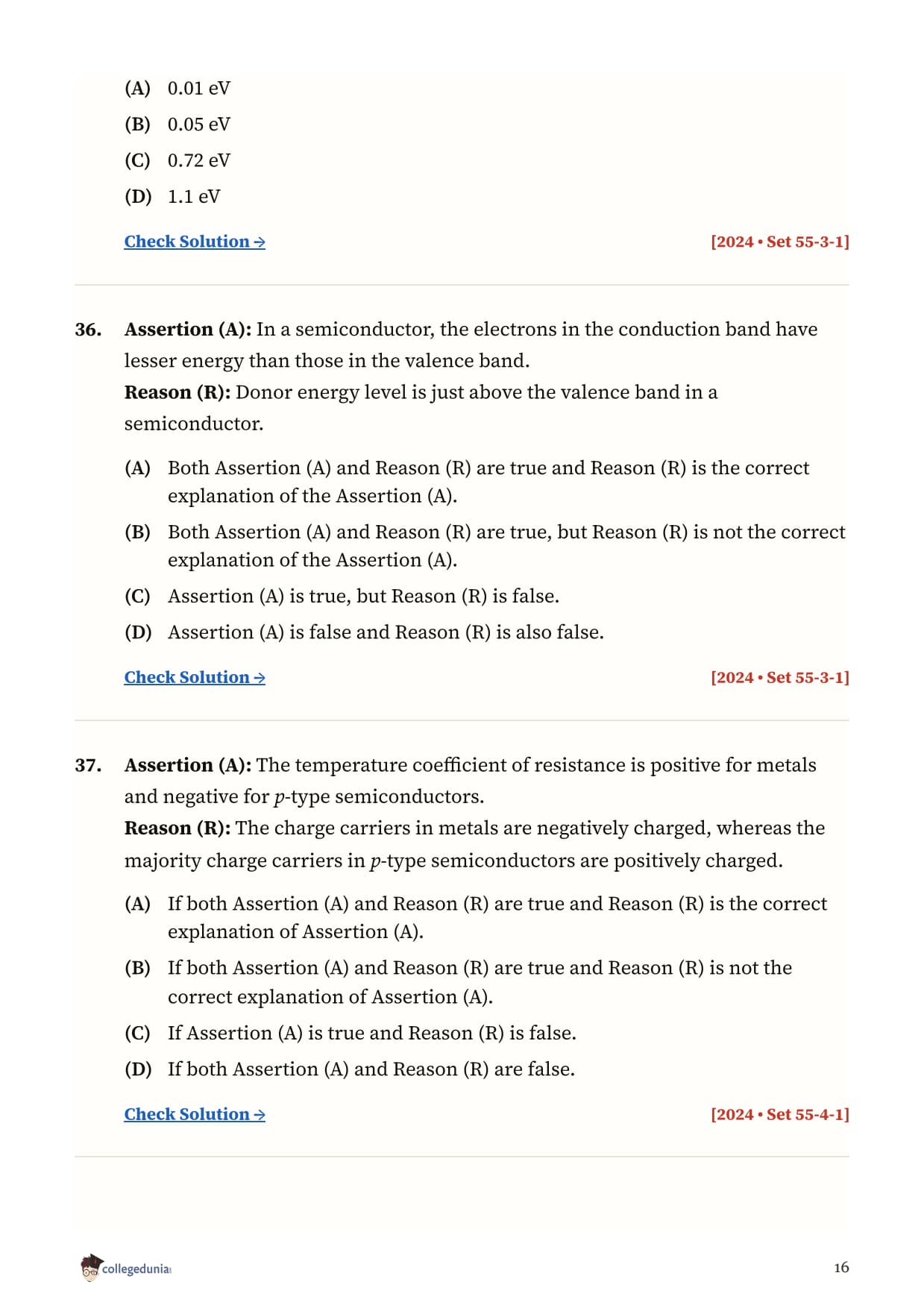
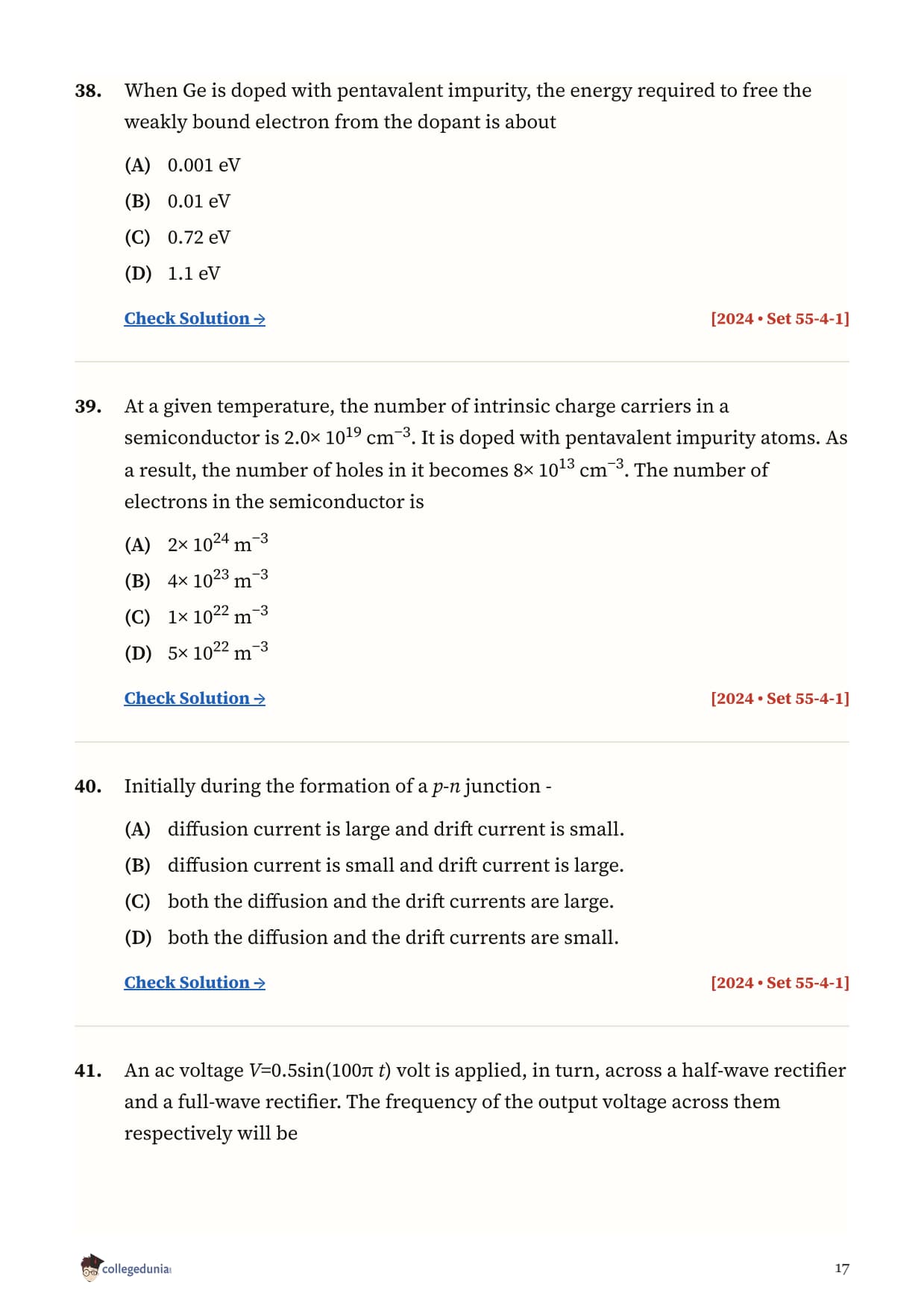
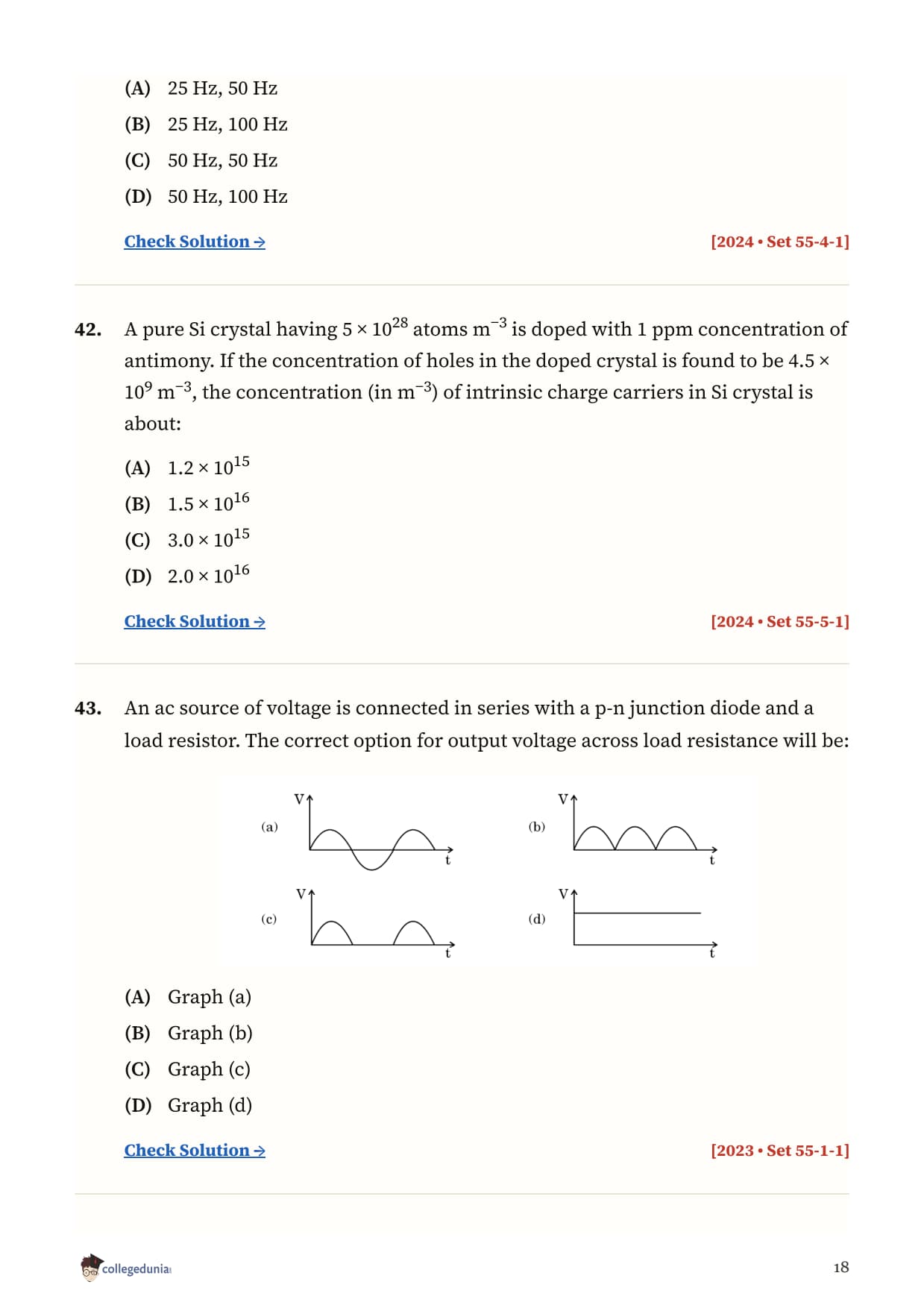
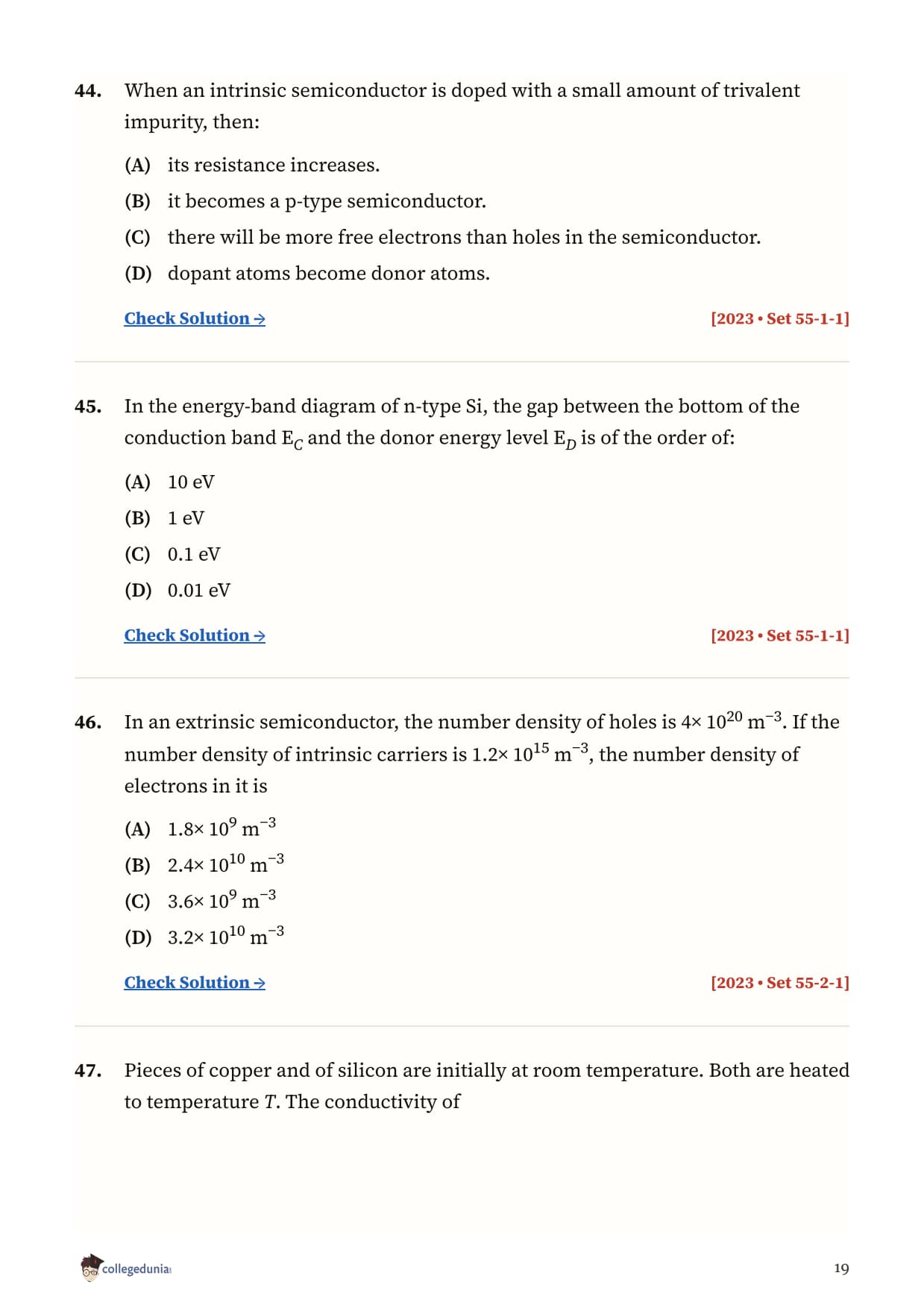
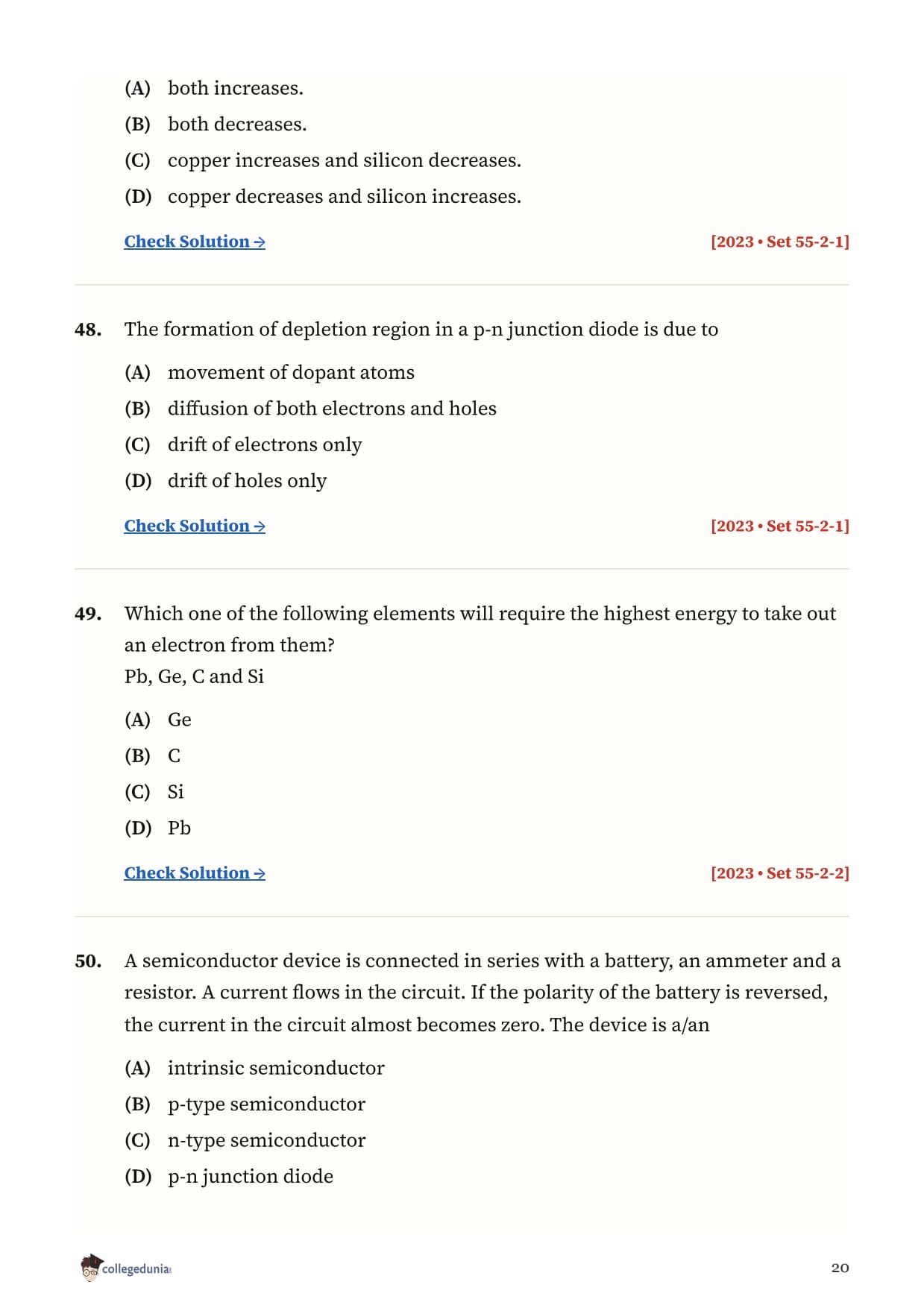
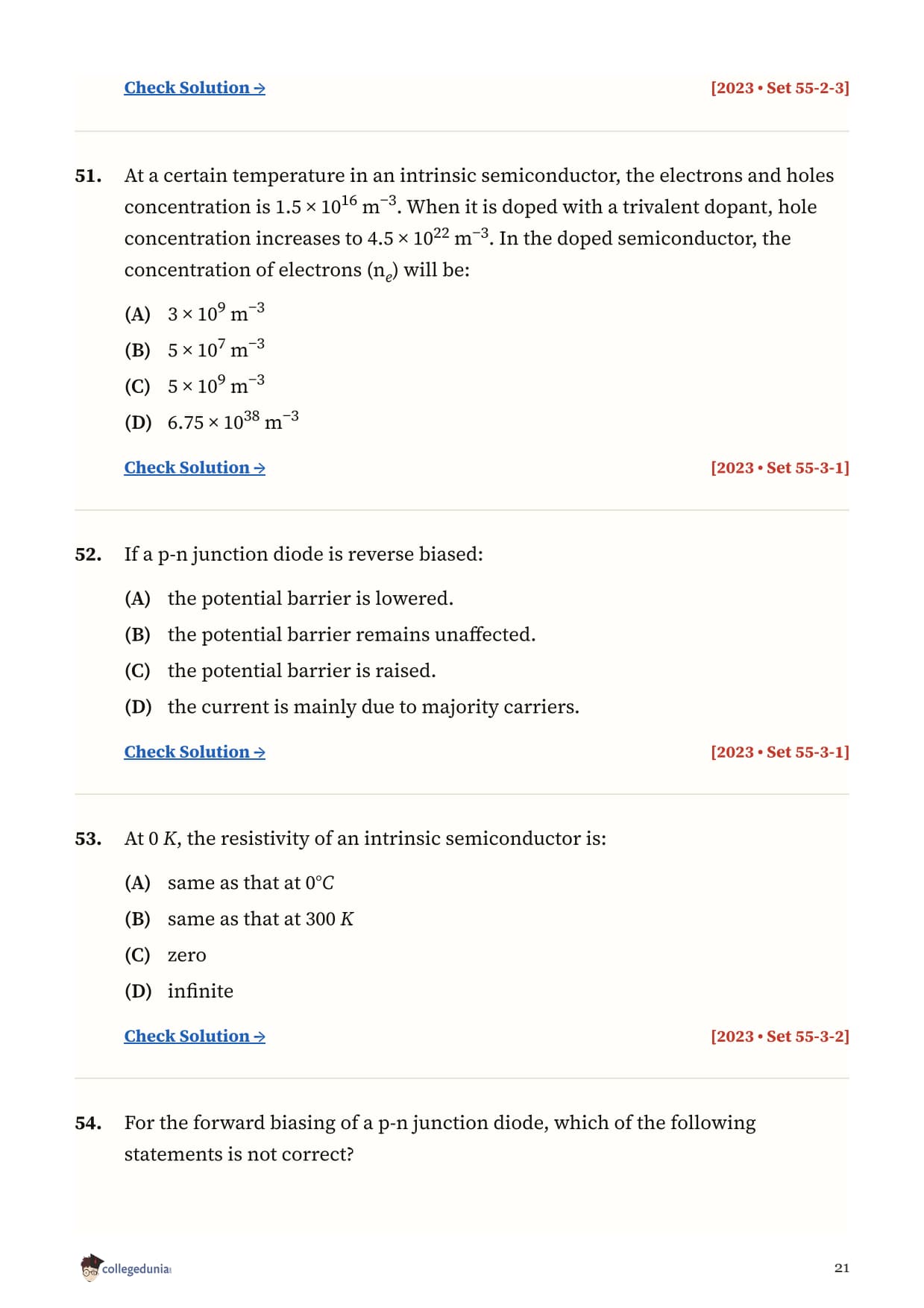
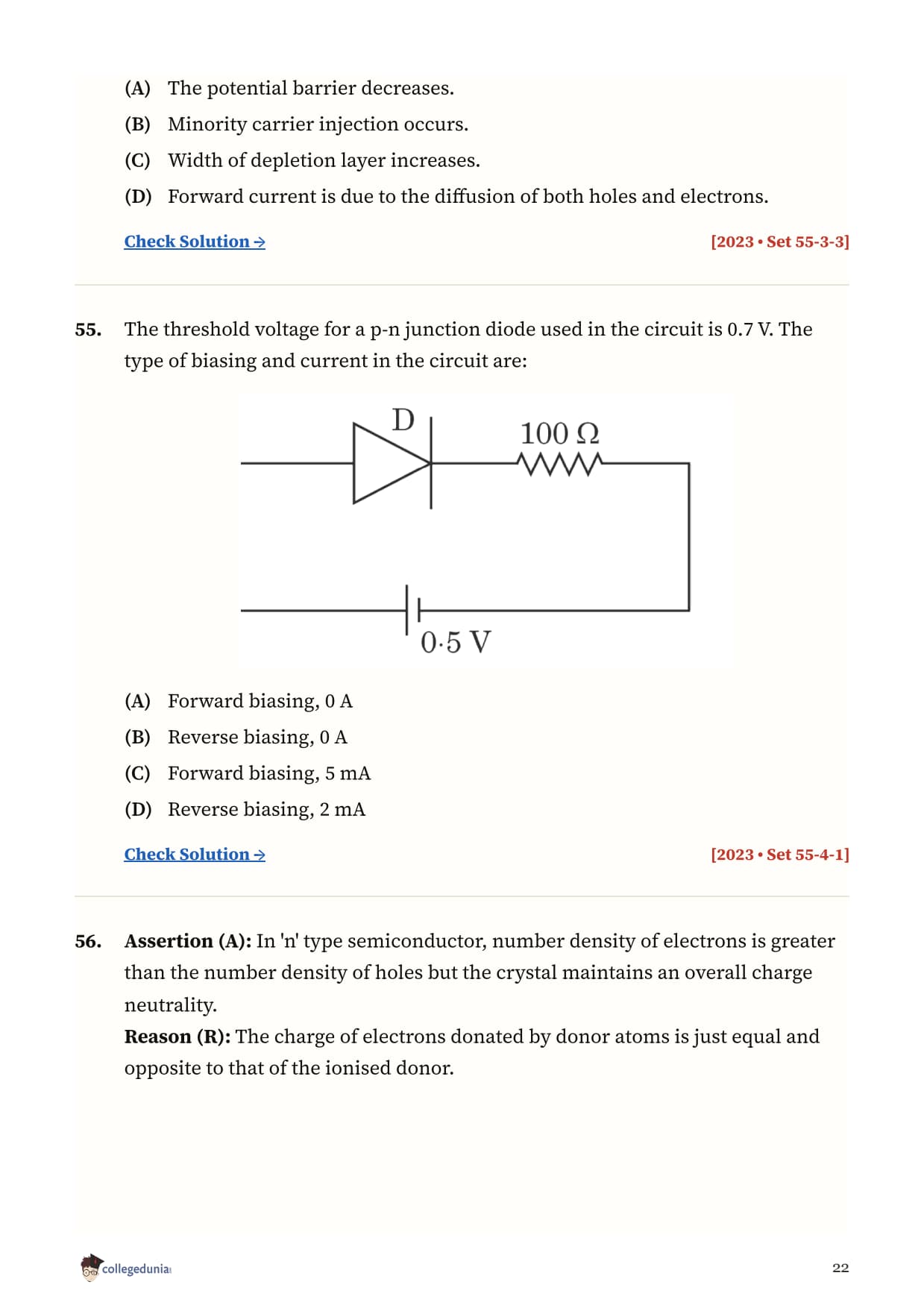
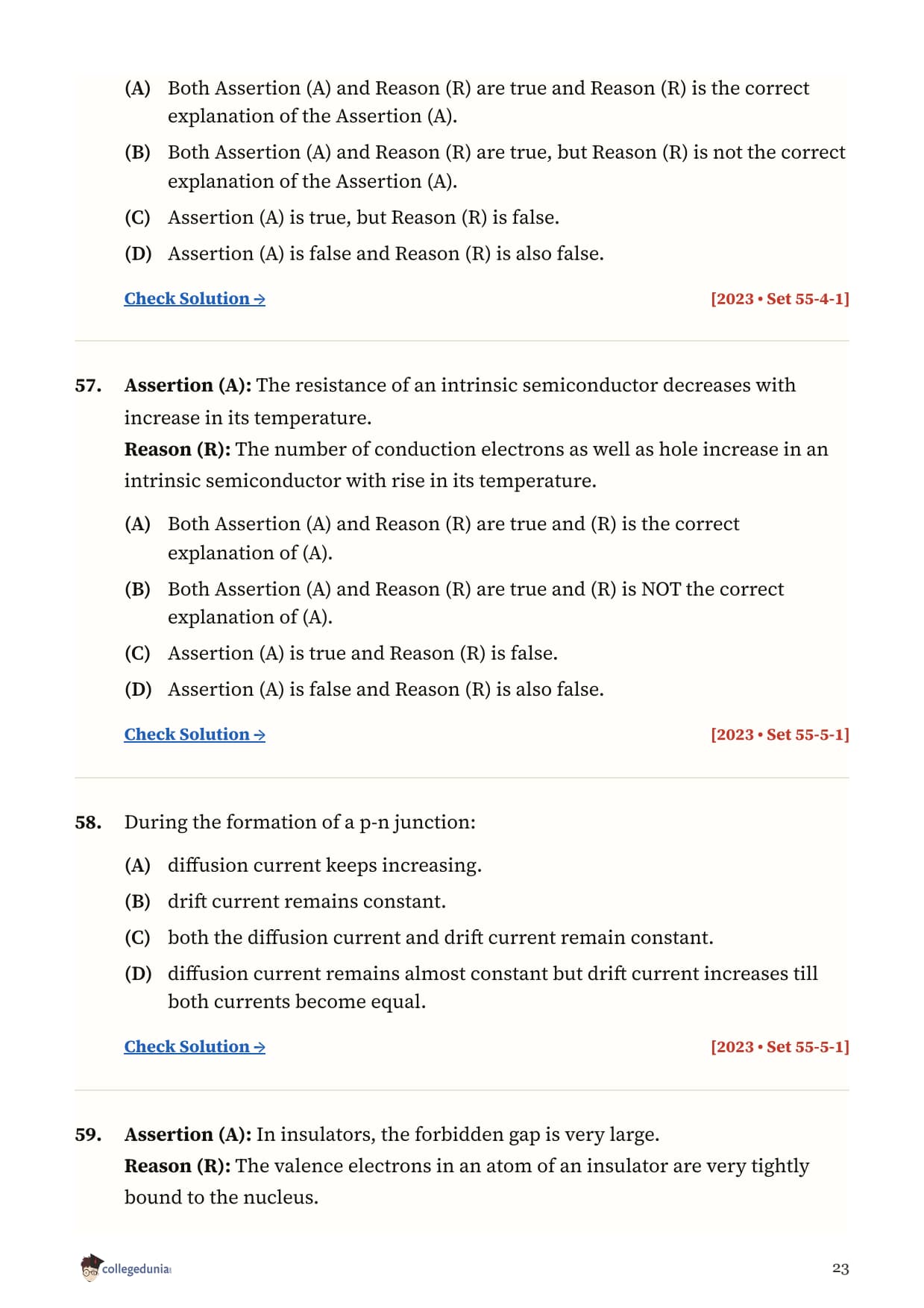
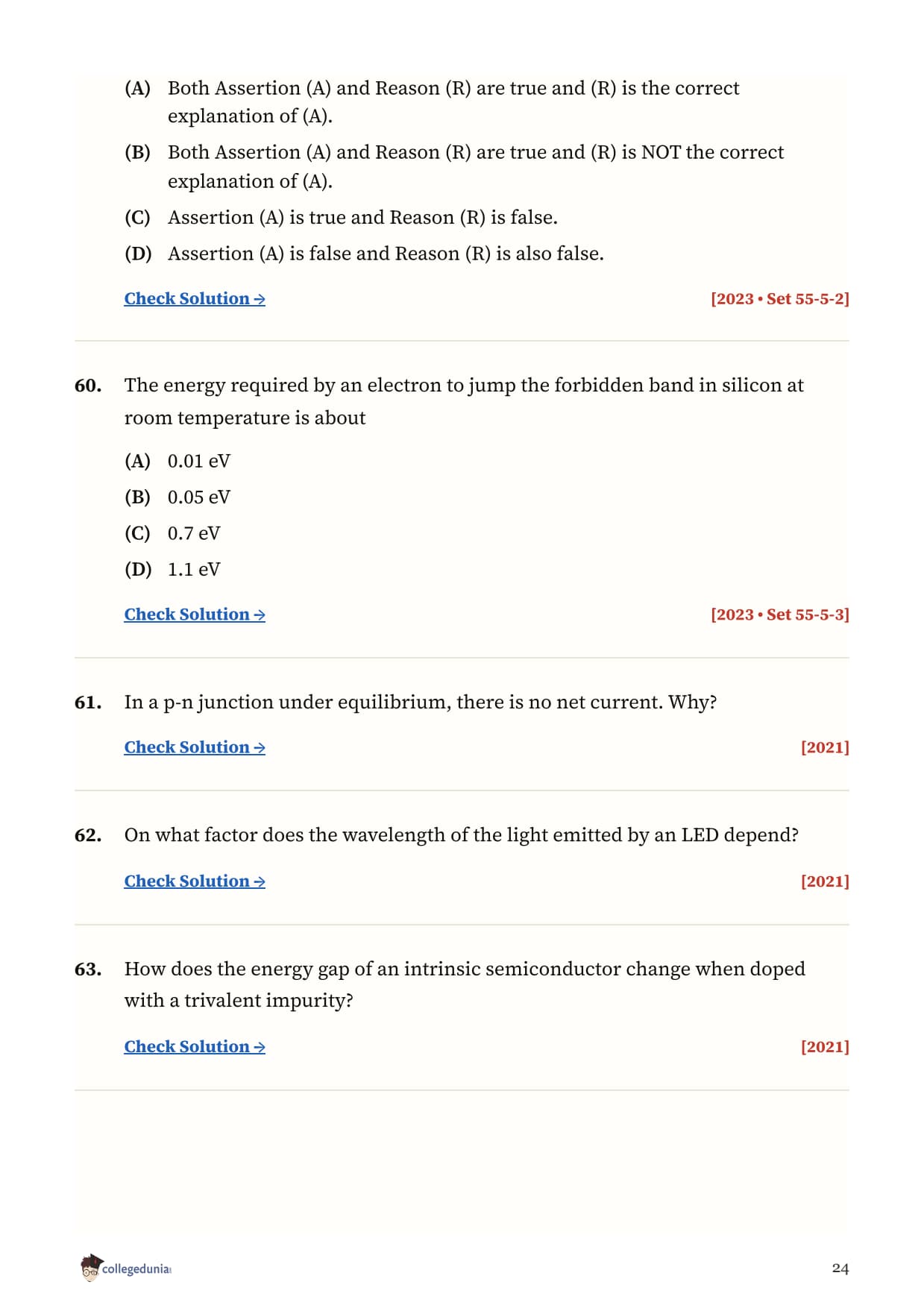
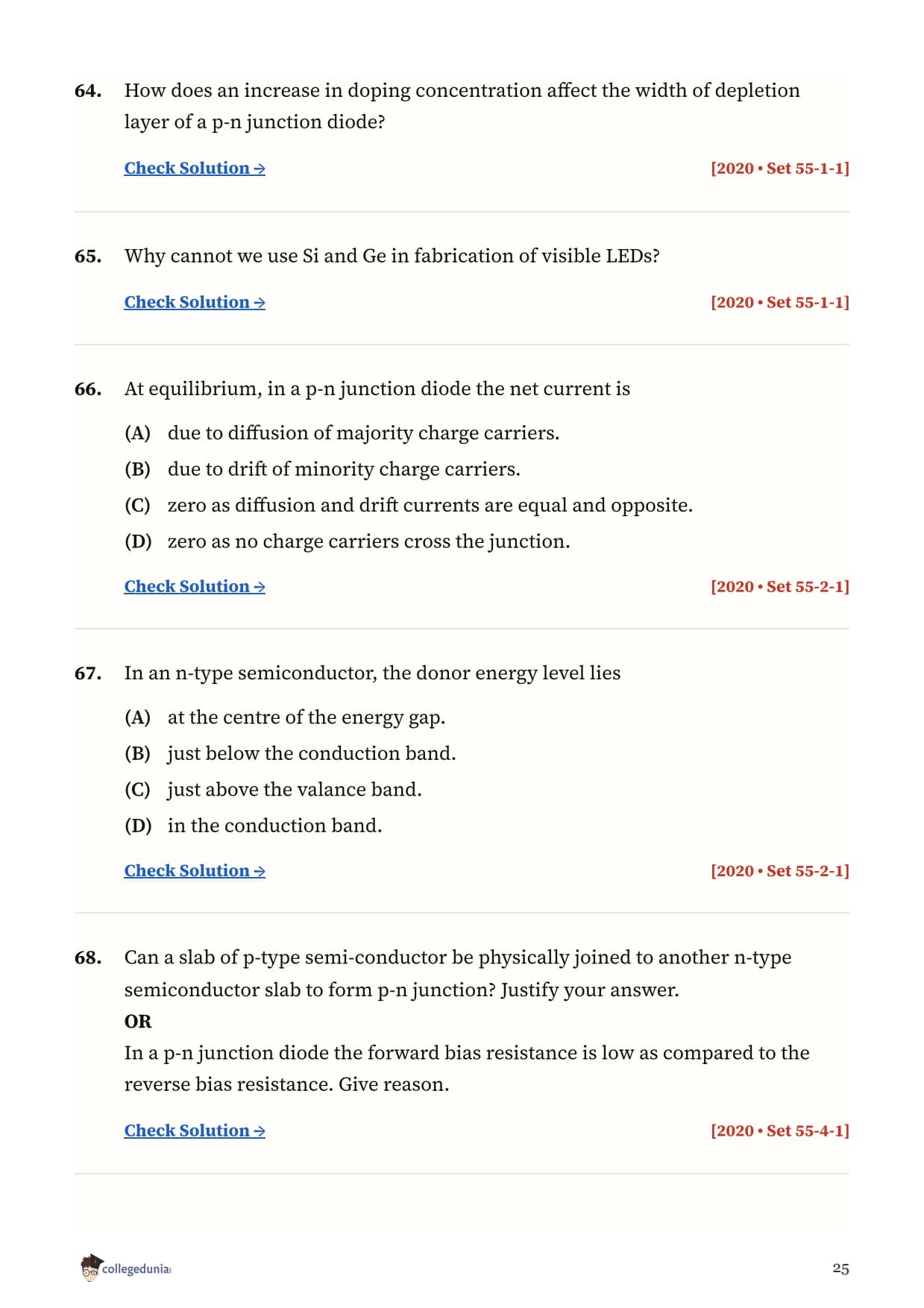
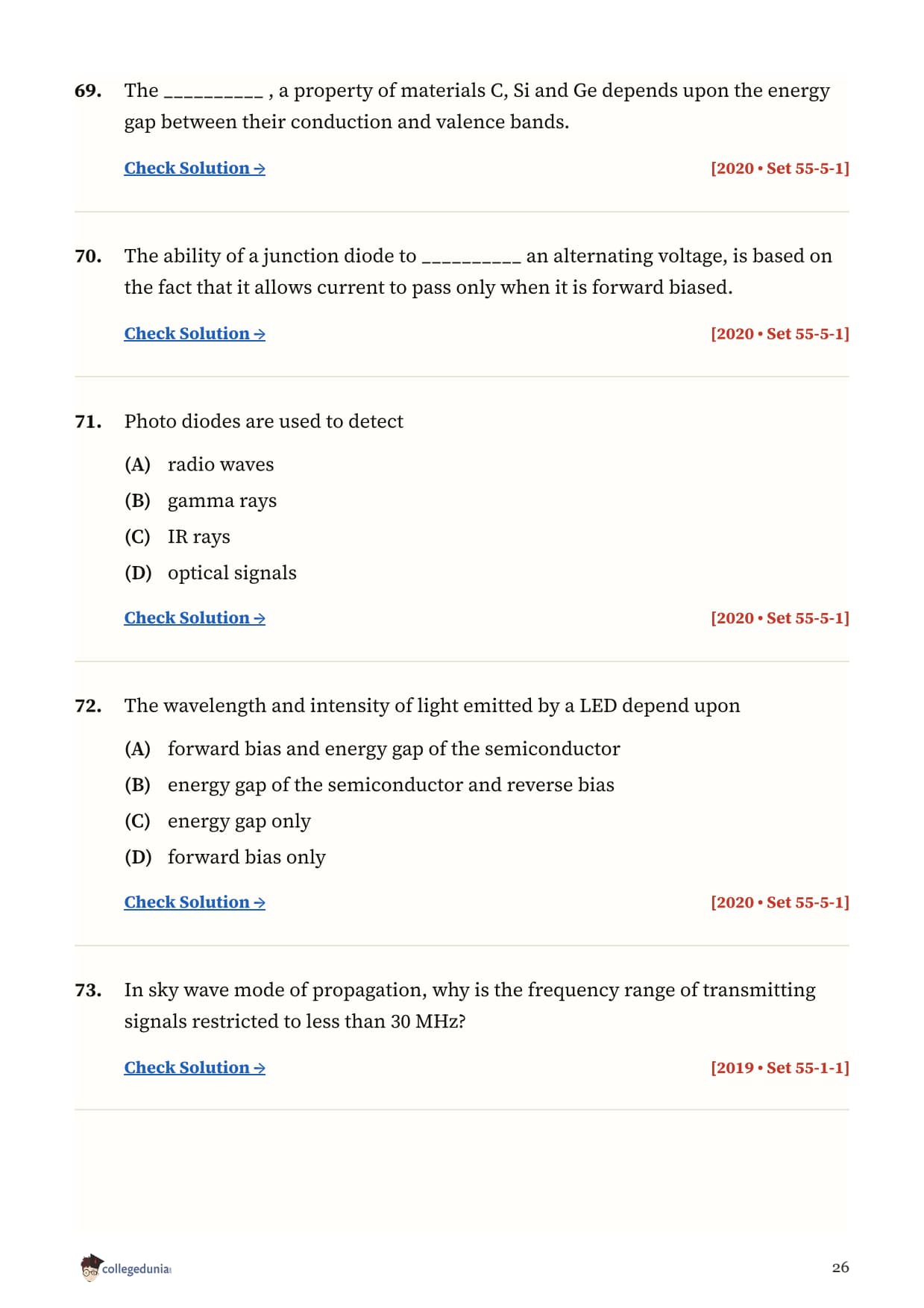
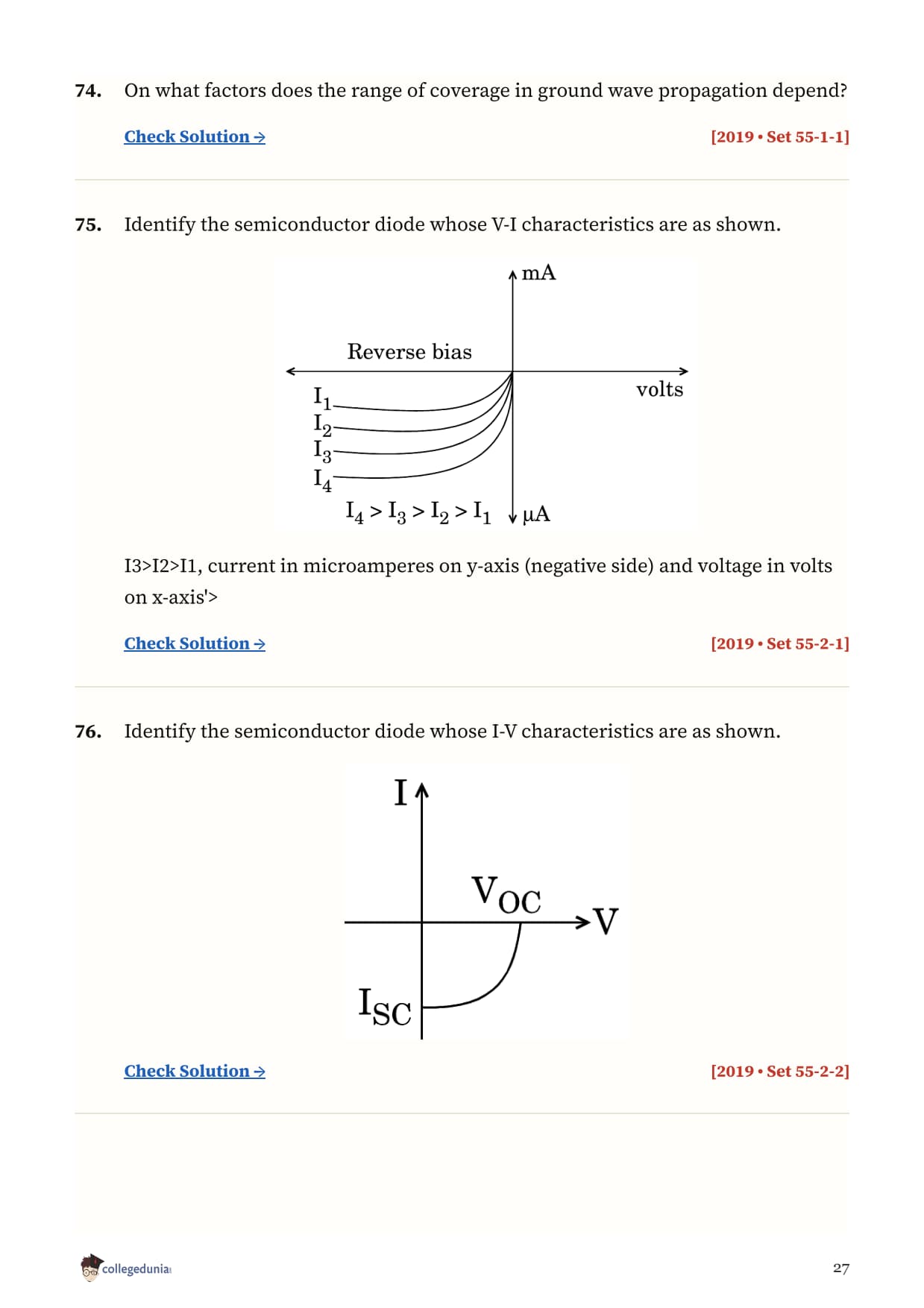
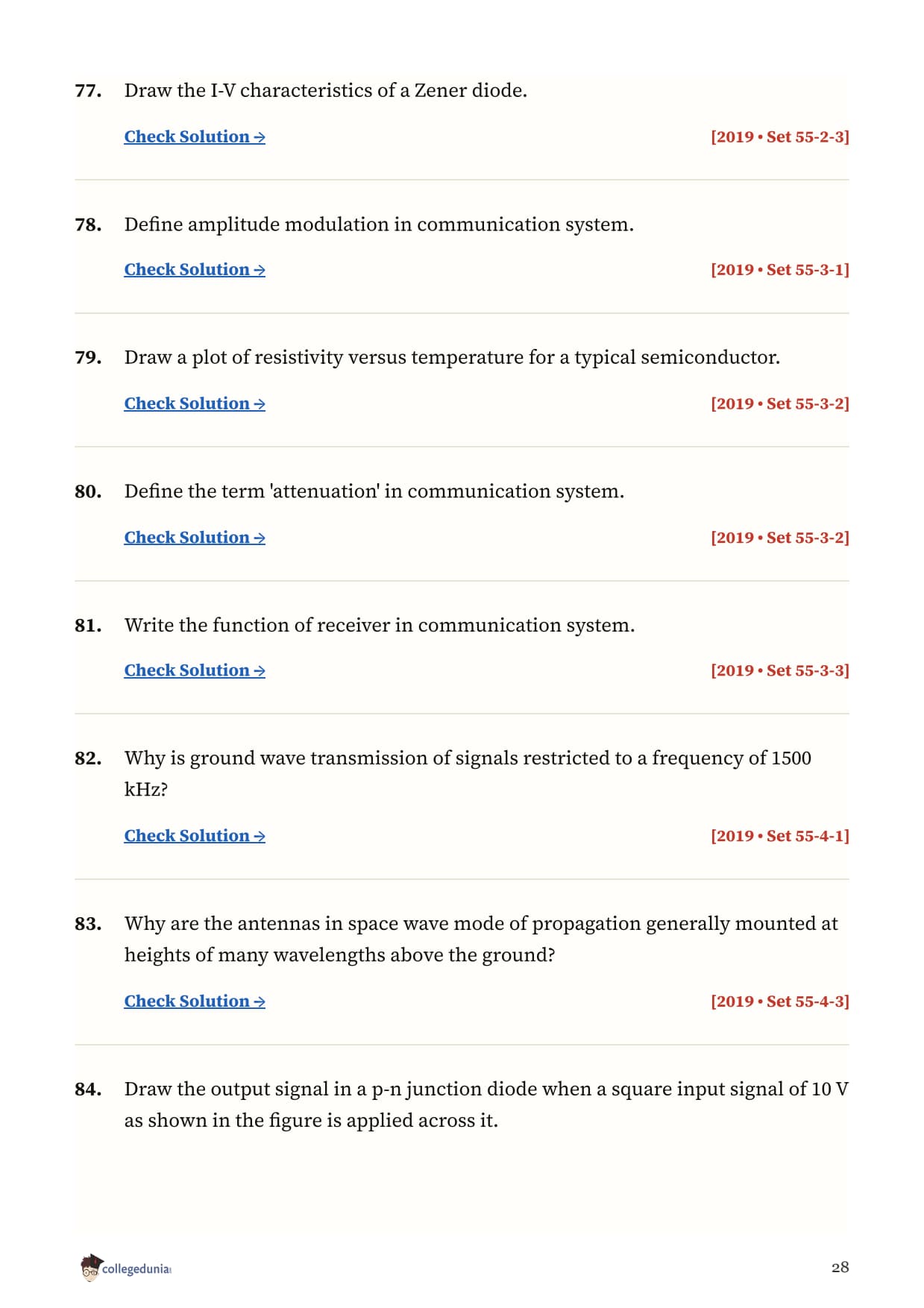
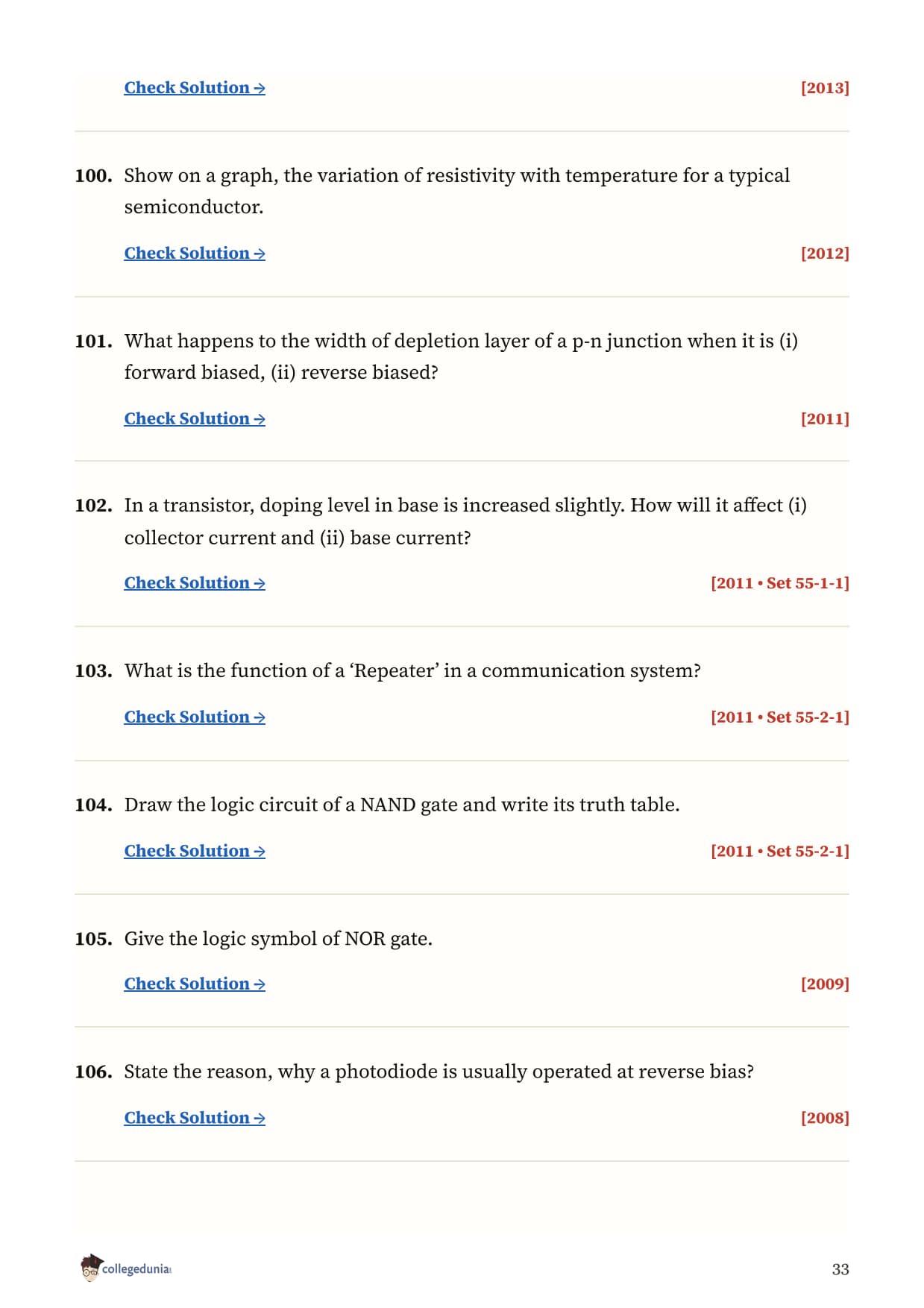
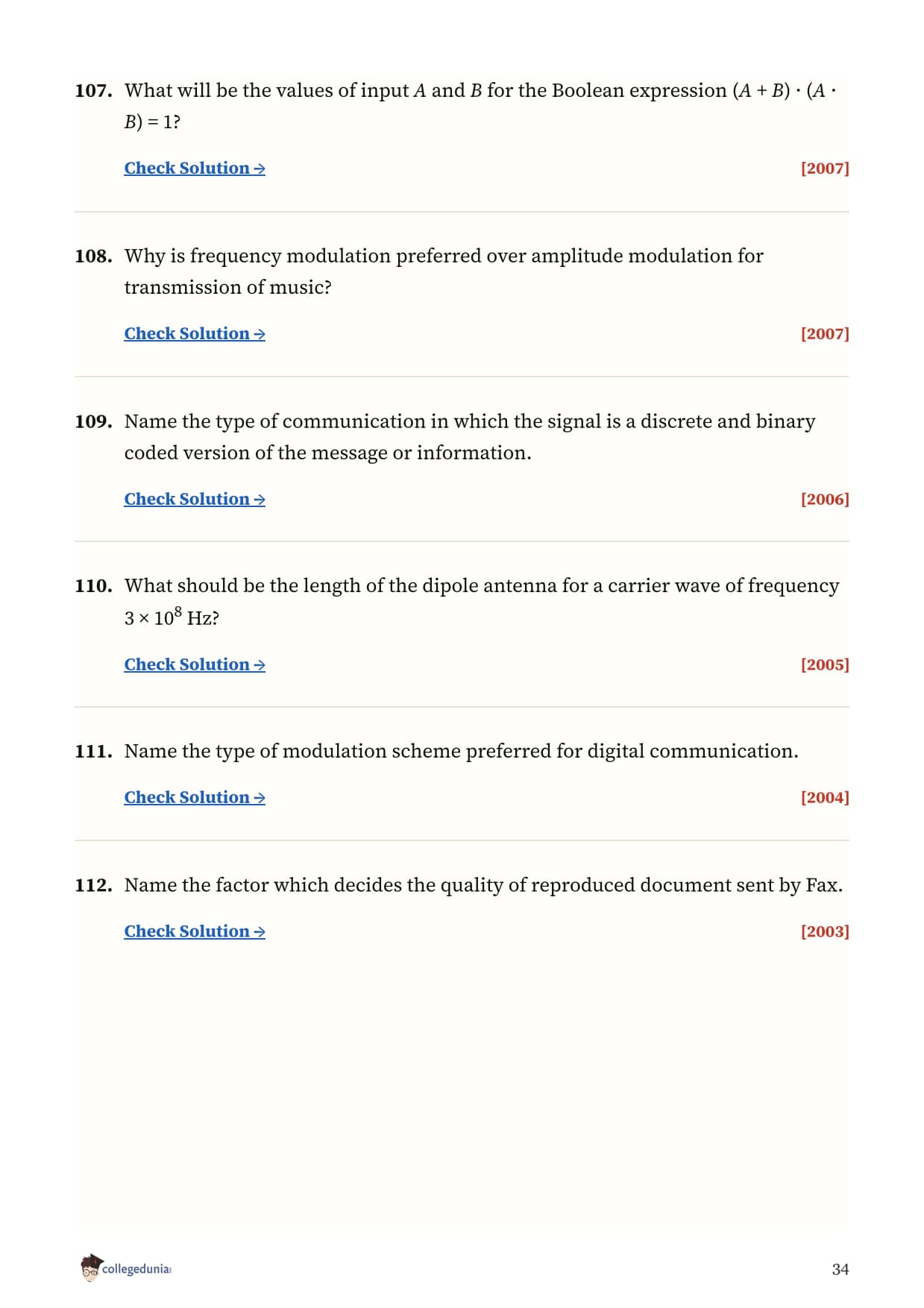
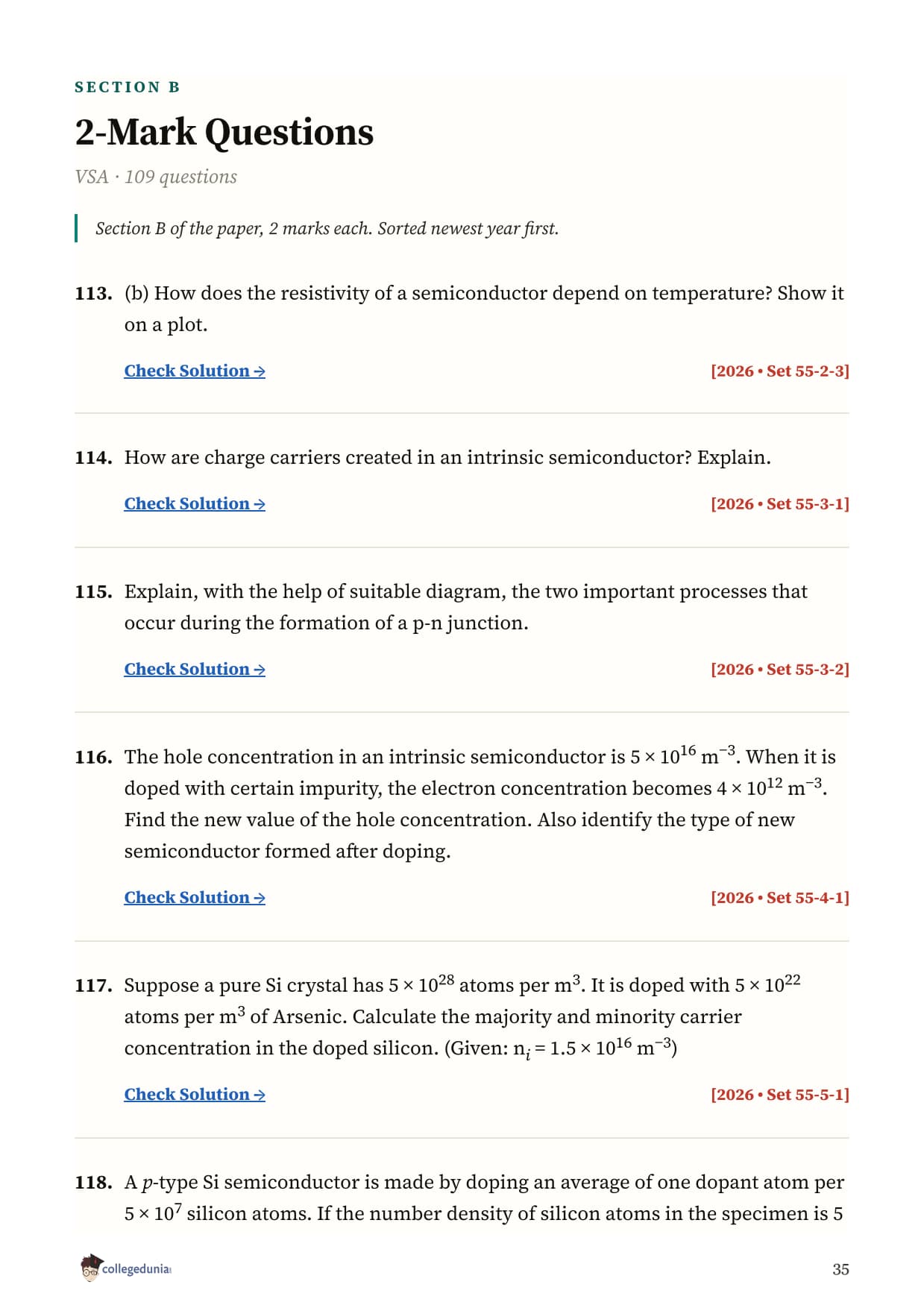
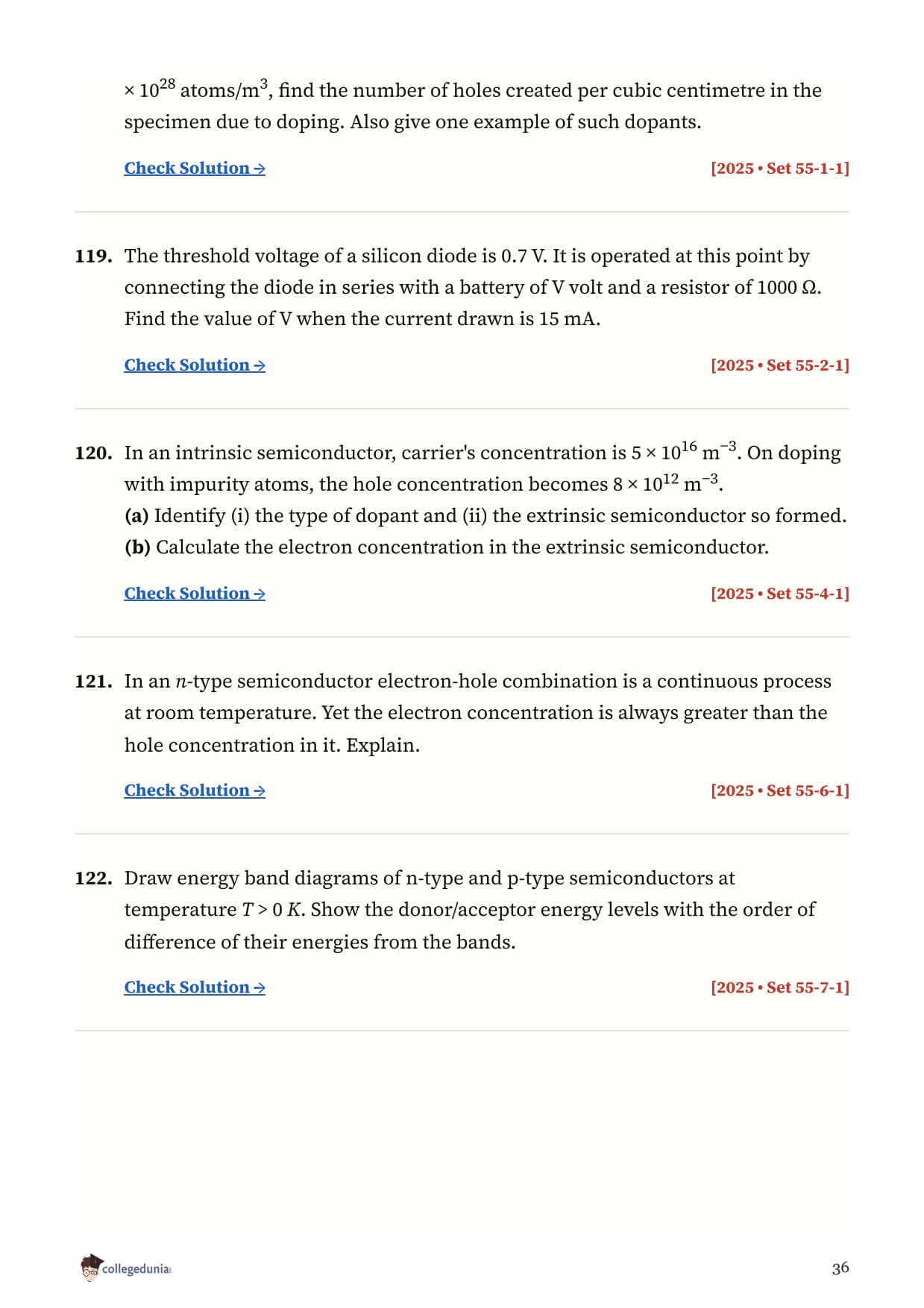
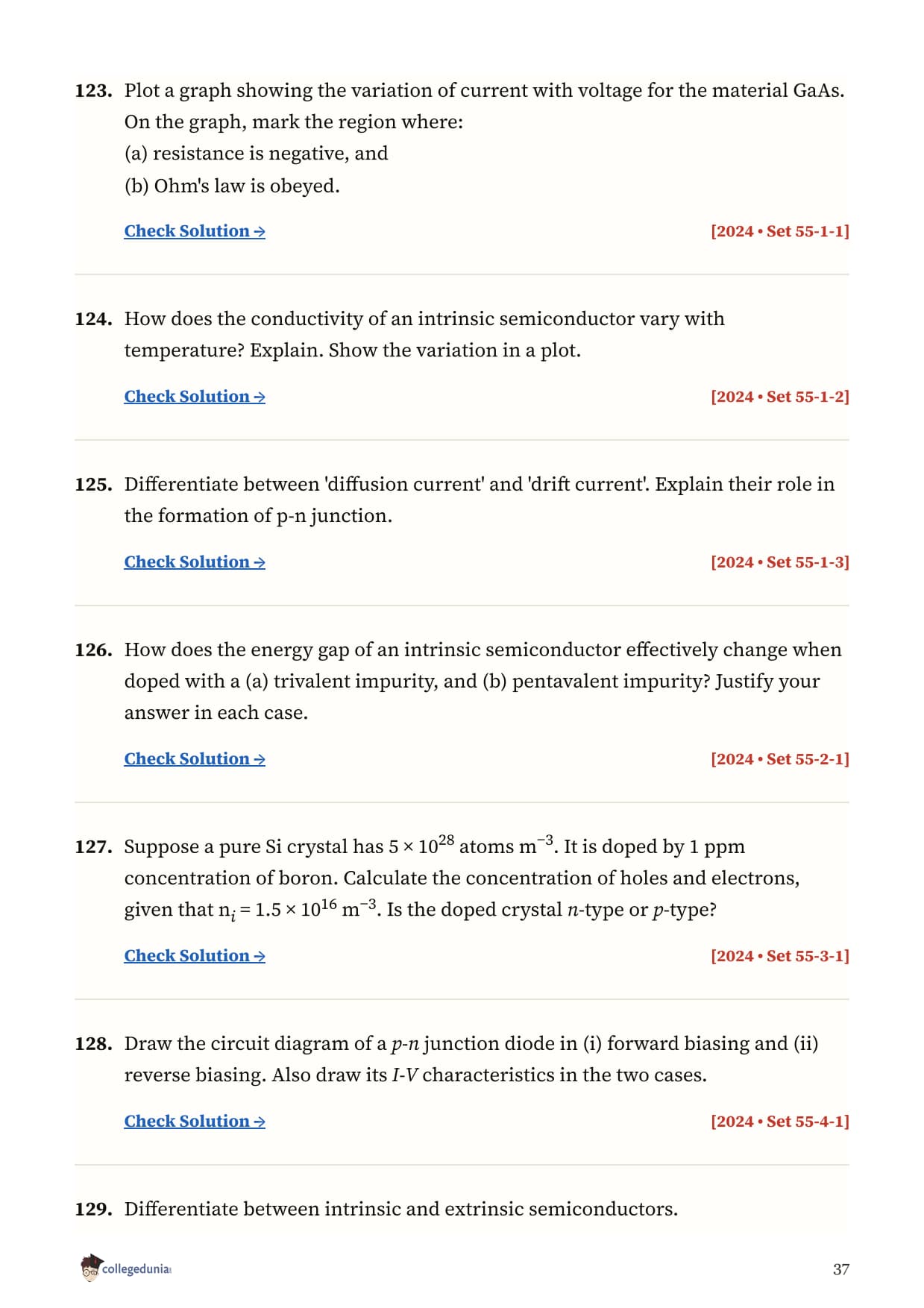
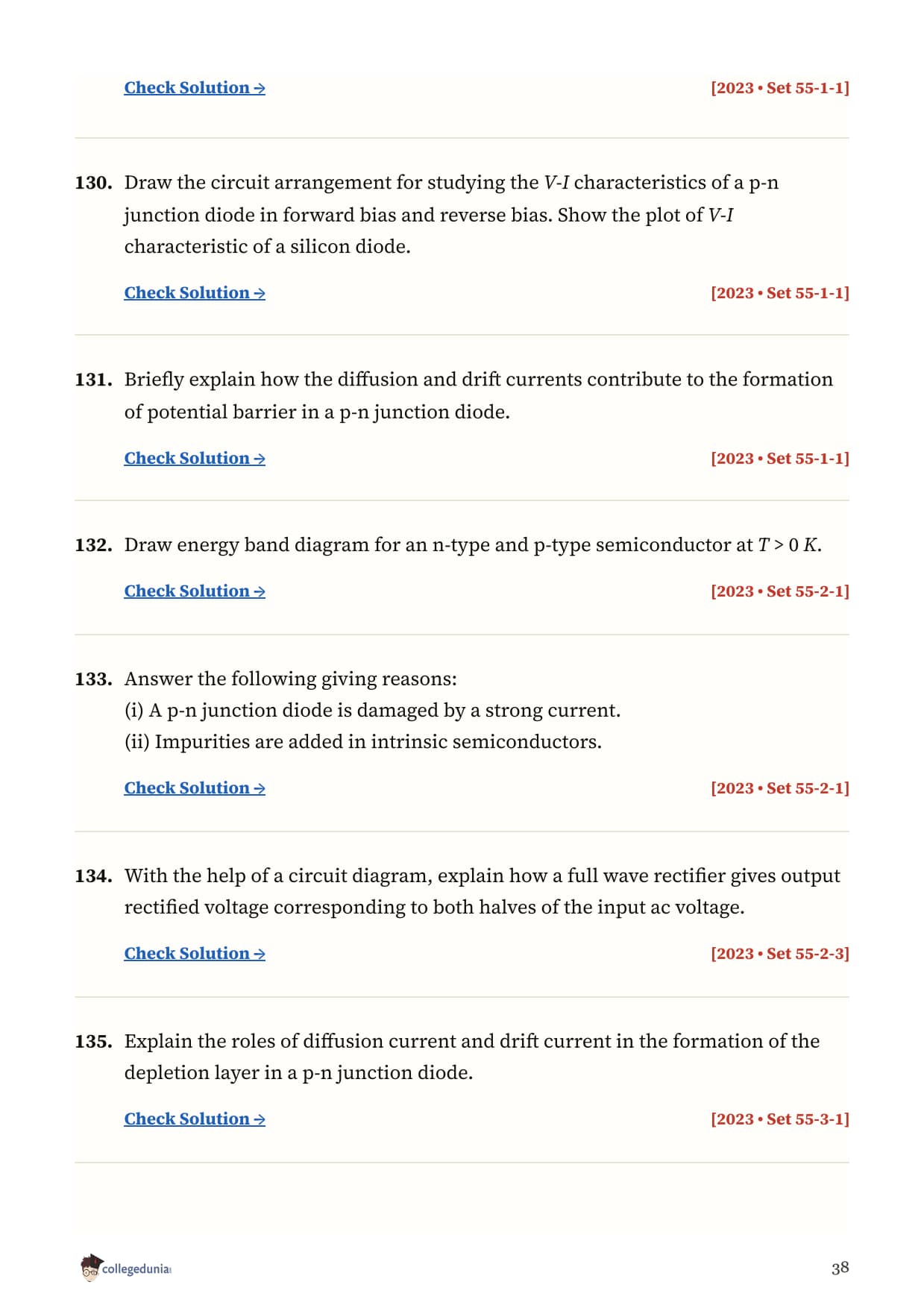
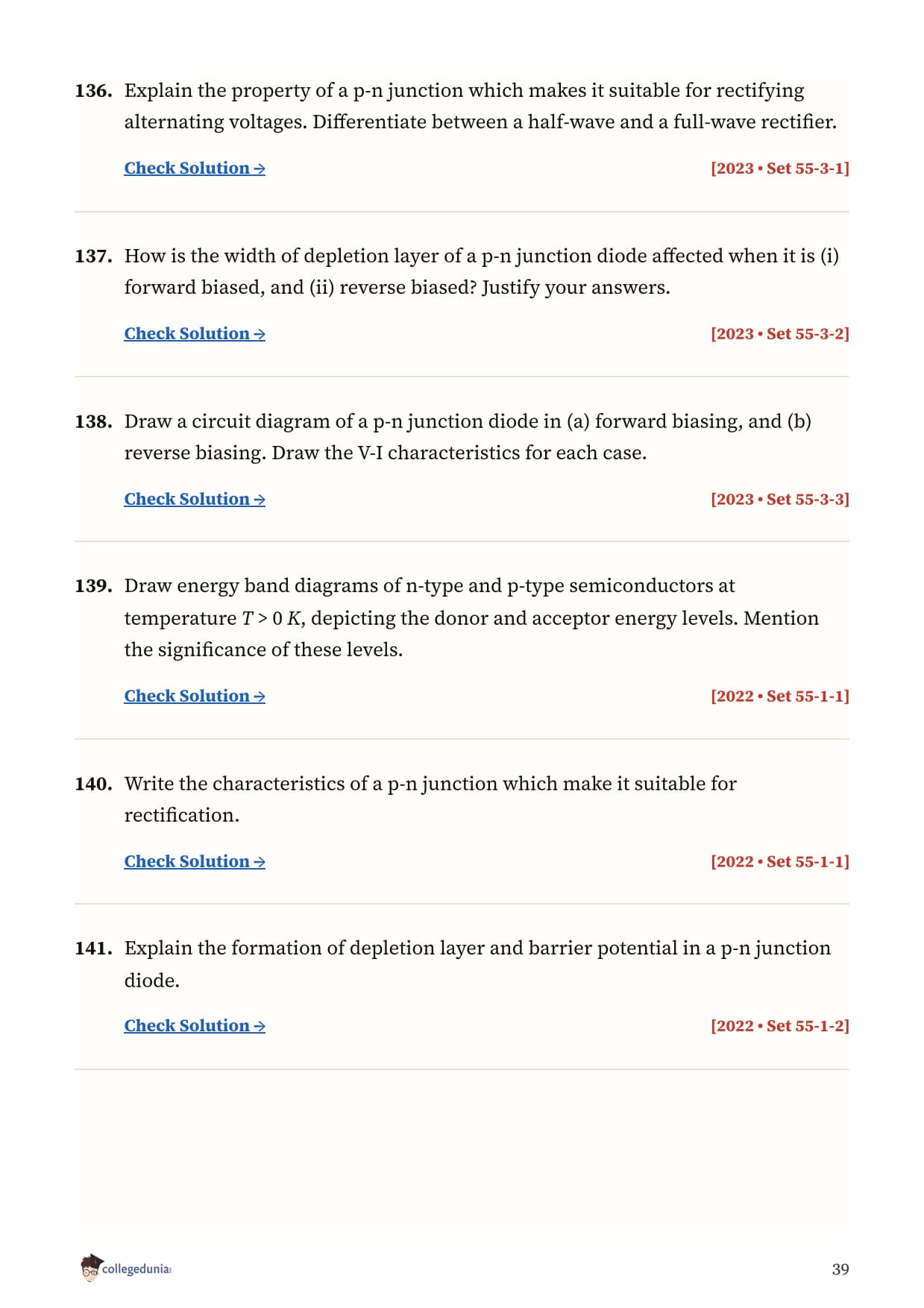
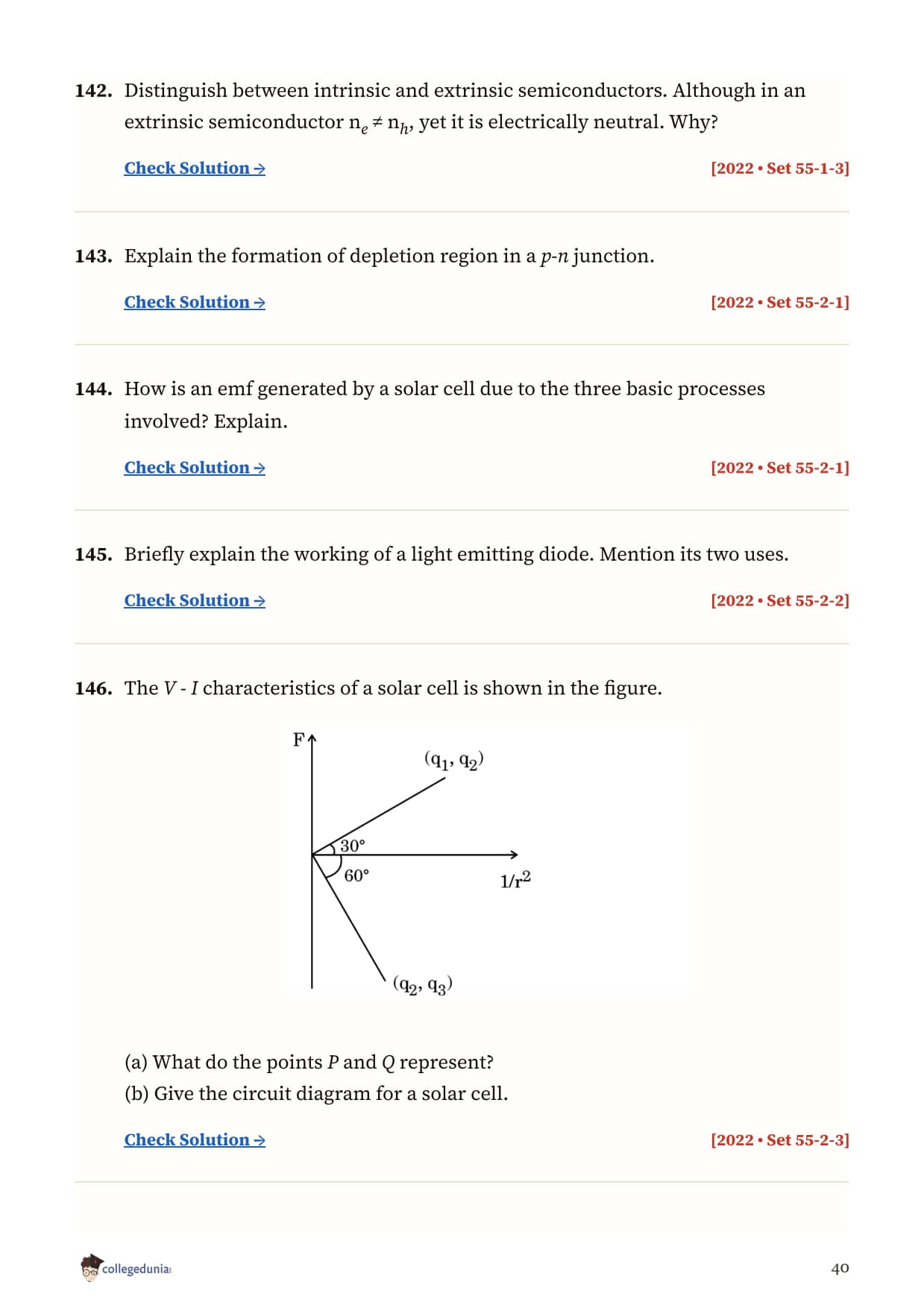
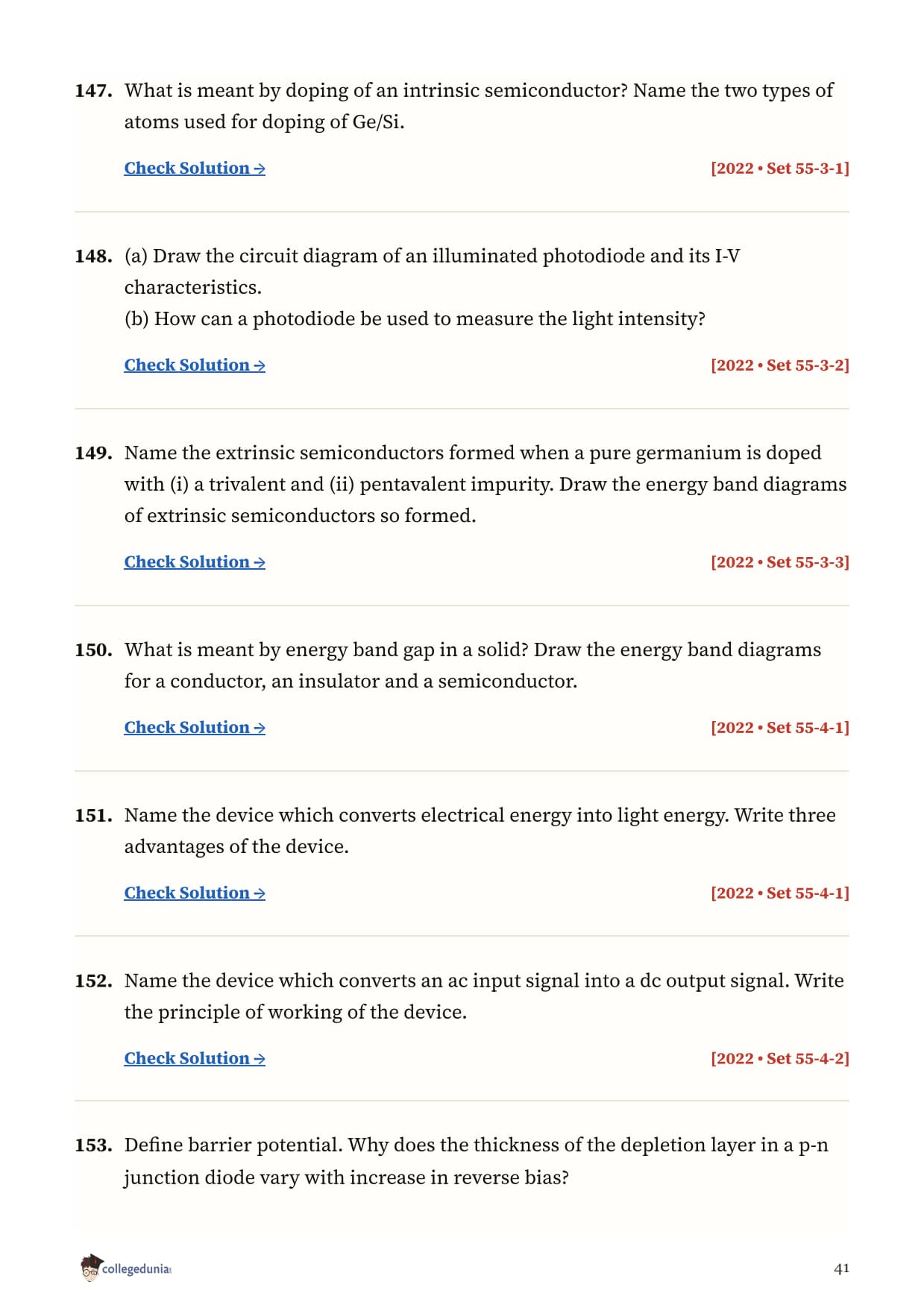
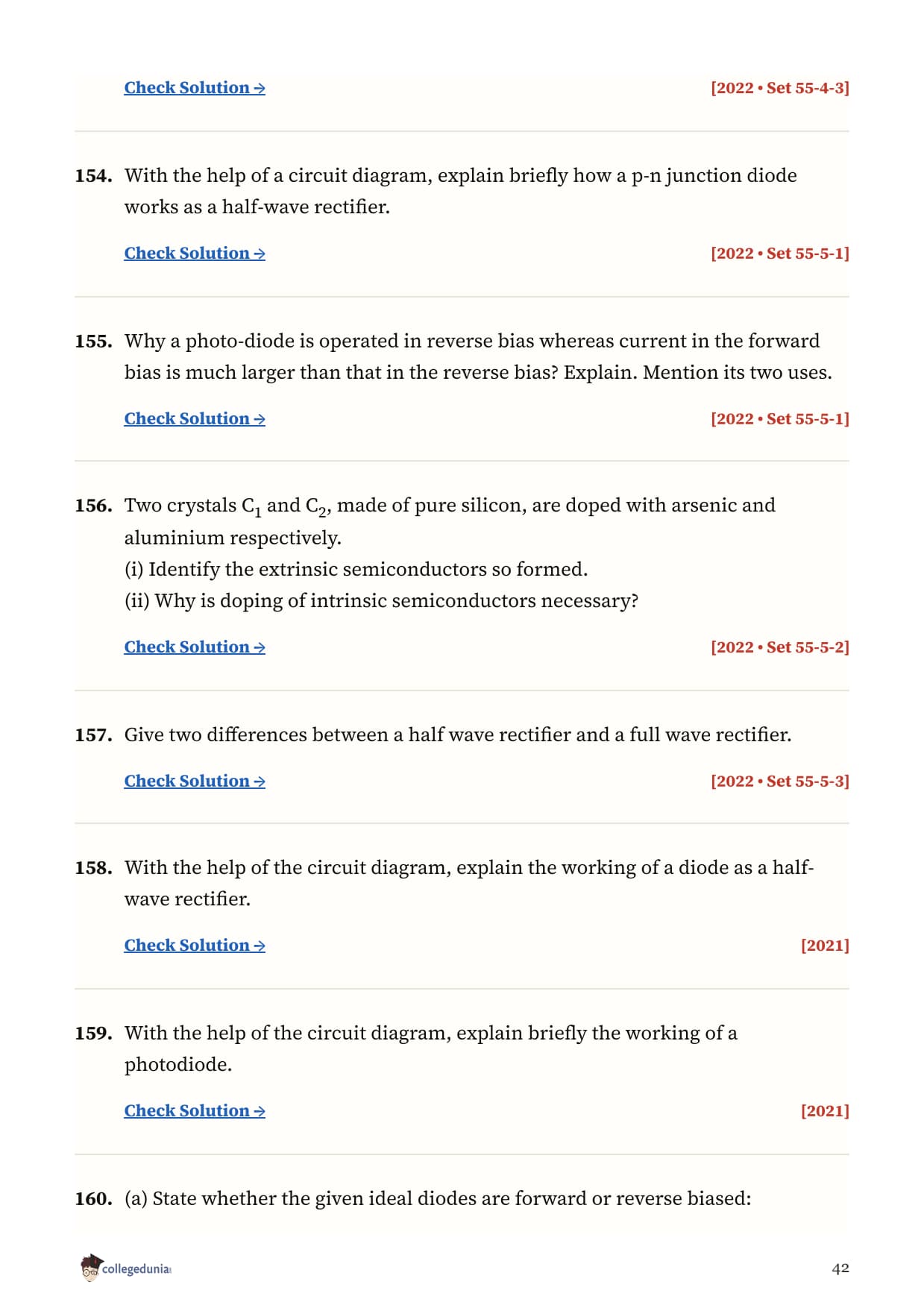
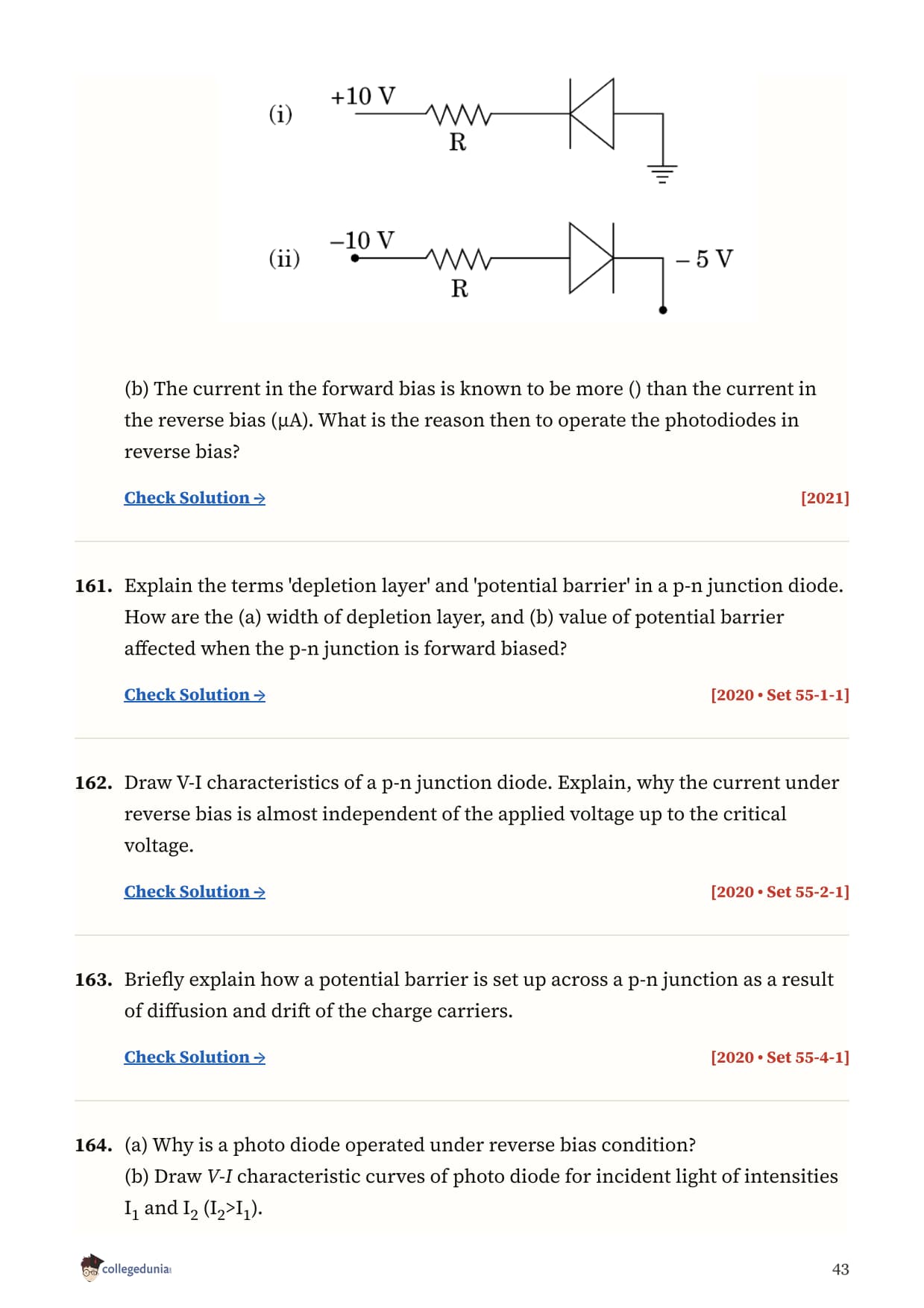
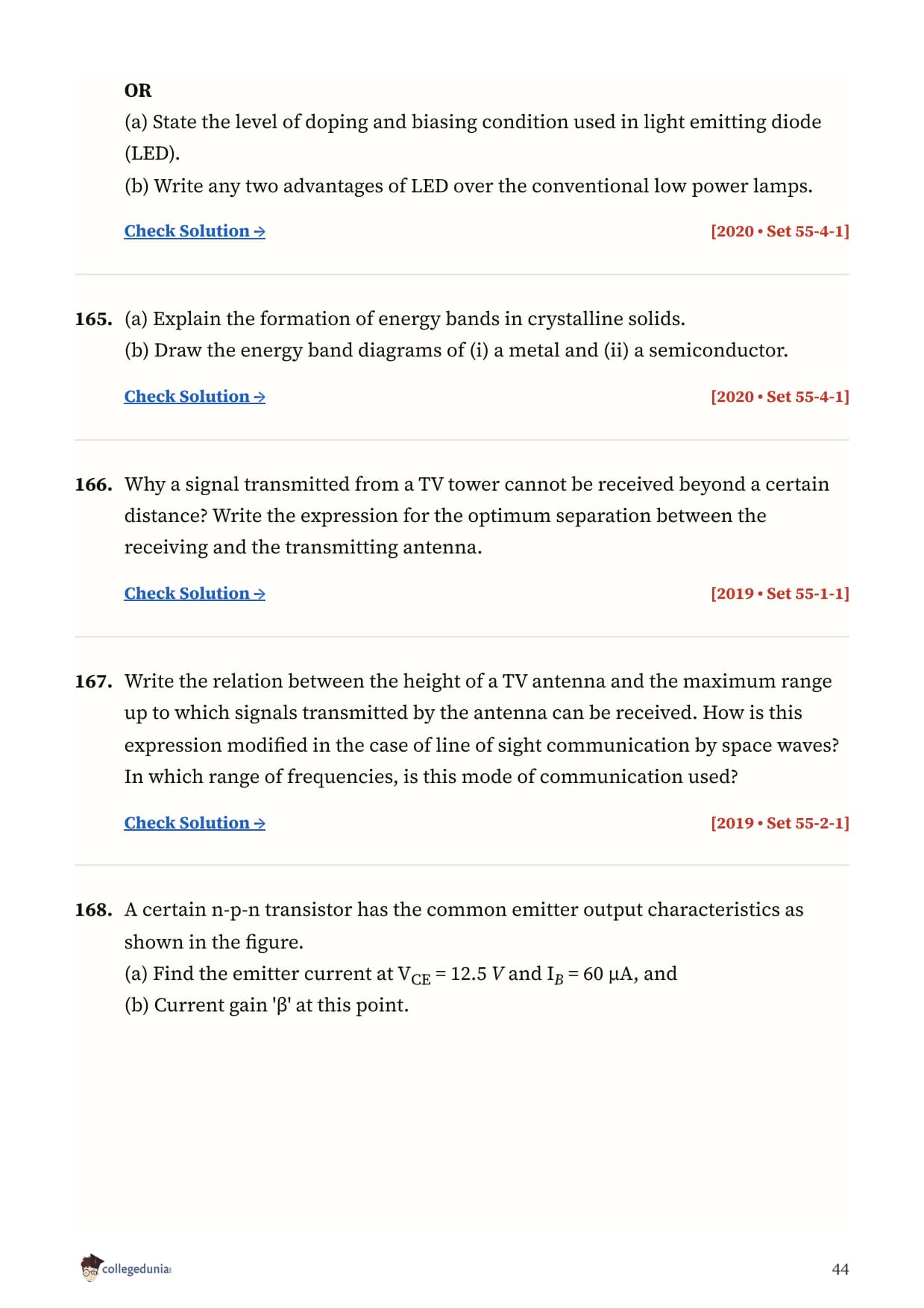
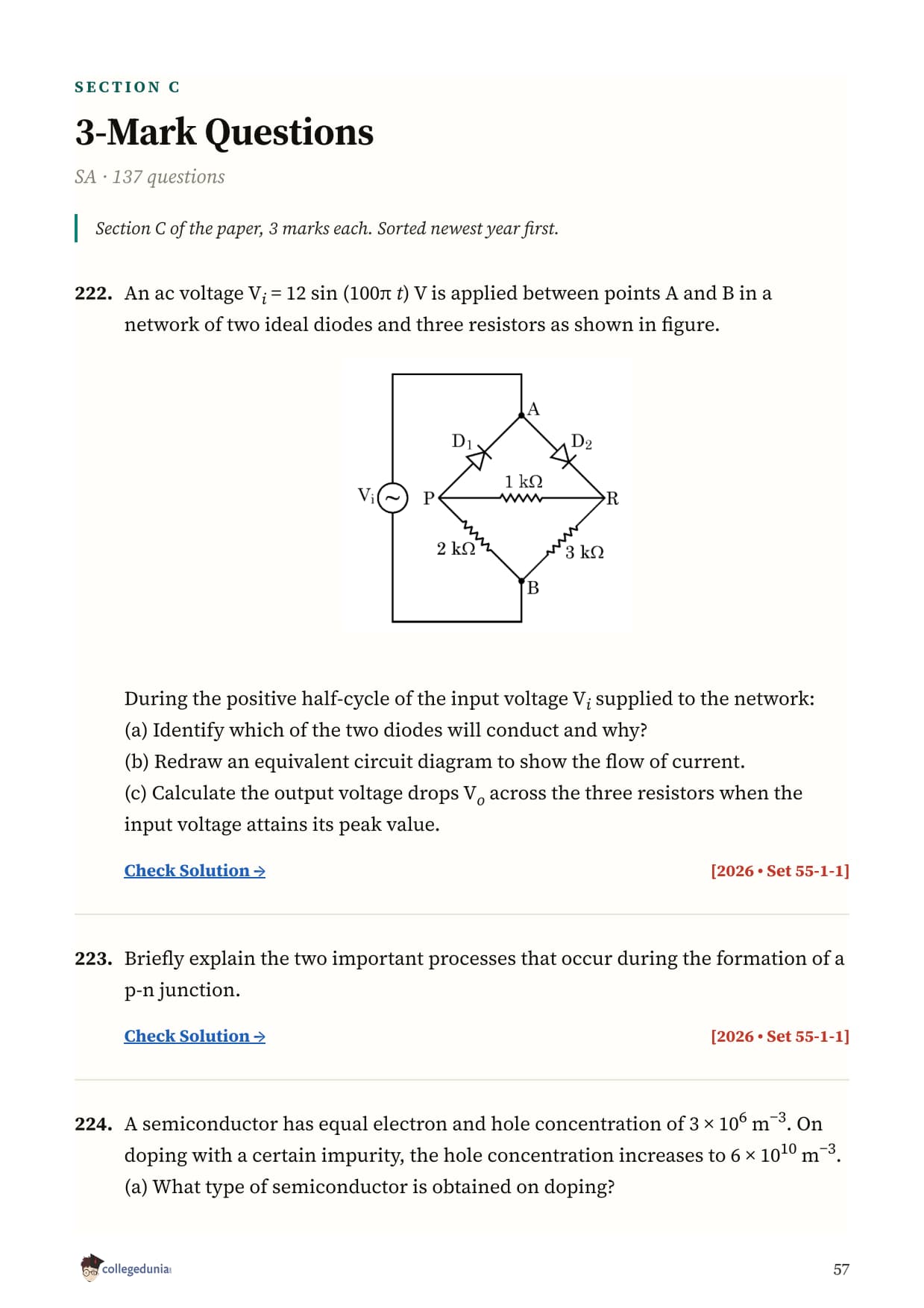
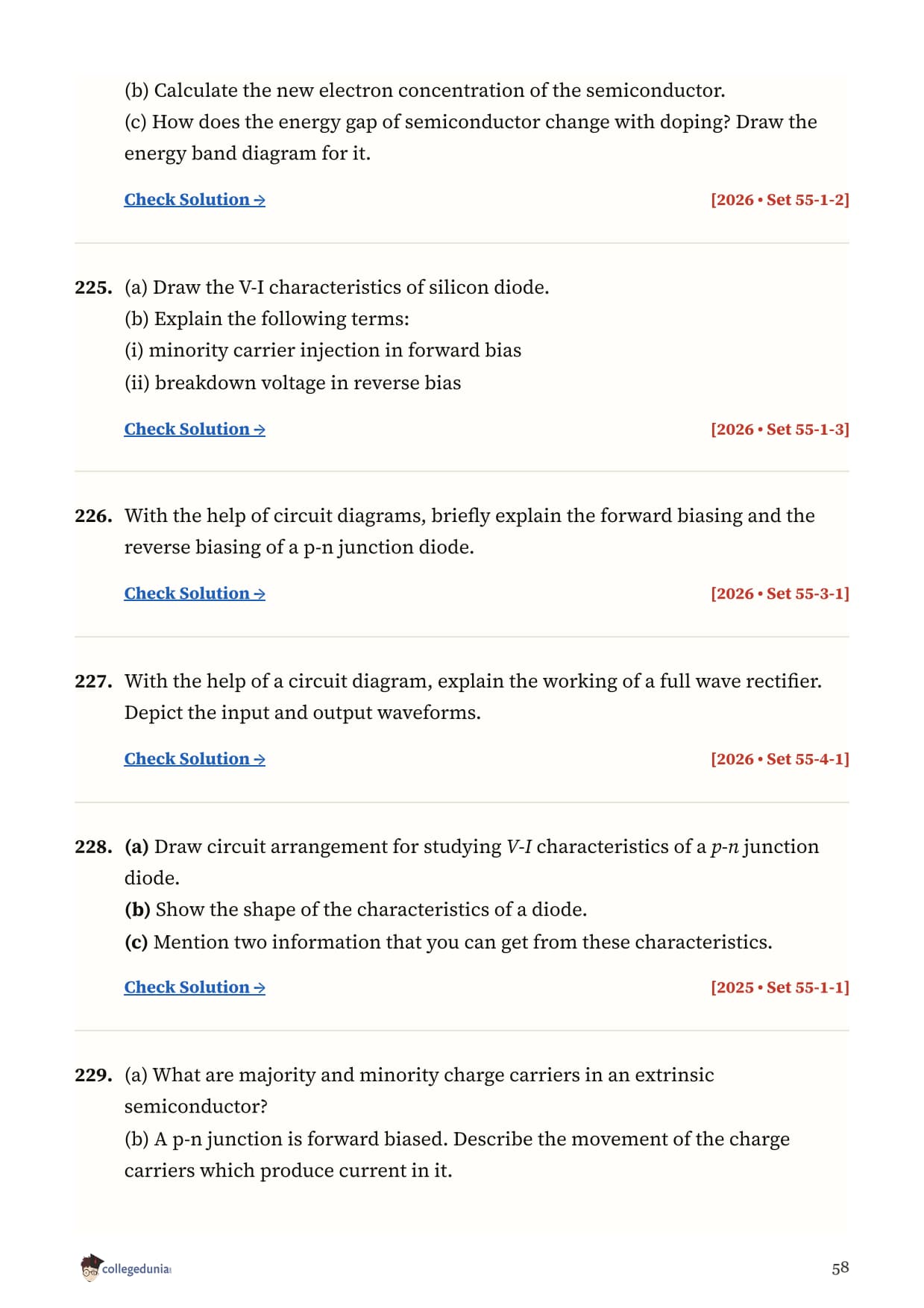
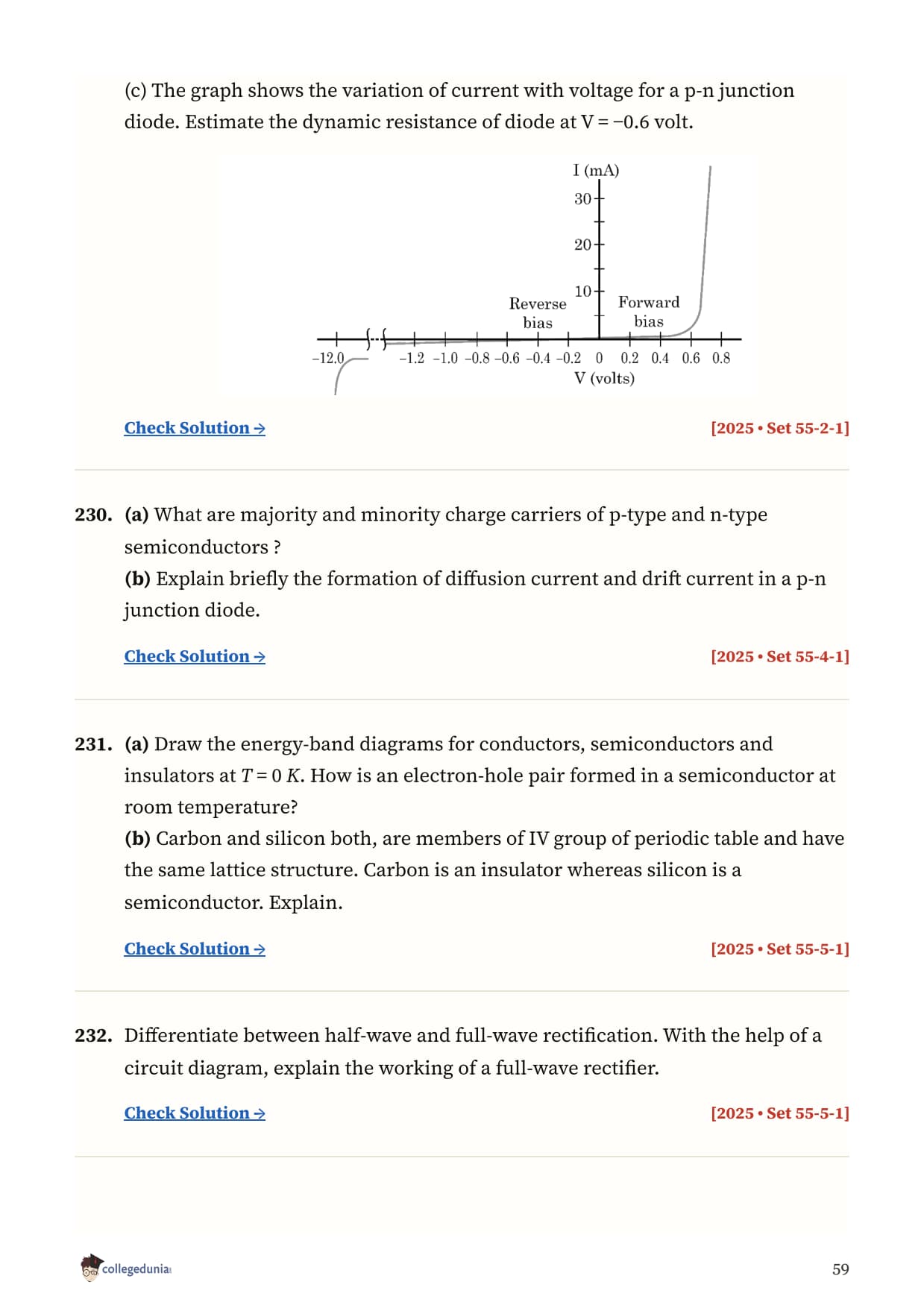
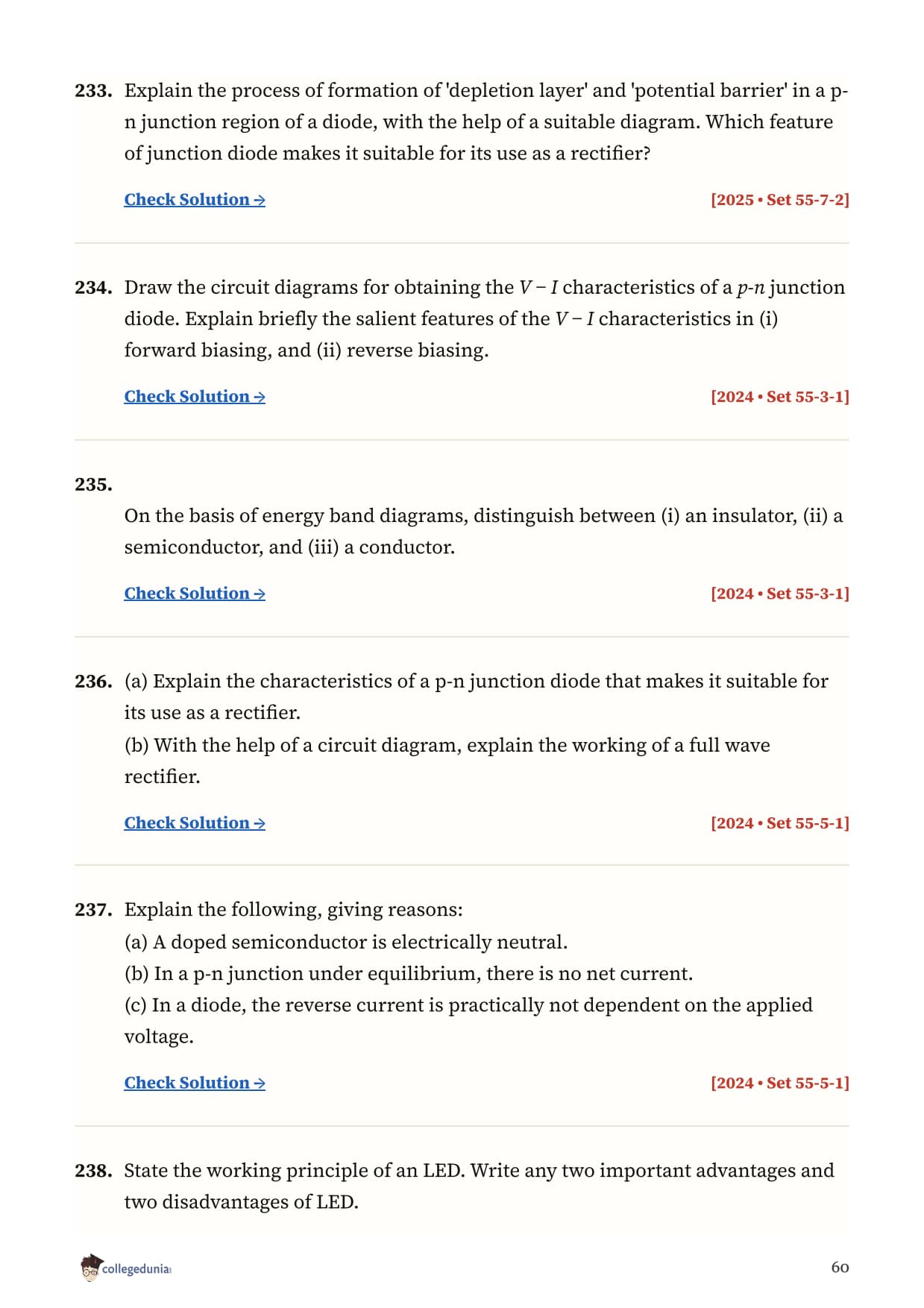
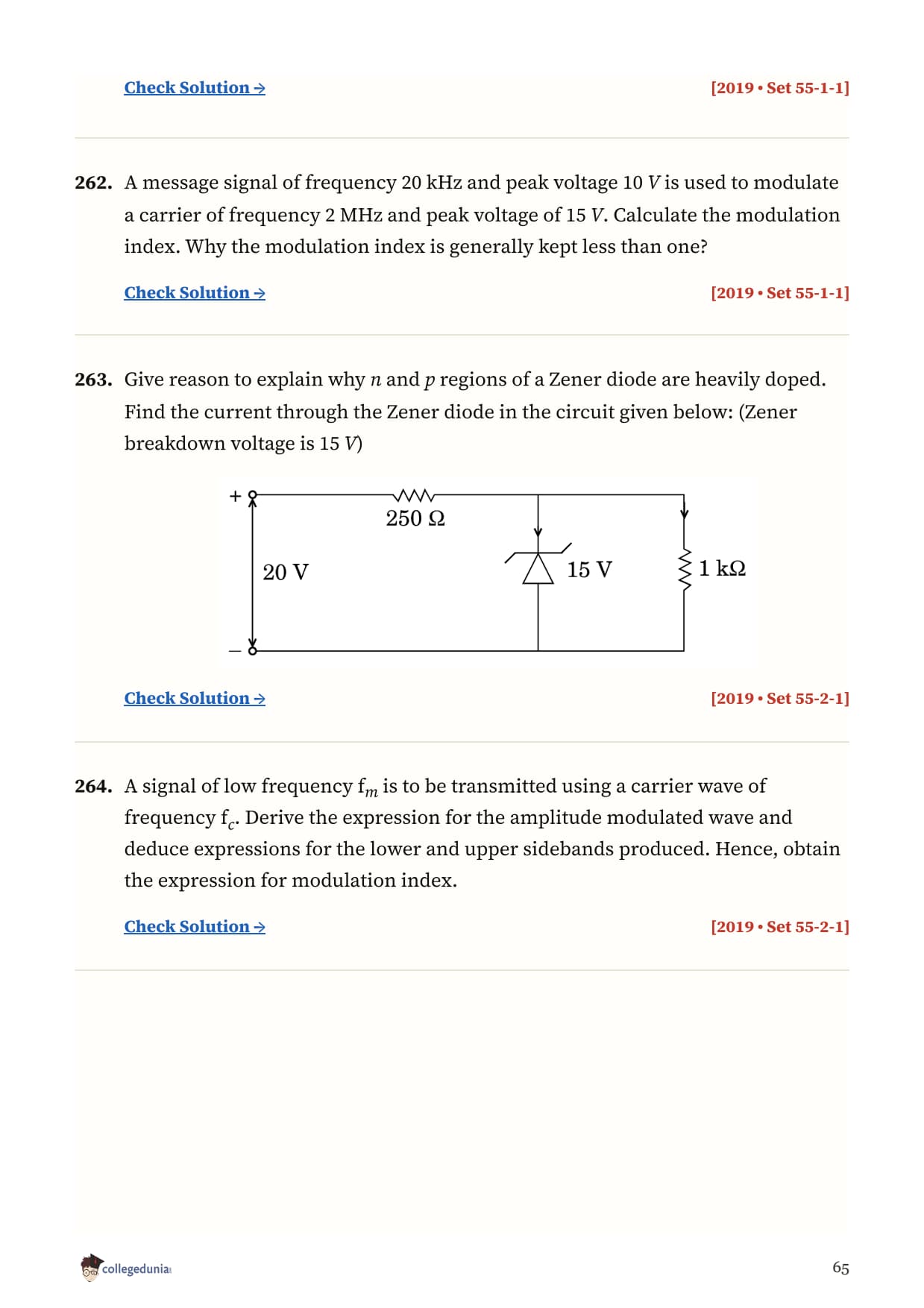
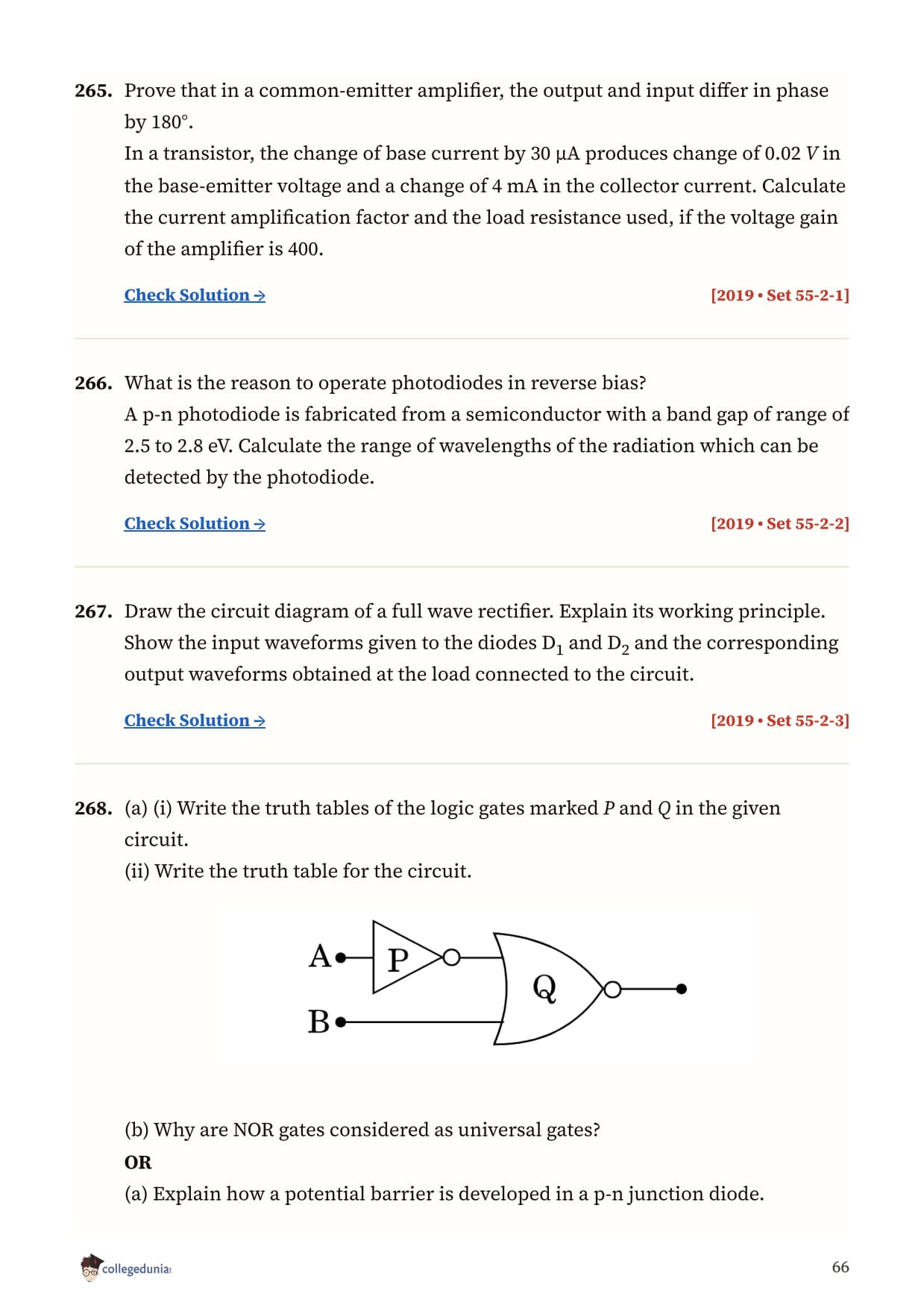
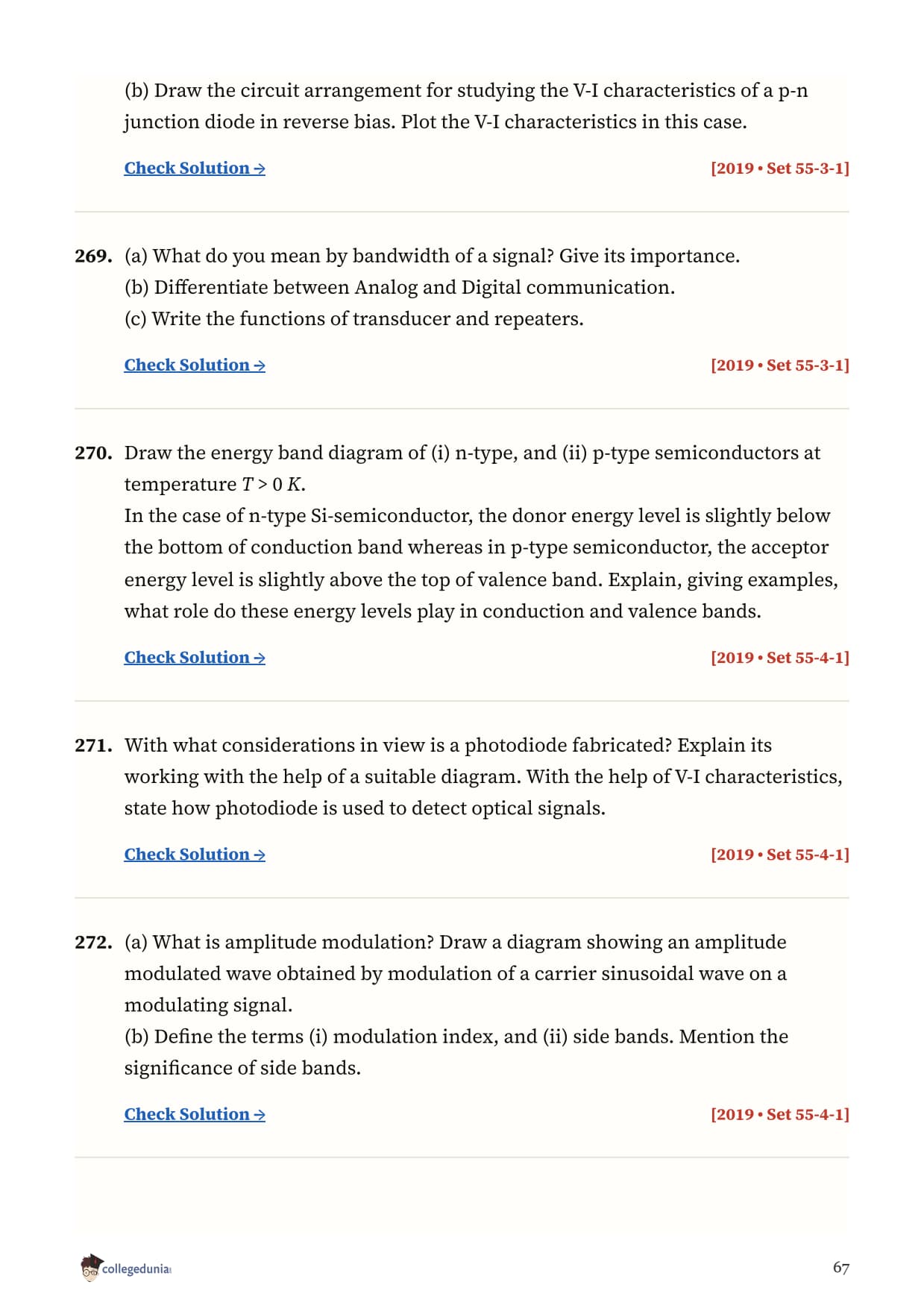
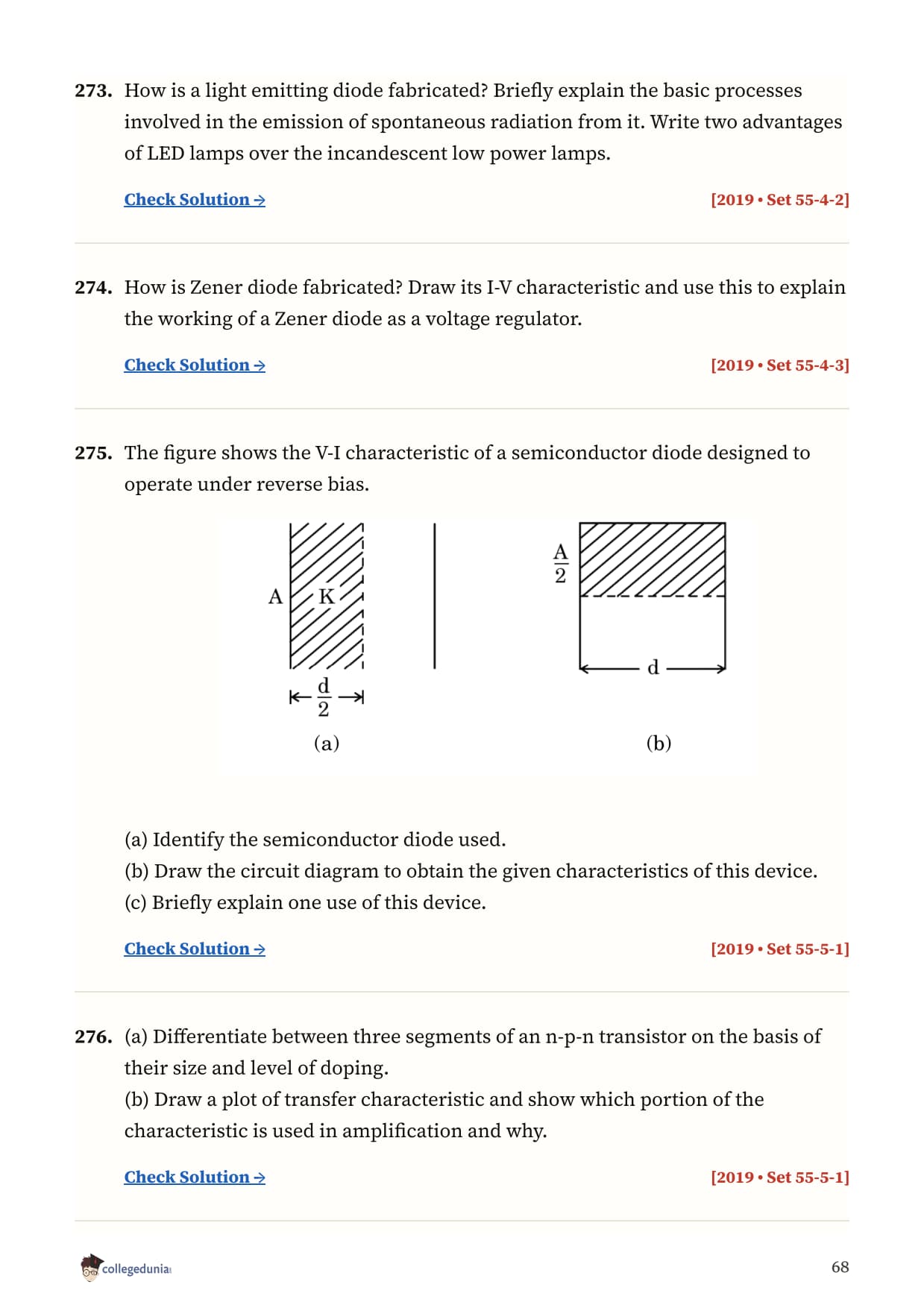
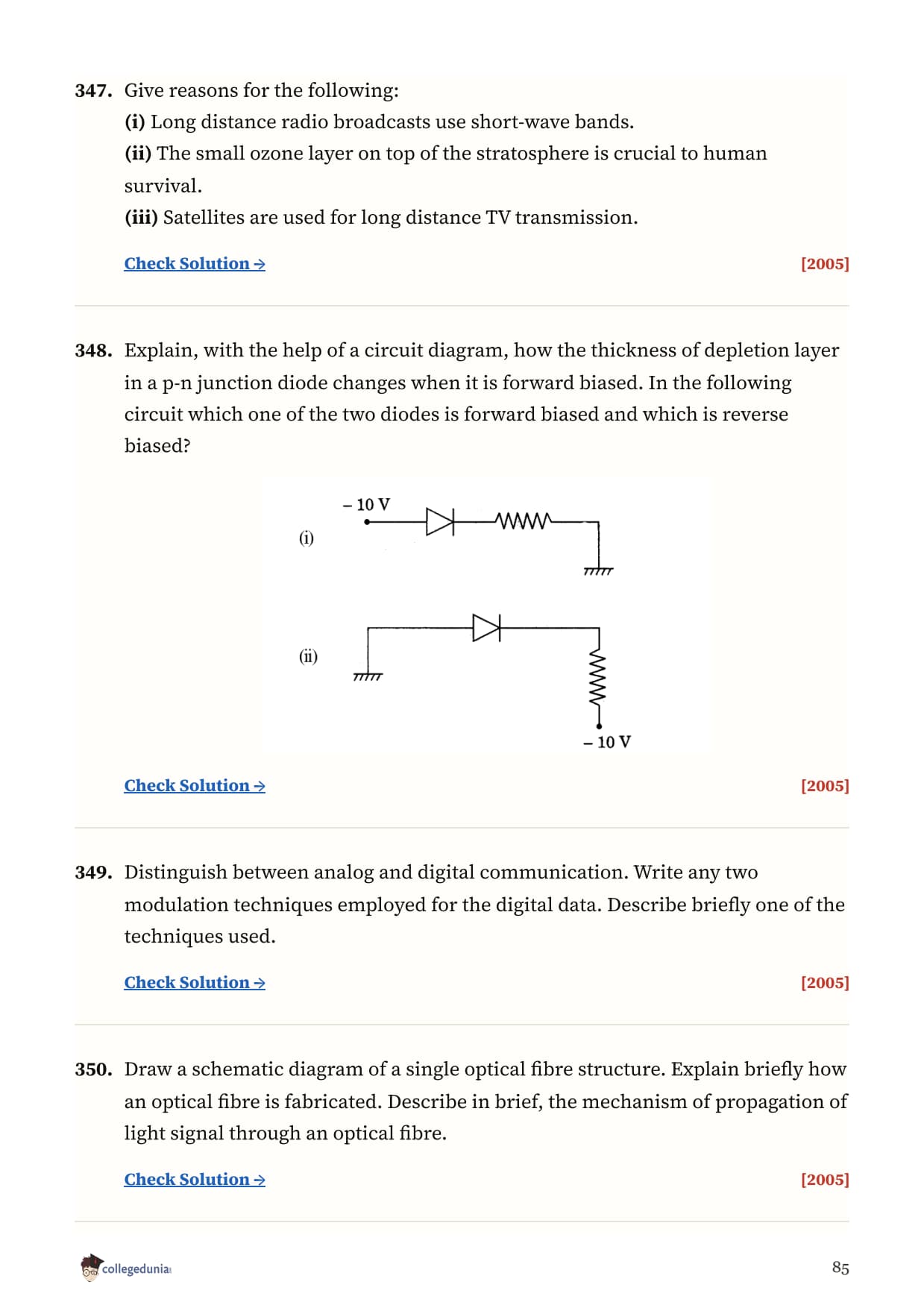
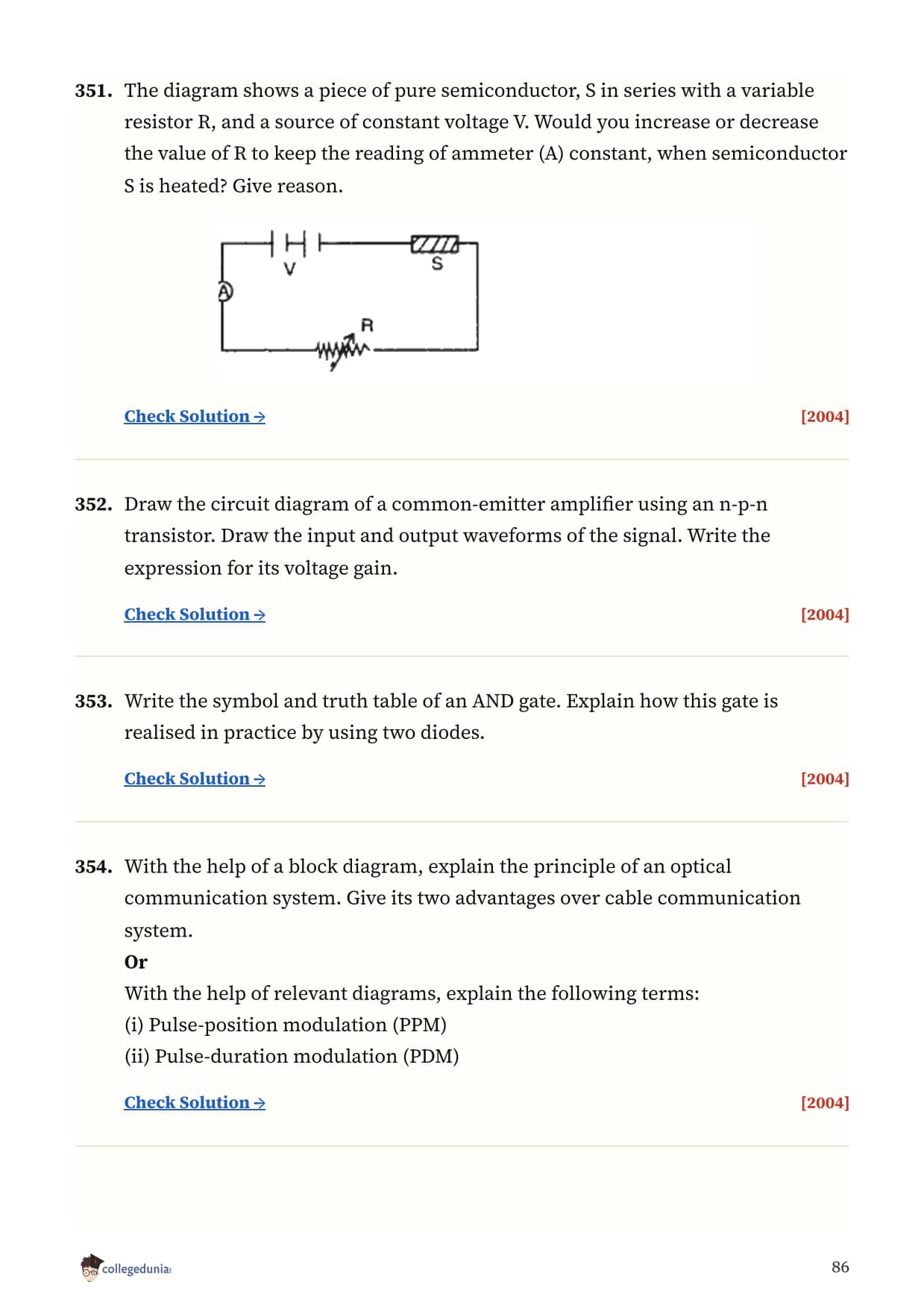
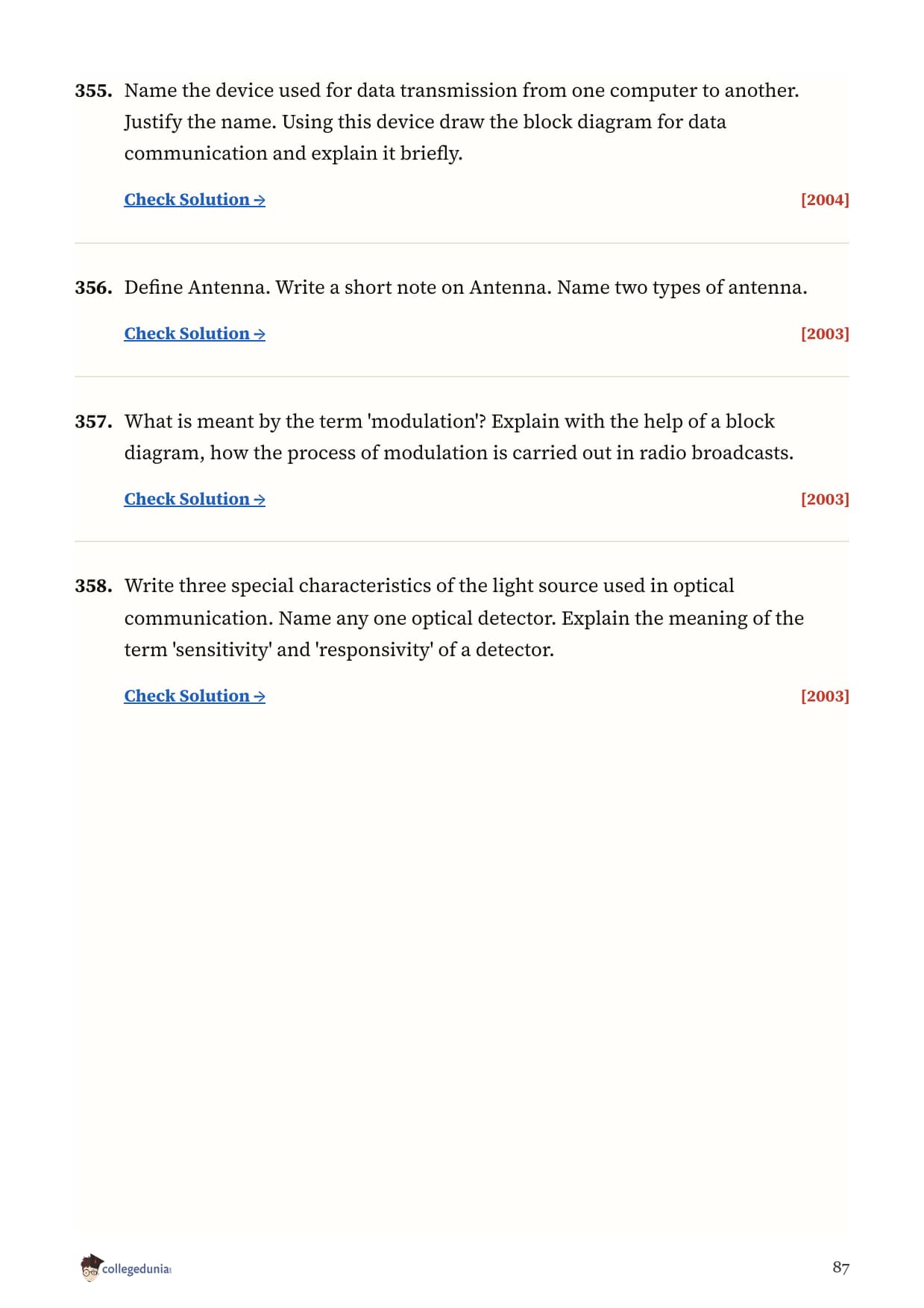
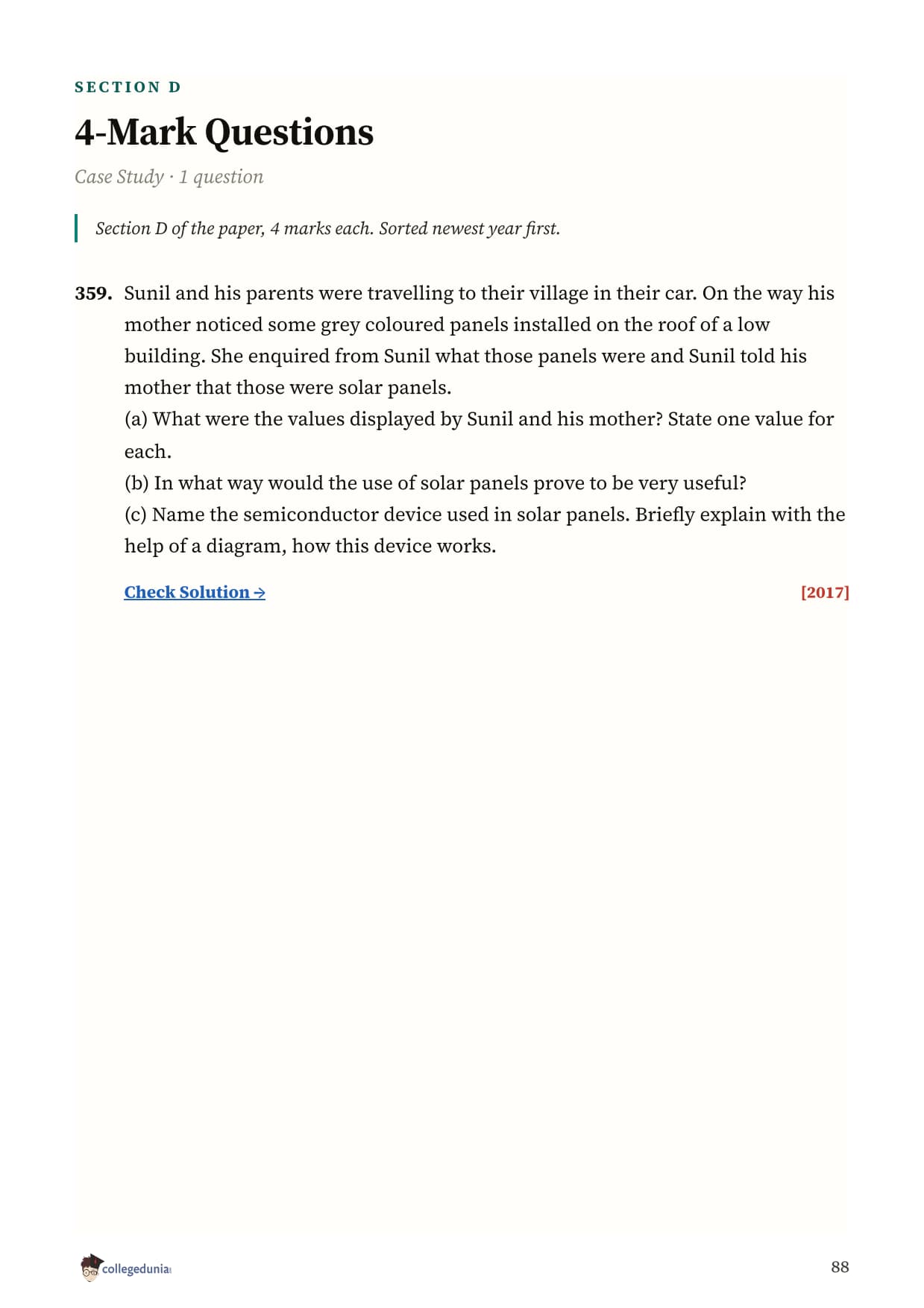
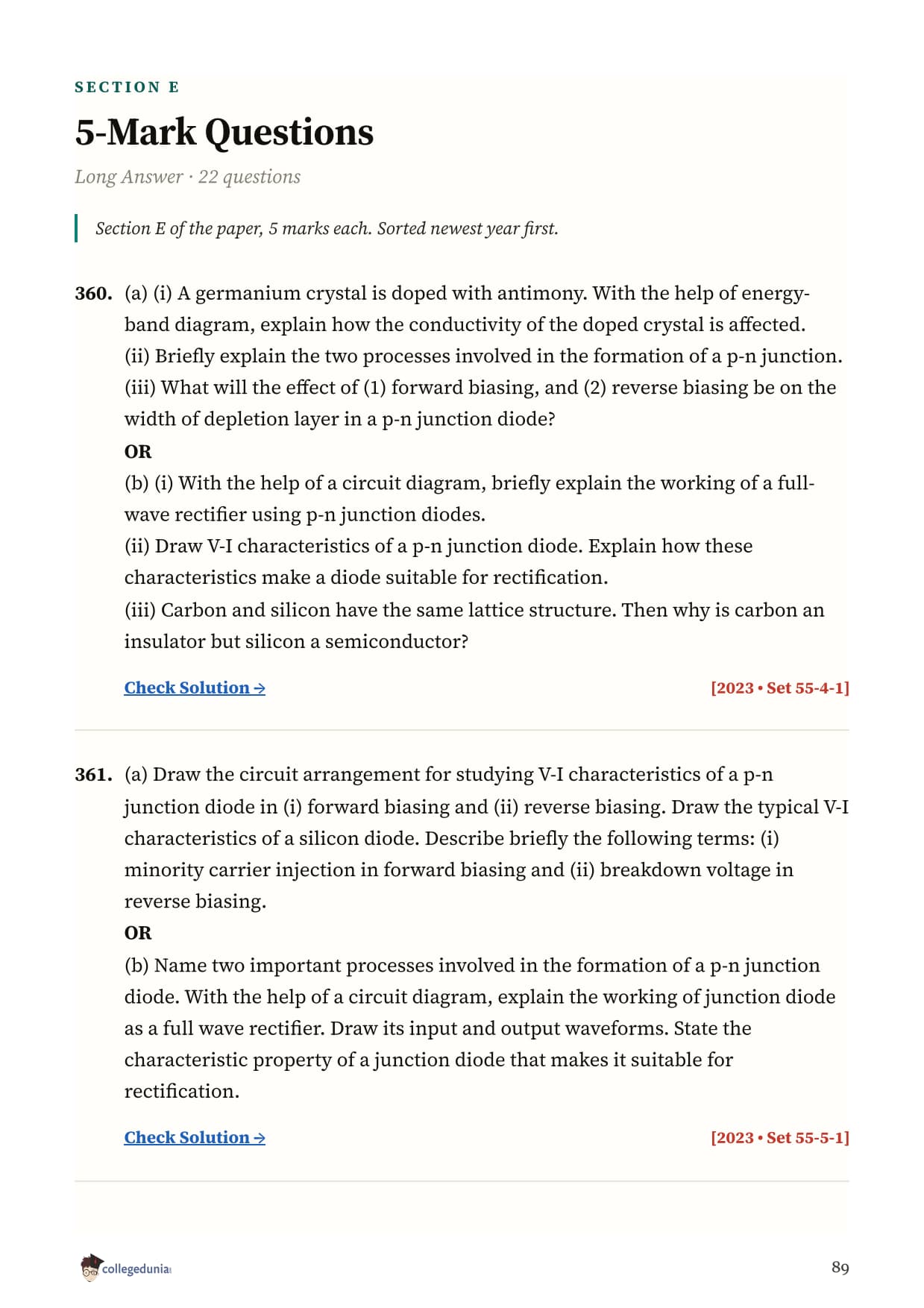
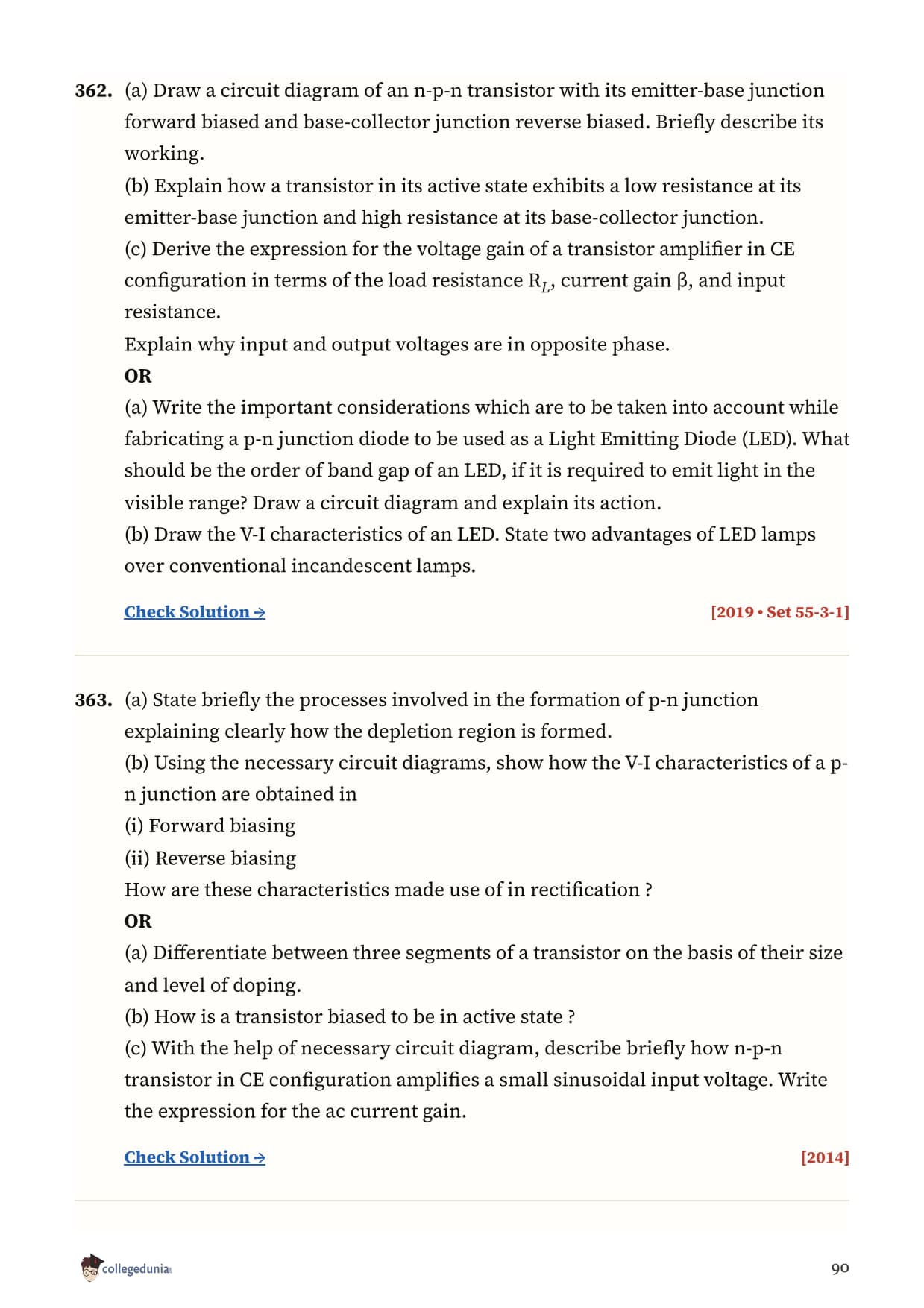
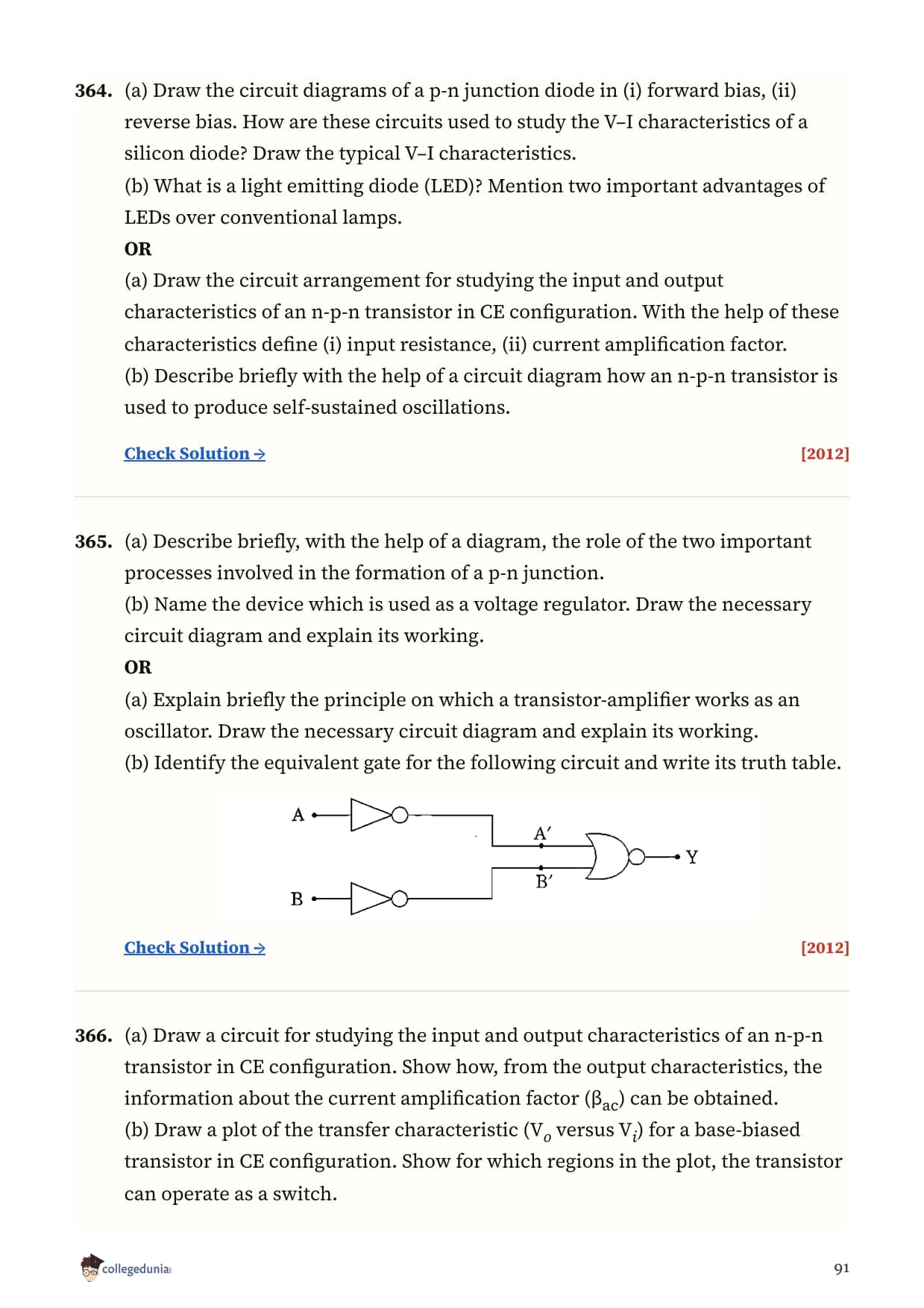
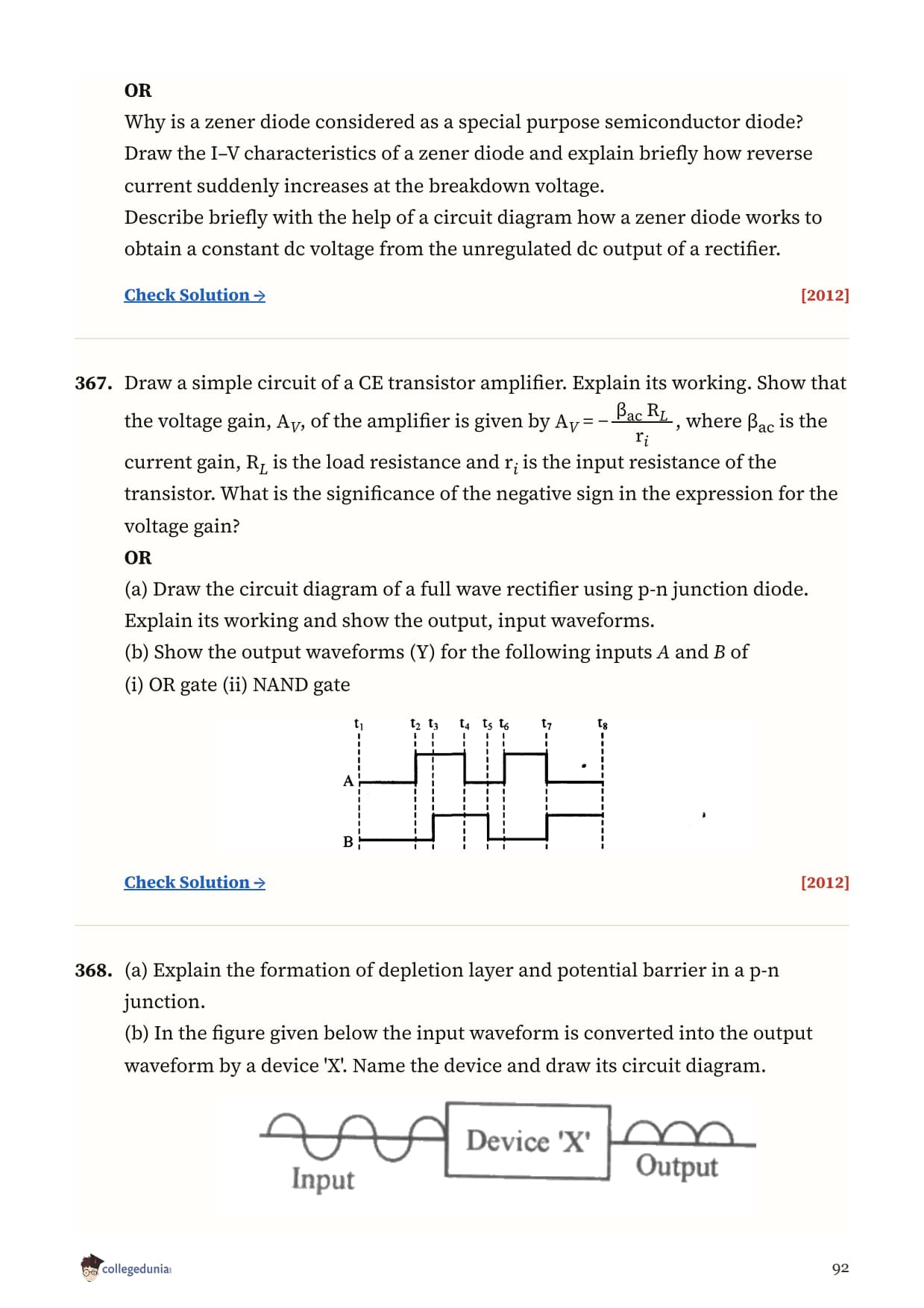
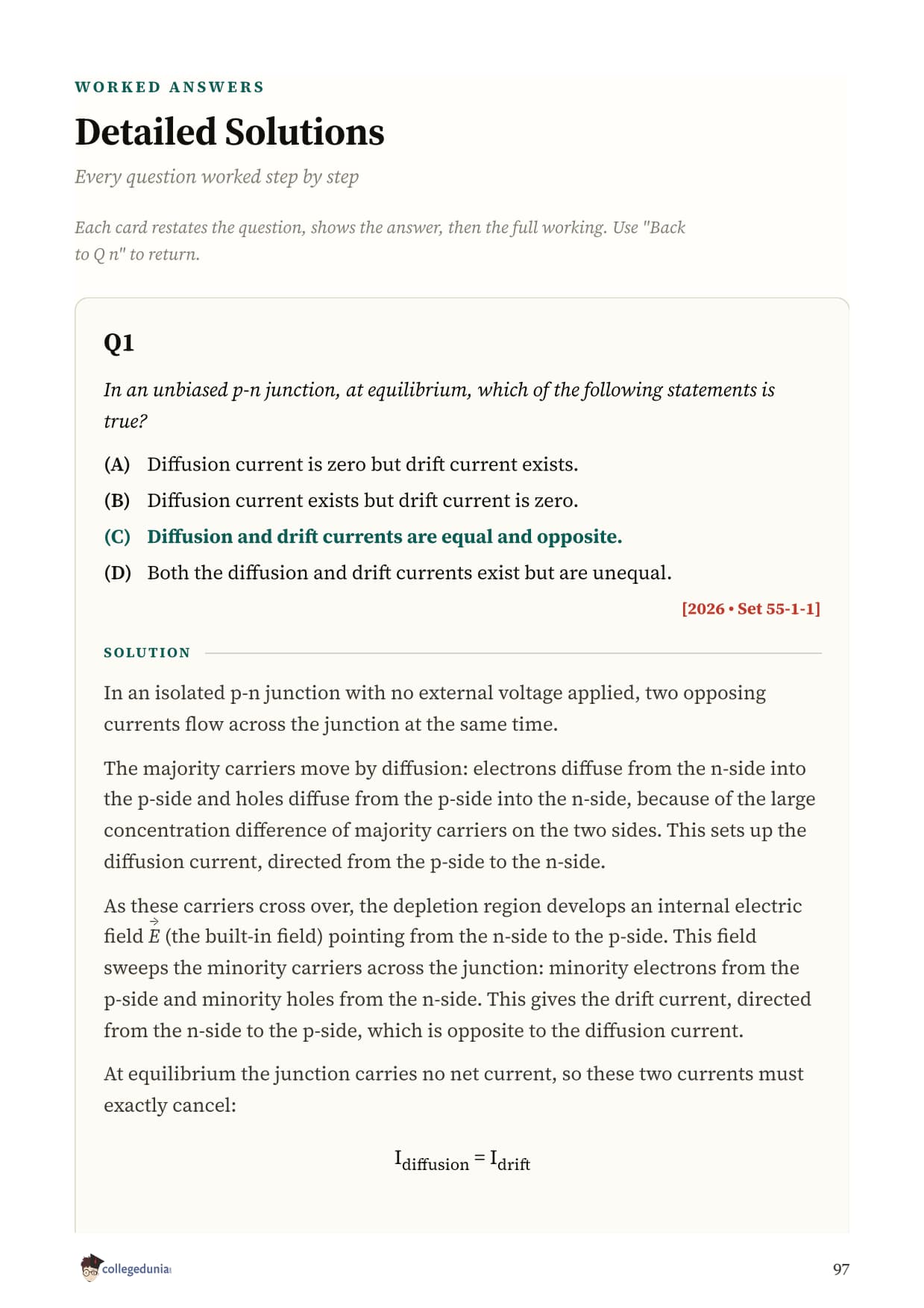
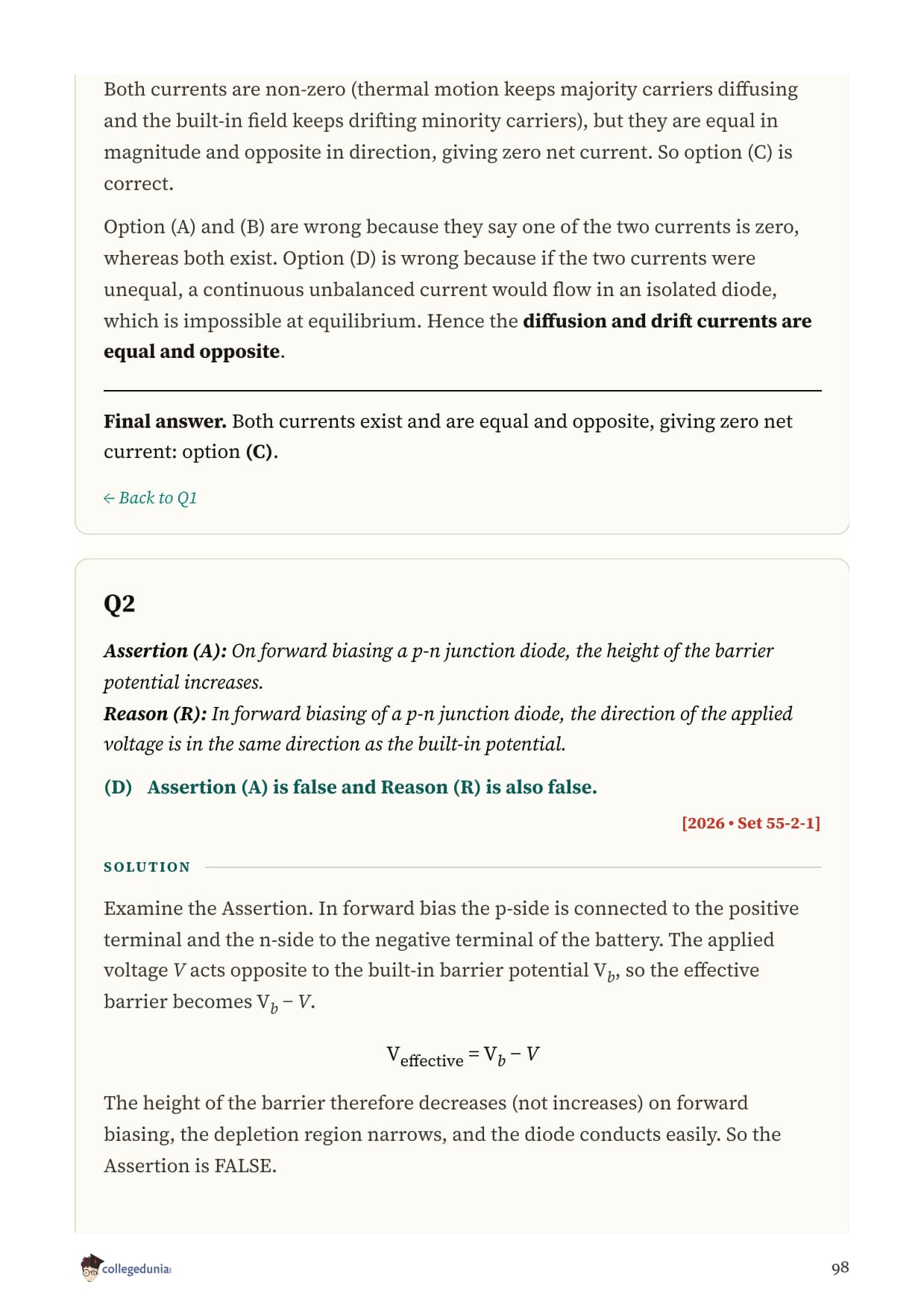
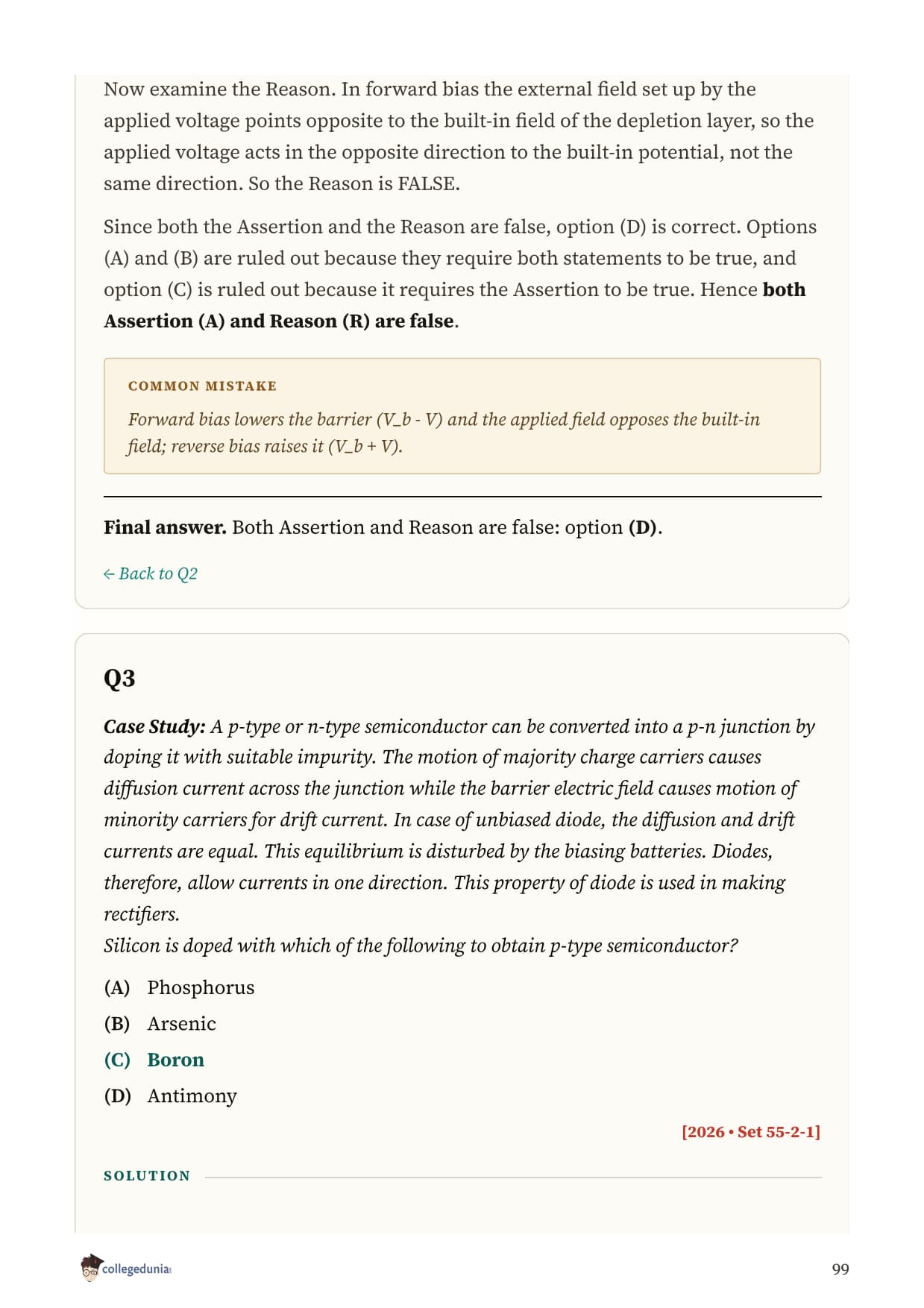
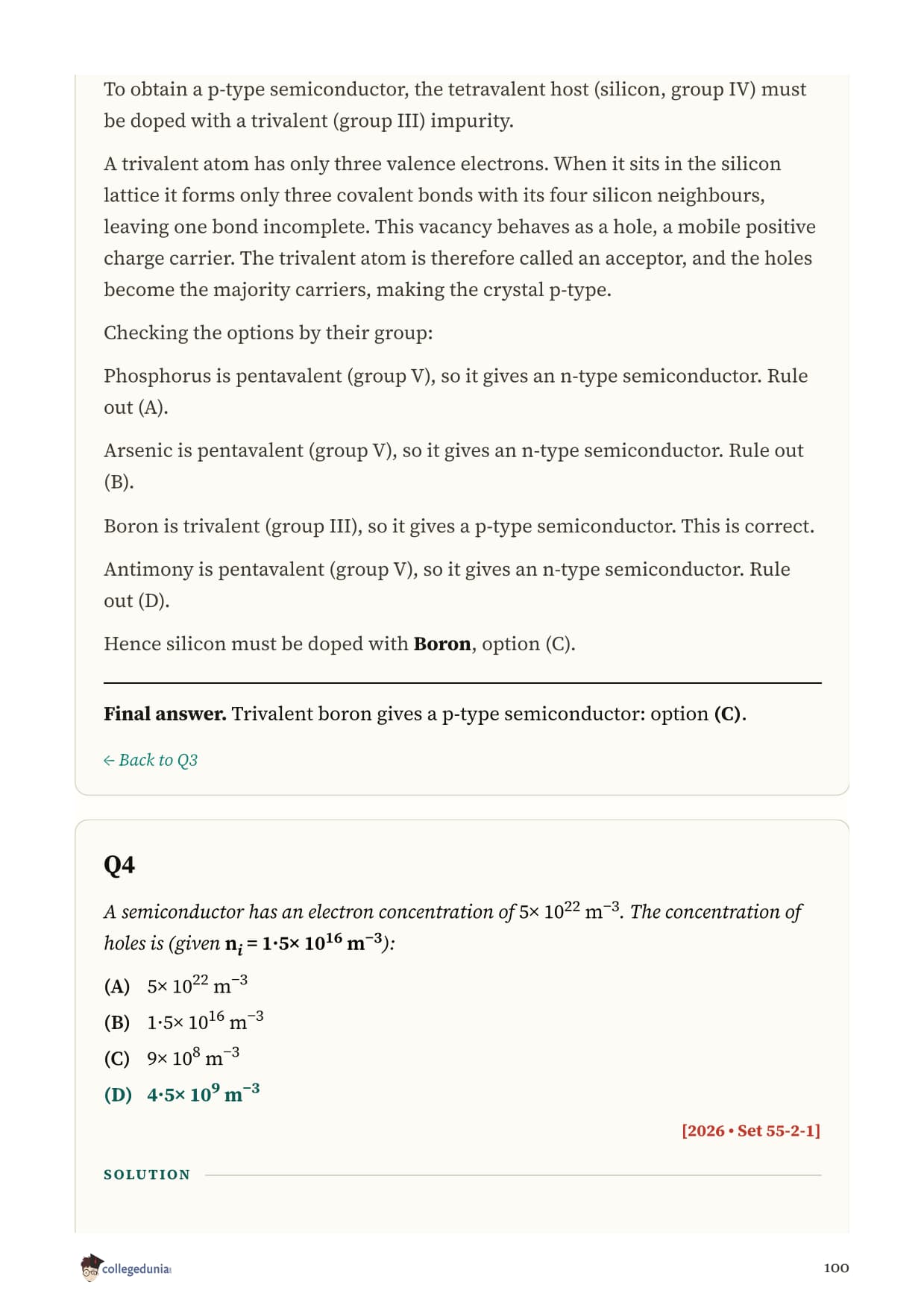
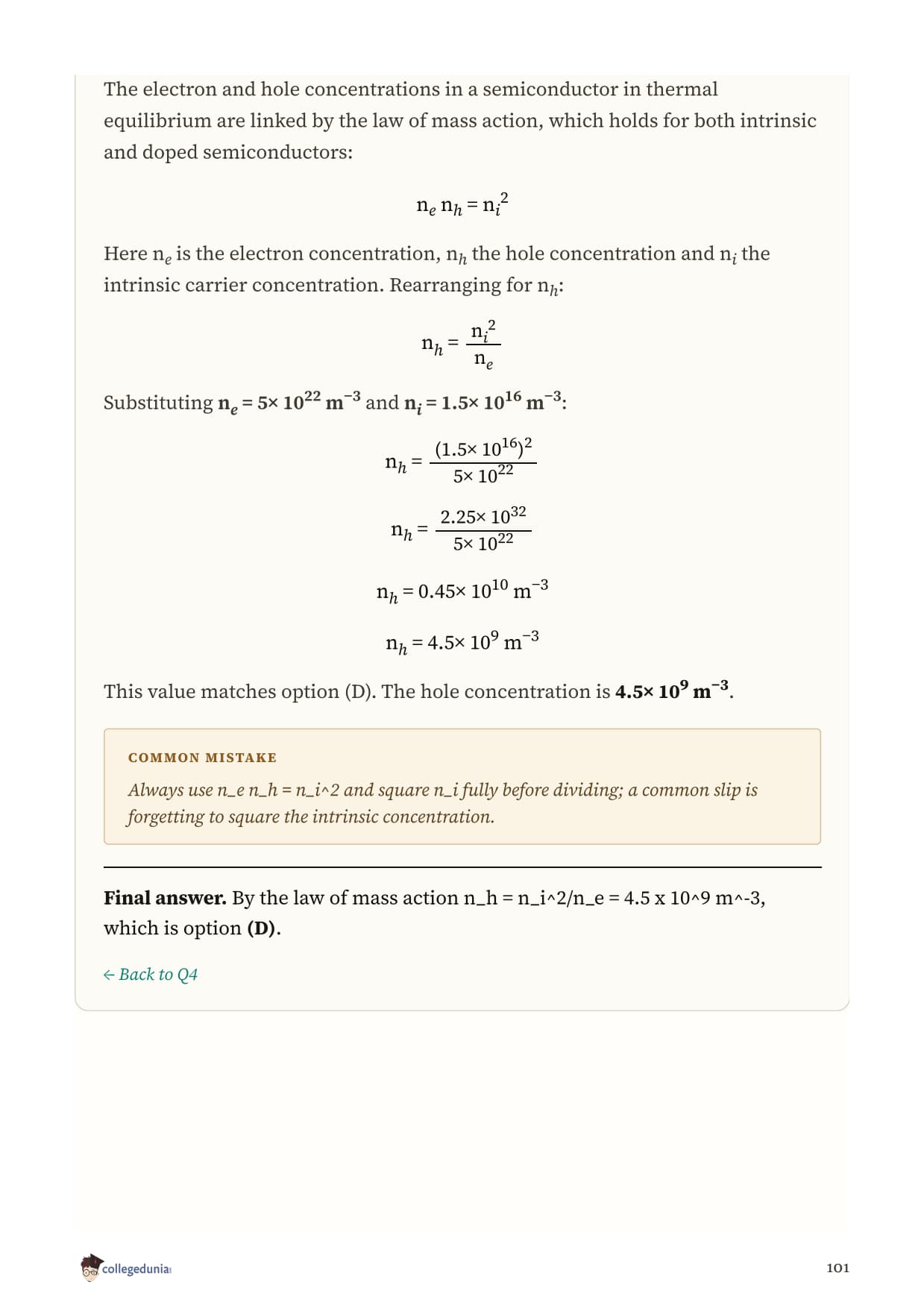
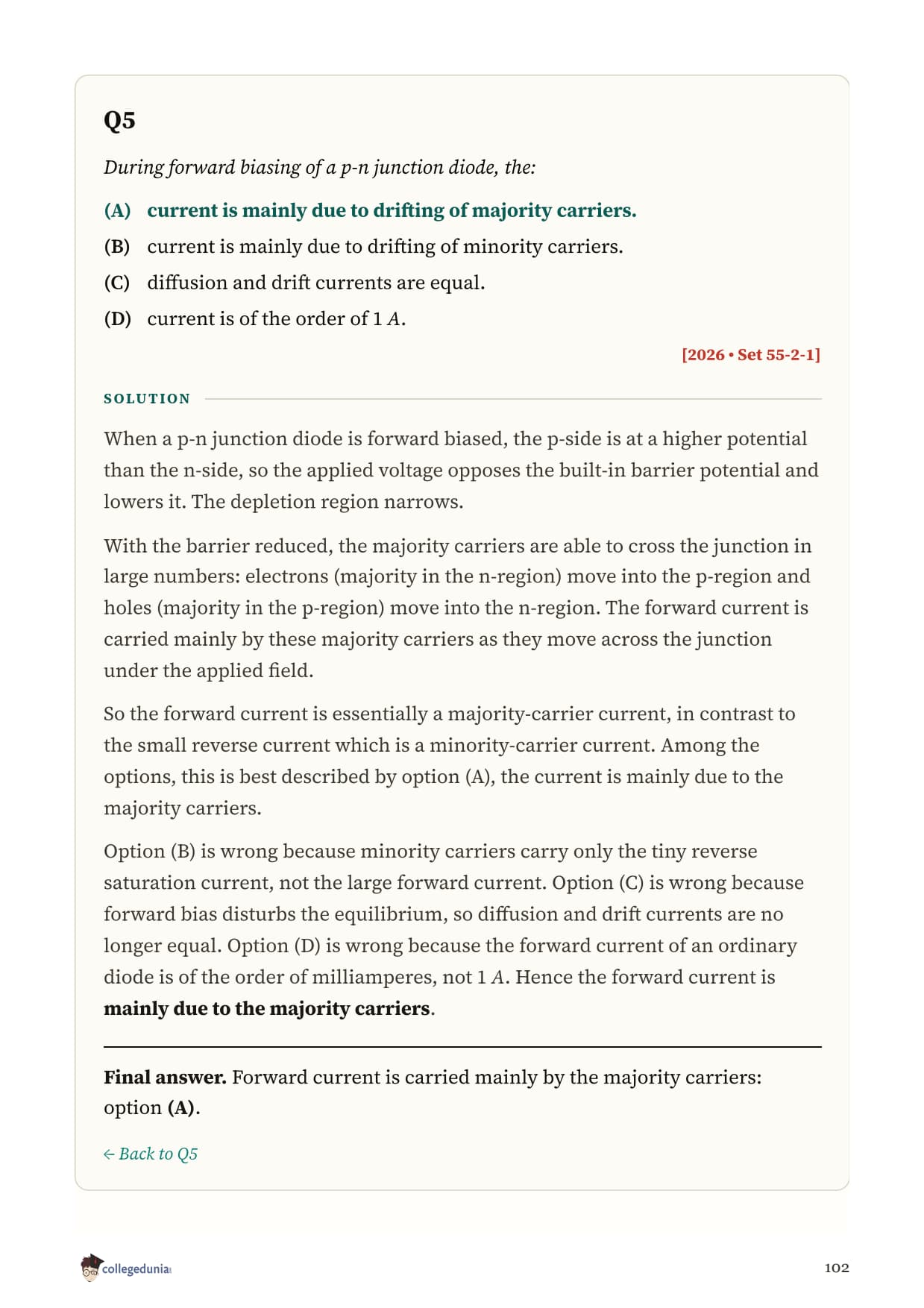
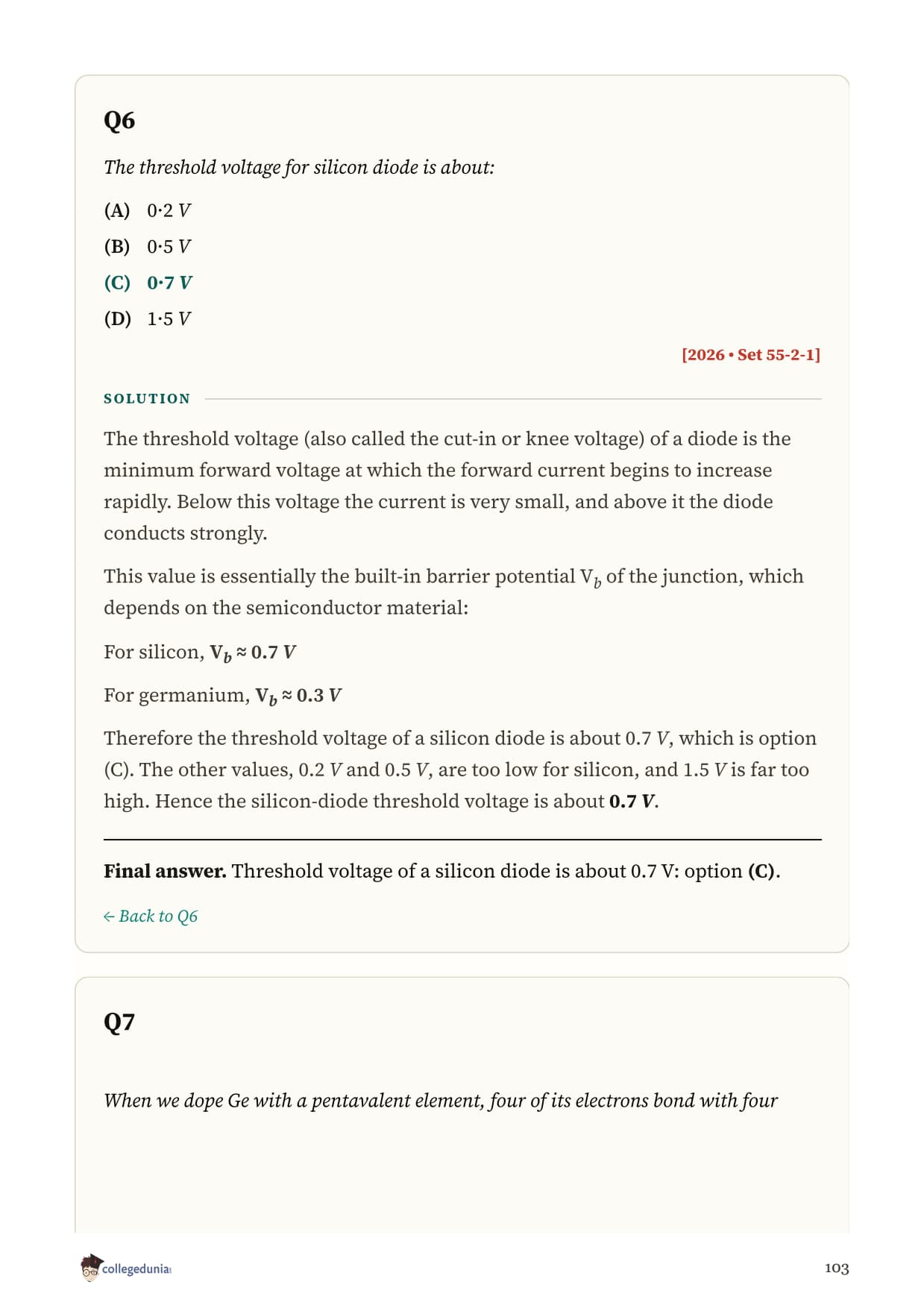
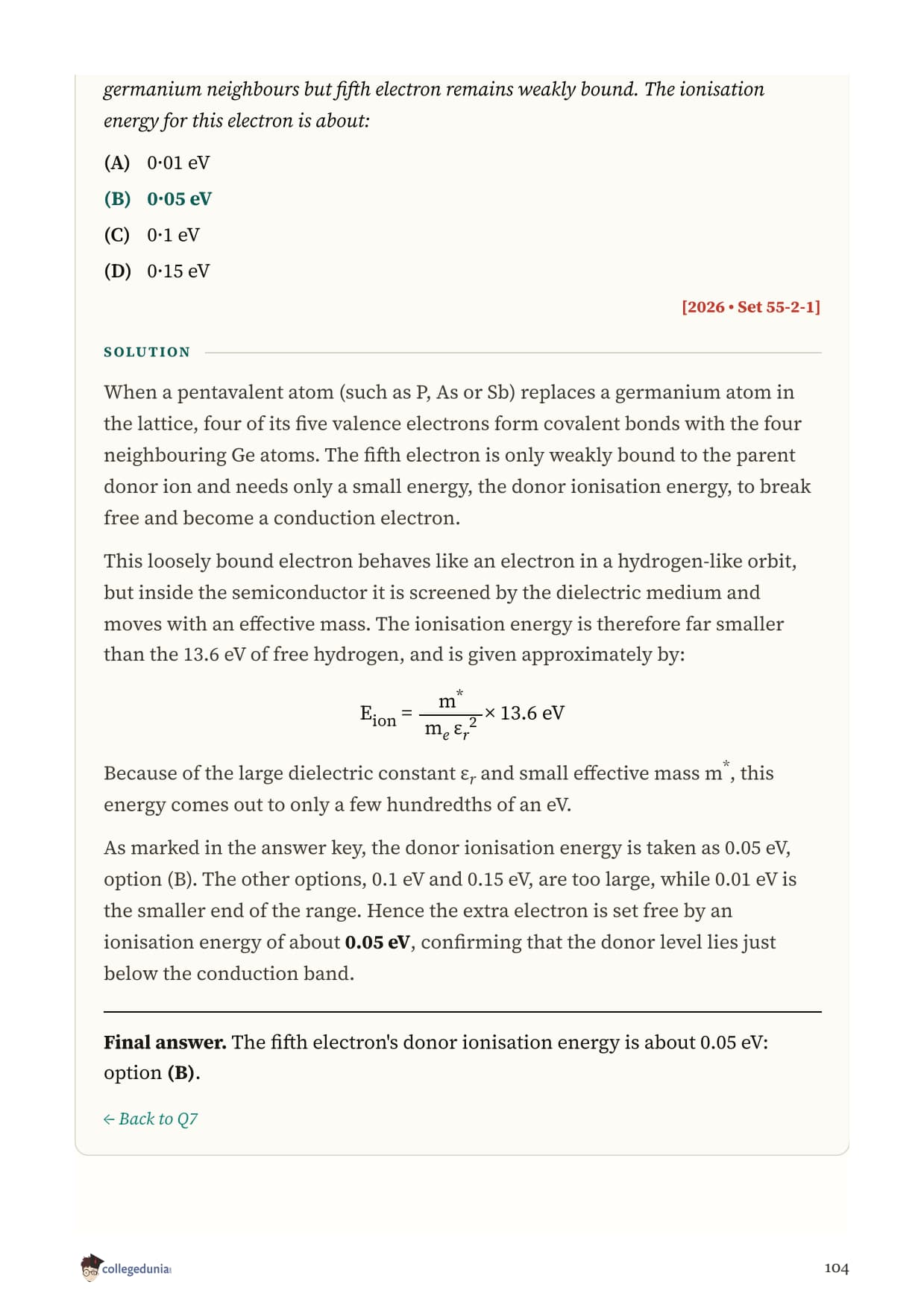
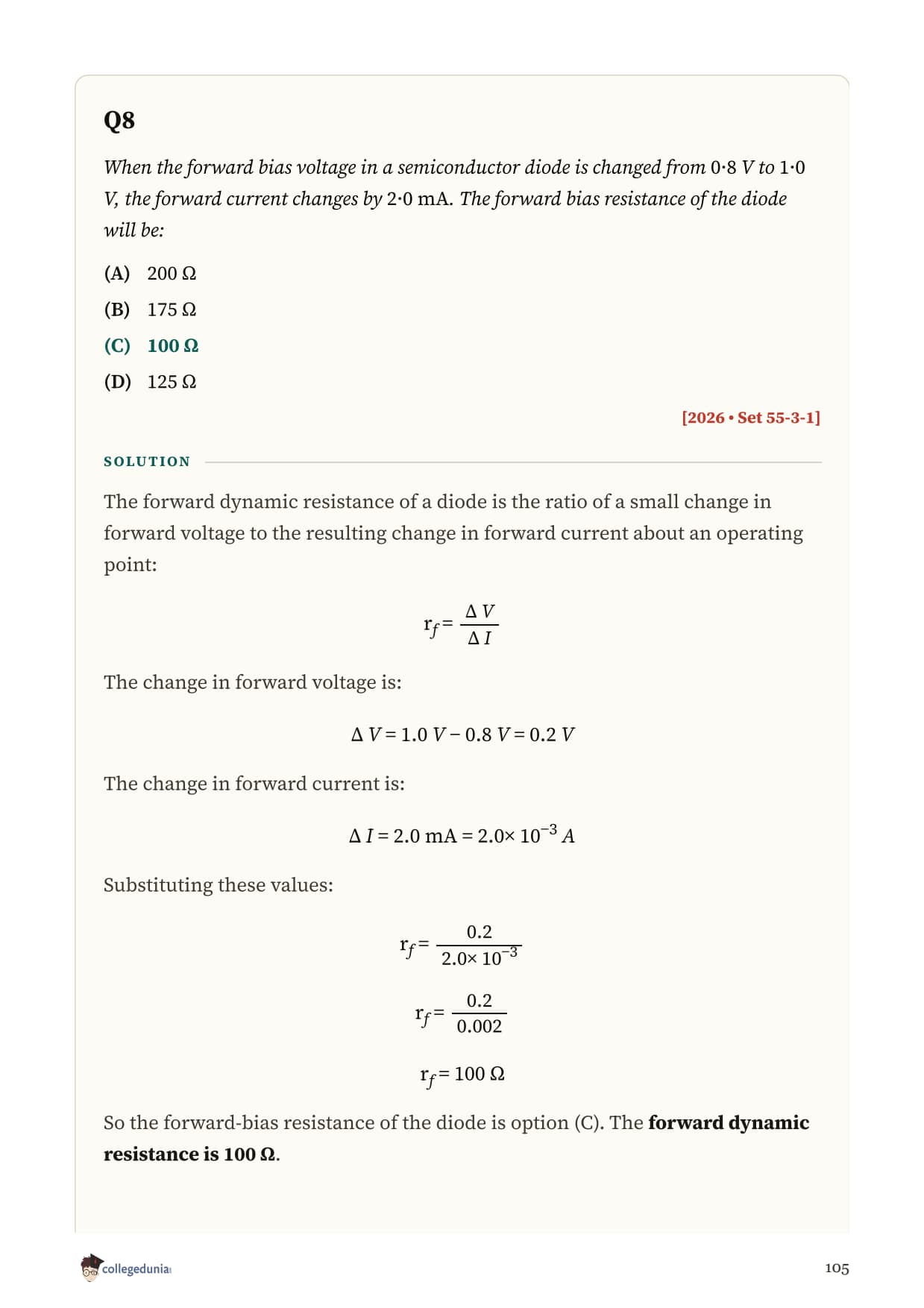
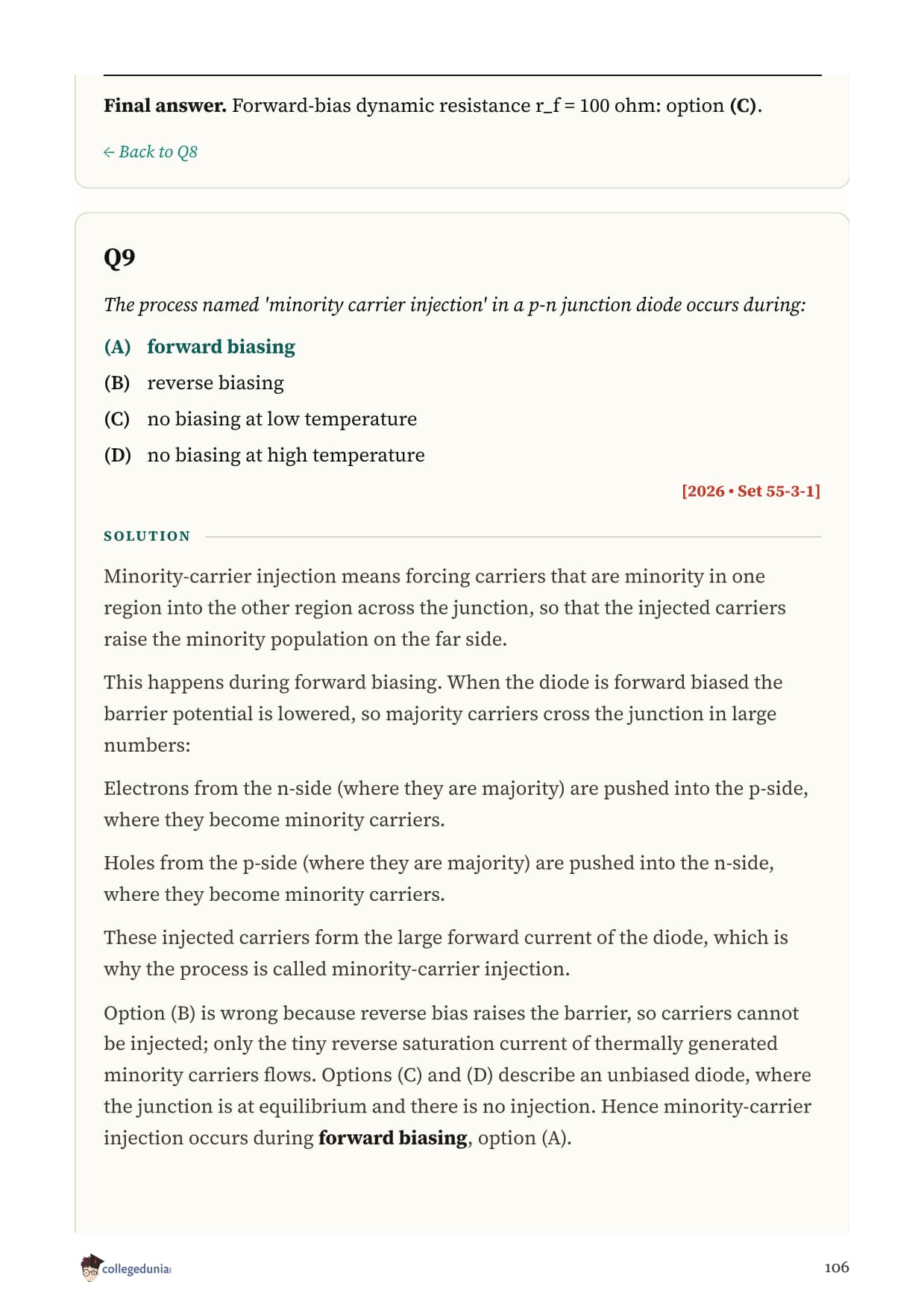
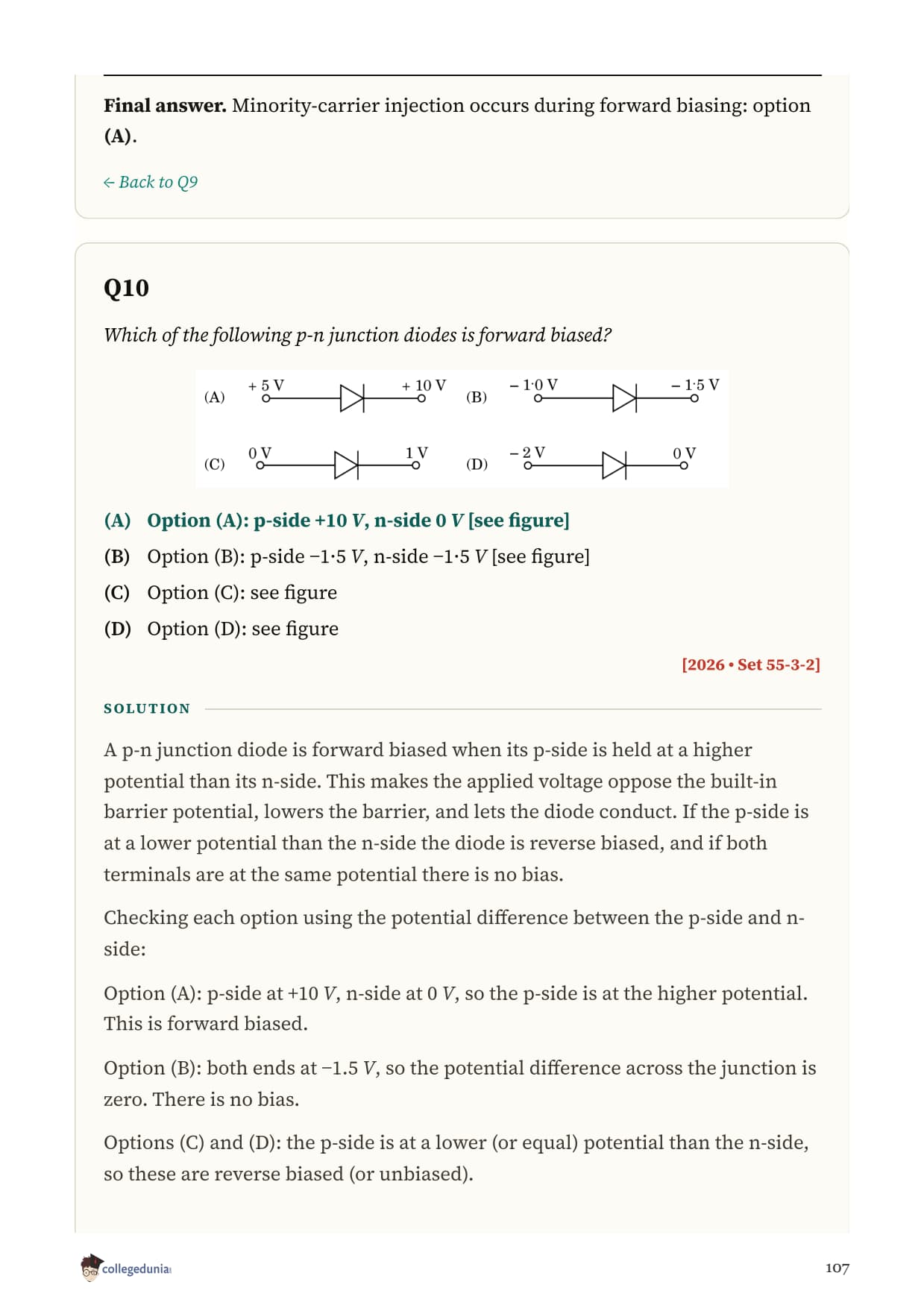
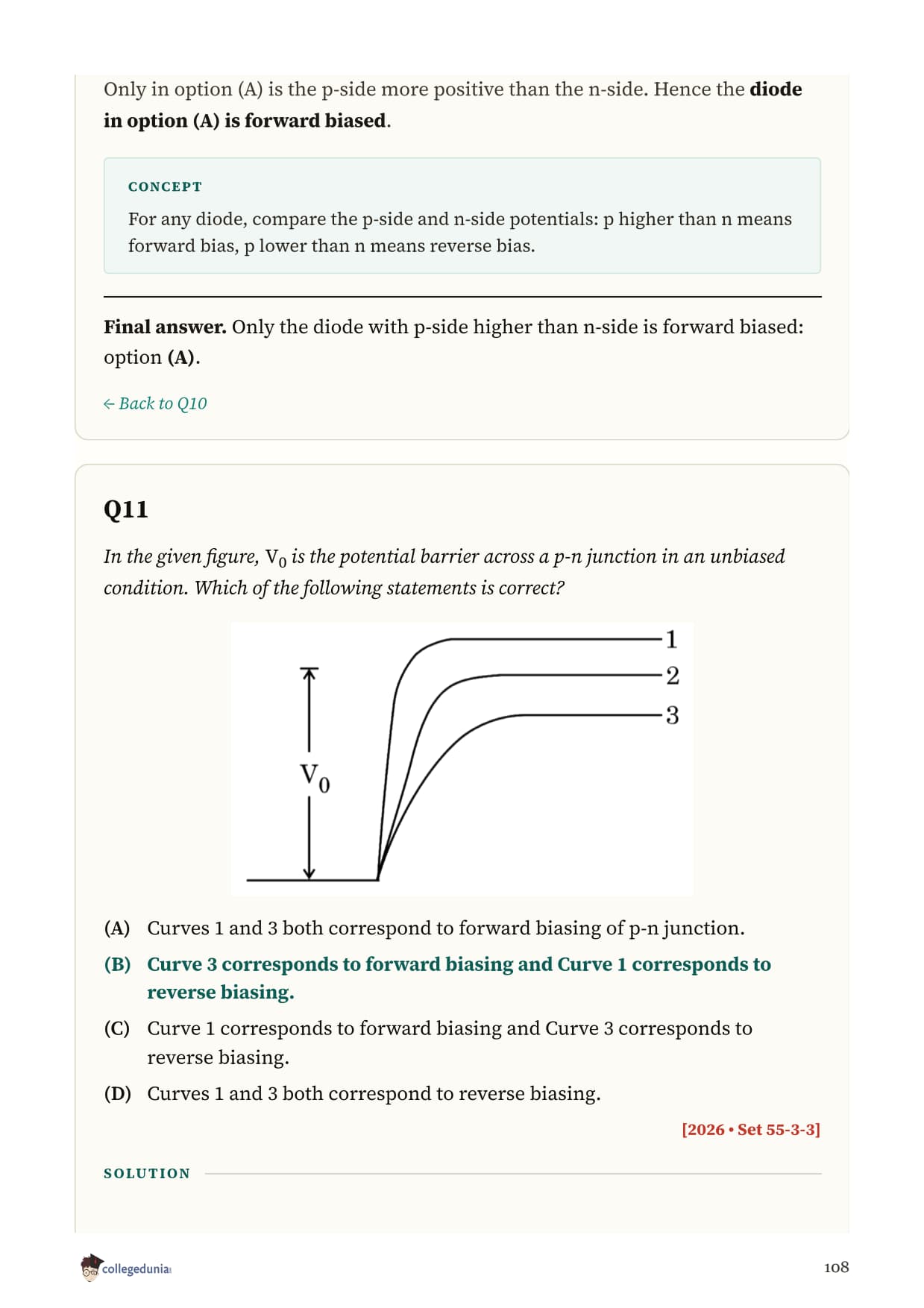
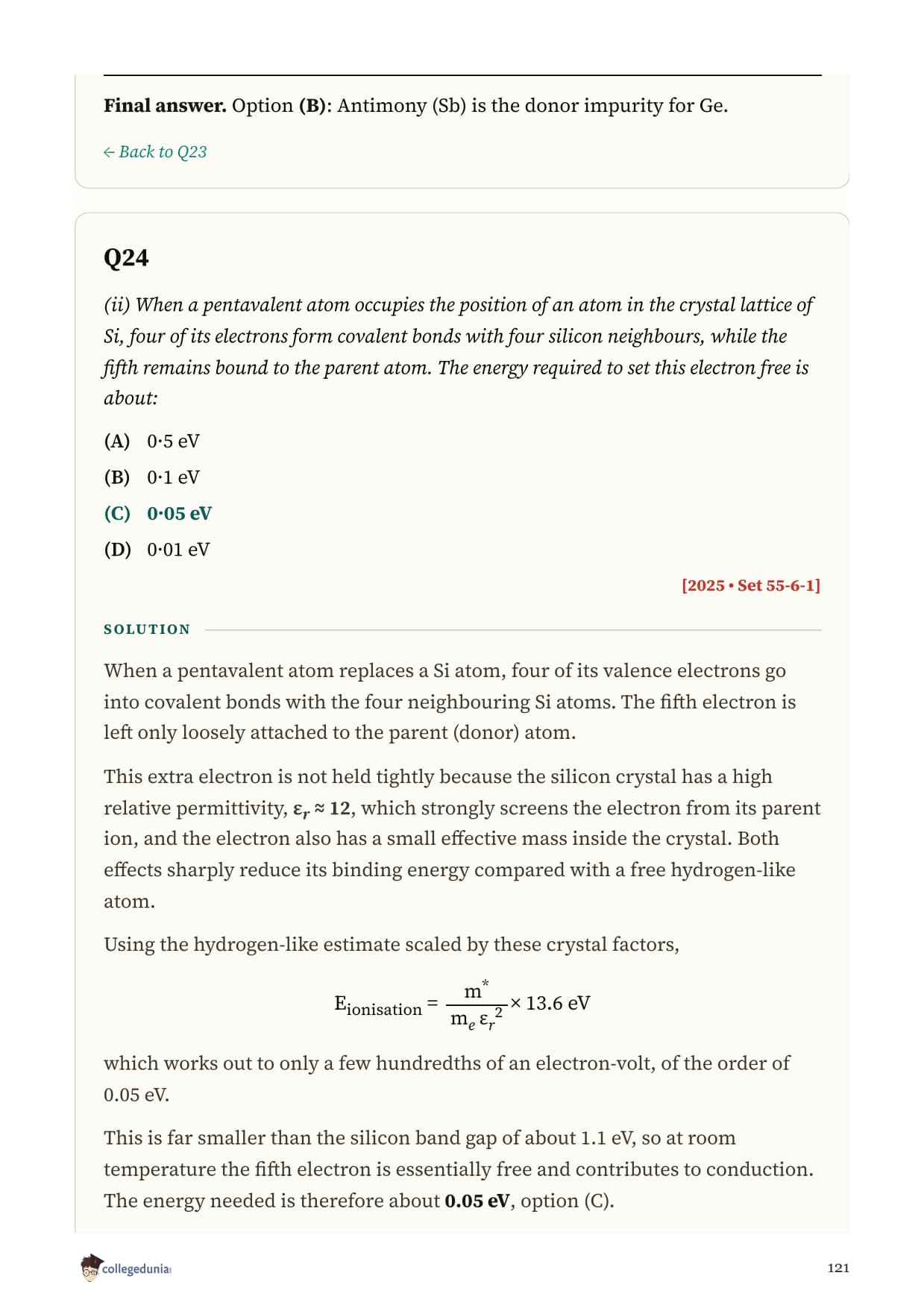
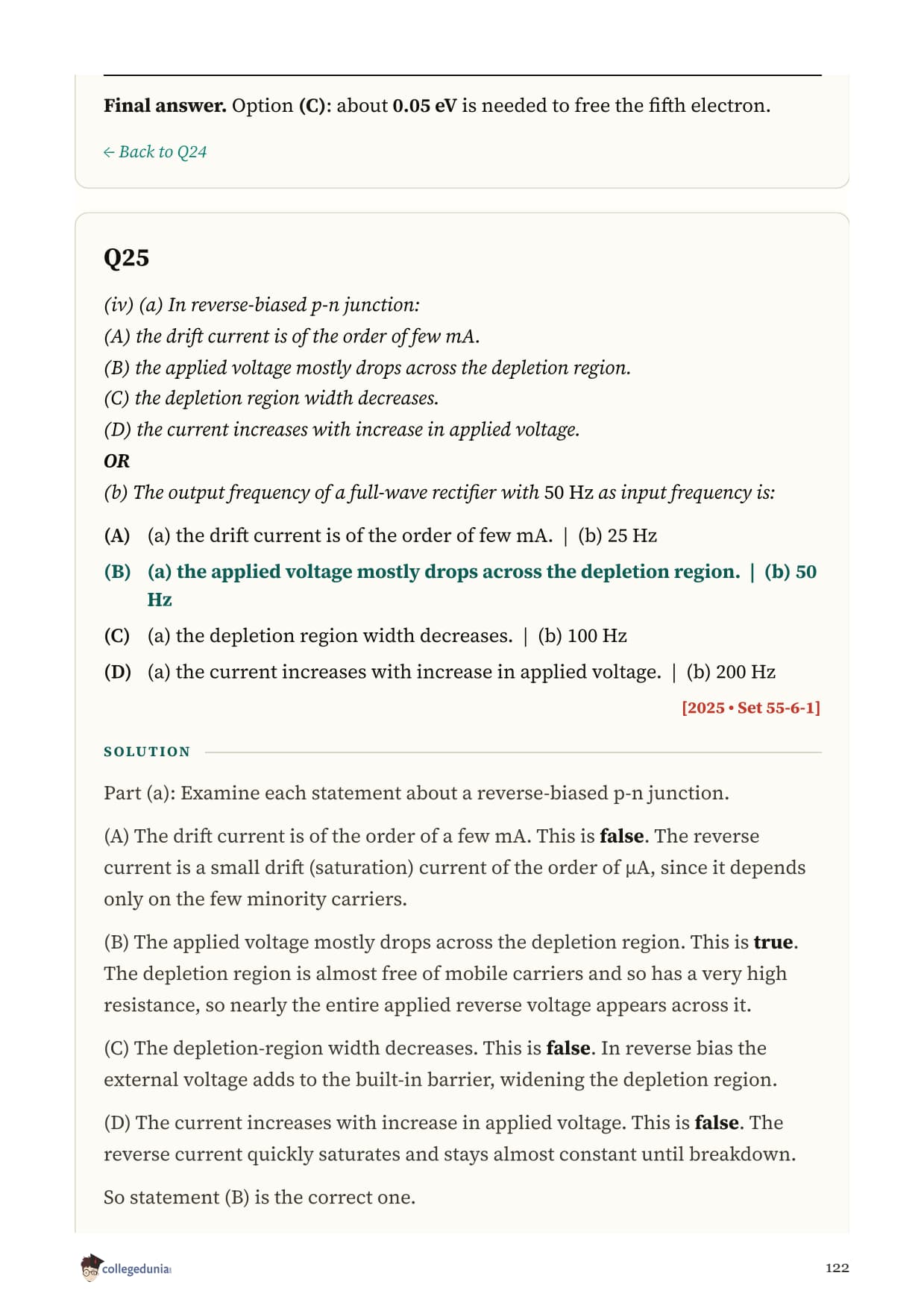
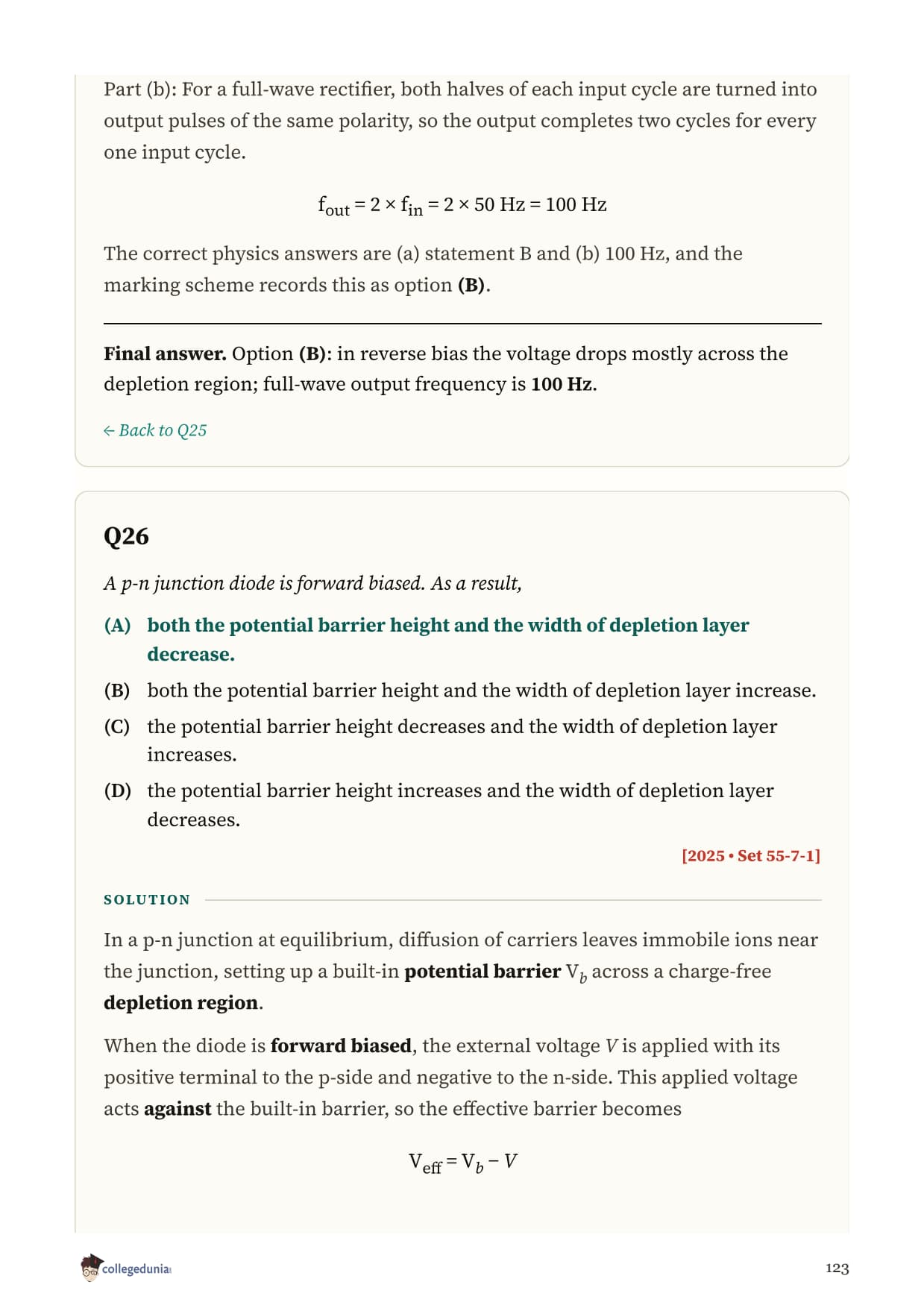
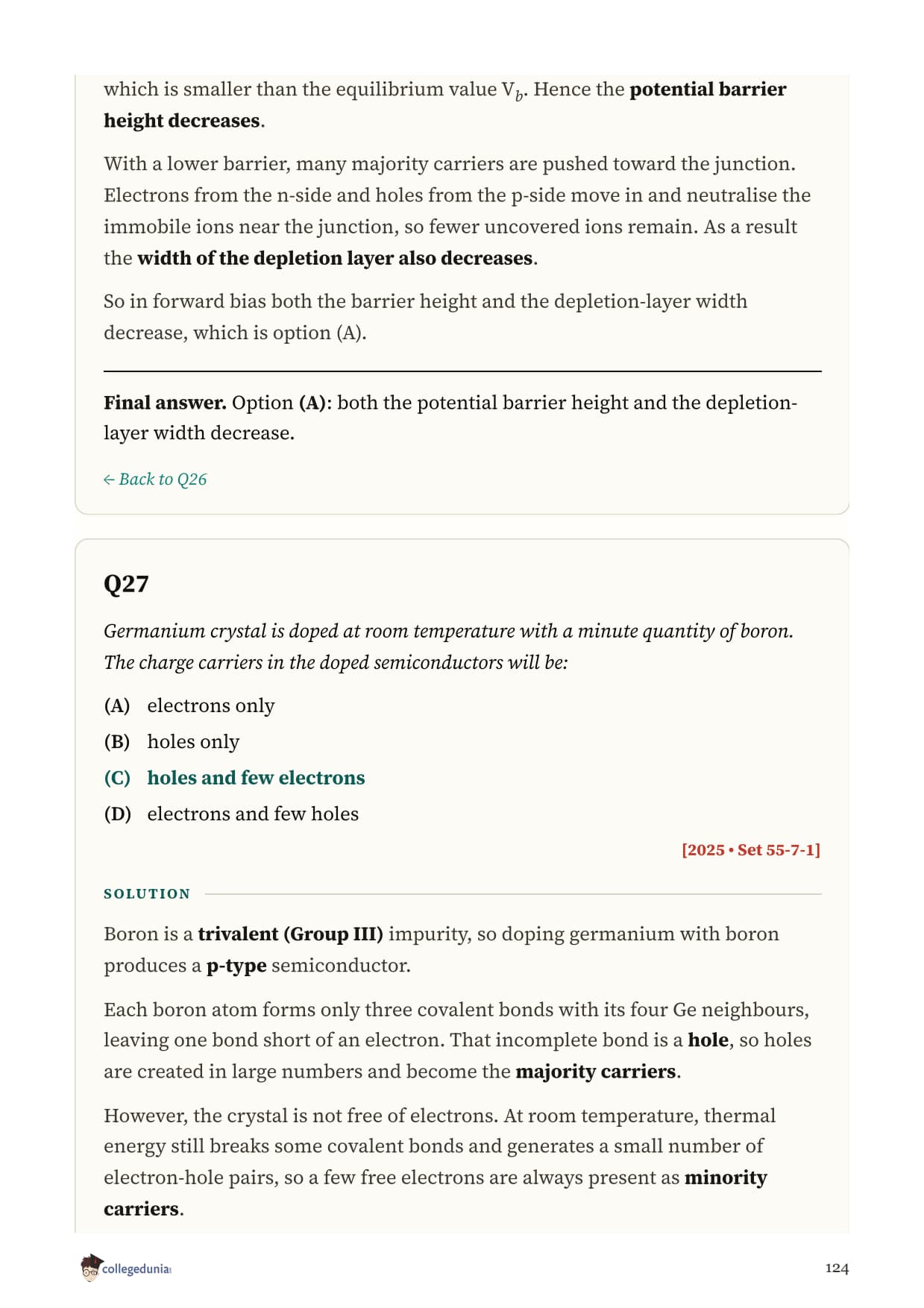
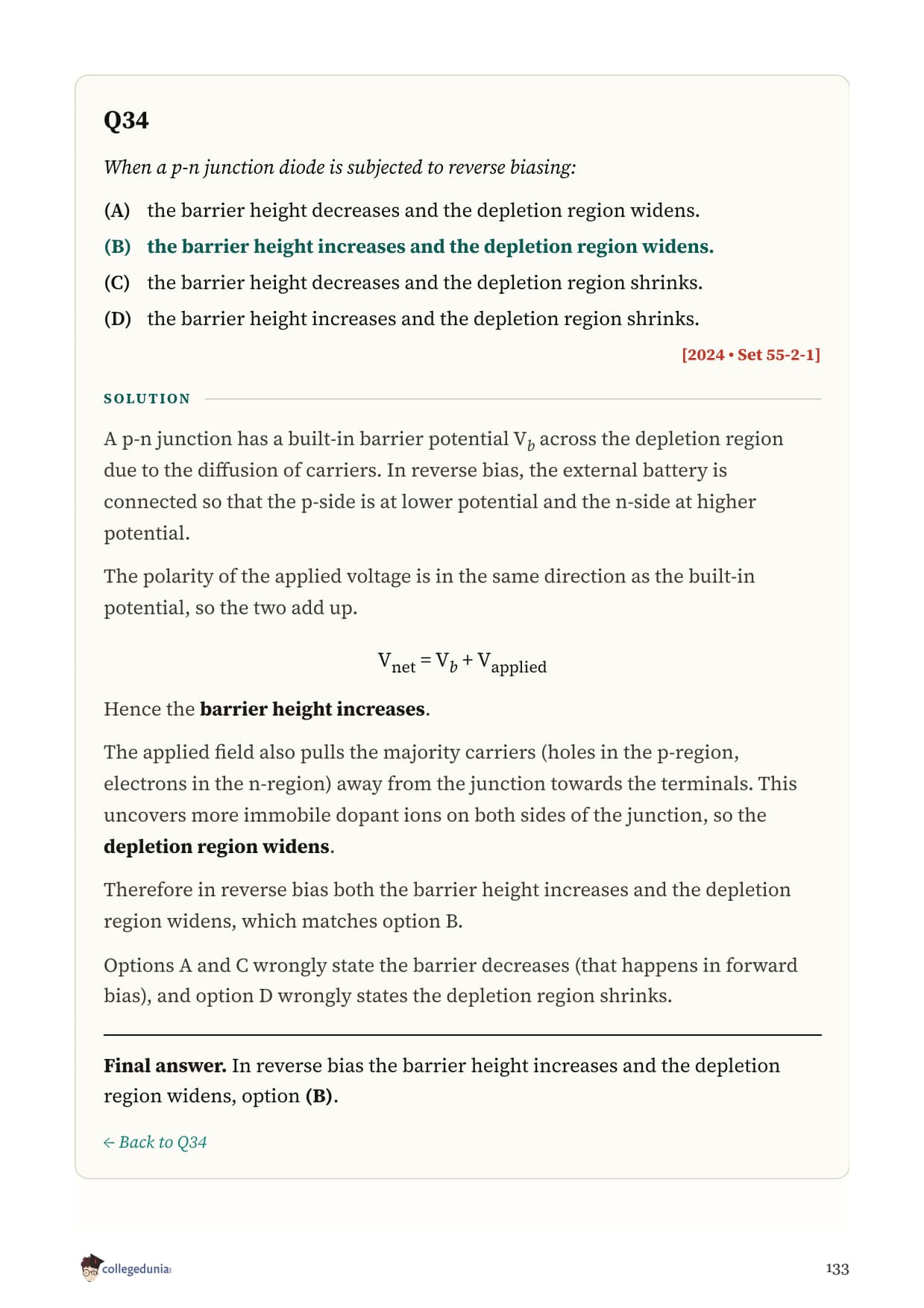
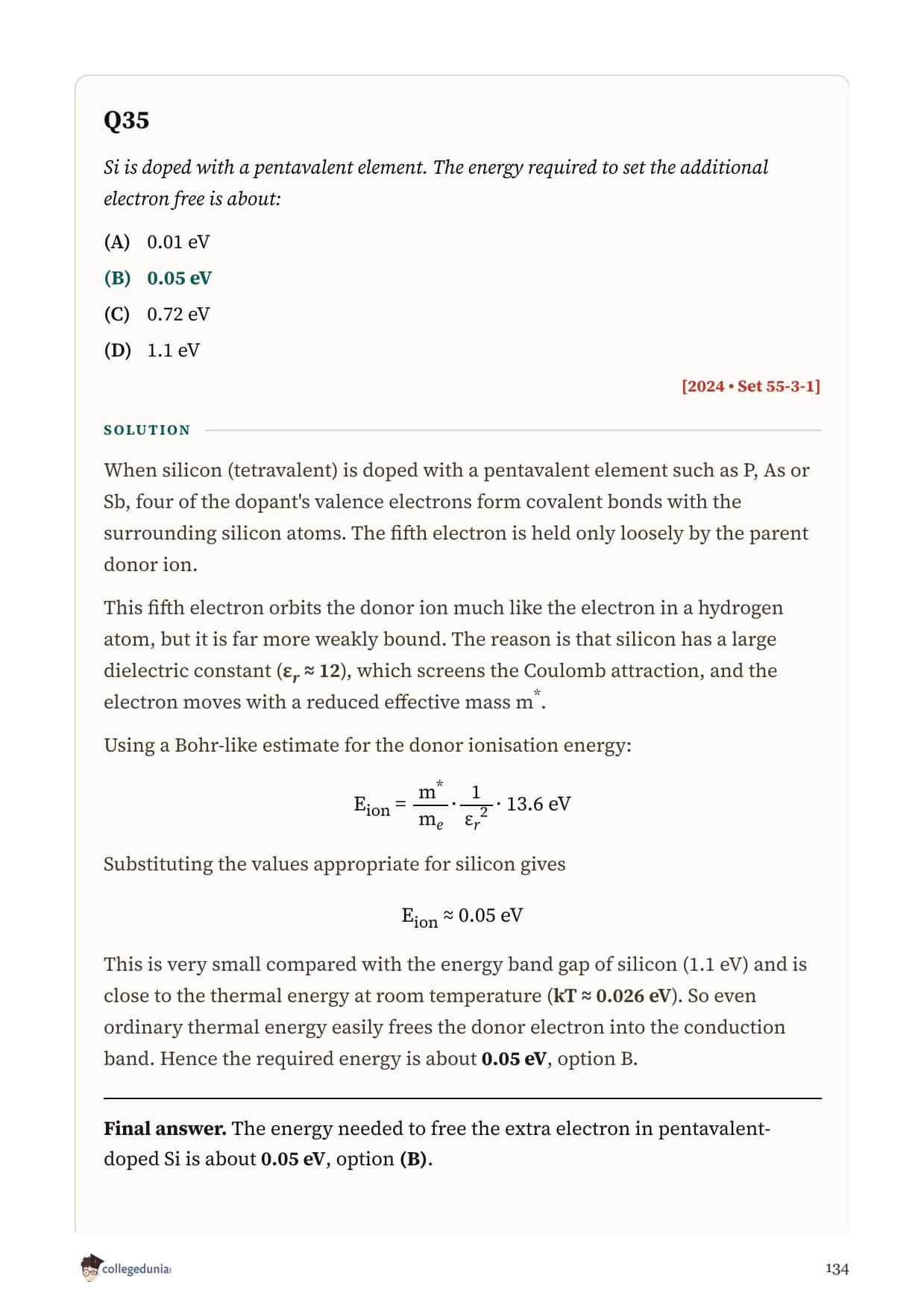
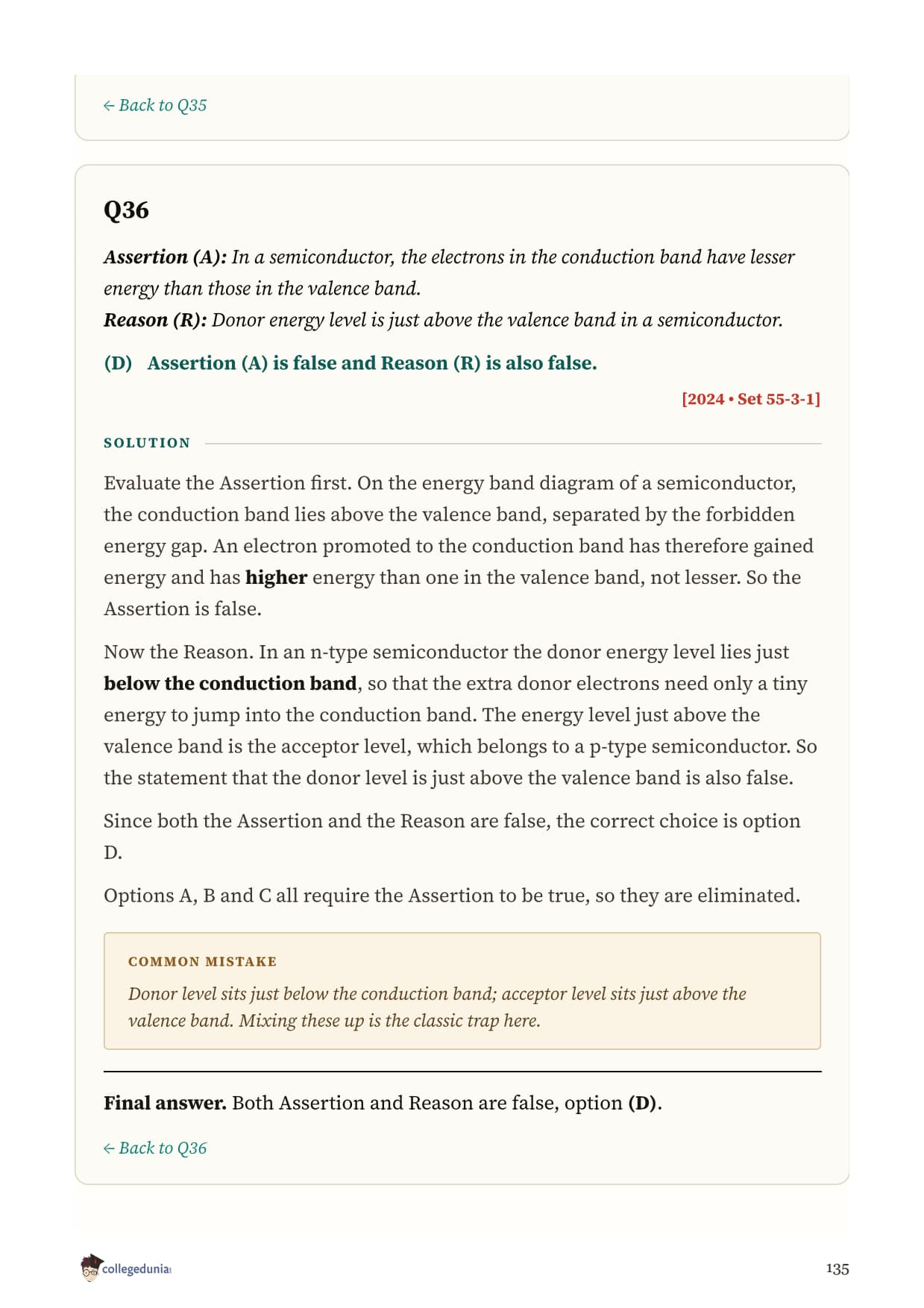
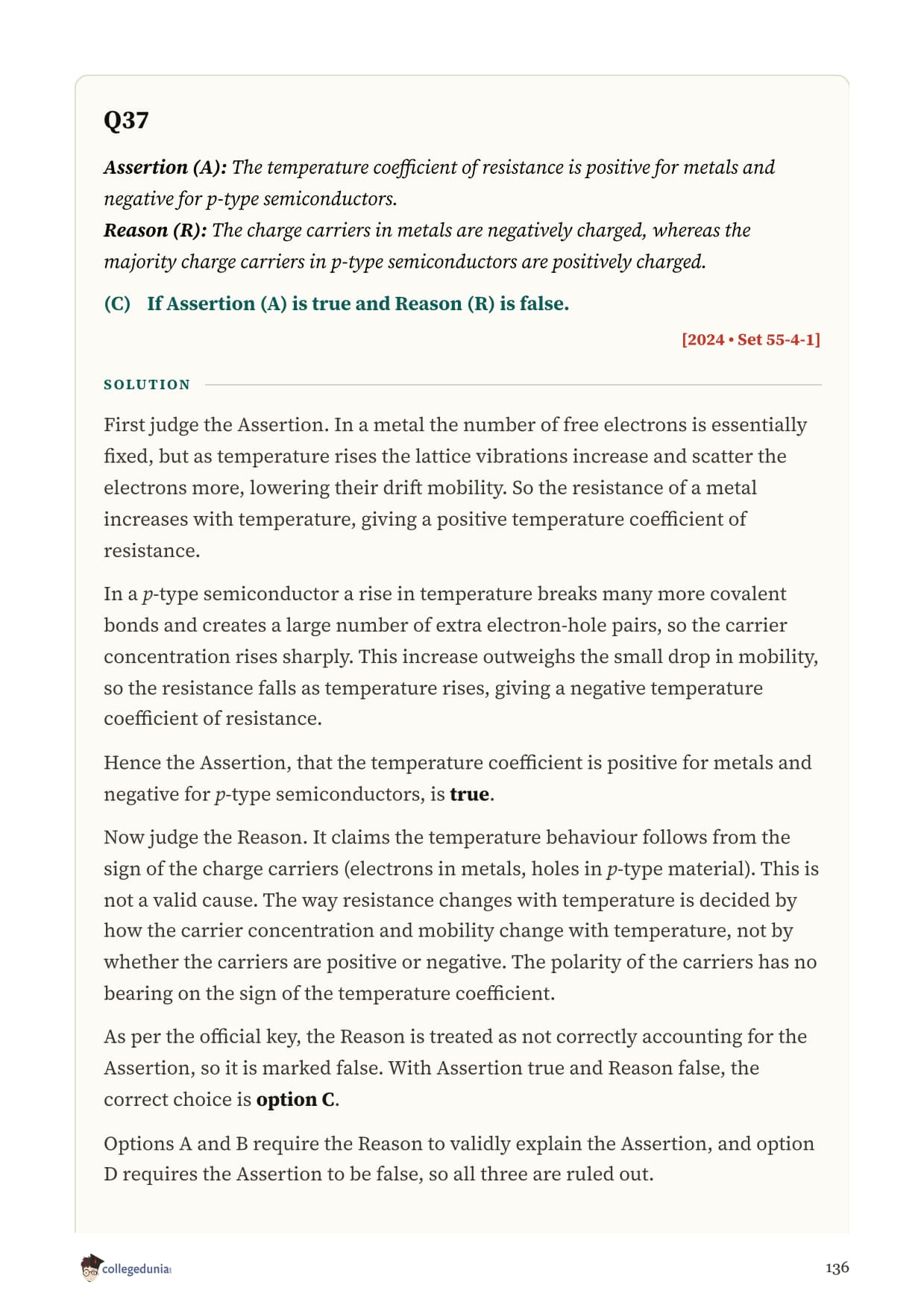
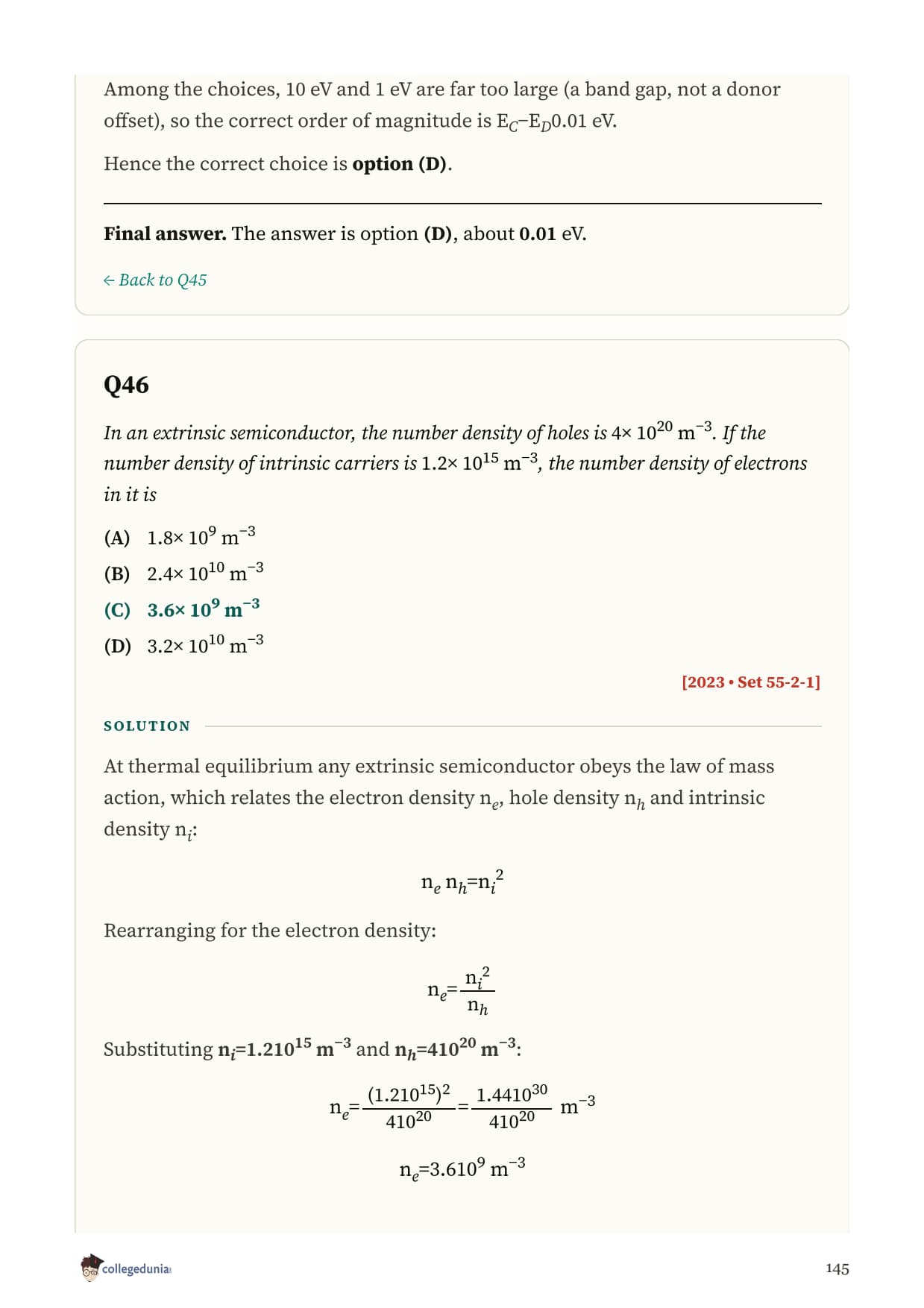
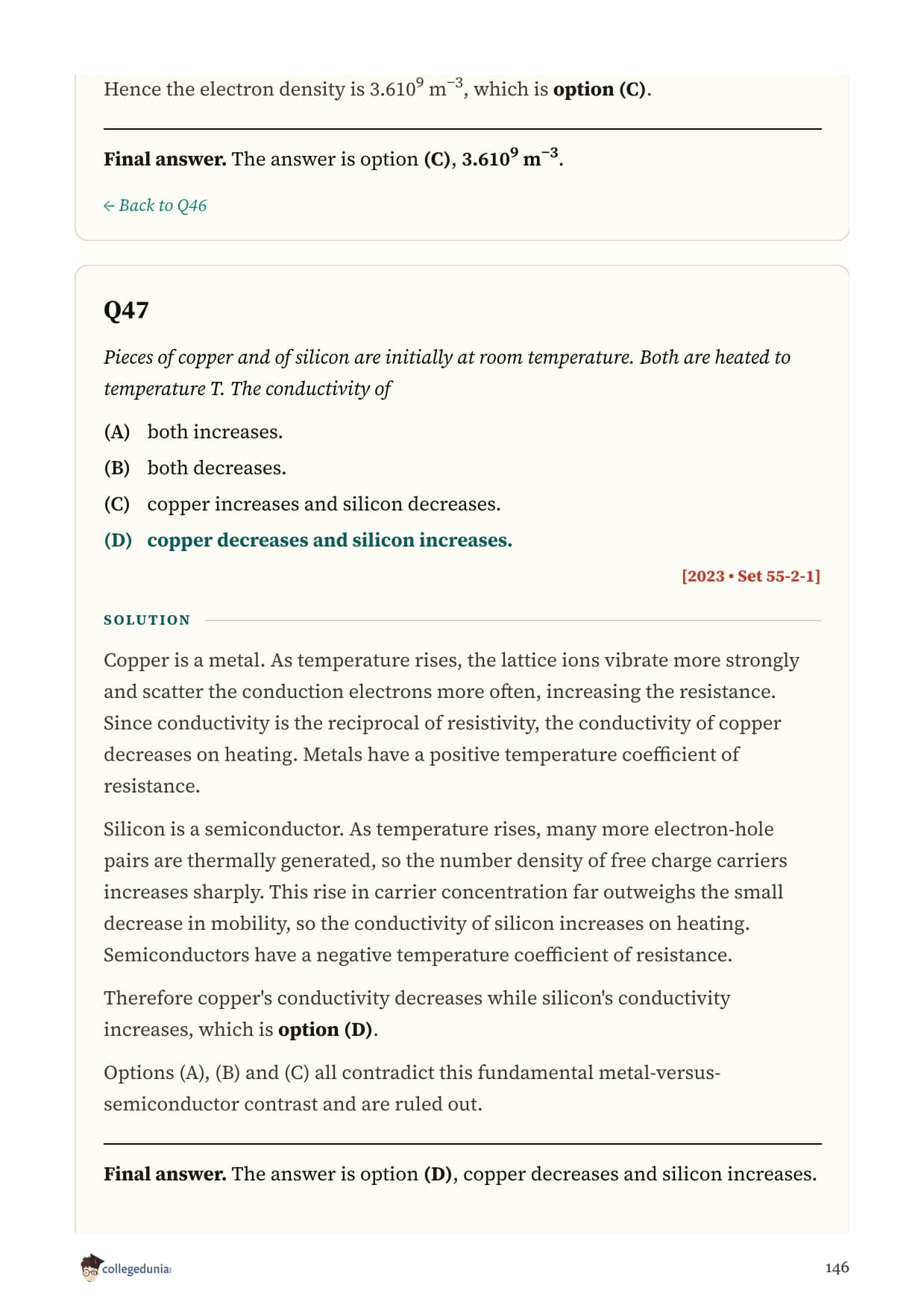
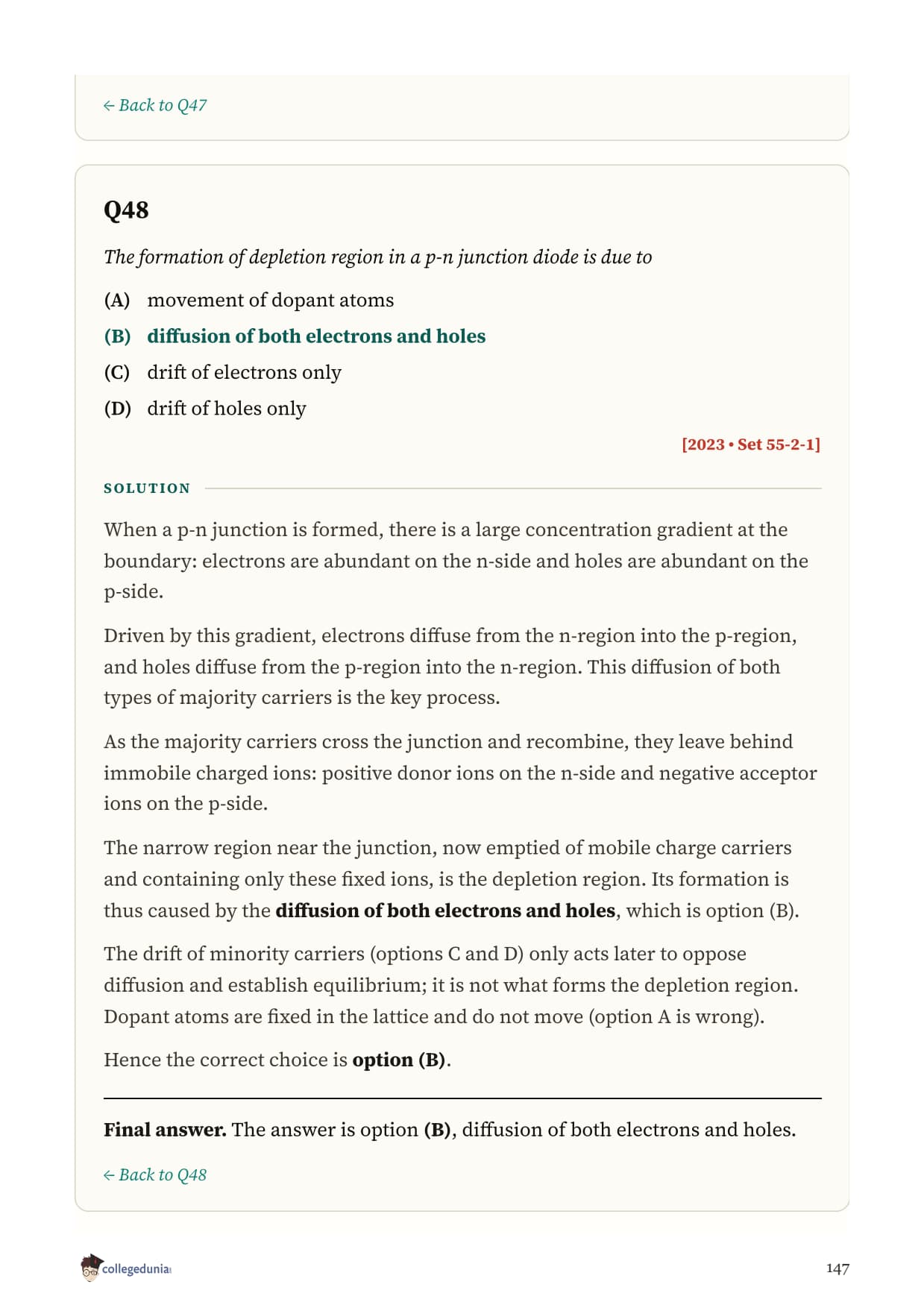
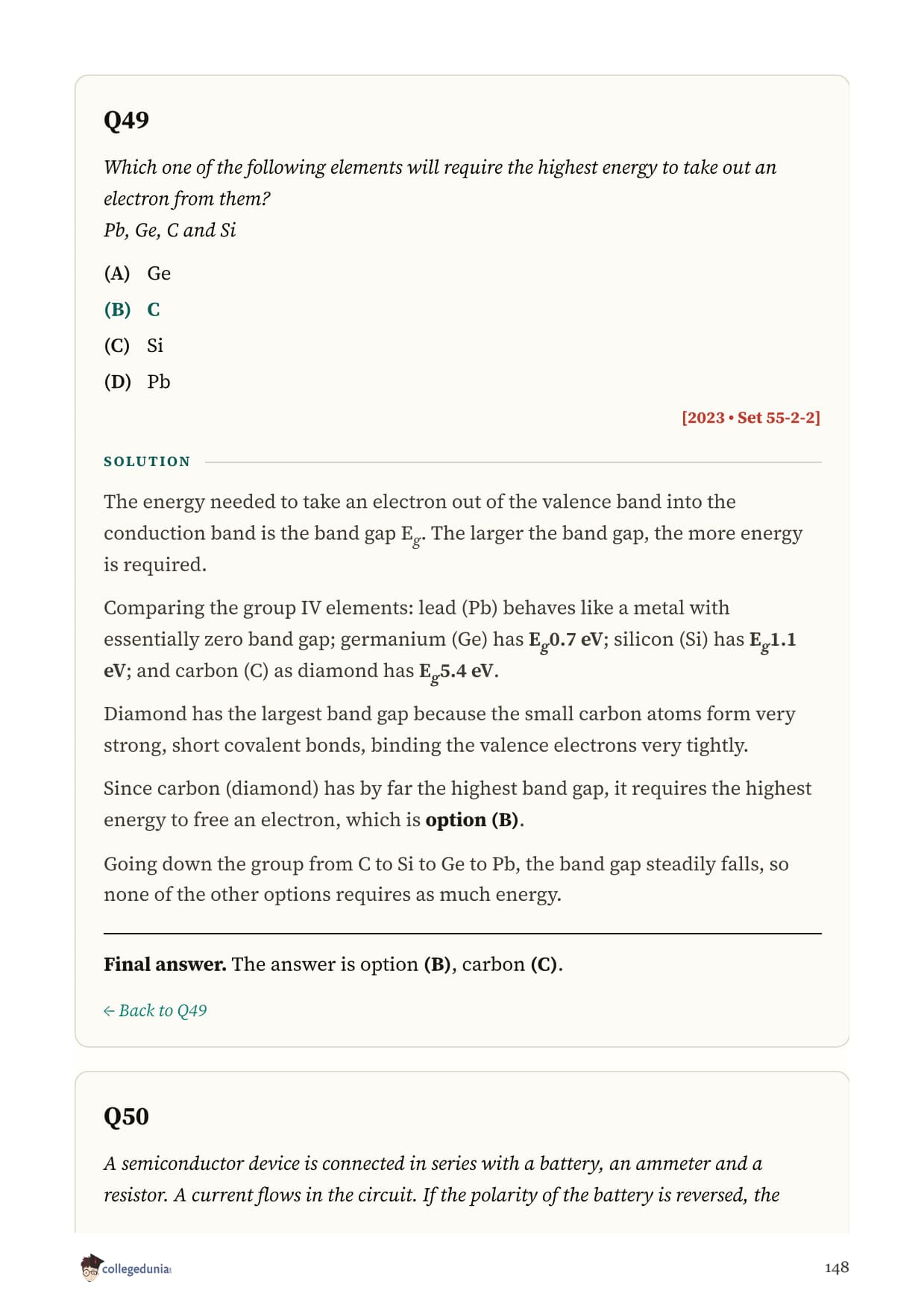
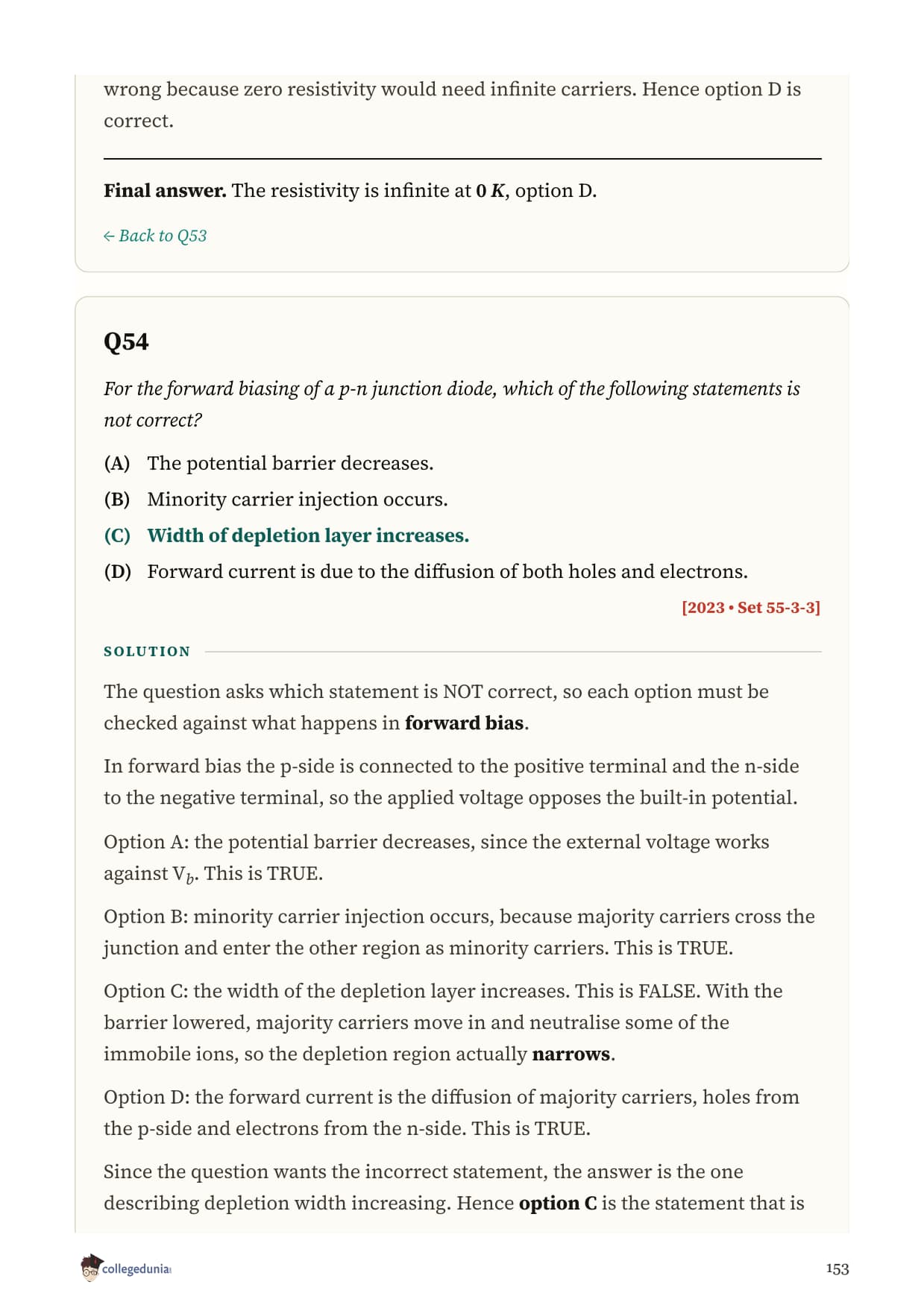
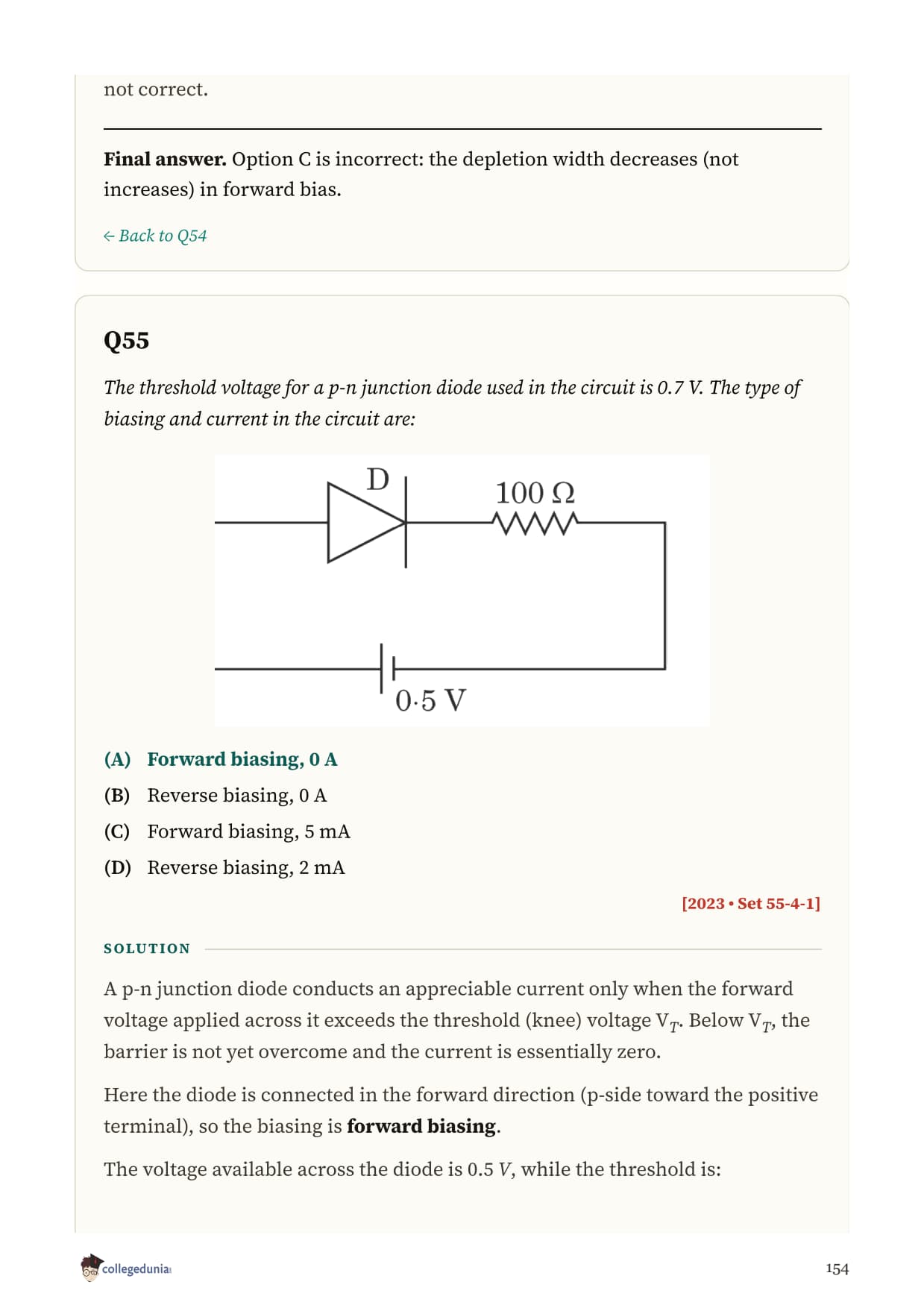
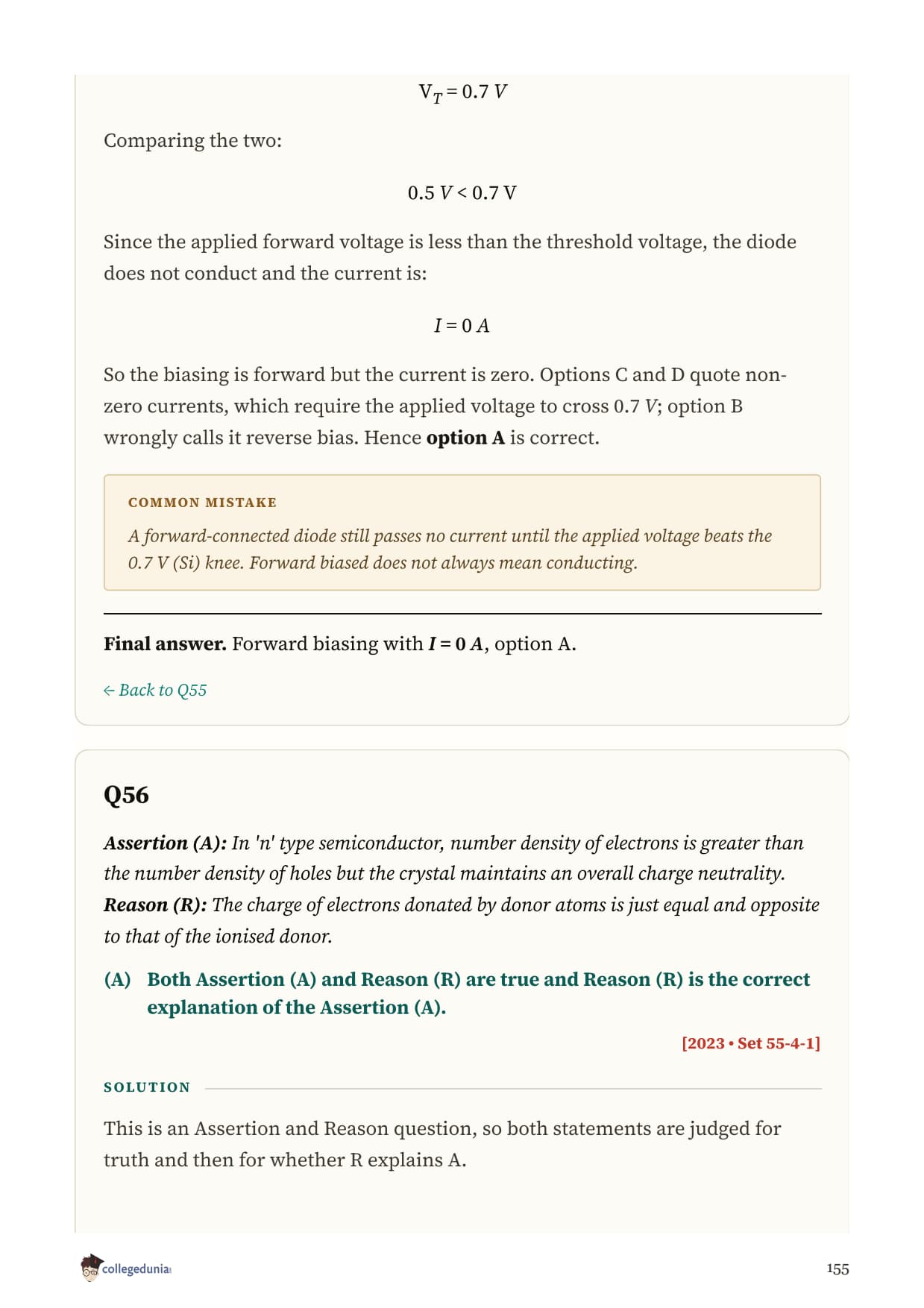
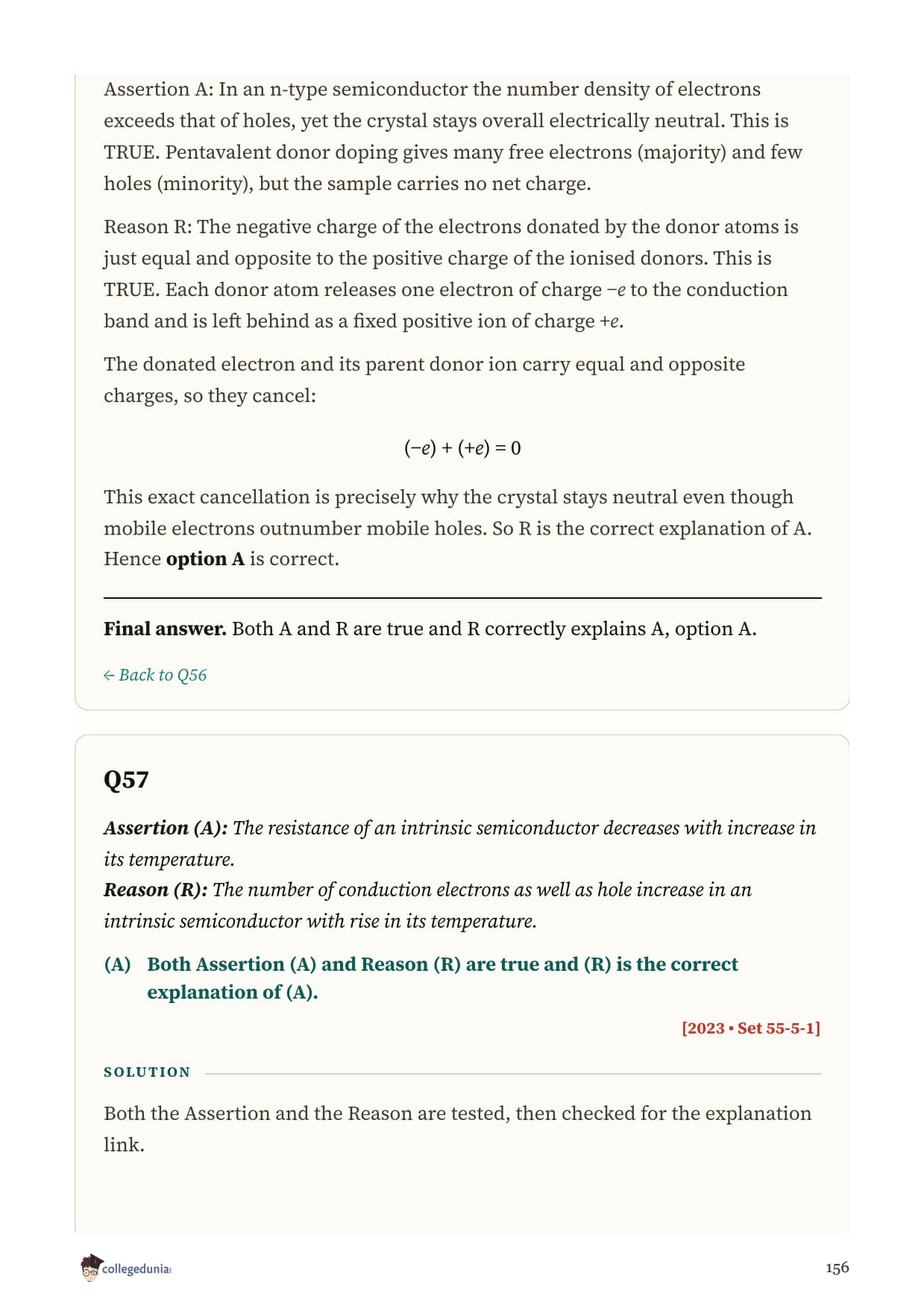
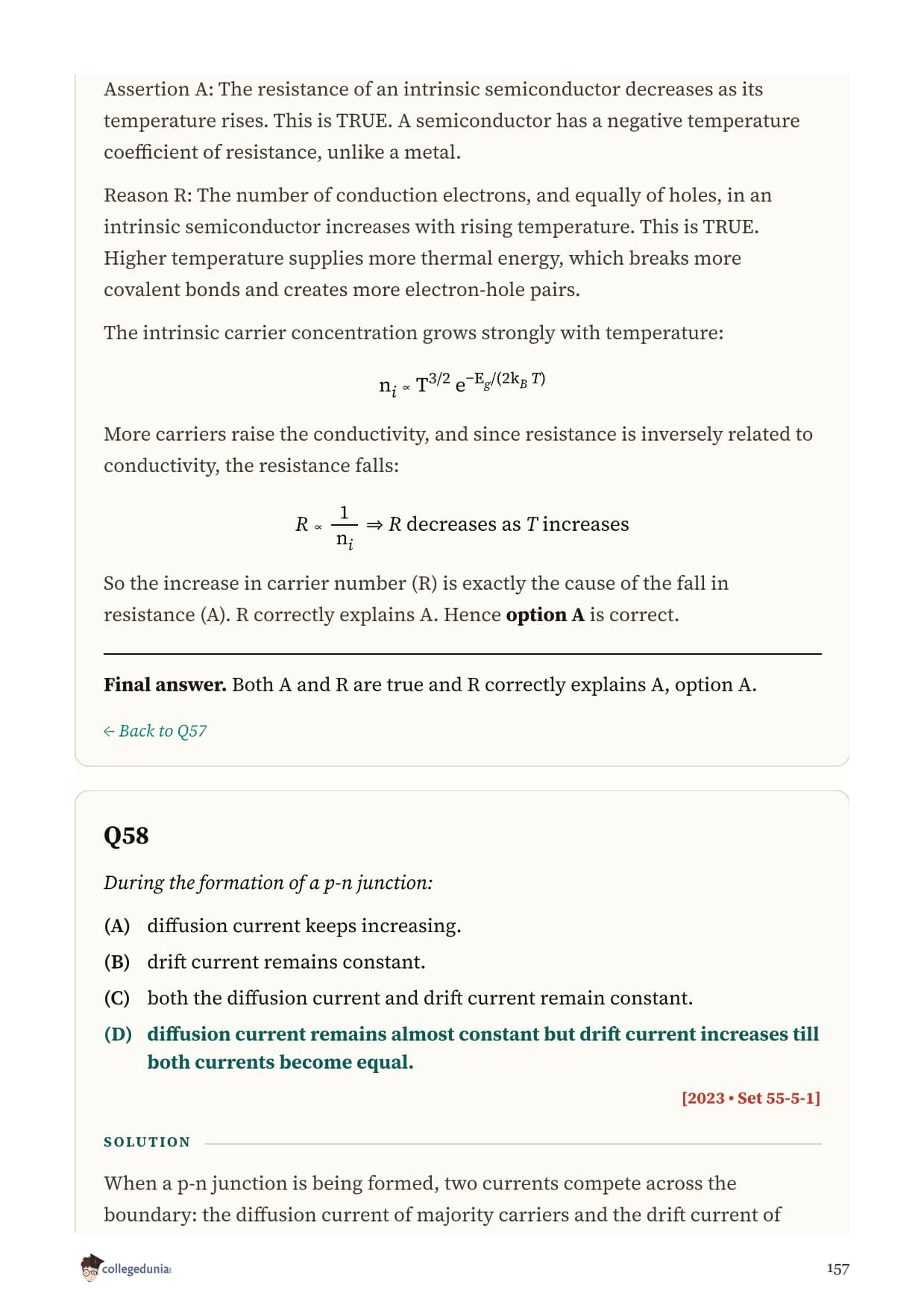
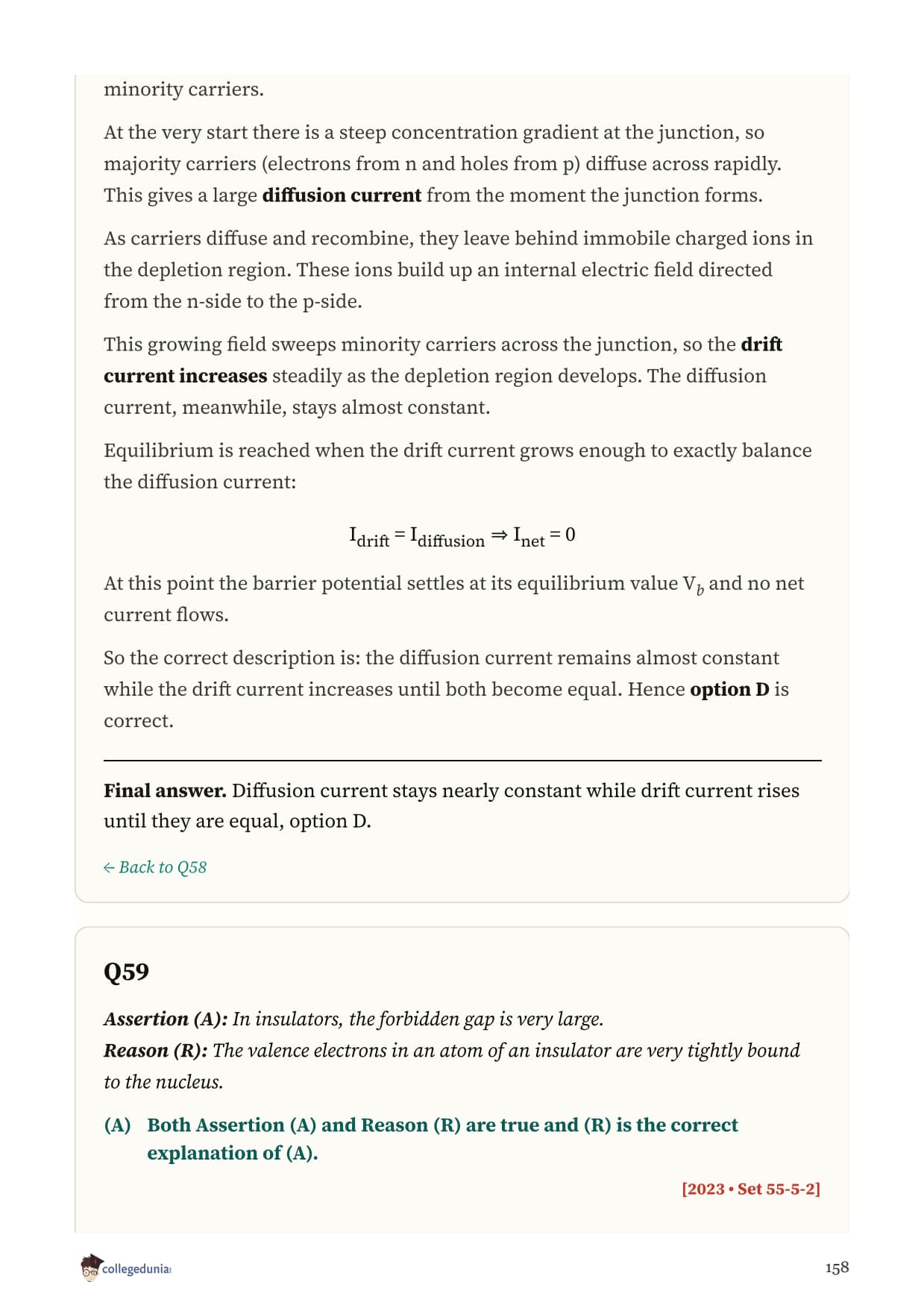
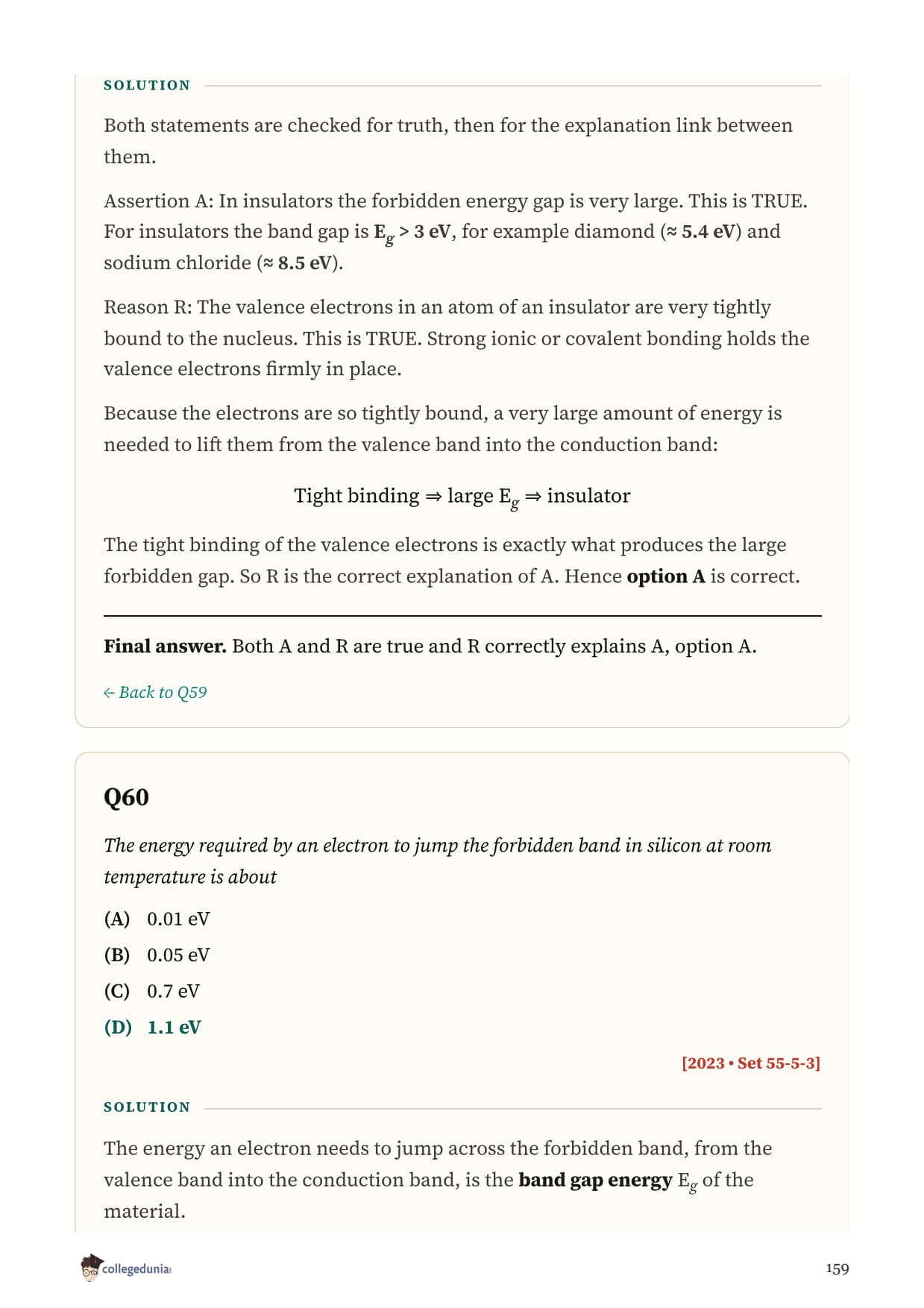
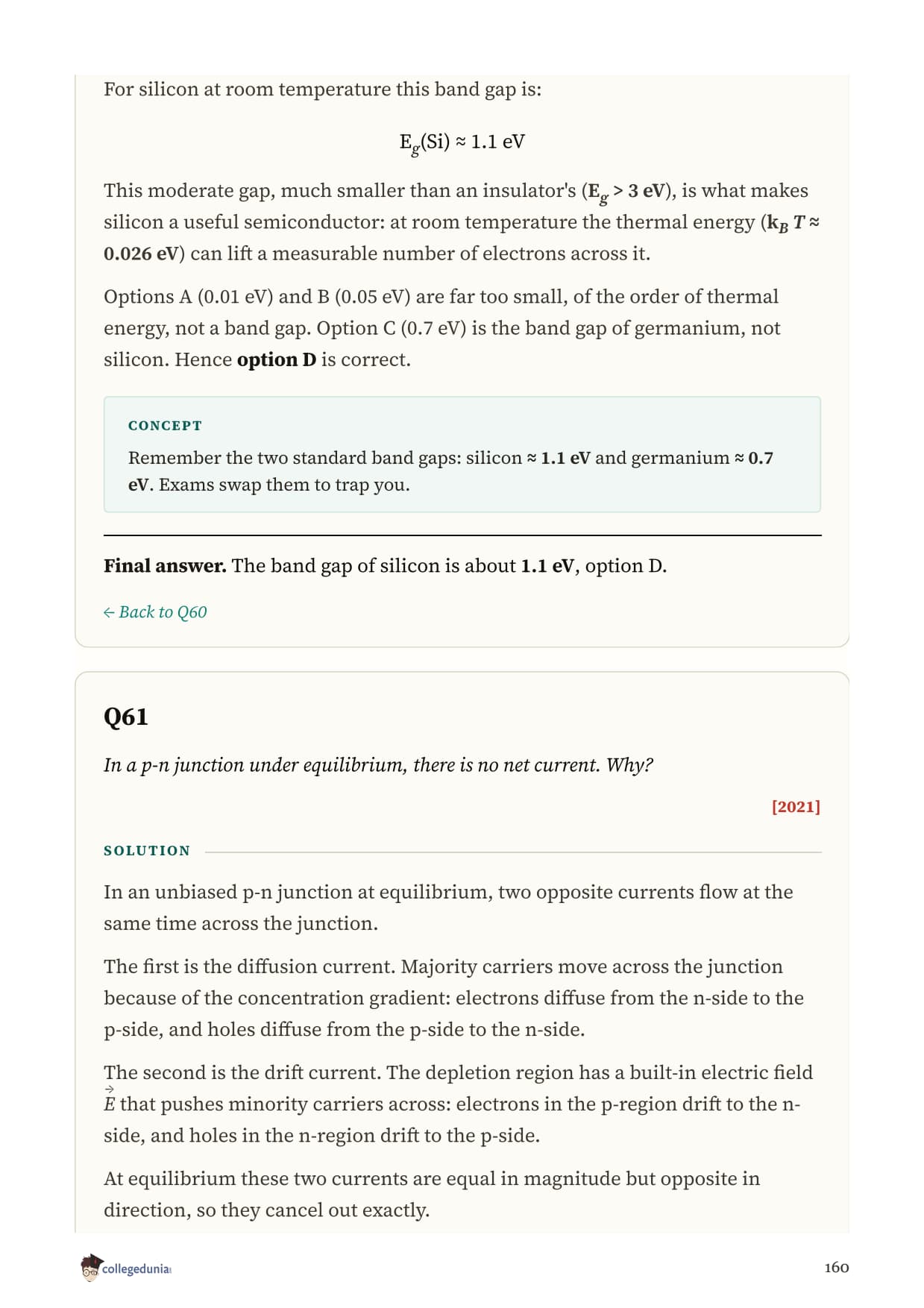
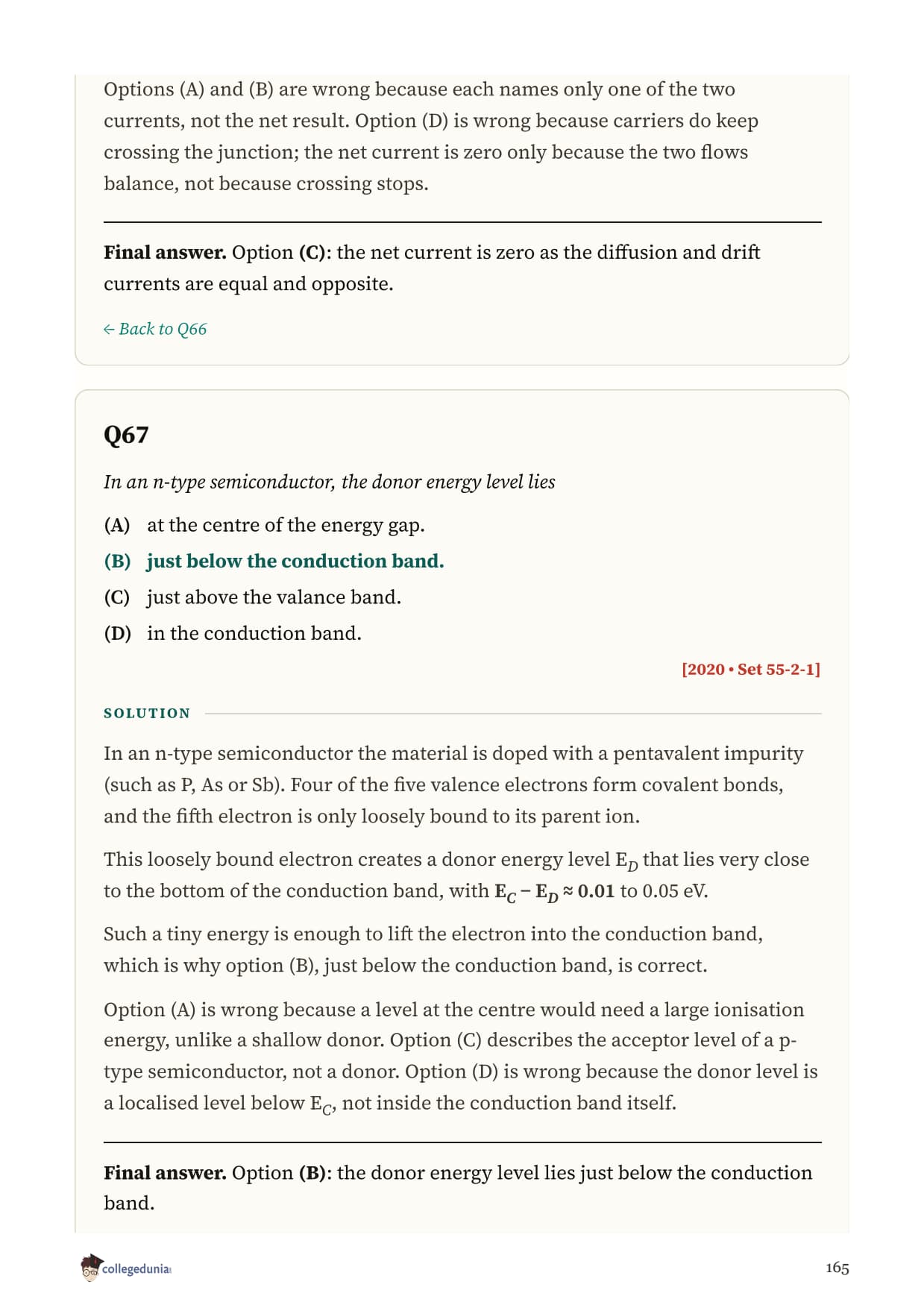
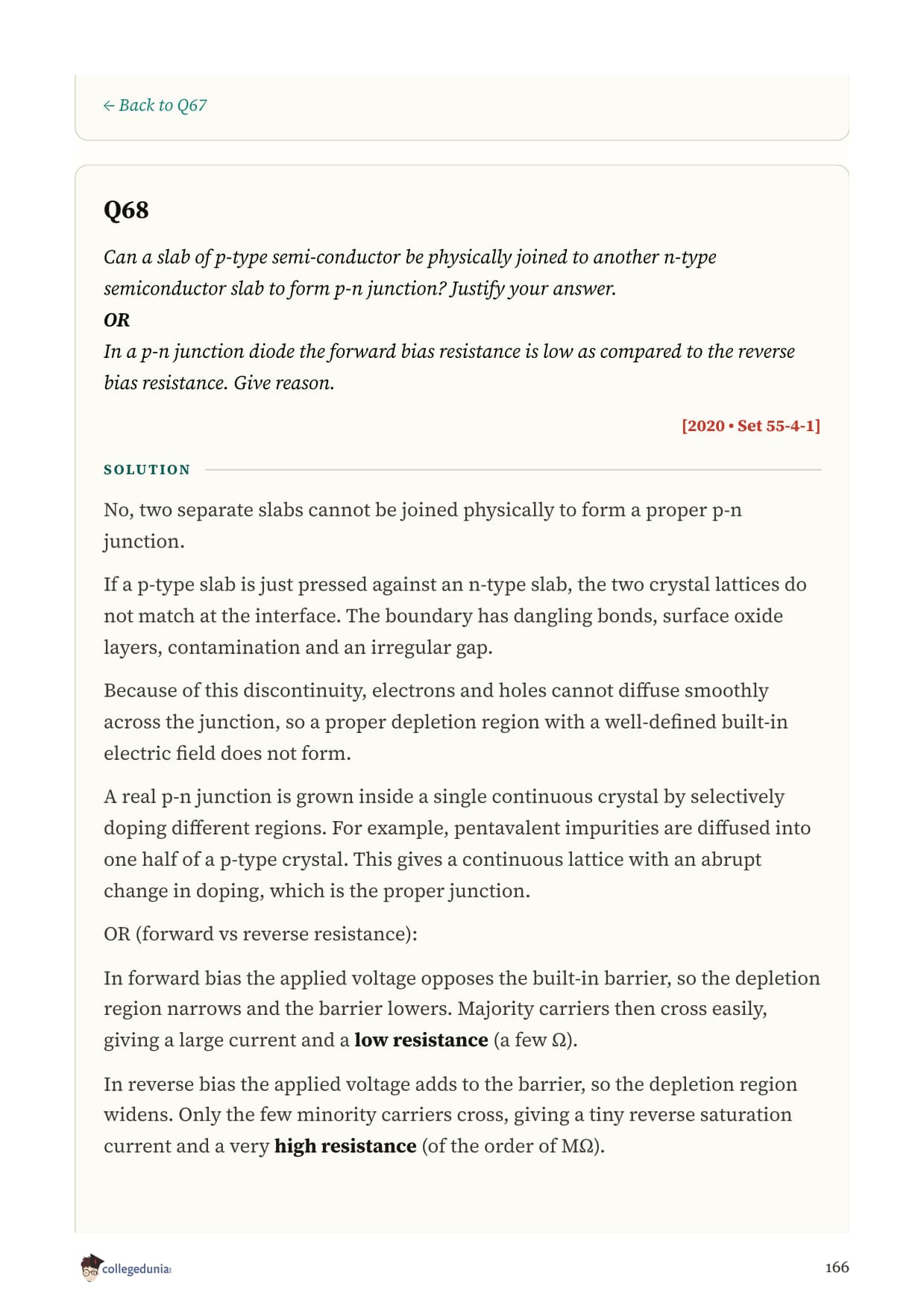
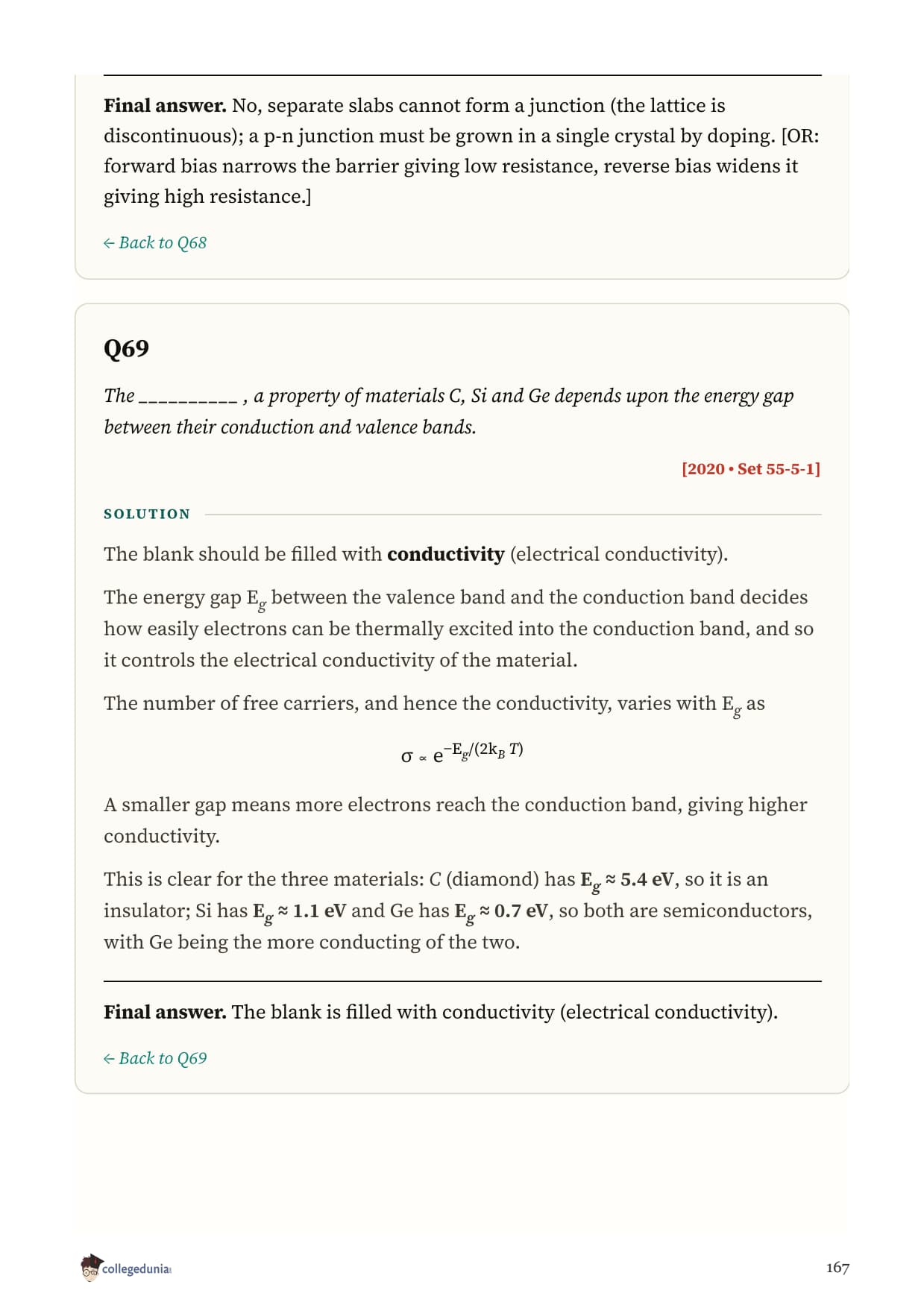
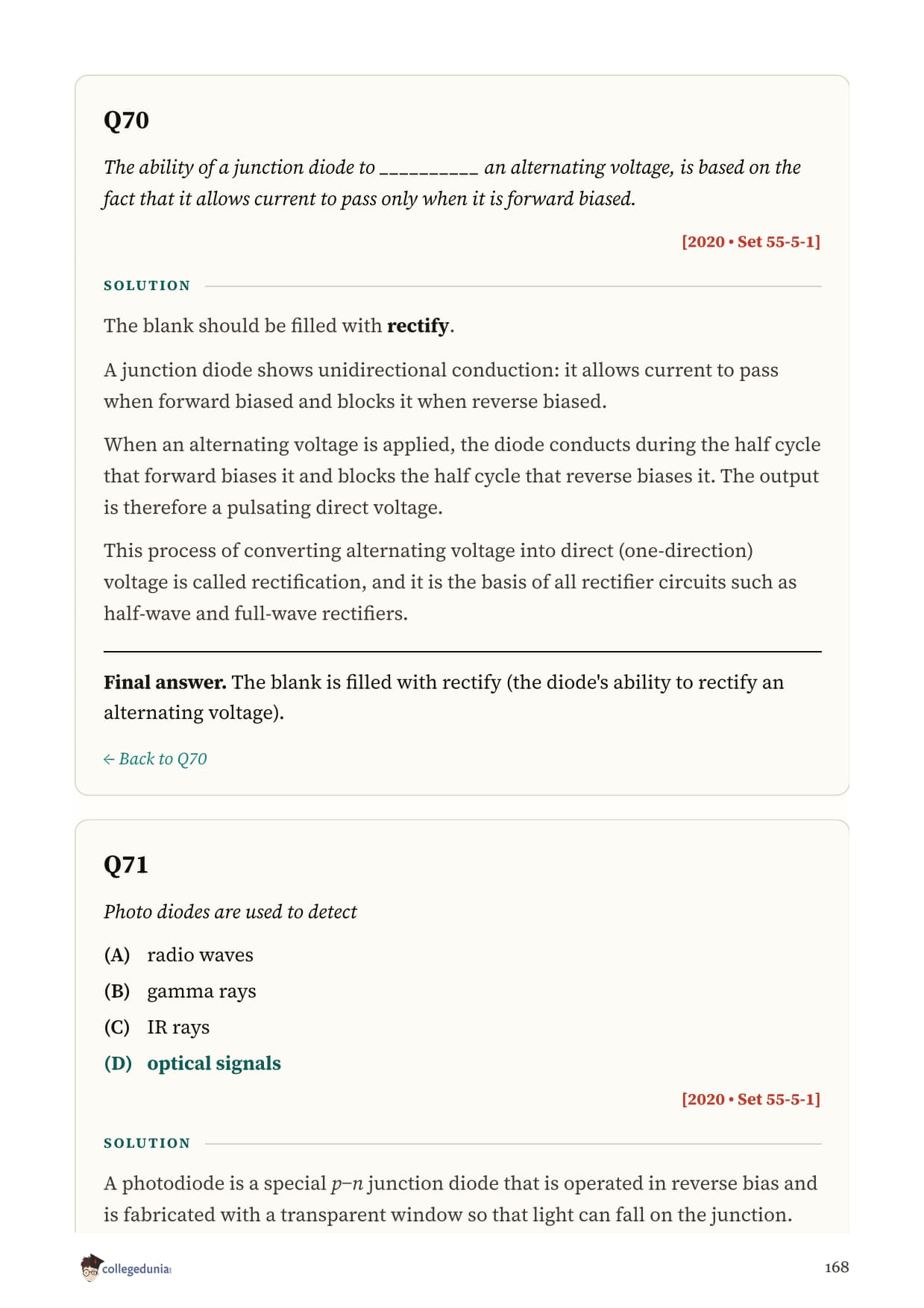
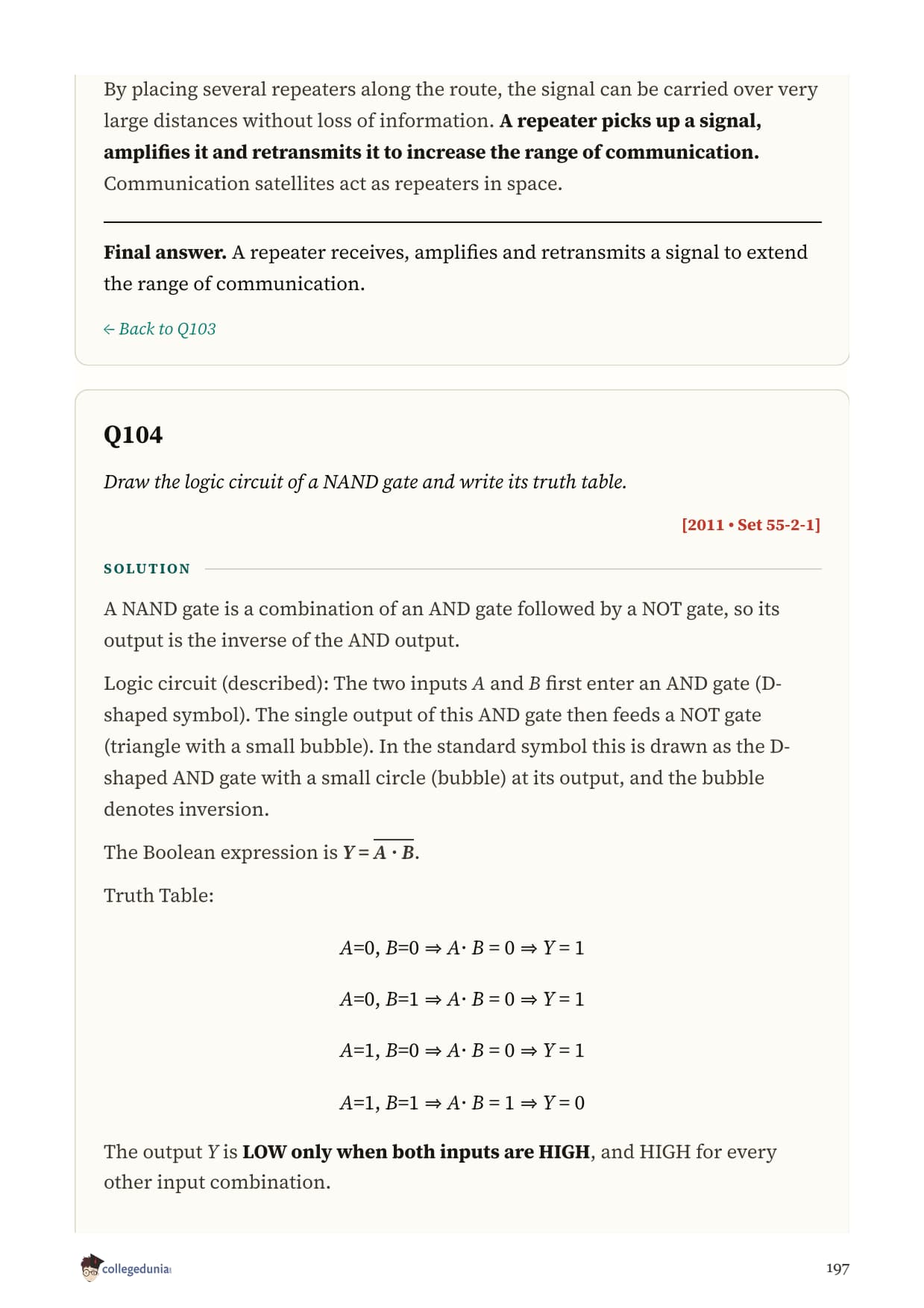
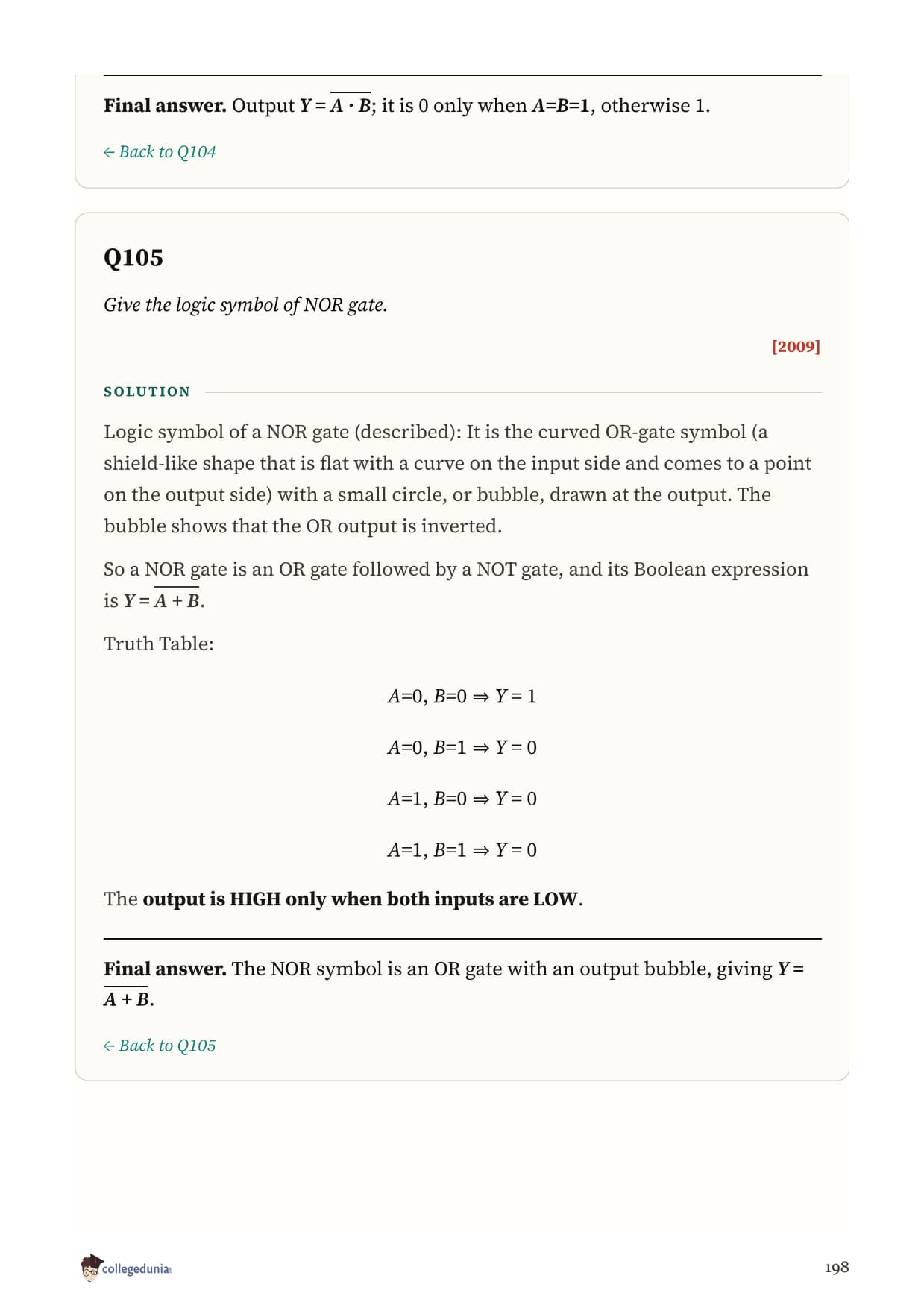
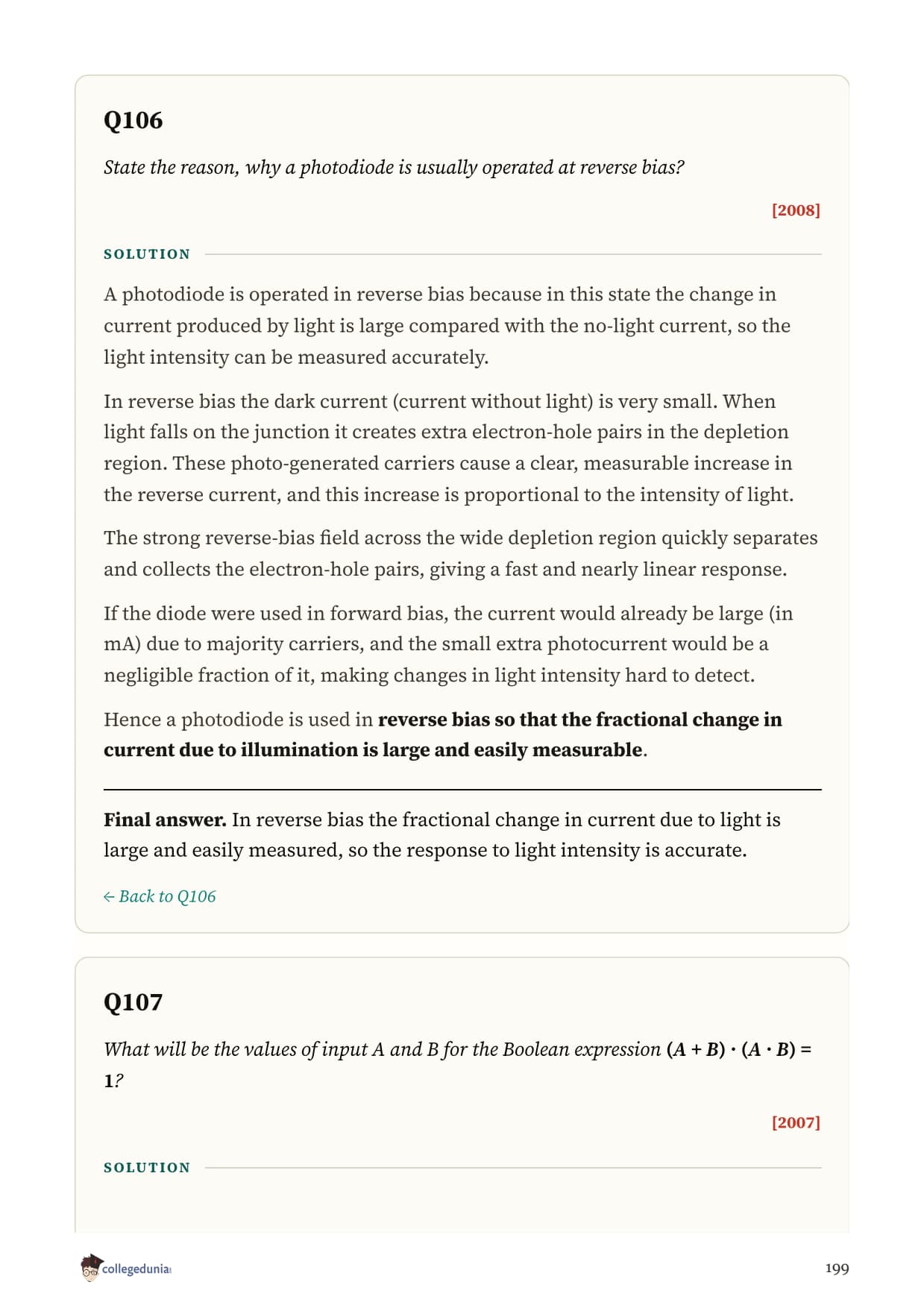
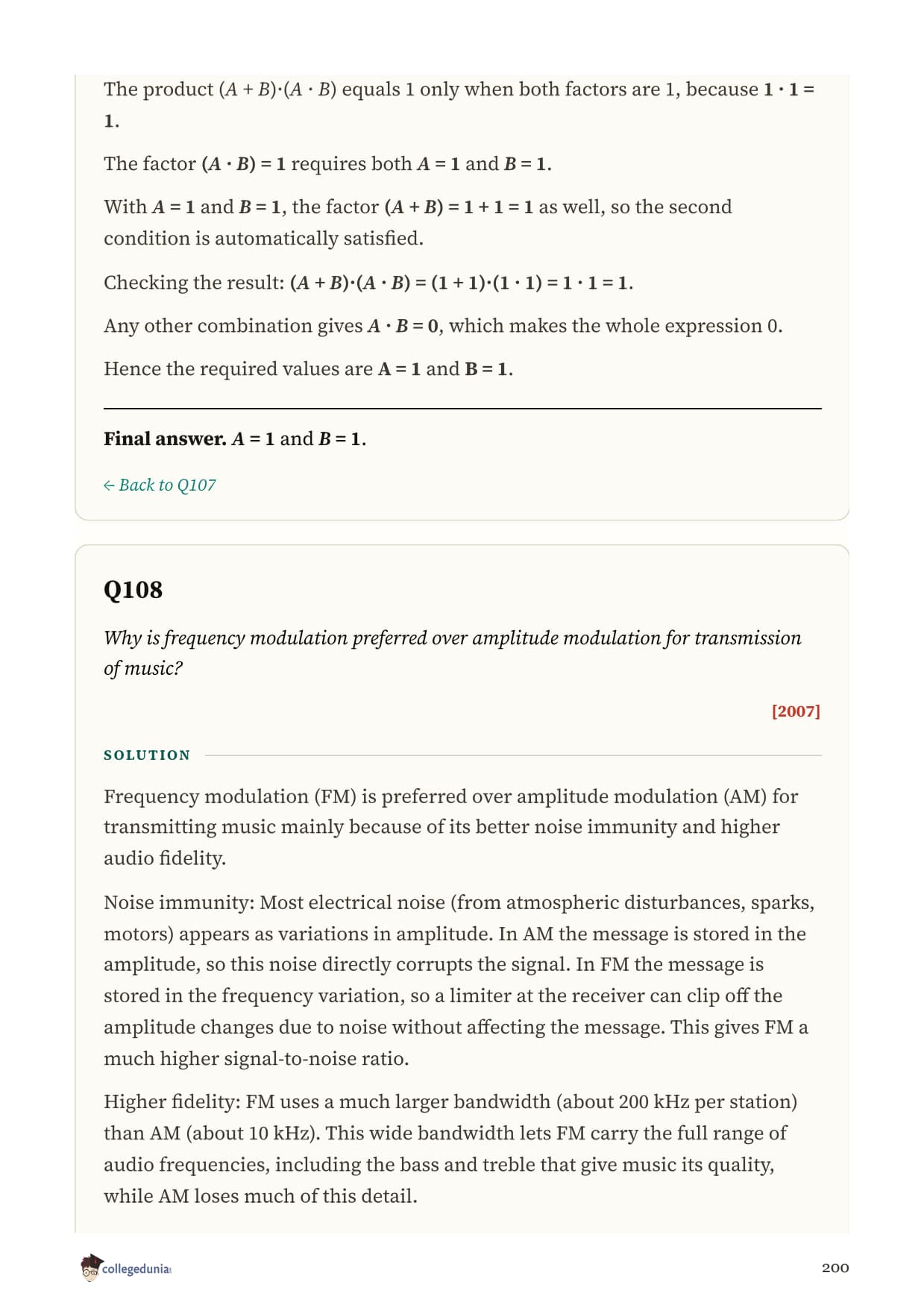
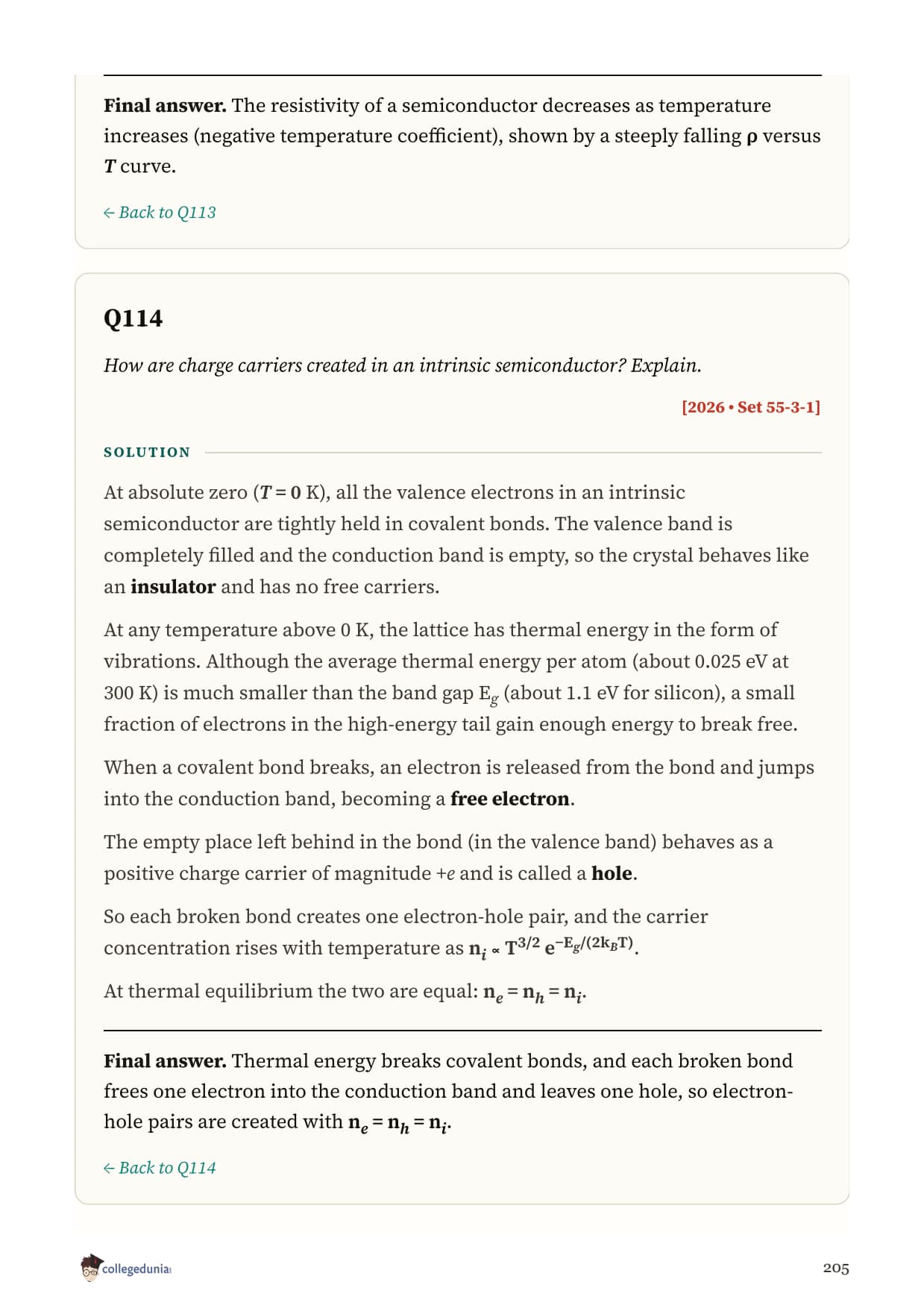
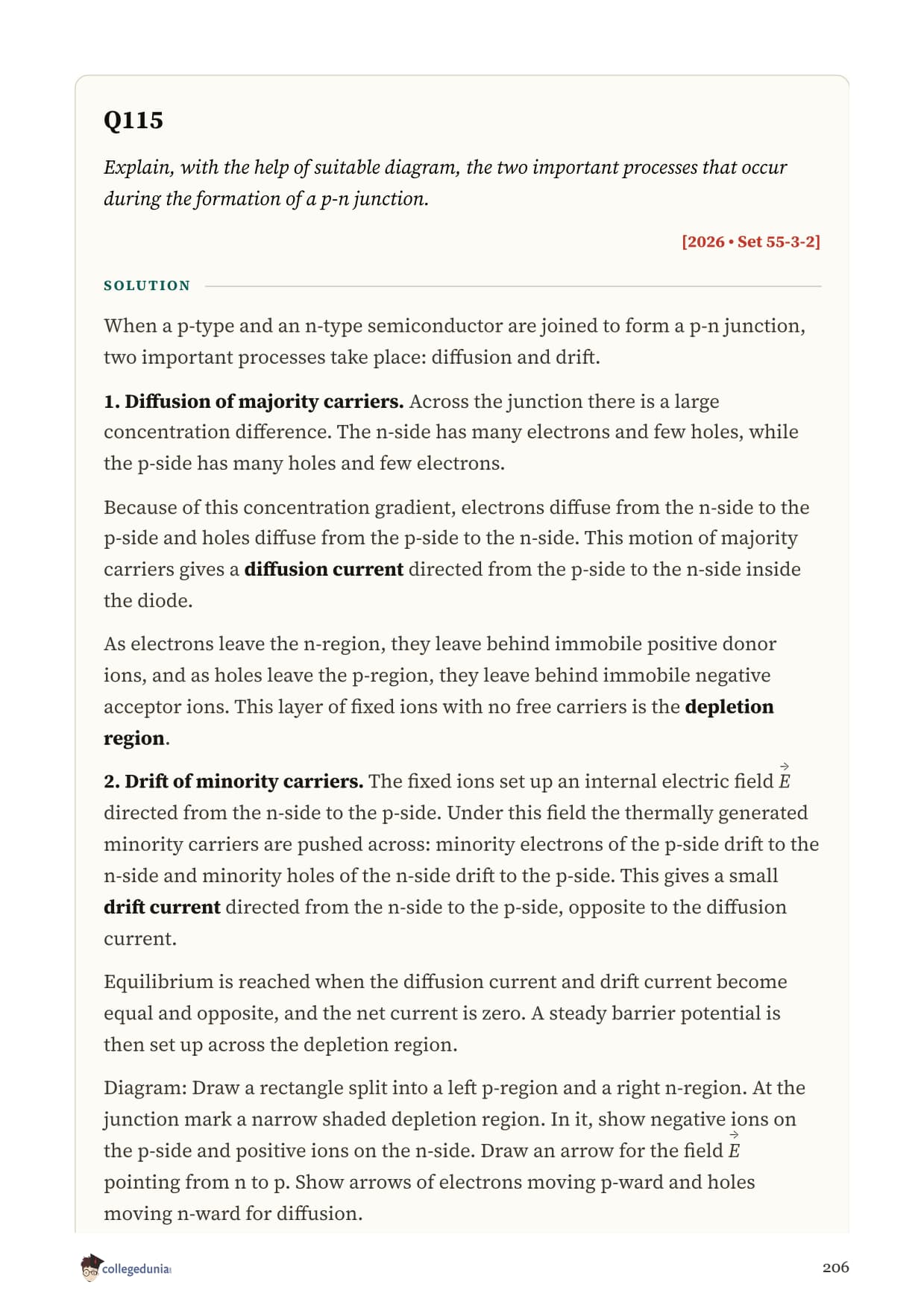
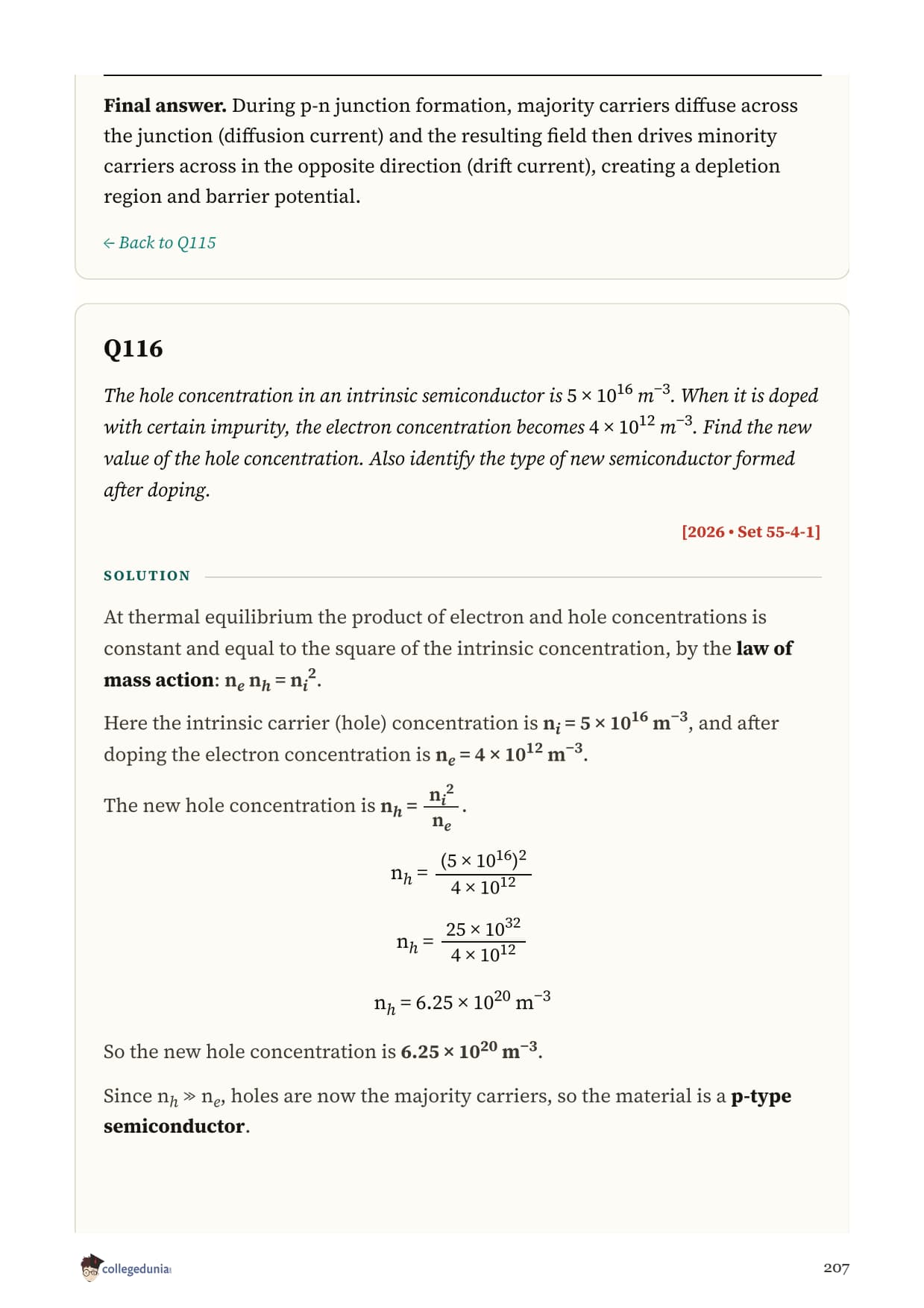
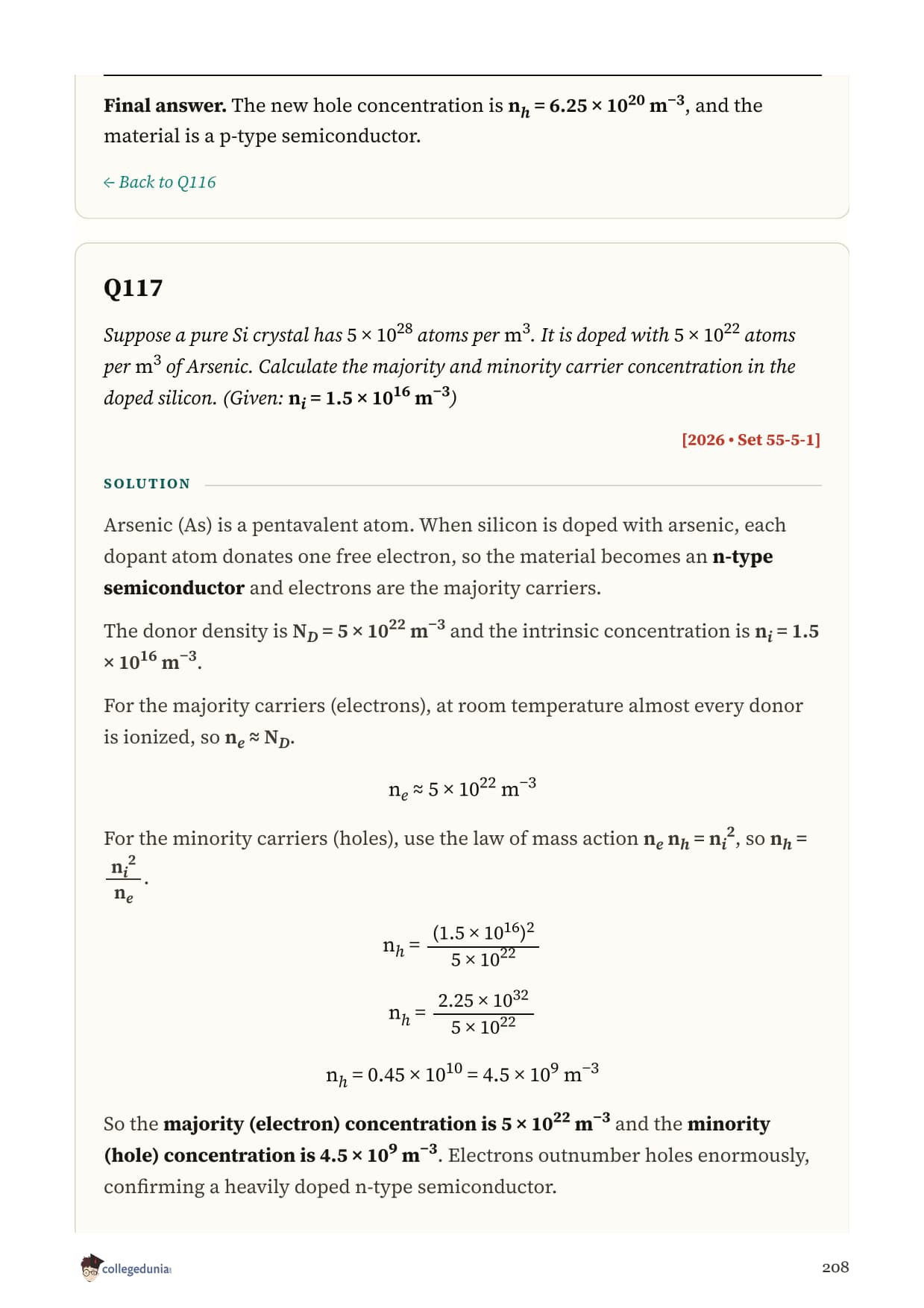
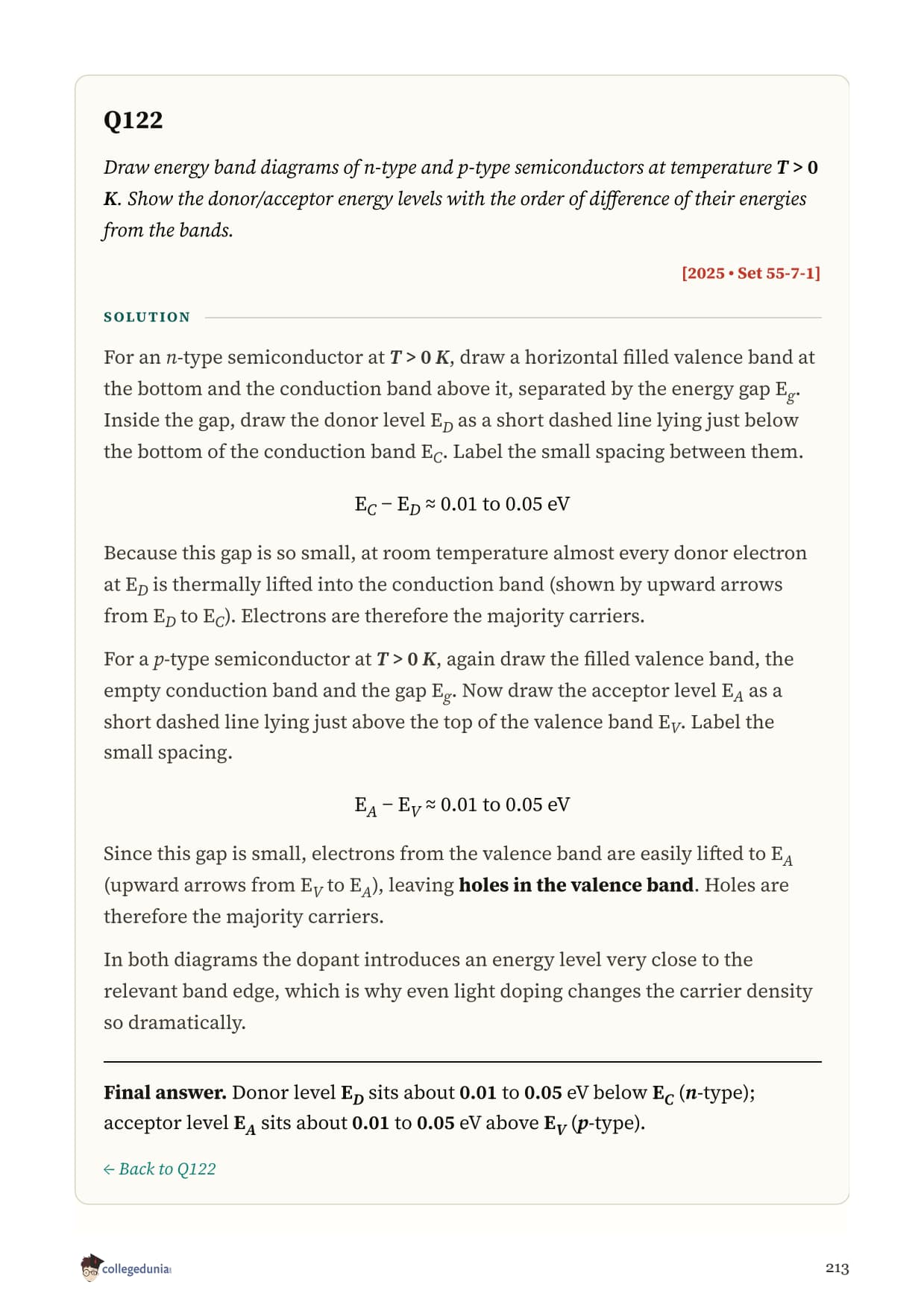
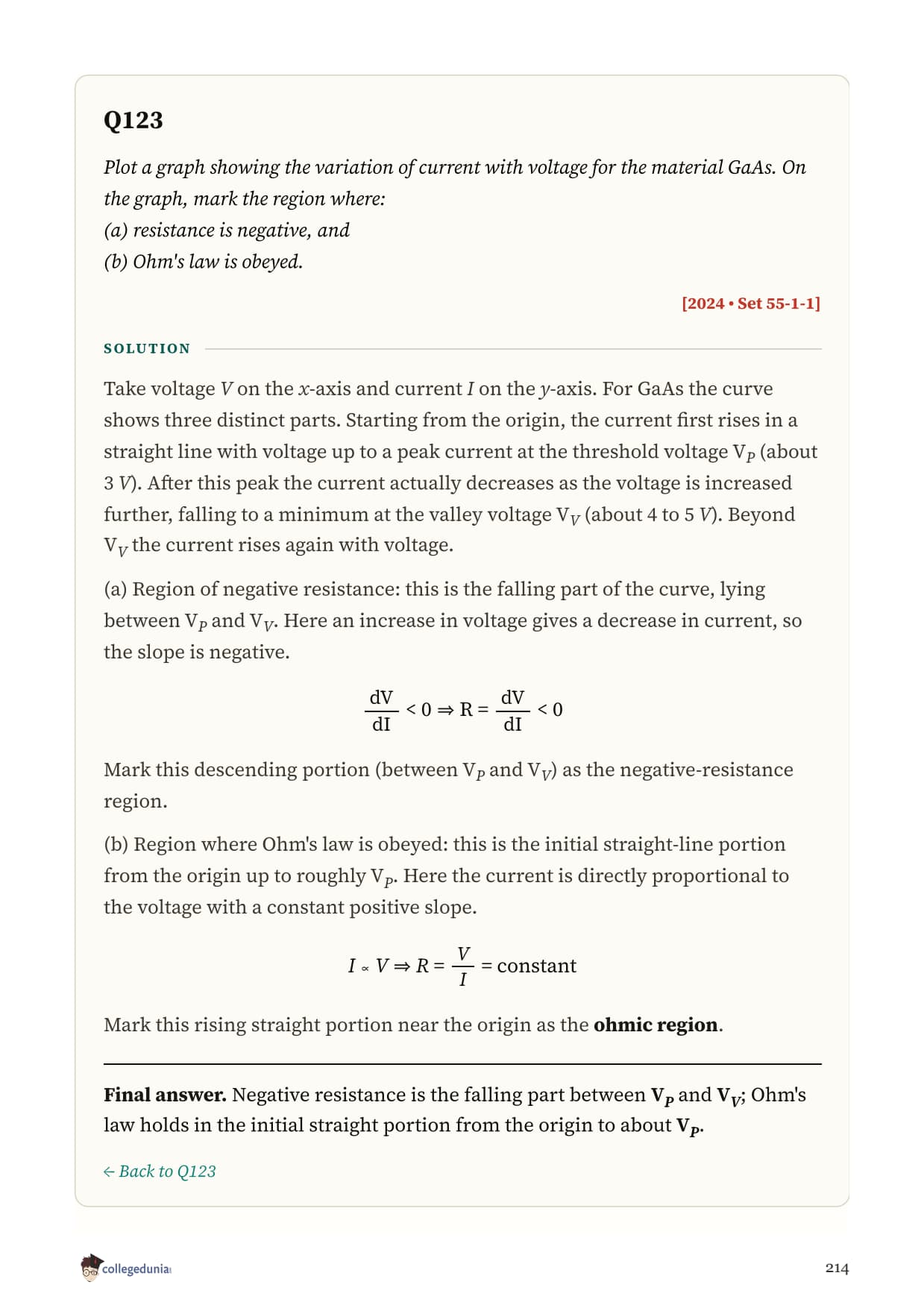
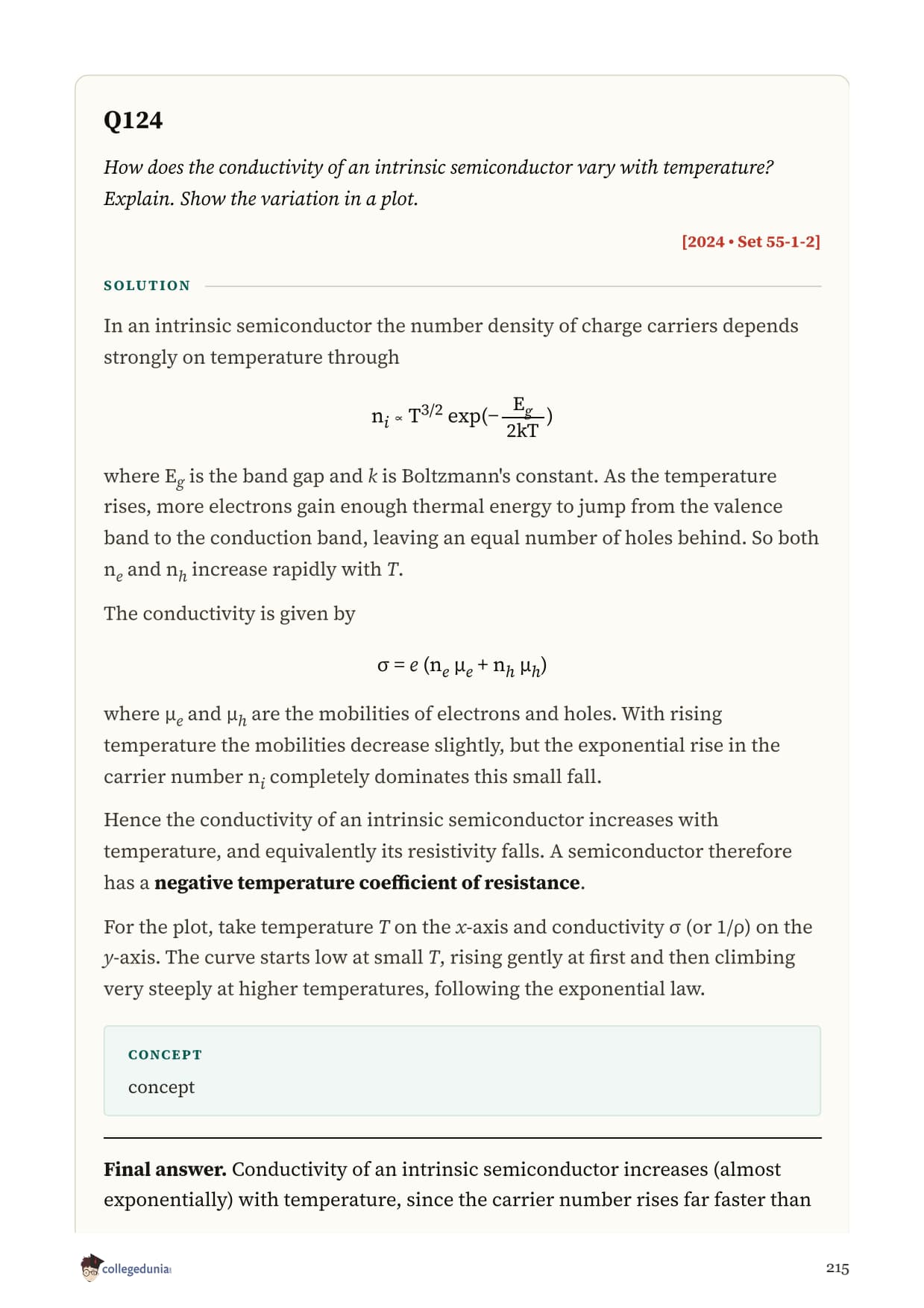
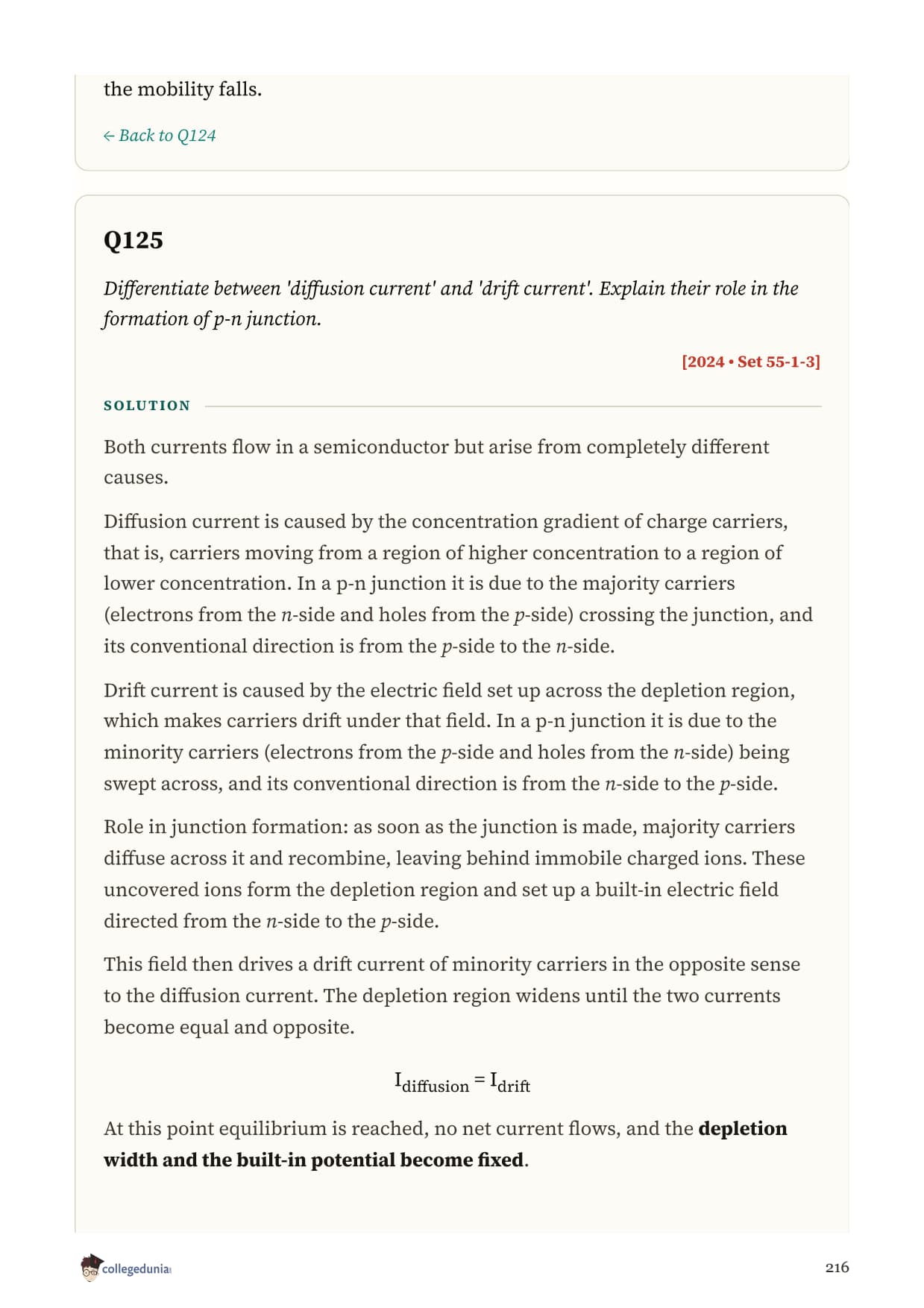
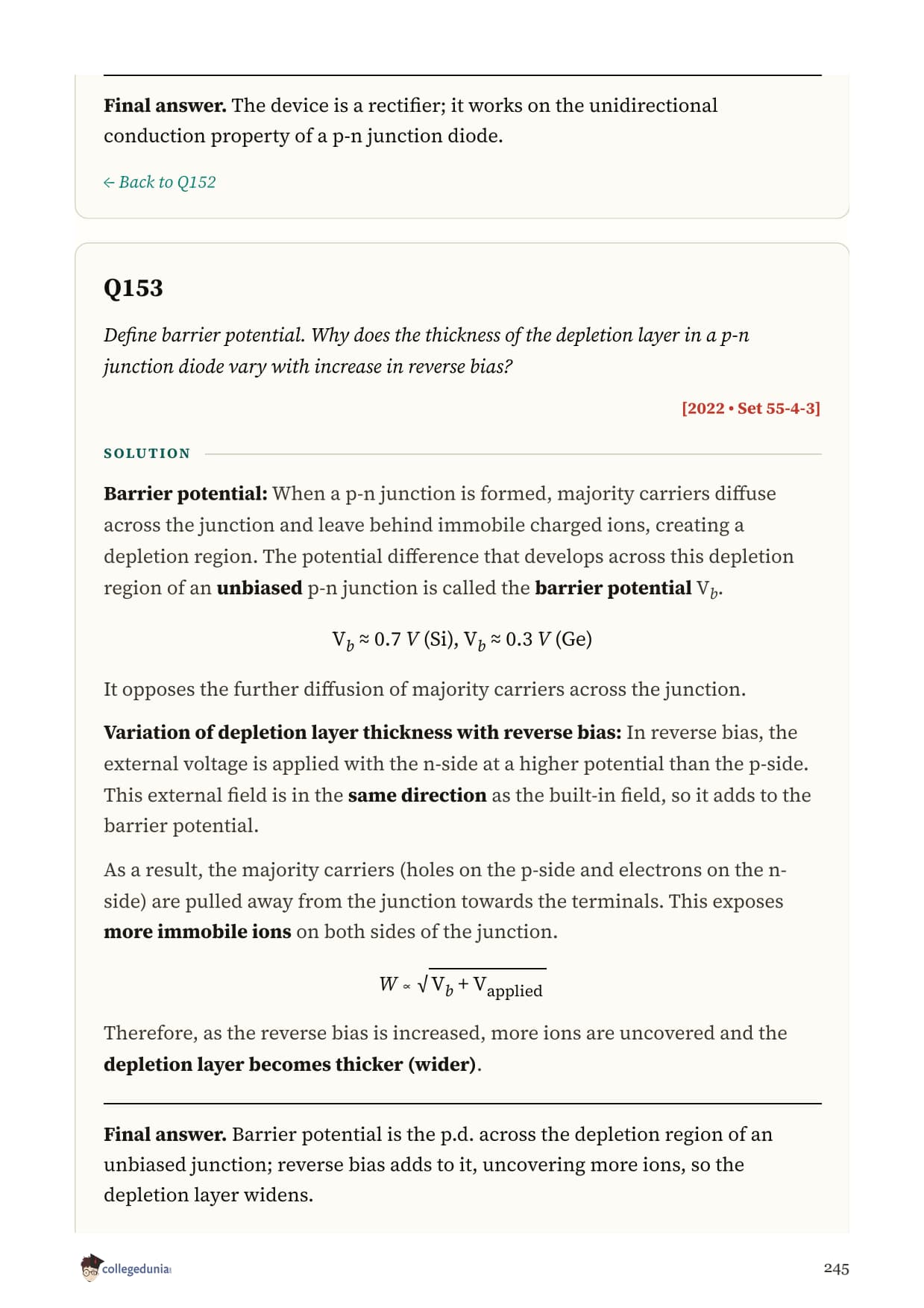
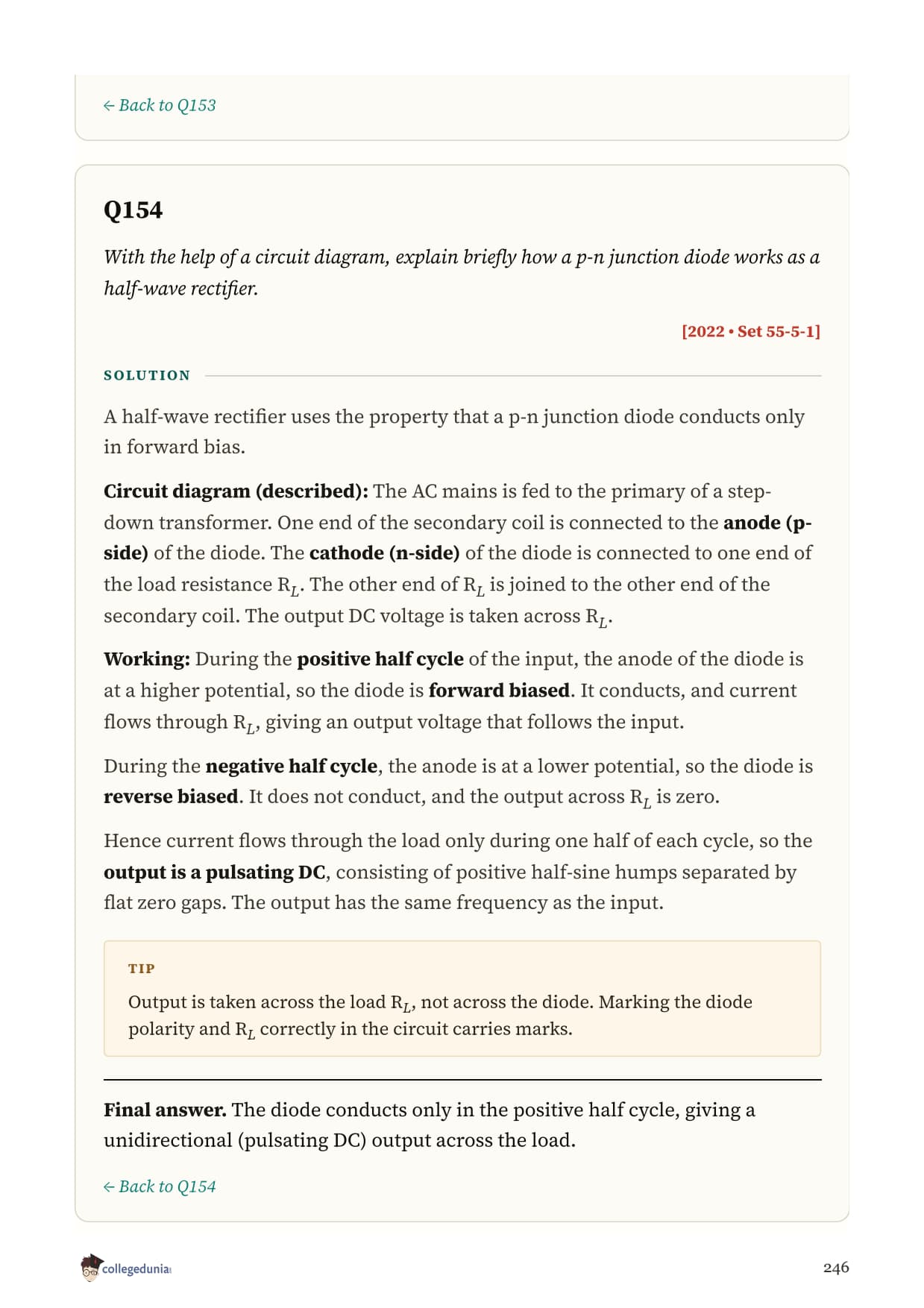
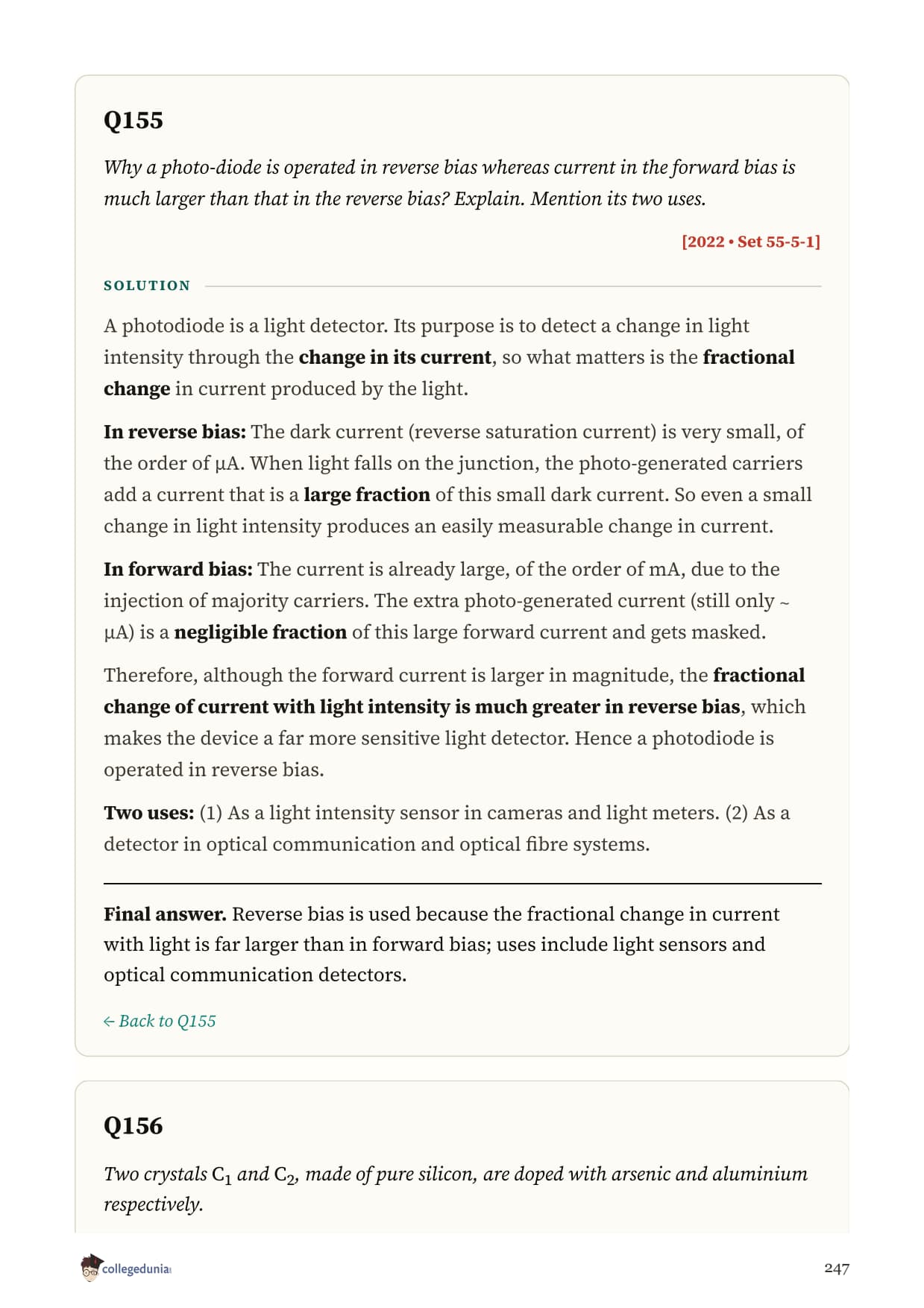
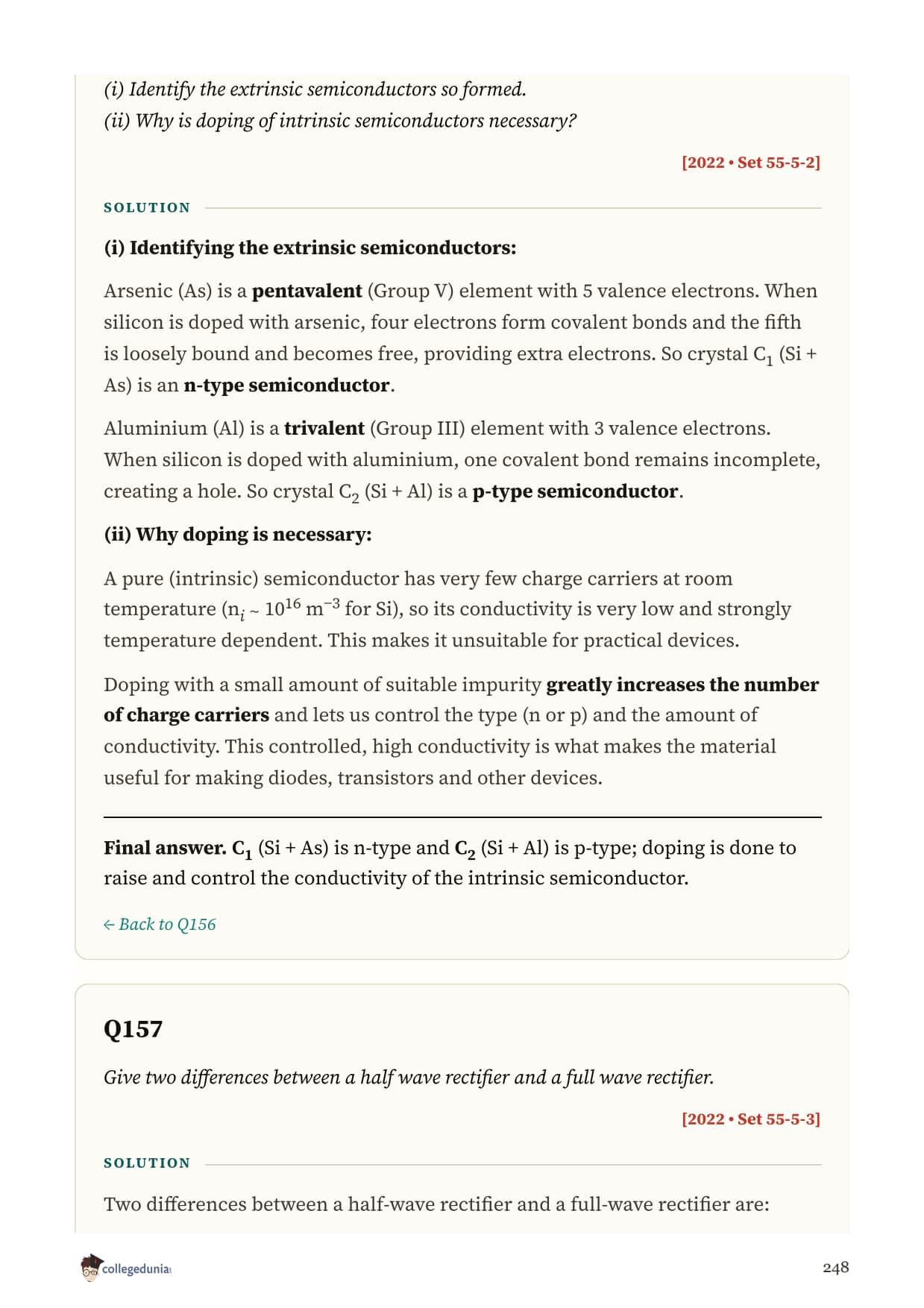
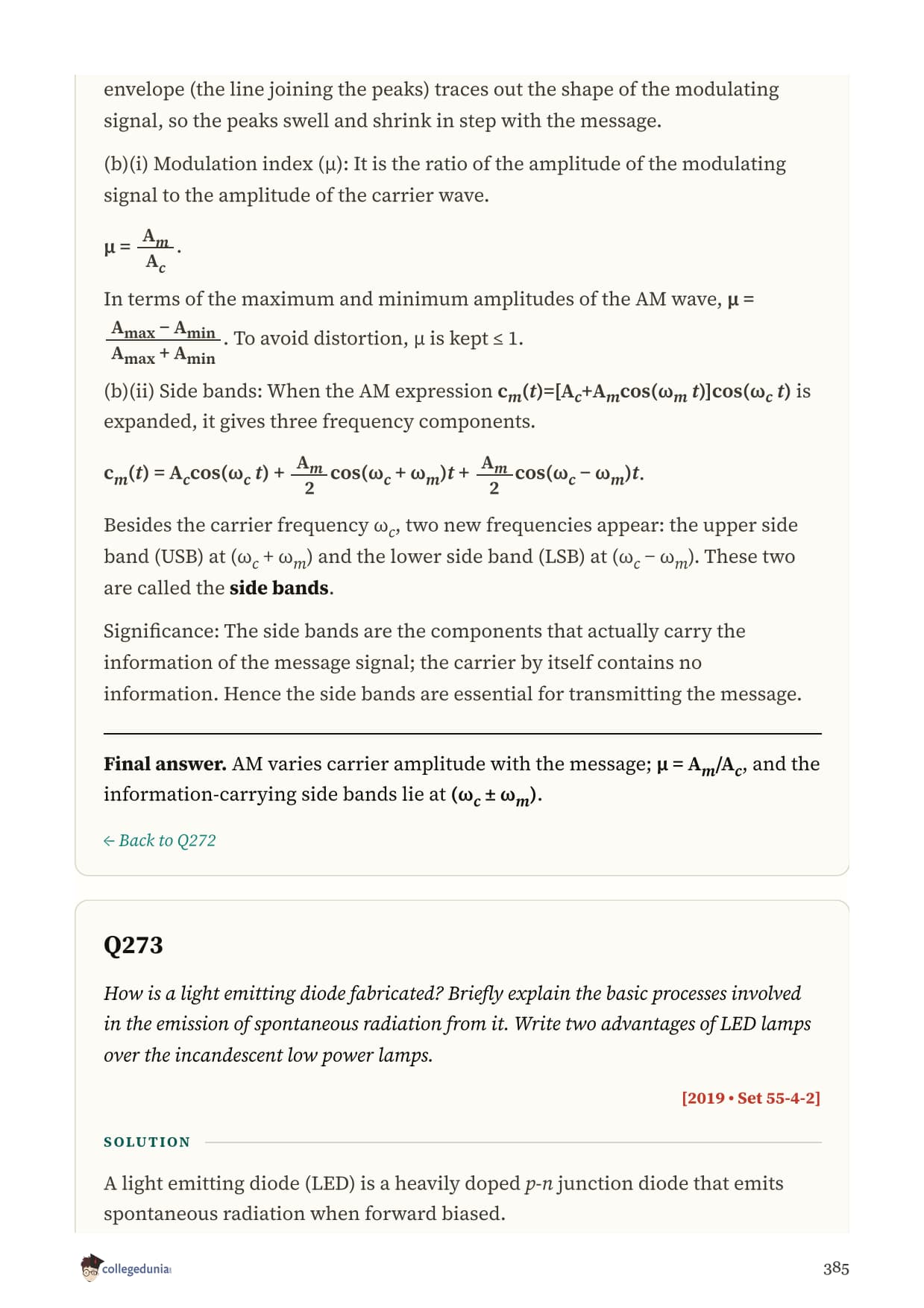
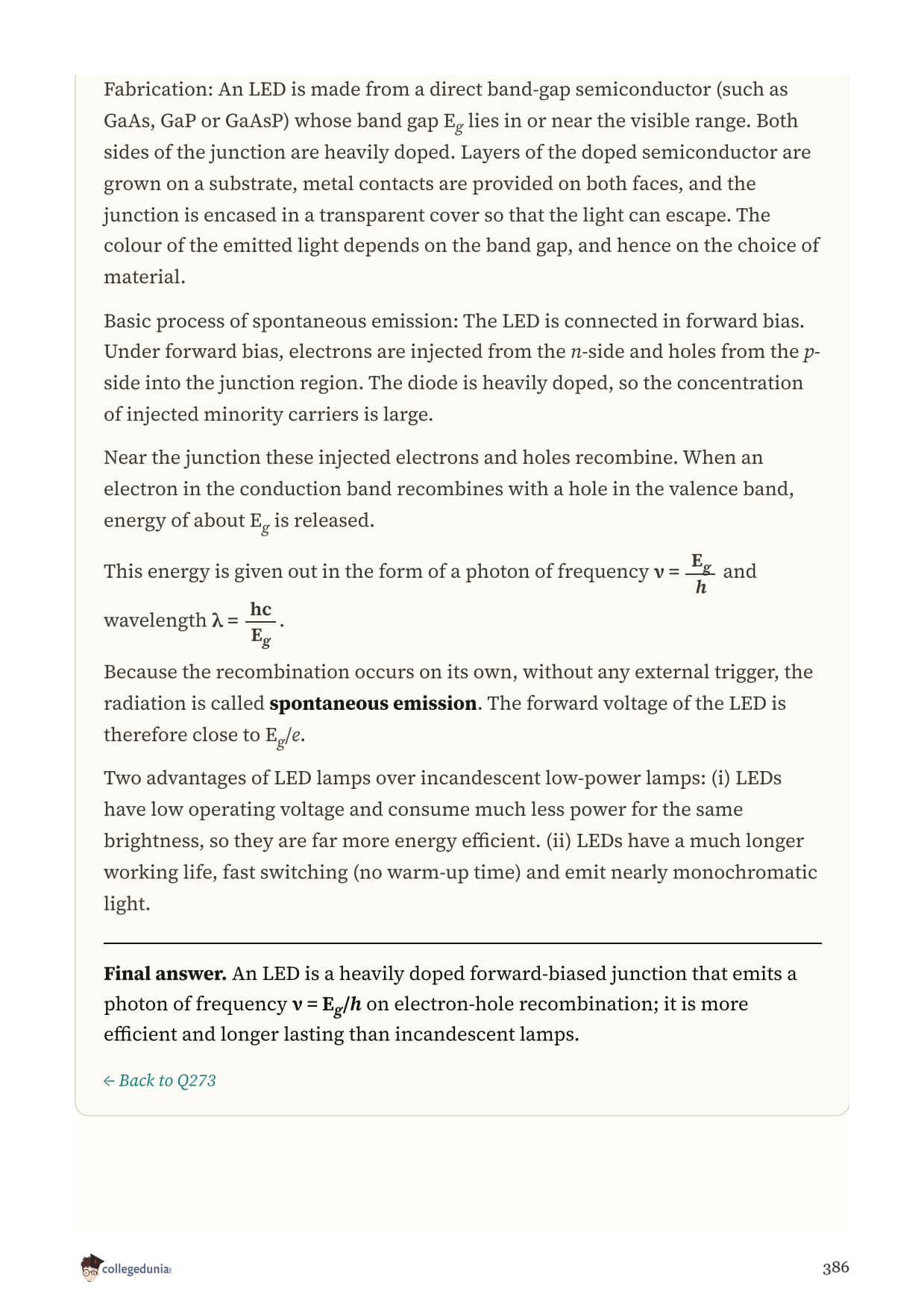
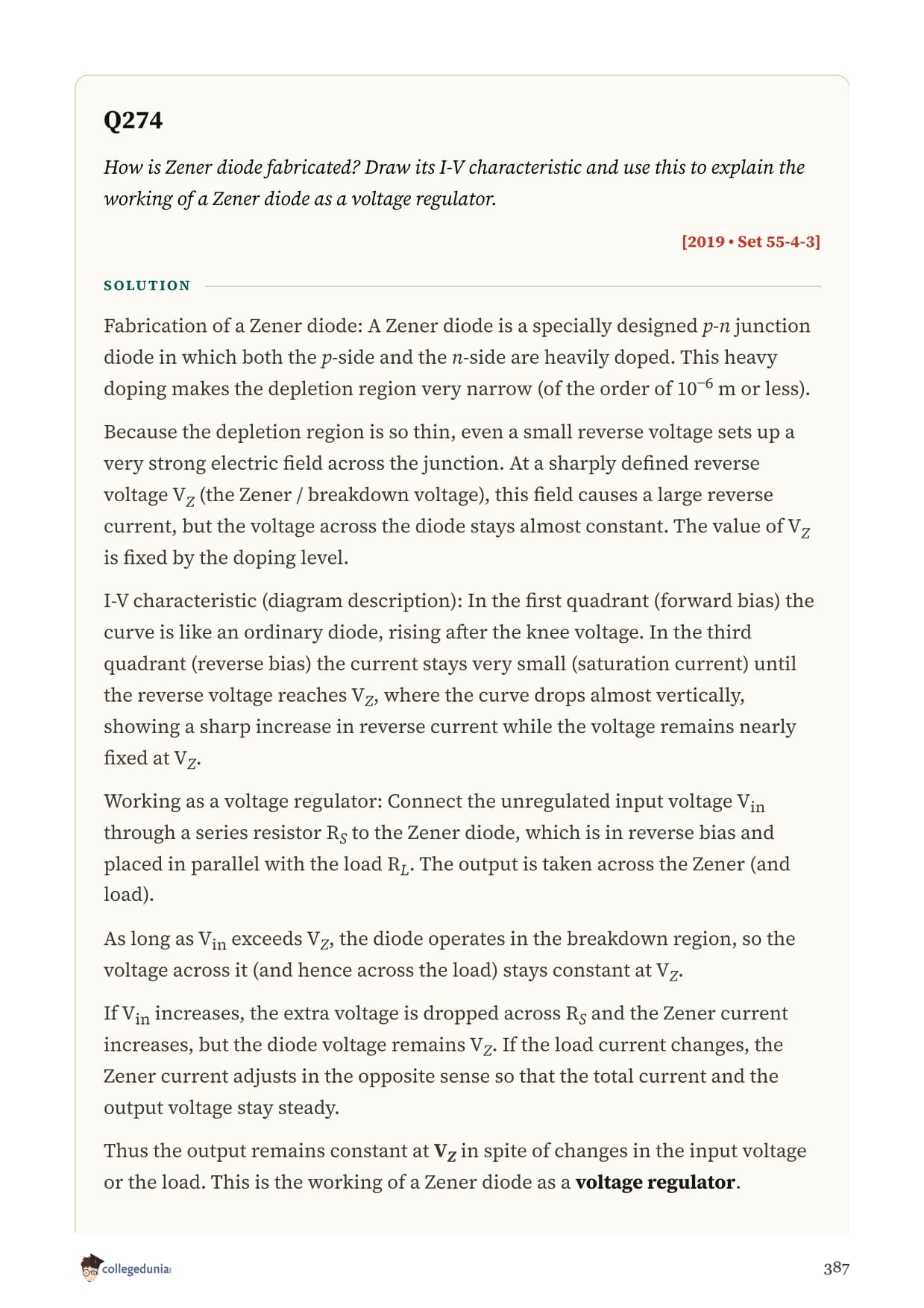
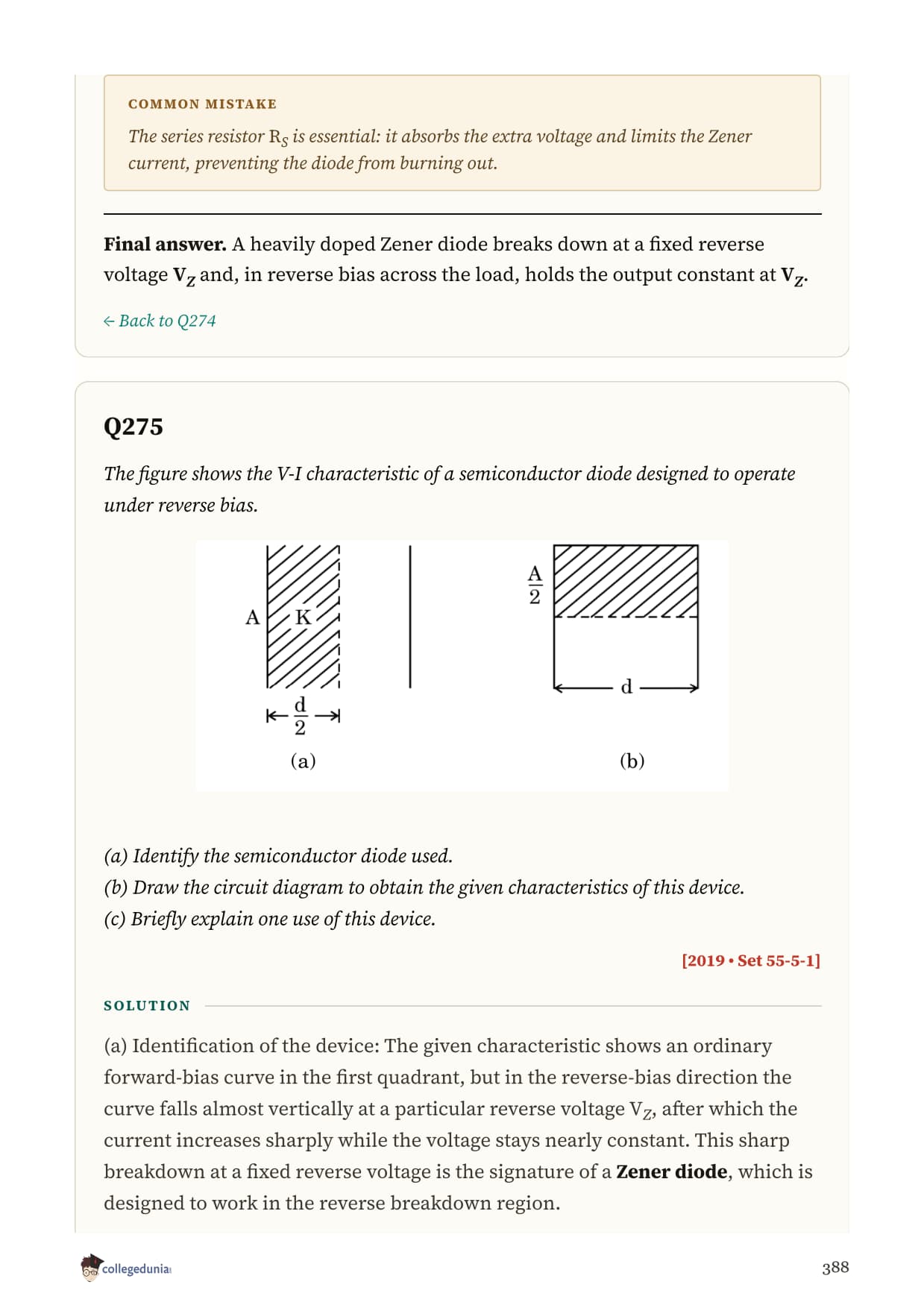
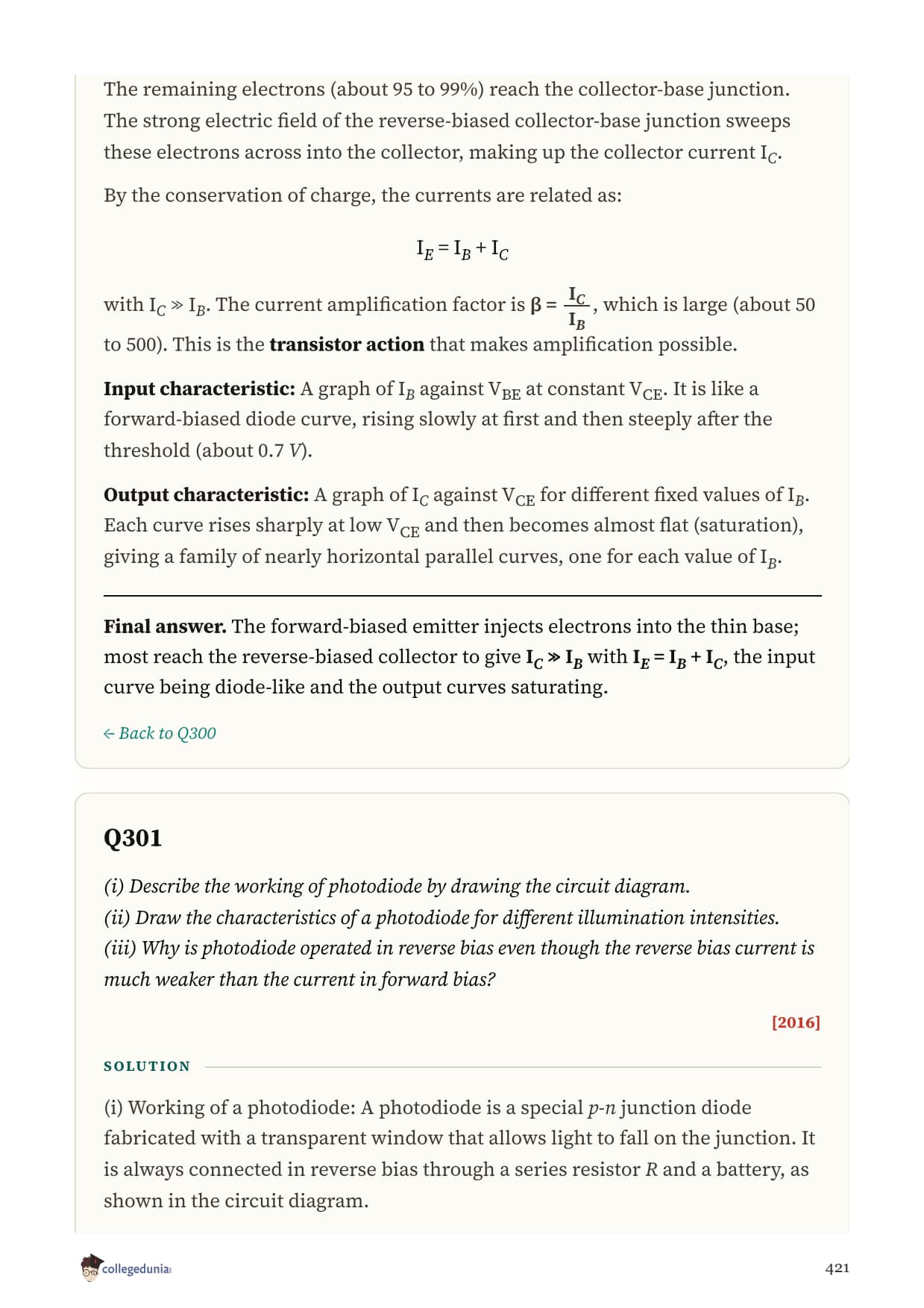
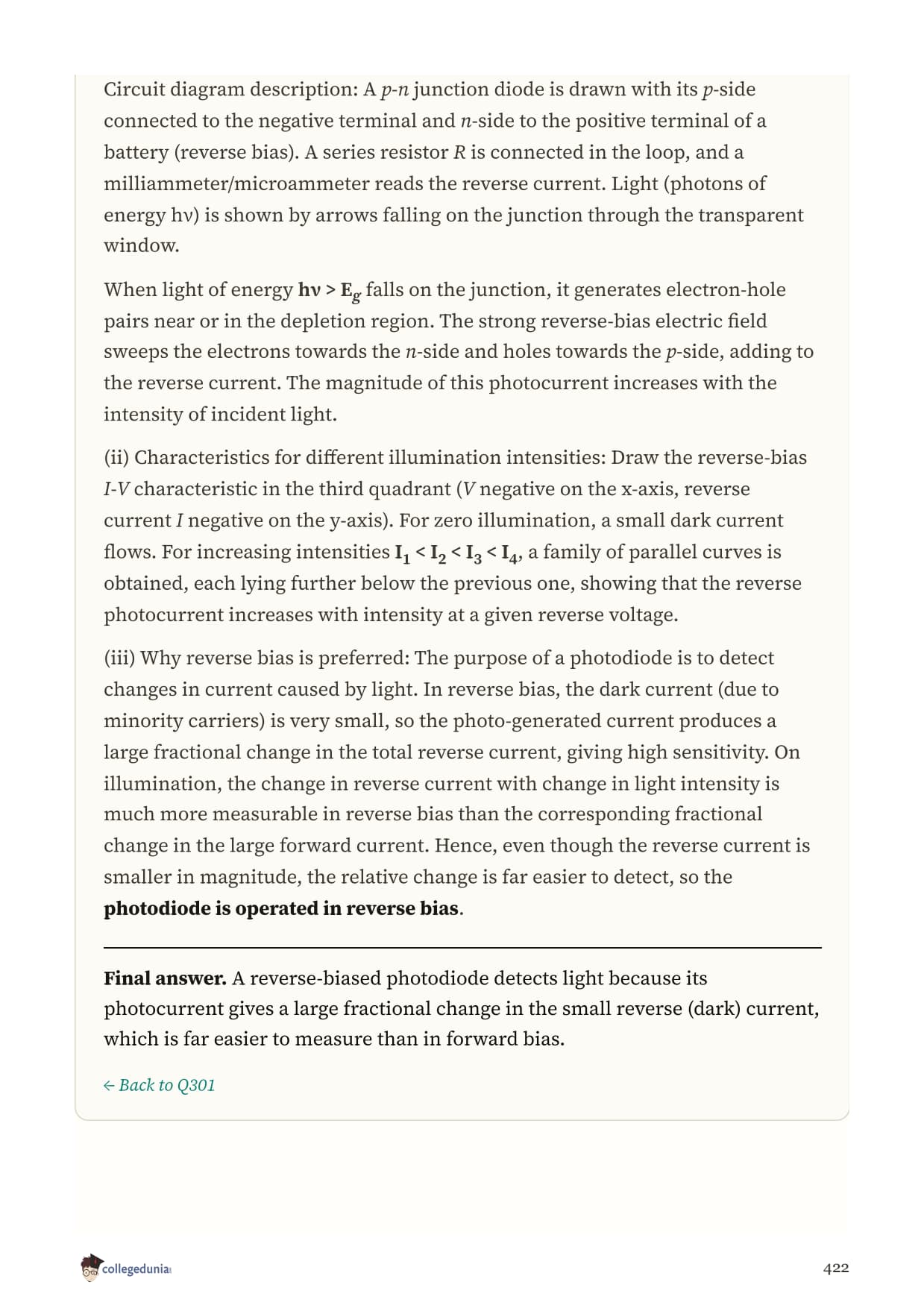
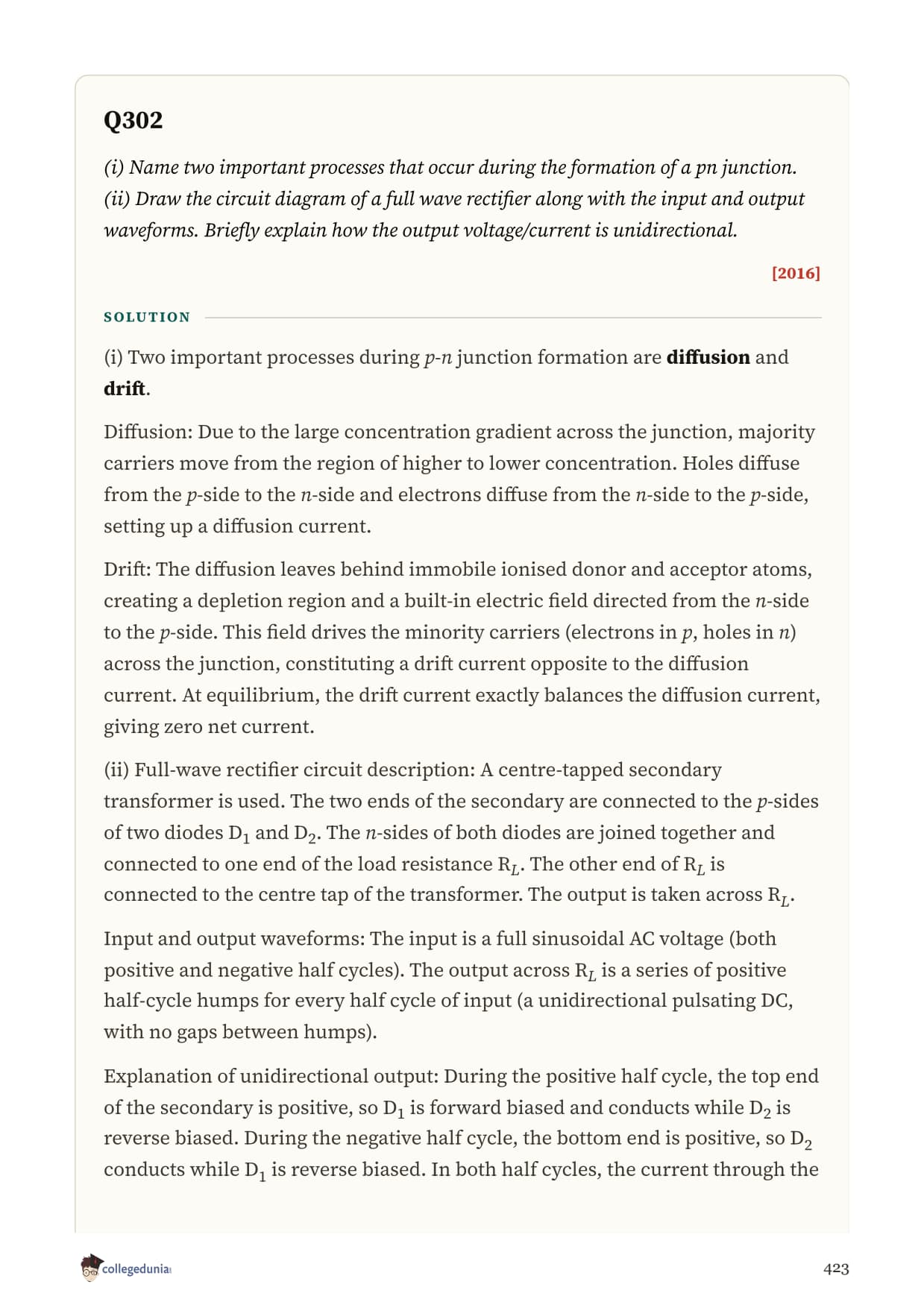
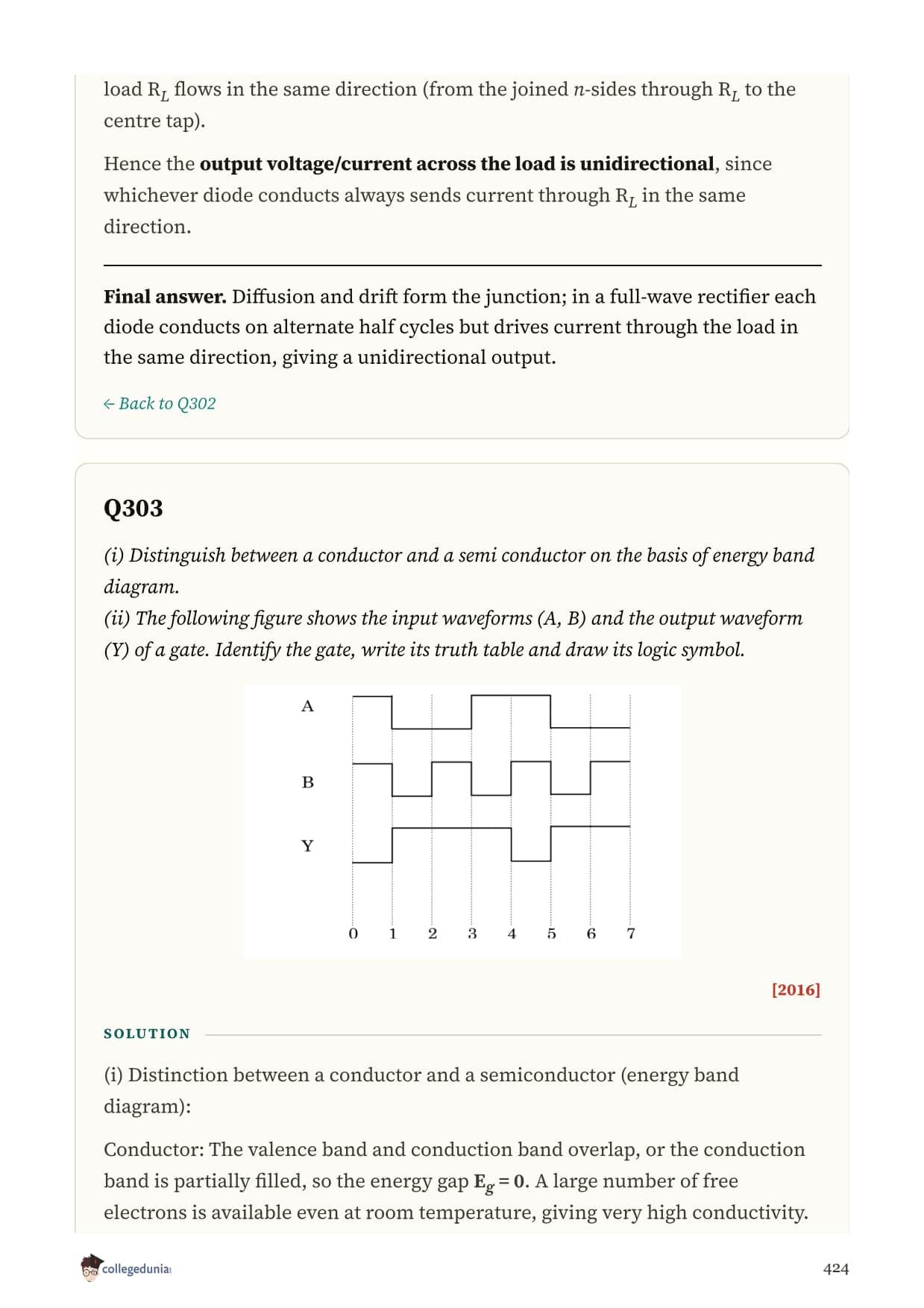
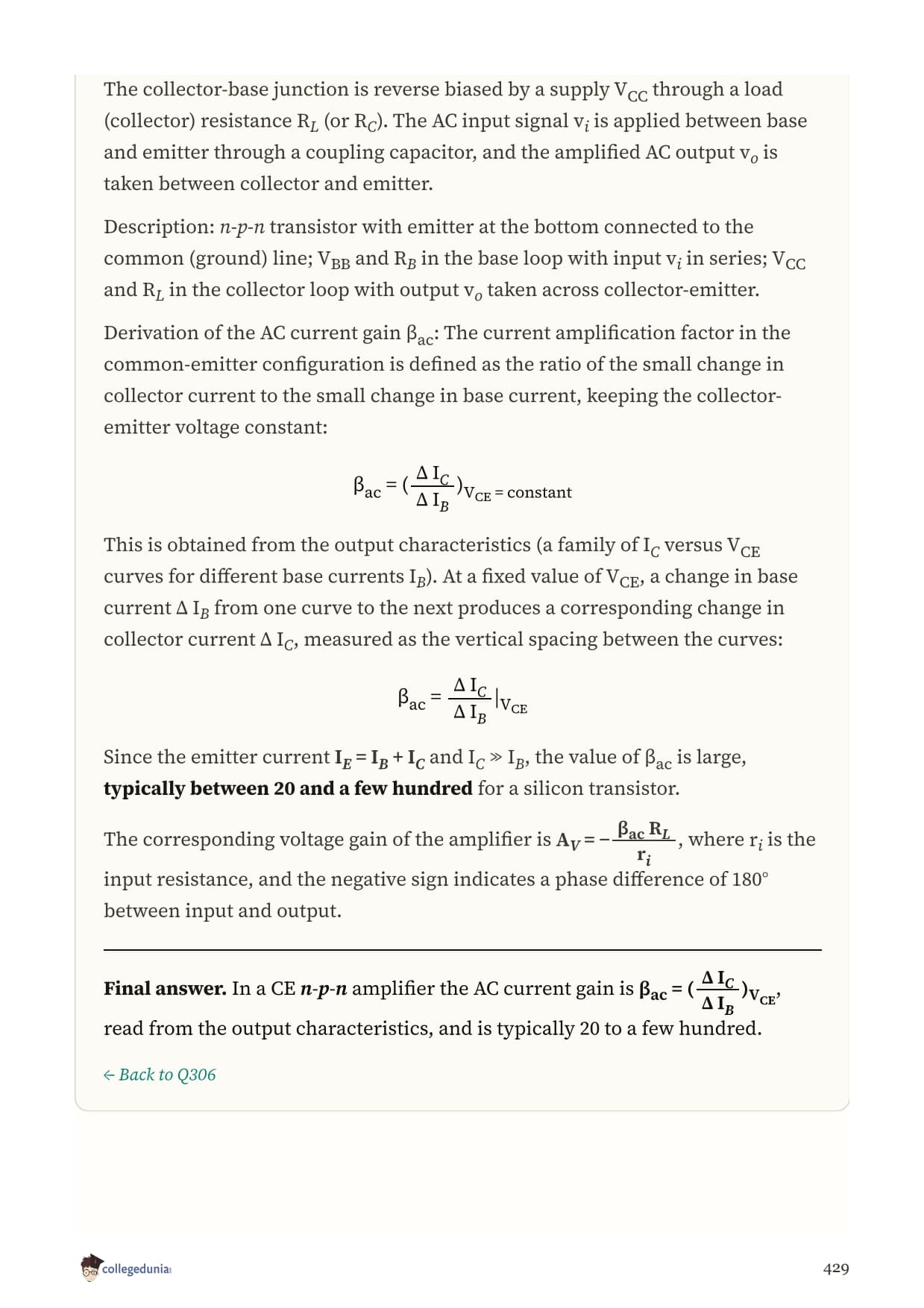
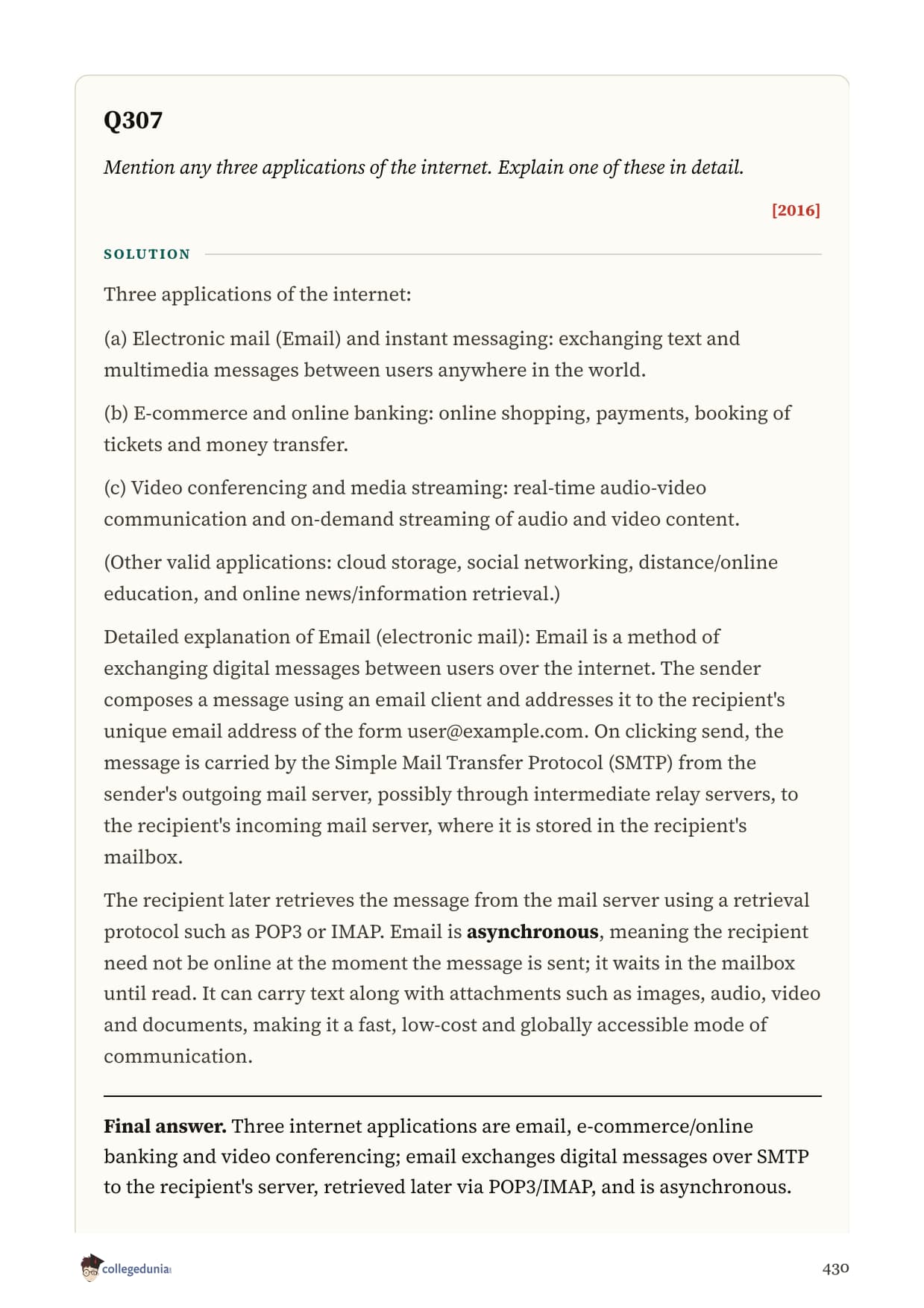
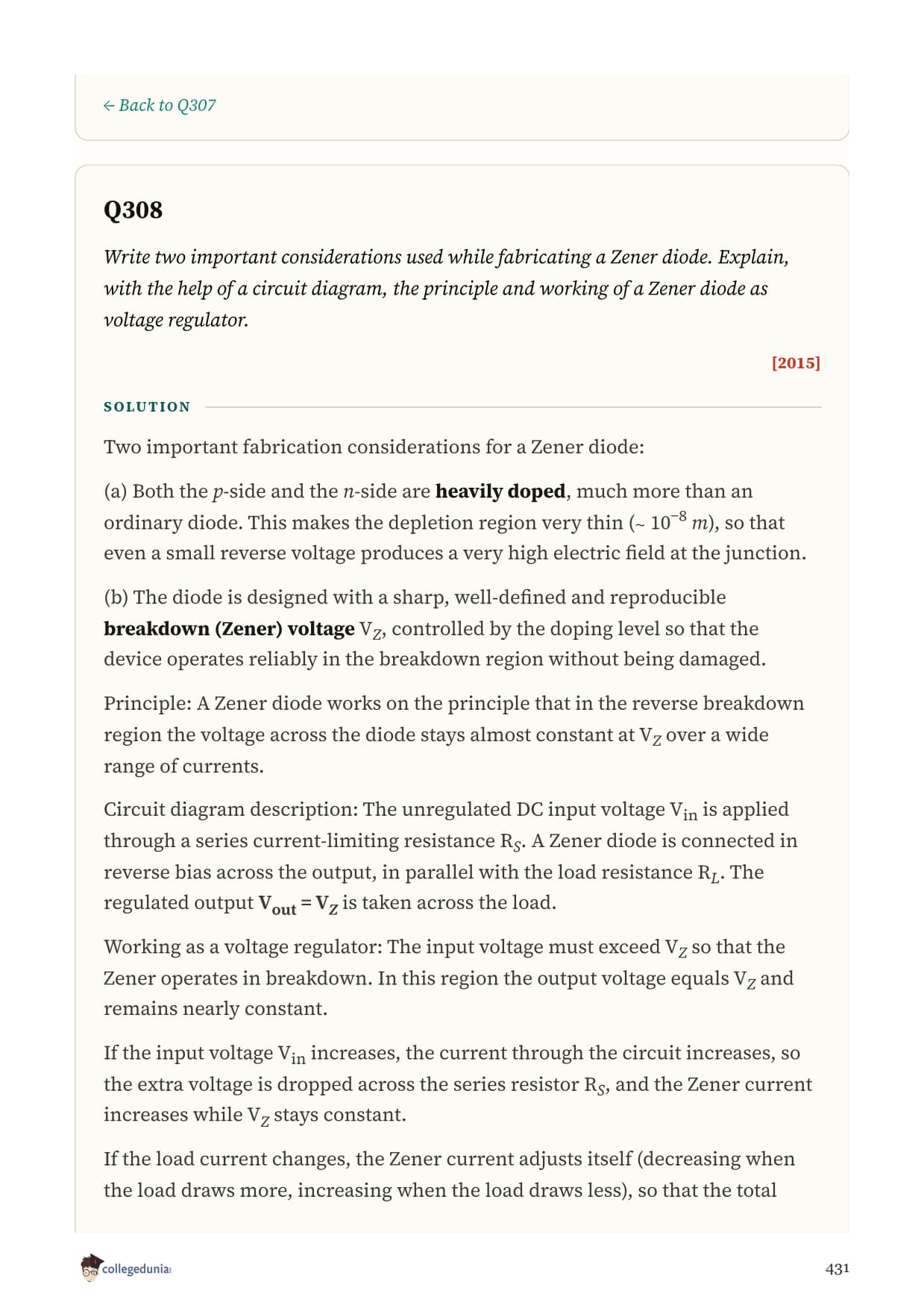
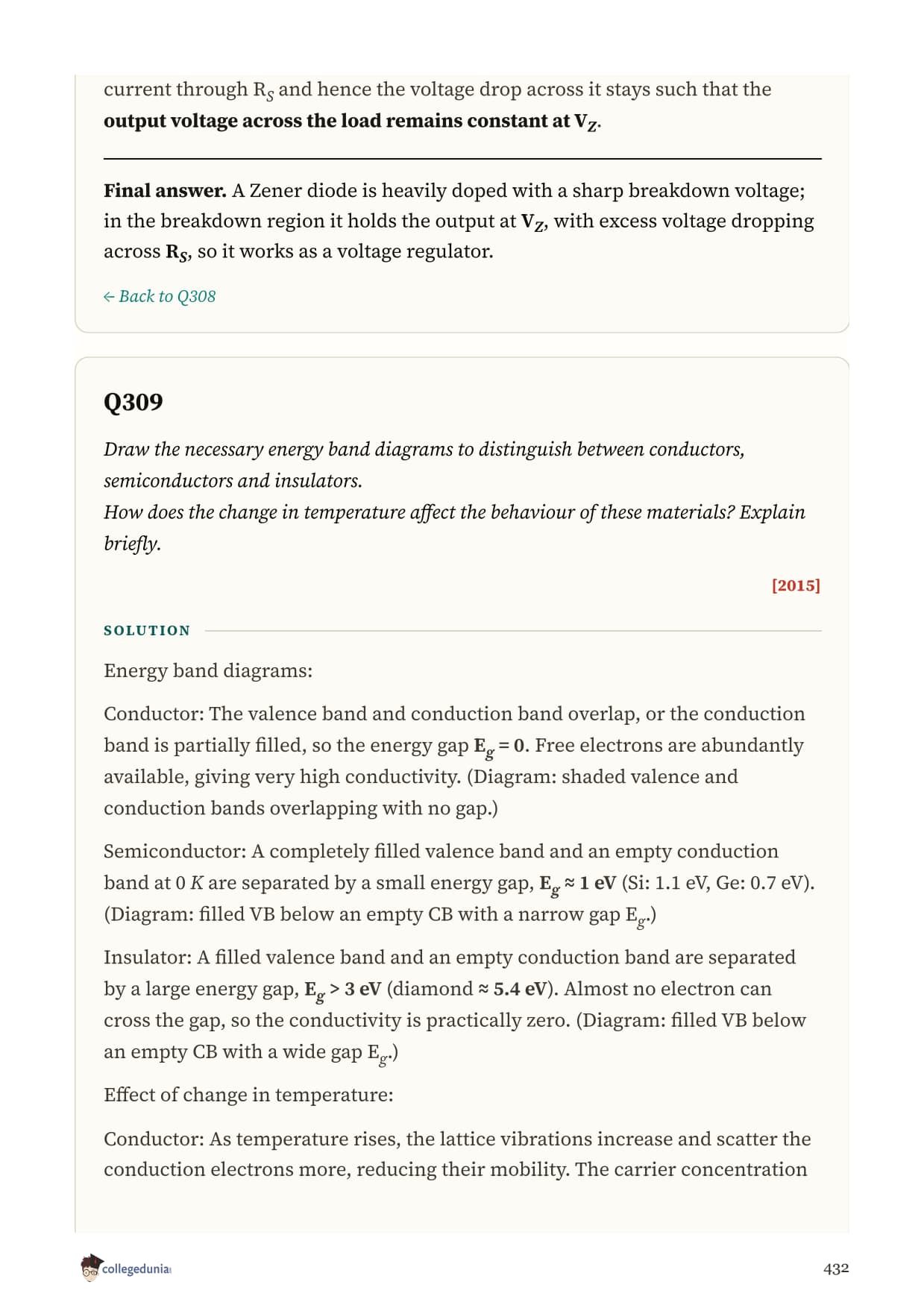
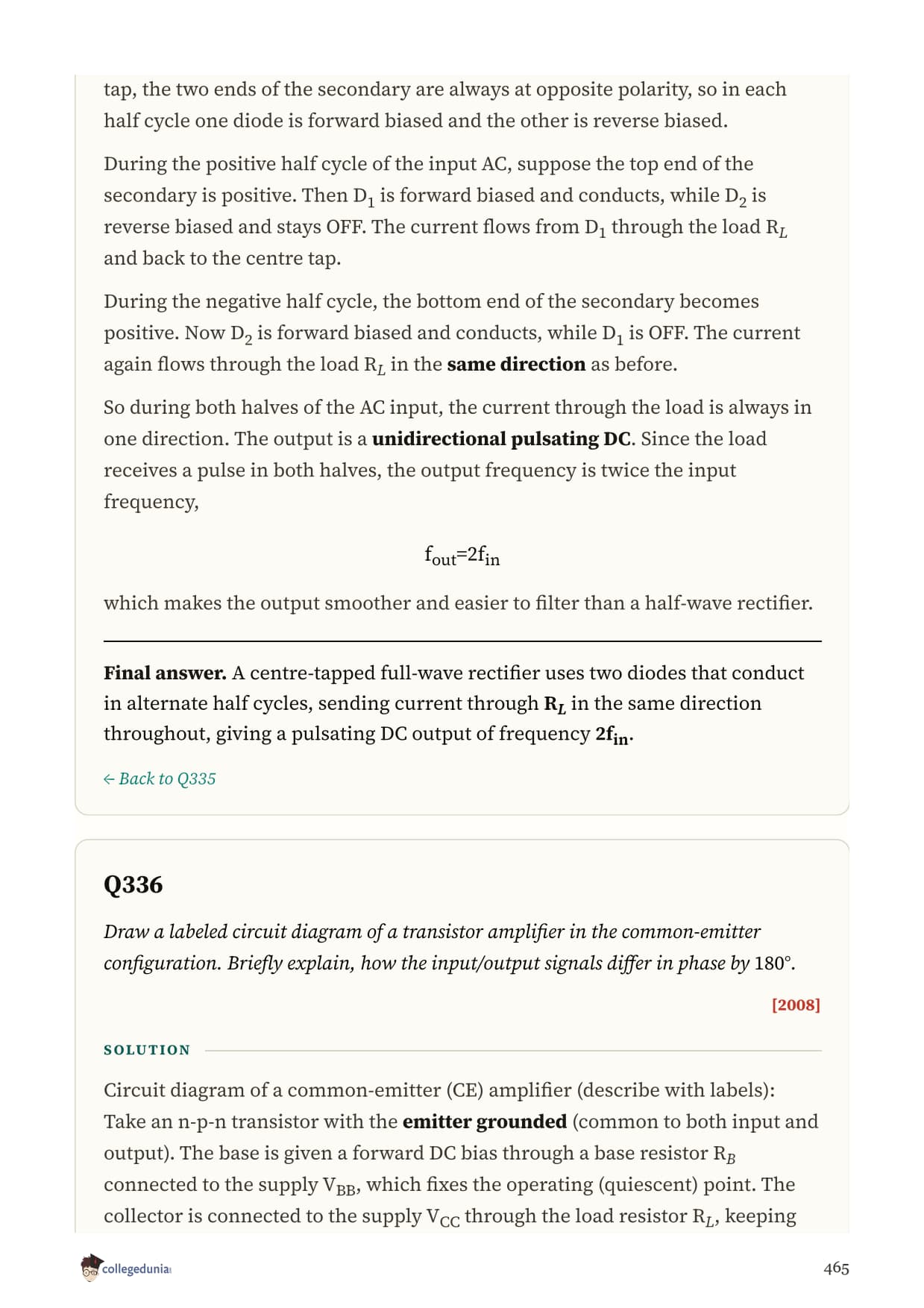
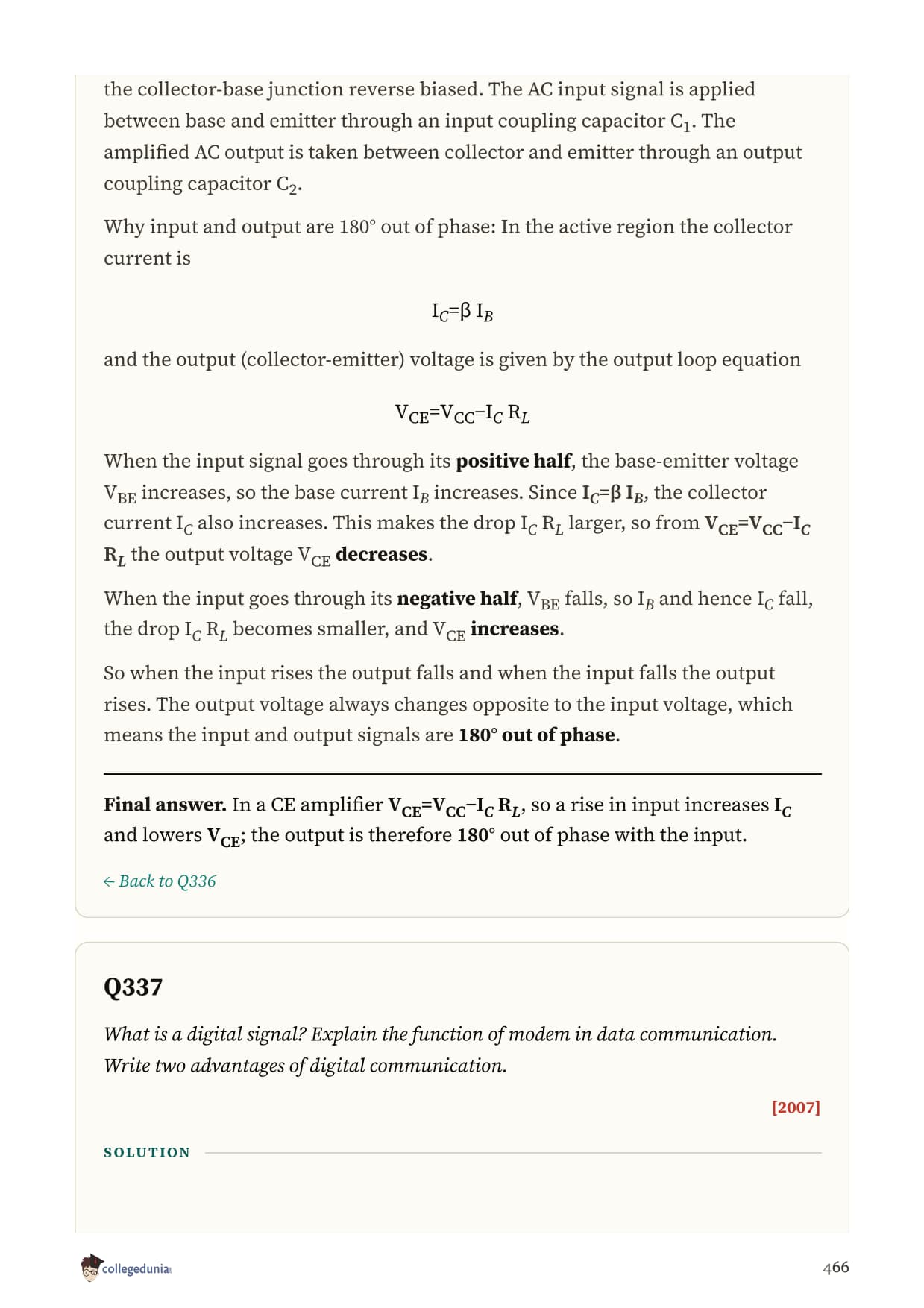
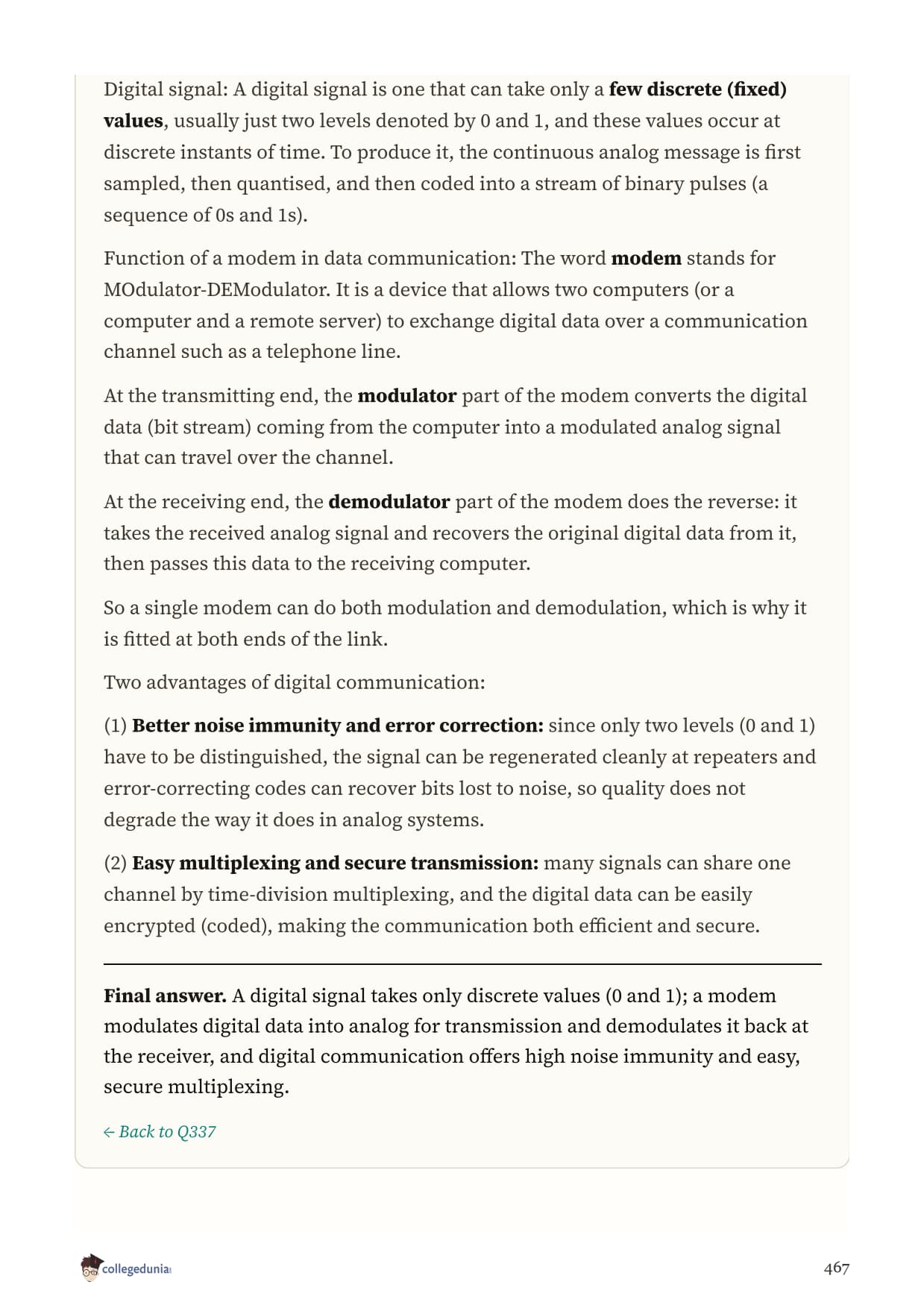
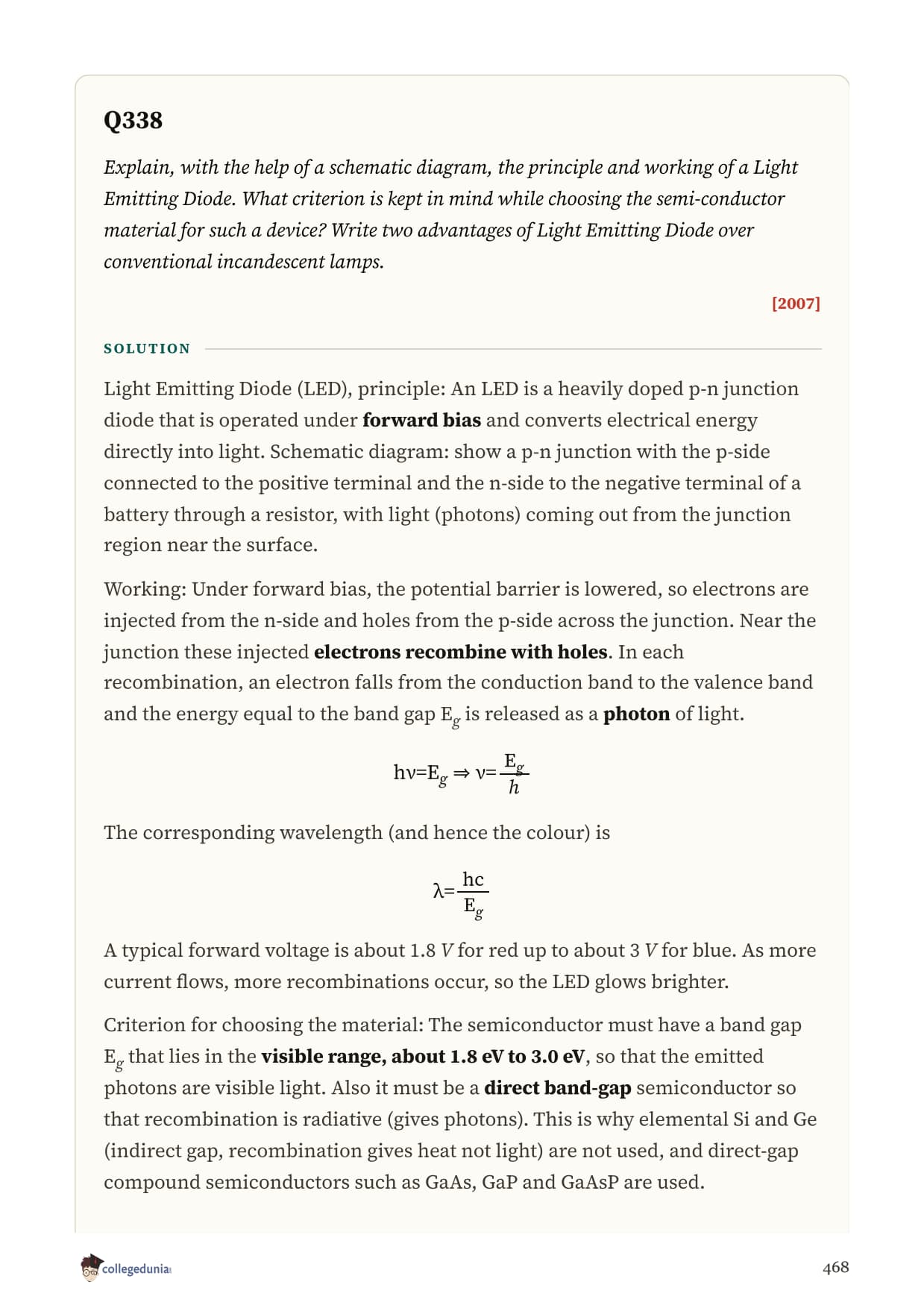
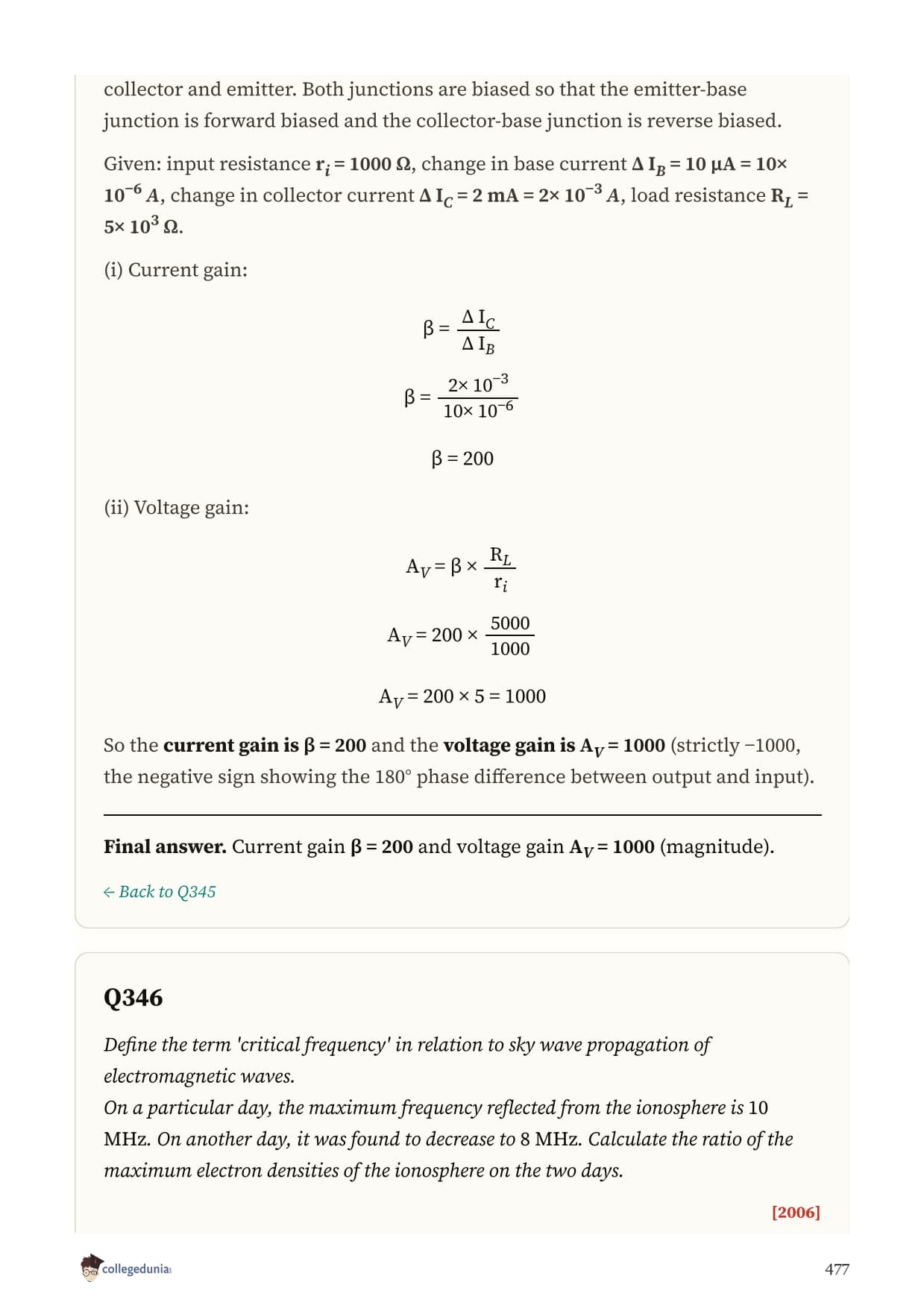
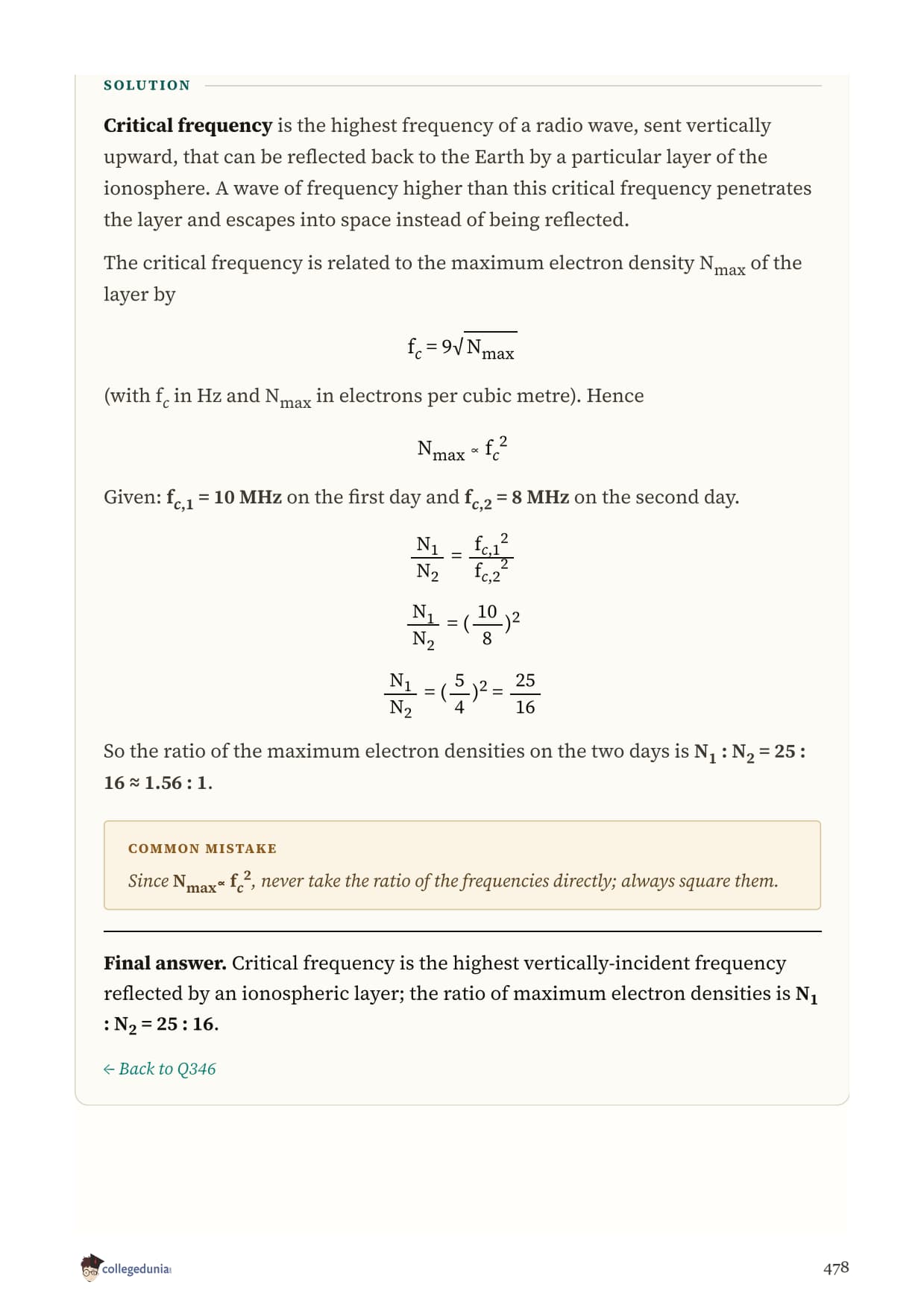
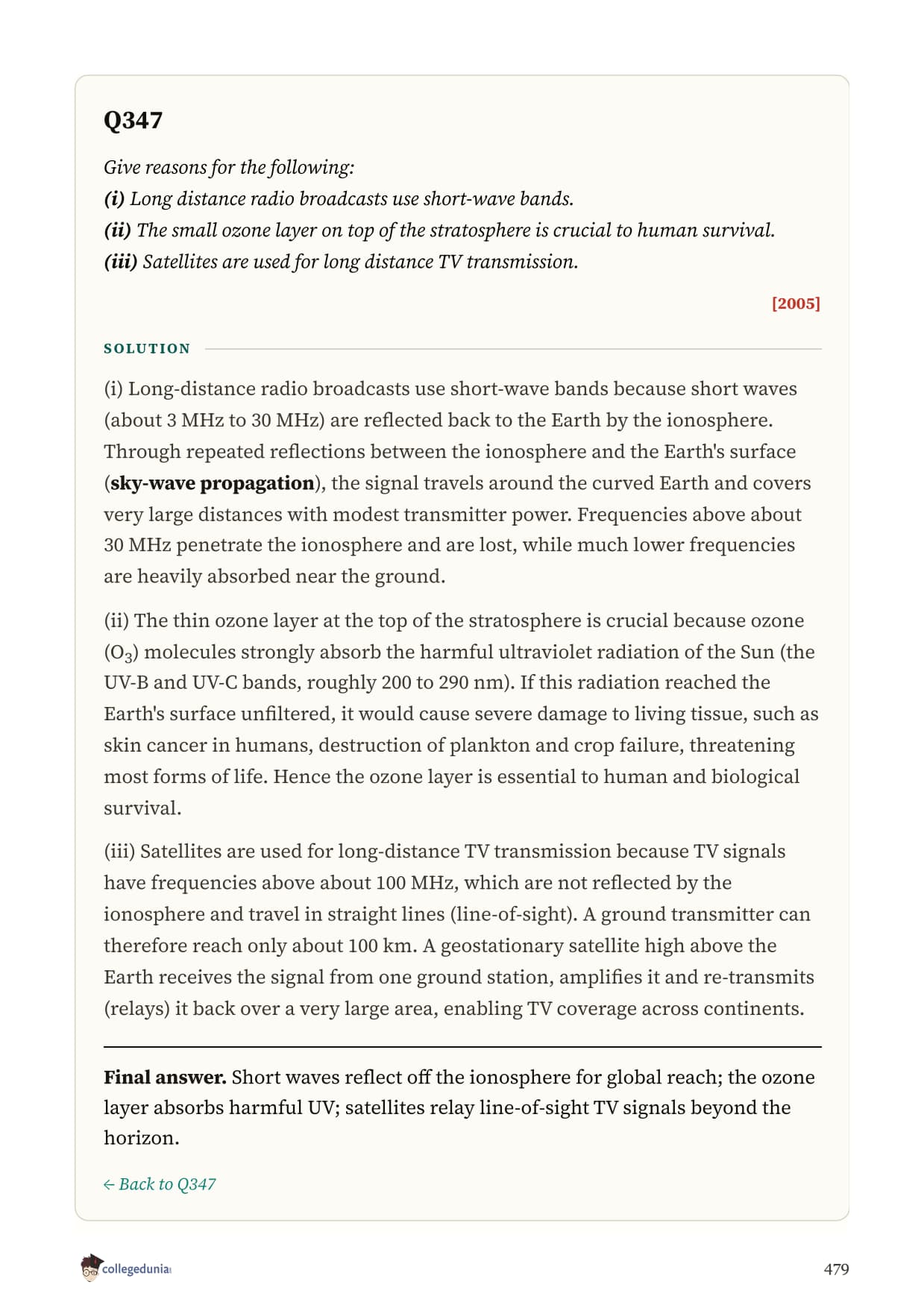
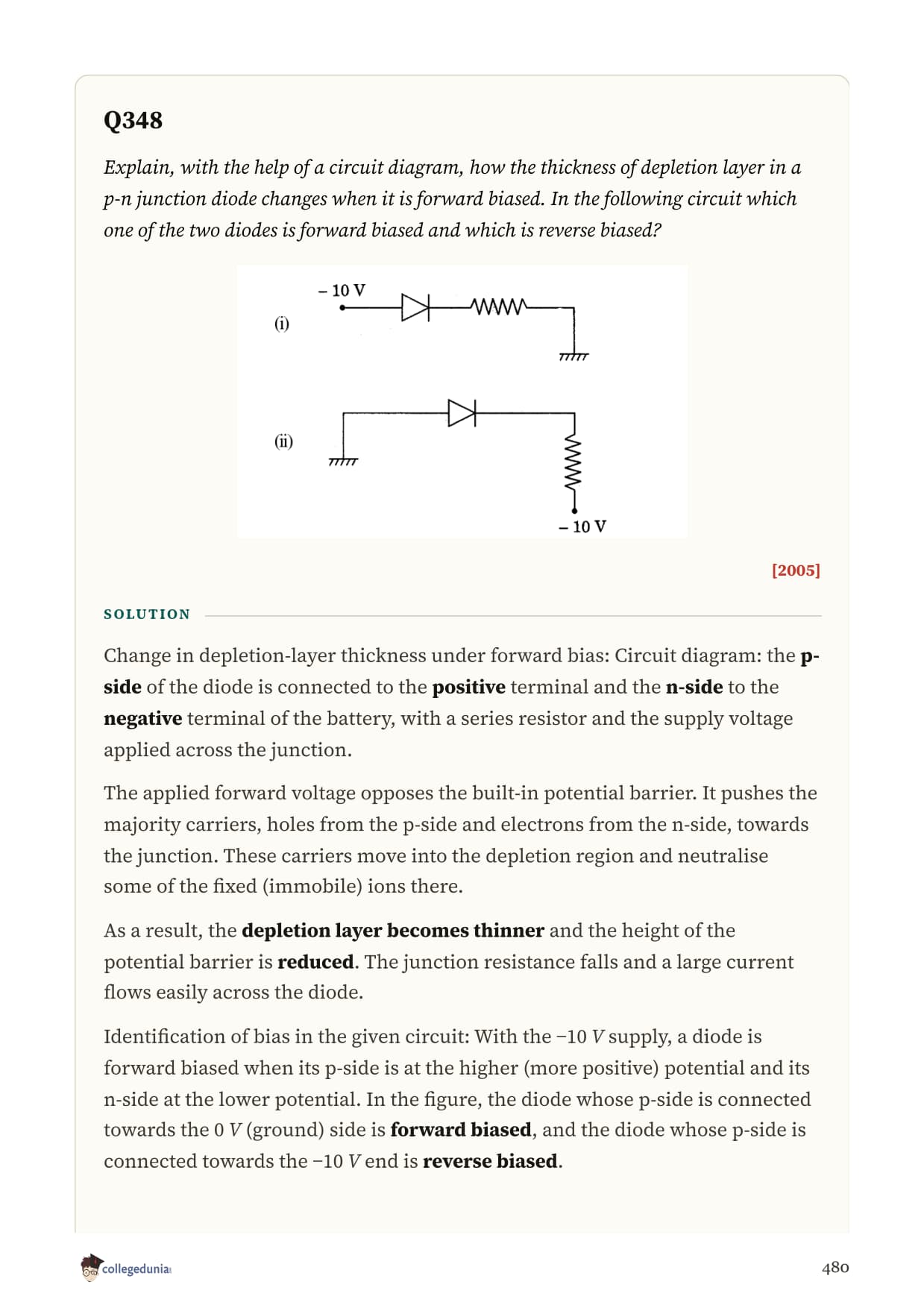
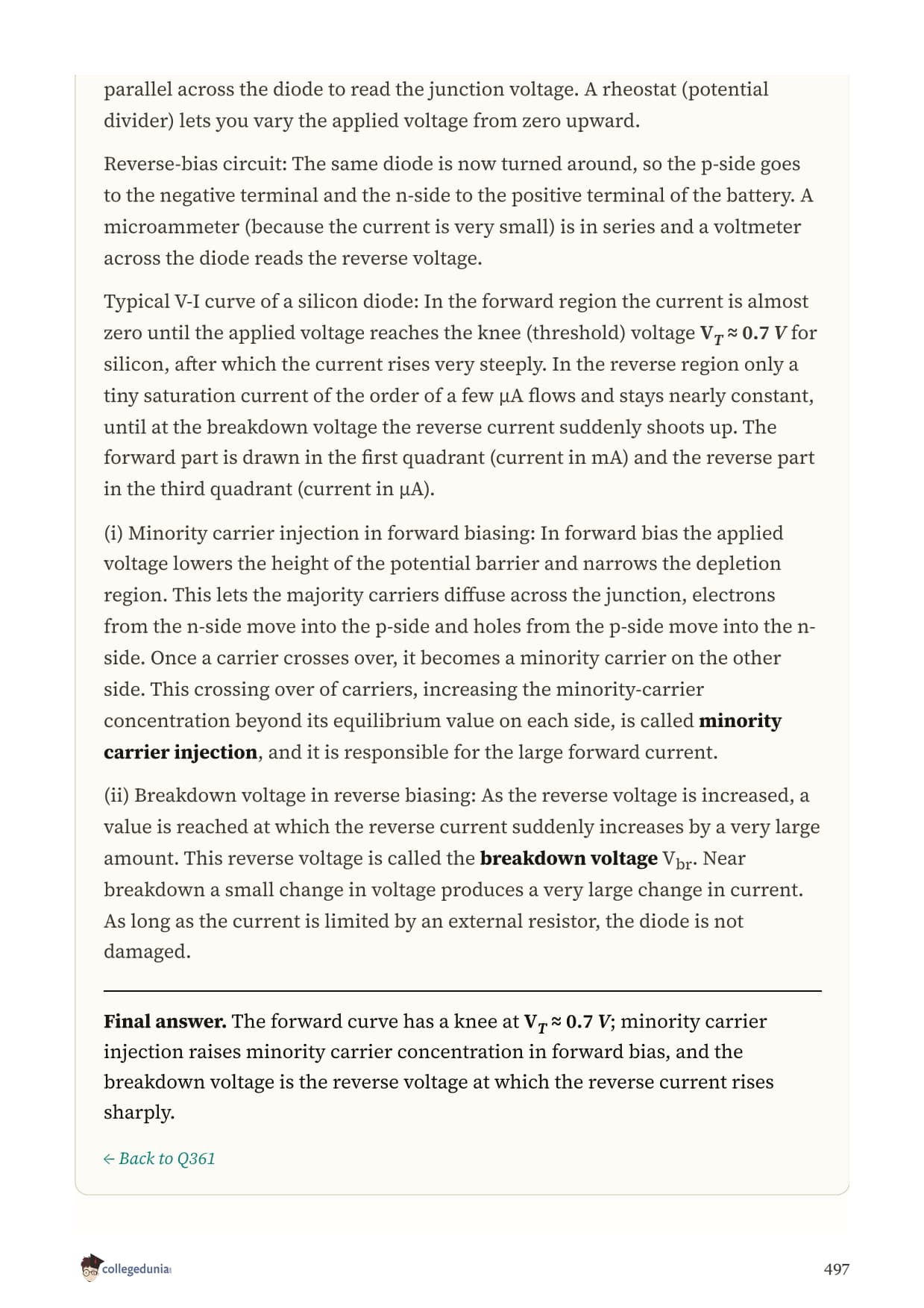
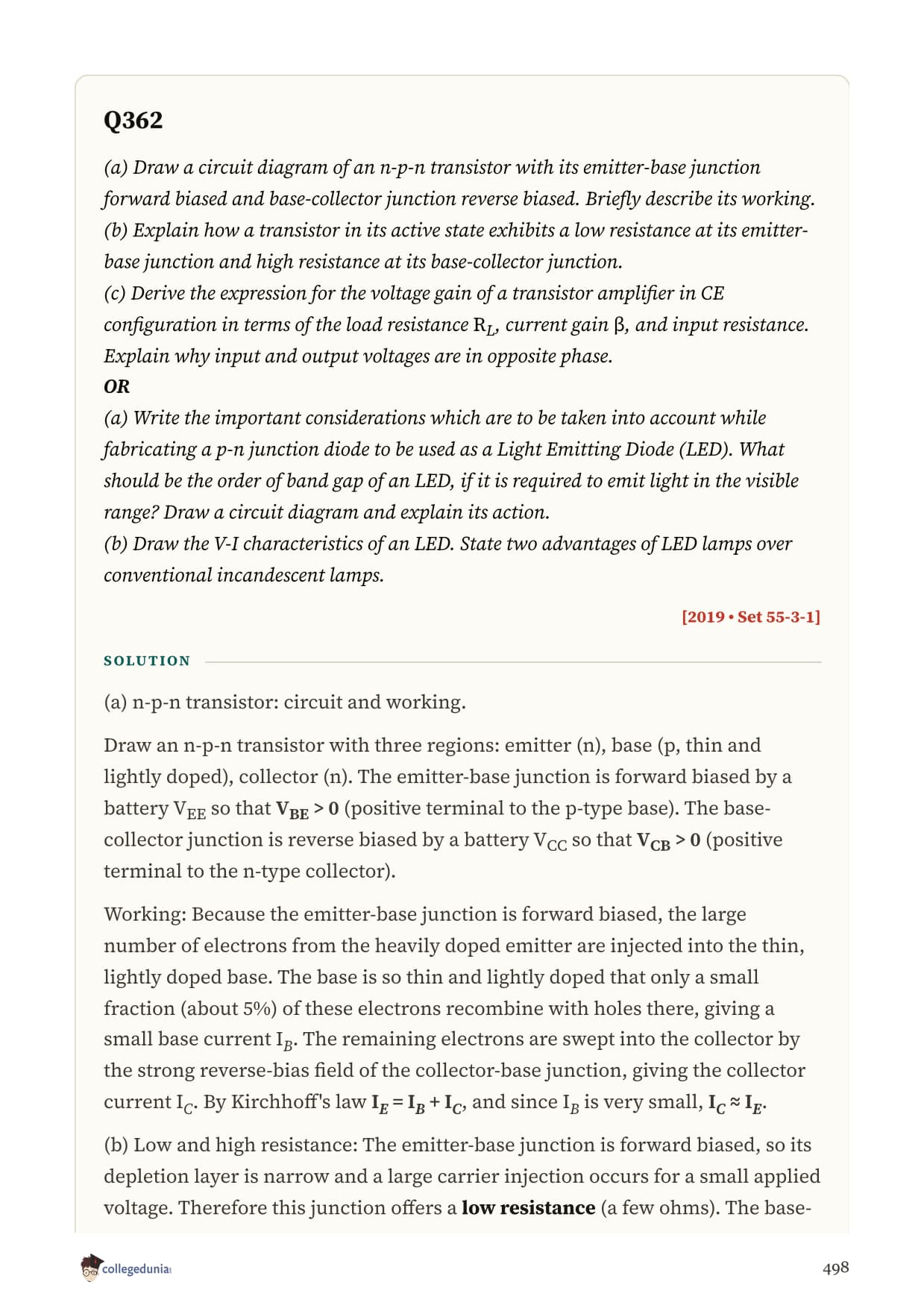
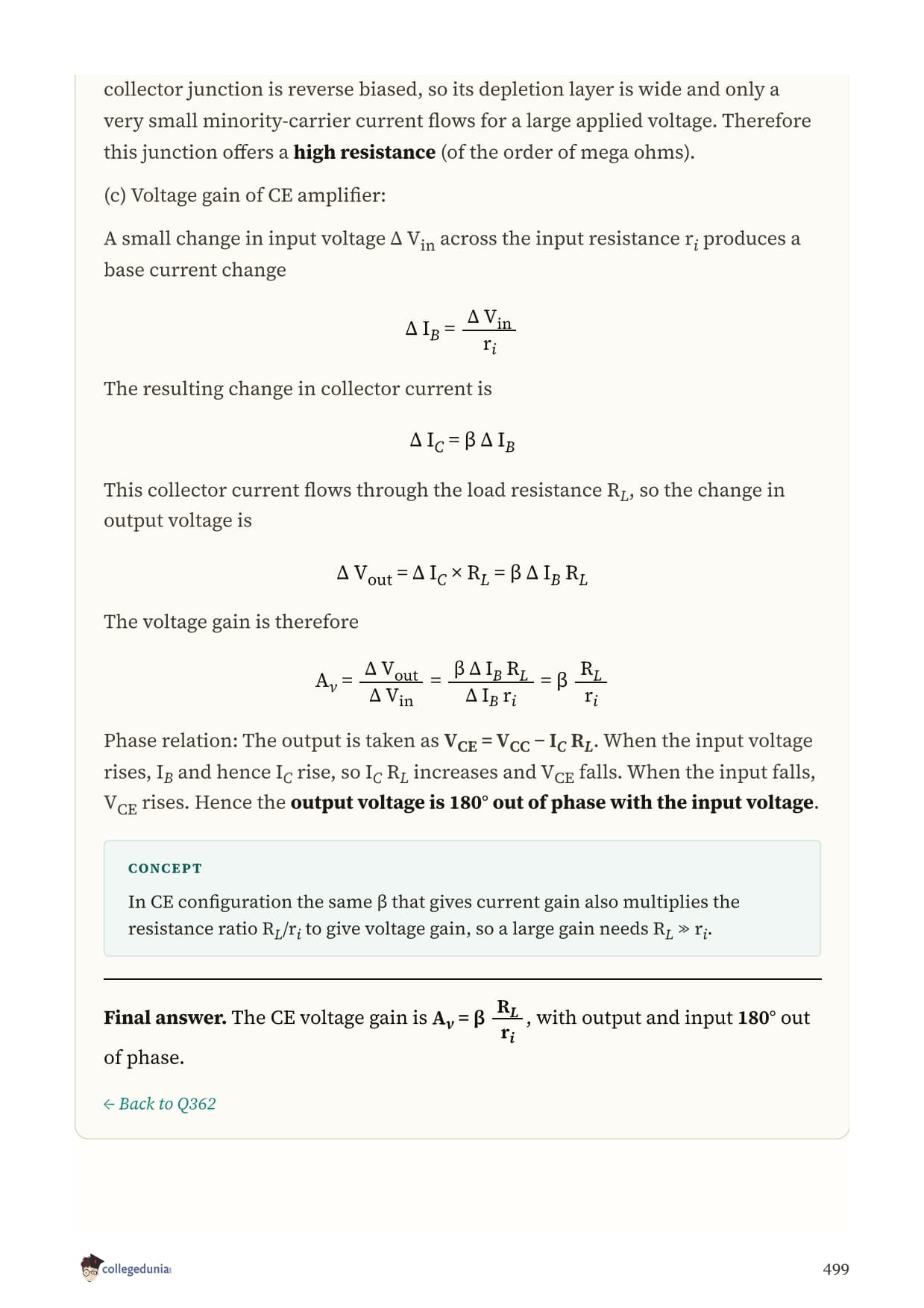
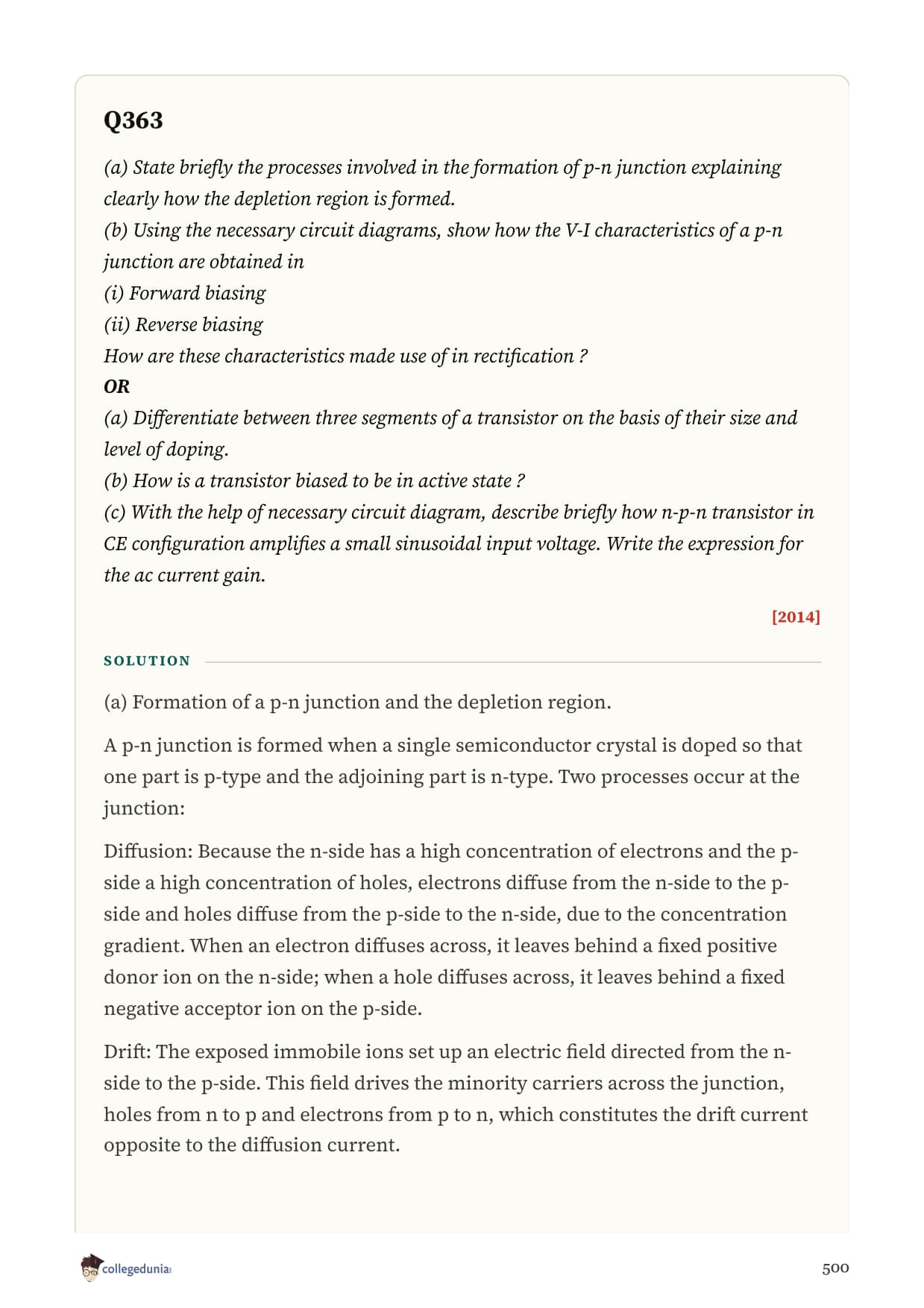
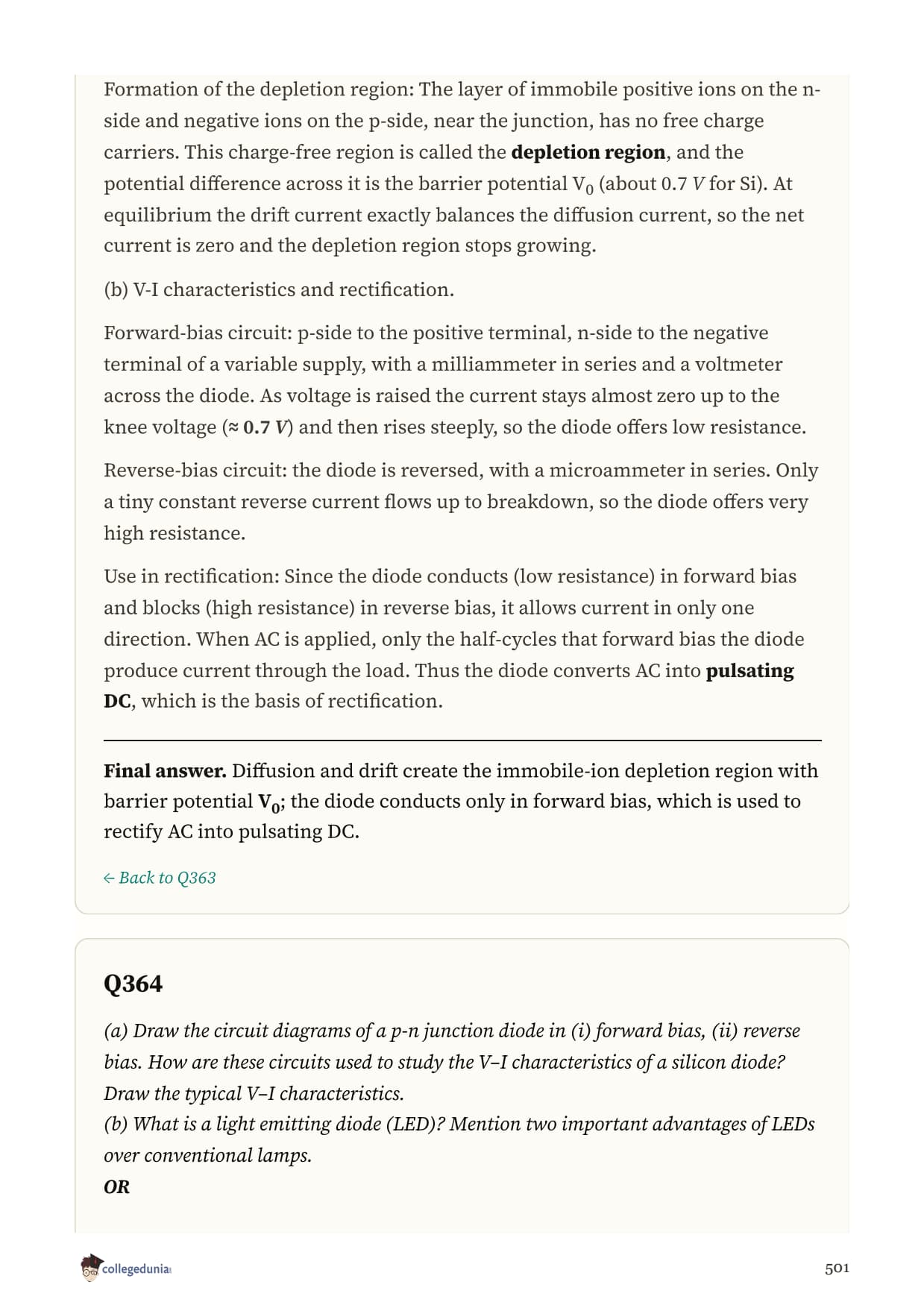
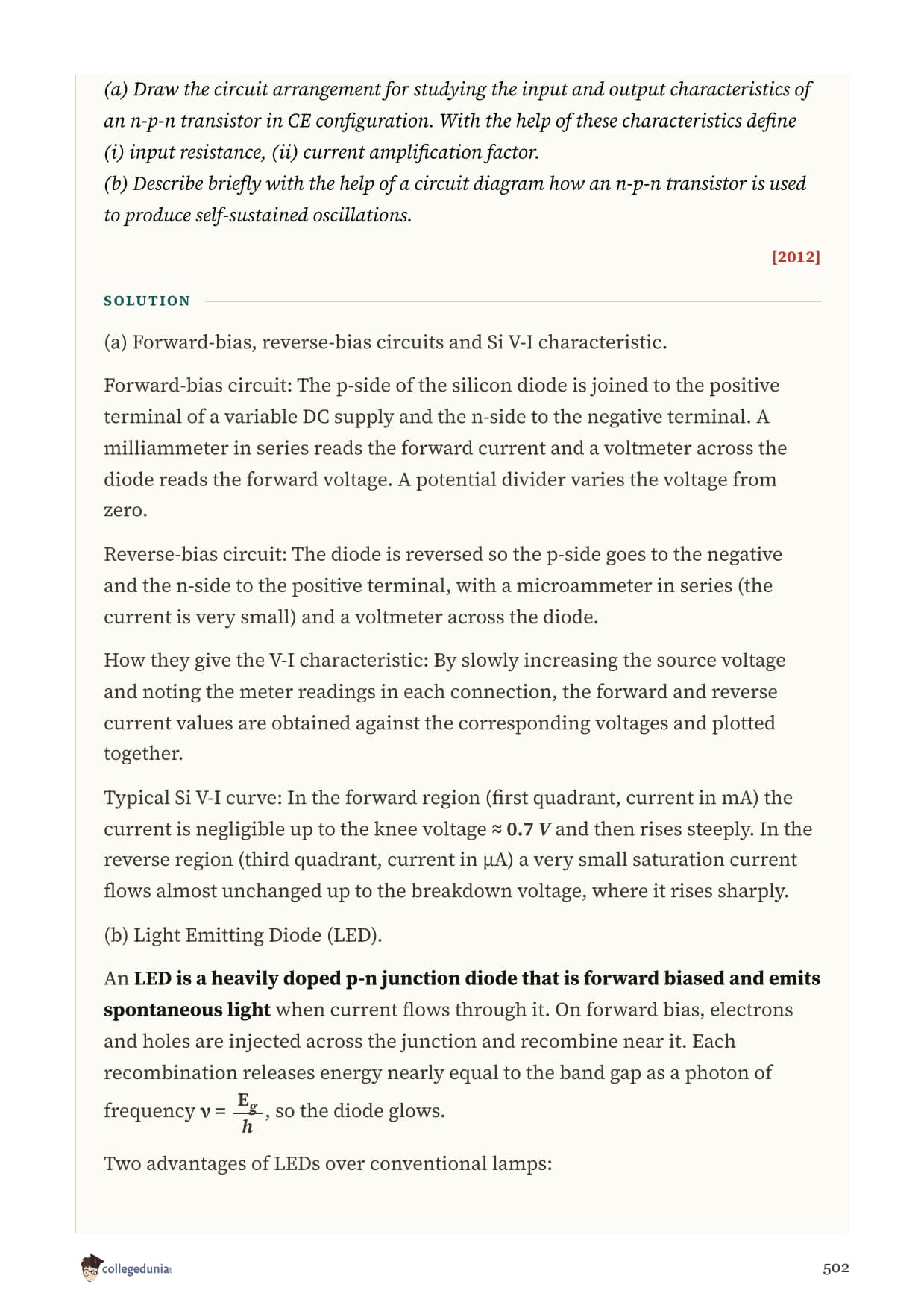
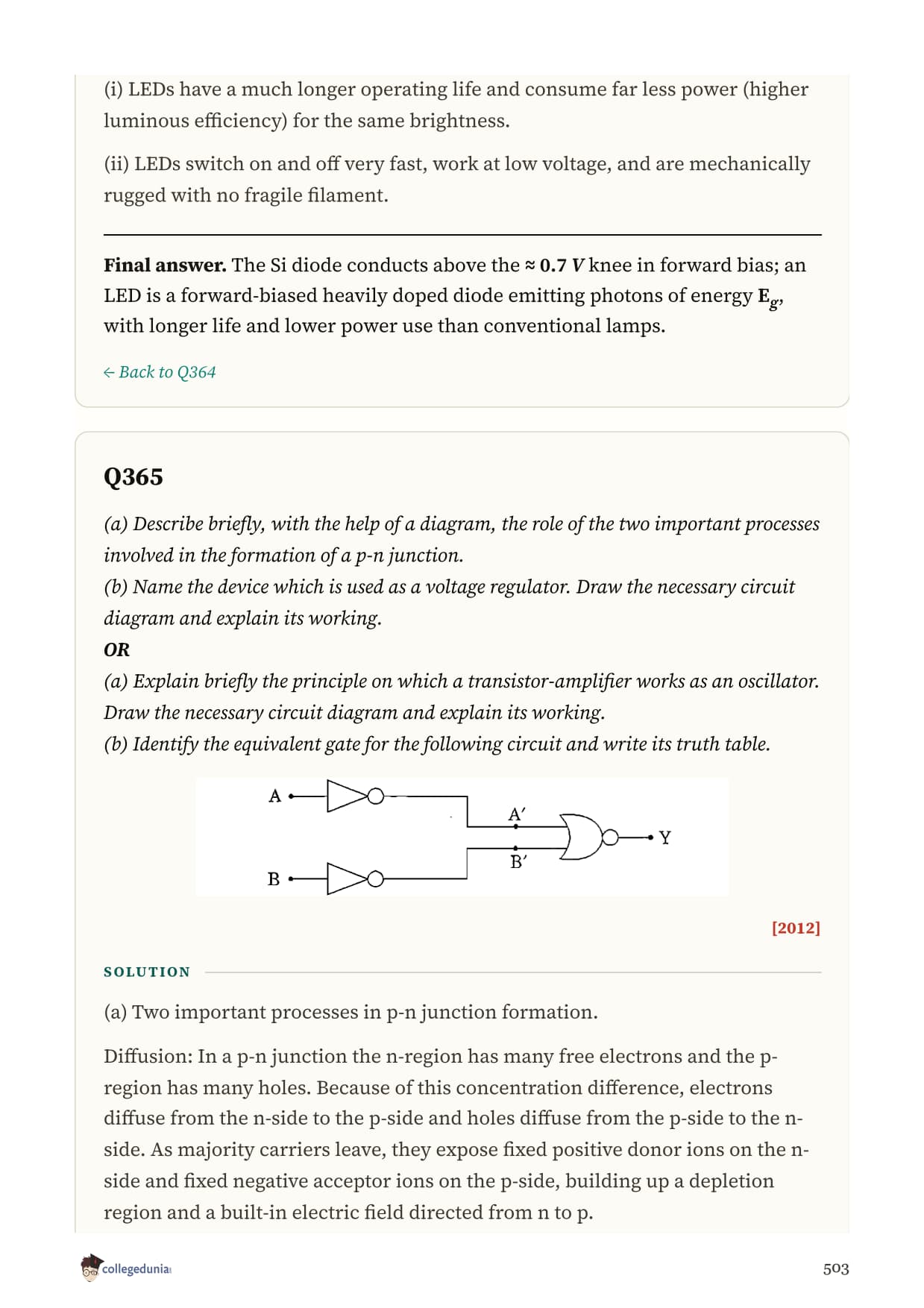
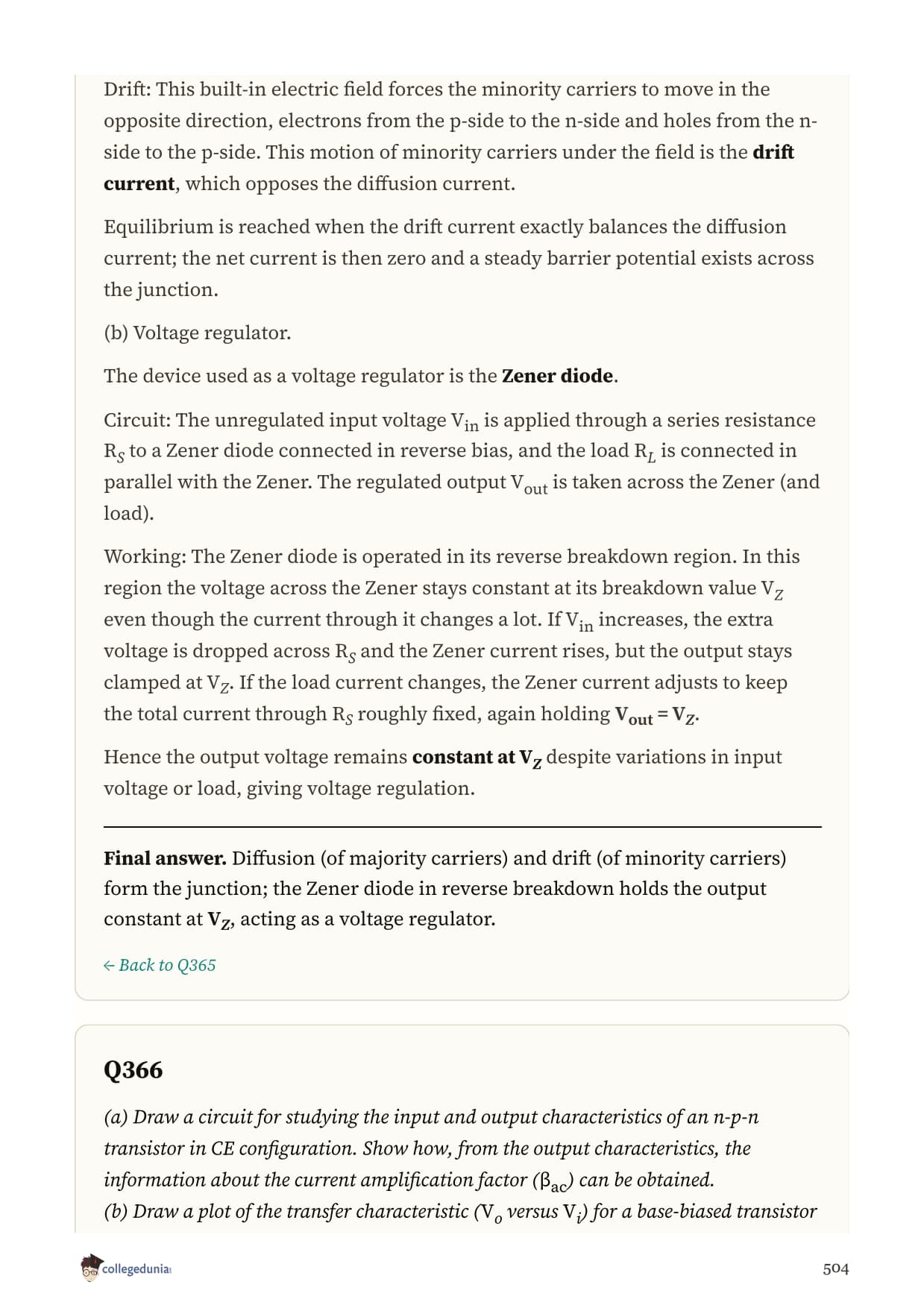
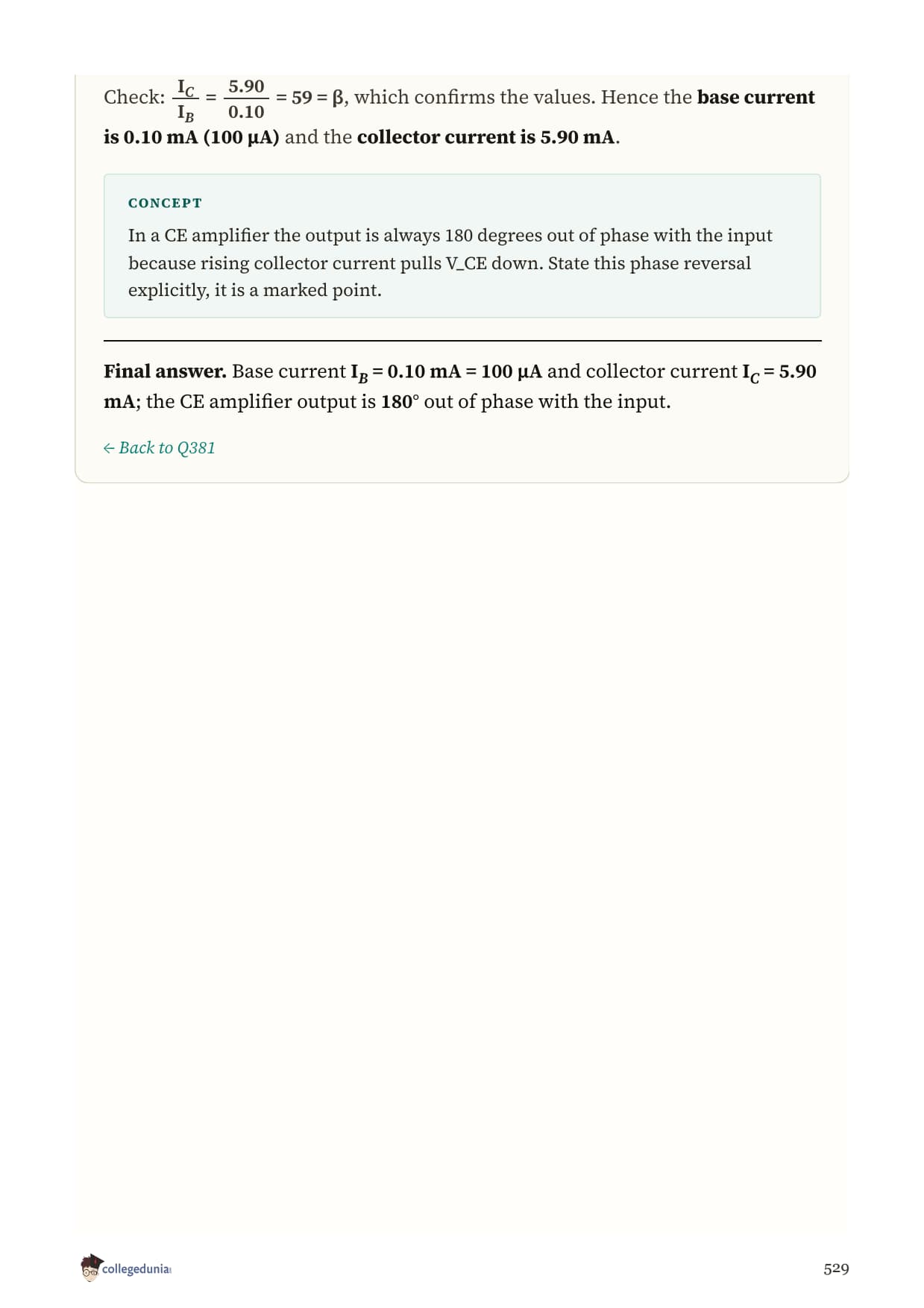
- 1-mark MCQs: 120 questions, mostly post-2023 when CBSE switched to Section A objective format.
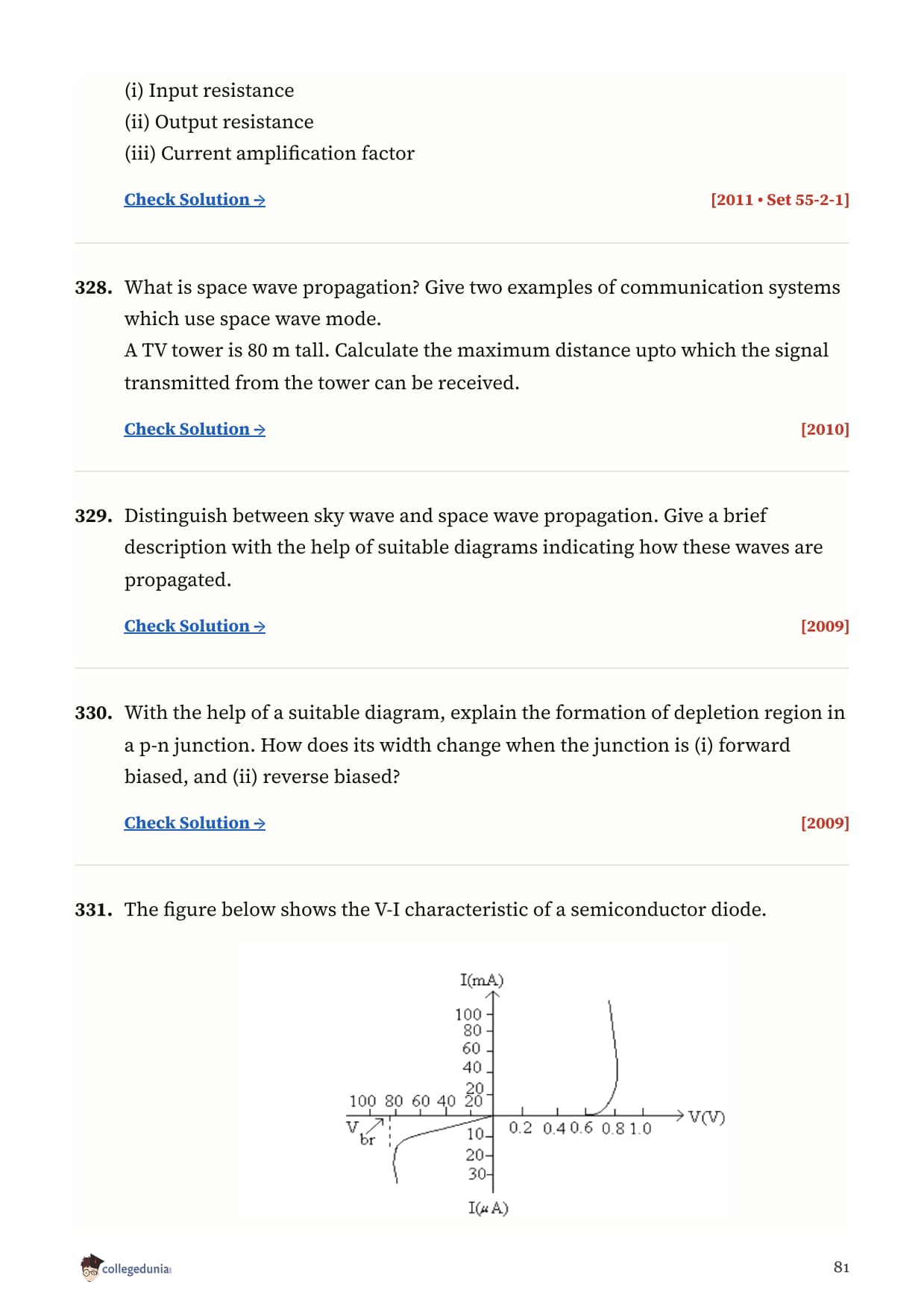
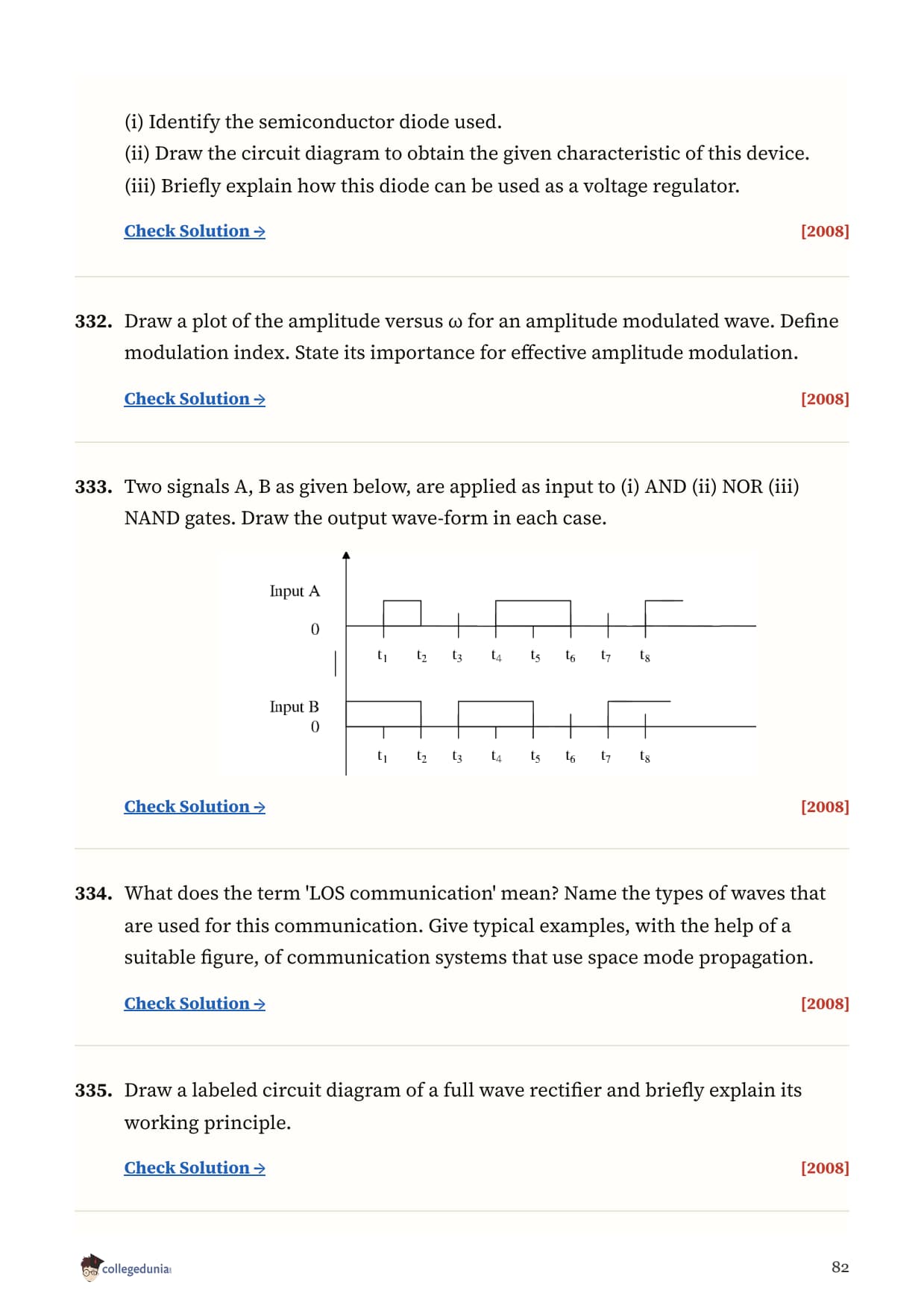
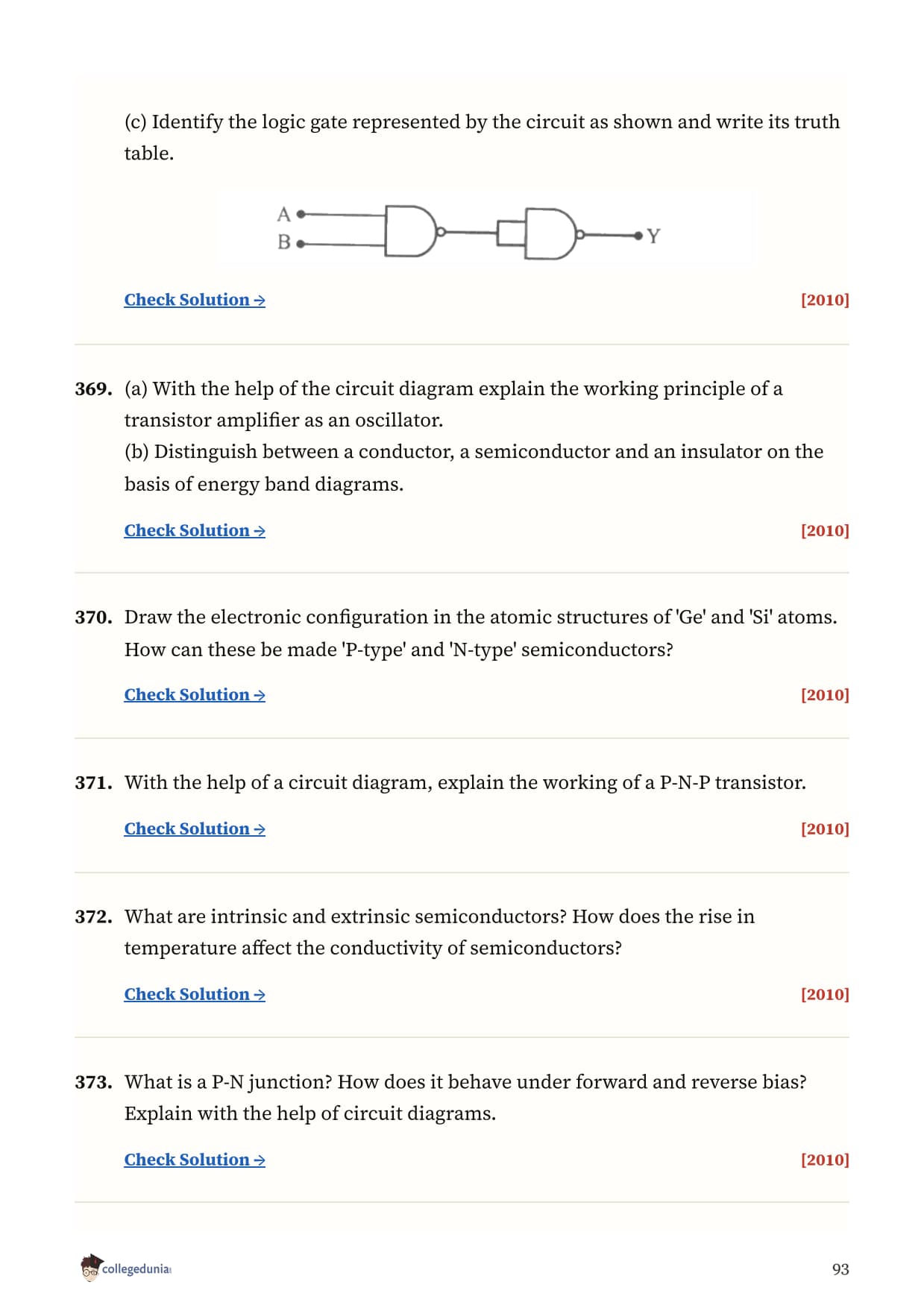
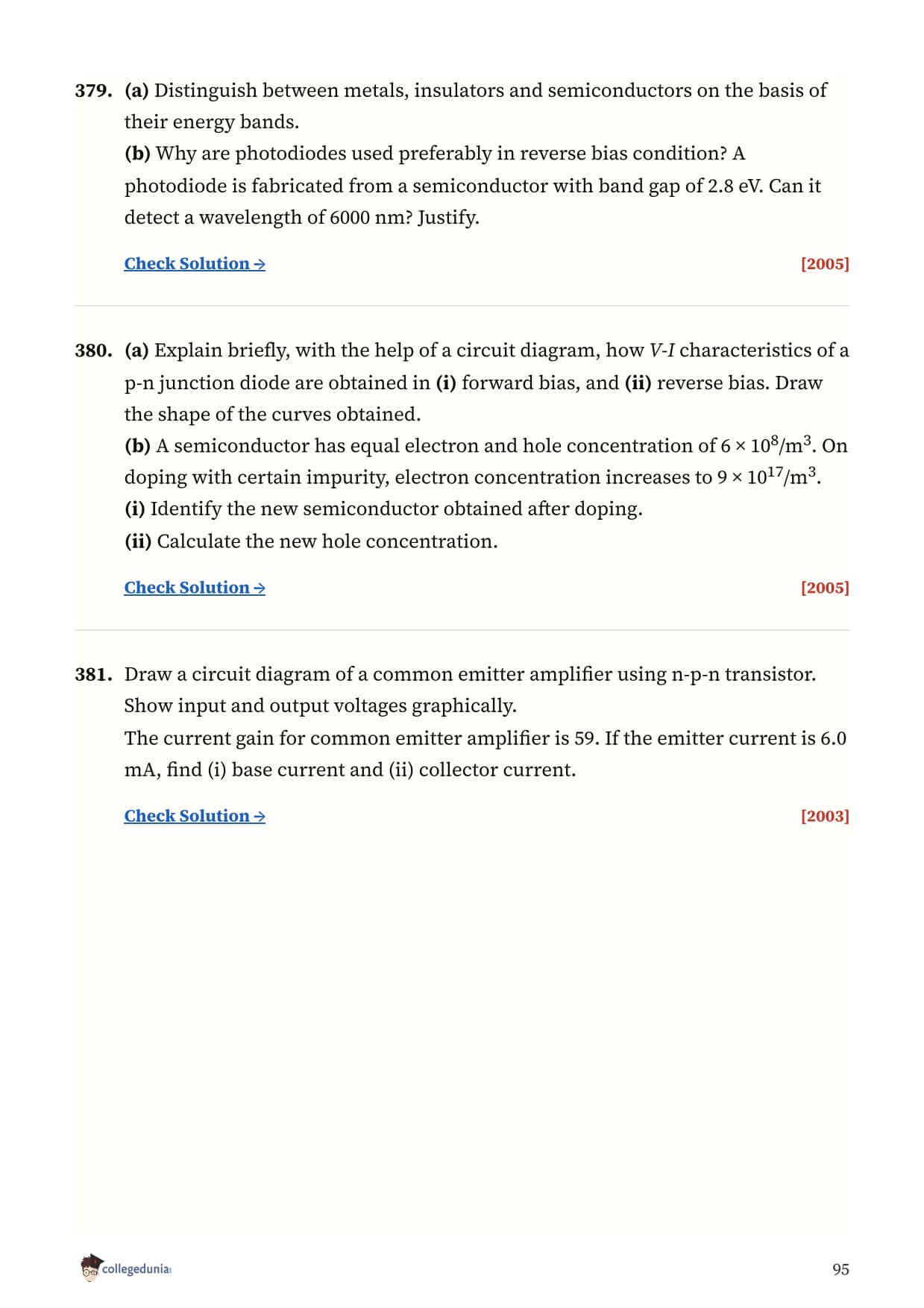
- 2 and 3-mark VSA/SA: 112 and 144 questions respectively, focused on p-n junction diode I-V characteristics, half/full-wave rectifier numericals, Zener regulator problems, and logic-gate truth tables.
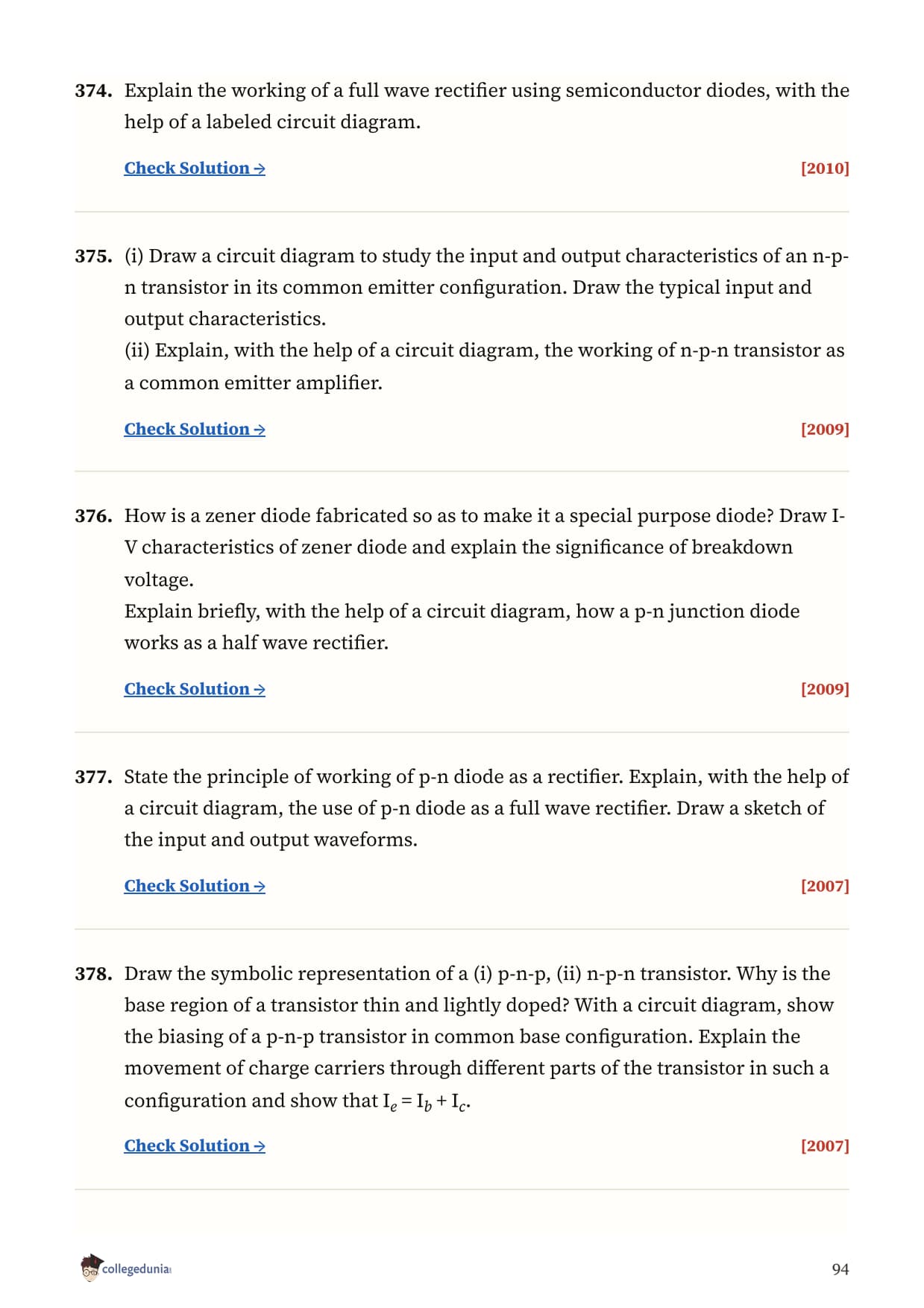
- 5-mark long answers: 24 questions, almost every year features one of the chapter's flagship derivations paired with a numerical.
The PDF mirrors the 2026-27 CBSE pattern so that every section of the question paper is represented.
Every question in this Class 12 Physics Semiconductor Electronics PYQ compilation is sourced from CBSE board papers (Delhi, Outside Delhi, Foreign, Compartment) and cross-checked against the official mark scheme, with near-duplicate questions removed by a 0.85 similarity threshold.
What the Semiconductor Electronics Previous Year Questions Cover
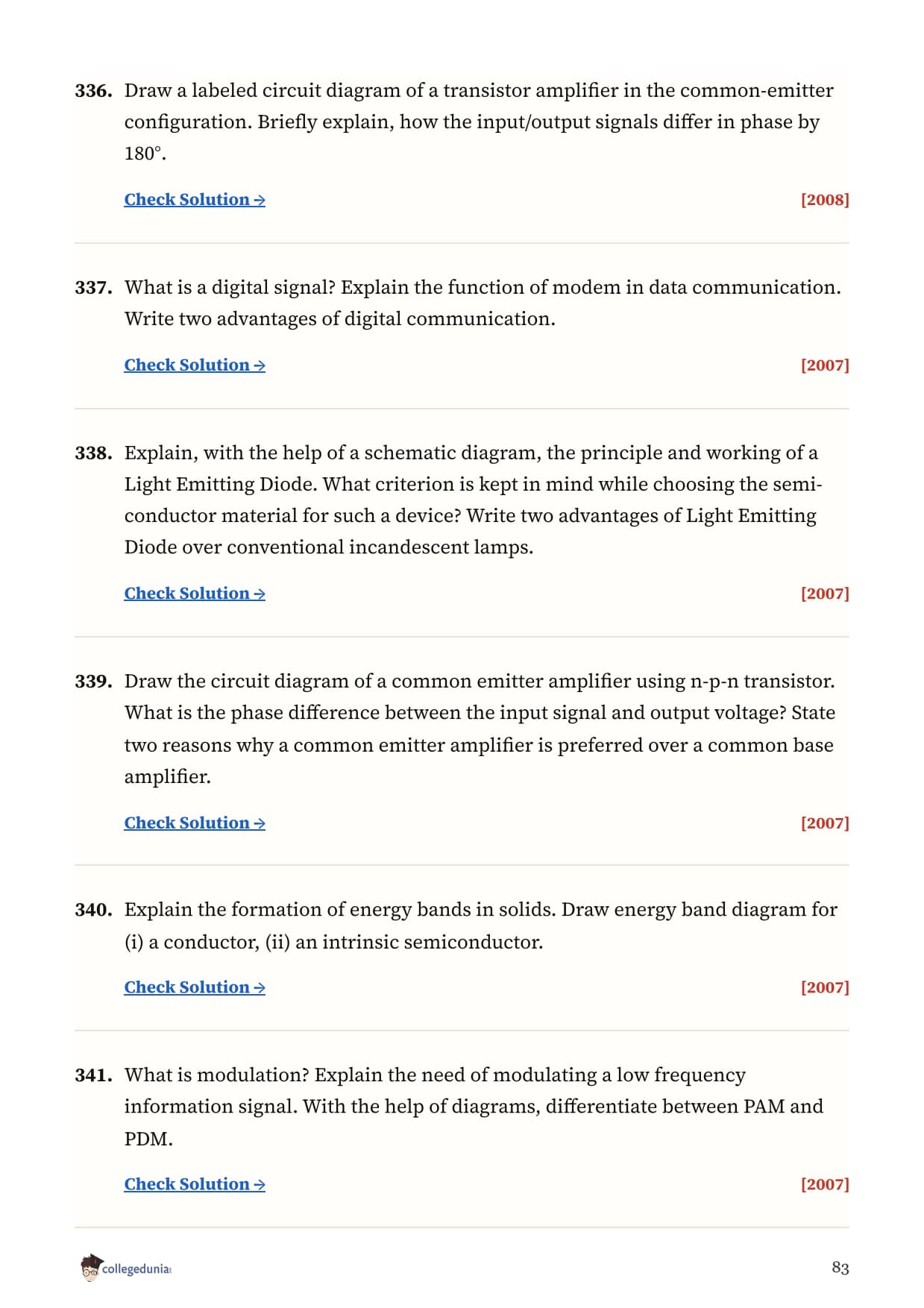
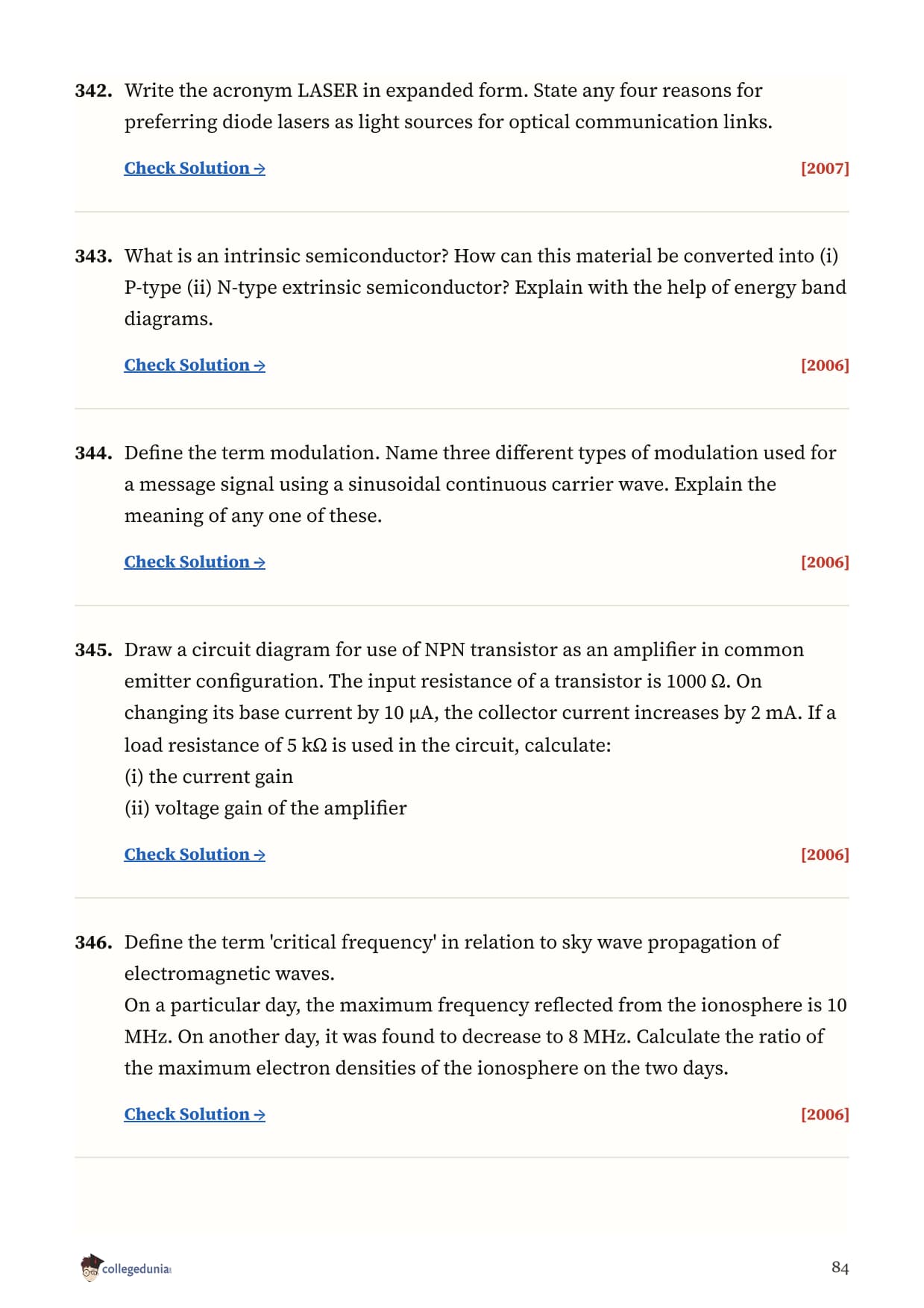
The 395-question compilation maps every concept the NCERT chapter introduces. The PDF gives heavy coverage to p-n junction diode I-V characteristics, half/full-wave rectifier numericals, Zener regulator problems, and logic-gate truth tables, which dominate the 3 and 5-mark bands across the 2003 to 2026 window. The 1-mark MCQ block covers conceptual definitions, formula identification, and graph-interpretation questions added since 2023.
Class 12 Physics Chapter 14 Semiconductor Electronics PYQ
Source: NCERT Wallah on YouTube
Marks-wise Distribution of the Semiconductor Electronics PYQs
The table below shows how the 395 questions split across the five CBSE marks bands. Use this to plan how much weight to give each band when you revise.
| Marks | Questions | Total Marks | CBSE Section | Type |
|---|---|---|---|---|
| 1 mark | 120 | 120 | Section A | MCQ + Assertion-Reason |
| 2 mark | 112 | 224 | Section B | VSA |
| 3 mark | 144 | 432 | Section C | SA |
| 4 mark | 1 | 4 | Section D | Case Study |
| 5 mark | 24 | 120 | Section E | Long Answer |
Year-wise Spread of Class 12 Physics Chapter 14 PYQs
The compilation pulls questions from 24 distinct CBSE board years. Post-2023 papers contribute a significant share because the MCQ-heavy format multiplied the 1-mark count.
- 2026: Latest sets across 55-1-X, 55-3-X, 55-5-X. Fresh MCQ wording for semiconductor electronics concepts plus a 5-mark OR question.
- 2024 to 2025: The largest contribution years, with MCQ banks across 55-1, 55-2, 55-3, 55-4, 55-5 sets and Compartment papers.
- 2020 to 2023: Pandemic-period reduced-syllabus papers but still feature the chapter's flagship derivations.
- 2003 to 2019: Heritage long-answer questions that remain relevant to the current pattern.
Topic Frequency in the Semiconductor Electronics Board Paper Questions
The 395 questions cluster into six topic buckets. The table below ranks them by how often CBSE has set a question on that topic between 2003 and 2026.
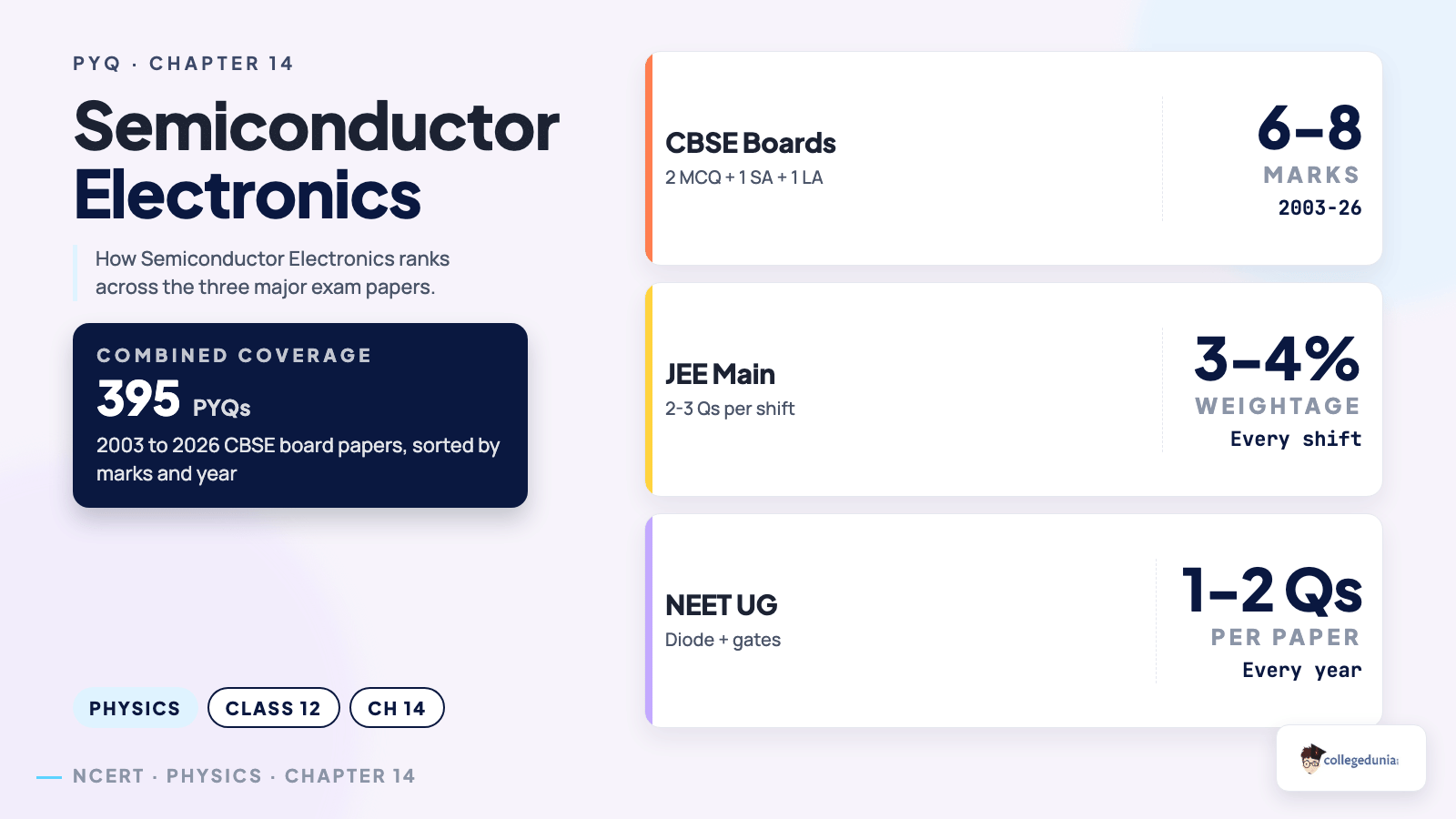
| Rank | Topic Cluster | Frequency | Typical Marks Band |
|---|---|---|---|
| 1 | p-n junction diode and I-V characteristics | ~22 per cent | 2 and 3 mark |
| 2 | Rectifier (half-wave, full-wave, bridge) | ~20 per cent | 3 and 5 mark |
| 3 | Logic gates (AND, OR, NOT, NAND, NOR) | ~17 per cent | 1, 2, 3 mark |
| 4 | Zener diode and voltage regulator | ~14 per cent | 2 and 3 mark |
| 5 | Energy bands in solids | ~14 per cent | 1 and 2 mark |
| 6 | Intrinsic and extrinsic semiconductors | ~13 per cent | 1, 2, 3 mark |
Marks-Band Attempt Strategy for the Chapter 14 PYQs
The 395 PYQs are organised marks-ascending inside the PDF so that you can practice in the exact order the CBSE paper presents them.
- 1-mark MCQs: Spend no more than 45 seconds each. 90 seconds is the danger threshold, if you cross it, mark and move on.
- 2-mark VSA: One formula plus a one-line derivation or numerical. Aim for 3 minutes.
- 3-mark SA: Two sub-parts. Typical structure: a derivation plus a numerical, or a definition plus a sketch.
- 5-mark long answer: Two main parts ("a" and "b") with an OR alternative. Allocate 12 to 15 minutes including the figure.
Recent CBSE Trend: 2024 to 2026 Pattern Shift
Three things have changed in the last three CBSE cycles that the Class 12 Physics chapter 14 previous year questions now reflect:
- Section A (MCQ + Assertion-Reason) takes 20 per cent of the paper, up from 0 in pre-2023 patterns. The PYQ compilation has 120 such questions.
- Case-study (Section D, 4 marks) appears in select Physics papers and the chapter-wise PDF preserves any that fell on Chapter 14.
- 5-mark questions almost always come with an OR alternative. The Semiconductor Electronics PYQ PDF preserves both branches so you can revise both options.
Common Mistakes in the Semiconductor Electronics Board Questions
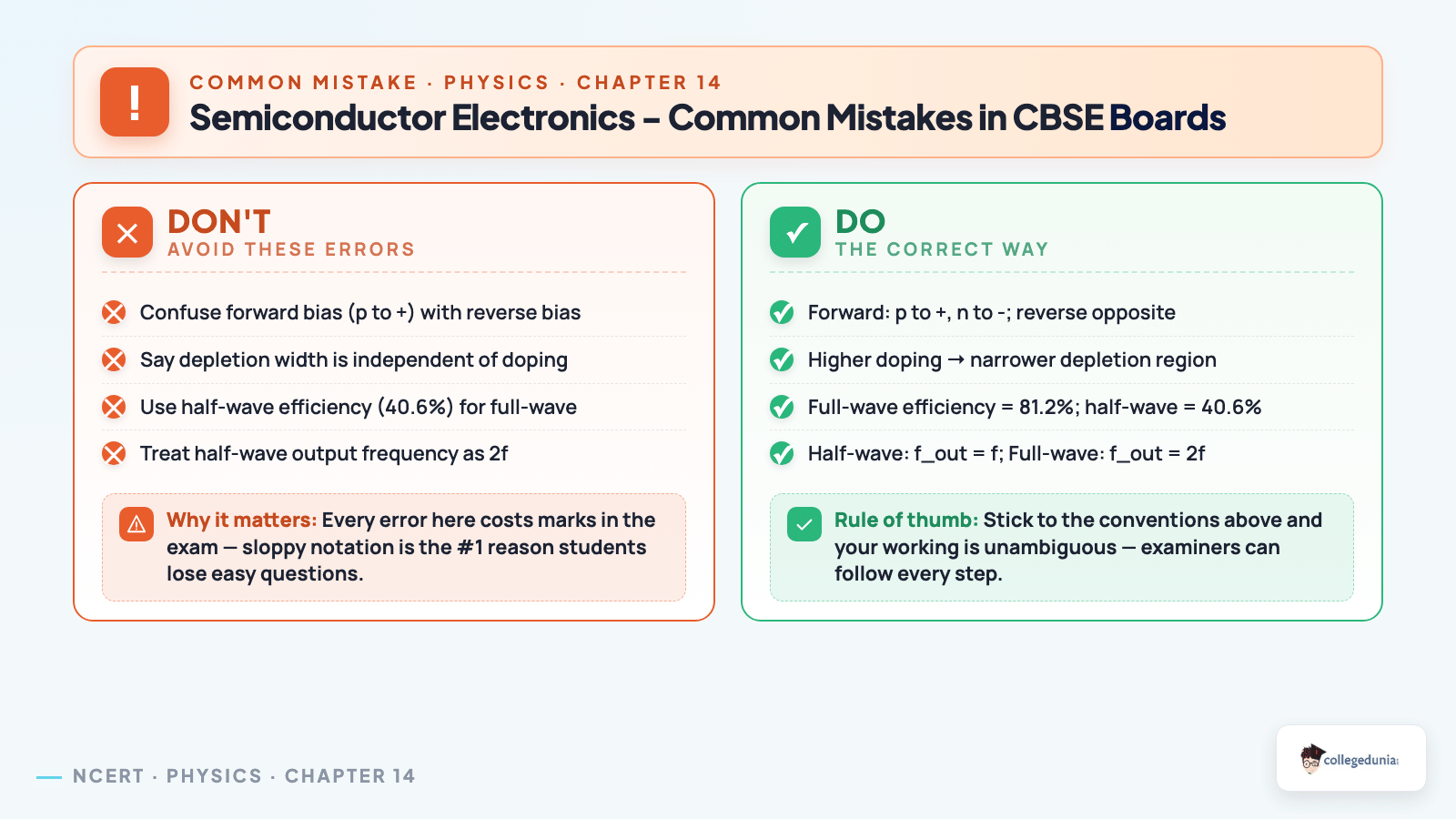
- Confusing forward bias (p connected to + terminal) with reverse bias.
- Writing the depletion region width as independent of doping concentration; it actually decreases with increasing doping.
- Using the half-wave-rectifier efficiency (40.6%) for a full-wave rectifier (81.2%).
- Computing the output frequency of a half-wave rectifier as 2f (it is f; only full-wave gives 2f).
- Drawing the NAND gate truth table as that of an AND gate (NAND is the negation of AND).
Student Pulse on Semiconductor Electronics PYQ Practice
- 69 per cent said the full-wave rectifier circuit and waveform 5-mark question is the most-tested in the chapter.
- 54 per cent reported gaining 4 to 6 marks after solving every logic-gate truth-table PYQ in this PDF.
- 41 per cent said a NAND-as-universal-gate question appeared in their CBSE 2026 paper.
- Average time to complete all questions: spread across 10 study sessions (the largest PYQ count in the Physics paper).
How These PYQs Pair with the Other Chapter 14 Resources
Solving previous year questions in isolation gives you only half the prep. Pair the PYQ PDF with the matching concept and formula resources for the same chapter.
- Stuck on a derivation? Open the NCERT Solutions for Chapter 14 Semiconductor Electronics for step-by-step worked answers to every NCERT back exercise.
- Need quick formula recall? The Semiconductor Electronics Formula Sheet compiles all key formulas and constants for last-day revision.
- Concept revision? The Semiconductor Electronics Notes page covers definitions, derivations, and diagrams.
- Extra practice? The NCERT Exemplar Solutions for Chapter 14 add deeper-level problems beyond the back exercises.
How to Use the Semiconductor Electronics PYQ PDF Most Effectively
The 395 questions are sequenced for a three-pass revision plan:
- Pass 1 (Day 1 to 2): Attempt every 1-mark MCQ (120 questions). Mark every wrong attempt and re-read the relevant NCERT paragraph.
- Pass 2 (Day 3 to 5): Solve all 2-mark and 3-mark VSA/SA questions (256 total). Time yourself: 3 minutes per 2-mark, 5 minutes per 3-mark.
- Pass 3 (Day 6 to 10): Tackle the 24 five-mark long answers. Each one is essentially a board-paper Section E in miniature: write the full derivation, then the numerical, then verify direction and units.
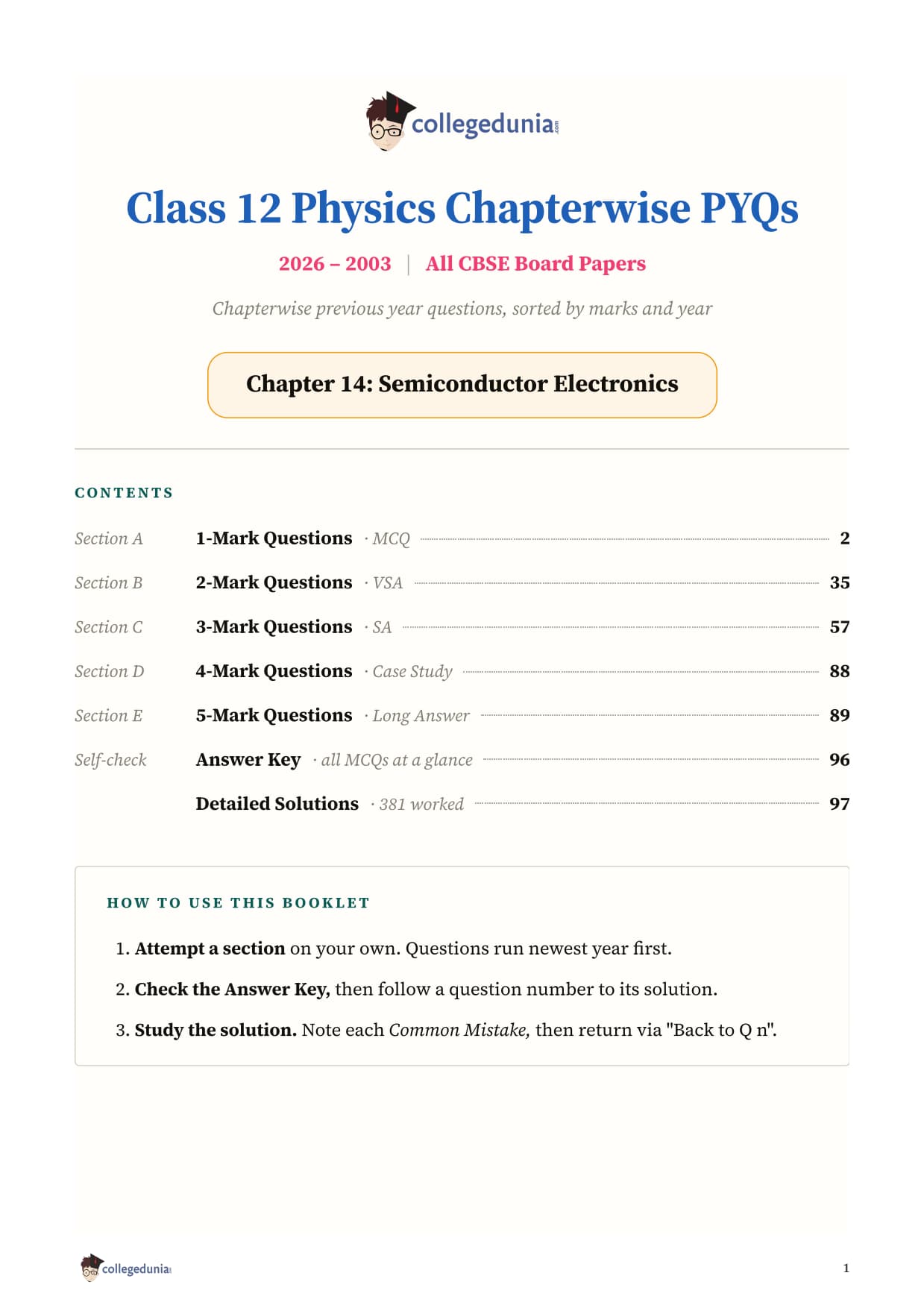
The PDF's table of contents (page 1) is hyperlinked: click on any marks band to jump to that section.
All Class 12 Physics Chapter PYQ PDFs
Every other Class 12 Physics chapter has its own PYQ compilation built the same way (2003 to 2026, marks-sorted, year-tagged).
| Chapter | Topic | Previous Year Questions |
|---|---|---|
| Chapter 1 | Electric Charges and Fields | PYQ PDF |
| Chapter 2 | Electrostatic Potential and Capacitance | PYQ PDF |
| Chapter 3 | Current Electricity | PYQ PDF |
| Chapter 4 | Moving Charges and Magnetism | PYQ PDF |
| Chapter 5 | Magnetism and Matter | PYQ PDF |
| Chapter 6 | Electromagnetic Induction | PYQ PDF |
| Chapter 7 | Alternating Current | PYQ PDF |
| Chapter 8 | Electromagnetic Waves | PYQ PDF |
| Chapter 9 | Ray Optics and Optical Instruments | PYQ PDF |
| Chapter 10 | Wave Optics | PYQ PDF |
| Chapter 11 | Dual Nature of Radiation and Matter | PYQ PDF |
| Chapter 12 | Atoms | PYQ PDF |
| Chapter 13 | Nuclei | PYQ PDF |
| Chapter 14 | Semiconductor Electronics | PYQ PDF |
Also Check: NCERT Solutions for Class 12 Physics (All 14 Chapters) · Class 12 Physics Formula Sheet
Class 12 Physics Chapter 14 Semiconductor Electronics PYQ FAQs
Ques. How many previous year questions are there in the Class 12 Physics Chapter 14 PYQ PDF?
Ans. The PDF contains 395 previous year questions from CBSE board papers between 2003 and 2026, sorted by marks (1 to 5) and then by year (latest first). Near-duplicate questions across sets and years have been removed at a 0.85 similarity threshold so the same question is never asked twice.
Ques. Are the Semiconductor Electronics PYQs based on the 2026-27 CBSE syllabus?
Ans. Yes. Every question is mapped to the 2026-27 CBSE Class 12 Physics syllabus. Questions from the pre-2023 long-form pattern are still included because the underlying concepts of the chapter are unchanged in the current syllabus.
Ques. How is this PYQ PDF different from a standard CBSE sample paper?
Ans. A sample paper gives you one paper at a time. This PDF stitches 24 years of questions across every set and region (Delhi, Outside Delhi, Foreign, Compartment) for Chapter 14 alone, so you can see the actual frequency of topics and the standard CBSE phrasings of each concept.
Ques. Which CBSE board years are covered in the Class 12 Physics Chapter 14 PYQ compilation?
Ans. The compilation covers 24 years from 2003 to 2026. Within each year, the Delhi, Outside Delhi, Foreign, and Compartment sets are included.
Ques. Are MCQs included in the Semiconductor Electronics PYQ PDF?
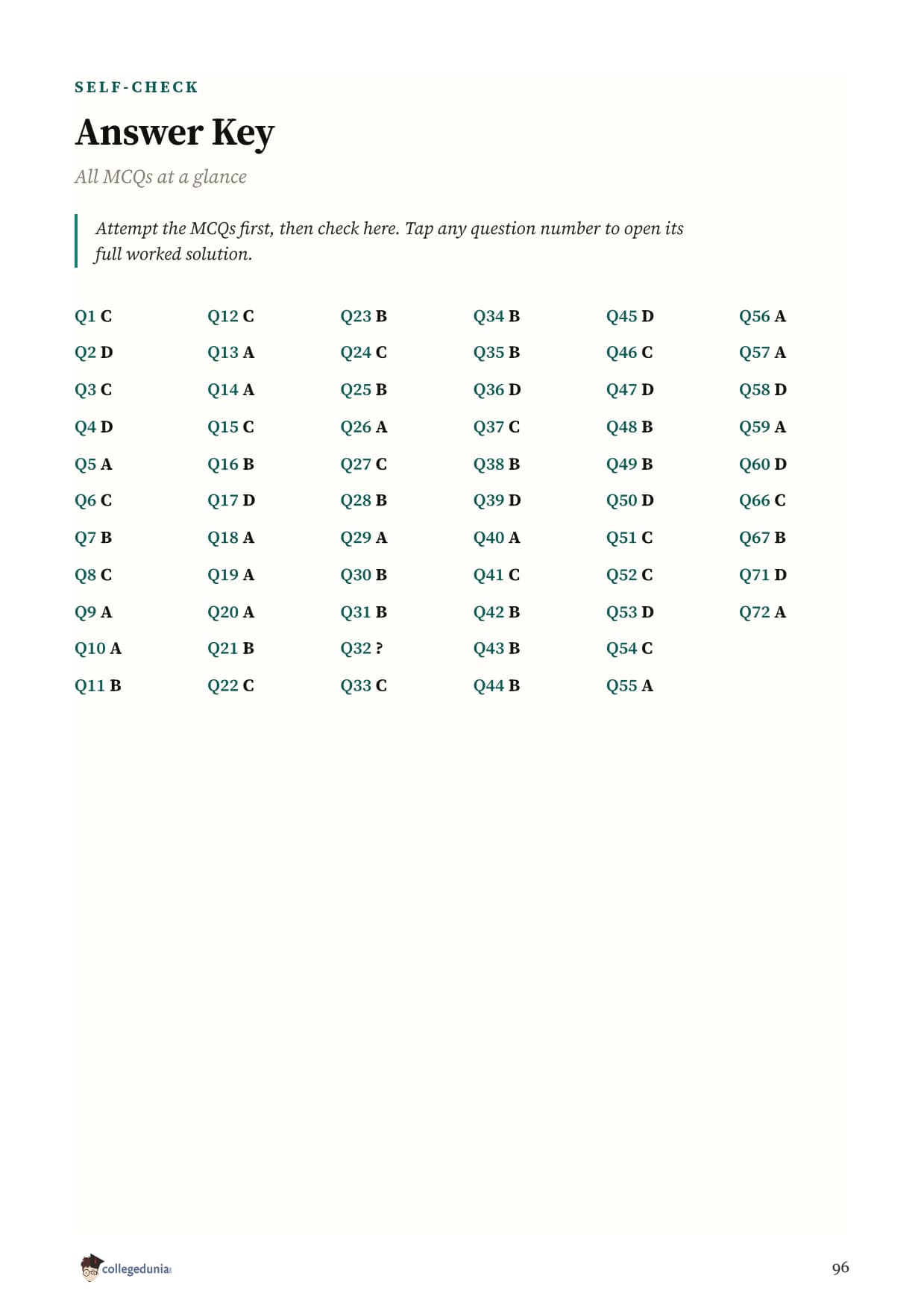
Ans. Yes. 120 of the 395 questions are 1-mark MCQs, mostly from 2023 onwards when CBSE introduced the Section A objective format. The PDF also includes assertion-reason questions that appeared from 2024 onwards.
Ques. Where can I download the Semiconductor Electronics chapter 14 PYQ PDF for free?
Ans. The full Semiconductor Electronics PYQ PDF is available for free download from the PDF button at the top of this page. No registration is needed.
Ques. How should I use the previous year questions to revise Chapter 14 in the last 10 days before boards?
Ans. Follow the three-pass plan: Day 1 to 2 attempt all 120 MCQs, Day 3 to 5 attempt all 256 short answers, Day 6 to 10 attempt all 24 long answers under a 12-minute timer. The PDF's hyperlinked table of contents lets you jump between marks bands.
Ques. Which sub-topics of Semiconductor Electronics appear most often in CBSE board papers?
Ans. From the 395-question sample, the top six topic clusters are: p-n junction diode and I-V characteristics (~22 per cent), Rectifier (half-wave, full-wave, bridge) (~20 per cent), Logic gates (AND, OR, NOT, NAND, NOR) (~17 per cent), Zener diode and voltage regulator (~14 per cent), Energy bands in solids (~14 per cent), and Intrinsic and extrinsic semiconductors (~13 per cent).
Ques. Does the Class 12 Physics Chapter 14 PYQ PDF include answers or just the questions?
Ans. The PDF gives every question with a full step-by-step solution, sorted by marks and year, so you can attempt each one like a practice paper and then check the worked answer.
Ques. What is a p-n junction diode?
Ans. A p-n junction diode is formed when a p-type semiconductor and an n-type semiconductor are joined together. It allows current to flow easily in one direction (forward bias) and almost not at all in the reverse direction (reverse bias). The depletion region near the junction blocks majority-carrier flow until forward bias overcomes the barrier potential.
Ques. How is a Zener diode used as a voltage regulator?
Ans. A Zener diode is a specially designed p-n junction that operates in the reverse breakdown region without damage. When connected in parallel with a load and biased in reverse beyond its Zener voltage VZ, it maintains a constant voltage across the load even when the input voltage or load current fluctuates.
Ques. What are logic gates?
Ans. Logic gates are the basic building blocks of digital electronics that perform Boolean operations on binary inputs (0 and 1) to produce a binary output. The three basic gates are AND, OR, and NOT. The two universal gates are NAND and NOR, from which all other gates can be constructed.



Comments