




Human Reproduction is one of the highest-scoring chapters in the CBSE and NEET Biology paper, so the questions repeat in a predictable pattern.
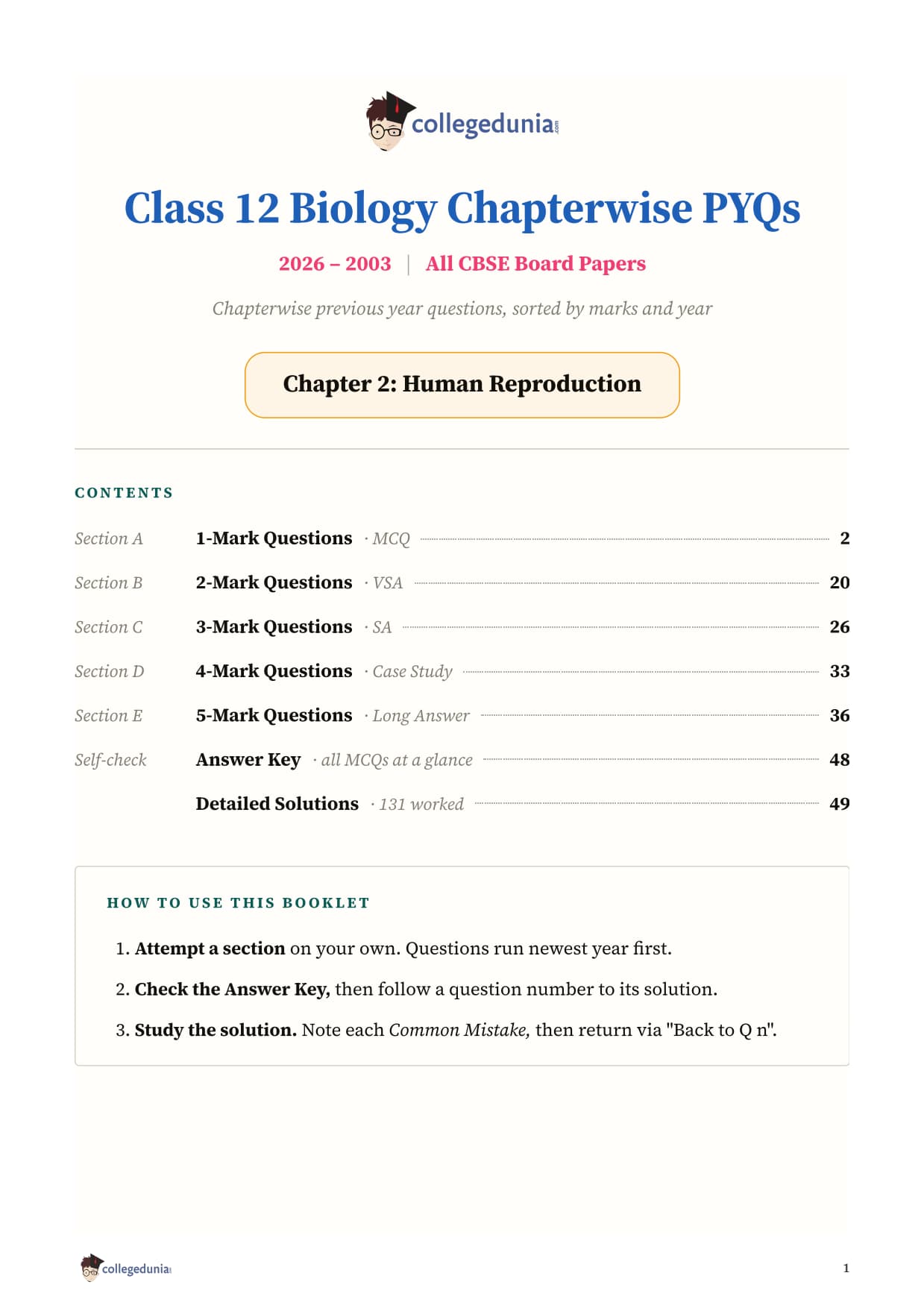
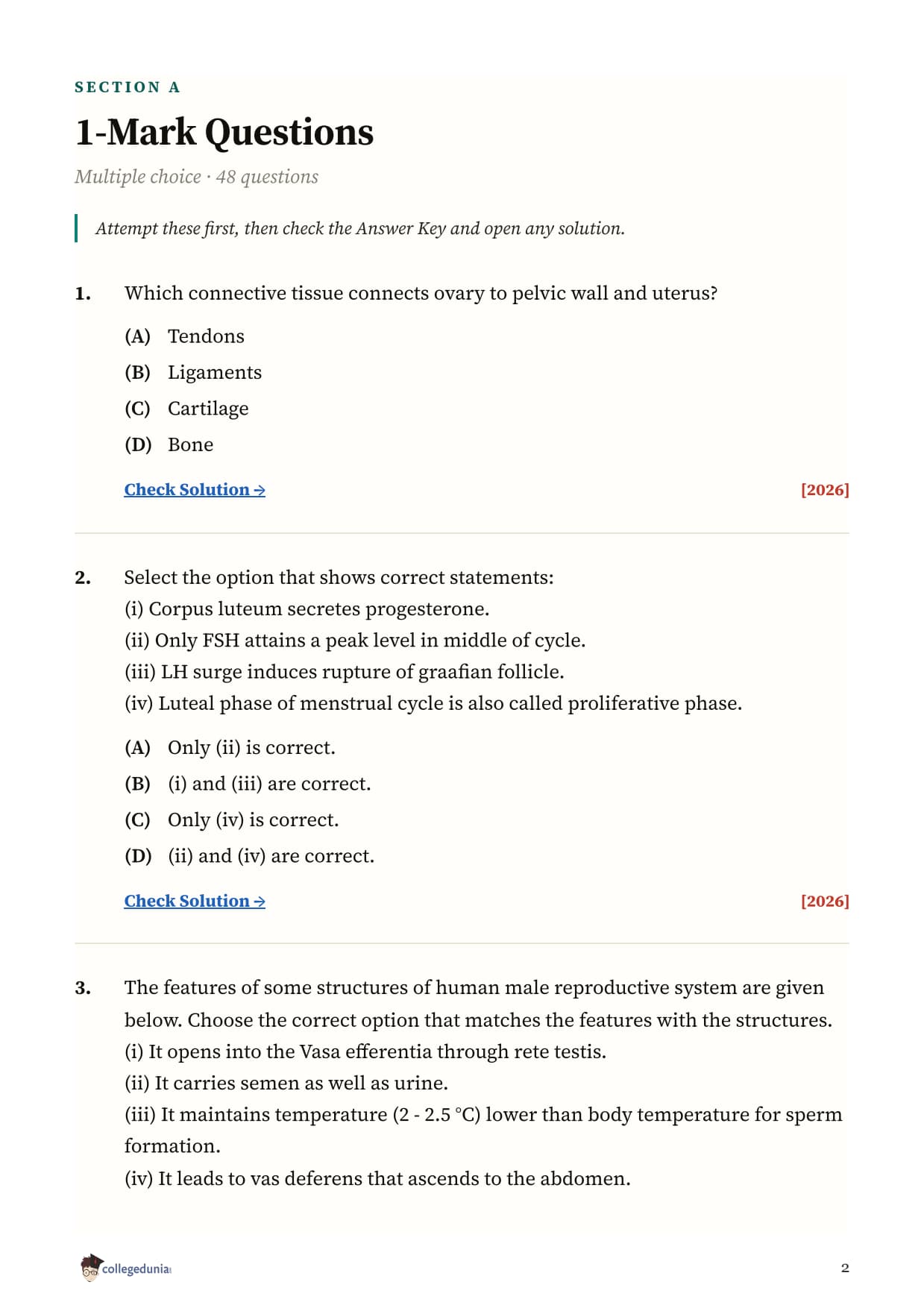
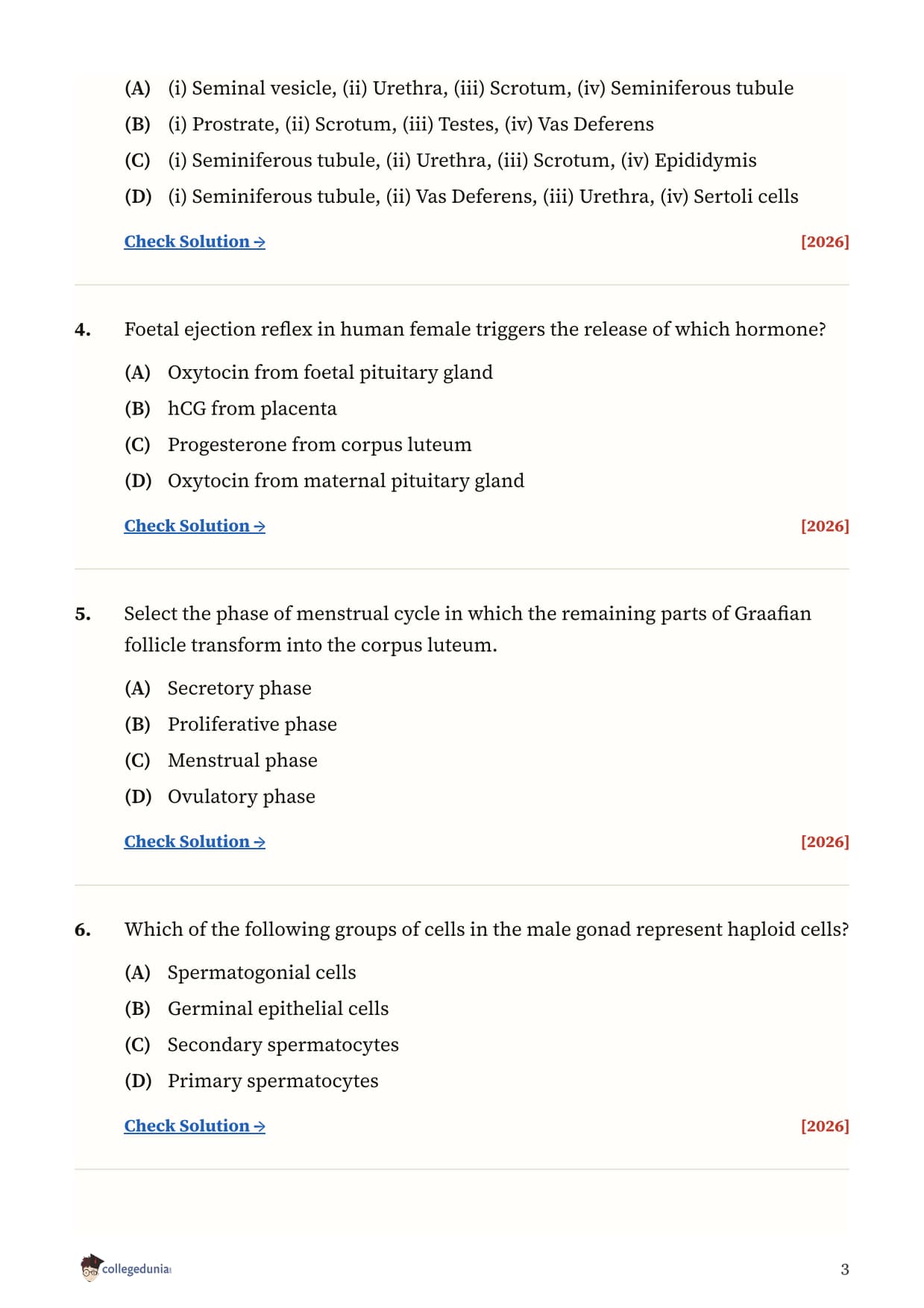
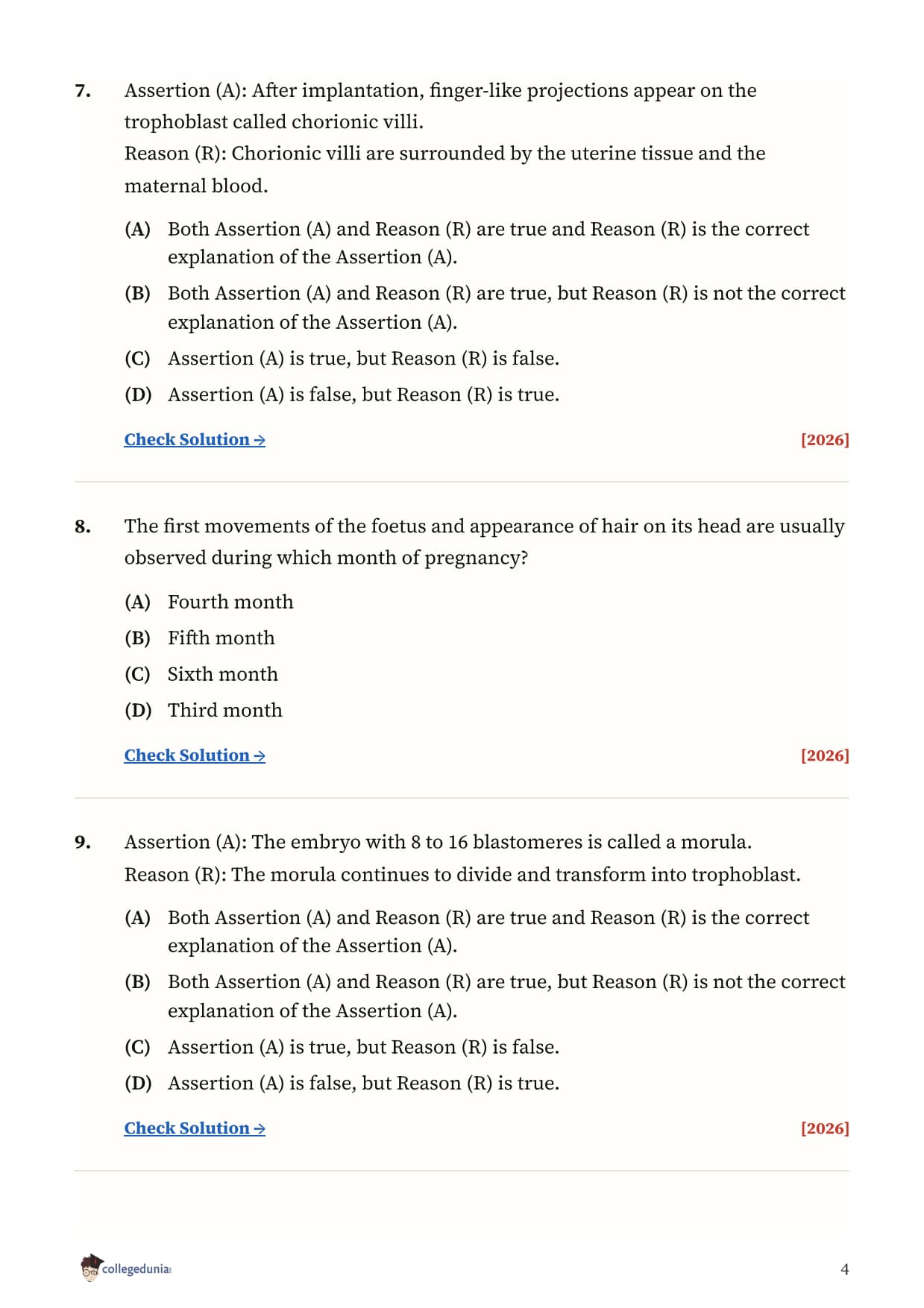
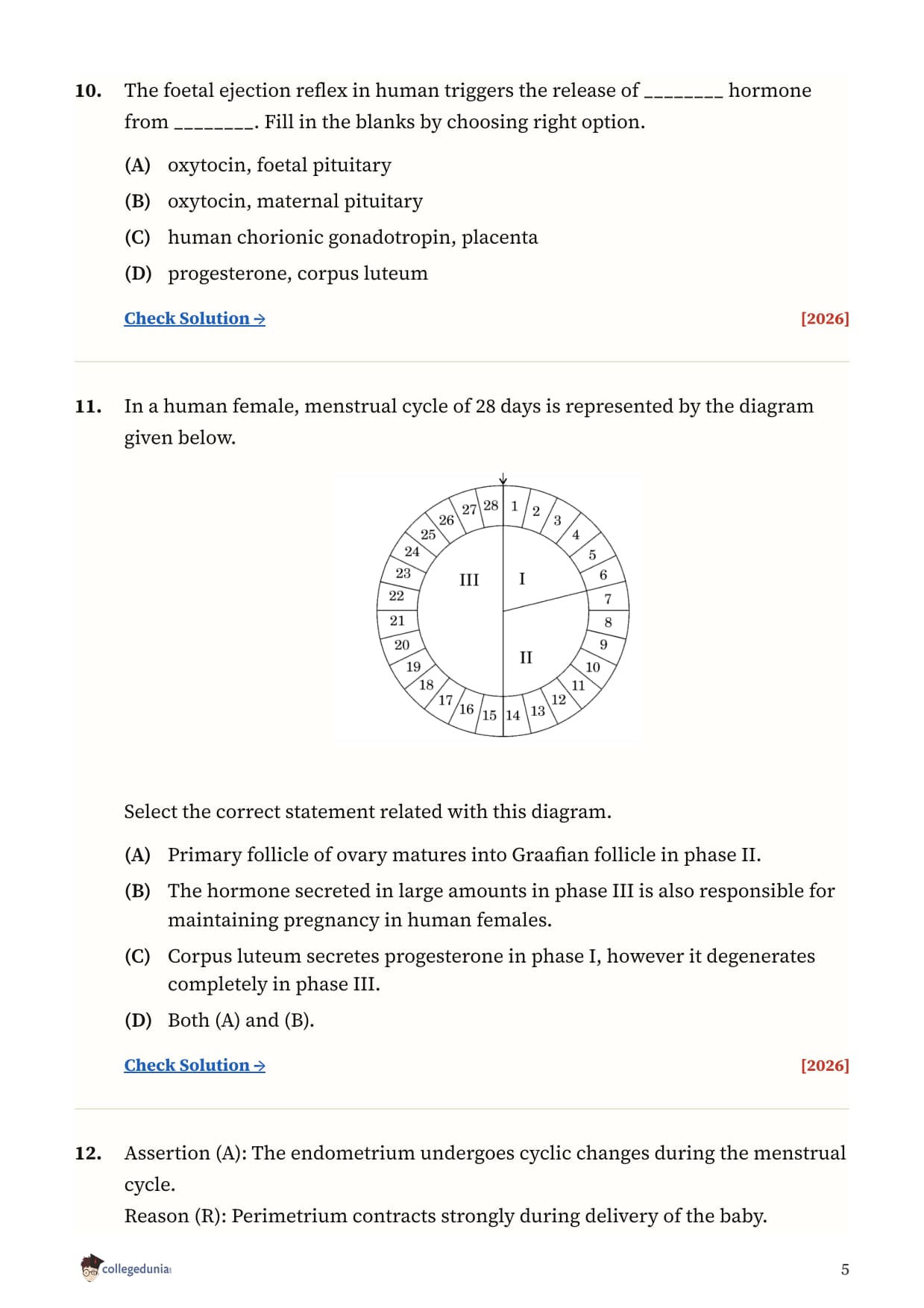
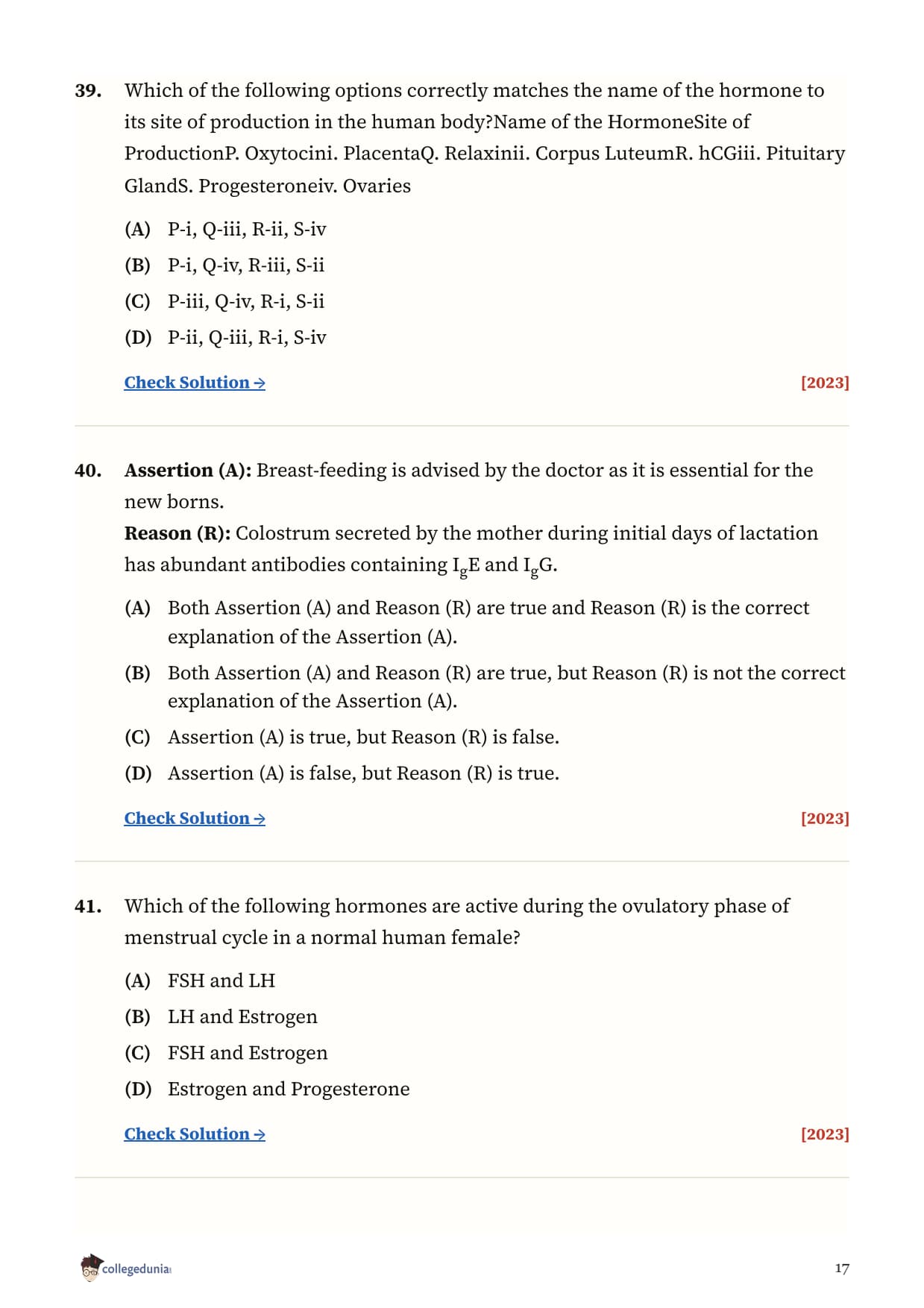
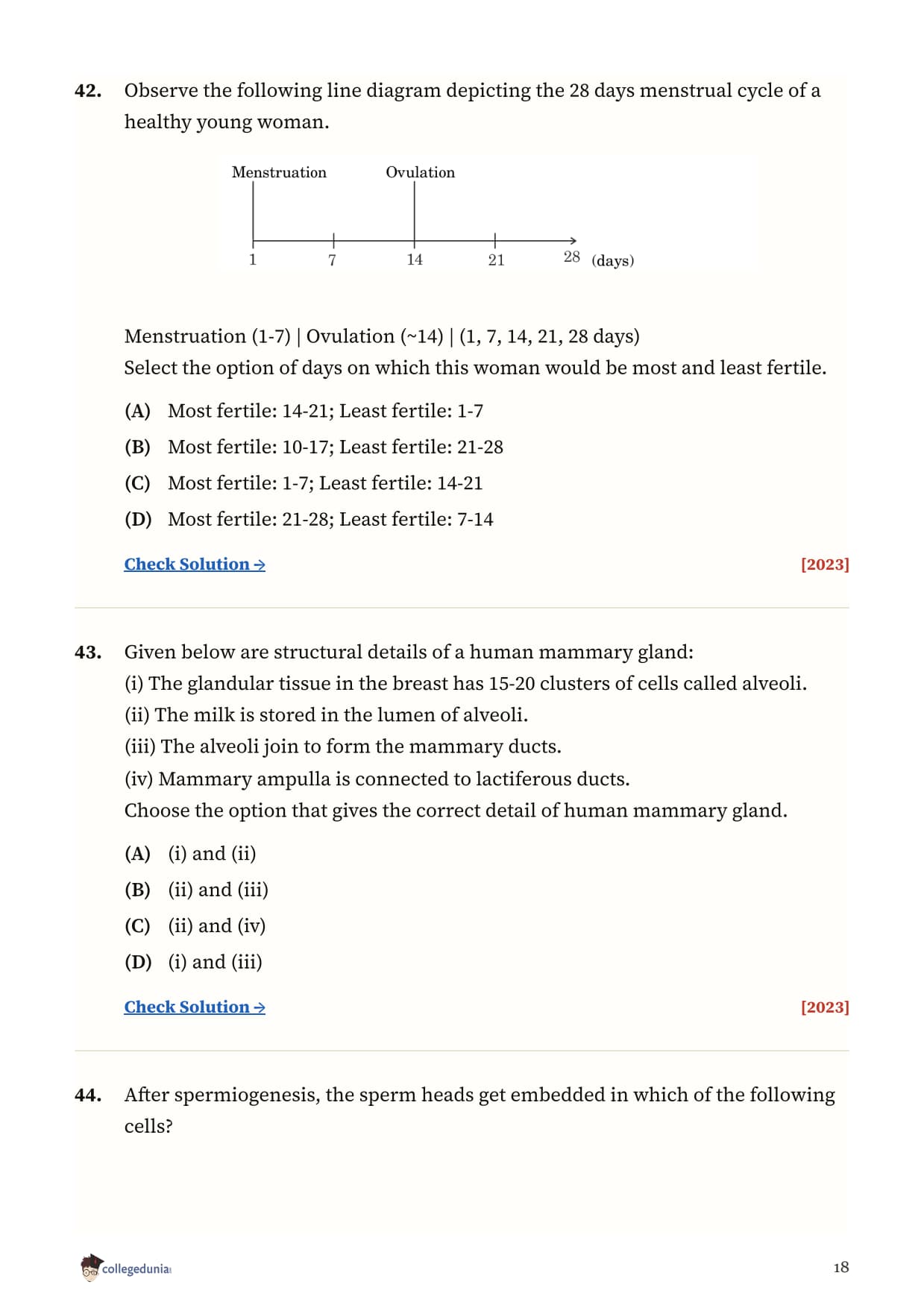
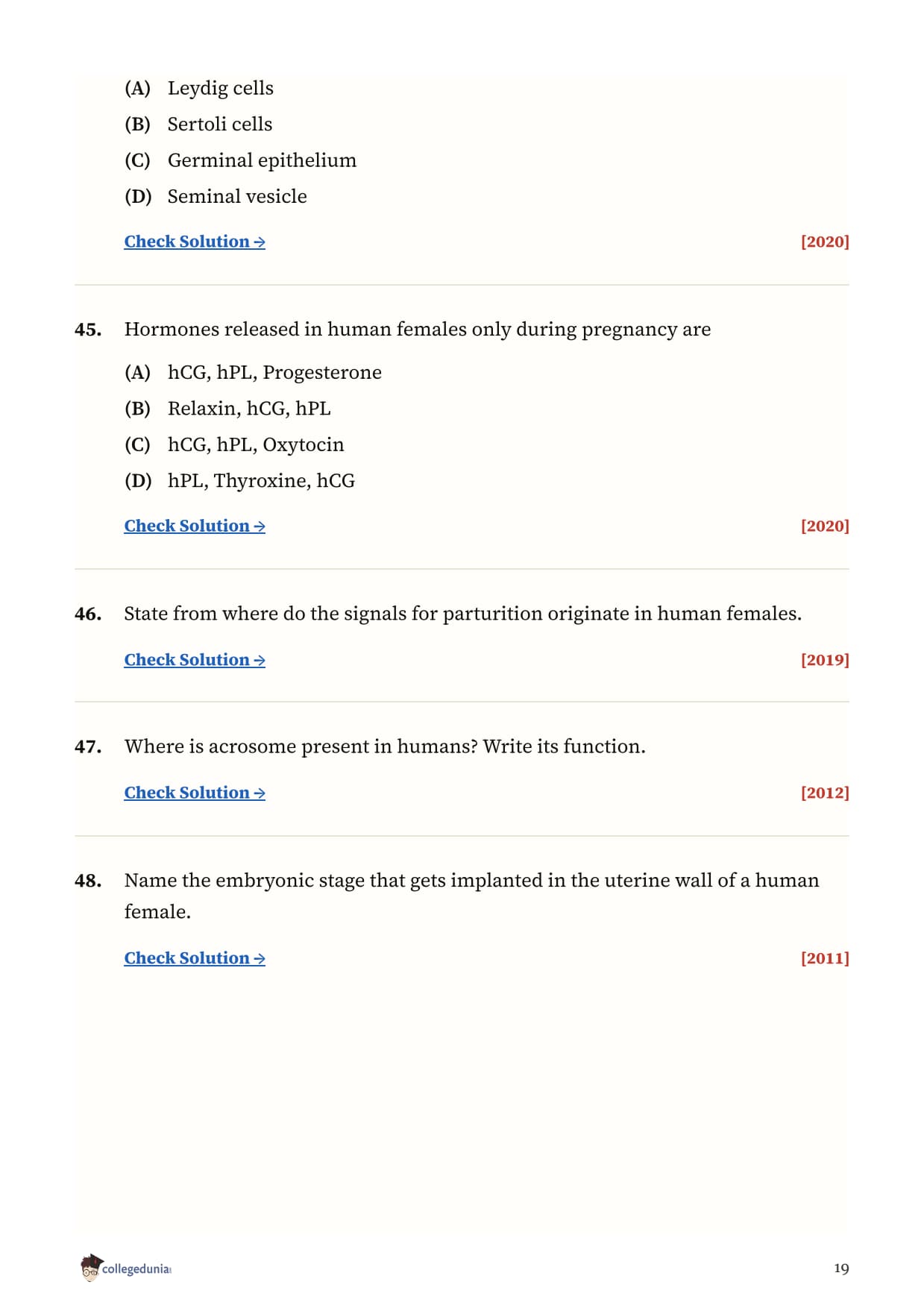
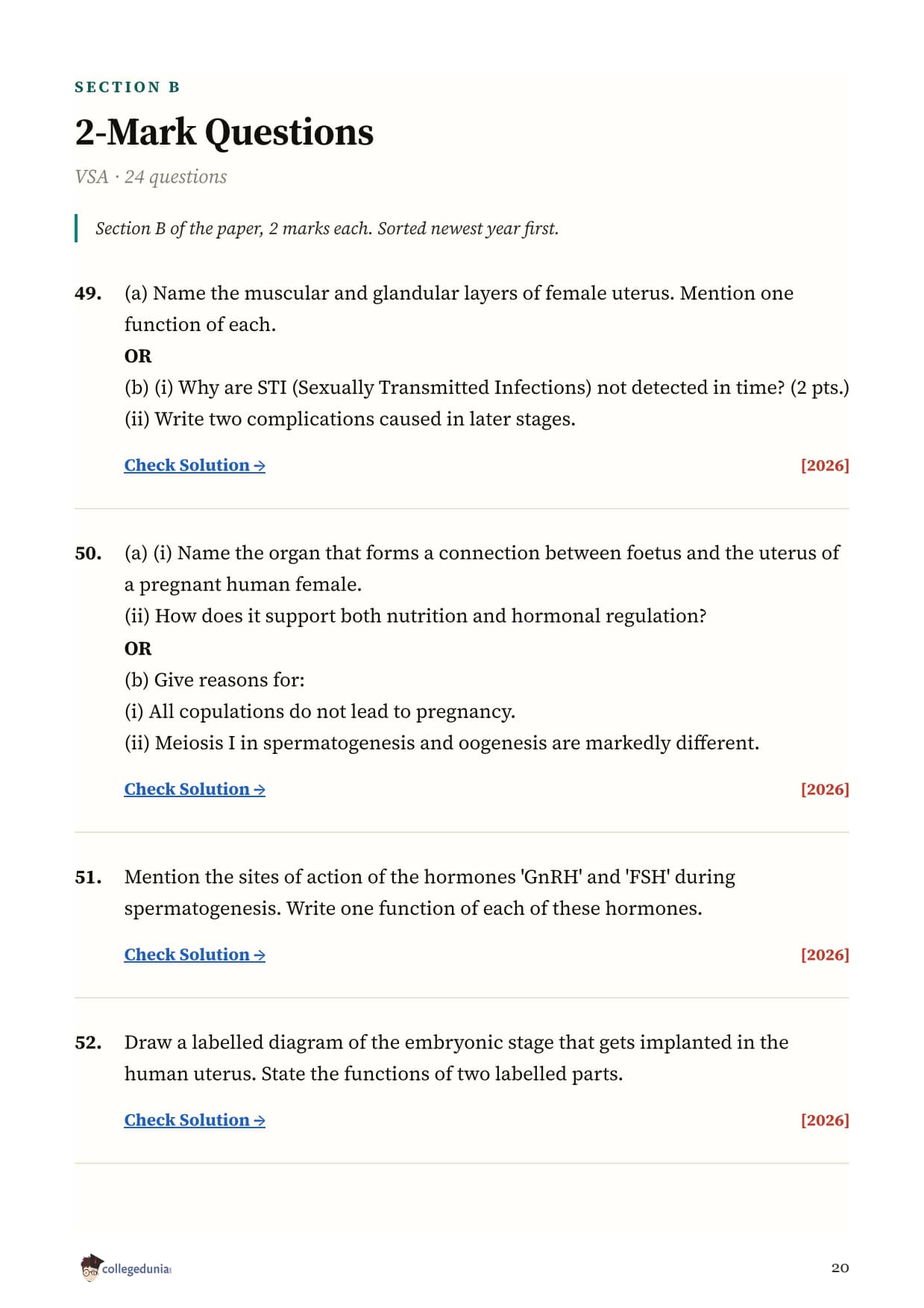
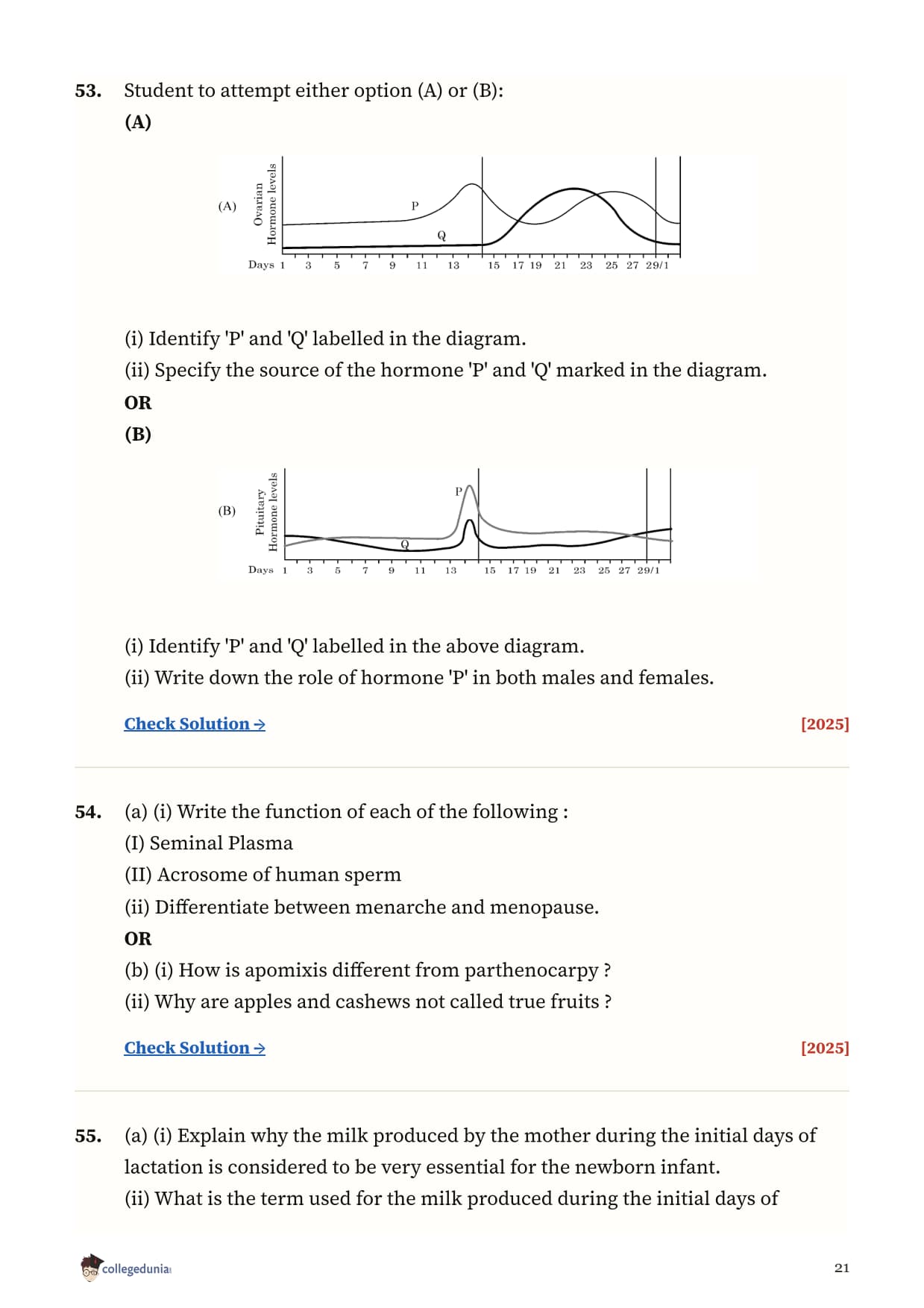
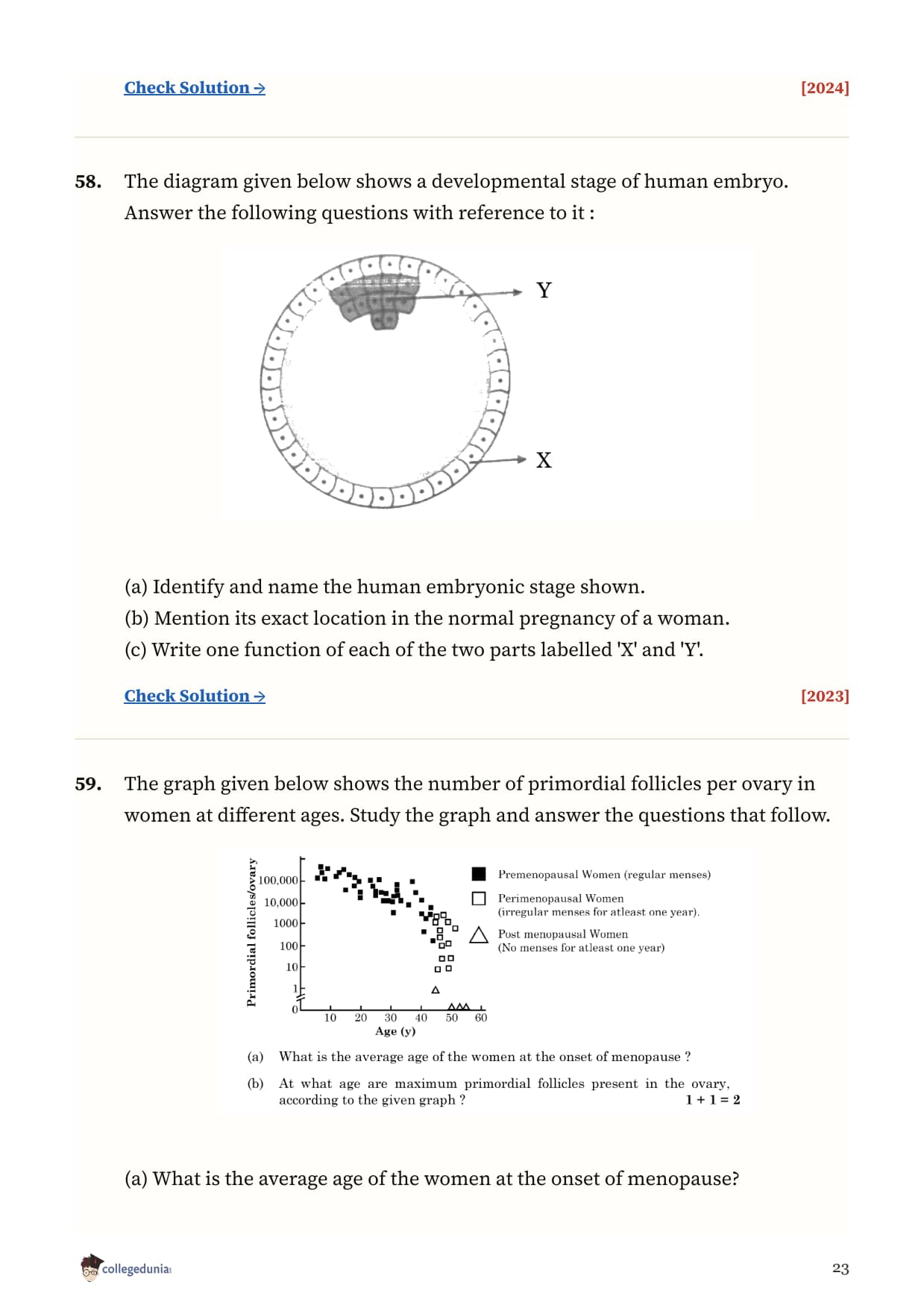
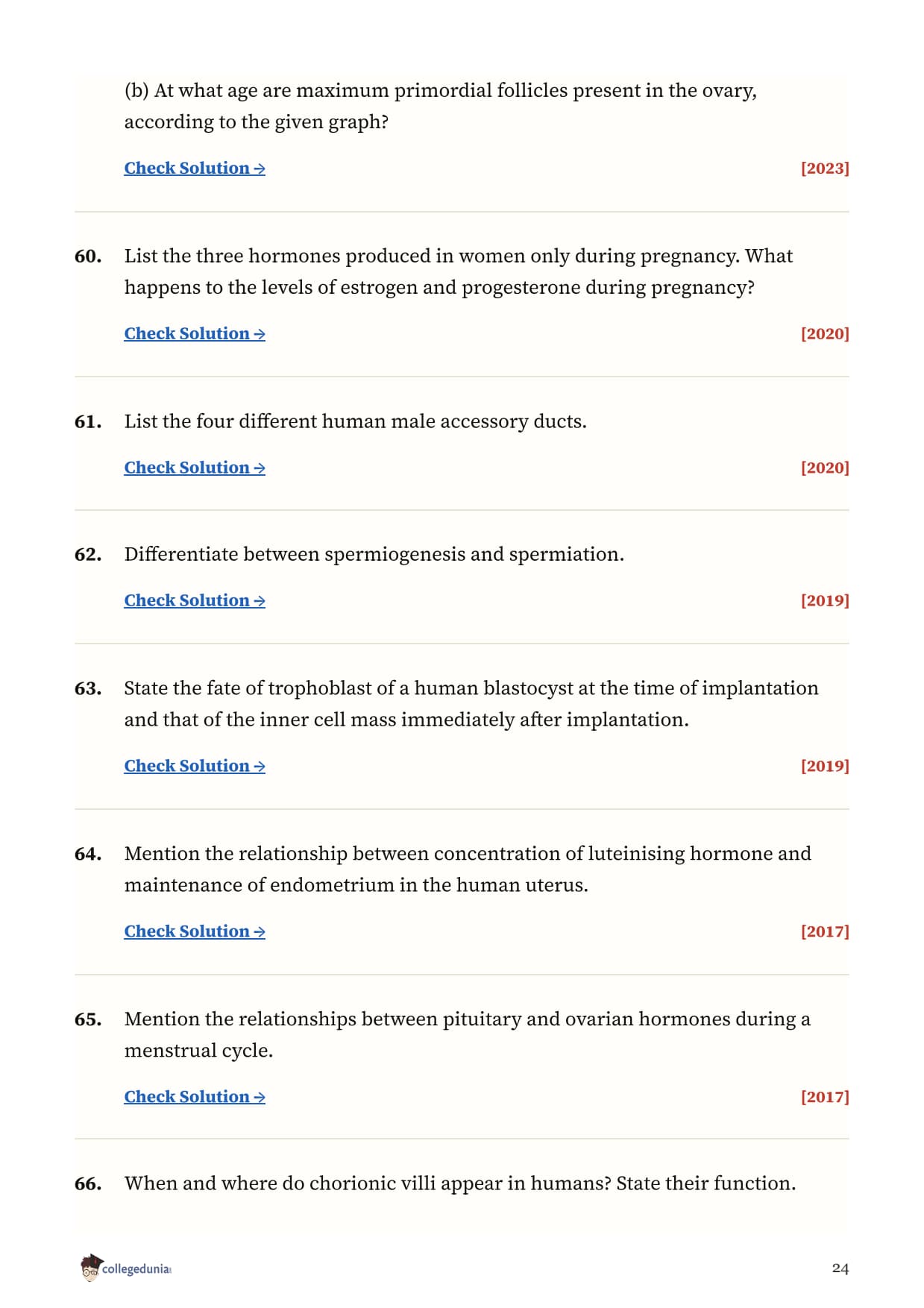

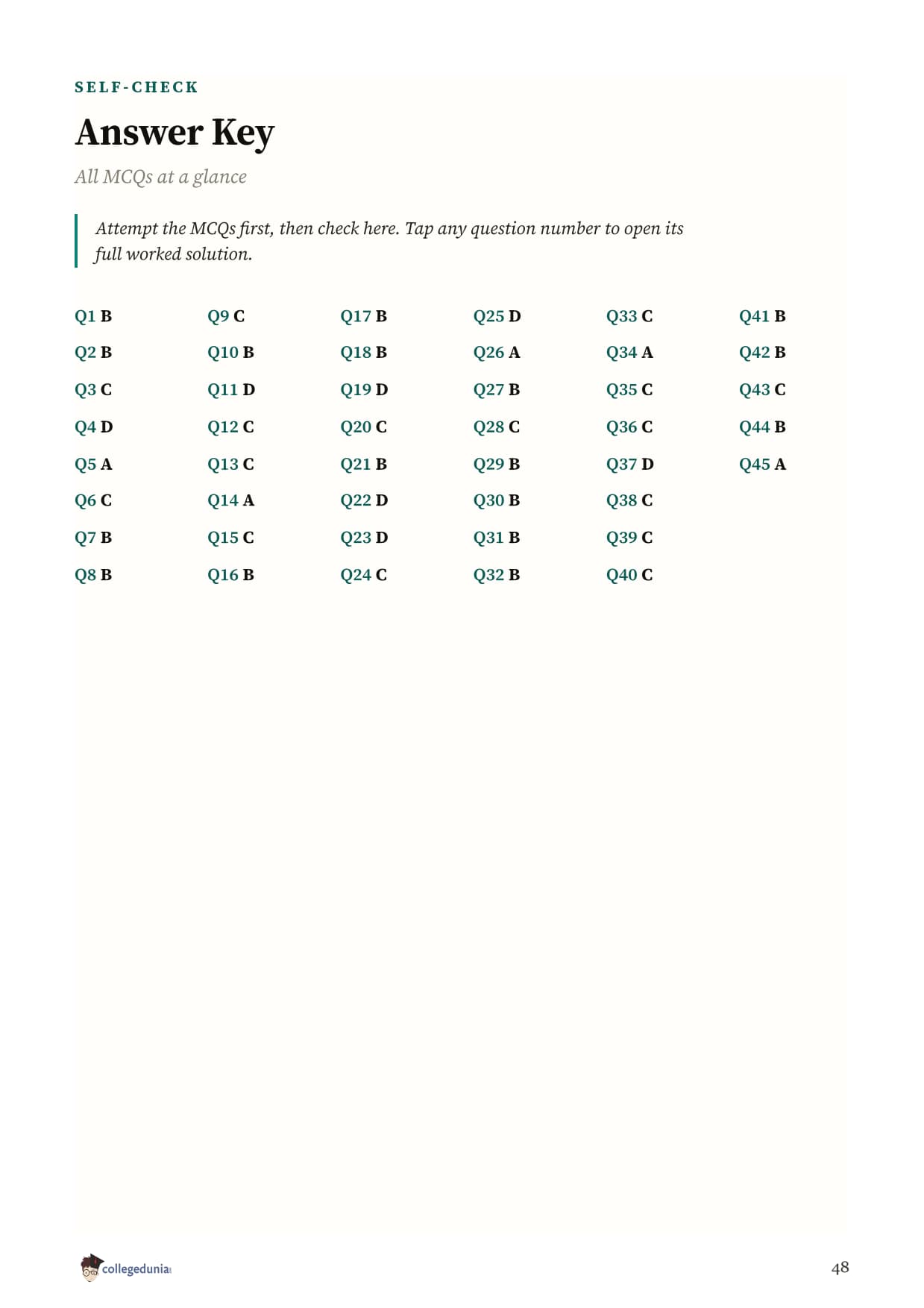
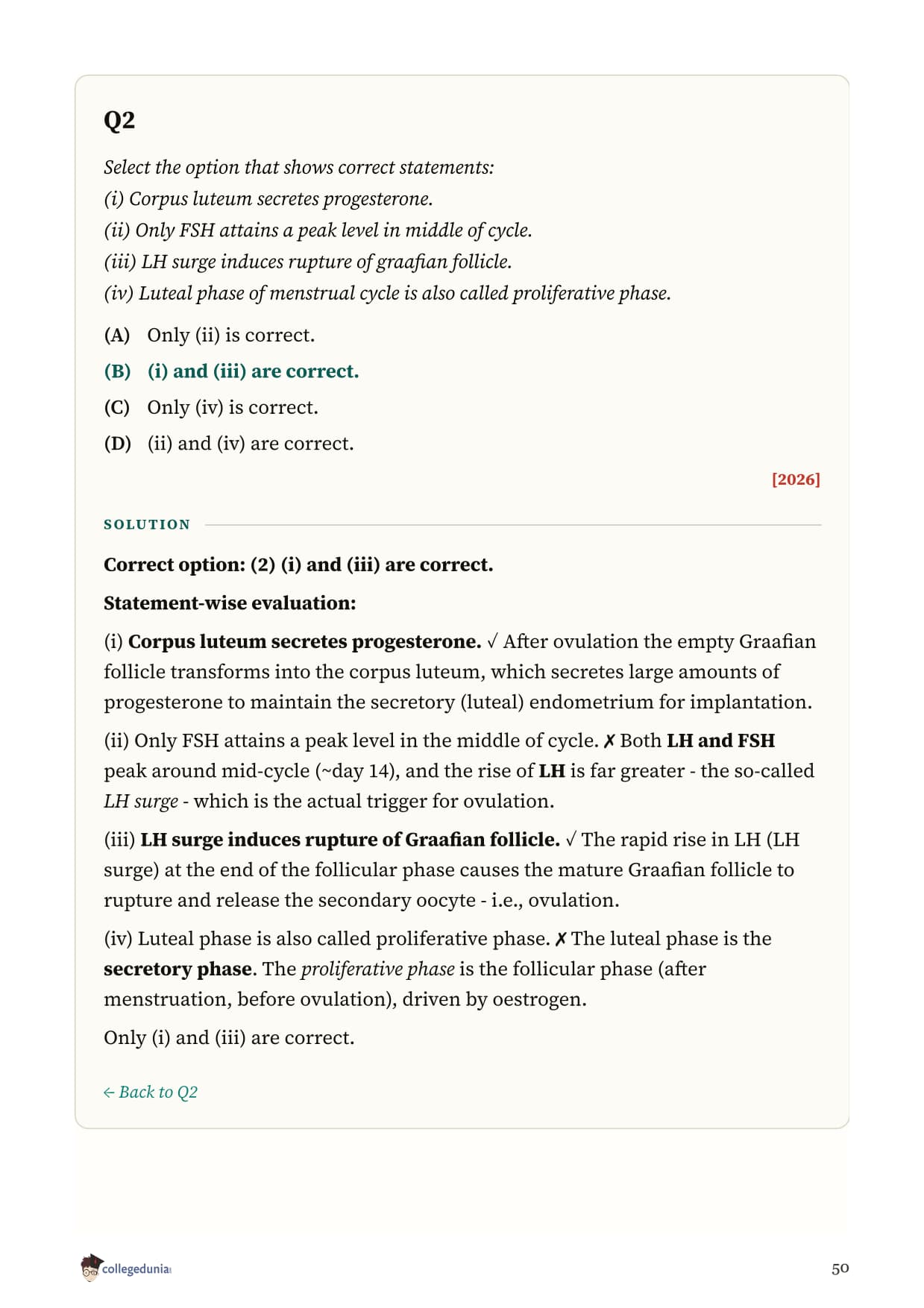
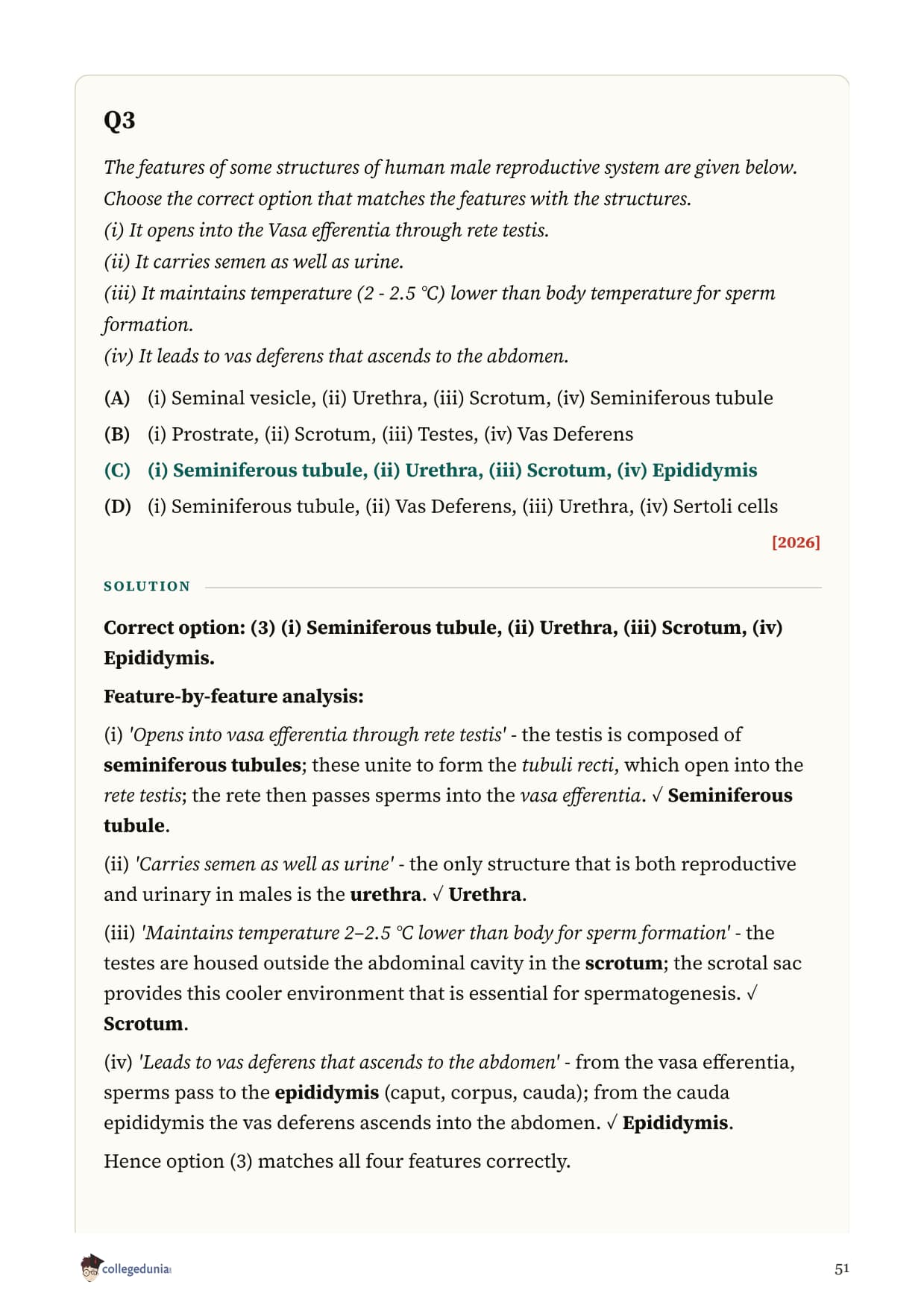
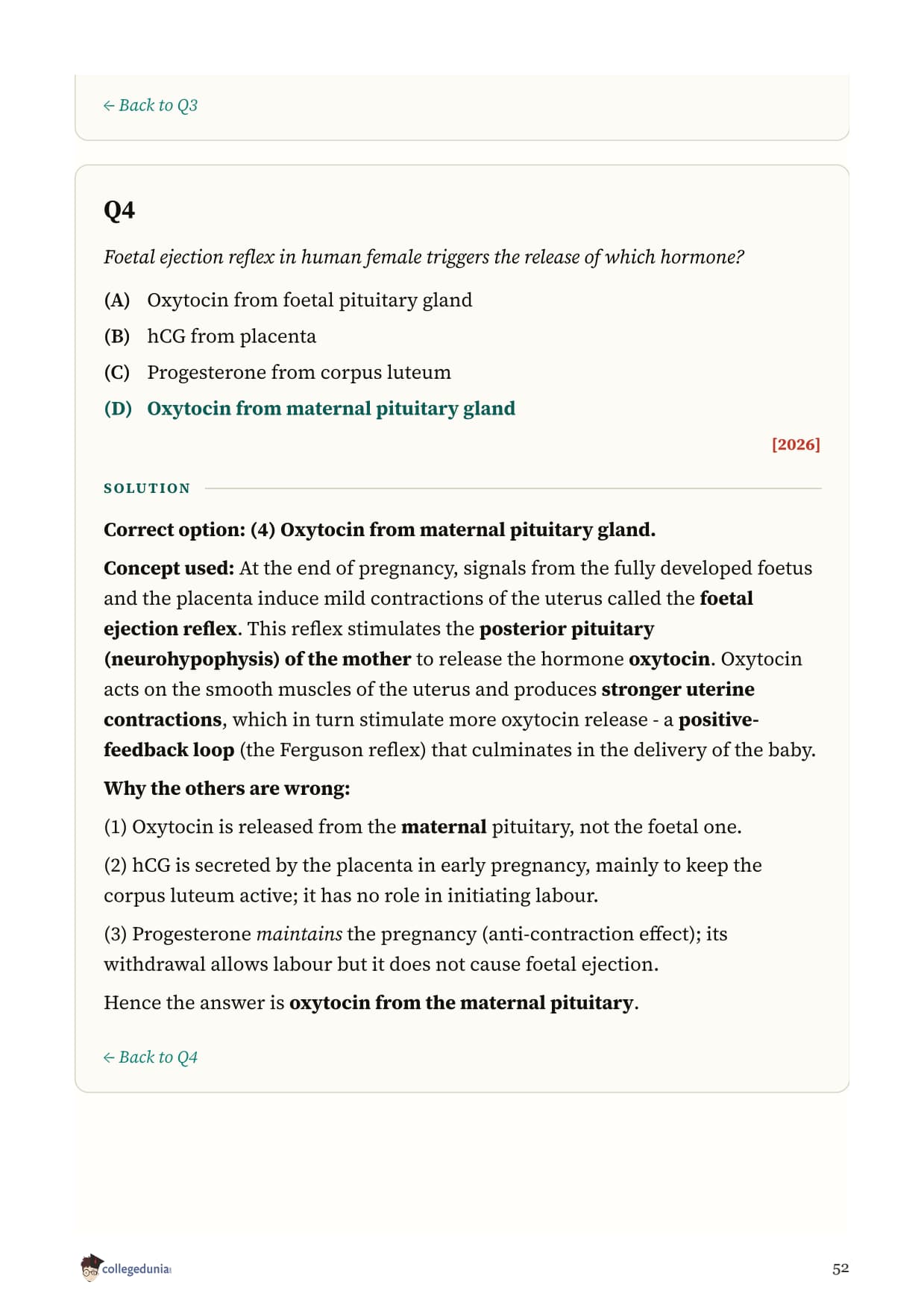
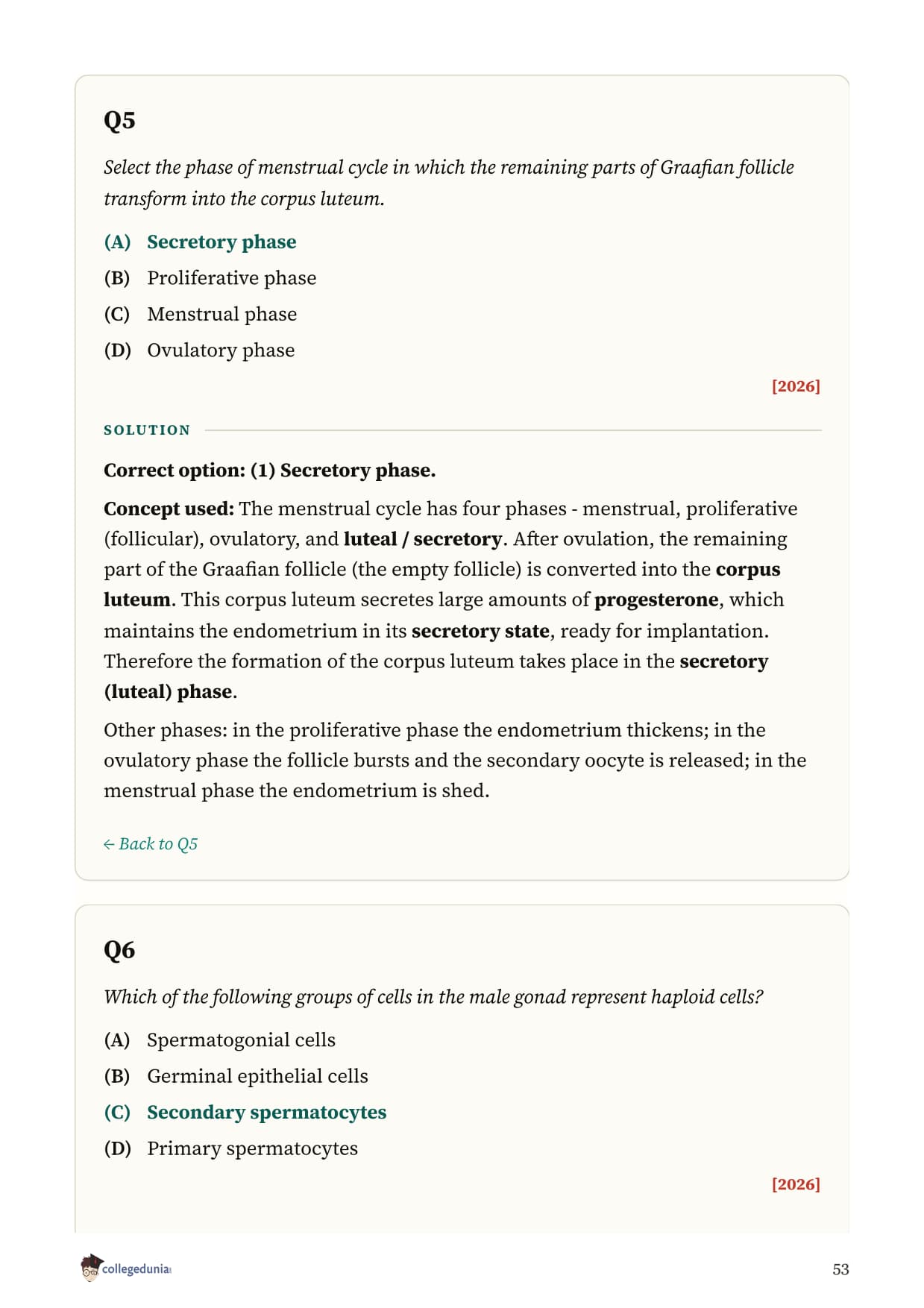
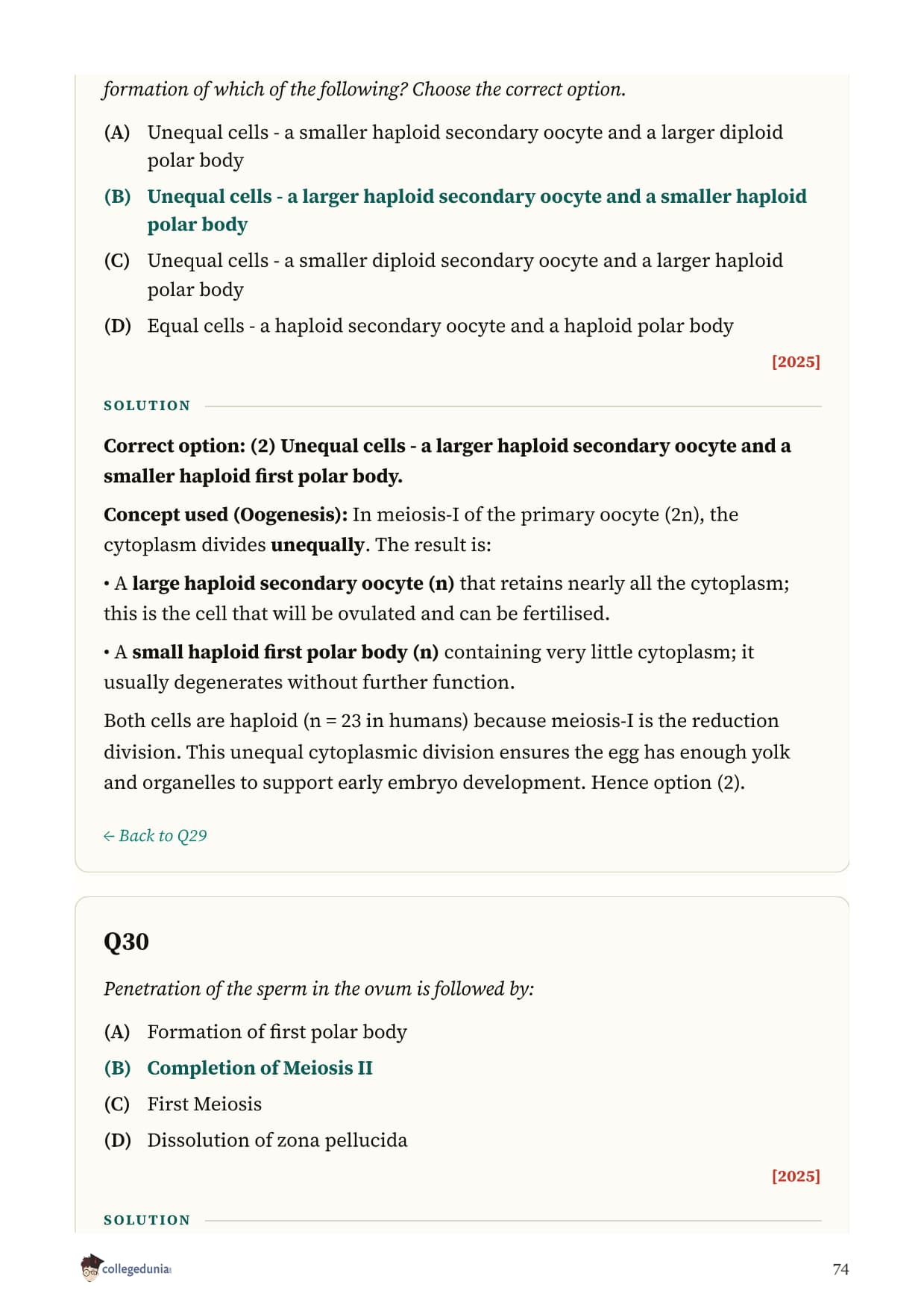
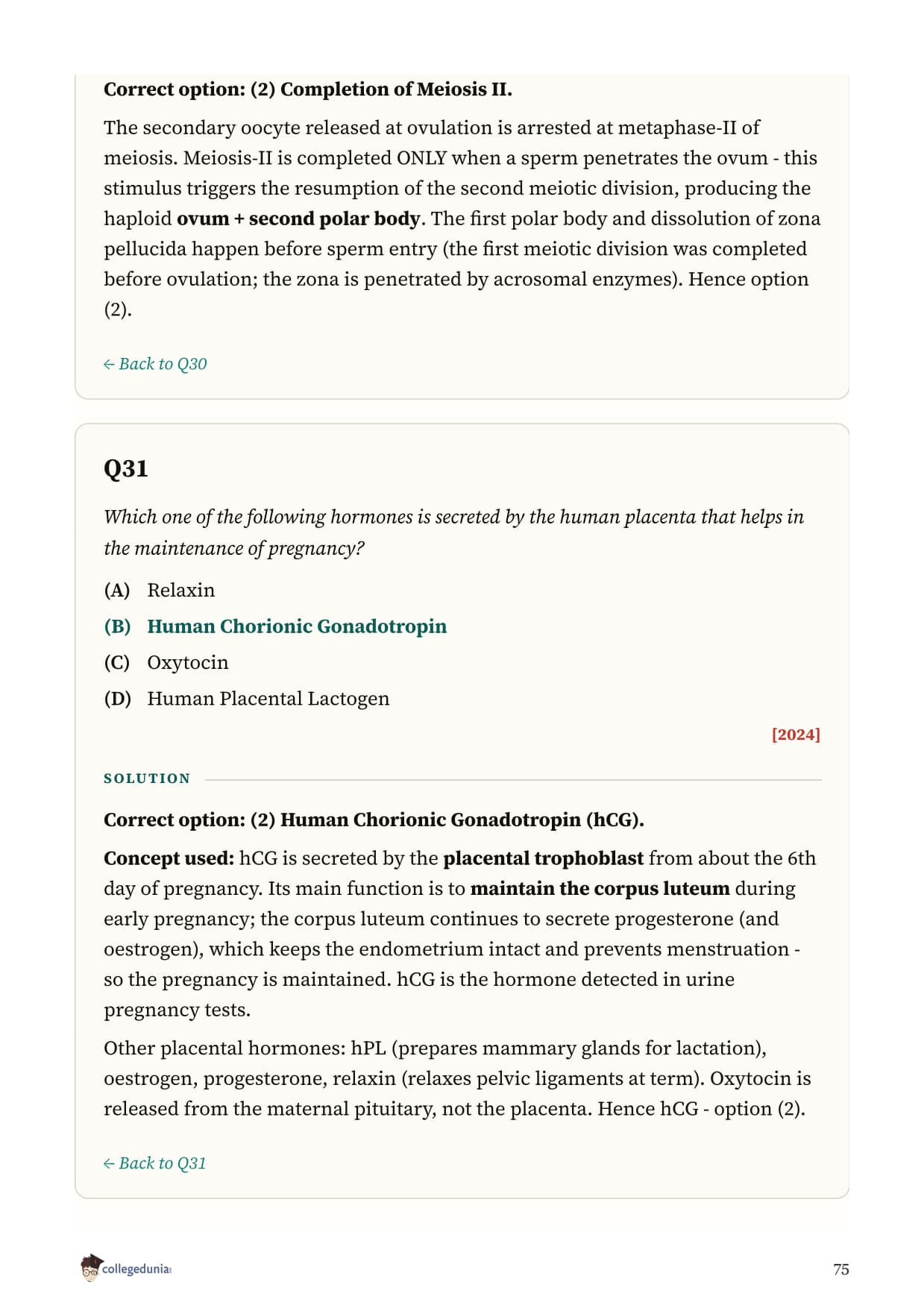
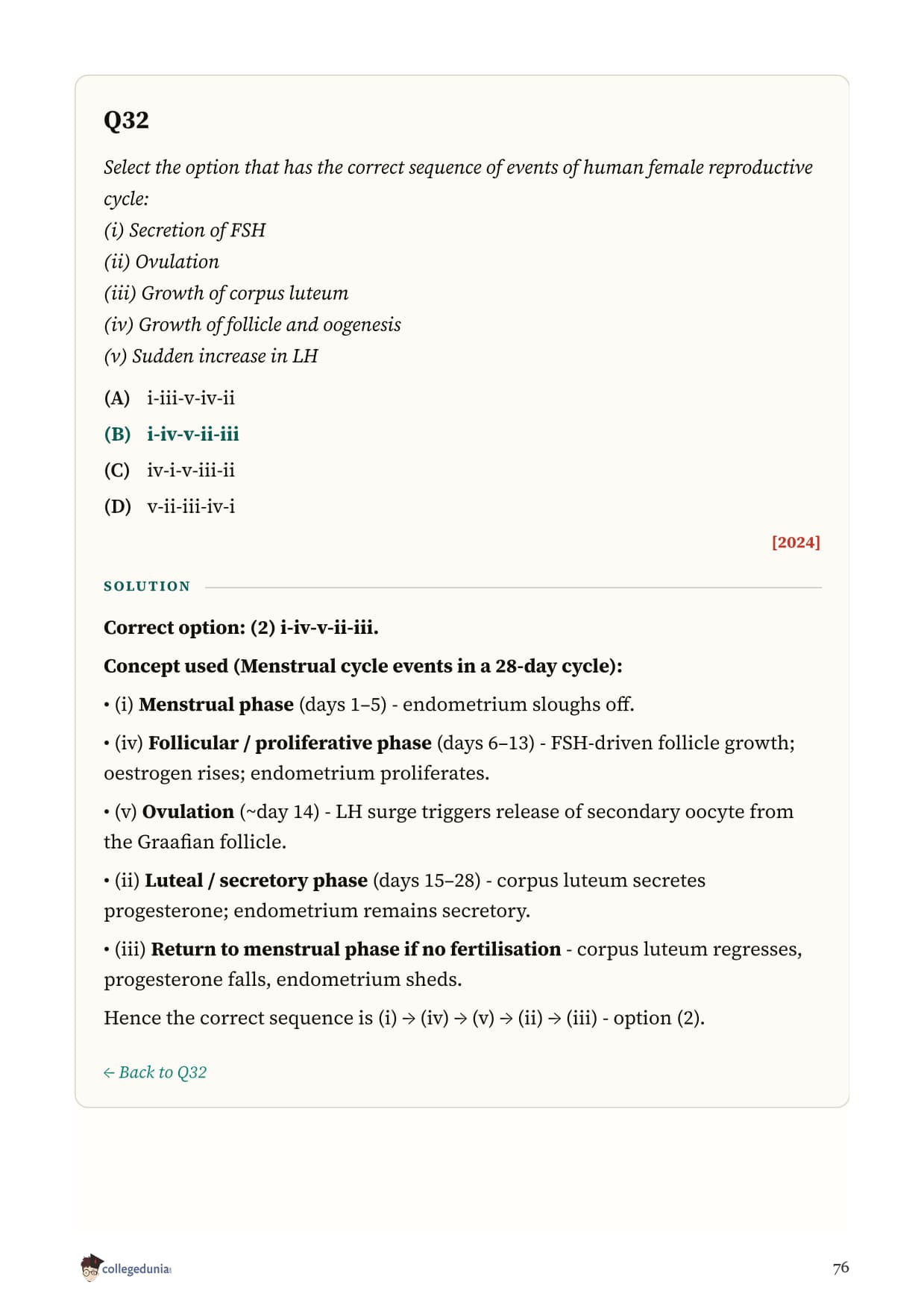
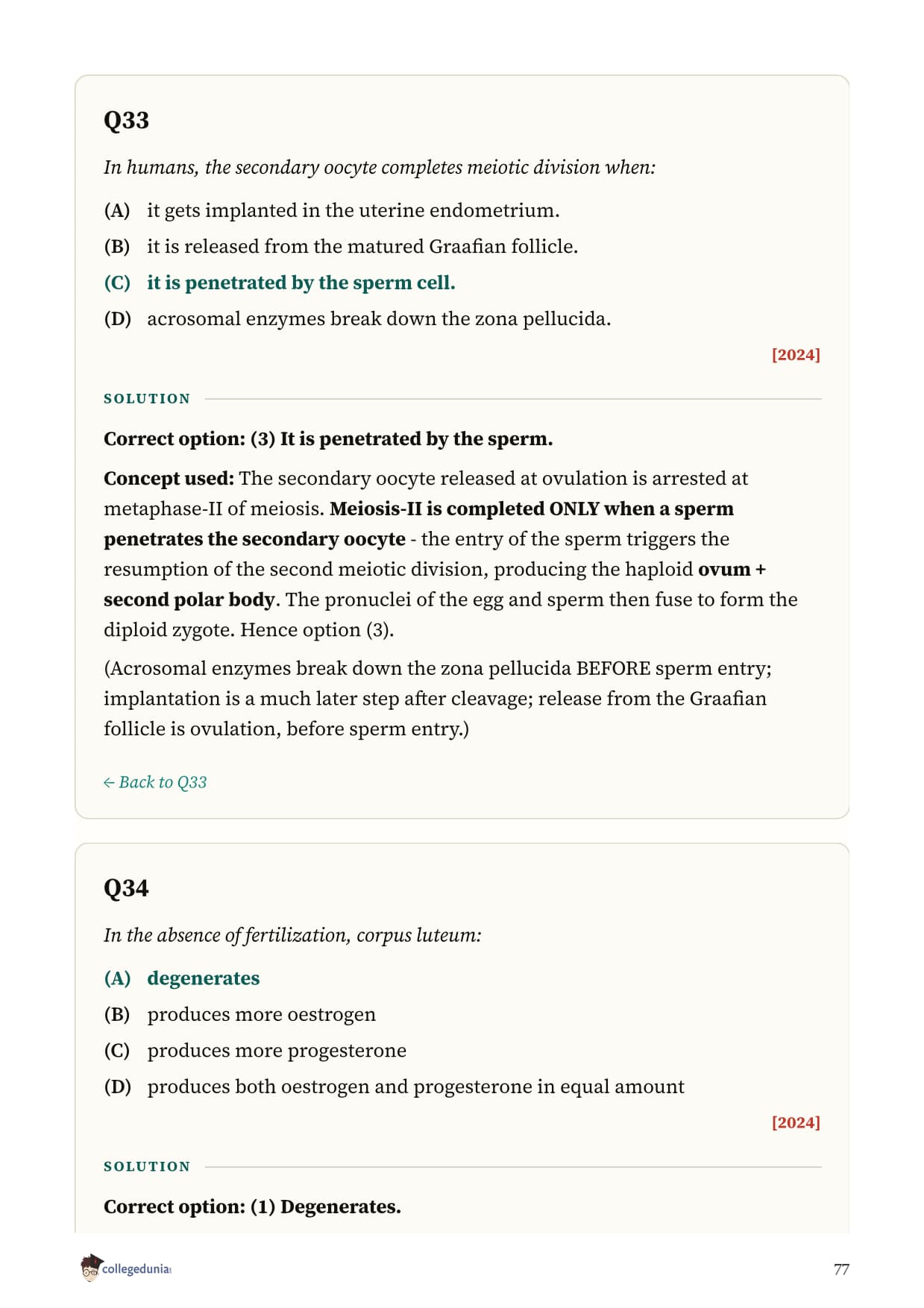
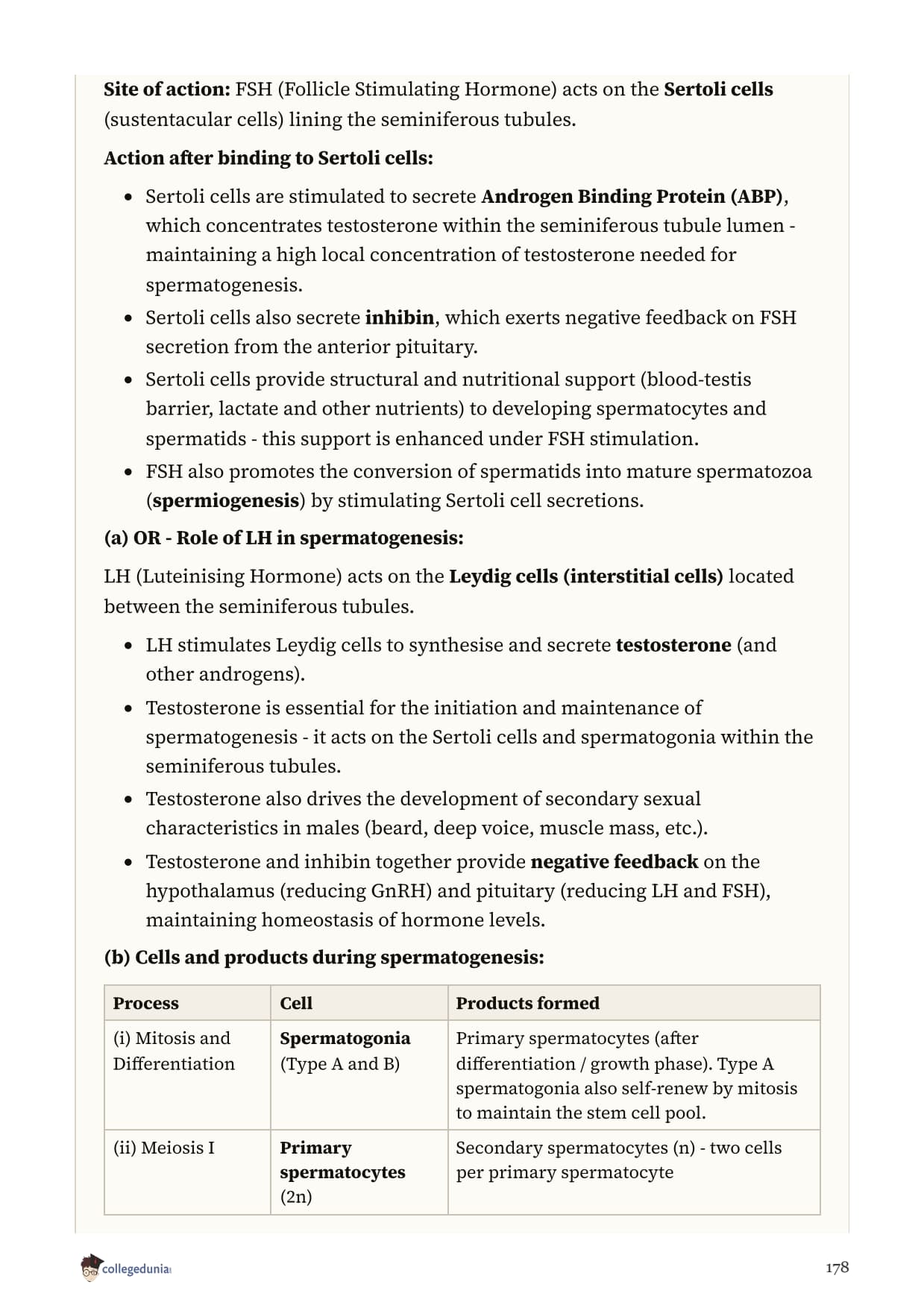
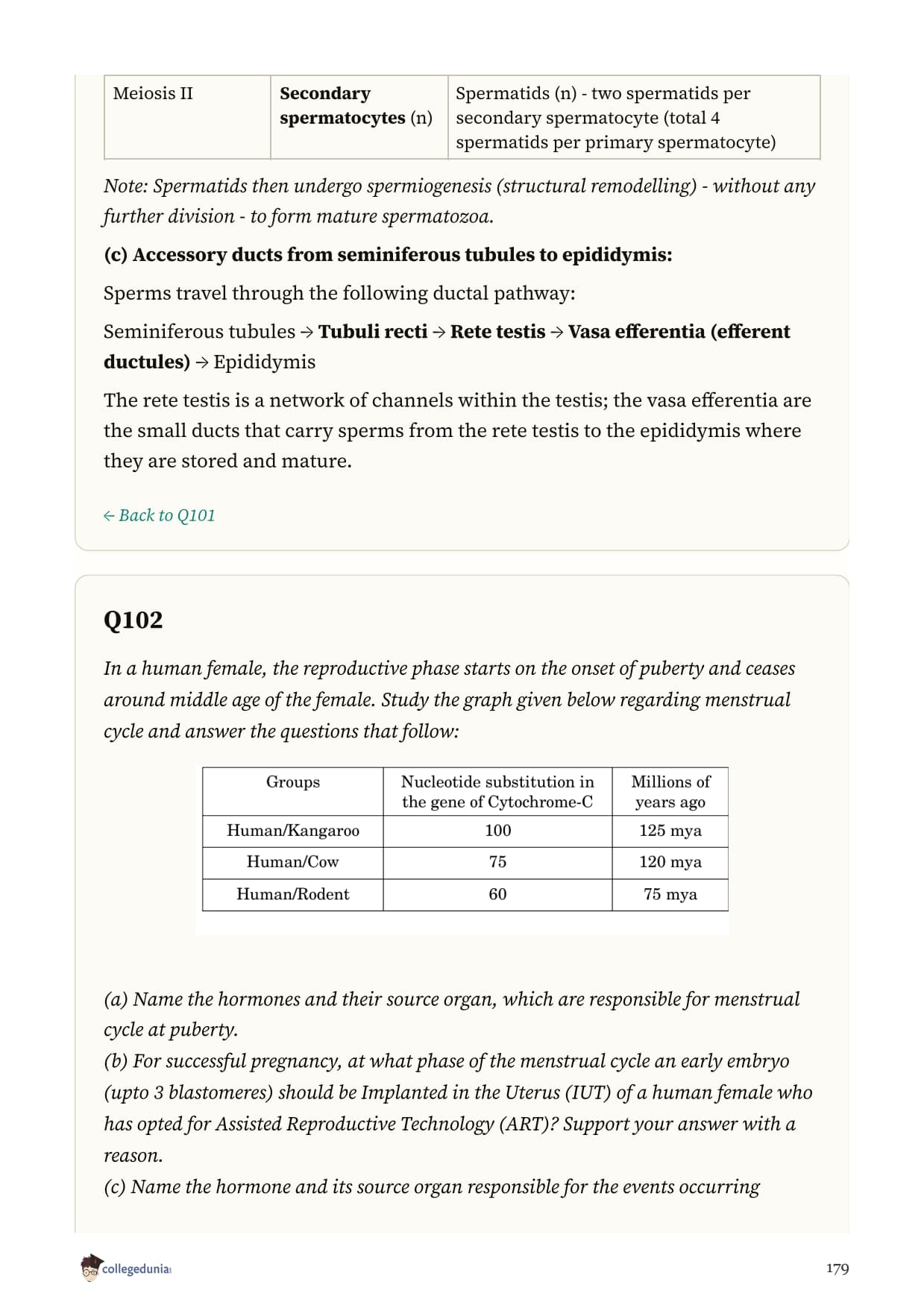
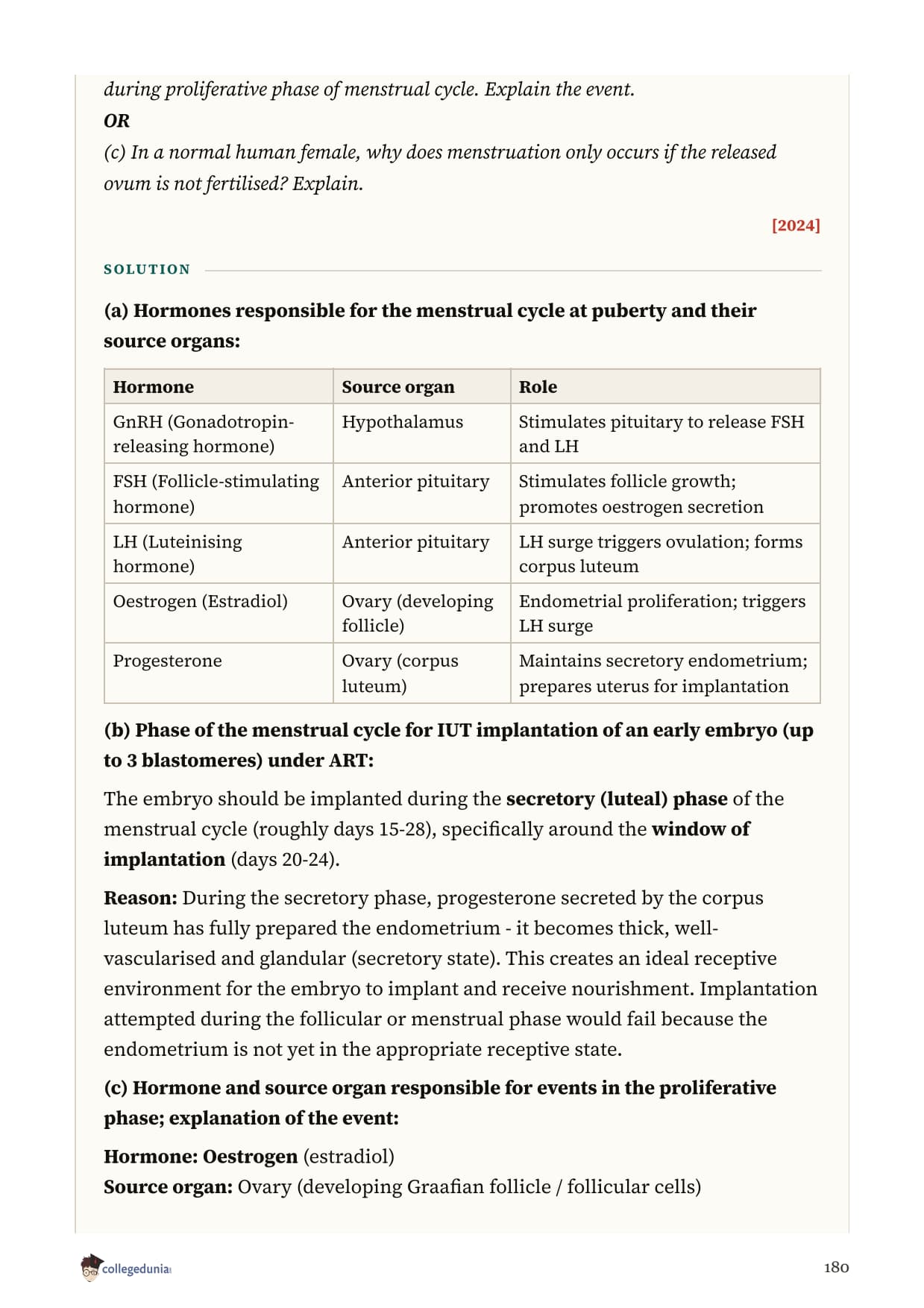
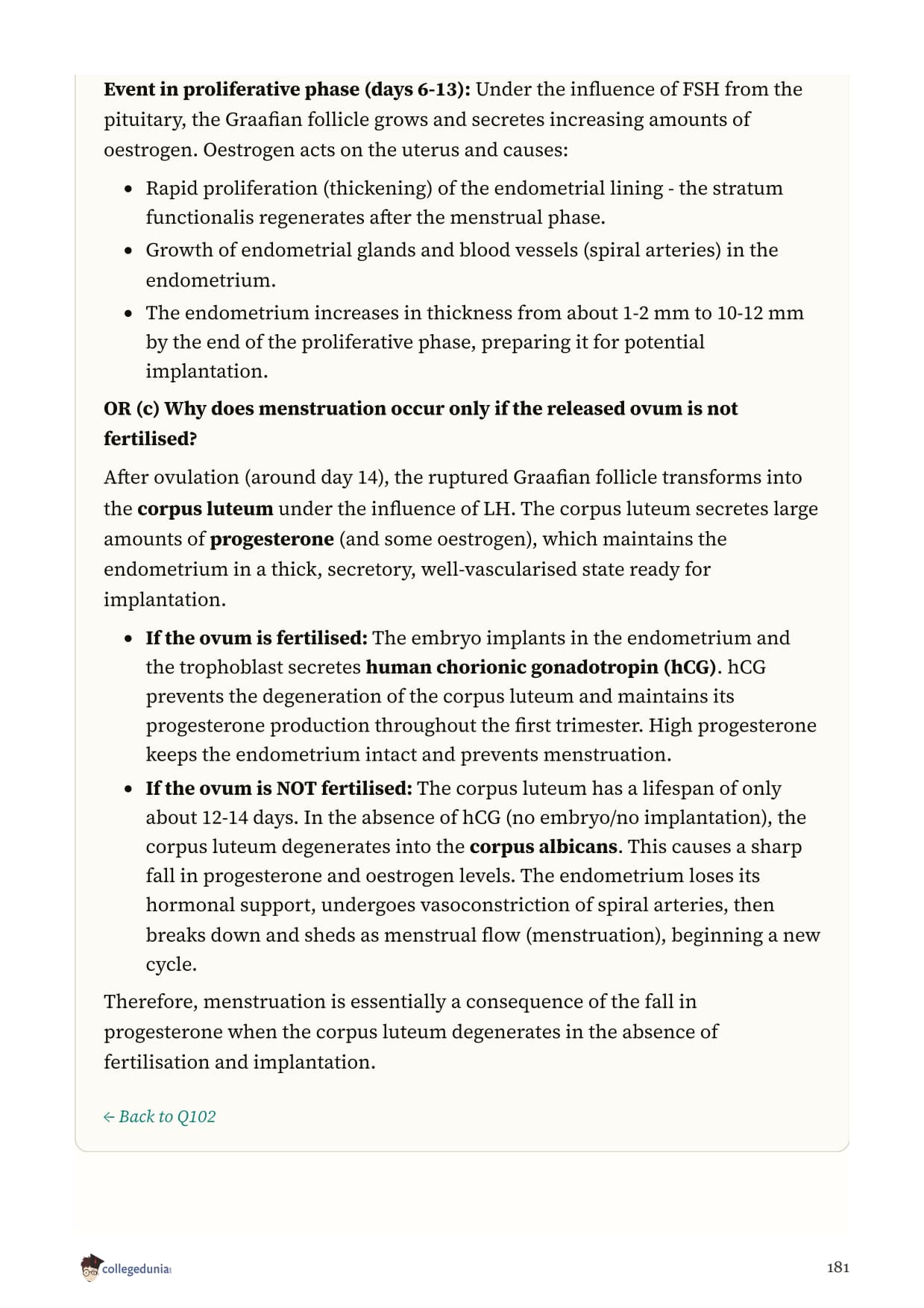
- 1-mark questions: 48 questions, mostly MCQ, identify-the-part and assertion-reason from the recent papers.
- 2 and 3-mark questions: 24 and 27 questions, built around the menstrual cycle, accessory ducts and the placenta.
- 5-mark long answers: 29 questions, where spermatogenesis, oogenesis and the labelled male or female reproductive system appear repeatedly.
The Class 12 Biology Human Reproduction PYQ compilation pulls together 131 board-paper questions across 2003 to 2026, sorted by marks and by year so you practise them the way CBSE actually sets them.
Every question in this Class 12 Biology Human Reproduction PYQ compilation is sourced from CBSE board papers (Delhi, Outside Delhi, Foreign and Compartment) and cross-checked against the official mark scheme, with near-duplicate questions removed.
What the Human Reproduction Previous Year Questions Cover
The 131-question set maps every concept the NCERT chapter introduces. Spermatogenesis and oogenesis drive most of the 5-mark band, often as a schematic with chromosome numbers. The menstrual cycle and its hormones carry many 2 and 3-mark questions. Fertilisation, implantation and placenta formation appear as both diagrams and reasoning, while the male and female reproductive structures and gametogenesis hormones fill the 1-mark MCQs.
Marks-wise Distribution of the Human Reproduction PYQs
The table below shows how the 131 questions split across the CBSE marks bands. Use it to decide how much revision time each band deserves.
| Marks | Questions | Total Marks | CBSE Section | Type |
|---|---|---|---|---|
| 1 mark | 48 | 48 | Section A | MCQ / Assertion-Reason |
| 2 mark | 24 | 48 | Section B | VSA (Very Short Answer) |
| 3 mark | 27 | 81 | Section C | SA (Short Answer) |
| 4 mark | 3 | 12 | Section D | Case Study |
| 5 mark | 29 | 145 | Section E | Long Answer |
Year-wise Spread of Class 12 Biology Human Reproduction PYQs
The compilation draws from 18 CBSE board years. Roughly 64% of the questions come from 2023 onwards, the highest recent share among the reproduction chapters, driven by the new MCQ block.
- 2026: The connective tissue linking ovary to pelvic wall, the muscular and glandular layers of the uterus, and a schematic of oogenesis with chromosome numbers.
- 2024 to 2025: The largest contribution years, with MCQ banks on the menstrual cycle hormones, sperm structure and placenta.
- 2020 to 2023: Reduced-syllabus papers, yet spermatogenesis, the menstrual cycle and implantation still feature.
- 2003 to 2019: Long answers on the labelled reproductive system, gametogenesis and the role of hormones, all still relevant today.
Topic Frequency in the Human Reproduction Board Paper Questions
The 131 questions cluster into the six topic buckets below, ranked by how often CBSE has set them between 2003 and 2026.
| Rank | Topic Cluster | Frequency | Typical Marks Band |
|---|---|---|---|
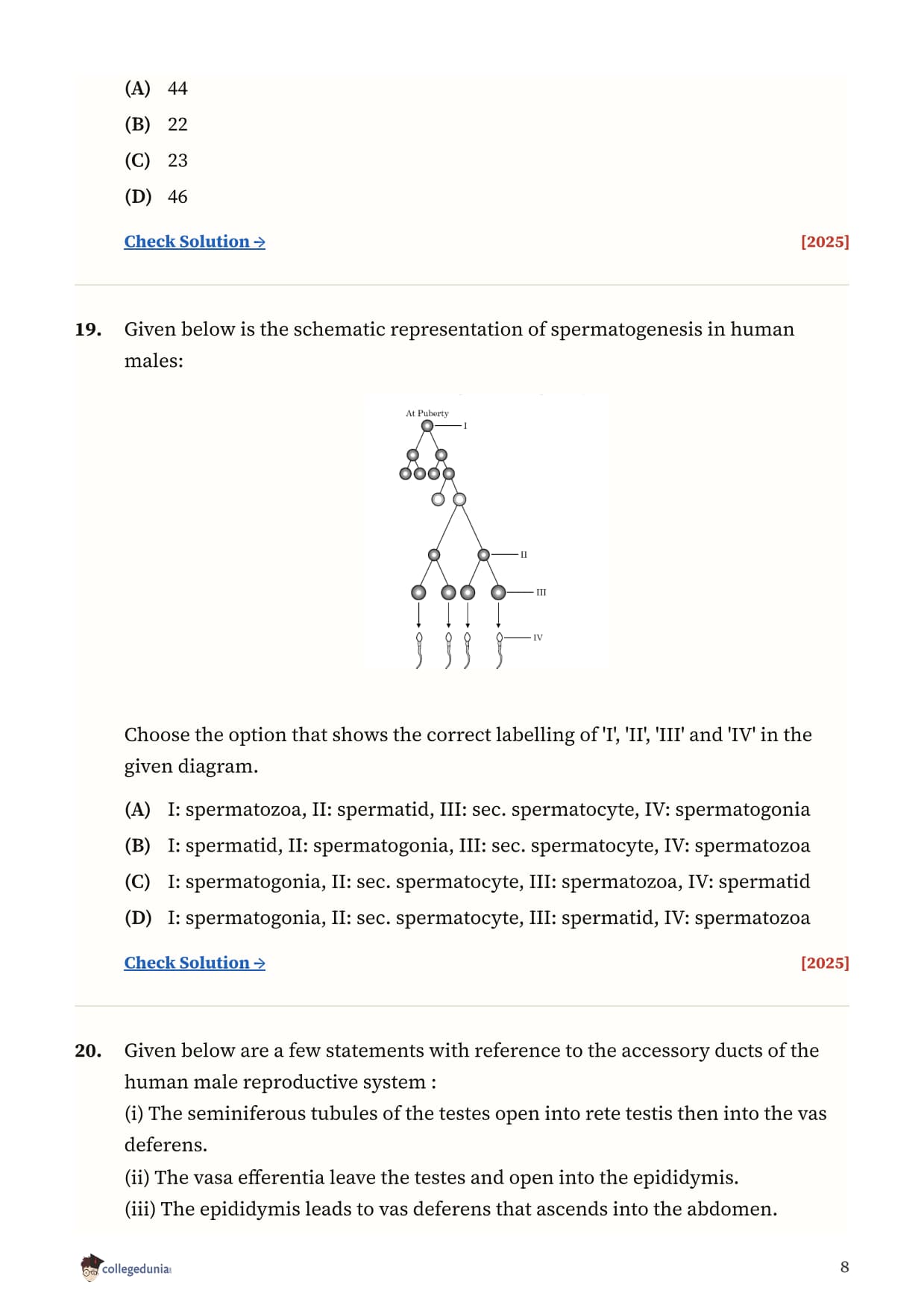
| 1 | Gametogenesis (spermatogenesis, oogenesis, chromosome numbers, schematic diagrams) | ~23 per cent | 3 and 5 mark |
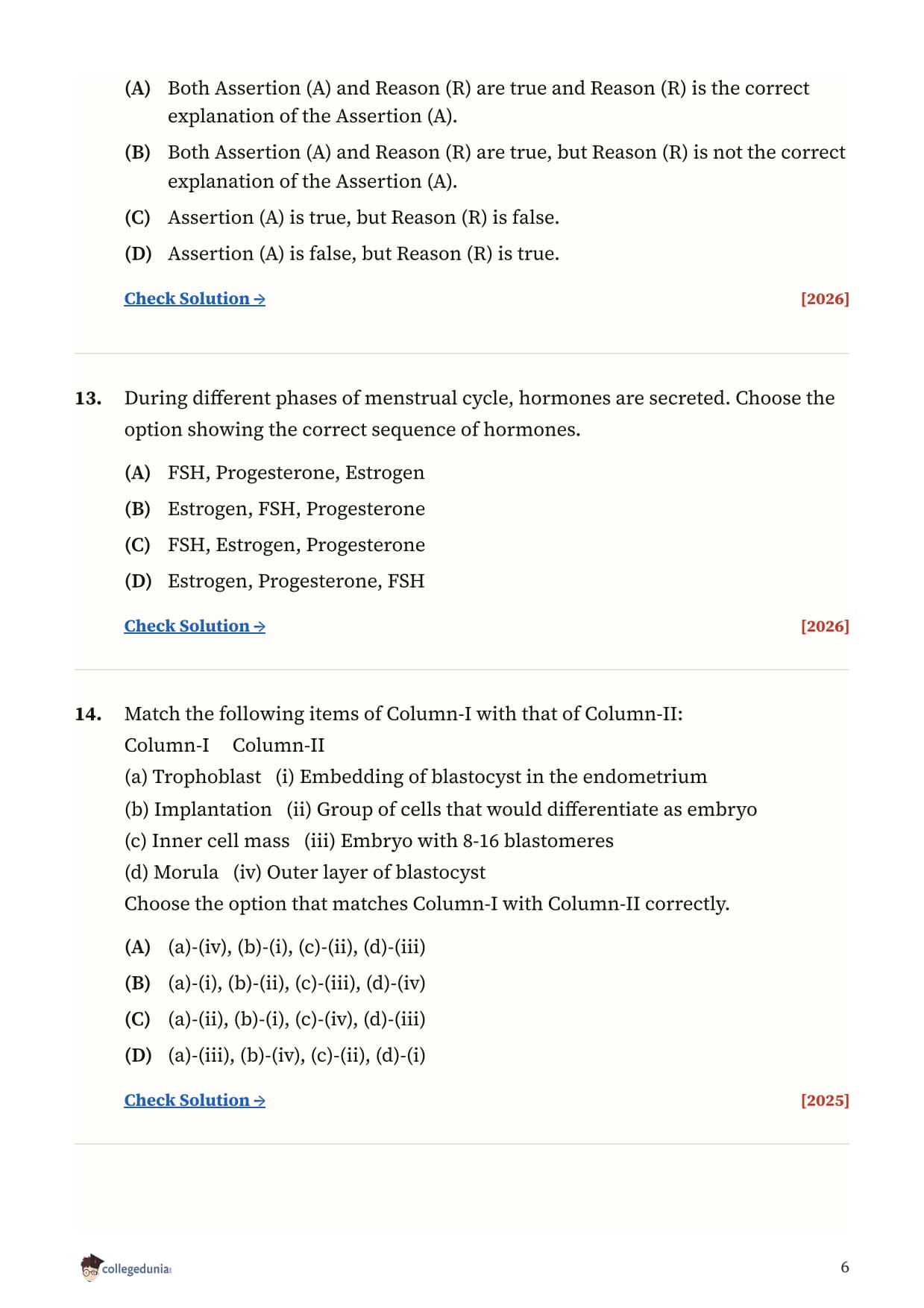
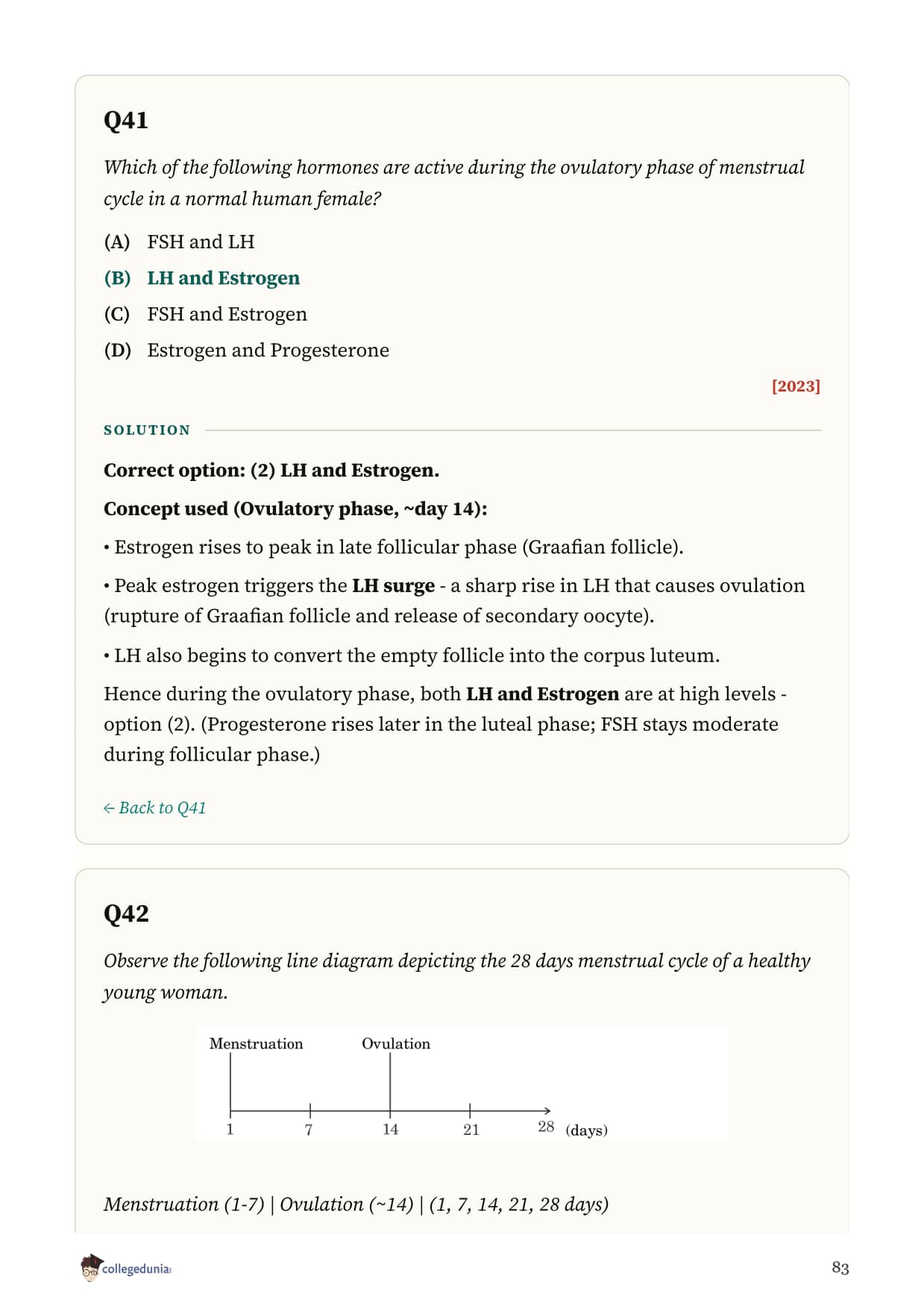
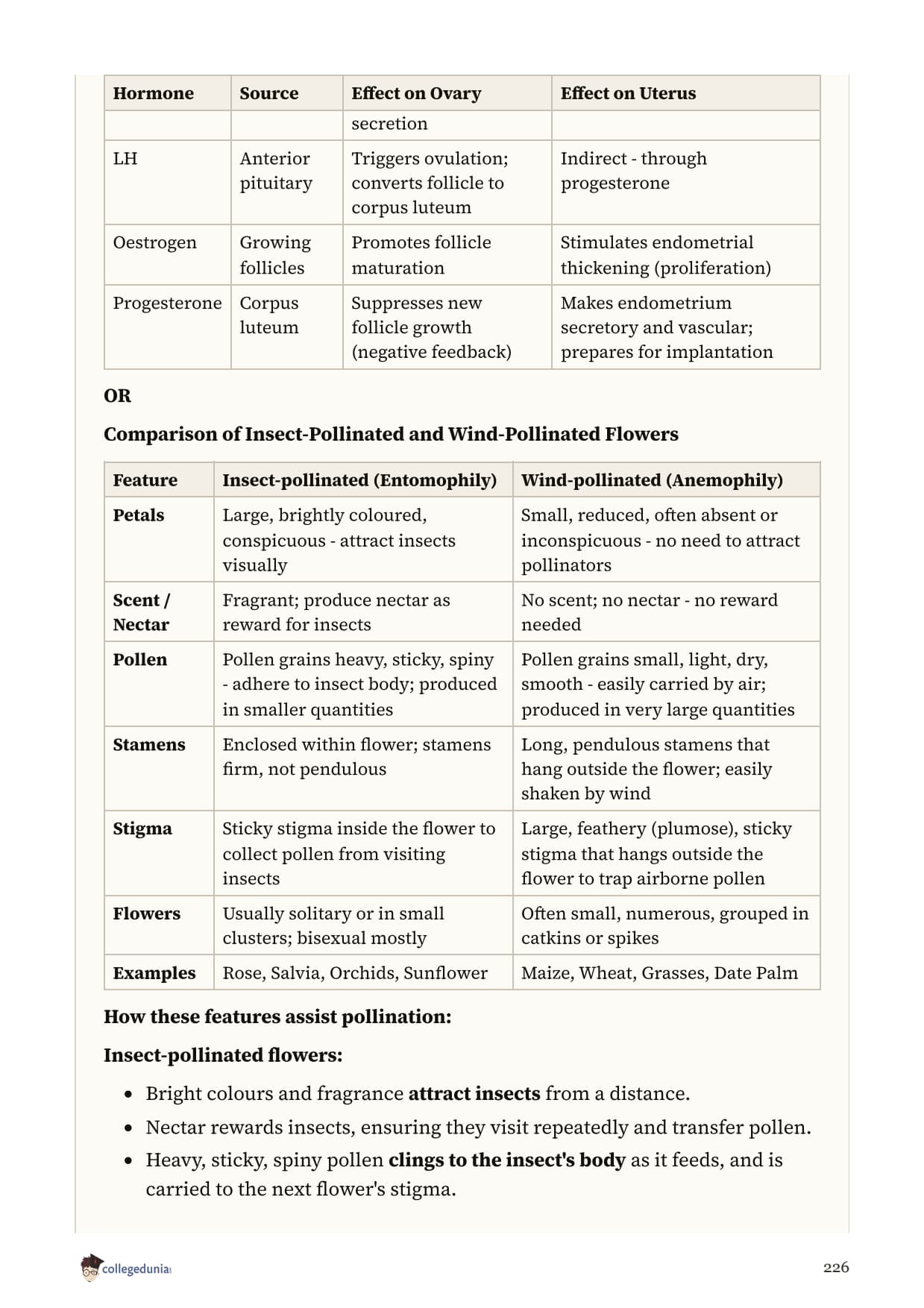
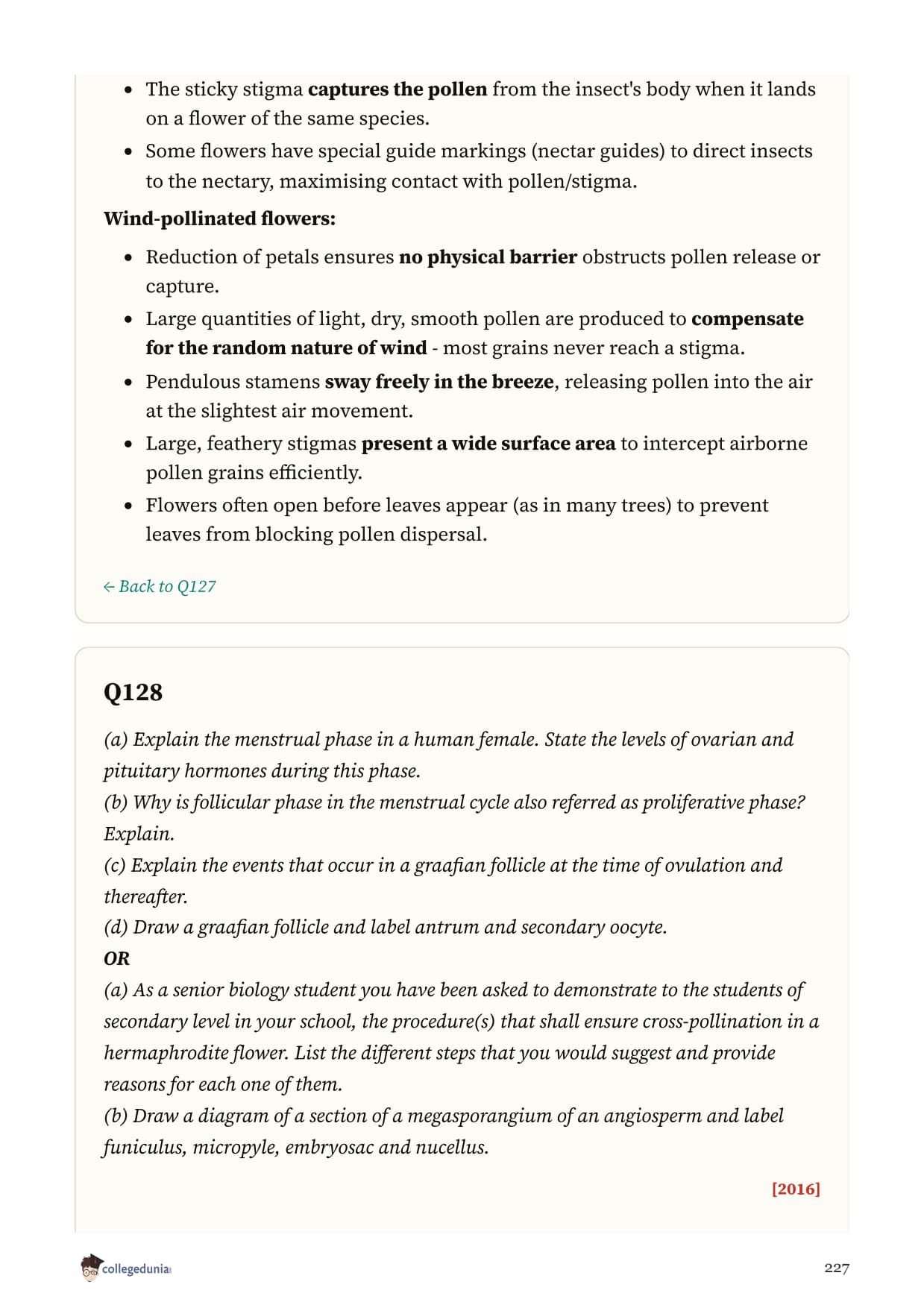
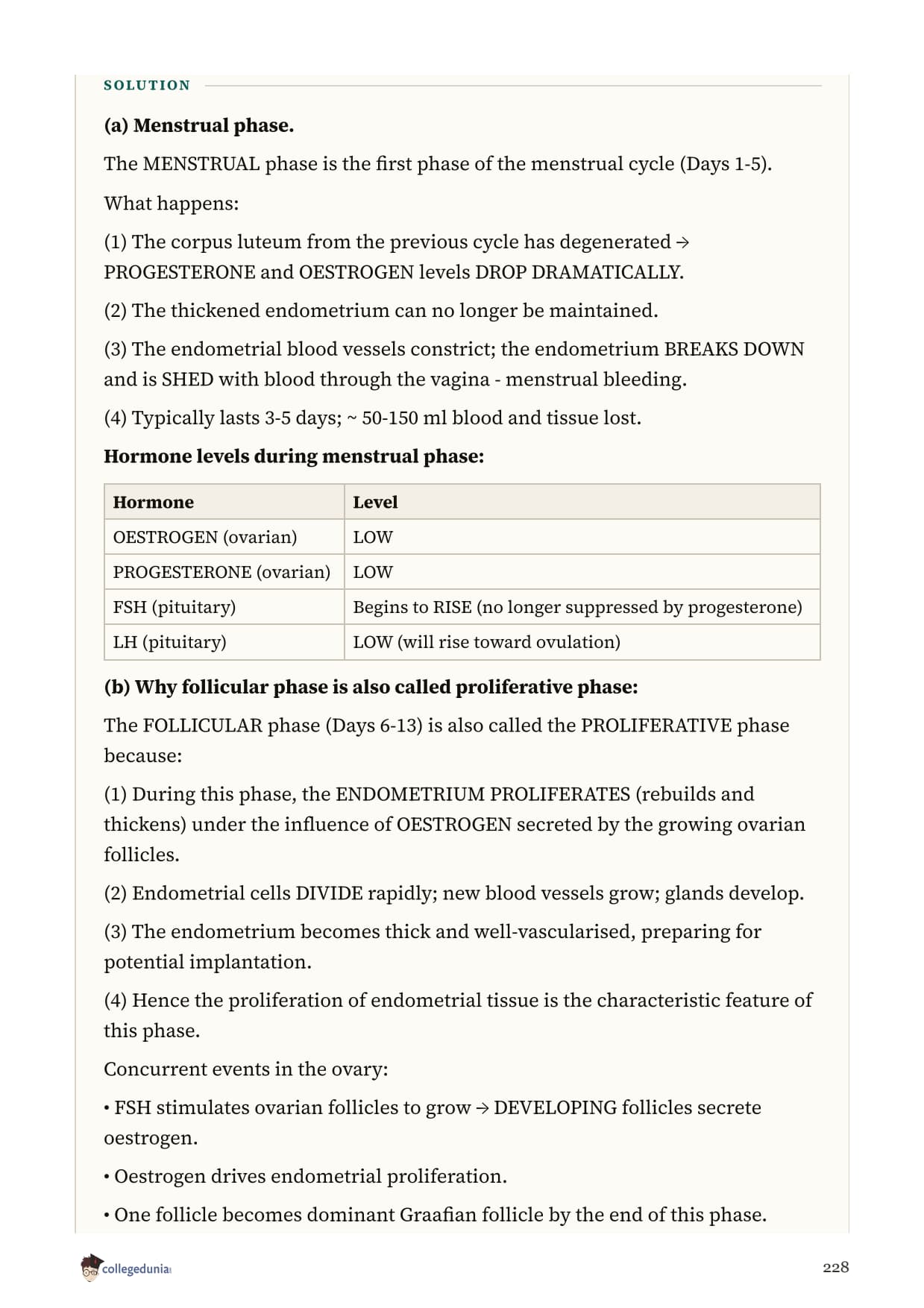
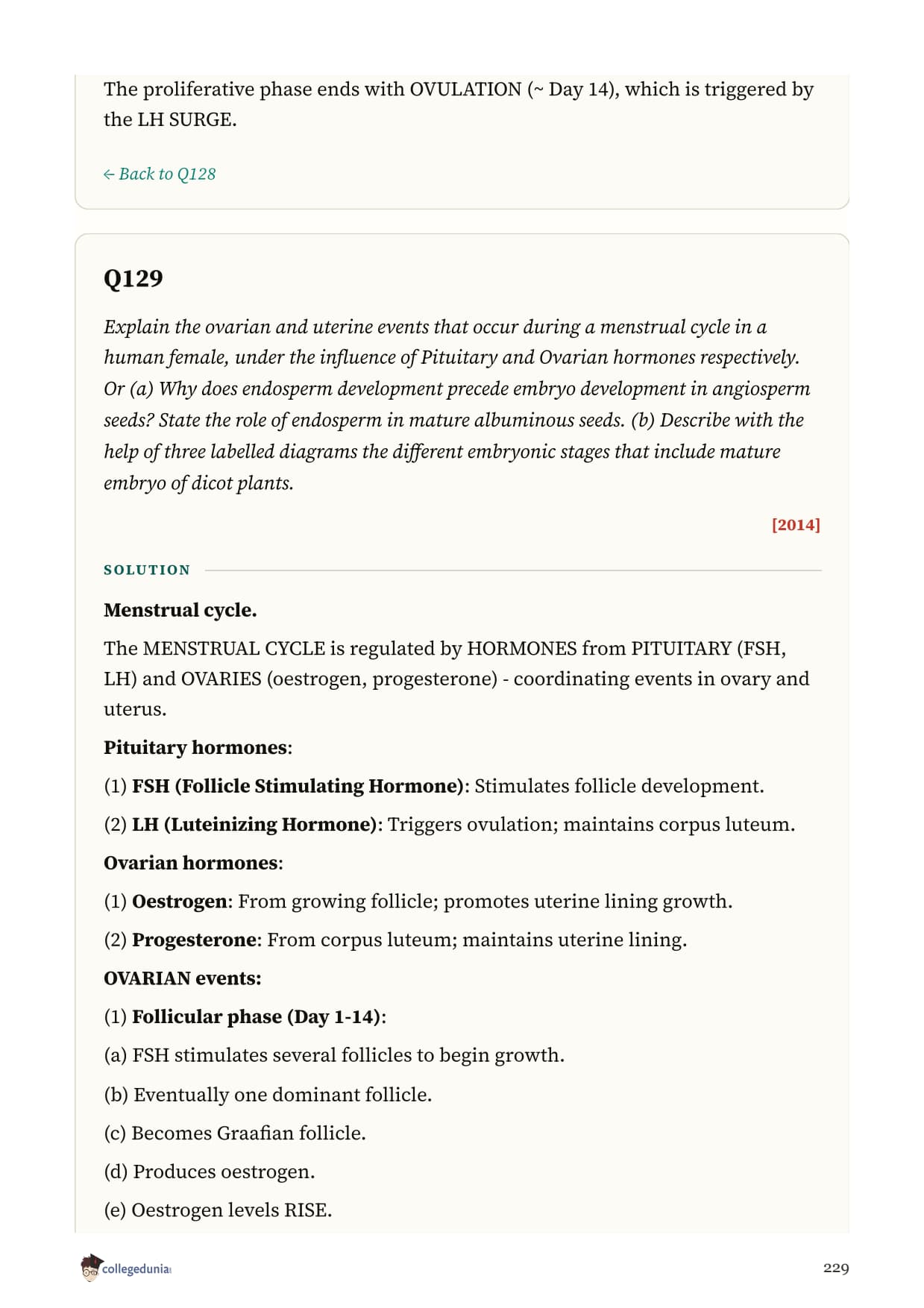
| 2 | Menstrual cycle and hormonal control (FSH, LH, oestrogen, progesterone, the hormone graph) | ~20 per cent | 2, 3, 5 mark |
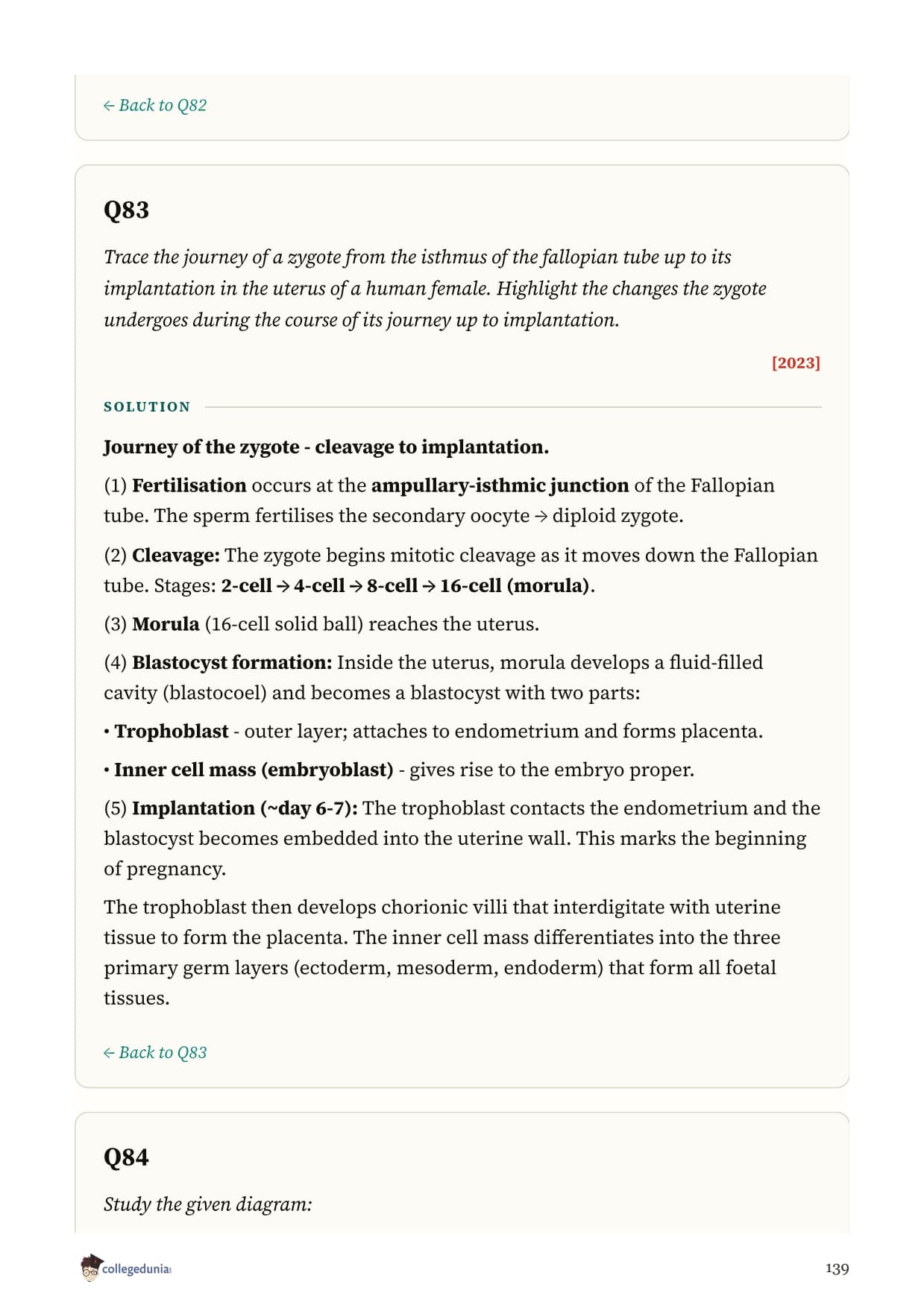
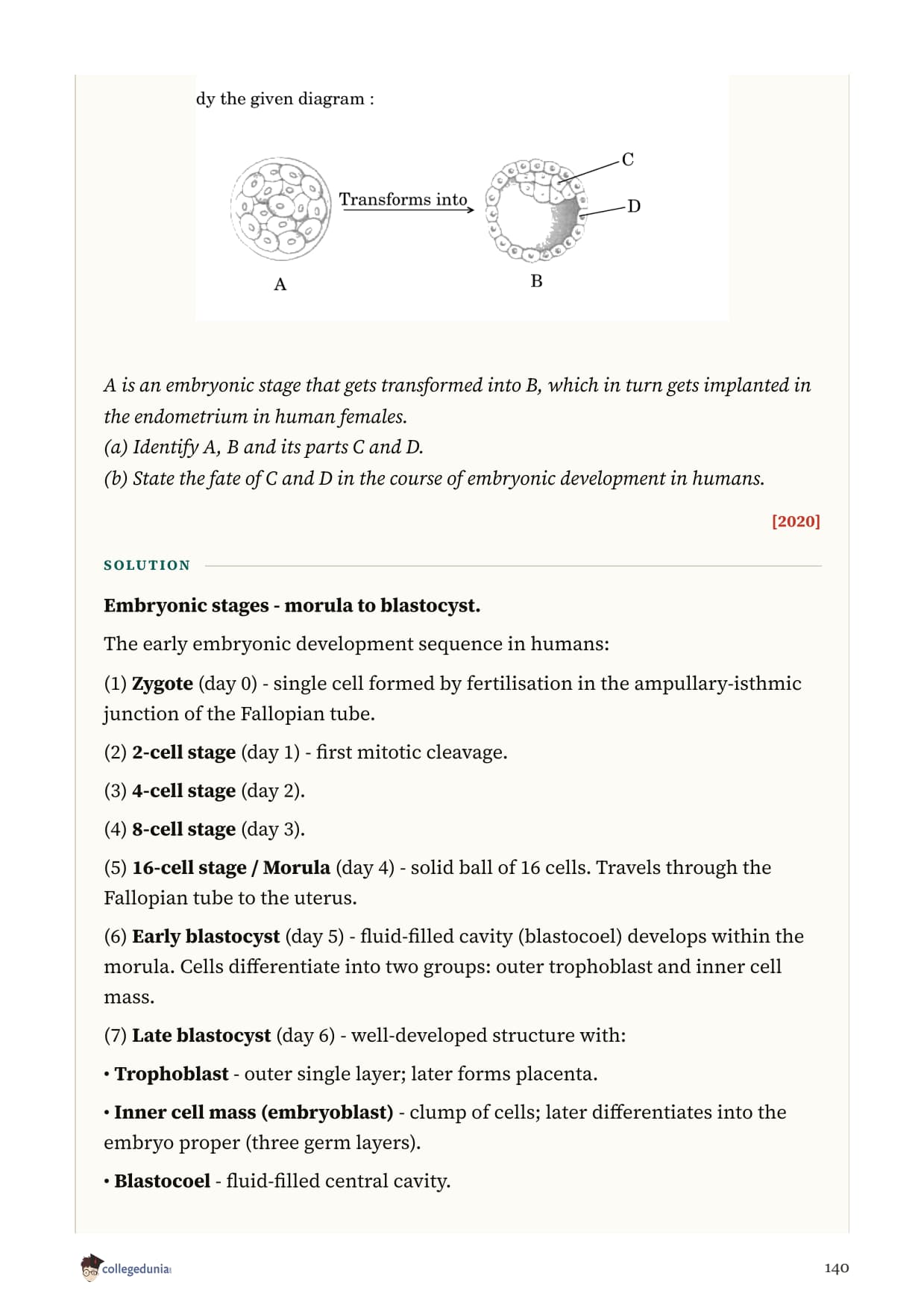
| 3 | Fertilisation and early development (cleavage, blastocyst, implantation, polyspermy block) | ~18 per cent | 1, 2, 3 mark |
| 4 | Placenta and pregnancy (haemochorial placenta, hCG, functions, milk production) | ~16 per cent | 2 and 3 mark |
| 5 | Male reproductive system (testis, seminiferous tubule, accessory ducts and glands) | ~13 per cent | 1, 3, 5 mark |
| 6 | Female reproductive system (ovary, fallopian tube, uterus layers, supporting ligaments) | ~10 per cent | 1 and 2 mark |
Marks-Band Attempt Strategy for the Human Reproduction PYQs
The 131 PYQs are arranged marks-ascending inside the PDF so you can attempt them in the same order the CBSE paper presents them.
- 1-mark questions: Spend no more than 45 seconds each. Many ask you to name a part or pick the correct hormone.
- 2-mark questions: A short definition plus one function, or a difference. Aim for 3 minutes.
- 3-mark questions: Usually a menstrual cycle phase or an early-development stage. Add chromosome numbers wherever the question allows.
- 5-mark long answers: A full spermatogenesis or oogenesis schematic, or a labelled reproductive system. Allocate 12 to 15 minutes.
Recent CBSE Trend: 2024 to 2026 Pattern Shift in Human Reproduction
Three things have changed in the recent CBSE cycles that the Human Reproduction previous year questions now reflect:
- Section A now carries a fixed block of 1-mark MCQ and assertion-reason questions. The compilation includes 48 such questions, most from 2023 onwards.
- Diagram and schematic questions are rising, for example the 2026 schematic of oogenesis that asked for chromosome numbers at each stage.
- 5-mark questions almost always carry an OR alternative, so the PDF keeps both branches, often pairing a male and a female system question.
Sample Previous Year Questions from Human Reproduction
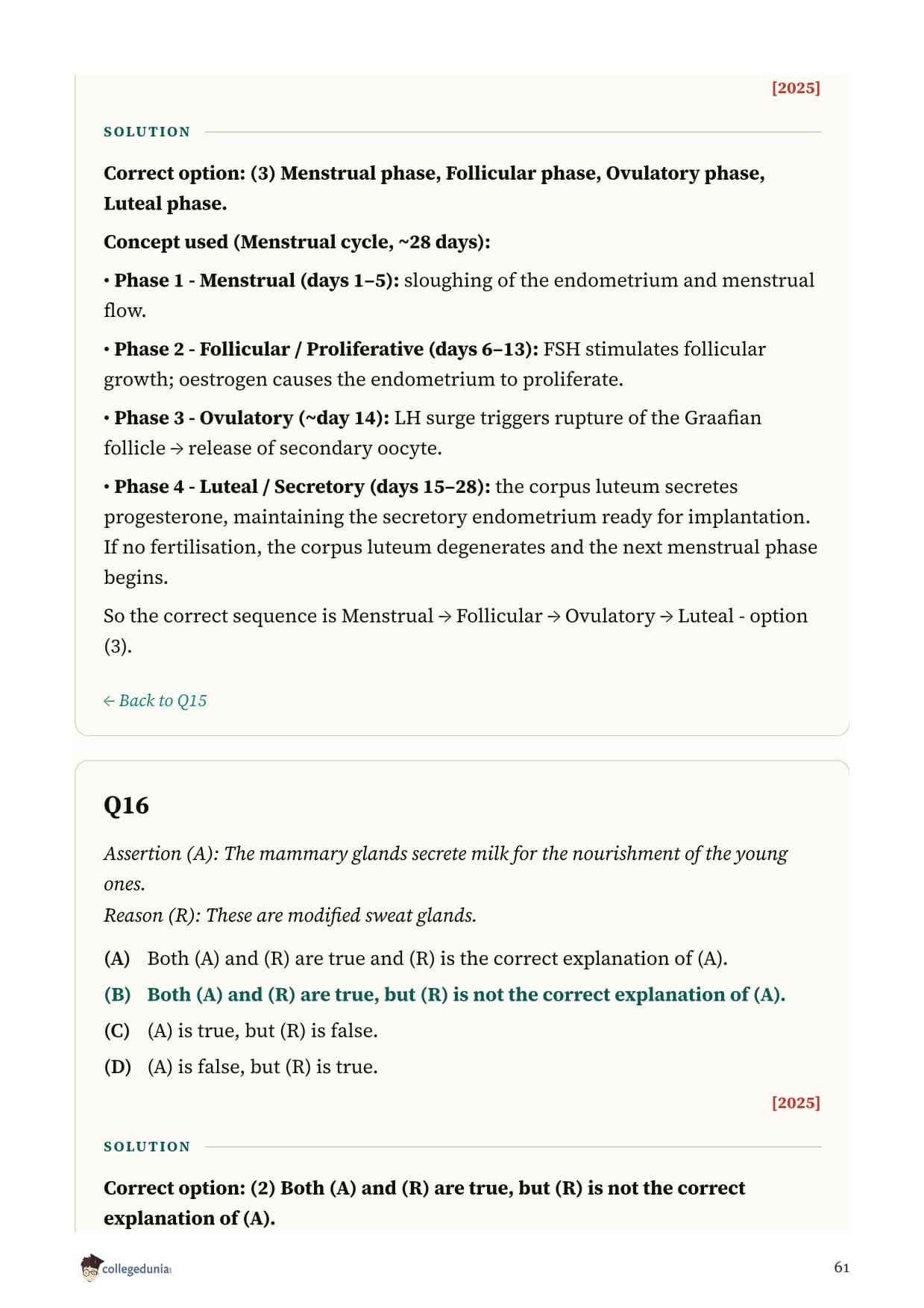
Here are a few real previous year questions from the Human Reproduction board papers, taken straight from the compilation. The full set is in the downloadable PDF.
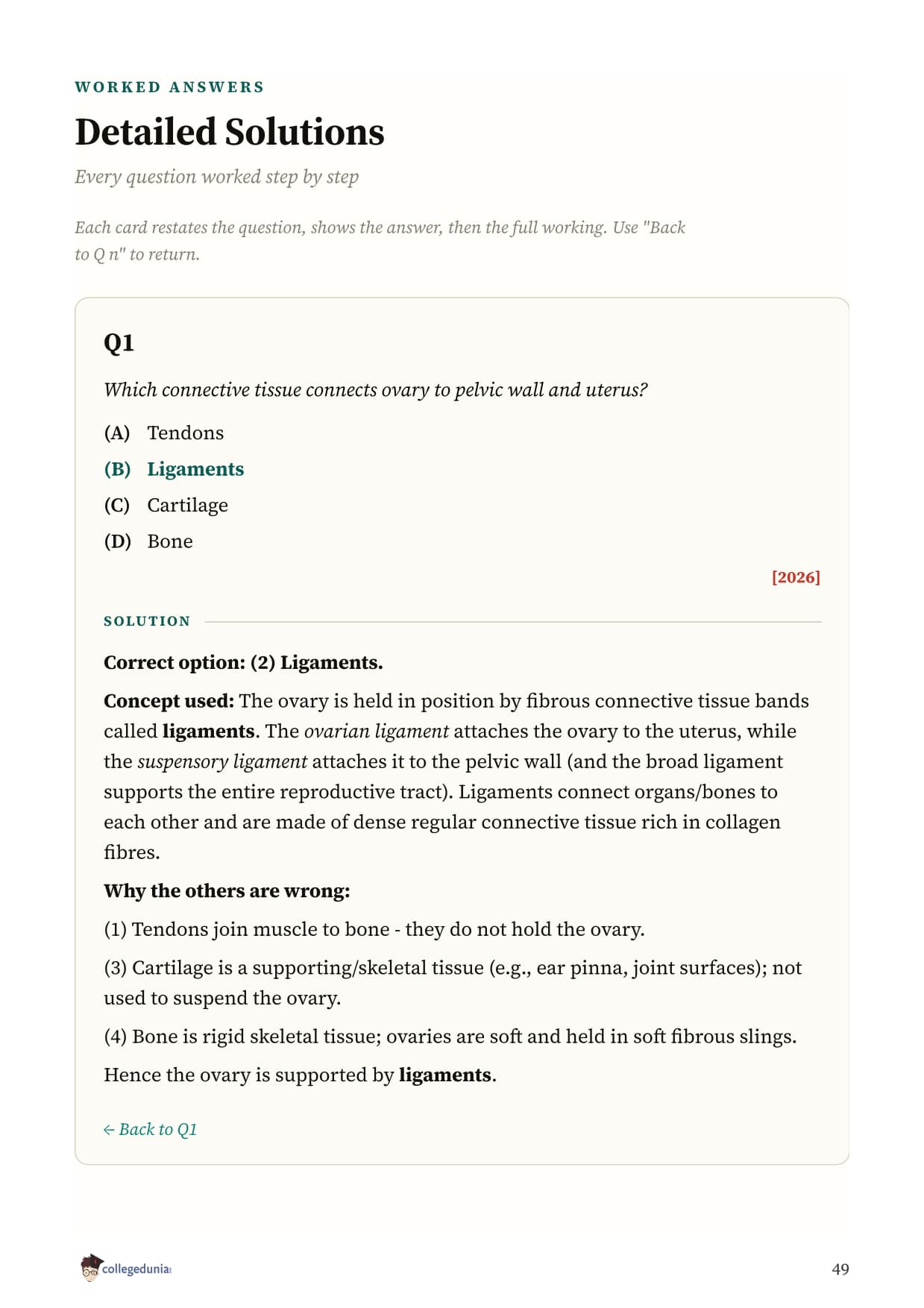
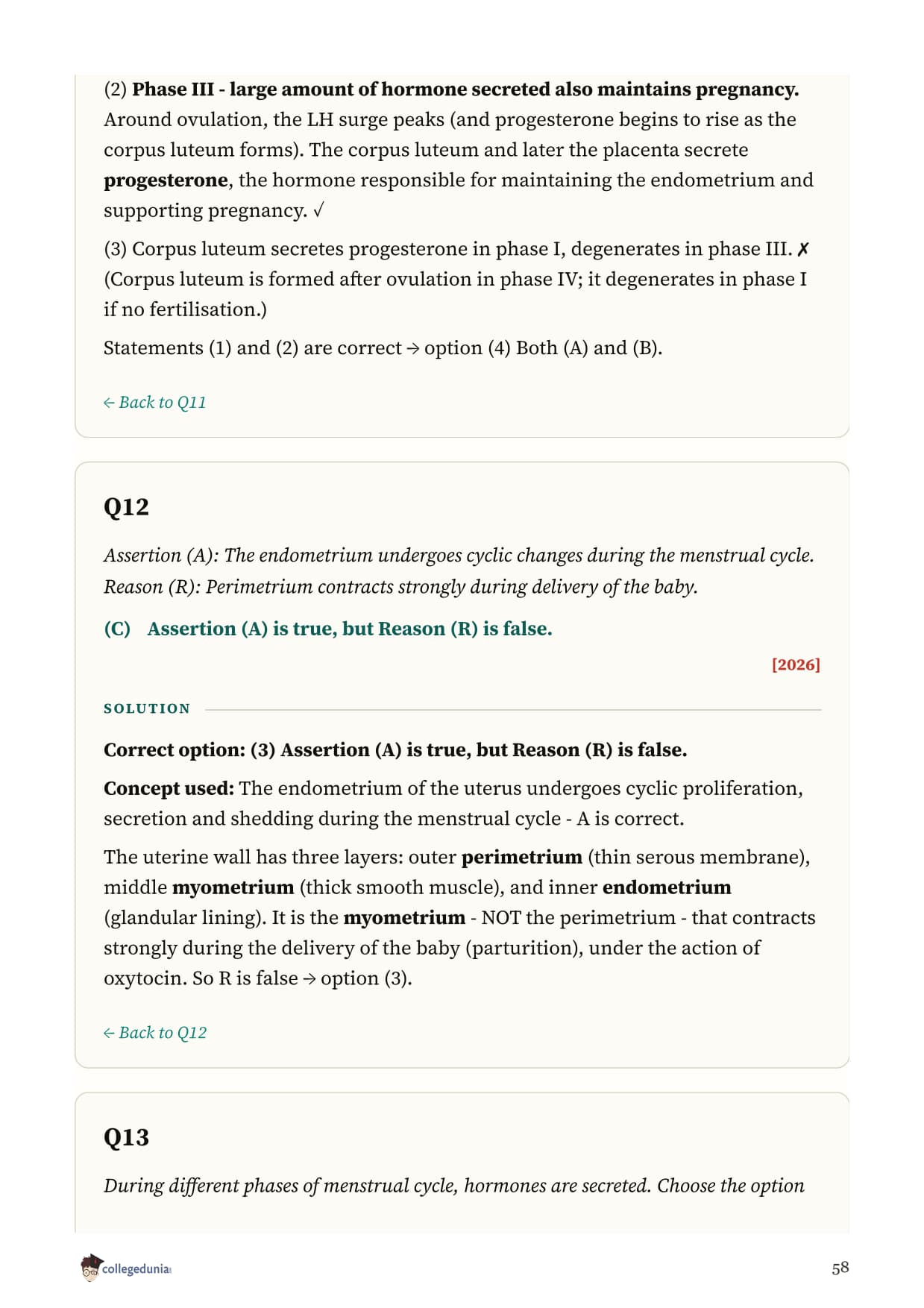
Which connective tissue connects ovary to pelvic wall and uterus?
- Tendons
- Ligaments
- Cartilage
- Bone
[2026 • 1 mark]
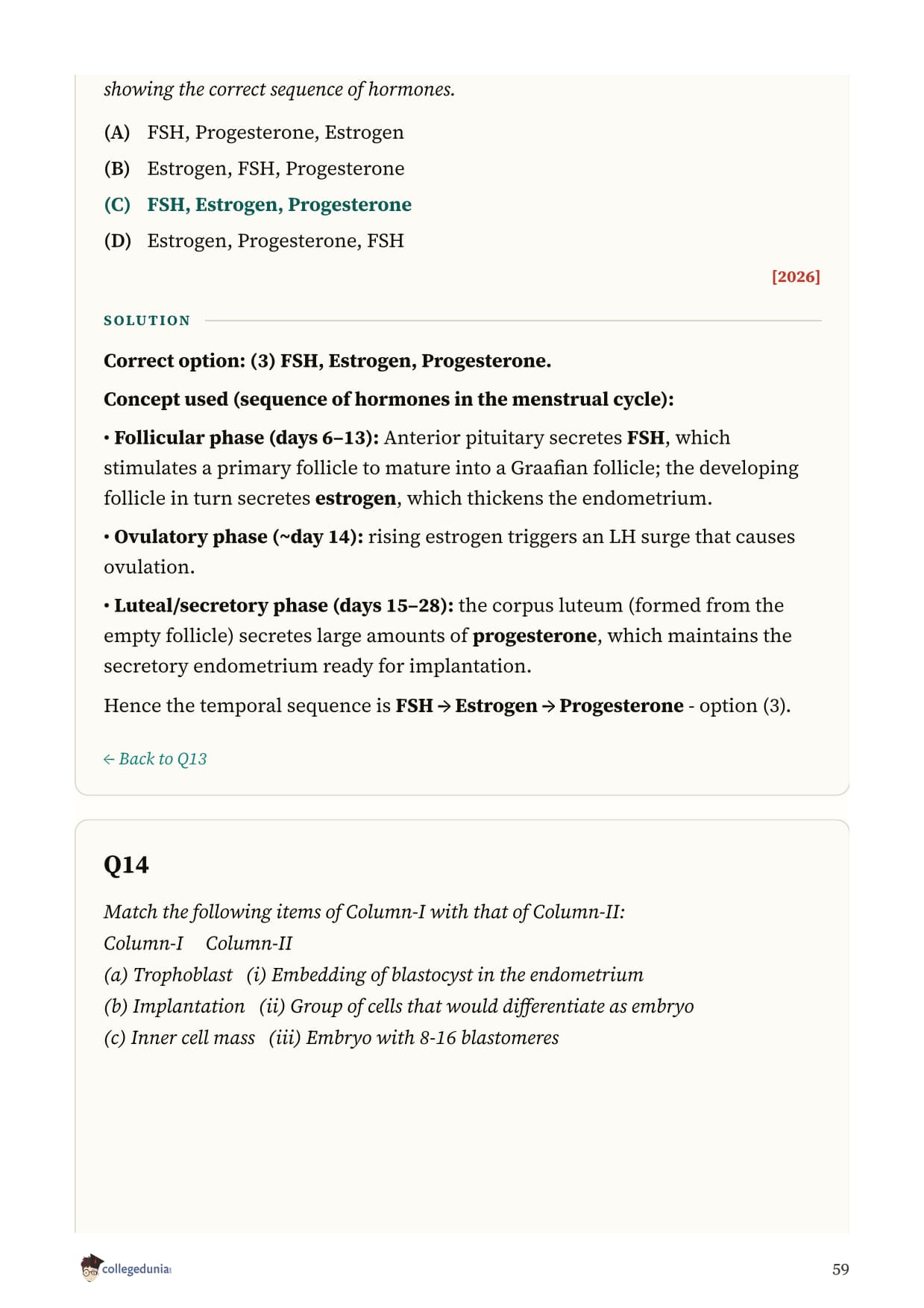
(a) Name the muscular and glandular layers of female uterus. Mention one function of each. OR (b) (i) Why are STI (Sexually Transmitted Infections) not detected in time? (2 pts.) (ii) Write two complications caused in later stages.
[2026 • 2 mark]
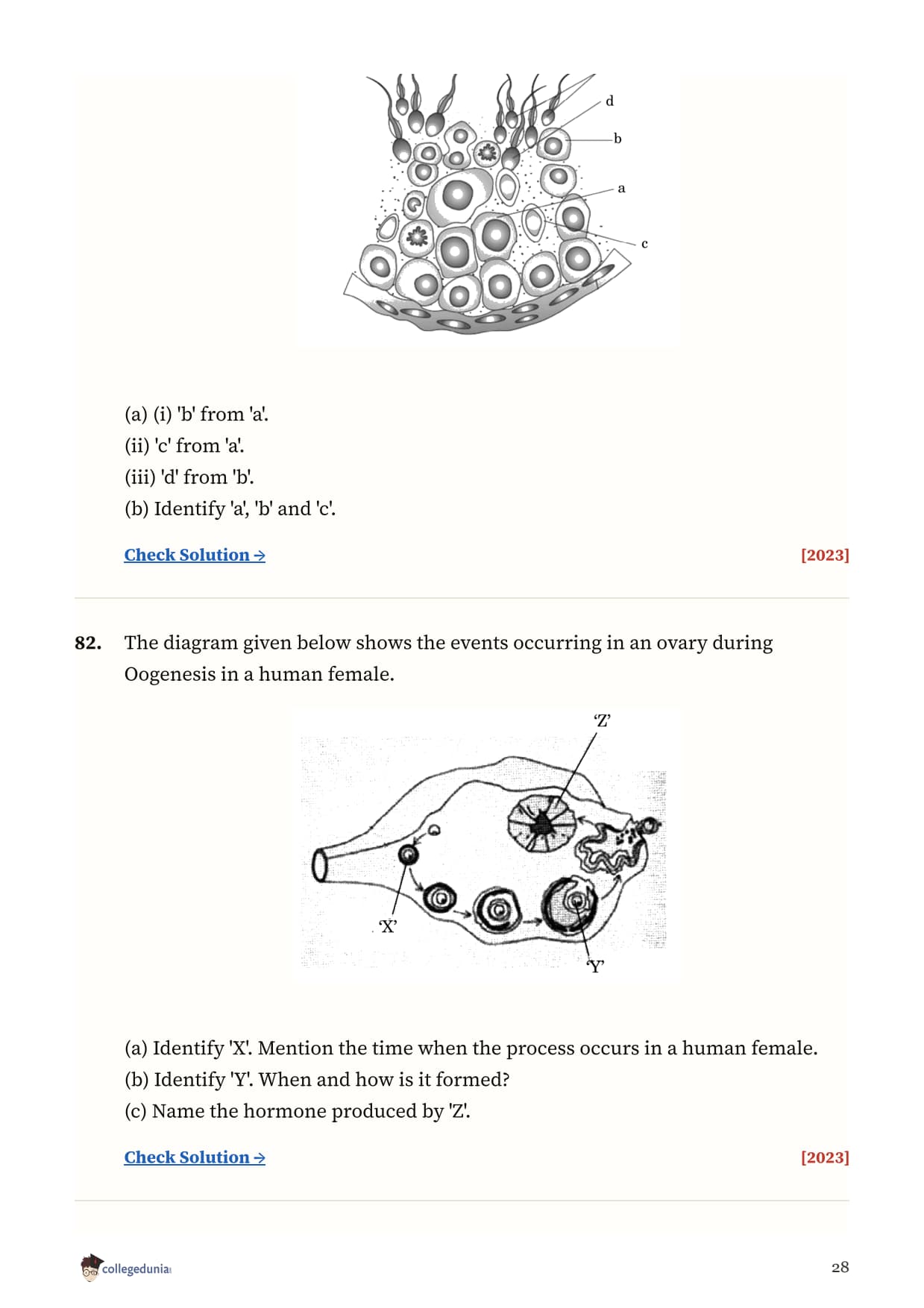
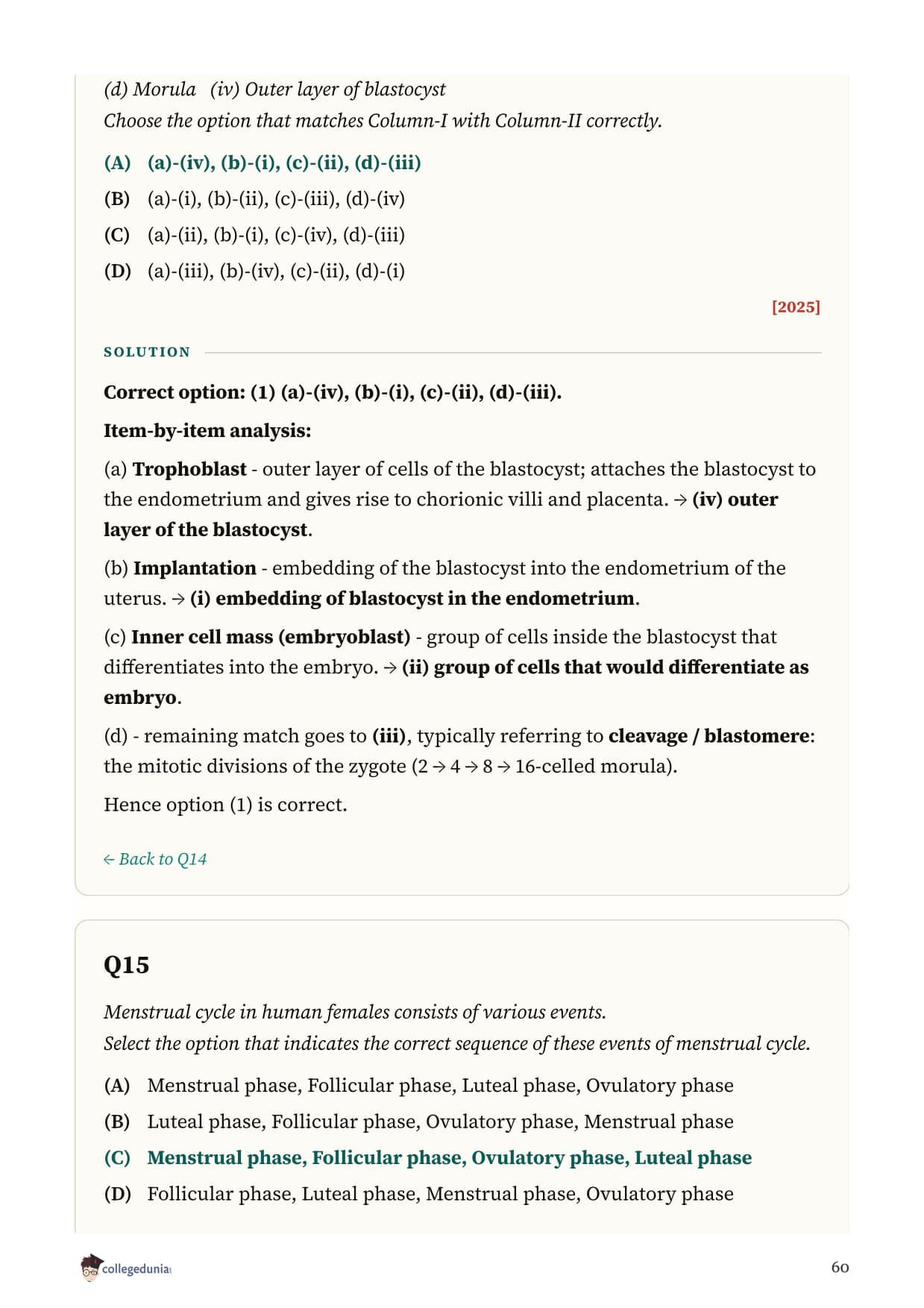
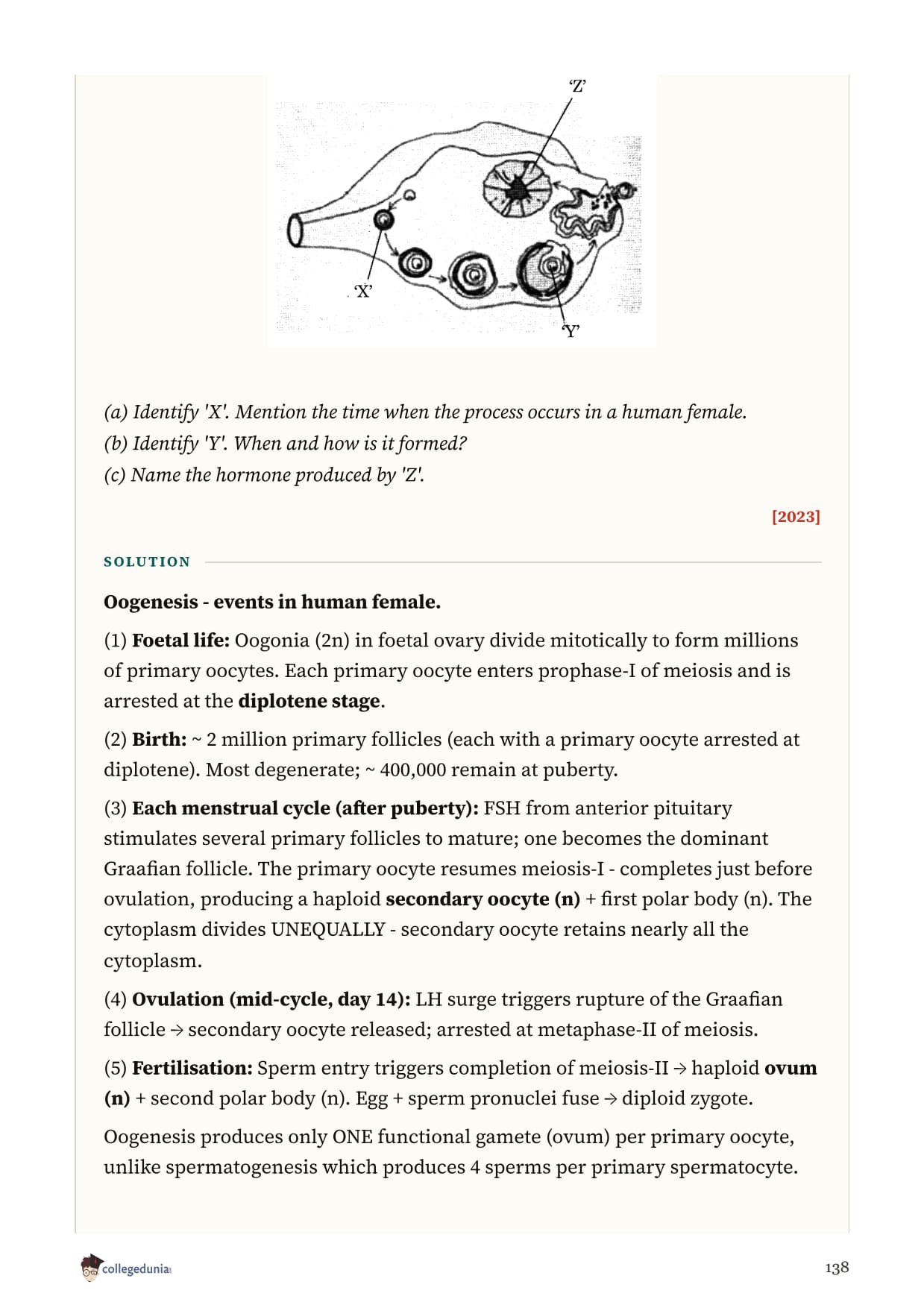
Give the schematic representation of oogenesis in human female. Indicate chromosome number also.
[2026 • 3 mark]
Common Mistakes in the Human Reproduction Board Questions
- Writing the wrong chromosome number at a meiotic stage of spermatogenesis or oogenesis.
- Mixing up FSH and LH roles in the menstrual cycle, or placing the LH surge on the wrong day.
- Confusing the blastocyst with the morula, so implantation is described at the wrong stage.
- Calling the placenta purely maternal, when it forms from both foetal and maternal tissues and is haemochorial.
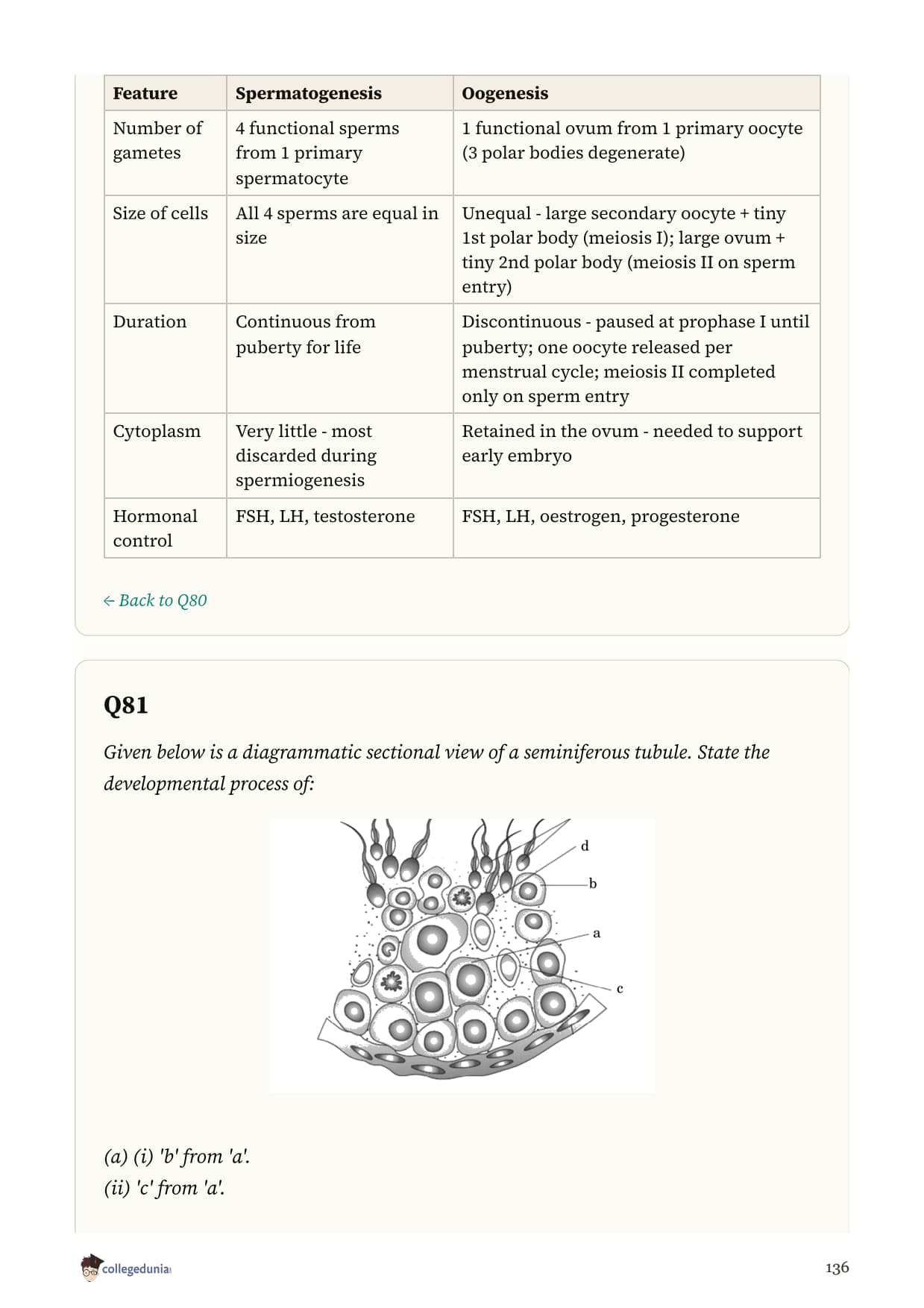
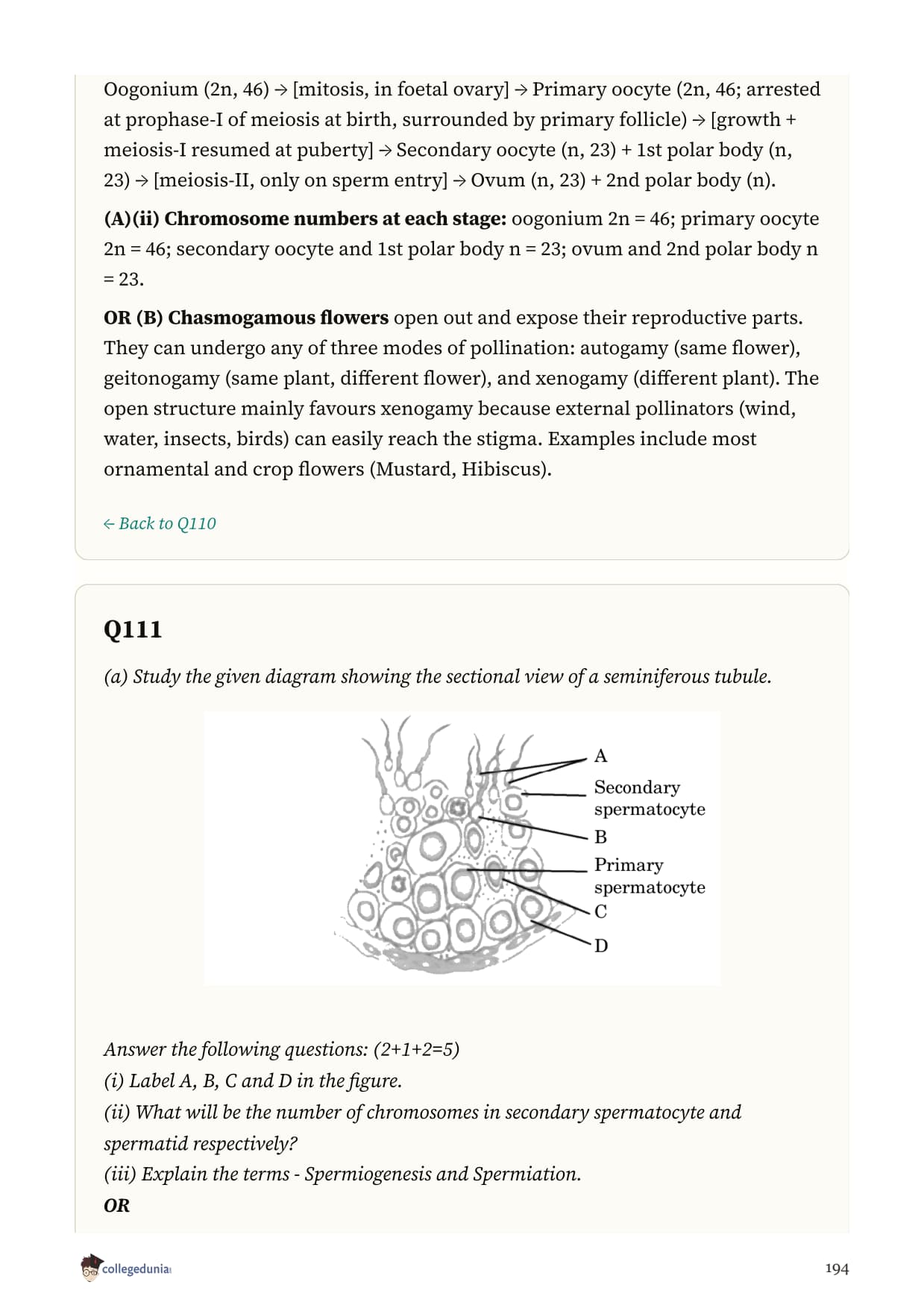
- Drawing the seminiferous tubule without the Sertoli and Leydig cells labelled, which the marking scheme expects.
Student Feedback on Human Reproduction PYQ Practice
- 70 per cent said the spermatogenesis and oogenesis schematics were the hardest part of the 5-mark band.
- 57 per cent reported gaining 4 to 7 marks after solving all 29 five-mark PYQs from this PDF before the boards.
- 46 per cent said a menstrual cycle or placenta question appeared in their actual 2026 paper.
- Average time to finish all 131 PYQs: about 10 hours across 6 study sessions.
How These PYQs Pair with the Other Human Reproduction Resources
Solving previous year questions alone gives you only half the prep. Pair the PYQ PDF with the matching concept, formula and solution resources for Human Reproduction.
| Resource | What It Gives You | Open |
|---|---|---|
| NCERT Solutions | Step-by-step worked answers to every NCERT back-exercise question of Human Reproduction | NCERT Solutions for Human Reproduction |
| Notes | Concept revision notes covering every topic in the Human Reproduction chapter | Human Reproduction Class 12 Notes |
| Formula Sheet | All key formulas and results of Human Reproduction on one page for last-day revision | Human Reproduction Formula Sheet |
| Handwritten Notes | Scanned handwritten notes of Human Reproduction for quick one-shot revision | Human Reproduction Handwritten Notes |
| Exemplar Solutions | NCERT Exemplar problems of Human Reproduction solved in full for extra practice | NCERT Exemplar Solutions for Human Reproduction |
| NCERT Book | Official NCERT Human Reproduction chapter PDF for free download | Human Reproduction NCERT Book PDF |
| Exemplar Book | NCERT Exemplar Human Reproduction problem book PDF for free download | Human Reproduction Exemplar Book PDF |
How to Use the Human Reproduction PYQ PDF Most Effectively
The 131 questions are sequenced for a three-pass revision plan:
- Pass 1 (Day 1 to 2): Attempt all 48 one-mark questions. Mark every wrong answer and re-read the relevant NCERT diagram and paragraph.
- Pass 2 (Day 3 to 5): Solve the 24 two-mark and 27 three-mark questions. Practise the menstrual cycle and early-development stages.
- Pass 3 (Day 6 to 10): Work through the 29 five-mark long answers, drawing the gametogenesis schematics and the labelled reproductive systems in full.
All Class 12 Biology Chapter PYQ PDFs
Every Class 12 Biology chapter has its own PYQ compilation built the same way, sorted by marks and tagged by year.
| Chapter | Topic | Previous Year Questions |
|---|---|---|
| Chapter 1 | Sexual Reproduction in Flowering Plants | PYQ PDF |
| Chapter 2 | Human Reproduction | PYQ PDF |
| Chapter 3 | Reproductive Health | PYQ PDF |
| Chapter 4 | Principles of Inheritance and Variation | PYQ PDF |
| Chapter 5 | Molecular Basis of Inheritance | PYQ PDF |
| Chapter 6 | Evolution | PYQ PDF |
| Chapter 7 | Human Health and Disease | PYQ PDF |
| Chapter 8 | Microbes in Human Welfare | PYQ PDF |
| Chapter 9 | Biotechnology: Principles and Processes | PYQ PDF |
| Chapter 10 | Biotechnology and its Applications | PYQ PDF |
| Chapter 11 | Organisms and Populations | PYQ PDF |
| Chapter 12 | Ecosystem | PYQ PDF |
| Chapter 13 | Biodiversity and Conservation | PYQ PDF |
Also Check: NCERT Solutions for Class 12 Biology
Class 12 Biology Human Reproduction PYQ FAQs
Ques. How many previous year questions are in the Class 12 Biology Human Reproduction PYQ PDF?
Ans. The PDF has 131 previous year questions from CBSE board papers between 2003 and 2026, sorted by marks (1 to 5) and then by year, latest first. Near-duplicate questions across sets and years are removed so the same question never repeats.
Ques. Are the Human Reproduction PYQs based on the 2026-27 CBSE syllabus?
Ans. Yes. Every question follows the 2026-27 CBSE Class 12 Biology syllabus. Older long-form questions are kept because the core ideas, like gametogenesis, the menstrual cycle and the placenta, are unchanged in the current syllabus.
Ques. Which topics of Human Reproduction appear most often in CBSE board papers?
Ans. From the 131-question set: gametogenesis (about 23 per cent), the menstrual cycle and its hormones (about 20 per cent), fertilisation and early development (about 18 per cent), the placenta and pregnancy (about 16 per cent), and the labelled male and female reproductive systems.
Ques. How is this PYQ PDF different from a CBSE sample paper?
Ans. A sample paper gives you one paper. This PDF stitches together 18 years of questions across every set and region (Delhi, Outside Delhi, Foreign and Compartment) for Human Reproduction alone, so you can see which topics CBSE repeats and how each idea is usually phrased.
Ques. Does the Human Reproduction PYQ PDF include MCQs?
Ans. Yes. 48 of the 131 questions are 1-mark questions, mostly MCQ, identify-the-part and assertion-reason from 2023 onwards, when CBSE introduced the Section A objective block.
Ques. Where can I download the Human Reproduction Class 12 PYQ PDF for free?
Ans. The full Human Reproduction PYQ PDF is free to download from the PDF button at the top of this page. No sign-up is needed.
Ques. How should I use these PYQs to revise Human Reproduction in the last 10 days?
Ans. Use the three-pass plan: Day 1 to 2 attempt all 48 one-mark questions, Day 3 to 5 solve the 2 and 3-mark questions, Day 6 to 10 attempt all 29 long answers under a 12-minute timer. Add chromosome numbers to every gametogenesis schematic.
Ques. Does the PDF give answers or only the questions?
Ans. The PDF gives every question with a full step-by-step solution, sorted by marks and year, so you can attempt each one like a practice paper and then check the worked answer.
Ques. Is the menstrual cycle important for the CBSE Human Reproduction questions?
Ans. Very. The menstrual cycle and its hormonal control drive about a fifth of all the questions in the compilation, across the 2, 3 and 5-mark bands. Practising the hormone graph with the LH surge on day 14 is the single best use of your time for this part of the chapter.
Ques. What is spermatogenesis?
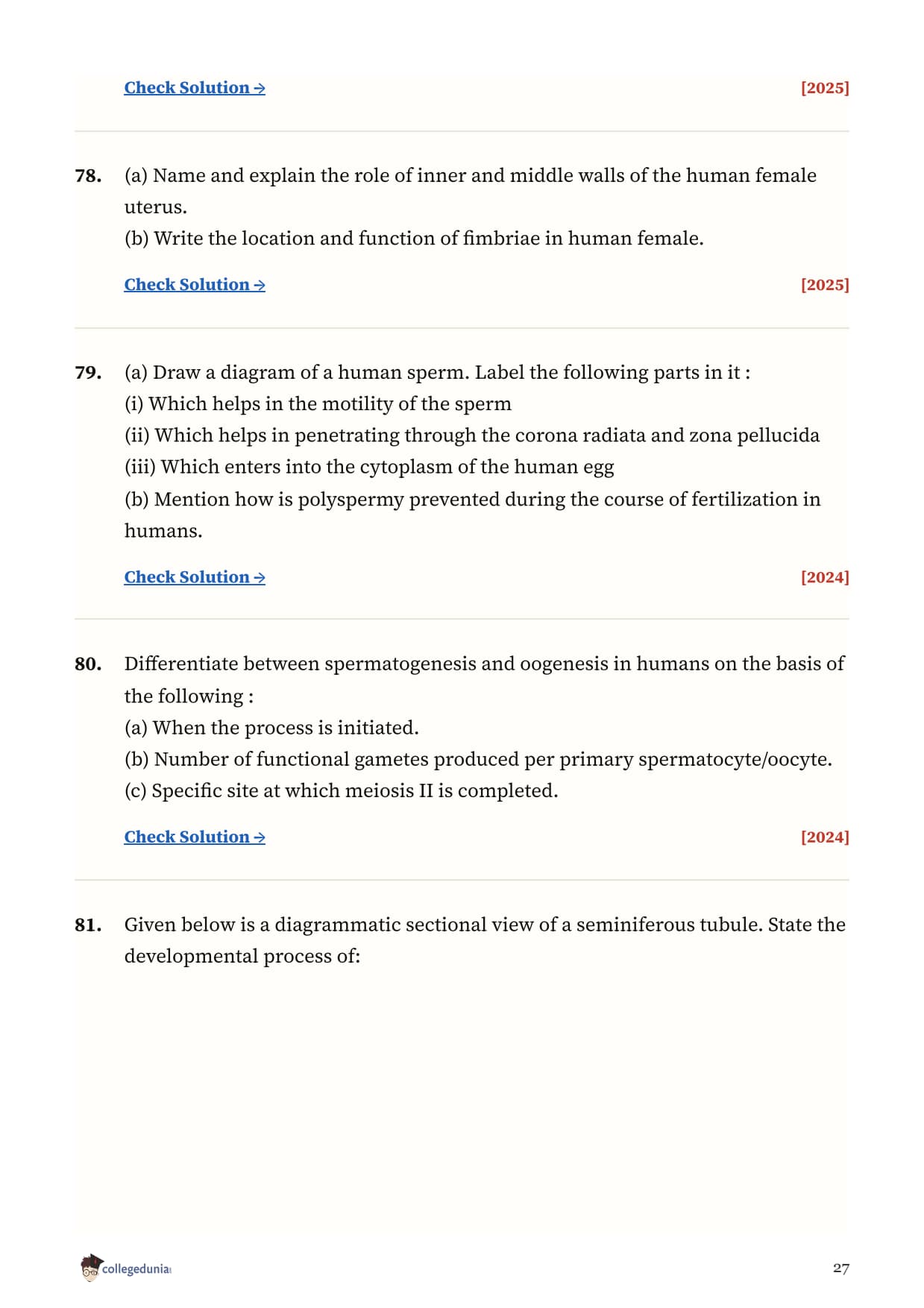
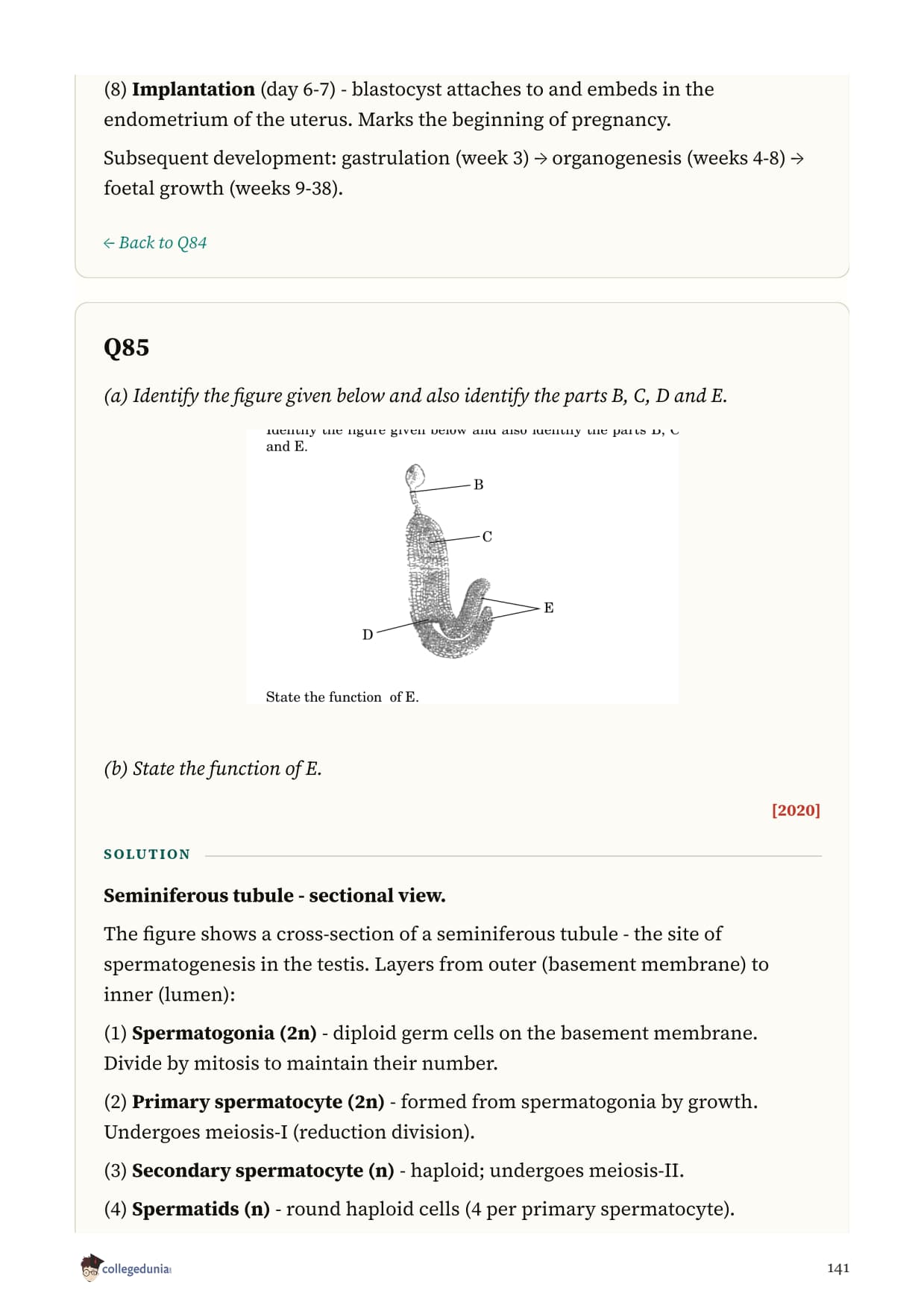
Ans. Spermatogenesis is the process of sperm formation inside the seminiferous tubules of the testis. Diploid spermatogonia divide and mature into primary spermatocytes, which undergo meiosis to form haploid spermatids. The spermatids then differentiate into sperm in a process called spermiogenesis.
Ques. How is the placenta defined?
Ans. The placenta is a structure that connects the developing foetus to the uterine wall of the mother. It forms from both foetal (chorionic villi) and maternal tissue and is the haemochorial type in humans. It allows the exchange of nutrients, gases and waste, and also secretes hormones like hCG.
Ques. What are the male accessory ducts?
Ans. The male accessory ducts carry and store sperm after they leave the testis. They include the rete testis, the vasa efferentia, the epididymis and the vas deferens. From the vas deferens the sperm pass into the urethra during ejaculation.



Comments