



If you want to lock in full marks on ecological pyramids and energy flow, start with the Class 12 Biology Ecosystem PYQ set.
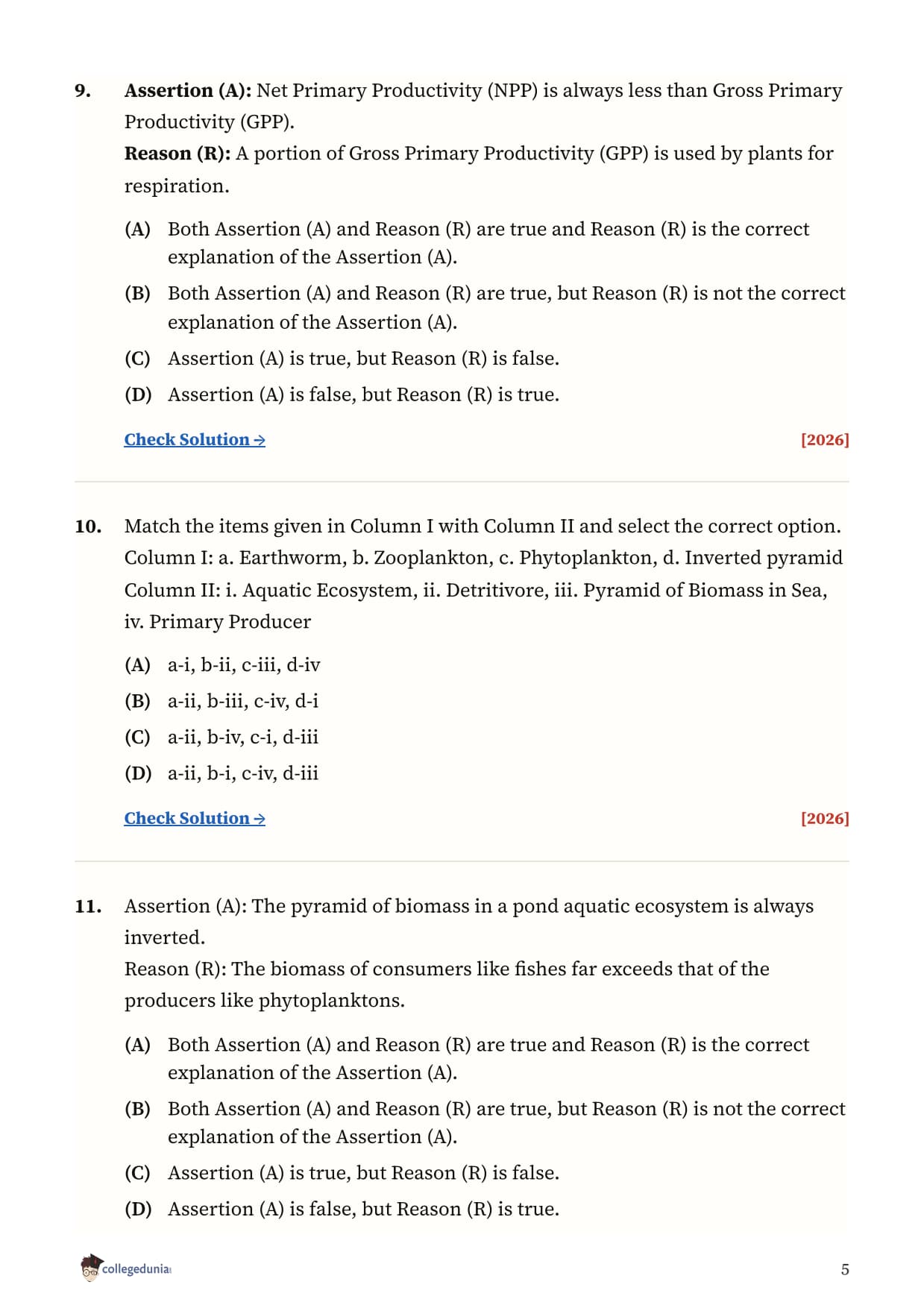
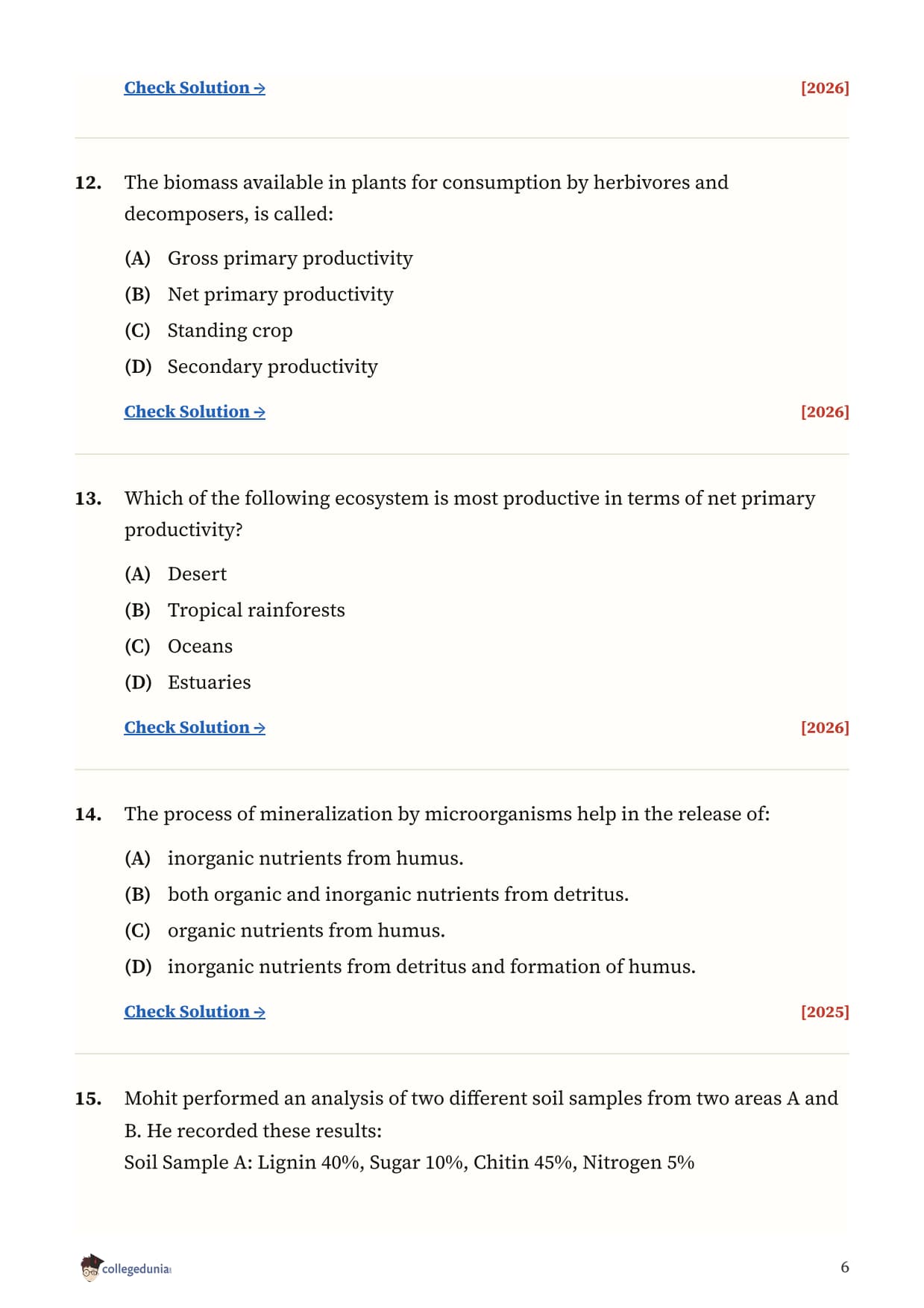
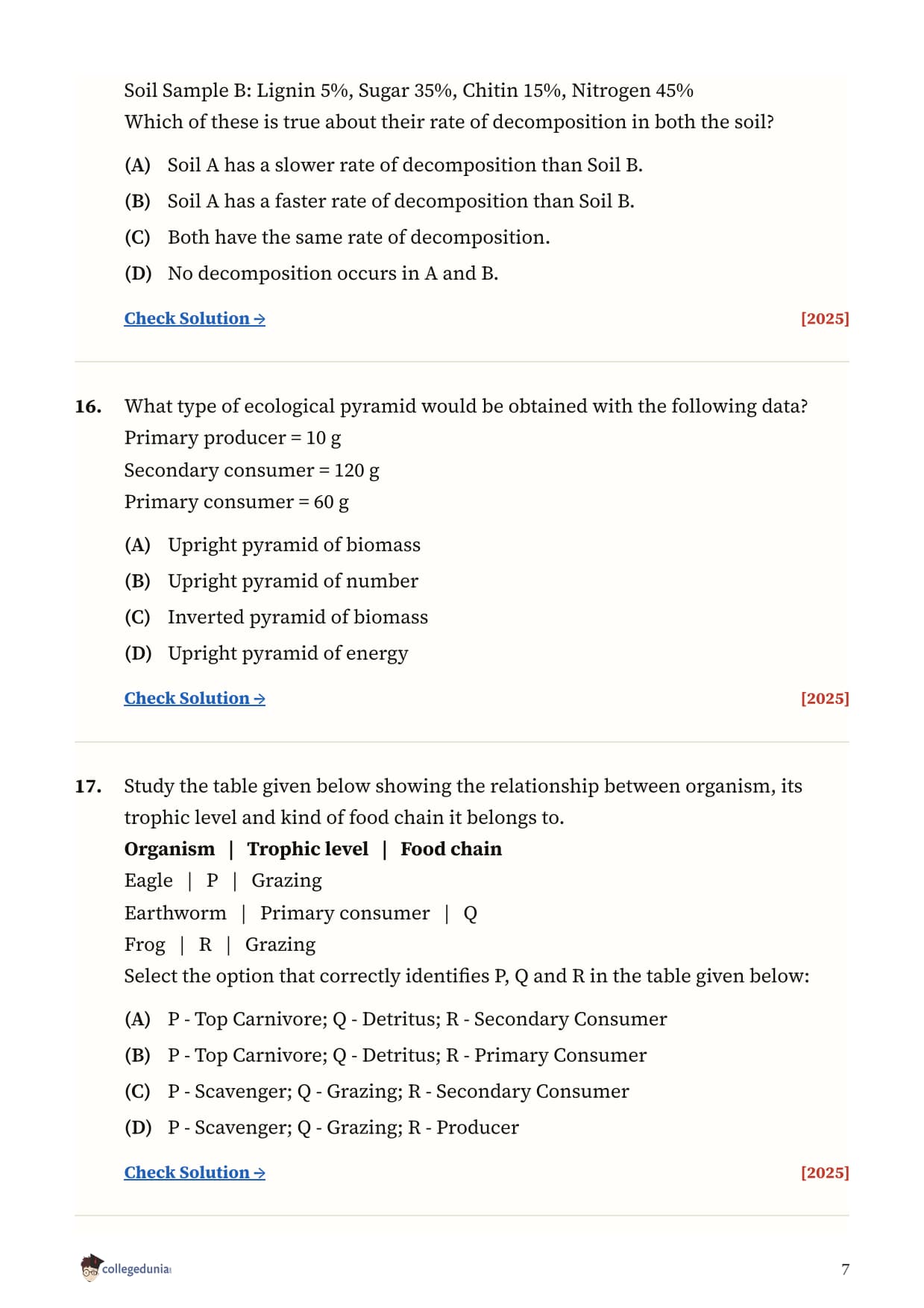
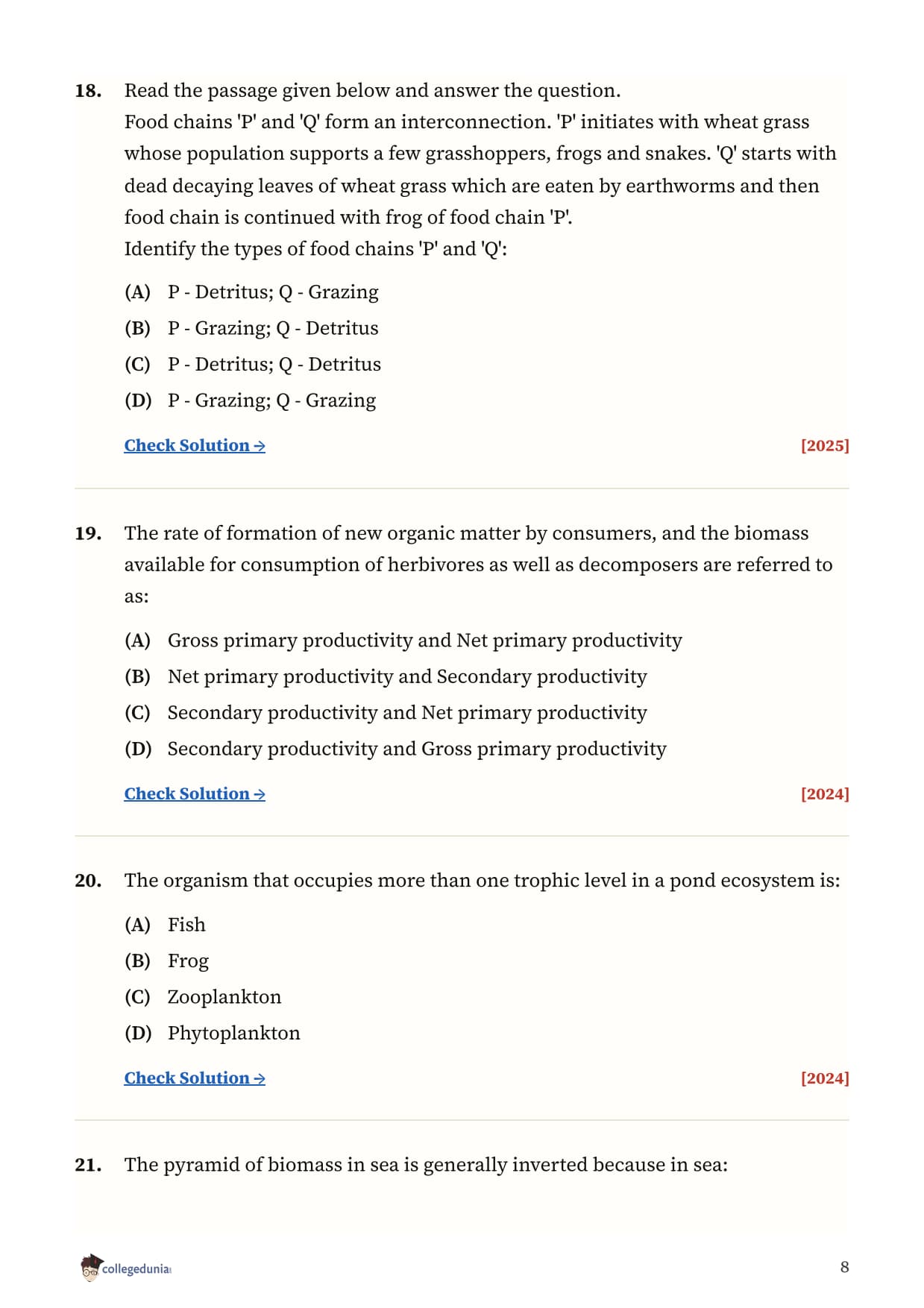
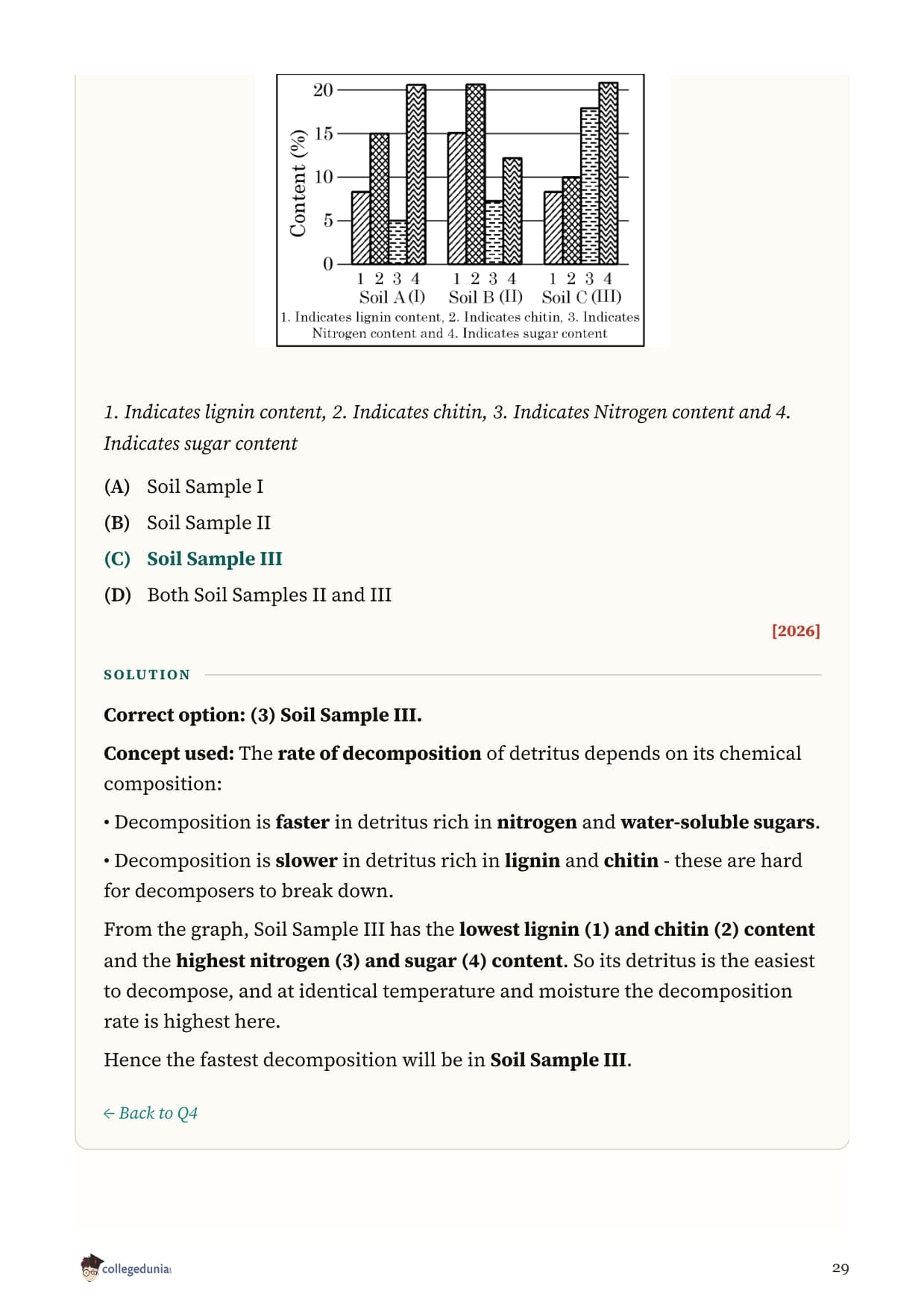
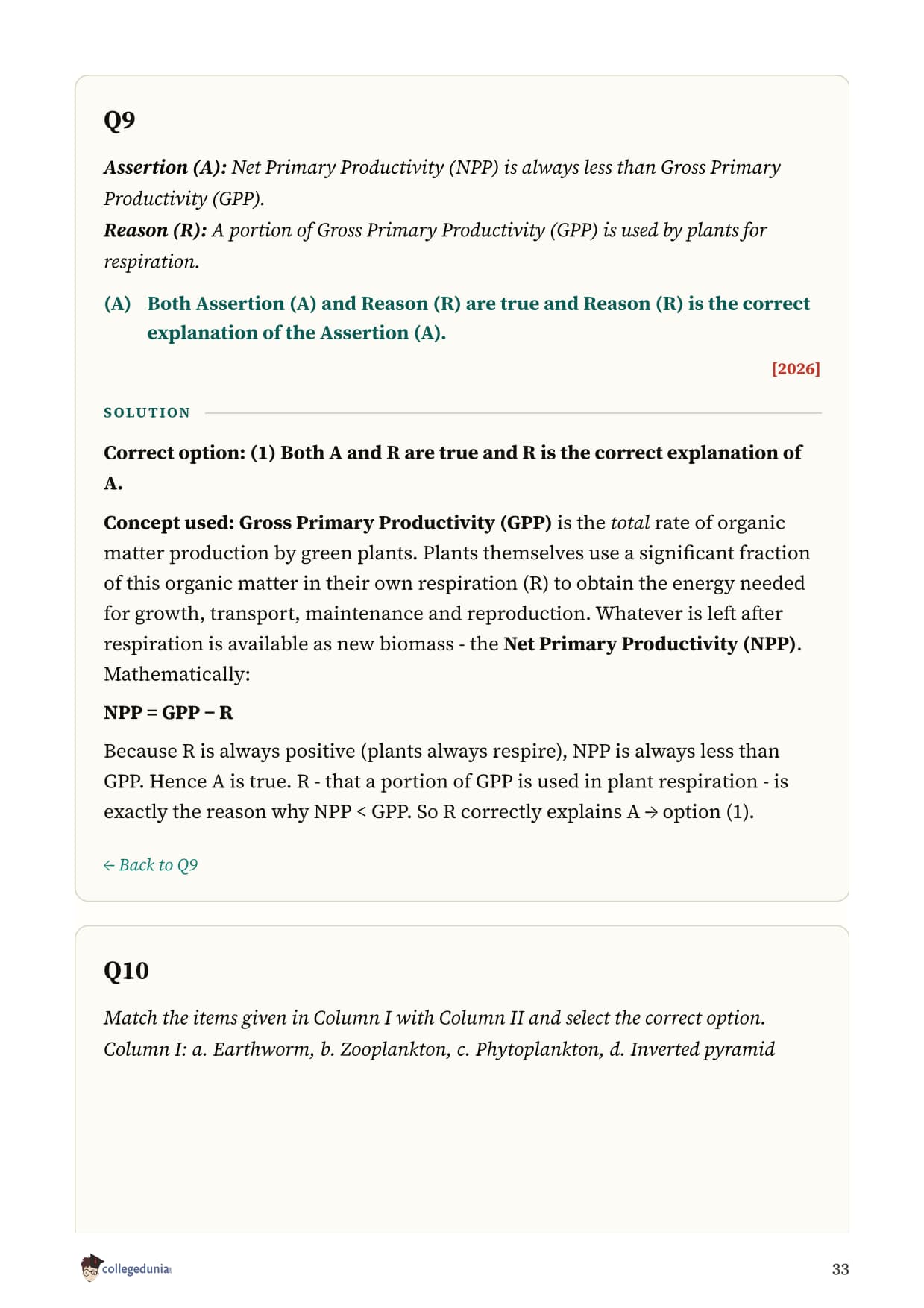
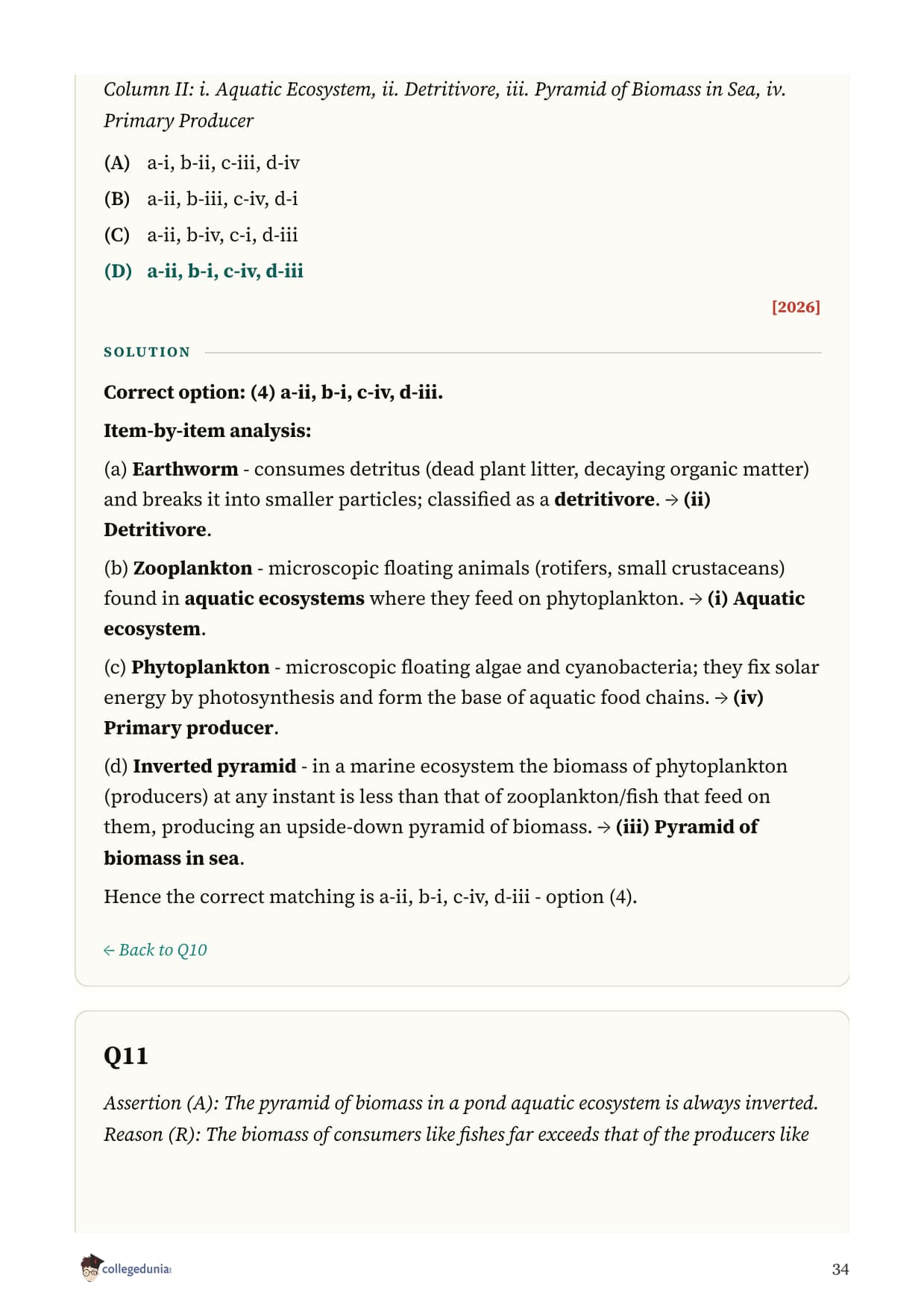
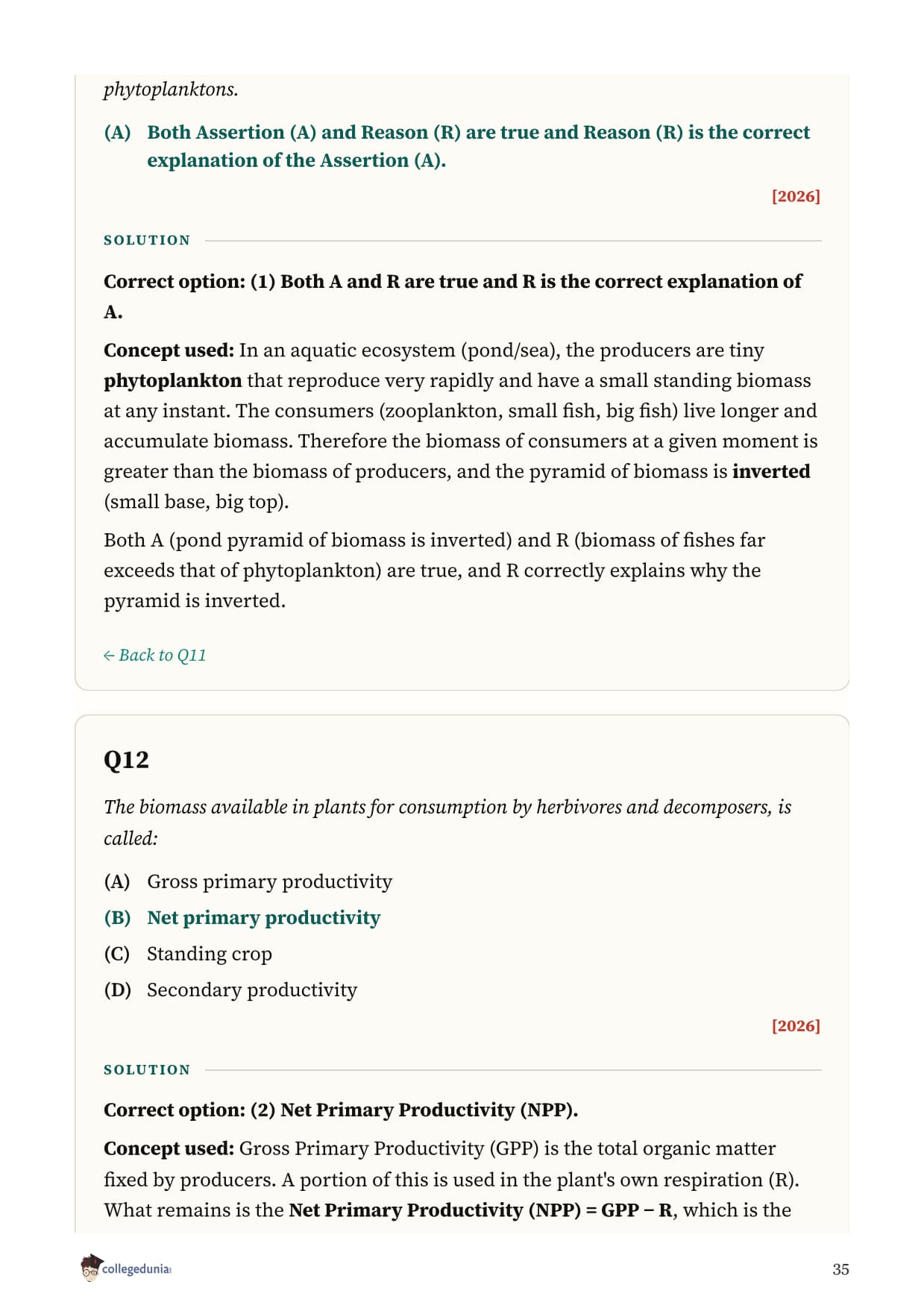
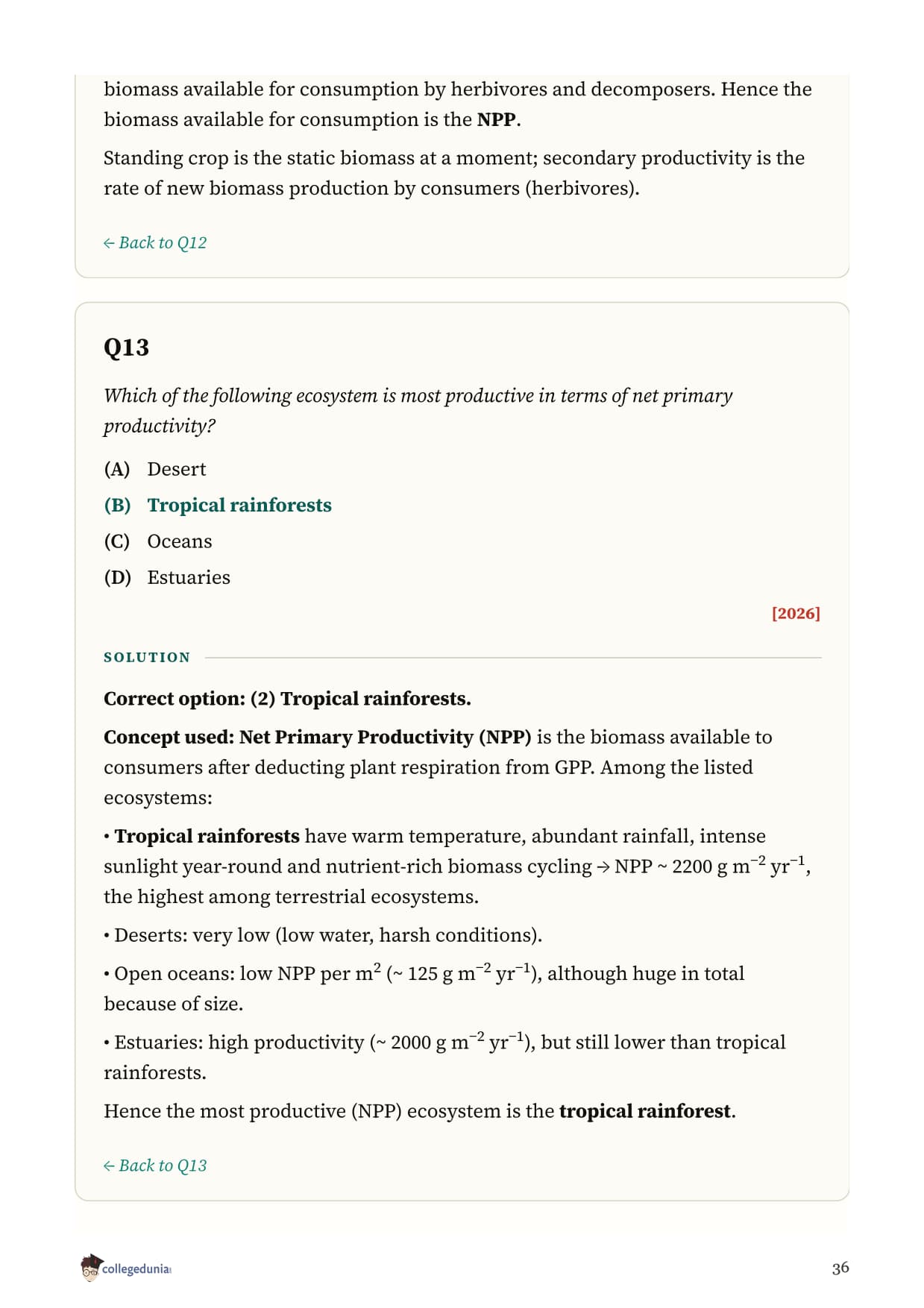
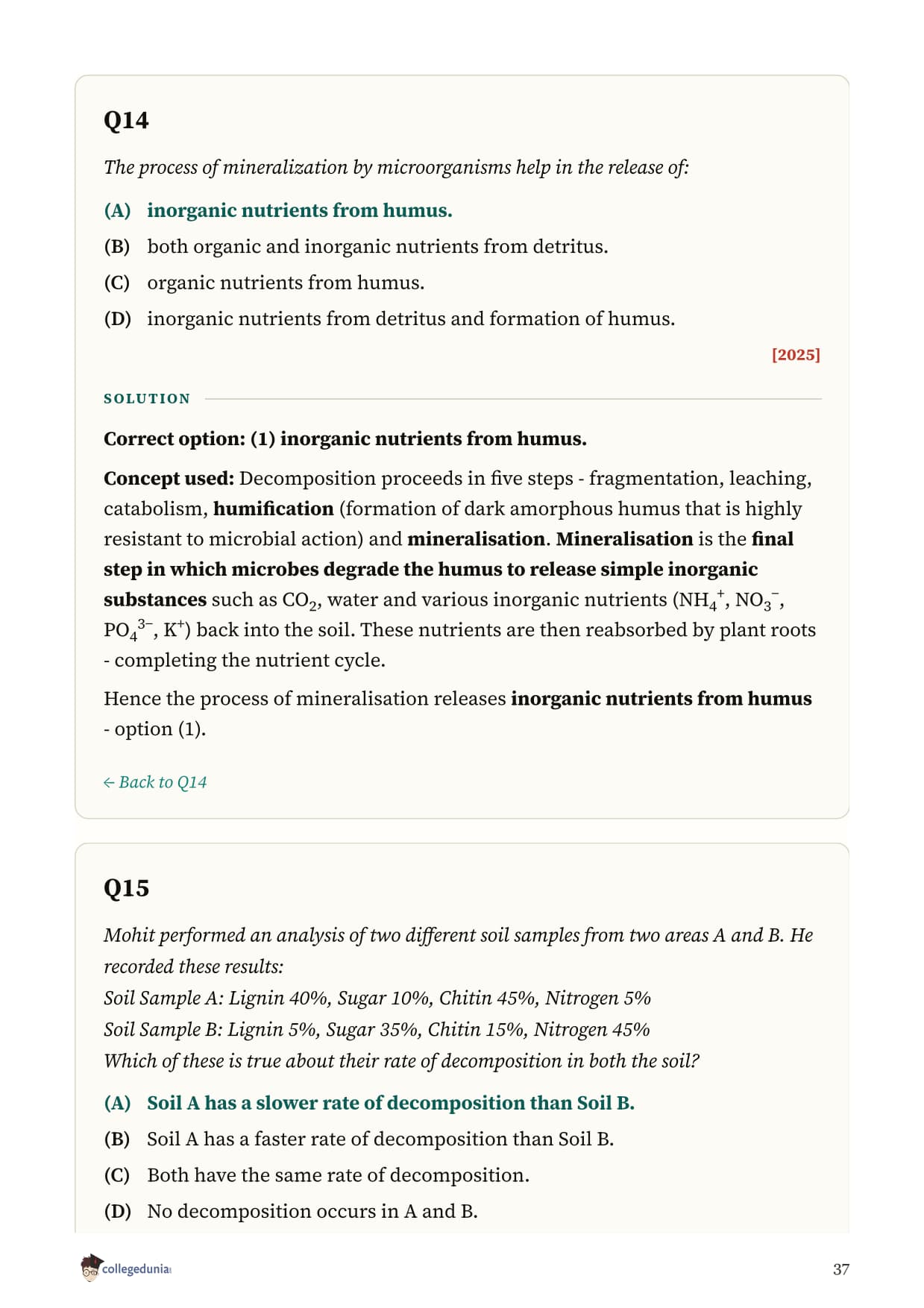
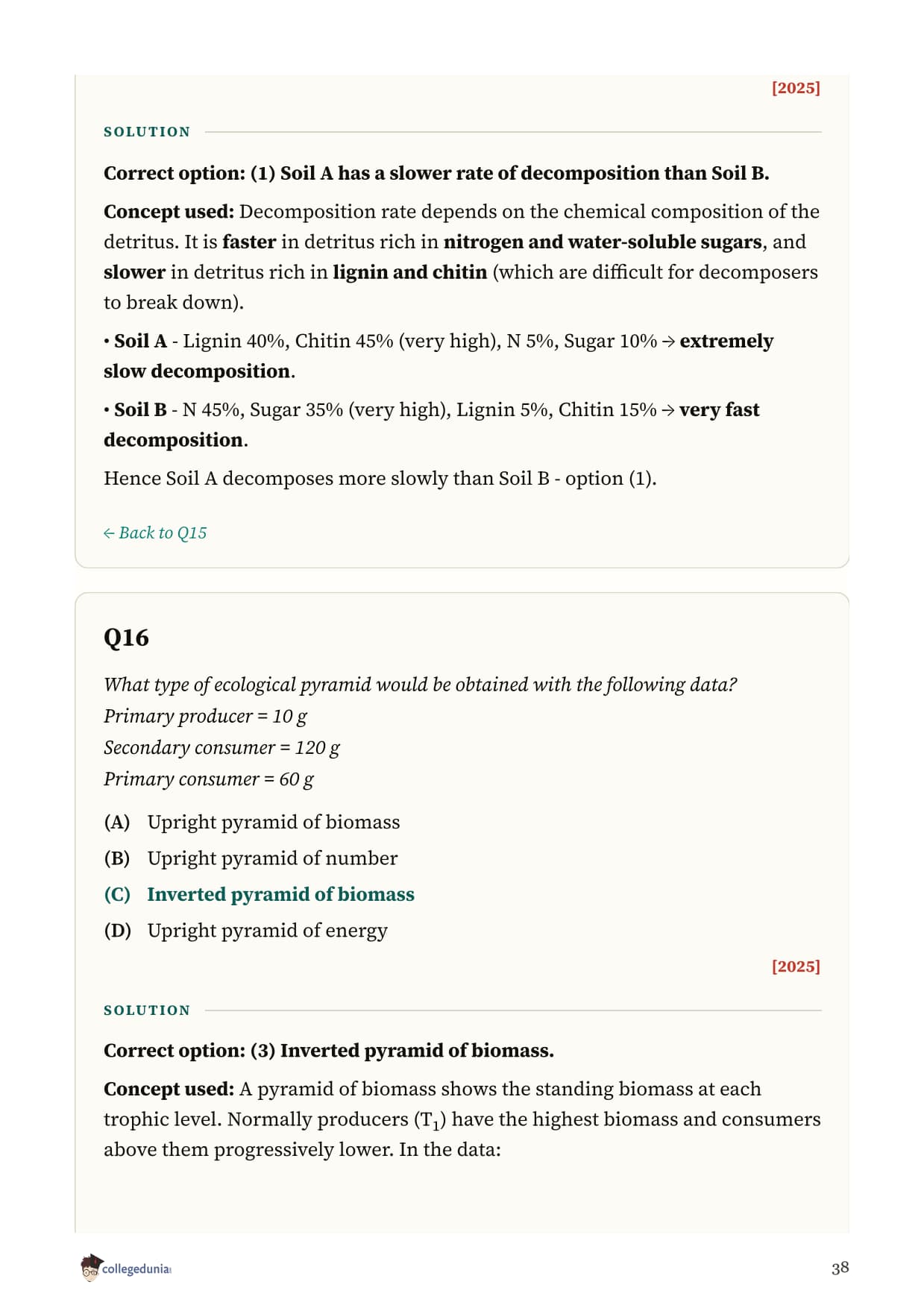
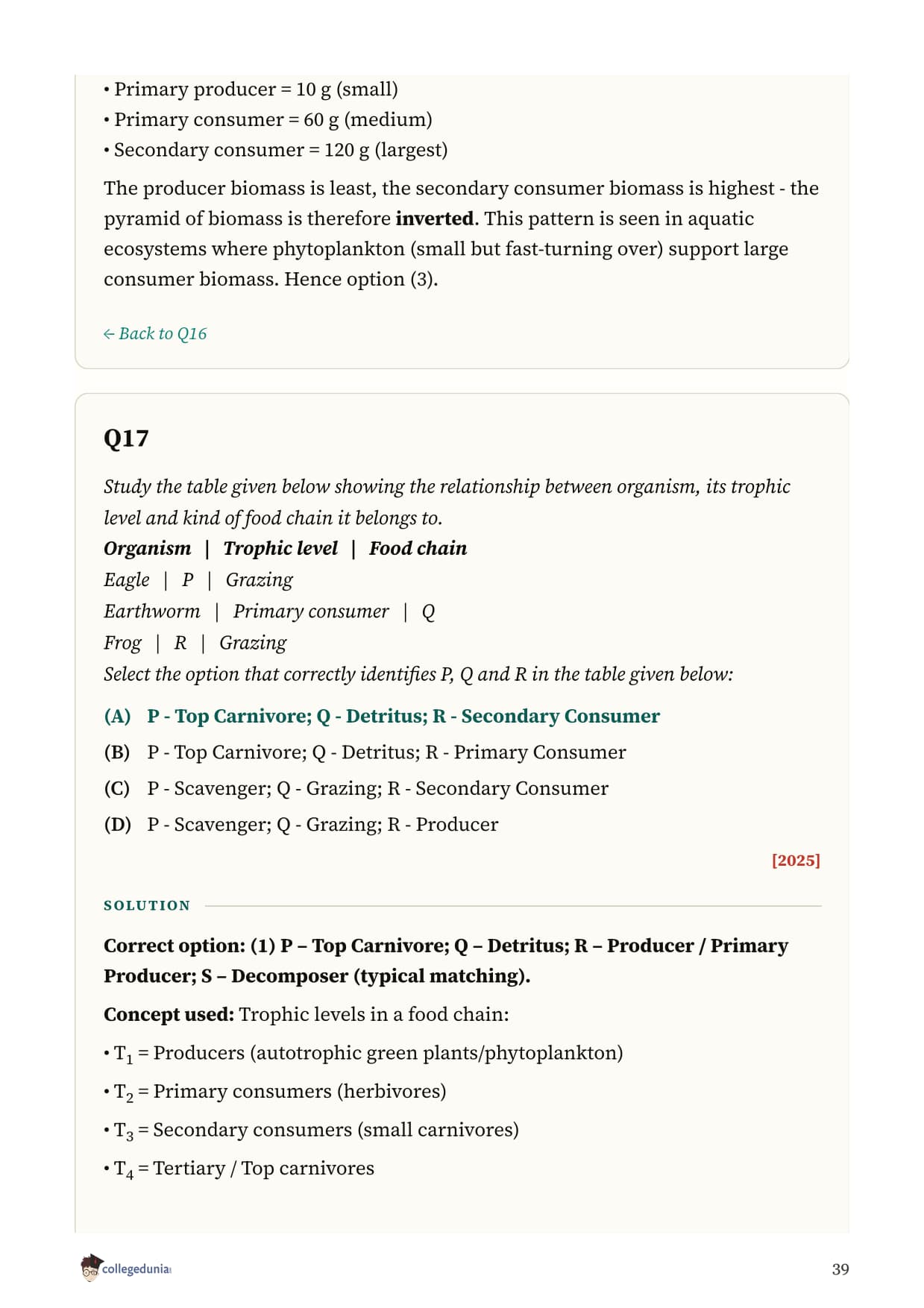
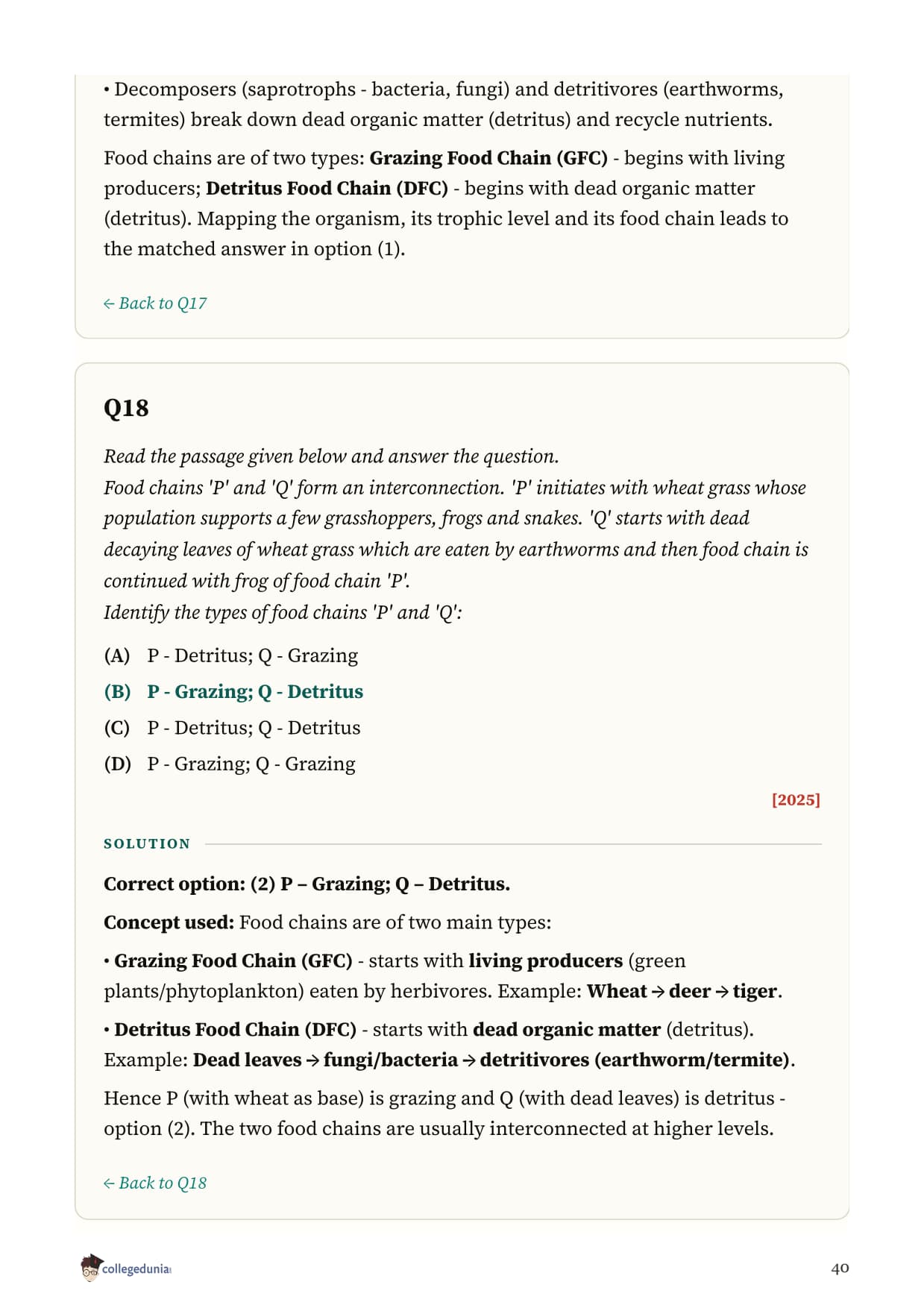
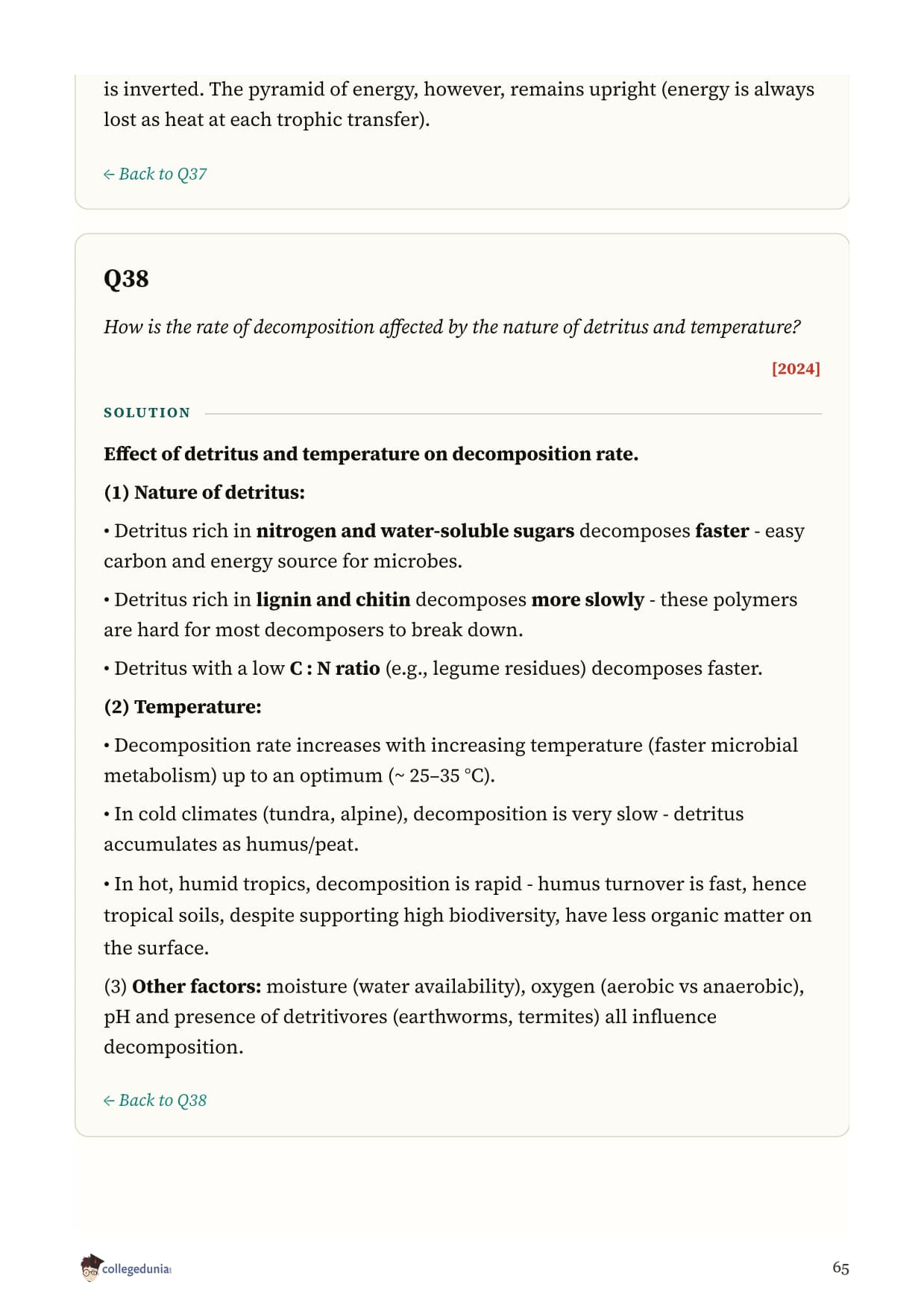
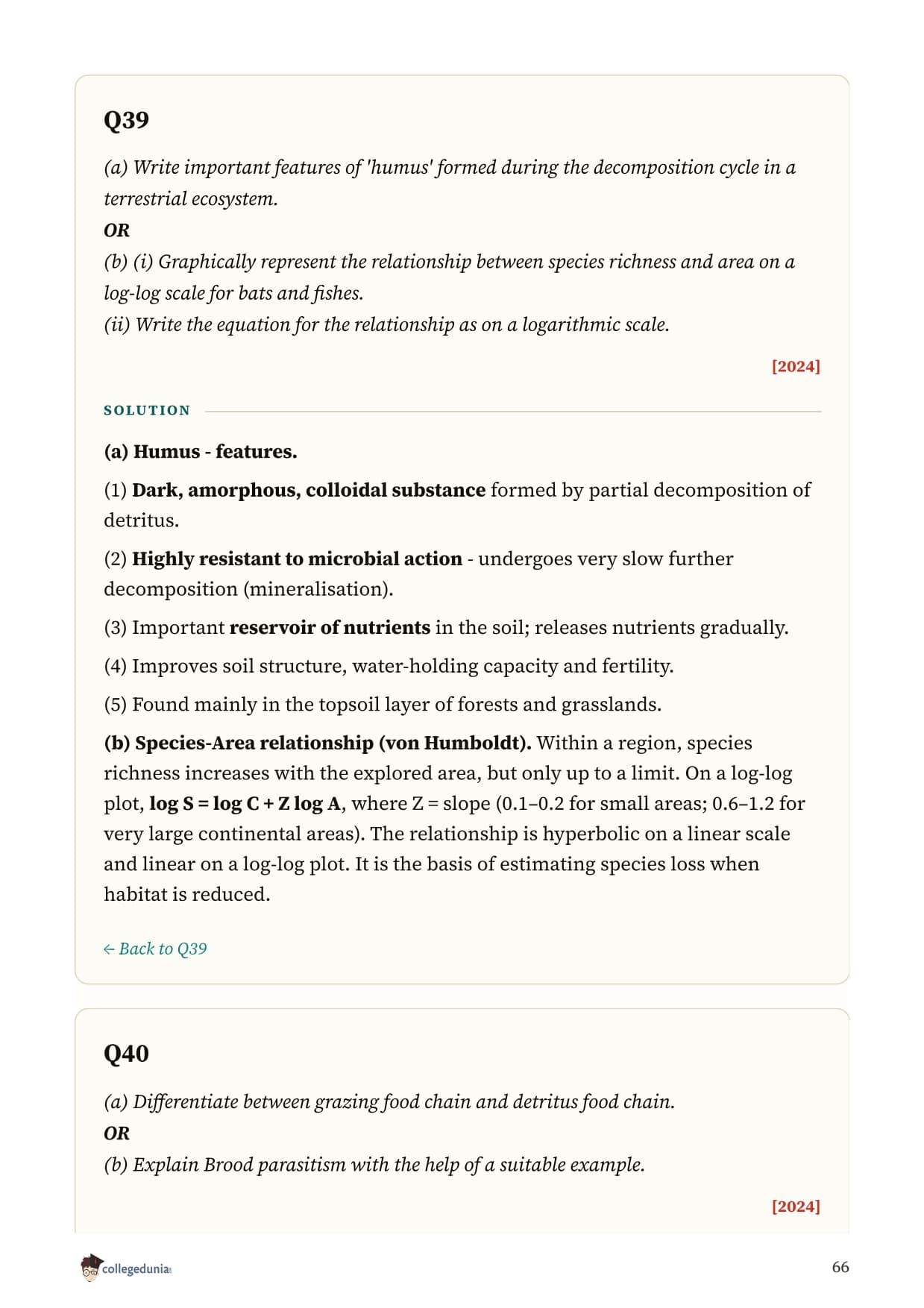
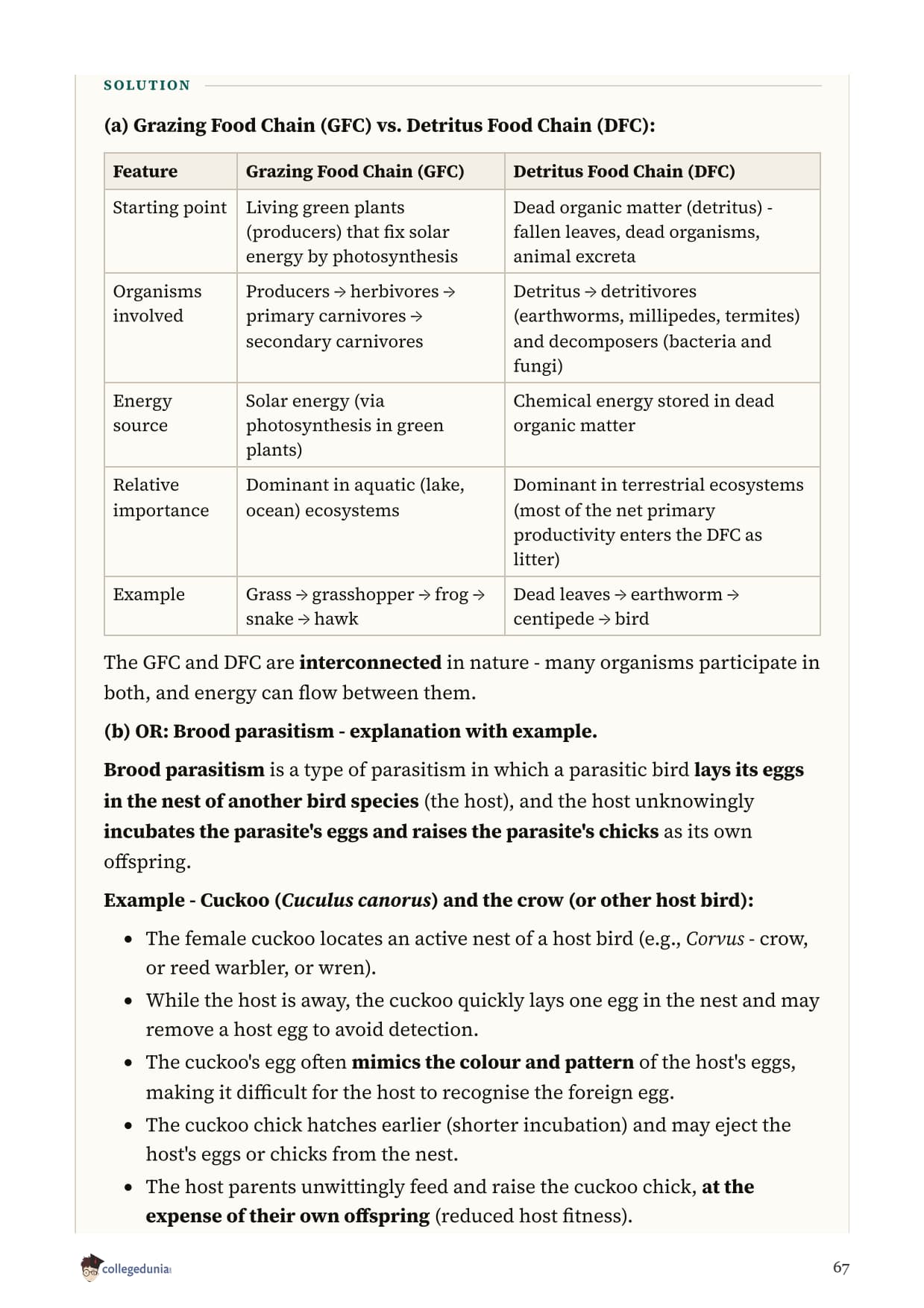
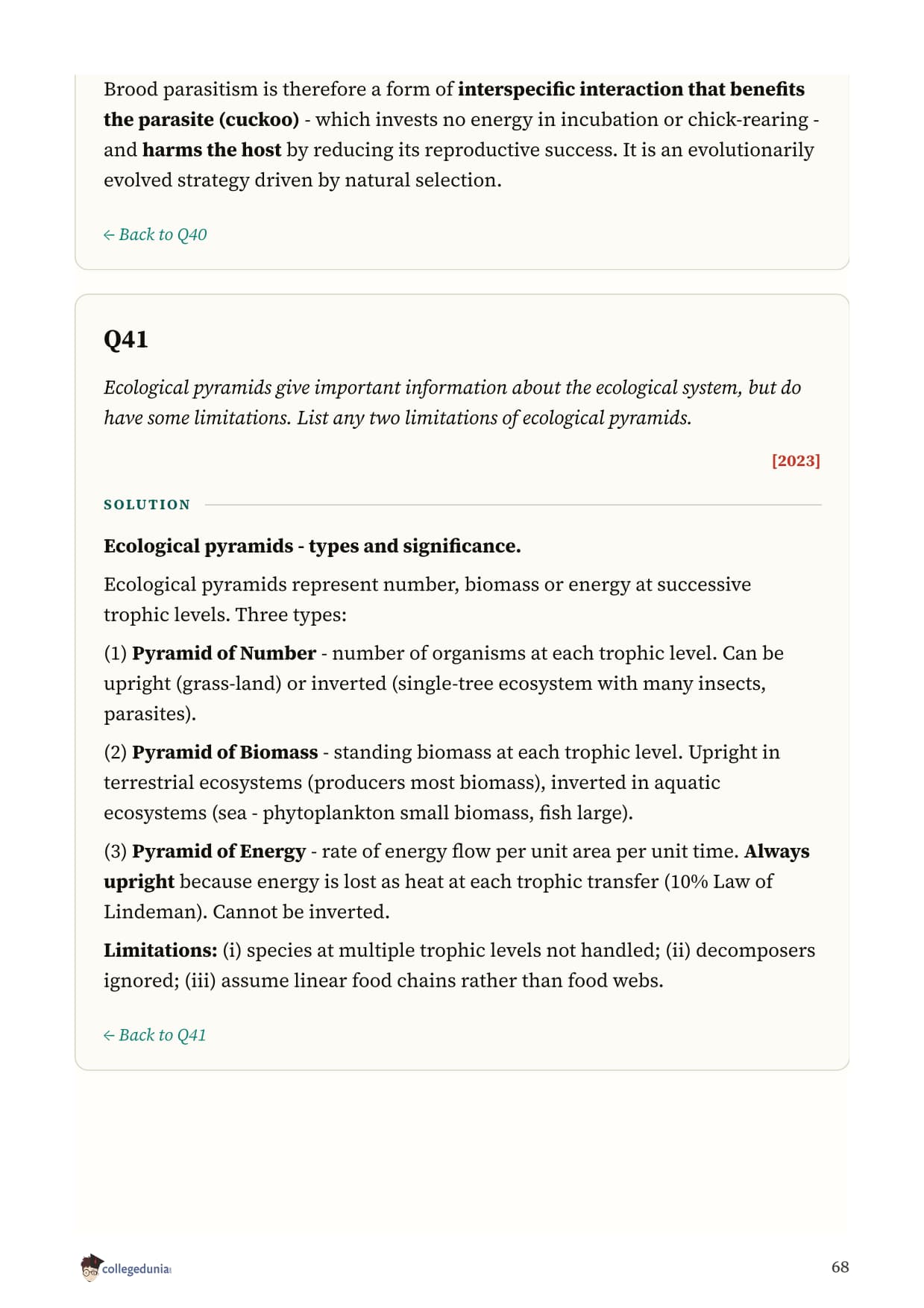
- 1-mark questions: 30 questions, mostly MCQ and assertion-reason on trophic levels, pyramids and stratification.
- 2-mark questions: 31 questions, the largest band, built around productivity, decomposition and energy flow.
- 3-mark questions: 19 questions, plus 4 five-mark long answers on energy flow, pyramids and nutrient cycles, and 1 case-based 4-mark question.
It gives you 85 board-paper questions across 2004 to 2026, sorted by marks and by year. You attempt food chains, productivity and nutrient cycling in the same order the CBSE paper sets them, so nothing in the exam feels new.
Every question in this Class 12 Biology Ecosystem PYQ compilation is sourced from CBSE board papers (Delhi, Outside Delhi, Foreign and Compartment) and cross-checked against the official mark scheme, with near-duplicate questions removed.
What the Ecosystem Previous Year Questions Cover
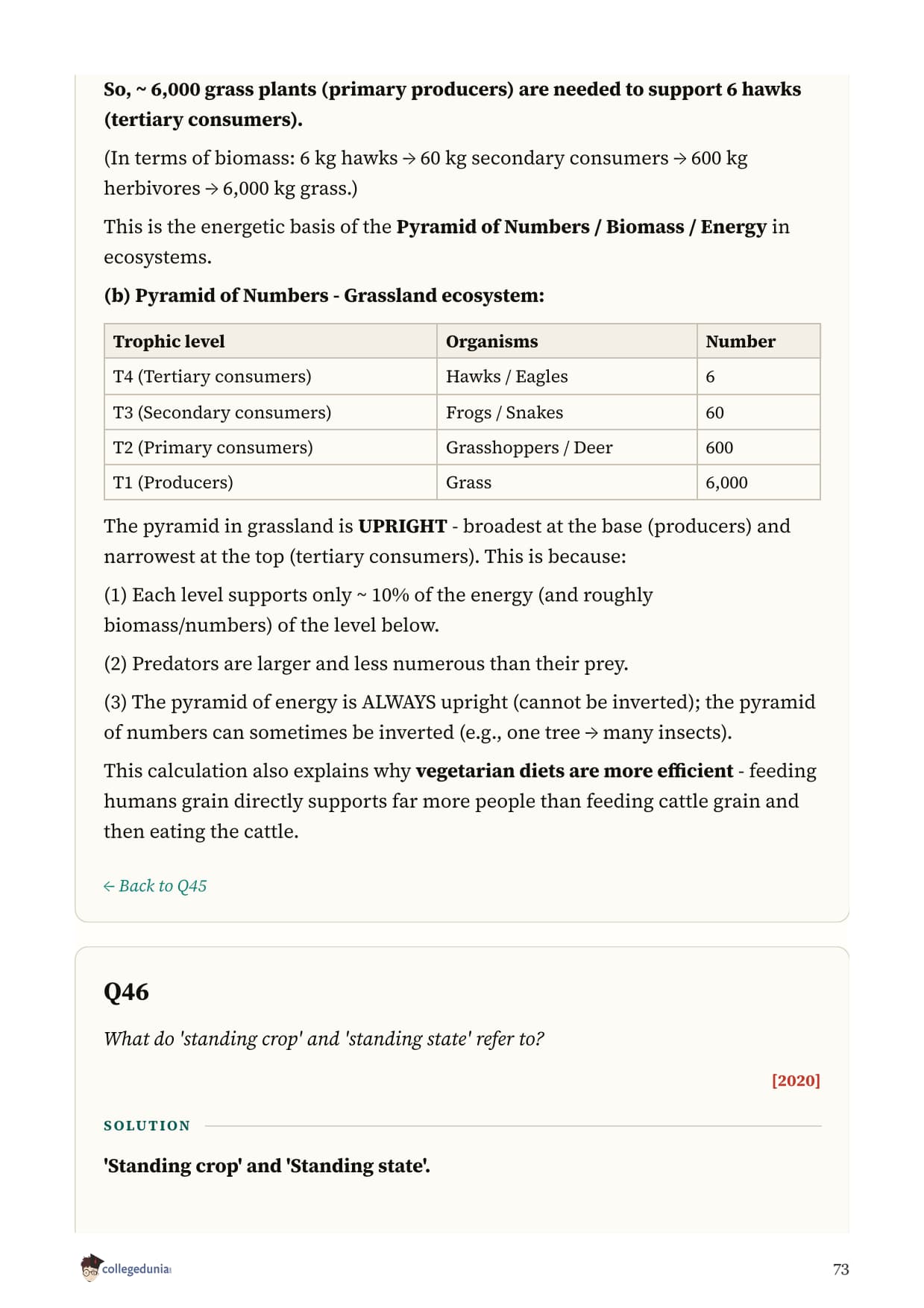
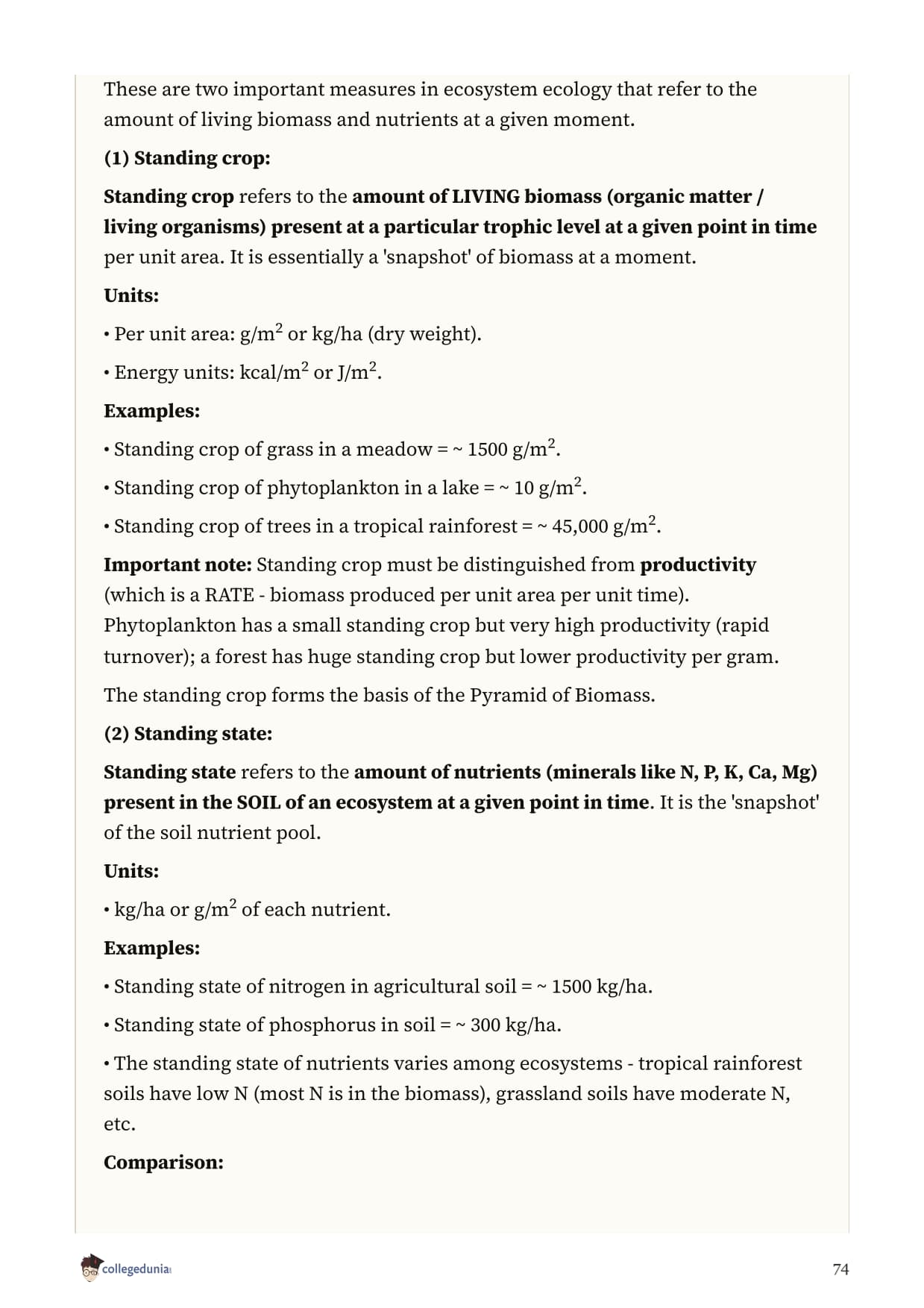
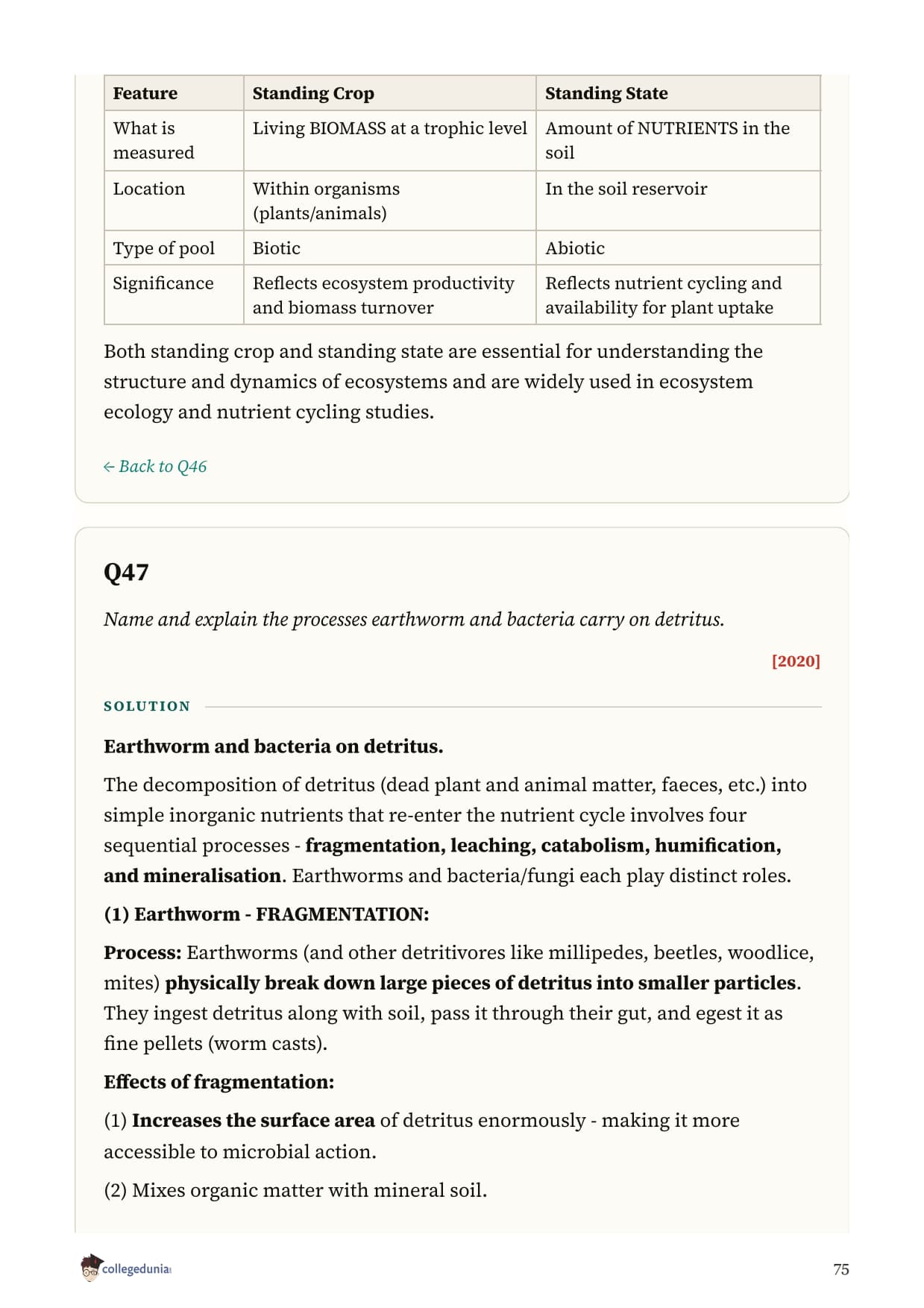
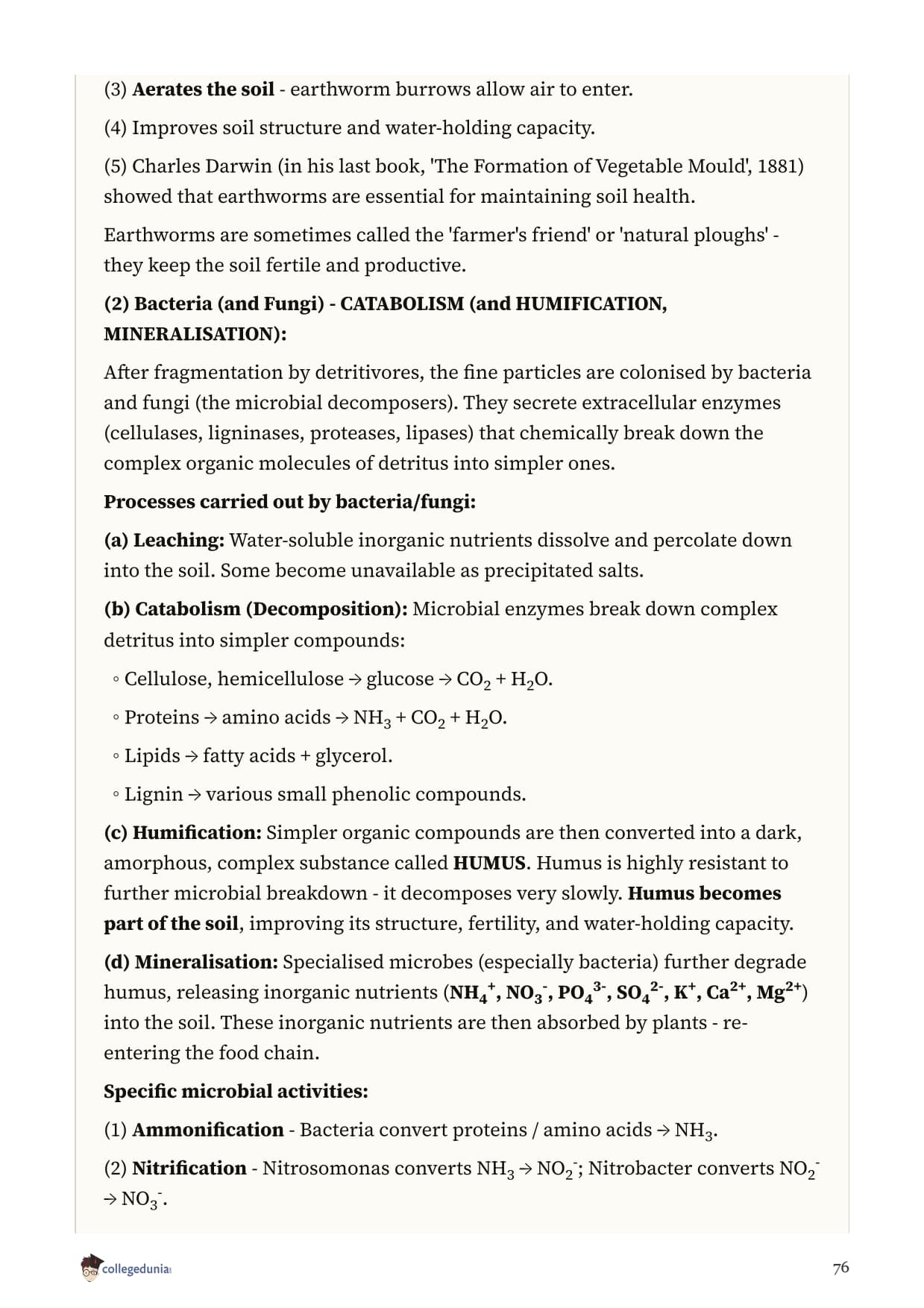
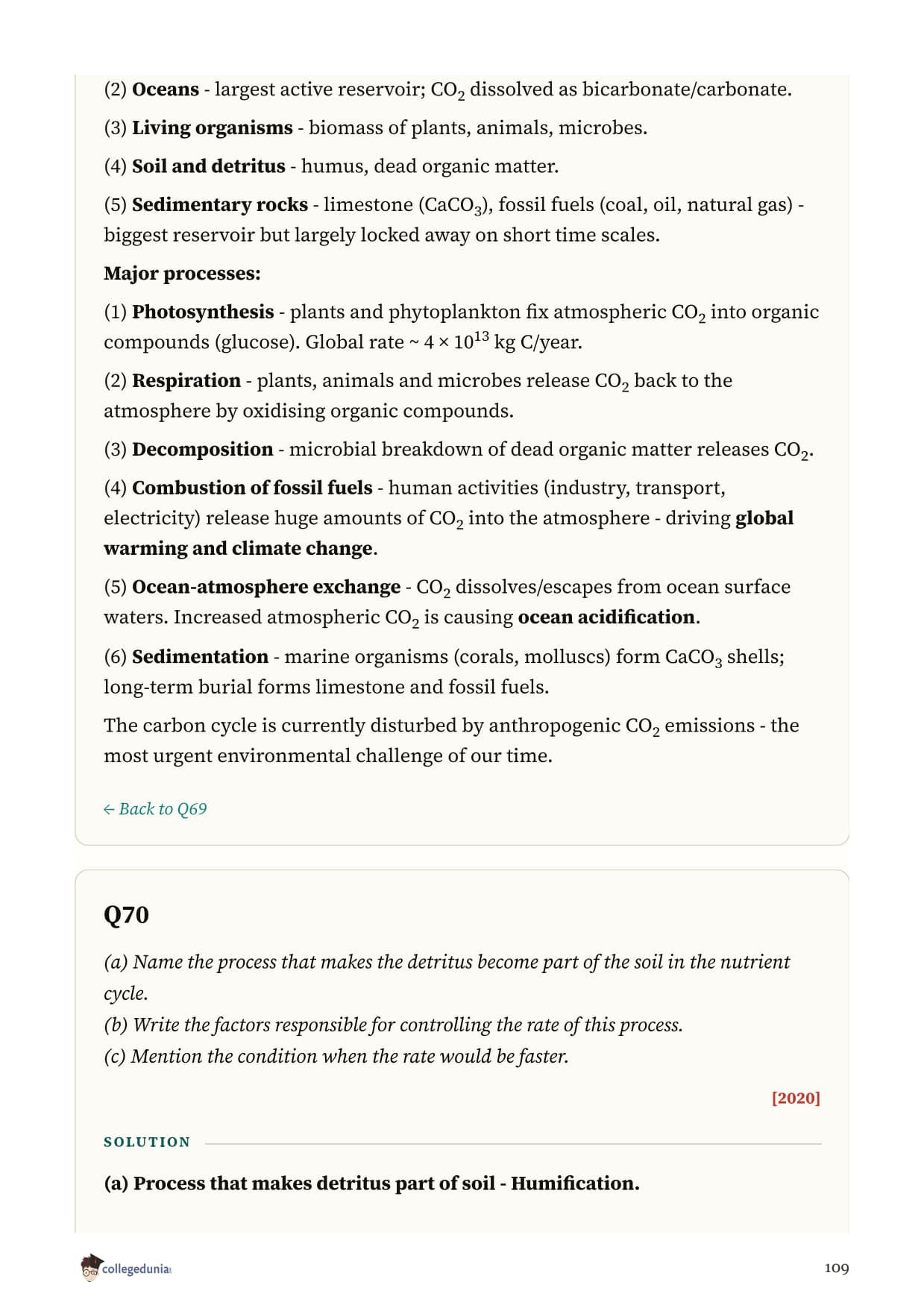
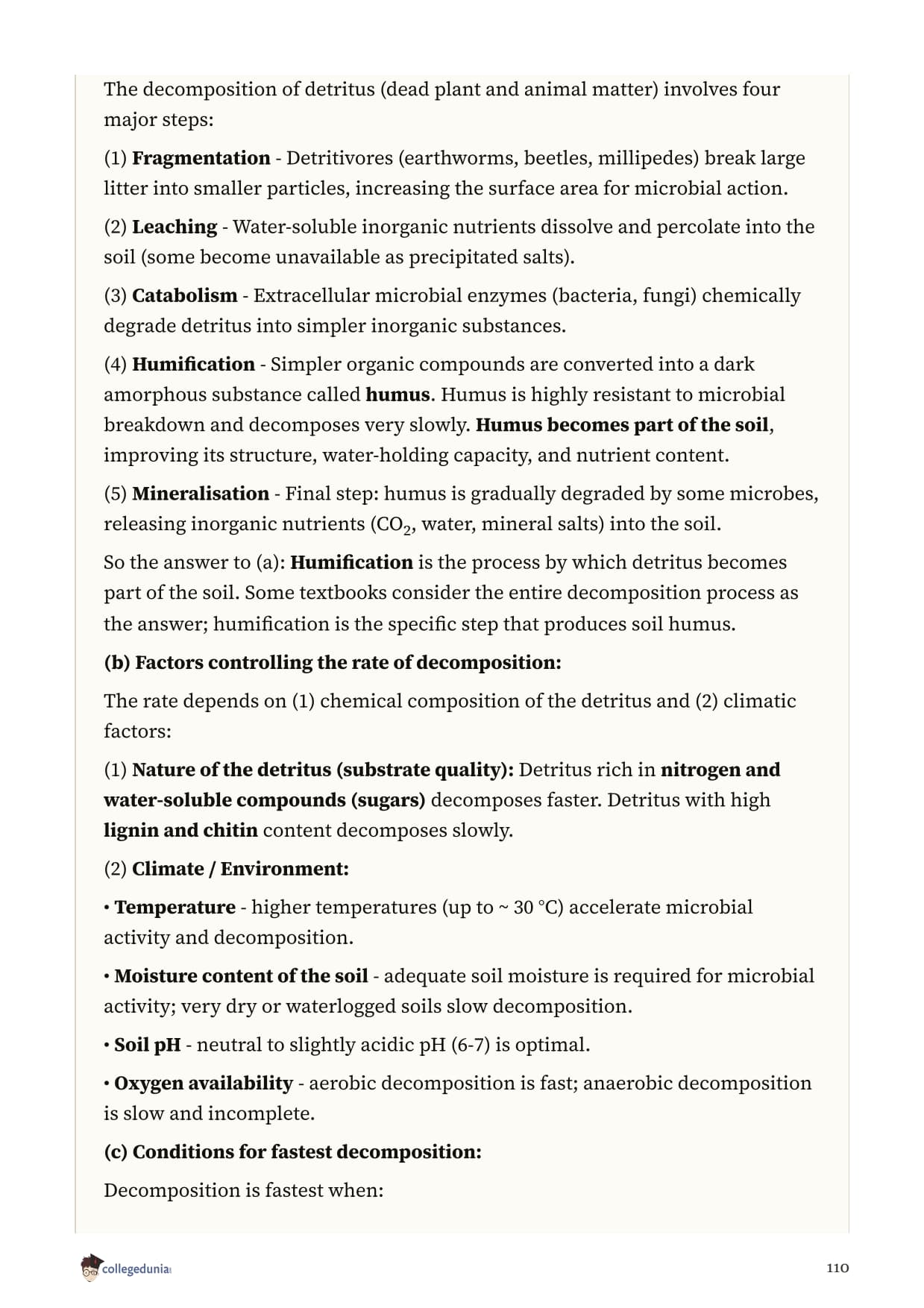
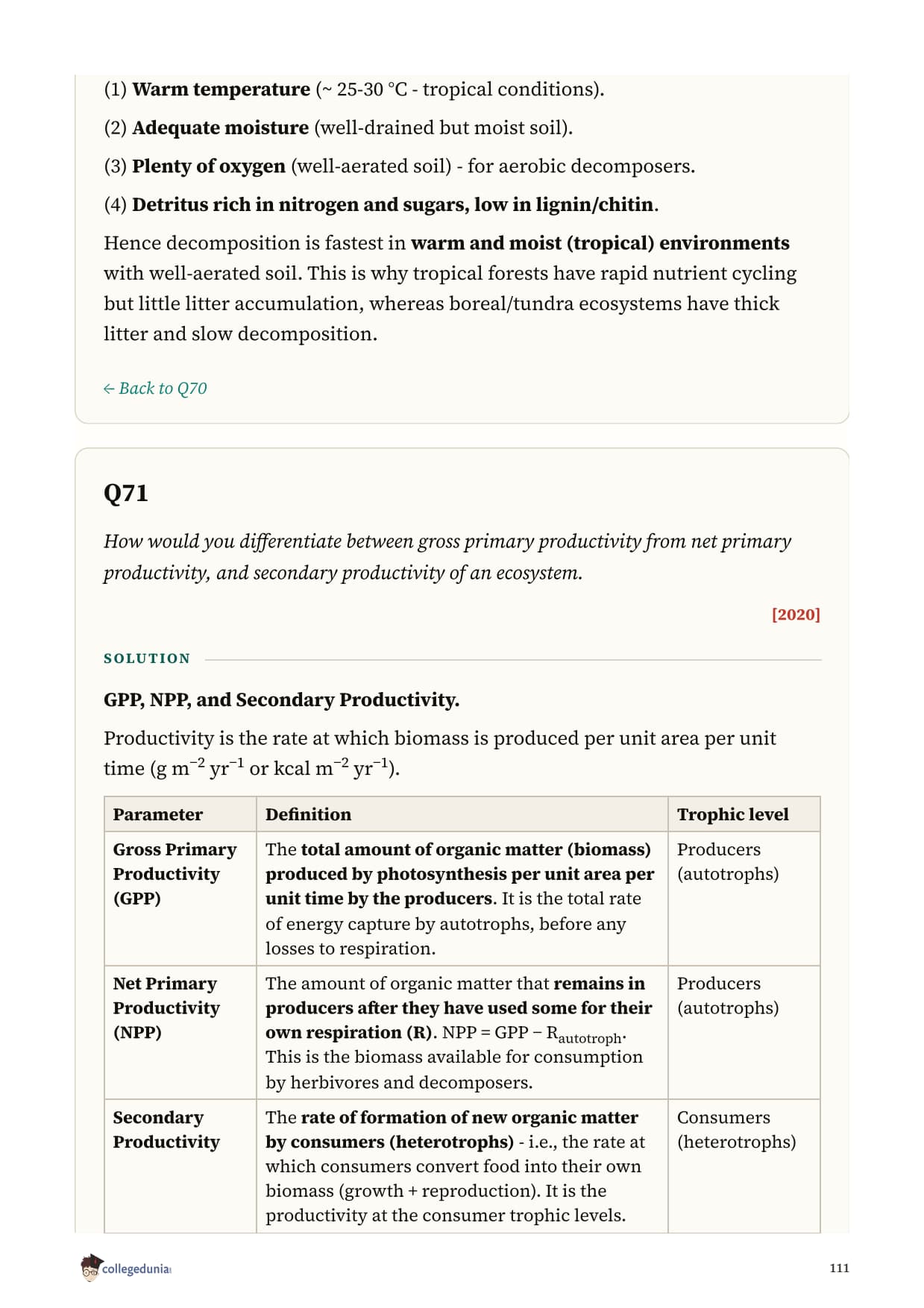
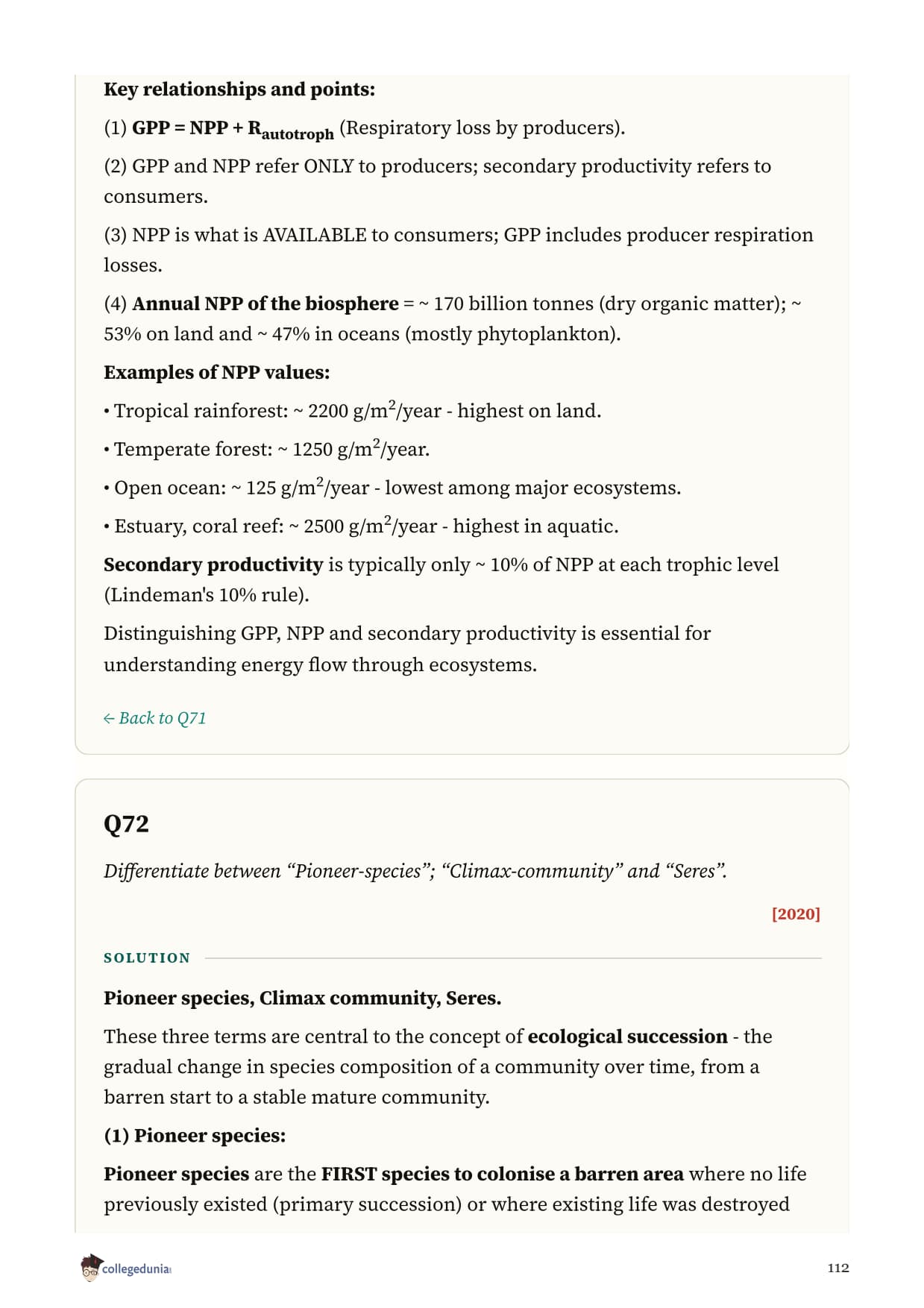
The 85-question set covers every idea the NCERT chapter introduces. Energy flow and ecological pyramids (pyramids of number, biomass and energy, the 10 per cent law) drive most 3 and 5-mark answers. Productivity, namely gross and net primary productivity and secondary productivity, carries the 2-mark band. Decomposition steps and nutrient cycling (carbon and phosphorus cycles) appear in the 3-mark answers, while food chains, trophic levels and ecological succession fill the short 1-mark MCQs.
Marks-wise Distribution of the Ecosystem PYQs
The table below shows how the 85 questions split across the CBSE marks bands. Use it to plan how much revision time each band deserves.
| Marks | Questions | Total Marks | CBSE Section | Type |
|---|---|---|---|---|
| 1 mark | 30 | 30 | Section A | MCQ / Assertion-Reason |
| 2 mark | 31 | 62 | Section B | VSA (Very Short Answer) |
| 3 mark | 19 | 57 | Section C | SA (Short Answer) |
| 4 mark | 1 | 4 | Section D | Case Study |
| 5 mark | 4 | 20 | Section E | Long Answer |
Year-wise Spread of Class 12 Biology Ecosystem PYQs
The compilation spans more than 17 CBSE board years. About 53% of the questions come from 2023 onwards, because the objective block and case-based items lifted the 1 and 2-mark count.
- 2026: An MCQ on the vertical distribution of species (stratification), an assertion-reason on the grazing food chain, and a 3-mark question on primary and secondary productivity.
- 2024 to 2025: Strong sets on ecological pyramids, the 10 per cent law and net vs gross primary productivity.
- 2020 to 2023: Reduced-syllabus papers, but energy flow, decomposition and the carbon cycle still appear.
- 2004 to 2019: Older long answers on inverted pyramids, hydrarch succession and nutrient cycling, all relevant to the current syllabus.
Topic Frequency in the Ecosystem Board Paper Questions
The 85 questions cluster into the six topic buckets below, ranked by how often CBSE has set them between 2004 and 2026.
| Rank | Topic Cluster | Frequency | Typical Marks Band |
|---|---|---|---|
| 1 | Ecological pyramids (number, biomass, energy, upright and inverted) | ~23 per cent | 2 and 3 mark |
| 2 | Energy flow and food chains (trophic levels, 10 per cent law, GFC vs DFC) | ~20 per cent | 1, 3, 5 mark |
| 3 | Productivity (gross and net primary, secondary, why it varies) | ~18 per cent | 2 and 3 mark |
| 4 | Decomposition (fragmentation, leaching, catabolism, humification, mineralisation) | ~15 per cent | 3 and 5 mark |
| 5 | Nutrient cycling (carbon cycle, phosphorus cycle, reservoir pools) | ~13 per cent | 2 and 3 mark |
| 6 | Ecological succession and stratification (hydrarch, xerarch, vertical layers) | ~11 per cent | 1 and 5 mark |
Marks-Band Attempt Strategy for the Ecosystem PYQs
The 85 PYQs are arranged marks-ascending inside the PDF, so you can attempt them in the same order the CBSE paper presents them.
- 1-mark MCQs: Spend no more than 45 seconds each. Many test a single term like stratification or the 10 per cent law, so revise the definitions first.
- 2-mark questions: One productivity definition or two clean points on energy flow. Aim for 3 minutes each.
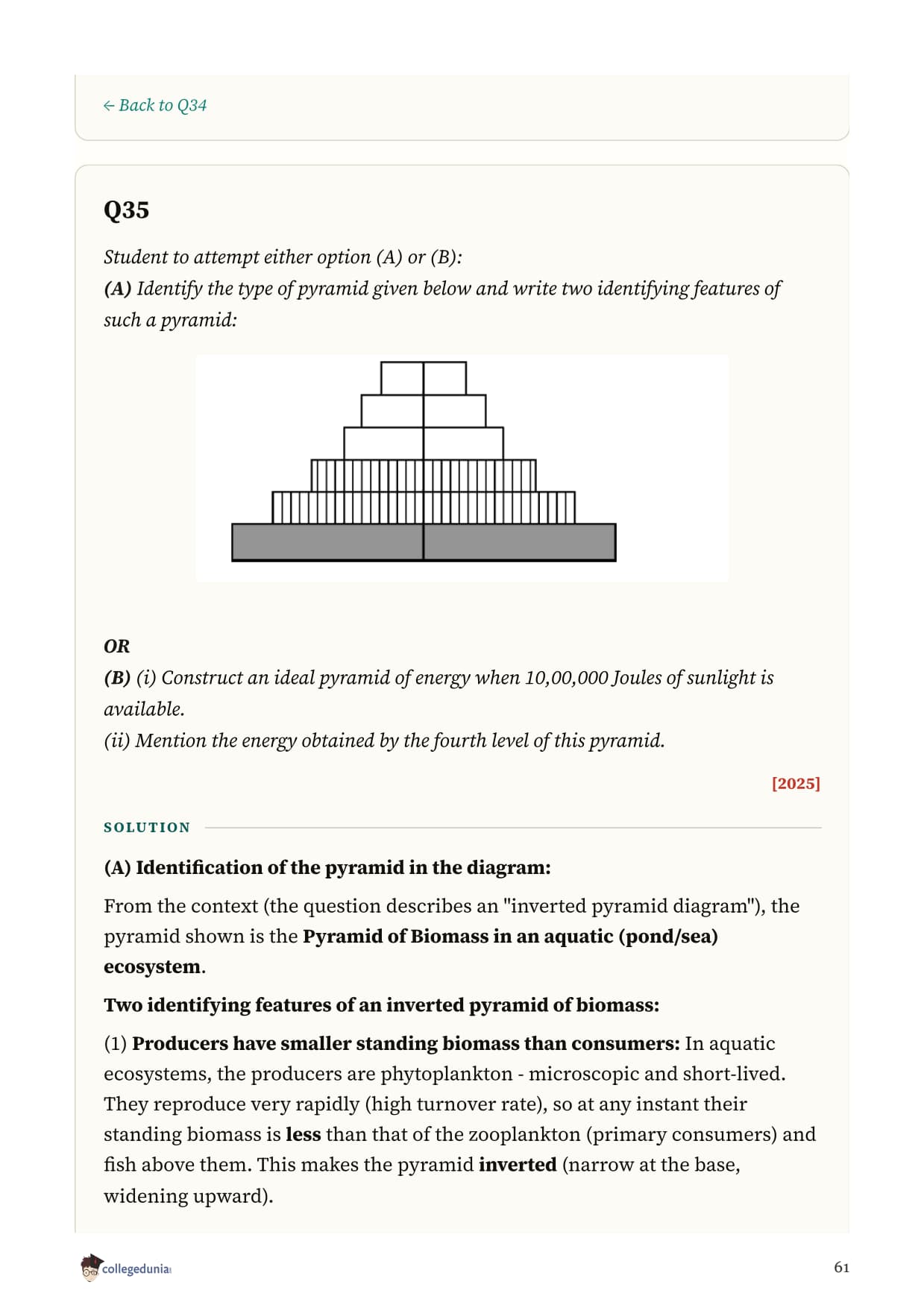
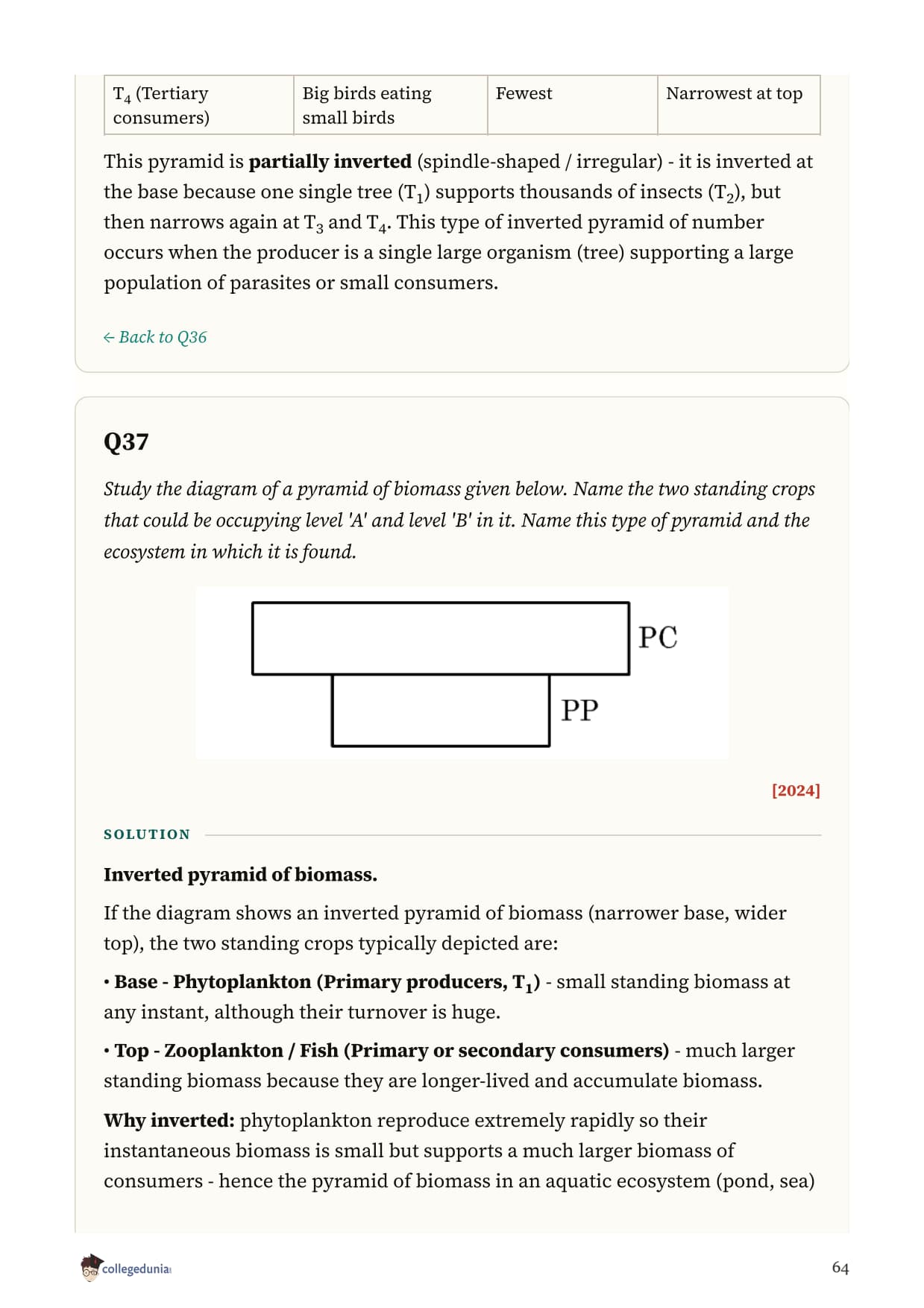
- 3-mark questions: Usually an ecological pyramid or the decomposition steps. Draw and label the pyramid before explaining why it is upright or inverted.
- 4 and 5-mark questions: Energy flow with the 10 per cent law, or a case-based passage on productivity. Allocate 12 to 15 minutes.
Recent CBSE Trend: 2024 to 2026 Pattern Shift in Ecosystem
Three things have changed in the recent CBSE cycles that the Ecosystem previous year questions now reflect:
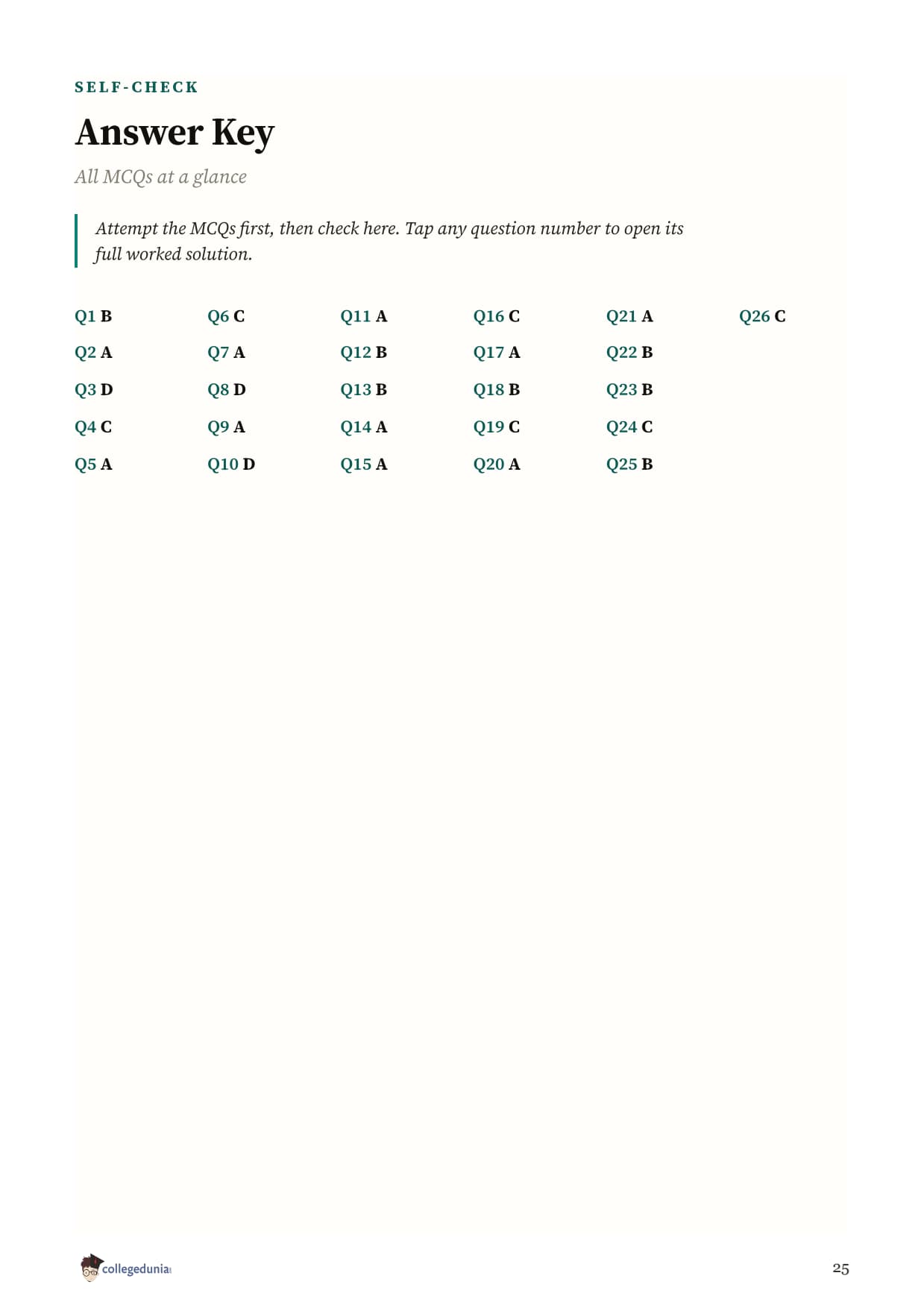
- Section A carries a fixed objective block, including assertion-reason items like the 2026 grazing food chain question. The set has 30 such 1-mark questions.
- Definition-style MCQs, such as naming the vertical distribution of species as stratification, now test exact terms rather than long explanations.
- Case-based and 5-mark questions often combine productivity with energy flow in one answer, so the PDF keeps the full multi-part questions.
Sample Previous Year Questions from Ecosystem
Here are a few real previous year questions from the Ecosystem board papers, taken straight from the compilation. The full set is in the downloadable PDF.
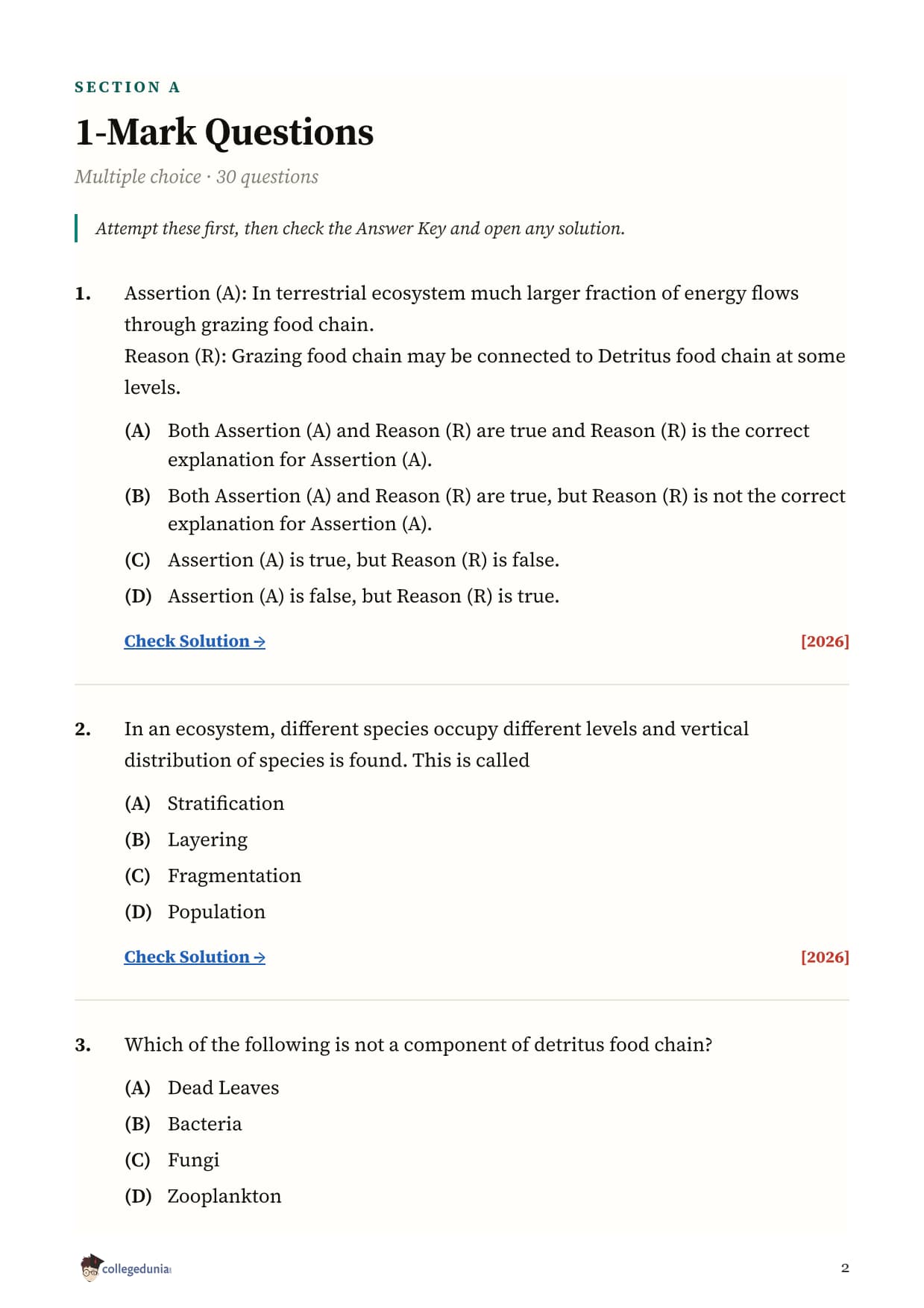
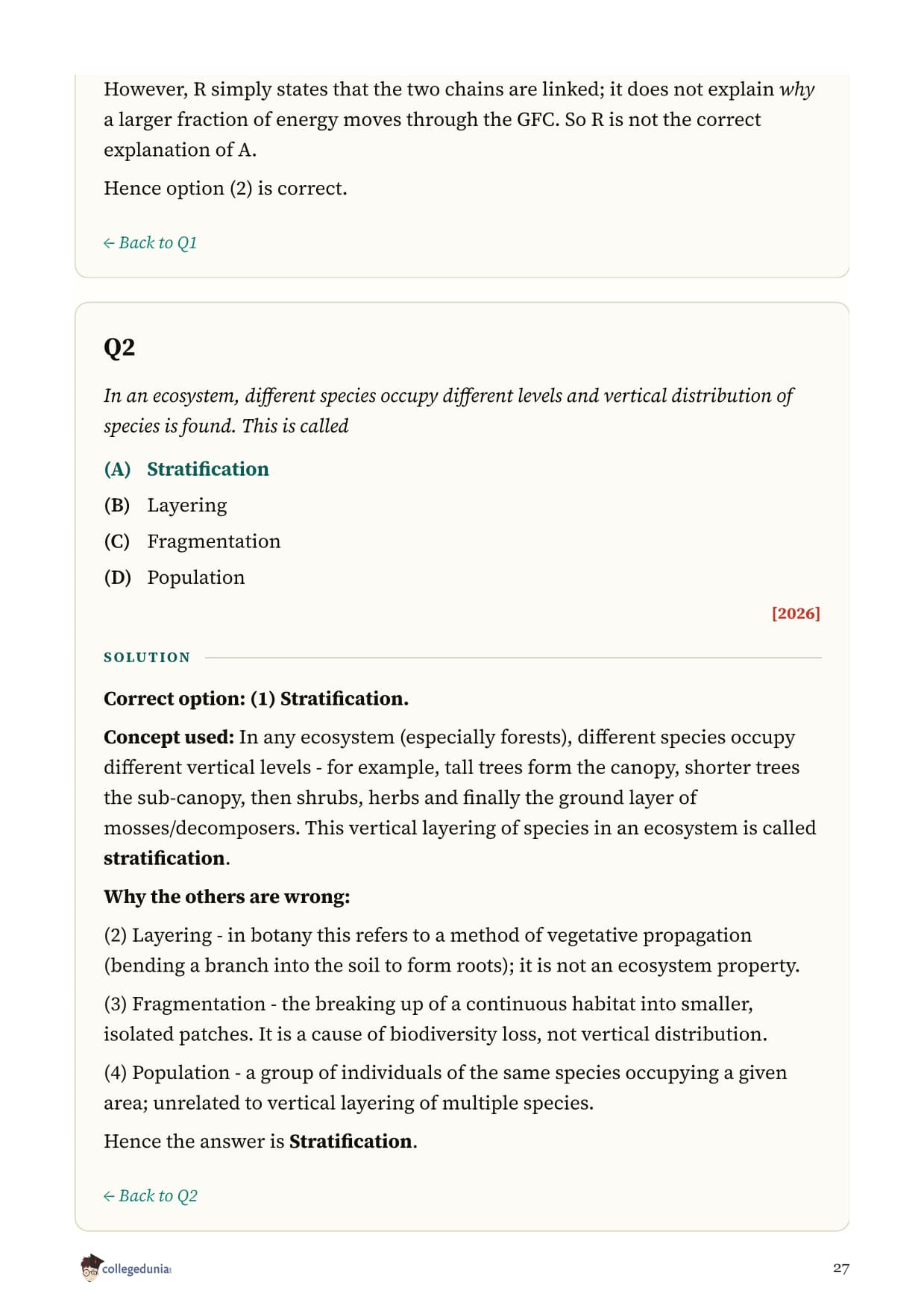
In an ecosystem, different species occupy different levels and vertical distribution of species is found. This is called
- Stratification
- Layering
- Fragmentation
- Population
[2026 • 1 mark]
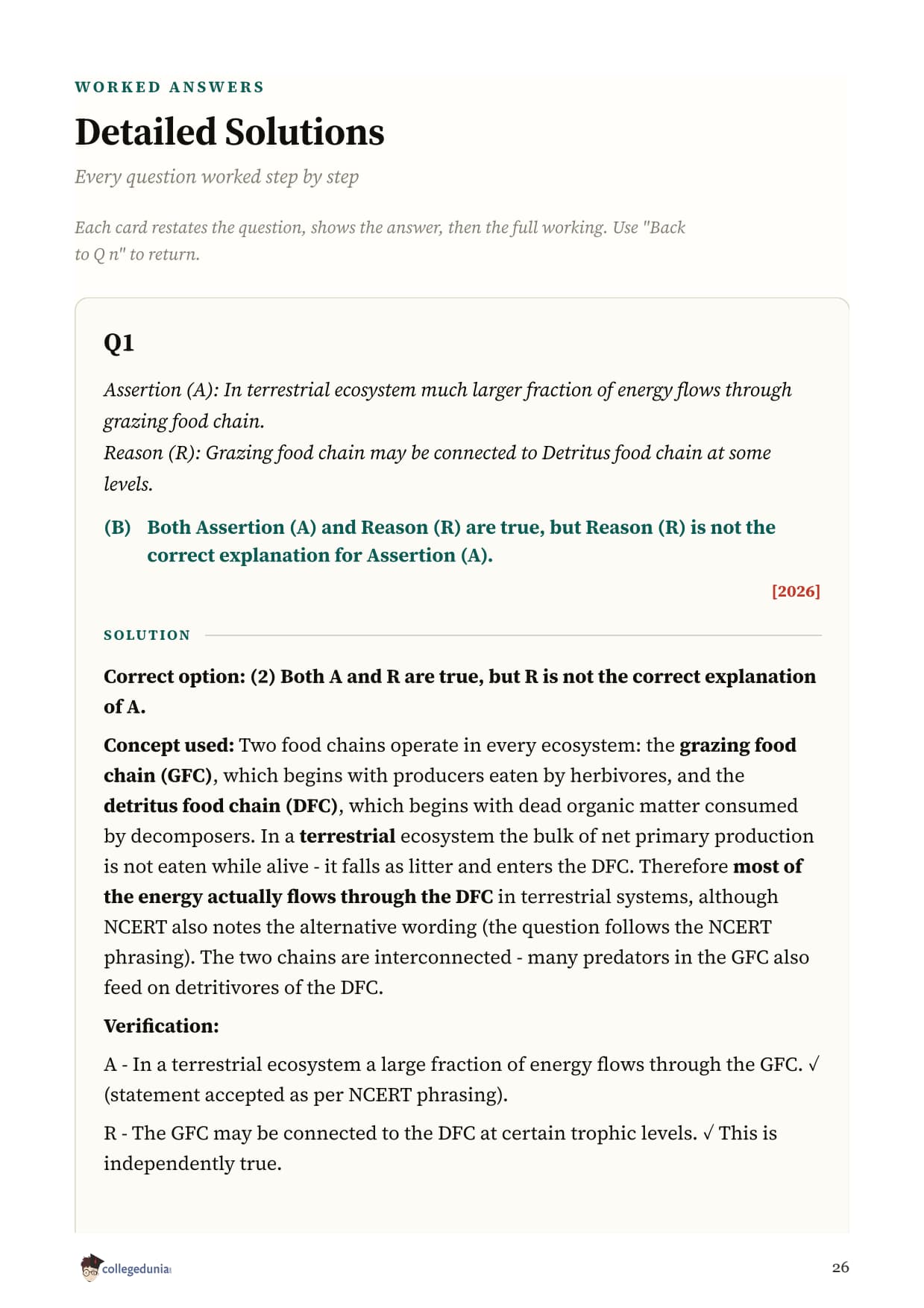
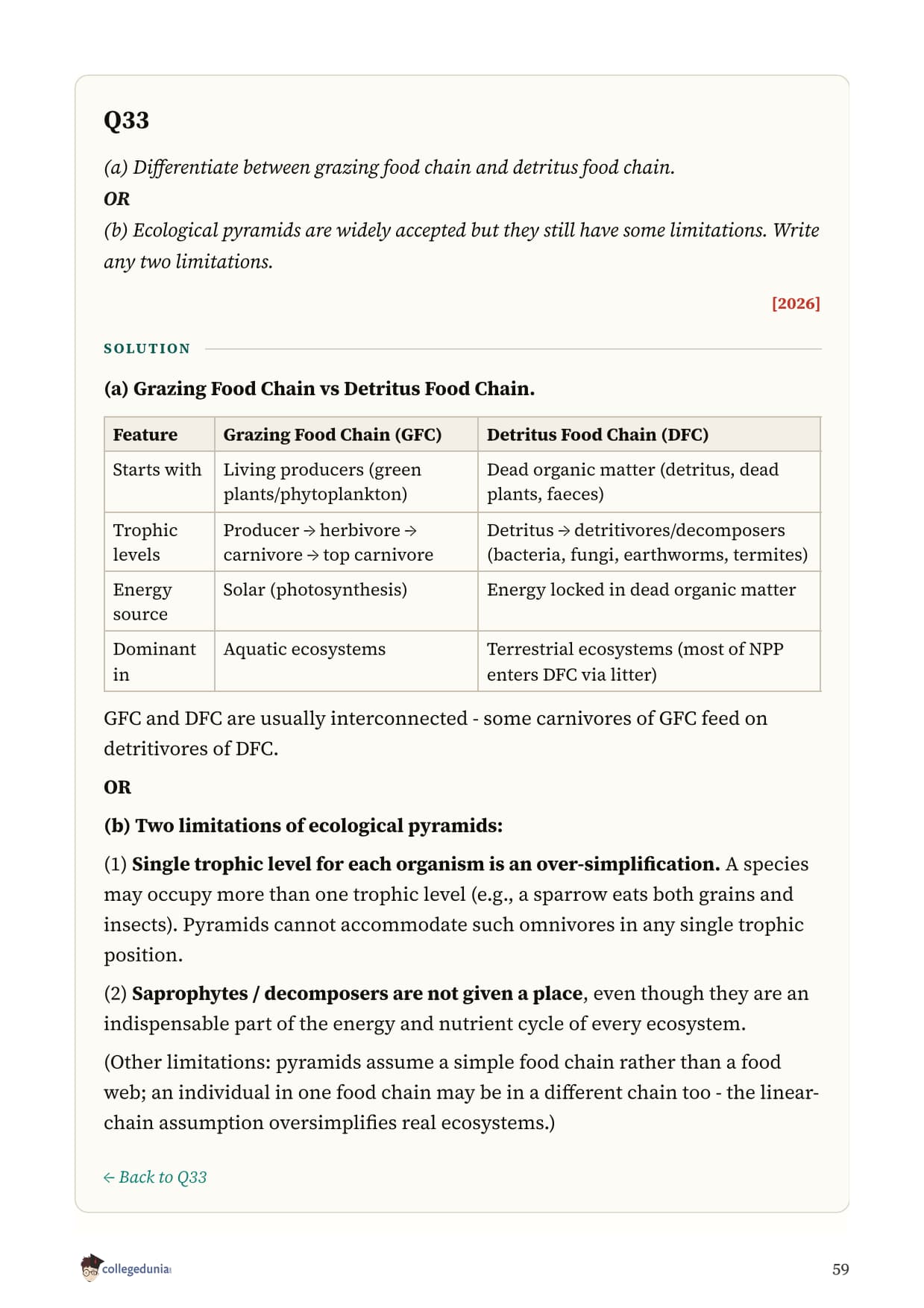
Assertion (A): In terrestrial ecosystem much larger fraction of energy flows through grazing food chain. Reason (R): Grazing food chain may be connected to Detritus food chain at some levels.
- Both Assertion (A) and Reason (R) are true and Reason (R) is the correct explanation for Assertion (A).
- Both Assertion (A) and Reason (R) are true, but Reason (R) is not the correct explanation for Assertion (A).
- Assertion (A) is true, but Reason (R) is false.
- Assertion (A) is false, but Reason (R) is true.
[2026 • 1 mark]
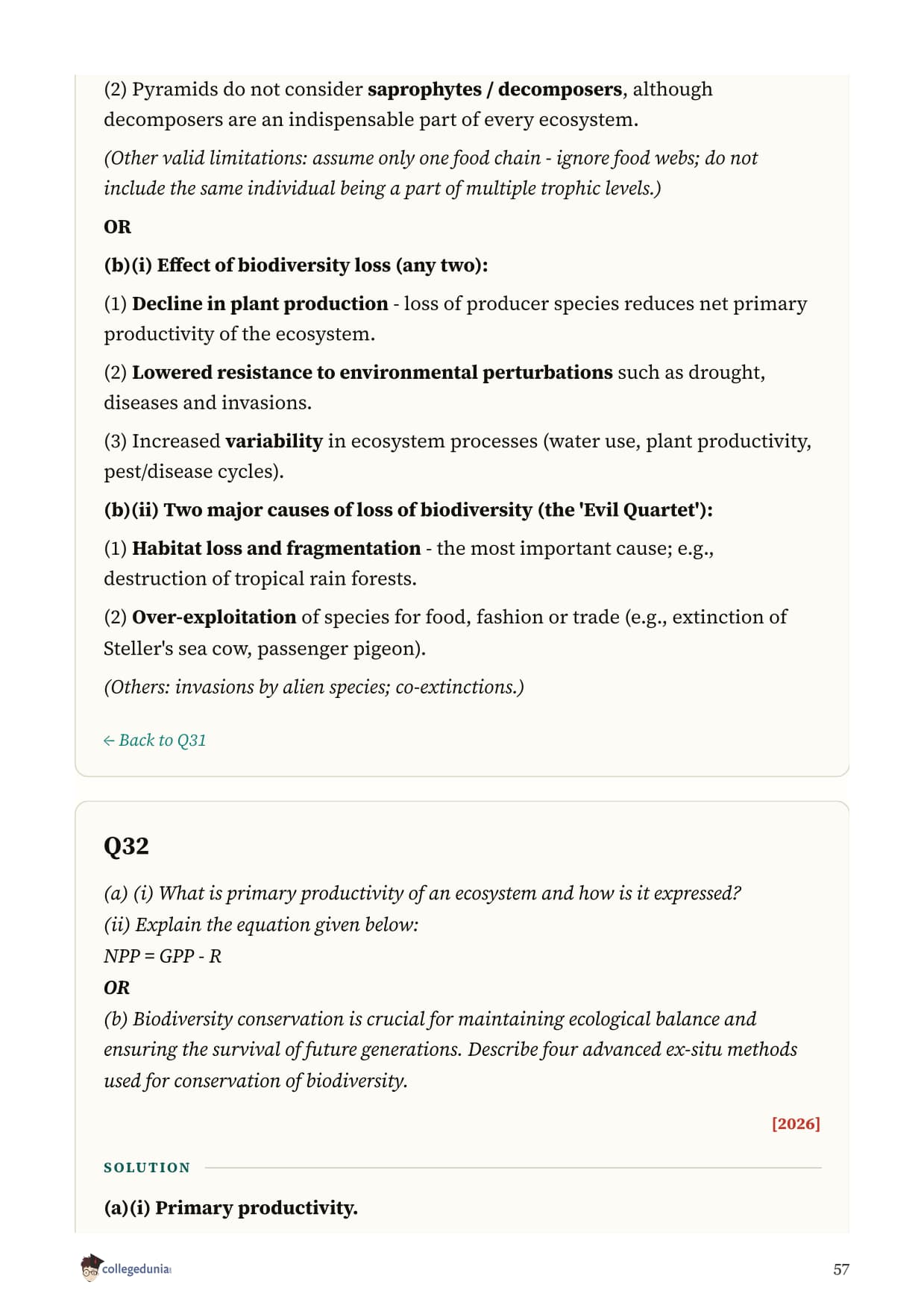
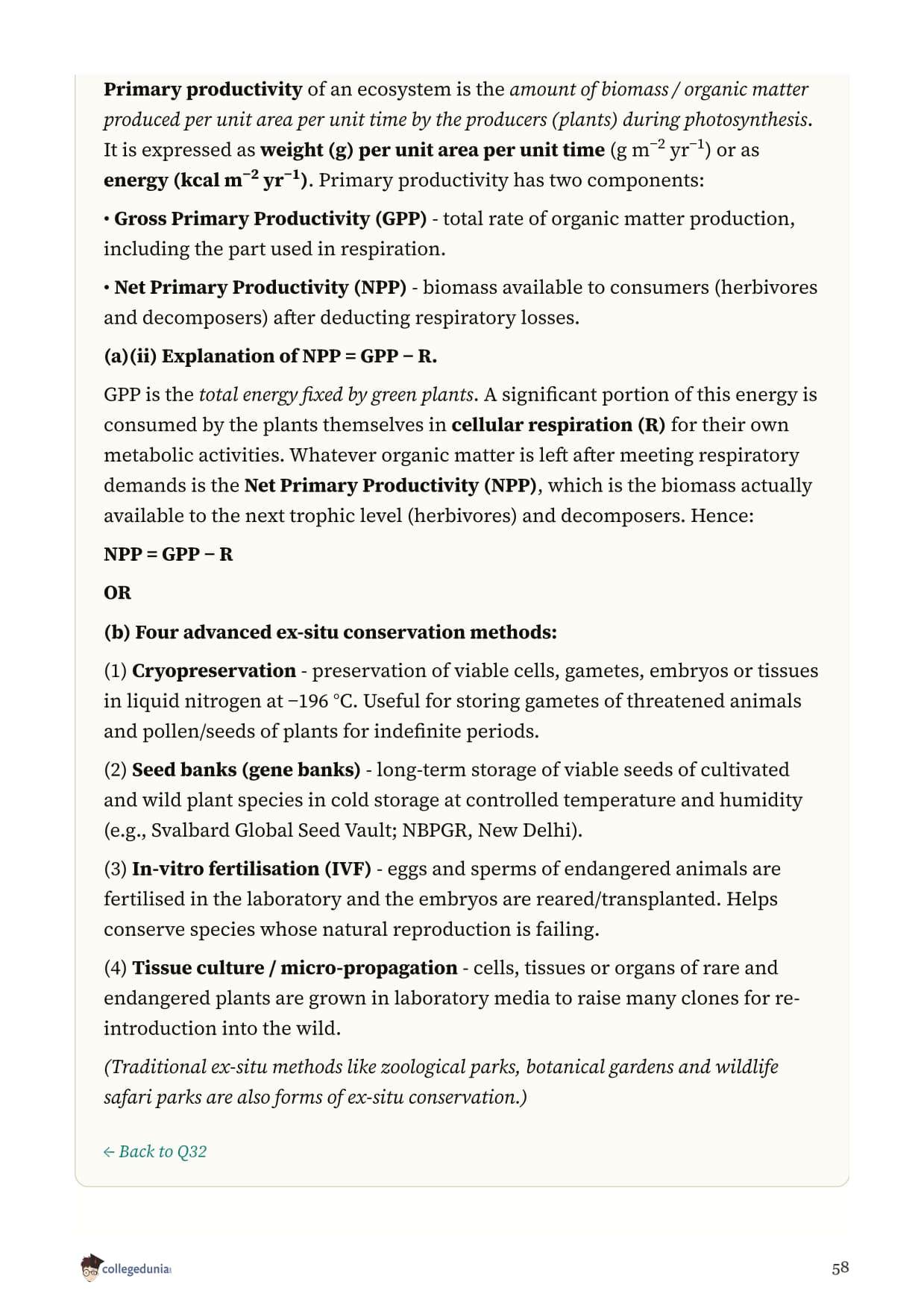
(a) What is primary productivity? Why does it vary in different types of ecosystems? (b) Why is the assimilation of energy at the herbivore level called secondary productivity?
[2026 • 3 mark]
Common Mistakes in the Ecosystem Board Questions
- Confusing the pyramid of number and the pyramid of energy, or forgetting that the energy pyramid is always upright.
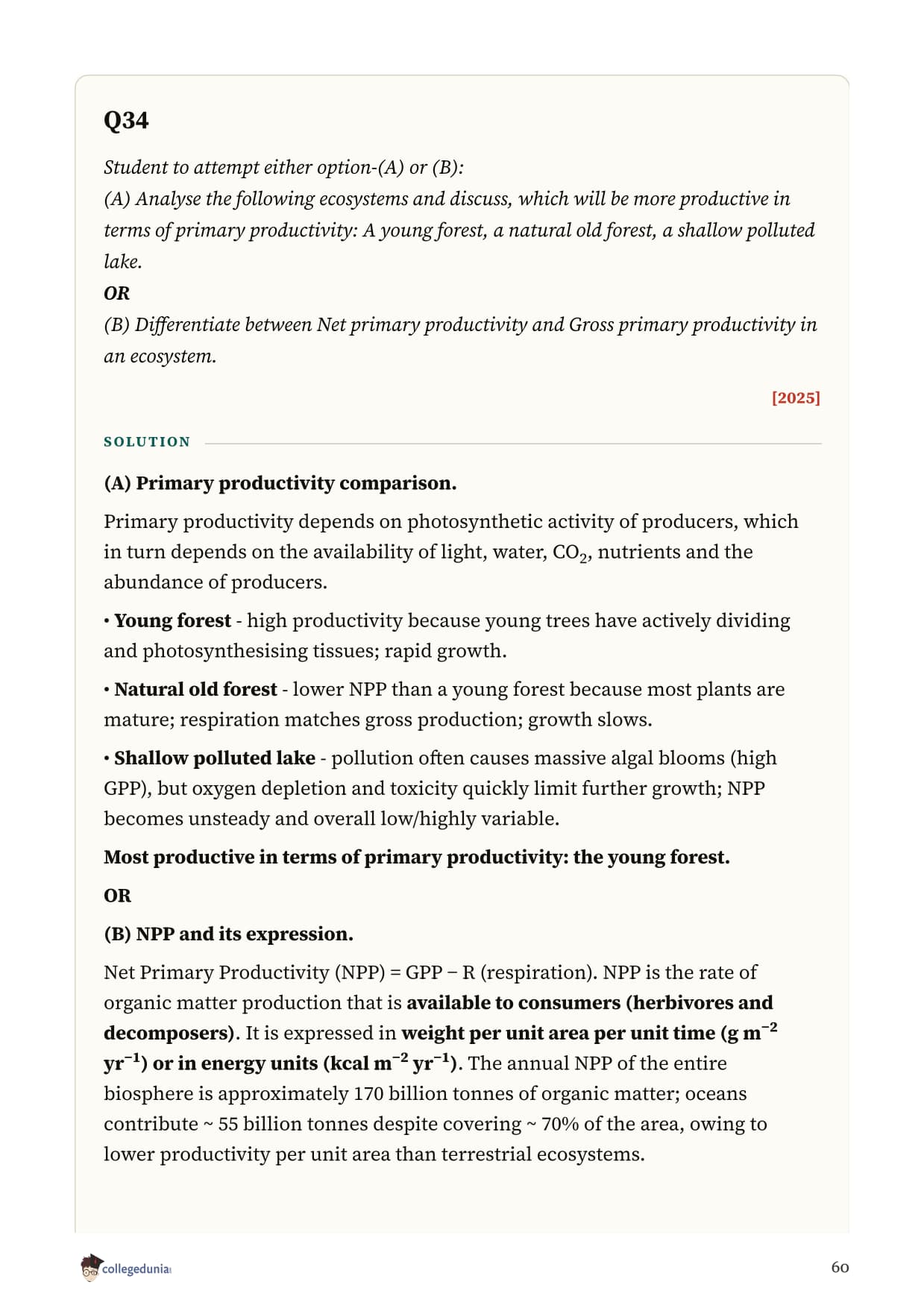
- Mixing up gross and net primary productivity, when net equals gross minus respiration.
- Listing the steps of decomposition out of order, or skipping humification and mineralisation.
- Stating the 10 per cent law wrongly, for example saying 10 per cent is lost rather than passed on.
- Drawing the food chain with the wrong direction of energy flow, which is one-way through trophic levels.
Student Feedback on Ecosystem PYQ Practice
- 63 per cent said ecological pyramids and the 10 per cent law were the hardest part of the 3-mark band.
- 56 per cent reported gaining 3 to 5 marks after solving every pyramid and productivity PYQ in this PDF.
- 42 per cent said an energy flow or productivity question matched their actual 2026 paper.
- Average time to finish all 85 PYQs: about 7 hours across 4 study sessions.
How These PYQs Pair with the Other Ecosystem Resources
Solving previous year questions alone gives you only half the prep. Pair the PYQ PDF with the matching concept, formula and solution resources for Ecosystem.
| Resource | What It Gives You | Open |
|---|---|---|
| NCERT Solutions | Step-by-step worked answers to every NCERT back-exercise question of Ecosystem | NCERT Solutions for Ecosystem |
| Notes | Concept revision notes covering every topic in the Ecosystem chapter | Ecosystem Class 12 Notes |
| Formula Sheet | All key formulas and results of Ecosystem on one page for last-day revision | Ecosystem Formula Sheet |
| Handwritten Notes | Scanned handwritten notes of Ecosystem for quick one-shot revision | Ecosystem Handwritten Notes |
| Exemplar Solutions | NCERT Exemplar problems of Ecosystem solved in full for extra practice | NCERT Exemplar Solutions for Ecosystem |
| NCERT Book | Official NCERT Ecosystem chapter PDF for free download | Ecosystem NCERT Book PDF |
| Exemplar Book | NCERT Exemplar Ecosystem problem book PDF for free download | Ecosystem Exemplar Book PDF |
How to Use the Ecosystem PYQ PDF Most Effectively
The 85 questions are sequenced for a three-pass revision plan:
- Pass 1 (Day 1 to 2): Attempt all 30 one-mark MCQs and build a flashcard for every term, such as stratification, GPP and the 10 per cent law.
- Pass 2 (Day 3 to 4): Solve the 31 two-mark and 19 three-mark questions, timing 3 minutes per 2-mark and 5 minutes per 3-mark.
- Pass 3 (Day 5 to 7): Work through the 4 five-mark long answers and the case-based question, drawing each ecological pyramid and labelling the energy flow.
All Class 12 Biology Chapter PYQ PDFs
Every Class 12 Biology chapter has its own PYQ compilation built the same way, sorted by marks and tagged by year.
| Chapter | Topic | Previous Year Questions |
|---|---|---|
| Chapter 1 | Sexual Reproduction in Flowering Plants | PYQ PDF |
| Chapter 2 | Human Reproduction | PYQ PDF |
| Chapter 3 | Reproductive Health | PYQ PDF |
| Chapter 4 | Principles of Inheritance and Variation | PYQ PDF |
| Chapter 5 | Molecular Basis of Inheritance | PYQ PDF |
| Chapter 6 | Evolution | PYQ PDF |
| Chapter 7 | Human Health and Disease | PYQ PDF |
| Chapter 8 | Microbes in Human Welfare | PYQ PDF |
| Chapter 9 | Biotechnology: Principles and Processes | PYQ PDF |
| Chapter 10 | Biotechnology and its Applications | PYQ PDF |
| Chapter 11 | Organisms and Populations | PYQ PDF |
| Chapter 12 | Ecosystem | PYQ PDF |
| Chapter 13 | Biodiversity and Conservation | PYQ PDF |
Also Check: NCERT Solutions for Class 12 Biology
Class 12 Biology Ecosystem PYQ FAQs
Ques. How many previous year questions are in the Class 12 Biology Ecosystem PYQ PDF?
Ans. The PDF has 85 previous year questions from CBSE board papers between 2004 and 2026, sorted by marks and then by year, latest first. Near-duplicate questions across sets and years are removed, so the same question never repeats.
Ques. Are the Ecosystem PYQs based on the 2026-27 CBSE syllabus?
Ans. Yes. Every question follows the 2026-27 CBSE Class 12 Biology syllabus. Older questions are kept because the core ideas, such as energy flow, ecological pyramids and productivity, are unchanged in the current syllabus.
Ques. Which topics of Ecosystem appear most often in CBSE board papers?
Ans. From the 85-question set: ecological pyramids (about 23 per cent), energy flow and food chains (about 20 per cent), productivity (about 18 per cent), decomposition (about 15 per cent), and nutrient cycling.
Ques. How is this PYQ PDF different from a CBSE sample paper?
Ans. A sample paper gives you one paper. This PDF stitches together more than 17 years of questions across every set and region (Delhi, Outside Delhi, Foreign and Compartment) for Ecosystem alone, so you see which ideas CBSE repeats and how each is phrased.
Ques. Does the Ecosystem PYQ PDF include MCQs?
Ans. Yes. 30 of the 85 questions are 1-mark questions, mostly MCQ and assertion-reason from 2023 onwards, when CBSE expanded the Section A objective block.
Ques. Where can I download the Ecosystem Class 12 PYQ PDF for free?
Ans. The full Ecosystem PYQ PDF is free to download from the PDF button at the top of this page. No sign-up is needed.
Ques. How should I use these PYQs to revise Ecosystem in the last 10 days?
Ans. Use the three-pass plan: Day 1 to 2 attempt all 30 MCQs, Day 3 to 4 solve the 2 and 3-mark questions, Day 5 to 7 attempt the 5-mark and case-based questions. Always draw and label the ecological pyramids.
Ques. Does the PDF give answers or only the questions?
Ans. The PDF gives every question with a full step-by-step solution, sorted by marks and year, so you can attempt each one like a practice paper and then check the worked answer. For full answers, open the NCERT Solutions page for Ecosystem or check the official CBSE marking scheme.
Ques. Are ecological pyramids important for the CBSE Ecosystem questions?
Ans. Yes. Ecological pyramids make up close to a quarter of the set, and CBSE often sets the pyramid of number, biomass or energy as a 2 or 3-mark question. A labelled diagram with the upright or inverted shape is the fastest way to score this band.
Ques. What is primary productivity?
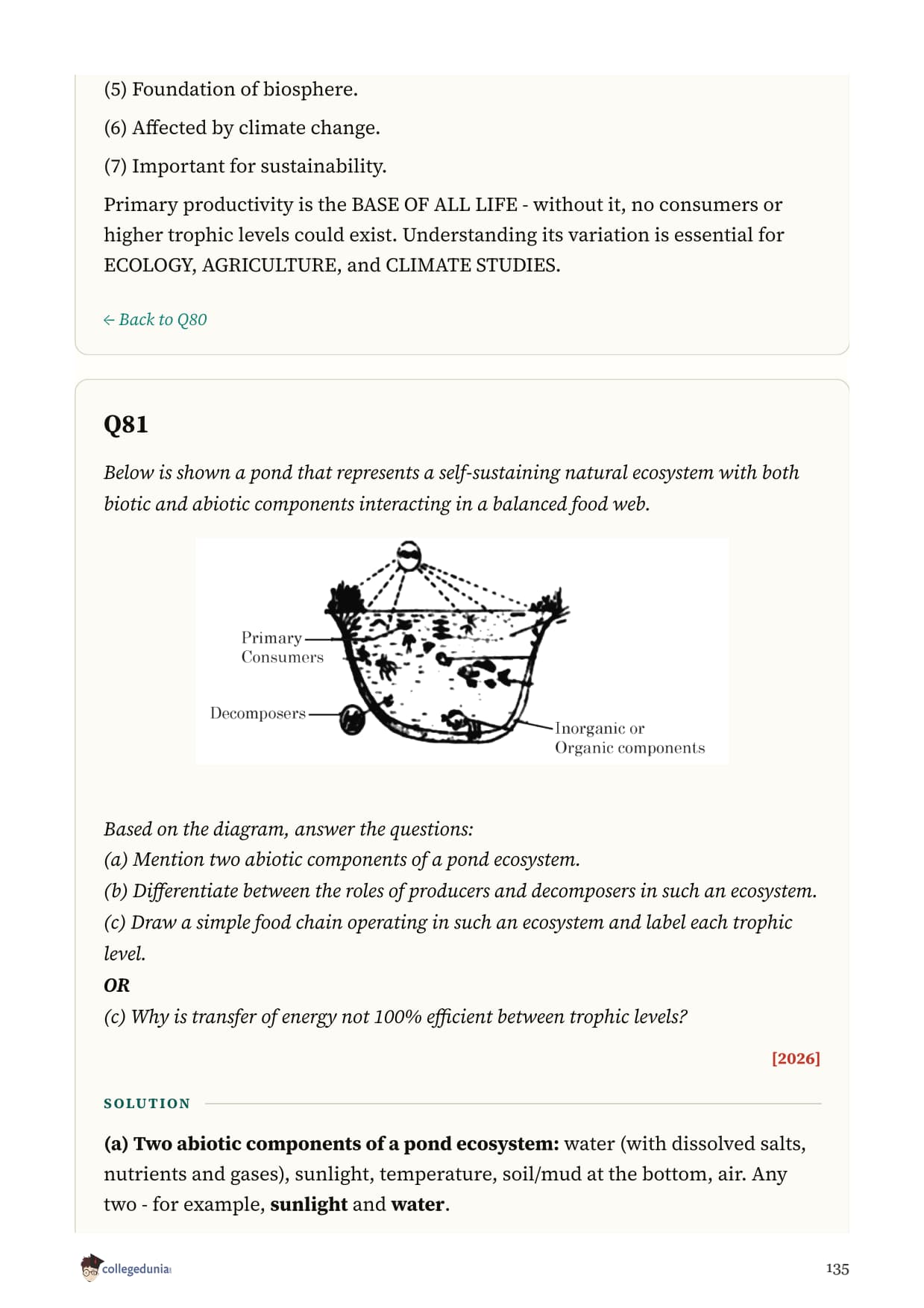
Ans. Primary productivity is the rate at which producers fix energy as biomass through photosynthesis. Gross primary productivity (GPP) is the total energy fixed, and net primary productivity (NPP) is what remains after the producers' own respiration.
Ques. How is the 10 per cent law defined?
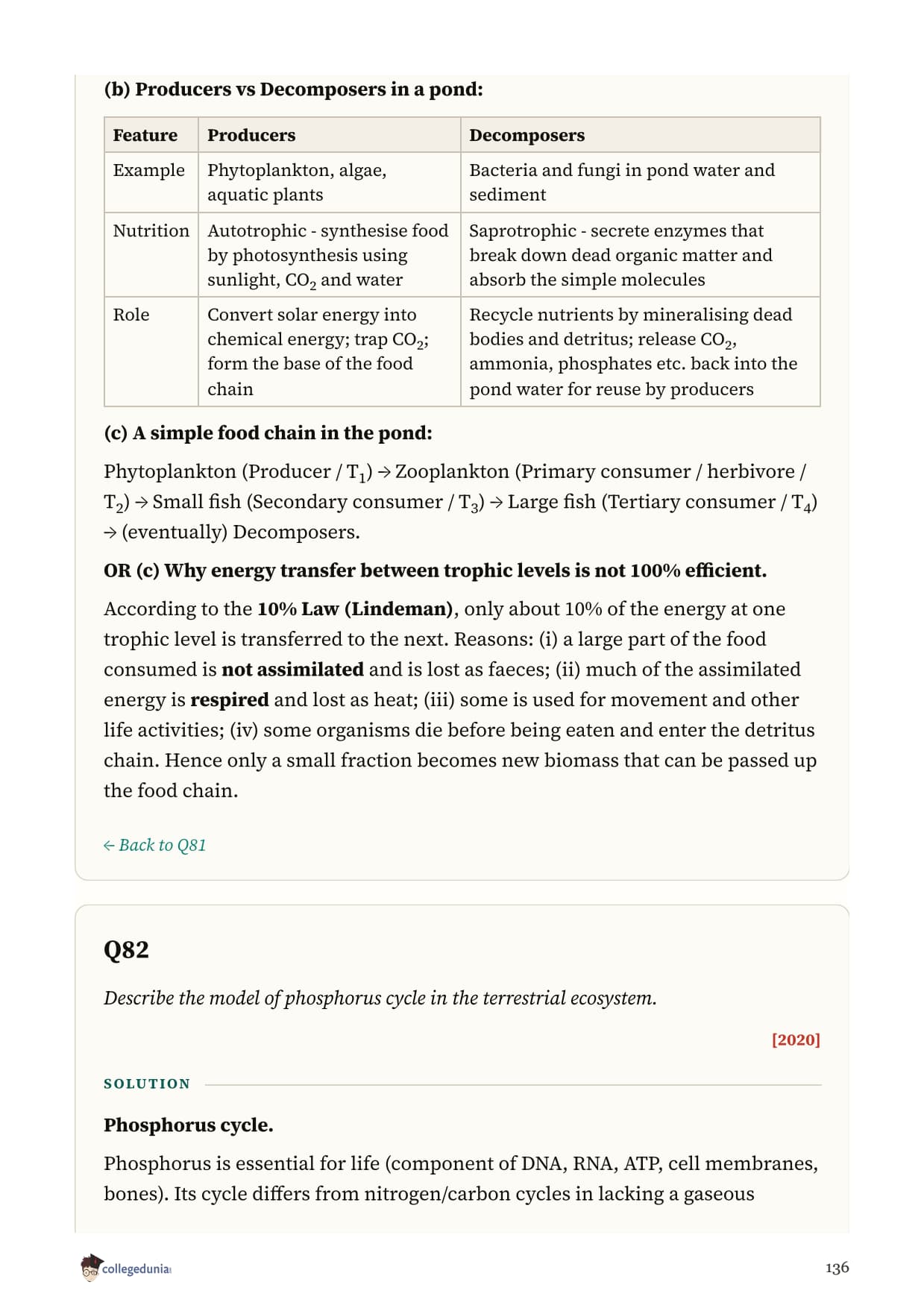
Ans. The 10 per cent law, given by Lindeman, states that only about 10 per cent of the energy at one trophic level is passed on to the next level. The rest is lost mainly as heat during respiration, which is why food chains have few trophic levels.
Ques. What is decomposition?
Ans. Decomposition is the breakdown of dead organic matter (detritus) into simple inorganic substances by decomposers. Its steps are fragmentation, leaching, catabolism, humification and mineralisation, and they release nutrients back into the soil.



Comments