



Organisms and Populations is the chapter where most students lose marks on the population growth equations and the interaction definitions.
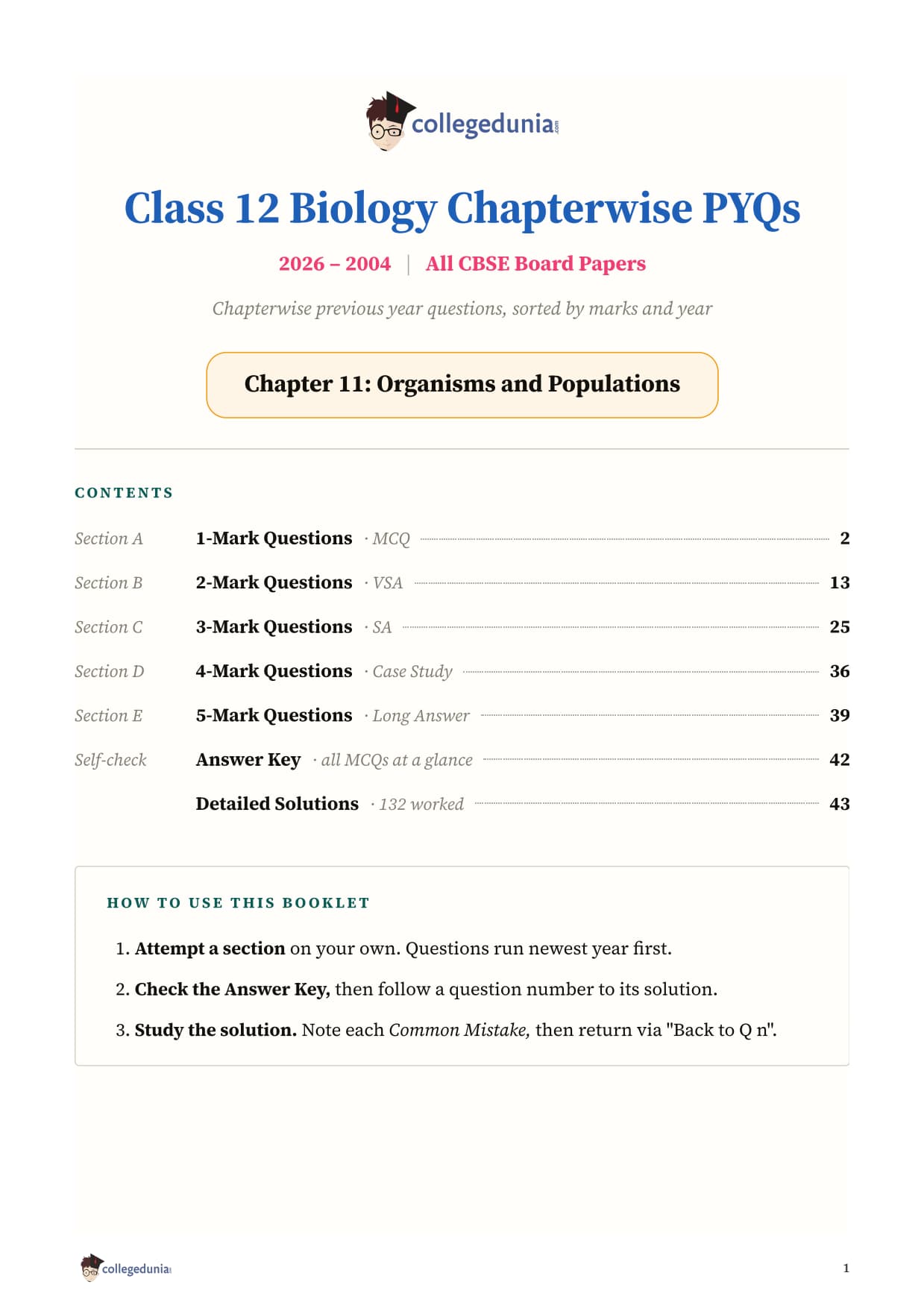
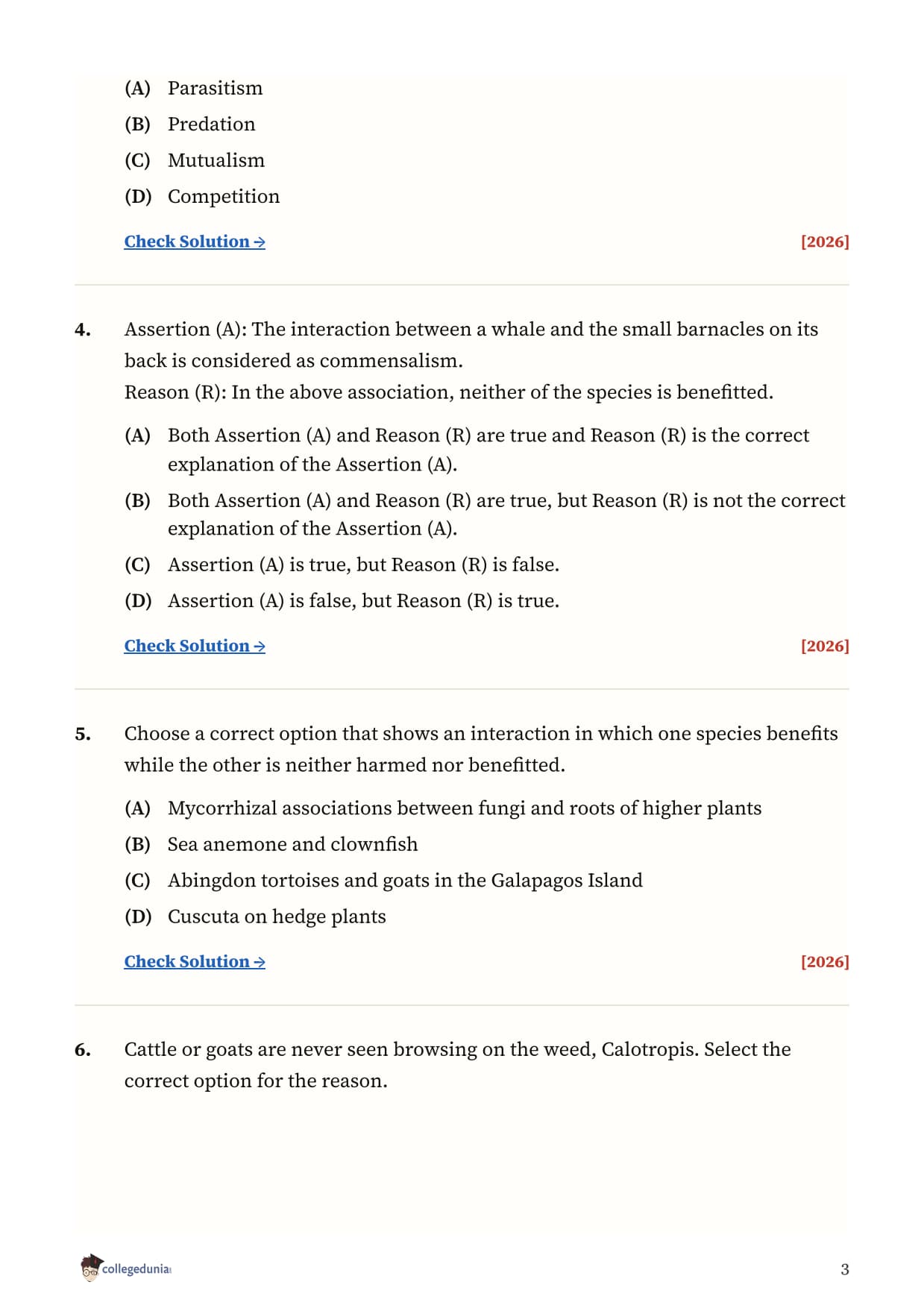
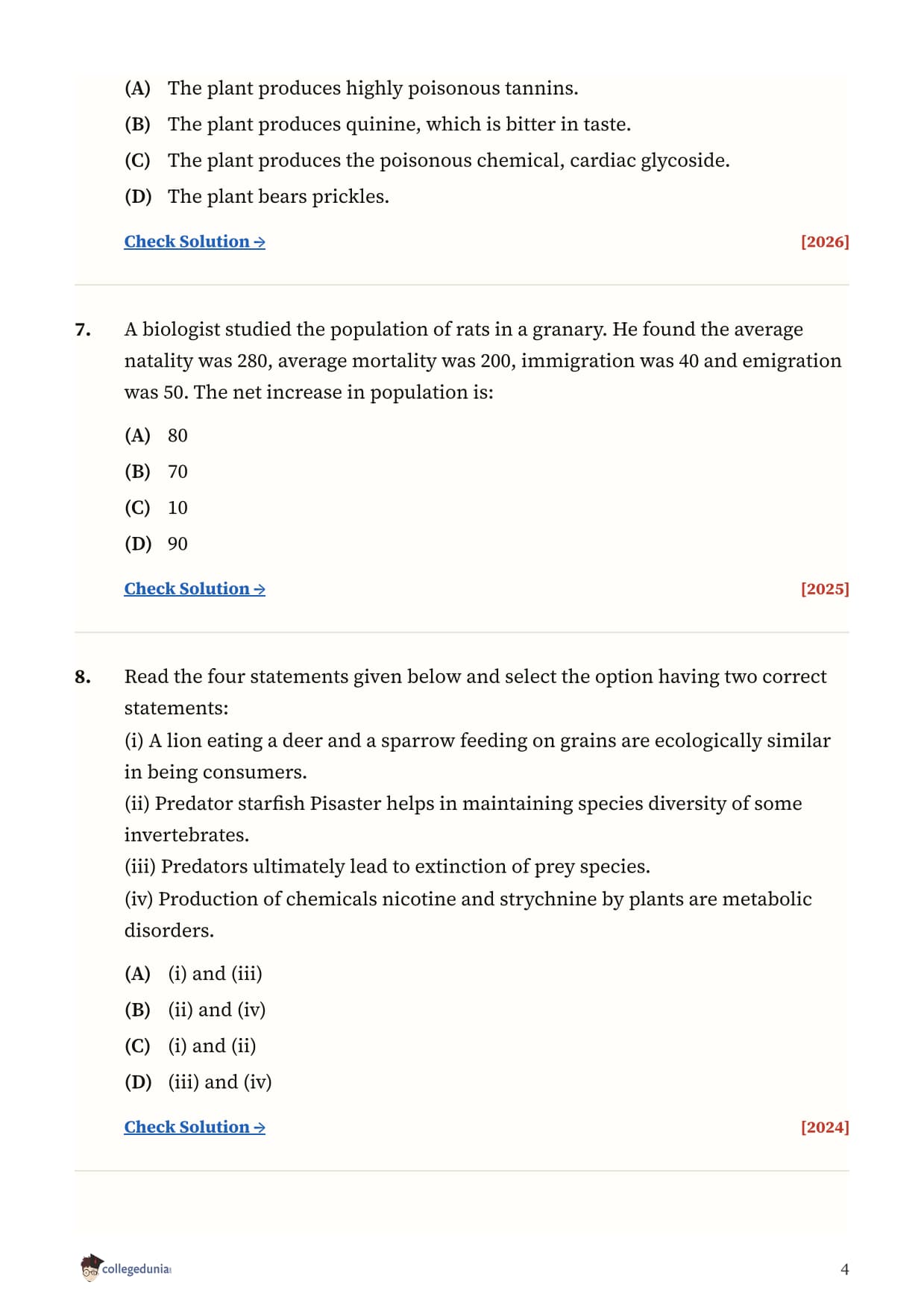
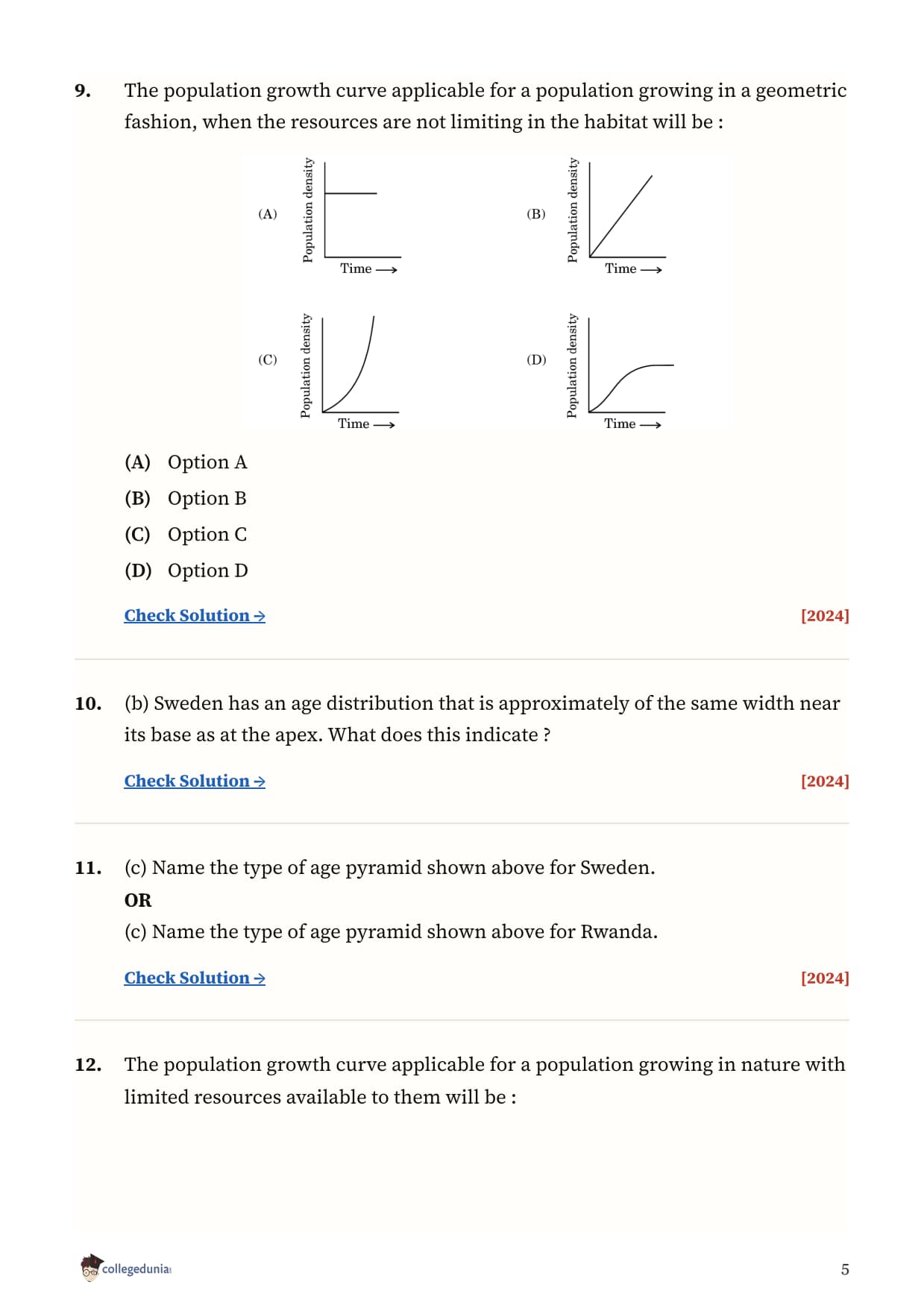
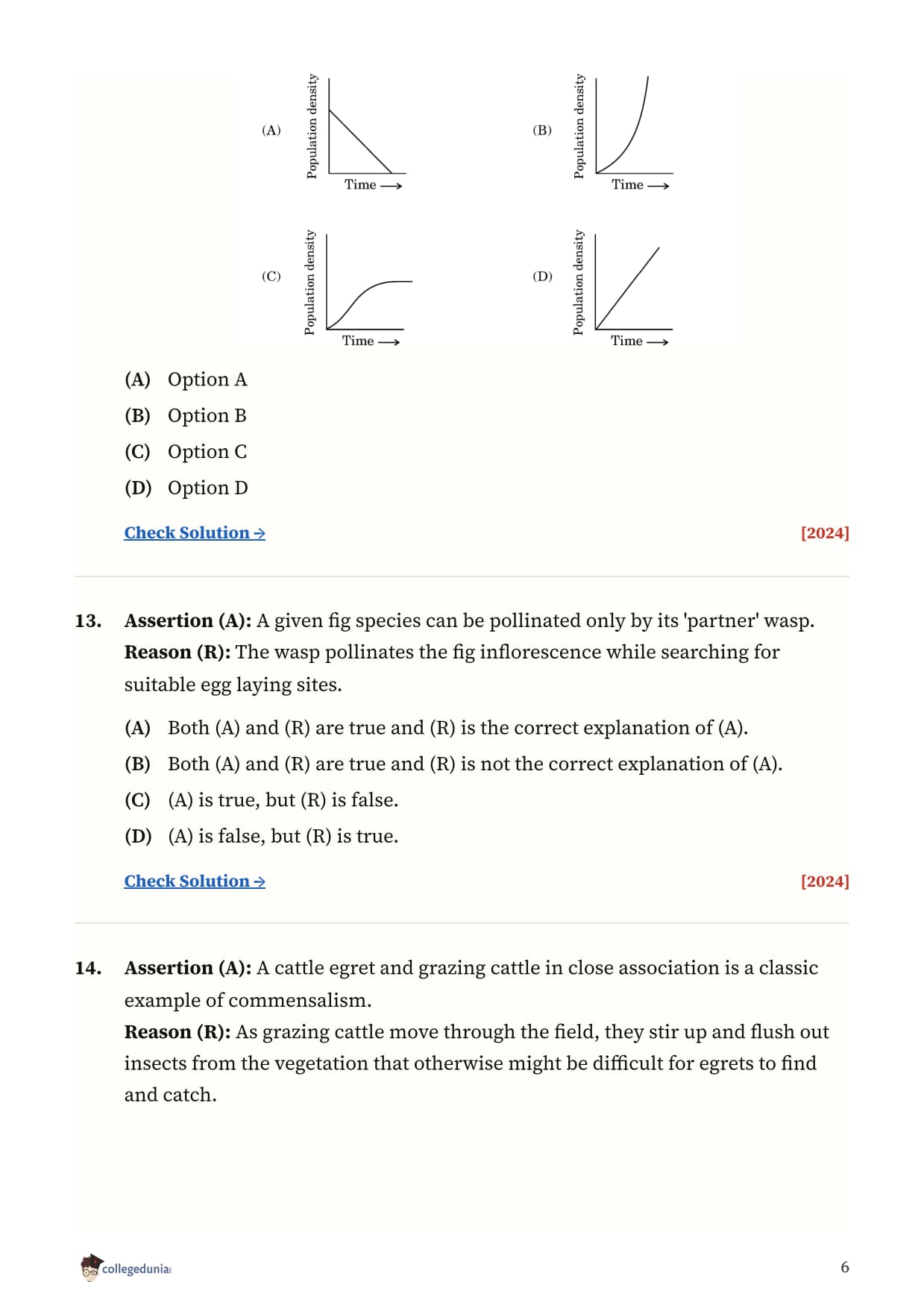
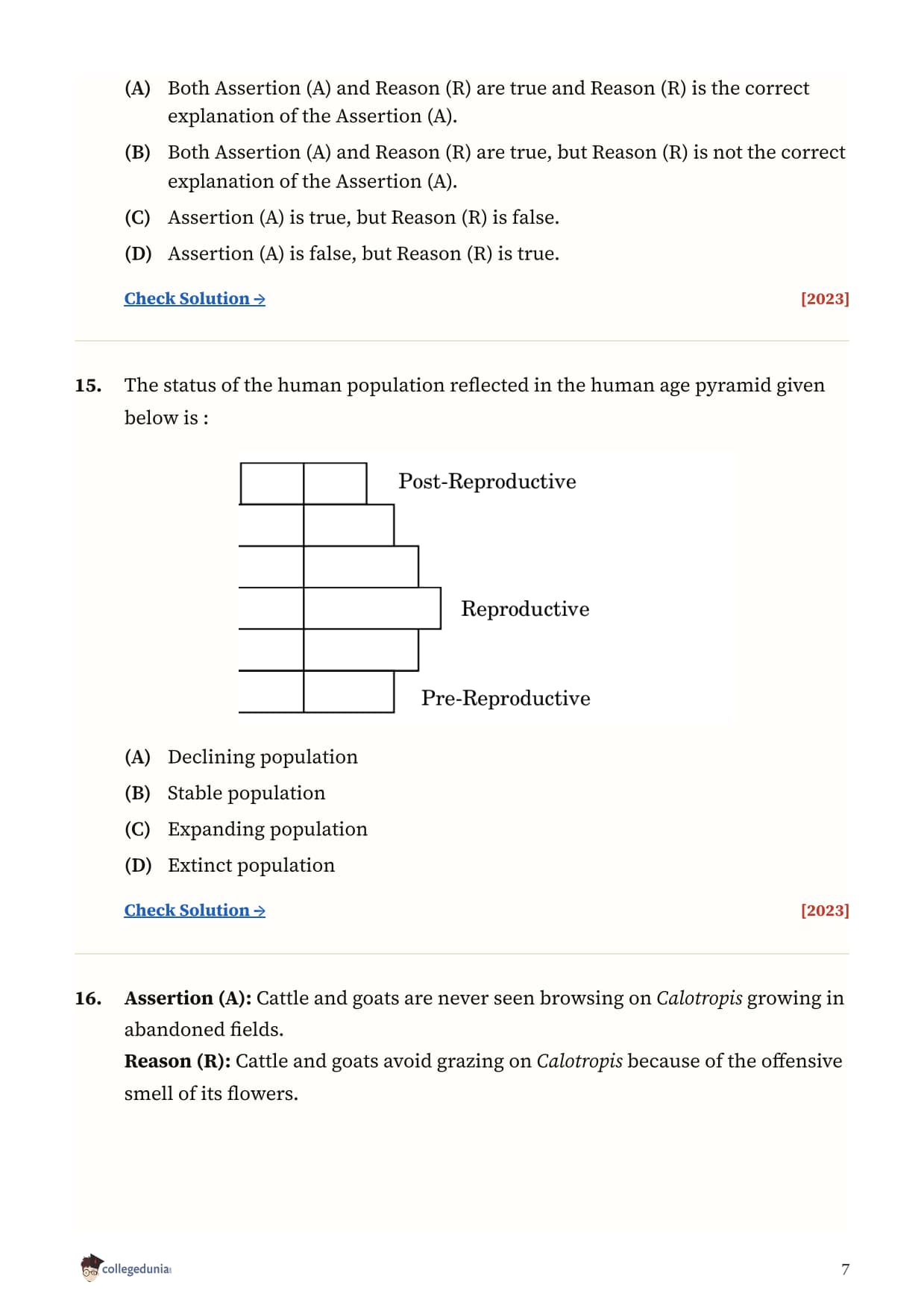
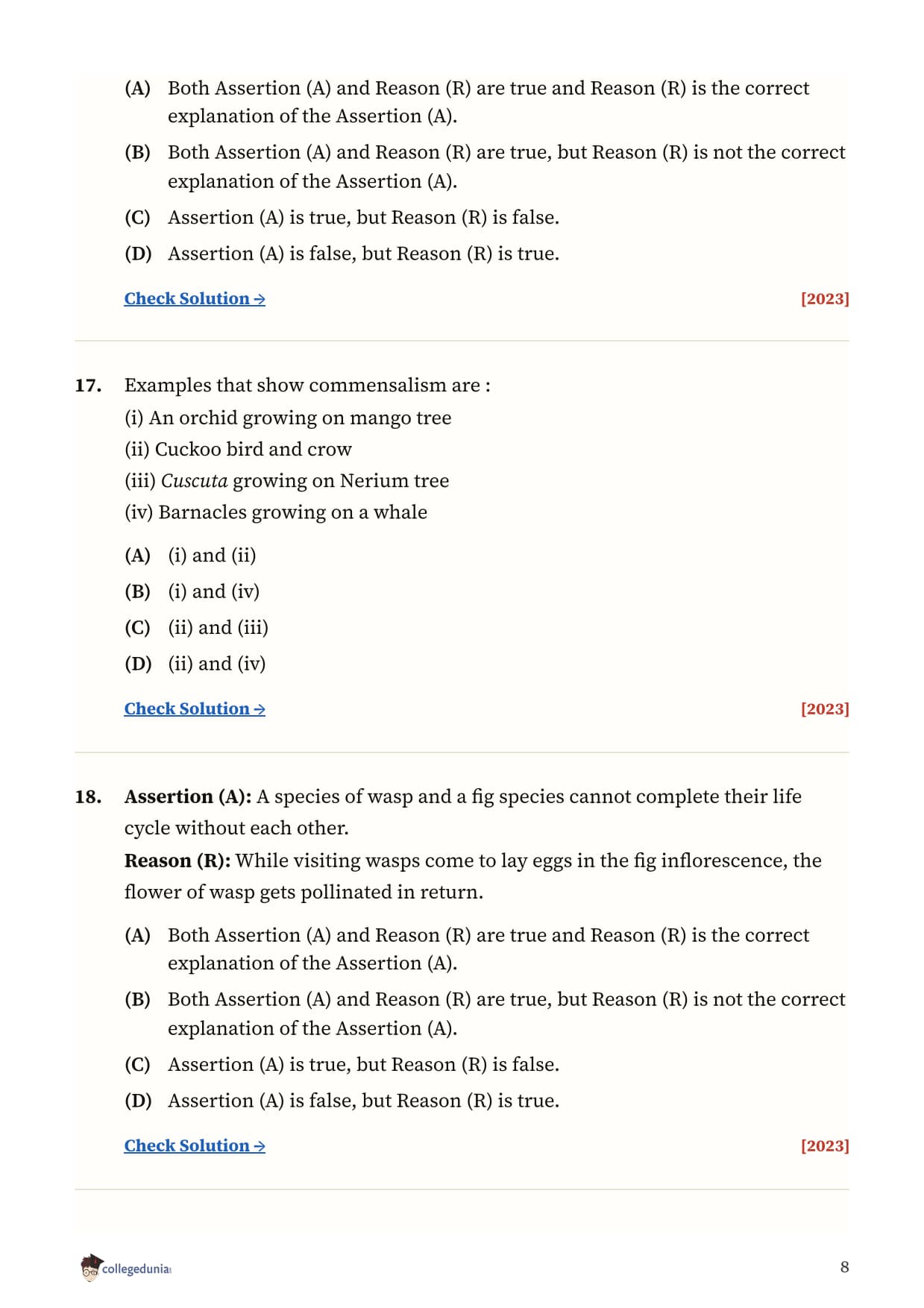
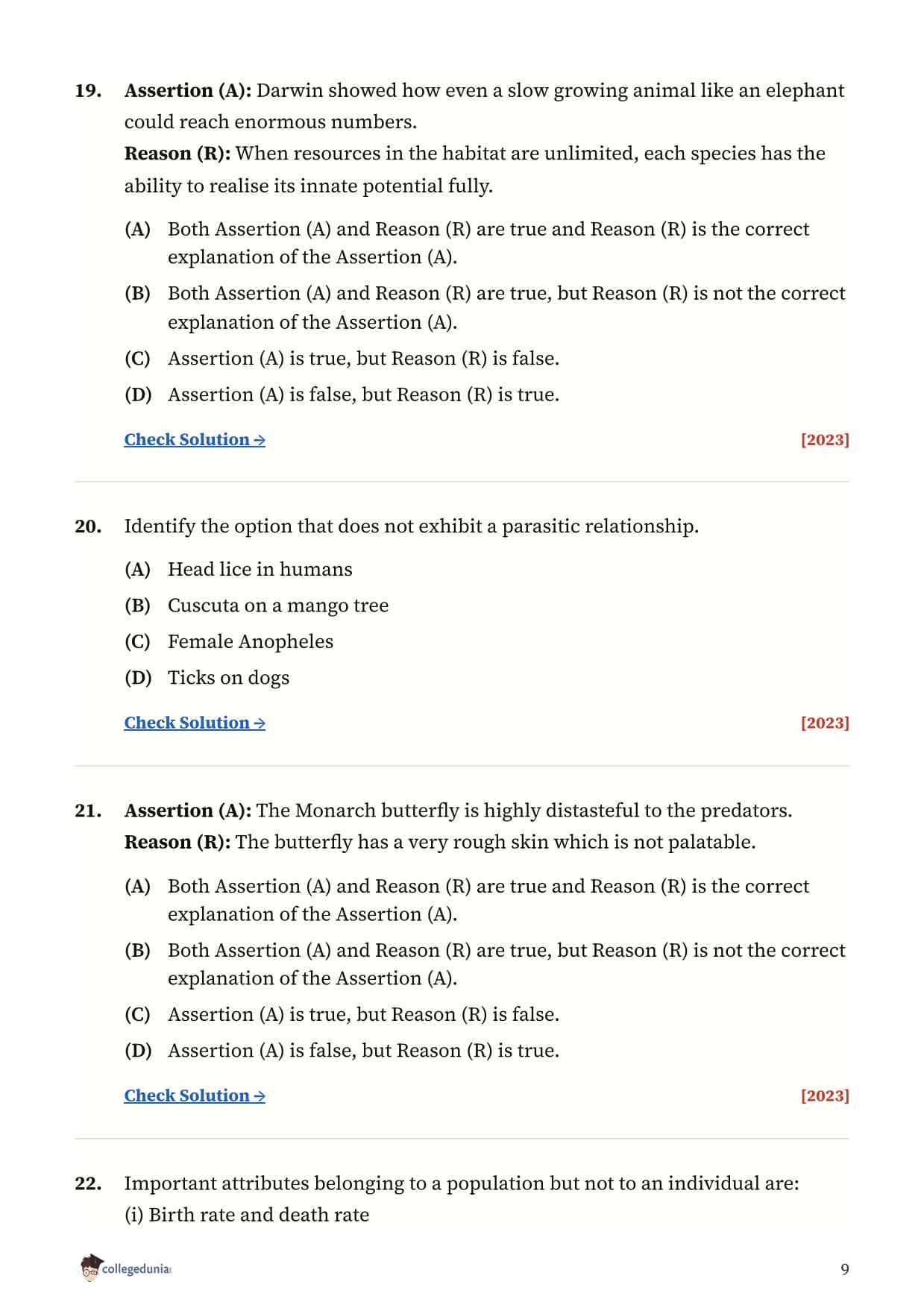
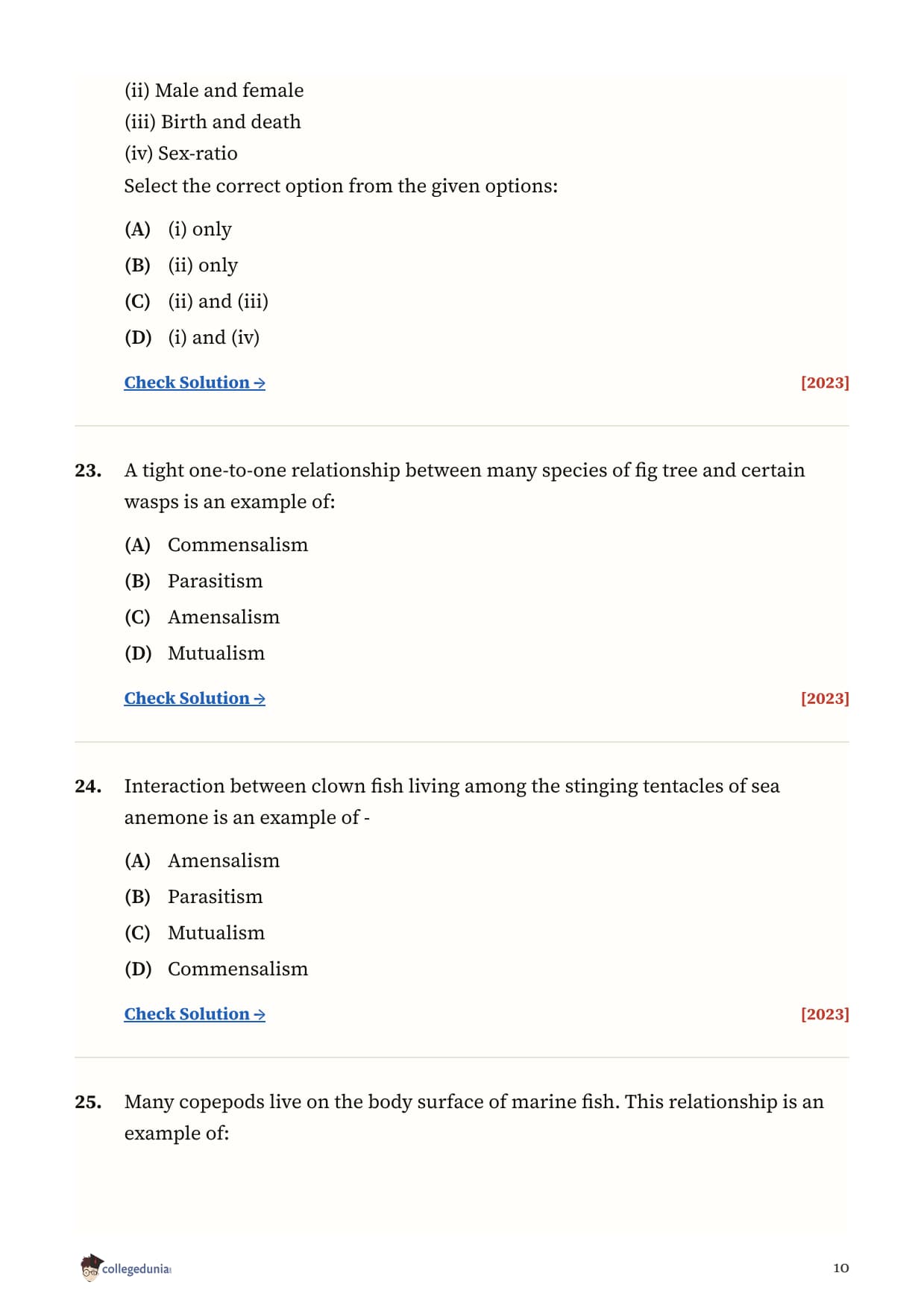
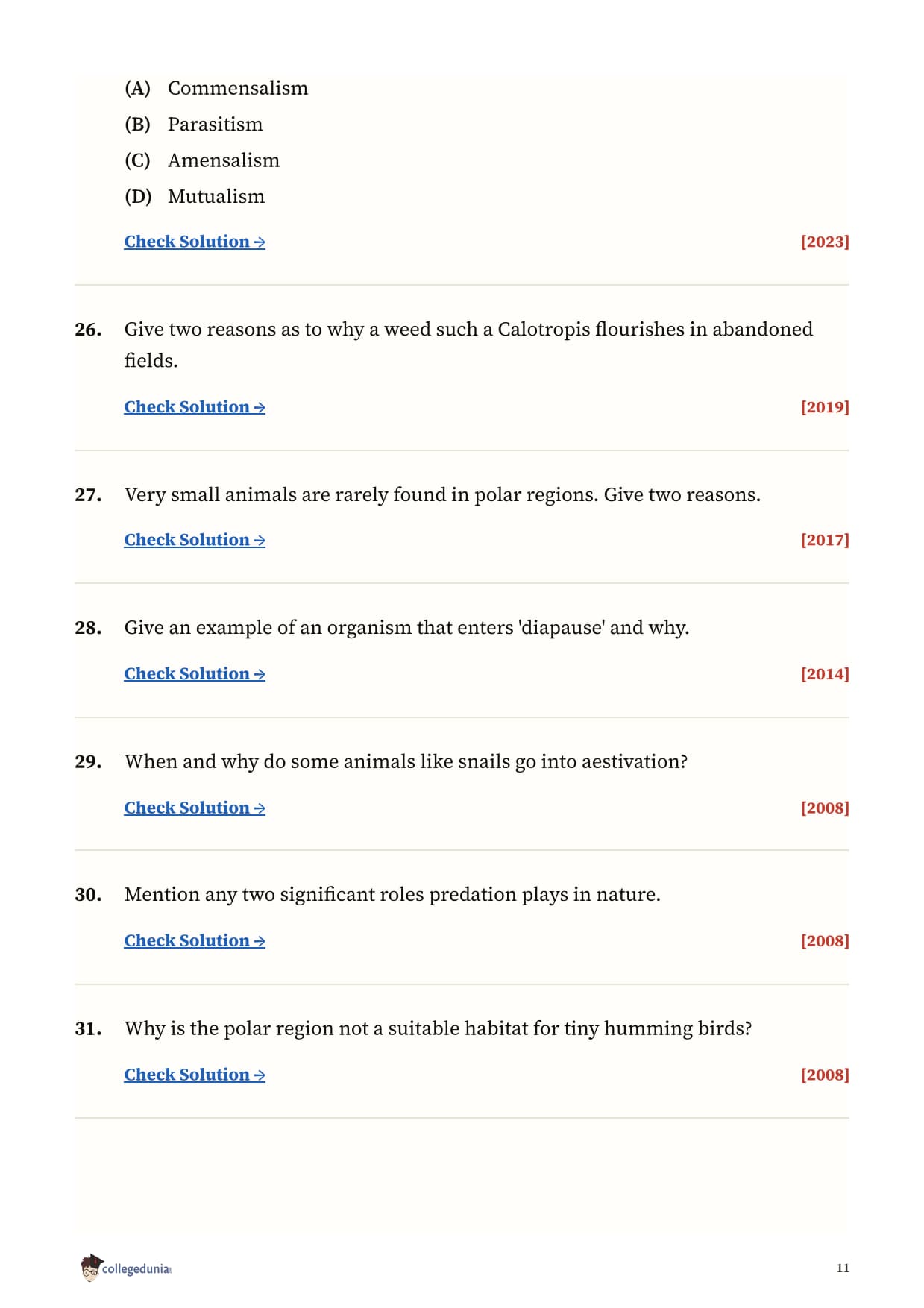
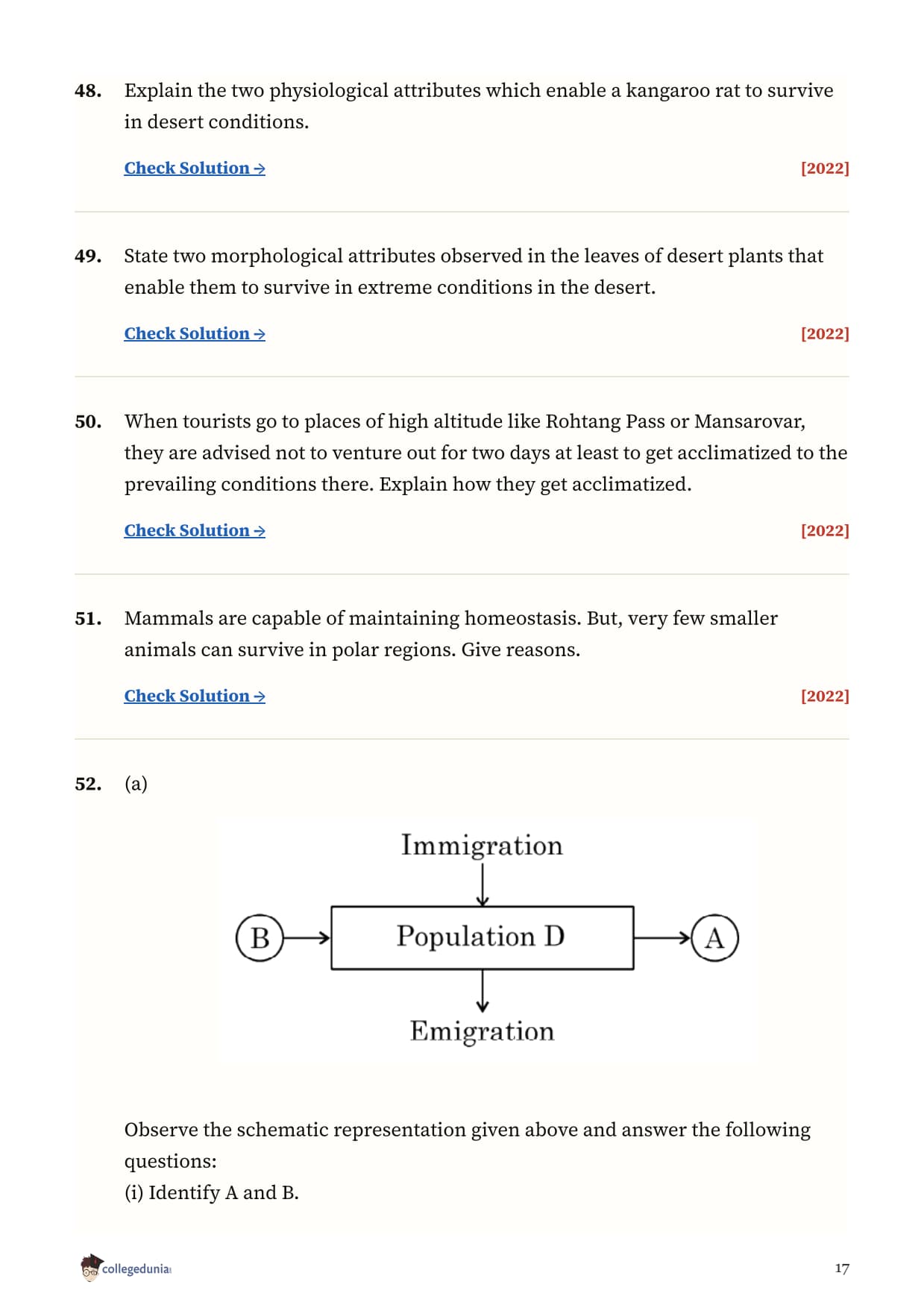
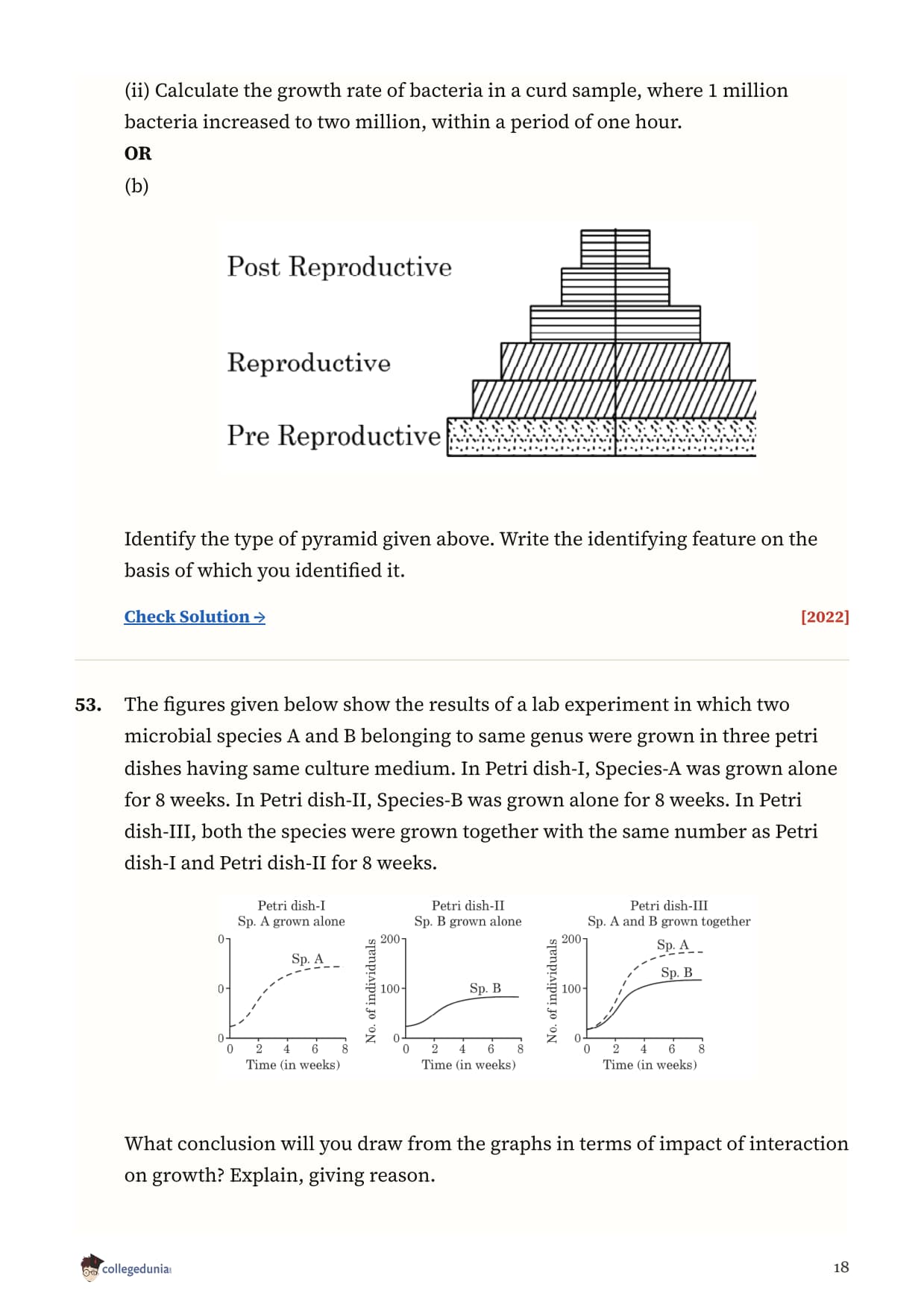
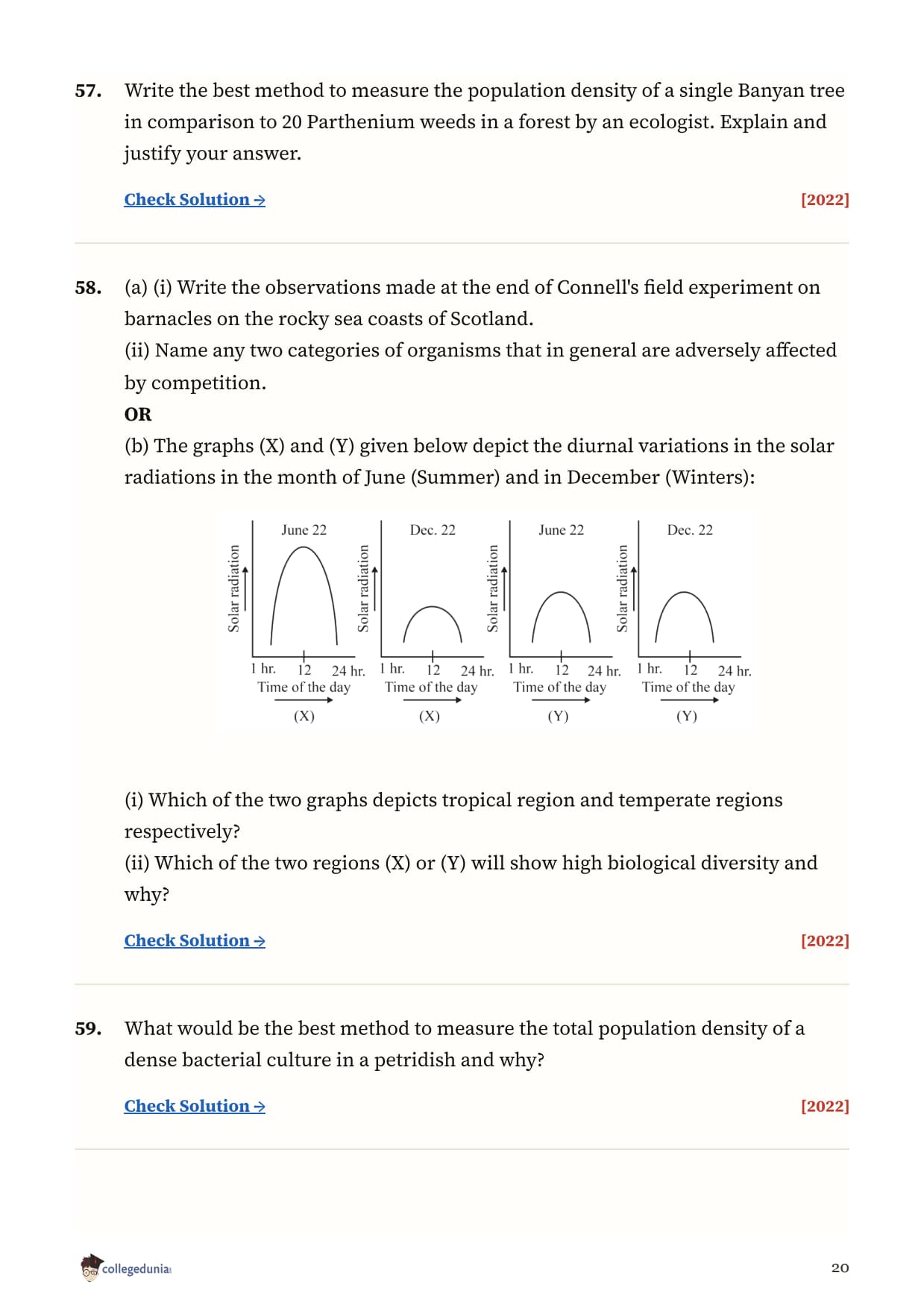
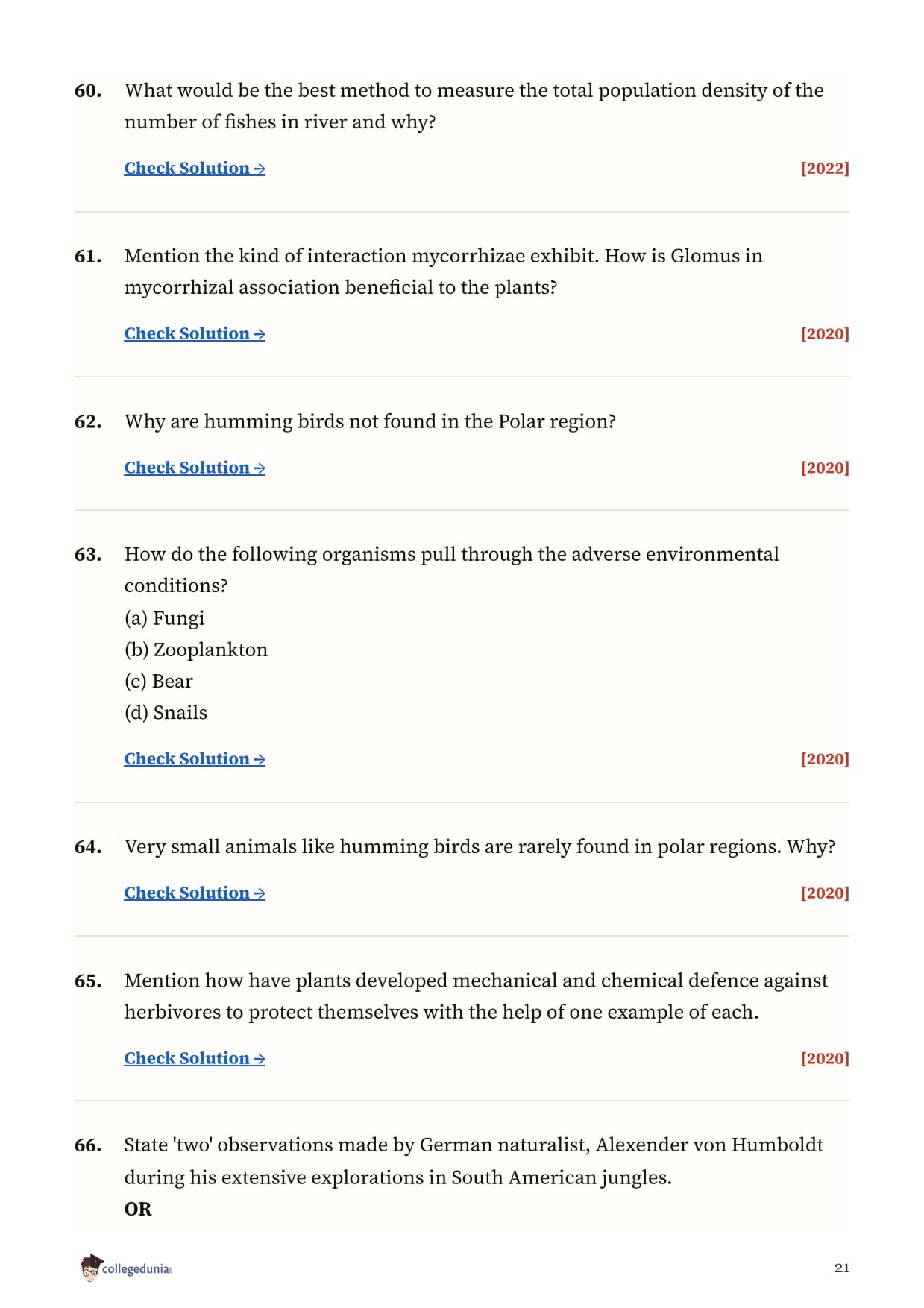
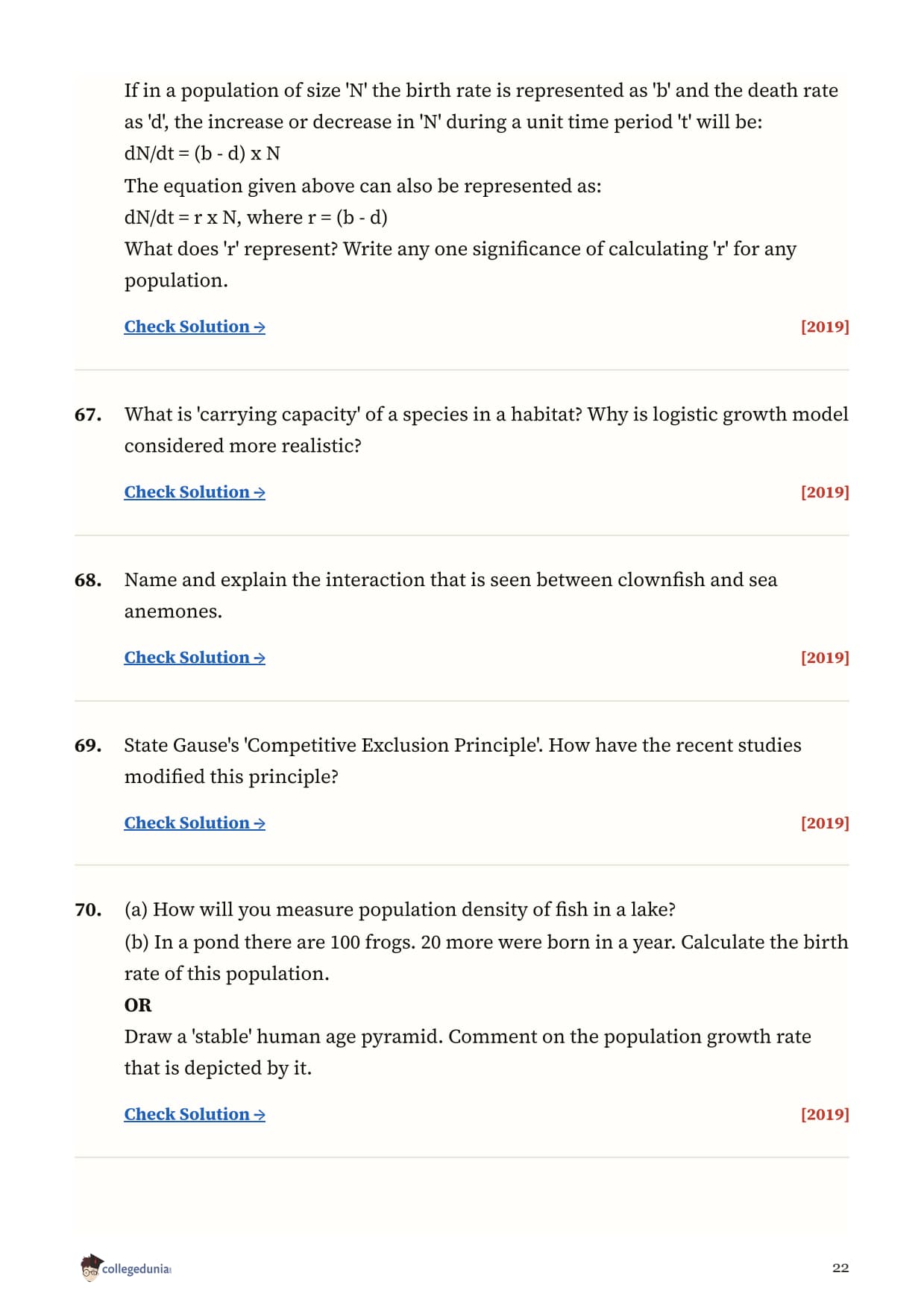
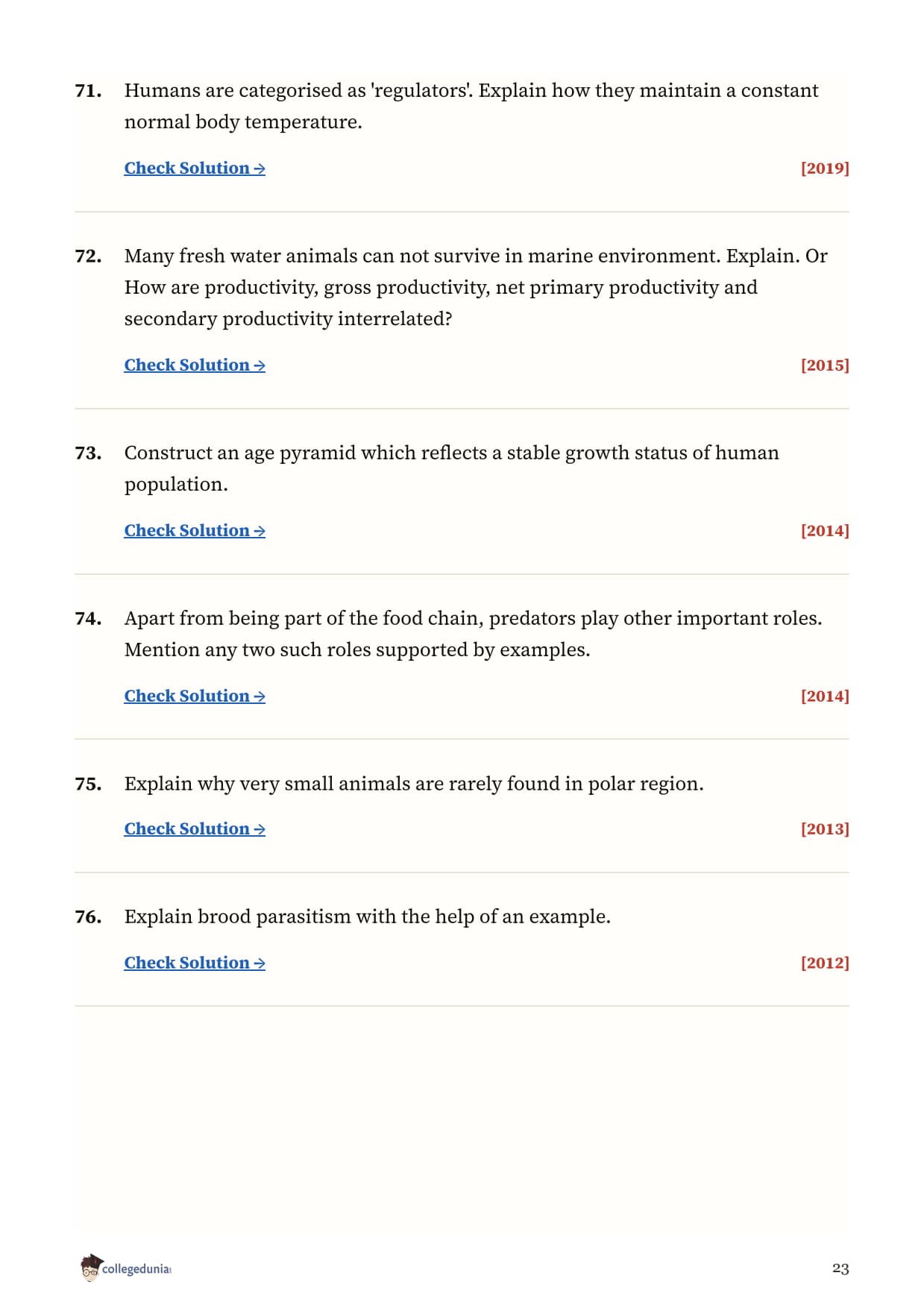
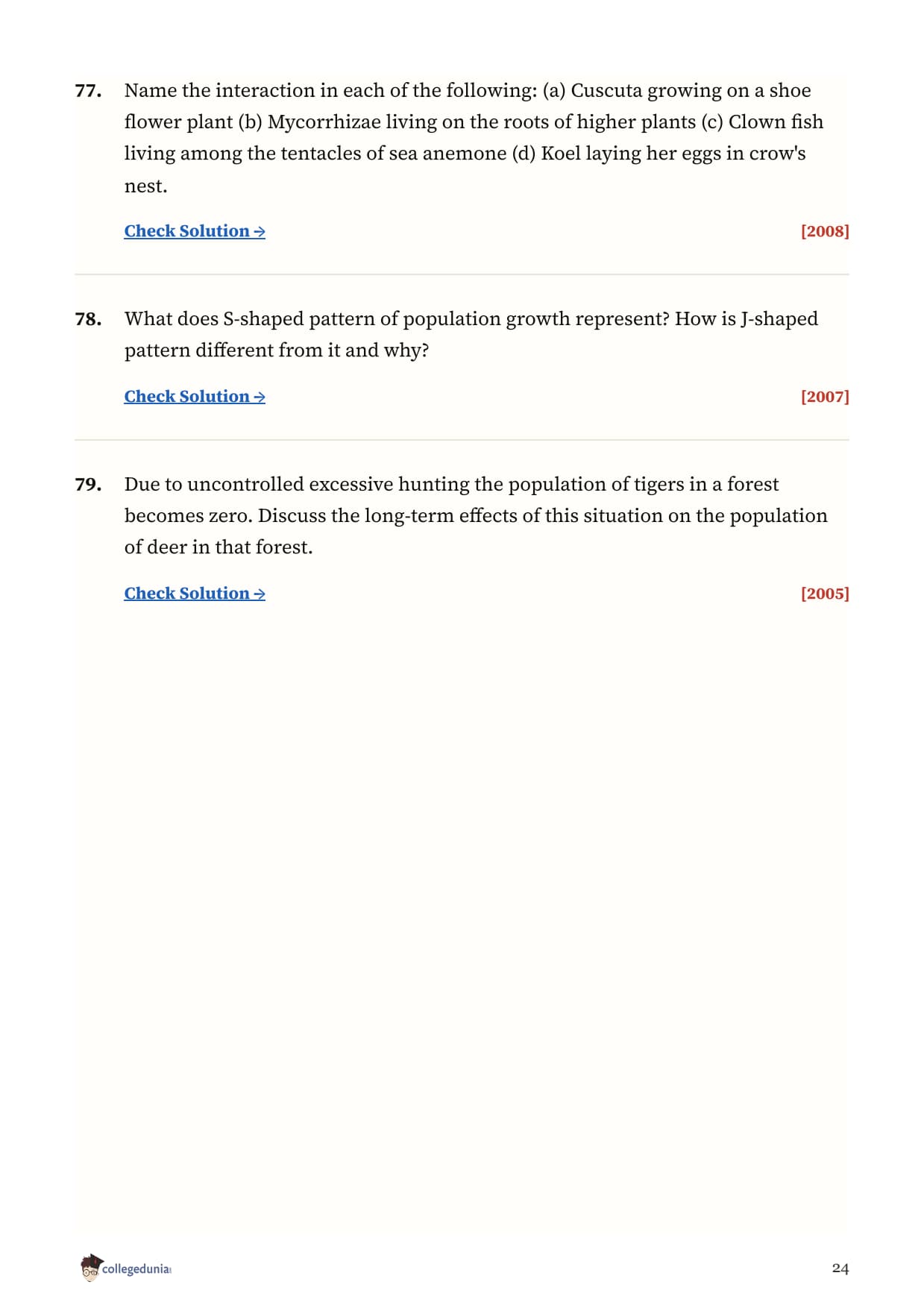
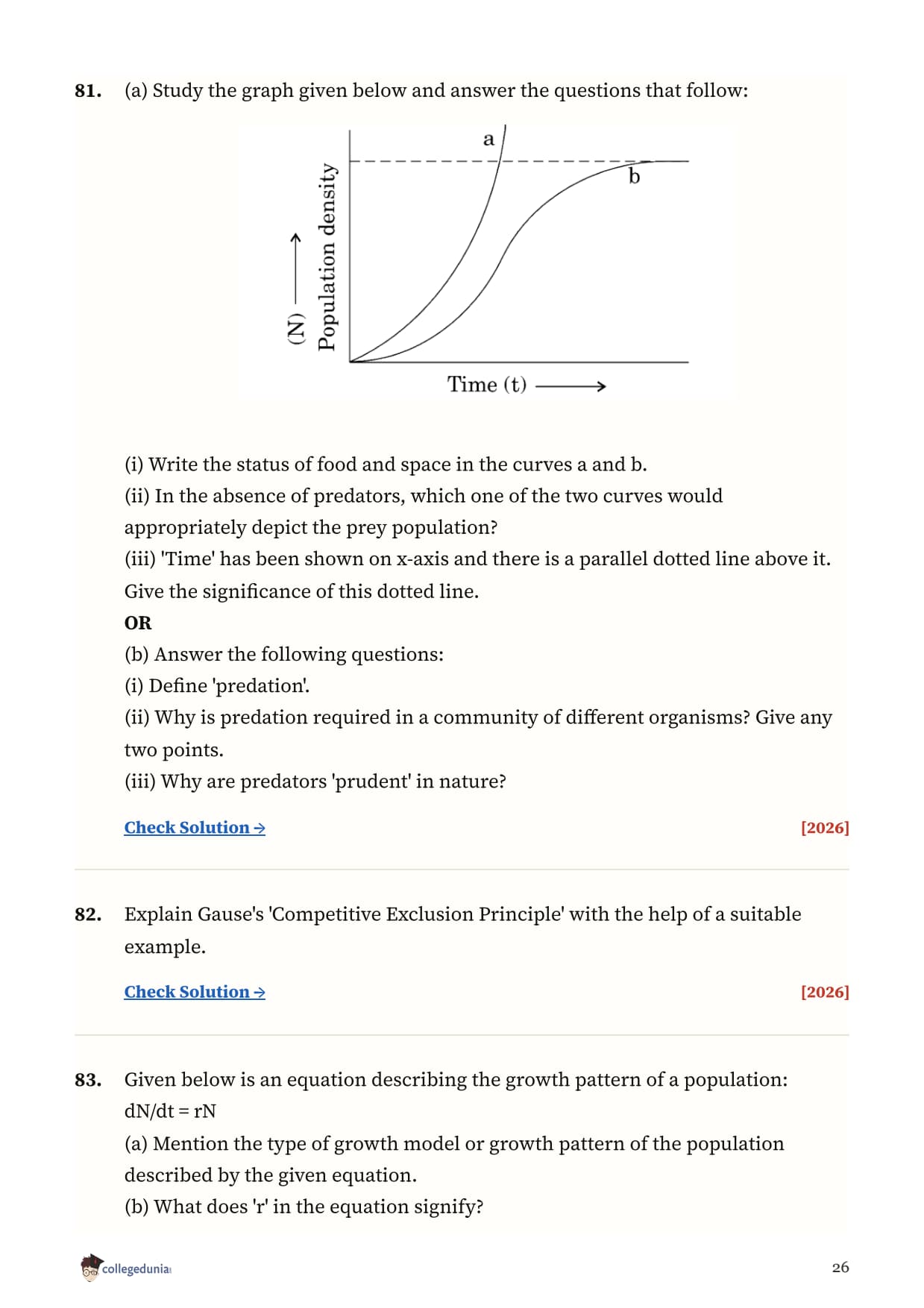
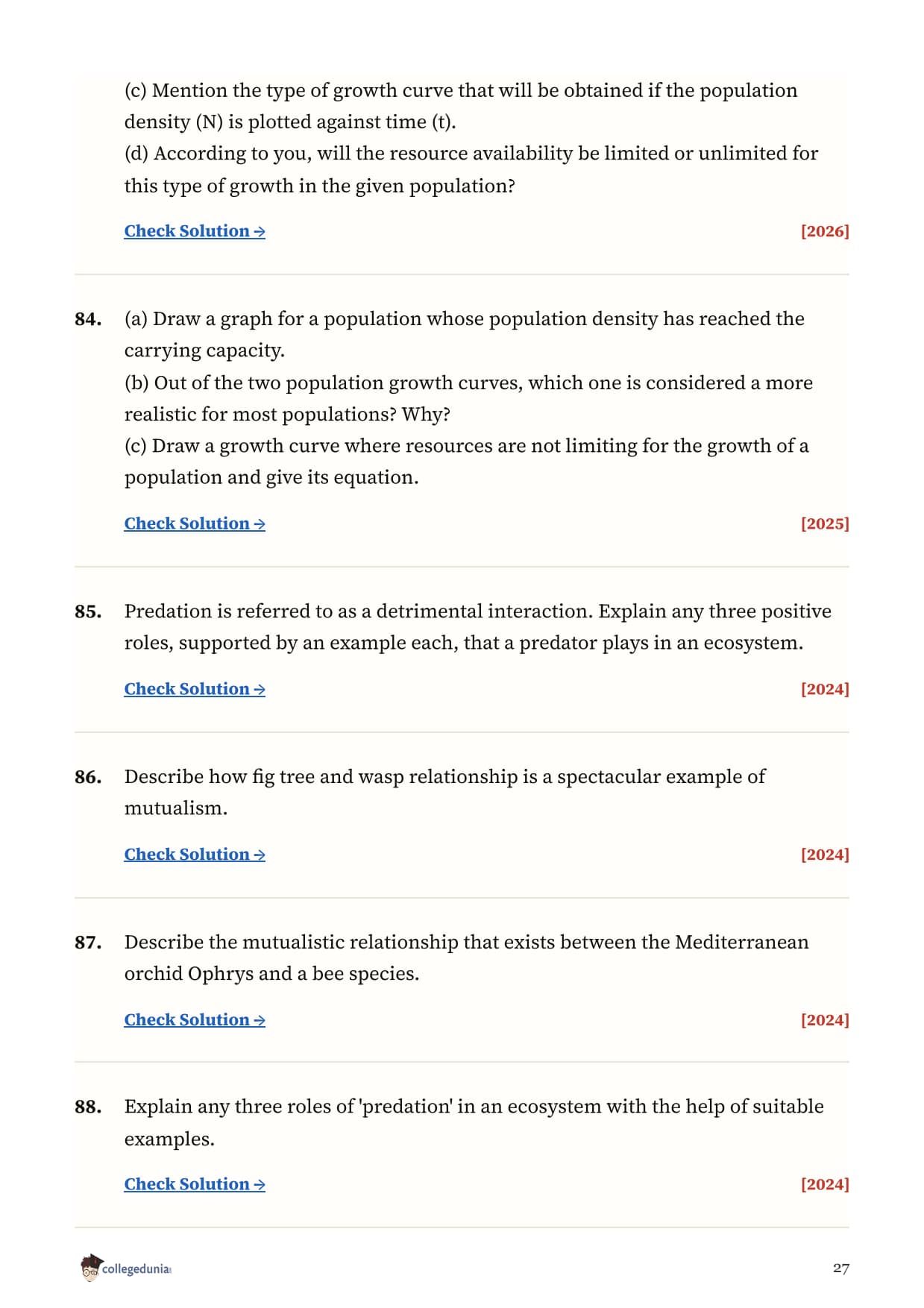
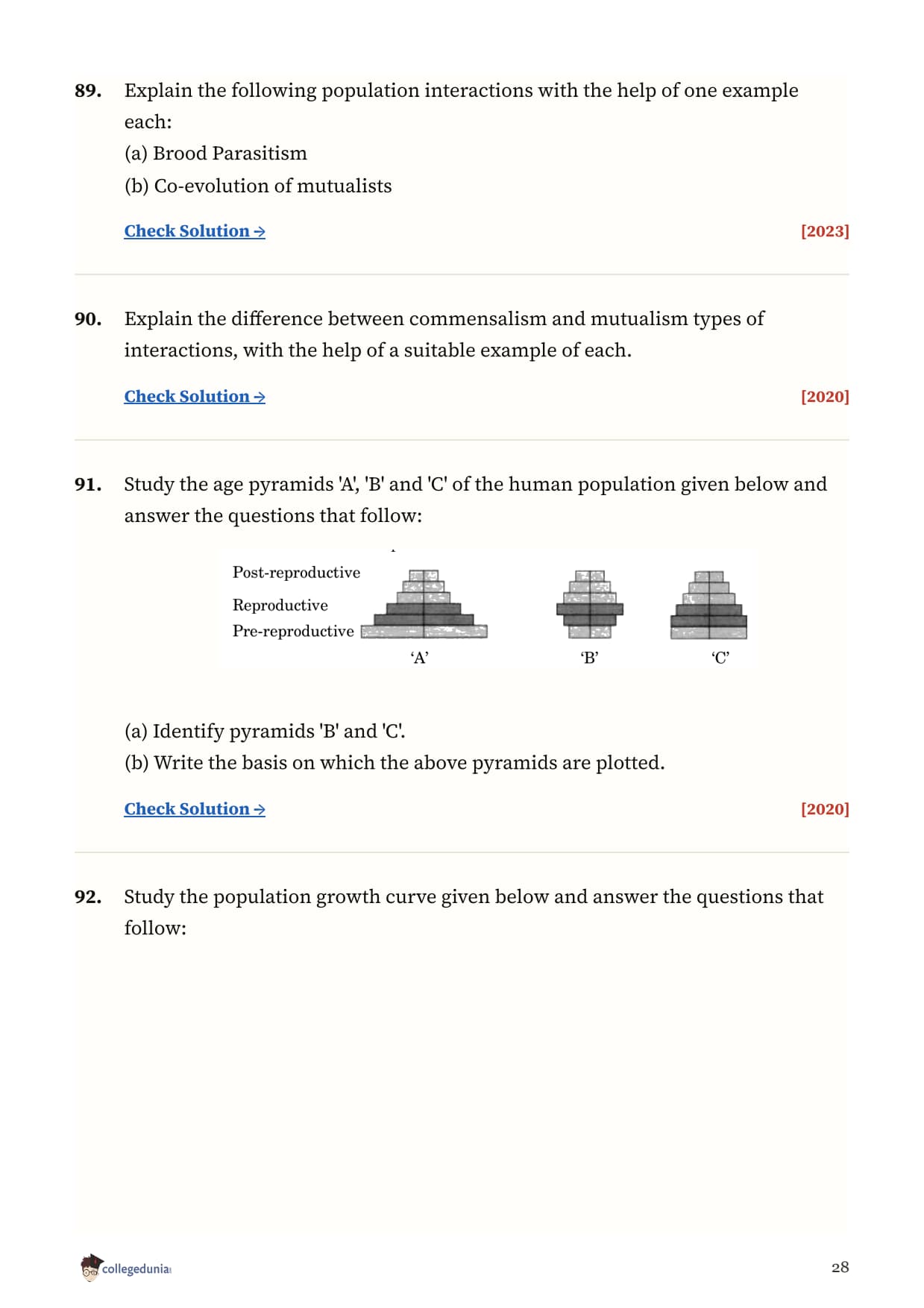
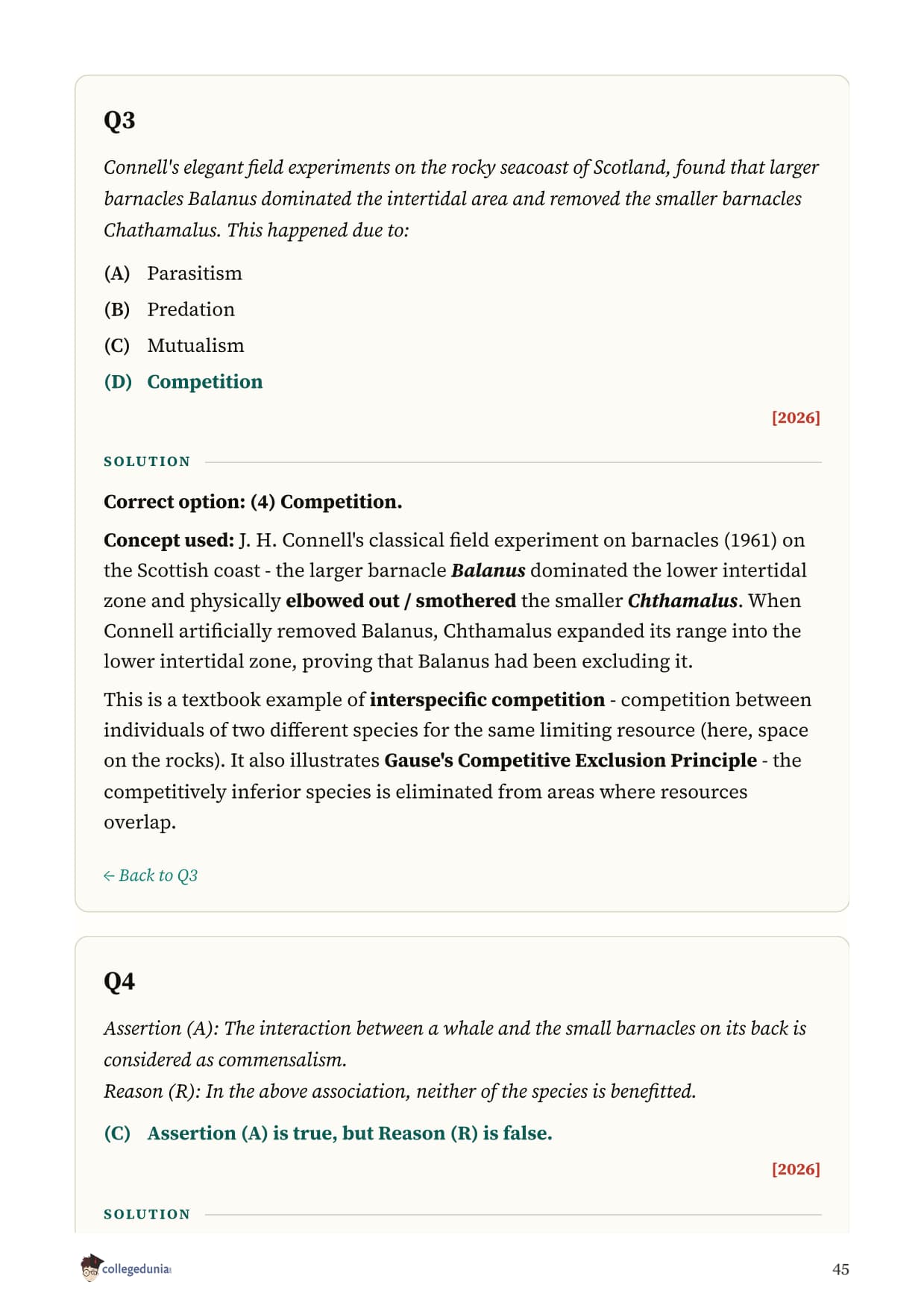
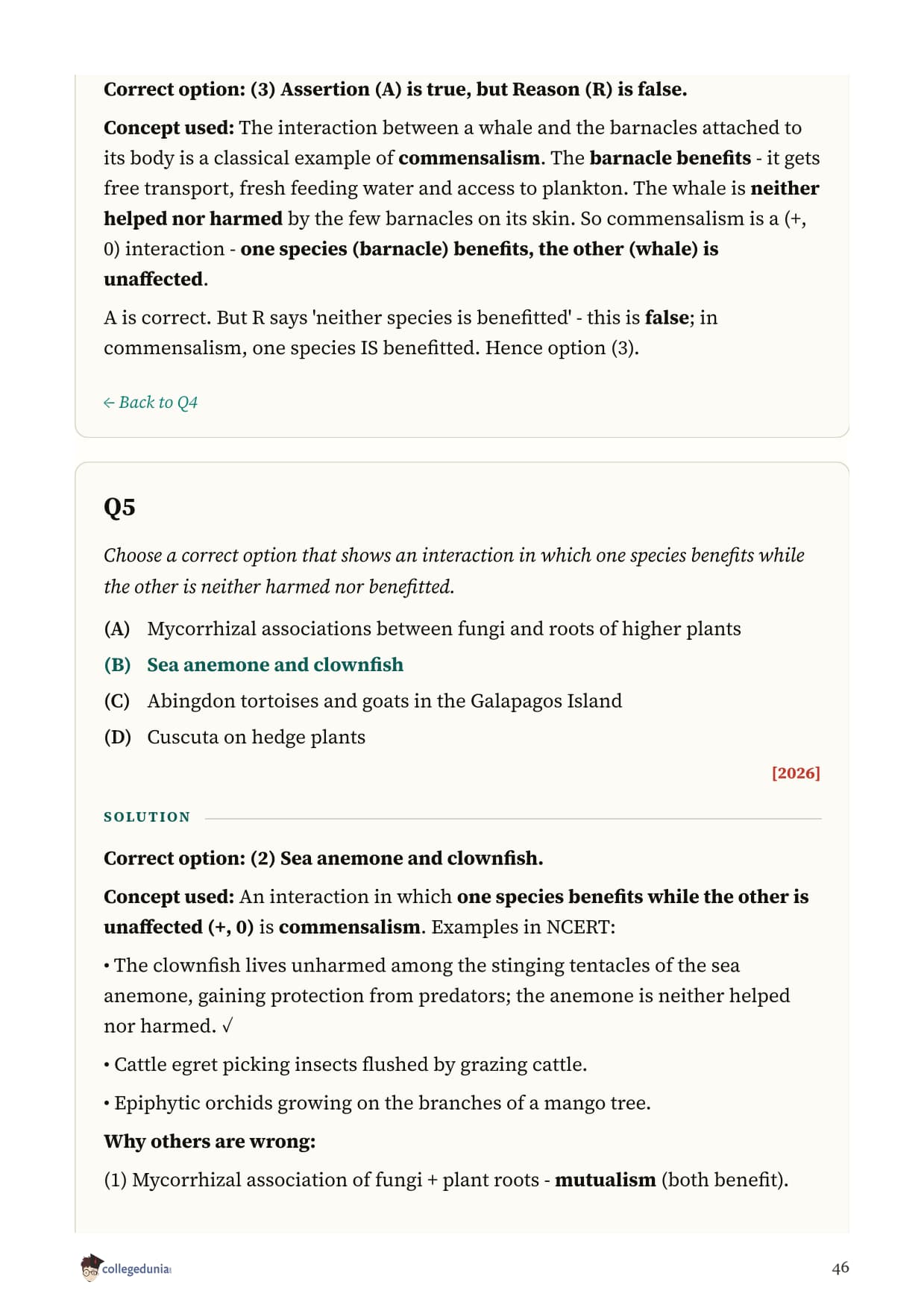
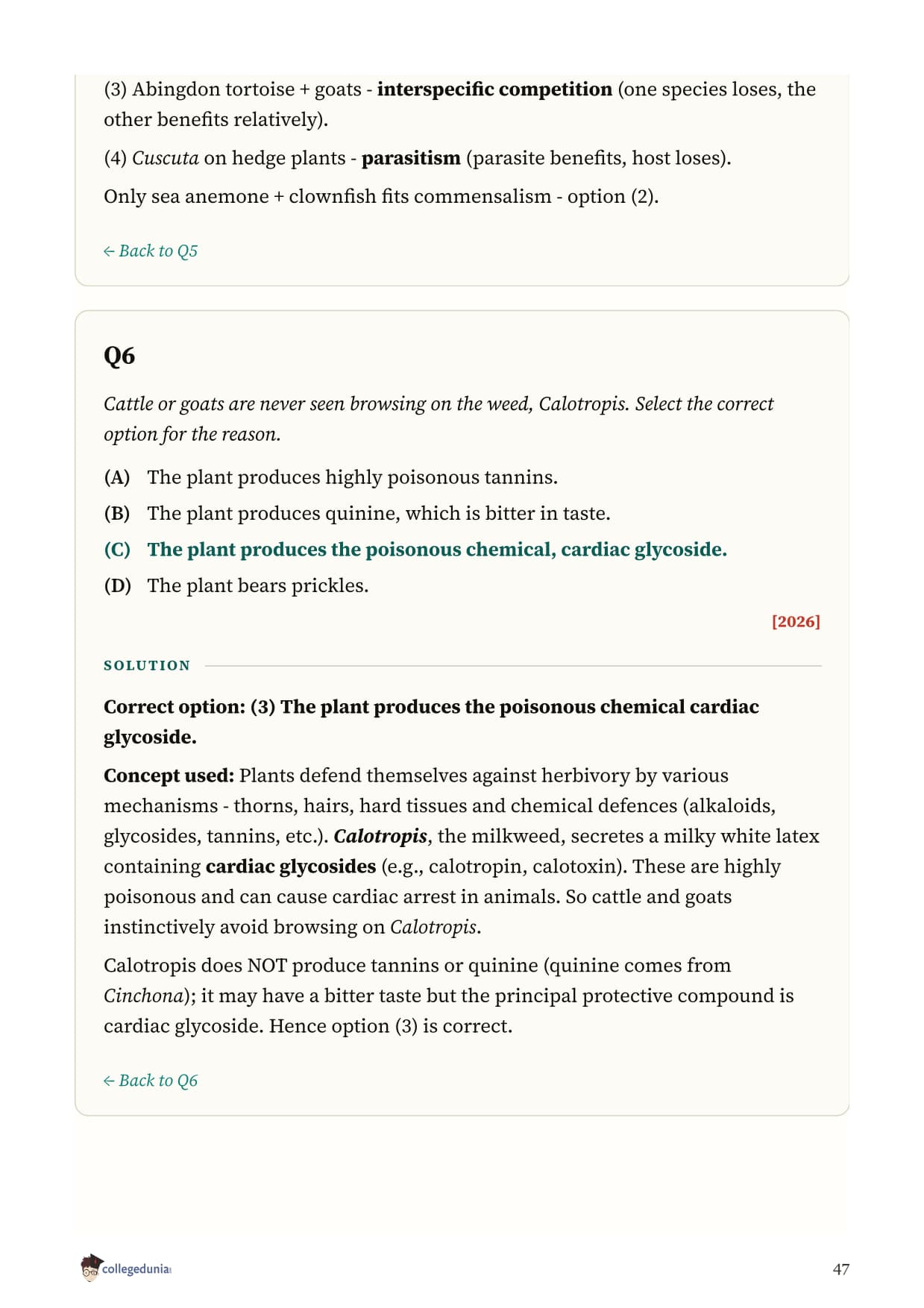
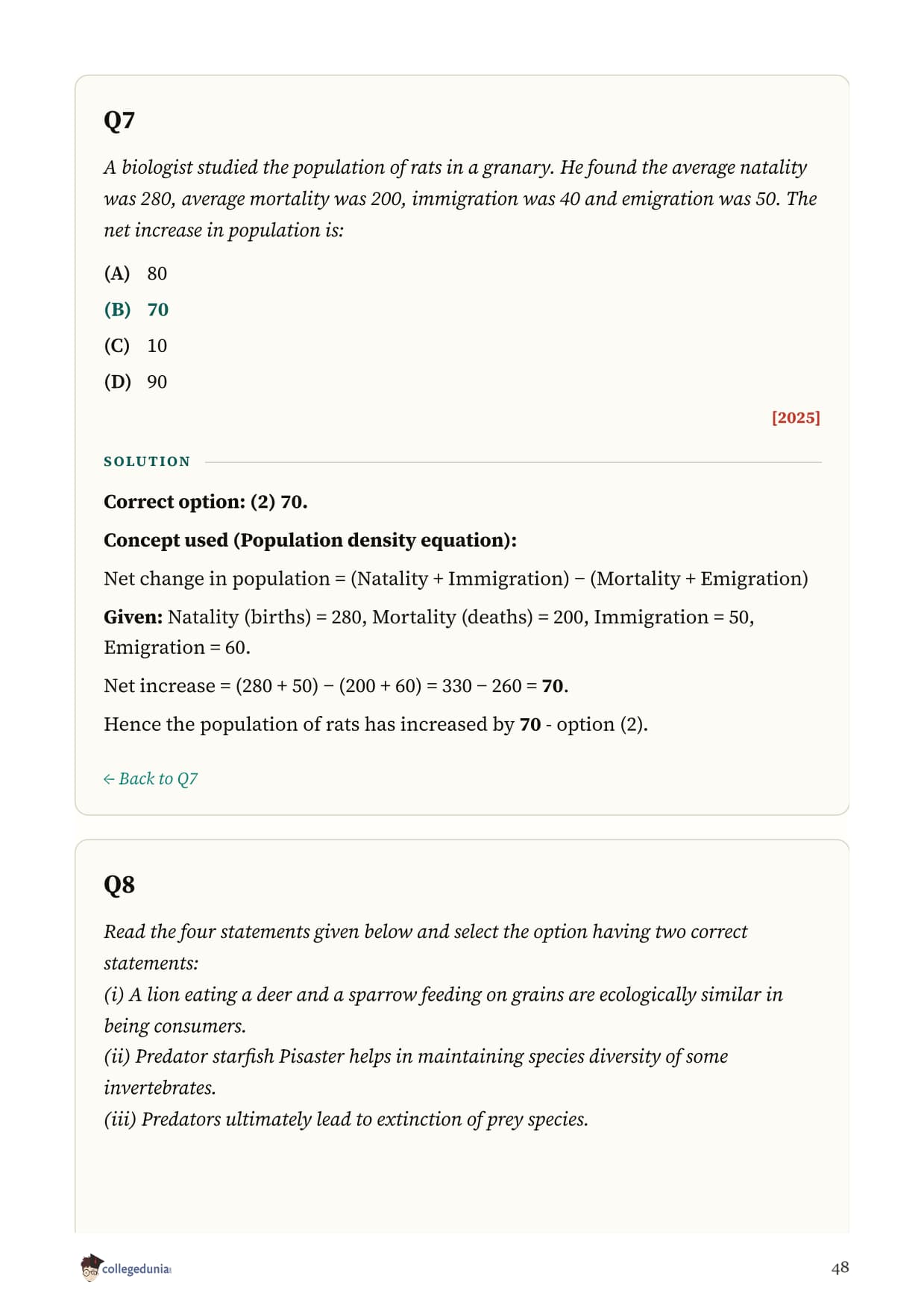
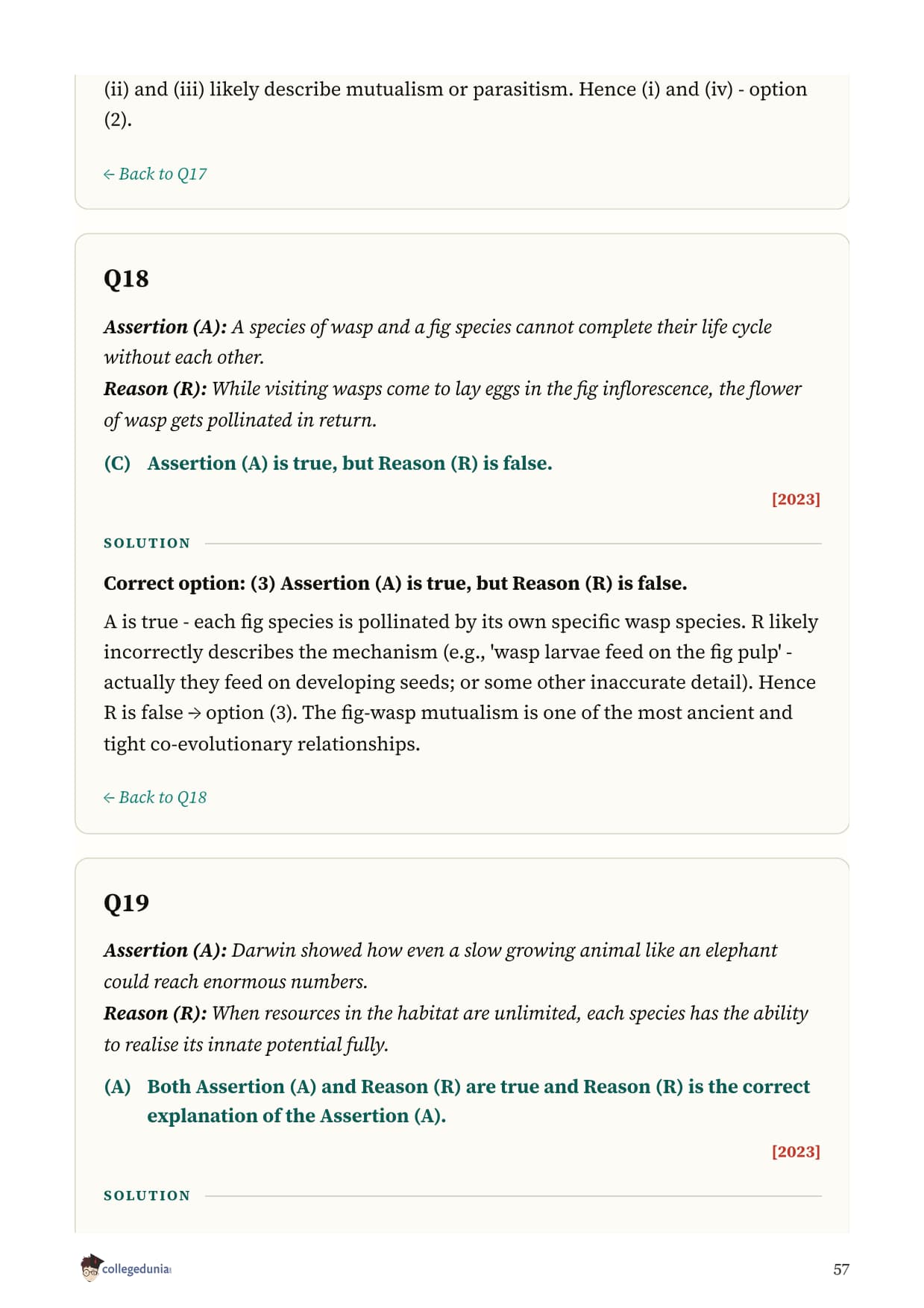
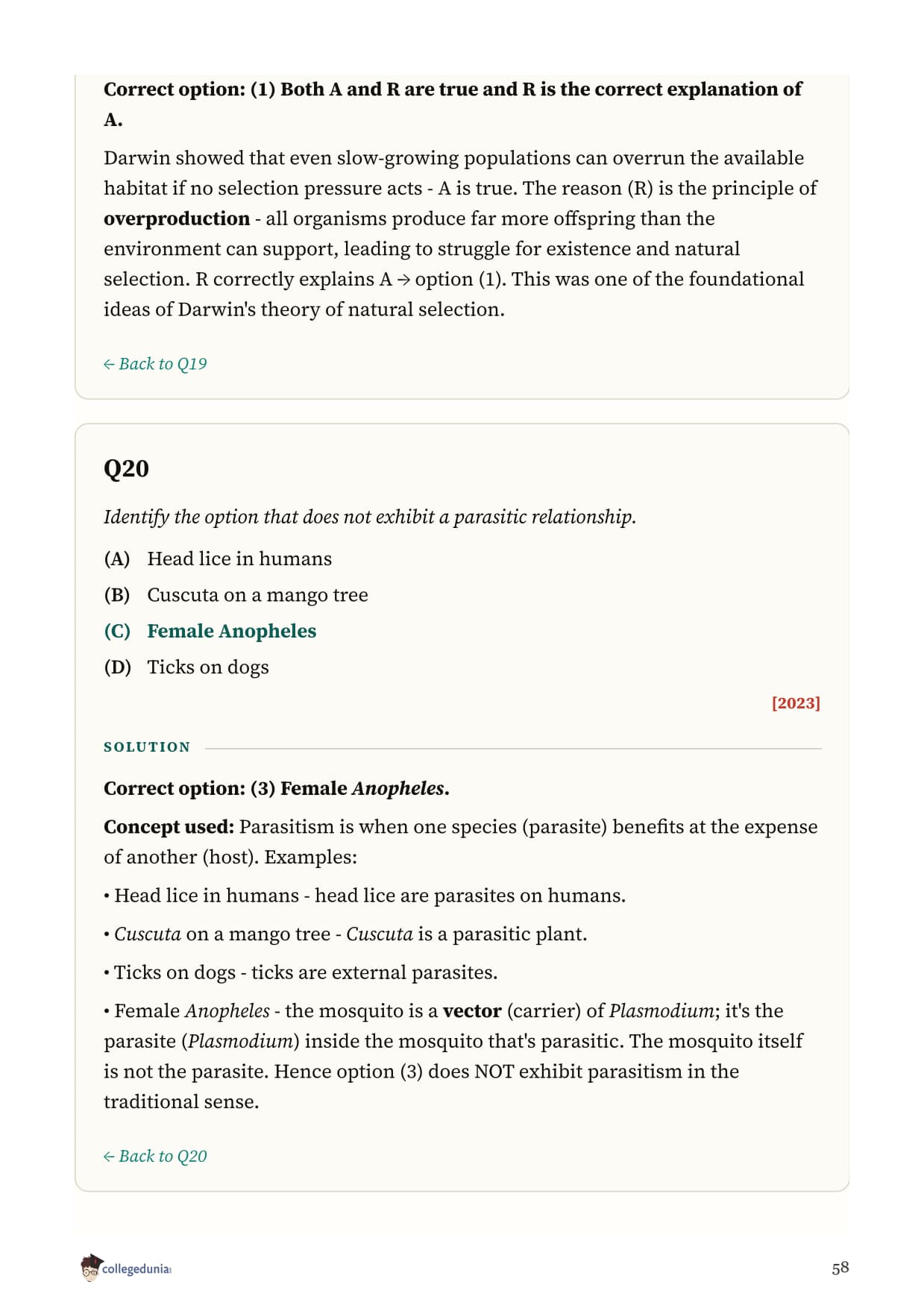
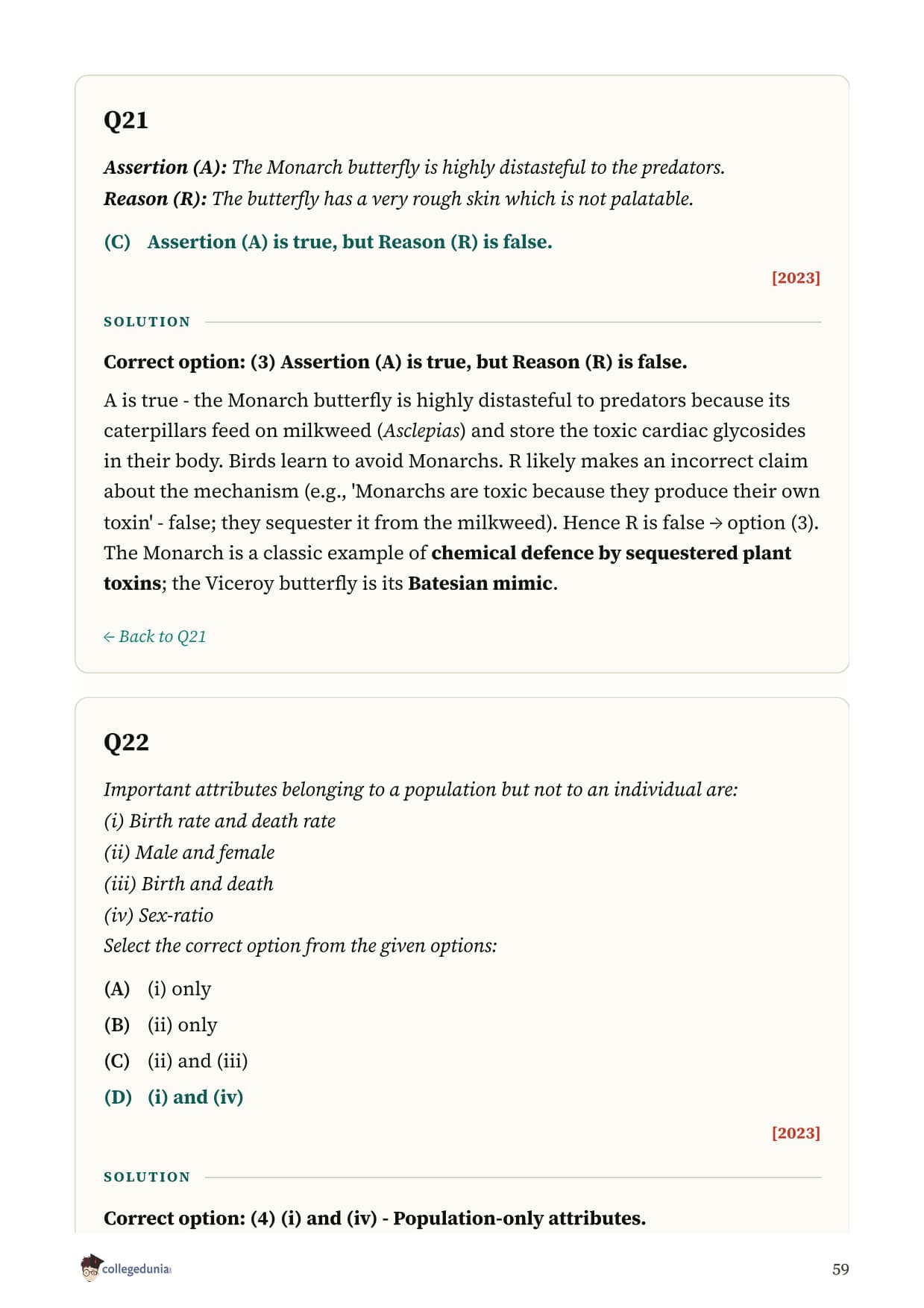
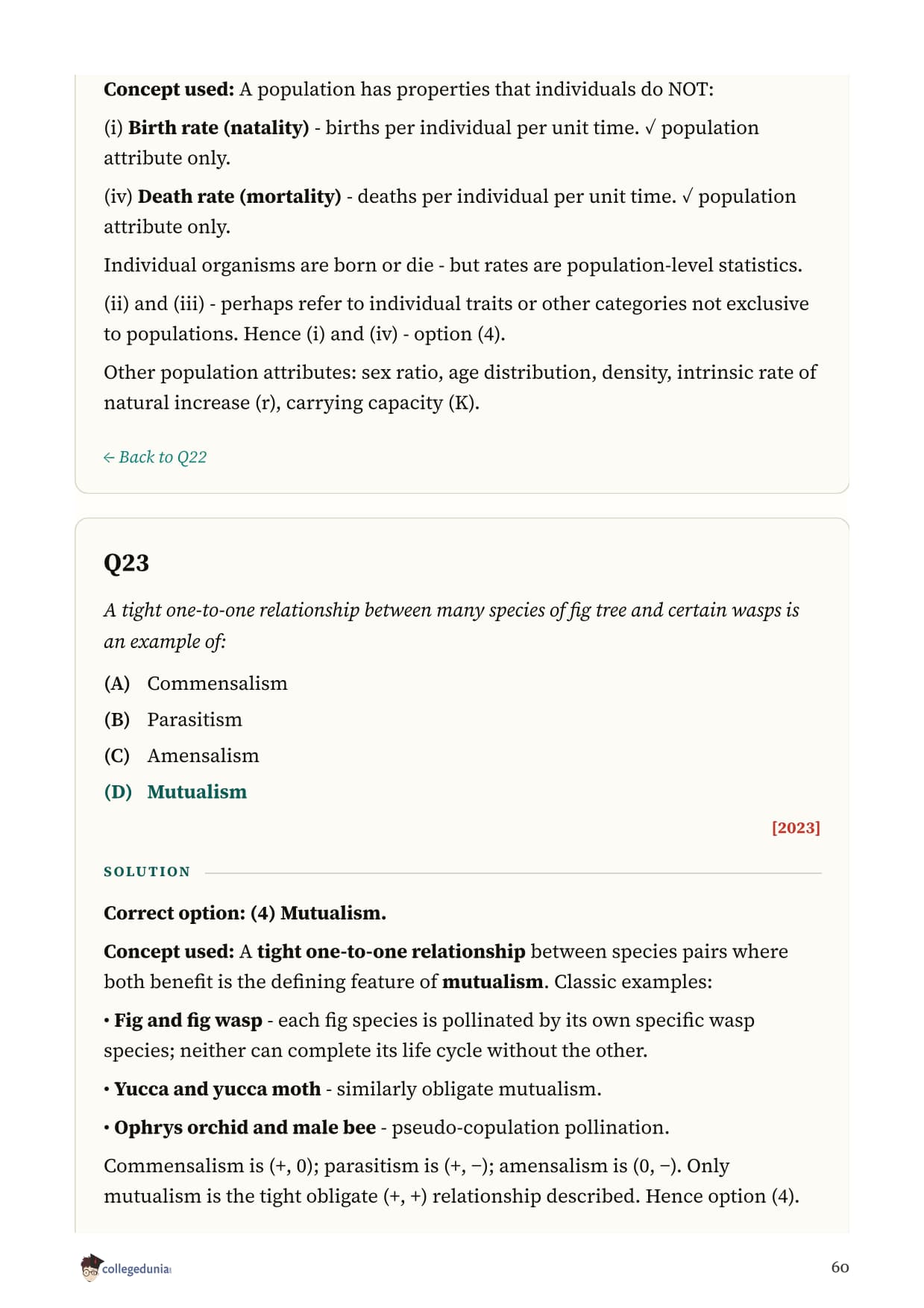
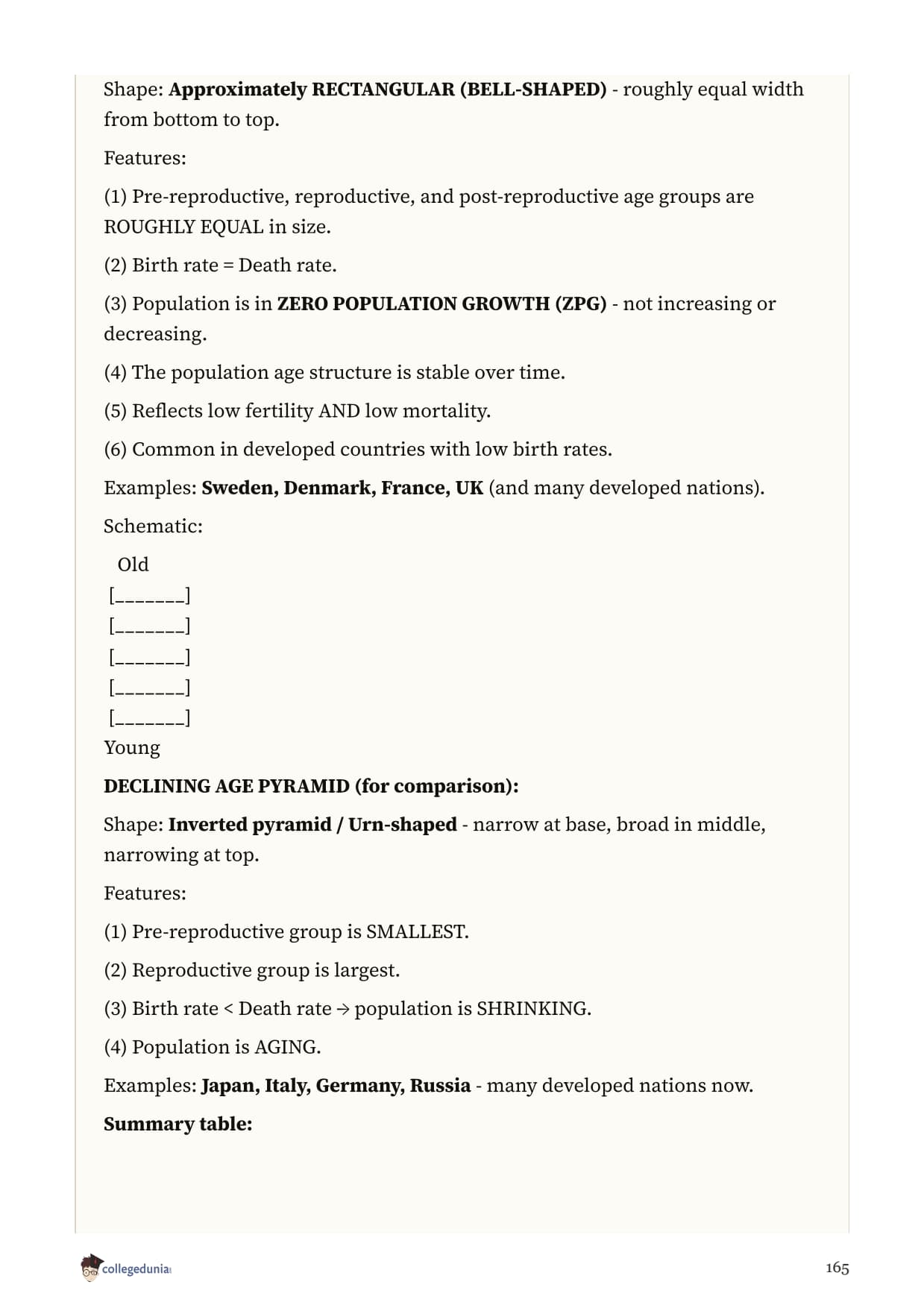
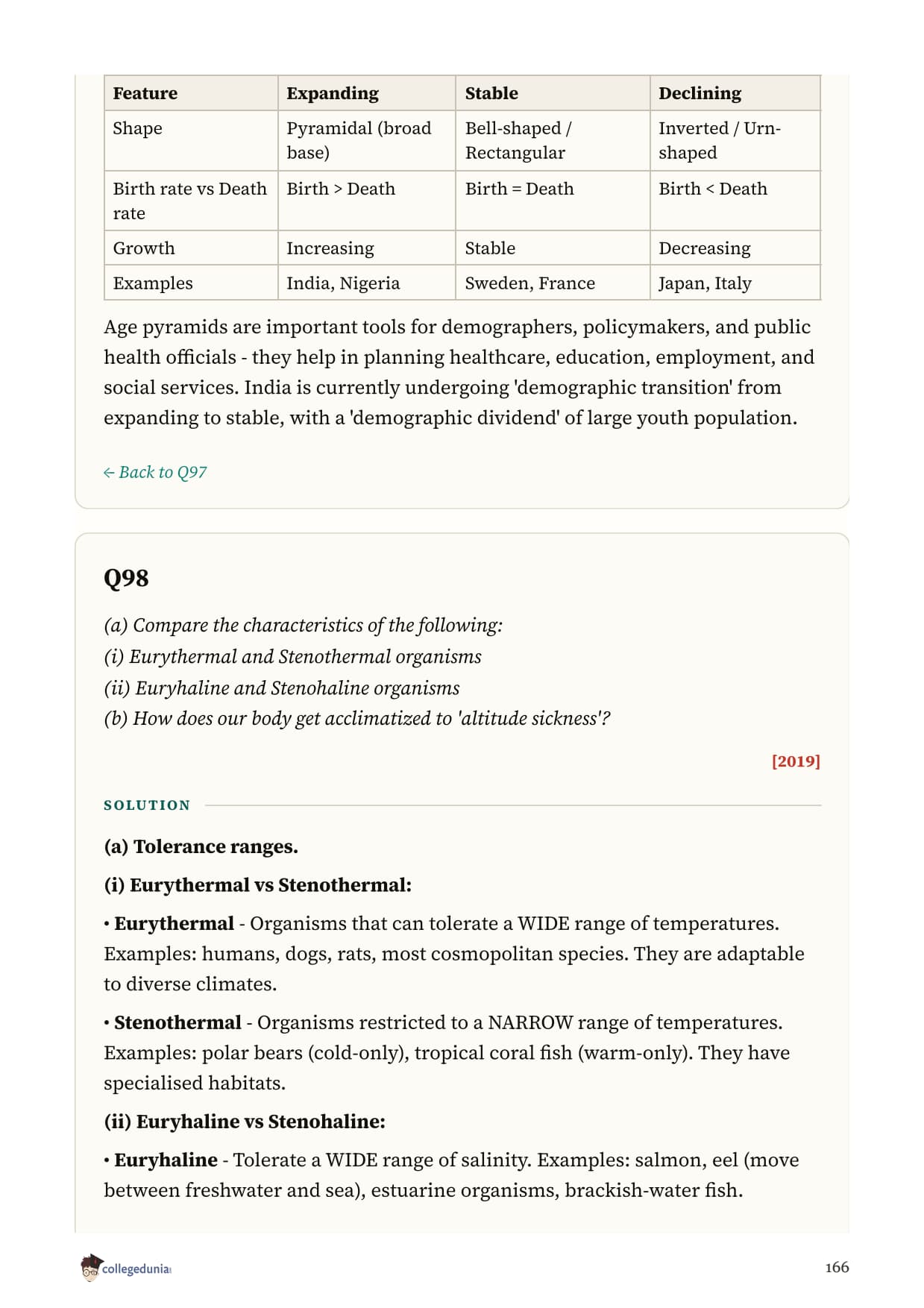
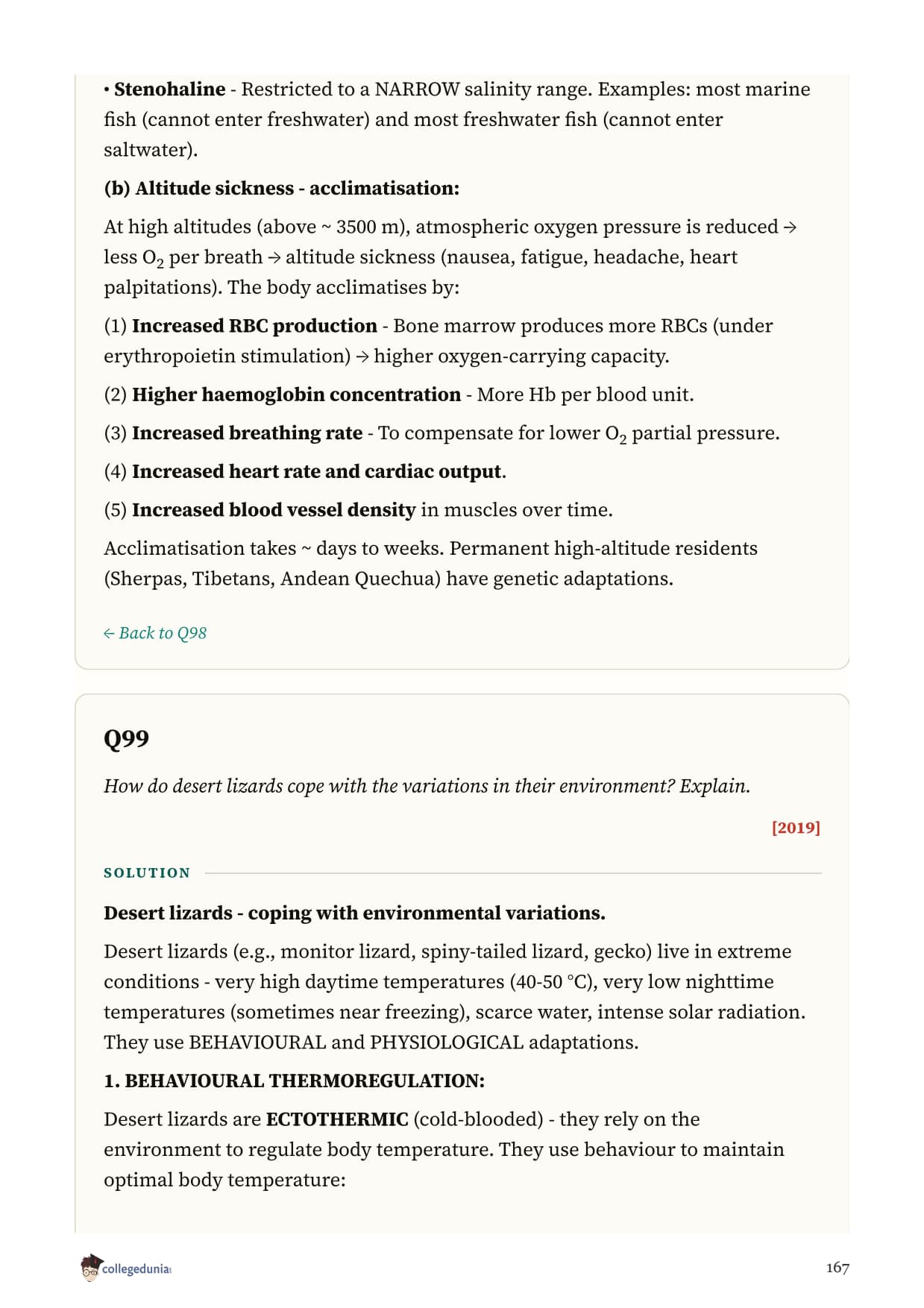
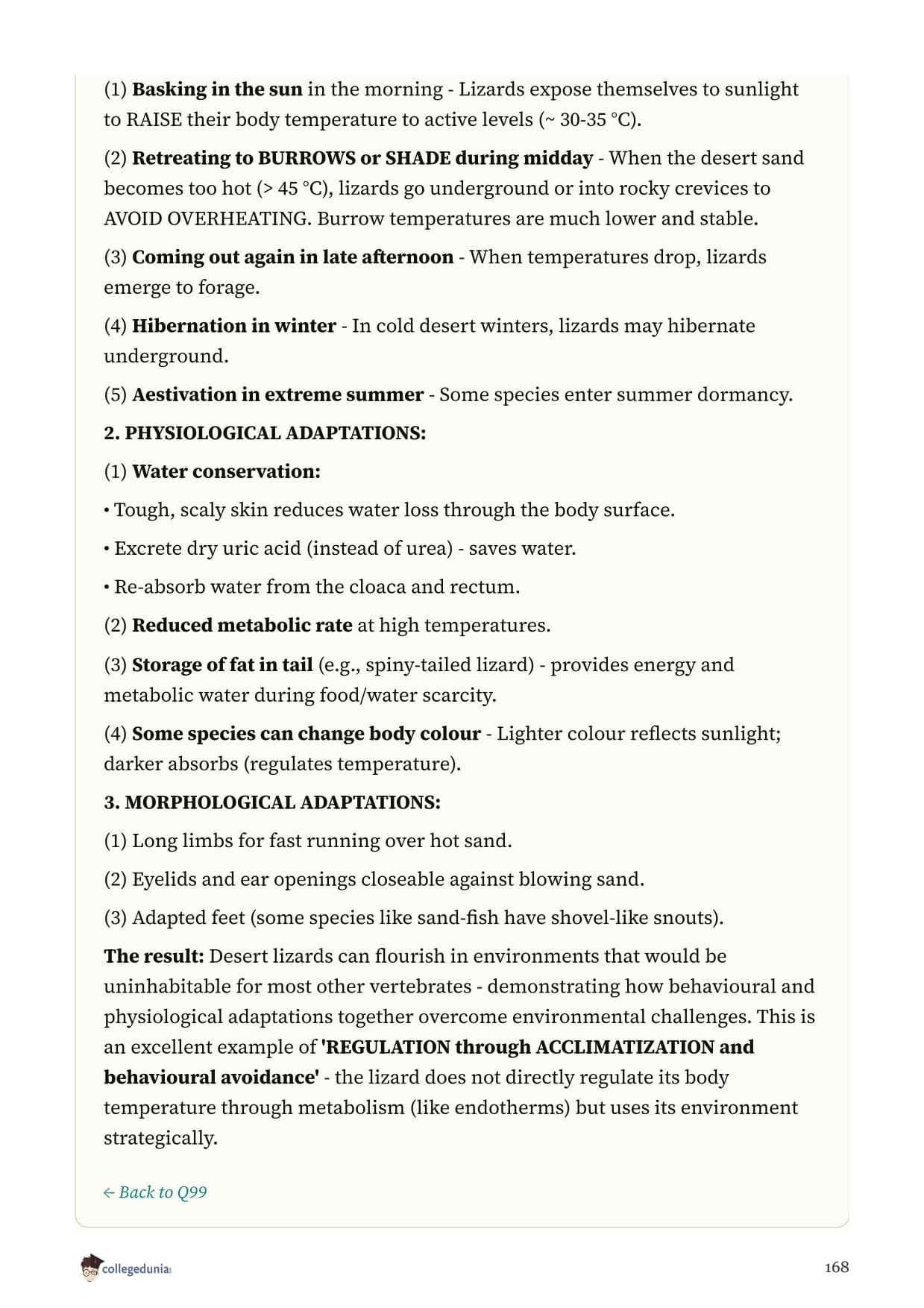
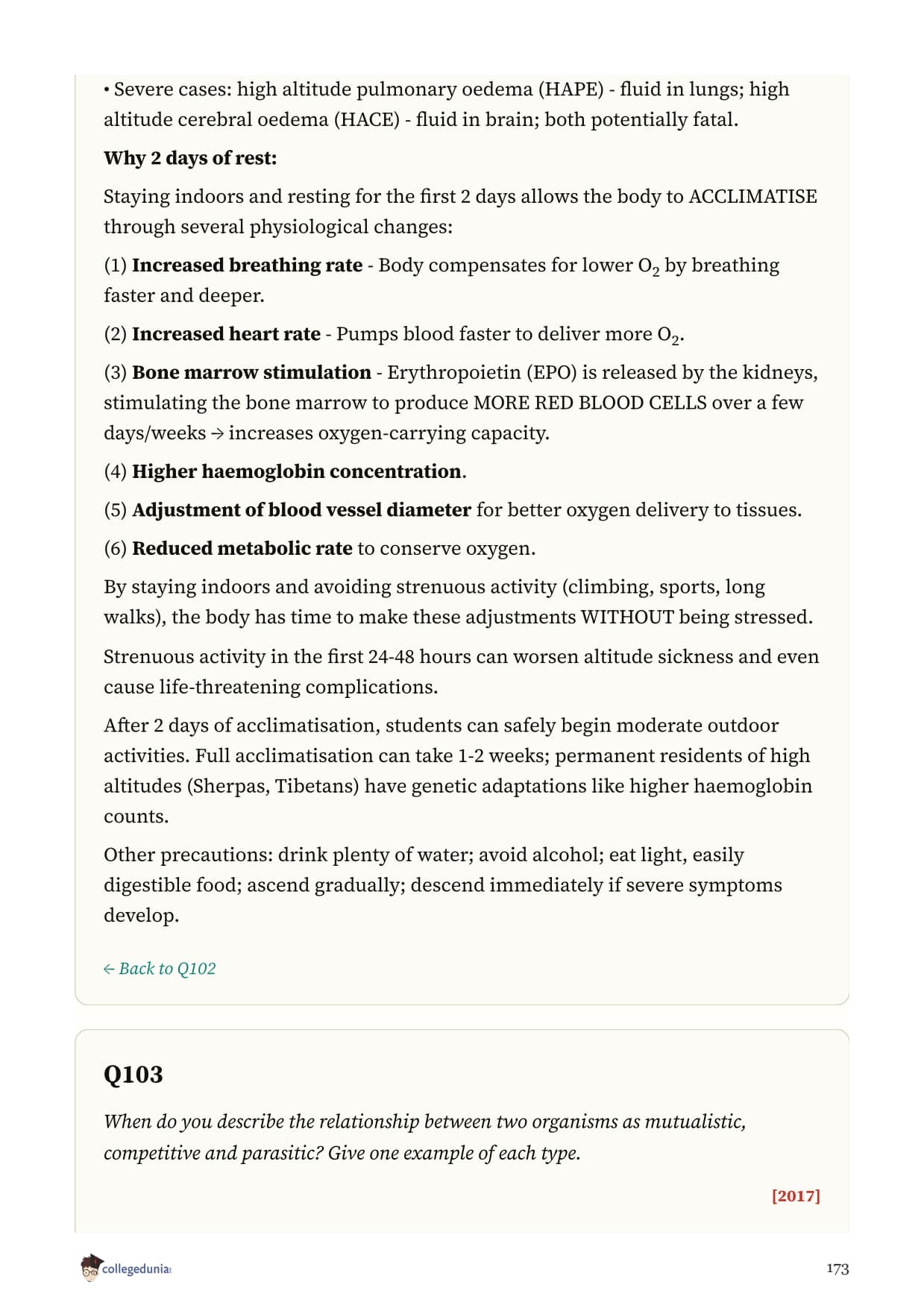
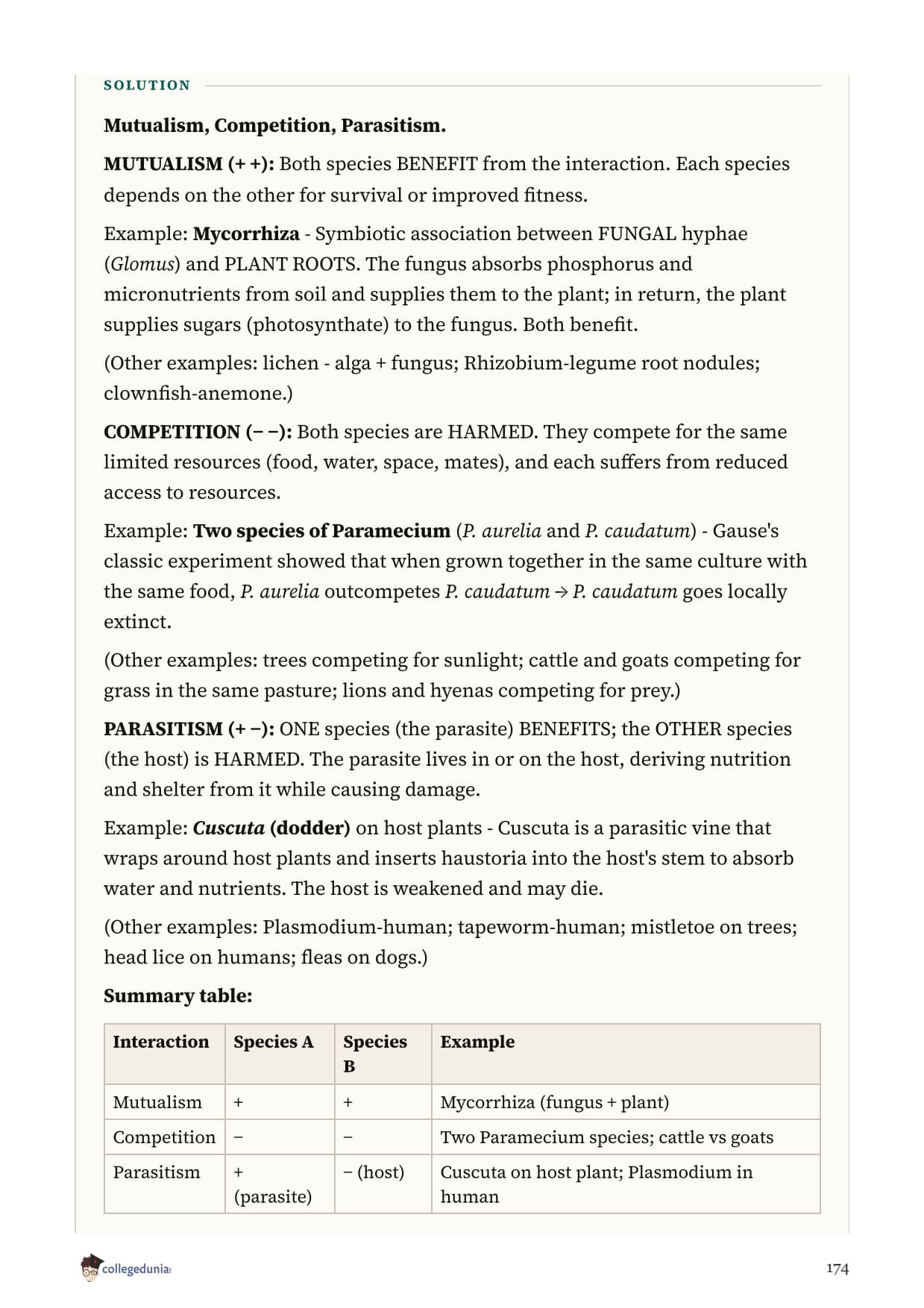
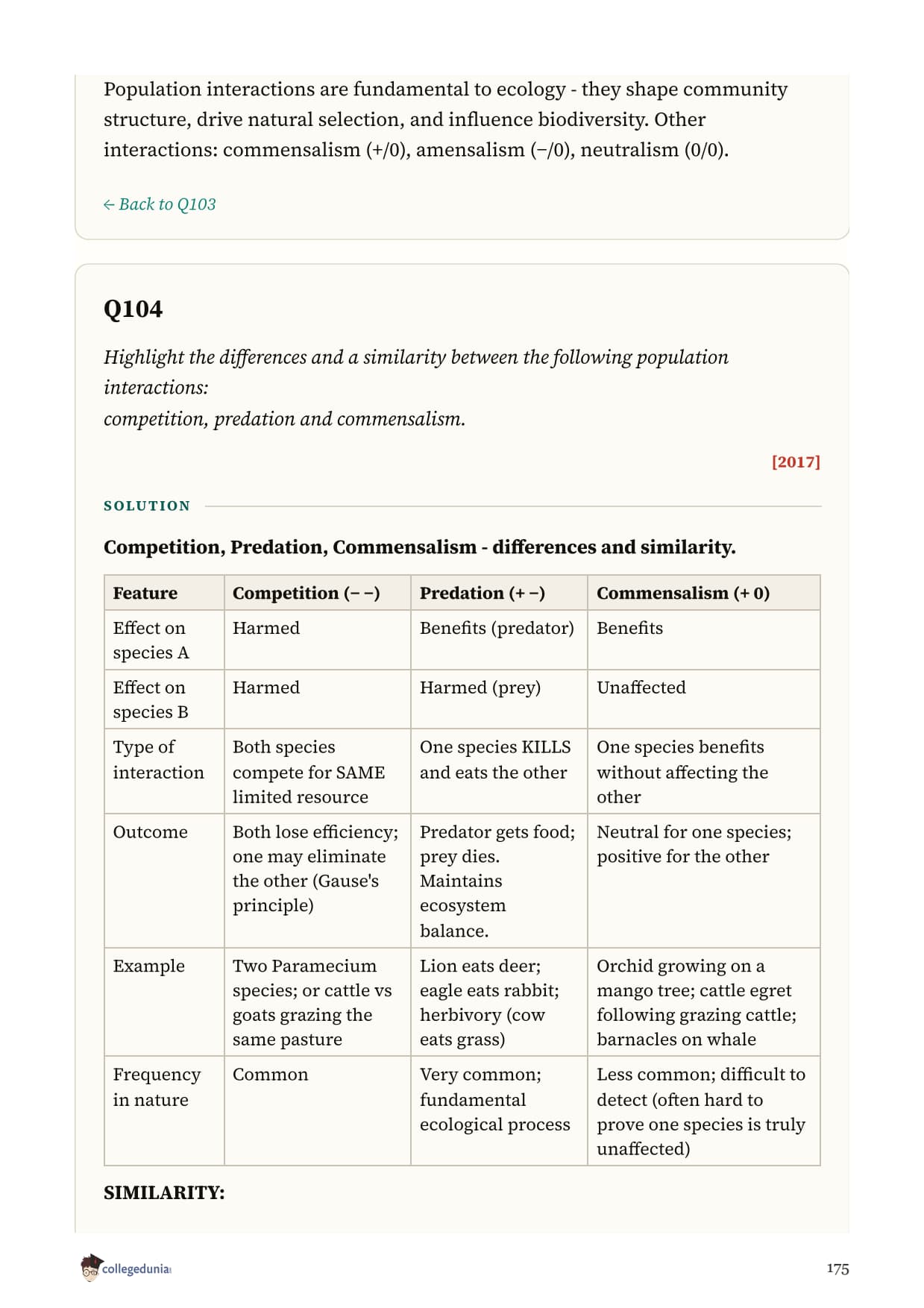
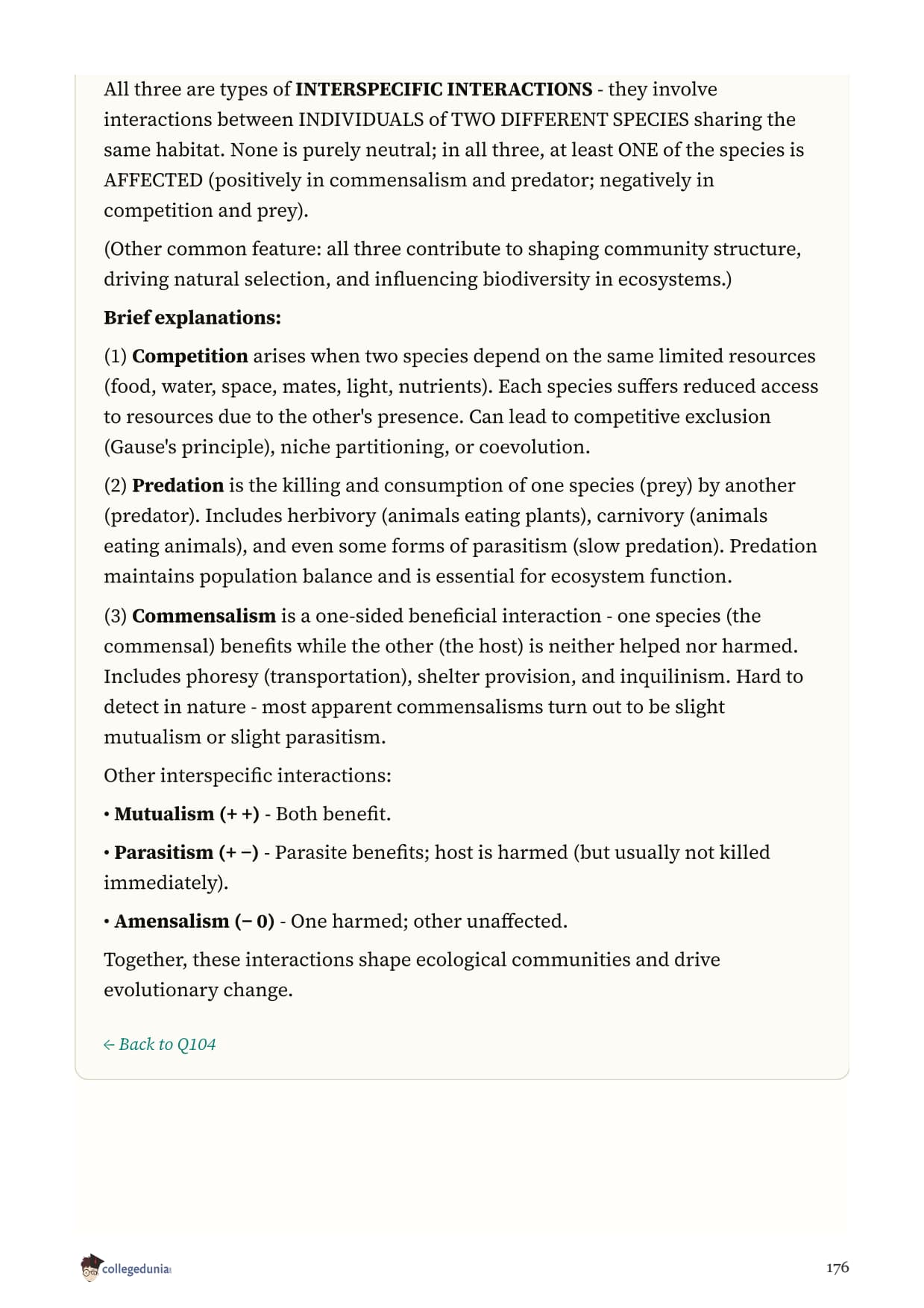
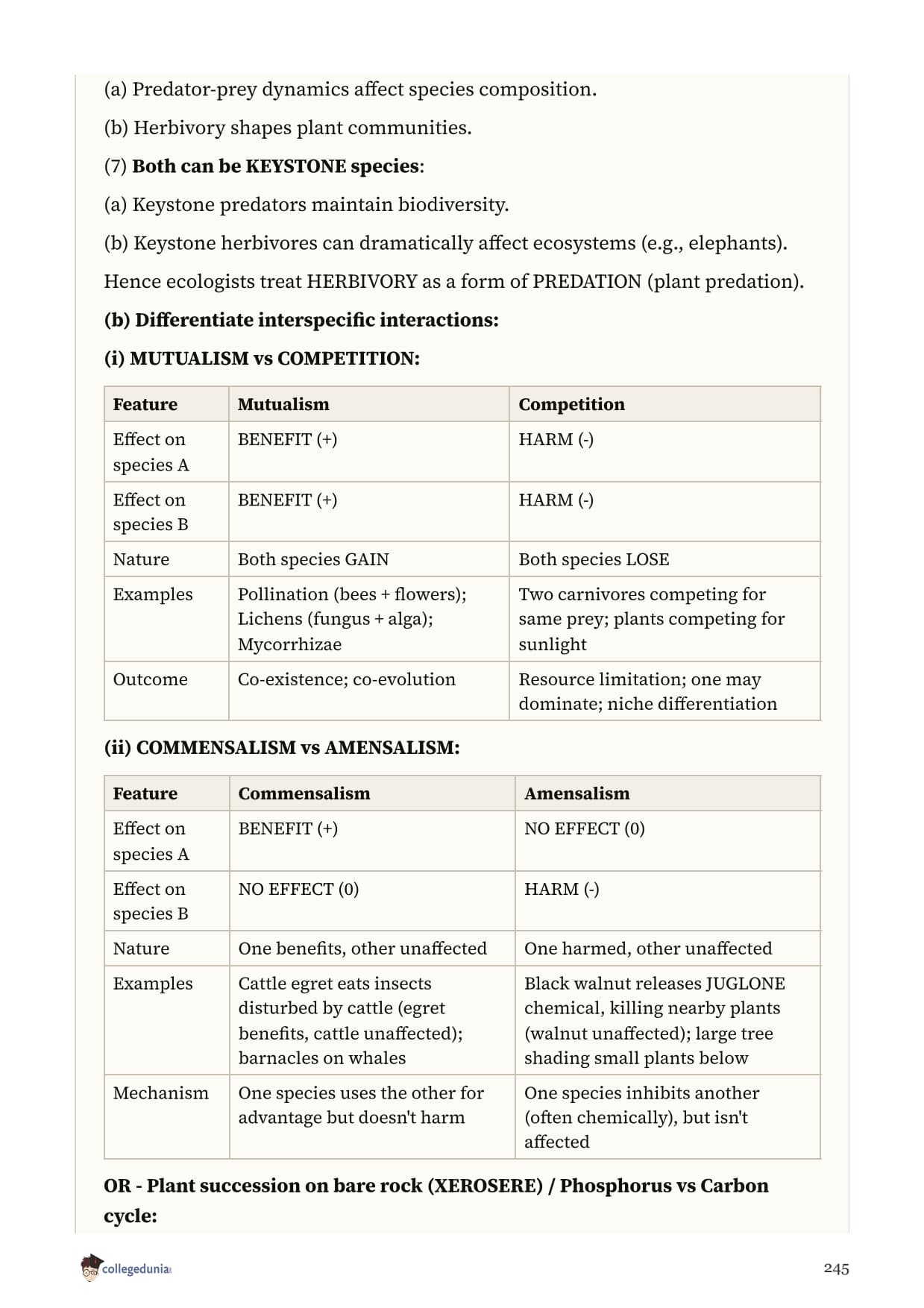
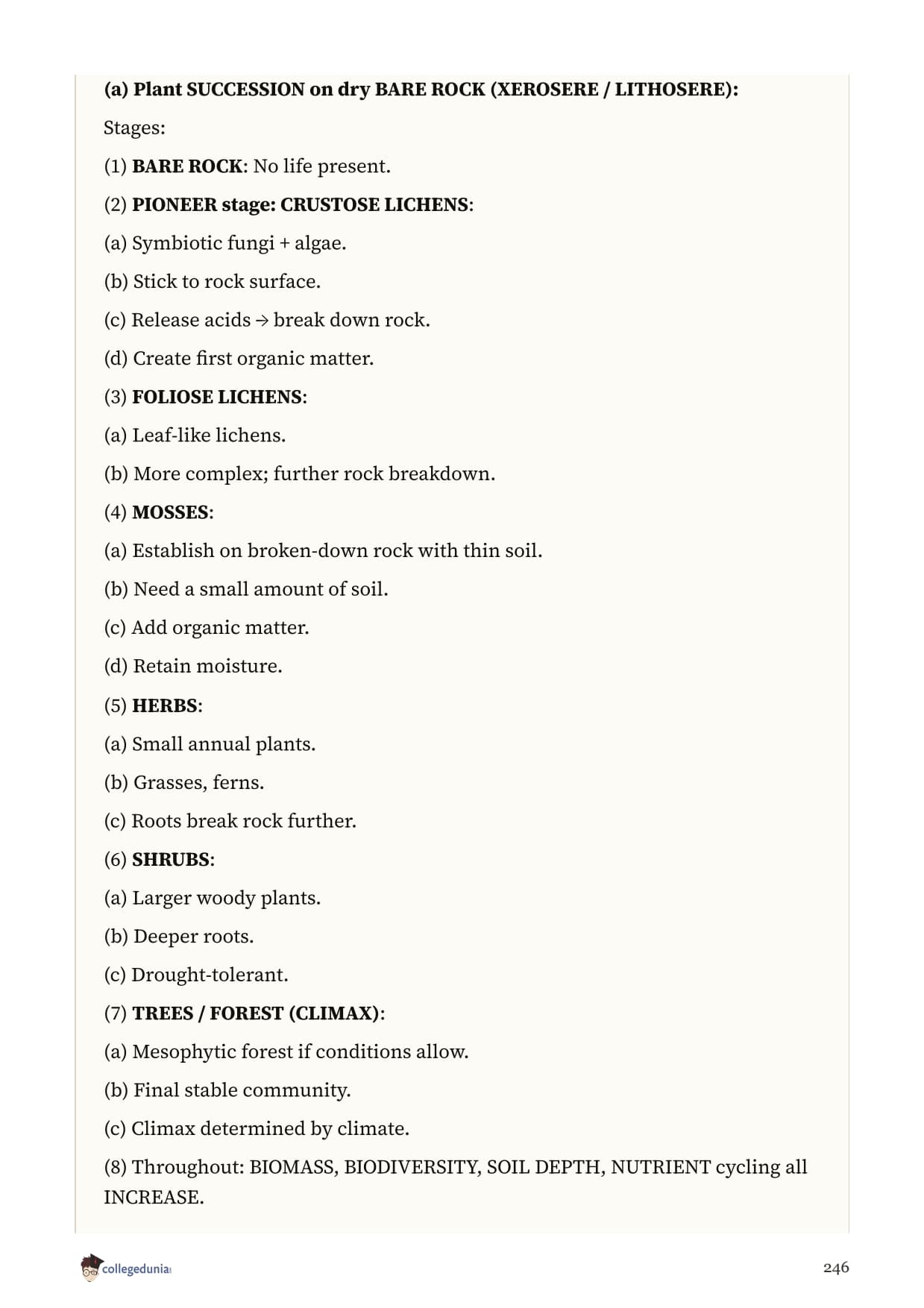
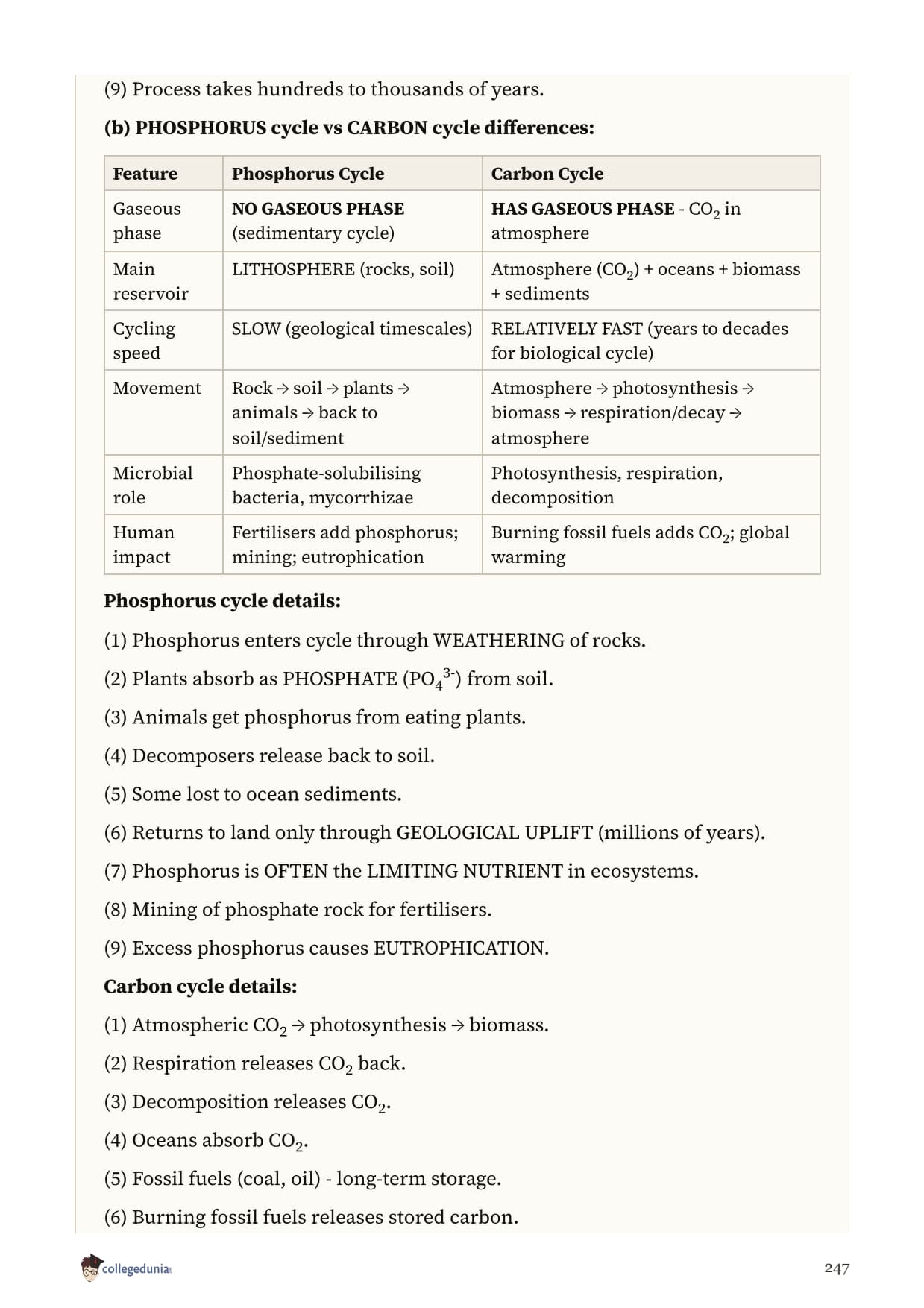

- 1-mark questions: 33 questions, mostly MCQ and assertion-reason on adaptations, niche and interactions.
- 2 and 3-mark questions: 46 and 40 questions, the two biggest bands, built around growth curves, conformers vs regulators and interspecific interactions.
- Long answers: 4 four-mark case-based questions plus 8 five-mark questions on population growth and adaptations.
The Class 12 Biology Organisms and Populations PYQ set pulls together 131 board-paper questions across 2004 to 2026, sorted by marks and by year, so you can fix those weak spots by practising the exact questions CBSE has repeated.
Every question in this Class 12 Biology Organisms and Populations PYQ compilation is sourced from CBSE board papers (Delhi, Outside Delhi, Foreign and Compartment) and cross-checked against the official mark scheme, with near-duplicate questions removed.
What the Organisms and Populations Previous Year Questions Cover
The 131-question set covers every idea the NCERT chapter introduces. Population growth curves, the exponential and logistic models with carrying capacity, drive many 3 and 5-mark answers. Conformers, regulators and adaptations (halophytes, mangroves, desert plants, hibernation, aestivation) carry the 2-mark band. Interspecific interactions like mutualism, predation, competition and parasitism appear across all bands, while the ecological niche and population attributes fill the short 1-mark MCQs.
Marks-wise Distribution of the Organisms and Populations PYQs
The table below shows how the 131 questions split across the CBSE marks bands. Use it to plan how much revision time each band deserves.
| Marks | Questions | Total Marks | CBSE Section | Type |
|---|---|---|---|---|
| 1 mark | 33 | 33 | Section A | MCQ / Assertion-Reason |
| 2 mark | 46 | 92 | Section B | VSA (Very Short Answer) |
| 3 mark | 40 | 120 | Section C | SA (Short Answer) |
| 4 mark | 4 | 16 | Section D | Case Study |
| 5 mark | 8 | 40 | Section E | Long Answer |
Year-wise Spread of Class 12 Biology Organisms and Populations PYQs
The compilation spans more than 20 CBSE board years. About 40% of the questions come from 2023 onwards, so this chapter keeps a strong base of older, long-form questions worth practising too.
- 2026: An MCQ on the key parameter for population growth, an assertion-reason on reproductive strategy, and a 3-mark question on carrying capacity and the logistic curve.
- 2024 to 2025: Strong sets on growth curves, conformers vs regulators and interspecific interactions.
- 2020 to 2023: Reduced-syllabus papers, but mangrove and desert adaptations and predator-prey questions still appear.
- 2004 to 2019: A deep base of long answers on the logistic equation, mutualism examples and animal adaptations, all relevant today.
Topic Frequency in the Organisms and Populations Board Paper Questions
The 131 questions cluster into the six topic buckets below, ranked by how often CBSE has set them between 2004 and 2026.
| Rank | Topic Cluster | Frequency | Typical Marks Band |
|---|---|---|---|
| 1 | Population growth curves (exponential, logistic, carrying capacity, growth equation) | ~23 per cent | 3 and 5 mark |
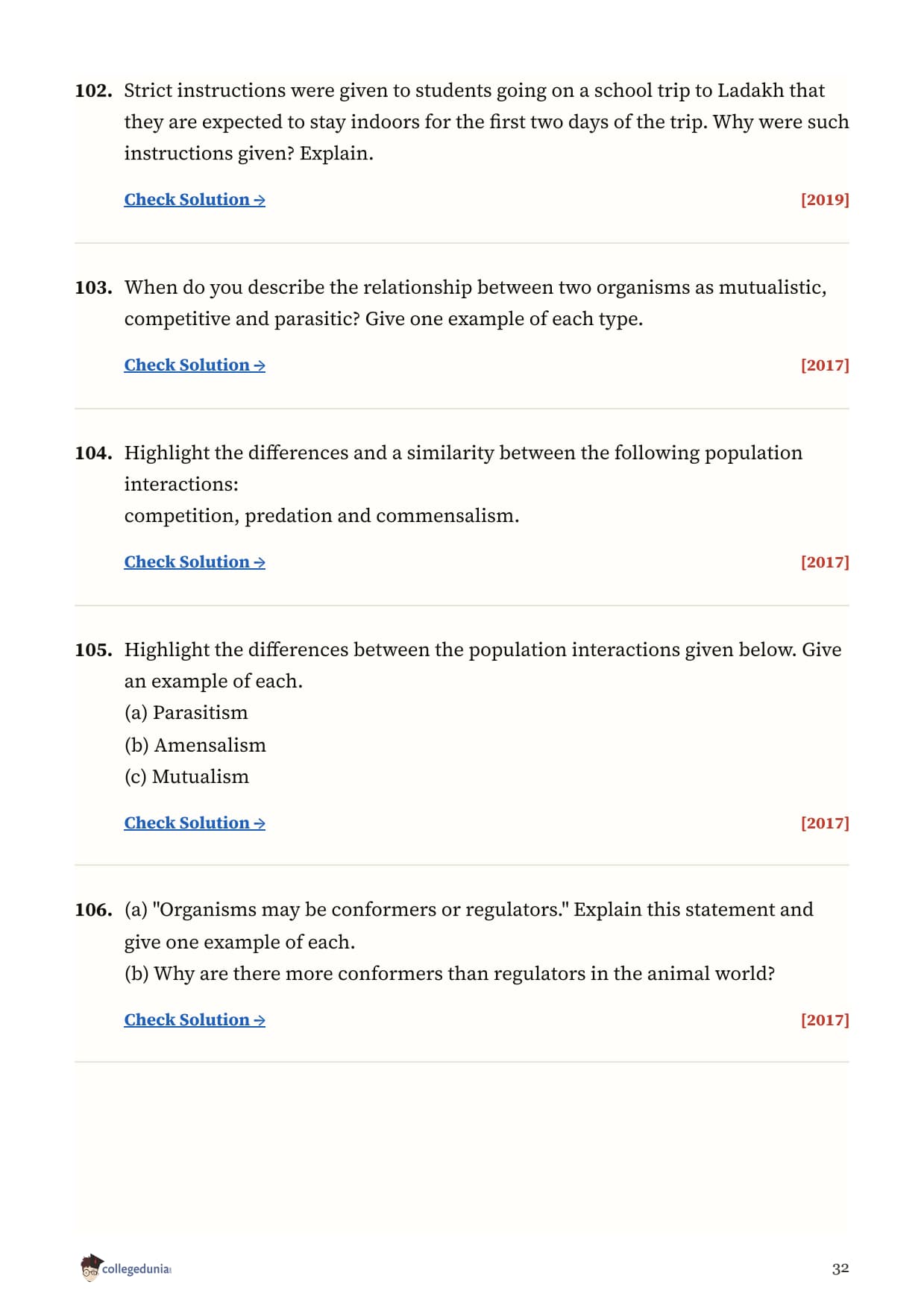
| 2 | Interspecific interactions (mutualism, predation, competition, parasitism, commensalism) | ~20 per cent | 2 and 3 mark |
| 3 | Adaptations to abiotic factors (halophytes, mangroves, desert plants, kangaroo rat) | ~18 per cent | 2 and 3 mark |
| 4 | Conformers, regulators and migration (homeostasis, hibernation, aestivation) | ~15 per cent | 1 and 2 mark |
| 5 | Population attributes (density, natality, mortality, age pyramids, sex ratio) | ~13 per cent | 1 and 2 mark |
| 6 | Ecological niche and responses (niche, suspend, migrate, tolerate) | ~11 per cent | 1 and 3 mark |
Marks-Band Attempt Strategy for the Organisms and Populations PYQs
The 131 PYQs are arranged marks-ascending inside the PDF, so you can attempt them in the same order the CBSE paper presents them.
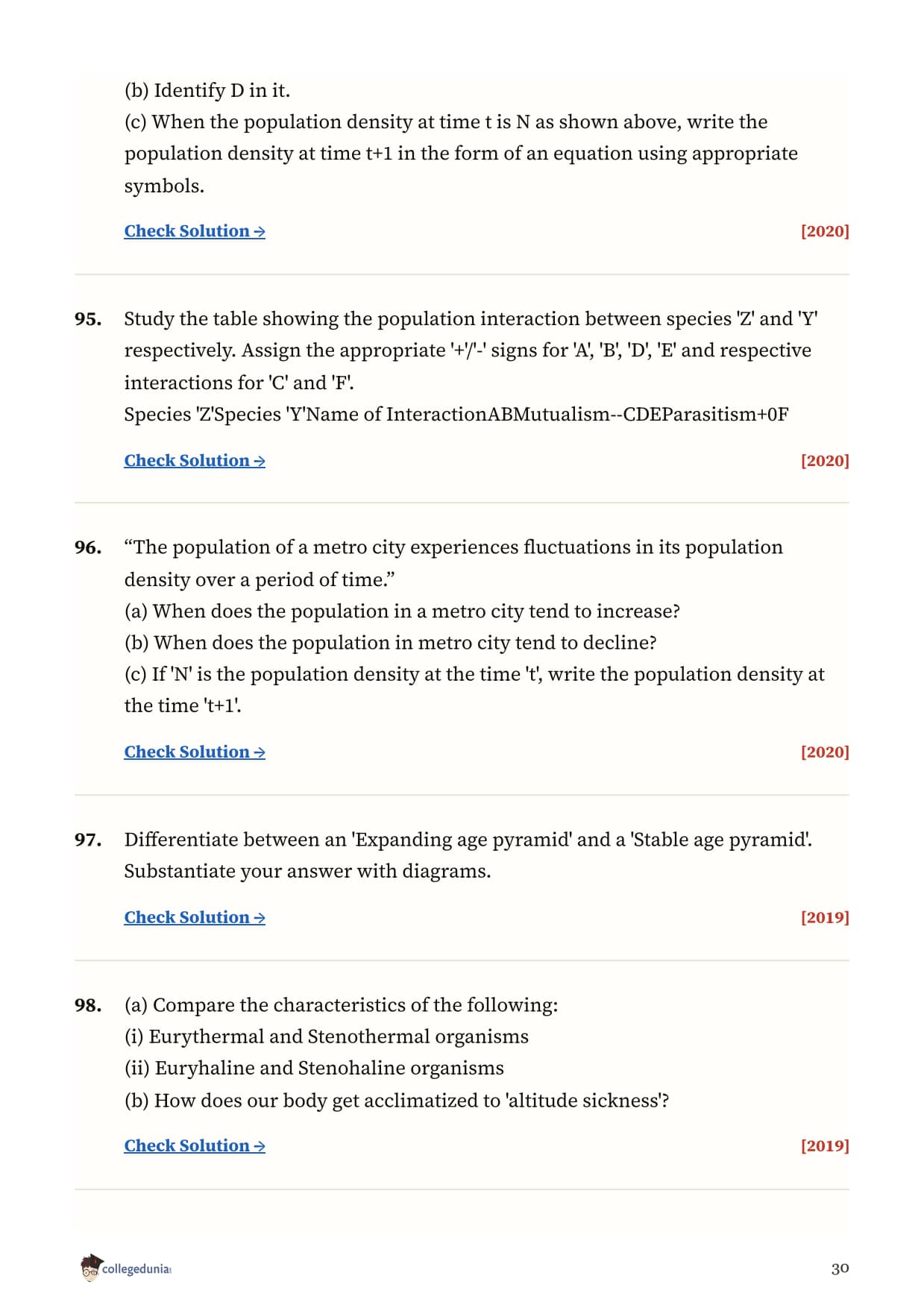
- 1-mark MCQs: Spend no more than 45 seconds each. Many test a single interaction sign or a population attribute, so revise the plus-minus interaction table first.
- 2-mark questions: Two examples or one adaptation with a reason. Aim for 3 minutes each.
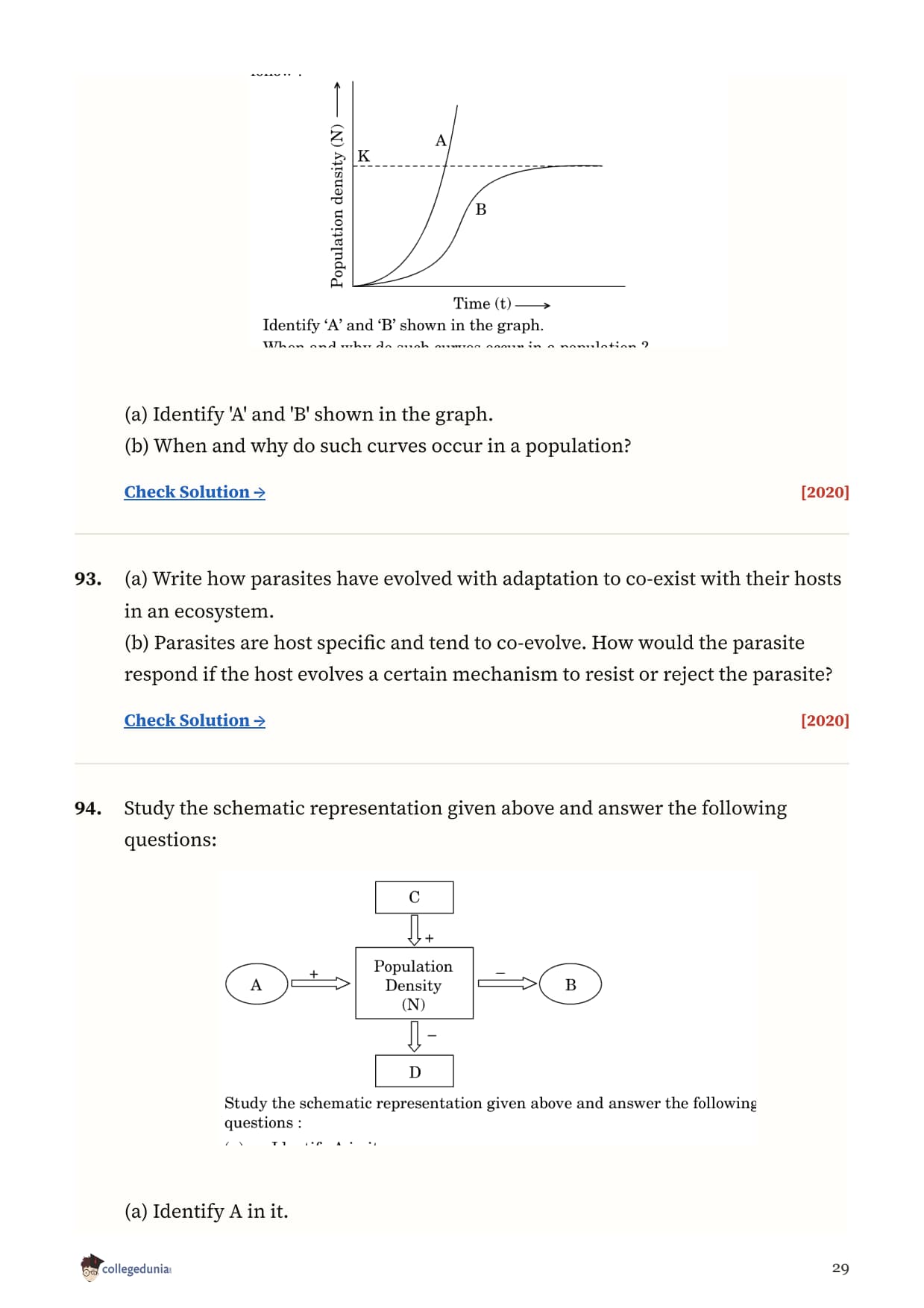
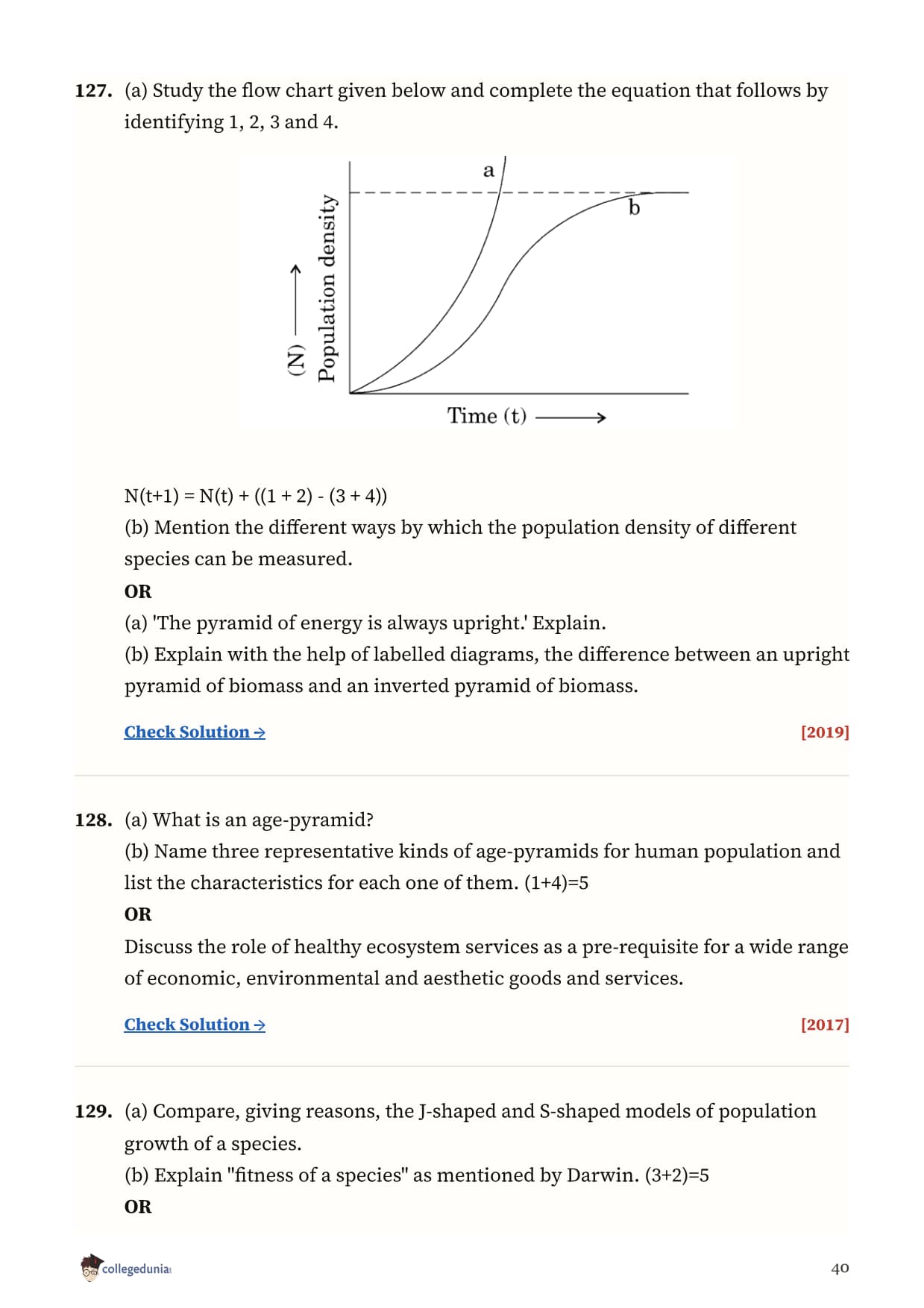
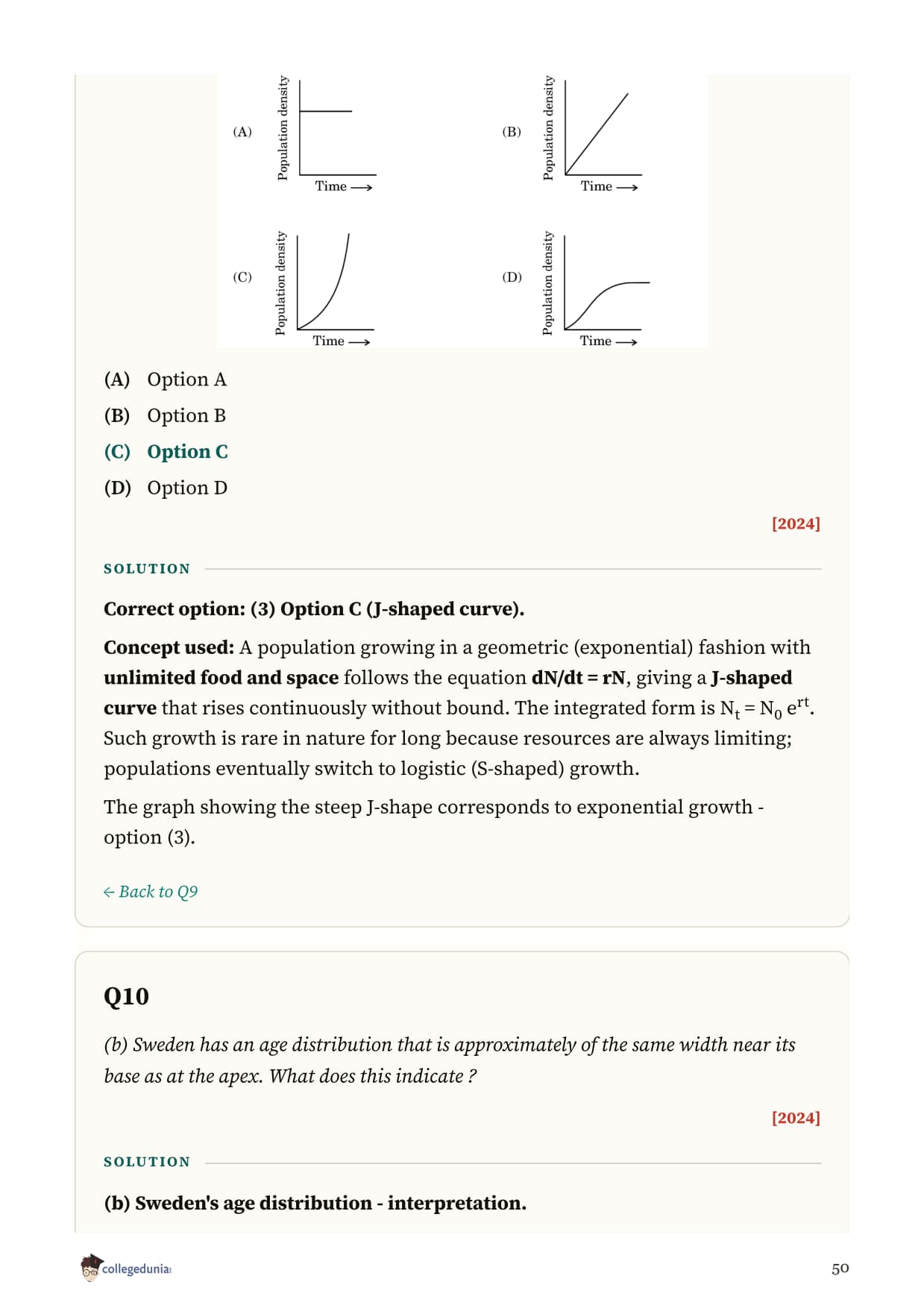
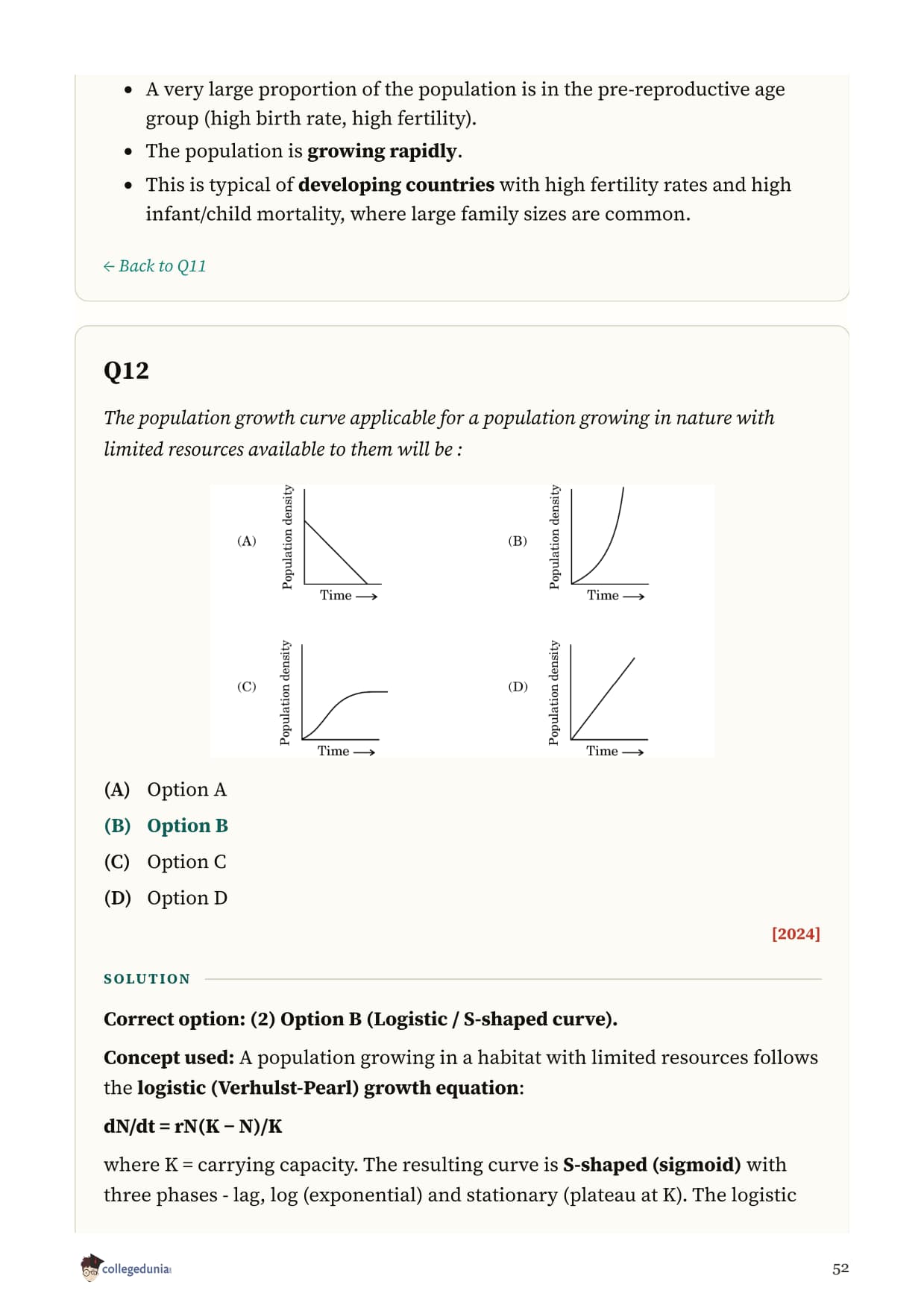
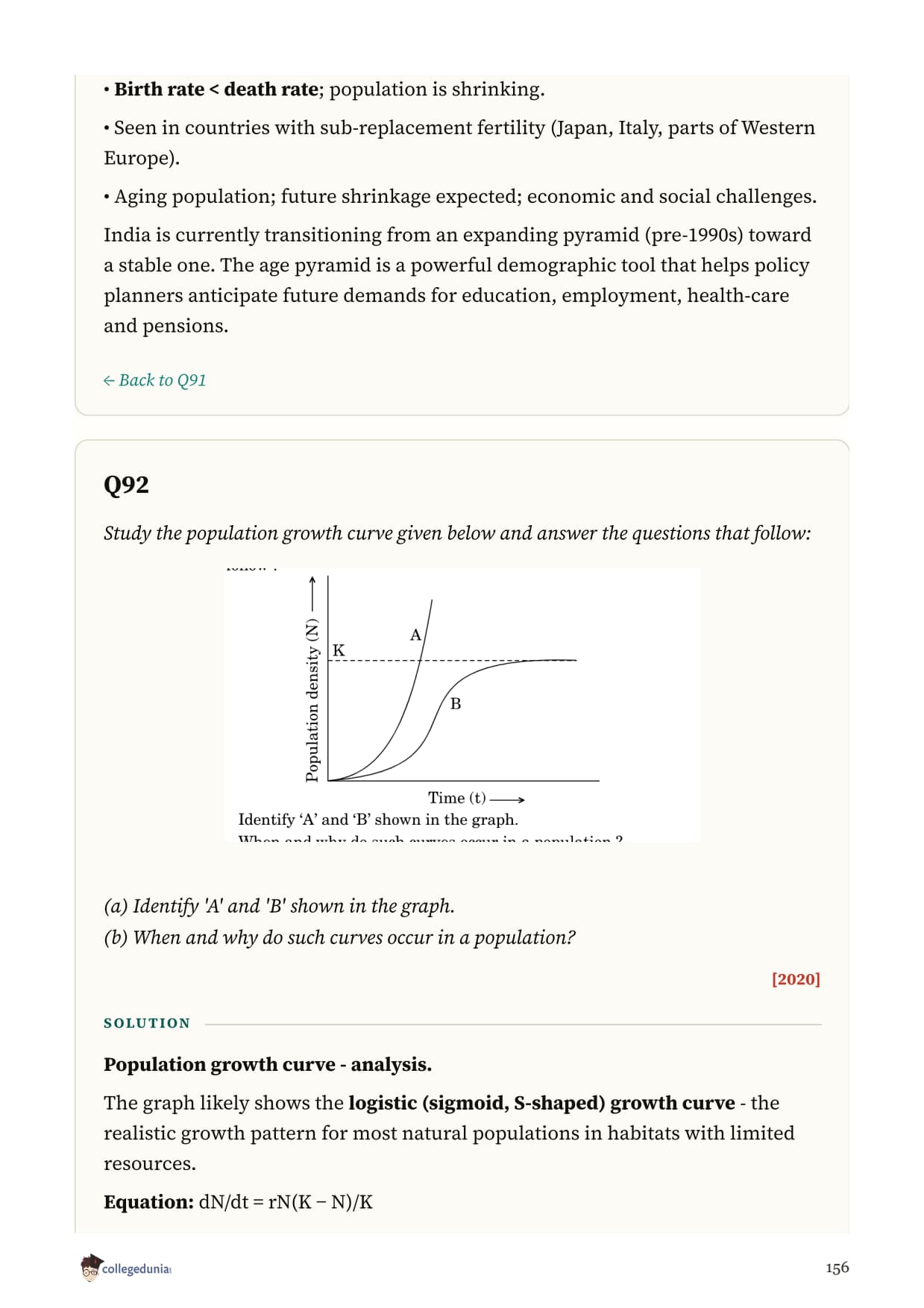
- 3-mark questions: Usually a growth curve or an interaction comparison. Draw and label the J-shaped and S-shaped curves before explaining, as a labelled graph scores fast.
- 4 and 5-mark questions: The logistic equation or a case-based passage on adaptations. Allocate 12 to 15 minutes and define every term.
Recent CBSE Trend: 2024 to 2026 Pattern Shift in Organisms and Populations
Three things have changed in the recent CBSE cycles that the Organisms and Populations previous year questions now reflect:
- Section A carries a fixed objective block, including assertion-reason items like the 2026 reproductive-strategy question. The set has 33 such 1-mark questions.
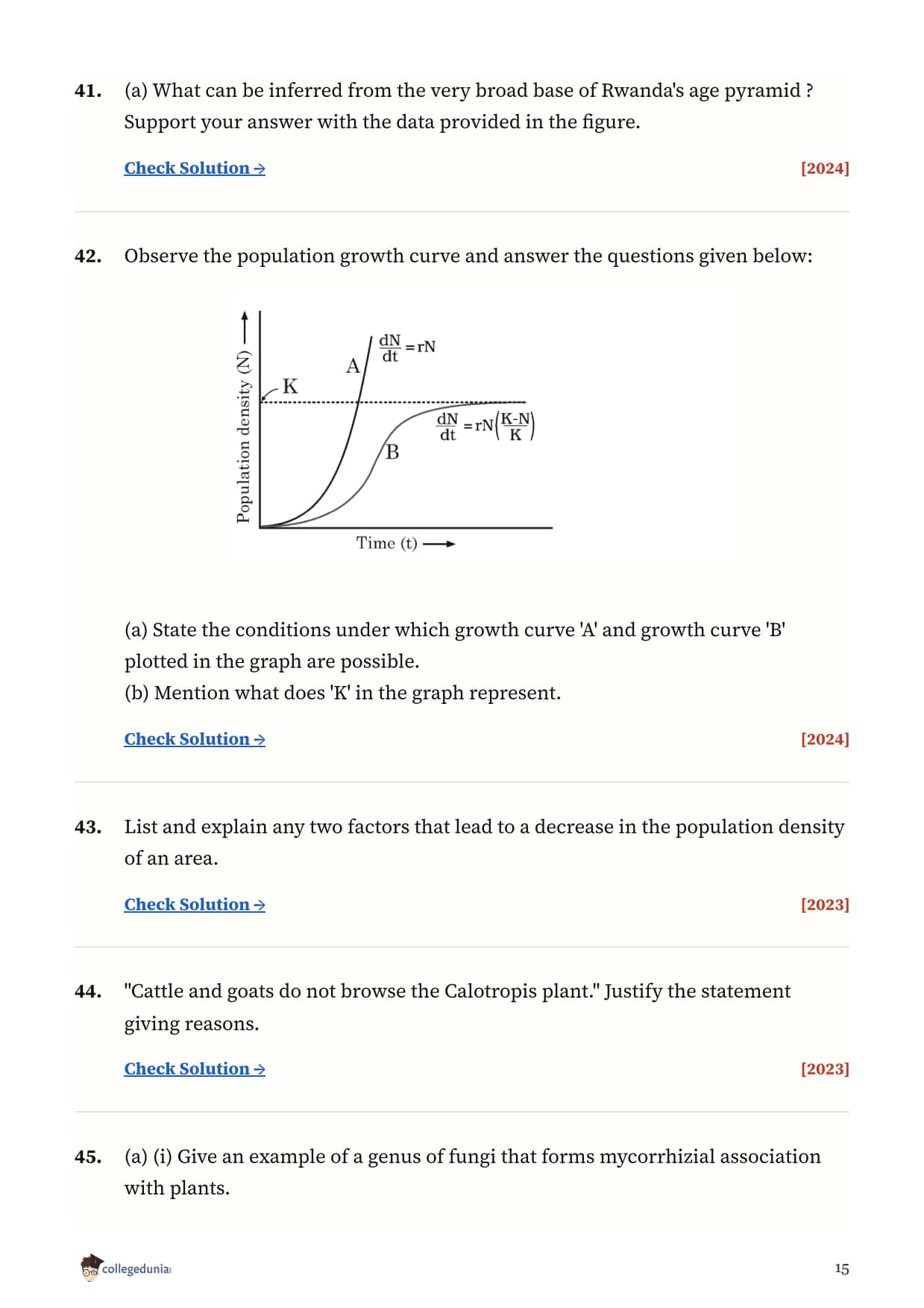
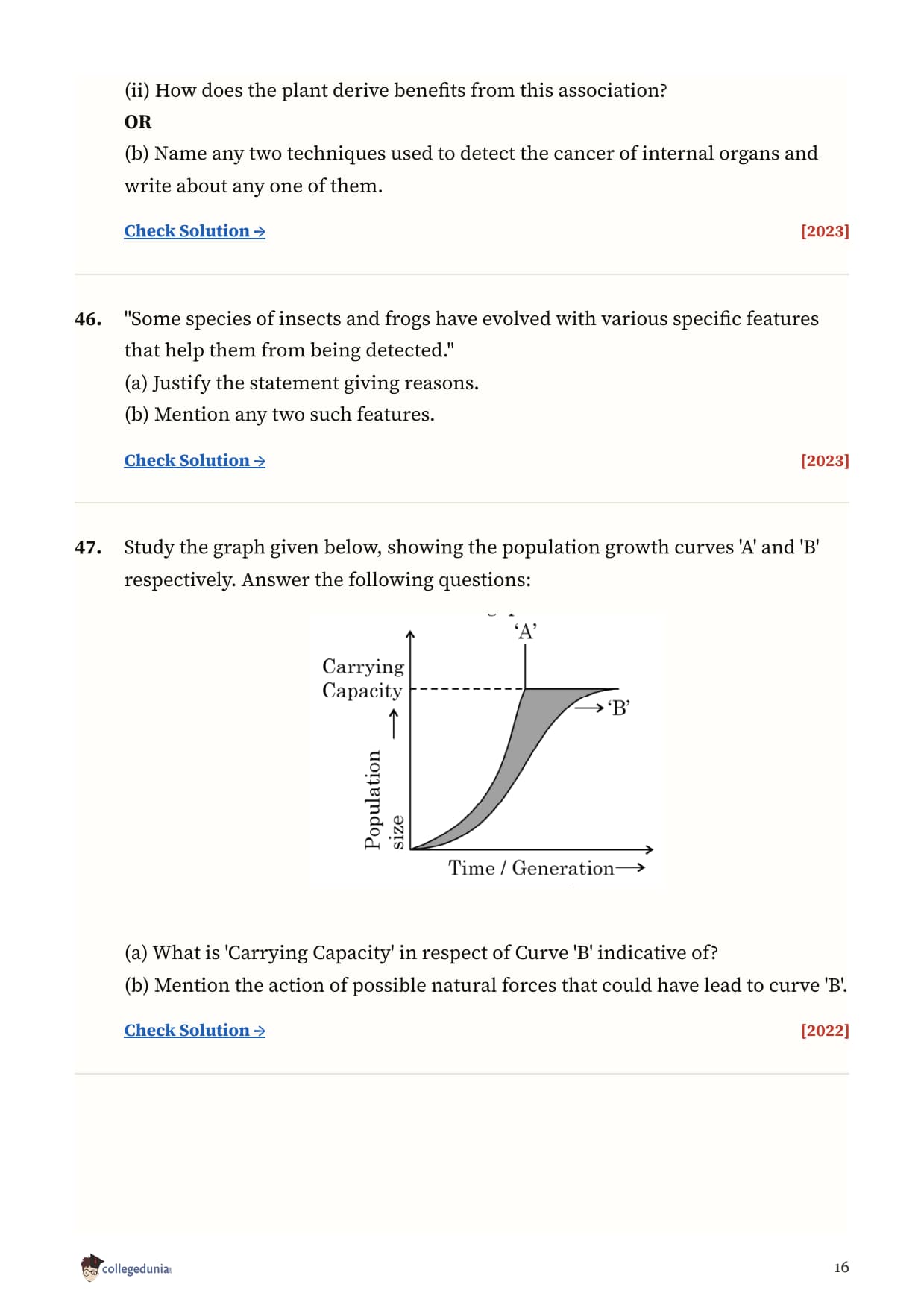
- Graph-based questions, such as identifying the logistic curve and its carrying capacity, now appear in the 3-mark band and reward a labelled diagram.
- Case-based 4-mark questions on adaptations or interactions have entered the paper, so the PDF keeps full passages with their sub-parts.
Sample Previous Year Questions from Organisms and Populations
Here are a few real previous year questions from the Organisms and Populations board papers, taken straight from the compilation. The full set is in the downloadable PDF.
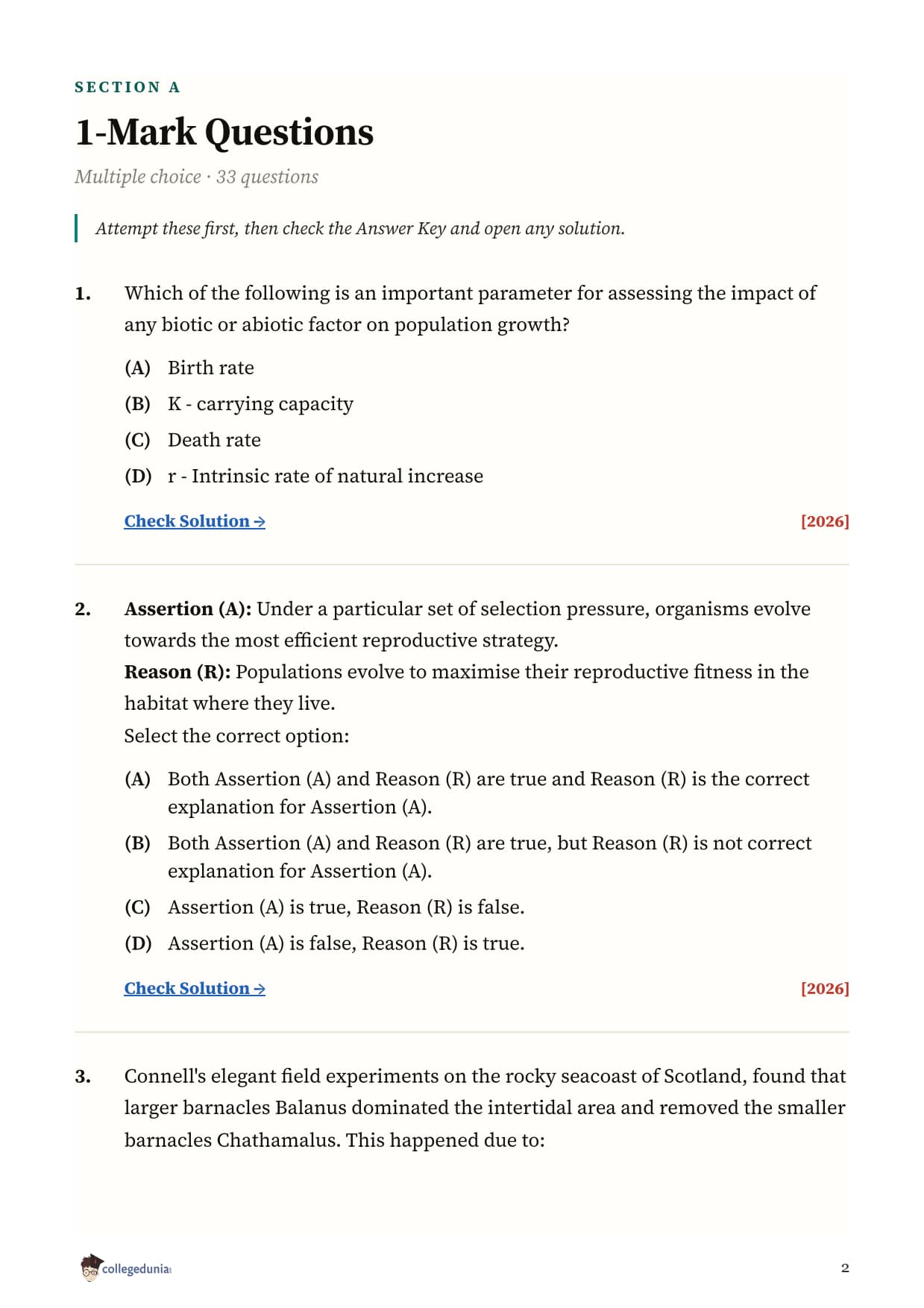
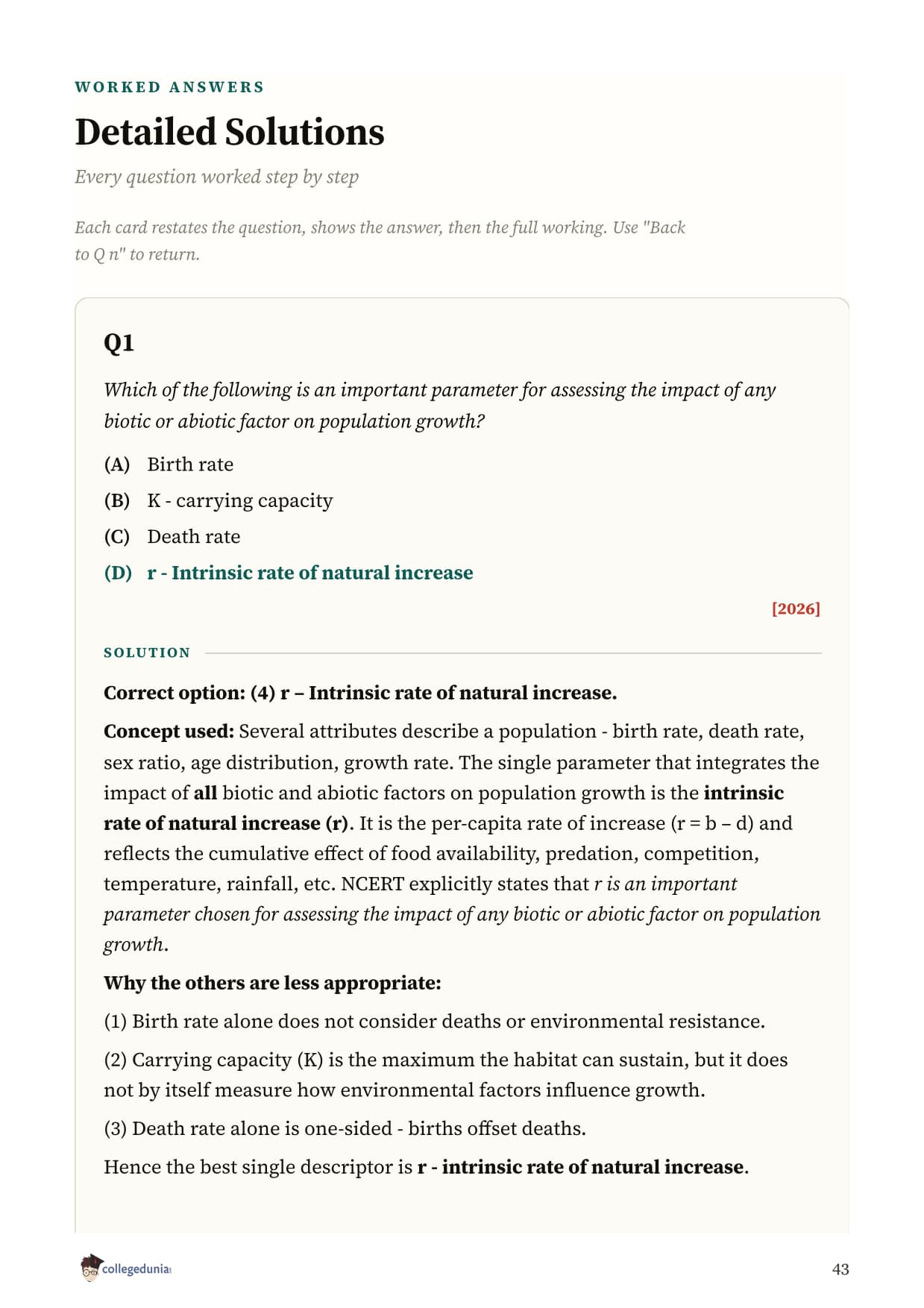
Which of the following is an important parameter for assessing the impact of any biotic or abiotic factor on population growth?
- Birth rate
- K - carrying capacity
- Death rate
- r - Intrinsic rate of natural increase
[2026 • 1 mark]
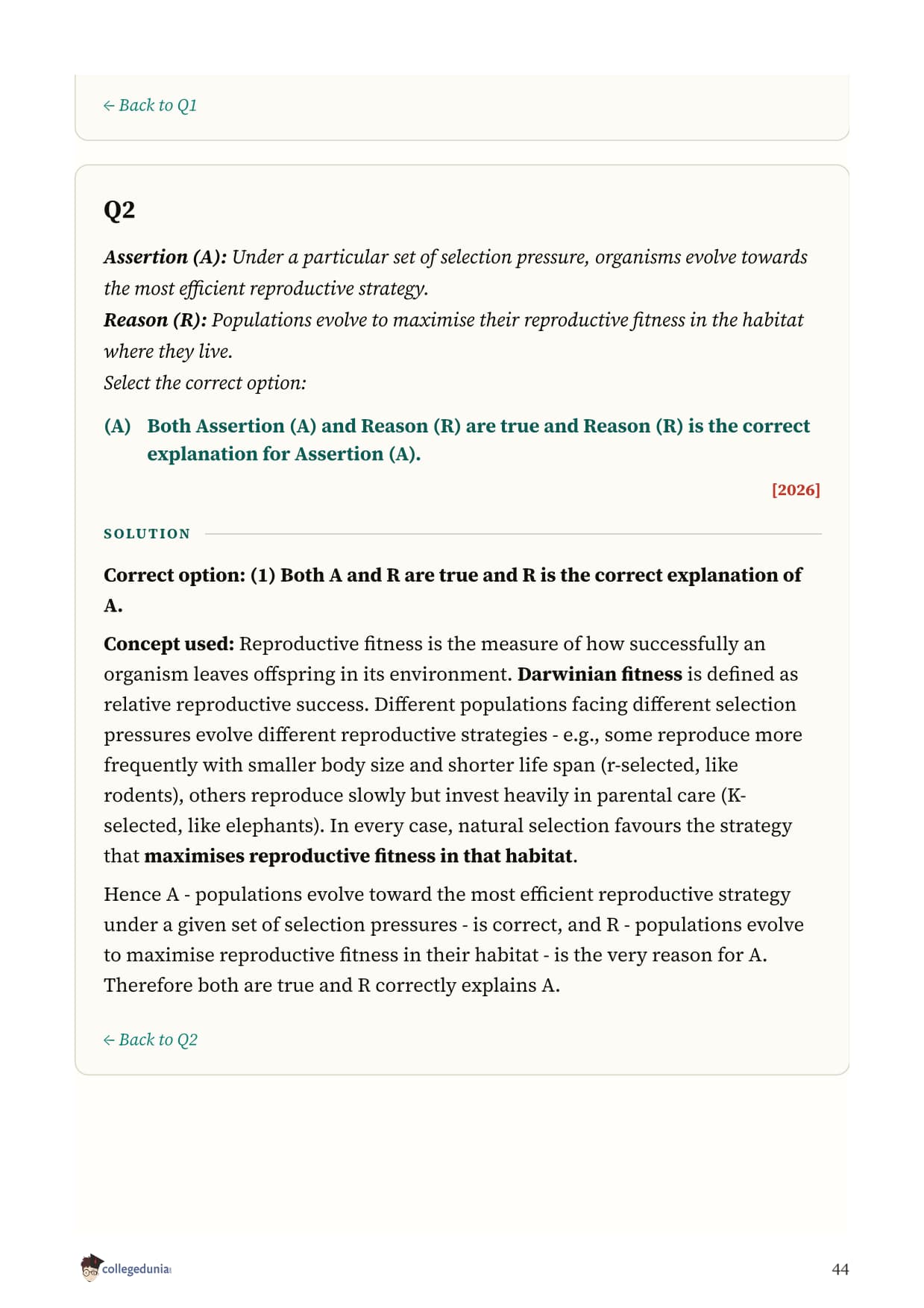
Assertion (A): Under a particular set of selection pressure, organisms evolve towards the most efficient reproductive strategy. Reason (R): Populations evolve to maximise their reproductive fitness in the habitat where they live. Select the correct option:
- Both Assertion (A) and Reason (R) are true and Reason (R) is the correct explanation for Assertion (A).
- Both Assertion (A) and Reason (R) are true, but Reason (R) is not correct explanation for Assertion (A).
- Assertion (A) is true, Reason (R) is false.
- Assertion (A) is false, Reason (R) is true.
[2026 • 1 mark]
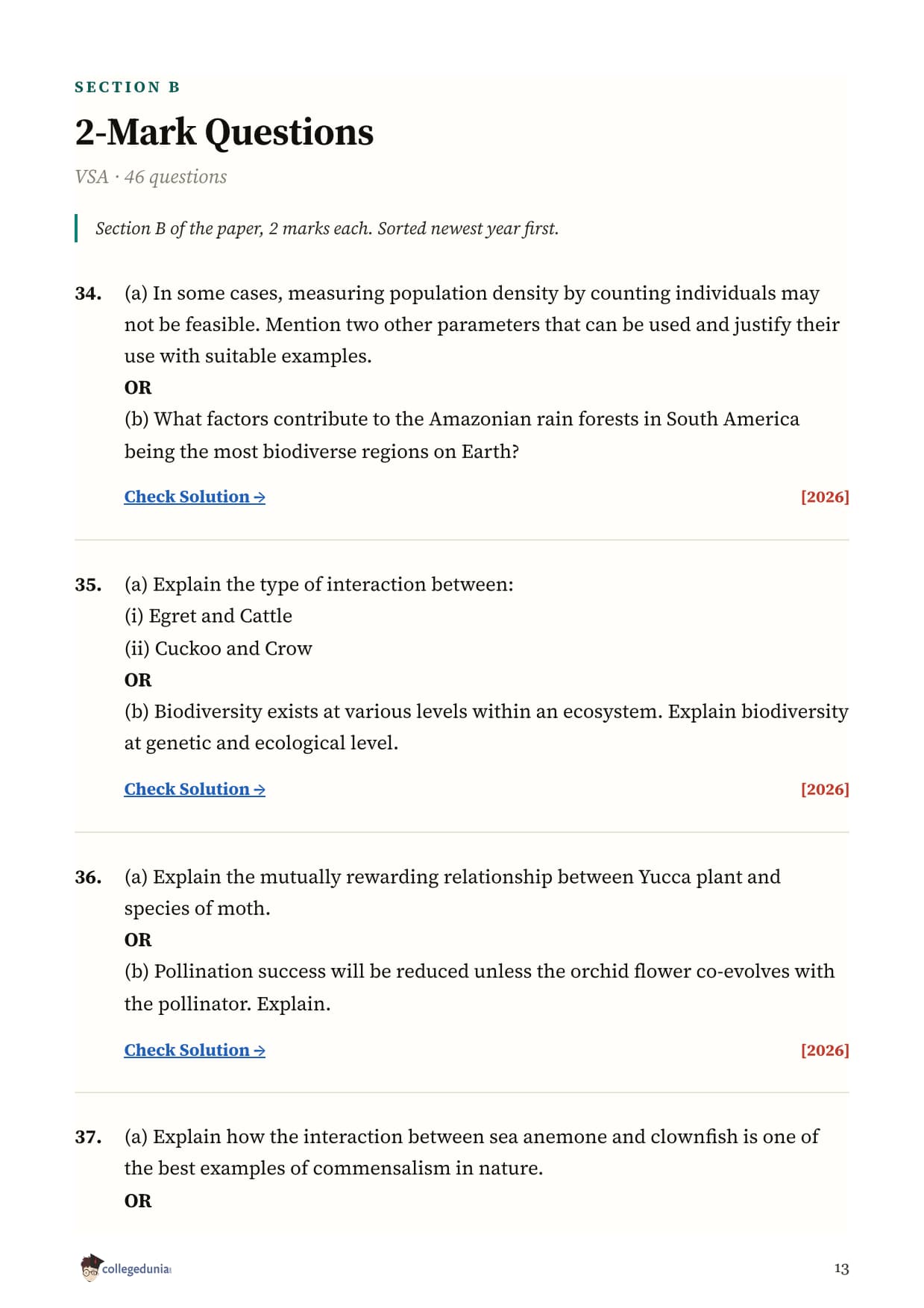
(a) Explain the type of interaction between: (i) Egret and Cattle (ii) Cuckoo and Crow OR (b) Biodiversity exists at various levels within an ecosystem. Explain biodiversity at genetic and ecological level.
[2026 • 2 mark]
Common Mistakes in the Organisms and Populations Board Questions
- Writing the wrong sign for an interaction, for example calling commensalism a plus-plus relationship instead of plus-zero.
- Mixing up the exponential and logistic curves, or forgetting to mark the carrying capacity K on the graph.
- Confusing conformers and regulators when explaining how each handles a changing environment.
- Giving a wrong example, such as naming the wrong partner pair in a mutualism like the sea anemone and hermit crab.
- Writing the population growth equation without defining the intrinsic rate of natural increase, r.
Student Feedback on Organisms and Populations PYQ Practice
- 66 per cent said the population growth equations were the hardest part of the 3 and 5-mark bands.
- 55 per cent reported gaining 3 to 5 marks after solving every growth-curve and interaction PYQ in this PDF.
- 40 per cent said an adaptation or interspecific interaction question matched their actual 2026 paper.
- Average time to finish all 131 PYQs: about 10 hours across 6 study sessions.
How These PYQs Pair with the Other Organisms and Populations Resources
Solving previous year questions alone gives you only half the prep. Pair the PYQ PDF with the matching concept, formula and solution resources for Organisms and Populations.
| Resource | What It Gives You | Open |
|---|---|---|
| NCERT Solutions | Step-by-step worked answers to every NCERT back-exercise question of Organisms and Populations | NCERT Solutions for Organisms and Populations |
| Notes | Concept revision notes covering every topic in the Organisms and Populations chapter | Organisms and Populations Class 12 Notes |
| Formula Sheet | All key formulas and results of Organisms and Populations on one page for last-day revision | Organisms and Populations Formula Sheet |
| Handwritten Notes | Scanned handwritten notes of Organisms and Populations for quick one-shot revision | Organisms and Populations Handwritten Notes |
| Exemplar Solutions | NCERT Exemplar problems of Organisms and Populations solved in full for extra practice | NCERT Exemplar Solutions for Organisms and Populations |
| NCERT Book | Official NCERT Organisms and Populations chapter PDF for free download | Organisms and Populations NCERT Book PDF |
| Exemplar Book | NCERT Exemplar Organisms and Populations problem book PDF for free download | Organisms and Populations Exemplar Book PDF |
How to Use the Organisms and Populations PYQ PDF Most Effectively
The 131 questions are sequenced for a three-pass revision plan:
- Pass 1 (Day 1 to 2): Attempt all 33 one-mark MCQs and build a flashcard for every interaction type and population attribute you miss.
- Pass 2 (Day 3 to 5): Solve the 46 two-mark and 40 three-mark questions, timing 3 minutes per 2-mark and 5 minutes per 3-mark.
- Pass 3 (Day 6 to 10): Work through the 4 four-mark case-based and 8 five-mark questions, drawing the growth curves and defining every term.
All Class 12 Biology Chapter PYQ PDFs
Every Class 12 Biology chapter has its own PYQ compilation built the same way, sorted by marks and tagged by year.
| Chapter | Topic | Previous Year Questions |
|---|---|---|
| Chapter 1 | Sexual Reproduction in Flowering Plants | PYQ PDF |
| Chapter 2 | Human Reproduction | PYQ PDF |
| Chapter 3 | Reproductive Health | PYQ PDF |
| Chapter 4 | Principles of Inheritance and Variation | PYQ PDF |
| Chapter 5 | Molecular Basis of Inheritance | PYQ PDF |
| Chapter 6 | Evolution | PYQ PDF |
| Chapter 7 | Human Health and Disease | PYQ PDF |
| Chapter 8 | Microbes in Human Welfare | PYQ PDF |
| Chapter 9 | Biotechnology: Principles and Processes | PYQ PDF |
| Chapter 10 | Biotechnology and its Applications | PYQ PDF |
| Chapter 11 | Organisms and Populations | PYQ PDF |
| Chapter 12 | Ecosystem | PYQ PDF |
| Chapter 13 | Biodiversity and Conservation | PYQ PDF |
Also Check: NCERT Solutions for Class 12 Biology
Class 12 Biology Organisms and Populations PYQ FAQs
Ques. How many previous year questions are in the Class 12 Biology Organisms and Populations PYQ PDF?
Ans. The PDF has 131 previous year questions from CBSE board papers between 2004 and 2026, sorted by marks and then by year, latest first. Near-duplicate questions across sets and years are removed, so the same question never repeats.
Ques. Are the Organisms and Populations PYQs based on the 2026-27 CBSE syllabus?
Ans. Yes. Every question follows the 2026-27 CBSE Class 12 Biology syllabus. Older questions are kept because the core ideas, such as growth curves, adaptations and interactions, are unchanged in the current syllabus.
Ques. Which topics of Organisms and Populations appear most often in CBSE board papers?
Ans. From the 131-question set: population growth curves (about 23 per cent), interspecific interactions (about 20 per cent), adaptations to abiotic factors (about 18 per cent), conformers and regulators (about 15 per cent), and population attributes.
Ques. How is this PYQ PDF different from a CBSE sample paper?
Ans. A sample paper gives you one paper. This PDF stitches together more than 20 years of questions across every set and region (Delhi, Outside Delhi, Foreign and Compartment) for Organisms and Populations alone, so you see which models and examples CBSE repeats.
Ques. Does the Organisms and Populations PYQ PDF include MCQs?
Ans. Yes. 33 of the 131 questions are 1-mark questions, mostly MCQ and assertion-reason from 2023 onwards, when CBSE expanded the Section A objective block.
Ques. Where can I download the Organisms and Populations Class 12 PYQ PDF for free?
Ans. The full Organisms and Populations PYQ PDF is free to download from the PDF button at the top of this page. No sign-up is needed.
Ques. How should I use these PYQs to revise Organisms and Populations in the last 10 days?
Ans. Use the three-pass plan: Day 1 to 2 attempt all 33 MCQs, Day 3 to 5 solve the 2 and 3-mark questions, Day 6 to 10 attempt the case-based and 5-mark questions. Always draw and label the growth curves.
Ques. Does the PDF give answers or only the questions?
Ans. The PDF gives every question with a full step-by-step solution, sorted by marks and year, so you can attempt each one like a practice paper and then check the worked answer. For full answers, open the NCERT Solutions page for Organisms and Populations or check the official CBSE marking scheme.
Ques. Are population growth curves important for the CBSE Organisms and Populations questions?
Ans. Yes. Population growth curves make up close to a quarter of the set, and CBSE often sets the J-shaped and S-shaped curves with carrying capacity as a 3 or 5-mark question. A clean labelled graph is the fastest way to score this band.
Ques. What is carrying capacity?
Ans. Carrying capacity, written as K, is the largest population size that a habitat can support with its available resources. In the logistic growth curve the population grows fast at first, then slows and levels off at K.
Ques. How is an ecological niche defined?
Ans. An ecological niche is the full role and position of a species in its habitat, including the resources it uses and the conditions it tolerates. No two species can occupy the exact same niche for long because of competition.
Ques. What is mutualism?
Ans. Mutualism is an interspecific interaction where both species benefit, a plus-plus relationship. Classic CBSE examples include the fig and its pollinator wasp, lichens (fungus and alga), and mycorrhiza between fungi and plant roots.



Comments