




The Class 12 Biology Biotechnology and its Applications PYQ set covers every question type CBSE uses for this chapter, from one-line MCQs on transgenic animals to full 5-mark answers on gene therapy.
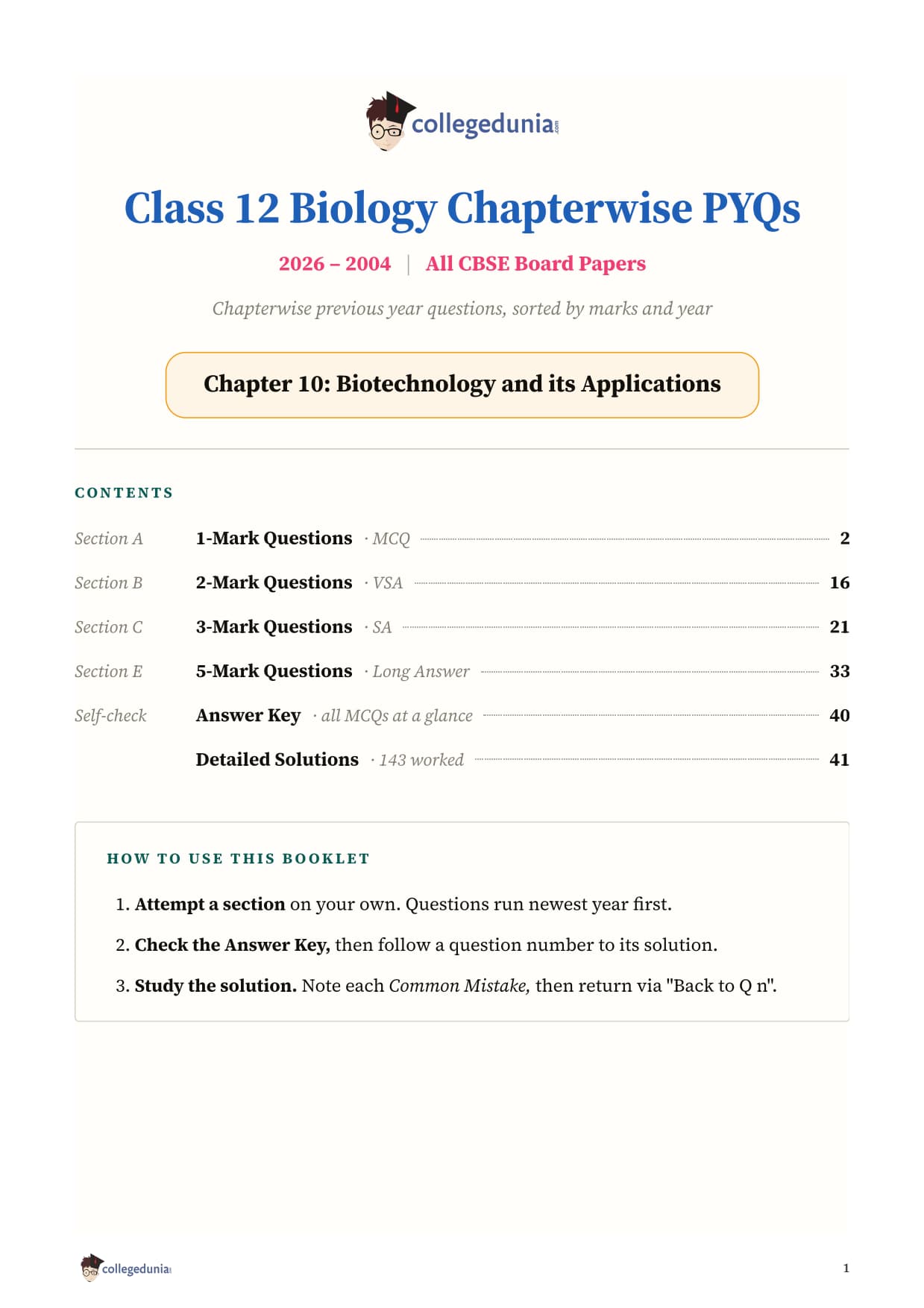
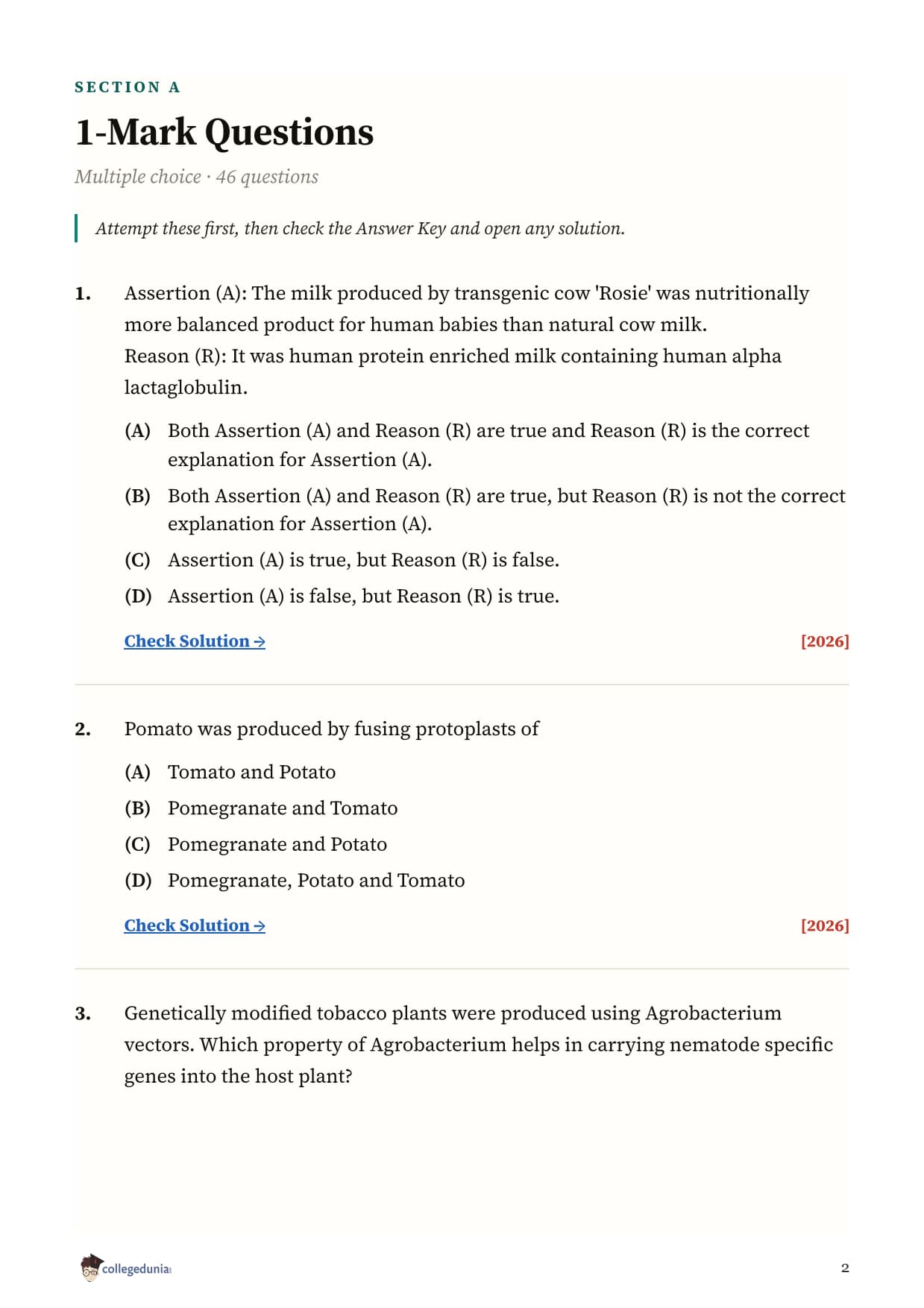
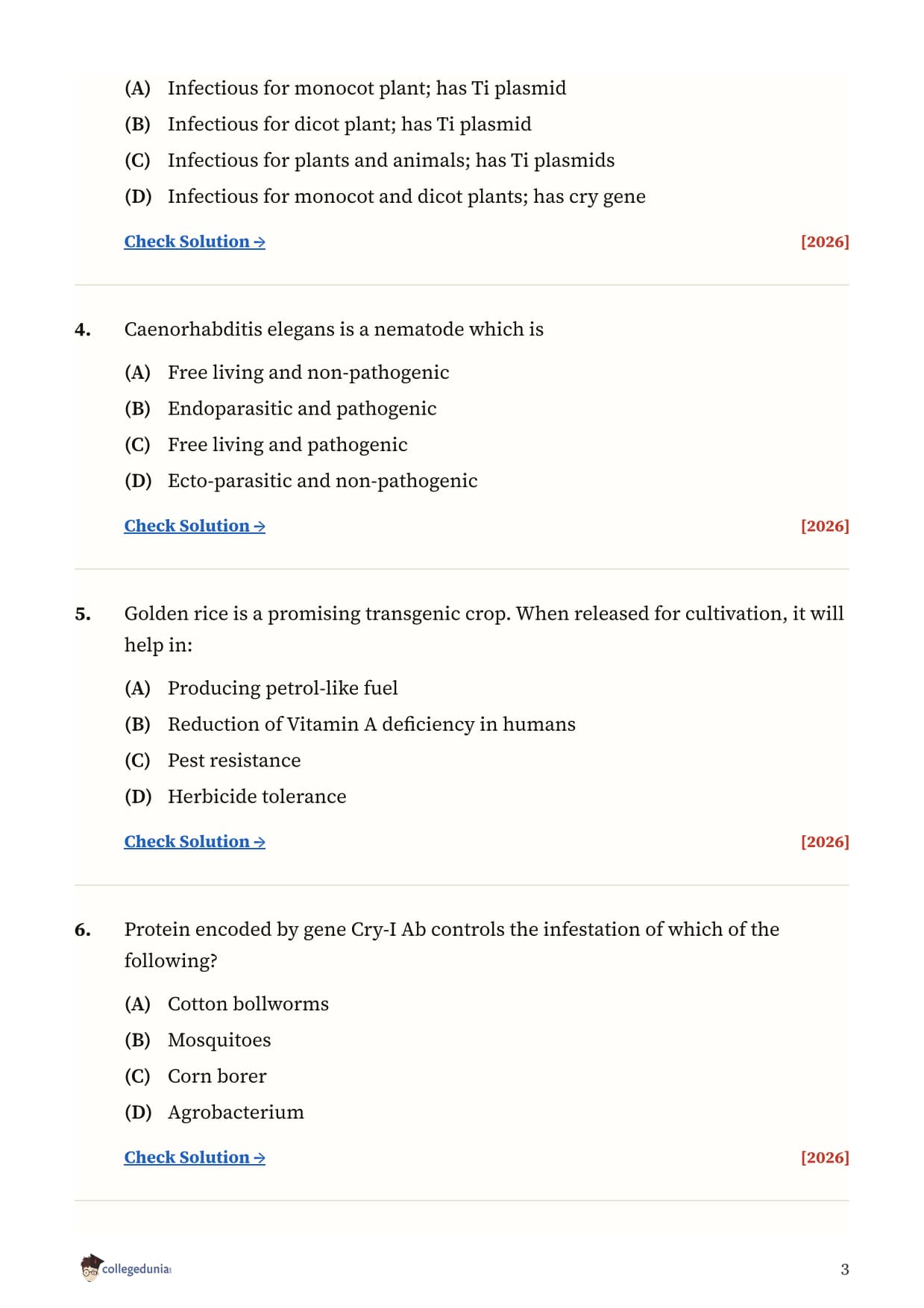
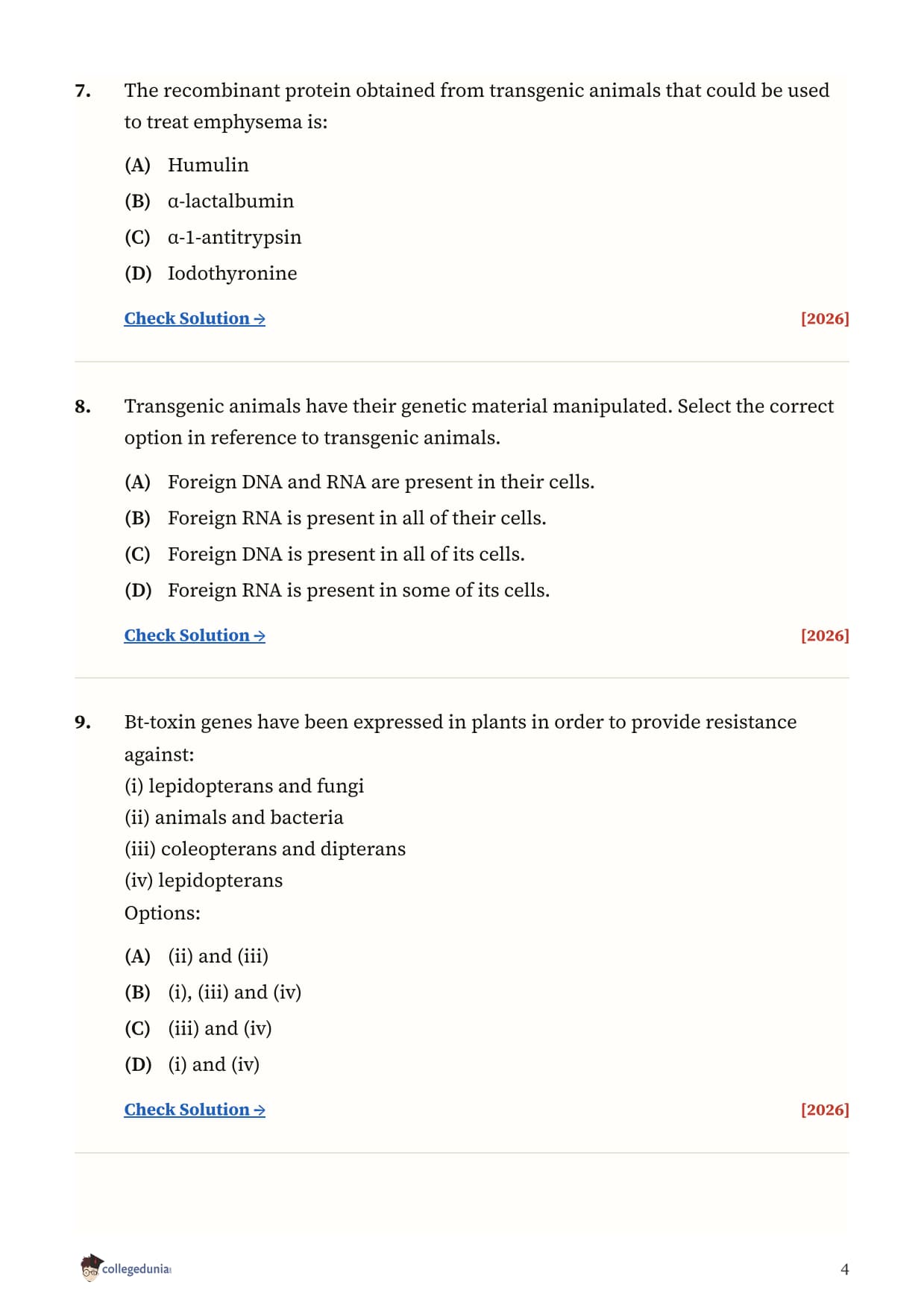
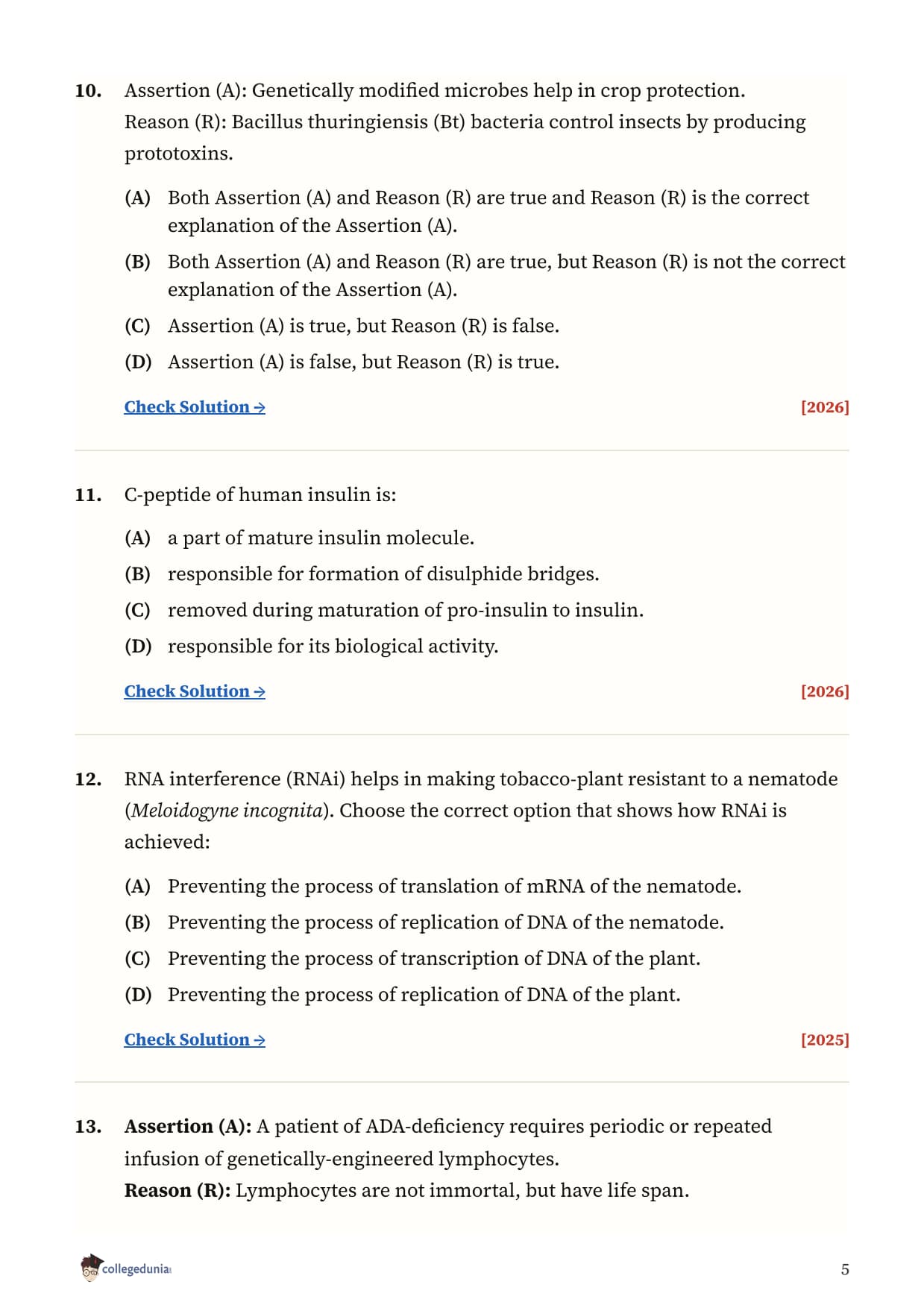
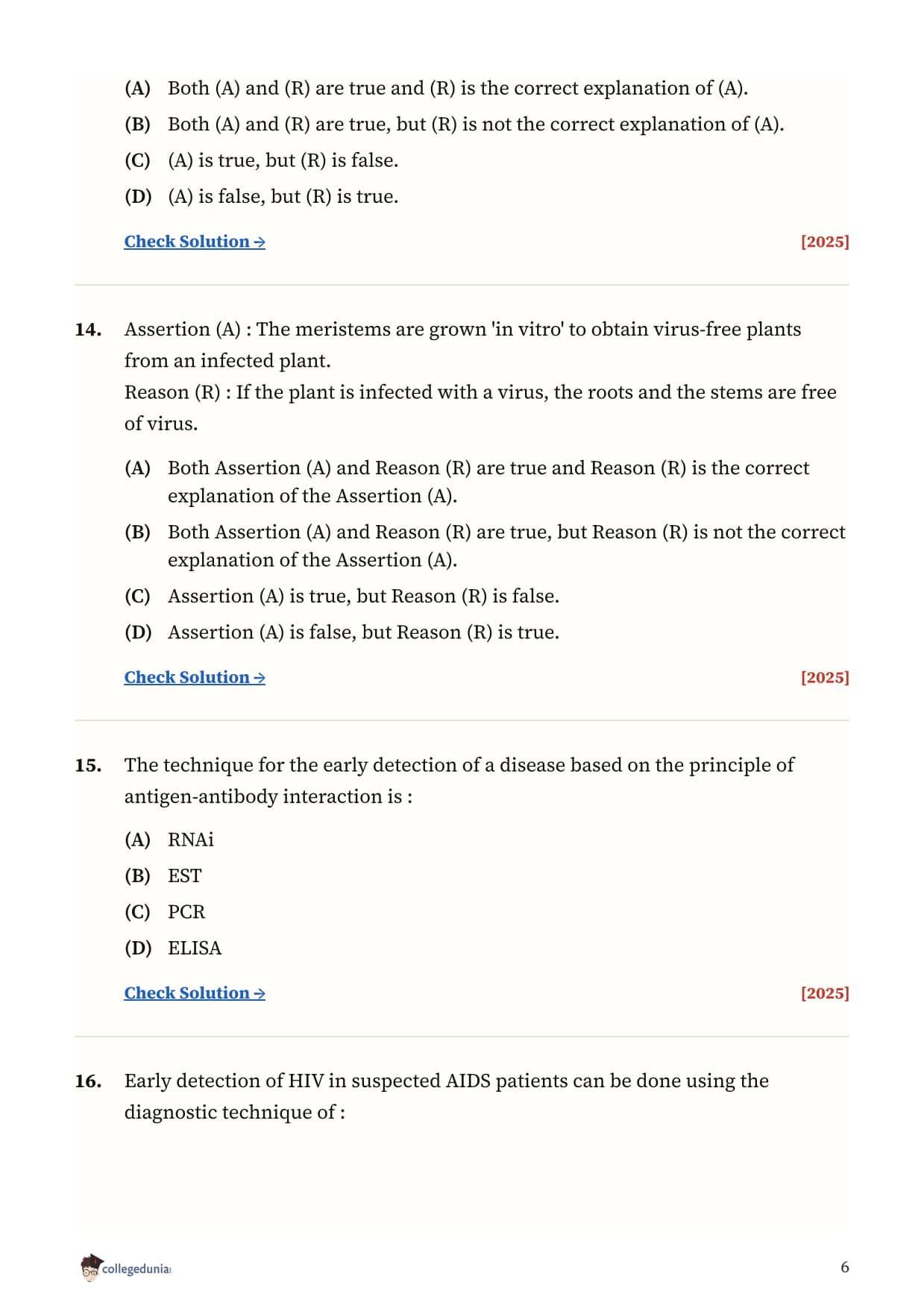
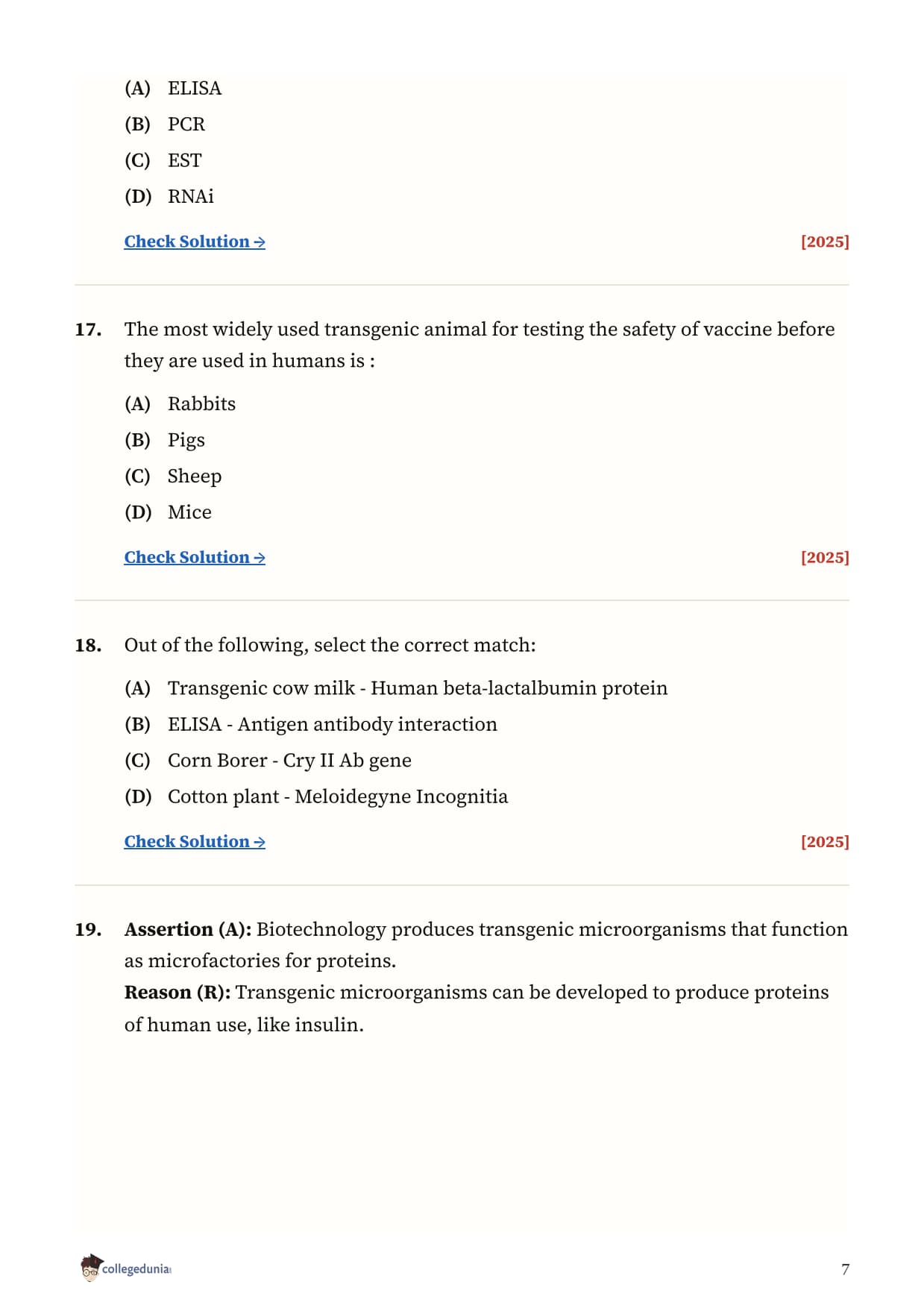
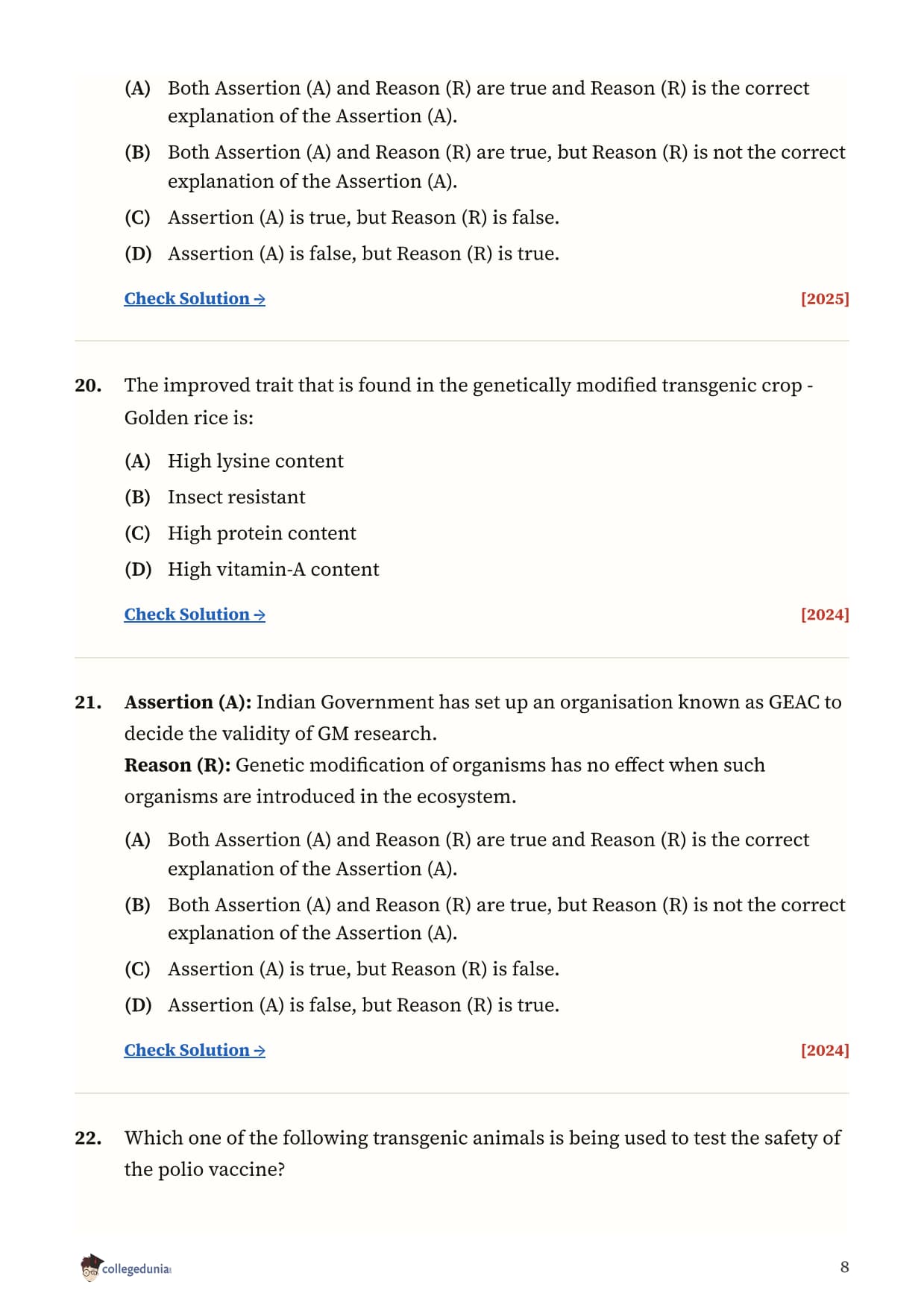
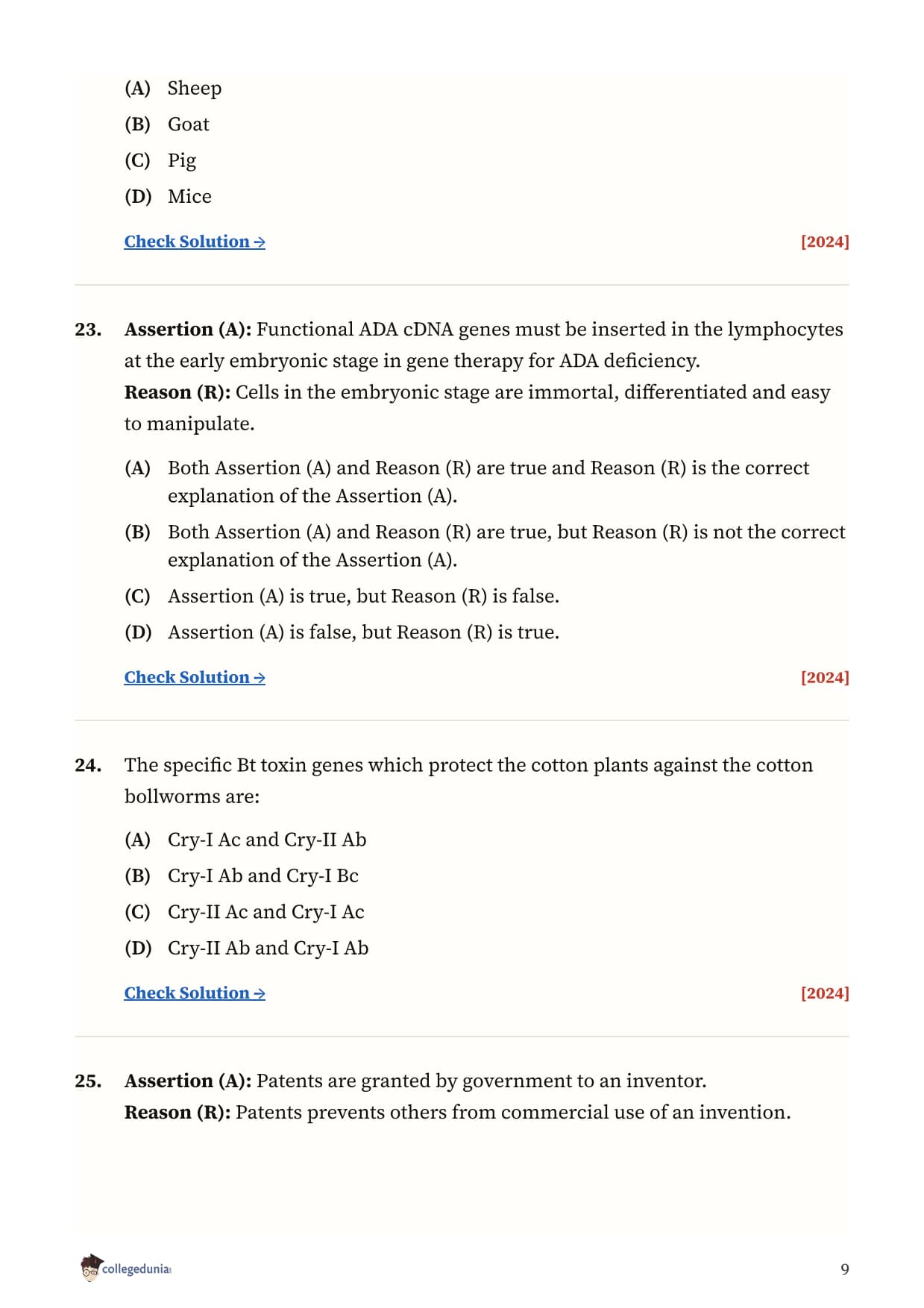
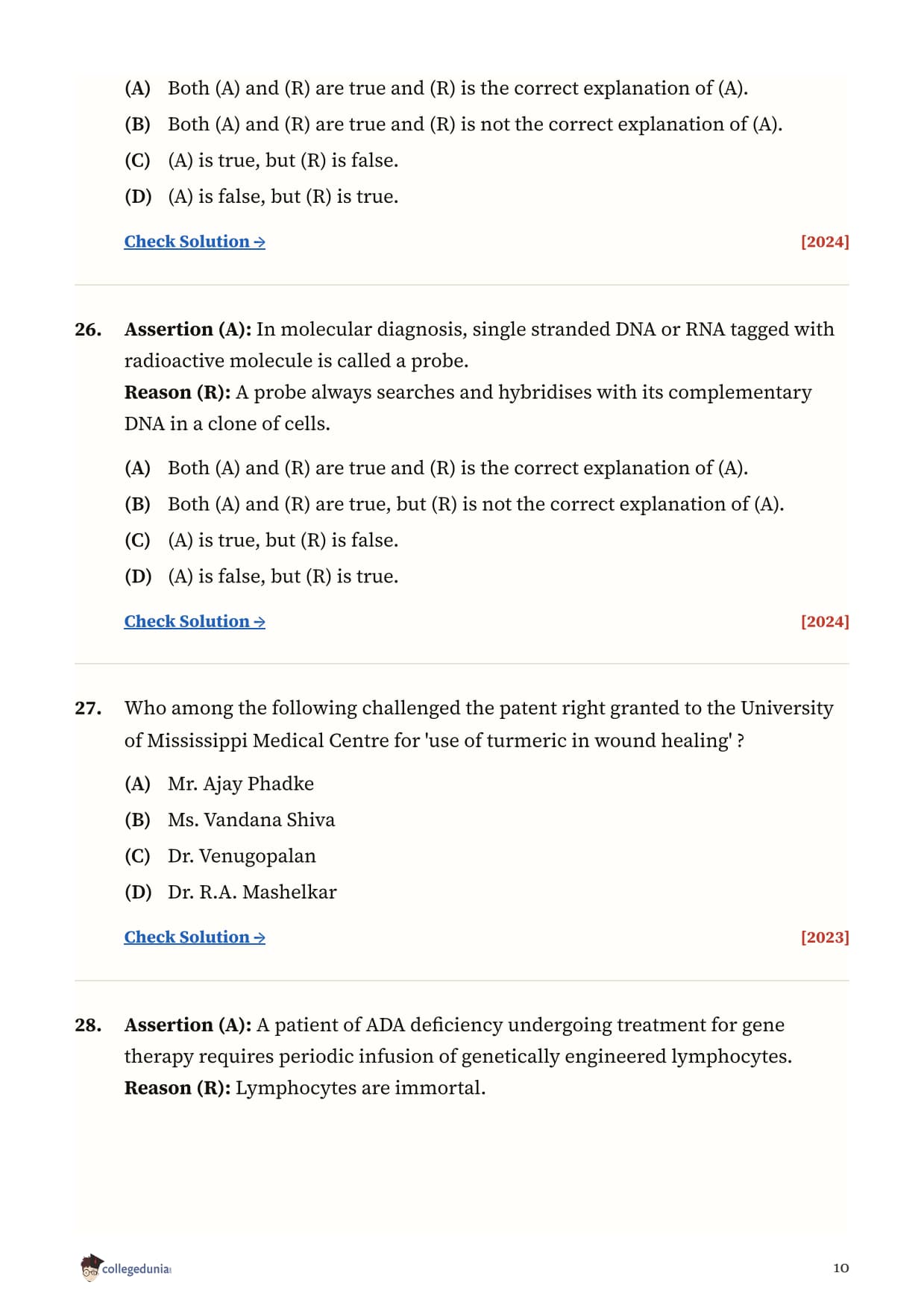
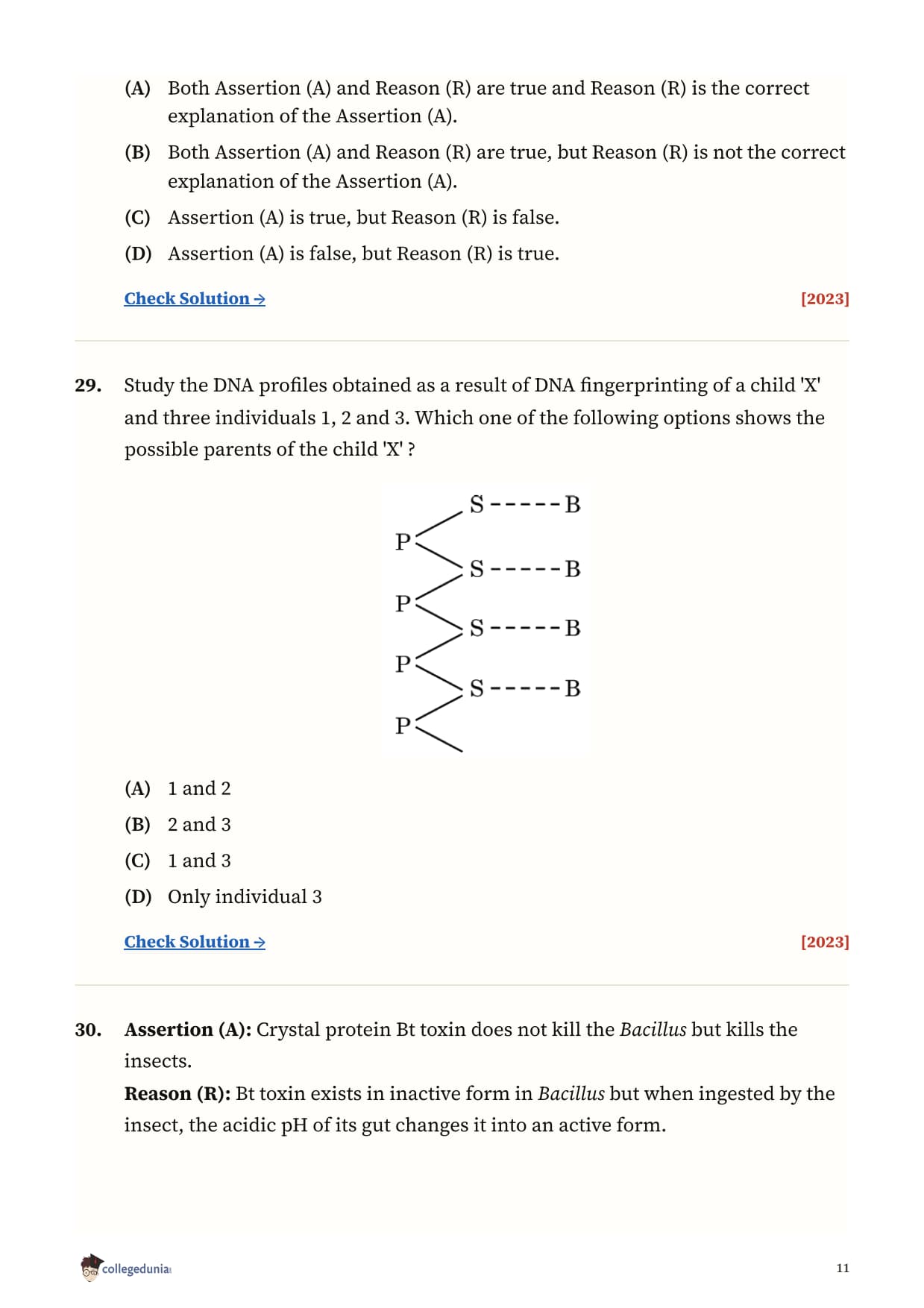
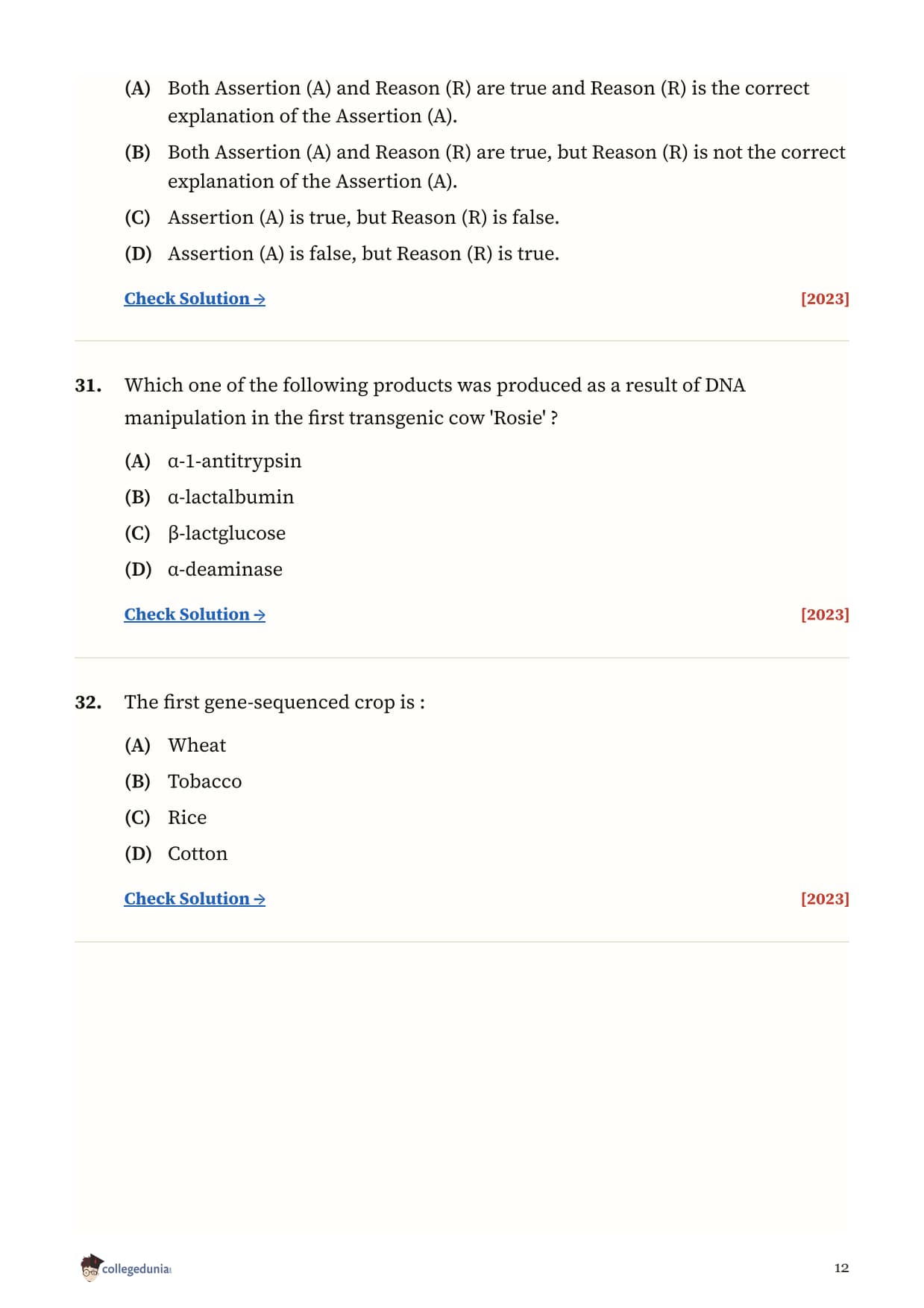
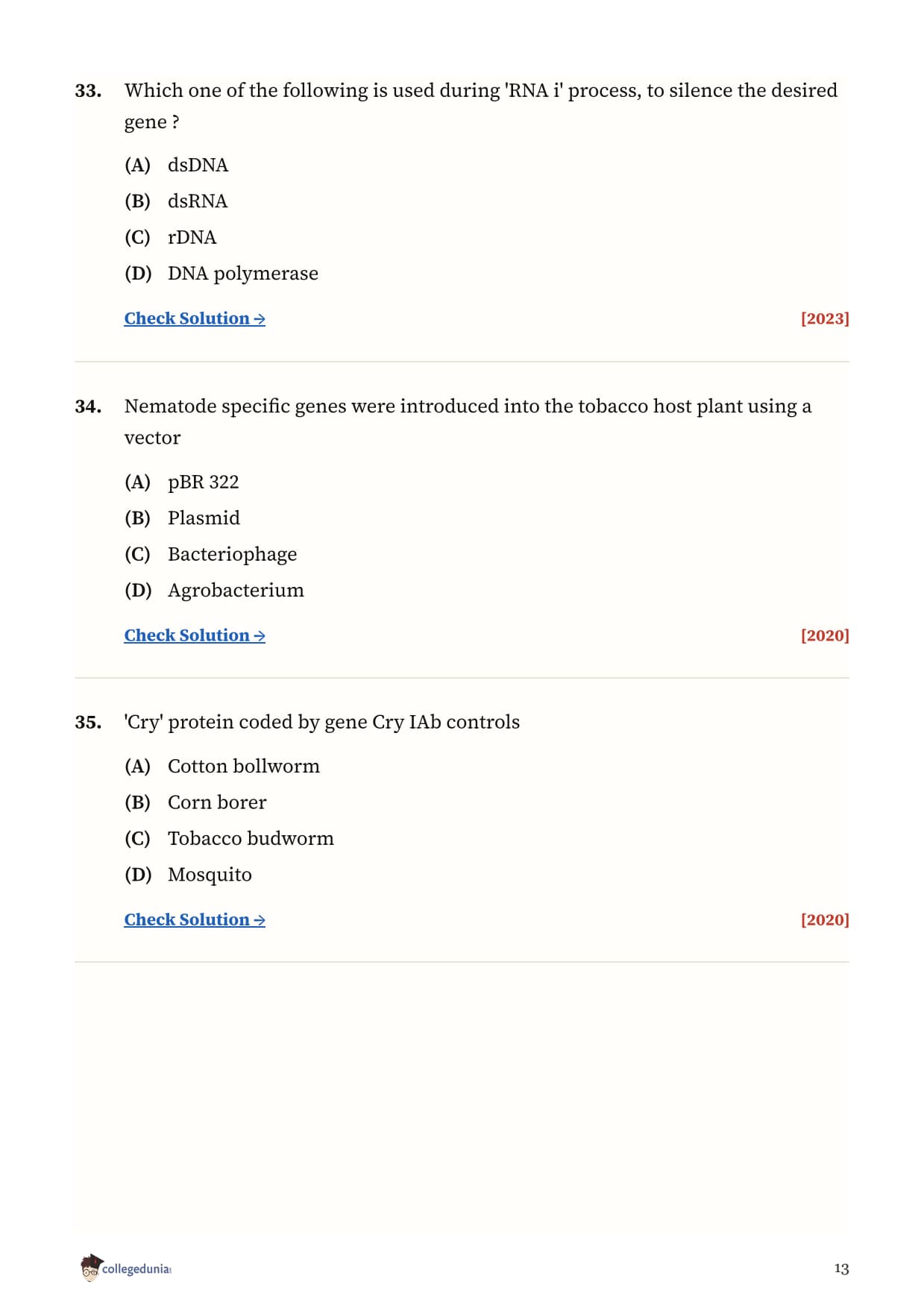
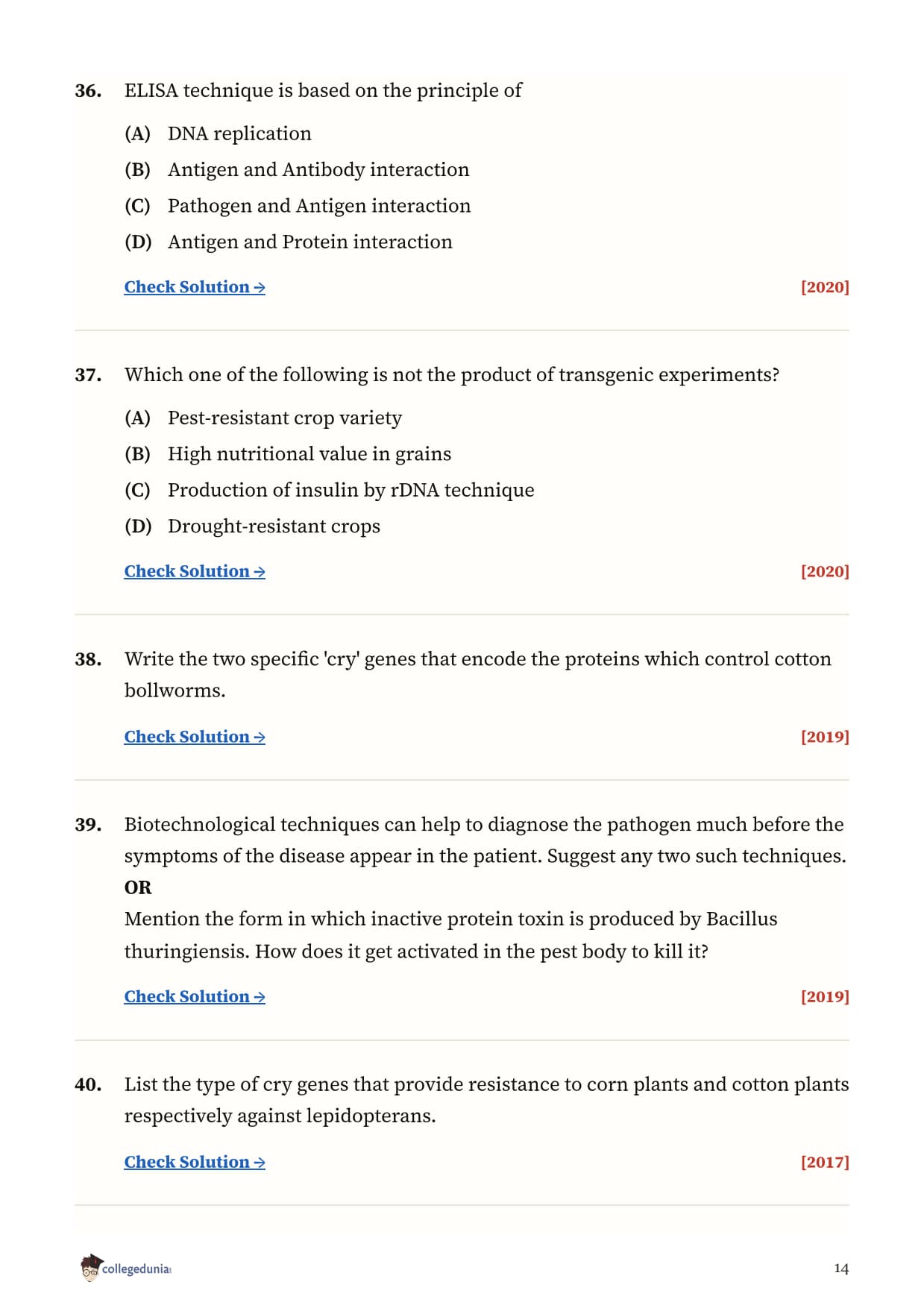
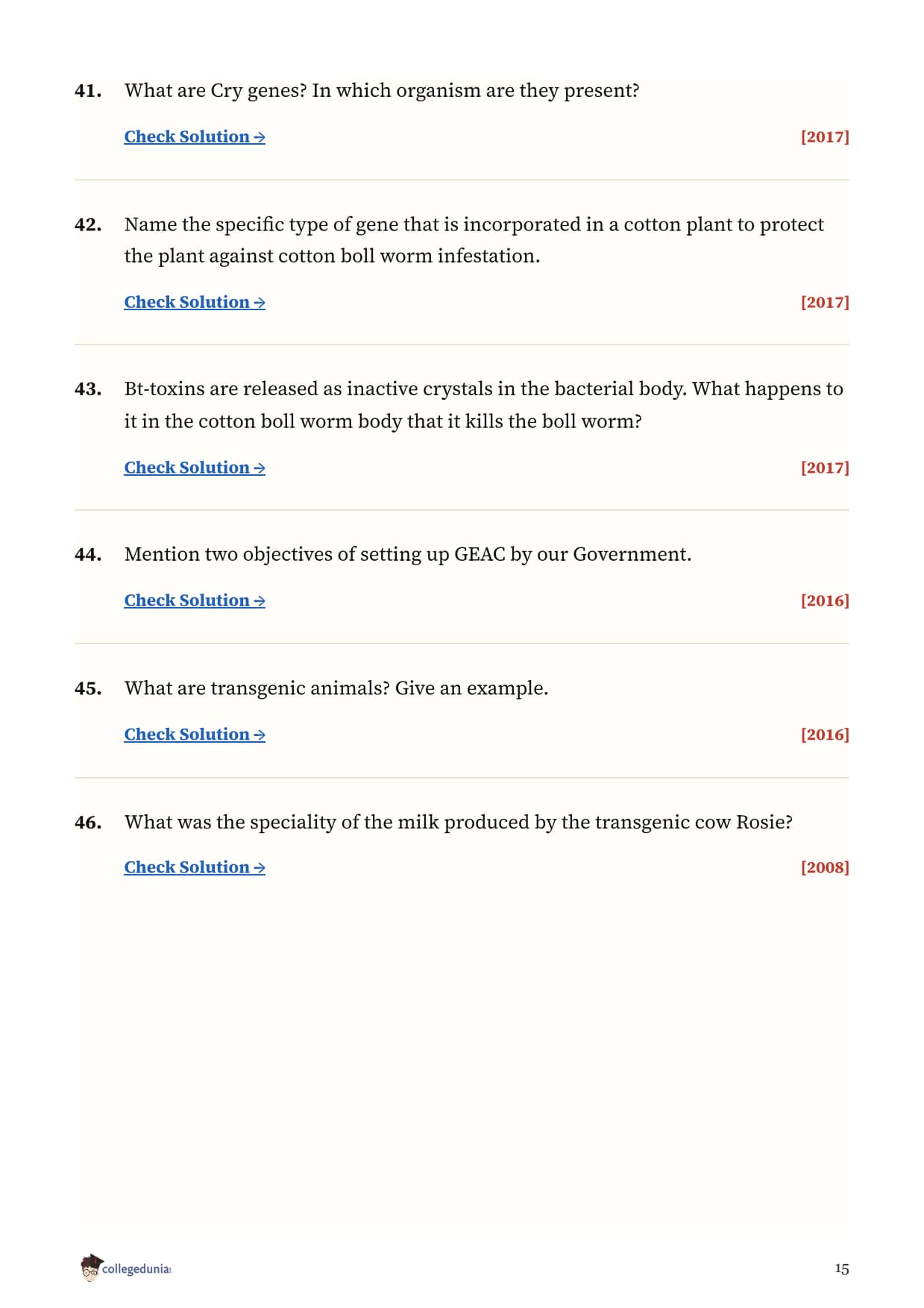
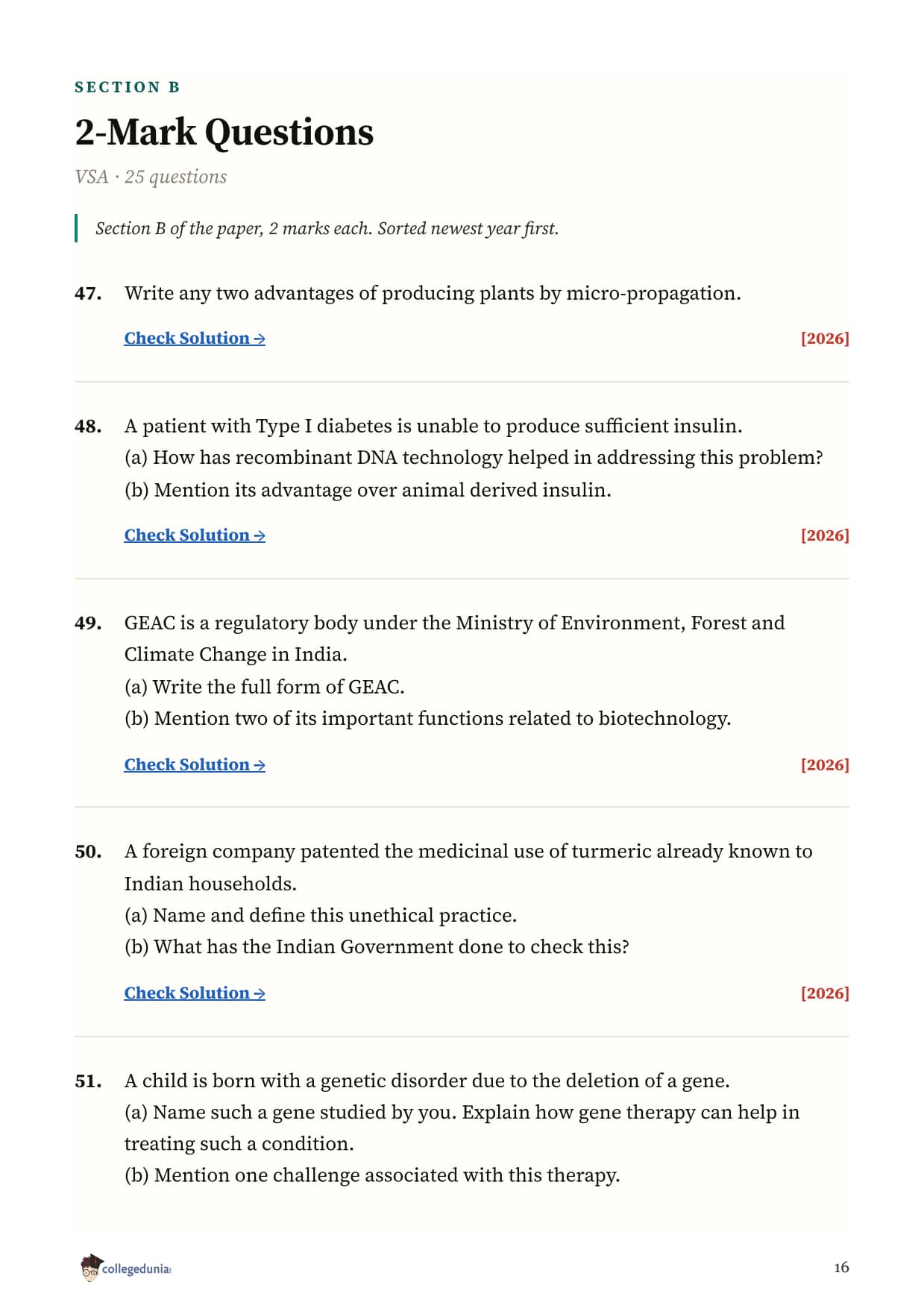
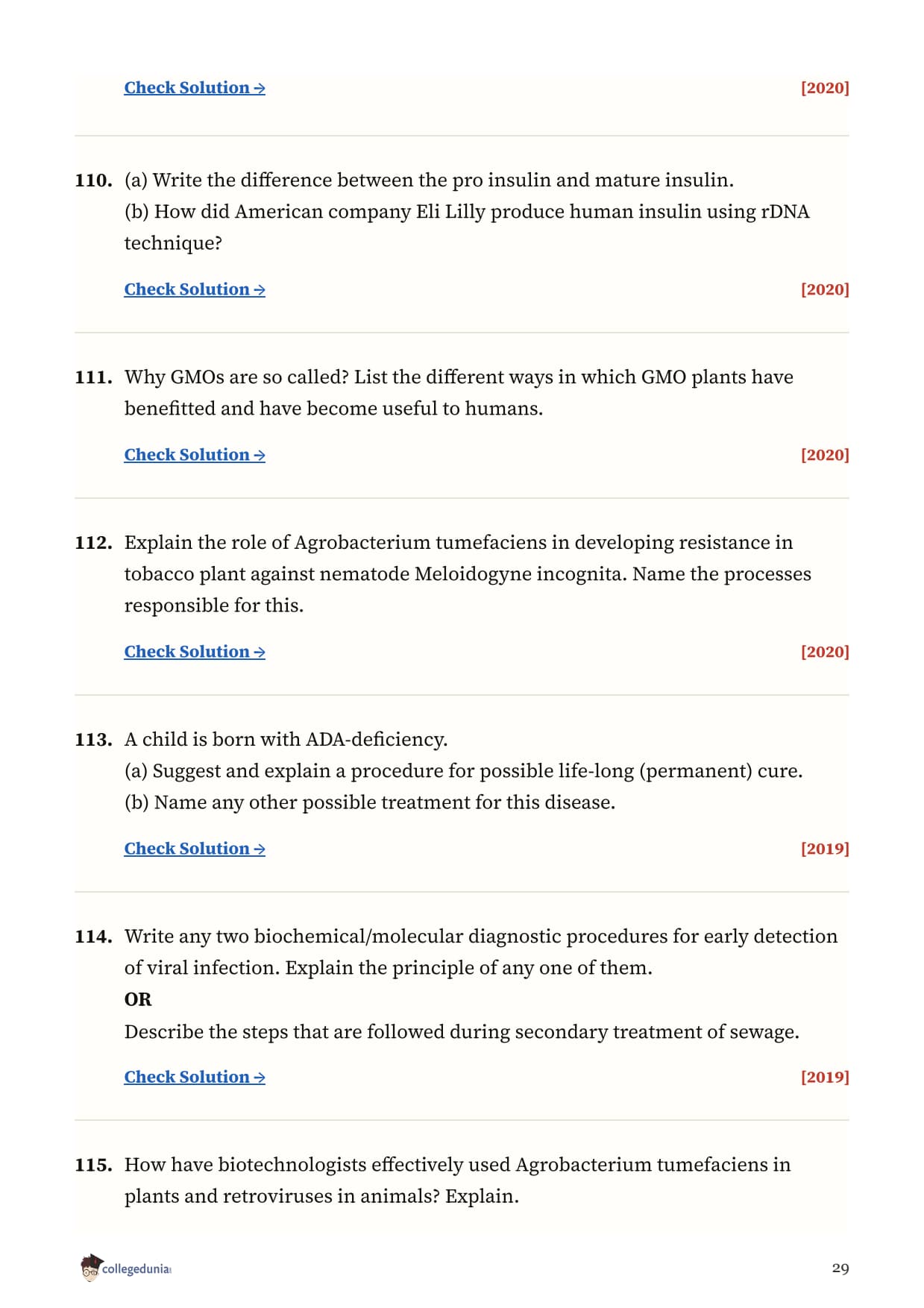
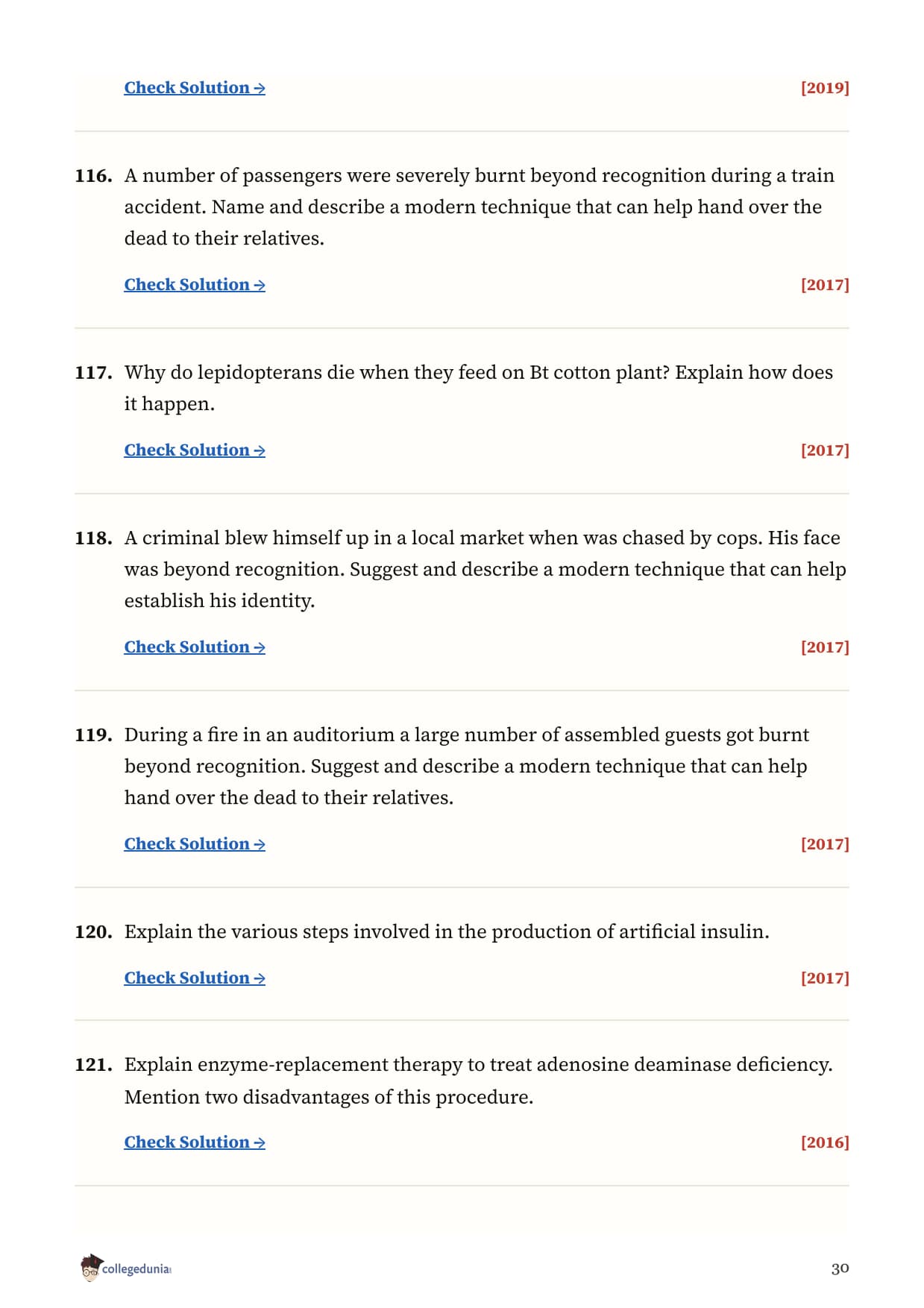
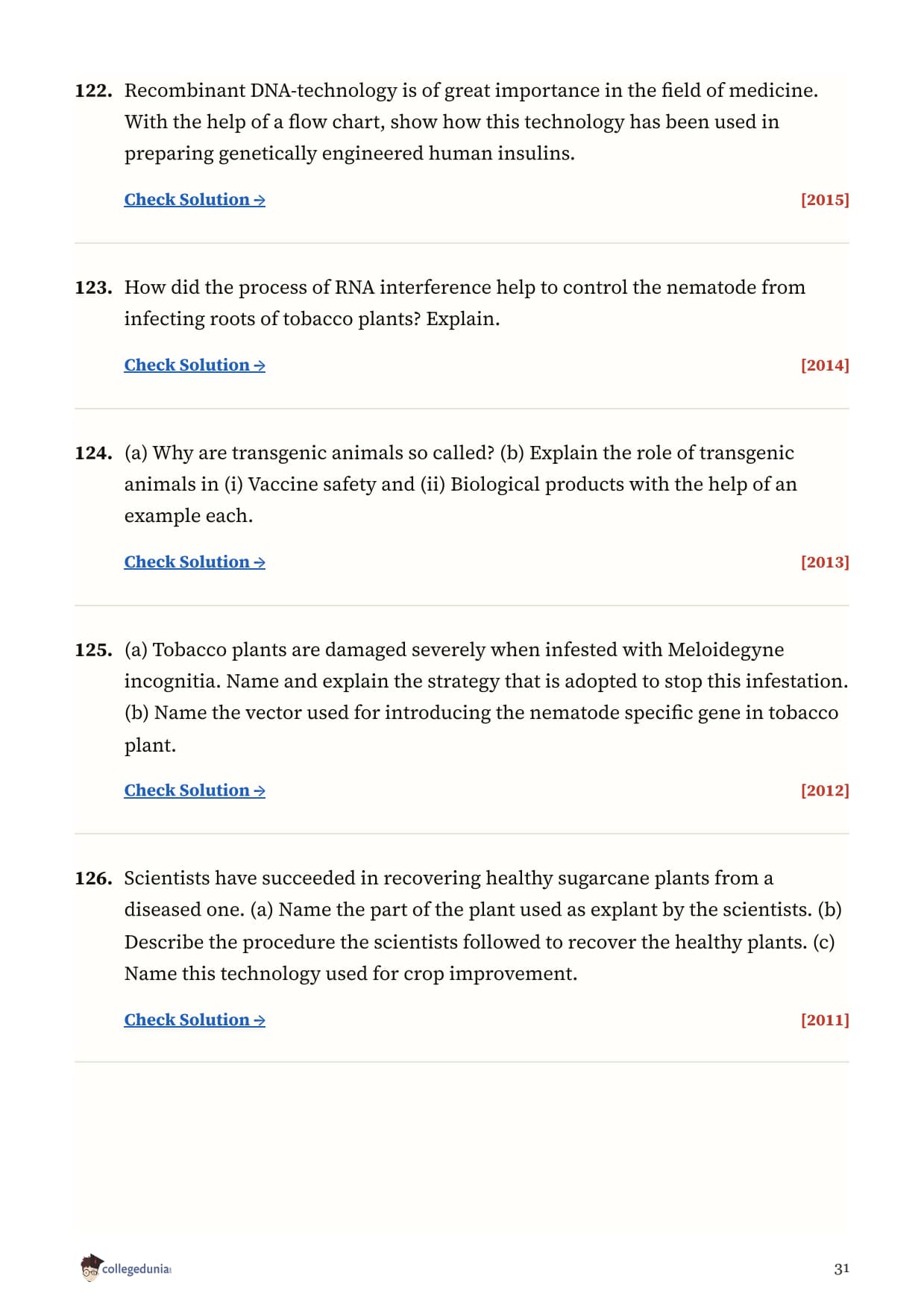
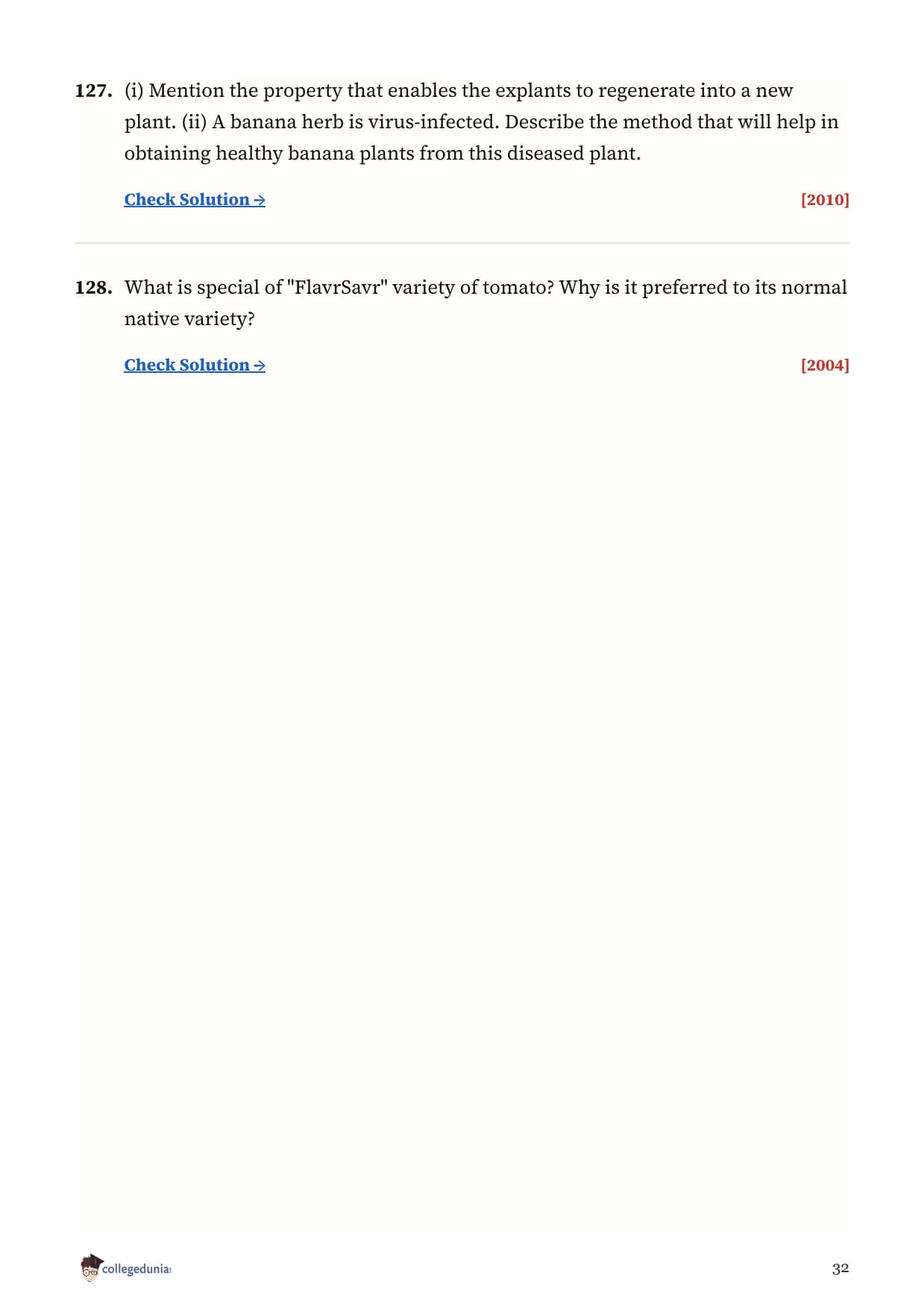
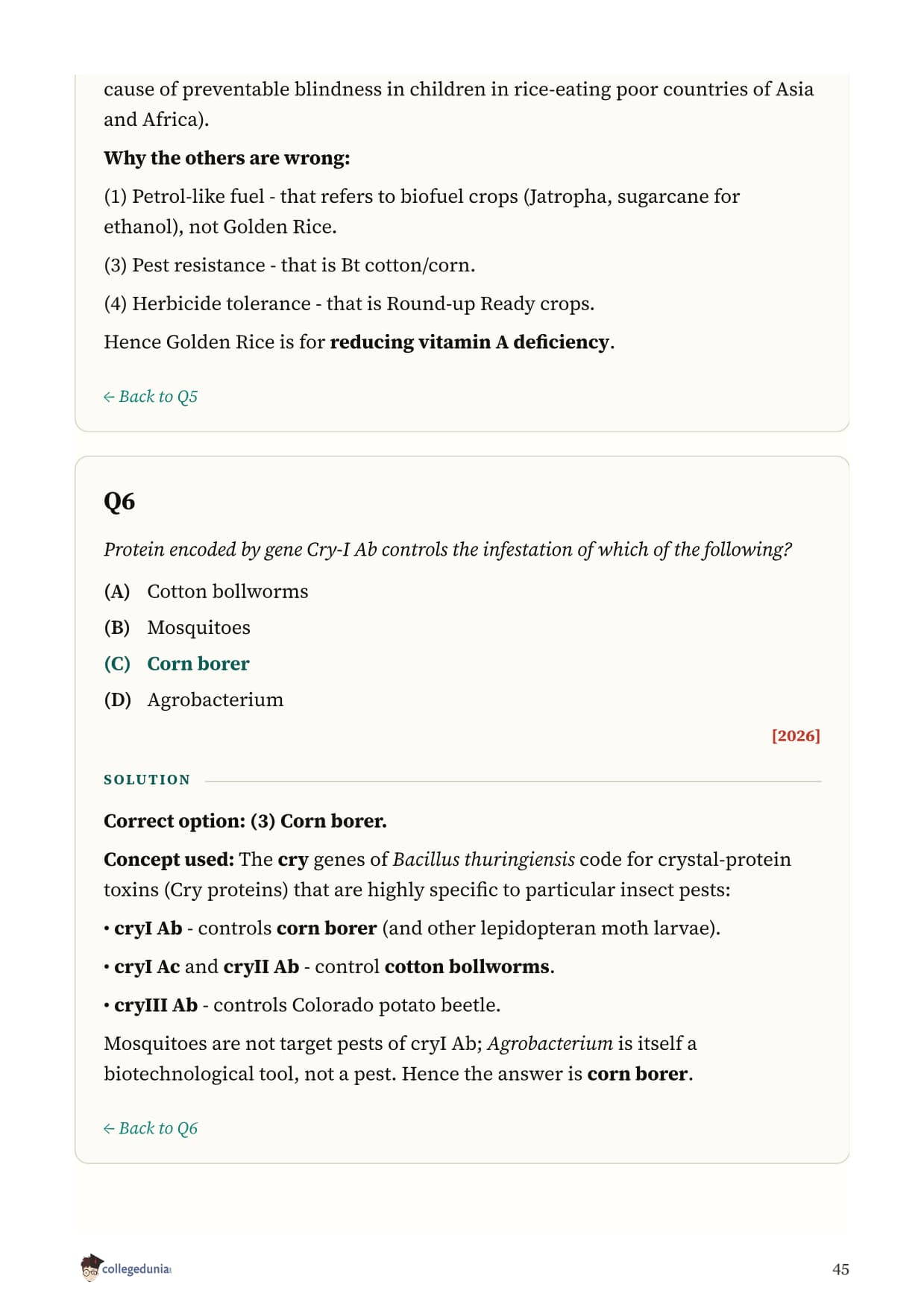
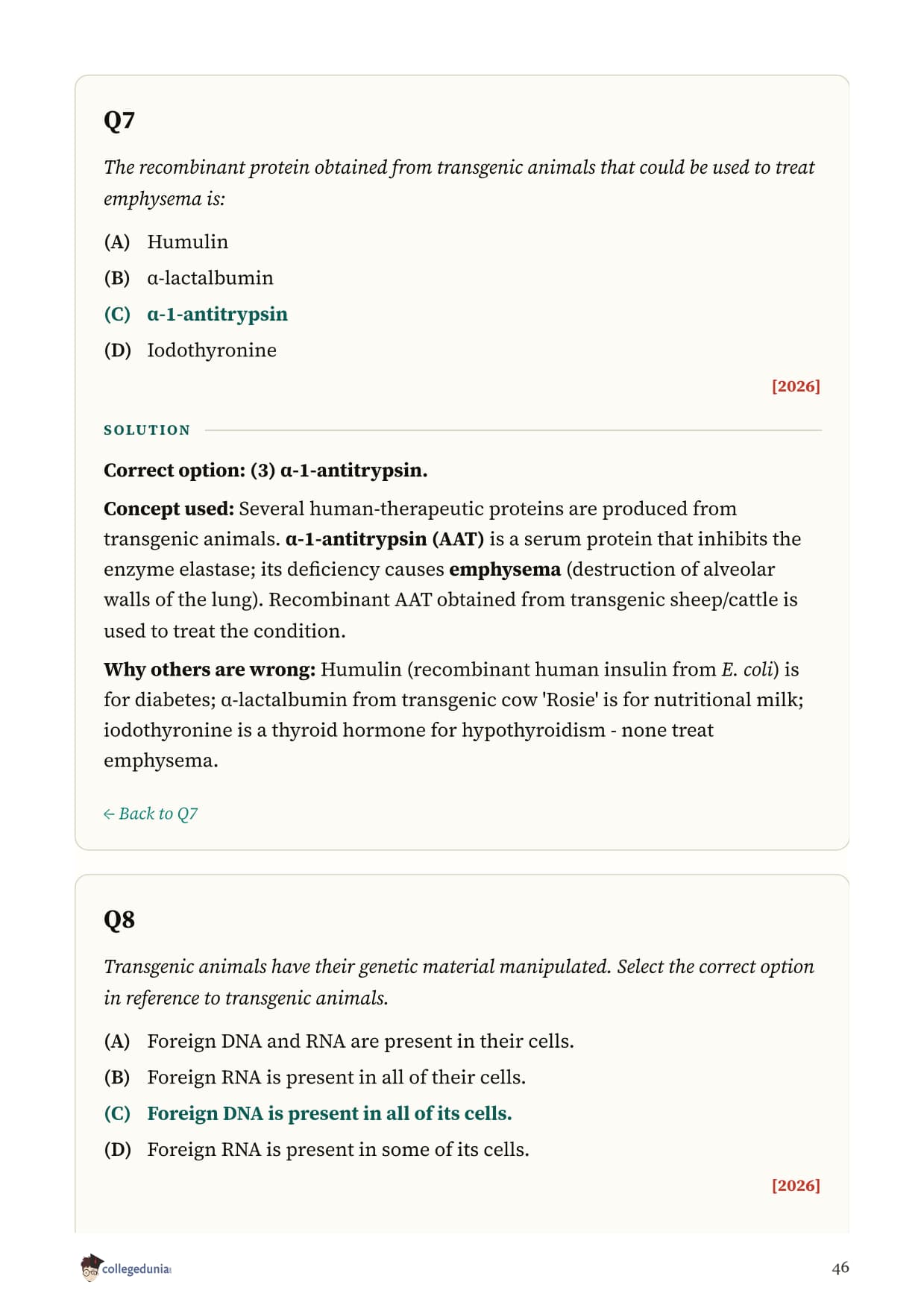
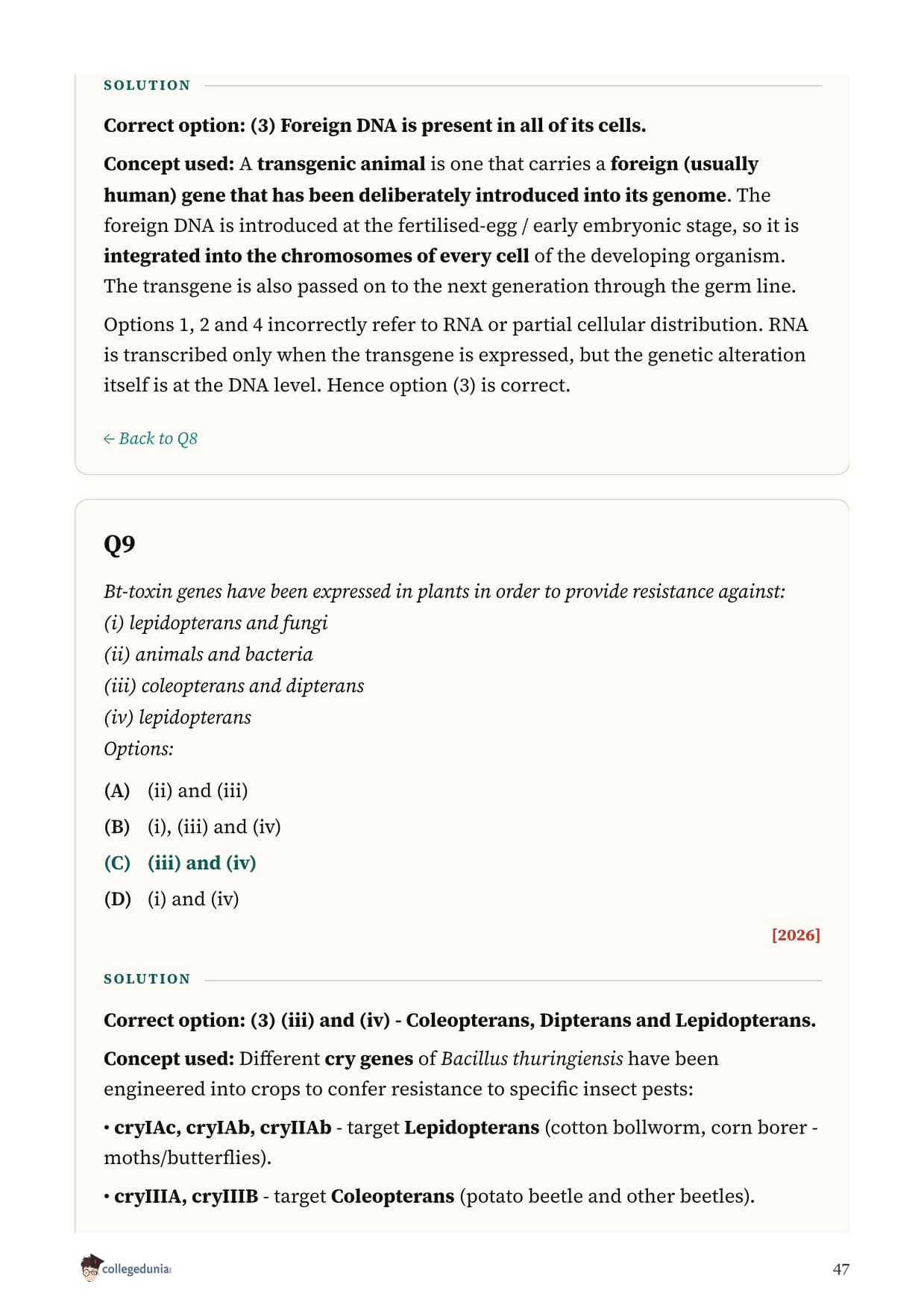
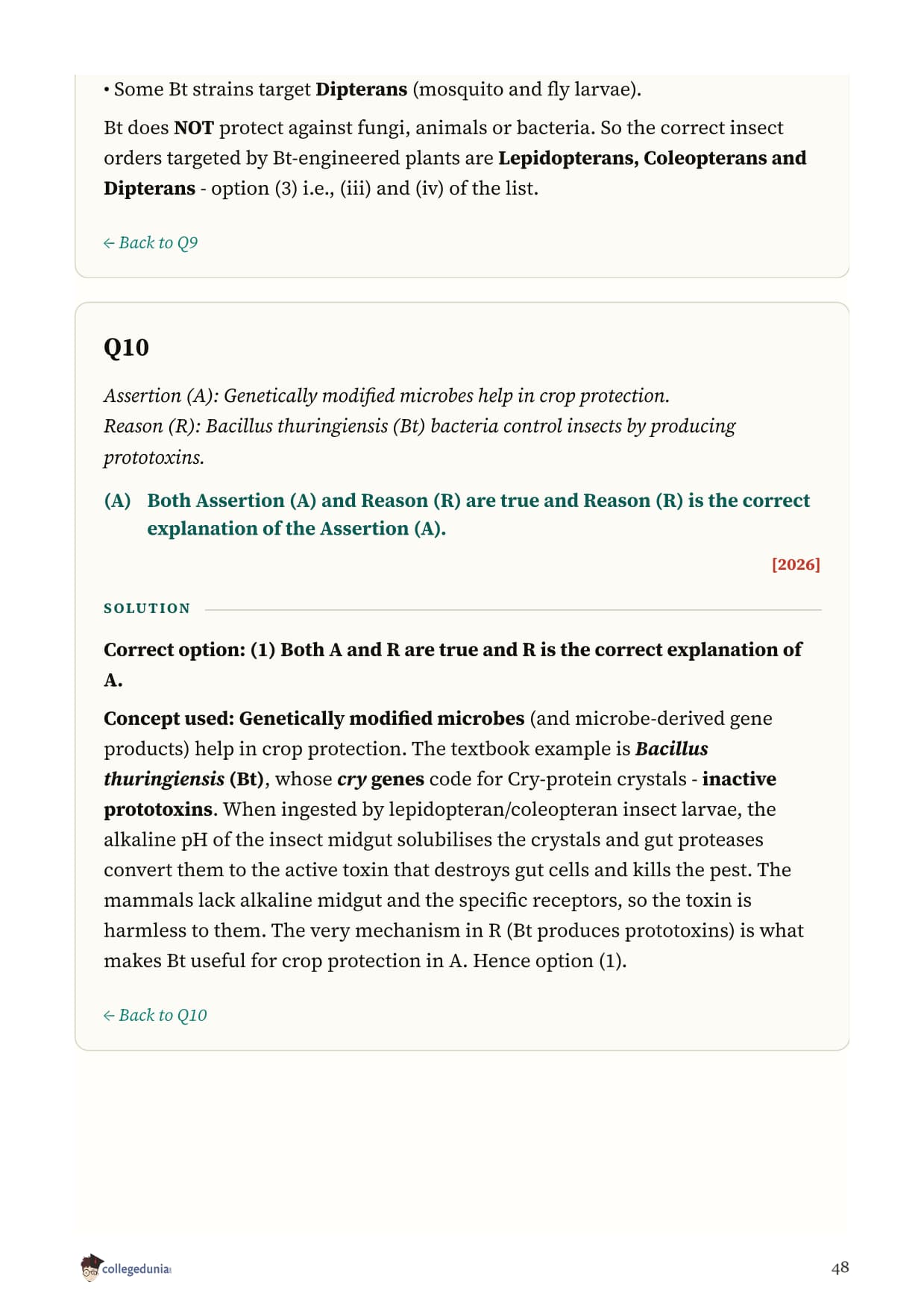
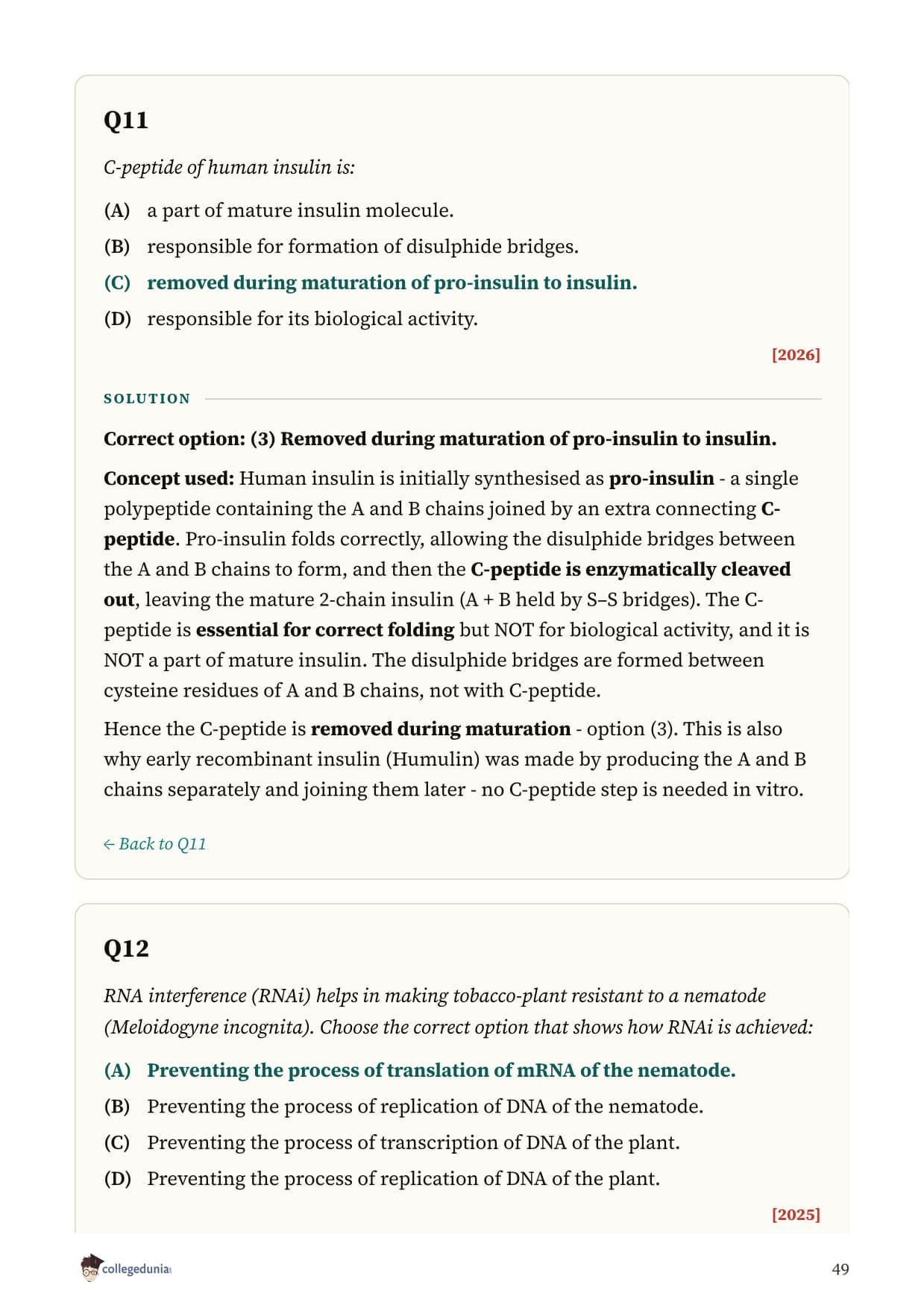
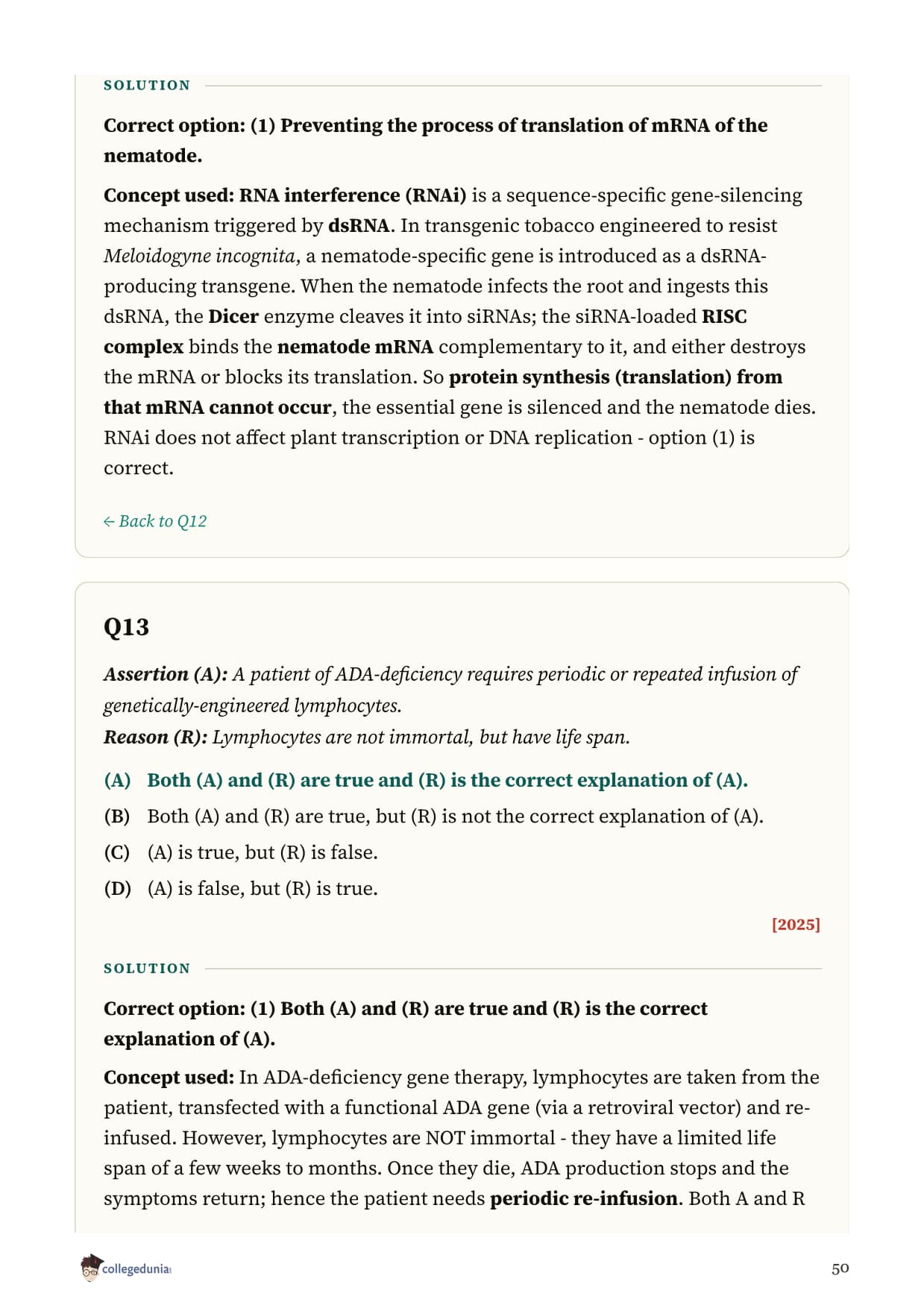
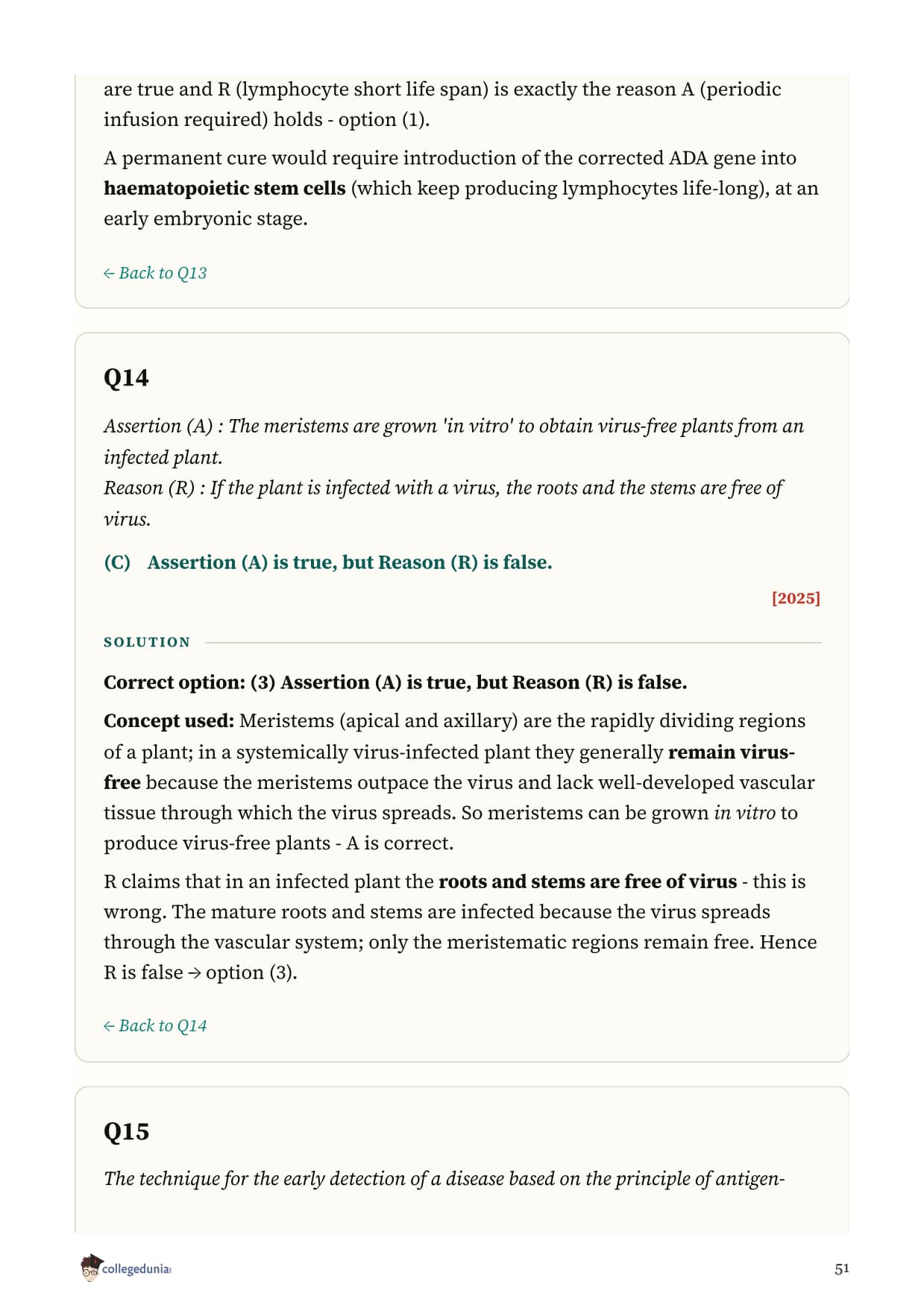
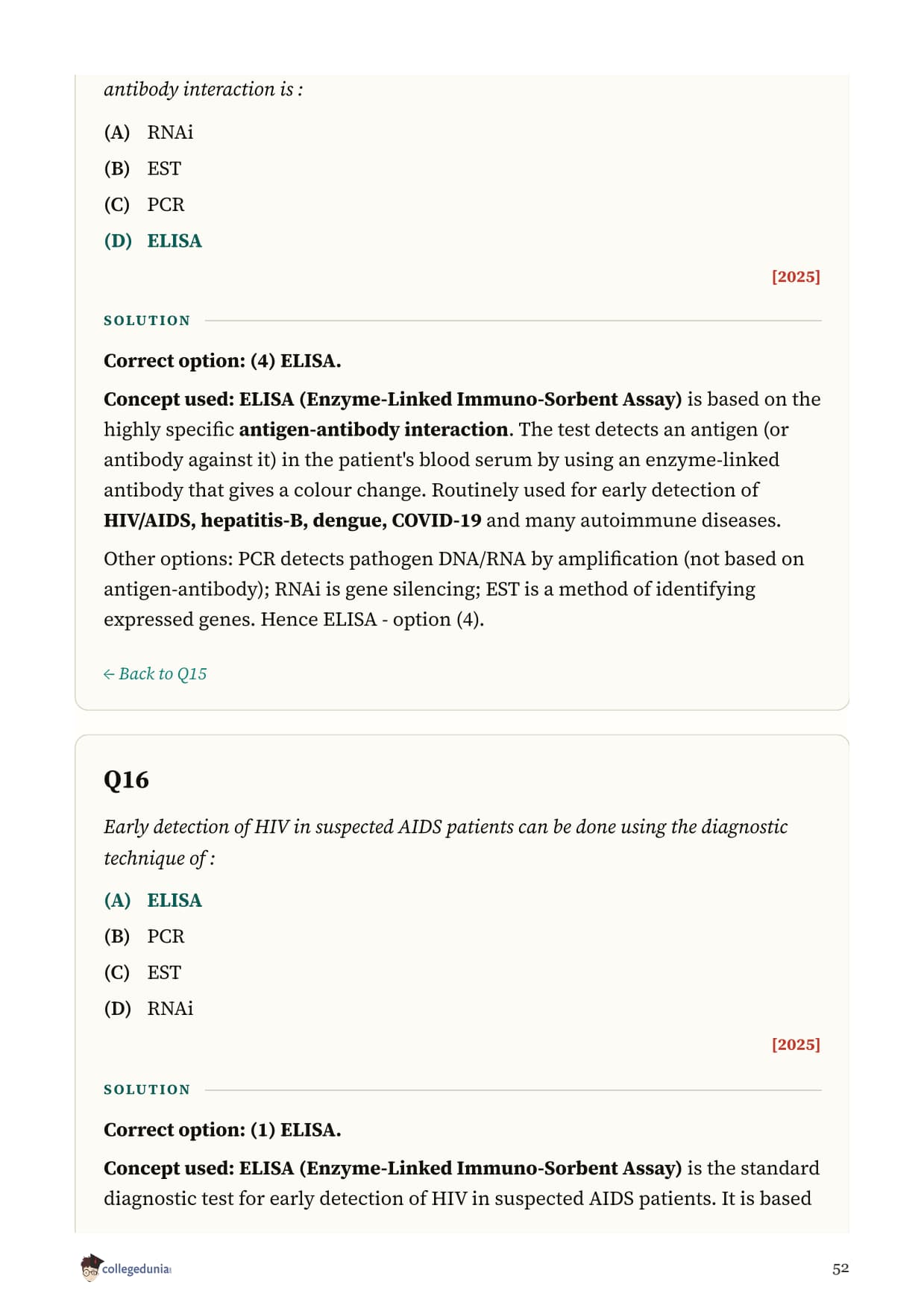
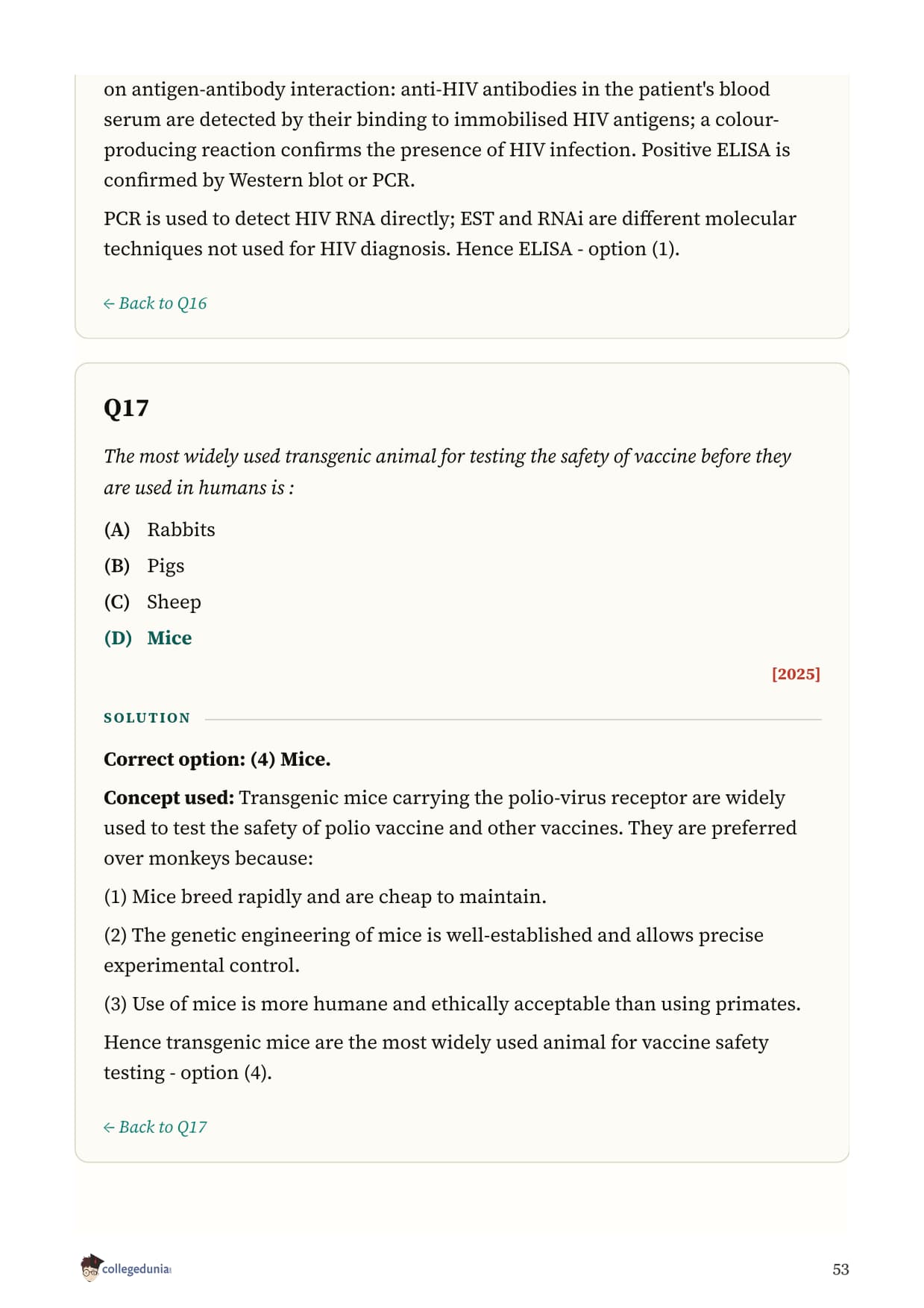
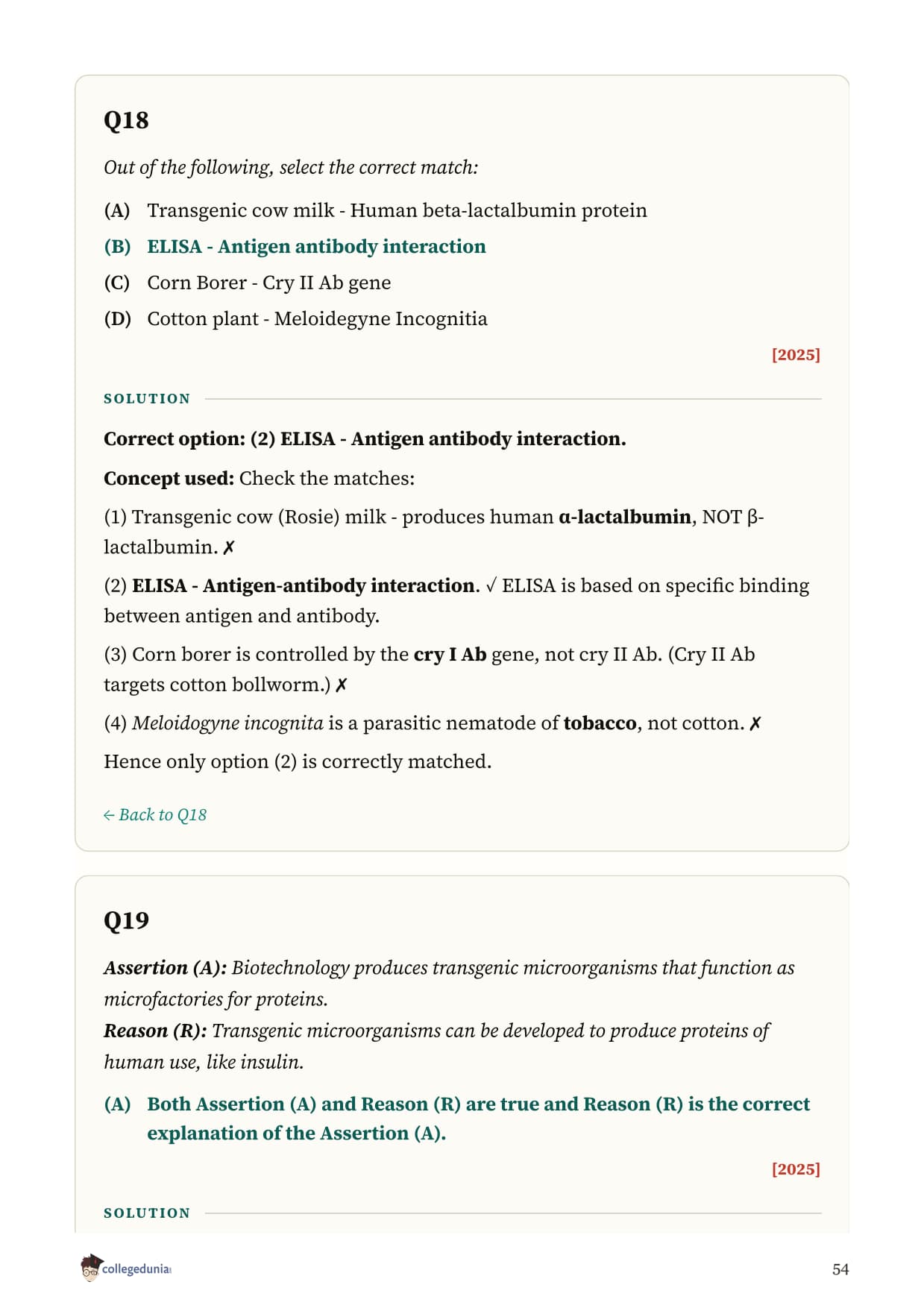
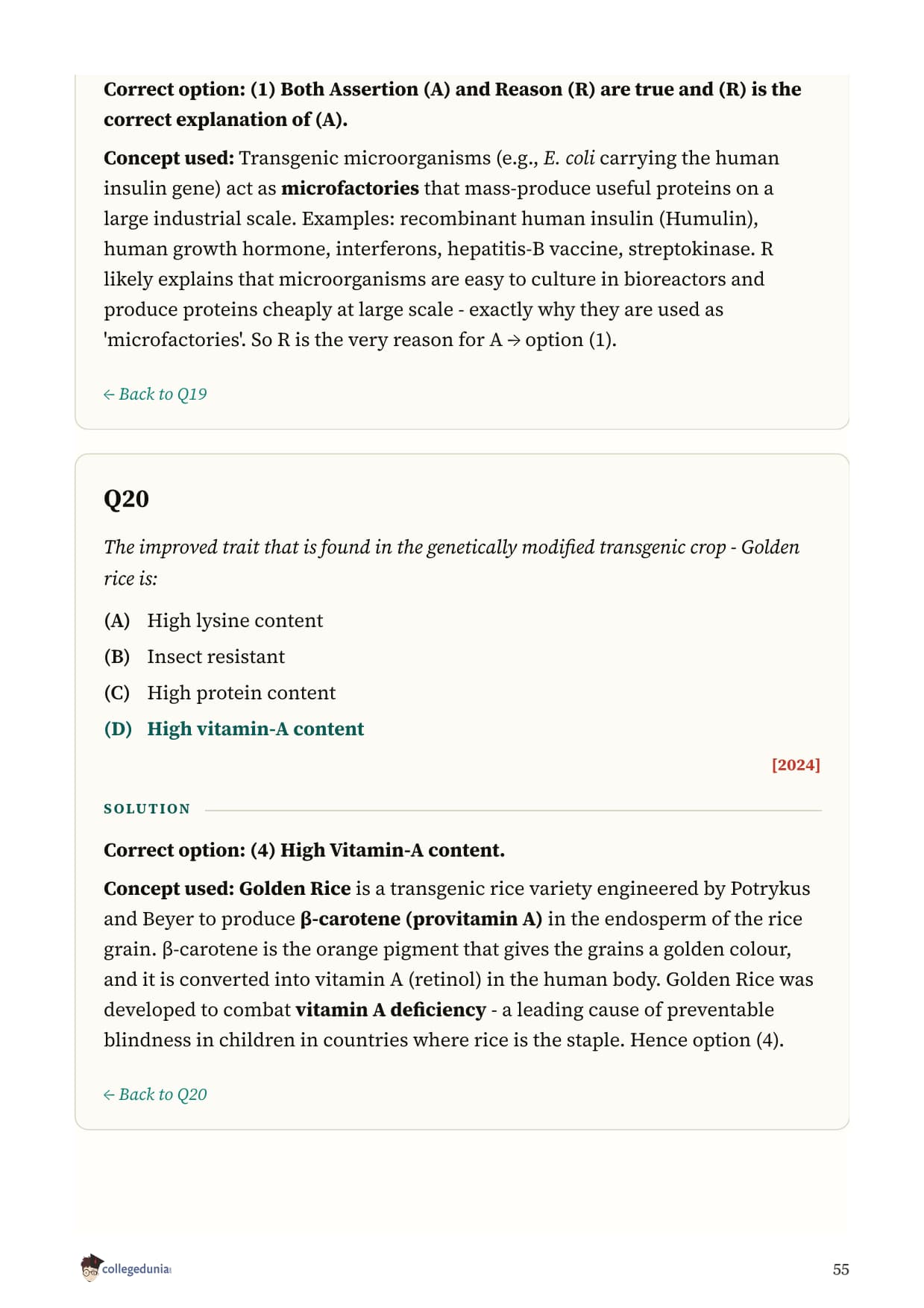
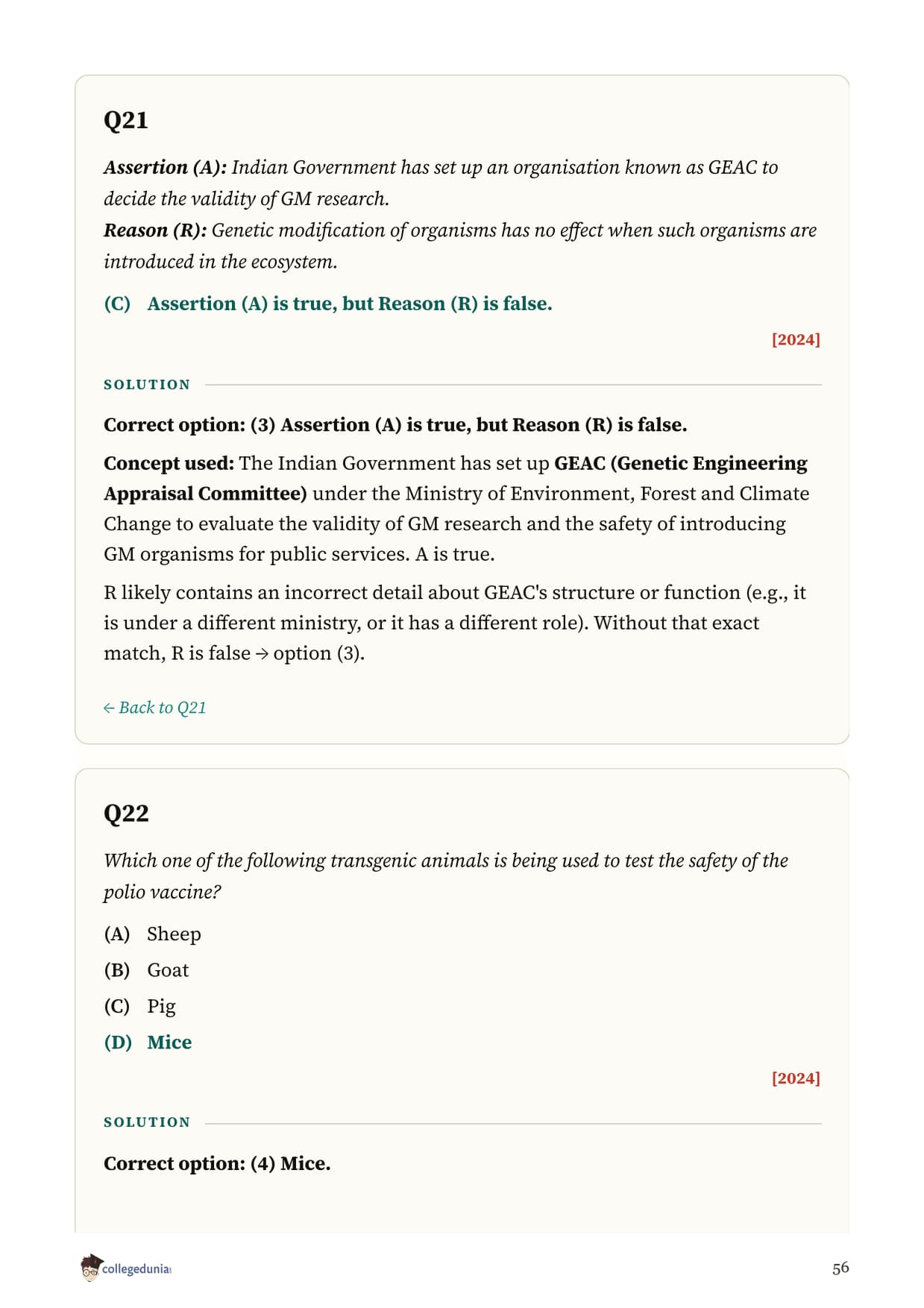
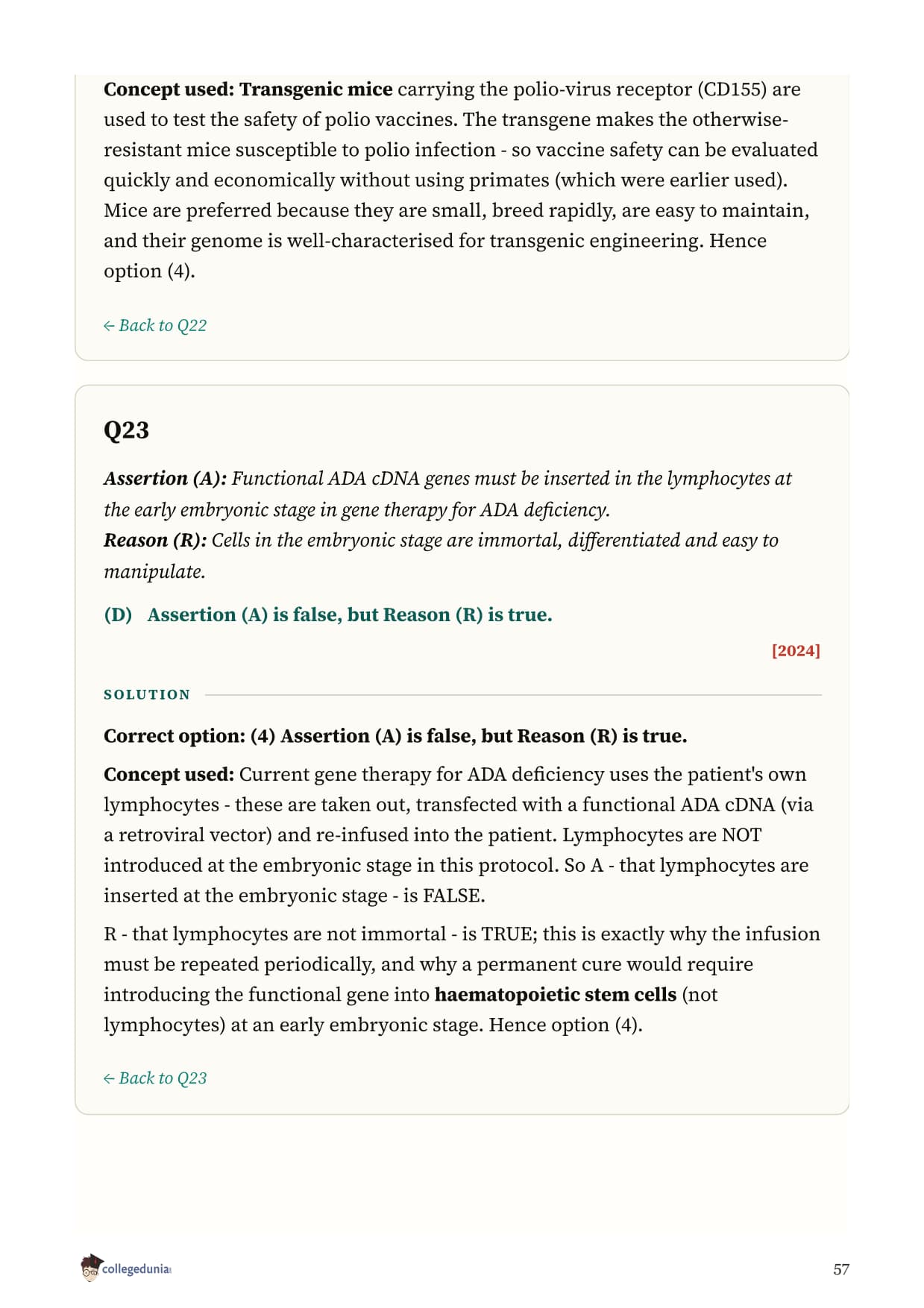
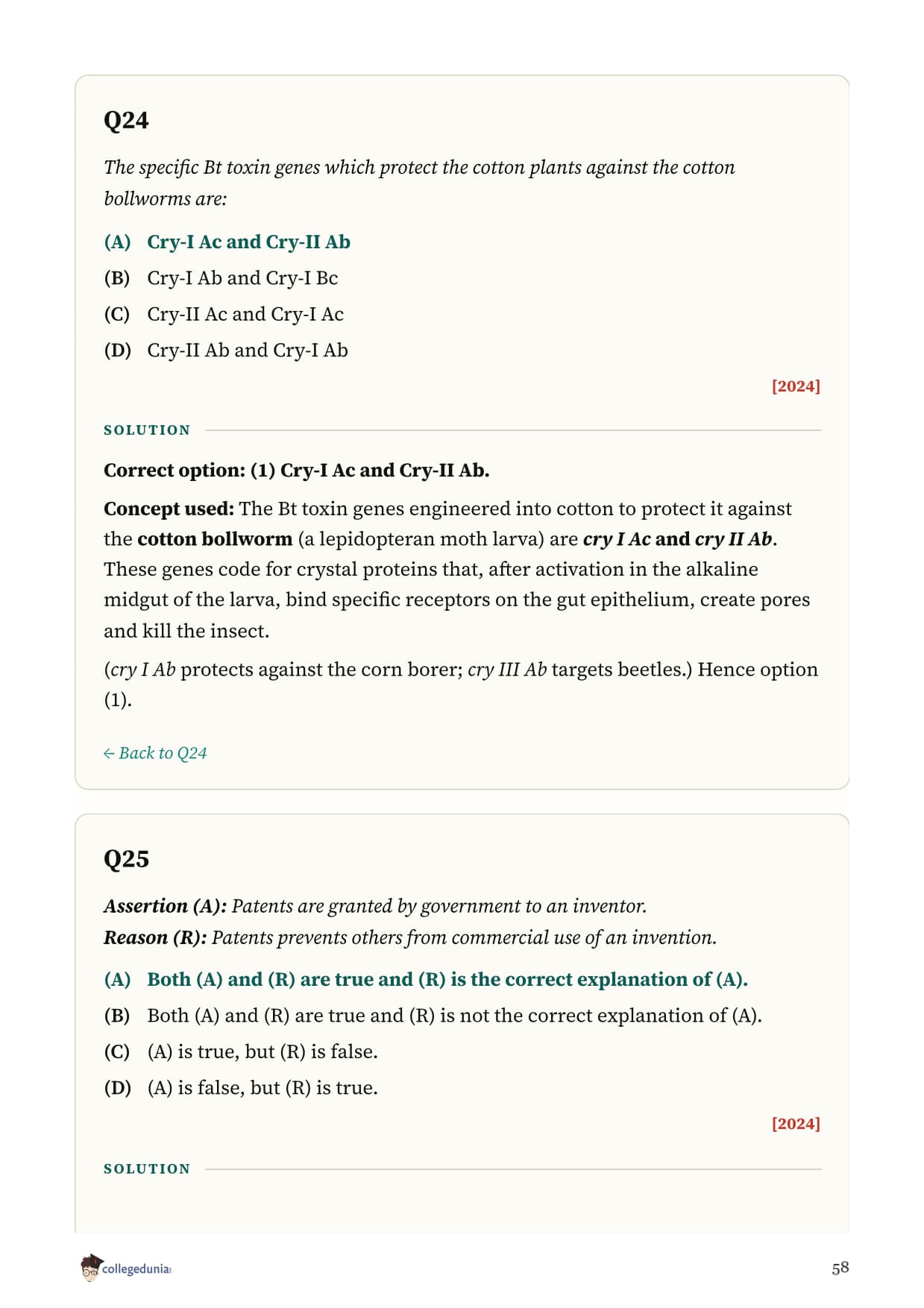
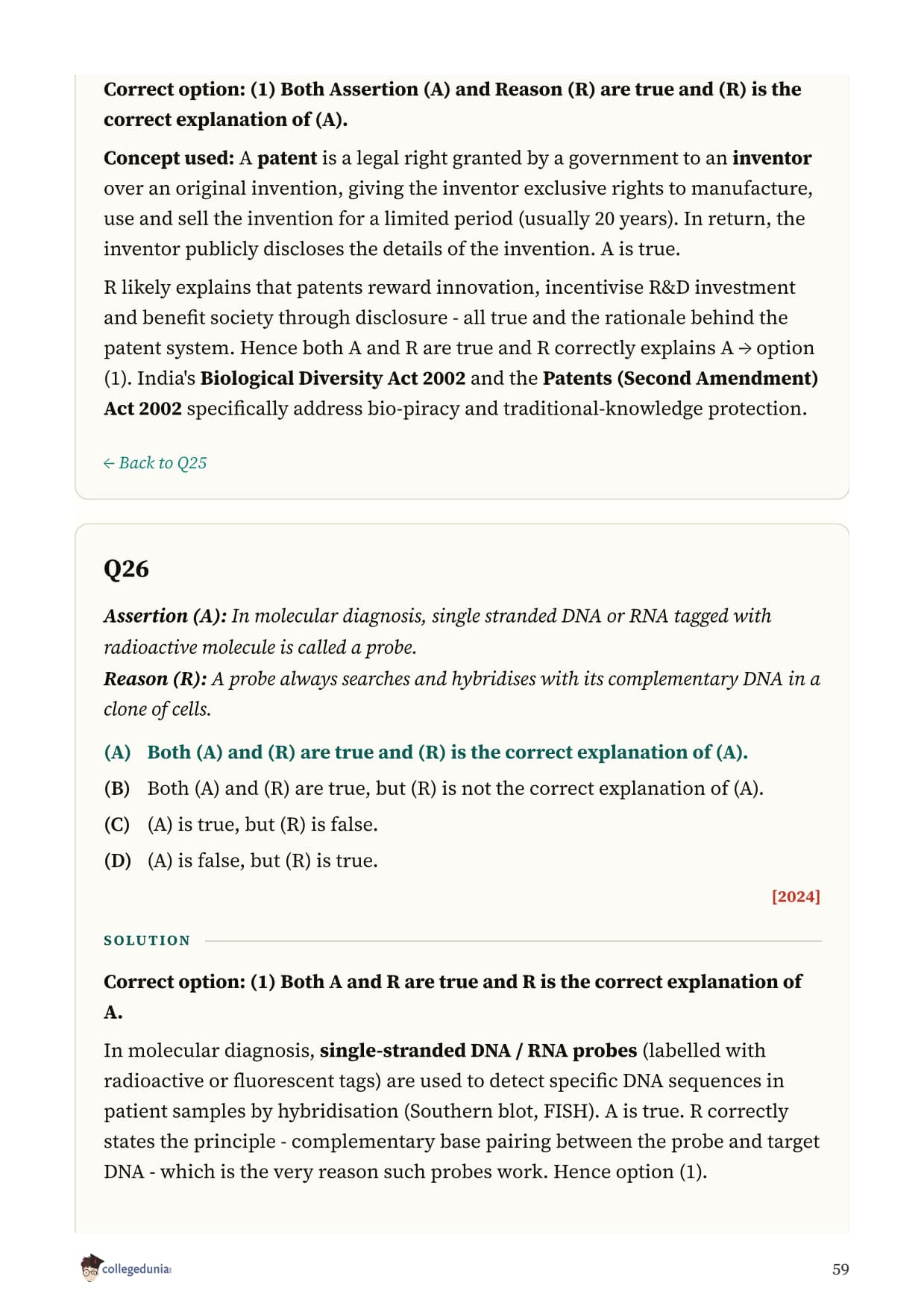
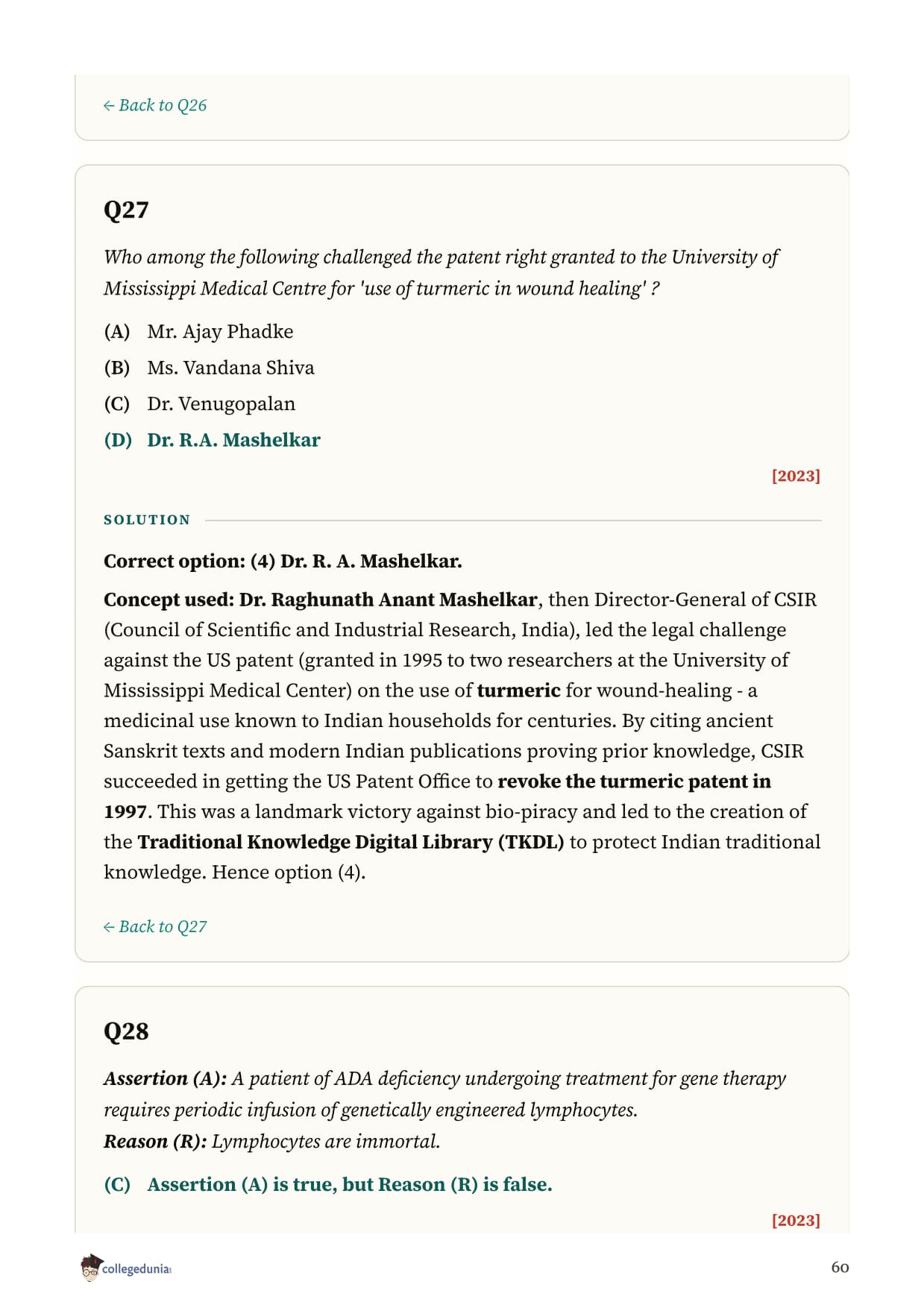
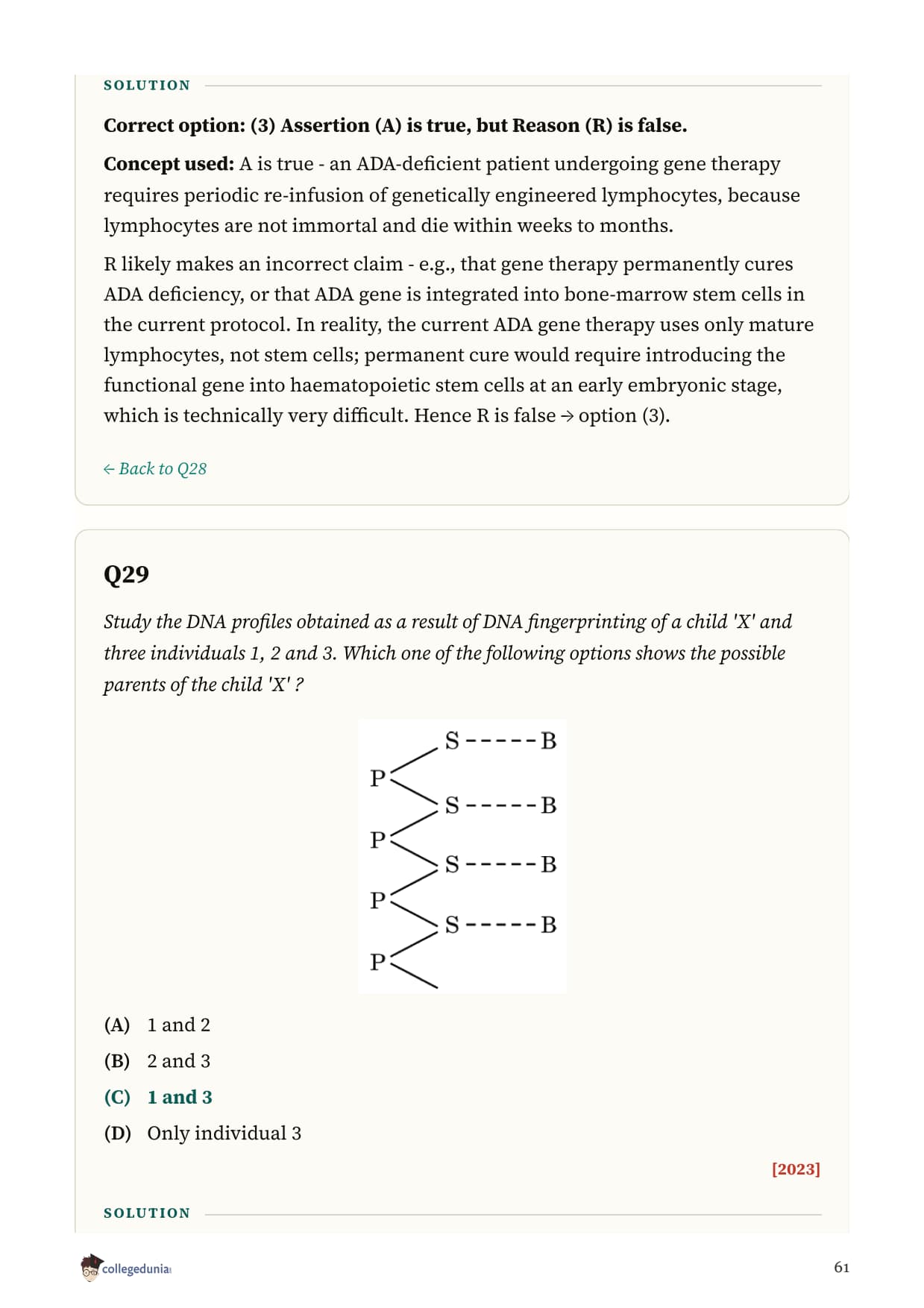
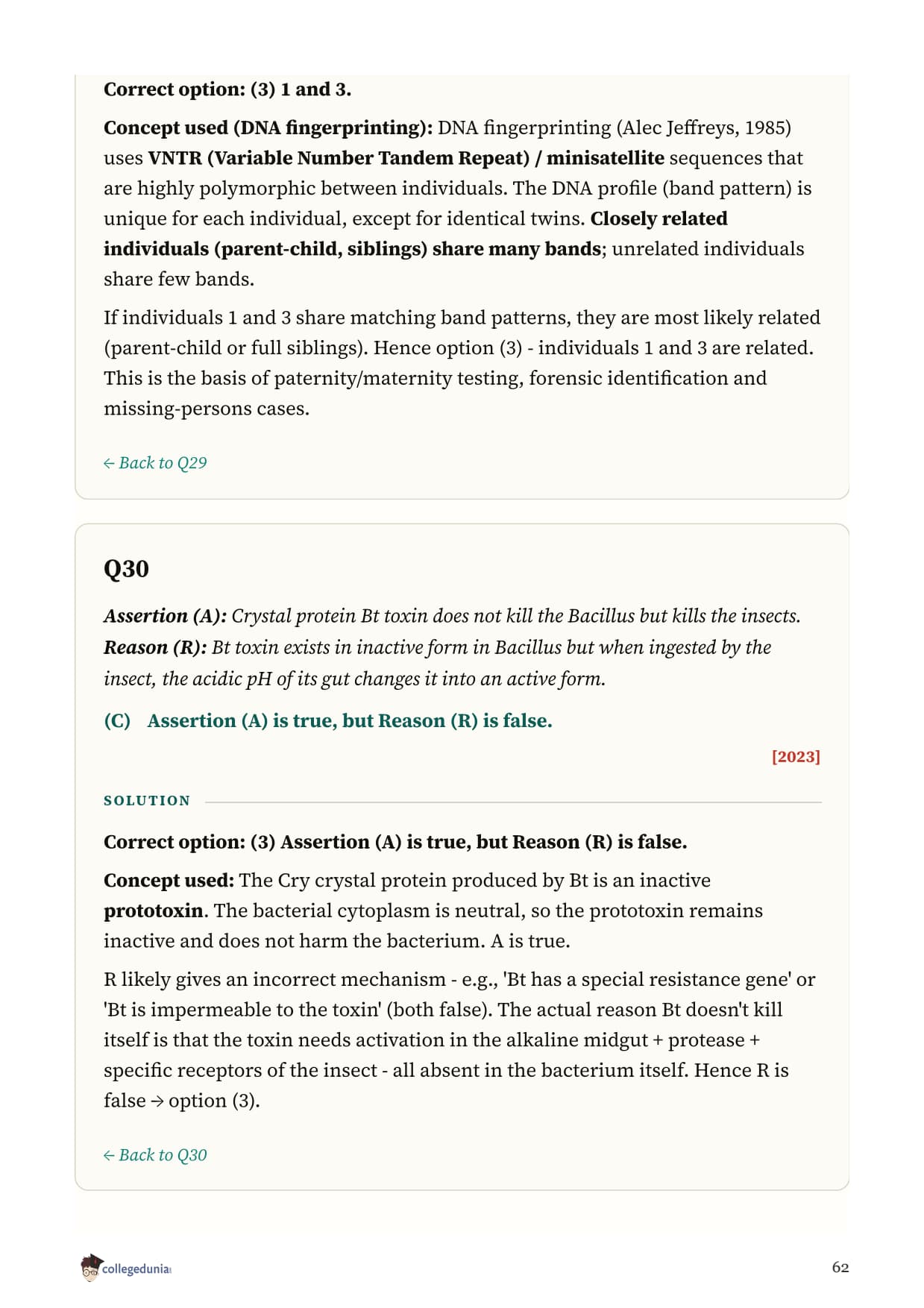
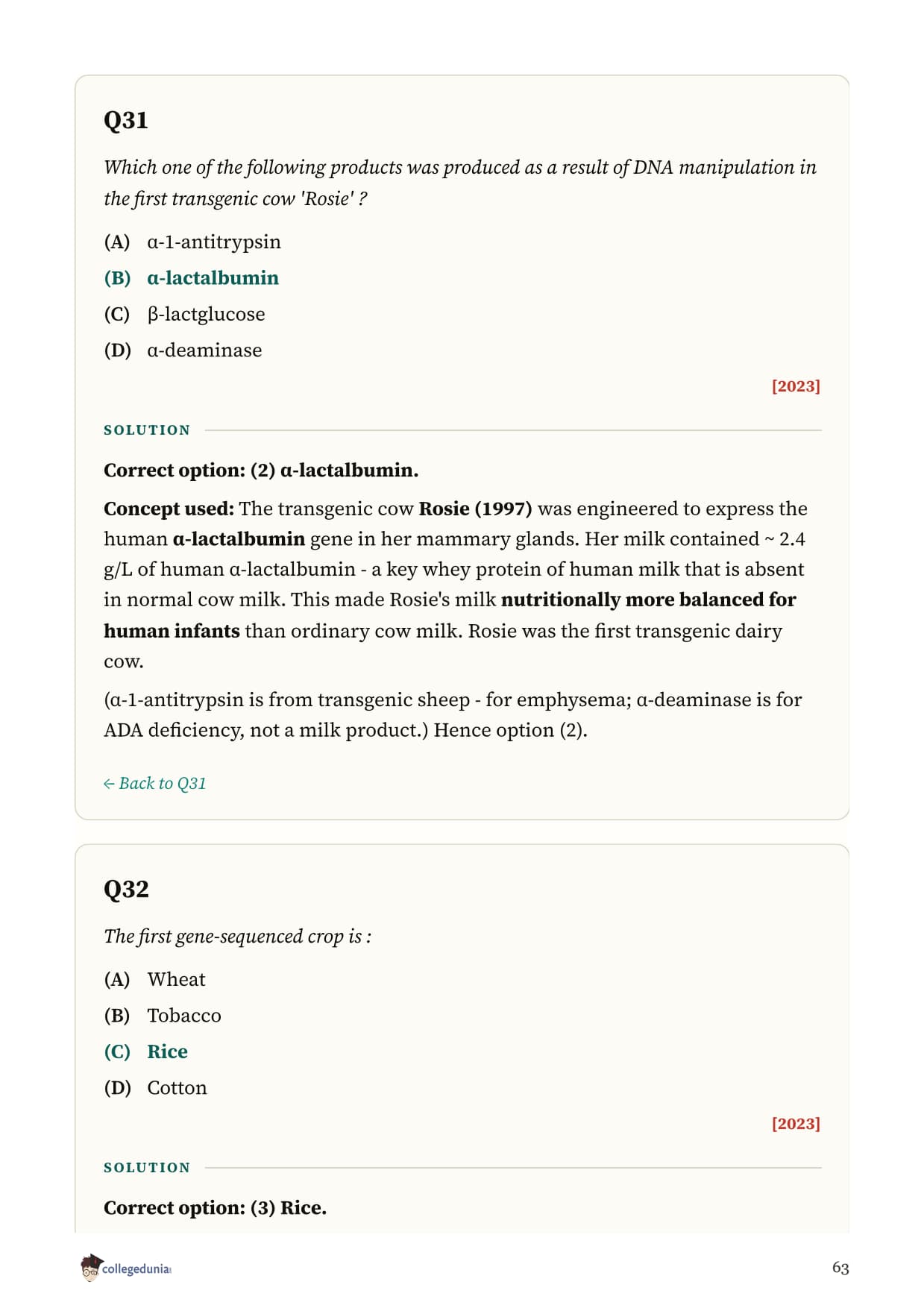
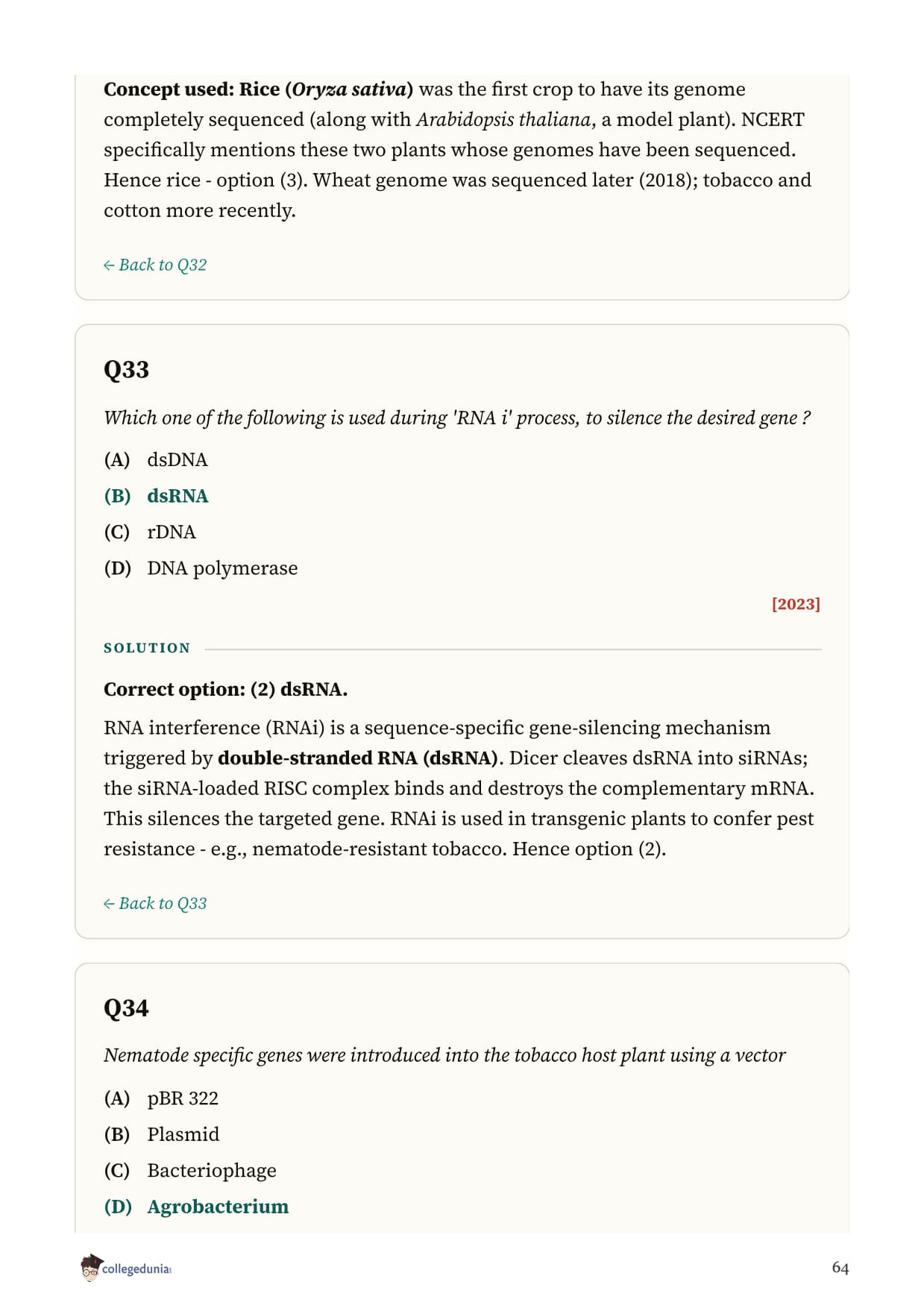
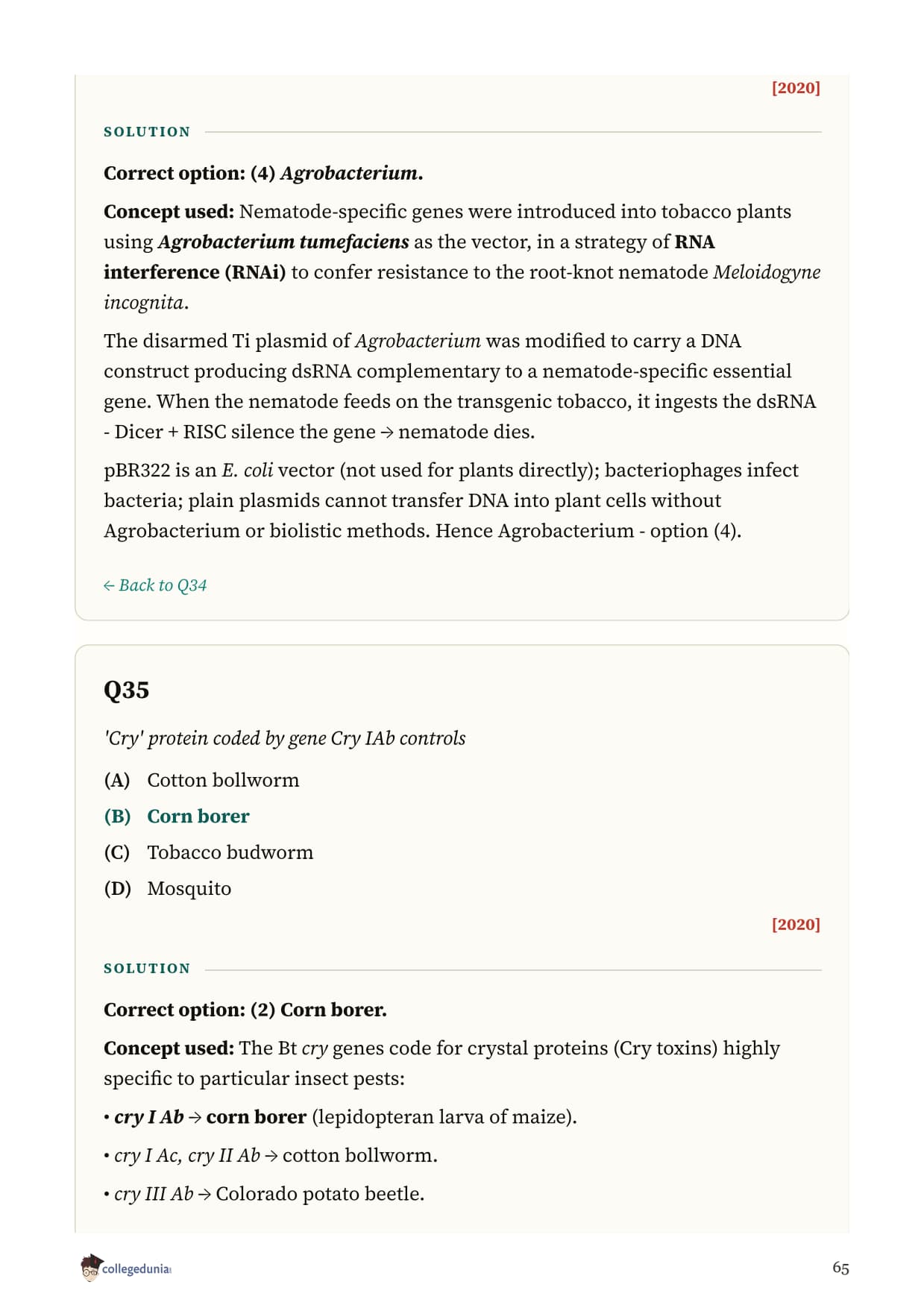
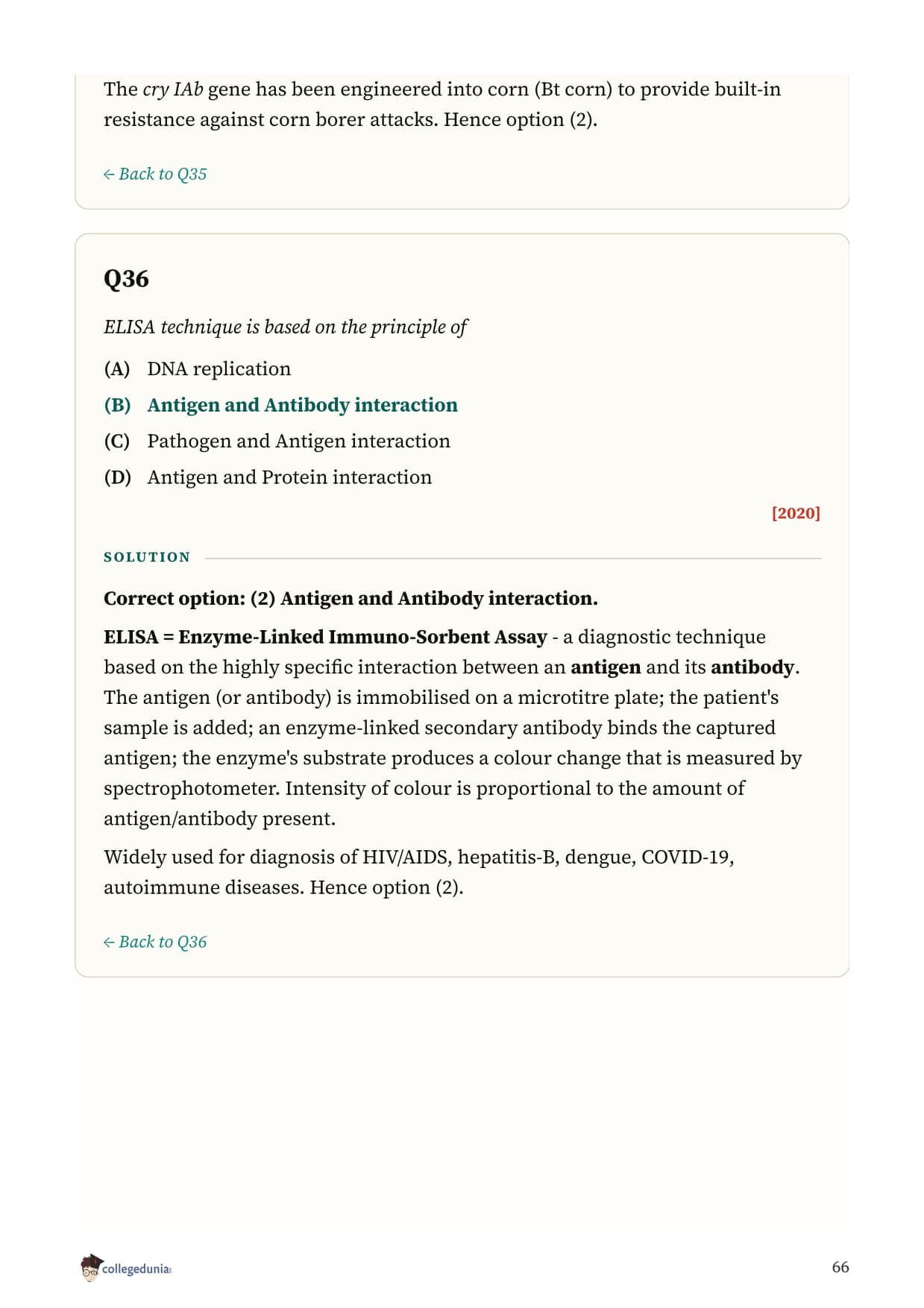
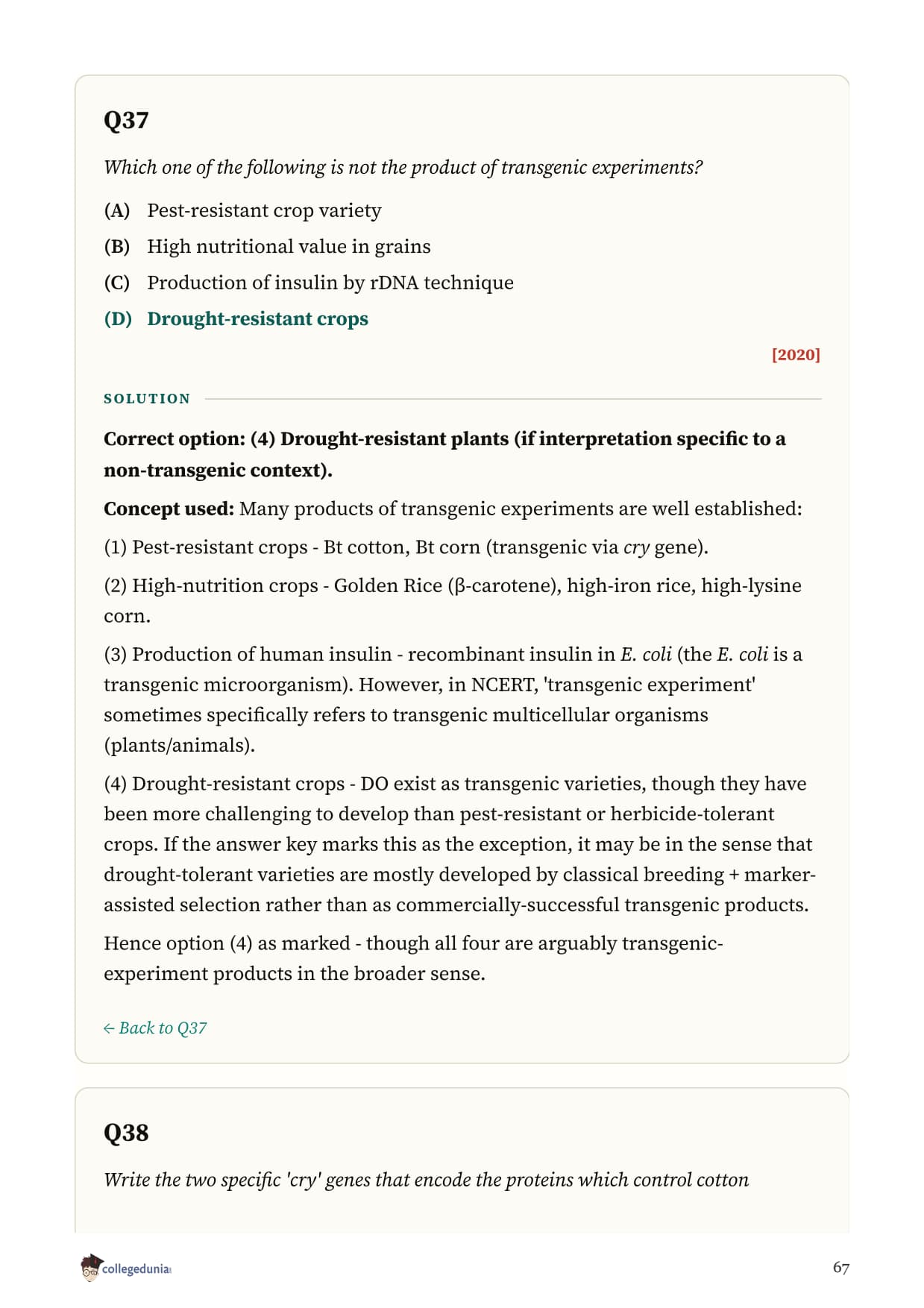
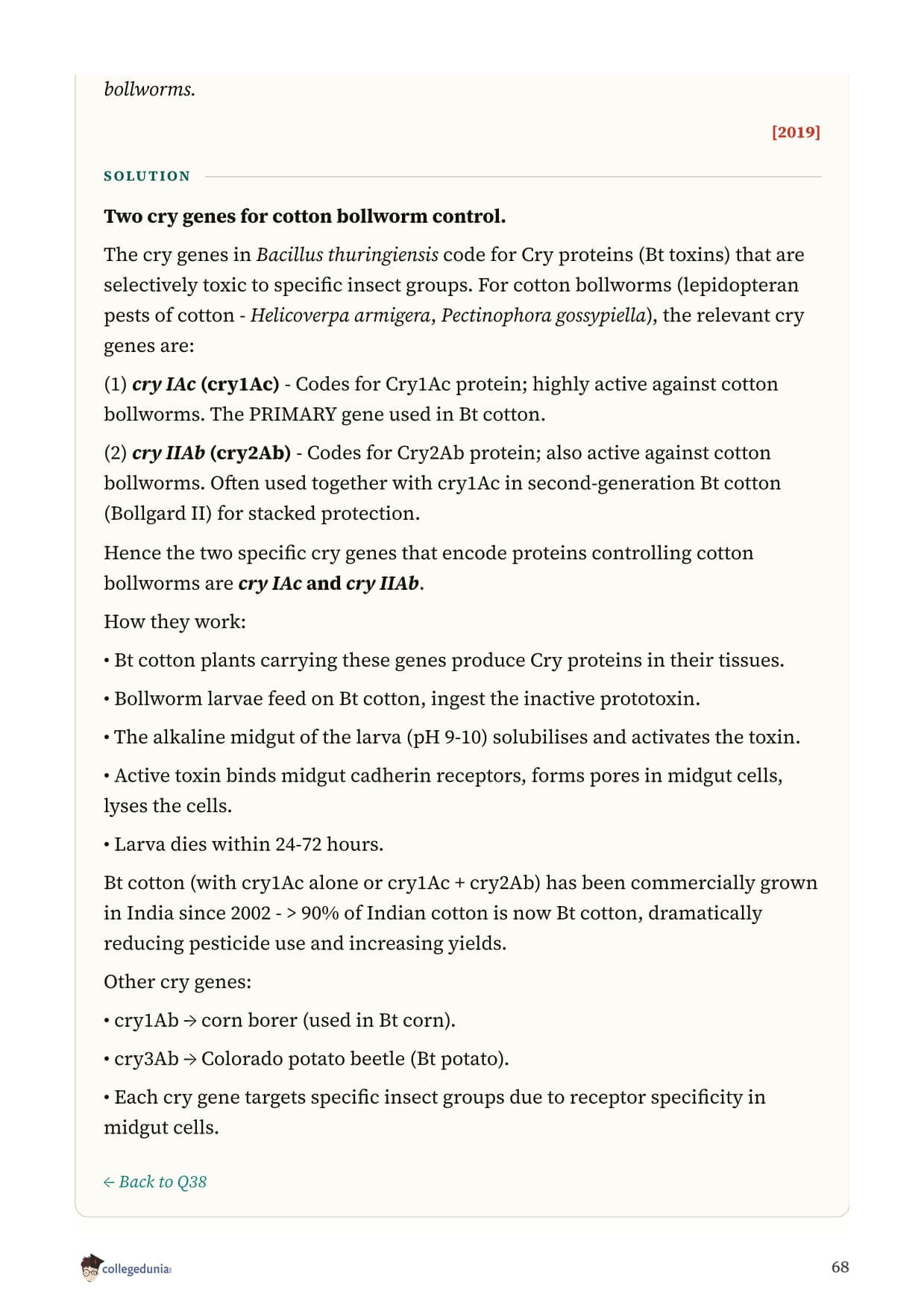
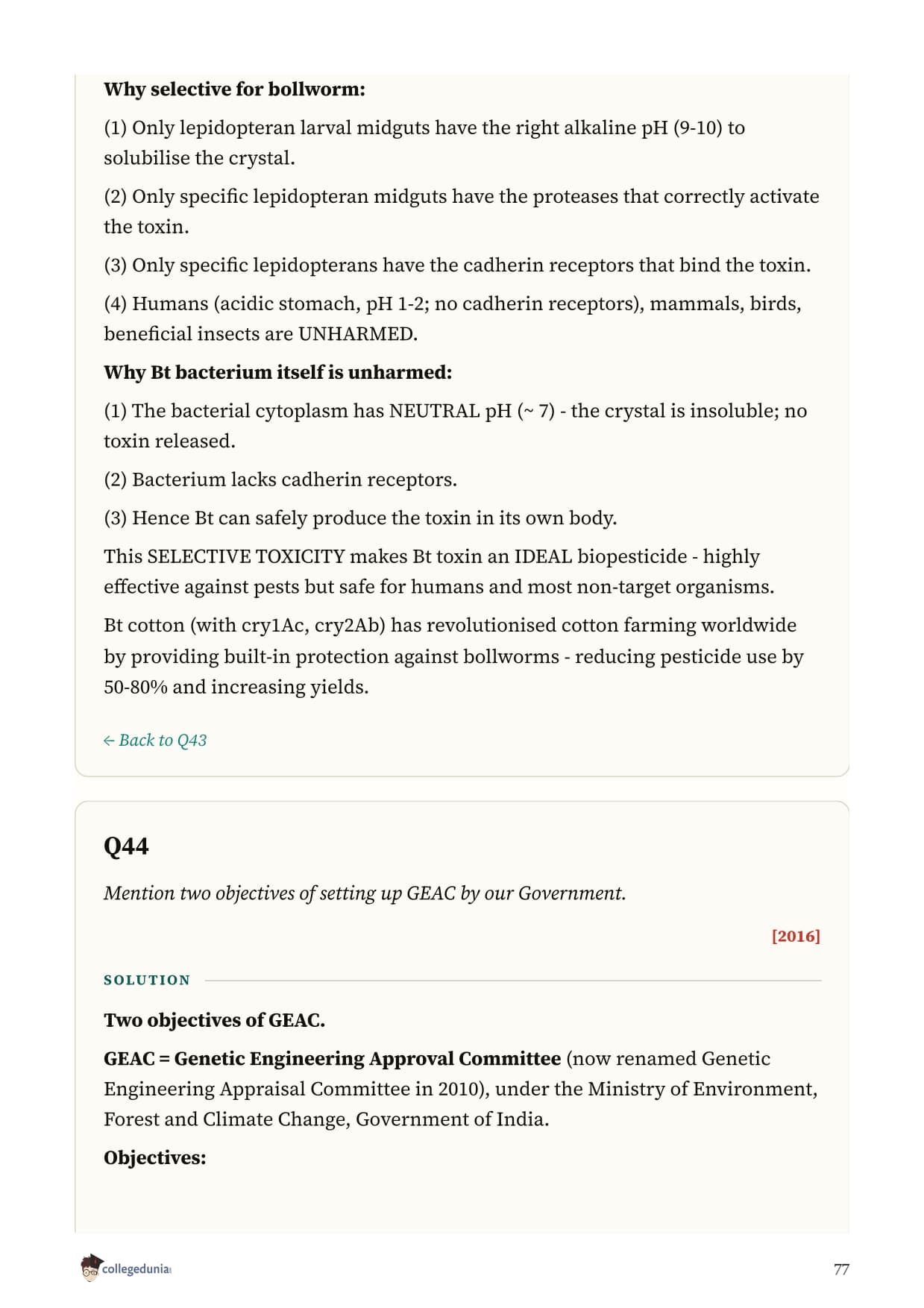
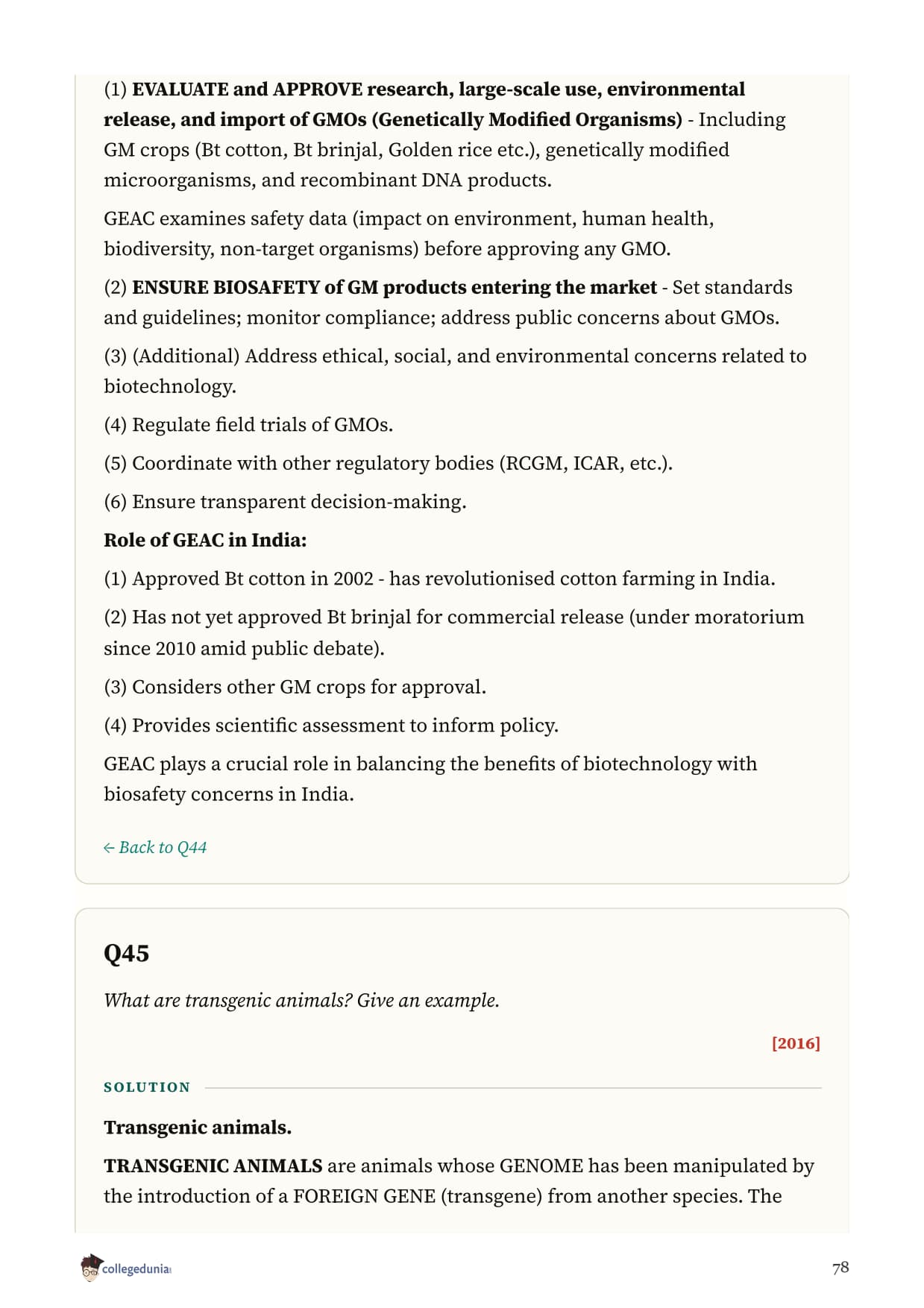
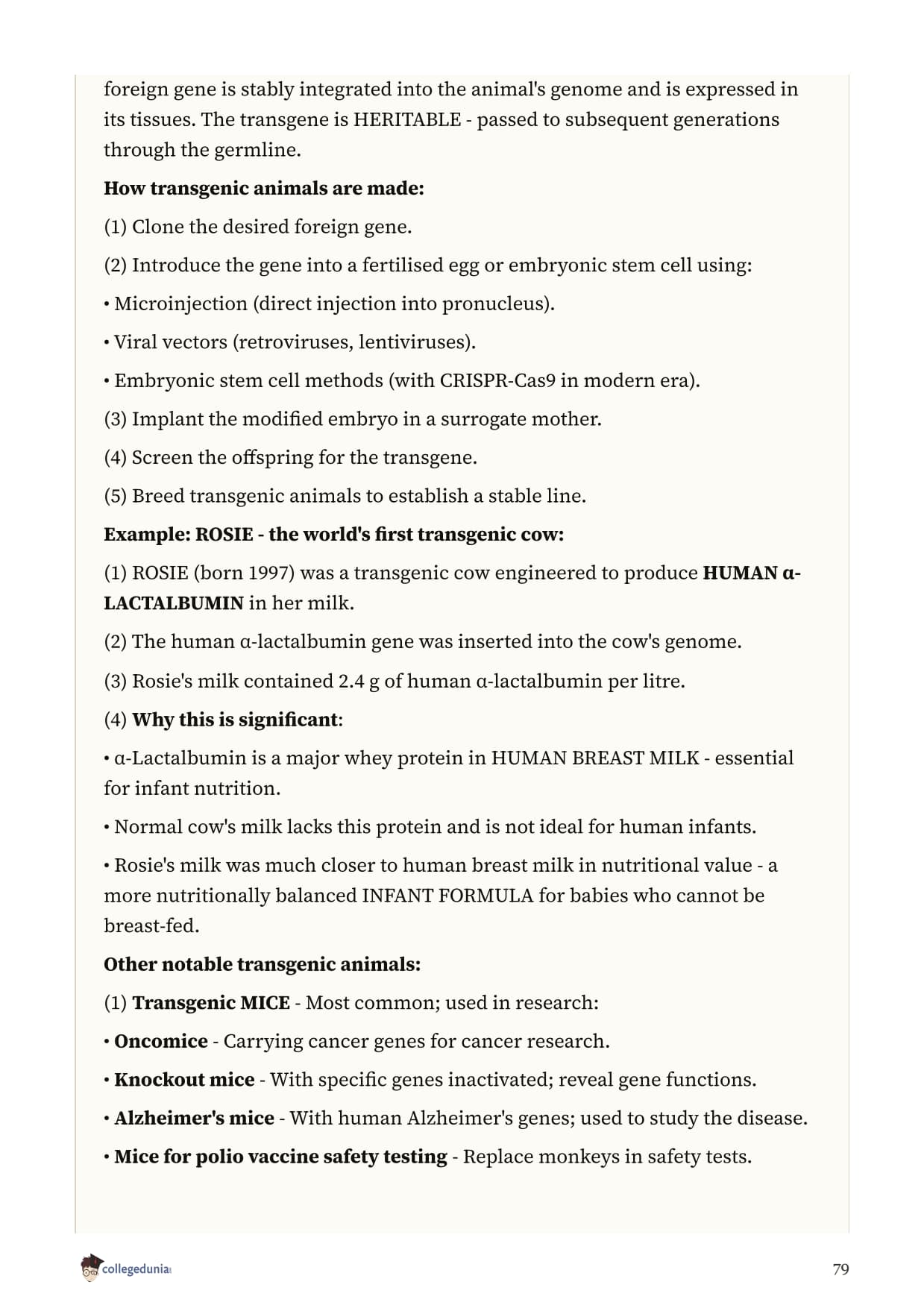
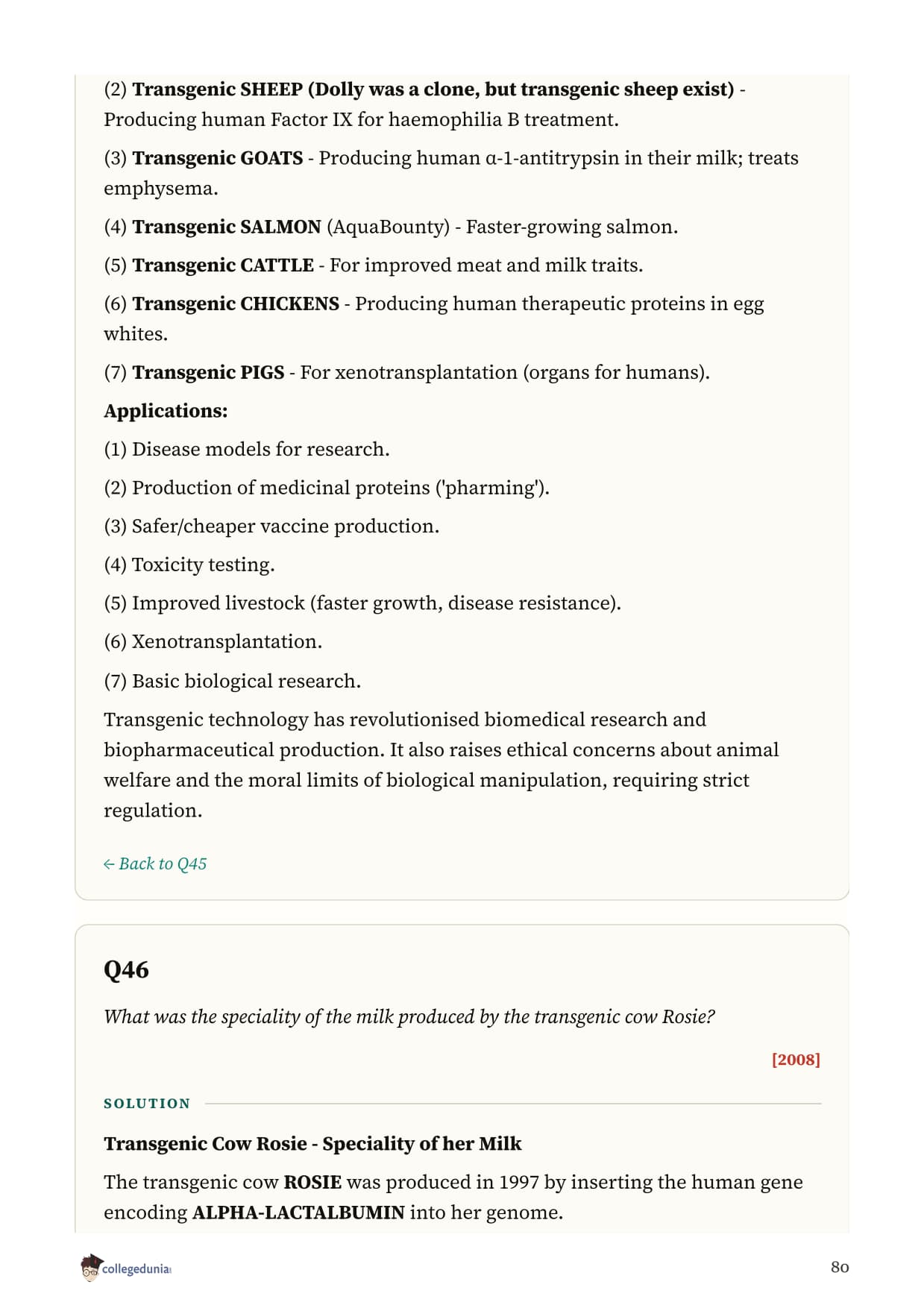
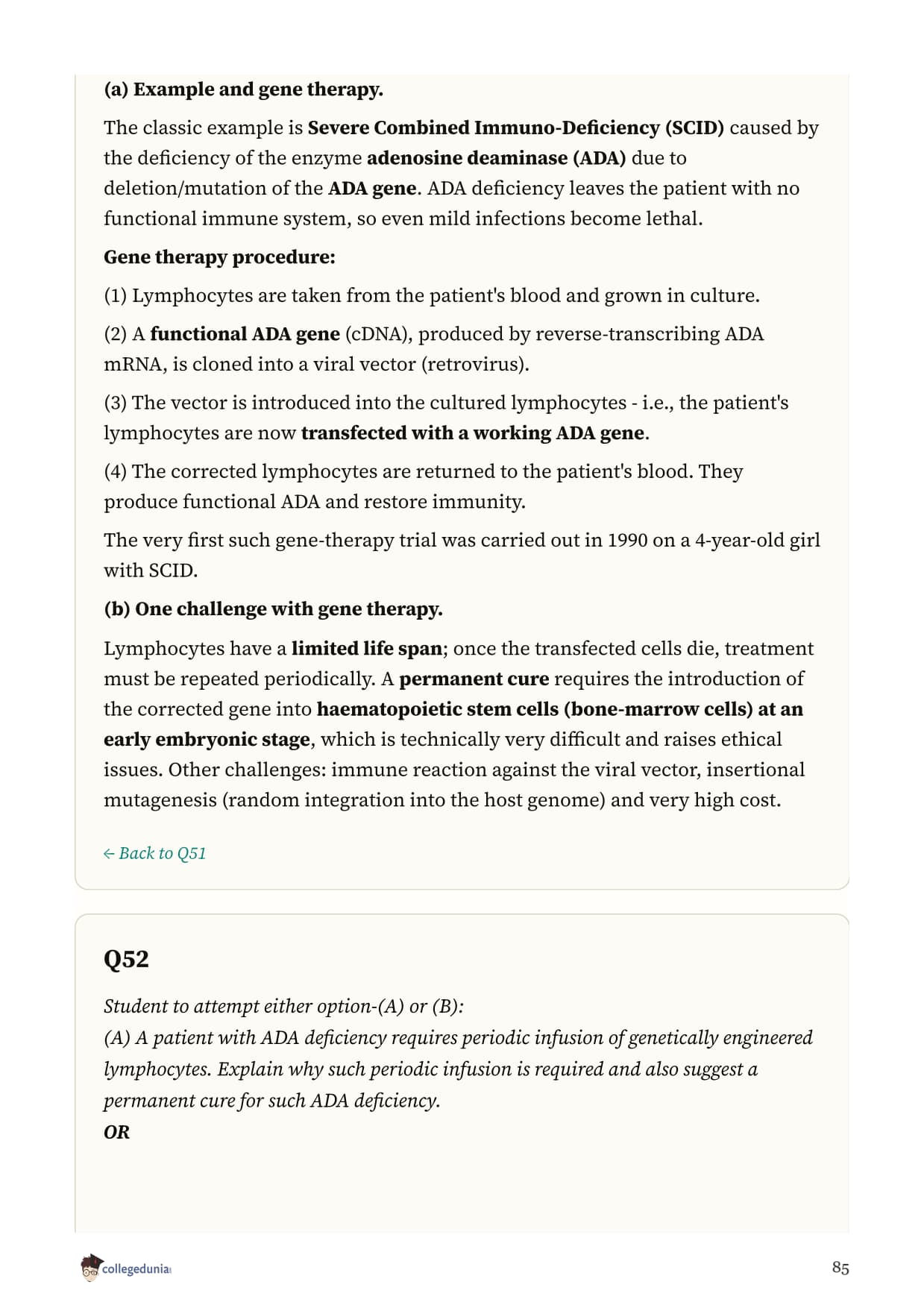
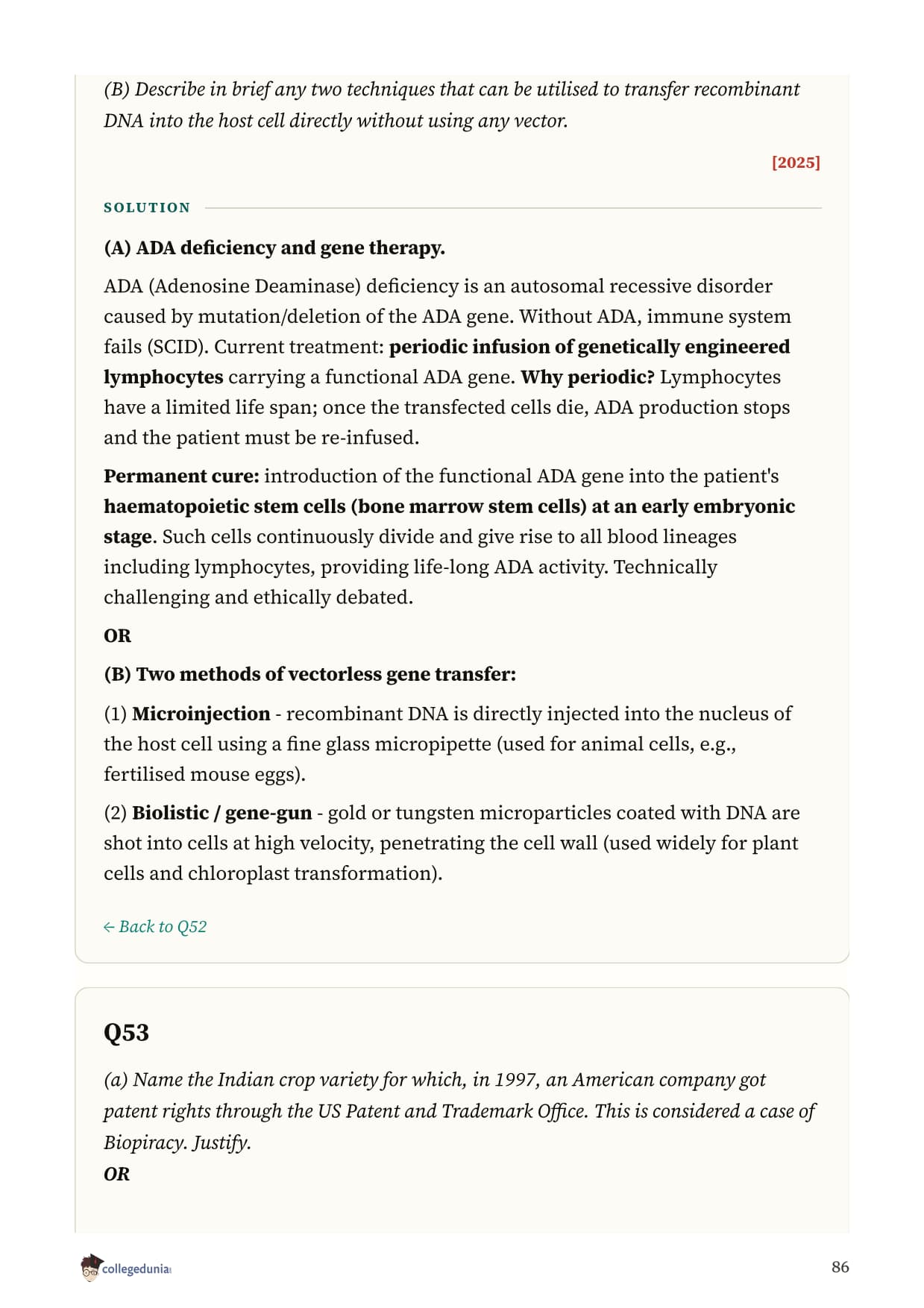
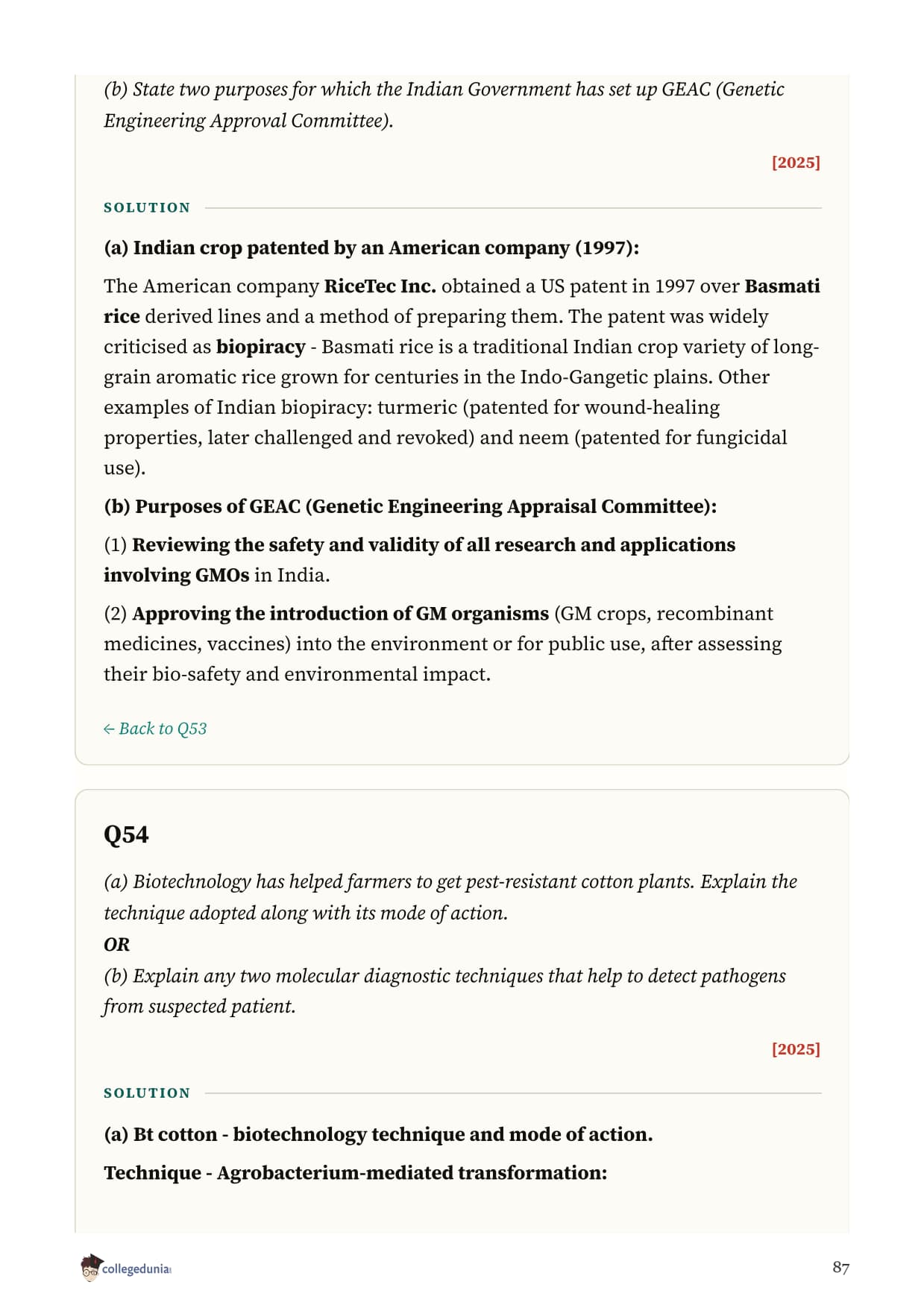
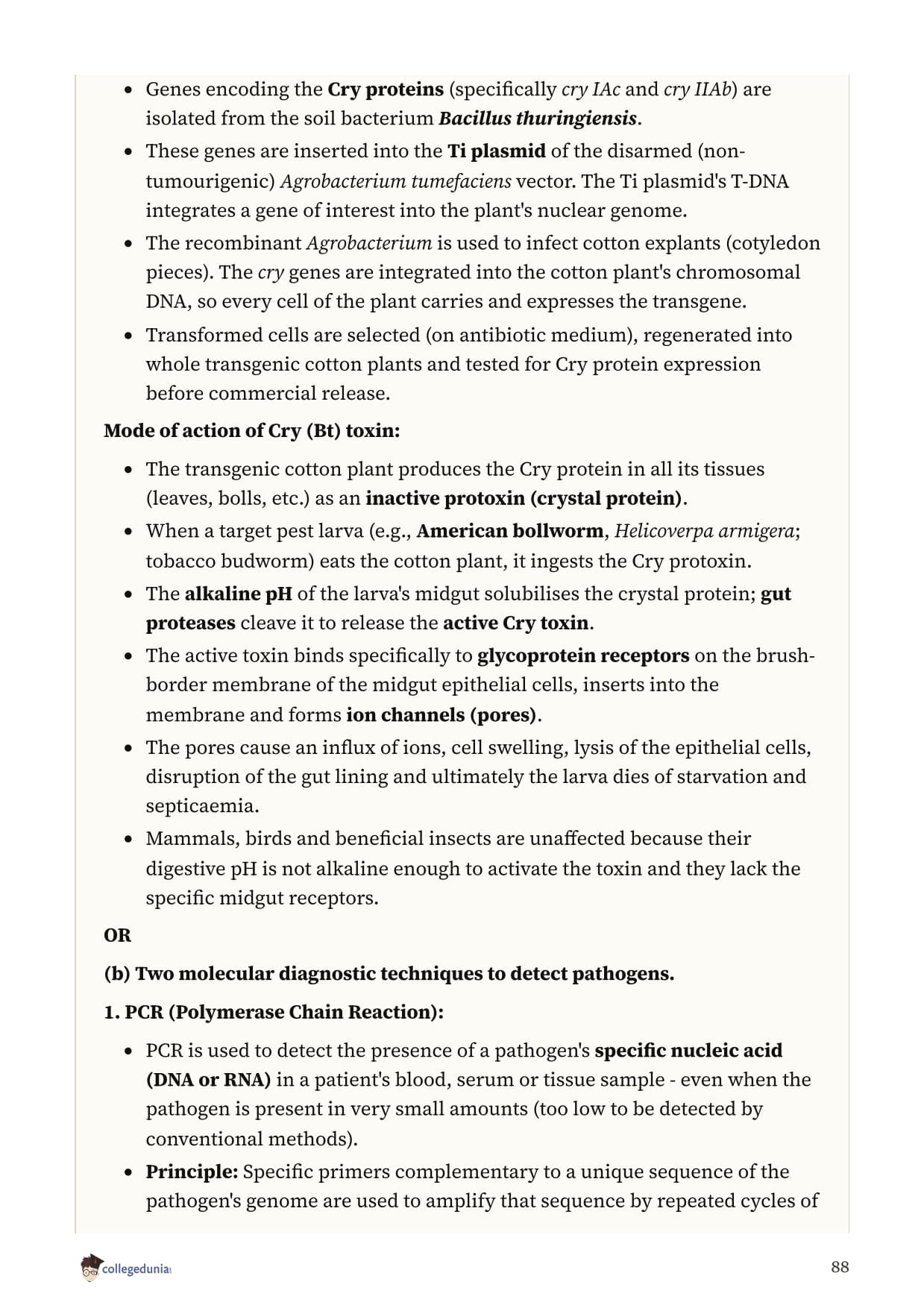
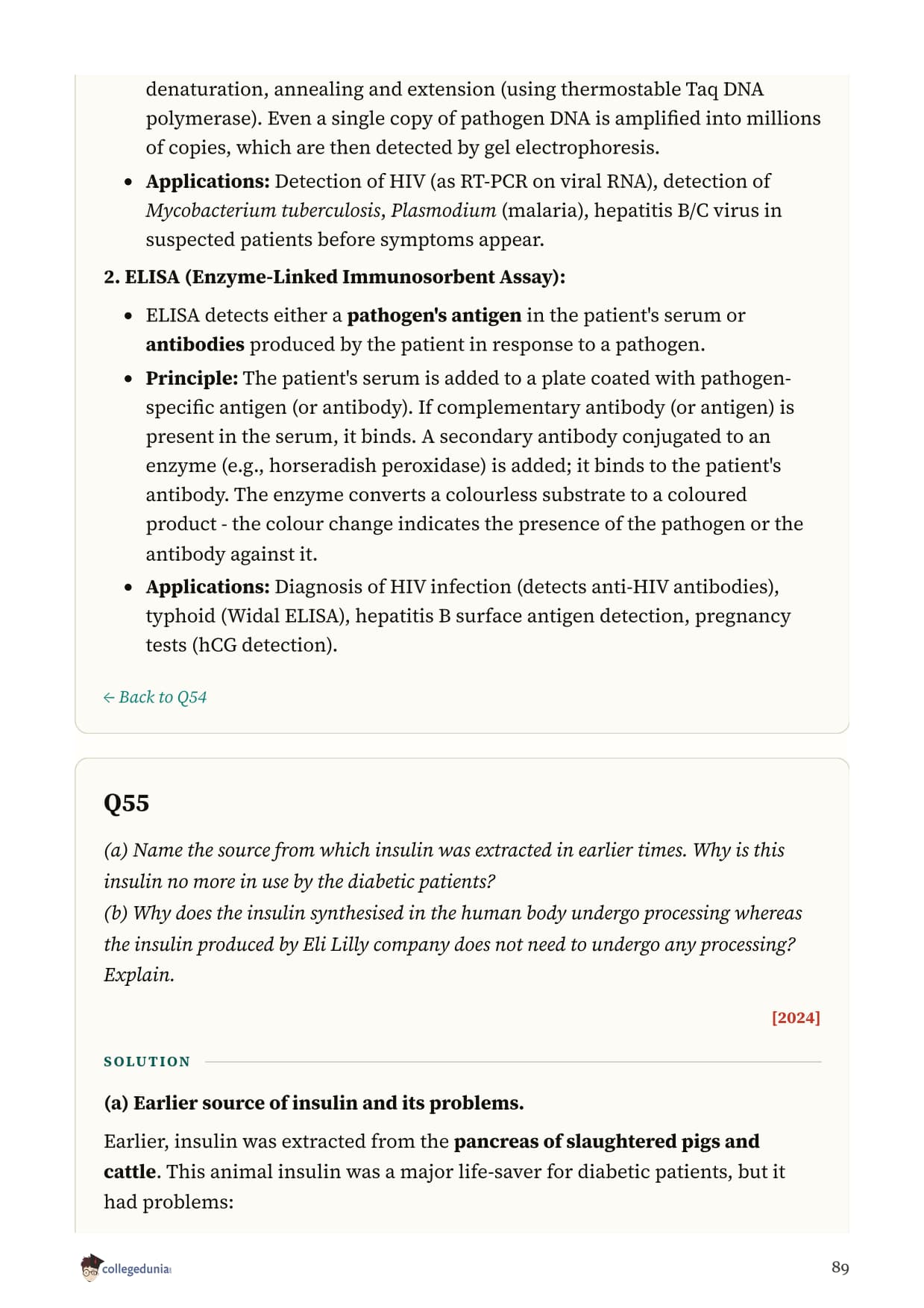
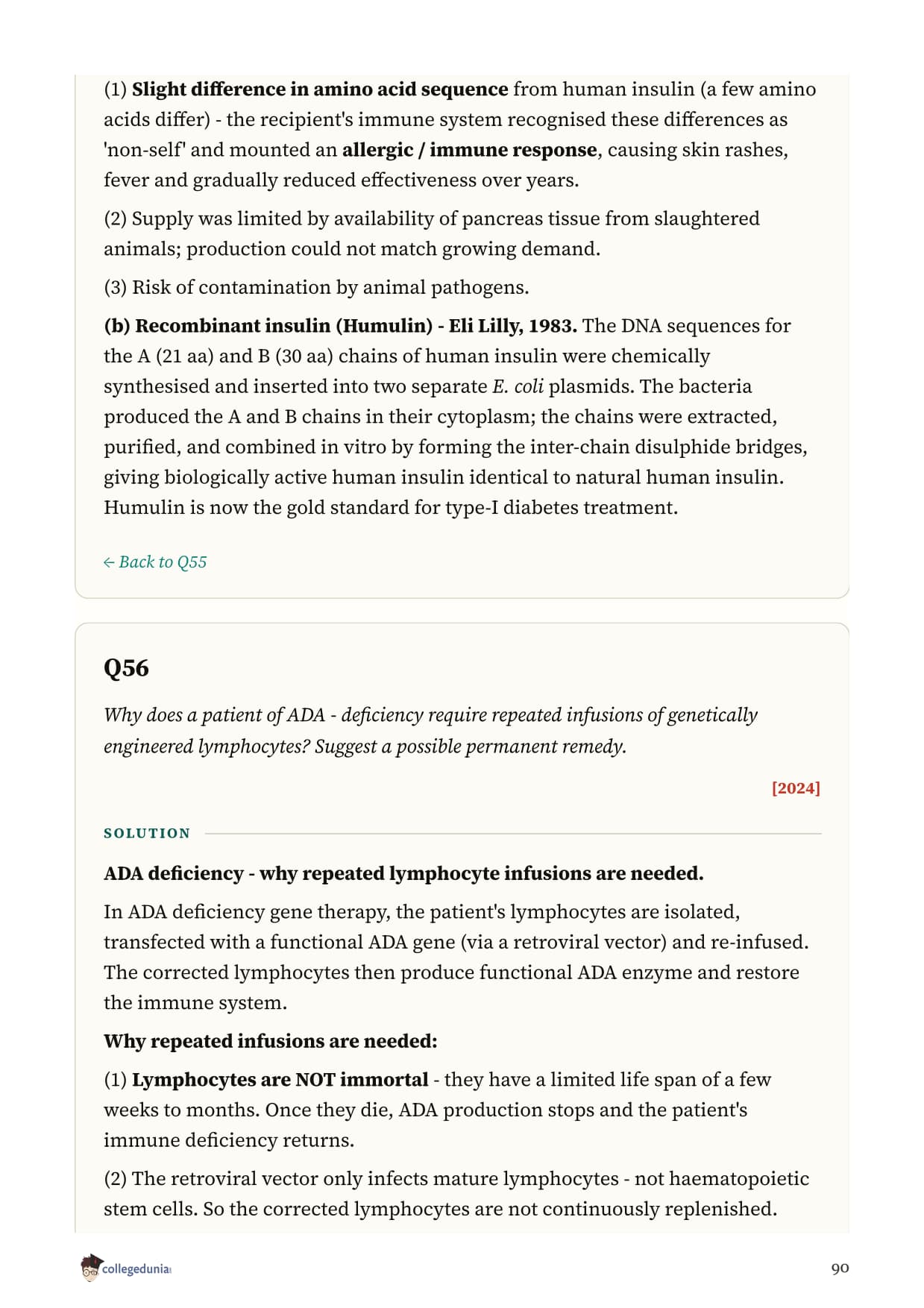
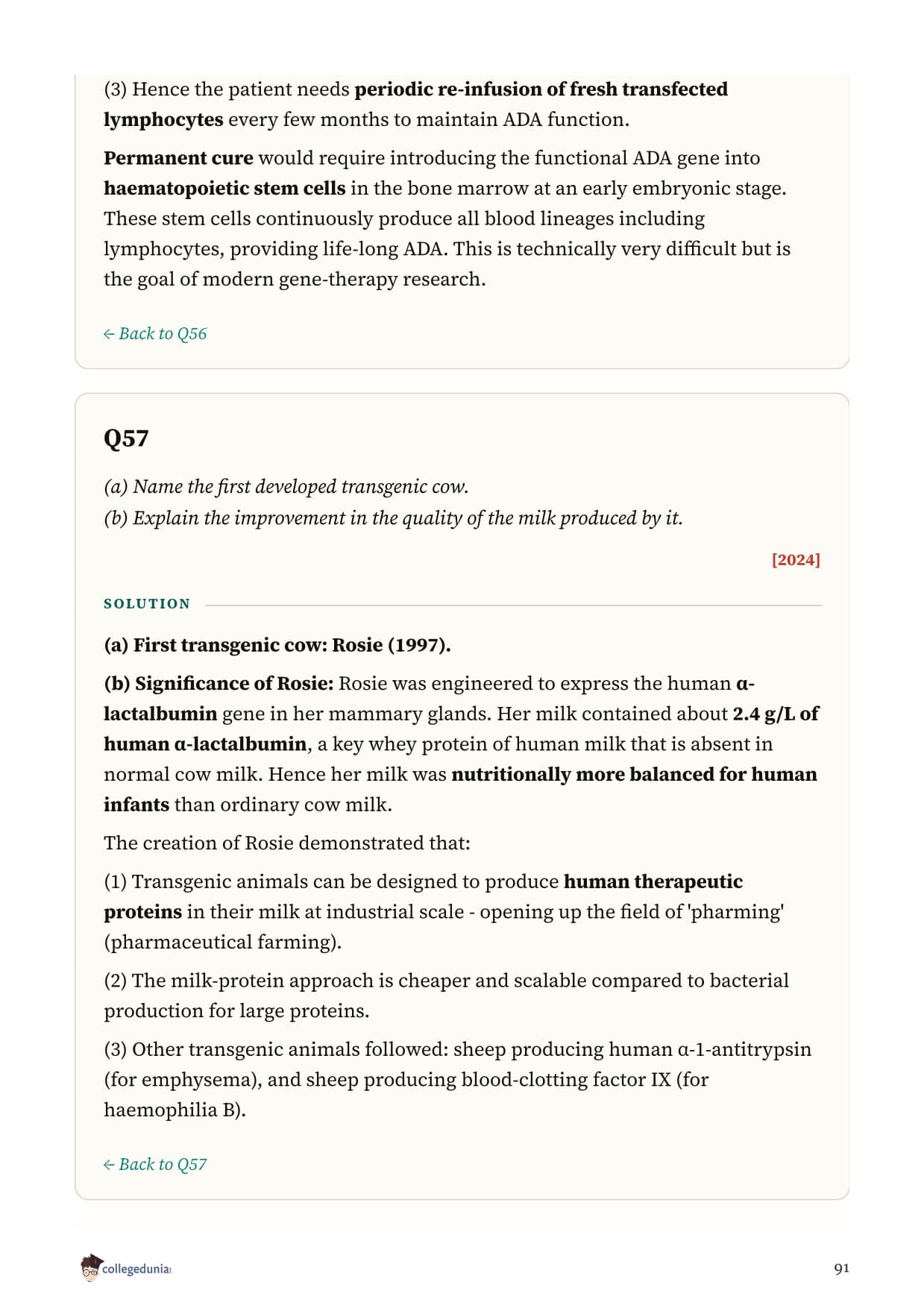
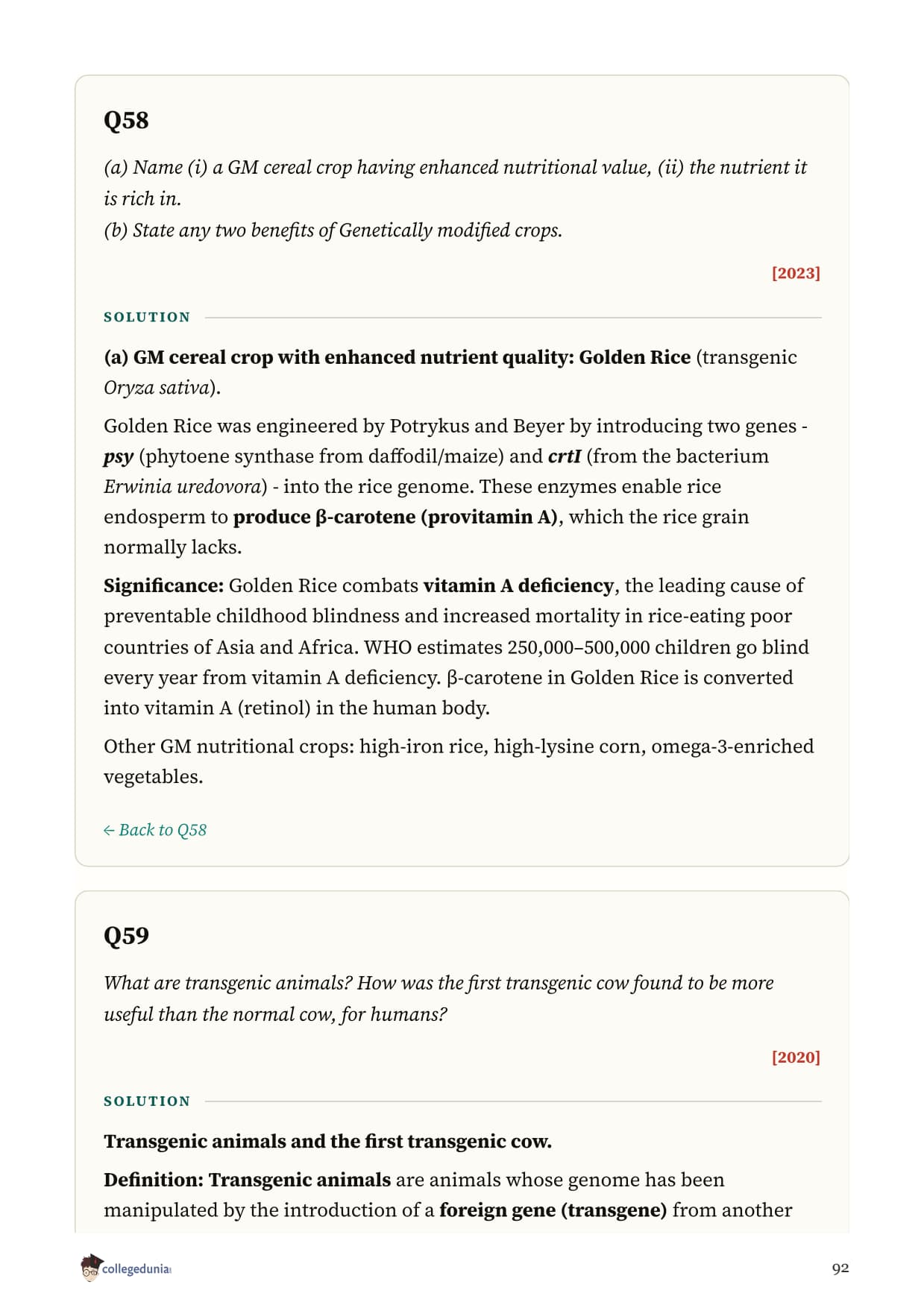
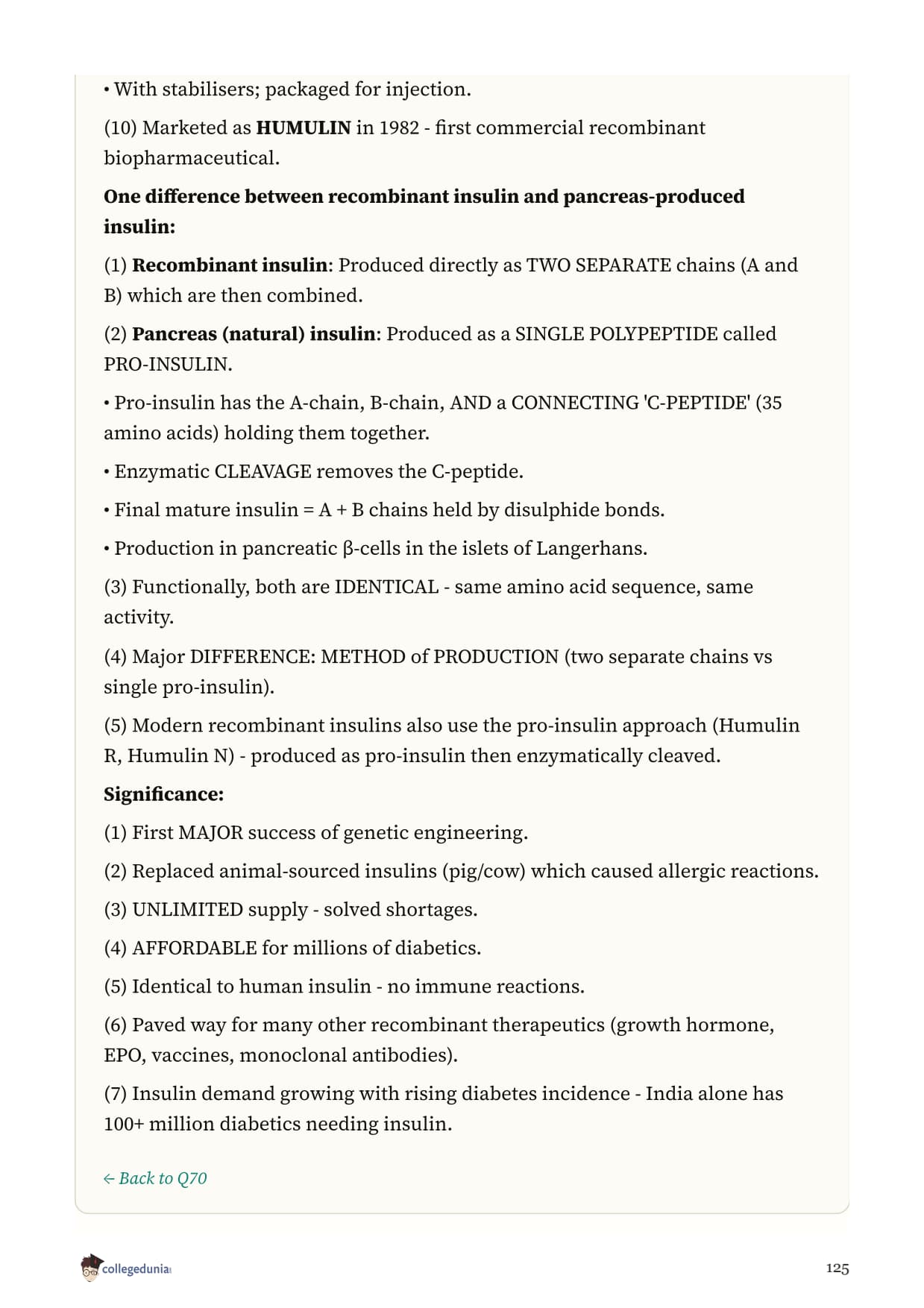
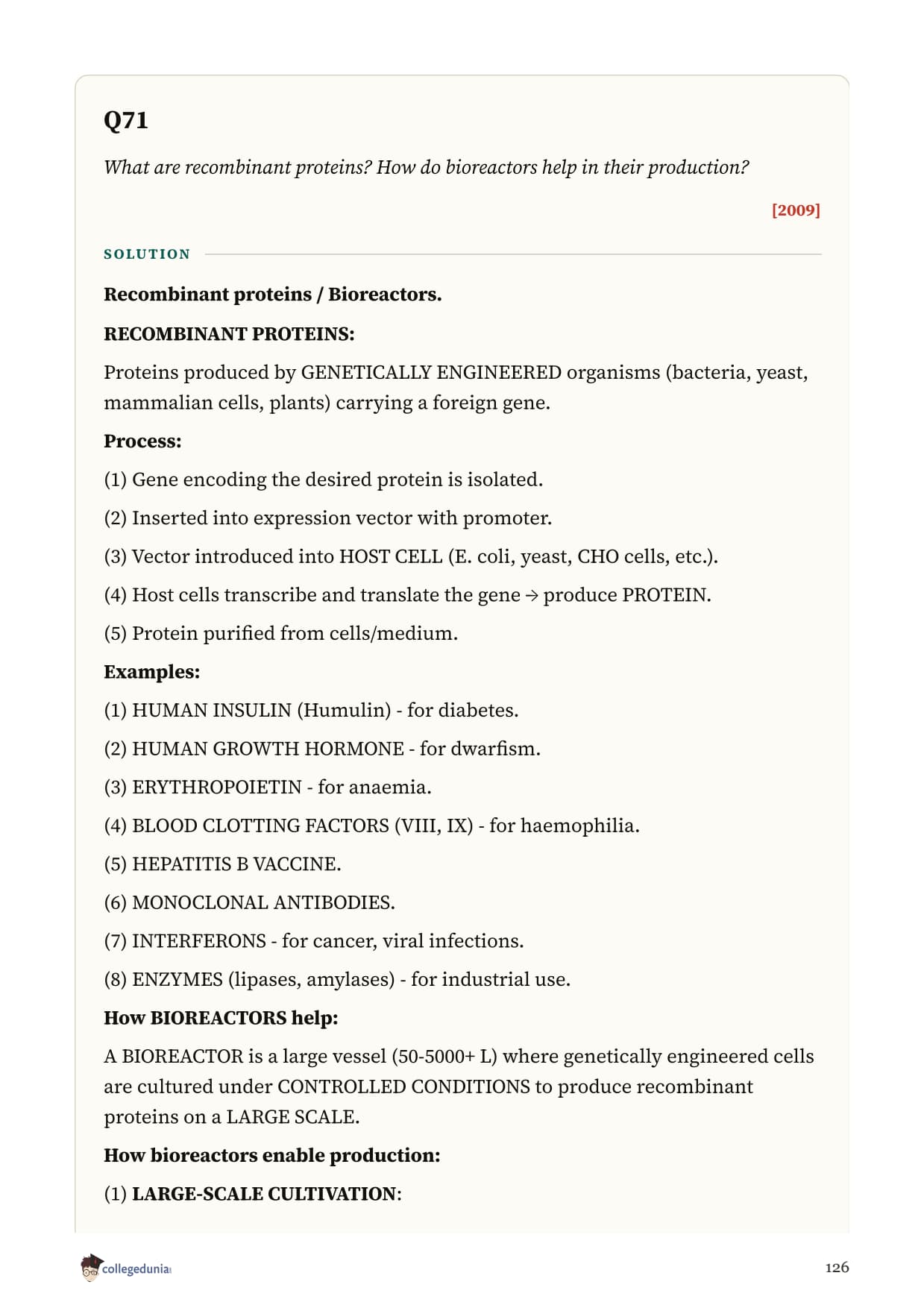
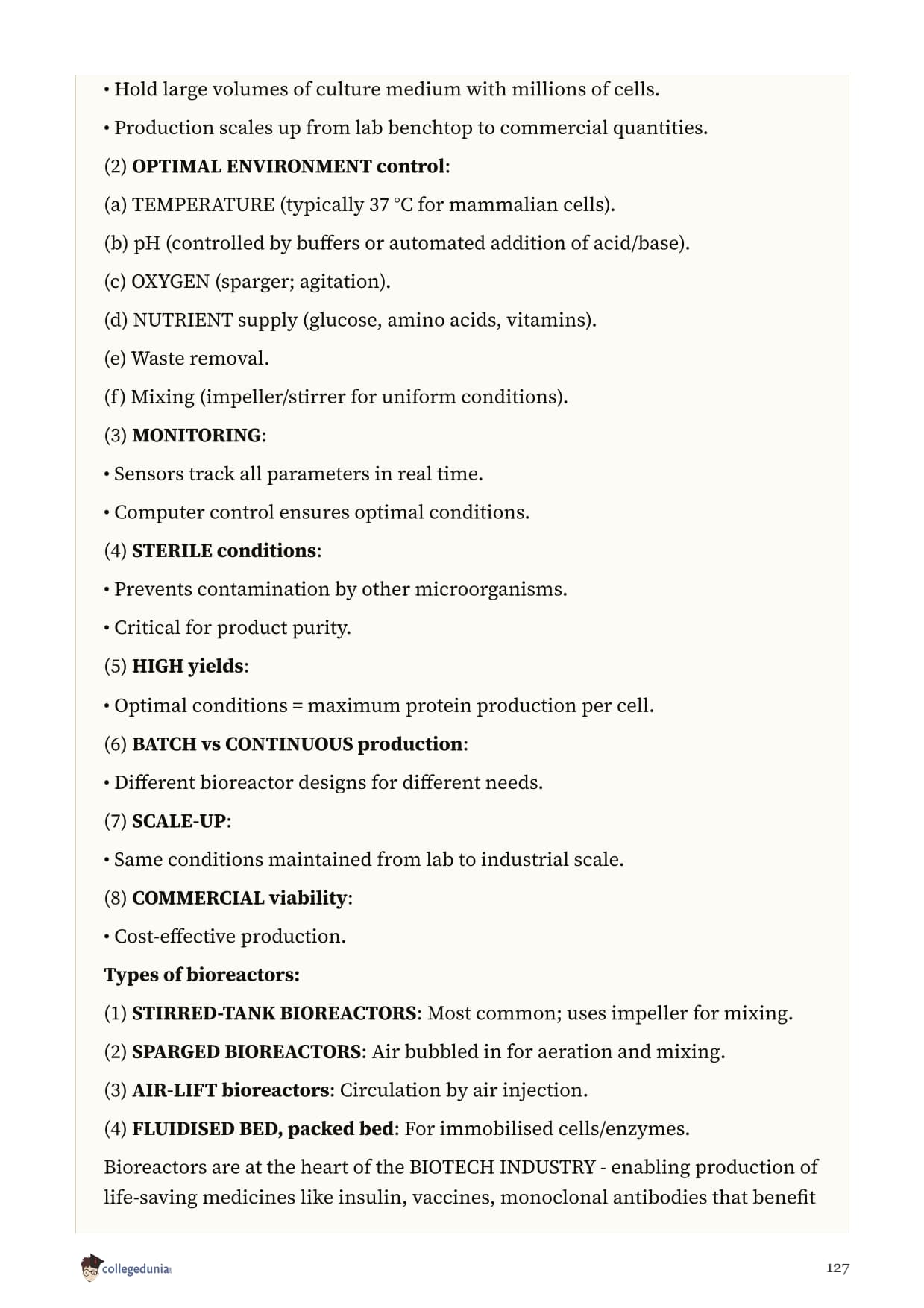
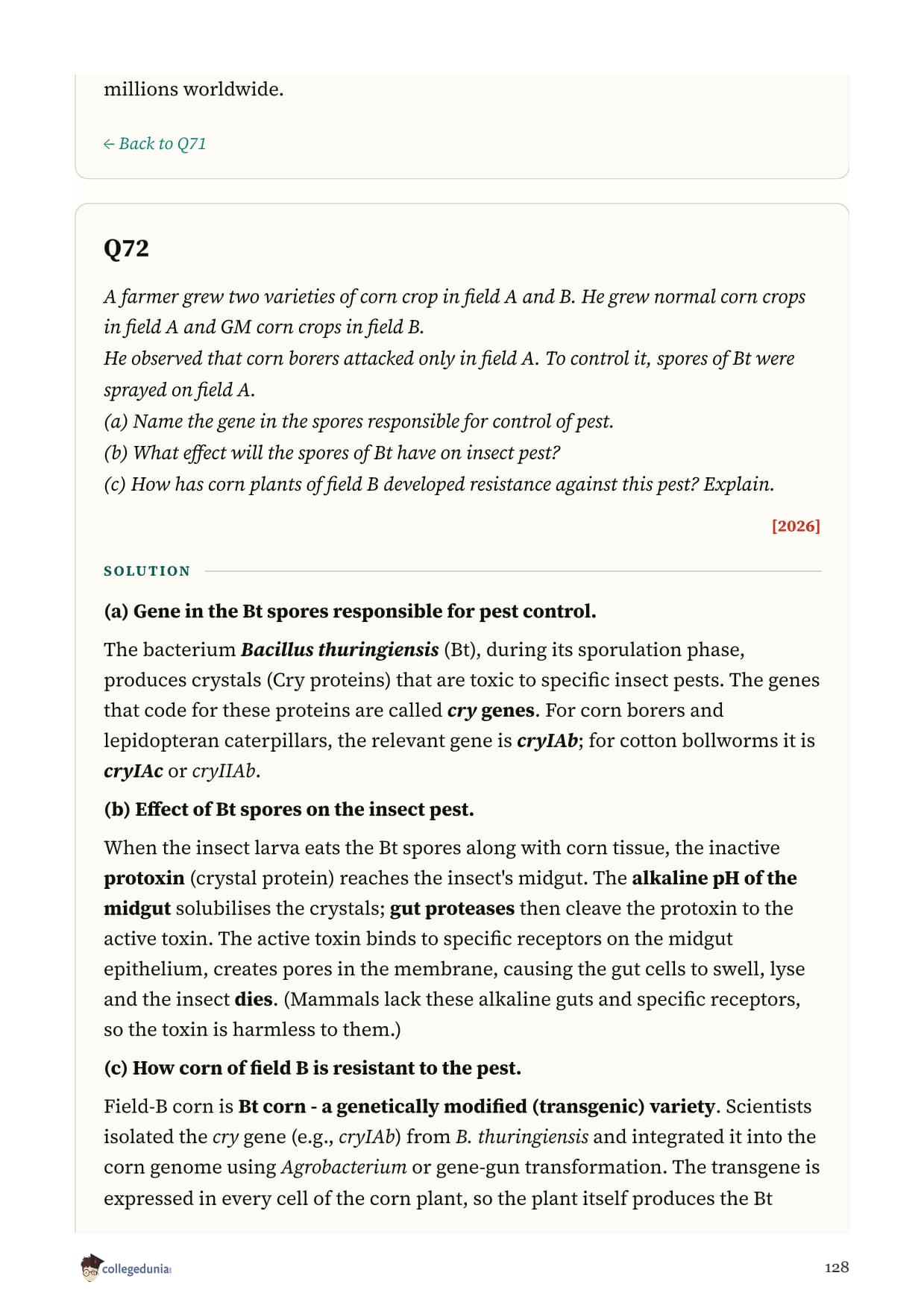
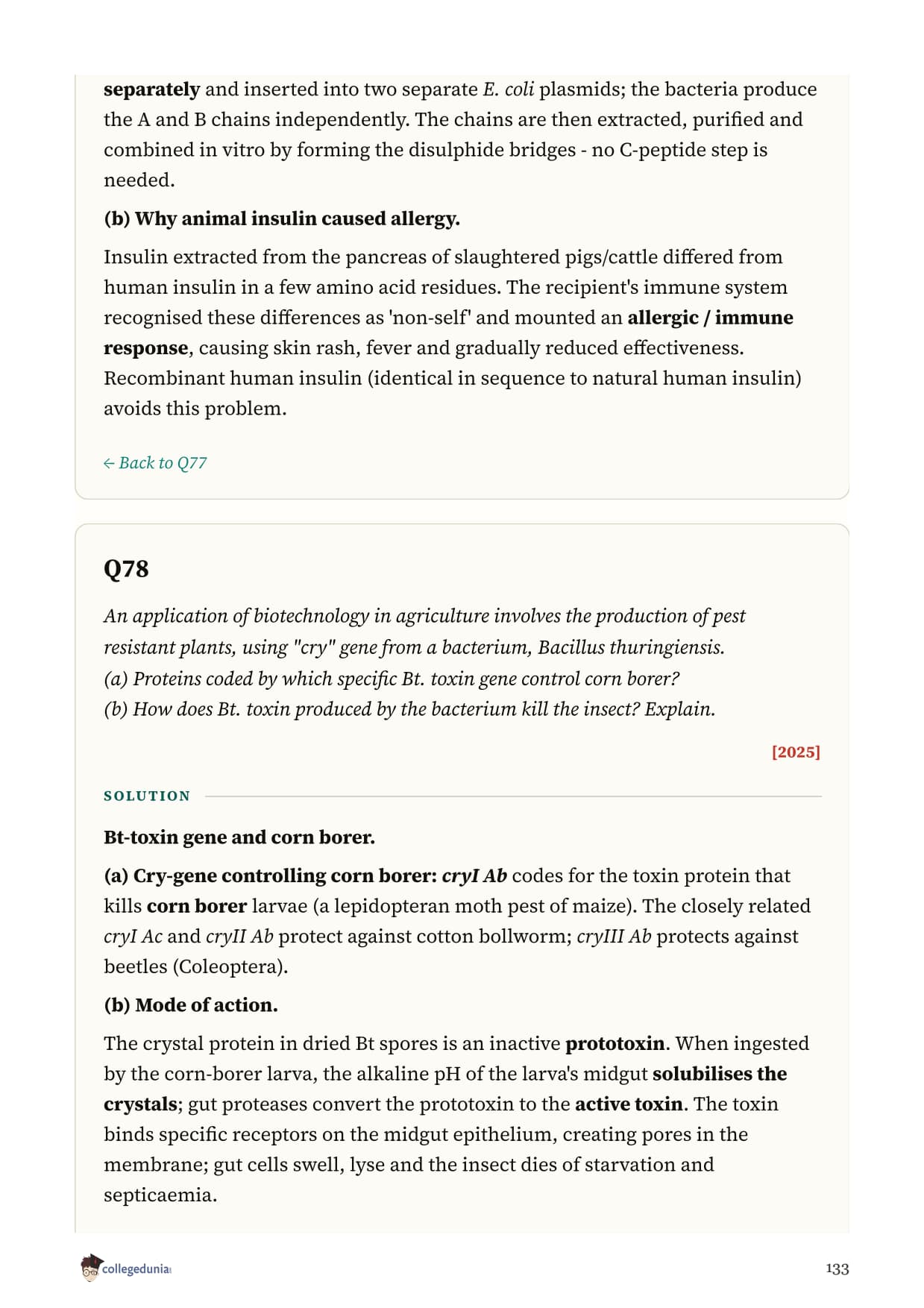
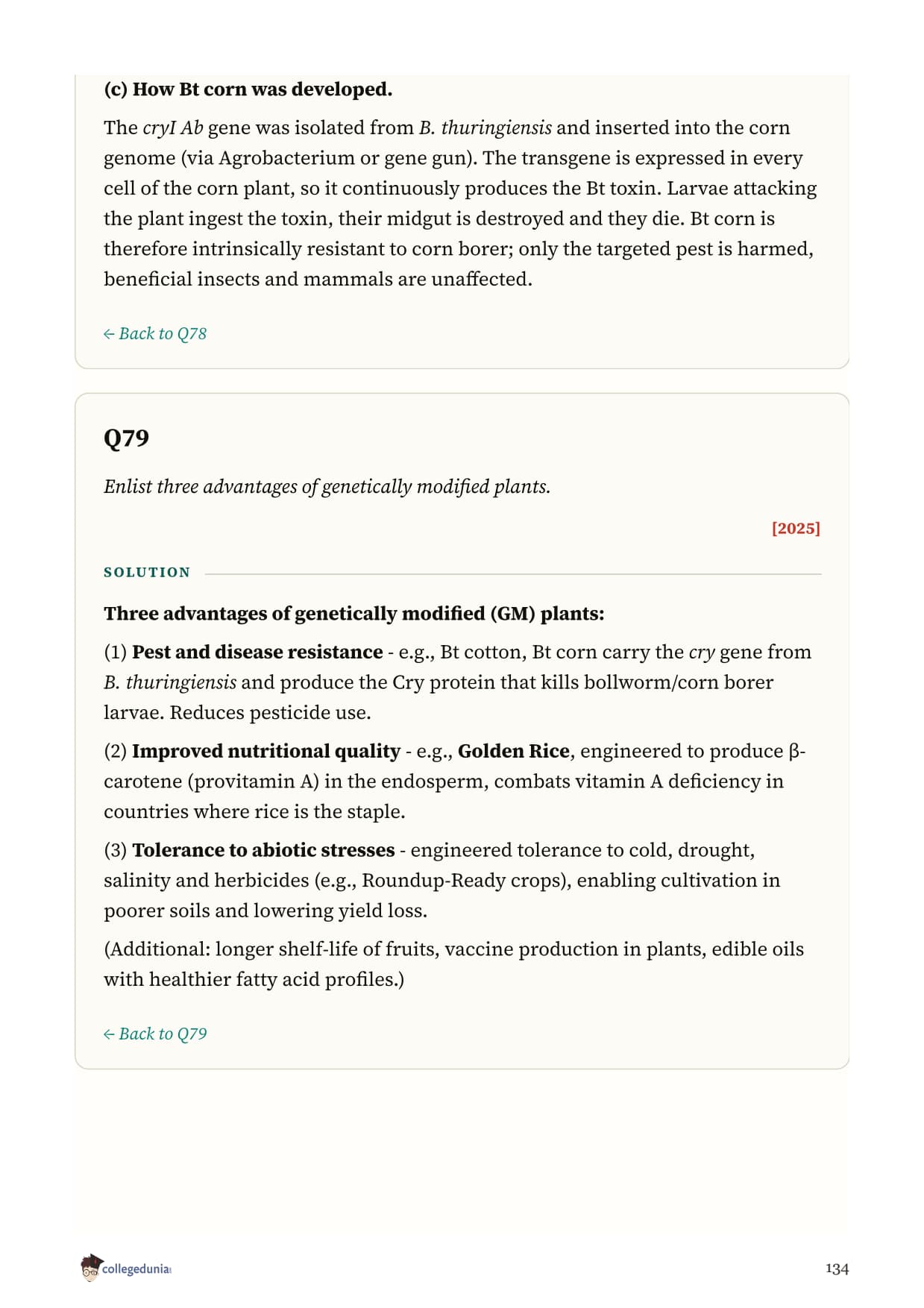
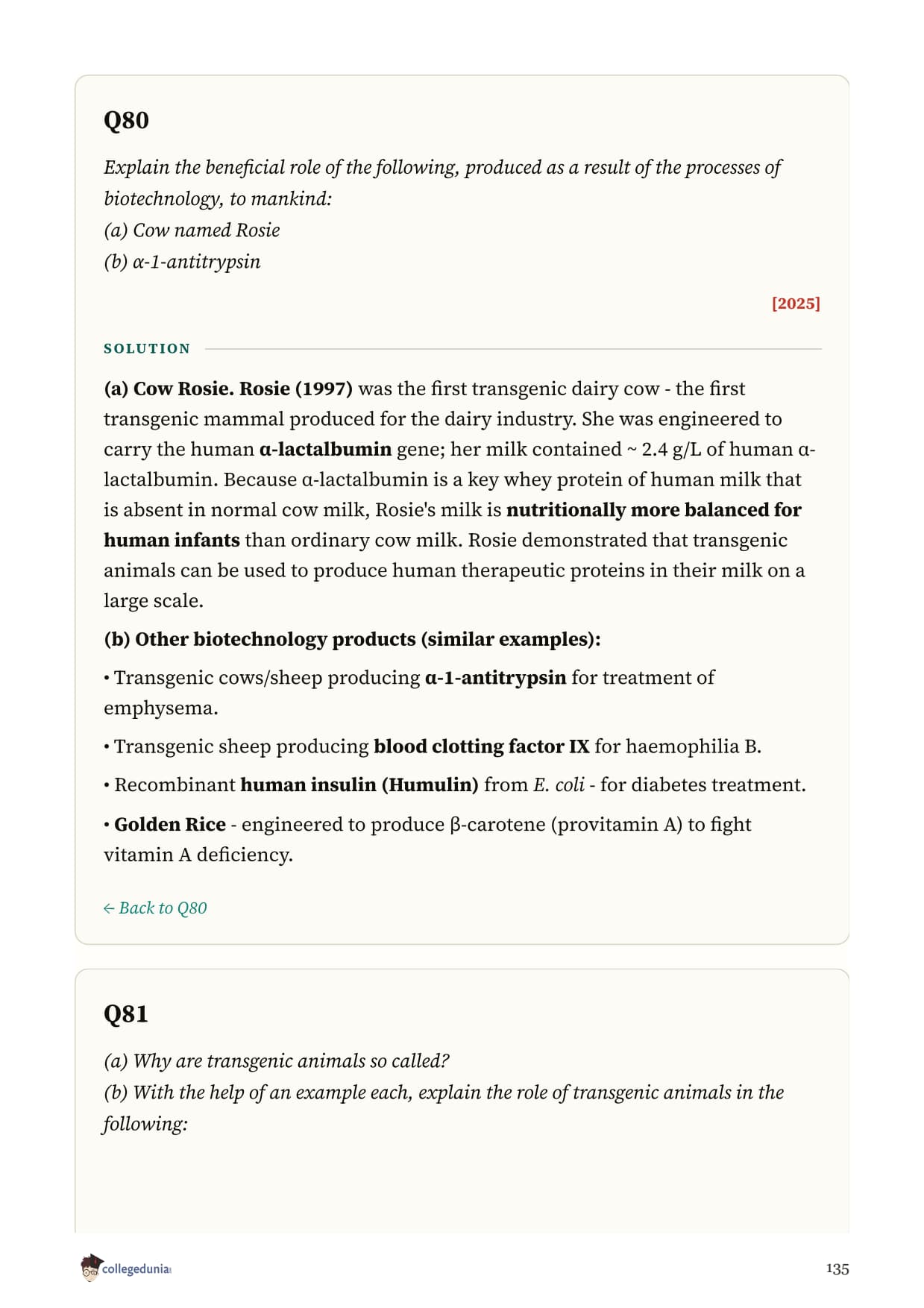
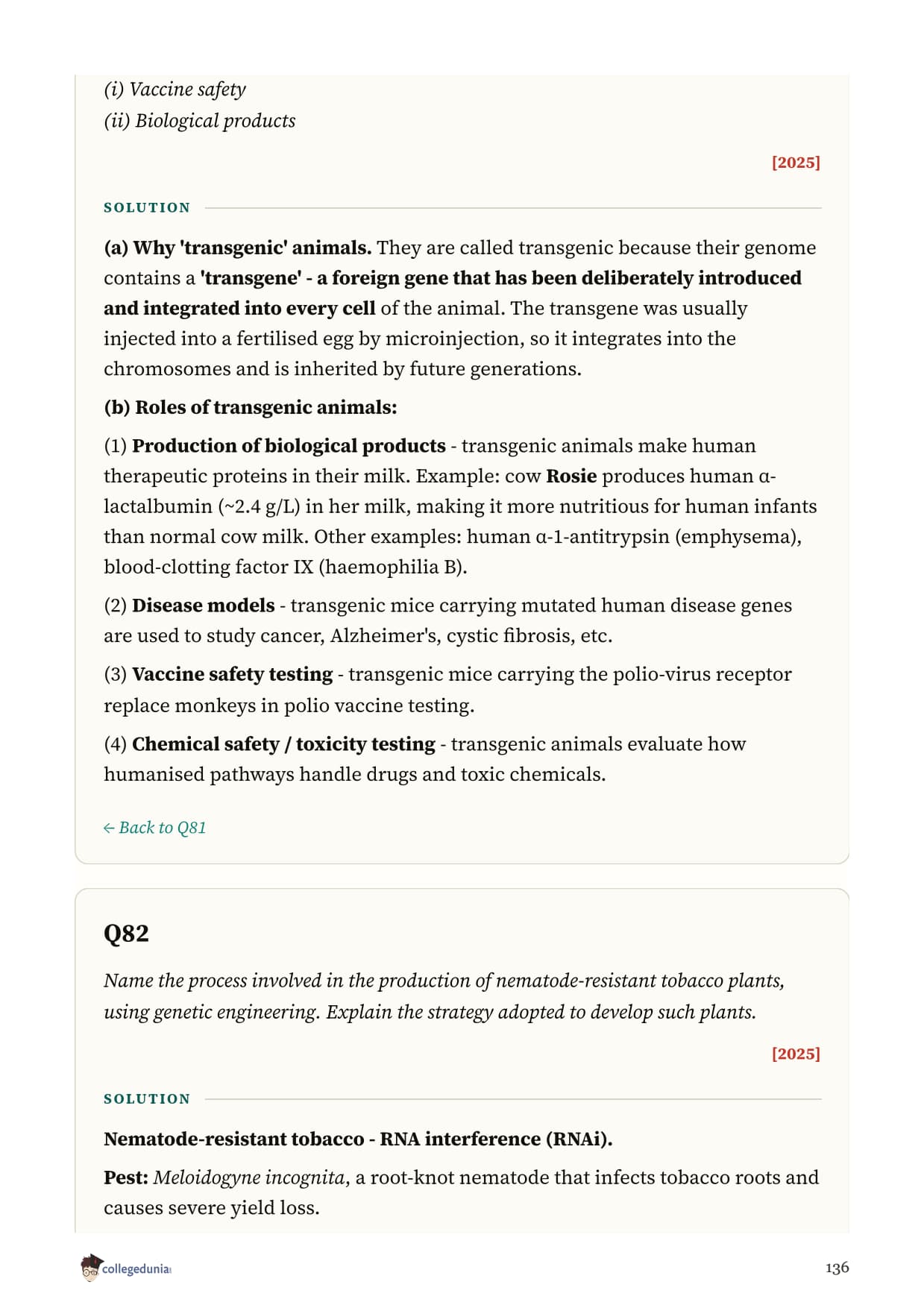
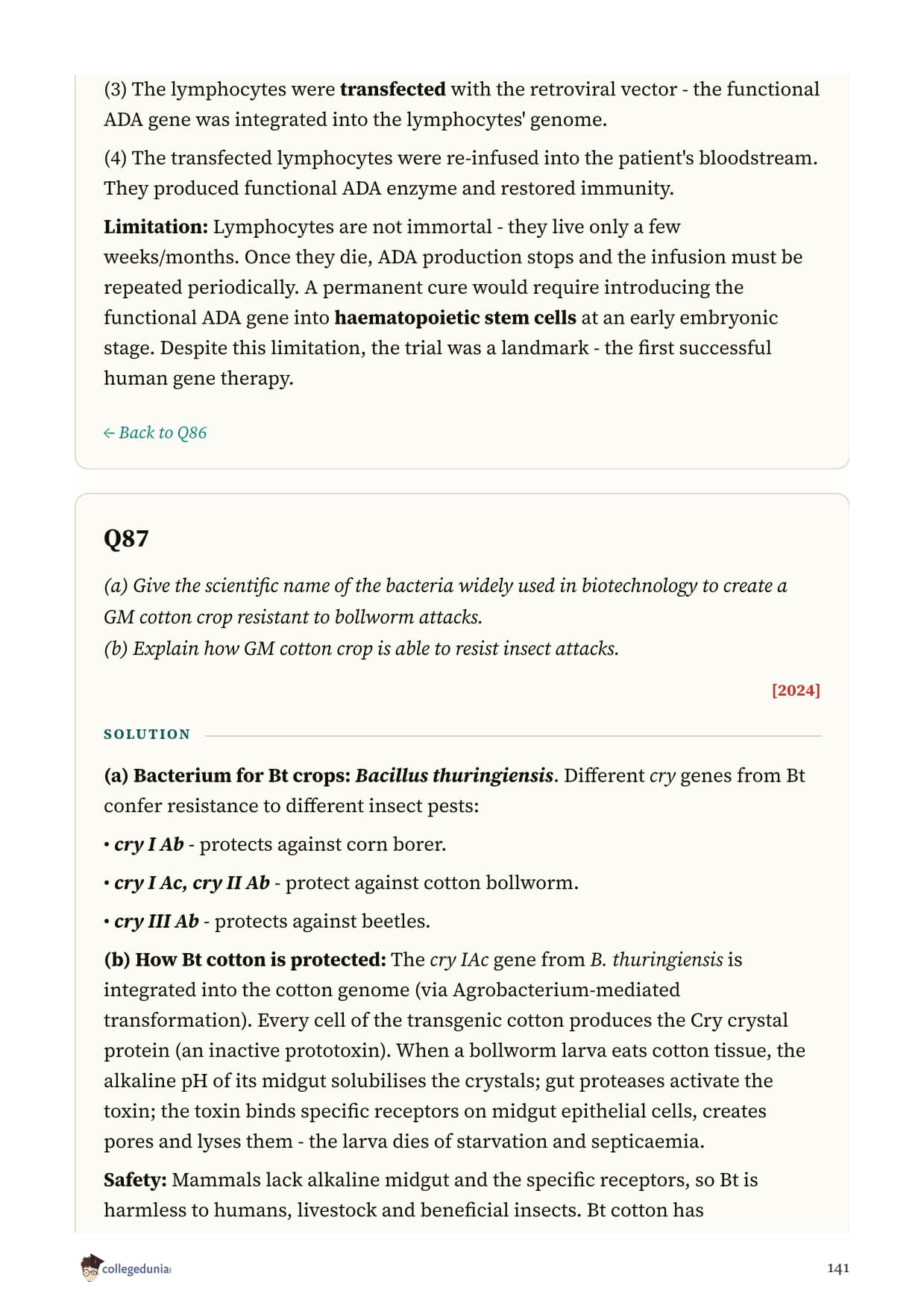
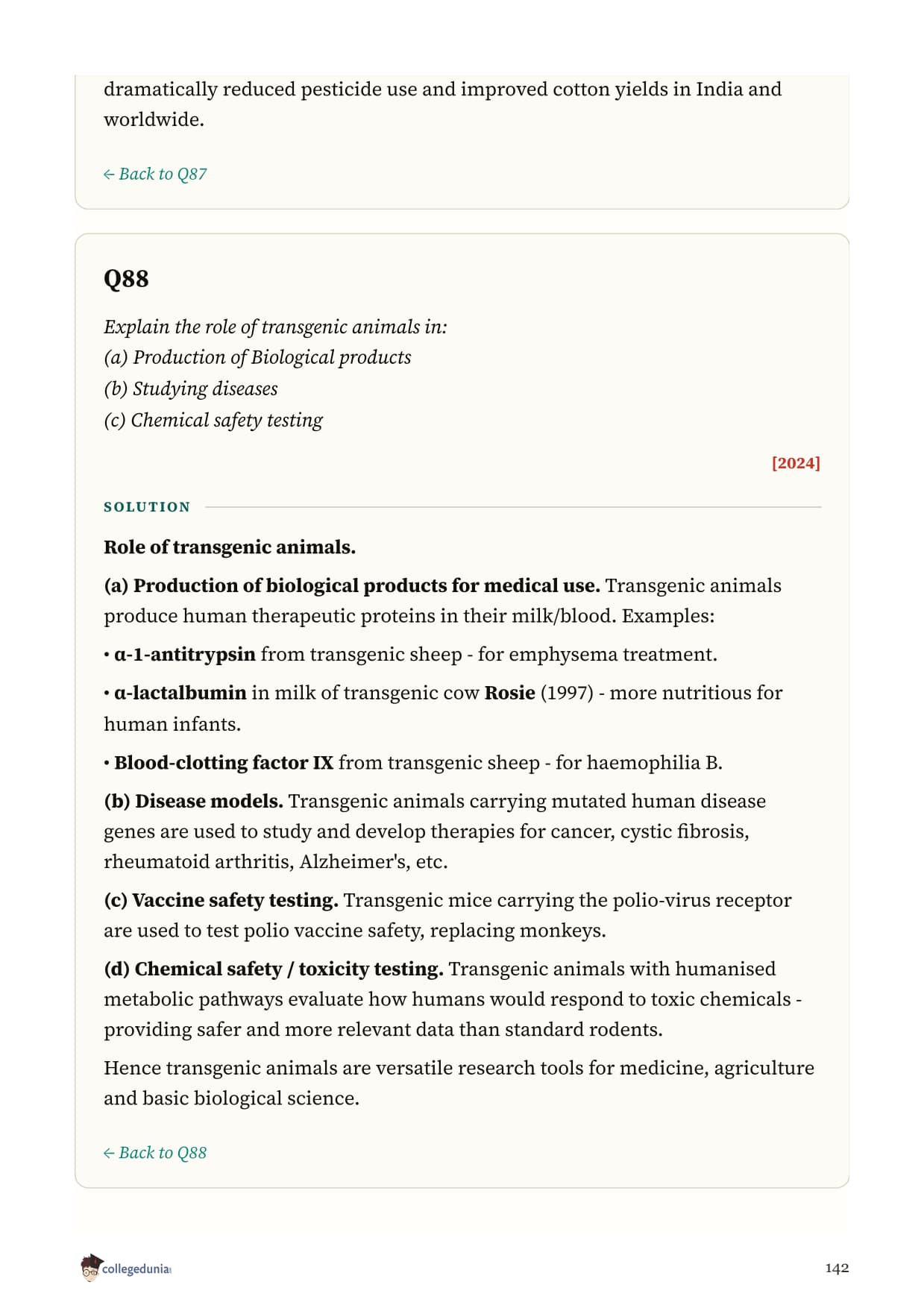
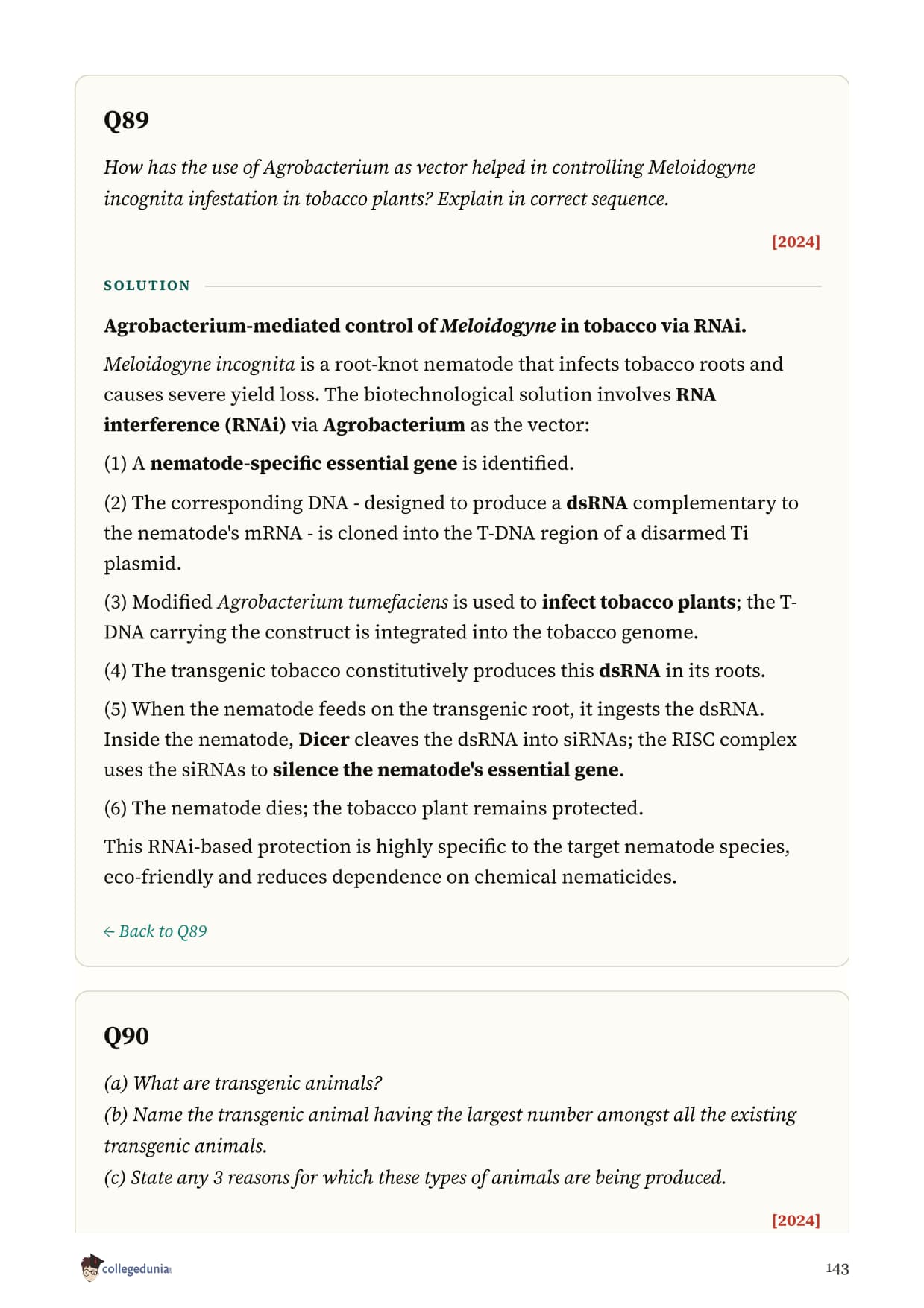
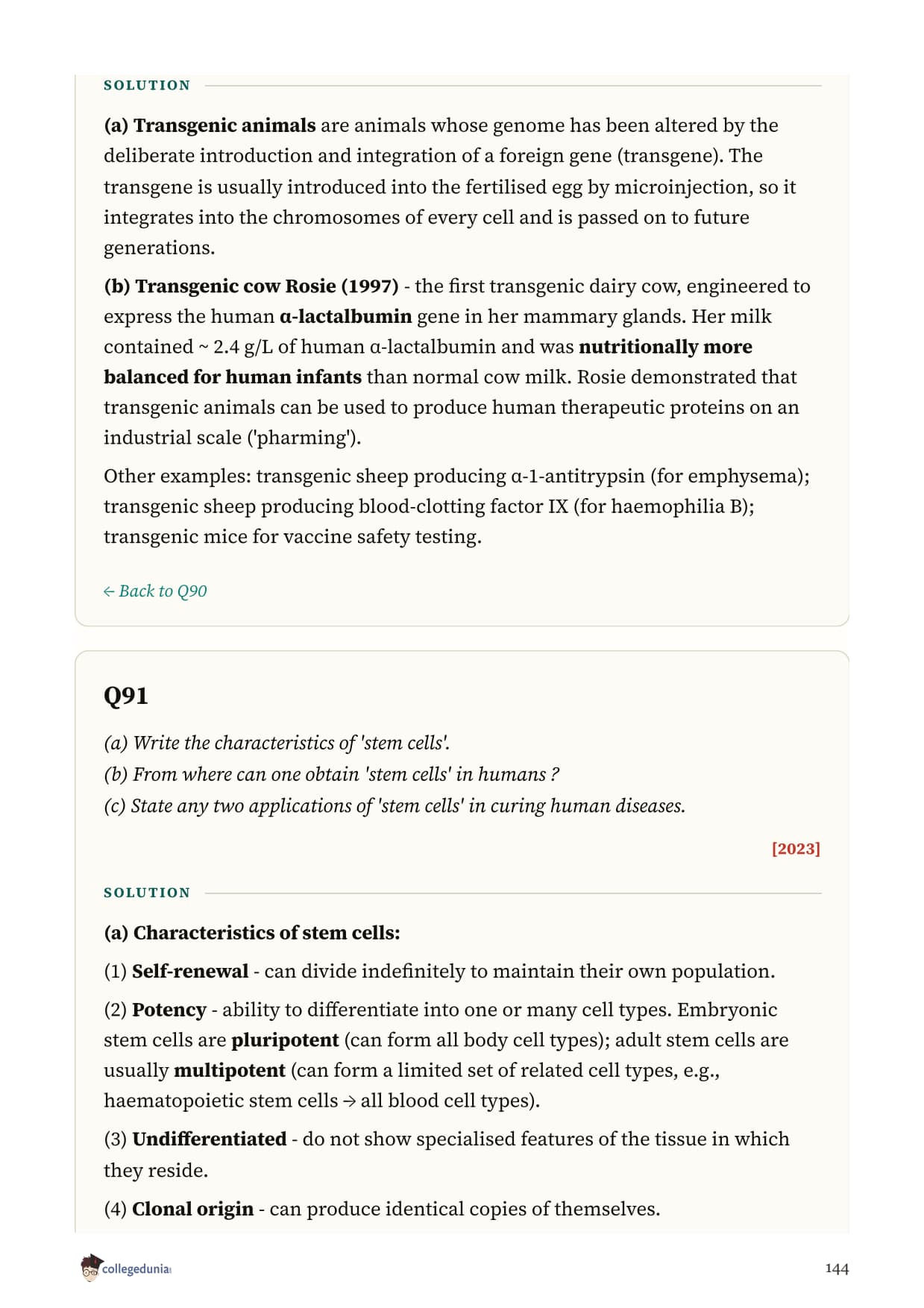
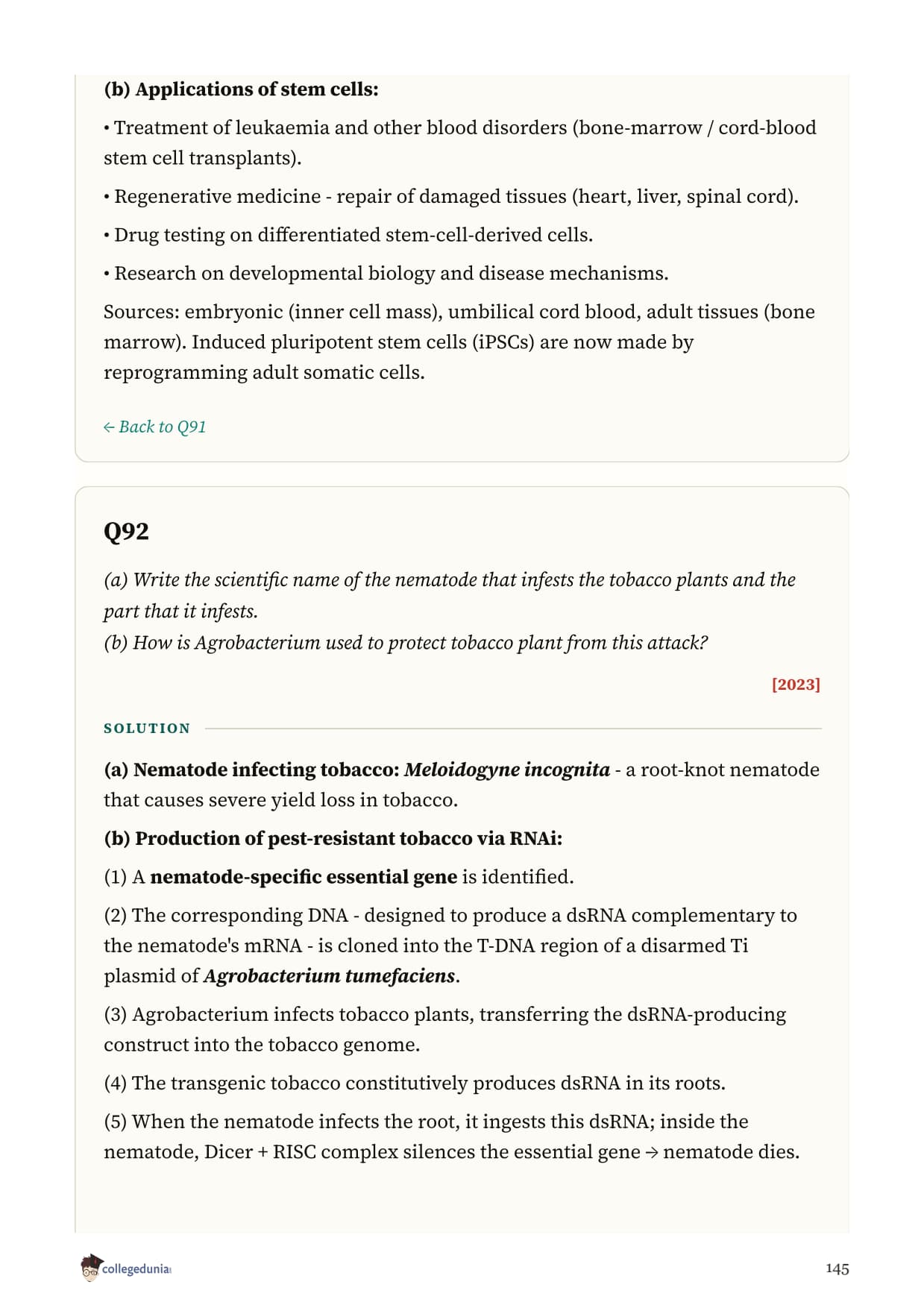
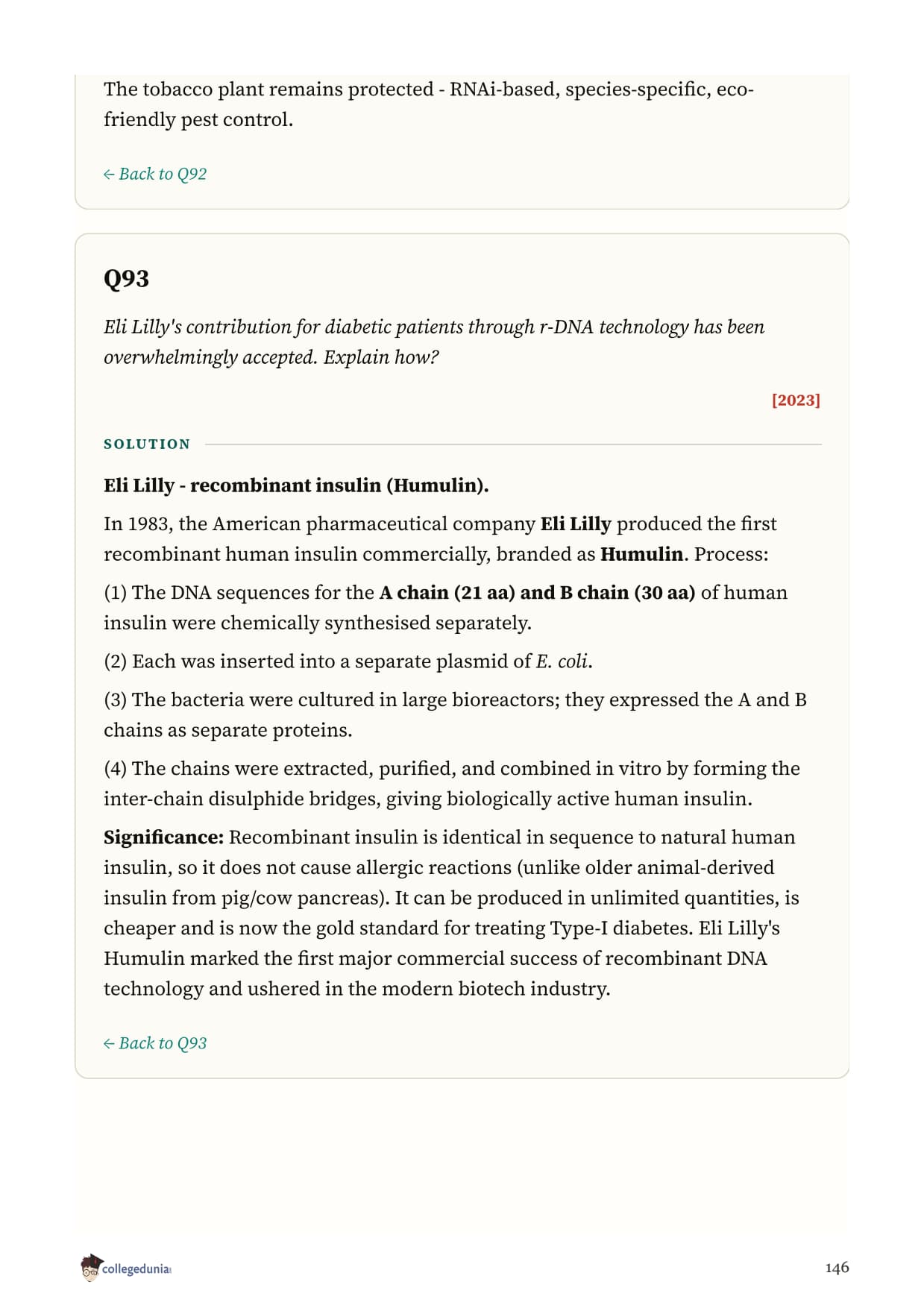
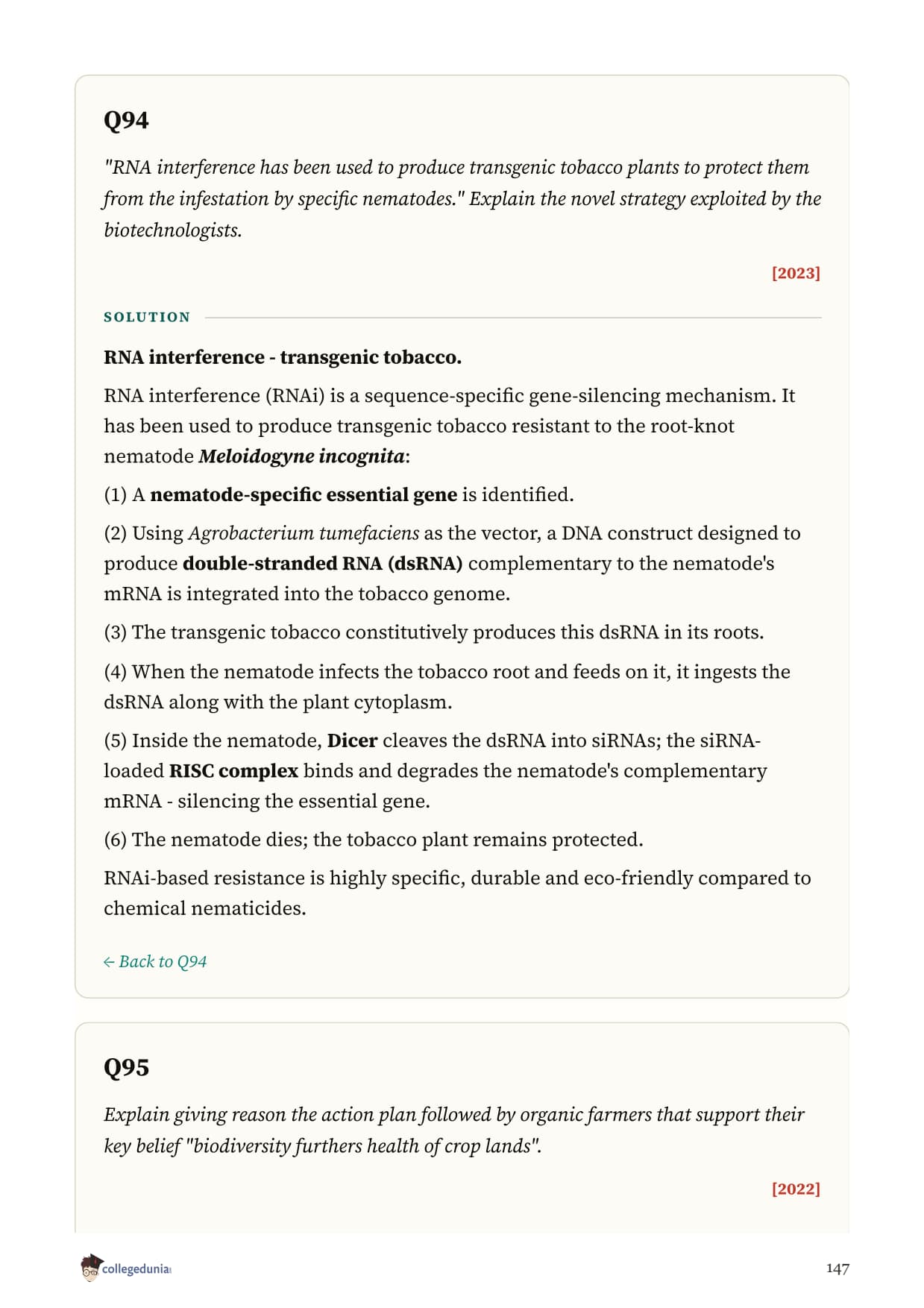
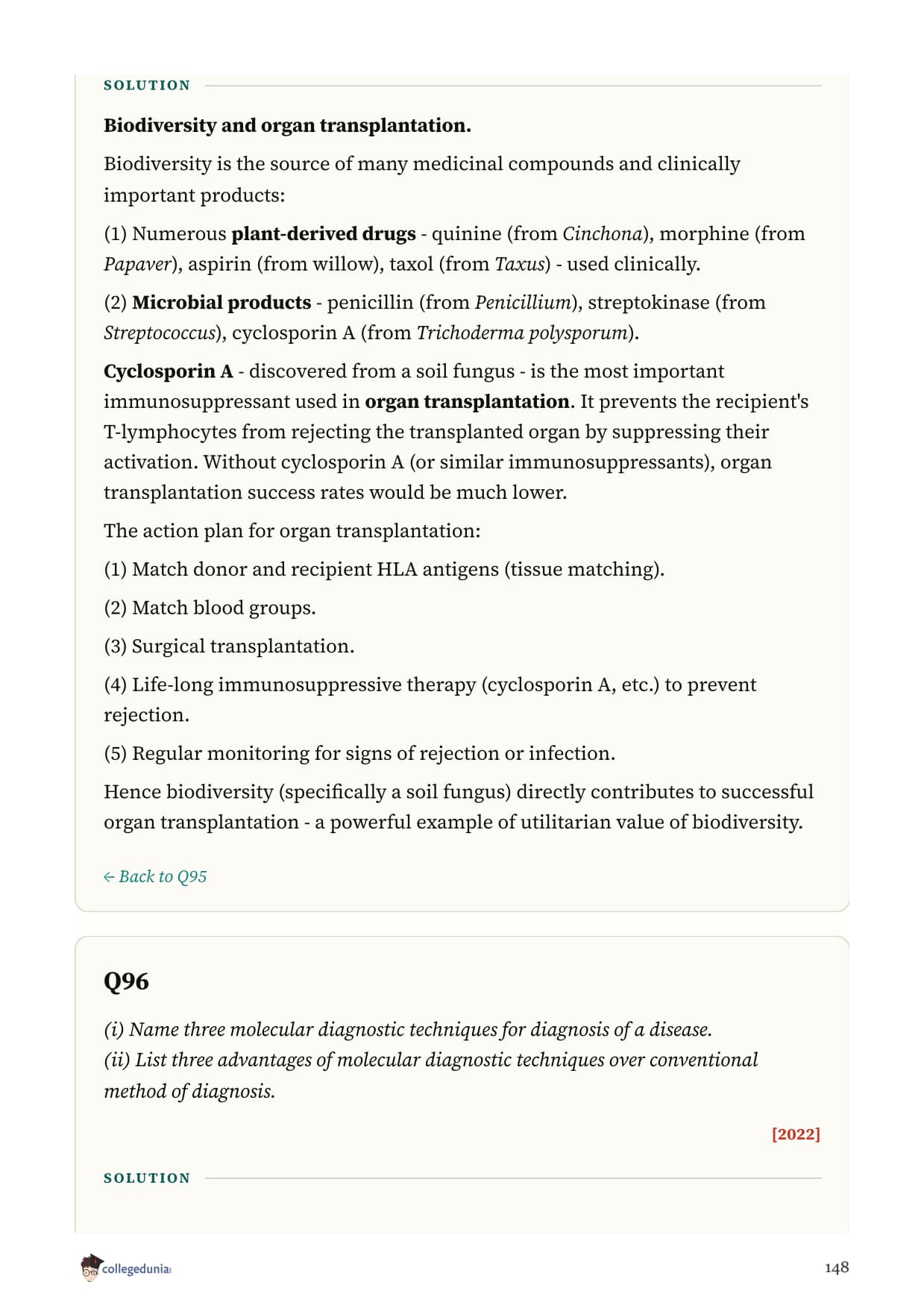
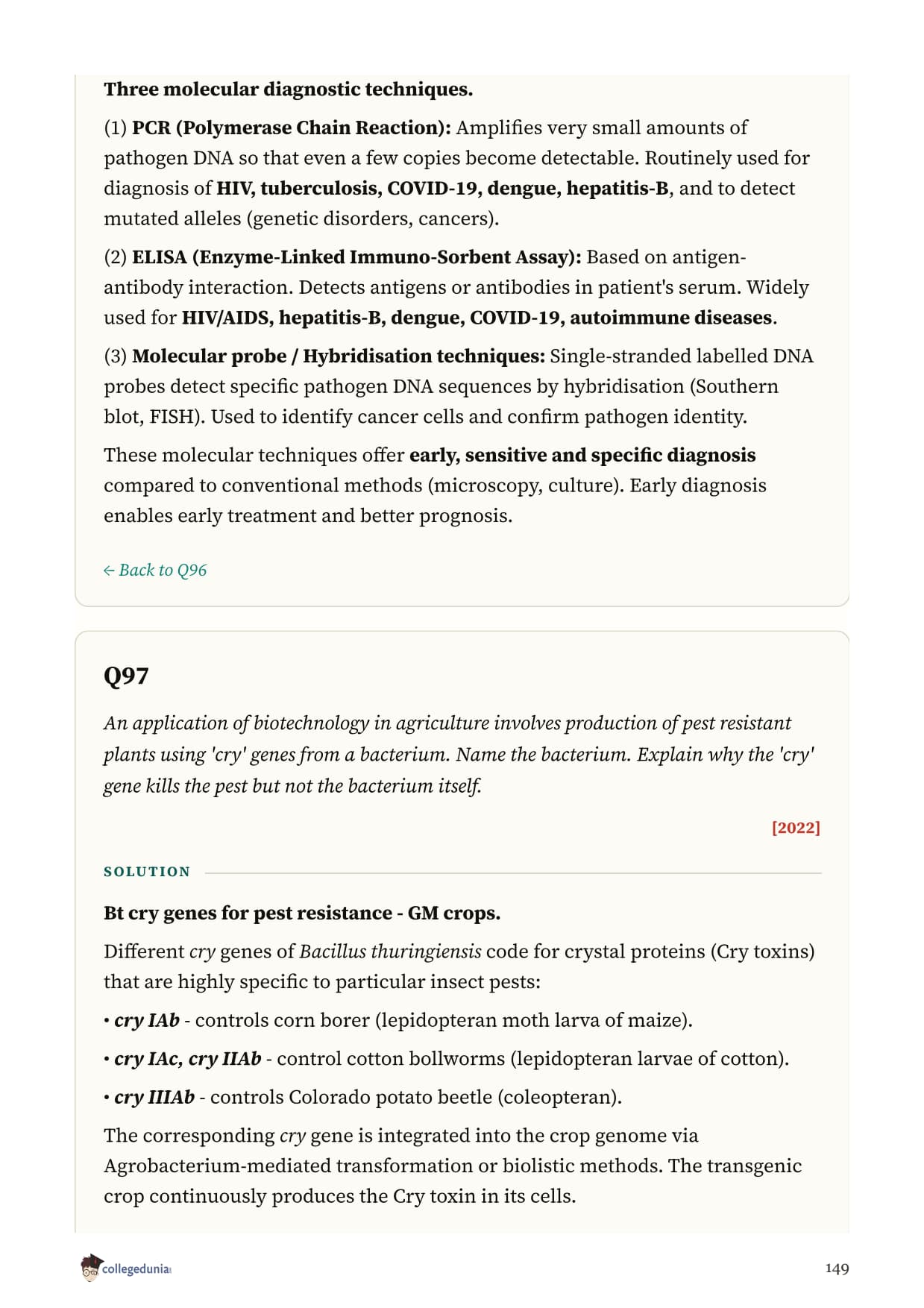
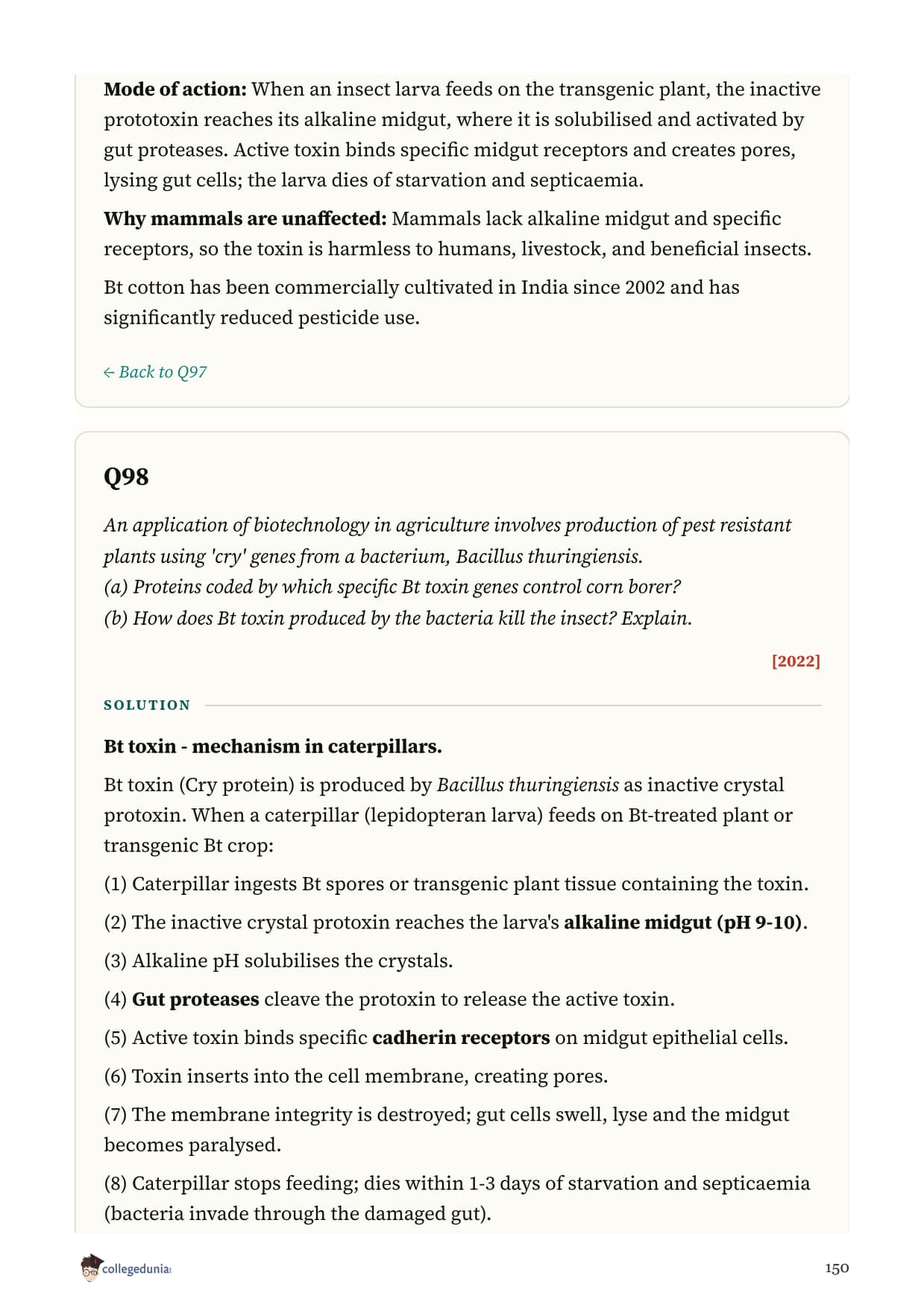
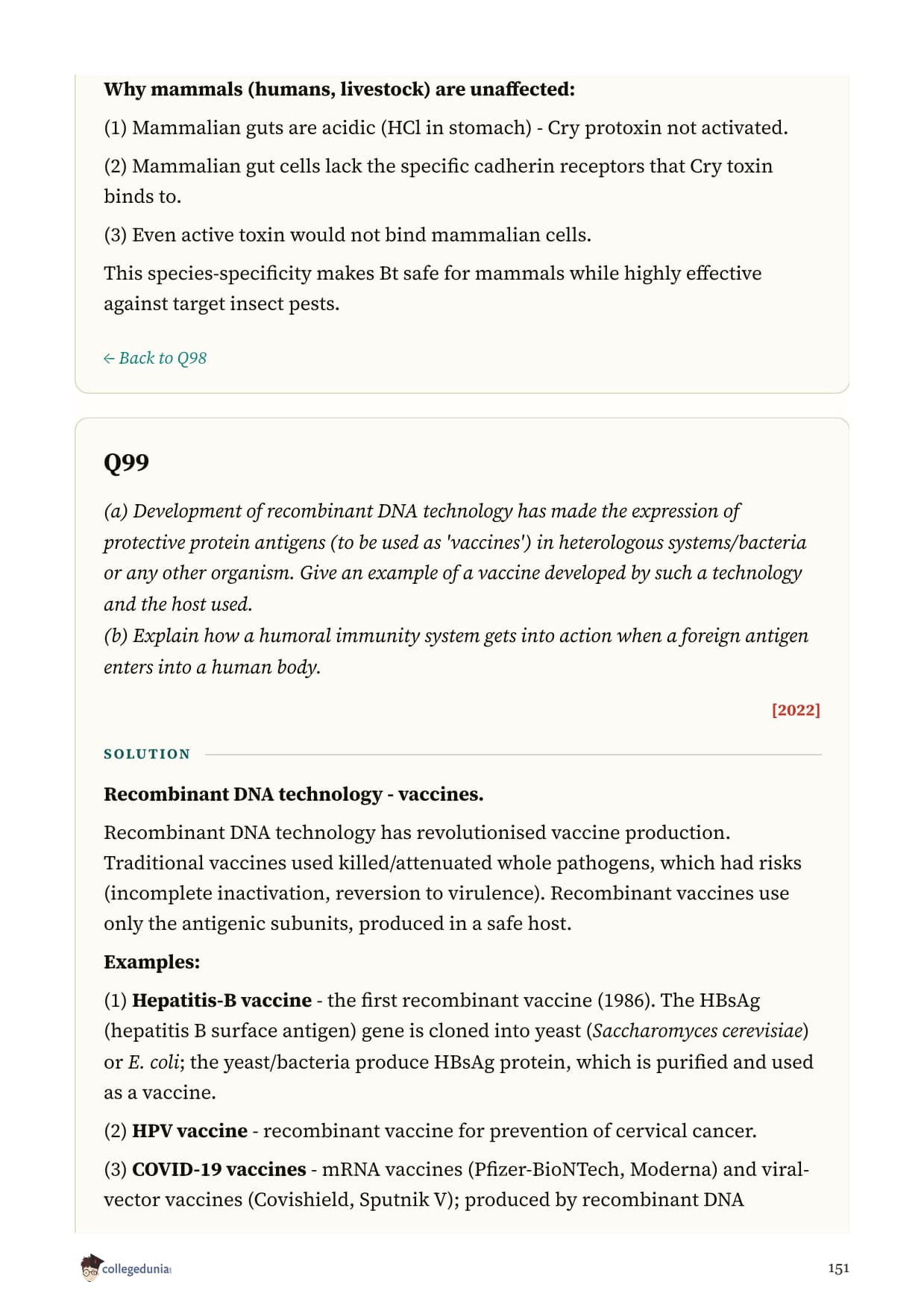
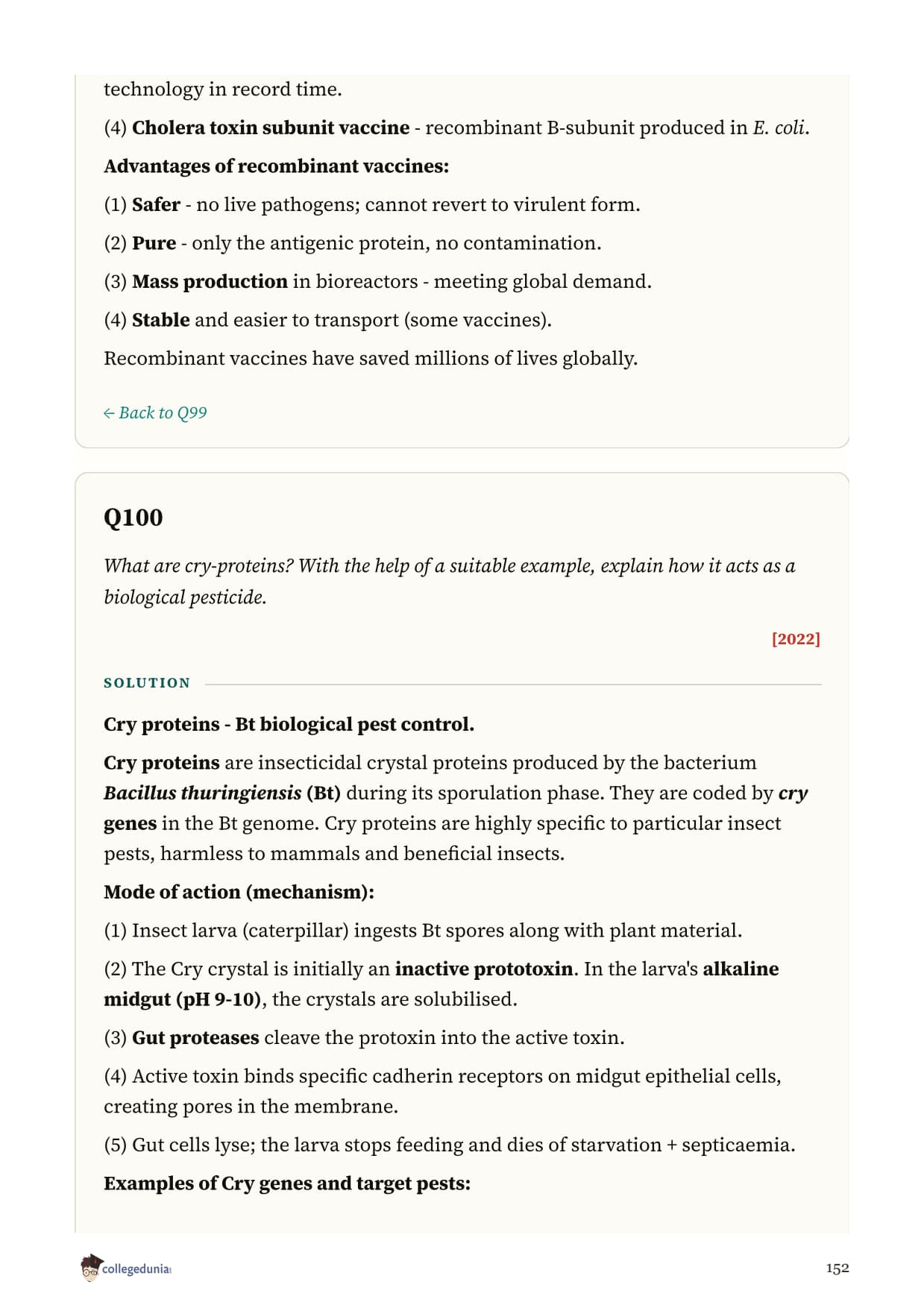
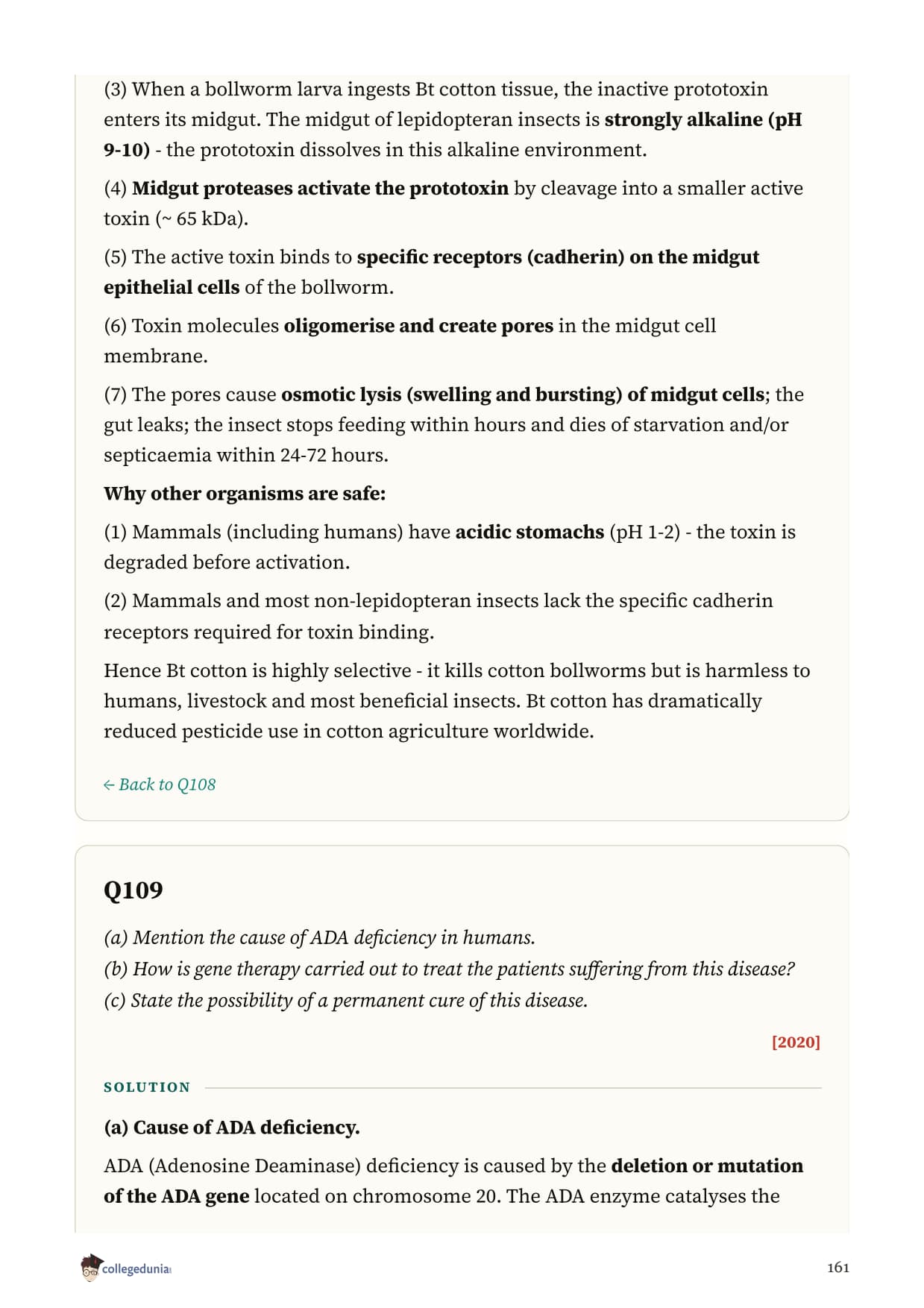
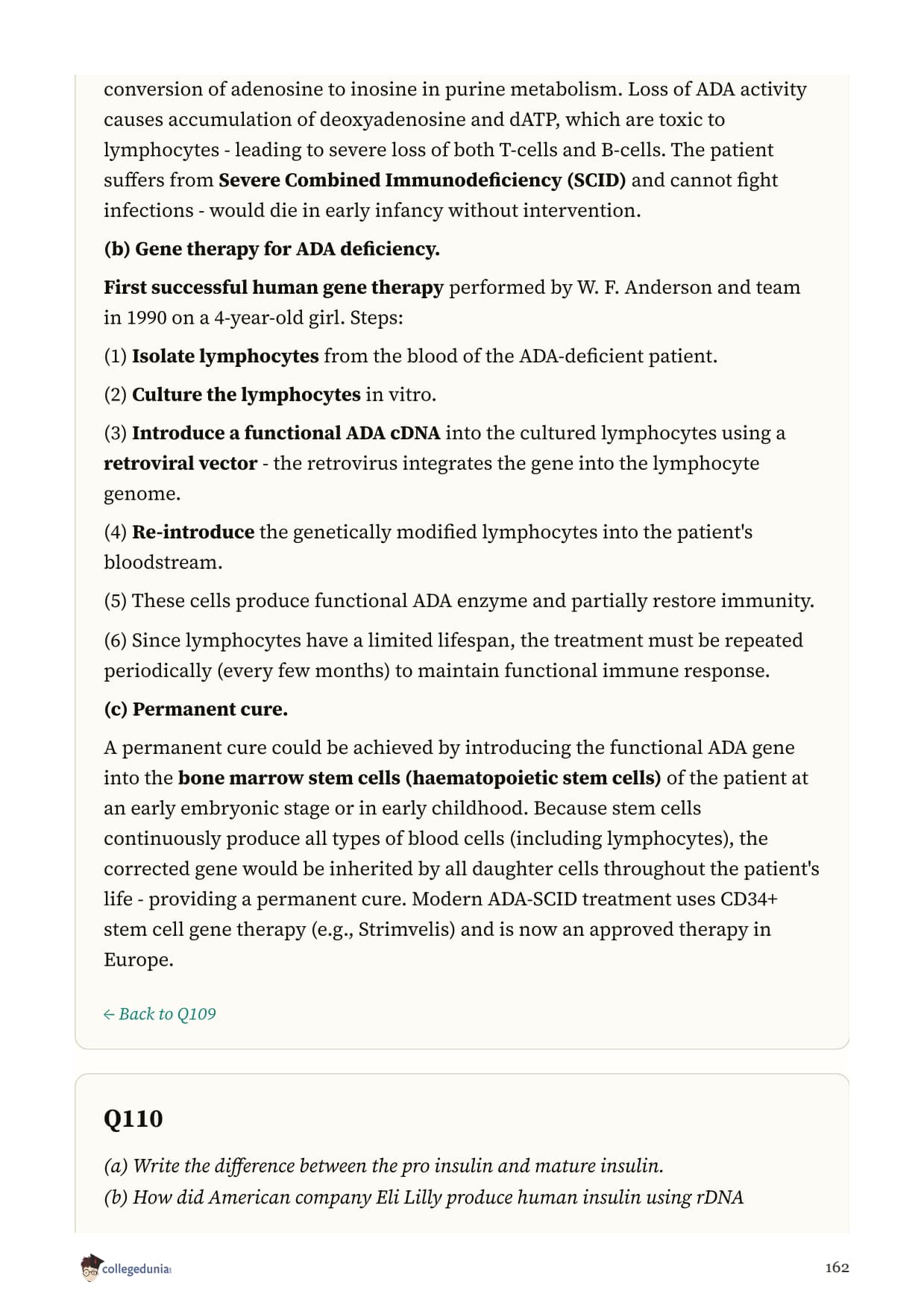
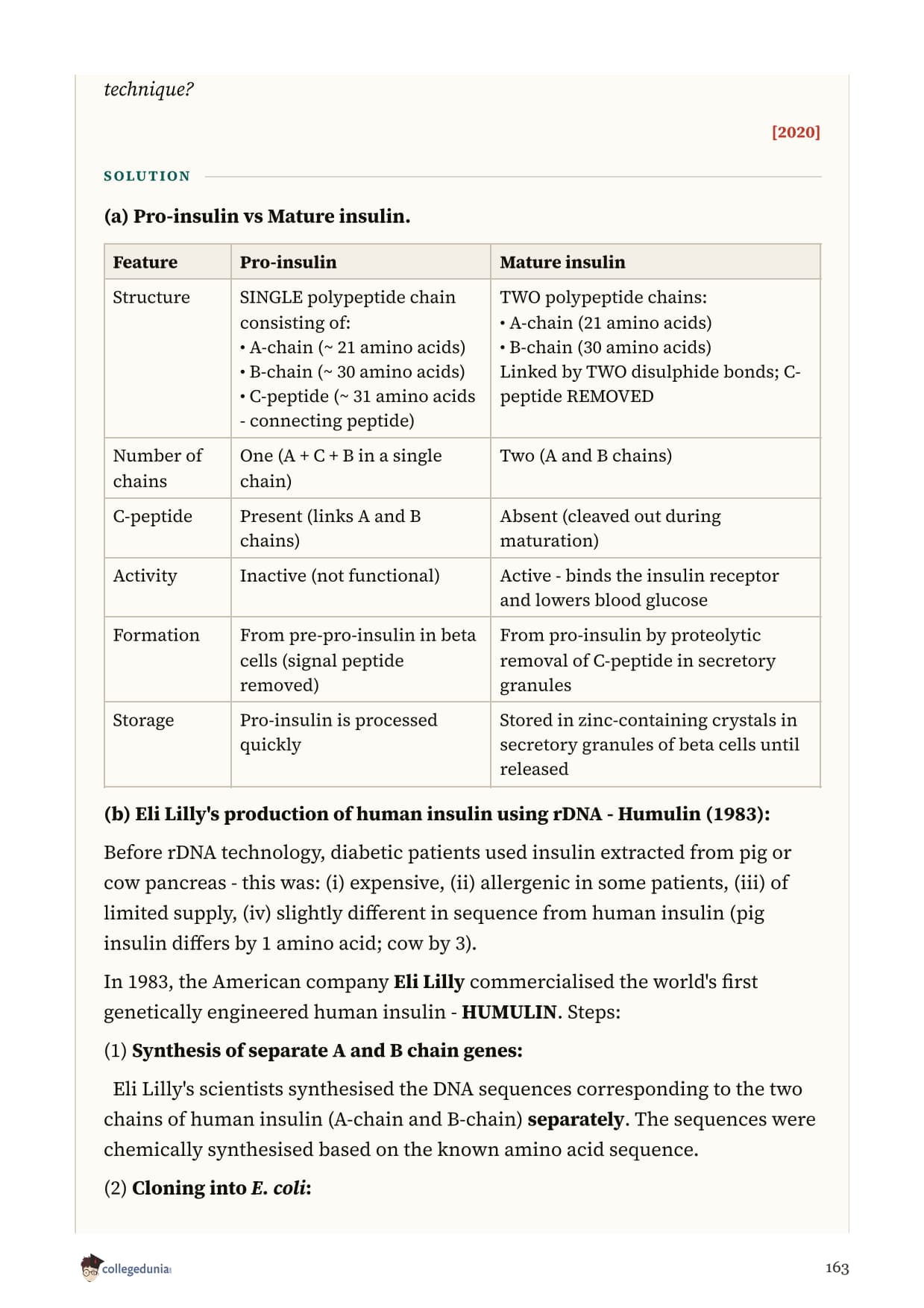
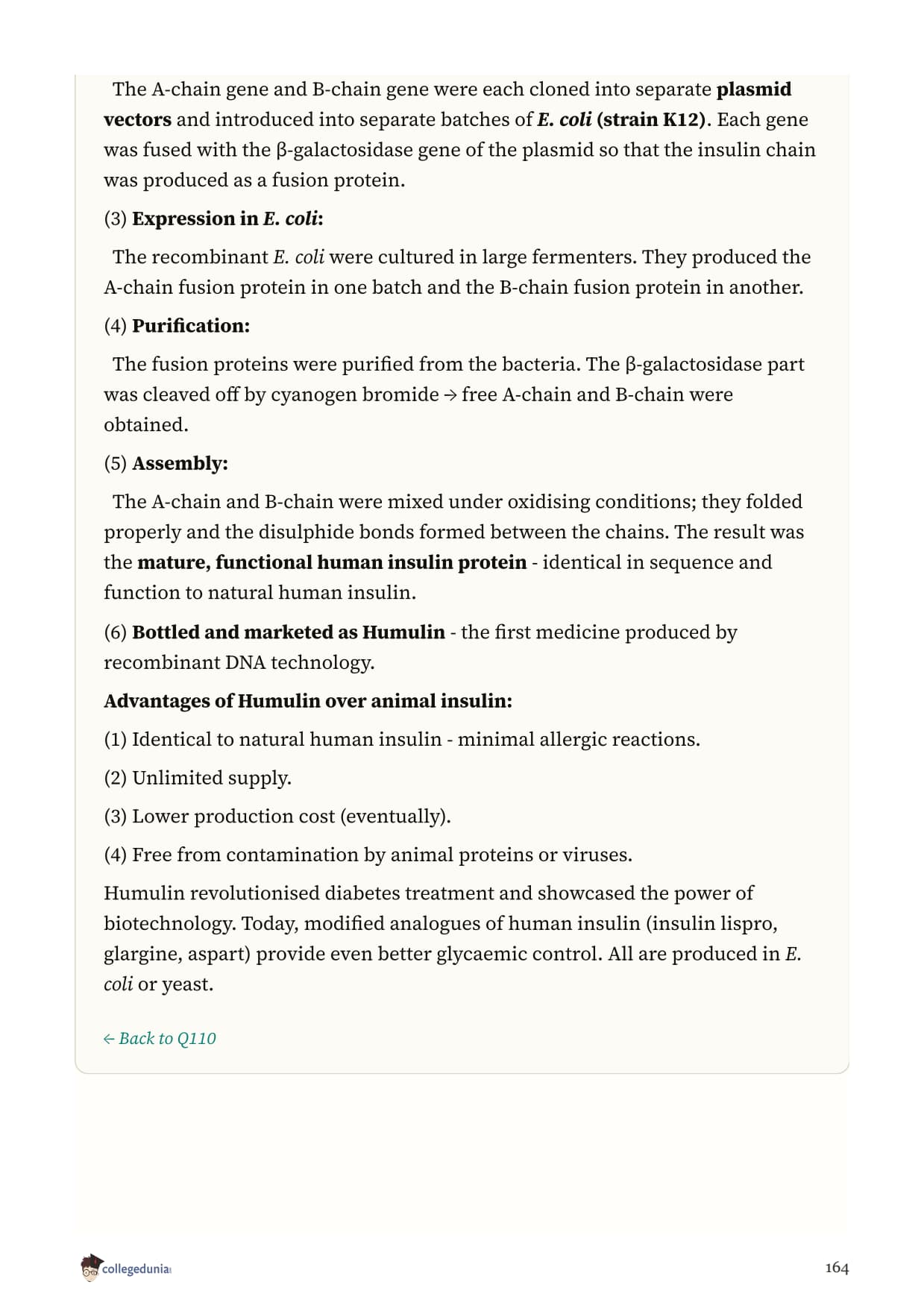
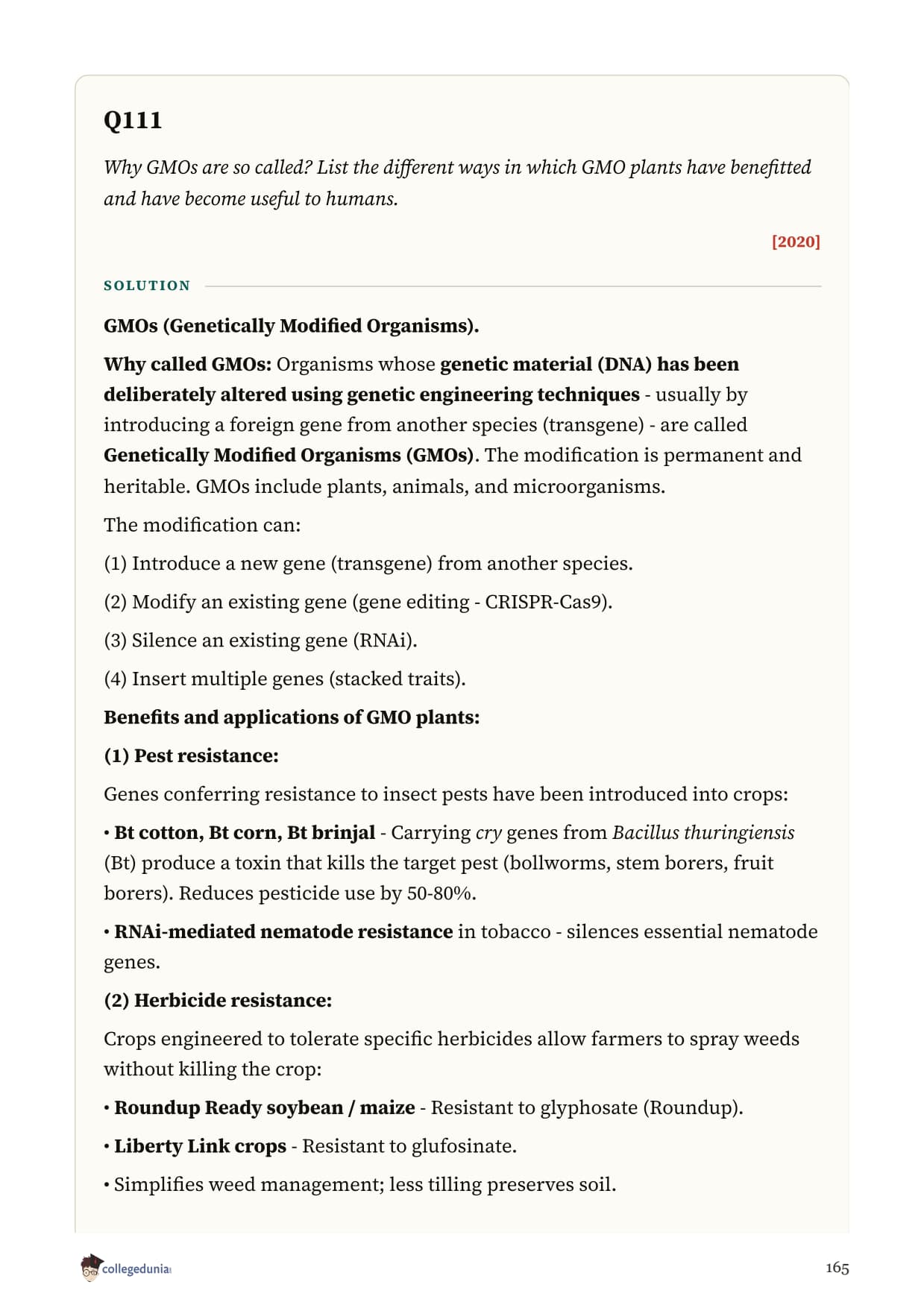
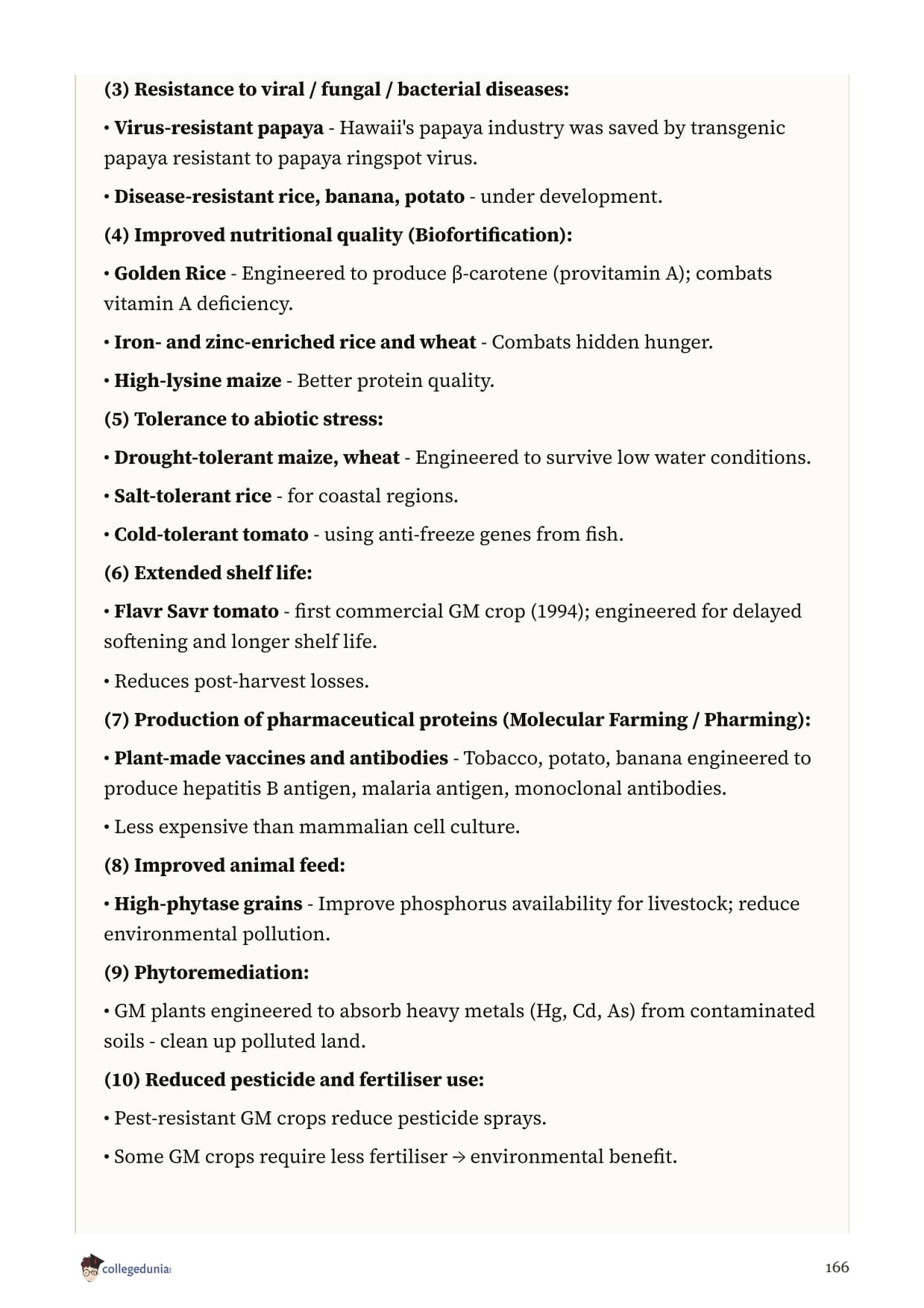
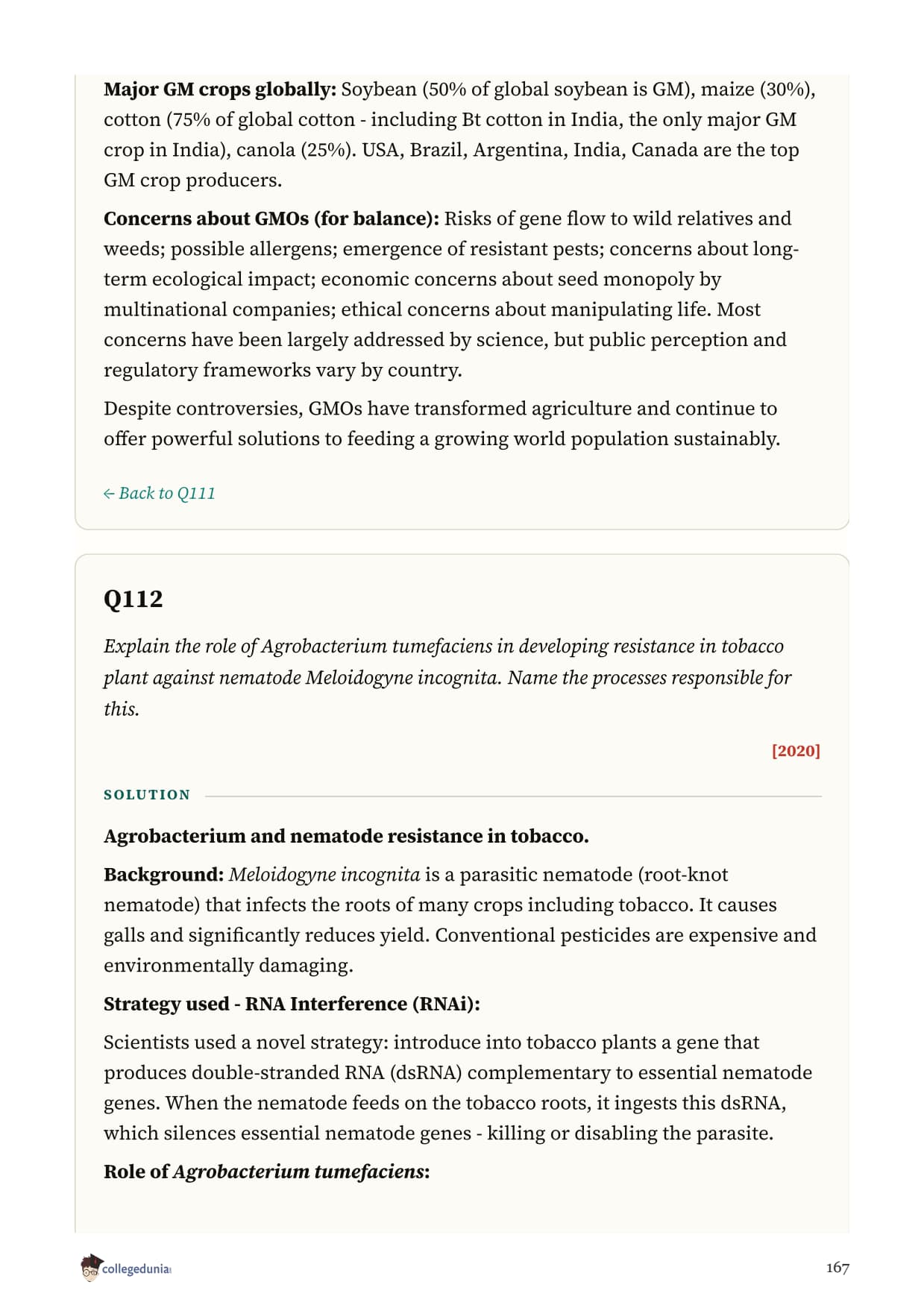
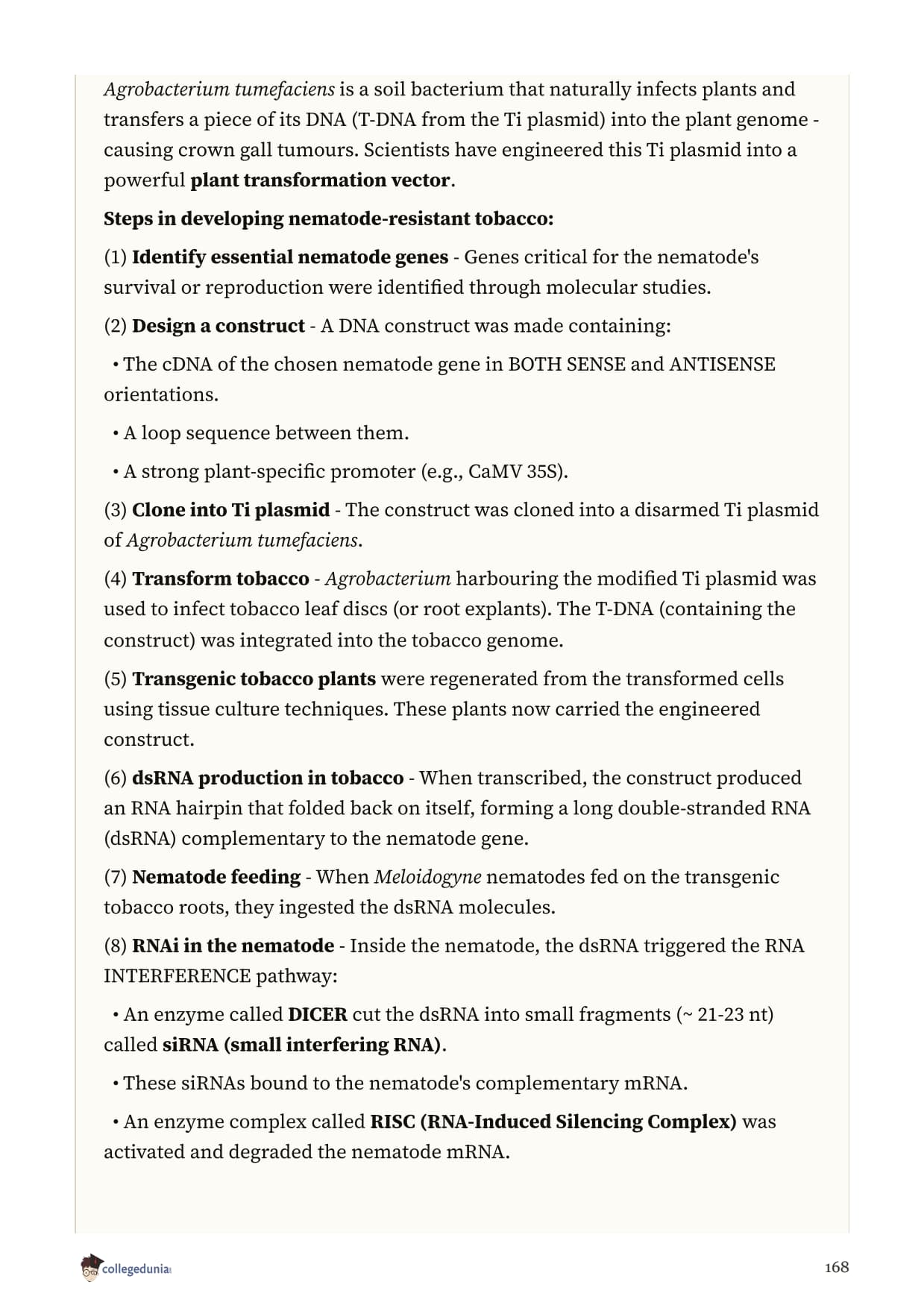
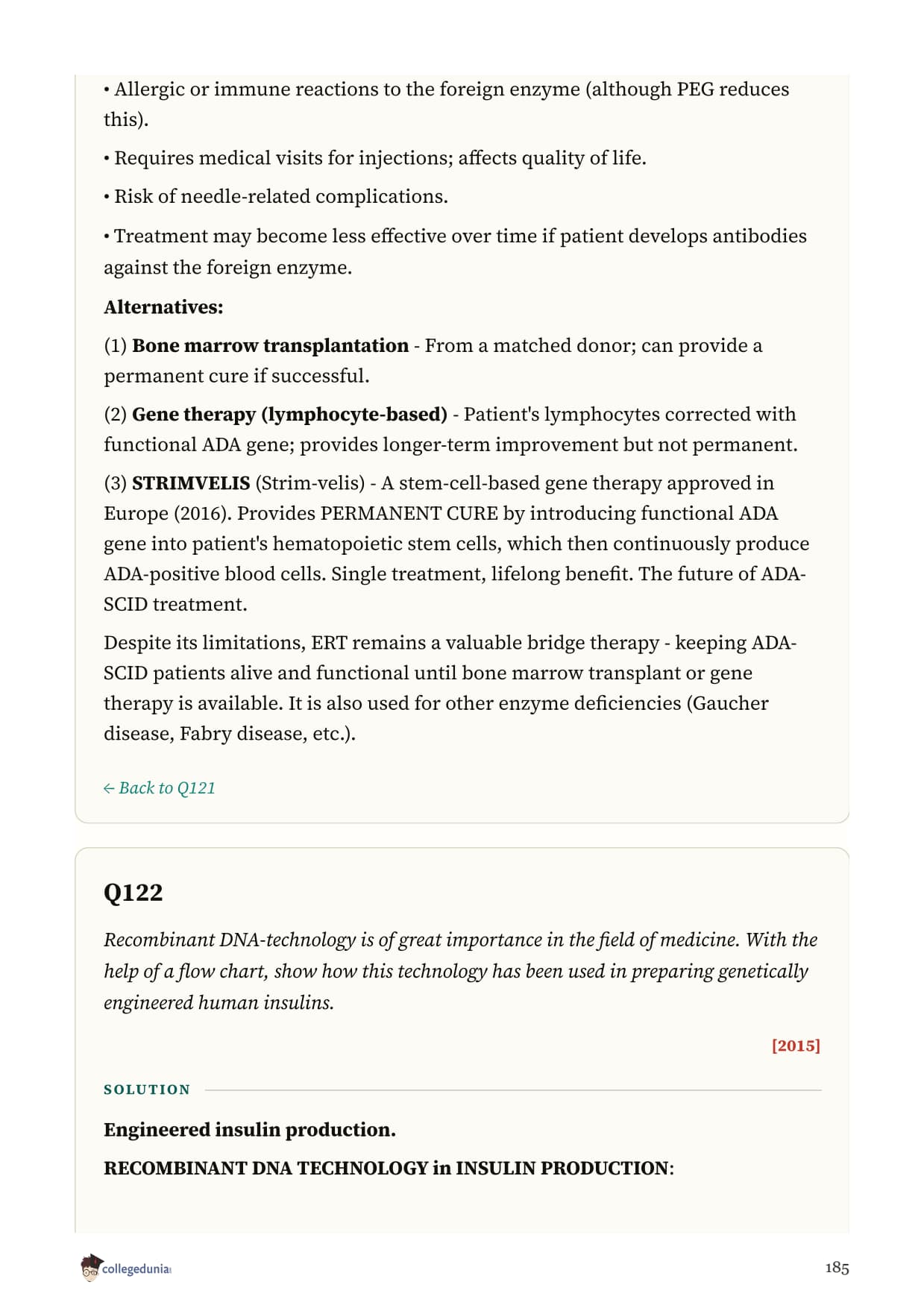
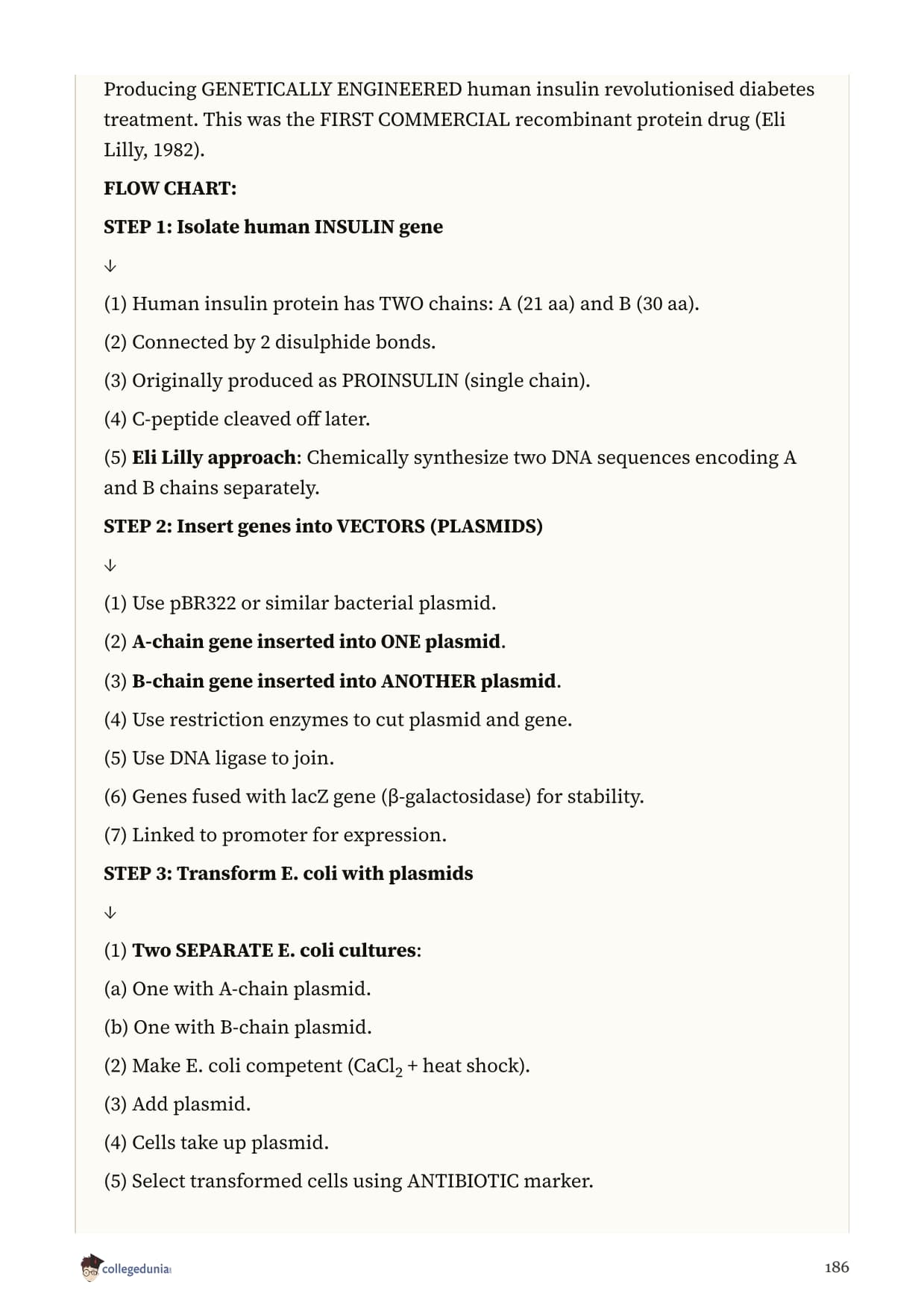
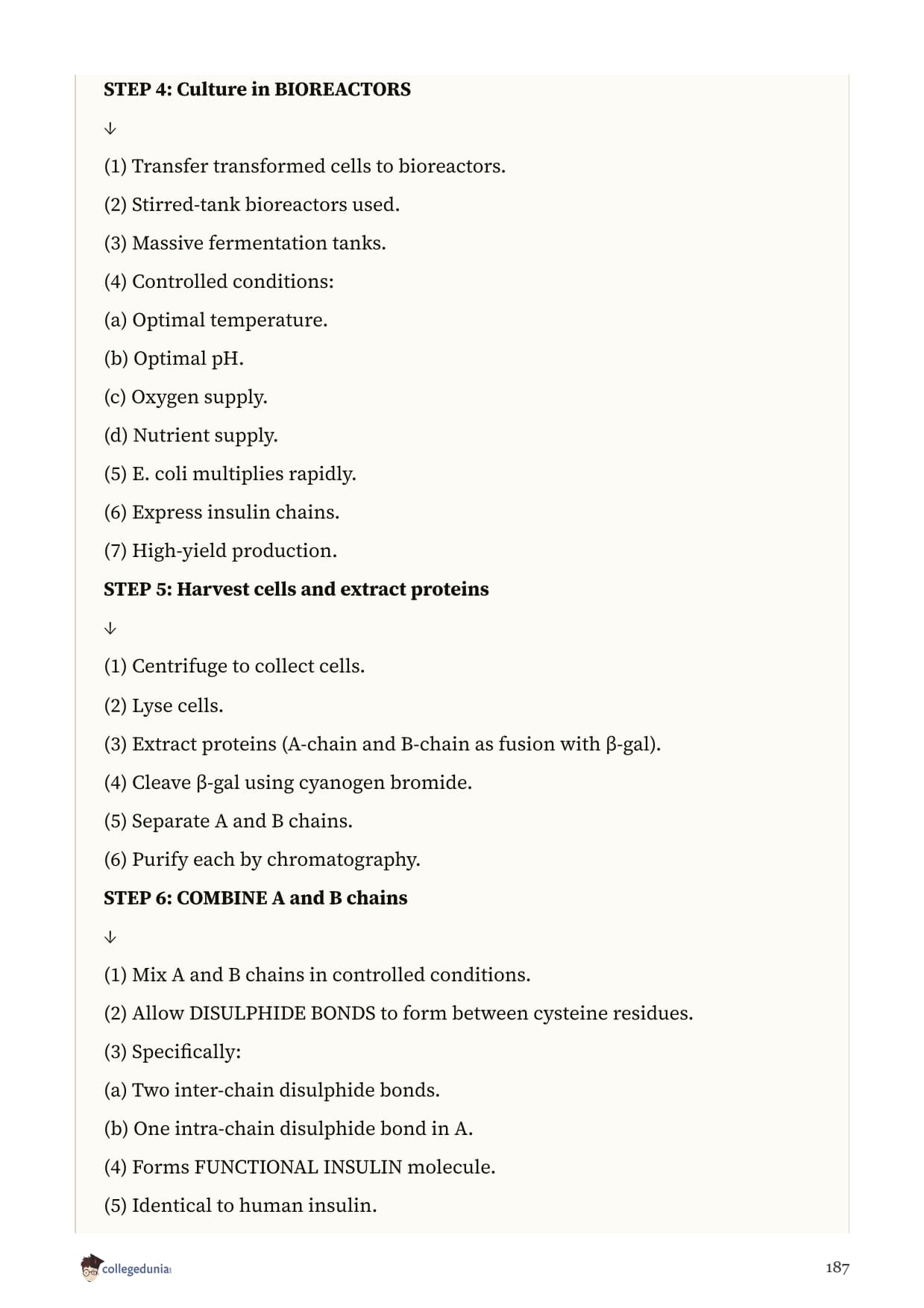
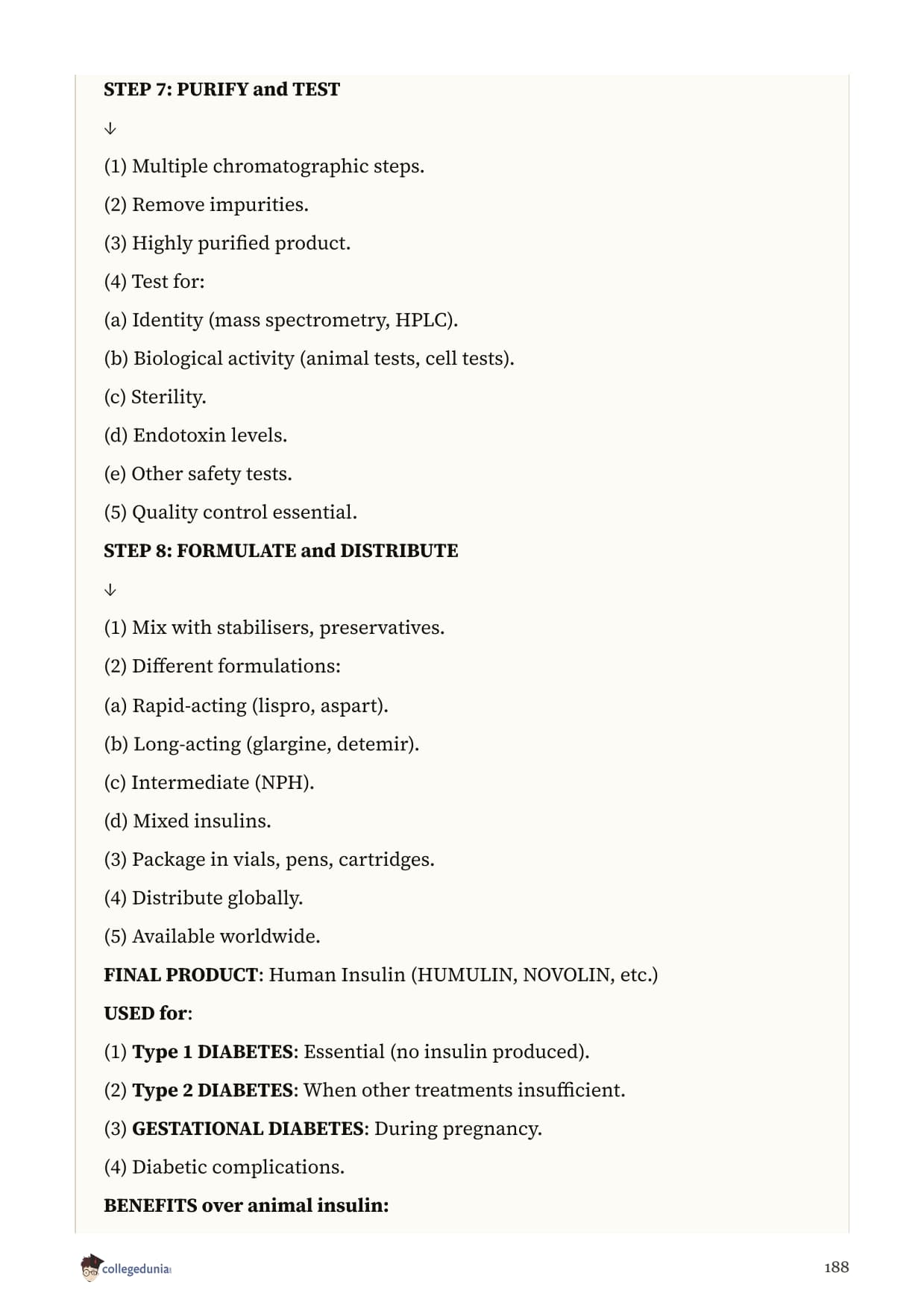
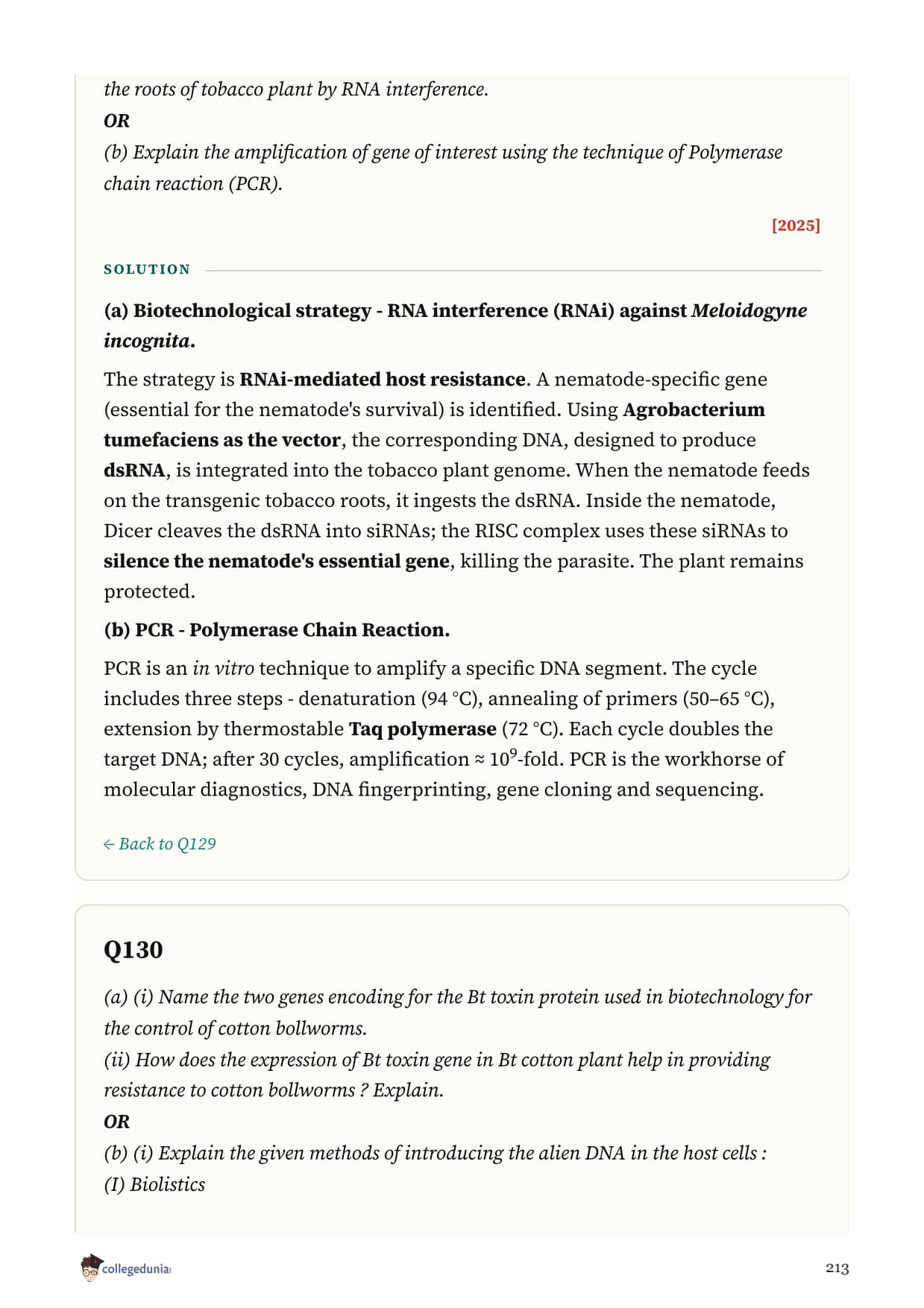
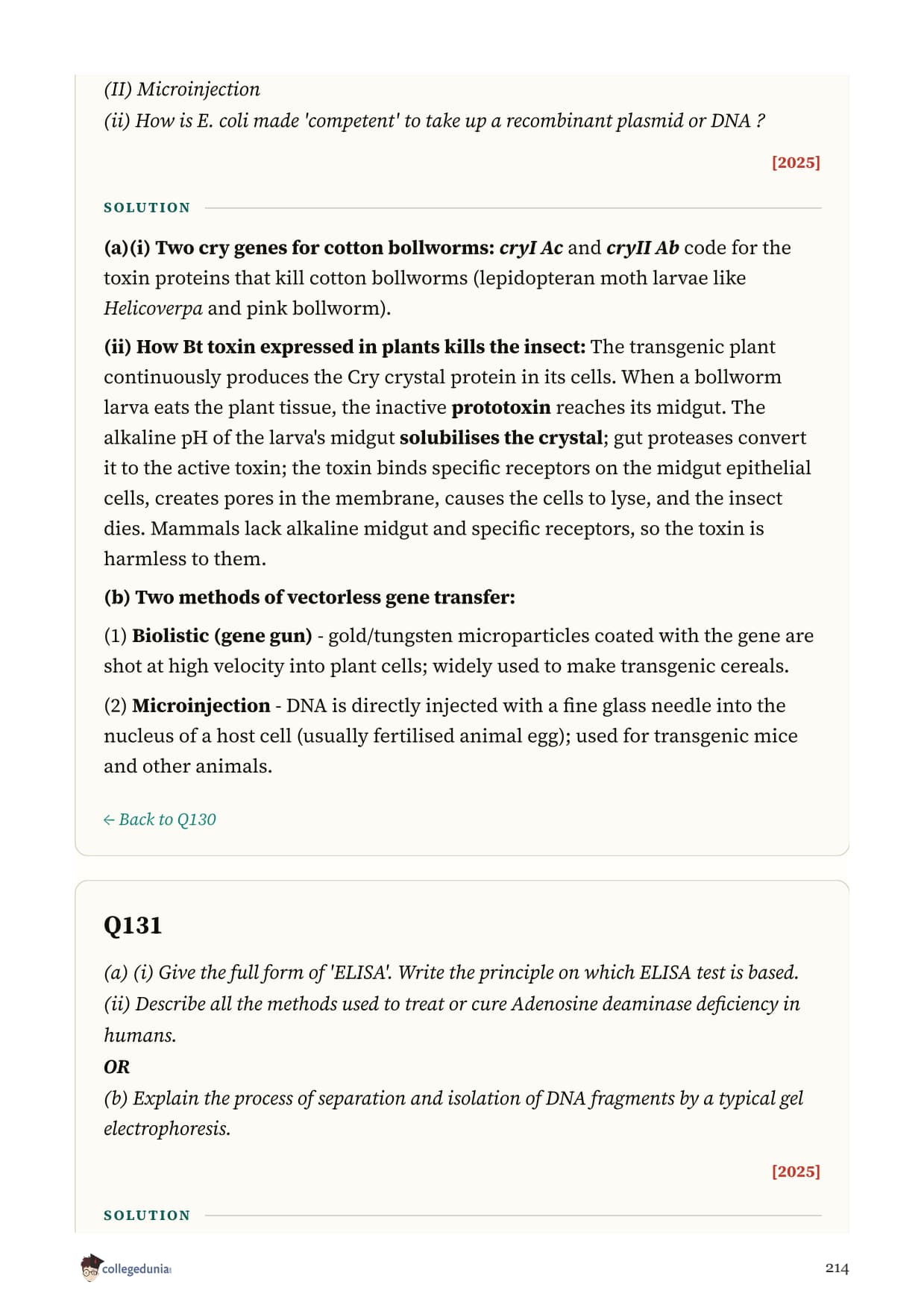
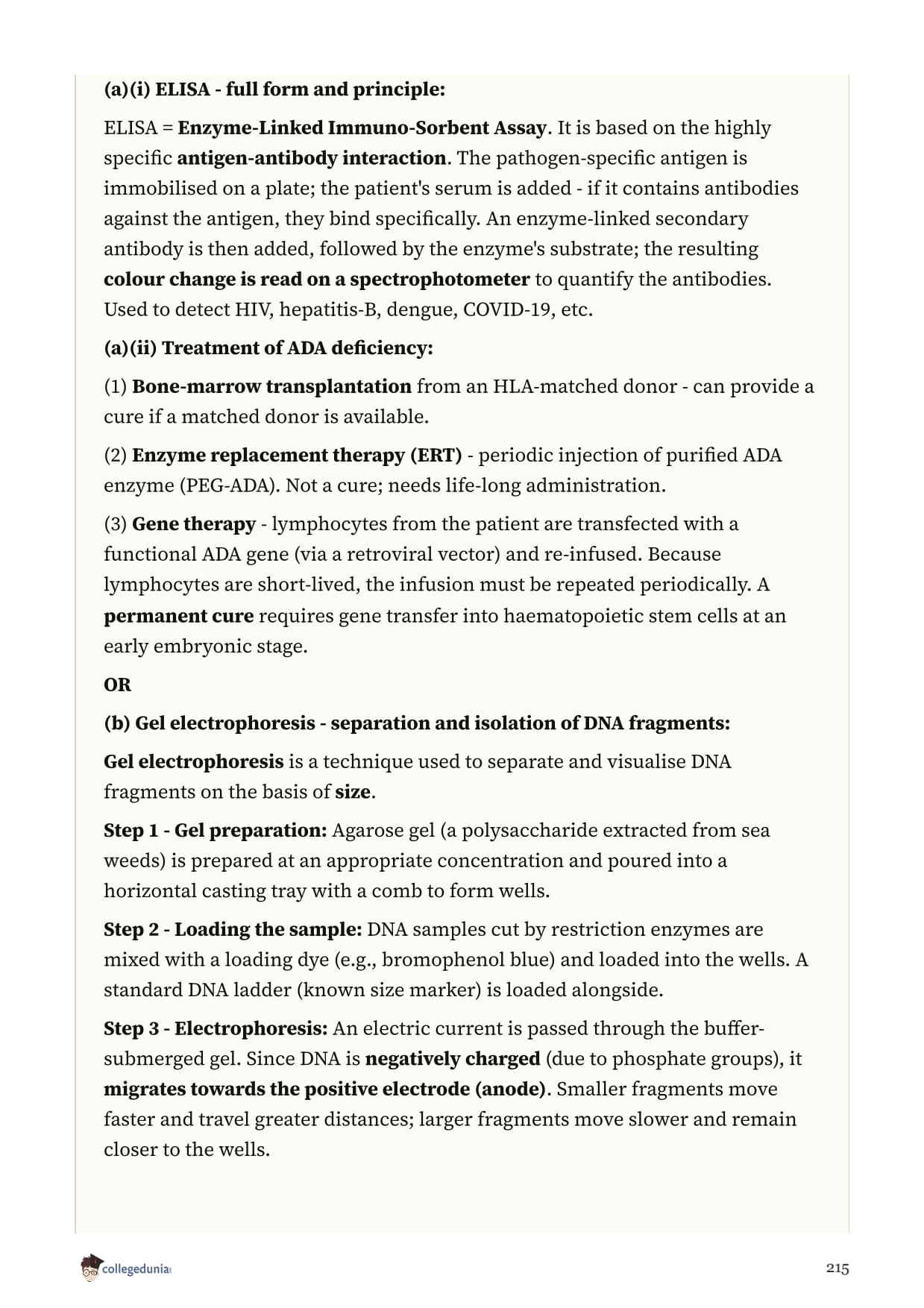
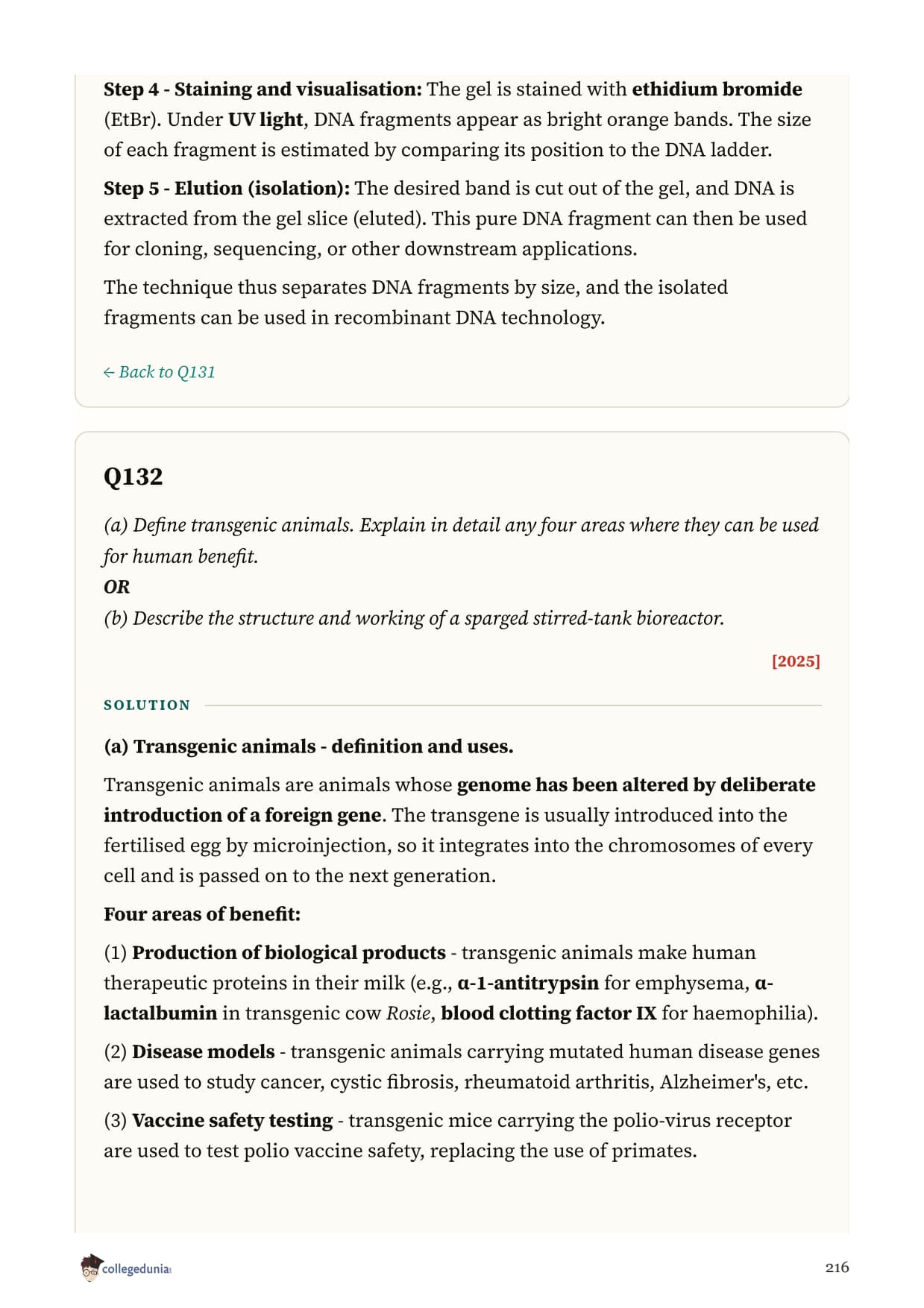
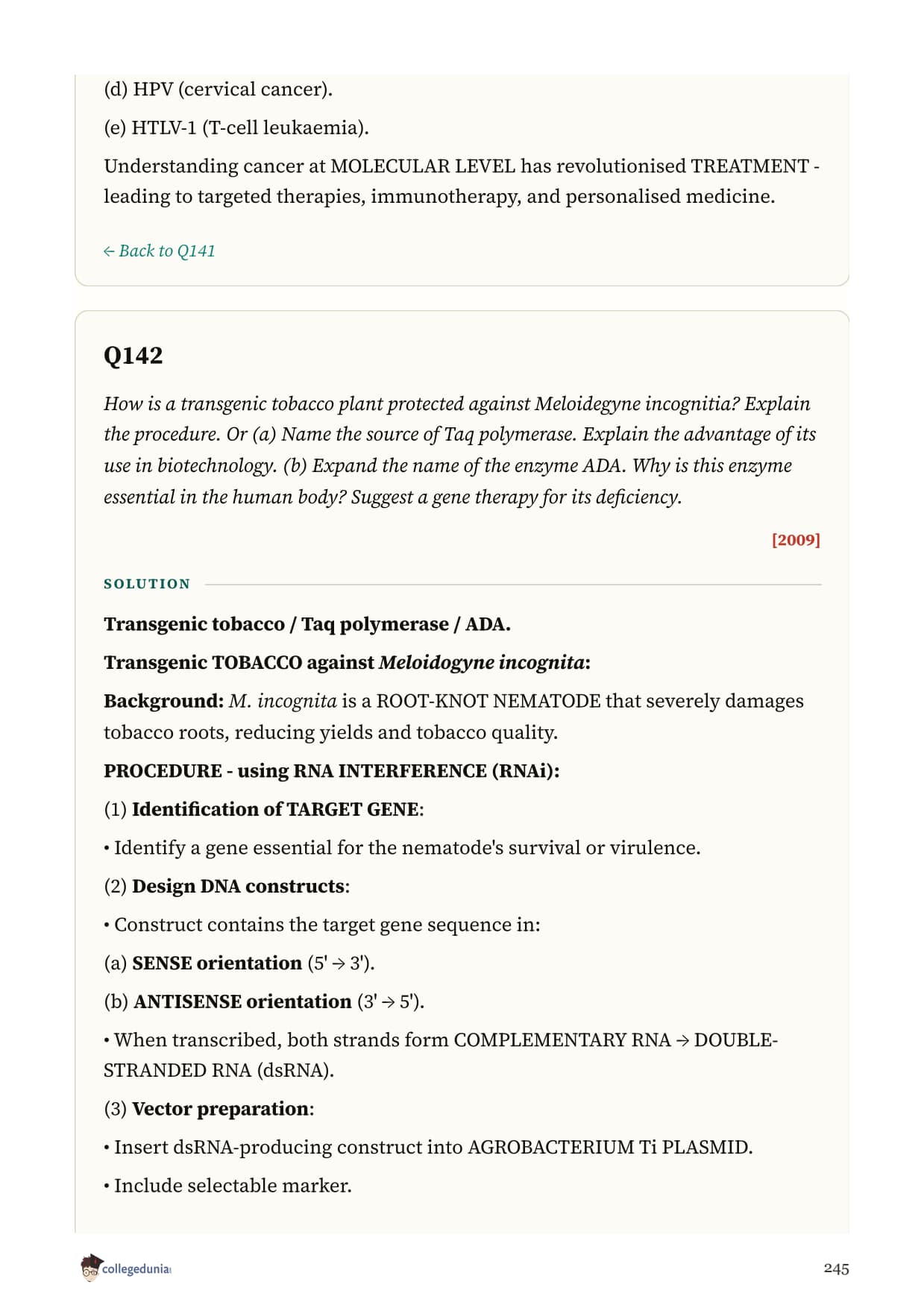
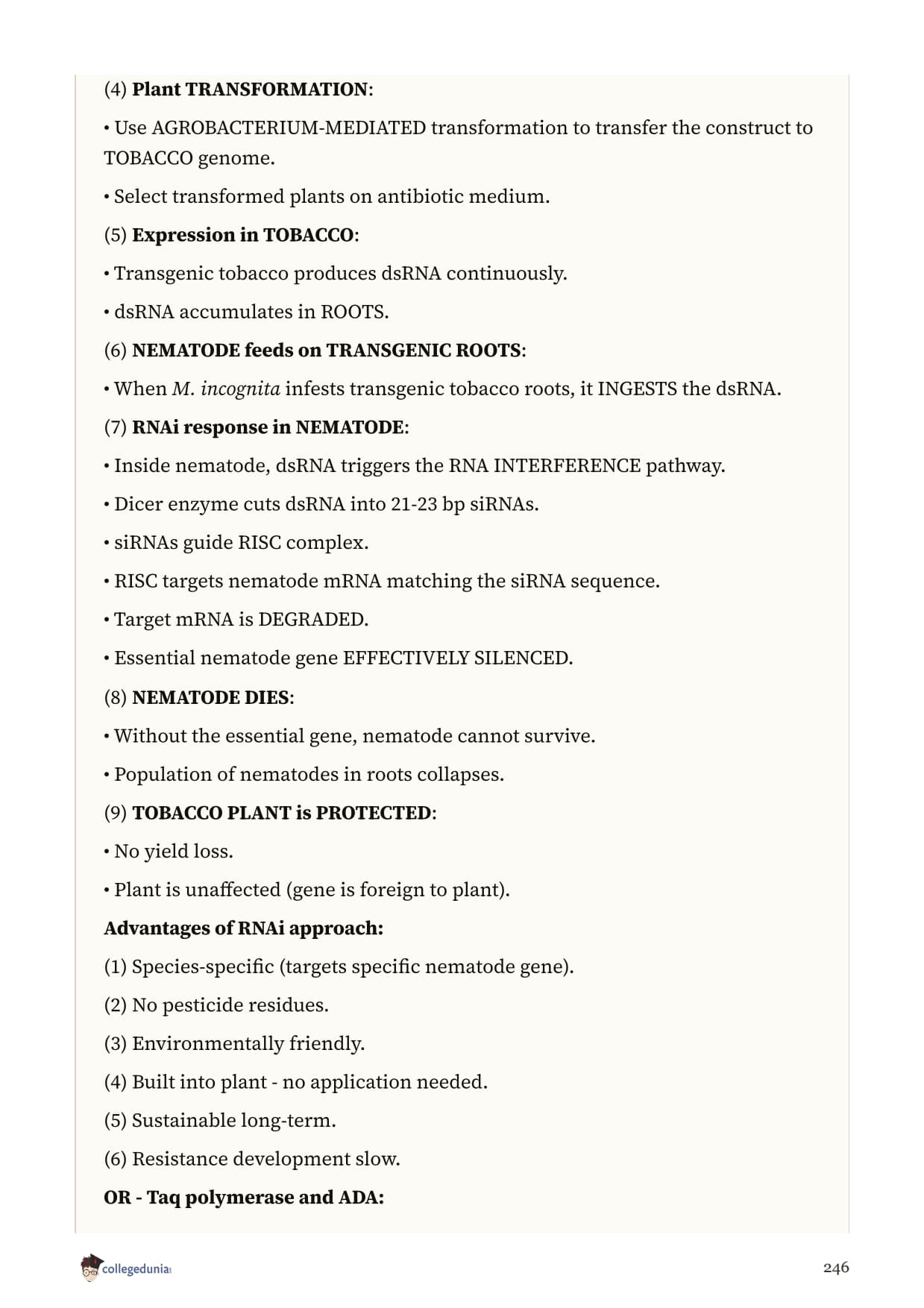
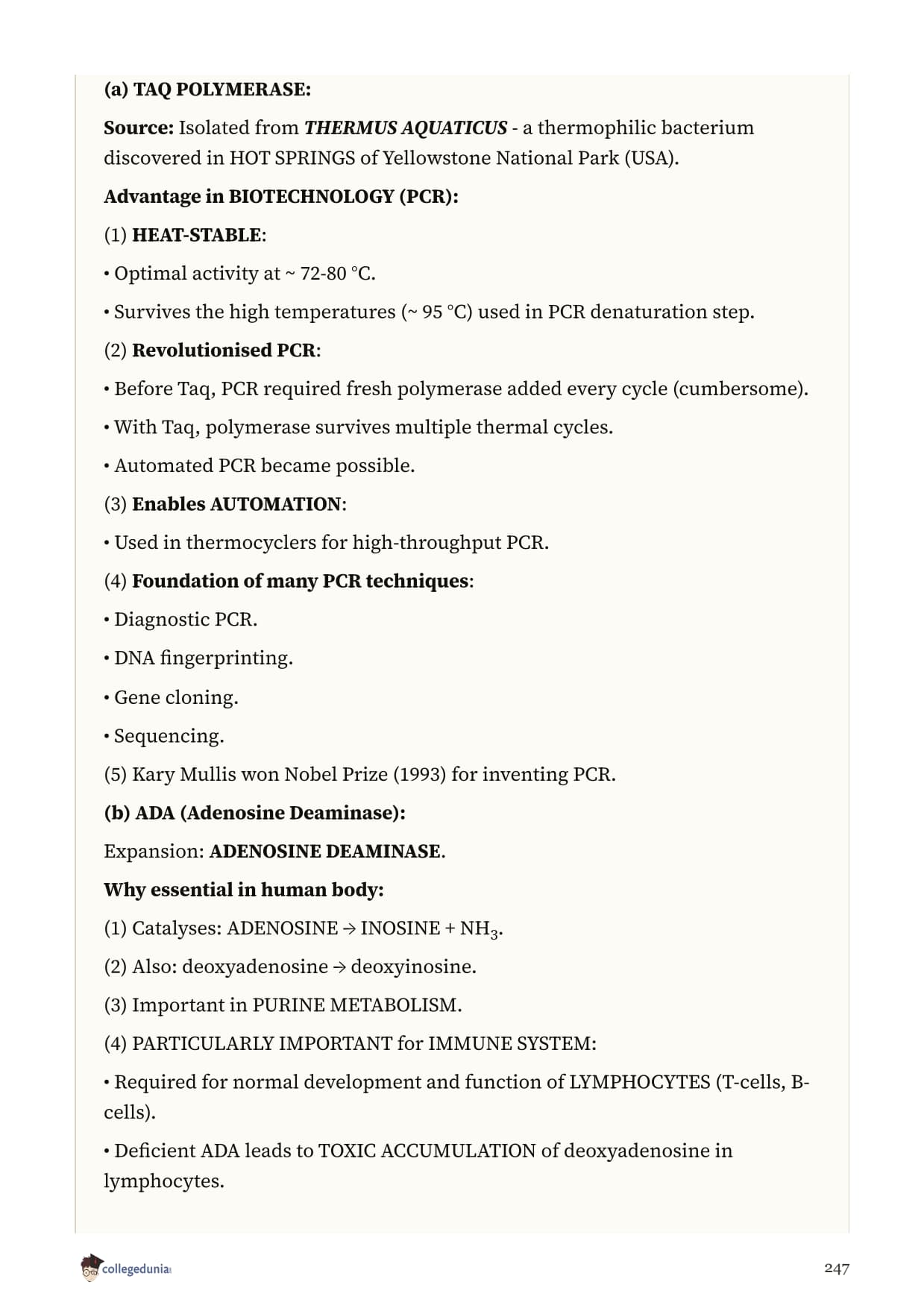
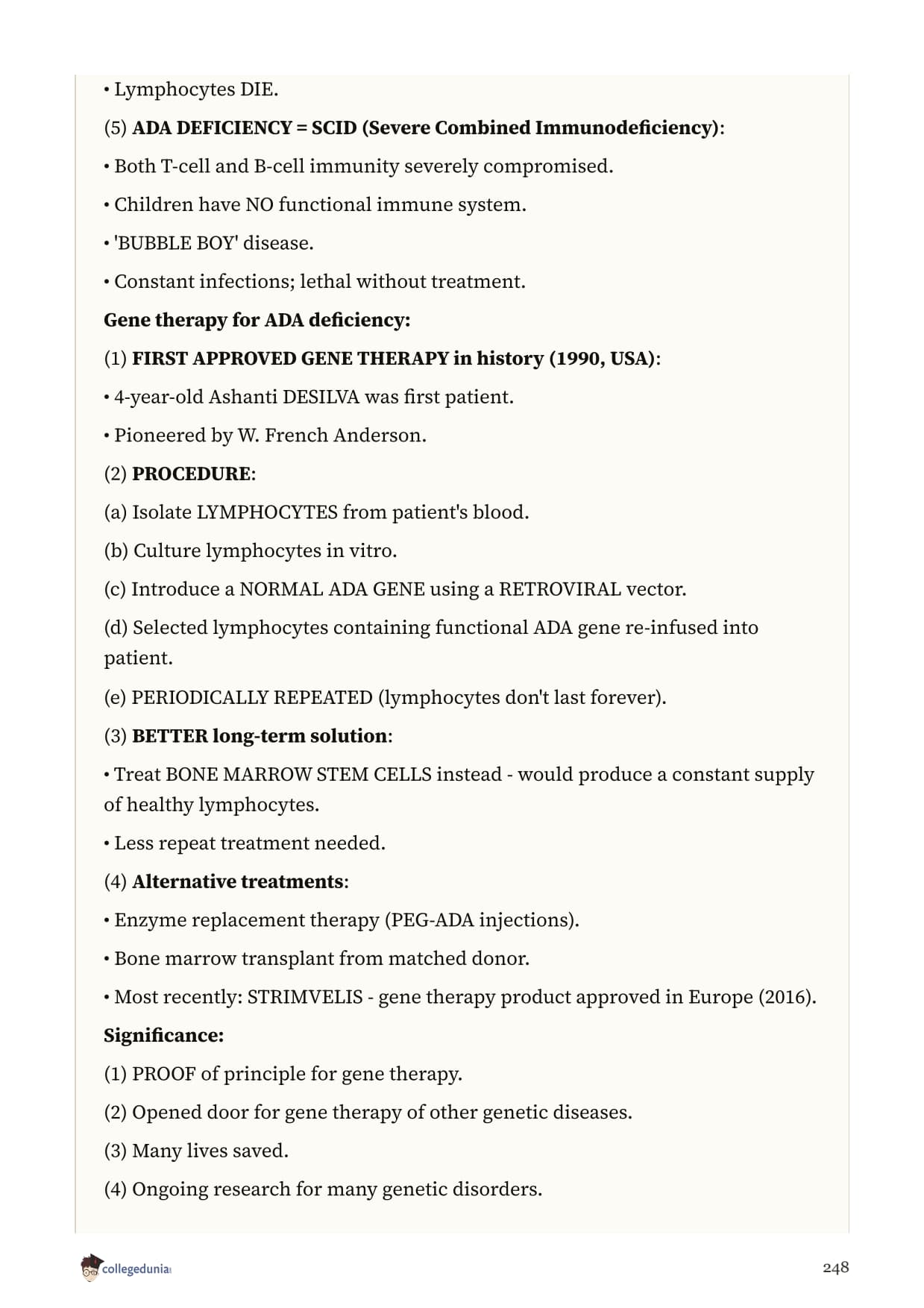
- 1-mark questions: 46 questions, mostly MCQ and assertion-reason on transgenic organisms and biotech products.
- 2 and 3-mark questions: 25 and 56 questions, built around Bt cotton, RNAi, gene therapy and recombinant proteins.
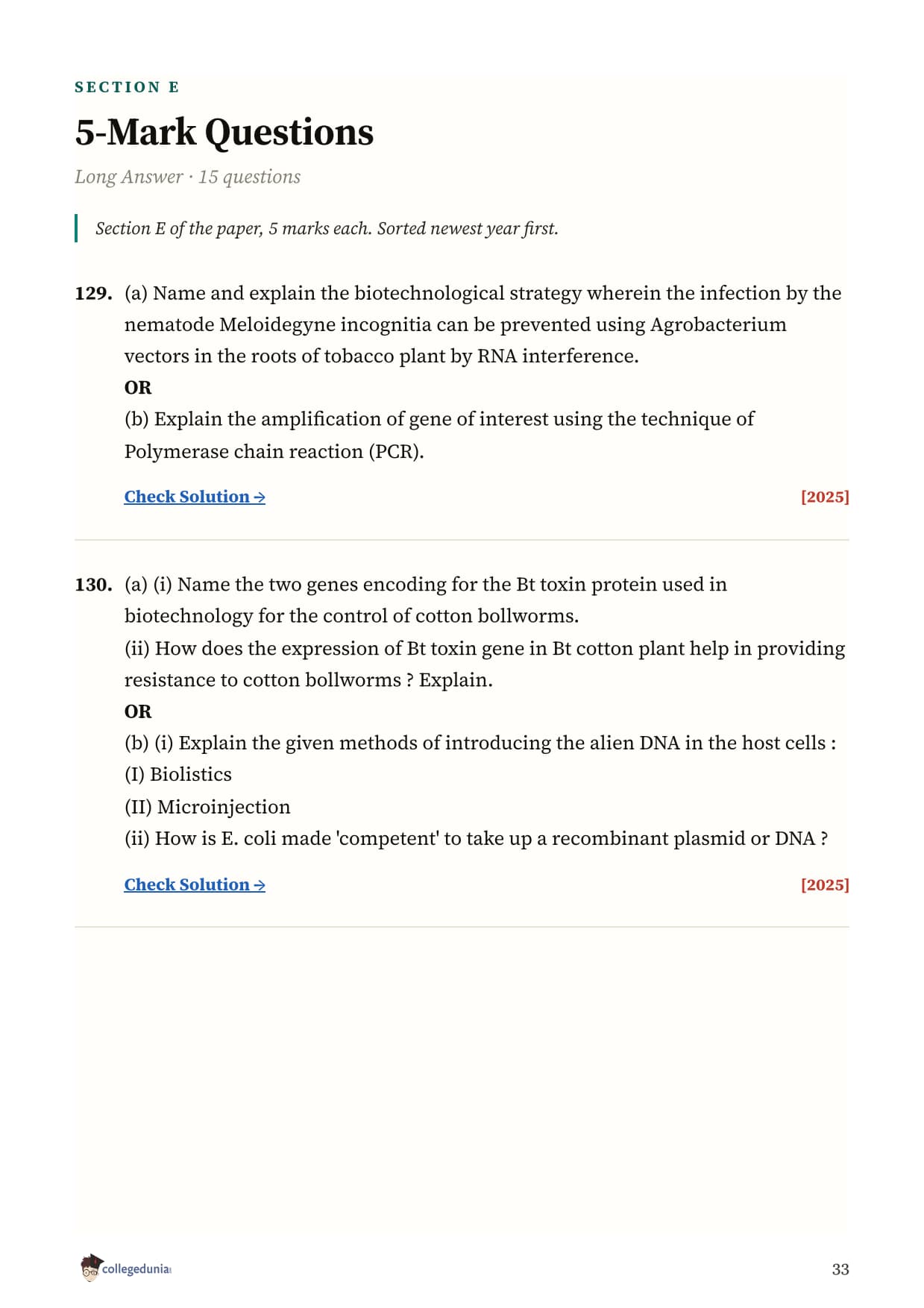
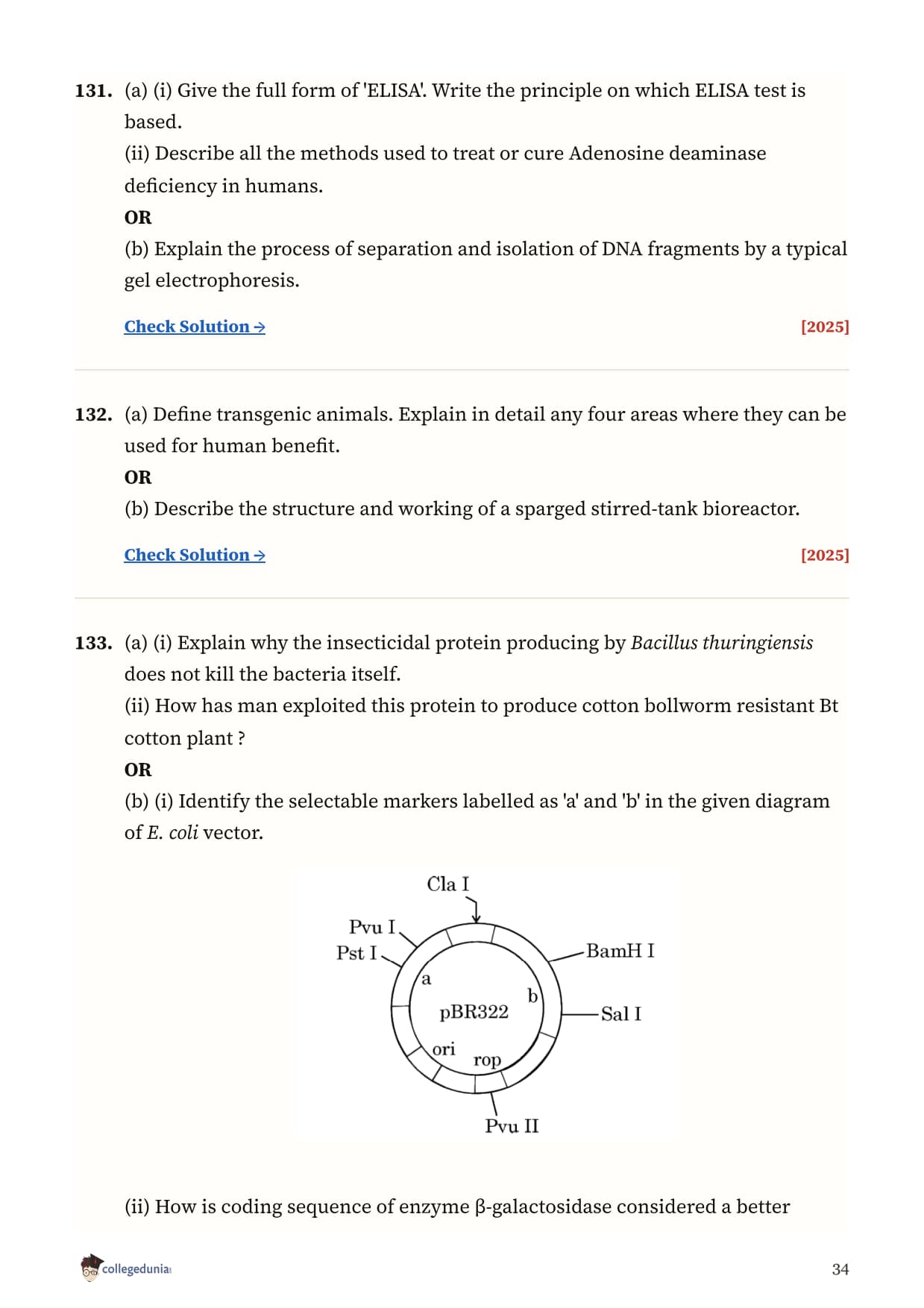
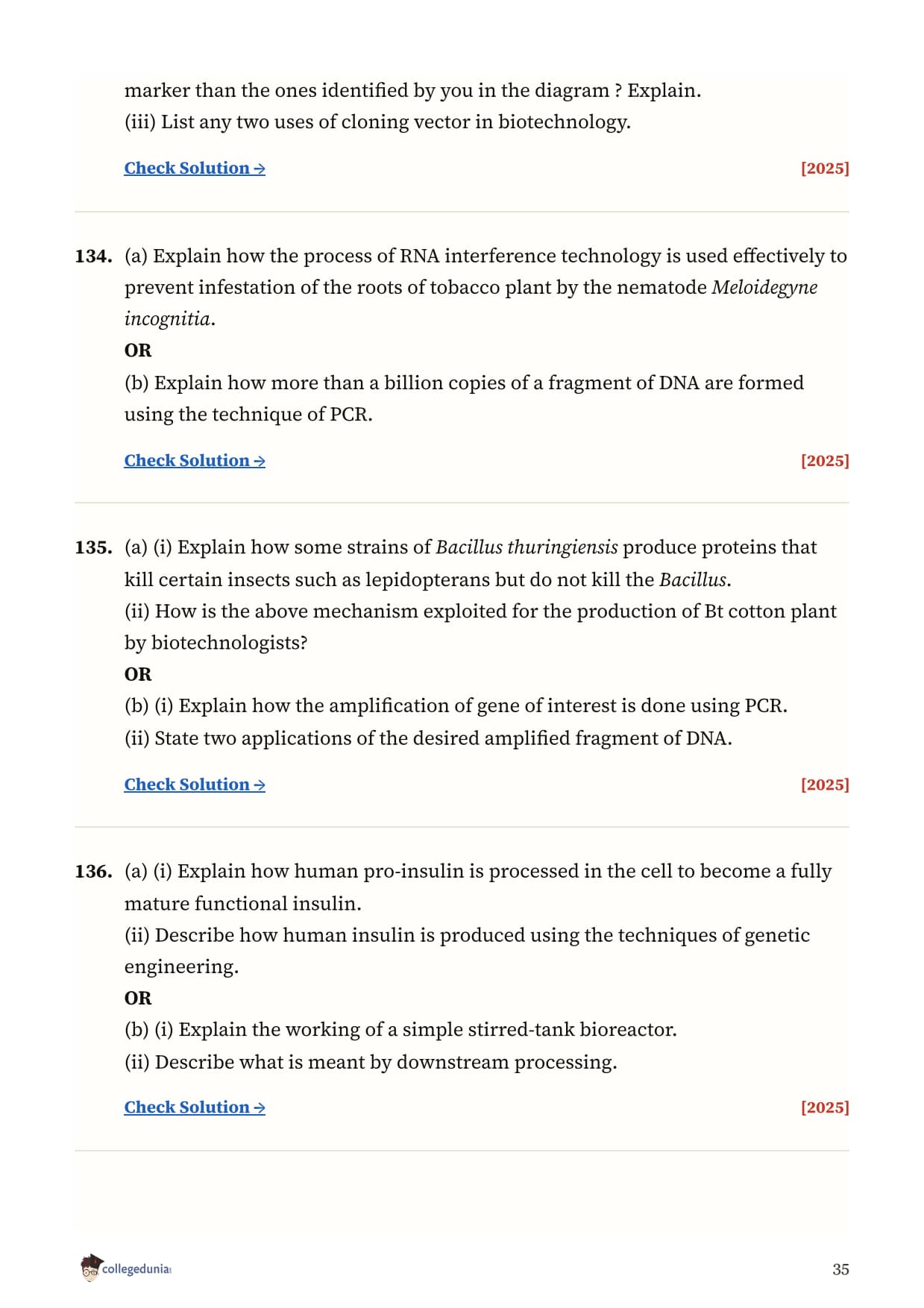
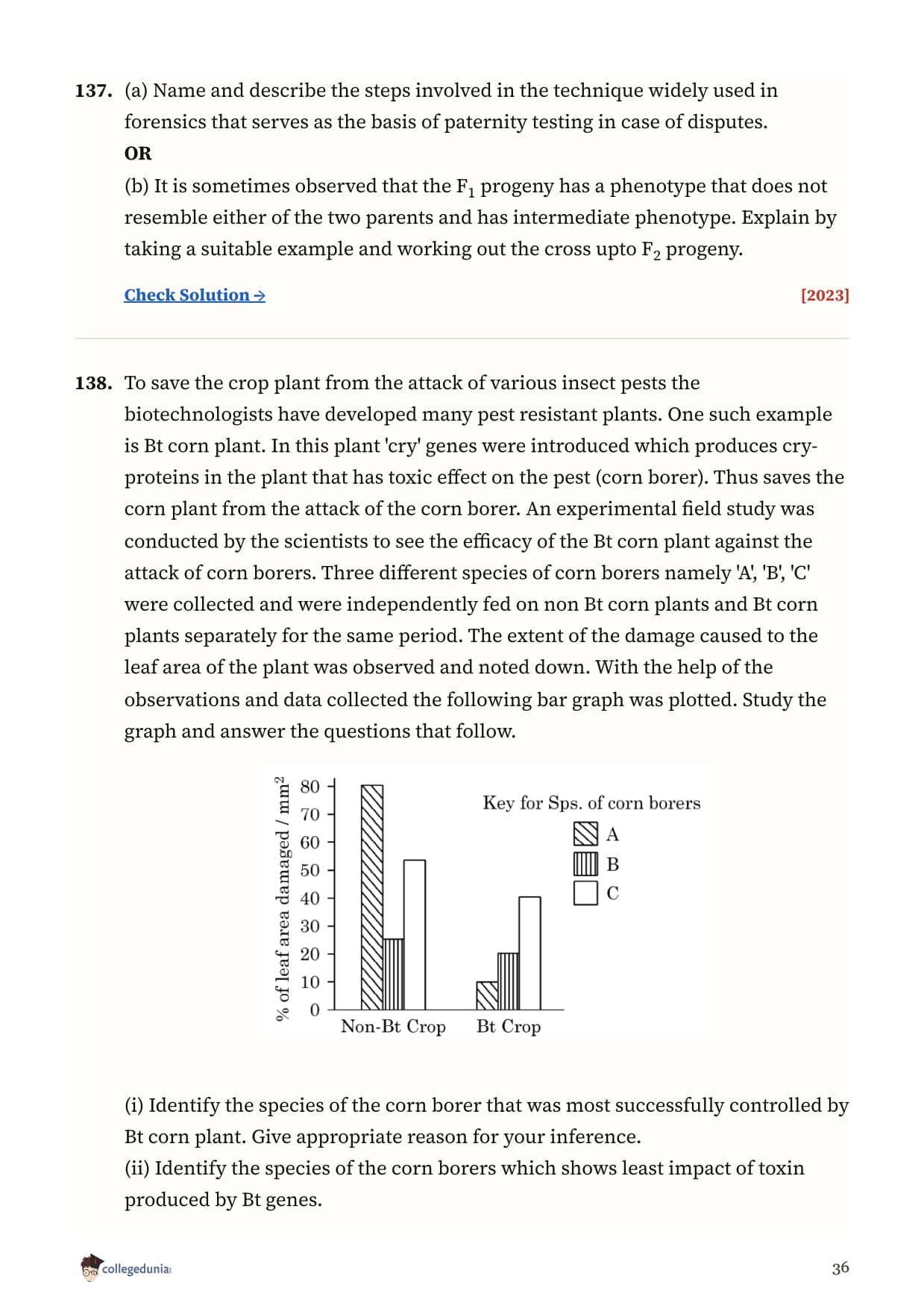
- 5-mark long answers: 15 questions, often pairing a gene-therapy or transgenic-animal explanation with an application part.
It brings together 142 board-paper questions across 2004 to 2026, sorted by marks and by year, so you practise Bt crops, RNA interference and recombinant insulin in the exact CBSE framework.
Every question in this Class 12 Biology Biotechnology and its Applications PYQ compilation is sourced from CBSE board papers (Delhi, Outside Delhi, Foreign and Compartment) and cross-checked against the official mark scheme, with near-duplicate questions removed.
What the Biotechnology and its Applications Previous Year Questions Cover
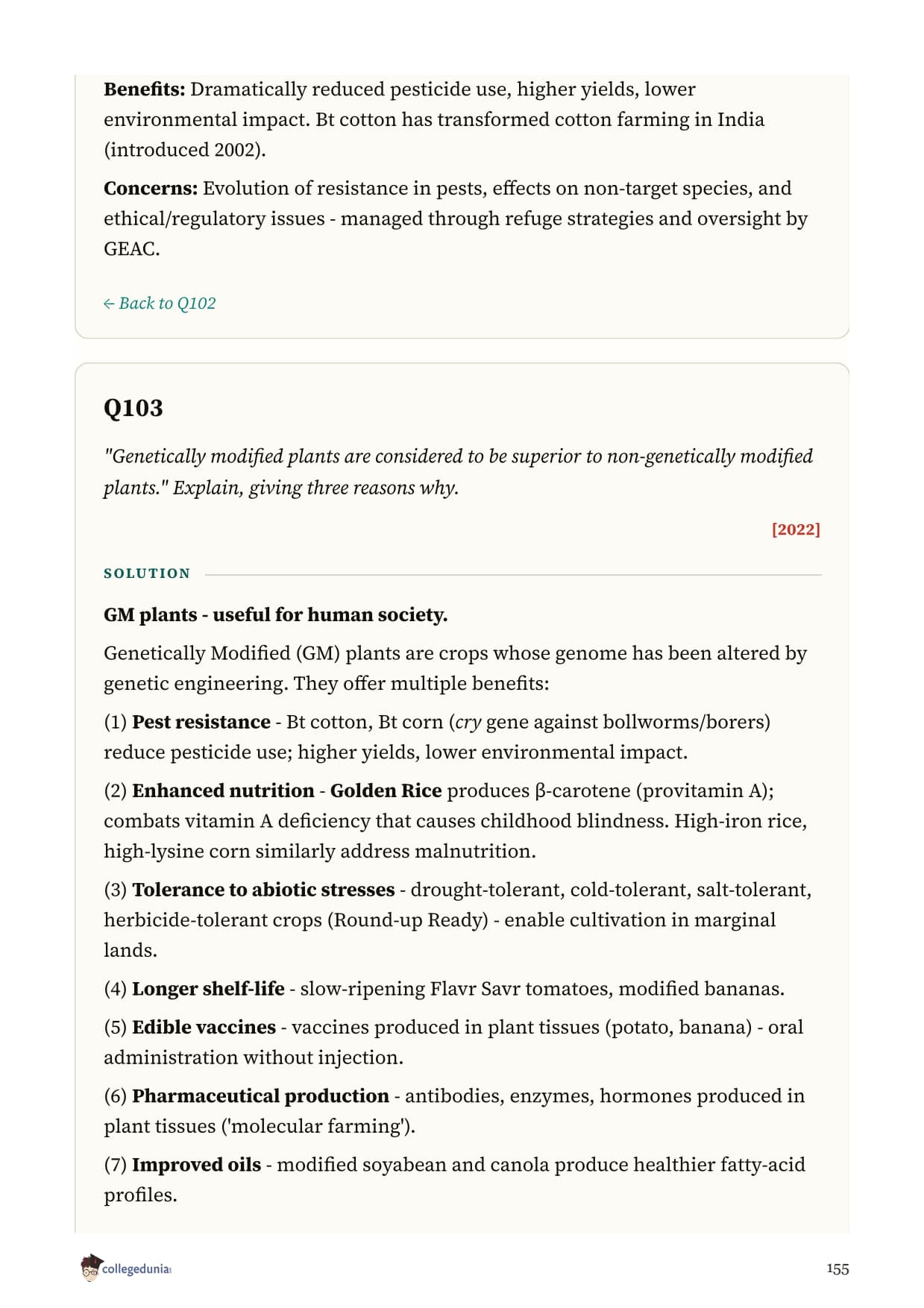
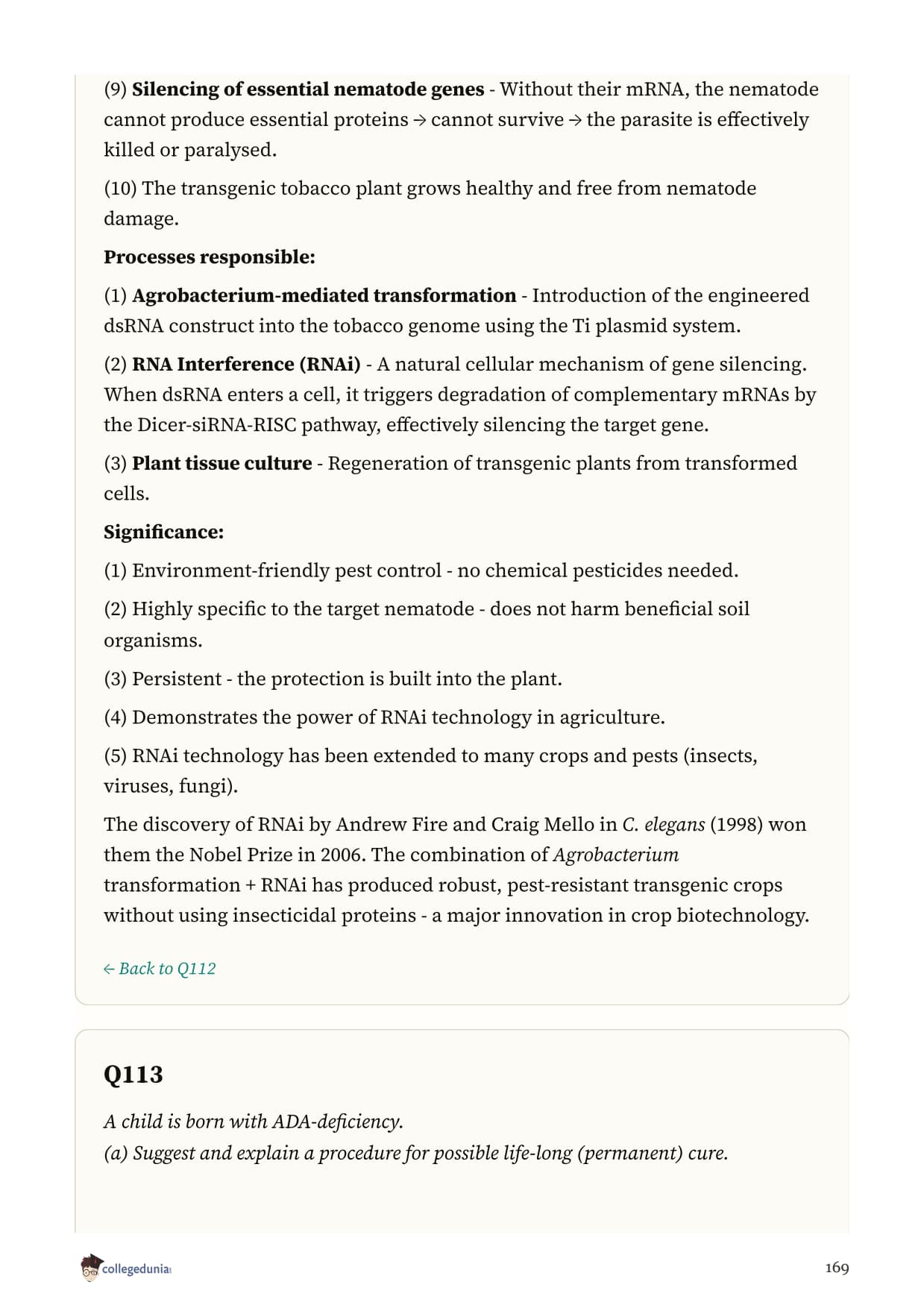
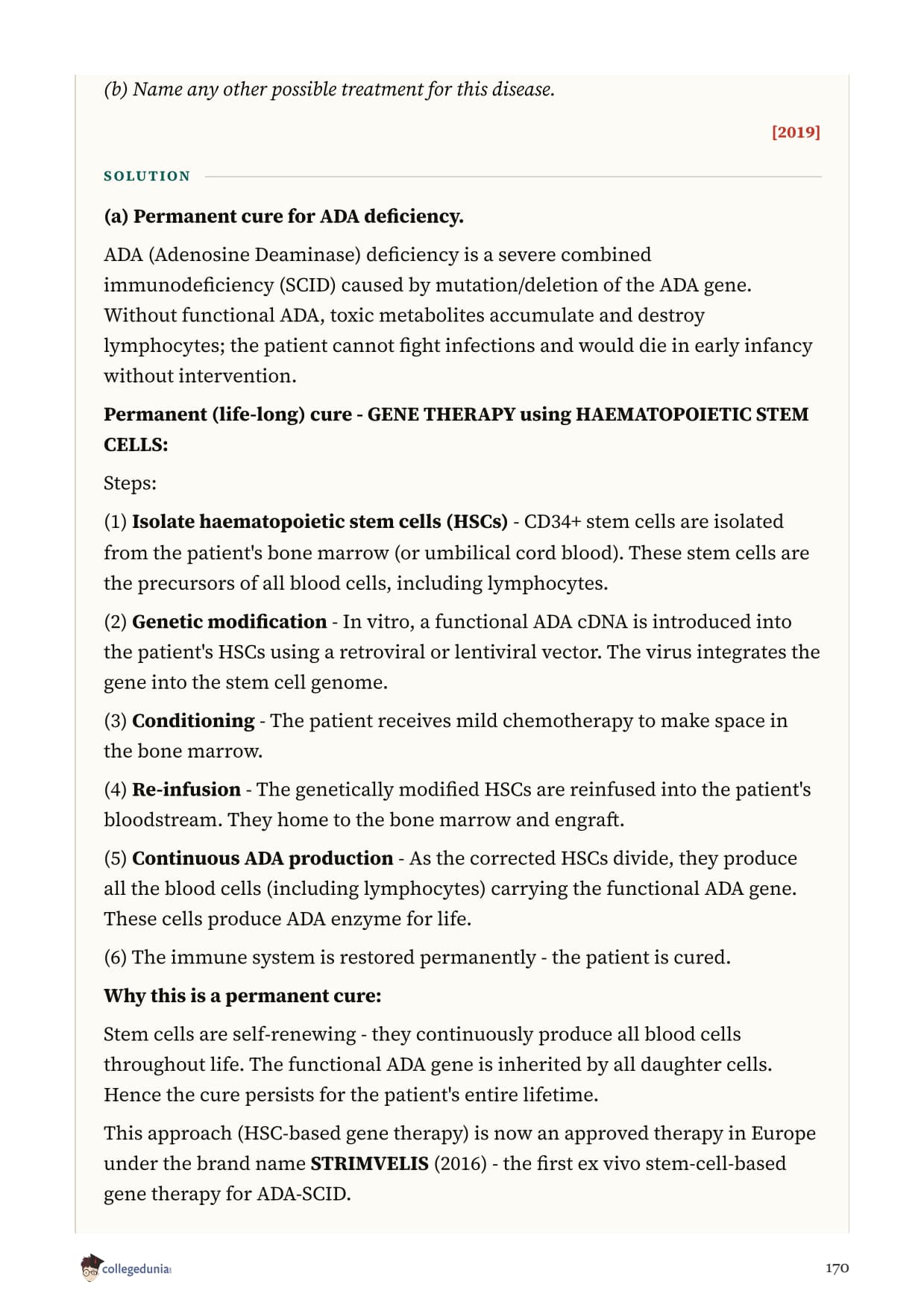
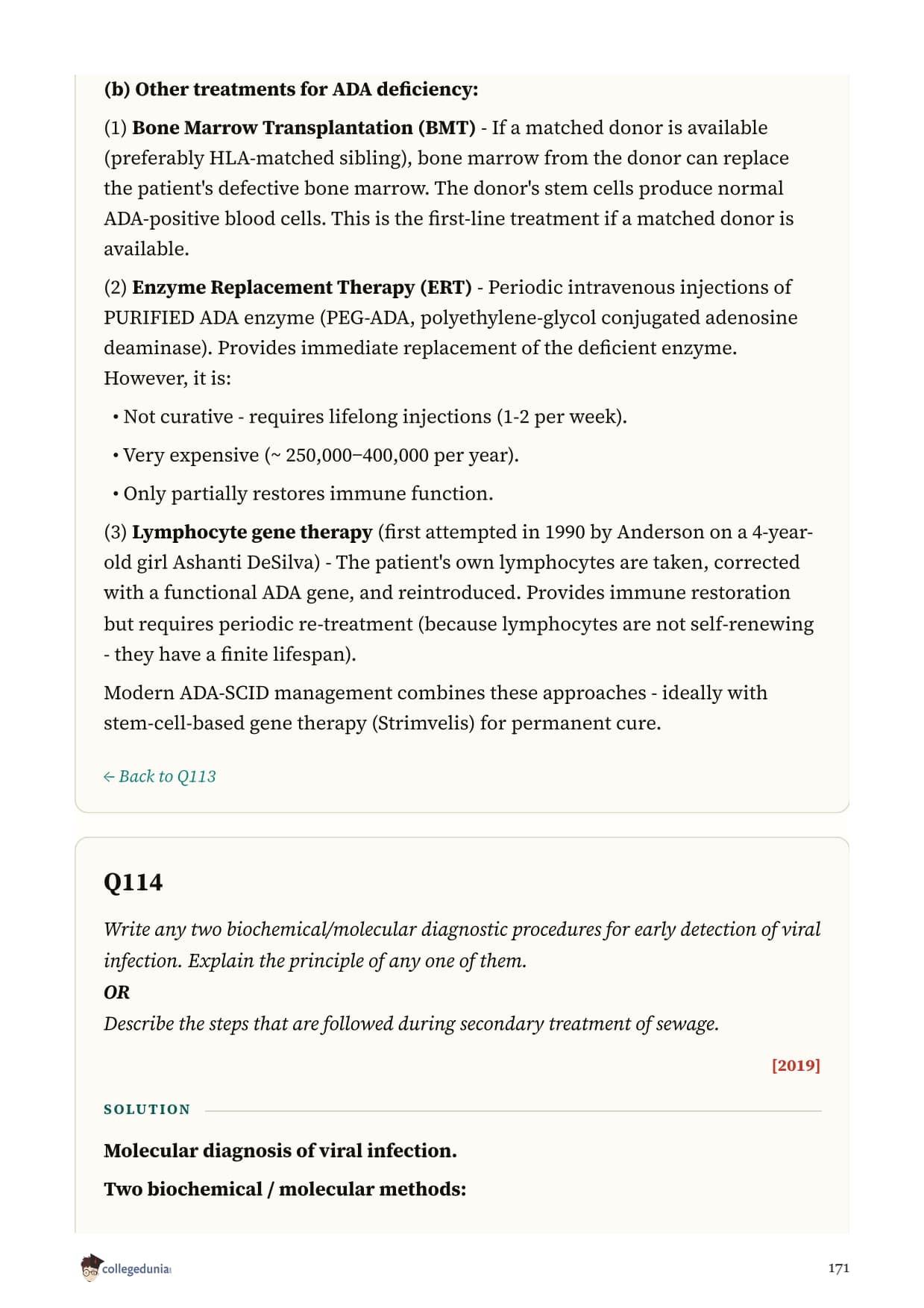
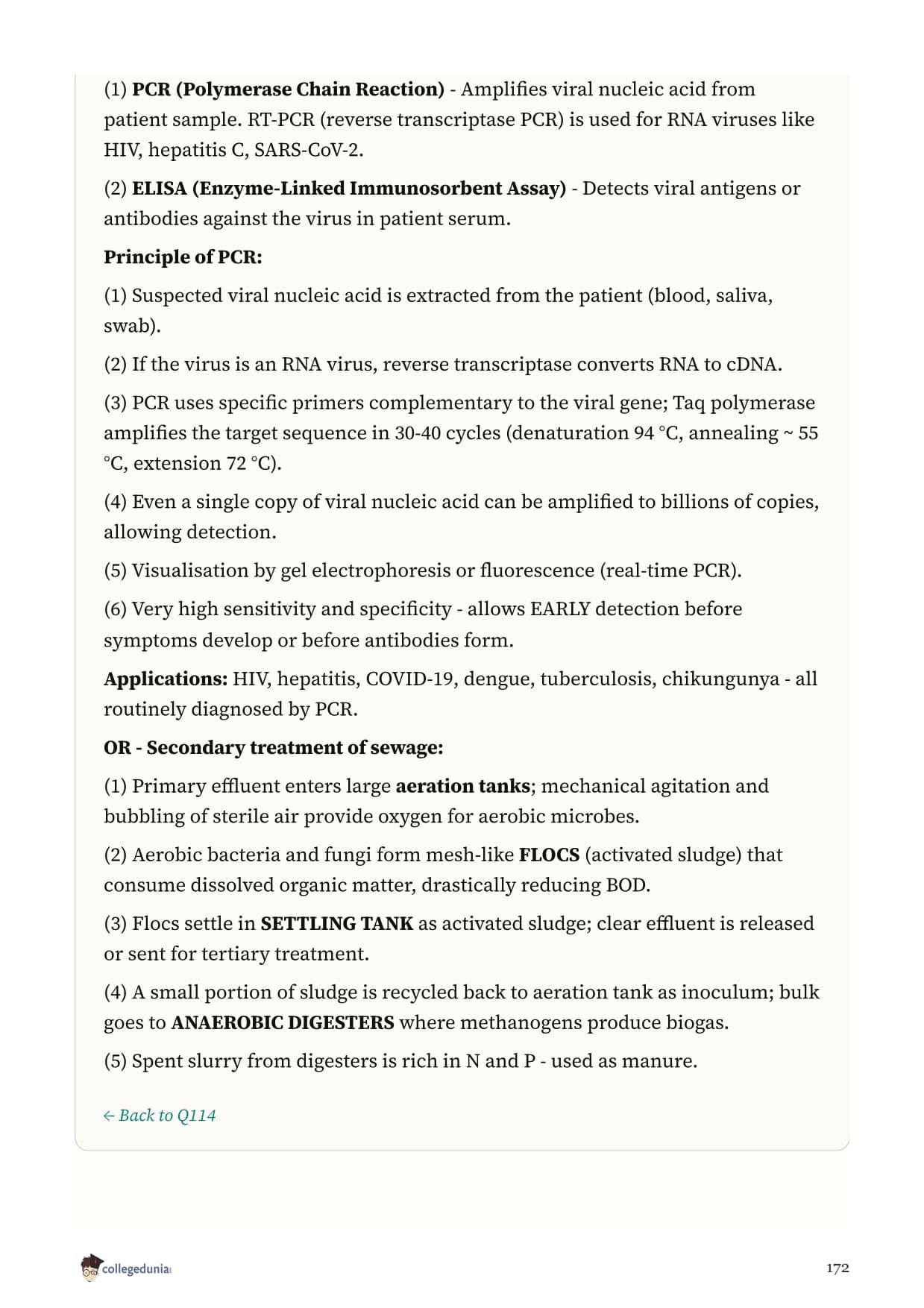
The 142-question set covers every idea the NCERT chapter introduces. Transgenic plants like Bt cotton and the FlavrSavr tomato drive many 3-mark answers. Gene therapy for ADA deficiency and transgenic animals like the cow Rosie carry the 5-mark band. Recombinant insulin, RNA interference and molecular diagnosis (PCR, ELISA) appear across all bands, while biopiracy and patents fill the short 1 and 2-mark reasoning questions.
Marks-wise Distribution of the Biotechnology and its Applications PYQs
The table below shows how the 142 questions split across the CBSE marks bands. Use it to plan how much revision time each band deserves.
| Marks | Questions | Total Marks | CBSE Section | Type |
|---|---|---|---|---|
| 1 mark | 46 | 46 | Section A | MCQ / Assertion-Reason |
| 2 mark | 25 | 50 | Section B | VSA (Very Short Answer) |
| 3 mark | 56 | 168 | Section C | SA (Short Answer) |
| 5 mark | 15 | 75 | Section E | Long Answer |
Year-wise Spread of Class 12 Biology Biotechnology and its Applications PYQs
The compilation spans more than 17 CBSE board years. About 54% of the questions come from 2023 onwards, because Section A objective items and case-based questions pushed up the recent count.
- 2026: An MCQ on Pomato from protoplast fusion, an assertion-reason on the transgenic cow Rosie, and a 2-mark question on micropropagation advantages.
- 2024 to 2025: The biggest contribution years, with MCQ banks on transgenic animals, Bt crops and recombinant insulin.
- 2020 to 2023: Strong sets on gene therapy for ADA deficiency, RNA interference and molecular diagnosis.
- 2004 to 2019: Older long answers on the FlavrSavr tomato, Eli Lilly human insulin and tissue culture, all relevant to the current syllabus.
Topic Frequency in the Biotechnology and its Applications Board Paper Questions
The 142 questions cluster into the six topic buckets below, ranked by how often CBSE has set them between 2004 and 2026.
| Rank | Topic Cluster | Frequency | Typical Marks Band |
|---|---|---|---|
| 1 | Transgenic plants (Bt cotton, FlavrSavr tomato, golden rice, pest resistance) | ~22 per cent | 2, 3, 5 mark |
| 2 | Gene therapy (ADA deficiency, retrovirus vector, ex vivo correction) | ~19 per cent | 3 and 5 mark |
| 3 | Transgenic animals (cow Rosie, alpha-1-antitrypsin, biological models) | ~17 per cent | 1, 3, 5 mark |
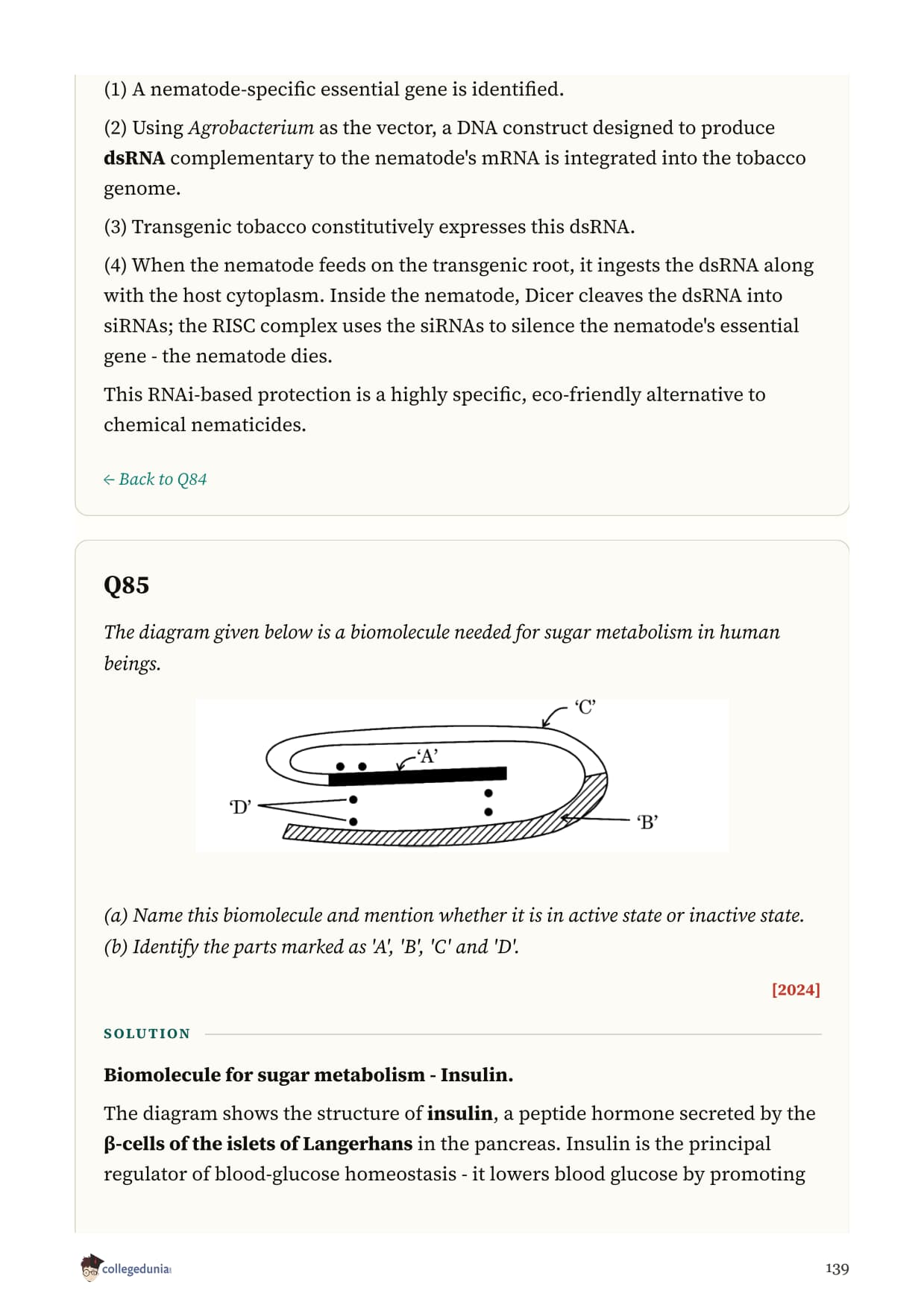
| 4 | Recombinant proteins and insulin (Humulin, A and B chains, bioreactors) | ~15 per cent | 2 and 3 mark |
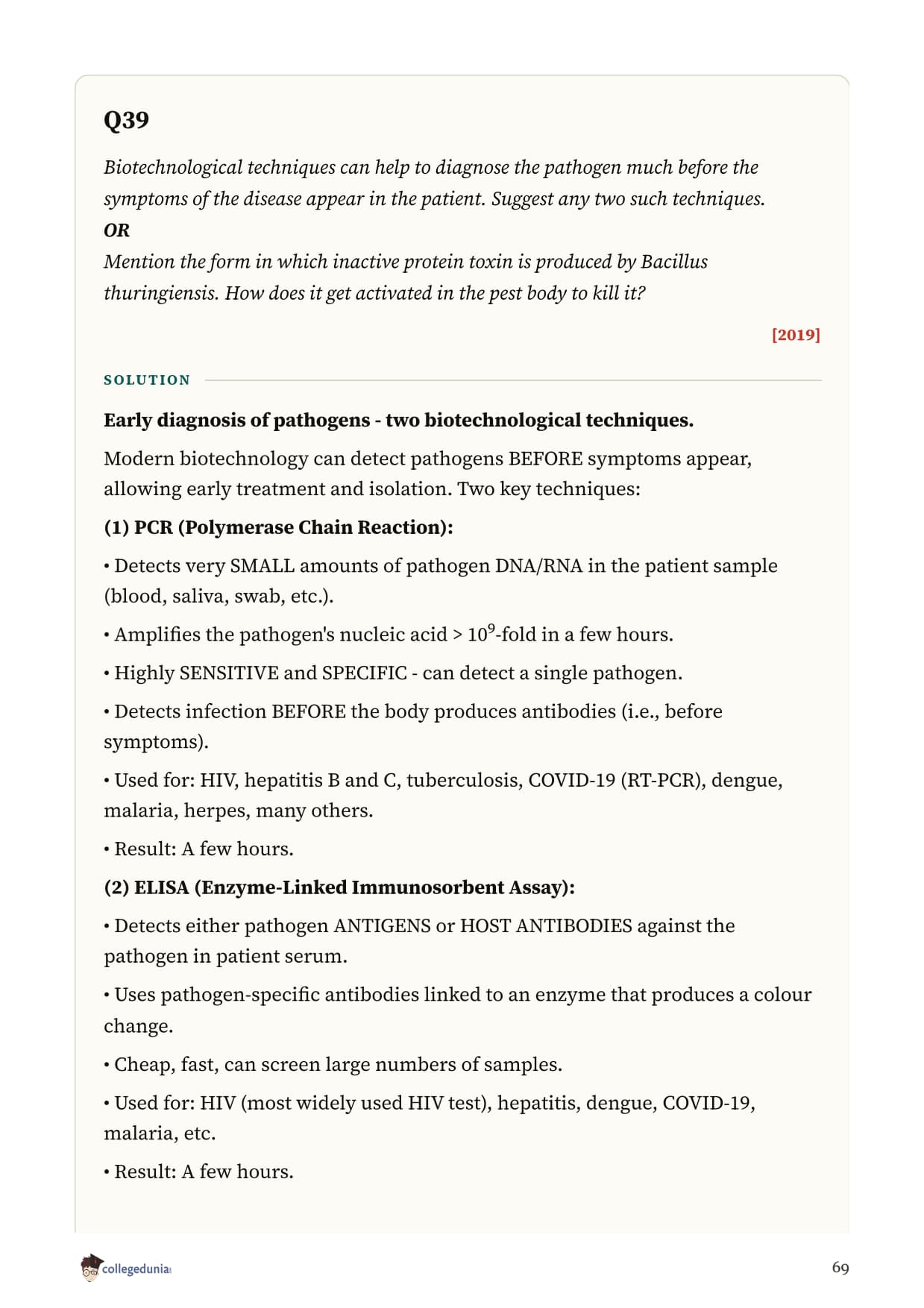
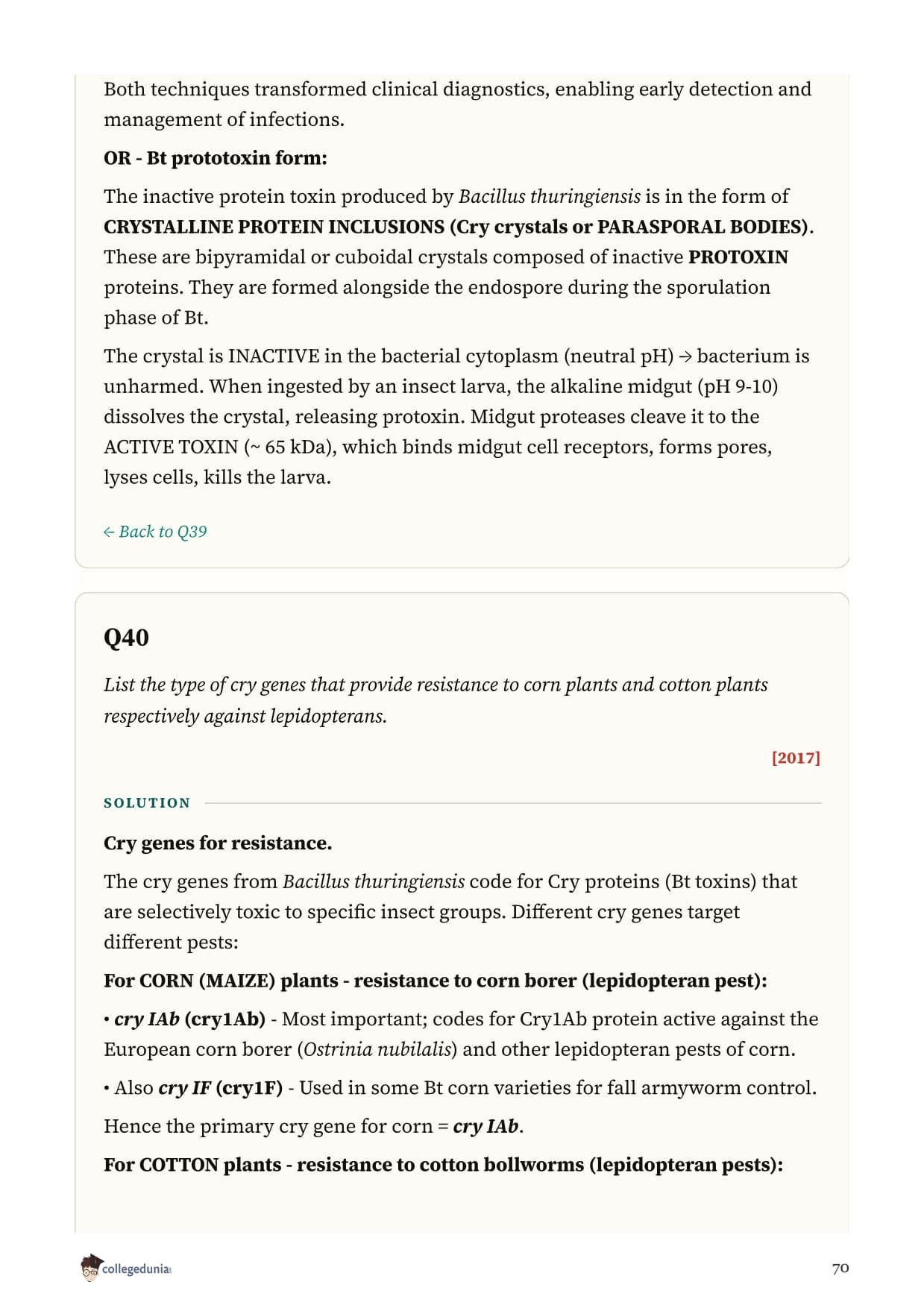
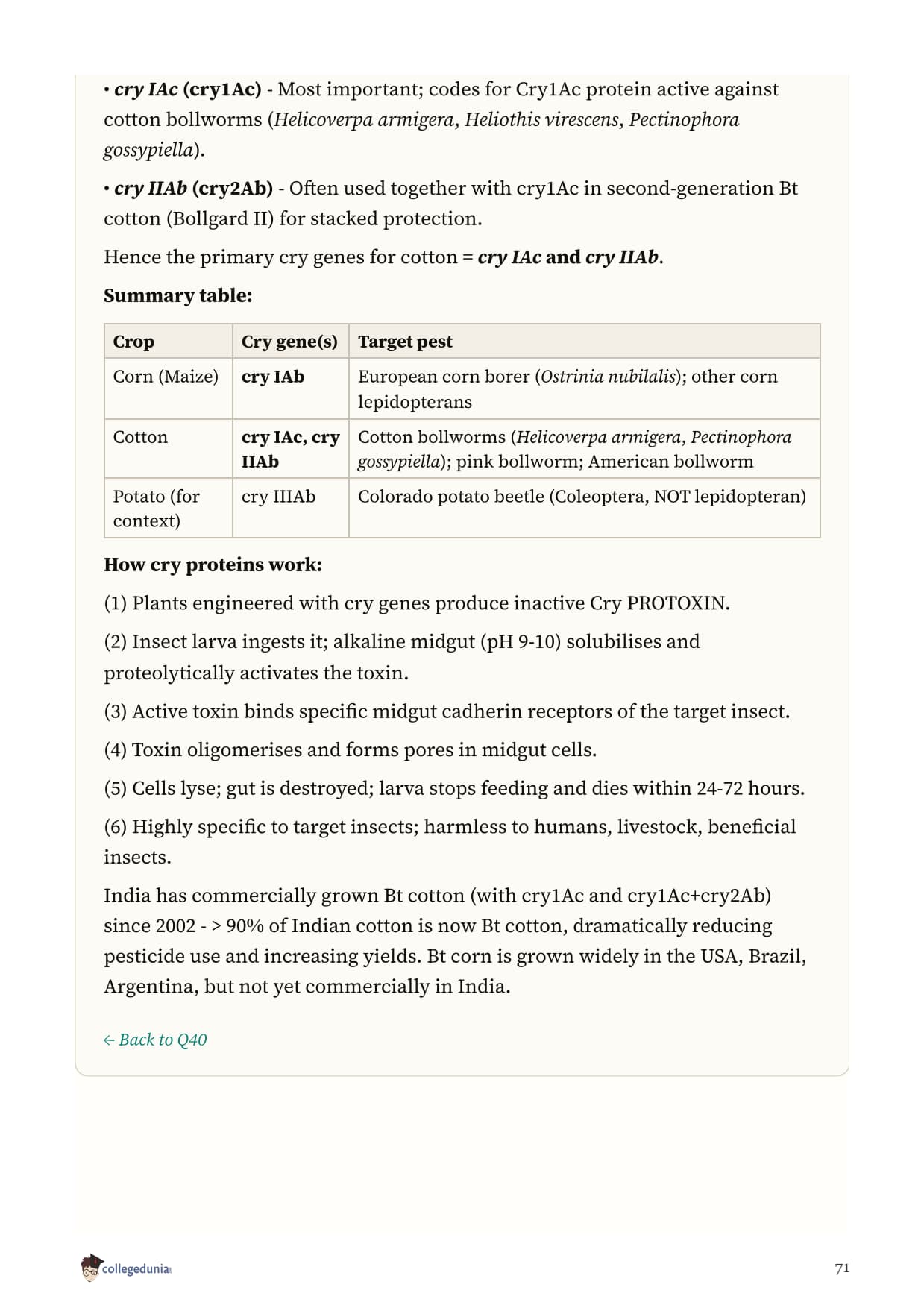
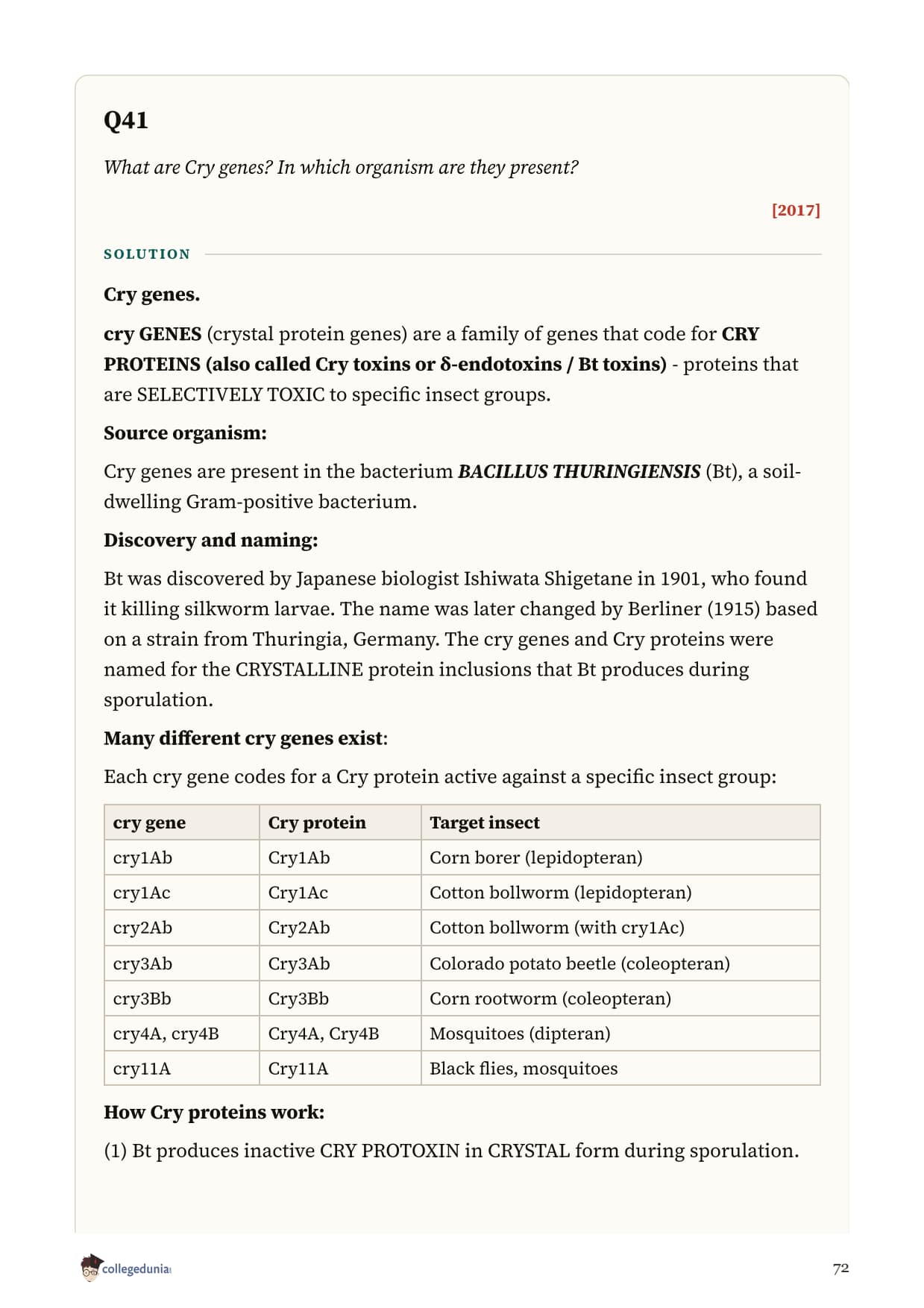
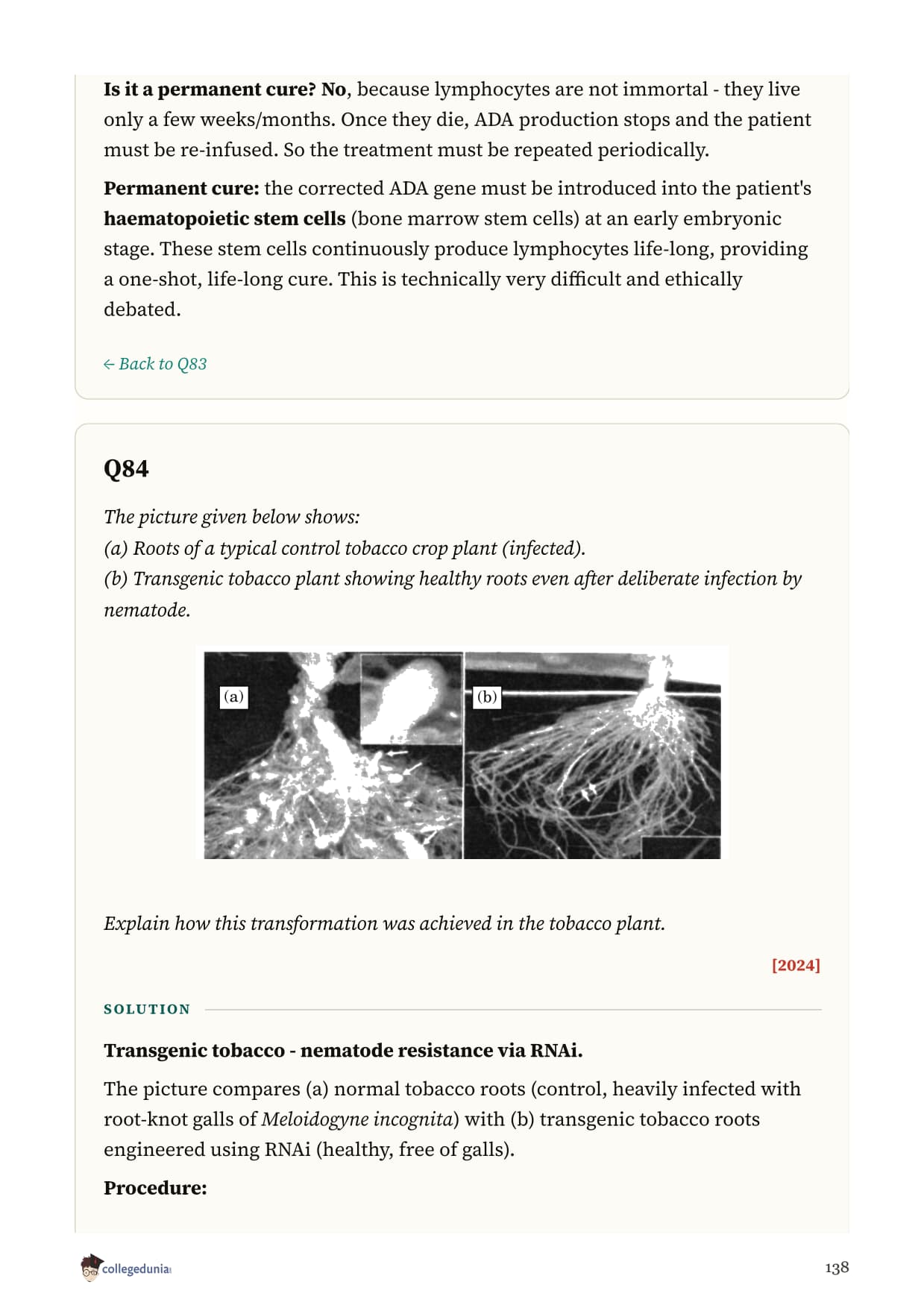
| 5 | RNA interference and pest control (Meloidogyne, dsRNA, Bt toxin Cry genes) | ~14 per cent | 3 and 5 mark |
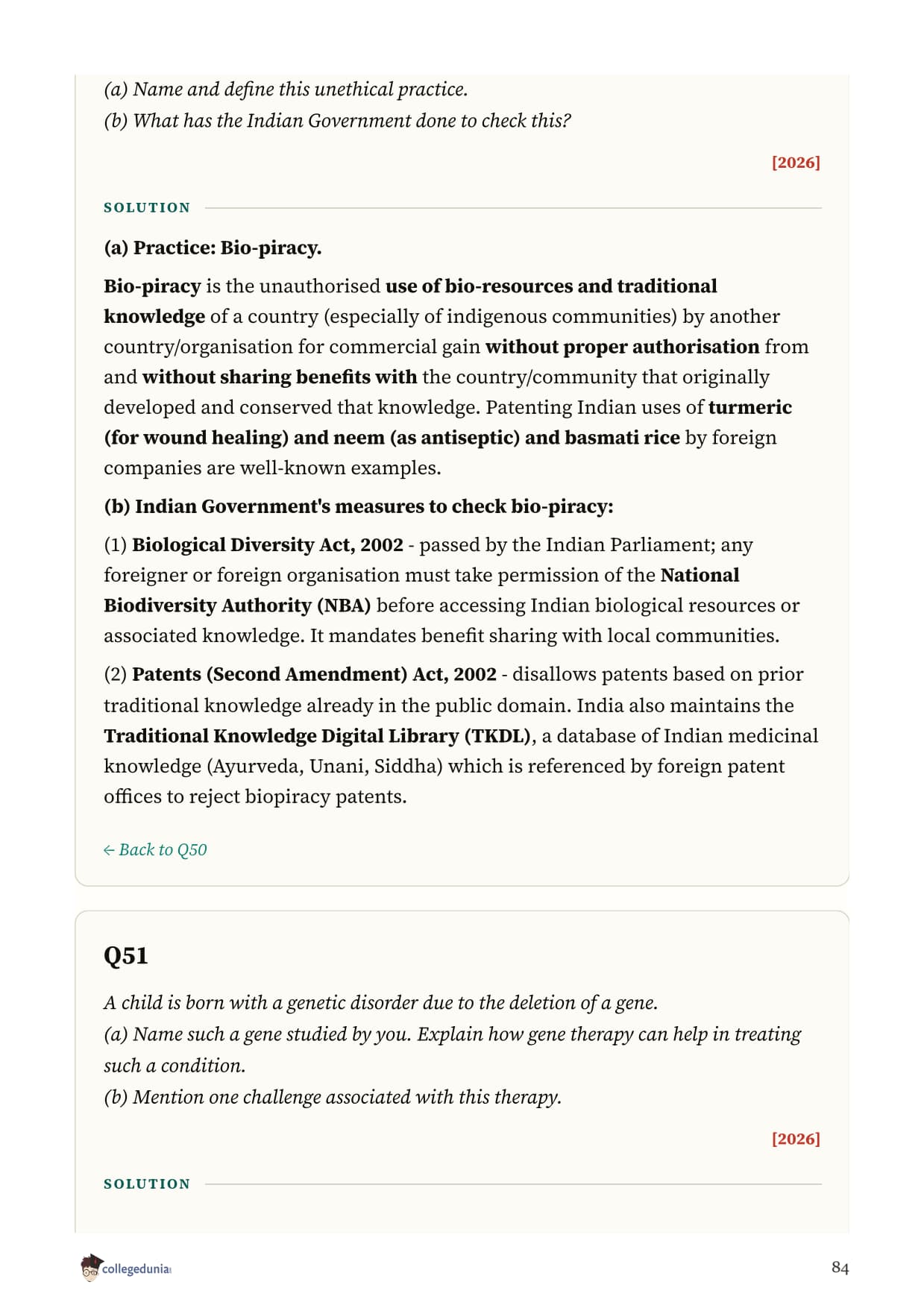
| 6 | Molecular diagnosis and ethics (PCR, ELISA, biopiracy, patents) | ~13 per cent | 1 and 2 mark |
Marks-Band Attempt Strategy for the Biotechnology and its Applications PYQs
The 142 PYQs are arranged marks-ascending inside the PDF, so you can attempt them in the same order the CBSE paper presents them.
- 1-mark MCQs: Spend no more than 45 seconds each. Many test which organism is transgenic and what product it makes, so revise the product list first.
- 2-mark questions: Two clean points on insulin, micropropagation or molecular diagnosis. Aim for 3 minutes each.
- 3-mark questions: Usually Bt cotton, RNAi or gene therapy steps. Name the gene, the organism and the benefit explicitly, as the marking scheme rewards all three.
- 5-mark long answers: A gene-therapy or transgenic-animal explanation plus an application part. Allocate 12 to 15 minutes.
Recent CBSE Trend: 2024 to 2026 Pattern Shift in Biotechnology and its Applications
Three things have changed in the recent CBSE cycles that the Biotechnology and its Applications previous year questions now reflect:
- Section A carries a fixed objective block, including assertion-reason items like the 2026 transgenic cow Rosie question. The set has 46 such 1-mark questions.
- Application MCQs now test specific examples, such as Pomato from protoplast fusion, rather than general definitions.
- Five-mark questions almost always carry an OR alternative, so the PDF keeps both branches and you can revise each option.
Sample Previous Year Questions from Biotechnology and its Applications
Here are a few real previous year questions from the Biotechnology and its Applications board papers, taken straight from the compilation. The full set is in the downloadable PDF.
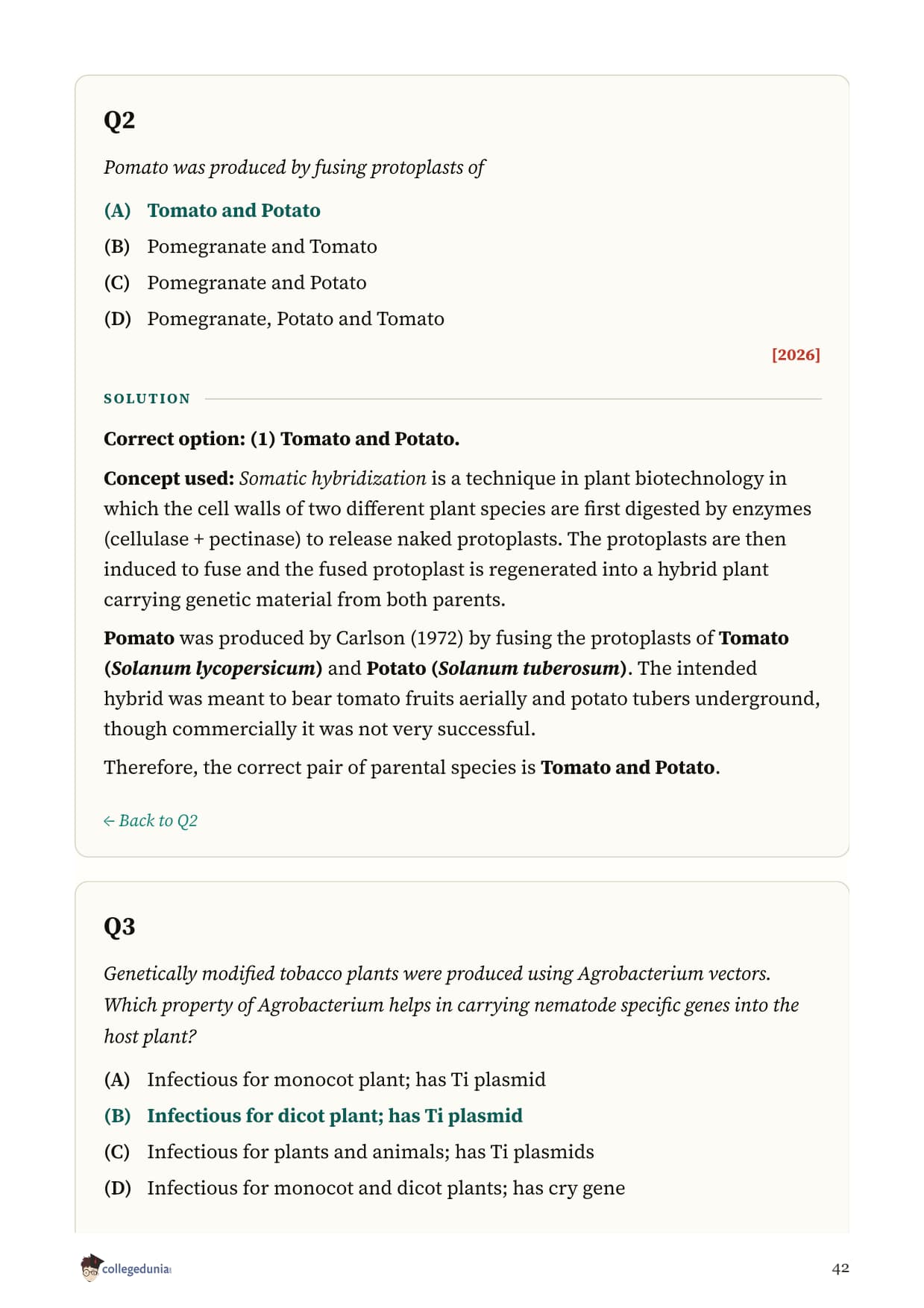
Pomato was produced by fusing protoplasts of
- Tomato and Potato
- Pomegranate and Tomato
- Pomegranate and Potato
- Pomegranate, Potato and Tomato
[2026 • 1 mark]
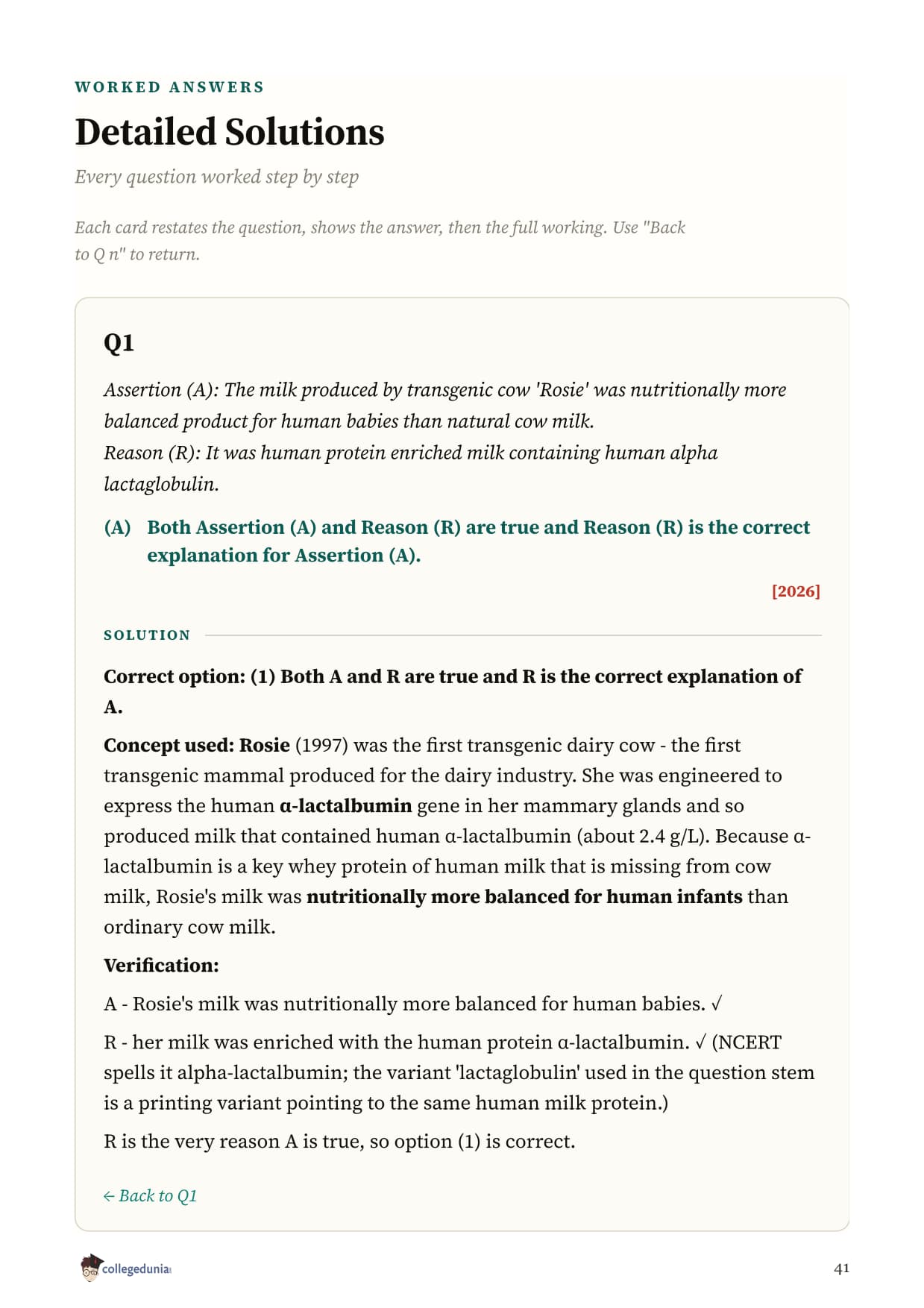
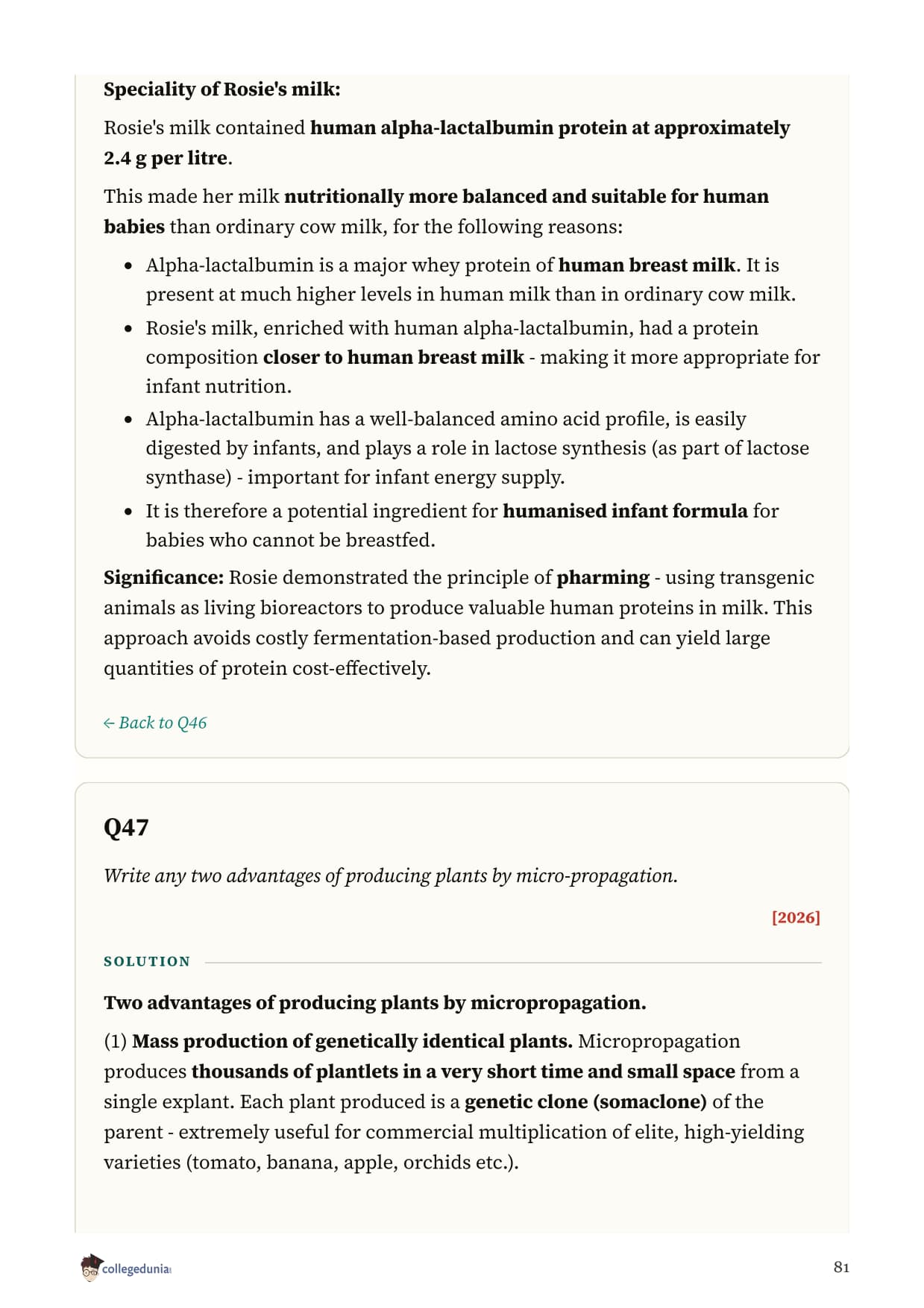
Assertion (A): The milk produced by transgenic cow 'Rosie' was nutritionally more balanced product for human babies than natural cow milk. Reason (R): It was human protein enriched milk containing human alpha lactaglobulin.
- Both Assertion (A) and Reason (R) are true and Reason (R) is the correct explanation for Assertion (A).
- Both Assertion (A) and Reason (R) are true, but Reason (R) is not the correct explanation for Assertion (A).
- Assertion (A) is true, but Reason (R) is false.
- Assertion (A) is false, but Reason (R) is true.
[2026 • 1 mark]
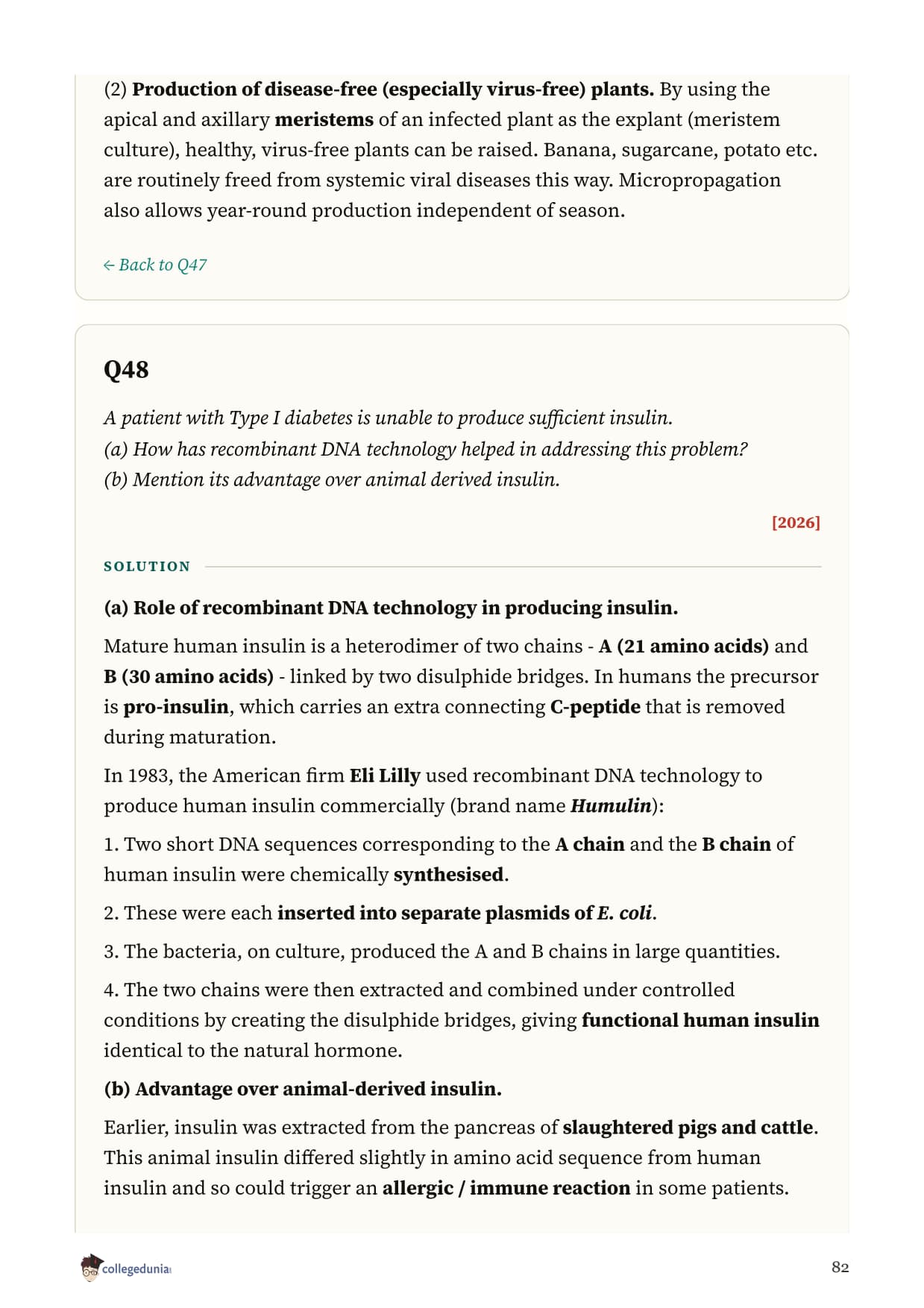
Write any two advantages of producing plants by micro-propagation.
[2026 • 2 mark]
Common Mistakes in the Biotechnology and its Applications Board Questions
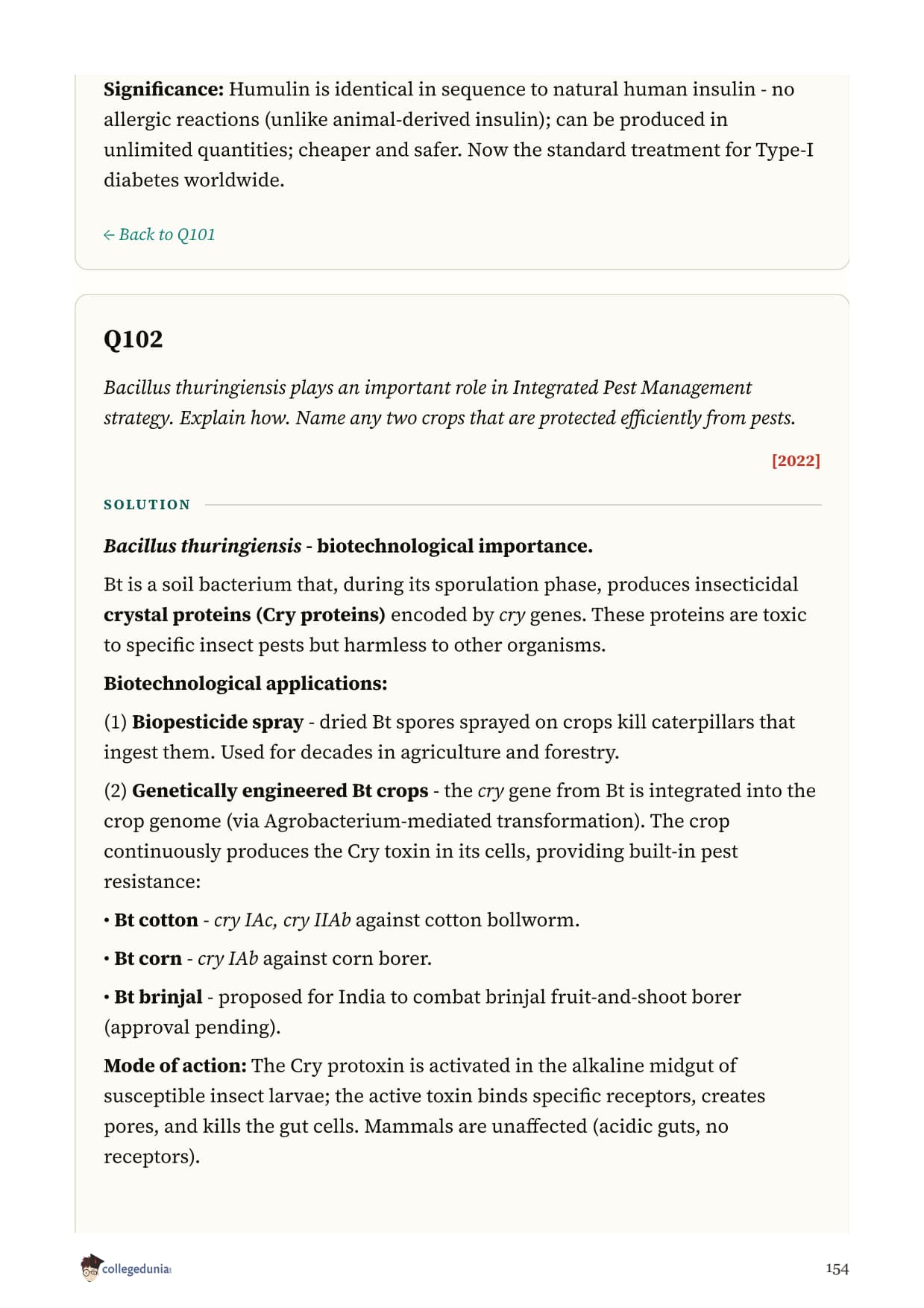
- Mixing up the Bt toxin Cry genes, for example which Cry gene protects cotton against the bollworm.
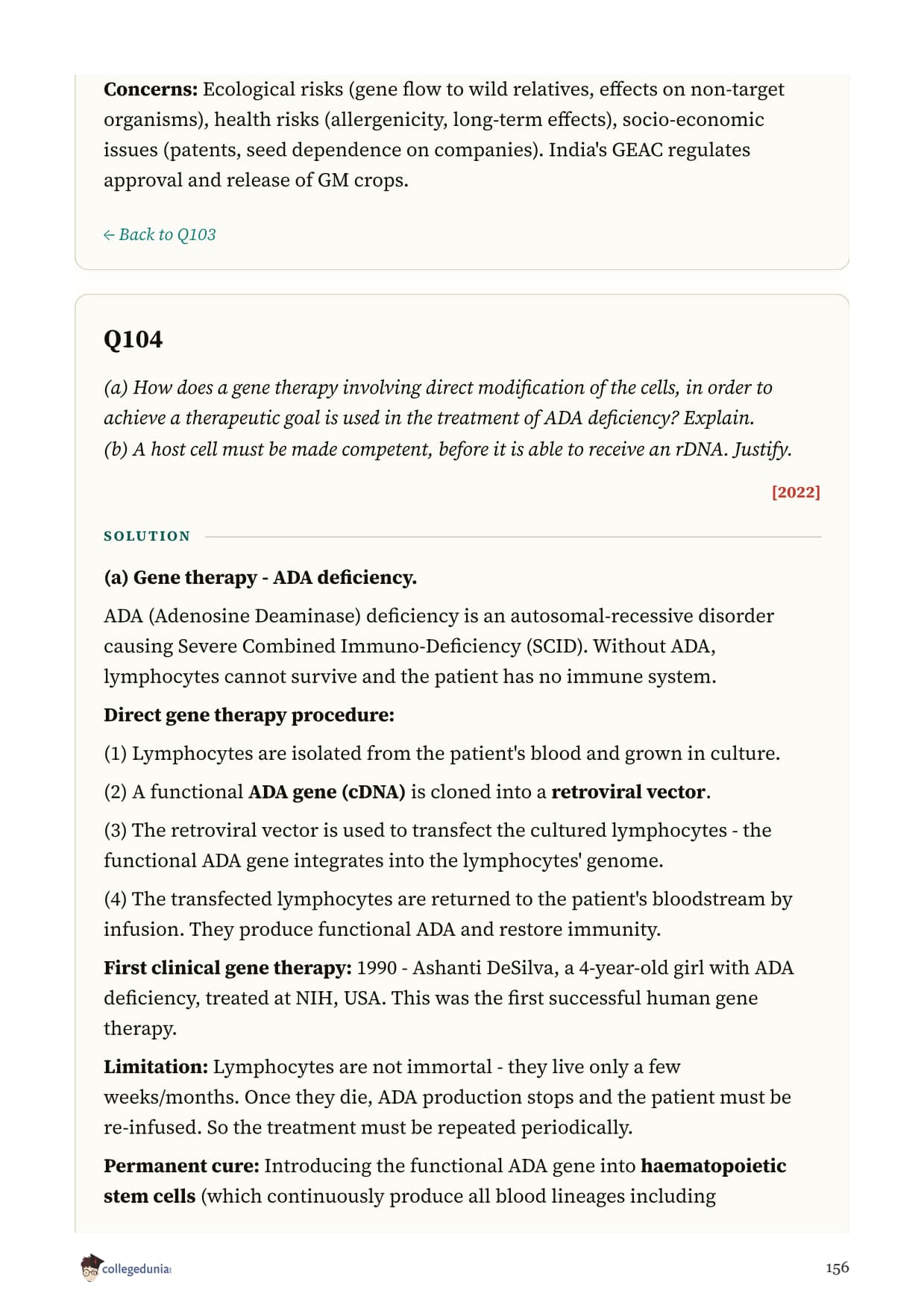
- Saying gene therapy permanently cures ADA deficiency, when the corrected cells are short-lived and need repeating.
- Describing RNA interference as cutting DNA, when it actually silences mRNA with complementary double-stranded RNA.
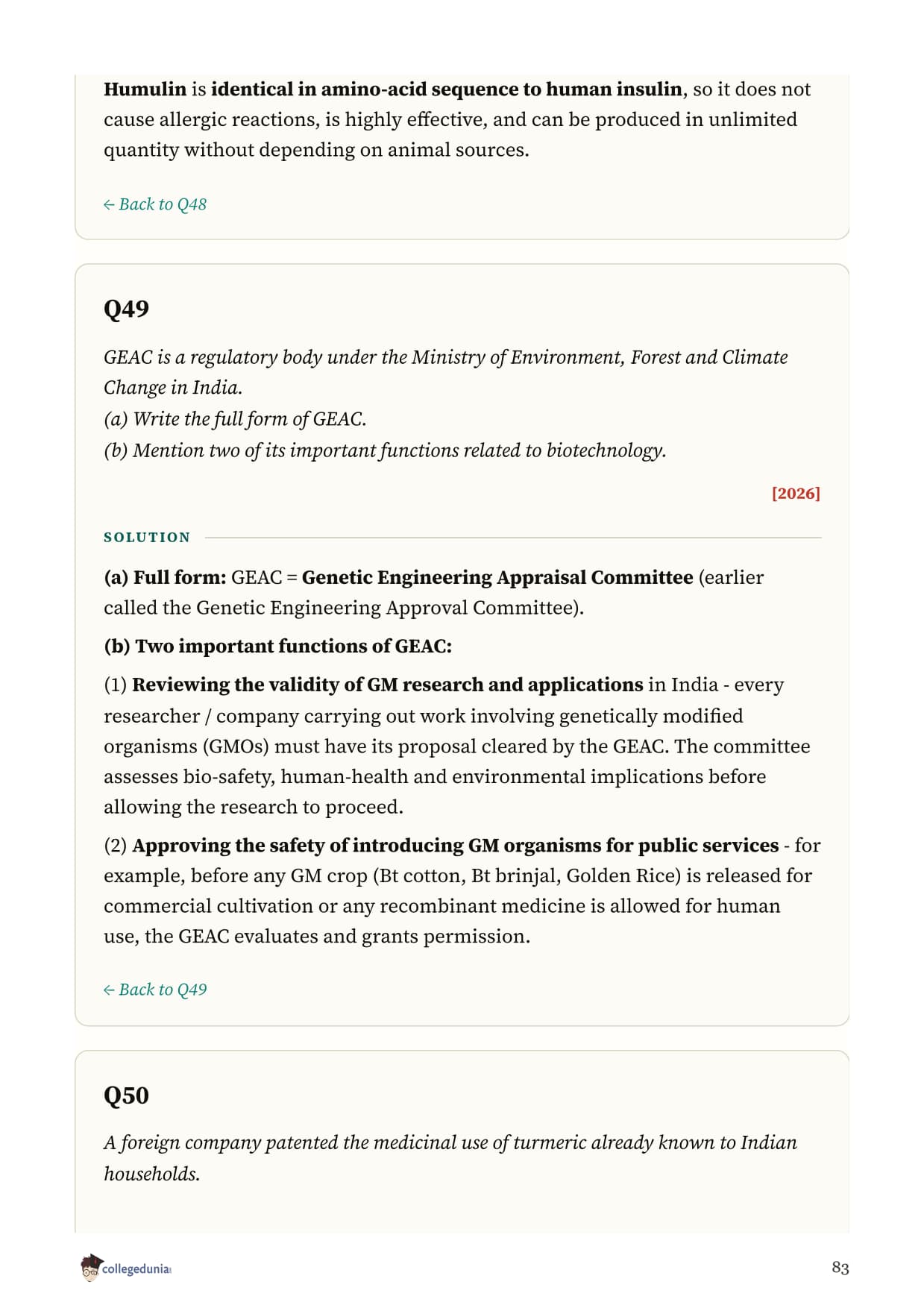
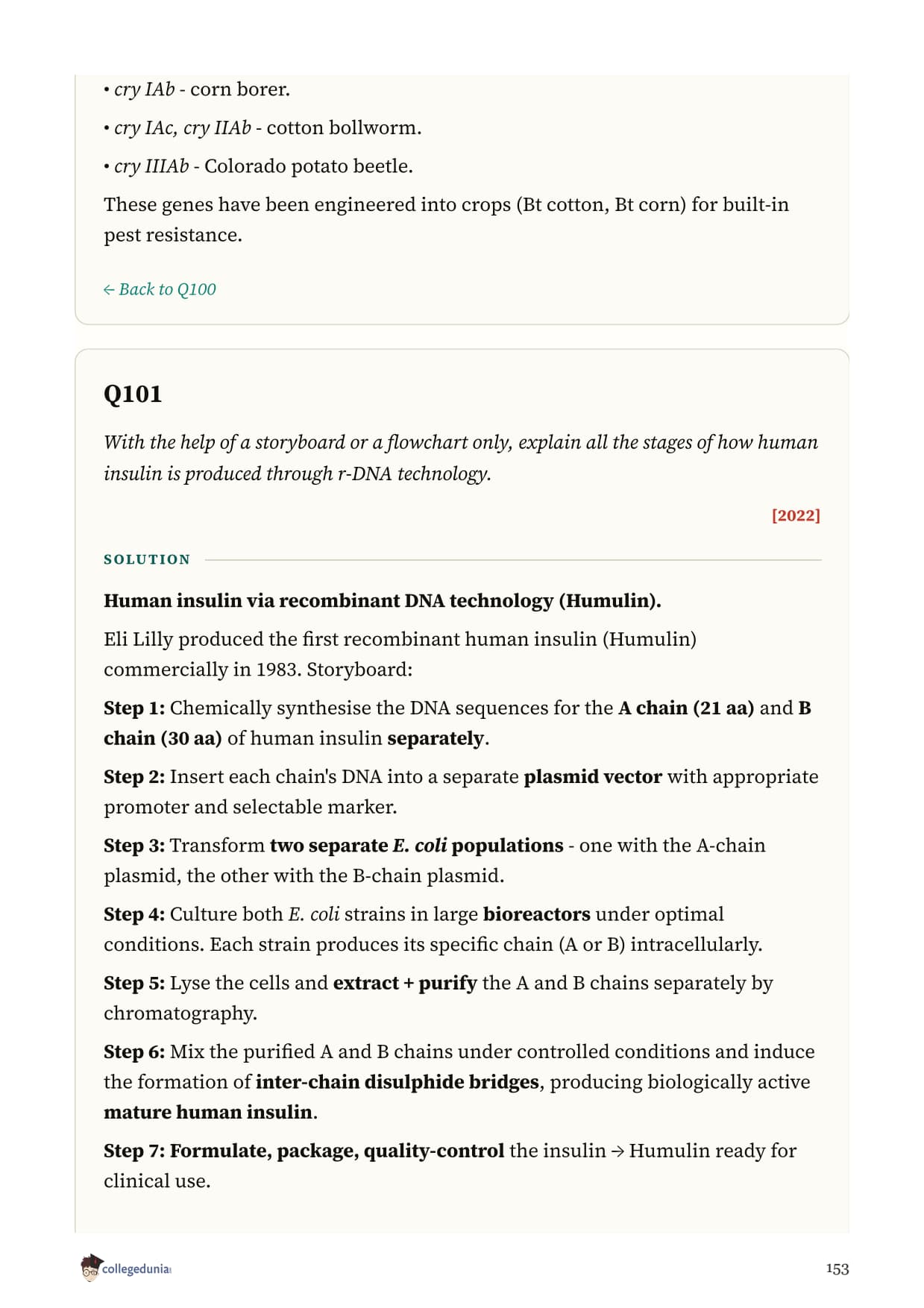
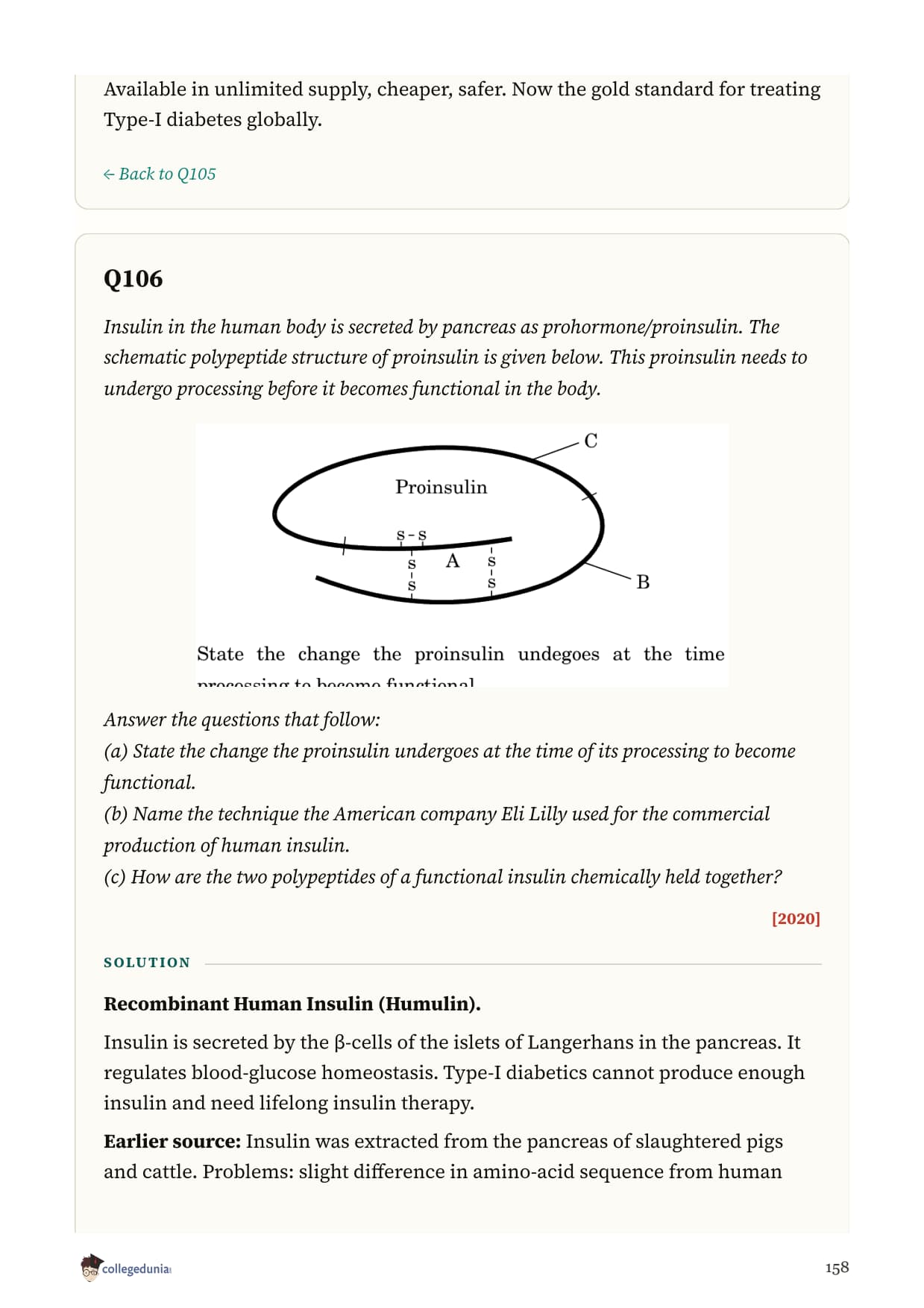
- Forgetting that human insulin has two chains, A and B, joined by disulphide bonds in the final step.
- Confusing transgenic plants and transgenic animals when naming examples like Bt cotton and the cow Rosie.
Student Feedback on Biotechnology and its Applications PYQ Practice
- 67 per cent said gene therapy and RNA interference were the hardest part of the 3 and 5-mark bands.
- 59 per cent reported gaining 4 to 6 marks after solving all 15 five-mark PYQs from this PDF.
- 43 per cent said a transgenic animal or Bt crop question appeared in their actual 2026 paper.
- Average time to finish all 142 PYQs: about 11 hours across 6 study sessions.
How These PYQs Pair with the Other Biotechnology and its Applications Resources
Solving previous year questions alone gives you only half the prep. Pair the PYQ PDF with the matching concept, formula and solution resources for Biotechnology and its Applications.
| Resource | What It Gives You | Open |
|---|---|---|
| NCERT Solutions | Step-by-step worked answers to every NCERT back-exercise question of Biotechnology and its Applications | NCERT Solutions for Biotechnology and its Applications |
| Notes | Concept revision notes covering every topic in the Biotechnology and its Applications chapter | Biotechnology and its Applications Class 12 Notes |
| Formula Sheet | All key formulas and results of Biotechnology and its Applications on one page for last-day revision | Biotechnology and its Applications Formula Sheet |
| Handwritten Notes | Scanned handwritten notes of Biotechnology and its Applications for quick one-shot revision | Biotechnology and its Applications Handwritten Notes |
| Exemplar Solutions | NCERT Exemplar problems of Biotechnology and its Applications solved in full for extra practice | NCERT Exemplar Solutions for Biotechnology and its Applications |
| NCERT Book | Official NCERT Biotechnology and its Applications chapter PDF for free download | Biotechnology and its Applications NCERT Book PDF |
| Exemplar Book | NCERT Exemplar Biotechnology and its Applications problem book PDF for free download | Biotechnology and its Applications Exemplar Book PDF |
How to Use the Biotechnology and its Applications PYQ PDF Most Effectively
The 142 questions are sequenced for a three-pass revision plan:
- Pass 1 (Day 1 to 2): Attempt all 46 one-mark MCQs and build a flashcard for every transgenic organism and its product.
- Pass 2 (Day 3 to 5): Solve the 25 two-mark and 56 three-mark questions, timing 3 minutes per 2-mark and 5 minutes per 3-mark.
- Pass 3 (Day 6 to 10): Work through the 15 five-mark long answers, writing the full gene-therapy or transgenic process with each step labelled.
All Class 12 Biology Chapter PYQ PDFs
Every Class 12 Biology chapter has its own PYQ compilation built the same way, sorted by marks and tagged by year.
| Chapter | Topic | Previous Year Questions |
|---|---|---|
| Chapter 1 | Sexual Reproduction in Flowering Plants | PYQ PDF |
| Chapter 2 | Human Reproduction | PYQ PDF |
| Chapter 3 | Reproductive Health | PYQ PDF |
| Chapter 4 | Principles of Inheritance and Variation | PYQ PDF |
| Chapter 5 | Molecular Basis of Inheritance | PYQ PDF |
| Chapter 6 | Evolution | PYQ PDF |
| Chapter 7 | Human Health and Disease | PYQ PDF |
| Chapter 8 | Microbes in Human Welfare | PYQ PDF |
| Chapter 9 | Biotechnology: Principles and Processes | PYQ PDF |
| Chapter 10 | Biotechnology and its Applications | PYQ PDF |
| Chapter 11 | Organisms and Populations | PYQ PDF |
| Chapter 12 | Ecosystem | PYQ PDF |
| Chapter 13 | Biodiversity and Conservation | PYQ PDF |
Also Check: NCERT Solutions for Class 12 Biology
Class 12 Biology Biotechnology and its Applications PYQ FAQs
Ques. How many previous year questions are in the Class 12 Biology Biotechnology and its Applications PYQ PDF?
Ans. The PDF has 142 previous year questions from CBSE board papers between 2004 and 2026, sorted by marks and then by year, latest first. Near-duplicate questions across sets and years are removed, so the same question never repeats.
Ques. Are the Biotechnology and its Applications PYQs based on the 2026-27 CBSE syllabus?
Ans. Yes. Every question follows the 2026-27 CBSE Class 12 Biology syllabus. Older questions are kept because the core ideas, such as Bt crops, gene therapy and recombinant insulin, are unchanged in the current syllabus.
Ques. Which topics of Biotechnology and its Applications appear most often in CBSE board papers?
Ans. From the 142-question set: transgenic plants like Bt cotton (about 22 per cent), gene therapy (about 19 per cent), transgenic animals (about 17 per cent), recombinant insulin (about 15 per cent), and RNA interference and molecular diagnosis.
Ques. How is this PYQ PDF different from a CBSE sample paper?
Ans. A sample paper gives you one paper. This PDF stitches together more than 17 years of questions across every set and region (Delhi, Outside Delhi, Foreign and Compartment) for Biotechnology and its Applications alone, so you see which examples CBSE repeats.
Ques. Does the Biotechnology and its Applications PYQ PDF include MCQs?
Ans. Yes. 46 of the 142 questions are 1-mark questions, mostly MCQ and assertion-reason from 2023 onwards, when CBSE expanded the Section A objective block.
Ques. Where can I download the Biotechnology and its Applications Class 12 PYQ PDF for free?
Ans. The full Biotechnology and its Applications PYQ PDF is free to download from the PDF button at the top of this page. No sign-up is needed.
Ques. How should I use these PYQs to revise Biotechnology and its Applications in the last 10 days?
Ans. Use the three-pass plan: Day 1 to 2 attempt all 46 MCQs, Day 3 to 5 solve the 2 and 3-mark questions, Day 6 to 10 attempt all 15 five-mark long answers under a 12-minute timer. Always name the gene, organism and benefit.
Ques. Does the PDF give answers or only the questions?
Ans. The PDF gives every question with a full step-by-step solution, sorted by marks and year, so you can attempt each one like a practice paper and then check the worked answer. For full answers, open the NCERT Solutions page for Biotechnology and its Applications or check the official CBSE marking scheme.
Ques. Is gene therapy an important topic for the CBSE Biotechnology and its Applications questions?
Ans. Yes. Gene therapy makes up close to a fifth of the set, and the ADA deficiency example is set as a 3 or 5-mark question almost every cycle. Practising the ex vivo correction steps is the safest way to score this band.
Ques. What is a transgenic organism?
Ans. A transgenic organism is a plant or animal that carries a foreign gene introduced by genetic engineering. Examples include Bt cotton with a bacterial Cry gene and the cow Rosie that gives human alpha-lactalbumin in its milk.
Ques. How is gene therapy defined?
Ans. Gene therapy is the correction of a genetic defect by inserting a normal gene into the patient's cells. In ADA deficiency, the patient's lymphocytes are given a functional ADA gene and returned to the body, though the treatment must be repeated.
Ques. What is RNA interference?
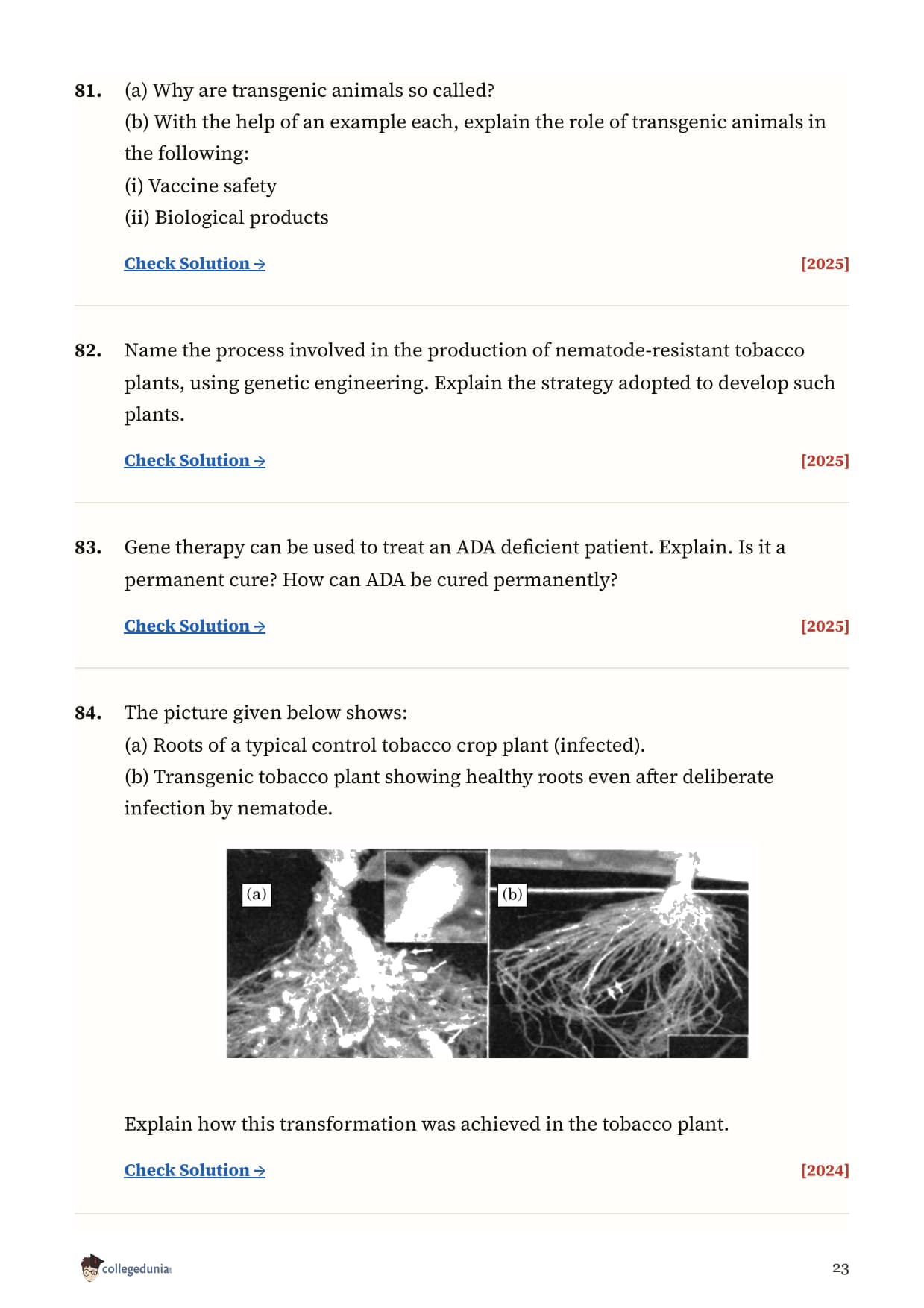
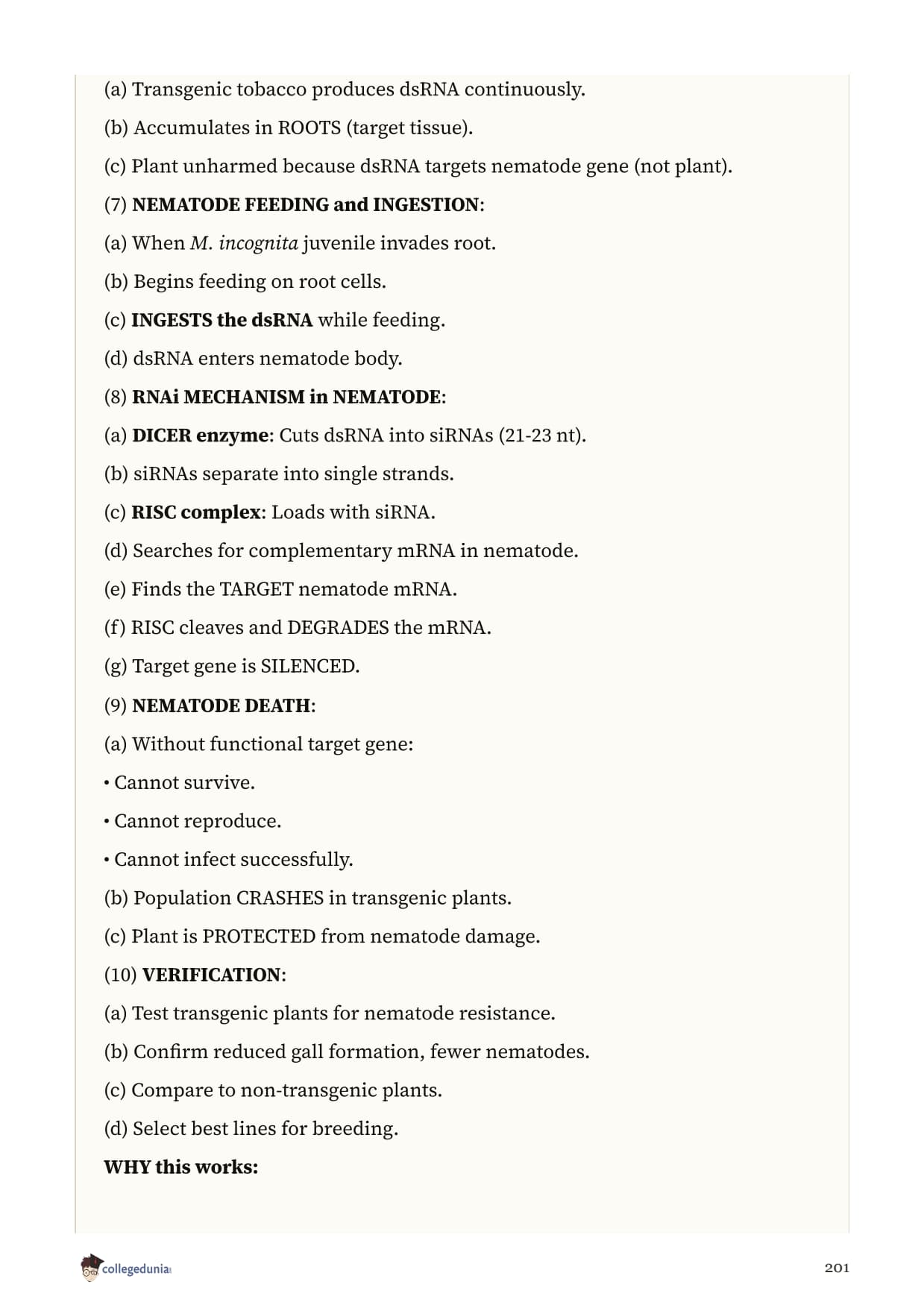
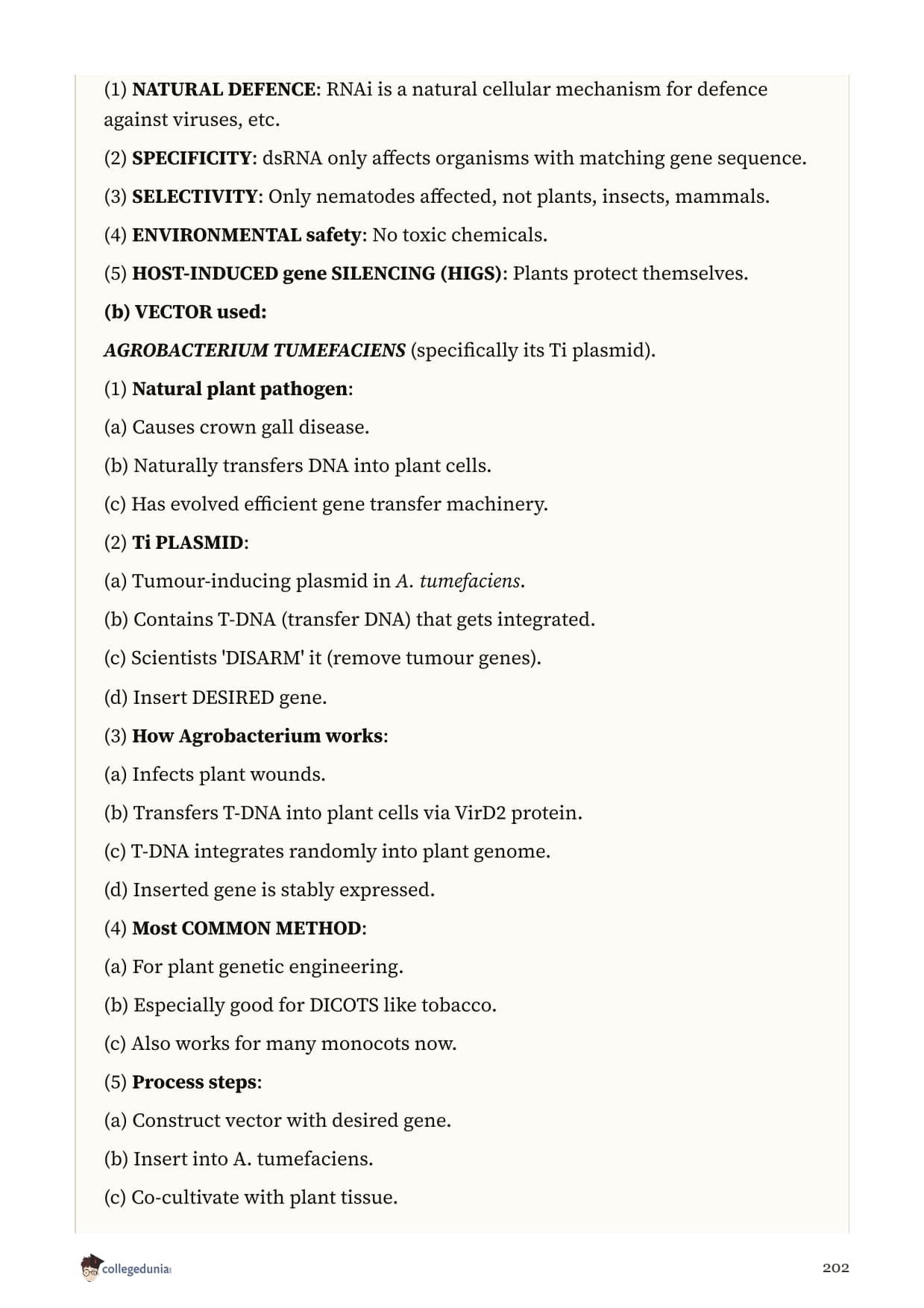
Ans. RNA interference (RNAi) is a cellular defence that silences a specific gene. A double-stranded RNA complementary to the target mRNA stops that mRNA from being translated. CBSE often sets the RNAi method used to protect tobacco plants from the nematode Meloidogyne.



Comments