




The ICAR AIEEA PG 2023 Agronomy question paper is available here with detailed solutions for free download. ICAR AIEEA PG 2023 was conducted by the National Testing Agency (NTA) on behalf of ICAR on July 9, 2023, and the Agronomy paper carried 120 questions in 120 minutes.
| ICAR AIEEA PG 2023 Agronomy Question Paper with Solutions | Download PDF | Check Solutions |
ICAR AIEEA PG 2023 Agronomy Questions with Solutions
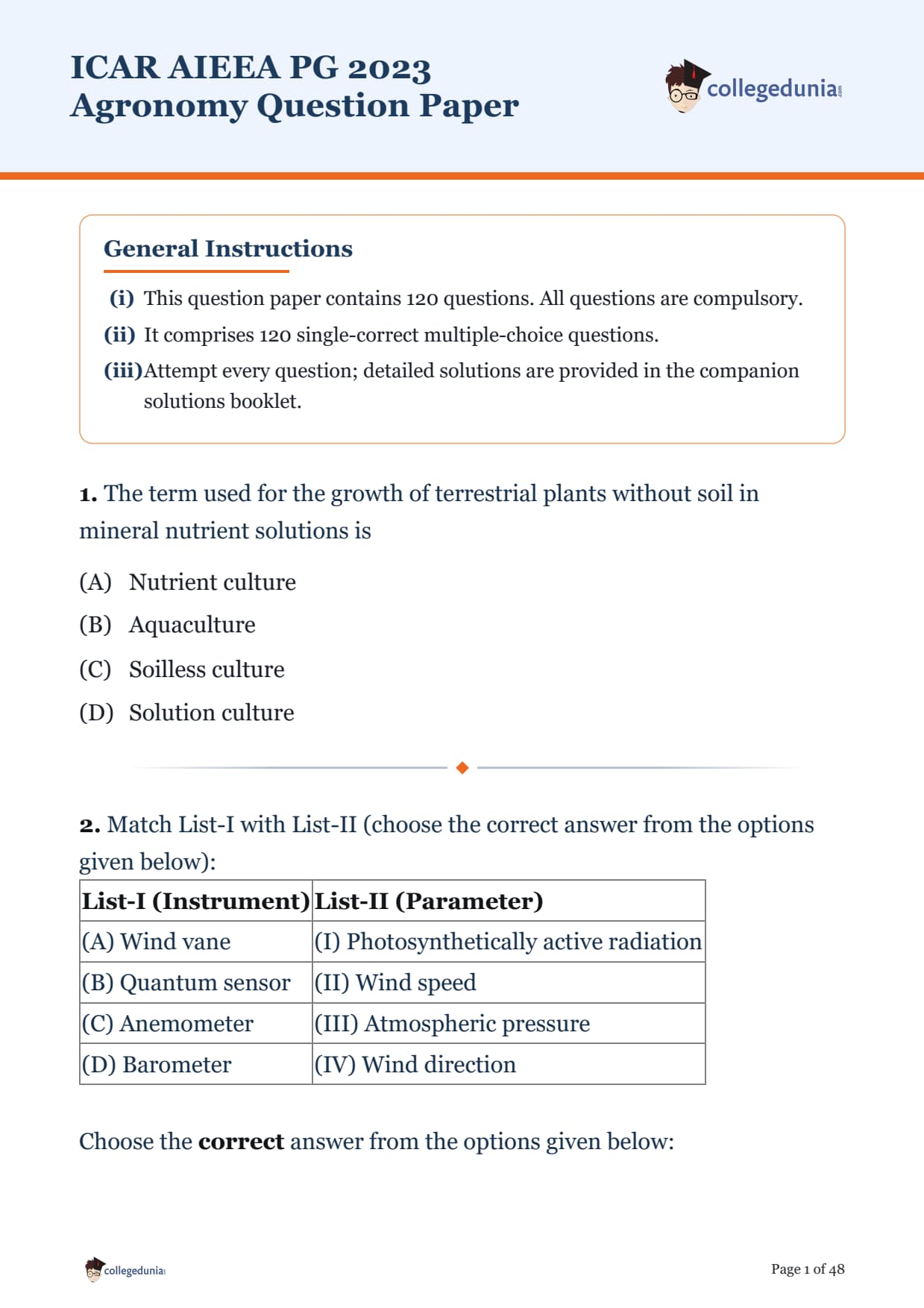
The term used for the growth of terrestrial plants without soil in mineral nutrient solutions is
Match List-I with List-II (choose the correct answer from the options given below):
| List-I (Instrument) | List-II (Parameter) |
| (A) Wind vane | (I) Photosynthetically active radiation |
| (B) Quantum sensor | (II) Wind speed |
| (C) Anemometer | (III) Atmospheric pressure |
| (D) Barometer | (IV) Wind direction |
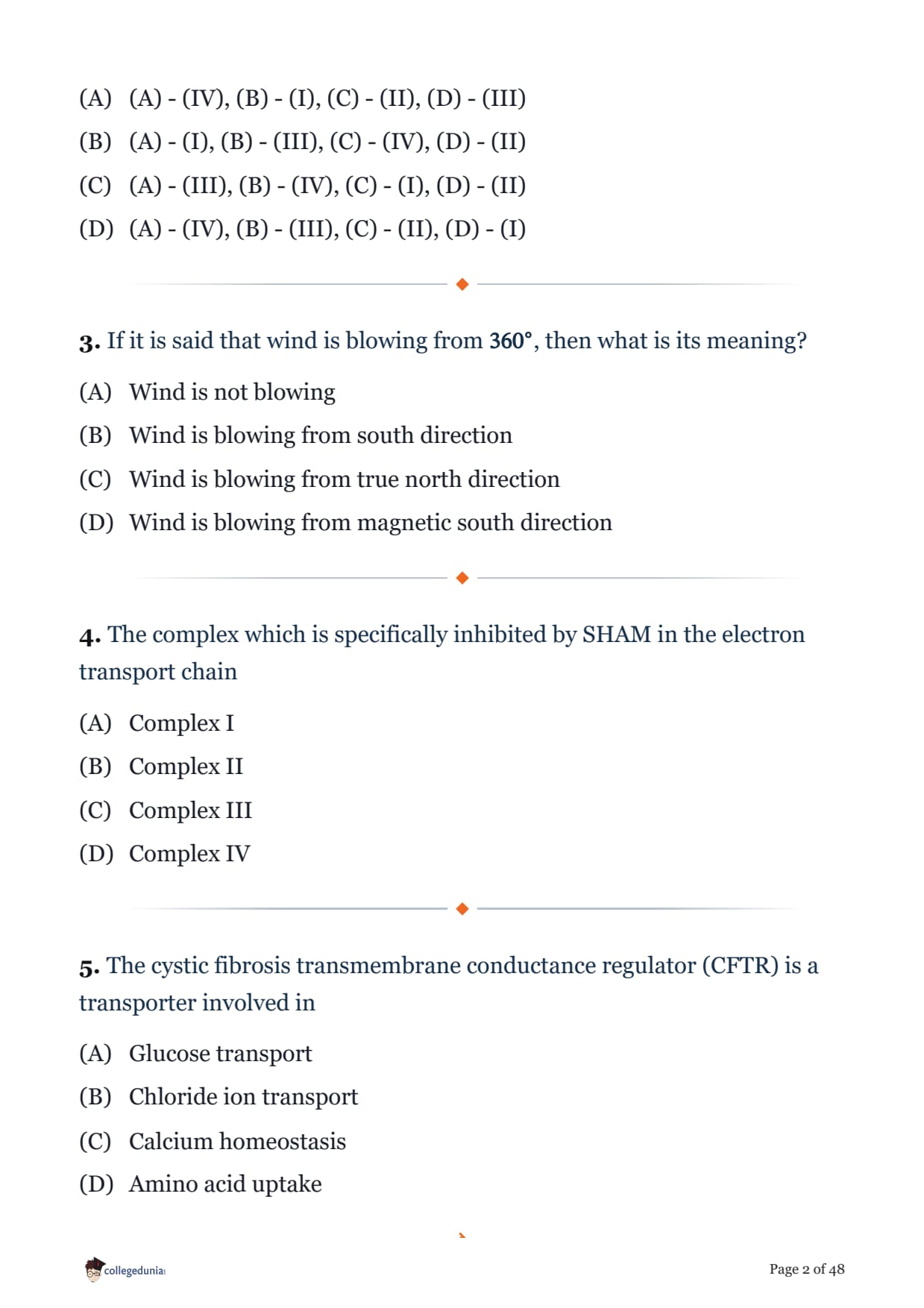
Choose the correct answer from the options given below:
If it is said that wind is blowing from \(360^{\circ}\), then what is its meaning?
The complex which is specifically inhibited by SHAM in the electron transport chain
The cystic fibrosis transmembrane conductance regulator (CFTR) is a transporter involved in
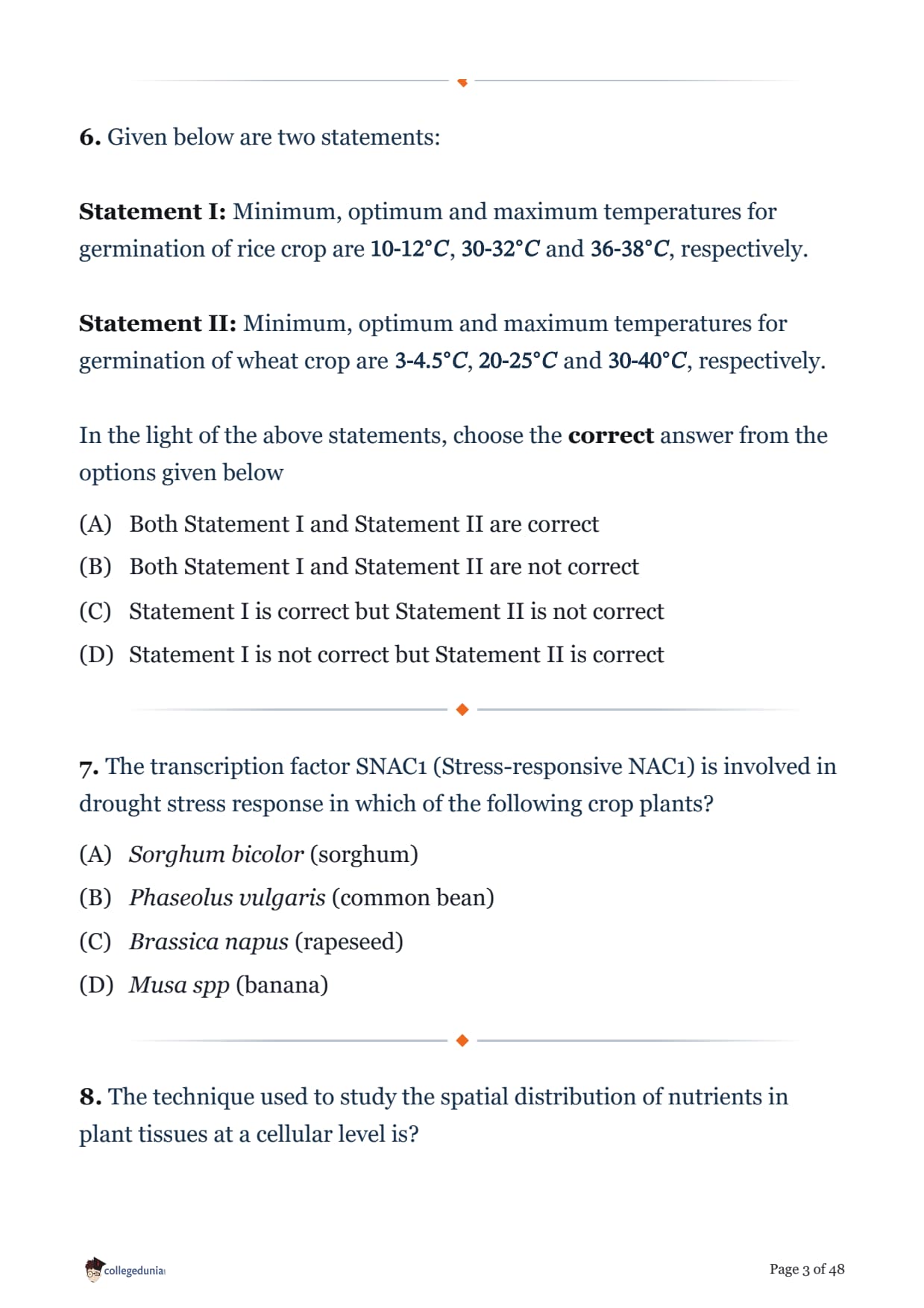
Given below are two statements:
Statement I: Minimum, optimum and maximum temperatures for germination of rice crop are \(10\text{-}12^{\circ}C\), \(30\text{-}32^{\circ}C\) and \(36\text{-}38^{\circ}C\), respectively.
Statement II: Minimum, optimum and maximum temperatures for germination of wheat crop are \(3\text{-}4.5^{\circ}C\), \(20\text{-}25^{\circ}C\) and \(30\text{-}40^{\circ}C\), respectively.
In the light of the above statements, choose the correct answer from the options given below
The transcription factor SNAC1 (Stress-responsive NAC1) is involved in drought stress response in which of the following crop plants?
The technique used to study the spatial distribution of nutrients in plant tissues at a cellular level is?
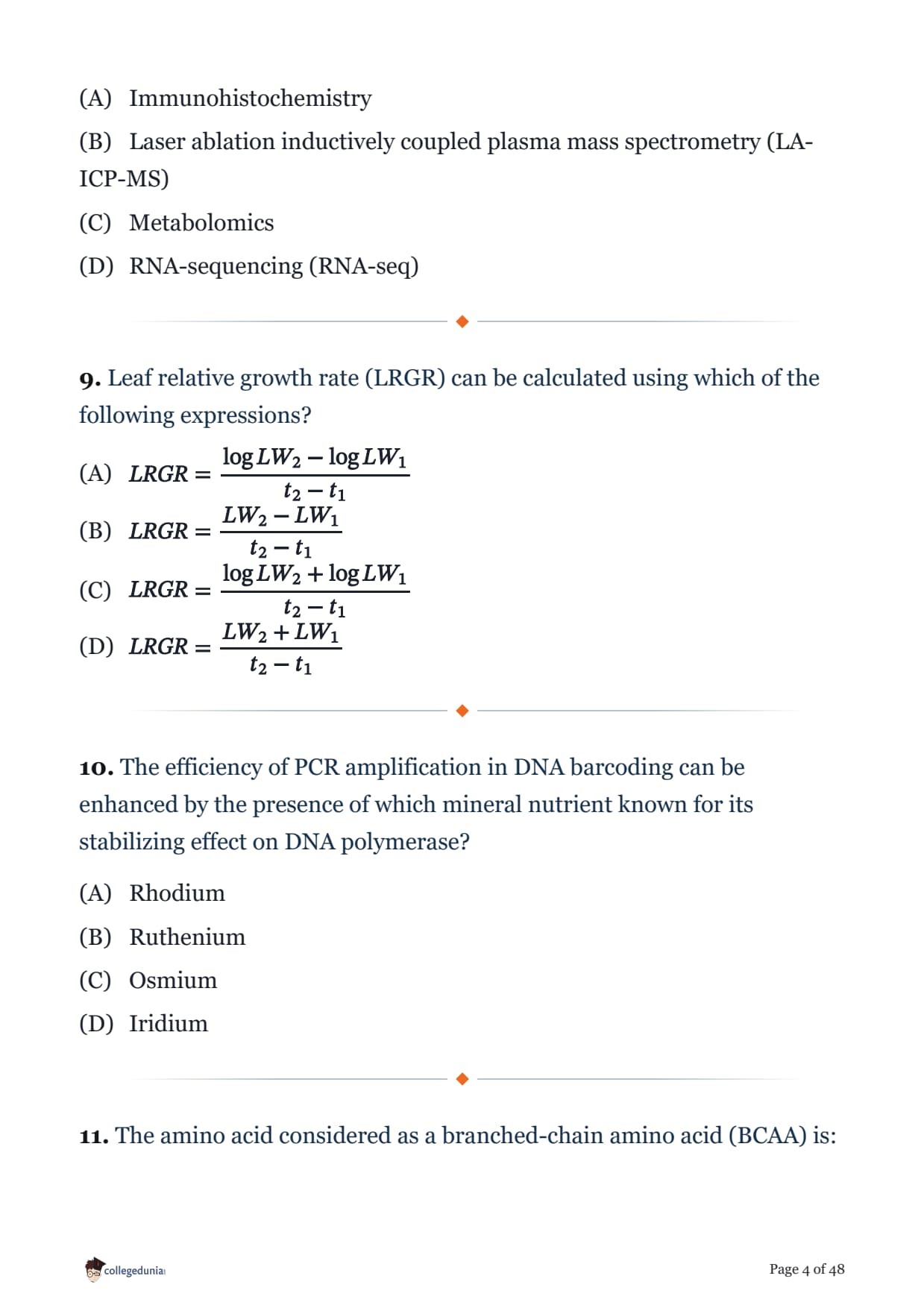
Leaf relative growth rate (LRGR) can be calculated using which of the following expressions?
The efficiency of PCR amplification in DNA barcoding can be enhanced by the presence of which mineral nutrient known for its stabilizing effect on DNA polymerase?
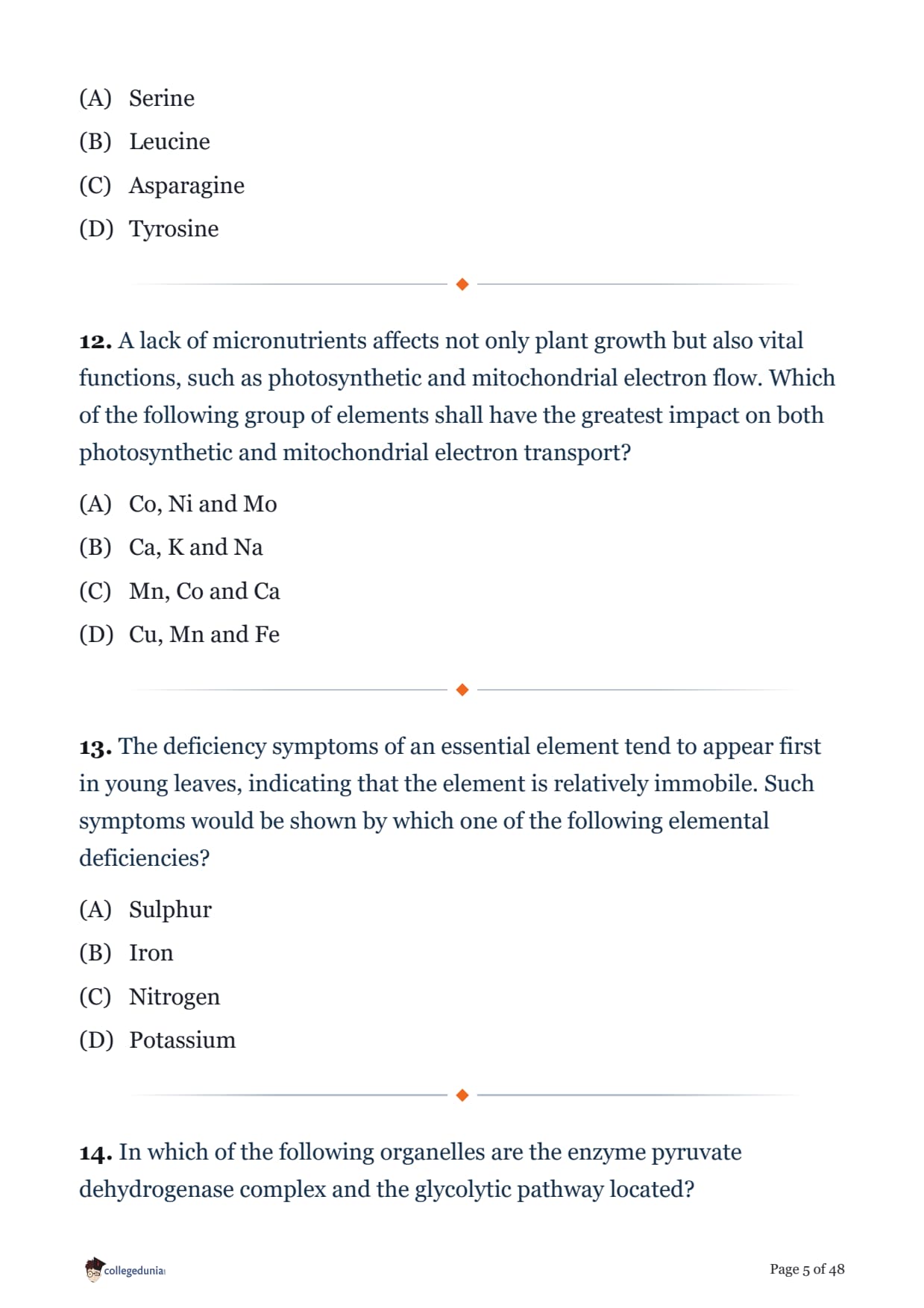
The amino acid considered as a branched-chain amino acid (BCAA) is:
A lack of micronutrients affects not only plant growth but also vital functions, such as photosynthetic and mitochondrial electron flow. Which of the following group of elements shall have the greatest impact on both photosynthetic and mitochondrial electron transport?
The deficiency symptoms of an essential element tend to appear first in young leaves, indicating that the element is relatively immobile. Such symptoms would be shown by which one of the following elemental deficiencies?
In which of the following organelles are the enzyme pyruvate dehydrogenase complex and the glycolytic pathway located?
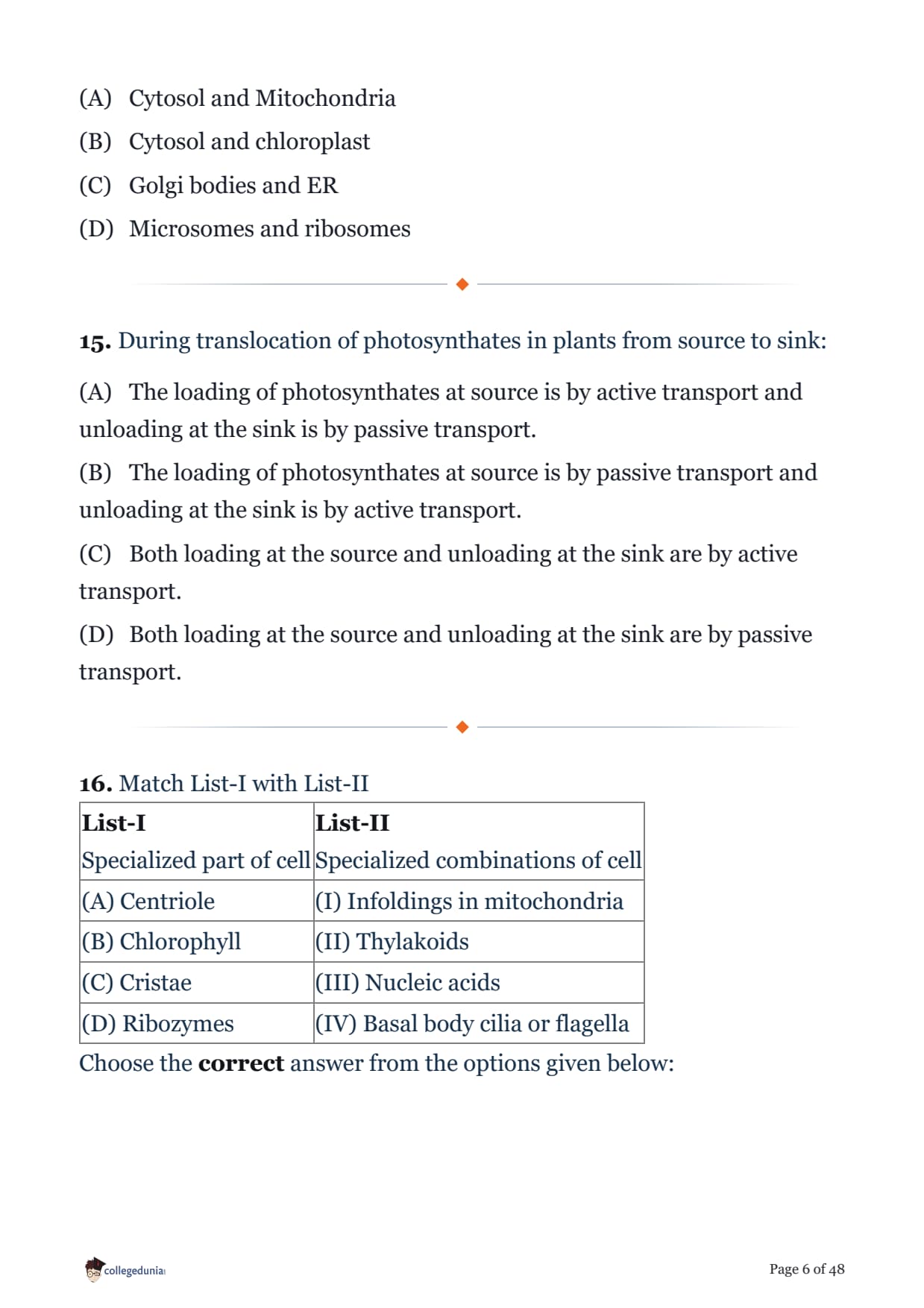
During translocation of photosynthates in plants from source to sink:
Match List-I with List-II
| List-I Specialized part of cell | List-II Specialized combinations of cell |
| (A) Centriole | (I) Infoldings in mitochondria |
| (B) Chlorophyll | (II) Thylakoids |
| (C) Cristae | (III) Nucleic acids |
| (D) Ribozymes | (IV) Basal body cilia or flagella |
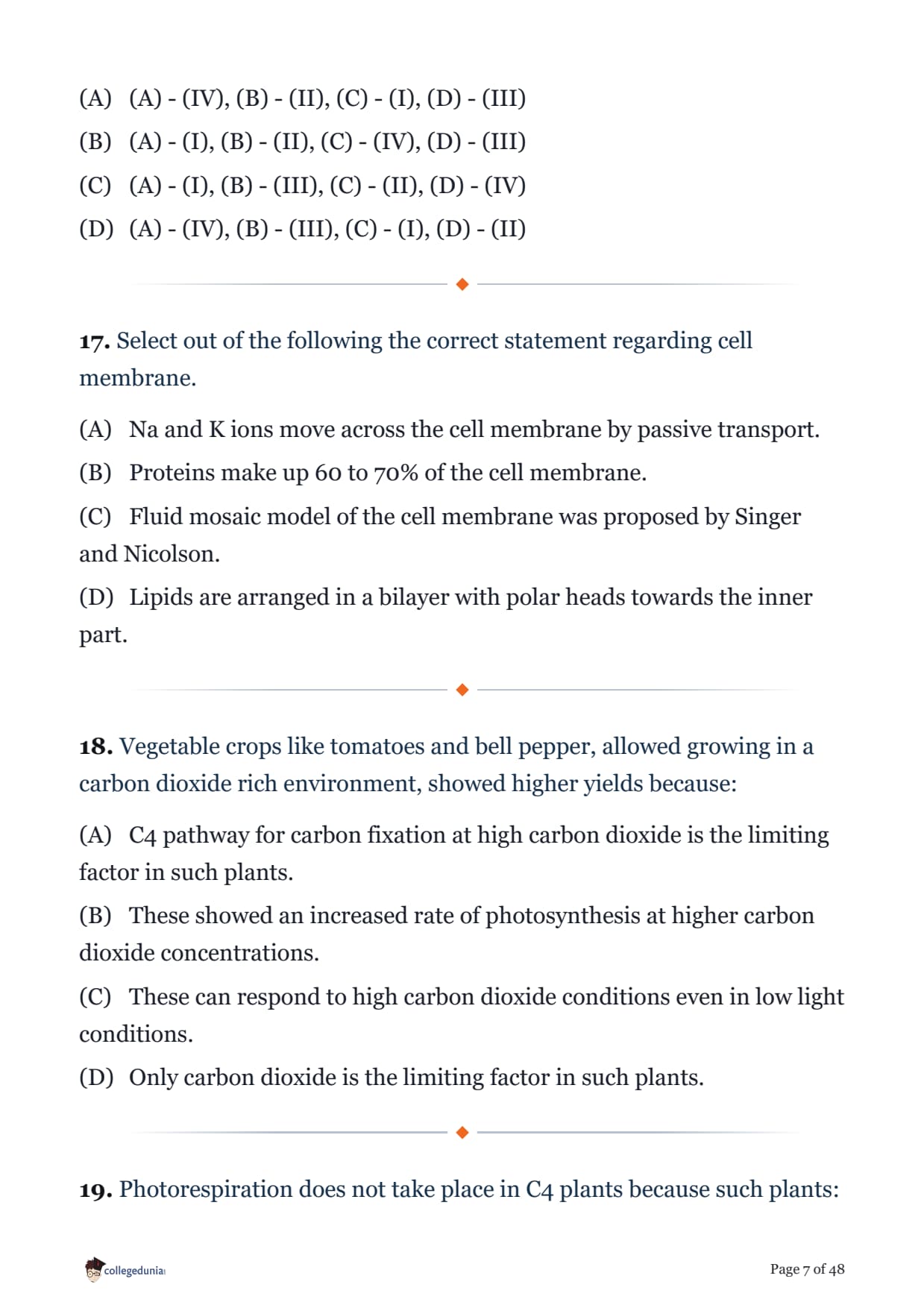
Select out of the following the correct statement regarding cell membrane.
Vegetable crops like tomatoes and bell pepper, allowed growing in a carbon dioxide rich environment, showed higher yields because:
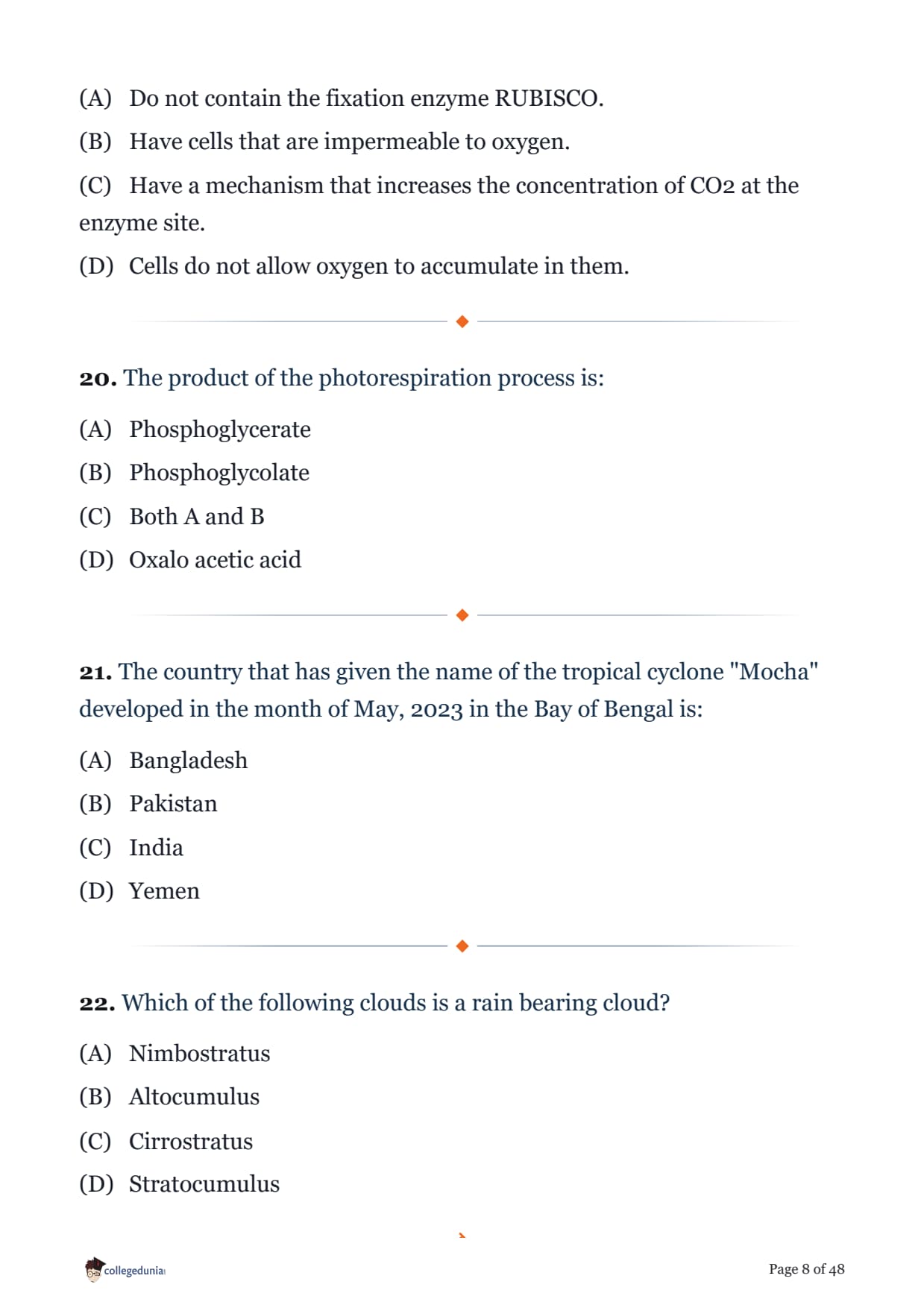
Photorespiration does not take place in C4 plants because such plants:
The product of the photorespiration process is:
The country that has given the name of the tropical cyclone "Mocha" developed in the month of May, 2023 in the Bay of Bengal is:
Which of the following clouds is a rain bearing cloud?
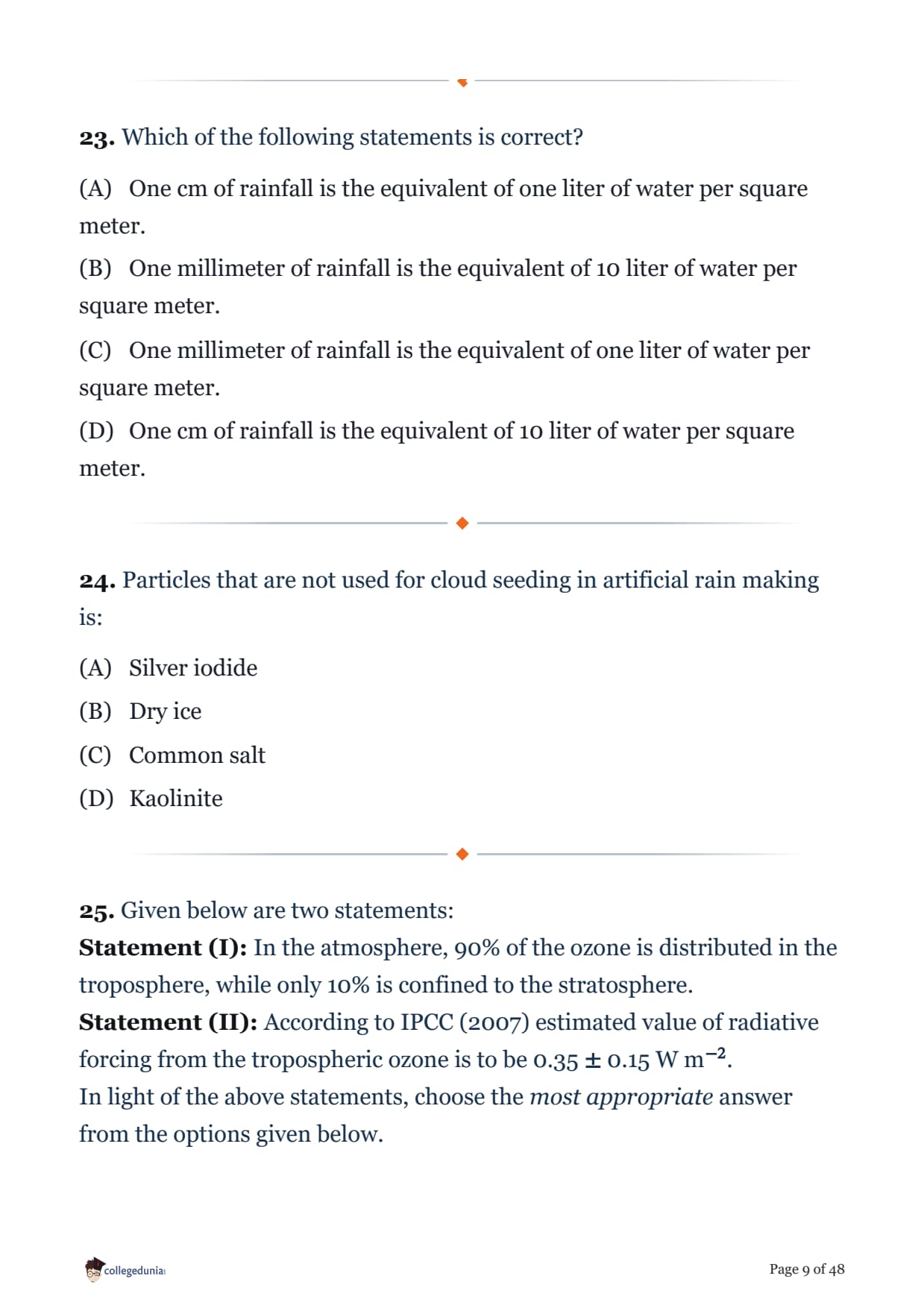
Which of the following statements is correct?
Particles that are not used for cloud seeding in artificial rain making is:
Given below are two statements:
Statement (I): In the atmosphere, 90% of the ozone is distributed in the troposphere, while only 10% is confined to the stratosphere.
Statement (II): According to IPCC (2007) estimated value of radiative forcing from the tropospheric ozone is to be 0.35 \(\pm\) 0.15 W m\(^{-2}\).
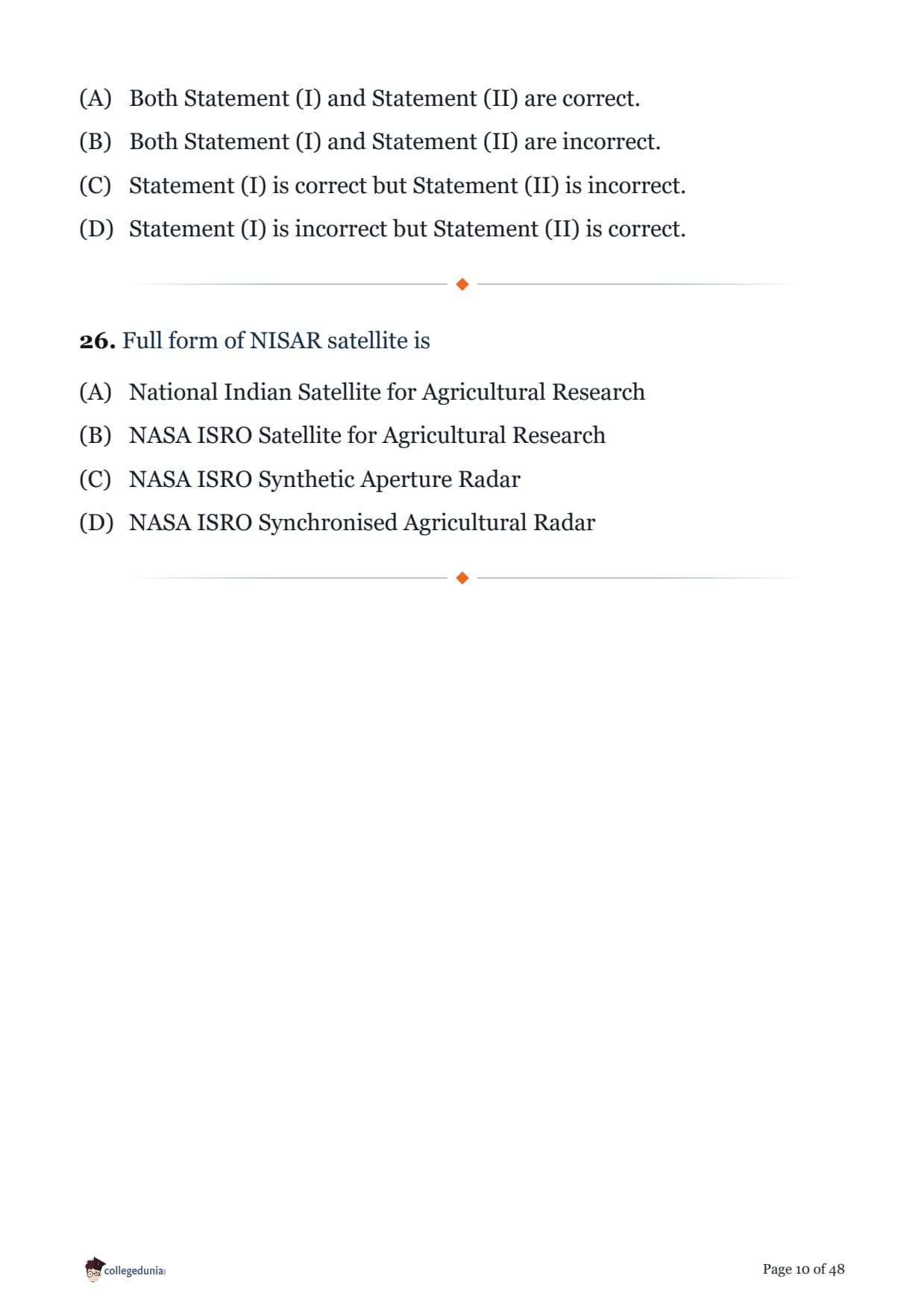
In light of the above statements, choose the most appropriate answer from the options given below.
Full form of NISAR satellite is
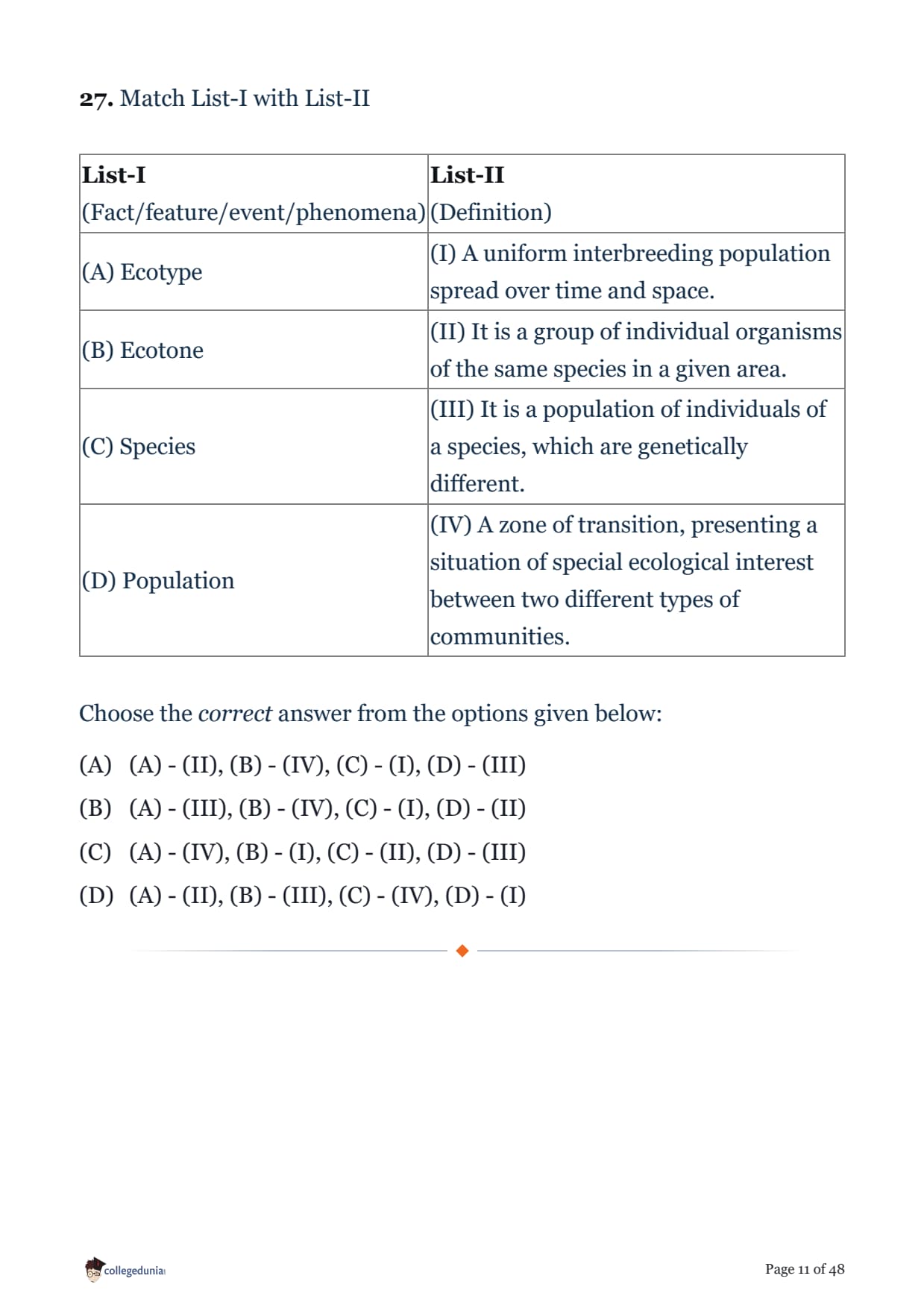
Match List-I with List-II
| List-I (Fact/feature/event/phenomena) | List-II (Definition) |
| (A) Ecotype | (I) A uniform interbreeding population spread over time and space. |
| (B) Ecotone | (II) It is a group of individual organisms of the same species in a given area. |
| (C) Species | (III) It is a population of individuals of a species, which are genetically different. |
| (D) Population | (IV) A zone of transition, presenting a situation of special ecological interest between two different types of communities. |
Choose the correct answer from the options given below:
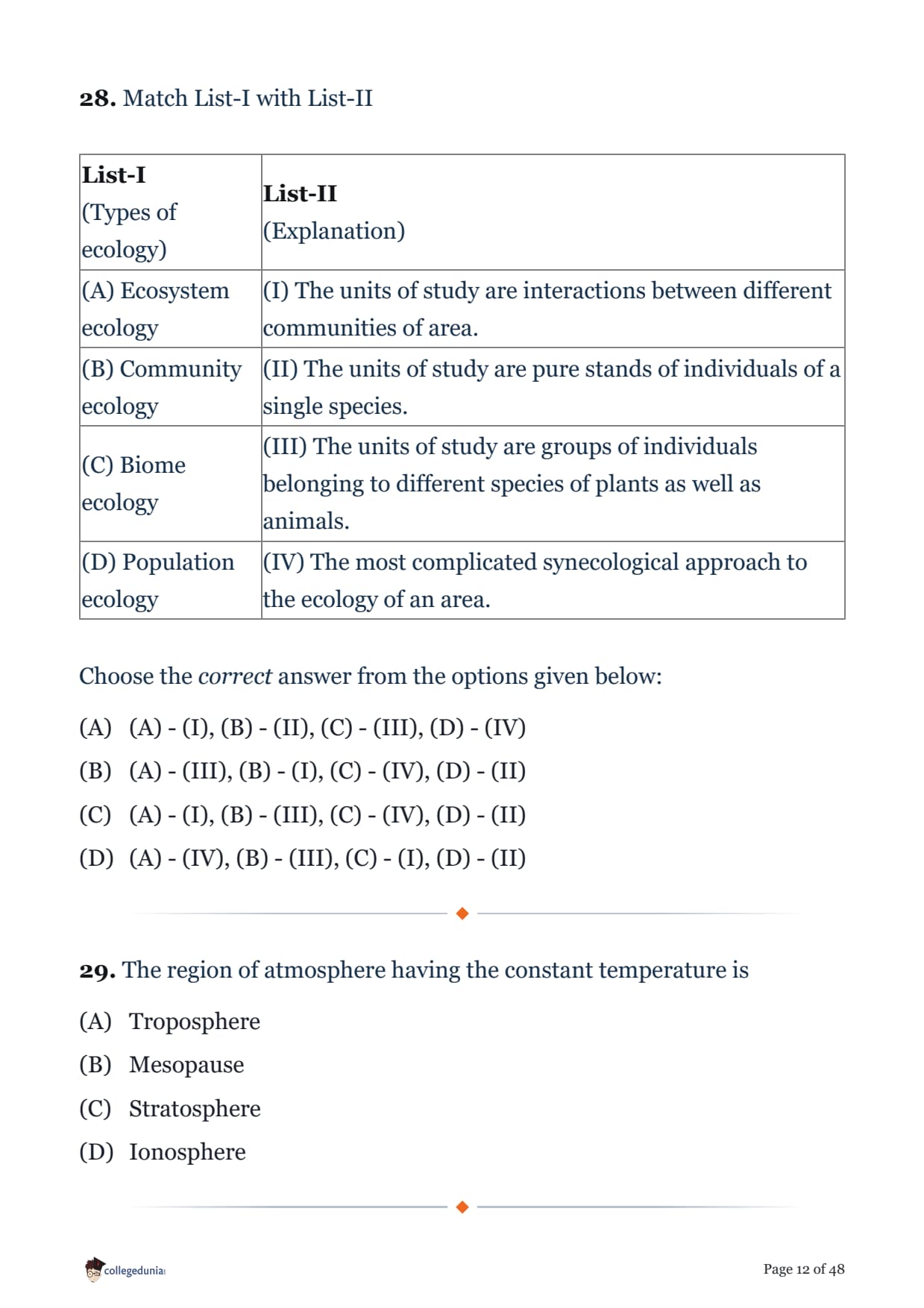
Match List-I with List-II
| List-I (Types of ecology) | List-II (Explanation) |
| (A) Ecosystem ecology | (I) The units of study are interactions between different communities of area. |
| (B) Community ecology | (II) The units of study are pure stands of individuals of a single species. |
| (C) Biome ecology | (III) The units of study are groups of individuals belonging to different species of plants as well as animals. |
| (D) Population ecology | (IV) The most complicated synecological approach to the ecology of an area. |
Choose the correct answer from the options given below:
The region of atmosphere having the constant temperature is
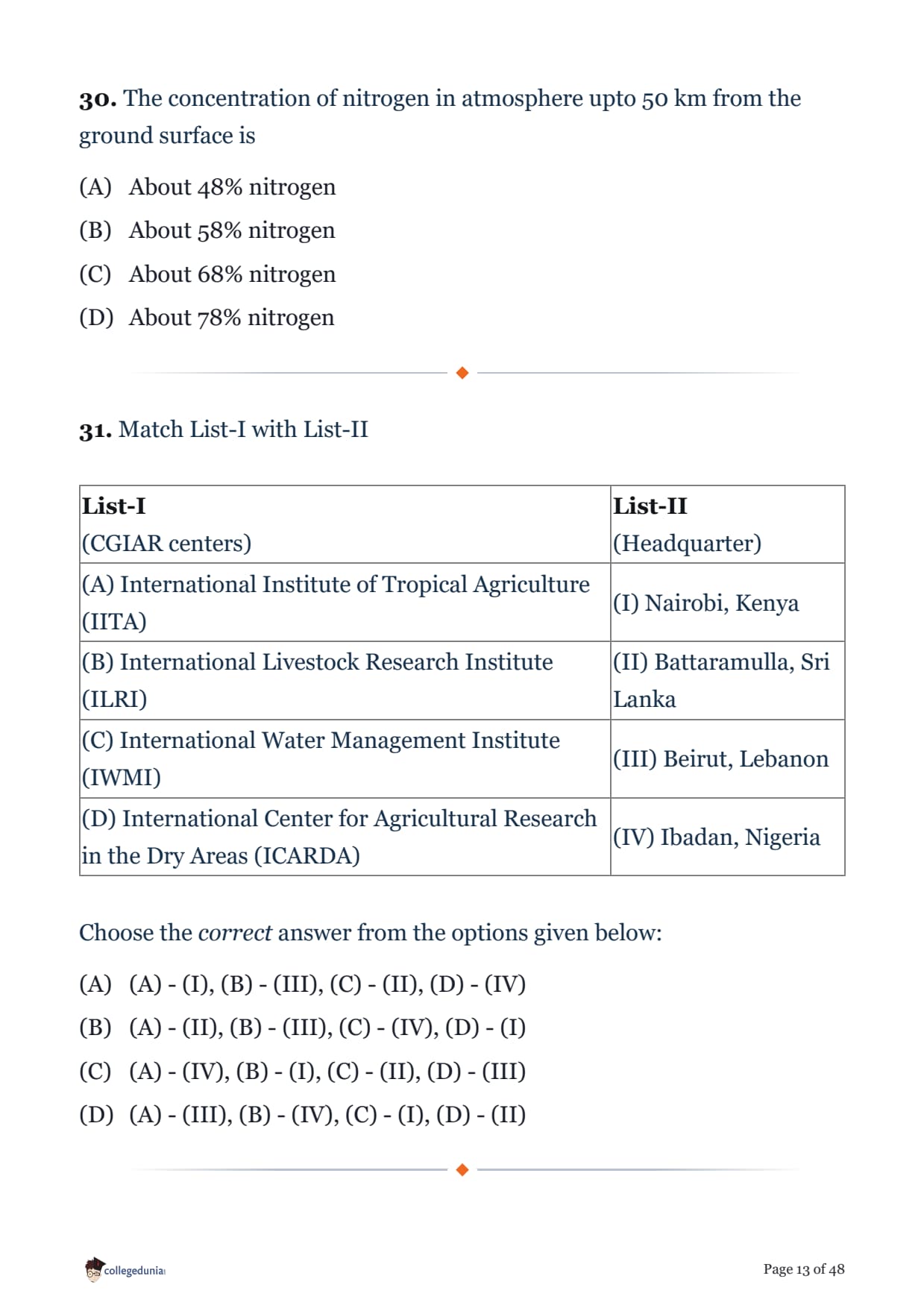
The concentration of nitrogen in atmosphere upto 50 km from the ground surface is
Match List-I with List-II
| List-I (CGIAR centers) | List-II (Headquarter) |
| (A) International Institute of Tropical Agriculture (IITA) | (I) Nairobi, Kenya |
| (B) International Livestock Research Institute (ILRI) | (II) Battaramulla, Sri Lanka |
| (C) International Water Management Institute (IWMI) | (III) Beirut, Lebanon |
| (D) International Center for Agricultural Research in the Dry Areas (ICARDA) | (IV) Ibadan, Nigeria |
Choose the correct answer from the options given below:
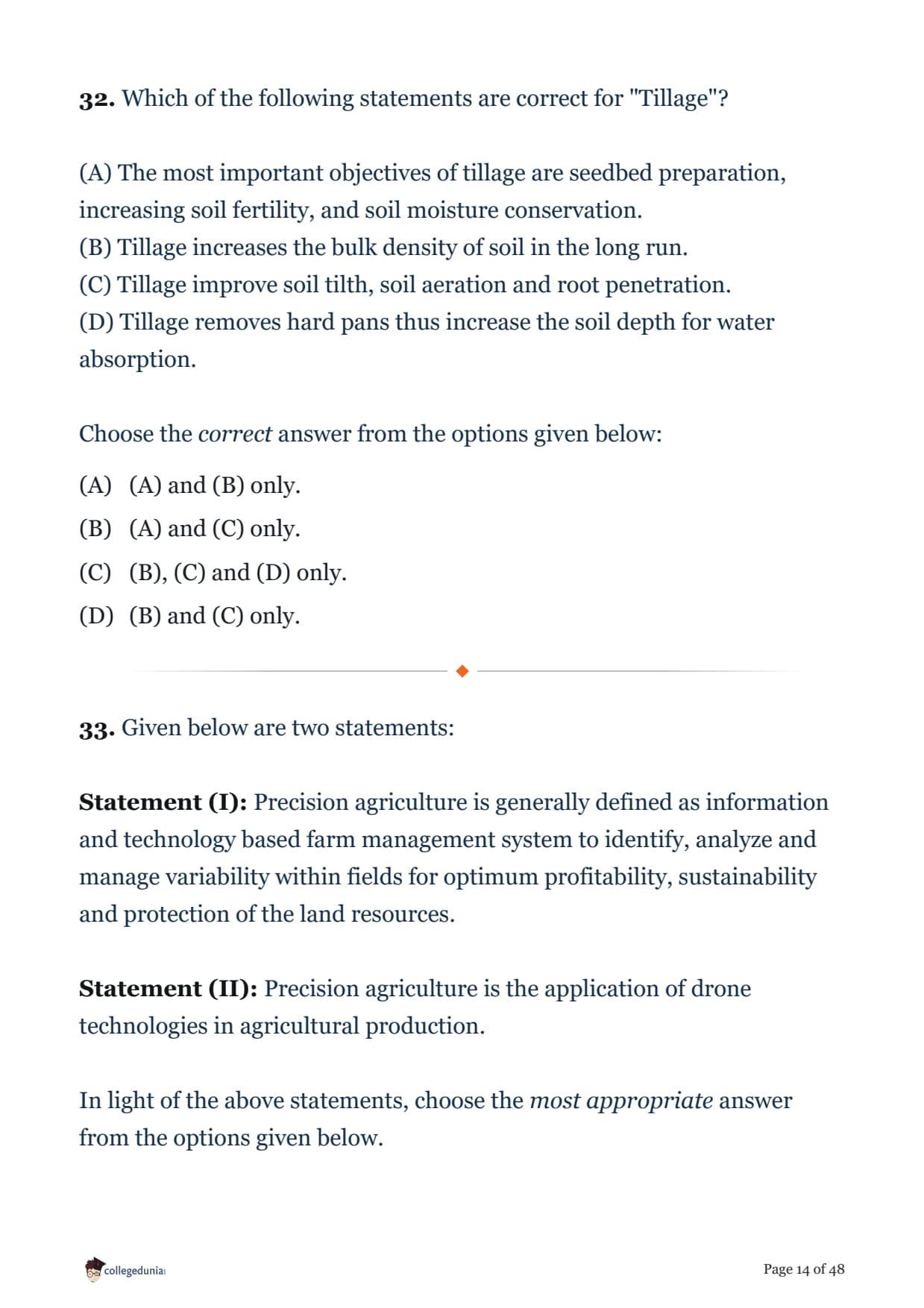
Which of the following statements are correct for "Tillage"?
(A) The most important objectives of tillage are seedbed preparation, increasing soil fertility, and soil moisture conservation.
(B) Tillage increases the bulk density of soil in the long run.
(C) Tillage improve soil tilth, soil aeration and root penetration.
(D) Tillage removes hard pans thus increase the soil depth for water absorption.
Choose the correct answer from the options given below:
Given below are two statements:
Statement (I): Precision agriculture is generally defined as information and technology based farm management system to identify, analyze and manage variability within fields for optimum profitability, sustainability and protection of the land resources.
Statement (II): Precision agriculture is the application of drone technologies in agricultural production.
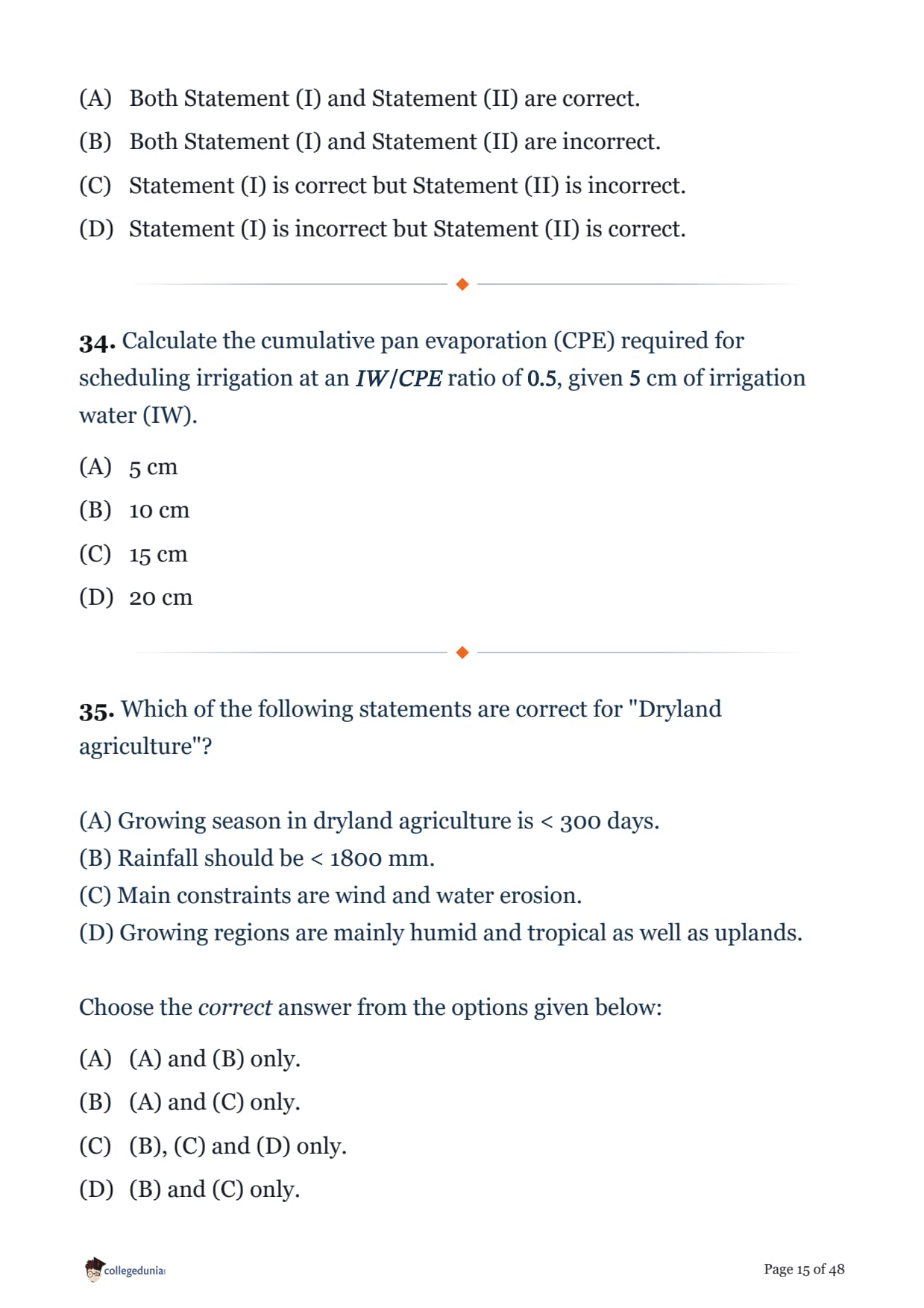
In light of the above statements, choose the most appropriate answer from the options given below.
Calculate the cumulative pan evaporation (CPE) required for scheduling irrigation at an \(IW/CPE\) ratio of \(0.5\), given \(5\) cm of irrigation water (IW).
Which of the following statements are correct for "Dryland agriculture"?
(A) Growing season in dryland agriculture is < 300 days.
(B) Rainfall should be < 1800 mm.
(C) Main constraints are wind and water erosion.
(D) Growing regions are mainly humid and tropical as well as uplands.
Choose the correct answer from the options given below:
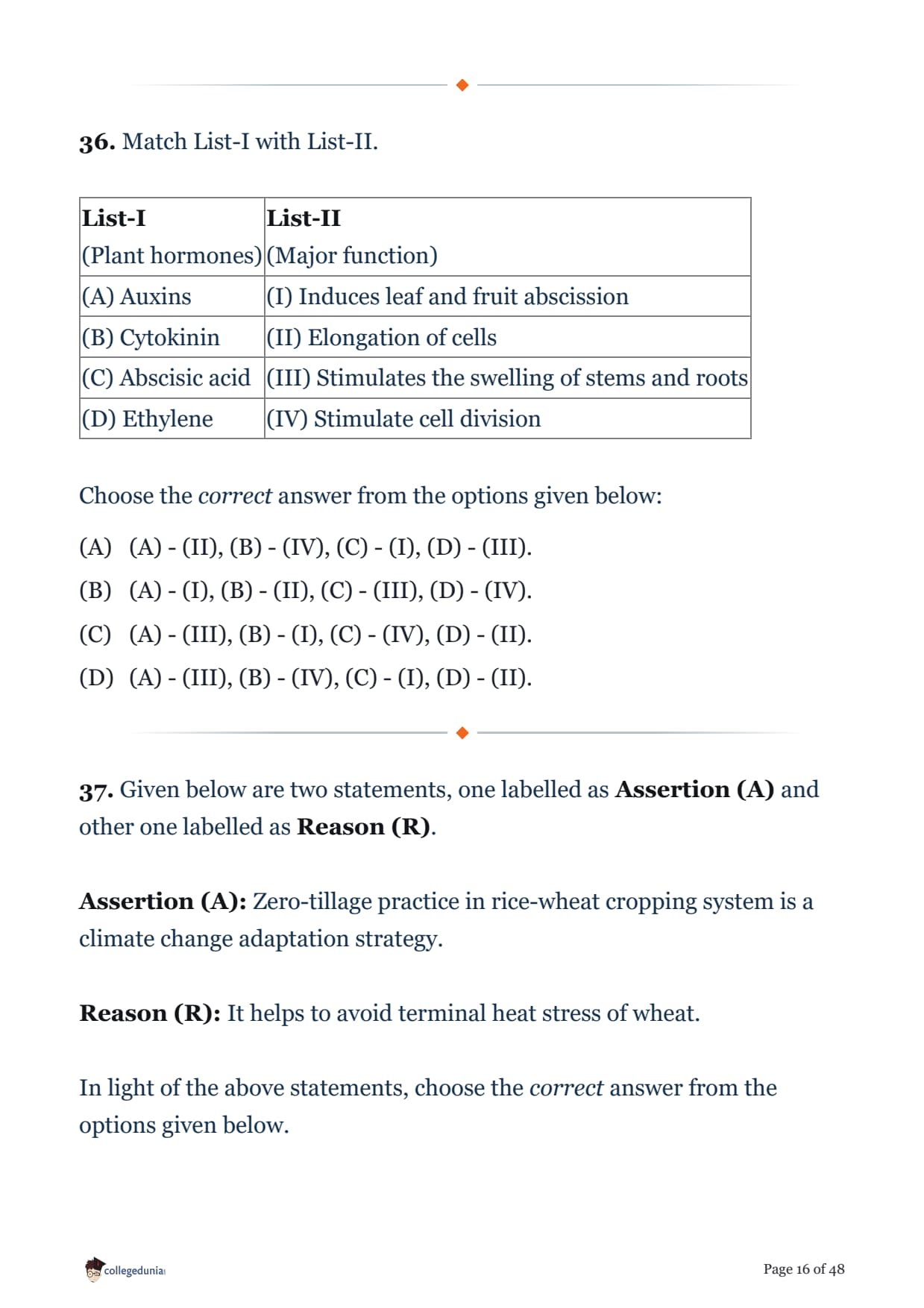
Match List-I with List-II.
| List-I (Plant hormones) | List-II (Major function) |
| (A) Auxins | (I) Induces leaf and fruit abscission |
| (B) Cytokinin | (II) Elongation of cells |
| (C) Abscisic acid | (III) Stimulates the swelling of stems and roots |
| (D) Ethylene | (IV) Stimulate cell division |
Choose the correct answer from the options given below:
Given below are two statements, one labelled as Assertion (A) and other one labelled as Reason (R).
Assertion (A): Zero-tillage practice in rice-wheat cropping system is a climate change adaptation strategy.
Reason (R): It helps to avoid terminal heat stress of wheat.
In light of the above statements, choose the correct answer from the options given below.
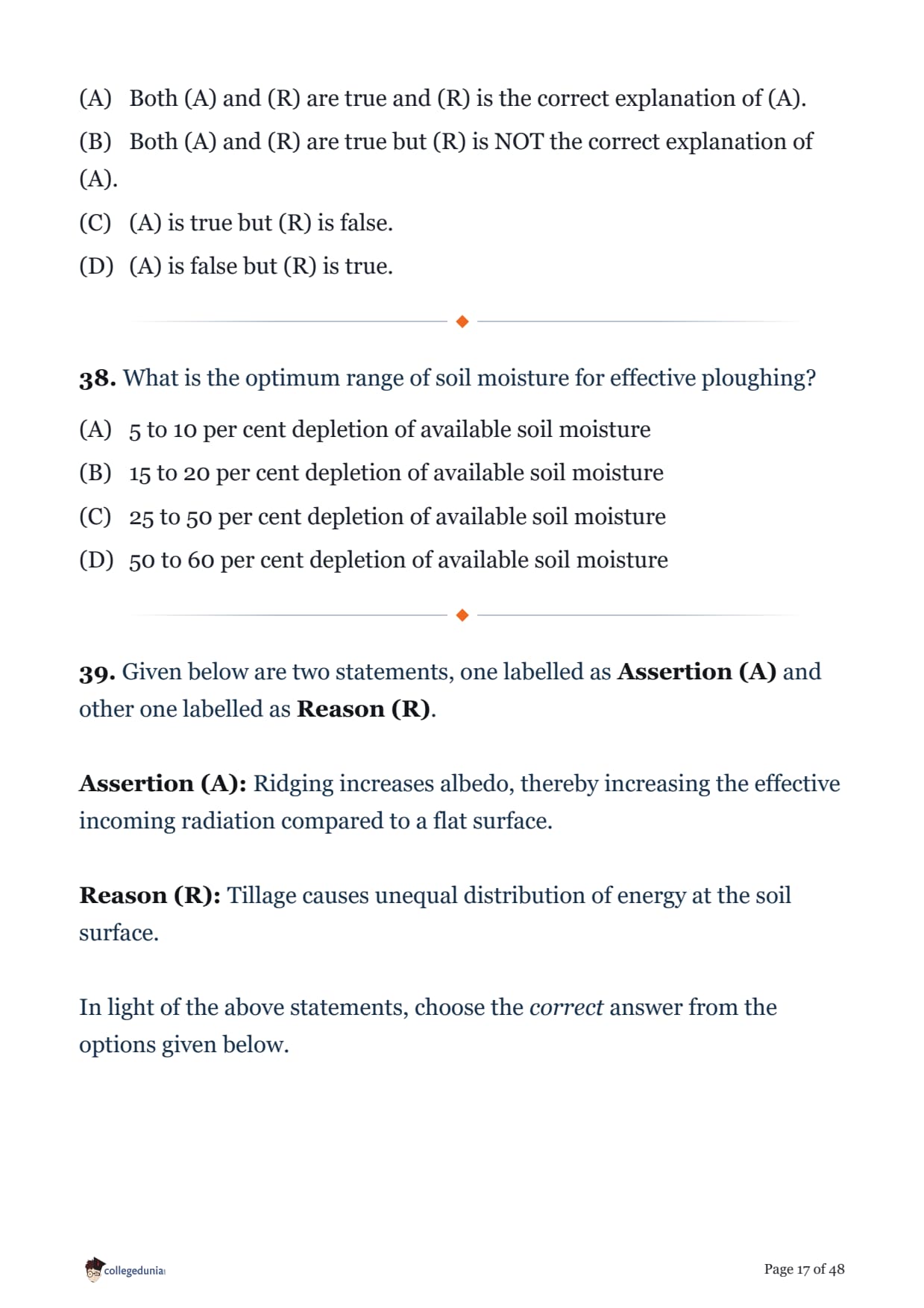
What is the optimum range of soil moisture for effective ploughing?
Given below are two statements, one labelled as Assertion (A) and other one labelled as Reason (R).
Assertion (A): Ridging increases albedo, thereby increasing the effective incoming radiation compared to a flat surface.
Reason (R): Tillage causes unequal distribution of energy at the soil surface.
In light of the above statements, choose the correct answer from the options given below.
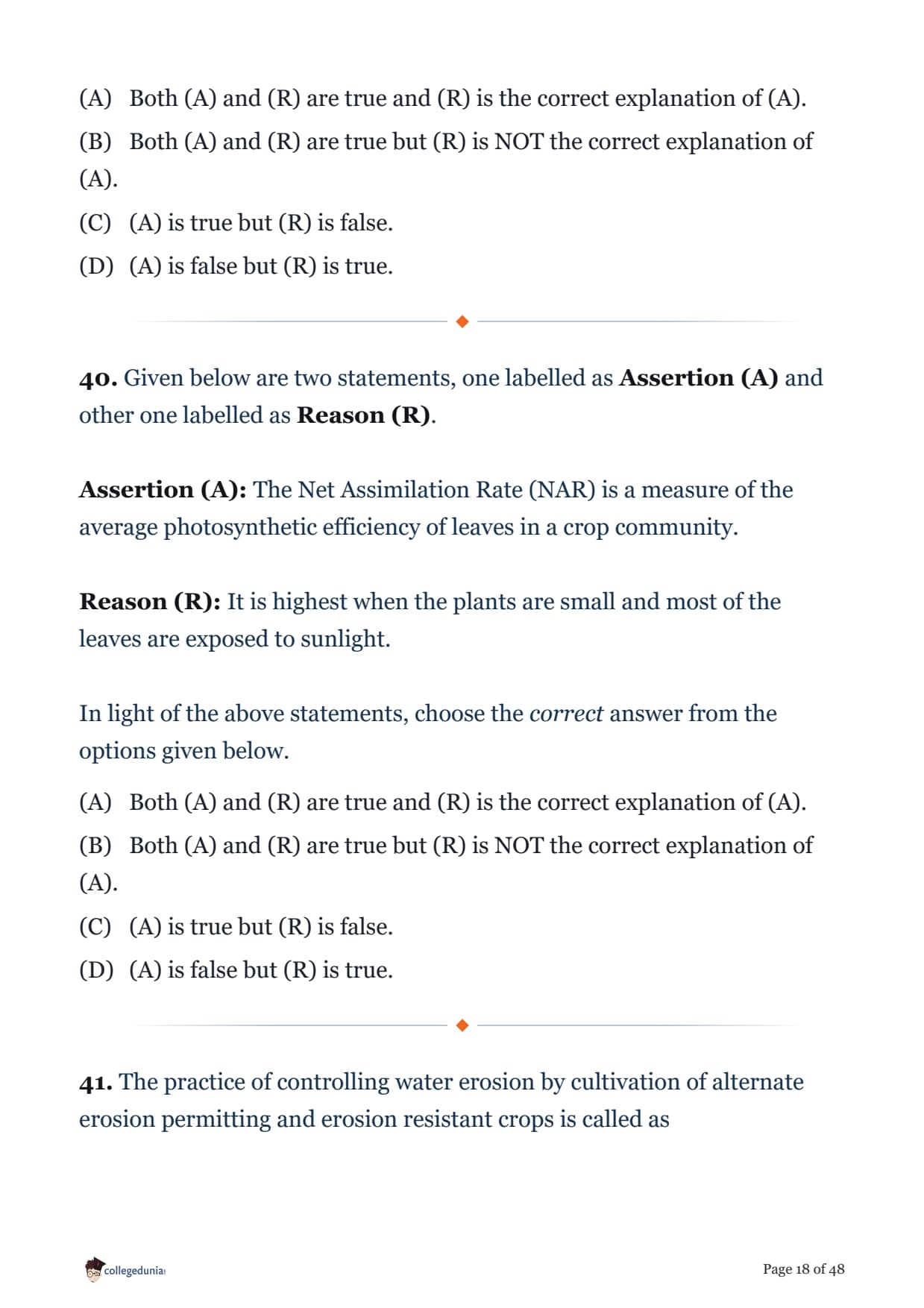
Given below are two statements, one labelled as Assertion (A) and other one labelled as Reason (R).
Assertion (A): The Net Assimilation Rate (NAR) is a measure of the average photosynthetic efficiency of leaves in a crop community.
Reason (R): It is highest when the plants are small and most of the leaves are exposed to sunlight.
In light of the above statements, choose the correct answer from the options given below.
The practice of controlling water erosion by cultivation of alternate erosion permitting and erosion resistant crops is called as
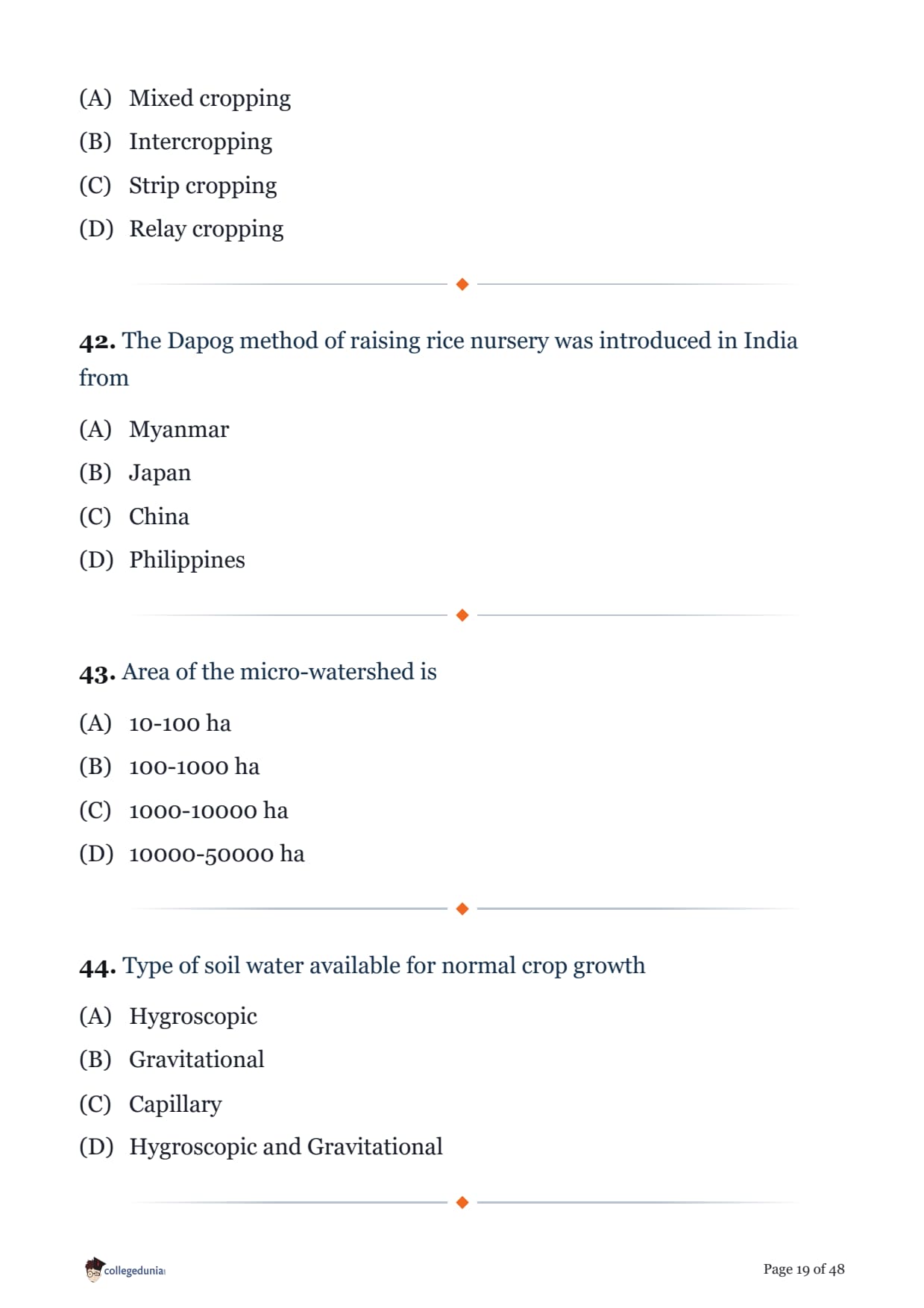
The Dapog method of raising rice nursery was introduced in India from
Area of the micro-watershed is
Type of soil water available for normal crop growth
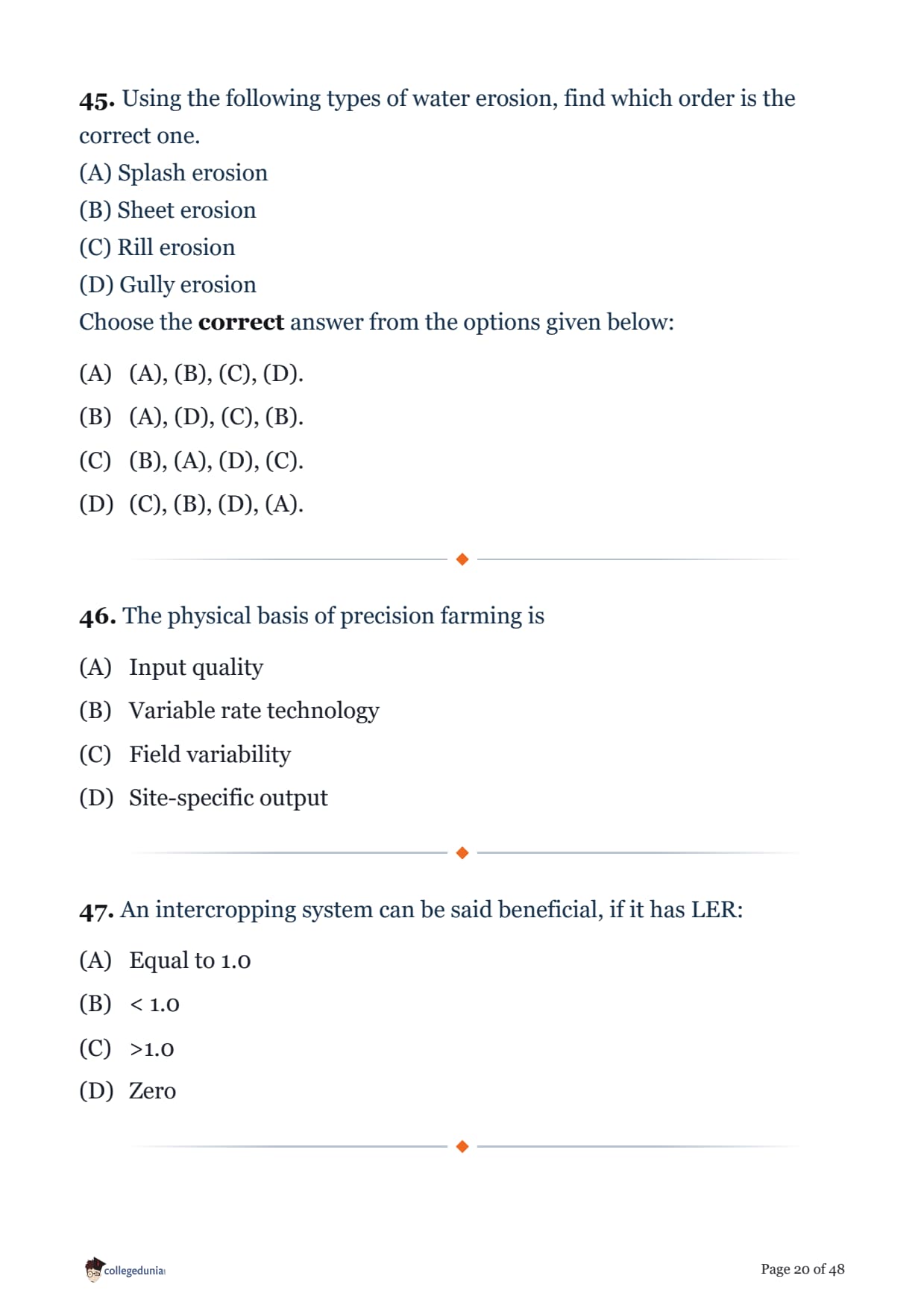
Using the following types of water erosion, find which order is the correct one.
(A) Splash erosion
(B) Sheet erosion
(C) Rill erosion
(D) Gully erosion
Choose the correct answer from the options given below:
The physical basis of precision farming is
An intercropping system can be said beneficial, if it has LER:
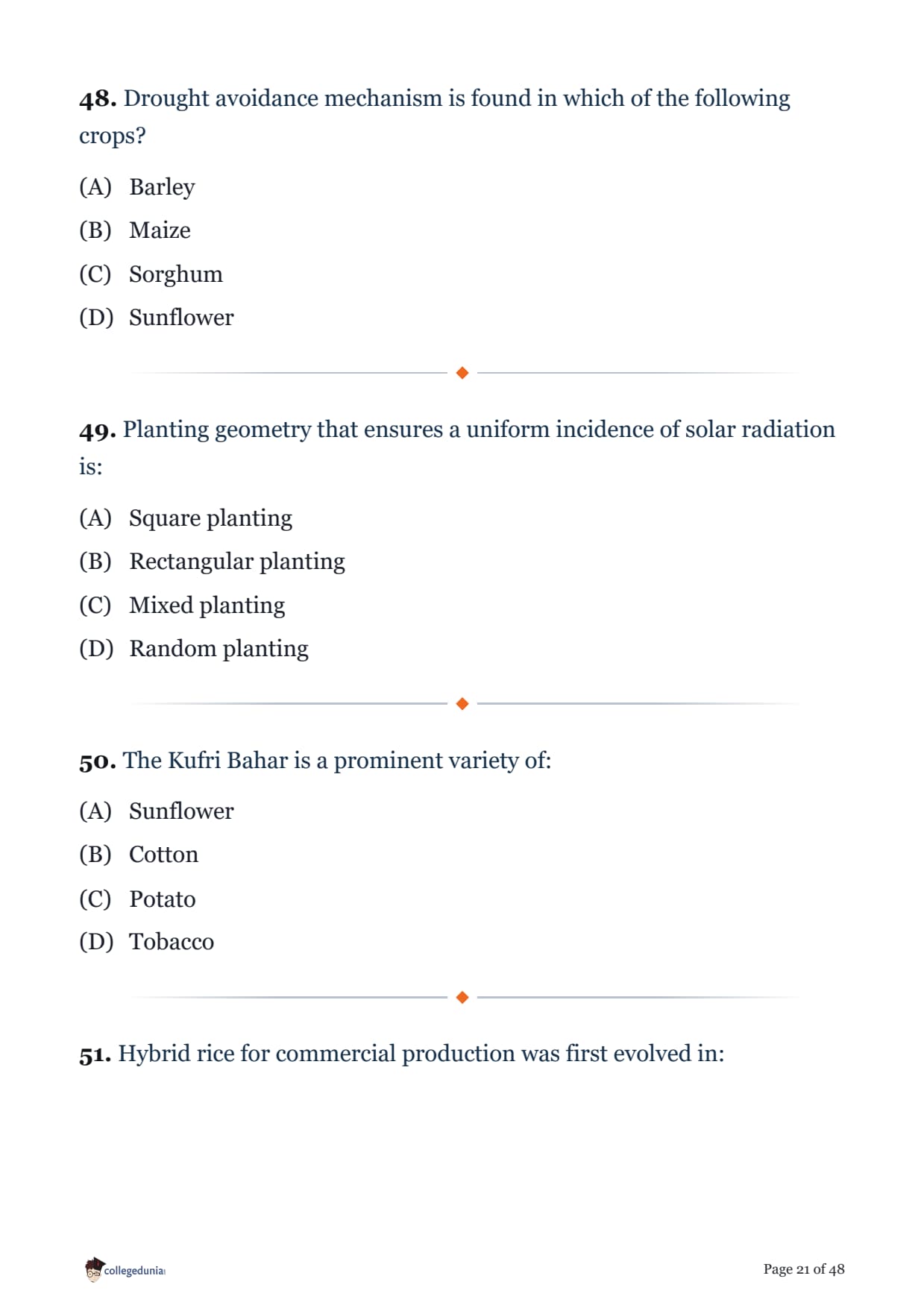
Drought avoidance mechanism is found in which of the following crops?
Planting geometry that ensures a uniform incidence of solar radiation is:
The Kufri Bahar is a prominent variety of:
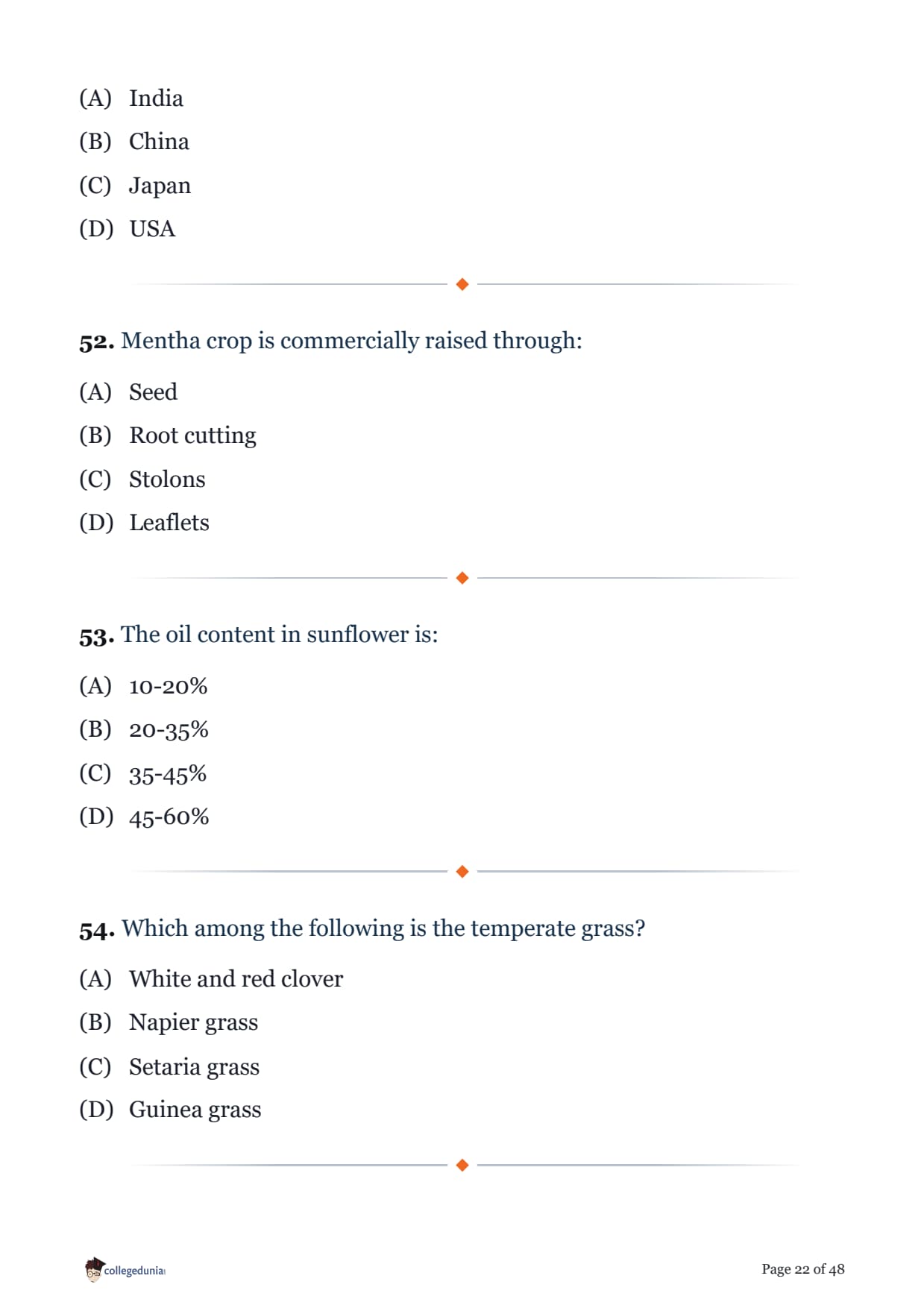
Hybrid rice for commercial production was first evolved in:
Mentha crop is commercially raised through:
The oil content in sunflower is:
Which among the following is the temperate grass?
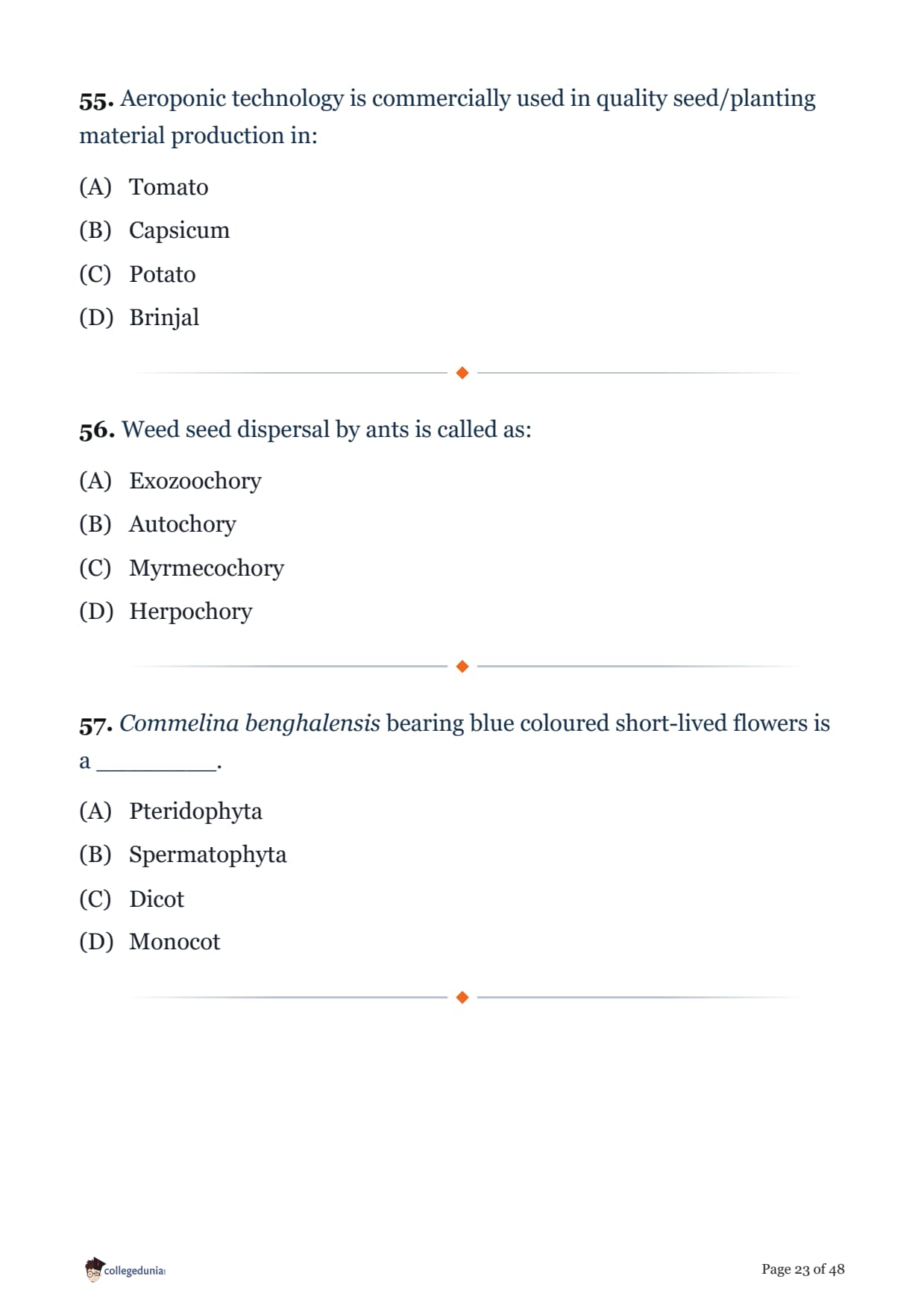
Aeroponic technology is commercially used in quality seed/planting material production in:
Weed seed dispersal by ants is called as:
Commelina benghalensis bearing blue coloured short-lived flowers is a ________.
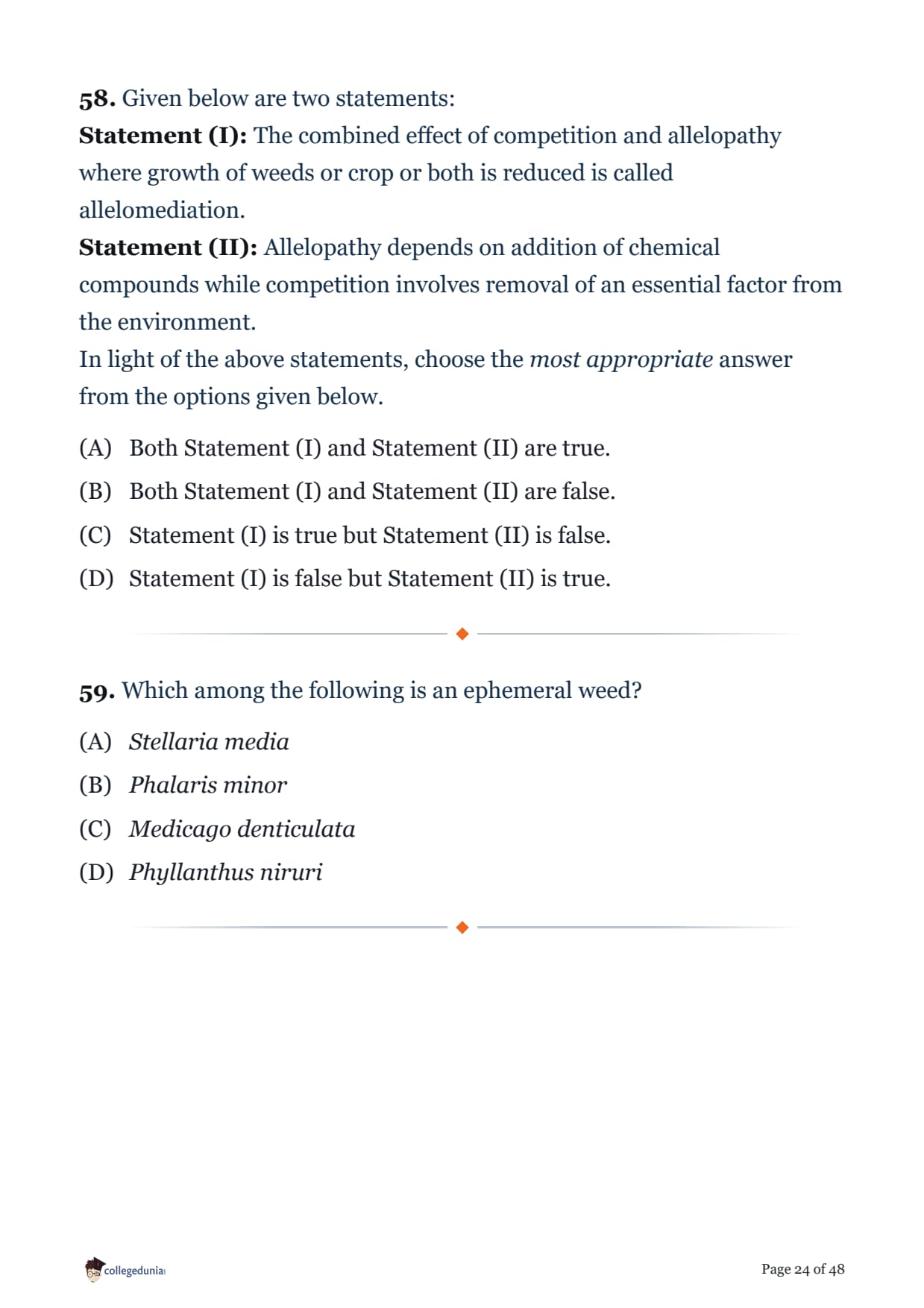
Given below are two statements:
Statement (I): The combined effect of competition and allelopathy where growth of weeds or crop or both is reduced is called allelomediation.
Statement (II): Allelopathy depends on addition of chemical compounds while competition involves removal of an essential factor from the environment.
In light of the above statements, choose the most appropriate answer from the options given below.
Which among the following is an ephemeral weed?
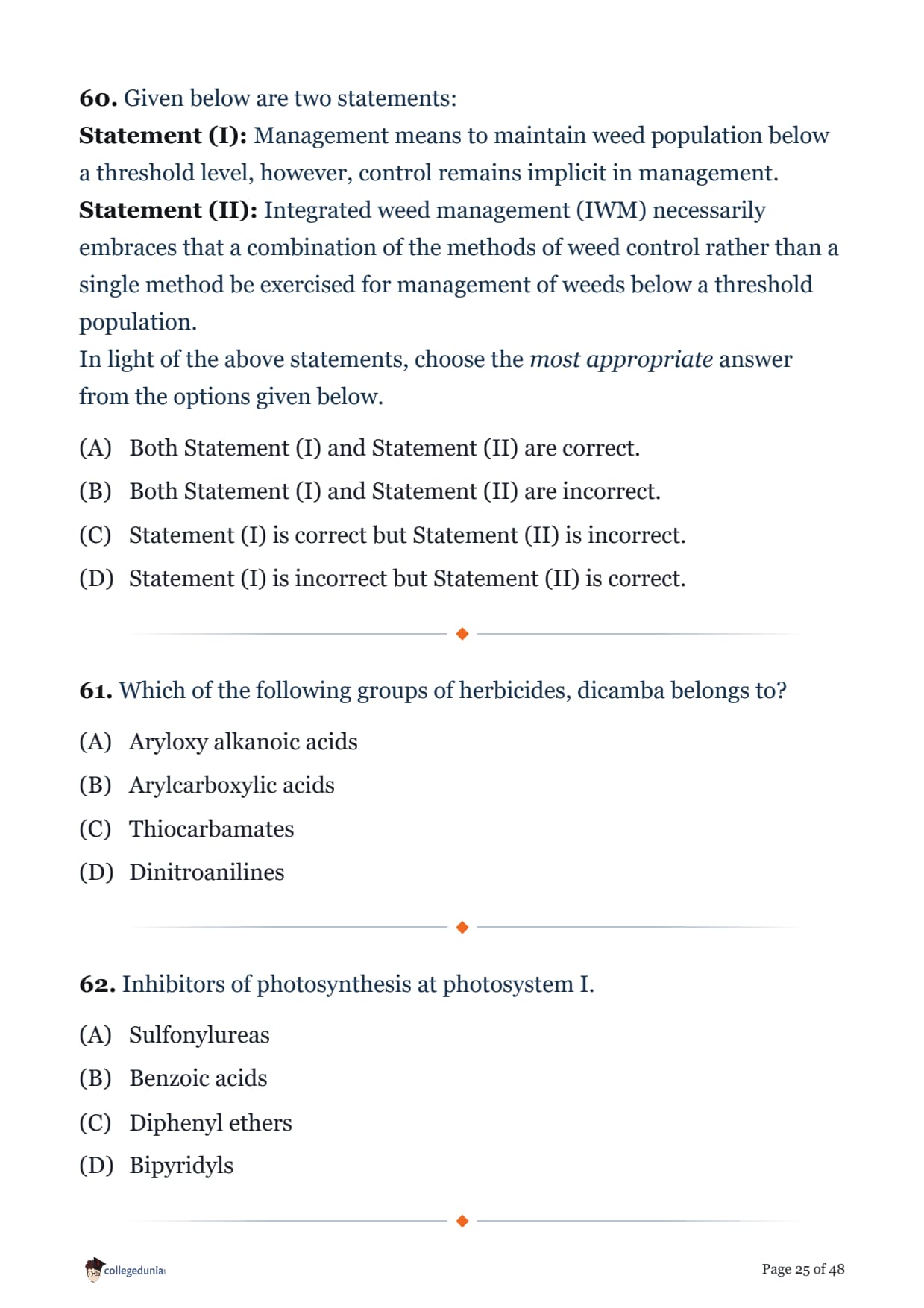
Given below are two statements:
Statement (I): Management means to maintain weed population below a threshold level, however, control remains implicit in management.
Statement (II): Integrated weed management (IWM) necessarily embraces that a combination of the methods of weed control rather than a single method be exercised for management of weeds below a threshold population.
In light of the above statements, choose the most appropriate answer from the options given below.
Which of the following groups of herbicides, dicamba belongs to?
Inhibitors of photosynthesis at photosystem I.
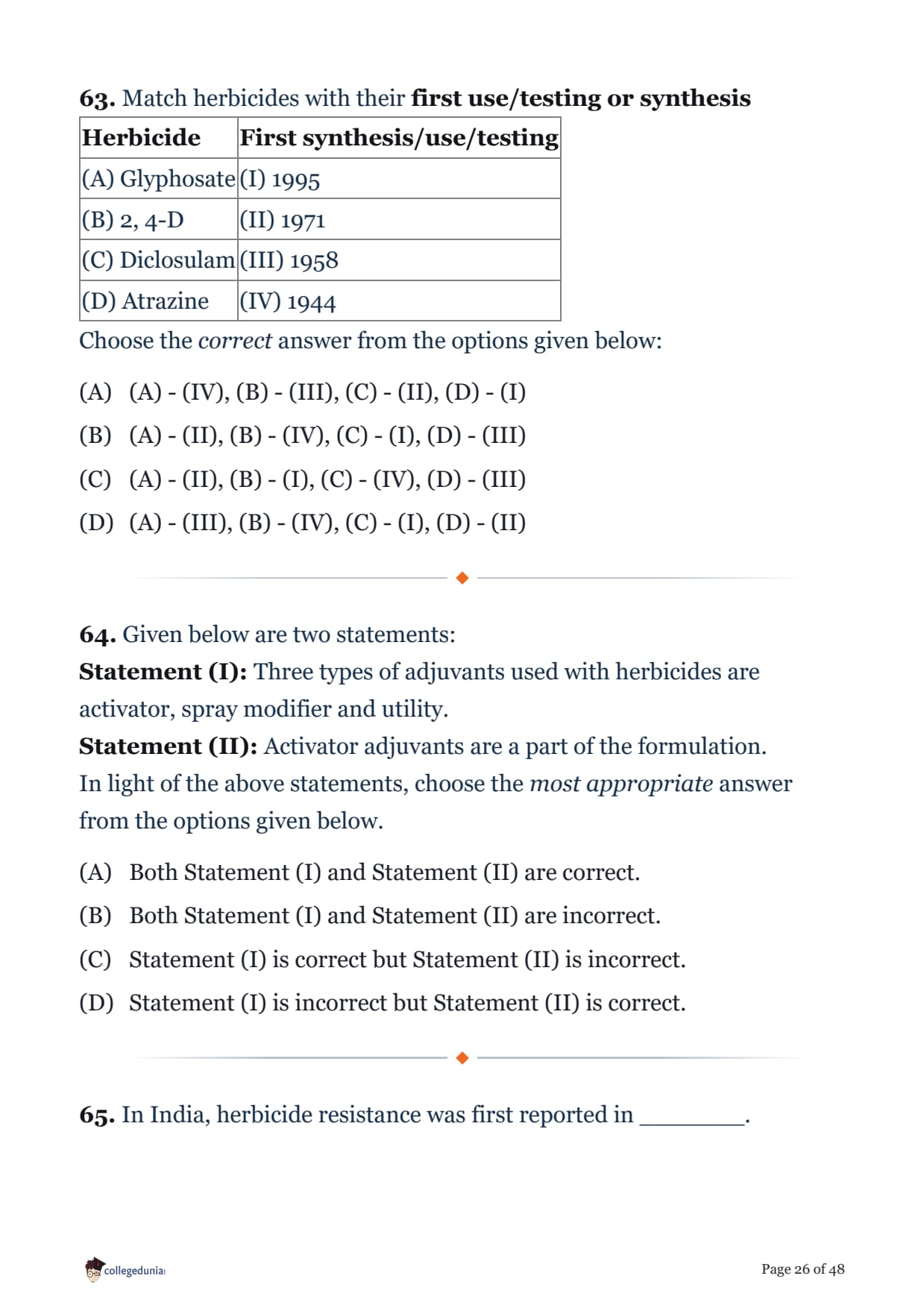
Match herbicides with their first use/testing or synthesis
| Herbicide | First synthesis/use/testing |
| (A) Glyphosate | (I) 1995 |
| (B) 2, 4-D | (II) 1971 |
| (C) Diclosulam | (III) 1958 |
| (D) Atrazine | (IV) 1944 |
Given below are two statements:
Statement (I): Three types of adjuvants used with herbicides are activator, spray modifier and utility.
Statement (II): Activator adjuvants are a part of the formulation.
In light of the above statements, choose the most appropriate answer from the options given below.
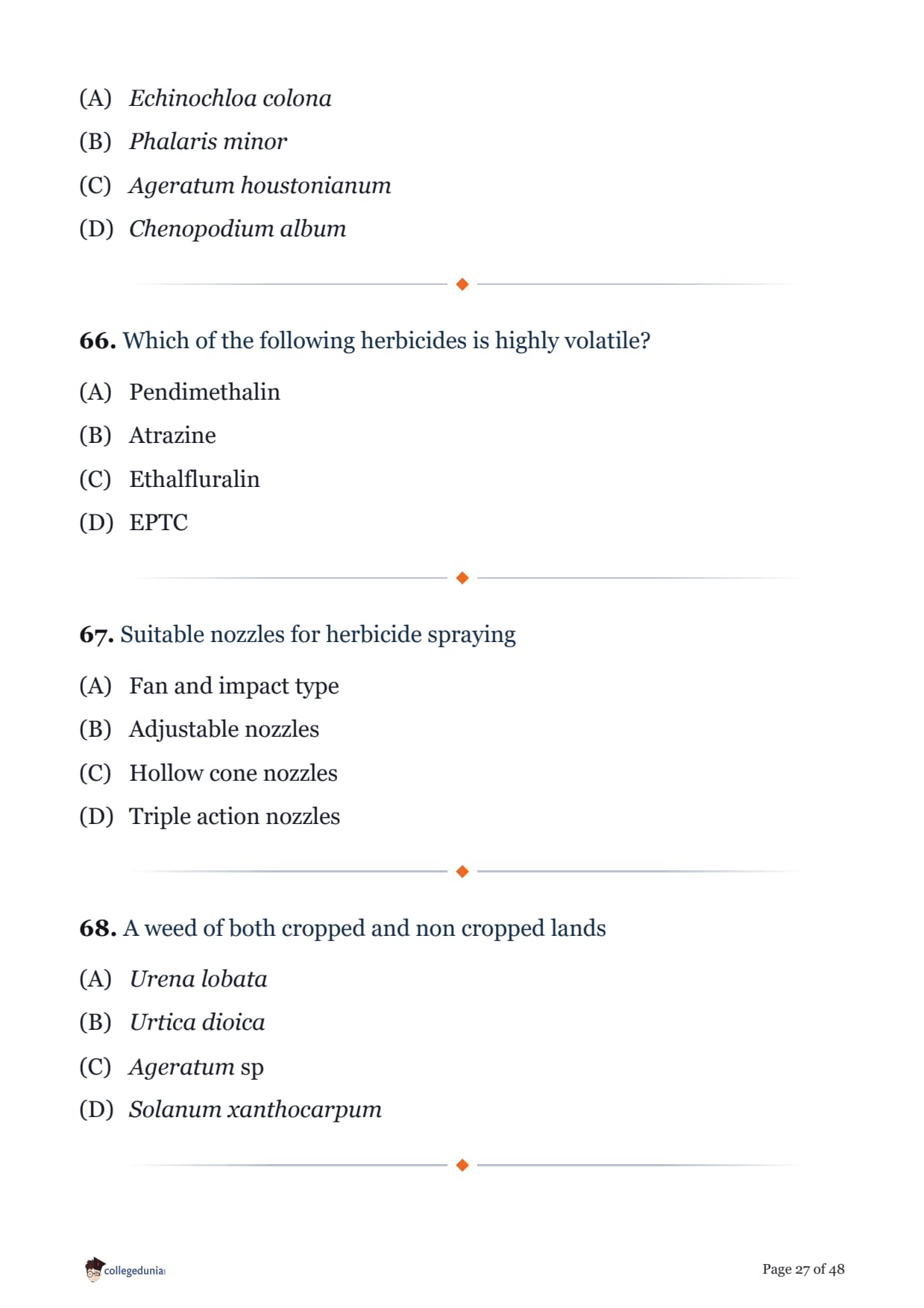
In India, herbicide resistance was first reported in _______.
Which of the following herbicides is highly volatile?
Suitable nozzles for herbicide spraying
A weed of both cropped and non cropped lands
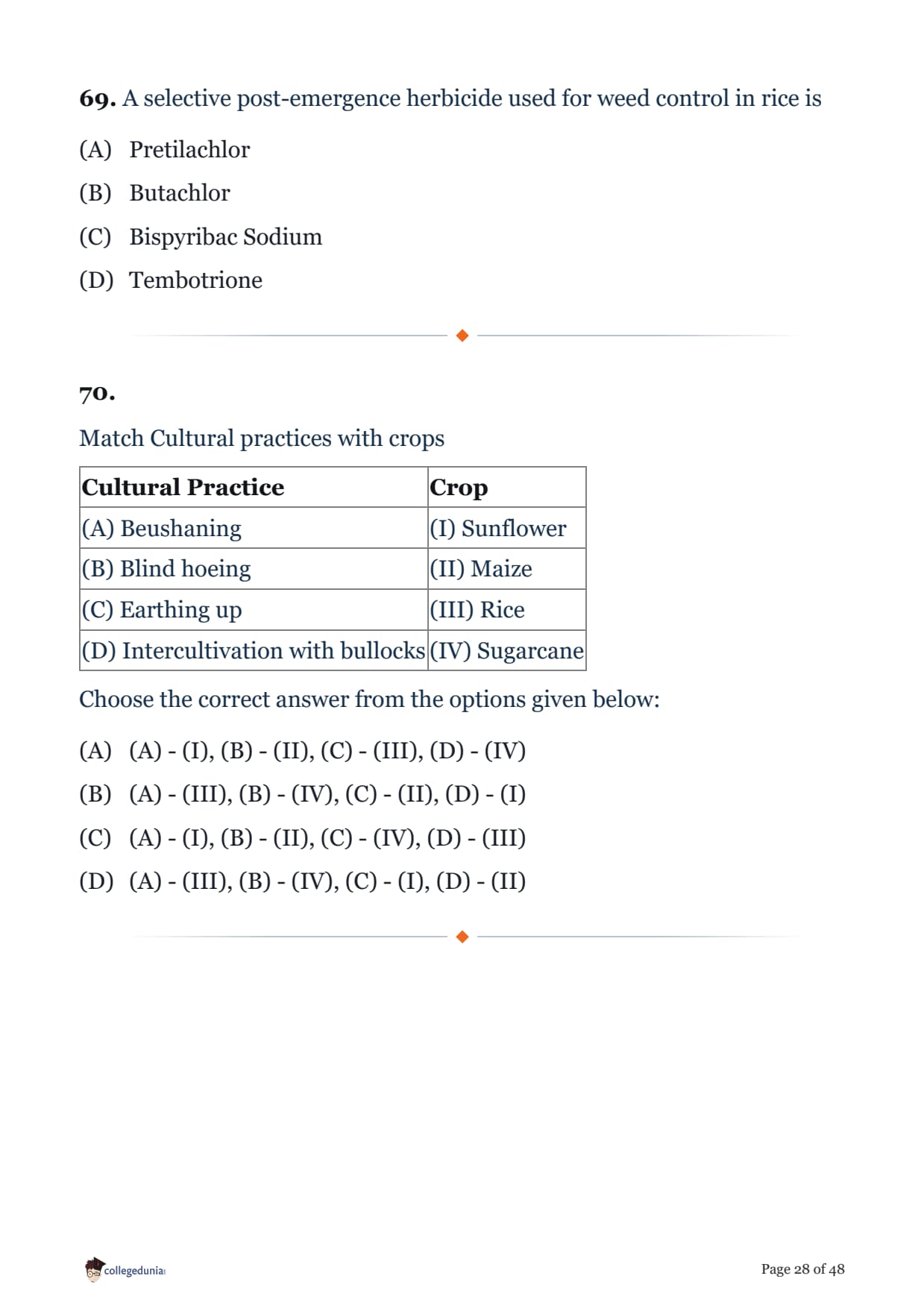
A selective post-emergence herbicide used for weed control in rice is
Match Cultural practices with crops
| Cultural Practice | Crop |
| (A) Beushaning | (I) Sunflower |
| (B) Blind hoeing | (II) Maize |
| (C) Earthing up | (III) Rice |
| (D) Intercultivation with bullocks | (IV) Sugarcane |
Choose the correct answer from the options given below:
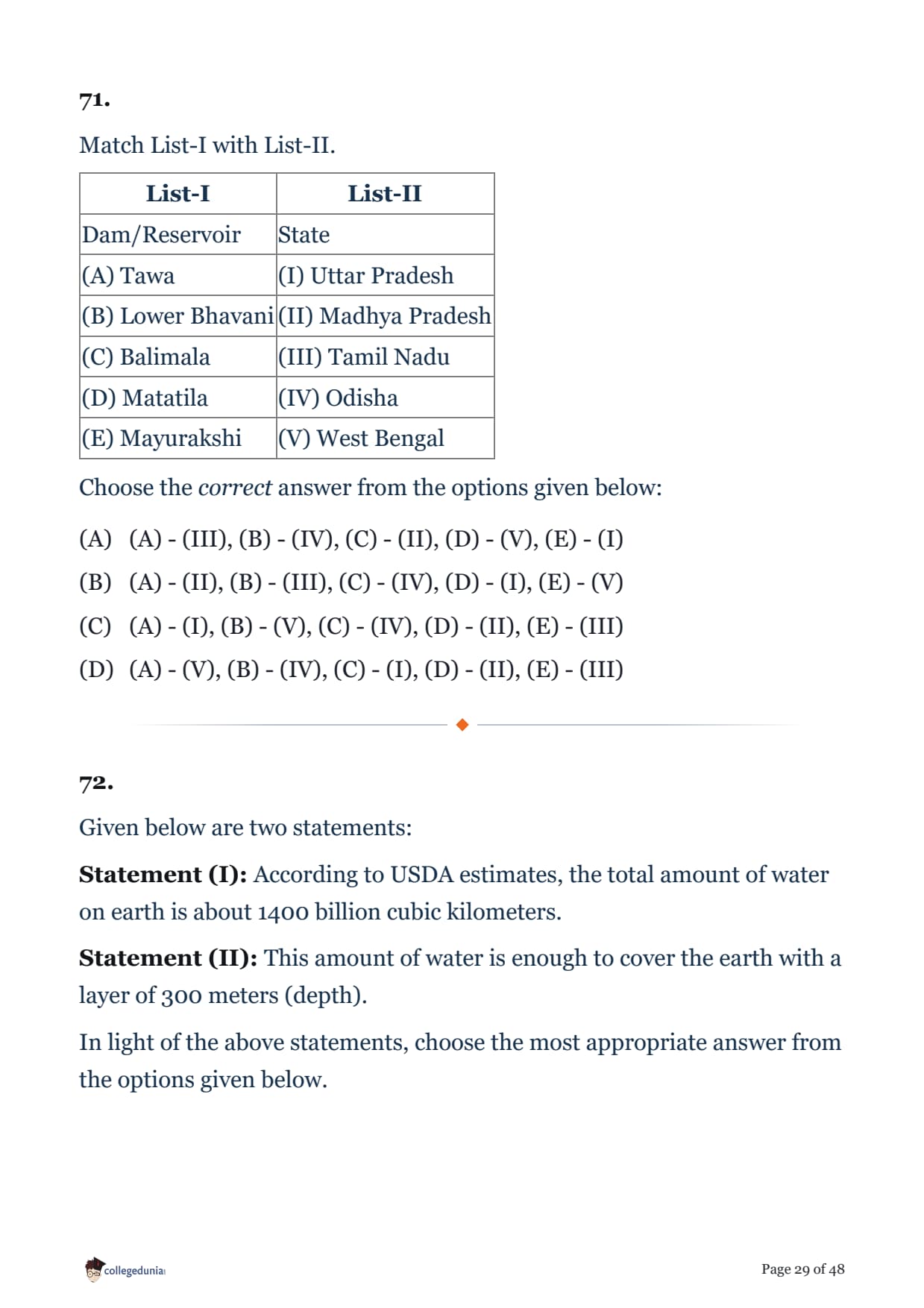
Match List-I with List-II.
| List-I | List-II |
|---|---|
| Dam/Reservoir | State |
| (A) Tawa | (I) Uttar Pradesh |
| (B) Lower Bhavani | (II) Madhya Pradesh |
| (C) Balimala | (III) Tamil Nadu |
| (D) Matatila | (IV) Odisha |
| (E) Mayurakshi | (V) West Bengal |
Choose the correct answer from the options given below:
Given below are two statements:
Statement (I): According to USDA estimates, the total amount of water on earth is about 1400 billion cubic kilometers.
Statement (II): This amount of water is enough to cover the earth with a layer of 300 meters (depth).
In light of the above statements, choose the most appropriate answer from the options given below.
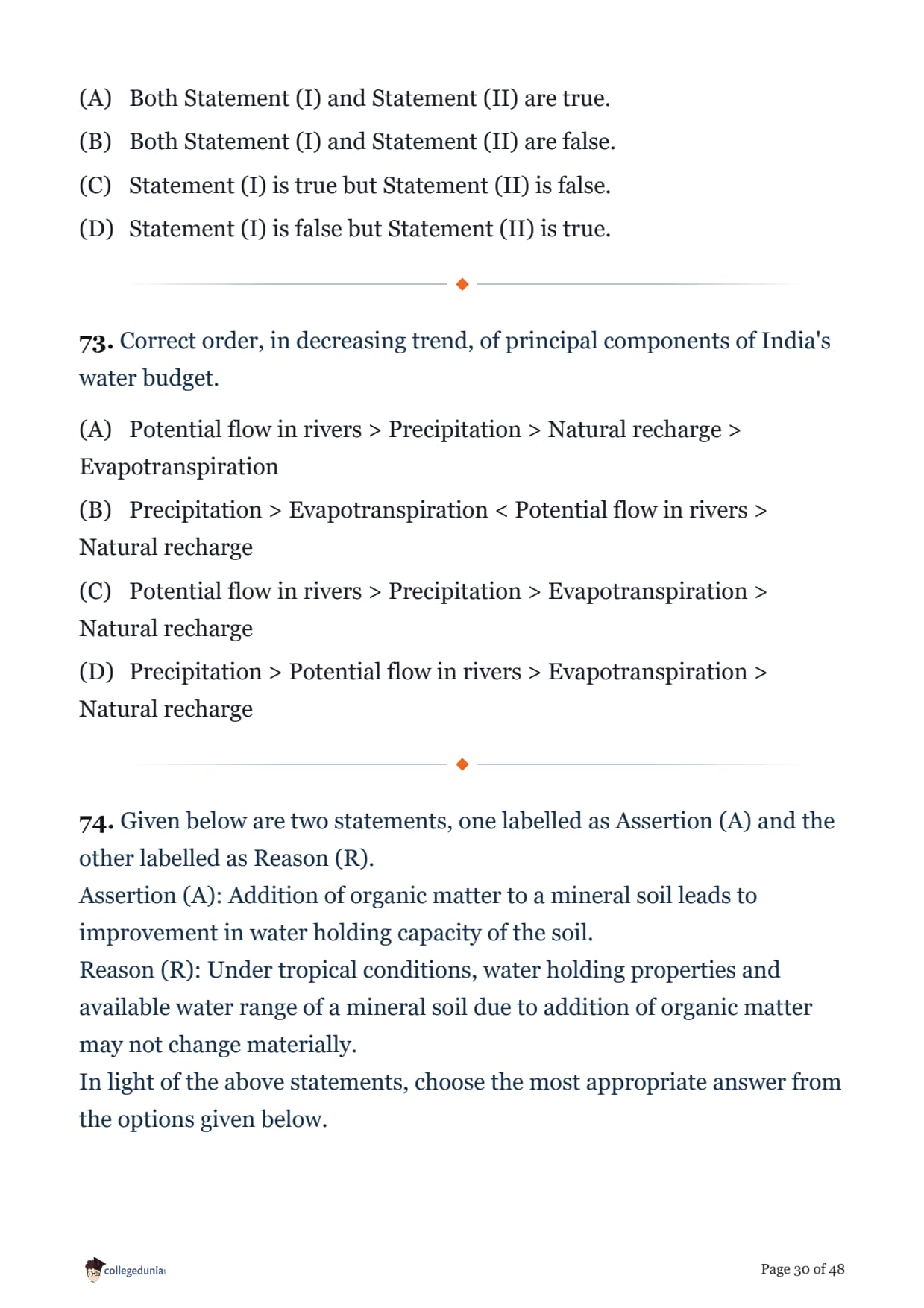
Correct order, in decreasing trend, of principal components of India's water budget.
Given below are two statements, one labelled as Assertion (A) and the other labelled as Reason (R).
Assertion (A): Addition of organic matter to a mineral soil leads to improvement in water holding capacity of the soil.
Reason (R): Under tropical conditions, water holding properties and available water range of a mineral soil due to addition of organic matter may not change materially.
In light of the above statements, choose the most appropriate answer from the options given below.
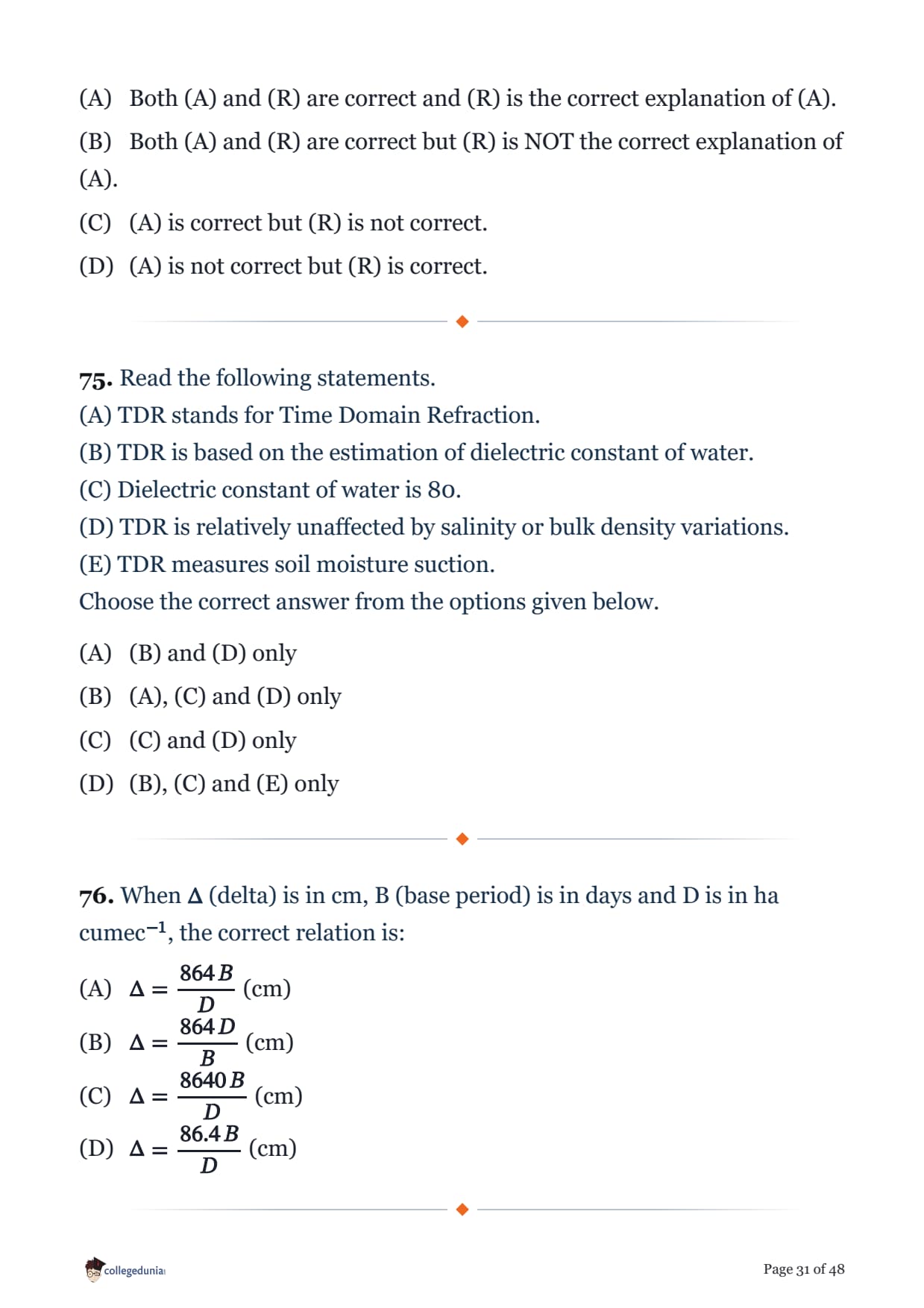
Read the following statements.
(A) TDR stands for Time Domain Refraction.
(B) TDR is based on the estimation of dielectric constant of water.
(C) Dielectric constant of water is 80.
(D) TDR is relatively unaffected by salinity or bulk density variations.
(E) TDR measures soil moisture suction.
Choose the correct answer from the options given below.
When \(\Delta\) (delta) is in cm, B (base period) is in days and D is in ha cumec\(^{-1}\), the correct relation is:
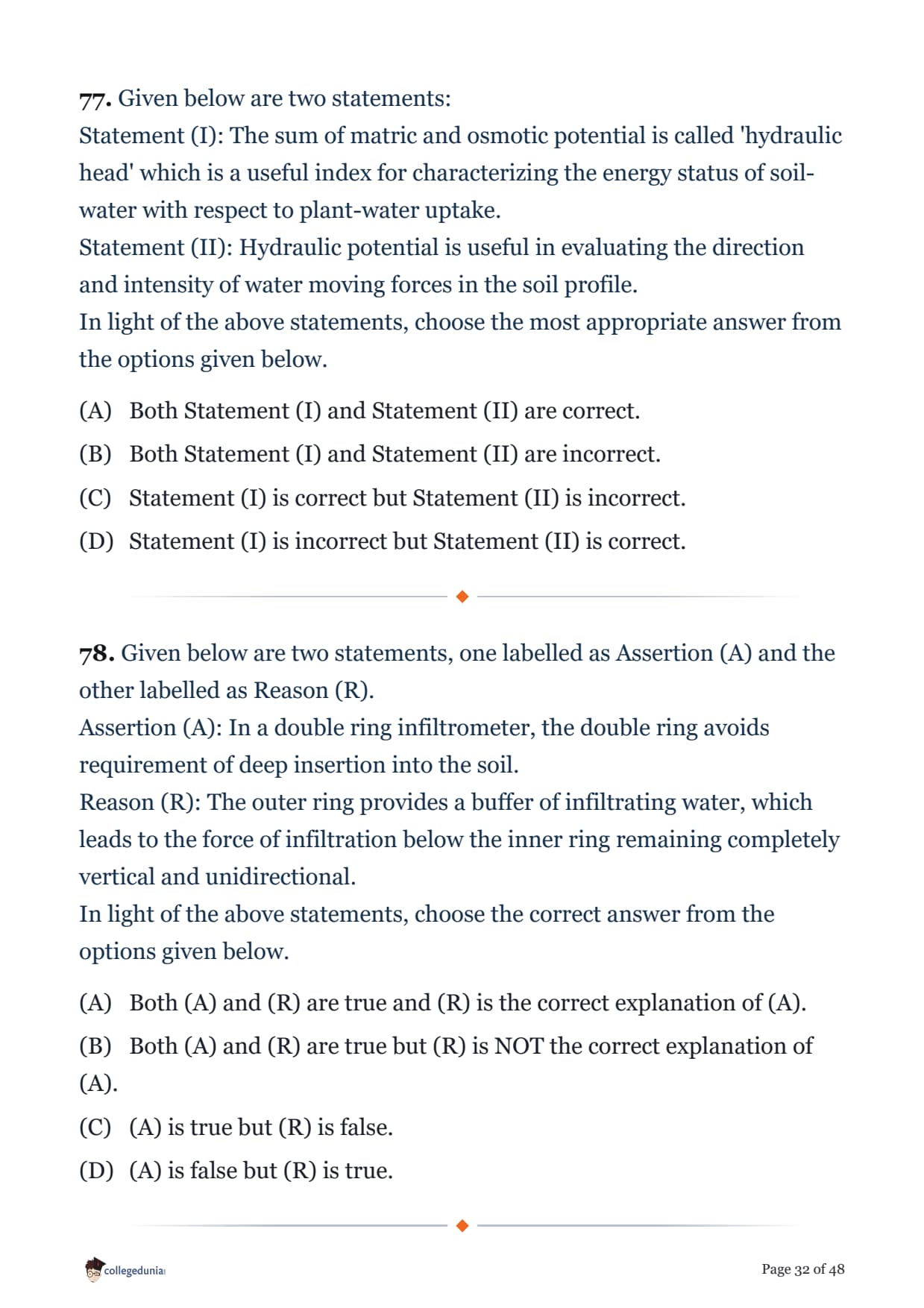
Given below are two statements:
Statement (I): The sum of matric and osmotic potential is called 'hydraulic head' which is a useful index for characterizing the energy status of soil-water with respect to plant-water uptake.
Statement (II): Hydraulic potential is useful in evaluating the direction and intensity of water moving forces in the soil profile.
In light of the above statements, choose the most appropriate answer from the options given below.
Given below are two statements, one labelled as Assertion (A) and the other labelled as Reason (R).
Assertion (A): In a double ring infiltrometer, the double ring avoids requirement of deep insertion into the soil.
Reason (R): The outer ring provides a buffer of infiltrating water, which leads to the force of infiltration below the inner ring remaining completely vertical and unidirectional.
In light of the above statements, choose the correct answer from the options given below.
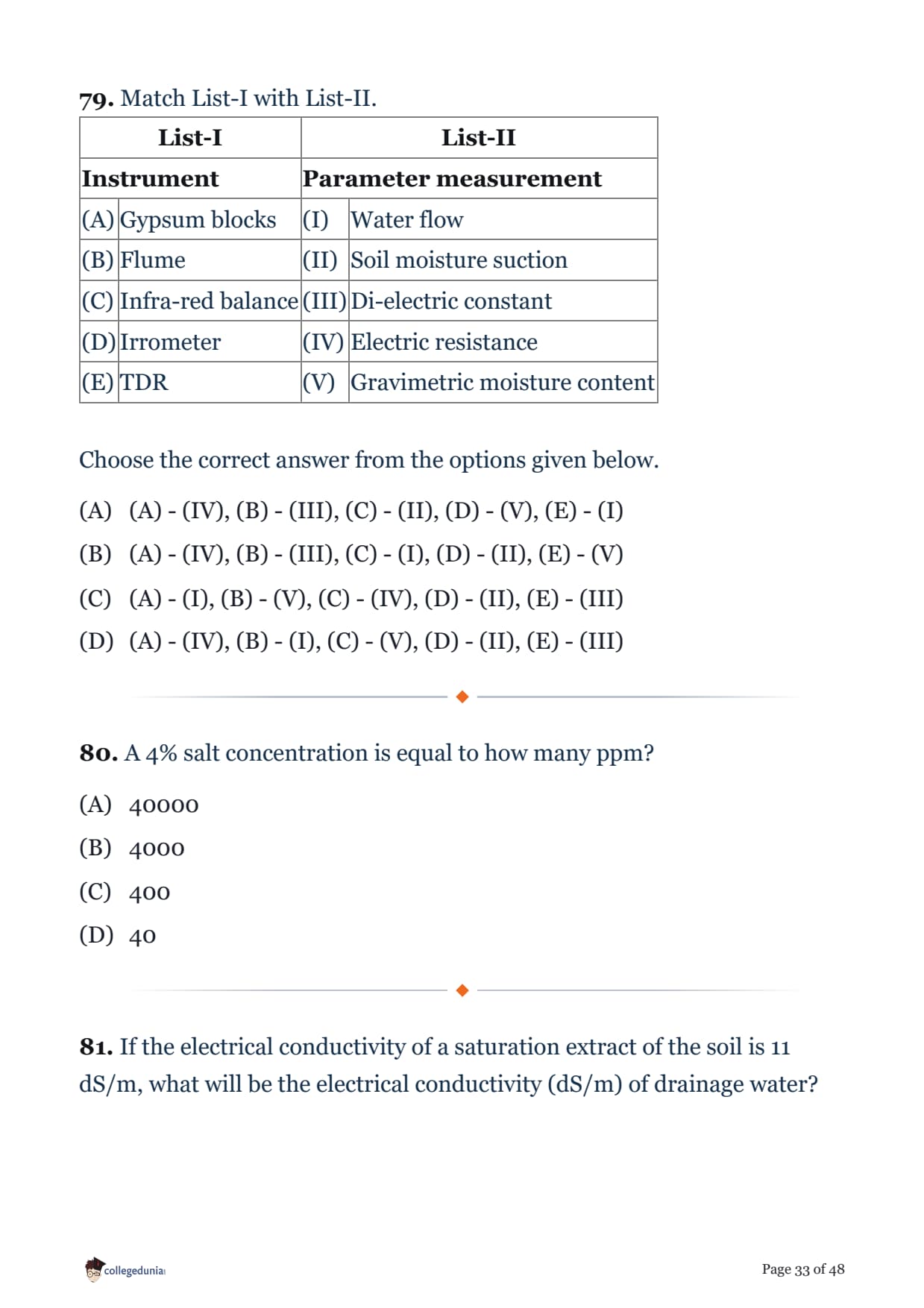
Match List-I with List-II.
| List-I | List-II | ||
| Instrument | Parameter measurement | ||
| (A) | Gypsum blocks | (I) | Water flow |
| (B) | Flume | (II) | Soil moisture suction |
| (C) | Infra-red balance | (III) | Di-electric constant |
| (D) | Irrometer | (IV) | Electric resistance |
| (E) | TDR | (V) | Gravimetric moisture content |
Choose the correct answer from the options given below.
A 4% salt concentration is equal to how many ppm?
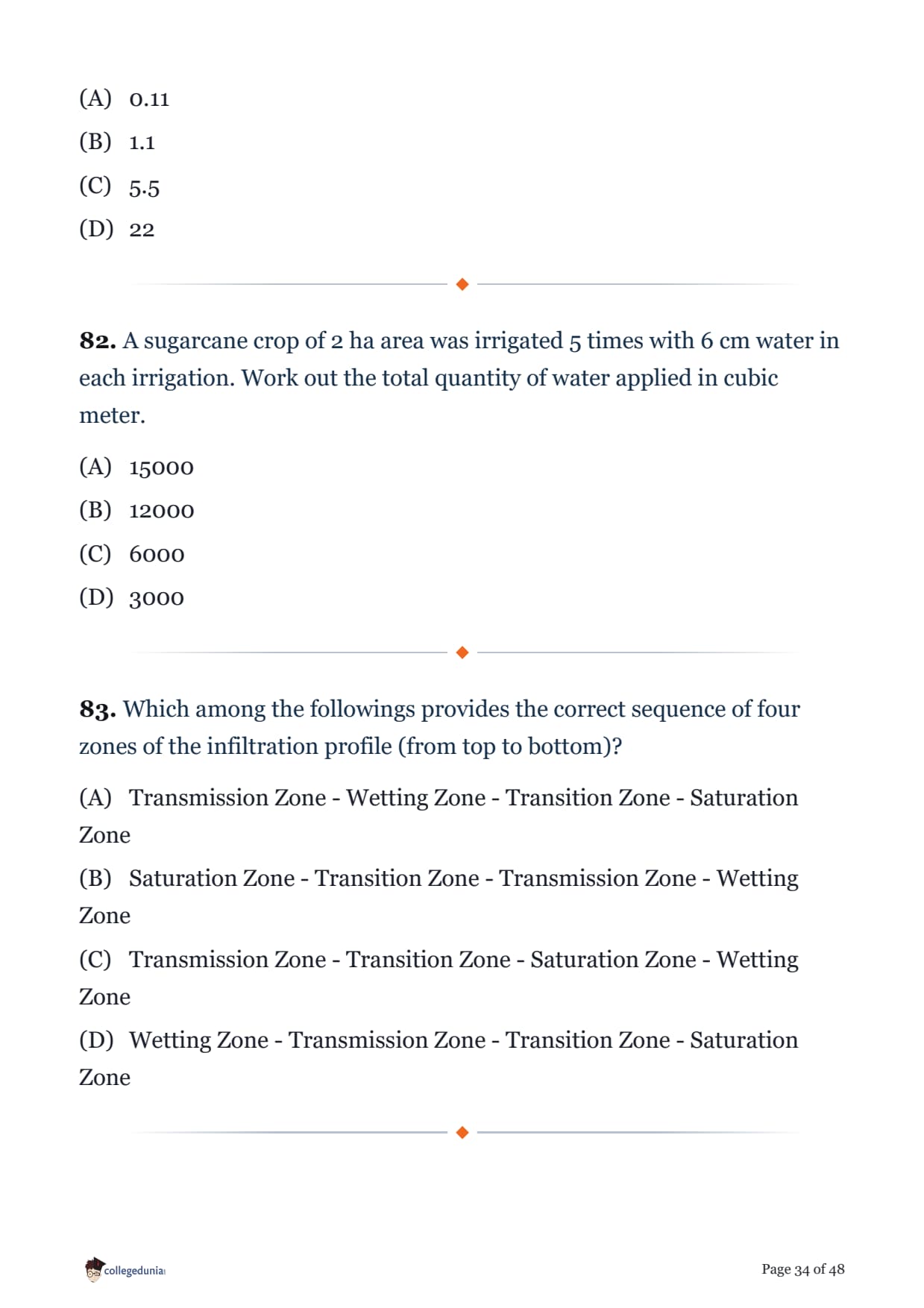
If the electrical conductivity of a saturation extract of the soil is 11 dS/m, what will be the electrical conductivity (dS/m) of drainage water?
A sugarcane crop of 2 ha area was irrigated 5 times with 6 cm water in each irrigation. Work out the total quantity of water applied in cubic meter.
Which among the followings provides the correct sequence of four zones of the infiltration profile (from top to bottom)?
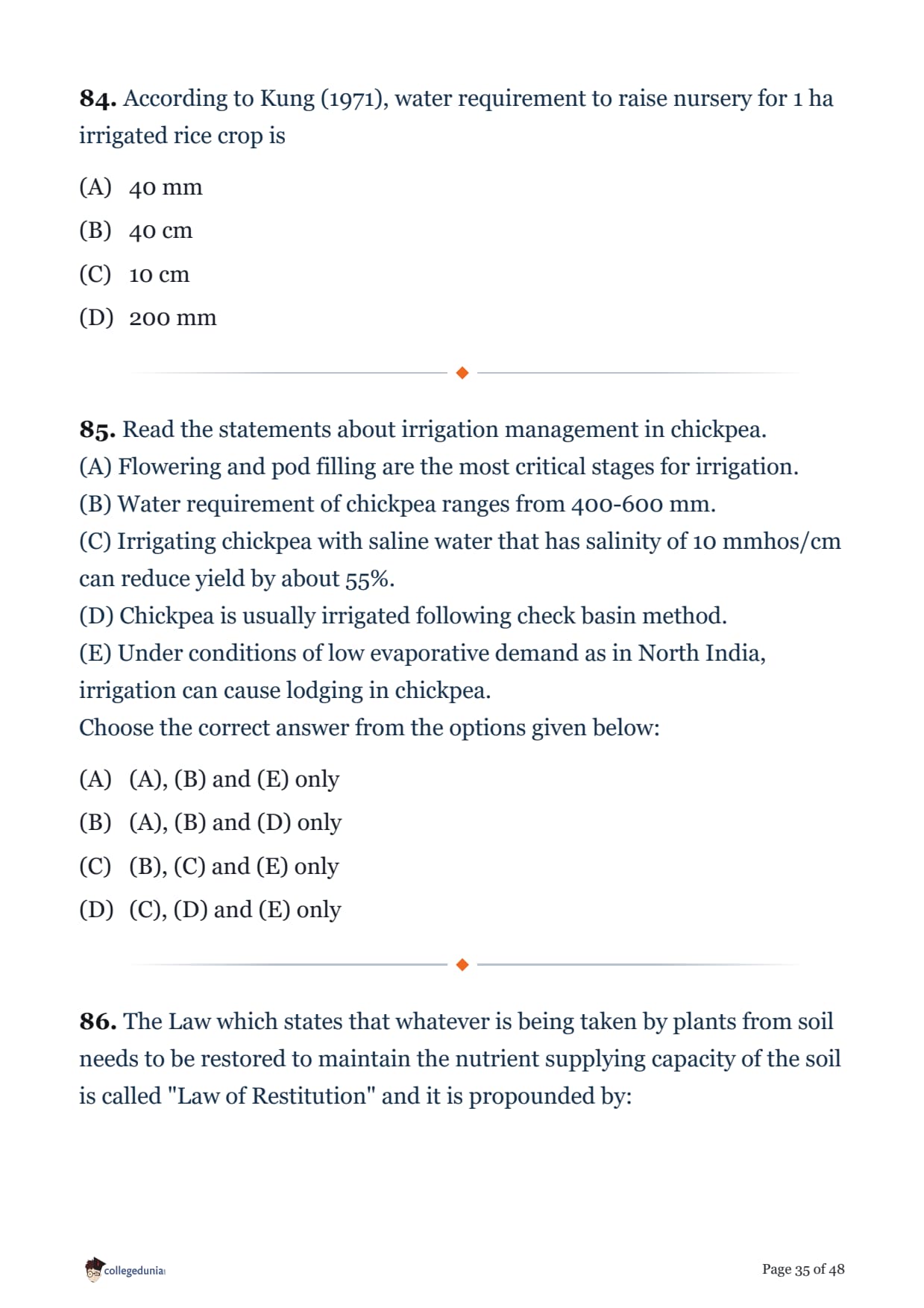
According to Kung (1971), water requirement to raise nursery for 1 ha irrigated rice crop is
Read the statements about irrigation management in chickpea.
(A) Flowering and pod filling are the most critical stages for irrigation.
(B) Water requirement of chickpea ranges from 400-600 mm.
(C) Irrigating chickpea with saline water that has salinity of 10 mmhos/cm can reduce yield by about 55%.
(D) Chickpea is usually irrigated following check basin method.
(E) Under conditions of low evaporative demand as in North India, irrigation can cause lodging in chickpea.
Choose the correct answer from the options given below:
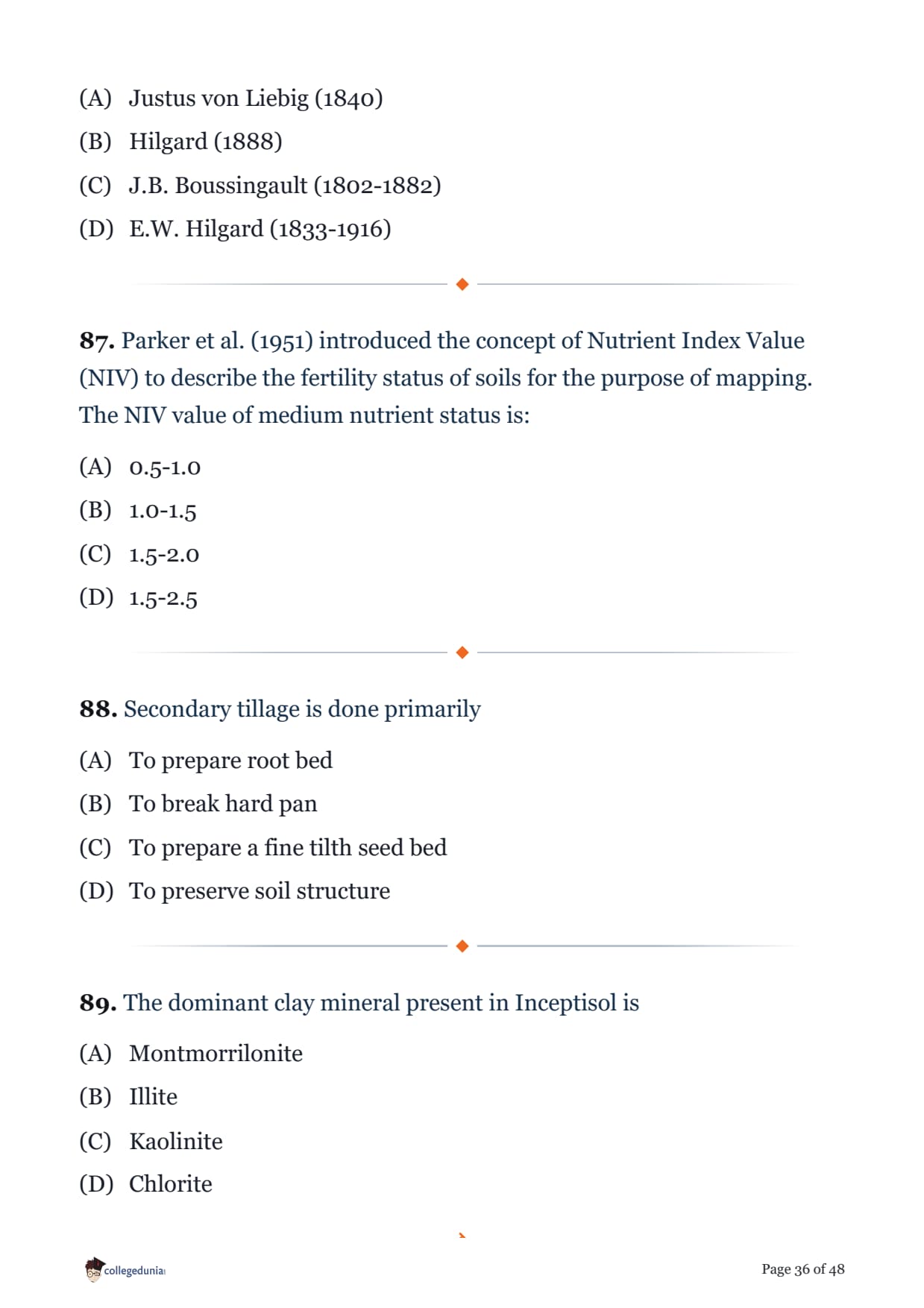
The Law which states that whatever is being taken by plants from soil needs to be restored to maintain the nutrient supplying capacity of the soil is called "Law of Restitution" and it is propounded by:
Parker et al. (1951) introduced the concept of Nutrient Index Value (NIV) to describe the fertility status of soils for the purpose of mapping. The NIV value of medium nutrient status is:
Secondary tillage is done primarily
The dominant clay mineral present in Inceptisol is
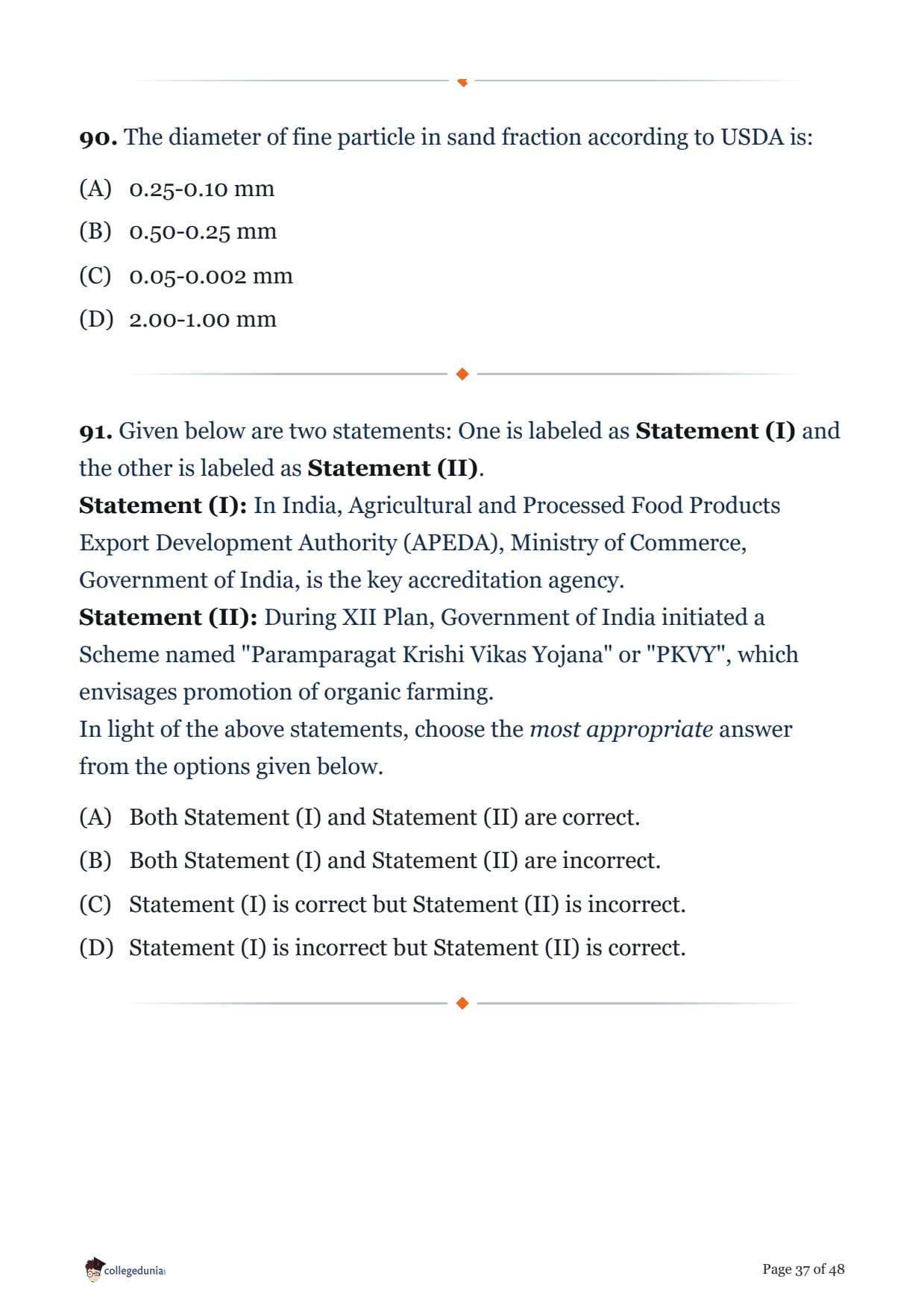
The diameter of fine particle in sand fraction according to USDA is:
Given below are two statements: One is labeled as Statement (I) and the other is labeled as Statement (II).
Statement (I): In India, Agricultural and Processed Food Products Export Development Authority (APEDA), Ministry of Commerce, Government of India, is the key accreditation agency.
Statement (II): During XII Plan, Government of India initiated a Scheme named "Paramparagat Krishi Vikas Yojana" or "PKVY", which envisages promotion of organic farming.
In light of the above statements, choose the most appropriate answer from the options given below.
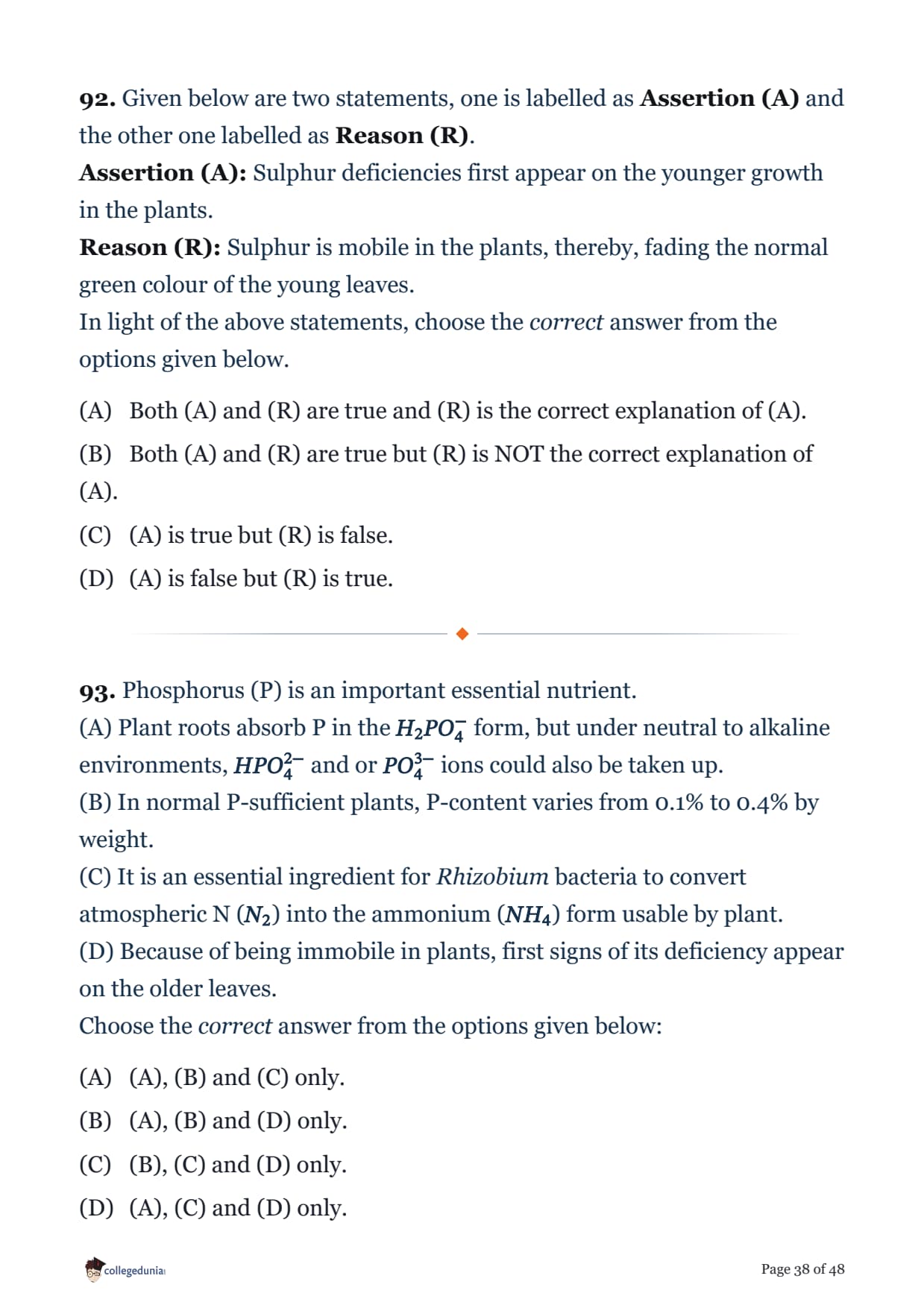
Given below are two statements, one is labelled as Assertion (A) and the other one labelled as Reason (R).
Assertion (A): Sulphur deficiencies first appear on the younger growth in the plants.
Reason (R): Sulphur is mobile in the plants, thereby, fading the normal green colour of the young leaves.
In light of the above statements, choose the correct answer from the options given below.
Phosphorus (P) is an important essential nutrient.
(A) Plant roots absorb P in the \(H_2PO_4^-\) form, but under neutral to alkaline environments, \(HPO_4^{2-}\) and or \(PO_4^{3-}\) ions could also be taken up.
(B) In normal P-sufficient plants, P-content varies from 0.1% to 0.4% by weight.
(C) It is an essential ingredient for Rhizobium bacteria to convert atmospheric N (\(N_2\)) into the ammonium (\(NH_4\)) form usable by plant.
(D) Because of being immobile in plants, first signs of its deficiency appear on the older leaves.
Choose the correct answer from the options given below:
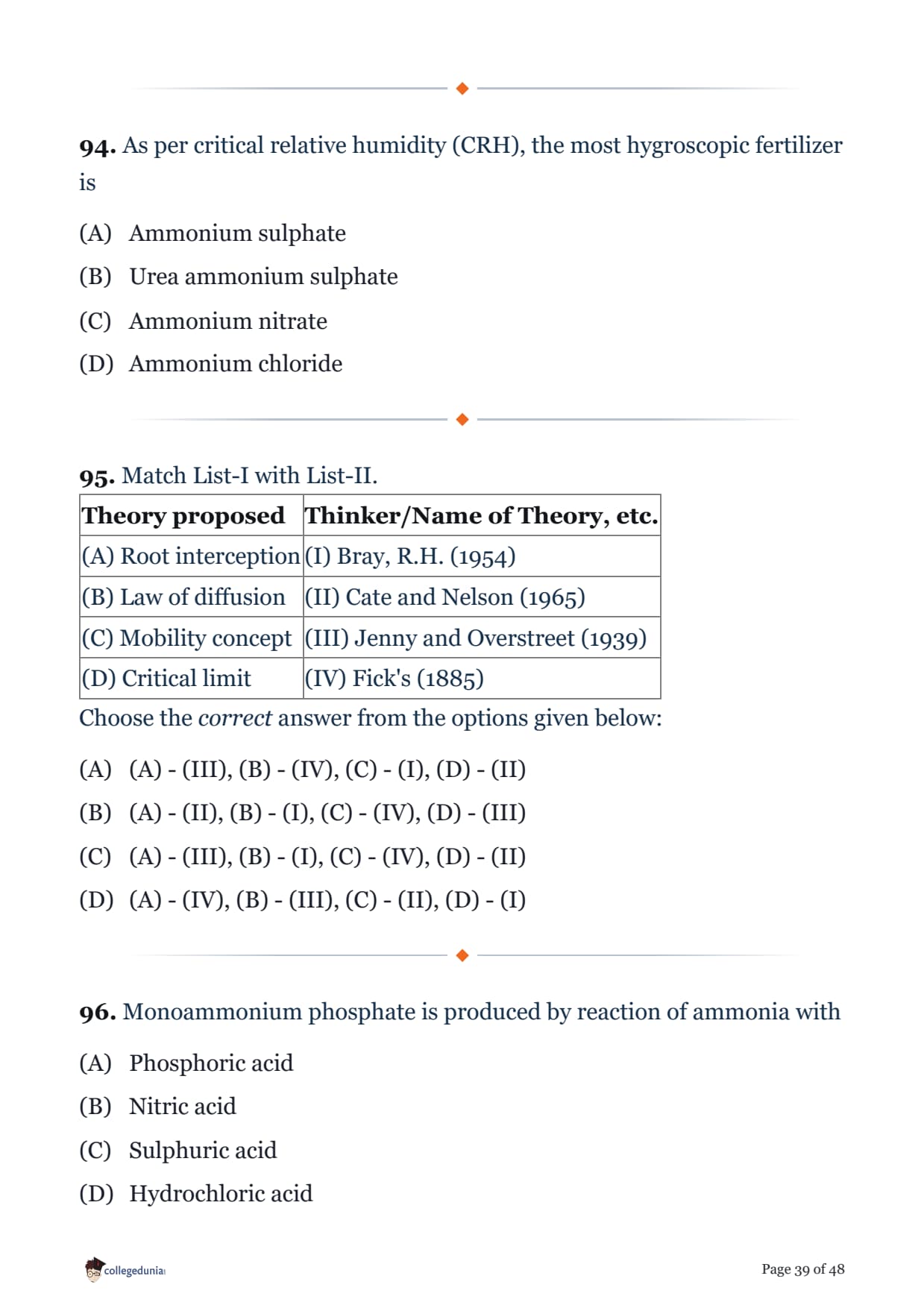
As per critical relative humidity (CRH), the most hygroscopic fertilizer is
Match List-I with List-II.
| Theory proposed | Thinker/Name of Theory, etc. |
| (A) Root interception | (I) Bray, R.H. (1954) |
| (B) Law of diffusion | (II) Cate and Nelson (1965) |
| (C) Mobility concept | (III) Jenny and Overstreet (1939) |
| (D) Critical limit | (IV) Fick's (1885) |
Monoammonium phosphate is produced by reaction of ammonia with
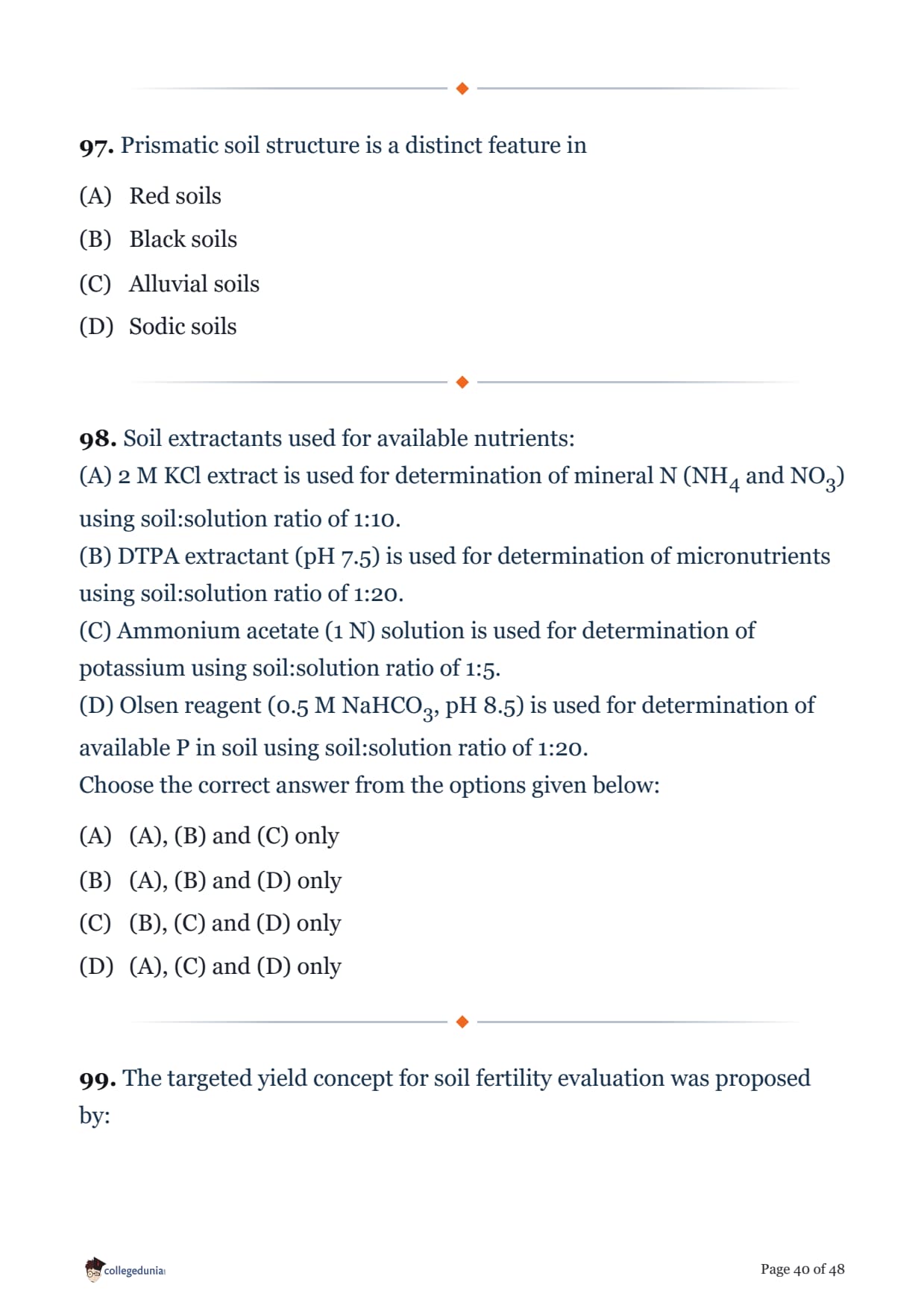
Prismatic soil structure is a distinct feature in
Soil extractants used for available nutrients:
(A) 2 M KCl extract is used for determination of mineral N (NH4 and NO3) using soil:solution ratio of 1:10.
(B) DTPA extractant (pH 7.5) is used for determination of micronutrients using soil:solution ratio of 1:20.
(C) Ammonium acetate (1 N) solution is used for determination of potassium using soil:solution ratio of 1:5.
(D) Olsen reagent (0.5 M NaHCO3, pH 8.5) is used for determination of available P in soil using soil:solution ratio of 1:20.
Choose the correct answer from the options given below:
The targeted yield concept for soil fertility evaluation was proposed by:
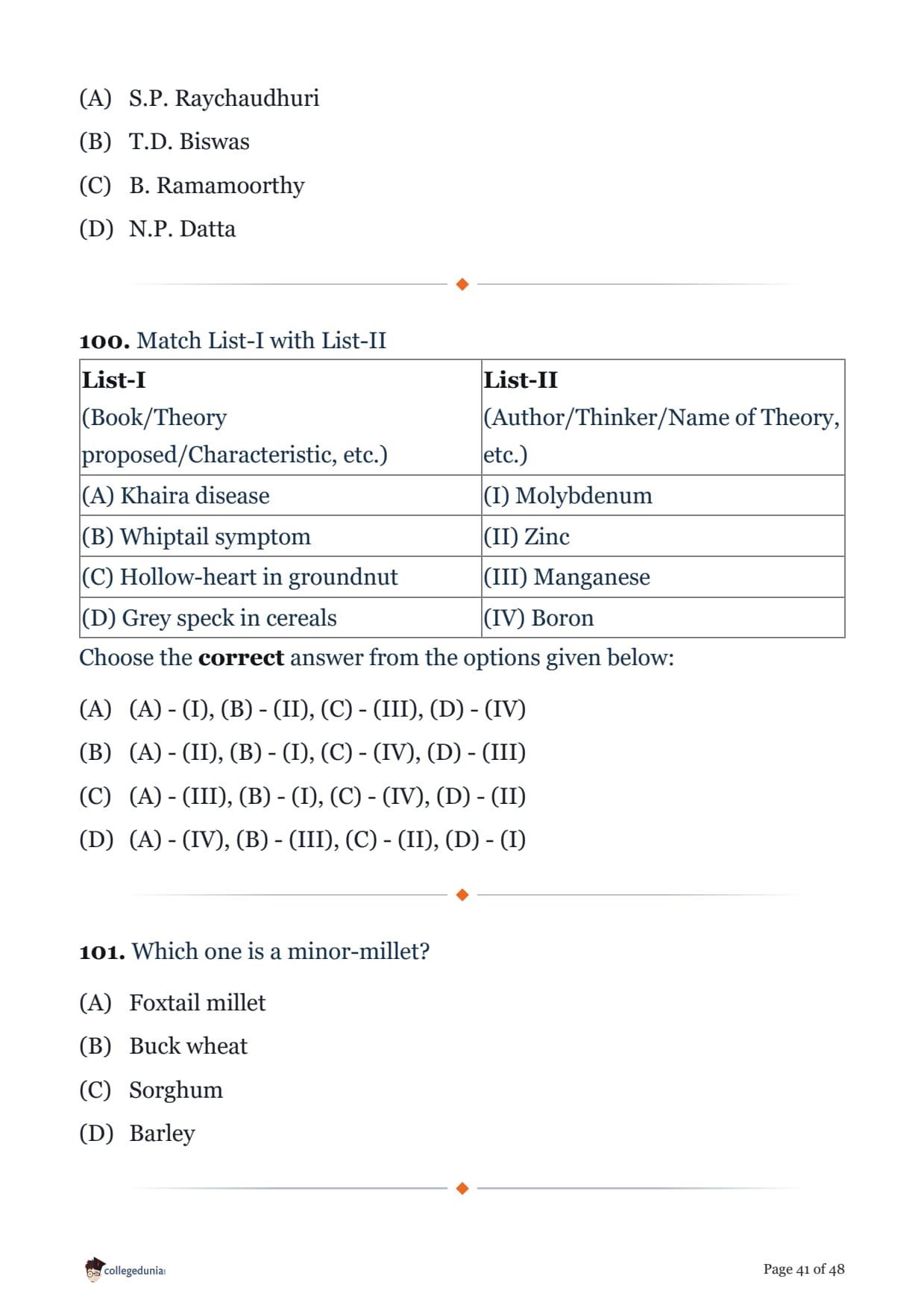
Match List-I with List-II
| List-I (Book/Theory proposed/Characteristic, etc.) | List-II (Author/Thinker/Name of Theory, etc.) |
| (A) Khaira disease | (I) Molybdenum |
| (B) Whiptail symptom | (II) Zinc |
| (C) Hollow-heart in groundnut | (III) Manganese |
| (D) Grey speck in cereals | (IV) Boron |
Which one is a minor-millet?
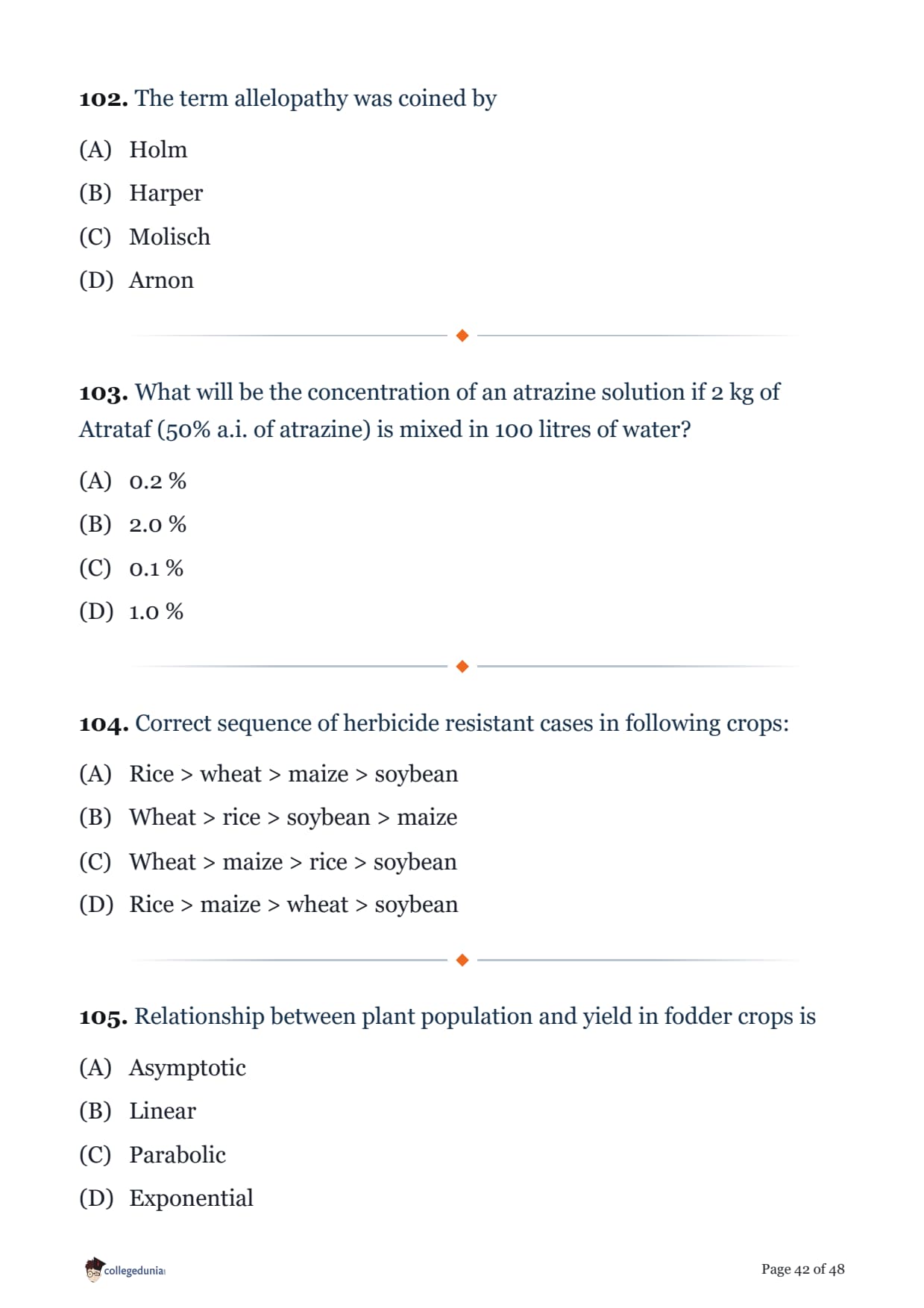
The term allelopathy was coined by
What will be the concentration of an atrazine solution if 2 kg of Atrataf (50% a.i. of atrazine) is mixed in 100 litres of water?
Correct sequence of herbicide resistant cases in following crops:
Relationship between plant population and yield in fodder crops is
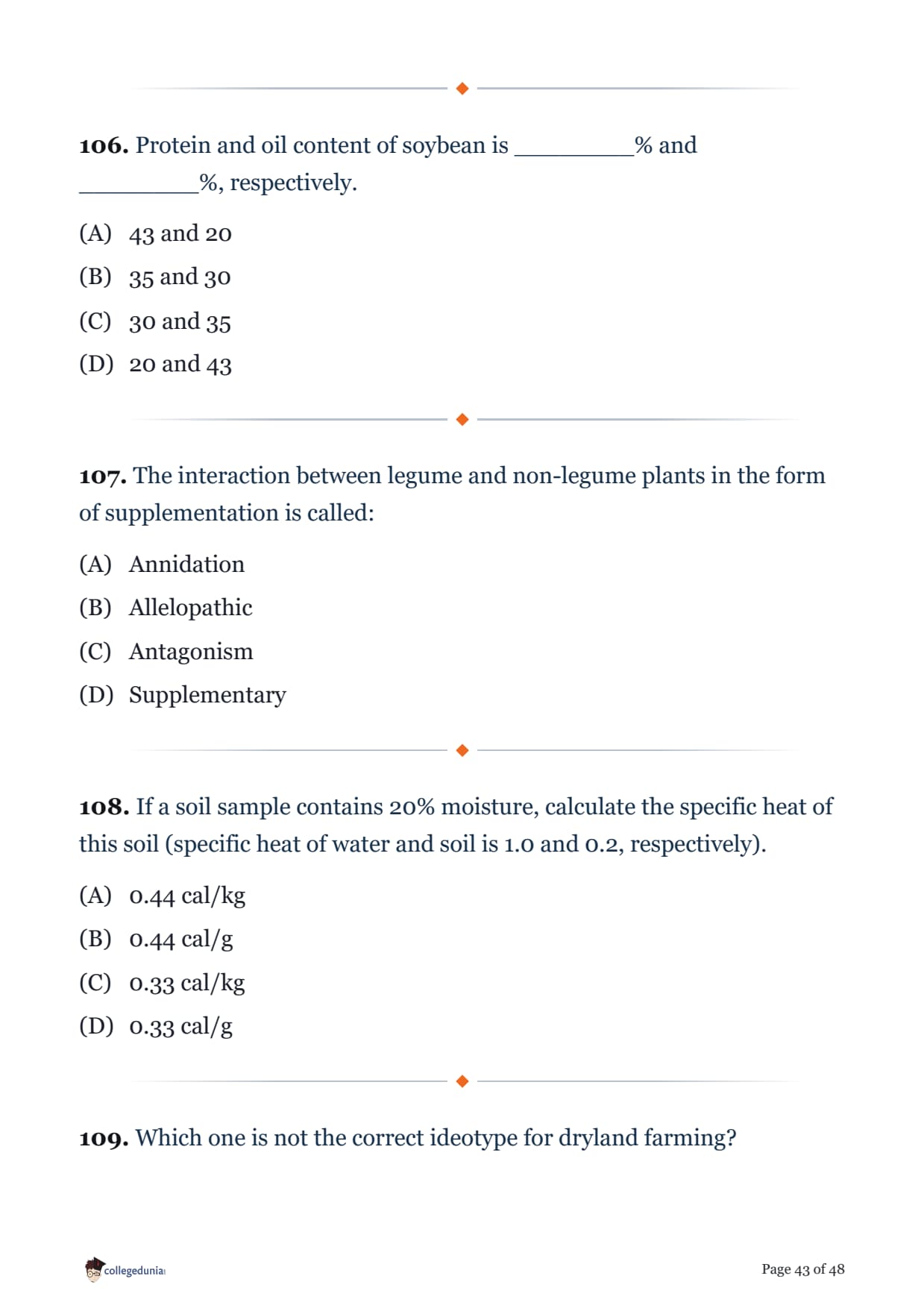
Protein and oil content of soybean is ________% and ________%, respectively.
The interaction between legume and non-legume plants in the form of supplementation is called:
If a soil sample contains 20% moisture, calculate the specific heat of this soil (specific heat of water and soil is 1.0 and 0.2, respectively).
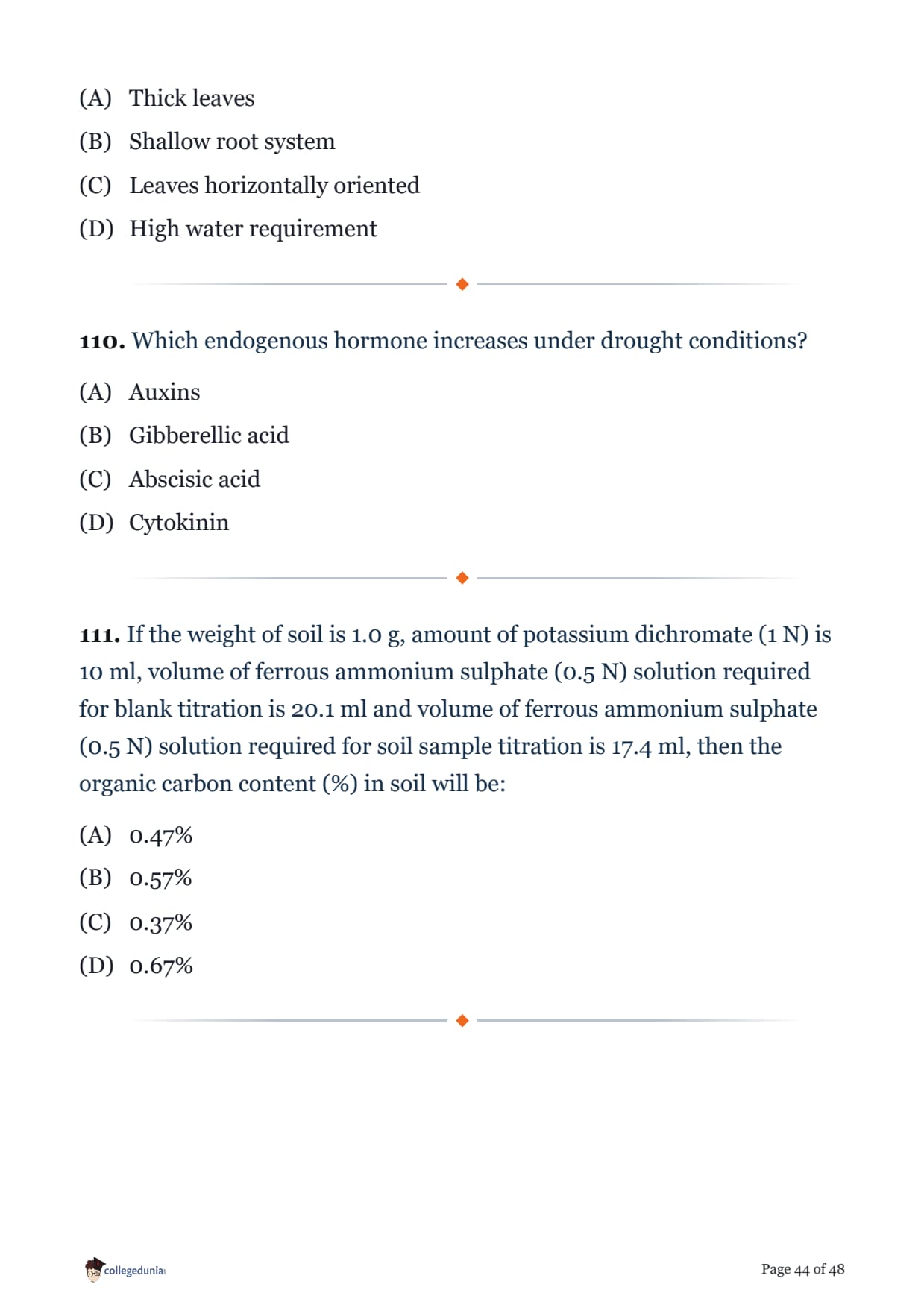
Which one is not the correct ideotype for dryland farming?
Which endogenous hormone increases under drought conditions?
If the weight of soil is 1.0 g, amount of potassium dichromate (1 N) is 10 ml, volume of ferrous ammonium sulphate (0.5 N) solution required for blank titration is 20.1 ml and volume of ferrous ammonium sulphate (0.5 N) solution required for soil sample titration is 17.4 ml, then the organic carbon content (%) in soil will be:
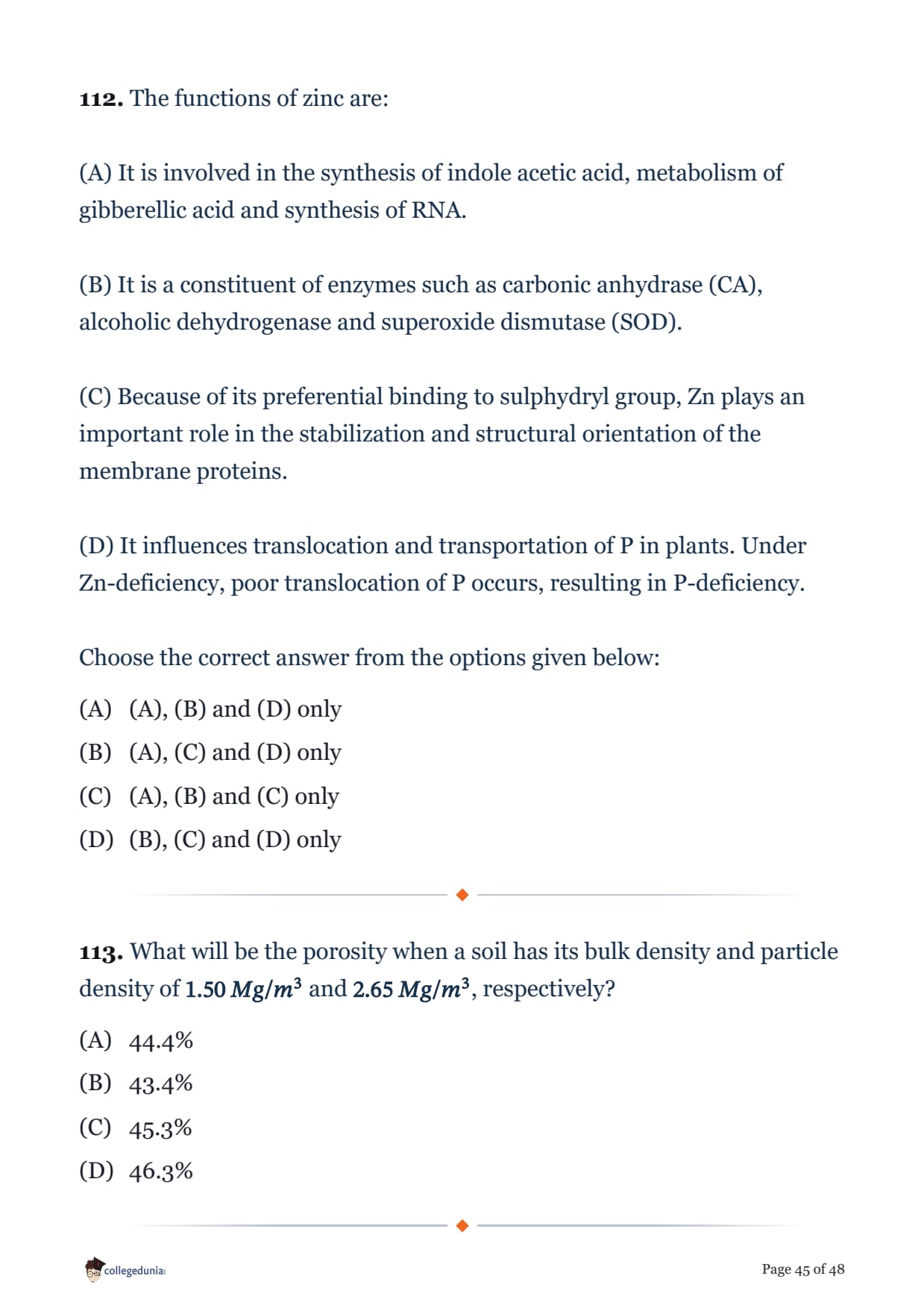
The functions of zinc are:
(A) It is involved in the synthesis of indole acetic acid, metabolism of gibberellic acid and synthesis of RNA.
(B) It is a constituent of enzymes such as carbonic anhydrase (CA), alcoholic dehydrogenase and superoxide dismutase (SOD).
(C) Because of its preferential binding to sulphydryl group, Zn plays an important role in the stabilization and structural orientation of the membrane proteins.
(D) It influences translocation and transportation of P in plants. Under Zn-deficiency, poor translocation of P occurs, resulting in P-deficiency.
Choose the correct answer from the options given below:
What will be the porosity when a soil has its bulk density and particle density of \(1.50\ Mg/m^3\) and \(2.65\ Mg/m^3\), respectively?
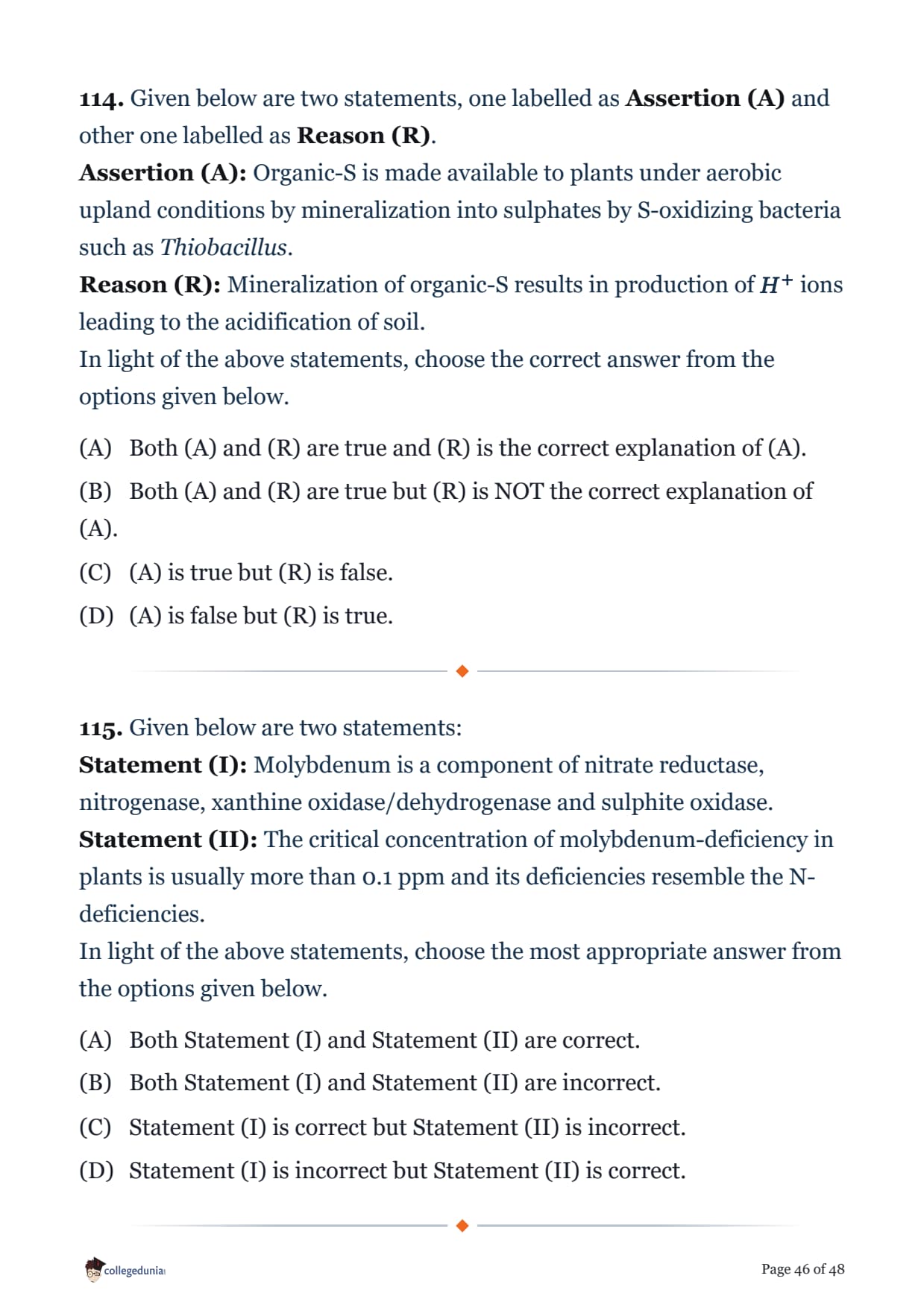
Given below are two statements, one labelled as Assertion (A) and other one labelled as Reason (R).
Assertion (A): Organic-S is made available to plants under aerobic upland conditions by mineralization into sulphates by S-oxidizing bacteria such as Thiobacillus.
Reason (R): Mineralization of organic-S results in production of \(H^+\) ions leading to the acidification of soil.
In light of the above statements, choose the correct answer from the options given below.
Given below are two statements:
Statement (I): Molybdenum is a component of nitrate reductase, nitrogenase, xanthine oxidase/dehydrogenase and sulphite oxidase.
Statement (II): The critical concentration of molybdenum-deficiency in plants is usually more than 0.1 ppm and its deficiencies resemble the N-deficiencies.
In light of the above statements, choose the most appropriate answer from the options given below.
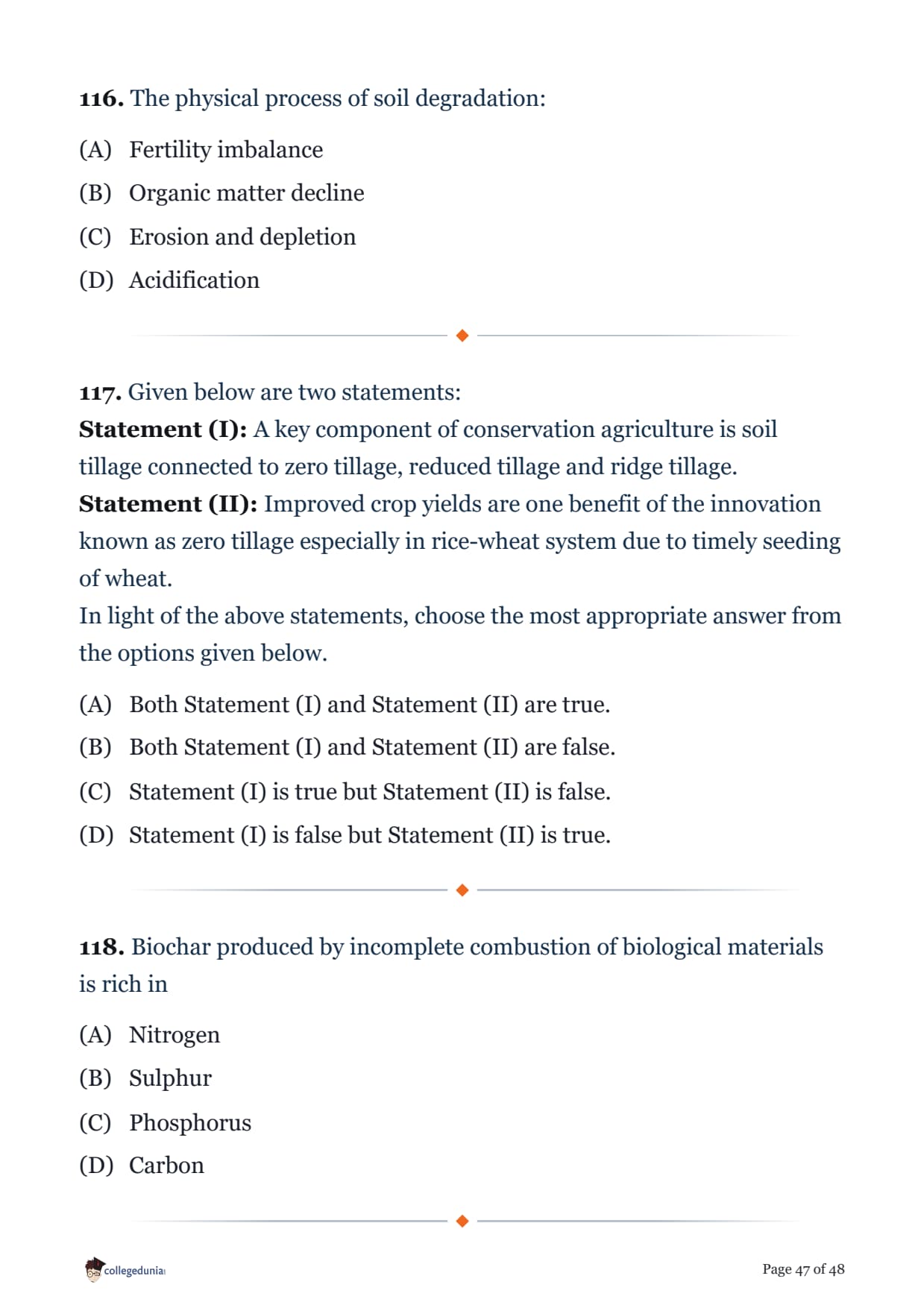
The physical process of soil degradation:
Given below are two statements:
Statement (I): A key component of conservation agriculture is soil tillage connected to zero tillage, reduced tillage and ridge tillage.
Statement (II): Improved crop yields are one benefit of the innovation known as zero tillage especially in rice-wheat system due to timely seeding of wheat.
In light of the above statements, choose the most appropriate answer from the options given below.
Biochar produced by incomplete combustion of biological materials is rich in
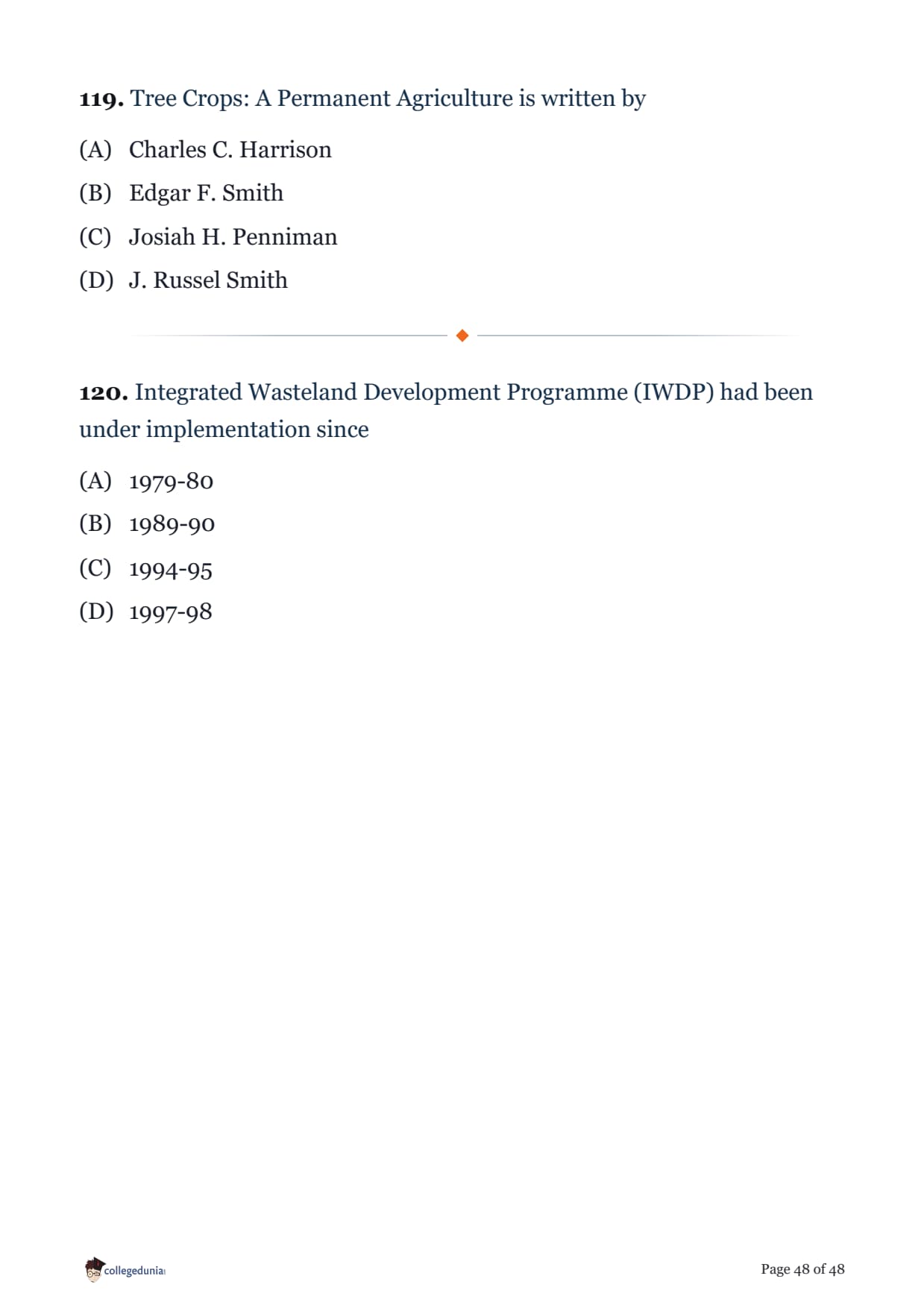
Tree Crops: A Permanent Agriculture is written by
Integrated Wasteland Development Programme (IWDP) had been under implementation since
ICAR AIEEA PG 2023 Agronomy Exam Pattern and Marking Scheme Explained
ICAR AIEEA PG 2023 was a computer-based test of single-correct multiple-choice questions, and Agronomy was one of the roughly 20 PG major subject groups you could pick. The full spec you attempted on July 9, 2023 is below.
- Total questions: 120 single-correct MCQs
- Duration: 120 minutes
- Total marks: 480
- Marking scheme: +4 for a correct answer, -1 for a wrong one
- Question types: objective MCQs, including several Match List-I with List-II and Assertion-Reason questions
High-Weightage Subjects in ICAR AIEEA PG 2023 Agronomy to Focus On First
This paper was not core Agronomy alone, it pulled in the full allied subject spread the ICAR PG syllabus lists under Agronomy. The counts below are from this actual 2023 paper.
- Soil Science (soil physics, fertility, salinity, nutrients): 29 of the 120 questions, from bulk density and porosity calculations to the DTPA and Olsen soil test methods
- Core Agronomy (tillage, cropping systems, irrigation scheduling): 29 questions, including IW/CPE ratio and delta-duty-base period numericals
- Plant Physiology and Biochemistry: about 22 questions on photorespiration, mineral nutrition, plant hormones and cell biology
- Weed Science (herbicides, weed classification, resistance): 15 questions, including herbicide chemistry and mode of action
- Agricultural Meteorology (atmosphere, clouds, rainfall units): 10 questions
- Horticulture, Ecology and general agriculture facts: the remaining questions, including current-affairs style items like the 2023 cyclone Mocha naming
ICAR AIEEA PG 2023 Agronomy Question Paper Analysis Video
Source: AgriBee - Agriculture Exams, Jobs in India
How to Use the ICAR AIEEA PG 2023 Agronomy Question Paper for Practice
Treat this paper as a timed mock before you treat it as a reading exercise. That is the only way the +4/-1 marking teaches you when to skip a question you are unsure of.
- Solve all 120 questions in a single 120-minute sitting, no pauses, to feel the real time pressure
- Score with +4 for each correct and -1 for each wrong answer, then check every question against the solution PDF
- Redo the Soil Science and irrigation numericals first, since IW/CPE ratio, delta-duty-base period and bulk density questions repeat in some form almost every year
- Keep a short list of the Plant Physiology and Weed Science facts you missed, like which herbicide group dicamba belongs to or why phosphorus deficiency shows up on older leaves, and revise them weekly
ICAR AIEEA PG 2023 Agronomy Question Paper FAQs
Ques. How many questions were there in the ICAR AIEEA PG 2023 Agronomy paper and what was the marking scheme?
Ans. The paper had 120 single-correct MCQs to be solved in 120 minutes for a total of 480 marks. You gained 4 marks for each correct answer and lost 1 mark for each wrong one, so blind guessing hurt your score.
Ques. Which topics had the highest weightage in ICAR AIEEA PG 2023 Agronomy?
Ans. Soil Science and core Agronomy each carried 29 of the 120 questions, followed by about 22 Plant Physiology and Biochemistry questions and 15 Weed Science questions. Agricultural Meteorology added another 10, so soil and crop management topics together decided the paper.
Ques. What is the qualifying mark for ICAR AIEEA PG 2023 Agronomy?
Ans. ICAR sets the qualifying mark at 50% for the general category and 40% for SC, ST and PC candidates. Out of the 480 total marks in Agronomy, that works out to 240 marks for general category and 192 marks for SC, ST and PC.
Ques. Where can I download the ICAR AIEEA PG 2023 Agronomy question paper with solutions PDF for free?
Ans. Use the download table above on Collegedunia for the full question paper and the step-by-step solutions PDF. For the official paper and answer key, check the NTA ICAR portal at icar.nta.ac.in.
Ques. Is the ICAR AIEEA PG Agronomy paper only about core Agronomy?
Ans. No. Core Agronomy topics like tillage, cropping systems and irrigation made up only 29 of the 120 questions. The rest tested Soil Science, Plant Physiology, Weed Science, Agricultural Meteorology and general agriculture facts, so you must prepare all of these allied areas, not just Agronomy itself.
Ques. Are ICAR AIEEA PG Agronomy questions repeated from previous years?
Ans. Core concepts repeat far more than exact questions. Facts like the IW/CPE ratio formula, the USDA sand particle size classes, or which micronutrient deficiency resembles a nitrogen deficiency show up across years in different wording, so solving 5 to 7 past papers builds real coverage.
Ques. Who conducts the ICAR AIEEA PG Agronomy exam?
Ans. The National Testing Agency (NTA) conducts ICAR AIEEA PG on behalf of the Indian Council of Agricultural Research. Agronomy is one of about 20 PG major subject groups you can choose while applying on the official NTA ICAR portal.



Comments