


What Students Say
Likes
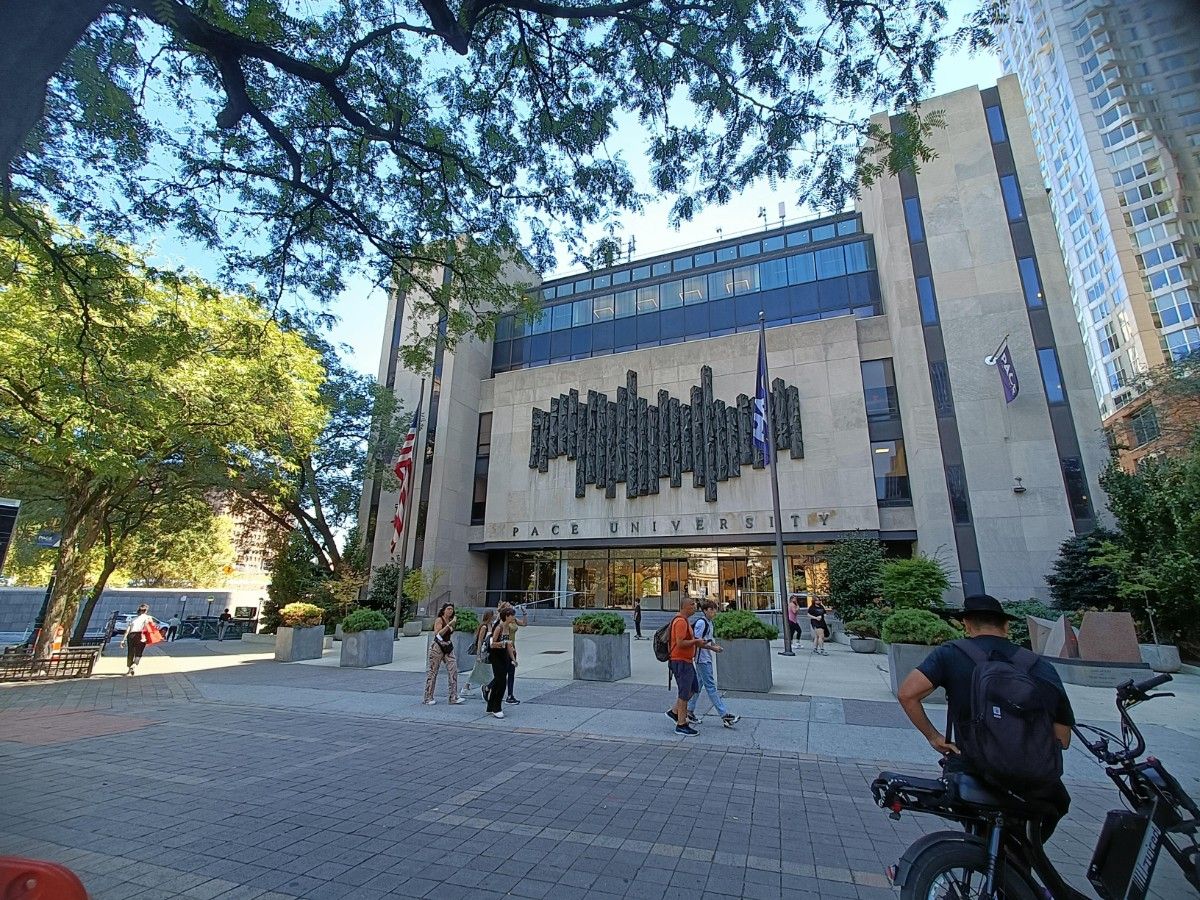
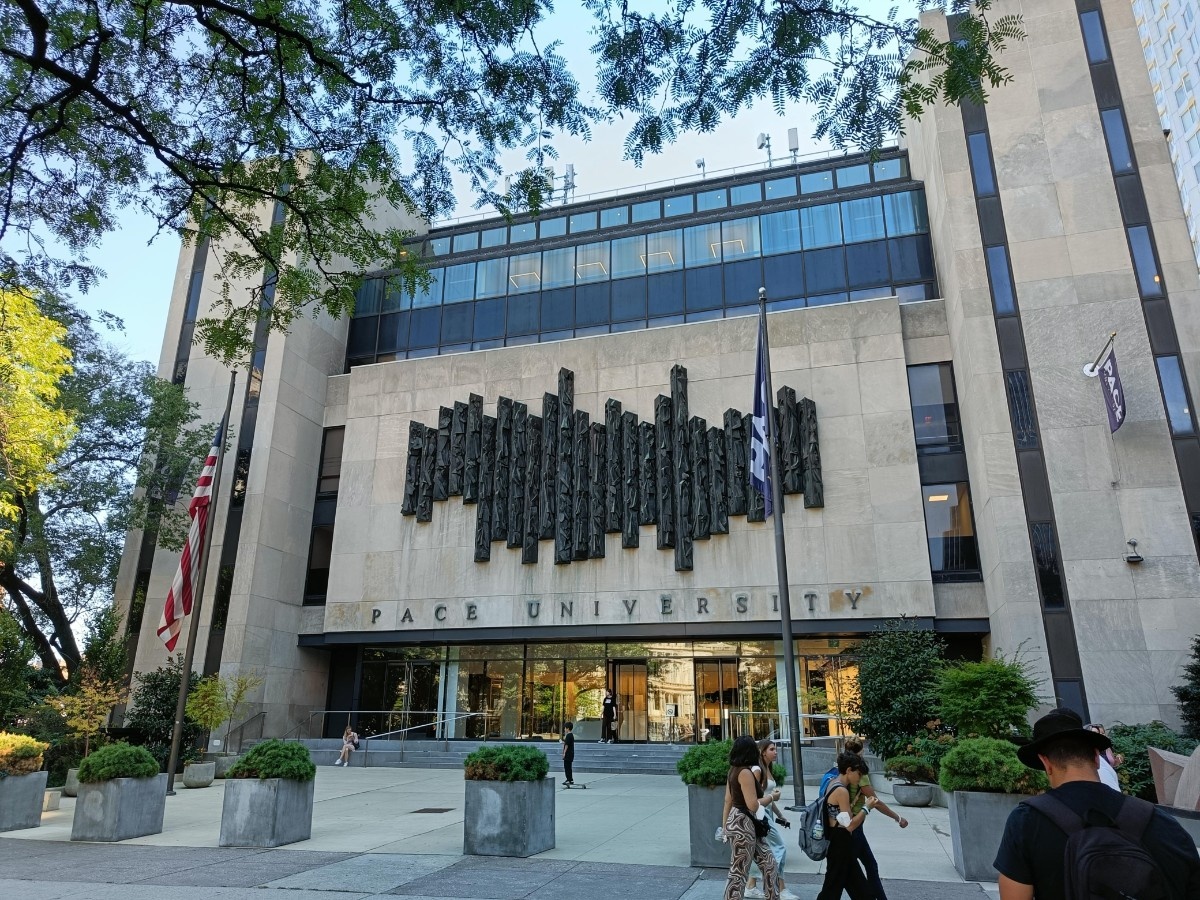
- The location of the university is great - it's in downtown Manhattan, right beside the Brooklyn Bridge and within walking distance of WTC and Wall Street
- The fees are lower compared to other colleges. For my program, it was around $52K, which was further reduced by the merit scholarship I received.
- The faculty and staff are extremely supportive and approachable. The professors were always available if I needed any and they were very understanding.
Dislikes
- The classes that I took had majority of Indian students, which made it feel like I was still in India. There was not much scope to experience the cultural diversity in the classes.
- The New York Campus being comparatively smaller than the other campus, had limited number of on campus jobs were limited and most of the available positions were usually filled through referrals by students who already worked there. Each school buildings dispersed within a radius 2-3 blocks.
- Had a few mandatory courses for IS, which were very basic and not all were waived off even though I had studied the same during my Bachelors.
Course Curriculum
6
- The difficulty level of the course curriculum was different for different classes. The introductory courses were relatively easy, while the concentration-specific subjects were more challenging since many of the technologies and concepts were new to me. Overall, the curriculum was a blend of theory and practical, with a stronger emphasis on hands-on learning, assignments, and projects.
- Pace University offers a number of concentrations under the MS in Information Systems program, such as Software Development, Data Science and Analytics, Healthcare Systems, UX, and more. I chose the Data Science and Analytics concentration. One drawback I experienced was that the program included a few mandatory core courses, which reduced the number of electives available for specialization.
- Typically, each class had around 30 students. A major portion of the class, approximately 70–80%, was Indian students, which I consider a downside, as I was looking for a more diverse classroom environment.
- In terms of scheduling, each class was held once a week. Most of my classes were in the evening 5 PM to 8 PM. Only one of my classes (Business Analytics) was a class offered by the Lubin School of Business.
- Overall, the academic experience was well-structured and practical-oriented, though the limited diversity and the number of compulsory courses were some negative aspects, according to me.
Admission Experience
- Technically, I applied to only 2 Universities: Pace University in NYC and Coventry University, UK (which was a backup option). I got admission to both the above-mentioned universities. For the USA, my plan was to apply to other universities only if I got a rejection from Pace, which fortunately did not happen. Having received admits from both universities, I cannot say what can go wrong with the applications. I applied to universities through a consulting firm called AdmitKard, which took care of the application process. I only had to provide them with the required documents like SOP, LORs, CV, and other academic documents. The firm helped me with the SOP, too.
- What I would suggest is, if you are not confident enough that you can handle the application process by yourself, go through a consulting firm, as they can guide you thoroughly throughout the application process.
-
I was very clear about doing my master's degree in the USA, though I had kept the UK as a backup. I received an admit from Pace, so I did not proceed with any further U.S. applications.
The factors that made me choose Pace University are:
The location: I always wanted to study on the East Coast, preferably in New York City. I mean, there are other better universities like NYU, Rutgers, Northeastern, MIT, Columbia, Princeton, but the tuition for them was too high, and some didn't offer a scholarship for the program I wanted.
Tuition fees: Fees for my program were comparatively lower than many other universities I had researched.
Exam requirements: There was no GRE requirement for my program at Pace. Having made my decision to go for a master's degree very quickly, I did not want to prepare for the GRE. The only mandatory exam was IELTS, for which the minimum requirement was a band score of 7.
The overall admission process was quite smooth for me as I applied through a consulting firm, which handled most of the documentation and application steps. I only had to provide them with my academic transcripts, my IELTS score, LORs, SOP and other documents and personal details. My admission experience was positive overall, though I did face one major challenge: a visa rejection on my first attempt. Thankfully, my visa was approved on the second attempt. - I was targeting for Fall 2022 intake, as I was graduating from my Bachelor's degree in May 2022, and wanted to continue my studies without a gap. Hence, I chose the Fall 2022 intake.
- I applied during the early admission time period, which sped up my process. I submitted the application around mid-October 2021, submitted the required documentation by November 2021, and got my admit by December 2021. By mid-December, I had to accept the admission and return with a merit scholarship acceptance form. So, to sum up overall process took me about 6-8 weeks, maybe more.
Faculty
6
- The faculty-to-student ratio in my program was quite reasonable. Most of my classes had around 25-30 students, which allowed professors to give enough attention to individuals and encourage interaction during lectures. Because the class sizes were not too large, it was easy to approach faculty members before or after class for doubts or guidance.
- The teaching methodology followed by the faculty was a good mix of theory and practical application. Most professors focused on hands-on learning, real-world case studies, and project-based assessments rather than just theoretical learning.
- Some professors who were working on research or a project would hire students for their project based on the skills and motivation they were looking for. Professors also hired a teaching assistant as per their needs.
- All of my professors were very nice. One particular professor who stood out was my UX professor, Reynald Benoit. He works at Google, and he also gave a couple of students, who were interested in pursuing their career in UI/UX, a referral for a job at Google, and also offered to give a letter of recommendation.
Campus Life
6
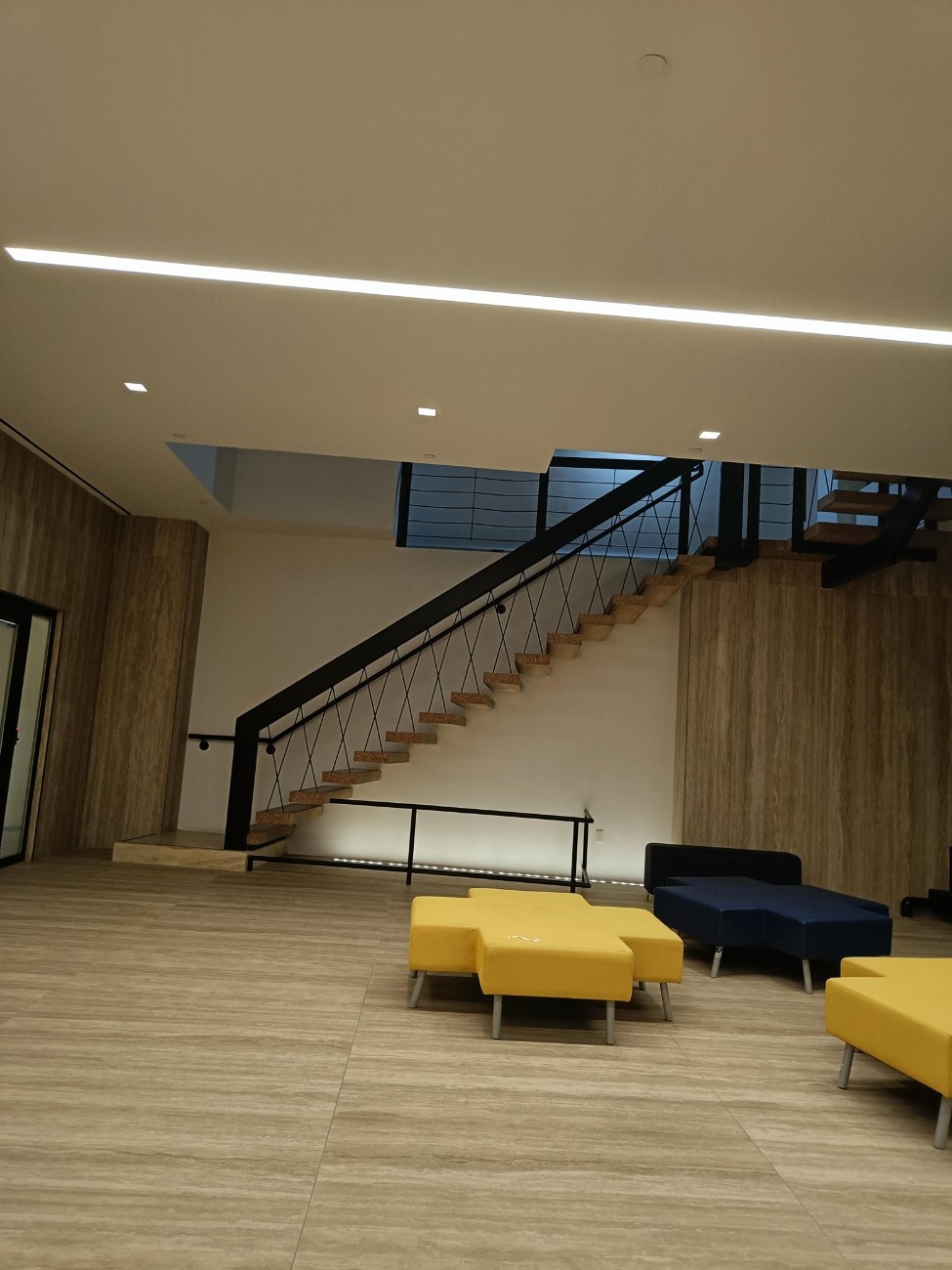
- Pace University has two campuses: the New York City campus, located in downtown Manhattan, right next to the Brooklyn Bridge, and the Pleasantville campus in Westchester County. I studied at the NYC campus. The NYC campus does not have large sports grounds due to limited space, but it has a gym with all the equipment and a basketball court. At the NYC campus, we have a library, computer labs, and study rooms for individuals and groups. It also has a health care centre.
- In terms of student life, there are many events, workshops and celebrations going on throughout the year. At Pace, PISA (Pace Indian Student Association) is one of the most active student groups. They organise celebrations for Indian festivals like Holi, Diwali and Eid. And yes there is amazing Indian food served at the Diwali celebration!!!
- From what I have heard, there is also a drama club, a dance club, a knitting club and an LGBTQ club. The clubs organise various socializing events. One event that I participated in was going to a Broadway show called "& Juliet" the tickets to which were sponsored by the LGBTQ club. One of my friends was part of the knitting club, where they used to meet on specific days of the week and knitting together helping each other out when someone is stuck. New knitters were also welcomed and they taught them how to knit.
- Apart from cultural events, the career services organizes career-related workshops such as resume-building sessions, LinkedIn workshops, interview preparation sessions, and career fairs.
- Although the NYC campus is smaller, there are still several clubs and student organizations one can join based on your interests. The area around the campus, being in the heart of Manhattan, also provides many extracurricular opportunities outside the university, from tech meetups to cultural festivals and public events.
Part Time Jobs
- The campus being small, there aren't many on-campus jobs available. Very few get hired as TAs, RAs, or DAs based on the requirement, and most of them are hired with a referral from their friends who worked there before them.
- The pay range for TAs and RAs depends on the professor they are working for, as they are paid from the professor's paycheck. The minimum wage for NYC was $15/hour, the last I checked, but it might have been increased to $18.
- The on-campus jobs pay within a range of $15-$25/hour, or reduce the fees based on what the student opts for.
- The students can also work in the Library, cafeterias, or labs. The pay is within the same range.
- As per the rules for an F1 visa, students are allowed to work for up to 20 hours/week during the semester and 40 hours/week during breaks. If you work overtime, the pay is more for overtime.
- As mentioned earlier, the NYC campus, being small, has fewer on-campus jobs as compared to the Pleasantville campus. The students from one campus are not restricted to working on their respective campus. A student from the NYC campus can get an on-campus job at the Pleasantville campus, but the commute is a problem, as it takes 1.5-2 hours to reach the Pleasantville campus. Shuttles are available every day, but if u miss the last shuttle to come back, you will have to take a train back to Grand Central in NYC, which costs somewhere between $12(off-peak hours) to $25 (peak hours).
- To be very honest, Indian students prefer on-campus jobs, which is a legal option to earn income while studying, but if they don't get an on-campus job, they go for off-campus cash jobs. These jobs are not allowed due to visa restrictions, and I would not suggest doing them. I would say it is somewhat hard for students to get part-time jobs if not on campus, because they are not allowed to do internships until they complete 2 semesters. Even after 2 semesters, landing an internship can be tough, depending on the market situation.
- One should start networking and getting in touch with the faculty as soon as they get the admission through email. This helps faculty remember them by name if not by face. This gives them an upper hand as the faculty would be more inclined towards hiring someone they have been talking to instead of a complete stranger. Apart from this, keep on networking and applying for internships on LinkedIn and Handshake.
Placement
8
- For my batch, not many students got full-time right away. A very few received offers for full-time with a salary range of $70K- $150K, but that again depends on the role that you are applying for and the company. Some of the students start working as interns and eventually get a full-time offer post-graduation.
- A few of the students are pursuing internships after graduation to maintain the F1-OPT status, which gives them time to look for full-time jobs.
- A very close friend of mine had her offer from a company she met at a networking event organized by the university, and started working right after she graduated! The company she got the offer from is Imperium Consulting Group as a Consultant. She had completed her MBA in Business Analytics.
- Keep in touch with the career services as they help you get in touch with the companies that might have openings, teach you how to approach people on LinkedIn, ask for referrals, and refine your resume and cover letter.
Accommodation
Off Campus
8
- I opted for off-campus accommodation in Jersey City because the on-campus dorms and most NYC rentals were very expensive. I was able to find my first apartment through a friend who was already living in Jersey City. The rent for that apartment was $1,150, which I shared with my friend (rent for me: $575). I felt the rent was higher for the apartment, as it was a basement unit, with no sunlight at all, but all the utilities were included in the rent. When I moved to the USA, I was living with a friend as I did not have any accommodation, and even though my friend did not mind me staying at her place, I wanted to find a place for myself asap, and after looking for 1-2 weeks, I ended up in the basement unit.
- Jersey City is technically in a different state, but it is very well connected to Manhattan through the PATH trains, so many of the Indian students studying in NYC prefer staying there. It takes around 30–50 minutes to reach the university, depending on the location. Most Indian students also prefer staying in Jersey City because it is more affordable compared to Manhattan and has a large Indian community. There is even a street called 'Indian Street' with Indian grocery stores and restaurants.
- Finding a good house is not easy, especially close to the start of the semester. So I would suggest starting to look for a place in India itself. Get in touch with the students from the university who are already in the USA and ask them for help. Having a house before you land in the USA, because there is a very high probability that you would end up compromising either by having to pay higher rent or a not-so-good house. Join as many housing groups as you can, and make friends with the students coming in for your intake, so you can find a house with them. Looking for a single room is harder than looking for an entire house.
Exams
- The exam requirements are different for each program. For my program, the GRE requirement was waived. There was only a requirement for an English proficiency exam (IELTS/ TOEFL). I took IELTS, and the requirement was a minimum of a 7 band score for IELTS.
- As for the documentation, I submitted SOP, 3 LORS, CV, and IELTS Scorecard. Later, it was required to submit all the academic documents for verification at the office in person. These documents included: 10th, 12th, Bachelor's Marksheets, Degree certificate, and official transcripts.
Fees
-
As mentioned on I-20, the estimated cost for 1 academic year was:
- Tuition and fees: $25560
- Living Expenses: $23000
- Health Insurance, Books, and personal expenses.: $3730
- Total estimated cost for 1 year: $52290
- The fees were charged semester-wise, and the tuition cost is credit-based. For my program, the fees were $1,420 per credit during the first two semesters, which was later increased to $1,490 per credit. In addition to tuition, there are mandatory university charges such as the International Student Fee, technology fee, university health care centre fee, and some other fees, which together add up to approximately $500–$600 per semester.
- I live off-campus at Journal Square, Jersey City. Over 2 years, my rent was between $500-$600 per month. For food, I cooked at home, so my grocery bill came to around $200-$300/month. For commute by train to NYC costs $2.9/ride, which totals up to around $150. Additional miscellaneous expenses, including phone bills, utilities, eating out, etc., cost around $200/month. So, on average, my monthly expenses came to around $1150.
Scholarship
- Yes, there are many scholarships that you can apply for; they are also mentioned on their website. I received the merit scholarship of $6000 per academic year ($3000 per semester).In my final semester, I had only one remaining course (3 credits), so the scholarship amount for that term was adjusted to $1,000.
- Many of my batchmates also received the Merit Scholarship. Some students received a scholarship of $4,500 per academic year based on their academic profile. I am not aware of the number of students who receive the scholarship, but most students become automatically eligible when they apply to any program. Only those who meet the required academic criteria, such as a strong GPA/CGPA in their bachelor’s degree, are awarded the scholarship.


