



Study Abroad Content Writer | Updated On - Aug 26, 2026
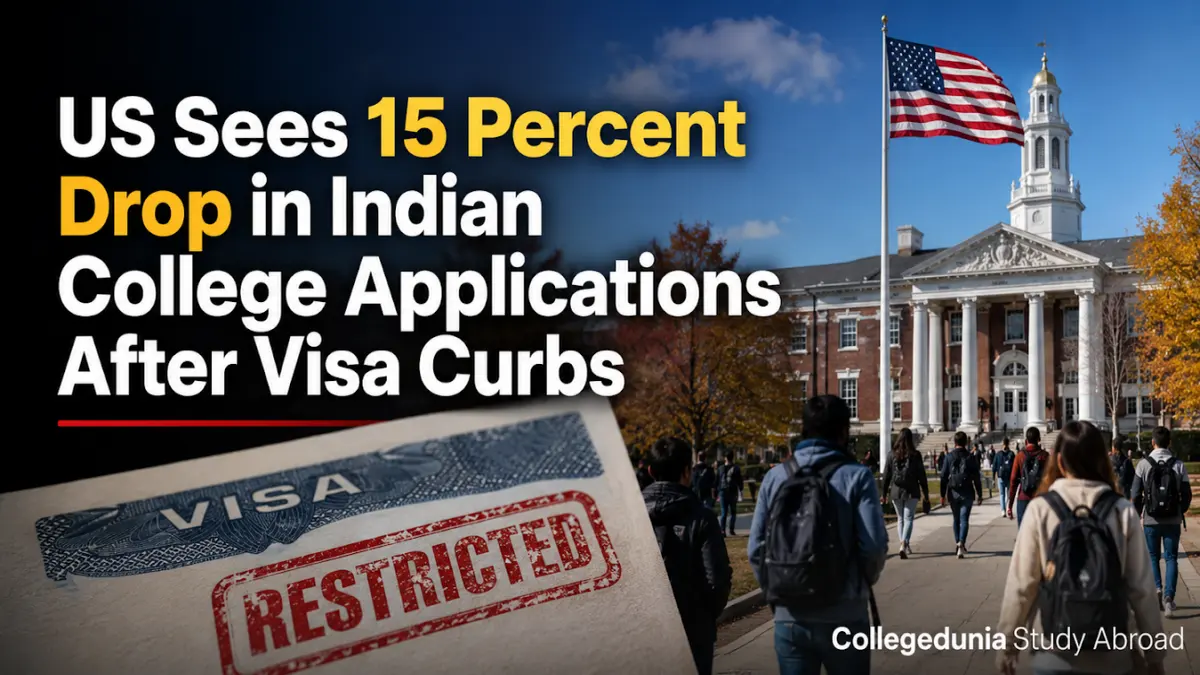
Indian applications to United States undergraduate and graduate colleges fell 15% for the 2026-27 admissions cycle, industry trackers reported on August 26, 2026. The decline hits Indian applicants targeting Fall 2026 mop-up and Fall 2027 intakes hardest. The trend follows a year of tighter F-1 visa vetting, appointment scarcity, and higher refusal rates at US consulates in India. It marks the sharpest single-year drop for the largest student-visa source market of the United States.
- Indian applications to US colleges are down 15% year-on-year for the 2026-27 cycle, reversing a decade of growth.
- The fall follows stricter social-media vetting, longer processing waits and a surge in Section 214(b) refusals at Indian consulates.
- Counsellors say Indian applicants are diverting files to the UK, Ireland, Germany and Canada for Fall 2026 and Fall 2027 intakes.
India held its lead as the top source of international students in the United States through 2024-25, per the Institute of International Education. A 15% pipeline shrink threatens that lead and forces US universities to rebuild recruitment plans for India.
What Triggered the 15% Fall in Indian Applications?
The drop tracks a year of visible visa curbs. The US State Department paused new F-1 interview slots at some Indian consulates during peak weeks, then reopened them with mandatory social-media disclosure. Refusal rates under Section 214(b), the non-immigrant intent clause, climbed sharply through 2025 and into early 2026. Appointment wait times in Mumbai, Chennai, Hyderabad, and New Delhi stretched beyond 90 days at peak.
What it means for Indian Students: The 15% figure is the application drop, not the visa refusal rate. Even applicants holding admits are skipping the F-1 filing, because they see a real chance of a 214(b) rejection after paying tuition deposits.
Explore more: F1 Visa Slots for Fall 2026: Indian Applicants Face Slot Crunch
Which Cohorts Are Pulling Back the Most?
Counsellors report the sharpest declines in mid-tier public and private universities. Ivy League and top-20 targets have held closer to flat, because Indian applicants there see stronger visa track records. STEM master’s applicants remain the largest Indian cohort, but their volumes are down too.
| Cohort | Change vs 2025-26 |
|---|---|
| Undergraduate | Down 12% |
| STEM Master’s | Down 15% |
| Non-STEM Master’s | Down 22% |
| PhD | Down 8% |
Non-STEM master’s programmes take the heaviest cut. These courses do not qualify for the 24-month STEM OPT extension, so the visa risk feels less worthwhile at the same fee load.
Also read: USCIS Makes Green Card Harder for F-1 Students — What Indian Students Must Know
Where Are Indian Students Diverting Instead?
The UK, Ireland and Germany are the biggest gainers this cycle. UK universities report a rebound in Indian PG applications for January 2027 and September 2027 intakes. Ireland’s Stamp 2 pipeline is up, and Germany’s tuition-free public universities are drawing STEM applicants who would previously have targeted mid-tier US schools.
Canada remains a mixed story. Ottawa’s own study permit cap is still live, and the Post-Graduation Work Permit rules were tightened in 2024. Even so, Canadian PG applications from India are running above the US drop line.
Key Insight: Diversion is not a straight swap. Students who previously filed to five US schools are now sending three US plus two UK, not switching wholesale. Multi-country applications are the new norm for the 2026-27 cycle.
Also read:
How Should Fall 2027 Applicants Plan?
The current cycle data lands in the middle of the Fall 2027 application window. Common App and most US universities have already opened Fall 2027 forms. Indian applicants have to weigh visa risk against reach-school ambition without waiting for further clarity.
Action Plan for Fall 2027 Hopefuls
- Book your F-1 interview slot the moment your I-20 arrives, since wait times remain long across India.
- Clean and lock down your social media accounts before you file DS-160.
- Build a parallel UK, Ireland or Germany file with matching deadlines as a backup.
- Prioritise universities with a documented history of high F-1 approval for Indian applicants.
- Keep six months of financial documents ready in case of a 221(g) administrative processing hold.
What US Universities Are Saying
Several US graduate deans have publicly flagged the drop. Public university systems in Texas, Illinois and New York rely on Indian tuition to cross-subsidise domestic seats. A 15% pipeline shrink means real budget pressure by the 2027-28 academic year.
Recruitment offices are widening waitlists and extending deadlines for Indian applicants. A handful of campuses have started conditional-admit programmes that let students defer to Spring 2027 if their F-1 is delayed at the consulate stage.
The 2026-27 cycle is the first full test of whether the United States retains its lead as India’s top study destination. If the 15% drop holds through decision season, US enrolments from India could fall for the first time in over a decade. Fall 2027 applicants have a narrow window to file, secure interview slots and lock in a backup plan before the next State Department policy review lands.
Next Key Date for Fall 2027 Applicants: Most US universities’ Fall 2027 Round 1 deadlines close between November 15, 2026, and January 15, 2027. File early to secure priority F-1 interview slots at Indian consulates.



Comments