




Kerala Plus Two 2025 Political Science (SY-636) Model Question Paper with Solutions PDFs are now available for download. The Kerala Plus Two Physics Model Examination 2025 was conducted by the Directorate of Higher Secondary Education (DHSE), Kerala, to help students prepare for the final board exams. The paper is designed as per the latest syllabus and exam pattern prescribed for the academic year 2025–26.
Kerala Plus Two 2025 Political Science (SY-636) Model Question Paper with Solutions
| Kerala Plus Two 2025 Political Science (SY-636) Model Question Paper |  Download Download |
Check Solutions |

_______ was the first part of India to hold election on the basis of universal adult suffrage.
View Solution
Step 1: Understand the historical context.
After India gained independence in 1947, the first general elections were held in 1951-52 across the country based on universal adult suffrage. However, some regions held elections earlier, and Manipur was the first to do so before other parts of India. Manipur conducted elections in 1948, a year before the first general elections of 1951.
Step 2: Eliminate the incorrect options.
- Hyderabad: Held its first election in 1952, after the merger with India.
- Junagadh: Also held elections in 1952 after the political integration of the princely state.
- Kashmir: Kashmir held elections in 1951 under the newly formed constitution of Jammu and Kashmir.
Step 3: Conclusion.
Manipur was the first to conduct elections based on universal adult suffrage in 1948.
Final Answer:
Manipur Quick Tip: Manipur holds historical significance as it was the first region in India to adopt universal adult suffrage.
From which country did India adopt the concept of the Five Year Plan?
View Solution
India adopted the concept of the Five Year Plan from the Soviet Union. The Soviet Union was one of the first countries to implement Five Year Plans as a method of centrally planned economic development, beginning in the 1920s. Under the leadership of Joseph Stalin, the Soviet Union introduced a series of Five Year Plans aimed at transforming the economy from an agrarian society into an industrialized nation. These plans focused on increasing the production of heavy industries, improving infrastructure, and modernizing agriculture through collectivization. The success of the Soviet model in achieving rapid industrialization, though with its own challenges, greatly influenced the economic strategies of many countries, including India.
In the case of India, the idea of a Five Year Plan was brought forward by Jawaharlal Nehru, India’s first Prime Minister, who was deeply inspired by the Soviet Union's approach to planned development. Nehru, along with his colleagues, believed that India’s post-independence economic development could be best achieved through centralized planning. The country’s policymakers, including economist P.C. Mahalanobis, who was an advocate for the planning process, pushed for a national framework to guide India’s economic progress in an organized and systematic manner.
In 1951, India officially adopted the Five Year Plan model with the launch of its First Five Year Plan. The aim was to address the urgent economic challenges India faced after gaining independence, such as poverty, underdeveloped infrastructure, and a lack of industrial growth. The First Five Year Plan prioritized agriculture, rural development, and infrastructure development. Following this, the subsequent Five Year Plans focused on diversifying the economy, improving education, healthcare, and introducing industrial growth. Over time, the Five Year Plans became a core component of India's economic policy, guiding the country's growth in various sectors such as agriculture, industry, and services.
Key Features of the Five Year Plan System:
- Central Planning: Like the Soviet Union, India adopted central planning to guide economic activities and allocate resources efficiently. The government played a major role in the formulation and implementation of these plans.
- Economic Sectors Focus: The Five Year Plans in India were designed to target specific sectors based on the needs of the country. For example, the first plan focused on agriculture and infrastructure, while later plans emphasized industrialization, education, healthcare, and the service sectors.
- Socio-economic Development: The Five Year Plans not only aimed at economic growth but also sought to reduce poverty and inequality, improve the standard of living, and create a more equitable society.
Conclusion:
India’s adoption of the Five Year Plan from the Soviet Union helped shape its post-independence economic policy, laying the foundation for economic growth and development. The Soviet model provided India with a systematic framework for economic planning, which focused on self-reliance and prioritized national development goals. Though the Five Year Plan system has evolved over time, it has been a critical part of India’s development trajectory. The planning model inspired by the Soviet Union set the stage for India’s ambitious growth in the decades following independence.
Quick Tip: The Soviet Union's Five Year Plan system inspired India’s own approach to economic development, which focused on centralized planning and targeted socio-economic growth.
The book 'Limits to Growth' which discusses environmental issues, is published by
View Solution
Step 1: Identify the publication and its content.
The book 'Limits to Growth' was published in 1972 and focuses on the consequences of exponential economic and population growth with a finite supply of resources. The study was commissioned by the Club of Rome, a group of intellectuals, scientists, and policymakers.
Step 2: Eliminate incorrect options.
- The Club of England: This is not associated with the publication of this book.
- Rio Summit: The Rio Summit (Earth Summit) occurred in 1992, long after the publication of 'Limits to Growth'.
- UNFCCC: The United Nations Framework Convention on Climate Change (UNFCCC) is focused on climate change and not the publication of this specific book.
Step 3: Conclusion.
Therefore, 'Limits to Growth' was published by the Club of Rome.
Final Answer:
The club of Rome Quick Tip: The book 'Limits to Growth' is one of the earliest works discussing sustainable development and environmental limits, published by a prominent think tank.
From the list given below, find out the condition put forward by Jayaprakash Narayan to take up the leadership of Bihar movement.
View Solution
Step 1: Understand the conditions for Bihar movement.
Jayaprakash Narayan, also known as JP, led the Bihar movement in the 1970s. He emphasized non-violent methods for protest and called for an all-India movement against corruption, inefficiency, and authoritarianism in governance.
Step 2: Analyze the options.
- (A) This condition is not correct as JP was against violence and advocated for non-violent methods.
- (B) While price rise was a major concern, it was not the only condition JP put forward for the movement.
- (C) JP's emphasis was on non-violence and expanding the movement beyond Bihar, which aligns with the correct answer.
- (D) This was not the condition JP set for ending the movement; his focus was on larger systemic change, not just the removal of one government.
Step 3: Conclusion.
Jayaprakash Narayan insisted that the movement would be non-violent and would not be limited to Bihar, making option (C) the correct choice.
Final Answer:
The movement will remain non-violent and will not limit to Bihar. Quick Tip: Jayaprakash Narayan's leadership was marked by his commitment to non-violence and his vision for a national movement.
Find out the popular movement which stood for forest protection in Uttarakhand.
View Solution
The popular movement that stood for forest protection in Uttarakhand is the Chipko Movement, which emerged in the early 1970s in the region of Garhwal (now part of Uttarakhand). The Chipko Movement was an environmental movement that primarily focused on the protection of forests from excessive deforestation due to commercial logging. The movement is particularly notable for its emphasis on non-violent resistance and grassroots participation.
Origin of the Movement:
The Chipko Movement began in the village of Mandal in 1973, when villagers, led by Chandi Prasad Bhatt, protested against the felling of trees by hugging (or "chipko") the trees, thus preventing the loggers from cutting them down. The movement gained momentum, and by 1974, it had spread to other villages in the Garhwal region. The most famous episode of the movement occurred in 1974 in the village of Reni, where local women, led by Gaura Devi, physically embraced trees to prevent them from being felled. This action was particularly significant because it highlighted the involvement of rural women in environmental activism, challenging gender norms and showing the role of women in protecting their environment.
Core Issues:
The main objective of the Chipko Movement was to protect the forests from commercial exploitation by large timber companies. The destruction of forests was causing widespread soil erosion, loss of biodiversity, and a decline in the livelihood of local communities, who depended on the forests for fuelwood, fodder, and water. The movement also sought to raise awareness about the importance of sustainable forest management practices that would balance the needs of the local communities with the ecological health of the region.
Role of Leaders:
Sunderlal Bahuguna was another prominent leader of the Chipko Movement. His advocacy for forest conservation and his efforts to bring attention to the movement on a national scale played a crucial role in its success. Bahuguna’s famous slogan "Ecology is permanent economy" highlighted the need for a long-term perspective on environmental conservation. The movement was also inspired by Gandhian principles of non-violence and self-sufficiency.
Impact and Legacy:
The Chipko Movement achieved significant success in terms of raising awareness about the importance of forest conservation. It forced the government to acknowledge the destructive impact of deforestation on local communities and ecosystems. In 1980, the Indian government declared a ban on the felling of trees in Uttarakhand's forests, which was a major victory for the movement. The Chipko Movement also inspired other environmental movements in India, such as the Narmada Bachao Andolan and the Silent Valley Movement.
The movement is a testament to the power of non-violent protest and the importance of grassroots involvement in environmental issues. It also demonstrated the significant role of women in environmental activism, challenging traditional gender roles and advocating for a sustainable and just environment.
Conclusion:
The Chipko Movement stands as a monumental example of how local communities, through collective action and non-violent resistance, can protect their natural resources and challenge exploitative practices. It is not just an environmental movement but also a social movement that highlighted the importance of community empowerment, gender equality, and sustainable development in India. Quick Tip: The Chipko Movement is a prime example of grassroots activism, where local communities, especially women, led the fight for environmental conservation and sustainable development.
Identify the name of leader and party, led the popular struggle in East Pakistan against the domination of West Pakistan.
View Solution
The popular struggle in East Pakistan (now Bangladesh) against the domination of West Pakistan was led by Sheikh Mujibur Rahman, the leader of the Awami League. This struggle, which culminated in the Bangladesh Liberation War of 1971, was driven by the growing discontent in East Pakistan due to political, economic, and cultural domination by West Pakistan. The Awami League, under the leadership of Sheikh Mujibur Rahman, became the primary political force that represented the interests of the people of East Pakistan.
Background:
The partition of British India in 1947 created Pakistan, which was divided into two geographically and culturally distinct parts—West Pakistan (present-day Pakistan) and East Pakistan (now Bangladesh). Over time, East Pakistan, despite having a larger population, felt marginalized and excluded from political and economic power, which was concentrated in West Pakistan. The central government's policies were seen as neglecting the needs of East Pakistan, including their language, culture, and economic interests. These tensions began to rise in the 1960s, with demands for greater autonomy for East Pakistan.
Awami League and the Six-Point Movement:
In 1966, Sheikh Mujibur Rahman articulated the Six-Point Movement, which called for greater autonomy for East Pakistan, including control over its own economy, military, and resources. The movement gained massive support in East Pakistan, as people sought to address the imbalance in political power and economic development between the two wings of Pakistan. However, the government in West Pakistan, led by Yahya Khan and Zulfikar Ali Bhutto, resisted these demands, leading to increasing tension.
The 1970 Elections and Military Response:
In the 1970 general elections, the Awami League, under Sheikh Mujibur Rahman, won a landslide victory in East Pakistan, securing 160 out of 162 seats allocated to East Pakistan in the National Assembly. Despite this overwhelming mandate, West Pakistan's leadership, including President Yahya Khan and Bhutto, refused to transfer power to the Awami League, leading to widespread unrest. In March 1971, the Pakistani military launched Operation Searchlight, a brutal crackdown on East Pakistan’s civilians, which escalated into full-scale conflict. This led to the declaration of independence by Sheikh Mujibur Rahman on March 26, 1971, and the beginning of the Bangladesh Liberation War.
Bangladesh Liberation War and Independence:
The Bangladesh Liberation War was a violent struggle for independence, with the people of East Pakistan fighting against the Pakistani military. The Awami League, with the leadership of Sheikh Mujibur Rahman, played a central role in mobilizing the population for the cause of independence. The war was marked by immense suffering, including widespread atrocities committed by the Pakistani military. However, after months of intense fighting and with support from India, East Pakistan finally achieved independence on December 16, 1971, marking the birth of Bangladesh. Sheikh Mujibur Rahman became the first President and later the Prime Minister of Bangladesh.
Conclusion:
Sheikh Mujibur Rahman’s leadership, along with the political support of the Awami League, was crucial in the struggle for East Pakistan’s independence. The 1971 liberation movement and subsequent creation of Bangladesh were pivotal moments in South Asian history, marking the end of West Pakistan's dominance and the emergence of a new nation. Sheikh Mujibur Rahman’s role as the "Father of the Nation" is cemented in Bangladesh’s history as a leader who led the country to freedom.
Quick Tip: The Bangladesh Liberation War of 1971, led by Sheikh Mujibur Rahman and the Awami League, resulted in the creation of Bangladesh and the end of West Pakistan's dominance.
Some features relating to the principal organs of UNO are given below. Arrange them properly in the table.
It consists of 5 permanent members and 10 non-permanent members.
Representatives of all member states participate in the meeting.
Headed by secretary general.
View Solution
We are asked to arrange the given features relating to the principal organs of the United Nations Organization (UNO). Let's analyze the features and assign them to the appropriate organ.
Feature 1: It consists of 5 permanent members and 10 non-permanent members.
This feature refers to the Security Council, as it has 5 permanent members (the USA, UK, Russia, China, and France) and 10 non-permanent members elected for two-year terms.
Feature 2: Representatives of all member states participate in the meeting.
This feature refers to the General Assembly, where all member states of the UNO are represented and participate in meetings.
Feature 3: Headed by secretary general.
This feature corresponds to the Secretariat, which is headed by the Secretary-General of the UNO, who oversees the operations of the organization.
Thus, the table should be arranged as follows:
i. Secretariat \hspace{3cm \text{Headed by secretary general
ii. Security Council \hspace{1cm \text{It consists of 5 permanent members and 10 non-permanent members.
iii. General Assembly \hspace{0.5cm \text{Representatives of all member states participate in the meeting.
Quick Tip: The Security Council has permanent and non-permanent members, the General Assembly includes all member states, and the Secretariat is headed by the Secretary-General.
Expand the following:
i) NPT
ii) NIEO
iii) START
View Solution
i) NPT – Non-Proliferation Treaty
The Non-Proliferation Treaty is an international treaty aimed at preventing the spread of nuclear weapons and promoting the peaceful use of nuclear energy. The treaty works towards disarmament and limiting the number of nuclear weapons.
ii) NIEO – New International Economic Order
The New International Economic Order refers to a set of proposals put forward by developing countries to reform the global economic system in favor of greater equality and fairness. It includes measures like fair trade, debt relief, and economic sovereignty for developing nations.
iii) START – Strategic Arms Reduction Treaty
The Strategic Arms Reduction Treaty is an agreement between the United States and the Soviet Union (later Russia) to reduce and limit the number of strategic nuclear weapons held by both countries. The treaty aimed to curb the arms race and promote disarmament.
Quick Tip: These treaties and agreements focus on promoting peace and cooperation while addressing global security and economic issues.
Match the column A with B and C.
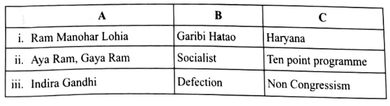
View Solution
The task is to match the names and terms from Column A with their corresponding associations from Columns B and C. Let's break down the matching based on the given names and their significant associations.
Step 1: Match Ram Manohar Lohia.
Ram Manohar Lohia was a prominent socialist leader. He was known for his advocacy of social equality and his involvement in various political movements. The correct match for Ram Manohar Lohia would be:
\[ Ram Manohar Lohia \quad (B) Socialist \quad (C) Non-Congressism \]
Step 2: Match Aya Ram, Gaya Ram.
The phrase "Aya Ram, Gaya Ram" became synonymous with political defections in India, especially in Haryana. This term is used to describe the frequent changing of political allegiances by politicians. The correct match for Aya Ram, Gaya Ram would be:
\[ Aya Ram, Gaya Ram \quad (B) Defection \quad (C) Haryana \]
Step 3: Match Indira Gandhi.
Indira Gandhi, the former Prime Minister of India, launched the "Garibi Hatao" (Remove Poverty) campaign as a part of her political platform. This was one of her significant initiatives during her tenure. The correct match for Indira Gandhi would be:
\[ Indira Gandhi \quad (B) Garibi Hatao \quad (C) Ten Point Programme \]
Final Answer:
i. Ram Manohar Lohia – (B) Socialist, (C) Non-Congressism
ii. Aya Ram, Gaya Ram – (B) Defection, (C) Haryana
iii. Indira Gandhi – (B) Garibi Hatao, (C) Ten Point Programme Quick Tip: Political phrases like "Aya Ram, Gaya Ram" reflect specific historical and political contexts, such as defection in Indian politics during the 1960s and 1970s.
Match the column A with B and C.
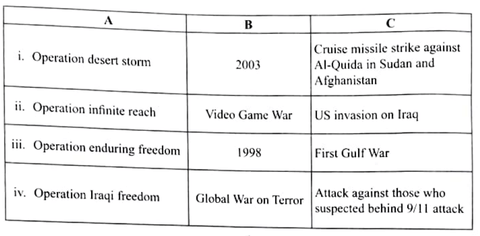
View Solution
The correct matching of the items is as follows:
1. Operation Desert Storm - 1998 - First Gulf War:
Operation Desert Storm was part of the Gulf War that took place in 1991, aimed at expelling Iraqi forces from Kuwait, which was invaded by Iraq. The term “Desert Storm” refers to the combat phase of the war.
2. Operation Infinite Reach - 2003 - Cruise missile strike against Al-Quida in Sudan and Afghanistan:
Operation Infinite Reach was a series of cruise missile strikes launched by the U.S. in 1998, targeting Al-Qaeda training camps in Sudan and Afghanistan. This was a significant U.S. military operation in response to the 1998 U.S. embassy bombings.
3. Operation Enduring Freedom - Video Game War - US invasion of Iraq:
Operation Enduring Freedom refers to the U.S.-led global war on terror, particularly the military action in Afghanistan after the 9/11 attacks. The reference to the “Video Game War” highlights the technological advancements in warfare, particularly the use of drones and precision strikes during this operation.
4. Operation Iraqi Freedom - Global War on Terror - Attack against those suspected behind 9/11 attack:
Operation Iraqi Freedom was the U.S.-led invasion of Iraq in 2003, which was justified by the Bush administration on the grounds that Iraq possessed weapons of mass destruction and was linked to terrorism. This operation was part of the broader Global War on Terror. Quick Tip: The operations listed were part of the U.S. efforts to combat terrorism and stabilize the Middle East, particularly following the 9/11 attacks.
Examine the factors which led to the increasing popularity of Indira Gandhi’s government in early 1970’s.
View Solution
Indira Gandhi's government saw a significant rise in popularity in the early 1970s due to a combination of political, social, and economic factors. The following points explain the key factors that contributed to her increasing popularity during this period:
Factor 1: Successful Indo-Pakistan War of 1971 and the Liberation of Bangladesh
The most important event that led to Indira Gandhi’s popularity was the Indo-Pakistan War of 1971. India’s victory in the war and the subsequent creation of Bangladesh was seen as a major diplomatic and military success. The way Indira Gandhi handled the situation boosted her image both nationally and internationally. The war made her a symbol of strength and determination.
Factor 2: Strengthening of the Indian Economy
In the early 1970s, India began to experience improvements in its economic policies. Indira Gandhi focused on reducing poverty and improving the socio-economic conditions of the masses. The government’s commitment to the Green Revolution led to an increase in agricultural productivity, helping to alleviate food shortages and reducing India’s dependence on foreign food aid. This contributed significantly to her popularity.
Factor 3: The Nationalization of Banks
In 1969, Indira Gandhi nationalized 14 major commercial banks, which was seen as a move to increase state control over the economy and to ensure that credit reached the rural and underprivileged sections of society. This decision garnered support from the working class and marginalized communities, enhancing her political support base.
Factor 4: Social Welfare Programs and Land Reforms
Indira Gandhi’s government implemented a series of welfare programs aimed at improving the living standards of the poorer sections of society. Land reforms and measures to improve education, health, and rural development helped strengthen her appeal among the rural poor and the working class.
Factor 5: Political Consolidation and Leadership Style
Indira Gandhi’s leadership style was central to her increasing popularity. She projected herself as a leader who could take strong and decisive actions, which contrasted with the indecisiveness perceived in previous governments. Her image as the “iron lady” of Indian politics was solidified, especially during her handling of the emergency and her firm stance on national security.
Thus, the combination of military success, economic reforms, social welfare policies, and her strong leadership led to the increasing popularity of Indira Gandhi’s government in the early 1970s. Quick Tip: Indira Gandhi's popularity in the early 1970s was primarily driven by her decisive leadership during the 1971 Indo-Pakistan war, her focus on economic reforms, and social welfare programs for the marginalized.
In a unipolar world, American power cannot be easily checked by the U.N. Do you agree with the statement? Substantiate your view.
View Solution
The statement that “American power cannot be easily checked by the U.N.” is an argument rooted in the post-Cold War international system, where the United States emerged as the sole superpower. There are several reasons why American power has not been effectively challenged by the United Nations, particularly in the context of a unipolar world.
Reason 1: The Dominance of the United States in the Security Council
The United States, as one of the five permanent members of the U.N. Security Council, has veto power, which allows it to block any resolution that is not in its favor. This veto power limits the ability of the United Nations to take collective action that challenges U.S. interests. In many instances, U.S. actions, whether military or political, have not been checked by the U.N. due to the veto exercised by the U.S. or its allies.
Reason 2: Economic and Military Influence
The United States possesses unparalleled economic and military power, which grants it significant influence over the international system. As the largest economy and a military superpower, the U.S. has the capacity to influence U.N. decisions indirectly by leveraging its financial and military resources. This economic and military strength makes it difficult for the U.N. to challenge American policies.
Reason 3: Unilateralism and U.S. Foreign Policy
At various points, the United States has demonstrated a preference for unilateral actions over multilateral diplomacy through the U.N. A notable example is the U.S.-led invasion of Iraq in 2003, which occurred despite widespread opposition from the U.N. and the international community. The U.S. often pursues its national interests even in the face of U.N. disapproval, demonstrating the limits of the U.N.’s power in curbing American actions.
Reason 4: The Decline of U.N. Authority in the Post-Cold War Era
After the end of the Cold War, the U.N. became less influential in restraining superpower actions, particularly as the U.S. emerged as the dominant global actor. The structure of the U.N. and its reliance on the cooperation of its member states have sometimes led to gridlock and inaction, especially when the interests of major powers, like the U.S., are at stake.
Reason 5: Influence over U.N. Decision-Making
The U.S. contributes significantly to the U.N. budget and has often used this financial leverage to shape U.N. decisions. While the U.N. is meant to be an international body, the financial dependency of the U.N. on major powers like the U.S. can limit its ability to take independent actions.
In conclusion, while the U.N. theoretically has the capacity to check the power of any nation, in practice, the U.S. has been able to exercise its influence due to its power within the U.N. system, its military and economic dominance, and its ability to act unilaterally when it chooses. Thus, the statement that American power cannot be easily checked by the U.N. holds some truth in the current international order. Quick Tip: The U.N.’s ability to check American power is limited by the U.S.'s veto power in the Security Council, its military and economic dominance, and its preference for unilateral action.
Write any three components of India’s security strategy.
View Solution
India’s security strategy includes a multi-dimensional approach that aims to protect its sovereignty, territorial integrity, and economic stability. Three key components of India’s security strategy are:
Step 1: Defense Capability.
India's defense strategy focuses on maintaining a strong and modern military. This includes developing advanced defense technologies, increasing defense preparedness, and establishing strategic alliances with other countries for mutual security.
Step 2: Nuclear Strategy.
India follows a policy of credible minimum deterrence, meaning it maintains a nuclear arsenal to deter potential threats but does not engage in arms races. This policy ensures national security while advocating for nuclear disarmament.
Step 3: Internal Security.
Internal security focuses on combating terrorism, insurgency, and ensuring law and order within the country. This includes strengthening intelligence agencies, counter-terrorism measures, and maintaining public order through effective governance.
Step 4: Conclusion.
These components work together to safeguard India’s security both from external and internal threats.
Quick Tip: A balanced approach to defense, nuclear security, and internal stability is crucial to maintaining national security.
The national emergency, 1975 at once brought out both strength and weakness of Indian democracy. Narrate the strength and weakness of Indian democracy you noticed.
View Solution
The national emergency declared in 1975 had significant implications for Indian democracy. It exposed both the resilience and the vulnerabilities of the democratic system in India.
Step 1: Strengths of Indian Democracy.
- Resilience of Institutions: Despite the emergency, the Indian Constitution and judiciary remained functional. The eventual return to democracy after the emergency showed the strength of democratic institutions.
- Public Mobilization and Election Results: After the emergency, India witnessed a large-scale movement led by opposition parties and citizens, eventually leading to the defeat of the ruling government in the 1977 elections, showcasing the power of public opinion in a democratic system.
Step 2: Weaknesses of Indian Democracy.
- Centralization of Power: The emergency led to an alarming concentration of power in the hands of the Prime Minister and the executive, which undermined the checks and balances system.
- Suppression of Civil Liberties: The suspension of fundamental rights, censorship, and imprisonment of political opponents exposed the vulnerability of democracy to authoritarian rule.
Step 3: Conclusion.
The emergency was a turning point for Indian democracy, revealing both its strengths in terms of institutional resilience and the power of public mobilization, as well as its weaknesses, such as the ease with which democracy can be undermined during times of crisis.
Quick Tip: Democracy is strongest when it protects civil liberties and maintains the rule of law, even during periods of political turmoil.
Briefly explain the cultural consequences of globalization.
View Solution
Globalization has had a profound impact on cultures worldwide, with both positive and negative consequences.
Step 1: Cultural Homogenization.
Globalization has led to the spread of global culture, particularly Western cultural norms, through media, fashion, and lifestyle. This has led to a loss of traditional cultural practices in some societies, as local customs and languages are overshadowed by dominant global cultures.
Step 2: Cultural Exchange.
On the positive side, globalization has facilitated cultural exchange, allowing people from different countries to share their traditions, art, and knowledge. This has led to a greater appreciation of diversity and cross-cultural understanding.
Step 3: Loss of Cultural Identity.
However, globalization has also caused concerns about the erosion of local cultures and identities, as people adopt foreign customs and lifestyles at the cost of their indigenous practices. This loss of cultural uniqueness is a major challenge for many communities.
Step 4: Conclusion.
While globalization has contributed to cultural exchange and growth, it also poses a threat to traditional cultures, leading to cultural homogenization and the loss of cultural identities. Balancing the benefits and challenges of globalization is essential for preserving cultural diversity.
Quick Tip: Globalization brings the world closer together, but it’s important to preserve cultural diversity while embracing change.
‘Congress party was a social and ideological coalition in the initial years of independence’. Evaluate the statement.
View Solution
The statement refers to the nature of the Indian National Congress (INC) in the early years of independence, emphasizing its diversity in terms of social composition and ideological orientation. After gaining independence in 1947, the Congress party found itself as a broad coalition, comprising various social groups, regional interests, and ideological positions. Let us evaluate the statement by exploring these aspects.
Step 1: Social Coalition.
In the initial years after independence, the Congress party was a broad-based social coalition representing a wide range of social groups. This included rural and urban populations, different caste groups, religious communities, and interests from various regions of India. The party had to balance and accommodate the interests of these diverse groups to maintain its hold over the political landscape. For example, while the upper-caste elite traditionally formed the backbone of the Congress, the party also had support from the peasantry, scheduled castes, and tribes.
Step 2: Ideological Coalition.
Ideologically, the Congress party was also diverse. It housed both moderate and more left-leaning factions. While the party’s leadership under Jawaharlal Nehru advocated for a mixed economy and socialist policies, there were also prominent leaders in the Congress who supported capitalist policies or a more market-driven economy. The ideological coalition included a mix of socialists, liberals, and even conservatives. The Congress party had to navigate these ideological differences, especially in shaping India’s economic and social policies post-independence.
Step 3: The Role of the Nehruvian Vision.
Despite its internal diversity, the Congress party was unified by Jawaharlal Nehru’s vision of a secular, democratic India. Nehru’s ideas on nation-building, economic development, and social justice became central to the Congress party’s ideology. He advocated for planned development, industrialization, and the protection of minority rights, which reflected a more progressive approach. However, there were tensions within the party over how to implement these ideas, especially when it came to issues like land reforms and the extent of state control over the economy.
Step 4: The Congress Split.
The ideological diversity within the Congress became more pronounced after the initial years of independence. Over time, differing visions of governance and policy led to splits within the party. The left-wing factions were frustrated with the perceived slow pace of economic reforms and state intervention, while the more conservative elements supported a greater role for the private sector. These tensions led to the formation of splinter parties, such as the Socialist Party in 1948, which eventually weakened the cohesion of the Congress. Quick Tip: The Congress party’s initial years as a broad coalition were marked by a balance of diverse social and ideological groups, which later contributed to internal tensions and splits.
Prepare a note on the Cuban Missile Crisis.
View Solution
The Cuban Missile Crisis, which occurred in October 1962, was a major confrontation between the United States and the Soviet Union during the Cold War. The crisis is considered one of the closest moments the world has come to nuclear war. Let’s explore the events that led to the crisis and its aftermath.
Step 1: Background to the Crisis.
In 1962, the Soviet Union, under Premier Nikita Khrushchev, secretly deployed nuclear missiles in Cuba, just 90 miles off the coast of the United States. The Cuban government, led by Fidel Castro, had formed an alliance with the Soviet Union after the Cuban Revolution of 1959. The Soviet Union’s intention was to bolster Cuba’s defenses against potential U.S. aggression and to challenge the U.S.’s nuclear dominance.
Step 2: Discovery of the Missiles.
In October 1962, a U.S. U-2 spy plane flying over Cuba took photographs of Soviet missile sites under construction. These photos confirmed that the Soviet Union was placing nuclear missiles on the island. President John F. Kennedy was immediately informed of the discovery, and the U.S. government recognized the grave threat posed by the Soviet missiles.
Step 3: The U.S. Response.
Kennedy and his advisers were faced with several options, including military strikes against the missile sites. However, they decided on a naval blockade (referred to as a “quarantine” in diplomatic terms) around Cuba to prevent further Soviet shipments of missiles. At the same time, Kennedy publicly demanded the removal of the missiles and the end of Soviet missile deployments in Cuba.
Step 4: The Negotiations.
The world held its breath as both superpowers engaged in tense negotiations. The situation came to a head when Khrushchev offered to dismantle the missile sites in exchange for a U.S. pledge not to invade Cuba. After several days of tense negotiations, Kennedy agreed to the terms. Additionally, the U.S. secretly agreed to remove its missiles from Turkey, which were positioned near the Soviet border.
Step 5: Aftermath of the Crisis.
The Cuban Missile Crisis ended with the Soviet Union agreeing to withdraw the missiles from Cuba, and the U.S. promised not to invade Cuba. The crisis marked a significant moment in the Cold War, highlighting the dangers of nuclear weapons and the need for improved communication between the U.S. and the Soviet Union. It also led to the establishment of a direct “hotline” between Washington, D.C. and Moscow to prevent future crises. Quick Tip: The Cuban Missile Crisis highlighted the importance of diplomacy and communication in preventing nuclear conflict during the Cold War.
Examine the situations that led to the origin of Dalit Panthers and analyse their activities.
View Solution
The Dalit Panthers was an important social movement that originated in the 1970s in Maharashtra, India. It was a response to the widespread social and economic inequalities faced by the Dalit community, particularly the untouchables, under the deeply entrenched caste system. The Dalit Panthers aimed to bring awareness to the plight of Dalits and sought to empower them through activism, politics, and social reform. Below is an examination of the factors that led to the formation of the Dalit Panthers and an analysis of their activities:
Factors Leading to the Formation of Dalit Panthers:
1. Caste-based Oppression and Discrimination:
The Dalit community in India, particularly in the rural areas, faced severe discrimination and social exclusion under the caste system. Dalits were often denied basic human rights, subjected to untouchability practices, and forced to perform menial jobs that were seen as impure. These injustices led to widespread frustration and resentment among Dalits, as they were unable to break free from the cycle of poverty and oppression.
2. Influence of Dr. B.R. Ambedkar:
Dr. B.R. Ambedkar, the architect of the Indian Constitution and a leading champion of Dalit rights, played a significant role in inspiring the Dalit Panthers. Ambedkar’s teachings on social justice, equality, and the empowerment of Dalits laid the ideological foundation for the Dalit Panthers. His advocacy for Dalit rights, his campaign against untouchability, and his efforts to bring social reform provided the intellectual and moral backing for the movement.
3. Impact of the Civil Rights Movement:
The success of the Civil Rights Movement in the United States, led by leaders such as Martin Luther King Jr., had a profound influence on the Dalit community in India. The emphasis on non-violent resistance and the demand for equal rights resonated with Dalit activists, who saw the Civil Rights Movement as a model for their own struggle for justice and equality.
4. Economic Inequality and Unfulfilled Promises:
Despite constitutional safeguards and affirmative action policies aimed at improving the status of Dalits, many of these promises remained unfulfilled. Dalits continued to face economic exploitation and were excluded from meaningful participation in political and social life. The failure of the state to address these systemic issues contributed to the rise of more radical Dalit movements, such as the Dalit Panthers.
Activities of the Dalit Panthers:
1. Social and Political Advocacy:
The Dalit Panthers worked to raise awareness about the systemic oppression faced by Dalits. They actively fought against untouchability practices, caste-based discrimination, and social injustice. They organized protests, public demonstrations, and rallies to bring attention to these issues, demanding equal rights and social inclusion for Dalits.
2. Cultural and Literary Movement:
The Dalit Panthers were not just a political movement but also a cultural and literary one. They sought to create a new Dalit identity by promoting Dalit literature, poetry, and art that challenged traditional notions of caste and untouchability. The Dalit Panthers published magazines, wrote books, and held literary events to showcase the voices of Dalit writers and intellectuals. They also used literature as a tool for social reform and empowerment.
3. Revolutionary Approach:
The Dalit Panthers adopted a more radical approach compared to earlier Dalit movements. They emphasized the need for revolution to overthrow the oppressive social and economic structures. The movement sought to unite Dalits across caste lines and create a sense of solidarity among the oppressed classes. The Panthers also highlighted the need for Dalits to assert their rights and dignity through direct action, sometimes even resorting to confrontation with authorities.
4. Support for Other Marginalized Communities:
In addition to their focus on Dalit issues, the Dalit Panthers also supported other marginalized groups, such as tribal communities, women, and religious minorities. They advocated for social justice and equality for all oppressed groups, recognizing the interconnectedness of their struggles.
Conclusion:
The Dalit Panthers were an important force in the social and political landscape of 1970s India. They successfully brought attention to the issues of caste discrimination, untouchability, and Dalit empowerment. While the movement faced challenges and eventually declined in the 1980s, its impact on Dalit politics and activism remains significant. The Dalit Panthers played a pivotal role in shaping the Dalit discourse in India, and their legacy continues to influence Dalit movements today. Quick Tip: The Dalit Panthers used a combination of social activism, literature, and radical political actions to challenge caste oppression and promote Dalit rights.
Prepare a note on India’s nuclear policy.
View Solution
India’s nuclear policy has evolved over several decades, shaped by both internal and external factors. The core of India’s nuclear policy has been based on the principles of national security, self-reliance, and strategic deterrence. Below are the key elements of India’s nuclear policy:
1. No First Use (NFU) Policy:
India adopted a No First Use policy, which means India will not use nuclear weapons unless first attacked by an adversary using nuclear weapons. This policy has been a cornerstone of India’s nuclear strategy, emphasizing the defensive nature of India’s nuclear posture. However, this policy has been under periodic review, especially in the context of growing nuclear threats from neighboring countries.
2. Nuclear Deterrence:
India’s nuclear policy is primarily focused on deterring nuclear threats and ensuring the security of the nation. India’s nuclear strategy includes the development of credible minimum deterrence, which means India will maintain a nuclear arsenal sufficient to inflict unacceptable damage on any aggressor, ensuring that nuclear conflict is avoided through the threat of retaliation.
3. Civil Nuclear Program:
India has developed a robust civil nuclear program, focusing on harnessing nuclear energy for peaceful purposes. India has invested in the development of nuclear power plants to meet the growing energy demands of the country. This civilian nuclear program is managed under the aegis of the Department of Atomic Energy (DAE), with facilities such as the Kudankulam Nuclear Power Plant and others. India has been working on achieving energy security through nuclear energy while maintaining strict safety standards.
4. Nuclear Non-Proliferation Treaty (NPT) and Comprehensive Test Ban Treaty (CTBT):
India has consistently refused to sign the Nuclear Non-Proliferation Treaty (NPT), arguing that it is discriminatory and does not address the security concerns of non-nuclear weapon states. India’s stance has been that nuclear disarmament must be universal and non-discriminatory. Similarly, India has not signed the Comprehensive Test Ban Treaty (CTBT) but has voluntarily committed to a moratorium on nuclear tests.
5. Nuclear Suppliers Group (NSG) and International Cooperation:
India's nuclear policy has also emphasized the importance of international cooperation in the peaceful use of nuclear energy. India became a member of the Nuclear Suppliers Group (NSG) in 2008, which enabled India to access nuclear technology and fuel from other countries. The Indo-U.S. nuclear deal of 2005 was a significant step in India's diplomatic efforts to enhance its nuclear energy capabilities while maintaining its strategic autonomy.
6. India’s Nuclear Doctrine:
India’s nuclear doctrine was formally articulated in 2003 by the Indian government. It includes the following key principles:
- The primary goal is deterrence, not use of nuclear weapons.
- A commitment to a No First Use (NFU) policy.
- The development of a second-strike capability to ensure retaliation in case of a nuclear attack on India.
- Maintaining a credible minimum deterrent force.
Conclusion:
India's nuclear policy emphasizes the importance of nuclear deterrence for national security, while also advocating for responsible use of nuclear energy for peaceful purposes. India has successfully maintained a balance between its strategic interests, energy security, and global nuclear norms. It continues to focus on building a credible deterrence while advocating for nuclear disarmament and non-proliferation. Quick Tip: India’s nuclear policy of No First Use (NFU) and credible deterrence has been a key feature of its national security strategy since the 1990s.
Briefly explain major outcomes of India’s Five Year Plans.
View Solution
India's Five Year Plans, introduced after independence in 1947, have played a significant role in the country’s economic development. The plans are aimed at addressing the needs of the nation in a structured manner, focusing on various sectors of the economy such as agriculture, industry, and services. Below is a summary of the major outcomes of India’s Five Year Plans:
1. First Five Year Plan (1951-1956):
The first plan focused on the rehabilitation of the economy, which was severely impacted by the partition of India in 1947. The plan prioritized agriculture, infrastructure, and basic industries. It emphasized the development of irrigation, land reforms, and rural infrastructure. Despite limited resources, the plan achieved notable success in agriculture and laid the foundation for future development.
2. Second Five Year Plan (1956-1961):
The second plan aimed at achieving rapid industrialization, particularly in heavy industries, including steel, cement, and chemicals. It was inspired by the Soviet model of economic planning and laid the foundation for the public sector’s growth in India. Major projects included the establishment of the Bhilai Steel Plant and the expansion of other industrial sectors. While the industrial sector showed progress, the plan faced challenges due to the Indo-China War (1962) and the subsequent impact on resources.
3. Third Five Year Plan (1961-1966):
The third plan aimed at promoting self-reliance and achieving self-sufficiency in food grains. It focused on the development of agriculture, rural development, and infrastructure. However, the plan was marred by droughts, the Indo-Pakistan War (1965), and the inability to achieve full industrial growth targets. Despite these challenges, significant progress was made in agricultural productivity through the Green Revolution.
4. Fourth Five Year Plan (1969-1974):
The fourth plan focused on poverty alleviation and economic self-sufficiency. It aimed at achieving a 5% annual growth rate in the economy, with significant emphasis on agriculture and rural development. The plan also addressed issues such as the redistribution of land and income to reduce inequality. However, political instability and the Indo-Pakistan War (1971) impacted the implementation of certain programs.
5. Fifth Five Year Plan (1974-1979):
The fifth plan focused on removing poverty and achieving social justice through a direct attack on unemployment and underemployment. It also sought to expand rural industries and promote economic self-reliance. The plan included various programs like the Integrated Rural Development Program (IRDP) aimed at improving the living standards of rural communities. However, its achievements were limited due to political instability and oil price hikes.
6. Sixth and Subsequent Five Year Plans:
Later Five Year Plans (from the Sixth Plan onwards) introduced reforms such as the liberalization of the economy in the 1990s, economic liberalization and globalization, and focusing on export growth and information technology. The introduction of market-driven reforms helped India become one of the fastest-growing economies in the world. Specific outcomes from these plans included improvements in manufacturing, telecommunications, and the services sector.
Conclusion:
The major outcomes of India's Five Year Plans include the development of infrastructure, industrialization, agriculture, and rural development. While early plans focused on industrial growth and poverty alleviation, later plans incorporated economic liberalization, technological advancements, and integration with the global economy. These plans were pivotal in shaping India’s economic trajectory and helped the country transition from a primarily agrarian economy to a growing industrialized nation.
Quick Tip: India’s Five Year Plans played a key role in shaping the country’s economic structure, focusing on self-reliance and inclusive growth.
India supported the approach of Global South on environmental issues. Explain India’s stand on environmental issues.
View Solution
India has consistently supported the approach of the Global South on environmental issues, emphasizing the importance of sustainable development, equity, and the principle of common but differentiated responsibilities (CBDR) in global environmental governance. India’s stand on environmental issues is shaped by its developmental needs, economic priorities, and its responsibility as a developing country. Below are the key elements of India’s stand on environmental issues:
1. Principle of Common but Differentiated Responsibilities (CBDR):
India advocates for the Common but Differentiated Responsibilities (CBDR) principle, which acknowledges that while all countries have a common responsibility to protect the environment, developed countries bear a greater responsibility due to their historical contribution to environmental degradation. India believes that developed countries should take the lead in addressing climate change by reducing their emissions and providing financial and technological support to developing countries.
2. Right to Development and Equity:
India emphasizes the right to development for all nations, especially developing countries. It argues that environmental protection should not come at the cost of economic development, as many developing countries are still striving to meet basic developmental goals such as poverty eradication, access to clean water, and healthcare. India calls for an approach that balances environmental protection with the need for economic growth, energy access, and poverty reduction.
3. Sustainable Development:
India strongly supports the concept of sustainable development, which aims to achieve growth while conserving natural resources for future generations. India has actively participated in international discussions and frameworks like the \textit{Rio Earth Summit and the \textit{Paris Agreement to promote sustainable development. India advocates for green technologies and renewable energy as part of the transition to a sustainable, low-carbon economy.
4. Climate Change and Mitigation:
India recognizes the threat of climate change but calls for a fair and inclusive approach to mitigation. It has pledged to reduce the carbon intensity of its GDP and increase the share of renewable energy in its energy mix. However, India maintains that it cannot be held to the same standards as developed countries and requires international support to combat climate change.
5. Focus on Environmental Justice:
India’s environmental stance is also influenced by the need for environmental justice, particularly for marginalized communities. The country has argued for the need to address the social and economic inequalities exacerbated by environmental degradation, such as deforestation, air pollution, and water scarcity. India has sought to ensure that the poor, particularly in rural areas, have access to clean air, water, and other natural resources.
6. International Cooperation:
India has consistently called for stronger international cooperation in addressing global environmental challenges. It supports multilateral frameworks, such as the United Nations Framework Convention on Climate Change (UNFCCC) and the \textit{Kyoto Protocol, and advocates for fair and transparent negotiations that consider the developmental needs of poorer countries. India also seeks cooperation in the transfer of environmentally sound technologies and financial resources to support sustainable development.
Conclusion:
India’s stance on environmental issues reflects its commitment to sustainable development, equity, and climate justice. India supports the approach of the Global South, which calls for the recognition of the historical responsibility of developed countries and the right of developing countries to achieve economic growth and development. India’s position continues to evolve, balancing the need for development with its commitment to protecting the environment for future generations. Quick Tip: India advocates for a fair and inclusive approach to global environmental challenges, emphasizing equity and the right to development for all countries.
The government of India and Bangladesh have differences over several issues. Explain the conflicting areas of India-Bangladesh relations.
View Solution
India and Bangladesh share a long border and have historical, cultural, and economic ties. However, there are several areas of disagreement and conflicting interests in their bilateral relations. Below are the main areas where India and Bangladesh have differences:
1. Water Sharing Disputes:
One of the most contentious issues between India and Bangladesh is the sharing of river waters, particularly the Teesta River. The Teesta is a major river flowing from India to Bangladesh, and there have been long-standing negotiations over how to divide the river’s waters. Bangladesh demands a higher share of the river’s waters for agricultural and domestic use, especially in the northern part of the country, but India has concerns over its own water security and the impact on West Bengal’s needs. Although agreements have been discussed, a final agreement has not been reached, leading to tensions between the two countries.
2. Border Issues:
There are also disputes related to the land border between India and Bangladesh. While most of the boundary issues were settled through the Indo-Bangladesh Land Boundary Agreement (LBA) of 1974 and the exchange of enclaves in 2015, some minor border skirmishes and disagreements continue. One of the main concerns is the issue of illegal migration, with India alleging that many Bangladeshis have crossed into Indian territory, particularly in Assam and West Bengal, causing demographic changes and putting pressure on local resources.
3. Rohingya Refugee Crisis:
India has faced criticism from Bangladesh regarding the treatment of Rohingya refugees. Bangladesh hosts a large number of Rohingya refugees fleeing persecution in Myanmar, and India has been criticized for not offering asylum or humanitarian support to the refugees. Bangladesh, which has been burdened with millions of refugees, has called for international pressure on India to take a more supportive stance on the issue.
4. Trade and Transit Issues:
India and Bangladesh have strong trade relations, but there are issues related to trade imbalances and transit routes. Bangladesh is concerned about the heavy trade deficit it has with India, as well as the lack of sufficient transit facilities for goods passing through India to and from Bangladesh. Although India has made efforts to ease trade restrictions and improve transport links, disagreements persist over tariffs, non-tariff barriers, and infrastructure limitations.
5. Security and Terrorism Concerns:
India has expressed concerns over the presence of terrorist groups operating in Bangladesh, including those with links to extremist outfits such as Jamaat-ul-Mujahideen Bangladesh (JMB). India fears that these groups may use Bangladesh as a base for launching attacks in India, particularly in the northeastern states. Bangladesh, on the other hand, has denied these allegations and has stressed its commitment to fighting terrorism within its borders. Both countries have cooperated in intelligence sharing but tensions over cross-border terrorism continue to affect their relations.
6. Citizenship Amendment Act (CAA) and NRC:
The implementation of India’s Citizenship Amendment Act (CAA) and the National Register of Citizens (NRC) has caused tensions with Bangladesh. The CAA, which offers citizenship to religious minorities from neighboring countries, has been criticized for potentially excluding Muslims and marginalizing the minority community. Bangladesh views this as a discriminatory policy and has raised concerns about the possible influx of refugees from Assam and other parts of India. The NRC process, which seeks to identify undocumented immigrants, has also been seen as a potential threat to Bangladesh, as it could lead to the deportation of people of Bangladeshi origin living in India.
Conclusion:
Despite the shared cultural and historical ties, India and Bangladesh continue to face several differences in their bilateral relations. The issues of water sharing, border management, the Rohingya crisis, trade imbalances, and security concerns remain key challenges. However, both countries continue to engage in dialogue and work towards resolving these disputes. Strengthening cooperation in areas such as trade, infrastructure, and security remains vital for the future of India-Bangladesh relations. Quick Tip: India and Bangladesh need to address key issues like water sharing, trade, and the Rohingya crisis through constructive dialogue and cooperation.
‘A transition from communism to capitalism was not an easy one.’ In the light of this statement, examine the meaning and consequences of shock therapy.
View Solution
The transition from communism to capitalism, particularly in the post-Soviet countries, was a difficult and painful process. The implementation of shock therapy during this transition is a key factor in understanding the challenges and consequences of the shift from a planned economy to a market-driven one. Shock therapy refers to the rapid and wide-ranging economic reforms that were designed to shift a country's economy from state control to market mechanisms, often in a very short period of time. The phrase "shock therapy" was most notably applied to the economic transition in Russia and other former Soviet states after the dissolution of the Soviet Union.
Step 1: Meaning of Shock Therapy
Shock therapy involves the rapid implementation of economic reforms that include:
1. Liberalization of prices: Prices, which were formerly controlled by the state, were allowed to be set by the market. This often resulted in a sharp increase in prices.
2. Privatization of state-owned enterprises: The government sold off state-owned enterprises to private individuals or companies, aiming to create a private sector and a capitalist economy.
3. Deregulation: The removal of many of the regulations that had controlled the economy under the communist system. This was intended to encourage competition and entrepreneurship.
4. Macroeconomic stabilization: Efforts were made to stabilize the economy by reducing inflation, balancing the budget, and stabilizing the currency.
The goal of shock therapy was to rapidly integrate former communist countries into the global capitalist economy. However, the process was highly disruptive and had significant social and economic consequences.
Step 2: Consequences of Shock Therapy
The implementation of shock therapy had several consequences, both positive and negative:
Positive Consequences:
1. Rapid Growth of the Private Sector: Privatization created a burgeoning private sector in former communist countries, which in the long run helped develop a capitalist economy. New businesses and industries emerged, contributing to economic growth.
2. Increased Integration into the Global Economy: Shock therapy accelerated the integration of former communist countries into the global capitalist system. Many countries, like Russia, became part of global trade networks and international institutions like the International Monetary Fund (IMF) and the World Bank.
3. Improved Efficiency: The move towards market-based economies helped improve efficiency in certain sectors. Competitive pressures led to the rationalization of industries, and foreign investment increased, bringing in new technology and expertise.
Negative Consequences:
1. Hyperinflation: One of the immediate effects of shock therapy was hyperinflation, particularly in Russia. The rapid liberalization of prices led to a sharp increase in the cost of living, devastating the purchasing power of ordinary citizens.
2. Mass Unemployment: The privatization and restructuring of state-owned enterprises led to widespread job losses. Many industries collapsed or downsized, leaving a large portion of the population unemployed or underemployed.
3. Increased Poverty and Inequality: Shock therapy contributed to a rise in poverty and income inequality. The wealth generated by privatization and the development of the private sector was not evenly distributed, leading to social unrest and dissatisfaction. A small group of oligarchs gained control of vast wealth, while many people fell below the poverty line.
4. Social Unrest: The social consequences of shock therapy were severe, with many people struggling to cope with the rapid changes. There were widespread protests and discontent with the economic reforms, which were perceived as having a devastating impact on the living standards of ordinary people.
5. Collapse of Social Services: The immediate impact of shock therapy also led to cuts in government spending on social services like healthcare, education, and pensions. This exacerbated the social and economic hardships faced by many citizens.
Step 3: Conclusion
While shock therapy did result in the creation of market-based economies in the former communist states, the immediate consequences were harsh and led to significant social and economic dislocation. The process was painful for many citizens, and it caused lasting inequality and instability. While some countries, like Poland, managed to successfully navigate this transition with some degree of success, others, like Russia, struggled with the aftermath of the shock therapy reforms, leading to long-term challenges in their economic and political systems.
Thus, the statement that “a transition from communism to capitalism was not an easy one” is accurate, as the implementation of shock therapy proved to be a double-edged sword for many post-communist states. Quick Tip: Shock therapy refers to the rapid economic reforms aimed at transitioning from a command economy to a market economy. While it led to economic growth in the long term, it caused significant short-term social and economic disruptions.
After 1989, India witnessed five major developments which has long lasting impact on our politics. Briefly explain those developments.
View Solution
After 1989, India underwent significant political developments that shaped its modern political landscape. These key developments include:
Step 1: Rise of Coalition Politics.
Post-1989, India saw a shift from a dominant-party system to coalition politics. With no single party being able to secure an absolute majority, coalitions formed the government at the center, leading to more regional and smaller parties becoming part of the national discourse. This had long-term implications on the functioning of Indian democracy and its policy-making processes.
Step 2: Economic Liberalization.
In 1991, India embarked on a journey of economic reforms under the leadership of then Finance Minister Dr. Manmohan Singh. The liberalization of the economy, including the reduction of import tariffs, privatization of state-owned enterprises, and attracting foreign investment, has reshaped India's economic and political environment.
Step 3: Emergence of Regional Parties.
The 1990s witnessed the rise of regional parties with substantial influence over state and national politics. This change in political dynamics led to a more diverse representation in the Parliament, often resulting in shifts in national policy agendas and the empowerment of local issues on the national stage.
Step 4: Secularization and Identity Politics.
The post-1989 period also saw a shift towards identity politics, with an increasing emphasis on caste, religion, and regional identities. This shift led to a more fragmented political landscape, where issues such as religious and caste-based reservations became key electoral determinants.
Step 5: Strengthening of Democracy and Judicial Activism.
There was a notable increase in judicial activism, especially with the Supreme Court taking a more active role in protecting constitutional rights and checking the power of the executive. This period also saw an expansion of democratic freedoms, a more assertive civil society, and greater media freedom, which has played an essential role in India's political life.
Step 6: Conclusion.
These developments have collectively influenced the trajectory of India’s political, social, and economic landscape, making it a more pluralistic, diverse, and complex system of governance.
Quick Tip: Post-1989, India's political system became more decentralized, with the rise of coalition governments and the empowerment of regional and smaller parties.
Some causes that led to the declaration of national emergency, 1975 are given below. Explain them.
i) Economic context
ii) Verdict of Allahabad High Court.
View Solution
The national emergency declared in 1975 was a result of several underlying causes, both political and economic. Two key factors that led to the emergency were:
Step 1: Economic Context.
By the early 1970s, India faced several economic challenges, including rising inflation, food shortages, and high unemployment. The situation worsened due to the oil crisis of 1973, which led to soaring oil prices, further straining the economy. These economic difficulties led to widespread discontent and protests, undermining the government's authority. The situation created an atmosphere of instability, which was one of the reasons for the imposition of emergency.
Step 2: Verdict of Allahabad High Court.
In June 1975, the Allahabad High Court delivered a verdict that found Indira Gandhi guilty of electoral malpractice in the 1971 elections, disqualifying her from holding office for six years. This verdict caused a political crisis, as it threatened her position as Prime Minister. To avoid the political fallout from this ruling and to suppress growing opposition, she advised the President to declare a national emergency, thereby suspending constitutional rights and bypassing the court’s decision.
Step 3: Conclusion.
The emergency declaration was a response to both the political crisis triggered by the court's verdict and the growing economic instability. It marked a period of authoritarian rule that lasted until 1977, during which civil liberties were suspended, and political opponents were arrested.
Quick Tip: The declaration of emergency was largely seen as a response to political threats and economic instability, which led to the suspension of fundamental rights in India.
Explain the major difficulties faced during the partition of India and examine its consequences.
View Solution
The partition of India in 1947, which resulted in the creation of two independent nations, India and Pakistan, was one of the most traumatic and difficult events in the history of the subcontinent. It involved not only the division of territory but also the uprooting of millions of people from their homes, along with severe social, political, and economic challenges. The following outlines the major difficulties faced during the partition and examines its consequences.
Step 1: The Partition Plan.
The partition was based on the Radcliffe Line, which divided British India into two nations: India and Pakistan. The plan was hastily implemented, with little preparation or thought for the social fabric of the regions being divided. The border demarcation led to significant confusion, particularly in areas with mixed populations, where people of different religions lived in close proximity. The last-minute and arbitrary nature of the partition exacerbated the challenges.
Step 2: Mass Migration and Violence.
The partition triggered one of the largest mass migrations in history, as millions of Hindus and Sikhs from Pakistan moved to India, and Muslims from India moved to Pakistan. This led to widespread communal violence, as people faced attacks, massacres, and rapes. The migration was marked by brutality and loss of life, with estimates suggesting that up to two million people died during the violence. Entire families were displaced, and religious communities were uprooted.
Step 3: Administrative and Political Challenges.
The newly-formed nations of India and Pakistan faced immense administrative and political challenges in managing the migration, settlement, and integration of displaced populations. The division of resources, such as military equipment, administrative staff, and financial assets, was also contentious. Both countries struggled with establishing governance in the aftermath of partition, leading to political instability, especially in the case of Pakistan, where it faced issues related to the creation of its new identity.
Step 4: Long-term Consequences.
The partition had long-term consequences that continue to affect India and Pakistan today. The creation of Pakistan, initially conceived as a homeland for Muslims, led to its complex identity struggles. The bitter relationship between India and Pakistan has resulted in three wars (1947, 1965, and 1971) and an ongoing conflict over the Kashmir region. The partition also led to deep-seated communal tensions and violence within both nations, affecting social harmony. The division also left an enduring legacy of mistrust and animosity between the two countries. Quick Tip: The partition of India remains a significant event in South Asian history, with deep social, political, and cultural impacts that continue to influence India and Pakistan today.
Explain the formation of European Union and its influence in World politics.
View Solution
The European Union (EU) is a political and economic union of European countries that has evolved over decades from a series of treaties aimed at ensuring peace and fostering economic cooperation in the aftermath of World War II. The formation of the EU and its influence in world politics have been profound, reshaping both the European continent and global diplomatic dynamics.
Step 1: Origins of the European Union.
The EU's roots can be traced back to the establishment of the European Coal and Steel Community (ECSC) in 1951, which was followed by the creation of the European Economic Community (EEC) in 1957 under the Treaty of Rome. The aim was to create a common market and to foster economic cooperation among member states to prevent the outbreak of war in Europe. These early institutions laid the groundwork for the creation of the European Union.
Step 2: Maastricht Treaty and the Formation of the EU.
The Maastricht Treaty, signed in 1992, marked the formal creation of the European Union. This treaty established the EU’s framework for economic, political, and social integration, including the introduction of a common currency, the euro, and the creation of the European Parliament as a key institution. The Maastricht Treaty also introduced the concept of European citizenship, allowing citizens of EU member states to live, work, and travel freely across member countries.
Step 3: Expansion and Deepening of Integration.
The EU has expanded over the years, with 27 countries now being members. The process of enlargement, particularly in the post-communist era, has been an essential feature of EU growth. The Union has deepened its political and economic integration, creating a single market, a common external trade policy, and, in some cases, common foreign policies. The EU also plays a role in fostering cooperation in areas such as education, health, and environmental policies.
Step 4: Influence in World Politics.
The EU’s influence in world politics stems from its collective economic strength and political unity. The EU is one of the largest economic blocs in the world, and it wields significant influence in international trade negotiations, climate change policies, and global security matters. The EU has a role in peacekeeping missions and provides development aid to countries in need. Moreover, the EU’s commitment to human rights and democratic values has made it an important player in international diplomacy.
Step 5: Challenges and Future Role.
Despite its successes, the EU faces several challenges, including economic disparities between its member states, rising nationalism, and debates over immigration and sovereignty. The Brexit referendum in 2016, which led to the UK’s exit from the EU, has raised questions about the future of the Union. However, the EU remains a key player in global politics, with its influence extending beyond Europe. Quick Tip: The European Union, through its collective power, has become a key global player in economic and political affairs, but faces internal challenges regarding integration and unity.
Issues of regional aspirations are varied and complex in North-East. Explain the various issues of North-East.
View Solution
The North-East region of India, comprising eight states, has faced a wide range of complex issues related to regional aspirations, cultural identity, and political autonomy. The region is characterized by its ethnic diversity, rich cultural heritage, and strategic location bordering multiple countries. Below is an examination of the various issues facing North-East India, with a focus on the demands for autonomy, secessionist movements, and movements against outsiders.
1. Demands for Autonomy:
Many states in the North-East, particularly Assam, Nagaland, and Mizoram, have witnessed significant demands for greater autonomy. These demands are driven by the desire for more control over local governance, natural resources, and cultural preservation. Historically, many communities in the region felt that the central government was imposing policies that did not cater to their unique cultural, social, and economic needs. The movement for autonomy gained momentum during the post-independence period when the region struggled with issues related to underdevelopment, neglect, and political exclusion.
- Assam: The Assam Movement (1979-1985), led by the All Assam Students Union (AASU), demanded the identification and deportation of illegal immigrants, especially from Bangladesh, and called for a distinct political identity for the Assamese people. This movement culminated in the signing of the Assam Accord in 1985, which granted certain autonomies to Assam, but the issue of illegal immigration remains contentious.
- Nagaland: The Naga people have long demanded autonomy to preserve their distinct culture and identity. The Naga insurgency has been an ongoing issue, with the demand for a separate Naga state or a greater Nagaland (comprising parts of India and Myanmar). The Naga Peace Accord signed in 2015 between the Indian government and the National Socialist Council of Nagaland (NSCN) aimed at resolving these demands, but the process is still ongoing.
2. Secessionist Movements:
Several secessionist movements have emerged in the North-East, driven by demands for independence from India. These movements stem from a sense of alienation, political marginalization, and a desire to create independent or autonomous states. Some of the prominent secessionist movements include:
- The Naga Nationalist Movement: The Naga people’s demand for an independent homeland dates back to the 1940s. The Naga insurgency, led by various factions of the National Socialist Council of Nagaland (NSCN), has been one of the longest-running insurgencies in India. Though a peace accord was signed in 2015, the issue remains unresolved.
- ULFA in Assam: The United Liberation Front of Asom (ULFA) has been a significant force in Assam, advocating for an independent Assam. Though the movement has lost much of its momentum in recent years due to heavy military intervention, the demand for Assam’s independence continues to surface in some sections of the population.
- Mizoram and Manipur’s Insurgencies: Mizoram and Manipur have also seen secessionist movements, such as the Mizo National Front (MNF) and the Manipur People’s Liberation Front (MPLF). Mizoram achieved statehood and peace through an agreement with the Indian government in 1986, but Manipur’s insurgency persists due to ethnic and political issues.
3. Movement Against Outsiders:
There has been a significant movement in several North-Eastern states against the perceived intrusion of outsiders, especially in the context of illegal immigration, economic dominance, and cultural invasion. The people of the region have expressed fears of losing their land, culture, and identity to outsiders. Some key aspects of these movements include:
- The Citizenship Amendment Act (CAA): The CAA, passed by the Indian Parliament in 2019, led to widespread protests in the North-East. The Act grants citizenship to non-Muslim refugees from neighboring countries, such as Pakistan, Afghanistan, and Bangladesh, who came to India before 2014. This has been perceived by many in the North-East as a threat to the region’s demographics and cultural identity, particularly in Assam, where concerns about illegal immigration from Bangladesh are long-standing.
- Indigenous Rights Movements: Various indigenous groups in states like Assam, Nagaland, and Meghalaya have expressed concerns about the settlement of non-indigenous people in their territories. The local population fears that the influx of outsiders will lead to the loss of their land and livelihood. In Assam, the Assamese identity movement has long emphasized the protection of Assamese culture and language from the perceived encroachment of outsiders.
4. Ethnic and Cultural Identity Issues:
The North-East is home to a vast array of ethnic communities, each with its own distinct language, culture, and traditions. Over the years, these communities have struggled to preserve their cultural identities in the face of modernization, migration, and economic changes. Issues related to the protection of language, traditional customs, and indigenous practices continue to be significant in the region.
- Language Movement in Assam and Meghalaya: The Assamese-speaking community in Assam, along with other communities in the region, has struggled to protect their languages and cultural practices. The push for preserving the Assamese language in education and official usage remains a contentious issue, with concerns about the dominance of Hindi and English.
Conclusion:
The issues in the North-East are deeply rooted in the region’s history, ethnic diversity, and the legacy of colonialism. The aspirations for autonomy, the challenge of secessionist movements, and the fear of losing cultural identity to outsiders are central to the ongoing struggles. While the Indian government has made efforts to address these issues through dialogues, agreements, and policies, the region still faces challenges of underdevelopment, political instability, and ethnic tensions. A lasting solution requires addressing these concerns through an inclusive approach that respects the rights and identities of the people in the region. Quick Tip: The North-East's diverse ethnic makeup and historical grievances have led to complex issues related to autonomy, secessionism, and identity, requiring sensitive and inclusive solutions.
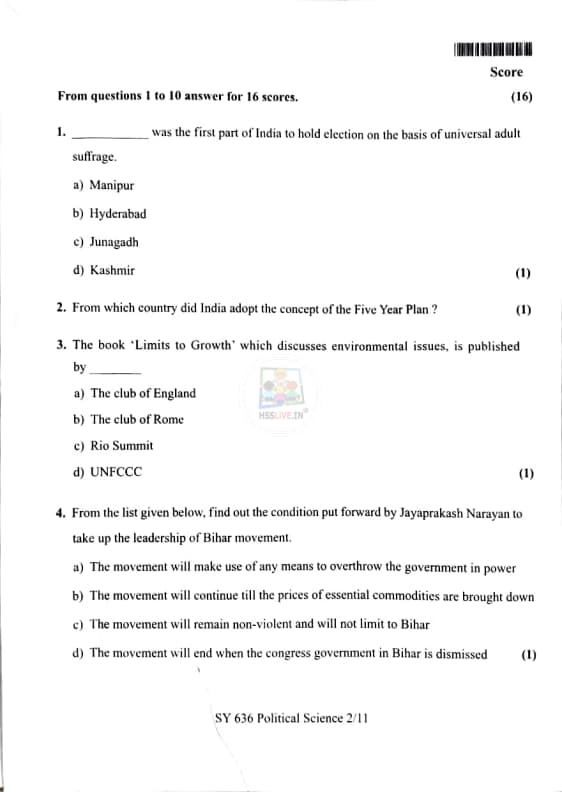
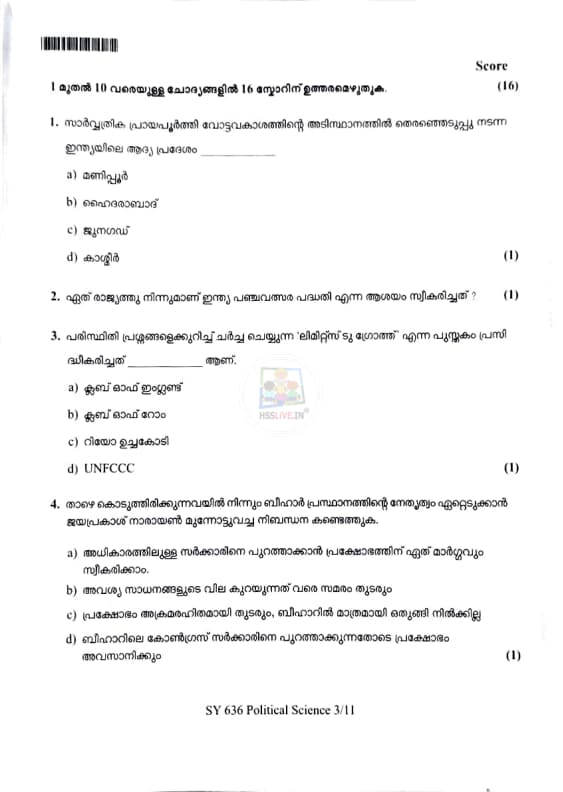
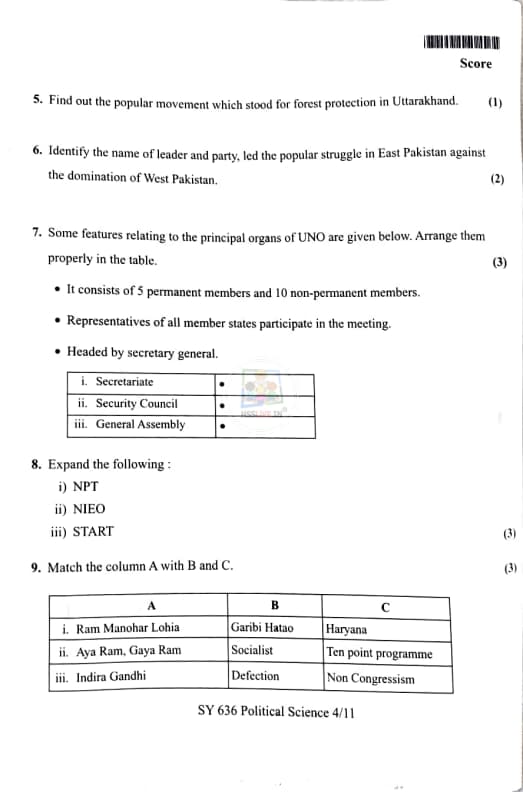
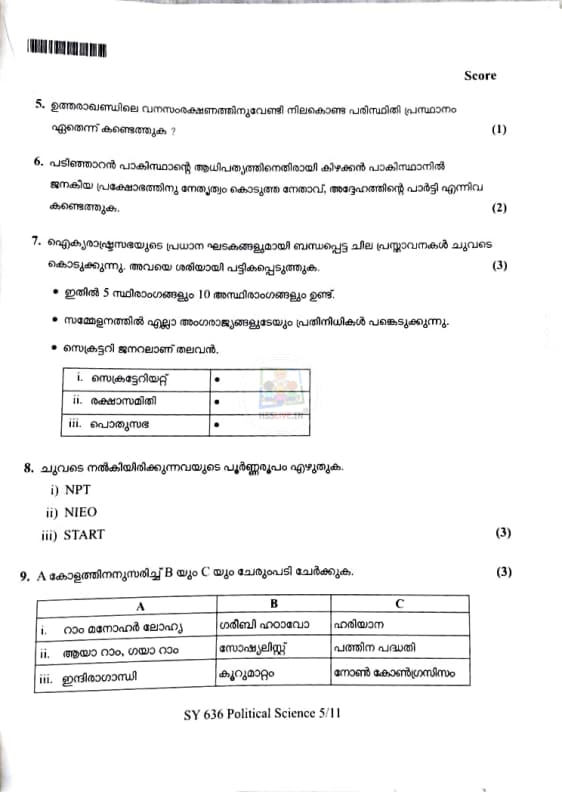
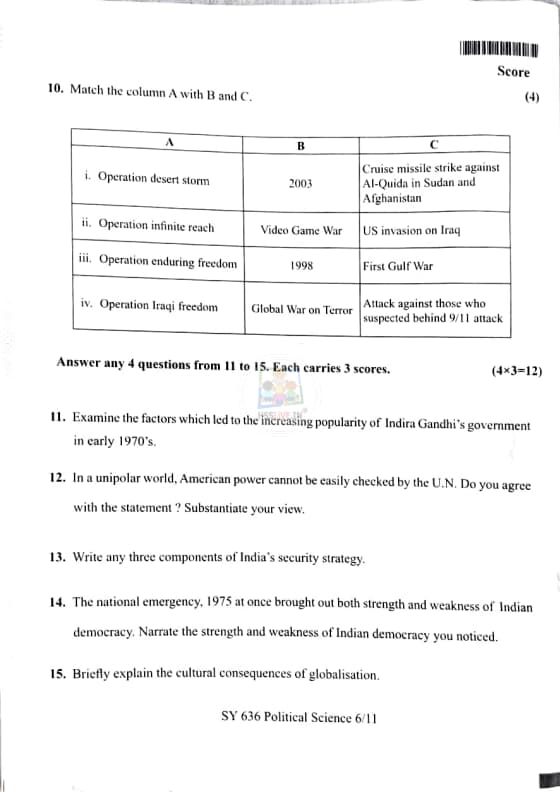
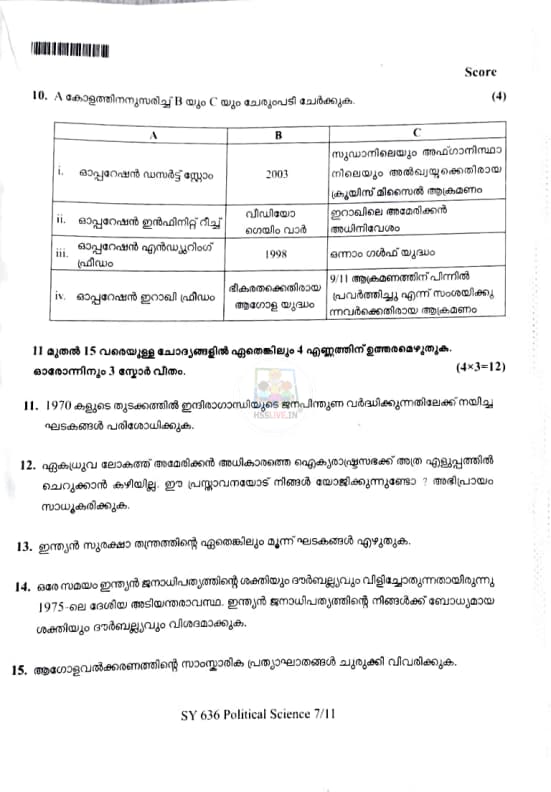
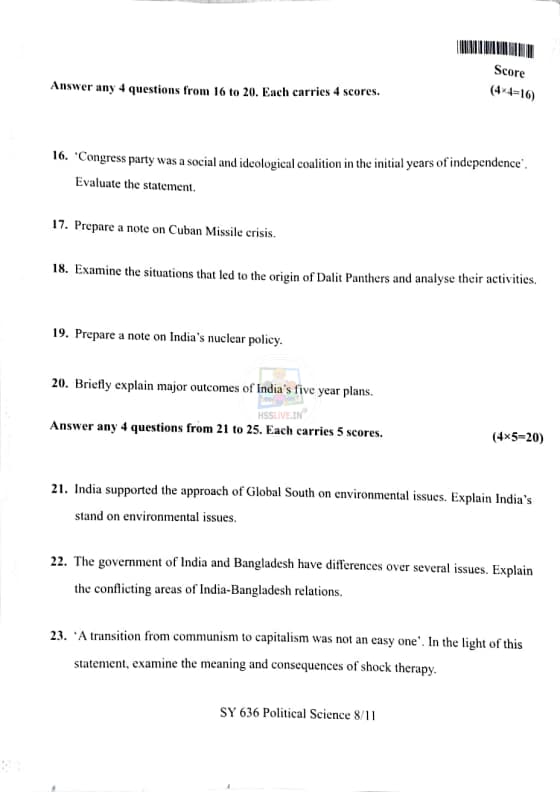
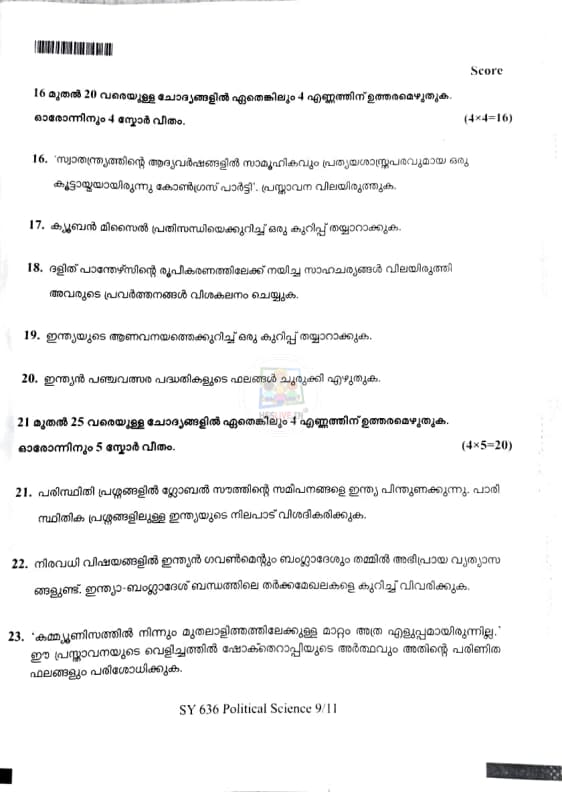
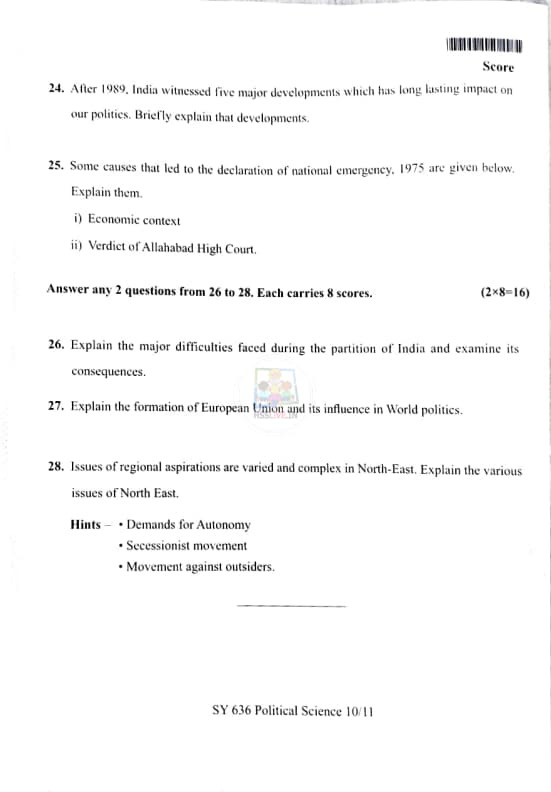
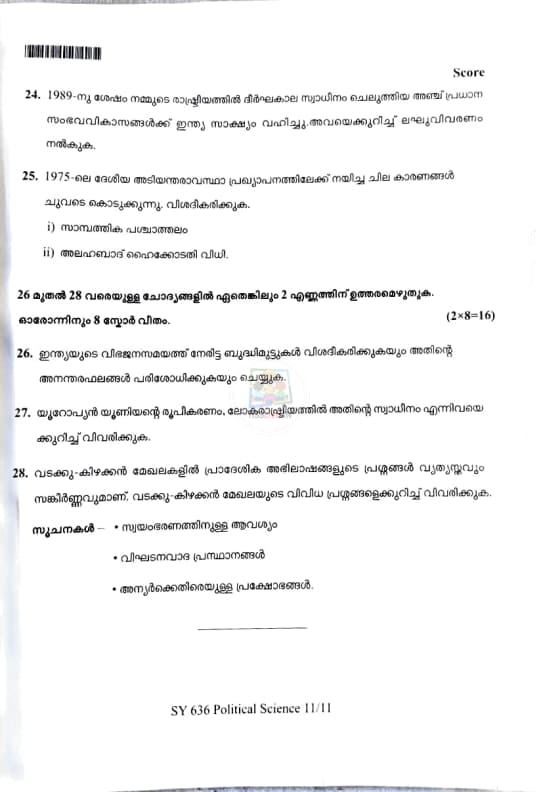



Comments