




Kerala Plus Two 2025 Biology (SY-626) Model Question Paper with solutions PDFs are now available for download. The Kerala Plus Two Physics Model Examination 2025 was conducted by the Directorate of Higher Secondary Education (DHSE), Kerala, to help students prepare for the final board exams. The paper is designed as per the latest syllabus and exam pattern prescribed for the academic year 2025–26.
Kerala Plus Two 2025 Biology (SY-626) Model Question Paper with solutions
| Kerala Plus Two 2025 Biology (SY-626) Model Question Paper |  Download Download |
Check Solutions |
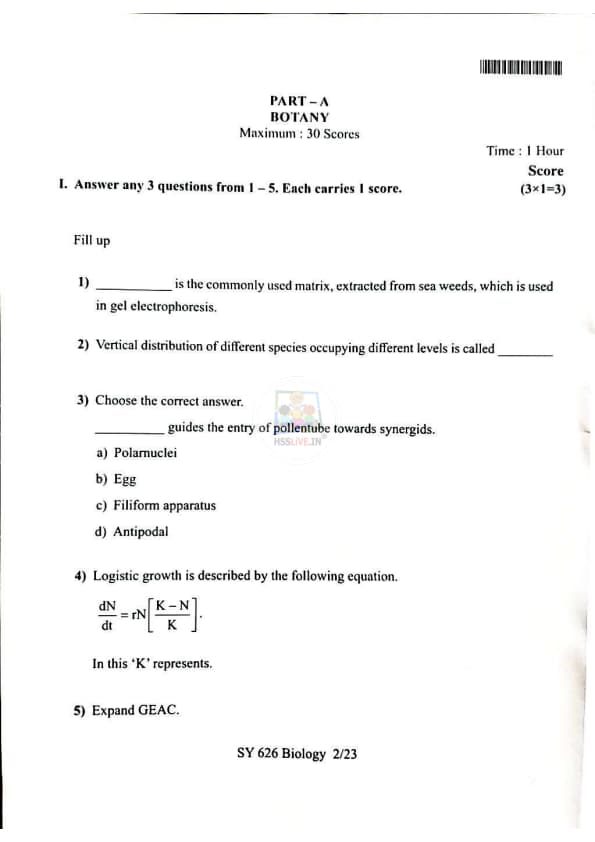
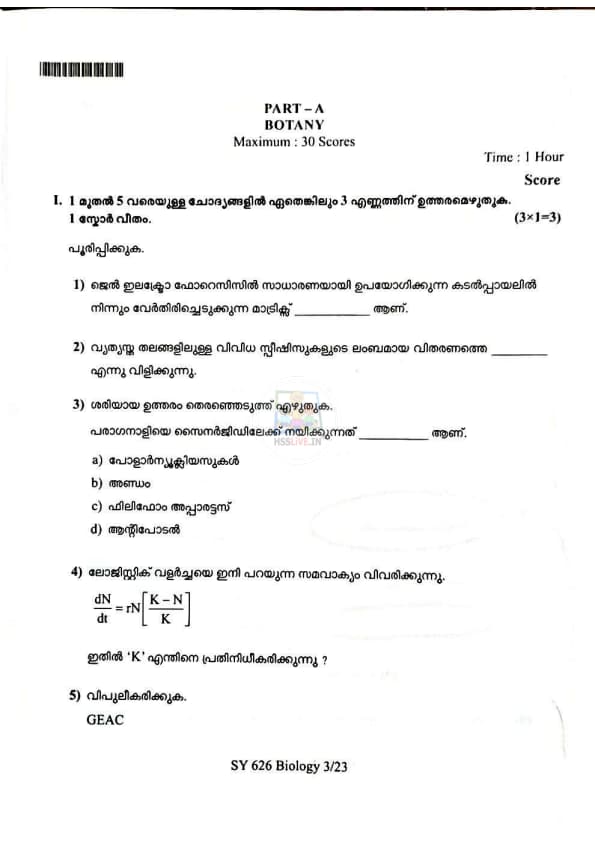
______ is the commonly used matrix, extracted from sea weeds, which is used in gel electrophoresis.
View Solution
Step 1: Identification of matrix.
A commonly used matrix in gel electrophoresis is agarose, which is extracted from seaweeds. Agarose is used to separate molecules based on their size and charge during electrophoresis.
Step 2: Conclusion.
Thus, the answer to the question is agarose.
Final Answer:
Agarose Quick Tip: Agarose is a widely used gel matrix in electrophoresis due to its excellent ability to separate nucleic acids.
Vertical distribution of different species occupying different levels is called ______
View Solution
Step 1: Understanding vertical distribution.
The vertical distribution of different species occupying different levels in an ecosystem is called stratification. Stratification refers to the arrangement of different species in distinct vertical layers, such as in forests where there are different layers like the canopy, understory, and forest floor.
Step 2: Conclusion.
Thus, the term for vertical distribution of species is stratification.
Final Answer:
Stratification Quick Tip: Stratification helps in understanding how different species interact and occupy various levels in their habitats.
Choose the correct answer.
_____ guides the entry of pollen tube towards synergids.
View Solution
Step 1: Understanding the role of the filiform apparatus
The filiform apparatus is a structure found in the synergid cells of the ovule. It plays a crucial role in guiding the pollen tube towards the synergids during fertilization. The filiform apparatus helps direct the growing pollen tube toward the egg cell in the ovule.
Step 2: Analyzing the options
(a) Polarmuclei: These are involved in the formation of the central cell but not in guiding the pollen tube.
(b) Egg: The egg cell is the target of fertilization, not involved in guiding the pollen tube.
(c) Filiform apparatus: This structure is directly responsible for guiding the pollen tube towards the synergids, ensuring proper fertilization.
(d) Antipodal: These cells are located at the opposite end of the ovule and do not participate in guiding the pollen tube.
Step 3: Conclusion
The filiform apparatus guides the pollen tube toward the synergids, ensuring the correct entry of the male gamete for fertilization.
Final Answer:
Filiform apparatus Quick Tip: The filiform apparatus in the synergid cells plays a crucial role in guiding the pollen tube to the egg during fertilization.
Logistic growth is described by the following equation. \[ \frac{dN}{dt} = rN \left( \frac{K - N}{K} \right) \]
In this 'K' represents.
View Solution
Step 1: Understanding Logistic Growth Equation.
In the logistic growth equation, \( N \) represents the population at any given time, \( r \) is the intrinsic growth rate, and \( K \) is the carrying capacity.
Step 2: Explanation of 'K'.
The value 'K' in the equation represents the carrying capacity of the environment. It is the maximum population size that the environment can sustain indefinitely due to limited resources such as food, space, and other ecological factors. As the population size approaches \( K \), the growth rate slows down and stabilizes.
Step 3: Conclusion.
Thus, 'K' represents the carrying capacity of the population.
Final Answer:
Carrying capacity Quick Tip: In logistic growth, the carrying capacity \( K \) determines the upper limit for the population size.
Expand GEAC.
View Solution
Step 1: Understanding the acronym.
GEAC stands for Genetic Engineering Approval Committee. It is a body set up by the Government of India under the Ministry of Environment, Forests and Climate Change to regulate the use of genetically modified organisms (GMOs) and their products.
Step 2: Conclusion.
Thus, the expanded form of GEAC is Genetic Engineering Approval Committee.
Final Answer:
Genetic Engineering Approval Committee Quick Tip: GEAC plays a crucial role in regulating genetically modified organisms and ensuring safety in their use.
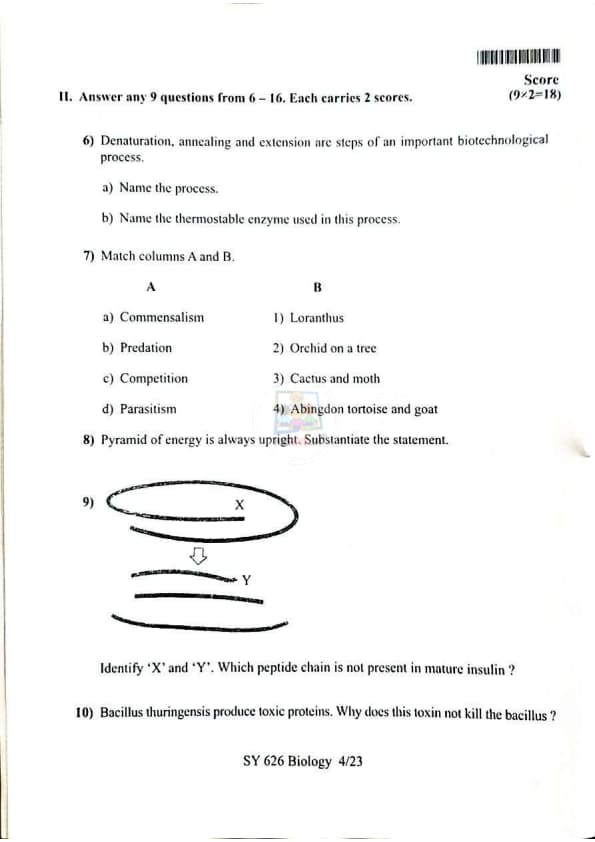
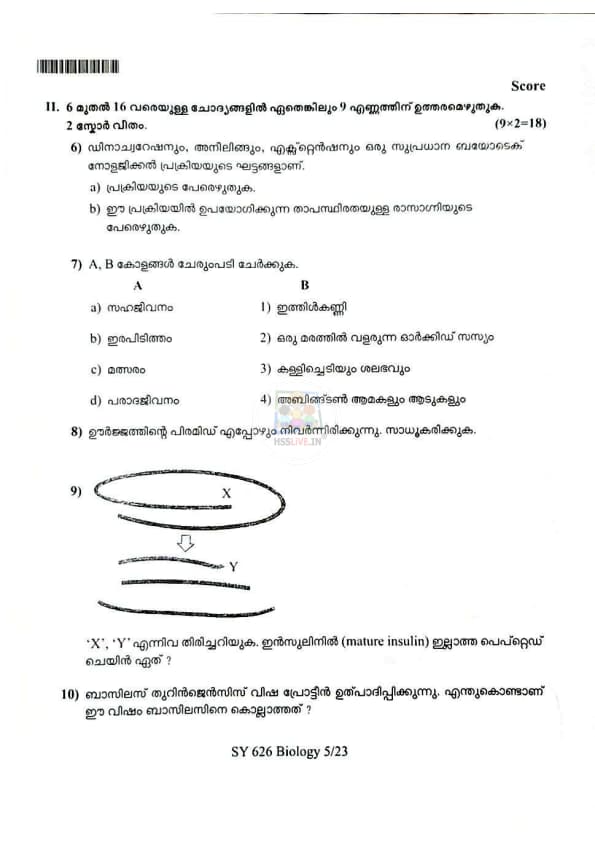
Denaturation, annealing and extension are steps of an important biotechnological process.
(a) Name the process.
View Solution
Step 1: Identifying the process.
Denaturation, annealing, and extension are the key steps of Polymerase Chain Reaction (PCR). In PCR, DNA is replicated in vitro to amplify a specific DNA segment.
Step 2: Conclusion.
Thus, the process is Polymerase Chain Reaction (PCR).
Final Answer:
Polymerase Chain Reaction (PCR) Quick Tip: PCR is a technique to amplify a specific DNA sequence, and it relies on repeated cycles of denaturation, annealing, and extension.
Denaturation, annealing and extension are steps of an important biotechnological process.
Name the thermostable enzyme used in this process.
View Solution
Step 1: Identifying the enzyme.
The thermostable enzyme used in PCR for DNA extension is Taq polymerase. Taq polymerase is derived from the bacterium Thermus aquaticus, which can withstand the high temperatures used in the denaturation step of PCR.
Step 2: Conclusion.
Thus, the thermostable enzyme used in PCR is Taq polymerase.
Final Answer:
Taq polymerase Quick Tip: Taq polymerase is crucial for PCR as it remains active even at the high temperatures required for denaturation.
Match the following:
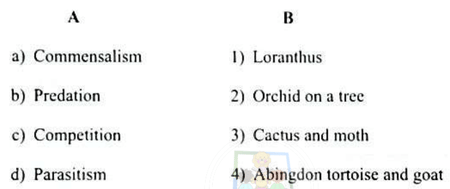
View Solution
Step 1: Analyzing the relationships.
- Commensalism: This is a symbiotic relationship where one organism benefits, and the other is neither helped nor harmed. An example is the orchid on a tree, where the orchid benefits from the support but does not harm the tree.
- Predation: This involves one organism hunting and killing another for food. An example is the Abingdon tortoise and goat, where the goat competes with the tortoise for resources.
- Competition: This occurs when two organisms compete for the same resources. An example is the cactus and moth, where both compete for resources like sunlight and nutrients.
- Parasitism: One organism benefits at the expense of the other. Loranthus is a parasitic plant that grows on other plants, extracting nutrients from them.
Step 2: Correct matching.
\[ \begin{array}{c c} Column A & Column B
\hline a) Commensalism & 2) Orchid on a tree
b) Predation & 4) Abingdon tortoise and goat
c) Competition & 3) Cactus and moth
d) Parasitism & 1) Loranthus
\end{array} \]
Step 3: Conclusion.
Thus, the correct matches are as follows:
a) Commensalism - 2) Orchid on a tree
b) Predation - 4) Abingdon tortoise and goat
c) Competition - 3) Cactus and moth
d) Parasitism - 1) Loranthus
Quick Tip: Understanding the types of symbiotic relationships helps in identifying the nature of interactions in ecosystems.
Pyramid of energy is always upright. Substantiate the statement.
View Solution
Step 1: Concept of Energy Pyramid.
The energy pyramid represents the flow of energy through an ecosystem. It shows the amount of energy available at each trophic level. At each level, energy is lost as heat due to metabolic processes, so the energy decreases as you move up the pyramid.
Step 2: Explanation of Upright Nature.
The energy pyramid is always upright because the energy decreases from the producers at the bottom (who capture energy through photosynthesis) to the consumers and decomposers at higher levels.
This is due to the second law of thermodynamics, which states that energy is lost at each trophic level as heat.
Step 3: Conclusion.
Thus, the energy pyramid is always upright because energy diminishes as we move from lower to higher trophic levels, making the number of individuals and biomass at higher levels smaller.
Quick Tip: Energy decreases at each trophic level due to energy loss in metabolism.
Identify 'X' and 'Y'. Which peptide chain is not present in mature insulin?
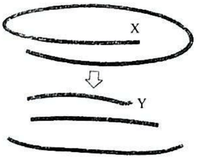
View Solution
Step 1: Understanding the structure of insulin.
Insulin is a peptide hormone consisting of two polypeptide chains: the A-chain and the B-chain. The A-chain has 21 amino acids, and the B-chain has 30 amino acids. These chains are connected by disulfide bonds.
Step 2: Role of 'X' and 'Y'.
- 'X' represents the proinsulin molecule, which includes both the A-chain and B-chain, as well as a connecting peptide called the C-peptide.
- 'Y' represents mature insulin, which consists only of the A-chain and B-chain, after the C-peptide is removed.
Step 3: Conclusion.
The peptide chain that is not present in mature insulin is the C-peptide. It is cleaved off during the maturation process to form the active insulin.
Quick Tip: C-peptide is removed to convert proinsulin into mature insulin.
Bacillus thuringiensis produce toxic proteins. Why does this toxin not kill the bacillus?
View Solution
Bacillus thuringiensis (Bt) produces toxic proteins, specifically Cry proteins, which are toxic to certain insect larvae.
However, these toxins do not harm the bacterium itself because the toxic proteins are produced in an inactive form known as protoxins.
When the Bt bacteria release these protoxins into the environment, they are inactive and non-toxic.
The protoxins become toxic only after they are ingested by insects and are converted into their active form in the insect's alkaline gut.
The alkaline pH in the gut of the insect activates the Cry proteins, which then bind to specific receptors in the insect's gut, causing cell lysis and the eventual death of the insect.
Bt bacteria are not affected by the toxins because they are not in the active form within the bacterial cell.
Furthermore, Bt produces the toxins during its sporulation process, which is a survival strategy, allowing the bacteria to resist harsh environmental conditions.
Thus, the reason why the toxin does not kill the Bacillus is that the toxin is produced as an inactive protoxin within the bacterium, and only insects that ingest the toxin activate it in their digestive system.
Quick Tip: Bacillus thuringiensis produces Cry proteins as protoxins, which are activated only in the gut of certain insects.
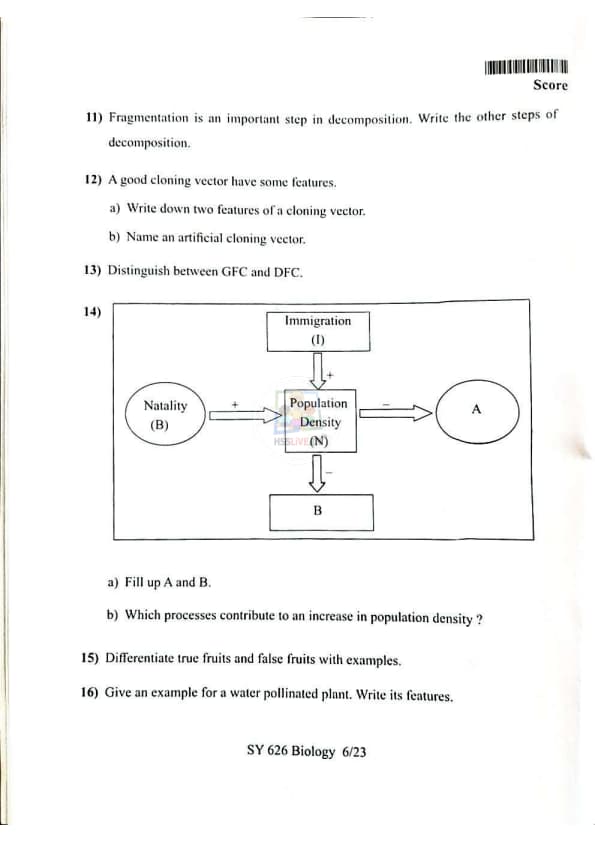
Fragmentation is an important step in decomposition. Write the other steps of decomposition.
View Solution
Step 1: Explanation of Decomposition.
Decomposition is the process by which organic matter is broken down into simpler substances. The key steps in decomposition are:
(i) Fragmentation: This is the process where larger organic matter is broken down into smaller pieces by decomposers such as fungi and bacteria.
(ii) Leaching: During this process, water-soluble substances are washed out from the decomposing organic matter. This leads to the formation of humus.
(iii) Humification: This is the process where the decomposed organic matter, such as leaves and animal remains, is transformed into humus, which is rich in nutrients and supports soil fertility.
(iv) Mineralization: The final stage in decomposition involves the breakdown of organic materials into simple inorganic substances like carbon dioxide, water, and minerals, which can be reused by plants.
Step 2: Conclusion.
Thus, the other steps of decomposition are leaching, humification, and mineralization.
Final Answer:
Leaching, Humification, Mineralization Quick Tip: Decomposition plays a key role in recycling nutrients in ecosystems.
A good cloning vector has some features.
(a) Write down two features of a cloning vector.
View Solution
Step 1: Features of a Cloning Vector.
A cloning vector is a DNA molecule used to carry foreign DNA into a host cell for replication. Two important features of a good cloning vector are:
(i) Origin of Replication (ori): A cloning vector must have an origin of replication so that it can replicate independently in the host cell. This ensures the vector and the inserted gene are copied.
(ii) Selectable Marker Gene: A good cloning vector contains a selectable marker gene, such as an antibiotic resistance gene, to allow identification of cells that have successfully taken up the vector.
Step 2: Conclusion.
Thus, the two features of a good cloning vector are the origin of replication and a selectable marker gene.
Final Answer:
1. Origin of Replication
2. Selectable Marker Gene Quick Tip: Selectable markers help identify host cells containing the vector and the insert.
Name an artificial cloning vector.
View Solution
Step 1: Explanation of Artificial Cloning Vectors.
An artificial cloning vector is a vector that is not naturally occurring but has been engineered for use in genetic manipulation. One example of an artificial cloning vector is the plasmid vector.
Step 2: Conclusion.
Thus, an example of an artificial cloning vector is plasmid vector.
Final Answer:
Plasmid Vector Quick Tip: Plasmids are widely used as cloning vectors due to their ability to replicate in bacterial cells.
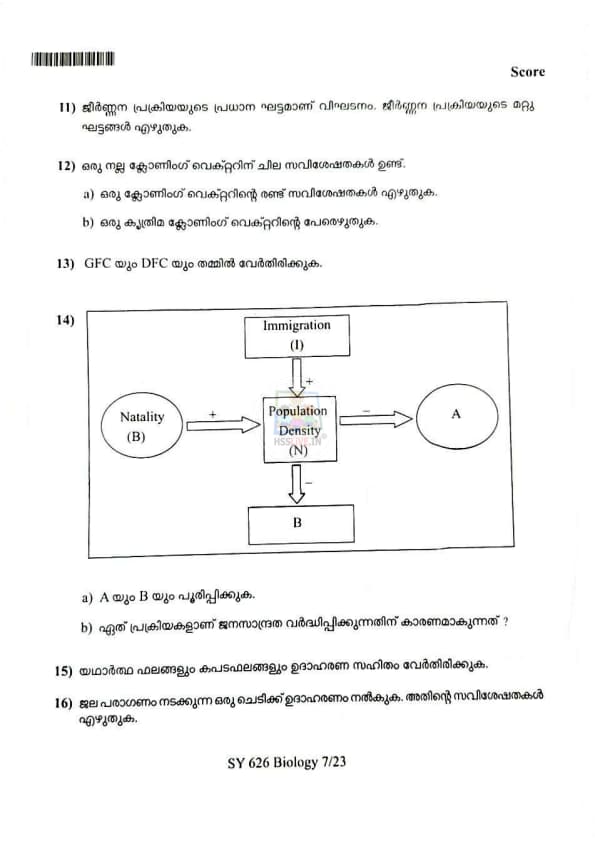
Distinguish between GFC and DFC.
View Solution
Step 1: Definition of GFC (Gross Fertility Rate).
Gross Fertility Rate (GFC) is the number of children born to women of reproductive age in a given year, often expressed per 1,000 women. It helps to measure the overall fertility level in a population.
Step 2: Definition of DFC (Desired Fertility Control).
Desired Fertility Control (DFC) refers to efforts and measures taken by governments or communities to control and regulate fertility rates to match the population's needs and resources. It aims to balance population growth with available resources and socio-economic factors.
Step 3: Key Differences.
- GFC is a demographic measure of fertility, whereas DFC is a policy-driven approach to managing population growth.
- GFC represents the biological aspect of fertility, while DFC focuses on social, economic, and policy factors that influence birth rates.
Step 4: Conclusion.
In summary, GFC is a measure of actual fertility, while DFC refers to efforts to manage fertility within a population.
Quick Tip: GFC provides data, while DFC offers strategies for managing fertility.
Fill up A and B.
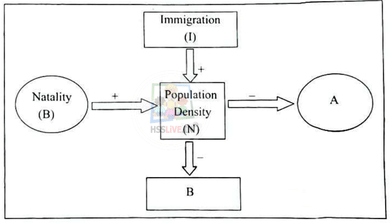
View Solution
Step 1: Understanding the Components of Population Density.
In the given diagram:
- A represents Mortality or Death rate, which decreases the population density.
- B represents Emigration, which refers to the outflow of individuals from a region, thus decreasing the population density.
Step 2: Conclusion.
Thus, the filled components are: \[ \boxed{A = Mortality, B = Emigration} \]
Quick Tip: Mortality and emigration both contribute to a decrease in population density.
Which processes contribute to an increase in population density?
View Solution
Step 1: Processes Increasing Population Density.
The following processes contribute to an increase in population density:
(a) Natality (Birth Rate):
The birth rate is the number of live births in a given period, usually per 1,000 people per year. A higher birth rate contributes to population growth.
(b) Immigration:
Immigration refers to the movement of individuals into a population from other areas, leading to an increase in population density.
Step 2: Conclusion.
Thus, natality and immigration are the main processes that contribute to an increase in population density.
Quick Tip: An increase in birth rate and immigration both result in higher population density.
Differentiate true fruits and false fruits with examples.
View Solution
Fruits are classified into two types: true fruits and false fruits, based on their origin.
True Fruits:
True fruits are formed from the fertilized ovary of a flower. Only the ovary (and sometimes the surrounding tissues) forms the fruit.
Examples of true fruits include:
- Mango (from ovary)
- Pea (from ovary)
- Apple (from ovary)
False Fruits (Accessory Fruits):
False fruits are those in which other parts of the flower, besides the ovary, contribute to the formation of the fruit.
For example, in the case of an apple, the thick fleshy part is derived from the hypanthium (a part of the flower), not just the ovary.
Examples of false fruits include:
- Apple (hypanthium forms the flesh)
- Strawberry (receptacle forms the fleshy part)
- Fig (stem is involved in fruit formation)
Thus, the key difference is that in true fruits, only the ovary forms the fruit, while in false fruits, other flower parts also contribute.
Quick Tip: In true fruits, only the ovary develops into a fruit, while in false fruits, other parts of the flower contribute.
Give an example for a water-pollinated plant. Write its features.
View Solution
An example of a water-pollinated plant is Water hyacinth (Eichhornia crassipes).
Water-pollinated plants are those whose pollination occurs through water.
Features of Water-pollinated Plants:
1. Flowers are often large and buoyant: Water-pollinated plants usually have large flowers that can float on the surface of water.
2. Pollens are sticky or heavy: The pollen grains of water-pollinated plants are sticky or heavy so that they do not float away and can easily be carried by water.
3. Water-resistant flowers: These plants have flowers that can withstand submersion in water.
4. Minimal reliance on wind or insects: These plants primarily rely on water currents for transferring pollen, reducing their dependence on external agents like wind or insects.
Thus, water-pollinated plants are well adapted to their aquatic environment, ensuring effective pollination through water currents.
Quick Tip: Water-pollinated plants have adaptations like buoyant flowers and sticky pollen to facilitate pollination through water.
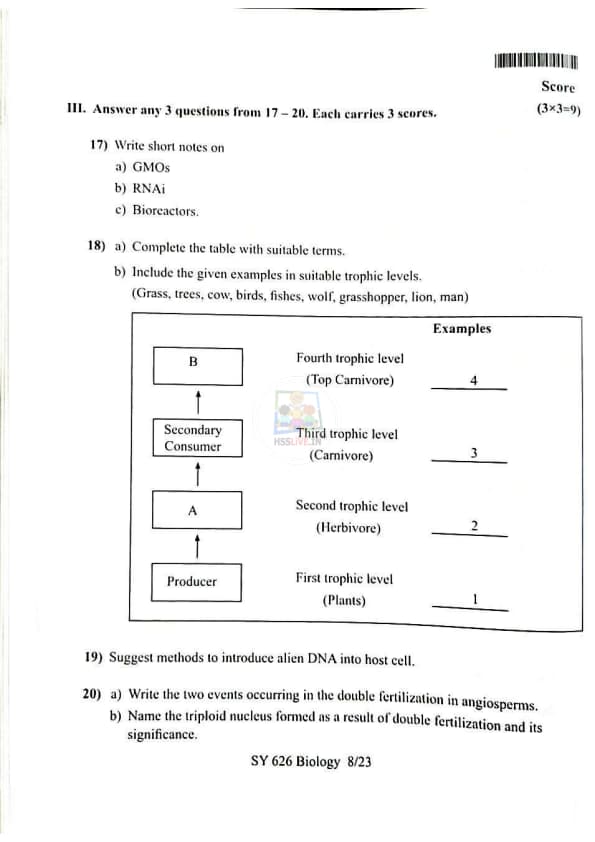
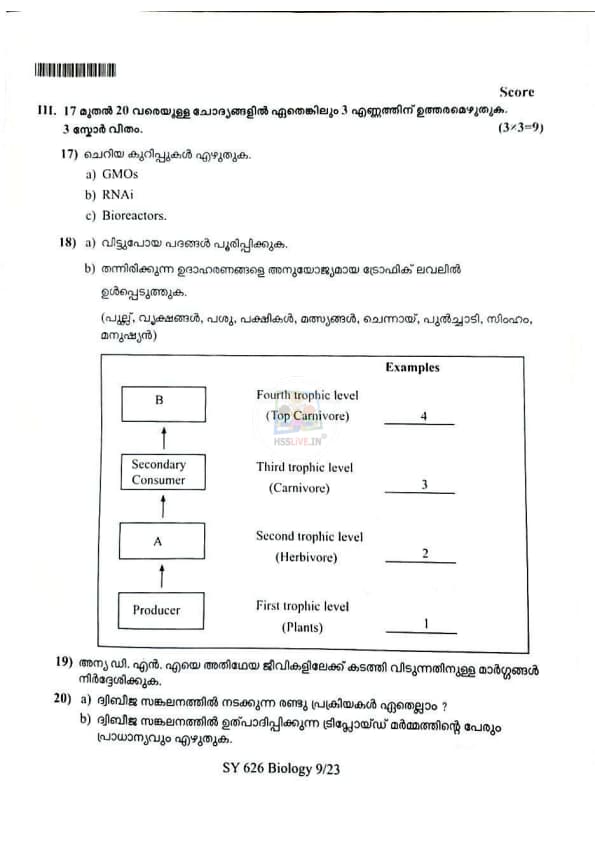
Complete the table with suitable terms.
View Solution
Step 1: Understanding the Trophic Levels.
Trophic levels represent the feeding positions in a food chain or food web. The first trophic level consists of producers (plants), followed by herbivores, primary consumers, secondary consumers, and finally tertiary consumers or top carnivores.
Step 2: Completing the Table.
First Trophic Level:
The producers are plants, which form the base of the food chain.
Second Trophic Level:
The herbivores are the primary consumers. Here, the example is grasshopper (herbivore).
Third Trophic Level:
The carnivores that consume herbivores are called secondary consumers. Here, the example is fishes, which eat herbivores like smaller aquatic organisms.
Fourth Trophic Level:
The top carnivores are the apex predators. The example here is wolf, which preys on other animals.
Step 3: Conclusion.
The completed table is as follows:
\[ \boxed{ \begin{array}{|c|c|} \hline Trophic Level & Examples
\hline Fourth Trophic Level (Top Carnivore) & Wolf
\hline Third Trophic Level (Carnivore) & Fishes
\hline Second Trophic Level (Herbivore) & Grasshopper
\hline First Trophic Level (Plants) & Plants
\hline \end{array} } \] Quick Tip: The trophic levels in a food chain are based on who consumes whom, from producers to apex predators.
Include the given examples in suitable trophic levels. (Grass, trees, cow, birds, fishes, wolf, grasshopper, lion, man)
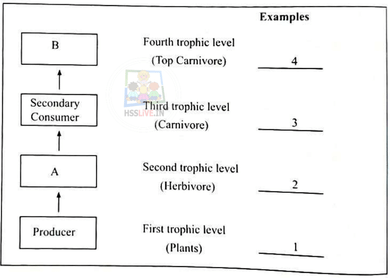
View Solution
Step 1: Identify Trophic Levels.
The examples given represent different organisms that occupy various positions in a food chain. Let's categorize them into suitable trophic levels.
First Trophic Level: (Producers)
- Grass, Trees are producers, as they convert sunlight into chemical energy through photosynthesis.
Second Trophic Level: (Herbivores)
- Cow, Grasshopper are herbivores, consuming plants.
Third Trophic Level: (Carnivores)
- Fishes, Birds are secondary consumers that eat herbivores.
Fourth Trophic Level: (Top Carnivores)
- Wolf, Lion are apex predators that feed on other carnivores or herbivores.
Fifth Trophic Level: (Humans)
- Man can be an omnivore, eating both plants and animals.
Step 2: Conclusion.
Thus, the trophic levels with their respective examples are as follows:
\[ \boxed{ \begin{array}{|c|c|} \hline Trophic Level & Examples
\hline First Trophic Level (Producers) & Grass, Trees
\hline Second Trophic Level (Herbivores) & Cow, Grasshopper
\hline Third Trophic Level (Carnivores) & Fishes, Birds
\hline Fourth Trophic Level (Top Carnivores) & Wolf, Lion
\hline Fifth Trophic Level (Omnivore) & Man
\hline \end{array} } \] Quick Tip: Humans can occupy multiple trophic levels depending on their diet, acting as both herbivores and carnivores.
Suggest methods to introduce alien DNA into host cell.
View Solution
There are several methods to introduce alien DNA into a host cell, which is a crucial step in genetic engineering. The most common methods are:
1. Transformation:
Transformation is the process in which foreign DNA is directly introduced into bacterial cells. The host cells, often bacteria, are made to take up the foreign DNA under specific conditions, such as heat shock or electroporation.
2. Transfection:
Transfection is the method of introducing foreign DNA into eukaryotic cells (animal or plant cells). This can be achieved through chemical methods like lipofection, where liposomes encapsulate the DNA and fuse with the cell membrane, or using viral vectors.
3. Gene Gun (Biolistics):
In this method, tiny particles coated with foreign DNA are shot into plant cells using high-pressure gas. This technique is widely used in plant genetic engineering.
4. Agrobacterium-Mediated Transformation:
This is a natural method where the bacterium Agrobacterium tumefaciens transfers its T-DNA into the plant cells. The T-DNA can be modified to carry foreign genes, which are then integrated into the plant genome.
5. Electroporation:
Electroporation uses electrical pulses to create temporary pores in the cell membrane, allowing DNA to enter the host cell. This method is often used for bacterial and mammalian cells.
These methods allow for the insertion of foreign DNA into a variety of host cells, enabling the expression of specific genes for research, agriculture, and medicine.
Quick Tip: Transformation, transfection, and Agrobacterium-mediated methods are commonly used for introducing foreign DNA into cells.
Write the two events occurring in the double fertilization in angiosperms.
View Solution
In angiosperms, double fertilization is a unique process that involves two fertilization events. These are:
1. Fusion of Male Gamete with Female Gamete (Syngamy):
The first fertilization event involves the fusion of one male gamete (sperm) with the egg cell (female gamete) to form the zygote. This zygote will later develop into the embryo.
2. Fusion of Male Gamete with Polar Nuclei (Triple Fusion):
The second fertilization event involves the fusion of the second male gamete with the two polar nuclei in the central cell of the embryo sac, forming a triploid cell. This triploid cell develops into the endosperm, which provides nourishment to the developing embryo.
Thus, double fertilization results in the formation of both the embryo (from syngamy) and the endosperm (from triple fusion).
Quick Tip: Double fertilization in angiosperms leads to the formation of both the zygote and the endosperm.
Name the triploid nucleus formed as a result of double fertilization and its significance.
View Solution
The triploid nucleus formed as a result of double fertilization is called the endosperm nucleus.
This nucleus is formed when the second male gamete fuses with the two polar nuclei in the central cell of the embryo sac, resulting in a triploid (3n) nucleus.
Significance of Endosperm:
1. Nutrient Source:
The endosperm provides nourishment to the developing embryo in the seed. It stores essential nutrients such as starch, proteins, and lipids, which are utilized by the embryo during seed germination.
2. Seed Development:
Endosperm also helps in the proper development of the seed. In some plants, the endosperm remains as a major food source in the mature seed, while in others, it is absorbed by the embryo.
Thus, the formation of the endosperm is crucial for the survival of the embryo and the proper development of the seed.
Quick Tip: Endosperm provides nourishment to the developing embryo, making it essential for seed development.
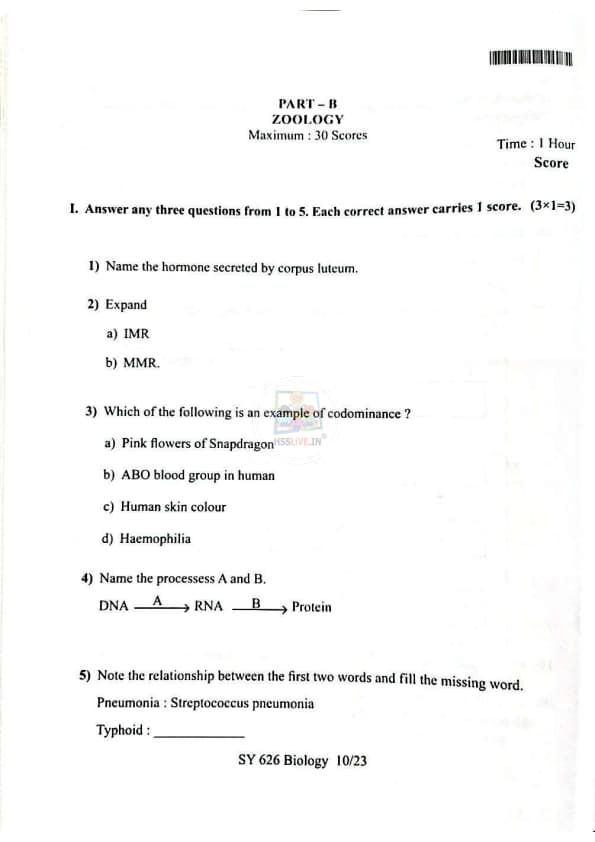
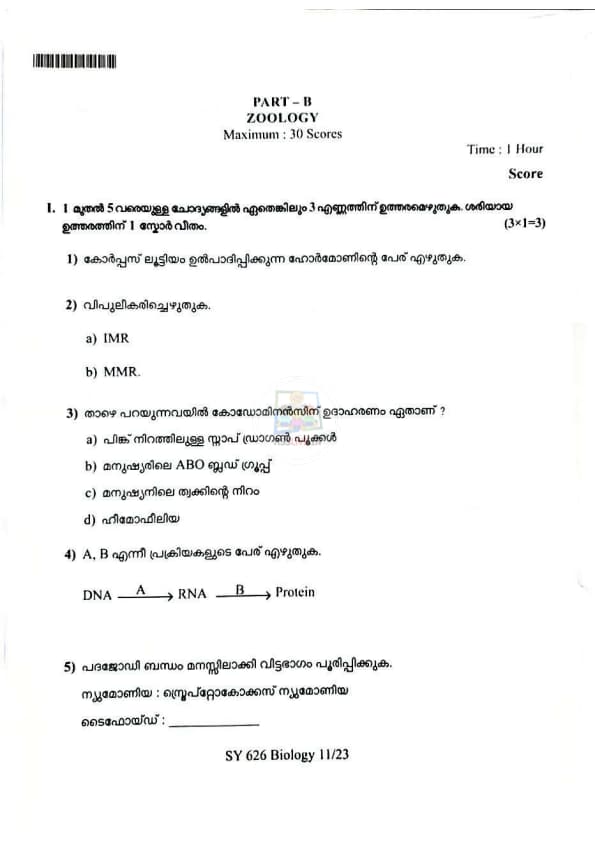
Name the hormone secreted by corpus luteum.
View Solution
Step 1: Understanding the Role of Corpus Luteum.
The corpus luteum is a temporary endocrine structure in the ovaries formed after ovulation, when the mature follicle ruptures and releases an egg. The corpus luteum's main function is to secrete the hormone progesterone, which plays a critical role in the female reproductive system.
Step 2: Function of Progesterone.
Progesterone is a steroid hormone that helps prepare the uterine lining (endometrium) for implantation of a fertilized egg. If pregnancy occurs, progesterone continues to be secreted by the corpus luteum until the placenta forms and takes over hormone production. Progesterone also inhibits further ovulation during pregnancy and supports the early stages of pregnancy.
Step 3: Conclusion.
Thus, the hormone secreted by the corpus luteum is progesterone, which is essential for maintaining pregnancy and ensuring the uterine environment is conducive for implantation.
Final Answer:
Progesterone Quick Tip: Progesterone is essential for the maintenance of the uterine lining during pregnancy and prevents the shedding of the endometrium.
Expand:
(a) IMR
(b) MMR
View Solution
(a) IMR (Infant Mortality Rate)
Infant Mortality Rate (IMR) refers to the number of deaths of infants under one year of age per 1,000 live births in a given year. It is a crucial indicator of public health and the overall well-being of a population. A higher IMR suggests poor health conditions, inadequate healthcare facilities, or a lack of proper nutrition for infants. Factors contributing to a high IMR include infectious diseases, malnutrition, inadequate prenatal care, and poor healthcare infrastructure.
Step 1: Importance of IMR.
IMR is commonly used by health organizations, including the World Health Organization (WHO), as a key metric to assess the effectiveness of healthcare systems. Lowering IMR is an indicator of improvements in healthcare services, sanitation, maternal health, and nutrition. Countries with high IMR may focus on improving maternal health and neonatal care to reduce the death rate among infants.
Step 2: Conclusion.
Thus, the term IMR stands for Infant Mortality Rate, a critical measure of child health and the quality of healthcare systems.
(b) MMR (Maternal Mortality Rate)
Maternal Mortality Rate (MMR) is the number of maternal deaths per 100,000 live births due to complications arising from pregnancy, childbirth, or postpartum. MMR is a key indicator of the quality of maternal healthcare in a given population. It is a critical measure of how effective a country’s healthcare system is in preventing pregnancy-related deaths.
Step 1: Causes of Maternal Mortality.
The causes of maternal mortality include hemorrhage, infections, hypertensive disorders, complications during childbirth, and pre-existing health conditions that are exacerbated by pregnancy. Proper prenatal care, skilled birth attendance, and access to emergency obstetric care are essential to reduce maternal mortality.
Step 2: Importance of MMR.
MMR is used globally to assess the effectiveness of maternal healthcare systems. High MMR reflects a need for better healthcare infrastructure, improved access to trained healthcare professionals, and better maternal health services. Reducing MMR is a significant part of achieving universal healthcare and ensuring women's health.
Step 3: Conclusion.
Thus, MMR stands for Maternal Mortality Rate, an important measure of a country's healthcare capabilities, particularly regarding the safety of mothers during pregnancy and childbirth.
Final Answer:
(a) Infant Mortality Rate
(b) Maternal Mortality Rate Quick Tip: IMR and MMR are vital indicators of the quality of healthcare systems, and efforts to reduce these rates directly contribute to better health outcomes.
Which of the following is an example of codominance?
View Solution
Step 1: Understanding codominance
Codominance is a genetic phenomenon where both alleles contribute equally and visibly to the organism’s phenotype. In codominance, both traits are expressed simultaneously.
Step 2: Analyzing the options
(a) Pink flowers of Snapdragon: This is an example of incomplete dominance, not codominance. In incomplete dominance, the heterozygous offspring show a blend of both parental traits (e.g., pink flowers from red and white parents).
(b) ABO blood group in human: In the ABO blood group system, both the A and B alleles are expressed equally in heterozygous individuals (AB), making this an example of codominance.
(c) Human skin colour: Skin colour is a polygenic trait, influenced by multiple genes, not a case of codominance.
(d) Haemophilia: Haemophilia is a sex-linked recessive disorder, not an example of codominance.
Step 3: Conclusion
The ABO blood group system in humans is the correct example of codominance.
Final Answer:
ABO blood group in human Quick Tip: In codominance, both alleles are fully expressed in the heterozygous condition, as seen in the ABO blood group system.
Name the processes A and B.
DNA \( \xrightarrow{\text{A} \) RNA \( \xrightarrow{\text{B} \) \text{Protein
View Solution
Step 1: Process A.
The process A is Transcription. In this process, the DNA sequence is copied into a complementary RNA sequence.
Step 2: Process B.
The process B is Translation. In this process, the RNA sequence is used to assemble amino acids into a protein at the ribosome.
Step 3: Conclusion.
Thus, the processes are: \[ \boxed{A = Transcription, B = Translation} \]
Quick Tip: Transcription occurs in the nucleus, and translation occurs in the cytoplasm.
Note the relationship between the first two words and fill the missing word.
Pneumonia : Streptococcus pneumonia
Typhoid : ______
View Solution
Step 1: Understanding the Relationship.
In the first part, Pneumonia is caused by the bacterium \text{Streptococcus pneumoniae. We are looking for a similar relationship for \text{Typhoid.
Step 2: Identifying the Pathogen for Typhoid.
Typhoid fever is caused by the bacterium \text{Salmonella typhi.
Step 3: Conclusion.
Thus, the missing word is: \[ \boxed{\text{Salmonella typhi} \]
Quick Tip: Many diseases are named after the bacterium that causes them, such as Typhoid caused by Salmonella typhi.
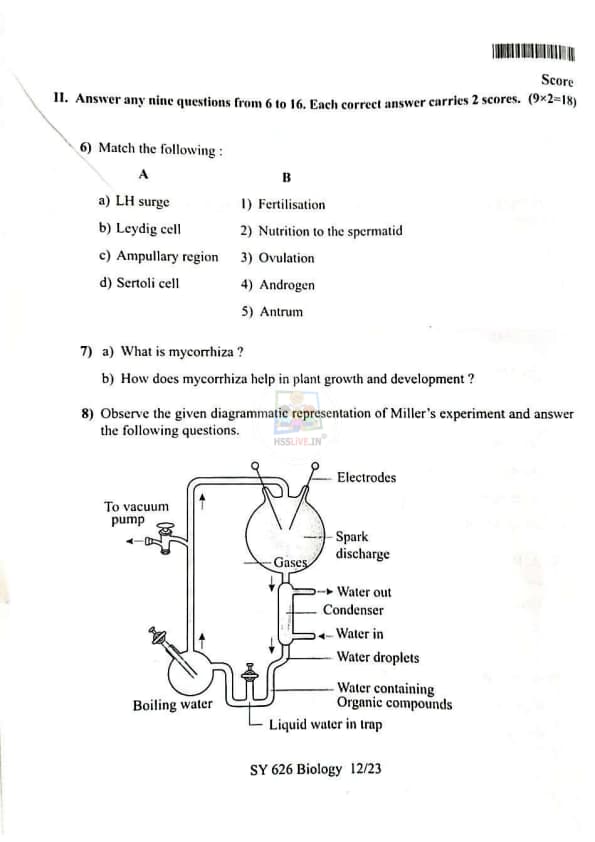
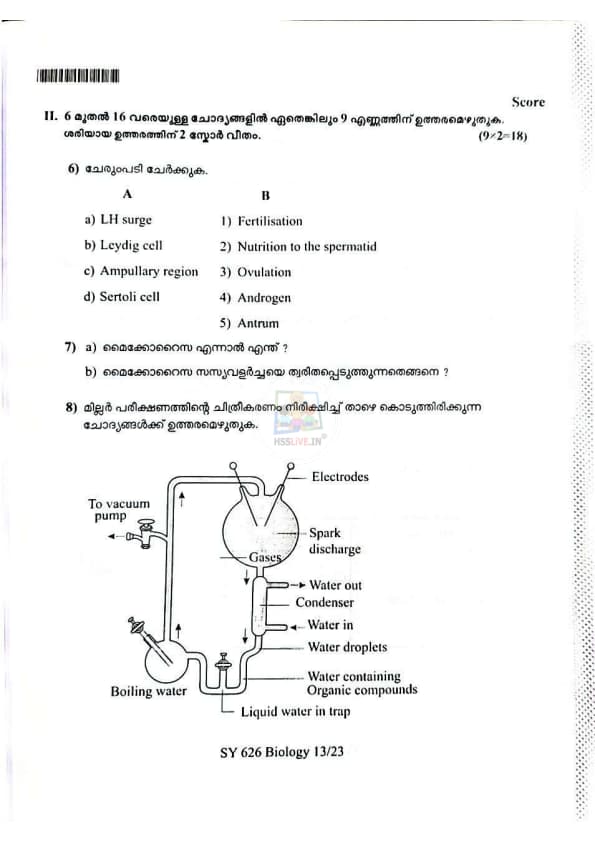
Match the following:
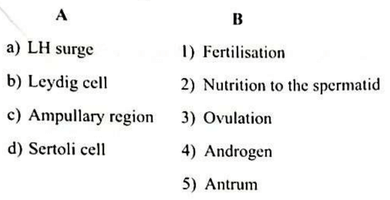
View Solution
Step 1: Analyzing the Relationship.
Let's analyze the given options:
a) LH surge - The surge in Luteinizing Hormone (LH) triggers ovulation, the release of an egg from the ovary. Thus, the correct match for LH surge is 3) Ovulation.
b) Leydig cell - Leydig cells in the testes are responsible for producing androgens, specifically testosterone. Hence, the correct match for Leydig cell is 4) Androgen.
c) Ampullary region - The ampullary region of the fallopian tube is the site where fertilisation of the egg by the sperm usually occurs. Thus, the correct match for the Ampullary region is 1) Fertilisation.
d) Sertoli cell - Sertoli cells provide nutrition to the spermatid during spermatogenesis in the seminiferous tubules of the testes. Hence, the correct match for Sertoli cell is 2) Nutrition to the spermatid.
Step 2: Final Matching.
Based on the analysis, the final matching is:
\[ \begin{array}{c c} Column A & Column B
\hline a) LH surge & 3) Ovulation
b) Leydig cell & 4) Androgen
c) Ampullary region & 1) Fertilisation
d) Sertoli cell & 2) Nutrition to the spermatid
\end{array} \]
Step 3: Conclusion.
Thus, the correct matches are:
- a) LH surge - 3) Ovulation
- b) Leydig cell - 4) Androgen
- c) Ampullary region - 1) Fertilisation
- d) Sertoli cell - 2) Nutrition to the spermatid
Final Answer:
a) LH surge - 3) Ovulation
b) Leydig cell - 4) Androgen
c) Ampullary region - 1) Fertilisation
d) Sertoli cell - 2) Nutrition to the spermatid Quick Tip: Understanding the physiological roles of various cells and hormones in reproduction is essential for grasping the processes involved in human fertility and reproduction.
What is mycorrhiza?
View Solution
Step 1: Definition of Mycorrhiza.
Mycorrhiza is a symbiotic association between fungi and the roots of most plant species. The term comes from the Greek words "mycos" (fungus) and "rhiza" (root). This association helps in the mutual benefit of both organisms.
Step 2: Types of Mycorrhiza.
There are two major types of mycorrhiza: \[ \boxed{ (i) Ectomycorrhiza: Fungal hyphae surround but do not penetrate the root cells. \quad (ii) Endomycorrhiza: Fungal hyphae penetrate the root cells. } \]
Step 3: Conclusion.
Thus, mycorrhiza is a beneficial fungal-root relationship found in most plants.
Quick Tip: Mycorrhiza helps plants absorb nutrients, especially phosphorus, and enhances their resistance to diseases.
How does mycorrhiza help in plant growth and development?
View Solution
Step 1: Role of Mycorrhiza in Plant Growth.
Mycorrhiza helps plants by facilitating the absorption of essential nutrients, especially phosphorus, nitrogen, and micronutrients, which are otherwise not easily accessible to plants. The fungal hyphae extend the root system, increasing the surface area for nutrient absorption.
Step 2: Enhancement of Water Absorption.
Mycorrhiza also helps in increasing the water absorption capacity of plants by extending the fungal hyphae into the soil. This allows the plant to survive in water-limited conditions.
Step 3: Protection Against Pathogens.
The fungal partner in mycorrhiza can protect the plant from soil-borne pathogens by producing antimicrobial compounds and by competing with pathogens for space and resources.
Step 4: Conclusion.
Thus, mycorrhiza promotes plant growth by improving nutrient and water uptake, providing disease resistance, and contributing to overall plant health and development.
Quick Tip: Mycorrhiza is a natural and sustainable way to enhance plant growth and resist disease.
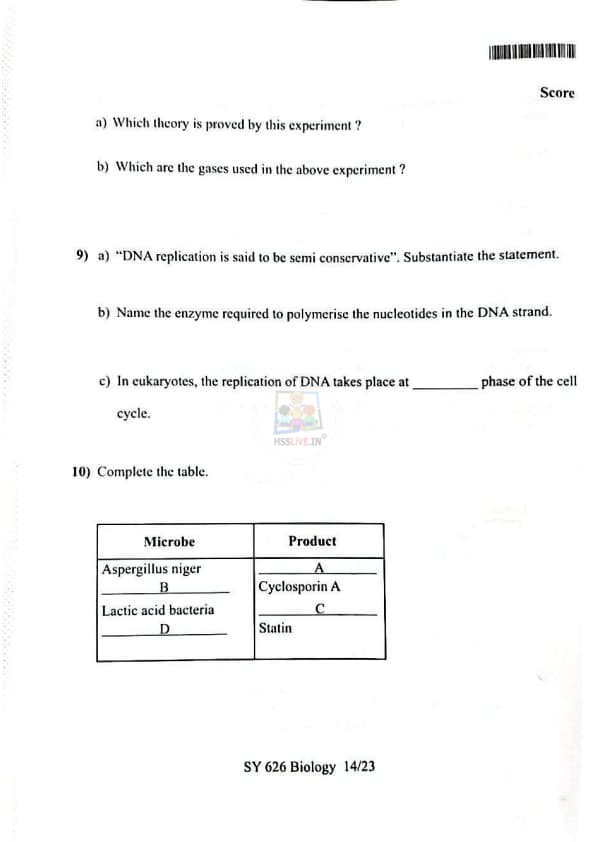
Which theory is proved by this experiment?
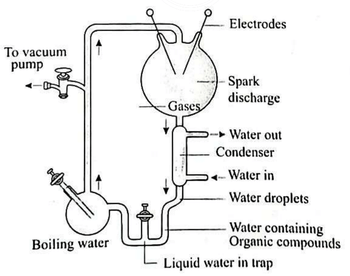
View Solution
Step 1: Understanding Miller’s Experiment.
Miller's experiment, conducted by Stanley Miller in 1953, was designed to simulate the conditions of the early Earth to understand how life may have originated. The experiment aimed to test the hypothesis that life on Earth could have arisen from simple organic compounds, given the right conditions. The experimental setup involved a closed system that included water, methane, ammonia, and hydrogen gases to represent the early Earth's atmosphere. A spark discharge was used to simulate lightning, and the gases were exposed to electrical discharges. The experiment produced amino acids and other organic compounds, suggesting that these essential building blocks of life could form under such conditions.
Step 2: The Theory.
The experiment proved the Theory of Abiogenesis, also known as the Primordial Soup Theory. This theory, first proposed by Alexander Oparin and John Haldane, posits that life originated from non-living matter under the conditions of early Earth. According to this theory, simple inorganic compounds were present on early Earth, and under the influence of energy sources like lightning and volcanic activity, these compounds formed complex organic molecules. The production of amino acids in Miller’s experiment supports this theory by showing that essential organic molecules can be synthesized from inorganic compounds under conditions similar to those on the early Earth.
Step 3: Conclusion.
Thus, the theory proven by Miller’s experiment is the Theory of Abiogenesis, or the Primordial Soup Theory, which suggests that life originated from simple organic compounds that formed under primitive conditions. The experiment provided significant evidence that complex organic molecules could form naturally in a prebiotic environment.
Final Answer:
The Theory of Abiogenesis or Primordial Soup Theory is proven by this experiment. Quick Tip: Miller’s experiment provided significant evidence in favor of abiogenesis by showing that simple organic compounds can form in conditions similar to the early Earth, supporting the idea that life could have originated naturally.
Which are the gases used in the above experiment?
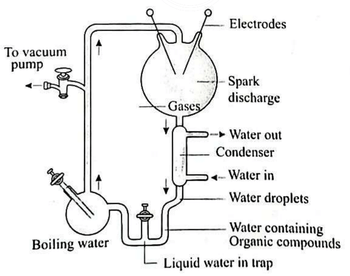
View Solution
Step 1: Understanding the Gases in the Experiment.
In Miller’s experiment, the gases used were chosen to simulate the reducing atmosphere of early Earth, which is believed to have been composed of gases such as methane, ammonia, hydrogen, and water vapor. The presence of these gases was thought to provide the necessary conditions for the formation of simple organic compounds, such as amino acids, which are essential for life. The gases used in the experiment were:
- Methane (CH₄)
- Ammonia (NH₃)
- Hydrogen (H₂)
- Water vapor (H₂O)
Step 2: Conclusion.
These gases were introduced into the experimental setup where they were exposed to an electrical spark to simulate lightning. This setup led to the formation of amino acids and other organic compounds, which showed that simple organic molecules could form under the conditions of early Earth. Therefore, the gases used in Miller's experiment were crucial in demonstrating how organic molecules could arise from inorganic substances, supporting the theory of abiogenesis.
Final Answer:
The gases used in Miller’s experiment were methane (CH₄), ammonia (NH₃), hydrogen (H₂), and water vapor (H₂O). Quick Tip: The gases used in Miller's experiment simulated the reducing atmosphere of early Earth, which is thought to have been rich in methane, ammonia, hydrogen, and water vapor, providing the conditions necessary for the formation of organic compounds.
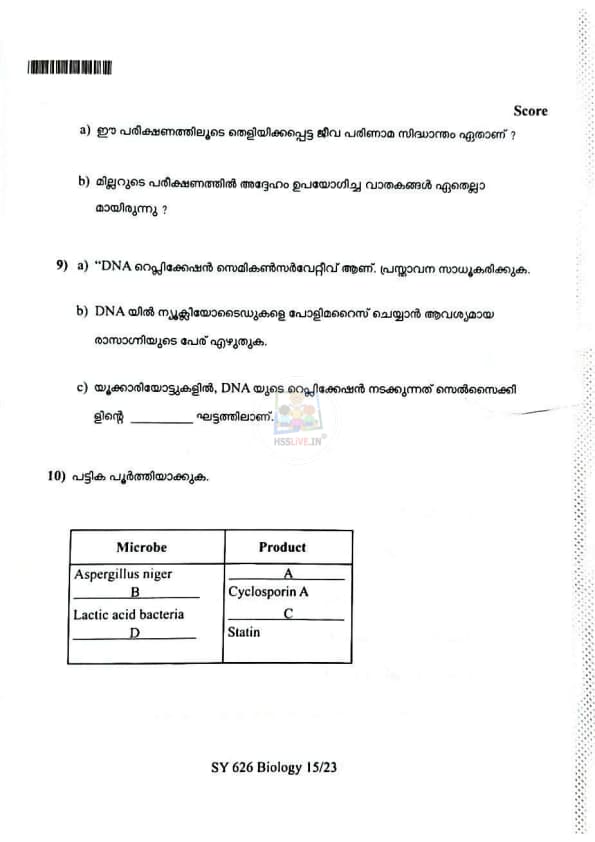
"DNA replication is said to be semi-conservative". Substantiate the statement.
View Solution
Step 1: Meaning of Semi-Conservative Replication.
The term semi-conservative replication refers to the process by which DNA is copied in such a way that each of the two daughter DNA molecules consists of one strand from the original molecule and one newly synthesized strand.
Step 2: Experimental Evidence.
The semi-conservative model of DNA replication was proven by the famous experiment of Meselson and Stahl in 1958. They used isotopes of nitrogen, \(^{15}N\) (heavy) and \(^{14}N\) (light), to trace the DNA replication in bacteria. The result showed that after one round of replication, the DNA contained one strand of heavy nitrogen and one strand of light nitrogen, confirming that each DNA molecule conserves one parental strand.
Step 3: Conclusion.
Thus, in semi-conservative replication, the parental DNA strands separate and each serves as a template for the formation of a new complementary strand. Therefore, the process ensures that half of the original molecule is conserved in each new DNA molecule.
Quick Tip: In semi-conservative replication, each new DNA molecule contains one old and one new strand.
Name the enzyme required to polymerize the nucleotides in the DNA strand.
View Solution
The enzyme required to polymerize the nucleotides in the DNA strand during replication is DNA polymerase.
DNA polymerase catalyzes the addition of nucleotides to the growing DNA strand by forming phosphodiester bonds between the sugar and phosphate groups of adjacent nucleotides. It also ensures the correct base pairing between the template and the newly synthesized strand.
Conclusion:
DNA polymerase is essential for copying the DNA during cell division, ensuring that the genetic information is accurately passed on to the daughter cells.
Quick Tip: DNA polymerase is crucial for adding nucleotides to the growing DNA strand during replication.
In eukaryotes, the replication of DNA takes place at ______ phase of the cell cycle.
View Solution
The replication of DNA in eukaryotes takes place during the S-phase (Synthesis phase) of the cell cycle.
Step 1: Phases of the Cell Cycle.
The cell cycle is divided into two major phases: Interphase and M phase (Mitotic phase). Interphase includes three subphases: G1 (Gap 1), S (Synthesis), and G2 (Gap 2). During the S-phase, the DNA is replicated, ensuring that each daughter cell receives a complete copy of the genetic material after cell division.
Step 2: Importance of S-phase.
S-phase is essential for the preparation of cell division. DNA replication ensures that each cell inherits an identical copy of the genome.
Conclusion:
DNA replication occurs specifically during the S-phase of the cell cycle.
Quick Tip: DNA replication occurs during the S-phase of the cell cycle, ensuring accurate genetic duplication before division.
Complete the table.
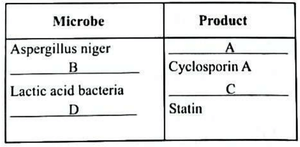
View Solution
Here, the task is to match the microbes with their respective products. Based on microbial fermentation processes, the correct matching is:
\begin{tabular{|c|c|
\hline
Microbe & Product
\hline
Aspergillus niger & A) Citric acid
\hline
B) Streptomyces nodosus & Cyclosporin A
\hline
Lactic acid bacteria & C) Lactic acid
\hline
D) Monascus purpureus & Statin
\hline
\end{tabular
Explanation:
1. Aspergillus niger is used to produce citric acid via fermentation.
2. Streptomyces nodosus is the organism that produces Cyclosporin A, a potent immunosuppressive drug.
3. Lactic acid bacteria are used to ferment carbohydrates to produce lactic acid.
4. Monascus purpureus is a red yeast that is used in the production of statins, which are used to lower cholesterol levels. Quick Tip: Microbes are used in industrial biotechnology to produce a wide range of products like organic acids, antibiotics, and statins.
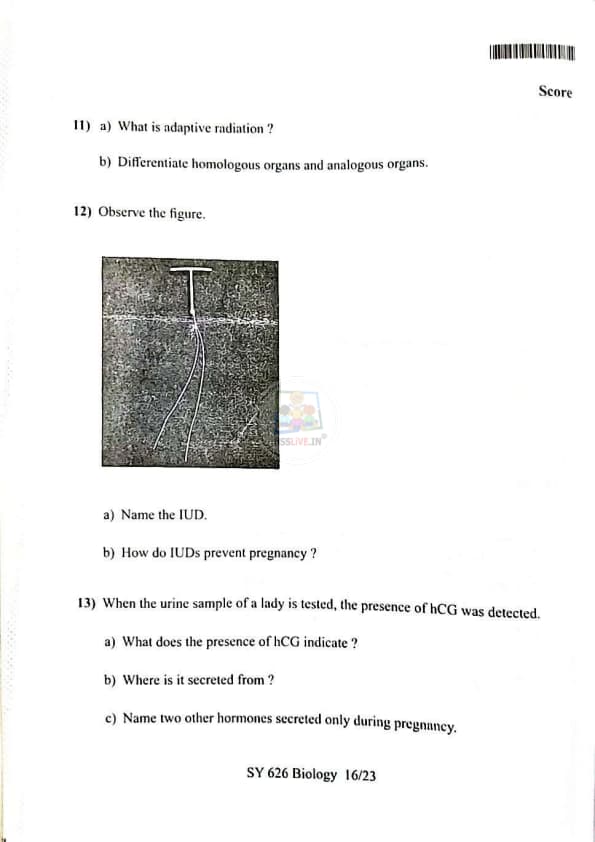
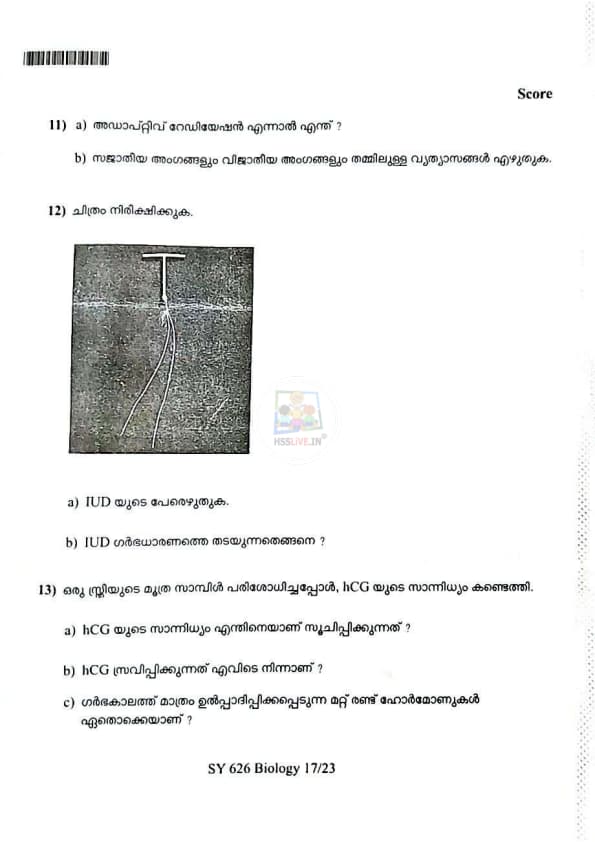
What is adaptive radiation?
View Solution
Step 1: Understanding Adaptive Radiation.
Adaptive radiation refers to the process by which a single ancestral species rapidly diversifies into a variety of forms to adapt to different ecological niches. This usually occurs when a species encounters a new environment with a wide range of available resources, or when it faces competition and evolves to exploit different environmental conditions. The result is the formation of many new species from a common ancestor, each adapted to a specific ecological role.
Step 2: Examples of Adaptive Radiation.
A classic example of adaptive radiation is the diversification of the finch species on the Galápagos Islands. The finches, believed to have originated from a single species, evolved into several different species, each adapted to specific food sources, such as seeds, insects, or nectar, on the different islands. Other examples include the diversification of mammals after the extinction of dinosaurs, and the radiation of flowering plants.
Step 3: Conclusion.
Thus, adaptive radiation is a process that allows for the rapid diversification of a species into different forms that are adapted to various ecological niches.
Final Answer:
Adaptive radiation is the process by which a single ancestral species rapidly diversifies into a variety of forms to adapt to different ecological niches. Quick Tip: Adaptive radiation helps organisms exploit new resources and can lead to the formation of many new species from a common ancestor.
Differentiate homologous organs and analogous organs.
View Solution
Step 1: Understanding Homologous Organs.
Homologous organs are organs that have a similar structure and origin, but may perform different functions in different organisms. These organs are derived from a common evolutionary ancestor, indicating that they evolved from the same embryonic structure, even though they have adapted to different functions. An example of homologous organs includes the forelimbs of humans, bats, and whales. Though these limbs serve different functions (grasping, flying, swimming), they all have the same basic bone structure.
Step 2: Understanding Analogous Organs.
Analogous organs are organs that perform similar functions in different organisms, but do not share a common evolutionary origin. These organs are the result of convergent evolution, where organisms from different evolutionary backgrounds adapt to similar environmental challenges in similar ways, leading to the development of similar structures. For example, the wings of birds and insects are analogous organs. Both are used for flight, but they have different structures and evolutionary origins.
Step 3: Key Differences.
- Homologous organs have a similar structure and origin, and perform different functions (e.g., forelimbs of humans, bats, and whales).
- Analogous organs perform similar functions but have different structures and evolutionary origins (e.g., wings of birds and insects).
Final Answer:
- Homologous organs share a common structure and origin but may perform different functions (e.g., forelimbs in mammals).
- Analogous organs perform similar functions but do not share a common origin (e.g., wings in birds and insects). Quick Tip: Homologous organs indicate common ancestry, while analogous organs result from convergent evolution.
Name the IUD.
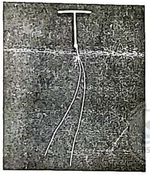
View Solution
Step 1: Identify the IUD.
The IUD shown in the figure is Copper-T. Copper-T is one of the most commonly used intrauterine devices (IUDs) for birth control. It is T-shaped and has copper wire wound around it.
Step 2: Conclusion.
Thus, the name of the IUD shown in the figure is: \[ \boxed{Copper-T} \]
Quick Tip: IUDs like Copper-T are effective for long-term contraception and do not require daily action.
How do IUDs prevent pregnancy?
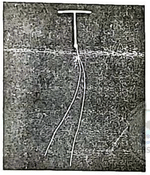
View Solution
Step 1: Functioning of IUDs.
IUDs (Intrauterine Devices) work by being inserted into the uterus, where they prevent pregnancy through various mechanisms.
Step 2: Mechanisms of Action.
- Prevention of fertilization: Copper ions from Copper-T interfere with sperm motility and their ability to fertilize an egg.
- Inhibition of implantation: IUDs also make the uterine lining inhospitable for implantation by altering the endometrium.
- Thickening of cervical mucus: IUDs like hormonal IUDs can thicken cervical mucus, preventing sperm from entering the uterus.
Step 3: Conclusion.
IUDs prevent pregnancy by disrupting sperm movement, altering the uterine environment, and preventing fertilization or implantation of the egg.
Quick Tip: IUDs provide long-term contraception without the need for daily attention.
What does the presence of hCG indicate?
View Solution
The presence of human chorionic gonadotropin (hCG) in the urine is one of the earliest indicators of pregnancy. hCG is a hormone that is produced by the syncytiotrophoblast cells of the placenta shortly after the embryo attaches to the uterine lining.
When the embryo implants in the uterus, the placenta starts producing hCG, which helps in maintaining the corpus luteum in the early stages of pregnancy.
The corpus luteum is responsible for producing progesterone, a hormone essential for the maintenance of the uterine lining and the development of the embryo.
In pregnancy tests, the detection of hCG in urine is used as a reliable indicator of pregnancy. The hormone is released into the bloodstream and filtered into the urine, making it detectable with various testing kits. The presence of hCG typically occurs about 6–10 days after fertilization, and its concentration increases rapidly in the first few weeks of pregnancy.
Thus, the presence of hCG in a woman's urine is a strong indication that she is pregnant.
Quick Tip: The presence of hCG in urine indicates pregnancy, as it is produced by the placenta shortly after implantation.
Where is it secreted from?
View Solution
Human chorionic gonadotropin (hCG) is secreted by the syncytiotrophoblast cells of the placenta during pregnancy.
The placenta is an organ that forms during pregnancy and is responsible for the exchange of nutrients, gases, and waste between the mother and the developing fetus.
hCG plays a crucial role in pregnancy, especially in the early stages. Its primary function is to maintain the corpus luteum, which is a temporary endocrine structure in the ovary that produces progesterone.
Progesterone is essential for the maintenance of the uterine lining (endometrium), preventing its shedding and ensuring the embryo's survival. Without the presence of hCG, the corpus luteum would degenerate, and progesterone levels would fall, leading to the termination of the pregnancy.
hCG is produced soon after the fertilized egg (embryo) implants in the uterine wall, and its levels continue to rise during the first trimester of pregnancy, after which they begin to decline.
Thus, hCG is produced by the placenta to ensure the maintenance of pregnancy and the production of necessary hormones, especially progesterone.
Quick Tip: hCG is secreted by the placenta to support pregnancy by maintaining the corpus luteum and progesterone production.
Name two other hormones secreted only during pregnancy.
View Solution
In addition to hCG, two other key hormones are secreted during pregnancy to support the development of the fetus and maintain the pregnancy. These hormones are:
1. Progesterone:
Progesterone is a hormone that is crucial for maintaining pregnancy. It is initially produced by the corpus luteum (a structure in the ovary) and later by the placenta once it forms. Progesterone plays a central role in preparing the uterus for implantation, maintaining the uterine lining, and preventing premature labor. It also suppresses the maternal immune system to prevent rejection of the fetus and helps in the development of mammary glands for breastfeeding.
Without progesterone, the pregnancy would not be able to be sustained, as the uterus would shed its lining, causing a miscarriage.
2. Estrogen:
Estrogen is another hormone that is produced by the placenta during pregnancy. It is responsible for the development of the fetal organs and tissues and stimulates the growth of the uterus and the mammary glands. Estrogen also helps in regulating the production of progesterone and other hormones and plays a significant role in the overall regulation of pregnancy.
Estrogen levels rise steadily throughout pregnancy, reaching their peak toward the end of the second trimester. It promotes the relaxation of ligaments and helps prepare the body for labor.
Together, progesterone and estrogen are essential for maintaining the pregnancy, supporting fetal development, and preparing the body for labor and delivery.
Quick Tip: Progesterone and estrogen are critical for sustaining pregnancy, supporting fetal growth, and preparing for childbirth.
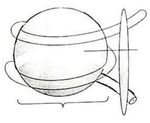
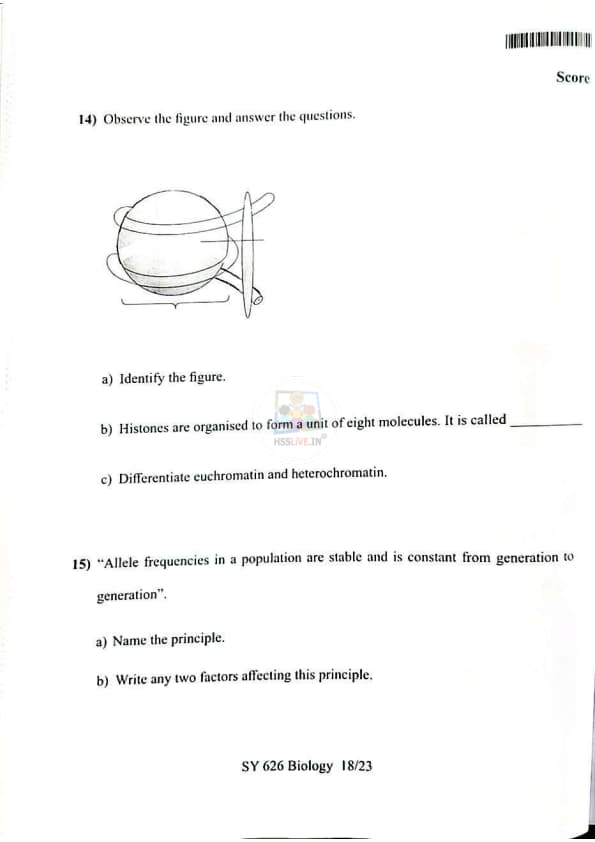
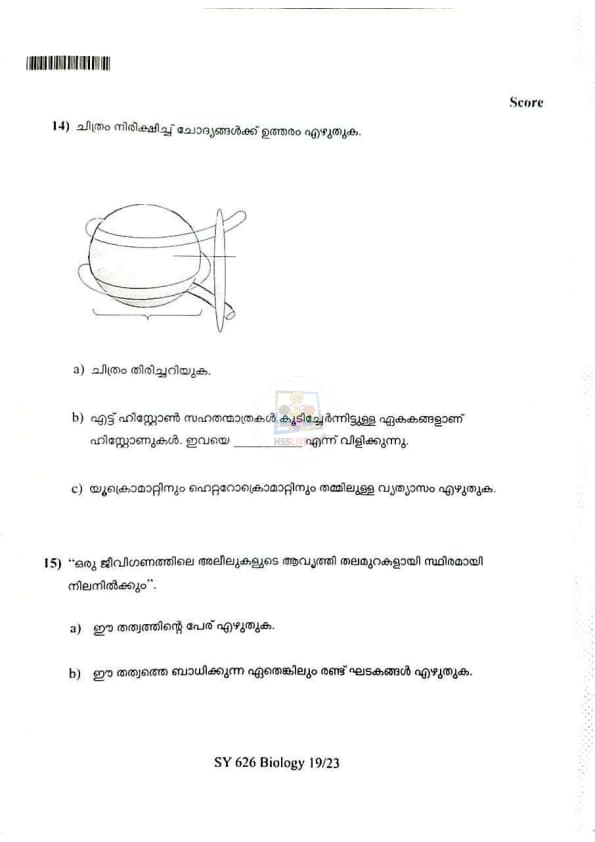
Observe the figure and answer the questions.
(a) Identify the figure.
(b) Histones are organized to form a unit of eight molecules. It is called ______
(c) Differentiate euchromatin and heterochromatin.
View Solution
(a) Identify the figure.
The figure shows a representation of the structure of a nucleosome, which is the basic structural unit of chromatin.
A nucleosome consists of DNA wrapped around a core of histone proteins. The histone core is made up of eight histone molecules (two copies of each of the four histone proteins: H2A, H2B, H3, and H4).
(b) Histones are organized to form a unit of eight molecules. It is called ______
The unit of eight histone molecules is called a histone octamer. This octamer forms the core around which the DNA is wrapped to form a nucleosome.
(c) Differentiate euchromatin and heterochromatin.
Euchromatin and heterochromatin are two forms of chromatin in the nucleus. They differ in structure, function, and staining properties.
Euchromatin:
- It is loosely packed chromatin.
- It is transcriptionally active, meaning that genes in euchromatin are often expressed.
- Euchromatin stains lightly in the nucleus.
- It is found in regions where DNA is being actively transcribed into RNA.
Heterochromatin:
- It is tightly packed chromatin.
- It is transcriptionally inactive, meaning that genes in heterochromatin are usually not expressed.
- Heterochromatin stains darker in the nucleus.
- It is found in regions that are largely inactive, such as centromeres and telomeres, and plays a role in maintaining chromosome structure.
Thus, euchromatin is associated with active gene expression, while heterochromatin is typically inactive.
Quick Tip: Euchromatin is loosely packed and actively transcribed, while heterochromatin is tightly packed and transcriptionally inactive.
"Allele frequencies in a population are stable and constant from generation to generation."
Name the principle.
View Solution
Step 1: Understanding the Principle.
The principle stated here is known as Hardy-Weinberg Equilibrium Principle. According to this principle, allele frequencies in a population's gene pool remain constant from one generation to the next in the absence of other evolutionary influences. This equilibrium condition assumes no mutation, random mating, no migration, no genetic drift, and no natural selection.
Step 2: Conclusion.
Thus, the principle mentioned is the Hardy-Weinberg Equilibrium Principle.
Final Answer:
The principle is Hardy-Weinberg Equilibrium Principle. Quick Tip: The Hardy-Weinberg principle provides a mathematical model to study allele frequencies in populations under ideal conditions, showing that allele frequencies will remain constant unless acted upon by evolutionary forces.
Write any two factors affecting this principle.
View Solution
Step 1: Factors Affecting Hardy-Weinberg Equilibrium.
The Hardy-Weinberg equilibrium assumes no evolutionary influences on a population. However, in real populations, several factors can disturb the equilibrium and cause allele frequencies to change. Some of these factors include:
1) Mutation:
A mutation is a change in the DNA sequence, and it introduces new genetic variations into the population. Even a small rate of mutation can alter allele frequencies and prevent the population from maintaining Hardy-Weinberg equilibrium.
2) Natural Selection:
Natural selection occurs when certain traits or alleles provide a survival or reproductive advantage to individuals with those traits. This leads to changes in allele frequencies over generations, disrupting Hardy-Weinberg equilibrium. Individuals with beneficial alleles tend to pass on those alleles more frequently, while less advantageous alleles decrease in frequency.
Step 2: Conclusion.
Thus, mutation and natural selection are two important factors that can affect the Hardy-Weinberg equilibrium. Other factors include genetic drift, migration, and non-random mating.
Final Answer:
1) Mutation
2) Natural Selection Quick Tip: Hardy-Weinberg equilibrium is a theoretical model, and in nature, it is disrupted by factors like mutation, natural selection, migration, and genetic drift.
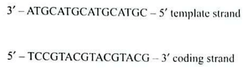
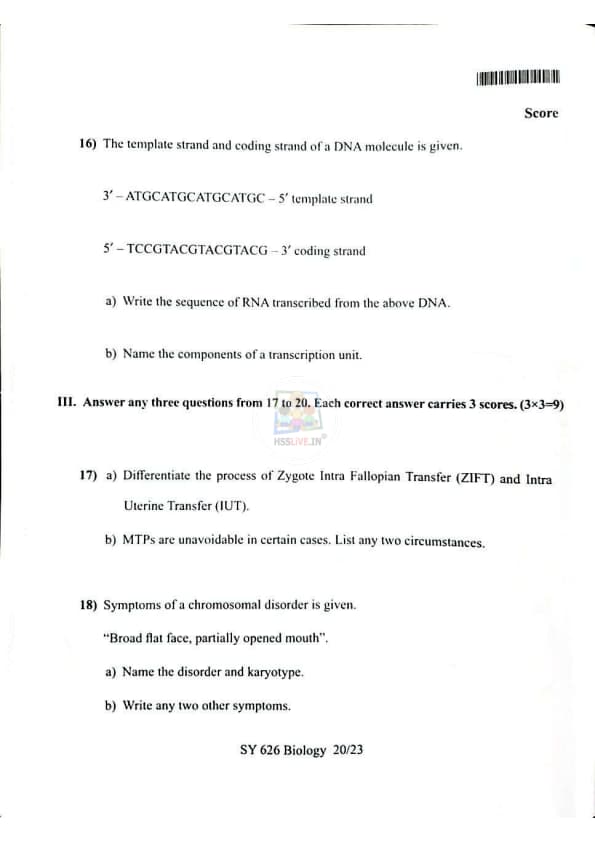
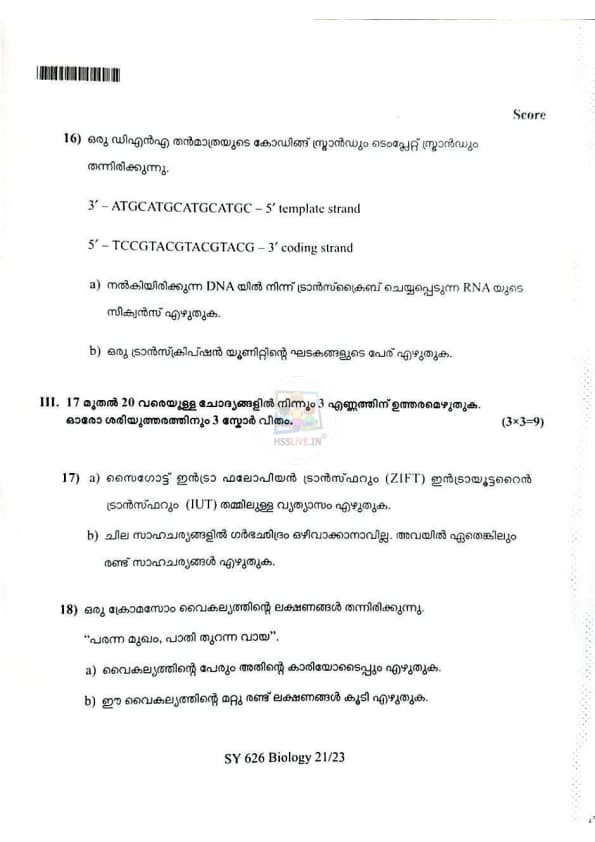
Write the sequence of RNA transcribed from the above DNA.
View Solution
Step 1: Understanding the DNA strands.
- The template strand of DNA is: \[ \boxed{3' - ATGCATGCATGCATGC - 5' \, (template strand)} \]
- The coding strand of DNA is: \[ \boxed{5' - TCCGTACGTACGTACG - 3' \, (coding strand)} \]
Step 2: RNA Transcription Process.
During transcription, the RNA is synthesized using the template strand. The RNA is complementary to the template strand and will have the same sequence as the coding strand, except that \(Uracil (U)\) replaces \(Thymine (T)\).
Step 3: Writing the RNA Sequence.
Using the template strand \( 3' - ATGCATGCATGCATGC - 5' \), the RNA sequence transcribed will be: \[ \boxed{5' - UACGUAUGUACGUACG - 3' \, (RNA sequence)} \]
Quick Tip: In RNA, uracil (U) pairs with adenine (A), and thymine (T) is replaced by uracil.
Name the components of a transcription unit.
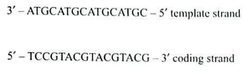
View Solution
Step 1: Definition of Transcription Unit.
A transcription unit is a segment of DNA that is transcribed into RNA. It contains all the sequences necessary for the synthesis of an RNA molecule. The main components of a transcription unit are:
(1) Promoter:
The promoter is a region of DNA located near the start of a gene. It provides a binding site for RNA polymerase to initiate transcription.
(2) Structural Gene:
The structural gene is the part of the transcription unit that contains the sequence that will be transcribed into RNA. It encodes the information for building proteins.
(3) Terminator:
The terminator is a region of DNA that signals the end of transcription. It causes RNA polymerase to stop transcribing and release the newly synthesized RNA molecule.
Step 2: Conclusion.
Thus, the components of a transcription unit are: Promoter, Structural Gene, and Terminator.
Quick Tip: The promoter initiates transcription, the structural gene is transcribed, and the terminator signals the end of transcription.
Differentiate the process of Zygote Intra Fallopian Transfer (ZIFT) and Intra Uterine Transfer (IUT).
View Solution
Step 1: Understanding Zygote Intra Fallopian Transfer (ZIFT).
Zygote Intra Fallopian Transfer (ZIFT) is a fertility treatment in which a fertilized egg (zygote) is placed into one of the fallopian tubes, instead of the uterus. This procedure is used when the woman’s fallopian tubes are open and functional but there is difficulty in conception, or when in-vitro fertilization (IVF) has been used. The zygote is transferred to the fallopian tube shortly after fertilization. The fallopian tube is the natural site for fertilization, and this technique allows the embryo to travel naturally to the uterus for implantation.
Step 2: Understanding Intra Uterine Transfer (IUT).
Intra Uterine Transfer (IUT) is another fertility treatment where a fertilized egg or embryo is directly transferred into the uterus for implantation. Unlike ZIFT, the embryo is not transferred into the fallopian tube. IUT is typically used when IVF is performed and the embryo is already developed enough to be transferred into the uterus. This process is commonly used in assisted reproductive technology (ART) for women with healthy uterine conditions but difficulty with conception.
Step 3: Key Differences.
- ZIFT involves the transfer of a fertilized egg (zygote) into the fallopian tube, where it can travel naturally to the uterus.
- IUT involves the direct transfer of an embryo into the uterus for implantation.
Final Answer:
- ZIFT (Zygote Intra Fallopian Transfer): Transfer of fertilized egg (zygote) into the fallopian tube.
- IUT (Intra Uterine Transfer): Transfer of embryo directly into the uterus for implantation. Quick Tip: ZIFT places the zygote in the fallopian tube to facilitate natural movement to the uterus, while IUT directly implants the embryo in the uterus.
MTPs are unavoidable in certain cases. List any two circumstances.
View Solution
Step 1: Understanding MTPs (Medical Termination of Pregnancy).
MTP or Medical Termination of Pregnancy is the process of ending a pregnancy by medical or surgical means. MTPs are considered in cases where continuing the pregnancy poses significant risks to the health or life of the mother, or if there are serious fetal abnormalities. In certain circumstances, MTPs are unavoidable or necessary for the well-being of the mother or fetus.
Step 2: Circumstances Requiring MTP.
Here are two common circumstances where an MTP is unavoidable:
1) Risk to the mother’s health or life: If the pregnancy poses a risk to the mother’s health or life, such as in cases of severe pre-eclampsia, infections, or heart disease, an MTP may be necessary to protect the mother's health.
2) Fetal abnormalities: If the fetus is diagnosed with severe genetic abnormalities or conditions that are incompatible with life (e.g., anencephaly or certain chromosomal disorders), an MTP may be performed to prevent the birth of a child with a life-limiting condition or serious suffering.
Step 3: Conclusion.
In cases where the pregnancy threatens the health of the mother or the fetus has serious genetic conditions, MTPs become unavoidable. These procedures are performed under medical supervision to ensure the safety of the mother.
Final Answer:
1) Risk to the mother’s health or life.
2) Fetal abnormalities incompatible with life. Quick Tip: MTPs are performed to protect the health of the mother or in cases where the fetus has severe genetic abnormalities, ensuring that the decision is made with careful medical consultation.
Symptoms of a chromosomal disorder is given.
"Broad flat face, partially opened mouth."
(a).Name the disorder and karyotype.
(b). Write any two other symptoms.
View Solution
Step 1: Identifying the Disorder.
The symptoms mentioned, such as a broad flat face and partially opened mouth, are characteristic of Down syndrome, also known as Trisomy 21.
Step 2: Karyotype.
In Down syndrome, there is an extra copy of chromosome 21, so the karyotype is 47, XX + 21 for females and 47, XY + 21 for males, indicating the presence of 47 chromosomes instead of the normal 46.
Step 3: Conclusion.
Thus, the disorder is Down syndrome and the karyotype is 47, XX + 21 (female) or 47, XY + 21 (male).
(b). Write any two other symptoms.
Step 1: Other Symptoms of Down Syndrome.
In addition to a broad flat face and partially opened mouth, other common symptoms of Down syndrome include:
(1) Intellectual Disability:
Individuals with Down syndrome often have mild to moderate intellectual disabilities.
(2) Short Stature:
People with Down syndrome tend to be shorter in height compared to their peers.
Step 2: Conclusion.
Thus, two other symptoms of Down syndrome are intellectual disability and short stature.
Quick Tip: Down syndrome is caused by an extra copy of chromosome 21, which affects physical and intellectual development.
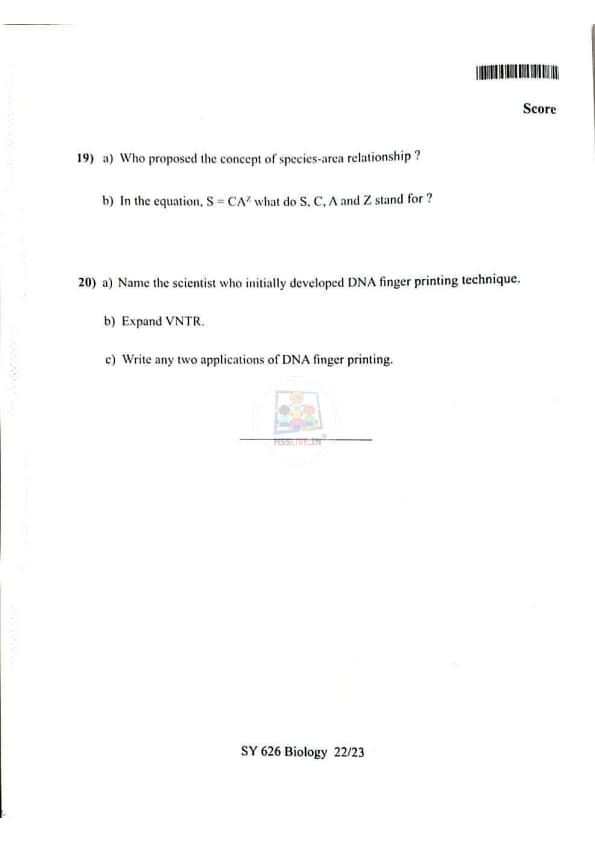
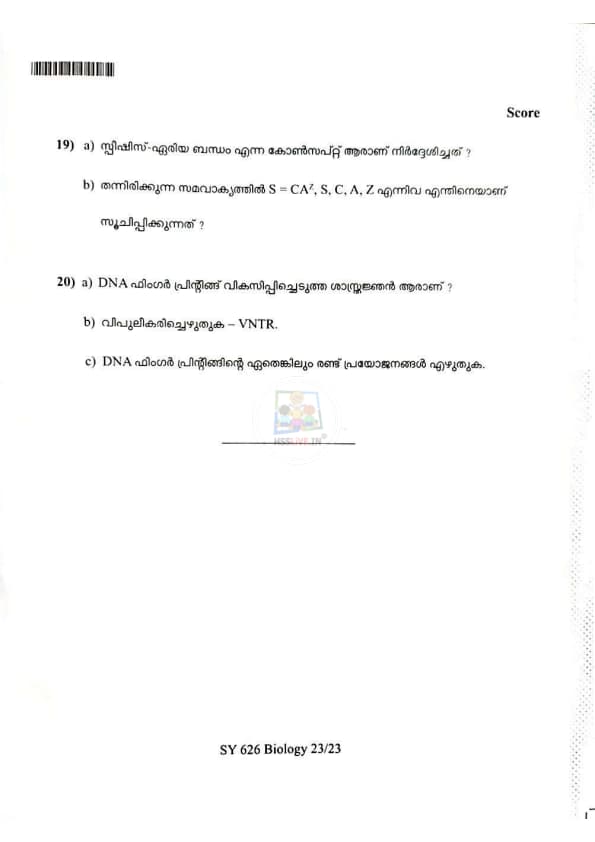
Who proposed the concept of species-area relationship?
View Solution
The concept of species-area relationship was proposed by Arrhenius in 1921.
He suggested that the number of species (S) increases with the area (A) in a predictable way. According to his model, as the area of a habitat increases, the number of species also increases, but the rate of increase slows down as the area gets larger.
This relationship is widely used in ecology to estimate species diversity in different-sized habitats or geographic regions.
Quick Tip: The species-area relationship helps in understanding how species diversity is related to the area available for habitation.
In the equation, \( S = CA^z \), what do S, C, A, and Z stand for?
View Solution
In the equation \( S = CA^z \), the terms represent the following:
- \( S \): Species richness or the number of species present in a given area.
- \( C \): Constant that depends on the specific area and environmental conditions. It is a scaling constant.
- \( A \): Area of the habitat or the geographical region. The area is measured in square units.
- \( z \): Slope exponent or the species-area slope. It indicates how species richness increases with area. It typically ranges between 0.2 and 0.35, depending on the type of habitat.
This equation is used to describe the relationship between the area of a habitat and the number of species it can support. It suggests that as area increases, species richness increases, but at a diminishing rate.
Quick Tip: In the species-area relationship equation, \( S = CA^z \), \( S \) increases as the area \( A \) increases, with \( C \) and \( z \) determining the rate of increase.
"Name the scientist who initially developed DNA fingerprinting technique."
View Solution
DNA fingerprinting, also known as DNA profiling, is a method of identifying individuals based on unique patterns in their DNA. The technique was first developed by Alec Jeffreys, a British geneticist, in 1984. His groundbreaking work involved identifying specific regions in the human genome that exhibit a high degree of variation between individuals, which are now referred to as VNTRs (Variable Number Tandem Repeats). These regions have different repeat lengths in different people, making them ideal for identification purposes.
Alec Jeffreys first applied the method to identify individuals in paternity cases, but over time, it became a powerful tool for forensic scientists to solve criminal cases, including identification of suspects and missing persons. He used the technique to differentiate between individuals based on the uniqueness of their genetic makeup, which was a revolutionary advancement in genetics and forensic science.
Thus, Alec Jeffreys is credited with the development of the DNA fingerprinting technique, which has since become widely used in various fields such as forensic science, genetic research, and medical diagnostics.
Conclusion:
\[ \boxed{Alec Jeffreys} \] Quick Tip: Alec Jeffreys developed the DNA fingerprinting technique, which is now a crucial tool in forensic science and paternity testing.
Expand VNTR.
View Solution
VNTR stands for Variable Number Tandem Repeat. These are short, repetitive DNA sequences that are found in certain regions of the human genome. The key feature of VNTRs is that the number of repeats varies among individuals, making them unique to each person. The number of repeats at a specific location can be used to distinguish between individuals, which is why they are so useful in DNA fingerprinting.
VNTRs are highly polymorphic, meaning that the number of repeats can differ greatly between individuals, even between closely related ones. This high level of variability allows for accurate identification and comparison of DNA samples. VNTRs are primarily used in forensic science, genetic studies, and paternity testing because of their ability to provide a genetic profile for each individual.
In DNA fingerprinting, VNTRs are analyzed by separating the DNA fragments that are obtained through restriction enzyme digestion, followed by a process called gel electrophoresis, which reveals the distinct banding pattern specific to each individual.
Conclusion:
\[ \boxed{Variable Number Tandem Repeat (VNTR)} \] Quick Tip: VNTRs are key markers in DNA fingerprinting due to their high variability and ability to distinguish individuals.
Write any two applications of DNA fingerprinting.
View Solution
DNA fingerprinting is a powerful technique with a variety of applications in forensics, genetic research, and medical diagnostics. Below are two important applications of DNA fingerprinting:
1. Forensic Identification and Criminal Investigation.
One of the most significant applications of DNA fingerprinting is in forensic science. It is used to identify individuals involved in criminal activities by comparing DNA found at crime scenes with DNA samples from suspects. DNA evidence can be used to match blood, hair, or other biological samples collected from a crime scene to a suspect’s DNA, helping to establish guilt or innocence. DNA fingerprinting has been instrumental in solving crimes, exonerating wrongly convicted individuals, and identifying missing persons. The technique is so reliable that it has become a standard in criminal investigations and court cases.
2. Paternity Testing and Family Relationship Establishment.
DNA fingerprinting is also widely used in paternity testing, where it helps determine the biological father of a child. By comparing the DNA patterns of the child with those of the mother and the potential father, it is possible to establish biological relationships with a high degree of certainty. This application is useful in legal matters such as child custody, inheritance claims, and family disputes. Additionally, DNA fingerprinting can be used in other genetic relationship testing, such as sibling or grandparent testing.
Conclusion:
DNA fingerprinting is a vital tool in both criminal justice and family law, helping to establish biological relationships and solve criminal cases.
Quick Tip: DNA fingerprinting is used in criminal investigations to match biological evidence to suspects and in paternity testing to establish family relationships.




Comments