




MP Board 12th Biology Question Paper 2023 with Answer Key pdf is available for download here. The exam was conducted by Madhya Pradesh Board of Secondary Education, MPBSE on March 10, 2023 in the Morning Session 9 AM to 12 PM. The question paper comprised a total of 19 questions.
MP Board 12th Biology Question Paper 2023 with Answer Key
| GATE 2025 English XH – C2 Question Paper with Solutions PDF | Download PDF | Check Solutions |
Fill in the blanks:
(i) Apple is an example of _______ fruit.
(ii) Occurrence of more than one embryos in a seed is called _______ .
(iii) The inner glandular layer of uterus is called _______ .
(iv) Fertilization is taken place in _______ .
(v) _______ conducted hybridization experiments on garden peas for Seven years.
(vi) Natural _______ are obtained from the inflorescences of the plant Cannabis sativa.
(vii) Pyramid of energy is always _______ .
View Solution
Step 1: Analysis of the questions.
(i) Apple is an example of pome fruit
(ii) Occurrence of more than one embryo in a seed is called polyembryony.
(iii) The inner glandular layer of uterus is called endometrium.
(iv) Fertilization takes place in the fallopian tube.
(v) Gregor Mendel conducted hybridization experiments on garden peas for seven years.
(vi) Natural fibres are obtained from the inflorescences of the plant Cannabis sativa.
(vii) Pyramid of energy is always upright.Quick Tip: In biology, terms like polyembryony, endometrium, and pome are important to know for understanding plant reproduction and human anatomy.
Write answer in one word / one sentence:
(i) Write name of any one autoimmune disease.
(ii) What is the conformities test of Typhoid?
(iii) The number of deaths in the population during the given period. What does it called?
(iv) Write the name of one 'Hotspot' of India.
(v) What is molecular scissors?
(vi) Write the name of first transgenic cow.
(vii) What is the name of the process of copying genetic information of one strand of DNA to RNA?
View Solution
Step 1: Understanding the Questions.
(i) An autoimmune disease is one where the immune system mistakenly attacks the body's own cells. An example is Rheumatoid arthritis.
(ii) The conformities test for Typhoid is the Widal test.
(iii) The number of deaths in a population during a given period is known as the mortality rate.
(iv) One of the 'Hotspots' of India is Sundarbans.
(v) Molecular scissors are restriction enzymes that cut DNA molecules at specific sequences.
(vi) The first transgenic cow was named Rosie.
(vii) The process of copying genetic information from one strand of DNA to RNA is called transcription. Quick Tip: Remember the key terms in molecular biology, such as transcription, Widal test, and mortality rate, as they are fundamental in understanding genetics and public health.
(i) Who gave the chromosomal theory of inheritance?
View Solution
Step 1: Understanding the theory.
Gregor John Mendel is known as the father of genetics. His work on pea plants laid the foundation for the chromosomal theory of inheritance. This theory states that inheritance of traits is controlled by genes located on chromosomes.
Step 2: Conclusion.
Thus, the correct answer is option (2) Gregor John Mendel. Quick Tip: Mendel's experiments with pea plants were crucial in formulating the laws of inheritance, which later supported the chromosomal theory.
(ii) Bt poison is formed by:
View Solution
Step 1: Understanding Bt poison.
Bt poison is a naturally occurring insecticidal protein produced by the bacterium Bacillus thuringiensis. This bacterium is used in genetically modified crops for pest resistance.
Step 2: Conclusion.
Thus, the correct answer is option (1) Bacillus thuringiensis. Quick Tip: Bacillus thuringiensis produces a protein that is toxic to certain insect pests, which is why it is used in pest-resistant crops.
(iii) Inactive state of embryo is:
View Solution
Step 1: Understanding dormancy.
Dormancy is the state in which an embryo is temporarily inactive or not growing. In plants, seeds may remain dormant until environmental conditions are suitable for germination.
Step 2: Conclusion.
Thus, the correct answer is option (1) Dormancy. Quick Tip: Dormancy is an important adaptive strategy in plants, allowing seeds to survive under unfavorable conditions.
(iv) Which bacteria converts milk into curd?
View Solution
Step 1: Understanding the process.
Lactobacillus is a type of bacteria responsible for converting lactose in milk into lactic acid, which causes the milk to curdle, forming yogurt or curd.
Step 2: Conclusion.
Thus, the correct answer is option (2) Lactobacillus. Quick Tip: Lactobacillus is widely used in the dairy industry for the fermentation process in yogurt and curd production.
(v) Which of the following gives nutrition to developing pollen grains is:
View Solution
Step 1: Role of tapetum in pollen development.
The tapetum is a layer of cells found in the anther of the flower. It provides nutrients and nourishment to the developing pollen grains.
Step 2: Conclusion.
Thus, the correct answer is option (3) Tapetum. Quick Tip: The tapetum plays a vital role in the development of pollen by supplying essential nutrients and proteins.
(vi) All the animals depend on plants directly or indirectly for their food is called:
View Solution
Step 1: Understanding consumers.
Consumers are organisms that cannot make their own food and rely on plants or other organisms for nourishment. Animals are consumers in the food chain.
Step 2: Conclusion.
Thus, the correct answer is option (2) Consumers. Quick Tip: Consumers are organisms that feed on plants (herbivores) or other animals (carnivores) for survival.
(vii) Inner mass group of cells which have ability (potency) to produce tissue and organs are:
View Solution
Step 1: Understanding stem cells.
Stem cells are undifferentiated cells that have the ability to divide and differentiate into various types of cells and tissues, making them essential for growth, repair, and regeneration.
Step 2: Conclusion.
Thus, the correct answer is option (3) Stem cells. Quick Tip: Stem cells are crucial for regenerative medicine and are used to treat various diseases by generating new tissues.
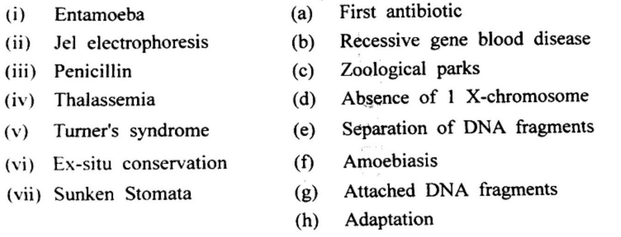
Match the columns:
View Solution
Step 1: Understanding the columns.
- Entamoeba causes Amoebiasis, so (i) matches with (f).
- Gel electrophoresis is used for the separation of DNA fragments, so (ii) matches with (e).
- Penicillin is the first antibiotic, so (iii) matches with (a).
- Thalassemia is a recessive gene blood disease, so (iv) matches with (b).
- Turner's syndrome is the absence of 1 X-chromosome, so (v) matches with (d).
- Ex-situ conservation involves zoological parks, so (vi) matches with (c).
- Sunken stomata is an adaptation to reduce water loss, so (vii) matches with (h).
Step 2: Conclusion.
The correct matches are:
(i) - (f), (ii) - (e), (iii) - (a), (iv) - (b), (v) - (d), (vi) - (c), (vii) - (h). Quick Tip: In biology, matching terms often test your understanding of functions, adaptations, and processes. Make sure to relate each term to its definition or function.
What do you understand by Triple fusion?
View Solution
Step 1: Understanding Triple fusion.
Triple fusion is a process that occurs during fertilization in angiosperms (flowering plants). It involves the fusion of one male gamete (sperm) with two polar nuclei in the central cell of the embryo sac. This results in the formation of a triploid cell, which develops into the endosperm, providing nutrition to the developing embryo.
Step 2: Conclusion.
Triple fusion plays a crucial role in the formation of the endosperm, which is vital for seed development in plants. Quick Tip: Triple fusion is a key event in plant fertilization that ensures proper seed development by providing nourishment to the growing embryo.
What is emasculation?
View Solution
Step 1: Understanding Emasculation.
Emasculation is the removal of the male reproductive organs (anthers) from a flower, typically to prevent self-pollination. This is a technique used in plant breeding, especially in controlled hybridization, where the pollen from another flower is introduced to ensure cross-pollination.
Step 2: Conclusion.
Emasculation is crucial in breeding programs to ensure genetic diversity by preventing self-pollination and promoting cross-pollination. Quick Tip: Emasculation is commonly used in plant hybridization experiments to control the pollination process and create desired crossbred plants.
What is parturition?
View Solution
Step 1: Understanding Parturition.
Parturition is the process of giving birth in mammals. It involves the series of events that result in the expulsion of the fetus from the uterus. This includes labor, the delivery of the baby, and the post-delivery stages.
Step 2: Conclusion.
Thus, parturition is the act of giving birth, involving the labor and delivery process. Quick Tip: Parturition is a vital biological process that ensures the birth and survival of offspring in mammals.
What is colostrum?
View Solution
Step 1: Understanding Colostrum.
Colostrum is the first milk produced by mammals after giving birth. It is rich in antibodies, proteins, and nutrients, which are essential for the newborn’s immune system and growth. It helps protect the newborn against infections.
Step 2: Conclusion.
Colostrum is critical for the health and development of newborn mammals, providing immunity and nourishment in the early days of life. Quick Tip: Colostrum is often referred to as "first milk" and is essential for the newborn's early immunity.
What is the suggested reasons for population explosion? (any two)
View Solution
Step 1: Understanding population explosion.
Population explosion refers to the rapid increase in the population of an area over a short period. The main causes of population explosion are:
1. Improved healthcare: Advances in medicine and healthcare have led to reduced mortality rates, especially infant mortality.
2. Increased birth rate: Cultural and social factors encourage higher birth rates, leading to a larger population.
3. Improved agricultural practices: Better food production methods have supported larger populations by ensuring food security.
Step 2: Conclusion.
Thus, improved healthcare and increased birth rates are major reasons for population explosion. Quick Tip: The combination of better healthcare and increased birth rates leads to rapid population growth, causing a population explosion.
Write 2 names of sexually transmitted diseases.
View Solution
Step 1: Understanding sexually transmitted diseases.
Sexually transmitted diseases (STDs) are infections passed from one person to another through sexual contact. Two examples of STDs are:
1. HIV/AIDS
2. Gonorrhea
Step 2: Conclusion.
Thus, HIV/AIDS and Gonorrhea are two examples of sexually transmitted diseases. Quick Tip: STDs can be prevented through safe sexual practices, such as using condoms and getting regular screenings.
What is BOD?
View Solution
Step 1: Understanding BOD.
BOD stands for Biochemical Oxygen Demand. It is a measure of the amount of oxygen required by microorganisms to break down organic material in water. A higher BOD indicates a higher level of pollution in water, as more oxygen is needed for microbial activity.
Step 2: Conclusion.
BOD is an important parameter for assessing the quality of water and its level of contamination. Quick Tip: BOD is commonly used to assess the organic pollution level in wastewater and surface water bodies.
What is Ganga Action Plan?
View Solution
Step 1: Understanding the Ganga Action Plan.
The Ganga Action Plan (GAP) was launched by the Government of India in 1986 with the objective of reducing the pollution levels in the river Ganga. The plan aims to ensure the river's water quality is improved by implementing measures like wastewater treatment, sewage treatment, and riverfront development.
Step 2: Conclusion.
The Ganga Action Plan focuses on cleaning the river and ensuring its water is safe for drinking and other purposes. Quick Tip: The Ganga Action Plan is a major environmental initiative to clean India's holy and polluted river, the Ganga, through comprehensive strategies.
What is Cloning?
View Solution
Step 1: Understanding Cloning.
Cloning is the process of creating a genetically identical copy of an organism. This can occur naturally, as in the case of identical twins, or artificially, through techniques such as somatic cell nuclear transfer, where the nucleus of a somatic cell is transferred into an egg cell to create an organism with the same genetic makeup.
Step 2: Conclusion.
Cloning involves the reproduction of an organism from a single cell or tissue, ensuring the offspring has the same genetic identity. Quick Tip: Cloning is commonly used in research to produce genetically identical organisms for study, or in agriculture to reproduce beneficial traits.
What is cry gene?
View Solution
Step 1: Understanding cry gene.
The cry gene is a gene found in certain strains of the bacterium Bacillus thuringiensis. This gene codes for a protein (Cry protein) that is toxic to certain insects. The gene is widely used in biotechnology to develop genetically modified crops that are resistant to pests.
Step 2: Conclusion.
The cry gene plays a vital role in producing insect-resistant crops by producing a toxin harmful to specific pests. Quick Tip: The cry gene is used in genetically modified crops like Bt cotton to protect them from insect pests by producing a natural insecticide.
Write down the causes of AIDS. (any two)
View Solution
Step 1: Understanding the causes of AIDS.
AIDS (Acquired Immunodeficiency Syndrome) is caused by the HIV (Human Immunodeficiency Virus), which weakens the immune system. Two of the major causes include:
1. Unprotected sexual contact: Engaging in sexual activities without protection (such as condoms) with an infected person can transmit the virus.
2. Sharing contaminated needles: Sharing needles for drug use, tattoos, or piercings can lead to HIV transmission if the needle is contaminated with infected blood.
Step 2: Conclusion.
Thus, the causes of AIDS are primarily due to sexual transmission and the sharing of contaminated needles. Quick Tip: Preventing AIDS involves practicing safe sex, avoiding sharing needles, and getting tested for HIV regularly.
Write down the treatments of cancer.
View Solution
Step 1: Understanding cancer treatments.
Cancer treatments aim to destroy or control cancerous cells. Some common treatments include:
1. Surgery: Surgical removal of cancerous tumors or affected tissues.
2. Radiation therapy: The use of high-energy radiation to kill or damage cancer cells.
3. Chemotherapy: The use of drugs to kill or stop the growth of cancer cells.
4. Immunotherapy: Treatment that stimulates the body's immune system to fight cancer cells.
Step 2: Conclusion.
The treatment for cancer depends on the type and stage of cancer, and often involves a combination of surgery, radiation, chemotherapy, and immunotherapy. Quick Tip: Early detection and treatment significantly improve cancer outcomes, so regular screenings and check-ups are important.
What is Histone?
View Solution
Step 1: Understanding Histone.
Histones are a group of basic proteins found in the nuclei of eukaryotic cells. They play a critical role in the packaging of DNA into structural units called nucleosomes. Histones help in the regulation of gene expression by enabling or inhibiting the accessibility of DNA to the transcription machinery.
Step 2: Conclusion.
Thus, histones are proteins that assist in DNA packaging and gene regulation. Quick Tip: Histones are essential for DNA condensation and play a key role in gene expression regulation through modifications.
Which nitrogenous bases are found in RNA?
View Solution
Step 1: Understanding RNA.
RNA (Ribonucleic Acid) is a polymer made up of nucleotide units. Each nucleotide contains a nitrogenous base, a sugar molecule, and a phosphate group. The four nitrogenous bases found in RNA are:
1. Adenine (A)
2. Uracil (U)
3. Cytosine (C)
4. Guanine (G)
In RNA, uracil replaces thymine, which is found in DNA.
Step 2: Conclusion.
The nitrogenous bases in RNA are Adenine, Uracil, Cytosine, and Guanine. Quick Tip: Remember, uracil (U) replaces thymine (T) in RNA, which is a key distinction between RNA and DNA.
What is Pedigree analysis?
View Solution
Step 1: Understanding Pedigree analysis.
Pedigree analysis is the study of family histories or lineages to understand the inheritance patterns of traits and diseases across generations. It involves creating a family tree (pedigree chart) that tracks the inheritance of specific traits, helping geneticists predict the likelihood of traits being passed down.
Step 2: Conclusion.
Pedigree analysis is an important tool in genetics to study inheritance patterns, identify carriers of genetic disorders, and predict the risk of genetic diseases in future generations. Quick Tip: Pedigree charts use symbols to represent family members and the inheritance of traits, helping track genetic conditions through generations.
Write down differences between homozygous and heterozygous.
View Solution
Step 1: Understanding Homozygous and Heterozygous.
- Homozygous: An organism is homozygous when it has two identical alleles for a particular gene (e.g., AA or aa).
- Heterozygous: An organism is heterozygous when it has two different alleles for a particular gene (e.g., Aa).
Step 2: Conclusion.
- Homozygous individuals have identical alleles, while heterozygous individuals have different alleles for a gene.
- Homozygous genes often produce a more stable trait expression, while heterozygous combinations can result in variations, especially in dominant-recessive inheritance. Quick Tip: In dominant-recessive inheritance, heterozygous individuals often express the dominant trait, while homozygous recessive individuals express the recessive trait.
Draw schematic representation of Oogenesis.
View Solution
Step 1: Understanding Oogenesis.
Oogenesis is the process of female gamete (egg) formation in animals. The process occurs in the ovaries and involves the transformation of an oogonium into a mature ovum (egg). The schematic representation of oogenesis typically involves the following stages:
1. Oogonium: The stem cells in the ovaries that divide by mitosis to form primary oocytes.
2. Primary oocyte: These cells enter prophase I of meiosis and remain arrested until puberty.
3. Secondary oocyte: The primary oocyte completes meiosis I and gives rise to a secondary oocyte, which completes meiosis II only if fertilization occurs.
4. Polar bodies: Small cells that are produced during oogenesis but do not participate in reproduction.
Step 2: Conclusion.
Oogenesis produces one functional ovum and polar bodies, and it plays a crucial role in sexual reproduction. Quick Tip: Oogenesis results in the production of a single viable egg cell, while the others are non-functional polar bodies.
What is amniocentesis? Write its uses.
View Solution
Step 1: Understanding Amniocentesis.
Amniocentesis is a medical procedure in which a small amount of amniotic fluid is taken from the sac surrounding the fetus. This fluid contains fetal cells and various substances that can be analyzed for genetic abnormalities or infections.
Step 2: Uses of Amniocentesis.
Amniocentesis is used to:
1. Detect genetic disorders: Such as Down syndrome, cystic fibrosis, and sickle cell anemia.
2. Determine lung maturity: To assess if the fetus’s lungs are ready for birth, especially in cases of premature labor.
3. Infection detection: It can help detect certain infections affecting the fetus.
Step 3: Conclusion.
Amniocentesis is an essential diagnostic tool for prenatal care to monitor fetal health and detect any potential issues. Quick Tip: Amniocentesis is typically performed between the 15th and 20th weeks of pregnancy and is most useful in detecting chromosomal abnormalities.
What is test-cross? Show diagrammatic representation of it.
View Solution
Step 1: Understanding Test-cross.
A test-cross is a genetic cross between an individual with an unknown genotype (usually heterozygous) and an individual with a known homozygous recessive genotype. This is used to determine whether the unknown individual is homozygous or heterozygous for a particular trait.
Step 2: Diagrammatic representation.
Consider a parent with the genotype \( A_1A_2 \) (unknown genotype) and a homozygous recessive individual \( a_1a_1 \). The test-cross will result in offspring that show a 1:1 ratio of dominant to recessive phenotypes if the unknown parent is heterozygous, or all offspring will show the dominant phenotype if the unknown parent is homozygous dominant.
Step 3: Conclusion.
A test-cross is an important tool for determining the genotype of an individual based on its offspring's phenotype. Quick Tip: Test-crosses help determine the genotype of an individual with a dominant phenotype by crossing it with a homozygous recessive individual.
Draw well labelled diagram of Miller's experiment.
View Solution
Step 1: Understanding Miller’s Experiment.
Miller’s experiment, conducted in 1953 by Stanley Miller, was designed to simulate early Earth conditions and test the hypothesis that organic compounds essential for life could have formed from inorganic substances in the early atmosphere. Miller used a mixture of methane, ammonia, hydrogen, and water vapor, which was exposed to electrical sparks (simulating lightning), resulting in the formation of amino acids.
Step 2: Diagrammatic representation.
In the experiment, Miller used a closed glass apparatus consisting of:
1. Water flask (representing Earth's oceans)
2. Boiling flask (simulating early Earth's atmosphere)
3. Electrode (producing electrical sparks)
4. Condenser (cooling the vapor to condense it back into liquid)
5. Amino acid solution formed in the collection chamber.
Step 3: Conclusion.
The experiment provided evidence that organic compounds, such as amino acids, could form under conditions thought to resemble those of early Earth. Quick Tip: Miller’s experiment demonstrated that under simulated primitive Earth conditions, organic molecules essential for life can be formed, supporting theories of abiogenesis.
Write measures which is useful for prevention and control of alcohol and drug use in adolescence.
View Solution
Step 1: Preventive Measures.
To prevent alcohol and drug use in adolescence, several strategies can be implemented:
1. Education and Awareness: Educating adolescents about the harmful effects of drugs and alcohol through school programs, community outreach, and counseling.
2. Building Life Skills: Encouraging adolescents to develop strong decision-making and coping skills, enabling them to resist peer pressure and stress-related triggers.
3. Supportive Environment: Providing a supportive environment at home, school, and community where adolescents feel valued and can discuss their issues openly.
4. Healthy Alternatives: Promoting participation in sports, hobbies, and other constructive activities as alternatives to drug and alcohol use.
Step 2: Conclusion.
Prevention and control of alcohol and drug use in adolescents require a multi-faceted approach involving education, support systems, and healthy lifestyle choices. Quick Tip: Early intervention programs, peer support, and a positive environment are key factors in preventing substance abuse among adolescents.
How microorganism is act like a biofertilizer?
View Solution
Step 1: Understanding Biofertilizers.
Microorganisms act as biofertilizers by promoting the growth of plants through natural processes. Some of the key roles microorganisms play as biofertilizers include:
1. Nitrogen Fixation: Certain bacteria like Rhizobium convert atmospheric nitrogen into a form that plants can use, thus enriching the soil with nitrogen.
2. Phosphorus Solubilization: Microorganisms like Bacillus and Pseudomonas help in solubilizing phosphorus from insoluble compounds, making it available to plants.
3. Organic Matter Decomposition: Fungi and bacteria decompose organic matter in the soil, releasing essential nutrients for plant growth.
Step 2: Conclusion.
By improving soil fertility and nutrient availability, microorganisms play a vital role in sustainable agriculture as biofertilizers. Quick Tip: Using biofertilizers reduces the need for chemical fertilizers, promoting environmentally friendly agricultural practices.
Write down about any 3 main abiotic factors of environment.
View Solution
Step 1: Understanding Abiotic Factors.
Abiotic factors are the non-living components of the environment that influence living organisms. The three main abiotic factors are:
1. Temperature: Temperature affects the metabolic rate of organisms and determines the types of organisms that can survive in a particular environment.
2. Water: Water is essential for life. It influences the survival and distribution of organisms. The amount and availability of water impact plant and animal life.
3. Light: Light is necessary for photosynthesis in plants, and it affects the growth and behavior of animals. It also influences the daily and seasonal rhythms of organisms.
Step 2: Conclusion.
Abiotic factors such as temperature, water, and light are critical for the survival and growth of organisms in any ecosystem. Quick Tip: Abiotic factors determine the types of organisms that can live in a particular area and influence their growth and behavior.
What is decomposition?
View Solution
Step 1: Understanding Decomposition.
Decomposition is the process by which organic matter (like dead plants, animals, and other organic substances) is broken down into simpler substances by decomposers such as bacteria, fungi, and earthworms. This process releases nutrients like nitrogen, phosphorus, and carbon back into the environment, making them available for use by other organisms.
Step 2: Conclusion.
Decomposition is a vital ecological process that recycles nutrients, helping maintain the balance of ecosystems. Quick Tip: Decomposers play an essential role in nutrient cycling, breaking down organic matter into simpler compounds that enrich the soil.
Write down salient features of genetic code.
View Solution
Step 1: Understanding Genetic Code.
The genetic code is a set of rules used by living organisms to translate the information encoded in DNA into proteins. The salient features of the genetic code include:
1. Universal: The genetic code is nearly universal across all organisms, meaning the same codons code for the same amino acids in almost all living beings.
2. Degenerate: There are more codons (64) than amino acids (20), meaning some amino acids are coded by more than one codon.
3. Unambiguous: Each codon codes for only one amino acid.
4. Start and Stop Codons: The code includes specific codons that signal the start (AUG) and stop (UAA, UAG, UGA) of protein synthesis.
5. Non-overlapping and Comma-free: Codons are read in sequence without overlapping, and the reading frame does not have punctuation marks.
Step 2: Conclusion.
The genetic code ensures that the instructions for protein synthesis are accurately followed in all living organisms. Quick Tip: The redundancy in the genetic code allows some mutations to occur without altering the protein sequence, which helps in maintaining the function of many genes.
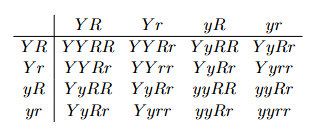
Find out the phenotypic ratio of offspring found in F2 generation, when homozygous yellow and round seed of pea plant cross with homozygous green and wrinkled seed plant. With the help of checker board.
View Solution
Step 1: Understanding the cross.
The problem involves a dihybrid cross between two homozygous pea plants:
- Parent 1: Homozygous yellow (YY) and round (RR) seeds.
- Parent 2: Homozygous green (yy) and wrinkled (rr) seeds.
The F1 generation will be heterozygous for both traits: \( YyRr \).
Step 2: Punnett Square Analysis.
To find the phenotypic ratio in the F2 generation, we set up a Punnett square for the F1 cross \( YyRr \times YyRr \). The alleles for seed color (Y for yellow, y for green) and shape (R for round, r for wrinkled) segregate independently, following Mendel's law of independent assortment.
Step 3: Conclusion.
The phenotypic ratio from the F2 generation is as follows:
- Yellow and round (dominant traits): 9/16
- Yellow and wrinkled: 3/16
- Green and round: 3/16
- Green and wrinkled: 1/16
Thus, the phenotypic ratio is 9:3:3:1.
Quick Tip: A 9:3:3:1 ratio is characteristic of a dihybrid cross, where two traits are inherited independently.
Write down several steps of recombinant DNA technology in sequence.
View Solution
Step 1: Understanding Recombinant DNA Technology.
Recombinant DNA technology involves the manipulation of DNA molecules to create new genetic combinations. The main steps involved are:
1. Isolation of DNA: The desired gene is isolated from the organism’s genome.
2. Cutting the DNA: Restriction enzymes are used to cut the DNA at specific locations to isolate the gene of interest.
3. Insertion of Gene: The isolated gene is inserted into a vector (usually a plasmid or virus) to form recombinant DNA.
4. Introduction into Host Cell: The recombinant DNA is introduced into a host organism (e.g., bacteria) through transformation or transfection.
5. Selection and Cloning: The host cell that contains the recombinant DNA is selected, cultured, and allowed to replicate, producing multiple copies of the gene.
6. Expression: The gene is expressed in the host cell, producing the desired protein.
7. Purification: The protein or product is extracted and purified for use.
Step 2: Conclusion.
Recombinant DNA technology has revolutionized fields such as medicine, agriculture, and research by enabling the manipulation and expression of genes in various organisms. Quick Tip: Recombinant DNA technology allows scientists to produce proteins or genes of interest by inserting them into host cells, ensuring their expression and replication.
Write short notes on -
(a) Biopiracy
(b) Restriction enzyme
View Solution
a. Biopiracy:
Step 1: Understanding Biopiracy.
Biopiracy refers to the unauthorized use or exploitation of biological resources or traditional knowledge by individuals or companies, typically from developed countries, without providing fair compensation to the local or indigenous communities from where the resources originate. This includes the patenting of naturally occurring substances or traditional practices without acknowledging the contribution of local populations.
Step 2: Conclusion.
Biopiracy is a controversial issue in the field of intellectual property, as it undermines the rights of indigenous people and threatens biodiversity.
b. Restriction enzyme:
Step 1: Understanding Restriction Enzyme.
A restriction enzyme (also known as a restriction endonuclease) is a protein that acts like molecular scissors, cutting DNA at specific sequences known as recognition sites. These enzymes are crucial in molecular biology and recombinant DNA technology for cutting DNA into smaller fragments. The cut DNA can then be manipulated for various applications, such as gene cloning and sequencing.
Step 2: Conclusion.
Restriction enzymes are essential tools in genetic engineering, allowing scientists to cut and modify DNA in a controlled manner. Quick Tip: Biopiracy can result in legal and ethical issues, as it involves the misappropriation of genetic resources without proper benefits to the community.
Restriction enzymes are categorized into types based on their cutting pattern: Type I, Type II, and Type III, with Type II being the most commonly used in genetic research.
Explain the ecosystem of pond.
View Solution
Step 1: Understanding Pond Ecosystem.
A pond ecosystem is a small, shallow, aquatic environment, typically filled with freshwater. It consists of both biotic (living) and abiotic (non-living) components that interact with one another.
1. Abiotic Factors: These include water, temperature, light, pH, and nutrients. These factors influence the living organisms in the pond.
2. Biotic Factors: These include producers like algae and aquatic plants, consumers like fish, insects, and amphibians, and decomposers like bacteria and fungi.
3. Producers: Algae and aquatic plants are the primary producers in a pond. They perform photosynthesis, providing energy for other organisms in the ecosystem.
4. Consumers: Herbivores like snails and small fish feed on plants and algae, while carnivores like frogs and larger fish feed on smaller organisms.
5. Decomposers: Bacteria, fungi, and detritivores decompose dead organic material, recycling nutrients back into the ecosystem.
Step 2: Conclusion.
Pond ecosystems are dynamic, with a complex web of interactions between plants, animals, and microorganisms, all supported by the flow of energy through the system. Quick Tip: In pond ecosystems, the balance between producers, consumers, and decomposers is critical for maintaining the health of the system.
Describe the ecological succession on bare rocks.
View Solution
Step 1: Understanding Ecological Succession.
Ecological succession is the process by which the structure of a biological community evolves over time. It can occur in two main types: primary and secondary succession. Primary succession occurs on bare rocks where no soil exists.
1. Lichens and Mosses: The first organisms to colonize bare rocks are typically lichens and mosses. They break down the rock and create small pockets of soil.
2. Herbaceous Plants: Over time, simple plants like grasses and small herbs begin to grow in the developing soil, further enhancing soil formation.
3. Shrubs and Small Trees: As soil depth and quality improve, larger plants, such as shrubs and small trees, can take root and thrive.
4. Forest Formation: Eventually, a climax community, such as a forest, may develop, depending on the climate and other factors. Larger trees like oak, pine, or maple dominate, completing the succession process.
Step 2: Conclusion.
Ecological succession on bare rocks is a slow but continuous process that leads to the establishment of a mature, stable ecosystem. Quick Tip: Primary succession is a gradual process that starts with pioneer species and leads to a climax community, requiring long periods to establish.



Comments