




Maharashtra Board conducted the Class 10 Science and Technology Board Part 2 Paper 2026 on March 13, 2026. Students can analyse their performance as SSC Board Science and Technology Part 2 Question Paper 2026 with Solution PDF is available here for download.
The Maharashtra Board Class 10 Science and Technology Part 2 paper covered key topics from chemistry, biology, technology, and environmental science. Students should focus on understanding chemical reactions, biological processes, technological advancements, and environmental issues. The exam is marked out of 100, with 20 marks for MCQs, 40 for descriptive questions, and 40 for practical applications and internal assessments.
Maharashtra Board Class 10 2026 Science and Technology Part 2 Paper with Solution PDF
| Maharashtra Board Class 10 Science and Technology Part 2 Question Paper 2026 | Download PDF | Check Solution |

The causality behind the sudden changes was understood due to ............... principle of Hugo de Vries.
View Solution
Step 1: Understanding the Concept:
The question relates to evolutionary theories that describe sudden variations in organisms.
The Dutch botanist Hugo de Vries introduced the Mutation Theory of Evolution to explain such abrupt changes.
Step 2: Detailed Explanation:
Hugo de Vries performed experiments on the evening primrose (\textit{Oenothera lamarckiana) and noticed that some offspring displayed clear and sudden differences from their parent plants.
From these observations, he proposed that evolution occurs through sudden genetic changes called "mutations," rather than only through the slow and continuous variations suggested by Darwin.
These mutations are heritable and appear randomly within a population.
Step 3: Final Answer:
Thus, the principle proposed by Hugo de Vries to explain sudden changes in organisms is Mutation.
Quick Tip: Note: Darwin explained evolution through gradual change via "Natural Selection," whereas Hugo de Vries emphasized sudden evolutionary changes through "Mutation" (saltation).
After complete oxidation of a glucose molecule, ............... number of ATP molecules are formed.
View Solution
Step 1: Understanding the Concept:
Cellular respiration is the metabolic process through which glucose is broken down to release energy, which is stored in the form of ATP (Adenosine Triphosphate).
Step 2: Key Formula or Approach:
The complete aerobic breakdown of glucose occurs through three main stages: Glycolysis, the Krebs cycle (Citric Acid Cycle), and the Electron Transport Chain (ETC).
Step 3: Detailed Explanation:
The overall ATP yield is estimated as follows:
1. Glycolysis: Generates a net gain of 2 ATP along with 2 \(NADH_2\) molecules.
2. Pyruvate Oxidation: Produces 2 additional \(NADH_2\) molecules.
3. Krebs Cycle: Produces 2 ATP, 6 \(NADH_2\), and 2 \(FADH_2\) molecules.
4. Electron Transport System (ETS): Each \(NADH_2\) molecule produces 3 ATP, while each \(FADH_2\) molecule produces 2 ATP.
Total calculation:
\[ Total ATP = 2 (from Glycolysis) + 2 (from Krebs Cycle) + (10 \times 3 from NADH_2) + (2 \times 2 from FADH_2) \]
\[ Total ATP = 2 + 2 + 30 + 4 = 38 ATP \]
Step 4: Final Answer:
Hence, the complete aerobic oxidation of one molecule of glucose yields a total of 38 ATP molecules.
Quick Tip: Typically, prokaryotic cells produce about 38 ATP molecules from one glucose molecule. In eukaryotic cells, the yield is often about 36 ATP because some energy is used to transport molecules into the mitochondria.
Bat is included in class ...............
View Solution
Step 1: Understanding the Concept:
The classification of animals is determined by certain structural and physiological features that distinguish one group from another.
Step 2: Detailed Explanation:
Even though bats are capable of flying, they are not classified under the class Aves (birds).
Bats are categorized under the class Mammalia due to the following characteristics:
1. They have mammary glands that produce milk to feed their offspring.
2. Their bodies are covered with hair.
3. They reproduce by giving birth to live young ones (viviparous).
4. They possess a four-chambered heart and maintain a constant body temperature (warm-blooded).
Step 3: Final Answer:
Therefore, bats belong to the class Mammalia.
Quick Tip: Flying ability does not necessarily mean an animal is a bird. Key mammalian traits include mammary glands and the presence of external ears (pinna).
In Maharashtra the major hydroelectric power plant is located at ...............
View Solution
Step 1: Understanding the Concept:
Hydroelectric power stations generate electricity by converting the energy of moving or falling water into electrical energy.
Step 2: Detailed Explanation:
The Koyna Hydroelectric Project is the largest operational hydroelectric power station in India.
It is situated in the Satara district of Maharashtra.
In contrast, Chandrapur and Parali are well known for thermal power generation, while Tarapur is associated with nuclear power production.
Step 3: Final Answer:
Therefore, the major hydroelectric power plant in Maharashtra is located at Koyna.
Quick Tip: Remember: Koyna → Hydroelectric power, while Tarapur → Nuclear power in Maharashtra.
A first state to start a separate cyber crime unit in our country is ...............
View Solution
Step 1: Understanding the Concept:
Cyber crime units are specialized branches of law enforcement that focus on investigating crimes committed through computers, networks, and the internet.
Step 2: Detailed Explanation:
Maharashtra was the first state in India to establish a separate cyber crime unit to address the growing number of cyber frauds and online offenses.
The Maharashtra Cyber Department was created to coordinate cyber laboratories and cyber police stations through a centralized framework, enabling more effective investigation of digital crimes.
Step 3: Final Answer:
Thus, Maharashtra is the first state to establish a separate cyber crime unit.
Quick Tip: Maharashtra has often been a leader in adopting technological and administrative reforms in India, which helps in remembering such GK facts.
Fill in the box with proper words :
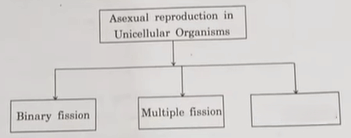
View Solution
Step 1: Understanding the Concept:
In unicellular organisms, asexual reproduction takes place without the involvement or fusion of gametes.
Step 2: Detailed Explanation:
Single-celled organisms reproduce asexually through several common methods:
1. Binary Fission: The parent cell splits into two identical daughter cells (e.g., Amoeba, Paramecium).
2. Multiple Fission: The parent cell divides into many daughter cells at the same time (e.g., Plasmodium).
3. Budding: A small projection or bud develops on the parent cell, grows gradually, and later separates to form a new organism (e.g., Yeast).
Step 3: Final Answer:
Hence, the third method shown in the flowchart is Budding.
Quick Tip: Yeast is a common example of budding in unicellular organisms, whereas Hydra demonstrates budding in multicellular organisms.
Which day is observed as World Biodiversity Day?
View Solution
Step 1: Understanding the Concept:
Various international environmental days are recognized by the United Nations to promote awareness and action regarding important ecological concerns.
Step 2: Detailed Explanation:
The United Nations declared May 22 as the International Day for Biological Diversity, also known as World Biodiversity Day.
This day aims to enhance global awareness about biodiversity conservation and highlight the importance of protecting ecosystems and species.
Step 3: Final Answer:
Therefore, World Biodiversity Day is celebrated on 22nd May.
Quick Tip: Remember: 5th June → World Environment Day, 22nd April → Earth Day, and 22nd May → Biodiversity Day. The number "22" appears in both Earth and Biodiversity observances.
Identify me, who am I? I was the first clone sheep born in Scotland.
View Solution
Step 1: Understanding the Concept:
Cloning refers to the laboratory technique used to produce organisms that are genetically identical to the original organism through asexual reproduction.
Step 2: Detailed Explanation:
Dolly the sheep holds historical importance as the first mammal successfully cloned from an adult somatic cell.
She was born on July 5, 1996, at the Roslin Institute in Scotland.
Scientists produced Dolly using a method called Somatic Cell Nuclear Transfer (SCNT), in which the nucleus of an adult cell is transferred into an enucleated egg cell.
Step 3: Final Answer:
Thus, the name of the first cloned sheep is Dolly.
Quick Tip: Dolly was cloned using a mammary gland cell; hence the scientists named her after the famous singer Dolly Parton.
Write the molecular formula of acetic acid.
View Solution
Step 1: Understanding the Concept:
Acetic acid is a well-known organic compound that belongs to the family of carboxylic acids. Carboxylic acids are characterized by the presence of a functional group known as the carboxyl group (\(-COOH\)). This functional group determines many of the chemical properties of the compound.
Step 2: Detailed Explanation:
Acetic acid is commonly known by its IUPAC name ethanoic acid. The name "ethanoic" indicates that the compound contains two carbon atoms in its molecular structure.
The structure of acetic acid consists of:
A methyl group (\(CH_3\)) containing one carbon atom bonded to three hydrogen atoms.
A carboxyl group (\(COOH\)), which includes a carbon atom double-bonded to oxygen and single-bonded to a hydroxyl group (\(OH\)).
When these groups combine, they form the molecular structure of acetic acid:
\[ CH_3COOH \]
This formula clearly represents the arrangement of atoms in the molecule, where the methyl group is attached to the carboxyl functional group.
Step 3: Additional Information:
Acetic acid is an important chemical compound with several practical uses. It is widely used in:
Food preservation and flavoring
Production of chemicals such as acetate salts and esters
Manufacturing plastics and synthetic fibers
In dilute form, it is responsible for the sour taste and characteristic smell of vinegar.
Step 4: Final Answer:
Therefore, the molecular formula of acetic acid is \(CH_3COOH\).
Quick Tip: Acetic acid (ethanoic acid) is the main component of vinegar, usually present in concentrations of about 5–8%.
State whether the following statement is true or false : The chairman of National Disaster Management is Sarpanch.
View Solution
Step 1: Understanding the Concept:
In India, disaster management is organized through a well-defined administrative framework that operates at three main levels: National, State, and District. Each level has a designated authority responsible for planning, coordination, and implementation of disaster management strategies.
Step 2: Detailed Explanation:
The disaster management structure in India is governed by the Disaster Management Act, 2005. According to this framework:
1. National Level: The National Disaster Management Authority (NDMA) functions at the national level, and its chairman is the Prime Minister of India. The NDMA is responsible for formulating national policies, guidelines, and plans for disaster management.
2. State Level: At the state level, the State Disaster Management Authority (SDMA) is established. The Chief Minister of the respective state serves as its chairman and oversees disaster preparedness, mitigation, and response within the state.
3. District Level: At the district level, the District Disaster Management Authority (DDMA) is responsible for implementing disaster management plans locally. The District Collector or District Magistrate generally acts as the chairman of this authority.
A Sarpanch is the elected head of the Gram Panchayat at the village level and plays a role in local governance. However, the Sarpanch does not hold any position in the National Disaster Management Authority.
Step 3: Final Answer:
Hence, the given statement is False.
Quick Tip: For national-level authorities in India, the Prime Minister usually serves as the ex-officio chairman, such as in the National Disaster Management Authority (NDMA).
After complete oxidation of a glucose molecule, ............... number of ATP molecules are formed.
View Solution
Step 1: Understanding the Concept:
Cellular respiration is a metabolic process through which cells break down glucose molecules to release energy. This energy is captured and stored in the form of ATP (Adenosine Triphosphate), which serves as the energy currency of the cell for various biological activities.
Step 2: Detailed Explanation:
The complete aerobic breakdown of one molecule of glucose occurs through three major stages:
1. Glycolysis: This process takes place in the cytoplasm of the cell. During glycolysis, one molecule of glucose is converted into two molecules of pyruvate. This stage produces a net gain of 2 ATP molecules along with reduced coenzymes such as \(NADH_2\).
2. Krebs Cycle (Citric Acid Cycle or TCA Cycle): This stage occurs inside the mitochondria. The pyruvate molecules formed during glycolysis are further oxidized through a series of enzymatic reactions. The Krebs cycle produces 2 ATP molecules directly and generates several reduced coenzymes such as \(NADH_2\) and \(FADH_2\).
3. Electron Transport Chain (ETC): This final stage occurs in the inner mitochondrial membrane. The reduced coenzymes \(NADH_2\) and \(FADH_2\) donate electrons to the electron transport chain, leading to the formation of a proton gradient that drives ATP synthesis. This stage produces the majority of energy, generating approximately 34 ATP molecules.
Adding the ATP produced in all stages: \[ Total ATP = 2 \;(Glycolysis) + 2 \;(Krebs Cycle) + 34 \;(Electron Transport Chain) \]
\[ Total ATP = 38 \]
Step 3: Final Answer:
Thus, the complete aerobic oxidation of one glucose molecule produces 38 ATP molecules.
Quick Tip: In eukaryotic cells, the actual ATP yield may be about \textbf{36 ATP} because some energy is used to transport reducing equivalents into the mitochondria. However, \textbf{38 ATP} is the theoretical maximum commonly used in textbook calculations.
Bat is included in class ...............
View Solution
Step 1: Understanding the Concept:
The classification of animals in biology is based on common structural, physiological, and reproductive characteristics. Organisms are grouped together into classes when they share important defining features.
Step 2: Detailed Explanation:
At first glance, bats may appear similar to birds because they possess wings and are capable of flying. However, biological classification depends on fundamental anatomical and reproductive traits rather than only on the ability to fly.
Bats are placed in the class Mammalia because they exhibit several key mammalian characteristics:
1. Mammary glands: Female bats produce milk through mammary glands to nourish their young ones, which is a defining feature of mammals.
2. Viviparous reproduction: Bats give birth to live offspring instead of laying eggs, which is typical of most mammals.
3. Presence of hair or fur: Their bodies are covered with hair or fur, another characteristic feature of mammals.
4. External ears (pinna): Bats possess well-developed external ears, which help them in echolocation and are typical mammalian structures.
Because of these characteristics, bats are grouped with mammals rather than birds in biological classification.
Step 3: Final Answer:
Therefore, bats are classified under the class Mammalia.
Quick Tip: Bats are unique because they are the \textbf{only mammals capable of true and sustained flight}, unlike other mammals that can only glide.
In Maharashtra the major hydroelectric power plant is located at ...............
View Solution
Step 1: Understanding the Concept:
Hydroelectric power is produced by converting the potential energy of stored water into electrical energy. Water stored at a height in a dam flows through turbines, causing them to rotate and generate electricity through generators.
Step 2: Detailed Explanation:
The Koyna Hydroelectric Project is one of the most significant hydroelectric power projects in India and the largest completed hydroelectric project in Maharashtra.
It is located at Koynanagar in the Satara district of Maharashtra. The project utilizes the water of the Koyna River, which is a major tributary of the Krishna River.
The project has been developed in four stages of power generation, each contributing to the overall electricity production capacity. Water stored in the Koyna Dam is released through tunnels and penstocks to drive turbines in the underground powerhouses, producing large amounts of electricity for the state.
This project plays a crucial role in supplying hydroelectric power to Maharashtra and supporting the region's energy needs.
Step 3: Final Answer:
Therefore, the major hydroelectric power plant in Maharashtra is located at Koyna.
Quick Tip: In Maharashtra: Koyna → Hydroelectric Power, Tarapur → Nuclear Power, Chandrapur and Parali → Thermal Power stations.
A first state to start a separate cyber crime unit in our country is ...............
View Solution
Step 1: Understanding the Concept:
As the use of the internet and digital technology increased, new forms of crimes such as online fraud, hacking, identity theft, and data breaches also began to rise. To effectively investigate and control such offenses, governments started creating specialized cyber crime units within the police system.
Step 2: Detailed Explanation:
Maharashtra became the first state in India to establish a dedicated cyber crime unit to deal specifically with crimes related to computers, mobile devices, and the internet.
This specialized unit was created to handle cases such as online financial fraud, cyber bullying, data theft, hacking, and other digital offenses that require technical expertise.
The Maharashtra Cyber Department was also developed to strengthen the cyber investigation infrastructure. It works to coordinate cyber police stations, digital forensic laboratories, and technical experts across the state.
In addition, the state has taken initiatives to establish cyber laboratories in various districts, enabling faster digital evidence analysis and more efficient investigation of cyber-related cases.
Step 3: Final Answer:
Therefore, Maharashtra is the first state in India to establish a separate cyber crime unit.
Quick Tip: Maharashtra has been proactive in cyber security initiatives and has also set up cyber labs in several districts to improve the speed and effectiveness of cyber crime investigations.
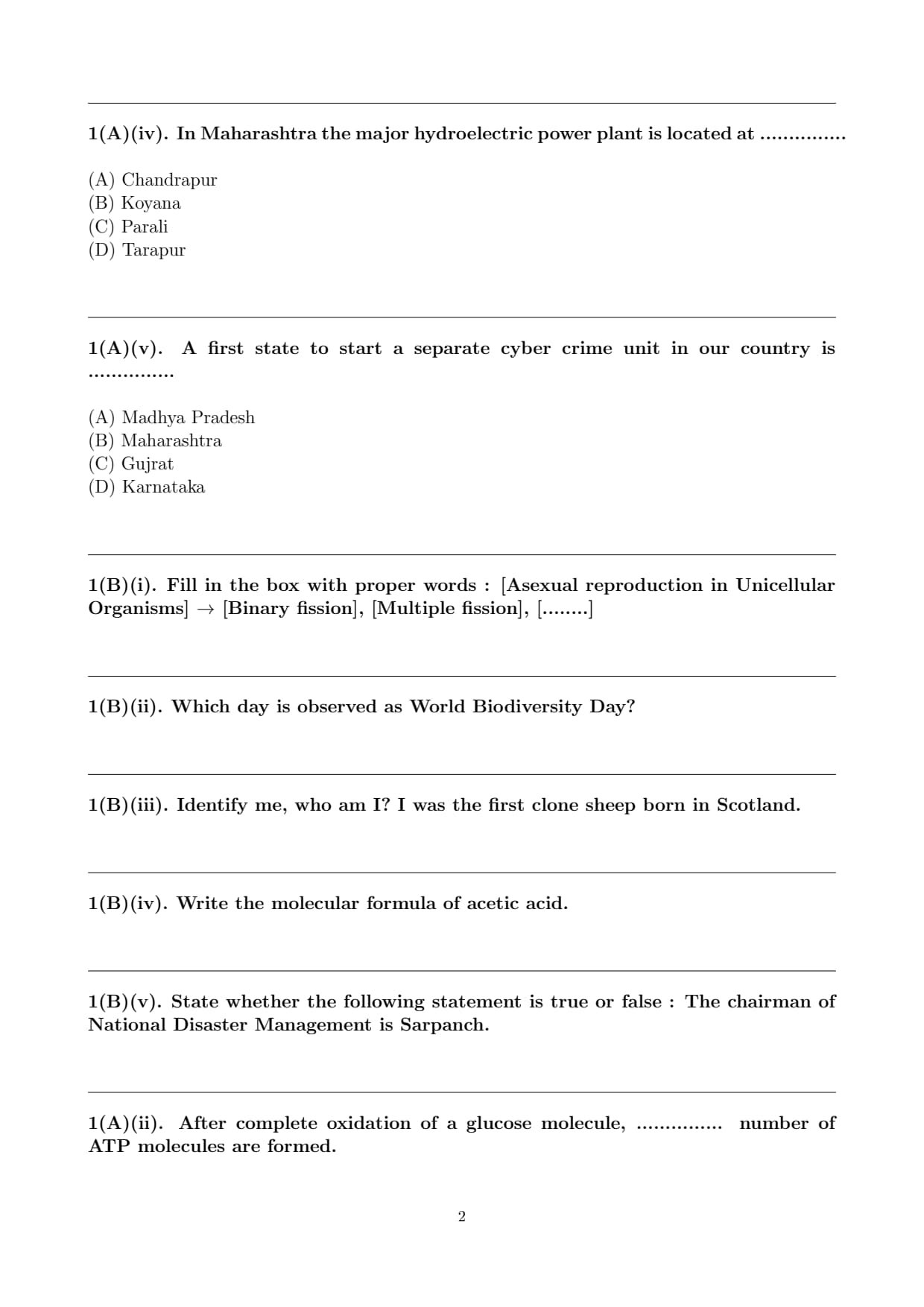
Fill in the box with proper words :
View Solution
Step 1: Understanding the Concept:
Unicellular organisms reproduce mainly through asexual reproduction, a process in which a single parent organism produces offspring without the fusion of gametes. These methods allow rapid multiplication under favorable conditions.
Step 2: Detailed Explanation:
There are several modes of asexual reproduction observed in unicellular organisms. The most common methods include:
1. Binary Fission: In this process, the parent cell divides into two equal and genetically identical daughter cells. This is one of the most common forms of reproduction in unicellular organisms such as Amoeba and \textit{Paramecium.
2. Multiple Fission: Under certain conditions, especially unfavorable environments, the nucleus of the parent cell divides repeatedly before the cell itself divides. Eventually, the cytoplasm splits to form many daughter cells simultaneously. This type of reproduction can be observed in organisms like \textit{Amoeba (during encystment) and \textit{Plasmodium.
3. Budding: In budding, a small outgrowth or bud develops on the parent cell. The bud gradually grows in size and eventually separates from the parent organism to form a new independent individual. A common example of budding in unicellular organisms is \textit{Yeast.
Step 3: Final Answer:
Therefore, the missing term in the given sequence of reproductive methods is Budding.
Quick Tip: \textit{Yeast is the most common example of budding in unicellular organisms, while Hydra demonstrates budding in multicellular organisms.
Which day is observed as World Biodiversity Day?
View Solution
Step 1: Understanding the Concept:
Several international observance days are recognized worldwide to promote awareness and encourage action on important environmental and ecological issues. These days help highlight the importance of protecting natural resources and maintaining ecological balance.
Step 2: Detailed Explanation:
To emphasize the importance of biodiversity conservation, the United Nations declared May 22 as the International Day for Biological Diversity, also commonly known as World Biodiversity Day.
This day is observed every year to increase global understanding of biodiversity and to remind people about the need to conserve plant and animal species, ecosystems, and genetic diversity. Biodiversity plays a vital role in maintaining ecological stability, supporting food security, and sustaining life on Earth.
Governments, educational institutions, environmental organizations, and communities across the world organize awareness programs, seminars, and campaigns on this day to promote biodiversity protection and sustainable development.
Step 3: Final Answer:
World Biodiversity Day is observed on 22nd May.
Quick Tip: A useful pattern to remember: 22nd March → World Water Day, 22nd April → Earth Day, and 22nd May → Biodiversity Day. These important environmental observances occur on the 22nd of consecutive months.
Identify me, who am I? I was the first clone sheep born in Scotland.
View Solution
Step 1: Understanding the Concept:
Cloning is a scientific technique used to produce a genetically identical copy of a cell, tissue, or entire organism. In this process, the genetic material of one organism is used to create another organism with the same DNA.
Step 2: Detailed Explanation:
Dolly was a female Finn-Dorset sheep and holds historical significance as the first mammal successfully cloned from an adult somatic cell.
She was created by a team of scientists led by Ian Wilmut and Keith Campbell at the Roslin Institute in Scotland in the year 1996.
The cloning of Dolly was achieved using a method called Somatic Cell Nuclear Transfer (SCNT). In this technique, the nucleus from a somatic (body) cell of an adult sheep was transferred into an egg cell whose nucleus had been removed. The reconstructed egg was then stimulated to divide and develop into an embryo, which was implanted into a surrogate mother sheep.
This successful experiment demonstrated that a fully differentiated adult cell still retains the complete genetic information required to develop into an entire organism. The achievement marked a major milestone in the fields of genetics, biotechnology, and developmental biology.
Step 3: Final Answer:
The first cloned mammal was named Dolly.
Quick Tip: Dolly was cloned from a mammary gland cell, which inspired her name after the famous singer Dolly Parton. The technique used was Somatic Cell Nuclear Transfer (SCNT).
Write the molecular formula of acetic acid.
View Solution
Step 1: Understanding the Concept:
Organic acids are a group of organic compounds that contain the carboxyl functional group (\(COOH\)). This functional group is responsible for the acidic properties of these compounds. Carboxylic acids are commonly found in nature and are widely used in food, industry, and biological processes.
Step 2: Detailed Explanation:
Acetic acid is one of the simplest and most common organic acids. Its IUPAC name is ethanoic acid. The molecule consists of two main parts:
1. A methyl group (\(CH_3\)), which contains one carbon atom bonded to three hydrogen atoms.
2. A carboxyl group (\(COOH\)), which includes a carbon atom double-bonded to an oxygen atom and single-bonded to a hydroxyl group (\(OH\)).
When these groups combine, they form the structure of acetic acid. The arrangement of atoms is represented by the molecular formula:
\[ CH_3COOH \]
This formula shows that the molecule contains two carbon atoms, four hydrogen atoms, and two oxygen atoms arranged around the carboxyl functional group. Acetic acid is widely known for its characteristic sour taste and pungent smell.
Step 3: Final Answer:
The molecular formula of acetic acid is \(\mathbf{CH_3COOH}\).
Quick Tip: A dilute aqueous solution of acetic acid (about 5--8%) is commonly known as \textbf{vinegar}, which is widely used in food preservation and cooking.
State whether the following statement is true or false : The chairman of National Disaster Management is Sarpanch.
View Solution
Step 1: Understanding the Concept:
Disaster management in India is organized through a hierarchical system that operates at the national, state, and district levels. This structure ensures proper planning, coordination, and response during natural or man-made disasters.
Step 2: Detailed Explanation:
At the national level, the National Disaster Management Authority (NDMA) is responsible for formulating policies, guidelines, and strategies for disaster management across the country. The Prime Minister of India serves as the chairman of the NDMA.
At the state level, the State Disaster Management Authority (SDMA) functions under the leadership of the Chief Minister. It implements disaster management policies and plans within the state.
At the district level, the District Disaster Management Authority (DDMA) is headed by the District Collector or District Magistrate, who coordinates disaster preparedness and relief activities locally.
A Sarpanch, on the other hand, is the elected head of the Gram Panchayat at the village level and is involved in local governance. However, the Sarpanch does not head any national disaster management body.
Step 3: Final Answer:
Hence, the given statement is False.
Quick Tip: Disaster management leadership hierarchy in India: National level → Prime Minister, State level → Chief Minister, District level → District Collector / District Magistrate.
Give scientific reasons: The popularity of probiotic products is increasing.
View Solution
Step 1: Understanding the Concept:
Probiotics are food products or supplements that contain live beneficial microorganisms. These microorganisms, often referred to as "good bacteria," help maintain a healthy balance of microbes in the digestive system.
Step 2: Detailed Explanation:
1. Probiotics commonly contain beneficial bacteria such as \textit{Lactobacillus and \textit{Bifidobacterium, which support the normal functioning of the digestive system.
2. These microorganisms help restore and maintain the natural balance of gut microflora by increasing beneficial microbes and suppressing harmful bacteria such as \textit{Clostridium.
3. Probiotics aid in better digestion and nutrient absorption, which contributes to improved overall health.
4. They also strengthen the immune system and are often used to prevent or treat digestive disorders such as diarrhea, especially after antibiotic use.
5. Because of these health benefits, probiotic foods and supplements have gained significant popularity in modern diets.
Step 3: Final Answer:
Probiotics are popular because they promote digestive health, strengthen immunity, and help control harmful microorganisms in the intestine.
Quick Tip: Common probiotic foods include yogurt, kefir, kimchi, and sauerkraut, all of which contain beneficial live bacteria that support gut health.
Give scientific reasons: Body temperature of reptiles is not constant.
View Solution
Step 1: Understanding the Concept:
Animals are classified based on their ability to regulate body temperature. They are broadly divided into two groups: homeothermic (warm-blooded) animals, which maintain a constant internal body temperature, and poikilothermic (cold-blooded) animals, whose body temperature varies according to the surrounding environment.
Step 2: Detailed Explanation:
1. Reptiles belong to the group of poikilothermic animals. This means they do not have a well-developed internal mechanism to regulate their body temperature independently.
2. As a result, the body temperature of reptiles changes depending on the temperature of their surroundings. When the environment becomes colder, their body temperature decreases, and when the surroundings become warmer, their body temperature rises.
3. To manage their body temperature, reptiles display behavioral adaptations. For example, they may bask in sunlight to absorb heat and raise their body temperature or move into shade, burrows, or water to cool down when the temperature becomes too high.
4. This dependence on environmental temperature influences their activity levels. Reptiles are generally more active in warm conditions and less active in cold environments.
Step 3: Final Answer:
Therefore, reptiles are cold-blooded (poikilothermic) animals whose body temperature depends on environmental temperature.
Quick Tip: In the animal kingdom, only \textbf{birds and mammals} are homeothermic (warm-blooded), while reptiles, amphibians, and fishes are generally poikilothermic (cold-blooded).
Give scientific reasons: Nowadays farmers are opting for organic farming.
View Solution
Step 1: Understanding the Concept:
Organic farming is an agricultural method that avoids the use of synthetic fertilizers, chemical pesticides, and genetically modified organisms. Instead, it relies on natural processes and biological inputs to maintain soil fertility and crop productivity.
Step 2: Detailed Explanation:
1. The excessive and prolonged use of chemical fertilizers and pesticides in conventional farming has resulted in problems such as soil degradation, loss of soil fertility, and water pollution.
2. Chemical residues from these substances may remain in agricultural products, posing health risks to humans and animals when consumed over long periods.
3. Organic farming focuses on the use of natural fertilizers such as compost, farmyard manure, green manure, and vermicompost. It also employs biopesticides and biological pest control methods to protect crops without harming the environment.
4. These practices help in improving soil structure, maintaining biodiversity, and protecting ecological balance.
5. In addition, there is a growing demand among consumers for safe, chemical-free, and nutritious food, which encourages farmers to adopt organic farming methods.
Step 3: Final Answer:
Therefore, farmers are increasingly adopting organic farming to improve soil health, produce safer food, and meet the rising demand for environmentally friendly agricultural products.
Quick Tip: Organic farming is an important part of \textbf{sustainable agriculture}, as it protects soil health, reduces environmental pollution, and promotes long-term agricultural productivity.
What is meant by carbon dating? Give any one use of this technique.
View Solution
Step 1: Understanding the Concept:
Carbon dating, also known as radiocarbon dating, is a scientific technique used to estimate the age of organic materials such as bones, wood, and other remains of once-living organisms. It is widely used in fields such as archaeology, paleontology, and anthropology.
Step 2: Detailed Explanation:
Definition: Carbon dating works by measuring the ratio of the radioactive isotope \(\mathrm{C^{14}}\) (carbon-14) to the stable isotope \(\mathrm{C^{12}}\) present in the remains of a dead organism.
While an organism is alive, it continuously exchanges carbon with the atmosphere through processes such as respiration and photosynthesis. As a result, the proportion of \(\mathrm{C^{14}}\) and \(\mathrm{C^{12}}\) in its body remains nearly constant.
After the organism dies, this exchange stops. The radioactive carbon isotope \(\mathrm{C^{14}}\) gradually decays into nitrogen at a constant rate known as its half-life (approximately 5730 years). By measuring how much \(\mathrm{C^{14}}\) remains in the sample compared to \(\mathrm{C^{12}}\), scientists can estimate how long ago the organism died.
Use: This method is extremely useful for determining the age of ancient organic remains such as fossils, archaeological artifacts, wooden structures, and historical manuscripts.
Step 3: Final Answer:
Carbon dating is a technique used to determine the age of organic materials by measuring the decay of radioactive carbon isotopes, particularly \(\mathrm{C^{14}}\).
Quick Tip: Radiocarbon dating was developed by \textbf{Willard Libby}, who was awarded the Nobel Prize in Chemistry in 1960 for this discovery.
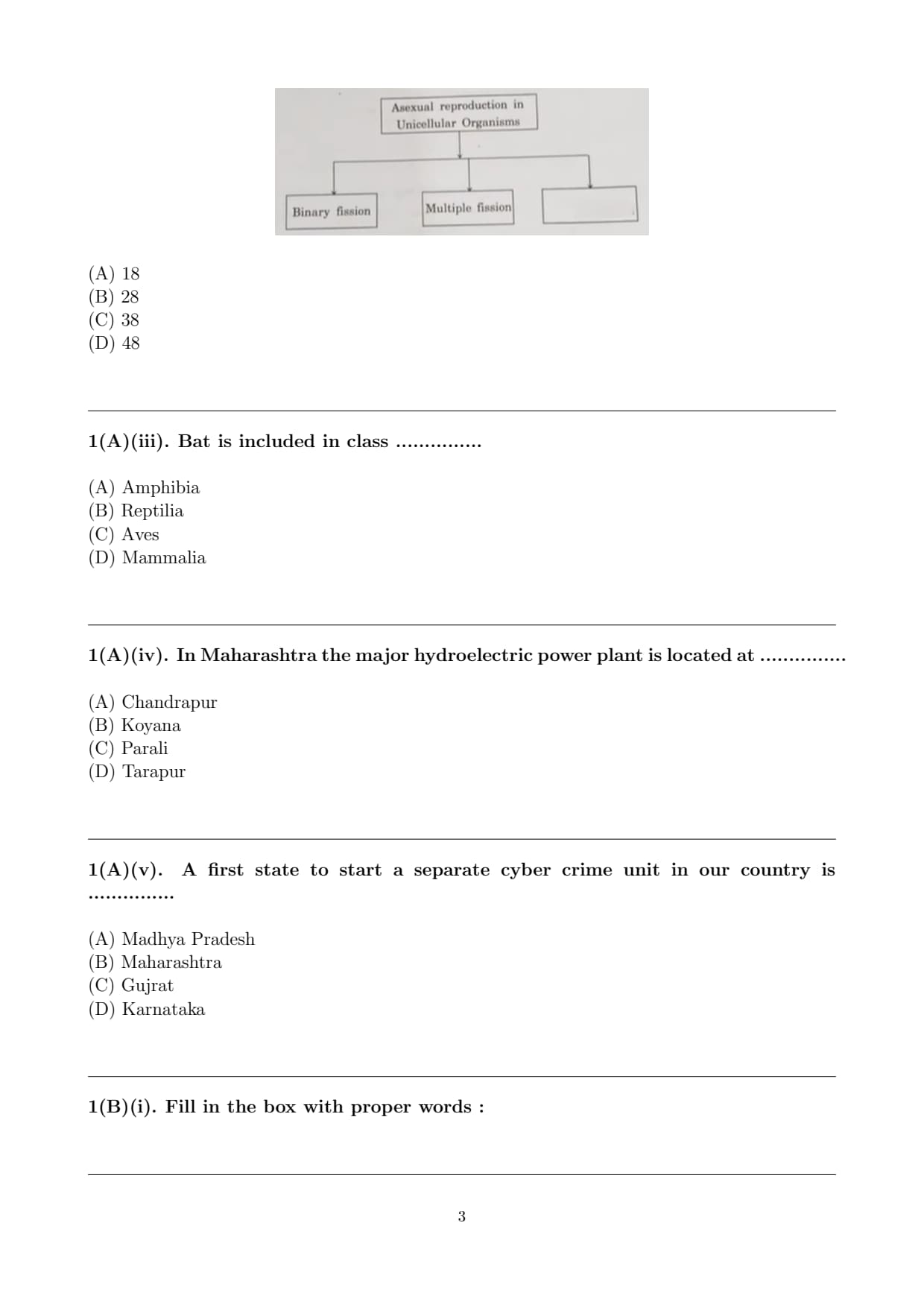
Complete the table :
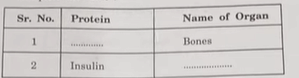
View Solution
Step 1: Understanding the Concept:
Different tissues and organs in the human body are associated with specific proteins that perform particular structural or functional roles. These proteins are essential for maintaining the normal functioning of body systems.
Step 2: Detailed Explanation:
1. The major protein present in bone tissue is called Ossein. It forms the organic matrix of bones and provides them with flexibility and tensile strength. Minerals such as calcium phosphate are deposited on this protein framework to give bones their hardness and rigidity.
2. Insulin is a protein-based hormone that plays an important role in regulating blood glucose levels in the body. It is secreted by the pancreas, specifically by the beta cells of the Islets of Langerhans. Insulin helps cells absorb glucose from the bloodstream and maintain normal blood sugar levels.
Step 3: Final Answer:
1. Ossein.
2. Pancreas.
Quick Tip: Examples of important body proteins include: Keratin in skin and hair, Hemoglobin in blood for oxygen transport, and Collagen in connective tissues.
Comprehension Text:
Paddy is cultivated on large scale in various states of South India. Paddy fields
are frequently attacked by grasshoppers. Similarly, frogs are also present in large
number in the mud of paddy fields, to feed upon grasshoppers and snakes are also
present therein to feed upon their favourite food-frogs. However, if frog population
declines all of a sudden,
Question 2(B)(iii)(a).:
What will be effect on paddy crop?
View Solution
Step 1: Understanding the Concept:
This problem involves a food chain, which represents the flow of energy from one organism to another in an ecosystem. The given food chain is:
\[ Paddy \rightarrow Grasshopper \rightarrow Frog \rightarrow Snake \]
In this chain, paddy acts as the producer, grasshopper as the primary consumer, frog as the secondary consumer, and snake as the tertiary consumer.
Step 2: Detailed Explanation:
Frogs play an important role in controlling the population of grasshoppers because they feed on them. If the number of frogs in the ecosystem decreases, the natural predation on grasshoppers will reduce.
As a consequence:
The grasshopper population will increase rapidly due to the absence of their predator.
Grasshoppers feed on paddy plants and other crops.
An increased grasshopper population will lead to greater consumption and damage to the paddy crops.
This disturbance in one level of the food chain can affect the entire ecosystem.
Step 3: Final Answer:
Therefore, if the frog population decreases, the grasshopper population will increase, leading to significant damage to paddy crops and a decrease in paddy production.
Quick Tip: A change in the population of one organism in a food chain can affect all other organisms in that chain. This ecological effect is known as a \textbf{trophic cascade}.
Number of which components will increase?
View Solution
Step 1: Understanding the Concept:
In an ecosystem, the population of organisms is regulated through predator–prey relationships. Predators feed on prey organisms, helping to maintain ecological balance and prevent uncontrolled growth of certain species.
Step 2: Detailed Explanation:
In the given food chain, frogs act as predators while grasshoppers act as their prey. Frogs feed on grasshoppers and therefore help control their population.
If the frog population suddenly disappears or decreases significantly:
Grasshoppers will no longer have a natural predator to control their numbers.
As a result, grasshoppers will reproduce rapidly.
This will lead to a sharp increase in the grasshopper population.
Such changes disturb the ecological balance and can affect other organisms in the food chain.
Step 3: Final Answer:
Therefore, if frogs disappear, the population of grasshoppers will increase.
Quick Tip: If frogs disappear, grasshopper numbers increase, while snake populations may decrease because frogs serve as an important food source for them.
Write any two advantages of hydroelectric power generation.
View Solution
Step 1: Understanding the Concept:
Hydroelectric power is a type of renewable energy that is produced by converting the kinetic and potential energy of flowing or falling water into electrical energy using turbines and generators.
Step 2: Detailed Explanation:
Hydroelectric power plants offer several important advantages:
1. No Pollution: Unlike thermal power plants that burn fossil fuels such as coal or gas, hydroelectric plants generate electricity without releasing harmful gases, smoke, or carbon dioxide into the atmosphere. This makes it an environmentally friendly source of energy.
2. Renewable Source of Energy: Hydroelectric power relies on water, which is continuously replenished through the natural water cycle involving rainfall and river flow. Therefore, it is considered a sustainable and renewable energy resource.
3. Multipurpose Benefits: Dams constructed for hydroelectric power generation also serve additional purposes. The stored water can be used for irrigation, drinking water supply, flood control, and recreation.
4. Reliable Energy Production: Hydroelectric power plants can generate electricity consistently and can quickly adjust output to meet changes in electricity demand.
Step 3: Final Answer:
The main advantages of hydroelectric power are that it is pollution-free and uses a renewable source of energy.
Quick Tip: Although hydroelectric power is clean in terms of emissions, the construction of large dams can sometimes lead to environmental changes and displacement of local communities.
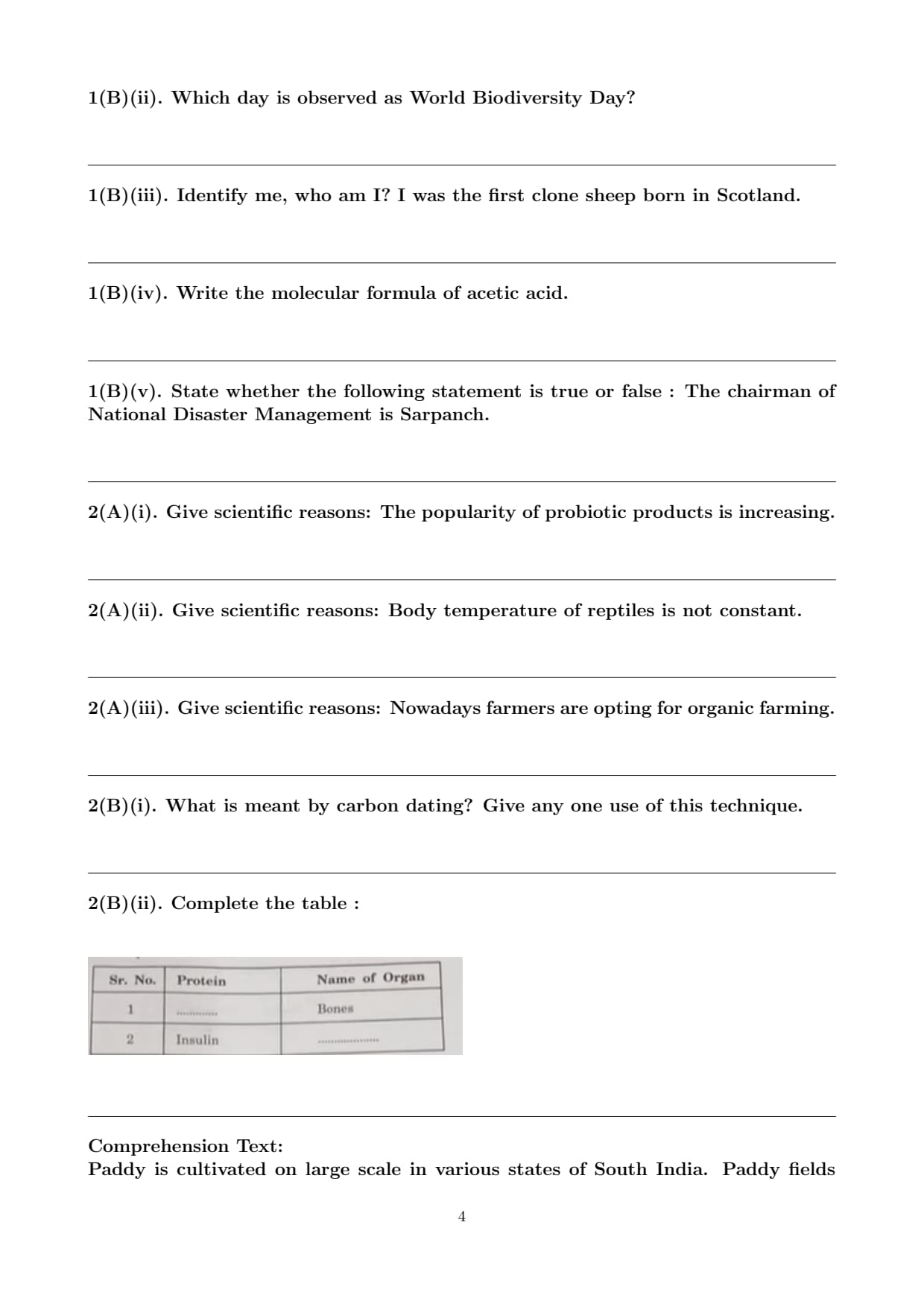
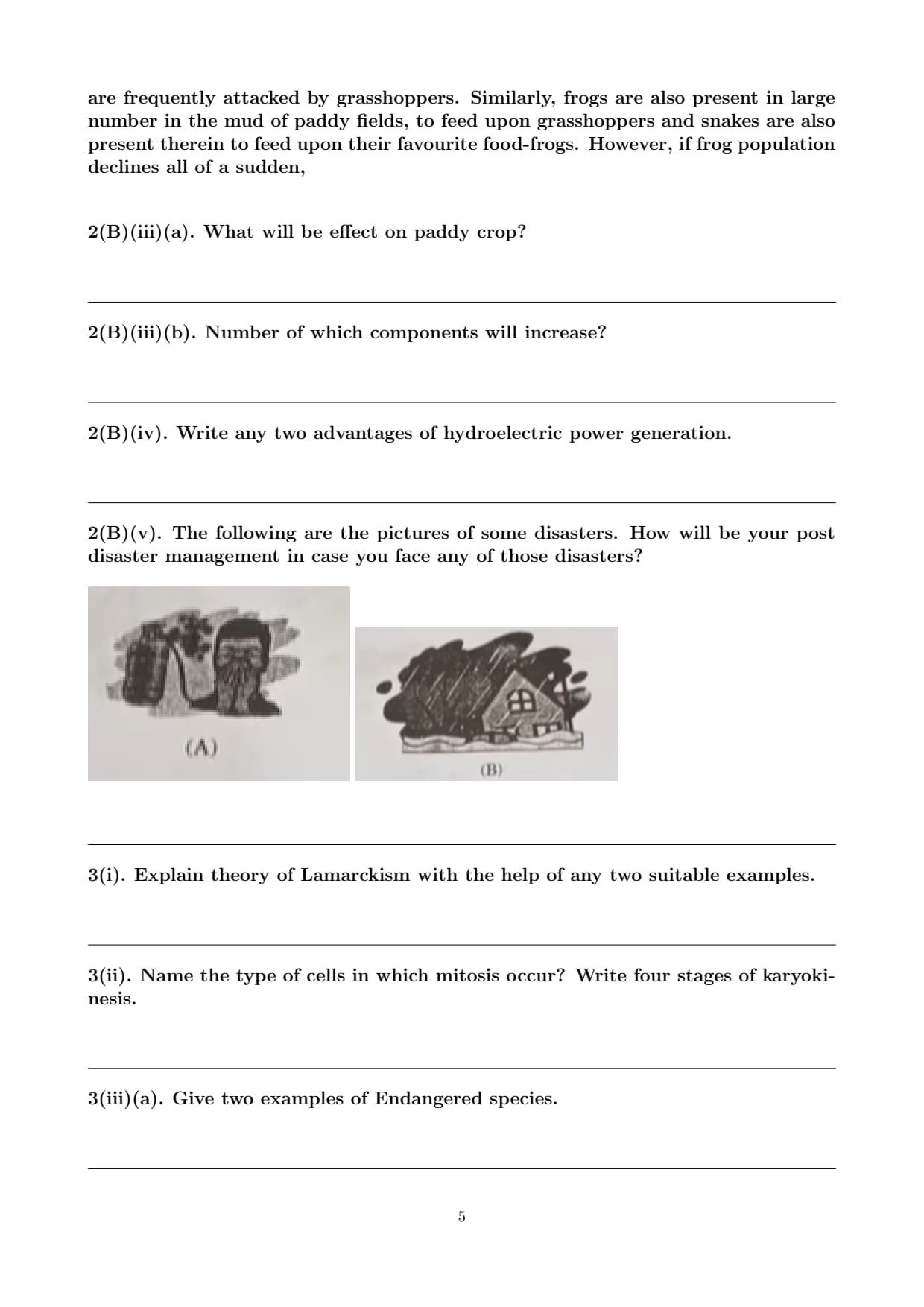
The following are the pictures of some disasters. How will be your post disaster management in case you face any of those disasters?
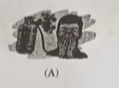
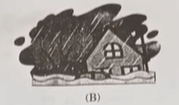
View Solution
Step 1: Understanding the Concept:
Post-disaster management refers to the set of actions taken after a disaster occurs. Its main objectives are to rescue affected people, provide immediate relief, and restore normal life in the affected region. It includes rehabilitation, medical care, and restoration of essential services.
Step 2: Detailed Explanation:
Case A (Earthquake):
1. Conducting search and rescue operations to locate and save people trapped under collapsed buildings and debris.
2. Providing first aid and medical treatment to injured individuals and transporting seriously injured victims to hospitals.
3. Arranging temporary shelters, food, drinking water, and clothing for displaced people who have lost their homes.
Case B (Flood):
1. Evacuating people from flooded or low-lying areas to safer places such as relief camps or higher ground.
2. Supplying safe drinking water, food, and sanitation facilities to prevent the spread of water-borne diseases such as cholera and diarrhea.
3. After the floodwater recedes, removing mud and debris, restoring roads, communication networks, electricity supply, and transportation systems.
Step 3: Final Answer:
Thus, post-disaster management mainly focuses on rescue operations, medical assistance, relief distribution, and restoration of essential services.
Quick Tip: In disaster management, the first priority is always \textbf{saving lives}, followed by providing \textbf{basic necessities such as food, water, shelter, and medical care}.
Explain theory of Lamarckism with the help of any two suitable examples.
View Solution
Step 1: Understanding the Concept:
Lamarckism is an early theory of evolution proposed by the French biologist Jean-Baptiste Lamarck. According to this theory, changes in the structure and functions of organisms occur as a response to environmental conditions. Lamarck suggested that these changes arise mainly due to the use or disuse of organs.
Step 2: Detailed Explanation:
Lamarck proposed that organs which are used frequently become stronger and more developed, whereas organs that are not used gradually become weaker and may eventually disappear.
He further suggested that the characters acquired during the lifetime of an organism as a result of such use or disuse are passed on to the next generation. This concept is known as the inheritance of acquired characters.
Examples:
1. Neck of Giraffe: According to Lamarck, the ancestors of giraffes had short necks. In order to reach leaves on tall trees, they repeatedly stretched their necks. Over many generations, this constant use caused the neck to become longer, and this acquired trait was passed on to their offspring.
2. Shoulders of Ironsmith: The shoulders and arm muscles of an ironsmith become stronger due to continuous hammering and physical activity. Lamarck suggested that such acquired strength could be inherited by the next generation.
3. Flightless Birds: Birds such as Ostrich and Emu have weak wings because they stopped using them for flying. According to Lamarck, the disuse of wings over generations caused them to become reduced and non-functional.
Step 3: Final Answer:
Thus, Lamarckism states that characters acquired through the use or disuse of organs during an organism's lifetime can be inherited by the next generation.
Quick Tip: Although Lamarck's idea of use and disuse explained how organs might change, the concept of \textbf{inheritance of acquired characters} was later rejected because changes in body (somatic) cells are generally not transmitted to reproductive (germ) cells.
Name the type of cells in which mitosis occur? Write four stages of karyokinesis.
View Solution
Step 1: Understanding the Concept:
Mitosis is a type of cell division that results in two daughter cells each having the same number and kind of chromosomes as the parent nucleus.
Step 2: Detailed Explanation:
Type of Cells: Mitosis occurs in somatic cells and stem cells of the body.
Four Stages of Karyokinesis (Nuclear Division):
1. Prophase: Condensation of thin thread-like chromosomes starts. Centrioles duplicate and move to opposite poles. Nuclear membrane and nucleolus start to disappear.
2. Metaphase: Nuclear membrane completely disappears. Chromosomes complete their condensation and arrange themselves parallel to the equatorial plane of the cell. Spindle fibers are formed.
3. Anaphase: Centromeres split and sister chromatids of each chromosome separate and are pulled apart in opposite directions by spindle fibers.
4. Telophase: Chromosomes reach opposite poles and start to decondense. Nuclear membrane and nucleolus reappear. Two daughter nuclei are formed.
Step 3: Final Answer:
Mitosis occurs in somatic and stem cells. The four stages are Prophase, Metaphase, Anaphase, and Telophase.
Quick Tip: Remember the acronym \textbf{PMAT} to recall the sequence of stages in karyokinesis: Prophase, Metaphase, Anaphase, Telophase.
Give two examples of Endangered species.
View Solution
Step 1: Understanding the Concept:
Endangered species are those whose number is declined to a critical level or their habitat is shrunk to such an extent that they can be extinct in near future if protective measures are not taken.
Step 2: Detailed Explanation:
These animals face a very high risk of extinction in the wild.
Examples include:
1. Lion-tailed macaque: Found in the Western Ghats of India.
2. Lesser florican: A large bird found in the Indian subcontinent.
Step 3: Final Answer:
Examples of endangered species are Lion-tailed macaque and Lesser florican.
Quick Tip: The International Union for Conservation of Nature (IUCN) maintains the "Red Data Book" which lists all threatened species.
Give two examples of Rare species.
View Solution
Step 1: Understanding the Concept:
Rare species are those with small populations that are not currently endangered or vulnerable but are at risk due to their limited numbers.
Step 2: Detailed Explanation:
The number of these organisms is considerably declined. Being endemic, they may become extinct very fast.
Examples include:
1. Red panda: Found in the Eastern Himalayas.
2. Musk deer: Known for the scent glands used in perfumes.
Step 3: Final Answer:
Examples of rare species are Red panda and Musk deer.
Quick Tip: Rare species often have a very specific or restricted geographical distribution.
Give two examples of Vulnerable species.
View Solution
Step 1: Understanding the Concept:
Vulnerable species are those whose population is small and continues to decline. Continuous decline in their number is a matter of concern.
Step 2: Detailed Explanation:
These species are likely to become endangered unless the circumstances threatening their survival improve.
Examples include:
1. Tiger: Affected by habitat loss and poaching.
2. Lion: Specifically the Asiatic Lion found in Gir forest.
Step 3: Final Answer:
Examples of vulnerable species are Tiger and Lion.
Quick Tip: Vulnerability is a step before becoming Endangered. Protecting habitats is the primary way to save these species.
Which fuel is used in thermal power plant ? What are the problems associated with this type of power generation ?
View Solution
Step 1: Understanding the Concept:
Thermal power plants generate electricity by burning fossil fuels to produce steam, which then drives a turbine.
Step 2: Detailed Explanation:
Fuel used: Coal is used as the primary fuel in thermal power plants.
Problems associated:
1. Air Pollution: Burning of coal releases harmful gases like carbon dioxide (\(CO_2\)), sulfur oxides (\(SO_x\)), and nitrogen oxides (\(NO_x\)) into the atmosphere.
2. Health Hazards: Along with gases, soot particles (particulate matter) are also released, which can cause serious respiratory problems like asthma and bronchitis.
3. Resource Depletion: Coal is a non-renewable fossil fuel, and its reserves are limited.
4. Global Warming: The release of \(CO_2\) contributes significantly to the greenhouse effect and climate change.
Step 3: Final Answer:
Coal is used in thermal plants. The main problems are environmental pollution and health issues due to emission of toxic gases and ash.
Quick Tip: Electrostatic precipitators are used in chimneys of thermal plants to reduce the release of particulate matter into the air.
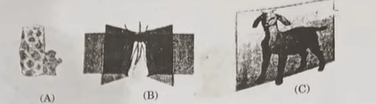
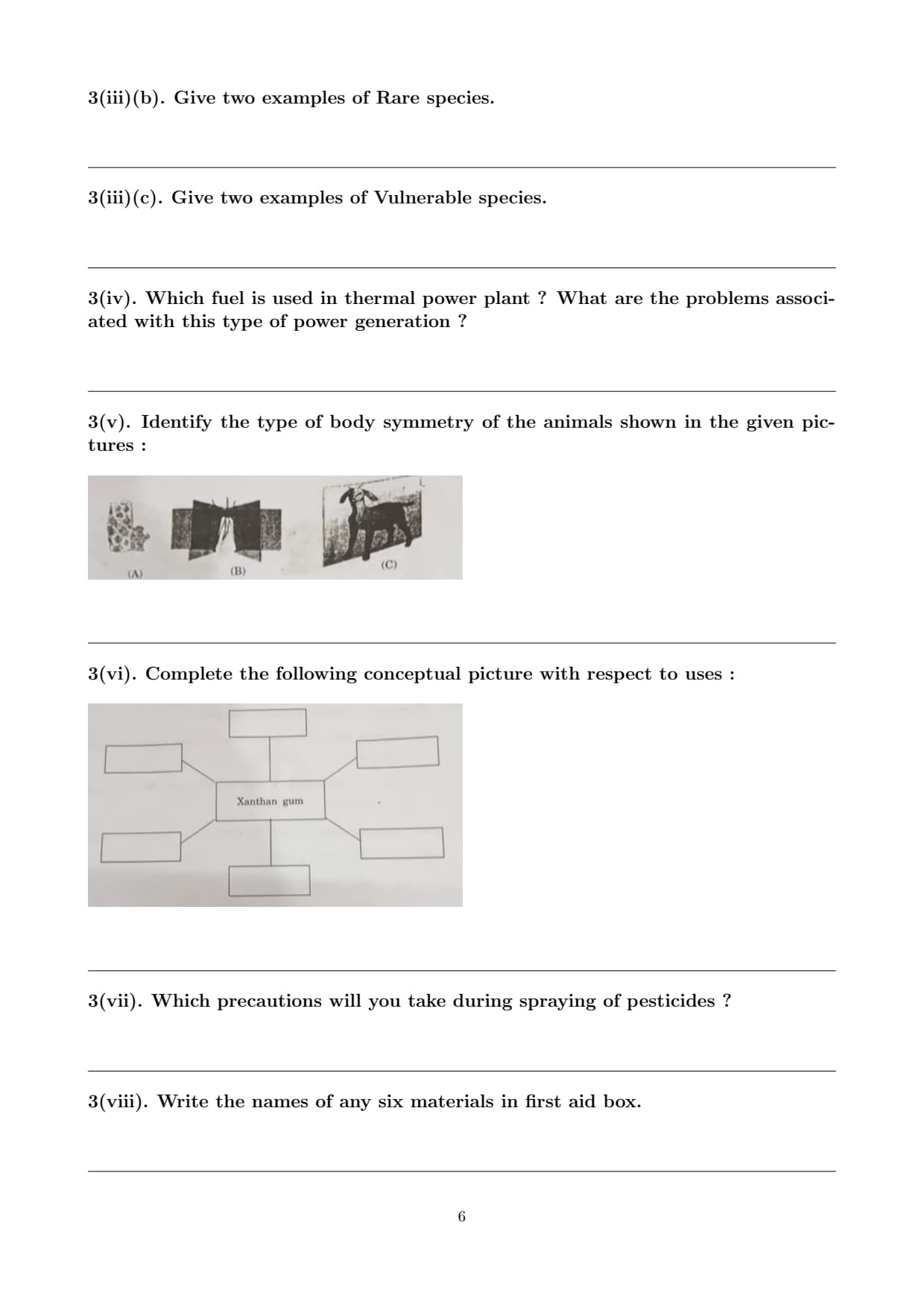
Identify the type of body symmetry of the animals shown in the given pictures :
View Solution
Step 1: Understanding the Concept:
Body symmetry refers to the balanced distribution of duplicate body parts or shapes within the body of an organism.
Step 2: Detailed Explanation:
(A) Asymmetrical Body: In such bodies, there is no any imaginary axis passing through the center of body of which it can be divided into two equal halves. Example: Amoeba, some sponges.
(B) Radial Symmetry: In this type of body, if an imaginary cut passes through the central axis but any plane of body, it gives two equal halves. Example: Starfish, Jellyfish.
(C) Bilateral Symmetry: In this type of body, there is only one imaginary axis of the body through which we can get two equal halves. Example: Insects, Fishes, Frogs, Birds, Mammals (Goat).
Step 3: Final Answer:
(A) Asymmetrical body
(B) Radial symmetry
(C) Bilateral symmetry
Quick Tip: Most complex animals (including humans) exhibit bilateral symmetry, while simpler aquatic organisms often show radial symmetry.
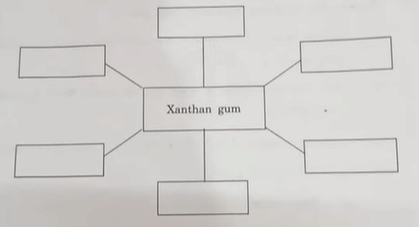
Complete the following conceptual picture with respect to uses :
View Solution
Step 1: Understanding the Concept:
Xanthan gum is a microbial polysaccharide obtained by fermentation of starch and molasses with the help of \textit{Xanthomonas species.
Step 2: Detailed Explanation:
Xanthan gum is widely used in various industries due to its properties like solubility in hot and cold water and high density. Its uses are:
1. Food Industry: Used as a thickener and stabilizer in ice creams, puddings, and chocolates.
2. Instant products: Used in instant soups and salad dressings.
3. Pigments and Paints: Acts as a binder.
4. Agriculture: Used in the production of fertilizers.
5. Textiles: Used in textile dyes.
6. Paper Industry: Used for making high-quality paper.
Step 3: Final Answer:
The six boxes can be filled with: Ice cream, Puddings, Chocolates, Fertilizers, High-quality paper, and Textiles.
Quick Tip: Xanthan gum is often used as a gluten substitute in gluten-free baking to provide the necessary elasticity.
Which precautions will you take during spraying of pesticides ?
View Solution
Step 1: Understanding the Concept:
Pesticides are chemical substances used to kill pests. They can be toxic to humans and the environment if not handled properly.
Step 2: Detailed Explanation:
Precautions to be taken:
1. Protective Clothing: Always wear masks, gloves, and full-sleeved clothes to prevent skin contact and inhalation.
2. Wind Direction: Spray the pesticides in the direction of the wind, never against it, to avoid the chemicals blowing back onto the operator.
3. Safe Handling: Do not eat, drink, or smoke during the spraying process.
4. Hygiene: After spraying, wash hands, face, and the equipment thoroughly with soap and clean water.
5. Storage: Keep pesticides away from food items and out of reach of children.
Step 3: Final Answer:
Wear protective gear, spray with the wind, and wash thoroughly after handling to avoid chemical poisoning.
Quick Tip: Always read the manufacturer's instructions on the label before using any pesticide.
Write the names of any six materials in first aid box.
View Solution
Step 1: Understanding the Concept:
A first aid box contains essential medical supplies needed to provide immediate care for minor injuries or before professional medical help arrives.
Step 2: Detailed Explanation:
Commonly required materials in a first aid box are:
1. Bandage strips: Of different sizes for covering wounds.
2. Sterile Gauze: To clean and cover larger wounds.
3. Antiseptic solution/cream: (e.g., Dettol, Savlon, or Betadine) to prevent infection.
4. Adhesive tape: To secure bandages or gauze in place.
5. Scissors: For cutting bandages, tape, or clothing.
6. Thermometer: To check body temperature.
7. Forceps/Tweezers: To remove splinters or debris from a wound.
Step 3: Final Answer:
Six materials are: Bandages, Gauze, Antiseptic liquid, Adhesive tape, Scissors, and Thermometer.
Quick Tip: Always check the expiry dates of medicines and ointments in your first aid box periodically.
Write the names of any six factors affecting social health.
View Solution
Step 1: Understanding the Concept:
Social health refers to the ability of a person to establish and maintain healthy relationships with others and adapt to various social situations.
Step 2: Detailed Explanation:
Various factors influence the social health of an individual and the community. These include:
1. Education: Access to quality education helps in better decision-making and social awareness.
2. Financial Status: Economic stability reduces stress and provides access to better life resources.
3. Social and Physical Surroundings: The people we interact with and the safety of our environment directly affect our mental state.
4. Residential Area: Living in a clean and safe neighborhood promotes a sense of security.
5. Water and Sanitation: Availability of clean drinking water and proper toilet facilities prevents diseases and maintains dignity.
6. Job Opportunities: Meaningful employment provides a sense of purpose and financial independence.
7. Recreational Facilities: Availability of gardens and playgrounds for physical activity and social gathering.
Step 3: Final Answer:
The six factors are: Education, Financial status, Social environment, Residential area, Water/Sanitation, and Job opportunities.
Quick Tip: Social health is not just about the individual but the collective facilities provided by society. Remember it as a mix of "Personal, Environmental, and Economic" factors.
What will you do? Why? Your brother studying in XII has developed the stress.
View Solution
Step 1: Understanding the Concept:
Stress management is crucial for students, especially during critical academic years like Grade XII (Board Exams), to prevent mental health issues.
Step 2: Detailed Explanation:
If my brother is stressed due to his studies, I would take the following steps:
1. Communication: I will talk to him to understand the specific cause of his stress (e.g., difficult subjects, time management).
2. Encouragement: I will encourage him to take short breaks and pursue hobbies like music, reading, or playing sports to refresh his mind.
3. Healthy Lifestyle: I will ensure he gets adequate sleep (7-8 hours) and eats nutritious food.
4. Meditation: I might suggest simple breathing exercises or meditation to calm his nerves.
5. Reasoning (Why): Continuous stress can lead to depression, physical illness, and lack of concentration. Managing stress helps in better academic performance and maintains overall mental well-being.
Step 3: Final Answer:
I will communicate with him and encourage recreational activities to reduce the negative impact of stress on his health and studies.
Quick Tip: Academic stress is often linked to "performance anxiety." Suggesting a structured timetable can often provide a sense of control and reduce panic.
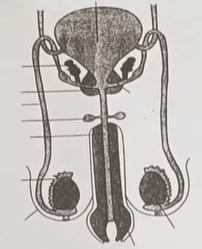
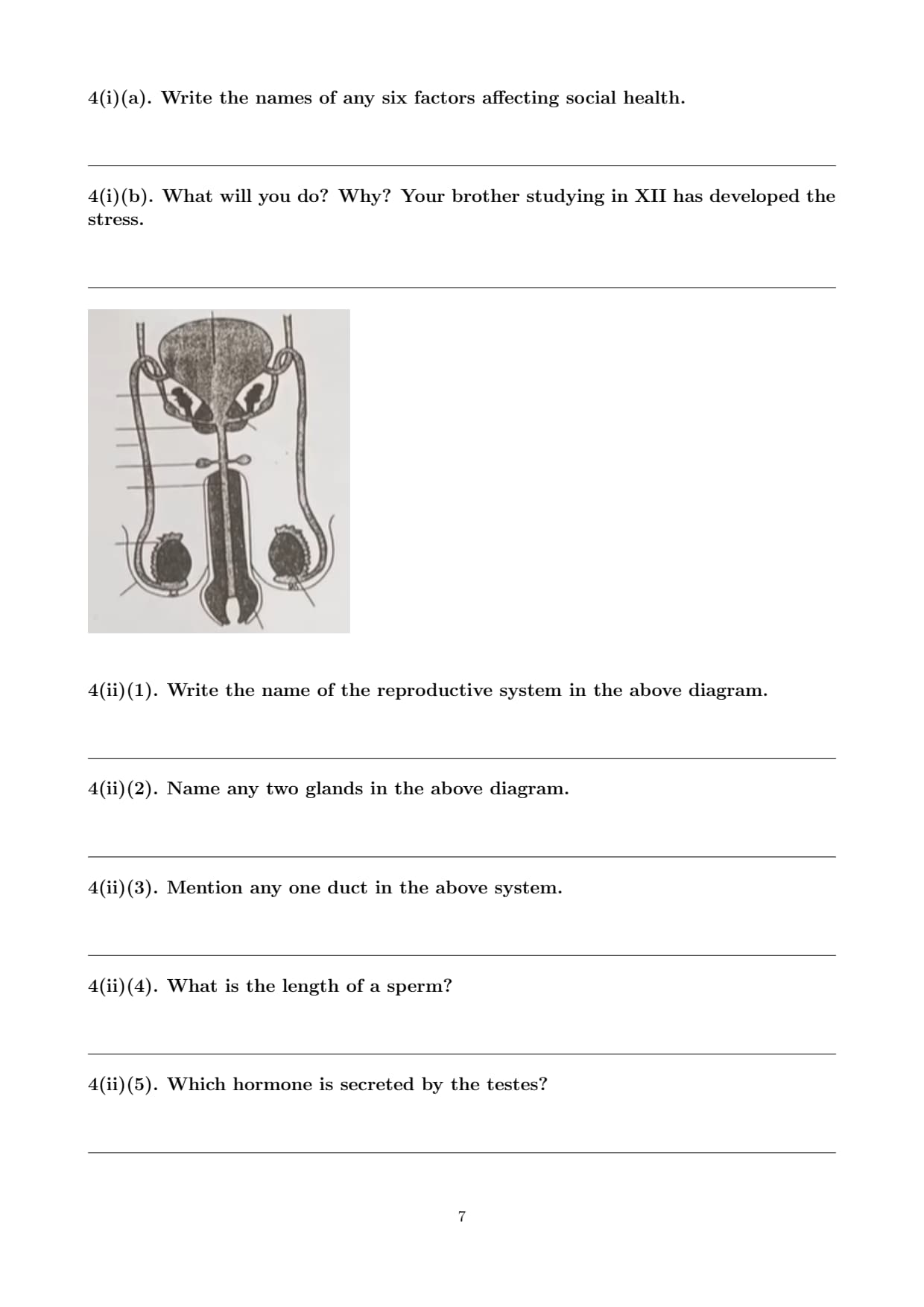
Question 4(ii)(1):
Write the name of the reproductive system in the above diagram.
View Solution
Step 1: Understanding the Concept:
The diagram shows anatomical structures such as testes, penis, and associated glands found in human males.
Step 3: Final Answer:
The diagram represents the Human Male Reproductive System.
Quick Tip: Identify this system by looking for the "scrotum" and "testes" which are located outside the abdominal cavity.
Name any two glands in the above diagram.
View Solution
Step 1: Understanding the Concept:
Accessory glands in the male reproductive system secrete fluids that nourish and transport sperm.
Step 2: Detailed Explanation:
The three main accessory glands are:
1. Seminal vesicles: Secrete a fluid rich in fructose to provide energy to sperm.
2. Prostate gland: Secretes a milky fluid that helps in the motility of sperm.
3. Cowper's gland (Bulbourethral gland): Secretes lubricating fluid.
Step 3: Final Answer:
Two glands are: Seminal vesicles and Prostate gland.
Quick Tip: The combined secretions of these glands along with sperm is called "Semen."
Mention any one duct in the above system.
View Solution
Step 1: Understanding the Concept:
Ducts are tubes that transport sperm from the testes to the exterior.
Step 2: Detailed Explanation:
The sequence of ducts includes: Rete testis, Vasa efferentia, Epididymis, Vas deferens, Ejaculatory duct, and Urethra.
The Vas deferens is the prominent long tube that carries sperm from the epididymis toward the pelvic cavity.
Step 3: Final Answer:
One duct in the system is the Vas deferens.
Quick Tip: Note that the "Urethra" in males is common for both urine and semen, making it part of both the excretory and reproductive systems.
What is the length of a sperm?
View Solution
Step 1: Understanding the Concept:
A sperm is a microscopic male gamete consisting of a head, neck, middle piece, and tail.
Step 2: Detailed Explanation:
Human sperm is one of the smallest cells in the body. Its total length is approximately \( 60 \mu m \) (or \( 0.06 \) mm).
The tail constitutes the majority of this length, allowing it to swim toward the ovum.
Step 3: Final Answer:
The length of a sperm is about \( 60 \mu m \).
Quick Tip: Sperm size is measured in micrometers (\( \mu m \)). \( 1 \mu m = 10^{-6} \) meters.
Which hormone is secreted by the testes?
View Solution
Step 1: Understanding the Concept:
The testes function as both an exocrine gland (producing sperm) and an endocrine gland (producing hormones).
Step 2: Detailed Explanation:
The interstitial cells (Leydig cells) located in the testes secrete the male sex hormone called Testosterone.
This hormone is responsible for the development of secondary sexual characters in males (like facial hair and voice change) and the process of sperm production (spermatogenesis).
Step 3: Final Answer:
The hormone secreted by the testes is Testosterone.
Quick Tip: Testosterone is an "Androgen" hormone. It is essential for male physical development.



Comments