

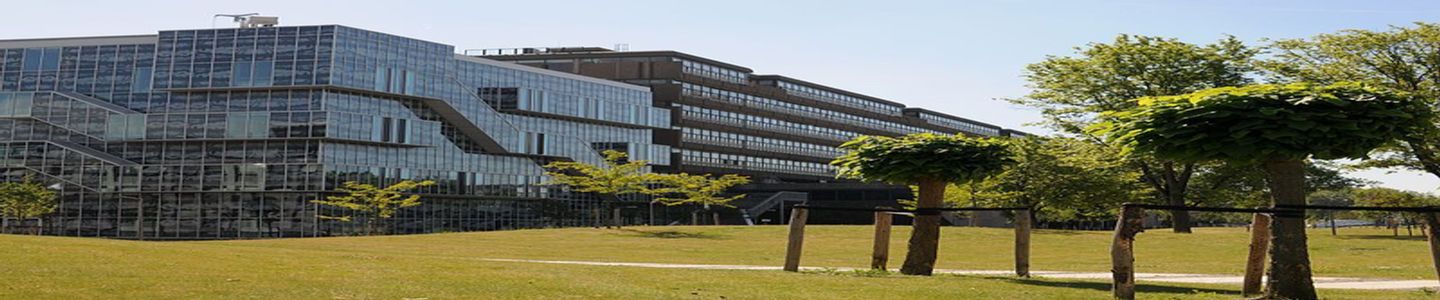



Delft University of Technology admissions center on the September intake and are open to Indian engineering applicants. UG entry needs Class XII at 80 percent with physics and mathematics, while PG entry needs a related Bachelor’s at 75 percent minimum.
- September 2027 primary intake: most non-EU MSc close 1 April 2027, competitive programs 15 January 2027.
- Base tuition: EUR 25,633 (INR 28.09 Lakhs) MSc yearly, plus EUR 100 (INR 10,960) application fee.
- Eligibility floor: UG Class XII 80 percent, PG Bachelor’s 75 percent, IELTS 6.5 minimum overall.
- Acceptance rate: estimated 30 to 40 percent overall, competitive programs closer to 10 to 15 percent.
Popular MSc picks among Indian students include Aerospace Engineering, Computer Science, and Data Science and Technology. Applicants praise Delft’s engineering research strength and industry links, though most BSc programs run in Dutch. Read the full Delft University of Technology profile for campus, placements, and rankings context.
Table of Contents
- Delft University of Technology Application Deadlines
- TU Delft Eligibility for Indian Students
- Delft University of Technology PG Programs
- TU Delft UG Programs and English Requirements
- Delft University of Technology PhD Admissions
- TU Delft Application Process and Portal
- Delft University of Technology Admission Decisions
- TU Delft Documents Required for Indian Students
- Delft University of Technology Acceptance Rate
- Netherlands Student Visa for TU Delft
- TU Delft Admissions Tips and Checklist
- Delft University of Technology Admissions FAQs
Delft University of Technology Application Deadlines for Indian Students
Delft University of Technology runs one main admissions cycle per year, feeding the September academic-year start. Indian applicants apply as non-EU/EEA candidates, which triggers earlier deadlines than the EU pool. Standard MSc deadlines fall on 1 April, while a group of competitive programs closes 15 January. Dates below are per the TU Delft admission and application page for the September 2027 intake.
The primary intake for Indian students is Semester 1 (September 2027) — the overwhelming majority of English-taught MSc and BSc programs open here.
| Intake | Level | App Opens | Deadline | App Fee | Portal |
|---|---|---|---|---|---|
| Primary intake Semester 1, September 2027 | MSc (most programs) | 1 October 2026 | 1 April 2027 | EUR 100 (INR 10,960) | TU Delft + Studielink |
| Semester 1, September 2027 | MSc Computer Science, Aerospace, Applied Mathematics | 1 October 2026 | 15 January 2027 | EUR 100 (INR 10,960) | TU Delft + Studielink |
| Semester 1, September 2027 | BSc (non-numerus fixus) | 1 October 2026 | 1 January 2027 | EUR 100 (INR 10,960) | TU Delft + Studielink |
| Semester 1, September 2027 | BSc numerus fixus (Aerospace, Clinical Tech) | 1 October 2026 | 15 January 2027 | EUR 100 (INR 10,960) | TU Delft + Studielink |
| Semester 1, September 2027 | Justus and Louise van Effen Scholarship | 1 October 2026 | 1 December 2026 | Included with MSc | TU Delft portal |
Insider note: The 15 January 2027 cut-off catches most Indian applicants off guard. If Computer Science, Aerospace, or Applied Mathematics is on your list, treat that as your real deadline, not 1 April.
Delft University of Technology Eligibility for Indian Students
Delft University of Technology sets both academic thresholds and English-proficiency floors, and Indian applicants are evaluated program by program against these. GRE is not required for any TU Delft MSc. India-issued degrees are equivalency-checked by the admissions office rather than through a central agency.
Academic Eligibility at TU Delft for Indian Students
- UG general entry: Class XII at 80 percent or higher with Physics, Mathematics, and Chemistry.
- PG general entry: a four-year Bachelor’s in a related engineering or science field with a GPA equivalent to roughly 75 to 80 percent.
- Three-year Bachelor’s: a standalone three-year Indian BSc is not accepted for MSc entry, but B.Tech, B.E, and BS four-year degrees are.
- GRE and GMAT: not required for any MSc programme at TU Delft.
TU Delft English Language Requirements
| Test | Minimum Overall | Minimum Section Score |
|---|---|---|
| IELTS Academic | 6.5 | 6.0 in every section |
| TOEFL iBT | 90 | 21 in every section |
| Cambridge C1 Advanced | 176 | 169 in every section |
| Cambridge C2 Proficiency | Accepted at any pass level | 169 in every section |
Delft University of Technology grants an English-language waiver only where the (pre-)university degree was taught fully in English in Australia, Canada, Ireland, New Zealand, Singapore, South Africa, the UK, USA, or Malta. India is not on the waiver list. Indian applicants — including those from English-medium schools and IITs — must submit a valid IELTS or TOEFL report with their file.
Planning note: Book your IELTS or TOEFL slot at least 12 weeks before your target deadline. TU Delft accepts scores up to two years old on the deadline date, so a July 2026 test still supports an April 2027 application.
Delft University of Technology PG Programs and English Score Requirements
Delft University of Technology offers around 40 English-taught MSc programmes across engineering, applied sciences, computer science, design, and technology policy. All two-year MSc programmes carry a base tuition of EUR 25,633 (INR 28.09 Lakhs) per year for non-EU/EEA students in 2026-27 — see the course-wise fees breakdown for the current year and any programme-specific loading.
| Programme | Duration | Minimum Eligibility | English Req. Min. |
|---|---|---|---|
| MSc Aerospace Engineering | 2 years | Bachelor’s in Aerospace or closely related engineering with 75%+ and strong maths/physics | IELTS 6.5 / TOEFL 90 |
| MSc Computer Science | 2 years | Bachelor’s in Computer Science or equivalent with 75%+, proven programming and discrete-maths base | IELTS 6.5 / TOEFL 90 |
| MSc Data Science and Technology | 2 years | Bachelor’s in CS, EE, Mathematics, or applied science with 75%+ | IELTS 6.5 / TOEFL 90 |
| MSc Electrical Engineering | 2 years | Bachelor’s in EE, Electronics, or a closely related engineering with 75%+ | IELTS 6.5 / TOEFL 90 |
| MSc Mechanical Engineering | 2 years | Bachelor’s in Mechanical or closely related engineering with 75%+ | IELTS 6.5 / TOEFL 90 |
| MSc Civil Engineering | 2 years | Bachelor’s in Civil Engineering or equivalent with 75%+ | IELTS 6.5 / TOEFL 90 |
| MSc Applied Physics | 2 years | Bachelor’s in Physics or Applied Physics with 75%+ and strong quantitative base | IELTS 6.5 / TOEFL 90 |
| MSc Biomedical Engineering | 2 years | Bachelor’s in BME, Mechanical, Electrical, or Applied Physics with 75%+ | IELTS 6.5 / TOEFL 90 |
| MSc Chemical Engineering | 2 years | Bachelor’s in Chemical Engineering with 75%+ | IELTS 6.5 / TOEFL 90 |
| MSc Sustainable Energy Technology | 2 years | Bachelor’s in EE, Mechanical, Applied Physics, or Chemical with 75%+ | IELTS 6.5 / TOEFL 90 |
Every programme runs on a fixed subject-matched prerequisite list — a Mechanical Engineering Bachelor’s does not automatically clear the MSc Computer Science bar, and vice versa. Programmes also assess motivation and CV separately from the transcript.
Note: Program-specific entry requirements, fees, and intake availability may differ from the institution-wide minimums shown above. Always confirm on the official TU Delft admissions page for your chosen program before applying.
Delft University of Technology UG Programs and Entry Requirements
Delft University of Technology’s undergraduate offer is largely Dutch-taught. Only a small set of BSc programmes run fully in English, so Indian school-leavers face a much narrower list than the MSc pool. Base tuition for English-taught BSc programmes is EUR 19,906 (INR 21.82 Lakhs) per year for non-EU/EEA applicants in 2026-27.
| Programme | Duration | Minimum Eligibility | English Req. Min. |
|---|---|---|---|
| BSc Aerospace Engineering | 3 years | Class XII with Physics, Mathematics, and Chemistry at 80%+, strong maths in board exam | IELTS 6.5 / TOEFL 90 |
| BSc Applied Earth Sciences | 3 years | Class XII with Physics, Chemistry, and Mathematics at 80%+ | IELTS 6.5 / TOEFL 90 |
| BSc Computer Science and Engineering (English track) | 3 years | Class XII with Mathematics at 80%+, computational aptitude preferred | IELTS 6.5 / TOEFL 90 |
BSc Aerospace Engineering is a numerus fixus programme with a capped intake, and international seats are limited. Applicants must complete both the TU Delft application and the numerus fixus selection procedure to be considered.
Reality check: Most Delft BSc programmes are Dutch-taught. If your target degree is not on the three-line list above, plan for an English-taught BSc elsewhere and route through Delft at the MSc stage.
Delft University of Technology PhD Admissions
Delft University of Technology PhD candidates are hired as salaried university employees, not enrolled fee-paying students. Each PhD position is tied to a specific research project and a supervising professor, so admission runs through vacancy applications rather than a central deadline. There is no tuition fee for a TU Delft PhD.
Eligibility for a TU Delft PhD
- Degree: a completed MSc or Master of Technology in a subject relevant to the vacancy, typically with a research thesis component.
- English: the institution-wide IELTS 6.5 / TOEFL 90 floor applies.
- Research fit: the applicant’s prior work must map onto the specific project the professor has funded.
How TU Delft PhD Applications Work
Vacancies are posted on the TU Delft careers portal year-round, with each listing carrying its own closing date. Shortlisted candidates go through one or two interview rounds, usually online for Indian applicants. Successful applicants receive an employment contract, typically four years, with a gross starting salary of around EUR 2,770 (INR 3.04 Lakhs) per month in year one, rising annually. Health insurance, holiday pay, and pension are part of the standard Dutch employment package.
Insider note: The most direct route in is a self-drafted email to a prospective supervisor, attaching your CV, master’s thesis abstract, and a short research pitch. Cold PhD emails at Delft convert better when they reference a specific published paper from the group.
Note: Program-specific entry requirements and stipend figures may differ across faculties and projects. Always confirm on the official TU Delft admissions page or the vacancy listing before applying.
Delft University of Technology Application Process
Applying to Delft University of Technology is a two-portal process for Indian students. The admission decision is made through TU Delft’s own online application system, while enrolment is legally registered through Studielink, the Dutch national platform. Both must be completed. The official TU Delft admission and application page is the authoritative source for the steps below.
- Register on Studielink from 1 October 2026 for programmes starting September 2027, using your DigiD or personal details. Add TU Delft and your programme.
- Create a TU Delft application account and start the online application form for your chosen MSc or BSc.
- Upload all required documents in the TU Delft portal (transcripts, degree certificate, motivation letter, CV, LORs, English test score, passport).
- Pay the application fee of EUR 100 (INR 10,960) on the TU Delft application portal.
- Submit before your programme deadline — 15 January 2027 for competitive MSc programmes, 1 April 2027 for most others.
- Track your application status in the TU Delft dashboard while the admissions committee reviews.
- On a conditional offer, complete the Studielink enrolment steps and arrange visa and housing.
Application fees are non-refundable and cover admission review only, not enrolment. Uploading a passport bio-page early is a good idea — the file often takes several days to be verified.
Delft University of Technology Admission Decisions and Offer Timeline
Delft University of Technology reviews applications programme by programme. Once you submit a complete file, the admissions committee typically returns a decision within six to eight weeks, with popular programmes trending toward the longer end. Decisions are released rolling — you do not need to wait for the deadline to pass to hear back.
- Conditional admission: most Indian applicants receive a conditional offer, subject to submission of final marksheets or a pending English score.
- Acceptance window: offers must be accepted through the TU Delft dashboard, usually within four weeks of the offer date.
- Deferrals: TU Delft allows one deferral of up to one year, granted on a case-by-case basis and requested through the same portal.
- Rejections: non-negotiable, but detailed feedback is available on request from the admissions office.
Planning note: Timeline back-solve from the September start. A 1 April 2027 deadline means a June decision, a visa filed in July, and an August arrival — leaving under four weeks to finalise housing. Start Studielink and IND paperwork the day your offer arrives.
Delft University of Technology Documents Required for Indian Students
Delft University of Technology asks Indian applicants to upload every academic document in the original language plus a certified English translation where applicable. All documents are submitted digitally on the TU Delft portal — originals are verified only at enrolment.
- Passport bio-page valid for the full duration of study.
- Class XII marksheet and certificate from CBSE, ICSE, or state board.
- Bachelor’s transcripts covering every semester, sealed and signed by your Indian university.
- Bachelor’s degree certificate or, if pending, an official completion letter.
- Grading scale document issued by your home university explaining the 10-point or percentage scale used.
- Motivation letter of one to two pages, tailored to the specific TU Delft programme.
- Curriculum vitae covering academics, projects, internships, and publications.
- Two letters of recommendation from academic referees who taught or supervised you.
- IELTS or TOEFL scorecard uploaded directly by the test centre or as a scanned copy.
- Portfolio for Architecture, Industrial Design, and select creative programmes.
- Financial proof — bank statement of roughly EUR 14,200 (INR 15.56 Lakhs) for one year of living costs, requested after admission for visa filing.
For a full tuition and living-cost breakdown, check the Fees silo — this article deliberately keeps fees light.
Delft University of Technology Acceptance Rate for Indian Students
Delft University of Technology does not publish an official institutional acceptance rate. Estimates from applicant pool data and programme-level admissions cycles place the overall rate at roughly 30 to 40 percent, with wide variance by programme. The rate should be read as a rough anchor rather than a hard number.
Programme-Level Selectivity at TU Delft
Competitive MSc programmes such as Computer Science, Aerospace Engineering, and Applied Mathematics run at an estimated 10 to 15 percent acceptance for non-EU applicants, driven by their earlier 15 January deadline and a strict prerequisite-matching review. BSc Aerospace Engineering, a numerus fixus programme, sits in a similar band. Broader engineering MSc programmes — Mechanical, Civil, Chemical, Sustainable Energy — clear closer to the institutional 30 to 40 percent average.
What Drives a TU Delft Admission Decision
Committees weigh subject-fit of your Bachelor’s degree, GPA on the 10-point Dutch equivalent, motivation letter alignment with a specific research group, and quality of recommenders. Indian applicants from IITs, NITs, IIITs, BITS, and top private universities feature prominently in the accepted pool, though the assessment is programme-first rather than institution-first. TU Delft’s overall global ranking band pulls a high-quality applicant pool from across South Asia.
Insider note: A borderline GPA can be offset with a strong motivation letter and clear research alignment. TU Delft actively favours applicants who name specific faculty or research groups in the motivation letter, over generic "why TU Delft" essays.
Netherlands Student Visa Process for Delft University of Technology
Indian students admitted to Delft University of Technology need a Netherlands entry visa (MVV) plus a residence permit (VVR) for stays over 90 days. TU Delft is an IND-recognised sponsor, so the university files the joint MVV and VVR application on behalf of admitted students — Indian applicants do not queue at the embassy directly. The applicant pays the IND fee of around EUR 210 (INR 23,016) and provides proof of finances covering one year of living costs, roughly EUR 14,200 (INR 15.56 Lakhs). The typical processing time is four to eight weeks after TU Delft submits your file, and the university team walks admitted students through document collection through the OASIS portal.
After arrival in the Netherlands, students collect the residence permit card at TU Delft, register at the Delft municipality to receive a BSN (citizen service number), and complete a tuberculosis test if required by nationality. The residence permit is valid for the full duration of study plus a short buffer, and can be extended once each year into the post-study Orientation Year (Zoekjaar) that grants 12 months of unrestricted work rights.
2026 update: The Dutch Orientation Year for graduates (Zoekjaar) is unchanged for TU Delft international graduates — plan for it as your default post-study route rather than assuming it will disappear.
Tips and Admissions Checklist for Delft University of Technology
The following tips and steps are drawn from Indian-applicant patterns at Delft University of Technology and are ordered against the September 2027 cycle. Treat the dates as anchors, not suggestions.
- Fix your target list by October 2026 to give yourself six months for the standard 1 April deadline or three months for the 15 January round.
- Register on Studielink from 1 October 2026 the day the platform opens — it is a legal step, not part of the admission review.
- Book IELTS or TOEFL by December 2026 to leave room for a retake before your programme deadline.
- Draft your motivation letter around a named research group at TU Delft — generic essays underperform sharply here.
- Request recommendation letters eight weeks before the deadline, giving referees your CV, target programme, and draft SOP.
- Apply for the Justus and Louise van Effen Scholarship by 1 December 2026 — its cut-off is well before the MSc deadline. See the full list of funding options for Indian students.
- Organise financial proof by June 2027 — a fixed deposit or bank statement of roughly EUR 14,200 (INR 15.56 Lakhs), ready for the visa file.
- Confirm housing before signing the offer acceptance — Delft rooms fill early and DUWO waitlists are competitive.
Delft University of Technology fits Indian engineering applicants with Class XII 80%+ or a related Bachelor’s at 75%+. The September 2027 cycle opens 1 October 2026, competitive MSc programmes close 15 January 2027, and standard programmes close 1 April 2027. Budget EUR 25,633 (INR 28.09 Lakhs) per year for MSc tuition plus the EUR 100 (INR 10,960) fee.
Delft University of Technology Admissions: Frequently Asked Questions
Ques. Is GRE required for a Delft University of Technology MSc?
Ans. No. TU Delft does not require GRE for any MSc programme. Admission is based on your Bachelor’s transcripts, motivation letter, CV, references, and English test score. A high GRE will not hurt but adds no formal weight.
Ques. Does TU Delft grant an IELTS waiver to Indian students?
Ans. Not in most cases. TU Delft’s English waiver applies only to applicants with a full English-medium (pre-)university degree from Australia, Canada, Ireland, New Zealand, Singapore, South Africa, the UK, USA, or Malta. India is not on that list, so Indian applicants must submit IELTS 6.5, TOEFL 90, or an accepted Cambridge score.
Ques. Can Indian students apply for BSc programmes at TU Delft?
Ans. Yes, but the English-taught BSc list is short. BSc Aerospace Engineering, BSc Applied Earth Sciences, and the BSc Computer Science and Engineering English track accept Indian applicants. Most other BSc programmes run in Dutch and require prior Dutch language proficiency.
Ques. What is the TU Delft application fee for Indian applicants?
Ans. EUR 100 (INR 10,960), payable on the TU Delft application portal at submission. The fee is non-refundable and applies whether you are admitted or not.
Ques. When does the TU Delft application system open for September 2027?
Ans. 1 October 2026, alongside Studielink registration for the same cycle. Non-EU MSc applications close 1 April 2027 for most programmes and 15 January 2027 for Computer Science, Aerospace, and Applied Mathematics.
Ques. How long does a TU Delft admission decision take?
Ans. Six to eight weeks from complete-file submission. Popular programmes such as Computer Science and Aerospace can take the full eight weeks, and reviews are rolling rather than deadline-batched.
Ques. What is the visa timeline for Indian students admitted to TU Delft?
Ans. Four to eight weeks after TU Delft files the joint MVV and residence permit application on your behalf. You will need financial proof of roughly EUR 14,200 (INR 15.56 Lakhs) and to pay the IND fee of around EUR 210 (INR 23,016). TU Delft is an IND-recognised sponsor, so you do not queue at the embassy directly.
Ques. Does TU Delft accept a three-year Indian Bachelor’s for MSc entry?
Ans. No. A standalone three-year Indian BSc is not accepted. Four-year degrees — B.Tech, B.E, or a four-year BS — qualify, provided the subject matches your target MSc programme.
Ques. What scholarships are available for Indian students at TU Delft?
Ans. The Justus and Louise van Effen Scholarship is TU Delft’s flagship award for non-EU MSc applicants, closing 1 December 2026 for the September 2027 intake. The Holland Scholarship and select faculty-specific awards also apply. See the full funding options for Indian students for eligibility and amounts.
Ques. When should Indian applicants start their TU Delft application?
Ans. Begin nine to twelve months before your target deadline. For September 2027 entry, start selecting programmes by October 2026, book IELTS or TOEFL by December 2026, and finalise motivation letter and LORs by early 2027.
Ques. Are there February intakes at Delft University of Technology?
Ans. A handful of MSc programmes admit for a February start, but the option is limited and rarely open to non-EU applicants. Indian students should plan for the September primary intake and treat February as an exception rather than a route.
Ques. Can I apply to multiple MSc programmes at TU Delft in the same cycle?
Ans. Yes, but each programme needs its own separate application with a dedicated motivation letter and application fee. TU Delft does not run a single-file multi-programme system, and generic motivation letters are penalised at review.
College Student Profiles

Delft University of Technology Program Fees & Deadlines
| Program | Important Dates | Fees | Application Fees | Eligibility | Financial Aid |
|---|---|---|---|---|---|
| USD 28,709 /Yr EUR 25,633 /Yr | 100 | Grade: 75%+, Toefl: 5.0, Ielts: 7.0 | |||
| USD 28,709 /Yr EUR 25,633 /Yr | 100 | Grade: 75%+, Toefl: 5.0, Ielts: 7.0 | |||
M.Sc Robotics 2 years | USD 28,709 /Yr EUR 25,633 /Yr | 100 | 75% in bachelors, TOEFL: 5.0, IELTS: 7.0 | ||
M.S Computer Science 2 years | USD 28,709 /Yr EUR 25,633 /Yr | 100 | 75% in bachelors, TOEFL: 5.0, IELTS: 7.0 | ||
MS Mechanical Engineering 2 years | USD 28,709 /Yr EUR 25,633 /Yr | 100 | Grade: 75%+, Toefl: 5.0, Ielts: 7.0 | ||
| USD 22,295 /Yr EUR 19,906 /Yr | 100 | IELTS: 6.5, TOEFL: 5.0 | - | ||
B.S Aerospace Engineering 3 years | USD 22,295 /Yr EUR 19,906 /Yr | 100 | IELTS: 6.5, TOEFL: 5.0 | - | |
M.S Aerospace Engineering 2 years | USD 28,709 /Yr EUR 25,633 /Yr | 100 | 75% in bachelors, TOEFL: 5.0, IELTS: 7.0 | ||
MS Civil Engineering 2 years | USD 28,709 /Yr EUR 25,633 /Yr | 100 | 75% in bachelors, TOEFL: 5.0, IELTS: 7.0 | ||
[M.S] BioMedical Engineering 2 years | USD 28,709 /Yr EUR 25,633 /Yr | 100 | 75% in bachelors, TOEFL: 5.0, IELTS: 7.0 |
Do you think the Dates are wrong ? Report Here
Course Finder - Search from 50K+ courses
Popular Streams:
Reviews
6 Reviews Found
Likes
- Hands on approach: strong emphasis on practical, research based learning and real world problem solving
- International exposure that encourages collaboration and cultural exchange
- Excellent support from faculty and academic staff
Dislikes
- -You have to be a lot independent in your studies
- Limited feedback during some courses because of large class size
- Dutch language is a must if you want to work after
Scholarship
- I didn’t receive any scholarship
- Available: Justus & louise van effen scholarship - all msc programs
- Faculty scholarship for the microelectronics msc program in electrical engineering track
- Qutech scholarship – quantum information science and technology – applied physics, computer science, electrical engineering
- Requirements regarding GPA (80% or higher)
Likes
- International student community
- Good campus life
- Good curriculum
Dislikes
- Can get hectic at times.
- Weather in NL in general can be unpredictable.
Overview
I did a bit of research. I also had a few seniors over here so, I knew about it.
Overview
Ranking within top 100 in the world, high research output, good professors who did PhD and post-docs in reputed colleges, including ivy league colleges, affordable education, competitive environment, international-friendly place to live in, no language barrier, large indian community, BSA requirement which increases the standard of education, courses taught in english, offers a challenging honours program in the second year and minor abroad opportunity in the third year for students with good study progress, courses are challenging and not a cake-walk
Scholarship
NA
Overview
The university ranks no.1 in the QS world ranking for water management courses. That's the reason for my application to this university. Monetary-wise, the expenses are less when compared to the USA and Australia (Where I had my other admissions from). My interest always lied in wastewater treatment and reuse. Hence, I really wanted to do masters in this stream. Politically as well, The Netherlands has zero racism. You are allowed to be yourself without people judging you. The crime rates are so less that they are starting to close prisons. It was also one of the key parameters in choosing the university.
Scholarship
No, I didn't receive any scholarship.
Overview
Among the 'space' related specializations offered, this university had the top rank. I focussed on non-USA universities only, because space field coming under the purview of defence in USA, thus restricting job opportunities for non-citizens.
Scholarship
No

interested in this College ?
Follow & Share this college to get information about admission.



Comments