

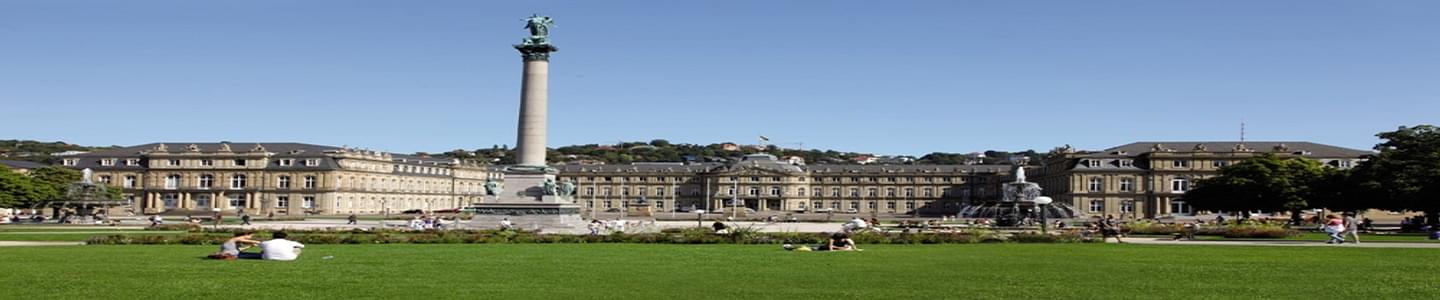


Bachelor of Arts German Studies at University of Stuttgart is a 3-year, full-time programme taught entirely in German. The degree combines linguistics, medieval studies, and modern German literature. Admission requires TestDaF Level 4 (4x4) or Goethe Certificate C1. Total fees are EUR 3,000 annually (INR 3,28,500/year). Intake is Winter only, with a July 15 deadline. The course attracts 71% acceptance rate and is ideal for students passionate about German language, culture, and literary analysis.
This programme trains graduates for careers in publishing, education, translation, cultural institutions, and media. What makes it distinctive is the integration of cutting-edge German linguistic research with classical and contemporary literary scholarship. The ideal applicant has advanced German proficiency, strong analytical skills, and genuine interest in German-speaking cultures.
- Curriculum balances theoretical linguistics with applied language studies and cultural analysis.
- Strong research opportunities through university partnerships with Max Planck and Fraunhofer institutes.
- Access to Stuttgart’s vibrant international student community and low cost of living for Germany.
Current Admission Status
Applications for the Winter 2026 intake are Open. International student deadline: 15 July 2026.
For Indian applicants, this timeline allows 6-8 weeks to prepare TestDaF certification or Goethe C1 proof and compile documents. The German Embassy New Delhi processes APS certificates (required for India) in 21-28 days.
Also Check: University of Stuttgart Admission Requirements
University of Stuttgart German Studies Fees and Living Costs 2026
The Bachelor of Arts German Studies programme has transparent, low fees by international standards. All students—domestic and international—pay identical fees. Below is the complete cost breakdown.
| Fee Component | EUR per Semester | EUR per Year | INR per Year |
|---|---|---|---|
| Tuition (non-EU international students) | 1,500 | 3,000 | INR 3,28,500 |
| Semester Fee (administration, services, library, student union) | 184 | 368 | INR 40,296 |
| Total per Year | 1,684 | 3,368 | INR 3,68,796 |
All INR conversions in the article use a conversion rate of EUR 1 = INR 109.5 as of June 2026. Rates fluctuate daily, verify before applying.
- Tuition fees are applicable to non-EU/EEA international students only; EU citizens pay significantly less or are exempt.
- Semester fee includes student transport pass for Stuttgart public transit, worth approximately EUR 80 on its own.
- No additional course, registration, or examination fees apply to Bachelor’s students.
- Books and course materials average EUR 300-400 per year; many are available free through the university library.
Cost of Living in Stuttgart for German Studies Students
Stuttgart is Germany’s second-most expensive city after Munich, but still affordable for international students compared to UK or US universities. Monthly budget estimate: EUR 1,545 (INR 1,69,228).
| Expense Category | Monthly Range (EUR) | Monthly Range (INR) |
|---|---|---|
| Accommodation (shared flat or student dorm) | 350–450 | INR 38,325–49,275 |
| Food (groceries, cooking at home) | 300–350 | INR 32,850–38,325 |
| Health Insurance (mandatory) | 110–120 | INR 12,045–13,140 |
| Transport & Utilities (included in student pass) | 80–100 | INR 8,760–10,950 |
| Personal & Leisure (clothing, entertainment, phone) | 150–200 | INR 16,425–21,900 |
| Total Monthly | 990–1,220 | INR 1,08,405–1,33,590 |
Cost Reality for Indian Students: Total annual cost (fees + living) is approximately INR 6.5–7.5 Lakhs. This is 40-50% lower than equivalent programmes in UK or USA, and health insurance in Germany covers far more than typical international student plans.
University of Stuttgart German Studies Admission 2026
Admission to the Bachelor of Arts German Studies programme is moderately competitive, with a 71% acceptance rate. The university has a global ranking of QS 310 overall (2026), demonstrating research excellence across disciplines.
Intakes and Deadlines
| Intake | Deadline | Application Window Opens | Status Notes |
|---|---|---|---|
| Winter 2026 (October 2026) | 15 July 2026 | 01 June 2026 | Open — primary intake for international students |
| Summer 2027 (April 2027) | 15 January 2027 | 01 December 2026 | Expected — rarely taken by international students |
- Bachelor’s programmes at Stuttgart admit students Winter semester only under regular admissions; the Summer intake is emergency-only.
- For Indian applicants, Winter 2026 is the only realistic intake window for this application cycle.
- Application submission is entirely online via the C@MPUS system; physical credentials are not required until enrolment.
Academic Eligibility
| Requirement | Details |
|---|---|
| School-Leaving Certificate | High school completion certificate equivalent to German Abitur (Class 12 pass for Indian students; some states require pre-qualification assessment) |
| APS Certificate (for India) | Issued by German Embassy New Delhi; mandatory for Indian applicants; certifies authenticity of credentials; 21–28 day processing time; cost: INR 18,000 |
| Minimum GPA/Marks | No minimum GPA stipulated; admission is non-restricted (no numerus clausus) |
| Subject Prerequisites | No specific subject requirements; two-subject BA structure allows flexibility in second subject choice (e.g. Germanistik + English, History, or Philosophy) |
English Language Proficiency (ELP)
This programme is taught in German, not English. However, you must demonstrate advanced German proficiency, not English proficiency. See German Language Requirement section below.
German Language Requirement
All Bachelor’s programmes at University of Stuttgart are taught in German. You must prove German proficiency before admission through one of the following:
| Certification | Minimum Level Required | Accepted by Stuttgart |
|---|---|---|
| TestDaF (Test of German as a Foreign Language) | Level 4 in all four parts (4x4) | Yes — most common for international applicants |
| Goethe-Zertifikat | C1 or C2 | Yes — valid certificate for life |
| DSH II (German Language Examination for University Admission) | DSH II or above | Yes — if obtained in Germany |
| DSD II (Deutsches Sprachdiplom) | DSD II or DSD III (C1) | Yes — for school-leavers with prior German schooling |
| Degree in German | Any university degree taught in German | Yes — automatic exemption |
- For Indian applicants with no prior German exposure, TestDaF Level 4 (4x4) is the fastest pathway; certification typically achieved in 6-8 weeks of intensive study.
- TestDaF is offered in India through authorized testing centres in major cities (Delhi, Mumbai, Bangalore, Pune); exam cost is approximately INR 16,500-18,000.
- Goethe-Zertifikat C1 requires 600+ study hours; more suited for students with prior German language coursework; exam conducted by Goethe-Institut India; certification valid indefinitely.
- If you fall short of the required level, Stuttgart offers a 4-week intensive German prep course (free for accepted students) starting September 2026, though this delays your degree start to January 2027.
Realistic Odds for Indian Applicants: With 71% acceptance rate and no numerus clausus (admission restriction), the primary barrier is meeting German language proficiency, not academic competition. Most Indian applicants are accepted if they hold TestDaF Level 4 or Goethe C1 and valid APS certificate.
University of Stuttgart German Studies Application 2026
Application is entirely online via the university’s C@MPUS portal. No application fee is charged. The process takes 8-10 weeks from initial submission to admission decision.
Application Timeline
| Stage | Date | Action |
|---|---|---|
| Portal Opens | 01 June 2026 | Registration opens on C@MPUS; applicants create account and begin document upload |
| Deadline | 15 July 2026 | Final submission deadline for Winter 2026 intake; no late applications accepted |
| Processing | 16 July – 30 September 2026 | Admissions office reviews applications, requests additional documents if needed |
| Decisions | October 2026 (Expected) | Admission decisions released; accepted students notified via email |
| Enrolment | October 2026 | Accepted students complete enrolment; degree begins October 2026 |
- Application portal is in English and German; both languages fully supported for international applicants.
- All documents must be uploaded as PDF; originals sent by post only if specifically requested (rare).
- APS certificate (if Indian national) must be obtained before final submission and uploaded alongside application; processing is 21-28 days, so apply to German Embassy New Delhi by late May 2026.
Required Documents
Gather these documents before starting your C@MPUS application:
- High school diploma or equivalent (English-translated certified copy).
- Academic transcript with all grades (English-translated certified copy).
- TestDaF Level 4 (4x4) certificate OR Goethe C1 certificate (scanned original + English translation if non-English document).
- APS certificate from German Embassy New Delhi (if Indian national; required for all Indian applicants).
- Passport or national ID (scanned copy; surname, DOB must match application).
- CV in English or German (1-2 pages; optional but recommended for non-native German speakers to highlight language learning journey).
Application Strategy Tip: Start gathering APS certificate documentation by April 2026; the Embassy frequently experiences processing backlogs. Submit your APS application immediately after obtaining TestDaF Level 4 results, even if your university application is not yet ready.
University of Stuttgart German Studies Scholarships 2026
Scholarships for Bachelor’s students at Stuttgart are limited but achievable. Most aid targets Master’s students; however, two schemes below offer realistic support for undergraduates.
Merit-Based Scholarships
| Scholarship Name | Award Amount | Eligibility Highlights | Application |
|---|---|---|---|
| DAAD Scholarships | EUR 992/month (INR 1,08,654/month) | Includes health insurance, research allowance. Limited availability (10-20 awards/year across all programmes). German language proficiency required (TestDaF 4x4 or above). Merit and financial need weighted equally. | Apply via DAAD website; separate from university application; deadline varies by region |
| Deutschlandstipendium (Germany Scholarship) | EUR 300/month (INR 32,850/month) | University-administered; 50-100 awards across all programmes. Academic merit + social engagement. Open to international students with valid residence permit only (awarded after enrolment). | Apply in-country after enrolment via university’s International Office |
Cost-Offset Calculation
For Indian applicants, key scholarship reality: you must cover fees (EUR 3,368/year = INR 3,68,796) and living costs (EUR 12,000/year = INR 13,14,000). DAAD covers approximately 80% of living costs if awarded; Deutschlandstipendium covers 20% of living costs.
- Compete for DAAD immediately after admission decision; processing takes 3-4 months and results arrive by August 2026.
- Deutschlandstipendium only available after enrolment in Germany, making it a second-year option for most students.
- Private scholarships from German cultural organisations (Goethe-Institut, German Federal Foreign Office) occasionally offer small awards (EUR 100-500/month); search via DAAD portal.
Scholarship Reality: 90% of international Bachelor’s students at Stuttgart fund their studies through personal/family savings or part-time work (20 hrs/week permitted during term). Pursue DAAD early, but treat it as a bonus, not a given.
Also Check: Germany Scholarships for International Students
University of Stuttgart German Studies Salary 2026
Graduates with a BA in German Studies pursue careers in education, publishing, translation, media, and cultural institutions. Entry-level salaries are modest compared to STEM fields but grow steadily with specialization.
Salary and Employment Data
| Career Stage | Gross Annual Salary (EUR) | Gross Annual Salary (INR) | Notes |
|---|---|---|---|
| Entry-Level (1-2 years post-graduation) | 35,000–42,000 | INR 38,325–46,005 | Publishing, editing, translation, secondary school teaching (with additional teaching certification) |
| Mid-Career (5-10 years) | 48,000–58,000 | INR 52,560–63,510 | Senior editor, translation lead, curriculum developer, corporate communications roles |
| Experienced (15+ years) | 62,000–75,000 | INR 67,890–82,125 | Publishing director, senior translator, university instructor, consultant |
Source: German Federal Statistical Office (Destatis), 2025 labour market survey for Humanities graduates.
Employment Pathways
- Secondary school teaching (Lehramt) requires an additional 2-year Master’s programme after your BA; starting salary EUR 42,000–50,000.
- Translation and interpreting (freelance or agency) offers flexibility; freelancers earn EUR 50–80 per hour (approximately EUR 40,000–65,000 annually depending on client volume).
- Publishing and media roles favour graduates with internship experience; complete 2-3 internships during your BA to boost entry-level salary by 10-15%.
- Corporate communications and localization (helping companies adapt products for German-speaking markets) pay EUR 45,000–55,000 starting salary.
Take-Home and Tax Notes
German salaries are quoted gross (pre-tax). Income tax (19-42% progressive) and social security contributions (41% combined employee-employer) are deducted automatically. A EUR 40,000 gross salary typically nets EUR 26,000–28,000 annually after all deductions.
ROI Reality: Total investment (3 years × EUR 16,368 fees + living = ~EUR 65,000 = INR 71,175 Lakhs) recovers within 3-4 years of employment. However, career growth in humanities depends on specialization (translation, publishing, education) and continuous professional development.
Read More: Germany Post-Study Work Visa and Job Search Options
Germany Visa for German Studies Students 2026
Studying German Studies as a Bachelor’s student in Germany requires a student residence permit. Upon graduation, you are eligible for an 18-month job-seeker residence permit, allowing full work rights while searching for employment.
Student Residence Permit
- Issued by Ausländerbehörde (Foreign Office) in Stuttgart upon proof of admission, proof of funds (EUR 11,904 blocked account minimum), and health insurance; valid for duration of studies (3 years, renewable annually).
- Processing time: 6–60 days depending on application volume; apply immediately upon arrival in Germany.
- Visa fee: EUR 75 (INR 8,250); APS certificate required for Indians (INR 18,000, 21–28 days processing, from German Embassy New Delhi).
- Health insurance is mandatory; student plans cost EUR 110–120/month and cover all medical needs in Germany.
Post-Study Work Permit (18-Month Job Seeker Visa)
- Automatically extended upon graduation; no separate application required; permission letter issued with degree.
- You can work any job (not limited to your field) without requiring employer sponsorship during this period.
- Allows full-time work while searching for permanent employment; no hour limits.
- Spouse and dependent children can join you; sponsorship requires EUR 11,904/dependent blocked account.
Skilled Worker (EU Blue Card) Pathway
If you secure employment paying EUR 50,700+ annually (standard threshold) within your 18-month search period, you can transition to a Skilled Worker Residence Permit, leading to permanent residence (PR) after 33 months of employment.
Visa Reality: Germany’s job-seeker visa is exceptionally generous compared to UK/USA post-study rules. You are not required to leave after graduation; you can stay, work part-time or full-time, and build a career. PR eligibility within 3-4 years is realistic for most graduates.
Also Check: Germany Student Visa Requirements and Processing
The Bachelor of Arts in German Studies at University of Stuttgart is an affordable, research-driven degree with strong foundations in linguistics and literature. Ideal for students committed to becoming fluent in German and building careers in education, publishing, or cultural institutions. The university’s location in Germany’s economic heartland (Stuttgart is home to Daimler, Bosch, Siemens headquarters) creates internship and employment opportunities. Three years, low fees, and visa pathways to permanent residence make this a compelling choice for serious language learners.
German Studies Bachelor FAQs
Ques. Is a BA in German Language enough to teach German in German schools?
Ans. No — secondary school teaching (ages 11+) requires the Lehramt (Teacher Training) track, which combines your BA with a 2-year Master’s in education. The standard BA Germanistik does not confer teaching authority. However, some private language schools hire BA graduates to teach German to adults without additional certification; these roles pay EUR 18-25/hour freelance.
Ques. Can I switch from a German BA to an English-taught Master’s programme after graduation?
Ans. Yes — many Master’s programmes (e.g. MA Applied Linguistics, MA Literature Studies) at Stuttgart and other German universities are taught in English and accept BA graduates in German/Linguistics. Admission typically requires your BA degree, TestDaF/Goethe C1, and a statement of purpose. English-taught Master’s are rarer for German language specialization but common for applied linguistics and cultural studies.
Ques. How much does it cost to live in Stuttgart as a student, including all essentials?
Ans. Monthly budget is EUR 1,200-1,400 (INR 1,31,400-1,53,300) for shared flat accommodation, food, health insurance, transport, and personal items. Annual total (including semester fees): EUR 16,000-17,000 (INR 17,52,000-18,61,500). Stuttgart is pricier than smaller German cities (Regensburg, Rostock) but cheaper than Munich, Hamburg, or Berlin.
Ques. Can I work part-time during my BA studies in Germany?
Ans. Yes — international students on a student residence permit can work 120 full days or 240 half-days per year (roughly 20 hours/week during term, unlimited during semester breaks). Typical student jobs are HiWi (research assistant) positions at the university (EUR 450-550/month), café work, or tutoring (EUR 12-18/hour). Income up to EUR 6,000/year is tax-free.
Ques. What are career prospects for BA German Studies graduates outside Germany?
Ans. Career options expand significantly outside Germany: translation/interpreting (UNIDO, WHO, NGOs), diplomatic services (foreign ministries), international education (British Council, Goethe-Institut), and multinational corporations with German operations. However, the BA is most valued within German-speaking countries. International employers prioritize graduates with an additional Master’s or professional certification (e.g. CAT Diploma for translation).
Gzo0q4
- Application Deadline for Winter 2027 Intake - Sep 15, 2026
8EJTse
| Year | 1st Year Fees |
|---|---|
| Tuition Fees | $3420 (EUR 3000) |
uPlTcS
| rhEkXj | Znqz7Q |
|---|---|
| Other Fees | $420 (EUR 368) |
| Total Cost | $420 (EUR 368) |
XA/HUy
| 3PAU4M | N4s6oj |
|---|---|
| 2024 | $3420 (EUR 3000) |
| 2023 | $3420 (EUR 3000) |
| 2021 | $4070 (EUR 3570) |
7N6V25
| 0pC/y6 | 7d7ba6 |
|---|---|
| Application Deadline for Winter 2027 Intake | Sep 15, 2026 |
LPsZaM
Complete Application
Application Fee
Official Transcripts
English Language Requirements
A copy of the Passport

Do you think the Rankings are wrong ? Report Here


3o6p3A
| 6YtxFj | a+VJO9 | sFGV92 | +zy2Nq | |
|---|---|---|---|---|
| MAWISTA Scholarship | NDHjH0$ 7,628/Yr$6,691 | 70v4DRBachelor | +zy2NqEasy-to-Apply | |
| Axol Science Scholarship | NDHjH0$ 2,280/Yr$2,000 | 70v4DRBachelor | +zy2NqCompany-Sponsored | |
| VueVille Future Technology Scholarship | NDHjH0$ 1,140/Yr$1,000 | 70v4DRBachelor | +zy2NqMerit-Based |
FfUuzJ
| 8MIU1T | S2h7Mt | BxsfMK | uN65io | bwRvnp |
|---|---|---|---|---|
Application Deadline for Winter 2027 Intake (15th Sep 2026) | USD 3,420 /Yr EUR 3,000 /Yr | |||
Application Deadline for Summer Intake (30th Sep 2026) Application Deadline for Winter Intake (31st Mar 2027) | USD 798 /Yr EUR 700 /Yr |
|


Do you think the Dates are wrong ? Report Here
rd7VuE
qd/VKU



Comments