



Content Curator
Symbiosis is a developed interaction or close living relationship between organisms of different species that benefits one or both of the parties involved. Symbioses can be either obligate, in which the two species relationship is so dependent that neither can exist without the other or facultative in which the two species choose to form a symbiotic association and can survive on their own. Obligate symbioses are frequently long-lived, whereas facultative symbiosis are more recent behavioural adaptations given enough time, facultative symbiosis can evolve into obligate symbiosis.
| Table of Content |
Symbiosis is a relationship between a single multicellular eukaryotic organism and one or more microorganisms, such as bacteria, viruses, eukaryotic microorganisms, or Archaea. The larger partner is commonly referred to as the ‘host,' while the smaller ones are referred to as ‘symbionts.' Whether the species benefit hurts or has no effect on one another, any association between two populations that live together is symbiotic.
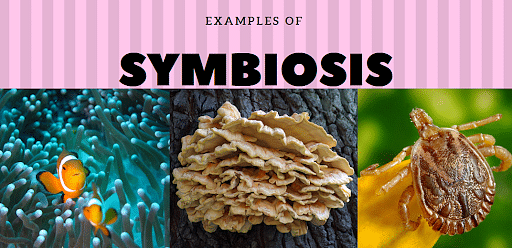
Definition of Symbiosis
Symbiosis is a type of relationship in which two species benefit from one other. The organisms in symbiosis dwell next to, or even inside one another. The association between sea anemones, hermit crabs and microbes is an example of symbiosis.
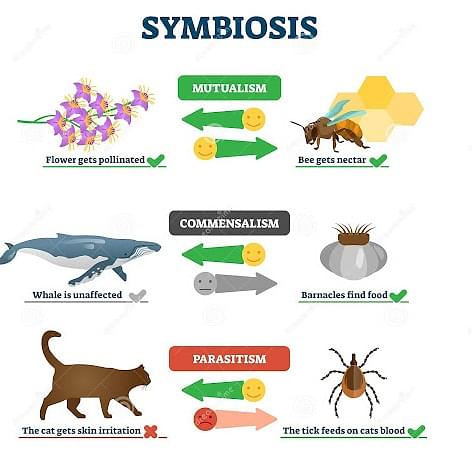
Type of Symbiosis
1. Mutualism:
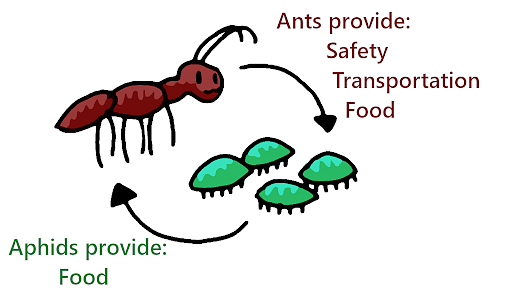
Mutualisms are a type of symbiosis in which the interaction benefits both symbiotic partners, frequently resulting in a considerable fitness advantage for one or both. It is defined as a relationship between individuals of different species that has a good (benefit) impact on each of the participants. It has the potential to have an impact on the reproduction and/or survival of the populations involved. It is a highly dynamic connection in which partner species are expected to continue to evolve and co-evolve. Resource-resource relationships, service-resource relationships, and service-service ties are all examples of mutualisms. The rhizobium-legume symbiosis and arbuscular mycorrhizas are two further examples of mutualisms in the microbial world.
2. Commensalism:
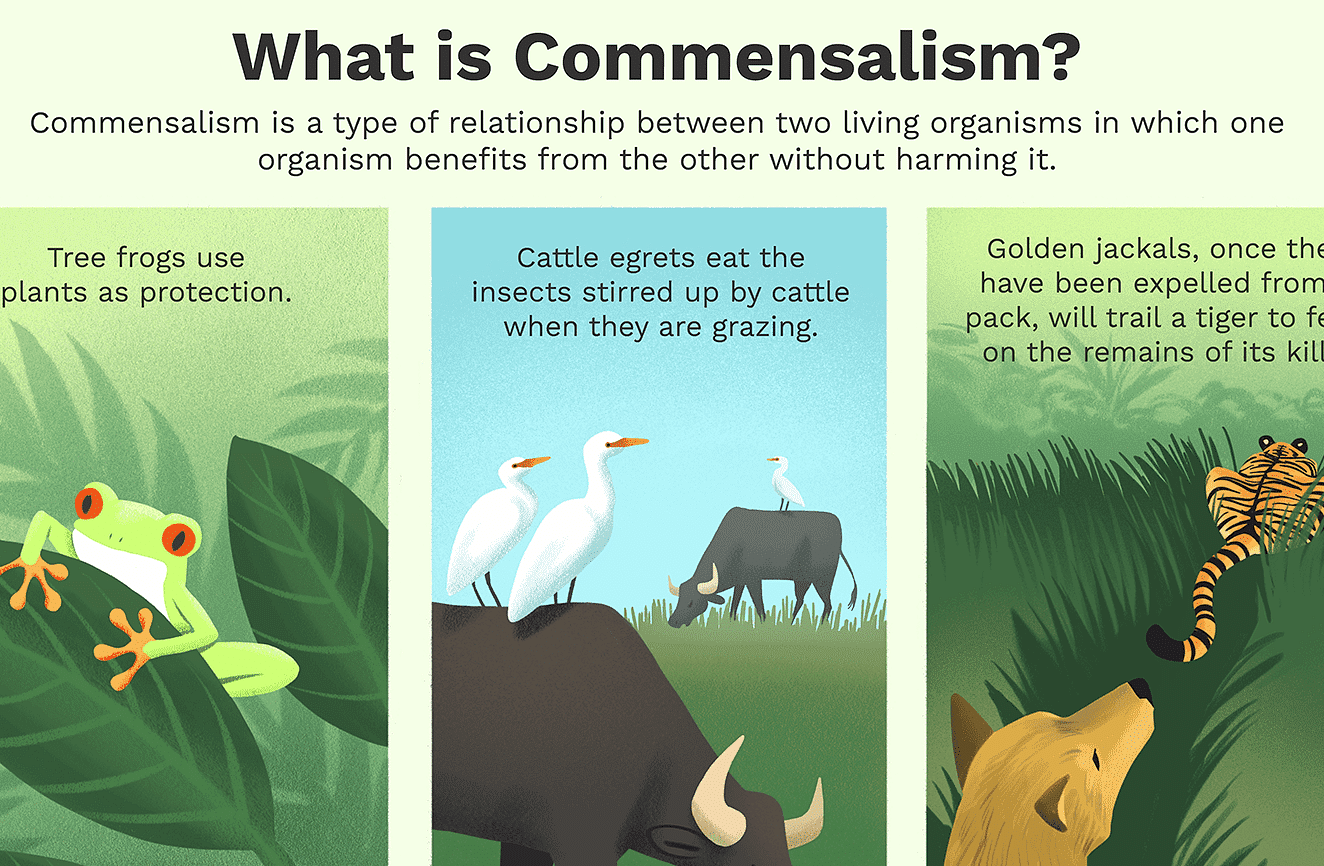
Commensalism is a symbiotic relationship in which one organism benefits from another and is frequently fully reliant on the others for food, shelter, or mobility, with no visible consequences for the host. Another organism can benefit from the nutrients or resources provided by one organism. Cross-feeding is a typical occurrence in soil organisms. When one microorganism generates an antibiotic against another organism and protects the plant connected with the beneficial bacteria, this is an example of this relationship. Sharks and remoras are two examples from the animal kingdom. Remoras adhere to their hosts using a suction disc, which can be a shark, ray, bony fish, sea turtle, or other cetaceans or sirenians.
3. Amensalism:
Amensalism is a type of interaction in which one species has a detrimental impact on another, whereas the second has little or no impact on the first. The mussel beds and the diverse infaunal species that live there are an example of amensalism. Mussels are mollusks that can serve as excellent hosts for a variety of marine creatures. Amensalism is the polar opposite of commensalism. This occurs when the presence of another organism, who does not benefit, inhibits or damages the first. Amensalism can involve competition, in which a larger, more powerful, or more adapted to its environment excludes another from a food supply or a safe haven, such as when one plant shades out another while growing at its normal pace and height. Antibiosis, on the other hand, is a regular occurrence in nature, in which one organism secretes chemicals as by-products that kill or harm the other but do not benefit it.

4. Parasitism:
The non-mutualistic type of symbiosis is parasitism, which occurs when one organism benefits at the expense of the other. Unlike predation, parasitism does not always result in the parasitized organism's death, and it is often necessary for the parasite's life cycle to keep its host alive. When a parasitized host is destroyed as a result of parasitic invasion, the invader is referred to as a 'parasitoid.' Parasitism is a relationship between two or more species of animals in which the parasite (symbiont) relies on the host to meet its metabolic requirements. It entails the parasite's ingestion of chemicals that are nutrition. They normally reside inside or under their hosts, harming or incapacitating them but not killing them right away. Parasites are often smaller and outnumber their hosts. Direct invasion into the host body to feed off tissue, influencing behaviours that benefit the parasite, or kleptoparasitism, in which the parasite takes food or other resources from the host, are all examples of parasitism.

5. Predation:
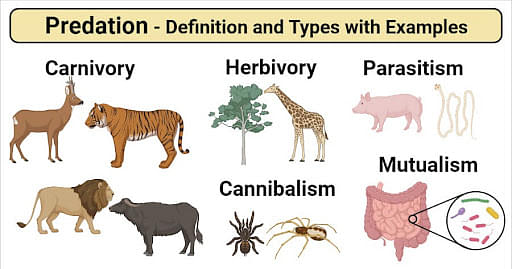
One species (the symbiont) kills another species (the host) in a predator symbiotic relationship. Unlike parasitism, symbionts kill their hosts immediately rather than causing them long-term harm. The predation of symbiont sea anemones by their host hermit crab is an example of this connection. Some hermit crabs contain sea anemones in their shells, which they remove and eat when they are starving.
Examples of Symbiosis
1. Cleaner Fish:
Ectoparasites are generated in the water and attach to the skin and glands to feed on the blood of the host to infect many fish. Many kinds of highly specialised fish have established a facultative mutualistic relationship in which they clean the larger fish of ectoparasites. The Bluestreak Cleaner Wrasse is an example of a tropical fish that waits at ‘cleaning stations' where larger fish go to have their parasites cleaned. The cleaner fish do a particular "dance" that attracts the host fish and promotes the cleaning service. Although the cleaner fish appear to be in deep trouble by swimming within the mouth cavities of even the most ferocious predators, the service they perform is so effective that they are rarely killed by the host fish and return for repeat visits.

2. Coral & Zooxanthellae:
Coral polyps are the animals that make up corals. Coral polyps have an obligate mutualistic relationship with photosynthesizing algae called zooxanthellae that live inside the coral tissue. The zooxanthellae absorb sunlight and convert it to oxygen and energy in the form of carbohydrates and lipids, which are then transmitted to coral tissues and supply nutrition for survival and growth. As a result of the coral's metabolic activity, carbon dioxide, phosphorus, and nitrogen are delivered to the zooxanthellae.

3. Cordyceps:
The Cordyceps fungus is a common and lethal fungal endoparasite of insects and other arthropods that infects its host and replaces all of its tissue with its mycelium. The majority of Cordyceps are restricted to a particular host species. After erupting from the host's body, the ascocarp or fruiting body releases reproductive spores. Ophiocordyceps unilateralis, also known as the "zombie fungus," has evolved to parasitize the carpenter ant Camponotus leonardi. The spores of the zombie fungus connect to the ant and use enzymes to break into its tissues; the fungus then manipulates the ant's behaviour.

4. Anemones & Clownfish:
Clownfish is one of the most well-studied ecological symbiotic partnerships, making it a fascinating subject for symbiosis research. Sea anemones may live in close quarters with a variety of species. This association, which has been studied for almost a century, is thought to be a mutualistic symbiosis, in which sea anemones provide protection and nourishment to clownfishes, and clownfishes provide the host with ventilation, nitrogen, and carbon. This is crucial for the nourishment of the anemones that serve as a home for clownfish.

5. Black walnut tree:
Competition is a specific sort of amensalism interaction. The black walnut tree is an example of this. When it reaches the age of 15-25 years it accumulates allelopathic compounds that harm neighbouring plants, preventing them from growing. This allelopathic activity is caused by the chemical juglone that inhibits the growth of other resource rivals.

Things to Remember
- Altruism is defined as an animal's activity that benefits another without benefiting or harming the parent animal.
- The gradual change in features or genes within and between species is referred to as evolution.
- The plants receive lower nitrogen in exchange for providing resources to their bacterial symbiont.
- Endosymbiosis is a type of symbiotic interaction in which one of the symbiotic partners resides inside the other's body.
- Herbivores have gut bacteria that aid in the digestion of plant matter. Cellulose is found in plant cell walls, and nearly no animal has developed an enzyme to break it. As a result, the bacteria are vital, at least for herbivores who consume leaves.
- Parasitism is distinct from parasitoidism, which is a relationship in which the parasite kills the host on a regular basis.
- Ectosymbiosis is a symbiotic connection in which one organism resides on the host's body surface, such as the digestive tract lining or exocrine glands like mucus or sweat glands.
- Anemonefish and sea anemones have a strong partnership that protects both partners from predators.
Also Read:
Sample Questions on Symbiosis
Ques: What is the definition of symbiosis? (2 Marks)
Ans: The interaction between two separate species that live in close physical proximity is known as symbiosis. The species might share habitats or ways of life they interact in a specific way to profit from the presence of another organism.
Ques: What are the benefits of a symbiotic relationship in nature?(2 Marks)
Ans: Benefits of Symbiotic relationship in nature are:
- Unhealthy competition is avoided.
- Encourage interdependence.
- Commensalism.
Ques: What does Amensalism mean?(2 Marks)
Ans: Amensalism refers to a connection between organisms of different species in which one is inhibited or destroyed while the other is left alone.
Ques: What is the difference between parasitism and parasites?(2 Marks)
Ans: Parasitism is a relationship between two species in which the symbiont gains while the host suffers. Parasites include fleas, ticks, lice, leeches, and any bacteria or viruses that cause disease.





Comments