



Content Writer-SME
Radioactive pollution is a type of hazardous pollution caused by radioactive particles. In other words, the contamination of living things and their surroundings by the emission and deposition of radioactive materials on surfaces or within solids, liquids, or gases is termed as radioactive pollution.
- There are two sources of radioactive pollution namely natural and man-made sources.
- Hazardous ionizing radiation called Alpha, Beta, Gamma, and X-rays are the end products of radioactive decay or radiation pollution.
- Radiation exposure can cause damage to our tissues and genetic material of our body, DNA.
What is Radioactive Pollution?
[Click Here for Sample Questions]
Radioactive pollution is a type of pollution that is caused by the contamination of radioactive wastes in the environment. When unwanted radioactive wastes settle on the earth's surface, they give rise to one of the most dangerous categories of pollutants called as radioactive pollutants.
- Radioactive elements may leak into the environment due to an accident, a natural disaster, or during nuclear explosions and nuclear weapons testing, production and the mining of radioactive minerals.
- Improper disposal of radioactive wastes can pose a serious threat to the environment.
- Prolonged exposure to radiation can cause the alteration of current cells, which can result in irreversible tissue and organ damage.
- Radioactive pollution also damages plants as due to radiation, the reproduction cycle of plants is hindered.
| Examples of Radioactive Pollution Nuclear accidents that have occurred in the past have raised concerns about radioactive pollution caused by radioactive waste. The two biggest accidents were:
|
Types of Radioactive Pollution
[Click Here for Sample Questions]
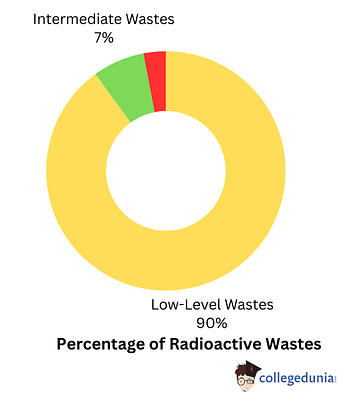
Radioactive pollution is a very hazardous type of pollution which is causing a great concern for both human and their surrounding environment. The emission of radioactive wastes causes deadly diseases in humans as well as animals. These wastes are further categorized into following types:
Low-Level Wastes: A class of radioactive wastes that are disposed by hospitals and industries are considered as low-level wastes. The contribution of such type of wastes are very high. Cotton, rags, paper, tools falls under the category of low-level wastes which are usually burned after disposal.
Intermediate-Level Wastes: Metal fuels, chemical wastes, and resins are included in intermediate-level wastes which shares 7% of total radioactive wastes in the environment.
High-Level Wastes: These are very hazardous type of radioactive wastes and causes potential threat to human and environment. These wastes mainly include highly radioactive elements such as Uranium.
Causes of Radioactive Pollution
[Click Here for Sample Questions]
Any biological or chemical process that emits radiation into the environment is one of the sources of radioactive pollution. Although radiological pollution has many causes, following are the most prevalent ones that can cause minor to severe harm to a person’s health:
Natural Radioactive Pollution
The release of radioactive elements into the atmosphere, a process often overlooked, is the primary cause of natural radiation pollution.
- Thorium, polonium, uranium, and radium are the four common radioactive elements used in the construction of nuclear reactors and power plants.
- Natural radiation may release of harmful radioactive gases, liquids or particles in the air.
Man-made Radioactive Pollution
This happens due to the accidental release of a nuclear weapon's explosive or leak in a nuclear reactor vessel. Man-made radioactive pollution arises due to the use of radioisotopes in manufacturing operations.
- The most common cause of this pollution is mining, which involves the extravasation of mineral ores like radium and uranium.
- It is also caused by spillage or dumping of radioactive material, which people could spread as they walk around.
Effects of Radioactive Pollution
[Click Here for Sample Questions]
Humans and the environment are known to be adversely affected by radioactive pollution in several ways:
Diseases
Cancer is the most common disease associated with radiation exposure. It evolved throughout time and now represents a serious threat to global health. Some other dangerous diseases include:
- Leukaemia,
- Cardiovascular Diseases, and
- Premature Ageing
Soil Infertility
Radiation exposure to the atmosphere indicates that radiation is prevalent everywhere, including the soil. The soil becomes extremely poisonous and useless when the different nutrients react with the radioactive pollutants, thus making the soil highly toxic and infertile.
Cell Damage
When radiation dosages are high enough, it can prevent mitosis, which stops a cell from dividing and multiplying endlessly.
- The majority of mammalian cells are killed by radiation through the suppression of cellular growth.
- In some cases, extreme exposure to radioactive pollution can cause permanent sickness and sometimes death.
Effects on Plants
Radioactive pollution also affects plants by increasing UV rays. Due to radiation, the stomata stop the evaporation cycle, and plants' growth and health are altered.
Prevention of Radioactive Pollution
[Click Here for Sample Questions]
Bio-chemical degradation is not a viable method for treating radioactive waste as these substances have very long half-lives. There are really just a few methods for treating radioactive waste, and they include:
- Storage of waste deep in radiation-shielded vessels.
- Radioactive waste isolation in geographically remote regions, including abandoned mines or tunnels.
Radioactive Waste Management
[Click Here for Sample Questions]
Radioactive waste management is a multi-step process that involve five major steps: Planning and preparation, treatment, packaging, storage and disposal. There are three main approaches of radioactive waste management:
- Minimize the use of radioactive wastes,
- Proper handling and packaging to ensure safety during the transportation,
- Proper storage (without any exposure to air).
Things to Remember
- Radioactive pollution is a serious threat that has a detrimental impact on the environment and human health.
- Inhalation, ingestion, or consumption of contaminated food or drink can also introduce radioactive elements into the body.
- Mutations in the genes, infertility in the soil, and premature deaths of cells are consequences of radioactive pollution.
- Since radioactive wastes take years to decay naturally, they are extremely dangerous.
- The Mayak nuclear accident and the Three Mile Island accident are examples of radioactive accidents.
Sample Questions
Ques. What are contaminants? (2 marks)
Ans. Contaminants are undesirable substances that cause harm to both humans and the environment when exposed to air, water, food, or soil. Types of contaminants are as follows:
- Biological Contaminants
- Physical Contaminants
- Radioactive contaminants
- Chemical Contaminants
Ques. What are radioactive elements & what are their uses? (2 marks)
Ans. Radioactive elements are composed of atoms with unstable nuclei that spontaneously disintegrate and release particles in an attempt to regain stability.
- Radioactive materials such as uranium and plutonium are utilised to produce electricity in nuclear reactors.
- These components are also utilised in the production of nuclear weapons.
Ques. What are the effects of radiation? (2 marks)
Ans. Prolonged exposure of the body to any type of radiation can cause serious health problems such as skin infections, irritations, and even cancer. In addition, DNA damage can also be seen due to high doses of radiation.
Ques. What is a natural agent of radioactive pollution? (2 marks)
Ans. The composition of the earth's crust is a major source of natural radiation. The main contributors are natural deposits of uranium, potassium, and thorium which, in the process of natural decay, will release small amounts of ionising radiation.
Ques. What do you mean by radioactive decay & what are their types? (3 marks)
Ans. Unstable atomic nuclei may give off energy through radiation in a process known as radioactive decay. There are three types of radioactive decay through which radioactive materials lose their energy:
- Alpha Decay- The process by which the parent nucleus releases an alpha particle during nuclear fission is known as "alpha decay."
- Beta Decay- In beta decay, an electron with high energy is released as a beta particle during the process of a neutron transforming into a proton.
- Gamma Decay- It is a very simple type of decay that involves the transformation of decay of a radioactive element from excited to ground state.
Ques. What are the harmful effects of radioactive pollution? (2 marks)
Ans. Cancer is the most prevalent disease to develop in individuals exposed to radioactive contaminants. Excessive radiation exposure can also cause:
- Haemorrhages,
- Anaemia,
- Leukaemia, and
- Cardiovascular disorders
Ques. Is it possible to prevent radiation pollution? (3 marks)
Ans. Yes, it can be prevented by following the proper guidelines. Many strategies can be used to minimize and prevent radioactive or radiation pollution which includes management and treatment of radioactive waste, prevention of nuclear accidents. Following are a few measures to reduce radiation pollution:
- Nuclear testing should be prohibited,
- By proper and safe disposal of radioactive wastes,
- Contents should be properly labelled, and
- Sustainable sources of energy should be used in order to reduce radiation contamination.
Ques. What are the examples of radioactive isotopes? (2 marks)
Ans. Radioactive isotopes are those whose nuclei are unstable and which release surplus energy by spontaneous emission of alpha, beta, and gamma radiation. C-14, I-131, and Co-60 are some of the examples of radioactive isotopes.
Ques. How radioactive isotopes are used in nuclear power plants? (2 marks)
Ans. The most common radioactive isotope used in nuclear power plants is an isotope of Uranium i.e., U-235. Isotopes are used for controlled chain reactions. The unique characteristics of isotopes make them valuable in applications including diagnosis and treatment.
Ques. What is nuclear fusion? (2 marks)
Ans. The process of combining two lighter atomic nuclei to produce a heavier atomic nucleus and release a huge amount of energy is known as nuclear fusion. This type of reaction is usually seen in sunlight and hydrogen bombs.
Ques. What is nuclear fission? (2 marks)
Ans. When the nucleus of a heavy atom breaks into two lighter atoms with almost equal masses, the process is called nuclear fusion. Common examples of nuclear fission include electricity generation via nuclear power plants.



Comments