




AIIMS PG is now conducted as the INI CET (Institute of National Importance Combined Entrance Test) by AIIMS New Delhi. The AIIMS PG Syllabus 2027 is set by the undergraduate curriculum itself rather than a separate list issued by AIIMS. There are 19 subjects in the MBBS route for MD and MS candidates and a separate BDS subject list for MDS candidates.
- INI CET Syllabus 2027 for MD and MS covers 19 MBBS subjects with Medicine contributing 25 to 35 questions in recent sessions.
- AIIMS PG Syllabus for MDS 2027 covers the BDS curriculum with core dental subjects contributing 60 to 70% of the paper.
- The clinical disciplines of Medicine, Surgery and Obstetrics and Gynaecology have a higher weightage in the INI CET Syllabus at around 45 to 50%.
- Pre-clinical subjects carry 20 to 25% while para-clinical subjects contribute 25 to 30% of the INI CET Syllabus 2027.
- Pathology and Pharmacology are the strongest para-clinical areas with 15 to 20 questions each in the INI CET exam.
- INI CET syllabus gives image based questions around 20 to 25% with ECGs, radiology and histopathology appearing every session.
- Candidates should focus on Oral Pathology, Oral Medicine, Oral Surgery and Prosthodontics for the INI CET MDS 2027 exam.
Related Articles:
- AIIMS PG Exam Pattern 2027: INI CET Exam Pattern, Marking Scheme, Question Type and Duration
- AIIMS PG Paper Analysis, Weightage of Sections, Difficulty Level of Questions, Get Students Reaction
Key Summary
- INI CET Syllabus 2027 has no official topic-wise weightage from AIIMS so all ranges come from question papers of the last five sessions.
- INI CET syllabus gives Microbiology 12 to 18 questions while Forensic Medicine and Toxicology carries 5 to 10 fact based questions.
- Community Medicine carries 4 to 6% in the INI CET exam against 8 to 10% in NEET PG which lowers its revision priority.
- INI CET MDS syllabus gives Dental Materials 10 to 14 questions while General Medicine and General Surgery carry 10 to 15 each.
- INI CET 2027 preparation runs on Robbins, Guyton, Harper's, K.D. Tripathi and Park with Mudit Khanna used for MCQ practice.
AIIMS PG Syllabus 2027: What Changed After the Shift to INI CET?
AIIMS PG ran as a standalone entrance for AIIMS campuses only until 2020 for postgraduate medical admissions.
- AIIMS, JIPMER, PGIMER, NIMHANS, SCTIMST and other AIIMS now admit candidates through the single INI CET exam.
- The INI CET Syllabus 2027 focuses more on clinical application, integrated questions and image based reasoning than direct fact recall.
- Older AIIMS PG question papers can prove to be helpful but must be accompanied by latest INI CET practice papers with lengthy cases and sectional timing.
- Candidates should check the official 2027 prospectus for any minor changes in eligibility or the INI CET exam pattern.
| Aspect | Old AIIMS PG (Pre-INI-CET) | Current INI-CET (for 2027 sessions) | Key Change / Impact |
|---|---|---|---|
| Conducting Body | AIIMS New Delhi | AIIMS New Delhi (on behalf of all INIs) | Centralized process |
| Exam Scope | Primarily AIIMS seats | All INIs: AIIMS (all campuses), JIPMER, PGIMER, NIMHANS, SCTIMST | Single exam for multiple premier institutes |
| Syllabus Base | Full MBBS curriculum (19 subjects) | Same full MBBS curriculum (Pre-clinical, Para-clinical, Clinical) | No major content change |
| Subjects Covered | Anatomy, Physiology, Biochemistry, Pathology, Pharmacology, Microbiology, Forensic Medicine, Community Medicine, Medicine & Allied, Surgery & Allied, OBG, Pediatrics, etc. | Identical 19 subjects | Same topics; emphasis shifted |
| Question Style | Mix of factual, clinical, image-based; relatively more predictable repeats | Strongly clinical, integrated (multi-subject), application/analysis-heavy, longer vignettes, higher image-based (~25–30%) | More reasoning & clinical integration required |
| Paper Structure | Single continuous paper with free navigation | 4 sequential parts (50 questions each); fixed 45 min per part; cannot return to previous parts | Time management & sequential strategy critical |
| Total Questions | 200 MCQs | 200 MCQs (Single Correct + Multiple Correct types) | Similar volume |
| Duration | 180 minutes | 180 minutes (45 min × 4 parts) | Same total time; stricter sectional limits |
| Marking Scheme | +1 correct, –1/3 incorrect, 0 unattempted | +1 correct, –1/3 incorrect, 0 unattempted | Unchanged |
| Focus / Difficulty | Concept + clinical; somewhat more factual/predictable | Higher clinical orientation, multi-step reasoning, basic science integration with clinical cases | Preparation must emphasize application over pure recall |
| Frequency | Usually twice a year | Twice a year (typically May for July session; Nov for January session) | Continues |
Also Check: AIIMS PG 2016 Question Paper with Answer Key PDF (January 23)
Ques. Which entrance exams were merged to create INI CET?
Ans. INI CET replaced the separate postgraduate entrance exams conducted by AIIMS, JIPMER, PGIMER and NIMHANS. It was introduced as a common entrance test to streamline PG admissions across these Institutes of National Importance.
Ques. Did the syllabus change when INI CET replaced AIIMS PG?
Ans. No major change in the core medical syllabus occurred when INI CET replaced AIIMS PG. INI CET introduced a common entrance framework for PG admissions across participating Institutes of National Importance, while the examination continued to assess the MBBS-level medical subjects.
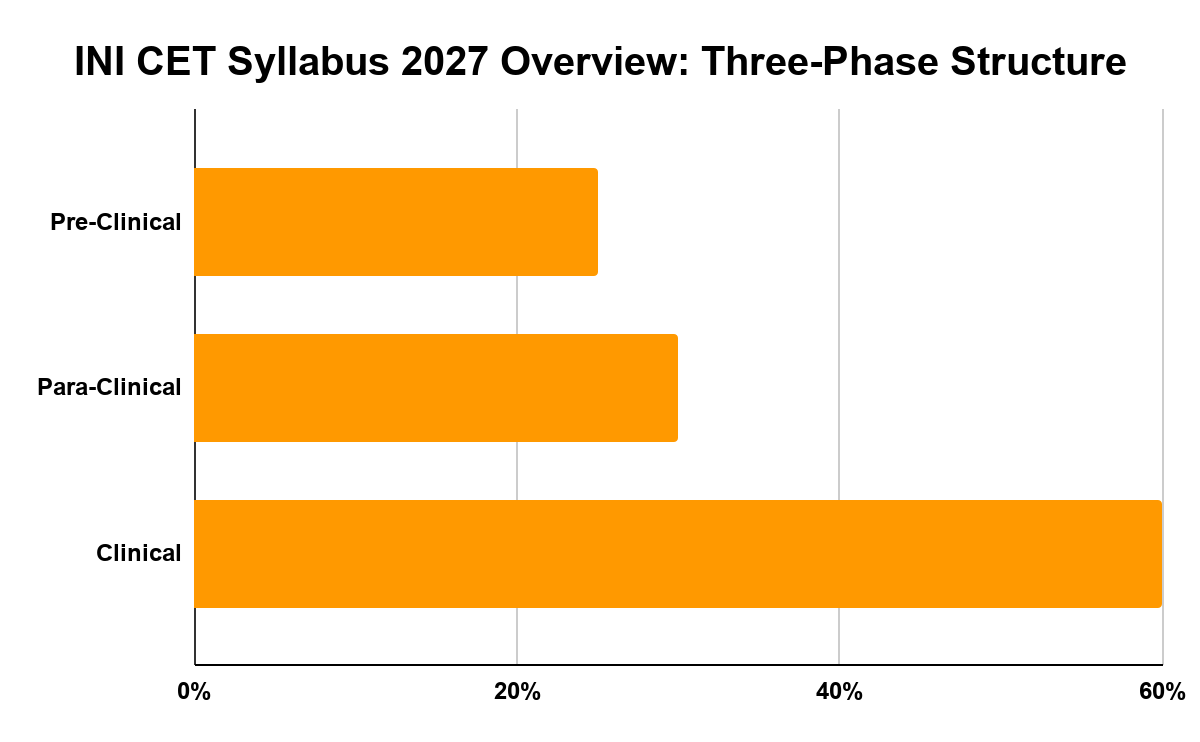
INI CET Syllabus 2027 Overview: Three-Phase Structure
Clinical subjects make up 55–60% of the INI CET Syllabus 2027 with Medicine often contributing 20–25 questions in recent 2025–26 sessions.
- Clinical vignette questions rose from 35–40% in 2021 to 55–65% by 2024–25, making clinical application key in the INI CET exam pattern.
- Image-based questions on ECGs, histopathology and radiology have 20–25% of INI CET questions which is up from about 15% in early 2023.
| Phase | Subjects Covered | Approx. Weightage | Key Focus Areas |
|---|---|---|---|
| Pre-Clinical | Anatomy, Physiology, Biochemistry | 15–25% | Gross & Neuroanatomy, Embryology, CVS/Respiratory/Renal Physiology, Metabolism, Molecular Biology, Enzymes |
| Para-Clinical | Pathology, Pharmacology, Microbiology, Forensic Medicine & Toxicology, Community Medicine (PSM) | 25–30% | Haematology, Neoplasia, Systemic Pathology, Autonomics & Antimicrobials, Bacteriology/Virology/Immunology, Epidemiology, Biostatistics, National Health Programmes |
| Clinical | Medicine & Allied, Surgery & Allied, Obstetrics & Gynaecology, Paediatrics, Ophthalmology, ENT, Orthopaedics, Dermatology, Psychiatry, Radiology, Anaesthesiology | 50–60% | Clinical vignettes, “next-best-step” management, integrated cases, image-based questions (ECGs, X-rays, histopathology, clinical photos) |
Also Check: AIIMS PG 2017 Question Paper with Answer Key PDF (May 28)
Ques. How many subjects are there in the INI CET Syllabus 2027?
Ans. The INI CET Syllabus 2027 covers 19 subjects from the undergraduate medical curriculum. These subjects are broadly grouped into Pre-Clinical, Para-Clinical and Clinical categories, covering areas such as Anatomy, Physiology, Biochemistry, Pathology, Pharmacology, Medicine, Surgery, Obstetrics and Gynaecology, and Paediatrics.
INI CET Syllabus 2027 for MD and MS: Subject-Wise Topics
Candidates can check the INI CET Syllabus 2027 for MD and MS given below:
Pre-Clinical Subjects in the AIIMS PG Syllabus 2027
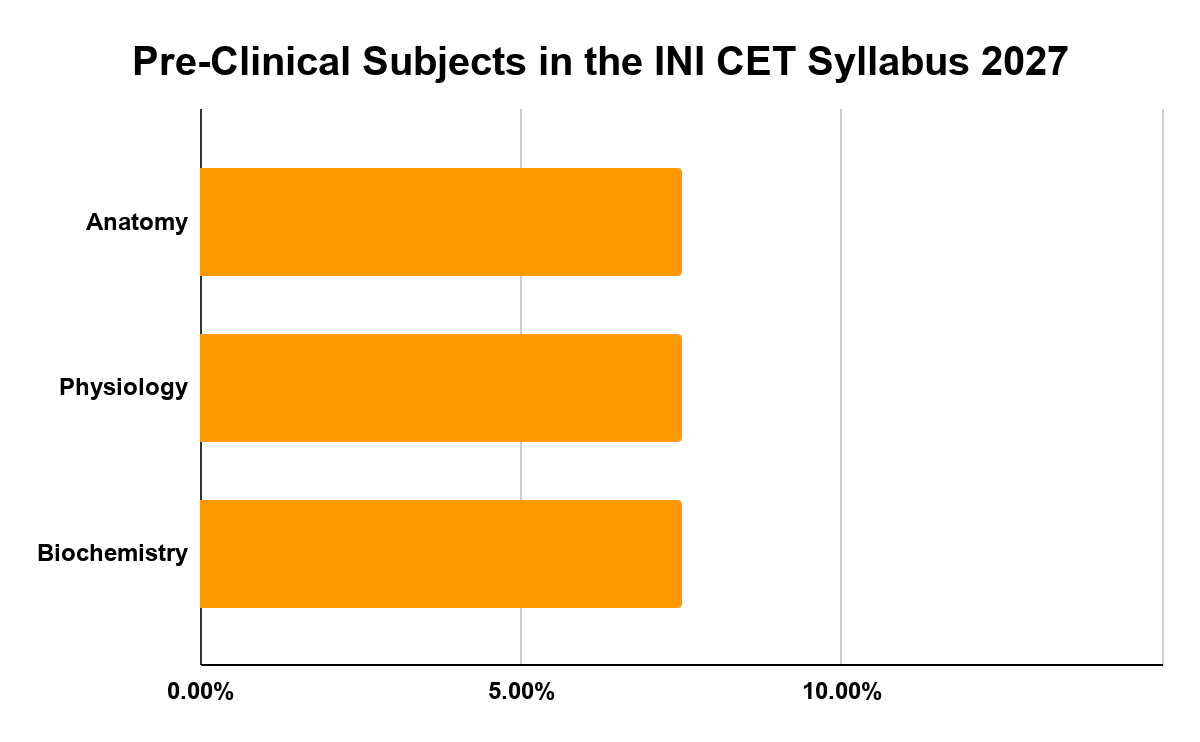
Pre-clinical subjects account for 30–45 questions or 15–22% of the INI CET Syllabus 2027 with 10–15 questions from each subject.
- The May 2026 INI CET paper saw Biochemistry and Physiology take higher weightage than Anatomy in the pre-clinical section.
- Neuroanatomy, CVS and renal physiology and metabolic pathways remain high-yield topics, often appearing in clinical vignettes.
| Subject | Key Topics | Approx. No. of Questions | Approx. Weightage |
|---|---|---|---|
| Anatomy | Gross Anatomy (Upper & Lower Limb, Thorax, Abdomen, Head & Neck, Pelvis), Neuroanatomy, Embryology & Genetics, Histology / Microanatomy, Surface Anatomy, Radiological / Imaging Anatomy, Clinical & Applied Anatomy | 10 - 15 | 5 - 7.5% |
| Physiology | General Physiology, Blood & Haematology, Nerve & Muscle, Cardiovascular System, Respiratory System, Renal / Kidney Physiology, Gastrointestinal System, Endocrine Physiology, Reproductive Physiology, Neurophysiology, Special Senses, Higher Nervous Functions | 10 - 15 | 5 - 7.5% |
| Biochemistry | Biomolecules (Carbohydrates, Proteins, Lipids, Nucleic Acids), Enzymes, Carbohydrate / Protein / Lipid Metabolism, Molecular Biology & Genetics, Vitamins & Nutrition, Clinical Biochemistry, Immunology, Acid-Base & Buffer Systems, Hormones | 10 - 15 | 5 - 7.5% |
Also Check: AIIMS PG 2018 Question Paper with Answer Key PDF May 26 Morning Session
Ques. Which pre-clinical subject needs the most preparation time in INI CET 2027?
Ans. Among the three pre-clinical subjects, Anatomy generally requires the most preparation time because its syllabus is broad and includes Gross Anatomy, Neuroanatomy, Microanatomy, Embryology and Genetics. However, candidates should also give sufficient time to Physiology and Biochemistry, as all three are part of the INI CET 2027 pre-clinical syllabus.
Para-Clinical Subjects in the AIIMS PG Syllabus 2027
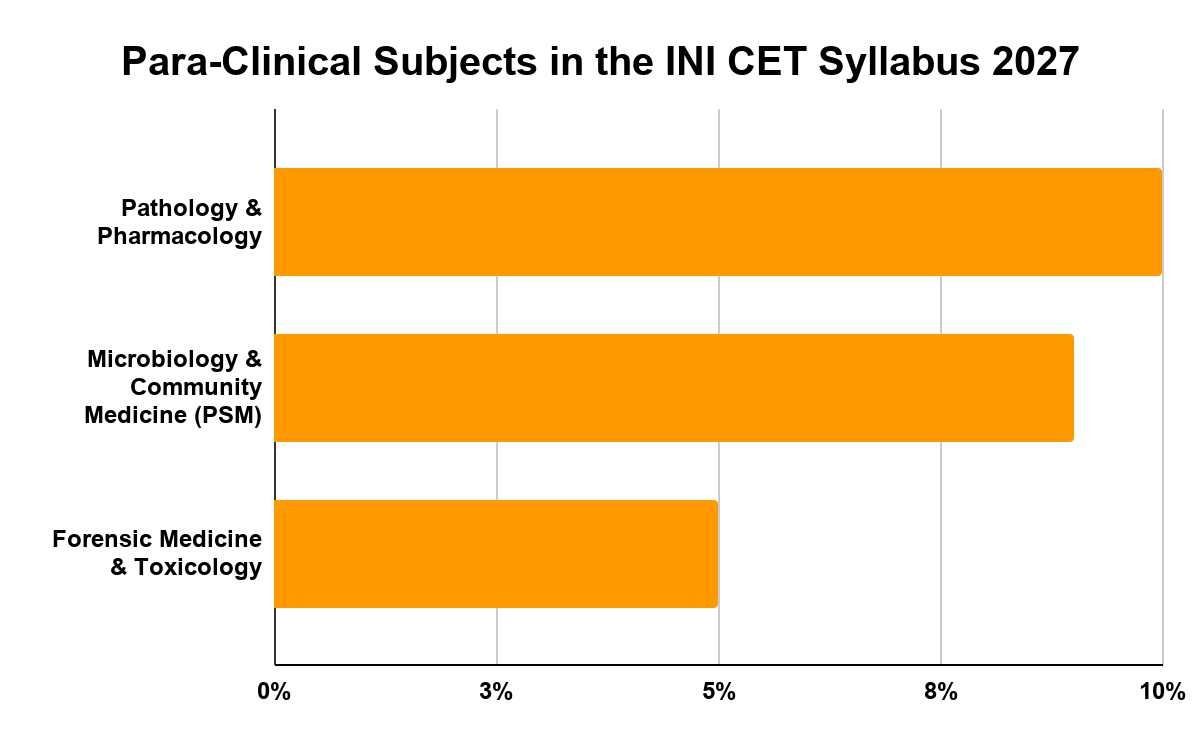
Para-clinical subjects account for 35–50 questions or 20–30% of the INI CET Syllabus 2027, with Pathology and Pharmacology giving 15–20 questions each.
- Pathology has the highest weightage in the INI CET para-clinical section with 14–18 questions on histopathology slides and tumour markers.
- Microbiology in the INI CET syllabus focuses on lab diagnosis and clinical correlations while Forensic Medicine has 5–10 fact based questions.
| Subject | Key Topics | Approx. No. of Questions | Approx. Weightage |
|---|---|---|---|
| Pathology | General Pathology (Cell Injury, Inflammation, Repair, Neoplasia), Haematology, Systemic Pathology, Immunopathology, Tumour Markers, Molecular Pathology | 15 - 20 | 7.5 - 10% |
| Pharmacology | General Pharmacology, Autonomic Nervous System Drugs, CNS Drugs, Cardiovascular Drugs, Antimicrobials, Endocrine Pharmacology, Chemotherapy, Clinical Pharmacology, Toxicology | ||
| Microbiology | Bacteriology, Virology, Mycology, Parasitology, Immunology, Infection Control, Laboratory Diagnosis, Sterilisation & Disinfection | 12 - 18 | 6 - 9% |
| Community Medicine (PSM) | Epidemiology, Biostatistics, National Health Programmes, Nutrition, Communicable & Non-communicable Diseases, Screening Methods, Health Administration, Demography | ||
| Forensic Medicine & Toxicology | Injuries & Wounds, Toxicology, Autopsy, Identification, Medico-legal Aspects, IPC Sections, Thanatology, Asphyxial Deaths | 5 - 10 | 2.5 - 5% |
Also Check: AIIMS PG 2020 Question Paper with Answer Key PDF (June)
Ques. Why are para-clinical subjects considered scoring in the INI CET syllabus?
Ans. Para-clinical subjects such as Pathology, Pharmacology and Microbiology are considered scoring because many questions focus on high-yield concepts, drug mechanisms, laboratory findings, infections and image-based topics. These subjects also contribute a significant share of the paper, making strong preparation in them useful for improving overall scores.
Clinical Subjects in the INI CET Syllabus 2027
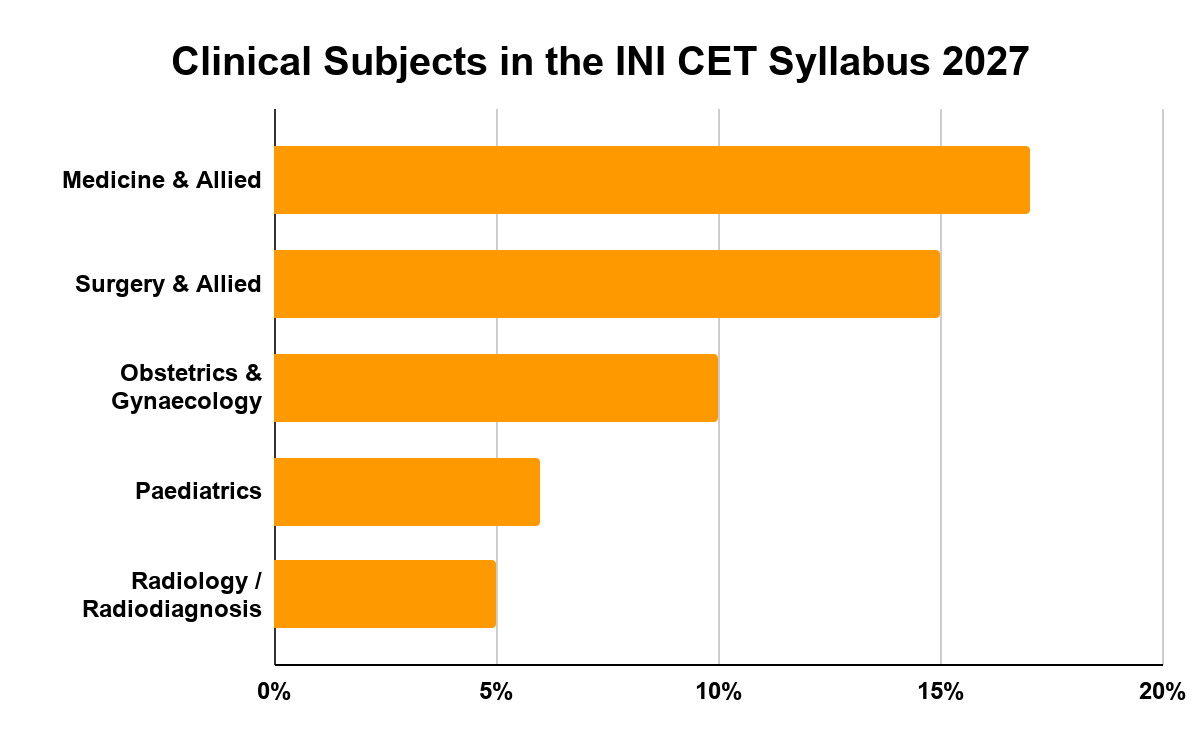
Medicine, Surgery and OBGYN account for 45–55% of the INI CET Syllabus 2027 with Medicine alone contributing 20–30 questions.
- Clinical vignette questions rose from 35–40% in 2021 to 55–65% by 2024–25, making clinical application important in the INI CET exam.
- General Medicine contributed 28–30 questions in the November 2025 INI CET session while Surgery had 5–7 questions in some recalls.
| Subject | Key Topics | Approx. No. of Questions | Approx. Weightage |
|---|---|---|---|
| Medicine & Allied | Cardiology, Neurology, Endocrinology, Nephrology, Gastroenterology, Infectious Diseases, Respiratory Medicine, Haematology, Rheumatology, Dermatology, Psychiatry | 25–35 | 12–17% |
| Surgery & Allied | General Surgery (Trauma, GI, Thyroid, Breast, Hernia), Urology, Orthopaedics, ENT, Ophthalmology, Anaesthesiology | 20–30 | 10–15% |
| Obstetrics & Gynaecology | Antenatal Care, Labour & Complications (PPH, Preeclampsia, APH), Fetal Monitoring, Gynaecological Disorders, Contraception, Infertility, Gynaecological Oncology | 15–20 | 7.5–10% |
| Paediatrics | Neonatology, Growth & Development, Immunization, Nutrition, Common Infections, Respiratory & GI Disorders, Congenital Heart Disease | 8–12 | 4–6% |
| Radiology / Radiodiagnosis | Imaging interpretation (X-rays, CT, MRI, Ultrasound), Common radiological signs | 5–10 | 2.5–5% |
Also Check: INI CET Sample Papers 2026: Last 5 Years PYQs PDF Download and Subject Wise Weightage
Ques. Are image-based questions part of the INI CET syllabus 2027?
Ans. Yes, image-based questions are an important part of INI CET preparation, although they are not listed as a separate topic in the syllabus. Candidates should practise clinical images, radiology, histopathology and other visual questions along with the core MBBS subjects.
INI CET MDS Syllabus 2027: BDS Subject List
Core dental subjects form 60–70% of the 200 question INI CET MDS paper covering Oral Surgery, Pathology, Conservative, Prosthodontics, Periodontics, Orthodontics and PHD.
- Unlike NEET MDS with 240 questions, the INI CET MDS exam has 200 questions in four blocks with more clinical vignettes and image based questions.
- Oral Pathology, Oral Medicine and Oral Surgery remain the highest yield subjects in recent INI CET MDS question paper recalls.
INI CET MDS Syllabus 2027: Basic / Pre-Clinical Sciences
| Subject | Key Topics | Approx. No. of Questions | Approx. Weightage |
|---|---|---|---|
| General Anatomy (incl. Embryology & Histology) | Head & Neck, Osteology, Muscles, Nerves, TMJ, Embryology of Face & Oral Cavity, Histology of Oral Tissues | 10–14 | 5–7% |
| General Human Physiology & Biochemistry | Blood, CVS, Respiratory, Renal, Endocrine, Vitamins, Enzymes, Carbohydrate/Protein/Lipid Metabolism | 10–14 | 5–7% |
| Dental Anatomy, Embryology & Oral Histology | Tooth Morphology, Chronology, Eruption & Shedding, Enamel, Dentin, Cementum, Pulp, Periodontal Ligament, Oral Mucosa | 10–14 | 5–7% |
INI CET MDS Syllabus 2027: Para-Clinical / General Sciences
| Subject | Key Topics | Approx. No. of Questions | Approx. Weightage |
|---|---|---|---|
| General Pathology & Microbiology | Inflammation, Healing, Neoplasia, Immunity, Bacterial/Viral/Fungal Infections, Sterilisation | 10–14 | 5–7% |
| General and Dental Pharmacology & Therapeutics | Antibiotics, Analgesics, Local & General Anaesthesia, Antiseptics, Drugs acting on various systems | 10–14 | 5–7% |
| Dental Materials | Impression Materials, Gypsum Products, Restorative Materials, Cements, Alloys, Ceramics, Polymers, Casting | 10–14 | 5–7% |
| General Medicine | Systemic diseases (CVS, Respiratory, Neurological, GI, Renal, Endocrine), Medical emergencies in dentistry | 10–15 | 5–7.5% |
| General Surgery | Wound Healing, Haemorrhage, Shock, Maxillofacial Trauma, Pre- & Post-operative Care | 10–15 | 5–7.5% |
INI CET MDS Syllabus 2027: Clinical Dental Sciences
| Subject | Key Topics | Approx. No. of Questions | Approx. Weightage |
|---|---|---|---|
| Oral Pathology and Oral Microbiology | Developmental Anomalies, Cysts, Tumours, Oral Cancer, Caries, Pulpal & Periapical Diseases, Infections | 12–16 | 6–8% |
| Oral Medicine and Radiology | Oral Diagnosis, Medically Compromised Patients, Orofacial Pain, Mucosal Diseases, Radiographic Techniques, CBCT | 12–16 | 6–8% |
| Pedodontics and Preventive Dentistry | Child Psychology, Behaviour Management, Preventive Dentistry, Traumatic Injuries, Pulp Therapy in Children | 10–14 | 5–7% |
| Orthodontics and Dentofacial Orthopaedics | Growth & Development, Malocclusion Classification, Cephalometrics, Removable & Fixed Appliances | 10–14 | 5–7% |
| Periodontology | Gingival & Periodontal Diseases, Aetiology, Classification, Treatment Planning, Surgical Periodontics | 10–14 | 5–7% |
| Prosthodontics and Crown & Bridge | Complete Dentures, Removable Partial Dentures, Fixed Prosthodontics, Occlusion, Implants | 12–16 | 6–8% |
| Conservative Dentistry and Endodontics | Caries Management, Operative Principles, Pulp Diagnosis, Root Canal Treatment, Traumatic Injuries | 12–16 | 6–8% |
| Oral and Maxillofacial Surgery | Extractions & Impacted Teeth, Cysts & Tumours, Maxillofacial Injuries, Local Anaesthesia, Infection Management | 12–16 | 6–8% |
| Public Health Dentistry | Epidemiology, Preventive Dentistry, School Health Programmes, Fluorides, Health Education | 10–14 | 5–7% |
Ques. Is the INI CET MDS syllabus the same as the MD and MS syllabus?
Ans. No, the INI CET MDS syllabus is not the same as the MD and MS syllabus. MDS admissions are based on the BDS-level dental curriculum, while MD and MS admissions assess subjects from the MBBS curriculum.
You can watch the YouTube video "INI-CET Full Details | AIIMS PG Entrance Exam" by Mastering BDS to understand how the INI CET Syllabus 2027 applies to MDS aspirants. The video explains that the paper follows the MBBS and BDS curriculum across pre-clinical, para-clinical and clinical subjects, and confirms that AIIMS offers MDS but does not run a BDS programme.
INI CET Syllabus 2027 for DM, MCh and MD Hospital Administration
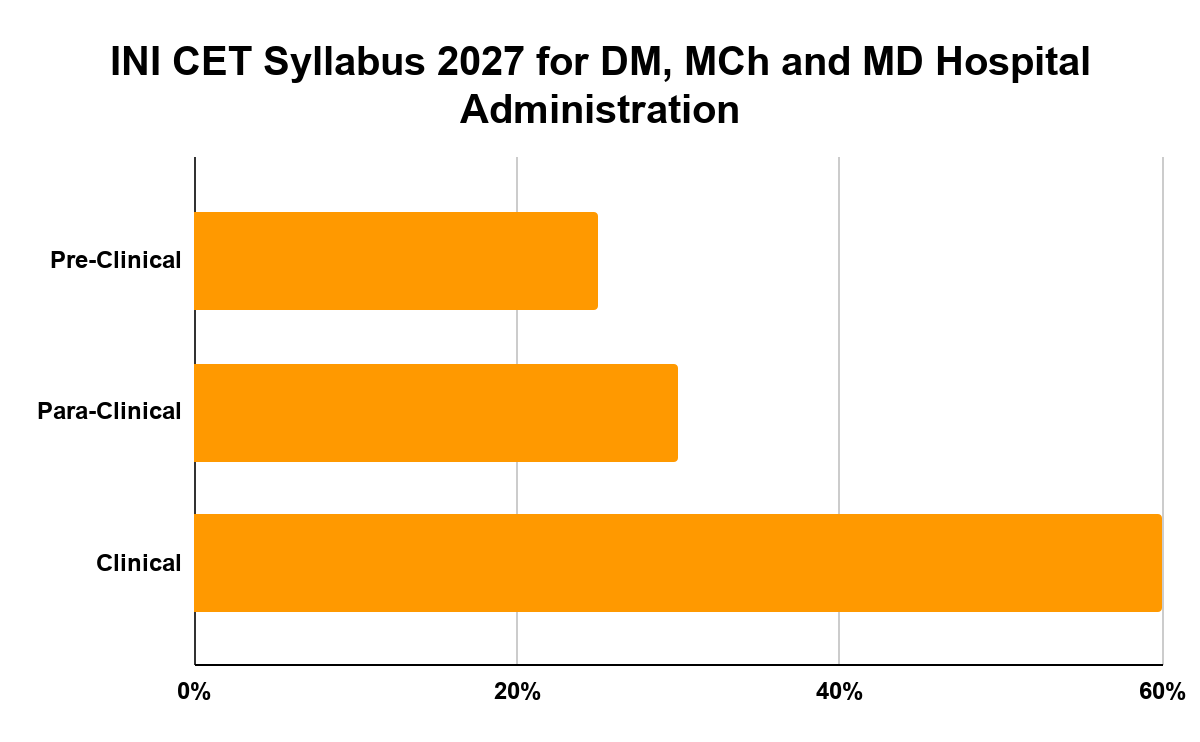
Anatomy, Physiology and Biochemistry make up 30–50 questions or 15–25% of the AIIMS PG Syllabus 2027 with focus on clinical correlations.
- The para-clinical subjects in the INI CET Syllabus 2027 account for 50–60 questions or 25–30% led by Pathology and Pharmacology.
- Clinical subjects carry 100–120 questions or 50–60% of the INI CET paper with Medicine, Surgery and OBGYN forming the main scoring areas.
| Phase | Subjects Covered | Key Focus Areas | Approx. No. of Questions | Approx. Weightage |
|---|---|---|---|---|
| Pre-Clinical | Anatomy, Physiology, Biochemistry | Gross & Neuroanatomy, Embryology, CVS/Renal/Neuro Physiology, Metabolism, Molecular Biology, Enzymes | 30–50 | 15–25% |
| Para-Clinical | Pathology, Pharmacology, Microbiology, Forensic Medicine, Community Medicine (PSM) | Haematology, Neoplasia, Autonomics & Antimicrobials, Bacteriology/Virology/Immunology, Epidemiology, Biostatistics, National Health Programmes | 50–60 | 25–30% |
| Clinical | Medicine & Allied, Surgery & Allied, Obstetrics & Gynaecology, Paediatrics, Ophthalmology, ENT, Orthopaedics, Dermatology, Psychiatry, Radiology, Anaesthesiology | Clinical vignettes, “next-best-step” management, image-based questions (ECGs, X-rays, histopathology), integrated cases | 100 - 120 | 50 - 60% |
Also Check: INI CET Anatomy Sample Paper
Ques. Can an MBBS graduate apply directly for DM and MCh through INI CET 2027?
Ans. Yes, MBBS graduates can apply for 6-year DM and MCh programmes through INI CET, subject to meeting the prescribed eligibility criteria. These programmes allow eligible candidates to pursue super-speciality training directly after MBBS.
AIIMS PG Syllabus 2027 vs NEET PG Syllabus
The INI CET and NEET PG syllabus cover the same 19 subject MBBS curriculum but Pre-Clinical subjects get 15–25% in INI CET and 15–20% in NEET PG.
- PSM carries 4–6% weightage in INI CET compared with 8–10% in NEET PG while Anatomy and Physiology get slightly higher weightage.
- Clinical vignettes and integrated questions make up 55–65% of recent INI CET papers, compared with a more mixed factual and clinical pattern in NEET PG.
| Parameter | INI CET 2027 | NEET PG 2027 |
|---|---|---|
| Syllabus Base | Complete MBBS curriculum (Pre + Para + Clinical) | Complete MBBS curriculum (Pre + Para + Clinical) |
| Question Style | Conceptual, clinical vignettes, integrated multi-subject stems, higher analytical depth | Mix of factual recall + clinical vignettes; more predictable |
| Image-Based Questions | 15–25% (histopathology, radiology, clinical photos, ECGs) | 20–30% (relatively more standardised images) |
| Pre-Clinical Weightage | 15–25% (Anatomy & Physiology slightly higher) | 15–20% |
| Para-Clinical Weightage | 25–30% (Pathology & Pharmacology strong) | 20–25% |
| Clinical Weightage | 50–60% (Medicine, Surgery, OBGYN dominant) | 55–60% (Medicine, Surgery, OBGYN, PSM strong) |
| PSM / Forensic Medicine | Lower relative weightage (PSM ~4–6%, FMT ~2–3%) | Higher relative weightage (PSM ~8–10%, FMT ~3–5%) |
| Anatomy / Physiology | Slightly higher emphasis | Standard weightage |
| Integration Level | High | Moderate |
| One-Liners / Direct Facts | Fewer; more applied | Higher proportion |
| Recent Guidelines / Advances | Frequently tested | Tested but less intensively |
Ques. Which exam has the wider syllabus, INI CET or NEET PG?
Ans. Both INI CET and NEET PG are based on the MBBS curriculum, so their core syllabus is broadly similar. However, INI CET is known for testing deeper clinical concepts and application-based knowledge, while NEET PG has a broader emphasis on the overall MBBS syllabus.
Best Book for INI CET Syllabus 2027
Candidates can check the Best books for INI CET syllabus 2027 given below:
| Subject | Recommended Primary Book(s) | Author / Publication | Remarks |
|---|---|---|---|
| Anatomy | B.D. Chaurasia’s Human Anatomy + Gray’s Anatomy (for reference) | B.D. Chaurasia / Elsevier | Focus on Neuroanatomy & Embryology |
| Physiology | Guyton and Hall Textbook of Medical Physiology | John E. Hall | Concepts + applied physiology |
| Biochemistry | Harper’s Illustrated Biochemistry | Rodwell et al. | Metabolism & clinical correlations |
| Pathology | Robbins Basic Pathology (Baby Robbins) | Kumar, Abbas, Aster | High-yield for slides & neoplasia |
| Pharmacology | Essentials of Medical Pharmacology | K.D. Tripathi | DOC, ADRs, mechanisms |
| Microbiology | Ananthanarayan and Paniker’s Textbook of Microbiology | Ananthanarayan & Paniker | Lab diagnosis & clinical micro |
| Forensic Medicine | The Essentials of Forensic Medicine and Toxicology | K.S. Narayan Reddy | IPC, injuries, toxicology |
| Community Medicine (PSM) | Park’s Textbook of Preventive and Social Medicine | K. Park | Epidemiology, NHPs, biostats |
| Medicine | Davidson’s Principles and Practice of Medicine + Mudit Khanna | Davidson / Mudit Khanna | Clinical vignettes & MCQs |
| Surgery | Bailey & Love’s Short Practice of Surgery | Bailey & Love | Trauma, GI, instruments |
| Obstetrics & Gynaecology | D.C. Dutta’s Textbook of Obstetrics & Gynaecology | D.C. Dutta | Labour, emergencies, oncology |
| Paediatrics | Nelson Textbook of Pediatrics (selected chapters) | Nelson | Growth, neonatology, IMNCI |
| Ophthalmology | Comprehensive Ophthalmology | A.K. Khurana | Quick review + images |
| ENT | Diseases of Ear, Nose and Throat | P.L. Dhingra | Instruments & clinical cases |
| Orthopaedics | Essential Orthopaedics | J. Maheshwari | Fractures & tumours |
| Dermatology | Illustrated Synopsis of Dermatology & Sexually Transmitted Diseases | Neena Khanna | High-yield images |
| Psychiatry | Kaplan & Sadock’s Synopsis of Psychiatry (selected) | Kaplan & Sadock | Common disorders |
| Radiology / Anaesthesia | Review of Radiology + Anaesthesia Made Easy | Various / short notes | Image interpretation |
Ques. How many students give INI CET?
Ans. Around 75,000 candidates appeared for the July 2026 INI CET, according to available estimates, although AIIMS does not routinely publish complete candidate statistics. About 51,563 candidates qualified in that session.
How to Cover the INI CET Syllabus 2027
The INI CET Syllabus 2027 should be covered basic sciences first, then extended into clinical subjects, past papers and full-length mocks. Candidates should follow the sequence given below for the INI CET 2027 exam:
- First and Second Year Base: Concentrate early revision on pre-clinical and para-clinical subjects as observed paper patterns place close to 60% of questions there.
- Five Core Subjects: Anatomy, Biochemistry, Pharmacology, Pathology and Microbiology should never be dropped as these five carry the bulk of the basic science load.
- CBME Integration: Study each pre-clinical topic for its clinical relevance rather than in isolation since the undergraduate curriculum is integrated by design.
- MBBS Foundation: Treat the four years of MBBS as the working syllabus because a strong undergraduate base converts directly into INI CET marks.
- One-Liner Questions: Prepare for direct factual recall as INI CET carries more single-line questions than NEET PG across the last five to ten papers.
- Newly Introduced Facts: Track recent mutations, monoclonal antibodies and newly approved drugs which surface as unpredictable questions in most sessions.
- Bouncer Handling: Read past bouncers from previous papers instead of trying to predict them as no candidate can revise every new molecule.
- Third and Final Year Subjects: Cover clinical subjects fully after the basic sciences since the remaining 40% of questions still decides ranks.
- Previous Year Questions: Solve recent INI CET papers before older ones as newer sessions reflect current depth and framing more closely.
- Full Mocks: Move to complete papers only after every subject has been covered once then analyse each attempt subject by subject.
Ques. Is it hard to crack INI CET?
Ans. Yes, cracking INI CET requires strong conceptual knowledge, clinical understanding and consistent MCQ practice. Regular revision, PYQs, image-based questions and mock tests can improve accuracy and speed.
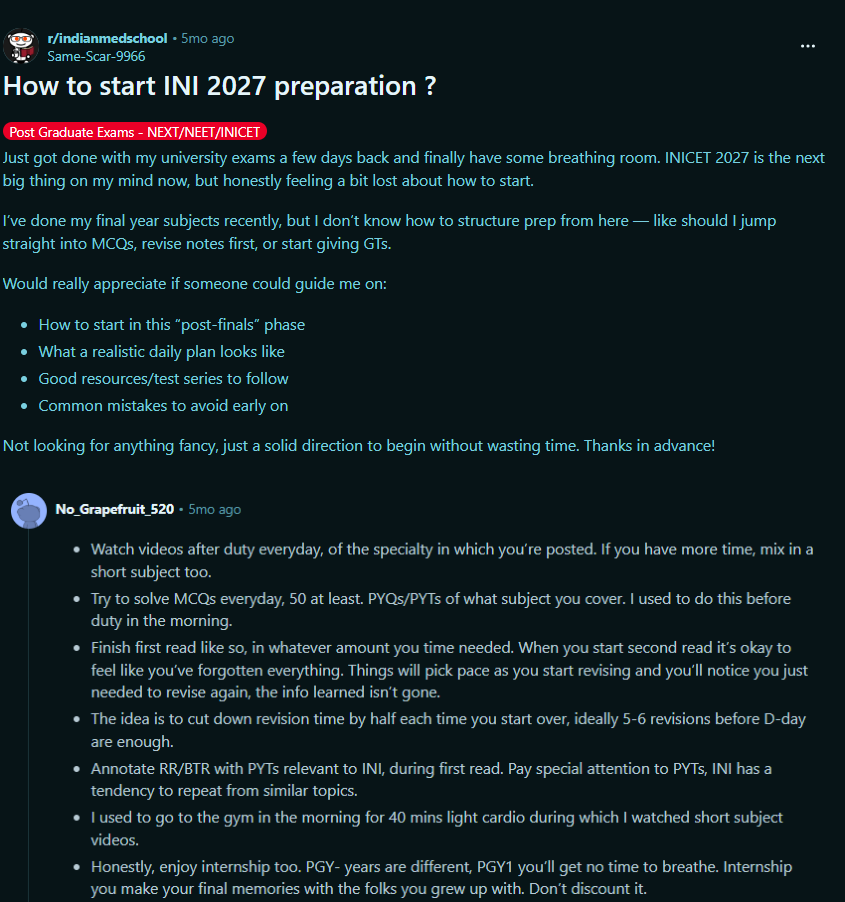
According to a Reddit discussion, candidates were advised to watch subject-specific videos daily, solve at least 50 MCQs/PYQs, and revise topics regularly. The discussion recommended reducing revision time with each cycle, targeting 5–6 revisions, and using PYTs relevant to INI, while also maintaining a healthy routine and making time for internships.
Source: Reddit
INI CET Syllabus 2027: Frequently Asked Questions (FAQs)
Ques. Is INI CET tough than NEET?
Ans. Yes, INI CET is generally considered tougher than NEET PG because it has more clinically integrated, conceptual and image-based questions. The exam also has a tighter time limit and tests deeper application of concepts.
Ques. What is a good score in INI CET?
Ans. A score of 130 or above out of 200 can be considered a strong score based on recent marks-versus-rank trends. Scores around 145–150 or higher are generally considered very competitive for securing a high rank.
Ques. Is INI CET only for AIIMS?
Ans. No, INI CET is not limited to AIIMS. It is conducted for postgraduate admissions to several Institutes of National Importance, including AIIMS, JIPMER, PGIMER, NIMHANS and SCTIMST.
Ques. Which is the toughest PG branch after MBBS?
Ans. There is no single officially defined toughest PG branch, but Radiology, Dermatology and General Medicine are among the most competitive specialities in INI CET counselling. Their high demand means that seats at leading institutes usually close at very strong ranks.
Ques. How many marks to get 1000 rank in INI CET?
Ans. Around 127 marks out of 200 corresponded to a rank of approximately 1,000 in the May 2026 INI CET session. The exact marks required can vary between sessions depending on paper difficulty and overall candidate performance.



Comments