

.jpg?h=35&w=35&mode=stretch)

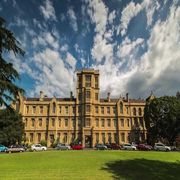
University of Toronto is a highly respected public research university in Toronto, Ontario, in the Toronto metropolitan area. It is a huge university with an estimated 52,993 undergraduate students split between three campuses. The admissions are moderately competitive, with an acceptance rate of approximately 43%, although selective majors such as Engineering, Computer Science, and Business are far more competitive. Some popular majors are Engineering, Public Health, Computer Science, Life Sciences, and Business Administration. The graduation rate after six years is around 89%, and graduates from University of Toronto receive a median starting salary of around INR 33,30,000 (converted from CAD 53,100 median salaries ten years post-graduation).
University of Melbourne is a popular public university in Melbourne, Victoria, in the Melbourne metropolitan region. It is a mid-size institution with a student enrollment of about 49,000 undergraduate students. Admissions are fairly selective, with an acceptance rate of between 70–80%, subject to the program. The most popular areas of study are Medicine, Engineering, Computer Science, Business, and Law. The six-year graduation rate is around 67%, while University of Melbourne alumni have a median starting salary of around INR 33,00,000 (converted from AUD 53,100 median wages upon graduation after ten years).
| University of Toronto | University of Melbourne | |
|---|---|---|
| Collegedunia Score | 7.4 Out of 10 | 6.7 Out of 10 |
| ranking (overall) | # 32 QS World University 2027 # 18 Collegedunia Study Abroad 2026 # 20 US News 2026 | # 22 QS World University 2027 # 19 QS World University 2026 # 24 Collegedunia Study Abroad 2026 |
| Subject Strength | # 17 for Engineering by QS World University 2026 # 10 for Data Science and Analytics by QS World University 2025 # 10 for Medicine by Collegedunia Study Abroad 2026 | # 40 for Engineering by Collegedunia Study Abroad 2026 # 33 for Data Science and Analytics by QS World University 2025 # 20 for Medicine by QS World University 2026 |
| Programs | UG Programs -80 PG Programs -93 Doctorate Programs -7 | UG Programs -39 PG Programs -121 Doctorate Programs -8 |
| Acceptance Rate | 43.0 % | 70.0 % |
| Exam Score | Duolingo-100 GMAT-550 IELTS-6 PTE-60 TOEFL-89 | - |
| Cost to Study | Average Tuition Fees 45616 [For UG Program] Average Tuition Fees 30120 [For PG Program] Hostel + Meal - 60626 Per Year | Average Tuition Fees 17124 [For UG Program] Average Tuition Fees 30539 [For PG Program] |
| placement (average package) | Placement rate was around 85% within 3 months of graduation Top recruiters were McKenzie Investments, KPMG, EY, Deloitte, Pepsico, Scotiank, National Bank Financial and others. University of Toronto Graduates & Alumni Salaries - By Degree:
| Graduate employability ranking QS- #8. The University of Melbourne is one of the top public universities in Parkville, Australia. It is ranked #33 in QS World University Rankings 2023.
|
| application requirements | Student Profile/Supplementary Application (depends on program) | Overseas Secondary School Qualifications, |
| Campuses and B-Schools | University of Toronto (Mississauga) University of Toronto (Scarborough) Rotman School of Management | Melbourne Business School |
| CollegeDunia Reviews | 7.4/10 Read 82 reviews | 7.2/10 Read 59 reviews |
Top Courses Comparison
| ranking | - | # 31 for Computer Science by QS World University 2026 # 37 for Computer Science by Collegedunia.com 2026 # 50 for Computer Science by Times Higher Education 2025 |
| exam scores | - | IELTS - 7/9PTE - 64/90TOEFL - 5/6 |
| application dates | - | Nov 30, 2026 (Application Deadline For Start- Year Feburary 2027 Intake) |
Other Popular Comparisons






| General Facts | University of Toronto | University of Melbourne |
|---|---|---|
| Type of University | University | University |
| Established | 1827 | 1853 |
| Student:Faculty Ratio | 15:1 | :1 |
| Male:Female | 45% Male, 55% Female | 0% Male, 0% Female |
| Location Facts | Located admist of mixed green space and historical architecture | Located in the suburb of Parkville, other campuses spread across Victoria. |
| Library | Largest Library in Canada but ranked third in North America following Havard and Yale. Total 40 libraries are located across three campuses. More than 12 millions printed books, 1.4 million digital books, 150467 journal titles and a staff of 169. | Subject Specific libraries- Brownless Biomedical Library and Law Library. |
| Campus Life | The campus has Kinesiology & Physical Education Undergraduate Association, Annesley Student Government Association (ASGA), Radio FWD, The Underground, UTM Society- CFRE Radio 91.9 FM, The Medium, Mike- newspaper, CIUT FM 89.5, and UTM AFFILIATE - Women's Centre. | Number of museums and art galleries located across the campus |
| Hostel | #Graduate House Standard Double Room With Meal plan - $13491 #Chestnut Residence Double Room With Meal plan - $21933 #Chestnut Residence Single Room With Meal plan - $25202 | - |
| Famous Alumni | 10 Nobel laureates, Ariana Grande (singer), Lin Chi-ling (model), Patrick Brown (Canadian Politician), Agnes Chan (Singer), Rudy Giuliani (Former Mayor of New York City), Margaret Atwood (writer) and Leslie Dan. | Julia Gillard (Former Australian Prime Minister), Randeep Hooda (Actor), Germaine Greer (Author), Nicole Kidman (Actor), Rony Chieng (Comedian), Stephanie Alexander (food writer/restaurateur), Tahir Bhasin (Actor) |
| City Life | Toronto is the second largest financial city in North America with a rate of success is higher for its brilliant management of talent, good quality of life and excessive competitive business ambiance. Since 2009, GDP growth of Toronto is higher in comparison to other major cities. | Cheap student shopping, |
| Weather |
University of Toronto University of Melbourne
Subject Strength & Global Rankings (2025/2026)
Both the University of Melbourne and the University of Toronto are internationally renowned public research universities, ranked among the best universities in their respective regions consistently. In the QS World University Rankings 2026, Toronto is ranked at about 29th, while Melbourne is ranked at about 19th. Times Higher Education ranks Toronto at 21st and Melbourne at 39th, which is a good reflection of both institutions' excellent international reputations.
In subject rankings, Toronto leads in Medicine, Data Science, Engineering, and Social Studies, often ranking in the international top 10–20. Melbourne is ranked very highly in Humanities, Law, Business, and Biomedical Sciences, with a number of programs placing in the international top 25. Toronto's strength is in research intensity and diversity, whereas Melbourne's advantage lies in its interdisciplinarity and extensive regional relevance.
General Information
The University of Toronto was established in 1827 and is situated in Toronto, Ontario, covering three campuses: St. George, Scarborough, and Mississauga. The University of Toronto is one of the largest universities in North America with a student enrollment of more than 97,000, including 52,993 undergraduates. The University of Melbourne was established in 1853 and is situated in Parkville, a Melbourne suburb, in Victoria. It has a student enrollment of approximately 54,000, including about 49,000 undergraduates.
Toronto provides an energetic city life with proximity to Canada's financial and technology centers. Melbourne offers a lively, cosmopolitan campus lifestyle, frequently listed as one of the world's most liveable cities.
Acceptance Rate & Admissions
Admissions at both institutions are fairly competitive. Toronto's acceptance rate is approximately 43%, whereas Melbourne's is roughly 70–80% depending on the course. Toronto's competitive courses—like Engineering, Rotman Commerce, and Computer Science—demand high academic achievement and supplementary applications. Melbourne's admissions focus on academic merit with additional requirements such as interviews or portfolios for particular subjects.
The two universities welcome international qualifications and standardized examinations such as IELTS, TOEFL, GRE, and GMAT, subject to the program.
Research Impact & Facilities
Toronto is a research hub with more than 28 highly cited researchers, 44 libraries, and collaborations with such institutions as MaRS Discovery District and University Health Network. Its areas of strength include medicine, AI, public policy, and environmental science.
Melbourne is also home to world-leading research facilities, such as the Melbourne Biomedical Precinct, Brownless Biomedical Library, and international research partnerships with universities like Toronto itself. It excels at nanotechnology, ethics, Indigenous health, and urban sustainability.
The two universities undertake collaborative joint research initiatives and international classrooms, adding to their global presence and academic productivity.
Cost & Financial Aid
Both institutions are subsidized by the government but are billed international tuition. Toronto's undergraduate tuition is about CAD 45,616 a year, with living expenses of CAD 37,495. Melbourne's undergraduate tuition is about AUD 17,124, with living expenses of about AUD 20,250 a year.
Toronto provides need-based and merit scholarships, as well as international student support. Melbourne offers competitive scholarships such as the Business and Economics Graduate Scholarship and automatic merit-based grants. Melbourne is generally more affordable, particularly for students from Asia-Pacific countries.
Career Outcomes & Alumni Success
Toronto graduates are extremely employable, ranking #8 in QS Graduate Employability Rankings. Alumni are employed at prominent companies such as Deloitte, KPMG, Amazon, and Scotiabank, with median salaries between CAD 72,000 to CAD 208,000, depending on degree level.
Melbourne also performs well in employability, with 85% of graduates employed within three months. Graduates receive between AUD 64,000 and AUD 136,000, and have good representation in finance, law, medicine, and government. Prominent alumni include Julia Gillard, Germaine Greer, and David Malouf.
Toronto has a bigger alumni network—more than 500,000 members—while Melbourne's is regionally focused but highly active.


