

.jpg?h=35&w=35&mode=stretch)
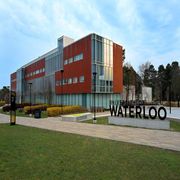
University of Waterloo is a reputable public university based in Waterloo, Ontario, in the Waterloo metropolitan area. It is a mid-sized school with about 36,000 undergraduate students. Admissions are fairly competitive, with Waterloo having an acceptance rate of about 53%. Computer Science, Engineering, Mathematics, Business Administration, and Environmental Studies are some of the most popular majors. Six-year graduation rate is about 79%, and the median starting salary of Waterloo graduates is around INR 42,00,000 (ten years post-graduation, converted from CAD 69,000 median earnings)2.
University of Toronto is a world-renowned public research university located in Toronto, Ontario, in the Toronto metropolitan area. It is a big institution with a total enrollment of 52,993 undergraduate students in three campuses. Admission is competitive, with the acceptance rate at Toronto being around 43%. Popular majors are Engineering, Computer Science, Life Sciences, Public Health, and Business. The six-year graduation is around 89%, and University of Toronto alumni make a median starting income of around INR 33,30,000 (based on the conversion of CAD 53,100 median income ten years after graduation)4.
| University of Waterloo | University of Toronto | |
|---|---|---|
| Collegedunia Score | 5.3 Out of 10 | 7.4 Out of 10 |
| ranking (overall) | # 113 QS World University 2027 # 178 Times Higher Education 2027 # 91 Collegedunia Study Abroad 2026 | # 22 Times Higher Education 2027 # 32 QS World University 2027 # 18 Collegedunia Study Abroad 2026 |
| Subject Strength | # 38 for Engineering by QS World University 2026 # 34 for Data Science and Analytics by QS World University 2025 # 144 for Medicine by Collegedunia Study Abroad 2026 | # 17 for Engineering by QS World University 2026 # 10 for Data Science and Analytics by QS World University 2025 # 10 for Medicine by Collegedunia Study Abroad 2026 |
| Programs | UG Programs -66 PG Programs -36 Doctorate Programs -5 | UG Programs -80 PG Programs -93 Doctorate Programs -7 |
| Acceptance Rate | 53.0 % | 43.0 % |
| Exam Score | Duolingo-120 IELTS-6.5 PTE-63 TOEFL-90 | Duolingo-100 GMAT-550 IELTS-6 PTE-60 TOEFL-89 |
| Cost to Study | Average Tuition Fees 66000 [For UG Program] Average Tuition Fees 51369 [For PG Program] Hostel + Meal - 16020 Per Year | Average Tuition Fees 45616 [For UG Program] Average Tuition Fees 30120 [For PG Program] Hostel + Meal - 60626 Per Year |
| placement (average package) | Graduate Employability Rankings- # 24(QS 2023); 98.9% international student employment rate; Top recruiters are Manulife, TD Canada, Sun Life Financial Inc. etc. Average Salaries by Degree:
| Placement rate was around 85% within 3 months of graduation Top recruiters were McKenzie Investments, KPMG, EY, Deloitte, Pepsico, Scotiank, National Bank Financial and others. University of Toronto Graduates & Alumni Salaries - By Degree:
|
| Campuses and B-Schools | NA | University of Toronto (Mississauga) University of Toronto (Scarborough) Rotman School of Management |
| CollegeDunia Reviews | 7.8/10 Read 58 reviews | 7.4/10 Read 82 reviews |
Other Popular Comparisons







| General Facts | University of Waterloo | University of Toronto |
|---|---|---|
| Type of University | University | University |
| Established | 1957 | 1827 |
| Student:Faculty Ratio | 31:1:1 | 15:1 |
| Male:Female | 53% Male, 0% Female | 45% Male, 55% Female |
| Location Facts | 1,000 acres campus located in the Quantum Valley (Canada’s emerging technological hub); surrounded at the borders by Waterloo Park, Wilfrid Laurier University & Laurel Creek Conservation Area; easily accessible via public transport; dozens of food outlets & restaurants within 20 minutes of distance. | Located admist of mixed green space and historical architecture |
| Library | 4 libraries: 3 on-campus, 1 in Cambridge; Library system is a part of TriUniversity Group; Houses more than 1.4 million books including e-books, serial titles, databases. | Largest Library in Canada but ranked third in North America following Havard and Yale. Total 40 libraries are located across three campuses. More than 12 millions printed books, 1.4 million digital books, 150467 journal titles and a staff of 169. |
| Campus Life | Student Life Centre (SLC) responsible for organizing cultural, social and recreational activities; Waterloo Undergraduate Student Association (WUSA) and Student Housing Office; 24/7 information desk known as Turnkey Desk; 200+ student clubs; 100+ volunteer services; Earth Sciences Museum; Mike & Ophelia Lazaridis Quantum-Nano Center (largest center for Quantum Research) | The campus has Kinesiology & Physical Education Undergraduate Association, Annesley Student Government Association (ASGA), Radio FWD, The Underground, UTM Society- CFRE Radio 91.9 FM, The Medium, Mike- newspaper, CIUT FM 89.5, and UTM AFFILIATE - Women's Centre. |
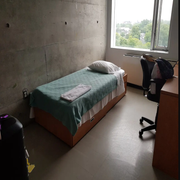
| Hostel | #Housing - $11400 | #Graduate House Standard Double Room With Meal plan - $13491 #Chestnut Residence Double Room With Meal plan - $21933 #Chestnut Residence Single Room With Meal plan - $25202 |
| Famous Alumni | Over 203,000 graduates; Robert Mundell (Nobel Laureate), Donna Strickland (Nobel Laureate), Mike Lazaridis (Founder of BlackBerry Ltd.), Prem Watsa (Founder of Fairfax Financial); Rupi Kaur (Canadian Poet); Karl Ting (Actor); Apoorva Mehta (Founder of Instacart); David Cheriton (Canadian Computer Scientist). | 10 Nobel laureates, Ariana Grande (singer), Lin Chi-ling (model), Patrick Brown (Canadian Politician), Agnes Chan (Singer), Rudy Giuliani (Former Mayor of New York City), Margaret Atwood (writer) and Leslie Dan. |
| Weather |
University of Toronto vs University of Waterloo
Subject Strength & Global Rankings (2025/2026)
The University of Toronto and the University of Waterloo are both two of the top Canadian universities, although Toronto always finds a higher ranking in global rankings. Toronto is ranked about 29th by the QS World University Rankings 2026, whereas Waterloo is placed quite near 119th. Toronto ranks 21st, and Waterloo is approximately 163rd according to Times Higher Education, showing Toronto's wider academic ranking.
In discipline-specific rankings, Toronto shines in Medicine, Law, Business, and Social Sciences, being ranked 10–20 globally across the board. Waterloo is famous for Engineering, Computer Science, Mathematics, and Data Analytics and consistently ranks among the top 50 globally for STEM. Waterloo leads in co-op and applied learning, while Toronto leads in professional education and research.
General Information
University of Toronto, established in 1827, is based in Toronto, Ontario, and runs three campuses: St. George, Scarborough, and Mississauga. University of Toronto is Canada's biggest university, employing more than 97,000 students of which 52,993 are undergraduates. University of Waterloo, established in 1957, is based in Waterloo, Ontario, and has a student body of about 41,000 of which about 36,000 are undergraduates.
Toronto provides an urban environment with access to Canada's cultural and financial centers. Waterloo provides a more concentrated educational environment within a technologically inclined city called the "Quantum Valley."
Acceptance Rate & Admissions
Both schools' admissions are competitive, although Toronto's acceptance rate is only slightly more so at 43% compared to Waterloo's 53%. Toronto's very selective programs—like Engineering, Rotman Commerce, and Computer Science—will need good grades and supplementary apps in some cases. Waterloo's highest programs, particularly in Engineering and Math, will also need good grades and possibly entrance competitions or interviews.
Both institutions welcome international qualifications and standardized tests such as IELTS, TOEFL, and SAT, where relevant to the course.
Research Impact & Facilities
Toronto is Canada's research hub with 44 libraries, the number of teaching hospitals, and partnerships with organizations such as the MaRS Discovery District and University Health Network. It excels in medicine, AI, public policy, and environmental science.
Waterloo is also known for its co-op-driven research, with spaces such as the Mike & Ophelia Lazaridis Quantum-Nano Centre, Earth Sciences Museum, and Velocity Incubator. It is strong in quantum computing, cybersecurity, and applied engineering, with an enormous focus on innovation and entrepreneurship.
Cost & Financial Aid
Both institutions are government-sponsored but not the same price. Toronto's undergraduate will cost approximately CAD 45,616 per annum, with living expenses at CAD 38,977. Waterloo is cheaper, with about CAD 41,000–46,000 for fees, and living expenses of approximately CAD 20,583 per year.
Toronto provides need-based and merit-based scholarships, including international students. Waterloo provides financial assistance and co-op remuneration, which is used to offset expenses—students earn an average CAD 16,000 for a co-op term.
Career Outcomes & Alumni Success
Toronto graduates are highly sought after, ranked #11 in QS Graduate Employability. The graduates are hired in top firms like Deloitte, KPMG, Amazon, and Scotiabank, earning a median salary ranging from CAD 72,000 to CAD 208,000 based on degree level.
Waterloo is ranked #24 internationally in employability and a top feeder to Silicon Valley, and their graduates are at Google, Microsoft, Meta, and Shopify. Waterloo graduate students tend to have 2 years of experience when they graduate, and median salary ranges from CAD 54,000 to CAD 156,000, depending on the program.
Toronto's alumni network is more widespread and geographically dispersed around the world, while Waterloo's is heavily based in technology and entrepreneurship.


