AP PGECET 2026 Food Technology Question Paper is available for download here. Andhra University, Visakhapatnam on behalf of APSCHE conducted AP PGECET 2026 Food Technology exam on April 29 in Shift 2. AP PGECET is a state-level entrance exam conducted online for admission into M.Tech./M.Pharm./Pharm.D (PB) courses.
- AP PGECET Question Paper consists of 120 questions divided into two sections- Mathematics and Engineering Domain Specific.
- Each correct answer answer carries 1 mark and there is no negative marking for incorrect answer.
Candidates can download AP PGECET 2026 Food Technology Question Paper with Answer Key and Solution PDF from the links provided below.
AP PGECET 2026 Food Technology Question Paper with Solutions
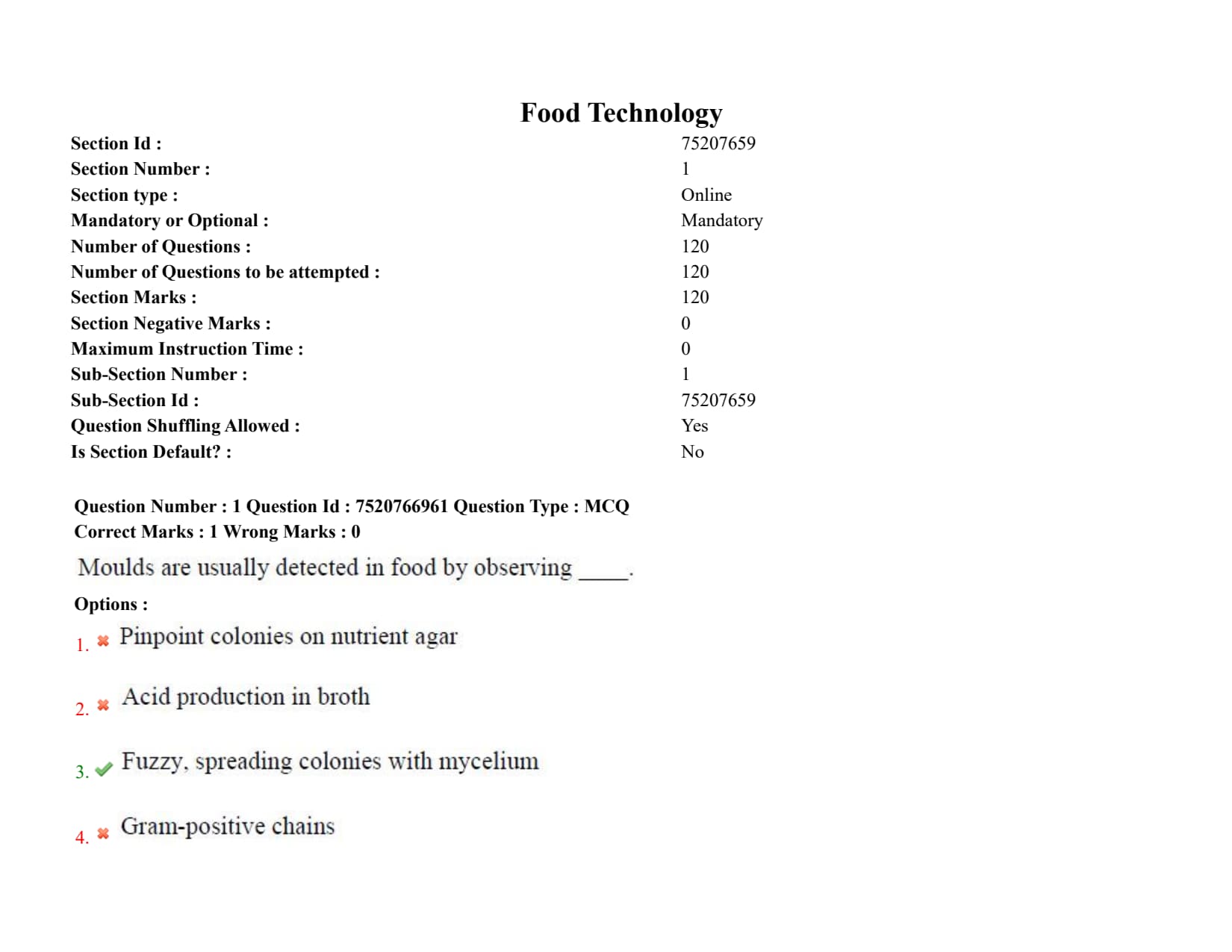
Question 1:
Moulds are usually detected in food by observing ______.
- (A) Pinpoint colonies on nutrient agar
- (B) Acid production in broth
- (C) Fuzzy, spreading colonies with mycelium
- (D) Gram-positive chains
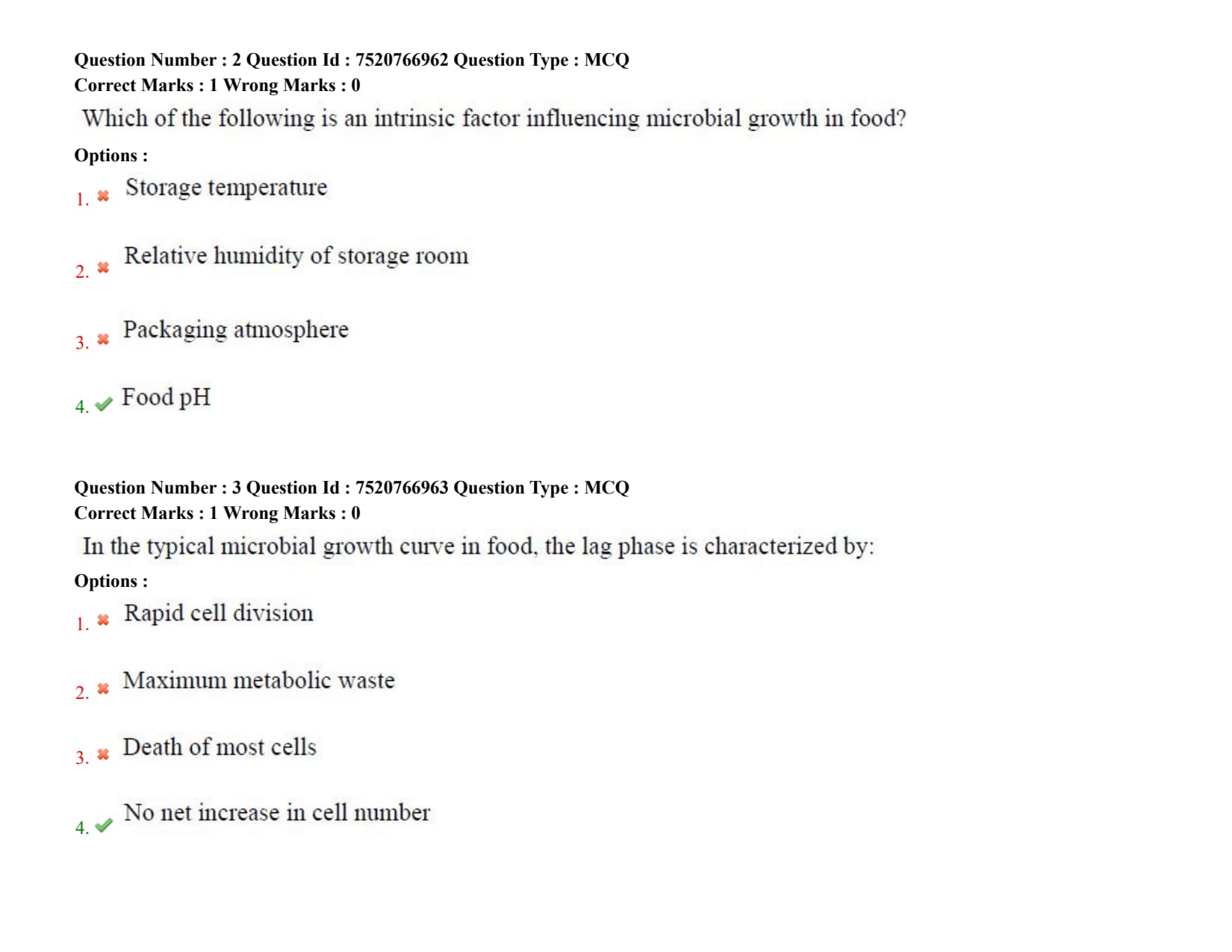
Question 2:
Which of the following is an intrinsic factor influencing microbial growth in food?
- (A) Storage temperature
- (B) Relative humidity of storage room
- (C) Packaging atmosphere
- (D) Food pH
Question 3:
In the typical microbial growth curve in food, the lag phase is characterized by:
- (A) Rapid cell division
- (B) Maximum metabolic waste
- (C) Death of most cells
- (D) No net increase in cell number
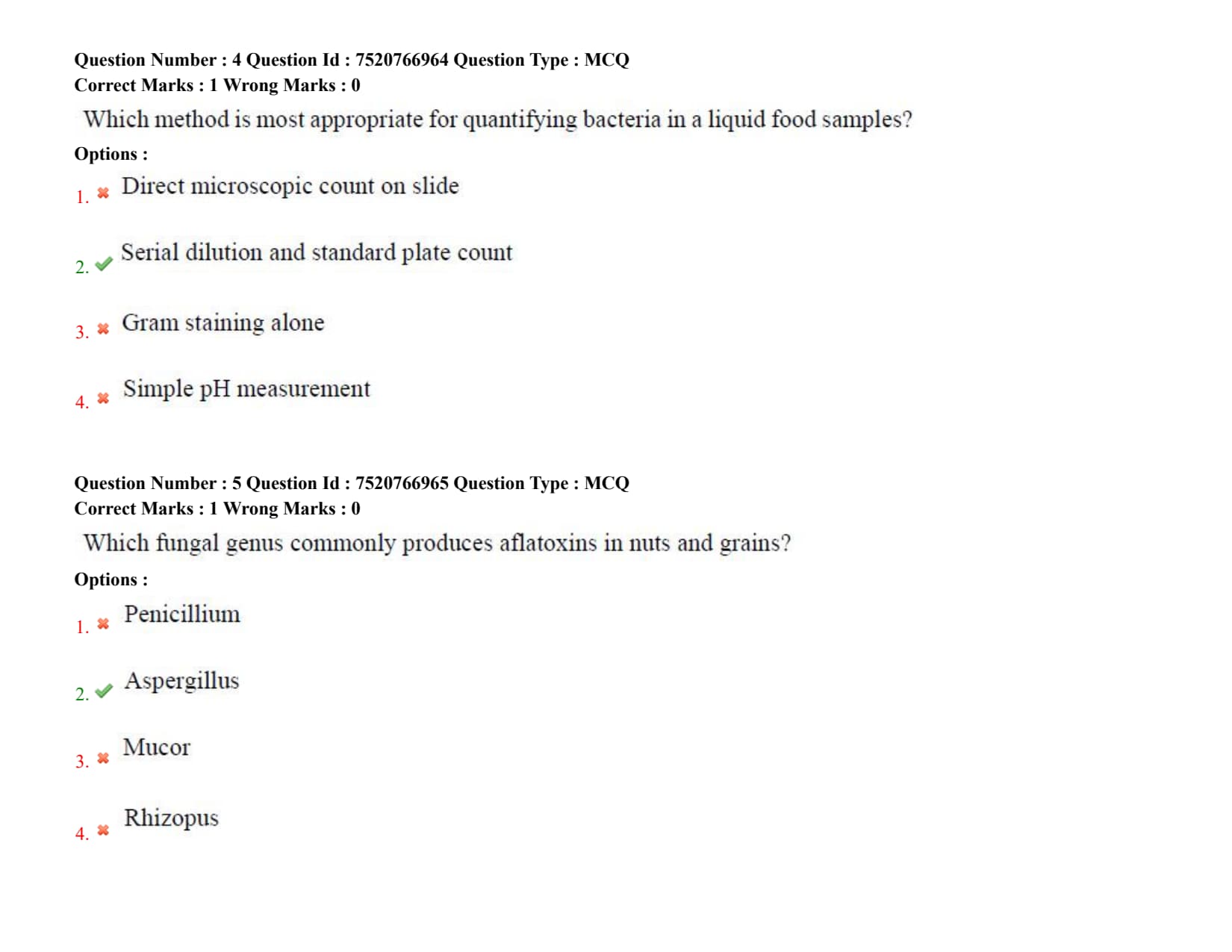
Question 4:
Which method is most appropriate for quantifying bacteria in a liquid food samples?
- (A) Direct microscopic count on slide
- (B) Serial dilution and standard plate count
- (C) Gram staining alone
- (D) Simple pH measurement
Question 5:
Which fungal genus commonly produces aflatoxins in nuts and grains?
- (A) Penicillium
- (B) Aspergillus
- (C) Mucor
- (D) Rhizopus
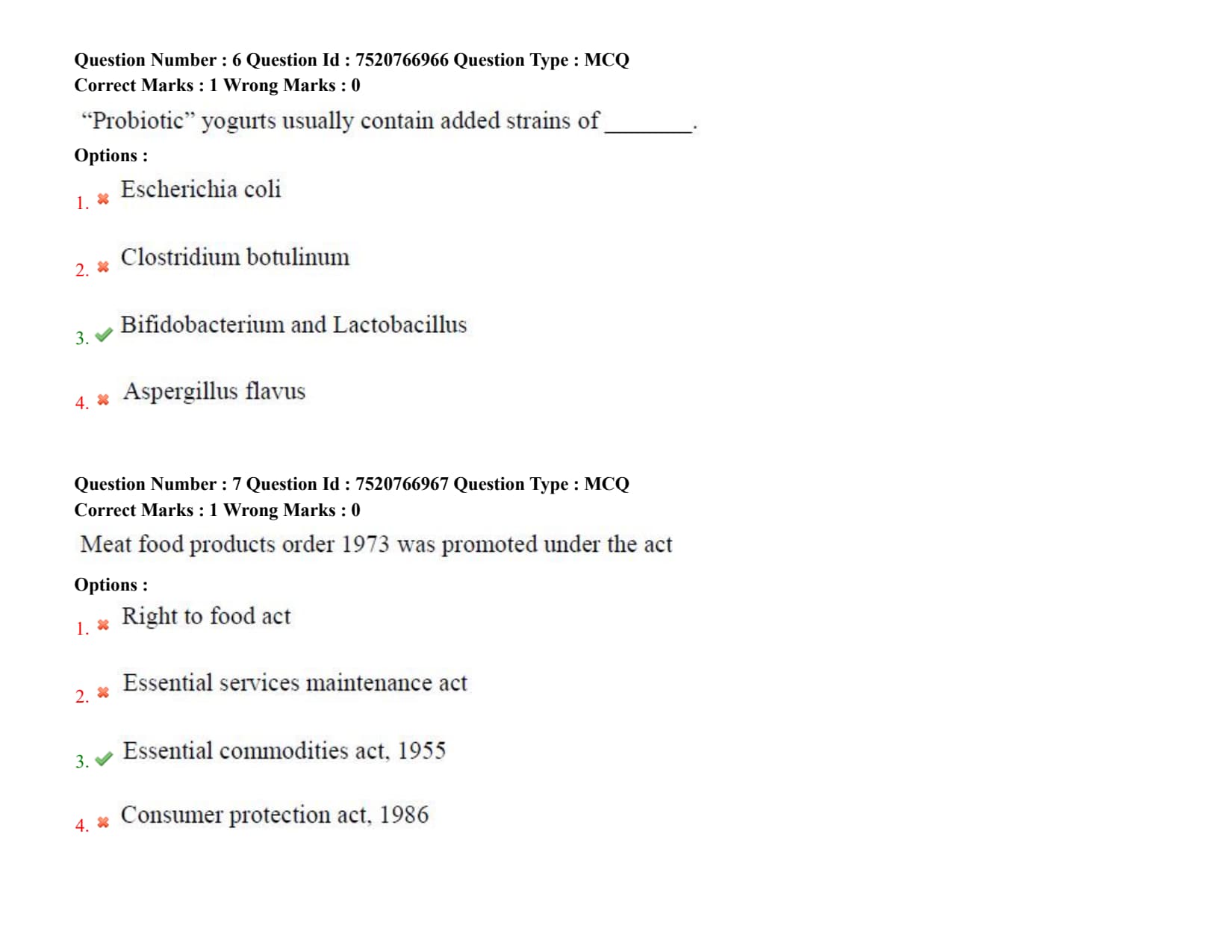
Question 6:
``Probiotic'' yogurts usually contain added strains of ______.
- (A) Escherichia coli
- (B) Clostridium botulinum
- (C) Bifidobacterium and Lactobacillus
- (D) Aspergillus flavus
Question 7:
Meat food products order 1973 was promoted under the act
- (A) Right to food act
- (B) Essential services maintenance act
- (C) Essential commodities act, 1955
- (D) Consumer protection act, 1986
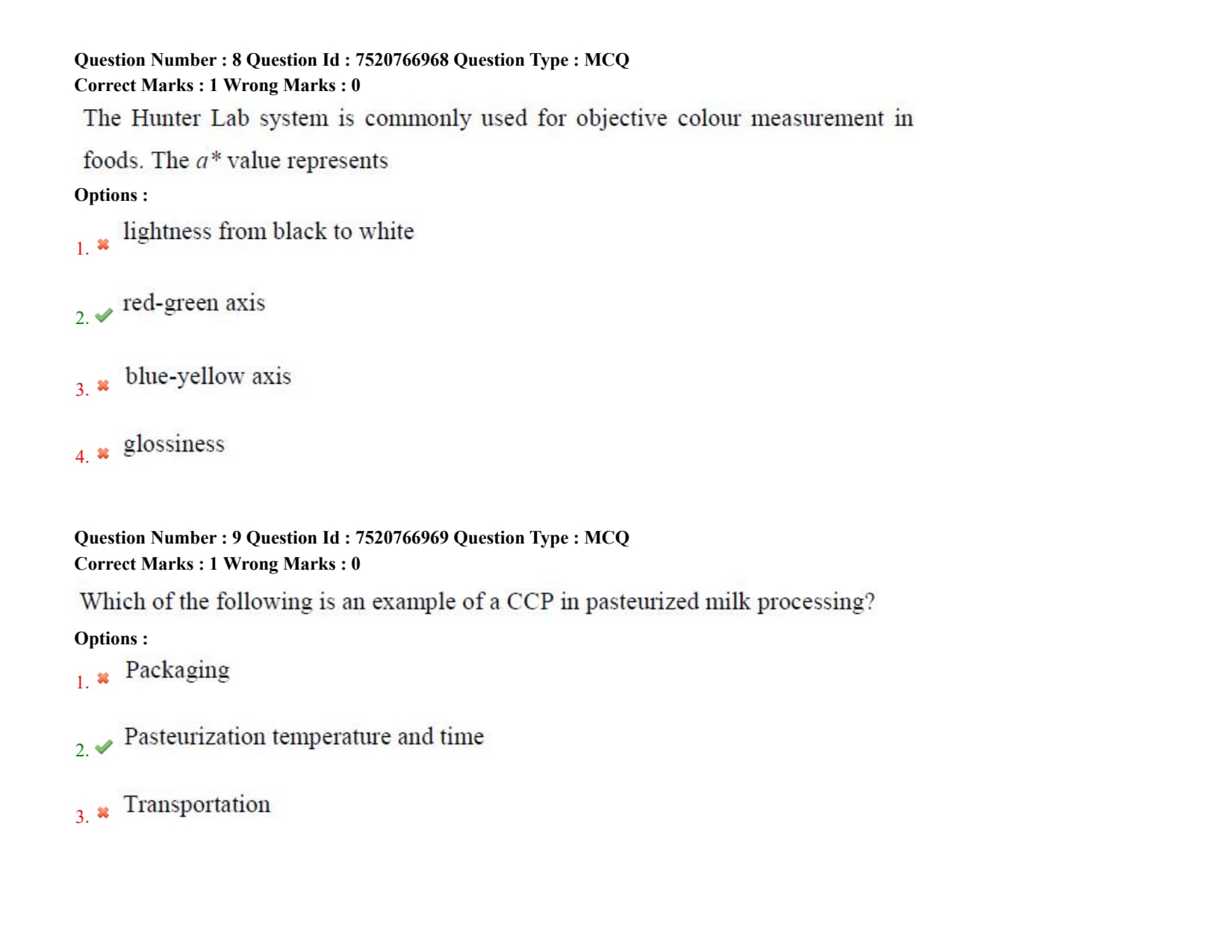
Question 8:
The Hunter Lab system is commonly used for objective colour measurement in foods. The a* value represents
- (A) lightness from black to white
- (B) red-green axis
- (C) blue-yellow axis
- (D) glossiness
Question 9:
Which of the following is an example of a CCP in pasteurized milk processing?
- (A) Packaging
- (B) Pasteurization temperature and time
- (C) Transportation
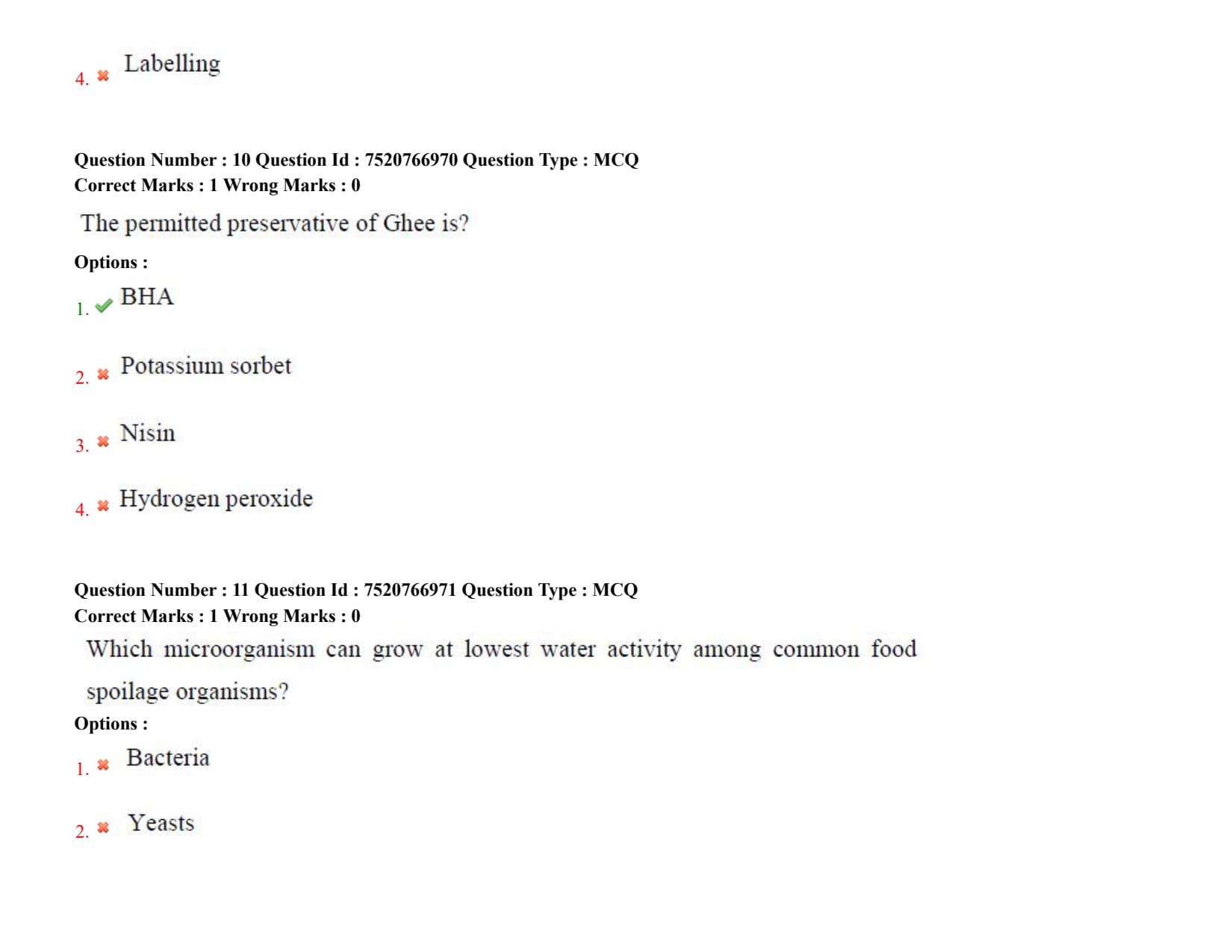
- (D) Labelling
Question 10:
The permitted preservative of Ghee is?
- (A) BHA
- (B) Potassium sorbet
- (C) Nisin
- (D) Hydrogen peroxide
Question 11:
Which microorganism can grow at lowest water activity among common food spoilage organisms?
- (A) Bacteria
- (B) Yeasts
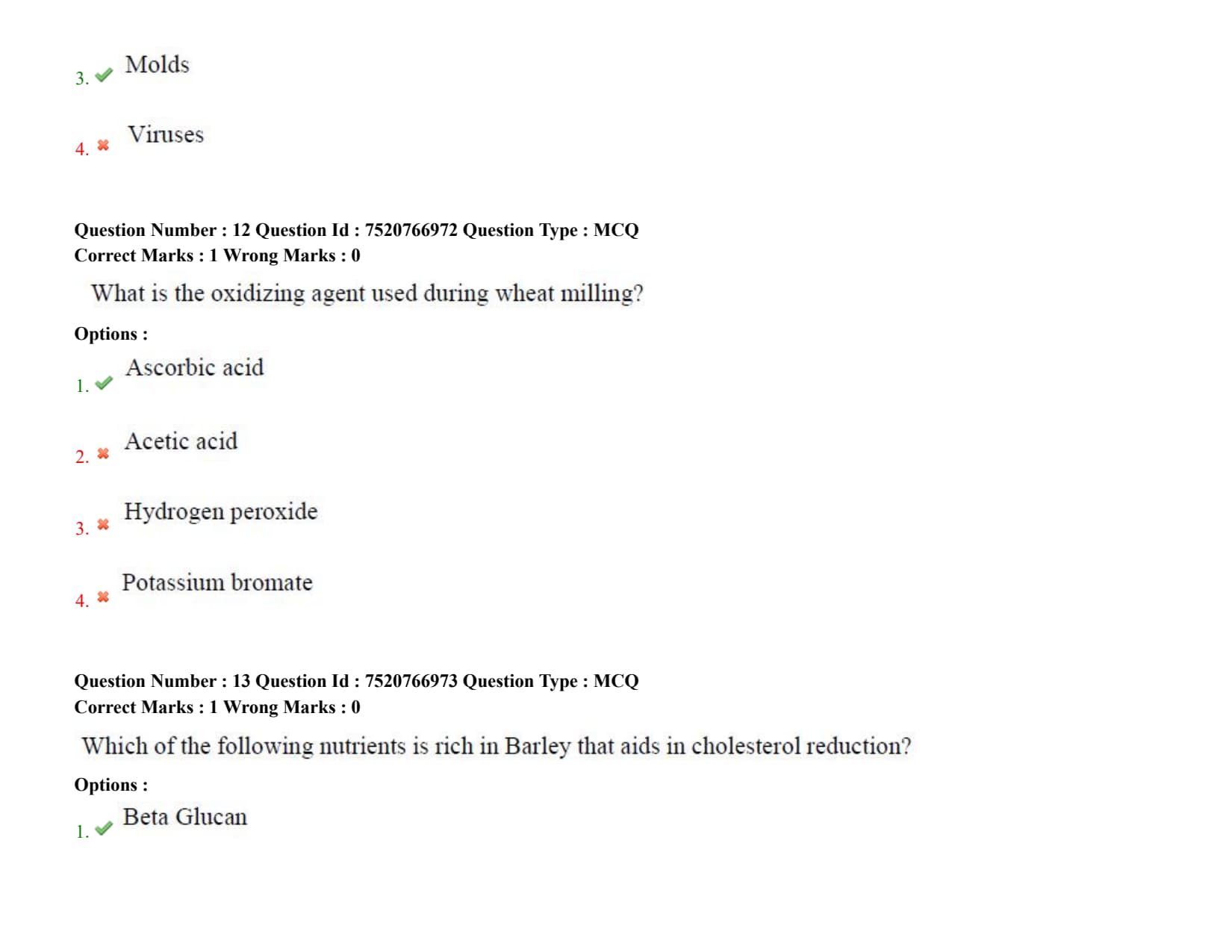
- (C) Molds
- (D) Viruses
Question 12:
What is the oxidizing agent used during wheat milling?
- (A) Ascorbic acid
- (B) Acetic acid
- (C) Hydrogen peroxide
- (D) Potassium bromate
Question 13:
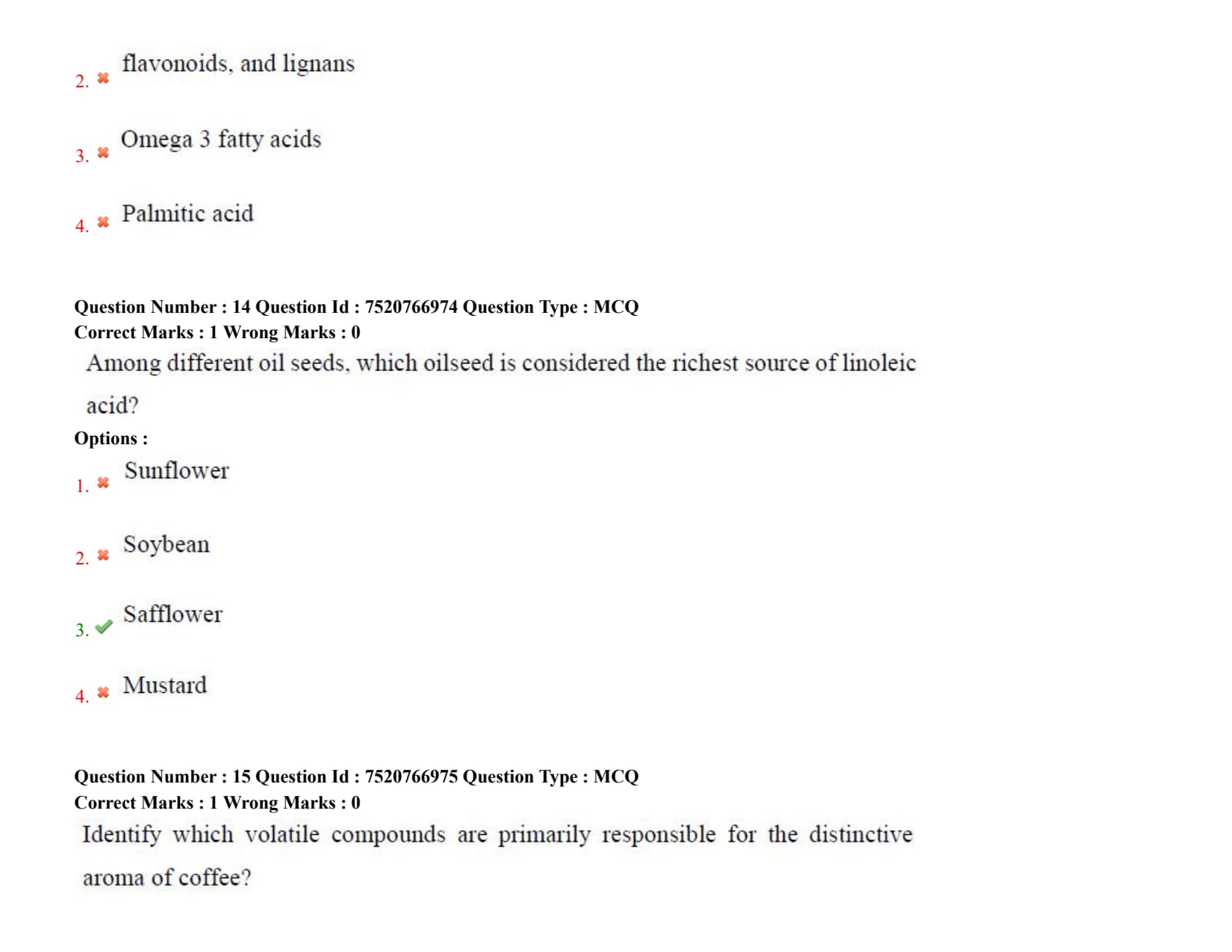
Which of the following nutrients is rich in Barley that aids in cholesterol reduction?
- (A) Beta Glucan
- (B) flavonoids, and lignans
- (C) Omega 3 fatty acids
- (D) Palmitic acid
Question 14:
Among different oil seeds, which oilseed is considered the richest source of linoleic acid?
- (A) Sunflower
- (B) Soybean
- (C) Safflower
- (D) Mustard
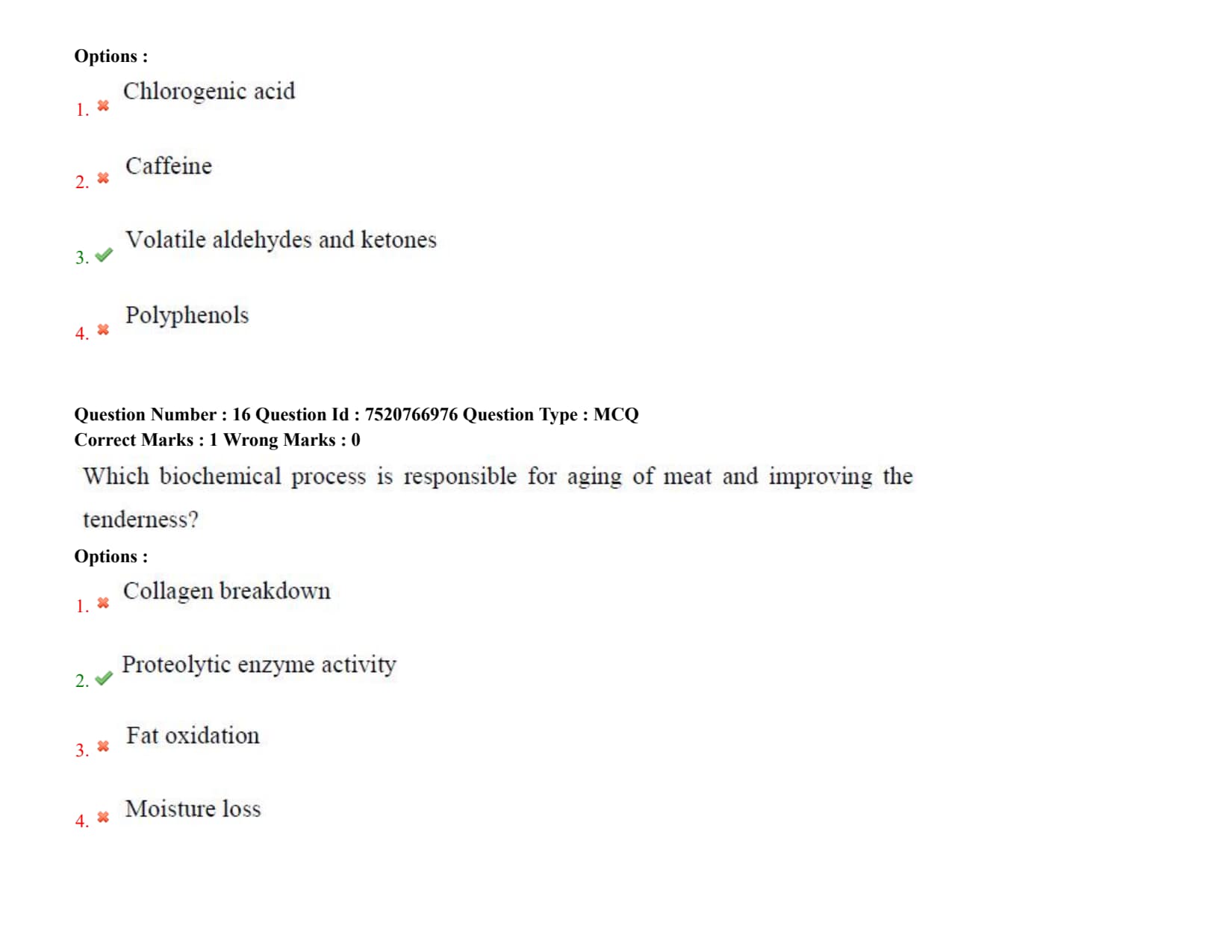
Question 15:
Identify which volatile compounds are primarily responsible for the distinctive aroma of coffee?
- (A) Chlorogenic acid
- (B) Caffeine
- (C) Volatile aldehydes and ketones
- (D) Polyphenols
Question 16:
Which biochemical process is responsible for aging of meat and improving the tenderness?
- (A) Collagen breakdown
- (B) Proteolytic enzyme activity
- (C) Fat oxidation
- (D) Moisture loss
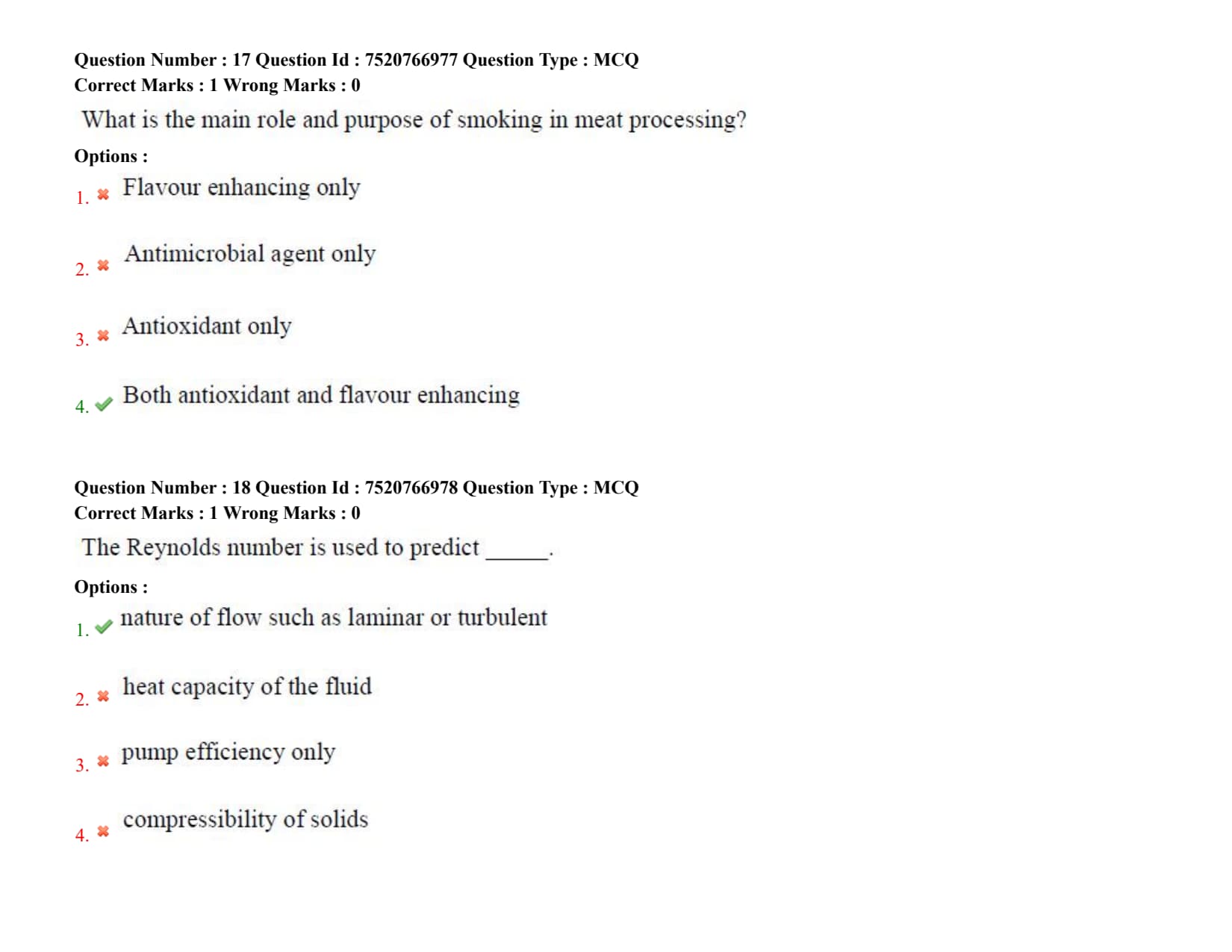
Question 17:
What is the main role and purpose of smoking in meat processing?
- (A) Flavour enhancing only
- (B) Antimicrobial agent only
- (C) Antioxidant only
- (D) Both antioxidant and flavour enhancing
Question 18:
The Reynolds number is used to predict ______.
- (A) nature of flow such as laminar or turbulent
- (B) heat capacity of the fluid
- (C) pump efficiency only
- (D) compressibility of solids
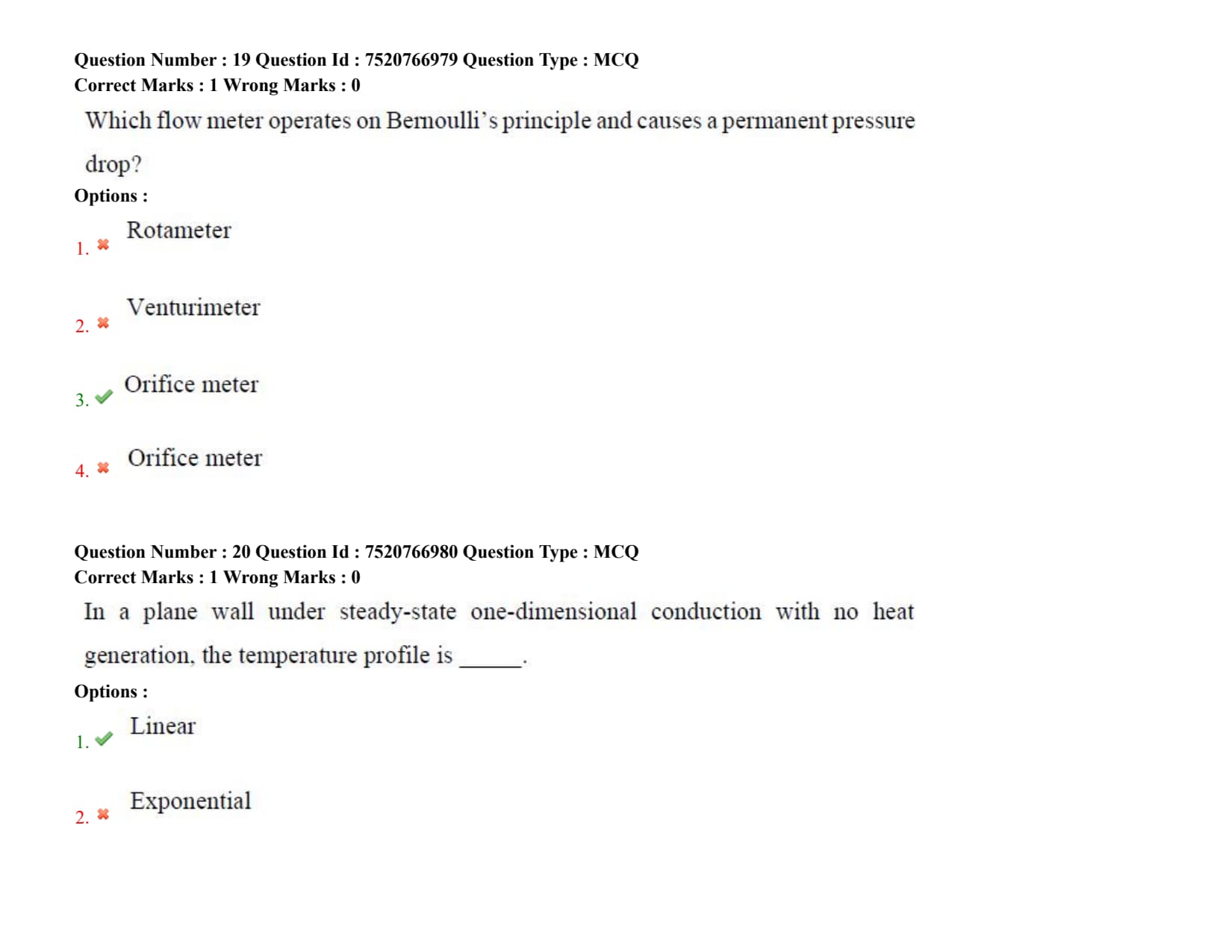
Question 19:
Which flow meter operates on Bernoulli's principle and causes a permanent pressure drop?
- (A) Rotameter
- (B) Venturimeter
- (C) Orifice meter
- (D) Orifice meter
Question 20:
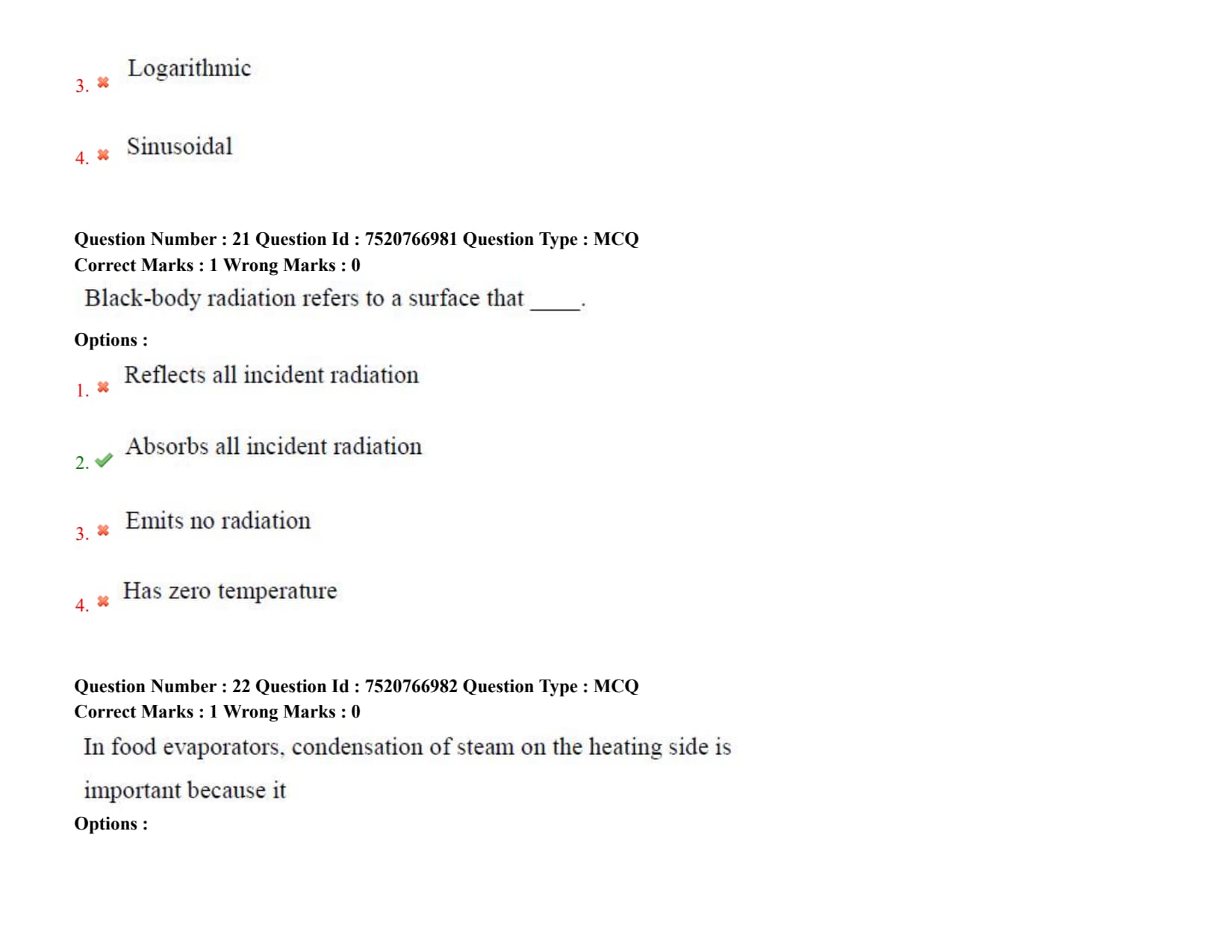
In a plane wall under steady-state one-dimensional conduction with no heat generation, the temperature profile is ______.
- (A) Linear
- (B) Exponential
- (C) Logarithmic
- (D) Sinusoidal
Question 21:
Black-body radiation refers to a surface that ______.
- (A) Reflects all incident radiation
- (B) Absorbs all incident radiation
- (C) Emits no radiation
- (D) Has zero temperature
Question 22:
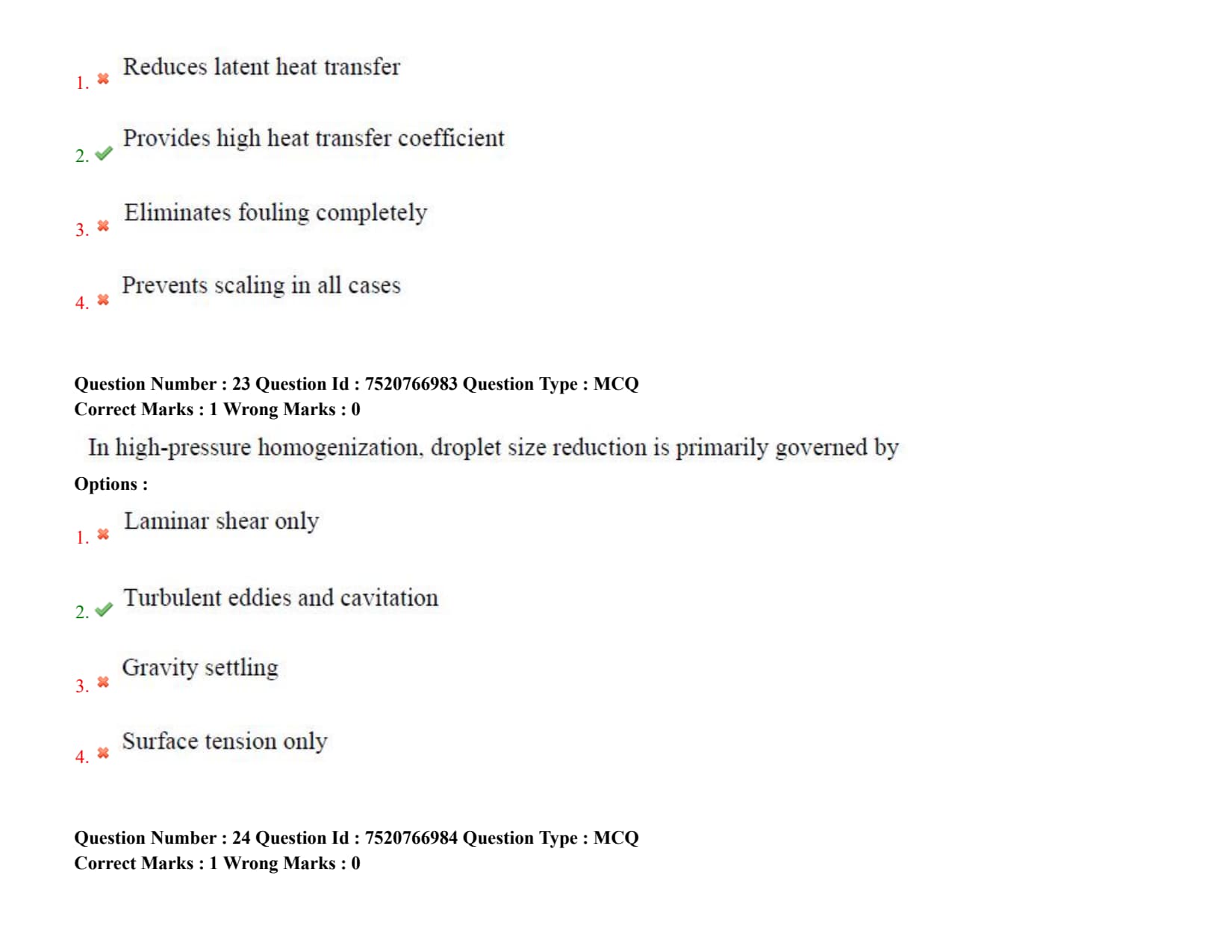
In food evaporators, condensation of steam on the heating side is important because it
- (A) Reduces latent heat transfer
- (B) Provides high heat transfer coefficient
- (C) Eliminates fouling completely
- (D) Prevents scaling in all cases
Question 23:
In high-pressure homogenization, droplet size reduction is primarily governed by
- (A) Laminar shear only
- (B) Turbulent eddies and cavitation
- (C) Gravity settling
- (D) Surface tension only
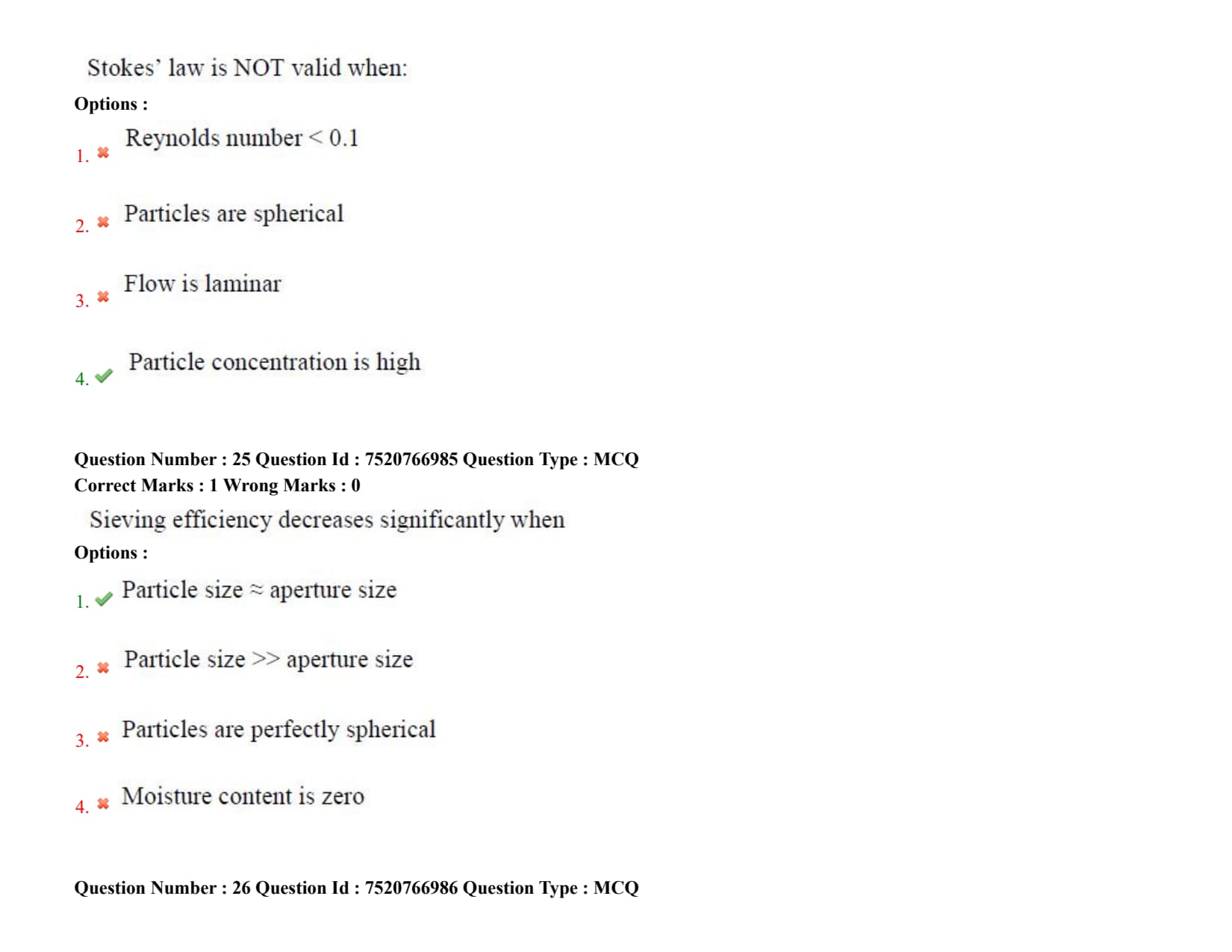
Question 24:
Stokes' law is NOT valid when:
- (A) Reynolds number \(<\) 0.1
- (B) Particles are spherical
- (C) Flow is laminar
- (D) Particle concentration is high
Question 25:
Sieving efficiency decreases significantly when
- (A) Particle size \(\approx\) aperture size
- (B) Particle size \(\gg\) aperture size
- (C) Particles are perfectly spherical
- (D) Moisture content is zero
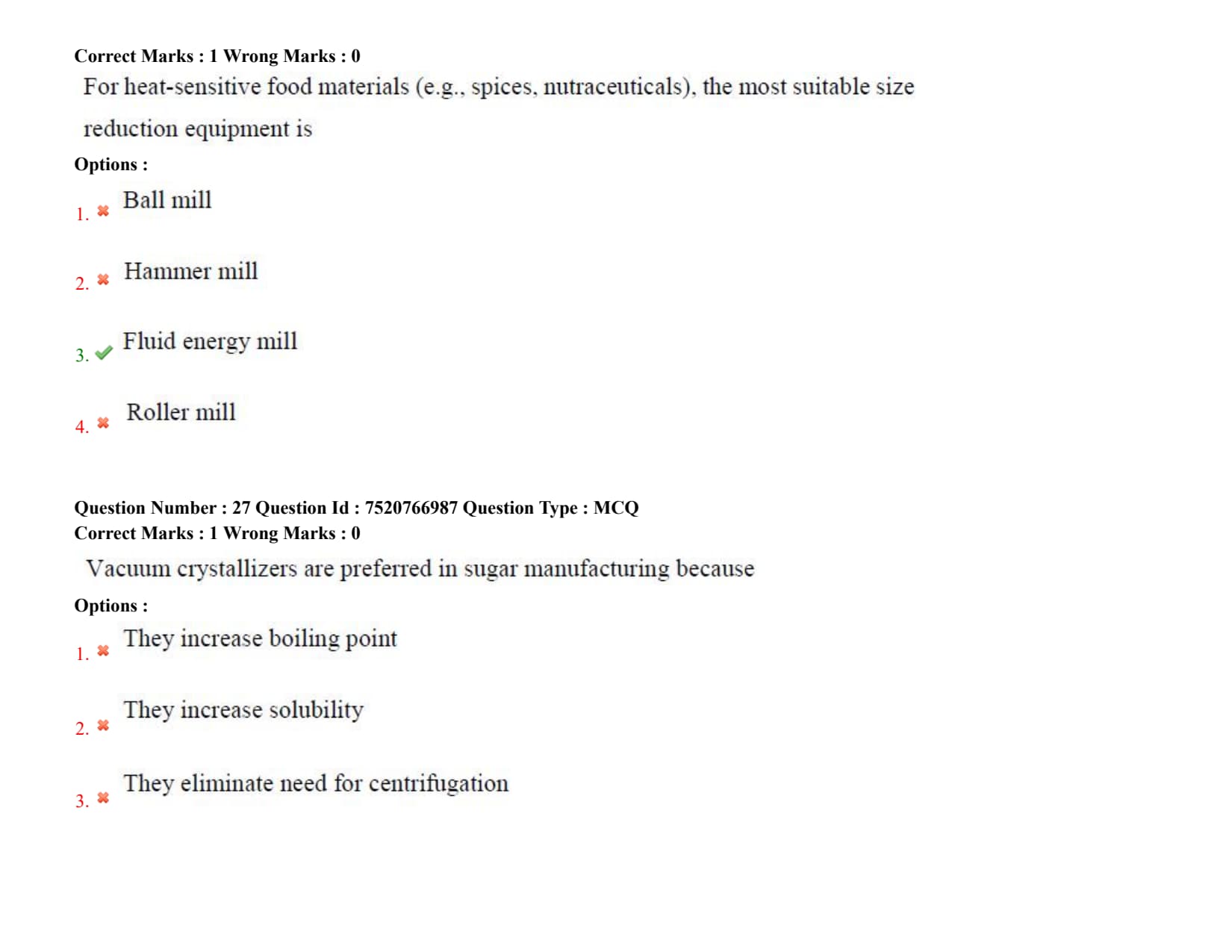
Question 26:
For heat-sensitive food materials (e.g., spices, nutraceuticals), the most suitable size reduction equipment is
- (A) Ball mill
- (B) Hammer mill
- (C) Fluid energy mill
- (D) Roller mill
Question 27:
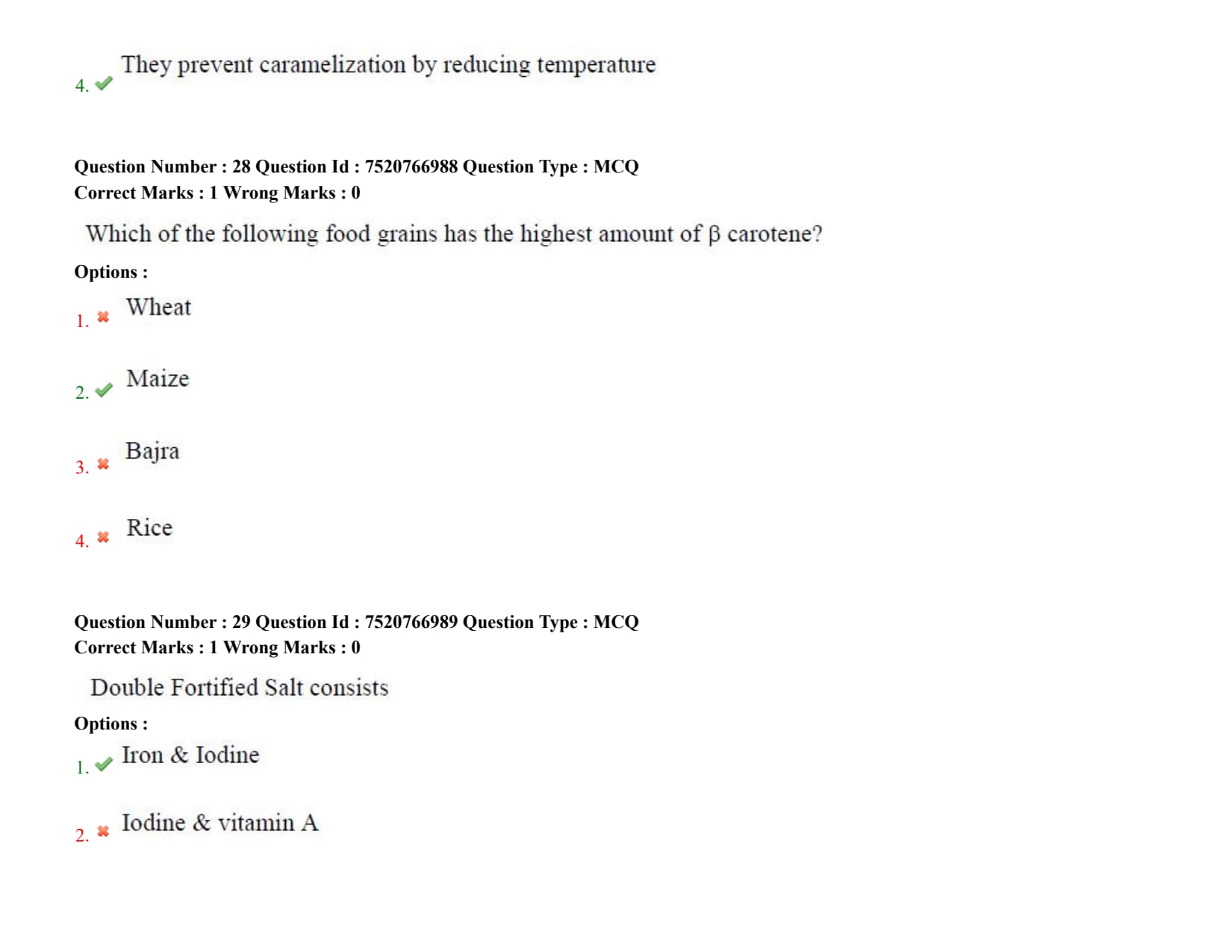
Vacuum crystallizers are preferred in sugar manufacturing because
- (A) They increase boiling point
- (B) They increase solubility
- (C) They eliminate need for centrifugation
- (D) They prevent caramelization by reducing temperature
Question 28:
Which of the following food grains has the highest amount of \(\beta\) carotene?
- (A) Wheat
- (B) Maize
- (C) Bajra
- (D) Rice
Question 29:
Double Fortified Salt consists
- (A) Iron & Iodine
- (B) Iodine & vitamin A
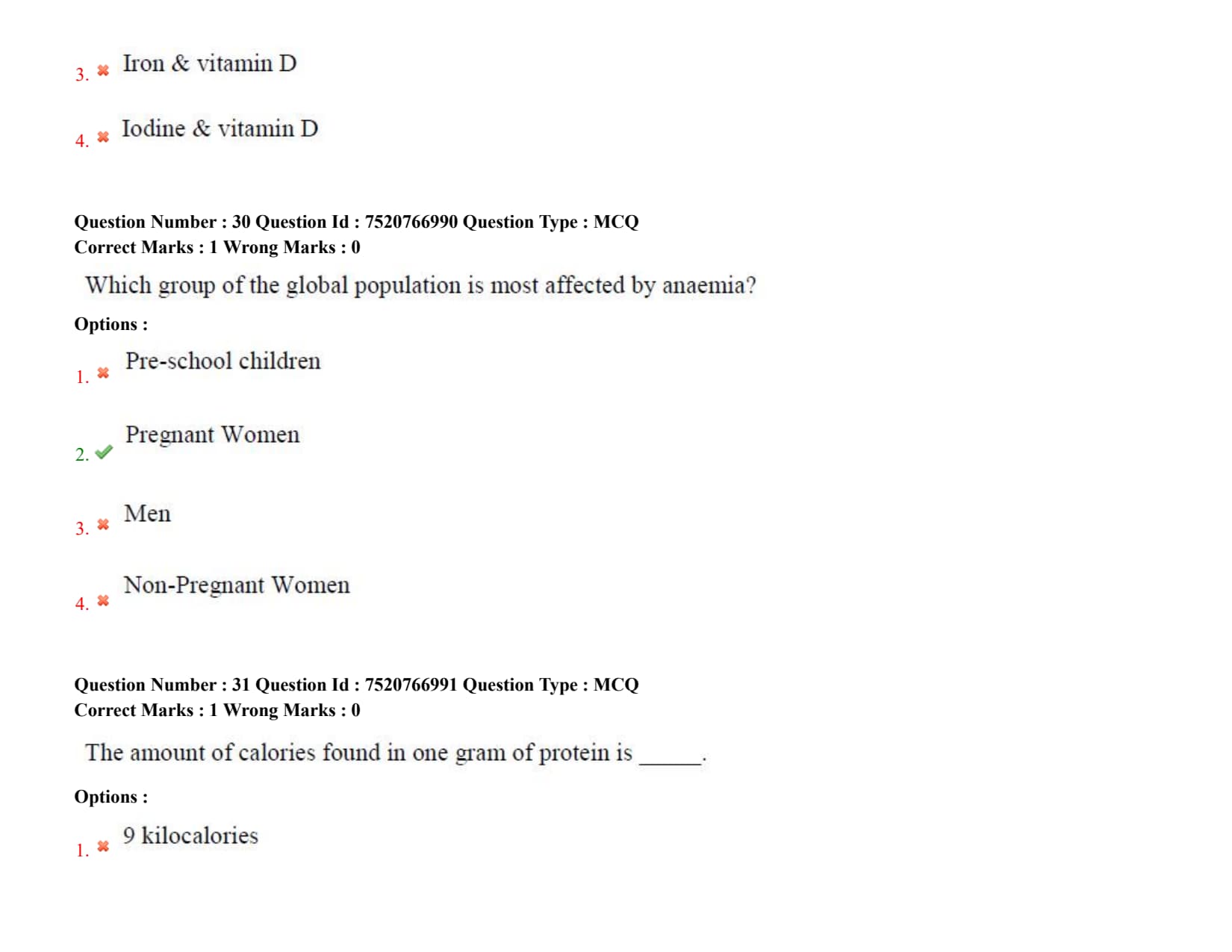
- (C) Iron & vitamin D
- (D) Iodine & vitamin D
Question 30:
Which group of the global population is most affected by anaemia?
- (A) Pre-school children
- (B) Pregnant Women
- (C) Men
- (D) Non-Pregnant Women
Question 31:
The amount of calories found in one gram of protein is _______.
- (A) 9 kilocalories
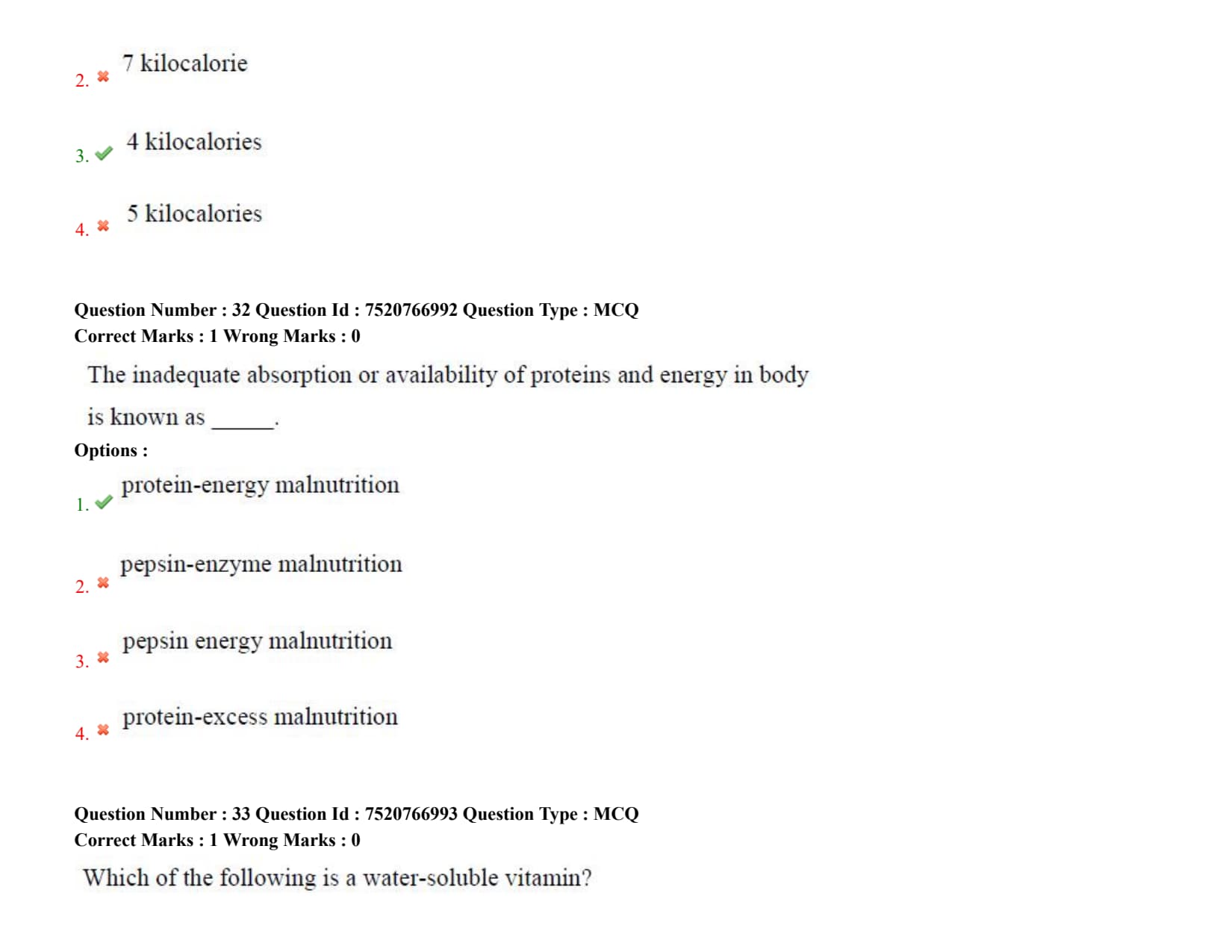
- (B) 7 kilocalorie
- (C) 4 kilocalories
- (D) 5 kilocalories
Question 32:
The inadequate absorption or availability of proteins and energy in body is known as _______.
- (A) protein-energy malnutrition
- (B) pepsin-enzyme malnutrition
- (C) pepsin energy malnutrition
- (D) protein-excess malnutrition
Question 33:
Which of the following is a water-soluble vitamin?
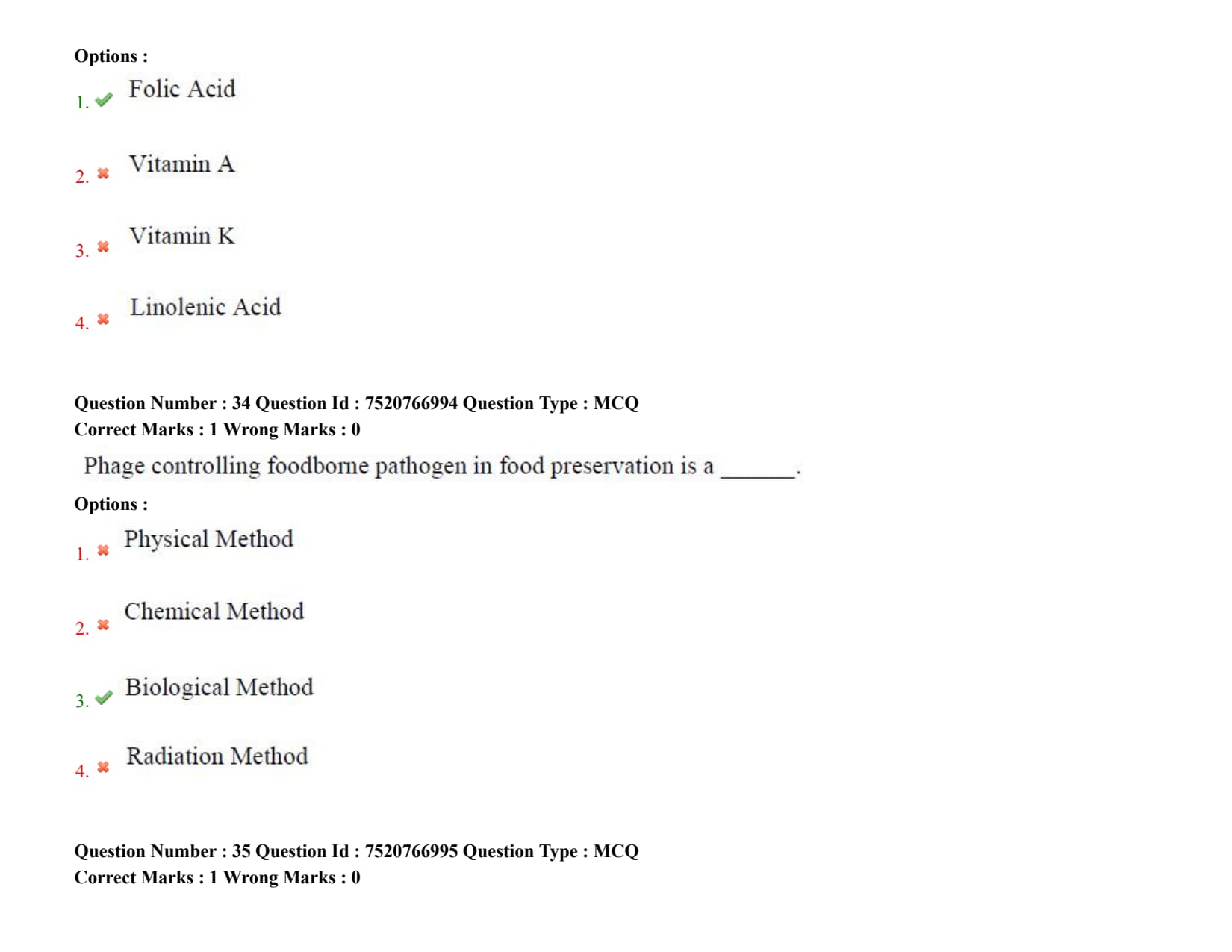
- (A) Folic Acid
- (B) Vitamin A
- (C) Vitamin K
- (D) Linolenic Acid
Question 34:
Phage controlling foodborne pathogen in food preservation is a _______.
- (A) Physical Method
- (B) Chemical Method
- (C) Biological Method
- (D) Radiation Method
Question 35:
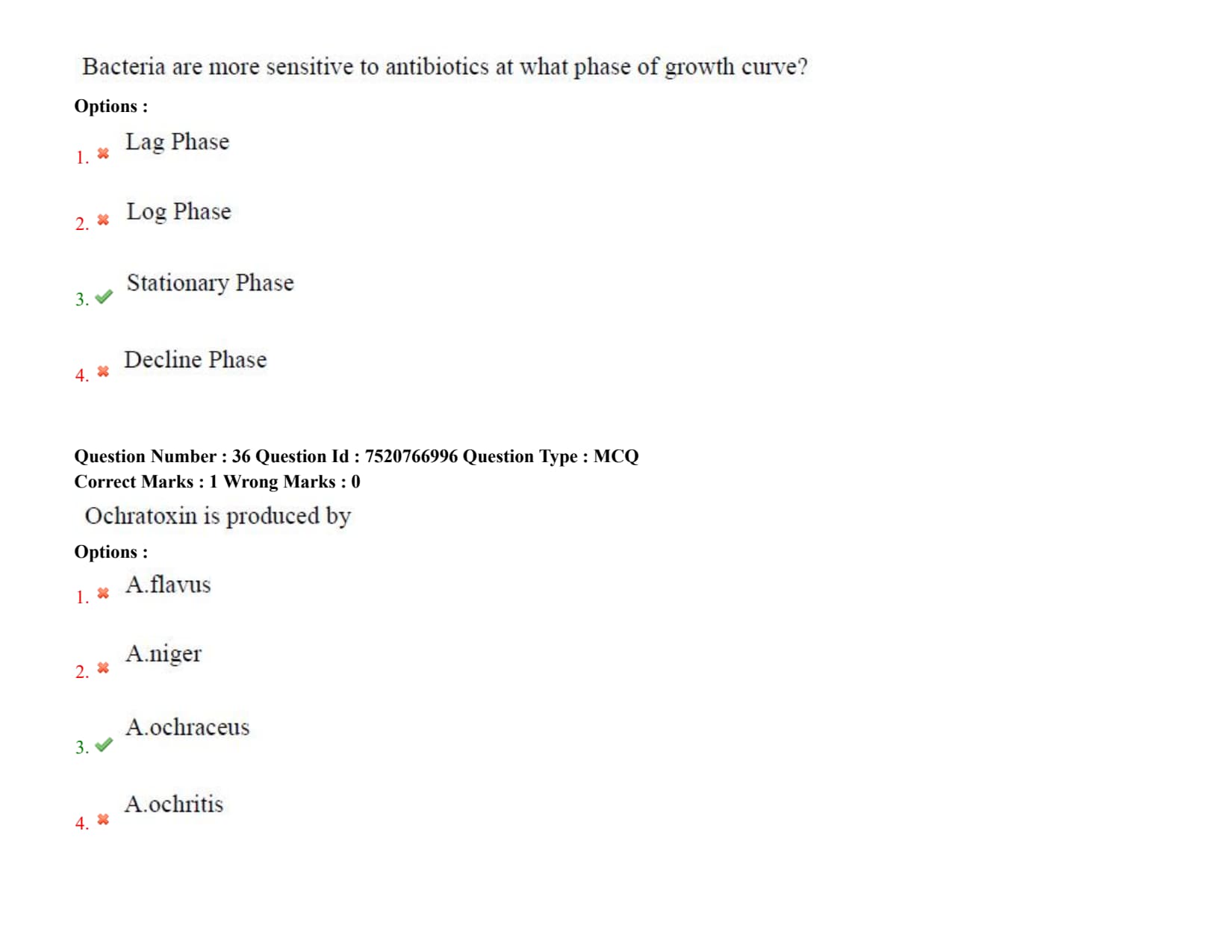
Bacteria are more sensitive to antibiotics at what phase of growth curve?
- (A) Lag Phase
- (B) Log Phase
- (C) Stationary Phase
- (D) Decline Phase
Question 36:
Ochratoxin is produced by
- (A) A.flavus
- (B) A.niger
- (C) A.ochraceus
- (D) A.ochritis
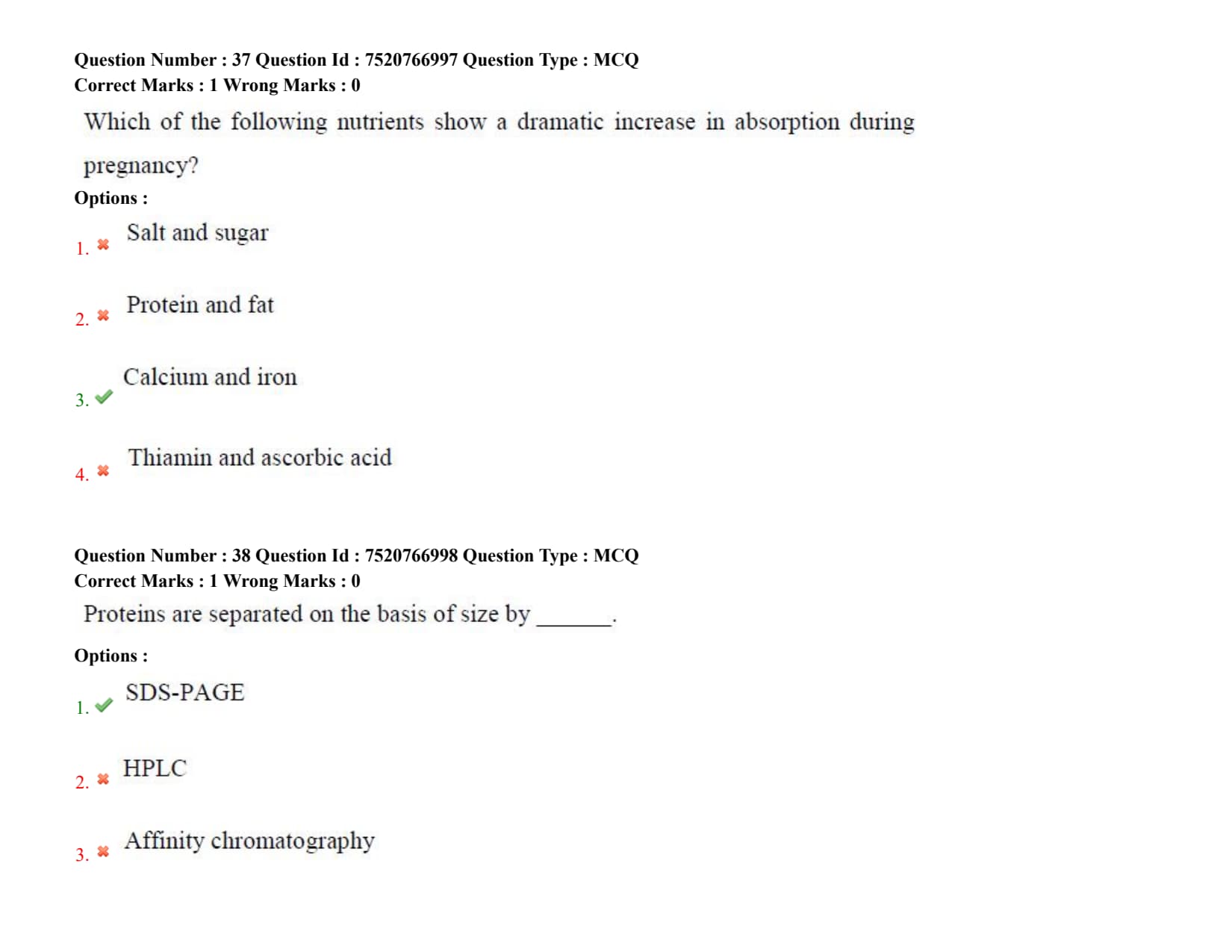
Question 37:
Which of the following nutrients show a dramatic increase in absorption during pregnancy?
- (A) Salt and sugar
- (B) Protein and fat
- (C) Calcium and iron
- (D) Thiamin and ascorbic acid
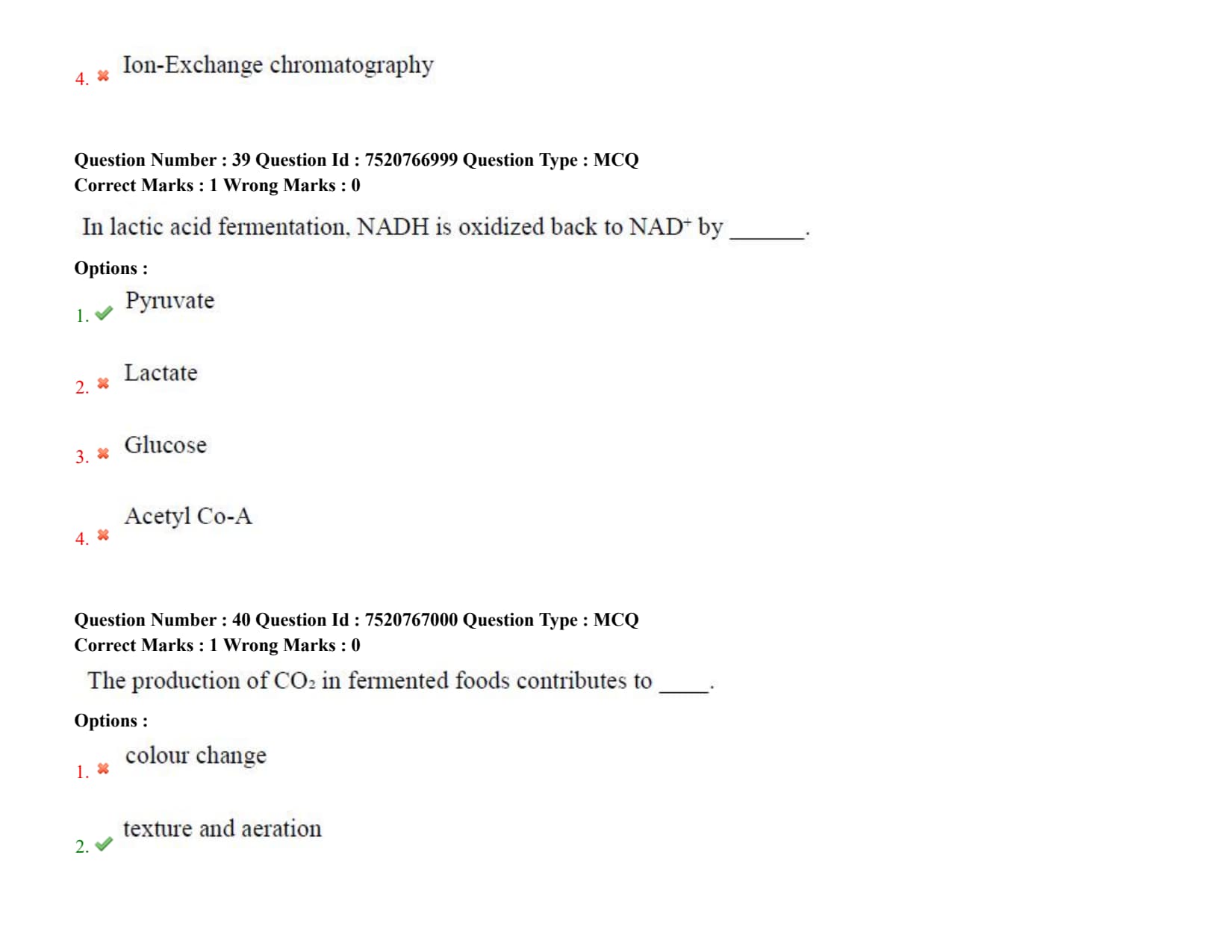
Question 38:
Proteins are separated on the basis of size by _______.
- (A) SDS-PAGE
- (B) HPLC
- (C) Affinity chromatography
- (D) Ion-exchange chromatography
Question 39:
In lactic acid fermentation, NADH is oxidized back to \(NAD^+\) by ______.
- (A) Pyruvate
- (B) Lactate
- (C) Glucose
- (D) Acetyl Co-A
Question 40:
The production of \(CO_2\) in fermented foods contributes to ______.
- (A) colour change
- (B) texture and aeration
- (C) vitamin loss
- (D) lipid breakdown
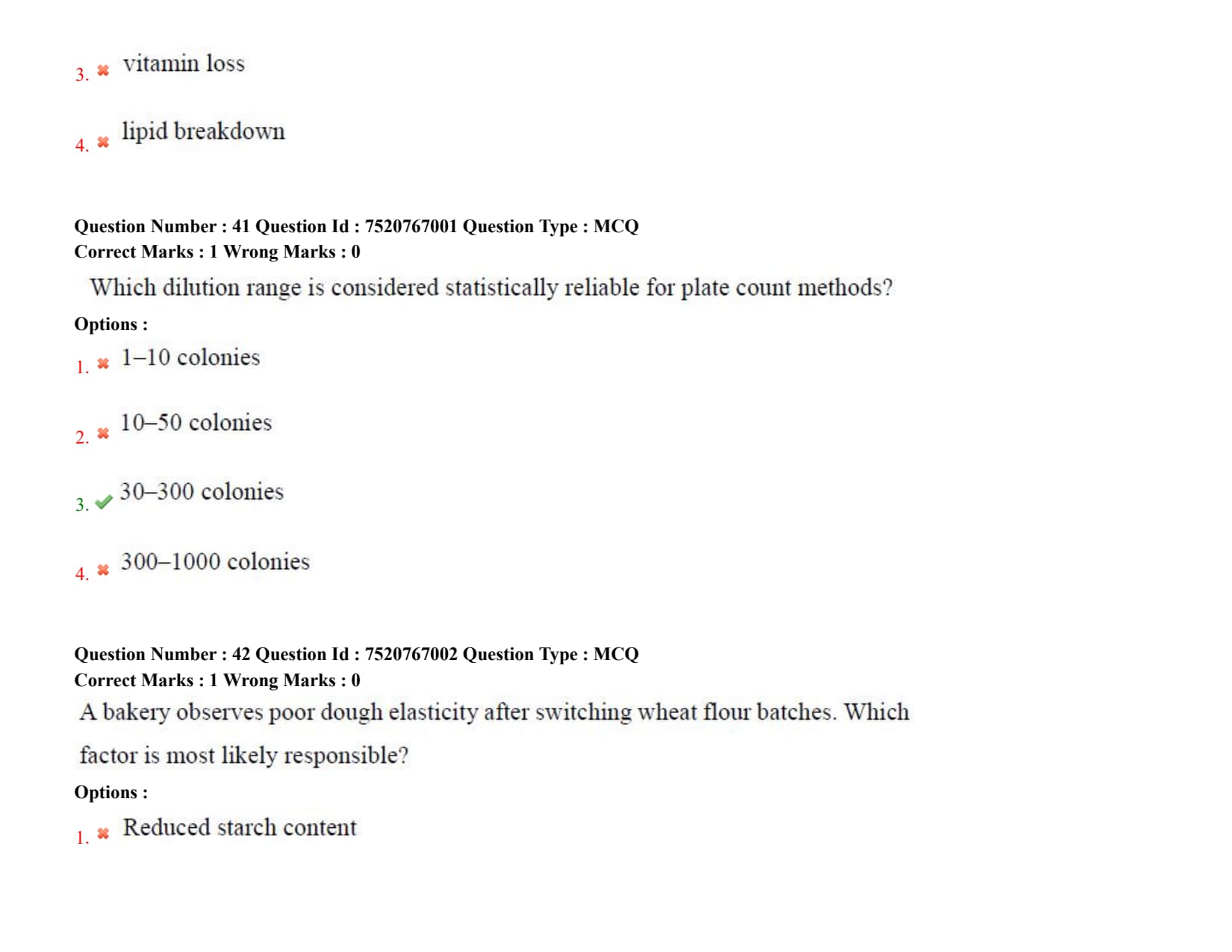
Question 41:
Which dilution range is considered statistically reliable for plate count methods?
- (A) 1–10 colonies
- (B) 10–50 colonies
- (C) 30–300 colonies
- (D) 300–1000 colonies
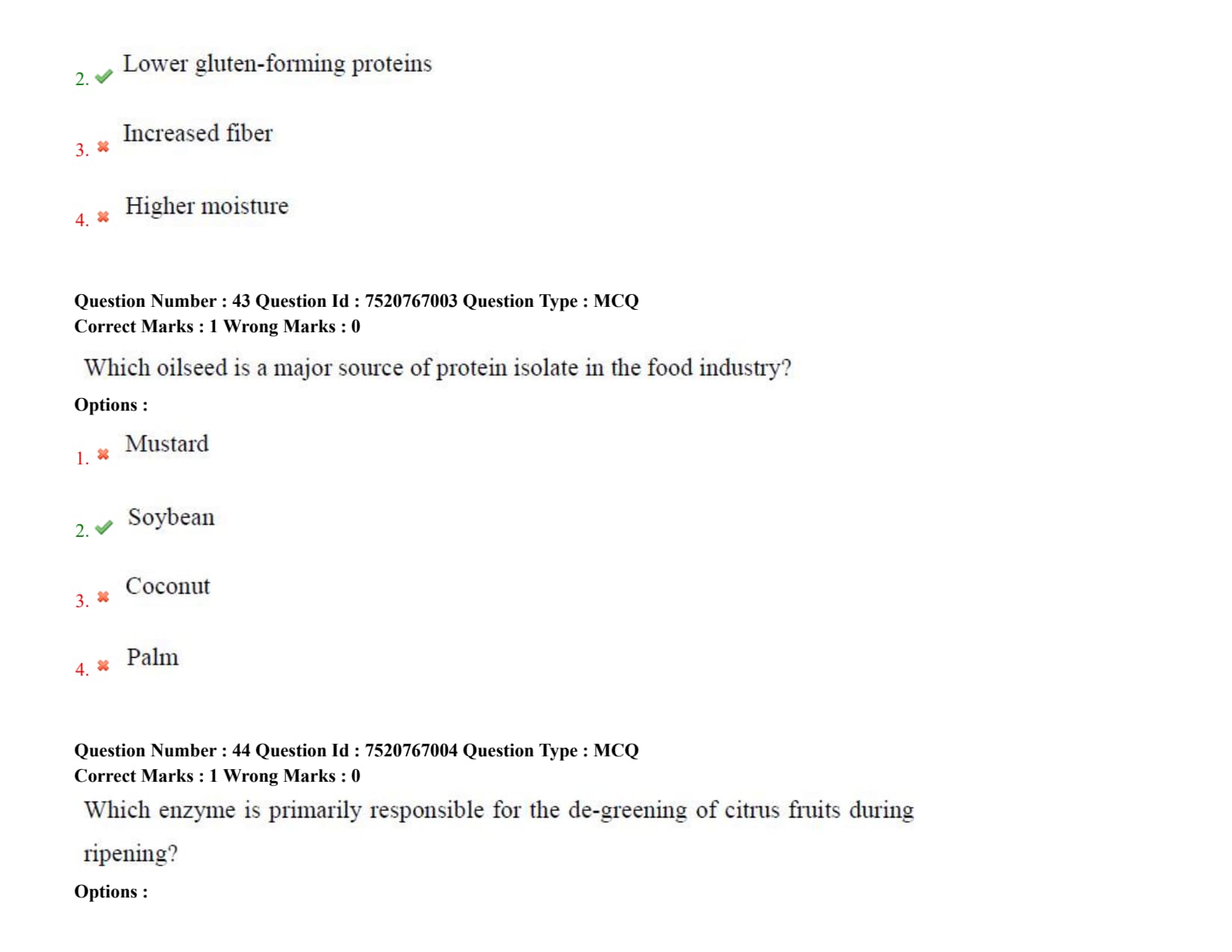
Question 42:
A bakery observes poor dough elasticity after switching wheat flour batches. Which factor is most likely responsible?
- (A) Reduced starch content
- (B) Lower gluten-forming proteins
- (C) Increased fiber
- (D) Higher moisture
Question 43:
Which oilseed is a major source of protein isolate in the food industry?
- (A) Mustard
- (B) Soybean
- (C) Coconut
- (D) Palm
Question 44:
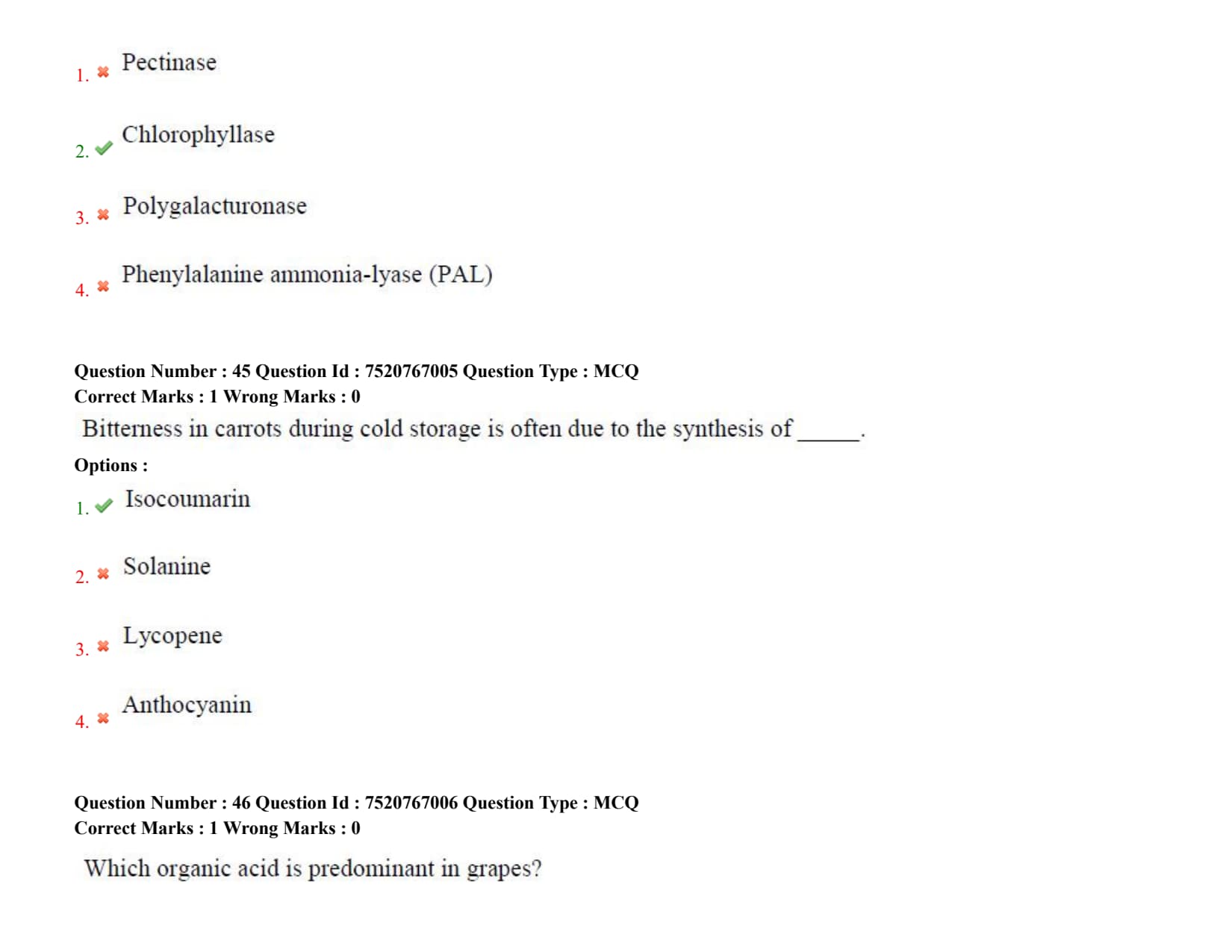
Which enzyme is primarily responsible for the de-greening of citrus fruits during ripening?
- (A) Pectinase
- (B) Chlorophyllase
- (C) Polygalacturonase
- (D) Phenylalanine ammonia-lyase (PAL)
Question 45:
Bitterness in carrots during cold storage is often due to the synthesis of ______.
- (A) Isocoumarin
- (B) Solanine
- (C) Lycopene
- (D) Anthocyanin
Question 46:
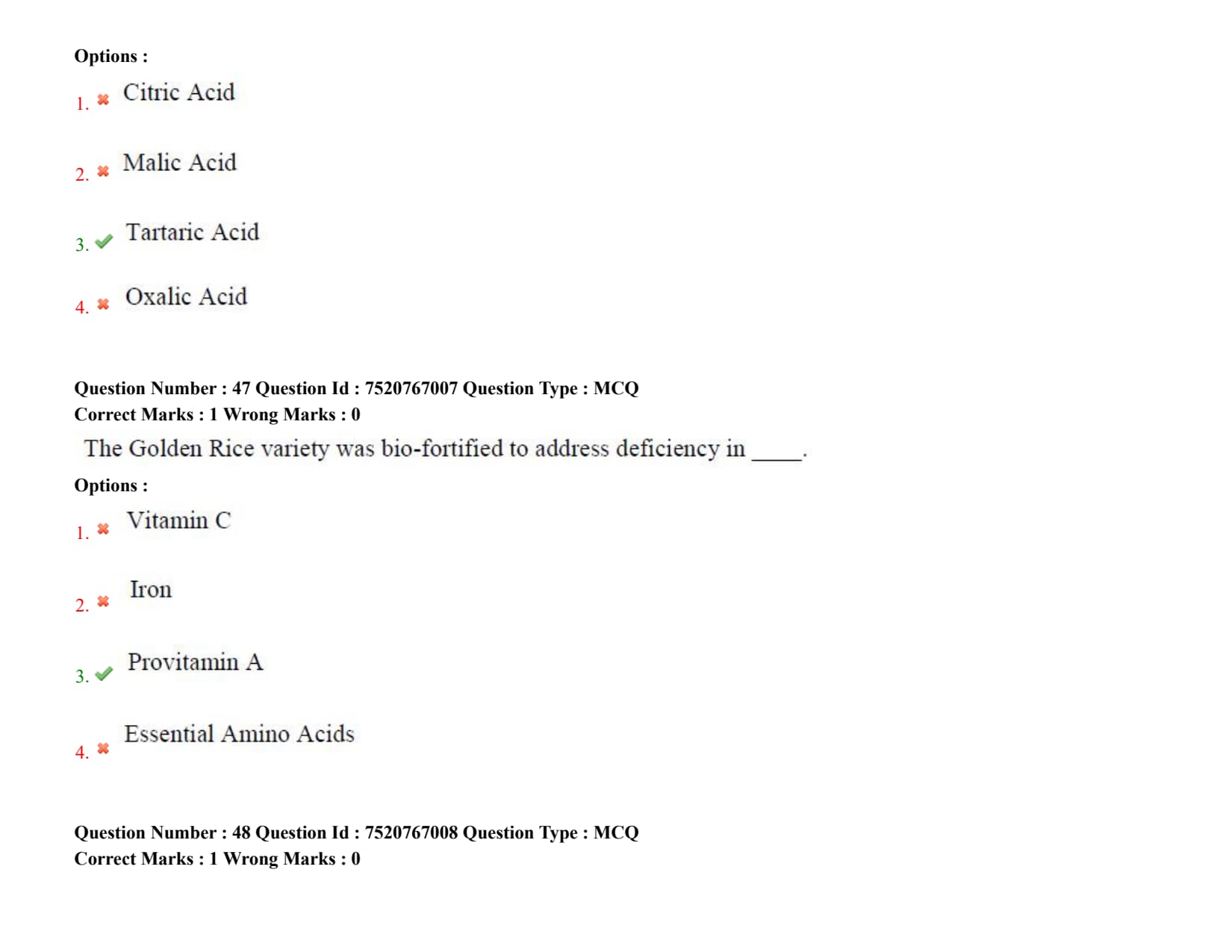
Which organic acid is predominant in grapes?
- (A) Citric Acid
- (B) Malic Acid
- (C) Tartaric Acid
- (D) Oxalic Acid
Question 47:
The Golden Rice variety was bio-fortified to address deficiency in ______.
- (A) Vitamin C
- (B) Iron
- (C) Provitamin A
- (D) Essential Amino Acids
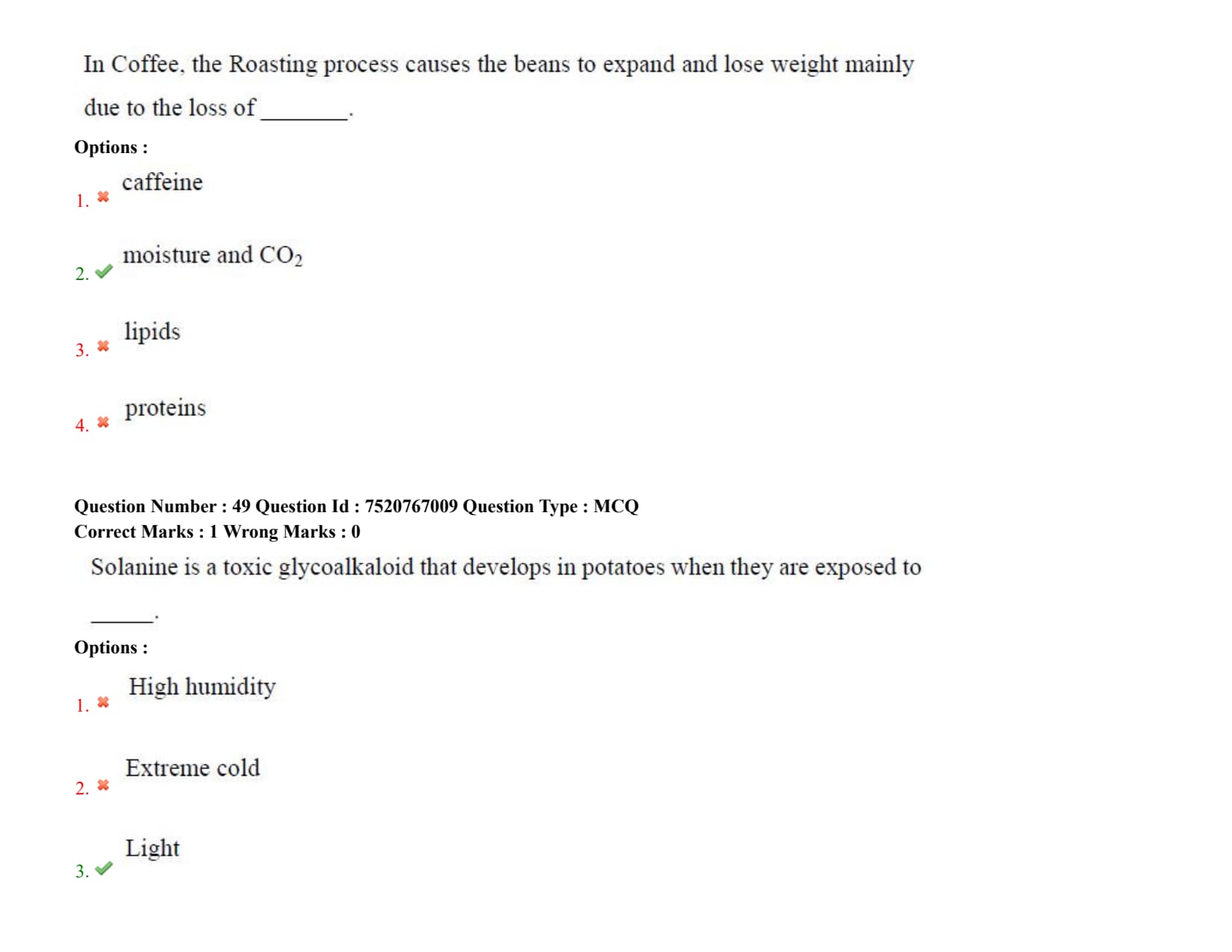
Question 48:
In Coffee, the Roasting process causes the beans to expand and lose weight mainly due to the loss of ______.
- (A) caffeine
- (B) moisture and \(CO_2\)
- (C) lipids
- (D) proteins
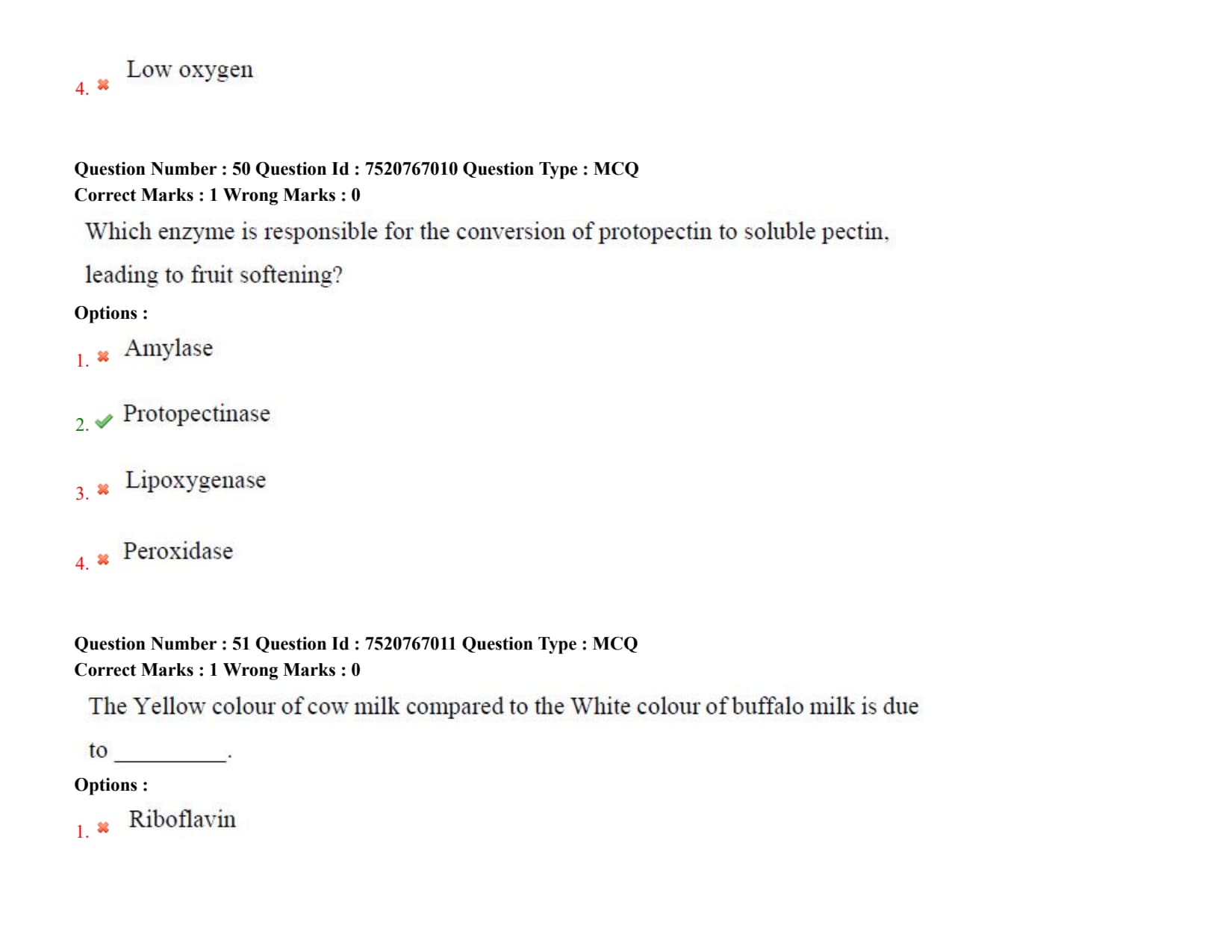
Question 49:
Solanine is a toxic glycoalkaloid that develops in potatoes when they are exposed to ______.
- (A) High humidity
- (B) Extreme cold
- (C) Light
- (D) Low oxygen
Question 50:
Which enzyme is responsible for the conversion of protopectin to soluble pectin, leading to fruit softening?
- (A) Amylase
- (B) Protopectinase
- (C) Lipoxygenase
- (D) Peroxidase
Question 51:
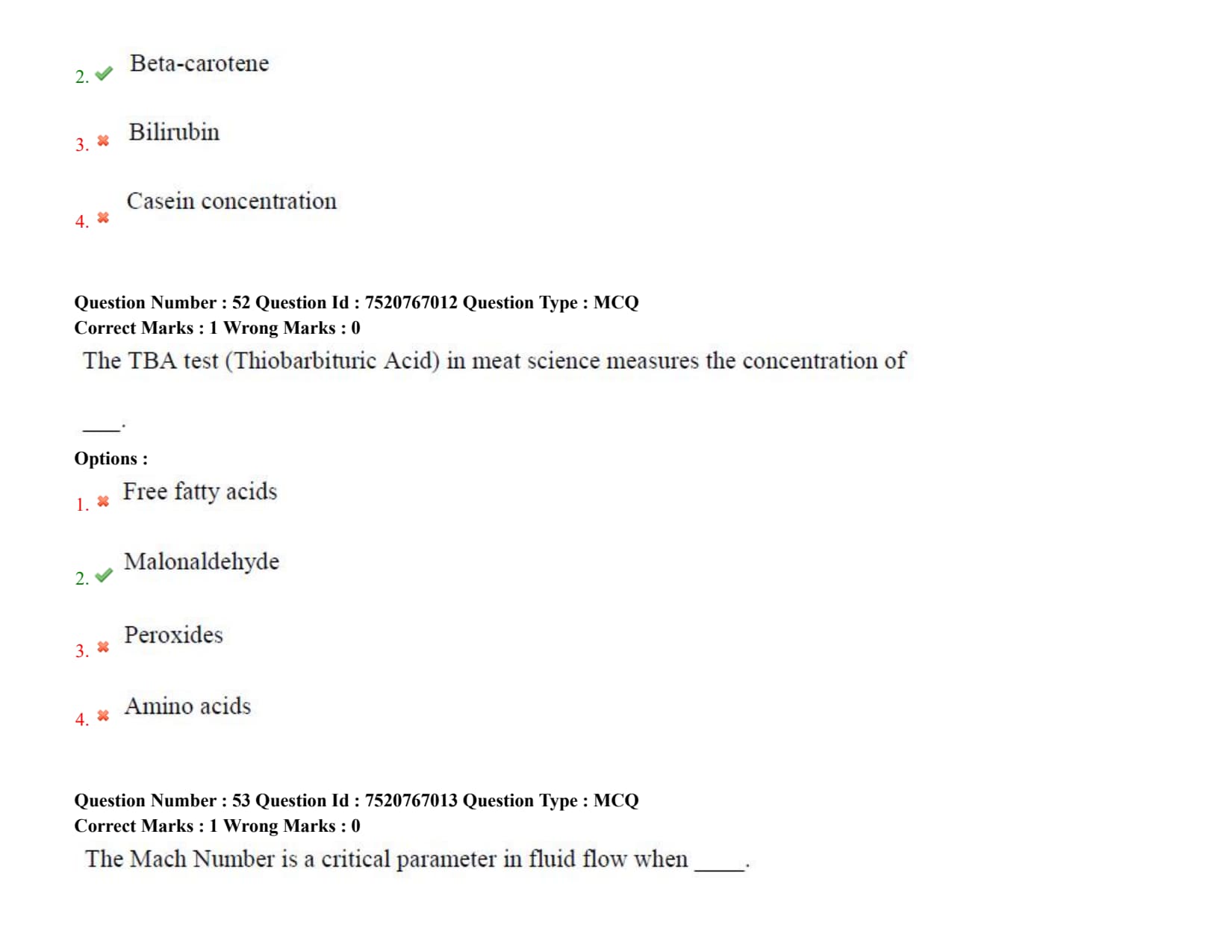
The Yellow colour of cow milk compared to the White colour of buffalo milk is due to ______.
- (A) Riboflavin
- (B) Beta-carotene
- (C) Bilirubin
- (D) Casein concentration
Question 52:
The TBA test (Thiobarbituric Acid) in meat science measures the concentration of ______.
- (A) Free fatty acids
- (B) Malonaldehyde
- (C) Peroxides
- (D) Amino acids
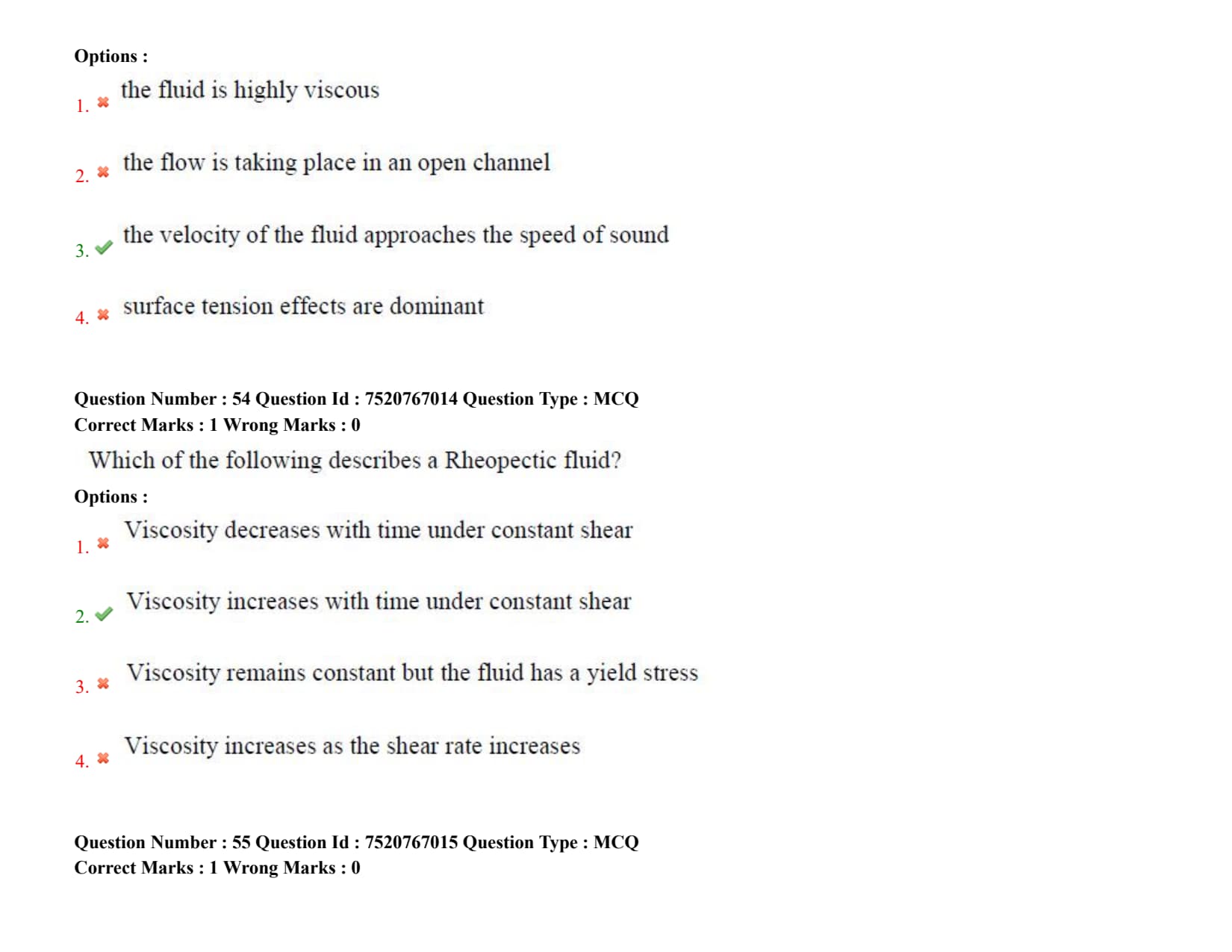
Question 53:
The Mach Number is a critical parameter in fluid flow when ______.
- (A) the fluid is highly viscous
- (B) the flow is taking place in an open channel
- (C) the velocity of the fluid approaches the speed of sound
- (D) surface tension effects are dominant
Question 54:
Which of the following describes a Rheopectic fluid?
- (A) Viscosity decreases with time under constant shear
- (B) Viscosity increases with time under constant shear
- (C) Viscosity remains constant but the fluid has a yield stress
- (D) Viscosity increases as the shear rate increases
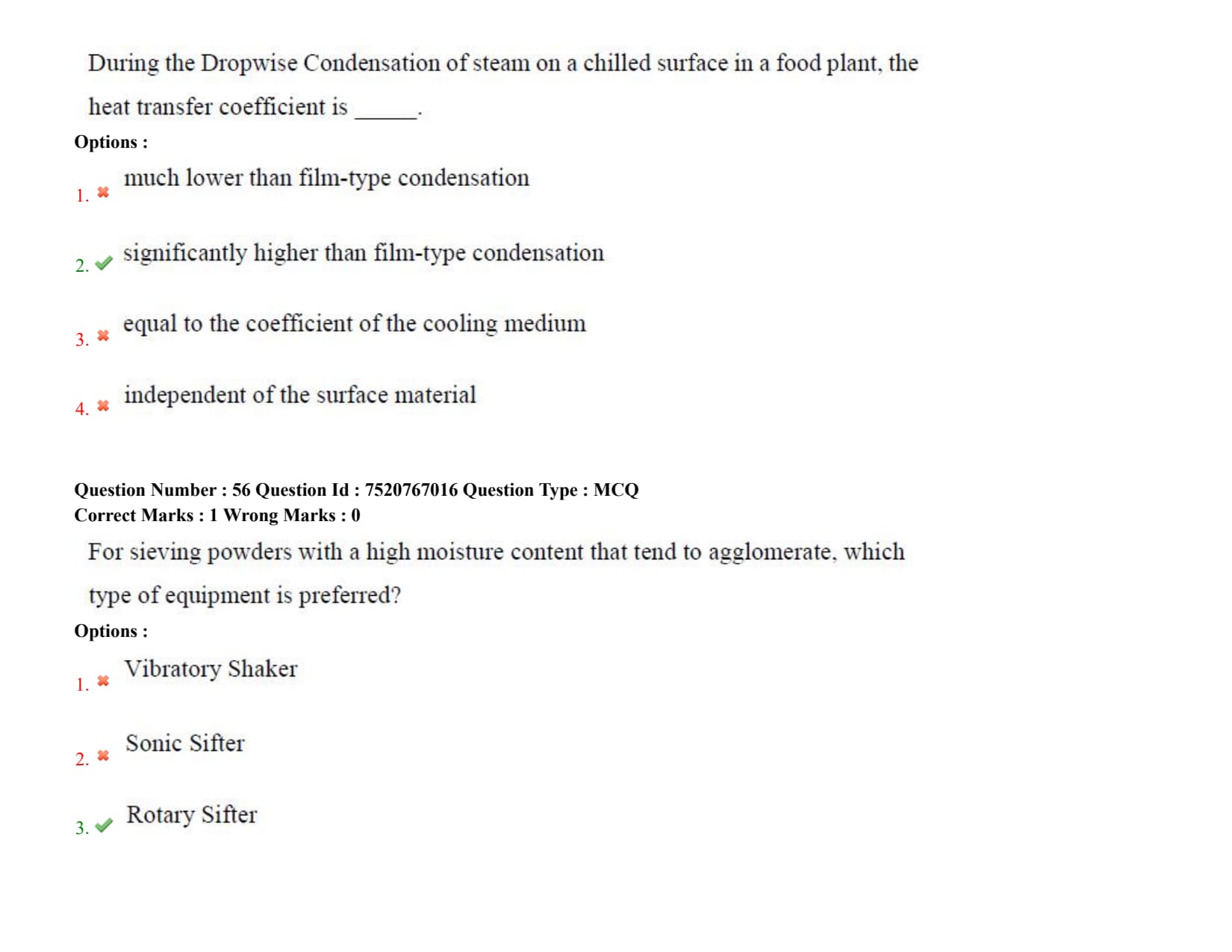
Question 55:
During the Dropwise Condensation of steam on a chilled surface in a food plant, the heat transfer coefficient is ______.
- (A) much lower than film-type condensation
- (B) significantly higher than film-type condensation
- (C) equal to the coefficient of the cooling medium
- (D) independent of the surface material
Question 56:
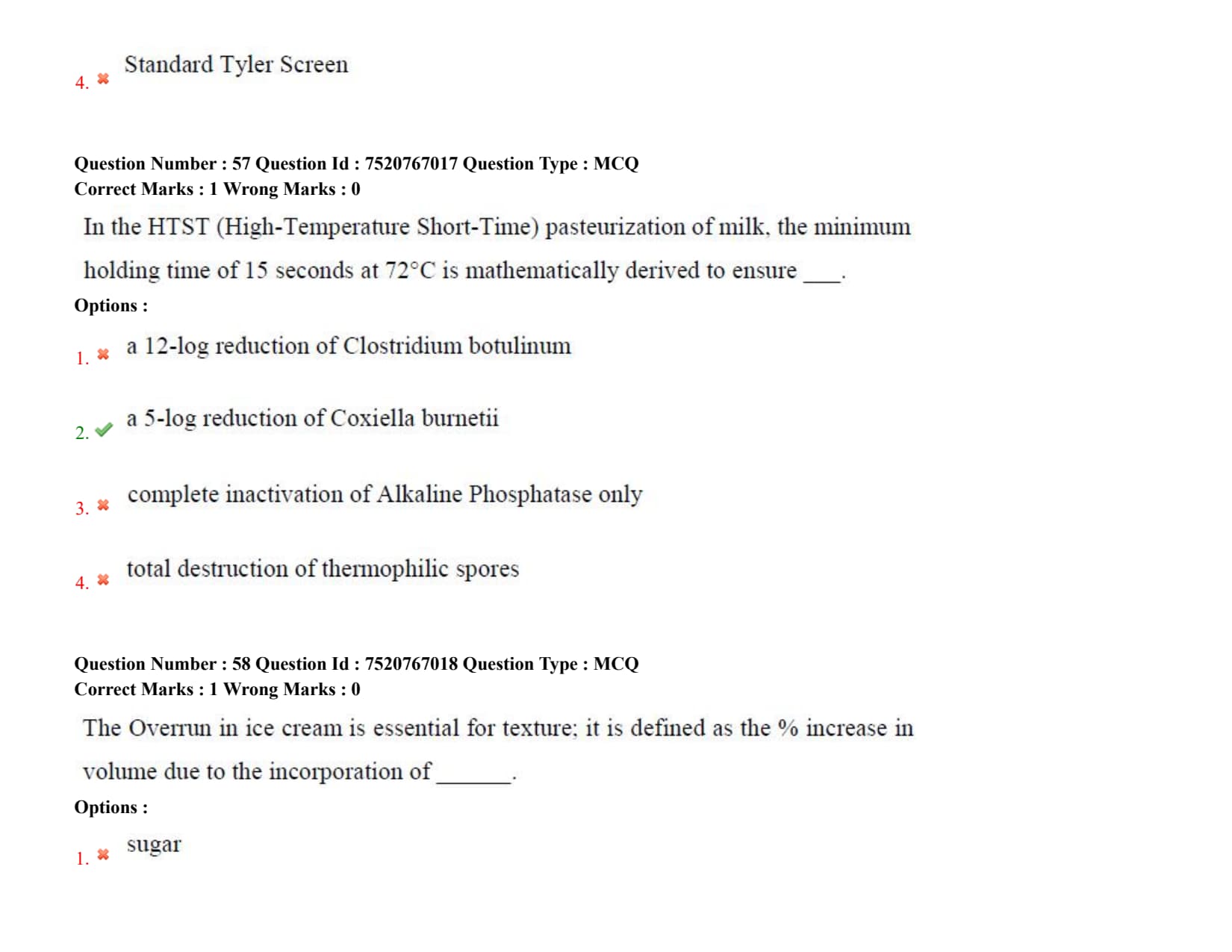
For sieving powders with a high moisture content that tend to agglomerate, which type of equipment is preferred?
- (A) Vibratory Shaker
- (B) Sonic Sifter
- (C) Rotary Sifter
- (D) Standard Tyler Screen
Question 57:
In the HTST (High-Temperature Short-Time) pasteurization of milk, the minimum holding time of 15 seconds at \(72°C\) is mathematically derived to ensure ______.
- (A) a 12-log reduction of Clostridium botulinum
- (B) a 5-log reduction of Coxiella burnetii
- (C) complete inactivation of Alkaline Phosphatase only
- (D) total destruction of thermophilic spores
Question 58:
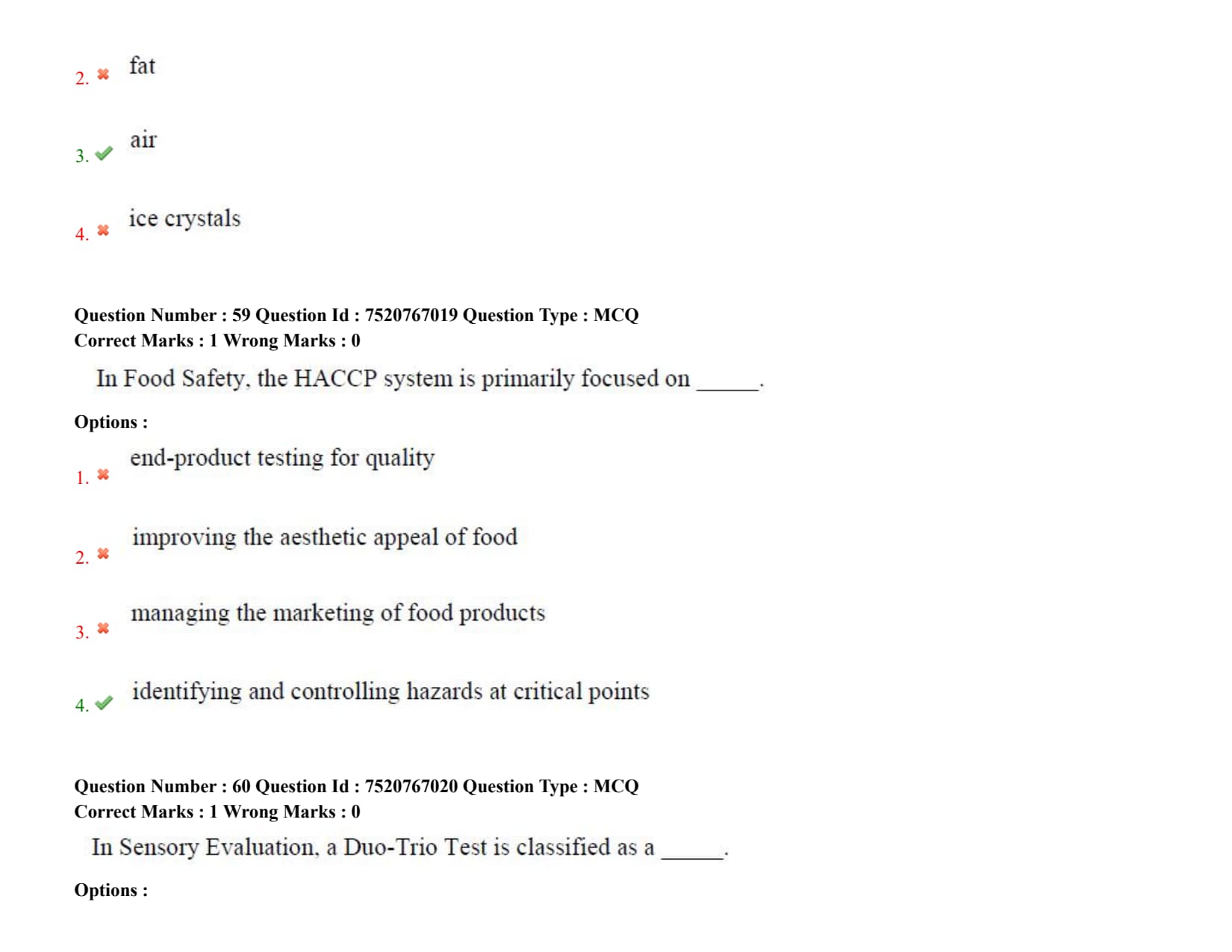
The Overrun in ice cream is essential for texture; it is defined as the % increase in volume due to the incorporation of ______.
- (A) sugar
- (B) fat
- (C) air
- (D) ice crystals
Question 59:
In Food Safety, the HACCP system is primarily focused on _______.
- (A) end-product testing for quality
- (B) improving the aesthetic appeal of food
- (C) managing the marketing of food products
- (D) identifying and controlling hazards at critical points
Question 60:
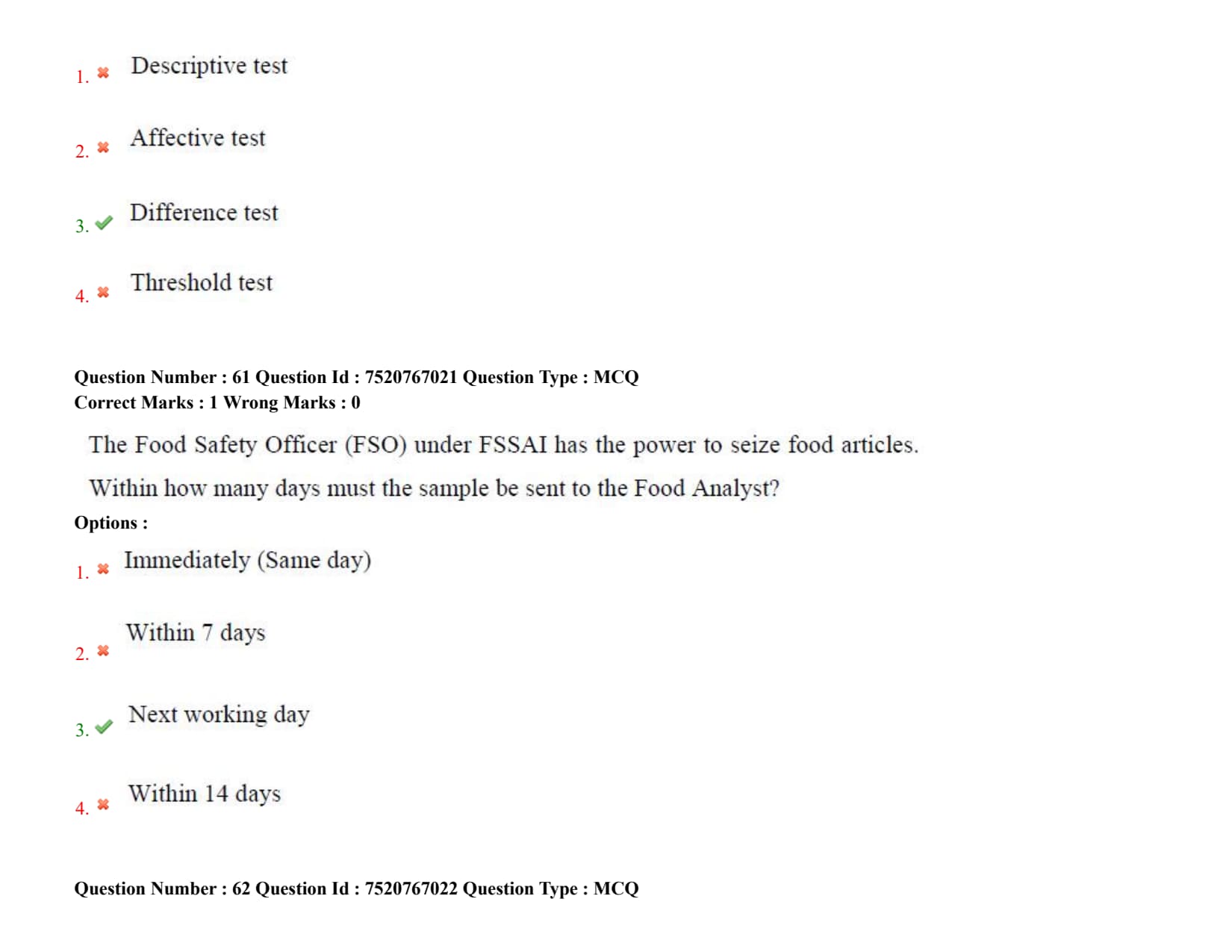
In Sensory Evaluation, a Duo-Trio Test is classified as a _______.
- (A) Descriptive test
- (B) Affective test
- (C) Difference test
- (D) Threshold test
Question 61:
The Food Safety Officer (FSO) under FSSAI has the power to seize food articles. Within how many days must the sample be sent to the Food Analyst?
- (A) Immediately (Same day)
- (B) Within 7 days
- (C) Next working day
- (D) Within 14 days
Question 62:
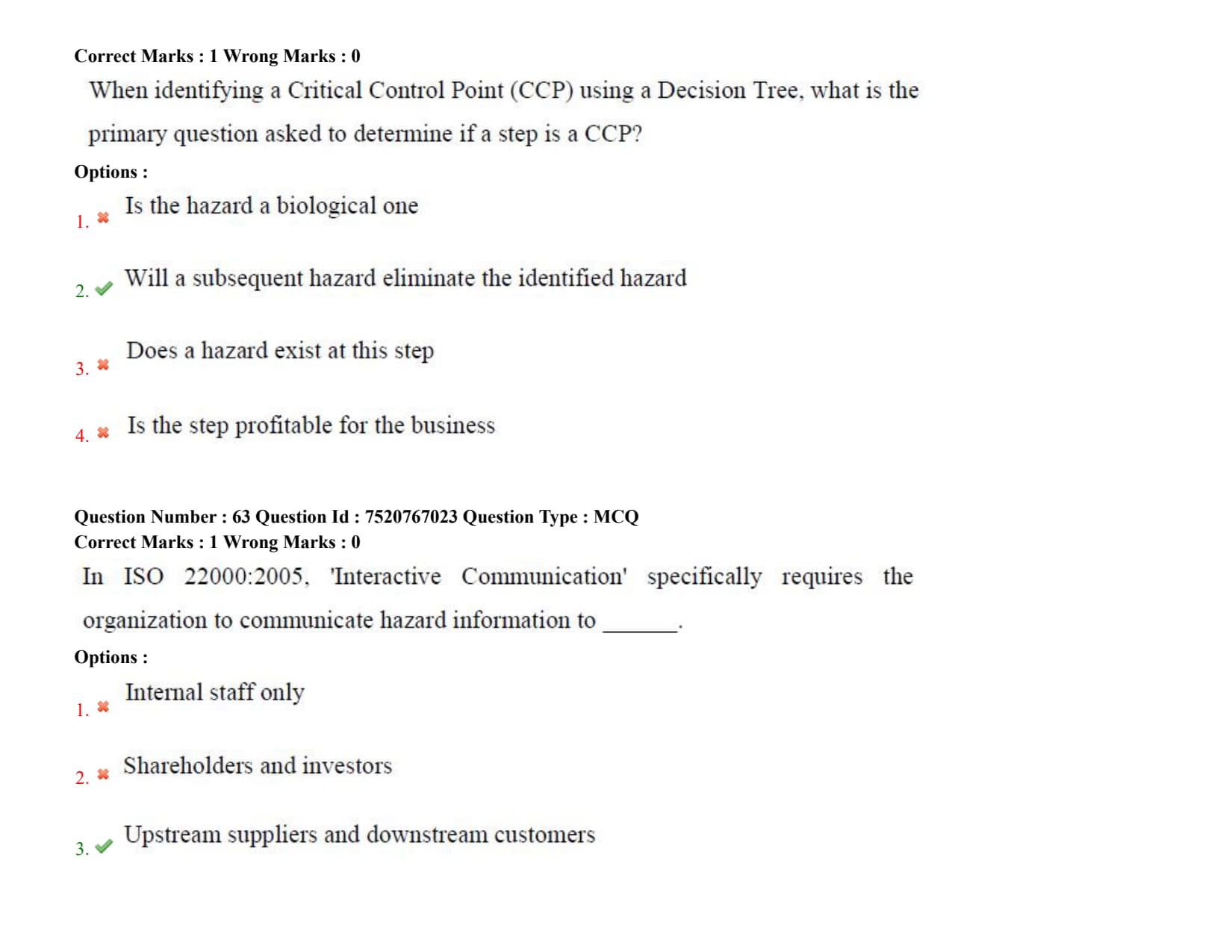
When identifying a Critical Control Point (CCP) using a Decision Tree, what is the primary question asked to determine if a step is a CCP?
- (A) Is the hazard a biological one
- (B) Will a subsequent hazard eliminate the identified hazard
- (C) Does a hazard exist at this step
- (D) Is the step profitable for the business
Question 63:
In ISO 22000:2005, 'Interactive Communication' specifically requires the organization to communicate hazard information to _______.
- (A) Internal staff only
- (B) Shareholders and investors
- (C) Upstream suppliers and downstream customers
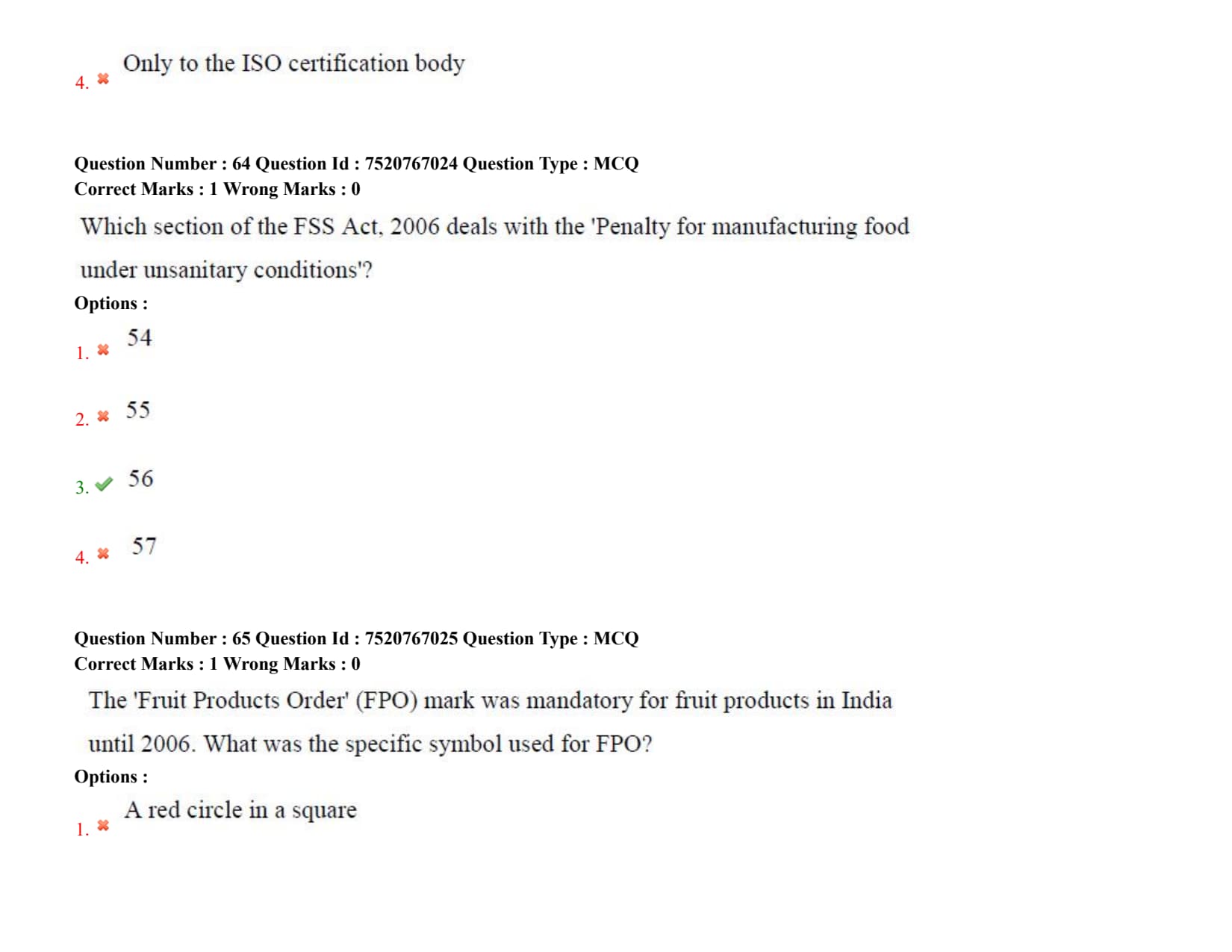
- (D) Only to the ISO certification body
Question 64:
Which section of the FSS Act, 2006 deals with the 'Penalty for manufacturing food under unsanitary conditions'?
- (A) 54
- (B) 55
- (C) 56
- (D) 57
Question 65:
The 'Fruit Products Order' (FPO) mark was mandatory for fruit products in India until 2006. What was the specific symbol used for FPO?
- (A) A red circle in a square
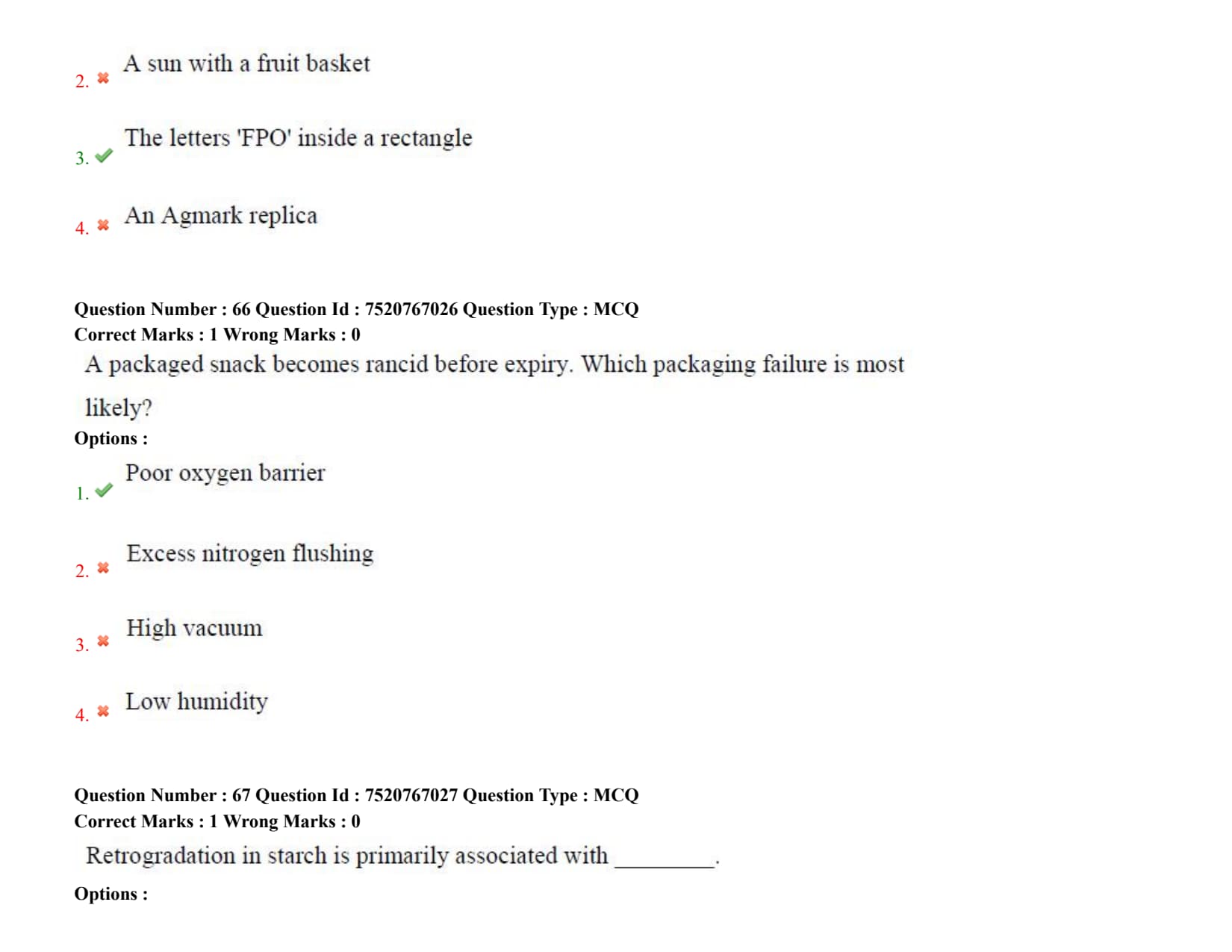
- (B) A sun with a fruit basket
- (C) The letters 'FPO' inside a rectangle
- (D) An Agmark replica
Question 66:
A packaged snack becomes rancid before expiry. Which packaging failure is most likely?
- (A) Poor oxygen barrier
- (B) Excess nitrogen flushing
- (C) High vacuum
- (D) Low humidity
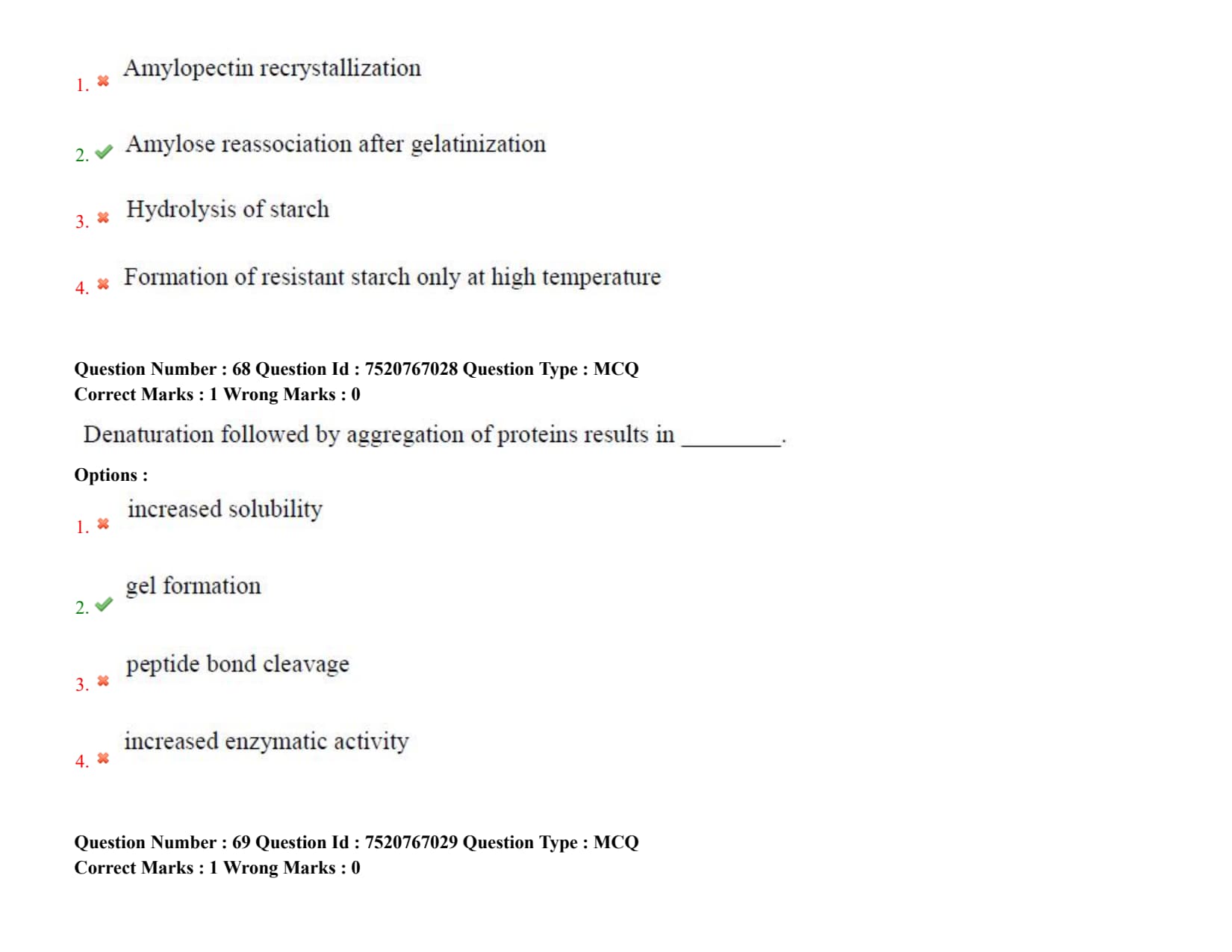
Question 67:
Retrogradation in starch is primarily associated with _______.
- (A) Amylopectin recrystallization
- (B) Amylose reassociation after gelatinization
- (C) Hydrolysis of starch
- (D) Formation of resistant starch only at high temperature
Question 68:
Denaturation followed by aggregation of proteins results in _______.
- (A) increased solubility
- (B) gel formation
- (C) peptide bond cleavage
- (D) increased enzymatic activity
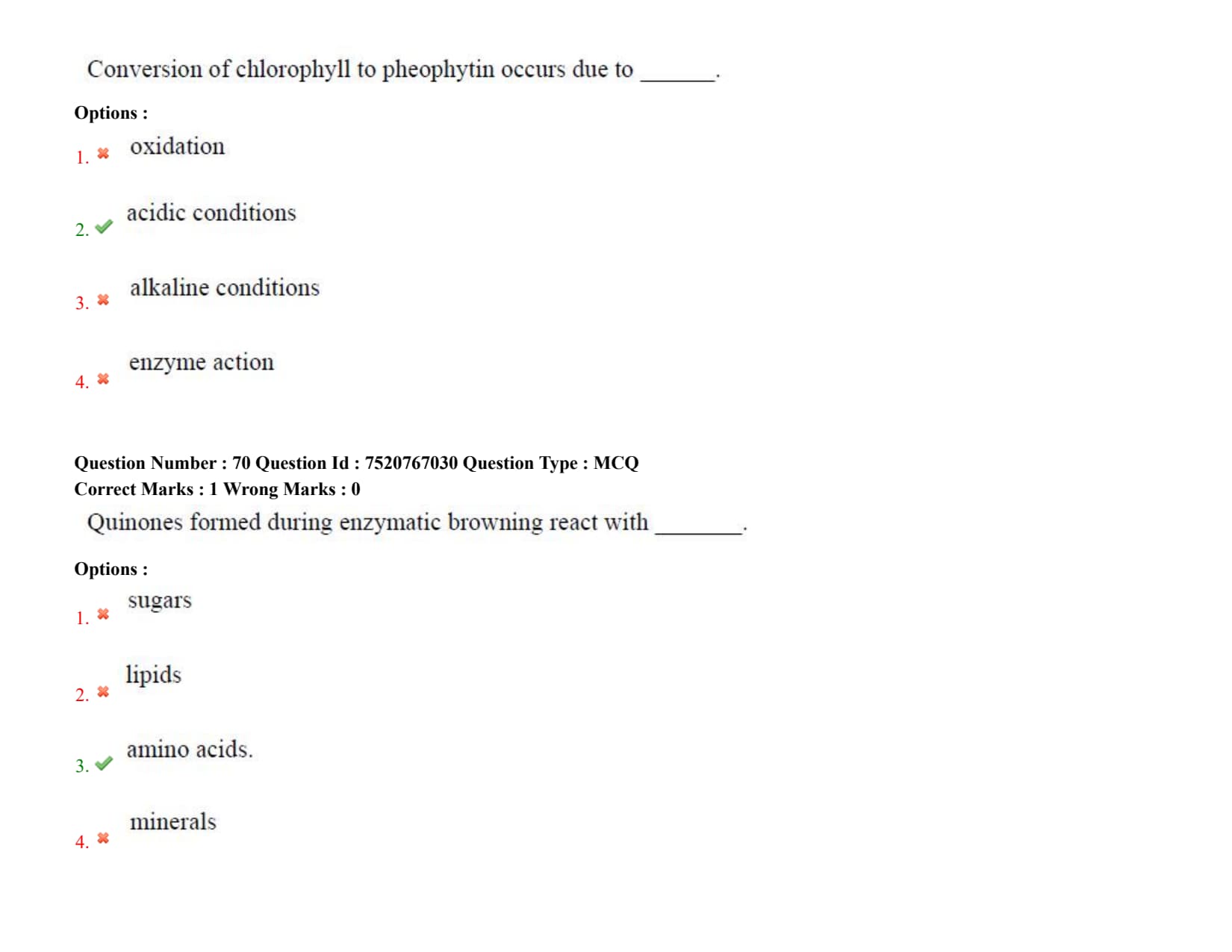
Question 69:
Conversion of chlorophyll to pheophytin occurs due to _______.
- (A) oxidation
- (B) acidic conditions
- (C) alkaline conditions
- (D) enzyme action
Question 70:
Quinones formed during enzymatic browning react with _______.
- (A) sugars
- (B) lipids
- (C) amino acids.
- (D) minerals
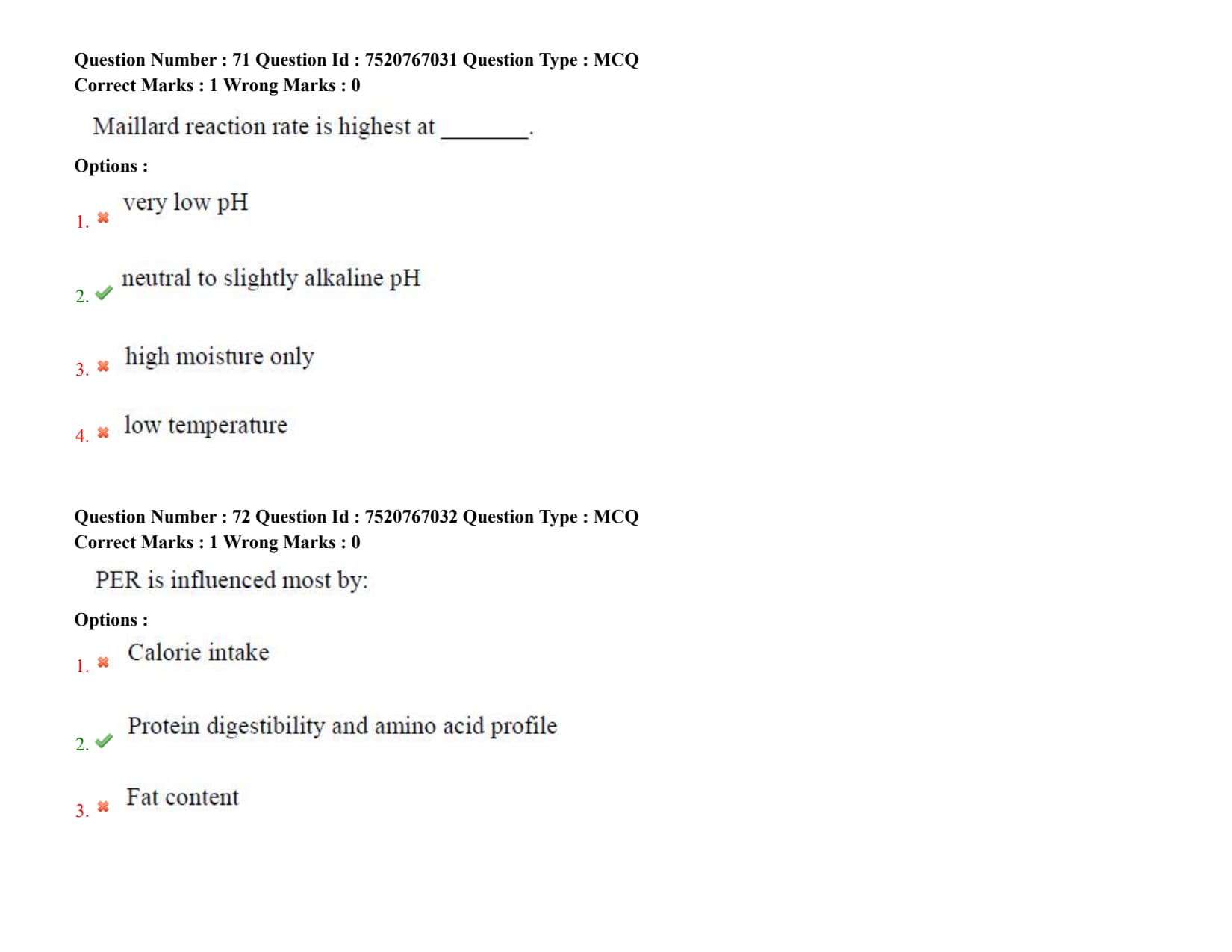
Question 71:
Maillard reaction rate is highest at _______.
- (A) very low pH
- (B) neutral to slightly alkaline pH
- (C) high moisture only
- (D) low temperature
Question 72:
PER is influenced most by:
- (A) Calorie intake
- (B) Protein digestibility and amino acid profile
- (C) Fat content
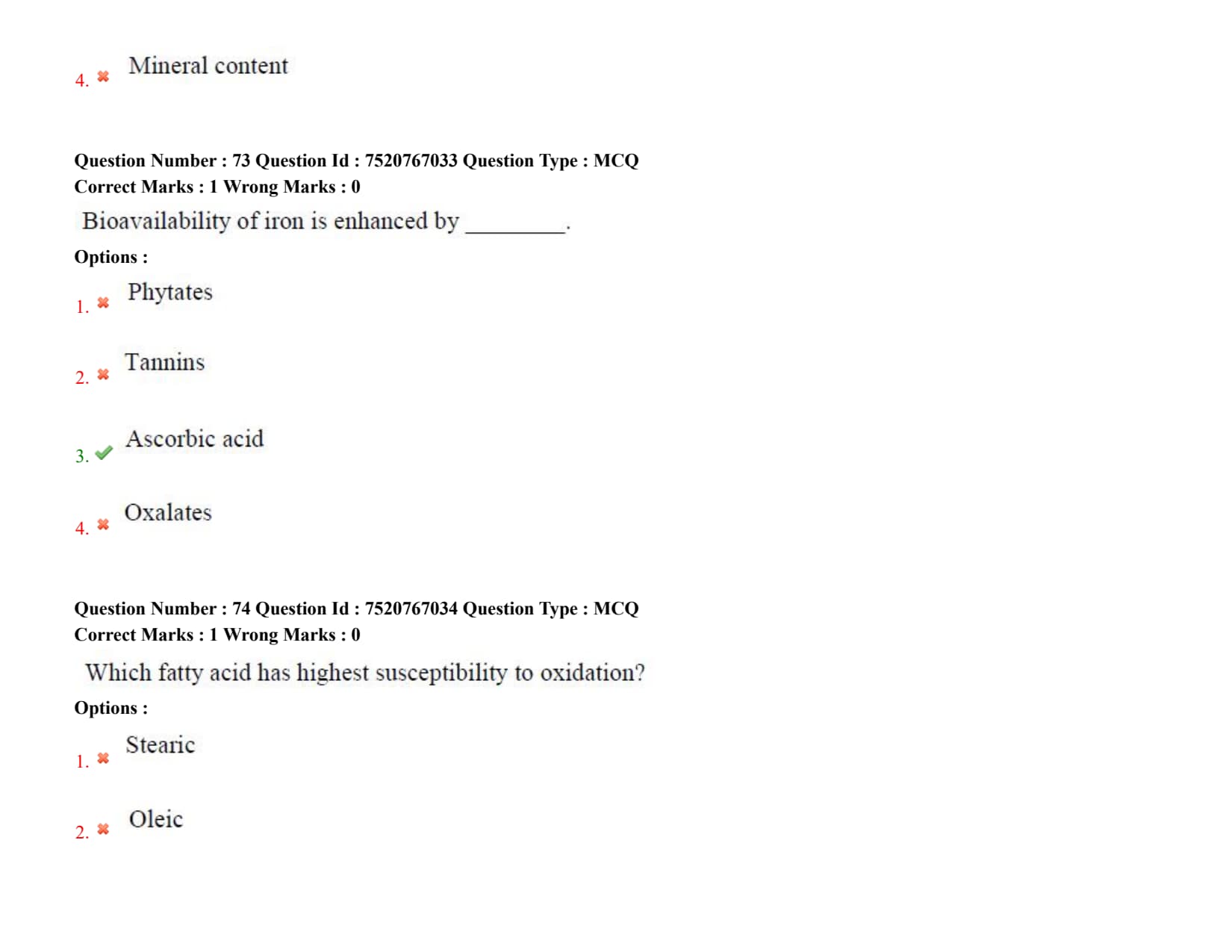
- (D) Mineral content
Question 73:
Bioavailability of iron is enhanced by _______.
- (A) Phytates
- (B) Tannins
- (C) Ascorbic acid
- (D) Oxalates
Question 74:
Which fatty acid has highest susceptibility to oxidation?
- (A) Stearic
- (B) Oleic
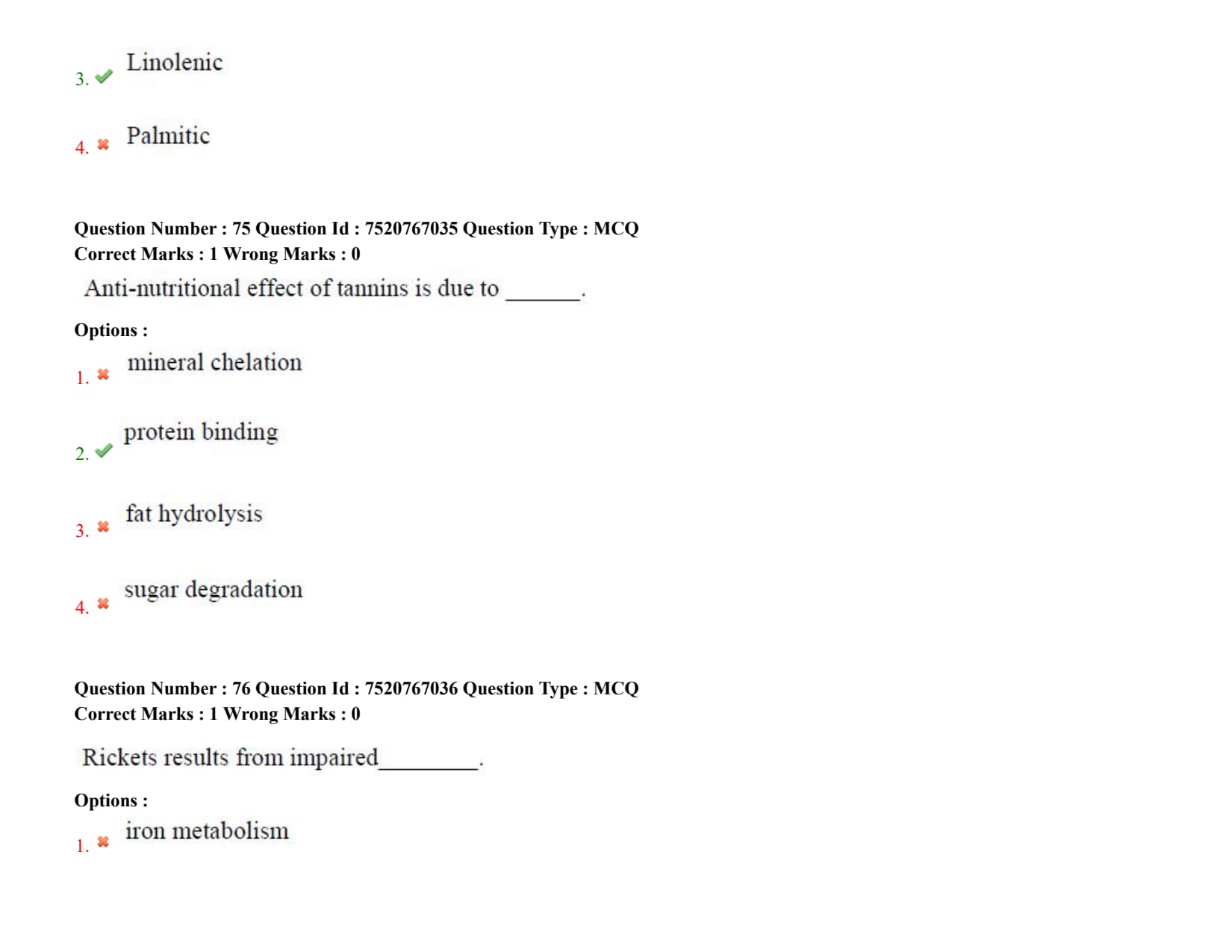
- (C) Linolenic
- (D) Palmitic
Question 75:
Anti-nutritional effect of tannins is due to _______.
- (A) mineral chelation
- (B) protein binding
- (C) fat hydrolysis
- (D) sugar degradation
Question 76:
Rickets results from impaired _______.
- (A) iron metabolism
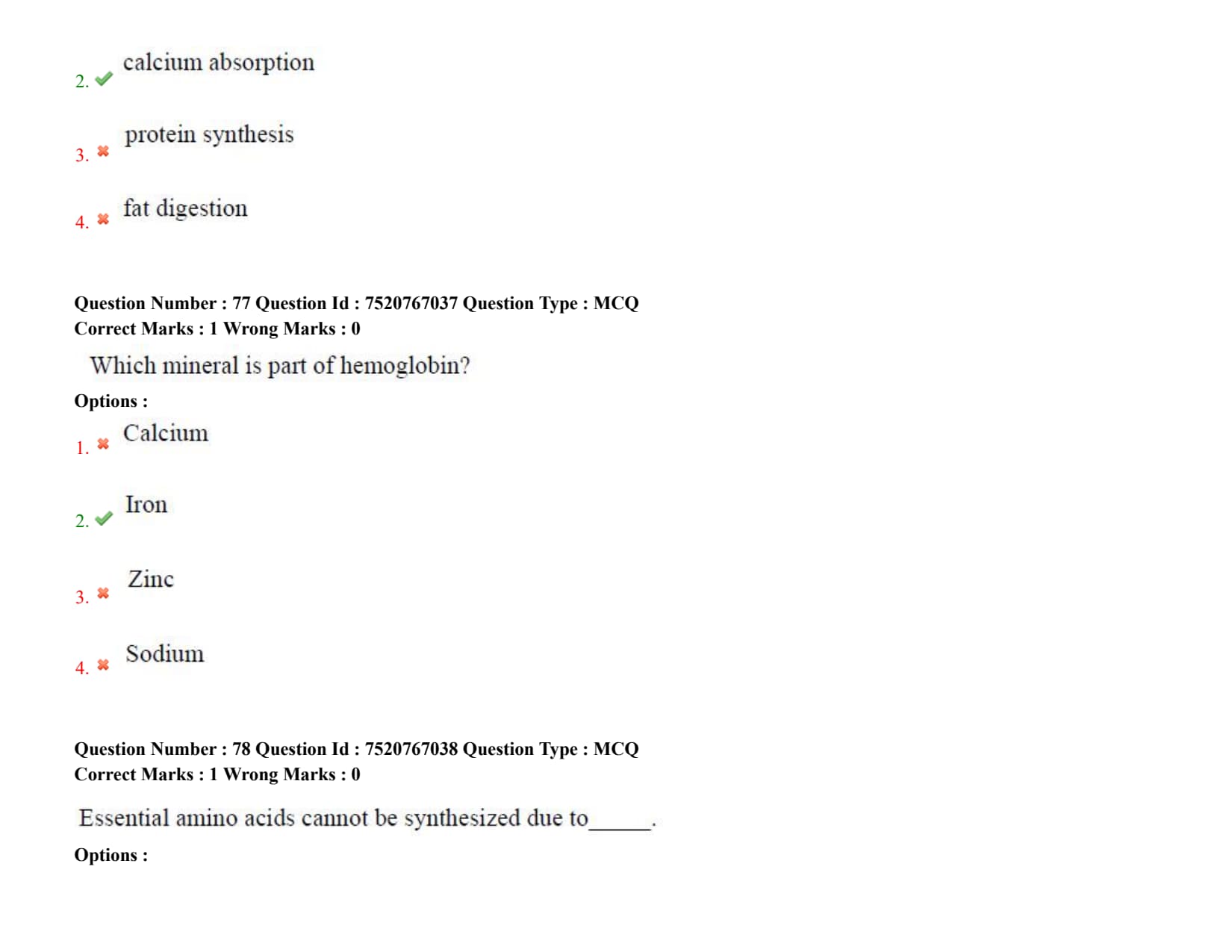
- (B) calcium absorption
- (C) protein synthesis
- (D) fat digestion
Question 77:
Which mineral is part of hemoglobin?
- (A) Calcium
- (B) Iron
- (C) Zinc
- (D) Sodium
Question 78:
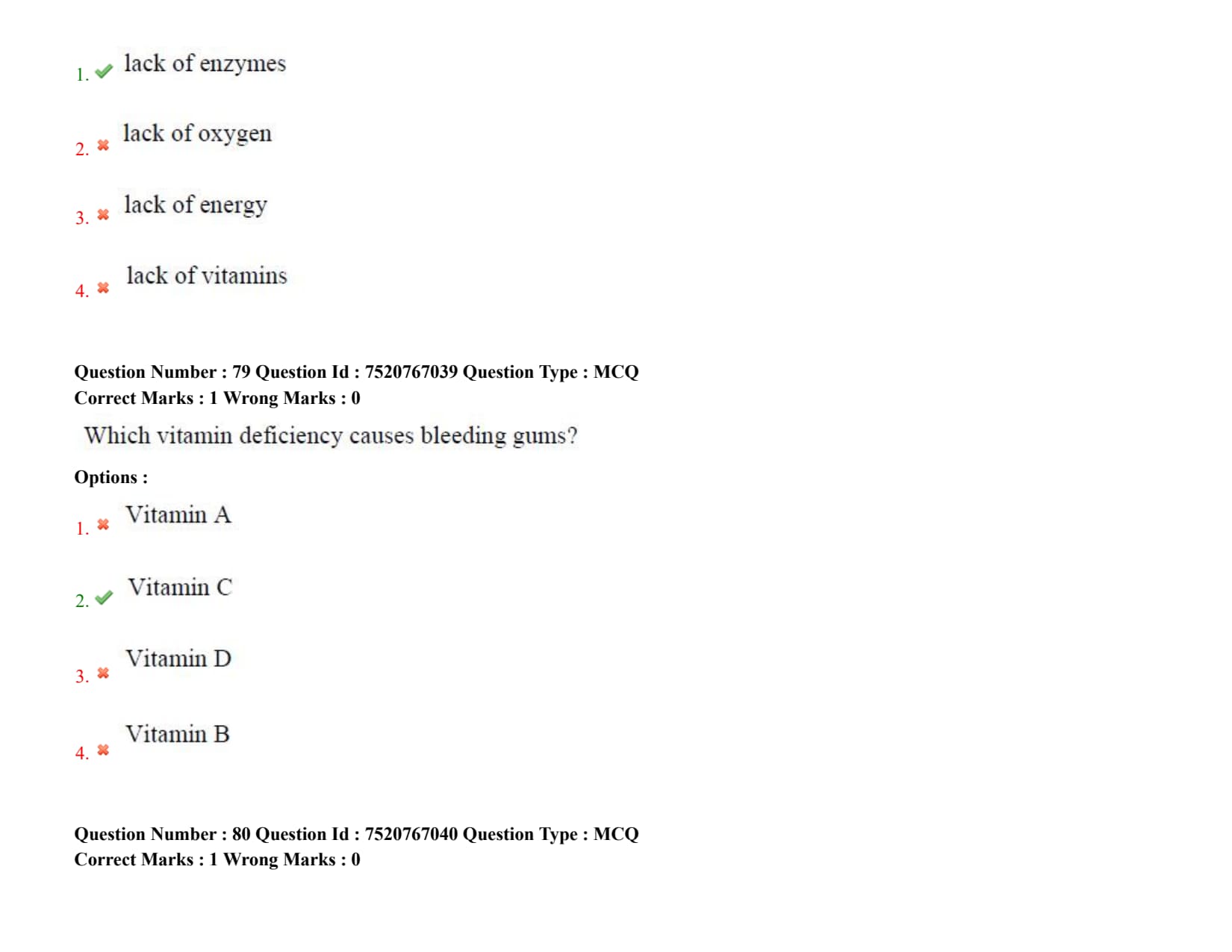
Essential amino acids cannot be synthesized due to _______.
- (A) lack of enzymes
- (B) lack of oxygen
- (C) lack of energy
- (D) lack of vitamins
Question 79:
Which vitamin deficiency causes bleeding gums?
- (A) Vitamin A
- (B) Vitamin C
- (C) Vitamin D
- (D) Vitamin B
Question 80:
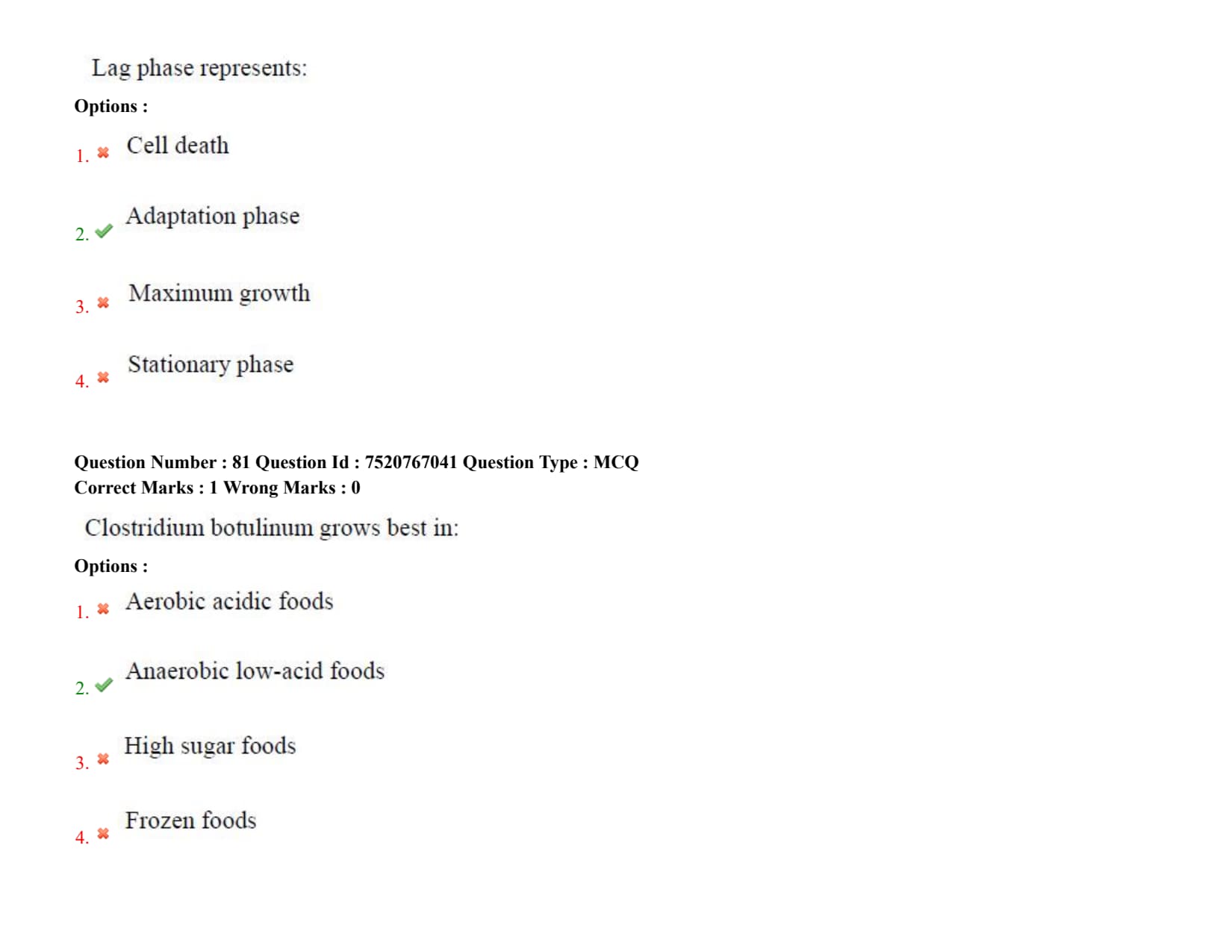
Lag phase represents:
- (A) Cell death
- (B) Adaptation phase
- (C) Maximum growth
- (D) Stationary phase
Question 81:
Clostridium botulinum grows best in:
- (A) Aerobic acidic foods
- (B) Anaerobic low-acid foods
- (C) High sugar foods
- (D) Frozen foods
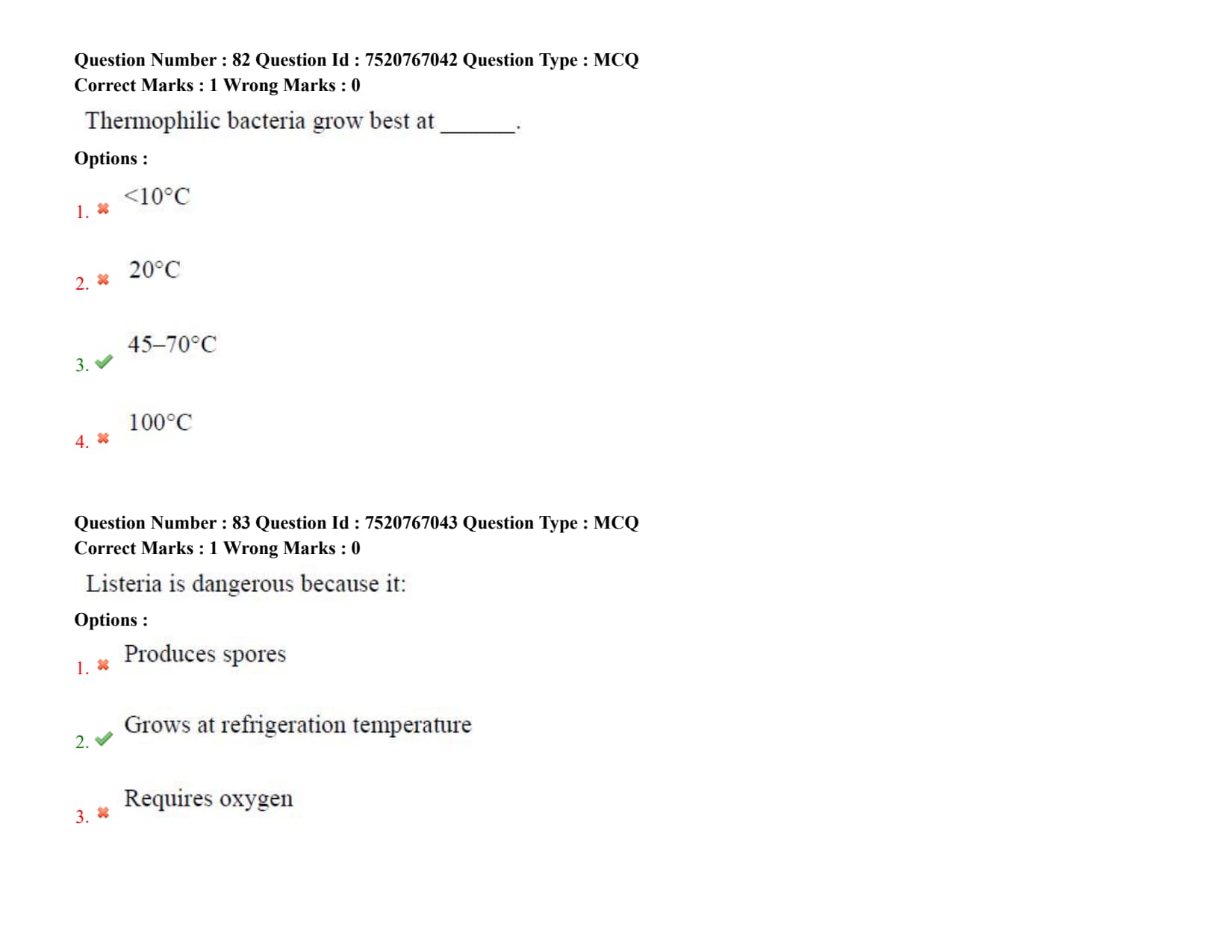
Question 82:
Thermophilic bacteria grow best at _______.
- (A) \(<10°C\)
- (B) \(20°C\)
- (C) \(45-70°C\)
- (D) \(100°C\)
Question 83:
Listeria is dangerous because it:
- (A) Produces spores
- (B) Grows at refrigeration temperature
- (C) Requires oxygen
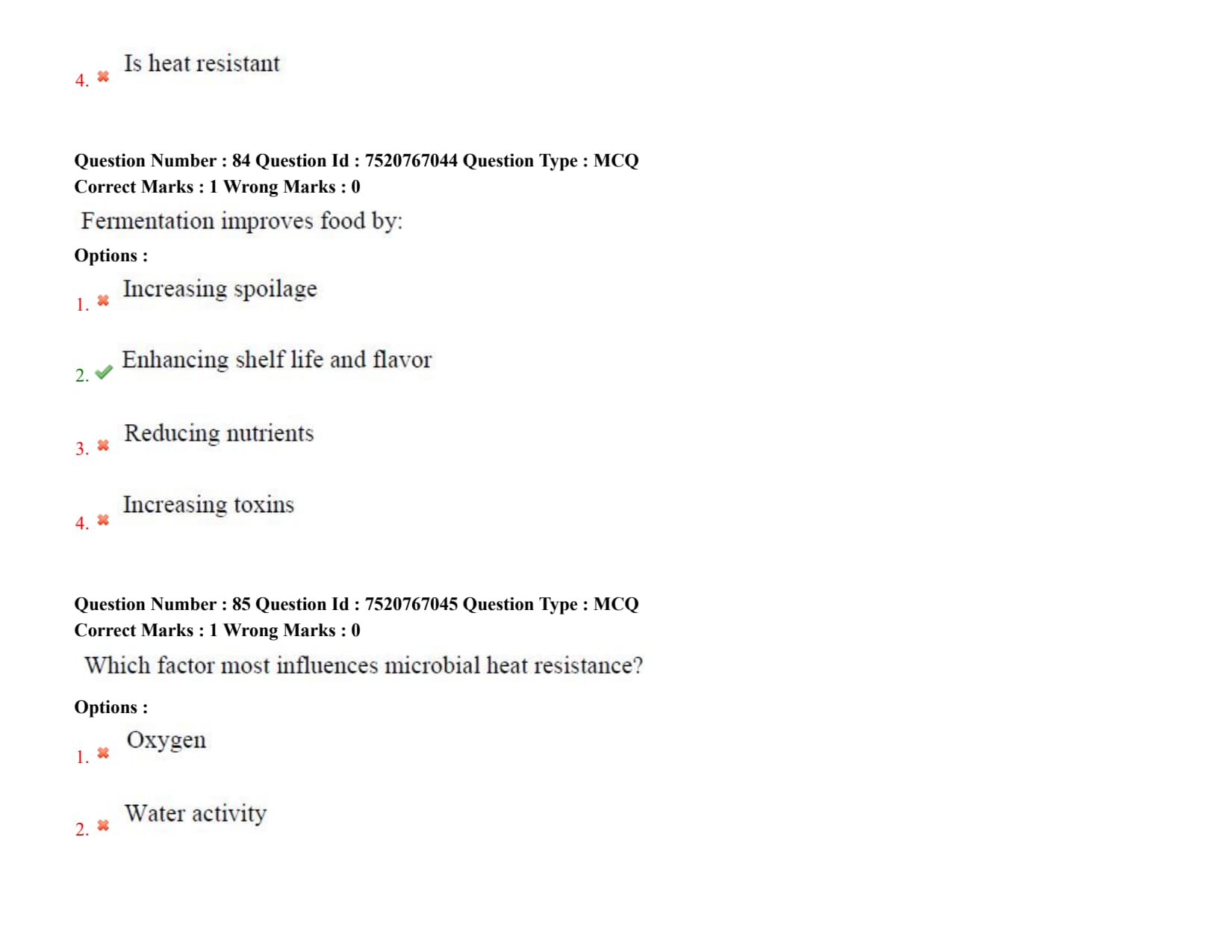
- (D) Is heat resistant
Question 84:
Fermentation improves food by:
- (A) Increasing spoilage
- (B) Enhancing shelf life and flavor
- (C) Reducing nutrients
- (D) Increasing toxins
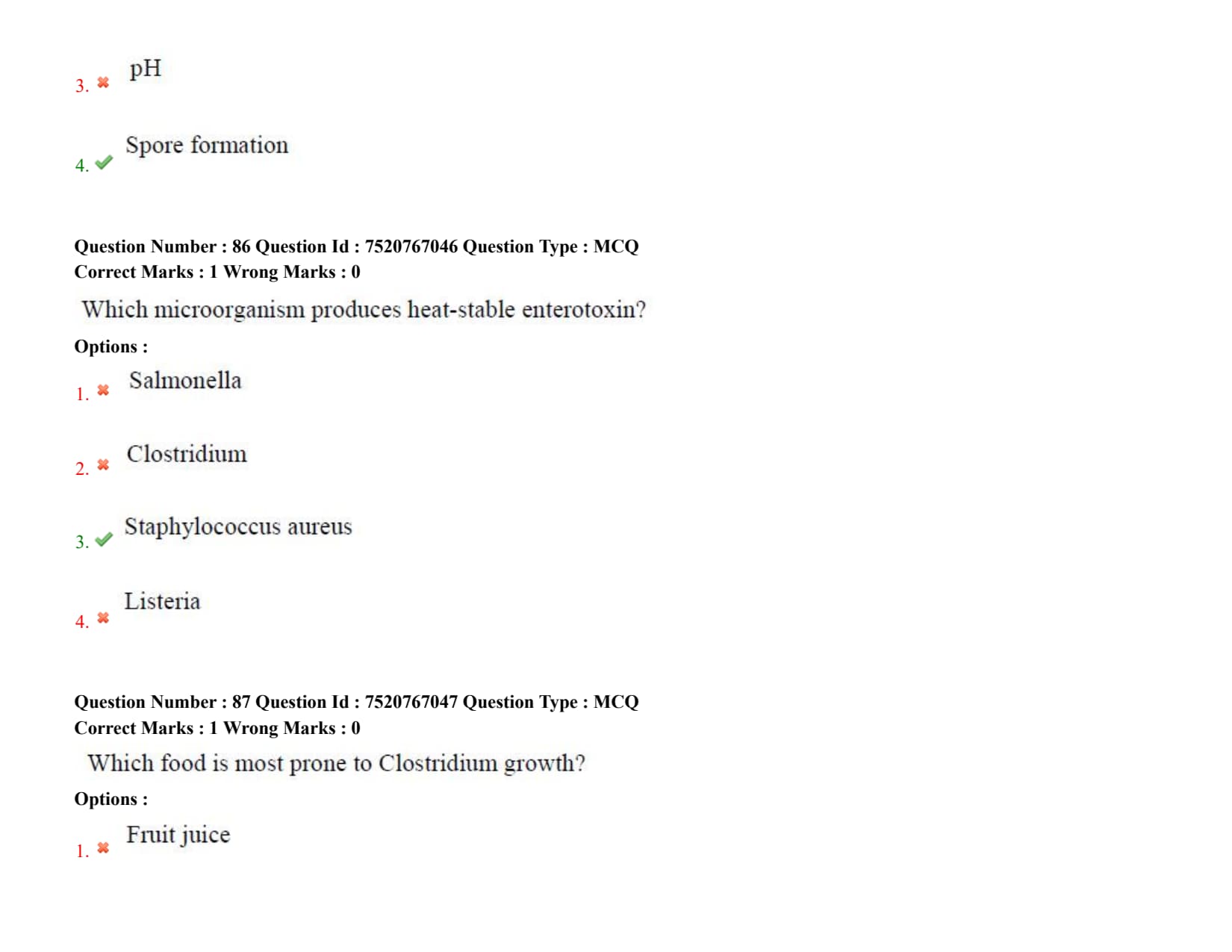
Question 85:
Which factor most influences microbial heat resistance?
- (A) Oxygen
- (B) Water activity
- (C) pH
- (D) Spore formation
Question 86:
Which microorganism produces heat-stable enterotoxin?
- (A) Salmonella
- (B) Clostridium
- (C) Staphylococcus aureus
- (D) Listeria
Question 87:
Which food is most prone to Clostridium growth?
- (A) Fruit juice
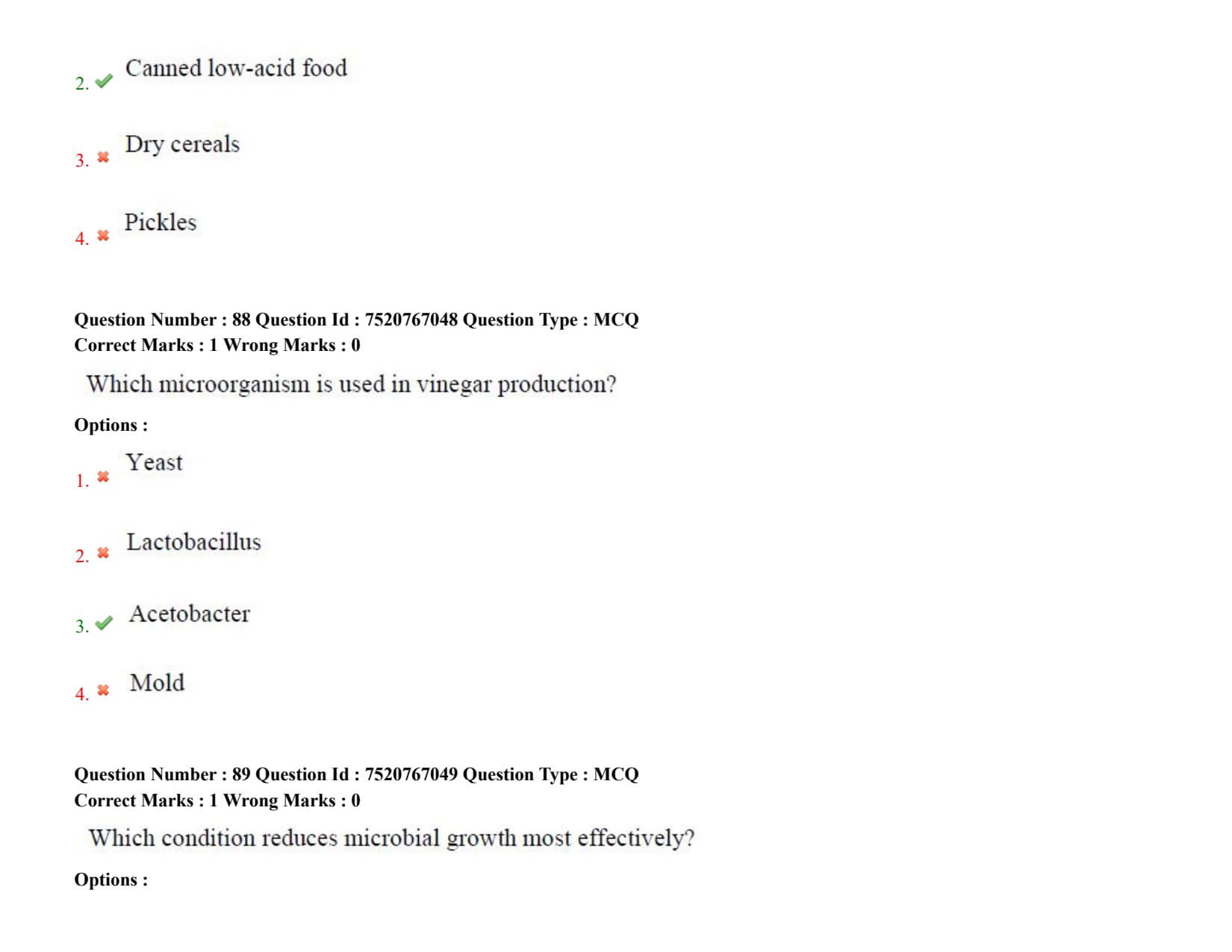
- (B) Canned low-acid food
- (C) Dry cereals
- (D) Pickles
Question 88:
Which microorganism is used in vinegar production?
- (A) Yeast
- (B) Lactobacillus
- (C) Acetobacter
- (D) Mold
Question 89:
Which condition reduces microbial growth most effectively?
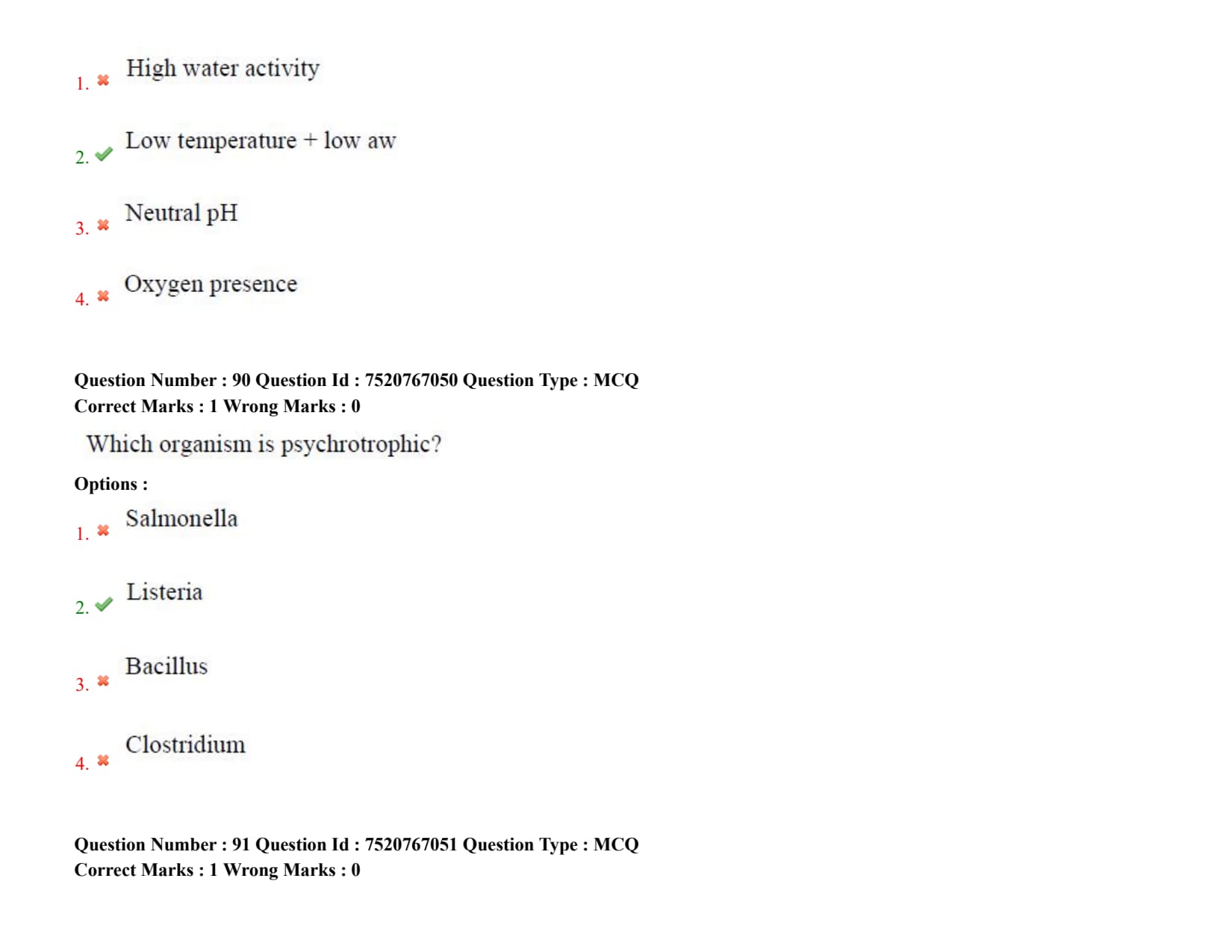
- (A) High water activity
- (B) Low temperature + low aw
- (C) Neutral pH
- (D) Oxygen presence
Question 90:
Which organism is psychrotrophic?
- (A) Salmonella
- (B) Listeria
- (C) Bacillus
- (D) Clostridium
Question 91:
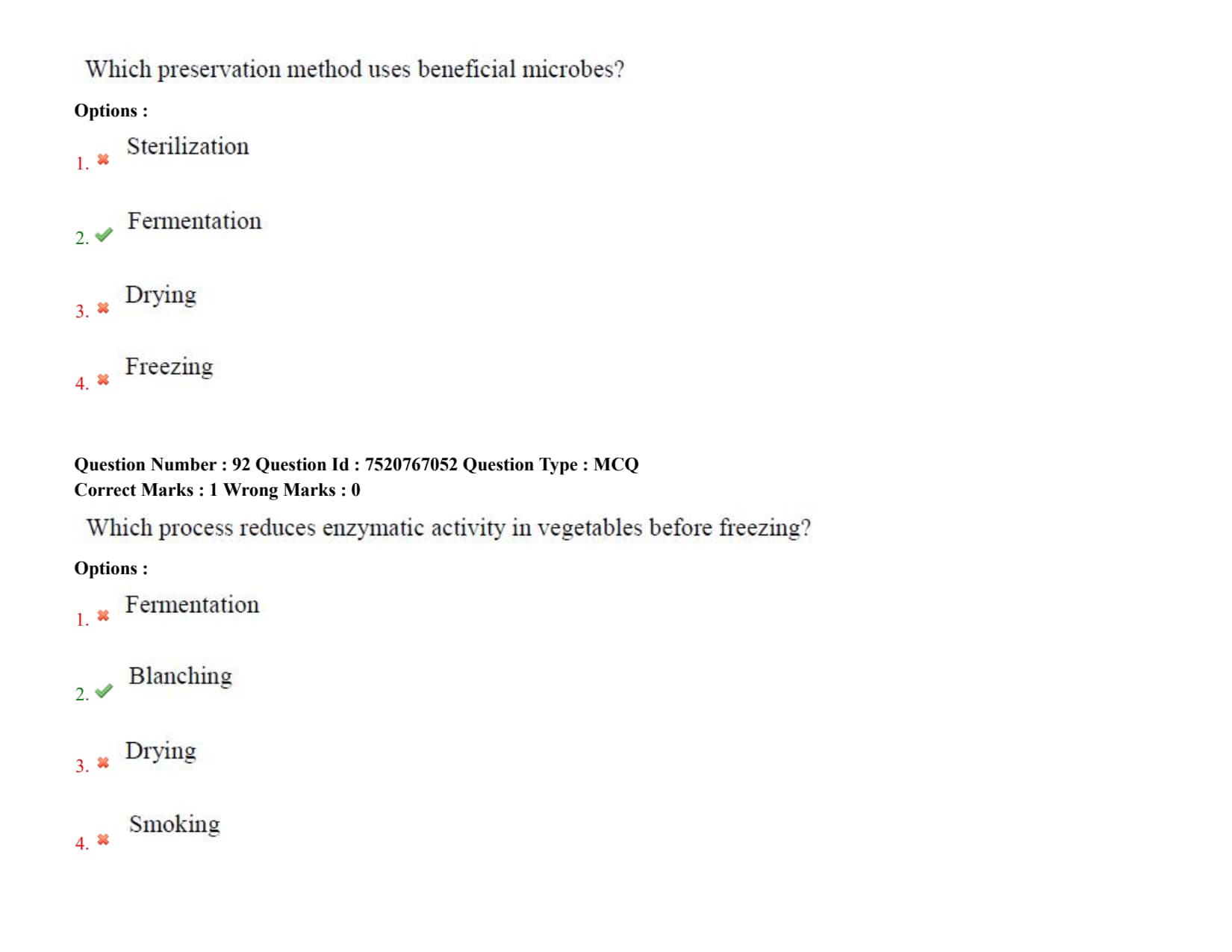
Which preservation method uses beneficial microbes?
- (A) Sterilization
- (B) Fermentation
- (C) Drying
- (D) Freezing
Question 92:
Which process reduces enzymatic activity in vegetables before freezing?
- (A) Fermentation
- (B) Blanching
- (C) Drying
- (D) Smoking
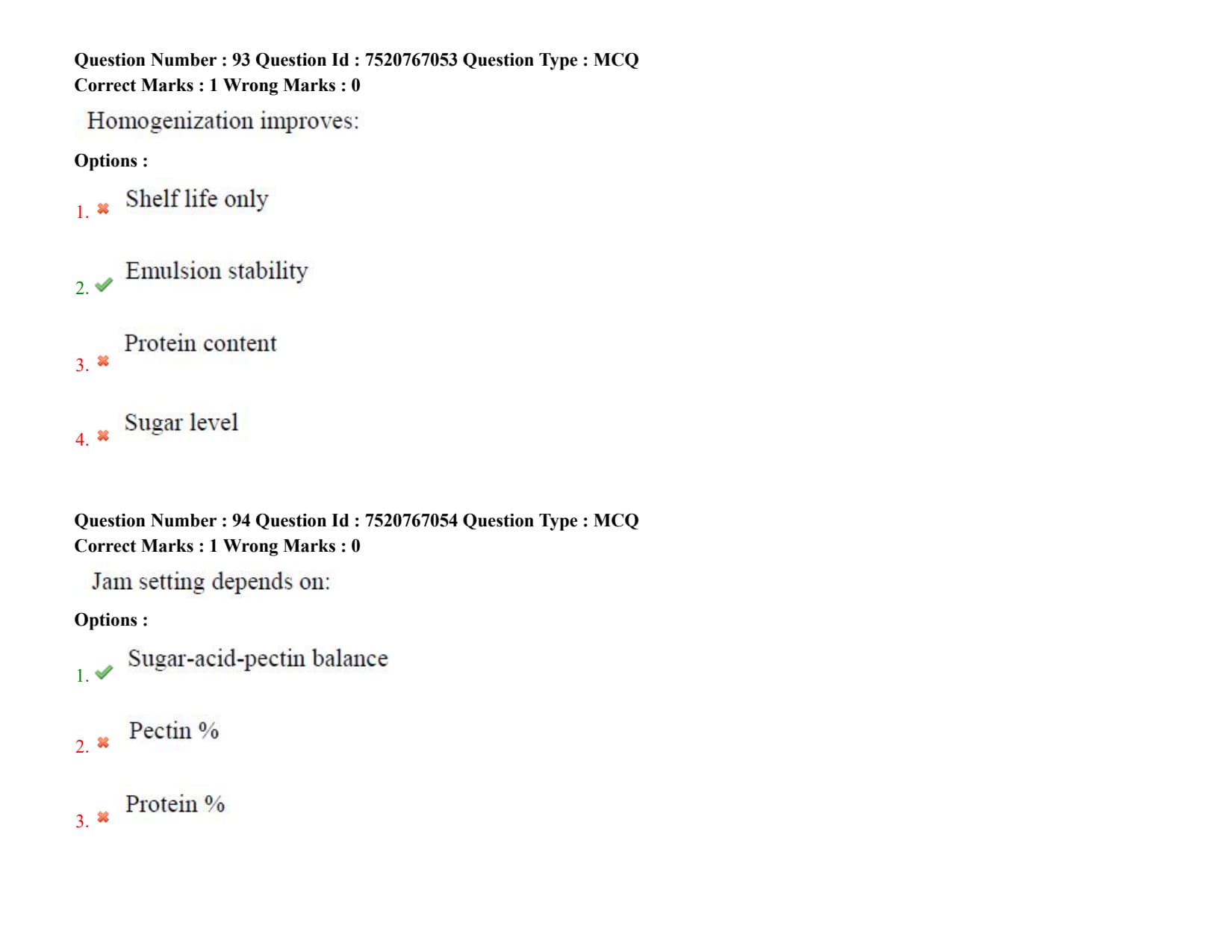
Question 93:
Homogenization improves:
- (A) Shelf life only
- (B) Emulsion stability
- (C) Protein content
- (D) Sugar level
Question 94:
Jam setting depends on:
- (A) Sugar-acid-pectin balance
- (B) Pectin %
- (C) Protein %
- (D) Sugar %
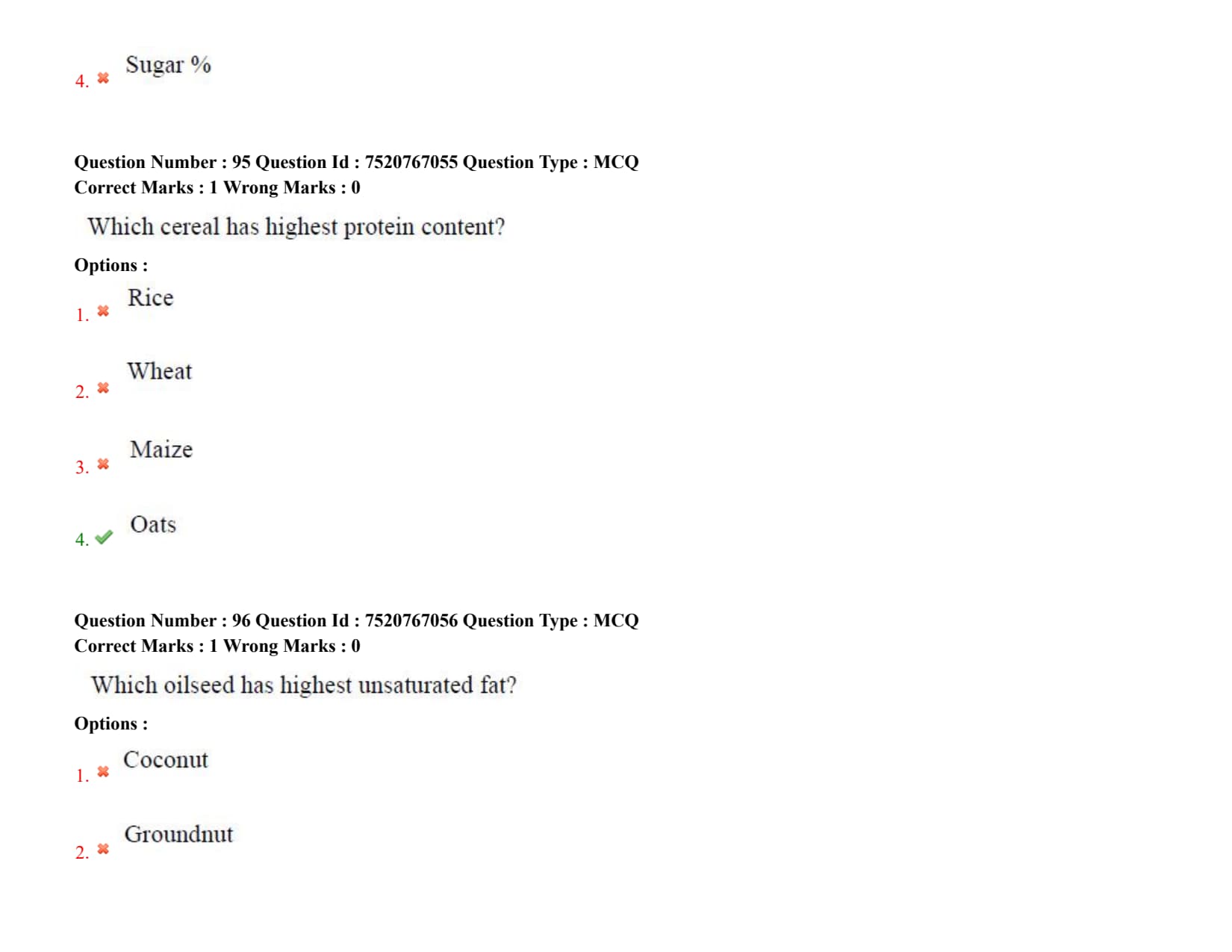
Question 95:
Which cereal has highest protein content?
- (A) Rice
- (B) Wheat
- (C) Maize
- (D) Oats
Question 96:
Which oilseed has highest unsaturated fat?
- (A) Coconut
- (B) Groundnut
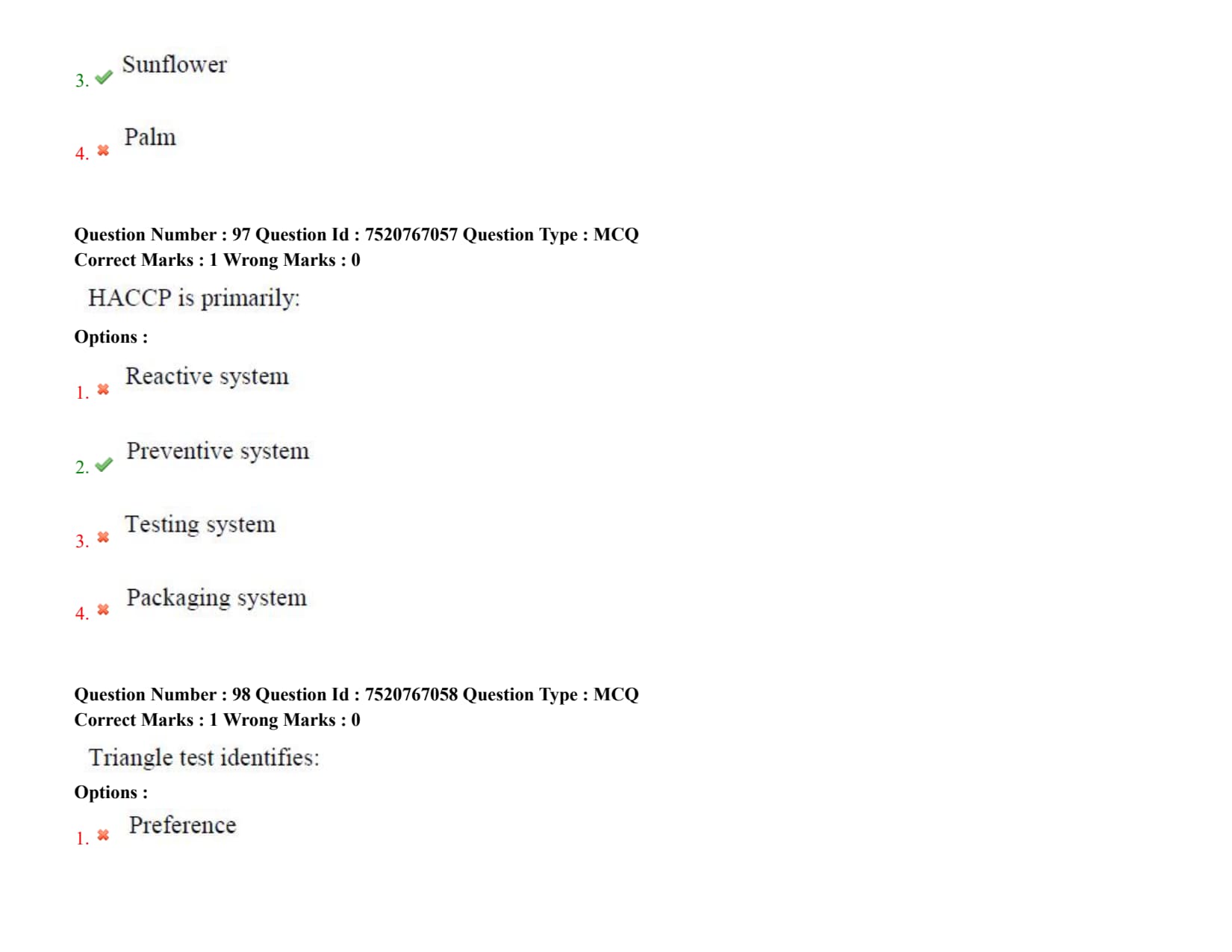
- (C) Sunflower
- (D) Palm
Question 97:
HACCP is primarily:
- (A) Reactive system
- (B) Preventive system
- (C) Testing system
- (D) Packaging system
Question 98:
Triangle test identifies:
- (A) Preference
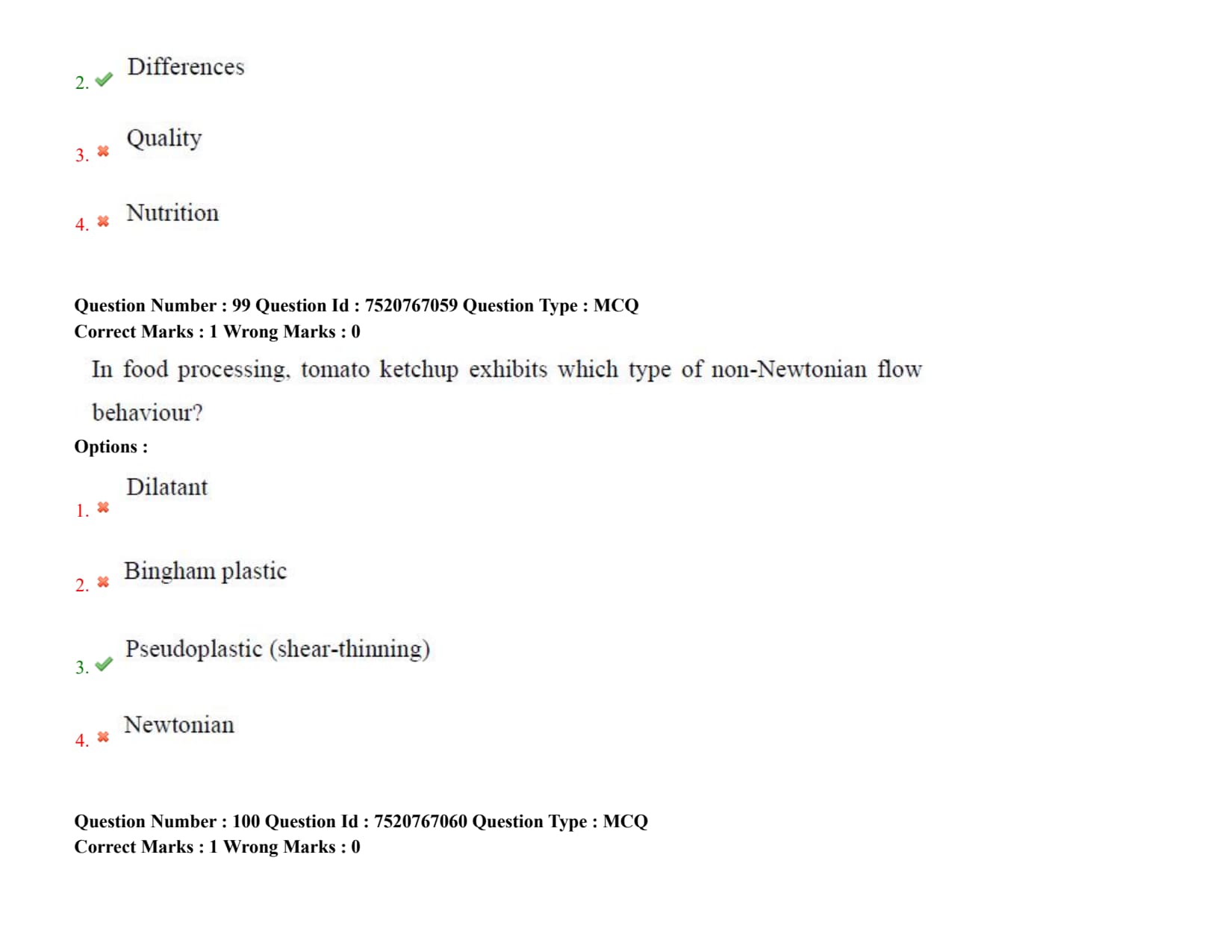
- (B) Differences
- (C) Quality
- (D) Nutrition
Question 99:
In food processing, tomato ketchup exhibits which type of non-Newtonian flow behaviour?
- (A) Dilatant
- (B) Bingham plastic
- (C) Pseudoplastic (shear-thinning)
- (D) Newtonian
Question 100:
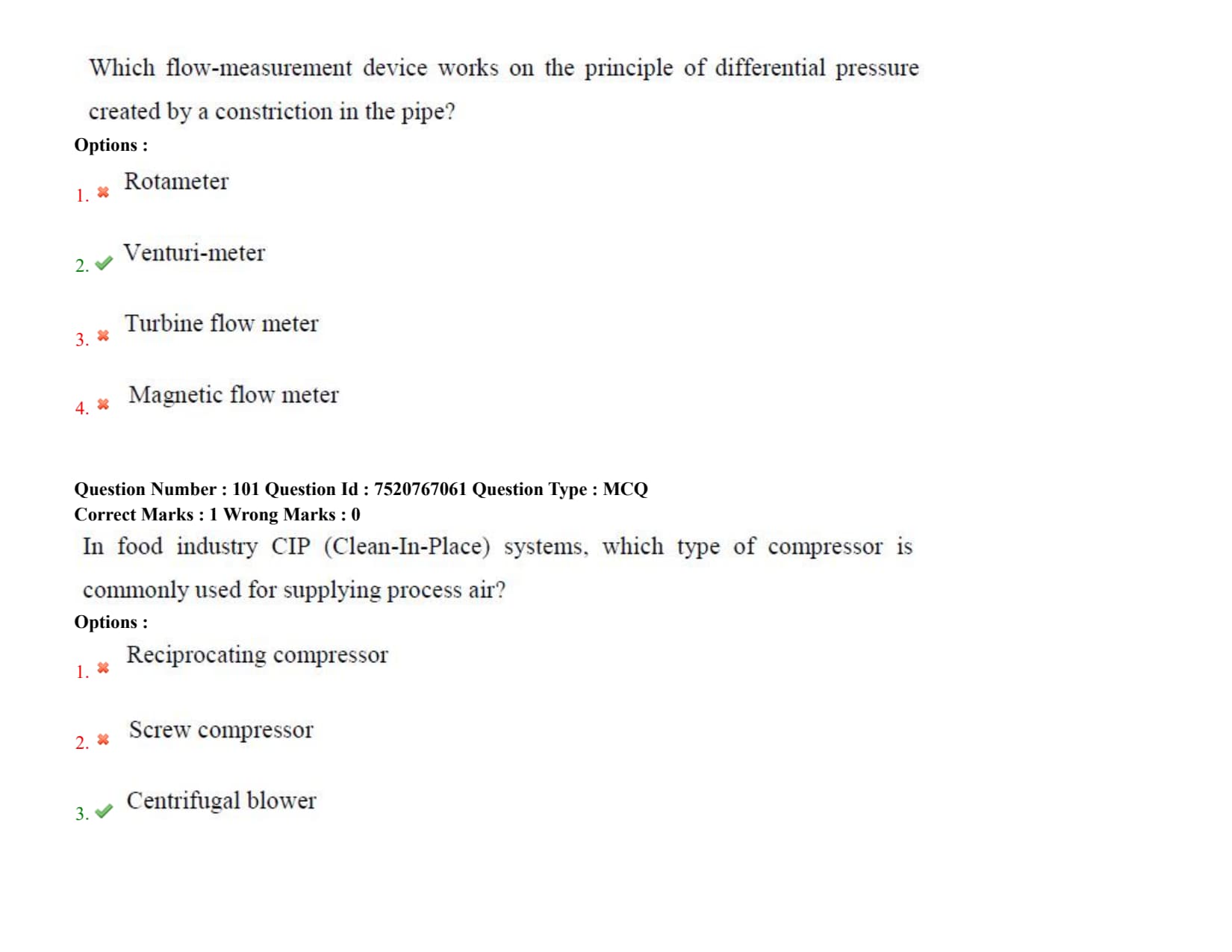
Which flow-measurement device works on the principle of differential pressure created by a constriction in the pipe?
- (A) Rotameter
- (B) Venturi-meter
- (C) Turbine flow meter
- (D) Magnetic flow meter
Question 101:
In food industry CIP (Clean-In-Place) systems, which type of compressor is commonly used for supplying process air?
- (A) Reciprocating compressor
- (B) Screw compressor
- (C) Centrifugal blower
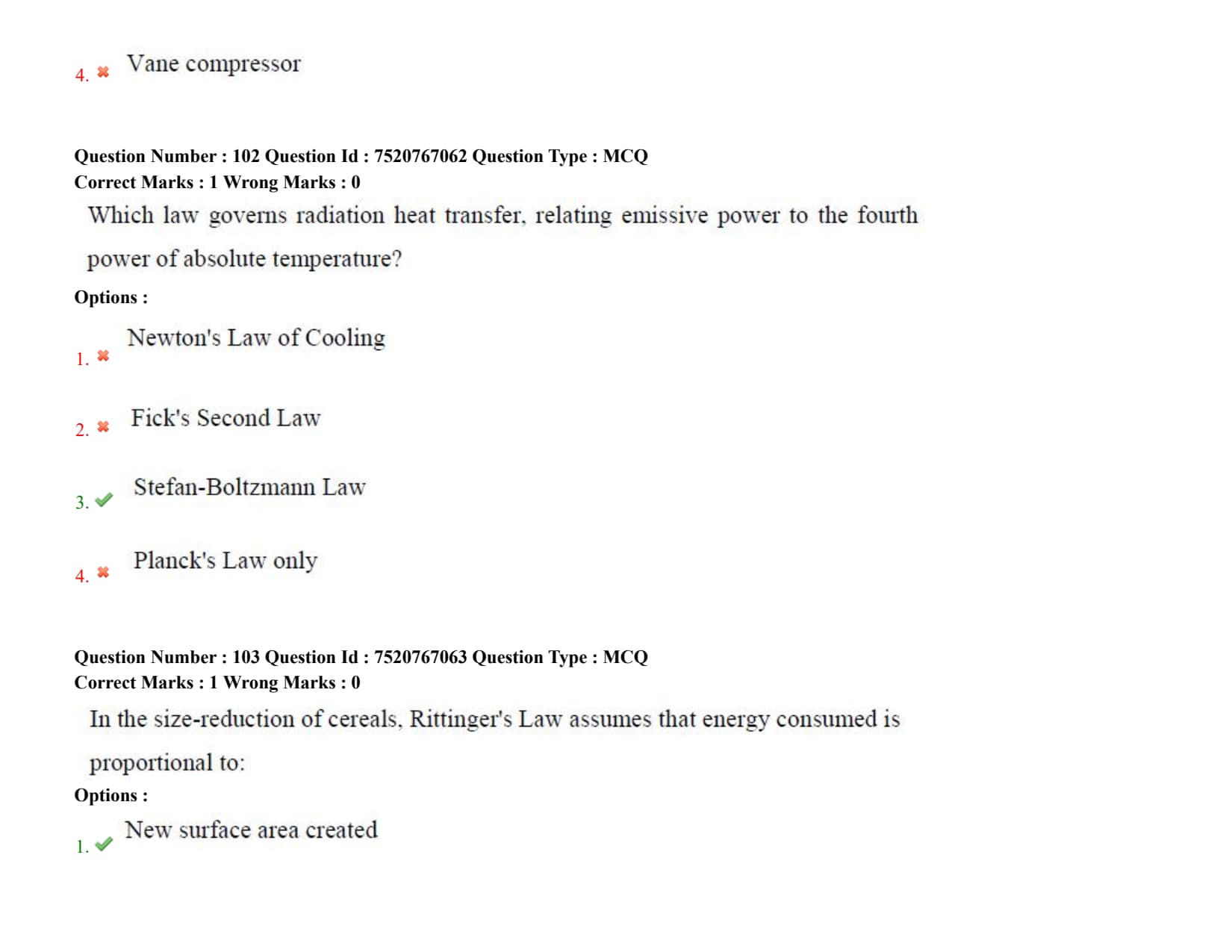
- (D) Vane compressor
Question 102:
Which law governs radiation heat transfer, relating emissive power to the fourth power of absolute temperature?
- (A) Newton's Law of Cooling
- (B) Fick's Second Law
- (C) Stefan-Boltzmann Law
- (D) Planck's Law only
Question 103:
In the size-reduction of cereals, Rittinger's Law assumes that energy consumed is proportional to:
- (A) New surface area created
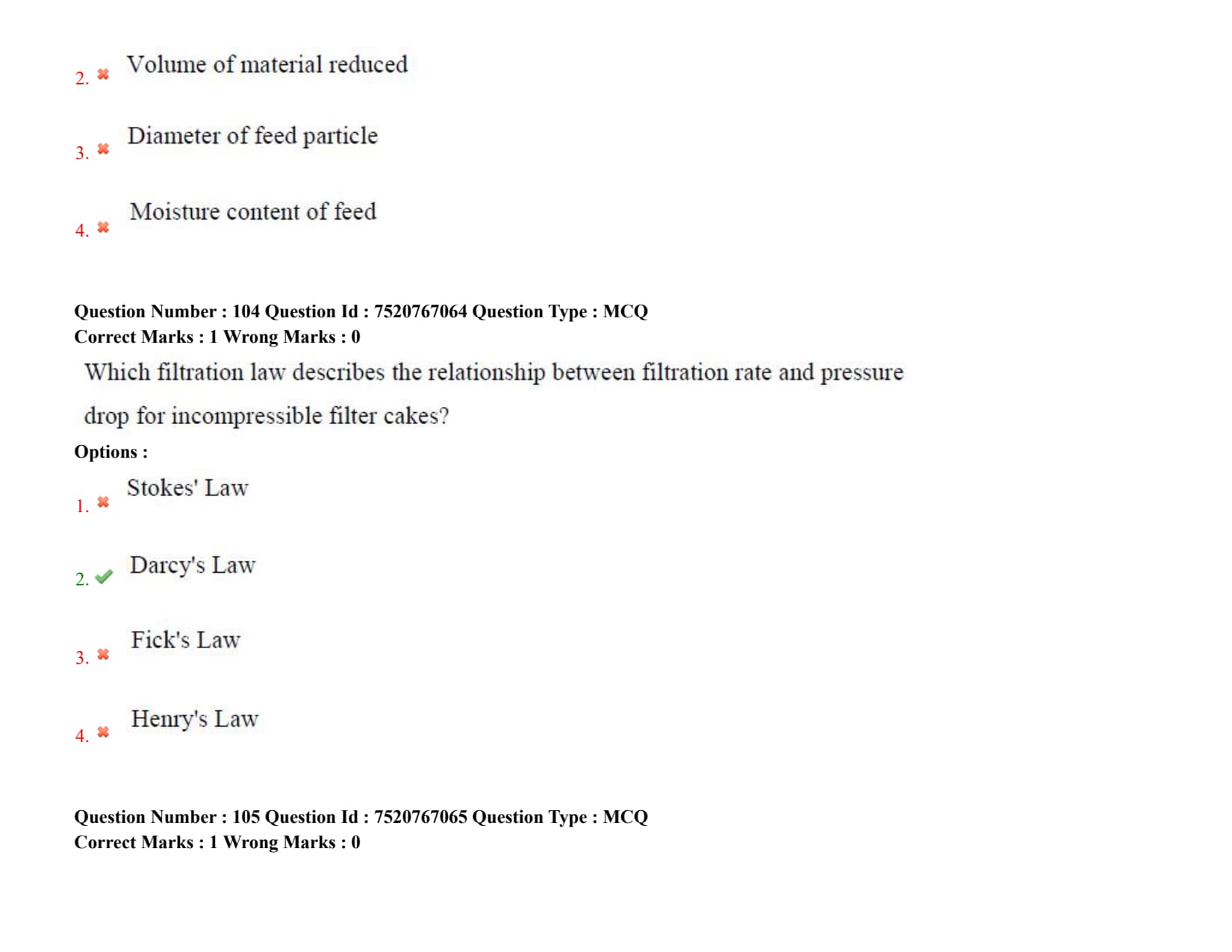
- (B) Volume of material reduced
- (C) Diameter of feed particle
- (D) Moisture content of feed
Question 104:
Which filtration law describes the relationship between filtration rate and pressure drop for incompressible filter cakes?
- (A) Stokes' Law
- (B) Darcy's Law
- (C) Fick's Law
- (D) Henry's Law
Question 105:
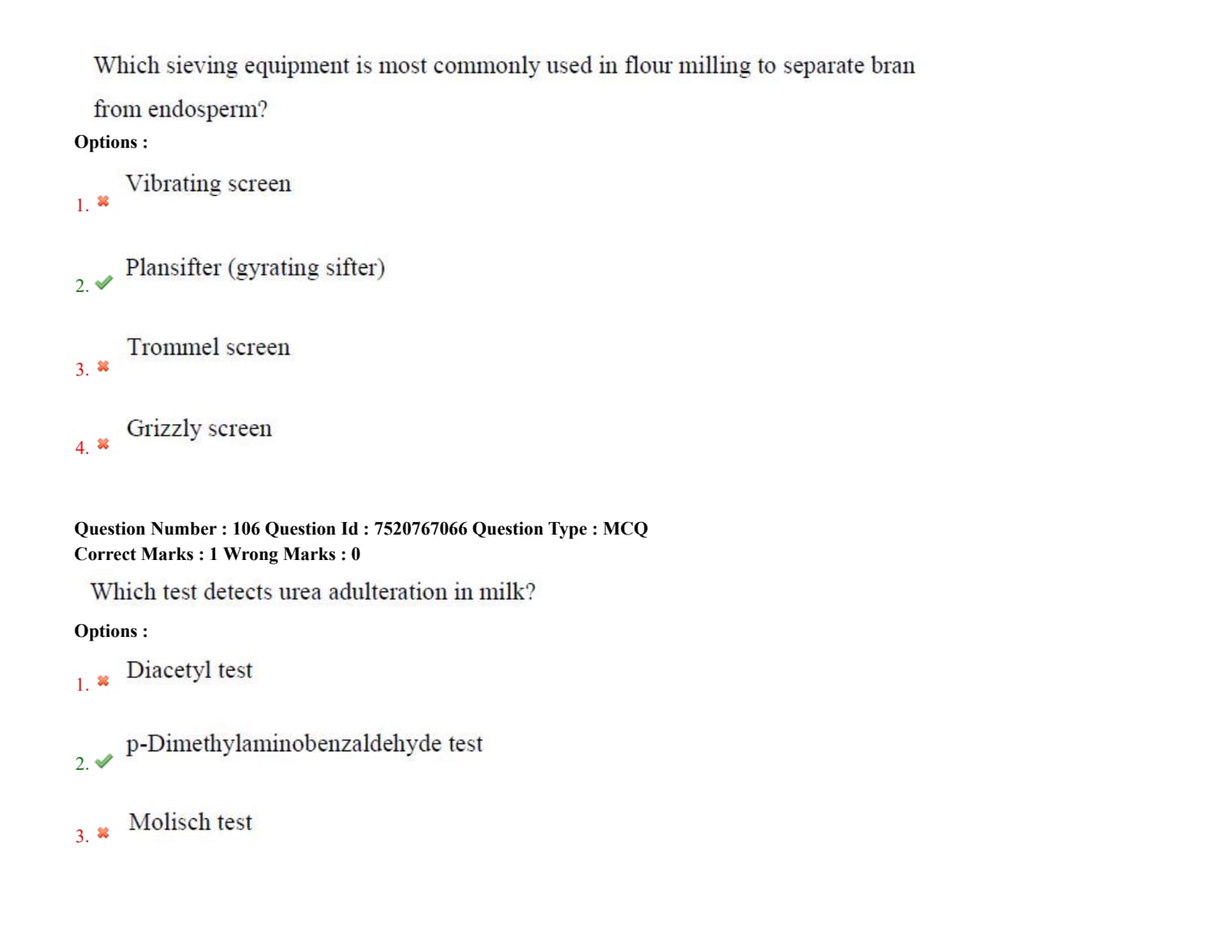
Which sieving equipment is most commonly used in flour milling to separate bran from endosperm?
- (A) Vibrating screen
- (B) Plansifter (gyrating sifter)
- (C) Trommel screen
- (D) Grizzly screen
Question 106:
Which test detects urea adulteration in milk?
- (A) Diacetyl test
- (B) p-Dimethylaminobenzaldehyde test
- (C) Molisch test
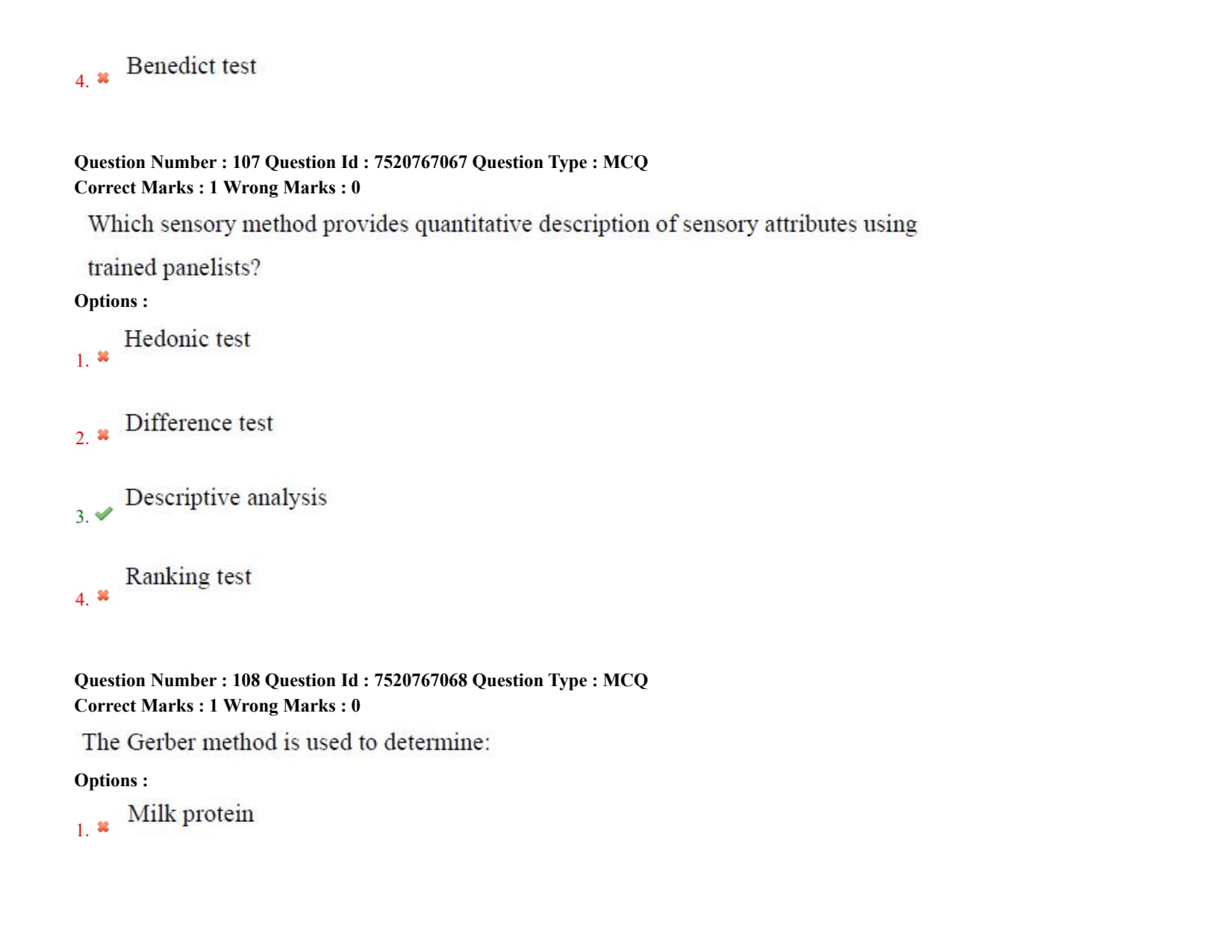
- (D) Benedict test
Question 107:
Which sensory method provides quantitative description of sensory attributes using trained panelists?
- (A) Hedonic test
- (B) Difference test
- (C) Descriptive analysis
- (D) Ranking test
Question 108:
The Gerber method is used to determine:
- (A) Milk protein
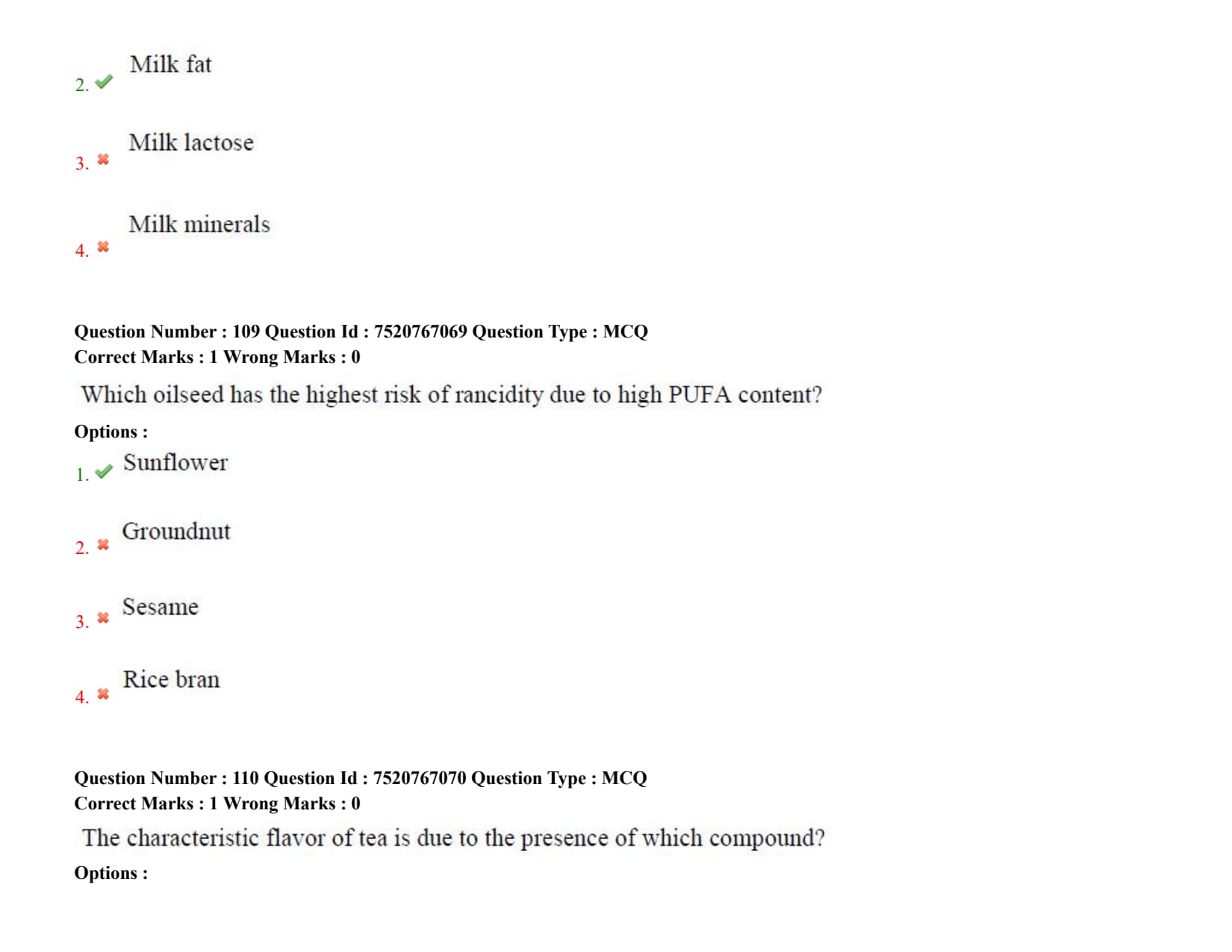
- (B) Milk fat
- (C) Milk lactose
- (D) Milk minerals
Question 109:
Which oilseed has the highest risk of rancidity due to high PUFA content?
- (A) Sunflower
- (B) Groundnut
- (C) Sesame
- (D) Rice bran
Question 110:
The characteristic flavor of tea is due to the presence of which compound?
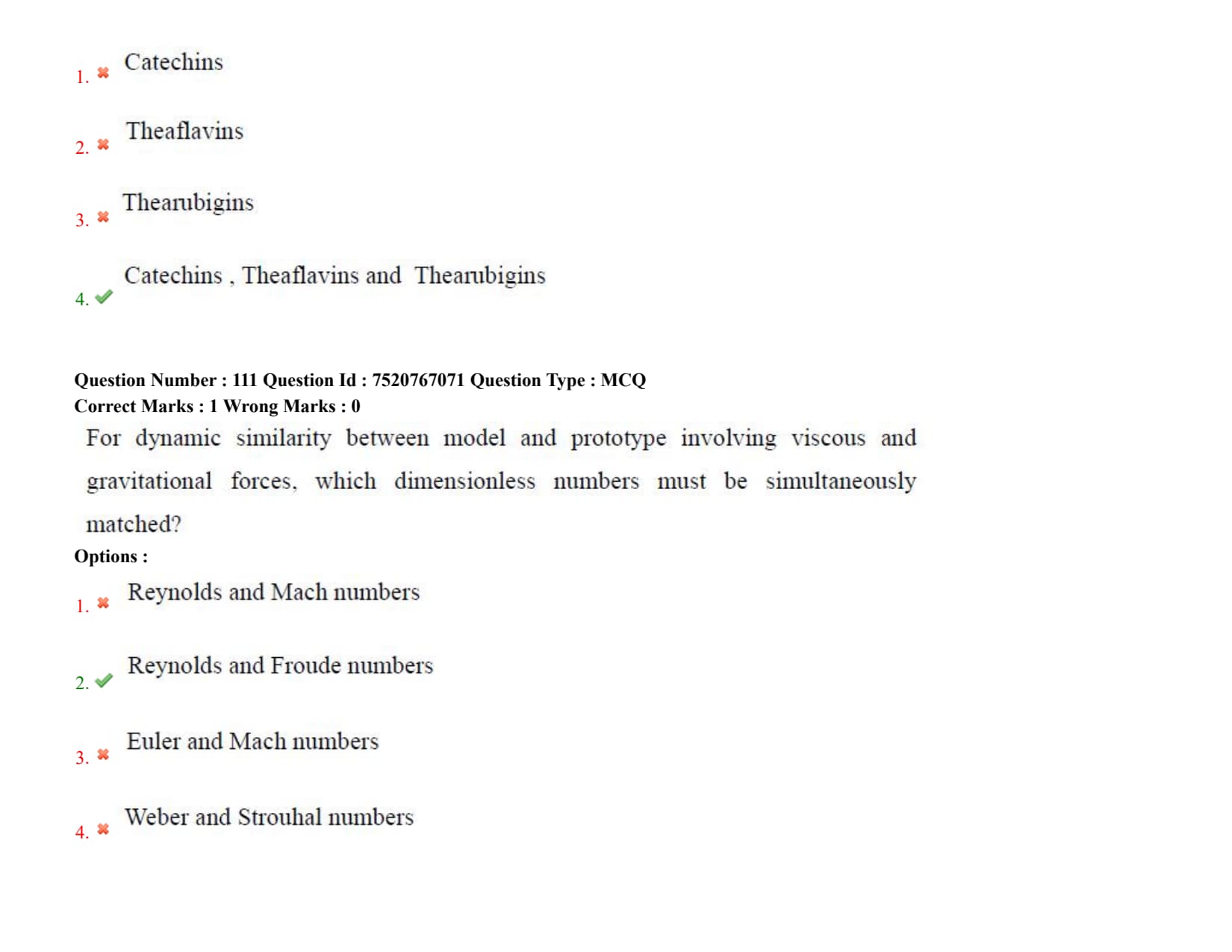
- (A) Catechins
- (B) Theaflavins
- (C) Thearubigins
- (D) Catechins, Theaflavins and Thearubigins
Question 111:
For dynamic similarity between model and prototype involving viscous and gravitational forces, which dimensionless numbers must be simultaneously matched?
- (A) Reynolds and Mach numbers
- (B) Reynolds and Froude numbers
- (C) Euler and Mach numbers
- (D) Weber and Strouhal numbers
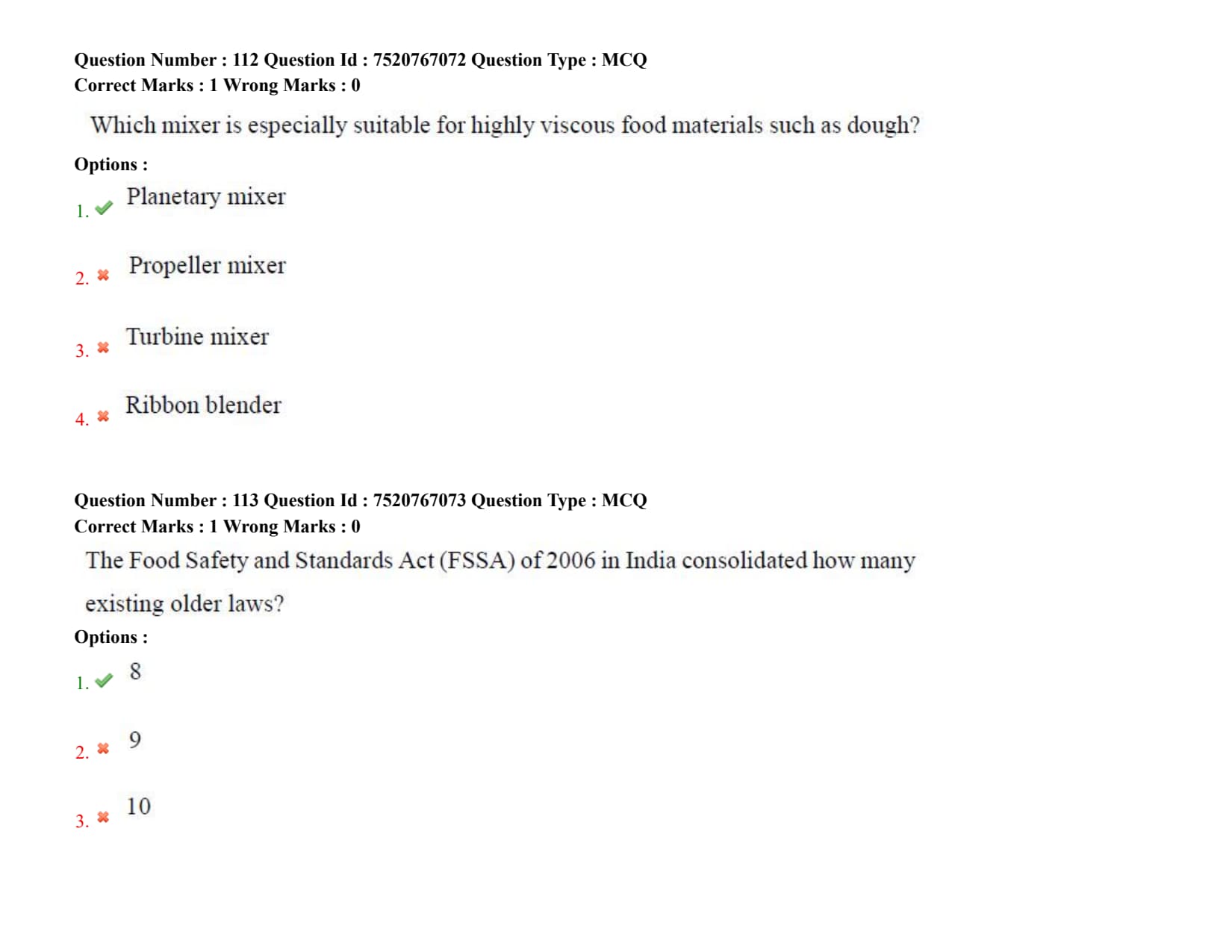
Question 112:
Which mixer is especially suitable for highly viscous food materials such as dough?
- (A) Planetary mixer
- (B) Propeller mixer
- (C) Turbine mixer
- (D) Ribbon blender
Question 113:
The Food Safety and Standards Act (FSSA) of 2006 in India consolidated how many existing older laws?
- (A) 8
- (B) 9
- (C) 10
- (D) 11
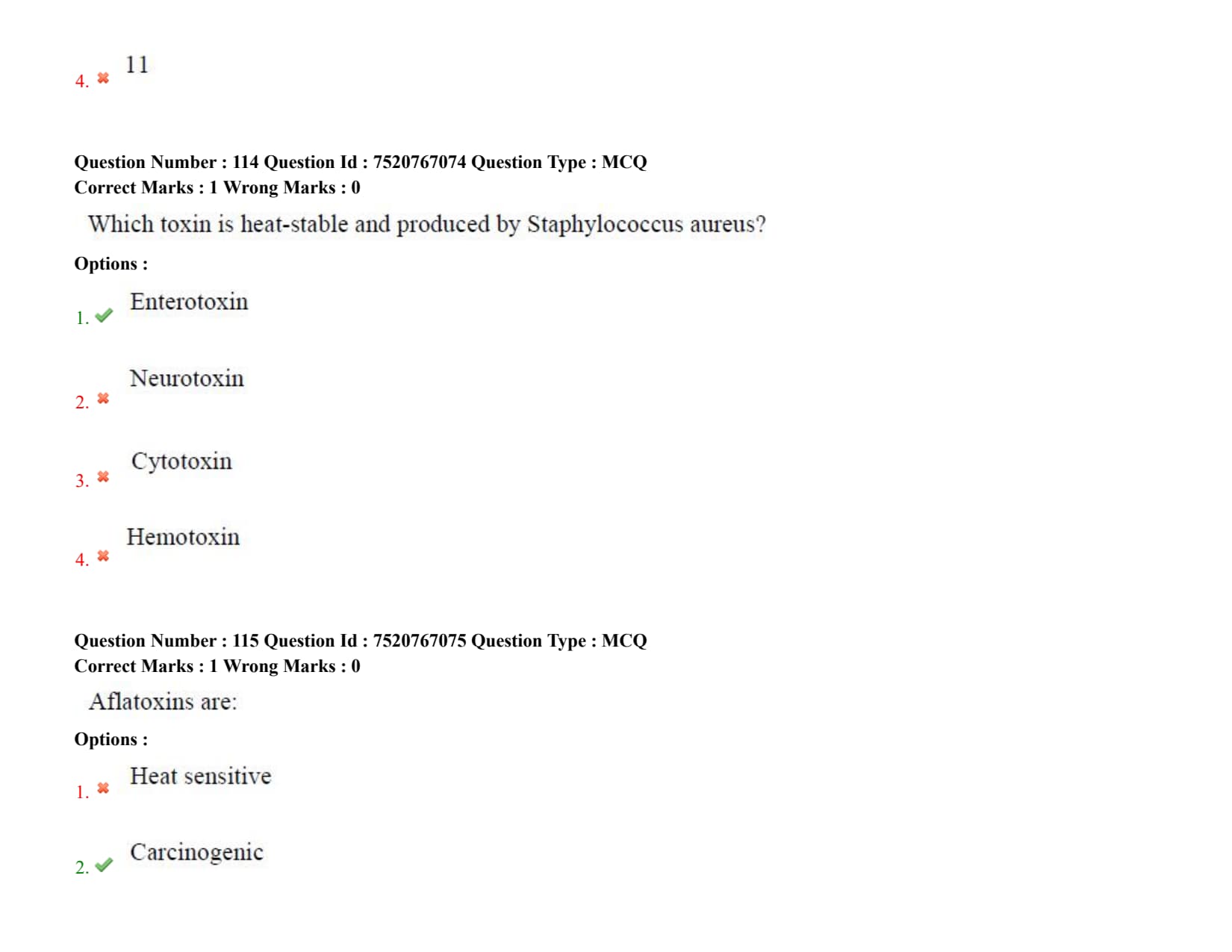
Question 114:
Which toxin is heat-stable and produced by Staphylococcus aureus?
- (A) Enterotoxin
- (B) Neurotoxin
- (C) Cytotoxin
- (D) Hemotoxin
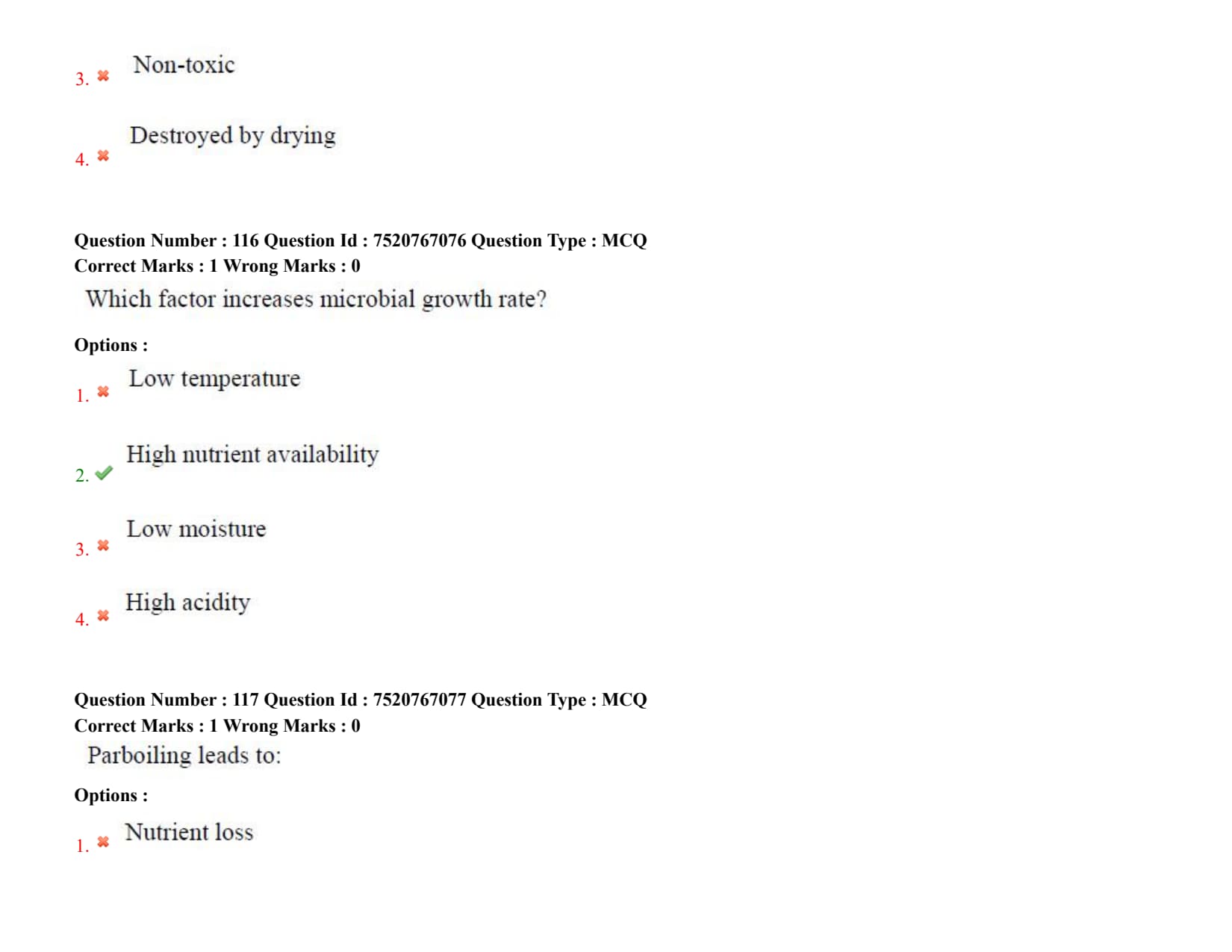
Question 115:
Aflatoxins are:
- (A) Heat sensitive
- (B) Carcinogenic
- (C) Non-toxic
- (D) Destroyed by drying
Question 116:
Which factor increases microbial growth rate?
- (A) Low temperature
- (B) High nutrient availability
- (C) Low moisture
- (D) High acidity
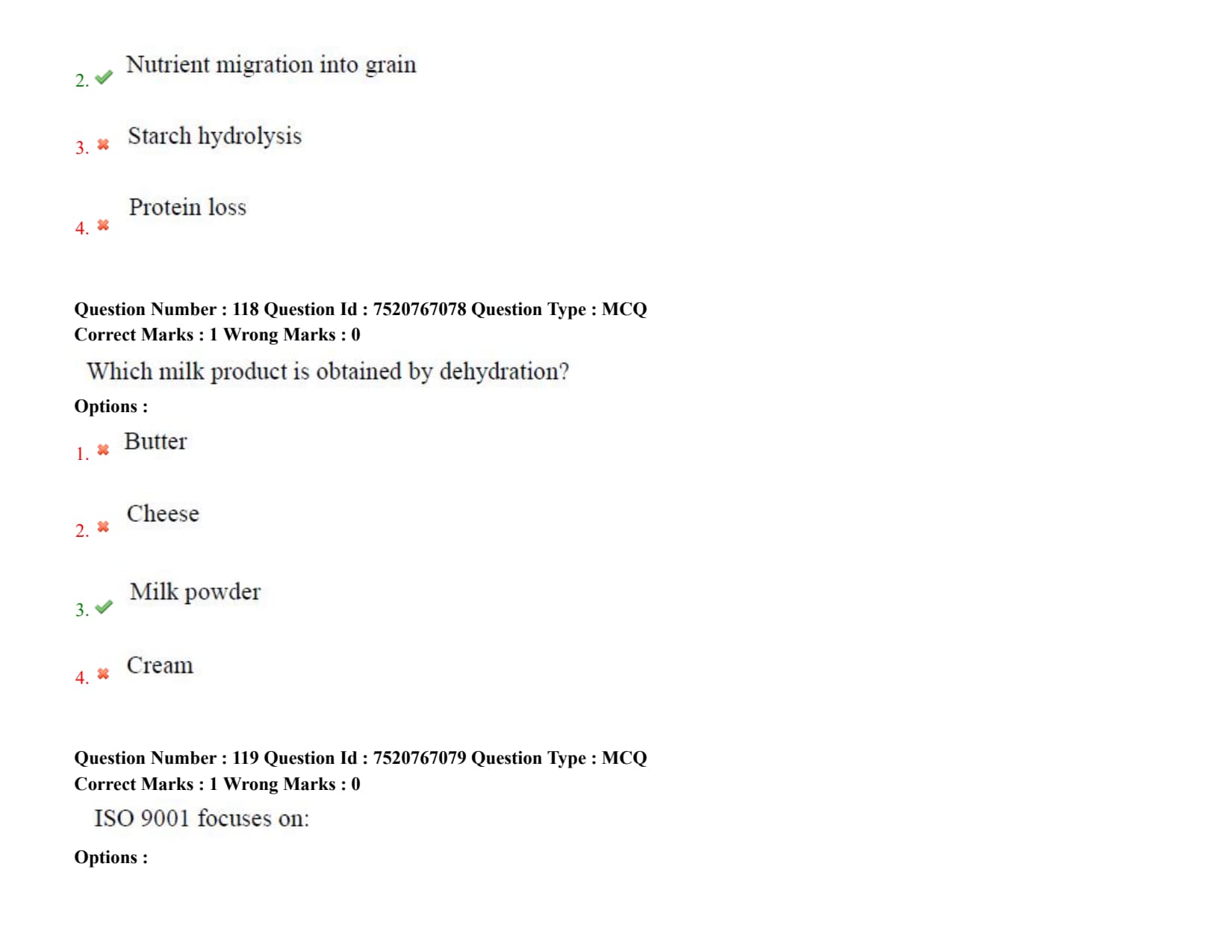
Question 117:
Parboiling leads to:
- (A) Nutrient loss
- (B) Nutrient migration into grain
- (C) Starch hydrolysis
- (D) Protein loss
Question 118:
Which milk product is obtained by dehydration?
- (A) Butter
- (B) Cheese
- (C) Milk powder
- (D) Cream
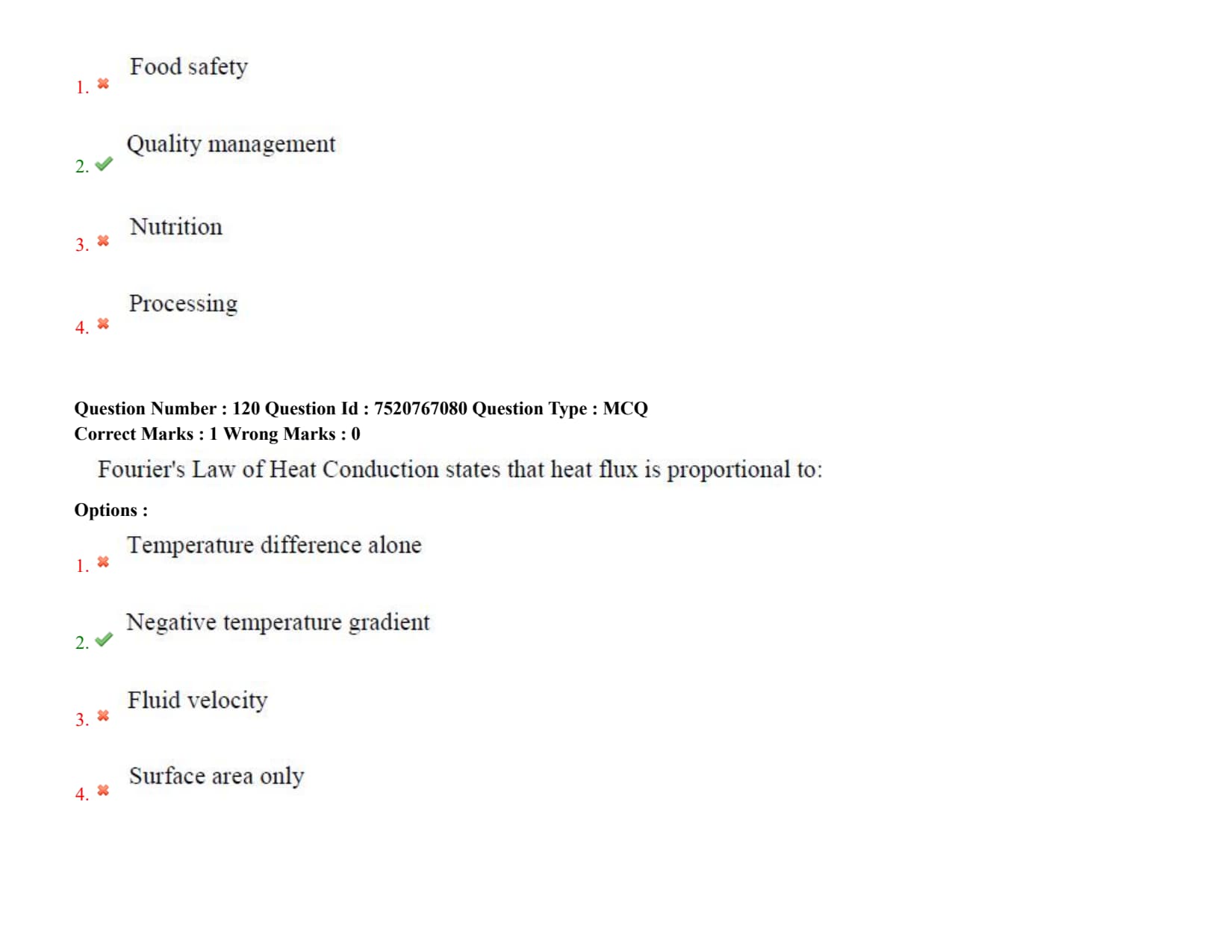
Question 119:
ISO 9001 focuses on:
- (A) Food safety
- (B) Quality management
- (C) Nutrition
- (D) Processing
Question 120:
Fourier's Law of Heat Conduction states that heat flux is proportional to:
- (A) Temperature difference alone
- (B) Negative temperature gradient
- (C) Fluid velocity
- (D) Surface area only
AP PGECET 2026 Food Technology Topic-wise weightage
| Major Subject |
Approx. Number of Questions |
Expected % (Approx.) |
| Engineering Mathematics |
10–14 |
8–12% |
| Food Chemistry & Nutrition |
22–26 |
18–22% |
| Food Microbiology & Biotechnology |
22–26 |
18–22% |
| Food Technology |
28–32 |
23–27% |
| Food Engineering |
22–26 |
18–22% |
| Food Quality & Standards |
16–20 |
13–17% |
AP PGECET 2026 Preparation Strategy








Comments