




The NCERT Solutions for Class 9 Science Chapter 3 Tissues in Action answer every question in the Revise, Reflect, Refine exercise of the 2026-27 NCERT Exploration book. Each answer is based on one simple idea the chapter repeats: a tissue's shape always fits its job. The solutions cover MCQs, one assertion-reason set, and the open-ended plant and animal tissue questions, with clear steps a Class 9 student can follow.
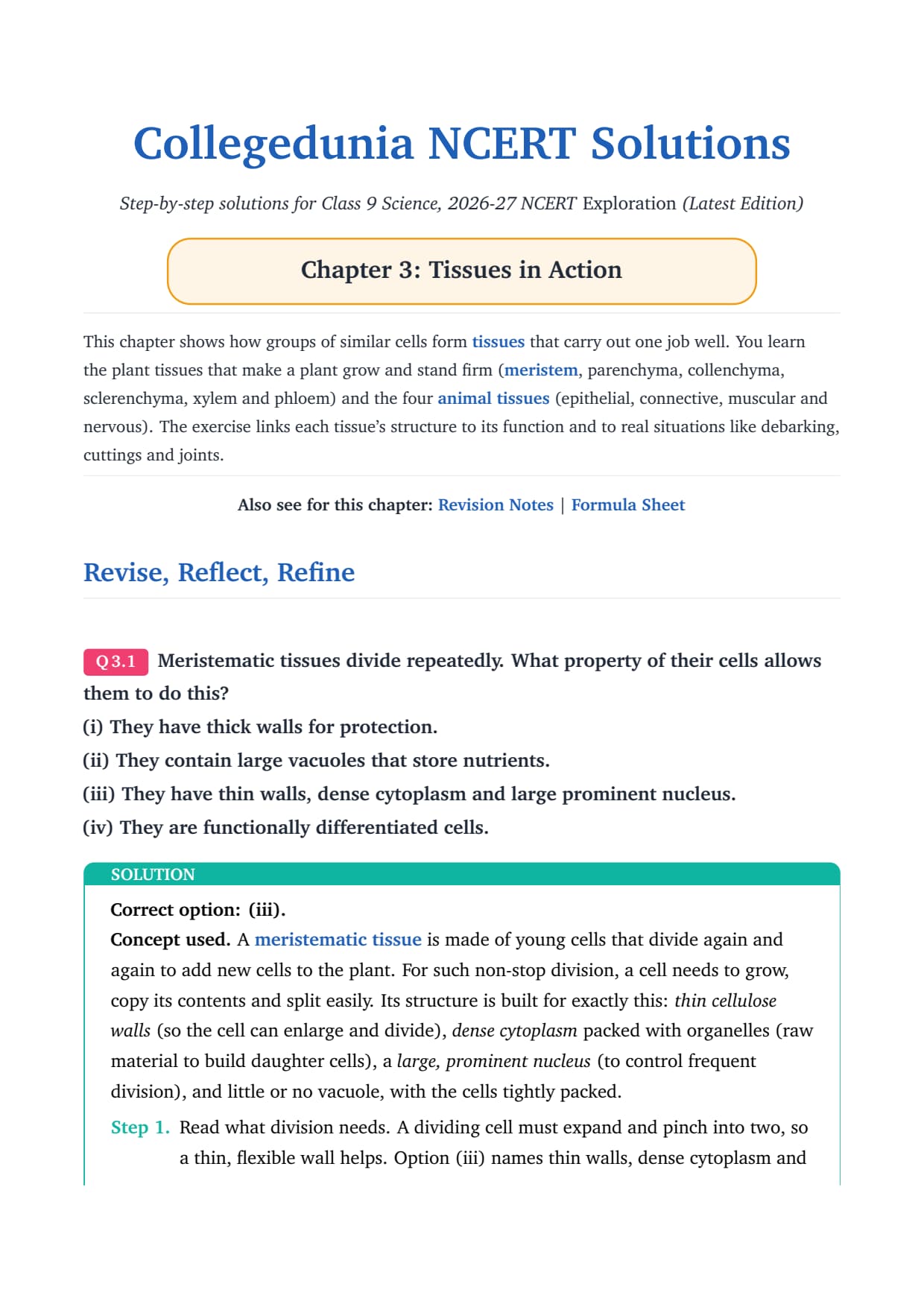
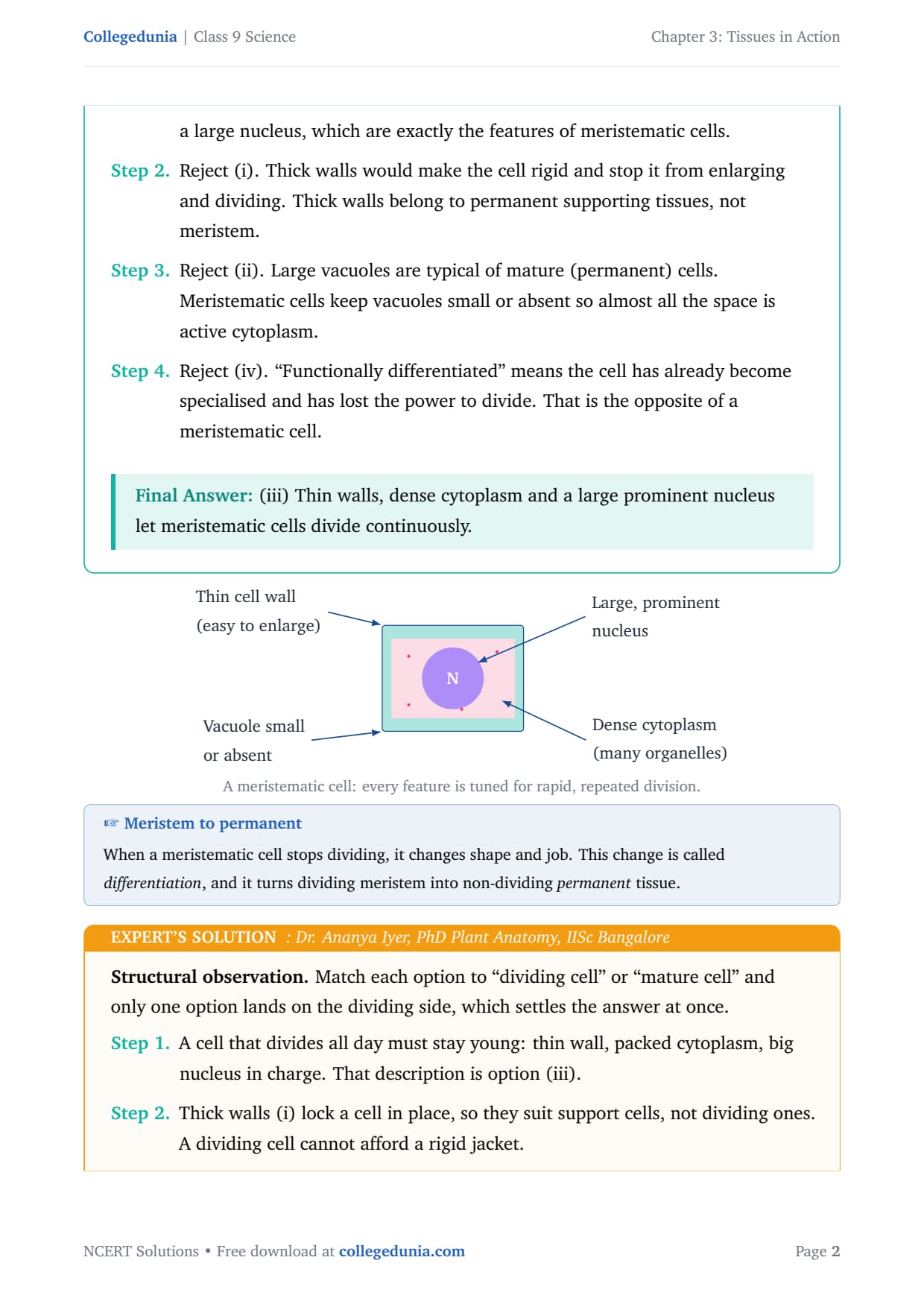
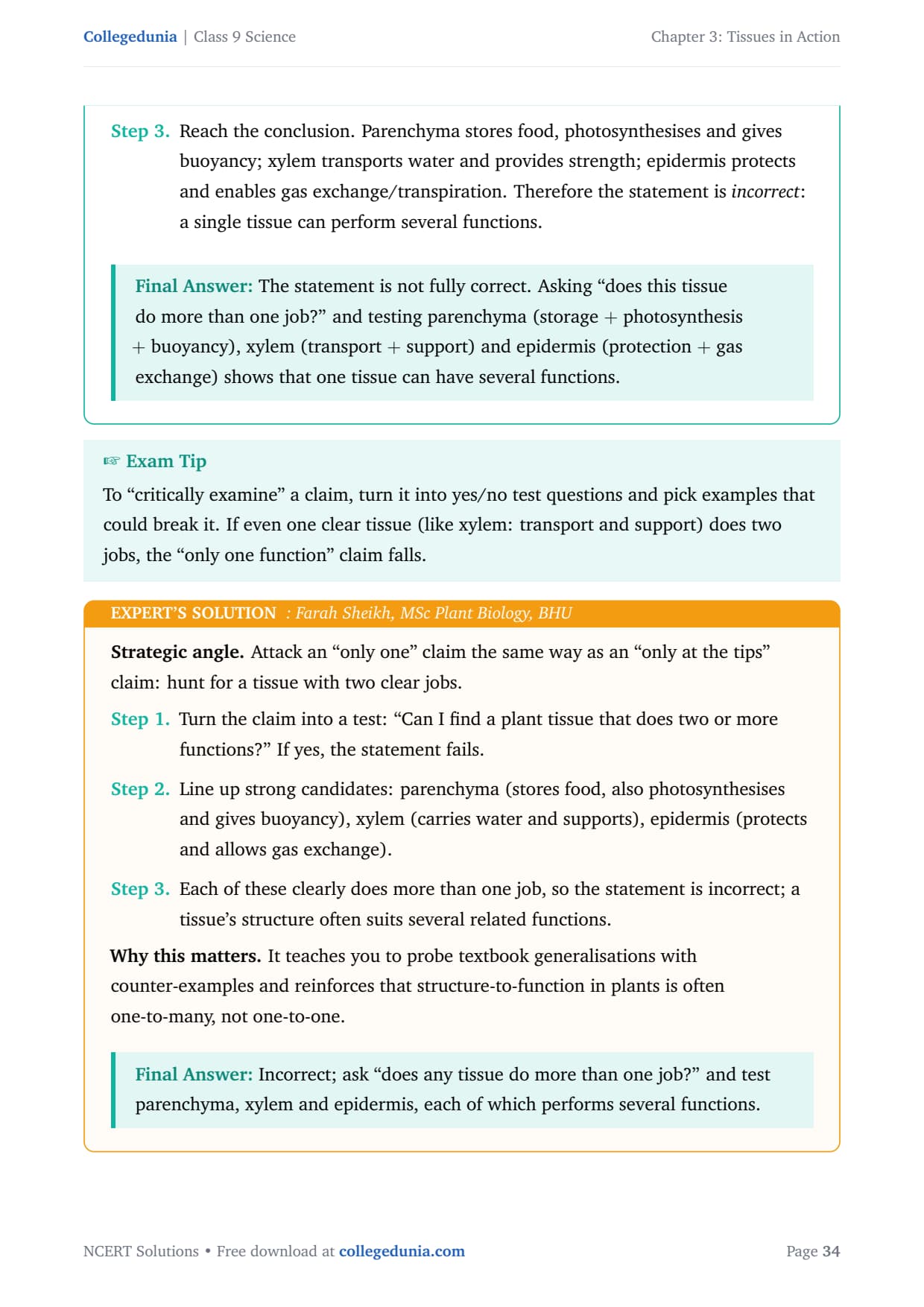
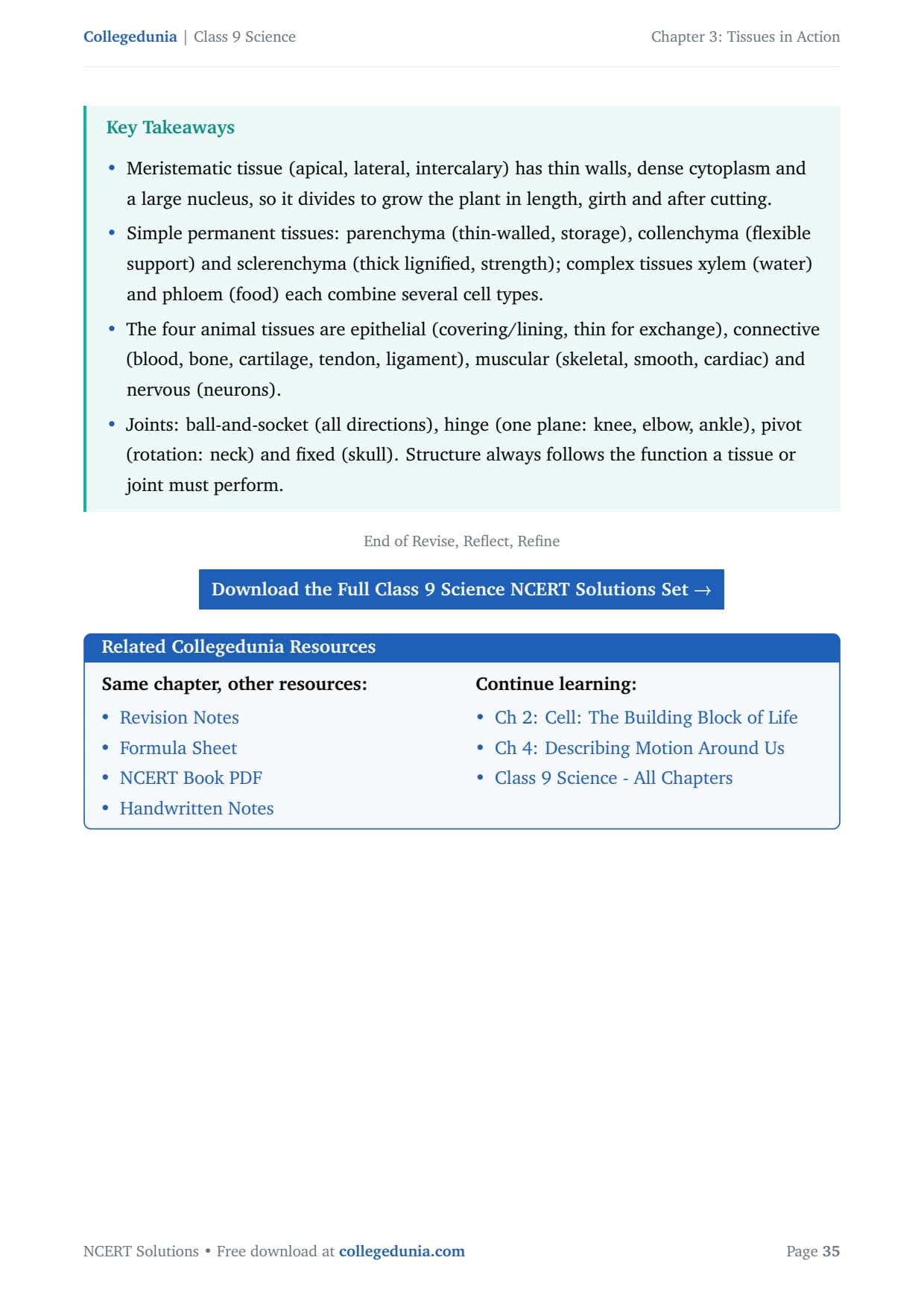
- Exercise solved: all 15 Revise, Reflect, Refine questions, from MCQs to open-ended plant and animal tissue problems.
- Main skills: linking meristem, parenchyma, collenchyma, sclerenchyma, xylem and phloem, plus the four animal tissues, to their jobs.
- Why it matters: it builds the tissue base needed for Class 10 biology and the NEET foundation years.
Every NCERT solution for Class 9 Science Chapter 3 Tissues in Action here is prepared by subject teachers, matched to the 2026-27 NCERT Exploration book, and checked step by step.
Student Feedback
In a Collegedunia poll of 11,540 Class 9 students taken before their 2026-27 annual exams, 68% rated the plant tissues as the trickiest part of Tissues in Action. Most students said the meristem, collenchyma and sclerenchyma names were easy to mix up. Students who first drew each tissue and wrote its one main job reported the fastest recall in revision.
Source: 2026-27 Class 9 Science student poll. Sample of 11,540 students from CBSE schools across 14 states.
Tissues in Action One Shot Revision for Class 9 Science
Source: Magnet Brains on YouTube
What Class 9 Science Chapter 3 Tissues in Action Covers
A tissue is a group of cells that work together to do one job. Chapter 3 shows how plants and animals build their bodies from a few tissue types, and why each type looks the way it does. The NCERT Solutions for Class 9 Science Chapter 3 Tissues in Action use this idea in every answer.
- Plant tissues: dividing meristem (apical, lateral, intercalary) and permanent tissues (parenchyma, collenchyma, sclerenchyma, xylem, phloem).
- Animal tissues: epithelial (covering and lining), connective (blood, bone, cartilage, tendon, ligament), muscular and nervous.
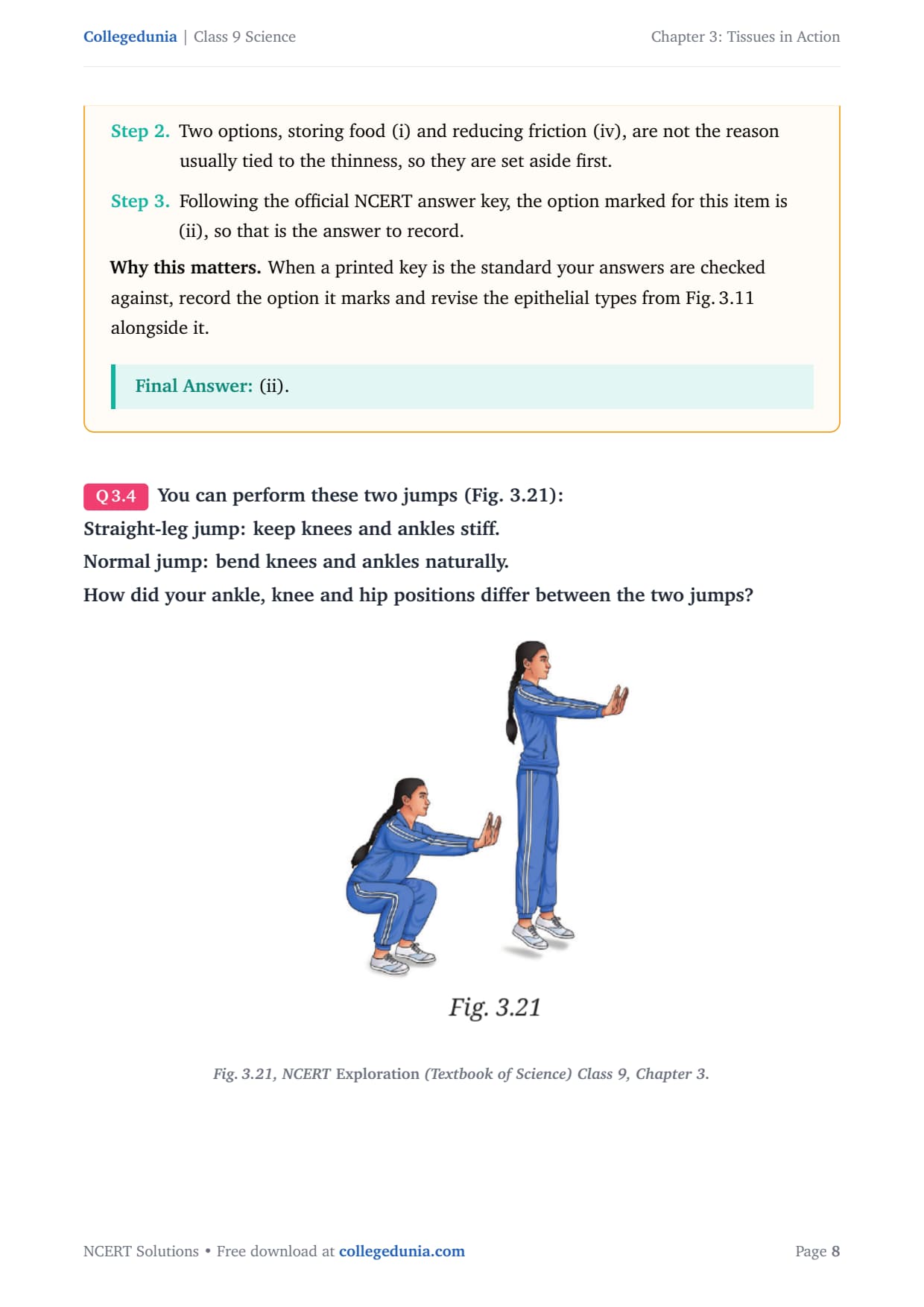
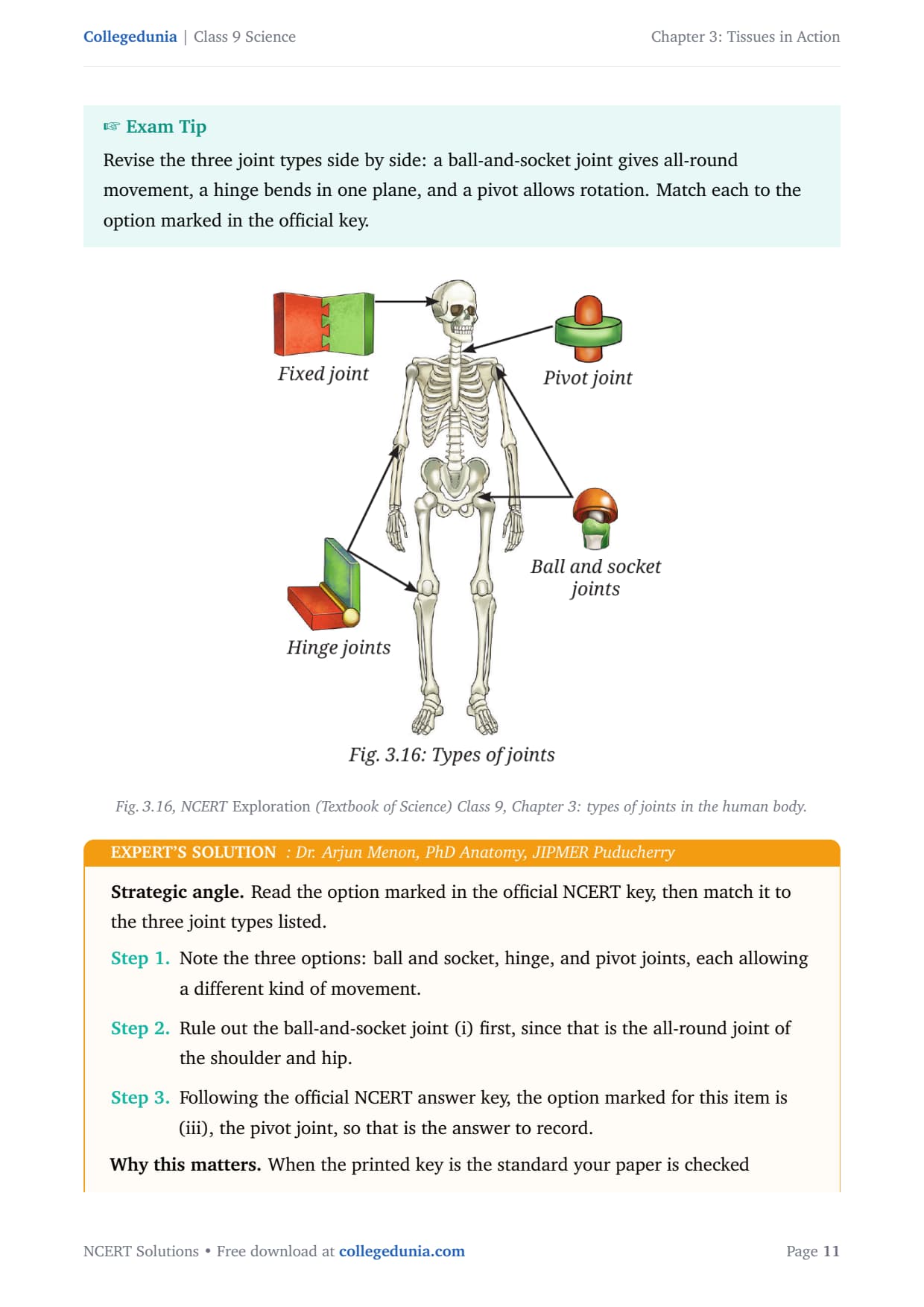
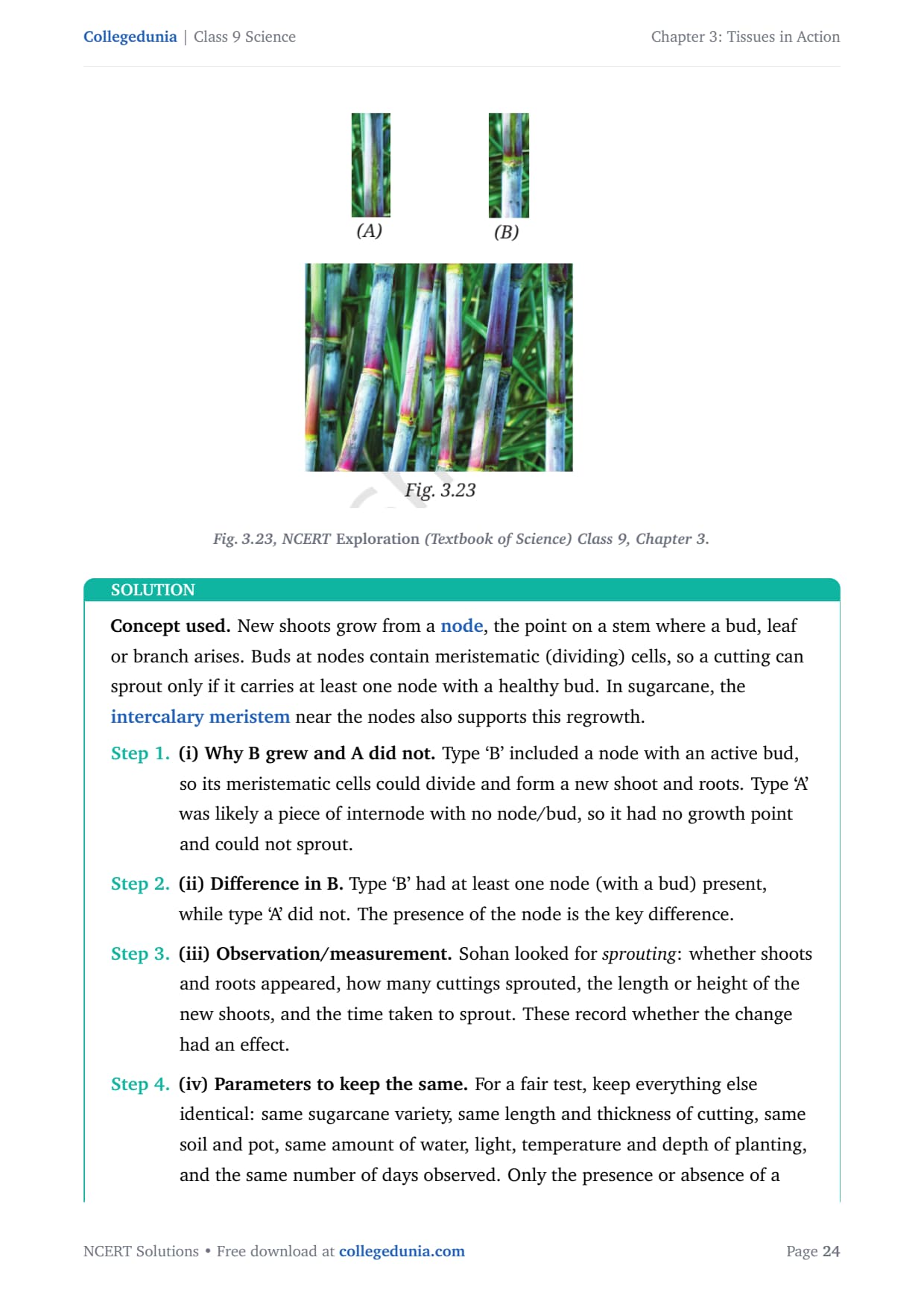
- Real situations: debarking a tree, growing sugarcane from cuttings, and the joints your knee and hip use to jump.
The chapter's big rule is structure fits function. Thin walls help exchange, thick lignified walls give strength. Learn that link once and most questions become easy.
Revise, Reflect, Refine Exercise Breakdown for Tissues in Action
The chapter ends with one exercise set called Revise, Reflect, Refine. It has 15 questions. The table below shows what each group of questions asks, so you can plan your practice.
| Question type | Count | What it tests |
|---|---|---|
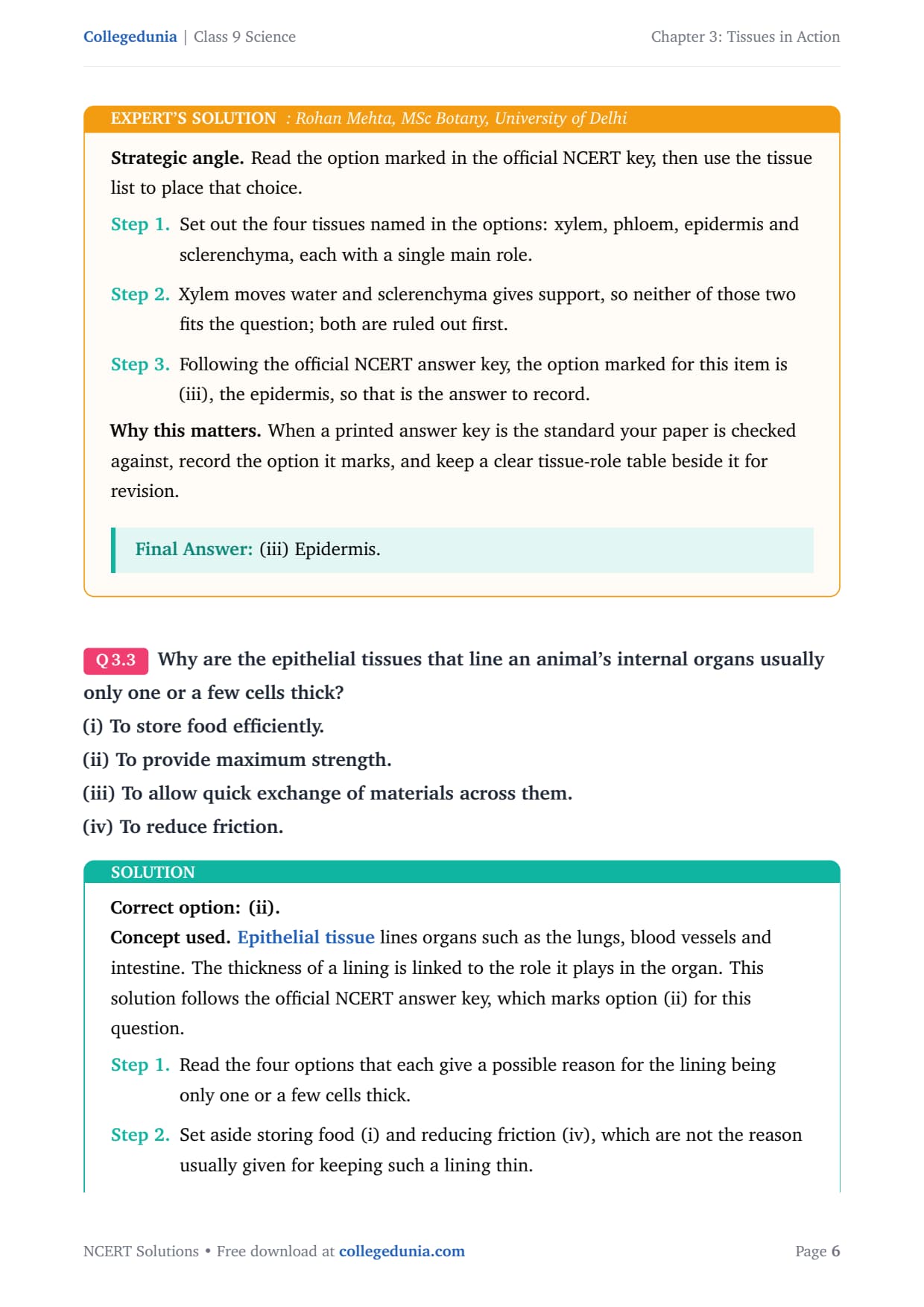
| MCQ (single answer) | 4 | Meristem features, food transport tissue, thin epithelium, knee and ankle joints |
| Assertion-Reason | 1 set (A to D) | Lung epithelium, cardiac muscle, tendons and hinge joints |
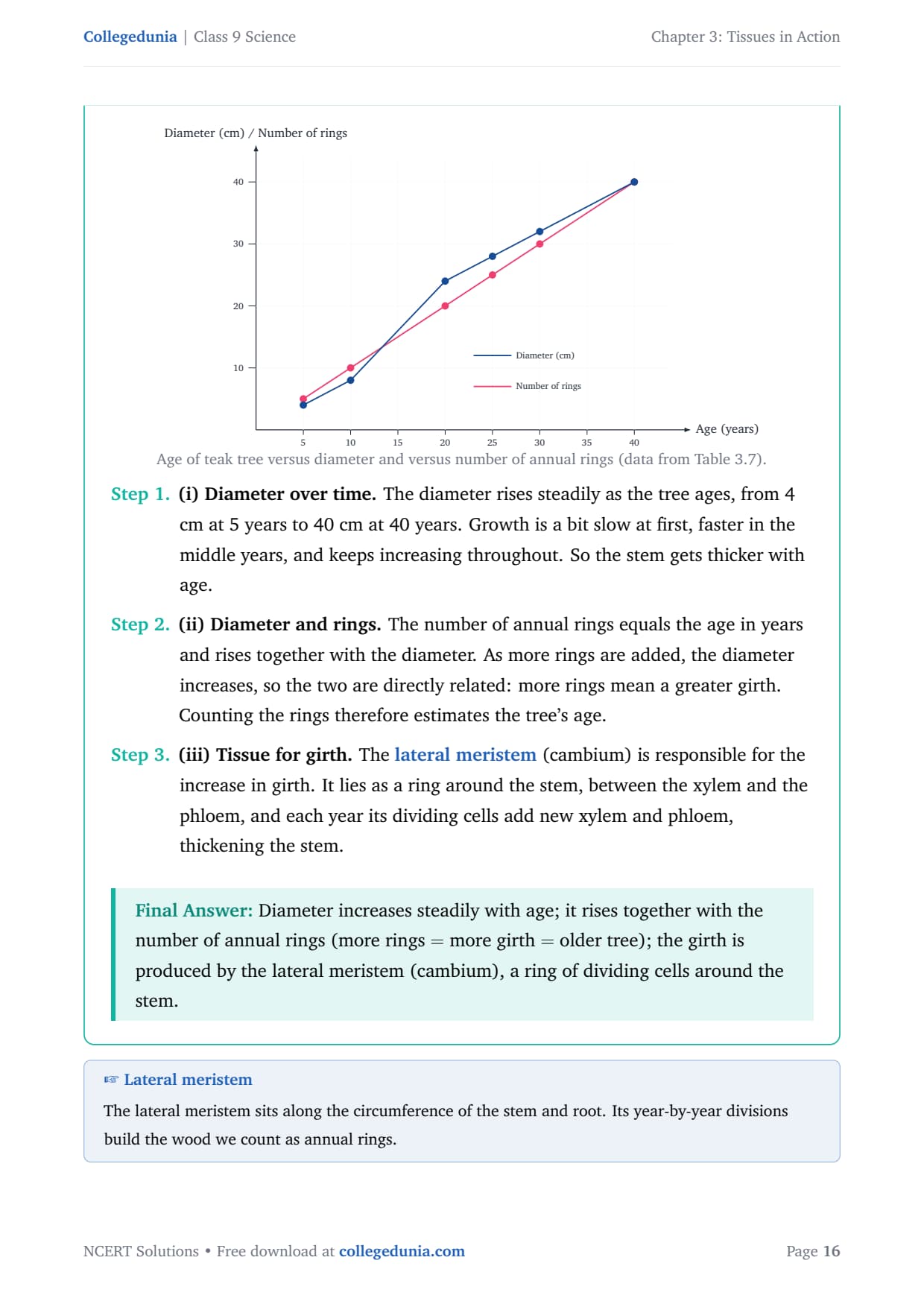
| Graph and data | 1 | Tree age versus diameter and annual rings, plus the tissue behind girth |
| Open-ended reasoning | 9 | Debarking, cuttings, collenchyma versus sclerenchyma, meristem location, vacuole size |
Tip: the open-ended questions carry the most marks. Answer them in short labelled steps and name the exact tissue in your first line.
Tissues in Action Weightage in the Class 9 Science Annual Exam
Chapter 3 is one of the three biology chapters in the new book. It usually gives one MCQ plus one longer reasoning question in the annual exam. The table shows where it sits against nearby chapters.
| Chapter | Topic | Typical marks |
|---|---|---|
| Chapter 2 | Cell: The Building Block of Life | 4 to 5 marks |
| Chapter 3 | Tissues in Action | 5 to 6 marks |
| Chapter 11 | Reproduction: How Life Continues | 4 to 5 marks |
| Chapter 12 | Patterns in Life: Diversity and Classification | 5 to 6 marks |
Because the questions reward clear reasoning, this chapter is a safe scorer. Learn the tissue jobs well and you can pick up 5 to 6 marks with little effort.
Plant Tissues in Tissues in Action: Meristem and Permanent Tissues
Plants grow using two tissue families. Meristematic tissue has young cells that divide again and again. Permanent tissue is made of cells that have stopped dividing and taken up a fixed job. Knowing this split answers many questions in one line.
- Meristem: thin walls, dense cytoplasm, a large nucleus, and little or no vacuole, so cells can divide fast.
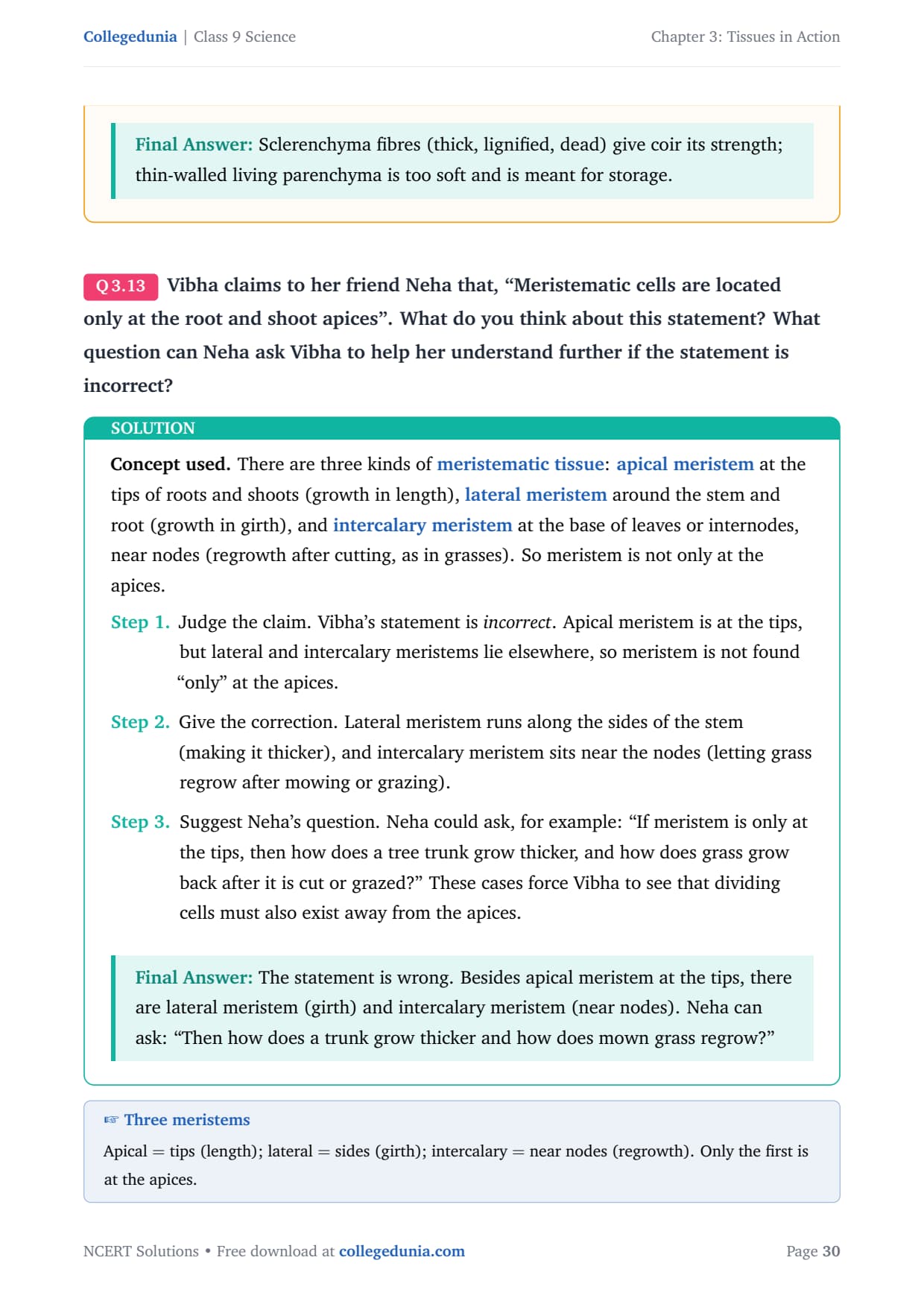
- Apical meristem: at root and shoot tips, adds length.
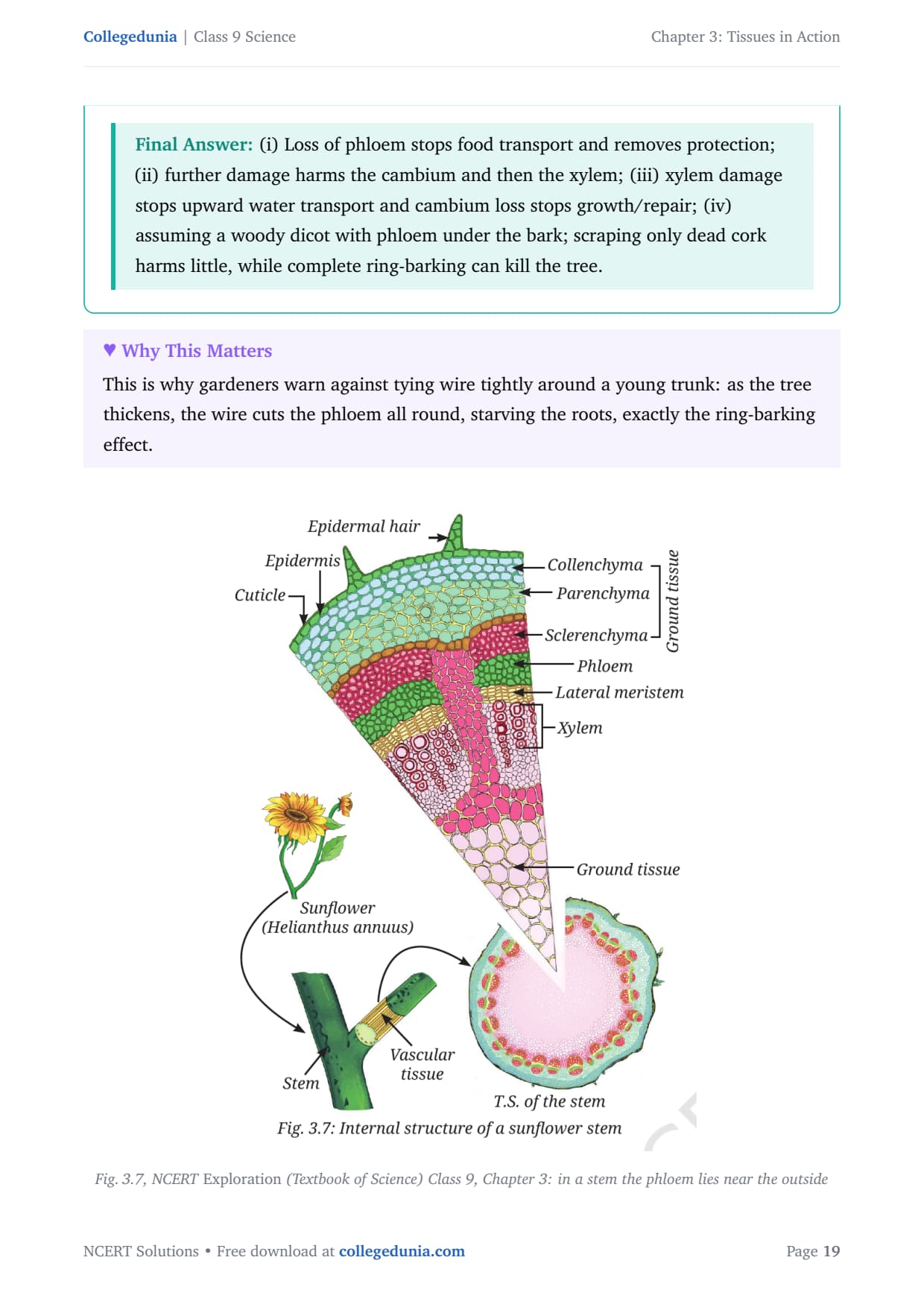
- Lateral meristem (cambium): a ring around the stem, adds girth and makes the annual rings.
- Intercalary meristem: near the nodes, lets grass regrow after it is cut or grazed.
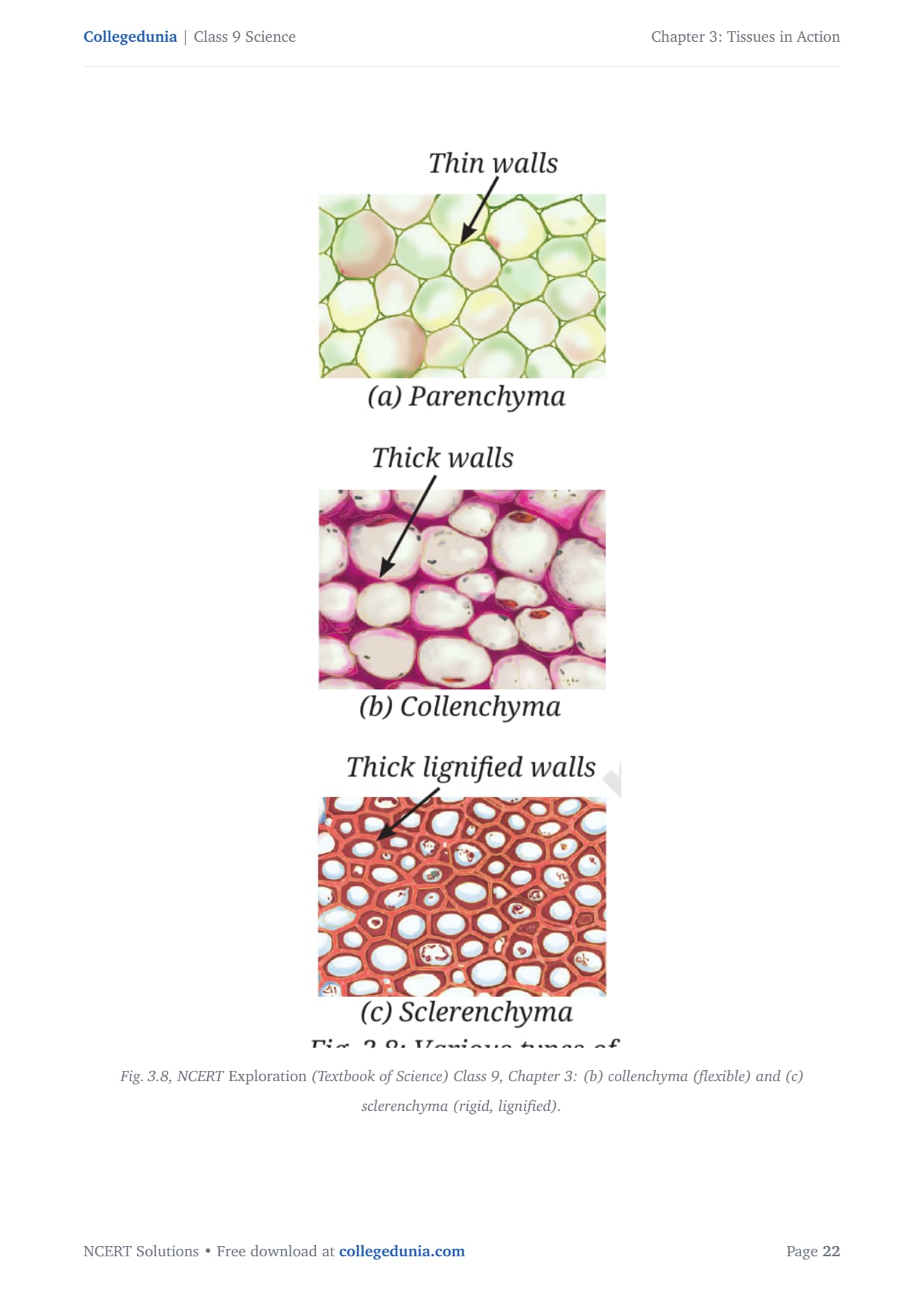
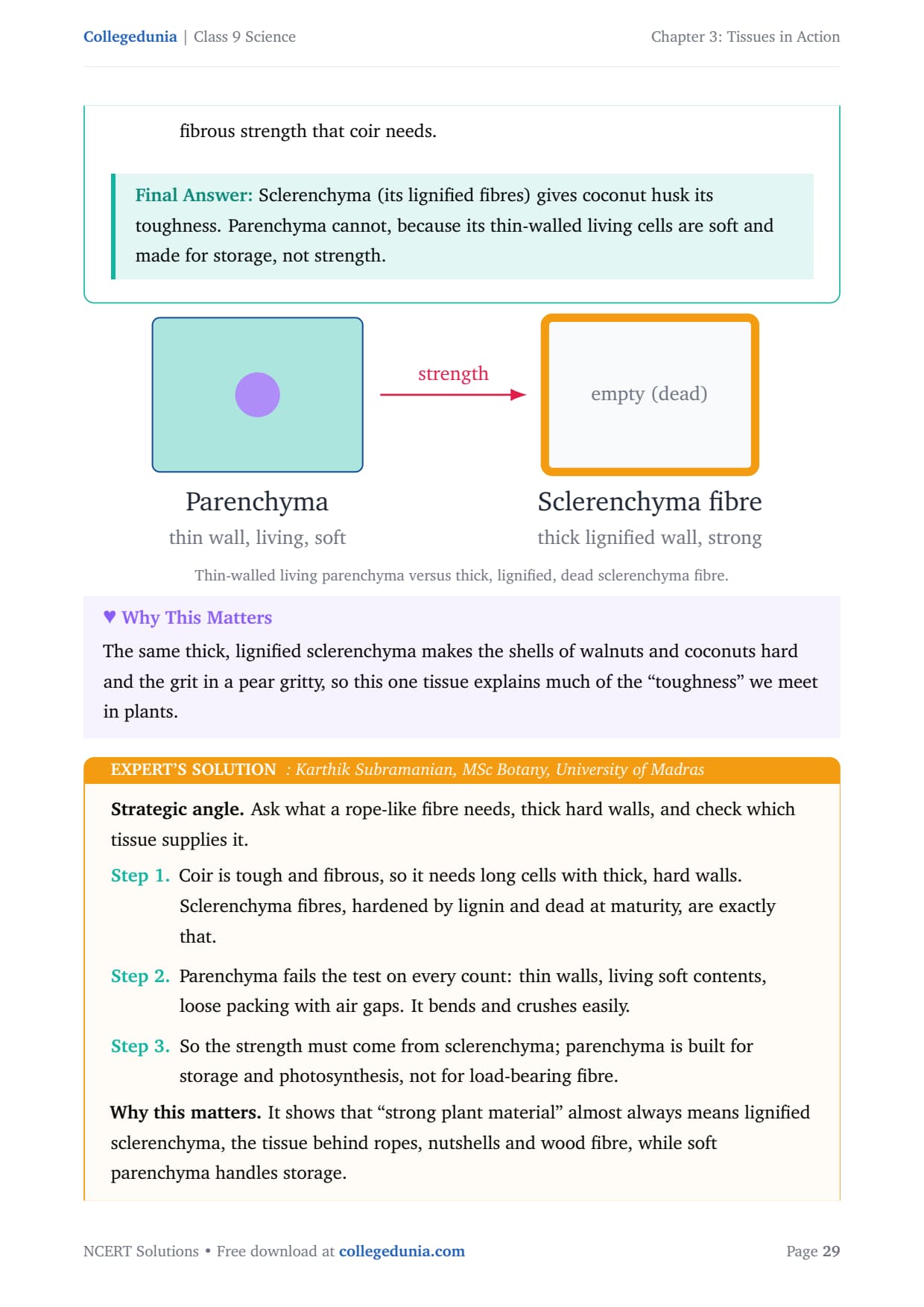
- Parenchyma, collenchyma, sclerenchyma: simple permanent tissues for storage, flexible support, and hard strength.
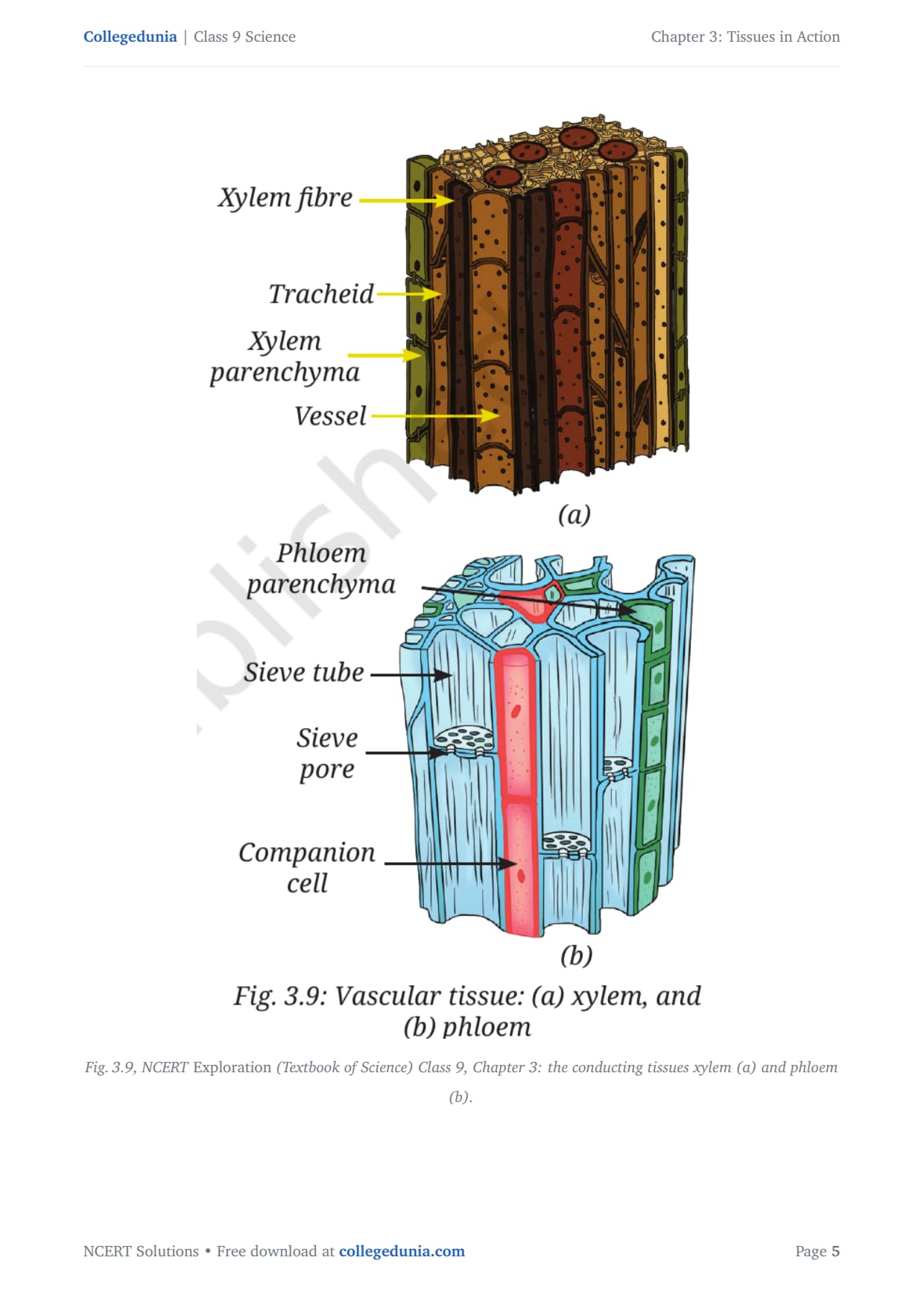
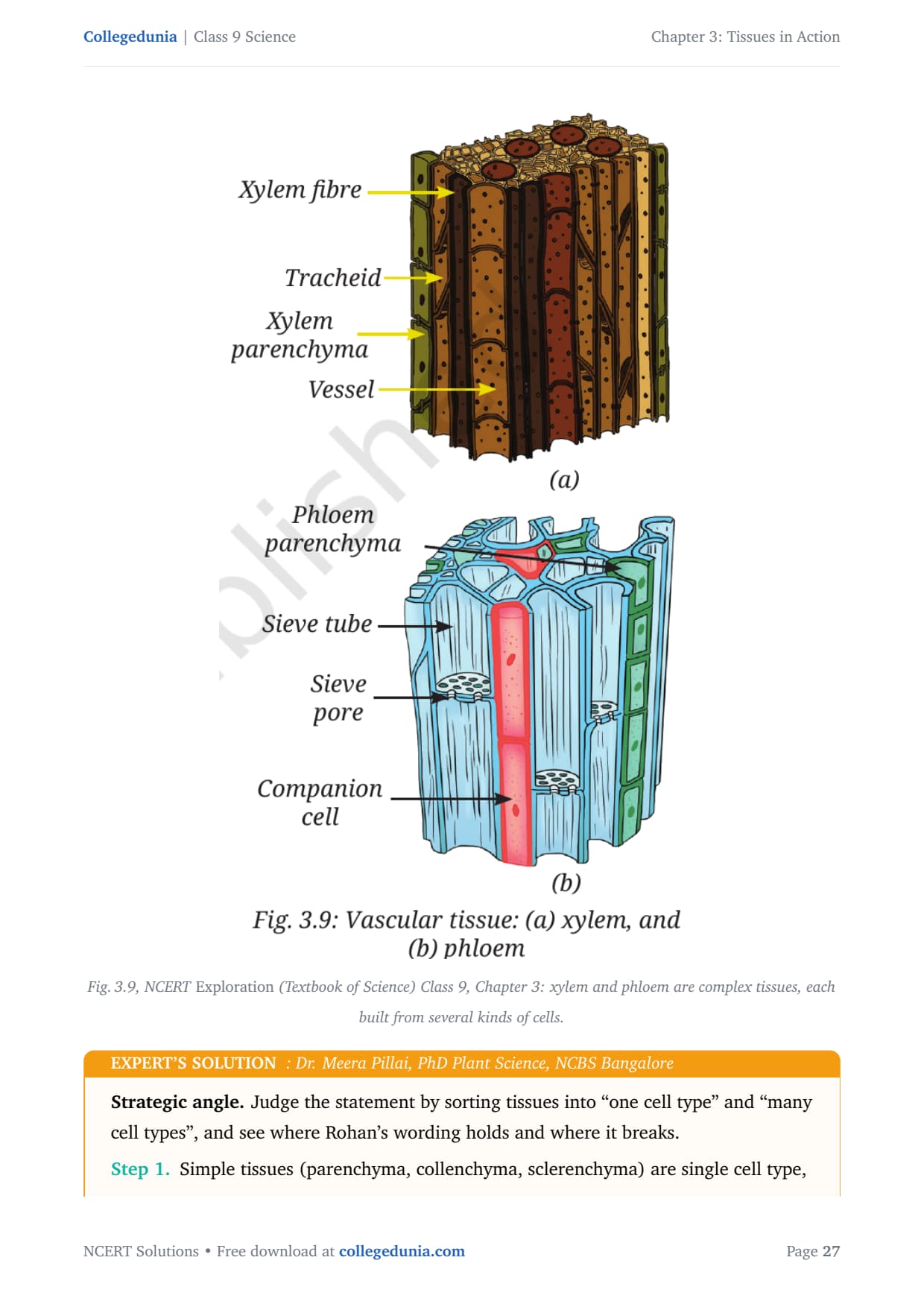
- Xylem and phloem: complex tissues that carry water and food, each built from several cell types.
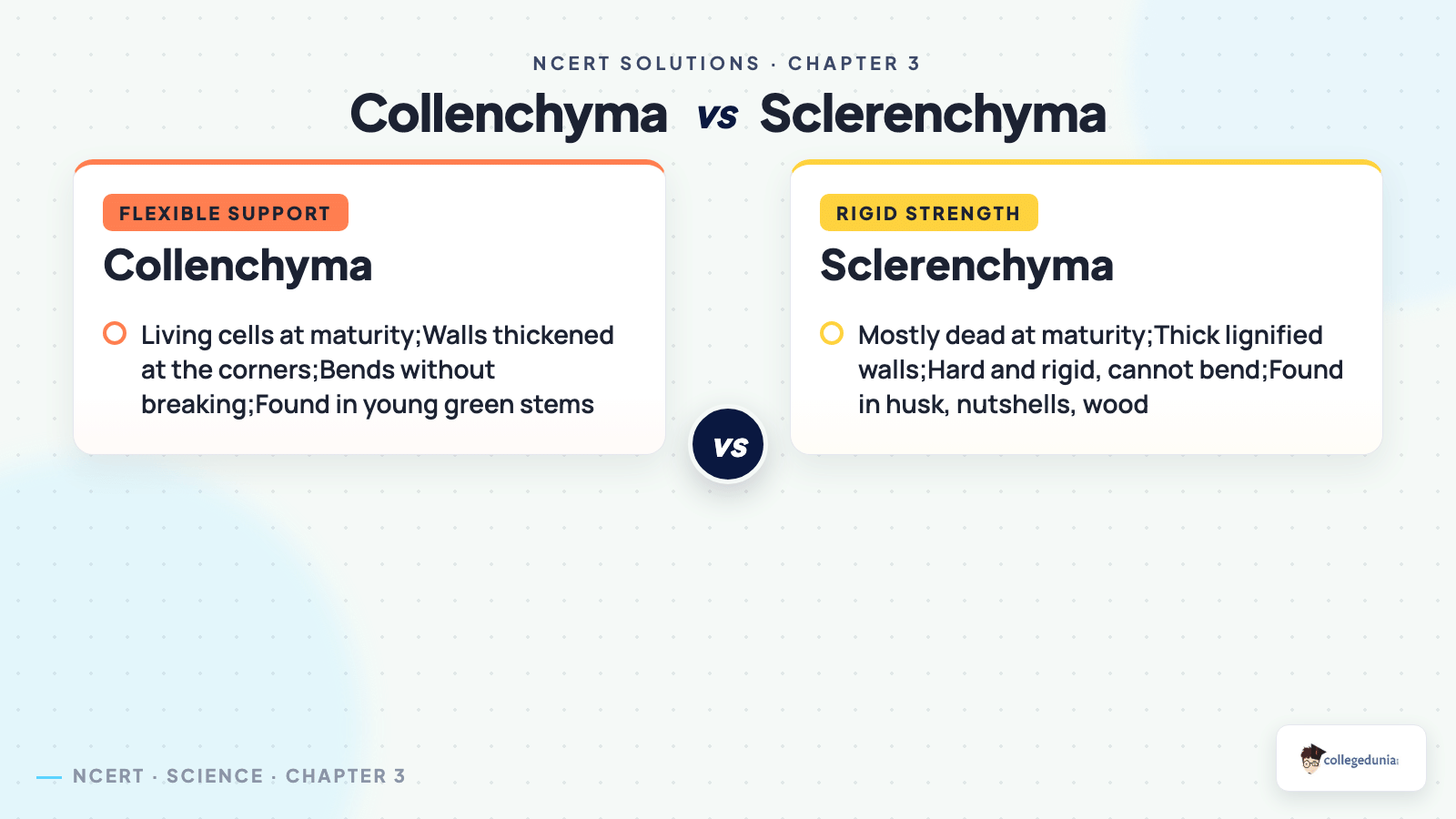
A common exam trap is the flexible young stem. Collenchyma bends without breaking because its corners are thick but its cells stay alive. Swap it for rigid sclerenchyma and the stem would snap in the wind.
Animal Tissues in Tissues in Action: The Four Main Types
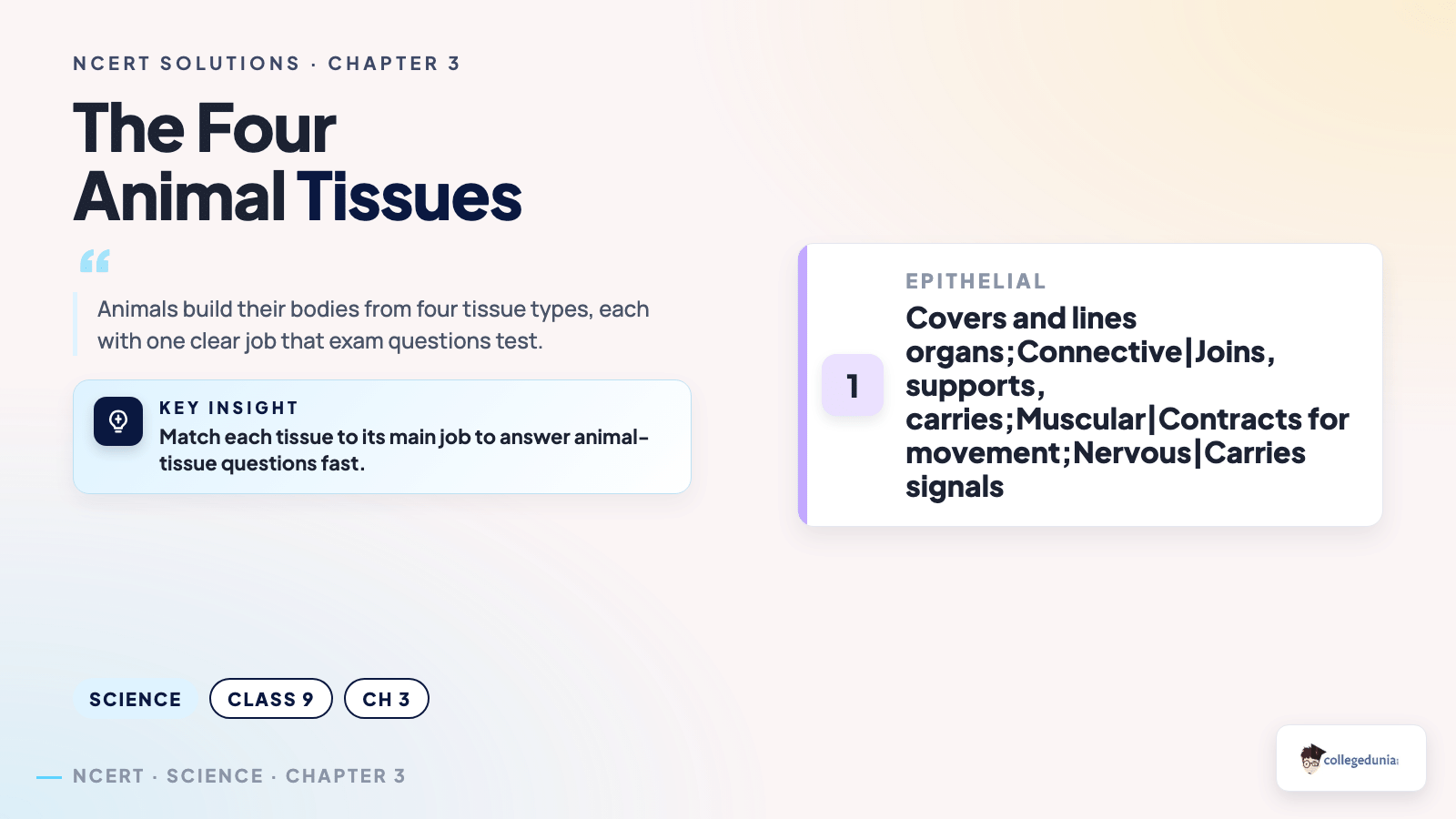
Animals build their bodies from four tissue types. Each one has a clear job, and the exam questions almost always test the link between the tissue and what it does. Learn this small table and the animal-tissue questions become quick.
| Tissue | Where it is | Main job |
|---|---|---|
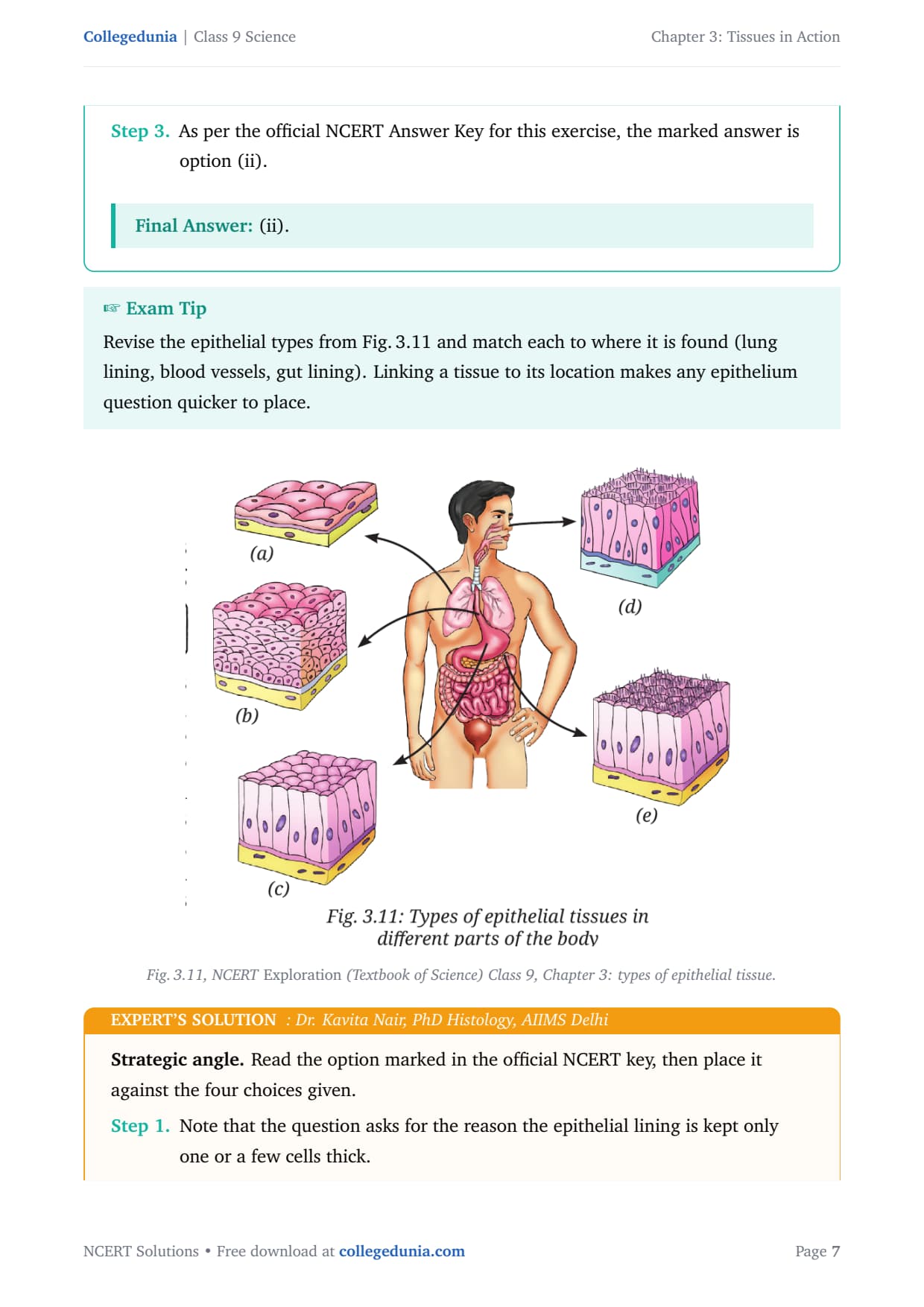
| Epithelial | Lining of lungs, gut, blood vessels | Covers and protects; thin for quick exchange |
| Connective | Blood, bone, cartilage, tendon, ligament | Joins, supports and carries materials |
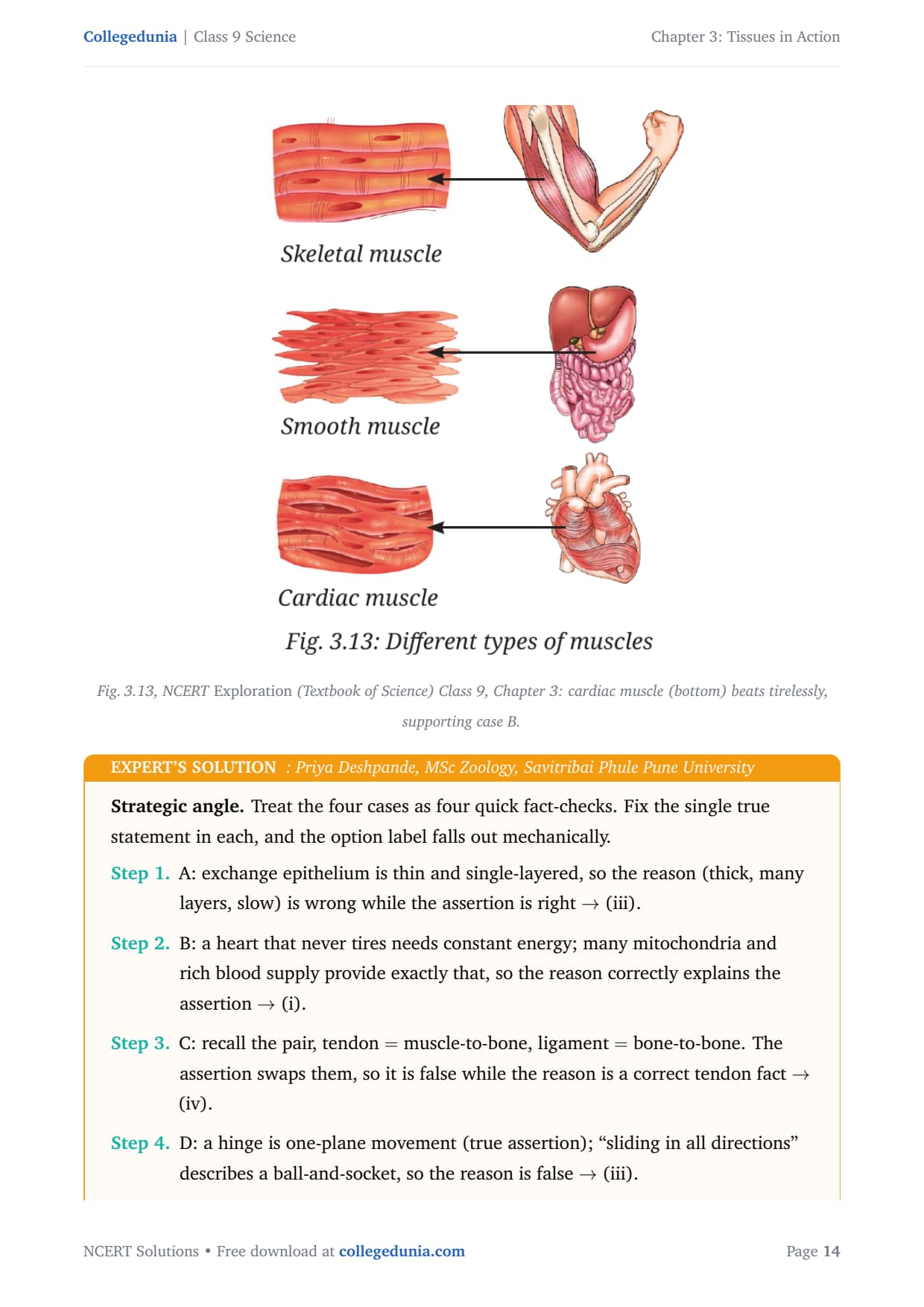
| Muscular | Skeletal, smooth and cardiac muscle | Contracts to produce movement |
| Nervous | Brain, spinal cord, nerves | Carries messages as electrical signals |
Two facts trip students up. Tendons join muscle to bone, while ligaments join bone to bone. And cardiac muscle never tires because it has many mitochondria and a rich blood supply. Both appear in the assertion-reason question.
Common Mistakes Students Make in the Tissues in Action Chapter
Most lost marks in this chapter come from mixing up names, not from hard ideas. Fix these early and your reasoning answers stay clean.
- Swapping tendon (muscle to bone) with ligament (bone to bone).
- Calling thin lung epithelium "many layers" when it is a single thin layer for fast gas exchange.
- Thinking a thicker wall is always better; sclerenchyma is strong but cannot bend like collenchyma.
- Forgetting that xylem carries water upward while phloem carries food from leaves to roots.
Sample Solved Question from Class 9 Science Chapter 3 Tissues in Action
Here is one open-ended question from Revise, Reflect, Refine, solved in steps, so you can see the method the NCERT Solutions for Class 9 Science Chapter 3 Tissues in Action use.
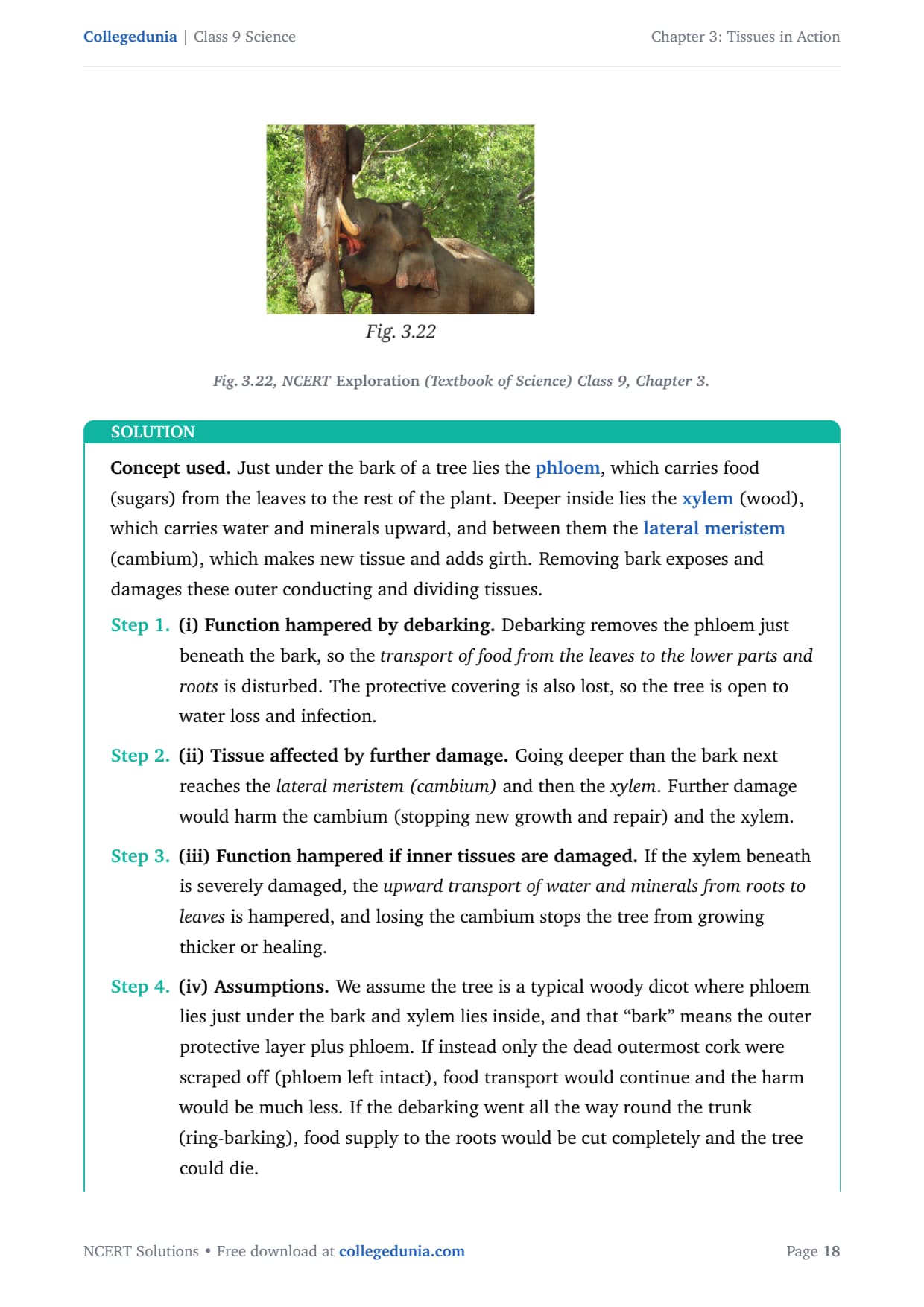
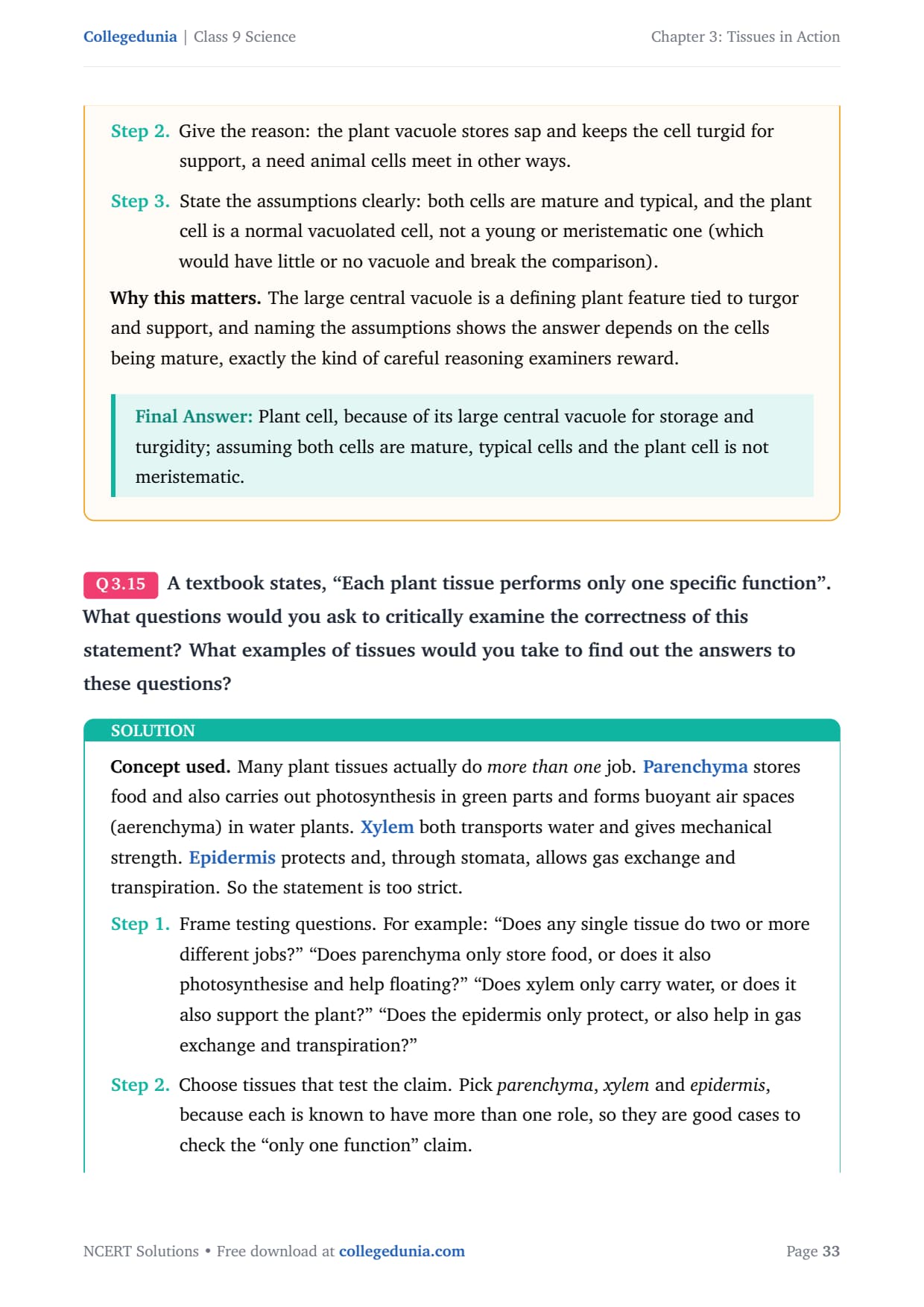
Question: A tree is severely debarked by an elephant. Which function is hampered first, and which tissue is damaged if the trunk is cut deeper?
- Name the layer removed. Just under the bark lies the phloem, which carries food from leaves to roots.
- State the first loss. Removing bark and phloem stops food transport to the lower parts and removes the tree's protective cover.
- Go deeper. Below the phloem is the cambium (lateral meristem), then the xylem. Deeper damage harms new growth first, then water transport.
- Final answer. Food transport is hit first; deeper cuts damage the cambium and xylem. A full ring of bark loss can kill the tree.
How to Study Tissues in Action and Time Needed
This chapter rewards drawing over reading. Sketch each tissue once, write its one main job beside it, then answer the exercise. Use the solutions only to check your steps, not to copy them.
Revision mode
2 to 3 hours
If you have done the chapter once and are revising.
First read
5 to 6 hours
If you are reading Tissues in Action for the first time.
How Collegedunia's NCERT Solutions Help You with Tissues in Action
Collegedunia gives you the full NCERT Solutions for Class 9 Science Chapter 3 Tissues in Action as clean, step-by-step answers in one place. You can read them here or download the PDF for offline revision.
- 2026-27 Exploration match: every answer follows the new book and its Revise, Reflect, Refine exercise.
- Reasoning shown in steps: each open-ended answer names the tissue first, then explains why.
- Teacher checked: subject experts verify each MCQ key and each reasoning answer.
- Free PDF: download the Normal and HD versions and revise before your exam.
More Tissues in Action Class 9 Science Resources
Use the other Collegedunia resources for this chapter alongside the solutions.
| Resource | Open |
|---|---|
| NCERT Solutions | Tissues in Action Class 9 NCERT Solutions |
| Revision Notes | Tissues in Action Class 9 Notes |
| Handwritten Notes | Tissues in Action Class 9 Handwritten Notes |
| NCERT Book PDF | Tissues in Action Class 9 NCERT Book PDF |
NCERT Solutions for Class 9 Science: All Chapters
Open the NCERT Solutions for any other chapter of the new Class 9 Science Exploration book.
| Chapter | Solutions |
|---|---|
| Chapter 2 | Cell: The Building Block of Life NCERT Solutions |
| Chapter 3 | Tissues in Action NCERT Solutions |
| Chapter 4 | Describing Motion Around Us NCERT Solutions |
| Chapter 6 | How Forces Affect Motion NCERT Solutions |
| Chapter 11 | Reproduction: How Life Continues NCERT Solutions |
| Chapter 12 | Patterns in Life NCERT Solutions |
Tissues in Action Class 9 Science NCERT Solutions FAQs
Ques. Where can I download the Class 9 Science Chapter 3 Tissues in Action NCERT Solutions PDF?
Ans. You can download the Tissues in Action NCERT Solutions PDF directly from this page. Both the Normal and HD versions are free and match the 2026-27 Exploration book.
Ques. How many questions are there in the Tissues in Action exercise?
Ans. The Revise, Reflect, Refine exercise has 15 questions. These include MCQs, one assertion-reason set with four parts, a graph question, and several open-ended reasoning questions. Collegedunia solves all of them.
Ques. What are the three types of meristematic tissue?
Ans. The three types are apical meristem (at root and shoot tips, adds length), lateral meristem or cambium (around the stem, adds girth), and intercalary meristem (near the nodes, helps grass regrow after cutting).
Ques. What is the difference between a tendon and a ligament?
Ans. A tendon joins muscle to bone and passes the muscle's pull to the bone. A ligament joins bone to bone and holds a joint together. Both are tough connective tissues, but their jobs are different.
Ques. Why is collenchyma important in a young plant stem?
Ans. Collenchyma gives a young stem flexible support. Its cells are alive and thickened at the corners, so the stem can bend in the wind without breaking. If it were replaced by rigid sclerenchyma, the stem would snap.
Ques. What is a tissue?
Ans. A tissue is a group of cells that work together to perform one function. In simple tissues the cells are alike; in complex tissues like xylem and phloem, several cell types work together as one team.



Comments