




Cell: The Building Block of Life is Chapter 2 of the new 2026-27 Class 9 Science book Exploration, and it is one of the most asked biology chapters in the exam. These NCERT Solutions solve all 16 Revise, Reflect, Refine questions with clear, step-by-step answers you can revise fast.
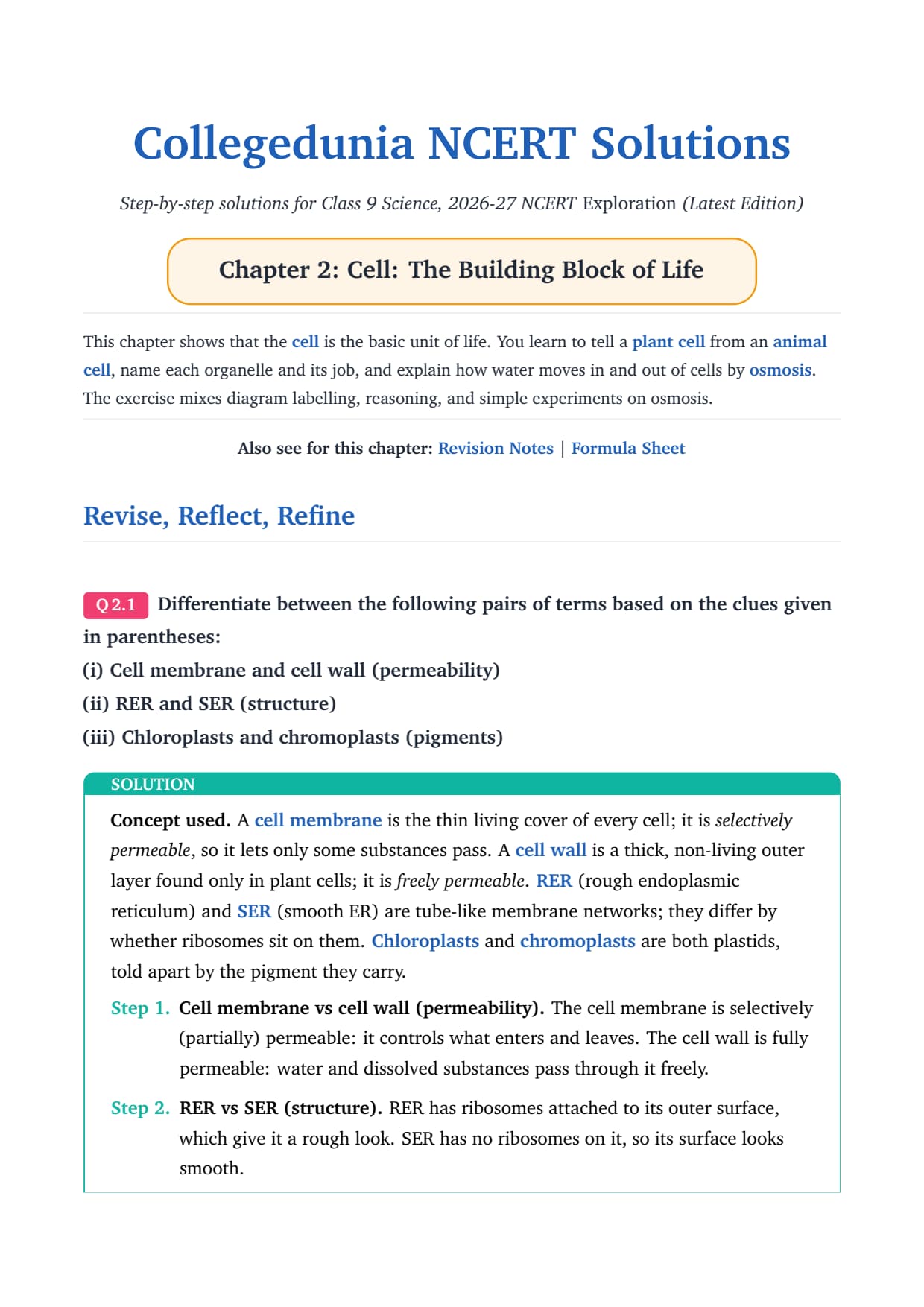
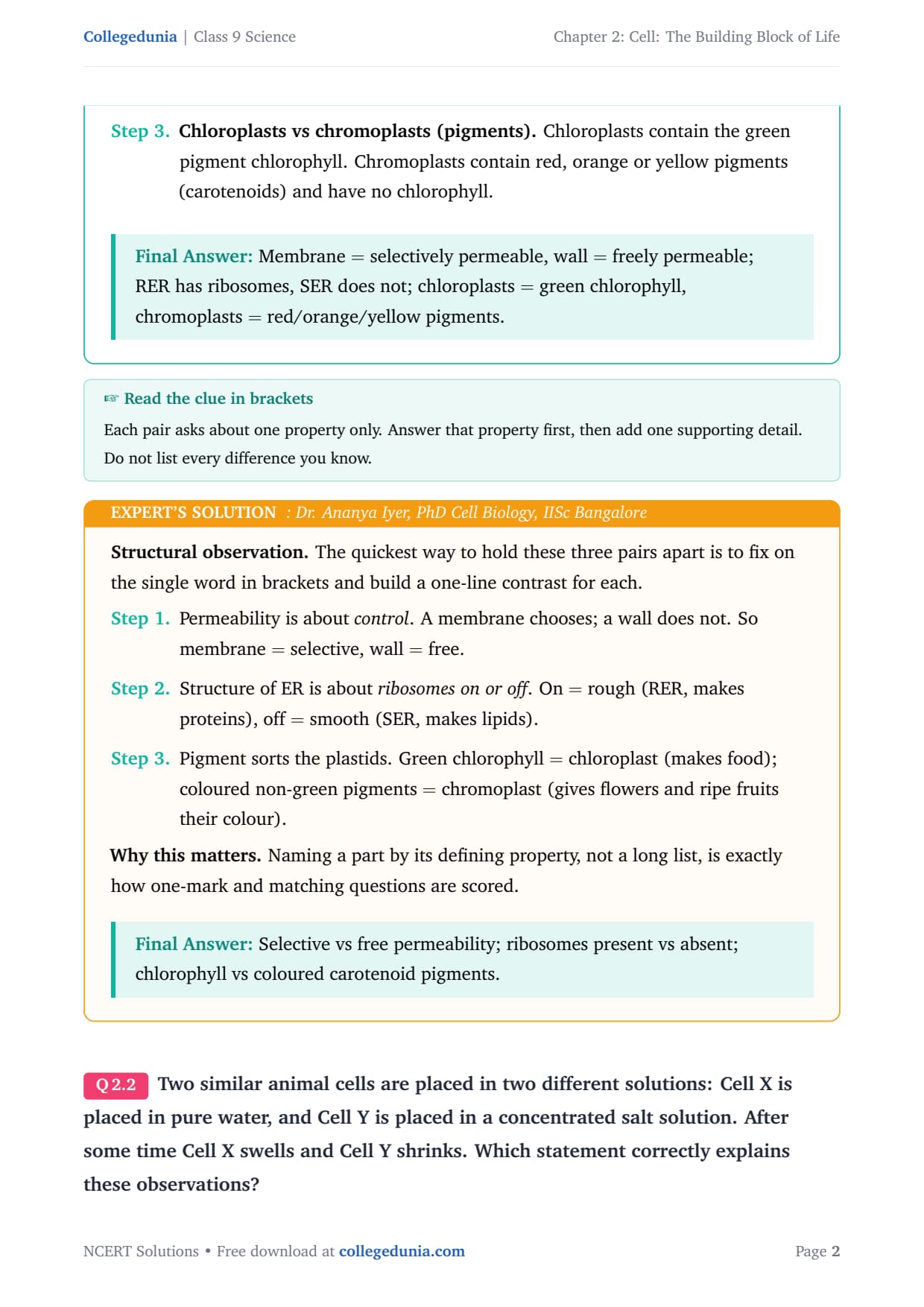
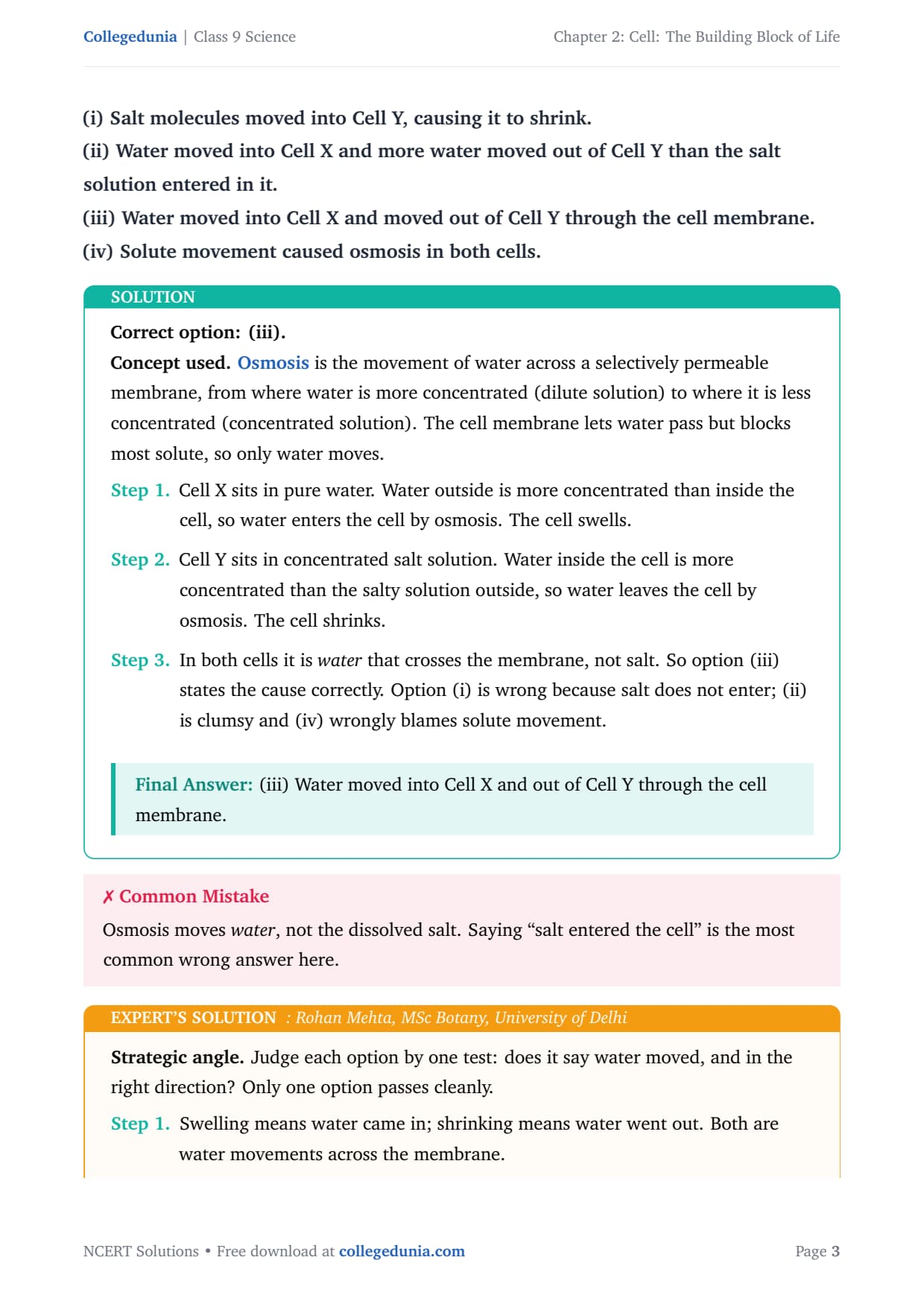
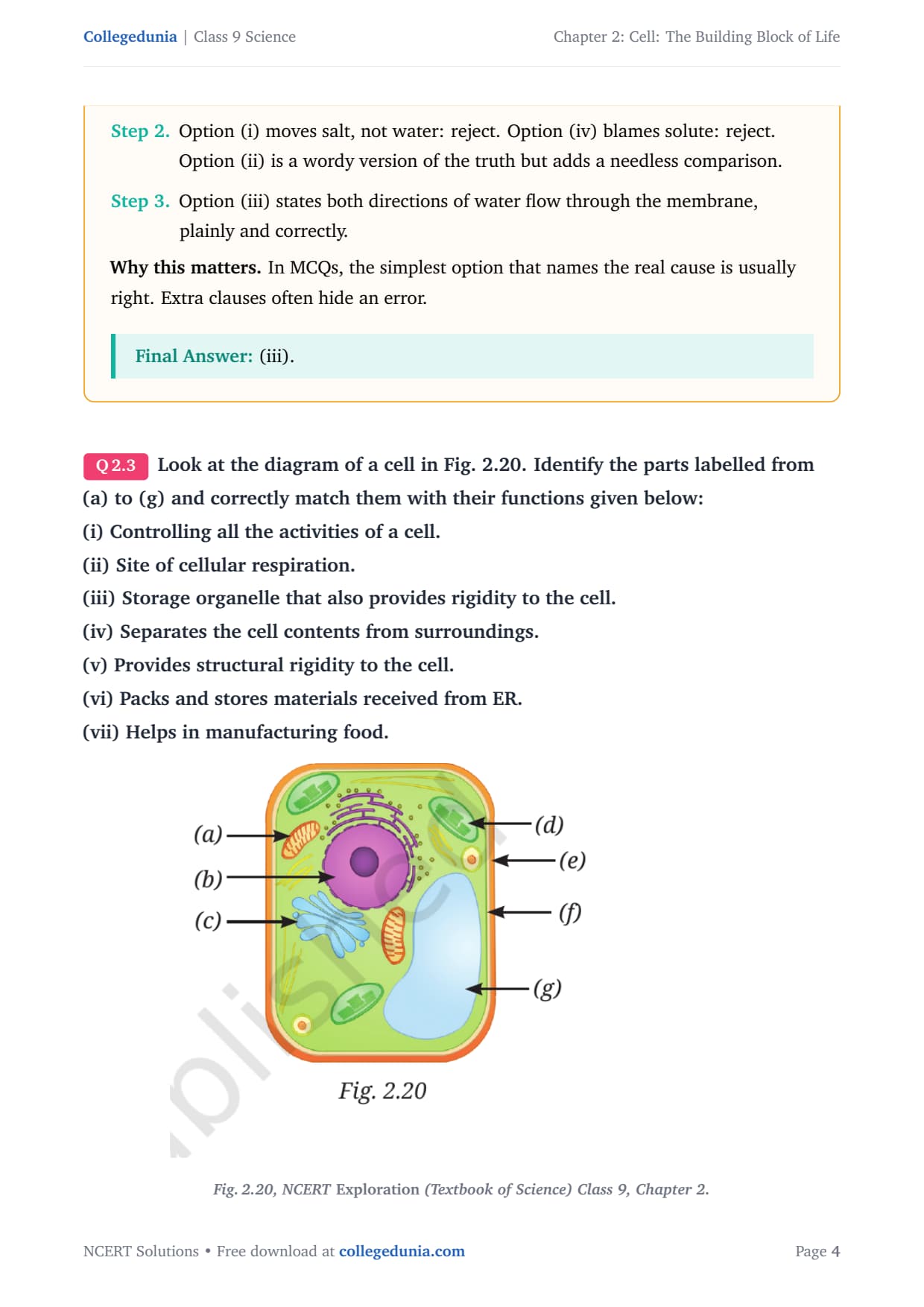
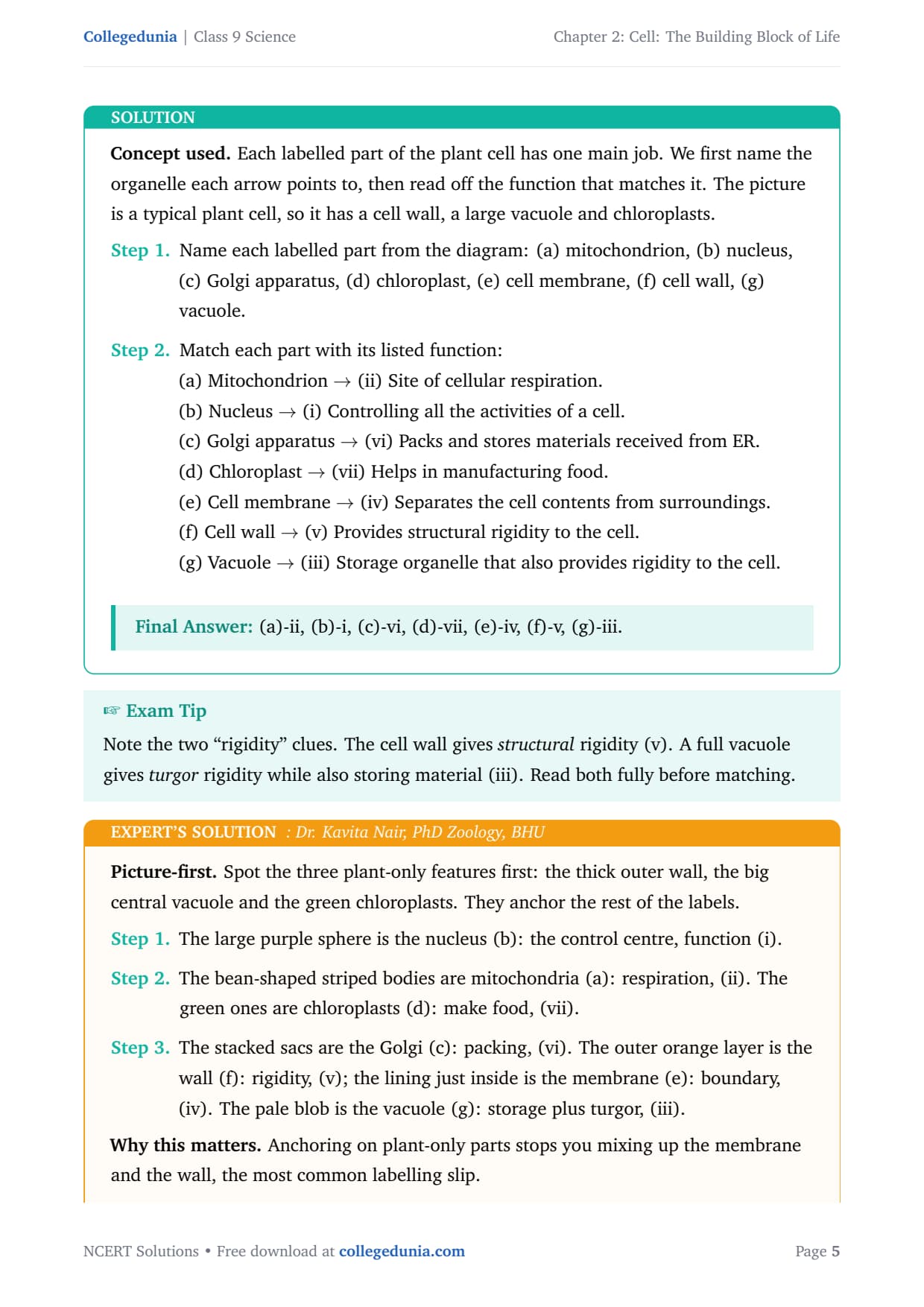
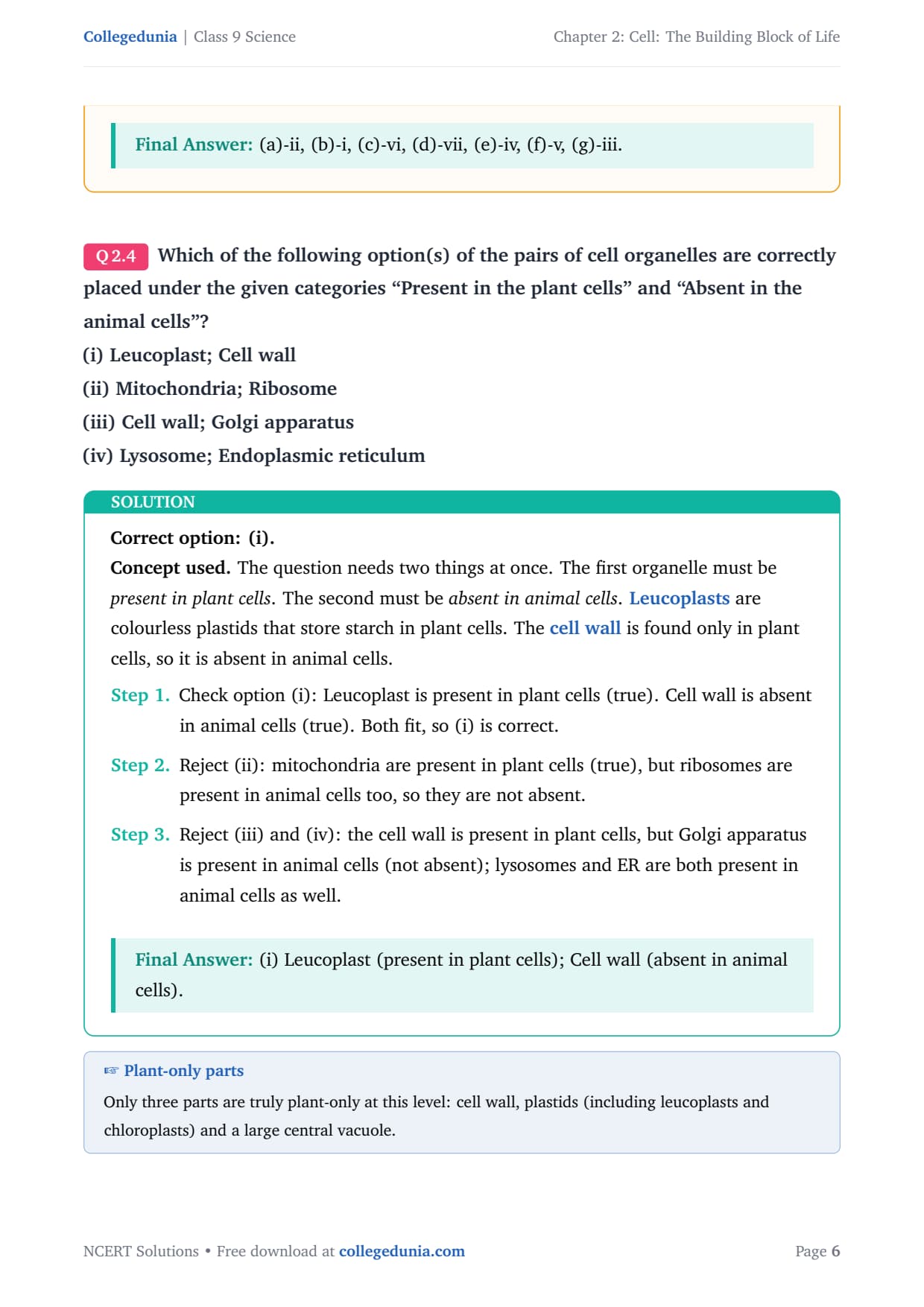
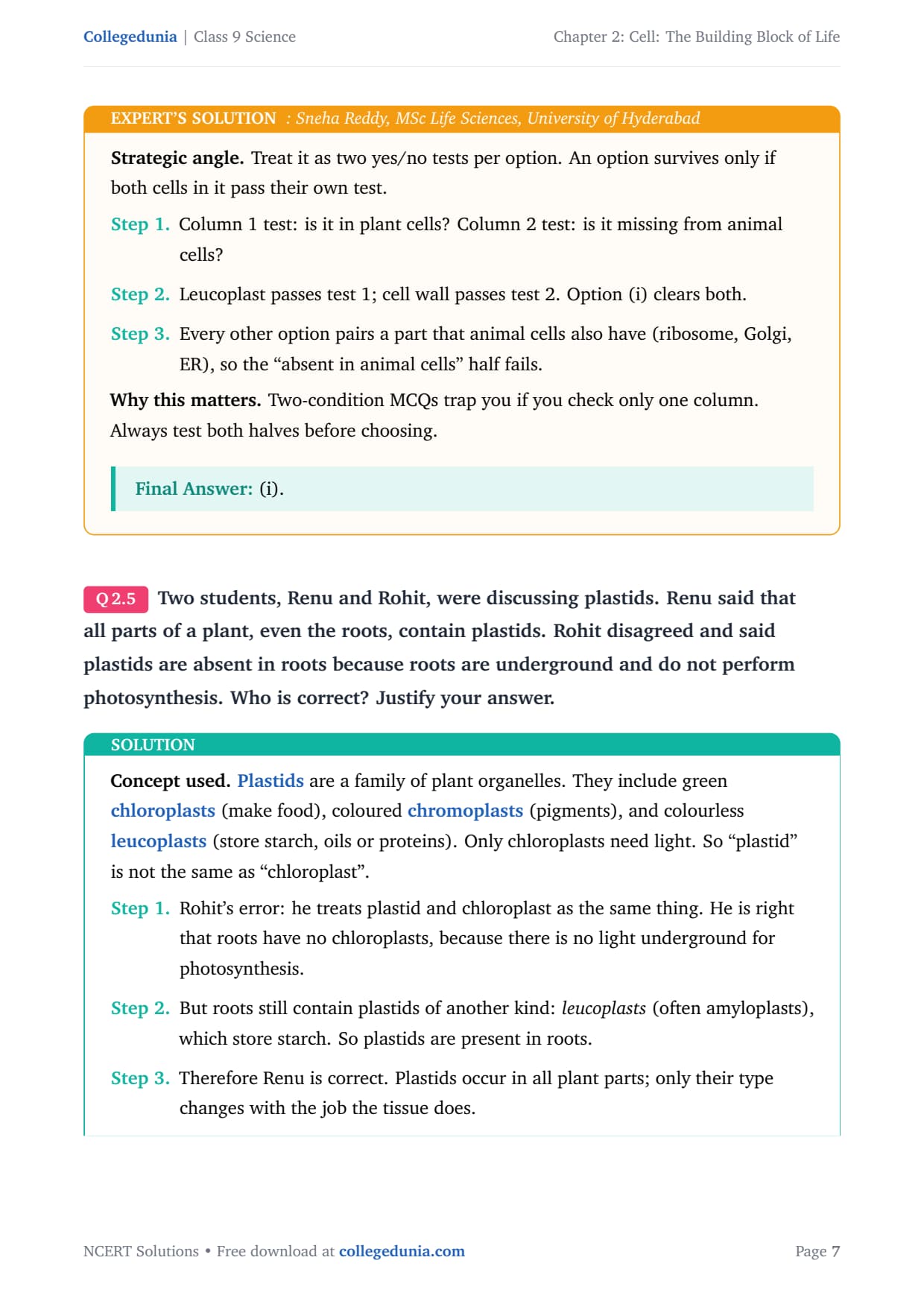
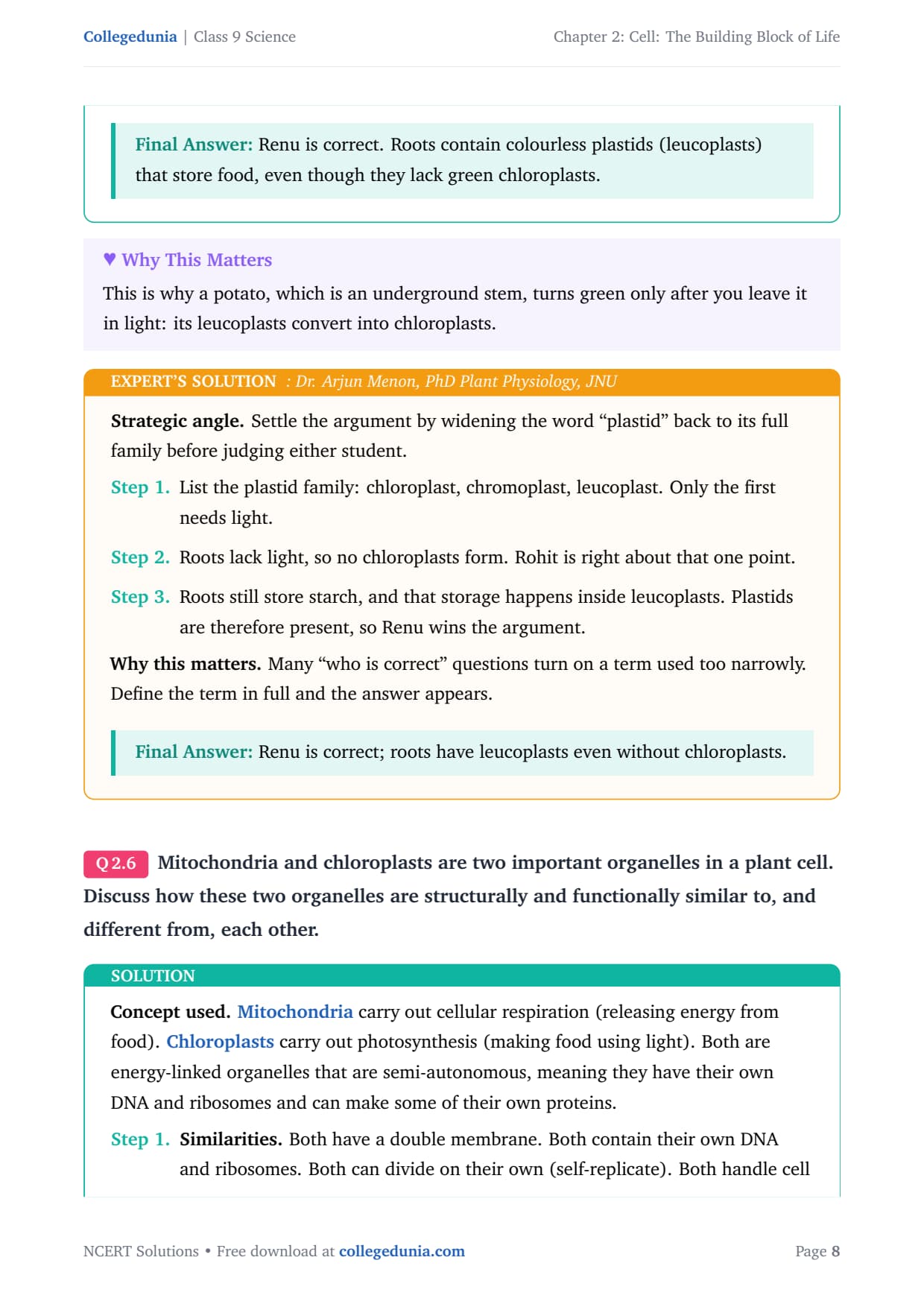
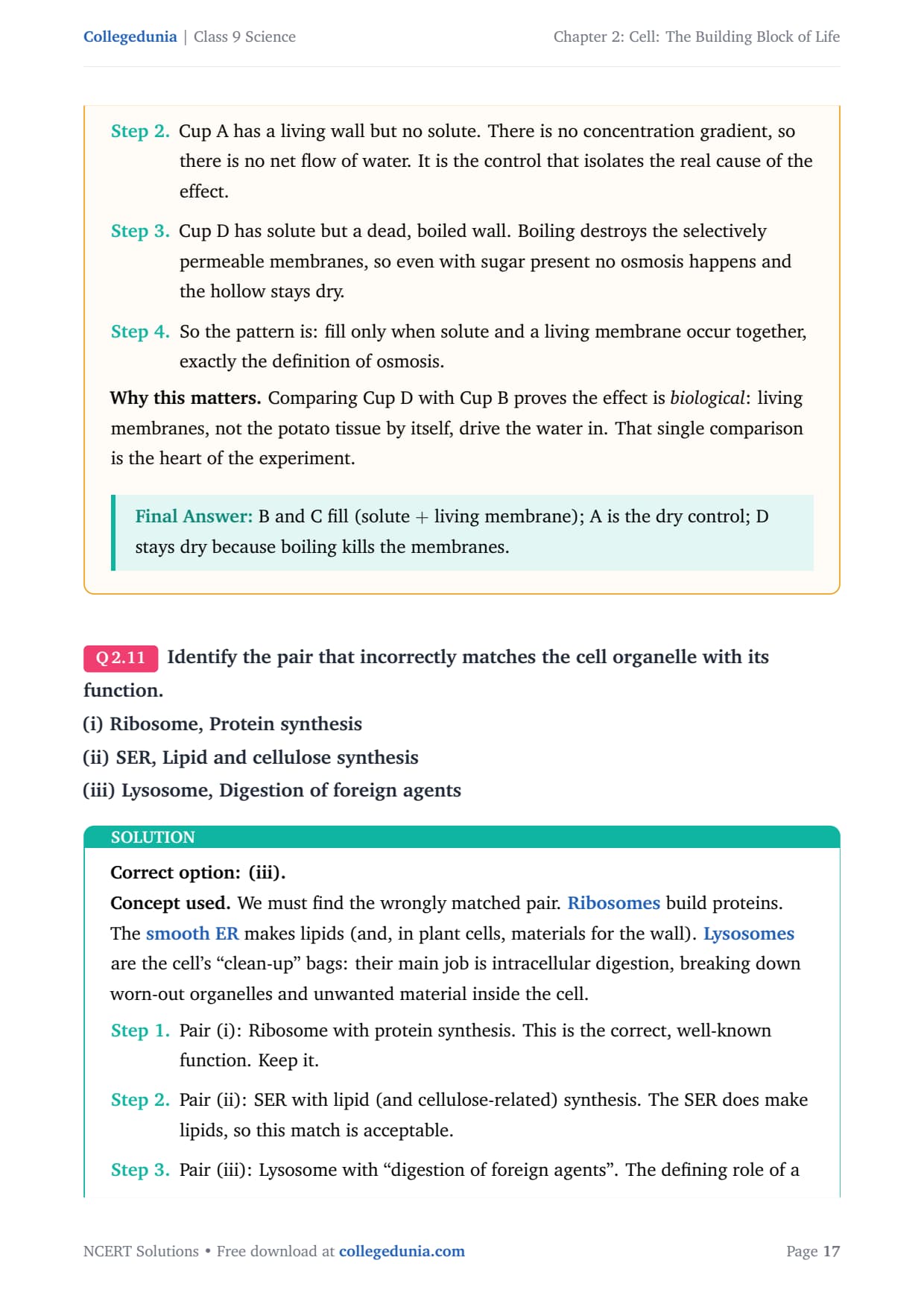
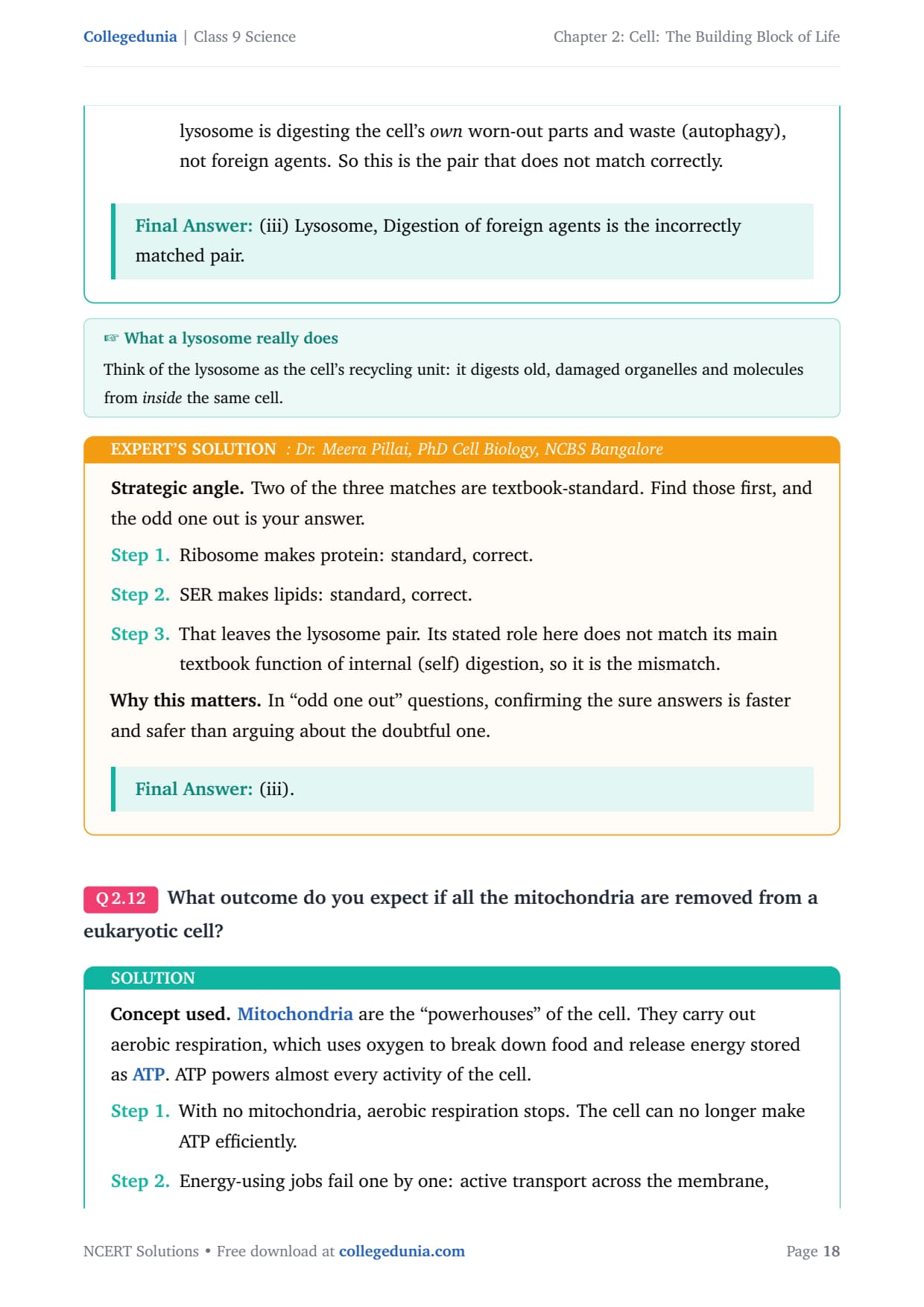
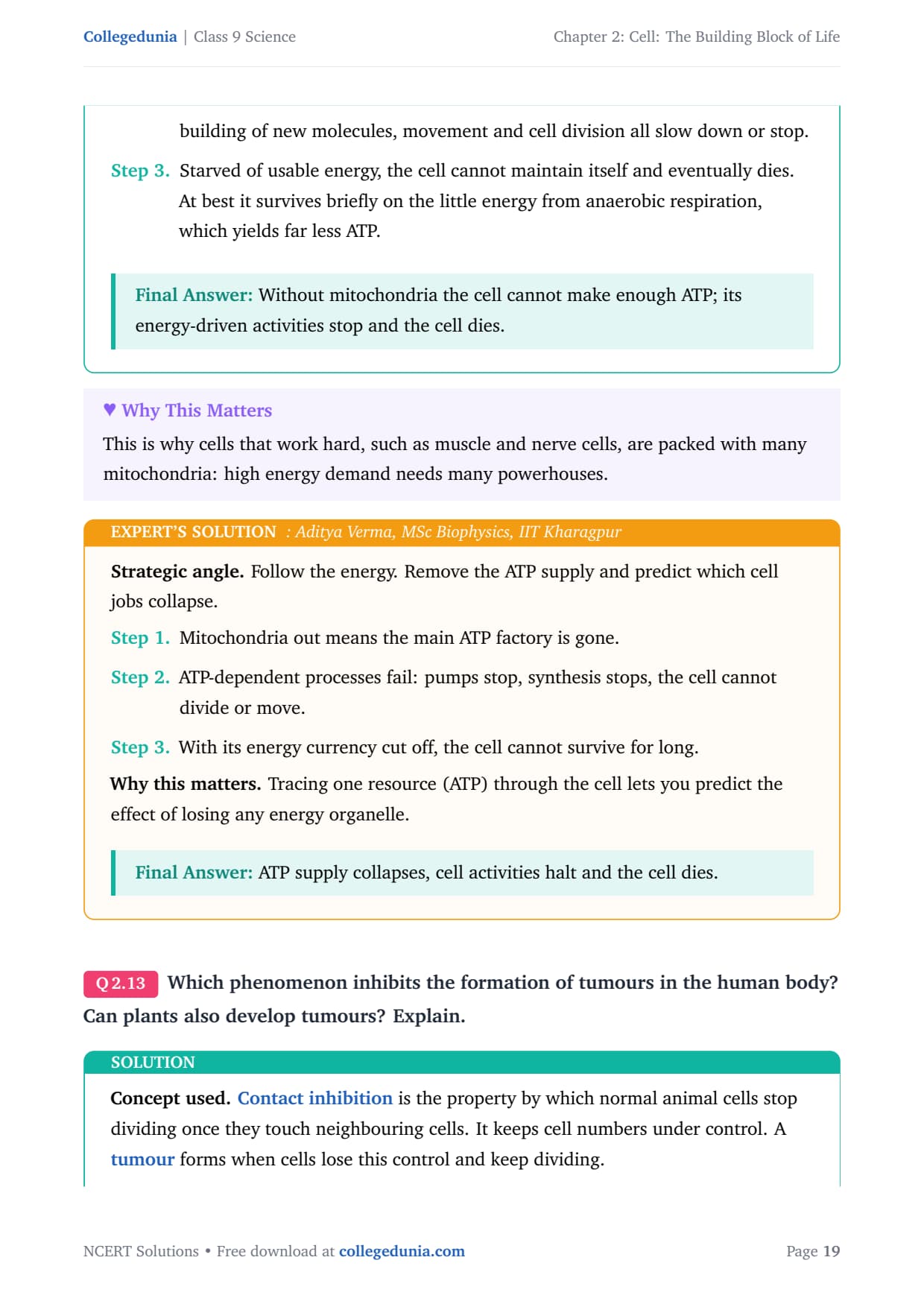
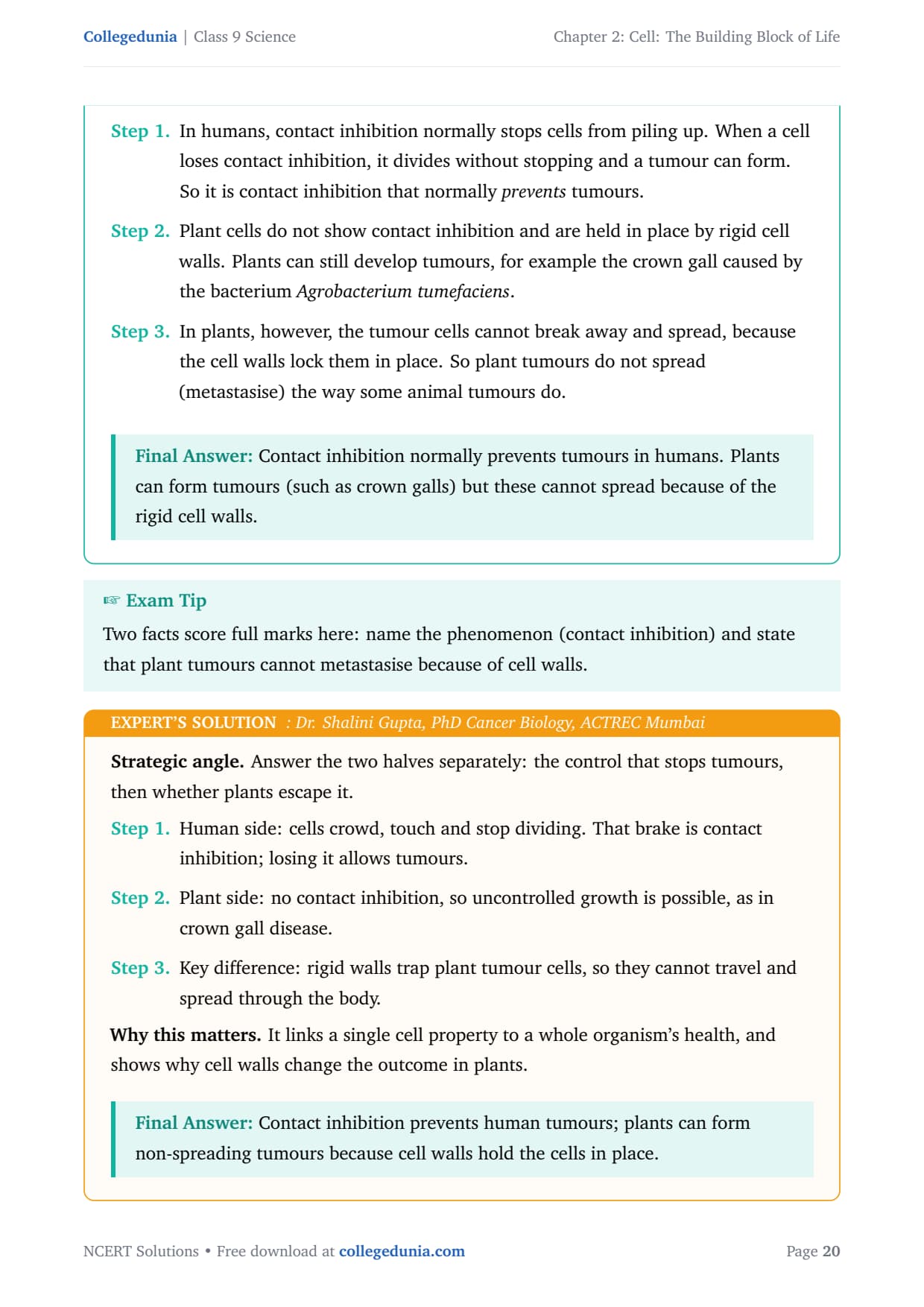
- 16 NCERT questions solved: a mix of MCQs, reasoning, diagram labelling and osmosis experiments, each with a step-by-step answer.
- The chapter is a steady source of 1, 3 and 5 mark questions in the Class 9 Science paper.
- Free PDF download in Normal and HD, plus a plain-English read of every answer.
Every ncert solutions class 9 science chapter 2 cell the building block of life answer here is written by Collegedunia subject experts, checked against the 2026-27 NCERT Exploration textbook, and refined using recent CBSE exam trends.
What Cell the Building Block of Life Class 9 Covers for the Boards
This chapter shows that the cell is the basic unit of life. You learn to tell a plant cell from an animal cell, name each organelle and its job, and explain how water moves in and out of cells by osmosis. The cell the building block of life class 9 exercise mixes diagram labelling, reasoning and simple experiments.
- Cell structure: cell membrane, cell wall, nucleus, mitochondria, chloroplasts, ER, Golgi and vacuole, with the job of each.
- Osmosis: why cells swell, shrink or stay firm when placed in water or salt solution.
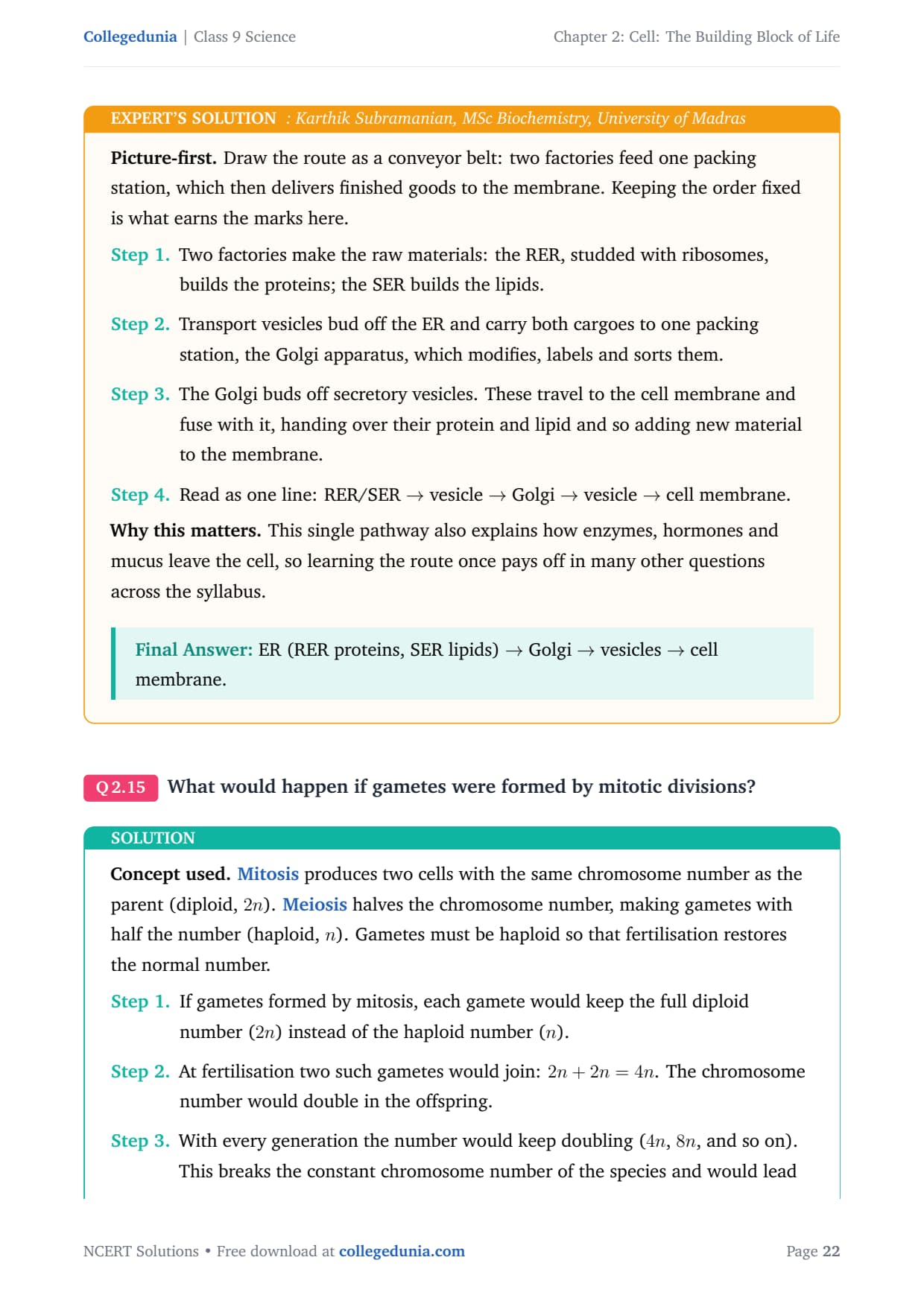
- Cell division: why gametes need meiosis, and what mitosis versus meiosis means for chromosome number.
- DNA-bearing parts: the nucleus, mitochondria and chloroplasts, and why the last two are semi-autonomous.
Cell the Building Block of Life Class 9 Full Chapter Revision
Source: Magnet Brains on YouTube
Cell Class 9 NCERT Solutions: Revise, Reflect, Refine Questions Covered
The end-of-chapter section is titled Revise, Reflect, Refine. It holds 16 questions that mix multiple-choice, matching, reasoning and experiment-based parts. The table below groups them so you can see what each type tests before you open the full solutions.
| Question type | What a full-mark answer must include |
|---|---|
| MCQs (osmosis, DNA, organelles) | Pick the option and give the reason in one line, for example water moves through the membrane, not salt, so the correct osmosis option is the one naming water movement in both directions. |
| Diagram labelling (Fig 2.20) | Name each labelled part of the plant cell, then match it to its function: nucleus controls, mitochondrion respires, chloroplast makes food, wall gives rigidity, vacuole stores. |
| Compare and contrast (mitochondria vs chloroplast) | State both are double-membraned with their own DNA, then split the jobs: mitochondria release energy, chloroplasts trap light and make food. |
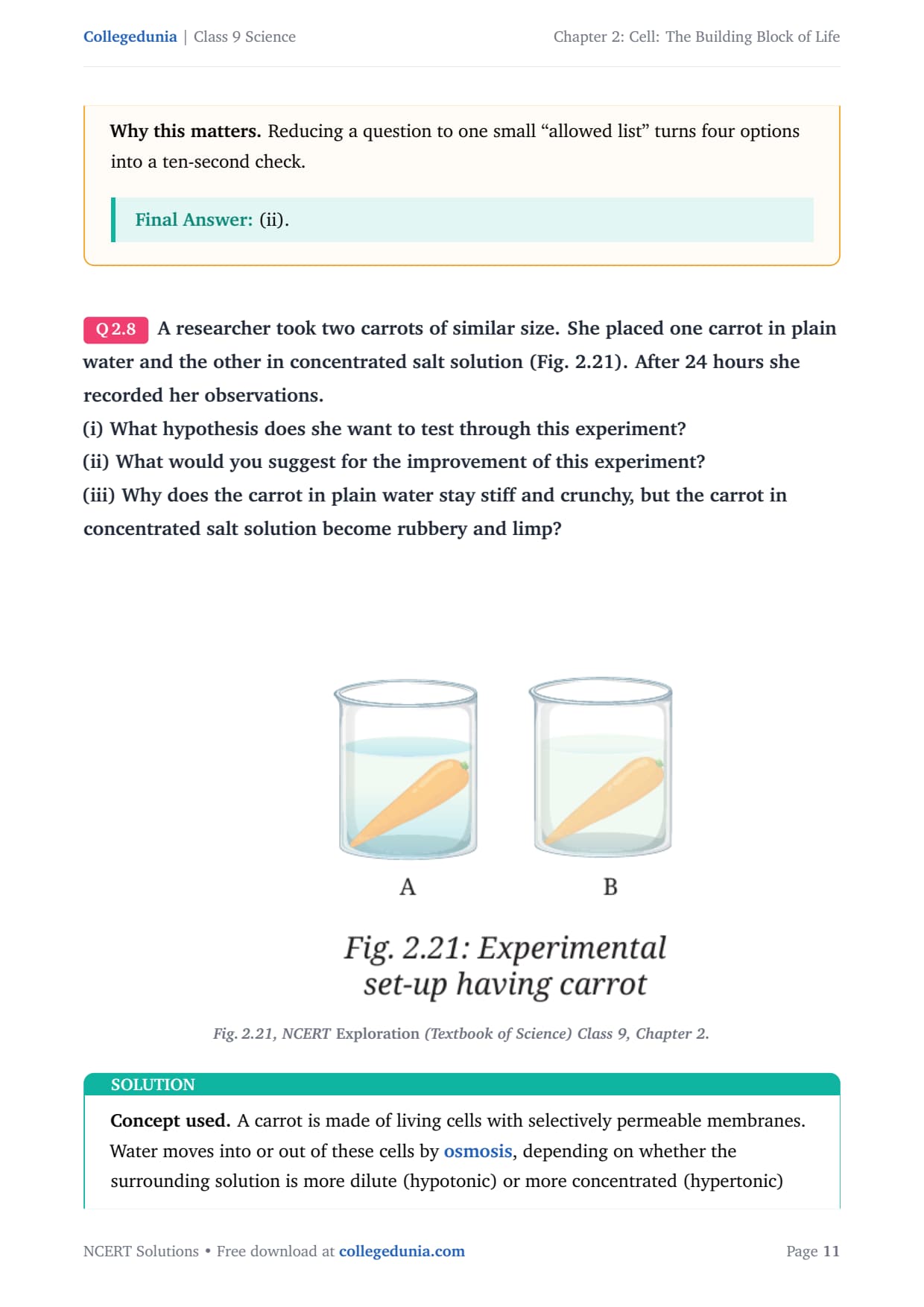
| Experiment questions (carrot, potato cups) | Name the concept (osmosis), state the hypothesis, and explain each result using water moving in or out of living cells. |
| Reasoning (plastids in roots, tumours, meiosis) | Define the wide term first, for example plastid covers chloroplast and leucoplast, then judge the claim. |
Tip: read the clue in brackets on the differentiate questions. Answer that one property first, then add a single supporting fact. That focus is usually worth the mark.
Plant Cell vs Animal Cell Differences Every Class 9 Student Must Know
Telling a plant cell from an animal cell is the most tested idea in class 9 science chapter 2. Three parts are plant-only at this level: the cell wall, the plastids and a large central vacuole. Fix on these first and the rest of the comparison follows.
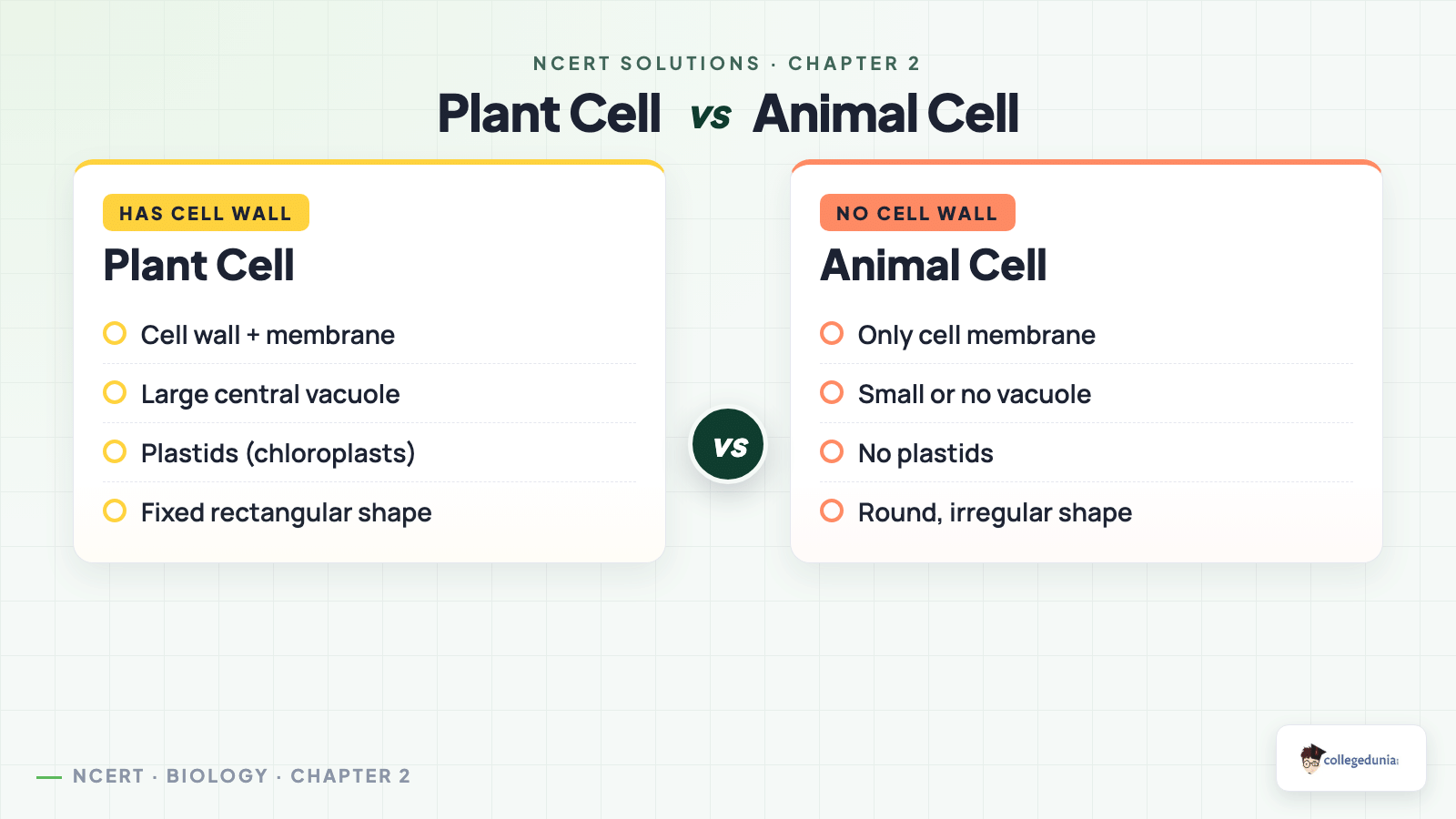
- Cell wall: present in plant cells and gives structural rigidity; absent in animal cells.
- Vacuole: one large central vacuole in plant cells; small or absent in animal cells.
- Plastids: chloroplasts and leucoplasts occur only in plant cells; animal cells have none.
- Shape: plant cells look fixed and boxy because of the wall; animal cells are round and can change shape.
Osmosis in Cell the Building Block of Life Class 9 Explained Simply
Osmosis is the movement of water across a selectively permeable membrane, from a dilute side (more water) to a concentrated side (less water). Most of the experiment questions in this chapter, the carrot and the four potato cups, are just osmosis in disguise. Once you spot the direction water flows, every result explains itself.
- Cell in pure water: water enters, the cell swells and becomes turgid, so a carrot stays firm and crunchy.
- Cell in salt solution: water leaves, the cell loses turgor, so the carrot turns limp and rubbery.
- Boiled potato cup: boiling kills the cells, so the membrane no longer works and no osmosis happens even with sugar inside.
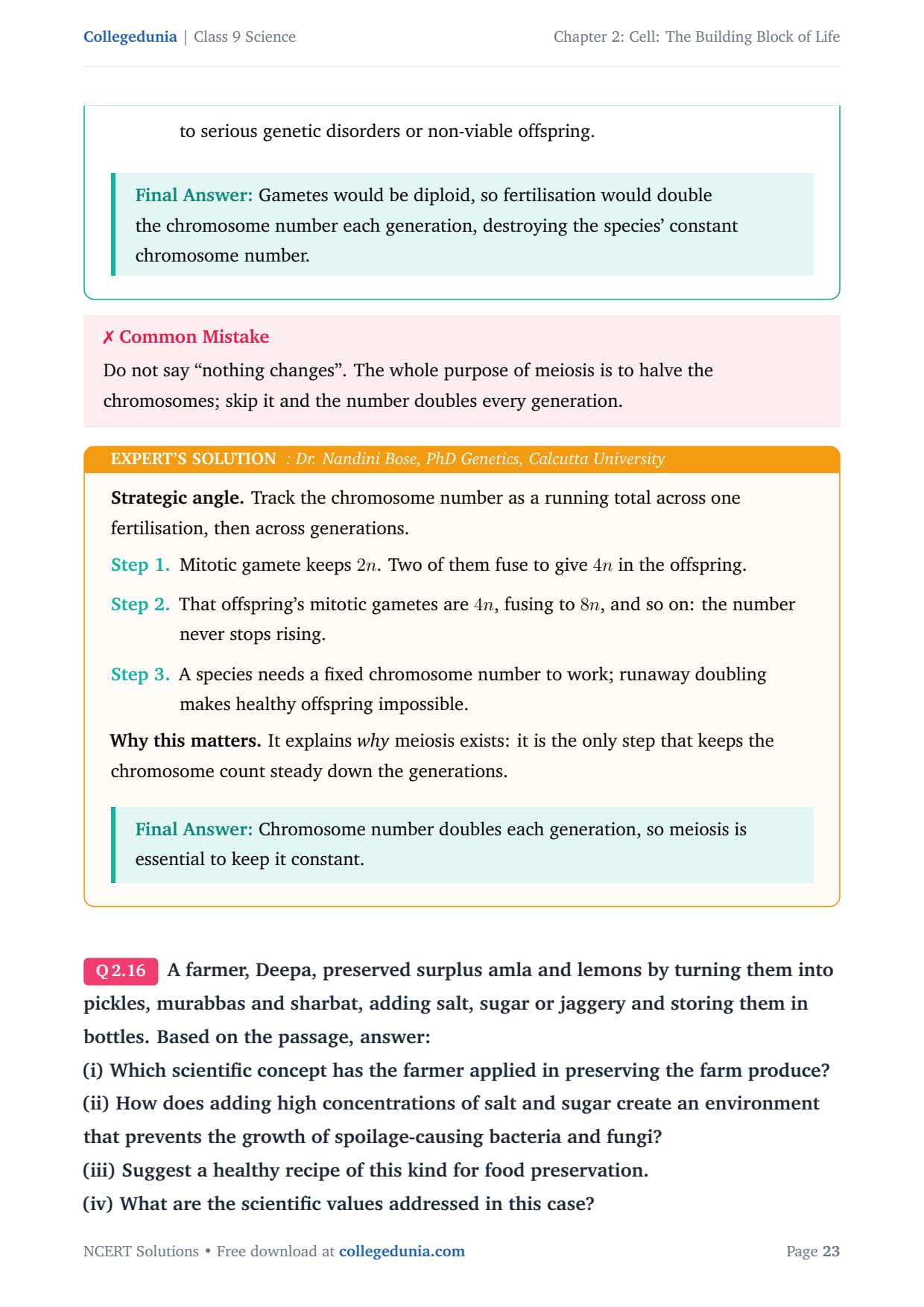
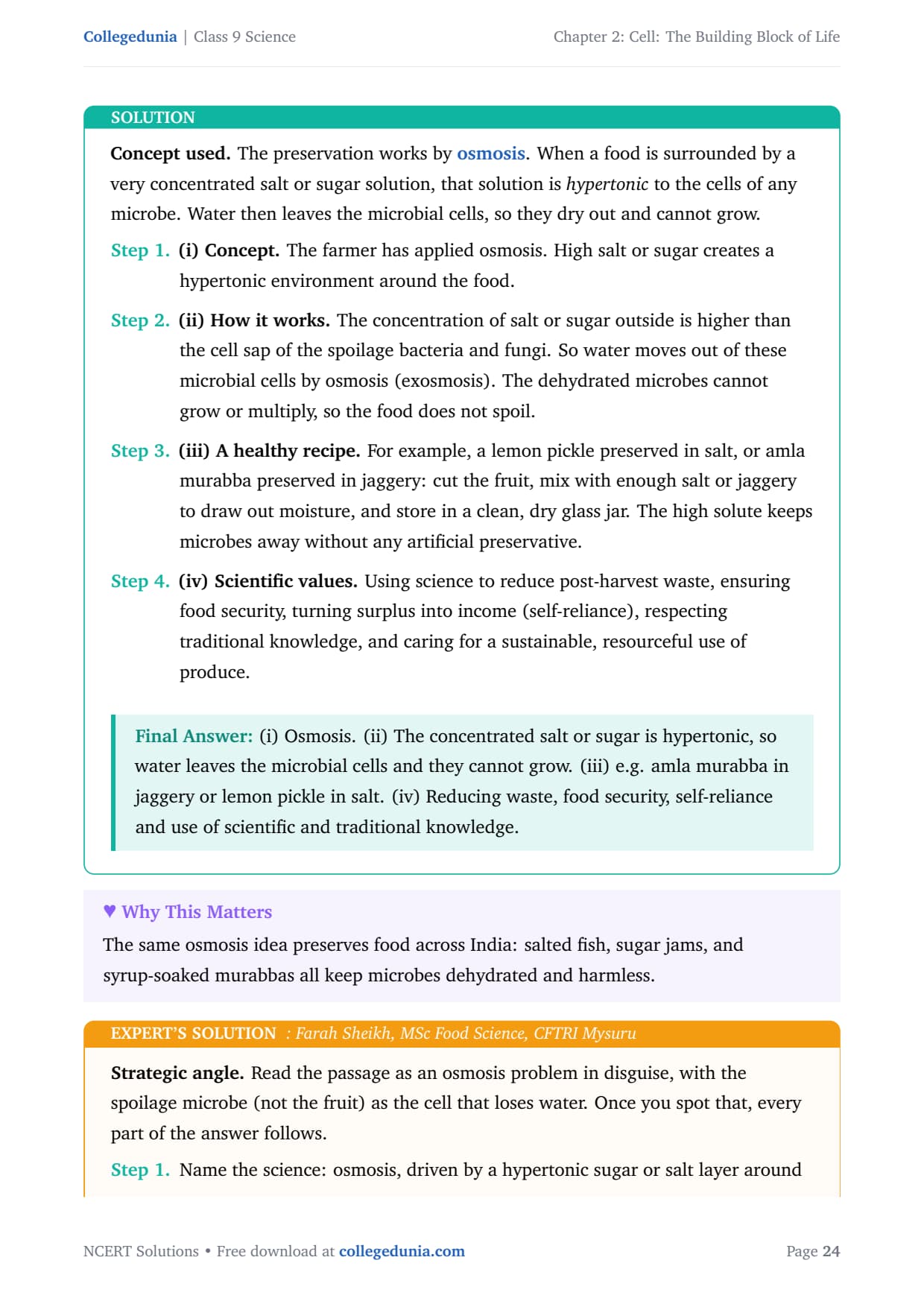
- Food preservation in pickles and murabbas uses the same idea: salt or sugar pulls water out of microbes so they cannot grow.
How the Cell Membrane Is Made: The Secretory Pathway
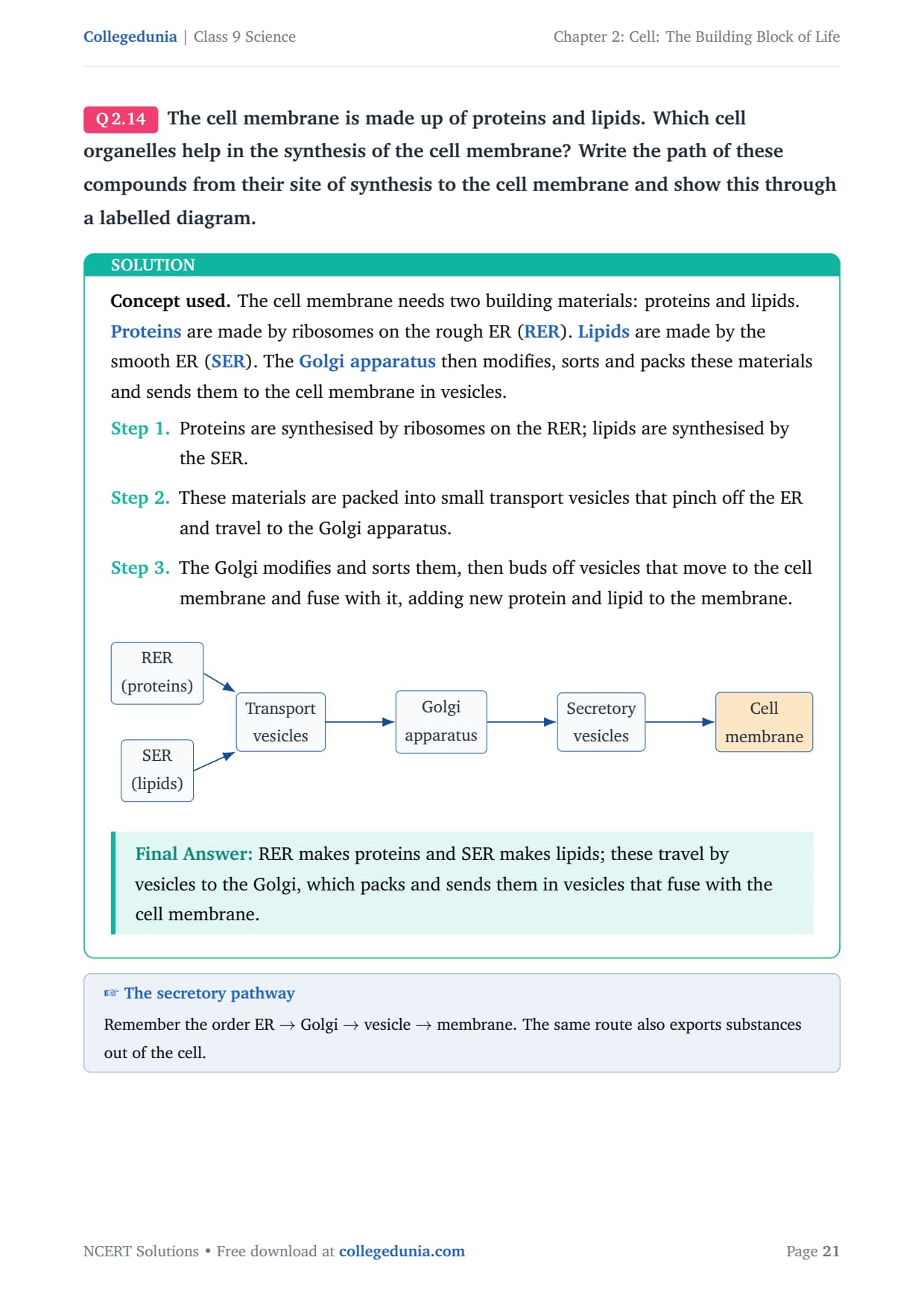
One long-answer question asks which organelles build the cell membrane and traces the path of the material. The membrane is made of proteins and lipids. Proteins come from ribosomes on the rough ER, lipids come from the smooth ER, and the Golgi packs and delivers both.
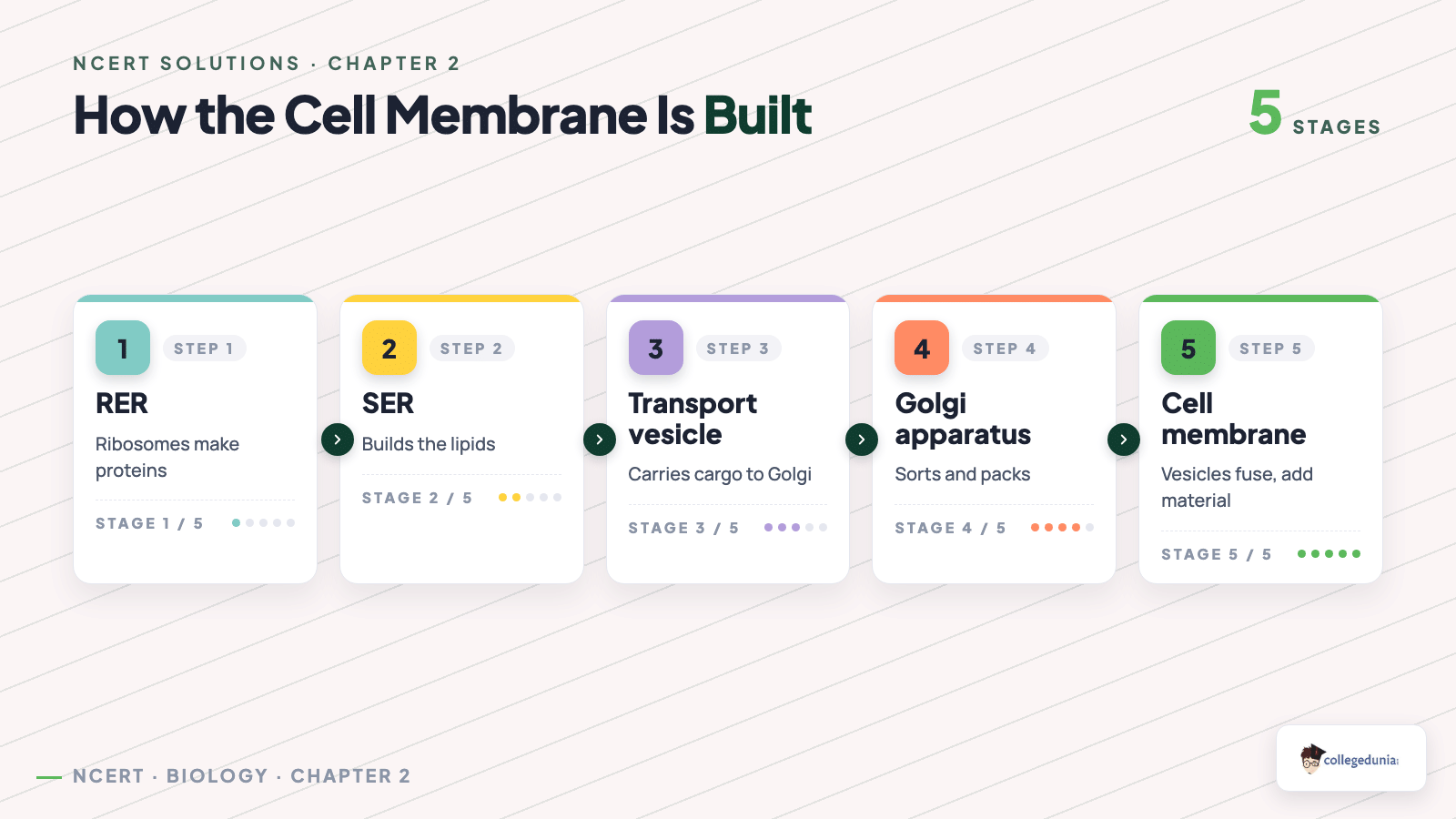
- RER makes the proteins and SER makes the lipids.
- Transport vesicles pinch off the ER and carry both to the Golgi apparatus.
- The Golgi sorts and packs the material, then buds off vesicles.
- These vesicles reach the cell membrane and fuse with it, adding new protein and lipid.
Learn the order ER to Golgi to vesicle to membrane. The same route also sends enzymes and hormones out of the cell, so it helps in many other questions.
Student Feedback on this Class 9 Science Chapter
What 12,840 students told us about their cell the building block of life journey before the 2026 boards.
- 71% of students rated the osmosis experiment questions (carrot and potato cups) as the ones they most often explained incompletely.
- 63% of students said the plant cell diagram labelling in Fig 2.20 was the fastest way to lose marks when they rushed the cell wall and membrane.
- Most-skipped topic in revision: the secretory pathway of the cell membrane, left for last by about 34% of students.
Source: 2026-27 Class 9 Science student poll. Sample of 12,840 students from CBSE schools across 14 states.
Common Mistakes Students Make in the Cell the Building Block of Life Chapter
A few slips lose easy marks in this chapter every year.
- Saying salt entered the cell in osmosis. Only water moves across the membrane, not the dissolved salt.
- Treating plastid and chloroplast as the same thing. Roots have leucoplasts, so plastids are present even without chloroplasts.
- Mixing up the cell wall and cell membrane when labelling the plant cell diagram.
- Writing that a boiled potato cup fails because sugar is missing. It fails because boiling kills the living membranes.
How to Use the NCERT Solutions Class 9 Science Chapter 2 Page
Use these solutions in three simple blocks. First read the chapter, then attempt the questions, then compare and fix the gaps.
- Read and list every organelle and its one main job from the NCERT Exploration chapter.
- Attempt all 16 questions on your own before checking any answer.
- Compare with the step-by-step solution and mark the fact-lines you missed.
Write the osmosis experiment and the membrane-pathway answers in full at least once. These cell class 9 ncert solutions follow the board's marking pattern, so each answer doubles as a revision model.
Cell the Building Block of Life Class 9 Other Resources for this Chapter
Pair the solutions with the other Class 9 Science resources for this chapter, all linked below.
| Resource | Best used for |
|---|---|
| Cell the Building Block of Life Class 9 Notes | Quick concept recap before the exam |
| Cell the Building Block of Life Class 9 Handwritten Notes | Last-minute one-shot revision |
| Cell the Building Block of Life Class 9 NCERT Book PDF | Reading the original chapter text |
All Chapters NCERT Solutions for Class 9 Science
Browse the full set of ncert solutions for class 9 science chapter by chapter.
Cell the Building Block of Life Class 9 NCERT Solutions FAQs
Ques. Where can I download the NCERT Solutions Class 9 Science Chapter 2 Cell the Building Block of Life PDF?
Ans. You can download the cell class 9 ncert solutions PDF directly from this page. Both the Normal and HD versions are free, and every answer is written in plain English for the 2026-27 session.
Ques. How many questions are solved in class 9 science chapter 2?
Ans. All 16 Revise, Reflect, Refine questions are solved. They cover MCQs, diagram labelling, compare-and-contrast, reasoning and osmosis experiments, each with a step-by-step solution and an expert version.
Ques. Is this ncert solutions for class 9 science chapter 2 page aligned with the 2026-27 syllabus?
Ans. Yes. This page follows the new 2026-27 NCERT book Exploration, where Cell the Building Block of Life is Chapter 2. Every answer is checked against that latest edition.
Ques. What is a cell?
Ans. A cell is the basic structural and functional unit of life. Every living thing is made of one or more cells, and each cell can carry out the activities needed to stay alive.
Ques. How is osmosis defined in Cell the Building Block of Life Class 9?
Ans. Osmosis is the movement of water across a selectively permeable membrane, from a dilute solution (more water) to a concentrated solution (less water). It explains why cells swell in pure water and shrink in salt solution.
Ques. What is the difference between a plant cell and an animal cell?
Ans. A plant cell has a cell wall, a large central vacuole and plastids such as chloroplasts. An animal cell has none of these three. Both share a cell membrane, nucleus, mitochondria, ER and Golgi.
Ques. Which cell organelles contain DNA?
Ans. DNA is found in the nucleus, and in small amounts in mitochondria and chloroplasts. That is why mitochondria and chloroplasts are called semi-autonomous organelles. Ribosomes, Golgi bodies and lysosomes do not carry DNA.



Comments