




The NCERT Solutions for Class 6 Social Science Chapter 12 Grassroots Democracy Part 3: Local Government in Urban Areas cover every textbook question for 2026-27. The answers explain urban local bodies, city services, wards and citizen participation in simple words.
- Compare Nagar Panchayats, Municipal Councils and Municipal Corporations.
- Learn how wards and elected councillors represent city residents.
- Write clear answers about services, taxes and public participation.
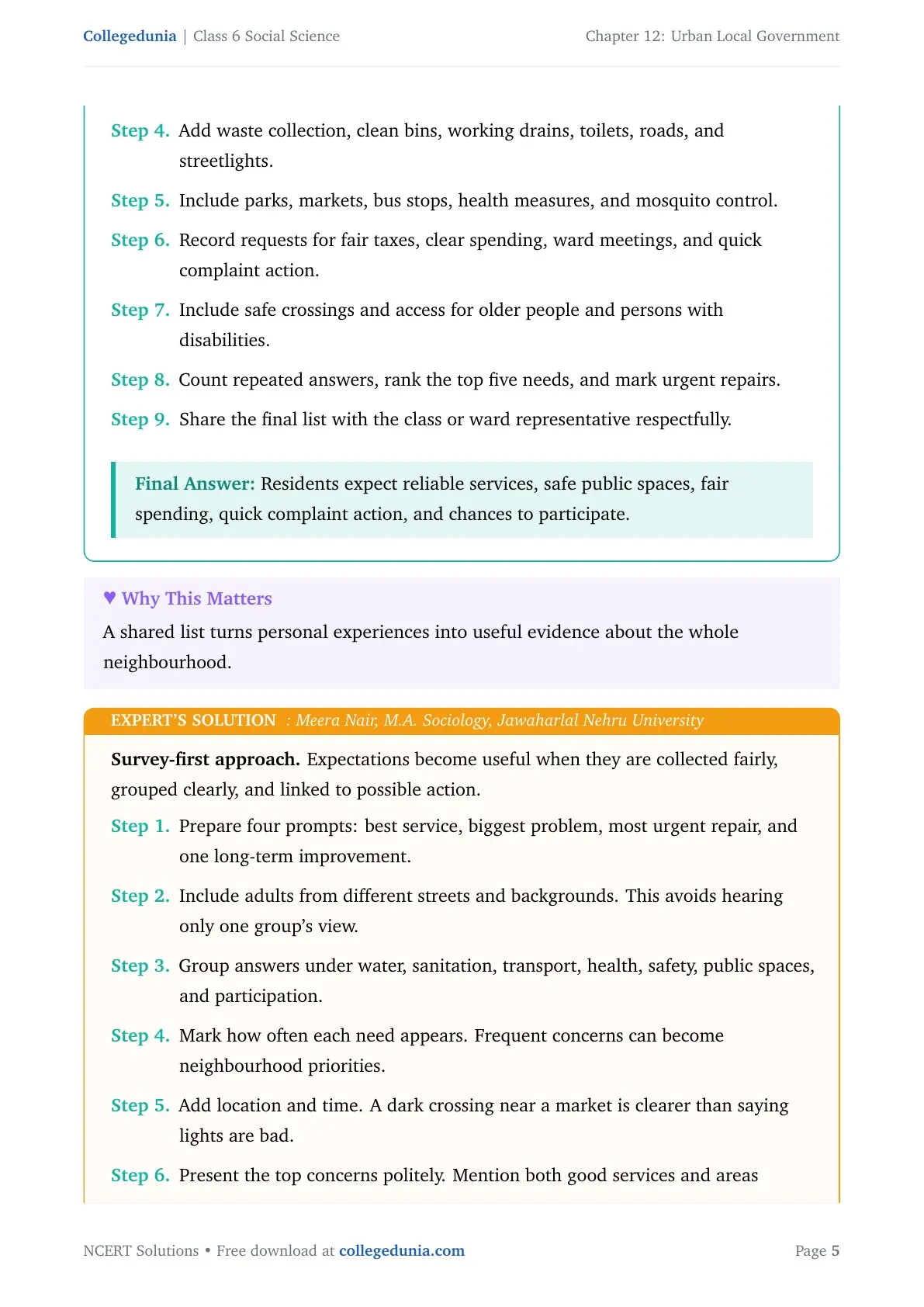
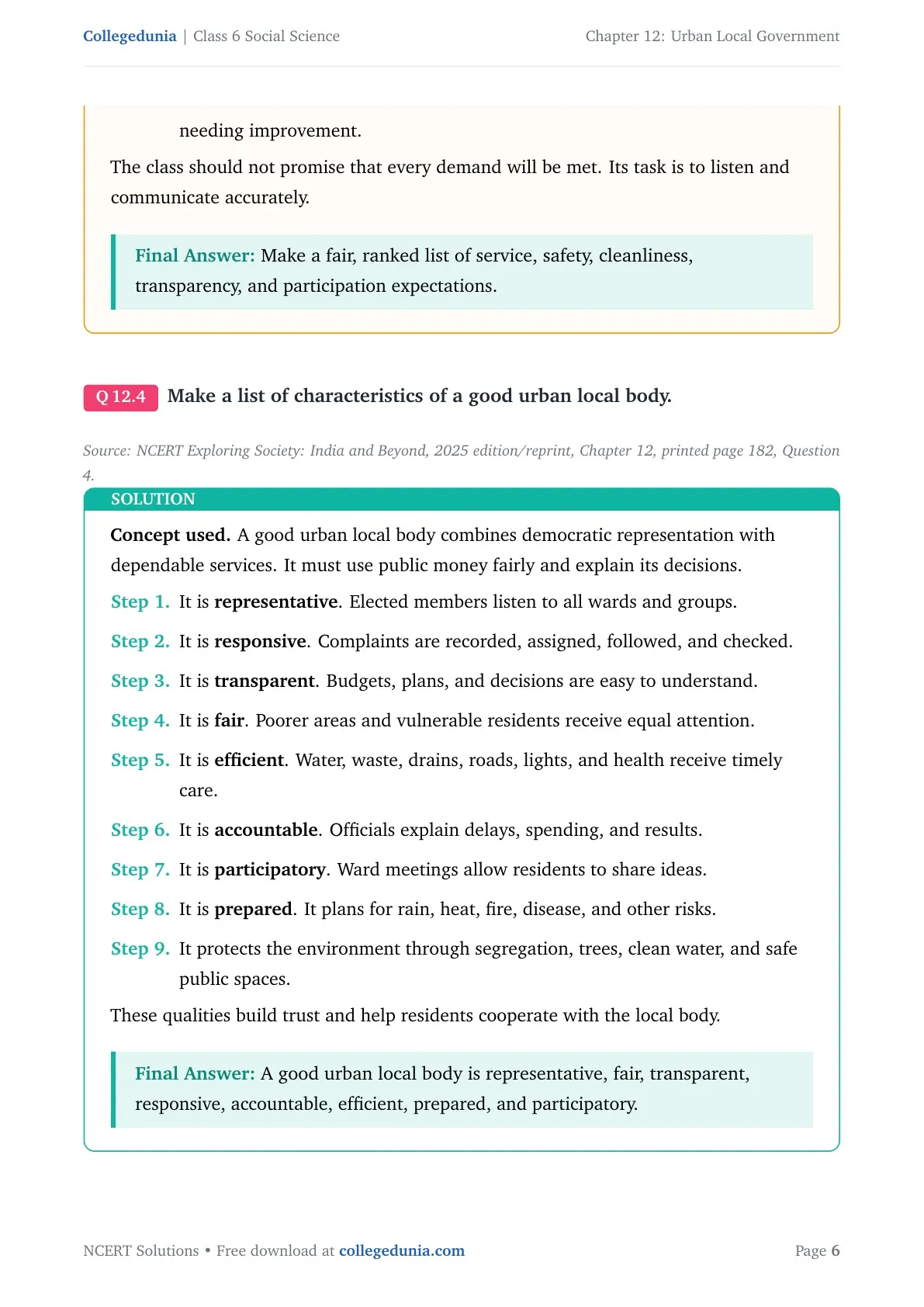
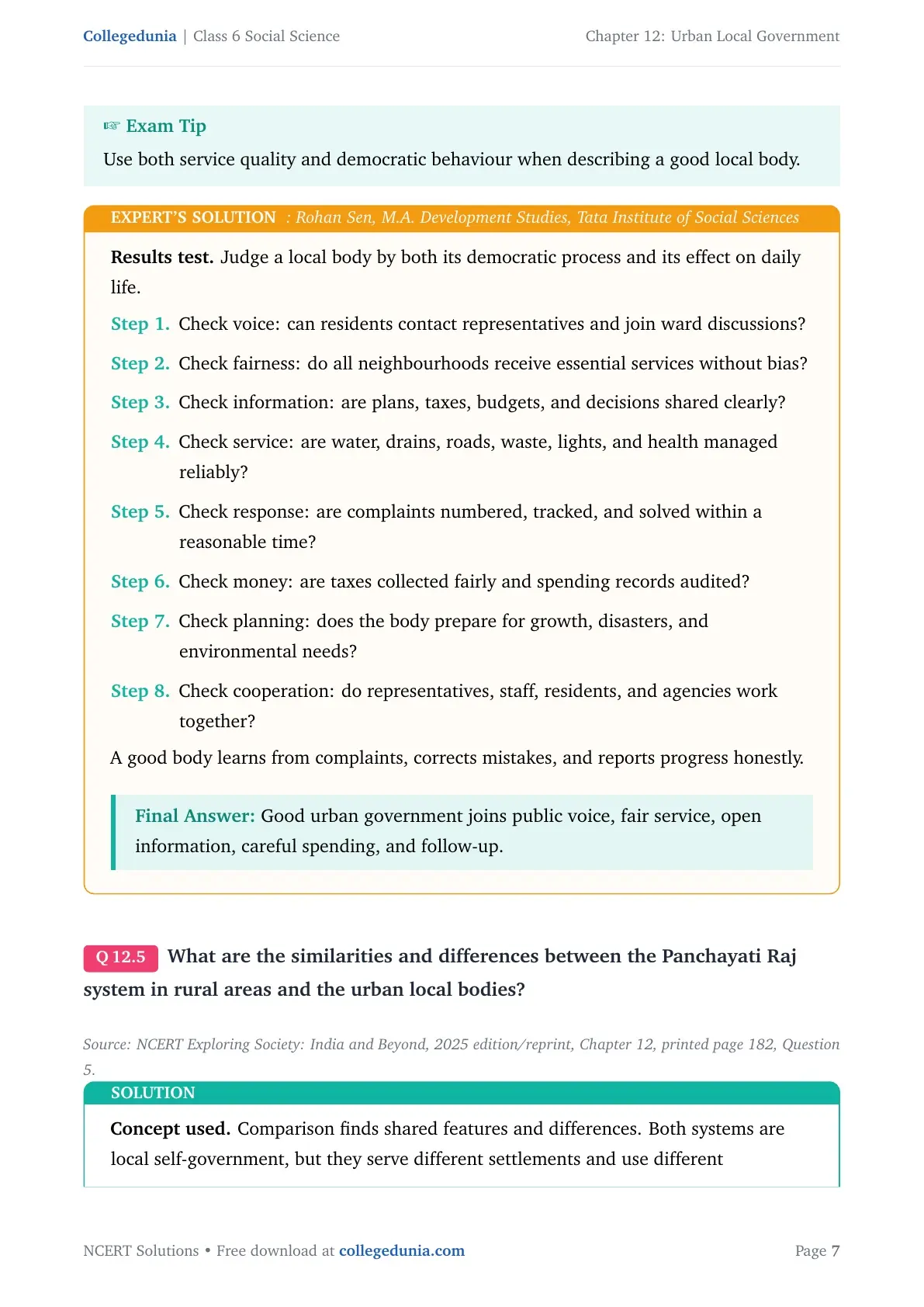
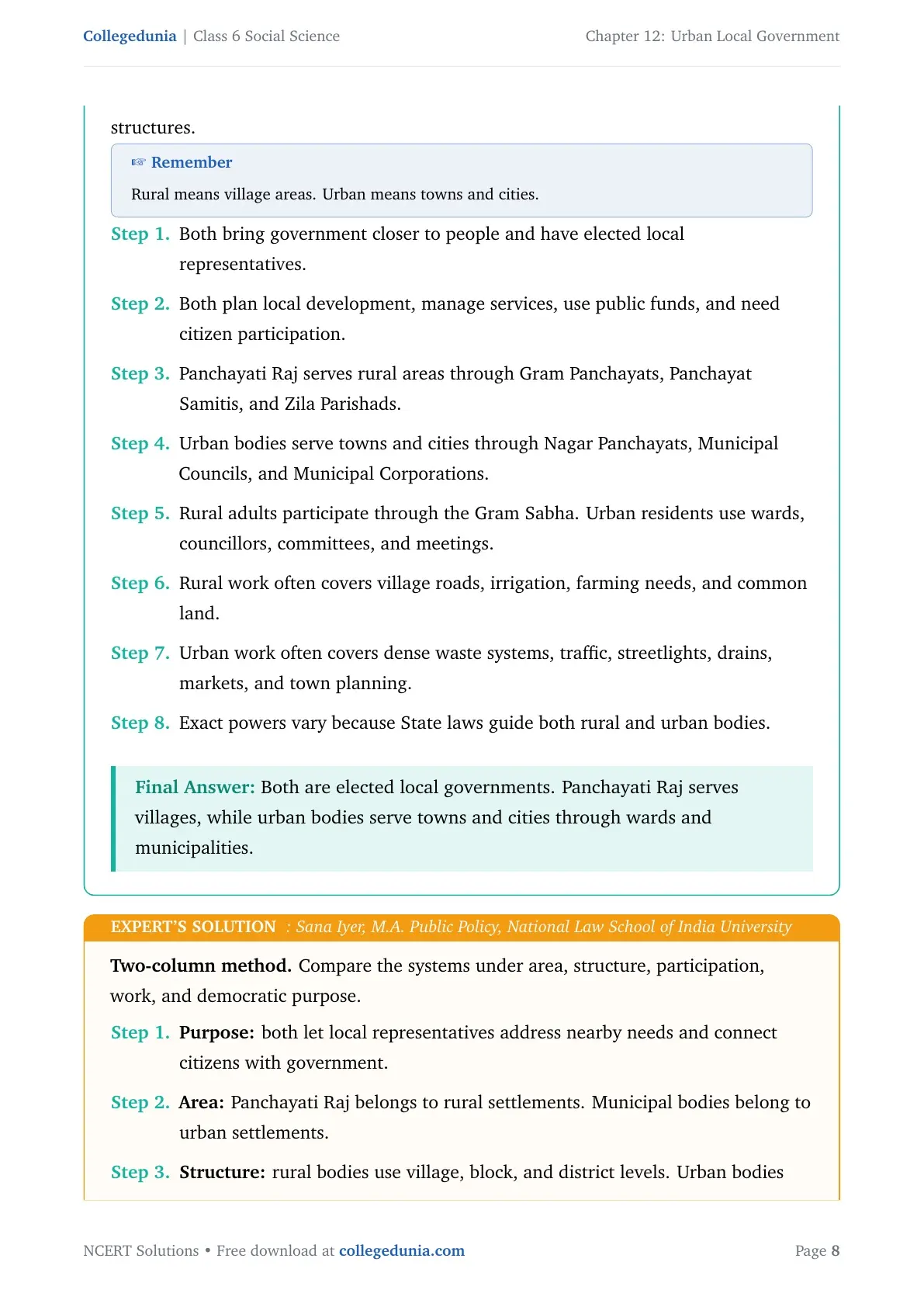
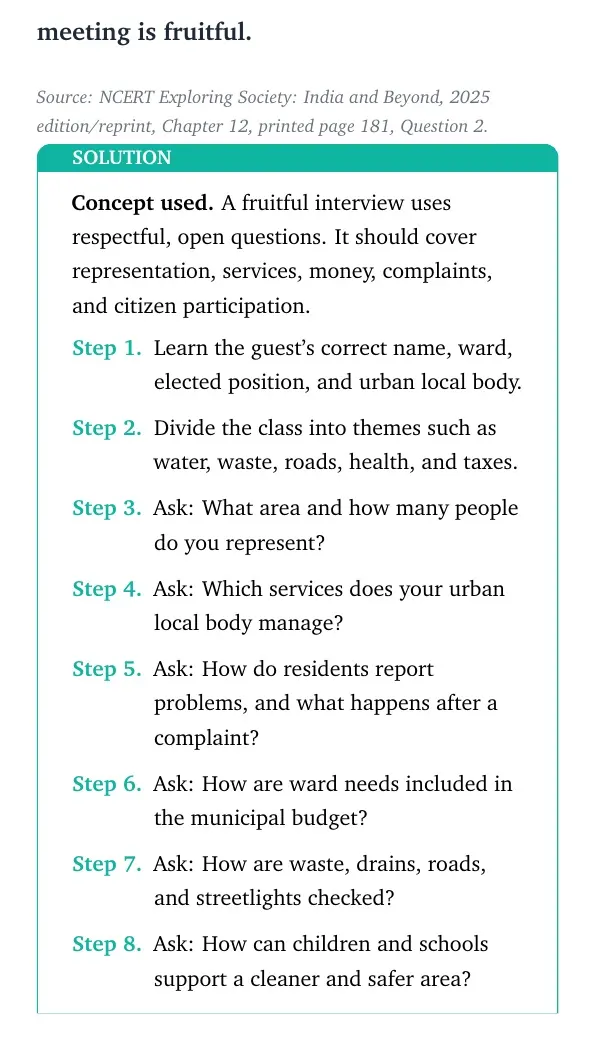
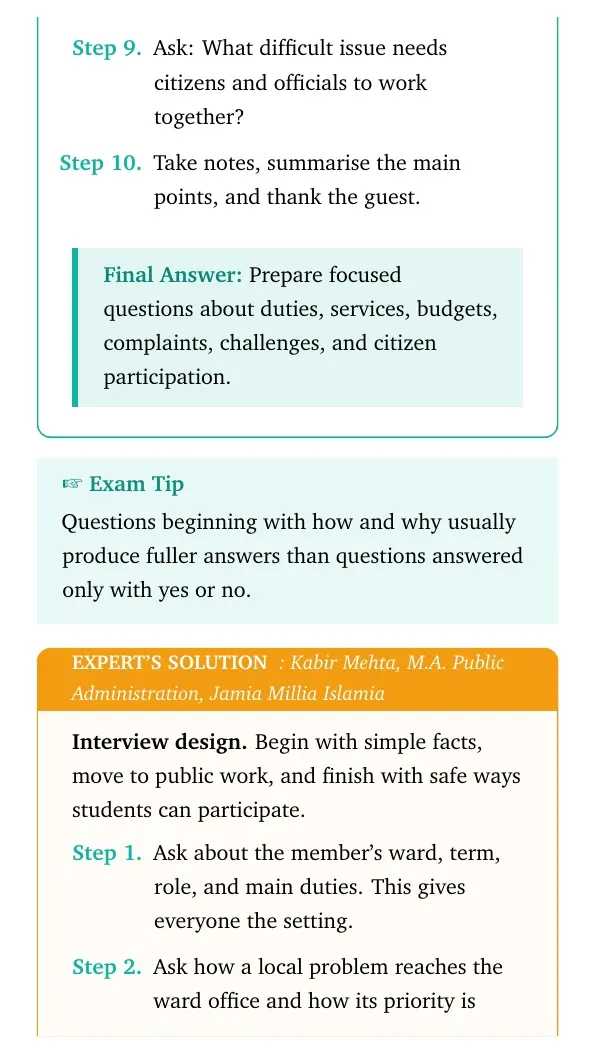
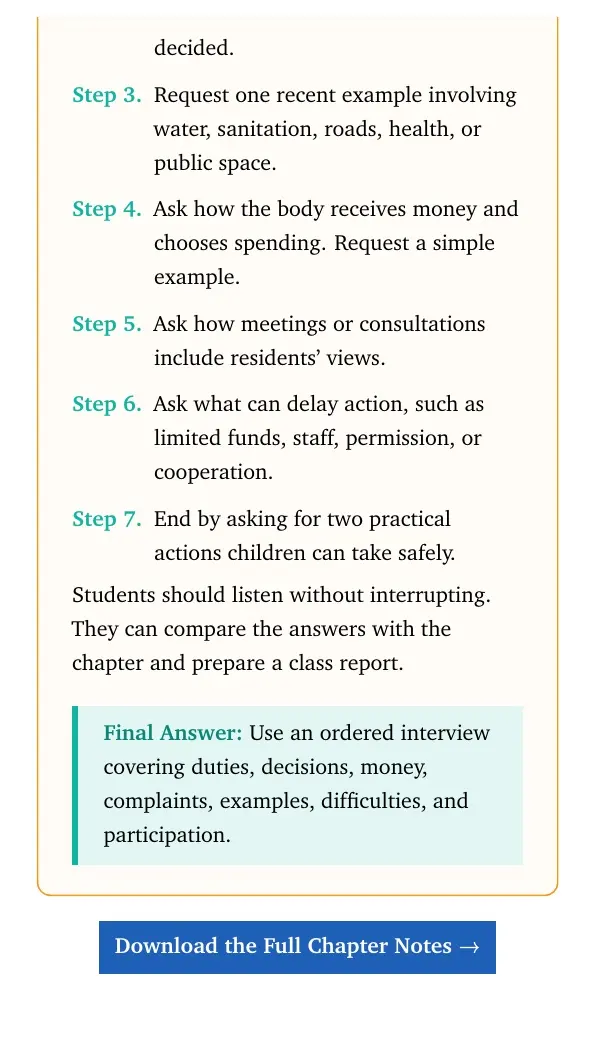
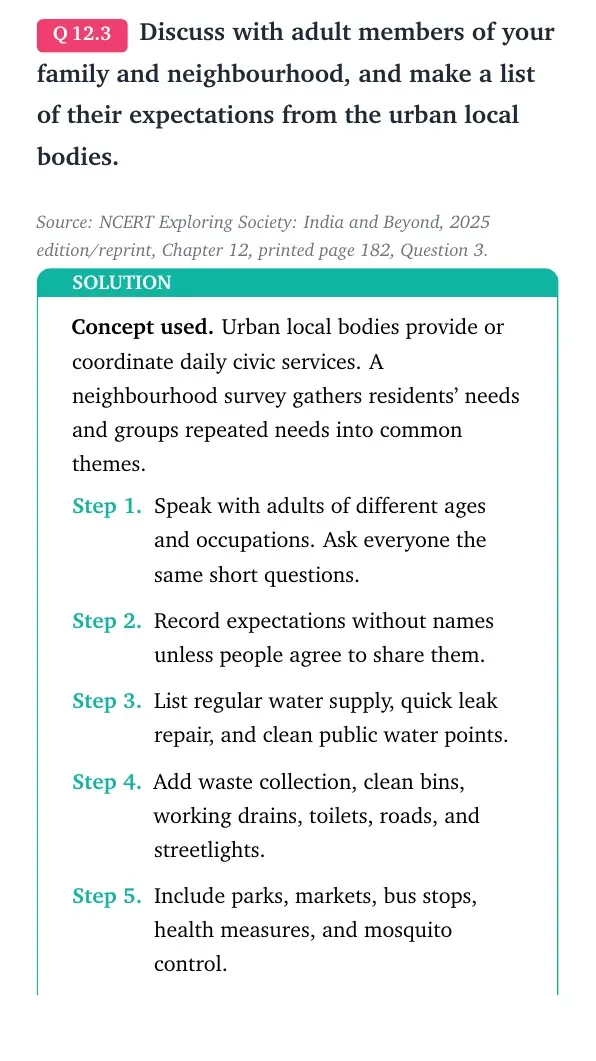
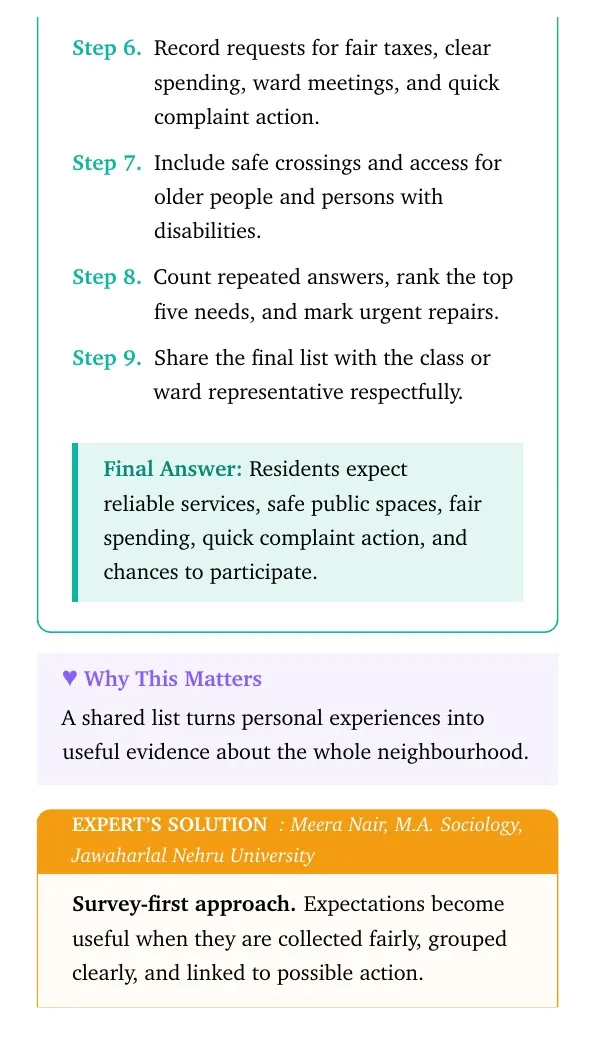
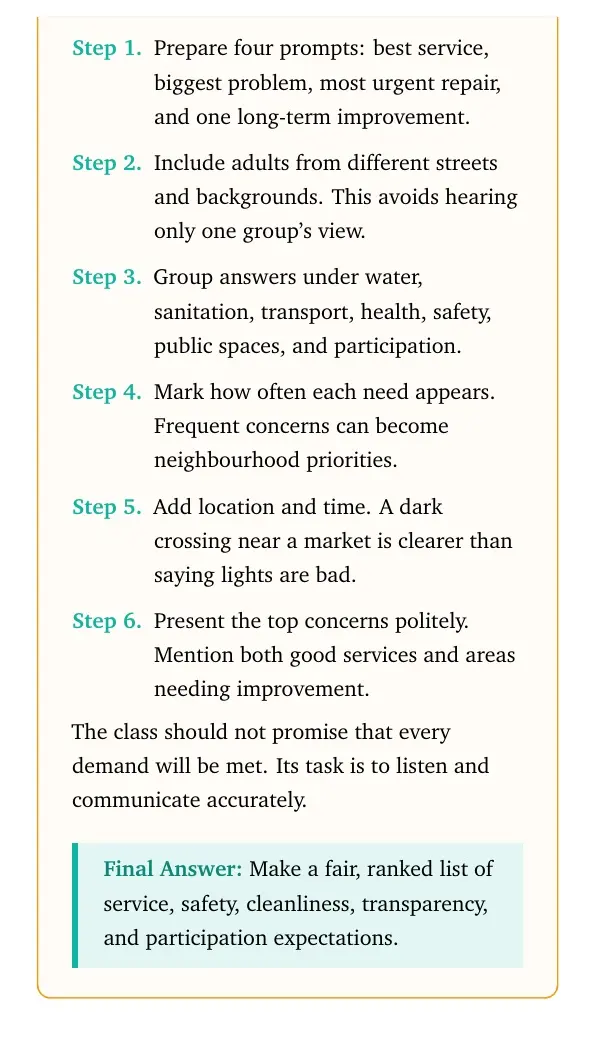
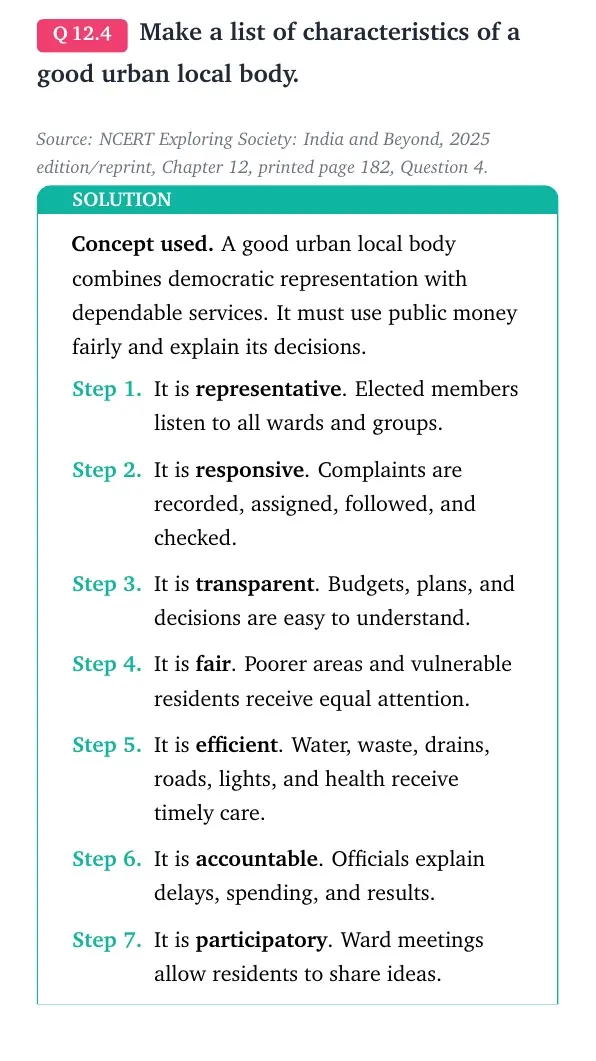
Each Collegedunia answer follows the 2026-27 NCERT textbook and uses language suitable for Class 6 students.
Student Feedback
In a Collegedunia study poll of 12,780 students, most students found the urban local body comparison table useful for revision.
Urban Local Government and the Work It Does
Urban local government manages many services that people use every day. It works close to residents, so local needs can reach elected representatives quickly.
- Maintains roads, streetlights, parks and public spaces.
- Supports water supply, drains, sanitation and waste collection.
- Records births and deaths in many urban areas.
- Plans improvements as a town or city grows.
Urban local bodies connect everyday city problems with local planning and public money. State governments set the rules under which these bodies work.
Urban Local Government Explained for Class 6
Source: Magnet Brains on YouTube
Nagar Panchayat, Municipal Council and Municipal Corporation Compared
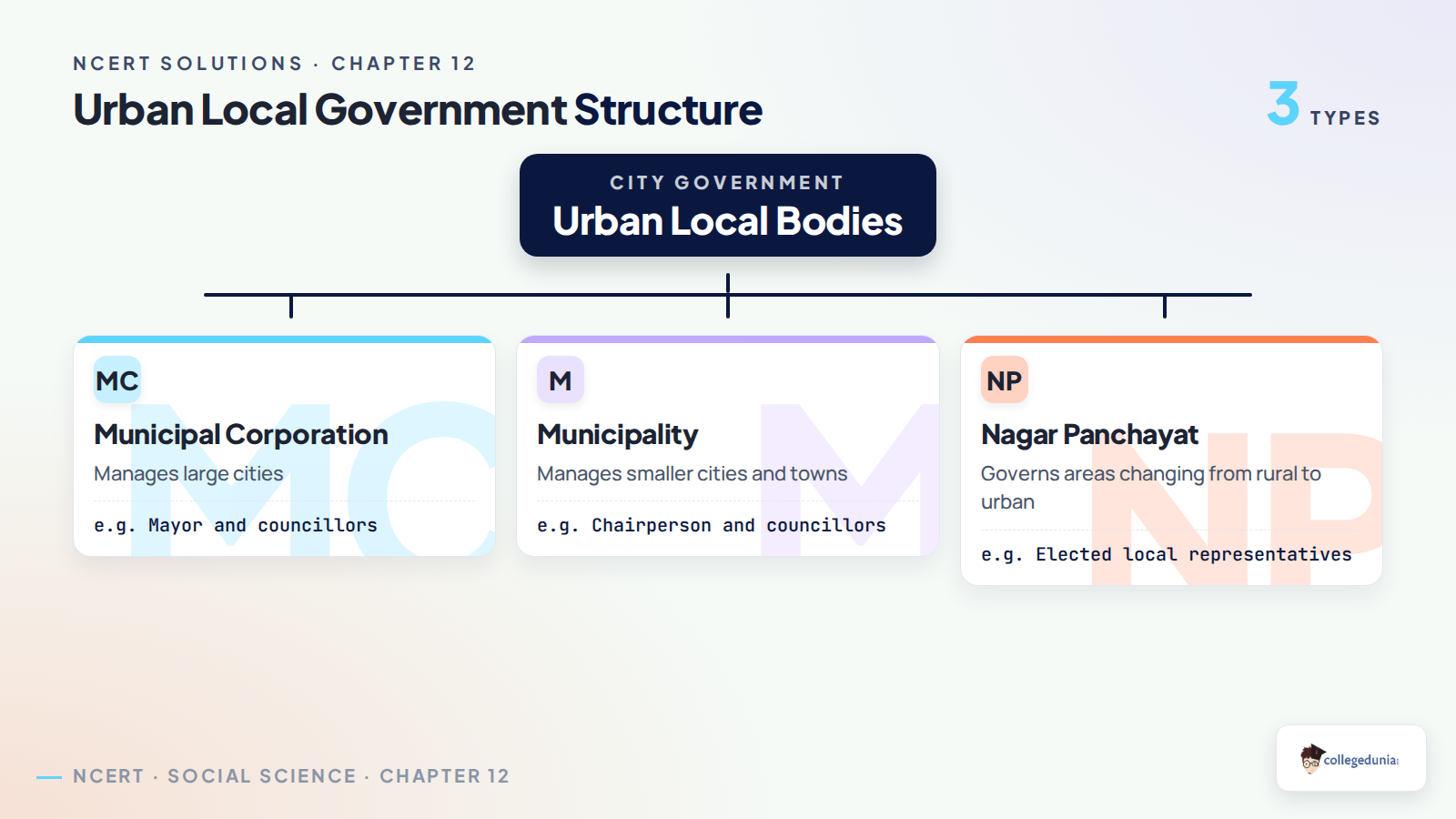
Different urban areas need different local bodies. The exact names and rules can vary by state, but NCERT presents three broad types.
| Urban local body | Area usually served | Typical need |
|---|---|---|
| Nagar Panchayat | An area changing from rural to urban | New roads, drains and growing markets |
| Municipal Council | A smaller town or city | Town services and local planning |
| Municipal Corporation | A large city | Services across many wards and neighbourhoods |
Population is not the only factor used everywhere. State laws may also consider density, income and the nature of local work.
Wards, Councillors and Committees in Urban Areas
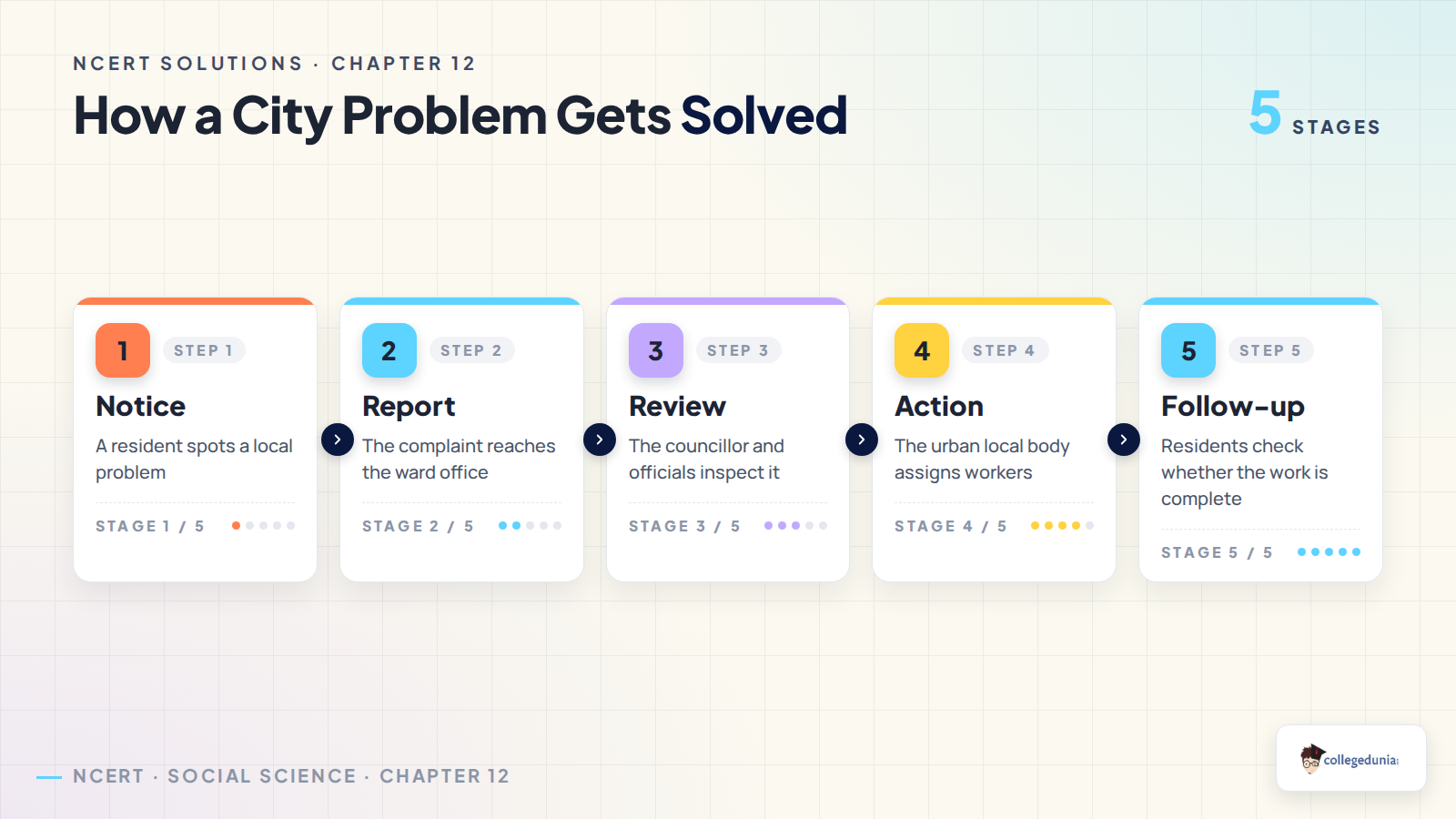
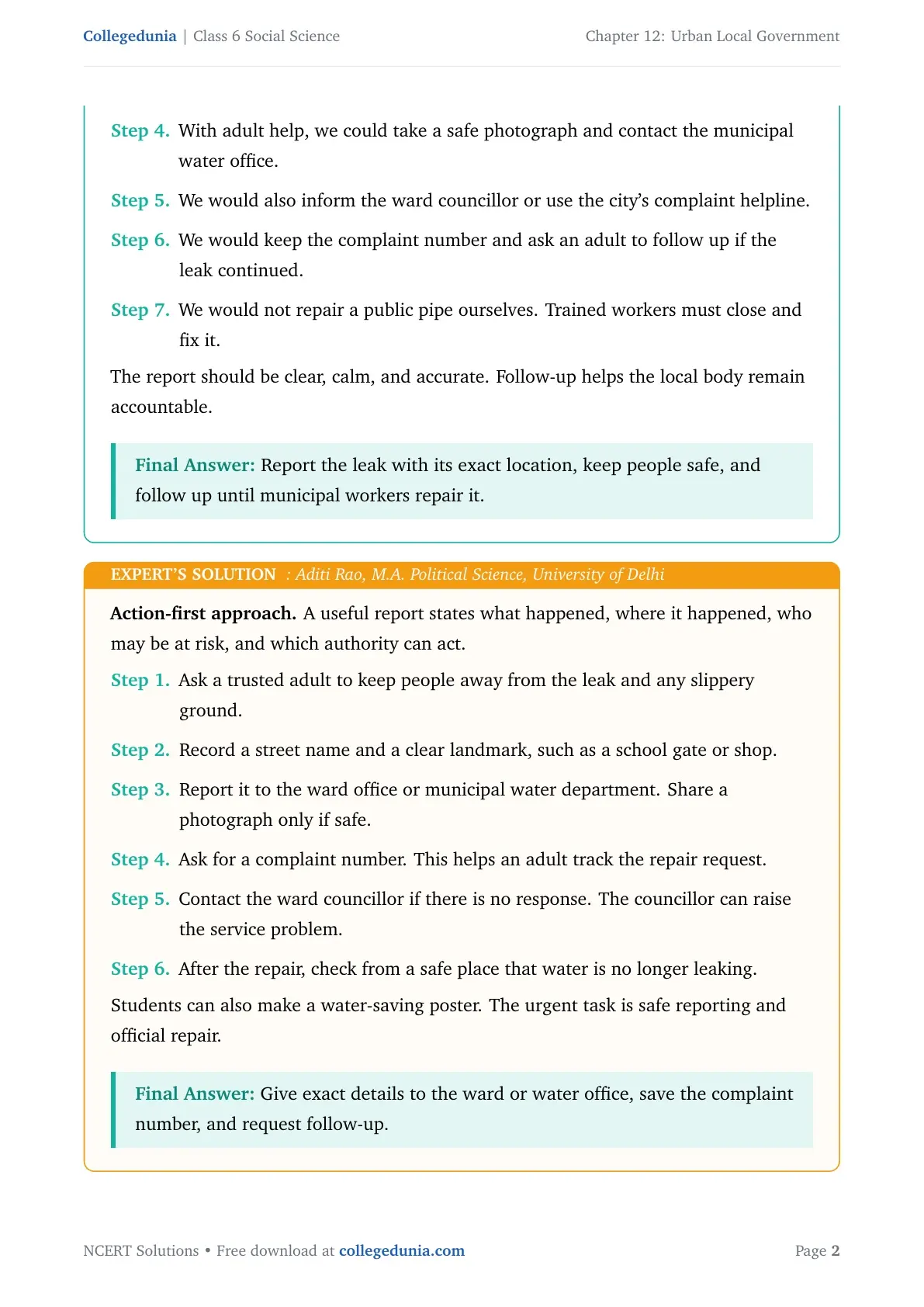
A town or city is divided into wards for elections. Residents elect a councillor from each ward. Councillors raise local needs and help take decisions for the wider urban area.
- Residents report a problem in their street or neighbourhood.
- The ward councillor brings the issue to the local body.
- A committee or department studies the work and cost.
- The urban local body sets priorities within its budget.
- Officials arrange the approved work and monitor it.
A councillor represents a ward, while officials carry out many approved plans and services. Both roles matter, but they are not the same.
How Cities Pay for Roads, Water and Waste Collection
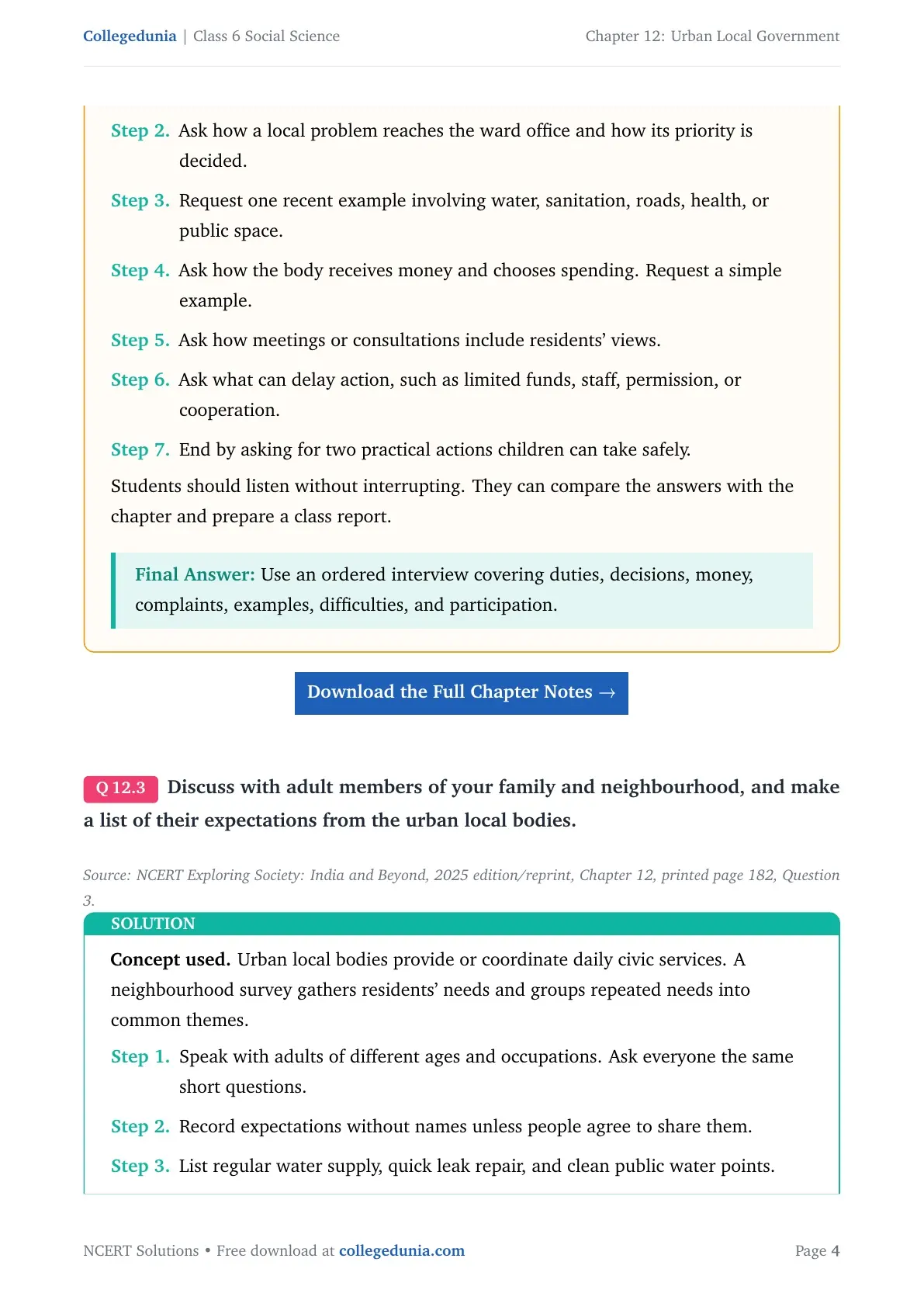
Urban services need workers, vehicles, materials and repairs. Local bodies use public money to meet these costs. Their income can come from taxes, fees and government grants.
| Source or action | Why it matters |
|---|---|
| Local taxes | Help pay for shared services and maintenance |
| User fees | Support certain local facilities or services |
| Government grants | Help fund projects that need more money |
| Public budget | Shows how available money will be used |
Citizens also have duties. They should use public spaces responsibly, follow local rules and report service problems clearly.
Citizen Participation Makes Urban Government Answerable
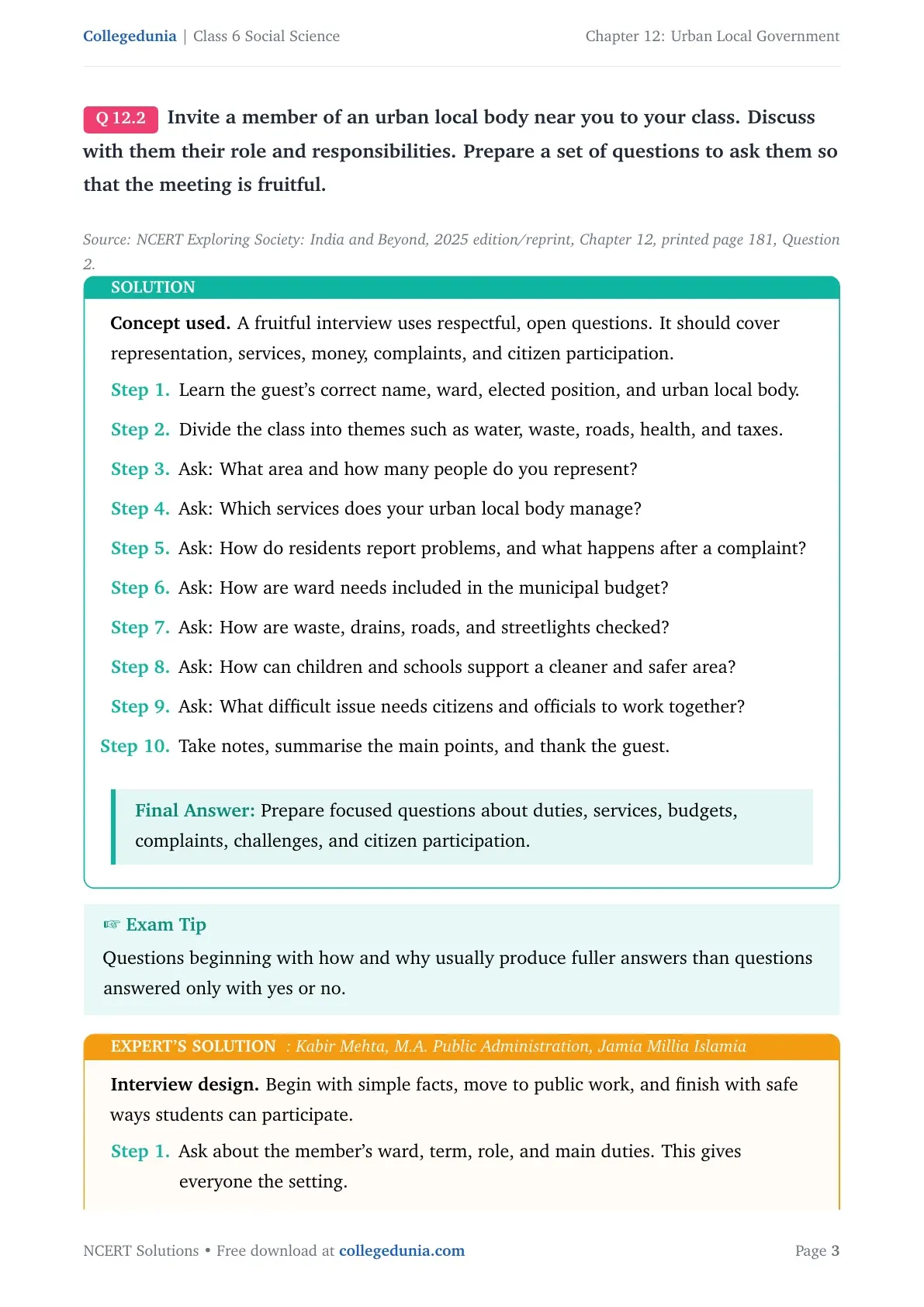
Voting is one way to take part in local government. Residents can also attend meetings where allowed, contact councillors and work with neighbourhood groups.
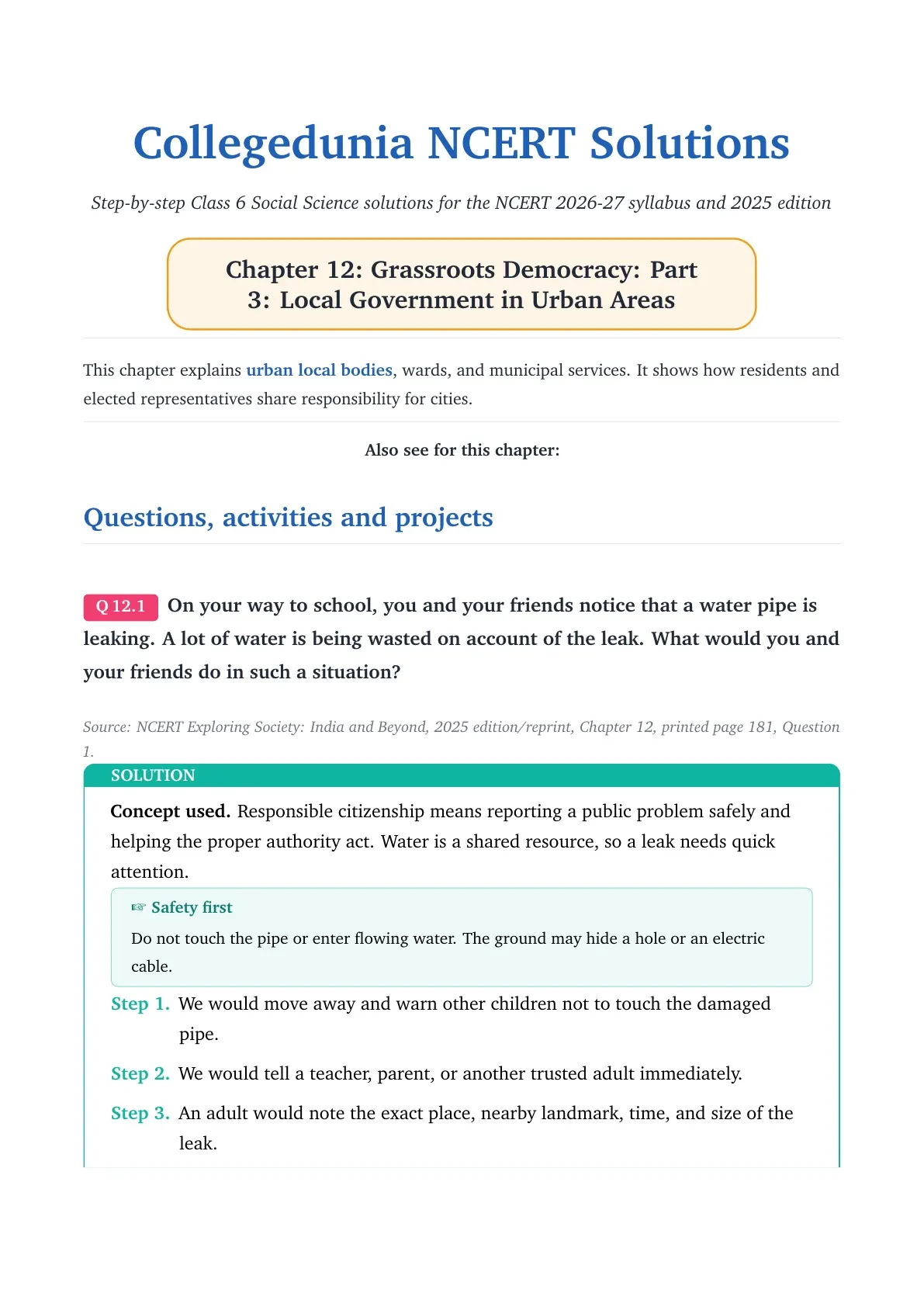
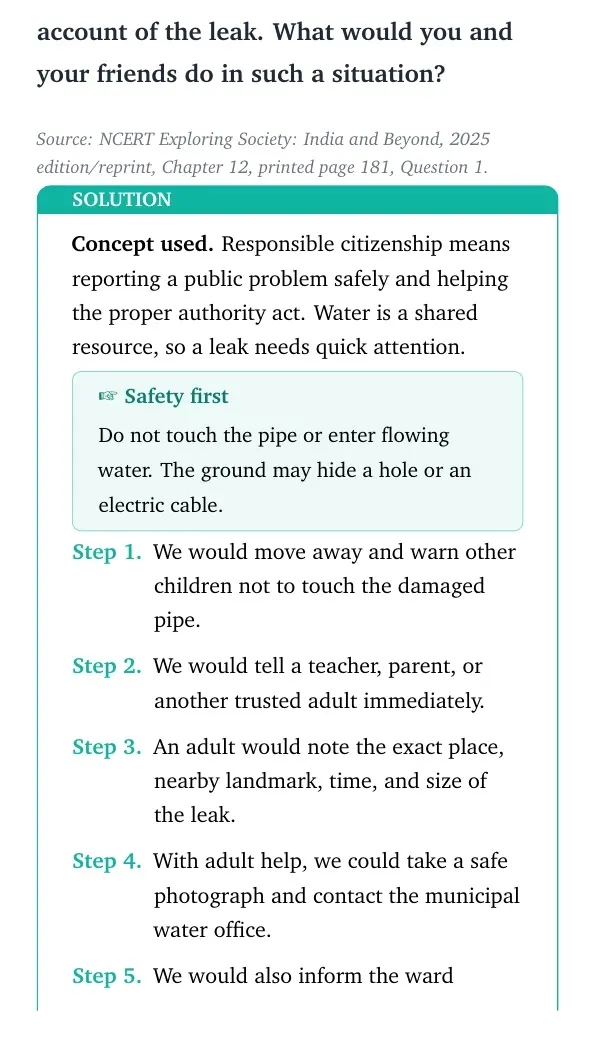
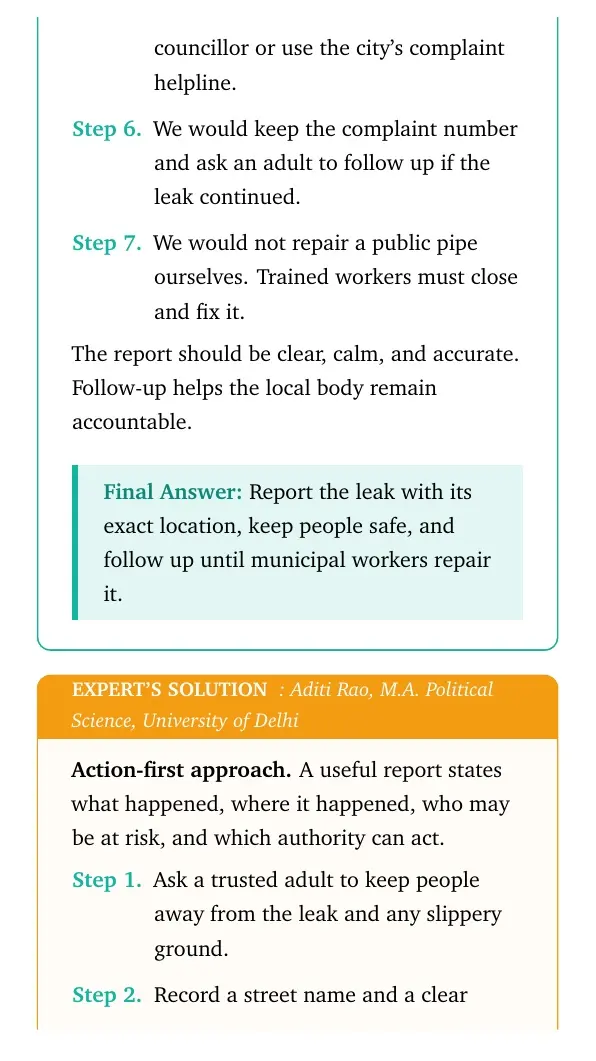
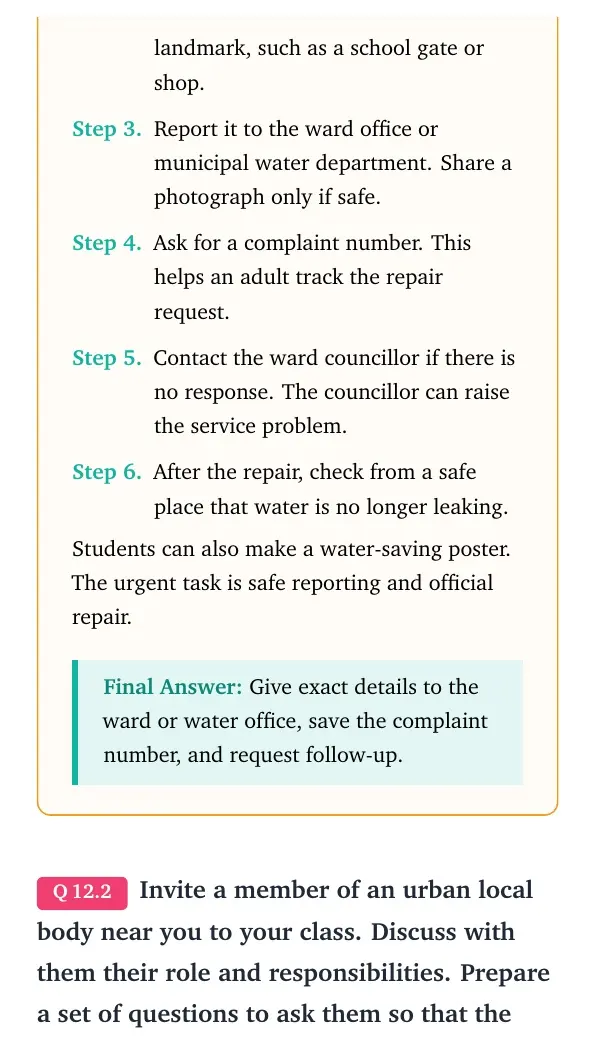
- Report a leaking pipe with the exact location.
- Separate household waste according to local rules.
- Ask how a public project uses its budget.
- Join a neighbourhood effort to protect a park.
Good urban government needs both responsible institutions and active citizens. Complaints work better when they include facts, location and a clear request.
How to Write Better Local Government in Urban Areas Answers
Start with the correct institution or role. Explain what it does, then add a simple urban example. Use a comparison table when the question asks about different bodies.
- Do not confuse a ward councillor with a government official.
- Name the three urban local bodies in the correct context.
- Link taxes and fees with the services they support.
- Explain citizen participation with one practical example.
Local Government in Urban Areas Class 6 Related Resources
Read the official chapter before using the answers. The textbook activities show how local services affect everyday life.
| Resource | Best use |
|---|---|
| Local Government in Urban Areas Class 6 NCERT Book PDF | Read the official chapter and activities |
All Class 6 Social Science NCERT Solutions
Use the neighbouring chapters to connect families, governance, rural institutions and urban local bodies.
| Chapter | NCERT Solutions |
|---|---|
| 9 | Family and Community |
| 10 | Grassroots Democracy Part 1: Governance |
| 11 | Grassroots Democracy Part 2: Local Government in Rural Areas |
| 12 | Grassroots Democracy Part 3: Local Government in Urban Areas |
Open all Local Government in Urban Areas questions with step-by-step solutions
Grassroots Democracy Part 3: Local Government in Urban Areas Social Science NCERT Solutions FAQs
Ques. What is an urban local body?
Ans. An urban local body is an elected institution that manages local services and planning in a town or city.
Ques. What are the three main types of urban local bodies?
Ans. The three broad types are Nagar Panchayat, Municipal Council and Municipal Corporation.
Ques. What is a ward?
Ans. A ward is a smaller election area within a town or city. Residents elect a councillor to represent it.
Ques. What work does a Municipal Corporation do?
Ans. It manages services such as roads, sanitation, waste collection, water systems, parks and planning in a large city.
Ques. How do urban local bodies get money?
Ans. They can receive money from local taxes, fees and government grants, according to the rules of the state.
Ques. How can citizens take part in urban local government?
Ans. Citizens can vote, contact councillors, report problems, join local meetings where allowed and care for public spaces.



Comments