




The class 11 biology NCERT solutions chapter 9 Biomolecules cover every back-exercise question, according to the latest 2026-27 CBSE syllabus, and help students prepare for the CBSE Boards, NEET and CUET. Each answer is worked step by step, from the acid-soluble and acid-insoluble pools to the four levels of protein structure, the composition of a triglyceride, and the properties of enzymes.
This chapter turns the cell of the previous chapter into chemistry, and the biomolecules named here reappear in photosynthesis, respiration and every metabolic pathway that follows.
- CBSE Weightage: part of the Cell: Structure and Functions unit worth 15 marks, with this chapter typically carrying 3 to 4 marks.
- Topics covered: macromolecules, amino acids and proteins, the four levels of protein structure, carbohydrates and gums, lipids and triglycerides, nucleic acids, and enzymes and their properties.
- Exercise count: 11 back-exercise questions, mostly descriptive, several asking students to find out structures, tests or examples for themselves.
These class 11 biology NCERT solutions chapter 9 Biomolecules are curated by subject experts, based on the 2026-27 NCERT textbook, and checked against the last five years of CBSE Board and NEET papers.
Why Biomolecules Matters and What the Chapter Covers
Every structure in the cell is made of a handful of chemical classes, and this chapter names them, sizes them and sorts them. It begins with a single experiment, grinding a tissue with acid and filtering it, and from that one procedure it derives the whole scheme of small and large biomolecules that runs through the rest of biology.
- Foundational role: the amino acids, sugars, fatty acids and nucleotides named here are the monomers of the proteins, polysaccharides, lipids and nucleic acids used everywhere in the course.
- Core skill: classifying a molecule as a micromolecule or a macromolecule, and drawing the basic structures of alanine, glycerol and a triglyceride.
- Why it is high-yield: proteins, enzymes and the acid-soluble pool are among the most repeated topics in NEET.
Enzymes and protein structure alone account for several NEET questions every year, so this chapter repays careful drawing and precise definitions. Students who fix the difference between a monomer and a polymer here find the metabolic chapters much easier to follow. The class 11 biology NCERT solutions chapter 9 Biomolecules below follow the same order as the NCERT textbook so students can check their working line by line.
Macromolecules and the Acid-Soluble versus Acid-Insoluble Pools
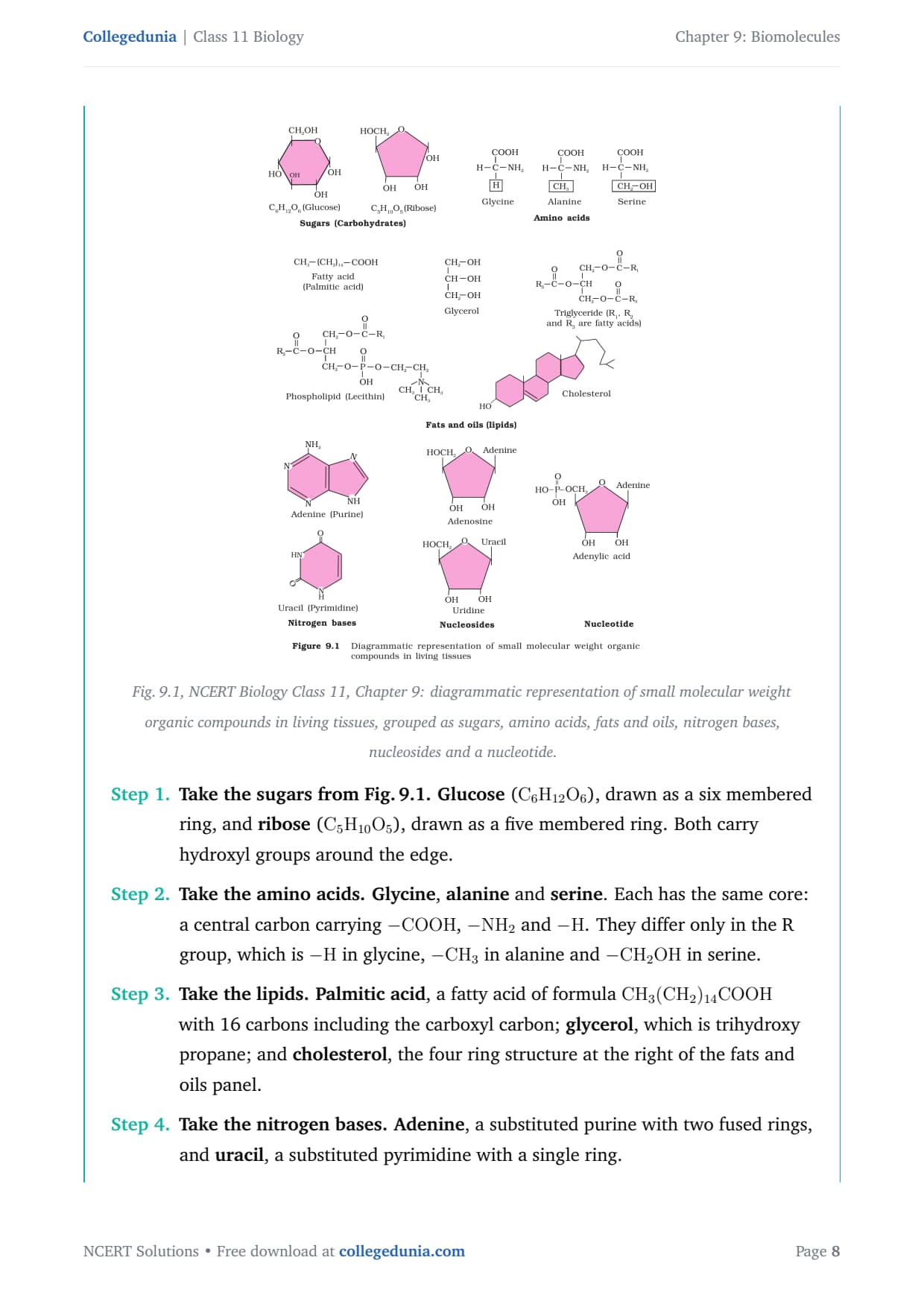
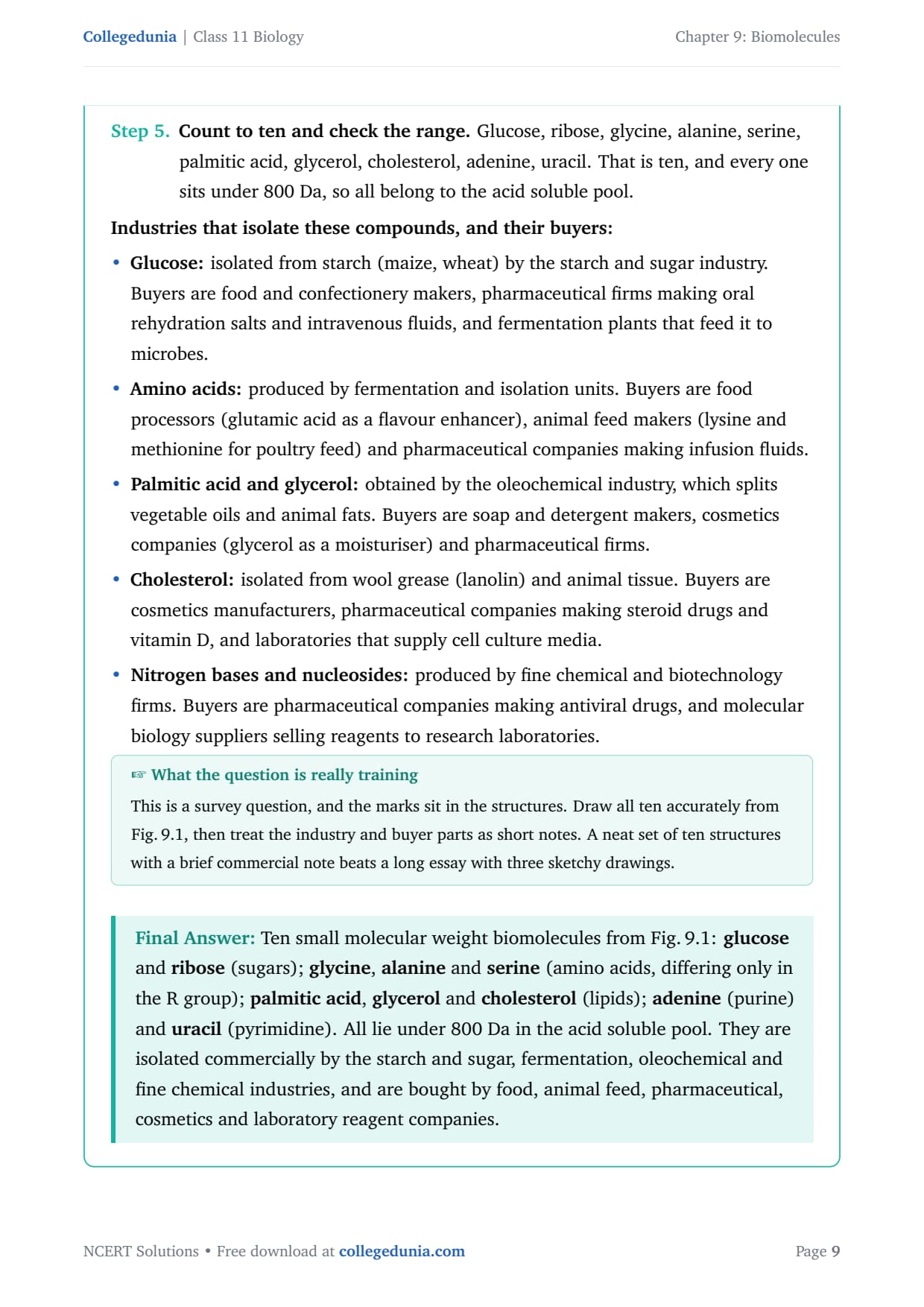
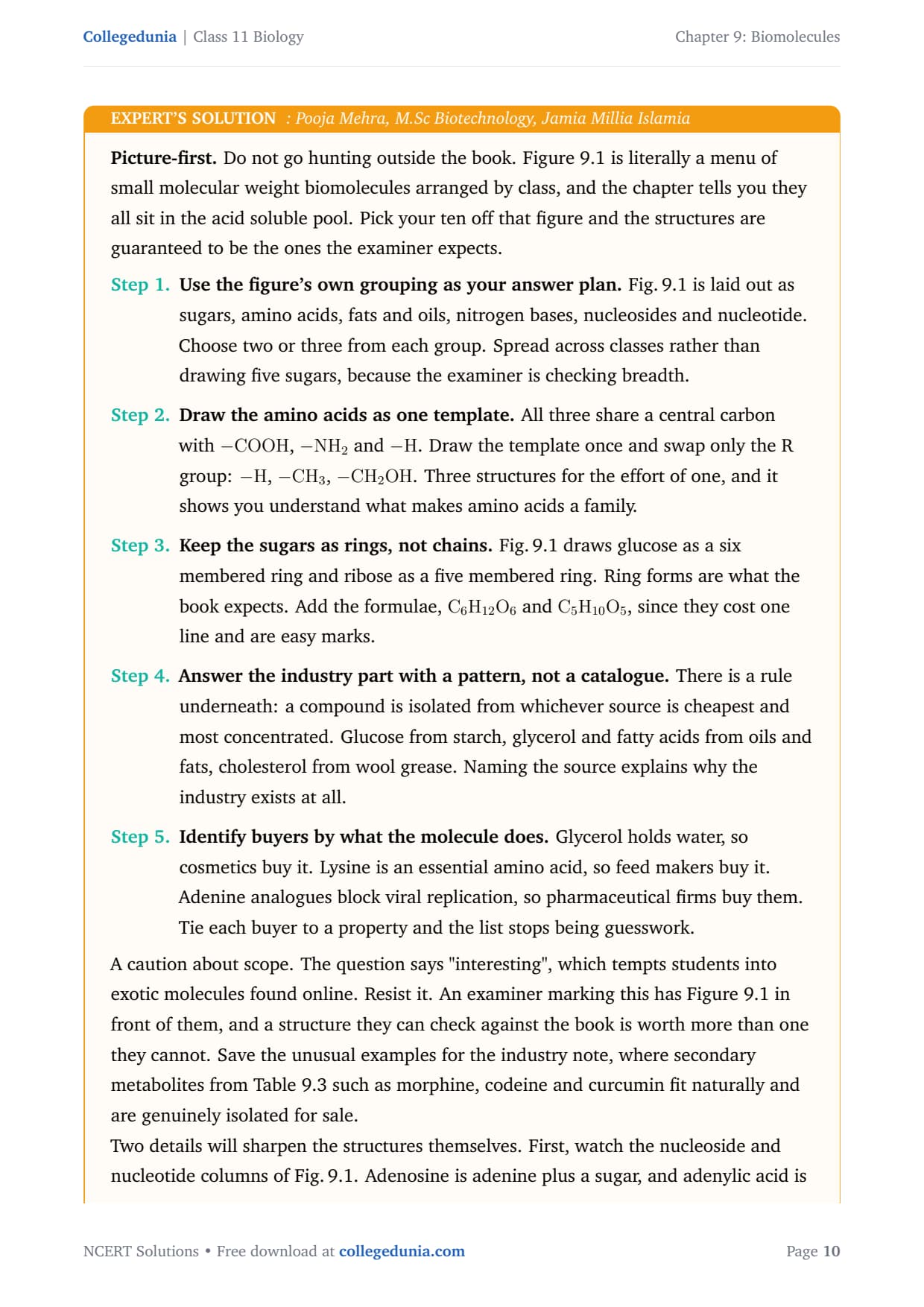
Question 1 asks what macromolecules are, and Question 3 asks students to find ten small molecular weight biomolecules from the chapter's own figure. Both rest on one experiment. Grind a tissue with acid and filter it: what passes through is the acid-soluble pool of molecules from 18 to 800 daltons, and what stays behind is the acid-insoluble pool.
| Pool | Molecular weight | Examples |
|---|---|---|
| Acid-soluble (micromolecules) | 18 to 800 Da | Glucose, ribose, amino acids, fatty acids, nucleotides |
| Acid-insoluble (macromolecules) | 10,000 Da and above | Proteins, nucleic acids, polysaccharides |
| Lipids (special case) | Under 800 Da | Separate with the insoluble pool as membrane vesicles |
Macromolecules are the polymers of the acid-insoluble fraction, built by joining many small units until the weight climbs into the tens of thousands. Proteins, nucleic acids and polysaccharides are the true macromolecules, while lipids report to the insoluble pool only because grinding shatters membranes into insoluble vesicles, so NCERT says lipids are not strictly macromolecules. For Question 3, ten small biomolecules from the figure are glucose and ribose (sugars), glycine, alanine and serine (amino acids), palmitic acid, glycerol and cholesterol (lipids), and adenine and uracil (nitrogen bases), all under 800 Da.
Proteins and the Four Levels of Structure
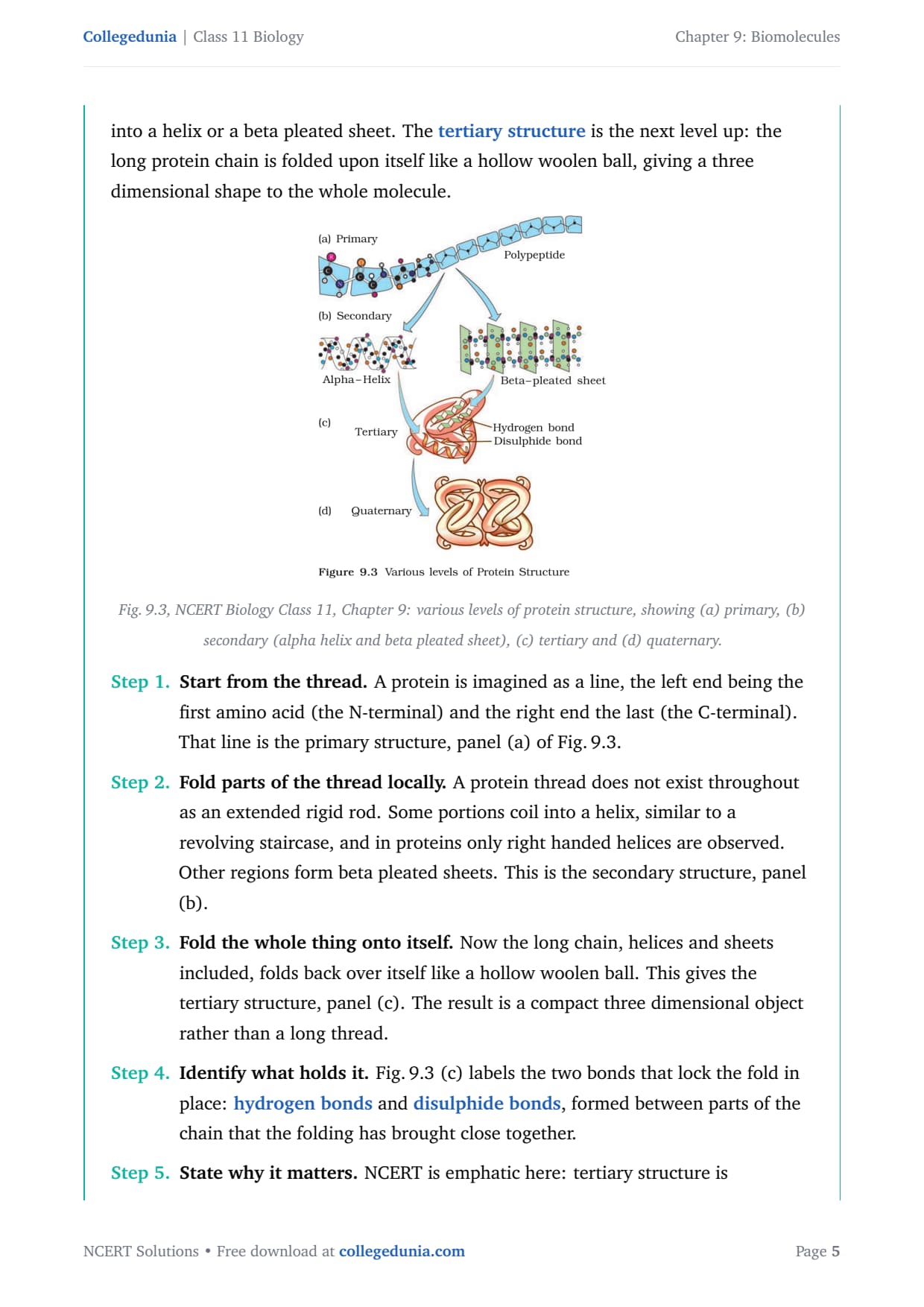
Question 2 asks what is meant by the tertiary structure of proteins, and the safest answer builds all four levels first so the third has a place to sit. A protein is a heteropolymer of the twenty kinds of amino acid, and biologists describe its shape at four levels, each folding the one below.
- Primary structure: the sequence of amino acids, that is, which one is first, which is second, from the N-terminal to the C-terminal.
- Secondary structure: local folding of parts of the thread into a right-handed helix or a beta pleated sheet.
- Tertiary structure: the whole long chain folded upon itself like a hollow woollen ball, giving a compact three dimensional shape.
- Quaternary structure: the arrangement of two or more folded chains, as in the four subunits of haemoglobin.
The tertiary structure is held in place by hydrogen bonds and disulphide bonds, and NCERT calls it absolutely necessary for the many biological activities of proteins. The folding is what creates the crevices and pockets that let a protein bind its target, so a denatured, unfolded protein cannot work. This is why heat, which unfolds proteins, destroys their activity, and it is the reasoning students need for the enzyme questions later in the chapter.
Amino Acids and the Structure of Alanine
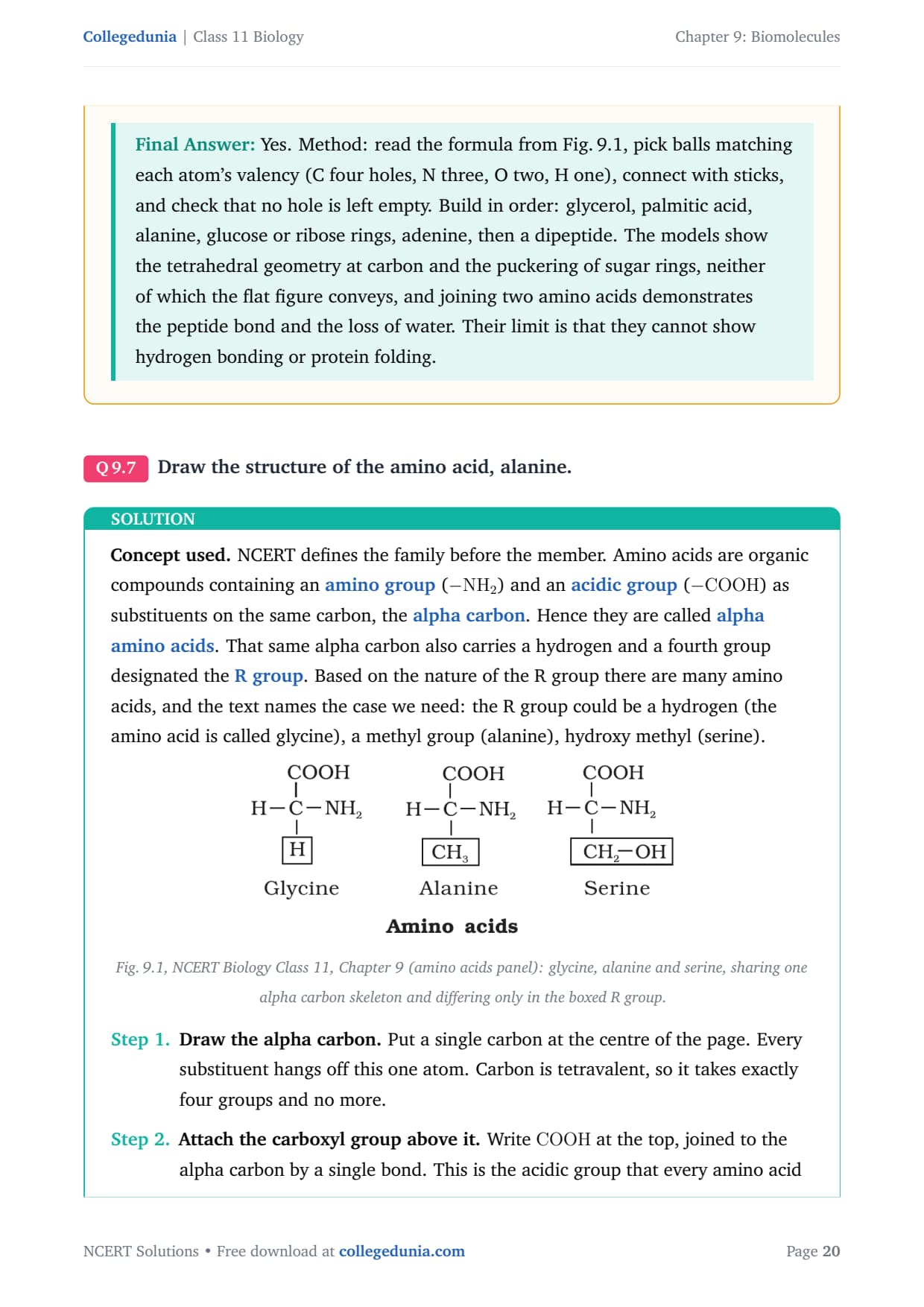
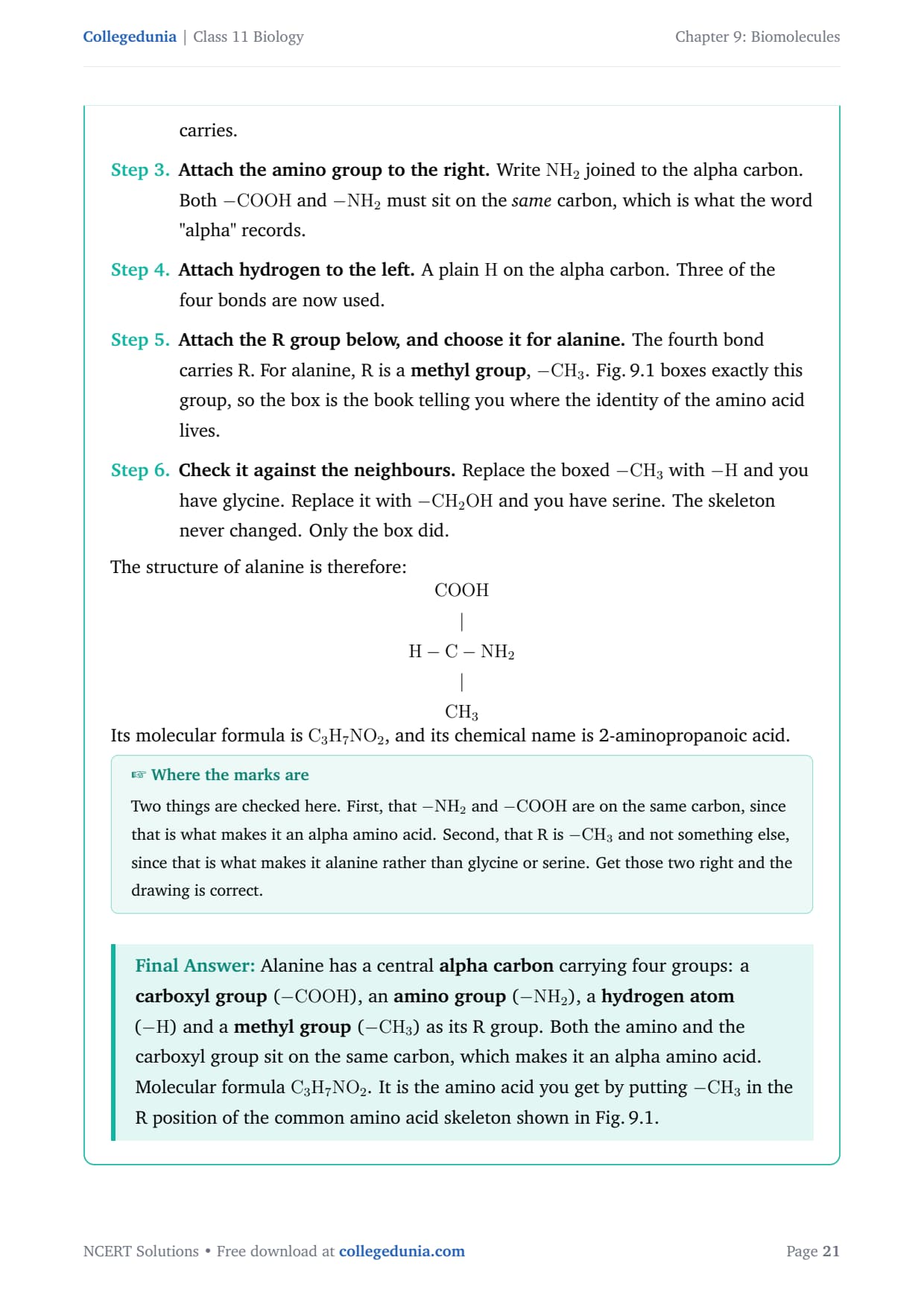
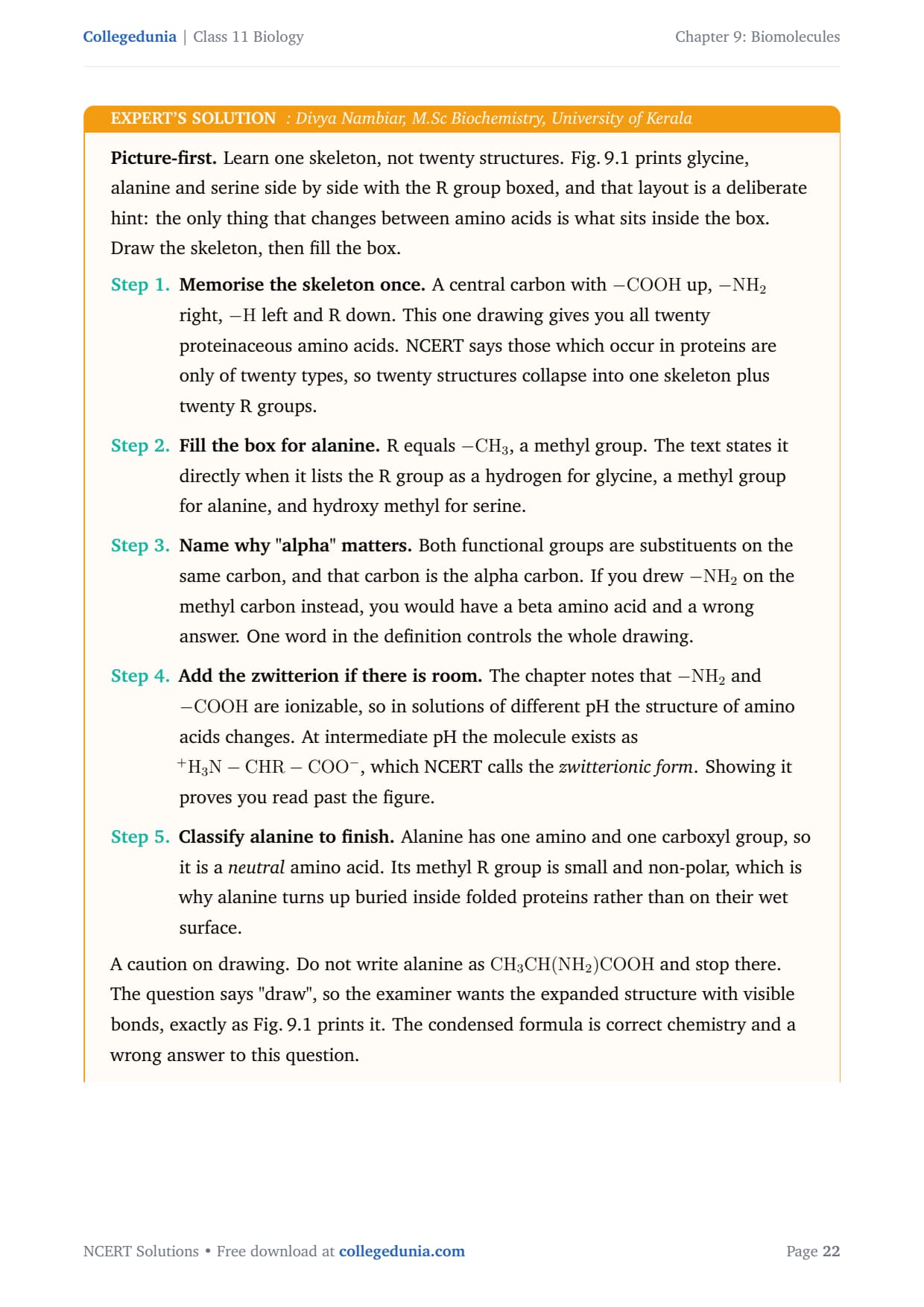
Question 7 asks students to draw the amino acid alanine, and the smart approach is to learn one skeleton rather than twenty separate structures. An amino acid is a substituted methane in which a central alpha carbon carries four groups, and only the fourth, the R group, changes from one amino acid to the next.
- The shared skeleton: a central alpha carbon bonded to a carboxyl group (-COOH), an amino group (-NH2), a hydrogen (-H) and a variable R group.
- Alanine's R group: a methyl group (-CH3), which is what tells alanine apart from glycine, whose R group is a hydrogen, and serine, whose R group is hydroxymethyl.
- Classification: alanine has one amino and one carboxyl group, so it is a neutral amino acid.
Both functional groups sit on the same carbon, the alpha carbon, which is exactly why these are called alpha amino acids, and putting the amino group on the wrong carbon gives a wrong answer. Because the amino and carboxyl groups are both ionizable, the structure of an amino acid changes with the pH of the solution, and at intermediate pH the molecule exists as a zwitterion with a positive -NH3+ and a negative -COO-. Showing the zwitterionic form proves a student has read past the figure.
Lipids and the Composition of a Triglyceride
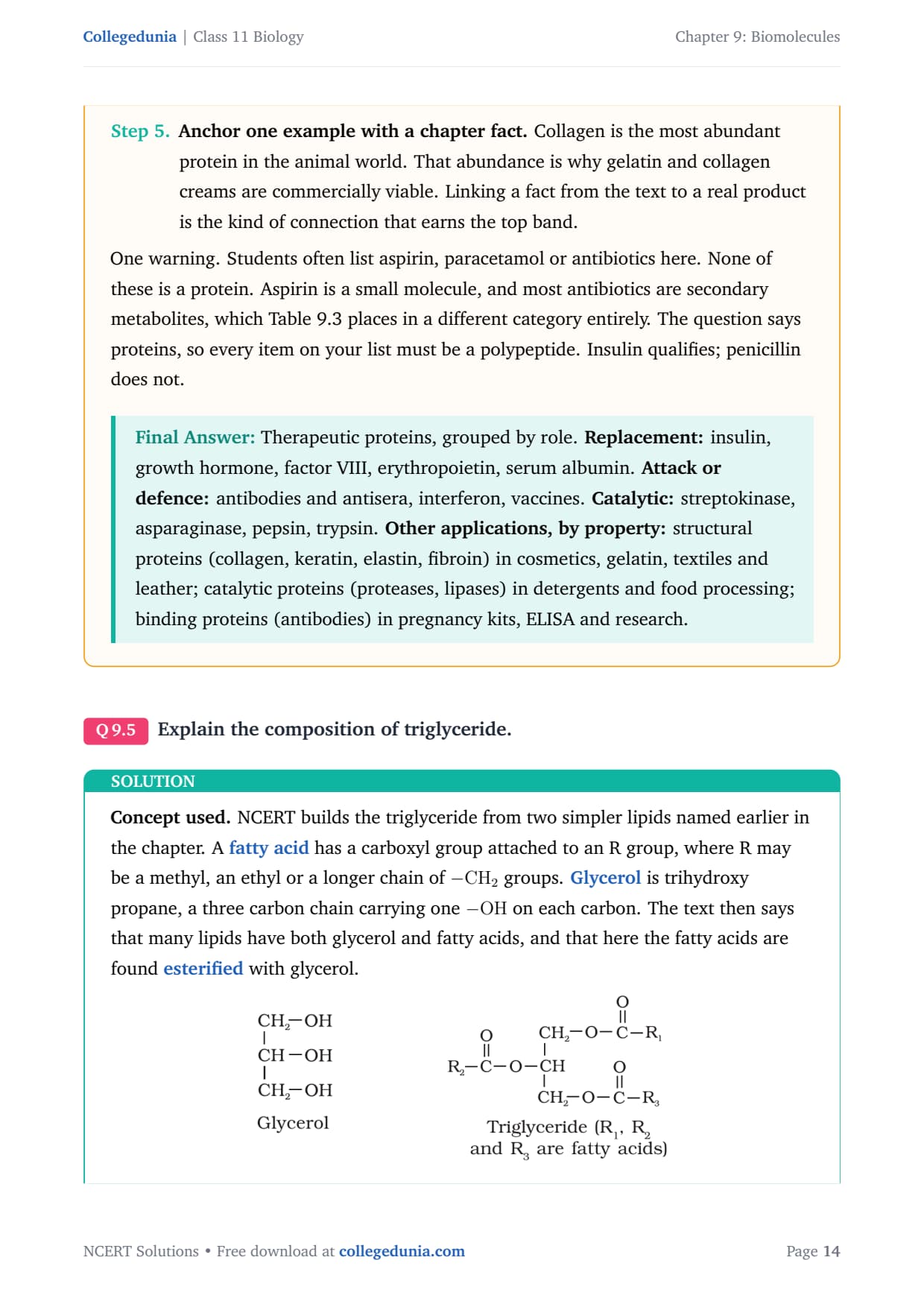
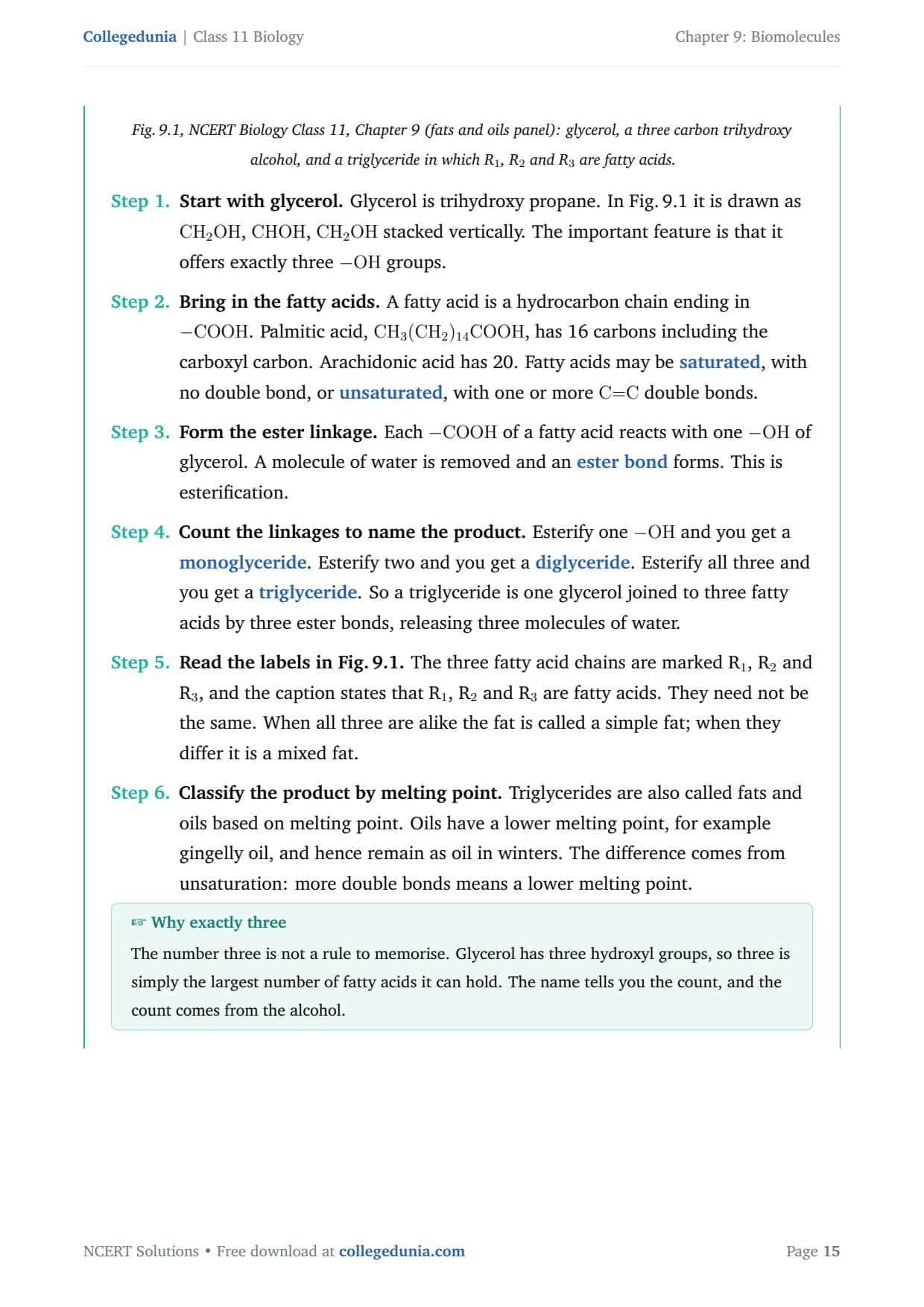
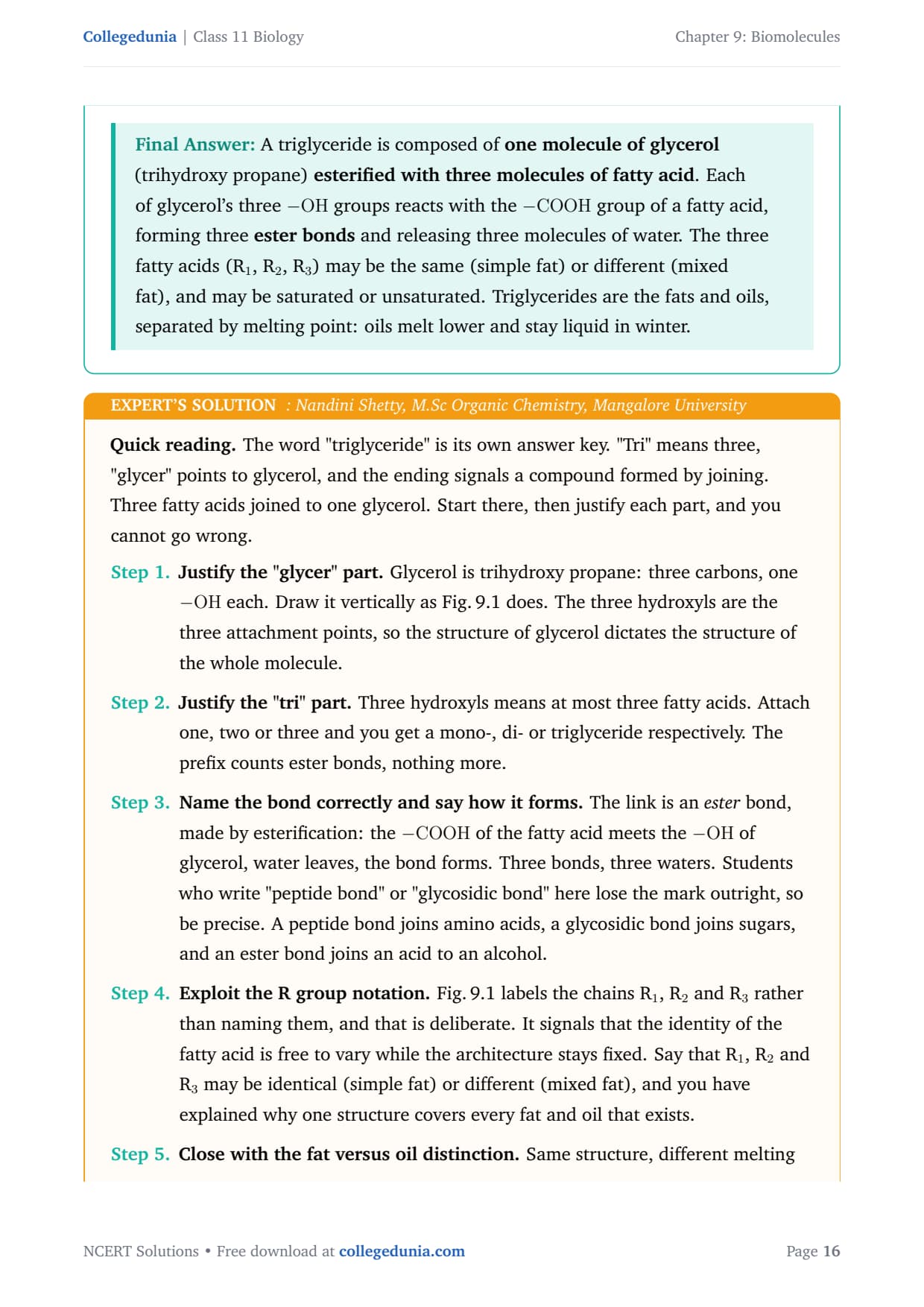
Question 5 asks students to explain the composition of a triglyceride, and the name itself carries the answer. "Tri" means three, "glycer" points to glycerol, and the ending signals a compound formed by joining, so a triglyceride is three fatty acids joined to one glycerol.
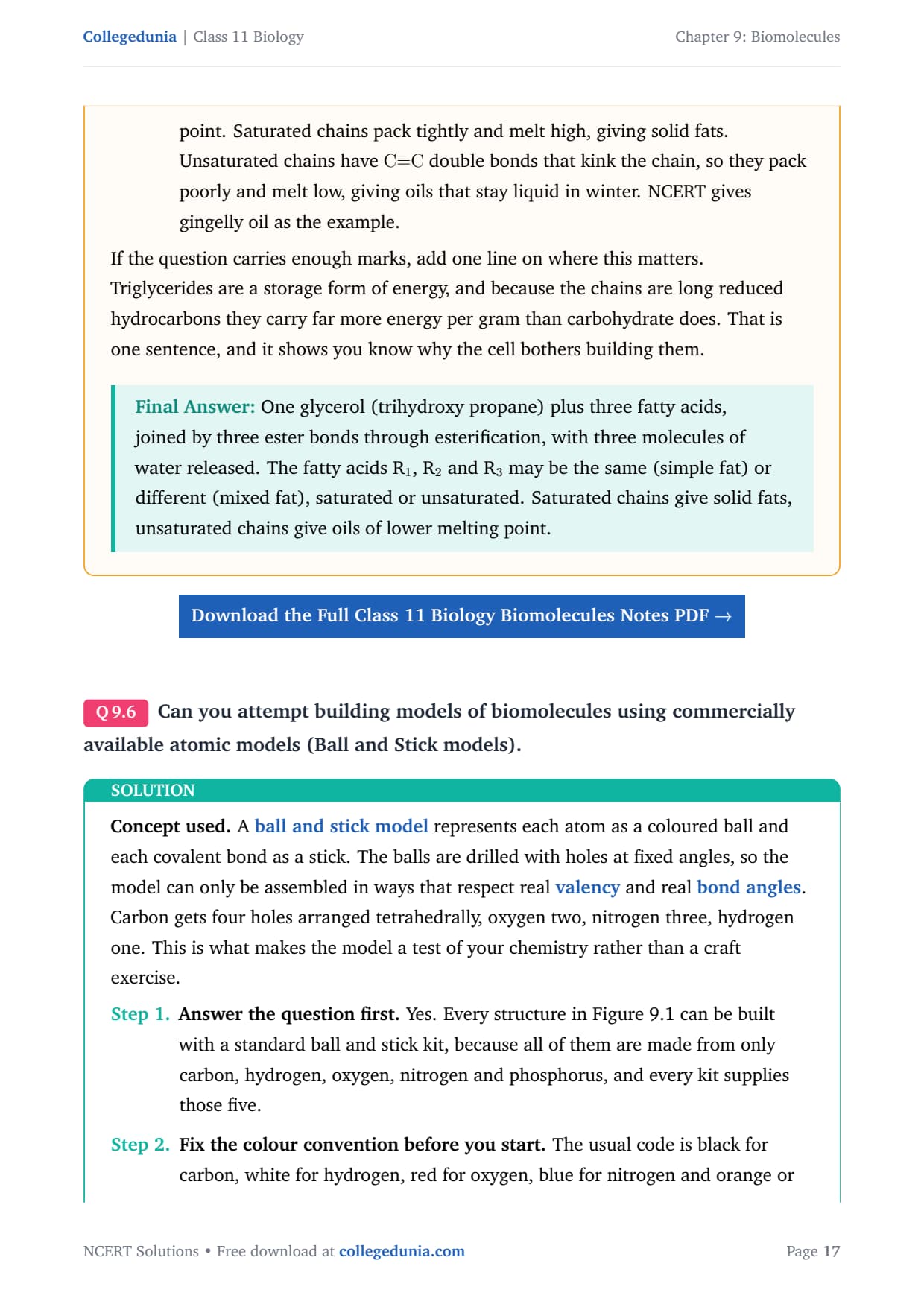
- Glycerol: trihydroxy propane, a three-carbon molecule with one hydroxyl (-OH) on each carbon, giving three attachment points.
- Fatty acids: long hydrocarbon chains ending in a carboxyl group (-COOH), which may be saturated or unsaturated.
- The bond: an ester bond formed by esterification, in which the -COOH of a fatty acid meets an -OH of glycerol and a molecule of water leaves.
Three hydroxyls mean at most three fatty acids, so attaching one, two or three gives a mono-, di- or triglyceride, and the bond is always an ester bond, never a peptide or glycosidic bond. A peptide bond joins amino acids and a glycosidic bond joins sugars, so naming the wrong bond loses the mark outright. The three fatty acids need not be identical, which is why the chapter labels the chains R1, R2 and R3, and this variety is what gives different fats their different melting points.
Carbohydrates, Gums and Whether Fevicol Is Different
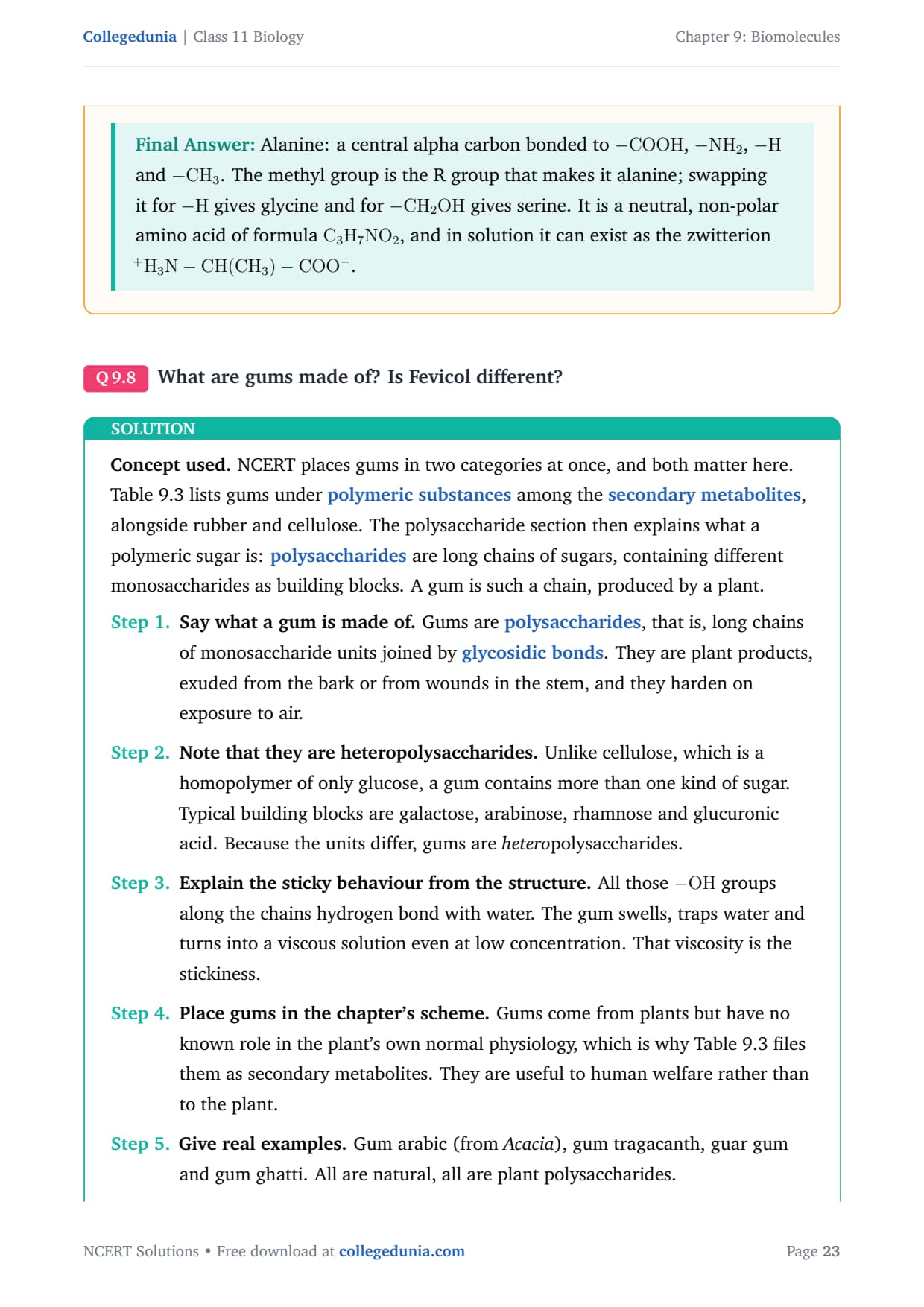
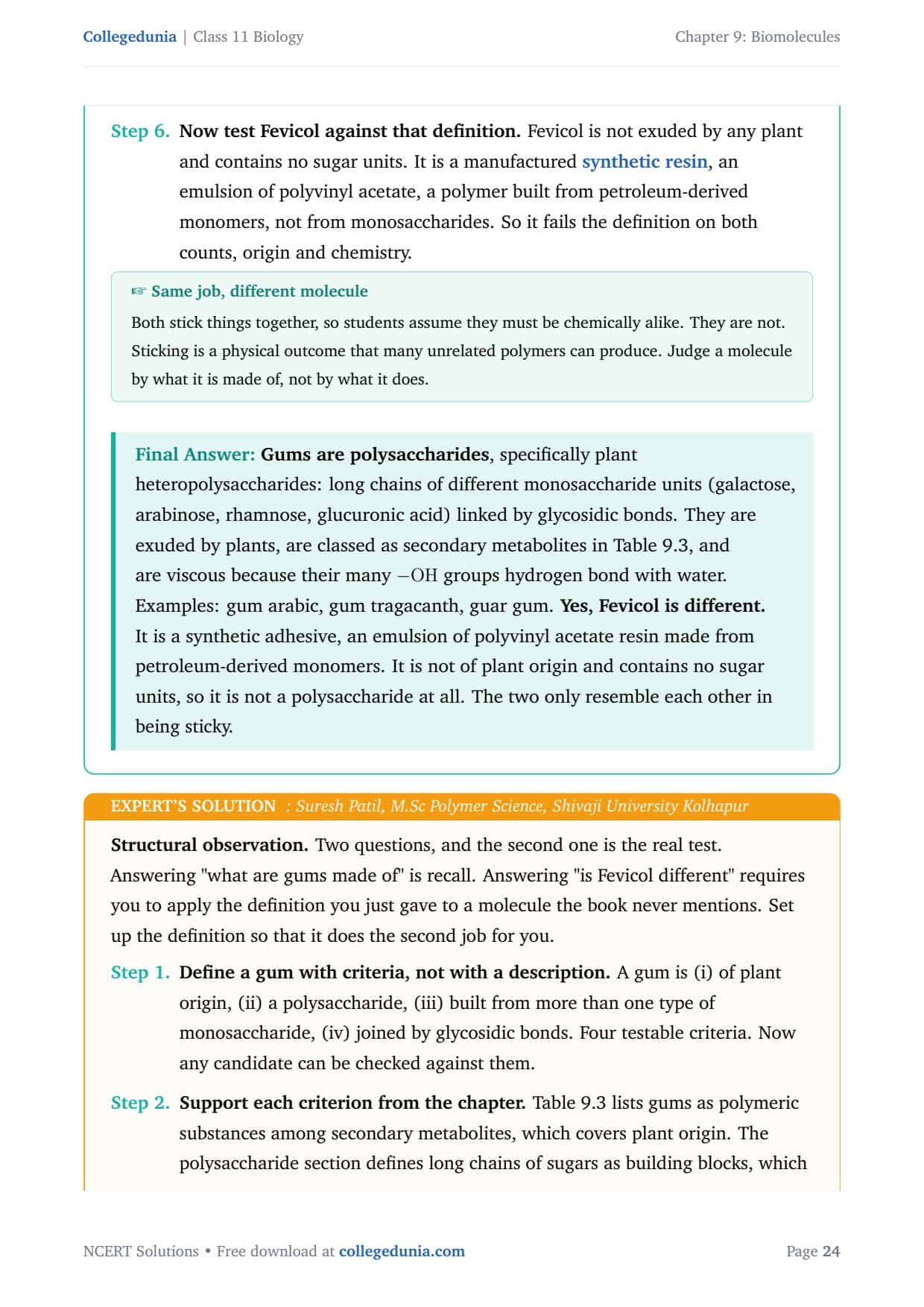
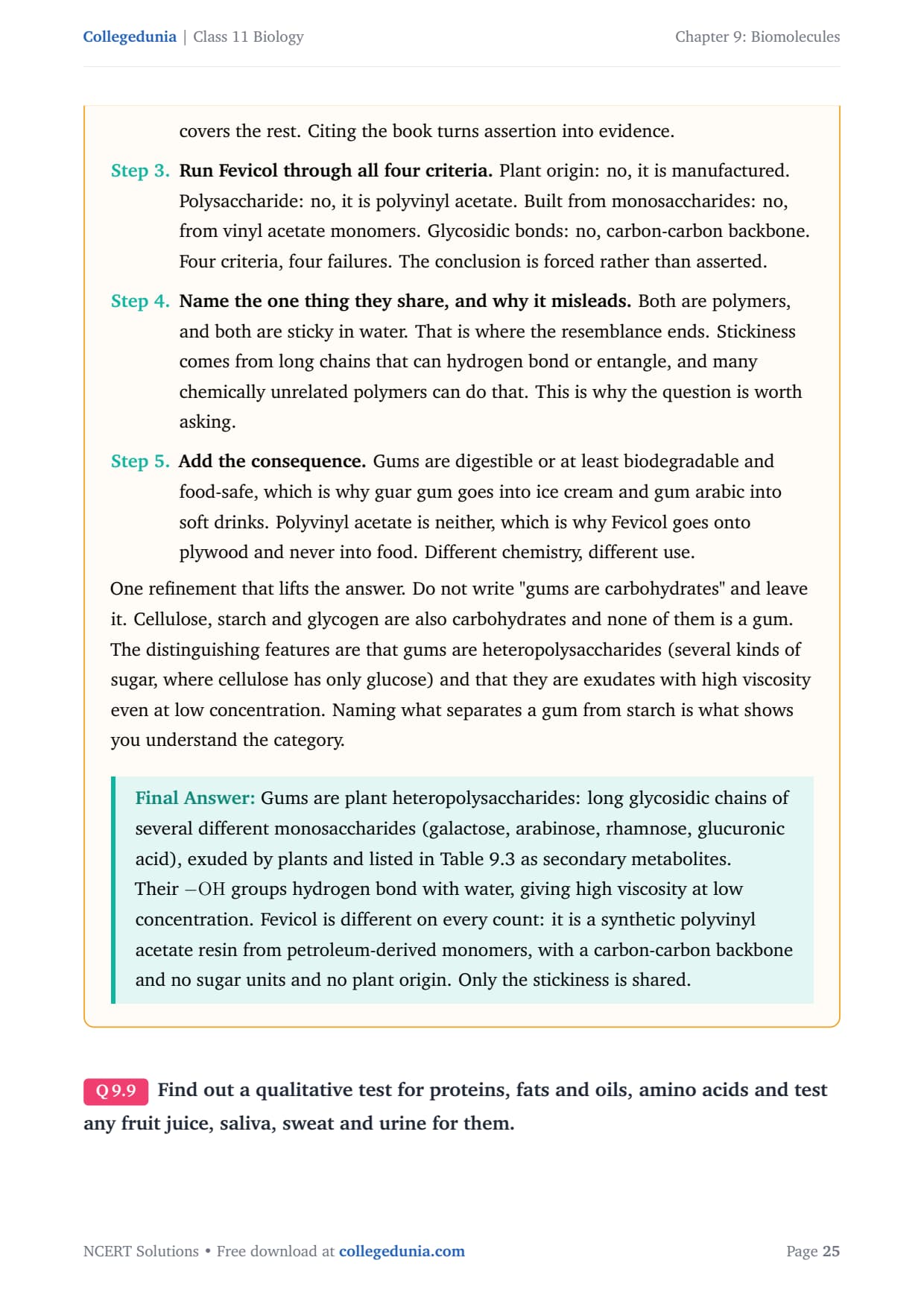
Question 8 asks what gums are made of and whether Fevicol is different, while Question 10 asks students to estimate how much cellulose the world's plants make. Both turn on the definition of a polysaccharide, a long chain of sugars joined by glycosidic bonds. Gums are plant heteropolysaccharides, so the two questions share a chemical core.
- Gums: plant exudates that are heteropolysaccharides, long glycosidic chains of several different monosaccharides such as galactose, arabinose and glucuronic acid.
- Fevicol: not a gum at all, since it is polyvinyl acetate, a synthetic polymer with a carbon-carbon backbone built from vinyl acetate monomers, not from sugars.
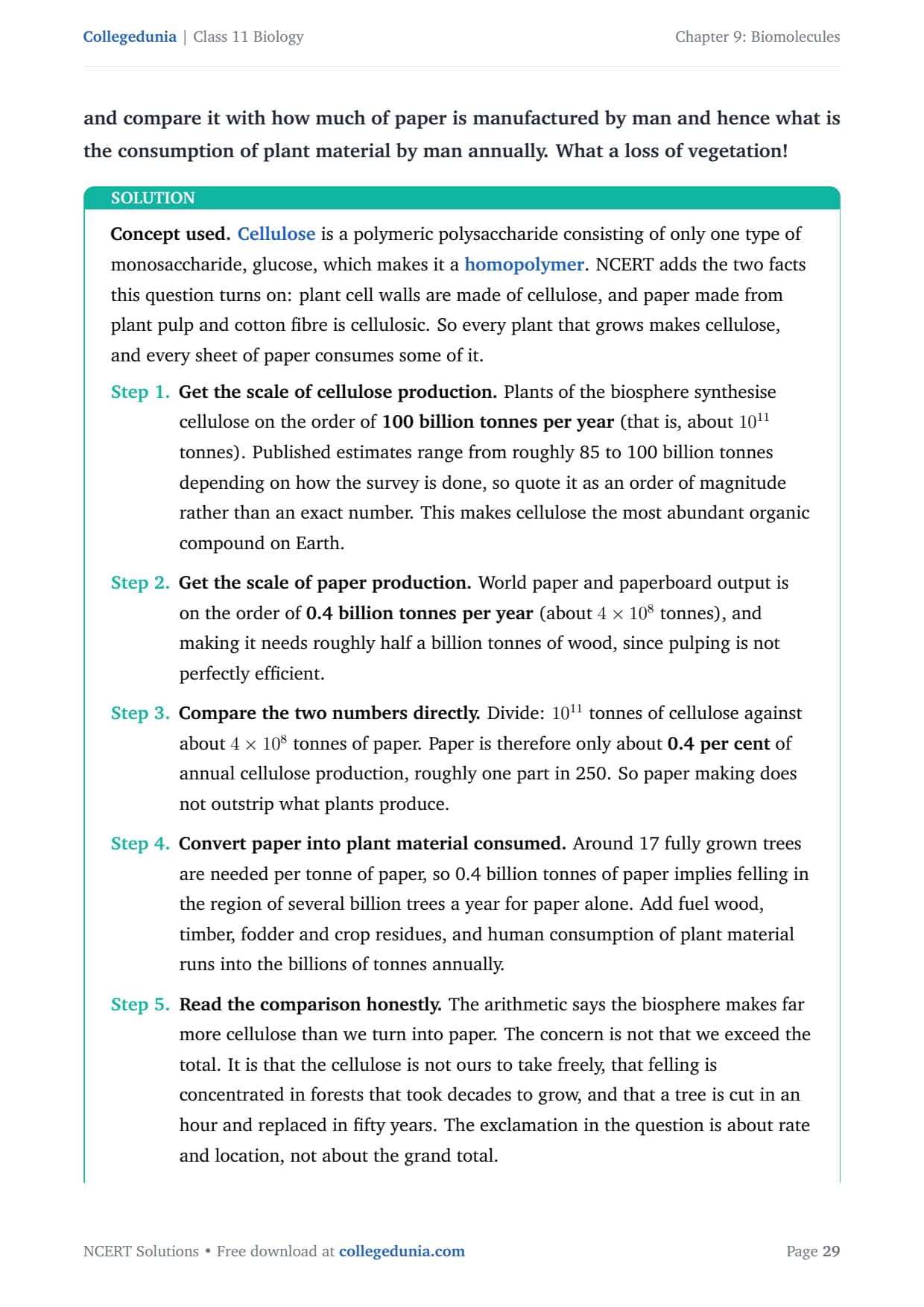
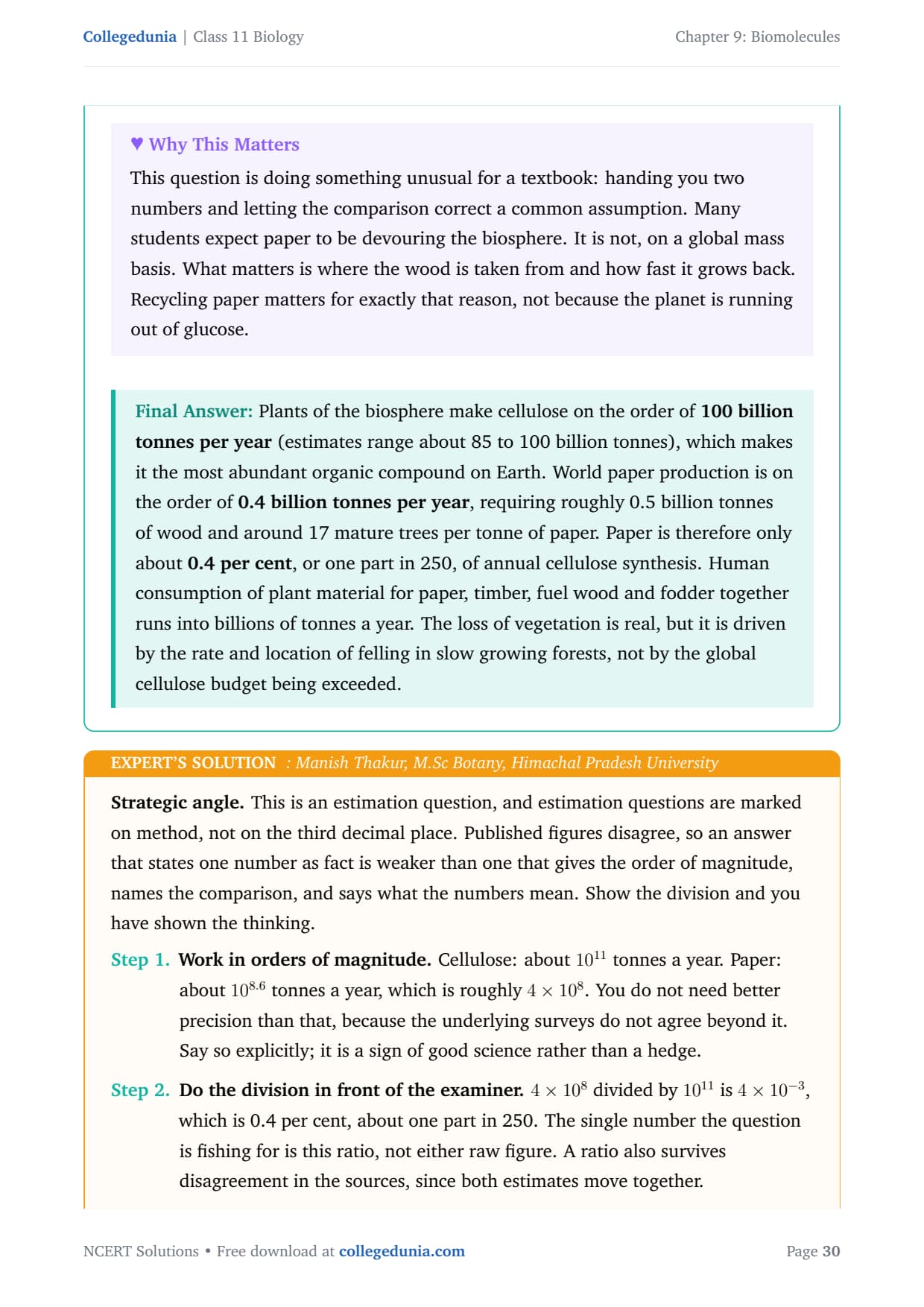
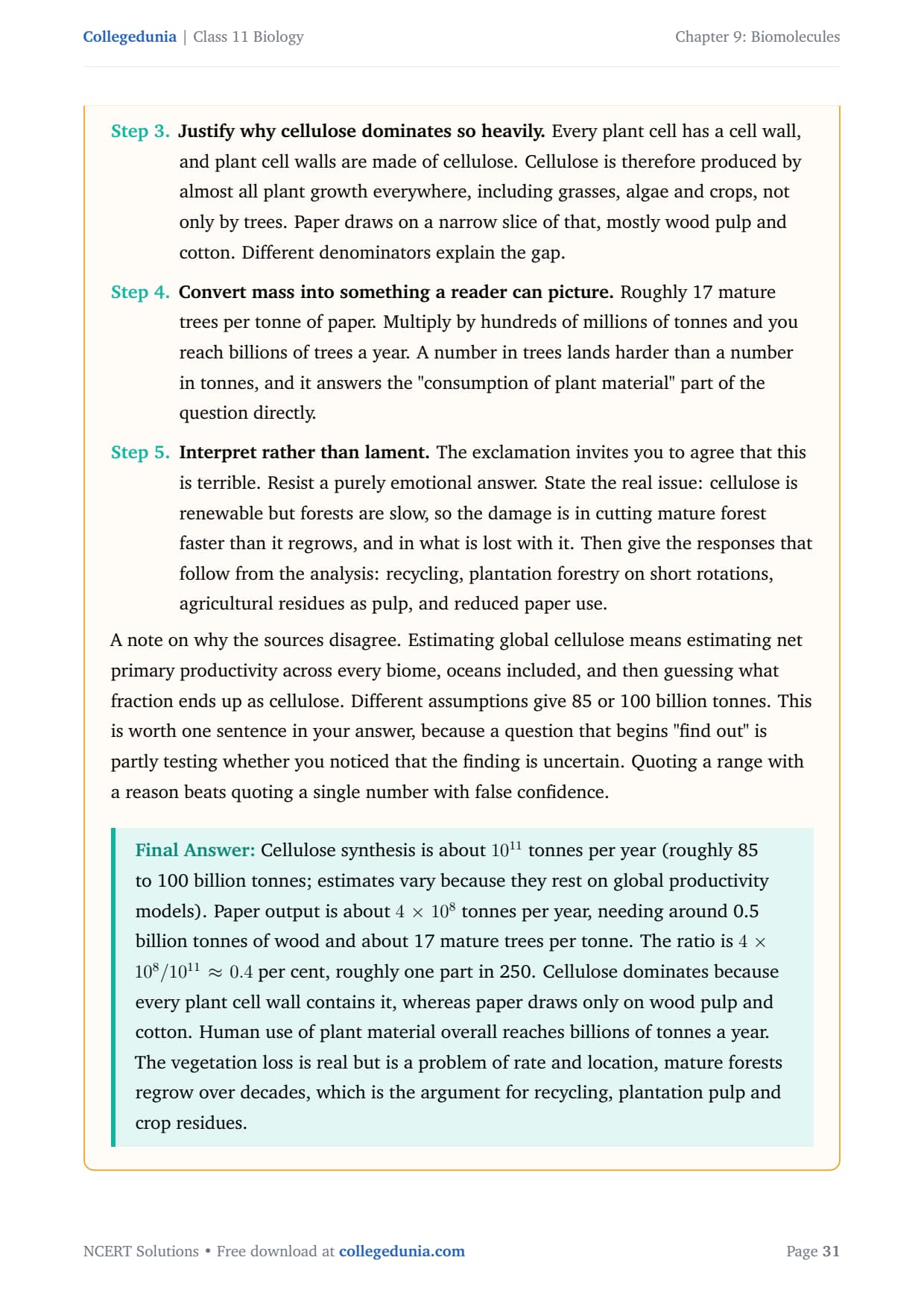
- Cellulose: the world's plants make it on the order of 1011 tonnes, roughly 85 to 100 billion tonnes, each year.
Gums and Fevicol are both sticky polymers, but that is where the resemblance ends, since a gum is a food-safe sugar polymer and Fevicol is a synthetic plastic. This is why guar gum goes into ice cream while Fevicol goes onto plywood. For the cellulose estimate, paper output is only about 4 × 10⁸ tonnes a year, so paper draws on roughly one part in 250 of the cellulose that plants make, and the real concern is cutting mature forest faster than it can regrow rather than any shortage of cellulose itself.
Proteins as Therapeutic Agents and Qualitative Tests
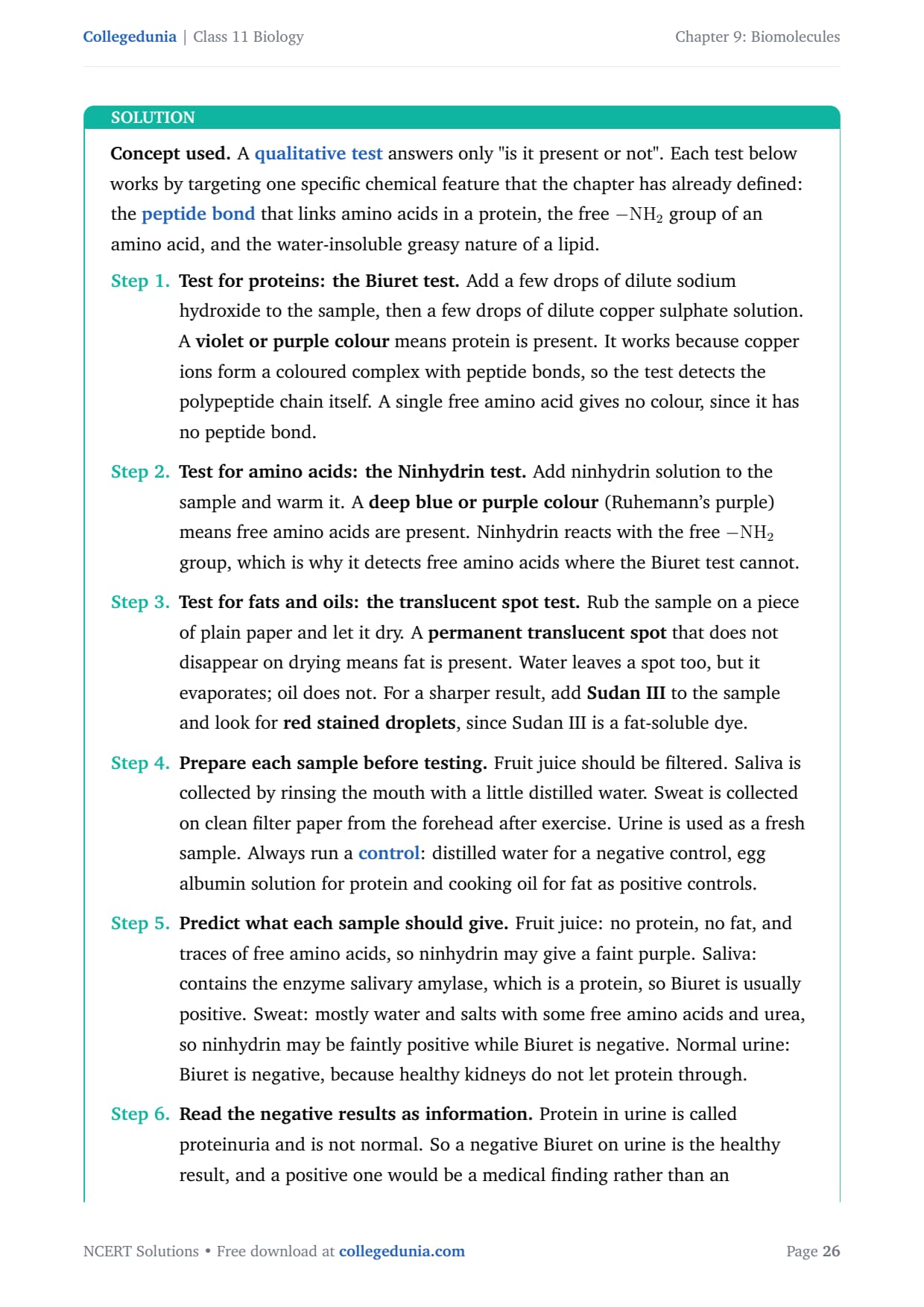
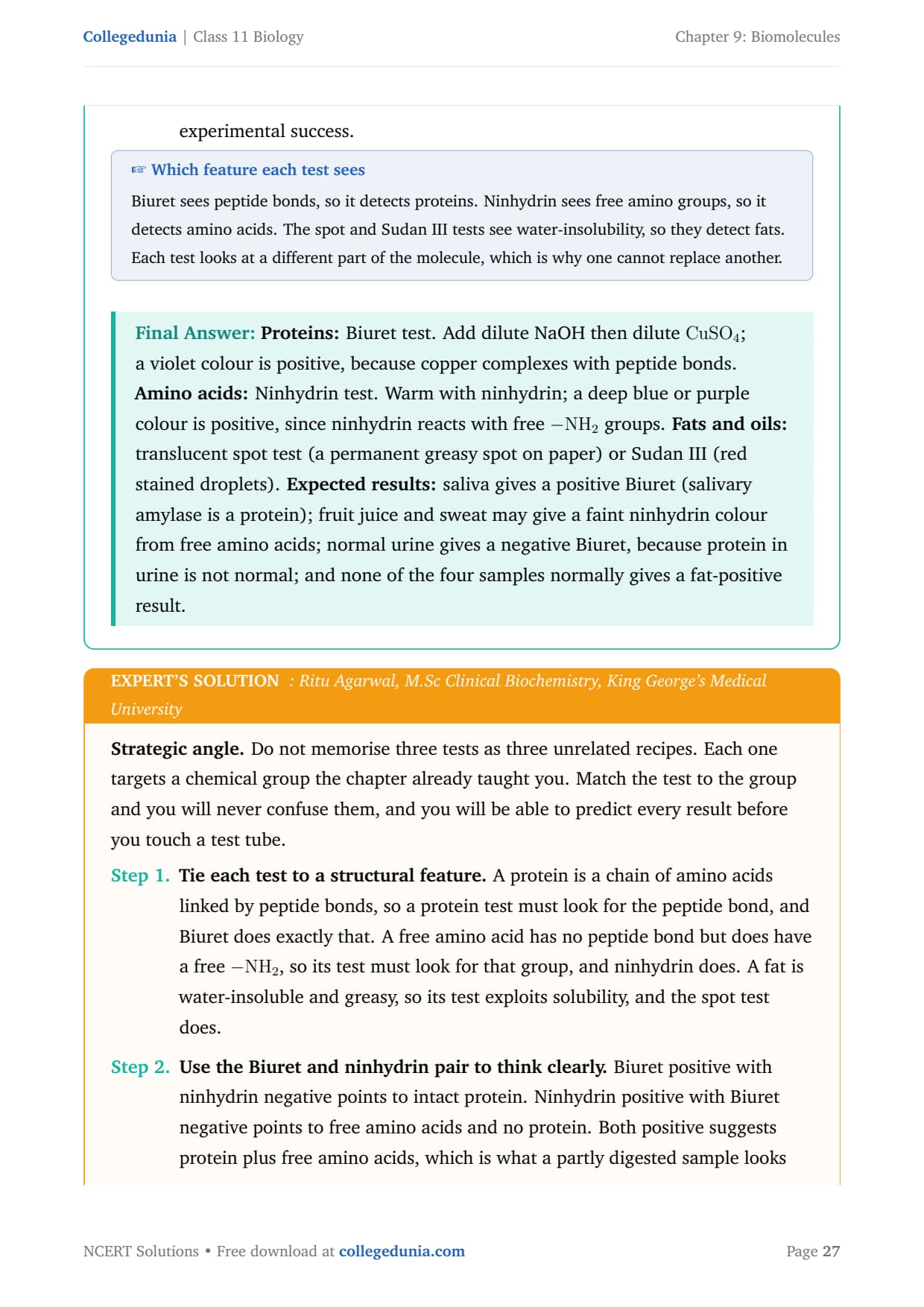
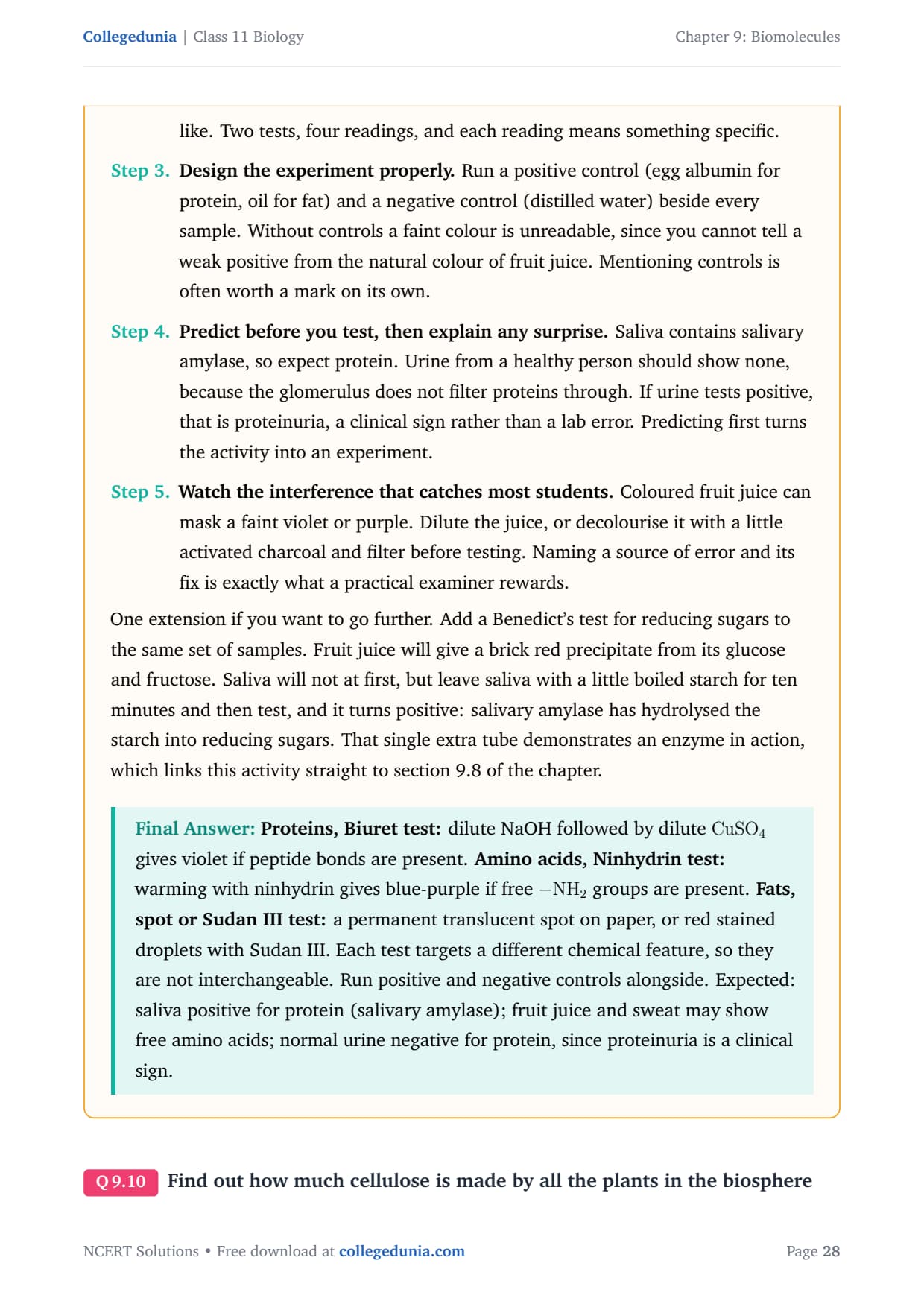
Question 4 asks students to list proteins used as therapeutic agents, and Question 9 asks for qualitative tests for proteins, fats and amino acids. Both draw on the fact that proteins have specific, testable chemistry and specific, useful functions, so a grouped answer beats a flat list.
| Substance | Test | Positive result |
|---|---|---|
| Proteins | Biuret test (dilute NaOH then dilute CuSO4) | Violet colour |
| Amino acids | Ninhydrin test (warm with ninhydrin) | Blue-purple colour |
| Fats and oils | Spot test or Sudan III | Translucent spot; red stained droplets |
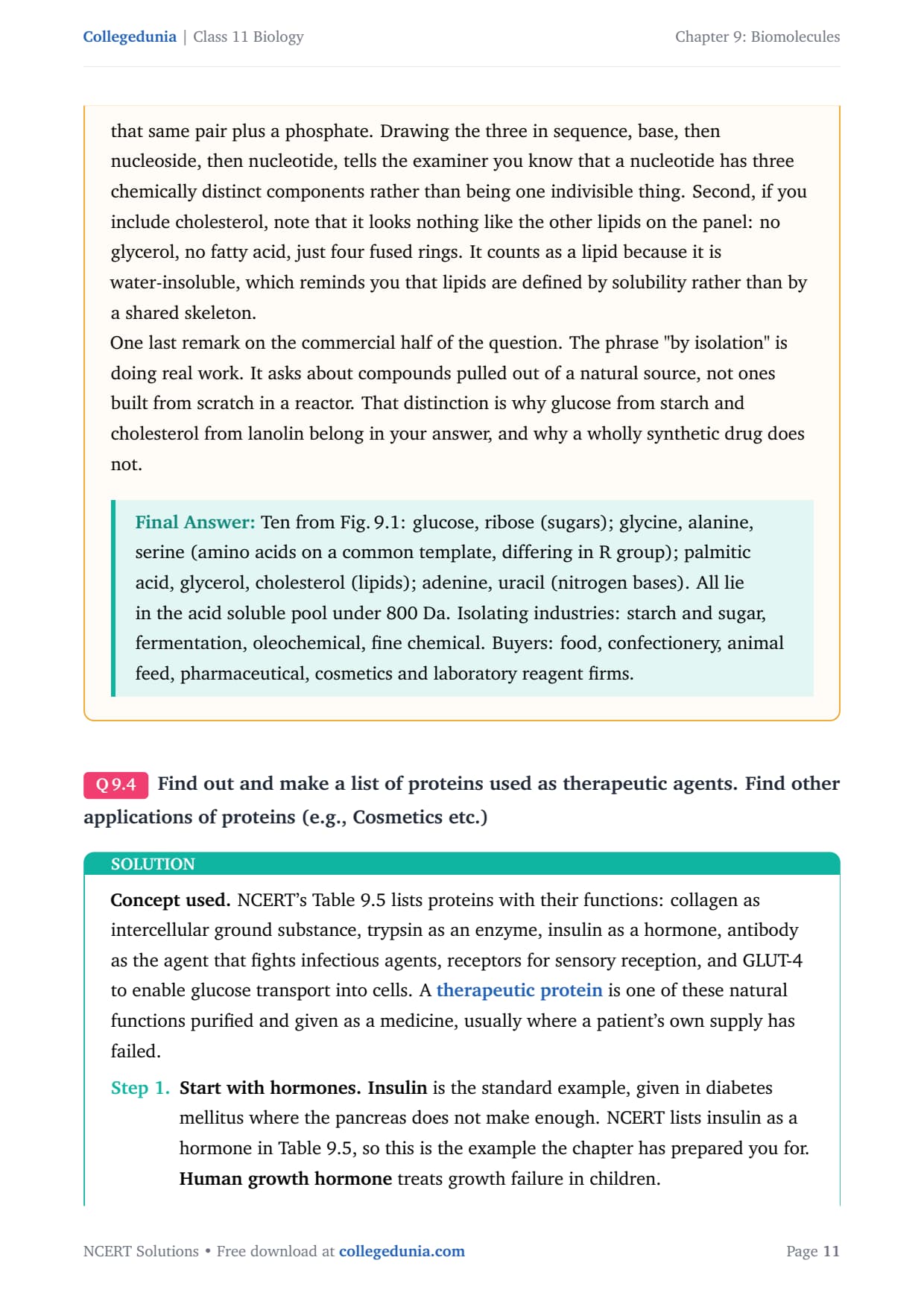
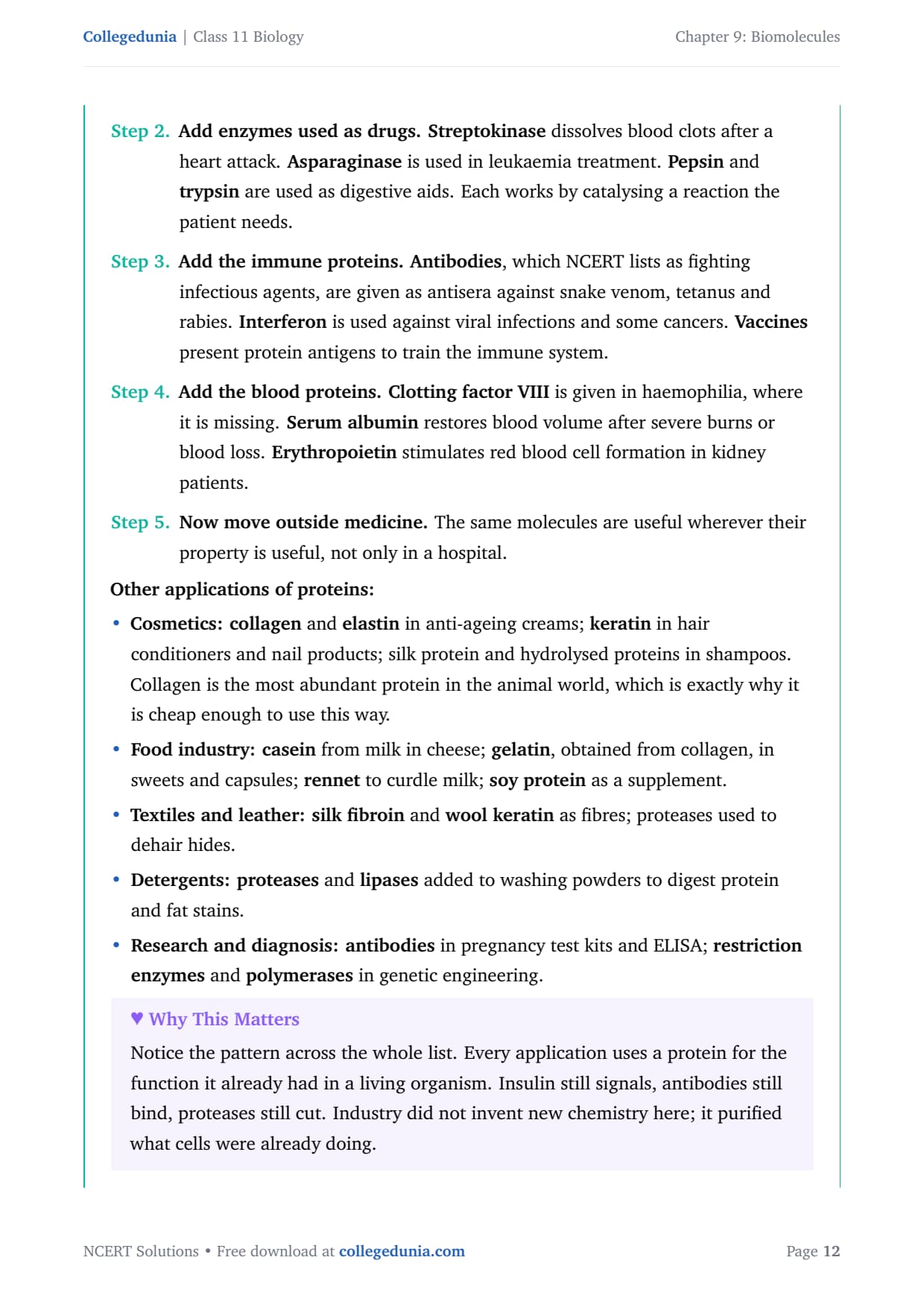
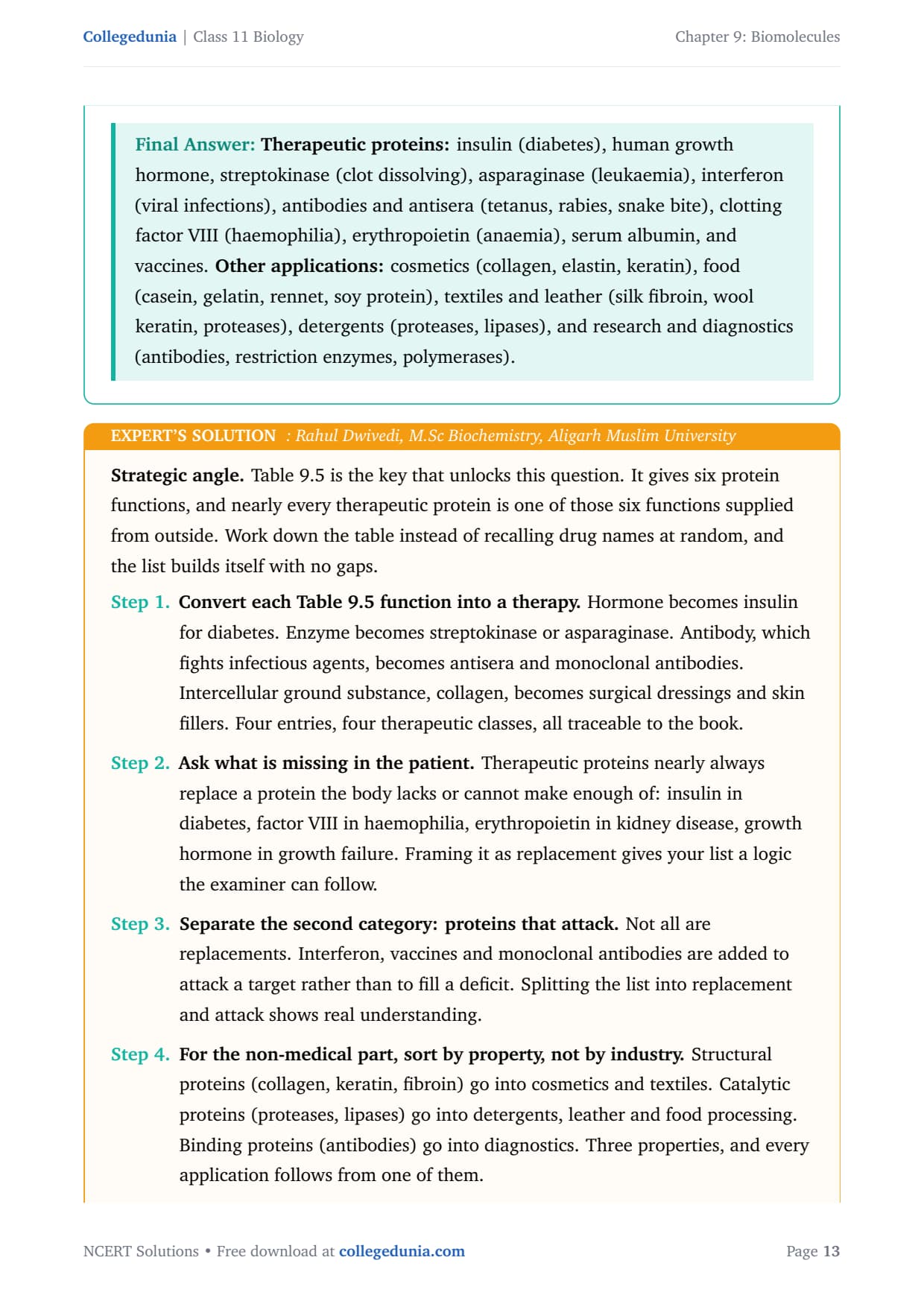
Therapeutic proteins include insulin for diabetes, human growth hormone for growth failure, streptokinase to dissolve clots, antibodies as antisera, clotting factor VIII in haemophilia and erythropoietin for kidney patients. Each works because a protein's shape gives it a precise job, whether catalysing a reaction, binding a pathogen or replacing a missing factor. For the tests, running a positive control such as egg albumin and a negative control of distilled water beside every sample is often worth a mark on its own, since a faint colour is unreadable without a reference.
Enzymes and Their Properties
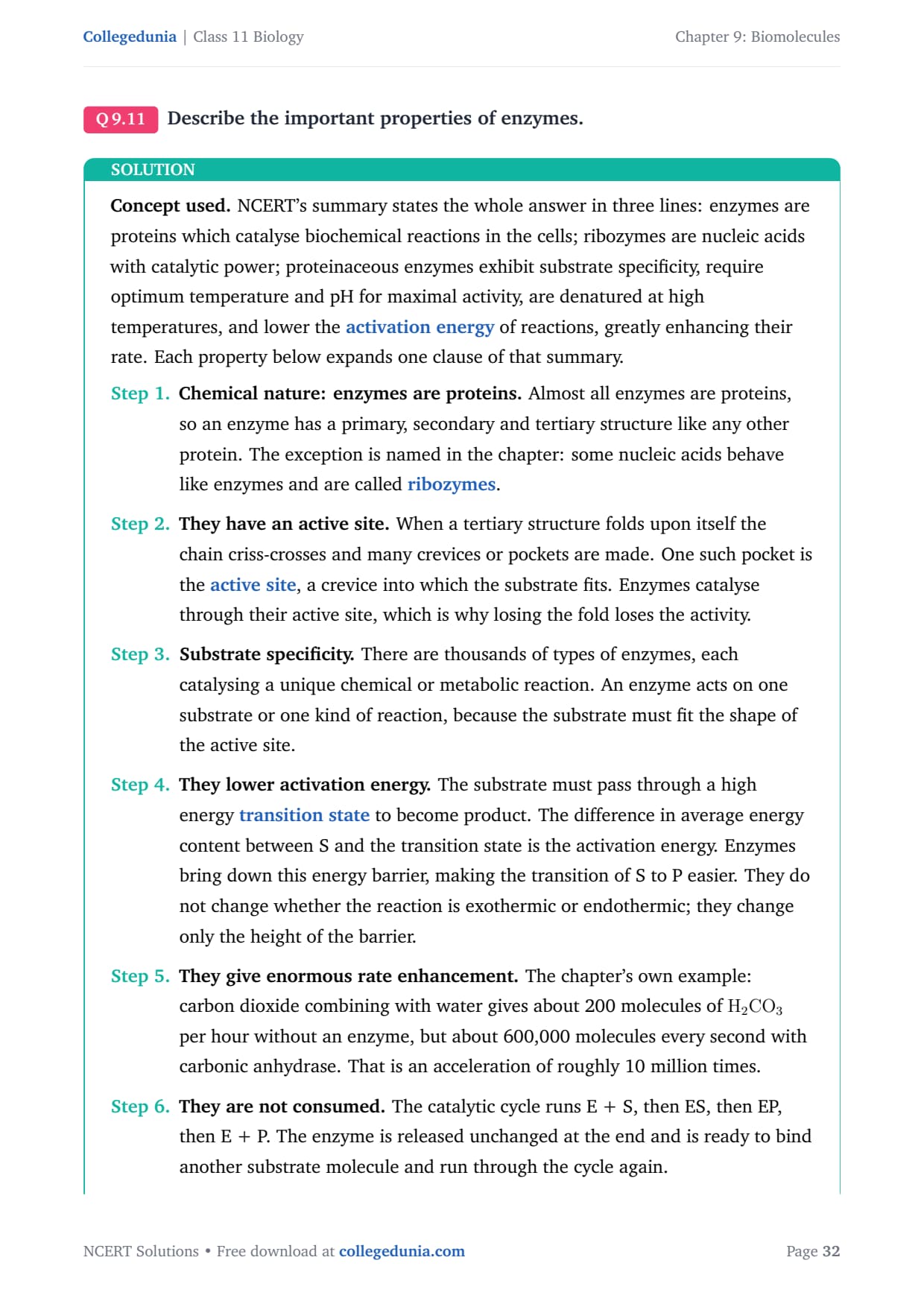
Question 11 asks students to describe the important properties of enzymes, and every property follows from one fact: almost all enzymes are proteins with a specific three dimensional active site. Once students see that the active site is a shaped pocket held by the tertiary fold, the whole property list becomes a set of consequences rather than facts to memorise.
- Specificity: the active site fits only its own substrate, the way a lock fits one key, so each enzyme catalyses one reaction or one class of reactions.
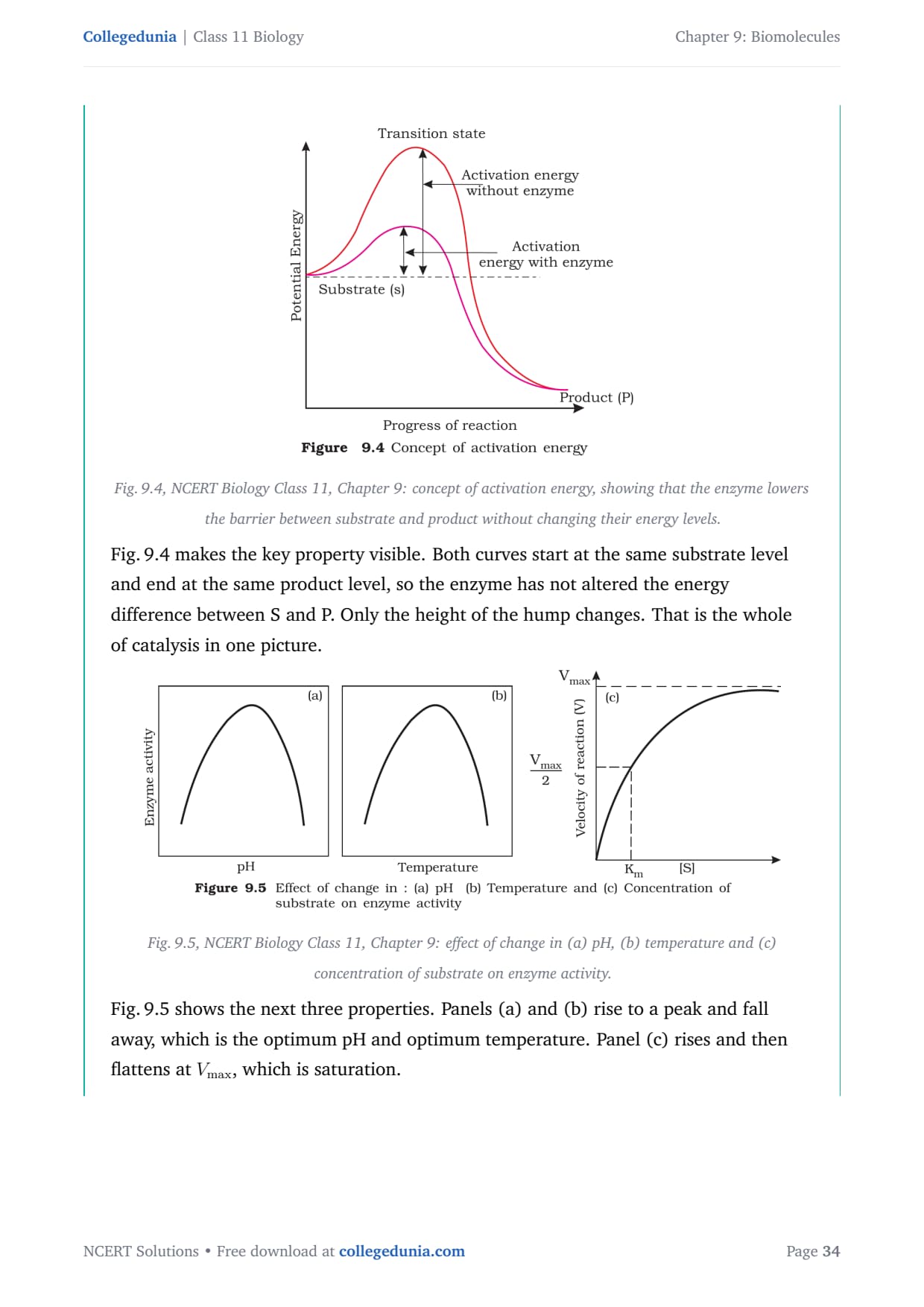
- Thermolability and optima: heat and extreme pH alter the tertiary structure, so activity peaks at an optimum temperature and pH and falls away on either side.
- Lower activation energy: enzymes speed a reaction by lowering the energy barrier between substrate and product, without changing the energy levels of either or the equilibrium.
- Cofactors: many enzymes need a non-protein cofactor, a prosthetic group, coenzyme or metal ion, and coenzymes such as NAD are often built from vitamins.
An enzyme lowers the activation energy but does not change the energy of the substrate or the product, so it never makes an unfavourable reaction spontaneous, which is the single most botched sentence in the chapter. Saturation, the flat line at maximum velocity, is simple arithmetic: once every active site is occupied, adding more substrate changes nothing. Enzymes are also grouped into six classes, oxidoreductases, transferases, hydrolases, lyases, isomerases and ligases, and unlike inorganic catalysts they work at the mild temperatures and pressures of a living cell.
Biomolecules Exercise-wise Breakdown
The NCERT back exercise has 11 questions, most of them descriptive, with several asking students to find out structures, tests or examples for themselves. The table below maps the question blocks to their topics so students can plan their practice and revise by theme.
| Question block | What it tests |
|---|---|
| Q 1 to Q 2 | Macromolecules and their examples, and the tertiary structure of proteins. |
| Q 3 to Q 4 | Finding small biomolecule structures, and proteins used as therapeutic agents. |
| Q 5 to Q 6 | The composition of a triglyceride, and building models of biomolecules. |
| Q 7 to Q 8 | The structure of alanine, and what gums are made of versus Fevicol. |
| Q 9 to Q 10 | Qualitative tests for proteins, fats and amino acids, and global cellulose synthesis. |
| Q 11 | The important properties of enzymes. |
Because several questions ask students to find out and draw for themselves, the marks reward a clear method and accurate structures rather than long prose. Learn the amino acid skeleton, the glycerol backbone and the enzyme property list, then attach the numbers. Every question in the class 11 biology NCERT solutions chapter 9 Biomolecules PDF is solved with each step of reasoning shown, so students can compare their answers against the model working.
Practice the solved questions: Work through the full question bank with step-by-step answers and expert tips.
Common Mistakes Students Make in Biomolecules
Most marks in this chapter are lost on wrong bond names and missed qualifiers, not on hard ideas. Each mistake below costs 1 to 2 marks, so watch for it at the exact step.
Mistake 1: Writing that lipids are macromolecules without qualification. NCERT places them in the macromolecular fraction but says they are not strictly macromolecules, so state both halves.
Mistake 2: Naming the wrong bond in a triglyceride. The link is an ester bond, not a peptide bond (which joins amino acids) or a glycosidic bond (which joins sugars).
Mistake 3: Saying an enzyme changes the energy of the substrate or product. It lowers only the activation energy and never shifts the equilibrium.
Mistake 4: Drawing the amino group on the wrong carbon of alanine. Both the amino and carboxyl groups sit on the alpha carbon.
Student Feedback on Biomolecules Solutions
What 12,470 students told us about their Biomolecules preparation:
- 61% of students said the properties of enzymes, especially the activation energy point, was the trickiest part of the chapter.
- Most-skipped detail: qualifying that lipids are not strictly macromolecules, missed by about 4 in 10 students.
- Students who learned the single amino acid skeleton first said the structure questions on alanine, glycine and serine became automatic.
Source: 2026-27 Class 11 Biology student poll. Sample of 12,470 students from CBSE schools across 15 states, conducted before the 2026 boards.
Other Biomolecules Class 11 Biology Resources
Pair these solutions with the revision notes, formula sheet and NCERT textbook PDF for the same chapter.
| Resource | Link |
|---|---|
| NCERT Notes | Biomolecules Class 11 Notes |
| Formula Sheet | Biomolecules Class 11 Formula Sheet |
| NCERT Book PDF | Biomolecules Class 11 Book PDF |
NCERT Solutions for Class 11 Biology: All Chapters
Jump to the step-by-step solutions for any other Class 11 Biology chapter below.
| Chapter | NCERT Solutions |
|---|---|
| Chapter 1 | The Living World |
| Chapter 2 | Biological Classification |
| Chapter 3 | Plant Kingdom |
| Chapter 4 | Animal Kingdom |
| Chapter 5 | Morphology of Flowering Plants |
| Chapter 6 | Anatomy of Flowering Plants |
| Chapter 7 | Structural Organisation in Animals |
| Chapter 8 | Cell: The Unit of Life |
| Chapter 9 | Biomolecules |
| Chapter 10 | Cell Cycle and Cell Division |
| Chapter 11 | Photosynthesis in Higher Plants |
| Chapter 12 | Respiration in Plants |
| Chapter 13 | Plant Growth and Development |
| Chapter 14 | Breathing and Exchange of Gases |
| Chapter 15 | Body Fluids and Circulation |
| Chapter 16 | Excretory Products and their Elimination |
| Chapter 17 | Locomotion and Movement |
| Chapter 18 | Neural Control and Coordination |
| Chapter 19 | Chemical Coordination and Integration |
FAQs on Biomolecules Class 11 NCERT Solutions
Biomolecules NCERT Solutions - Frequently Asked Questions
Ques. What do the class 11 biology NCERT solutions chapter 9 Biomolecules cover?
Ans. These solutions cover all 11 back-exercise questions, including macromolecules and their examples, the tertiary structure of proteins, small biomolecule structures, therapeutic proteins, the composition of a triglyceride, building molecular models, the structure of alanine, gums versus Fevicol, qualitative tests, global cellulose synthesis and the properties of enzymes. Every question is solved step by step.
Ques. What is meant by the tertiary structure of proteins?
Ans. The tertiary structure is the level at which the long protein chain, helices and sheets included, folds back over itself like a hollow woollen ball to give a compact three dimensional shape. It is held by hydrogen and disulphide bonds and is absolutely necessary for the biological activities of proteins, because the fold creates the pockets that let a protein bind its target.
Ques. What is the composition of a triglyceride?
Ans. A triglyceride is made of one glycerol, a three-carbon molecule with three hydroxyl groups, joined to three fatty acids. Each bond is an ester bond formed by esterification, in which a carboxyl group of a fatty acid meets a hydroxyl of glycerol and a molecule of water leaves. The three fatty acids need not be identical.
Ques. What is the structure of the amino acid alanine?
Ans. Alanine has a central alpha carbon carrying four groups: a carboxyl group (-COOH), an amino group (-NH2), a hydrogen (-H) and a methyl R group (-CH3). The methyl group is what tells alanine apart from glycine, whose R group is hydrogen. With one amino and one carboxyl group, alanine is a neutral amino acid.
Ques. What are the important properties of enzymes?
Ans. Almost all enzymes are proteins with a specific active site, so they are highly specific to their substrate. They speed reactions by lowering the activation energy without changing the equilibrium, and they show an optimum temperature and pH because heat and extreme pH alter their tertiary structure. Many need cofactors, and they are grouped into six classes.
Ques. How is Biomolecules weighted in CBSE Class 11 Biology?
Ans. Biomolecules sits in the Cell: Structure and Functions unit, which carries 15 marks in the CBSE Class 11 Biology paper, and the chapter itself usually contributes 3 to 4 marks through structure and enzyme questions. It is also a high-yield chapter for NEET, where proteins, enzymes and biomolecule classification are asked regularly.



Comments