




The India's External Relations PDF is the official NCERT chapter on India's foreign policy from Politics in India Since Independence. This page lets students download the original Chapter 4 text and figures for the 2026-27 CBSE syllabus. Reading the source chapter is the best way to understand non-alignment, the wars with China and Pakistan, and India's nuclear stand.
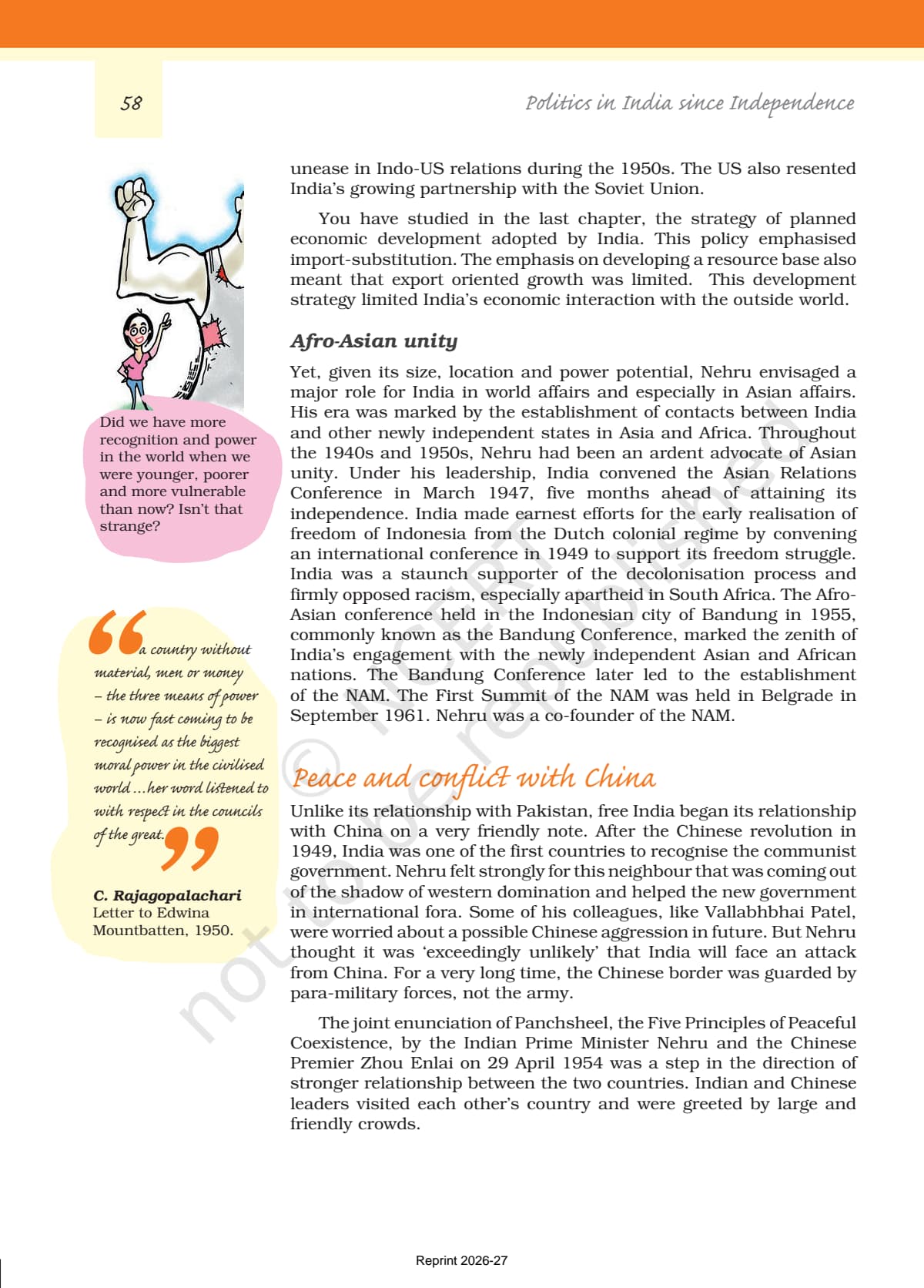
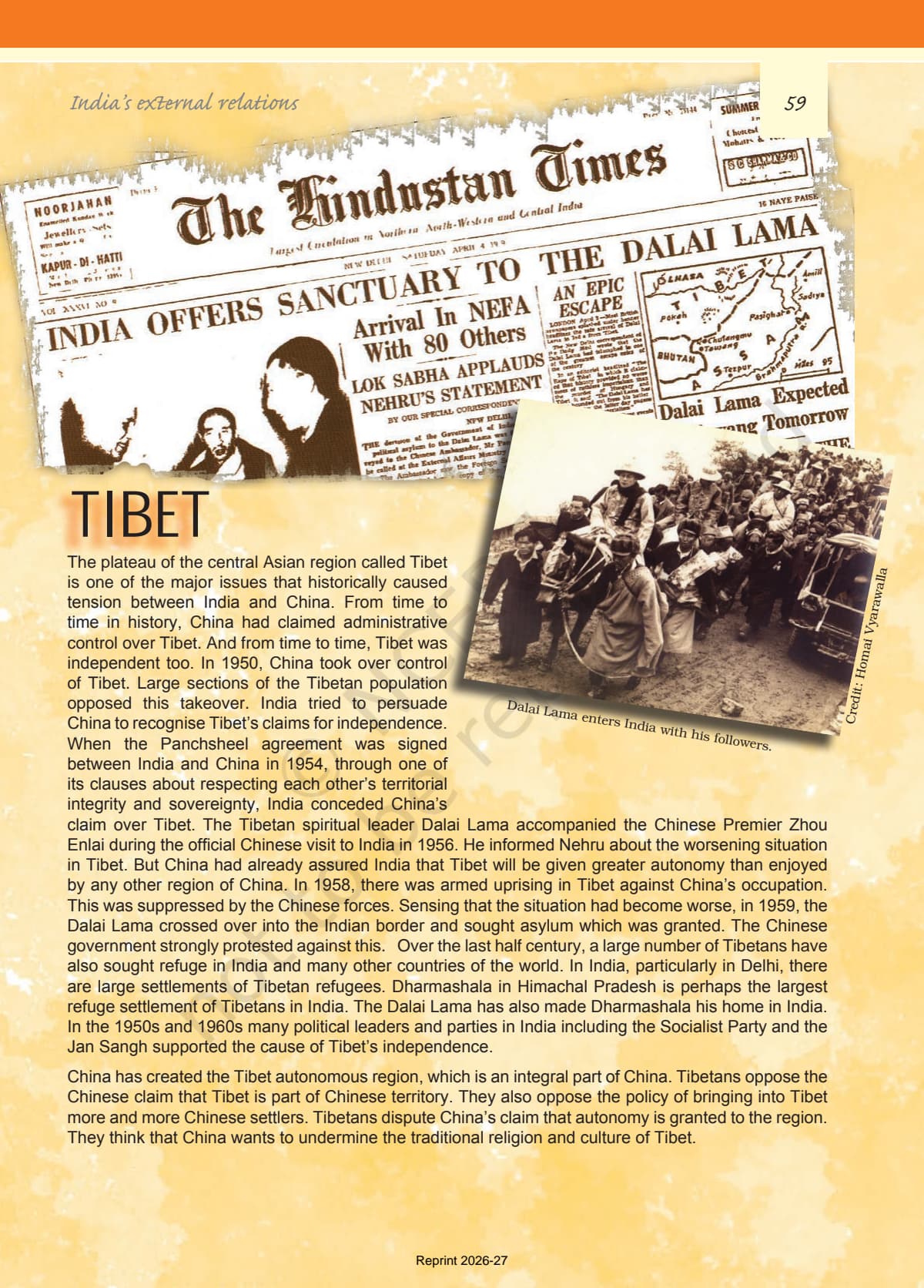
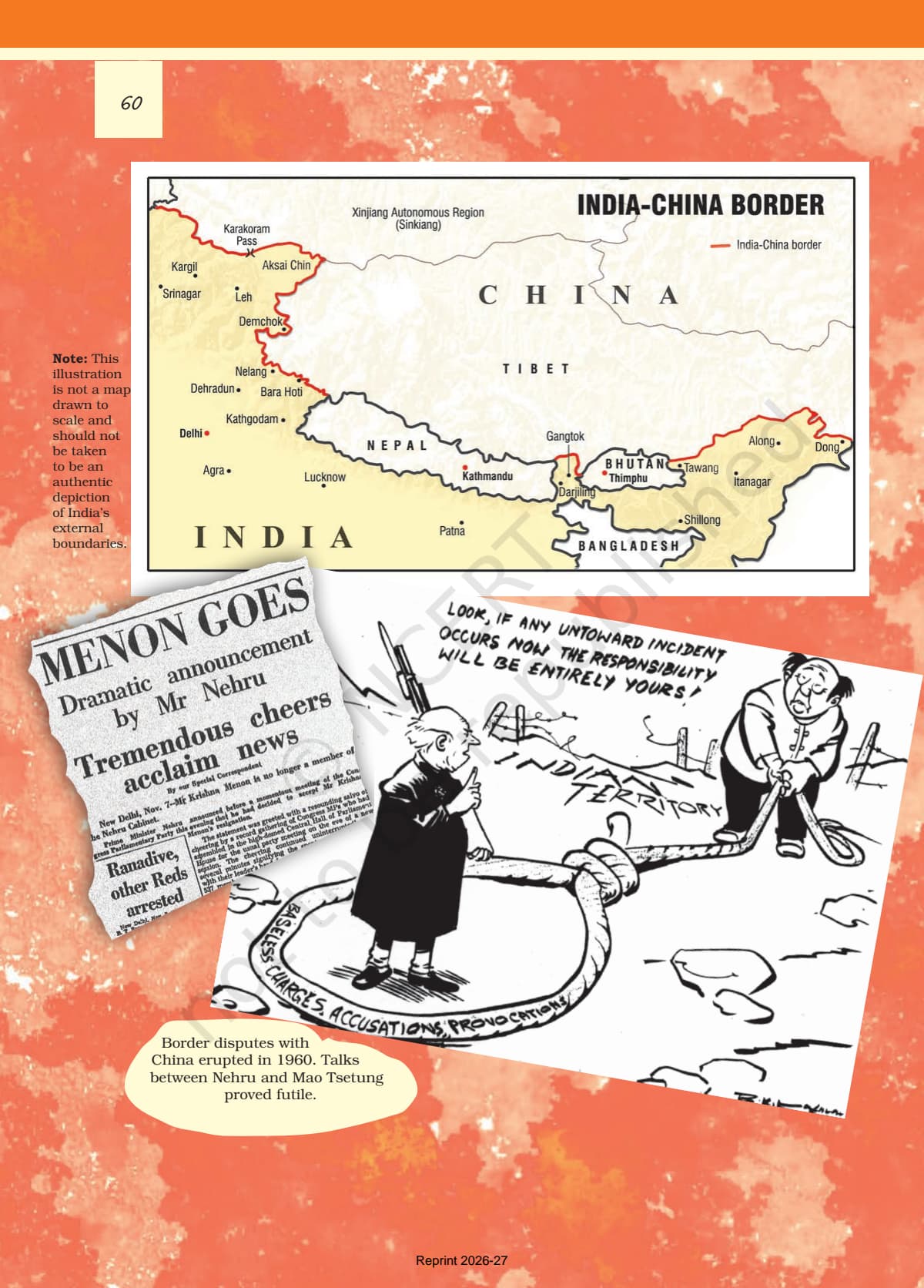
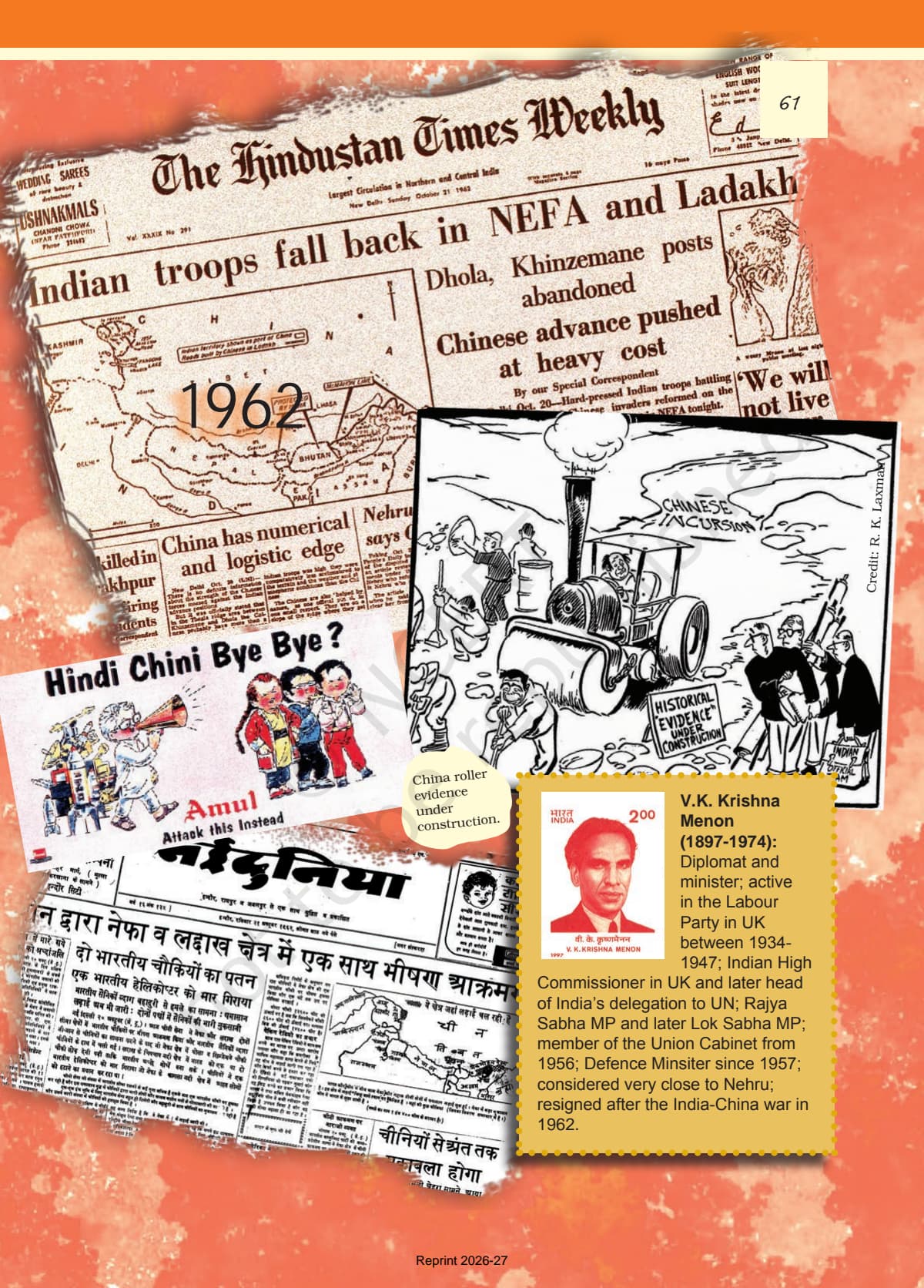
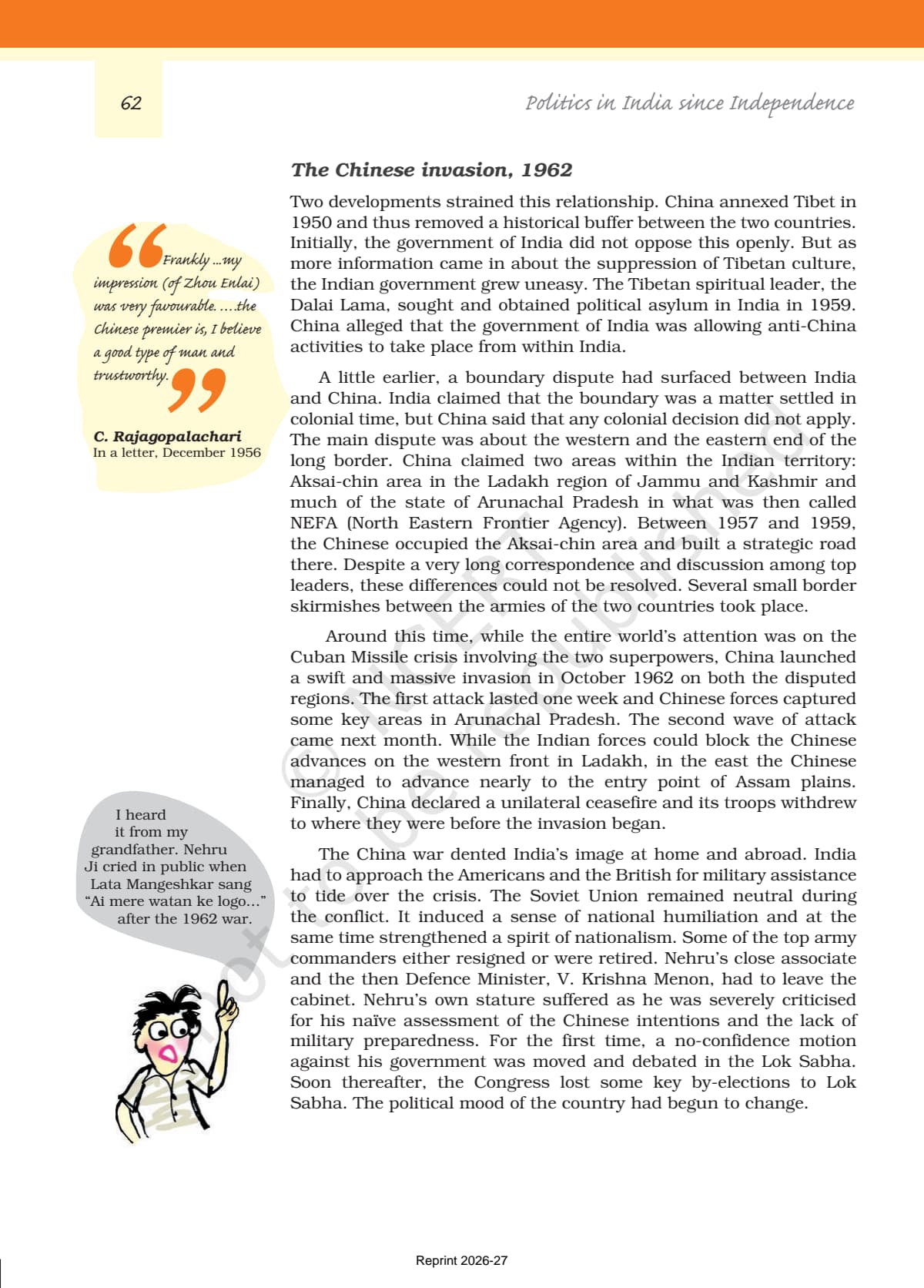
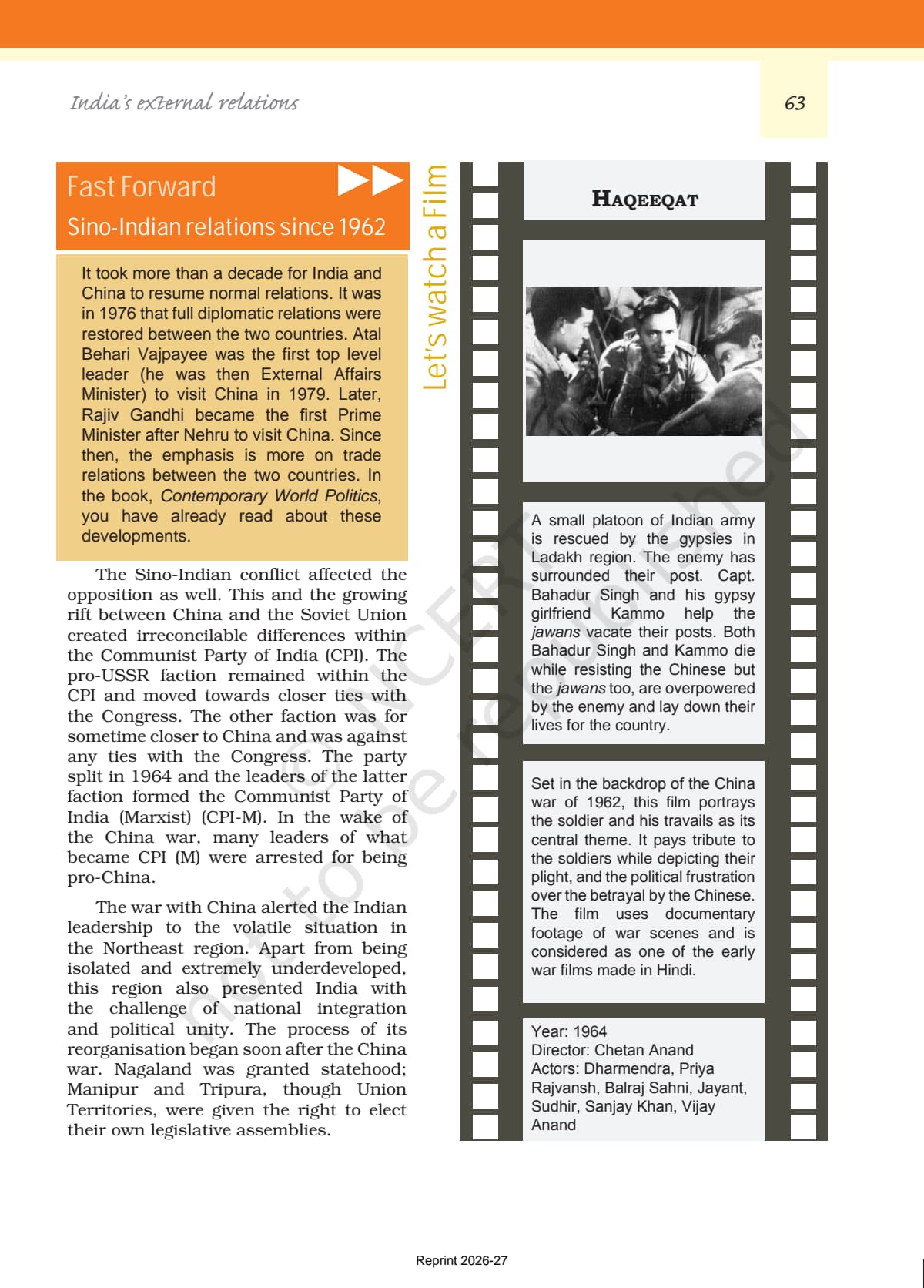
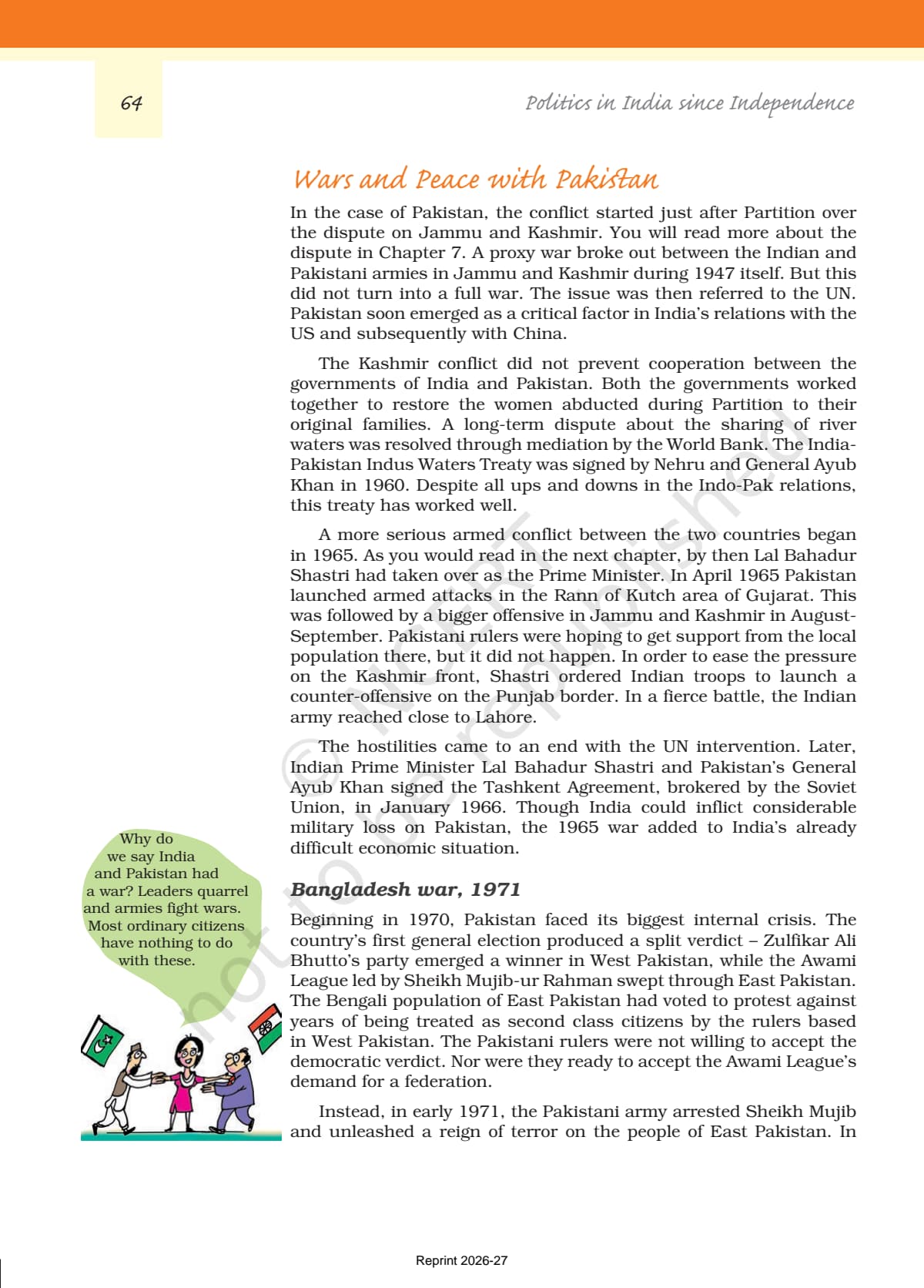
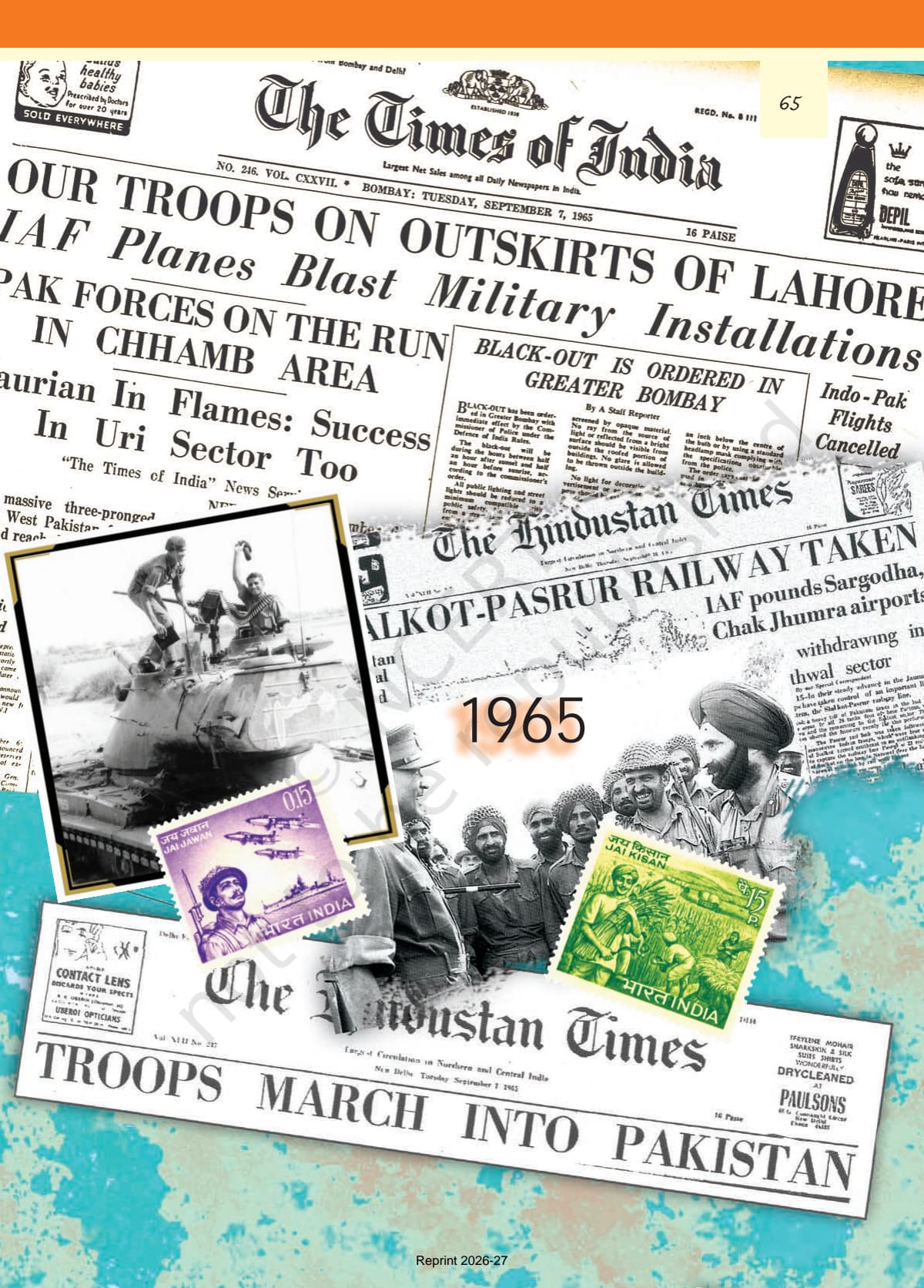
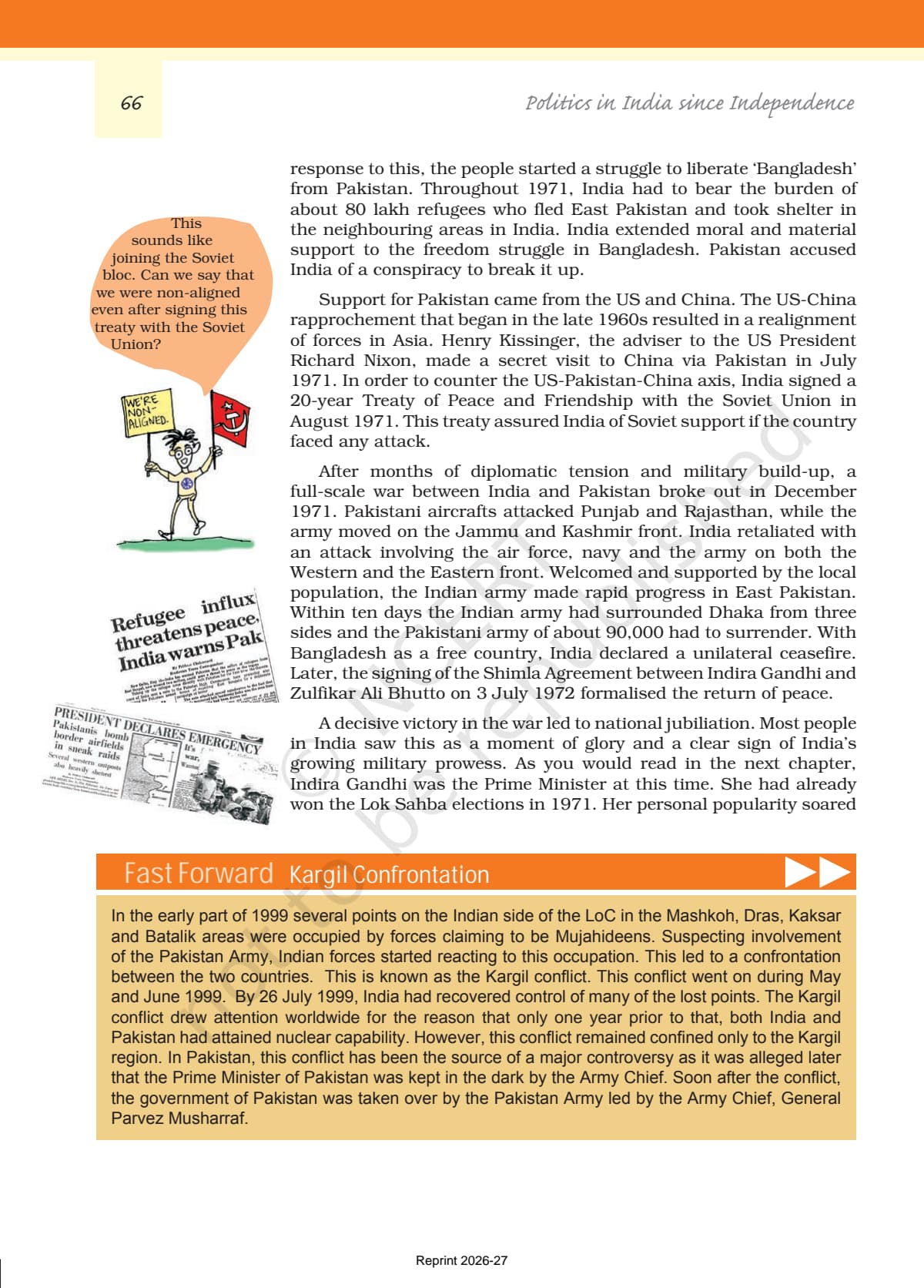
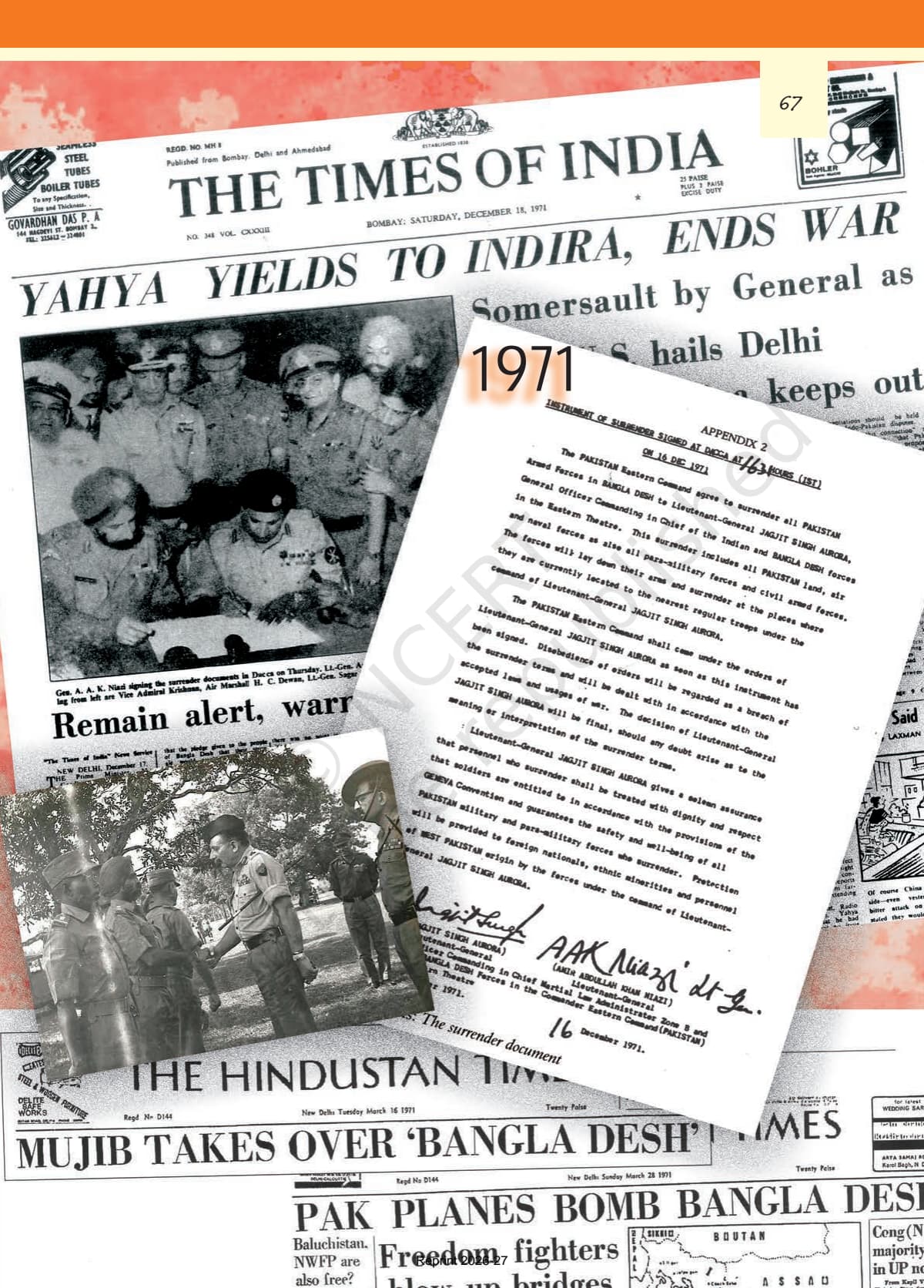
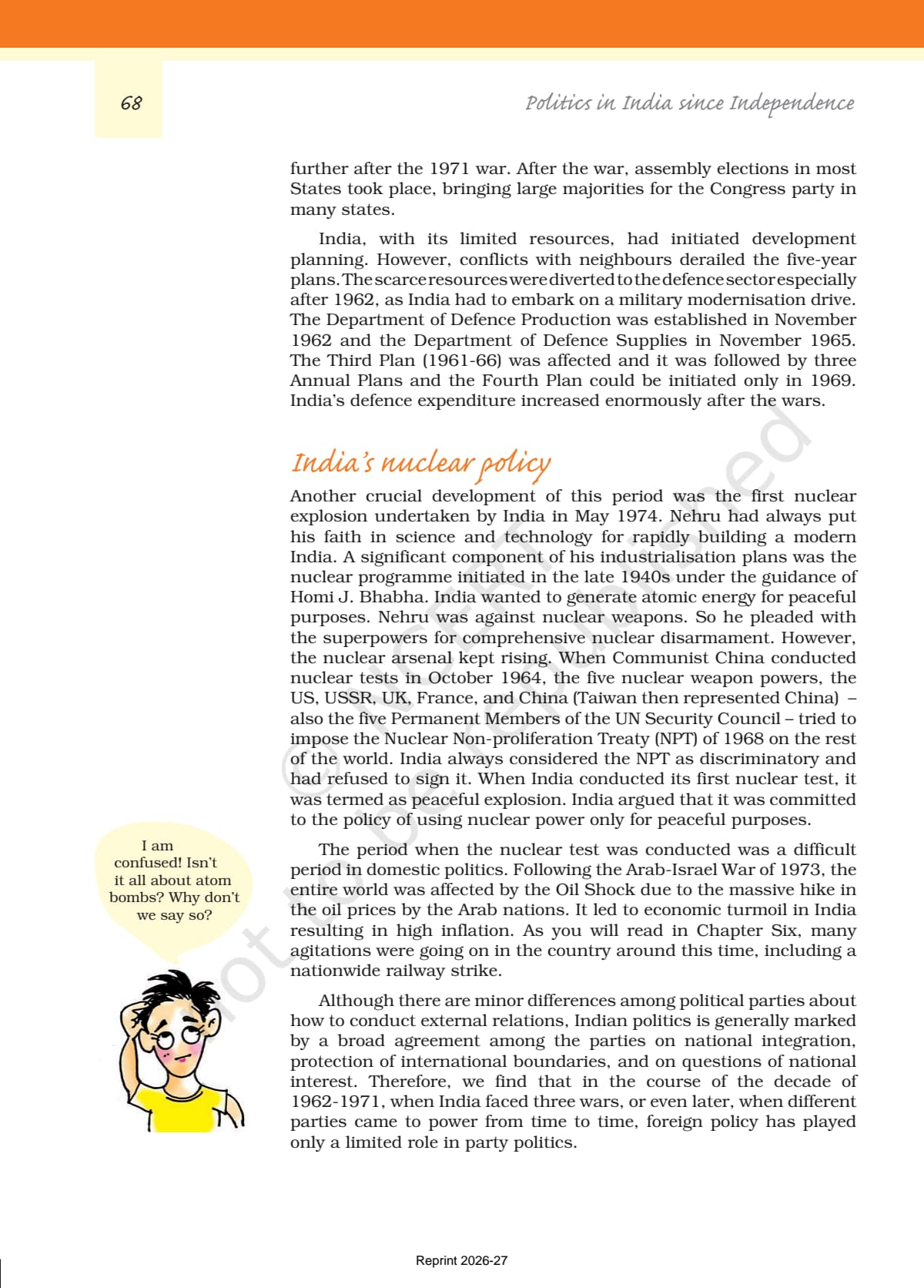
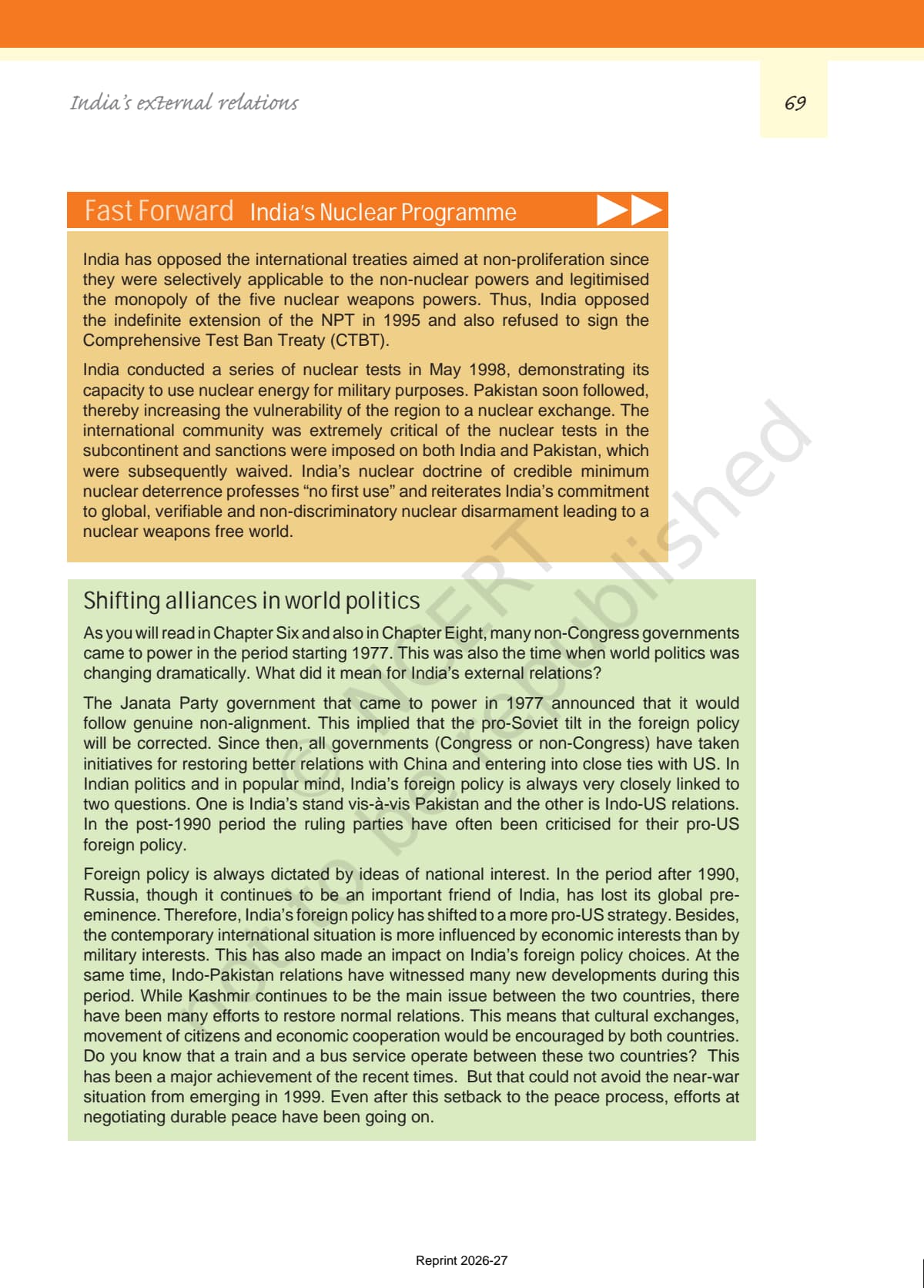
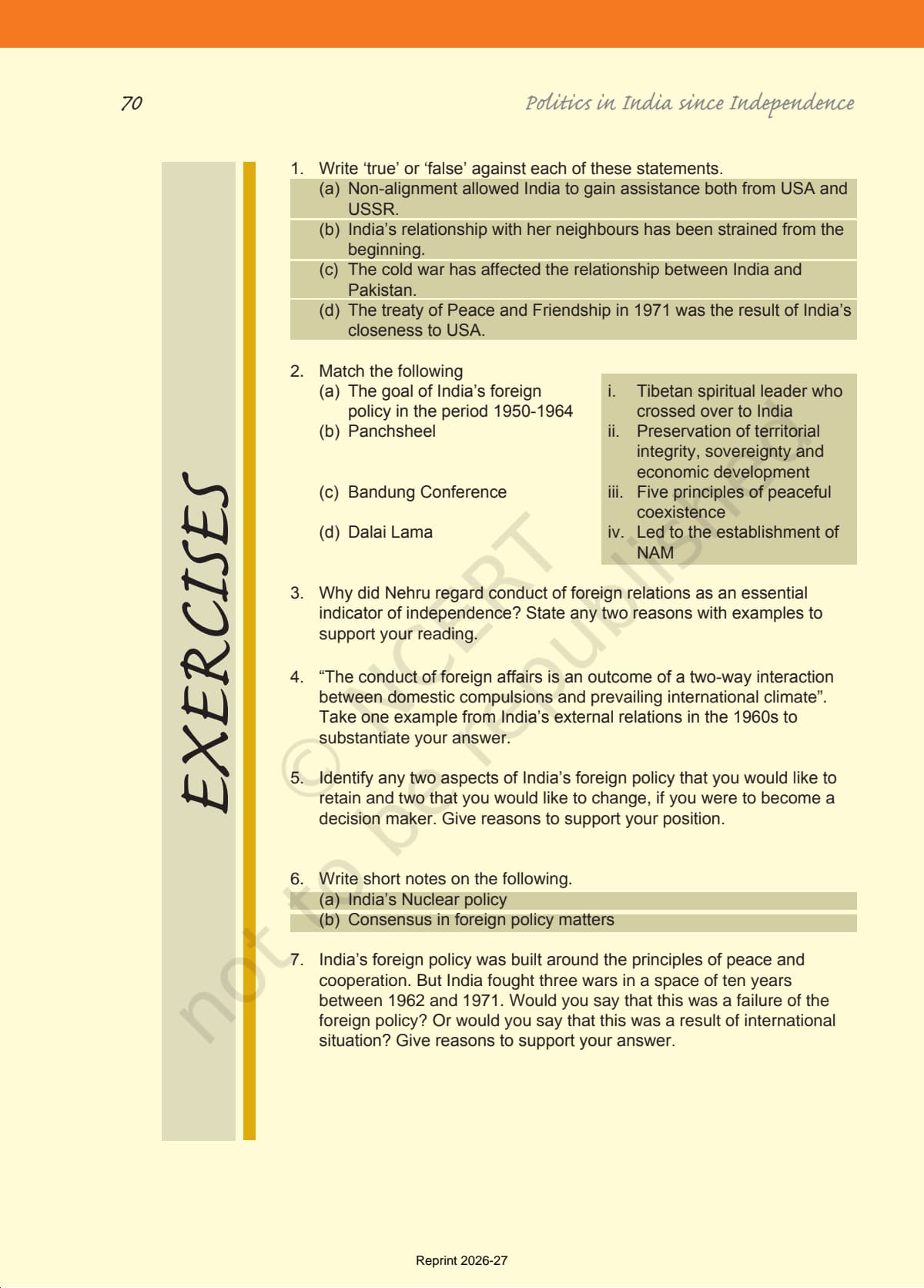
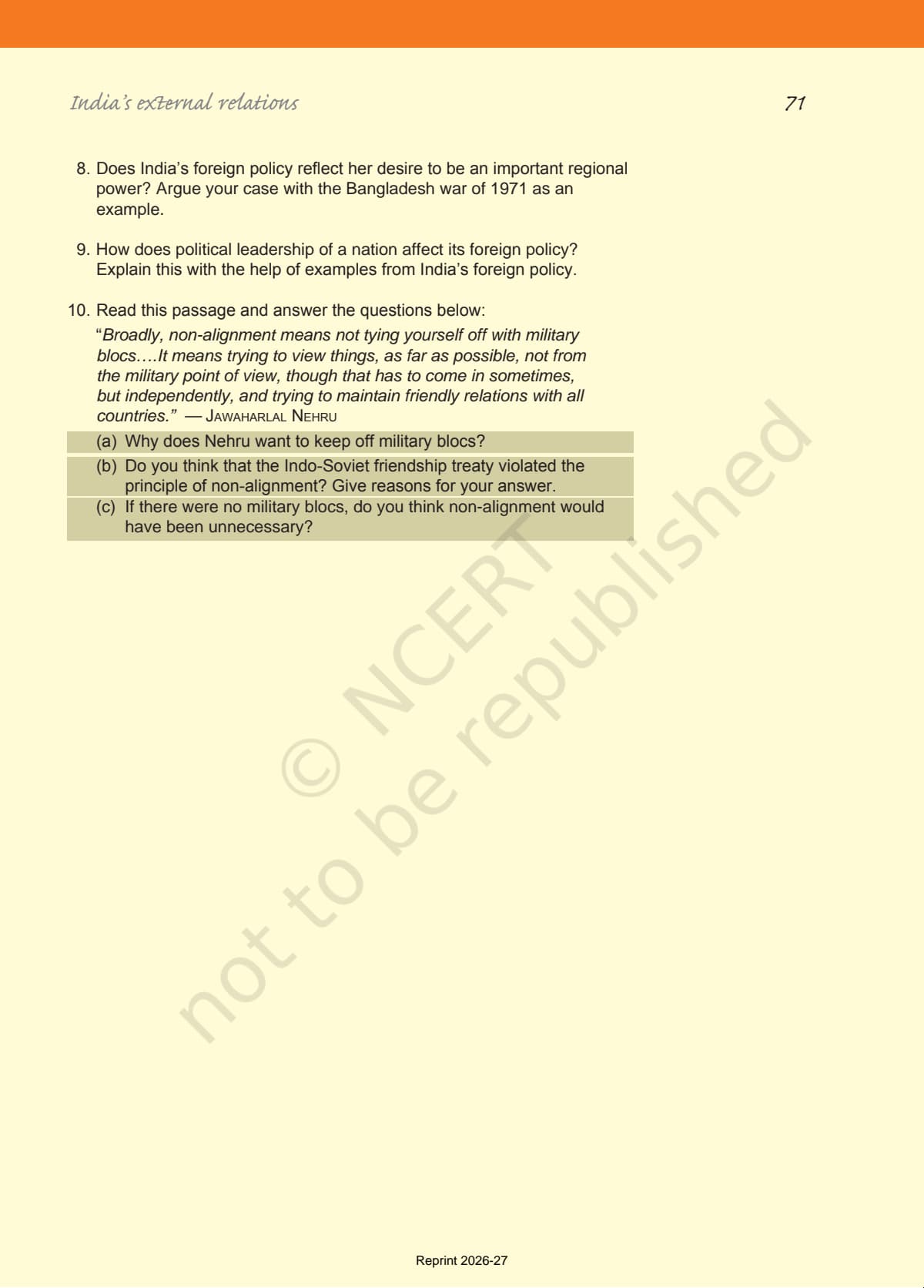
- Official NCERT chapter with the original photographs, maps and source boxes.
- This Class 12 Political Science chapter usually carries 5 to 6 marks in the board paper.
- Pairs with the NCERT Solutions, Notes and Handwritten Notes linked lower on this page.
This is the official NCERT India's External Relations chapter from Politics in India Since Independence, offered for free download in the 2026-27 edition.
Student Feedback: In a Collegedunia poll of 7,290 Class 12 Political Science students before the 2026 boards, 68% of students said they kept the official NCERT chapter PDF open while solving source-based questions, because the passages and photographs come straight from the chapter itself.
Source: 2026-27 Class 12 Political Science student poll. Sample of 7,290 students from CBSE schools across 12 states.
What the India's External Relations NCERT Chapter Covers
India's External Relations is the fourth chapter of Politics in India Since Independence. It studies how a newly free India dealt with the world during the Cold War, why Nehru chose non-alignment, and how India faced China and Pakistan in three wars.
The chapter is built around three threads, which the NCERT covers in order:
- The goals: non-alignment and Nehru's three foreign-policy objectives.
- The neighbours: friendship then war with China, and the 1965 and 1971 wars with Pakistan.
- The nuclear stand: a peaceful programme, no NPT, and the 1974 test.
Reading the original NCERT text matters because the source boxes and photographs in the class 12 political science chapter 4 pdf are exactly what CBSE quotes in source-based questions. A student who knows the chapter's own examples, such as the Suez and Hungary stands of 1956, can answer those passages with confidence.
Chapter Highlights and Important Topics
The NCERT chapter is rich with photographs, cartoons and source boxes that the exam often refers to. Knowing what each highlight covers helps students answer questions quickly. The table below lists the highlights students should study in the original chapter PDF.
| Highlight | Why it matters |
|---|---|
| Non-alignment | Sets out India's choice to stay out of both Cold War blocs and Nehru's three objectives. |
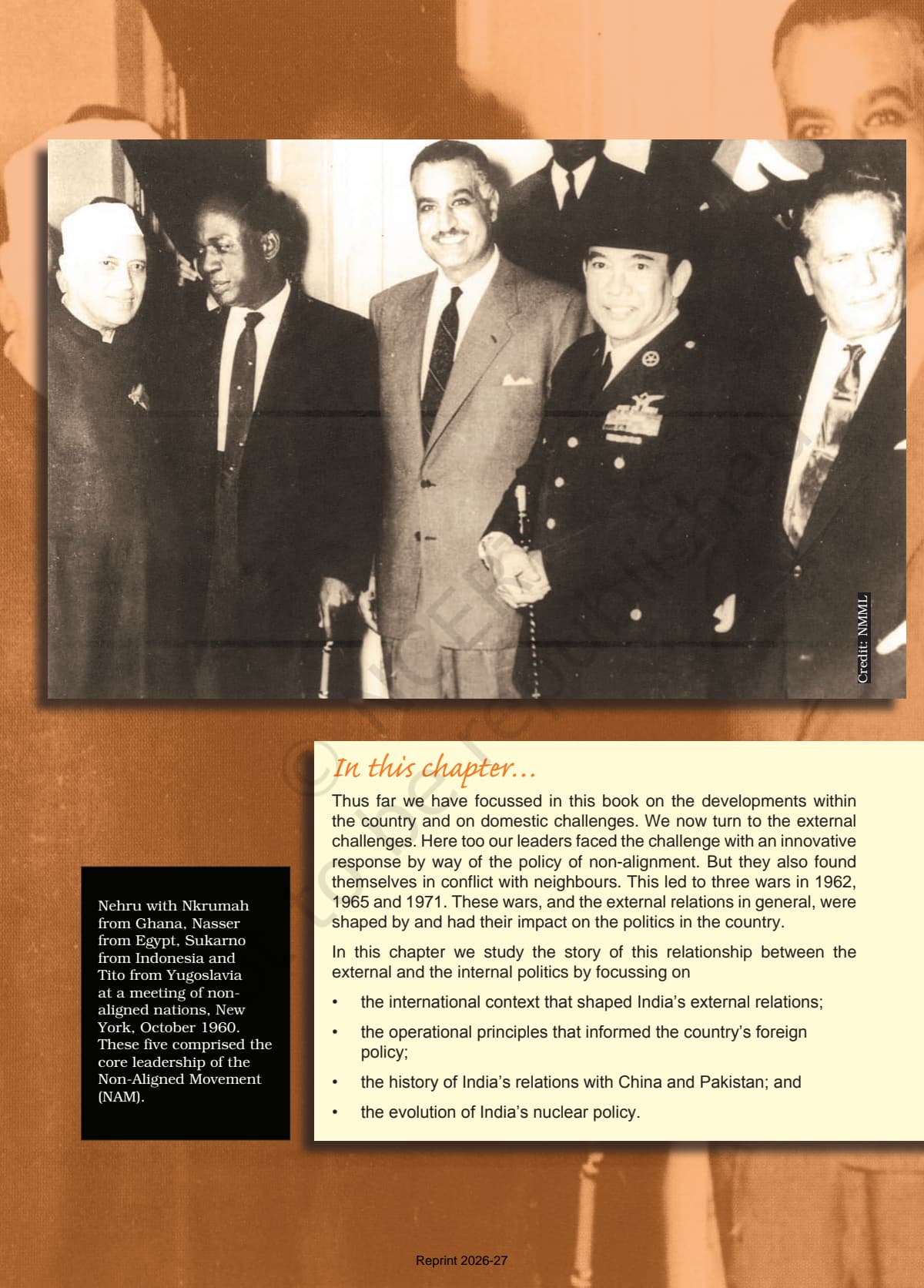
| NAM leaders photo | Shows Nehru with Nasser, Tito, Sukarno and Nkrumah, the founders of the Non-Aligned Movement. |
| The 1962 China war | Panchsheel, the Tibet issue and the border dispute that led to the invasion. |
| R. K. Laxman cartoon | Mocks China's shifting claims on the border in 1962. |
| 1971 surrender photo | About 90,000 Pakistani troops surrendering at Dhaka, the birth of Bangladesh. |
The chapter also explains India's nuclear policy, with the 1974 "peaceful" test and the refusal to sign the NPT. One point students should mark while reading is that India fought only when attacked, in 1962, 1965 and 1971. That single idea from the chapter is the heart of the three-wars answer, and it appears almost every year.
Non-Alignment, China and the Pakistan Wars in the Chapter
The chapter devotes whole sections to non-alignment, the China war and the Pakistan wars. These sections feed the short and long answers, so reading them in the original NCERT helps students quote the right examples. The lists below show what the chapter covers under each theme.
- Non-alignment: staying out of both blocs, judging issues independently and friendship with all.
- China: Panchsheel (1954), the Tibet issue, the border dispute and the 1962 invasion.
- 1965 war: over Kashmir, ending with the Tashkent Agreement.
- 1971 war: 80 lakh refugees, the surrender at Dhaka and the birth of Bangladesh.
The chapter explains that the 1971 Treaty of Peace and Friendship was signed with the Soviet Union to balance the US-China-Pakistan axis. It also gives the chronology students need for the date-based questions, from Panchsheel in 1954 to the 1971 war. Because these examples are drawn straight from the source chapter, the chapter 4 political science class 12 ncert book is the most reliable place to learn them.
India's Nuclear Policy and Foreign-Policy Consensus in the Chapter
The closing sections of the chapter explain India's nuclear stand and the broad consensus among parties on foreign policy. These pages are the most exam-relevant for the short-note questions, so reading them in the original chapter helps students write precise answers.
- Peaceful programme: begun under Homi J. Bhabha in the late 1940s for atomic energy.
- Against the NPT: India called the 1968 treaty discriminatory and refused to sign it.
- The 1974 test: India's first nuclear explosion, described as a "peaceful explosion".
- Consensus: parties broadly agree on integration, borders and national interest.
The chapter is clear that this cross-party consensus kept foreign policy largely out of party politics, even through the wars of 1962 to 1971. It ends with the idea that India's foreign policy showed striking continuity, principled on nuclear weapons and consensual across parties. Reading these closing pages in the official PDF gives students the wording NCERT itself uses, which scores best in the board paper.
How to Download and Use the NCERT Chapter PDF
The chapter PDF is free and easy to use on any device. Students can save it for offline reading and pair it with the solutions and notes. The steps below show how to get the most out of the India's External Relations PDF during revision.
- Download: tap the download card above to save the official Chapter 4 PDF to your device.
- First read: read the chapter once end to end, marking the NAM photo and the 1971 surrender image.
- Source practice: keep the PDF open while attempting source-based questions, since the passages come from it.
- Revision: use the chapter alongside the notes to fix dates, key terms and the chronology.
Many students search for the class 12 political science chapter 4 pdf the night before a test so they can revise offline. A saved copy means the source boxes and photographs are always at hand. After reading the chapter, move to the solutions to check that your answers match the model points, then use the notes for a final quick recall.
How the Book PDF Pairs with the Solutions and Notes
The NCERT Book PDF is the source text. To prepare fully, students should use it with the other resources for the same chapter, all linked in the table below. Read the chapter, fix the ideas with the notes, then test yourself with the solutions.
| Resource | Best used for |
|---|---|
| India's External Relations NCERT Solutions | Step-by-step answers to all 10 back-exercise questions |
| India's External Relations Class 12 Notes | Quick chapter summary with all dates and key terms in one place |
| India's External Relations Handwritten Notes | Last-minute, one-shot revision in a scanned notebook style |
Tip: read the chapter PDF first, then attempt the solutions on your own, and only then check the model answers. Reading the source text before the answers builds far stronger source-based skills.
All Class 12 Political Science NCERT Book PDFs by Chapter
The table links the NCERT chapter PDFs for every chapter in both Class 12 Political Science books, so students can move across the course in one click. India's External Relations is highlighted.
| Chapter | NCERT Book PDF |
|---|---|
| Contemporary World Politics | |
| Chapter 1 | The End of Bipolarity |
| Chapter 2 | Contemporary Centres of Power |
| Chapter 3 | Contemporary South Asia |
| Chapter 4 | International Organisations |
| Chapter 5 | Security in the Contemporary World |
| Chapter 6 | Environment and Natural Resources |
| Chapter 7 | Globalisation |
| Politics in India Since Independence | |
| Chapter 1 | Challenges of Nation Building |
| Chapter 2 | Era of One-Party Dominance |
| Chapter 3 | Politics of Planned Development |
| Chapter 4 | India's External Relations |
| Chapter 5 | Challenges to and Restoration of the Congress System |
| Chapter 6 | The Crisis of Democratic Order |
| Chapter 7 | Regional Aspirations |
| Chapter 8 | Recent Developments in Indian Politics |
FAQs on India's External Relations NCERT Book PDF
India's External Relations Class 12 NCERT Book Common Questions
Ques. Where can I download the India's External Relations NCERT Book PDF?
Ans. You can download the official India's External Relations Class 12 Political Science chapter PDF directly from this page. It is free, follows the 2026-27 NCERT edition, and carries the original text, photographs and source boxes of Chapter 4.
Ques. Which book is India's External Relations from?
Ans. It is the fourth chapter of Politics in India Since Independence, one of the two Class 12 Political Science textbooks. The chapter studies India's foreign policy from non-alignment to the three wars of 1962 to 1971.
Ques. What does India's External Relations chapter cover?
Ans. It covers India's foreign-policy goals, non-alignment and NAM, friendship and war with China, the 1965 and 1971 wars with Pakistan, the birth of Bangladesh, and India's nuclear policy and its refusal to sign the NPT.
Ques. Why should I read the original NCERT chapter PDF?
Ans. Because CBSE draws source-based questions straight from the chapter's own boxes, photographs and cartoons. Reading the official chapter 4 political science class 12 PDF gives you the exact wording and examples that score best in the board paper.
Ques. How should I use the chapter PDF with the other resources?
Ans. Read the chapter PDF first, fix the ideas with the notes, then test yourself with the solutions. Keeping the PDF open while practising source-based questions helps, since the passages come directly from it.



Comments