




Class 12 Physics Chapter 7 Alternating Current is the official 2026-27 NCERT textbook chapter. This page hosts the free PDF for CBSE Boards, JEE Main, and NEET. Download it and use it as your base for every numerical and derivation in this chapter.
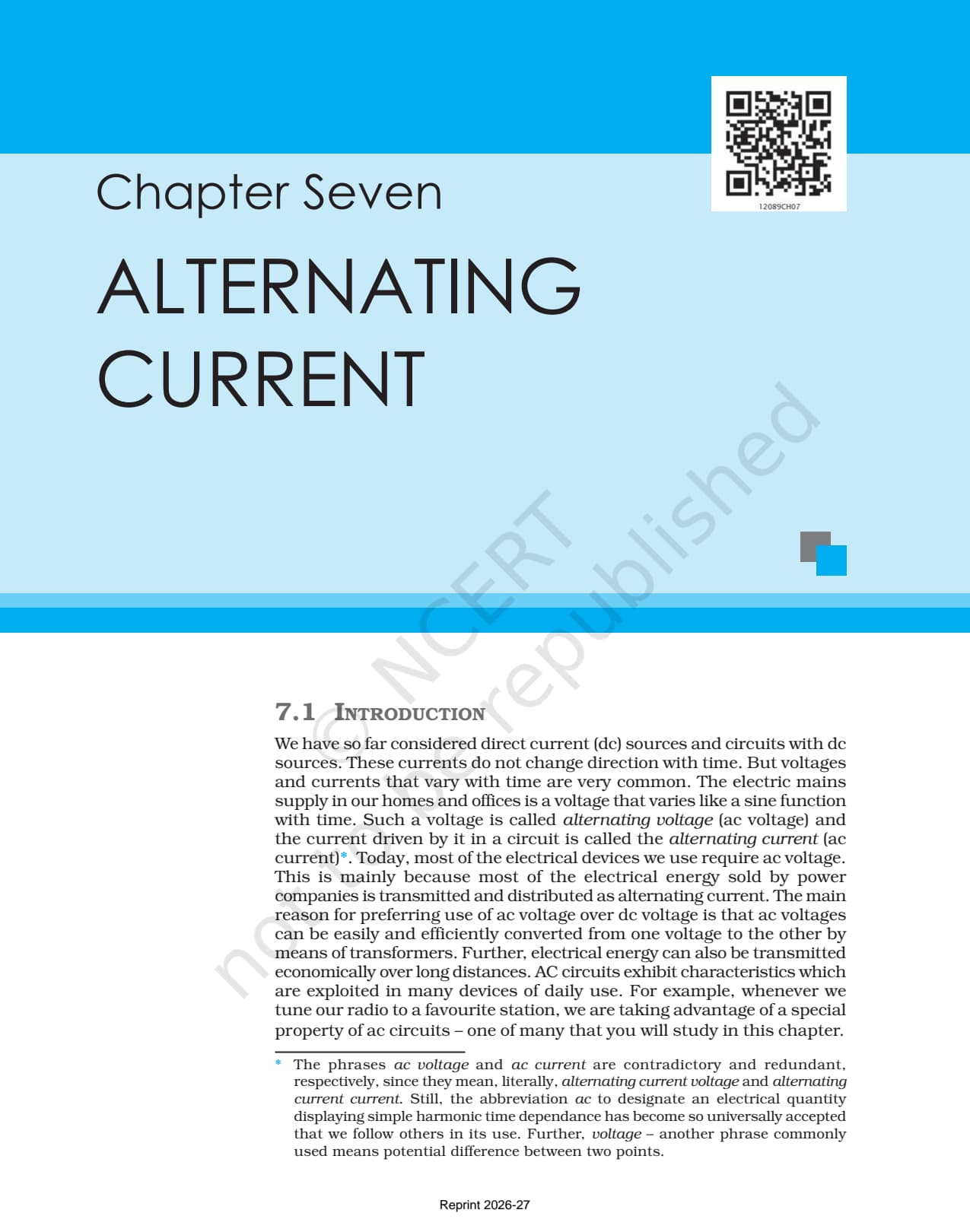
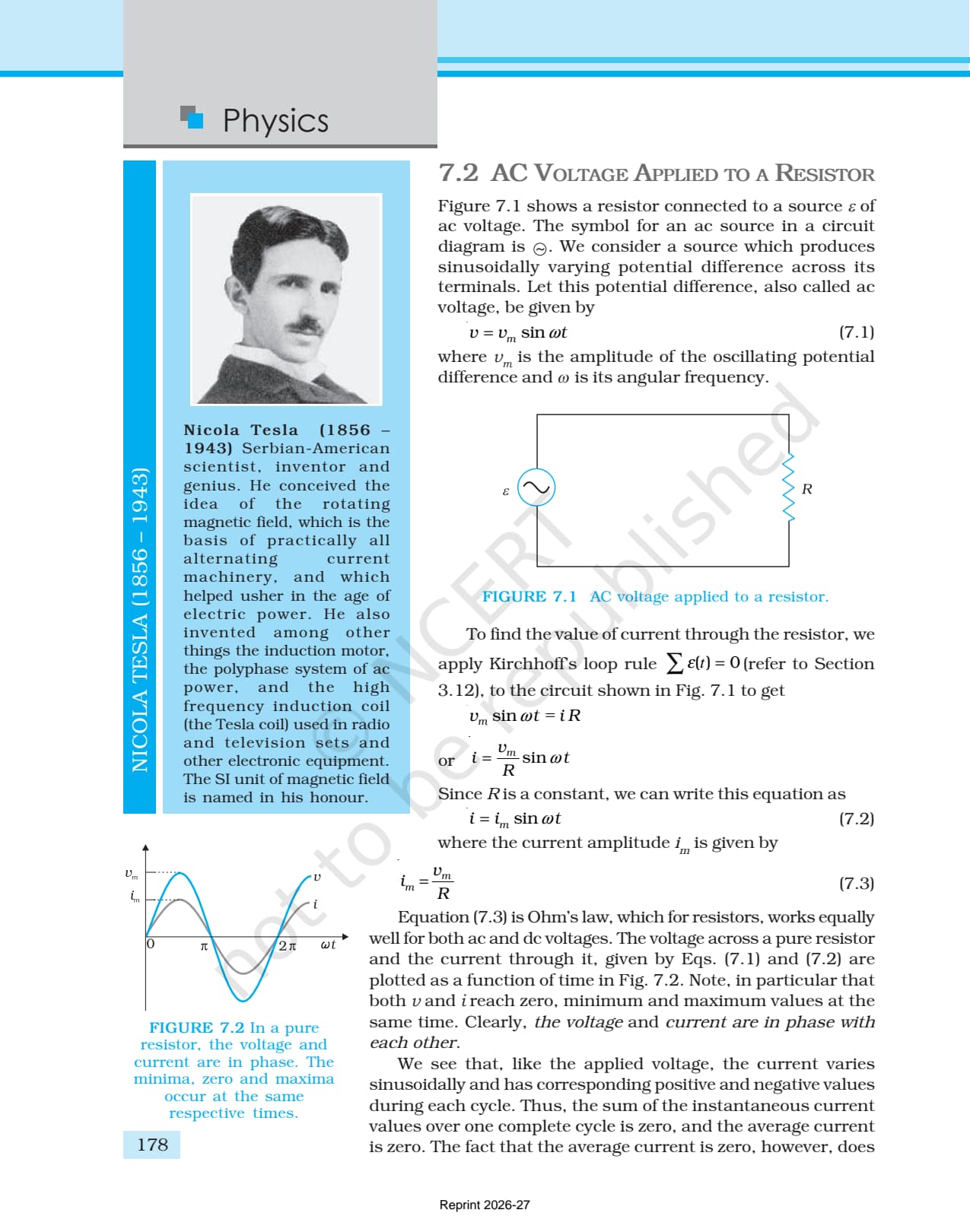
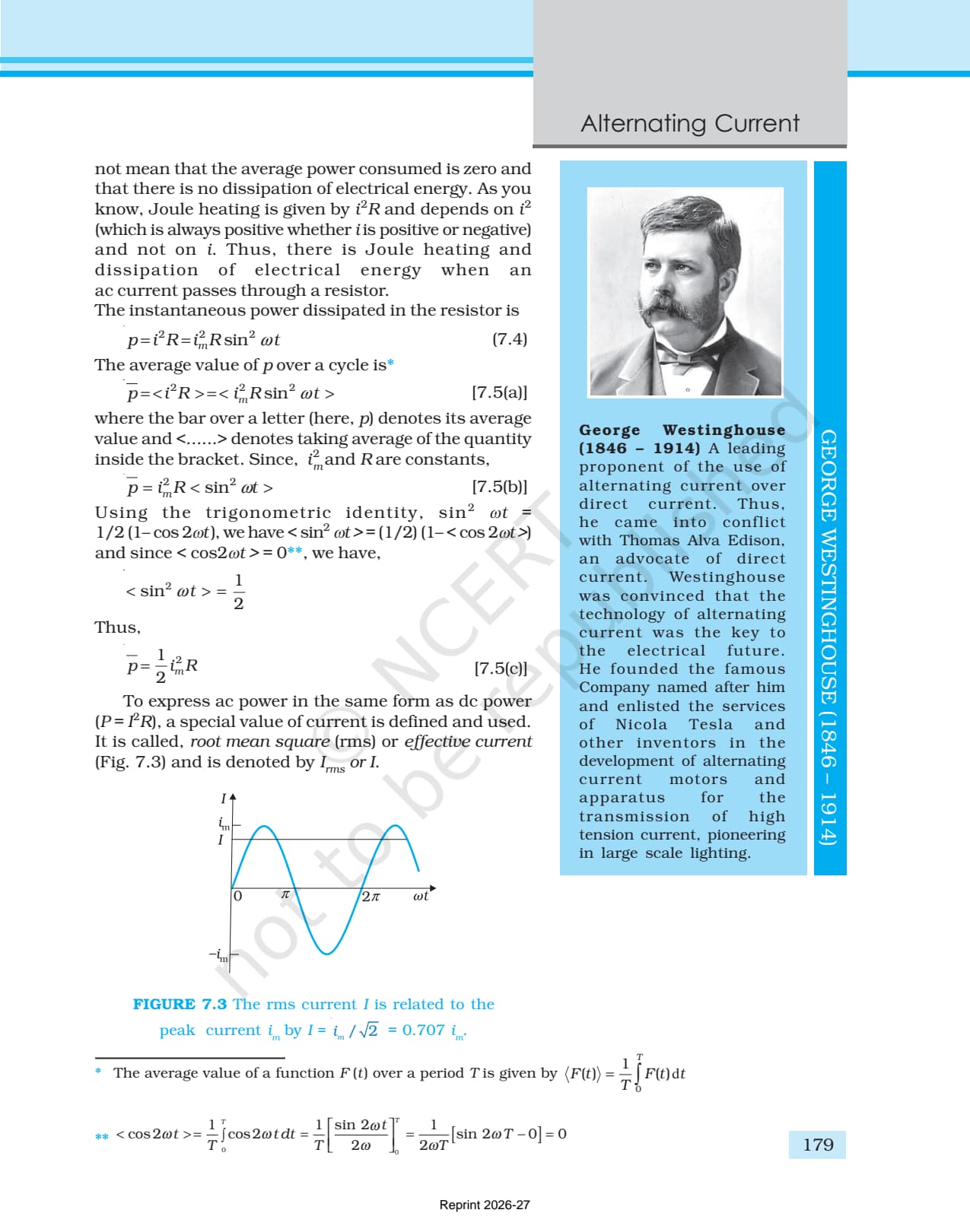
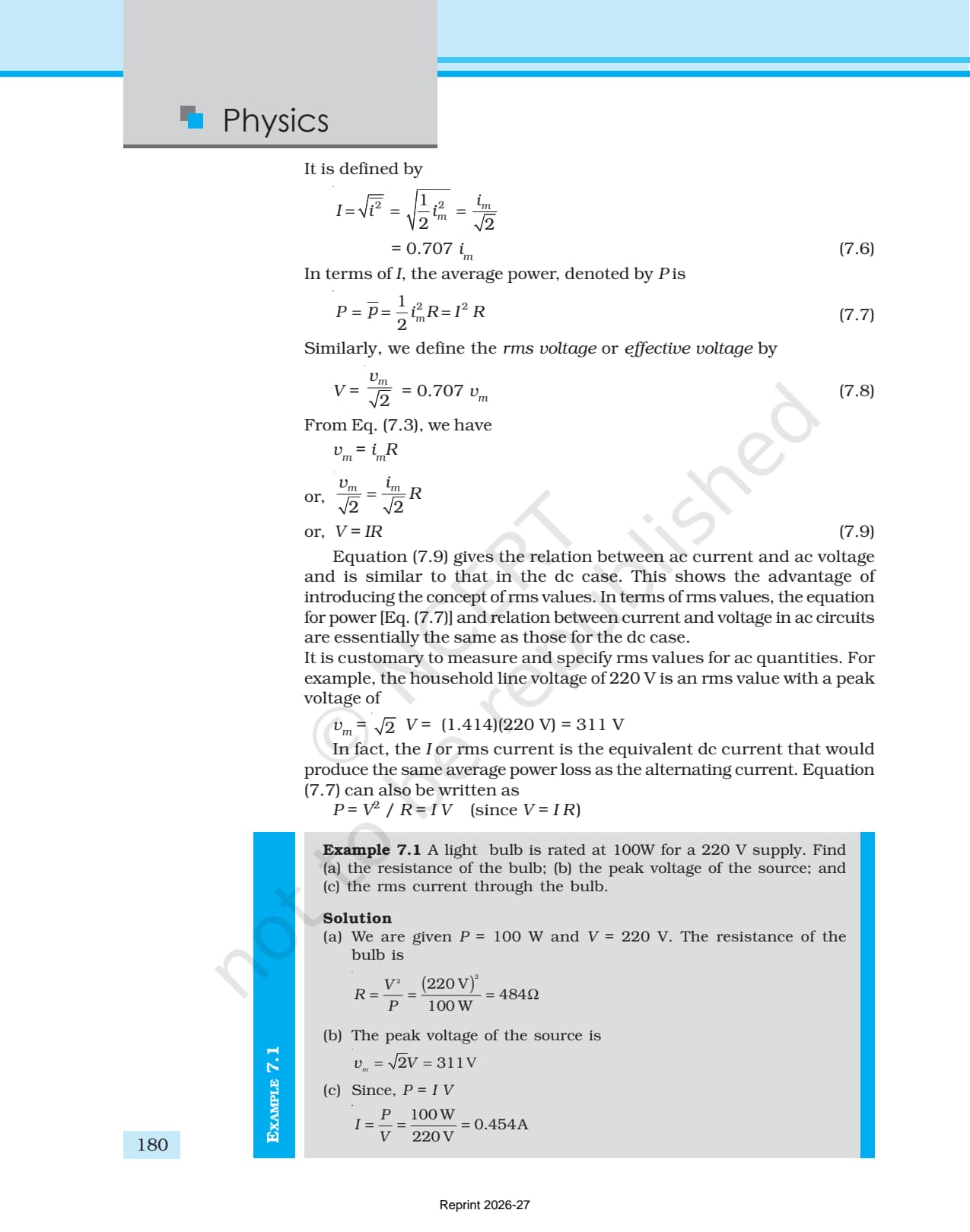

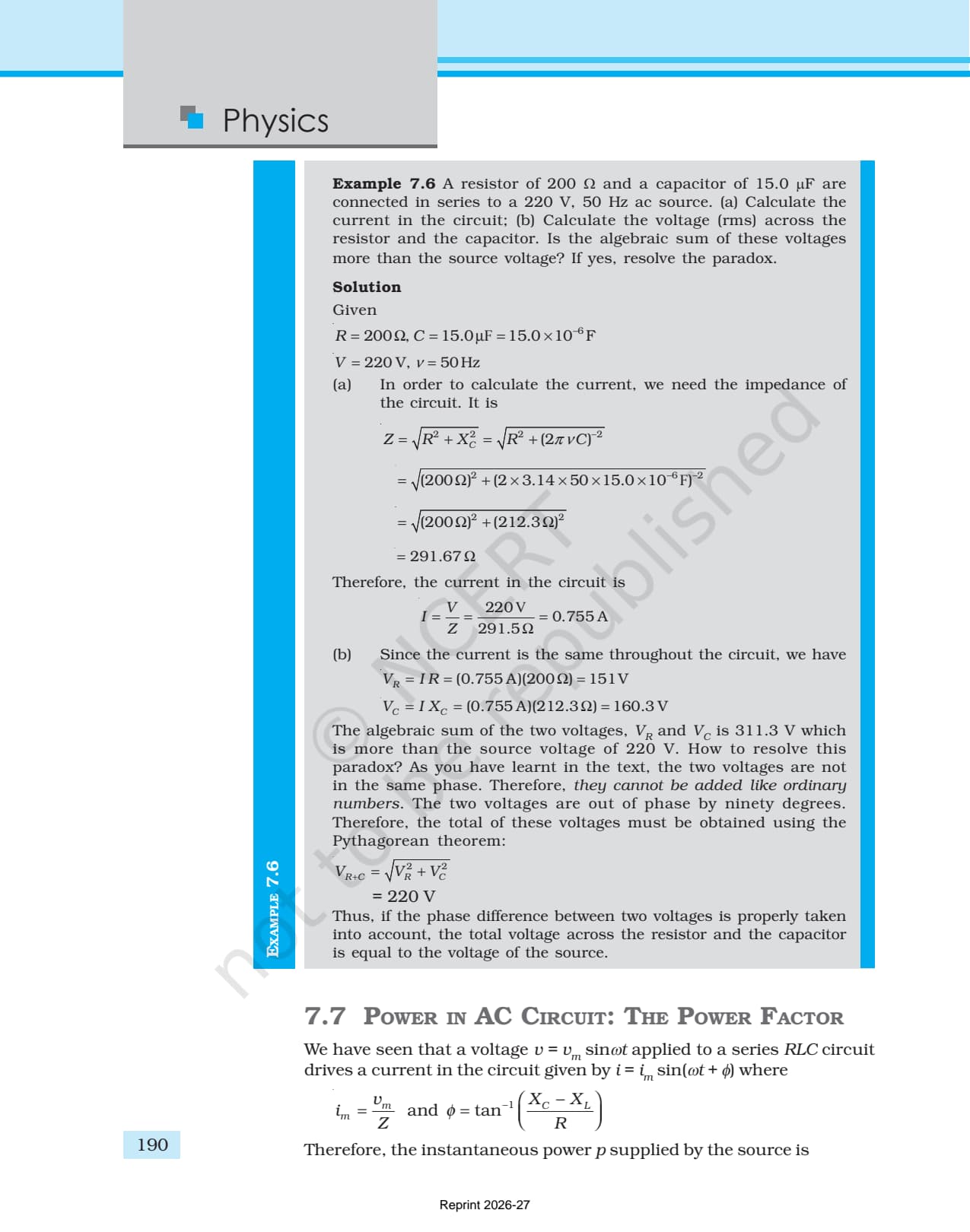
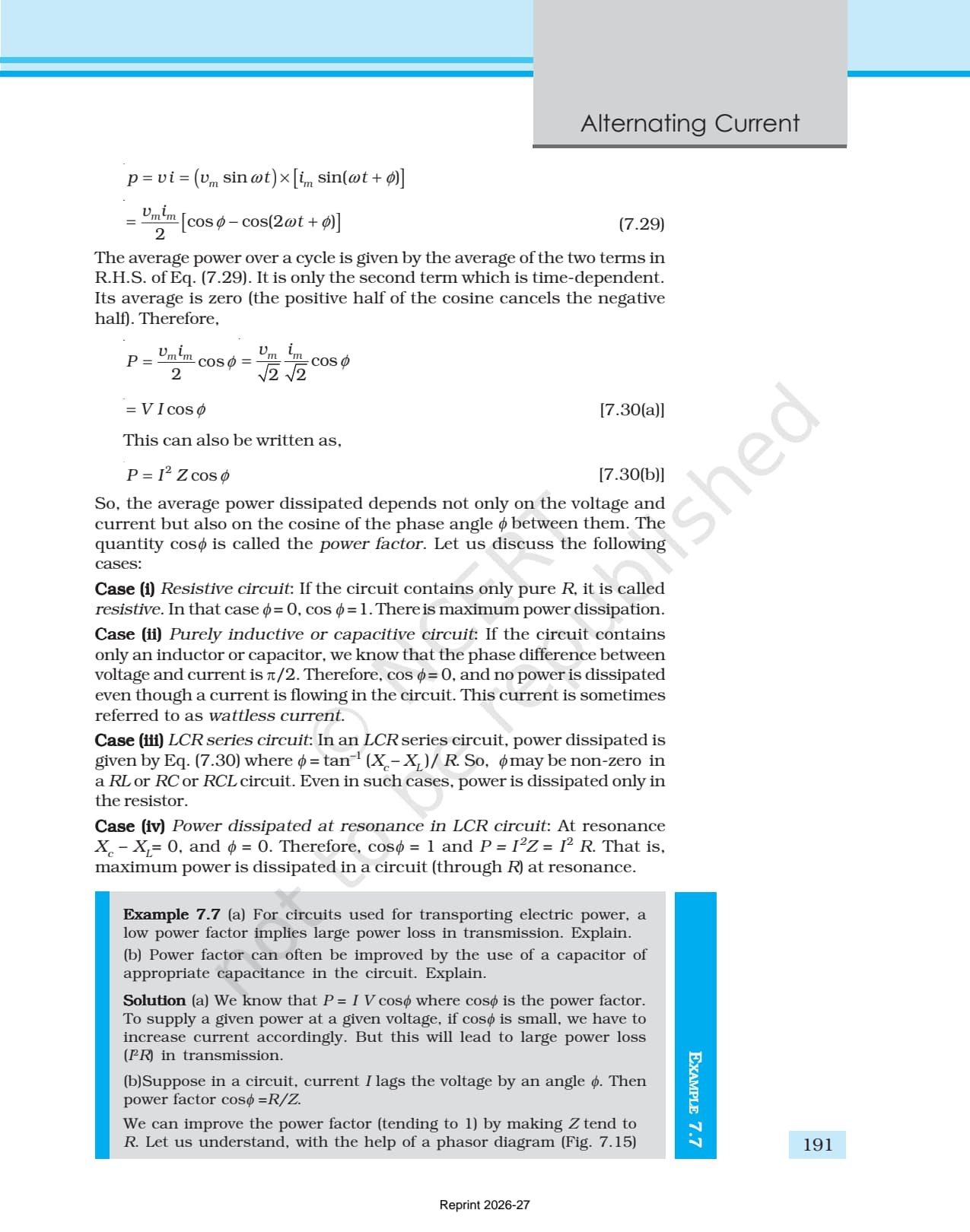
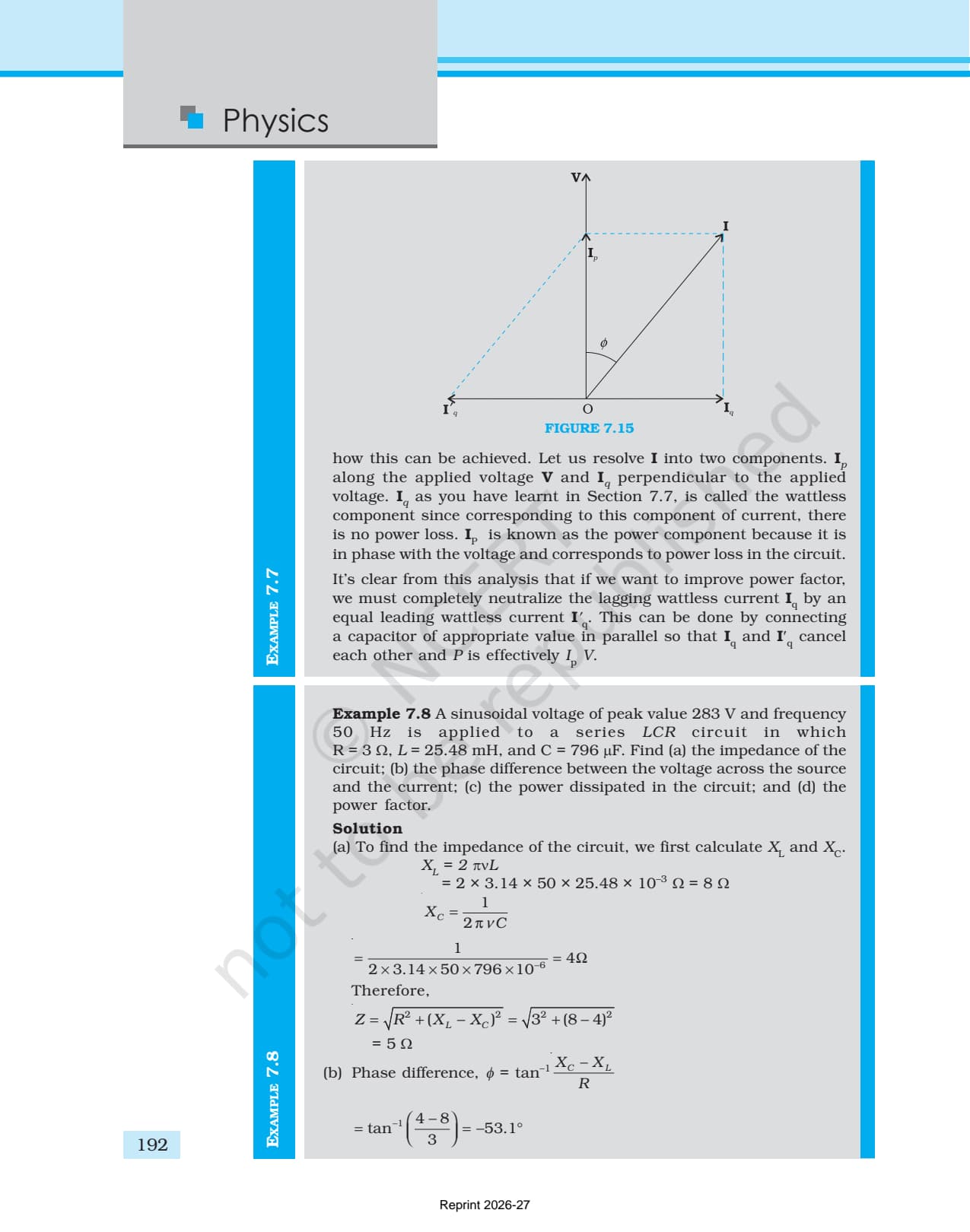
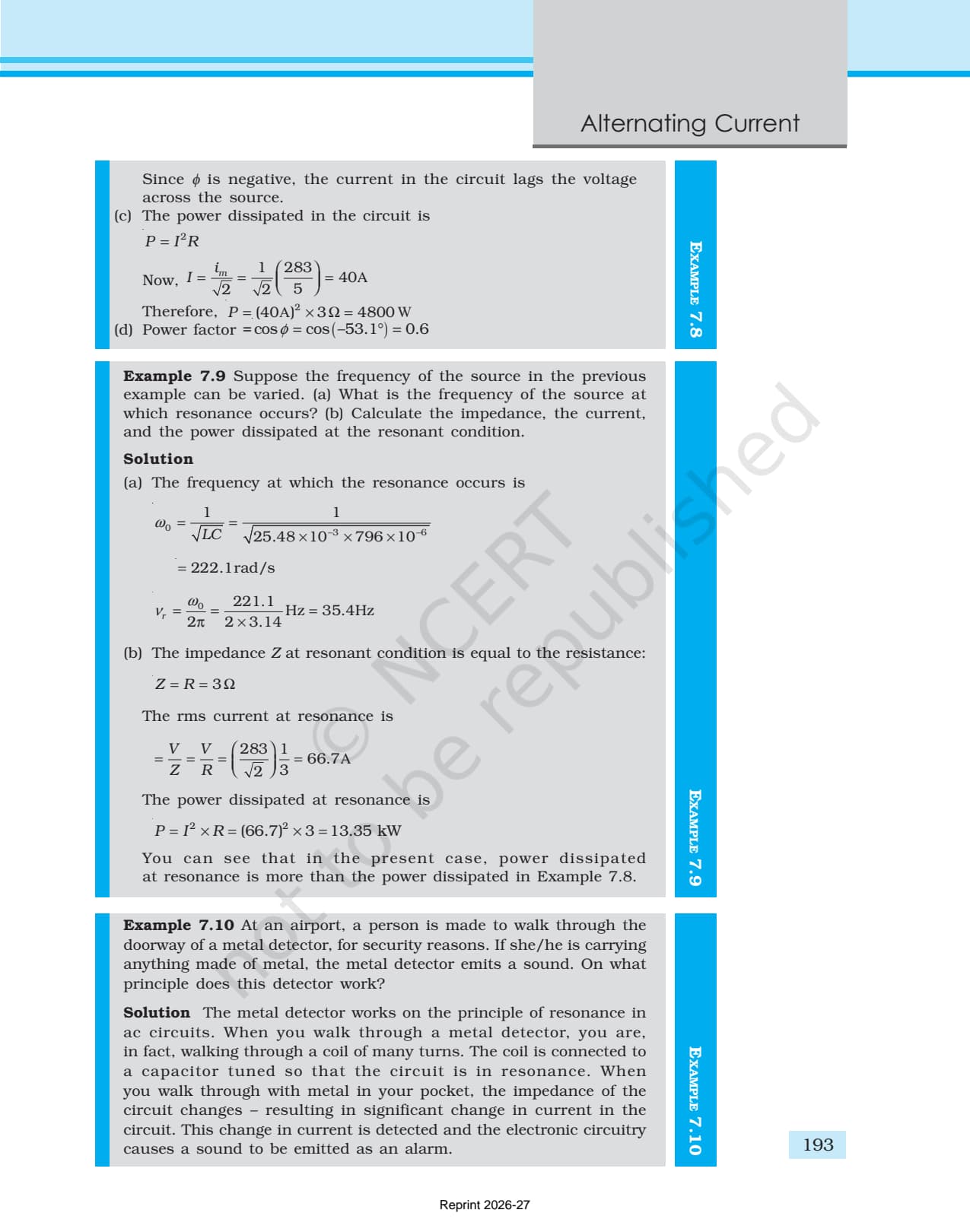
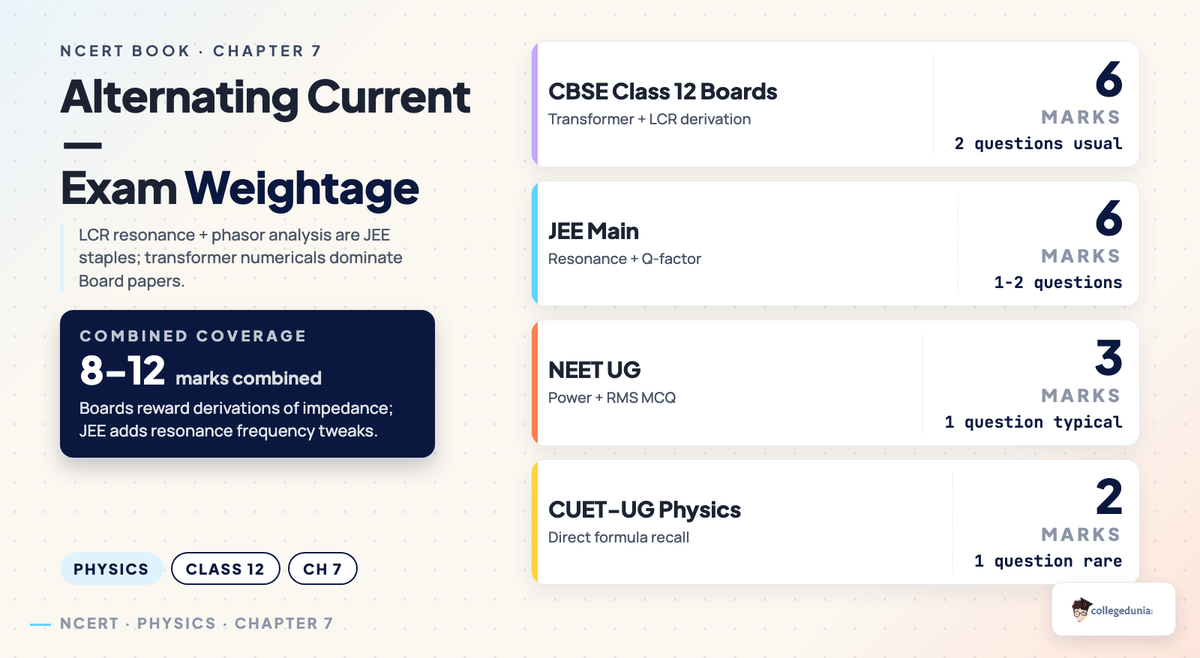
- CBSE Weightage: 5 to 7 marks
- JEE Main Weightage: 3 to 4% (1 to 2 questions per paper)
- NEET Weightage: 2 to 3 questions per year

How This Alternating Current NCERT PDF on Collegedunia Helps Class 12 Students
This page gives you the official Chapter 7 PDF plus a section map, example index, and reading plan to save study time.
- 2026-27 NCERT Alignment: Sections 7.1 to 7.8 match the current print of NCERT Physics Part I.
- Expert Verification: Every intext example and exercise count is cross-checked with the official NCERT print.
Alternating Current Class 12 - Video Lecture
Source: NCERT Wallah on YouTube
What is Inside the Alternating Current NCERT Book PDF?
The PDF on this page matches what the NCERT server hosts. Several exercises combine two sections and reward students who read the chapter linearly rather than jumping to formula boxes.
Alternating Current NCERT Section-by-Section Breakdown for Class 12
The table below maps each section in Chapter 7 to its page range and core idea. Use it to locate a derivation before attempting an exercise.
| Section | Title | Pages | Core Idea |
|---|---|---|---|
| 7.1 | Introduction | 1 | Why AC is preferred over DC for transmission and household supply |
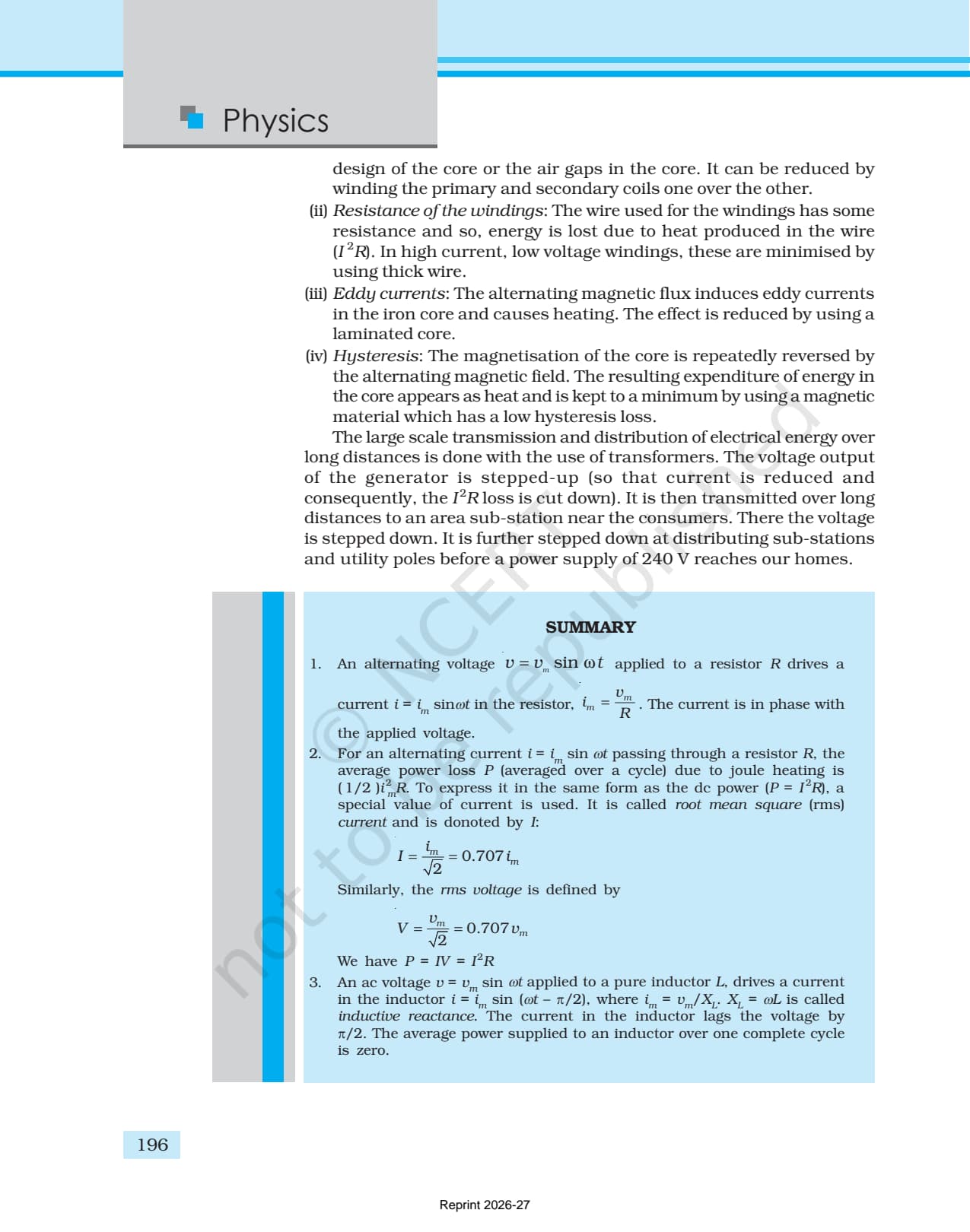
| 7.2 | AC Voltage Applied to a Resistor | 2 to 4 | Instantaneous current, rms definition, average power formula |
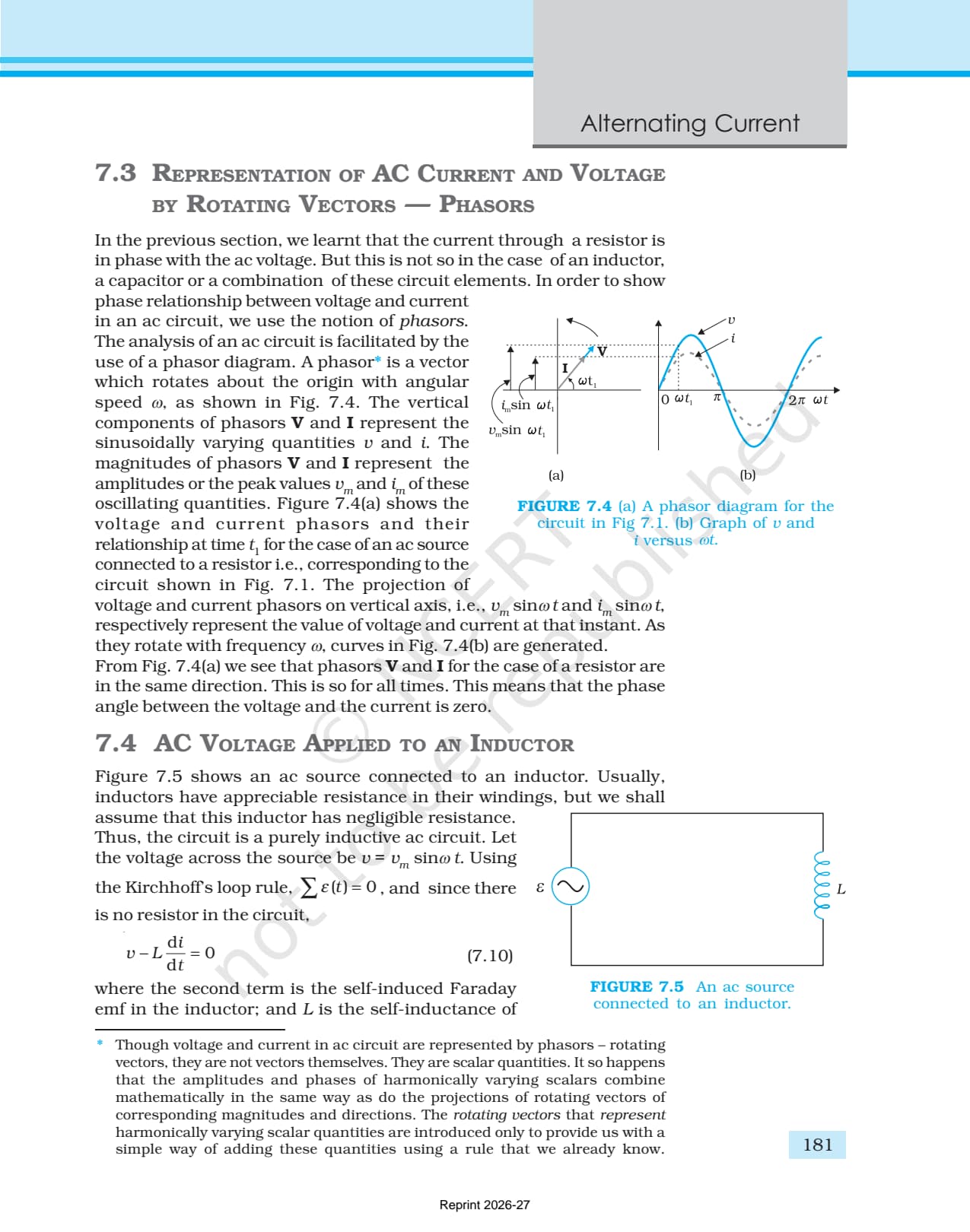
| 7.3 | Phasors: Representation by Rotating Vectors | 5 to 6 | Phasor construction and phase-difference visualisation |
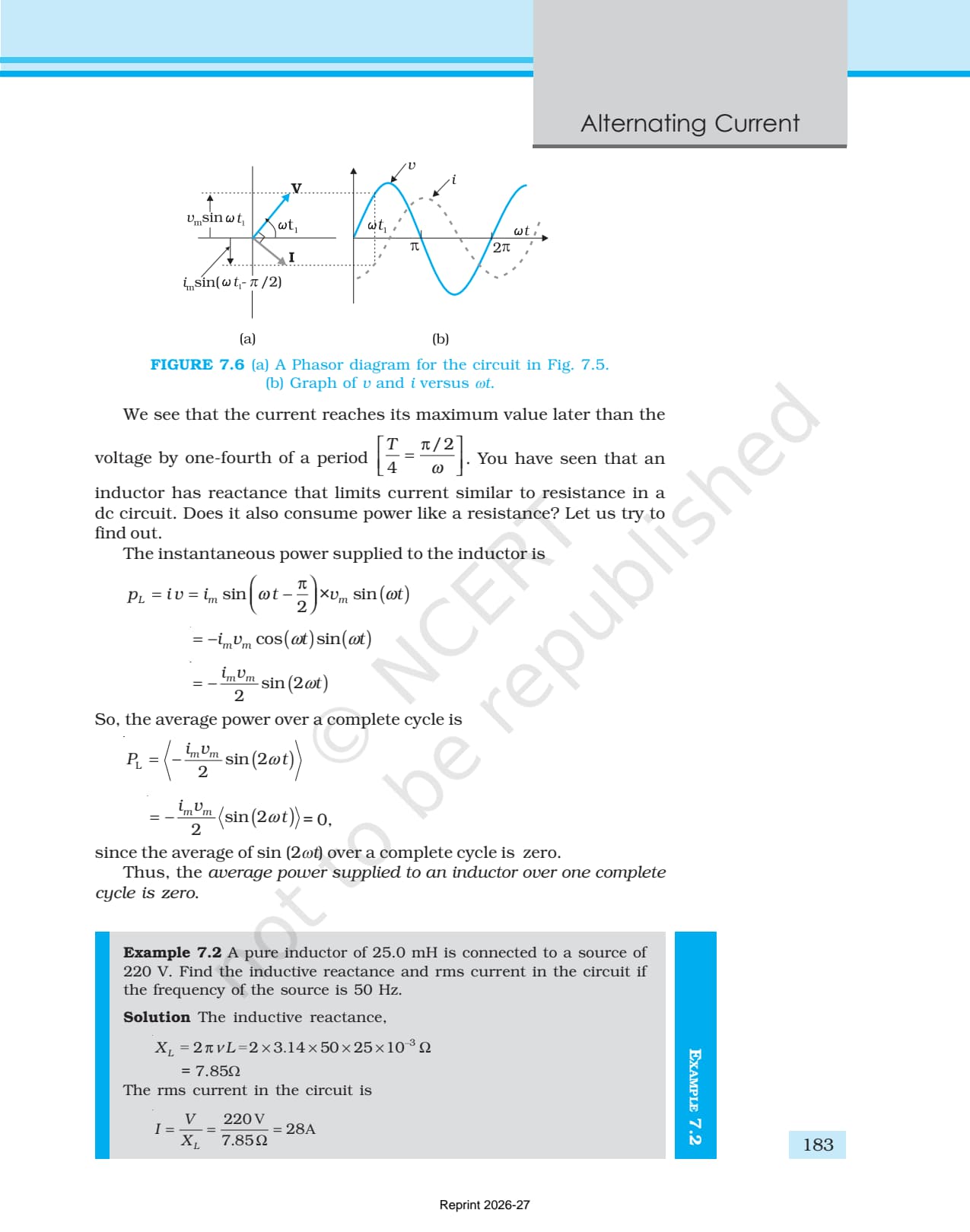
| 7.4 | AC Voltage Applied to an Inductor | 7 to 10 | Current lags by π/2 , inductive reactance XL = ω L |
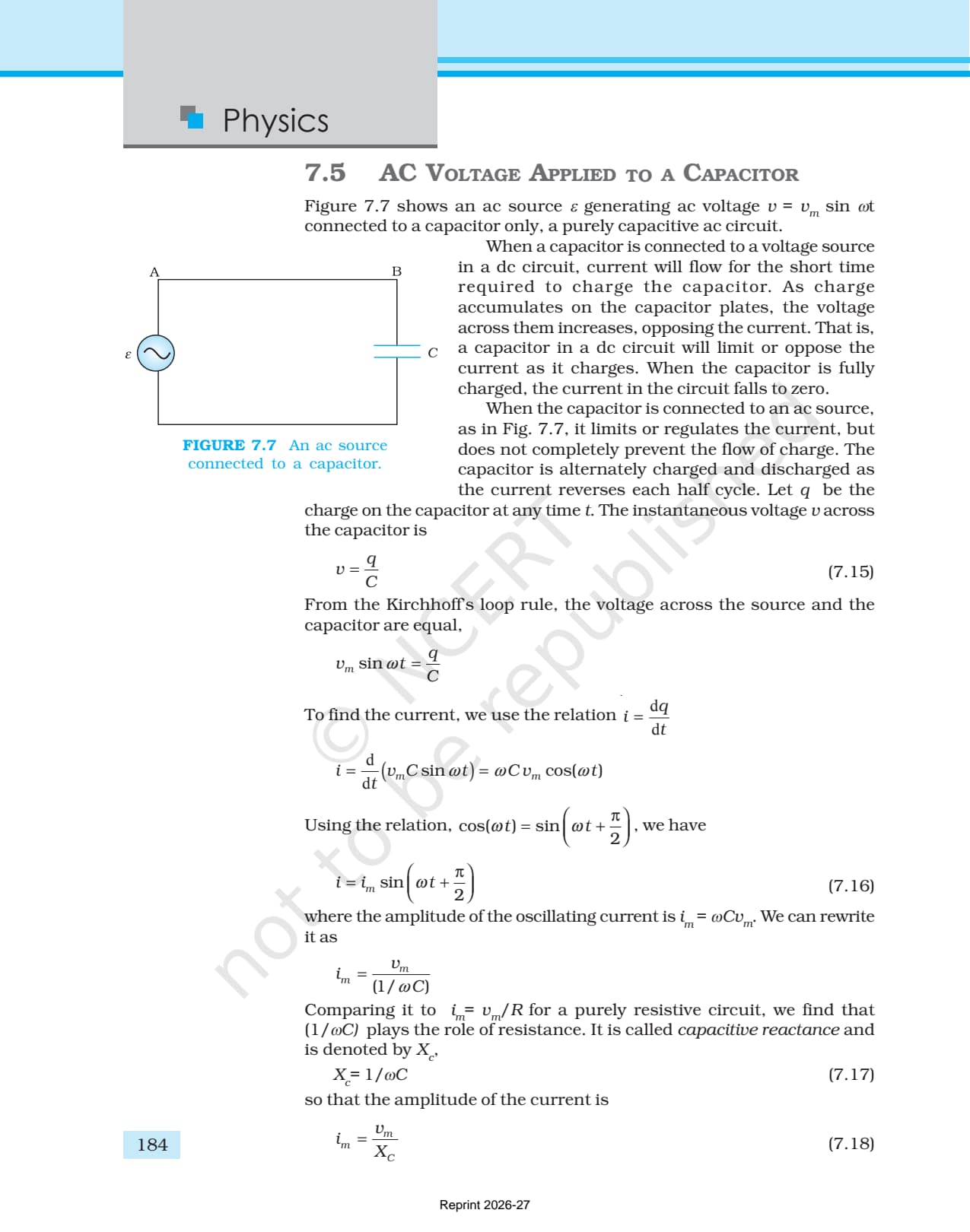
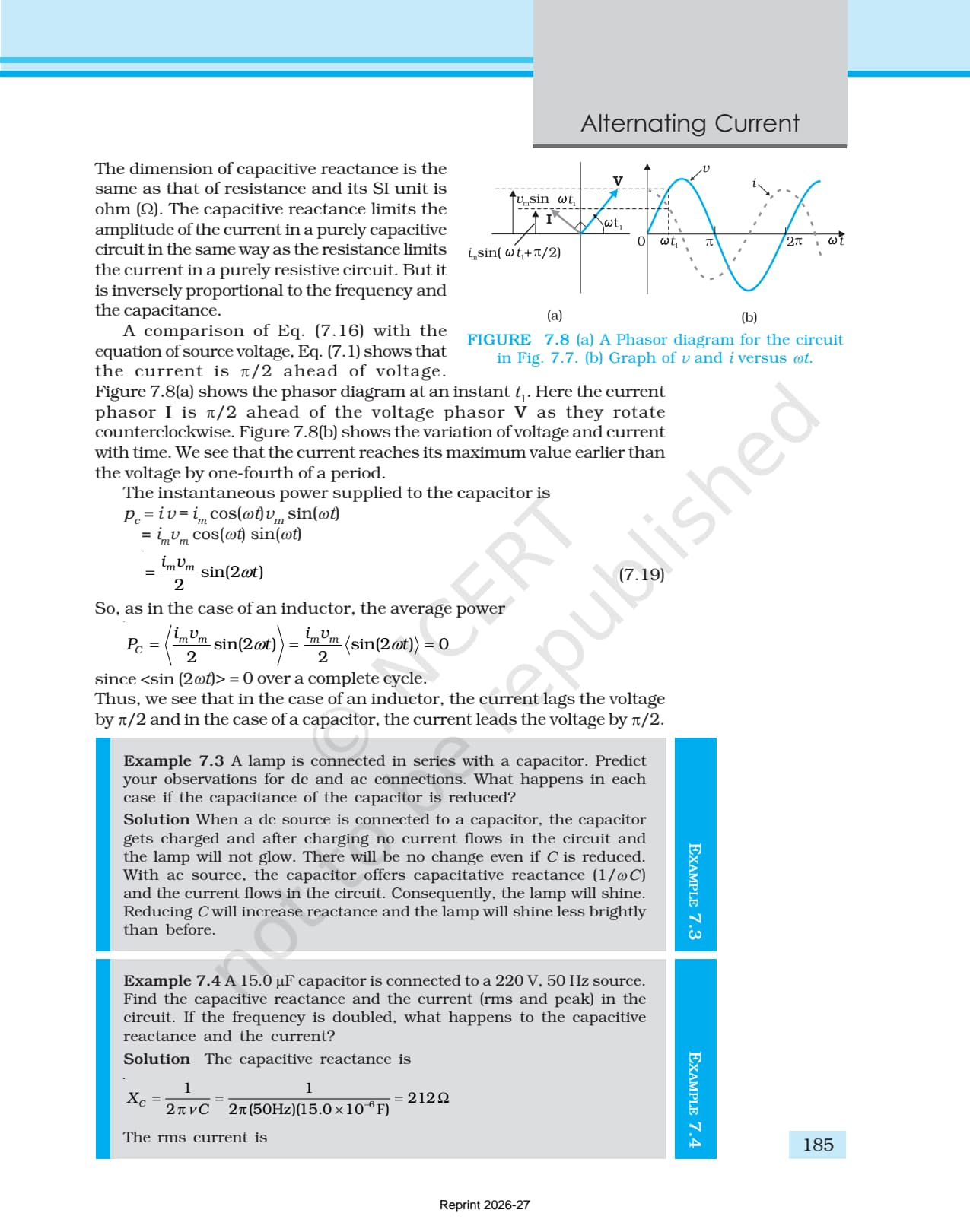
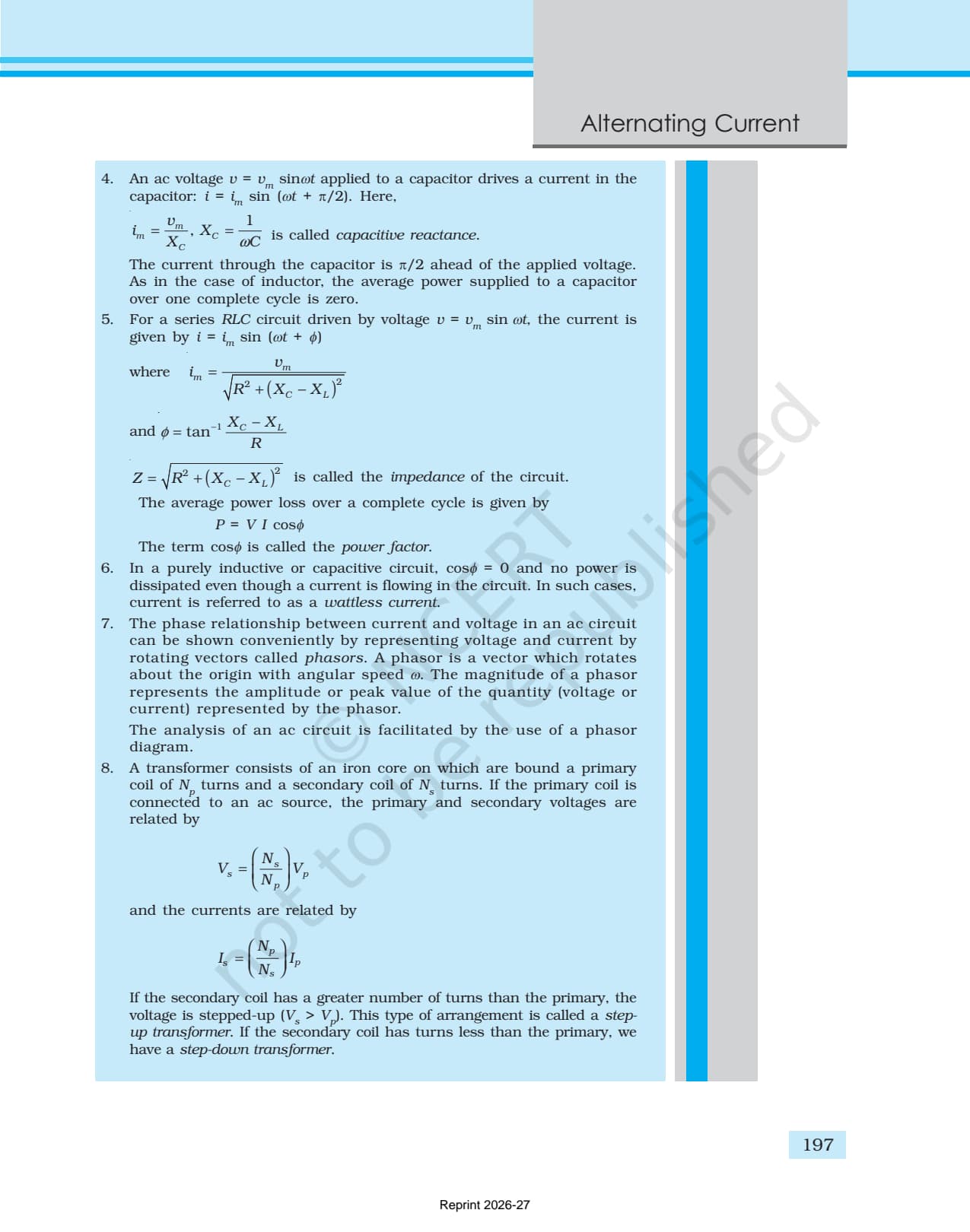
| 7.5 | AC Voltage Applied to a Capacitor | 11 to 14 | Current leads by π/2 , capacitive reactance XC = 1/ω C |
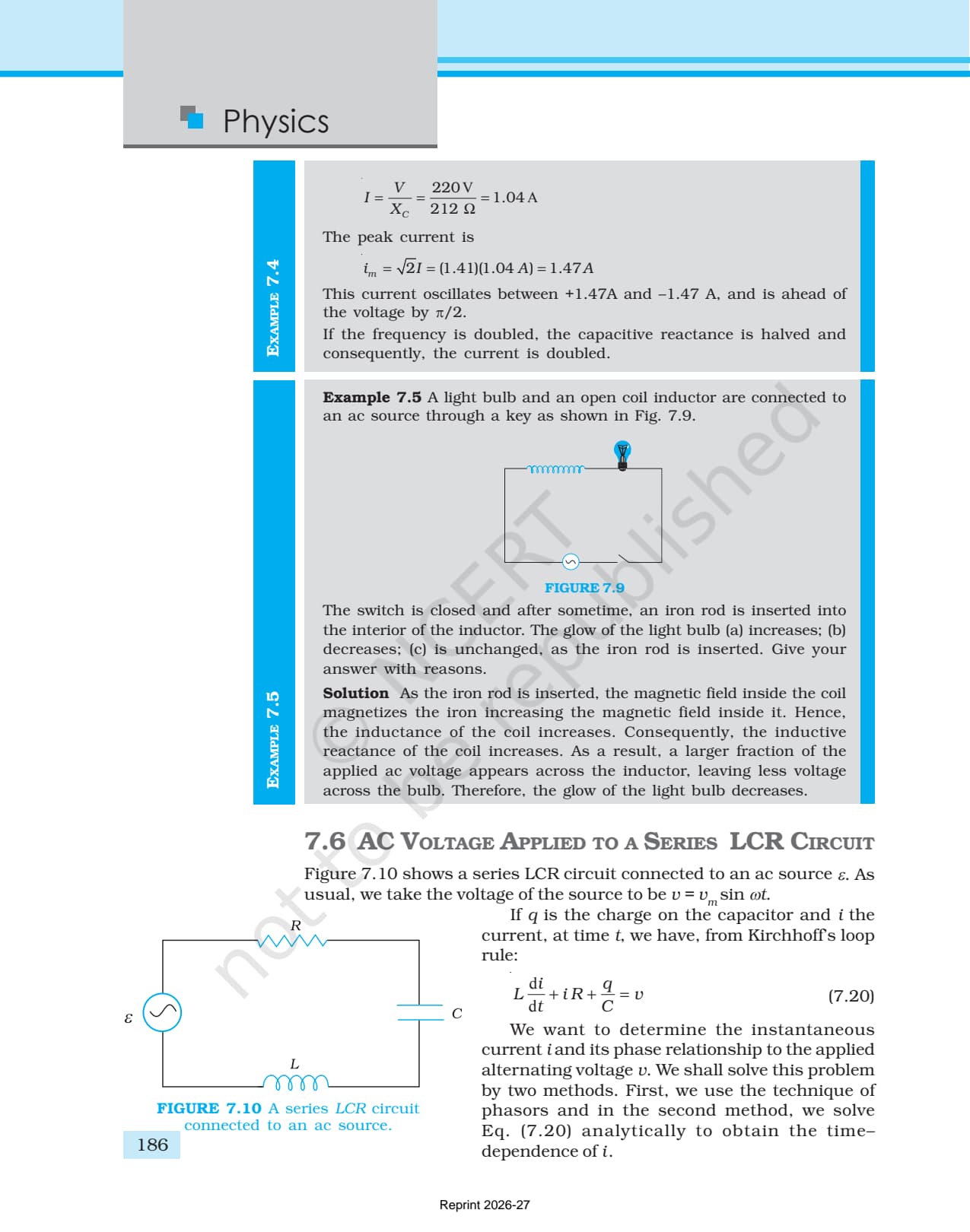
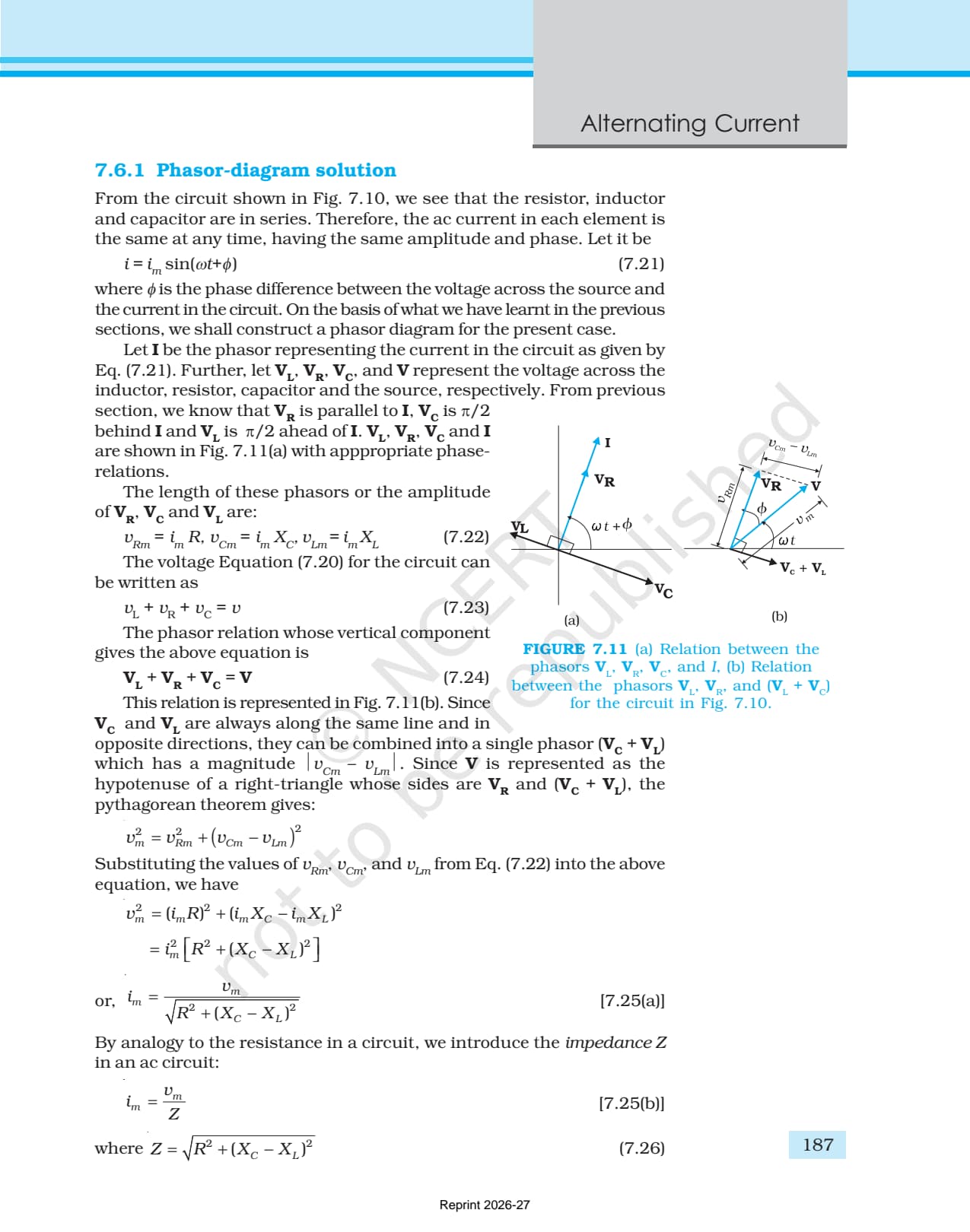
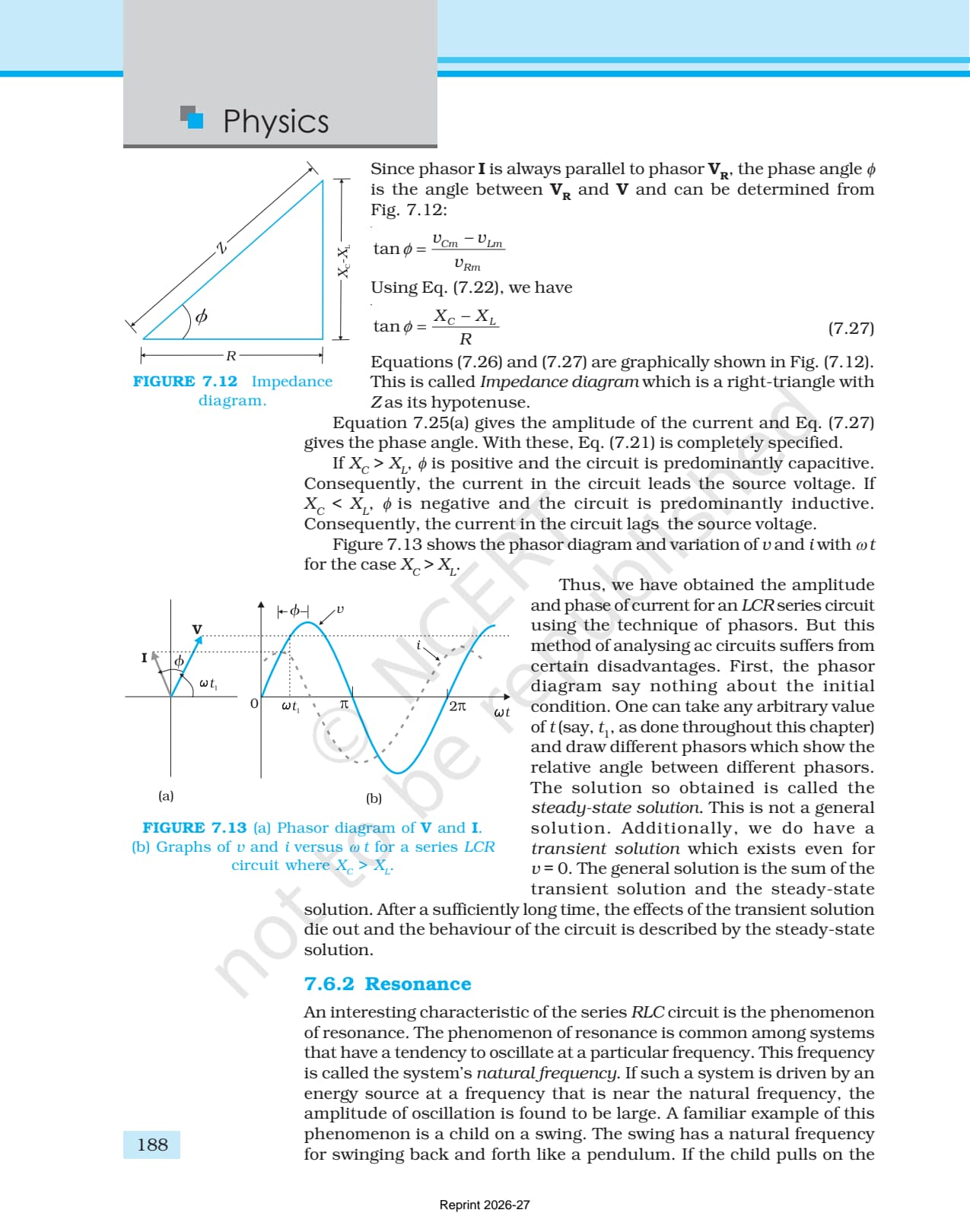
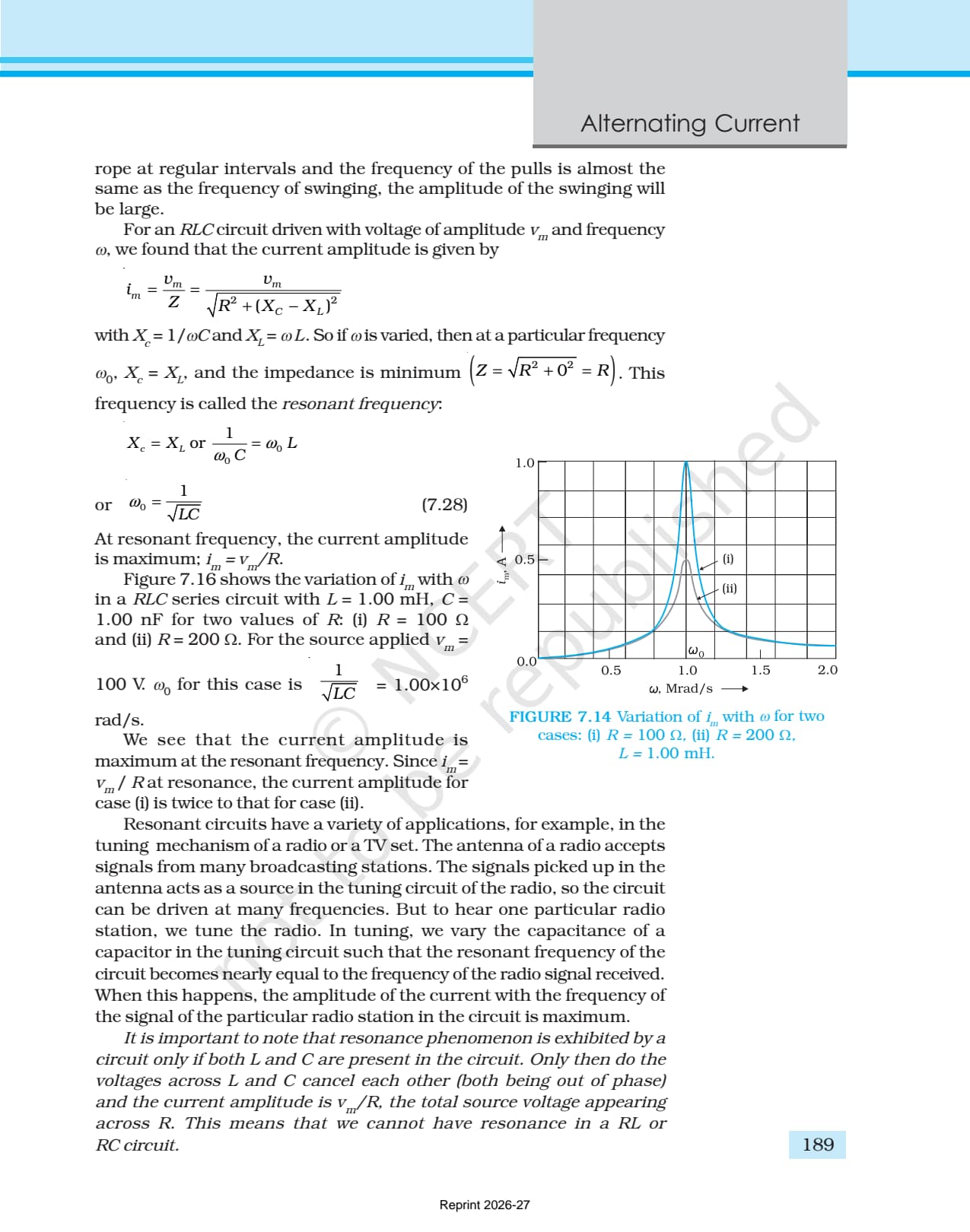
| 7.6 | AC Voltage Applied to a Series LCR Circuit | 15 to 22 | Impedance, resonance, quality factor, bandwidth |
| 7.7 | Power in AC Circuit and Power Factor | 23 to 26 | Pavg = Vrms Irms cosφ , wattless current |
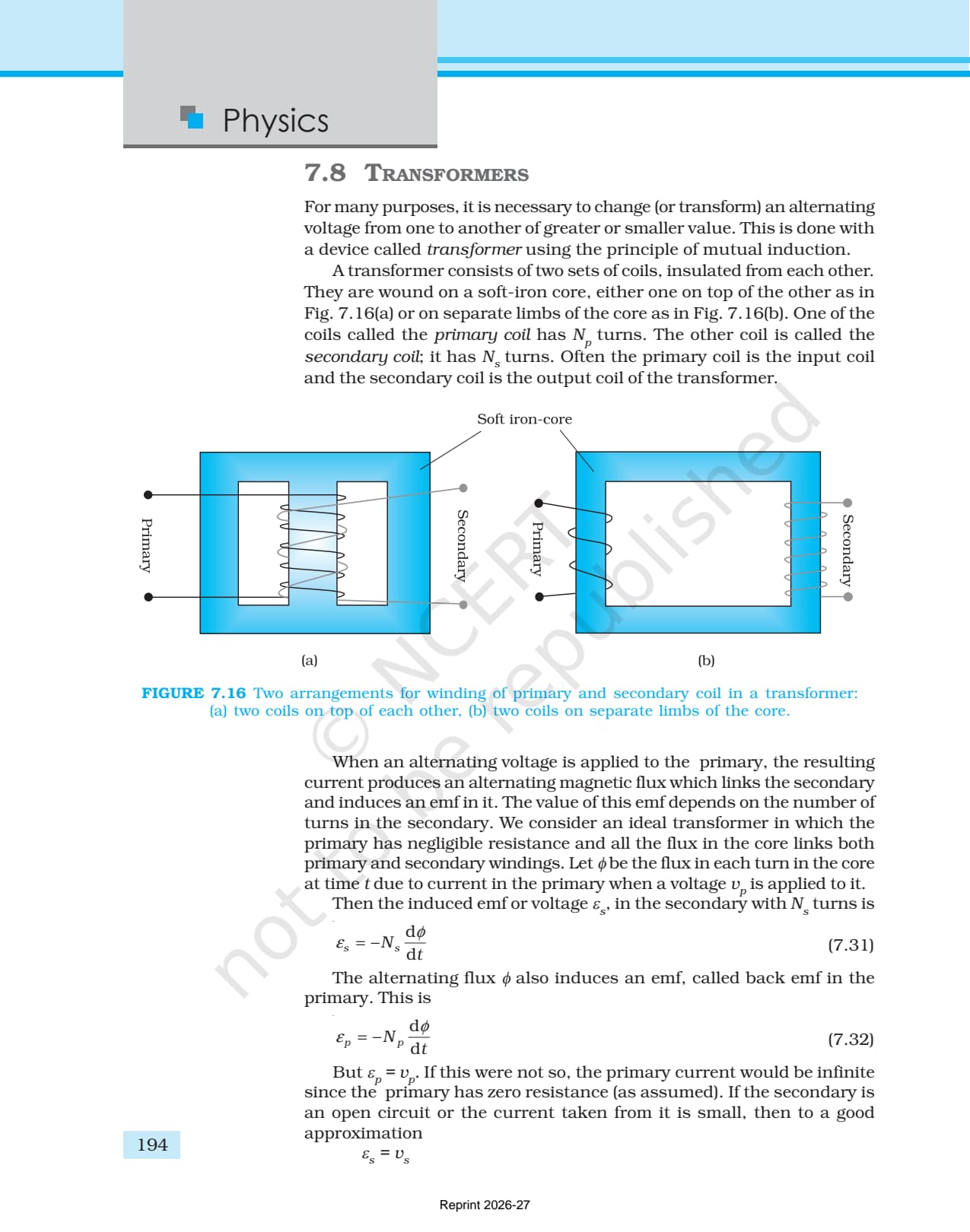
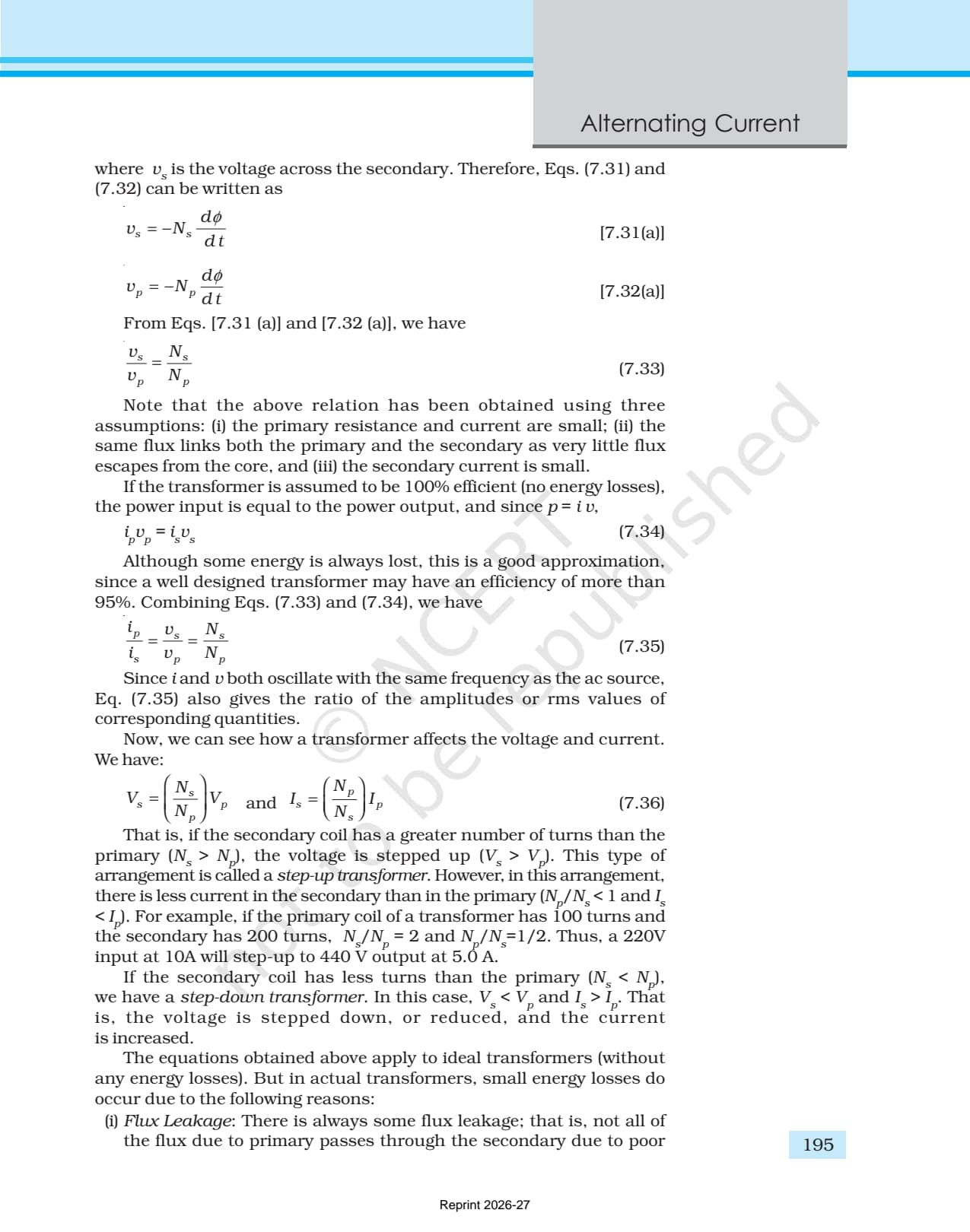
| 7.8 | Transformers | 27 to 30 | Turns ratio, step-up / step-down, real-world losses |
Section 7.6 takes up roughly a quarter of the chapter and feeds the bulk of board, JEE, and NEET questions.
Intext Example Inventory for Alternating Current Class 12 Physics
The chapter has 9 solved examples that escalate in difficulty. The list below links each example to the sub-topic it tests.
| Example | Sub-topic Tested | Skill |
|---|---|---|
| 7.1 | Bulb resistance from rms current | RMS to peak conversion |
| 7.2 | Peak voltage from rms reading | Direct substitution |
| 7.3 | Inductor with AC source | Compute XL , find peak current |
| 7.4 | Capacitor with AC source | Compute XC , comment on power |
| 7.5 | Phasor solution for series LCR | Vector addition |
| 7.6 | Resonance frequency calculation | 0 = 1/√LC plug-in |
| 7.7 | Quality factor and sharpness | Q-factor interpretation |
| 7.8 | Average power and power factor | cosφ computation |
| 7.9 | Step-up transformer | Turns ratio, current scaling |
2026-27 NCERT Update Note for Alternating Current
The 2026-27 print keeps Chapter 7 identical to the 2023 edition. Nothing was added or trimmed. Key scope points:
- Retained in full: Sections 7.1 to 7.8, including the phasor derivation of impedance, the Q-factor expression, and transformer energy-loss discussion.
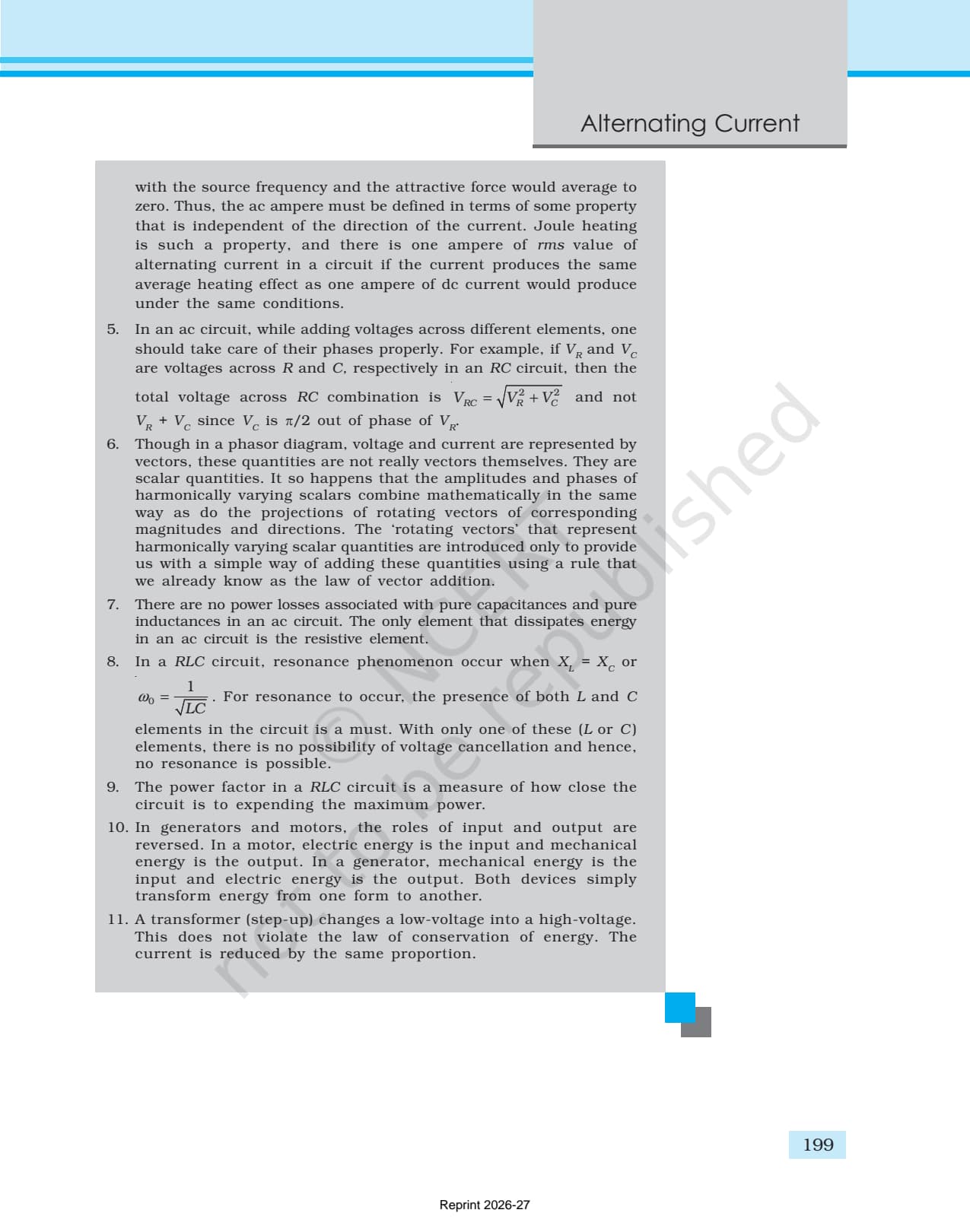
- Not in scope for 2026-27 Boards: Pure-numerical problems on LC oscillation period T = 2π√LC without an external source.
Students should not spend time on resonance-curve derivations beyond Section 7.6, as CBSE follows the Alternating Current NCERT PDF scope strictly.
How to Read the Alternating Current NCERT PDF - Pass-Sequence Plan
A 30-page chapter looks short until the exercises send you back to the derivations. This three-pass plan keeps study time under 4 hours.
- Pass 1 (45 min) - Skim: Read Sections 7.1 to 7.3, glance at every diagram in 7.4 to 7.8, skip the algebra.
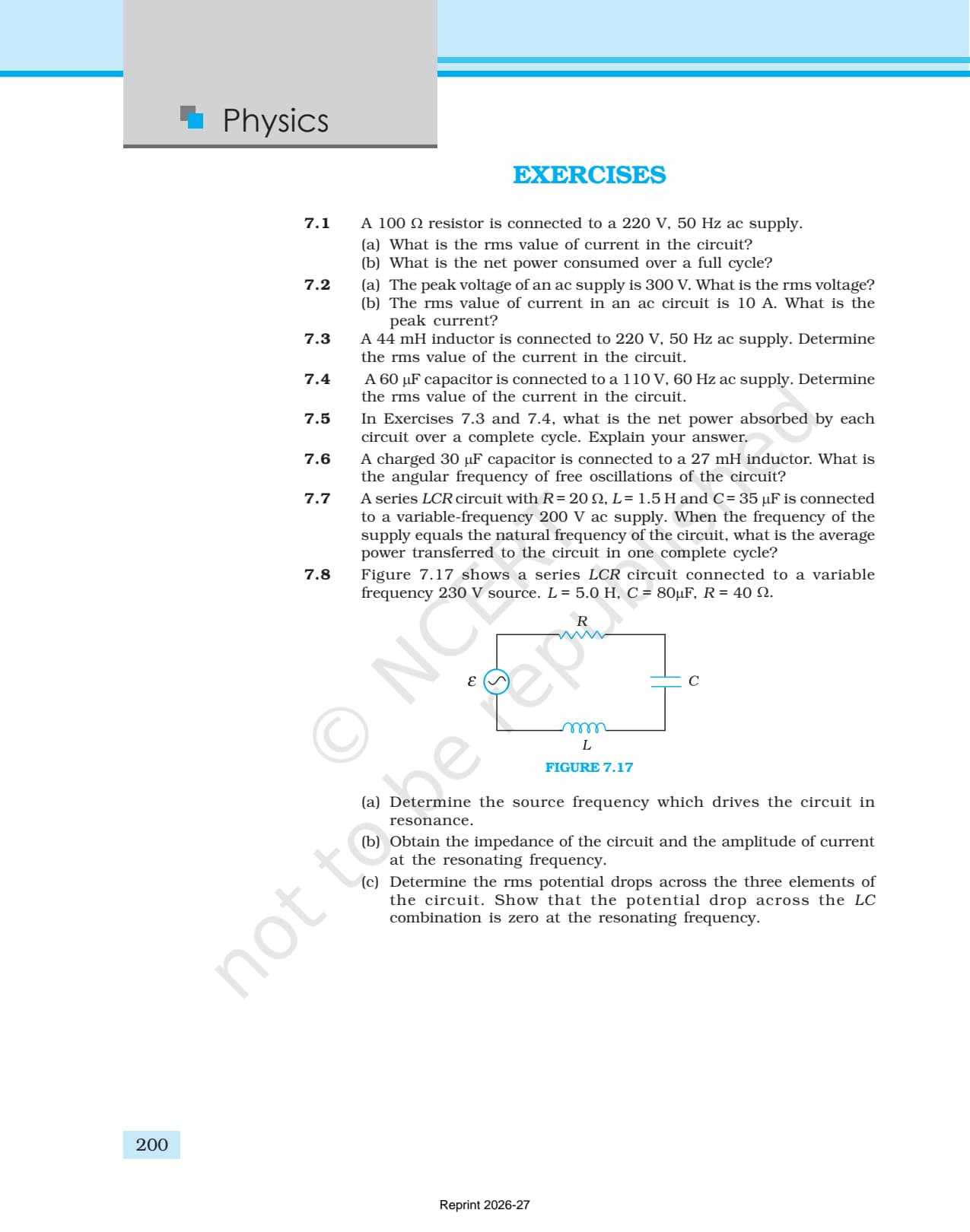
- Pass 2 (90 min) - Derive: Re-read 7.4, 7.5, 7.6 with a pen. Rederive XL , XC , and the LCR impedance. Solve Examples 7.3 to 7.7.
- Pass 3 (90 min) - Apply: Read 7.7 and 7.8 once, then attempt all 26 exercises. Flag the ones combining resonance with transformer.
Chapter Weightage Bar Chart for Class 12 Physics
The visual below maps the typical CBSE Class 12 Physics marks distribution across all chapters, averaged over the last five board papers.
Alternating Current vs Other Boards - Class 12 Physics Comparison
The table below shows what overlaps with NCERT and what is unique to each board.
| Board / Textbook | Chapter Placement | Scope | Notable Difference vs NCERT |
|---|---|---|---|
| NCERT (CBSE) | Chapter 7, Part I | Sections 7.1 to 7.8 | Baseline reference |
| ICSE (ISC Class 12 Physics) | Section E, Unit 6 | AC, LCR, resonance, transformer | Includes choke coil and AC generator in more detail |
| Maharashtra State Board | Chapter 13 | AC, LCR, power, resonance | Transformer covered in a separate chapter; LC oscillations retained |
| Tamil Nadu State Board | Volume 1, Unit 4 | AC, phasors, LCR, transformer | Includes wattmeter and rotating-field motor introduction |
| Karnataka PUC II | Chapter 7 (follows NCERT) | Identical to NCERT | None of significance; same numbering, same exercises |
NCERT keeps the chapter the lightest. State-board students often find JEE Main LCR questions harder because JEE tests AC generators and choke coils numerically while NCERT does not.
Alternating Current Previous Year Question Trends from the NCERT Chapter
The three trends below show where CBSE, JEE, and NEET have pulled questions from this NCERT chapter over the last three years.
| Trend | Where Tested | NCERT Section |
|---|---|---|
| Series LCR with resonance and Q-factor numerical | CBSE 2025, JEE Main 2025 | Sec 7.6 |
| Transformer step-up / step-down and efficiency | CBSE 2024, NEET 2024 | Sec 7.8 |
| Phasor diagram interpretation MCQ | JEE Main 2024, CBSE 2023 | Sec 7.3, 7.6 |
Student Feedback
"Section 7.6 took me 3 days to understand but once the phasor method clicked, the remaining exercises felt easy." - Class 12 student, Delhi
"The three-pass reading plan helped me finish the chapter without rushing." - Class 12 student, Pune
"The section-wise table saved me a lot of time during revision before boards." - Class 12 student, Bengaluru
Top 5 Alternating Current Formulae from the NCERT Chapter
These five relations cover roughly 80 percent of the exercises in the chapter.
| Quantity | Formula | NCERT Section |
|---|---|---|
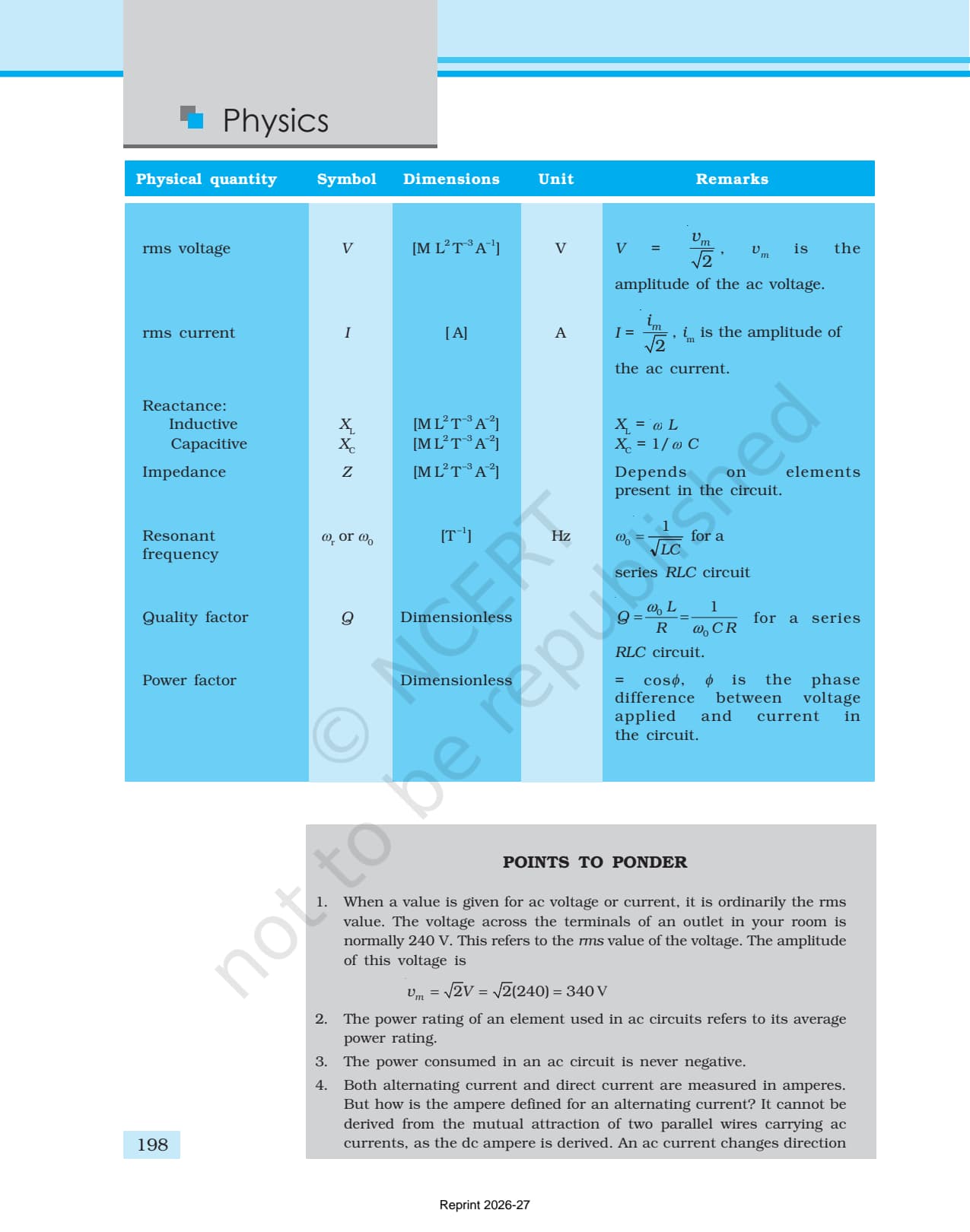
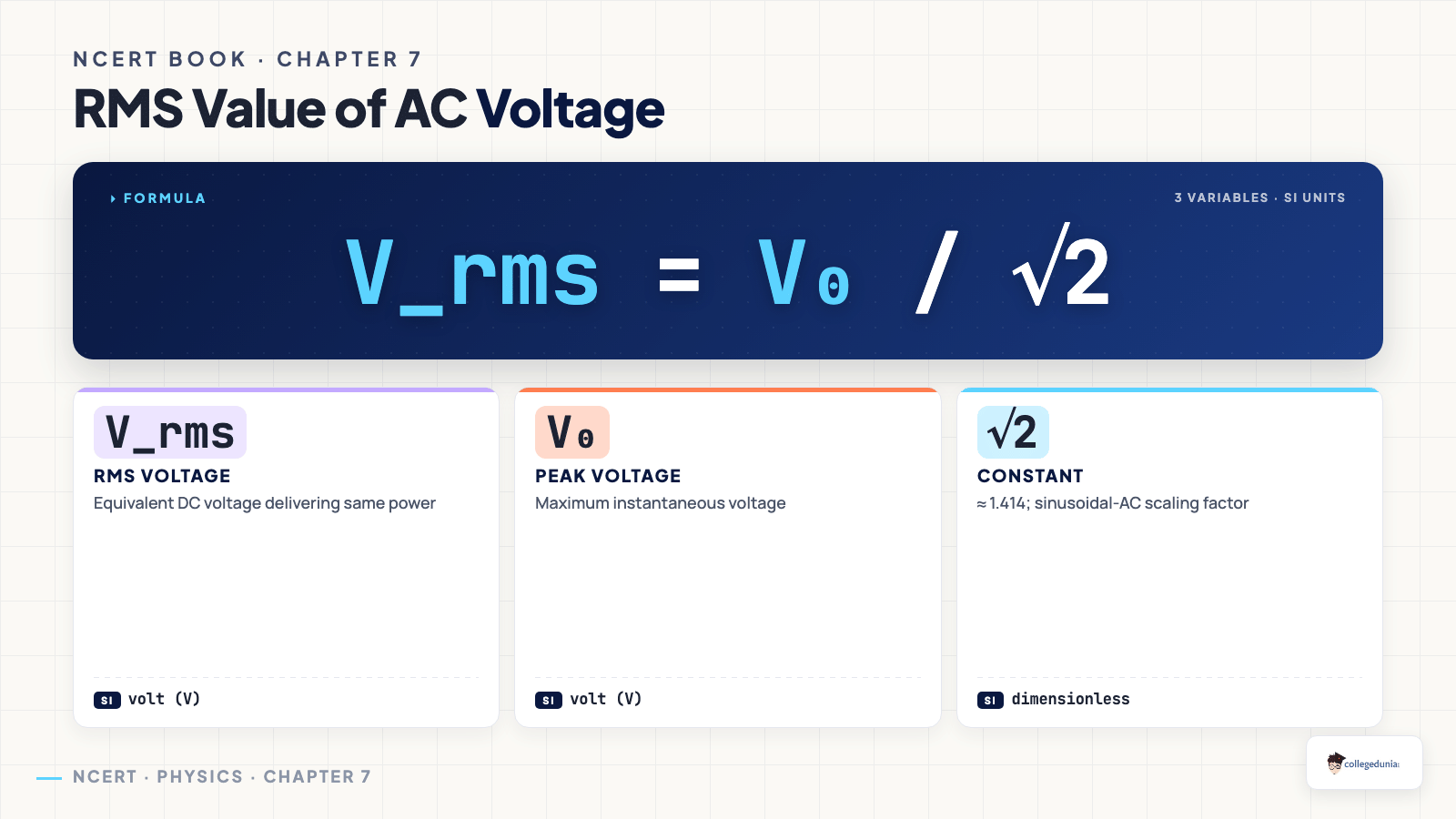
| RMS voltage | Vrms = V0 / √2 | 7.2 |
| Inductive reactance | XL = ω L = 2π f L | 7.4 |
| Capacitive reactance | XC = 1/ω C | 7.5 |
| Series LCR impedance | Z = √R2 + XL - XC2 | 7.6 |
| Resonance frequency | 0 = 1/√LC | 7.6 |
For the full master table with derivations, see Alternating Current Class 12 Physics Formula Sheet.
NCERT Book PDF for Class 12 Physics - All Chapters
Other Class 12 Physics NCERT Book PDFs you can get as free downloads:
| Chapter | Resource |
|---|---|
| Chapter 1 | Electric Charges and Fields NCERT PDF |
| Chapter 2 | Electrostatic Potential and Capacitance NCERT PDF |
| Chapter 3 | Current Electricity NCERT PDF |
| Chapter 4 | Moving Charges and Magnetism NCERT PDF |
| Chapter 5 | Magnetism and Matter NCERT PDF |
| Chapter 6 | Electromagnetic Induction NCERT PDF |
| Chapter 7 | Alternating Current NCERT PDF |
| Chapter 8 | Electromagnetic Waves NCERT PDF |
| Chapter 9 | Ray Optics and Optical Instruments NCERT PDF |
| Chapter 10 | Wave Optics NCERT PDF |
| Chapter 11 | Dual Nature of Radiation and Matter NCERT PDF |
| Chapter 12 | Atoms NCERT PDF |
| Chapter 13 | Nuclei NCERT PDF |
| Chapter 14 | Semiconductor Electronics NCERT PDF |
Other Resources for Alternating Current Class 12 Physics
| Resource | Link |
|---|---|
| NCERT Book PDF | Alternating Current NCERT Book PDF |
| NCERT Solutions | Alternating Current Class 12 NCERT Solutions |
| Notes | Alternating Current Class 12 Notes |
| Formula Sheet | Alternating Current Class 12 Formula Sheet |
Alternating Current NCERT PDF - Frequently Asked Questions
Ques. Where can I download the Alternating Current NCERT PDF for free?
Ans. You can download the Alternating Current NCERT PDF directly from this page. The PDF is the official chapter file released by NCERT for the 2026-27 session.
Ques. Is this Alternating Current NCERT PDF aligned with the 2026-27 CBSE syllabus?
Ans. Yes. This page reflects the current 2026-27 syllabus for Class 12 Physics. Chapter 7 is identical to the 2023 edition, so all eight sections from 7.1 Introduction to 7.8 Transformers remain part of the prescribed reading.
Ques. How many marks does Alternating Current carry in CBSE Class 12 Physics?
Ans. Chapter 7 contributes 5 to 7 marks in the CBSE Class 12 Physics board paper. Marks are usually split across a 3-mark LCR or resonance numerical and a 2 to 3 mark transformer or power-factor question. The chapter is part of Unit 4 along with Electromagnetic Induction.
Ques. Which sections of the NCERT chapter are the most important for CBSE Boards?
Ans. Sections 7.6 (Series LCR), 7.7 (Power Factor) and 7.8 (Transformer) carry the bulk of the marks. CBSE almost always asks a 3-mark numerical or derivation from 7.6, a 2-mark short-answer from 7.7 and either a numerical or a working-principle question from 7.8.
Ques. How many Examples and Exercises does the NCERT Alternating Current chapter contain?
Ans. The chapter has 9 solved intext examples spread across Sections 7.2 to 7.8, plus 26 exercises at the end. Several exercises combine series LCR analysis with power-factor or transformer reasoning into a single multi-part question.



Comments