




The Class 12 Geography Chapter 5 Secondary Activities textbook PDF is the official NCERT source for every board question on manufacturing, industrial location factors, types of industries, and high-tech industries. It carries about 4 to 6 marks in the CBSE board exam and is essential reading for CUET Geography and UPSC aspirants covering economic geography.
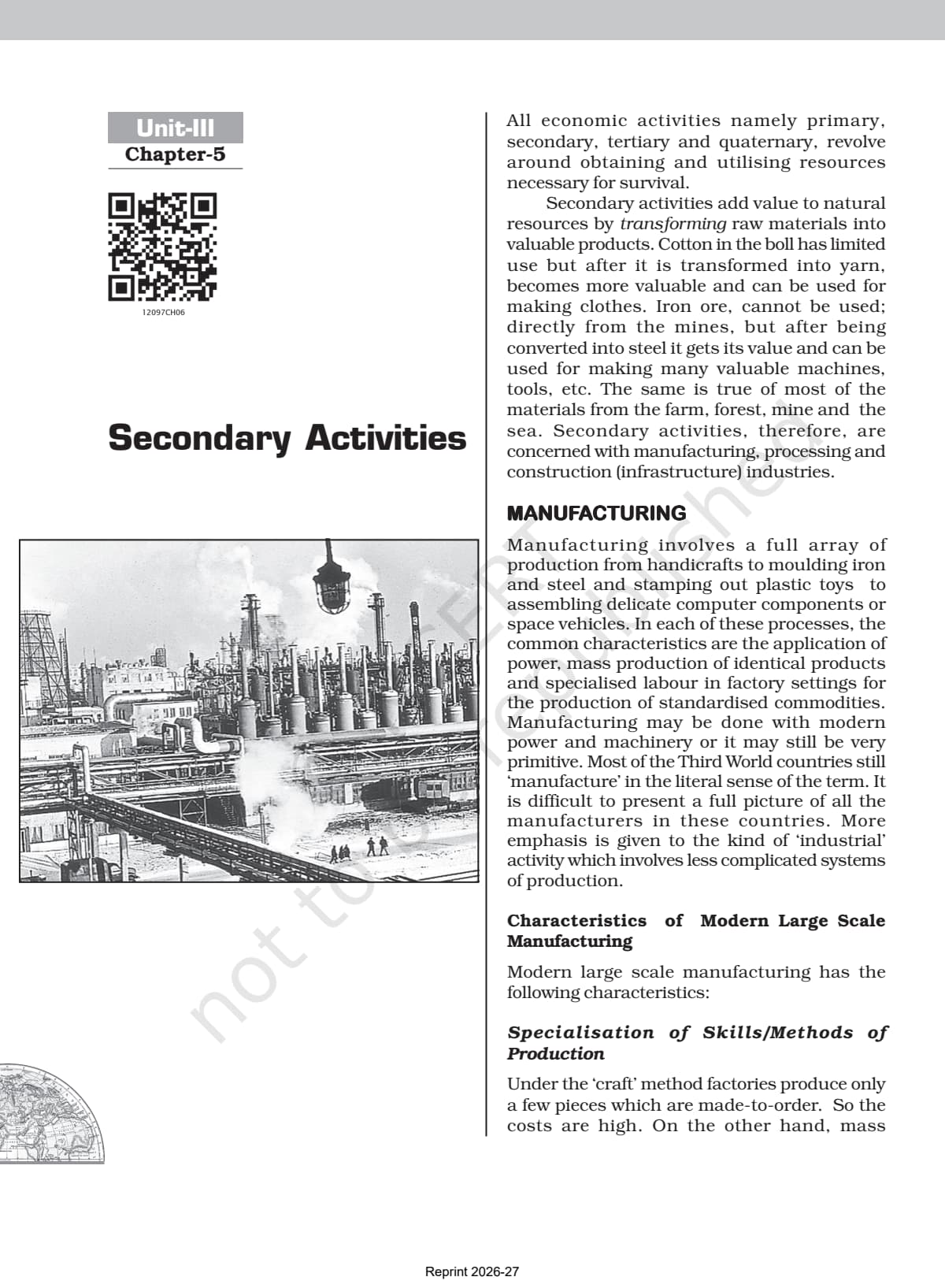
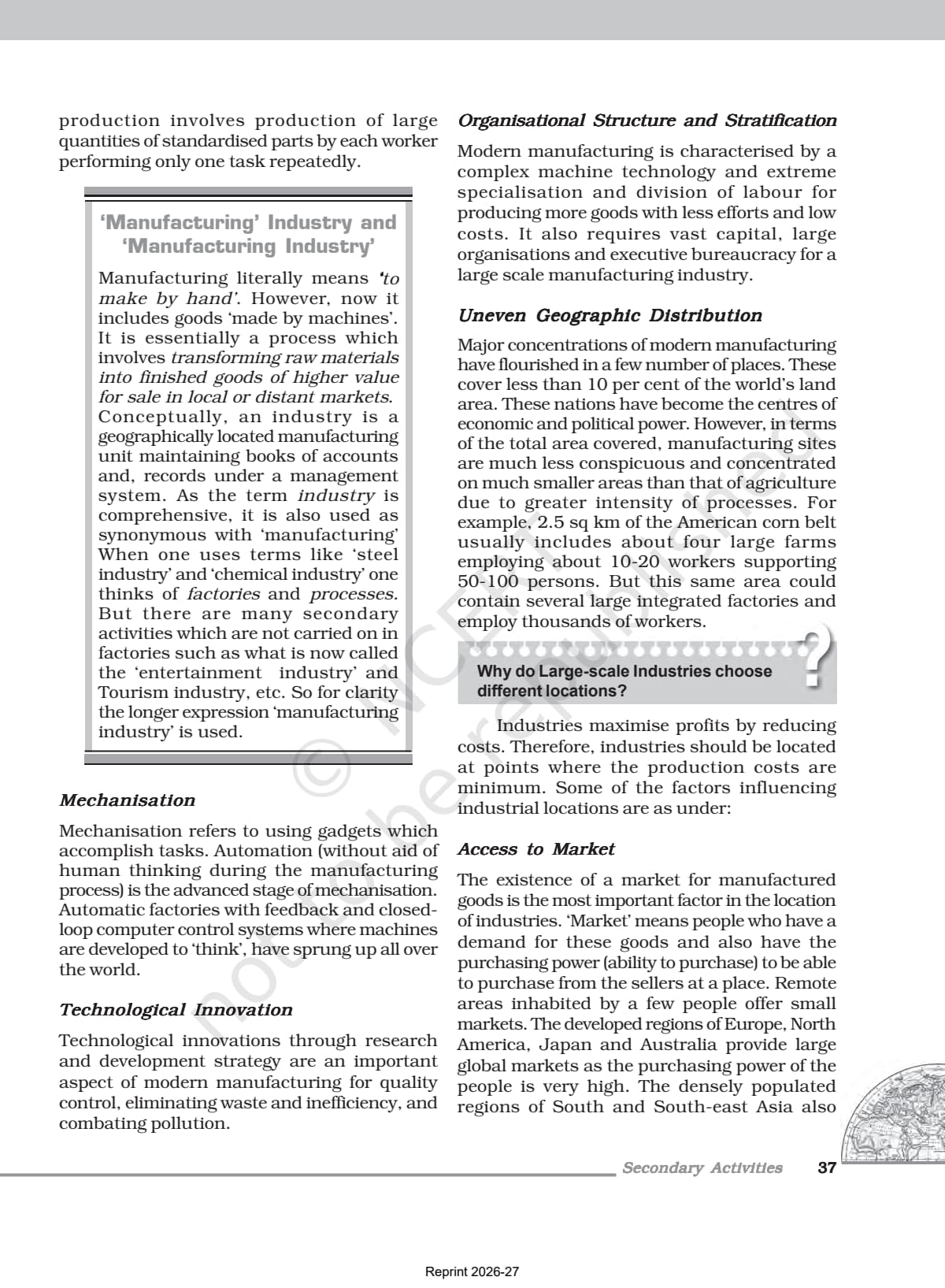
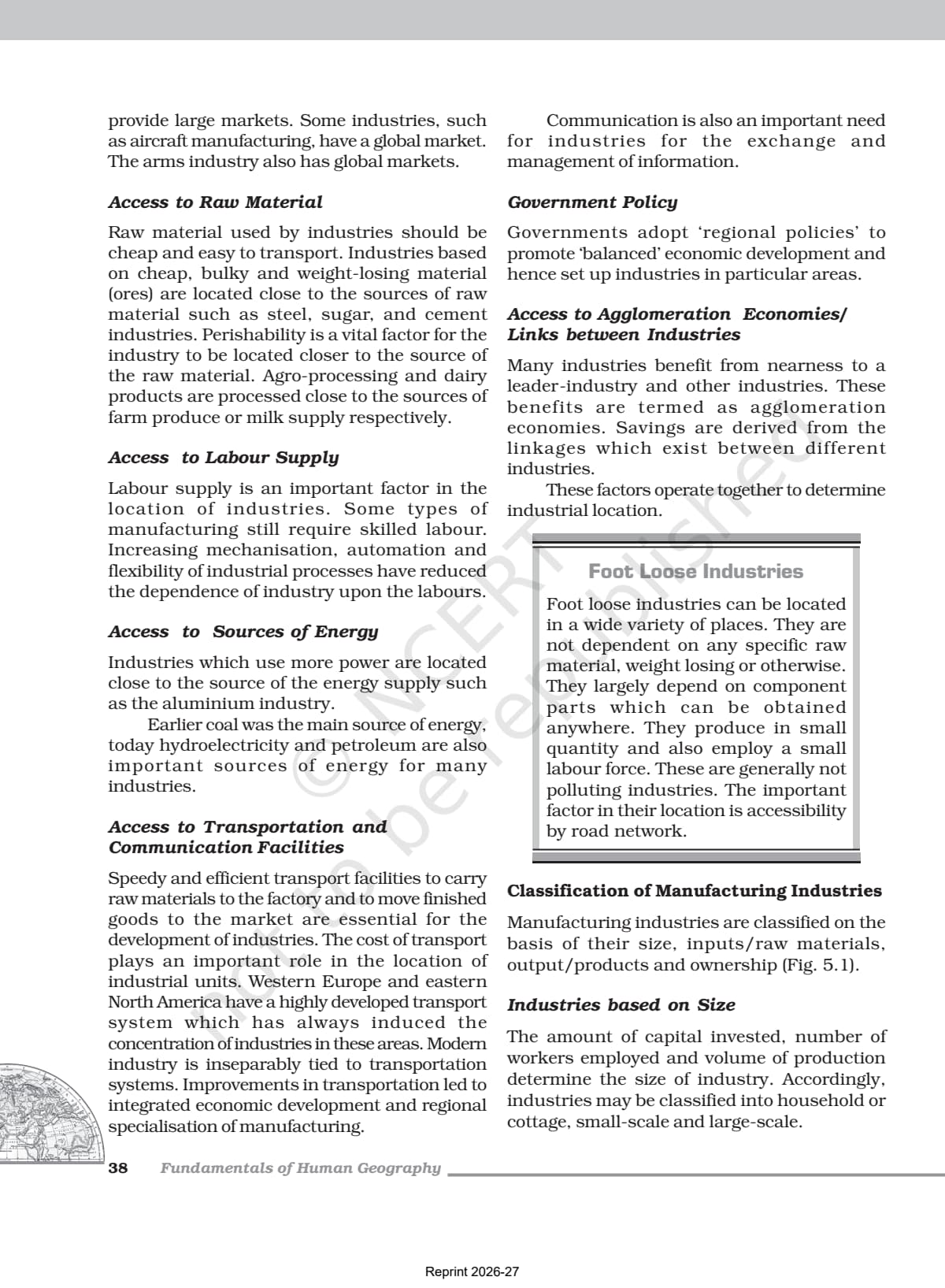
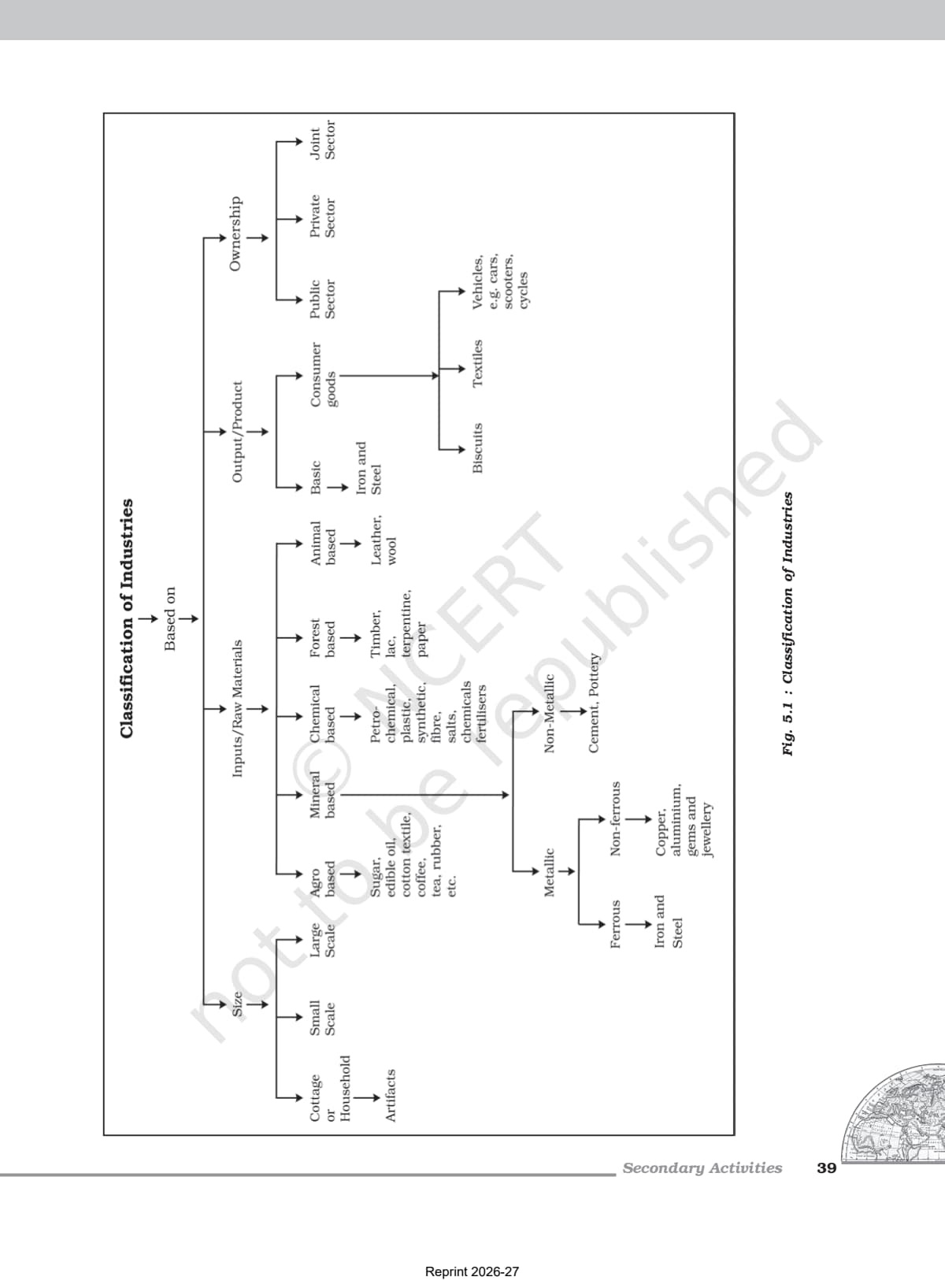
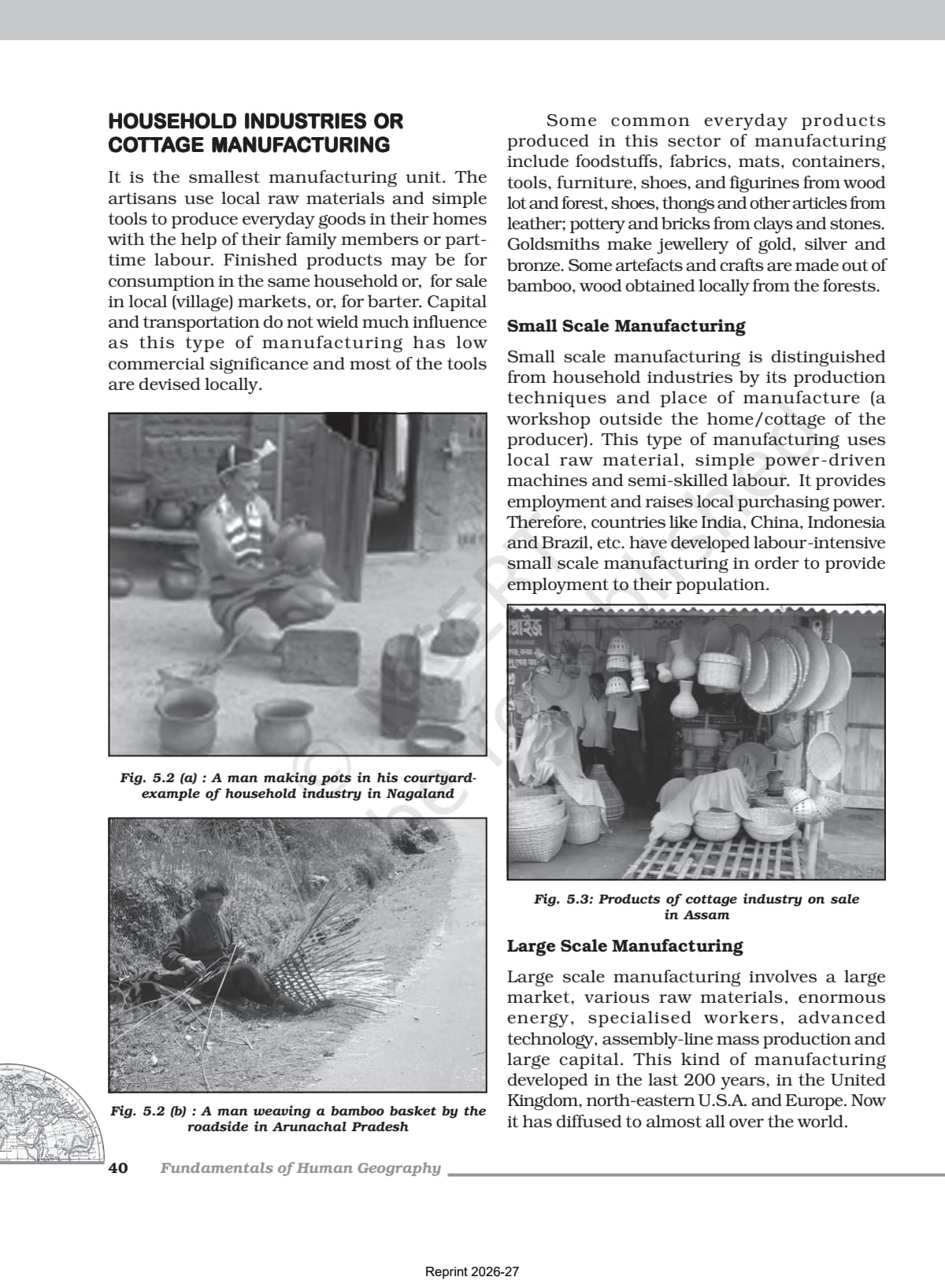
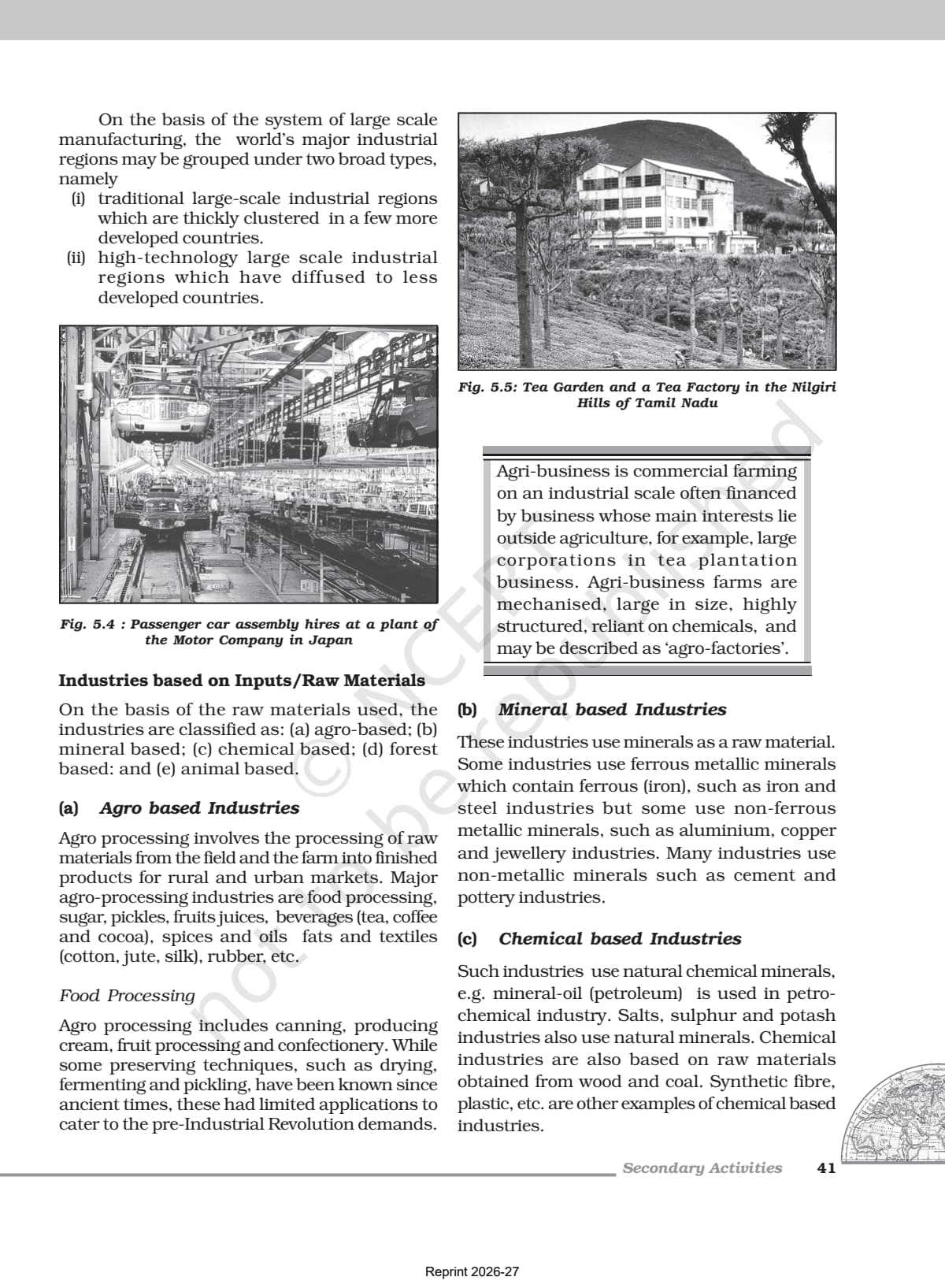
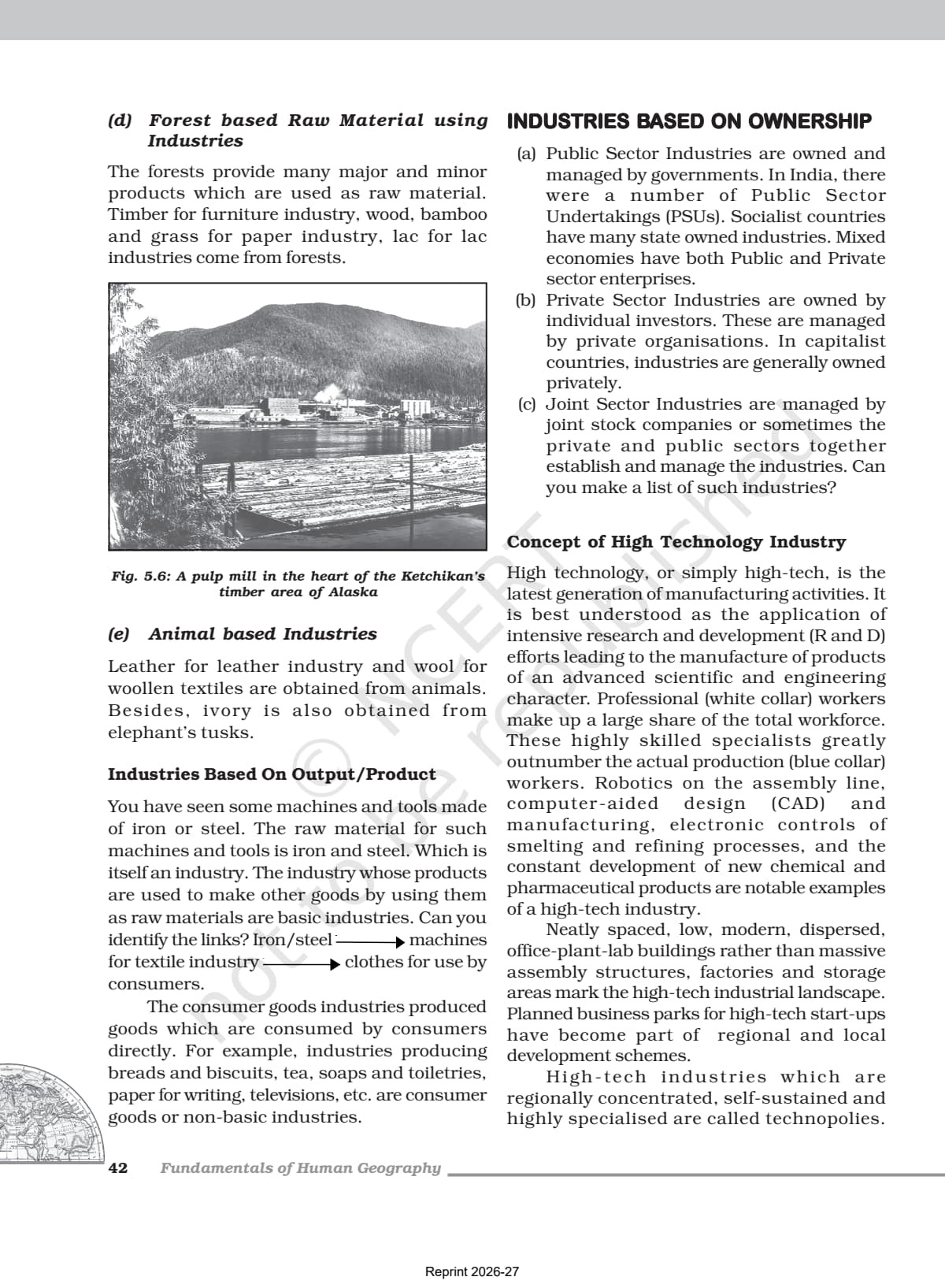
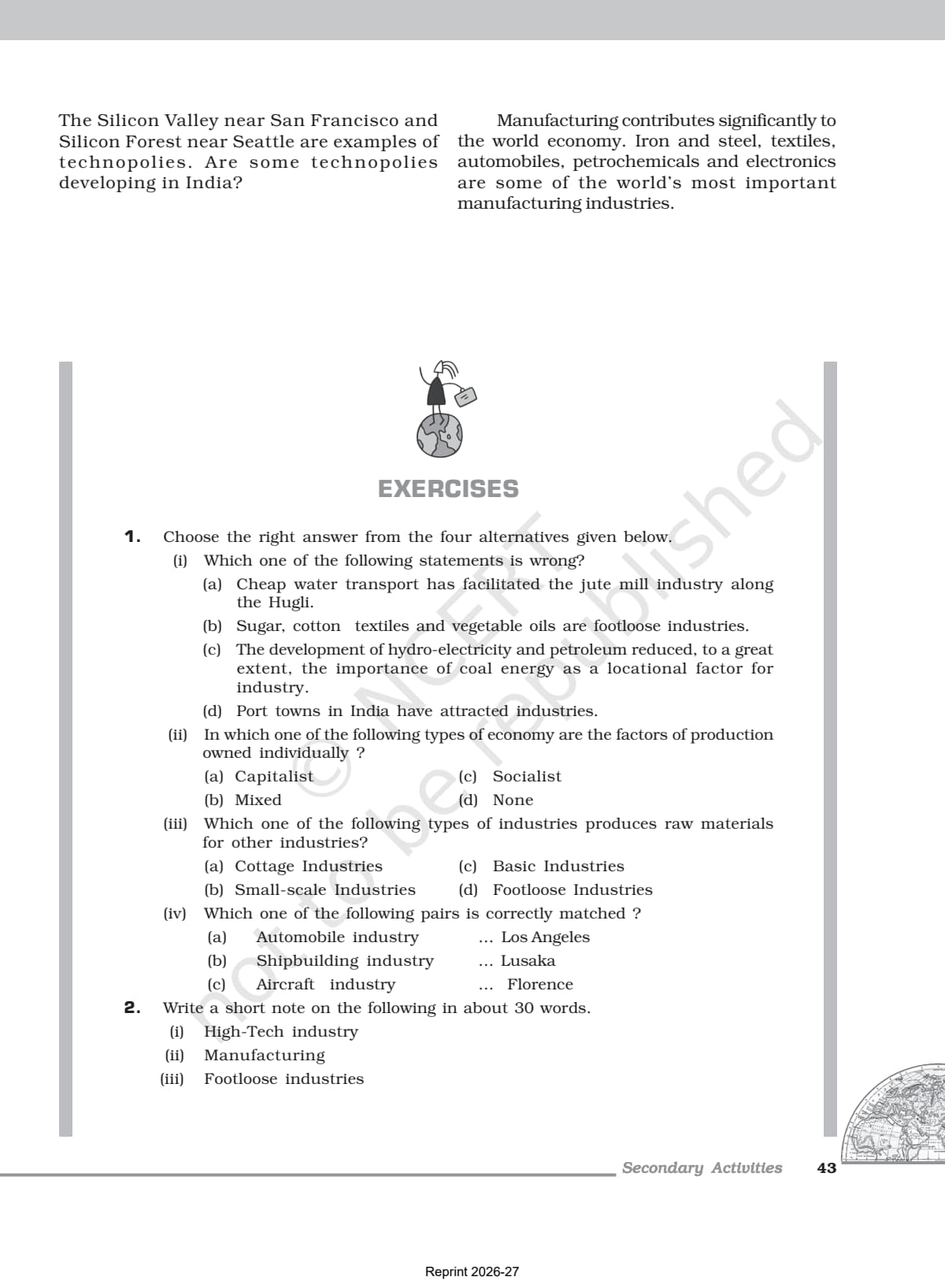
- Official NCERT Fundamentals of Human Geography Class 12 Chapter 5 PDF covering manufacturing characteristics, industrial location factors, agro-based and mineral-based industries, cottage industries, and technopolies.
- 4-6 marks CBSE board-paper weightage for Chapter 5; the official textbook is the only source CBSE references when setting questions on secondary activities and industrial geography.
- Pair with the matching NCERT Solutions, Notes and Handwritten Notes for full chapter coverage.
Student Feedback
In a 2026 Collegedunia poll of 9,200 Class 12 Geography students, 81% said reading the NCERT chapter PDF directly helped them answer board questions on industrial location and manufacturing more accurately than any guide book. Students who read the full PDF averaged 4.6 out of 5 marks on this chapter.
What This Chapter Covers in the NCERT Class 12 Book
The secondary activities class 12 geography chapter explains how raw materials get transformed into valuable finished products through manufacturing, processing, and construction. The official NCERT PDF is the source CBSE uses when it sets questions on industrial location, manufacturing characteristics, and types of industries, so students should read it for the 2026-27 board paper. The chapter moves from defining manufacturing to the characteristics of modern large-scale industries, then to location factors, classifications of industries, and finally high-tech industries and technopolies like Silicon Valley.
Source: Humanities Wallah - Class 12th on YouTube
Topics in the Chapter (Section-Wise Map of the NCERT PDF)
The table below maps each sub-topic of the secondary activities class 12 chapter to its main concept and the dominant exam angle.
| Section | NCERT Sub-topic | Dominant Exam Concept |
|---|---|---|
| Intro | What are Secondary Activities? | Secondary activities add value by transforming raw materials into finished goods; manufacturing, processing, and construction |
| 5.1 | Manufacturing | Definition; craft vs mass production; characteristics of modern large-scale manufacturing |
| 5.2 | Characteristics of Modern Large-Scale Manufacturing | Specialisation, organisational structure, uneven geographic distribution, mechanisation, technological innovation |
| 5.3 | Industrial Location Factors | Market, raw material, labour, agglomeration economies, infrastructure, government policy |
| 5.4 | Cottage and Small-Scale Industries | Definition, characteristics, footloose industries |
| 5.5 | Industries Based on Raw Materials | Agro-based, mineral-based, chemical-based, forest-based, animal-based |
| 5.6 | Industries Based on Ownership | Public sector, private sector, joint sector |
| 5.7 | High-Tech Industries and Technopolies | R&D-intensive, white-collar workforce, robotics, CAD; Silicon Valley as example of a technopoly |
Students preparing secondary activities class 12 notes should map each note to one of these rows. Section 5.3 on location factors and Section 5.7 on high-tech industries contribute the most board-paper questions, because both are rich in named factors and examples.
Key Concepts From the NCERT Class 12 Geography Textbook
The four concept blocks below use the canonical NCERT phrasing. Reproducing this phrasing in the board paper is the fastest route to full marks, because CBSE examiners reward exact textbook language.
Manufacturing and Secondary Activities
Secondary activities are concerned with manufacturing, processing, and construction. Manufacturing literally means "to make by hand" but now includes goods made by machines. It transforms raw materials into finished goods of higher value for sale in local or distant markets. An industry is a geographically located manufacturing unit that maintains books of accounts under a management system.
Characteristics of Modern Large-Scale Manufacturing
The chapter lists five traits. Specialisation of skills lets each worker repeat one task for mass production. Organisational structure means complex machinery, division of labour, and vast capital. Uneven distribution means major centres cover under 10% of the world's land. Mechanisation uses gadgets, and automation is its advanced stage where machines "think." Technological innovation through R&D ensures quality control and pollution management.
Industrial Location Factors
Industries locate where production costs are lowest. The six factors are: access to market (customers with purchasing power, the most important), access to raw material (vital for weight-losing industries like steel and cement), access to labour supply, access to agglomeration economies (benefits of clustering), infrastructure (transport, power, communication), and government policy. Questions regularly ask students to explain any two or three of these with examples.
High-Tech Industries and Technopolies
High-tech industry is the latest generation of manufacturing, based on intensive R&D for advanced scientific products. White-collar professional workers greatly outnumber blue-collar workers. Features include robotics, computer-aided design (CAD), and new pharmaceutical products. High-tech clusters that are regionally concentrated, self-sustained, and highly specialised are called technopolies; Silicon Valley and Silicon Forest are the textbook examples.
Previous Year Question Trends From This Chapter
The secondary activities class 12 important questions follow a steady pattern, and the 2026-27 paper should look similar. This chapter has contributed 4 to 6 marks in recent papers, mostly through MCQs, short definitions, and one conceptual question on location or high-tech industries.
| Year | Marks | Question Types | Most Common Topic |
|---|---|---|---|
| 2025 | 5 | 1 MCQ + 1 short answer + 1 extended definition | Industrial location factors / footloose industries |
| 2024 | 4 | 1 MCQ + 2 short answers | Characteristics of modern large-scale manufacturing |
| 2023 | 5 | 1 MCQ + 1 short answer + 1 five-mark answer | Explain any three factors influencing industrial location |
| 2022 | 4 | 2 MCQs + 1 short answer | High-tech industries / technopolies |
| 2020 | 6 | 1 long answer + 1 MCQ + 1 short answer | Classify industries by raw material with examples |
The most repeated type is a three or five mark question asking students to explain any three factors that influence industrial location, with examples. This needs the textbook's named factors and the examples embedded in each one.
Connecting This Chapter to the Rest of Fundamentals of Human Geography
This chapter builds on primary activities (Chapter 4) and sets up service economies (Chapter 6). The table below shows how it links to other chapters.
| Related Chapter | Concept Linking to Chapter 5 |
|---|---|
| Chapter 3: Human Development | Industrialisation raises HDI by increasing productivity and access to resources |
| Chapter 4: Primary Activities | Primary sector provides raw materials that secondary activities transform |
| Chapter 6: Tertiary and Quaternary Activities | High-tech industries blur the line between manufacturing and knowledge-based services |
| Chapter 7: Transport and Communication | Infrastructure is one of the six industrial location factors; transport connects factories to markets |
| Chapter 8: International Trade | Manufactured goods form the core of global trade flows between developed and developing economies |
Quick Glossary From the NCERT Chapter
Students should be able to define each testable term in one line for MCQs and short answers.
- Secondary activities: Activities that add value to raw materials through manufacturing, processing, and construction.
- Manufacturing: Transforming raw materials into finished goods of higher value for sale in local or distant markets.
- Mechanisation: Using gadgets to accomplish tasks; automation is the advanced stage where machines are developed to "think."
- Agglomeration economies: Cost advantages when industries cluster near related firms and share infrastructure and labour.
- Footloose industries: Industries not tied to any location because they have low weight; they can be located anywhere.
- Basic industries: Industries whose products are used as raw materials by other industries (e.g., iron and steel).
- Consumer goods industries: Industries that produce goods used directly by people (e.g., bread, soap, televisions).
- Technopoly: A high-tech cluster that is regionally concentrated, self-sustained, and highly specialised; Silicon Valley is the classic example.
Also Explore Other Resources for Class 12 Geography Chapter 5
| Resource | Link |
|---|---|
| NCERT Solutions | Class 12 Geography Chapter 5 NCERT Solutions |
| Revision Notes | Class 12 Geography Chapter 5 Notes |
| Handwritten Notes | Class 12 Geography Chapter 5 Handwritten Notes |
| Subject Hub | Class 12 Geography All Chapters |
All Chapters: Class 12 Geography NCERT Book PDF (Fundamentals of Human Geography)
| Chapter | NCERT Book PDF |
|---|---|
| Chapter 1 | Human Geography: Nature and Scope NCERT Book PDF |
| Chapter 2 | The World Population: Distribution, Density and Growth NCERT Book PDF |
| Chapter 3 | Human Development NCERT Book PDF |
| Chapter 4 | Primary Activities NCERT Book PDF |
| Chapter 5 | Secondary Activities NCERT Book PDF (You are here) |
| Chapter 6 | Tertiary and Quaternary Activities NCERT Book PDF |
| Chapter 7 | Transport and Communication NCERT Book PDF |
| Chapter 8 | International Trade NCERT Book PDF |
Frequently Asked Questions on Class 12 Geography Chapter 5 NCERT Book PDF
Ques. Where can students download the official NCERT Class 12 Geography Chapter 5 PDF?
Ans. Students can download the official secondary activities class 12 NCERT book PDF directly from the download card at the top of this page. The PDF is the single-chapter file from the Fundamentals of Human Geography textbook, aligned to the 2026-27 CBSE syllabus.
Ques. What are secondary activities according to the NCERT Class 12 Geography textbook?
Ans. According to the NCERT textbook, secondary activities add value to natural resources by transforming raw materials into valuable products. They are concerned with manufacturing, processing, and construction (infrastructure) industries. For example, cotton in the boll has limited use, but after it is transformed into yarn it becomes more valuable and can be used for making clothes.
Ques. What are the characteristics of modern large-scale manufacturing in the NCERT Chapter 5?
Ans. The NCERT textbook lists five key characteristics: (1) Specialisation of skills - each worker performs one task repeatedly for mass production; (2) Organisational structure - complex machine technology, division of labour, vast capital; (3) Uneven geographic distribution - major concentrations cover less than 10% of the world's land area; (4) Mechanisation - using gadgets; automation is the advanced stage; (5) Technological innovation - R&D for quality control, waste elimination, and pollution management.
Ques. What are the factors that influence industrial location according to the NCERT Class 12 Geography chapter?
Ans. The NCERT chapter explains that industries locate where production costs are minimum. Six main factors influence location: (1) Access to market - people with demand and purchasing power; (2) Access to raw material - cheap, easy-to-transport inputs; (3) Access to labour supply - skilled workforce; (4) Access to agglomeration economies - benefits from clustering near related industries; (5) Infrastructure - transport, power, communication; (6) Government policy - regional policies that promote balanced development.
Ques. What are footloose industries according to the NCERT Class 12 Geography textbook?
Ans. Footloose industries are industries that can be located anywhere because they are not tied to any specific raw material or market location. They have low weight, small bulk, and are not constrained by any one of the classical location factors. Sugar, cotton textiles, and vegetable oils are examples of industries that are relatively footloose compared to weight-losing industries like steel or cement.
Ques. How does the NCERT Chapter 5 classify industries by raw material?
Ans. The NCERT textbook classifies industries based on inputs into five types: (a) Agro-based - food processing, sugar, textiles (cotton, jute, silk), rubber; (b) Mineral-based - iron and steel, aluminium, copper, cement; (c) Chemical-based - petrochemicals, synthetic fibres, plastic; (d) Forest-based - timber for furniture, paper (from wood and bamboo); (e) Animal-based - leather and woollen textiles from animals.
Ques. What is the difference between basic industries and consumer goods industries in the NCERT chapter?
Ans. Basic industries are those whose products are used as raw materials by other industries. Iron and steel, for example, supplies raw material to machinery and textile industries. Consumer goods industries produce goods consumed directly by people - bread, biscuits, tea, soap, paper for writing, and televisions. Consumer goods industries are also called non-basic industries in the NCERT text.
Ques. What are high-tech industries and what is a technopoly according to NCERT Class 12 Geography?
Ans. High-tech industry is the latest generation of manufacturing, based on intensive research and development (R&D) and producing products of advanced scientific and engineering character. Professional white-collar workers greatly outnumber blue-collar workers. Examples include robotics, computer-aided design (CAD), and pharmaceuticals. Technopolies are high-tech industries that are regionally concentrated, self-sustained, and highly specialised. Silicon Valley near San Francisco and Silicon Forest near Seattle are the textbook examples of technopolies.
Ques. What are the three types of industries based on ownership in the NCERT chapter?
Ans. The NCERT Chapter 5 classifies industries by ownership into three types: (a) Public sector industries - owned and managed by governments; common in socialist countries and India's PSUs; (b) Private sector industries - owned by individual investors and managed by private organisations; common in capitalist countries; (c) Joint sector industries - managed by joint stock companies or jointly by private and public sectors together.
Ques. Is the Class 12 Geography syllabus changing for 2026-27?
Ans. No major changes have been announced. The Fundamentals of Human Geography textbook chapter structure remains the same for 2026-27, and the official NCERT PDF available on this page is aligned to the 2026-27 CBSE syllabus. CBSE marking schemes continue to reward textbook phrasing in theory questions from this chapter.
Ques. What is the best order to use the NCERT PDF, Notes, and Solutions for Class 12 Geography Chapter 5?
Ans. Read the NCERT PDF cold first, marking unfamiliar terms like agglomeration economies, footloose industries, and technopolies. Then open the Class 12 Geography Chapter 5 Notes alongside the PDF and list the six location factors in your own words. Attempt all exercise questions and verify them against the NCERT Solutions. Use the handwritten notes for last-mile revision the night before the exam.
Ques. How does CUET test Class 12 Geography Chapter 5 Secondary Activities?
Ans. CUET Geography tests this chapter through MCQs on definitions (secondary activities, manufacturing, footloose industries, technopolies), the six industrial location factors, the classification of industries by raw material and by output, and the characteristics of modern large-scale manufacturing. All questions are drawn from the NCERT textbook, so reading the official PDF is the most effective preparation for both CUET and the CBSE board exam.



Comments